Author: Andy Ogbarmey-Tettey

  • NAELP denies paying ‘sit-at-home’ workers, campaigning for NPP

    NAELP denies paying ‘sit-at-home’ workers, campaigning for NPP

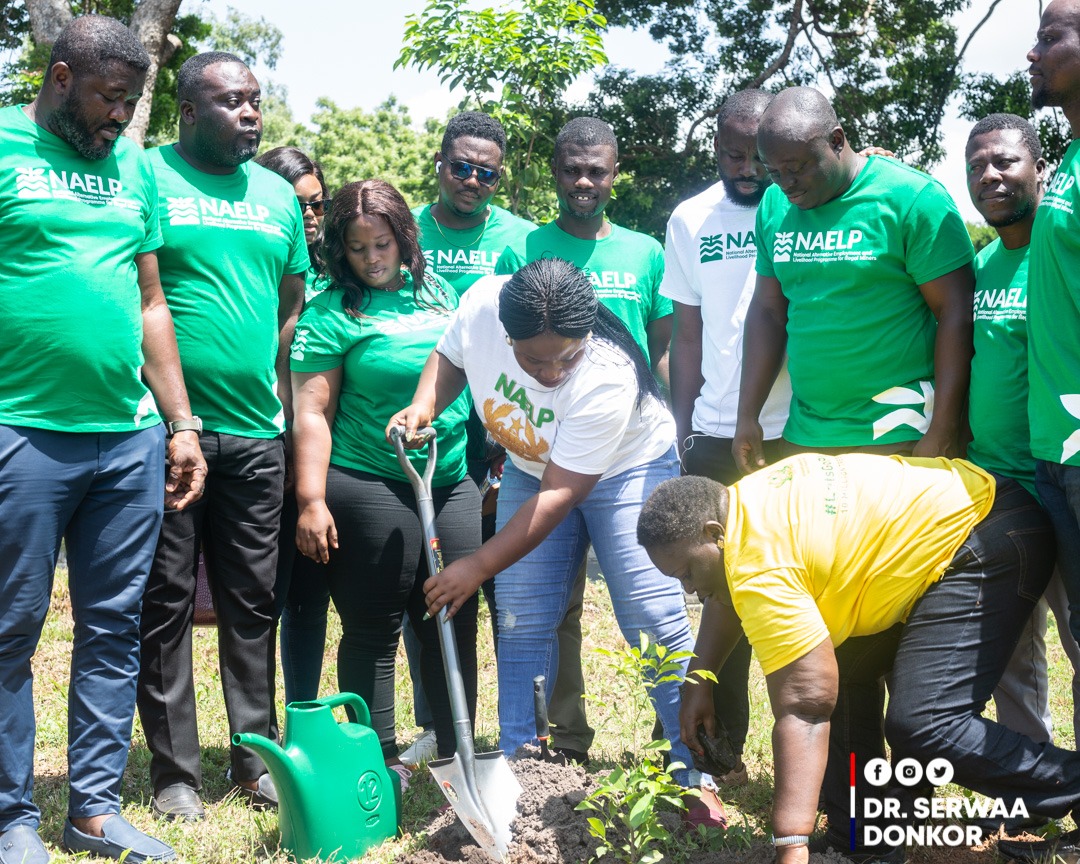
    The National Alternative Employment and Livelihood Programme (NAELP) has firmly denied allegations that it pays staff who do not work while facilitating political campaigns for the New Patriotic Party (NPP).

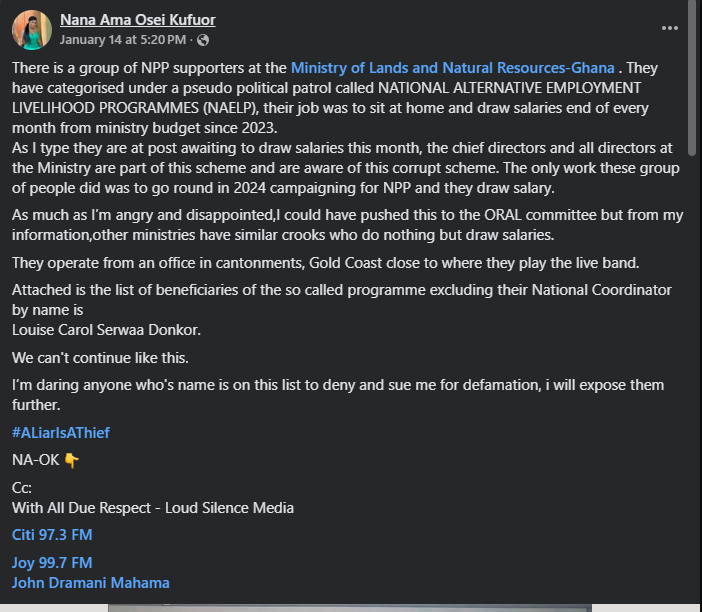
    The accusations were made in a Facebook post by an individual identified as Nana Ama Osei Kufuor, who claimed that NAELP staff continued to receive salaries despite not working and participating in partisan activities during the 2024 election period.

    “As I type, they are at post awaiting to draw salaries this month. The chief directors and all directors at the Ministry are part of this scheme and are aware of this corrupt scheme. The only work this group of people did was to go round in 2024 campaigning for NPP and they draw salary,” part of the post read.
    NAELP has dismissed these claims as false, describing them as deliberate attempts to tarnish the programme’s reputation and undermine its progress.

    The initiative, launched in October 2021 under President Nana Addo Dankwa Akufo-Addo, aims to address socio-economic challenges resulting from illegal mining activities by creating sustainable employment and rehabilitating degraded lands. Since its inception, NAELP has facilitated the creation of over 80,000 direct and indirect jobs and reclaimed approximately 1,000 hectares of degraded land, contributing to both economic development and environmental restoration.

    In addition to job creation, NAELP has collaborated with institutions such as Queen’s University to empower young entrepreneurs. Nearly 2,000 youth have received training in entrepreneurship, with several transitioning from illegal mining to legitimate businesses. Support from partners including Anglogold Ashanti and GIZ has also enabled small businesses to access equipment, funding, and skill development opportunities, further boosting local economies.

    Addressing the corruption allegations, NAELP reaffirmed its operational transparency under the leadership of Dr. Louise Carol Serwaa Donkor. The organisation clarified that the employee list referenced in the defamatory post consisted of legitimate staff actively contributing to the programme’s achievements.

    NAELP also refuted claims of receiving substantial climate funds without accountability, challenging critics to provide evidence to support such accusations.

    The organisation urged the public to disregard the misleading information and instead focus on its verifiable contributions to sustainable development and environmental preservation. NAELP further stated that it reserves the right to take legal action against the spread of defamatory statements while calling on Ghanaians to support its mission of creating lasting positive change.

  • Govt to release funds to feed SHS students for 31 days – CHASS

    Govt to release funds to feed SHS students for 31 days – CHASS

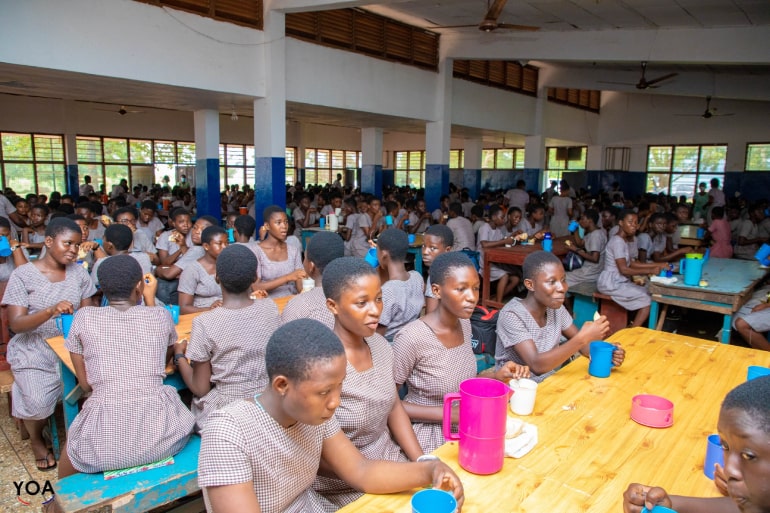
    The government will release emergency funds to senior high schools (SHSs) by the close of Friday, January 17, to provide food for students for a period of 31 days, according to Primus Baro, General Secretary of the Conference of Heads of Assisted Senior High Schools (CHASS).

    The move follows reports of widespread food shortages across various SHSs nationwide, prompting urgent intervention from the government.

    Speaking on Joy FM’s Super Morning Show, Mr. Baro explained that the directive for the 31-day funding came directly from the President as part of efforts to address the food crisis temporarily.

    “It was for 31 days as instructed by the president and beyond, and when we are able to deal with the issue as it is now, I believe it would be a clear direction as to what can be done going forward,” he stated.

    Mr. Baro revealed that during a meeting with government officials, it emerged that efforts were already underway to deliver food supplies directly to the affected schools. However, a shortage of key food items had complicated the situation.

    President John Mahama had previously ordered food stocks initially earmarked for victims of the previous year’s drought in the northern regions to be redirected to the schools. The supplies, stored at Tema Port warehouses, were intended to help alleviate the shortages.

    However, Mr. Baro clarified that the available supplies were insufficient. “At the meeting, it was revealed that out of the 18 food items needed, only two are available at the warehouse. While the supplies are on their way, the Chief of Staff and the President agreed on an immediate decision to provide emergency funds covering 31 days for both day and boarding schools. This will allow schools to mobilise food locally to address the situation quickly,” he explained.

    He further assured that both the funds and the food supplies were expected to reach the schools before the end of the week.

    Beyond the short-term relief, Mr. Baro indicated that the government was considering more comprehensive measures to prevent similar situations in the future. He disclosed that the Chief of Staff, Julius Debrah, had committed to broader stakeholder consultations to develop lasting solutions for the challenges facing SHSs.

    “There was a clear indication that a wider executive education forum will be held to address these issues. While we wait for this consultation, we hope that the government will provide clear interim directions during this one-month relief period. Feeding and funding for schools cannot be delayed further,” Mr. Baro stressed.

  • Nungua residents call for enhanced security to check surging robbery cases

    Nungua residents call for enhanced security to check surging robbery cases

    Nungua residents have called for stronger security measures in the wake of increasing robbery cases and phone snatching incidents in Addogono and Baatsona, both suburbs in the Greater Accra Region.

    Several community members expressed heightened concerns about safety, particularly during nighttime, urging the Ghana Police Service to step up patrol efforts to curb criminal activities in the area.

    Residents reported that the culprits, often moving in pairs on motorbikes, target pedestrians by snatching mobile phones, handbags, and other valuables before speeding away.

    Isaac Young, a businessman from Addogono, recounted a recent encounter where he was confronted and searched by a group of robbers while returning from town around 10:00 p.m. last week.

    “They gave my yam phone back to me and told me to upgrade the phone I use,” he said, describing how the gang, comprising six individuals on three motorcycles, attacked anyone they encountered, though some managed to escape.

    Another resident, Mawutor Gaar, shared his experience, recalling a phone snatching incident at the Addogono Last Stop about three months ago. He said the incident left him fearful and reluctant to carry his phone when going out, especially in the evenings.

    “I was coming home from work when two men on a motorbike came from behind and snatched a lady’s phone from her hand. It happened so fast. People around tried to help, but the thieves escaped,” he narrated.

    Concerned residents have since called for heightened police visibility, emphasizing the need for increased patrols, especially during the night and in identified crime hotspots, to deter such incidents and restore community safety.

    John Issah Andullah Tassa, Assemblyman for Nungua Addogono, acknowledged the surge in robbery cases and assured the community that he would collaborate with law enforcement to address the issue.

    Speaking to the Ghana News Agency (GNA), he revealed that both day and night attacks had been reported in recent weeks and pledged to engage the district police command for the deployment of additional patrol teams. He also urged residents to cooperate with the police by promptly reporting suspicious activities.

    Tassa further admitted that non-functioning streetlights were contributing to the security challenges, explaining that the electoral areas had yet to receive an adequate supply from the assembly but expressed optimism that the situation would be addressed soon.

  • NDC interviews prospective MMDCEs in Ashanti Region

    NDC interviews prospective MMDCEs in Ashanti Region

    The National Democratic Congress (NDC) has initiated interviews for candidates seeking appointments as Metropolitan, Municipal, and District Chief Executives (MMDCEs) in the Ashanti Region, as part of its efforts to ensure effective leadership at the local governance level.

    The three-day exercise aims to assess the competencies and visions of aspirants for the leadership roles across the region’s 43 metropolitan, municipal, and district assemblies (MMDAs).

    The first day of interviews has been allocated to candidates from 11 MMDAs, with 88 applicants undergoing a thorough vetting process.

    By the end of the exercise, a total of 343 candidates will have presented themselves before the selection committee. Each applicant is expected to demonstrate a clear understanding of the socio-economic challenges within their respective areas and propose practical solutions to address issues like unemployment, inadequate infrastructure, sanitation, and access to quality education and healthcare.

    The NDC’s regional leadership has described the interview process as a critical measure to identify capable individuals who can effectively implement the party’s development agenda at the grassroots level.

    The selection committee emphasizes the importance of selecting visionary leaders committed to addressing local development challenges and driving progress within their communities.

  • Provide security to Electrochem workers – Ada Chiefs urge govt

    Provide security to Electrochem workers – Ada Chiefs urge govt

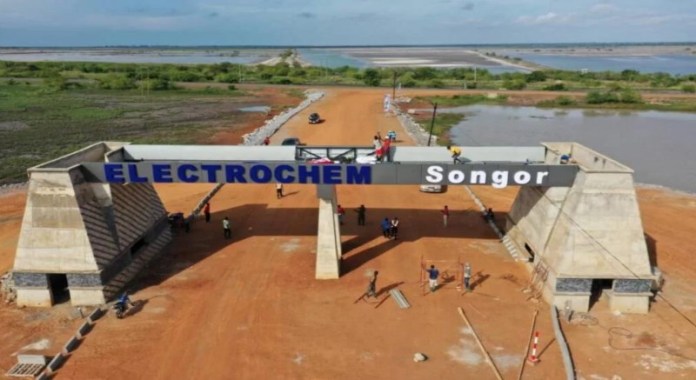
    The Ada Traditional Council has called on the government to prioritize the safety of Electrochem Ghana Limited workers and its operations at the Ada Songhor Lagoon following a violent attack on the salt mining company.

    The appeal comes after a group of individuals stormed the company’s premises on Wednesday, January 8, 2025, vandalizing property and assaulting staff. The attackers reportedly ransacked the warehouse, damaged water pumping machines, and physically attacked some employees.

    Speaking at a press briefing, Nene Agdey Obichere, the Ada Mankralo, urged the government to provide enhanced security at the mining site, emphasizing that protection for investors in salt mining should match the security offered to other mining areas.

    “We are calling on the President of the Republic and relevant security agencies to provide the same level of security to mining areas with investors as it is provided to other traditional mining areas,” Nene Obichere stated.

    He warned that continuous attacks on Electrochem Ghana Limited could discourage potential investors, harming the community’s plans for salt production expansion.

    “Such actions foster an atmosphere of uncertainty and fear, saying that investors were reluctant to invest substantial resources when there was a high risk of disruptions and legal challenges,” he added.

    Nene Obichere highlighted the community’s ambition to increase salt production to five million metric tonnes, a move he said could generate billions of dollars in revenue for both the local economy and the nation. However, he stressed that achieving this goal required the enforcement of law and order to assure investors of a stable business environment.

    “Unless the rule of law is restored and a stable, predictable business environment is created, the necessary investments to achieve the production goals will simply not materialize,” he said.

    He further called for the swift arrest and prosecution of the perpetrators, urging law enforcement agencies to ensure justice is served.

    Echoing these concerns, Nene Odeopeor, the Chief Operating Officer (COO) of Electrochem Ghana Limited, disclosed that the company had suffered significant losses from the recent attacks. While a comprehensive assessment was ongoing, he confirmed the destruction of critical assets, including water pump machines, brine tanks, and generators, which are essential for salt production.

    To prevent further incidents, the company has since reinforced its security measures.

  • Mahama Ayariga will be a great Majority Leader – Joyce Bawah

    Mahama Ayariga will be a great Majority Leader – Joyce Bawah

    Joyce Bawah Mogtari, Special Aide to President John Dramani Mahama, has commended the nomination of Mahama Ayariga as the next Majority Leader in Parliament, describing him as an excellent choice for the role.

    In a post on X, she lauded Mr Ayariga for being analytical and a skillful orator.

    She wrote, “A fantastic choice for the NDC and for Government. Hon Mahama Ayariga is sharp and has strong analytical and solid oratory skills and he will undoubtedly be a great Majority Leader. Congratulations my Brother, Godspeed.”

    Ayariga, the Member of Parliament for Bawku Central, is widely expected to assume the position following the appointment of Dr. Cassiel Ato Forson as Minister for Finance by President Mahama. His elevation reflects his extensive parliamentary expertise and track record in national leadership.

    Ayariga, a respected figure in the legislative space, has previously held ministerial roles, including Minister of Environment, Science, Technology, and Innovation, and Minister of Information. His vast knowledge of parliamentary processes, combined with his consensus-building abilities and eloquence in debates, has made him a fitting candidate to steer the majority caucus in Ghana’s 9th Parliament.

    With his background in governance and lawmaking, he is anticipated to guide the majority side effectively, further strengthening their influence in the legislative process.

    https://twitter.com/joyce_bawah/status/1879837697159856527

  • Haruna Iddrisu appointed Education Minister, NDC’s Pablo to head Ministry of Youth Development

    Haruna Iddrisu appointed Education Minister, NDC’s Pablo to head Ministry of Youth Development

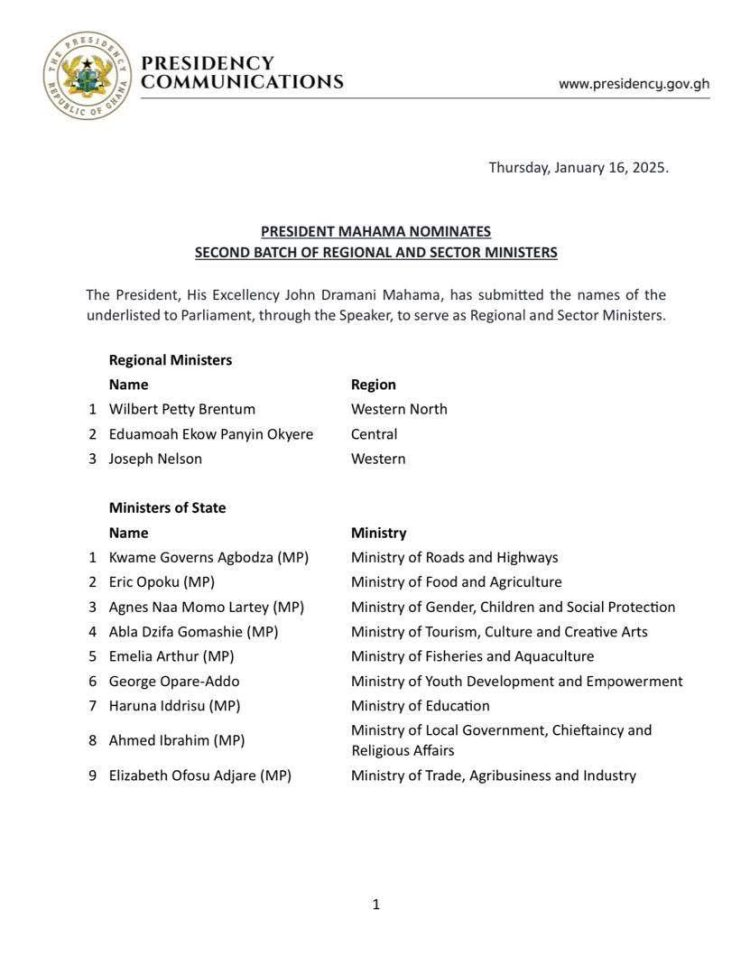
    President John Dramani Mahama has announced a new set of ministerial nominees, including prominent figures to lead key government sectors. Haruna Iddrisu, a former Minority Leader in Parliament and seasoned politician, has been appointed as Minister for Education, tasked with advancing educational reforms and improving access to quality education.

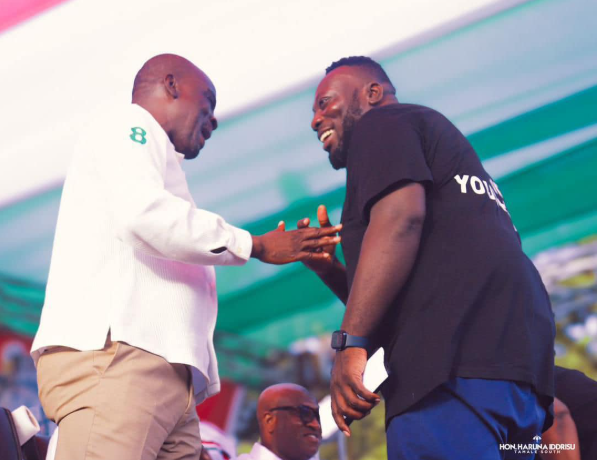
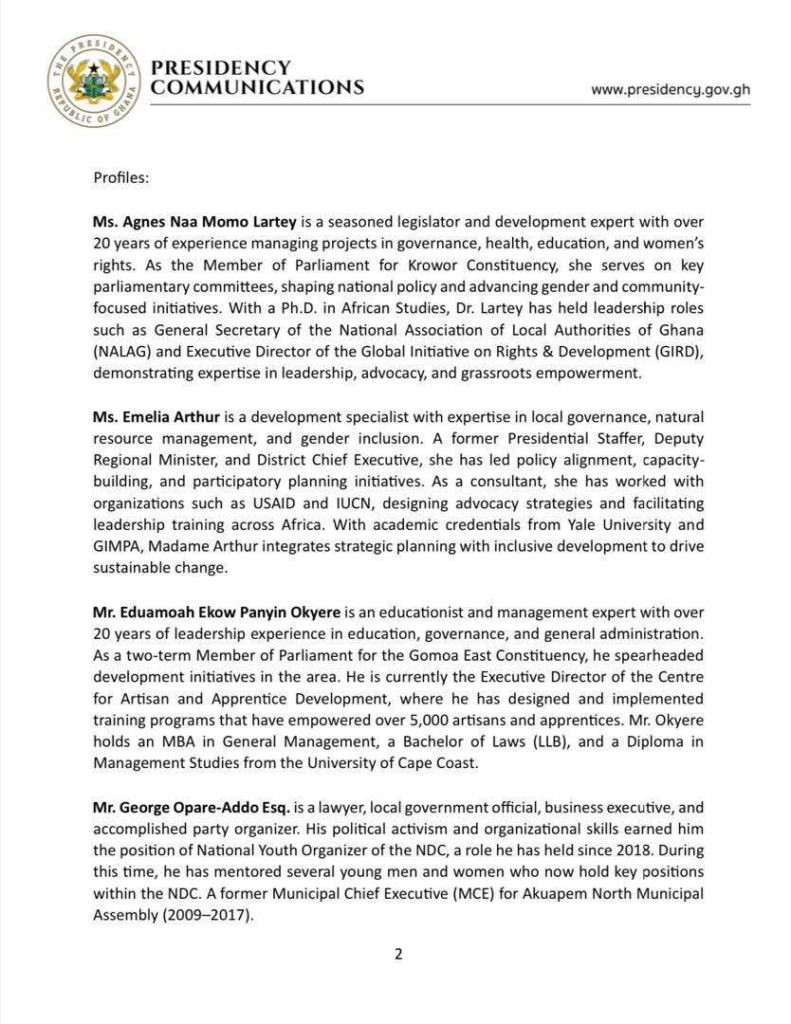
    A new Ministry for Youth Development and Empowerment has also been created, with George Opare Addo, popularly known as Pablo, nominated as its inaugural head. His mandate will focus on youth-centered policies aimed at addressing unemployment and fostering innovation among Ghana’s young population.

    Governs Kwame Agbodza has been nominated as Minister for Roads and Highways, a sector crucial for national infrastructure development. His leadership is expected to focus on improving road networks and enhancing national connectivity.

    In the agricultural sector, Eric Opoku has been named Minister-designate for Food and Agriculture. Known for his expertise in rural development, he is expected to prioritize food security and champion policies that support farmers across the country.

    Elizabeth Ofosu Agyare has been selected to lead the Ministry for Trade and Agribusiness, where she will focus on strengthening Ghana’s trade relations and promoting agribusiness as a pillar of economic growth.

    Ahmed Ibrahim has been nominated to head the Ministry of Local Government, Chieftaincy, and Religious Affairs, while Emelia Arthur has been designated for the Ministry of Fisheries and Aquaculture.

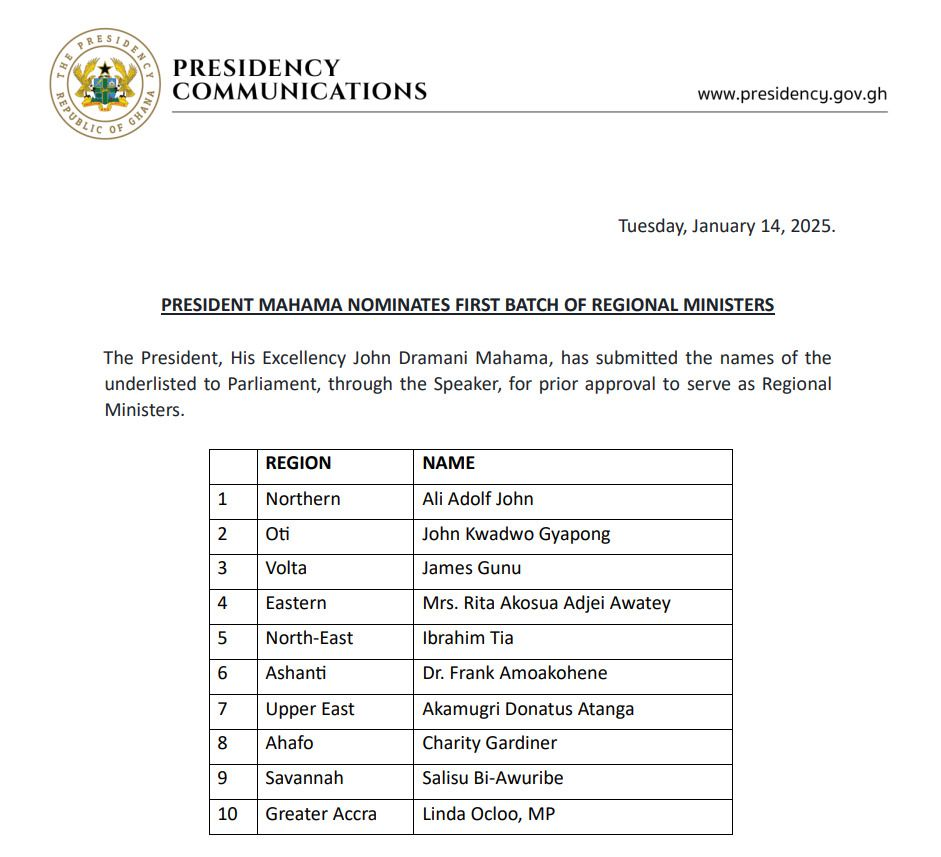
    So far, President Mahama has submitted a list of 13 regional ministerial nominees. The most recent additions include Wilbert Petty Brentum for Western North Region, Eduamoah Ekow Panyin Okyere for Central Region, and Joseph Nelson for Western Region.

    This follows the initial submission of 10 nominees for various regional portfolios, including Ali Adolf John for the Northern Region, John Kwadwo Gyapong for Oti Region, James Gunu for Volta Region, Mrs. Rita Akosua Adjei Awatey for Eastern Region, Ibrahim Tia for North-East Region, Dr. Frank Amoakohene for Ashanti Region, Akamugri Donatus Atanga for Upper East Region, Charity Gardiner for Ahafo Region, Salisu Be-Awuribe for Savannah Region, and Linda Ocloo, MP for Greater Accra Region.

    Earlier, President Mahama had announced three key ministerial nominees, including Dr. Cassiel Ato Forson as Minister-designate for Finance, John Abdulai Jinapor for the Ministry of Energy, and Dr. Dominic Akuritinga Ayine for the Ministry of Justice and Attorney General. These three have already undergone vetting by the Appointments Committee of Parliament.

  • Asante Gold to commence underground mining, targets over 250,000 ounces gold production annually

    Asante Gold to commence underground mining, targets over 250,000 ounces gold production annually

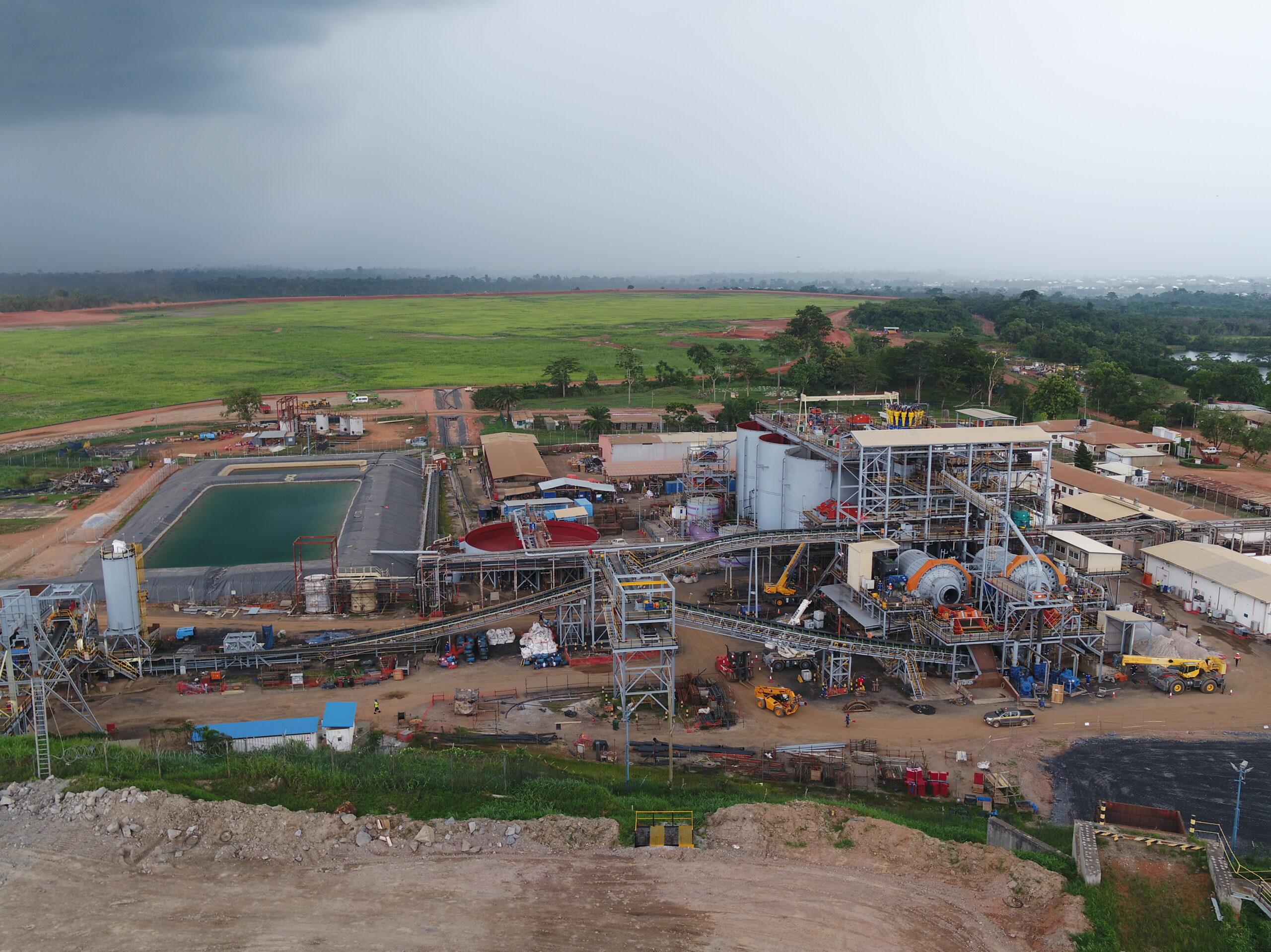
    Asante Gold Corporation has announced plans to launch underground mining operations at its Bibiani Gold Mine, with annual gold production projected to exceed 250,000 ounces starting in 2026.

    The company recently completed a Definitive Feasibility Study (DFS) confirming the technical and financial viability of extending the mine’s lifespan through underground development.

    “We are pleased to confirm the potential for an underground mine development with an initial life of seven years at Bibiani. This will incorporate 831,000 ounces of gold produced and an attractive all-in sustaining cost (AISC) of $1,035 per ounce,” said Dave Anthony, CEO of Asante.

    He further highlighted, “Since Asante acquired the Bibiani property in 2021, we have revitalized the operation and reshaped the business plan. We are on a path to achieving annual production of more than 250,000 ounces in 2026 and beyond, further supported by commencement of underground mining in Q4 2025 and other growth initiatives that have already advanced. These include the Bibiani-Goaso Highway bypass in June 2024 to facilitate access to additional mineralized material and completion of the new sulphide treatment plant, which is on track for Q2 2025.”

    The DFS, prepared by Bara International with contributions from Middindi Consulting and SLR Consulting, focuses on the underground mining potential beneath the existing Bibiani Main and Walsh pits. The study outlines the mining of 11.93 million tonnes of ore at an average grade of 2.36g/t gold, with underground reserves as of December 31, 2023.

    The estimated initial capital cost stands at $116 million, with projected gold production of 798,000 ounces at an AISC of $1,035 per ounce. The project is expected to generate a post-tax Net Present Value (NPV) of $516 million, assuming a gold price of $2,500 per ounce, with an internal rate of return (IRR) of 71%.

    Key next steps include finalizing the combined open pit and underground mine plan, selecting a mining contractor by Q3 2025, and commencing underground operations in late 2025. The development will be funded through ongoing open pit mining activities.

    The DFS also details the equipment selection and infrastructure required for the underground expansion. Mining equipment has been chosen to align with the orebody’s geometry, minimizing dilution while maximizing productivity. Lessons from Asante’s nearby Chirano Gold Mine influenced the selection, ensuring standardization across both sites. The study outlines manpower requirements, remuneration, and cost schedules for development and operational phases.

    Ore from the Bibiani underground operations will be processed at the existing Bibiani Process Plant, which was originally designed by Lycopodium in 1997 and refurbished under Asante’s management between 2021 and 2022.

    The plant, which includes a gravity concentration circuit and a reconditioned primary gyratory crusher, currently operates at a throughput rate of 2.4 million tonnes per annum (Mtpa). Further upgrades to the sulphide recovery section are scheduled for completion in Q2 2025, ahead of the start of underground mining.

  • We don’t need BOST in current oil market – ACEP

    We don’t need BOST in current oil market – ACEP

    The Africa Centre for Energy Policy (ACEP) has questioned the relevance of the Bulk Oil Storage and Transportation Company (BOST) in Ghana’s current petroleum market, calling for its commercialisation and possible listing on the Ghana Stock Exchange.
    According to ACEP, BOST currently collects a GHp 12 margin on every litre of petroleum sold to sustain its operations and maintain strategic fuel reserves. However, the energy think tank argues that the company has failed to fulfill this core mandate effectively.

    Kodzo Yaotse, Policy Lead for Petroleum and Conventional Energy at ACEP, emphasized the need for a fundamental restructuring of BOST’s operations during a press briefing on “Downstream Petroleum Products Taxation: A Call to Action” on January 15.

    “The market we operate in now shows that we do not need BOST. Or, if we are to keep BOST, we should commercialize it and list it on the stock exchange,” Yaotse stated.

    ACEP further criticized BOST for expanding beyond its primary role, now controlling approximately 20% of petroleum imports through the Gold for Oil programme. The think tank expressed concern that despite collecting close to GHȼ600 million annually from petroleum margins, BOST competes with private importers while avoiding the same tax obligations.

    “This will ensure transparency and accountability in BOST operations while reducing the burden on consumers. That’s another GHp 0.12 removed from payments,” Yaotse added.

    ACEP’s call for reform suggests a shift towards a more competitive and transparent petroleum sector, urging the government to reconsider BOST’s continued reliance on public funds for its operations.

  • NPP is now a weak party – Sammy Crabbe

    NPP is now a weak party – Sammy Crabbe

    Former Vice Chairman of the New Patriotic Party (NPP), Sammy Crabbe, has described the party as weak, citing internal fractures and disillusionment among its members as major reasons for its poor performance in the 2024 general elections.

    Speaking on Point Blank, a segment of Eyewitness News, Mr. Crabbe stressed that the party’s declining strength stems from its failure to inspire loyalty and align its governance successes with the expectations of its grassroots members.

    “If somebody does not believe that whatever the party gains in government will benefit him or her, there is no way they will wake up in the morning and go and sacrifice. They must believe that there is something in it for them. You cannot just keep kicking the can down the road, thinking it’s going to be okay. That is not going to work,” he stated.

    He pointed out a growing disconnect between the party’s leadership and its base, which he believes has significantly weakened party unity and morale.

    “When [the members] see you going about in air-conditioned vehicles and then you ask them to wait, they are not going to continue anymore. So, it is because the party is weak,” he added.

    The NPP faced a heavy defeat to the National Democratic Congress (NDC) in the December 7, 2024, general elections, losing both the presidential race and a substantial number of parliamentary seats. The party now holds only 88 seats in Parliament, marking a significant decline in its representation.

  • Mahama Ayariga set to become Majority Leader – Reports

    Mahama Ayariga set to become Majority Leader – Reports

    Mahama Ayariga is poised to become the next Majority Leader in Ghana’s 9th Parliament, according to reliable information reaching The Independent Ghana.

    The Bawku Central MP is expected to succeed Dr Cassiel Ato Forson, who has been appointed Finance Minister by President John Mahama.

    A seasoned legislator renowned for his deep knowledge of parliamentary procedures and ability to build consensus, Ayariga has previously served as Minister of Environment, Science, Technology and Innovation, as well as Minister of Information.

    His extensive experience in both government and Parliament, coupled with his persuasive debating skills, has positioned him as a compelling choice to lead the majority caucus with its commanding strength in Parliament.

  • Protection of State Assets Bill to be re-presented to Parliament to halt ‘state capture’ – Ablakwa

    Protection of State Assets Bill to be re-presented to Parliament to halt ‘state capture’ – Ablakwa

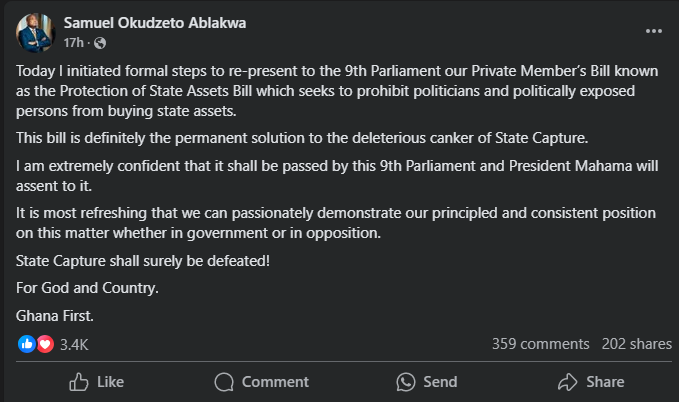
    North Tongu Member of Parliament, Samuel Okudzeto Ablakwa, has announced plans to reintroduce the Protection of State Assets Bill to the 9th Parliament in a bid to curb the acquisition of state assets by politically exposed individuals and prevent ‘state capture.’

    In a Facebook post on Wednesday, Ablakwa stated, “Today I initiated formal steps to re-present to the 9th Parliament our Private Member’s Bill known as the Protection of State Assets Bill which seeks to prohibit politicians and politically exposed persons from buying state assets.”

    He emphasized his conviction that the bill would serve as a definitive remedy to the issue, saying, “This bill is definitely the permanent solution to the deleterious canker of State Capture.”

    The legislator expressed optimism that the 9th Parliament would approve the bill and that it would receive President John Mahama’s endorsement.

    “It is most refreshing that we can passionately demonstrate our principled and consistent position on this matter whether in government or in opposition,” Ablakwa added.

    The draft version of the Public Assets Protection Bill 2024 proposes sanctions and asset forfeiture measures for individuals who unlawfully acquire state assets. The legislation aims to prevent political appointees, politically exposed persons, and private entities from obtaining state lands, reinforcing the protection of national resources.

  • ECG operates 84 bank accounts with 20 different banks despite centralization directive – Report

    ECG operates 84 bank accounts with 20 different banks despite centralization directive – Report

    The Electricity Company of Ghana (ECG) has been found to be operating 84 bank accounts across 20 different banks, despite directives to manage a single account for all revenue collections and disbursements, according to a PricewaterhouseCoopers (PwC) audit report.

    The audit, part of Ghana’s IMF-supported program, revealed that ECG’s financial practices contradict the requirement to consolidate all financial activities under one account. This measure was aimed at enhancing financial transparency and efficiency in the state-owned power distribution company.

    “We observed through our validation procedures that ECG operates multiple bank accounts (84 accounts) with 20 different banks. This scattered approach to banking is inconsistent with the directive to centralize all financial activities under a single collection account,” stated the PwC report.

    PwC also recommended that ECG consider consolidating its banking operations by selecting a financial institution with a broader branch network. This, they noted, would minimize the need for multiple accounts and improve operational efficiency.

    Additionally, the audit raised concerns about ECG’s payment practices, noting consistent delays in payments to Independent Power Producers (IPPs) and regulatory bodies. The PwC report emphasized that ECG’s failure to meet its monthly payment obligations, as required by the Cash Water Management (CWM) guidelines, could result in financial strain for the company.

    “Untimely payments to IPPs and regulatory bodies have led to delays and disruptions in the energy sector, undermining the smooth operation of Ghana’s power distribution system,” the report added.

  • We don’t invite suspects; we invite the public to share their complaints – Martin Kpebu

    We don’t invite suspects; we invite the public to share their complaints – Martin Kpebu

    A member of the Recover All Loot (ORAL) Committee, Martin Kpebu, has dismissed claims that its outfit is inviting individuals accused of corruption for questioning.

    In an interview on JoyNews’ AM Show on Thursday, Mr Kpebu noted that such an action would be an illegality. He, however, noted that they committee is inviting members of the public to share their complaints and information about corrupt activities.

    This comes after the Minority in Parliament urged former government officials to reject any invitations from the “Operation Recover All Loot” (ORAL) team, describing its operations as unconstitutional and redundant.

    At a press briefing on Wednesday, January 15, Suame MP John Darko insisted that the team’s activities undermine Ghana’s legal framework, as they duplicate the functions of established investigative bodies such as the Police Criminal Investigations Department (CID), the Economic and Organized Crime Office (EOCO), and the Office of the Special Prosecutor.

    “Our advice to outgone government officials is clear: boycott any invitation from this so-called ORAL team. We refuse to participate in or recognise its activities because constitutionally established institutions already exist to investigate any alleged misdeeds,” Mr. Darko stated.

    Also, another member of the Operation Recover All Loot (ORAL) Committee, Daniel Yao Domelevo, has clarified the team’s mission as a validation exercise rather than an investigative one.

    The former Auditor General speaking on Joy News’ Upfront on Wednesday explained that the committee’s primary focus is to confirm claims related to state land and property issues, ensuring accurate reporting to President John Mahama.

    “What we are doing is essentially a validation mission,” he stated.

    “We cannot just sit in our offices, hear claims like those from the Lomotey/Adotey family about their demolished property, and include them in our report without verifying. The presidency might question our findings if there’s no evidence on the ground.”

  • We don’t investigate; we validate claims – ORAL

    We don’t investigate; we validate claims – ORAL

    The Operation Recover All Loot (ORAL) Committee has clarified its role as focusing on validating claims rather than investigating wrongdoing.

    Daniel Yao Domelevo, a committee member and former Auditor General, emphasized this distinction during an interview on Joy News’ Upfront, explaining that the primary objective is to confirm claims related to state land and property issues.

    “What we are doing is essentially a validation mission,” Domelevo stated. “We cannot just sit in our offices, hear claims like those from the Lomotey/Adotey family about their demolished property, and include them in our report without verifying. The presidency might question our findings if there’s no evidence on the ground.”

    This clarification follows the ORAL team’s visit to North Labone, where a property belonging to the Lomotey/Adotey family was demolished in 2024. Despite a Lands Commission letter admitting to an erroneous allocation of the land, the family has yet to receive compensation or security assurances.

    Domelevo stressed the committee’s focus on fact-checking rather than assigning blame. “Validation is simply confirming what exists on the ground. If this were an investigation, we would call all parties, ask questions, and seek answers. For now, we are gathering data to ensure accuracy in our reports.”

    He also addressed misconceptions about the ORAL Committee’s scope versus other agencies. “People often confuse our role with that of national security,” he noted. “When they move in, they might take actions that go beyond validation, but we have no control over their operations.”

    The ORAL team assured the Lomotey/Adotey family their case would be thoroughly documented in a comprehensive report to President Mahama to highlight their loss and advocate for justice.

  • There is already private sector participation in ECG – Fmr MD

    There is already private sector participation in ECG – Fmr MD

    Former Managing Director of the Electricity Company of Ghana (ECG), Samuel Dubik Mahama, has emphasized that private sector involvement already exists within ECG’s operations, specifically at the metering level.

    Speaking on Channel One TV’s ‘The Point of View’ with Bernard Avle, Mahama questioned the necessity for further privatization, noting that significant progress has been made during his tenure.

    “I do admit that there are a few inefficiencies in the company, and in the same way, there are a few efficiencies. Now before you do any private sector privatization, what are the benchmarks? Let’s not forget there is already private sector participation in ECG,” Mahama stated.

    He highlighted a loss reduction initiative under which ECG collaborated with seven local metering companies, eliminating the need for large capital expenditure on meter procurement.

    Mahama further explained, “What we then did was to give them a locality to install their meters. And that is private sector participation. If you do the math very well, you realise that it saved us a lot. More than almost 50% in how much you now have to borrow and all those administrative costs.”

    Addressing broader financial challenges facing ECG, Mahama pointed to foreign exchange constraints. “The first one is forex… you buy the electricity in dollars and you come to sell it in cedis. And you go and look for requisite dollars to go and pay,” he said.

    He raised concerns about the sustainability of the current model, particularly the capacity to secure sufficient foreign exchange to pay Independent Power Producers (IPPs).

  • Malian PM meets Mahama today

    Malian PM meets Mahama today

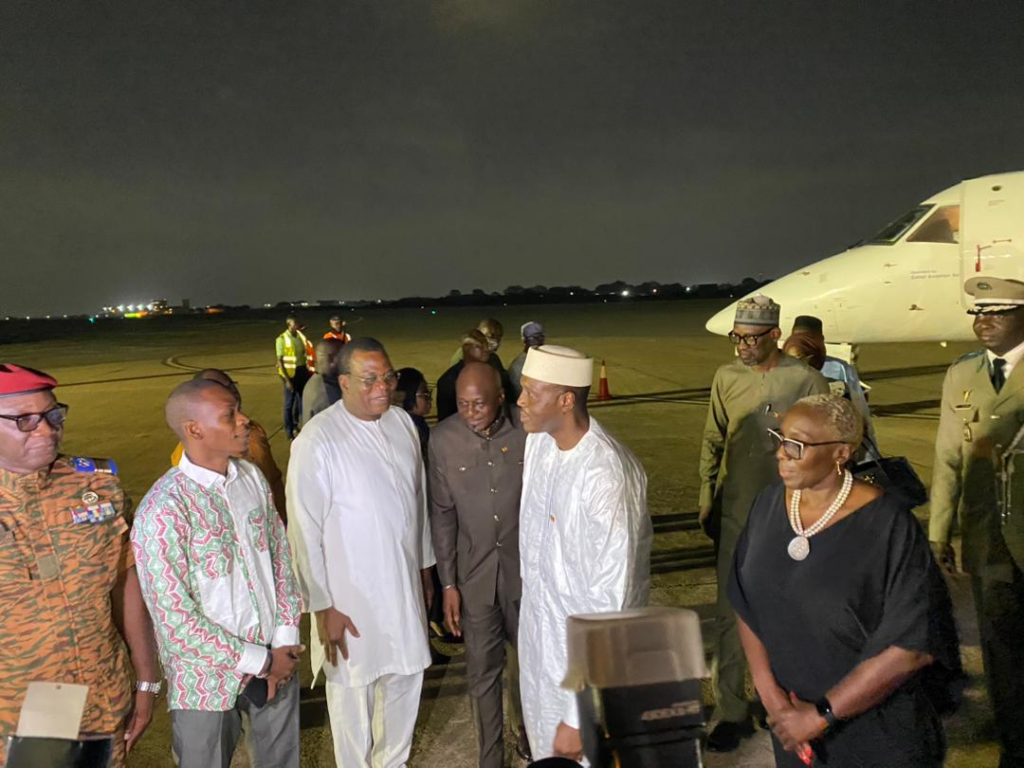
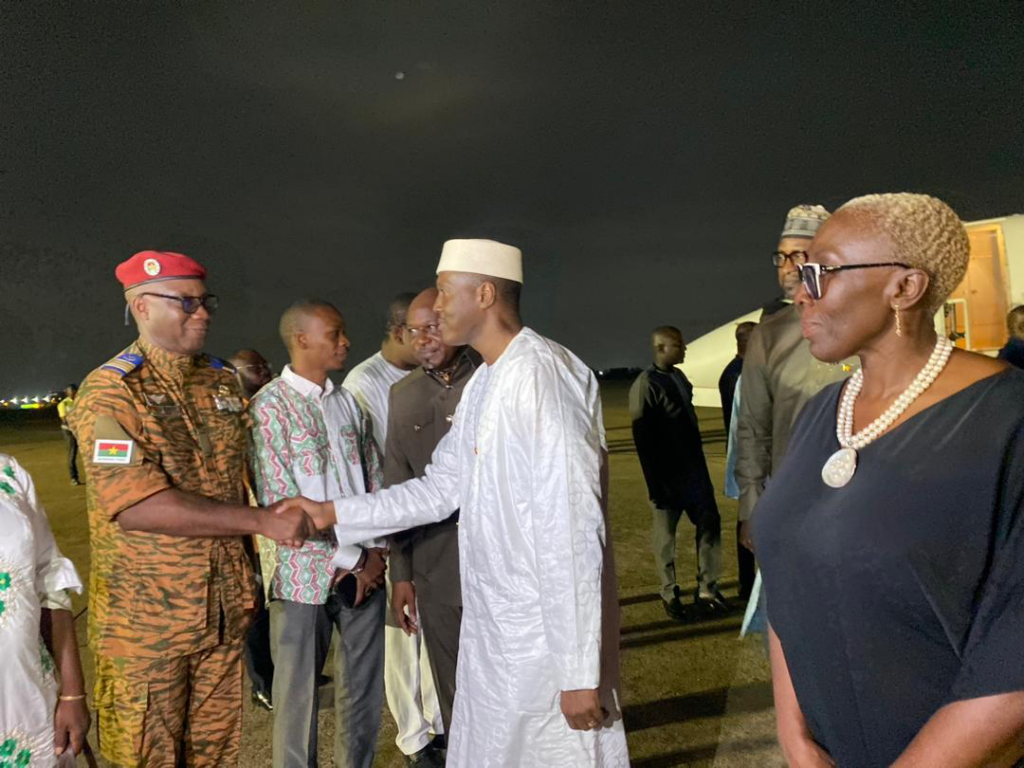
    Malian Prime Minister Abdoulaye Maiga will meet Ghana’s President, John Mahama, today for high-level discussions in Accra. The meeting is set to focus on a special message from Malian President Assimi Goita.

    Prime Minister Maiga arrived in the Ghanaian capital ahead of the scheduled engagement, where he was warmly welcomed at the Kotoka International Airport by Marietta Brew, Legal Counsel to the President, and National Security Adviser Prosper Bani.

    The discussions between the two leaders are expected to strengthen diplomatic ties and foster cooperation between Mali and Ghana, with emphasis on the contents of the message conveyed by President Goita.

  • Don’t honour any invitation by Mahama’s ORAL – Minority to former govt officials

    Don’t honour any invitation by Mahama’s ORAL – Minority to former govt officials

    The Minority in Parliament has urged former government officials to reject any invitations from the “Operation Recover All Loot” (ORAL) team, describing its operations as unconstitutional and redundant.

    At a press briefing on Wednesday, January 15, Suame MP John Darko insisted that the team’s activities undermine Ghana’s legal framework, as they duplicate the functions of established investigative bodies such as the Police Criminal Investigations Department (CID), the Economic and Organized Crime Office (EOCO), and the Office of the Special Prosecutor.

    “Our advice to outgone government officials is clear: boycott any invitation from this so-called ORAL team. We refuse to participate in or recognise its activities because constitutionally established institutions already exist to investigate any alleged misdeeds,” Mr. Darko stated.

    He criticized the Attorney General nominee, Dr. Dominic Ayine, for endorsing ORAL, arguing that such support disrespects the authority of the existing constitutionally mandated agencies.

    The Minority further accused ORAL of excessive force, alleging that the team disrupts the lives of innocent citizens.

    “They are going about disturbing people, entering homes, seizing vehicles, and confiscating lands from individuals who have lawfully acquired them. This is nothing short of harassment, and it must stop,” Mr. Darko added.

    However, Attorney General and Justice Minister-designate Dr. Dominic Ayine has defended ORAL’s legitimacy. During his vetting before Parliament’s Appointments Committee on January 13, he described the initiative as essential for holding people accountable and recovering state assets acquired unlawfully.

    Dr. Ayine explained that while ORAL is not a conventional legal entity, its mandate aligns with the principles outlined in the preamble of the 1992 Constitution, which emphasizes accountability.

    “If you look at the preamble to our Constitution, it is very clear about the fundamental values underpinning it. The value of accountability is one of the principles articulated in the preamble,” he noted.

    Established on December 18, 2024, by President John Dramani Mahama, ORAL is chaired by Samuel Okudzeto Ablakwa and consists of five members tasked with recovering state properties unlawfully acquired, particularly during previous administrations.

  • Bawku conflict: Mahama to meet Asantehene on Jan 19

    Bawku conflict: Mahama to meet Asantehene on Jan 19

    Former President John Dramani Mahama will meet the Asantehene, Otumfuo Osei Tutu II, on January 19 as part of his continued efforts to find lasting peace in the conflict-affected Bawku area in the Upper East Region.

    This visit forms part of Mahama’s ongoing mediation efforts following a recent trip to Bawku and Nalerigu on January 14, where he engaged with local leaders and communities in a bid to promote dialogue and reconciliation in the conflict-stricken area.

    During his meeting with the Mamprugu overlord, Naa Bohagu Mahami Abdulai Sheriga II, Mahama assured the traditional leader of his government’s determination to prioritize peacebuilding and stability.

    “I just came to appeal to him and his subjects to exercise restraint and patience and trust that we will resolve this matter amicably. So, I’m just appealing to my father that they should exercise patience while I set up the government,” he said.

    He further reflected on discussions he had with former President Nana Akufo-Addo, revealing that some peace initiatives had been explored during the latter’s administration.

    “In my last briefing with Nana Akufo-Addo, before he left office, he briefed me about some mediation efforts that they were undertaking. I wish to be able to discuss it with him and see how we can continue that effort. I know that he and the late Yagbonwura and Otumfuo were the ones who solved the Dagbon problem,” he recalled.

    Mahama stressed the significance of his upcoming visit to Otumfuo Osei Tutu II, acknowledging the Asantehene’s instrumental role in helping to resolve the Dagbon crisis.

    “Nana Addo gave me a hint that Otumfuo has been playing some role, and so I’m supposed to be with Otumfuo on the 19th of this month. So, when I go, it is one of the issues I will discuss with him. Whatever comes out of it, I will inform my father [Naa Bohagu Mahami Abdulai Sheriga II],” Mahama stated.

    The former President’s peace initiative aims to bring together influential traditional authorities to help bring an end to the prolonged conflict in Bawku, which has affected the region for decades.

  • NDC’s case on parliamentary collation order to be heard by SC on Jan 23

    NDC’s case on parliamentary collation order to be heard by SC on Jan 23

    The Supreme Court is scheduled to hear the National Democratic Congress’ (NDC) challenge against a High Court order instructing the Electoral Commission (EC) to finalize the collation of parliamentary results in specific constituencies on Thursday, January 23.

    The High Court, on January 4, presided over by Justice Forson Baah Agyapong, granted a mandamus application filed by the New Patriotic Party (NPP). The court directed the EC to complete the collation process for Okaikwei Central, Tema Central, Techiman South, and Ablekuma North and declare the parliamentary winners.

    Dr. Rashid Tanko-Computer, the Deputy Director of Elections and IT for the NDC, who spoke to the media, clarified that the party’s earlier attempt to halt the collation was postponed due to a procedural issue involving the NPP’s notification.

    “We went to court on Monday, and the judge indicated that the NPP candidates had not been properly served, so our lawyers must find a way to serve them before the matter can be properly heard. As a result, the case was adjourned indefinitely until they are properly served,” Dr. Tanko-Computer explained.

    He further noted the party’s determination to challenge the High Court’s directive in the upcoming Supreme Court hearing.

    “However, the certiorari we filed at the Supreme Court is scheduled for January 23, where we will ask the Court to quash the decision made by the trial judge, which allowed the EC to proceed with what we consider an illegal activity. We will be in the Supreme Court on the 23rd to argue our case,” he stated.

    The NDC contends that the collation order was improperly issued and is seeking the Supreme Court’s intervention to overturn the directive.

  • Mob attacks 2 for exhuming body of 10-year-old at Ashalaja

    Mob attacks 2 for exhuming body of 10-year-old at Ashalaja

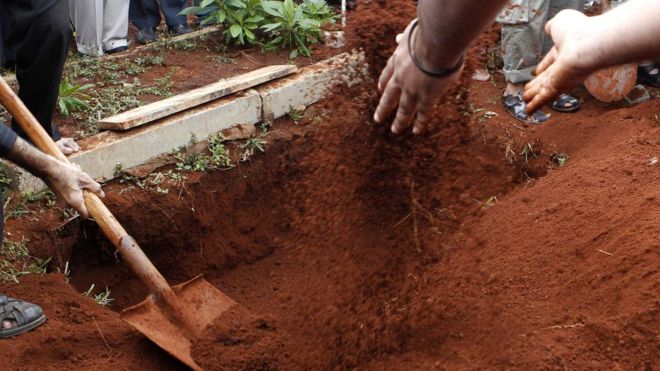
    Two brothers were severely assaulted by an angry mob in Ashalaja after being accused of exhuming the body of a 10-year-old boy from a local cemetery.

    The incident, which occurred on January 14, has left the community in shock and raised concerns about rising tensions.

    Eyewitnesses identified the brothers as Fofo Agboyemeh and Kwame Agboyemeh, who were allegedly caught removing the remains of young James Ajoyemeh from a cemetery in Adewukwa, near Bawjiase.

    Their suspicious activities were reported to a group of motorbike riders, commonly known as ‘okada’ riders, who intercepted them around 1 a.m. in Ashalaja. The confrontation escalated into a violent mob attack, leaving the two brothers with serious injuries before the police intervened.

    The Dankyira Police, upon receiving information, swiftly arrived at the scene to rescue the siblings, preventing further harm.

    The Awutu Bawjiase Police Command has since launched a full-scale investigation to determine the motive behind the exhumation and ensure all involved face justice.

    Due to the extent of their injuries, the brothers were taken to the Bawjiase Polyclinic for medical treatment.

    Meanwhile, community leaders have called for calm and urged residents to refrain from acts of mob justice while the police continue their investigations. They emphasized the importance of allowing the legal process to address the matter.

  • Fishing halted at Kamgbunli in Ellembelle District over unknown disease

    Fishing halted at Kamgbunli in Ellembelle District over unknown disease

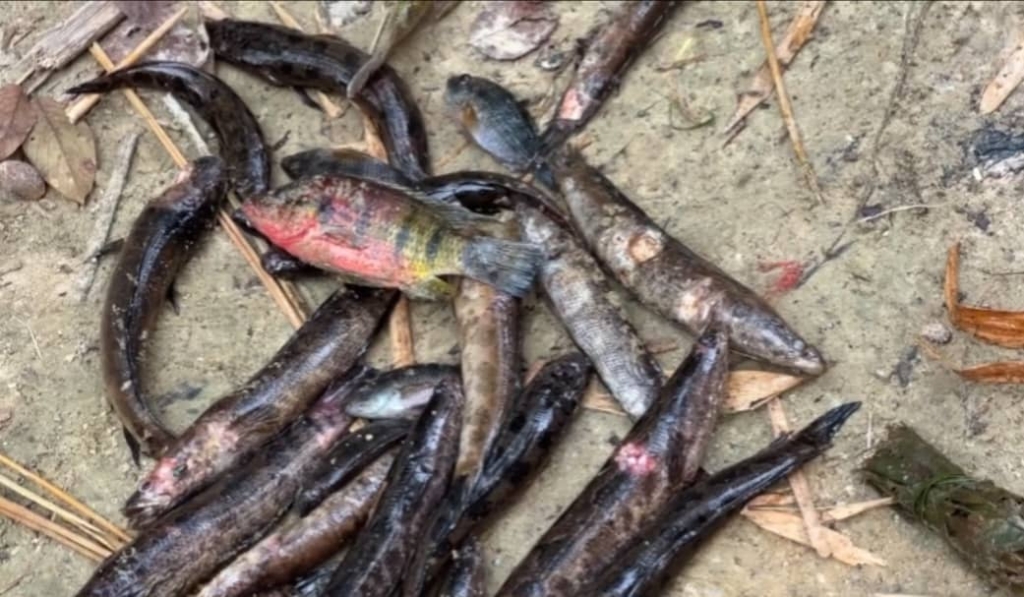
    Fishing activities in Kamgbunli, a community in the Ellembelle District of the Western Region, have been suspended following the outbreak of a mysterious disease affecting fish in the local rivers.

    The situation has sparked fear among residents and disrupted livelihoods, especially among fisherfolk who rely on the rivers for their daily income.

    For the past month, fishermen have reported alarming abnormalities in their catches from the Ebi River, with fish developing severe skin infections. The infected fish exhibit red, swollen sores that worsen into open wounds, making them unsuitable for consumption or sale.

    In response, local authorities have imposed a temporary ban on fishing in the Ebi, Fia, and Amanzule rivers as a precautionary measure while the source of the infection is investigated.

    “We have also summoned the fisherfolk and advised them to stay away from the river since the cause is still unknown. Until investigations are completed, they have been instructed to refrain from any activities on the river,” stated Dawuda Musa, an Assembly Member.

    A JoyNews team that joined some fishermen on an expedition along the Ebi River observed troubling conditions. Besides the infected fish, the river emitted a strong, foul odour, and its waters had taken on an unusual discolouration, raising further health concerns.

    Ellembelle District Health Director, Dr. Augustine Amoako, expressed concerns about potential health risks but acknowledged that the exact cause remains undetermined.

    “There is a likelihood of health implications, but we cannot be definitive at this point because the exact cause is unknown. Once the team arrives and samples of the fish and water are collected and tested, we will be able to determine the cause, which might be chemical. For now, we can only predict that there may be health consequences,” he stated.

    The fishing ban has hit the local economy hard, with fishmongers and residents expressing distress over financial losses and uncertainty about fish already purchased.

    “As a result of this emergency, anyone who has already bought some for home consumption is now in a dilemma. For instance, I bought mine a fortnight ago, intending to use it later. However, with this issue now emerging, I am waiting for the outcome of the investigation. Honestly, it’s a real problem,” said Shaibu Abdullah Issaka, a resident.

    Fish traders have also voiced concerns over the financial impact, urging authorities to expedite their investigations to avoid further losses.

    Despite the growing urgency, the Western Regional Fisheries Commission has yet to collect water and fish samples for laboratory analysis, prolonging the uncertainty in the community.

    Until a conclusive cause is identified and addressed, Kamgbunli residents remain in limbo, hoping for swift intervention to restore their livelihoods and ensure public safety.

  • Washing bay attendant jailed 3-years for unlawful possession of military uniforms, fined GHC12k

    Washing bay attendant jailed 3-years for unlawful possession of military uniforms, fined GHC12k

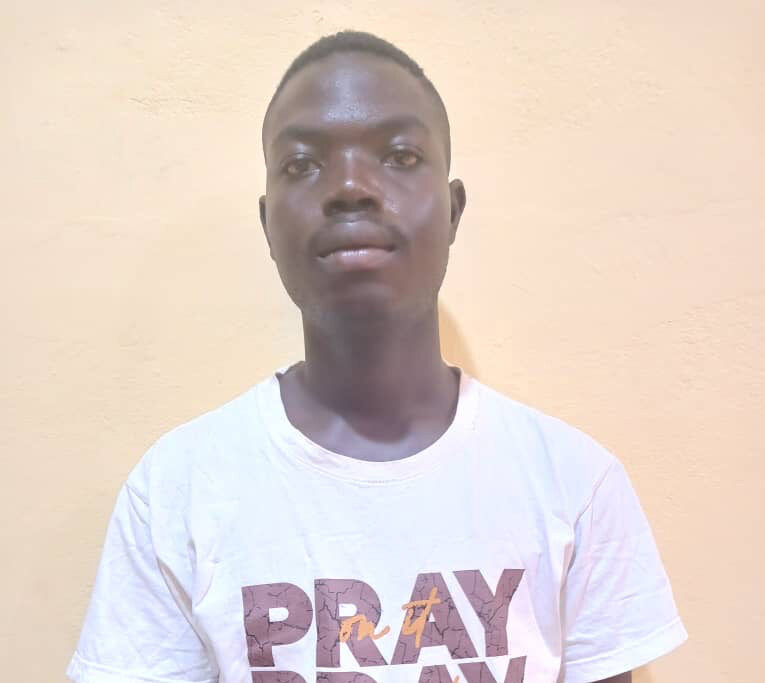
    An Accra Circuit Court has sentenced Mr Alex Cobbina, a 20-year-old washing bay attendant in the Central Region to a 3-year jail term for impersonation and unlawful possession of military uniforms and related items. He was also ordered to pay a GHC12,000 fine.

    Last year, Mr Cobbina posted a video of himself in a camouflage trouser and a naval vest, claiming to be a military officer on “TikTok”, a social media platform.

    The Ghana Navy monitored the video where Mr Cobbina commented on remarks attributed to President John Dramani Mahama about dismissing military recruits who entered the service through protocol arrangements.

    The Ghana Armed Forces (GAF) has cautioned the general public to desist from making videos on social media for personal gains aimed at putting the image of the GAF into disrepute.

    “GAF reiterates that persons who are involved in such acts would be tracked down and made to face the full rigours of the law. The GAF further states that the public should heed the constant education and numerous reminders to desist from making malicious comments on social media.”

    “GAF requires the cooperation of the public to refrain from posting negative content about the military on social media as it is detrimental to the development of the country,” the Ghana Armed Forces said in a statement.

  • GTEC petitioned to review Dr Agordzo’s teaching role at UPSA over Police ‘misconduct’

    GTEC petitioned to review Dr Agordzo’s teaching role at UPSA over Police ‘misconduct’

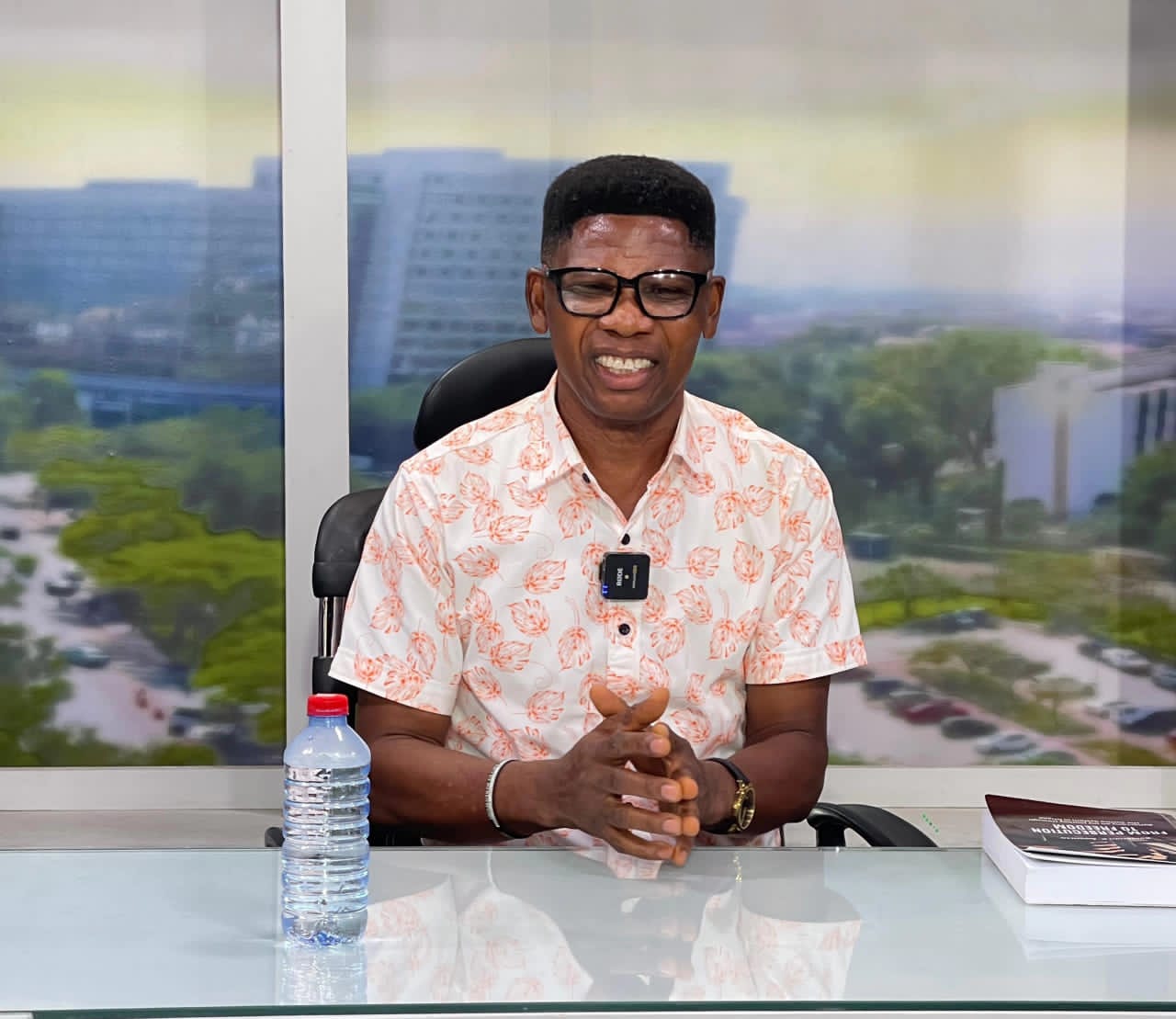
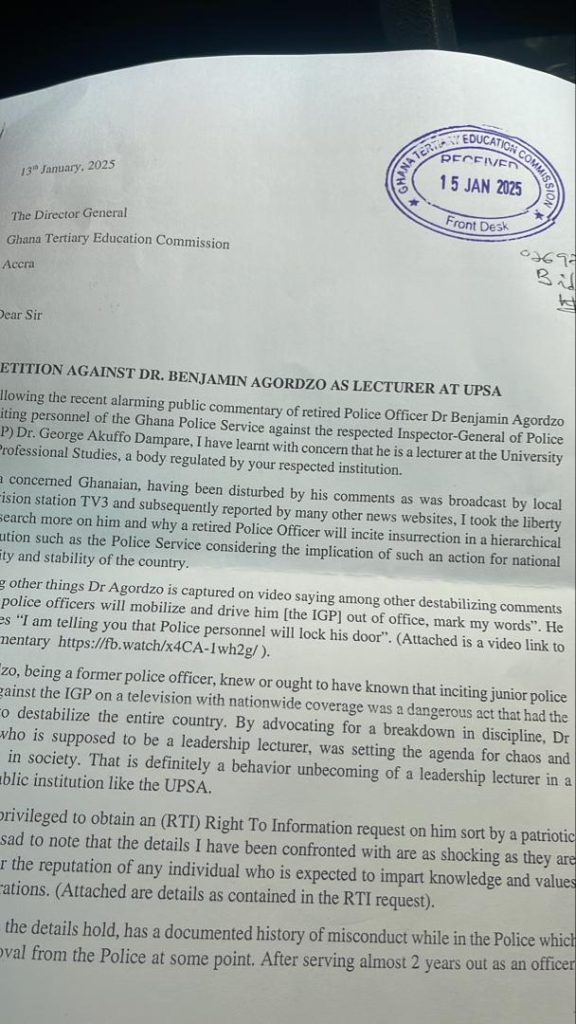
    A formal petition has been submitted to the Ghana Tertiary Education Commission (GTEC) seeking a review of the continued engagement of retired police officer Dr. Benjamin Agordzo as a lecturer at the University of Professional Studies, Accra (UPSA).

    The petitioner, Kojo Otchere, a concerned Ghanaian, has raised objections over Dr. Agordzo’s suitability for his teaching role, citing past professional misconduct and recent public statements allegedly undermining discipline within the Ghana Police Service.

    According to the petition, Dr. Agordzo recently made public comments, aired across national television and social media platforms, which could incite unrest among junior officers against the Inspector-General of Police, Dr. George Akuffo Dampare.

    The petitioner described these remarks as inflammatory and a dangerous breach of discipline within a structured security institution like the police service.

    Otchere further argued that Dr. Agordzo’s current role as a leadership lecturer at UPSA makes such statements particularly concerning, as they contradict the principles of mentorship and ethical guidance expected in academic spaces.

    Additionally, the petition revealed that a Right to Information (RTI) request uncovered a history of professional misconduct during Dr. Agordzo’s service in the Ghana Police Service. He was reportedly dismissed following a lawful conviction on six counts of misconduct but was later reinstated under a demoted rank.

    The petitioner contends that this record raises significant concerns about his qualifications to teach leadership and ethics, stressing that public institutions must prioritize discipline and integrity when selecting educators.

    Otchere has called on GTEC to critically assess Dr. Agordzo’s continued employment at UPSA, emphasizing the need for academic mentors to uphold the highest ethical standards in shaping future leaders.

    The petition concludes with an appeal for GTEC to take decisive action to protect the credibility of the nation’s tertiary education system.

  • Minority pessimistic about govt extending Free SHS to private schools

    Minority pessimistic about govt extending Free SHS to private schools

    The Minority in Parliament has expressed skepticism over the government’s commitment to extending the Free Senior High School (Free SHS) policy to private schools, questioning whether the campaign promise made by President John Dramani Mahama and Finance Minister-designate Dr. Cassiel Ato Forson will be fulfilled.

    Speaking at a press conference, Dr. Gideon Boako, Member of Parliament for Tano North, criticized Dr. Forson’s responses during his vetting on Monday, January 13. He accused the Minister-designate of being evasive when questioned on the inclusion of private schools in the Free SHS programme, a policy commitment outlined in the National Democratic Congress (NDC) manifesto.

    “When asked whether the programme would be extended to private schools, the Minister-designate, in a very dismissive manner, asked whether those private schools write WASSCE exams,” Dr. Boako stated. He noted that this response ignored the fact that several private schools actively participate in the West African Senior School Certificate Examination (WASSCE).

    Dr. Boako also recalled campaign engagements where President Mahama personally assured leaders of private senior high schools that they would be included in the Free SHS initiative if the NDC returned to power.

    “If President Mahama and the NDC knew that no private SHS writes WASSCE exams, why did they promise to include them in the Free SHS programme?” he questioned, emphasizing the growing impatience among private school operators.

    The Minority has therefore urged Dr. Forson to clarify his position and uphold the campaign pledge made during the 2024 general elections. Dr. Boako challenged the Finance Minister-designate and the NDC to account for the basis of their promise, adding: “What is the Finance Minister-designate waiting for? Was this not their campaign promise? What informed the promises? Didn’t they do the numbers first?”

    He concluded by calling on the government to act swiftly to ensure fairness in access to education, stressing the need for all students, regardless of the type of institution, to benefit from the Free SHS policy.

    https://twitter.com/tv3_ghana/status/1879495060192100440

  • NIB Director Attobrah Quaicoe, who clashed with ORAL sacked, replaced with Charles Kipo

    NIB Director Attobrah Quaicoe, who clashed with ORAL sacked, replaced with Charles Kipo

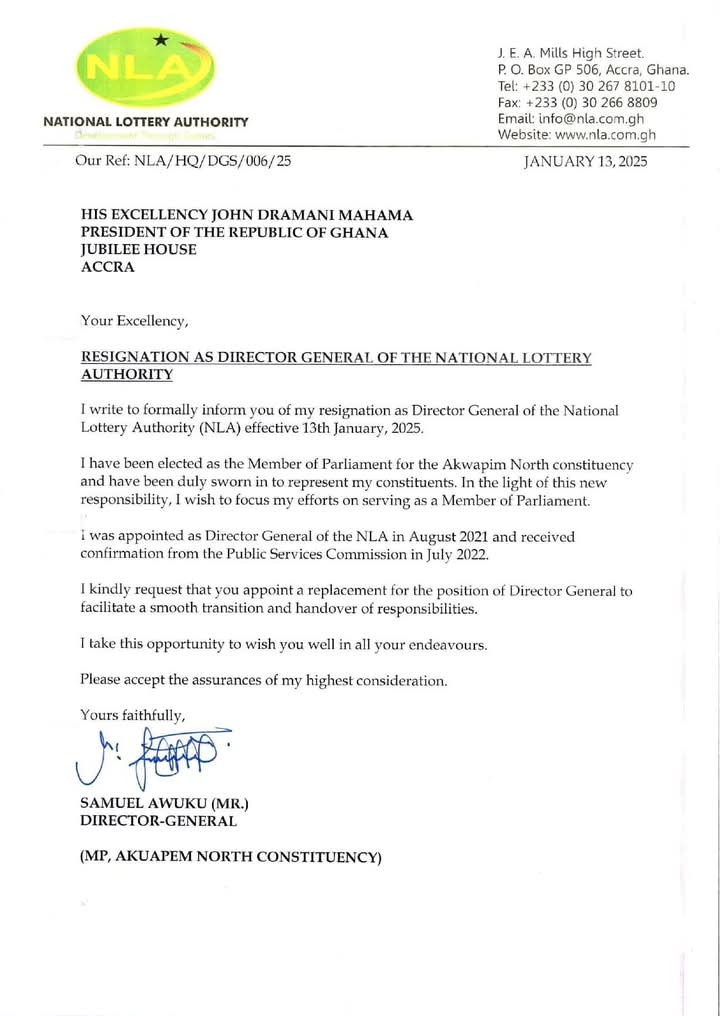
    Director-General of the National Intelligence Bureau (NIB), Nana Attobrah Quaicoe, who was contesting allegations of illegal acquisition of a state land parcel at El Wak by ORAL Committee member Martin Kpebu, has been sacked.

    In a Facebook post by Jubilee House, it was communicated that Charles Kipo now will serve as the Director-General of the National Intelligence Bureau (NIB). This news was among other appointments made by President Mahama.

    Nana Attobrah Quaicoe’s legal team, KUDZE, KUDZE@LAW, had earlier refuted claims made by ORAL Committee member Martin Kpebu, who alleged that Mr. Quaicoe had offered to return the land in exchange for halting further actions against him. These claims were made during an appearance on TV3’s Keypoints show, where Kpebu linked the NIB Director to questionable government land dealings.

    In a statement, Mr. Quaicoe’s lawyers described the allegations as “contrived, false, and without any basis,” insisting that their client had not engaged with any ORAL Committee member, including Hon. Samuel Okudzeto Ablakwa, regarding the land in question. The statement further emphasized that Mr. Quaicoe neither owned nor had any interest in unlawfully acquired government property.

    “Mr. Quaicoe is committed to transparency and legal processes, and the accusations levied against him are entirely baseless,” the statement stressed, adding that the allegations seemed aimed at tarnishing his reputation. The legal team called for a public retraction from Martin Kpebu and warned that failure to do so could result in legal action.

    In reaction, Samuel Okudzeto Ablakwa, in a Facebook post, questioned the basis of Mr. Quaicoe’s denial, stating:

    “So what exactly is the former Director-General of the National Intelligence Bureau, Nana Attobrah Quaicoe denying?

    1. Is he denying that he bought our prime Cantonments state land from President Akufo-Addo at a terribly insulting GHS160,157.00 — that is for less than US$11,000? (See incontrovertible evidence from Lands Commission attached)
    2. Is he denying the fact that the real conservative market value for that piece of land is in excess of US$700,000.00 (GHS10.5 million)?
    3. Is he denying that his government failed to comply with the Land Use and Spatial Planning Act, 2016 (Act 925) by not seeking parliamentary approval when they claimed to have carried out rezoning?
    4. Is he denying that he caused an assign to reach out on this matter?

    I honestly don’t understand what his denials are about. Indeed, interesting days ahead.”

  • Kofi Boakye appointed as Director of Security Operations, Prosper Bani as Security Advisor

    Kofi Boakye appointed as Director of Security Operations, Prosper Bani as Security Advisor

    Former Commissioner of Police (COP) Nathan Kofi Boakye has been appointed by President John Mahama as the Director of Security Operations at the Presidency.

    This is part of a series of key security appointments aimed at strengthening the country’s national security.

    In addition, the President appointed Prosper Douglas Bani, former Minister of the Interior, as his National Security Advisor. Deputy Commissioner of Police (DCOP) Abdul Osman-Razak has been named National Security Coordinator, and Charles Kipo will serve as the Director-General of the National Intelligence Bureau (NIB).

    Felix Kwakye Ofosu, the acting spokesperson for the President, conveyed the news in a statement issued on Wednesday, January 15. According to Ofosu, the appointments reflect President Mahama’s ongoing commitment to national security and ensuring the safety of all Ghanaians.

    Both Kofi Boakye and Prosper Bani were part of President Mahama’s temporary six-member security coordinating team before his official swearing-in. The team, which also included Lt. General Peter Augustine Blay (Rtd.), former Chief of Defence Staff, Kofi Totobi Quakyi, former Minister for National Security, Larry Gbevlo-Lartey Esq., former National Security Coordinator, and Brigadier General Fuseini Iddrissu (Rtd.), was tasked with overseeing initial security operations.

    The team was set to begin their mandate on January 7, 2025, with the goal of enhancing the country’s security framework as part of the new administration’s strategy.

  • Minority accuses Bernard Ahiafor of partisanship in vetting of Mahama’s appointees

    Minority accuses Bernard Ahiafor of partisanship in vetting of Mahama’s appointees

    The Minority in Parliament has accused Bernard Ahiafor, Chairman of the Appointments Committee, of displaying partisanship during the vetting of ministerial nominees appointed by President John Mahama. They claim his conduct undermined the fairness and integrity of the process.

    At a press conference on Wednesday, Dr. Gideon Boako, Member of Parliament for Tano North, criticized Ahiafor for what he described as a biased approach that hindered proper scrutiny of the nominees.

    “Ladies and gentlemen, the Chairman of the Appointments Committee was the first real obstacle to a diligent vetting of the ministerial nominees,” Dr. Boako asserted.

    He accused Ahiafor of shielding nominees from rigorous questioning, alleging that the Chairman’s behavior compromised the committee’s responsibility to hold nominees accountable.

    “He denied the Ghanaian people and the minority members of the committee the opportunity to conduct a thorough vetting of the nominees. He was protective of the nominees and extremely partisan,” Dr. Boako added.

    Highlighting specific instances, Dr. Boako mentioned the Chairman’s aggressive approach, including allegedly shouting at committee members to stifle questioning.

    “Members of the committee were shouted at by the Chairman. You all witnessed how the Member for Atiwa East, Abena Osei-Asare, was shouted at in an attempt to protect the nominees. The Chairman denied legitimate members of the committee the opportunity to ask relevant questions and railroaded the nominees through the process,” he remarked.

    The Minority defended their protest against the Chairman’s conduct, emphasizing their commitment to upholding parliamentary oversight despite Ahiafor’s behavior.

    “It must be noted that the altercation between our side of the committee and the Chairman was a direct protest against his conduct. Under the façade of a lack of capacity, he disregarded the fact that those he bullied were members of Parliament, and that the committee is a sub-body of the House,” Dr. Boako stated.

    Calling for a fairer process, Dr. Boako urged greater transparency and impartiality in future vetting exercises, stressing the importance of accountability in democratic governance.

  • Ato Forson failed to provide concrete solutions to Ghana’s economic problems – Minority

    Ato Forson failed to provide concrete solutions to Ghana’s economic problems – Minority

    Dr. Cassiel Ato Forson, the Finance Minister-designate, has come under fire from the Minority over his responses during his recent vetting before Parliament’s Appointments Committee.

    The criticism, led by Dr. Gideon Boako, Member of Parliament for Tano North, centered on Dr. Forson’s handling of critical economic issues.

    At a press conference on Wednesday, January 15, Dr. Boako accused Dr. Forson of failing to deliver clear and coherent strategies to address Ghana’s pressing economic challenges. He described the nominee’s responses as vague and disappointing.

    “Hon. Cassiel Ato Baah Forson, who appeared as the Finance Minister-designate, was evasive, inconsistent, and lacked clarity of thought,” Dr. Boako stated.

    Dr. Boako argued that Dr. Forson’s experience as a former Deputy Minister of Finance and a ranking member of the Finance Committee should have prepared him better for the vetting process. He criticized Forson’s inability to offer straightforward solutions.

    “Having served as a Deputy Minister of Finance and a ranking member of the Finance Committee, one would have expected his answers to be forthright and to exude concrete solutions,” he added.

    The Minority specifically took issue with Dr. Forson’s response regarding the government’s promise to cover the first-year tuition fees for tertiary students. Dr. Boako expressed frustration with Forson’s failure to give a definitive response.

    “How can a Finance Minister-designate look into the faces of parents and young Ghanaian students and say that because he is not yet the Minister, he cannot answer whether the pledge by President Mahama to pay for their fees would be honoured?” he questioned.

    Dr. Boako asserted that the nominee’s vague response undermined public trust, particularly for students and parents who had relied on the National Democratic Congress’ (NDC) campaign promises. He further accused the NDC of misleading the public with unattainable assurances.

    During his vetting, chaired by Bernard Ahiafor, Dr. Forson had expressed confidence in Ghana’s revenue potential, stressing that enhanced compliance rather than increased taxation could boost revenue collection.

    “We don’t necessarily have to increase taxes before you rake in revenue. What we need to do is improve compliance. I will work with the GRA and the tax policy unit to ensure we increase compliance and raise the revenue as much as we can,” he stated.

    Outlining his goals, Dr. Forson emphasized his commitment to improving Ghana’s tax-to-GDP ratio. “In the medium term, it is my vision, when approved, to increase the tax revenue from 13.8 percent of GDP to about 16 to 18 percent,” he noted.

  • GNFS to deploy fire appliances, patrol team at markets to check surging fire cases

    GNFS to deploy fire appliances, patrol team at markets to check surging fire cases

    The Ghana National Fire Service (GNFS) has revealed plans to deploy a specialized task force across the country in an effort to combat the growing frequency of fires in the markets.

    This measure aims to enhance safety and prevent further destruction caused by market fires.

    Chief Fire Officer Julius A. Kuunuor emphasized the importance of vigilance, explaining that fire personnel and vehicles will be stationed at various market locations daily, providing fire coverage from 6:00 PM to 6:00 AM. “Personnel and fire appliances will be stationed at various markets across the country from 1800 hours to 0600 hours daily, providing round-the-clock fire cover,” he said.

    The GNFS will also establish a dedicated patrol team that will conduct regular rounds in major markets, ensuring continuous monitoring and a quick response to potential fire hazards. In addition to these measures, fire units will be set up in key markets to facilitate safety education, conduct routine inspections, and enforce safety regulations.

    “To ensure comprehensive monitoring, all GNFS personnel assigned to market protection duties will submit daily Situation Reports (SITREPS) to the National Headquarters Operations (NHQ OPS INFO) platform by 0900 hours for further review and necessary action,” Chief Kuunuor added.

    In a bid to strengthen the response system, the GNFS will work alongside market authorities, the Ghana Police Service, and National Security to coordinate efforts and bolster security at the markets.

    This initiative comes in the wake of a disturbing surge in market fires that have caused widespread damage. A recent fire at the Techiman Central Market left numerous shops completely destroyed, adding to a growing list of affected markets, including the Tamale Timber Market, Accra’s Kantamanto Market, and Kumasi’s Kwadaso Wood Market. These incidents have caused substantial losses for traders and raised alarm about the need for urgent intervention.
  • WAPCo to undertake maintenance work on Feb 3 to avert   power crisis

    WAPCo to undertake maintenance work on Feb 3 to avert power crisis

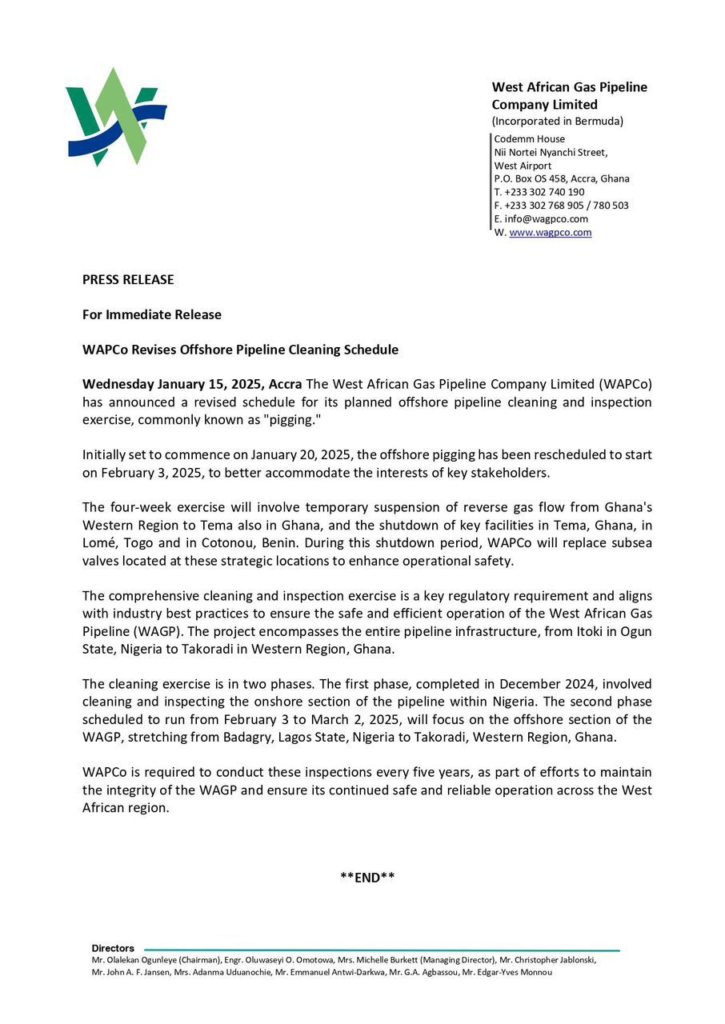
    The West African Gas Pipeline Company Limited (WAPCo) has announced the commencement of its offshore pipeline maintenance exercise, commonly referred to as “pigging,” scheduled for February 3.

    The maintenance work aims to prevent a potential power crisis by ensuring the safe and efficient operation of the West African Gas Pipeline (WAGP).

    The four-week offshore pigging exercise, initially planned for January 20, was rescheduled to accommodate key stakeholders’ interests. The activity will result in the temporary suspension of reverse gas flow from Ghana’s Western Region to Tema and the shutdown of critical facilities in Tema, Ghana, Lomé, Togo, and Cotonou, Benin.

    As part of the maintenance, WAPCo will replace subsea valves in these strategic locations to enhance operational safety and pipeline efficiency. The exercise is a regulatory requirement and aligns with global industry standards for pipeline integrity management.

    WAPCo clarified that the maintenance will occur in two phases. The first phase, completed in December 2024, involved cleaning and inspecting the onshore section of the pipeline in Nigeria. The second phase, scheduled from February 3 to March 2, 2025, will focus on the offshore pipeline segment stretching from Badagry, Lagos State, Nigeria, to Takoradi in Ghana’s Western Region.

    The Ghana Grid Company Limited (GRIDCo) has expressed concerns about a possible power crisis, commonly referred to as ‘dumsor,’ due to a looming fuel shortage linked to the maintenance activity. GRIDCo, in a recent report, cautioned that the pipeline shutdown could significantly impact Ghana’s power generation capacity.

    “The exercise, originally planned for October 2024 but rescheduled at the Ministry of Energy’s request, will lead to a significant reduction in natural gas supply,” GRIDCo noted in its report.

    WAPCo has emphasized that the maintenance work is essential for the long-term reliability and safety of the WAGP and is part of a routine inspection conducted every five years. The company reassured the public that it remains committed to minimizing disruptions while ensuring a secure energy supply across the region.

  • Diplomatic passports issued by Akufo-Addo gov’t recalled for verification

    Diplomatic passports issued by Akufo-Addo gov’t recalled for verification

    Diplomatic passports issued under the Akufo-Addo administration are being recalled for verification, as part of a broader government effort to regulate the issuance and use of official travel documents.

    The recall, announced in a formal directive on Tuesday, January 14, President John Mahama, through his Executive Secretary, noted that it is aimed at preventing misuse, safeguarding the nation’s reputation, and upholding the integrity of diplomatic engagements in line with both national and international standards.

    To ensure the smooth execution of the recall, the Ministry has been tasked with specific steps. First, a public notice will be issued to inform all holders of Diplomatic and Service Passports issued under the previous administration to return them for verification and, where applicable, re-issuance.

    Secondly, a compliance deadline has been set, requiring all affected individuals to submit their documents by January 24, 2025. This timeline is intended to provide sufficient opportunity for all concerned to meet the requirements.

    A comprehensive verification process will be conducted once the passports are returned. This review will ensure that the documents meet the current eligibility criteria for such official travel permits.

    The directive emphasizes the importance of cooperation to maintain the credibility and efficiency of the country’s passport system. It also invites those requiring further clarification or assistance during the process to contact the issuing authority for guidance.

  • OMCs blame gold-for-oil policy for looming fuel shortage

    OMCs blame gold-for-oil policy for looming fuel shortage

    The Chamber of Oil Marketing Companies (OMCs) has sounded the alarm over a possible fuel shortage in the coming days, attributing the looming crisis to the suspension of the gold-for-oil policy and halted refining activities at Sentuo Oil.

    Dr. Riverson Oppong, Chief Executive Officer of the Chamber, has called on the government to take immediate action to prevent the anticipated shortage.

    “When the gold-for-oil started, it peaked and when it peaked, we in the petroleum sector saw this coming. Anytime you are drawing a graph and there is a peak, there is a fall and we warned the government but it won’t listen.

    “And when the supply was cut to an extent and when the Sentuo Oil refinery also ceased to produce, or let’s say, process, we anticipated a loss. Today, the fuel shortage we find in the market has to do with the PMS. BDC’s ceased to import because there was gold-for-oil,” he explained.

    The gold-for-oil (G4O) policy, introduced in 2022 by former Vice President Dr. Mahamudu Bawumia, aimed to stabilize Ghana’s fuel supply and reduce pressure on the cedi. Under the policy, Ghana exchanged gold for imported petroleum products, seeking to minimize dollar dependency, control fuel prices, and manage balance of payment issues.

    By March 2023, the Precious Minerals Marketing Company (PMMC) had purchased over 60,000 ounces of gold valued at more than $97 million from local miners. The goal, however, was to secure at least 160,000 ounces worth around $300 million monthly, an amount expected to cover half of the nation’s monthly oil demand.

    However, the program’s sustainability has come under scrutiny. Former President John Dramani Mahama has vowed to probe the policy if elected president. Speaking at the 3rd Annual Transformational Dialogue on Small-scale Mining at the University of Energy and Natural Resources (UENR) in Sunyani, Mahama questioned the transparency of the deal.

    “We will investigate the opaque gold-for-oil programme and expose the actors benefiting from this so-called barter agreement. Reports reaching me suggest that a new debt burden is being created because Ghana has not been able to keep up with its delivery of gold under the programme,” Mahama said.

    The OMCs have called for clearer policy direction and better coordination between government and industry players to avert fuel supply disruptions.

  • Distrust is the biggest challenge in Bawku crisis –  National Peace Council

    Distrust is the biggest challenge in Bawku crisis – National Peace Council

    Executive Secretary of the National Peace Council, Dr. George Amoh, has identified deep-seated distrust among factions as the primary obstacle to lasting peace in Bawku, a community grappling with prolonged conflict.

    Speaking on Joy News’ PM Express, Dr. Amoh stressed the critical role of trust and effective leadership in resolving the longstanding chieftaincy dispute in the area.

    “The issue of trust is critical in peacebuilding, and I think that has been the biggest challenge in the Bawku crisis,” he stated, emphasizing that misunderstandings often arise due to entrenched suspicions between factions.

    “Even when people mean well, the level of distrust is so significant that intentions are often misunderstood or ignored,” he added.

    Dr. Amoh described former President John Mahama’s recent visit to Bawku as a significant gesture toward reconciliation, explaining that such actions can have a positive psychological impact in conflict resolution.

    “In peacebuilding, signals are very important, and his presence there, the words he’s spoken, are very critical,” he noted.

    Commending Mahama’s decision to prioritize Bawku as a key destination outside Accra, Dr. Amoh highlighted its importance in the broader peace process.

    “This is his first trip outside of Accra, apart from Pomadze, where he joined the Ahmadiyya community last week. Going to Bawku is very significant. He has met the Bawku Naba, and I believe he will also meet the Nayiri, which is very critical,” he said.

    The National Peace Council, according to Dr. Amoh, has remained steadfast in advocating for dialogue and coexistence as pillars of peace.

    “If you look at the statement we issued, we are trying to emphasize the need for us to coexist and promote peace. Without peace, no development can stand, so we are in search of peace,” he reiterated.

    Drawing comparisons to unrest in other regions like Ejura, Dr. Amoh called for impartial leadership and urged that appointees in conflict areas be seen as neutral figures capable of unifying divided communities.

    Former Defence Minister Dominic Nitiwul’s recent comments on trust issues in Bawku were echoed by Dr. Amoh, who further underscored the need for credible leadership.

    “Trust has been damaged to the extent that even if you mean well, people do not give your actions the attention they deserve. This is why leaders need to be deliberate about restoring faith and confidence,” he said.

    Dr. Amoh called on all stakeholders, including political leaders, traditional authorities, and civil society organizations, to collaborate more effectively to restore peace in Bawku.

    He concluded by reaffirming the Peace Council’s commitment to facilitating dialogue and reconciliation efforts in the region.

    “President Mahama’s visit is a step in the right direction, but we need sustained efforts and consistent engagement to rebuild trust and ensure peace,” Dr. Amoh stated.

    The Bawku conflict, rooted in a chieftaincy dispute, has led to significant violence and displacement of residents, posing serious challenges to the region’s stability and development.

  • Military personnel allegedly attack residents in Walewale

    Military personnel allegedly attack residents in Walewale

    Military personnel have allegedly attacked residents in Walewale, North East Region, leaving several individuals with serious injuries following a reported crackdown.

    Eyewitnesses described scenes of brutality, claiming soldiers stormed the area, ordering people to lie face down before beating them with wire cans. Some were allegedly forced to roll on the ground while being tortured with a sharp object described as mesh wire.

    Multiple victims sustained deep lacerations and fractures, with at least two individuals reportedly seeking treatment from a traditional bone specialist due to the severity of their injuries.

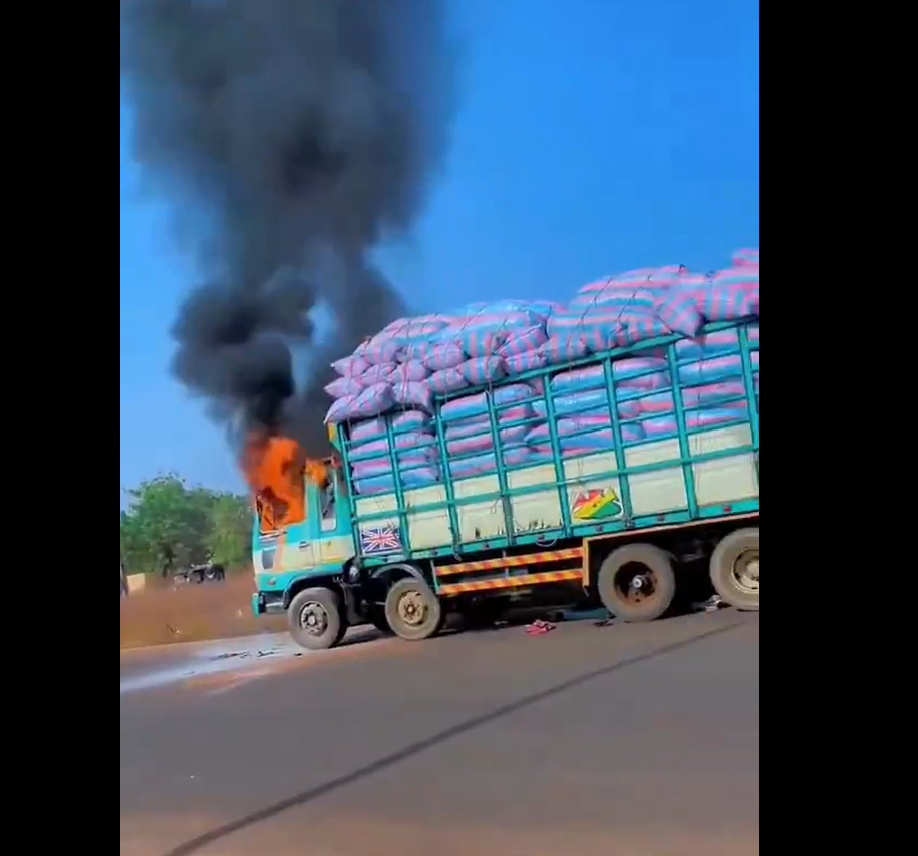
    While the motive behind the assault remains uncertain, a police source suggested the violence might be linked to the recent burning of a truck transporting vegetables from Missiga to Kumasi. The incident is reportedly connected to the ongoing Bawku conflict.

    Victims shared harrowing accounts of the ordeal, describing how soldiers in armoured vehicles stormed shops and community gathering spots, forcing residents to the ground and assaulting them with wire cans and gun butts.

    A motorbike mechanic, 34, who was attacked while working alongside his customers, said, “I still don’t know why they beat me.”

    Additionally, workers attending to their shops and a group of NDC supporters resting under a pavilion were reportedly brutalised during the crackdown.

    Authorities are yet to issue an official statement on the incident, and residents continue to call for justice and accountability for the violence inflicted.

  • Ensure anti-LGBTQ bill is passed into law – Catholic Bishops to Mahama

    Ensure anti-LGBTQ bill is passed into law – Catholic Bishops to Mahama

    The Ghana Catholic Bishops Conference has urged President John Dramani Mahama’s government to expedite the reintroduction and passage of the Human Sexual Rights and Family Values Bill, commonly referred to as the anti-LGBTQ bill.

    During a meeting on Tuesday, January 14, President Mahama proposed that a government-sponsored bill would be more effective than the current Private Member’s Bill, as it would ensure broader consultation and stronger national consensus.

    The President further highlighted the need to revise school curriculums to include moral and cultural teachings aimed at reinforcing Ghanaian and African values among children.

    Most Reverend Matthew Gyamfi, President of the Ghana Catholic Bishops Conference, stressed the importance of passing the bill without delay.

    “What we want is that it is made into a law. That does not mean that it cannot be taught in the schools if it is made into a law. Many of our laws are taught in schools through civic education and other things.

    “So the fact that it should be taught does not rule out the fact that it should be made into a law. Ghanaians are overwhelmingly in favour of it, so we don’t want the use of any technical words to demean what Ghanaians want.”

    President Mahama clarified the bill’s current status, stating, “As far as I know, the bill did not get to the President for assent. And so the convention is that all bills that are not assented to before the expiration of the life of Parliament expired, and so that Bill is effectively dead, it has expired.”

    He emphasized the importance of consensus in the bill’s reintroduction, suggesting a collaborative approach. “I do think that we should have a conversation on it again, so that all of us, if we decide to move that bill forward, [we do so] with a consensus.”

    The former president also proposed that the bill be reintroduced with formal government backing after thorough stakeholder consultations.

    “I don’t know what the promoters of the bill want to do, but we should have a conversation about it again… probably it shouldn’t be a private members bill. It should be a government bill with government behind it after consultation with all the stakeholders to see how to move this forward,” he stated.

  • ECG’s ‘Operation Keep The Lights On’ to rake in revenue kick-starts today

    ECG’s ‘Operation Keep The Lights On’ to rake in revenue kick-starts today

    The Electricity Company of Ghana Limited (ECG) will commence a nationwide revenue mobilisation exercise dubbed “Operation Keep The Lights On” from today, January 15 to Friday, January 31, 2025.

    The power distributor announced the 17-day initiative in an official statement on January 14, 2025. The exercise aims to recover outstanding arrears from all categories of customers and inspect prepaid meters to verify their integrity.

    As part of the campaign, ECG reminded customers that self-reconnection after disconnection is a criminal offence, warning defaulters to avoid such illegal practices.

    During the exercise, ECG’s regional and district offices will operate with reduced staff, focusing only on essential services to allow full participation by top management and staff.

    “In this regard, the regional and district offices will operate with a lean staff pool who will provide essential services to customers during this exercise to enable total participation by top Management and staff,” the statement noted.

    ECG further emphasized that the Public Utilities Regulatory Commission’s Legislative Instrument (LI 2413) grants the company full access to all installations, urging customers and the public to cooperate with staff during the exercise.

    The revenue mobilisation effort comes as ECG struggles with a massive debt owed to nine Independent Power Producers (IPPs) supporting Ghana’s energy sector.

    To address these financial challenges, Energy Minister-designate John Abdulai Jinapor has committed to establishing a comprehensive framework for private sector participation in ECG’s operations by the end of 2025.

    He explained that the initiative aims to enhance operational efficiency and improve power distribution across the country. A committee will assess global best practices to determine whether a concession model or full privatization would be most suitable for ECG’s operations.

    Mr. Jinapor assured that the process would be transparent and free from political interference to ensure optimal results.

  • Justina Nelson appointed as Acting CEO of MIIF

    Justina Nelson appointed as Acting CEO of MIIF

    Justina Nelson has been named the Acting Chief Executive Officer of the Minerals Income and Investment Fund (MIIF) by President John Dramani Mahama.

    The appointment, announced under Article 195(1) of the Constitution and Section 21(2) of the MIIF Act, 2018 (Act 978), was confirmed in a statement released by Acting Presidential Spokesperson Felix Kwakye Ofosu on Tuesday, January 14.

    This comes after President John Dramani Mahama dismissed Edward Nana Yaw Koranteng from his position as Chief Executive Officer of the Minerals Income and Investment Fund (MIIF).

    A letter dated January 13, 2025, and signed by the Secretary to the President, Callistus Mahama, confirmed the termination of Yaw Koranteng’s appointment with immediate effect.

    The directive instructed Yaw Koranteng to transfer his responsibilities to the government’s representative at the Ministry of Finance, Dr. Cassiel Ato Forson, who will manage the Fund’s operations until a permanent CEO is appointed.

    Ms. Nelson brings over two decades of experience in the banking sector. She currently serves as a Group Head at Zenith Bank Ghana Limited, where she oversees the Energy and Commercial Banking sectors.

    Her academic credentials include a Master of Laws in Corporate and Commercial Law and a Master of Business Administration in Marketing, both from the University of Ghana. Additionally, she holds a Bachelor of Laws (Hons) degree from the Ghana Institute of Management and Public Administration (GIMPA) and a Bachelor of Arts (Hons) degree in Management and Psychology from the University of Ghana.

  • Mahama’s 10 Regional Ministers-designate presented to Parliament

    Mahama’s 10 Regional Ministers-designate presented to Parliament

    President John Dramani Mahama has officially submitted a list of 10 regional minister nominees to Parliament for approval. The Speaker of Parliament, Alban Bagbin, received the communication, which seeks the vetting and confirmation of the candidates.

    This move underscores the President’s commitment to enhancing governance and promoting efficient administration across the regions.

    The nominees presented for consideration are:

    • Northern Region: Ali Adolf John
    • Oti Region: John Kwadwo Gyapong
    • Volta Region: James Gunu
    • Eastern Region: Mrs. Rita Akosua Adjei Awatey
    • North-East Region: Ibrahim Tia
    • Ashanti Region: Dr. Frank Amoakohene
    • Upper East Region: Akamugri Donatus Atanga
    • Ahafo Region: Charity Gardiner
    • Savannah Region: Salisu Be-Awuribe
    • Greater Accra Region: Linda Ocloo, MP

    Six regions remain without nominations, including Bono, Bono East, Central, Western, Western North, and Upper West.

    Profiles of the Nominees:

    Dr. Frank Amoakohene is a medical professional and youth leader with expertise in healthcare, governance, and public service. He holds a Bachelor of Medicine and Surgery from the University of Ghana, a Doctor of Medical Laboratory Science degree from the University for Development Studies, and an MBA from the Accra Business School. He is the Ashanti Regional Secretary of the NDC.

    James Gunu, a veteran media practitioner, holds a Bachelor of Arts degree in Journalism, a Master of Arts in Development Communication, and a Master of Arts in Local Government Administration and Organisation. He previously served as the MCE for Akatsi.

    Mrs. Rita Akosua Adjei Awatey, a governance and education expert, holds an MPhil in Leadership from UPSA and is pursuing a PhD in Migration at the University of Ghana. She has served as the Presiding Member of the Yilo Krobo Municipal Assembly and Deputy Eastern Regional Women Organiser of the NDC.

    John Kwadwo Gyapong, a business executive and former MP for Akan Constituency, is currently the NDC Regional Chairman for Oti. He holds a Bachelor of Science in Education from the University of Cape Coast.

    Akamugri Donatus Atanga, a human rights expert, holds a Master’s in Human Rights and a Bachelor’s in Education (Social Studies and Mathematics) from UEW. He previously coordinated the National School Feeding Programme and served as Presiding Member of the Bongo District Assembly.

    Ali Adolf John, an education professional, holds a Bachelor’s and a Master’s in Technology Education from UEW. He has served as a Tutor, Circuit Supervisor, and Desk Officer within the Ghana Education Service and is the current Northern Regional Chairman of the NDC.

    Charity Gardiner, a businesswoman and HR professional, has nearly a decade of experience in non-profit and humanitarian work with a focus on girl child education and empowerment. She holds both a Master’s and a Bachelor’s degree in Human Resource Management.

    Salisu Be-Awuribe, a law lecturer and development expert, holds a Professional Qualifying Certificate from the Ghana School of Law, a Master’s in Law from UG, and a Bachelor’s in Land Economy and Law from KNUST. He has served as DCE for Central Gonja District.

    Hon. Linda Ocloo, MP for Shai-Osudoku, holds a Bachelor of Science in Administration (Banking and Finance) from UG.

    Ibrahim Tia, a public health finance expert, holds a Bachelor’s degree in ICT, a Postgraduate Diploma in Management Studies, and a Mini MBA in Project Management. He has served with the NHIS and is the current NDC Regional Secretary for the North-East Region.

  • Akosombo Dam flood exposed gap in Ghana’s mental health support systems – WHO

    Akosombo Dam flood exposed gap in Ghana’s mental health support systems – WHO

    The World Health Organization (WHO) has determined that the Akosombo Dam spillage in October 2023 exposed significant gaps in Ghana’s mental health support systems, emphasizing the need for psychological care during public health emergencies.

    The disaster, which led to severe flooding across parts of the Eastern, Volta, and Greater Accra regions, displaced thousands of residents and caused widespread destruction. Beyond the physical damage, the floods triggered profound psychological distress among affected communities, highlighting the urgent need for mental health services.

    In the aftermath, many families were left homeless, losing their possessions and livelihoods. Children faced trauma from losing their sense of safety, while parents battled feelings of helplessness. Health workers, some of whom were also flood victims, struggled to support others while managing their own emotional burdens, according to the WHO.

    Dr. Leveana Gyimah, Technical Officer for Mental Health at WHO, stressed the importance of integrating mental health care into disaster response efforts.

    “Floods and other natural disasters don’t just destroy property—they leave deep emotional scars. The psychological impact can be long-lasting, affecting not just individuals but entire communities. By integrating mental health and psychosocial support into the flood response, we’ve been able to bring relief to those most affected and build the capacity of health workers to address these needs,” she stated.

    Recognizing the need for psychosocial support, WHO, with funding from UK in Ghana, collaborated with Ghana Health Services and the Mental Health Authority to provide mental health services to flood victims. The initiative focused on both direct counseling for survivors and capacity-building for health workers to handle trauma cases effectively.

    Among the beneficiaries was Richard Sedem Ahakutor, a mental health nurse from Sogakope, who faced his own mental health challenges during the disaster.

    “The flood was overwhelming. I lost everything, and at the same time, I was expected to help others cope. It became too much to handle. Thanks to the support I received through this intervention, I was able to get back on my feet and continue supporting my community,” he shared.

    Dr. Senanu Kwesi Dzokoto, Volta Regional Director of Ghana Health Services, underscored the broader implications of the flood on Ghana’s health systems.

    “Emergencies like this expose the gaps in our mental health support systems. WHO’s collaboration with the Mental Health Authority has allowed us to respond effectively to the needs of flood victims, ensuring that both residents and health workers receive the help they deserve. This intervention has been a critical step toward building a more resilient health system,” he said.

    To provide comprehensive care, the initiative deployed clinical psychologists and psychiatrists to offer counseling and psychiatric services. Dr. Richard Dei-Asamoa, a clinical psychologist and psychiatrist at Korle-Bu Teaching Hospital, emphasized the importance of mental health care in disaster situations.

    “Mental health is often overlooked during emergencies, but it is one of the most critical aspects of recovery. People need help to process their grief, anxiety, and trauma. This initiative has demonstrated how integrating mental health and psychosocial support services into disaster response can truly transform lives and communities,” he noted.

    The WHO’s intervention has not only provided immediate relief but also strengthened Ghana’s mental health support systems, ensuring lasting benefits for both flood survivors and healthcare providers. The initiative continues to highlight the critical importance of mental health care in disaster response frameworks.

    Last year, the previous government announced plans to construct 2,225 new homes for those affected by the Akosombo Dam spillage but that is yet to be realised.

    Member of Parliament for North Tongu, Samuel Okudzeto Ablakwa, has initiated legal proceedings against the government to secure compensation for all victims of the Akosombo Dam spillage.

  • Minister of Defense, Interior, others to be appointed this week to address Bawku crisis

    Minister of Defense, Interior, others to be appointed this week to address Bawku crisis

    President John Mahama has announced plans to appoint key security ministers, including defense, interior, within the week as part of efforts to restore peace in Bawku, following years of conflict in the area.

    Speaking during a visit to Bawku on Tuesday, January 14, President Mahama reiterated his administration’s determination to resolve the long-standing tensions, emphasizing that stability in the region remains a top priority.

    “During the campaign, I stated that if God granted our desire and I was elected president, bringing peace to Bawku was going to be one of my number one priorities,” he said.

    The President assured residents that the formation of a full security leadership team would be completed soon, enabling a more coordinated effort to address the situation.

    “We are putting in place the various appointments so that we can have ministers and other officials responsible for security to take charge,” he explained. “Within this week, we will appoint the Minister of Defense, Minister of Interior, National Security Advisor, National Security Coordinator, BNI Director, and others. Once these appointments are made, I will charge them to make Bawku one of their top priorities.”

    President Mahama acknowledged the hardship and fear the people of Bawku have experienced over the past three years due to the prolonged conflict. He recalled a period of calm during his previous administration and assured the community of his full commitment to restoring that peace.

    “I want to assure you that I am fully apprised of the issues, and I am committed to dealing with them. Trust in myself and this administration, and by the grace of God, peace will be restored permanently to Bawku,” he added.

    The government recently imposed a dawn-to-dusk curfew in the area following renewed tensions linked to the controversial return of Seidu Abagre after a chieftaincy dispute. Despite the curfew, violence has persisted, with over 30 deaths reported in recent weeks.

    To curb the unrest, security forces have deployed surveillance drones to track movements and identify individuals responsible for the attacks. The use of drones has led to multiple arrests and the seizure of firearms, with authorities hopeful the technology will aid efforts to stabilize the area further.

    https://twitter.com/utvghana/status/1879193554695958903

  • A Plus vows to expose Ahmed Suale’s killer if CID fails to update public

    A Plus vows to expose Ahmed Suale’s killer if CID fails to update public

    Kwame Asare-Obeng, also known as A Plus, has threatened to publicly disclose sensitive details regarding the murder of investigative journalist Ahmed Suale if the Criminal Investigations Department (CID) of the Ghana Police Service fails to provide an update on the ongoing investigation.

    The Gomoa Central Member of Parliament made the bold statement in a Facebook post, urging the CID to report on the case’s progress or risk having the identity of the alleged murderer revealed.

    Suale, a member of the Tiger Eye PI investigative team, was tragically killed in Accra in January 2019, sparking widespread calls for justice. Despite public outrage, progress on the investigation has been slow, drawing renewed attention from figures like Asare-Obeng.

    In his post, the MP shared that he was summoned by the CID last year and provided crucial information about the case. During the meeting, he reportedly named a former high-ranking government official from the previous administration as being involved in the planning of the crime.

    “I also disclosed my source, a highly credible one, in the presence of the CID director,” Asare-Obeng said.

    Asare-Obeng demanded that the CID offer a clear update to the public regarding the status of the investigation, stressing the need for transparency on whether more time is required to resolve the case.

    “It is critical that the CID director updates the public on the progress of the investigation and indicates with justification whether additional time is required,” he remarked.

    Frustrated by the lack of progress, the MP issued a 48-hour ultimatum to the CID, warning that if no update was provided, he would call for a formal briefing from the Ghana Police Service in Parliament. Should this effort also fail, he vowed to use social media to directly disclose details about the case, including the identity of the alleged perpetrator.

    Mr. Asare-Obeng’s statement has reignited public interest in the unresolved murder, with many now urging the police to step up their efforts to hold the responsible parties accountable. If the allegations of a former government minister’s involvement are proven true, it would represent a major breakthrough in the investigation and further fuel the calls for justice.

    The Ahmed Suale murder case continues to be one of Ghana’s most high-profile unsolved crimes, highlighting the risks faced by investigative journalists in the country.

  • Samuel Awuku no longer NLA Director-General; govt to make new appointment

    Samuel Awuku no longer NLA Director-General; govt to make new appointment

    Samuel Awuku has stepped down as the Director-General of the National Lottery Authority (NLA), with his resignation taking effect from January 13, 2025.

    This decision comes after his election as the Member of Parliament for the Akuapem North Constituency, a role he has since assumed following his swearing-in.

    In a letter addressed to President John Mahama, Awuku expressed gratitude for his tenure, having served in the NLA’s top role since August 2021. He highlighted that his new parliamentary duties would require his full attention, prompting his resignation.

    “I have been elected as the Member of Parliament for the Akuapem North constituency and have been duly sworn in to represent my constituents. In light of this new responsibility, I wish to focus my efforts on serving as a Member of Parliament,” he wrote.

    The government is yet to announce a successor to Awuku at the helm of the NLA.

  • Armed men attack cargo truck at Walewale

    Armed men attack cargo truck at Walewale

    A cargo truck was ambushed by a group of armed men in Walewale, who set both the vehicle and its cargo ablaze.

    The attackers struck unexpectedly, causing panic and chaos in the area. Fortunately, quick-thinking local residents rushed to the scene and managed to control the fire, preventing extensive damage to the truck’s goods.

    Police arrived shortly afterward and have promised to launch a full-scale investigation into the incident.

    Authorities are looking into the attack to identify those responsible and understand the motive behind it.

    https://twitter.com/SIKAOFFICIAL1/status/1879146335384793342

  • Govt’s approach will create a resilient and reliable energy ecosystem – IPGG

    Govt’s approach will create a resilient and reliable energy ecosystem – IPGG

    The Independent Power Generators (IPGG) has expressed confidence that the government’s energy strategy will lead to a resilient and reliable energy ecosystem for Ghana.

    In a statement signed by its Chief Executive Officer, Elikplim Apetorgbor, the IPGG emphasized its readiness to collaborate with the Energy Minister-designate, John Abdulai Jinapor, to advance sustainable energy generation, promote renewable sources, and address financial and policy challenges in the sector.

    “We believe that Mr. Jinapor’s pragmatic approach and expertise will contribute significantly to the creation of a resilient and reliable energy ecosystem for Ghana,” the statement noted.

    During his vetting before Parliament’s Appointments Committee on January 13, Mr. Jinapor outlined his goal to establish a framework for private sector involvement in the operations of the Electricity Company of Ghana (ECG) by the end of 2025. He highlighted transparency and expert participation as key pillars of this initiative.

    “We believe there should be private sector participation. What we intend to do is to form a seven-member committee, comprising technical experts, legal minds, financial analysts, industry players, and even a consumer representative,” he explained.

    The committee will explore global best practices to determine whether a concession model or full privatization would be more appropriate for ECG’s operations. Mr. Jinapor assured the committee that the process would be free from political interference and based on openness and transparency.

    “My target is to push for six months, but I do not want to stampede the committee. However, give or take, within this year, we should complete the framework,” he added.

    The IPGG also acknowledged Mr. Jinapor’s extensive experience in Ghana’s energy sector and his focus on innovation, sustainability, and efficiency, as demonstrated during his vetting process.

    “As a critical stakeholder in the energy industry, we are confident his leadership will bring a renewed focus and drive toward addressing the challenges confronting the power sector,” the statement concluded.

    The IPGG congratulated John Abdulai Jinapor and reaffirmed its commitment to supporting his vision for Ghana’s energy future.

  • Police manhunt robbers who fled with over 30 pounds of gold at Amansie South

    Police manhunt robbers who fled with over 30 pounds of gold at Amansie South

    Police have initiated a search operation for two suspected armed robbers who fled with over 30 pounds of gold, cash exceeding GH¢11,000, and vehicle keys during an attack at Manso Watreso in the Amansie South District, Ashanti Region.

    The suspects targeted community mining workers returning from work. Two of their accomplices were captured and lynched by enraged residents after an alarm was raised.

    Assembly Member for Manso Watreso Electoral Area, Kofi Mensah, confirmed the details, stating, “The robbers seized over 30 pounds of gold, pickup truck keys, and more than GH¢11,000 in cash from the miners.”

    Following the lynching, police were alerted and have since transported the bodies of the deceased to the morgue while continuing investigations into the robbery.

  • Mahama to engage Bawku traditional leaders over resurging conflict

    Mahama to engage Bawku traditional leaders over resurging conflict

    Former President John Dramani Mahama is set to meet with traditional leaders in Bawku on Tuesday, January 14, 2025, as part of efforts to address the resurging conflict in the region.

    The visit underscores Mahama’s commitment to promoting peace and reconciliation in Bawku, a region historically affected by tensions and disputes. His engagements will focus on encouraging dialogue among the conflict factions and key stakeholders to explore lasting solutions.

    “The President is determined to resolve the decades-old conflict in Bawku and will use the visit to engage the conflict factions and key stakeholders to promote dialogue to achieve lasting peace,” stated Felix Kwakye Ofosu, Acting Presidential Spokesperson.

    Mahama’s peace initiative aligns with his broader vision for a harmonious Ghana, where conflicts are resolved through diplomacy and inclusive dialogue.

    Following his meetings in Bawku, Mahama will visit Nalerigu before returning to Accra later in the day, reaffirming his administration’s focus on peace, reconciliation, and national unity as essential pillars of governance.

    Last year, security forces in Bawku introduced drones to assist in tracking weapons and identifying those responsible for ongoing attacks in the area.

    The initiative has already resulted in the arrest of several suspects and the seizure of firearms. The drones, which are equipped to operate at high altitudes, are being used to monitor and track the movements of individuals involved in the violent activities. Once suspects are identified, security forces move in to make arrests.

    https://twitter.com/Citi973/status/1879110033386135660

  • Anti-LGBTQ bill didn’t get to Akufo-Addo for assent – Mahama

    Anti-LGBTQ bill didn’t get to Akufo-Addo for assent – Mahama

    Former President John Dramani Mahama has clarified that the contentious Anti-LGBTQ+ Bill, officially called the Human Sexual Rights and Family Values Bill, never reached President Nana Akufo-Addo for assent before the expiration of the previous Parliament, rendering it inactive.

    Addressing clergymen during a meeting, Mahama explained, “As far as I know, the bill did not get to the President for assent. And so the convention is that all bills that are not assented to before the expiration of the life of Parliament expired, and so that bill is effectively dead, it has expired.”

    Despite the bill’s expiration, Mahama expressed openness to reviving the legislation through broader consultations and a national dialogue. “I do think that we should have a conversation on it again, so that all of us, if we decide to move that bill forward, moving forward with a consensus,” he said.

    Mahama further suggested that any reintroduction of the bill should be government-led rather than a private member’s initiative. “I don’t know what the promoters of the bill want to do, but we should have a conversation about it again… probably it shouldn’t be a private members bill. It should be a government bill with government behind it after consultation with all the stakeholders to see how to move this forward,” he added.

    The expired bill sought to criminalize LGBTQ+ activities and advocacy, imposing sanctions on individuals and groups promoting or funding such causes. Supporters argue it defends Ghanaian cultural values from external influences, while critics, including human rights groups, contend it violates fundamental freedoms of expression, association, and equality before the law.

    Previously, the bill faced legal challenges from journalist Richard Dela Sky and academic Dr. Amanda Odoi, who questioned its parliamentary passage due to a lack of quorum. However, the Supreme Court dismissed their petitions, with Justice Lovelace Johnson clarifying that constitutional challenges apply only to fully enacted laws.

    Before the court ruling, Speaker Alban Bagbin had urged President Akufo-Addo to assent to the bill. In November last year, he stated, “I have earlier instructed the Clerk of Parliament to transmit the anti-LGBTQ+ bill to the President for assent.”

    Bagbin also criticized both President Akufo-Addo and the Judiciary, accusing them of constitutional violations regarding the bill.

    Mahama’s position has remained consistent, emphasizing a need for careful review to ensure alignment with Ghana’s constitution. In a December 4 interview with BBC Africa, Mahama described the bill as focusing on family values rather than targeting the LGBTQ+ community. “It is not an anti-LGBTQI Bill; it is a Family Values Bill. It was approved unanimously by our Parliament. [LGBTQI] is against our African culture, it is against our religious faith, but I think we must look at the Bill, and the president must indicate what he finds wrong with that bill and send it back to Parliament or alternatively he must send it to the Council of State and get the Council of State’s advice.”

    When questioned about signing the bill if elected, Mahama responded, “It depends on what is in the Bill,” emphasizing he would seek a thorough review and constitutional advice before making a decision.

    Ningo-Prampram MP Sam Nartey George has insisted Mahama would have no choice but to approve the bill if presented to him again. “That is a misconception that has been put out. I listened to that interview. President Mahama has been clear that he will sign that bill and he has no option than to sign that bill,” George stated.

    Additionally, Tamale South MP Haruna Iddrisu has indicated plans to present personal recommendations on the bill to Mahama, suggesting these ideas could help refine the bill in line with Ghana’s legal framework. “I have some ideas on the LGBTQ but I am yet to share them with the president as to how he can re-own the bill, get national consensus around it, and be consistent with the laws of Ghana and the constitution,” Iddrisu said during a National Muslim Prayer and Thanksgiving event on January 10, 2025.

    “There is a way to deal with it. Commenting here will mean that I am reducing it to a religious matter, but indeed it is a social problem of our country that collectively we have to deal with and solve,” he concluded.

    https://twitter.com/Citi973/status/1879094083722907659

  • Anti-LGBTQ Bill is currently dead, expired – Mahama

    Anti-LGBTQ Bill is currently dead, expired – Mahama

    President John Dramani Mahama has declared that the Anti-LGBTQ+ Bill, formally known as the Human Sexual Rights and Family Values Bill, is no longer active, as it expired with the previous Parliament’s session.

    Speaking during a meeting with clergy, Mahama clarified the bill’s current status, explaining, “As far as I know, the bill did not get to the President for assent. And so the convention is that all bills that are not assented to before the expiration of the life of Parliament expired, and so that Bill is effectively dead, it has expired.”

    He underscored the importance of reinitiating discussions on the bill, suggesting a collaborative review process. “I do think that we should have a conversation on it again, so that all of us, if we decide to move that bill forward, moving forward with a consensus,” Mahama stated.

    Proposing a shift in the bill’s sponsorship, the former president argued that it should no longer be introduced as a private member’s bill but rather receive formal government backing. “I don’t know what the promoters of the bill want to do, but we should have a conversation about it again… probably it shouldn’t be a private members bill. It should be a government bill with government behind it after consultation with all the stakeholders to see how to move this forward,” he noted.

    Before his return to office, Mahama had already expressed a cautious approach toward the bill, emphasizing the need for a constitutional review. Speaking with BBC Africa on December 4, he elaborated: “It is not an anti-LGBTQI Bill; it is a Family Values Bill. It was approved unanimously by our Parliament. [LGBTQI] is against our African culture, it is against our religious faith, but I think we must look at the Bill, and the president must indicate what he finds wrong with that bill and send it back to Parliament or alternatively he must send it to the Council of State and get the Council of State’s advice.”

    When asked if he would sign the bill into law if elected, Mahama responded cautiously, stating, “It depends on what is in the Bill.” He emphasized that any decision would be based on a thorough examination of the bill’s content and legal compliance. “That is what I would have done,” he affirmed.

    The proposed Human Sexual Rights and Family Values Bill seeks to criminalize LGBTQ+ activities, including the promotion and funding of related advocacy efforts. If reintroduced and passed, the bill would impose sanctions on individuals and organizations supporting LGBTQ+ causes.

    While proponents argue the bill is necessary to safeguard Ghanaian cultural and moral values from external influences, human rights advocates have raised concerns, stating it infringes on freedoms of expression, association, and equality under the law.

    The bill previously faced legal opposition from journalist Richard Dela Sky and academic Dr. Amanda Odoi, who contested its passage, citing a lack of parliamentary quorum. The Supreme Court, however, dismissed their challenge, with Justice Lovelace Johnson clarifying that a bill can only be subject to constitutional scrutiny after receiving presidential assent.

    Meanwhile, Ningo-Prampram MP Sam Nartey George has reaffirmed that Mahama would have no alternative but to approve the bill if elected president. “That is a misconception that has been put out. I listened to that interview. President Mahama has been clear that he will sign that bill and he has no option than to sign that bill,” George said in a recent media briefing.

    Tamale South MP Haruna Iddrisu has also announced plans to present personal recommendations on the bill to Mahama. While keeping the details of his suggestions private, he expressed optimism that his inputs would help shape the bill while aligning with the national interest and constitutional standards.

    “I have some ideas on the LGBTQ but I am yet to share them with the president as to how he can re-own the bill, get national consensus around it, and be consistent with the laws of Ghana and the constitution,” Iddrisu stated at the National Muslim Prayer and Thanksgiving event on January 10, 2025.

    “There is a way to deal with it. Commenting here will mean that I am reducing it to a religious matter, but indeed it is a social problem of our country that collectively we have to deal with and solve,” he added.

    https://twitter.com/Citi973/status/1879094083722907659

  • Anti-LGBTQ bill should be reintroduced as a government-sponsored initiative – Mahama

    Anti-LGBTQ bill should be reintroduced as a government-sponsored initiative – Mahama

    President John Dramani Mahama has expressed his desire for the reintroduction of the Anti-LGBTQ+ Bill, officially known as the Human Sexual Rights and Family Values Bill, as a government-sponsored initiative rather than a private member’s bill.

    Addressing a gathering of clergymen, President Mahama clarified the bill’s current status, stating, “As far as I know, the bill did not get to the President for assent. And so the convention is that all bills that are not assented to before the expiration of the life of Parliament expired, and so that Bill is effectively dead, it has expired.”

    Mahama stressed the importance of national consensus in revisiting the bill, emphasizing a collaborative approach. He remarked, “I do think that we should have a conversation on it again, so that all of us, if we decide to move that bill forward, [we do so] with a consensus.”

    The former president further proposed that the bill be reintroduced with formal government backing following stakeholder consultations. “I don’t know what the promoters of the bill want to do, but we should have a conversation about it again… probably it shouldn’t be a private members bill. It should be a government bill with government behind it after consultation with all the stakeholders to see how to move this forward,” he explained.

    Before his inauguration, Mahama had previously maintained that his decision on the bill would be guided by a detailed constitutional review. Speaking in an interview with BBC Africa on December 4, he clarified: “It is not an anti-LGBTQI Bill; it is a Family Values Bill. It was approved unanimously by our Parliament. [LGBTQI] is against our African culture, it is against our religious faith, but I think we must look at the Bill, and the president must indicate what he finds wrong with that bill and send it back to Parliament or alternatively he must send it to the Council of State and get the Council of State’s advice.”

    When questioned whether he would sign the bill into law if elected, Mahama responded, “It depends on what is in the Bill.” He reiterated that he would have scrutinized the bill thoroughly with advisory bodies before making a final decision. “That is what I would have done,” he affirmed.

    The Human Sexual Rights and Family Values Bill seeks to criminalize LGBTQ+ activities, including advocacy, promotion, and financial support for related causes. If passed, it would introduce punitive measures against individuals and organizations involved in such activities.

    Supporters of the bill argue it is necessary to uphold Ghanaian cultural and moral values against external influences. However, human rights organizations oppose the bill, citing concerns about the violation of fundamental freedoms, including expression, association, and equality.

    The bill previously faced legal challenges from journalist Richard Dela Sky and Dr. Amanda Odoi, who argued that it lacked the required parliamentary quorum during its passage. However, the Supreme Court dismissed the challenges, with Justice Lovelace Johnson clarifying that a bill can only face constitutional scrutiny after receiving presidential assent.

    Meanwhile, Ningo-Prampram MP Sam Nartey George has asserted that President Mahama would have no choice but to sign the bill into law if he assumes office. “That is a misconception that has been put out. I listened to that interview. President Mahama has been clear that he will sign that bill and he has no option than to sign that bill,” Sam George stated during a media interaction.

    Tamale South MP Haruna Iddrisu has also indicated plans to present recommendations to President Mahama on the bill. Though he withheld details, he expressed confidence that his suggestions would balance national values with constitutional alignment.

    “I have some ideas on the LGBTQ but I am yet to share them with the president as to how he can re-own the bill, get national consensus around it, and be consistent with the laws of Ghana and the constitution,” Iddrisu stated at the National Muslim Prayer and Thanksgiving event on January 10, 2025.

    “There is a way to deal with it. Commenting here will mean that I am reducing it to a religious matter, but indeed it is a social problem of our country that collectively we have to deal with and solve,” he added.

    https://twitter.com/Citi973/status/1879094083722907659