Author: Andy Ogbarmey-Tettey

  • Ghana generates over €18m in revenue from export of timber and wood in first two months of 2025

    Ghana generates over €18m in revenue from export of timber and wood in first two months of 2025

    A report by the Forestry Commission has revealed that Ghana earned a total of €18,150,625.09 from the export of 38,657.644 m³ of timber and wood products from January to February 2025.

    This marks a decrease of 3.60% in value and a decrease of 5.04% in volume compared to the same period in 2024, when exports generated €18,829,352.66 from 40,708.956 m³. The overall average unit price also saw a slight increase of 1.51% from €463/m³ in January-February 2024 to €470/m³ in the same.

    Ghana’s timber and wood product exports for February 2025 generated a value of €8,414,292.48 from a volume of 18,064.021 m³, representing a 8.38% decrease in value and an 8.95% decrease in volume compared to February 2024, which amounted to €9,184,284.18 from a volume of 19,840.694 m³.

    In the first half of 2024, according to data from the Forestry Commission, Ghana’s timber and wood products sector generated €60,583,834.31 from the export of 133,125.827 cubic meters of wood. This represents a 14.11% decrease in value and a 14.35% drop in volume compared to the €70,534,416.61 earned from 155,421.875 cubic meters exported over the same period in 2023.

    According to the recent report, primary wood products—comprising Billet, Boules (Air Dried), Kindling, and Lumber (Air dried)—accrued €10,844,942.76 (59.75%) from 27,816.718 m³ (71.96%) of the total export of wood products in January-February 2025. 

    The figures indicate an increase of 5.80% in value and an increase of 8.16% in volume, respectively, as compared to the primary wood products export figures in January-February 2024 of 25,718.824 m³ (63.18%) valued at €10,250,892.23 (54.44%). 

    “Secondary Wood Products comprising Boules (Kiln Dried), Briquettes, Curls Veneer, Lumber (kiln dried), plywood, Plywood (Overland), Rotary Veneer, Sliced Veneer, and Sliced Veneer (Overland) formed the bulk of the country’s wood export, which generated €6,624,817.34 (36.50%) from a volume of 10,141.474 m³ (26.23%) in January-February 2025.”

    “The figures indicate a decrease of 14.29% in value and a decrease of 28.12% in volume, respectively, as compared to the secondary wood products export figures in January-February 2024 of 14,109.001 m³ (34.66%) valued at €7,728,990.10 (41.05%),” the report added. 

    Tertiary Wood Products which include Processed L/Mouldings contributed €680,864.99 (3.75%) from a volume of 699.452 m³ (1.81%) to the total wood products export in January-February 2025. 

    “Moreover, the figures indicate a decrease of 19.85% in value and a decrease of 20.62% in volume, respectively, as compared to the tertiary wood products export figures in January-February 2024 of 881.131 m³ (2.16%) valued at €849,470.32 (4.51%),” the report revealed.

    The major markets of Ghana’s wood products exports per the Forestry Commission’s report are as follows:

    Exports to Asia and Far East:

    Ghana’s top trade destinations from January to February 2025, brought in €10,783,082.30 (59.41%) from a volume of 27,060.845m³ (70.00%). This represents increases of 11.57% in value and 9.93% in volume as compared to the same period in 2024, which was €9,664,546.44 (51.33%) earned from 24,616.978 m³ (60.47%). 

    Exports to Europe:

    This destination is the second-largest market by value. The country gained €3,568,720.50(19.66%)from 5,225.132m³ (13.52%) from January-February 2025 which reflects an 8.47% decrease in value and a 20.74% decrease in volume as compared to the same period in 2024, which was €3,898,980.47 (20.71%), which was obtained from 6,592.336 m³ (16.19%). 

    Exports to America:

    Wood products exported to the American market amounted to €1,645,421.53 (9.07%) from 1,857.517 m³ (4.81%) from January to February 2025, making it the third-largest destination by value. This represents a decrease of 24.40% in value and a decrease of 34.12% in volume as compared to the same period in 2024, where €2,176,613.89 (11.56%) was earned from 2,819.355 m³ (6.93%). 

    Exports to Africa:

    Wood products exported included Plywood (Overland), Sliced Veneer, Rotary Veneer, lumber (kiln-dried), Lumber (Air Dried), Plywood, and Sliced Veneer (Overland), which generated €1,422,147.60 (7.84%) from an exported volume of 3,199.543 m³ (8.28%) from January to February 2025. 

    This marks a decline of 29.52% in value and 30.72% in volume as compared to the same period in 2024, when €2,017,893.24 (10.72%) was earned from 4,618.163m³ (11.34%). Major destinations included Egypt, Morocco, and South Africa, with the ECOWAS sub-region contributing €994,026.02 (69.90%) from 2,438.200m³ (76.20%) of the total African wood products exported from January to February 2025 as compared to €1,398,648.68 (69.31%) obtained from 3,479.700 m³ (75.35%) of the same.

    Exports to The Middle East:

    The Middle East accounted for €731,253.17 (4.03%) from a volume of 1,314.607 m³ (3.40%) from January to February 2025, making it the fifth-largest destination by value. This reflects a 31.74% decrease in value and a 36.25% decrease in volume compared to the same period in 2024, where €1,071,318.62 (5.69%) was earned from 2,062.124 m³ (5.07%). 

  • Prosecute those behind invasion of Forestry Commission’s Bekwai District Offices – Lands Minister orders

    Prosecute those behind invasion of Forestry Commission’s Bekwai District Offices – Lands Minister orders

    Minister for Lands and Natural Resources, Honourable Emmanuel Armah-Kofi Buah has condemned the unlawful closure of the three Bekwai District Offices of the Forestry Commission.

    On Monday, July 28, some unidentified persons alleged to be National Security operatives in the Ashanti Region closed the offices.

    In reaction to the incident, the Minister for Lands and Natural Resources called on all relevant law enforcement agencies to swiftly apprehend and prosecute all those involved in the illegality.

    “As Sector Minister, I am deeply appalled by this incident and strongly condemn the invasion in no uncertain terms. Indeed, such acts of lawlessness undermine the rule of law, threaten public peace and tarnish the integrity of institutions like the National Security — and must not be allowed to fester,” Honourable Emmanuel Armah-Kofi Buah wrote in a Facebook post.

    The prosecution of the culprits, according to the Lands and Natural Resources Minister will “serve as a strong deterrent to other unscrupulous persons who may harbour similar intentions.”

    It is reported that more than fifteen armed men, who came to the Bekwai office in a pick-up vehicle and a Land Cruiser, were responsible for preventing the staff of the Forestry Commission from carrying out their tasks. According to reports, the group that wielded pump-action guns and other weapons threatened the lives of security personnel on-site. They then sent the staff members packing and locked the offices with padlocks.

    It is believed that the recent attack is as a result of the wanton arrests and impounding of equipment belonging to suspected illegal miners operating in the Oda River Forest Reserve. Apparently, the group had earlier issued threats. “It is unknown whether their action is linked to the arrest of some illegal miners last week,” the Forestry Commission wrote in a Facebook post.

    Other sources say that the group demanded employment opportunities and expressed their displeasure over challenges with timber transportation and other unspecified illegal activities within the sector.

    According to sources, the National Security has distanced itself from the group, stating that it does not give recognition to the group. 

    Meanwhile, the offices have been opened after the swift intervention of the Ghana Police Service. Among those that have condemned the closure of the offices is the Ghana Institute of Foresters (GIF), who believe the incident is a threat to institutional independence and an attack on state authority.

    “The manner of the invasions-armed operatives barging into peaceful offices, locking out staff, seizing equipment, and issuing verbal threats is nothing short of barbaric. It is an insult to the public service, a disgrace to Ghana’s democratic credentials, and an affront to institutional professionalism.”

    “The Forestry Commission is not a political appendage or a sub-unit of any security service. No security agency, no matter how powerful, has the right to unilaterally invade the Commission’s offices without due legal procedure,” a statement issued by the Ghana Institute of Foresters read.

    The Ghana Institute of Foresters asserts that if not checked, such lawless acts could exacerbate and foster more abuses under the guise of national security.

    https://www.facebook.com/photo/?fbid=1076874367881992&set=pcb.1076875371215225

    “These troubling developments must not be normalized. There is the danger that should some foreign operatives invade our offices under the guise of ‘National Security’, officials will tamely submit because this is what National Security is perceived to do. The Ghana Institute of Foresters categorically condemns these lawless acts and views them as a calculated attempt to intimidate and destabilize the lawful operations of the Forestry Commission,” the statement added.

    In reaction to the remarks made by the Minister for Lands and Natural Resources, the Ghana Institute of Foresters entreated Honourable Emmanuel Armah-Kofi Buah to back his words with acts and ensure the perpetrators are made to face the full rigour of the law.

    “The Minister of Lands and Natural Resources is to, beyond the public statement, follow up to ensure that investigations are completed and perpetrators dealt with, to restore confidence in our forestry officers that they can discharge their lawful duties without fear or favour,” the statement read.

    The Ghana Institute of Foresters seeks to find out who empowered these individuals with arms and vehicles for these unauthorized operations and what will be done to these individuals who have been captured on videos and photos undertaking these illegal operations.

    Similar incidents took place in Tepa and Goaso, where seized truckloads of illegal lumber were forcefully taken away from the premises of the Forestry Commission at night by armed men.

    Such actions disrupt office work and intimidate staff members, and leave sensitive records, files, and equipment in the hands of individuals who have ill intentions.

    The Forestry Commission is a statutory body established by Act 571 (1999), with a clear legal mandate to regulate, conserve and manage the country’s forest and wildlife resources. The Commission’s duties include the regulation of entry, control of land use activities in forest reserves, and supervision of forest operations in accordance with both national laws and international agreements.

    Meanwhile, the Ghana Institute of Foresters (GIF) on Tuesday, July 29, held a ceremony to officially inaugurate a state-of-the-art office complex at the Greater Accra Regional Office premises at Achimota.

    The official opening and handing over of the edifice, was led by Ms. Emelia Djanie, the Chief Executive Officer (CEO) and contractor of Uncontained Spaces.

    President of the Ghana Institute of Foresters, Dr. Abukari N. Attah Esq. said over the years, the Institute has never had an office where they carry out their daily operations. This edifice will therefore go a long way to make their operations easier and faster.

    Dr. Abukari Nantogmah Attah stated that, “This is not an office, but a symbol of commitment to professionalism, progress and the long-term health of our forest ecosystems. It marks a significant milestone in our journey to elevate the work of forestry professionals and strengthen our institutional capacity”.

    He further stated that, “With this new office, the Institute is better equipped to support the Forestry Commission and all stakeholders in delivering on their collective mandate. From hosting advanced training for forest managers to coordinating research, policy advocacy, and forest restoration projects, this facility will serve as a hub for innovation and collaboration.”

    He reiterated that the office will help streamline its operations, improve data management and enable stronger partnerships with government, civil society, academia and the private sector. “This is more than a building; it is an investment in the future of our forest, our people, and our planet,” he added.

  • NPP presidential aspirants to pay GHC600,000 for nomination forms and filing fees

    NPP presidential aspirants to pay GHC600,000 for nomination forms and filing fees

    The New Patriotic Party (NPP) has today, July 29, opened nominations for its 2028 flagbearer position.

    Aspirants will pay a whopping amount of GHC100,000 for nomination forms and GHC500,000 as filing fee.

    “Any member of the party wishing to apply for nomination as the party’s presidential candidate will obtain the nomination forms after paying a non-refundable Nomination Fee of One Hundred Thousand Cedis (GHc100,000) in Banker’s Draft in favour of the NEW PATRIOTIC PARTY HEADQUARTERS, ACCRA. The filing fee for the presidential nomination is five hundred thousand Ghana Cedis (GHc500,000) to be paid in banker’s draft in favour of the NEW PATRIOTIC PARTY NATIONAL HEADQUARTERS, ACCRA,” a part of the party’s statement signed by General Secretary Justin Frimpong Kodua, read.

    Nomination forms may be obtained from the Office of the General Secretary at the Party Headquarters, Asylum Down, from now to August 28. An aspiring presidential candidate shall be required to pay a development fee as determined by the National Council.

    This comes after the opposition party officially released its presidential primaries timetable on Friday, July 25, following a National Executive Committee (NEC) meeting held at the Alisa Hotel in Accra. The statement informed interested candidates to pick up their forms by Tuesday. It also noted that by August 28, all forms should have been submitted, as the party is expected to move into the vetting mode by September, approximately a month after they close the flagbearer nomination. 

    “Nominations will be opened on July 29, 2025, for all persons interested in contesting for the flagbearer to pick their forms. Vetting will be conducted from September 15 to 22, and the election to choose our flagbearer will be held on January 31, 2026.”

    The National Executive Committee has urged both candidates and supporters to uphold the tenets of the party to uphold peace and harmony. “All aspirants and their supporters are reminded to uphold the values of the party and refrain from divisive conduct during the campaign period.”

    Meanwhile, several prominent party figures have already publicly signalled their intent to contest, including Dr. Yaw Osei Adutwum (former Education Minister and Member of Parliament for Bosomtwe), Bryan Acheampong (Member of Parliament for Abetifi), Kennedy Agyapong (former Member of Parliament for Assin Central), and former party General Secretary Kwabena Agyepong.

    Dr. Mahamudu Bawumia, former vice president and the NPP’s flagbearer in the 2024 election, is widely considered the frontrunner, followed by the former Assin North Member of Parliament and Kennedy Agyapong, a former contender for the flagbearer primaries. 

    The former vice president has already declared his intention to run again. His popularity among the party’s grassroots is strong, and recent endorsements have added momentum to his campaign.

    The earlier-than-usual opening of nominations for the flagbearer position, according to the party, forms part of their restructuring and strategic measures taken to ensure transparency and discipline in the selection process, as well as give ample time to the flagbearer to engage members, stakeholders, and other members of the international community to set the required tone for the 2028 elections. 

    The nominations’ opening comes about six months ahead of the party’s presidential primaries, scheduled for January 31, 2026. Ahead of the 2016 general elections, the NPP opened nominations in March 2014 and held flagbearer elections on October 18, 2024, marking 25 months ahead of the elections.

    However, in 2025, they have declared nomination openings in July and a primary set for January 2026, which is about 35 months ahead of the presidential elections. According to the party’s constitution, it is required that at least six months’ notice be given ahead of the primaries.

    The NPP’s presidential race is expected to be an intense one this time around. Kennedy Agyapong’s position as the strongest contender for Dr. Bawumia has been complemented by a recent survey conducted by Sanity Africa, a Pan-African civil society organisation, between April and June 2025, which showed Kennedy Agyapong leading with 51.4% delegate support, ahead of Dr. Mahamudu Bawumia, who had 42.2%.

    Ahead of the flagbearership race, Ken Agyapong has received prophecies about his victory. Ahead of last two years’ presidential primaries, the four candidates—Dr. Bawumia, Kennedy Agyapong, former Food and Agricutlure Minister Dr. Owusu Akoto Afriyie, and former Member of Parliament for Mampong Francis Addai-Nimoh, who vied for the flagbearer position signed an agreement stating that following the primaries, “candidates will accept election primary results, promote peace and cohesion.”

    In the NPP’s previous presidential primaries in November 2023, Dr. Bawumia secured 61.47% of the total votes from nearly 200,000 NPP delegates, emerging as the victor, while Ken Agyapong secured about 37.41%. Dr Bawumia held a meeting with his closest contender at his residence in Accra.

    After being announced as the NPP’s 2024 presidential candidate, Kennedy Agyapong threw his support for Dr Bawumia. “So, party members we should put everything behind us, and let’s unite this party…, I believe we can break the eight, and that’s what I’ve been preaching,” Kennedy Agyapong said.

    Dr Bawumia lost the 2024 presidential election. John Dramani Mahama, who ran on the ticket of the National Democratic Congress (NDC), bagged 6,328,397 valid votes, representing 56.55%, and Dr. Mahamudu Bawumia secured 4,657,304 votes, representing 41.61%. 

    Meanwhile, ahead of the pending flagbearership race, Dr Mahamudu Bawumia has received backing from 268 former Metropolitan, Municipal, and District Chief Executives (MMDCEs), who visited him in June to pledge their support.

    “Following extensive consultations with all aspirants, and after a thorough assessment of their vision, competence, and commitment to the NPP’s progress, we are convinced beyond any doubt that Dr. Bawumia is the best candidate to lead the NPP to victory in 2028,” the MMDCEs said in their statement after the engagement.

    “Our endorsement is not merely symbolic; it is a strategic and operational commitment. With 95% of us having previously served as constituency and regional executives—some for over 16 years—we possess an intimate understanding of the NPP’s structures, dynamics, and electoral needs. We will deploy this experience to ensure Dr. Bawumia’s message resonates in every corner of Ghana,” they added.

    Also, Dr Mahamudu Bawumia on June 19 received 60 Members of Parliament from the New Patriotic Party (NPP), who announced their endorsement of his bid for the party’s flagbearership position. The delegation ended up having an in-camera meeting with the 2024 flagbearer.

    The delegation included former Finance Minister Mohammed Amin Adam; Member of Parliament for Ofoase Ayirebi Kojo Oppong-Nkrumah; Member of Parliament for Akuapem North Sammi Awuku; Techiman South legislator Martin Adjei-Mensah Korsah; Habib Iddrisu, the Member of Parliament for Tolon; Member of Parliament for Assin South, Reverend John Ntim Fordjour, and Nana Adjei Baffour Awuah, the Member of Parliament for Manhyia South.

  • Agric Ministry receives 40,000 bags of fertilizer donated by Moroccan govt

    Agric Ministry receives 40,000 bags of fertilizer donated by Moroccan govt

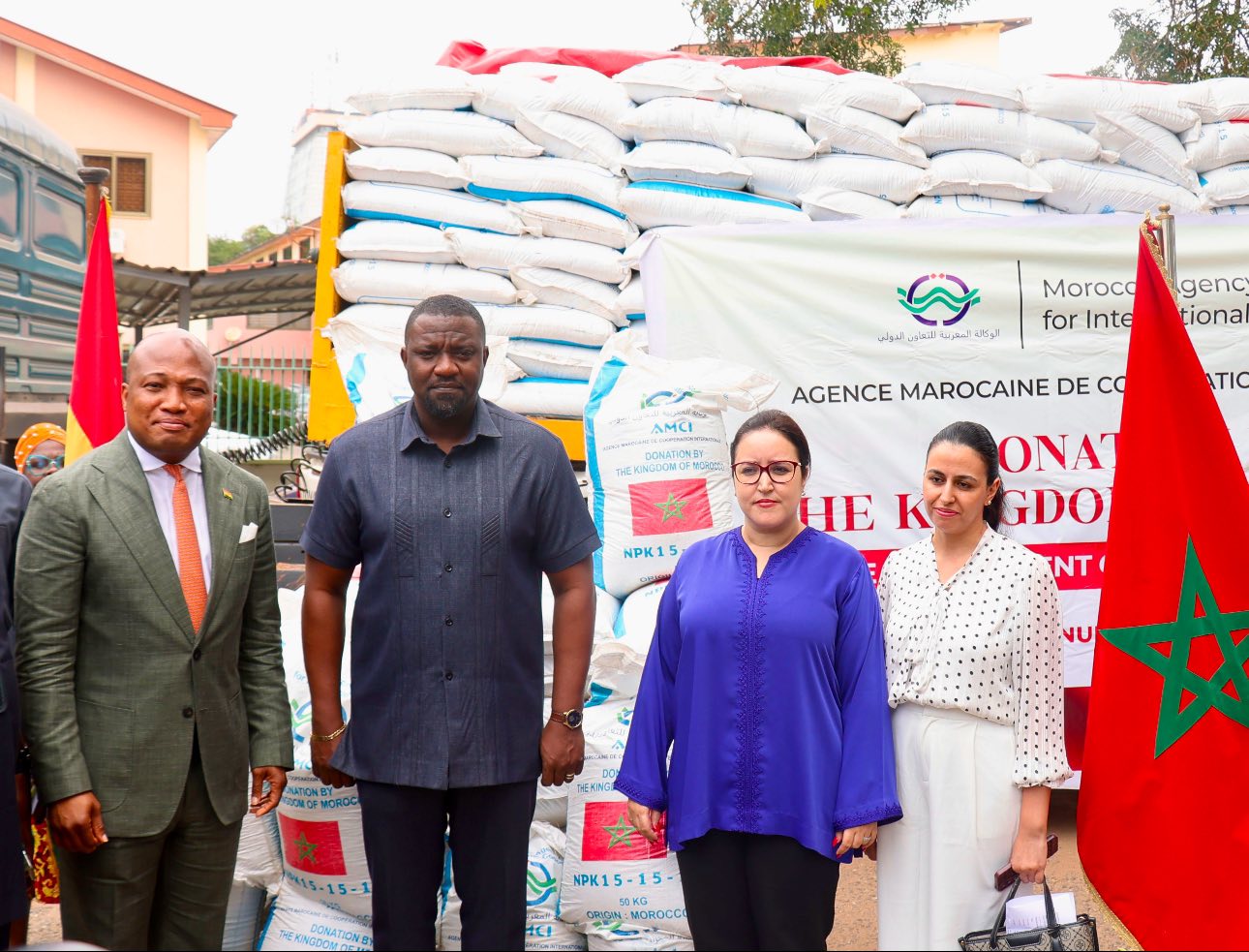
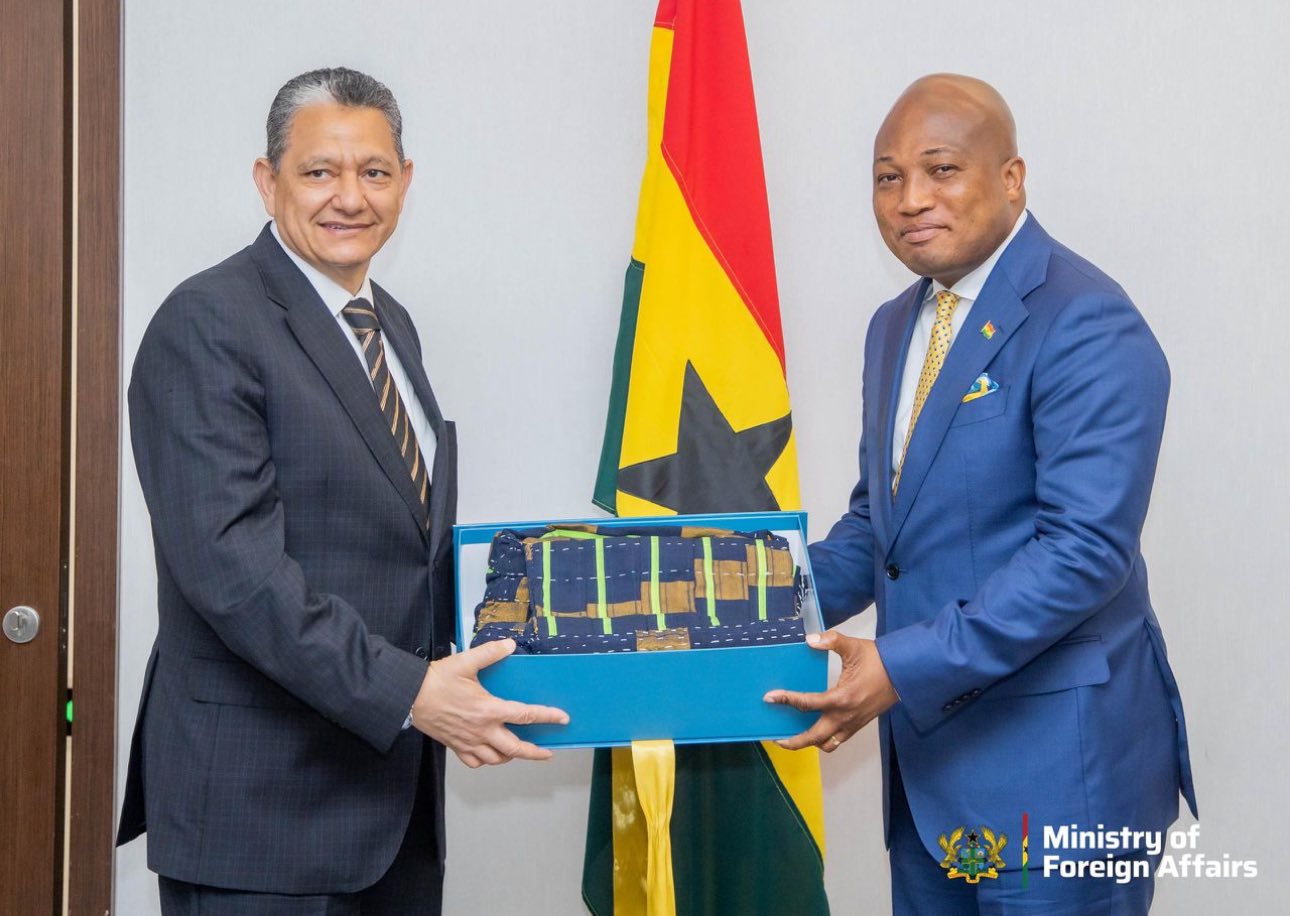
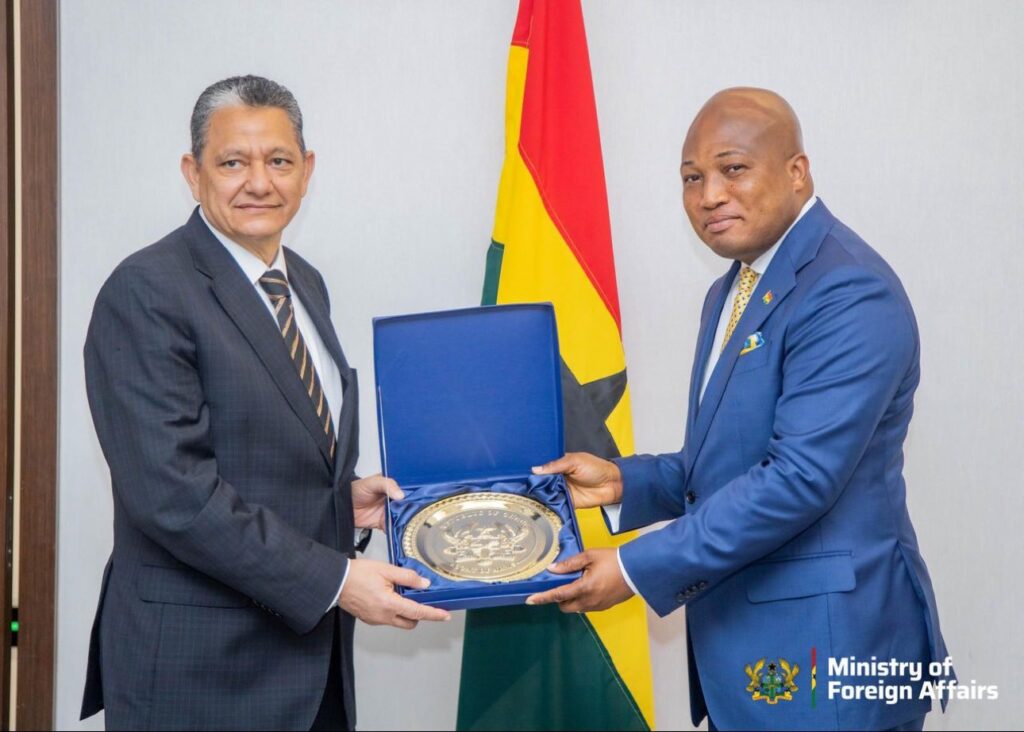
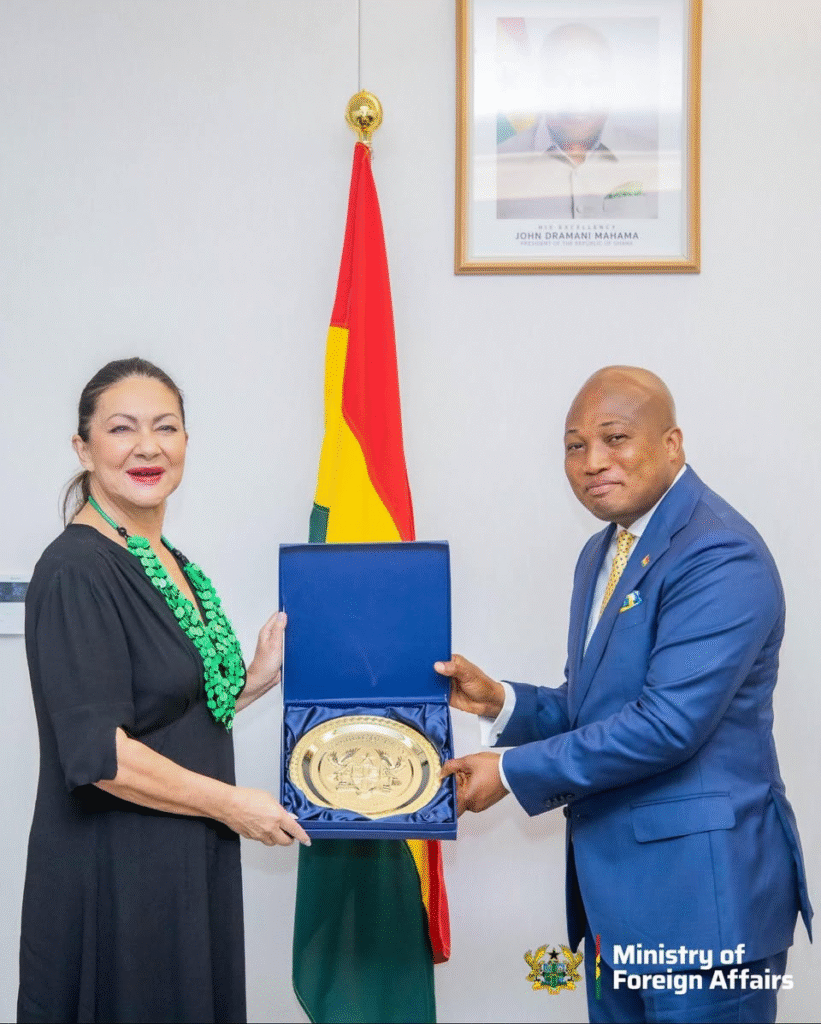
    Minister for Foreign Affairs, Honourable Samuel Okudzeto Ablakwa, and the Ambassador of the Kingdom of Morocco, Her Excellency Imane Ouaadil, on July 28, handed over two thousand (2,000) tons of fertilizer, equivalent to 40,000 bags of fertilizer, to the Ministry of Food and Agriculture. 

    According to the Foreign Ministry, the fertilizer was donated to the West African country by the Kingdom of Morocco during the official visit of Mr Okudzeto Ablakwa to Morocco last month as part of the two countries’ commitment to sustainable agriculture to enhance food security. 

    Deputy Minister for Food and Agriculture, John Setor Dumelo, received the donated fertilizers on behalf of the Minister for Food and Agriculture, Eric Opoku. He expressed gratitude to the Morrocan government for the donation. He assured that farmers will receive the fertilizers to aid crop production.

    “Yesterday, 40,000 bags of fertilizer was donated to Ghana by the Kingdom of Morocco through the Ministry of Foreign Affairs. On behalf of my boss Hon Eric Opoku, I want to say a big thank you to Hon Ablakwa and Her Excellency Ouaadil for this kind gesture. We at the Ministry of Agriculture will ensure the fertilizers get straight to the deserving farmers as soon as possible,” he wrote in a post on the X platform on July 29.

    Stakeholders in the agricultural sector have bemoaned the absence of a single chemical fertiliser plant in the country. The Institute for Fiscal Studies noted that the absence of such a plant is having an adverse impact on crop production and the contribution of the agricultural sector to the country’s economy i.e. the Gross Domestic Product (GDP). The sector’s contribution to the country’s GDP declined from 26.9% in 2010 to 22.7% in 2023.

    In March this year, Senior Research Fellow at the Institute for Fiscal Studies, Dr. Said Boakye said, “We need to establish several fertiliser manufacturing plants to ensure that adequate and affordable fertiliser is available to farmers, which will help boost agricultural productivity.”

    “The sad reality is that Ghana lacks a single chemical fertiliser plant. In our rice studies, we have been comparing with Vietnam, where they have more than 7,000 plants. Vietnam’s success in achieving high agricultural productivity is largely due to fertilisers being readily available to farmers at no cost, along with incentivized prices,” he added.

    The Institute for Fiscal Studies has entreated the government to allocate significant funding to establish a fertiliser manufacturing plant.

    Ghana’s engagement with Morocco

    Foreign Affairs Minister Samuel Okudzeto Ablakwa, who also doubles as the Member of Parliament for North Tongu, was in the Kingdom of Morocco from 5th to 6th June for a visit aimed at strengthening the longstanding bilateral relations between Ghana and Morocco and identifying new opportunities for economic cooperation and strategic partnerships.

    During the visit, the Ministries of Foreign Affairs of Ghana and Morocco signed a Memorandum of Understanding (MoU) on political consultations during the Ministerial Session with Moroccan Minister H.E. Mr. Nasser Bourita, which is expected to facilitate regular diplomatic dialogue and promote mutual understanding on regional and international issues.

    Another outcome of the visit was the commitment to the signing of a bilateral visa waiver agreement for holders of ordinary passports to facilitate trade and tourism and deepen people-to-people engagements between both countries. Pending the finalisation of the agreement, the immediate implementation of an Electronic Travel Authorisation (ETA) in favour of Ghanaian travellers to Morocco was announced.

    The Ghanaian minister also paid courtesy calls on the Minister for Industry and Trade, H.E. Mr. Ryad Mezzour; Minister for Transport and Logistics, H.E. Mr. Abdessamad Kayouh; Director-General of the Moroccan Agency for International Cooperation, Amb. Mohamed Methqal; as well as the Vice-President of the General Confederation of Moroccan Entreprises (CGEM), Mr. Mehdi Tazi. 

    The discussions with the Moroccan Government officials focused on enhancing cooperation in key sectors such as maritime and air transport, trade and investment, and human resource development, among others. Both sides reaffirmed their commitment to promoting stronger institutional collaboration and private sector engagement.

    Mr Okudzeto Ablakwa also had fruitful discussions with the Ghanaian community in Morocco and briefed them about developments back home.

    Following the minister’s meeting, the Foreign Affairs Ministry announced Ghanaian citizens who wish to visit Morocco will not need traditional visas to do so.

    He revealed that a streamlined online travel authorisation has replaced the previous application process for Ghanaian citizens.

    According to him, the latest move will grant the application within 24 hours without the need to visit the Moroccan embassy.

    “With immediate effect, Ghanaians will no longer require traditional visas to travel to Morocco. An online authorization which will be granted within 24-hours without embassy appointments is all that’s needed,” he wrote.

    The visa waiver to Morocco is expected to increase tourism, improve trade, and strengthen the relationship between Morocco and Ghana.

    “With existing direct flights which would be increased following this new agreement, we expect this bilateral visa waiver policy to greatly facilitate trade, tourism and deepen people to people engagements between both countries,” he added.

    The Moroccan government is also investing in the education of Ghanaians. In March this year, the government of Morocco announced an increase in scholarships for Ghanaian students, raising the number from 90 to 180 starting this year. 

    This development follows high-level discussions between Ghana’s Minister of Foreign Affairs, Samuel Okudzeto Ablakwa, and the Moroccan Ambassador to Ghana, Her Excellency Imane Ouaadil.

    During their engagement, Ambassador Ouaadil reassured that Ghanaians and other Africans residing in Morocco remain safe, dispelling social media claims that 700 Africans were being massacred. 

    She clarified that the circulated footage was from a border incident on June 24, 2022, which resulted in the deaths of 23 individuals. The incident was investigated by Moroccan and Spanish authorities, with no Ghanaian casualties recorded.

    Beyond education, Morocco and Ghana have agreed to establish a visa waiver for all categories of travelers between the two nations. The agreement is expected to be presented to both parliaments for ratification soon.

    “We have both additionally pledged to deepen collaboration in Agribusiness, Tourism, and Security,” Ablakwa stated.

  • LIVESTREAMING: AUC’s 13th High-Level Dialogue on Democracy, Human Rights, and Governance

    LIVESTREAMING: AUC’s 13th High-Level Dialogue on Democracy, Human Rights, and Governance

    The African Union Commission (AUC) has commenced its 13th High-Level Dialogue on Democracy, Human Rights, and Governance: Trends, Challenges, and Prospects, under the theme “Justice, Rights, Reparation & State Building.”

    The 2-day event taking place at the Accra International Convention Center, Accra, will come to an end on July 30.

    His Excellency John Dramani Mahama, the President of Ghana, will provide the opening remarks.

    There is a leaders panel after the opening composed of former presidents, vice presidents, and prime ministers.

    The dialogue seeks to foster inclusive dialogue on reparative justice as a key pillar for democratic governance, social cohesion, and accountable state institutions in Africa.

    https://www.facebook.com/share/v/19nBLv5dof

  • ESSMGB GHANCOY 4 departs Accra for deployment after farewell parade

    ESSMGB GHANCOY 4 departs Accra for deployment after farewell parade

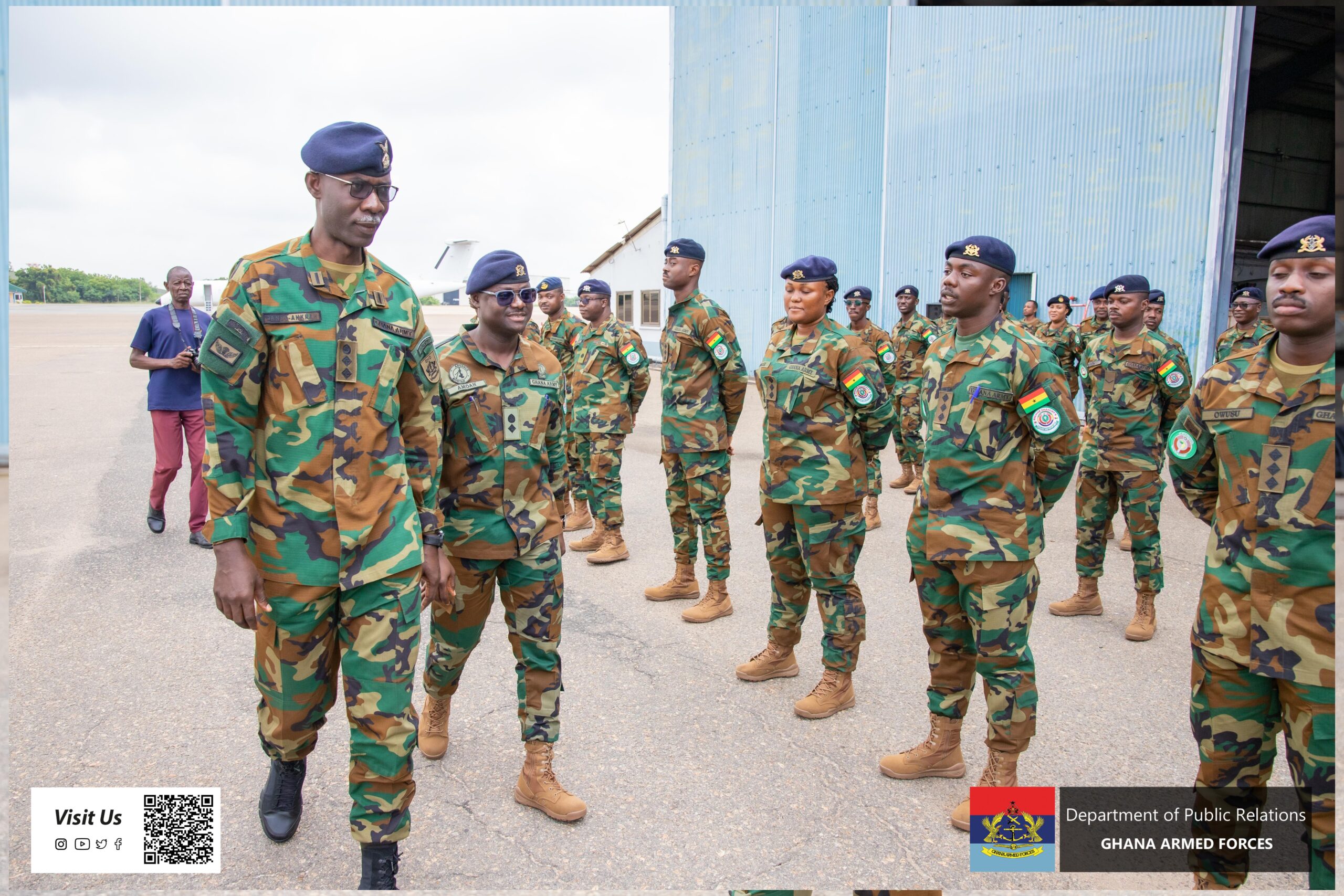
    The Fourth Ghanaian Company of the ECOWAS Stabilisation Support Mission in Guinea-Bissau (ESSMGB GHANCOY 4) on Friday, 25 July 2025, participated in a farewell parade.

    The Fourth Ghanaian Company of the ECOWAS Stabilization Support Mission in Guinea-Bissau departs Accra for deployment.

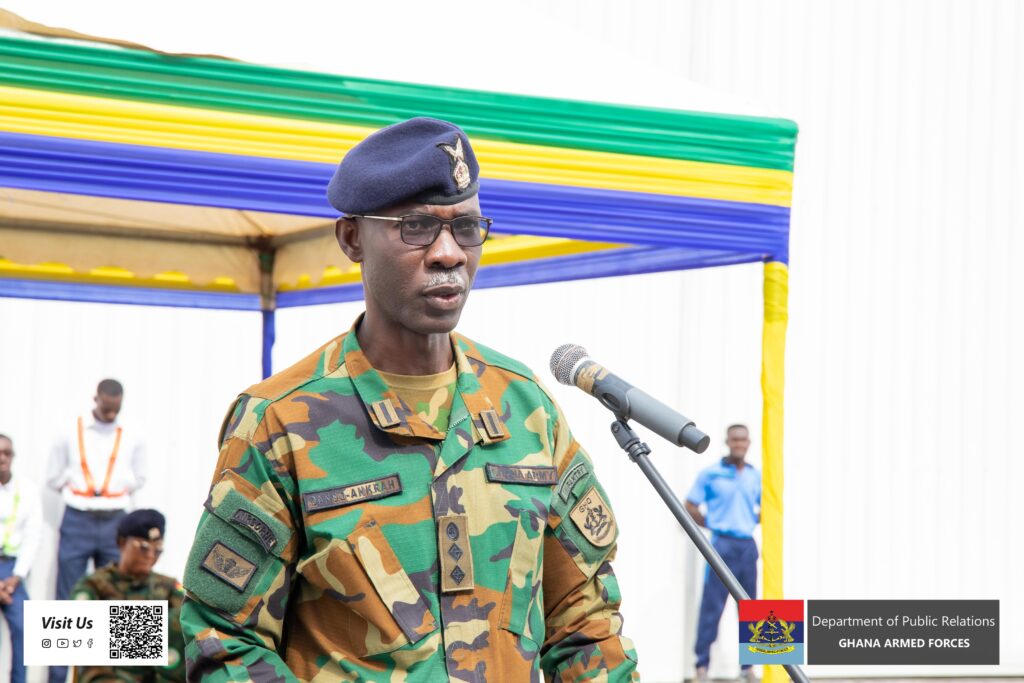
    Director of Human Resources at the Department of Personnel Administration, General Headquarters, Colonel John Danso-Ankrah, who doubled as the reviewing officer, entreated the Combat Team Commander of GHANCOY 4, Lieutenant Colonel Isaac Keelson Ekow Amoah, and his troops to conduct themselves as worthy ambassadors of Ghana while contributing to regional peace and stability.  

    Colonel John Danso-Ankrah encouraged GHANCOY 4 personnel to uphold the level of professionalism the Ghana Armed Forces (GAF) has consistently demonstrated over the years—both at home and on international missions—while performing their duties in Guinea-Bissau.

    On Sunday, July 20, the ECOWAS Stabilization Support Mission in Guinea-Bissau, Ghana Company 4, held a farewell religious service and family luncheon at the St. George’s Garrison Anglican Church in Burma Camp.

    Director of Research and Innovation at the Ghana Armed Forces Command and Staff College, Brigadier General Wellington Attipoe-Dumashie, the Guest of Honour, lauded personnel of GHANCOY 4 for their commitment to promoting international peace and stability. He highlighted their service as a true embodiment of sacrifice, dedication, and professionalism.

    Brigadier General Attipoe-Dumashie indicated that the mission ensures a vital contribution to peace, security, and development in the West African sub-region and goes beyond a routine military assignment.

    According to him, the determination and compassion of GHANCOY 4 were crucial in supporting efforts to mitigate the complex challenges in promoting peace and stability in the region and the world at large.

    He encouraged the troops to view their work as a call to serve humanity and to pursue a better future for the people of Guinea-Bissau and all West Africans.

    During the service, the Chaplain, Lieutenant Colonel Reverend Canon Francis Lokko, encouraged the Combat Team Commander of ESSMGB GHANCOY 4, Lieutenant Colonel Isaac Ekow Amoah, and his troops to be productive, dedicated, and serve the country with wisdom. He further entreated them to conduct their duties with a sense of professionalism and devotion while putting God at the centre of all their tasks.

    The Combat Team Commander, Lieutenant Colonel Isaac Keelson Ekow Amoah, during the family luncheon at the Arakan Officers’ Mess, said the event was to create an environment for Command, troops, and their families to bond ahead of the deployment of the unit. He urged the troops to ensure that all necessary arrangements were made for the welfare of their families as they prepare to embark on the mission.

    In November 2024, the Chief G3 Peace Support Operations at the Army Headquarters, Col. Lawrence Brobbey Owusu, held a durbar with the ECOWAS Mission in Gambia, Ghana Company 9 (ECOMIG GHANCOY 9) and the ECOWAS Stabilisation Support Mission in Guinea-Bissau, Ghana Company 4 (ESSMGB GHANCOY 4) at the Army Peace Operations Training School (APOTS) in Bundase.

    At the durbar, Col. LB Owusu advised all troops of both missions to remain disciplined and comport themselves while they wait to be inserted into their respective missions. He cautioned all to stay away from politics and any form of election-related malpractice as the nation heads for the general elections. He also advised against the use of illicit drugs and cautioned that anybody found culpable would be dropped from the mission and dealt with accordingly.

    The Chief of G3 Peace Support Operations further stated that personnel could be repatriated from any mission area on medical, compassionate, administrative, and disciplinary grounds. However, he emphasized that soldiers who would be repatriated on disciplinary grounds would be subjected to a ten-year ban from participating in any peace support mission. He further noted that instructions on flight boarding would be made available for strict compliance of all.

    Troops were also given the opportunity to ask questions to clarify all issues. Present at the durbar were the Combat team Commander of ECOMIG GHANCOY 9 Lt Col Samuel Twumasi and GSOI G3 – Peace Support Operations (Logistics) Lt Col Mark Ofori Korankye.

    In May 2023, then-President Akufo-Addo paid a visit to Ghanaian troops operating on peacekeeping duty in Guinea-Bissau in his capacity as Commander-in-Chief of the Ghana Armed Forces (GAF).

    The former president was accompanied by the President of Guinea-Bissau, Umaro Mokhtar Sissoco Embalo. Former President Akufo-Addo visited the Ghana Company (GHANCOY 1), which is part of the ECOWAS Stabilisation Support Mission in Guinea-Bissau (ESSMGB).

    The visit took place on Monday, May 15, 2023, as part of former President Akufo-Addo’s official two-day state visit to Guinea-Bissau, following an invitation from President Embalo. The primary purpose of the visit was for the Commander-in-Chief to meet with the ESSMGB-GHANCOY 1 and personally assess the well-being of the troops and their effectiveness in carrying out their mission since their deployment to the operational area in June 2022.

    During the visit, several activities were conducted, including a guard of honour, a parade display by GHANCOY 1, and the mounting of a special Presidential Quarter Guard in honor of President Akufo-Addo.

    The president also toured the camp, interacted with Ghanaian troops, and commissioned a project undertaken by GHANCOY. Welcoming the presidents, Lieutenant Colonel (Lt Col) David Korsah, the Combat Team Commander of ESSMGB GHANCOY 1, expressed his gratitude on behalf of the entire Ghanaian Contingent. Lt Col. Korsah described the visit as historic and memorable for three reasons.

    Firstly, he highlighted that the visit demonstrated former President Akufo-Addo’s unwavering commitment to constitutional democracy in Africa, as evidenced by his track record. Secondly, he added that it showcased the former president’s confidence in the GAF hierarchy and personnel.

    Lastly, he maintained that it marked the first time in approximately 28 years that a Ghanaian president had visited GAF troops engaged in an external operation.

    Lt Col. Korsah assured former President Akufo-Addo that he and his troops would continue to proudly represent Ghana, enhance the country’s image, and serve as worthy ambassadors.

    Then-President Akufo-Addo, on the other hand, commended the contingent for their discipline and professionalism, assuring them of his full support. At the conclusion of his speech, the former president made a donation to the contingent.

    The former president also commissioned a newly constructed accommodation and office building named after the Chief of Defence Staff Seth Amoama “AMOAMA BLOCK” in honor of the Vice Admiral, who played a crucial role in securing funds for the project.

    Notable attendees at the visit included Professor Hamidou Boly, Special Representative of the President of the ECOWAS Commission (SRPC), Brigadier General AM Grema, ESSMGB Force Commander, and Colonel ATM Kore, Deputy Force Commander.

  • Henry Boakye, 2 others file to contest NDC primaries in Akwatia

    Henry Boakye, 2 others file to contest NDC primaries in Akwatia

    The National Democratic Congress (NDC) will see three individuals contest in the party’s election for the role of Akwatia Constituency parliamentary candidate on Monday, August 4.

    Former Member of Parliament for Akwatia, Henry Boakye, the National Democratic Congress’ Akwatia Constituency Secretary, Bernard Bediako Baidoo, and Erasmus Koney Ali have vied for the position.

    The submission of nominations will end on Wednesday, July 30. Subsequently, the party will hold its vetting process on Thursday, July 31. To obtain their positions, the parliamentary aspirants will participate in the balloting process on Monday, August 4.

    The opposition New Patriotic Party (NPP), according to reports, has decided to allow Chief Executive Officer of Owuo Mining Company, Solomon Kwame Asumadu, to be its parliamentary candidate. The leadership of the New Patriotic Party is yet to officially confirm this report.

    But it is reported that the selection of Solomon Kwame Asumadu followed extensive stakeholder consultations that birthed a consensus and prevented the party from having to hold an internal parliamentary election.

    The two parties are gearing themselves up for a by-election that has been necessitated following the demise of the embattled Akwatia Member of Parliament, Ernest Yaw Kumi, who was reported dead on Monday, July 7.

    Earlier, there were reports suggesting the widow of the late Member of Parliament, Mrs. Mavis Kumi, had shown interest in the race. However, the Eastern Regional NPP Chairman Jeff Konadu Addo on Tuesday, July 15, emphasized that campaign flyers purporting such claims are false and must be ignored.

    “We wish to categorically state that this information is false, misleading, and should be treated with the utmost contempt it deserves,” Jeff Konadu Addo said.

    Jeff Konadu Addo added that Mrs. Mavis Kumi is not interested in the said position but is focused on mourning the passing of her husband. “She has unequivocally communicated that she has no interest in contesting the seat or participating in active politics at this time. Her current focus is to mourn her husband with dignity and in peace,” he further stated.

    The Electoral Commission (EC) is expected to hold a by-election in the Akwatia Constituency, Eastern Region, to select a Member of Parliament (MP) for the area on Tuesday, September 2.

    On Monday, 4 August, balloting will be held by the Electoral Commission to ensure fairness in how candidates are listed on the ballot paper.

    On Tuesday, July 8, a delegation from the leadership of Parliament visited the family of the late MP to express their condolences. The team was led by the Leader of the House, Majority Leader Mahama Ayariga. Other members of the delegation included Minority Leader Alexander Afenyo-Markin, Clerk to Parliament Ebenezer Ahumah Djietror, and Ofoase-Ayirebi MP Kojo Oppong-Nkrumah, among others.

    Chief of Takrowaso, Osabarima Owusu Nketia I, on Friday afternoon, July 25, led the family of the late Hon. Ernest Kumi, former Member of Parliament for Akwatia Constituency, to pay a courtesy call on the Rt. Hon. Speaker of Parliament, Alban Sumana Kingsford Bagbin.

    The visit was to enable the family to officially inform the Speaker and Parliament of Mr Kumi’s demise. On behalf of Parliament, Speaker Bagbin extended his deepest condolences to the family of the late legislator.

    Speaker Alban Bagbin described the passing of Mr. Ernest Kumi as a profound loss to Parliament and all who had the privilege of knowing him.

    He lauded Mr. Kumi’s commitment to Ghana’s democratic development, noting that his tireless advocacy for his constituents and his steadfast dedication to national progress will be forever remembered and cherished. The Speaker also stated that Parliament will work closely with the bereaved family to ensure Mr. Kumi is accorded a befitting burial.

    Prior to his demise, Mr Ernest Kumi was engaged in a legal tussle. Last month, the Supreme Court overturned a ruling by the Koforidua High Court that convicted Mr Kumi of contempt of court.

    The court, on Wednesday, June 11, by a 4–1 majority, granted the legislator’s application to overturn the High Court’s ruling.

    On January 3, the Koforidua High Court issued an interim injunction restraining Ernest Yaw Kumi from being sworn in as the Member of Parliament for Akwatia.

    The injunction stemmed from a legal challenge by Henry Boakye-Yiadom, the National Democratic Congress (NDC) parliamentary candidate and former MP, who contested the election results.

    Boakye-Yiadom had filed a lawsuit against the Electoral Commission (EC), Kumi, and the Clerk to Parliament, disputing the outcome of the polls. 

    Official results had declared Kumi victorious with 19,269 votes, while Boakye-Yiadom secured 17,206 votes.

    Despite the court’s order, Kumi went ahead with his swearing-in on January 7, 2025. His legal team, led by Lawyer Gary Nimako, later sought to overturn the injunction, but the court dismissed their application.

    On February 19, 2025, the Koforidua High Court issued a bench warrant for Kumi’s arrest, citing his absence from contempt proceedings and his failure to comply with the earlier injunction.

    Reacting to the development, the Minority in Parliament has condemned the court’s decision, arguing that it was excessive. 

    Speaking to the media, Second Deputy Minority Whip Jerry Ahmed Shaib expressed strong disagreement with the ruling.

    In Parliament, Mr Kumi who was a first-time member in the 9th Parliament, served on both the Lands and Natural Resources Committee and the House Committee.

    Meanwhile, the Minister for Interior, Mubarak Muntaka, has urged security personnel who will be deployed to oversee the upcoming by-election in Akwatia constituency, Eastern Region, to remain alert while executing their duties.

    He urged them to reflect on the recent violence that occurred during the parliamentary election rerun in the Ablekuma North constituency and work proactively to prevent a recurrence.

    According to him, the government will work to ensure that such dramatic events do not repeat themselves in future elections. The minister made these remarks at the government accountability series in Accra on Monday, July 14.

    “This is also a wake-up call for our security agencies to know that probably what happened [in Ablekuma North]…gives our security agencies the opportunity to even plan better towards Akwatia.

    “All I can assure the people of Akwatia is that we will use Ablekuma North as a case study to review how we operate in Akwatia—to make sure that the citizens are free to cast their votes and express their will without fear or favour,” Muntaka added.

  • uniBank legal case: Assets worth GHC824m to be handed to the State; structure to recover GHC1.2bn established

    uniBank legal case: Assets worth GHC824m to be handed to the State; structure to recover GHC1.2bn established

    Attorney-General and Minister for Justice Dr. Dominic Ayine has revealed that the threshold of 60% recovery in the uniBank legal case has led to the recovery of GH¢ 824 million worth of assets, which will be handed over to the State.

    Also, a structured pathway for recovering an additional GH¢ 1.2 billion has been established. Dr Dominic Ayine made this known to the public today, July 28, when he engaged the press as part of the Government Accountability Series.

    In his submission on Monday, he revealed that “100% recovery was not possible, and a conviction was not guaranteed.”

    In an earlier statement, the Office of the Attorney General noted that it established a threshold of 60% recovery of the alleged losses to the state as a condition for reconsidering prosecution in specific cases in collaboration with other relevant state agencies.

    This remark was compared to a situation where someone who has stolen six goats is being told by the prosecutor to return four goats and keep two goats by a critic on social media, according to the Attorney-General.

    In his clarification, the Attorney-General explained that such an oversimplification of the matter is erroneous, as Dr. Kwabena Duffour and the other persons standing trial were not charged with stealing or looting public funds. 

    “They were charged with causing financial loss to the state, fraudulent breach of trust, falsification of accounts, dishonestly receiving and money laundering. But the facts and the evidence supporting these charges never alleged that those standing trial personally benefited from the banking transactions that gave rise to the charges,” he explained.

    Kwabena Duffuor, the 1st accused person, is a shareholder of uniBank Ghana Limited (uniBank) and the ultimate beneficial owner of HODA Holdings Company Limited (HODA). HODA, the 2nd accused person, is a holding company and the majority shareholder of uniBank. 

    Johnson Pandit Asiama, the 3rd accused person, was the 2nd Deputy Governor of the Bank of Ghana (BOG) between April 2016 and January 2018. The 4th accused person, Kwabena Duffuor II, formerly a Chief Operating Officer (COO) of uniBank subsequently became the Chief Executive Officer (CEO) of uniBank between June 2017 and March 2018. 

    The 5th accused person, Ekow Nyarko Dadzie-Dennis, who was a COO of uniBank is a member of the Board of Directors of WAICA Reinsurance Corporation Plc (WAICA-Re), Sierra Leone. The 6th accused person, Elsie Dansoa Kyereh, was an Executive Head of Corporate Banking at uniBank. 

    The 7th accused person, Jeffrey Amon, was a Senior Relationship Manager of Corporate Banking at uniBank. The 8th accused person, Benjamin Ofori, was the Executive Head of Credit Risk at uniBank. The 9th accused person, Kwadwo Opoku Okoh, was a financial control manager of uniBank and is Head of Finance of HODA.

    The charges in the criminal case against the accused persons involved a total amount of GH¢1.2 billion, while the civil case involved a total exposure of GH¢5.7billion.

    “It is important to state for the avoidance of doubt that the total exposure in the criminal case is a part of the total civil case exposure. In other words, the GH¢1.2 billion is not on top of GH¢5.7billion,” he said.

    The GH¢ 5.7 billion was made up of the following: GH¢2 billion being loans and advances which UNIBANK made to related and connected parties. GH¢3.7 billion being payments made on behalf of or on the instructions of the accused persons.

    Then Attorney-General revealed that during the reconciliation exercise, the Accused Persons objected to the inclusion of this GH¢2.1 billion on grounds that the amount did not involve any direct cash outflows that could be recovered. The accused persons also objected to the inclusion of placements of GH¢0.3 billion made to UNISECURITIES. UNISECURITIES, however, is an SEC-regulated (not BoG-regulated) related company that had been placed in liquidation and for which a claim had been filed with the Official Liquidator. 

    This led to the revision of the previously reported exposure of GH¢ 5.7 billion down to GH¢ 3.3 billion. The adjustment comprised the following: the exclusion of GH¢ 2.1 billion in alleged fictitious amounts booked to the account of the shareholder, which did not involve cash outflows; and the exclusion of GH¢ 0.3 billion relating to uniBank’s placement with the SEC-regulated related company currently in receivership, which is being pursued separately through the insolvency process.

    The recovery of this amount is being pursued independently through insolvency proceedings with the Official Liquidator of that entity,” the Minister said.

    After prolonged negotiations, the accused persons, by a letter dated 7th May 2025, made a proposal to settle the revised outstanding obligation of GH¢ 3.3 billion through a structured approach. 

    The accused persons offered to pay GH¢ 2 billion in full and final settlement of the outstanding obligation through the following arrangements: GH¢ 800 million worth of assets to be transferred directly to UNIBANK; and their active cooperation and participation to assist the Receiver to recover an additional GH¢ 1.2 billion from the direct beneficiaries, paid out on their instructions.

    Out of the above arrangements, the accused persons have provided landed properties valued at GH¢ 824 million to UNIBANK. Further, the accused persons will also be responsible for any shortfall in the proceeds realized from the sale of the landed properties.

    A total of GH¢ 0.5 billion has, to date, been recovered out of the GH¢ 1.2 billion being pursued from the direct beneficiaries. Recovery of the remaining balance of GH¢ 0.7 billion out of the GH¢ 1.2 billion and realization of the landed properties provided are expected to be completed over a timeline of eighteen (18) months. 

    Dr Dominic Ayien revealed that although the preference would have been for the accused persons to settle the proposed amount in cash, “immediate settlement in cash was not, from my sense of what transpired at the negotiations, a realistic option.”

    He added that in assessing the proposal submitted by the lawyers for the accused persons, he took into account the following factors:

    • The Receiver of UNIBANK acknowledged that the fictitious amounts totaling GH¢ 2.1 billion did not result from cash outflows but related to accounting entries that overstated the asset base of the Bank, which predated uniBank’s placement in Official Administration.
    • A claim for the placement of GH¢ 0.3 billion with the SEC-regulated related entity was filed by the Receiver with the Official Liquidator in 2019 and its recovery is being pursued separately through that insolvency process.
    • Both the criminal and civil cases have persisted for over six years with no immediate resolution in sight. The complex nature of the legal proceedings has significantly delayed any meaningful recovery.
    • While the criminal prosecution was intended to serve as a punitive and deterrent measure, it is through the civil process that actual recovery of funds is effectively pursued. The Accused Persons’ proposal fell within the Receiver’s mandate to maximize recoveries for uniBank in order to settle the Bank’s creditors, mainly Government of Ghana and some of its institutions.
    • There is also a genuine risk that prolonged litigation could ultimately lead to a lower net recovery, especially when accounting for legal costs, procedural delays, the time value of money and the potential dissipation or concealment of assets. By contrast, the current arrangement secures the timely resolution of GH¢ 800 million in assets and establishes a structured pathway for recovering an additional GH¢ 1.2 billion, with the active cooperation of the Accused Persons. On the other hand, should the matter continue in court, it will likely face prolonged delays, including multiple procedural applications, adjournments, and appeals. Even if judgment were eventually obtained in either the civil or criminal proceedings, enforcement and execution could take years, further deferring any meaningful recovery.

    The terms of the settlement, he said, are structured to ensure that the Attorney-General, the Bank of Ghana, and the Ministry of Finance exercise oversight over the recovery of the negotiated amount. 

    “Progress under the agreement will be subject to quarterly reviews to ensure that the accused persons fulfill their obligations as agreed,” he added.

  • Procuring an acquittal by the defence was a high likelihood in uniBank case – A-G

    Procuring an acquittal by the defence was a high likelihood in uniBank case – A-G

    Attorney-General and Minister for Justice Dr. Dominic Ayine has provided further clarification over his decision to withdraw the state’s legal case against Kwabena Duffuor, a shareholder of defunct uniBank Ghana Limited (uniBank) and owner of HODA Holdings Company Limited (HODA), and seven other accused.

    Shedding more light on the Unibank legal case while providing an update to the public over work done by his outfit as part of the Government Accountability Series today, July 28, the Attorney-General revealed that “there was a high likelihood that the defence could have raised sufficient doubt to procure an acquittal.”

    “And if that happened, as seen from the Beige Capital Case, I would not have been able to recover even GH¢ 1,” he added, while insisting that the charges were contestable per the records.

    The accused were charged with 68 counts of the following offenses: (i) (i) conspiracy to commit fraudulent breach of trust; (ii) fraudulent breach of trust; (iii) money laundering; (iv) dishonest receiving; (v) contravention of the Bank of Ghana Act, 2002 (Act 612); (vi) willfully causing financial loss to the state; (vii) conspiracy to falsify accounts; and (viii) falsification of accounts.

    In an earlier statement, the Office of the Attorney General noted that it established a threshold of 60% recovery of the alleged losses to the state as a condition for reconsidering prosecution in specific cases in collaboration with other relevant state agencies.

    This remark was compared to a situation where someone who has stolen six goats is being told by the prosecutor to return four goats and keep two goats by a critic on social media, according to the Attorney-General.

    In his clarification, the Attorney-General explained that such an oversimplification of the matter is erroneous, as Dr. Kwabena Duffour and the other persons standing trial were not charged with stealing or looting public funds. 

    “They were charged with causing financial loss to the state, fraudulent breach of trust, falsification of accounts, dishonestly receiving and money laundering. But the facts and the evidence supporting these charges never alleged that those standing trial personally benefited from the banking transactions that gave rise to the charges,” he explained.

    Kwabena Duffuor, the 1st accused person, is a shareholder of uniBank Ghana Limited (uniBank) and the ultimate beneficial owner of HODA Holdings Company Limited (HODA). HODA, the 2nd accused person, is a holding company and the majority shareholder of uniBank. 

    Johnson Pandit Asiama, the 3rd accused person, was the 2nd Deputy Governor of the Bank of Ghana (BOG) between April 2016 and January 2018. The 4th accused person, Kwabena Duffuor II, formerly a Chief Operating Officer (COO) of uniBank subsequently became the Chief Executive Officer (CEO) of uniBank between June 2017 and March 2018. 

    The 5th accused person, Ekow Nyarko Dadzie-Dennis, who was a COO of uniBank is a member of the Board of Directors of WAICA Reinsurance Corporation Plc (WAICA-Re), Sierra Leone. The 6th accused person, Elsie Dansoa Kyereh, was an Executive Head of Corporate Banking at uniBank. 

    The 7th accused person, Jeffrey Amon, was a Senior Relationship Manager of Corporate Banking at uniBank. The 8th accused person, Benjamin Ofori, was the Executive Head of Credit Risk at uniBank. The 9th accused person, Kwadwo Opoku Okoh, was a financial control manager of uniBank and is Head of Finance of HODA.

    The charges in the criminal case against the accused persons involved a total amount of GH¢1.2 billion, while the civil case involved a total exposure of GH¢5.7billion.

    “It is important to state for the avoidance of doubt that the total exposure in the criminal case is a part of the total civil case exposure. In other words, the GH¢1.2 billion is not on top of GH¢5.7billion,” he said.

    The GH¢ 5.7 billion was made up of the following: GH¢2 billion being loans and advances which UNIBANK made to related and connected parties. GH¢3.7 billion being payments made on behalf of or on the instructions of the accused persons.

    Then Attorney-General revealed that during the reconciliation exercise, the Accused Persons objected to the inclusion of this GH¢2.1 billion on grounds that the amount did not involve any direct cash outflows that could be recovered. The accused persons also objected to the inclusion of placements of GH¢0.3 billion made to UNISECURITIES. UNISECURITIES, however, is an SEC-regulated (not BoG-regulated) related company that had been placed in liquidation and for which a claim had been filed with the Official Liquidator. 

    This led to the revision of the previously reported exposure of GH¢ 5.7 billion down to GH¢ 3.3 billion. The adjustment comprised the following: the exclusion of GH¢ 2.1 billion in alleged fictitious amounts booked to the account of the shareholder, which did not involve cash outflows; and the exclusion of GH¢ 0.3 billion relating to uniBank’s placement with the SEC-regulated related company currently in receivership, which is being pursued separately through the insolvency process.

    The recovery of this amount is being pursued independently through insolvency proceedings with the Official Liquidator of that entity,” the Minister said.

    After prolonged negotiations, the accused persons, by a letter dated 7th May 2025, made a proposal to settle the revised outstanding obligation of GH¢ 3.3 billion through a structured approach. 

    The accused persons offered to pay GH¢ 2 billion in full and final settlement of the outstanding obligation through the following arrangements: GH¢ 800 million worth of assets to be transferred directly to UNIBANK; and their active cooperation and participation to assist the Receiver to recover an additional GH¢ 1.2 billion from the direct beneficiaries, paid out on their instructions.

    Out of the above arrangements, the accused persons have provided landed properties valued at GH¢ 824 million to UNIBANK. Further, the accused persons will also be responsible for any shortfall in the proceeds realized from the sale of the landed properties.

    A total of GH¢ 0.5 billion has, to date, been recovered out of the GH¢ 1.2 billion being pursued from the direct beneficiaries. Recovery of the remaining balance of GH¢ 0.7 billion out of the GH¢ 1.2 billion and realization of the landed properties provided are expected to be completed over a timeline of eighteen (18) months. 

    Dr Dominic Ayien revealed that although the preference would have been for the accused persons to settle the proposed amount in cash, “immediate settlement in cash was not, from my sense of what transpired at the negotiations, a realistic option.”

    He added that in assessing the proposal submitted by the lawyers for the accused persons, he took into account the following factors:

    • The Receiver of UNIBANK acknowledged that the fictitious amounts totaling GH¢ 2.1 billion did not result from cash outflows but related to accounting entries that overstated the asset base of the Bank, which predated uniBank’s placement in Official Administration.
    • A claim for the placement of GH¢ 0.3 billion with the SEC-regulated related entity was filed by the Receiver with the Official Liquidator in 2019 and its recovery is being pursued separately through that insolvency process.
    • Both the criminal and civil cases have persisted for over six years with no immediate resolution in sight. The complex nature of the legal proceedings has significantly delayed any meaningful recovery.
    • While the criminal prosecution was intended to serve as a punitive and deterrent measure, it is through the civil process that actual recovery of funds is effectively pursued. The Accused Persons’ proposal fell within the Receiver’s mandate to maximize recoveries for uniBank in order to settle the Bank’s creditors, mainly Government of Ghana and some of its institutions.
    • There is also a genuine risk that prolonged litigation could ultimately lead to a lower net recovery, especially when accounting for legal costs, procedural delays, the time value of money and the potential dissipation or concealment of assets. By contrast, the current arrangement secures the timely resolution of GH¢ 800 million in assets and establishes a structured pathway for recovering an additional GH¢ 1.2 billion, with the active cooperation of the Accused Persons. On the other hand, should the matter continue in court, it will likely face prolonged delays, including multiple procedural applications, adjournments, and appeals. Even if judgment were eventually obtained in either the civil or criminal proceedings, enforcement and execution could take years, further deferring any meaningful recovery.

    The terms of the settlement, he said, are structured to ensure that the Attorney-General, the Bank of Ghana, and the Ministry of Finance exercise oversight over the recovery of the negotiated amount. 

    “Progress under the agreement will be subject to quarterly reviews to ensure that the accused persons fulfill their obligations as agreed,” he added.

  • 4 MPs sponsor Private Member’s Bill to amend current laws on dual citizenship

    4 MPs sponsor Private Member’s Bill to amend current laws on dual citizenship

    Four Members of Parliament from the Majority and Minority Caucus are sponsoring a Private Member’s Bill to amend the country’s laws and enable Ghanaians with dual citizenship to be able to occupy public office portfolios, including Member of Parliament.

    The Member of Parliament for Mpraeso, Davis Ansah Opoku; the Member of Parliament for Akim Swedru, Kennedy Osei Nyarko; the Member of Parliament for Ellembele, Emmanuel Armah-Kofi Buah; and the Member of Parliament for Adaklu, Governs Kwame Agbodza, are those sponsoring the Dual Citizenship Amendment Bill.

    Davis Ansah Opoku, on her part, noted that it is high time Ghanaians with the opportunity to aid the development of the country are not cast aside just because they have dual citizenship.

    “We know how much Ghanaians abroad contribute—through remittances, investments, and knowledge transfer. Many are ready to serve, but the law shuts them out simply because they hold another passport,” he said.

    “This is not about questioning anyone’s loyalty. It’s about recognising the realities of the world we live in today and allowing capable Ghanaians to take up leadership roles.”

    James Gyakye Quayson, the Deputy Minister-designate for Foreign Affairs, has made a clarion call to Parliament to expedite the passage of the Dual Citizenship Amendment Bill.

    The bill to allow dual citizens to occupy certain public offices, including the Member of Parliament was brought before Parliament after being published in the Gazette on July 9, 2021, and republished on October 11 of the same year.

    In 2024, the Constitutional and Legal Affairs Committee of Parliament recommended the approval of the bill. It is still yet to be passed by the House.

    Appearing before the Appointments Committee on Friday, July 25, to be vetted for his nominated role, Mr Gyakye Quayson noted that the law presently bars many Ghanaians in such a position from returning to the country to occupy positions where they can make the greatest impact to aid the development and progress of the country.

    “I personally know a lot of my counterparts who are heavily invested but just afraid to leave everything and come, because if they come, they’ve lost their investments. If they know they can have both ways, they’ll bring these investments. Not everyone is coming for politics. There are investors out there, are scientists, there are IT experts, professors, and all,” he said.

    Hence, when asked about his opinion and the steps he will take regarding the passage of the bill, Mr Gyakye Quayson said “I work tirelessly along with my minister and also with the House to see how we can pass this dual amendment bill that will eradicate the challenges.”

    Following the 2020 general elections, a resident of Assin North filed a lawsuit against Mr Gyakye Quayson, insisting that he was ineligible to contest in the 2020 parliamentary elections, as he was a dual citizen.

    When Mr Gyakye Quayson filed his nomination papers to contest the Assin North parliamentary election five years on the ticket of the National Democratic Congress (NDC), he held allegiance to Canada and Ghana.

    During court proceedings, the lawyers of Mr Gyakye Quayson argued that prior to the election, their client had begun the process to annul his allegiance to Canada; however, the process hit a snag due to the COVID-19 pandemic.

    He was found in violation of Article 94(2)a) of Ghana’s constitution, which bars individuals holding dual citizenship from holding the position of Member of Parliament.

    The Constitution (1992) article 94 (2) (a) provides that: “A person shall not be qualified to be a member of Parliament if he owes allegiance to a country other than Ghana.”

    Section 1 of Act 527 which amended Article 8 of the 1992 Constitution of Ghana provides that,

    (1) A citizen of Ghana may hold the citizenship of any other country in addition to his citizenship of Ghana.

    (2) Without prejudice to article 94 (2) (a) of the Constitution, no citizen or Ghana shall qualify to be appointed as a holder of any office specified in this clause if he holds the citizenship of any other country in addition to his citizenship of Ghana –

    (a) Ambassador or High Commissioner;

    (b) Secretary to the Cabinet;

    (c) Chief of Defence Staff or any Service Chief:

    (d) Inspector-General of Police;

    (e) Commissioner. Customs, Excise and Preventive Service;

    (f) Director of Immigration Service; and

    (g) any office specified by an Act of Parliament.

    As such, the Supreme Court revoked Mr Gyakye Quayson’s 2020 parliamentary election victory, and this led to a by-election that was held in June 2023. Mr Gyakye Quayson managed to reclaim his seat and was subsequently sworn in in July 2023.

    Mr Gyakye Quayson contested the Assin North seat once again during the 2024 general elections and managed to secure his seat. On the ticket of the National Democratic Congress (NDC), he polled 18,023 votes, securing 56.35% of the total valid votes, beating his closest contender, Charles Opoku, who stood on the ticket of the New Patriotic Party (NPP). He obtained 13,599 votes, representing 42.52%.

    In April this year, the High Court acquitted and discharged James Gyakye Quayson, Member of Parliament for Assin North, over criminal charges stemming from allegations of dual citizenship.

    In a ruling delivered on Wednesday, April 9, 2025, the court found that the prosecution failed to prove that Quayson held Canadian citizenship at the time he filed his nomination to contest the 2020 parliamentary elections — a claim that had sparked a lengthy legal battle and political controversy.

    Quayson, who consistently denied the allegations, insisted that he had completed the process of renouncing his Canadian citizenship before filing his nomination papers. 

    Speaking after the judgment, he expressed profound relief, saying the decision had vindicated him after years of legal uncertainty.

    The acquittal came after Quayson’s legal team filed a submission of no case to answer. In its decision, the court ruled that the evidence presented by the prosecution did not establish that Quayson made any false declaration. 

    It found that at the time of filing his nomination, he had already submitted the necessary documents to renounce his Canadian citizenship and demonstrated no allegiance to any country other than Ghana.

     Constitutional and Legal Affairs Committee of Parliament’s reasons for passage of  Dual Citizenship Amendment Bill.

    The committee argues that most advanced democracies, such as the United Kingdom, the United States of America, Canada, and France, do not impose public office holding restrictions on dual citizens. 

    “They have a liberal conception that citizenship is a status that entitles individuals to a specific set of universal rights granted by the State. Further, several emerging democracies, including Nigeria, Senegal, Sierra Leone, do not impose public office holding exclusions on dual citizens. Australia is a rare exception that bars dual citizens, or those who owe allegiance to a foreign state, or those who enjoy rights of foreign citizens from their federal legislature.”

    “However, the Australian law has been largely criticized as being vestigial, unjust, and anti-constitutionalism. One study estimates that the law disqualifies so many Australians that it has become a threat to national security and the constitutional order,” the Committee added.

    In Ghana, various justifications have been espoused for granting dual-citizen holders the right to hold certain public offices. 

    According to the committee, several studies support the fact that, Ghanaians in the diaspora, many of whom hold dual citizenship support the national economy with substantial remittances. 

    World Bank statistics show that annual remittances or private unrequited transfers (net) have amounted to over $2 billion since 2010, reaching almost $5 billion in 2015 and $4 billion in 2019. 

    A 2017 International Office of Migration study established that these remittances double the average household income of the recipients in the homeland. 

    The Committee indicated that these remittances go a long way to relieve some of the financial burden on the government. 

    “It is argued that these significant remittances are evidence of the loyalty and commitment of dual citizens and persons of dual allegiance to Ghana.

    In addition, the population of Ghanaians in the diaspora estimated at more than one million, represent a significant source of wealth, knowledge, skills, and experience that the country can tap into,” it added.

  • LIVESTREAMING: A-G updates public on withdrawal of unibank legal case, others

    LIVESTREAMING: A-G updates public on withdrawal of unibank legal case, others

    Attorney-General and Minister for Justice, Dr Dominic Ayine, will today, July 28, shed more light on the unibank legal case that was recently withdrawn by the state as he provides an update to the public over work done by his outfit as part of the Government Accountability Series.

    Attorney-General and Minister for Justice Dr. Dominic Ayine has withdrawn the state’s legal case against Kwabena Duffuor, a shareholder of defunct uniBank Ghana Limited (uniBank) and owner of HODA Holdings Company Limited (HODA), and seven other accused.

    The accused were charged with 68 counts of the following offenses: (i) conspiracy to commit fraudulent breach of trust; (ii) fraudulent breach of trust; (iii) money laundering; (iv) dishonest receiving; (v) contravention of the Bank of Ghana Act, 2002 (Act 612); (vi) willfully causing financial loss to the state; (vii) conspiracy to falsify accounts; and (viii) falsification of accounts.

    The Attorney-General in a statement, provided an explanation for entering a nolle prosequi in the case of The Republic v. Kwabena Duffour & 7 Others, although the exercise of this prosecutorial discretion requires no explanation under law. The A-G explained that the central objective of these prosecutions was to ensure accountability for public funds and recover losses occasioned to the state through various alleged acts of financial impropriety.

  • BoG’s MPC begins 125th regular meeting today to review economic growth

    BoG’s MPC begins 125th regular meeting today to review economic growth

    The Bank of Ghana’s Monetary Policy Committee (MPC) will today commence its 125th regular meeting to review the measures put in place to ensure the country’s economic growth.

    Macroeconomic variables such as inflation, exchange rate, interest rate, and foreign direct investment, among others, will be critically looked at during the 3-day meeting. A press conference will be held on Wednesday, July 30, where the committee will announce its policy rate decision and share current information on the country’s macroeconomic indicators.

    At the 124th Monetary Policy Committee (MPC) meetings held from 21 to 23 May 2025, the Committee, by a unanimous decision, maintained the Monetary Policy Rate (MPR) at 28.0 percent to check the country’s inflation rate. In addition to the policy rate decision, the Bank also announced an amendment to the Dynamic Cash Reserve Ratio (CRR), with effect from 5 June 2025. 

    With the amendment, all banks will be required to maintain the CRR in their respective currencies. This means foreign currency reserves for foreign currency deposits and domestic currency reserves for domestic currency deposits.

    The Committee revealed that global economic developments in the first four months of the year were characterised by low growth prospects, unsynchronised disinflation outcomes, and restrictive global financial conditions.

    On the domestic front, the Bank’s high-frequency real sector indicators point to a sustained pickup in economic activity. The updated Composite Index of Economic Activity increased by 2.3 percent year-on-year in March 2025, compared with 1.0 percent over the same period last year.

    Headline inflation has declined consecutively and stands at 13.7 percent as of June 2025. The external sector has continued to improve, with a record provisional current account surplus of US$2.1

    billion in the first quarter of 2025. Gross International Reserves (GIR) amounted to US$10.7 billion in April 2025, equivalent to 4.7 months of import of goods and services.

    The cedi has rebounded strongly against the major trading currencies. The cedi has recorded a remarkable turnaround in the first six months of 2025, appreciating by 42.6% against the US dollar. The cedi also appreciated by 30.3% against the British pound and 25.6% against the euro during the same period.

    Ahead of today’s meeting, the International Monetary Fund (IMF) has entreated the central bank to maintain a tight monetary policy stance to stabilize the gains chalked up in reducing inflation.

    Speaking at a press briefing in Washington, IMF Communications Director Julie Kozack said, “Going forward, it will be important for monetary policy to remain sufficiently tight, consistent with bringing inflation down to the Bank of Ghana’s target range of 8 percent, plus or minus 2 percentage points.”

    “Ghana has made good progress since the beginning of the program in reducing inflation. Inflation was extremely high at the end of 2022 at 54%. It has now come down substantially to 14% at the end of June 2025,” Kozack added.

    Macroeconomic performance in first half of 2025

    The government’s macroeconomic targets for the year 2025 are as follows: overall real Gross Domestic Product (GDP) growth of at least 4.0%, non-oil real GDP growth of at least 4.8%, end-year inflation rate of 11.9%, primary balance on commitment basis at a surplus of 1.5% of GDP, and gross International Reserves covering not less than three months of imports.

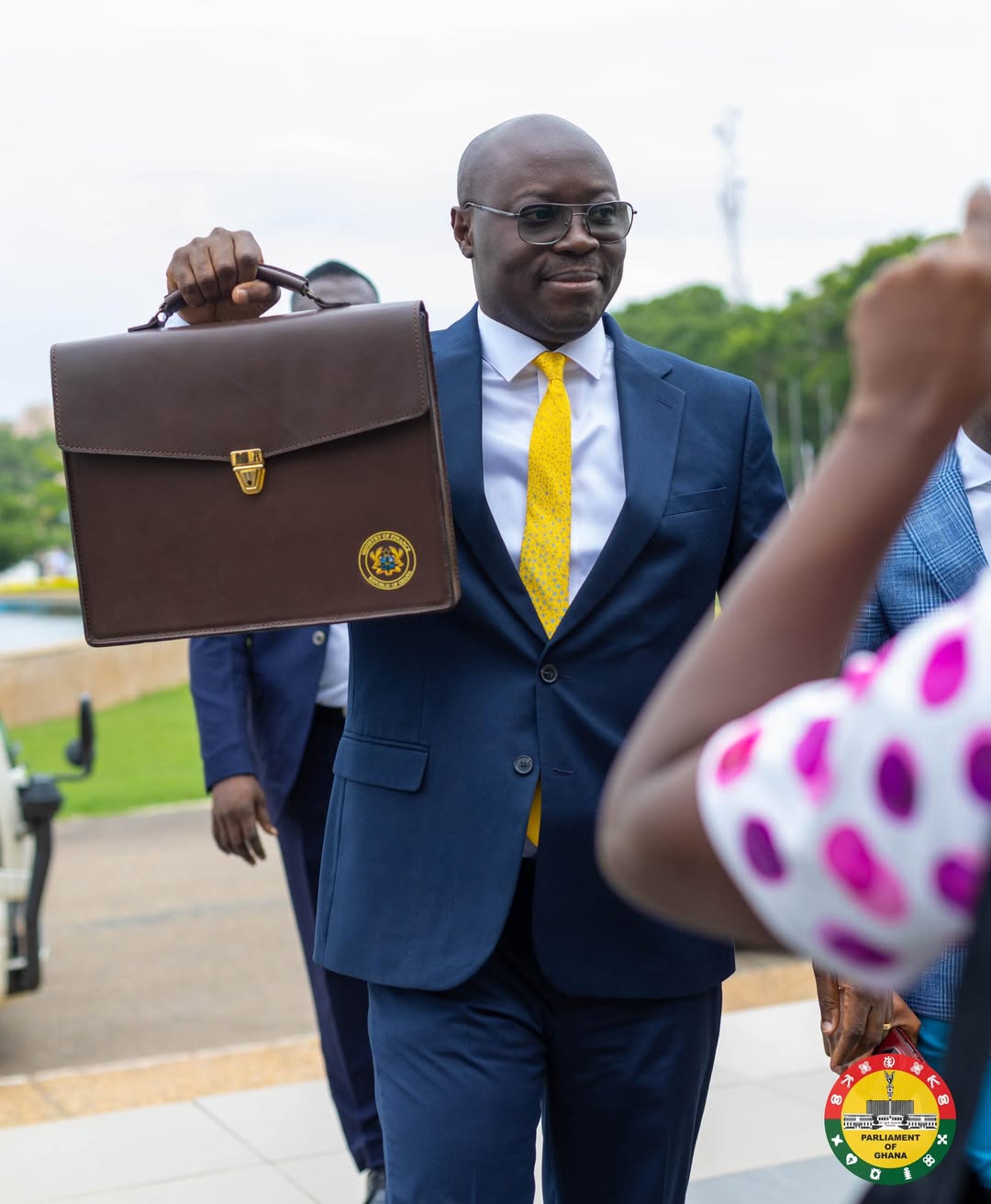
    Presenting the 2025 mid-year budget review on the floor of Parliament on Thursday, July 24, the Minister for Finance, Dr Cassiel Ato Forson, indicated that the first half of 2025 has demonstrated the government’s commitment to economic recovery.

    He noted that through prudent fiscal management, sound monetary policy, effective structural reforms and strategic investments, the government is laying a solid foundation for sustainable growth and shared prosperity.

    In the first quarter of 2025, the economy expanded by 5.3%, up from 4.9% in the same period of 2024, marking the highest first-quarter growth since 2020. The agriculture sector led this growth with a remarkable 6.6% increase, about three times the growth in first quarter of 2024. The agriculture sector growth contributed 26.4% of the overall first quarter growth. The fishing sub-sector grew the most at 16.4%. The services sector, constituting the largest share of the economy at 46.8%, grew by 5.9% and contributed 47.9% to the overall first quarter growth, with Information and Communication Technology (ICT) leading the growth in the sector at 13.1%.

    Industry grew by 3.4% in the first quarter of 2025, contributing 20.6% to the overall first quarter growth.

    Manufacturing also posted an impressive growth of 6.6%. Non-oil GDP growth also picked up strongly, growing at 6.8% in the first quarter of 2025 compared to the growth rate of 4.3% in the same period in 2024.

    The non-oil GDP growth is the highest since 2018. It is expected that with the introduction of the 24-Hour Economy Policy, the Big Push Programme and the Agriculture for Economic Transformation Programme, the GDP growth will be sustained and possibly exceed the targeted rate of 4% for 2025.

    Inflationary pressures have eased significantly, and according to the Finance Minister, the drastic fall in inflation “is not by chance or sheer luck but as a result of hard work and deliberate policies.”

    He revealed consumer price inflation has reduced from 23.8% in December 2024 to 13.7% in June 2025, representing a 10.1 percentage point decline. Similarly, producer price inflation saw a sharp decline from

    26.1% in December 2024 to 5.9% in June 2025, representing a steep decline of 20.2 percentage points in six months.

    Food inflation declined from 27.8% in December 2024 to 16.3 percent in June 2025, representing an encouraging 11.5 percentage point reduction. Non-Food inflation also declined from 20.3% in December 2024 to 11.4% in June 2025, representing an 8.9 percentage point reduction.

    Inflation for locally produced goods and services declined from 26.4% in December 2024 to 14% in June 2025. Inflation for imported items decreased from 18.0% in December 2024 to 12.5% in June 2025.

    The minister remarked that “these improvements are reflective of the effective fiscal consolidation, tight monetary policy, strong central bank reserves and the appreciation of the cedi. Mr. Speaker, with this trend, we are focused and determined to achieve our end-December 2025 inflation target of 11.9% ahead of schedule.”

  • Military deployed to Bawku over escalation of violence

    Military deployed to Bawku over escalation of violence

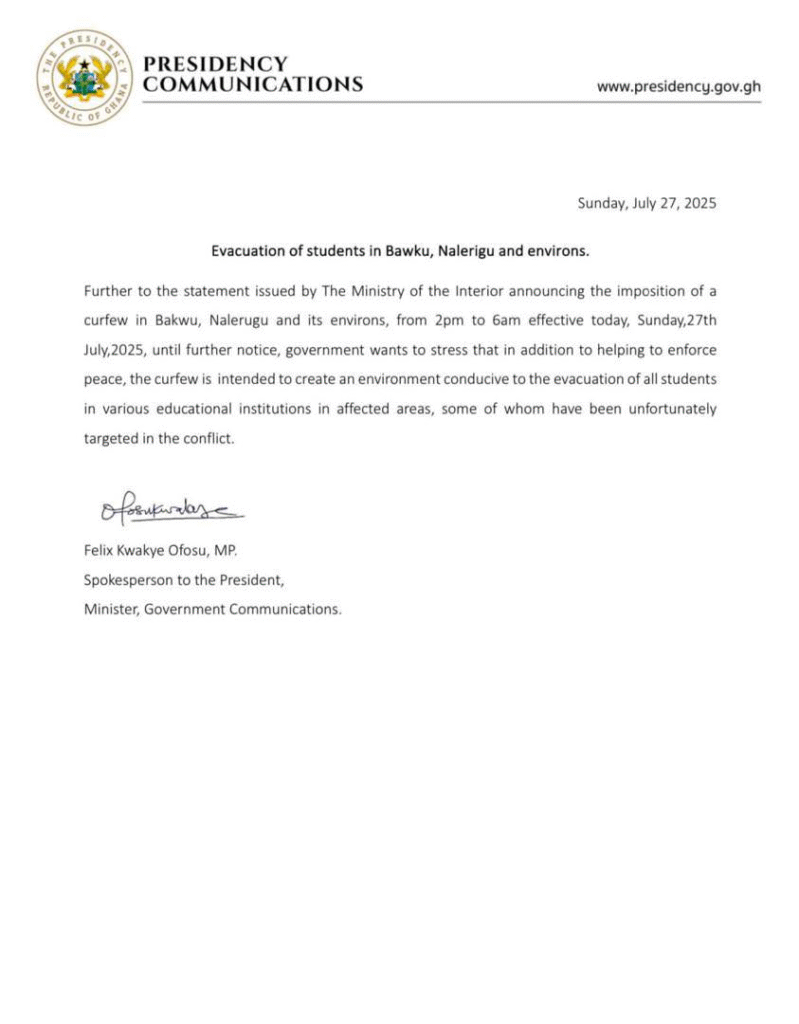
    The government, in a statement issued on July 27, announced that it is stepping up its approach from peacekeeping to peace enforcement in Bawku and other affected areas due to the recent escalation of violence, which could derail the peacebuilding process.

    The Ghana Armed Forces (GAF) have been deployed to maintain law and order and take all necessary measures to protect lives and property. Residents have been advised to fully cooperate with the Ghana Armed Forces to ensure peace.

    A third-year student of Bawku Senior High School, Hakim Kundima, was killed on the school campus on Saturday evening by some armed men.

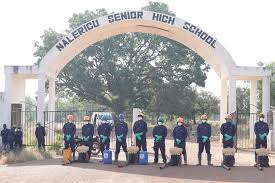
    Similar to the Nalerigu Senior High School incident, the armed men found their way into the school’s premises, dragged the deceased from the dormitory, and shot him. The Bawku Senior High School has been temporarily closed by the Municipal Education Directorate following the fatal shooting.

    Meanwhile, the government has reviewed the curfew hours for Bawku Municipality and its environs in the Upper East Region from 2pm to 6am, effective Sunday, July 27, until further notice.

    Unknown assailants on Saturday evening, July 26, claimed the lives of two male students of Nalerigu Senior High School (SHS) in the Northern Region. According to reports, the armed group stormed the school premises, proceeded to the dormitory, and opened fire on the two students—Lukman and Gideon.

    Assembly Member for the Denugu Electoral Area, Dasmani Fuseini, and uncle to one of the deceased students, is said to have confirmed the attack to the media. The remains of the deceased students are in the custody of the police at the time of reporting. The families are working to retrieve the bodies for burial. 

    The police have commenced an investigation into the murder of the students that has been linked to the renewed Bawku conflict.

    In reaction to the recent violent attacks, the Minister for the Interior, Muntaka Mubarak, on the advice of the North East Regional Security Council and by Executive Instrument, has imposed curfew hours on Nalerigu Township and its environs in the North East Region from 2pm to 6am, effective Sunday, July 27, until further notice.

    The curfew has created an environment conducive for the evacuation of all students in various educational institutions in affected areas, some of whom have been unfortunately targeted in the conflict. There is a total ban on all persons in the Nalerigu township and its environs from carrying arms, ammunition, or any offensive weapons. As such, any individual found with any arms or ammunition will be arrested and prosecuted.

    The government has called on the chiefs, elders, opinion leaders, youth, and people of the area to exercise restraint in the face of the challenges confronting them as well as to use non-violent means to channel their energies into ensuring peace.

    Earlier, the Minister of Defence, Dr. Edward Omane Boamah, indicated that the Ghana Armed Forces is fully prepared to contain any form of escalation in Bawku and its surrounding areas. Providing an update on the state of his sector on Monday, July 21, he acknowledged the tense situation in Bawku but assured that the military has implemented strong and effective security measures to respond to any threats and maintain stability.

    “We acknowledge that the situation in Bawku and Alavanyo and their immediate surroundings remains volatile. The Ghana Armed Forces is actively monitoring and has put in place robust mechanisms to ensure any potential escalation is swiftly contained in the interest of the people and long-lasting resolution of the conflict through dialogue,” he said.

    He warned that any individuals or groups who take advantage of the conflict to commit crimes will face strict action from the authorities. “In doing so, we shall always separate crimes from traditional matters, enabling us to deal appropriately and legally with criminals who foment trouble in the name of chieftaincy conflict,” he said.

    A few weeks ago, a confrontation between some members of the Ghana Armed Forces and locals in Bawku resulted in the death of five civilians and the destruction of a statue of the Bawku Naba, Naba Asigri Abugrago Azoka II.

    The reconstruction of the statue is expected to begin in the coming days, following a directive from His Excellency, President John Dramani Mahama. The statue, which was erected in 2024, is in honour of the Zugraan (Overlord) of the Kusaug Traditional Area, Asigri Abugrago Azoka II, a culturally revered figure in Bawku. It served as a strong emblem of tradition and communal pride.

    The reconstruction of the statue is expected to begin in the coming days, following a directive from His Excellency, President John Dramani Mahama. Minister of Defence Dr. Edward Omane Boamah, in collaboration with other security agencies, has been tasked with overseeing the process as well as restoring calm in the area.

    “To assure that His Excellency President John Dramani Mahama, the Commander in Chief of the Ghana Armed Forces (GAF), remains committed to bringing an end to decades-old conflict. To address, the recent happenings the National Security Coordinator, myself, the Minister for the Interior, the Chief of the Defence Staff and the IGP have all been tasked to play coordinated but differentiated roles to ensure that peace and calm are restored immediately, and this includes restoration of the statue of the Zugran of the Kusasis traditional area,” he added.

    According to him, the government is working with security to contain the situation and protect lives and property. “I have directed thorough investigations into the recent matter and promised to take swift action based on recommendations,” he said.

    On Tuesday, July 15, some Members of Parliament in the Upper East area called for the prosecution of the soldiers involved and compensation for the victims. Bawku, which had remained relatively peaceful for a period, saw conflict erupt once more in late 2024.

    The resurgence of violence was largely sparked by the return of Alhaji Seidu Abagre, a Mamprusi chief who had been enskinned in 2022, only to be exiled later when his enskinment was ruled illegal. His return to Bawku followed the withdrawal of an arrest warrant against him by a Kumasi High Court in October 2024, reigniting tensions between the Kusasi and Mamprusi communities.

    The renewed violence has resulted in deadly confrontations, including attacks on both civilians and security forces. In May, the government renewed the curfew in Bawku Municipality and its surrounding areas in the Upper East Region through an Executive Instrument.

    The minister, in a statement, urged chiefs, elders, opinion leaders, youth, and residents to remain calm and use peaceful, non-violent means to address the challenges facing the area and work towards lasting peace.

    The government also reminded the public that there is a total ban on the possession of arms, ammunition, or any offensive weapons in the area. Anyone found in violation will be arrested and prosecuted.

    On April 15, Otumfuo formally announced that the critical mediation sessions would take place from April 28 to May 1 at the Manhyia Palace in Kumasi. However, it was postponed due to the complexity of the dispute in the locality. Otumfuo Osei Tutu II’s involvement in the peace process has been met with widespread approval, with many hopeful that his leadership will play a critical role in restoring peace and stability to the troubled Bawku region.

    The government has commended His Majesty Otumfuo Osei Tutu II for mediating the conflict and appreciates all stakeholders who are supporting the peace process. The Otumfuo mediation, with the genuine help of Nayiri and Zugraana, had almost brought finality to the conflict until the very recent killings, which have necessitated drastic actions to protect all in the interests of the greater good. The government is urging all parties to refrain from violence and support the peace process. 

  • Bawku SHS shut down over murder of final-year student by armed men

    Bawku SHS shut down over murder of final-year student by armed men

    A third-year student of Bawku Senior High School, Hakim Kundima, was killed on the school campus on Saturday evening by some armed men.

    Similar to the Nalerigu Senior High School incident, the armed men found their way into the school’s premises, dragged the deceased from the dormitory, and shot him. The Bawku Senior High School has been temporarily closed by the Municipal Education Directorate following the fatal shooting.

    Unknown assailants on Saturday evening, July 26, claimed the lives of two male students of Nalerigu Senior High School (SHS) in the Northern Region. According to reports, the armed group stormed the school premises, proceeded to the dormitory, and opened fire on the two students—Lukman and Gideon.

    Assembly Member for the Denugu Electoral Area, Dasmani Fuseini, and uncle to one of the deceased students, is said to have confirmed the attack to the media. The remains of the deceased students are in the custody of the police at the time of reporting. The families are working to retrieve the bodies for burial. 

    The police have commenced an investigation into the murder of the students that has been linked to the renewed Bawku conflict.

    In reaction to the recent violent attacks, the Minister for the Interior, Muntaka Mubarak, on the advice of the North East Regional Security Council and by Executive Instrument, has imposed curfew hours on Nalerigu Township and its environs in the North East Region from 2pm to 6am, effective Sunday, July 27, until further notice.

    The curfew has created an environment conducive for the evacuation of all students in various educational institutions in affected areas, some of whom have been unfortunately targeted in the conflict. There is a total ban on all persons in the Nalerigu township and its environs from carrying arms, ammunition, or any offensive weapons. As such, any individual found with any arms or ammunition will be arrested and prosecuted.

    The government has called on the chiefs, elders, opinion leaders, youth, and people of the area to exercise restraint in the face of the challenges confronting them as well as to use non-violent means to channel their energies into ensuring peace.

    Meanwhile, the government has reviewed the curfew hours for Bawku Municipality and its environs in the Upper East Region from 2pm to 6am, effective Sunday, July 27, until further notice. The government, in a statement issued on July 27, announced that it is stepping up its approach from peacekeeping to peace enforcement in Bawku and other affected areas due to the recent escalation of violence, which could derail the peacebuilding process.

    The Ghana Armed Forces have been deployed to maintain law and order and take all necessary measures to protect lives and property. Residents have been advised to fully cooperate with the Ghana Armed Forces to ensure peace.

    Earlier, the Minister of Defence, Dr. Edward Omane Boamah, indicated that the Ghana Armed Forces is fully prepared to contain any form of escalation in Bawku and its surrounding areas. Providing an update on the state of his sector on Monday, July 21, he acknowledged the tense situation in Bawku but assured that the military has implemented strong and effective security measures to respond to any threats and maintain stability.

    “We acknowledge that the situation in Bawku and Alavanyo and their immediate surroundings remains volatile. The Ghana Armed Forces is actively monitoring and has put in place robust mechanisms to ensure any potential escalation is swiftly contained in the interest of the people and long-lasting resolution of the conflict through dialogue,” he said.

    He warned that any individuals or groups who take advantage of the conflict to commit crimes will face strict action from the authorities. “In doing so, we shall always separate crimes from traditional matters, enabling us to deal appropriately and legally with criminals who foment trouble in the name of chieftaincy conflict,” he said.

    A few weeks ago, a confrontation between some members of the Ghana Armed Forces and locals in Bawku resulted in the death of five civilians and the destruction of a statue of the Bawku Naba, Naba Asigri Abugrago Azoka II.

    The reconstruction of the statue is expected to begin in the coming days, following a directive from His Excellency, President John Dramani Mahama. The statue, which was erected in 2024, is in honour of the Zugraan (Overlord) of the Kusaug Traditional Area, Asigri Abugrago Azoka II, a culturally revered figure in Bawku. It served as a strong emblem of tradition and communal pride.

    The reconstruction of the statue is expected to begin in the coming days, following a directive from His Excellency, President John Dramani Mahama. Minister of Defence Dr. Edward Omane Boamah, in collaboration with other security agencies, has been tasked with overseeing the process as well as restoring calm in the area.

    “To assure that His Excellency President John Dramani Mahama, the Commander in Chief of the Ghana Armed Forces (GAF), remains committed to bringing an end to decades-old conflict. To address, the recent happenings the National Security Coordinator, myself, the Minister for the Interior, the Chief of the Defence Staff and the IGP have all been tasked to play coordinated but differentiated roles to ensure that peace and calm are restored immediately, and this includes restoration of the statue of the Zugran of the Kusasis traditional area,” he added.

    According to him, the government is working with security to contain the situation and protect lives and property. “I have directed thorough investigations into the recent matter and promised to take swift action based on recommendations,” he said.

    On Tuesday, July 15, some Members of Parliament in the Upper East area called for the prosecution of the soldiers involved and compensation for the victims. Bawku, which had remained relatively peaceful for a period, saw conflict erupt once more in late 2024.

    The resurgence of violence was largely sparked by the return of Alhaji Seidu Abagre, a Mamprusi chief who had been enskinned in 2022, only to be exiled later when his enskinment was ruled illegal. His return to Bawku followed the withdrawal of an arrest warrant against him by a Kumasi High Court in October 2024, reigniting tensions between the Kusasi and Mamprusi communities.

    The renewed violence has resulted in deadly confrontations, including attacks on both civilians and security forces. In May, the government renewed the curfew in Bawku Municipality and its surrounding areas in the Upper East Region through an Executive Instrument.

    The minister, in a statement, urged chiefs, elders, opinion leaders, youth, and residents to remain calm and use peaceful, non-violent means to address the challenges facing the area and work towards lasting peace.

    The government also reminded the public that there is a total ban on the possession of arms, ammunition, or any offensive weapons in the area. Anyone found in violation will be arrested and prosecuted.

    On April 15, Otumfuo formally announced that the critical mediation sessions would take place from April 28 to May 1 at the Manhyia Palace in Kumasi. However, it was postponed due to the complexity of the dispute in the locality. Otumfuo Osei Tutu II’s involvement in the peace process has been met with widespread approval, with many hopeful that his leadership will play a critical role in restoring peace and stability to the troubled Bawku region.

    The government has commended His Majesty Otumfuo Osei Tutu II for mediating the conflict and appreciates all stakeholders who are supporting the peace process. The Otumfuo mediation, with the genuine help of Nayiri and Zugraana, had almost brought finality to the conflict until the very recent killings, which have necessitated drastic actions to protect all in the interests of the greater good. The government is urging all parties to refrain from violence and support the peace process. 

  • A-G to update public on withdrawal of unibank legal case today

    A-G to update public on withdrawal of unibank legal case today

    Attorney-General and Minister for Justice, Dr Dominic Ayine, will today, July 28, shed more light on the unibank legal case that was recently withdrawn by the state as he provides an update to the public over work done by his outfit as part of the Government Accountability Series.

    Last week, Minister for Government Communications Felix Kwakye Ofosu revealed that Dr Dominic Ayine would not engage the media as part of the Government Accountability Series on Friday, July 25.

    The Government Accountability Series is to be held three times a week on Mondays, Wednesdays, and Fridays at 11 am. However, Felix Kwakye Ofosu noted that the Attorney-General will engage the media today to enable the public ponder over the pieces of information that would be shared by the Minister for Finance, Dr Cassiel Ato Forson, on Thursday, July 24, during the delivery of the 2025 mid-year budget review.

    “On Monday, the Attorney-General and Minister for Justice will be here to provide an update on ORAL. The Minister of Finance will present the Mid-year budget review, which is likely to occupy the public space for the remaining days of this week. That is why it has become necessary to shift the Attorney-General’s briefing to Monday so there is enough time to digest the budget review that the Finance Minister will be presenting,” he said.

    “Only yesterday there was a matter of unibank and some arrangements that have been reached, the Attorney-General will take the opportunity to offer insight into the reasoning behind the position that was taken and announced yesterday. He has a case called Rambow in the Jungle that he will delve into to apprise the people of Ghana about what it entails,” Felix Kwakye Ofosu added.

    Attorney-General and Minister for Justice Dr. Dominic Ayine has withdrawn the state’s legal case against Kwabena Duffuor, a shareholder of defunct uniBank Ghana Limited (uniBank) and owner of HODA Holdings Company Limited (HODA), and seven other accused.

    The accused were charged with 68 counts of the following offenses: (i) conspiracy to commit fraudulent breach of trust; (ii) fraudulent breach of trust; (iii) money laundering; (iv) dishonest receiving; (v) contravention of the Bank of Ghana Act, 2002 (Act 612); (vi) willfully causing financial loss to the state; (vii) conspiracy to falsify accounts; and (viii) falsification of accounts.

    The Attorney-General in a statement, provided an explanation for entering a nolle prosequi in the case of The Republic v. Kwabena Duffour & 7 Others, although the exercise of this prosecutorial discretion requires no explanation under law. The A-G explained that the central objective of these prosecutions was to ensure accountability for public funds and recover losses occasioned to the state through various alleged acts of financial impropriety.

    Per the facts of the case, between December 2015 and June 2016, uniBank applied for various liquidity support of GH¢200 million, GH¢350 million, and GH¢450 million from the Bank of Ghana (BoG), out of which only GH¢150 million was paid, leaving an overdue amount of GH¢850 million excluding interest. 

    While still in default in the repayment of the BoG liquidity support of GH$850 million, uniBank borrowed several amounts through overnight interbank borrowings.

    The Office of the Attorney General, in pursuit of the aforementioned objective, established a threshold of 60% recovery of the alleged losses to the state as a condition for reconsidering prosecution in specific cases in collaboration with other relevant state agencies.

    The A-G noted that “following prolonged negotiations and engagements, the accused persons in The Republic v. Kwabena Duffour & 7 Others case have met this recovery threshold.” In light of this, the Attorney-General noted that continuing with the prosecution would not serve any additional public purpose, as significant recoveries were made for the state.

    Per the statement, the A-G’s decision does not imply an absence of wrongdoing nor a vindication of any conduct. “It is a pragmatic step in line with the overarching national interest of recovering State resources. The Honourable Attorney-General remains resolute in his commitment to upholding the rule of law, protecting the public purse, and pursuing justice in all matters of national importance,” the statement added.

    Facts of the case

    Kwabena Duffuor, the 1st accused person, is a shareholder of uniBank Ghana Limited (uniBank) and the ultimate beneficial owner of HODA Holdings Company Limited (HODA). HODA, the 2nd accused person, is a holding company and the majority shareholder of uniBank. 

    Johnson Pandit Asiama, the 3rd accused person, was the 2nd Deputy Governor of the Bank of Ghana (BOG) between April 2016 and January 2018. The 4th accused person, Kwabena Duffuor II, formerly a Chief Operating Officer (COO) of uniBank subsequently became the Chief Executive Officer (CEO) of uniBank between June 2017 and March 2018. 

    The 5th accused person, Ekow Nyarko Dadzie-Dennis, who was a COO of uniBank is a member of the Board of Directors of WAICA Reinsurance Corporation Plc (WAICA-Re), Sierra Leone. The 6th accused person, Elsie Dansoa Kyereh, was an Executive Head of Corporate Banking at uniBank. 

    The 7th accused person, Jeffrey Amon, was a Senior Relationship Manager of Corporate Banking at uniBank. The 8th accused person, Benjamin Ofori was the Executive Head of Credit Risk at uniBank. The 9th accused person, Kwadwo Opoku Okoh, was a Financial Control Manager of uniBank and is Head of Finance of HODA.

    UniBank went into official administration on 20th March 2018 and was placed in receivership on 1st August 2018. KPMG, the Official Administrator, in the course of its duties discovered that about GH¢5.7 billion had become due from shareholders of uniBank as of 20th March 2018. 

    No security nor proper credit arrangements were made for the payment of the amount, which remains unpaid. The debt of GH¢5.7 billion was made up of two components, namely, a Deferred Expenditure Account (DEA) together with other balances of about GH¢3.7 billion and, secondly, Loans and Advances made up of about GH¢2 billion.

    The DEA was a general ledger account created and operated for the benefit of shareholders of uniBank. The GH¢43.7 billion was also made up of a number of transactions of which about GH¢2.4 billion constituted direct payouts for the benefit of shareholders. 

    Out of the amount of GH¢2.4 billion, the 4th and 5th accused persons acting in concert dishonestly appropriated funds out of customer deposits and borrowings from BOG for the benefit of shareholders through a variety of means including the use of petty cash vouchers and cash pay-in slips amounting to about GH¢613 million. 

    Out of the amount of GH¢613 million, various payments were dishonestly made to the accounts of related parties of uniBank including the 2nd accused person (HODA), HODA Properties, Numa Logistics, Integrated Properties, Topp Recruitment, and Bolton Portfolio without recourse to due process, contrary to proper banking practice. Corresponding entries were also dishonestly posted to the DEA.

    The 1st and 2nd accused persons between January 2014 and February 2018 dishonestly received over GH¢663,283,917.19 through subsidiaries of the 2nd accused person out of customer deposits with uniBank that were dishonestly transferred and recorded in the DEA.

    It was also discovered that in April 2016, an amount of GH¢35 million was dishonestly paid from uniBank funds to Ghana Oil Company Limited (GOIL) for the purchase of shares in GOIL for the benefit of Starmount Development Company Limited (Starmount), a related party. The amount of GH¢35 million was also posted to the DEA at the instance of the 4th and 5th accused persons.

    Between November 2015 and September 2017, at the instance of the 4th and 5th accused persons, various dishonest payments amounting to GH¢74 million were made by uniBank to fund a commercial printing and label manufacturing company, uniPrecision Printing and Packaging Company Limited (uniPrecision), also a subsidiary of HODA. These payments were charged to the DEA. UniBank failed to recover these funds from uniPrecision.

    Between December 2015 and June 2016, uniBank applied for various liquidity support of GH¢200 million, GH¢350 million, and GH¢450 million from BoG, out of which only GH¢150 million was paid leaving an overdue amount of GH¢850 million, excluding interest. Whilst still in default in the repayment of the BoG liquidity support of GH¢850 million, uniBank borrowed several amounts through overnight interbank borrowings.

    In September 2016, the 3rd accused person, even though aware that uniBank was in a poor liquidity state and still in default of repayments due to BoG, contrived a scheme whereby the 3rd accused person gave approval for the disbursement of a GH¢300 million unsecured facility to Universal Merchant Bank Limited (UMB) for the benefit of uniBank without following prescribed mandatory statutory conditions. GH¢150 million of the facility remains unpaid.

    On 5th December 2016, uniBank borrowed GH¢400 million from BoG as overnight borrowing in addition to other borrowings from the interbank market. Despite its weak liquidity position, uniBank, at the instance of the 4th and 5th accused persons, dishonestly transferred a total of about GH¢325 million through UMB as payment for 51% ADB shares in the names of Belstar Capital Limited (Belstar), Starmount, SIC Financial Services Limited (SIC-FSL), EDC Investments Limited (EDC), Oscar Yao Doe and Mark Blewunyo Cofie. 

    The balance of the outstanding GH¢850 million liquidity support from BOG was still due at the time uniBank transferred the amount of GH¢325 million funds to purchase the ADB shares, which compelled BOG to nullify the purchase of the shares.

    The second component of GH¢2 billion due to uniBank by shareholders included 31 fictitious loans amounting to over GH¢1 billion created at the instance of the 4th, 5th, 6th, 7th and 8th accused persons. Investigations disclosed that none of the customers in whose names the fictitious loans were created applied for, received, or were granted any loan facility by the bank. 

    As a result of the dishonest conduct of the 4th, 5th, 6th, 7th and 8th accused persons, the outstanding balance due to the bank on the DEA was dishonestly excluded from uniBank’s assets in its prudential returns to BoG and its annual financial statements, thereby misreporting its true state of affairs to the regulatory authorities and users of its financial statements.

    The 4th accused person on 6th June 2016 dishonestly authorised the establishment of a Letter of Credit (LC) by uniBank in the sum of GH¢12.5 million for the benefit of uniPrecision for the purchase of equipment. Investigations revealed that no equipment was purchased. Payments in respect of the LC were made by uniBank to Ecobank, Paris. The total amount paid in that transaction was about GH¢13.5 million inclusive of interest.

    The 4th, 5th and 9th accused persons, acting in concert between November 2013 and February 2014, dishonestly appropriated the sum of about GH¢9.5 million ostensibly for the purchase of shares in WAICA-Re in the names of Telemedia Communications (Telemedia), Crown Insurance Brokers (Crown Insurance), uniCredit Ghana Limited (uniCredit), HODA, uniBank, uniSecurities Ghana Limited (uniSecurities) and the 1st accused person, Kwabena Duffuor. Investigations disclosed that Telemedia, Crown Insurance, uniCredit, uniSecurities and the 1st accused person held no shares in WAICA-Re.

    Background

    The accused were arraigned before the High Court, Accra, on 12th February, 2020, for the alleged roles they played leading to the collapse of UniBank, a bank licensed to operate under the Banking and Deposit-taking Act, 2016 (Act 930). 

    When, in the course of its operations, UniBank began to show signs of distress, the Bank of Ghana stepped in, and in exercise of its powers of supervision over banks and deposit-taking institutions, appointed an official administrator to reorganize the affairs of the bank. 

    KPMG, an audit firm, was appointed administrator of Unibank by the Bank of Ghana from 20th March 2018 to 31st July 2018. At the end of the Official Administration, the Bank of Ghana revoked the banking licence of UniBank and appointed Nii Amanor Dodoo, a senior partner of KPMG, as the official receiver of UniBank pursuant to the provisions of Banks and Specialised Deposit-Taking Institutions Act, 2016 (Act 930). The effective date of the appointment was 1st August 2018, which is one day after the mandate of the Official Administrator ended.

    At the close of the Management Conference on 22nd February, 2021, the prosecution opened its case by calling its first witness (PW1), Nii Amanor Dodoo, the receiver of UniBank. On 26th April, 2021, the appellants raised objection to him testifying and challenged the status of PW1 as a competent witness. 

    Their objection was based on the fact that, as a senior partner of KPMG, the official administrator of UniBank, he had taken an active part in the management and operation of UniBank as official administrator. 

    Since one who had acted as official administrator was prohibited under 122 (8) of Act 930 from taking any position as “shareholder, director, or key management personnel in a bank,” his appointment as receiver was null and void. Consequent upon his appointment as receiver being a nullity, he was not competent to testify in that capacity on any matter concerning the affairs of UniBank.

    The High Court overruled the objection on 22nd June, 2021, and the appellants took the interlocutory appeal to the Court of Appeal. The Court of Appeal affirmed the decision of the trial court and dismissed the appeal on 17th February, 2022. Appellants filed an appeal to the Supreme Court.
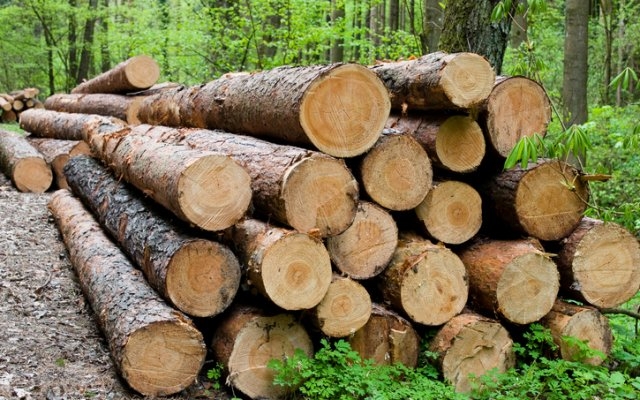
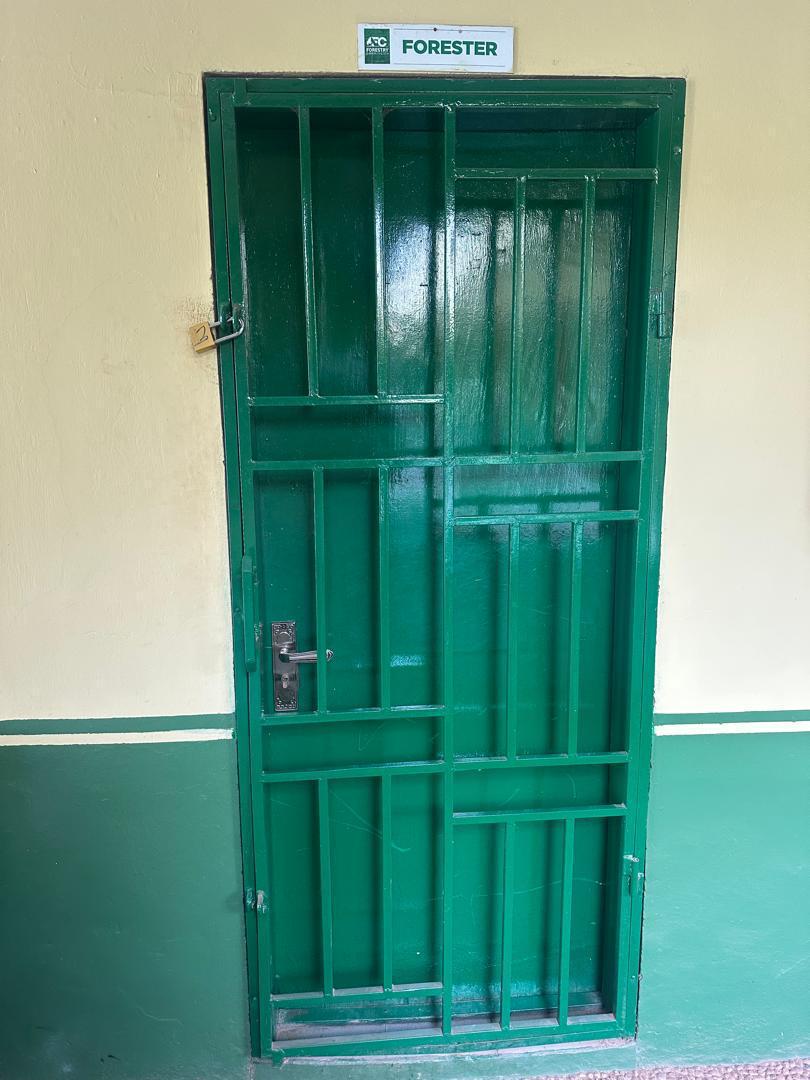
  • Govt imposes curfew on Nalerigu Township and its environs over recent attacks

    Govt imposes curfew on Nalerigu Township and its environs over recent attacks

    A recent violent attack in Nalerigu has compelled the Minister for the Interior, Muntaka Mubarak, on the advice of the North East Regional Security Council and by Executive Instrument, to impose curfew hours on the township and its environs in the North East Region from 2pm to 6am, effective Sunday, July 27, until further notice.

    The curfew has created an environment conducive for the evacuation of all students in various educational institutions in affected areas, some of whom have been unfortunately targeted in the conflict.

    Unknown assailants on Saturday evening, July 26, claimed the lives of two male students of Nalerigu Senior High School (SHS) in the Northern Region. According to reports, the armed group stormed the school premises, proceeded to the dormitory, and opened fire on the two students—Lukman and Gideon.

    Assembly Member for the Denugu Electoral Area, Dasmani Fuseini, and uncle to one of the deceased students, is said to have confirmed the attack to the media. The remains of the deceased students are in the custody of the police at the time of reporting. The families are working to retrieve the bodies for burial. 

    The police have commenced an investigation into the murder of the students that has been linked to the renewed Bawku conflict. Management of Nalerigu Senior High School is yet to officially comment on the matter as school students mourn the loss of their colleagues. Also, communities close to the second cycle institutions are in a state of shock.

    There is a total ban on all persons in the Nalerigu township and its environs from carrying arms, ammunition, or any offensive weapons. As such, any individual found with any arms or ammunition will be arrested and prosecuted.

    The government has called on the chiefs, elders, opinion leaders, youth, and people of the area to exercise restraint in the face of the challenges confronting them as well as to use non-violent means to channel their energies into ensuring peace.

    Meanwhile, the government has reviewed the curfew hours for Bawku Municipality and its environs in the Upper East Region from 2pm to 6am, effective Sunday, July 27, until further notice. The government, in a statement issued on July 27, announced that it is stepping up its approach from peacekeeping to peace enforcement in Bawku and other affected areas due to the recent escalation of violence, which could derail the peacebuilding process.

    The Ghana Armed Forces have been deployed to maintain law and order and take all necessary measures to protect lives and property. Residents have been advised to fully cooperate with the Ghana Armed Forces to ensure peace.

    Earlier, the Minister of Defence, Dr. Edward Omane Boamah, indicated that the Ghana Armed Forces is fully prepared to contain any form of escalation in Bawku and its surrounding areas. Providing an update on the state of his sector on Monday, July 21, he acknowledged the tense situation in Bawku but assured that the military has implemented strong and effective security measures to respond to any threats and maintain stability.

    “We acknowledge that the situation in Bawku and Alavanyo and their immediate surroundings remains volatile. The Ghana Armed Forces is actively monitoring and has put in place robust mechanisms to ensure any potential escalation is swiftly contained in the interest of the people and long-lasting resolution of the conflict through dialogue,” he said.

    He warned that any individuals or groups who take advantage of the conflict to commit crimes will face strict action from the authorities. “In doing so, we shall always separate crimes from traditional matters, enabling us to deal appropriately and legally with criminals who foment trouble in the name of chieftaincy conflict,” he said.

    A few weeks ago, a confrontation between some members of the Ghana Armed Forces and locals in Bawku resulted in the death of five civilians and the destruction of a statue of the Bawku Naba, Naba Asigri Abugrago Azoka II.

    The reconstruction of the statue is expected to begin in the coming days, following a directive from His Excellency, President John Dramani Mahama. The statue, which was erected in 2024, is in honour of the Zugraan (Overlord) of the Kusaug Traditional Area, Asigri Abugrago Azoka II, a culturally revered figure in Bawku. It served as a strong emblem of tradition and communal pride.

    The reconstruction of the statue is expected to begin in the coming days, following a directive from His Excellency, President John Dramani Mahama. Minister of Defence Dr. Edward Omane Boamah, in collaboration with other security agencies, has been tasked with overseeing the process as well as restoring calm in the area.

    “To assure that His Excellency President John Dramani Mahama, the Commander in Chief of the Ghana Armed Forces (GAF), remains committed to bringing an end to decades-old conflict. To address, the recent happenings the National Security Coordinator, myself, the Minister for the Interior, the Chief of the Defence Staff and the IGP have all been tasked to play coordinated but differentiated roles to ensure that peace and calm are restored immediately, and this includes restoration of the statue of the Zugran of the Kusasis traditional area,” he added.

    According to him, the government is working with security to contain the situation and protect lives and property. “I have directed thorough investigations into the recent matter and promised to take swift action based on recommendations,” he said.

    On Tuesday, July 15, some Members of Parliament in the Upper East area called for the prosecution of the soldiers involved and compensation for the victims. Bawku, which had remained relatively peaceful for a period, saw conflict erupt once more in late 2024.

    The resurgence of violence was largely sparked by the return of Alhaji Seidu Abagre, a Mamprusi chief who had been enskinned in 2022, only to be exiled later when his enskinment was ruled illegal. His return to Bawku followed the withdrawal of an arrest warrant against him by a Kumasi High Court in October 2024, reigniting tensions between the Kusasi and Mamprusi communities.

    The renewed violence has resulted in deadly confrontations, including attacks on both civilians and security forces. In May, the government renewed the curfew in Bawku Municipality and its surrounding areas in the Upper East Region through an Executive Instrument.

    The minister, in a statement, urged chiefs, elders, opinion leaders, youth, and residents to remain calm and use peaceful, non-violent means to address the challenges facing the area and work towards lasting peace.

    The government also reminded the public that there is a total ban on the possession of arms, ammunition, or any offensive weapons in the area. Anyone found in violation will be arrested and prosecuted.

    On April 15, Otumfuo formally announced that the critical mediation sessions would take place from April 28 to May 1 at the Manhyia Palace in Kumasi. However, it was postponed due to the complexity of the dispute in the locality. Otumfuo Osei Tutu II’s involvement in the peace process has been met with widespread approval, with many hopeful that his leadership will play a critical role in restoring peace and stability to the troubled Bawku region.

    The government has commended His Majesty Otumfuo Osei Tutu II for mediating the conflict and appreciates all stakeholders who are supporting the peace process. The Otumfuo mediation, with the genuine help of Nayiri and Zugraana, had almost brought finality to the conflict until the very recent killings, which have necessitated drastic actions to protect all in the interests of the greater good. The government is urging all parties to refrain from violence and support the peace process. 

  • Govt evacuates students in Nalerigu, affected areas after murder of students

    Govt evacuates students in Nalerigu, affected areas after murder of students

    The government has commenced evacuation of all students in educational institutions in Nalerigu Township and its environs in the North East Region, following the murder of two students.

    Unknown assailants on Saturday evening, July 26, claimed the lives of two male students of Nalerigu Senior High School (SHS) in the Northern Region.

    According to reports, the armed group stormed the school premises, proceeded to the dormitory, and opened fire on the two students—Lukman and Gideon.

    Assembly Member for the Denugu Electoral Area, Dasmani Fuseini, and uncle to one of the deceased students, is said to have confirmed the attack to the media. The remains of the deceased students are in the custody of the police at the time of reporting. The families are working to retrieve the bodies for burial. 

    The Police have commenced an investigation into the murder of the students that has been linked to the renewed Bawku conflict. Management of Nalerigu Senior High School is yet to officially comment on the matter as school students mourn the loss of their colleagues. Also, communities close to the second cycle institutions are in a state of shock.

    In reaction to the recent violent attack, the Minister for the Interior, Muntaka Mubarak, on the advice of the North East Regional Security Council and by Executive Instrument, has imposed curfew hours on Nalerigu Township and its environs in the North East Region from 2pm to 6am, effective Sunday, July 27, until further notice.

    The curfew has created an environment conducive to the evacuation of all students in various educational institutions in affected areas, some of whom have been unfortunately targeted in the conflict.

    There is a total ban on all persons in the Nalerigu township and its environs from carrying arms, ammunition, or any offensive weapons. As such, any individual found with any arms or ammunition will be arrested and prosecuted.

    The government has called on the chiefs, elders, opinion leaders, youth, and people of the area to exercise restraint in the face of the challenges confronting them as well as to use non-violent means to channel their energies into ensuring peace.

    Meanwhile, the government has reviewed the curfew hours for Bawku Municipality and its environs in the Upper East Region from 2pm to 6am, effective Sunday, July 27, until further notice.

    The government, in a statement issued on July 27, announced that it is stepping up its approach from peacekeeping to peace enforcement in Bawku and other affected areas due to the recent escalation of violence, which could derail the peacebuilding process.

    The Ghana Armed Forces have been deployed to maintain law and order and take all necessary measures to protect lives and property. Residents have been advised to fully cooperate with the Ghana Armed Forces to ensure peace.

    Earlier, the Minister of Defence, Dr. Edward Omane Boamah, indicated that the Ghana Armed Forces is fully prepared to contain any form of escalation in Bawku and its surrounding areas.

    Providing an update on the state of his sector on Monday, July 21, he acknowledged the tense situation in Bawku but assured that the military has implemented strong and effective security measures to respond to any threats and maintain stability.

    “We acknowledge that the situation in Bawku and Alavanyo and their immediate surroundings remains volatile. The Ghana Armed Forces is actively monitoring and has put in place robust mechanisms to ensure any potential escalation is swiftly contained in the interest of the people and long-lasting resolution of the conflict through dialogue,” he said.

    He warned that any individuals or groups who take advantage of the conflict to commit crimes will face strict action from the authorities.

    “In doing so, we shall always separate crimes from traditional matters, enabling us to deal appropriately and legally with criminals who foment trouble in the name of chieftaincy conflict,” he said.

    A few weeks ago, a confrontation between some members of the Ghana Armed Forces and locals in Bawku resulted in the death of five civilians and the destruction of a statue of the Bawku Naba, Naba Asigri Abugrago Azoka II.

    The reconstruction of the statue is expected to begin in the coming days, following a directive from His Excellency, President John Dramani Mahama. The statue, which was erected in 2024, is in honour of the Zugraan (Overlord) of the Kusaug Traditional Area, Asigri Abugrago Azoka II, a culturally revered figure in Bawku. It served as a strong emblem of tradition and communal pride.

    The reconstruction of the statue is expected to begin in the coming days, following a directive from His Excellency, President John Dramani Mahama. Minister of Defence, Dr. Edward Omane Boamah, in collaboration with other security agencies, has been tasked with overseeing the process as well as restoring calm in the area.

    “To assure that His Excellency President John Dramani Mahama, the Commander in Chief of the Ghana Armed Forces (GAF), remains committed to bringing an end to decades-old conflict.

    “To address, the recent happenings the National Security Coordinator, myself, the Minister for the Interior, the Chief of the Defence Staff and the IGP have all been tasked to play coordinated but differentiated roles to ensure that peace and calm is restored immediately and this includes restoration of the statue of the Zugran of the Kusasis traditional area,” he added.

    According to him, the government is working with security to contain the situation and protect lives and property. “I have directed thorough investigations into the recent matter and promised to take swift action based on recommendations,” he said.

    On Tuesday, July 15, some Members of Parliament in the Upper East area called for the prosecution of the soldiers involved and compensation for the victims. Bawku, which had remained relatively peaceful for a period, saw conflict erupt once more in late 2024.

    The resurgence of violence was largely sparked by the return of Alhaji Seidu Abagre, a Mamprusi chief who had been enskinned in 2022, only to be exiled later when his enskinment was ruled illegal. His return to Bawku followed the withdrawal of an arrest warrant against him by a Kumasi High Court in October 2024, reigniting tensions between the Kusasi and Mamprusi communities.

    The renewed violence has resulted in deadly confrontations, including attacks on both civilians and security forces. In May, the government renewed the curfew in Bawku Municipality and its surrounding areas in the Upper East Region through an Executive Instrument.

    The minister, in a statement, urged chiefs, elders, opinion leaders, youth, and residents to remain calm and use peaceful, non-violent means to address the challenges facing the area and work towards lasting peace.

    The government also reminded the public that there is a total ban on the possession of arms, ammunition, or any offensive weapons in the area. Anyone found in violation will be arrested and prosecuted.

    On April 15, Otumfuo formally announced that the critical mediation sessions would take place from April 28 to May 1 at the Manhyia Palace in Kumasi. However, it was postponed due to the complexity of the dispute in the locality.

    Otumfuo Osei Tutu II’s involvement in the peace process has been met with widespread approval, with many hopeful that his leadership will play a critical role in restoring peace and stability to the troubled Bawku region.

    The government has commended His Majesty Otumfuo Osei Tutu II for mediating the conflict and appreciates all stakeholders who are supporting the peace process. The Otumfuo mediation, with the genuine help of Nayiri and Zugraana, had almost brought finality to the conflict until the very recent killings, which have necessitated drastic actions to protect all in the interests of the greater good. The government is urging all parties to refrain from violence and support the peace process. 

  • One dead as Ghana’s Mpox cases hit 257 – GHS

    One dead as Ghana’s Mpox cases hit 257 – GHS

    The Ghana Health Service (GHS) has reported the unfortunate demise of one out of the many individuals who have contracted the Monkeypox (Mpox) disease.

    Since Ghana recorded its first Mpox case in June 2022, with five cases, this is the first time any of the infected persons has succumbed to the disease.

    In its regular update, the Ghana Health Service noted that as of July 22, 23 new cases were recorded, pushing the total confirmed cases to 257.

    Ghana’s confirmed monkeypox cases rose to 234 cases following the detection of 16 new cases as of July 18.

    The number of cases stood at 218 following the detection of 21 new infections as of July 14. The Ghana Health Service reported 197 confirmed cases following the detection of 11 new infections as of July 11. 

    The Service while revealing this information, described the trend as a gradual yet manageable increase and called for sustained public vigilance.

    The country has seen a slight uptick in infections. Health officials, however, maintain that the overall situation remains under control.

    Mpox spreads primarily through close physical contact. Common symptoms include fever, tiredness, swollen lymph nodes, and a noticeable rash. Although many cases are mild, early medical care is crucial to avoid complications.

    In light of the growing Mpox cases, the GHS is boosting nationwide information campaigns to ensure citizens remain aware and careful.

    Preventive actions such as avoiding direct contact with sick individuals, practicing proper hygiene, and promptly seeking care when symptoms show are being emphasized.

    Officials stress the importance of swift case detection and notification, with field teams and community health workers diligently monitoring developments.

    The public is being encouraged to stay watchful, adhere to health precautions, and contribute to collective efforts to stop the virus from spreading.

    The government is engaging international organizations for assistance in procuring vaccines to be able to curb the surging number of cases being reported.

    The World Health Organization (WHO) Ghana has provided laboratory PCR reagents to enhance the country’s diagnostic capacity. The donation was officially handed over to the Ghana Health Service (GHS) at the National Public Health Reference Laboratory.

    Receiving the supplies on behalf of the GHS, Acting Deputy Director General Dr. Caroline Reindorf Amissah expressed gratitude for WHO’s ongoing logistical and technical support.

    “We promise from our end to do our bit, collaborate, go out there, and look for the cases to make sure that this is really brought under control,” she stated.

    WHO Country Representative Dr. Fiona Braka emphasized that the organization hopes the reagents will enable rapid diagnosis and prompt public health responses.

    The supplies are capable of testing 3,400 suspected Mpox samples, and additional kits provided will allow clade determination for 625 confirmed positive cases.

    Global data

    The monkeypox virus was first discovered in Denmark in 1958 in monkeys kept for research, according to the World Health Organisation (WHO).

    A nine-month-old boy from the Democratic Republic of Congo in 1970 was the first person to have contracted the virus.

    According to the World Health Organisation, following the eradication of smallpox in 1980 and the end of smallpox vaccination worldwide, mpox steadily emerged in central, east and west Africa.

    “Since then, mpox has been reported sporadically in central and east Africa (clade I) and west Africa (clade II). In 2003, an outbreak in the United States of America was linked to imported wild animals (clade II).

    Since 2005, thousands of cases have been reported in the Democratic Republic of the Congo every year. In 2017, mpox re-emerged in Nigeria and continues to spread between people across the country and in travellers to other destinations,” the WHO reports.

    In May 2022, an outbreak of mpox appeared suddenly and rapidly spread across Europe, the Americas, and then all six WHO regions. 

    Since 2022, there has also been an upsurge in mpox cases and deaths in the Democratic Republic of the Congo. In some areas of the country, a new offshoot of clade I, called clade Ib, has been spreading person-to-person. As of mid-2024, the clade has also been reported in other countries.

    Over 120 countries have reported mpox between January 2022 and August 2024, with over 100 000 laboratory-confirmed cases reported and over 220 deaths among confirmed cases.

    Following the meeting of the International Health Regulations (2005) Emergency Committee regarding the upsurge of mpox 2024, held on June 5, 2025, the World Health Organisation stated that “Over the past 12 months, the majority of mpox cases have continued to be reported from the African continent, largely driven by outbreaks of MPXV clade Ib in East African countries, including the DRC, where clade Ia is co-circulating. Sierra Leone, however, is experiencing a rapidly evolving outbreak, which based on available genomic sequencing results, appears to be driven by MPXV clade IIb.”

    “Outside of the African region, there continues to be a steady report of monthly cases (between about 500 – 1000 monthly), from all regions, mostly reflecting ongoing circulation of MPXV clade IIb among men who have sex with men (MSM),” the WHO added.

    WHO Director-General Dr Tedros Adhanom Ghebreyesus has declared mpox a public health emergency of international concern (PHEIC) twice. The first was in May 2022, and the second time was in August 2024.

    The World Health Organisation works with member states and partners to prevent and respond to outbreaks of mpox. This includes coordinating research on vaccines and treatments, strengthening country health systems, and working to facilitate equitable access to vaccines, therapeutics, diagnostics and other tools.

  • 2 Nalerigu SHS students killed in cold blood on campus

    2 Nalerigu SHS students killed in cold blood on campus

    Unknown assailants on Saturday evening, July 26, claimed the lives of two male students of Nalerigu Senior High School (SHS) in the Northern Region.

    According to reports, the armed group stormed the school premises, proceeded to the dormitory, and opened fire on the two students—Lukman and Gideon.

    Assembly Member for the Denugu Electoral Area, Dasmani Fuseini, and uncle to one of the deceased students, is said to have confirmed the attack to the media. The remains of the deceased students are in the custody of the police at the time of reporting. The families are working to retrieve the bodies for burial. 

    The Police have commenced an investigation into the murder of the students that has been linked to the renewed Bawku conflict. Management of Nalerigu Senior High School is yet to officially comment on the matter as school students mourn the loss of their colleagues. Also, communities close to the second cycle institutions are in a state of shock.

    Meanwhile, Minister of Defence, Dr. Edward Omane Boamah, has indicated that the Ghana Armed Forces (GAF) is fully prepared to contain any form of escalation in Bawku and its surrounding areas.

    Providing an update on the state of his sector on Monday, July 21, he acknowledged the tense situation in Bawku but assured that the military has implemented strong and effective security measures to respond to any threats and maintain stability.

    “We acknowledge that the situation in Bawku and Alavanyo and their immediate surroundings remains volatile. The Ghana Armed Forces is actively monitoring and has put in place robust mechanisms to ensure any potential escalation is swiftly contained in the interest of the people and long-lasting resolution of the conflict through dialogue,” he said.

    He warned that any individuals or groups who take advantage of the conflict to commit crimes will face strict action from the authorities.

    “In doing so, we shall always separate crimes from traditional matters, enabling us to deal appropriately and legally with criminals who foment trouble in the name of chieftaincy conflict,” he said.

    The Minister’s remarks come a few weeks after a recent altercation in Bawku, where a confrontation between some members of the Ghana Armed Forces (GAF) and locals resulted in the death of five civilians and the destruction of a statue of the Bawku Naba, Naba Asigri Abugrago Azoka II.

    The reconstruction of the statue is expected to begin in the coming days, following a directive from His Excellency, President John Dramani Mahama. The statue, which was erected in 2024, in honour of the Zugraan (Overlord) of the Kusaug Traditional Area, Asigri Abugrago Azoka II, a culturally revered figure in Bawku. It served as a strong emblem of tradition and communal pride.

    The reconstruction of the statue is expected to begin in the coming days, following a directive from His Excellency, President John Dramani Mahama. Minister of Defence, Dr. Edward Omane Boamah, in collaboration with other security agencies, has been tasked with overseeing the process as well as restoring calm in the area.

    “To assure that His Excellency President John Dramani Mahama the Commander in Chief of the Ghana Armed Forces (GAF), remains committed to bringing an end to decades-old conflict.

    “To address, the recent happenings the National Security Coordinator, myself, the Minister for the Interior, the Chief of the Defence Staff and the IGP have all been tasked to play coordinated but differentiated roles to ensure that peace and calm is restored immediately and this includes restoration of the statue of the Zugran of the Kusasis traditional area,” he added.

    According to him, the government is working with security to contain the situation and protect lives and property. “I have directed thorough investigations into the recent matter and promised to take swift action based on recommendations,” he said.

    On Tuesday, July 15, some Members of Parliament in the Upper East area called for the prosecution of the soldiers involved and compensation for the victims. Bawku, which had remained relatively peaceful for a period, saw conflict erupt once more in late 2024.

    The resurgence of violence was largely sparked by the return of Alhaji Seidu Abagre, a Mamprusi chief who had been enskinned in 2022, only to be exiled later when his enskinment was ruled illegal. His return to Bawku followed the withdrawal of an arrest warrant against him by a Kumasi High Court in October 2024, reigniting tensions between the Kusasi and Mamprusi communities.

    The renewed violence has resulted in deadly confrontations, including attacks on both civilians and security forces. In May, the government renewed the curfew in Bawku Municipality and it’s surrounding areas in the Upper East Region through an Executive Instrument.

    The Minister in a statement urged chiefs, elders, opinion leaders, youth, and residents to remain calm and use peaceful, non-violent means to address the challenges facing the area and work towards lasting peace.

    The government also reminded the public that there is a total ban on the possession of arms, ammunition, or any offensive weapons in the area. Anyone found in violation will be arrested and prosecuted.

    On April 15, Otumfuo formally announced that the critical mediation sessions would take place from April 28 to May 1 at the Manhyia Palace in Kumasi. However, it was postponed due to the complexity of the dispute in the locality.

    Otumfuo Osei Tutu II’s involvement in the peace process has been met with widespread approval, with many hopeful that his leadership will play a critical role in restoring peace and stability to the troubled Bawku region.

    Colonel Festus Aboagye (Retired), a distinguished security expert, has called for greater support for Otumfuo’s initiative, stressing the importance of embracing multi-track diplomacy to strengthen the peace process.

    Colonel Aboagye urged a more inclusive approach to the mediation, calling for the involvement of various national stakeholders such as diaspora leaders, youth advocates, and women’s peacebuilding networks.

    He believes that a broader, multi-dimensional strategy will result in a more sustainable and inclusive solution to the conflict. “Support Otumfuo Osei Tutu II’s mediation through multi-track diplomacy, incorporating diaspora leaders, youth influencers, and women’s peacebuilding networks,” he proposed.

    He also cautioned that traditional diplomatic efforts alone might not be enough to resolve the deep divisions that have fueled the protracted conflict. Meanwhile, GAF has called on residents and the wider public to cooperate with ongoing security operations, as efforts to restore normalcy in the region.

  • 30 bags of cocoa beans being smuggled intercepted in Central Region

    30 bags of cocoa beans being smuggled intercepted in Central Region

    A Toyota Coaster bus carrying thirty (30) bags of cocoa beans allegedly being smuggled was intercepted by the Central Region Police Command on Monday, July 21.

    It is reported that the driver of the bus, Bernard Owusu Agyemang, was unable to produce documentation for the cargo but revealed that he was tasked by one Martin to deliver the bags to a woman in Mankessim when officers stationed at the Brimso Police checkpoint stopped the vehicle.

    Regional Commander Deputy Superintendent of Police (DCOP) Kofi Adu noted that an investigation will be conducted to apprehend those responsible for the unlawful activity. He called on members of the general public to assist the police with its investigations.

    The seized bags of cocoa beans have been handed over to the Cape Coast office of the Ghana Cocoa Board (COCOBOD) for assessment. They were received by Principal Quality Control Officer Maxwell Ntiamoah.

    The Ghana Cocoa Board (COCOBOD) earlier revealed that in June and July, its anti-cocoa smuggling taskforce made significant strides in cracking down on the activities of syndicates involved in cocoa smuggling.

    The two months saw the seizure of some 216 bags of cocoa beans that were being smuggled across the border to Togo. This was possible due to four separate operations at Zebila and Bolga in the Upper East Region.

    The most recent activity led by the taskforce was on Saturday, July 5. The taskforce intercepted 15 bags of cocoa beans at Maame Wata in the Asuogyaman District of the Eastern Region, also bound for Togo.

    Several suspects have been arrested and are currently assisting police with investigations. Last year, Reuters reported that Ghana lost about 160,000 tonnes of cocoa to smuggling during the 2023/2024 crop season.

    Presently, COCOBOD is working with Parliament to strengthen laws on cocoa smuggling. This is to introduce harsher sanctions to deter many from engaging in such unlawful acts. The Bank of Ghana’s Summary of Macroeconomic and Financial Data for March 2025 revealed that cocoa exports soared by 126 per cent.

    Meanwhile, COCOBOD has urged Ghanaians to support its efforts to stop cocoa smuggling and help safeguard the vital national resource.

    “Report suspicious persons to the nearest police station or the Ghana Cocoa Board. Together, we can protect the livelihood of our hardworking farmers and sustain Ghana’s cocoa legacy,” the Board noted in a post on Facebook.

    Presently, COCOBOD is grappling with a staggering debt of GH¢32.5 billion, with GH¢9.7 billion due by the end of September, President John Dramani Mahama has revealed. Delivering the 2025 State of the Nation Address in Parliament, he painted a bleak picture of the cocoa sector’s finances, warning of massive revenue losses for both COCOBOD and Ghanaian farmers.

    According to Mahama, COCOBOD’s financial woes deepened in the 2023/24 crop season when it failed to supply 333,767 metric tonnes of cocoa that had been pre-sold at $2,600 per tonne. Ghana earned more from cocoa exports in 2024, despite a sharp decline in the volume of beans shipped, according to the Auditor General’s latest report on the Bank of Ghana’s foreign exchange performance for the year ending December 31, 2024.

    Comparatively, Ghana exported less cocoa in 2024 than it did in 2023, about half as many raw cocoa beans and fewer processed cocoa products like butter, paste, and powder.

    However, despite the decline in exports, Ghana still made more money from cocoa exports, about 37.5% more in 2024 than the previous year. The increase in earnings despite the decline in the export of beans last year has been attributed to the increase in prices of cocoa on the global level, and the fair sales of processed cocoa products still sold fairly well.

    A major concern stated in the report was the decline in inflows from syndicated cocoa loans. The report noted that in 2024, Ghana’s inflows from syndicated cocoa loans dropped dramatically, from US$681 million in 2023 to just US$50 million. This represents a staggering decline of over 92 percent, and the US$50 million received was not even part of the usual pre-export financing package. Instead, it came from non-collateralised loan proceeds used to pay interest on Ghana Cocoa Board’s (COCOBOD) existing debt.

    The sharp drop in loan money shows that it is now harder to get funding and that COCOBOD chose to buy cocoa with its own money for the 2024/2025 season. This is a big change, because for the past 32 years, COCOBOD has always used syndicated loans to pay for cocoa purchases.

    The report also explained that the US$50 million wasn’t from the usual loan arrangement that Ghana uses to support cocoa exports. Instead, it came from a different type of loan that wasn’t backed by collateral, and it was mainly used to pay interest on COCOBOD’s debt.

    The Bank of Ghana anticipated about US$1 billion earnings from cocoa in 2024, but actually earned US$1.73 billion, which is over US$734 million more than expected. This marks a 73% increase in cocoa earnings over its 2024 forecast. Cocoa contributed 14.47 percent of Ghana’s total foreign exchange earnings of US$11.99 billion in 2024. The decline in production volumes despite the rise in earnings raises questions about long-term sustainability. 

    As good as the increase in earnings appears, it is temporary, as concerns have been raised about an unexpected decline in cocoa prices on the global level, which is expected to potentially affect how the sector would perform if prices drop and output levels remain low. The fall in syndicated loan inflows also points to tighter financing conditions for Ghana’s cocoa industry. Without strong investment in production and support for farmers, stakeholders worry the gains made in 2024 may not last.

    Cocoa contributes significantly to Ghana’s GDP, export earnings, and employment. In some years, it has accounted for over 25% of merchandise export revenue and 4.5% of total GDP. The sector directly supports over 800,000 farm families, and indirectly sustains millions more through transport, processing, and trade. It also plays a key role in rural development, with COCOBOD investing in schools, clinics, and infrastructure in cocoa-growing areas.

    In May this year, Finance Minister Dr. Cassiel Ato Forson, during the inauguration of an eleven-member Board of Directors for the Ghana Cocoa Board (COCOBOD), announced the government’s plans to introduce plantation farms by acquiring about 200,000 hectares of cocoa land.

    This, he said, is aimed at restoring cocoa production levels to 1 million metric tonnes. Per reports, the country’s cocoa production has declined to a little above 500,000 tonnes in 2024.

    “Cocoa has always been the mainstay of our economy, and that must not change. Unfortunately, massive mismanagement in recent years has led to a worrying downturn in both production and financial stability. It is time to act decisively,” the minister said.

    Finance Minister Dr Ato Forson tasked the board to decisively address the issue of diseased cocoa farms, especially in the Western Region, which continues to hamper productivity. Also, as part of measures to promote the country’s cocoa sector, the Ghana Cocoa Board, in July, in collaboration with the European Union, the Food and Agriculture Organisation, and other stakeholders, launched the Ghana Cocoa Monitor.

  • Amasaman Circuit Court jails man 5 years with hard labour for stealing a car

    Amasaman Circuit Court jails man 5 years with hard labour for stealing a car

    A 35-year-old driver, Kwadwo Larbi, is set to begin a 5-year jail term with hard labour after being found guilty of stealing a Toyota bus worth GHC70,000.

    The Amasaman Circuit Court, presided over by Justice Enid Marful-Sau, a High Court Judge with additional responsibility at the Circuit Court, made the ruling after the convict pleaded guilty to the charge leveled against him.

    In court, Police Chief Inspector Salifu Nashiru, while presenting the facts of the case, revealed that Labi stole the white Toyota bus with registration number GT 4403-15 owned by the complainant, Joseph Addy, a businessman residing at North Kaneshie, which he later gave to a commercial driver, Yaw Mensah.

    Mr Larbi managed to get access to the vehicle after it had been parked at Sarpeiman following a mechanical fault. A mechanic within the area was contacted but could not finish repair work.

    “On June 3, 2025, the complainant and the mechanic were en route to Sarpeiman to finish the repair work when he received a call from his driver that the vehicle had been stolen and could not be traced,” Chief Inspector Nashiru told the court.
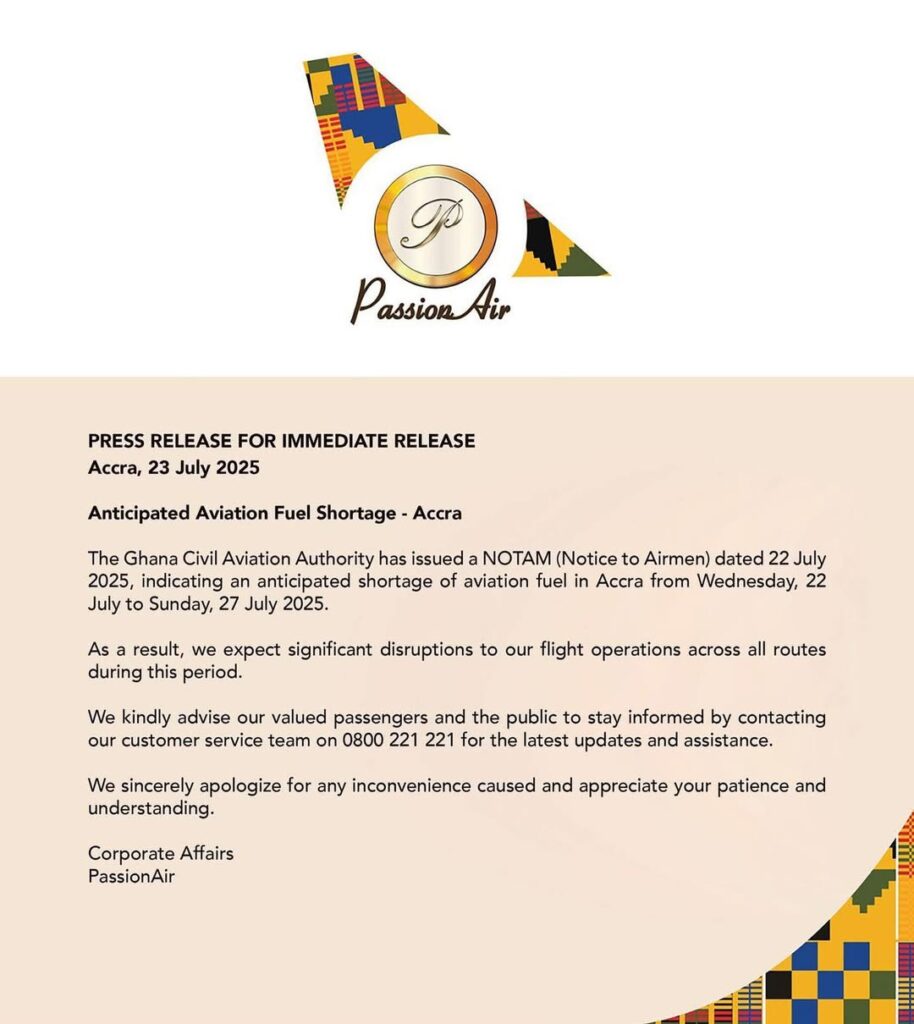
    Following this, a formal complaint was lodged at the Amasaman Police Station, and on June 7, Larbi was arrested after the police received intel that Larbi had towed the vehicle to a scrapyard at Kasoa for sale.

    The convict accused one Baah at Sarpeiman of contracting him to tow and sell the vehicle. He failed to provide any leads to Baah

    What the law says about stealing and robbery

    Section 124 of the Criminal Offences Act indicates that a person who steals commits a second-degree felony. Where the court that finds a person guilty of stealing is satisfied that on not less than two previous occasions the accused was found guilty of stealing, the Court shall order that the whole or a part of a term of imprisonment imposed by it shall be spent in productive hard labour.

    A person in respect of whom the court makes an order under subsection (2) is disqualified for election to Parliament or to a District Assembly within the meaning of the Local Government Act, 1993 (Act 462), for a period not exceeding five years.

    Section 149 of the Criminal Offences states that a person who commits robbery commits a first-degree felony.

    Per Section 150, “a person who steals a thing commits robbery (a) if in, and for the purpose of stealing the thing, that person uses force or causes harm to any other person, or (b) if that person uses a threat or criminal assault or harm to any other person, with intent to prevent or overcome the resistance of the other person to the stealing of the thing.”

    Productive hard labour means labour in a state farm or state factory or any other public co-operative or collective enterprise specified by the Minister.

    Police efforts in combatting robbery

    In recent years, the Ghana Police Service has made some strides in curtailing the activities of robbers as well as seeing to the prosecution of those arrested during their line of work.

    The police this month managed to secure a conviction for an armed robbery incident that occurred in Atonsu Kuwait, Kumasi, four years ago.

    The Kumasi Circuit Court sentenced two individuals to 15 years imprisonment for the violent armed robbery incident. The convicted persons are Abass Kasim (26) and Daniel Morro, a.k.a. “China” (25).

    They were part of a group of five that attacked a resident at his Atonsu Kuwait, Kumasi home on July 31, 2021, at about 2:30 am. The gang, wielding a pistol and cutlasses, shot the victim in the abdomen, inflicted multiple cutlass wounds, and robbed him of personal effects.

    Items stolen during the attack included one iPhone 11 mobile phone valued at GHS 5,500, one Samsung phone valued at GHS 500, two Apple Watches valued at GHS 3,000, and two M.K. ladies’ handbags.

    An unspecified quantity of jewelry, $600, and an unspecified amount of Ghana cedis were also stolen. Following police investigations, Abass Kasim was arrested on August 12, 2021, and during interrogation, he admitted his involvement and subsequently led officers to the arrest of Daniel Morro, and a pistol used in the attack was later retrieved.

    On Thursday, August 19, 2021, they were arraigned before Kumasi Circuit Court 4, where they were initially remanded into custody after pleading not guilty. The two reappeared in court on Wednesday, July 9, 2025, and were convicted and sentenced to 15 years imprisonment on each count.

    This included conspiracy to commit robbery, robbery, and unlawful entry. Abetment of crime and possession of firearms without authority. All sentences are to run concurrently. The convicts have since been transferred to the Central Prisons in Kumasi to begin serving their prison sentence.

    Meanwhile, the three accomplices are currently at large and the police have intensified efforts to locate them.

    The police reported another victory after an armed robber, Paul Avortide, was jailed for 19 years with hard labour for robbery. The 25-year-old convict, on May 21, at about 4:00 am, at Tsikpota near New Housing, Ho, with a machete in his hand, threatened a pregnant woman by the name of Ogechi Chidiebere, a Nigerian resident in Ho. 

    Paul Avortide robbed the victim of her Gh¢ 3,000 and her Tecno Spark 30c mobile phone valued at Gh¢2,500 when she was on her way to attend antenatal care at the Ho Municipal Hospital.

    On June 19, at about 6:00 pm, the Regional Police Intelligence team arrested Harmony Nbonu at the Ho Main Market, who was in possession of the stolen phone. During interrogations, he mentioned Paul Avortide as the one who sold the phone to him at the cost of Gh¢ 850.00.

    Coordinated efforts between the Police and the suspect, Hormony Nbonu, led to the arrest of the convict, Paul Avortide, at Matse, a suburb of Ho, when he was running away from Ho Township.

    After police investigations, Paul Avortide was charged with the offence of robbery contrary to Section 149 of the Criminal Offences ACT. 1960 (ACT 29) as amended by the Criminal Offences (Amendment) ACT, 2003 (ACT 646).

    Harmony Nbonu, on the other hand, was charged with the offence of Dishonestly Receiving Contrary to Section 146 of the Criminal Offences ACT, 1960 (ACT 29). The two were arraigned before Ho Circuit Court presided over by His Honour, Osman Abdul Hakeem, Esq on Tuesday, July 1.

    The first accused person (A1), Paul Avortide, pleaded guilty to the charge of robbery and was convicted on his own plea and sentenced to a prison term of 19 years in hard labor. The second accused person, (A2), Harmony Nbonu was acquitted and discharged. The convict has since been handed over to the Ho Regional Prison authorities to begin to serve his prison term.

    Meanwhile, three individuals believed to be involved in a robbery incident that occurred at Nyanikrom near Shama Junction on Wednesday, July 9, have been apprehended.

    The arrested suspects have been identified as Francis Mensah, alias Francis Kwaw (34), Ebenezer Cofie (32) and Samuel Bentum (35). The arrest was effected by the Western Regional Police Command following a targeted surveillance operation based on credible intelligence.

    They received intel that the suspects, armed with insider information, were planning to rob officials of a company located at Nyanikrom. The intended target was company funds withdrawn from the bank for salary payments.

    On the said date at about 12:00 p.m., staff of the company had withdrawn money from a bank in Takoradi. While returning to the company premises, they were ambushed near Unique School Junction at Nyanikrom by the suspects, who were on a motorbike and an unregistered sedan vehicle. 

    The suspects forcibly broke the vehicle’s window and made away with the cash. Response by police personnel who had mounted surveillance in the area led to the arrest of three suspects and recovery of GHC 149,500.00.

    The suspects are currently in police custody assisting with investigations. Additionally, a company driver identified as Maxwell Kofi Yeboah, who is alleged to have conspired with the suspects, is currently at large and being pursued by the police.

    “The Western Regional Police Command assures the public that efforts are ongoing to apprehend the remaining suspect and bring all perpetrators to justice,” the police said in a statement.

    Despite the heroic efforts by the Police to reduce the number of robbery cases, several lives of officers who were on duty have been lost. Presently, the exact number of police officers who have lost their lives while responding to a robbery incident is unknown.

    A police officer was killed by armed robbers in Kwame Peprakrom in the Central Region in September 2024 after being ambushed. The government has introduced an GHC50,000 insurance scheme for officers who lose their lives while on duty.

    Recently, a shootout between officers of the Tema Regional Police Command and a group of 10 suspected robbers during a robbery incident at the Tema Industrial Area led to the demise of three suspects.

    The incident occurred on July 21 when the police patrol team responded to a distress call and exchanged gunfire upon arrival at the scene during a confrontation with the suspects.

    Three of the suspected robbers succumbed to gunshot wounds, but seven others, some of whom are believed to have been wounded, managed to evade arrest. The police are on a manhunt for these suspected robbers. The remains of the three suspected robbers have been deposited at the Police Hospital Morgue for identification, preservation and autopsy.

    Exhibits recovered from the scene include a Bruni mod foreign pistol, a double-barrelled locally manufactured pistol with 2 rounds of ammunition and 11 live BB ammunition. The Ghana Police Service has commended its officers at the Kpone District Command for their efforts in managing the robbery incident.

  • President Mahama, Akufo-Addo, Bawumia pay tribute to Daddy Lumba

    President Mahama, Akufo-Addo, Bawumia pay tribute to Daddy Lumba

    President John Dramani Mahama, former President Nana Akufo-Addo and former Vice President Dr Mahamudu Bawumia have paid tribute to legendary Ghanaian highlife musician Daddy Lumba, born Charles Kojo Fosu, who passed away on July 26, after a short illness.

    In a Facebook post, President Mahama lauded the late veteran musician for his “unmatched musicial genius”, adding that his legacy will live on.

    “I have learnt with deep sorrow the passing of Ghanaian music legend, Charles Kwadwo Fosu, affectionately known as Daddy Lumba.

    Lumba’s unmatched musical genius provided the soundtrack to our lives, carrying us through various phases of life. The beats to his memorable songs may have died down, but his enduring legacy will echo through the ages.

    On behalf of the Government of Ghana, I extend heartfelt condolences to his family and loved ones for this irreplaceable loss,” the president wrote.

    https://www.facebook.com/JDMahama/posts/1297246585090404?ref=embed_post

    Former President Nana Akufo-Addo who received campaign songs Daddy Lumba noted that “was a pantheon among musical greats of all-time.”

    “With regret, I have received the sad news of the passing of my dear friend and renowned music icon, Charles Kwadwo Fosu.

    Daddy Lumba, as we affectionately call him, was a pantheon among musical greats of all-time and had a special connection with his fans and the entire nation.

    His hit-making songs will remain lasting contributions to my presidential journey and will forever be etched in the annals of political campaign of the New Patriotic Party. He will be sorely missed.

    May he peacefully rest in the Bosom of the Almighty until the Last Day of the Resurrection, when we shall all meet again.”

    https://www.facebook.com/photo?fbid=1305167964299839&set=a.414567833359861

    The former Vice President Dr Mahamudu also noted that the late Daddy Lumba was indeed a pillar in Ghana’s highlife genre.

    “I have been informed of the saddening news of the passing of a true music icon, who’s had an incredible career spanning over three decades.

    Charles Kwadwo Fosu, popularly known by his stage name Daddy Lumba, has been a pillar in Ghana’s highlife genre, through whom many great talents have been nurtured and introduced.

    His brilliant compositions and works have not only entertained but also inspired and uplifted many of us. His passing is indeed a huge blow, not only to the music fraternity but to the entire country. Samira and I extend our heartfelt condolences to his wife, family, fans, and the whole country. LEGEND, REST WELL,” he wrote.

    https://www.facebook.com/photo/?fbid=1289855892501506&set=a.465070561646714

    A statement by the counsel for the Fosu family confirmed that the music veteran passed on.

    He succumbed to the illness at the Bank Hospital in Accra, per reports.

    The statement reads: “With profound sorrow and deep grief, the Fosu family announces the passing of Ghana’s beloved musical icon, Charles Kojo Fosu, popularly known as Daddy Lumba, who passed away earlier today, Saturday, July 26, 2025, after a short illness.”

    “Daddy Lumba was more than a musician; he was a cultural icon whose music touched countless lives. His soulful voice provided the soundtrack to our love stories, and his poignant lyrics captured the poetry of our struggles, dreams, and resilience.”

    The bereaved family has respectfully requested privacy as they navigate this profound grief. Details of funeral arrangements will be shared in the coming days.

    Profile of the late veteran musician

    Daddy Lumba was renowned for his incredible talent as a singer, composer, songwriter, recording artist, and producer.

    With an illustrious career that has spanned over three decades, Daddy Lumba was widely regarded as the greatest and most influential musician in Ghanaian history.

    Many artists in Ghana, including Ofori Amponsah, Sarkodie, Kuami Eugene, Paa Solo of Sibo Brothers, Oheneba Kissi, KiDi, and others, consider him their major inspiration in the music industry.

    leg-2

    Daddy Lumba was born 60 years ago to Mr. Johnson Kwadwo Fosuh and Madam Comfort Gyamfi, also known as Ama Saah, in Nsuta, near Mampong in the Ashanti Region of Ghana. Both of his parents were teachers, and he was the second of three siblings.

    His educational journey began in Nsuta Kyebi, and he completed junior high school at Suame Methodist, Kumasi in 1979. Subsequently, he attended Adu Gyamfi Senior High School in Jamasi, but later transferred to Juaben Senior High School, where he completed his secondary education in 1984.

    Daddy Lumba’s music career took off in the early 80s when he formed the Nkwanta Wesley Singers, gaining fame at the Anokye Krom Cultural Center.

    During his time at Juaben Senior High School, he led the school choir and composed the song “Lumba Lumba,” dedicated to the freedom fighters in South Africa. This song’s popularity earned him the nickname “Daddy Lumba”, which later became his stage name. He also formed the Lumba Brothers band during his school days, which included his girlfriend at the time, Theresa.

    After completing school, Daddy Lumba, with the help of his high school sweetheart Theresa Abebrese, traveled to Germany. There, he met Ernest Nana Acheampong, and they formed another Lumba Brothers group, recording their debut album, “Yee Ye Aka Akwantuom,” in 1986. Financial constraints delayed the album’s release until 1989, and eventually, the duo split.

    Daddy Lumba then launched his solo career and released his debut solo album, “Obi Ate Meso Buo,” in 1990. The album received immense popularity and critical acclaim, featuring classics like the title track and “Theresa,” dedicated to his ex-lover. He has since released 33 albums, including notable ones like “Sika Asem,” “Aben Wo Ha,” “Wo Ho Kyere,” “Awosoo,” “Give Peace A Chance,” and “Ahenfo Kyiniye.” His latest project, “Ofon Na Edi Asem Fo,” was released in December 2022, reuniting him with longtime collaborator Kweku Mensah.

    In addition to his own success, Daddy Lumba is renowned for nurturing the careers of budding artists who went on to become legends in their own right.

    Some of these artists include Felix Owusu, for whom he produced the debut album “Vida” in 1992, Afia Ampofowaa, Kwabena Sunkwa, Ofori Amponsah with the “Woho Kyere” album in 1999, Selina Orleans, Akua Serwaa Bonsu, Borax, Ateaa Tina, and many others.

    His contributions to Ghanaian music and the support he provided to upcoming talents have solidified his status as an iconic figure in the country’s music industry.

    With his passion, talent, and dedication to the craft, Daddy Lumba continues to be a role model for aspiring musicians, leaving an indelible mark on the rich musical landscape of Ghana.

  • Parliament debates 2025 mid-year budget on July 28

    Parliament debates 2025 mid-year budget on July 28

    Parliament of Ghana will, from Monday, July 28, to Thursday, July 31, debate on the Mid-Year Review Budget Statement and Economic Policy of the Government of Ghana for the 2025 financial year.

    Majority Chief Whip, Hon. Rockson-Nelson Etse Kwami Dafeamekpor, who is also the Member of Parliament for South Dayi, made this known to the House when he presented the explanatory memorandum on the Business Statement for the tenth week ending Friday, 1st August.

    He explained that four ministers are expected to attend upon the House to respond to twenty-one (21) questions during the week. According to him, Ministers of State may be permitted to make statements on government policy.

    He urged his colleagues in Parliament to devote themselves to the scheduled business as proposed. He hinted that the House is expected to adjourn sine die on 1st August.

    Finance Minister Dr. Cassiel Ato Forson delivered to Parliament the 2025 Mid-Year Budget Review on Thursday, July 24.

    This is in accordance with Section 28 of the Public Financial Management Act, 2016 (Act 921), to inform the country on its economic performance and fiscal strategy halfway through the year.

    In his delivery, the sector minister noted that in less than 200 days the incumbent government has brought back clarity, certainty, stability, and purpose to our economic policy direction.

    “We have made significant progress. The signs of recovery are obvious, evident, noticeable, visible, tangible and being felt,” Dr Ato Forson said.

    Dr. Cassiel Ato Forson revealed that in the first six months of the year, the government’s expenditure stood at GH¢109.7 billion, equivalent to 7.8% of the Gross Domestic Product (GDP).

    He noted that the current expenditure was 14.3% below the programmed amount of GH¢128.0 billion, equivalent to 9.1% of GDP. According to the sector minister, this reflects the government’s strong expenditure control.

    During the presentation of the 2025 budget statement, the minister noted that total expenditures (commitment) for 2025 have been programmed at GH¢270.9 billion, down from GH¢279.2 billion in 2024. Primary expenditure on a commitment basis (expenditures net of interest payments)—is projected at GH¢206.8 billion in 2025 (14.8% of GDP), presenting a significant decline from 19.8% of GDP in 2024 and lower than the 2023 level of 15.6% of GDP.

    Providing a breakdown of the total expenditure in six months in Parliament on Thursday, the minister said that primary expenditure, or non-interest expenditures on a commitment basis, amounted to GH¢84.3 billion, or 6.0% of GDP. This is an improvement of about GH¢13.3 billion over the target of GH¢97.5 billion, which is 7.0% of GDP.

    Interest payments, on the other hand, amounted to GH¢25.4 billion, which is 1.8% of GDP. This is below the target of GH¢30.5 billion, which is 2.2% of GDP. Dr Cassiel Ato Forson explained that this was mainly due to lower domestic interest payments.

    Domestic interest payments amounted to GH¢21.6 billion, against a target of GH¢26.5 billion, representing a reduction of GH¢4.9 billion, and this was mainly on account of lower than planned domestic borrowings and the decline in T-bill rates. External interest payments amounted to GH¢3.8 billion, against a target of GH¢4.0 billion. This stemmed from the appreciation of the Ghana cedi.

    The cedi has recorded a remarkable turnaround in the first six months of 2025, appreciating by 42.6% against the US dollar. The cedi also gained 30.3% against the British pound and 25.6% against the euro during the same period.

    Other expenditure, mainly comprising Energy Sector Levies (ESL), transfers, and Energy Sector Payment Shortfalls, amounted to GH¢11.4 billion, or 0.8% of GDP. This was 12.7% below the target of GH¢13.1 billion, or 0.9% of GDP for the period. Arrears clearance amounted to GH¢4.8 billion.

    On a cash basis, the overall balance recorded a deficit of 1.1% of GDP. The deficit, according to Dr Cassiel Ato Forson, was largely financed from domestic sources with Net Domestic Financing (NDF) of GH¢13.1 billion, well below the GH¢18.7 billion target.

    Net Foreign Financing was GH¢2.8 billion, mostly from the utilization of a GH¢4.5 billion International Monetary Fund (IMF) loan disbursement from the 1st to the 6th of January 2025, before the Mahama administration took office. Project loan disbursement was GH¢2.4 billion.

    The Finance Minister noted that although Ghana is relying on the domestic market for financing, “We have borrowed less than we planned, signifying strong expenditure control and fiscal discipline.”

    Presently, the government is revising both revenue and expenditure projections to reflect the impact of the additional revenue from the Energy Sector Levies (Amendment) Act, 2025 (Act 1141).

    Total expenditure on a commitment basis has been revised downward to GH¢269.5 billion from the original budget projection of GH¢270.9 billion. However, primary expenditure has been revised upwards to GH¢209.6 billion from the original budget projection of GH¢206.8 billion.

    Total revenue and grants have been revised upwards from the 2025 budget target of GH¢227.1 billion to GH¢229.9 billion, or from 16.2% of GDP to 16.4% of GDP, representing a nominal increase of 1.3%.

    “The additional revenue of GH¢2.9 billion will come from the increase in revenues from the amendment to the Energy Sector Levies Act,” the minister added.

    Interest payments have been revised downwards by GH¢4.3 billion, from the original budget projection of GH¢64.1 billion to GH¢59.9 billion. Domestic interest, on the other hand, has been revised downward by GH¢5.1 billion, mainly on account of gains from the reduction in the treasury bill rates, as a result of the implementation of our prudent debt management policies.

    However, external interest payments have been revised upward by GH¢795 million to make additional provision for debt service due on post cut-off date disbursements made by our bilateral creditors since 2023. Energy sector payments have also been revised upwards by GH¢2.9 billion to provision for fuel purchases for power generation.

    Payroll audit

    As part of the government’s fiscal consolidation strategy, the government has taken measures to sanitize public sector payroll and rid it of ghost names. The government engaged the Ghana Audit Service to undertake a nationwide payroll audit across all 16 regions of the country.

    Providing an update on the audit, the Finance Minister revealed that the Ghana Audit Service has completed 91% of the payroll audit.

    So far, the Audit Service has not been able to identify and verify over 14,000 workers. The Service has identified 53,311 separated staff—these are staff who are either retired, resigned, terminated, leave without pay, or deceased, and yet remain on government payroll.

    According to the sector minister, the Audit Services expects to recovery GH¢150.4 million of unearned salaries from the separated staff over the 2023 and 2024 period.

    “Mr. Speaker, going forward, we will enforce the monthly payroll validation process and strictly apply sanctions to all who validate “ghosts” for payment of salaries. Rt. Hon. Speaker, let me use this opportunity to strongly caution those who validate “ghosts” across the public service that they will be personally liable for the loss of public funds,” Dr Cassiel Ato Forson said.

    He assured that the Ministry of Finance will continue to monitor the payroll and put in place measures to prevent “ghost names” on the payroll.

    Audit on arrears, payables and commitments

    The Ghana Audit Service partnered with EY and PWC to undertake the audit of arrears and payables as of end-2024. The Audit Service was tasked to audit and validate GH¢68.7 billion of arrears.

    About 87 percent of the audit has been completed, according to the Minister for Finance and the preliminary results show that a total of GH¢28.3 billion has been validated for payment.

    Also, an amount of GH¢3.6 billion has been rejected because of errors, duplications, and non-compliance with PFM and procurement rules. An amount of GH¢562.6 million is without adequate supporting documents, and GH¢27.3 billion is pending validation. The audit is expected to be completed by the end of August 2025. 

    Dr Cassiel Ato Forson stated that “once finalized, we will update the House on the findings and outcomes.”

  • Ghanaian highlife musician Daddy Lumba is dead

    Ghanaian highlife musician Daddy Lumba is dead

    Legendary Ghanaian highlife musician Daddy Lumba, born Charles Kojo Fosu, has passed away.

    A statement by the counsel for the Fosu family confirmed that the music veteran passed on today, July 26, after a short illness.

    He succumbed to the illness at the Bank Hospital in Accra, per reports.

    The statement reads: “With profound sorrow and deep grief, the Fosu family announces the passing of Ghana’s beloved musical icon, Charles Kojo Fosu, popularly known as Daddy Lumba, who passed away earlier today, Saturday, July 26, 2025, after a short illness.”

    “Daddy Lumba was more than a musician; he was a cultural icon whose music touched countless lives. His soulful voice provided the soundtrack to our love stories, and his poignant lyrics captured the poetry of our struggles, dreams, and resilience.”

    The bereaved family has respectfully requested privacy as they navigate this profound grief. Details of funeral arrangements will be shared in the coming days.

    Profile of the late veteran musician

    Daddy Lumba was renowned for his incredible talent as a singer, composer, songwriter, recording artist, and producer.

    With an illustrious career that has spanned over three decades, Daddy Lumba was widely regarded as the greatest and most influential musician in Ghanaian history.

    Many artists in Ghana, including Ofori Amponsah, Sarkodie, Kuami Eugene, Paa Solo of Sibo Brothers, Oheneba Kissi, KiDi, and others, consider him their major inspiration in the music industry.

    leg-2

    Daddy Lumba was born 60 years ago to Mr. Johnson Kwadwo Fosuh and Madam Comfort Gyamfi, also known as Ama Saah, in Nsuta, near Mampong in the Ashanti Region of Ghana. Both of his parents were teachers, and he was the second of three siblings.

    His educational journey began in Nsuta Kyebi, and he completed junior high school at Suame Methodist, Kumasi in 1979. Subsequently, he attended Adu Gyamfi Senior High School in Jamasi, but later transferred to Juaben Senior High School, where he completed his secondary education in 1984.

    Daddy Lumba’s music career took off in the early 80s when he formed the Nkwanta Wesley Singers, gaining fame at the Anokye Krom Cultural Center.

    During his time at Juaben Senior High School, he led the school choir and composed the song “Lumba Lumba,” dedicated to the freedom fighters in South Africa. This song’s popularity earned him the nickname “Daddy Lumba”, which later became his stage name. He also formed the Lumba Brothers band during his school days, which included his girlfriend at the time, Theresa.

    After completing school, Daddy Lumba, with the help of his high school sweetheart Theresa Abebrese, traveled to Germany. There, he met Ernest Nana Acheampong, and they formed another Lumba Brothers group, recording their debut album, “Yee Ye Aka Akwantuom,” in 1986. Financial constraints delayed the album’s release until 1989, and eventually, the duo split.

    Daddy Lumba then launched his solo career and released his debut solo album, “Obi Ate Meso Buo,” in 1990. The album received immense popularity and critical acclaim, featuring classics like the title track and “Theresa,” dedicated to his ex-lover. He has since released 33 albums, including notable ones like “Sika Asem,” “Aben Wo Ha,” “Wo Ho Kyere,” “Awosoo,” “Give Peace A Chance,” and “Ahenfo Kyiniye.” His latest project, “Ofon Na Edi Asem Fo,” was released in December 2022, reuniting him with longtime collaborator Kweku Mensah.

    In addition to his own success, Daddy Lumba is renowned for nurturing the careers of budding artists who went on to become legends in their own right.

    Some of these artists include Felix Owusu, for whom he produced the debut album “Vida” in 1992, Afia Ampofowaa, Kwabena Sunkwa, Ofori Amponsah with the “Woho Kyere” album in 1999, Selina Orleans, Akua Serwaa Bonsu, Borax, Ateaa Tina, and many others.

    His contributions to Ghanaian music and the support he provides to upcoming talents have solidified his status as an iconic figure in the country’s music industry.

    With his passion, talent, and dedication to the craft, Daddy Lumba continues to be a role model for aspiring musicians, leaving an indelible mark on the rich musical landscape of Ghana.

  • List of govt’s 24 priority projects to be completed, commissioned by end 2028

    List of govt’s 24 priority projects to be completed, commissioned by end 2028

    The Government of Ghana has announced that it has submitted a list of twenty-four (24) projects it deems as priority to the Official Creditor Committee (OCC) and the International Monetary Fund (IMF).

    Presenting the 2025 budget statement to Parliament on July 24, the Minister for Finance, Dr Cassiel Ato Forson, noted that the list submitted is expected to trigger resumption of disbursements for the projects upon the signing of the bilateral agreements between Ghana and creditor countries.

    The sector minister noted that the aim is to ensure that all the priority projects are completed and commissioned by the end of 2028.

    The list of the priority projects is below:

    i. New Bridge Across the Volta River at Volivo

    ii. Construction of the Tema-Aflao Road Project Phase 1;

    iii. Tema Motorway Roundabout, through Ashaiman

    Roundabout to Atimpoku;

    iv. Construction of 14 Pedestrian Bridges;

    v. Kumasi Roads and Drainage Extension;

    vi. Paa Grant Interchange and Sekondi/Takoradi Township Roads—Phase 1; 

    vii. Rehabilitation of Dome-Kitase Road; 

    viii. Obetsebi Lamptey Interchange—Phase 2;

    ix. Bolgatanga-Bawku-Pulimakom Road; x. PTC Roundabout Interchange Project at Takoradi; 

    xi. Construction of Drinking Water Facilities in Wenchi; 

    xii. Sekondi-Takoradi Water Supply; xiii. Modernization of Komfo-Anokye Teaching Hospital; 

    xiv. Construction of Central Medical Stores in Tema; 

    xv. Effia Nkwanta Regional Hospital in Takoradi; 

    xvi. Bolgatanga Regional Hospital; 

    xvii. Establishment of the University of Environment and Sustainable Development at Bunso; 

    xviii. Establishment of 9 state-of-the-art technical and vocational education training centers; 

    xix. Integrated E-Learning Laboratories in Senior High Schools; 

    xx. Expansion and Development of Existing Senior High Schools; 

    xxi. Renewable Energy Programme: Pilot Photovoltaic System; 

    xxii. Renewable Energy and Energy Efficiency Programme; 

    xxiii. Construction of the Takoradi Market; and 

    xxiv. Kumasi Central Market Phase 2.

    The main criterion for the selection of these projects was closeness to completion, the sector minister said.

    As a result, projects that were over 70% complete were given priority.

    “The resumption of disbursements for the projects and its associated debt service are fully in line with our

    commitments under the bilateral debt restructuring and the IMF Programme,” Dr Ato Forson said.

    France, Ghana’s bilateral creditor, on Friday, July 25, signed an €87.7 million debt relief agreement with the West African country under the Official Creditor Committee (OCC).

    France becomes Ghana’s first bilateral creditor to do so after two years of negotiations. Finance Minister Dr Cassiel Ato Forson and Co-Chair of the OCC, Mr William Ross, signed on behalf of the governments of Ghana and France, respectively.

    This agreement ensures a hundred percent debt service, as well as a reduction in interest and an extension on maturity.

    The Finance Minister expressed immense gratitude to France for standing as a true friend. “It is often said that it is only in difficult times that you see your true friends, and we can say without mincing words that the French Republic came through for Ghana and Ghana is extremely grateful,” Dr Cassiel Ato Forson said.

    “Today is a milestone – in the sense that it has taken us some years to get here, but it’s the most significant one that will pave the way for others to this side. Inflation that was once at 54.1 per cent has now come down to 13.7 per cent. We are seeing growth bound to about a five-year high. We are seeing particularly reserves, the external position improving to about four months of import cover, and the primary surplus is at 1.1 per cent of Gross Domestic Product (GDP),” he added.

    The sector minister assured that the government of Ghana is “determined to hold the line and sustain the progress we have made year to date, and we believe that in the coming days, Ghana will be able to see investment after the stability.” 

    Deputy Minister for Finance, Thomas Nyarko Ampem, asserted that the recent agreement is “telling a good story that Ghana is on track.”

    On his part, Mr William Ross noted that the economic recovery being made by the government of Ghana is nothing short of impressive and compared the country’s economic performance to other countries such as Zambia.

    “We have decided to reduce by 100 per cent as debt service, reduce interest and increase the maturity to give you space for investment, to also negotiate with other creditors and create a real partnership for other stakeholders to contribute to.

    “If you look at what we have done for Ghana, it is shorter than what we did for Zambia, but we have continued to improve in the case of Ethiopia… you have been very impressive because you have many people and institutions to engage with,” Mr Ross said.

    French Ambassador to Ghana, Mr Jules Armand Aniambossou, highlighted the many initiatives the government has put in place to rectify the many economic challenges it was saddled with. He noted that France holds in high esteem its historical relationship with the West African country. He said Ghana will continue to receive support from France to aid its economic recovery.

    “When I came to this country more than two years ago, the country was facing some difficulties. But when your friend or your family is facing difficulties, you have to show that you will not just say, I am sorry, but to take some key actions.

    “That is why the French government at the very high level, decided to do. Because we are here today due to the political volunteers from both sides. France decided not to let down Ghana because of our historical relationship and the key role Ghana is playing in our region [Africa],” he stated.

    Last year, the government of Ghana reached an agreement on a Memorandum of Understanding (MoU) with its Official Creditor Committee in its debt restructuring efforts.

    The OCC, co-chaired by France and China, was instrumental in reaching a debt treatment plan in January 2024.

    This paved the way for the International Monetary Fund (IMF) Executive Board to approve the second review of the Fund-supported Post-COVID-19 programme for economic growth (PC-PEG).

    The agreement has prevented the government of Ghana from securing more than $250 million in external financing for 2025, and this includes commercial loans, as part of a borrowing ceiling agreed upon.

    This served as a structural benchmark to ensure compliance with fiscal discipline as part of the country’s IMF programme.

    While presenting the 2025 mid-year budget review on July 24, Finance Minister Dr Cassiel Ato Forson noted that the government’s commitment to fiscal discipline, prudent debt management, and exchange rate appreciation has resulted in significant improvement in Ghana’s debt profile.

    He revealed that the public debt reduced from GH¢726.7 billion as of the end of December 2024 to GH¢613 billion as of the end of June 2025. Ghana’s public debt reduced by GH¢113.7 billion in six months.

    The sector minister noted that “for the first time in Ghana’s history, there is a negative 15.6% rate of debt accumulation.”

    Ghana’s public debt-to-GDP ratio as of the end of June 2025 was 43.8%, down from 61.8% at the end of 2024. Ghana’s public debt as a percent of GDP reduced by 18% in six months. The country’s foreign debt, as a percentage of total public debt, declined from 57.4% as of the end of December 2024 to 49% by the end of June 2025.

  • Ghana’s public debt stands at GHC613bn as of June 2025

    Ghana’s public debt stands at GHC613bn as of June 2025

    Presenting the 2025 mid-year budget review on July 24, Finance Minister Dr Cassiel Ato Forson noted that the government’s commitment to fiscal discipline, prudent debt management, and exchange rate appreciation has resulted in significant improvement in Ghana’s debt profile.

    He revealed that the public debt reduced from GH¢726.7 billion as of the end of December 2024 to GH¢613 billion as of the end of June 2025. Ghana’s public debt reduced by GH¢113.7 billion in six months.

    The sector minister noted that “for the first time in Ghana’s history, there is a negative 15.6% rate of debt accumulation.”

    Ghana’s public debt-to-GDP ratio as of the end of June 2025 was 43.8%, down from 61.8% at the end of 2024. Ghana’s public debt as a percent of GDP reduced by 18% in six months. The country’s foreign debt, as a percentage of total public debt, declined from 57.4% as of the end of December 2024 to 49% by the end of June 2025.

    “This has significantly improved Ghana’s debt sustainability,” the Finance Minister said while speaking on the floor of the House.

    Touching on Ghana’s programme with the International Monetary Fund (IMF), the Finance Minister noted that Ghana remains on track with the implementation of the Programme. He revealed that the government’s commitment to fiscal discipline, prudent debt management and exchange rates has paved the way for a 5th review scheduled for September.

    “The 5th Review, which is scheduled for September 2025, will be based on end-June 2025 data. Preliminary data shows that Ghana is on course to achieving most of the targets for the 5th Review. Mr. Speaker, our commitment to fiscal discipline, prudent debt management, and exchange rate appreciation has resulted in significant improvement in Ghana’s debt profile,” he added.

    On commercial debt restructuring, the Finance Minister stated that the Ministry has made two debt service payments of about US$700 million to Euro bondholders. Dr Forson disclosed that beginning in August, the Ministry of Finance will commence the building of cash buffers to support the repayment of Ghana’s domestic debt service obligations relating to the Domestic Debt Exchange Programme bonds, which will fall due in 2027 and 2028.

    Six months of the year, the government’s expenditure stood at GH¢109.7 billion, equivalent to 7.8% of the Gross Domestic Product (GDP).

    The Finance Minister noted that the current expenditure was 14.3% below the programmed amount of GH¢128.0 billion, equivalent to 9.1% of GDP. According to the sector minister, this reflects the government’s strong expenditure control.

    The minister noted that total expenditures (commitment) for 2025 have been programmed at GH¢270.9 billion, down from GH¢279.2 billion in 2024. Primary expenditure on a commitment basis (expenditures net of interest payments)—is projected at GH¢206.8 billion in 2025 (14.8% of GDP), presenting a significant decline from 19.8% of GDP in 2024 and lower than the 2023 level of 15.6% of GDP.

    Providing a breakdown of the total expenditure in six months in Parliament on Thursday, the minister said that primary expenditure, or non-interest expenditures on a commitment basis, amounted to GH¢84.3 billion, or 6.0% of GDP. This is an improvement of about GH¢13.3 billion over the target of GH¢97.5 billion, which is 7.0% of GDP.

    Interest payments, on the other hand, amounted to GH¢25.4 billion, which is 1.8% of GDP. This is below the target of GH¢30.5 billion, which is 2.2% of GDP. Dr Cassiel Ato Forson explained that this was mainly due to lower domestic interest payments.

    Domestic interest payments amounted to GH¢21.6 billion, against a target of GH¢26.5 billion, representing a reduction of GH¢4.9 billion, and this was mainly on account of lower than planned domestic borrowings and the decline in T-bill rates. External interest payments amounted to GH¢3.8 billion, against a target of GH¢4.0 billion. This stemmed from the appreciation of the Ghana cedi.

    The cedi has recorded a remarkable turnaround in the first six months of 2025, appreciating by 42.6% against the US dollar. The cedi also gained 30.3% against the British pound and 25.6% against the euro during the same period.

    Other expenditure, mainly comprising Energy Sector Levies (ESL), transfers, and Energy Sector Payment Shortfalls, amounted to GH¢11.4 billion, or 0.8% of GDP. This was 12.7% below the target of GH¢13.1 billion, or 0.9% of GDP for the period. Arrears clearance amounted to GH¢4.8 billion.

    On a cash basis, the overall balance recorded a deficit of 1.1% of GDP. The deficit, according to Dr Cassiel Ato Forson, was largely financed from domestic sources with Net Domestic Financing (NDF) of GH¢13.1 billion, well below the GH¢18.7 billion target.

    Net Foreign Financing was GH¢2.8 billion, mostly from the utilization of a GH¢4.5 billion International Monetary Fund (IMF) loan disbursement from the 1st to the 6th of January 2025, before the Mahama administration took office. Project loan disbursement was GH¢2.4 billion.

    The Finance Minister noted that although Ghana is relying on the domestic market for financing, “We have borrowed less than we planned, signifying strong expenditure control and fiscal discipline.”

    Presently, the government is revising both revenue and expenditure projections to reflect the impact of the additional revenue from the Energy Sector Levies (Amendment) Act, 2025 (Act 1141).

    Total expenditure on a commitment basis has been revised downward to GH¢269.5 billion from the original budget projection of GH¢270.9 billion. However, primary expenditure has been revised upwards to GH¢209.6 billion from the original budget projection of GH¢206.8 billion.

    Total revenue and grants have been revised upwards from the 2025 budget target of GH¢227.1 billion to GH¢229.9 billion, or from 16.2% of GDP to 16.4% of GDP, representing a nominal increase of 1.3%.

    “The additional revenue of GH¢2.9 billion will come from the increase in revenues from the amendment to the Energy Sector Levies Act,” the minister added.

    Interest payments have been revised downwards by GH¢4.3 billion, from the original budget projection of GH¢64.1 billion to GH¢59.9 billion. Domestic interest, on the other hand, has been revised downward by GH¢5.1 billion, mainly on account of gains from the reduction in the treasury bill rates, as a result of the implementation of our prudent debt management policies.

    However, external interest payments have been revised upward by GH¢795 million to make additional provision for debt service due on post cut-off date disbursements made by our bilateral creditors since 2023. Energy sector payments have also been revised upwards by GH¢2.9 billion to provision for fuel purchases for power generation.

  • Ghana, France sign €87.7m debt relief agreement

    Ghana, France sign €87.7m debt relief agreement

    France, Ghana’s bilateral creditor, on Friday, July 25, signed an €87.7 million debt relief agreement with the West African country under the Official Creditor Committee (OCC).

    France becomes Ghana’s first bilateral creditor to do so after two years of negotiations. Finance Minister Dr Cassiel Ato Forson and Co-Chair of the OCC, Mr William Ross, signed on behalf of the governments of Ghana and France, respectively.

    This agreement ensures a hundred percent debt service, as well as a reduction in interest and an extension on maturity.

    The Finance Minister expressed immense gratitude to France for standing as a true friend. “It is often said that it is only in difficult times that you see your true friends, and we can say without mincing words that the French Republic came through for Ghana and Ghana is extremely grateful,” Dr Cassiel Ato Forson said.

    “Today is a milestone – in the sense that it has taken us some years to get here, but it’s the most significant one that will pave the way for others to this side. Inflation that was once at 54.1 per cent has now come down to 13.7 per cent. We are seeing growth bound to about a five-year high. We are seeing particularly reserves, the external position improving to about four months of import cover, and the primary surplus is at 1.1 per cent of Gross Domestic Product (GDP),” he added.

    The sector minister assured that the government of Ghana is “determined to hold the line and sustain the progress we have made year to date, and we believe that in the coming days, Ghana will be able to see investment after the stability.” 

    Deputy Minister for Finance, Thomas Nyarko Ampem, asserted that the recent agreement is “telling a good story that Ghana is on track.”

    On his part, Mr William Ross noted that the economic recovery being made by the government of Ghana is nothing short of impressive and compared the country’s economic performance to other countries such as Zambia.

    “We have decided to reduce by 100 per cent as debt service, reduce interest and increase the maturity to give you space for investment, to also negotiate with other creditors and create a real partnership for other stakeholders to contribute to.

    “If you look at what we have done for Ghana, it is shorter than what we did for Zambia, but we have continued to improve in the case of Ethiopia… you have been very impressive because you have many people and institutions to engage with,” Mr Ross said.

    French Ambassador to Ghana, Mr Jules Armand Aniambossou, highlighted the many initiatives the government has put in place to rectify the many economic challenges it was saddled with. He noted that France holds in high esteem its historical relationship with the West African country. He said Ghana will continue to receive support from France to aid its economic recovery.

    “When I came to this country more than two years ago, the country was facing some difficulties. But when your friend or your family is facing difficulties, you have to show that you will not just say, I am sorry, but to take some key actions.

    “That is why the French government at the very high level, decided to do. Because we are here today due to the political volunteers from both sides. France decided not to let down Ghana because of our historical relationship and the key role Ghana is playing in our region [Africa],” he stated.

    Last year, the government of Ghana reached an agreement on a Memorandum of Understanding (MoU) with its Official Creditor Committee in its debt restructuring efforts.

    The OCC, co-chaired by France and China, was instrumental in reaching a debt treatment plan in January 2024.

    This paved the way for the International Monetary Fund (IMF) Executive Board to approve the second review of the Fund-supported Post-COVID-19 programme for economic growth (PC-PEG).

    The agreement has prevented the government of Ghana from securing more than $250 million in external financing for 2025, and this includes commercial loans, as part of a borrowing ceiling agreed upon.

    This served as a structural benchmark to ensure compliance with fiscal discipline as part of the country’s IMF programme.

    While presenting the 2025 mid-year budget review on July 24, Finance Minister Dr Cassiel Ato Forson noted that the government’s commitment to fiscal discipline, prudent debt management, and exchange rate appreciation has resulted in significant improvement in Ghana’s debt profile.

    He revealed that the public debt reduced from GH¢726.7 billion as of the end of December 2024 to GH¢613 billion as of the end of June 2025. Ghana’s public debt reduced by GH¢113.7 billion in six months.

    The sector minister noted that “for the first time in Ghana’s history, there is a negative 15.6% rate of debt accumulation.”

    Ghana’s public debt-to-GDP ratio as of the end of June 2025 was 43.8%, down from 61.8% at the end of 2024. Ghana’s public debt as a percent of GDP reduced by 18% in six months. The country’s foreign debt, as a percentage of total public debt, declined from 57.4% as of the end of December 2024 to 49% by the end of June 2025.

    “This has significantly improved Ghana’s debt sustainability,” the Finance Minister said while speaking on the floor of the House.

    Touching on Ghana’s programme with the International Monetary Fund (IMF), the Finance Minister noted that Ghana remains on track with the implementation of the Programme. He revealed that the government’s commitment to fiscal discipline, prudent debt management and exchange rates has paved the way for a 5th review scheduled for September.

    “The 5th Review, which is scheduled for September 2025, will be based on end-June 2025 data. Preliminary data shows that Ghana is on course to achieving most of the targets for the 5th Review. Mr. Speaker, our commitment to fiscal discipline, prudent debt management, and exchange rate appreciation has resulted in significant improvement in Ghana’s debt profile,” he added.

    On commercial debt restructuring, the Finance Minister stated that the Ministry has made two debt service payments of about US$700 million to Euro bondholders. Dr Forson disclosed that beginning in August, the Ministry of Finance will commence the building of cash buffers to support the repayment of Ghana’s domestic debt service obligations relating to the Domestic Debt Exchange Programme bonds, which will fall due in 2027 and 2028.

  • Two dead, 3 injured in attack at Afigya Kwabre North

    Two dead, 3 injured in attack at Afigya Kwabre North

    An attack on Thursday night in the Afigya Kwabre North District of the Ashanti Region has led to the untimely demise of two individuals, including a prospective nurse, Peggy Ayelbassah.

    Member of Parliament for Afiagya Kwabre North, Collins Adomako-Mensah, who confirmed the unfortunate incident in a post, mourned the late Peggy Ayelbassah, who was on her way to Salaga for her admission interview into nursing college when she was killed.

    “The news of your death this morning just shattered me. Killed by armed robbers on your way to Salaga for your admission interview into nursing college. You sent me a WhatsApp message just yesterday on this trip.

    Your dedication to my political ambitions will be difficult to replace. I know we are not to question God but “God Why”. Sleep well. Sleep well,” he wrote in a Facebook post.

    The armed robbers opened fire on the vehicle the victims were travelling in, through Denase. Those who survived, per reports, have been admitted to the Offinso Saint Patrick Hospital for treatment.

    Unit Committee Chairman for the Denase Electoral Area, Kwabena Asamoah, according to reports, suspects a targetted attack rather than a robbery.

    “This didn’t seem like a robbery. It appeared more like a targeted attack. The way the shooting was done, it looked like they knew who they were after,” Mr. Asamoah is quoted to have said.

    About a week ago, a 37-year-old nurse at the Kokofu Government Hospital, Akosua Adutwuwaa, was found lifeless in her home at Edwenase.

    According to reports, she was found hanging from a ceiling fan, suggesting that she might have committed suicide.

    She is survived by a 2-year-old daughter and a mother. Reports say her family discovered she had passed when they searched for her to depart for church.

    The family reached out to the police upon the discovery. Sources say the Police have begun investigations to confirm the exact details of her demise. 

    The remains of the deceased nurse has been transported to the mortuary for an autopsy. Although it has not been confirmed that Akosua Adutwuwaa took her life, suicide cannot be ruled out.

    Some years ago, it was viewed as a criminal act for one to take his or her own life. However, attempted suicide has been decriminalized by the Criminal Offences Amendment Act, 2023 (Act 1092).”

    With the amendments to Section 57 of the Criminal Offences Act (1960) (Act 29) and Section 95 of the Mental Health Act (2012) (Act 846), persons who attempt suicide are no longer subject to legal prosecution or conviction.

    Those who attempt suicide are now viewed as requiring medical and psychological intervention rather than legal punishment.

    Suicide cases have seen a surge in recent years. The Mental Health Authority (MHA) recorded 81 suicide cases and 543 attempts in the first half of 2024. This was against 48 suicide cases and 594 attempts recorded in the corresponding period in 2023.

    The Greater Accra Region is said to have recorded the highest number of deaths. The Eastern and Central Regions also recorded a significant number of cases.

    The youth are those most affected by suicide, particularly those between the ages of 15 and 29.

    The factors responsible for suicide are said to be numerous, but most cases hover around financial and psychological challenges, emotional difficulties, and security concerns.

    The Mental Health Authority called for nationwide education and awareness campaigns. The Authority noted the need for interpersonal skills and restricting access to the methods to commit suicide.

    In February this year, residents of Abuesi, located in the Shama District of the Western Region, could not comprehend the suspected suicide of 14-year-old John Yawson, who was found hanging in his father’s incomplete structure.

    The fifth-grade student at Alliance International School, a day before the unfortunate incident, is said to have been denied food by his mother.

    In April, a Level 100 student at the University of Education, Winneba (UEW) reportedly died by suicide, with social media reports suggesting the incident was linked to a relationship issue.

    Renowned Ghanaian playwright, James Ebo Whyte, has revealed how his stage productions managed to save the lives of two individuals who had contemplated suicide.

    During an interview on JoyPrime TV in May, he noted these individuals from Takoradi and Accra shared this information with him after patronizing a stage production he had overseen. He revealed that one of the individuals was deserted by his wife after losing his job.

    “I personally know two cases of people who came to our productions with the intent to commit suicide that day. One in Takoradi and the other in Accra. The one in Takoradi had lost his job, been thrown out of his house, his wife had left him, and he felt there’s nothing else to live for. So, he had actually gone to buy the poison that he was going to take on a Saturday night,” Ebo Whyte recounted.

    “He said, halfway through the show, ‘I told myself, if I can still laugh, then it’s not over yet.’ That’s beautiful. There is something to live for,” he narrated.

    This revelation reflects the profound impact of the arts in dealing with mental health issues. 

    Suicide is a matter of grave concern globally and not just in Ghana. Reports from the World Health Organization (WHO) reveal 727,000 individuals commit suicide, with many more making attempts.

    In 2021, suicide was the third leading cause of death among individuals between ages of 15 and 29. 

    “Suicide does not just occur in high-income countries but is a global phenomenon in all regions of the world. In fact, close to three quarters (73%) of global suicides occurred in low- and middle-income countries in 2021.”

    “Suicide is a serious public health problem that requires a public health response. With timely, evidence-based and often low-cost interventions, suicides can be prevented. For national responses to be effective, a comprehensive multisectoral suicide prevention strategy is needed,” the WHO reported.

    In high-income countries there is a positive correlation between suicide and mental disorders such as depression and alcohol use disorders. The WHO, however, noted that “many suicides happen impulsively in moments of crisis with a breakdown in the ability to deal with life stresses, such as financial problems, relationship disputes, or chronic pain and illness.”

    “Suicide rates are also high among vulnerable groups who experience discrimination, such as refugees and migrants; indigenous peoples; lesbian, gay, bisexual, transgender, intersex (LGBTI) persons; and prisoners,” the WHO added.

    The World Health Organization cites the lack of awareness of suicide and the taboo in many societies to openly discuss it as some of the many challenges fostering suicide cases.

    According to the WHO, the availability and quality of data on suicide and self-harm is nothing to write home about.

    “Only some 80 WHO Member States have good-quality vital registration data that can be used directly to estimate suicide rates. This problem of poor-quality mortality data is not unique to suicide, but given the stigma surrounding suicide – and the illegality of suicidal behaviour in some countries – it is likely that under-reporting and misclassification are greater problems for suicide than for most other causes of death,” it added.

    In 2021, the World Health Organization launched LIVE LIFE: an implementation guide for suicide prevention in countries. 

    Also, the WHO Mental Health Gap Action Programme (mhGAP), provides “evidence-based technical guidance to scale up service provision and care in countries for mental, neurological and substance use disorders.”

  • Gyakye Quayson backs passage of Dual Citizenship Amendment Bill

    Gyakye Quayson backs passage of Dual Citizenship Amendment Bill

    James Gyakye Quayson, the Deputy Minister-designate for Foreign Affairs, has made a clarion call to Parliament to expedite the passage of the Dual Citizenship Amendment Bill.

    The bill to allow dual citizens to occupy certain public offices, including the Member of Parliament was brought before Parliament after being published in the Gazette on July 9, 2021, and republished on October 11 of the same year.

    In 2024, the Constitutional and Legal Affairs Committee of Parliament recommended the approval of the bill. It is still yet to be passed by the House.

    Appearing before the Appointments Committee on Friday, July 25, to be vetted for his nominated role, Mr Gyakye Quayson noted that the law presently bars many Ghanaians in such a position from returning to the country to occupy positions where they can make the greatest impact to aid the development and progress of the country.

    “I personally know a lot of my counterparts who are heavily invested but just afraid to leave everything and come, because if they come, they’ve lost their investments. If they know they can have both ways, they’ll bring these investments. Not everyone is coming for politics. There are investors out there, are scientists, there are IT experts, professors, and all,” he said.

    Hence, when asked about his opinion and the steps he will take regarding the passage of the bill, Mr Gyakye Quayson said “I work tirelessly along with my minister and also with the House to see how we can pass this dual amendment bill that will eradicate the challenges.”

    Following the 2020 general elections, a resident of Assin North filed a lawsuit against Mr Gyakye Quayson, insisting that he was ineligible to contest in the 2020 parliamentary elections, as he was a dual citizen.

    When Mr Gyakye Quayson filed his nomination papers to contest the Assin North parliamentary election five years on the ticket of the National Democratic Congress (NDC), he held allegiance to Canada and Ghana.

    During court proceedings, the lawyers of Mr Gyakye Quayson argued that prior to the election, their client had begun the process to annul his allegiance to Canada; however, the process hit a snag due to the COVID-19 pandemic.

    He was found in violation of Article 94(2)a) of Ghana’s constitution, which bars individuals holding dual citizenship from holding the position of Member of Parliament.

    The Constitution (1992) article 94 (2) (a) provides that: “A person shall not be qualified to be a member of Parliament if he owes allegiance to a country other than Ghana.”

    Section 1 of Act 527 which amended Article 8 of the 1992 Constitution of Ghana provides that,

    (1) A citizen of Ghana may hold the citizenship of any other country in addition to his citizenship of Ghana.

    (2) Without prejudice to article 94 (2) (a) of the Constitution, no citizen or Ghana shall qualify to be appointed as a holder of any office specified in this clause if he holds the citizenship of any other country in addition to his citizenship of Ghana –

    (a) Ambassador or High Commissioner;

    (b) Secretary to the Cabinet;

    (c) Chief of Defence Staff or any Service Chief:

    (d) Inspector-General of Police;

    (e) Commissioner. Customs, Excise and Preventive Service;

    (f) Director of Immigration Service; and

    (g) any office specified by an Act of Parliament.

    As such, the Supreme Court revoked Mr Gyakye Quayson’s 2020 parliamentary election victory, and this led to a by-election that was held in June 2023. Mr Gyakye Quayson managed to reclaim his seat and was subsequently sworn in in July 2023.

    Mr Gyakye Quayson contested the Assin North seat once again during the 2024 general elections and managed to secure his seat. On the ticket of the National Democratic Congress (NDC), he polled 18,023 votes, securing 56.35% of the total valid votes, beating his closest contender, Charles Opoku, who stood on the ticket of the New Patriotic Party (NPP). He obtained 13,599 votes, representing 42.52%.

    In April this year, the High Court acquitted and discharged James Gyakye Quayson, Member of Parliament for Assin North, over criminal charges stemming from allegations of dual citizenship.

    In a ruling delivered on Wednesday, April 9, 2025, the court found that the prosecution failed to prove that Quayson held Canadian citizenship at the time he filed his nomination to contest the 2020 parliamentary elections — a claim that had sparked a lengthy legal battle and political controversy.

    Quayson, who consistently denied the allegations, insisted that he had completed the process of renouncing his Canadian citizenship before filing his nomination papers. 

    Speaking after the judgment, he expressed profound relief, saying the decision had vindicated him after years of legal uncertainty.

    The acquittal came after Quayson’s legal team filed a submission of no case to answer. In its decision, the court ruled that the evidence presented by the prosecution did not establish that Quayson made any false declaration. 

    It found that at the time of filing his nomination, he had already submitted the necessary documents to renounce his Canadian citizenship and demonstrated no allegiance to any country other than Ghana.

    Constitutional and Legal Affairs Committee of Parliament’s reasons for passage of Dual Citizenship Amendment Bill.

    The committee argues that most advanced democracies, such as the United Kingdom, the United States of America, Canada, and France, do not impose public office holding restrictions on dual citizens.

    “They have a liberal conception that citizenship is a status that entitles individuals to a specific set of universal rights granted by the State. Further, several emerging democracies, including Nigeria, Senegal, Sierra Leone, do not impose public office holding exclusions on dual citizens. Australia is a rare exception that bars dual citizens, or those who owe allegiance to a foreign state, or those who enjoy rights of foreign citizens from their federal legislature. “

    “However, the Australian law has been largely criticized as being vestigial, unjust, and anti-constitutionalism. One study estimates that the law disqualifies so many Australians that it has become a threat to national security and the constitutional order,” the Committee added.

    In Ghana, various justifications have been espoused for granting dual-citizen holders the right to hold certain public offices.

    According to the committee, several studies support the fact that, Ghanaians in the diaspora, many of whom hold dual citizenship support the national economy with substantial remittances.

    World Bank statistics show that annual remittances or private unrequited transfers (net) have amounted to over $2 billion since 2010, reaching almost $5 billion in 2015 and $4 billion in 2019.

    A 2017 International Office of Migration study established that these remittances double the average household income of the recipients in the homeland.

    The Committee indicated that these remittances go a long way to relieve some of the financial burden on the government.

    “It is argued that these significant remittances are evidence of the loyalty and commitment of dual citizens and persons of dual allegiance to Ghana.

    In addition, the population of Ghanaians in the diaspora estimated at more than one million, represent a significant source of wealth, knowledge, skills, and experience that the country can tap into,” it added.

  • There is no shortage of ATK fuel – Energy Ministry

    There is no shortage of ATK fuel – Energy Ministry

    The Ministry of Energy and Green Transition has dismissed reports regarding a shortage of Aviation Turbine Kerosene (ATK) fuel in Ghana. 

    “We want to assure the public and all airlines that there is currently no shortage of ATK fuel, and sufficient supplies are available for all aircraft operations,” a statement from the spokesperson and Head of Communication, Richmond Rockson (Esq), read.

    An anticipated shortage of aviation fuel in Accra from Wednesday, 22 July, to Sunday, 27 July, was announced by the Ghana Civil Aviation Authority.

    The ministry noted that recent maintenance work was completed on the ATK jetty pipeline. 

    “This maintenance was long overdue and further delays would have threatened the integrity of the jetty and the fuel security of Ghana,” the statement added.

    To further ensure a stable supply, Ghana recently received an ATK vessel carrying 11,984 metric tons (MT), according to the ministry. Of this, 4,583 MT have already been successfully discharged to PWSL over the past two days. The remaining fuel is currently being discharged to Tema Oil Refinery (TOR) and the Ridge Depots via the TOR Jetty, with completion expected by today, July 25.

    The Deputy Minister for Energy and Green Transition, Hon. Richard Gyan-Mensah has engaged with key stakeholders in the downstream petroleum sector and the management of Ghana Airport Company Limited. 

    “We reassure all stakeholders that there is no cause for alarm. We urge the public to disregard any false reports of ATK shortages in the country,” the statement added.

    PassionAir, a domestic airline operator, has announced significant disruptions to its flight operations across all routes.

    This stems from the anticipated shortage of aviation fuel. During this period, Passion Air will not be attending to flight operations.

    In a statement dated July 23, Passion Air apologized for any inconvenience caused. The Corporate Affairs of Passion Air advised its valued passengers and the public to stay informed by contacting the customer service team on 0800 221 221 for the latest updates and assistance.

    The company appreciated its passengers and the public for their “patience and understanding.”

    Already, the domestic airline operator has informed its passengers about cancelled flights. An SMS read, “Dear Valued Customer Due to an aviation fuel shortage in Accra and Kumasi, your flight has been cancelled. We apologize for the inconvenience.”

    Last month, passengers who patronized the services of Passion Air experienced a 10% reduction in airfares across all its domestic routes. The adjustment took effect on Tuesday, June 17. The reduction came into effect after the Minister for Transport, Joseph Bukari Nikpe, called on domestic airlines to adjust prices as the cedi appreciates.

    “This fare adjustment comes in response to the recent strengthening of the Cedi (GHs) against major foreign currencies. At PassionAir, we are committed to ensuring our valued customers benefit directly from positive market developments.

    “As the domestic aviation landscape evolves, we remain focused on offering competitive fares’ that reflect these changes. While maintaining our commitment to the safety and comfort of our passengers, we continue to prioritize making domestic air travel more accessible and affordable for all Ghanaians,” Passion Air stated in a post on its Facebook page.

    Ghana’s legal tender, the cedi, continues to observe unprecedented appreciation in its value against major trading currencies in a span of about two months. As of Monday, June 16, the average interbank rates used by commercial banks for transactions at the close of business showed the US dollar buying at GH₵10.29 and selling at GH₵10.30.

    The British pound is buying at GH₵13.98 and selling at GH₵14.00. The euro is currently being bought at GH₵11.92 and sold at GH₵11.93. The last time a dollar was worth about GHC10 was three years ago under the Akufo-Addo-led government.

    PassionAir, which commenced commercial operations in August 2018, was birthed from charter operations by providing flight services to a client in the oil and gas industry.

    Its maiden flight in the Ghanaian domestic market was on 23 August 2018 to Kumasi. The occasion was graced by a representative from Manhyia Palace, the Anantahene, Nana Baffour. 

    Following this, the airline commenced operations to Tamale and Takoradi. Within the last eleven  months, Passion Air has launched two new routes to Wa and Sunyani. This makes PassionAir the domestic airline with the largest route network in Ghana (Accra, Takoradi, Kumasi, Tamale, Wa, and Sunyani).

    In August 2022, Dr. Hafiz Bin Salih, the former Upper West Regional Minister, appealed to the Passion Air Company to consider reopening its daily flights between Wa and Kumasi to enhance business activities. The former minister argued that traders in the region considered Kumasi a business hub, and therefore daily flights would help boost commercial transactions of the two regions. Dr. Bin Salih made the appeal when Mr. Edward Annan-Accantable, Manager of Passion Air Company and other officials paid a courtesy call to him.

    Passion Air’s Sunyani route operates three times each week on Mondays, Wednesdays, Fridays, and Sundays for a GHS600 cost.

    PassionAir seeks to make air travel an experience designed to meet and exceed the expectations of the customer in the Ghanaian domestic market. The company has further plans to offer seamless connections between Ghanaian cities with the airports to facilitate air travel; hence, our aim is to connect Ghana one city at a time.

    PassionAir Operations

    PassionAir has a fleet of four (4) Bombardier Dash 8–Q400, 78-seaters, with comfortable seats, ample legroom (pitch 31”), excellent air conditioning, a well-lit cabin, and a large luggage compartment.

    The Q400, the latest in the Q Series family, provides unmatched performance and operational flexibility. Designed as a modern, 21st-century turboprop, it entered service in the year 2000. 

    It is manufactured by De Havilland in Canada. Three (3) aircraft are used for commercial operations, and one (1) is dedicated to charters. 

    All of our aircraft are equipped with state-of-the-art HEPA (High-Efficiency Particulate Air) filters, which filter out airborne particles, capturing 99.97% of particles in the airflow.

    The Q400 radically reduces carbon emissions and increases cost efficiency. Its high-speed cruise, 160 km/h faster than conventional turboprops, places the aircraft within minutes of jet schedules, at the same seat cost as a single-aisle jet twice its size. 

    Its large propeller operates at a lower Rate Per Mile RPM, generating more power with less noise and making it a friendly option for city centres. 

    The Q400 aircraft has logged almost seven (7) million flight hours with over sixty (60) owners and operators in approximately forty (40) countries. 

    With a dispatch reliability rate of over 99.5%, the aircraft have transported more than four hundred (400) million passengers worldwide. And, thanks to its industry-leading passenger experience, operating costs, and environmental footprint, the Q400 is the pinnacle of modern turboprop design.

    Air Commodore (Rtd.) Victor Kwame Mamphey is the board chair for Passion Air. Samuel Ato Hagan is Managing Director, Edward Annan is Accountable Manager, Patricia Annan is Personal Assistant to the Accountable Manager, Duncan Sambu is Chief Operating Officer (COO), Billionaire Akua Boateng is Director of Business Development, and Kwesi Afreh Biney is a board member.

    Senior Management includes Akosua Okyere-Nyako Arthur as Quality Manager, Senyawor Tay as Safety Manager, Capt. Nasser Sinare as Chief Pilot, Ridwane Adamou as Commercial Manager, Jacob Kilee as Senior Operations Manager, and Capt. Sydney Ribeiro as Director of Flight Operations.

    PassionAir seeks to create a network that provides feeder traffic to existing and future intercontinental operators to Accra; implement an operational quality control system to ensure safe and reliable flight operations; implement a marketing strategy to maximize revenues while controlling costs; achieve long-term positive net profits to enable PassionAir to consider operating to regional destinations; and use advanced electronic and information technology to reduce operational costs and enhance customer convenience and satisfaction.

  • Police rescue 16 individuals trafficked into Ghana in Ga South Municipality

    Police rescue 16 individuals trafficked into Ghana in Ga South Municipality

    The Ngleshie Amanfro District Police Command has rescued 16 West Africans who were illegally brought into the country by an individual under the guise of QNET, purportedly for employment.

    The rescue mission that took place on July 23 through an intelligence-led operation occurred at a private residence in Peace Town, a suburb of Ngleshie Amanfro in the Ga South Municipality of the Greater Accra Region.

    District Crime Officer of Ngleshie Amanfro, ASP Justice Bright Amanfo is reported to have said that some of the victims had been in the country for over a year while engaging in fraudulent activities.

    The rescued individuals, who spoke in French, have been handed over to the appropriate authorities after the police screened them. The police are currently in search of the individual who housed the victims.

    A group of two hundred and two (202) Ghanaians who were lured with fake promises such as lucrative job opportunities in foreign countries by a human trafficking and scam syndicate, Q-Net (QuestNet International), operating in Nigeria have been rescued and repatriated, according to Foreign Affairs Minister Samuel Okudzeto Ablakwa.

    He made these revelations on the floor of Parliament on Wednesday, July 23, while he was addressing lawmakers during a session focused on Ghana’s diplomatic and security efforts to combat human trafficking, particularly the operations of the Q-Net syndicate in Nigeria and Côte d’Ivoire. 

    “Our mission in Nigeria, Mr Speaker, has recently rescued and repatriated 202 Ghanaians, 78 through the Abuja Mission and 124 through the Lagos Mission. The traffickers lure unsuspecting compatriots under the pretext of facilitating their travel to France or other European countries for lucrative job opportunities,” he said.

    He said 78 individuals were repatriated through the Abuja Mission, and 124 individuals returned via the Lagos Mission. In his update, he disclosed that the victims fell for the lies and fraudulent operations allegedly spearheaded by the syndicate group, a notorious recruitment and trafficking network. Victims are mostly committed to countries like Nigeria and Côte d’Ivoire in the name of making transits, and cooked-up stories such as visa processing in the aforementioned countries are relatively faster than they are in Ghana.

    The North Tongu Member of Parliament also added that approximately five hundred (500) Ghanaian nationals are reportedly being kept hostage against their will in Côte d’Ivoire. Diplomatic efforts are currently underway to identify and safely bring them back home.

    “According to the Ghana Embassy in Abidjan, the clandestine nature of the operations of the scammers and the silent arrival of victims in Côte d’Ivoire make it challenging to determine the number of Ghanaians being held hostage. The Mission estimates that there are over 500 Ghanaians currently held in secluded locations. Efforts are being made to bring them home,” he continued.

    These victims, the minister said, paid huge sums of money to secure promised jobs and travel opportunities. He disclosed that “These individuals were lured with promises of overseas travel opportunities and paid between GH¢18,000 and GH¢40,000 to scammers purporting to facilitate travel documents and transit to destinations such as France, Canada, Belgium, and Qatar.”

    In a shocking revelation, Mr. Okudzeto Ablakwa announced that the leaders of the trafficking syndicate being operated in Côte d’Ivoire are reportedly Ghanaians, some of whom were victims of the scheme. Instead of fighting the system to save others from falling prey, they have joined the syndicate and are scamming others to recover their losses.

    “Investigations have revealed that some of the ringleaders behind the Q-Net operations in Côte d’Ivoire are themselves Ghanaians—former victims of the same scam—who are now exploiting others in a desperate attempt to recover their personal losses,” he revealed.

    Despite the significant rescues made so far, Mr Ablakwa assured Parliament that the Ministry of Foreign Affairs, in collaboration with national and international security agencies, is intensifying efforts to dismantle the trafficking networks and implement lasting solutions to what he described as a “deeply troubling trend.”

    He said his outfit will launch an awareness and sensitization campaign in the next two months to educate the public to be vigilant when such schemes are presented to them. “Beginning in September, the Ministry will roll out a nationwide sensitization campaign in collaboration with the NCCE to educate the public on the dangers of QNET-related scams”, the sector minister said, calling on all Members of Parliament to also educate their constituents to save them from becoming the next victims.

    “I urge Honourable Members of Parliament to educate their constituents and help raise awareness to prevent more Ghanaians from falling victim to such deceptive recruitment schemes.”

    In June this year, Director General of the Criminal Investigations Department (CID), DCOP Lydia Yaako Donkor, in a press briefing, revealed that 76 Ghanaian victims had been rescued in Nigeria between May 19 and June 27, 2025, in collaboration with Interpol and Nigerian authorities.

    During the rescue missions, seven Ghanaian suspects were arrested and were in custody in Nigeria at that time. She reiterated that some of the victims were promised football contracts and later kept in overcrowded, unhygienic camps with their phones and documents confiscated. Following their being kept hostage, some were forced to reach their relatives and make demands for ransoms in exchange for their freedom under false pretences.

    DCOP Donkor described the Q-Net scheme as “highly deceptive and exploitative,” targeting youth and professionals alike. She warned that anyone involved in recruiting or harbouring victims would face prosecution under Ghana’s Anti-Human Trafficking Act.

    Reacting to the growing links of fraud and human trafficking to their company, QNET’s Global CEO Malou Caluza publicly stated that their company was a transparent, legitimate direct-selling company, emphasising that “some bad apples” had misused the brand in response to scam allegations.

    In her statement, she said, “We are very transparent as a company. Everything you want to know about QNET is available on our website and our social media pages.” She also highlighted QNET’s commitment to education and awareness, noting that the company uses social media campaigns, stakeholder engagement, PR programs, seminars, and training to help people understand the difference between legitimate direct selling and illegal pyramid schemes.

    This was after wide reportage and tagging that their company hid behind “e-marketing” to exploit people. Fast forward, QNET officially signed a Memorandum of Understanding (MoU) with the Economic and Organised Crime Office (EOCO) on Tuesday, July 15, during a press conference in Accra. The MoU aims to combat fraud, human trafficking, and brand impersonation and includes joint efforts in public education, intelligence sharing, and enforcement support.
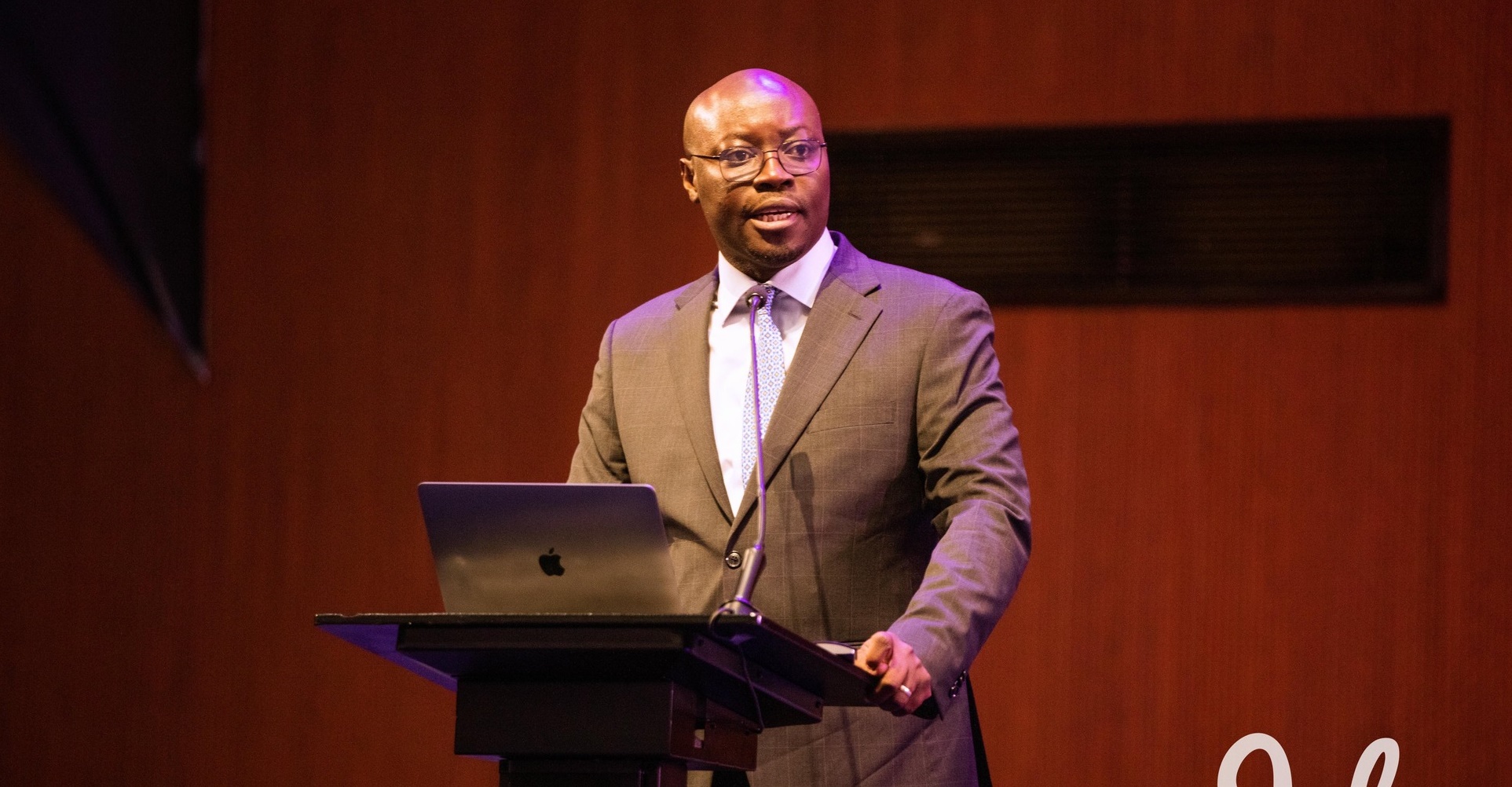
    In May, two Ghanaian women, identified as Anastasia Badoo Atta and Serwaa Konadu, were lured through Facebook by individuals posing as white suitors offering marriage. What began as a virtual courtship turned into a nightmare after the women traveled to Nigeria, where they were abducted.

    Their harrowing experience gained national attention after a disturbing video emerged, showing the women stripped naked, tied up, and assaulted with cutlasses by their captors. The kidnappers also threatened to kill them and covered their heads with black polythene bags before sending the footage to their families while demanding a ransom of GHS500,000 per victim.

    In a collaborative effort between the Ghana Police Service, the National Signals Bureau (NSB), and the Nigeria Police Force, a coordinated operation led to the arrest of eight suspects across both countries. The main suspect, Peter Okoye, along with two accomplices, allegedly held the women captive from April 22, 2025. Despite the kidnappers’ high ransom demands, only GHS18,000 was sent by the victims’ families to various mobile money numbers traced to the suspects.

    DCOP Lydia Yaako Donkor, Director General of the Criminal Investigations Department (CID), while engaging the media, revealed that the two Ghanaian women had been rescued from kidnappers in Nigeria and brought back to Ghana.

    Ghana’s Anti-Human Trafficking Act, 2005 (Act 694), is a comprehensive law aimed at preventing, punishing, and reducing human trafficking, while also protecting and rehabilitating victims.

  • Wages and salaries exceeded the budget by GHc1.3 billion in first half of 2025 – Govt

    Wages and salaries exceeded the budget by GHc1.3 billion in first half of 2025 – Govt

    Minister for Finance Dr. Cassiel Ato Forson has indicated that wages and salaries exceeded the budget by GH¢1.3 billion for the first six months of the year. 

    Per the 2025 budget statement, compensation of employees, comprising wages and salaries, pensions, gratuities, and social security, has been programmed at GH¢76.2 billion for the entire year.

    Presenting the 2025 Mid-Year Budget in Parliament on Thursday, July 24, the Finance Minister revealed that the government has experienced some significant pressures on the compensation budget for the first half of 2025, mainly emanating from wages and salaries.

    The wage pressures, the minister said, were largely driven by last-minute recruitments undertaken by the previous government in the last quarter of 2024, especially in the education, health, and security sectors.

    “In addition, ad-hoc reviews of conditions of service undertaken in previous years have distorted the Single Spine Pay Policy and further burdened the public wage bill,” the sector minister added.

    In 2024, compensation of employees amounted to GH¢67,189 million (5.7% of GDP), above the target of GH¢63,683 million (6.2% of GDP) by 5.5 percent. Wages and salaries constituted 89.8 percent of the total compensation and amounted to GH¢60,352 million (5.1% of GDP), 5.9 percent above the target of GH¢57,005 million (5.6% of GDP), per the 2025 budget statement.
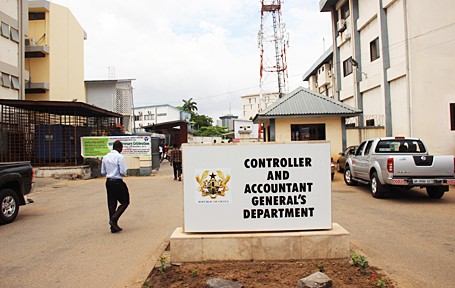
    In February this year, Chief of Staff Julius Debrah issued a directive annulling all public service appointments and recruitments made after December 7, 2024.

    A letter was circulated to heads of government institutions, instructing them to comply with the directive and submit a report by February 17, 2025, detailing the actions taken in response.

    “Consistent with Government pronouncement in relation to near end of tenure appointments and recruitments, I wish to bring to your attention that all appointments and recruitments made in the Public Services of Ghana after 7th December, 2024 are not in compliance with established good governance practices and principles.”

    “Accordingly, all Heads of Government Institutions are hereby requested to take the necessary steps to annul any such appointments or recruitments and submit a comprehensive report on the actions taken to this Office by 17th February 2025.”

    Prior to the swearing-in of President-elect John Mahama, concerns were raised over last-minute appointments and financial transactions by the outgoing administration. 

    The previous government defended these actions, stating, “these recruitment processes and payments have received the relevant statutory approvals and have not been proven to be illegal. It was decided that any specific allegation of illegality about any particular payment or recruitment should be brought to the attention of the Transition Team for a decision to be made.”

    Minority Leader Alexander Afenyo-Markin urged President Mahama to reconsider and overturn the cancellation of these appointments. In response, the Minister of State responsible for Government Communications and a spokesperson for President John Dramani Mahama, Felix Kwakye Ofosu, defended the administration’s move to invalidate appointments made after December 7, citing procedural flaws in the recruitment process.

    Speaking to the media in Accra on Wednesday, February 19, Kwakye Ofosu said, “Let me also put it on record that this action has been taken not because of a perception or a belief that they were NPP. It is because we know that the recruitment processes were attended by irregularities.”

    He pointed out cases where some individuals were issued retroactive appointment letters to falsely suggest they had been hired well before the elections, while others secured positions without going through interviews or even formally applying.

    Kwakye Ofosu stressed that such irregularities could not be overlooked and reaffirmed the government’s commitment to launching a fresh recruitment exercise that would be open to all qualified Ghanaians, regardless of their political backgrounds.

    “In due course, government will do recruitment and it will be open to all Ghanaians irrespective of political colouration. Indeed, your party identity will not be required. You will not be asked to show whether you’re NPP or NDC when that comes, but we will do it in a regular manner,” he explained.

    He also guaranteed that individuals whose appointments had been nullified would still have the chance to apply again and participate in a fair recruitment process. “So even those who have had their employment revoked will still have the opportunity to reapply and go through due process,” Kwakye Ofosu added.

    In his delivery to Parliament on Thursday, the Finance Minister revealed that more than 14,000 workers on the government’s payroll are unidentifiable and unverifiable by the Ghana Audit Service.

    The minister noted that as part of the government’s fiscal consolidation strategy, the government has taken measures to sanitize public sector payroll and rid it of ghost names. 

    The government engaged the Ghana Audit Service to undertake a nationwide payroll audit across all 16 regions of the country. The Finance Minister revealed that the Ghana Audit Service has completed 91% of the payroll audit.

    The Service has identified 53,311 separated staff—these are staff who are either retired, resigned, terminated, on leave without pay, or deceased, and yet remain on government payroll.

    According to the sector minister, the Audit Services expects to recover GH¢150.4 million of unearned salaries from the separated staff over the 2023 and 2024 period.

    “Mr. Speaker, going forward, we will enforce the monthly payroll validation process and strictly apply sanctions to all who validate “ghosts” for payment of salaries. Rt. Hon. Speaker, let me use this opportunity to strongly caution those who validate “ghosts” across the public service that they will be personally liable for the loss of public funds,” Dr Cassiel Ato Forson said.

    He assured that the Ministry of Finance will continue to monitor the payroll and put in place measures to prevent “ghost names” on the payroll.

    By the end of August, the Ghana Audit Service, in partnership with EY and PWC, will complete the audit of arrears and payables as of the end of 2024.

    The Audit Service was tasked to audit and validate GH¢68.7 billion of arrears. The sector minister noted that about 87 percent of the audit has been completed.

    The preliminary results show that a total of GH¢28.3 billion has been validated for payment. Also, an amount of GH¢3.6 billion has been rejected because of errors, duplications, and non-compliance with PFM and procurement rules. An amount of GH¢562.6 million is without adequate supporting documents, and GH¢27.3 billion is pending validation. 

    Dr Cassiel Ato Forson stated that “once finalized, we will update the House on the findings and outcomes.”

    In his delivery, Dr Cassiel Ato Forson noted that has come to the attention of the Ministry of Finance that a number of contractors implementing some of these 55 stalled projects have drawn down on the loans with no work done to match the amounts drawn down.

    Again, some contractors have submitted additional costs in excess of what Parliament approved. In light of this, the Ministry of Finance has commissioned a forensic audit into these projects.

    “Mr. Speaker, we will apprise the House when this audit is completed,” the sector minister assured.

  • Over 14,000 workers on govt payroll can’t be validated – Finance Minister

    Over 14,000 workers on govt payroll can’t be validated – Finance Minister

    Minister for Finance Dr. Cassiel Ato Forson has revealed that the Ghana Audit Service is unable to identify and verify more than 14,000 workers on the government’s payroll.

     Presenting the 2025 Mid-Year Budget in Parliament on Thursday, July 24, the minister noted that as part of the government’s fiscal consolidation strategy, the government has taken measures to sanitize public sector payroll and rid it of ghost names. 

    The government engaged the Ghana Audit Service to undertake a nationwide payroll audit across all 16 regions of the country. The Finance Minister revealed that the Ghana Audit Service has completed 91% of the payroll audit.

    The Service has identified 53,311 separated staff—these are staff who are either retired, resigned, terminated, on leave without pay, or deceased, and yet remain on government payroll.

    According to the sector minister, the Audit Services expects to recover GH¢150.4 million of unearned salaries from the separated staff over the 2023 and 2024 period.

    “Mr. Speaker, going forward, we will enforce the monthly payroll validation process and strictly apply sanctions to all who validate “ghosts” for payment of salaries. Rt. Hon. Speaker, let me use this opportunity to strongly caution those who validate “ghosts” across the public service that they will be personally liable for the loss of public funds,” Dr Cassiel Ato Forson said.

    He assured that the Ministry of Finance will continue to monitor the payroll and put in place measures to prevent “ghost names” on the payroll.

    By the end of August, the Ghana Audit Service, in partnership with EY and PWC, will complete the audit of arrears and payables as of the end of 2024.

    The Audit Service was tasked to audit and validate GH¢68.7 billion of arrears. The sector minister noted that about 87 percent of the audit has been completed.

    The preliminary results show that a total of GH¢28.3 billion has been validated for payment. Also, an amount of GH¢3.6 billion has been rejected because of errors, duplications, and non-compliance with PFM and procurement rules. An amount of GH¢562.6 million is without adequate supporting documents, and GH¢27.3 billion is pending validation. 

    Dr Cassiel Ato Forson stated that “once finalized, we will update the House on the findings and outcomes.”

    In his delivery, Dr Cassiel Ato Forson noted that has come to the attention of the Ministry of Finance that a number of contractors implementing some of these 55 stalled projects have drawn down on the loans with no work done to match the amounts drawn down.

    Again, some contractors have submitted additional costs in excess of what Parliament approved. In light of this, the Ministry of Finance has commissioned a forensic audit into these projects.

    “Mr. Speaker, we will apprise the House when this audit is completed,” the sector minister assured.

    The Finance Minister also revealed that the government has experienced some significant pressures on the compensation budget for the first half of 2025, mainly emanating from wages and salaries.

    Wages and salaries exceeded the budget by GH¢1.3 billion for the first six months of the year. The wage pressures, the minister said, were largely driven by last-minute recruitments undertaken by the previous government in the last quarter of 2024, especially in the education, health, and security sectors.

    “In addition, ad-hoc reviews of conditions of service undertaken in previous years have distorted the Single Spine Pay Policy and further burdened the public wage bill,” the sector minister added.

    In February this year, Chief of Staff Julius Debrah issued a directive annulling all public service appointments and recruitments made after December 7, 2024.

    A letter was circulated to heads of government institutions, instructing them to comply with the directive and submit a report by February 17, 2025, detailing the actions taken in response.

    “Consistent with Government pronouncement in relation to near end of tenure appointments and recruitments, I wish to bring to your attention that all appointments and recruitments made in the Public Services of Ghana after 7th December, 2024 are not in compliance with established good governance practices and principles.”

    “Accordingly, all Heads of Government Institutions are hereby requested to take the necessary steps to annul any such appointments or recruitments and submit a comprehensive report on the actions taken to this Office by 17th February 2025.”

    Prior to the swearing-in of President-elect John Mahama, concerns were raised over last-minute appointments and financial transactions by the outgoing administration. 

    The previous government defended these actions, stating, “these recruitment processes and payments have received the relevant statutory approvals and have not been proven to be illegal. It was decided that any specific allegation of illegality about any particular payment or recruitment should be brought to the attention of the Transition Team for a decision to be made.”

    Minority Leader Alexander Afenyo-Markin urged President Mahama to reconsider and overturn the cancellation of these appointments. In response, Minister of State responsible for Government Communications and a spokesperson for President John Dramani Mahama, Felix Kwakye Ofosu, defended the administration’s move to invalidate appointments made after December 7, citing procedural flaws in the recruitment process.

    Speaking to the media in Accra on Wednesday, February 19, Kwakye Ofosu said, “Let me also put it on record that this action has been taken not because of a perception or a belief that they were NPP. It is because we know that the recruitment processes were attended by irregularities.”

    He pointed out cases where some individuals were issued retroactive appointment letters to falsely suggest they had been hired well before the elections, while others secured positions without going through interviews or even formally applying.

    Kwakye Ofosu stressed that such irregularities could not be overlooked and reaffirmed the government’s commitment to launching a fresh recruitment exercise that would be open to all qualified Ghanaians, regardless of their political backgrounds.

    “In due course, government will do recruitment and it will be open to all Ghanaians irrespective of political colouration. Indeed, your party identity will not be required. You will not be asked to show whether you’re NPP or NDC when that comes, but we will do it in a regular manner,” he explained.

    He also guaranteed that individuals whose appointments had been nullified would still have the chance to apply again and participate in a fair recruitment process. “So even those who have had their employment revoked will still have the opportunity to reapply and go through due process,” Kwakye Ofosu added.

  • Audit of arrears and payables as of 2024 to be completed by August

    Audit of arrears and payables as of 2024 to be completed by August

    Minister for Finance, Dr Cassiel Ato Forson, has revealed that by the end of August, the Ghana Audit Service, in partnership with EY and PWC, will complete the audit of arrears and payables as of the end of 2024.

    The Audit Service was tasked to audit and validate GH¢68.7 billion of arrears. Presenting the 2025 Mid-Year Budget in Parliament on Thursday, July 24, the sector minister noted that about 87 percent of the audit has been completed.

    The preliminary results show that a total of GH¢28.3 billion has been validated for payment. Also, an amount of GH¢3.6 billion has been rejected because of errors, duplications, and non-compliance with PFM and procurement rules. An amount of GH¢562.6 million is without adequate supporting documents, and GH¢27.3 billion is pending validation. 

    Dr Cassiel Ato Forson stated that “once finalized, we will update the House on the findings and outcomes.”

    As part of the government’s fiscal consolidation strategy, the government has taken measures to sanitize public sector payroll and rid it of ghost names. The government engaged the Ghana Audit Service to undertake a nationwide payroll audit across all 16 regions of the country.

    Providing an update on the audit, the Finance Minister revealed that the Ghana Audit Service has completed 91% of the payroll audit.

    So far, the Audit Service has not been able to identify and verify over 14,000 workers. The Service has identified 53,311 separated staff—these are staff who are either retired, resigned, terminated, leave without pay, or deceased, and yet remain on government payroll.

    According to the sector minister, the Audit Services expects to recover GH¢150.4 million of unearned salaries from the separated staff over the 2023 and 2024 period.

    “Mr. Speaker, going forward, we will enforce the monthly payroll validation process and strictly apply sanctions to all who validate “ghosts” for payment of salaries. Rt. Hon. Speaker, let me use this opportunity to strongly caution those who validate “ghosts” across the public service that they will be personally liable for the loss of public funds,” Dr Cassiel Ato Forson said.

    He assured that the Ministry of Finance will continue to monitor the payroll and put in place measures to prevent “ghost names” on the payroll.

    In his delivery, Dr Cassiel Ato Forson noted that has come to the attention of the Ministry of Finance that a number of contractors implementing some of these 55 stalled projects have drawn down on the loans with no work done to match the amounts drawn down.

    Again, some contractors have submitted additional costs in excess of what Parliament approved. In light of this, the Ministry of Finance has commissioned a forensic audit into these projects.

    “Mr. Speaker, we will apprise the House when this audit is completed,” the sector minister assured.

    The Finance Minister also revealed that the government has experienced some significant pressures on the compensation budget for the first half of 2025, mainly emanating from wages and salaries.

    Wages and salaries exceeded the budget by GH¢1.3 billion for the first six months of the year. The wage pressures, the minister said, were largely driven by last-minute recruitments undertaken by the previous government in the last quarter of 2024, especially in the education, health, and security sectors.

    “In addition, ad-hoc reviews of conditions of service undertaken in previous years have distorted the Single Spine Pay Policy and further burdened the public wage bill,” the sector minister added.

    In February this year, Chief of Staff Julius Debrah issued a directive annulling all public service appointments and recruitments made after December 7, 2024.

    A letter was circulated to heads of government institutions, instructing them to comply with the directive and submit a report by February 17, 2025, detailing the actions taken in response.

    “Consistent with Government pronouncement in relation to near end of tenure appointments and recruitments, I wish to bring to your attention that all appointments and recruitments made in the Public Services of Ghana after 7th December, 2024 are not in compliance with established good governance practices and principles.”

    “Accordingly, all Heads of Government Institutions are hereby requested to take the necessary steps to annul any such appointments or recruitments and submit a comprehensive report on the actions taken to this Office by 17th February 2025.”

    Prior to the swearing-in of President-elect John Mahama, concerns were raised over last-minute appointments and financial transactions by the outgoing administration. 

    The previous government defended these actions, stating, “these recruitment processes and payments have received the relevant statutory approvals and have not been proven to be illegal. It was decided that any specific allegation of illegality about any particular payment or recruitment should be brought to the attention of the Transition Team for a decision to be made.”

    Minority Leader Alexander Afenyo-Markin urged President Mahama to reconsider and overturn the cancellation of these appointments. In response, Minister of State responsible for Government Communications and a spokesperson for President John Dramani Mahama, Felix Kwakye Ofosu, defended the administration’s move to invalidate appointments made after December 7, citing procedural flaws in the recruitment process.

    Speaking to the media in Accra on Wednesday, February 19, Kwakye Ofosu said, “Let me also put it on record that this action has been taken not because of a perception or a belief that they were NPP. It is because we know that the recruitment processes were attended by irregularities.”

    He pointed out cases where some individuals were issued retroactive appointment letters to falsely suggest they had been hired well before the elections, while others secured positions without going through interviews or even formally applying.

    Kwakye Ofosu stressed that such irregularities could not be overlooked and reaffirmed the government’s commitment to launching a fresh recruitment exercise that would be open to all qualified Ghanaians, regardless of their political backgrounds.

    “In due course, government will do recruitment and it will be open to all Ghanaians irrespective of political colouration. Indeed, your party identity will not be required. You will not be asked to show whether you’re NPP or NDC when that comes, but we will do it in a regular manner,” he explained.

    He also guaranteed that individuals whose appointments had been nullified would still have the chance to apply again and participate in a fair recruitment process. “So even those who have had their employment revoked will still have the opportunity to reapply and go through due process,” Kwakye Ofosu added.

  • LIVESTREAMING: Appointments Committee vets last batch of Dep. Ministers-designate

    LIVESTREAMING: Appointments Committee vets last batch of Dep. Ministers-designate

    The final batch of President John Dramani Mahama’s deputy ministerial nominees are being vetted by the Parliament’s Appointments Committee today, Friday, July 25.

    The nominees include Dorcas Affo-Toffey as Deputy Minister for Transport, James Gyakye Quayson for the Ministry of Foreign Affairs, Mohammed Adam Sukparu for Communication, Digital Technology, and Innovation, and Grace Ayensu-Danquah as Deputy Minister of Health.

    Dorcas Toffey has been nominated to serve at the Ministry of Transport; James G. Quayson will work at the Ministry of Foreign Affairs; Mohammed Adams Sukparu will work at the Ministry of Communication, Digital Technology, and Innovations; and Grace Ayensu-Danquah will serve at the Ministry of Health.

    Their appointment is in accordance with Articles 78(1) and 79(1) of the 1992 Constitution, which empower him to appoint ministers and deputy ministers with the prior approval of Parliament.

    https://www.facebook.com/share/v/1C2WdVWreC

  • Govt spent GHc109.7bn in first half of 2025 – Finance Minister

    Govt spent GHc109.7bn in first half of 2025 – Finance Minister

    Finance Minister Dr. Cassiel Ato Forson has revealed that in the first six months of the year, the government’s expenditure stood at GH¢109.7 billion, equivalent to 7.8% of the Gross Domestic Product (GDP).

    Presenting the 2025 Mid-Year Budget in Parliament on Thursday, July 24, he noted that the current expenditure was 14.3% below the programmed amount of GH¢128.0 billion, equivalent to 9.1% of GDP. According to the sector minister, this reflects the government’s strong expenditure control.

    During the presentation of the 2025 budget statement, the minister noted that total expenditures (commitment) for 2025 have been programmed at GH¢270.9 billion, down from GH¢279.2 billion in 2024. Primary expenditure on a commitment basis (expenditures net of interest payments)—is projected at GH¢206.8 billion in 2025 (14.8% of GDP), presenting a significant decline from 19.8% of GDP in 2024 and lower than the 2023 level of 15.6% of GDP.

    Providing a breakdown of the total expenditure in six months in Parliament on Thursday, the minister said that primary expenditure, or non-interest expenditures on a commitment basis, amounted to GH¢84.3 billion, or 6.0% of GDP. This is an improvement of about GH¢13.3 billion over the target of GH¢97.5 billion, which is 7.0% of GDP.

    Interest payments, on the other hand, amounted to GH¢25.4 billion, which is 1.8% of GDP. This is below the target of GH¢30.5 billion, which is 2.2% of GDP. Dr Cassiel Ato Forson explained that this was mainly due to lower domestic interest payments.

    Domestic interest payments amounted to GH¢21.6 billion, against a target of GH¢26.5 billion, representing a reduction of GH¢4.9 billion, and this was mainly on account of lower than planned domestic borrowings and the decline in T-bill rates. External interest payments amounted to GH¢3.8 billion, against a target of GH¢4.0 billion. This stemmed from the appreciation of the Ghana cedi.

    The cedi has recorded a remarkable turnaround in the first six months of 2025, appreciating by 42.6% against the US dollar. The cedi also gained 30.3% against the British pound and 25.6% against the euro during the same period.

    Other expenditure, mainly comprising Energy Sector Levies (ESL), transfers, and Energy Sector Payment Shortfalls, amounted to GH¢11.4 billion, or 0.8% of GDP. This was 12.7% below the target of GH¢13.1 billion, or 0.9% of GDP for the period. Arrears clearance amounted to GH¢4.8 billion.

    On a cash basis, the overall balance recorded a deficit of 1.1% of GDP. The deficit, according to Dr Cassiel Ato Forson, was largely financed from domestic sources with Net Domestic Financing (NDF) of GH¢13.1 billion, well below the GH¢18.7 billion target.

    Net Foreign Financing was GH¢2.8 billion, mostly from the utilization of a GH¢4.5 billion International Monetary Fund (IMF) loan disbursement from the 1st to the 6th of January 2025, before the Mahama administration took office. Project loan disbursement was GH¢2.4 billion.

    The Finance Minister noted that although Ghana is relying on the domestic market for financing, “We have borrowed less than we planned, signifying strong expenditure control and fiscal discipline.”

    Presently, the government is revising both revenue and expenditure projections to reflect the impact of the additional revenue from the Energy Sector Levies (Amendment) Act, 2025 (Act 1141).

    Total expenditure on a commitment basis has been revised downward to GH¢269.5 billion from the original budget projection of GH¢270.9 billion. However, primary expenditure has been revised upwards to GH¢209.6 billion from the original budget projection of GH¢206.8 billion.

    Total revenue and grants have been revised upwards from the 2025 budget target of GH¢227.1 billion to GH¢229.9 billion, or from 16.2% of GDP to 16.4% of GDP, representing a nominal increase of 1.3%.

    “The additional revenue of GH¢2.9 billion will come from the increase in revenues from the amendment to the Energy Sector Levies Act,” the minister added.

    Interest payments have been revised downwards by GH¢4.3 billion, from the original budget projection of GH¢64.1 billion to GH¢59.9 billion. Domestic interest, on the other hand, has been revised downward by GH¢5.1 billion, mainly on account of gains from the reduction in the treasury bill rates, as a result of the implementation of our prudent debt management policies.

    However, external interest payments have been revised upward by GH¢795 million to make additional provision for debt service due on post cut-off date disbursements made by our bilateral creditors since 2023. Energy sector payments have also been revised upwards by GH¢2.9 billion to provision for fuel purchases for power generation.

    Payroll audit

    As part of the government’s fiscal consolidation strategy, the government has taken measures to sanitize public sector payroll and rid it of ghost names. The government engaged the Ghana Audit Service to undertake a nationwide payroll audit across all 16 regions of the country.

    Providing an update on the audit, the Finance Minister revealed that the Ghana Audit Service has completed 91% of the payroll audit.

    So far, the Audit Service has not been able to identify and verify over 14,000 workers. The Service has identified 53,311 separated staff—these are staff who are either retired, resigned, terminated, leave without pay, or deceased, and yet remain on government payroll.

    According to the sector minister, the Audit Services expects to recovery GH¢150.4 million of unearned salaries from the separated staff over the 2023 and 2024 period.

    “Mr. Speaker, going forward, we will enforce the monthly payroll validation process and strictly apply sanctions to all who validate “ghosts” for payment of salaries. Rt. Hon. Speaker, let me use this opportunity to strongly caution those who validate “ghosts” across the public service that they will be personally liable for the loss of public funds,” Dr Cassiel Ato Forson said.

    He assured that the Ministry of Finance will continue to monitor the payroll and put in place measures to prevent “ghost names” on the payroll.

    Audit on arrears, payables and commitments

    The Ghana Audit Service partnered with EY and PWC to undertake the audit of arrears and payables as of end-2024. The Audit Service was tasked to audit and validate GH¢68.7 billion of arrears.

    About 87 percent of the audit has been completed, according to the Minister for Finance and the preliminary results show that a total of GH¢28.3 billion has been validated for payment.

    Also, an amount of GH¢3.6 billion has been rejected because of errors, duplications, and non-compliance with PFM and procurement rules. An amount of GH¢562.6 million is without adequate supporting documents, and GH¢27.3 billion is pending validation. The audit is expected to be completed by the end of August 2025. 

    Dr Cassiel Ato Forson stated that “once finalized, we will update the House on the findings and outcomes.”

  • Opinion: When the media becomes a willing tool: A cautionary word on the Petraco-Springfield affair

    Opinion: When the media becomes a willing tool: A cautionary word on the Petraco-Springfield affair

    At the heart of journalism lies a simple but profound principle: fairness. It is what separates reportage from propaganda, investigation from rumour, and professional media from tools of vested interest.

    And yet, in recent weeks, some media outlets in Ghana have discarded this standard entirely in their coverage of the ongoing commercial dispute between Springfield Exploration and Production Limited (Springfield) and Petraco Energies DMCC.

    The spark for this media frenzy? A petition filed by Petraco to the Economic and Organised Crime Office (EOCO), and more troublingly, leaked to the press in what appears to be a calculated attempt to damage Springfield’s reputation.

    Instead of exercising editorial caution and balance, several media platforms have rushed to publish (and in some cases, amplify) the unproven claims in this petition without scrutiny, without context, and without making any attempt to seek out Springfield’s side of the story.

    Let us be clear: the petition is not a court judgment, not an EOCO finding, and certainly not evidence of criminal conduct. It is one party’s narrative in a commercial disagreement. Nothing more. And yet, many media outlets have given it the full weight of a scandal. How did such a plainly one-sided document become the foundation for news stories and opinion pieces?

    The answer is as disturbing as it is disappointing: some in the media (and even civil society) have allowed themselves to be used. Whether out of carelessness, pressure, or something more deliberate, they have become vehicles for a smear campaign.

    They have taken a spurious, self-serving complaint and dressed it up as news – with no regard for truth, balance, or the reputational harm caused.

    It is important to ask: what was the news value in publishing the petition, especially without the other side of the story? What public interest is served by presenting untested accusations as though they were fact? Why publish a petition alleging criminality without asking whether or not a crime has actually been committed? And how does this reflect on journalism in a country where we claim to support homegrown enterprise and national participation in strategic sectors?

    Springfield is not a perfect company – no business is. But it is the only Ghanaian (and African) company operating in Ghana’s upstream petroleum sector. That is not a symbolic achievement; it is a material demonstration of Ghanaian capacity, expertise, and ambition in a space long dominated by multinationals.

    That Springfield has made it this far is a story worth telling. That some now seek to tear it down, with the help of sections of the local press, is a national shame.

    Springfield is not asking for protection or preferential treatment from the media. It is asking for the most basic professional courtesy: that journalists do their jobs properly. Verify. Cross-check. Seek balance.

    Give the accused party a fair hearing. These are not privileges – they are responsibilities, not to mention constitutionally-guaranteed rights. Yet, in this case, those responsibilities and obligations have been ignored.

    What’s worse, the timing and nature of this media blitz raise serious questions about motive. Who benefits from these stories? Who gains by weakening Springfield’s standing, both locally and internationally? And why now, when Springfield continues to negotiate its commercial obligations and operate in good faith and is trying to navigate the choppy waters of petroleum exploration after current government decided to withdraw the previous one’s unitisation directive?

    The sad truth is that some journalists, and editors have handed their platforms over to faceless interests who have never believed a Ghanaian company should be in the upstream business in the first place.

    These actors couldn’t stop Springfield from drilling or discovering oil. But they have found partners in some newsrooms, willing to help bring the company down in the court of public opinion.

    And to what end? The reputational harm is not just to Springfield. It is to the broader national project of Ghanaian ownership in strategic sectors. It tells young entrepreneurs and professionals that when you rise high enough, especially in industries long dominated by outsiders, you will be sabotaged, not only by your competitors, but by your own countrymen with access to a newsroom.

    This moment should be a wake-up call. Media freedom is essential to democracy, but it is not a licence for recklessness. A free press that abandons fairness becomes a threat to enterprise, to justice, and to truth. The work of journalists matters, but only when it is grounded in ethics.

    This is not a call for silence, nor a plea for sympathy. It is a reminder that even the most powerful institutions, state or private, must be held to the standards of fairness, accuracy, and accountability. Those who have failed to uphold those standards in this matter should reflect deeply on what role they have played, and what damage they have done.

    Springfield, like any other company, can answer for itself. It has legal representation. It has facts. What it should not have to deal with is a media culture that rushes to judgment, fuels innuendo, and becomes a mouthpiece for those who wish to see it fail. Ghana deserves better. So does our journalism.

    By Kofi Denteh

    DISCLAIMER: Independentghana.com will not be liable for any inaccuracies contained in this article. The views expressed in the article are solely those of the author’s and do not reflect those of The Independent Ghana

  • FULL TEXT: Finance Minister delivers 2025 mid-year budget review

    FULL TEXT: Finance Minister delivers 2025 mid-year budget review

    Finance Minister Dr. Cassiel Ato Forson has delivered to Parliament the 2025 Mid-Year Budget Review today, Thursday, July 24.

    This is in accordance with Section 28 of the Public Financial Management Act, 2016 (Act 921), to inform the country on its economic performance and fiscal strategy halfway through the year.

    In his delivery, the sector minister noted that in less than 200 days the incumbent government has brought back clarity, certainty, stability, and purpose to our economic policy direction.

    “We have made significant progress. The signs of recovery are obvious, evident, noticeable, visible, tangible and being felt,” Dr Ato Forson said.

    Below is the full statement delivered by the Finance Minister.

  • NIB recapitalised, ready to do business after injection of GHC450m – Finance Minister

    NIB recapitalised, ready to do business after injection of GHC450m – Finance Minister

    Minister for Finance, Dr Cassiel Ato Forson, has announced the successful recpaitalisation of the National Investment Bank (NIB).

    On July 9, Dr Cassiel Ato Forson announced the government’s decision to recapitalize the NIB and added that further details of the comprehensive recapitalization plan will be unveiled during the upcoming mid-year review.

    Just as stated, the Finance Minister, while presenting the 2025 Mid-Year budget review on the floor of Parliament on Thursday, July 24, shared the ambitious and credible plan to return NIB to profitability and sustainability.

    According to the sector minister, to recapitalise the NIB, the government undertook the following initiatives: injected a total cash of GHC450 million, issued re-marketable bonds with a face value of GHC1.5 billion to the National Investment Bank, and transferred GHC500 million of Government of Ghana shares in the Nestle Ghana Limited to the National Investment Bank.

    Dr Cassiel Ato Forson indicated that these transfers have significantly improved the capital adequacy ratio from -53.13% at the end of December 2024 to a positive 23% in May 2025.

    “By taking these major steps, we have preserved depositors funds valued at GHC6.4 billion. We have also saved over 900 direct jobs at the National Investment Bank. We have preserved an indigenous Ghanaian bank. Unlike the previous administration, we chose to spend to save a bank rather than spend to collapse a bank.”

    The incumbent government has prepared a forward-looking, overarching restructuring plan for the National Investment Bank to put the bank on a sustainable path of profitability.

    The plan also aims to enhance board independence and objectivity, strengthen risk management, promote accountability and transparency, prevent insider dominance, and improve strategic decision-making.

    This plan will, among other things, strengthen the corporate governance framework and systems, improve enterprise risk and controls, establish a modern business model, revamp operational strategy, improve financial performance, institute and enhance supervisory measures, and eventually we will list the NIB on the Ghana Stock Exchange.

    Currently, the National Investment Bank has a total paid-up capital of GHC3.4 billion and a capital adequacy ratio of 23%. 

    “On behalf of the President, I want to use this opportunity to assure the people of Ghana and depositors that our indigenous bank, National Investment Bank, is now prime for business.

    More importantly, NIB is back. NIB is now liquid, NIB is now safe and NIB is fully capitalized,” the Finance Minister further stated.

    He, thus, encouraged all and sundry to do business with the revitalized Investment Bank (NIB). In May last year, the erstwhile government earmarked GH¢2.3 billion for the recapitalization of the National Investment Bank (NIB). 

    “As part of the implementation of the Post Covid-19 Programme for Economic Growth (PC-PEG), Cabinet has approved the plan for restructuring and recapitalization of the National Investment Bank (NIB),” the former Finance Minister Dr. Mohammed Amin Adam said.

    The recapitalization plan was to involve a programmed equity injection of about GHS2.3 billion over a year, with the first tranche of GHS400 million expected to be transferred to NIB before the end of May last year. This initiative was critical to strengthening the governance structure, enhancing operational efficiency, and improving risk management to ensure the financial viability of NIB.

    The International Monetary Fund (IMF) upon approving the disbursement of $370 million to Ghana after reaching a staff-level agreement after the fourth review, noted that further strengthening the country’s financial sector stability “requires fully implementing the plan to strengthen NIB, finalizing the reform strategy to support state-owned banks’ viability and sustainability, and developing contingency plans to address weak banks that fail to recapitalize.”

    Inauguration of NIB Board

    Finance Minister Dr Cassiel Ato Forson has inaugurated the new 9-member Board of Directors for the National Investment Bank (NIB). The swearing-in ceremony was held on July 9. The sector minister expressed his congratulations to the new board.

    The Board of Directors will be chaired by Mr. Frank Adu Jnr, who has been appointed as Managing Director. Dr Ato Forson noted that under this new leadership, “NIB will operate with the independence and professionalism it deserves.” 

    The complete board composition includes distinguished professionals including Dr. Doli-wura Awushi Abdul-Malik Seidu Zakarai (Managing Director), Hon. Dr. Othniel Ekow Kwainoe, Hon. Ebenezer Kwaku Addo, Dr. Mrs. Mercy Naa Aku Ofei-Koranteng, Dr. Shani Bashiru, Mr. Max George Cobbina, Dr. Kwasi Akyem Apea-Kubi and Dr. Alfred Attuquaye Botchway.

    Recapitalizing ADB, CBG

    Finance Minister Dr Cassiel Ato Forson has announced the government’s decision to recapitalize the Agricultural Development Bank (ADB) and Consolidated Bank Ghana Limited (CBG).

    The government aims to recapitalize the Agricultural Development Bank in 2026. This move, according to the sector minister, is aimed at strengthening ADB’s financial position to better support farmers, agribusinesses, and agricultural value chain initiatives.

    The recapitalisation of the Consolidated Bank Ghana Limited (CBG) will be done in the coming year. This comes after approximately GH₵30 billion was spent to purportedly salvage and restore confidence in the financial sector.

    Newly appointed Board Chairman of CBG, Mr. Ernest Mawuli Agbesi, commended the government’s resolve to recapitalize the bank and pledged that the board would work diligently to deliver value to both the government and the Ghanaian people.

    Dr Ato Forson has inaugurated the new Board of Directors for the Agricultural Development Bank (ADB). The sector minister highlighted the critical role of agriculture in national development, noting that no country can achieve sustainable growth without a vibrant and resilient agricultural sector.

    He therefore tasked the new ADB Board chaired by Mr. Kenneth Kwamina Thompson “to remain focused and guided by their primary mandate—serving Ghana’s agricultural sector.”

    The newly inaugurated board is chaired by Mr. Kenneth Kwamina Thompson, with Mr. Edward Ato Sarpong serving as Managing Director.

    Other members of the board include Hon. Andrew Dari Chiwitey, Mr. Siisi Essuman-Ocran, Hon. Dr. E. Prince Arhin, Hon. Misbahu Mahama Adams, Wing Commander Samuel J.A. Allotey, Mr. Courage Akanwunge Asabagna and Mr. Abdul Nasir M. Saani.

    The sector minister has sworn in the Board of Directors for Consolidated Bank Ghana Limited (CBG). To the Consolidated Bank Ghana Limited (CBG) Board of Directors, the Finance Minister issued a firm warning against the era of excessive salaries and board allowances within State-Owned Enterprises (SOEs). He stressed that such practices would not be tolerated under the current administration.

    “It is equally important that this board safeguards taxpayers’ money, as you have been entrusted with a crucial national asset,” Dr Ato Forson charged.

    The newly inaugurated CBG Board also includes Dr. Naomi Wolali Kwetey — Managing Director, Ms. Irene Ackuaku, Mr. David Adom, Mr. Michael Kwasi Anyamesem, Mr. Stephen Kporzih, Dr. Sa-ad Iddrisu, Mrs. Immaculate Kawe Kanlisi and Mr. John Alexander Ackon.

  • Minority stages walkout ahead of 2025 mid-year budget presentation

    Minority stages walkout ahead of 2025 mid-year budget presentation

    The Minority has staged a walkout after Speaker Alban Bagbin declined to allow Minority Chief Whip, Frank Annoh-Dompreh, to give a preliminary statement before the Finance Minister Dr Cassiel Ato Forson presents the 2025 mid-year budget.

    Earlier, a report from MyJoyOnline indicated that the Minority Caucus would not participate in the presentation of the mid-year budget.

    According to the Kokomlemle-based media house, the Minority has scheduled a series of activities away from Parliament at 12:00 PM—the period the Finance Minister is expected to address Parliament.

    It is reported that the caucus will be petitioning President John Mahama and other stakeholders including Coalition of Domestic Election Observers (CODEO) over recent happenings in the country.

    But the Minority Members of Parliament appeared in the chamber clad in black.

    Finance Minister Dr. Cassiel Ato Forson is expected to deliver to Parliament the 2025 Mid-Year Budget Review today, Thursday, July 24.

    This is in accordance with Section 28 of the Public Financial Management Act, 2016 (Act 921), to inform the country on its economic performance and fiscal strategy halfway through the year.

    The delivery of the budget by the Finance Minister was announced by Deputy Majority Leader George Kweku Ricketts-Hagan during the presentation of the Business Statement on the floor of Parliament on Friday, July 11.

    “The mid-year again will happen on the 24th of July. I think the committee is on the selection issue. Right Honourable Speaker has been engaging with it. He is out of the jurisdiction, and so when he comes back, I am sure he will get it sorted out,” he said on the floor of the House.

    The minister’s update is expected to include a detailed assessment of government expenditure since the start of the year (January–date).

    This would include updates on revenue generation, spending, debt servicing, policy direction, and fiscal policies and decisions so far. 

    It will also outline any proposed amendments or adjustments to fiscal plans in light of current economic conditions.

    It would also address the country’s macroeconomic performance, including issues such as inflation status, exchange rate stability, and progress on structural reforms.

    As part of his delivery, the sector minister is expected to officially inform Parliament about the government’s engagement with the International Monetary Fund (IMF) and current arrangements with bilateral creditors.

    Meanwhile, the Bank of Ghana has confirmed the receipt of $367 million from the International Monetary Fund (IMF), credited to its account on Tuesday, July 9. 

    This forms part of the fifth disbursement under the IMF’s $3 billion Extended Credit Facility programme, which Ghana entered into in May 2023.

    This comes after the Executive Board of the International Monetary Fund (IMF) on July 7 completed the fourth review of the US$3 billion, 36-month Extended Credit Facility (ECF) Arrangement, which was approved by the Board in May 2023.

    Following the Executive Board discussion on Ghana, Deputy Managing Director Bo Li issued the following statement:

    “The authorities are strongly committed to restoring fiscal discipline and addressing the structural weaknesses that led to the slippages. This should be supported by continued efforts to enhance domestic revenue mobilisation and streamline non-priority expenditure while creating space for development priorities and enhanced social safety nets.”

    This brings Ghana’s total disbursements under the arrangement to about US$2.3 billion. Ghana received its first disbursement from the International Monetary Fund (IMF) under the $3 billion Extended Credit Facility on Friday, May 19, 2023.

    Ghana’s growth in 2024 and the first quarter of 2025 was higher than expected, reflecting robust activity in the mining, agricultural, ICT, manufacturing, and construction sectors.

    Ghana’s economy grew by 5.3% in the first quarter of 2025, higher than the 4.9% recorded during the same period in 2024.

    According to the Ghana Statistical Service (GSS), growth was driven by strong performance in the services sector and a rebound in the agricultural sector over the period.

    However, the industry sector recorded a slow growth of 3.4% as a result of low activities and slow growth in the oil and gas sector. 

    Under the incumbent government, the country has observed a continuous decline in inflation from over 20% to 13.7% as of June 2025.

    Peasant farmers have made calls for a 50% allocation of funds allocated for the Big Push infrastructure initiative to the agricultural sector ahead of the mid-year budget review.

    They argue that prioritising agriculture—one of the government’s core policy objectives—could be a transformative move, driving economic growth and job creation.

    The farmers highlighted the Feed Ghana Programme, which aims to boost food production, supply raw materials to agro-processing industries, and create employment opportunities, particularly for the country’s growing youth population.

    The initiative includes plans to establish farmer service centres nationwide, offering mechanisation support, quality inputs, financing, market access, and training.

    In a related development, the Finance Minister, Forson, after the budget presentation on Tuesday, March 11, 2025, promised Ghanaians that the 2025 budget is not a paper of unrealistic possibilities but is designed to prioritise their concerns and improve their livelihoods.

    Speaking in Parliament during the conclusion of discussions on the Budget Statement, he reaffirmed the government’s commitment to seeing its proposals fully executed.

    “This budget reflects our determination to put the people first, and we will ensure its successful execution for the benefit of all Ghanaians,” he stated.

    He emphasized that the document is not just a collection of economic projections but a strategic framework aimed at addressing the challenges citizens face.

    “This budget is not just figures on paper; it is a comprehensive plan to address the real concerns of Ghanaians. We have listened, and we are responding with practical solutions,” he added.

    Dr. Forson acknowledged Ghana’s persistent economic difficulties and stressed that resolving them requires a methodical and sustainable approach.

    “The problems of this country did not arise overnight, but we have begun the process of resolving them systematically and sustainably,” he noted.

    He urged Ghanaians to support the government’s plans, highlighting that the budget is a crucial step toward long-term economic stability and national progress.

    He received applause for the removal of some controversial taxes, such as the e-levy, betting tax, which was a major concern for the youth, as many young males argued that, erstwhile government left many unemployed and decided to charge them for the income they were earning without government’s intervention.

    Consequently, social media was buzzing with hashtags like #AbanPapaAba trended on platforms such as X (formerly Twitter), with youth and traders celebrating what they saw as a pro-poor budget.

    Also, following engagements with market women, particularly at Makola, they praised the Finance Minister for its grassroots approach, showing a commitment to listening to everyday citizens.

    Despite the loud applause, the Minority slammed the government for hypocrisy, claiming some tax removals were misleading as the Betting Tax had never been implemented.

    Some economists also questioned the sustainability of the tax cuts, asking how it would affect fiscal discipline.

  • LIVESTREAMING: Finance Minister presents 2025 mid-year budget review

    LIVESTREAMING: Finance Minister presents 2025 mid-year budget review

    Finance Minister Dr. Cassiel Ato Forson is expected to deliver to Parliament the 2025 Mid-Year Budget Review today, Thursday, July 24.

    This is in accordance with Section 28 of the Public Financial Management Act, 2016 (Act 921), to inform the country on its economic performance and fiscal strategy halfway through the year.

    The minister’s update is expected to include a detailed assessment of government expenditure since the start of the year (January–date).

    This would include updates on revenue generation, spending, debt servicing, policy direction, and fiscal policies and decisions so far.

  • Retract misleading “National Cathedral” story on Godfred Dame – Kofi Bentil tells GhanaWeb

    Retract misleading “National Cathedral” story on Godfred Dame – Kofi Bentil tells GhanaWeb

    Vice President of IMANI Africa, Kofi Bentil, has called out GhanaWeb, a digital news and advertising portal, for publishing a story he deems misleading following a recent remark on the National Cathedral.

    In a Facebook post dated July 21, Mr Kofi Bentil noted that the article with the headline “National Cathedral: Godfred Dame lied to the Supreme Court funds – Kofi Bentil” generated from only a part of comments he made on JoyFM’s Newsfile show, is “misleading”.

    According to him, the point he intended to convey was that all statements that the government was not funding the project were wrong. 

    “That said, it is important to state the correct facts which is why I made the corrections on air,” he said.

    Mr Bentil noted that the publication ignored the fact that in the course of the same programme, he made a correction of the facts underpinning some of the comments he had earlier made. 

    The relevant facts he sought to correct during the programme, which show “that the publication by Ghana Web was misleading,” are as follows:

    • The current Chief Justice, Gertrude Araba Esaba Torkornoo was not a member of the panel which adjudicated the National Cathedral case filed by Dr. James Kwabena Bomfeh. In fact, she had not even been appointed to the Supreme Court as of the date of the judgment – 23rd January, 2019.
    • The Attorney-General of the day was Madam Gloria Akuffo and not Mr. Godfred Yeboah Dame. Mr. Dame was a Deputy Attorney-General, even though he was counsel on record in that case.
    • The questions that came before the Supreme Court for determination in the National Cathedral Case were (1) whether it was constitutional for the State to provide assistance for Muslims to perform the Hajj pilgrimage and to allocate land for the building of a national cathedral, and (2) whether the acts of the State in supporting the Hajj pilgrimage and allocating land for a cathedral amounted to “excessive entanglement of the State in religion” and therefore, unconstitutional.
    • The Supreme Court per Sophia Adinyira JSC, held that while the Constitution prescribed that Ghana was a secular state, “it affirms and maintains the historical, cultural, and religious character of the Ghanaian society. Secularism in the context of the Constitution must be understood to allow, and even encourage State recognition and accommodation of religion and religious identity. The Constitution does not prohibit the Government from supporting, assisting or cooperating with religious groups.”
    • My information is that, at the time the National Cathedral Case filed by James Kwabena Bomfeh and argued in 2018, leading to  judgment delivered by the Supreme Court in January, 2019, the actual construction of the Cathedral had not commenced. The question of whether it was constitutional for the State to spend the colossal amounts of money, it subsequently did on the construction, which I still believe was excessive, therefore did not arise for determination in that case.
    • It is unfortunate that Ghana Web ignored the correction I sought to make of the relevant facts in the course of the programme and used only the initial comments I made as its headline story. 

    Kofi Bentil therefore called on GhanaWeb to not only retract the story but also publish this correction in full. In light of this, GhanaWeb has retracted the story and published the correction in full. The media house published with the headline “Kofi Bentil clarifies remarks on National Cathedral, former AG Godfred Dame.”

    Meanwhile, Kofi Bentil has noted that he stands by his “fervid opposition to the patently bad idea of a National Cathedral, and still hold that it was not true that the Government was not going to spend public funds on it.”

    With regard to the national cathedral project, Minister of State in charge of Government Communications, Felix Kwakye Ofosu, has rebuffed the widespread report of the government’s intention to repurpose the stalled National Cathedral project into a National Cultural Convention Centre.

    His response comes to deny claims that surfaced on Friday, July 18. These claims stemmed from speculation and an unsolicited proposal submitted to the 24-Hour Economy Secretariat by a continental organisation. During an interview on Citi FM yesterday, Tuesday, July 22, Mr. Kwakye Ofosu rendered such claims as “inaccurate and misleading.”

    “Contrary to claims that emerged last week, the government has not decided to turn the site into a cultural convention centre; nothing of the sort has happened,” he clarified. He explained that the whole speculation is coming from a proposal that was submitted by a continental organisation requesting to build its headquarters on the site, as it is currently renting a space in Accra for its operations.

    According to the proposal, the organisation intends to build a cultural and convention centre for Ghana. “A continental organisation that currently rents space in Accra submitted an unsolicited proposal to establish its headquarters on the site. The proposal includes plans to build a cultural and convention centre for Ghana,” he said.

    However, he went on to explain that this proposal has not been accepted by the government, as it has not yet been deliberated on. “It is merely an unsolicited proposal. The government has not accepted it or even considered it,” he added. He went on to reaffirm the government’s stance on the project, saying that the president has no intention of spending a penny on it.

    “I can state with authority that as long as President Mahama remains the head of this country, he is unprepared to see even a pesewa of taxpayers’ money put into this National Cathedral project, ” Kwakye Ofosu emphasised. He noted that the future of the site would only be determined after a full forensic audit.

    “What happens to the site will be decided once we have all the facts. But I can assure Ghanaians no public funds will go into the cathedral,” he said.

    About the National Cathedral project 

    The National Cathedral project, which was originally supposed to be former President Nana Akufo-Addo’s project, as he explicitly stated during the sod-cutting ceremony of the project in 2017 that it was a personal project he promised God if he helped him win the 2016 elections.

    Following the sod-cutting ceremony, the design of the project was assigned to a popular Ghanaian-British architect celebrated for his culturally resonant and socially conscious designs, Sir David Adjaye.

    He unveiled the design a year later in March 2018, and construction commenced shortly afterwards. The cathedral was envisioned as an interdenominational Christian space, featuring a 5,000-seat auditorium, chapels, a Bible museum, and cultural elements inspired by Ghanaian heritage.

    Despite the project being presented by the former President as a personal vow, initially believed to be funded by donations and other private funds, it ended up being largely funded by taxpayers’ money.

    According to the Deloitte audit report, as of December 2023, the government had spent $97 million (GH¢339 million) on the project. This included payments made before contracts were signed, expenses without proper documentation, procurement violations and questionable reimbursements.

    The audit revealed that government seed money dried up, and fundraising efforts failed to generate significant private support.

    The spotlight on alleged embezzlement and financial mismanagement in Ghana’s National Cathedral project was first brought to public attention by Samuel Okudzeto Ablakwa, Member of Parliament for North Tongu. As a vocal opposition figure, he consistently raised red flags about questionable expenditures, procurement breaches, and governance lapses tied to the project.

    The embezzlement and financial mismanagement in Ghana’s National Cathedral project were first brought to public attention by the Member of Parliament for North Tongu and current Foreign Affairs Minister, Samuel Okudzeto Ablakwa. He consistently raised red flags about questionable expenditures, procurement breaches, and governance lapses tied to the project.

    Following the discovery of the heavily disembezzled funds, the National Cathedral Secretariat was dissolved by the government.

    The dissolution marks a major shift in the government’s stance on the controversial project, which faced widespread criticism over allegations of financial mismanagement, stalled construction, and questions over its funding transparency.

    Speaking on Channel One, Felix Kwakye Ofosu, the Minister of State in Charge of Government Communications, confirmed that the government would no longer provide funding for the abandoned project.

    He emphasised that the decision reflects President John Dramani Mahama’s consistent position that taxpayer money should not be used to finance the National Cathedral.

    “There are outstanding issues regarding the procurement processes, and outstanding payments that the contractor is demanding, but nobody will answer because there is no National Cathedral,” Mr. Kwakye Ofosu stated.

    The Commission on Human Rights and Administrative Justice (CHRAJ) has urged the Auditor-General to launch a forensic audit into the controversial National Cathedral project.

    Meanwhile, the National Cathedral Secretariat has responded to Deloitte Touche’s report, revealing that the misappropriation of funds occurred within its operations.

    According to an internal memo to staff dated July 21, Executive Director of the Secretariat, Dr. Paul Opoku-Mensah, branded the report as false and incomplete.“While the government press conference made reference to audit findings, what was presented was not the actual audit report but rather audit queries that had been responded to in detail.

    “This audit report does not exonerate anyone. However, it confirms that there has been no misuse of state funds. All payments made were supported by contracts and guided by legal and financial protocols,” the memo noted.

    Deloitte Touche was tasked by President John Dramani Mahama earlier this year to conduct an independent audit on the National Cathedral project.

    The report, which covered activities from December 2021 and December 2023, accused the Secretariat of procurement breaches, unsupported expenditures, and governance lapses.

    During a press briefing on Friday, July 18, Felix Kwakye Ofosu disclosed that the Secretariat spent 18,500 Ghana cedis on the expenses of one Kharis Psalmist; however, it failed to document the full cost rendered in its records.

    “A key example involves academic payment for Mr Kharis Psalmist, who was lodged at the Movenpick Hotel from 16th to 28th February 2022 at 18,500 Ghana cedis.

  • Minority likely to boycott 2025 mid-year budget review – report

    Minority likely to boycott 2025 mid-year budget review – report

    A report from MyJoyOnline indicates that the Minority Caucus could fail to participate in the presentation of the mid-year budget review by Finance Minister Dr Cassiel Ato Forson.

    According to the Kokomlemle-based media house, the Minority has scheduled a series of activities away from Parliament at 12:00 PM—the period the Finance Minister is expected to address Parliament.

    It is reported that the caucus will be petitioning President John Mahama and other stakeholders including Coalition of Domestic Election Observers (CODEO) over recent happenings in the country.

    Finance Minister Dr. Cassiel Ato Forson is expected to deliver to Parliament the 2025 Mid-Year Budget Review today, Thursday, July 24.

    This is in accordance with Section 28 of the Public Financial Management Act, 2016 (Act 921), to inform the country on its economic performance and fiscal strategy halfway through the year.

    The delivery of the budget by the Finance Minister was announced by Deputy Majority Leader George Kweku Ricketts-Hagan during the presentation of the Business Statement on the floor of Parliament on Friday, July 11.

    “The mid-year again will happen on the 24th of July. I think the committee is on the selection issue. Right Honourable Speaker has been engaging with it. He is out of the jurisdiction, and so when he comes back, I am sure he will get it sorted out,” he said on the floor of the House.

    The minister’s update is expected to include a detailed assessment of government expenditure since the start of the year (January–date).

    This would include updates on revenue generation, spending, debt servicing, policy direction, and fiscal policies and decisions so far. 

    It will also outline any proposed amendments or adjustments to fiscal plans in light of current economic conditions.

    It would also address the country’s macroeconomic performance, including issues such as inflation status, exchange rate stability, and progress on structural reforms.

    As part of his delivery, the sector minister is expected to officially inform Parliament about the government’s engagement with the International Monetary Fund (IMF) and current arrangements with bilateral creditors.

    Meanwhile, the Bank of Ghana has confirmed the receipt of $367 million from the International Monetary Fund (IMF), credited to its account on Tuesday, July 9. 

    This forms part of the fifth disbursement under the IMF’s $3 billion Extended Credit Facility programme, which Ghana entered into in May 2023.

    This comes after the Executive Board of the International Monetary Fund (IMF) on July 7 completed the fourth review of the US$3 billion, 36-month Extended Credit Facility (ECF) Arrangement, which was approved by the Board in May 2023.

    Following the Executive Board discussion on Ghana, Deputy Managing Director Bo Li issued the following statement:

    “The authorities are strongly committed to restoring fiscal discipline and addressing the structural weaknesses that led to the slippages. This should be supported by continued efforts to enhance domestic revenue mobilisation and streamline non-priority expenditure while creating space for development priorities and enhanced social safety nets.”

    This brings Ghana’s total disbursements under the arrangement to about US$2.3 billion. Ghana received its first disbursement from the International Monetary Fund (IMF) under the $3 billion Extended Credit Facility on Friday, May 19, 2023.

    Ghana’s growth in 2024 and the first quarter of 2025 was higher than expected, reflecting robust activity in the mining, agricultural, ICT, manufacturing, and construction sectors.

    Ghana’s economy grew by 5.3% in the first quarter of 2025, higher than the 4.9% recorded during the same period in 2024.

    According to the Ghana Statistical Service (GSS), growth was driven by strong performance in the services sector and a rebound in the agricultural sector over the period.

    However, the industry sector recorded a slow growth of 3.4% as a result of low activities and slow growth in the oil and gas sector. 

    Under the incumbent government, the country has observed a continuous decline in inflation from over 20% to 13.7% as of June 2025.

    Peasant farmers have made calls for a 50% allocation of funds allocated for the Big Push infrastructure initiative to the agricultural sector ahead of the mid-year budget review.

    They argue that prioritising agriculture—one of the government’s core policy objectives—could be a transformative move, driving economic growth and job creation.

    The farmers highlighted the Feed Ghana Programme, which aims to boost food production, supply raw materials to agro-processing industries, and create employment opportunities, particularly for the country’s growing youth population.

    The initiative includes plans to establish farmer service centres nationwide, offering mechanisation support, quality inputs, financing, market access, and training.

    In a related development, the Finance Minister, Forson, after the budget presentation on Tuesday, March 11, 2025, promised Ghanaians that the 2025 budget is not a paper of unrealistic possibilities but is designed to prioritise their concerns and improve their livelihoods.

    Speaking in Parliament during the conclusion of discussions on the Budget Statement, he reaffirmed the government’s commitment to seeing its proposals fully executed.

    “This budget reflects our determination to put the people first, and we will ensure its successful execution for the benefit of all Ghanaians,” he stated.

    He emphasized that the document is not just a collection of economic projections but a strategic framework aimed at addressing the challenges citizens face.

    “This budget is not just figures on paper; it is a comprehensive plan to address the real concerns of Ghanaians. We have listened, and we are responding with practical solutions,” he added.

    Dr. Forson acknowledged Ghana’s persistent economic difficulties and stressed that resolving them requires a methodical and sustainable approach.

    “The problems of this country did not arise overnight, but we have begun the process of resolving them systematically and sustainably,” he noted.

    He urged Ghanaians to support the government’s plans, highlighting that the budget is a crucial step toward long-term economic stability and national progress.

    He received applause for the removal of some controversial taxes, such as the e-levy, betting tax, which was a major concern for the youth, as many young males argued that, erstwhile government left many unemployed and decided to charge them for the income they were earning without government’s intervention.

    Consequently, social media was buzzing with hashtags like #AbanPapaAba trended on platforms such as X (formerly Twitter), with youth and traders celebrating what they saw as a pro-poor budget.

    Also, following engagements with market women, particularly at Makola, they praised the Finance Minister for its grassroots approach, showing a commitment to listening to everyday citizens.

    Despite the loud applause, the Minority slammed the government for hypocrisy, claiming some tax removals were misleading as the Betting Tax had never been implemented.

    Some economists also questioned the sustainability of the tax cuts, asking how it would affect fiscal discipline.

  • Possible fuel shortage forces PassionAir to disrupt its flight operations

    Possible fuel shortage forces PassionAir to disrupt its flight operations

    PassionAir, a domestic airline operator, has announced significant disruptions to its flight operations across all routes.

    This stems from an anticipated shortage of aviation fuel in Accra from Wednesday, 22 July, to Sunday, 27 July, as announced by the Ghana Civil Aviation Authority. During this period, Passion Air will not be seeing to flight operations.

    In a statement dated July 23, Passion Air apologized for any inconvenience caused. The Corporate Affairs of Passion Air advised its valued passengers and the public to stay informed by contacting the customer service team on 0800 221 221 for the latest updates and assistance.

    The company appreciated its passengers and the public for their “patience and understanding.”

    Already, the domestic airline operator has informed its passengers about cancelled flights. An SMS read, “Dear Valued Customer Due to an aviation fuel shortage in Accra and Kumasi, your flight has been cancelled. We apologize for the inconvenience.”

    Last month, passengers who patronized the services of Passion Air experienced a 10% reduction in airfares across all its domestic routes. The adjustment took effect on Tuesday, June 17. The reduction came into effect after the Minister for Transport, Joseph Bukari Nikpe, called on domestic airlines to adjust prices as the cedi appreciates.

    “This fare adjustment comes in response to the recent strengthening of the Cedi (GHs) against major foreign currencies. At PassionAir, we are committed to ensuring our valued customers benefit directly from positive market developments.

    “As the domestic aviation landscape evolves, we remain focused on offering competitive fares’ that reflect these changes. While maintaining our commitment to the safety and comfort of our passengers, we continue to prioritize making domestic air travel more accessible and affordable for all Ghanaians,” Passion Air stated in a post on its Facebook page.

    Ghana’s legal tender, the cedi, continues to observe unprecedented appreciation in its value against major trading currencies in a span of about two months. As of Monday, June 16, the average interbank rates used by commercial banks for transactions at the close of business showed the US dollar buying at GH₵10.29 and selling at GH₵10.30.

    The British pound is buying at GH₵13.98 and selling at GH₵14.00. The euro is currently being bought at GH₵11.92 and sold at GH₵11.93. The last time a dollar was worth about GHC10 was three years ago under the Akufo-Addo-led government.

    PassionAir, which commenced commercial operations in August 2018, was birthed from charter operations by providing flight services to a client in the oil and gas industry.

    Its maiden flight in the Ghanaian domestic market was on 23 August 2018 to Kumasi. The occasion was graced by a representative from Manhyia Palace, the Anantahene, Nana Baffour. 

    Following this, the airline commenced operations to Tamale and Takoradi. Within the last eleven  months, Passion Air has launched two new routes to Wa and Sunyani. This makes PassionAir the domestic airline with the largest route network in Ghana (Accra, Takoradi, Kumasi, Tamale, Wa, and Sunyani).

    In August 2022, Dr. Hafiz Bin Salih, the former Upper West Regional Minister, appealed to the Passion Air Company to consider reopening its daily flights between Wa and Kumasi to enhance business activities. The former minister argued that traders in the region considered Kumasi a business hub, and therefore daily flights would help boost commercial transactions of the two regions. Dr. Bin Salih made the appeal when Mr. Edward Annan-Accantable, Manager of Passion Air Company and other officials paid a courtesy call to him.

    Passion Air’s Sunyani route operates three times each week on Mondays, Wednesdays, Fridays, and Sundays for a GHS600 cost.

    PassionAir seeks to make air travel an experience designed to meet and exceed the expectations of the customer in the Ghanaian domestic market. The company has further plans to offer seamless connections between Ghanaian cities with the airports to facilitate air travel; hence, our aim is to connect Ghana one city at a time.

    PassionAir Operations

    PassionAir has a fleet of four (4) Bombardier Dash 8–Q400, 78-seaters, with comfortable seats, ample legroom (pitch 31”), excellent air conditioning, a well-lit cabin, and a large luggage compartment.

    The Q400, the latest in the Q Series family, provides unmatched performance and operational flexibility. Designed as a modern, 21st-century turboprop, it entered service in the year 2000. 

    It is manufactured by De Havilland in Canada. Three (3) aircraft are used for commercial operations, and one (1) is dedicated to charters. 

    All of our aircraft are equipped with state-of-the-art HEPA (High-Efficiency Particulate Air) filters, which filter out airborne particles, capturing 99.97% of particles in the airflow.

    The Q400 radically reduces carbon emissions and increases cost efficiency. Its high-speed cruise, 160 km/h faster than conventional turboprops, places the aircraft within minutes of jet schedules, at the same seat cost as a single-aisle jet twice its size. 

    Its large propeller operates at a lower Rate Per Mile RPM, generating more power with less noise and making it a friendly option for city centres. 

    The Q400 aircraft has logged almost seven (7) million flight hours with over sixty (60) owners and operators in approximately forty (40) countries. 

    With a dispatch reliability rate of over 99.5%, the aircraft have transported more than four hundred (400) million passengers worldwide. And, thanks to its industry-leading passenger experience, operating costs, and environmental footprint, the Q400 is the pinnacle of modern turboprop design.

    Air Commodore (Rtd.) Victor Kwame Mamphey is the board chair for Passion Air. Samuel Ato Hagan is Managing Director, Edward Annan is Accountable Manager, Patricia Annan is Personal Assistant to the Accountable Manager, Duncan Sambu is Chief Operating Officer (COO), Billionaire Akua Boateng is Director of Business Development, and Kwesi Afreh Biney is a board member.

    Senior Management includes Akosua Okyere-Nyako Arthur as Quality Manager, Senyawor Tay as Safety Manager, Capt. Nasser Sinare as Chief Pilot, Ridwane Adamou as Commercial Manager, Jacob Kilee as Senior Operations Manager, and Capt. Sydney Ribeiro as Director of Flight Operations.

    PassionAir seeks to create a network that provides feeder traffic to existing and future intercontinental operators to Accra; implement an operational quality control system to ensure safe and reliable flight operations; implement a marketing strategy to maximize revenues while controlling costs; achieve long-term positive net profits to enable PassionAir to consider operating to regional destinations; and use advanced electronic and information technology to reduce operational costs and enhance customer convenience and satisfaction.

  • Ghana waives visa requirements for Mozambique, Columbia and 2 others

    Ghana waives visa requirements for Mozambique, Columbia and 2 others

    Parliament of Ghana has approved the ratification of agreements to waive the visa requirements for holders of diplomatic, service and ordinary passports to four countries.

    These are Mozambique, Sao Tome and Principe, Columbia and Commonwealth of Dominica. Chairman of the Foreign Affairs and Regional Integration Committee in Parliament, Hon. Alfred Okoe Vanderpuije, while speaking on the floor of the House on Wednesday, July 23, explained that the objective of the agreements is to encourage multilateral partnership in areas such as trade, tourism, energy, education, and agriculture.

    There are no anticipated direct revenue losses from the implementation of the agreements, Foreign Affairs and Regional Integration Minister, Samuel Okudzeto Ablakwa, said when he appeared before the House. 

    He also confirmed that the visa waiver arrangements will contribute to a surge in trade, tourism, and other forms of bilateral cooperation for the countries involved.

    The government of Ghana has, in recent times, joined the many African countries waiving visa requirements to sister countries to enhance trade and boost economic growth.

    In March this year, Ghana and Morocco took a significant step toward enhancing diplomatic and economic relations by agreeing to introduce a visa waiver for all categories of travelers. The agreement, which is set to be presented to both nations’ parliaments for ratification, aims to facilitate seamless travel and boost cooperation in various sectors.

    The decision emerged from discussions between Minister of Foreign Affairs, Samuel Okudzeto Ablakwa, and the Moroccan Ambassador to Ghana, Her Excellency Imane Ouaadil on March 23. During their meeting, Ambassador Ouaadil also addressed concerns over recent viral videos alleging violence against Africans in Morocco. She clarified that the footage in circulation was from a past border incident on June 24, 2022, which led to the deaths of 23 individuals but did not involve any Ghanaian casualties.

    Additionally, Morocco has announced a significant boost in educational support for Ghana, doubling scholarships for Ghanaian students from 90 to 180 this year.

    In March last year, the Ministry of Foreign Affairs and Regional Integration informed the public that the Republic of Ghana and the Republic of Malawi entered into an agreement on a visa waiver regime for holders of ordinary, diplomatic, and service passports, which took effect on 7th February, 2024.

    The decision was taken to strengthen their bilateral relations and existing cooperation. In light of this, travellers transit through, depart from, and stay in the territory of both countries for a cumulative period of up to ninety (90) days without recourse to work within a calendar year.

    On November 1, 2023, Ghana and South Africa began the implementation of a 90-day visa waiver programme for holders of ordinary passports.For this number of days, there was no need for work permits.

    In reaction to the visa waiver agreements, at the Bi-National Committee meeting in Johannesburg, President Ramaphosa noted that the visa waiver has positively influenced bilateral ties.

    “We welcome you to the second session of the Bi-National Commission between the Republic of South Africa and the Republic of Ghana, we welcome you with warm hearts. One of the recent highlights in our bilateral relations was the signing of the reciprocal visa exemption for ordinary passport holders for a period of 90 days per annum, which entered into force on November 1, 2023. The surge in travellers between our nations has not only benefited tourism but has also strengthened our business connections, educational collaborations, and interpersonal relationships,” President Ramaphosa said.

    Following this, some Nigerians took to social media to question why the Tinubu-led government had not been able to secure similar arrangements.

    “Nigeria should asked itself, why is South Africa not extending this same visa regime to Nigeria? What has our fellow country done in the past that South Africa is not extending this 90 days free entry visa to Nigeria.  We need to look at the mirror to answer this question,” one Omano Edigheji, PhD quizzed.

    Ghana kick-started a visa-on-arrival waiver strategically designed to ignite a surge in tourism through the government’s “Beyond the Return” drive, and this ran from December 22 to January 15, 2023.

    The policy is a prominent feature of the “Beyond the Return” initiative, a decade-long plan framed under the theme “A decade of African Renaissance—2020-2030.” “Beyond the Return” follows in the footsteps of the “Year Of Return” initiative launched in 2019, commemorating the 400th Anniversary of the arrival of the first recorded enslaved Africans in Jamestown, Virginia, in 1619. The aim is to beckon people of African origin to Africa, particularly Ghana.

    In 2021, Parliament approved a visa waiver agreement between the United Arab Emirates (UAE) and Ghana. A Memorandum of Understanding (MoU) signed by both parties was  presented to the House by the then-Foreign Affairs Minister, Shirley Ayorkor Botchway.

    African countries that waived their visa requirements

    Effective January 2024, Kenya eliminated visa requirements, opening its borders to all foreign nationals. Kenyan President William Ruto, in his announcement on December 12, 2023, revealed that the country is transitioning to a visa-free status.

    President Ruto stated, “This is to echo a message to humanity to welcome everyone home…this is why the government of Kenya has abolished the requirements of visas for all visitors.”

    “To implement this policy, we have developed a digital platform to ensure that all travellers to Kenya are identified in advance on an electronic platform. Consequently, all travellers will obtain electronic travel authorization as they come to Kenya,” President Ruto added.

    Uganda is the third East African Community (EAC) Partner State to waive visa requirements for DRC citizens after Kenya and Tanzania. 

    The decision was taken during the 8th Ordinary Session of the Joint Permanent Commission between the two Partner States in Kinshasa, DRC, on Saturday, 21st October, 2023.

    Ugandan President Yoweri Museveni who had been advocating for visa-free entry between the two nations, remarked, “Crossing in East Africa should be cost-free. You pay for a visa when going to America, or Europe, but a visa to DR Congo?! That is rubbish. If that is the case, I have removed it.”

    President Museveni made the comment two years ago in December when he launched the Mpondwe one-stop border post at Uganda’s border with DR Congo. The East African Community (EAC) applauded the decision by the Republic of Uganda and the Democratic Republic of Congo (DRC) to waive visa fee requirements for citizens travelling across their borders.

    In 2021, DRC joined the EAC as its seventh Partner State. The other partner states are the Republics of Burundi, Kenya, Rwanda, South Sudan, Uganda and the United Republic of Tanzania.

  • NPA fraud case: Abdul-Hamid meets GHC2m bail condition; 6 other accused detained for failing to

    NPA fraud case: Abdul-Hamid meets GHC2m bail condition; 6 other accused detained for failing to

    The Office of the Special Prosecutor (OSP) has revealed that the first accused person, former Chief Executive Officer of the National Petroleum Authority (NPA) Mustapha Abdul-Hamid, in the NPA fraud case has met his bail conditions.

    The remaining six accused persons were unable to do so and have been detained. The other six accused persons are Jacob Kwamina Amuah, Wendy Newman, Albert Ankrah, Isaac Mensah, Bright Bediako-Mensah, and Kwaku Aboagye Acquaah.

    The Criminal Division of the High Court on Wednesday granted GHC2 million bail each to seven accused persons in the National Petroleum Authority (NPA) fraud case before it.

    The High Court commenced proceedings in the matter of The Republic v. Mustapha Abdul-Hamid & 9 Others today, July 23, marking the first arraignment in the case.

    The accused persons are Mutapha Abdul-Hmaid (first accused); Jacob Kwamina Amuah, coordinator of the Unified Petroleum Pricing Fund (UPPF) at NPA and managing director of three corporate entities—Propnest, Kel Logistics, and Kings Energy (second accused); Wendy Newman, NPA staff (third accused); Albert Ankrah, director of Kel Logistics Limited (fourth accused); Isaac Mensah, director of Kel Logistics Limited (fifth accused); Bright Bediako-Mensah, director of Kel Logistics and Kings Energy Limited (sixth accused); Kwaku Aboagye Acquah, director of Kings Energy Limited (seventh accused); Propnest Limited (eighth accused); Kel Logistics Limited (ninth accused); and Kings Energy Limited (tenth accused).

    All ten accused persons were present and entered pleas of not guilty to the charges brought against them, which include conspiracy to commit extortion, extortion, and money laundering.

    Counsel for the accused applied for bail, which the prosecution did not oppose. However, the prosecution urged the court to impose strict conditions to prevent any of the accused from leaving the jurisdiction without lawful authorization.

    The bail conditions for Mustapha Abdul-Hamid, Jacob Kwamina Amuah, and Wendy Newman are as follows: a bail sum of GHS 2 million each, two sureties to be justified, one surety must be a public officer, must provide landed property in Accra, report to OSP every fortnight, and passport to be deposited at the Court Registry.

    The bail conditions for Albert Ankrah, Isaac Mensah, Bright Bediako-Mensah, and Kwaku Aboagye Acquaah are as follows: a bail sum of GHS 2 million each, two sureties to be justified, one surety must be a public officer, must provide landed property in Accra, report to OSP every fortnight, and one surety must submit a valid ID card to the Court Registry.

    The case has been adjourned to 26th August 2025 for continuation.

    The Office of the Special Prosecutor (OSP) has charged seven individuals and three companies before the High Court (Criminal Division) in Accra on multiple charges of extortion and money laundering arising from a sprawling corruption scheme within the National Petroleum Authority (NPA).

    The charges stem from investigations initiated by the OSP in late 2024 into alleged unlawful conduct involving the diversion of public funds and collusion with oil marketing and bulk distribution companies.

    Between 2022 and December 2024, the first three accused persons-acting under the colour of their official duties-allegedly orchestrated and operated a criminal extortion scheme through which they unlawfully collected GHC280,516,127.19 from petroleum transporters and oil marketing companies. 

    The scheme, initiated by Abdul-Hamid and implemented by Amuah and Newman, lacked any lawful mandate and exploited their positions within the NPA.

    From the proceeds, Amuah is alleged to have handed GHC24 million directly to Abdul-Hamid between January and December 2024. An additional GHC227.2 million was channelled through Newman under Amuah’s direction for further disbursement.

    Investigations further revealed that the fourth to seventh accused persons, in collaboration with a fugitive director of Kel Logistics Limited, created and utilised Propnest Ltd., Kel Logistics Ltd., and Kings Energy Ltd. as vehicles for laundering the illicit proceeds. 

    The laundered funds were used to purchase and construct houses, acquire trucks for an oil distribution business, and build fuel stations-all as part of efforts to conceal and disguise the origin of the criminal proceeds.

    All 7 individuals and three companies have been charged with a total of 25 counts, including:

    Extortion by a Public Officer, contrary to Section 151 of the Criminal Offences Act, 1960 (Act 29)

    Conspiracy to Commit Money Laundering, contrary to Section 23 of Act 29 and Sections 1(1), 1(2), and 4 of the Anti-Money Laundering Act, 2020 (Act 1044) Money Laundering, contrary to Sections 1(1), 1(2), and 4 of Act 1044 One Osei Tutu Adjei, a Director of the ninth accused company is currently at large.

    FACTS TO BE ESTABLISHED

    The first accused person is the former Chief Executive of the National Petroleum Authority (NPA), following his appointment on 1 July 2021. At all material times, he was the Chief Executive of the NPA.

    The second accused is the Coordinator of the Unified Petroleum Pricing Fund (UPPF) under NPA. He was employed by NPA in 2008 and has held various senior management positions within the Authority. He is also the Managing Director of the eighth, ninth, and tenth accused companies. 

    The third accused person is an employee of NPA. The fourth and fifth accused persons are Directors of the ninth accused company. The sixth accused person is a Director of the ninth, tenth, and eleventh accused companies. 

    The seventh accused person is a Director of the tenth and eleventh accused companies. The eighth, ninth, and tenth accused companies are incorporated in Ghana.

    In the last quarter of 2024, the Office of the Special Prosecutor (OSP) commenced full investigation in respect of suspected corruption and corruption-related offences at NPA involving top managerial and other staff of the Authority regarding suspected unlawful dealings with oil marketing companies and bulk oil transporters.

    Investigations by the OSP show that between 2022 and December 2024, the first, second, and third accused persons, under the colour of their office as officers of NPA, set up an extortionate scheme by which they unlawfully obtained an amount of GH¢280,516,127.19 from bulk oil transporters and oil marketing companies which they knew they were not lawfully authorised to obtain. 

    The scheme was contrived by the first accused person, who sold the idea of the criminal adventure to the second accused person, who also recruited the third accused person as the primary conduit for receiving the proceeds of the crime.

    A total amount of GI Ic24,000,000.00 was handed directly by the second accused person to the first accused person between January 2024 to December 2024—being proceeds of the criminal extortion scheme. Of the total amount received by the first, second, and third Accused persons, a sum of Two Hundred and Twenty-Seven Million Two Hundred and Thirty-Two Thousand Three Hundred and twenty-three cedis and fifty-eight pesewas (GH¢227,232,323.58) was paid through the third accused person, who disbursed it at the instruction of the second accused person.

    The investigations further revealed that the Fourth, Fifth, Sixth, and Seventh, Accused persons, together with one Osei Tutu Adjei – Director of the Ninth Accused company (currently at large) – with the complicity of the Second and Third Accused persons, established and ran the Eighth, Ninth, and Tenth Accused companies – by which they proceeded to unlawfully launder the proceeds of the criminal adventure of the First, Second, and Third Accused persons through various transfers for the acquisition of movable and immovable property for the purpose of concealing or disguising the illicit origin of the proceeds of the criminal enterprise and to evade the legal consequences of the unlawful activity.

    The Second and third accused persons transferred various sums of money directly to Eighth, Ninth, and Tenth Accused companies and funded the purchase and construction of houses, the purchase of trucks for oil distribution business, and the construction of fuel filling stations.

    The accused persons were apprehended and charged with the offences contained in the charge sheet.

  • Abdul-Hamid, 6 others granted GHC2m bail each in NPA fraud case

    Abdul-Hamid, 6 others granted GHC2m bail each in NPA fraud case

    The Criminal Division of the High Court on Wednesday granted GHC2 million bail each to seven accused persons in the National Petroleum Authority (NPA) fraud case before it, including the first accused, Mustapha Abdul-Hamid, a former Chief Executive Officer of the NPA.

    The other six accused persons are Jacob Kwamina Amuah, Wendy Newman, Albert Ankrah, Isaac Mensah, Bright Bediako-Mensah, and Kwaku Aboagye Acquaah.

    The High Court commenced proceedings in the matter of The Republic v. Mustapha Abdul-Hamid & 9 Others today, July 23, marking the first arraignment in the case.

    The accused persons are Mutapha Abdul-Hmaid (first accused); Jacob Kwamina Amuah, coordinator of the Unified Petroleum Pricing Fund (UPPF) at NPA and managing director of three corporate entities—Propnest, Kel Logistics, and Kings Energy (second accused); Wendy Newman, NPA staff (third accused); Albert Ankrah, director of Kel Logistics Limited (fourth accused); Isaac Mensah, director of Kel Logistics Limited (fifth accused); Bright Bediako-Mensah, director of Kel Logistics and Kings Energy Limited (sixth accused); Kwaku Aboagye Acquah, director of Kings Energy Limited (seventh accused); Propnest Limited (eighth accused); Kel Logistics Limited (ninth accused); and Kings Energy Limited (tenth accused).

    All ten accused persons were present and entered pleas of not guilty to the charges brought against them, which include conspiracy to commit extortion, extortion, and money laundering.

    Counsel for the accused applied for bail, which the prosecution did not oppose. However, the prosecution urged the court to impose strict conditions to prevent any of the accused from leaving the jurisdiction without lawful authorization.

    The bail conditions for Mustapha Abdul-Hamid, Jacob Kwamina Amuah, and Wendy Newman are as follows: a bail sum of GHS 2 million each, two sureties to be justified, one surety must be a public officer, must provide landed property in Accra, report to OSP every fortnight, and passport to be deposited at the Court Registry.

    The bail conditions for Albert Ankrah, Isaac Mensah, Bright Bediako-Mensah, and Kwaku Aboagye Acquaah are as follows: a bail sum of GHS 2 million each, two sureties to be justified, one surety must be a public officer, must provide landed property in Accra, report to OSP every fortnight, and one surety must submit a valid ID card to the Court Registry.

    The case has been adjourned to 26th August 2025 for continuation.

    The Office of the Special Prosecutor (OSP) has charged seven individuals and three companies before the High Court (Criminal Division) in Accra on multiple charges of extortion and money laundering arising from a sprawling corruption scheme within the National Petroleum Authority (NPA).

    The charges stem from investigations initiated by the OSP in late 2024 into alleged unlawful conduct involving the diversion of public funds and collusion with oil marketing and bulk distribution companies.

    Between 2022 and December 2024, the first three accused persons-acting under the colour of their official duties-allegedly orchestrated and operated a criminal extortion scheme through which they unlawfully collected GHC280,516,127.19 from petroleum transporters and oil marketing companies. 

    The scheme, initiated by Abdul-Hamid and implemented by Amuah and Newman, lacked any lawful mandate and exploited their positions within the NPA.

    From the proceeds, Amuah is alleged to have handed GHC24 million directly to Abdul-Hamid between January and December 2024. An additional GHC227.2 million was channelled through Newman under Amuah’s direction for further disbursement.

    Investigations further revealed that the fourth to seventh accused persons, in collaboration with a fugitive director of Kel Logistics Limited, created and utilised Propnest Ltd., Kel Logistics Ltd., and Kings Energy Ltd. as vehicles for laundering the illicit proceeds. 

    The laundered funds were used to purchase and construct houses, acquire trucks for an oil distribution business, and build fuel stations-all as part of efforts to conceal and disguise the origin of the criminal proceeds.

    All 7 individuals and three companies have been charged with a total of 25 counts, including:

    Extortion by a Public Officer, contrary to Section 151 of the Criminal Offences Act, 1960 (Act 29)

    Conspiracy to Commit Money Laundering, contrary to Section 23 of Act 29 and Sections 1(1), 1(2), and 4 of the Anti-Money Laundering Act, 2020 (Act 1044) Money Laundering, contrary to Sections 1(1), 1(2), and 4 of Act 1044 One Osei Tutu Adjei, a Director of the ninth accused company is currently at large.

    FACTS TO BE ESTABLISHED

    The first accused person is the former Chief Executive of the National Petroleum Authority (NPA), following his appointment on 1 July 2021. At all material times, he was the Chief Executive of the NPA.

    The second accused is the Coordinator of the Unified Petroleum Pricing Fund (UPPF) under NPA. He was employed by NPA in 2008 and has held various senior management positions within the Authority. He is also the Managing Director of the eighth, ninth, and tenth accused companies. 

    The third accused person is an employee of NPA. The fourth and fifth accused persons are Directors of the ninth accused company. The sixth accused person is a Director of the ninth, tenth, and eleventh accused companies. 

    The seventh accused person is a Director of the tenth and eleventh accused companies. The eighth, ninth, and tenth accused companies are incorporated in Ghana.

    In the last quarter of 2024, the Office of the Special Prosecutor (OSP) commenced full investigation in respect of suspected corruption and corruption-related offences at NPA involving top managerial and other staff of the Authority regarding suspected unlawful dealings with oil marketing companies and bulk oil transporters.

    Investigations by the OSP show that between 2022 and December 2024, the first, second, and third accused persons, under the colour of their office as officers of NPA, set up an extortionate scheme by which they unlawfully obtained an amount of GH¢280,516,127.19 from bulk oil transporters and oil marketing companies which they knew they were not lawfully authorised to obtain. 

    The scheme was contrived by the first accused person, who sold the idea of the criminal adventure to the second accused person, who also recruited the third accused person as the primary conduit for receiving the proceeds of the crime.

    A total amount of GI Ic24,000,000.00 was handed directly by the second accused person to the first accused person between January 2024 to December 2024—being proceeds of the criminal extortion scheme. Of the total amount received by the first, second, and third Accused persons, a sum of Two Hundred and Twenty-Seven Million Two Hundred and Thirty-Two Thousand Three Hundred and twenty-three cedis and fifty-eight pesewas (GH¢227,232,323.58) was paid through the third accused person, who disbursed it at the instruction of the second accused person.

    The investigations further revealed that the Fourth, Fifth, Sixth, and Seventh, Accused persons, together with one Osei Tutu Adjei – Director of the Ninth Accused company (currently at large) – with the complicity of the Second and Third Accused persons, established and ran the Eighth, Ninth, and Tenth Accused companies – by which they proceeded to unlawfully launder the proceeds of the criminal adventure of the First, Second, and Third Accused persons through various transfers for the acquisition of movable and immovable property for the purpose of concealing or disguising the illicit origin of the proceeds of the criminal enterprise and to evade the legal consequences of the unlawful activity.

    The Second and third accused persons transferred various sums of money directly to Eighth, Ninth, and Tenth Accused companies and funded the purchase and construction of houses, the purchase of trucks for oil distribution business, and the construction of fuel filling stations.

    The accused persons were apprehended and charged with the offences contained in the charge sheet.

  • Norwegian and Egyptian Ambassadors to Ghana end their tenure; lauded for promoting bilateral ties

    Norwegian and Egyptian Ambassadors to Ghana end their tenure; lauded for promoting bilateral ties

    His Excellency Aldesouky Mahmoud Youssef, Ambassador of the Arab Republic of Egypt to the Republic of Ghana, and Her Excellency Ingrid Mollestad, Ambassador of the Kingdom of Norway to the Republic of Ghana, have ended their tenures.

    On Tuesday, July 22, the two Ambassadors held a meeting with the Minister for Foreign Affairs, Samuel Okudzeto Ablakwa, where they informed him of the completion of their duty tour in Ghana.

    His Excellency Youssef recalled the relations between the two countries and shared with the Honourable Minister, the activities he undertook to promote trade between Ghana and Egypt. In her discussion with the Honourable Minister, Ambassador Mollestad recalled efforts made to advance the relations between Ghana and Norway, with particular attention to the private sector and highlighted her efforts in attracting Norwegian companies for sustainable investment in Ghana.

    On his part, the Foreign Minister congratulated the Ambassadors on their successful tenures and lauded them for enhancing the cooperation between the countries. He further reaffirmed that Ghana will continue to collaborate with Norway and Egypt at both bilateral and multilateral levels.

    Her Excellency Ingrid Mollestad and Foreign Affairs Samuel Okudzeto Ablakwa

    His Excellency Aldesouky Mahmoud Youssef and Her Excellency Ingrid Mollestad join two other Ambassadors who completed their tour of duty in Ghana.

    His Excellency (H.E.) Daniel Krull has officially taken a bow as the Ambassador of the Federal Republic of Germany to Ghana. This was revealed by the Minister for Foreign Affairs, Hon. Samuel Okudzeto Ablakwa, in a Facebook post on Tuesday, July 8.

    According to Ablakwa, H.E. Daniel Krull paid a visit to him to officially bid farewell on Thursday, July 3. During their engagement, Mr Ablakwa commended him for his efforts in further strengthening the longstanding bilateral relations between Ghana and Germany.

    Speaking in Accra on Monday, July 7, President John Dramani Mahama described Ambassador Krull’s four-year term as impactful. President Mahama also extended his best wishes to Daniel Krull as he begins his next chapter.

    He further expressed appreciation to Germany for its unwavering support in strengthening Ghana’s security, especially its ongoing assistance to the Kofi Annan Peacekeeping Training Centre and the training of security forces.

    “We appreciate you. You’re a friend of Ghana. You’re always welcome to visit. I wish you all the best in your future endeavours,” he said.

    Reflecting on his tenure, Ambassador Krull thanked his Ghanaian counterparts for their cooperation and pledged Germany’s ongoing support for closer diplomatic and developmental ties. Throughout his service, he liaised between Germany and Ghana to enhance key sectors, including democratic governance, security, economic development, and health.

    He also advocated for Ghanaian bilateral creditors to finalise arrangements to help Ghana return to economic growth. Daniel Krull is set to assume the role of Consul General of Germany in Lagos, Nigeria, one of the country’s largest consulates in Africa.

    His departure comes after Virginia Evelyn Palmer ended her tenure as the United States (U.S.) Ambassador to Ghana. Her three-year assignment in the country ended on Wednesday, May 28. She took over the position in 2022 from Stephanie Sanders Sullivan.

    Throughout her service, she liaised between the U.S. and Ghana to enhance key sectors, including democratic governance, security, economic development, and health. Her extensive diplomatic experience spans various regions, with postings in South Africa, Vietnam, Kenya, Canada, Zimbabwe, China, and Hong Kong.

    In a Facebook post on Thursday, May 29, the U.S. Embassy in Ghana praised the ex-ambassador for her outstanding service to the country and her 39-year career in the U.S. Foreign Service. The embassy also extended its best wishes to her as she begins her next chapter.

    “Yesterday, May 28, we bid farewell to Ambassador Virginia Evelyn Palmer. After a three-year tour in Ghana, she concluded her assignment and departed post. We thank her for her outstanding service in her 39-year career with the U.S. Foreign Service and wish her all the best as she begins her next chapter,” the post read.

    The Deputy Chief of Mission, Rolf Olson, has stepped in as the Chargé d’Affaires until a new ambassador is appointed.

    Virginia Palmer has penned a write-up reflecting her experiences following her departure. According to her, “I am delighted now to become one of the millions of American citizens with a deep, personal tie to Ghana.”

    In the write-up, she lauded President John Dramani Mahama’s efforts to eradicate corruption while creating a conducive environment for investors in the country. “I salute President Mahama’s commitment – declared in his inaugural address and many times since – to fight corruption and improve the business and investment climate,” she wrote.

    Virginia Evelyn Palmer commended the country’s progress, highlighting its leadership role in West Africa and beyond. “From forging a path to independence nearly 70 years ago to serving as a regional model for stability and inclusive growth,” he added.

    She pointed out the long-lasting relationship between Ghana and the U.S., adding that “We share values that define our past and our future: love of country, mutual respect, belief in the power of opportunity and the power of the ballot box to effect necessary change, and belief in the duty of care we have for our fellow citizens.”  

    The former ambassador to Ghana concluded that “The American and Ghanaian people share business, family, education and cultural ties; those are the ties that will define the future of our relationship and our partnership.”

    During her time in office, she voiced her views on some sensitive issues that happened in Ghana, such as the Human Sexual Rights and Family Values Bill and the recent 10% tariff imposed by the US government.

    Virginia Evelyn Palmer expressed displeasure over the bill, noting that it would hurt the Ghanaian economy as investors that respect the rights of the LGBTQ community will be dissatisfied with such a move.

    She also noted that the recently imposed tariff on exports to the U.S. is in favor of Ghana, as the nation’s key exports, oil and gas, aren’t affected as imposed on rival countries.

    Under her tenure, the U.S. government donated 14 Armoured Personnel Carriers (APCs) to the Ghana Armed Forces (GAF). The equipment was officially handed over during a ceremony held at the 153 Armoured Regiment, Abuga Square, Burma Camp.

    Former President Nana Akufo-Addo extended his heartfelt appreciation to Virgina Palmer. In a Facebook post, he wrote, “H.E. Virginia E. Palmer, throughout her duty tour, has been an effective force of cohesion for Ghana-US relations and she will be sorely missed.”

  • Kusasi Chief Naa Abdul-Malik Azenbe shot dead at Asawase

    Kusasi Chief Naa Abdul-Malik Azenbe shot dead at Asawase

    The Kusasi community in the Ashanti Region, and the entire traditional leadership of the Kusaug area are in a state of mourning following the assassination of Naa Abdul-Malik Azenbe, the Kusasi Chief in the Ashanti Region and the Kaadi Divisional Area Chief in the Binduri District of the Upper East Region, on Tuesday night, July 22.

    He was murdered by some unknown assailants at Asawase, according to media reports. It is said that some gunmen on separate motorbikes approached the chief and fatally shot him at close range.

    The attackers fled the scene, and reports indicate that the Police have begun a manhunt for the culprits to bring justice to the people of Kusasi.

    “We therefore urge the public to remain calm and call on anyone with relevant information to contact the nearest police station or reach us through our emergency lines: 191, 18555, and 112,” a statement reported to have been shared by the Police admonished.

    The Police shared details of where the Kusasi Chief passed on. Naa Abdul-Malik Azenbe, according to GraphicOnline, was “initially rushed to the Manhyia District Hospital and later referred to the Komfo Anokye Teaching Hospital, where he was pronounced dead.”

    DCOP Mr Emmanuel Teye-Cudjoe, the Ashanti Regional Police Commander; ACP Mr Ebenezer Boyor, the Regional Crime Officer; and a team of officers are said to have visited the crime scene. At the scene, the police retrieved two empty shells believed to have been shot from an AK-47 assault rifle.

    The murder of Naa Abdul-Malik Azenbe has sent shockwaves to many and left several personalities in sorrow. Member of Parliament for Asawase, Muntaka Mohammed-Mubarak, who also doubles as the Minister for Interior, expressed his condolences to the bereaved family.

    “As a Member of Parliament for Asawase and on behalf of the good people of the constituency, I extend my deepest condolences to the bereaved family, the Kusasi community in the Ashanti Region, and the entire traditional leadership of the Kusaug area,” he wrote.

    The legislator noted that “this heinous act is not only an attack on a revered traditional authority but also a grievous wound to the peace and security we all cherish.” He further assured the family and the people of Ghana that the security agencies are fully committed to ensuring that the perpetrators of this crime are swiftly apprehended and made to face the full rigours of the law. 

    “We remain resolute in protecting every citizen and upholding the rule of law. I call on all residents, particularly within the Asawase constituency and its environs, to remain calm and cooperate with the security agencies by providing any information that may assist in the ongoing investigations,” he added.

    He prayed for the eternal rest of the late Naa Abdul-Malik Azenbe and strength for his family and community during this difficult time. 

    “Let us all stand together to ensure that justice is served and that peace continues to prevail in our beloved constituency and nation,” Muntaka Mohammed-Mubarak admonished.

    According to reports, distant relatives, sympathisers, distinguished personalities, residents, and neighbours on Wednesday morning thronged the residence of the late chief to mourn with the bereaved family. Also, security at the residence of the late chief has been beefed up with personnel of the Ghana Police Service.

    The Kusasi people are an ethnic group primarily located in the Bawku Traditional Area of Upper East Region.

    Renewed Bawku conflict

    Bawku, which had remained relatively peaceful for a period, saw conflict erupt once more in late 2024. The resurgence of violence was largely sparked by the return of Alhaji Seidu Abagre, a Mamprusi chief who had been enskinned in 2022, only to be exiled later when his enskinment was ruled illegal.

    His return to Bawku followed the withdrawal of an arrest warrant against him by a Kumasi High Court in October 2024, reigniting tensions between the Kusasi and Mamprusi communities.

    The renewed violence has resulted in deadly confrontations, including attacks on both civilians and security forces. On April 15, Otumfuo formally announced that the critical mediation sessions would take place from April 28 to May 1 at the Manhyia Palace in Kumasi.

    However, it was postponed due to the complexity of the dispute in the locality. Otumfuo Osei Tutu II’s involvement in the peace process has been met with widespread approval, with many hopeful that his leadership will play a critical role in restoring peace and stability to the troubled Bawku region.

    Colonel Festus Aboagye (Retired), a distinguished security expert, has called for greater support for Otumfuo’s initiative, stressing the importance of embracing multi-track diplomacy to strengthen the peace process.

    Colonel Aboagye urged a more inclusive approach to the mediation, calling for the involvement of various national stakeholders such as diaspora leaders, youth advocates, and women’s peacebuilding networks.

    He believes that a broader, multi-dimensional strategy will result in a more sustainable and inclusive solution to the conflict.

    “Support Otumfuo Osei Tutu II’s mediation through multi-track diplomacy, incorporating diaspora leaders, youth influencers, and women’s peacebuilding networks,” he proposed.

    He also cautioned that traditional diplomatic efforts alone might not be enough to resolve the deep divisions that have fueled the protracted conflict.

    The most recent altercation in Bawku has reportedly led to the deaths of five locals. On Tuesday, July 15, some Members of Parliament (MPs) in the Upper East region called for the prosecution of the soldiers involved and compensation for the victims.

    Destruction and rebuilding of the Zugran statue

    Government has revealed plans to put up the statue erected in honour of Bawku Naba, Naba Asigri Abugrago Azoka II, which was recently destroyed amid a recent confrontation between locals in Bawku and members of the Ghana Armed Forces (GAF).

    President John Dramani Mahama, who is also the Commander in Chief of GAF has tasked the Minister of Defence, Dr. Edward Omane Boamah, and other security agencies to oversee the process as well as restore calm in the area.

    Dr Boamah made this information known during a durbar with all ranks of the Ghana Armed Forces (GAF) at the Burma Camp on Wednesday, July 17.

    “To assure that His Excellency President John Dramani Mahama, the Commander in Chief of the Ghana Armed Forces (GAF), remains committed to bringing an end to decades-old conflict. To address the recent happenings, the National Security Coordinator, myself, the Minister for the Interior, the Chief of the Defence Staff, and the IGP have all been tasked to play coordinated but differentiated roles to ensure that peace and calm are restored immediately, and this includes restoration of the statue of the Zugran of the Kusasis traditional area,” he said.

    The reconstruction of the statue is expected to begin in the coming days. The statue in question was erected in 2024 in honor of the Zugraan (Overlord) of the Kusaug Traditional Area, Asigri Abugrago Azoka II, a culturally revered figure in Bawku. It served as a strong emblem of tradition and communal pride.

  • A-G to update public on withdrawal of unibank legal case on July 28 – Govt Communications Minister

    A-G to update public on withdrawal of unibank legal case on July 28 – Govt Communications Minister

    Minister for Government Communications, Felix Kwakye Ofosu, has revealed that the Attorney-General and Minister for Justice, Dr Dominic Ayine, will not engage the media as part of the Government Accountability Series this Friday, July 25.

    The Government Accountability Series is to be held three times a week on Mondays, Wednesdays, and Fridays at 11 am.

    However, Felix Kwakye Ofosu during today’s Government Accountability Series that saw Minister for Lands and Natural Resources, Emmanuel Armah Kofi Buah apprise the nation of progress made so far, noted that the Attorney-General will engage the media on Monday, July 28.

    His update has been rescheduled to enable the public ponder over the pieces of information that would be shared by the Minister for Finance, Dr Cassiel Ato Forson on Thursday, July 24, during the delivery of the 2025 mid-year budget review.

    “On Monday, the Attorney-General and Minister for Justice will be hear to provide an update on ORAL. The Minister of Finance will present the Mid-year budget review which is likely to occupy the public space for the remaining days of this week

    That is why it has become necessary to shift the Attorney-General’s briefing to Monday so there is enough time to digest the budget review that the Finance Minister will be presenting,” he said.

    The minister noted that the A-G will shed more light into the unibank legal case that was recently withdrawn by the state.

    “Only yesterday there was a matter of unibank and some arrangements that have been reached, the Attorney-General will take the opportunity to offer insight into the reasoning behind the position that was taken and announced yesterday.”

    “He has a case called Rambow in the Jungle that he will delve into to apprise the people of Ghana about what it entails,” Felix Kwakye Ofosu added.

    Attorney-General and Minister for Justice, Dr Dominic Ayine, has withdrawn the state’s legal case against Kwabena Duffuor, a shareholder of defunct uniBank Ghana Limited (uniBank) and owner of HODA Holdings Company Limited (HODA), and seven other accused.

    The accused were charged with 68 counts of the following offenses: (i) conspiracy to commit fraudulent breach of trust; (ii) fraudulent breach of trust; (iii) money laundering; (iv) dishonest receiving; (v) contravention of the Bank of Ghana Act, 2002 (Act 612); (vi) willfully causing financial loss to the state; (vii) conspiracy to falsify accounts; and (viii) falsification of accounts.

    The Attorney-General in a statement, provided an explanation for entering a nolle prosequi in the case of The Republic v. Kwabena Duffour & 7 Others, although the exercise of this prosecutorial discretion requires no explanation under law. The A-G explained that the central objective of these prosecutions was to ensure accountability for public funds and recover losses occasioned to the state through various alleged acts of financial impropriety.

    Per the facts of the case, between December 2015 and June 2016, uniBank applied for various liquidity support of GH¢200 million, GH¢350 million, and GH¢450 million from the Bank of Ghana (BoG), out of which only GH¢150 million was paid, leaving an overdue amount of GH¢850 million excluding interest. 

    While still in default in the repayment of the BoG liquidity support of GH$850 million, uniBank borrowed several amounts through overnight interbank borrowings.

    The Office of the Attorney General, in pursuit of the aforementioned objective, established a threshold of 60% recovery of the alleged losses to the state as a condition for reconsidering prosecution in specific cases in collaboration with other relevant state agencies.

    The A-G noted that “following prolonged negotiations and engagements, the accused persons in The Republic v. Kwabena Duffour & 7 Others case have met this recovery threshold.” In light of this, the Attorney-General noted that continuing with the prosecution would not serve any additional public purpose, as significant recoveries were made for the state.

    Per the statement, the A-G’s decision does not imply an absence of wrongdoing nor a vindication of any conduct. “It is a pragmatic step in line with the overarching national interest of recovering State resources. The Honourable Attorney-General remains resolute in his commitment to upholding the rule of law, protecting the public purse, and pursuing justice in all matters of national importance,” the statement added.

    Facts of the case

    Kwabena Duffuor, the 1st accused person, is a shareholder of uniBank Ghana Limited (uniBank) and the ultimate beneficial owner of HODA Holdings Company Limited (HODA). HODA, the 2nd accused person, is a holding company and the majority shareholder of uniBank. 

    Johnson Pandit Asiama, the 3rd accused person, was the 2nd Deputy Governor of the Bank of Ghana (BOG) between April 2016 and January 2018. The 4th accused person, Kwabena Duffuor II, formerly a Chief Operating Officer (COO) of uniBank subsequently became the Chief Executive Officer (CEO) of uniBank between June 2017 and March 2018. 

    The 5th accused person, Ekow Nyarko Dadzie-Dennis, who was a COO of uniBank is a member of the Board of Directors of WAICA Reinsurance Corporation Plc (WAICA-Re), Sierra Leone. The 6th accused person, Elsie Dansoa Kyereh, was an Executive Head of Corporate Banking at uniBank. 

    The 7th accused person, Jeffrey Amon, was a Senior Relationship Manager of Corporate Banking at uniBank. The 8th accused person, Benjamin Ofori was the Executive Head of Credit Risk at uniBank. The 9th accused person, Kwadwo Opoku Okoh, was a Financial Control Manager of uniBank and is Head of Finance of HODA.

    UniBank went into official administration on 20th March 2018 and was placed in receivership on 1st August 2018. KPMG, the Official Administrator, in the course of its duties discovered that about GH¢5.7 billion had become due from shareholders of uniBank as of 20th March 2018. 

    No security nor proper credit arrangements were made for the payment of the amount, which remains unpaid. The debt of GH¢5.7 billion was made up of two components, namely, a Deferred Expenditure Account (DEA) together with other balances of about GH¢3.7 billion and, secondly, Loans and Advances made up of about GH¢2 billion.

    The DEA was a general ledger account created and operated for the benefit of shareholders of uniBank. The GH¢43.7 billion was also made up of a number of transactions of which about GH¢2.4 billion constituted direct payouts for the benefit of shareholders. 

    Out of the amount of GH¢2.4 billion, the 4th and 5th accused persons acting in concert dishonestly appropriated funds out of customer deposits and borrowings from BOG for the benefit of shareholders through a variety of means including the use of petty cash vouchers and cash pay-in slips amounting to about GH¢613 million. 

    Out of the amount of GH¢613 million, various payments were dishonestly made to the accounts of related parties of uniBank including the 2nd accused person (HODA), HODA Properties, Numa Logistics, Integrated Properties, Topp Recruitment, and Bolton Portfolio without recourse to due process, contrary to proper banking practice. Corresponding entries were also dishonestly posted to the DEA.

    The 1st and 2nd accused persons between January 2014 and February 2018 dishonestly received over GH¢663,283,917.19 through subsidiaries of the 2nd accused person out of customer deposits with uniBank that were dishonestly transferred and recorded in the DEA.

    It was also discovered that in April 2016, an amount of GH¢35 million was dishonestly paid from uniBank funds to Ghana Oil Company Limited (GOIL) for the purchase of shares in GOIL for the benefit of Starmount Development Company Limited (Starmount), a related party. The amount of GH¢35 million was also posted to the DEA at the instance of the 4th and 5th accused persons.

    Between November 2015 and September 2017, at the instance of the 4th and 5th accused persons, various dishonest payments amounting to GH¢74 million were made by uniBank to fund a commercial printing and label manufacturing company, uniPrecision Printing and Packaging Company Limited (uniPrecision), also a subsidiary of HODA. These payments were charged to the DEA. UniBank failed to recover these funds from uniPrecision.

    Between December 2015 and June 2016, uniBank applied for various liquidity support of GH¢200 million, GH¢350 million, and GH¢450 million from BoG, out of which only GH¢150 million was paid leaving an overdue amount of GH¢850 million, excluding interest. Whilst still in default in the repayment of the BoG liquidity support of GH¢850 million, uniBank borrowed several amounts through overnight interbank borrowings.

    In September 2016, the 3rd accused person, even though aware that uniBank was in a poor liquidity state and still in default of repayments due to BoG, contrived a scheme whereby the 3rd accused person gave approval for the disbursement of a GH¢300 million unsecured facility to Universal Merchant Bank Limited (UMB) for the benefit of uniBank without following prescribed mandatory statutory conditions. GH¢150 million of the facility remains unpaid.

    On 5th December 2016, uniBank borrowed GH¢400 million from BoG as overnight borrowing in addition to other borrowings from the interbank market. Despite its weak liquidity position, uniBank, at the instance of the 4th and 5th accused persons, dishonestly transferred a total of about GH¢325 million through UMB as payment for 51% ADB shares in the names of Belstar Capital Limited (Belstar), Starmount, SIC Financial Services Limited (SIC-FSL), EDC Investments Limited (EDC), Oscar Yao Doe and Mark Blewunyo Cofie. 

    The balance of the outstanding GH¢850 million liquidity support from BOG was still due at the time uniBank transferred the amount of GH¢325 million funds to purchase the ADB shares, which compelled BOG to nullify the purchase of the shares.

    The second component of GH¢2 billion due to uniBank by shareholders included 31 fictitious loans amounting to over GH¢1 billion created at the instance of the 4th, 5th, 6th, 7th and 8th accused persons. Investigations disclosed that none of the customers in whose names the fictitious loans were created applied for, received, or were granted any loan facility by the bank. 

    As a result of the dishonest conduct of the 4th, 5th, 6th, 7th and 8th accused persons, the outstanding balance due to the bank on the DEA was dishonestly excluded from uniBank’s assets in its prudential returns to BoG and its annual financial statements, thereby misreporting its true state of affairs to the regulatory authorities and users of its financial statements.

    The 4th accused person on 6th June 2016 dishonestly authorised the establishment of a Letter of Credit (LC) by uniBank in the sum of GH¢12.5 million for the benefit of uniPrecision for the purchase of equipment. Investigations revealed that no equipment was purchased. Payments in respect of the LC were made by uniBank to Ecobank, Paris. The total amount paid in that transaction was about GH¢13.5 million inclusive of interest.

    The 4th, 5th and 9th accused persons, acting in concert between November 2013 and February 2014, dishonestly appropriated the sum of about GH¢9.5 million ostensibly for the purchase of shares in WAICA-Re in the names of Telemedia Communications (Telemedia), Crown Insurance Brokers (Crown Insurance), uniCredit Ghana Limited (uniCredit), HODA, uniBank, uniSecurities Ghana Limited (uniSecurities) and the 1st accused person, Kwabena Duffuor. Investigations disclosed that Telemedia, Crown Insurance, uniCredit, uniSecurities and the 1st accused person held no shares in WAICA-Re.

    Background

    The accused were arraigned before the High Court, Accra, on 12th February, 2020, for the alleged roles they played leading to the collapse of UniBank, a bank licensed to operate under the Banking and Deposit-taking Act, 2016 (Act 930). 

    When, in the course of its operations, UniBank began to show signs of distress, the Bank of Ghana stepped in, and in exercise of its powers of supervision over banks and deposit-taking institutions, appointed an official administrator to reorganize the affairs of the bank. 

    KPMG, an audit firm, was appointed administrator of Unibank by the Bank of Ghana from 20th March 2018 to 31st July 2018. At the end of the Official Administration, the Bank of Ghana revoked the banking licence of UniBank and appointed Nii Amanor Dodoo, a senior partner of KPMG, as the official receiver of UniBank pursuant to the provisions of Banks and Specialised Deposit-Taking Institutions Act, 2016 (Act 930). The effective date of the appointment was 1st August 2018, which is one day after the mandate of the Official Administrator ended.

    At the close of the Management Conference on 22nd February, 2021, the prosecution opened its case by calling its first witness (PW1), Nii Amanor Dodoo, the receiver of UniBank. On 26th April, 2021, the appellants raised objection to him testifying and challenged the status of PW1 as a competent witness. 

    Their objection was based on the fact that, as a senior partner of KPMG, the official administrator of UniBank, he had taken an active part in the management and operation of UniBank as official administrator. 

    Since one who had acted as official administrator was prohibited under 122 (8) of Act 930 from taking any position as “shareholder, director, or key management personnel in a bank,” his appointment as receiver was null and void. Consequent upon his appointment as receiver being a nullity, he was not competent to testify in that capacity on any matter concerning the affairs of UniBank.

    The High Court overruled the objection on 22nd June, 2021, and the appellants took the interlocutory appeal to the Court of Appeal. The Court of Appeal affirmed the decision of the trial court and dismissed the appeal on 17th February, 2022. Appellants filed an appeal to the Supreme Court.