Author: Andy Ogbarmey-Tettey

  • Exempt us from Eurobond debt restructuring – Pensioner Eurobond holders to govt

    Exempt us from Eurobond debt restructuring – Pensioner Eurobond holders to govt

    A group of pensioner Eurobond holders in Ghana has expressed deep disappointment and frustration, calling on the government to exempt them from the ongoing Eurobond debt restructuring process.

    This plea follows recent remarks by the Finance Minister, who announced that Eurobond investors had forgiven $5 billion of Ghana’s debt.

    The pensioners are dismayed by the lack of attention given to their group in the debt negotiations, which have largely focused on international and commercial bondholders. They argue that while these institutional investors may be better equipped to handle the restructuring terms, individual pensioners, who rely on their Eurobond investments for financial security in retirement, are severely impacted.

    Under the current restructuring plan, Eurobond holders face a 37% haircut, reduced interest rates, and extended maturity dates of up to 10 years or more. The pensioners assert that such terms are unbearable for elderly citizens who depend on these returns for essential expenses, particularly medical bills.

    “We, the affected pensioners, write to express our deep disappointment and frustration with this turn of events,” they stated. “At our age, and being on retirement, the 37% haircut, reduced interest rates, and longer tenor will affect us adversely, resulting in significant financial losses which we can hardly afford.”

    The group has repeatedly attempted to engage the government, submitting letters to the Finance Ministry without receiving any response. Having endured two years of zero-interest payments, they emphasize that the ongoing financial strain is unbearable.

    In response to the Finance Minister’s recent call for bondholders to accept the restructuring terms, the pensioners are pleading for exemption, citing their vulnerability. They have outlined key requests, including:

    • Exemption from the Eurobond restructuring for pensioners and other vulnerable groups.
    • Exploration of alternative solutions that safeguard their financial stability.
    • Meaningful engagement with the government to address their specific concerns.

    The pensioners stress that their numbers are small, and their request for exemption is reasonable given their limited financial resources. They are calling on the media and the public to support their appeal for a more equitable approach to the restructuring process.

    Having exhausted other avenues, the group has turned to the media to highlight their plight in hopes of finally being heard by the government and achieving a fair resolution. They have provided contact persons for follow-up responses, which they expect from the government.

  • EC announces 40,647 main polling stations, 328 special voting centers for 2024 elections

    EC announces 40,647 main polling stations, 328 special voting centers for 2024 elections

    The Electoral Commission (EC) has announced that there will be a total of 40,647 main polling stations, with 328 designated for special voting, for the upcoming 2024 presidential and parliamentary elections.

    This information was contained in an October 10 statement signed by the EC’s Deputy Chairman in Charge of Operations, Samuel Tetteh.

    Additionally, in a communique issued on Wednesday, October 9, the EC revealed that the printing of notices of poll and ballot papers would soon commence. However, this announcement was met with strong opposition from the National Democratic Congress (NDC), prompting a meeting with other political parties on Thursday, October 10.

    During the meeting, the NDC demanded access to the ballot statistics prior to the printing process. However, the party revealed that the EC’s leadership directed them to confirm those statistics with the respective printing houses tasked with producing the ballots.

    In response to the concerns, the EC issued a clarification on Friday, October 11, stating that it is the printing of the notices of poll for the presidential and parliamentary elections that is set to begin, not the ballot papers themselves.

  • Ghanaians in Togo cannot be barred from voting – Asiedu Nketia warns

    Ghanaians in Togo cannot be barred from voting – Asiedu Nketia warns

    The National Chairman of the National Democratic Congress (NDC), Johnson Asiedu Nketia, has cautioned that any attempts to disenfranchise Ghanaians living in Togo in the upcoming general elections will not be tolerated.

    He emphasized that the opposition party would strongly oppose any form of discrimination against individuals crossing into Ghana by land to vote.

    Speaking at a rally in Ziope, located in the Agotime Ziope Constituency along the Ghana-Togo border, Asiedu Nketia questioned the rationale behind the ROPAL Law, which was passed by the ruling New Patriotic Party (NPP). He criticized what he perceived as a double standard in the voting process for Ghanaians living abroad.

    “So, the logic they want us to understand is that if you are a Ghanaian living in America and you fly to Kotoka International Airport, they will allow you to go and vote, but if you are a Ghanaian living in Togo and you want to come and vote in your hometown, that one you are a Togolese, you are a stranger, so we must not allow you to vote. We shall not accept that discrimination,” he asserted.

    He urged the electorate in the NDC-stronghold constituency to remain resolute, warning that the NPP might attempt to suppress their votes by blocking their relatives from crossing the border to vote.

    “They [NPP] will find every reason to prevent you from voting and to prevent those who live in Togo from coming to their own country to vote,” he stressed.

    Asiedu Nketia further appealed to the constituents to vote for the NDC in the upcoming elections to free themselves from the hardships they are currently experiencing under the NPP government.

    “Our compatriots in Agotime Ziope, we don’t need to convince you to vote for NDC because you suffer most when NPP is in power, and if you want to continue living under that suffering, it is up to you,” he added.

    The NDC Parliamentary Candidate for Agotime Ziope, Charles Agbeve, also called on the electorate to come out in large numbers and vote on December 7th, 2024, aiming to meet the constituency’s target of 25,000 votes for the NDC.

  • WHO Director reveals 1 in 6 working-age adults experience mental health challenges

    WHO Director reveals 1 in 6 working-age adults experience mental health challenges

    On this year’s World Mental Health Day, the Director-General of the World Health Organization (WHO), Dr. Tedros Adhanom Ghebreyesus, disclosed that one in six working-age adults globally is grappling with mental health challenges. 

    As millions of individuals navigate the pressures of modern work environments, the WHO is collaborating with partners to emphasize the crucial link between mental health and work, advocating for urgent reforms to ensure that workplaces actively support mental well-being.

    “To my colleagues and any employee out there: If you’re struggling with your mental health, don’t stay silent. It’s OK to talk about it and seek help,” Dr Tedros posted on X (formerly Twitter), encouraging employees to break the silence on mental health concerns.

    With nearly 60% of the global population engaged in work, the WHO is calling for concerted efforts from governments, employers, and stakeholders to foster safe, supportive work environments. Healthy workplaces, according to the WHO, serve as protective factors for mental health, while poor working conditions—such as harassment, discrimination, and burnout—can significantly affect employees’ well-being and productivity.

    The WHO stresses that decent work not only offers financial stability but also provides a sense of purpose, belonging, and structure, all of which are beneficial to mental health. However, many workers face risks that threaten their mental well-being, from excessive workloads and long hours to job insecurity and limited career growth opportunities. 

    These psychosocial risks can hinder individuals from performing their jobs effectively, affecting attendance, job satisfaction, and even the ability to secure employment in the first place.

    For people with existing mental health conditions, the workplace can either contribute to recovery and inclusion or exacerbate challenges. The WHO emphasizes that with the right support, people living with mental health conditions should be empowered to participate fully and thrive in their professional environments. 

    This support can take many forms, including reasonable accommodations such as flexible working hours, extended deadlines, and phased return-to-work programs after mental health-related absences.

    In response to these challenges, the WHO recommends a multi-pronged approach to improve mental health in the workplace. This includes:

    Preventing Mental Health Conditions

    WHO advises employers to implement organizational interventions aimed at managing workplace stressors and promoting healthier work conditions. For example, allowing flexible work arrangements or establishing protocols to combat violence and harassment can significantly reduce risks to mental health.

    Protecting and Promoting Mental Health

    Training for managers on recognizing and responding to mental health challenges, along with fostering open communication, can greatly enhance the workplace environment. Additionally, educating workers on mental health literacy can help reduce stigma and improve understanding of mental health issues in the workplace.

    Supporting Workers with Mental Health Conditions 

    Accommodations that cater to the unique needs of workers with mental health conditions are essential. Return-to-work programs and supported employment initiatives can also help individuals transition back into work while managing their mental health.

    Creating an Enabling Environment

    The WHO calls on both governments and employers to prioritize mental health at work by integrating mental health policies, ensuring adequate funding for mental health initiatives, and aligning workplace laws with international human rights standards.

    The current economic landscape, worsened by crises such as the COVID-19 pandemic, has also amplified mental health challenges. Job losses, financial instability, and increased stressors have further highlighted the importance of addressing mental health at work.

    For a healthier future, the WHO emphasizes that all stakeholders must collaborate to ensure that work not only prevents risks to mental health but actively promotes and supports mental well-being. 

    By investing in evidence-based approaches and fostering a culture of care, employers can create environments where everyone feels valued and supported, ultimately improving productivity and quality of life for workers globally.

  • 26 million Africans facing some degree of visual impairment – WHO

    26 million Africans facing some degree of visual impairment – WHO

    The World Health Organization (WHO) has revealed that 26 million Africans are currently facing some degree of visual impairment, highlighting the critical eye health challenges across the continent.

    Africa is home to one in every six blind people worldwide, underscoring the region’s struggle to provide adequate eye care services.

    Despite some progress in integrating eye health into primary healthcare systems, efforts to combat visual impairment are being undermined by a severe shortage of financial and human resources.

    According to WHO, only 14% of Africans in need of cataract surgery receive the procedure, leaving millions without access to treatment. Additionally, over 80% of people with short-sightedness go untreated, a stark contrast to other regions like North America, Western Europe, and the Asia-Pacific, where untreated rates are less than 10%.

    Further statistics indicate that just 12% of Africans requiring glasses or surgery for blurred vision receive the necessary care. This lack of treatment comes at a significant economic cost, with the global annual burden of uncorrected refractive errors and cataracts estimated at US$14.3 billion.

    In addition to existing challenges, new eye health concerns are emerging due to ageing populations, unhealthy lifestyles, and the rise of non-communicable diseases across Africa. While the WHO has reported a decline in vision loss caused by Vitamin A deficiency, onchocerciasis, and trachoma, these emerging issues pose a growing threat to eye health.

    Dr. Matshidiso Moeti, WHO Regional Director for Africa, stressed the importance of eye care, stating: “The focus on eye care is critical, given the multiple positive impacts of good vision on all aspects of life, from overall well-being to academic achievements. The contribution to economic growth is also significant, raising the urgency of building on the gains already made while addressing the emerging challenges.”

    In response to the crisis, WHO is working to integrate eye health services into primary care as part of its broader goal of achieving universal health coverage. However, this approach faces obstacles, including a shortage of human resources and limited infrastructure. WHO is advocating for innovative solutions, increased community engagement, and collaboration across sectors to address these barriers.

    Over the past two years, WHO has provided technical support to six African countries—Ethiopia, Ghana, Niger, Nigeria, Somalia, and Zambia. This support includes conducting national situational analyses, developing strategic plans, monitoring frameworks, and planning for workforce needs. WHO has also helped these countries integrate eye care indicators into their existing health information systems.

    To further its mission, WHO launched the SPECS 2030 initiative, which aims to improve access to spectacles for those with refractive errors. The initiative seeks to raise the effective coverage of refractive error (eREC) to 40% by 2030, with Liberia and Mozambique among the first countries to begin implementation.

    In addition to these efforts, WHO has introduced a self-assessment tool called WHOeyes. This tool, available in multiple languages, allows users to check their visual acuity and access educational messages promoting healthy eye habits.

    WHO continues to provide resources such as the World Report on Vision and the Eye Care in Health Systems: Guide for Action, which outline strategic recommendations for implementing integrated, people-centred eye care. These resources serve as blueprints for African countries working to improve eye health services and reduce the growing burden of visual impairment across the continent.

  • Barker-Vormawor hospitalised again after being denied bail thrice

    Barker-Vormawor hospitalised again after being denied bail thrice

    Democracy Hub has raised alarm over the health of its convener, activist Oliver Barker-Vormawor, who was rushed to the Police Hospital earlier on October 10, amid growing concerns about his deteriorating condition.

    This marks the second time his health has worsened since his detention by the Ghana Police Service on September 23, 2024, the group indicated in a press statement.

    In a statement, Democracy Hub revealed that “Oliver remains in police custody, having been one of the 53 activists unjustly detained during the protests on September 21, 2024. Currently, medical professionals are conducting tests to assess his condition and determine whether hospitalization is necessary.”

    Barker-Vormawor’s latest health scare follows his prolonged remand, despite appeals made to the Accra High Court and Circuit Court for his release.

    On October 8, 2024, he was denied bail for the third time, with the Attorney General’s Department opposing his request. All 52 other activists arrested alongside him were released on bail on October 9, but Barker-Vormawor’s pleas have been consistently rejected, leading to widespread concern.

    President of IMANI Africa, Franklin Cudjoe, has expressed his dismay over the decision to keep Barker-Vormawor in custody without bail.

    “It is still unconscionable that someone will be remanded in jail for two weeks without bail for this under the judicial view that it is to prevent him from committing further ‘crimes.’ Really! Now a judge is now a clairvoyant too?” he questioned in a Facebook post.

    Barker-Vormawor’s health concerns first arose on September 25, when he, along with another suspect from the Democracy Hub demonstration case, was taken to the Police Hospital following complaints of ill health. He was later remanded for two weeks, and his condition has since worsened.

    The group is calling on the public to keep Barker-Vormawor in their thoughts and prayers as they continue to monitor his situation closely.

    Barker-Vormawor’s legal team has expressed frustration over the repeated bail refusals, and Democracy Hub has vowed to continue fighting for his release, urging the authorities to prioritize his health needs.

  • 1 dead, 3 others sustain injuries in car crashes at Anyaa Last stop

    1 dead, 3 others sustain injuries in car crashes at Anyaa Last stop

    A tragic accident at Anyaa Last Stop has claimed the life of one person, while another accident at Ofankor Barrier left three others injured.

    Both incidents occurred simultaneously on Wednesday, October 9, 2024.

    According to eyewitness accounts, a truck carrying soft drinks, travelling from Adjinkotoko towards Tarkwa, was involved in the fatal crash at Anyaa. The driver of the truck, who survived the ordeal and later spoke to the media, recounted the events leading to the accident. He explained that a pick-up vehicle suddenly stopped ahead of him.

    In an attempt to avoid a collision with the pick-up, the truck driver swerved onto the pavement, losing control of the vehicle. The truck then somersaulted, leading to the death of a bus conductor on the spot.

    The identity of the deceased is yet to be confirmed, and the Ghana Police Service has since retrieved the body from the scene.

    Meanwhile, three people sustained varying degrees of injuries at Ofankor Barrier in another road crash. The victims are currently receiving medical care.

  • Ghana’s tax-to-GDP ratio continues to fluctuate – Finance Ministry

    Ghana’s tax-to-GDP ratio continues to fluctuate – Finance Ministry

    Ghana’s tax-to-GDP ratio remains volatile, standing at 13.8% in 2022, well below the government’s target of 18-20% by 2027, according to an updated Survey of the Ghanaian Tax System published by the Ministry of Finance (MoF).

    Conducted in collaboration with TaxDev researchers from the Institute for Fiscal Studies (UK), the report provides a comprehensive overview of the country’s tax system as of January 2024.

    The survey updates a previous edition from 2021, offering valuable insights into the design of various taxes, recent policy trends, and a comparison of Ghana’s tax performance with that of other countries.

    Although Ghana’s tax-to-GDP ratio has improved by almost six percentage points since 2000, the report reveals that it has fluctuated in recent years, making minimal gains since 2017. The majority of the increase in tax revenues since 2000 has come from corporate income tax, personal income tax, and VAT collections. However, more recently, growth in personal income tax and VAT revenues has slowed, raising concerns about the stability of these key revenue streams.

    The report also highlights the declining role of international trade in Ghana’s revenue mix. In 2022, only 33% of overall tax revenues were collected from international trade, down from 54% in 2000.

    Import duties, once a major revenue source, contributed just 13% of total tax revenue in 2022, compared to 18% in 2000. This shift indicates a reduced reliance on trade for tax income, as domestic taxes now play a more prominent role in revenue generation.

    Despite improvements, Ghana’s tax revenue collections are slightly below average when compared to other lower middle-income countries globally.

    Out of 28 lower middle-income nations with available data, Ghana ranked 16th in 2022. The survey further notes that corporate income tax collections are performing better than expected given the rates in place, while personal income tax and general sales tax revenues are lagging.

  • Import duties contribution to tax revenue drops by 5% in 22 years – Finance Ministry

    Import duties contribution to tax revenue drops by 5% in 22 years – Finance Ministry

    The Ministry of Finance has revealed a significant decline in the contribution of import duties to Ghana’s total tax revenue over the past two decades.

    According to the newly published Survey of the Ghanaian Tax System, the share of import duties in total tax revenue has decreased from 18% in 2000 to 13% in 2022. This 5% drop highlights a broader trend in the country’s tax landscape, raising concerns among policymakers and stakeholders about the sustainability of revenue generation from international trade.

    The Survey, produced jointly with researchers from the Institute for Fiscal Studies (UK), provides comprehensive insights into Ghana’s tax system as of January 2024. It serves as a critical repository of information for researchers, policymakers, and the public. The report highlights several key trends in policy, administration, and revenue collection since the previous edition published in 2021.

    Ghana’s tax-to-GDP ratio stood at 13.8% in 2022, falling short of the government’s target of 18-20% by 2027. Although this figure represents a nearly 6 percentage point increase since 2000, it has seen minimal gains since 2017 and remains volatile.

    The growth in tax revenues since 2000 has primarily been driven by increases in corporate and personal income tax, as well as VAT. However, revenue growth from Personal Income Tax (PIT) and VAT-type taxes has stagnated in recent years. Notably, these three tax types accounted for nearly 70% of total collections in 2022, a significant rise from 57% in 2000.

    The importance of tax collections from international trade has diminished. In 2022, taxes collected on imported goods made up only 33% of overall tax revenues, a substantial decrease from 54% in 2000.

    As of June 2023, government revenue from import taxes amounted to around 1.14 billion Ghanaian cedis (GHS), corresponding to approximately 94.97 million U.S. dollars. The decline signals a need for a reassessment of the country’s tax policy, particularly regarding international trade.

    Ghana’s 2002 tariff structure for imports establishes various duty rates and exemptions for different goods. The zero rate duty applies to agricultural and industrial machinery, solar generating sets, certain motor vehicles (ambulances), and educational materials. Imported mosquito nets are also exempt from duties.

    The five percent rate covers interchangeable tools and motor vehicles with a cylinder capacity of up to 1900cc. New duties apply to imported fish and commercial vehicles. Specific raw materials for manufacturing are included under this rate, while fish caught by Ghanaian vessels and from ECOWAS waters remain duty-free.

    A ten percent rate applies to raw materials and includes a concessionary duty for hotels and restaurants on certain items like refrigerators and air conditioners. The standard duty rate for most imports is set at twenty percent.

    Exemptions are provided for charitable gifts for health and education by NGOs, which are exempt from duties. However, other imports may incur duties unless specifically exempted by Parliament.

    A one percent processing fee applies to exempt goods and unaccompanied personal effects, while an examination fee of one percent is imposed on imported used vehicles, with some exemptions applicable.

    Additional levies include a 0.5 percent ECOWAS Levy on goods from non-ECOWAS countries and a 0.5 percent EDIF Levy on non-petroleum products. The import VAT rate is set at 12.5 percent for all finished pharmaceutical products.

    The import excise rate varies for commodities such as tobacco (140 percent) and beer (50 percent). Goods without a Tax Clearance Certificate incur a one percent charge. A ten percent concessionary duty rate is available for hotels and restaurants, but prior approval is required. This tariff structure aims to balance trade facilitation, revenue generation, and support for key sectors.

  • Our officers didn’t facilitate smuggled consignments at Bawku – Police

    Our officers didn’t facilitate smuggled consignments at Bawku – Police

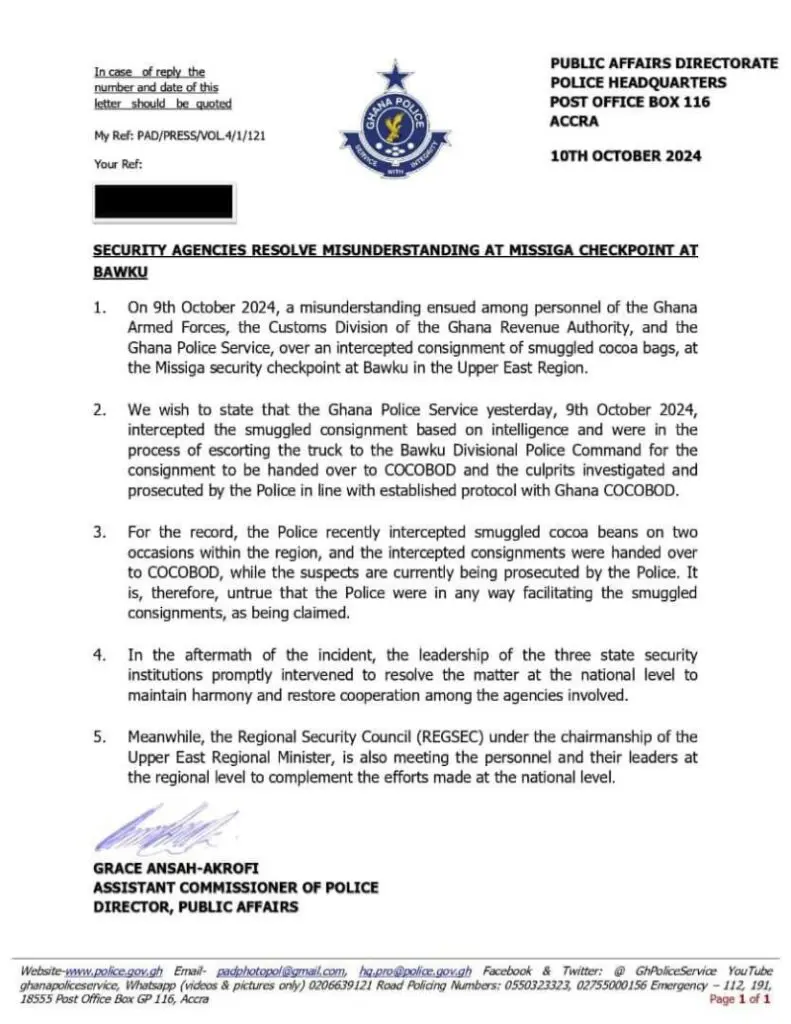
    The Ghana Police Service has firmly denied any allegations suggesting they were facilitating the smuggling of the consignment that led to a clash with the Customs Division of the Ghana Revenue Authority (GRA).

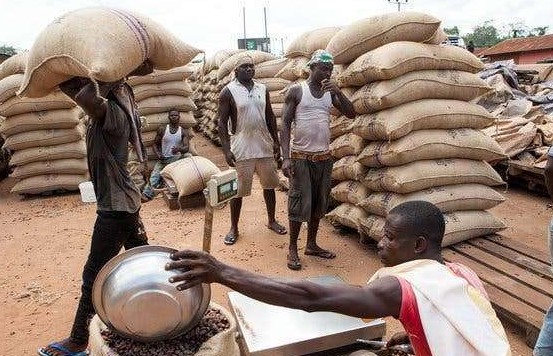
    A misunderstanding involving personnel from the Ghana Armed Forces, the Customs Division of the Ghana Revenue Authority, and the Ghana Police Service erupted on October 9, 2024, over an intercepted shipment of smuggled cocoa bags at the Missiga security checkpoint in Bawku, Upper East Region.

    The Ghana Police Service stated that they intercepted the smuggled cocoa consignment based on intelligence reports and were escorting the truck to the Bawku Divisional Police Command.

    Sources earlier indicated that tensions escalated when Customs insisted on investigating the truck, leading to a heated standoff with the Police. This confrontation quickly turned violent, resulting in an exchange of gunfire between the two security agencies. Military officers were then called in to help de-escalate the situation.

    But the Police have clarified that “it is untrue that the Police were in any way facilitating the smuggled consignments, as being claimed.”

    The Police emphasized that it had intercepted smuggled cocoa beans on two occasions within the region, and the intercepted consignments were handed over to COCOBOD, while the suspects are currently being prosecuted by its outfit.

    In response to the incident, the leadership of the three security agencies intervened promptly at the national level to resolve the conflict and restore cooperation among them.

    The Regional Security Council (REGSEC), chaired by the Upper East Regional Minister, is also holding meetings with personnel and their leaders to further support the efforts made at the national level.

  • Don’t make 2024 election a religious contest between Christian and Muslim presidential candidates – GPCC

    Don’t make 2024 election a religious contest between Christian and Muslim presidential candidates – GPCC

    The Ghana Pentecostal and Charismatic Council (GPCC) has urged political parties to refrain from turning the upcoming 2024 general election into a religious battle.

    The council expressed concern over the recent emergence of religious and sectarian messages being disseminated during political campaigns and religious gatherings.

    In a statement released by the National Executive Council (NEC) of the GPCC, they noted that this year marks a significant moment in Ghana’s political history, as both the National Democratic Congress (NDC) and the New Patriotic Party (NPP) will feature presidential candidates from different faiths—Christian and Muslim, respectively.

    The GPCC highlighted its awareness of the potential for tension and division that intertwining religion with politics could create, especially in a highly competitive election environment like the 2024 elections in Ghana. They cited examples from the West African sub-region, where religious and ethnic incitements have led to significant unrest and conflict.

    “To avoid making this year’s general election a religious contest between Christian and Muslim presidential candidates, the GPCC has made this an unwritten policy,” the statement said. This policy has been communicated to all regional councils across Ghana. The GPCC represents over 300 member churches and para-church organizations, with an estimated membership exceeding 10 million, accounting for about one-third of the country’s population.

    As a Christian ecumenical council, the GPCC advocates for peaceful coexistence and inclusivity among all Ghanaians, irrespective of religion, ethnicity, gender, or social class. They emphasized that a national government should serve all citizens fairly, regardless of their backgrounds or beliefs.

    The council urged political parties to focus their campaigns on policies that address community needs, promote social equity, and ensure transparency and accountability in governance. “Our politics must foster an inclusive environment where every voice is heard and valued,” they stated. They further insisted that decisions should be made based on reason and the common good, rather than religious or ethnic identities.

    The GPCC condemned the actions of certain parliamentary candidates and religious leaders who advocate for voting along religious lines, declaring such actions as “unacceptable and unhelpful.” They stressed that no presidential candidate is standing for election based on a religious ideology and that all political parties and independent candidates are contesting based on policies aimed at benefiting the nation and its citizens.

    The council reiterated the need for campaign messages to focus on addressing the everyday needs of Ghanaians, businesses, and industries. They encouraged eligible voters to fulfill their civic responsibility by voting, guided by their conscience, trust, confidence, and the values they see in their chosen candidates.

    In conclusion, the GPCC called for unity among Ghanaians to work toward a brighter and more equitable future, reflecting shared values of respect, integrity, and progress for both current and future generations.

  • Over 20,000 metric tonnes of LPG to be delivered between Oct 21 and 27 – NPA

    Over 20,000 metric tonnes of LPG to be delivered between Oct 21 and 27 – NPA

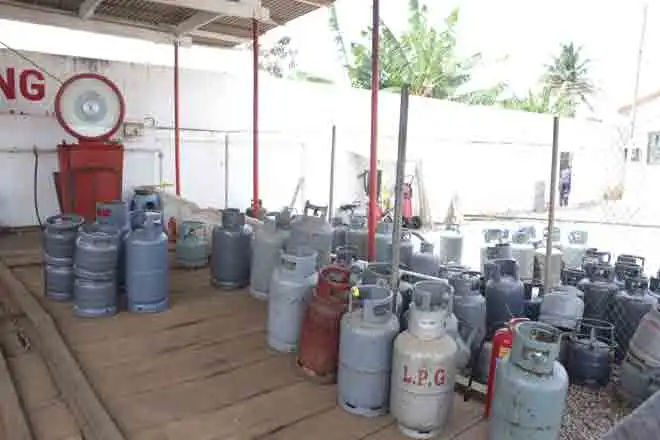
    Ghana is set to receive more than 20,000 metric tonnes of Liquefied Petroleum Gas (LPG) between October 21 and 27, 2024, to help stabilize supply amid concerns about potential shortages in parts of the country.

    The National Petroleum Authority (NPA) made this announcement, reassuring the public that there is currently enough LPG in the country to meet national demand.

    Recent disruptions in LPG supply, particularly in the Western and Central Regions, were caused by a power challenge at the Ghana National Gas Processing Plant in Atuabo, which affected the processing of natural gas, the primary source of LPG. In response, the NPA directed LPG Marketing Companies (LPGMCs) to load from Tema to serve outlets in the affected areas.

    As of October 9, the NPA confirmed that LPG stocks were sufficient to last nearly two weeks of national consumption. Additionally, the Sentuo Oil Refinery has been producing LPG daily to support the market.

    The upcoming delivery of over 20,000 metric tonnes is part of the NPA’s efforts to ensure a continuous flow of LPG under its LPG Tender program. This initiative aims to maintain adequate supply to meet the demands of consumers across the country.

    However, the NPA noted that some LPGMCs boycotting the Quantum LPG Terminal and the Tema Multi-Product Terminal has put added pressure on other depots in Tema, limiting the daily volume of LPG that can be loaded. Despite this, the Authority assured the public that there is no immediate threat of LPG shortages.

    “The Authority is collaborating with all stakeholders to prioritize loading for the Western Region to resolve ongoing supply challenges,” the NPA stated.

    Additionally, the Ghana National Gas Processing Plant is expected to resume full production by October 15, 2024, which will further support the supply of LPG. The NPA pledged to keep the public informed about any developments regarding the plant and the LPG supply chain.

    This latest shipment of LPG is expected to stabilize the market and alleviate concerns raised by consumers.

  • Leadership of Organised Labor refused to listen – Prof Gyampo on suspended strike

    Leadership of Organised Labor refused to listen – Prof Gyampo on suspended strike

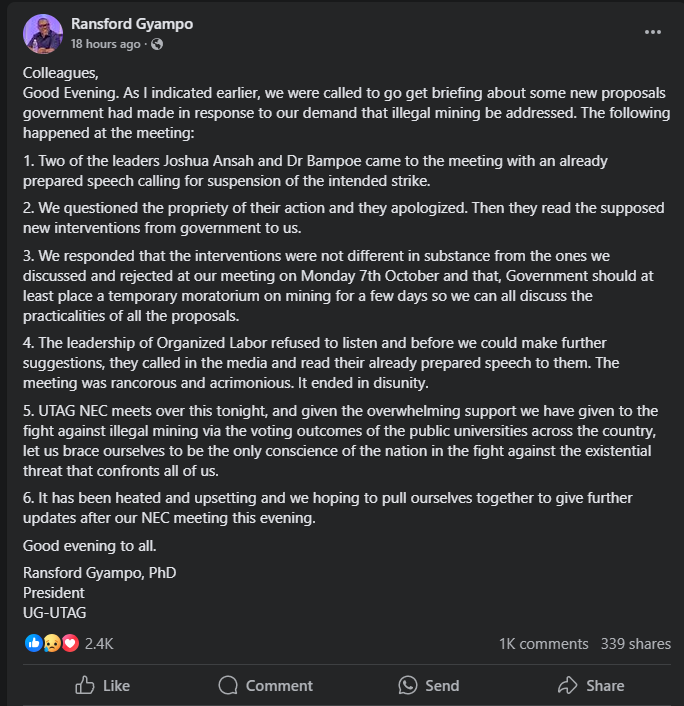
    The President of the University of Ghana chapter of the University Teachers Association of Ghana (UG-UTAG), Prof. Ransford Gyampo, has criticized the leadership of Organized Labor, accusing them of refusing to listen to dissenting views during a meeting on the government’s proposals to address illegal mining, known as galamsey.

    In a Facebook post, Prof. Gyampo detailed the events of the meeting, stating, “We were called to get a briefing about some new proposals the government had made in response to our demand that illegal mining be addressed.” However, what transpired left him and others frustrated.

    He explained that two of the leaders, Joshua Ansah and Dr. Bampoe, arrived at the meeting with a pre-prepared speech calling for the suspension of the planned strike.

    “We questioned the propriety of their action and they apologized,” Gyampo said. He added that the government’s so-called new interventions were not substantially different from the ones they had rejected at an earlier meeting on October 7.

    Gyampo and his colleagues urged the government to place a temporary moratorium on mining to facilitate discussions on the practicalities of the proposals.

    However, he claimed that “the leadership of Organized Labor refused to listen” and abruptly called in the media to read their prepared statement. The meeting, he said, ended in “disunity” and “acrimony.”

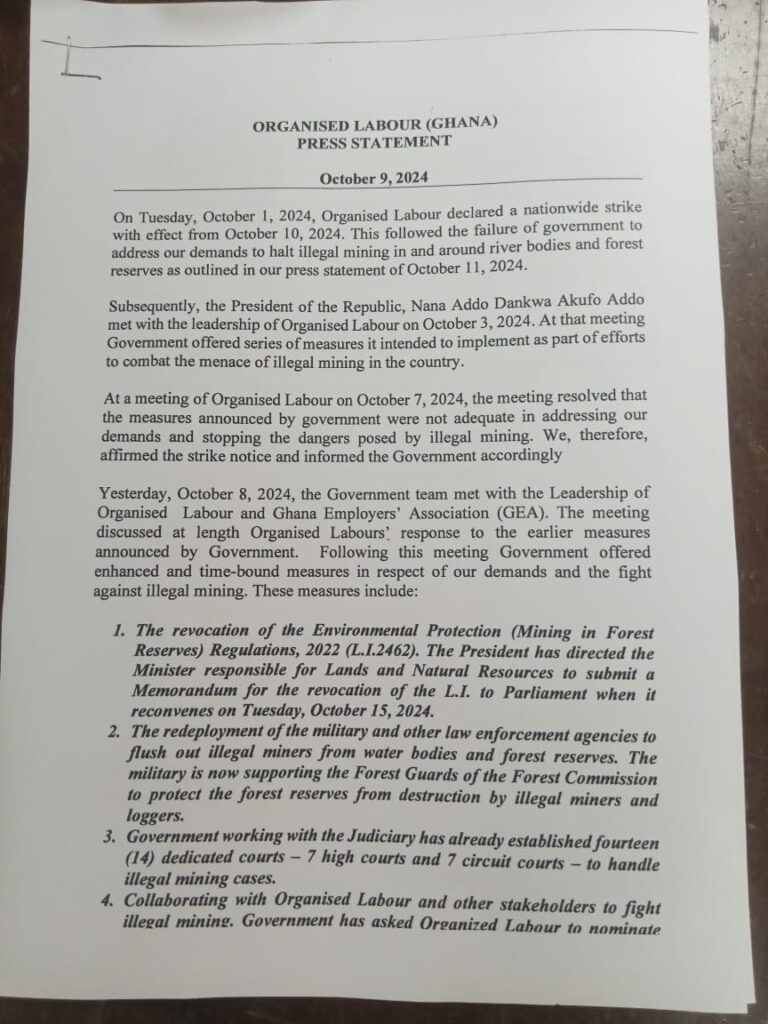
    This comes after Organized Labor called off its planned October 10th protest, intended to pressure the government to declare a state of emergency to tackle illegal mining and protect water bodies. The decision followed a meeting where the government presented enhanced measures to address the issue.

    The Secretary-General of the Trade Union Congress (TUC), Joshua Ansah, announced the suspension of the strike on Wednesday, October 9, citing the government’s improved efforts in the fight against galamsey. Despite several unions, including those in the health sector, supporting Organized Labor, many opted out of the demonstration.

    Meanwhile, the University Teachers Association of Ghana (UTAG) has taken a firm stand, announcing an indefinite strike starting October 10, 2024. This follows a referendum in which 77.95% of members from 15 branches supported a nationwide ban on mining in environmentally sensitive areas. Out of 2,762 members who participated, 2,153 voted in favor of the strike, while 607 opposed, and two abstained.

    UTAG’s National Executive Council (NEC) declared the outcome “a clear mandate,” emphasizing the association’s commitment to protecting the environment by halting harmful mining practices in forest reserves, farmlands, and water bodies.

    In their statement, UTAG reiterated their strong resolve to take immediate action against illegal mining, reflecting their determination to safeguard the country’s natural resources.

  • EC, NDC to hold discussions over printing of ballot papers

    EC, NDC to hold discussions over printing of ballot papers

    The National Democratic Congress (NDC) is scheduled to meet with the Electoral Commission (EC) today, Thursday, October 10, 2024, to address concerns surrounding the printing of ballot papers ahead of upcoming elections.

    The EC announced plans to begin printing ballot papers and notices of poll starting Friday, October 11, prompting the NDC to seek clarity on the process.

    The NDC has expressed concerns over the potential for irregularities, with specific worries about the statistics being used for printing. In past elections, the party has raised issues over alleged instances of additional ballot papers being printed, which has led to heightened scrutiny this time around.

    In an interview with Citi News, Dr. Tanko Rashid Computer, the NDC’s Deputy Director of Elections and IT, emphasized the party’s demand for detailed information before the printing process begins.

    “The Electoral Commission indicated they were going to give us a revised provisional register. But as we speak now, they don’t have it. They haven’t given us. They have not also given us ballot statistics. Ballot statistics will emanate from the voters’ code book of the register but we don’t have that,” Dr. Rashid Computer stated.

    He further questioned how the EC could proceed with printing without providing the necessary figures. “How come we are going ahead to print ballot papers? On which figures are they going to use to print the ballot papers? We have written back to them, indicating our position on that.”

    The NDC intends to use the upcoming meeting to ensure they receive the voter code books and related statistics from the EC. Dr. Rashid Computer clarified that while the party does not object to the printing of notices of poll, it insists that the printing of ballot papers should not proceed without the requested data.

    “We will send a letter to them that, look, you cannot proceed with the printing of the ballot papers if we don’t have the statistics and then the voter code books of each of the regions. We will not accept that kind of thing, but if they want to go ahead with the printing of the notices of polls, we have no difficulties with that,” he added.

  • Gas Processing Plant to return to full production from Oct. 15

    Gas Processing Plant to return to full production from Oct. 15

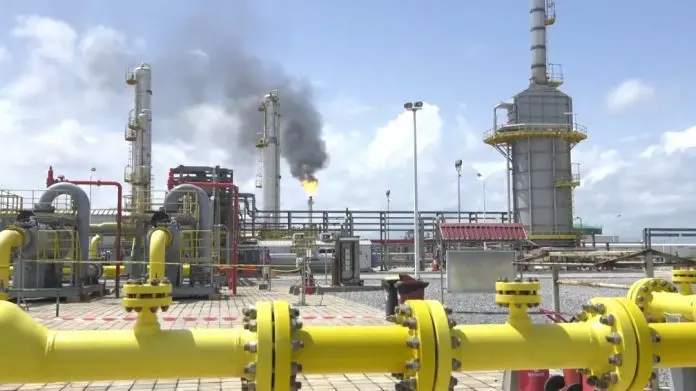
    The National Petroleum Authority (NPA) has revealed that the Ghana National Gas Company’s (GNGC) Gas Processing Plant (GPP) located in Atuabo is set to resume full production by October 15, 2024.

    In September, both the Ghana Grid Company Ltd. (GRIDCo) and the Electricity Company of Ghana (ECG) attributed recent power outages affecting some customers to issues at the GNGC Gas Processing Plant. The GPP supplies natural gas through a pipeline to the Takoradi Thermal Power Station in Aboadze, Western Region.

    The Takoradi Thermal Power Station, which has been operational since 1997, was initiated by the Volta River Authority to complement the existing hydroelectric facilities at Akosombo and Kpong.

    In a joint press release, GRIDCo and ECG informed the public that the technical challenges at the Gas Processing Plant have limited gas supply for power generation, leading to intermittent power supply in certain areas. To address these issues, engineers from GNGC are actively working on resolving the technical difficulties and are committed to restoring full gas supply as soon as possible.

    The GNGC’s anticipated return to full production at the Gas Processing Plant is expected to alleviate the current gas supply constraints, benefiting both LPG distribution and electricity generation across the country.

    This development is critical for ensuring energy stability and meeting the growing demand in various sectors.

    The National Petroleum Authority (NPA) has also assured the public that there is sufficient LPG in the country to meet national demand, reinforcing confidence as the Gas Processing Plant prepares to return to normal operations.

  • There is adequate LPG in the country to meet national demand – NPA assures

    There is adequate LPG in the country to meet national demand – NPA assures

    The National Petroleum Authority (NPA) has assured Ghanaians that there is sufficient Liquefied Petroleum Gas (LPG) in the country to meet national demand, despite recent reports of a potential shortage.

    The NPA explained that the Western and parts of the Central Region receive LPG from the Ghana National Gas Processing Plant in Atuabo. However, a recent power challenge affected the processing of natural gas essential for LPG production, causing supply disruptions.

    In response, the Authority directed LPG Marketing Companies (LPGMCs) to source LPG from Tema for their retail outlets in these affected regions.

    According to the NPA, a check with the Ghana National Gas Company (GNGC) on October 8, 2024, confirmed that the power issue has been resolved, although the Gas Processing Plant has not yet resumed full production. The plant is expected to return to regular output by October 15, 2024.

    The NPA further reassured the public that there is ample LPG in the country, stating, “The opening stock of LPG as of October 9, 2024, was enough to last almost two weeks of national consumption.” Additionally, the Sentuo Oil Refinery is producing LPG daily to support the market.

    Looking ahead, the NPA announced that over 20,000 metric tonnes of LPG are scheduled for delivery between October 21 and 27, 2024, as part of the LPG Tender program.

    The Authority noted that some LPGMCs’ boycott of the Quantum LPG Terminal and Tema Multi-Product Terminal has intensified pressure on the remaining depots in Tema. The refusal of these companies to load from the terminals has restricted the volume of LPG that can be processed daily from these facilities.

    To alleviate any concerns, the NPA reassured the public that “there is no threat to the supply of LPG in the country and no imminent shortage of the product.”

    The Authority is actively collaborating with relevant stakeholders to ensure that loading to the Western Region is prioritized to address the current challenges in that area.

    Meanwhile, the NPA confirmed its commitment to working closely with the Ghana National Gas Company to monitor the resumption of regular production at the Gas Processing Plant and promised to keep the public updated on developments.

  • Customs officials and police engage in shootout at Bawku over cocoa beans smuggling

    Customs officials and police engage in shootout at Bawku over cocoa beans smuggling

    Customs officials and police officers were involved in a shootout at the Missiga Immigration Service checkpoint in Bawku on Wednesday, October 9, 2024, following a confrontation over a suspected cocoa smuggling operation.

    The clash erupted when police officers refused to allow Customs officials to inspect a Togo-bound truck, believed to be carrying smuggled cocoa beans.

    Sources indicate that tensions escalated after Customs insisted on investigating the truck, leading to a heated standoff with the police.

    The confrontation quickly turned violent, resulting in an exchange of gunfire between the two security agencies. Military officers were called in to help de-escalate the situation.

    A video of the incident shows the tense verbal argument that preceded the gunfire, with shots ringing through the checkpoint, sending bystanders and officials scrambling for safety. For several minutes, the checkpoint descended into chaos as both sides exchanged fire in a shocking display of interagency conflict.

    The shootout has raised concerns about the coordination between government agencies responsible for securing Ghana’s borders, particularly given the long-standing issue of cocoa smuggling. Traffickers often attempt to avoid taxes and duties by illegally transporting cocoa beans across borders into neighboring countries like Togo and Ivory Coast.

  • Military intervention can’t end galamsey – Dep. Lands Minister

    Military intervention can’t end galamsey – Dep. Lands Minister

    A Deputy Minister for Lands and Natural Resources, George Mireku Duker, has stated that military intervention alone cannot end the galamsey menace in Ghana.

    Speaking at a recent event, Mr. Duker emphasized that while the military can aid in enforcing laws, a more comprehensive approach is needed to address the root causes of illegal mining.

    He explained that simply increasing military presence in mining areas does not tackle the underlying factors that drive individuals to engage in galamsey. Instead, he stressed the need to provide alternative livelihoods and promote sustainable mining practices to prevent illegal activities.

    “A focus on education and community engagement is crucial in shifting perceptions about legal mining practices,” the Deputy Minister noted. He also highlighted the importance of collaboration among local communities, the government, and the private sector in creating an environment where legal mining can thrive, thereby reducing the appeal of illegal operations.

    Mr. Duker advocated for a balanced strategy that prioritizes both law enforcement and community development. “Let’s do everything possible to sack all illegal miners from our water bodies. Over the years, successive governments have tried to use the military to fight galamsey, but none of them succeeded. This shows that militarisation of the galamsey fight won’t provide a long-term solution.”

    He continued, “The solution to the menace is not the deployment of the military. The solution lies in all of us showing commitment and willingness to protect our rivers and water bodies. It has been done in other countries, so we are the ones who can solve it. We can form community watchdogs to protect our water bodies.”

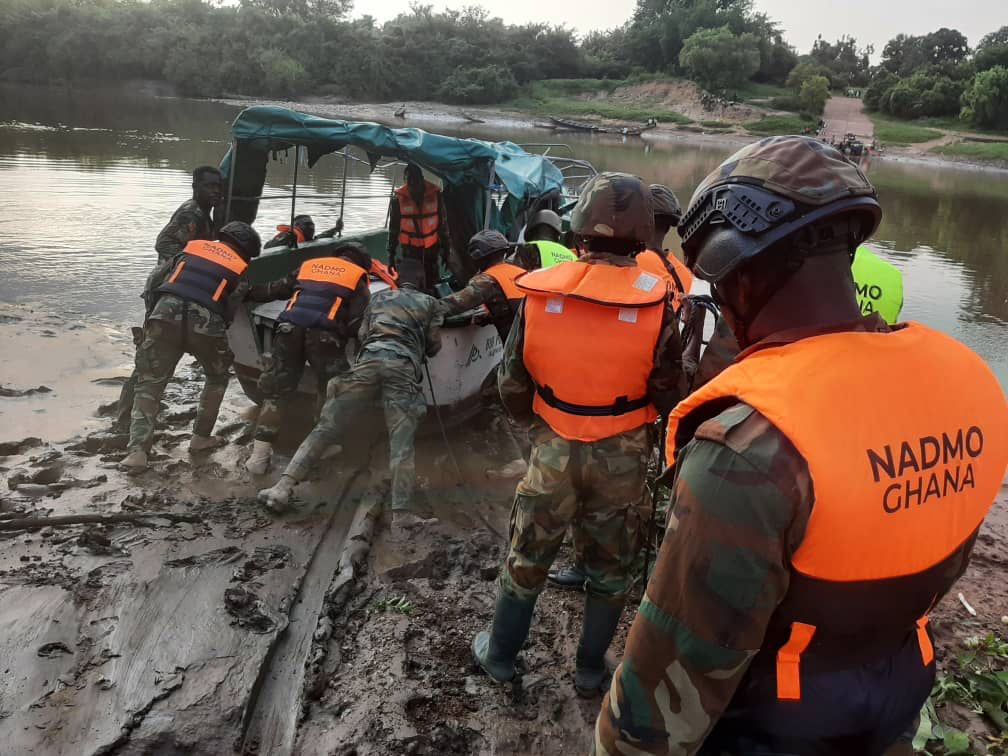
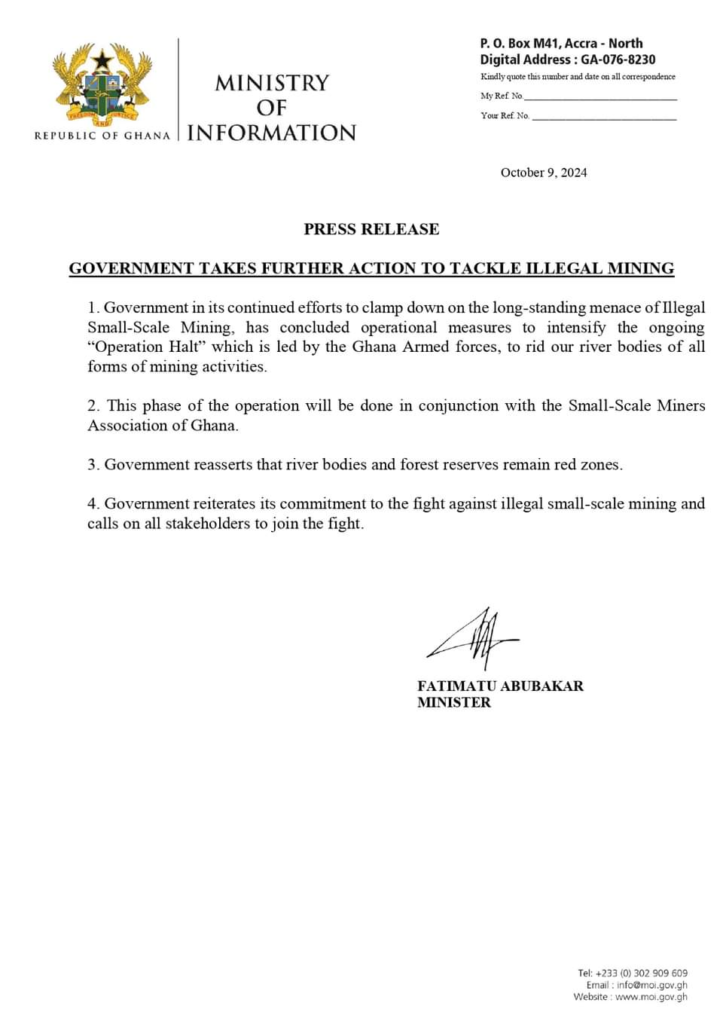
    Meanwhile, President Akufo-Addo has directed the Minister of Defence to send additional military forces to support “Operation Halt,” the government’s initiative aimed at combating illegal mining. The operation will focus on areas near water bodies and forest reserves that have been heavily impacted by galamsey.

  • Bawumia will provide jobs for Free SHS beneficiaries, vote for him – Samira

    Bawumia will provide jobs for Free SHS beneficiaries, vote for him – Samira

    Wife of the New Patriotic Party’s (NPP) presidential candidate, Samira Bawumia, has assured Ghanaians that Dr. Mahamudu Bawumia will provide sustainable jobs for the beneficiaries of the Free SHS program.

    She made this appeal during her campaign tour in the Ashanti Region, urging voters to support Dr. Bawumia in the upcoming elections, emphasizing his commitment to job creation for the youth.

    Samira highlighted the challenges many young people face in securing employment and stressed that Dr. Bawumia’s experience as Vice President equips him with the necessary skills to create meaningful job opportunities. She pointed to his leadership in promoting digitalization and innovation as vital tools to drive economic growth and job creation.

    “Bawumia is coming with so many innovative ideas for the betterment of all of us, especially the women and the youth. He is coming to help the women, and as for Asanteman, women are key, and he (Dr. Bawumia) knows that with women progressing, the country will move forward. For this reason, he has brought a lot of policies for women, including the SME Bank for traders.”

    Samira also addressed the youth’s concerns about employment, stating, “The youth are also asking for jobs because through President Akufo-Addo and Dr. Bawumia, we have Free SHS, and most of the youth are now asking for jobs. Dr. Bawumia has promised to create sustainable jobs for them.”

    Throughout the campaign tour, she engaged with various community groups, calling for collective support to achieve progress. She reassured voters that a vote for Dr. Bawumia would lead to the empowerment of Ghana’s youth and a brighter future for the country.

  • Man accused of trafficking over 3,000 young girls arrested

    Man accused of trafficking over 3,000 young girls arrested

    A 38-year-old man, identified as Pussy Mama, has been remanded by the Kasoa Ofaakor Circuit Court for allegedly trafficking over 3,000 young girls and boys from Nigeria to Ghana, Mali, and other countries for prostitution.

    The suspect, of Nigerian descent, appeared before the Ofaakor Circuit Court, presided over by His Lordship Isaac Oheneba Kuffour, and is expected to reappear on October 18, 2024.

    Pussy Mama has been on Nigeria and Ghana’s Police wanted list for the past ten years for human trafficking. Arresting him has been a significant challenge due to his perceived use of ‘juju.’

    However, he was finally apprehended by a brave young female police officer after trafficking another group of young girls, aged 13-17, to Ghana.

    According to a police source, Pussy Mama would always disappear immediately upon touching a wall, earning him a notorious reputation. The Central Regional Chairman for the Nigerian Community, Sir Emmanuel Azubuike, described the suspect as “too powerful.”

    Azubuike, also Africa Coordinator for the International Human Rights Observatory, noted that Pussy Mama would always disappear from the hands of Nigerian and Ghanaian police whenever he was arrested.

    Azubuike commended the policewoman for her bravery and urged the Ghana Police Service and Chief Justice to be vigilant to prevent another escape.

  • $67m revenue losses recorded by ECG monthly – ACEP

    $67m revenue losses recorded by ECG monthly – ACEP

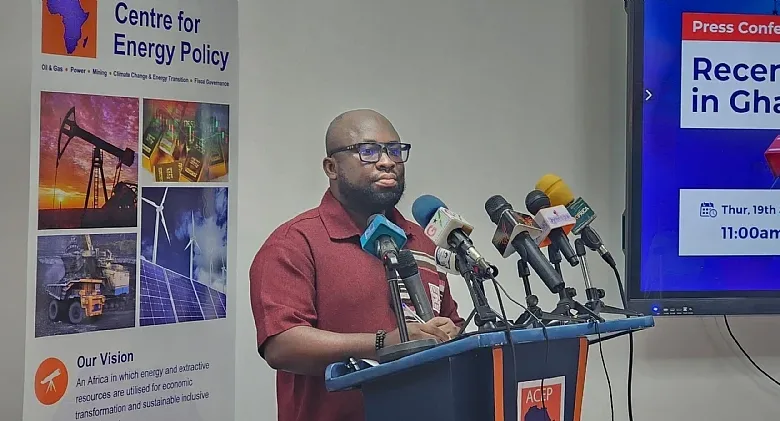
    The Africa Centre for Energy Policy (ACEP) has raised concerns over the Electricity Company of Ghana’s (ECG) monthly revenue losses, revealing that the company is losing approximately $67 million every month due to unpaid bills.

    ACEP attributes these losses to the ECG’s low revenue recovery rate, which currently stands at 57 percent.

    Kodzo Yaotse, Policy Lead for Petroleum and Conventional Energy at ACEP, emphasized that improving the ECG’s revenue collection must be prioritized by both the government and the company itself.

    He warned that the continued failure to collect these revenues would only worsen Ghana’s growing energy sector debt and strain the Independent Power Producers (IPPs), who are already owed significant sums as part of the country’s legacy energy debt.

    “ECG is making 43 percent [revenue] collection rate. That means there is some 57 percent that is not collected that must be paid, and that translates into some $67 million every month, which if not paid, would only go up to add to what is already owed to the IPPs in terms of legacy debt. So we have to find a way to be able to ensure that there is optimal revenue collection,” Yaotse said.

    ACEP’s call comes at a time when the financial sustainability of Ghana’s energy sector is increasingly under threat, urging swift action to prevent further damage.

  • You’ve proven us wrong, we doubted Agenda 111 – Dormaahene tells Bawumia

    You’ve proven us wrong, we doubted Agenda 111 – Dormaahene tells Bawumia

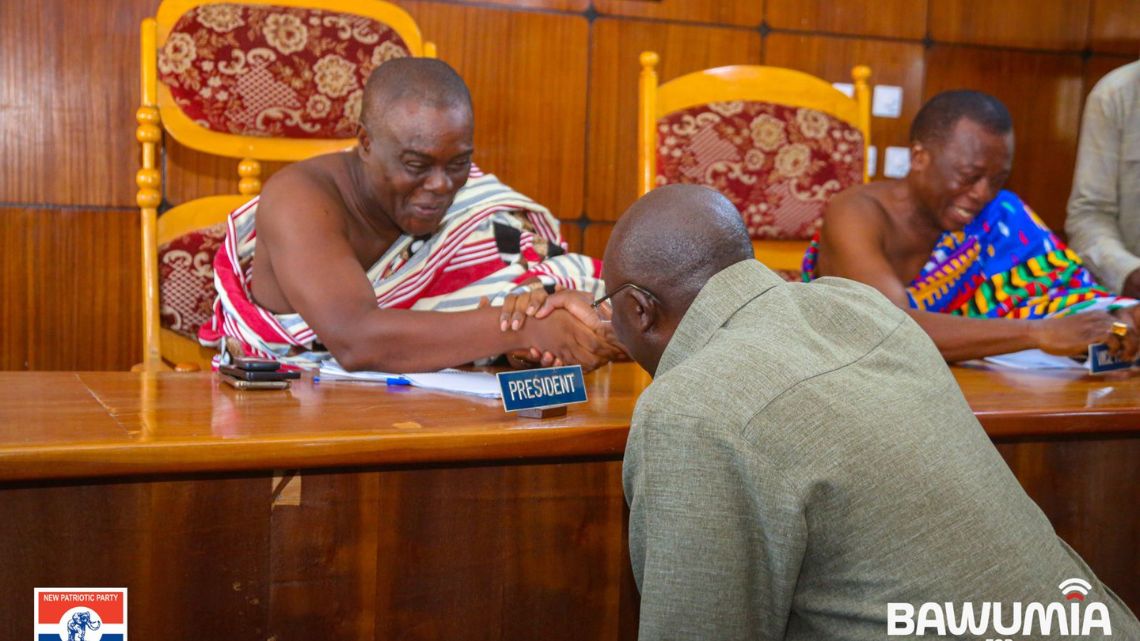
    The Paramount Chief of the Dormaa Traditional Council and President of the Bono House of Chiefs, Osagyefuo Oseadeeyo Agyeman Badu II, has acknowledged that initial doubts about the government’s Agenda 111 initiative have been dispelled.

    He praised the government’s commitment to the project during a recent courtesy visit by Vice President Dr. Mahamudu Bawumia.

    Speaking at a Stakeholder Consultation Forum held on October 9 at the Dormaahene Palace, the chief admitted that there was skepticism at first, but the visible progress of the initiative has reassured him and his people. “You’ve proven us wrong,” he said, commending the potential of Agenda 111 to significantly enhance healthcare facilities in Dormaa and other parts of the country.

    Dormaahene emphasized the initiative’s importance in improving the well-being of the community and expressed renewed confidence in the government’s dedication to development. He also urged the Vice President to continue pushing forward other key projects in the region, particularly the “One District, One Factory” project in Dormaa East, calling for further investments in the area.

    In a gesture of support, Osagyefuo Oseadeeyo Agyeman Badu II extended his best wishes to Vice President Bawumia in his bid to lead the nation, emphasizing the need for continued collaboration between traditional leaders and the government to advance development projects that serve the community’s interests.

    The chief also seized the opportunity to speak out against illegal mining, or galamsey, calling on the government to intensify efforts in eradicating the environmental menace. He stressed the importance of sustainable mining practices to safeguard natural resources for future generations.

    “My Vice President, it is true we chiefs don’t do politics, but as your spokesperson, Dr. Gideon Boako, mentioned during the introduction, we cannot close our eyes to the many development interventions your government has brought to Ghana and to Dormaaman.”

    Highlighting the impact of government interventions in the region, Dormaahene added, “Here at Dormaa, we are very much aware of the many road improvements you have brought to us. We can boast of asphalts here, and even my palace has benefited.”

  • Dep. Lands Minister engages communities on responsible mining to combat galamsey

    Dep. Lands Minister engages communities on responsible mining to combat galamsey

    Deputy Minister for Lands and Natural Resources in charge of Mines, George Mireku Duker, has embarked on a mission to educate communities in mining regions about the importance of responsible and sustainable mineral resource exploitation.

    This week, Hon. Duker focused his outreach in the Western Region, engaging leaders and members of small-scale mining groups, along with local residents, on the risks associated with galamsey. Speaking to audiences in Wasa Amenfi West, he rallied small-scale miners to unite against illegal mining and emphasized their role in this critical fight.

    He cautioned small-scale miners against conducting mining activities in forest reserves and near water bodies, underscoring the devastating consequences of such actions.

    “Let’s do everything possible to expel all illegal miners from our water bodies,” he urged. He pointed out that while previous governments have deployed military force in attempts to address galamsey, these efforts have not yielded lasting results.

    “The militarization of the galamsey fight won’t provide a long-term solution,” he stated. Instead, he called for community commitment and cooperation in protecting Ghana’s rivers and water resources, suggesting the formation of community watchdogs to oversee these efforts.

    At Prestea Huni Valley, the Tarkwa-Nsuaem lawmaker stressed the necessity of prioritizing the interests of Ghanaians in any mining sector policies.

    He reminded the audience that Ghana’s mineral resources are meant to benefit its citizens and reiterated the government’s commitment to ensuring that Ghanaians reap the rewards of these resources.

    He acknowledged the mining sector’s contribution to the economy and emphasized that the government is not in favor of a complete ban on mining but will continue to implement reforms within the sector.

    Barbara Oteng, the Board Chairman of the Minerals Commission and NPP Parliamentary candidate for Prestea Huni Valley, echoed the government’s dedication to the small-scale mining sector. She highlighted various innovations introduced by the government to regulate small-scale mining, including the Community Mining Scheme and the decentralization of the licensing process.

    On Tuesday, Mr Duker visited communities in Wassa Akropong and Wassa Amenfi Central, where he reiterated his call for small-scale miners to actively support the government’s initiative against illegal mining.

  • Bawumia stands out, he succeded even without power – Samira

    Bawumia stands out, he succeded even without power – Samira

    Samira Bawumia has emphasized that her husband, Vice President Dr. Mahamudu Bawumia, stands out as a candidate who has achieved remarkable success even without significant power.

    She praised his intelligence and ability to develop bold solutions to the nation’s pressing issues, asserting that he is the ideal candidate for the presidency in the upcoming elections.

    Addressing voters, Mrs. Bawumia highlighted Dr. Bawumia’s impressive tenure as Vice President, where he has continually showcased his capacity to tackle complex challenges through innovative strategies. She emphasized his commitment to critical areas such as economic development and job creation, underscoring his readiness to lead Ghana into a new era of progress.

    Samira also noted Dr. Bawumia’s focus on digitalization, which she believes has the potential to transform various sectors in Ghana, enhancing both efficiency and transparency in governance.

    “Bawumia is intelligent and offers bold solutions. He has initiated several programs like the women’s fund and the SME Bank, and he is introducing 1 million digital jobs. As Vice President, he has excelled with numerous ideas,” she stated.

    She further asserted, “There have been many Vice Presidents, but Dr. Bawumia truly stands out. His achievements are unprecedented. Despite the limited powers given to him by the constitution, he has made significant strides. Known as ‘Mr. Digital,’ he has implemented numerous digital solutions.”

    Samira Bawumia urged voters to recognize the transformative impact her husband’s leadership could have on their lives and Ghana’s development. As the campaign progresses, she is dedicated to rallying support for Dr. Bawumia, confident that his intelligence and bold vision will resonate with the electorate.

    She called on Ghanaians to consider the positive changes Dr. Bawumia can bring to the nation and to cast their votes for him in the upcoming December 7 elections.

  • Organised Labour suspends strike after withrawal by several unions

    Organised Labour suspends strike after withrawal by several unions

    With barely 24 hours before the strike deadline, the Organised Labour has called off its October 10th protest after several unions under its wings opted out of the demonstration to compel the government to issue a state of emergency to address illegal mining (galamsey) and safeguard the country’s water bodies.

    Several other unions in the health sector lent their support to organised labour but said they would not participate in the strike.

    The Ghana Medical Association (GMA) expressed solidarity with Organised Labour in the fight against illegal mining but announced that it would not participate in the planned strike.

    GMA President Dr Frank Serebour confirmed that the association had not planned any industrial action and urged its members to continue providing uninterrupted medical services.

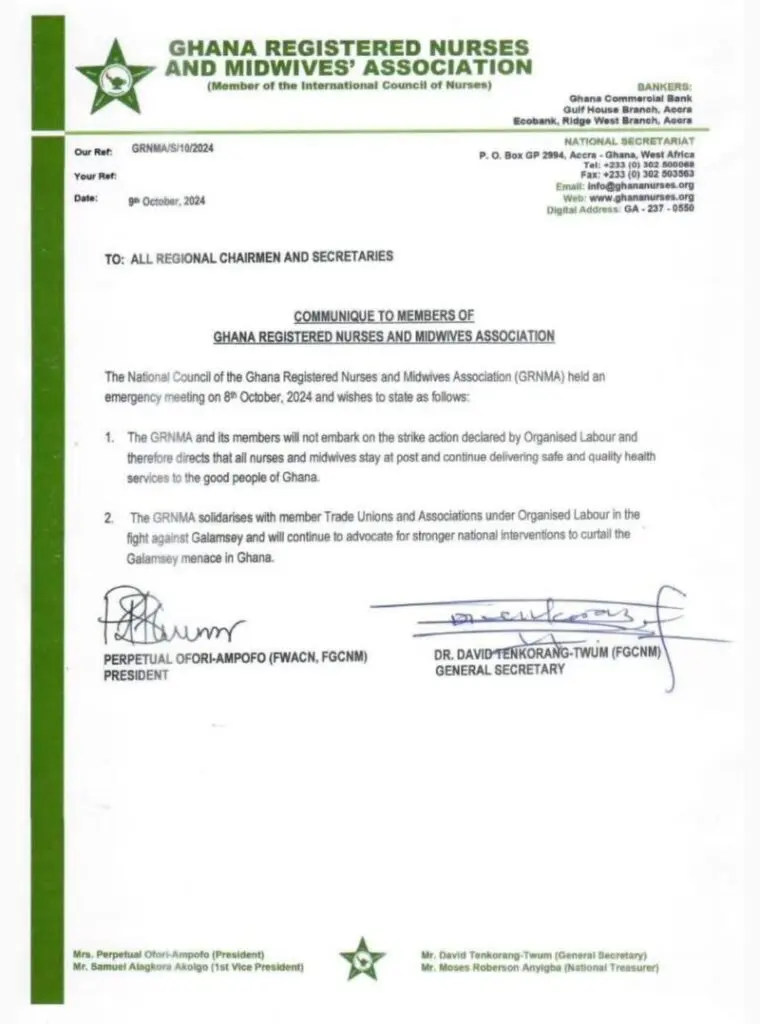
    The Ghana Registered Nurses and Midwives Association (GRNMA) confirmed its decision not to participate in the nationwide anti-galamsey strike.

    In a similar vein, Maxwell Kofi Jumah, Managing Director of GIHOC Distilleries, also warned his staff against participating in the strike, asserting that the concerns raised are national issues that do not directly impact GIHOC. He made it clear that any employee who joins the strike would face dismissal.

    The Board Chair of the Ghana Meteorological Agency (GMeT), Isaac Amoo, has also issued a stern warning to employees regarding the planned nationwide strike on October 10 against illegal mining, commonly referred to as galamsey. He emphasized that GMeT staff are prohibited from participating in the strike and that any employee who defies this directive will be considered to have terminated their employment.

    These associations emphasized their critical role in maintaining healthcare delivery while expressing solidarity with organized labor in addressing the challenges posed by illegal small-scale mining.

    Amid the withdrawal and a public plea for the unions to soften their stance and continue discussions with the government, the Organised Labour has suspended its strike. This was announced by the Secretary General of the Trade Union Congress (TUC) Joshua Ansah on Wednesday.

    Speaking in Accra, the Congress indicated that the decision followed a meeting with the government, during which the administration offered enhanced measures to strengthen the fight against illegal mining.

  • GMeT opts out of Organised Labour strike, threatens to sack staff who participate

    GMeT opts out of Organised Labour strike, threatens to sack staff who participate

    Board Chair of the Ghana Meteorological Agency (GMeT), Isaac Amoo, has issued a stern warning to employees regarding the planned nationwide strike on October 10 against illegal mining, commonly referred to as galamsey.

    He emphasized that GMeT staff are prohibited from participating in the strike and that any employee who defies this directive will be considered to have terminated their employment.

    Amoo stated, “On behalf of the Board and the leadership of this agency, I want to announce that GMeT does not approve any of its workers joining the nationwide strike. Any worker who flouts this directive should declare themselves as having terminated their appointment.” He further cautioned employees against absenting themselves from work on the day of the strike.

    In a similar vein, Maxwell Kofi Jumah, Managing Director of GIHOC Distilleries, also warned his staff against participating in the strike, asserting that the concerns raised are national issues that do not directly impact GIHOC. He made it clear that any employee who joins the strike would face dismissal.

    Meanwhile, the Ghana Medical Association (GMA) has expressed solidarity with Organised Labour in their fight against illegal mining but confirmed it would not partake in the planned strike. GMA President Dr. Frank Serebour stated that the association has not organized any industrial action and urged its members to continue providing uninterrupted medical services.

    Several other unions in the health sector have shown their support for organized labor while also opting out of the strike. The Ghana Registered Nurses and Midwives Association (GRNMA) has confirmed its decision not to participate in the nationwide anti-galamsey strike, which is set for October 10, 2024. This decision follows an emergency meeting held by the GRNMA National Council on October 8, 2024.

    These associations emphasized their critical role in maintaining healthcare delivery while expressing solidarity with organized labor in addressing the challenges posed by illegal small-scale mining.

  • Gas prices to surge next week amid shortage – LPG Marketers warn

    Gas prices to surge next week amid shortage – LPG Marketers warn

    The Liquefied Petroleum Gas (LPG) Marketers Association of Ghana has issued a warning about a potential gas shortage in the market starting next week, which could lead to a surge in prices.

    According to the association, the current LPG reserves in the country are dwindling, exacerbated by new regulations imposed by the National Petroleum Authority (NPA) on gas imports. Gabriel Kumi, Vice President of the association, indicated that the existing stock of LPG is not sustainable and will be depleted within a week.

    “There is a significant shortage in the system. The 10,000 metric tons that have recently arrived will be exhausted by the end of the week. If we don’t bring in another shipment of gas by next week, we will face a serious shortage situation,” he warned. Kumi also mentioned that fluctuations in international market prices could lead to further increases.

    He pointed out that the Atuabo Gas Plant, which typically meets 45 to 50 percent of the national demand, has been underperforming for the past month, compelling LPG marketers to rely heavily on imports. “We believe the only way to avert the shortage is for the NPA to instruct the Bulk Distribution Companies (BDCs) to expedite imports so we can adequately serve the public,” he suggested.

    The association previously reported LPG shortages across various regions on September 26, warning that the situation could worsen if BDC supplies do not improve. Kumi stated at that time, “If this problem isn’t addressed today, we could enter the weekend facing severe shortages. About 60 to 70 percent of us have run out of LPG.” He noted that the few stations still stocked with gas were under immense pressure.

    In response to the crisis, the Tema Oil Refinery (TOR) assured that the issues were being resolved, attributing the shortages to initial challenges with the BDCs.

    A source from TOR stated, “We expect supplies to improve very soon and for the situation to normalize.”

  • EC to begin printing of ballot papers on Oct 11

    EC to begin printing of ballot papers on Oct 11

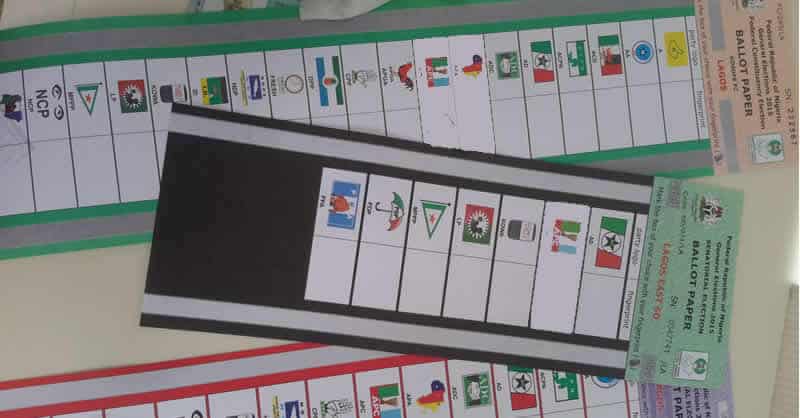
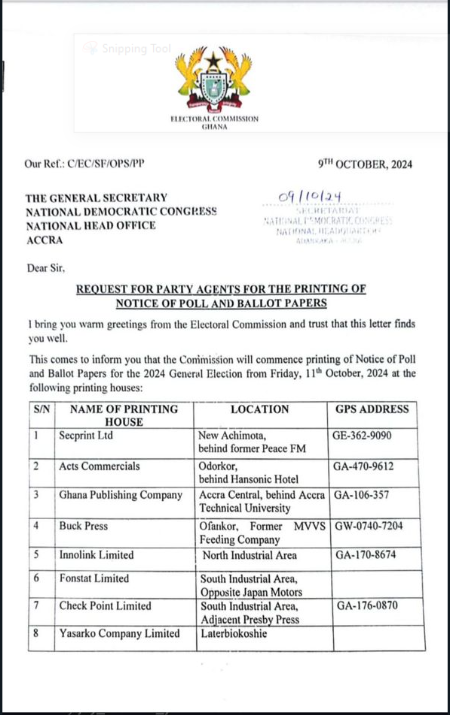
    The Electoral Commission (EC) of Ghana has officially announced the commencement of printing the Notice of Poll and Ballot Papers for the upcoming 2024 General Elections.

    According to a letter addressed to the General Secretary of the National Democratic Congress (NDC), the EC will begin this critical process on Friday, October 11, 2024.

    The printing will take place at eight designated printing houses across various locations in Accra, including:

    1. Secprint Ltd (New Achimota, behind Peace FM)
    2. Acts Commercials (Odorkor, behind Hansonic Hotel)
    3. Ghana Publishing Company (Accra Central, behind Accra Technical University)
    4. Buck Press (Ofankor, Former MVVS Feeding Company)
    5. Innolink Limited (North Industrial Area)
    6. Fonstat Limited (South Industrial Area, opposite Japan Motors)
    7. Check Point Limited (South Industrial Area, adjacent Presby Press)
    8. Yasarko Company Limited (Laterbiokorshie)

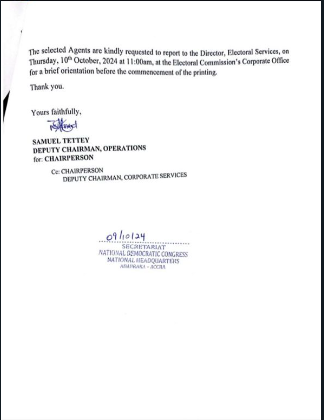
    The selected party agents are kindly requested to report to the Director of Electoral Services, on Thursday, 10th October 2024 at 11:00 am, at the Electoral Commission’s Corporate Office for a brief orientation before the commencement of the printing.

    The EC has called on the NDC to assign party agents to observe the printing process at these locations to ensure transparency and accountability.

    The involvement of party agents is part of the EC’s efforts to maintain openness in the preparation for the 2024 elections.

  • Police officers allegedly take GHS20k ‘chop money’ from galamseyer

    Police officers allegedly take GHS20k ‘chop money’ from galamseyer

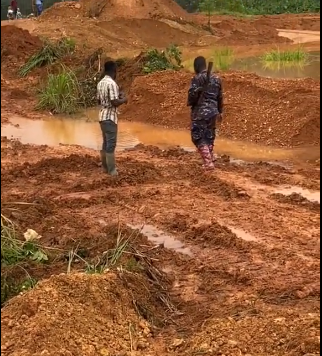
    An excavator operator at an illegal mining site in Ghana has accused some Police officers of demanding cash from illegal miners to permit them to continue their unlawful activities.

    Concealing himself, he took footage of some officers engaging a man believed to be an illegal miner. He claims that during a previous visit, a crop of police officers took away GHC20,000 from the miners.

    He believes that the fight against illegal mining cannot be won by the government since agents in the law enforcement field are underpaid.

    This video comes at a time when Chief Executive Officer of the Minerals Commission, Martin Ayisi, expressed frustration over the lack of response from the police regarding numerous reports submitted about illegal mining activities, commonly known as galamsey.

    Mr Martin Ayisi lamented that despite the Commission’s ongoing efforts to combat the rampant issue threatening Ghana’s natural resources and water bodies, law enforcement has consistently failed to act on the documented instances of illegal mining.

    In a public hearing before Parliament’s Assurance Committee on October 7, he indicated that officers at the Anyinam Police Station have time without number been informed of mining activities happening behind their edifice, however, no step has been taken by the security officers to address the issue.

    Meanwhile, the Ghanaian government plans to deploy river guards and the navy to patrol the nation’s river bodies as part of a robust strategy to combat illegal mining, commonly referred to as galamsey.

    This announcement was made by the Minister for Lands and Natural Resources, Samuel Abu Jinapor, during an interview on the Citi Breakfast Show on October 8.

  • NDC has abandoned us since Bernard Mornah was disqualified – PNC

    NDC has abandoned us since Bernard Mornah was disqualified – PNC

    The People’s National Convention (PNC) has expressed deep disappointment with the National Democratic Congress (NDC), accusing the party of betrayal and neglect following the disqualification of their flagbearer, Bernard Mornah, from the December 7 presidential race.

    Samson Awingobit, the National Chairman of the PNC, voiced frustration over the lack of support from the NDC, which they had perceived as an ally. He revealed that none of the NDC’s top leadership reached out to the PNC after their disqualification by the Electoral Commission.

    “Can you imagine, since the time we conducted our election, filed our nomination, and were disqualified by the Electoral Commission, not a single person from the NDC – not even President Mahama, Asiedu Nketia, Fifi Kwetey, or Omane Boamah – reached out to Bernard Mornah to sympathize with us,” Awingobit said during an interview on Asempa FM’s Ekosisen with Philip Osei Bonsu.

    Awingobit further mentioned that the PNC initially believed the New Patriotic Party (NPP) had influenced the Electoral Commission’s decision to disqualify Mornah. However, they were surprised when the NPP’s flagbearer, Dr. Mahamudu Bawumia, called to offer his support.

    “You know who called? I was shocked when Bernard Mornah told me. It was the New Patriotic Party’s presidential candidate, His Excellency Dr. Mahamudu Bawumia. He picked up the phone and called,” Awingobit revealed.

    He added, “Even I and my leader thought it was the NPP that had pushed Jean Mensa to disqualify us, but it turns out the one you think is your enemy is not your enemy. Dr. Bawumia could pick up his phone and say, ‘My younger brother, it is well with you.’”

  • You’ll never be selected if you don’t decide to die for Ghana – Kurt Okraku to Black Stars players

    You’ll never be selected if you don’t decide to die for Ghana – Kurt Okraku to Black Stars players

    President of the Ghana Football Association (GFA), Kurt Okraku, has issued a strong warning to the Black Stars players, stressing that their lack of commitment in recent matches will not be tolerated.

    Mr Okraku expressed his frustration following the team’s underwhelming performance in their opening games of the 2025 Africa Cup of Nations (AFCON) qualifiers, which included a defeat to Angola and a 1-1 draw with Niger during the September international break.

    With just one point from two games, Ghana currently sits third in Group F, prompting widespread criticism from fans and stakeholders alike. The team has since regrouped for a crucial doubleheader against Sudan, as they aim to get their AFCON campaign back on track.

    During a visit to the Black Stars camp on Tuesday, October 8, Okraku delivered a passionate address, urging the players to show more commitment and avoid repeating the mistakes of their earlier games.

    “The minimum I expect, the minimum Ghana expects, is a team of men who will show passion and desire to play for our country. Not when you are dribbled, and you’re seen walking on the pitch while the ball heads toward your net. That is impossible. I told the coach this,” Okraku stated.

    He further warned the players, saying, “It’s either you guys decide to die for Ghana or decide you will not. If you don’t, you’ll never be selected.”

    Okraku emphasized that wearing the national team jersey should instill pride and a determination to fight for victory, adding, “Once you depart your various places and come here and put on the shirt, naturally, that should give you the pride to fight, to show passion, to show aggression, and to show desire to win.”

    The Black Stars will face Sudan on matchday three of the AFCON qualifiers at the Accra Sports Stadium on Thursday, October 10, before traveling to Libya for the return fixture on October 15.

  • Bawumia must be lauded for leading fact-based politics – Gideon Boako

    Bawumia must be lauded for leading fact-based politics – Gideon Boako

    Spokesperson for Dr. Mahamudu Bawumia, Dr. Gideon Boako, has praised the Vice President’s transformative leadership as the flagbearer of the New Patriotic Party (NPP) and during his tenure as Vice President, which has reshaped Ghana’s political landscape.

    He emphasized Bawumia’s role in shifting the focus of Ghanaian politics from propaganda to a fact-based discourse.

    Speaking on Peace FM’s popular Kokrokoo show in celebration of Bawumia’s birthday, Dr. Boako remarked, “Prior to Bawumia’s emergence, political parties mainly engaged in mutual attacks.

    However, he has redefined this narrative, earning commendations for his commitment to integrity in politics, especially when compared to the opposition National Democratic Congress (NDC).”

    Boako also highlighted remarks made by Franklin Cudjoe, Founder and President of IMANI Africa, who took to social media to honor Bawumia.

    “Mr. Cudjoe recognized Bawumia’s significant influence on Ghanaian politics, particularly in steering discussions towards fact-based policies,” he noted, adding that Bawumia’s emphasis on economic fundamentals has profoundly altered how Ghanaians approach elections and evaluate government performance.

    Expressing profound respect for Bawumia, Dr. Boako stated, “He is a revolutionary figure in Ghanaian politics, and I see him as the ideal leader for our nation.”

    “Looking ahead, Bawumia’s leadership, which prioritizes truth and accountability, is more relevant than ever,” he added.

  • Registered Nurses & Midwives Association joins list of unions ‘running from’ Organised Labour strike

    Registered Nurses & Midwives Association joins list of unions ‘running from’ Organised Labour strike

    The Ghana Registered Nurses and Midwives Association (GRNMA) has confirmed that it will not participate in the nationwide anti-galamsey strike called by Organised Labour, scheduled for October 10, 2024.

    This decision follows an emergency meeting of the GRNMA National Council on October 8, 2024. In a press statement released on October 9, the association expressed its support for the strike’s objectives in combating illegal small-scale mining (galamsey) but reiterated its dedication to providing uninterrupted healthcare services to Ghanaians.

    “The GRNMA and its members will not participate in the strike action declared by organized labor and therefore directs all nurses and midwives to remain on duty and continue delivering safe and quality healthcare to the people of Ghana,” the statement declared.

    While the GRNMA will not engage in the strike, it emphasized its solidarity with organized labor regarding the environmental and social impacts of galamsey.

    “The GRNMA stands in solidarity with member trade unions and associations under organized labor in the fight against galamsey and will continue to advocate for stronger national interventions to curb this menace in Ghana,” it added.

    This announcement follows similar declarations from the Hospital Pharmacists Association (GHOSPA) and the Ghana Medical Association (GMA), both of which also confirmed their non-participation in the strike.

    These associations highlighted their critical role in ensuring healthcare delivery while expressing their solidarity with organized labor in addressing the issue of illegal small-scale mining.

  • My doors will always be opened to you, no discrimination – Bawumia tells faith-based organisations

    My doors will always be opened to you, no discrimination – Bawumia tells faith-based organisations

    Vice President Dr. Mahamudu Bawumia visited Most Rev. Mathew Kwesi Gyamfi, the Catholic Bishop of the Sunyani Diocese and President of the Ghana Catholic Bishops Conference, on Wednesday, October 9, to reaffirm his commitment to faith-based organizations.

    During this visit, he pledged that if elected, his administration would maintain an open-door policy, granting all religious groups equal access to his office.

    This meeting took place ahead of Dr. Bawumia’s campaign in the Bono Region and was aimed at strengthening the collaboration between the government and faith-based organizations. The Vice President expressed his appreciation for the church’s role in national development and sought the Bishop’s prayers and spiritual guidance.

    Dr. Bawumia highlighted the importance of partnering with religious institutions in shaping policies and addressing pressing societal challenges.

    “I aim to create an open-door government where all faith-based organizations will have equal and frequent access to my office as president, allowing us to work together for the betterment of Ghana,” he stated.

    In his response, the Catholic Bishop conveyed his gratitude for Dr. Bawumia’s visit, marking it as a significant occasion since it was the first time a sitting vice president had called on him.

    He praised the Vice President’s efforts to engage religious leaders and stressed the necessity of a strong partnership between the church and the government.

    The Bishop reaffirmed the church’s commitment to working alongside the government to achieve inclusive and sustainable development.

    He pointed out that through collaboration, the church can significantly impact community upliftment and support initiatives that foster peace and educational progress. Both leaders concurred on the importance of continuous cooperation to tackle national challenges and promote comprehensive development across Ghana.

  • You will be my development partner – Bawumia reassures churches, other religious bodies

    You will be my development partner – Bawumia reassures churches, other religious bodies

    Vice President Dr. Mahamudu Bawumia has reaffirmed his commitment to recognizing the church and all faith-based organizations as key partners in national development.

    He made this declaration during a courtesy visit to the Catholic Bishop of the Sunyani Diocese and President of the Catholic Bishops Conference, Most Rev. Mathew Kwesi Gyamfi.

    The visit took place prior to Dr. Bawumia‘s campaign in the Bono Region and emphasized his desire to strengthen the relationship between the government and faith-based organizations. He expressed gratitude for the church’s influential role in shaping society and sought the Bishop’s prayers and blessings to guide his efforts.

    “My Lord Bishop,” he stated, “as I have been indicating throughout my tours and also outlined in our manifesto, I firmly believe it is time to view the church and all faith-based organizations as development partners.”

    Dr. Bawumia highlighted the significant contributions of churches, stating, “Our churches have built more schools, and perhaps hospitals, than even our international development partners. For you in the Catholic Church and here in the Bono Region, you have produced the best senior high school in West Africa, St. James Seminary.”

    He criticized the disparity in tax incentives, noting that while international development partners receive various benefits for importing materials, the church, which contributes significantly to societal welfare, does not enjoy similar opportunities. He promised that his government would work to ensure that the church receives the same benefits as international partners, if not more.

    The Vice President also addressed the pressing issue of illegal mining, commonly referred to as galamsey, emphasizing his commitment to protecting the country’s natural resources. He assured the Bishop that, if elected, his administration would prioritize environmental stewardship and collaborate with religious institutions to address this critical concern.

    Dr. Bawumia pledged to maintain an open-door policy, assuring all faith-based organizations will have equal access to his office and administration.

    He emphasized that religious groups, including the Catholic Church, would be regarded as vital partners in decision-making and the execution of development initiatives. He expressed a strong desire to work closely with the church to promote peace, education, and community development.

    In response, the Catholic Bishop expressed his appreciation for the Vice President’s visit, noting it was a historic occasion as it was the first time a sitting vice president had called on him.

    He commended Dr. Bawumia’s efforts to strengthen ties with religious organizations and reaffirmed the church’s commitment to collaborating with the government for inclusive development. The Bishop underscored the church’s dedication to supporting initiatives that uplift communities and contribute to national progress.

    Also present at the meeting was Very Rev. Father Thomas Oppong Febiri, Vicar General of the Catholic Diocese of Sunyani.

  • ‘Galamsyers’ protest against Organised Labour’s demo to check illegal mining

    ‘Galamsyers’ protest against Organised Labour’s demo to check illegal mining

    A group of individuals in Amenfi East who admitted to engaging in galamsey (illegal mining) are protesting against the Organised Labour’s demonstration to compel the government to halt mining in the country.

    With a red band on their hands, these individuals chanted, emphasising that “we will engage in galamsey”.

    This comes at a time when members of the Responsible Small-Scale Miners Association of Ghana have threatened to embark on a nationwide strike to counter the Organised Labour‘s October 10 demonstration.

    “While we acknowledge that some illegal miners have caused significant damage to our water bodies, we firmly believe that organised labour’s stance is not the solution to this century-long problem. What we need is a comprehensive approach that addresses the root causes of illegal mining.”

    “We also want to draw the public’s attention to the fact that small-scale mining is legal in Ghana per the Minerals and Mining Act 2006, Act 703, and the wrongs of a recalcitrant few cannot be used to ban all other small-scale mining firms undertaking responsible mining. We, therefore, find Organized Labour’s stance counterproductive, politically motivated, and an attempt to shut down our source of livelihood.”

    The group indicated that galamsey is already banned in Ghana, and therefore, Organized Labour’s call to ban legitimate mining is just an attempt to frustrate the legalised small-scale mining business.

    “In line of the above, we are therefore embarking on a demonstration on Friday, October 12, 2024, through the principal streets of Accra against the Organized Labour of Ghana, urging them to desist from demonising our trade, calling on them to support various stakeholders to Fashion Out Workable Solutions to mitigate the threats associated with illegal mining. We are counting on your usual cooperation.

  • Scarcity of cooking oil in Kumasi shoots up price by over 12%

    Scarcity of cooking oil in Kumasi shoots up price by over 12%

    Wholesalers and retailers of cooking oil in the Ashanti Region are expressing frustration over a sudden surge in prices, which have increased by over 12% every three days, significantly impacting sales.

    This unpredictable and ongoing rise has raised concerns among both consumers and vendors at various market centers throughout the region.

    The current scarcity of cooking oil, compounded by existing economic challenges, is largely responsible for these price hikes. Fiifi, a wholesaler based in Kumasi-Ashtown, noted that high exchange rates and recent shortages of imported goods have forced them to source the commodity locally.

    He explained, “If there’s a shortage, we buy within the country and then add some extra cost to the price we pay so we can also make a profit from it.”

    The escalating prices are causing a decline in sales, with many customers hesitant to purchase at the new rates. Fiifi shared that while five customers would typically buy oil in a day, this number has dwindled to just two, stating, “It’s really affecting the market.”

    Food vendors are also feeling the pinch. Hannah Addai Frimpong, a fried yam seller, expressed her concern about how rising oil prices are impacting her business. “We used to buy the oil for 650 GHC, but since Monday, September 30th, the price has increased to 730 GHC. Things are unbearable for us, and it’s deterring customers too,” she lamented.

    Another trader, Attaa, revealed that despite selling oil at a profit, she struggles to break even. “I buy oil for 760 GHC and sell it for 48 GHC per bottle, making an 8 GHC profit,” she explained. However, she pointed out that the cost of the bottle itself is 30 GHC, leaving her with little to no profit at the end of the day.

    Local oil producers are also suffering from low patronage, with many facing potential collapse due to the current market conditions.

  • Mercury-free machines for mining reportedly arrive in Ghana

    Mercury-free machines for mining reportedly arrive in Ghana

    It is reported that the government’s mercury-free machines to be used for mining in the country have arrived.

    Per a video circulating on social media, these machines are yet to be outdoored by the government

    The Minister for Lands and Natural Resources, Samuel Abu Jinapor, on Wednesday, September 11, 2024, announced the government’s intensified strategy to combat illegal mining, by introducing mercury-free machines to eradicate the use of harmful mercury in mining operations.

    During a briefing with members of the media, as part of a renewed effort to tackle the devastating effects of illegal small-scale mining (galamsey), the Lands Minister outlined the government’s dual approach, which involves both the enforcement of strict regulations and the reform of the small-scale mining sector.

    He explained that the ongoing battle against illegal mining is built on two main pillars: reformative measures and law enforcement.

    A key component of the reformative strategy is the issuance of mercury-free machines to miners, which is expected to significantly reduce the pollution of water bodies caused by the use of harmful chemicals in gold extraction.

    When miners use mercury to amalgamate gold, the mercury is mixed with sediment and then washed away. This mercury can enter rivers and streams directly. Mercury can also enter water bodies indirectly through atmospheric deposition. When mercury is released into the air from mining activities, it can settle into water bodies through rainfall, per research.

  • About GHC9K is spent on a student enjoying Free SHS – NEIP boss

    About GHC9K is spent on a student enjoying Free SHS – NEIP boss

    Chief Executive Officer of the National Entrepreneurship and Innovation Programme (NEIP), Kofi Ofosu Nkansah, has claimed that the Ghanaian government invests approximately GH¢9,000 per student enrolled in the Free Senior High School (SHS) program.

    This financial commitment, he says, ensures that students across various public schools have access to secondary education without facing financial obstacles.

    Mr Nkansah emphasized that this substantial investment demonstrates the government’s dedication to providing quality education for all Ghanaian students.

    He further revealed that the government allocates over GH¢9,000 for each Technical and Vocational Education and Training (TVET) student, which is slightly more than the expenditure for SHS students.

    In a Facebook post on October 9, Nkansah reiterated that education is a top priority for the current administration, recognizing its vital role in the socio-economic transformation of the country.

    He stated, “On average, the government spent GH¢8,936 on SHS boarding students and GH¢9,808 on TVET boarding students for three years, based on the 2021 academic year rates.” He highlighted the impact of these programs, noting that “people who cannot save 10,000 cedis their entire life are getting their children educated for free. Impacting generations.”

    Since the implementation of the Free Senior High School program in September 2017, the Ministry has achieved significant milestones, including an 11% increase in enrolment that year, which set a record with over 470,000 students enrolled in the 2017/18 academic year.

    Minister of Finance Dr. Mohammed Amin Adam has reported that the government has spent GH¢9.9 billion on the Free SHS policy since its inception.

    Every Ghanaian child placed in a public Second Cycle Institution through the Computerised School Selection and Placement System (CSSPS) is eligible for a free SHS education, reinforcing the government’s commitment to enhancing access to quality education for all.

  • Newmont’s Tom Palmer becomes ICMM’s New Chair

    Newmont’s Tom Palmer becomes ICMM’s New Chair

    Tom Palmer, President and CEO of Newmont, has been appointed as the new Chair of the International Council on Mining and Metals (ICMM), succeeding Iván Arriagada, CEO of Antofagasta Minerals.

    This change in leadership comes as ICMM embarks on a new strategy to promote responsible mining practices under a unified standard.

    The ICMM Council, which governs the organization, is made up of the CEOs of its 24 member companies. The Chair is selected from within this group and serves for approximately two years.

    Rohitesh Dhawan, President and CEO of ICMM, expressed his enthusiasm for Palmer’s appointment: “I am delighted to welcome Tom as our new Chair as we launch our new strategy focused on driving responsible mining practices. Tom has been a strong advocate for sustainability, having Chaired ICMM’s Social Performance Advisory Group. His leadership will be instrumental as we continue enhancing our engagement with stakeholders.”

    Dhawan also acknowledged Iván Arriagada’s leadership during his tenure: “Ivan’s time as Chair saw major milestones, including our landmark Position Statements on Nature, Diversity, Equity & Inclusion, and updated commitments on Indigenous Peoples. His leadership was vital in advancing the Global Industry Standard on Tailings Management.”

    Palmer, who leads Newmont, a founding member of ICMM, shared his vision for the future of the organization: “I am honored to take on this role at ICMM, and I look forward to working closely with my peers in the mining sector. My focus will be on building support for a consolidated mining standard, which I believe is crucial for improving the industry’s reputation and ensuring stakeholders have confidence in responsible mining practices.”

    Outgoing Chair Iván Arriagada also reflected on his tenure: “It has been a privilege to lead ICMM, and I am proud of the progress we’ve made in areas such as tailings management, diversity, and Indigenous engagement. With the global demand for minerals set to grow, ICMM’s role in promoting responsible mining practices is more critical than ever.”

    Palmer’s appointment is expected to continue ICMM’s mission of championing sustainability and responsible mining on a global scale.

  • Govt pleads with Organised Labour for further talks ahead of strike

    Govt pleads with Organised Labour for further talks ahead of strike

    As the October 10 deadline approaches for Organised Labour‘s planned nationwide strike, the government is making a last-ditch effort to avert the demonstration.

    Government spokesperson on Governance and Security, Dr. Palgrave Boakye-Danquah, has issued a public plea for the unions to soften their stance and continue discussions with the government.
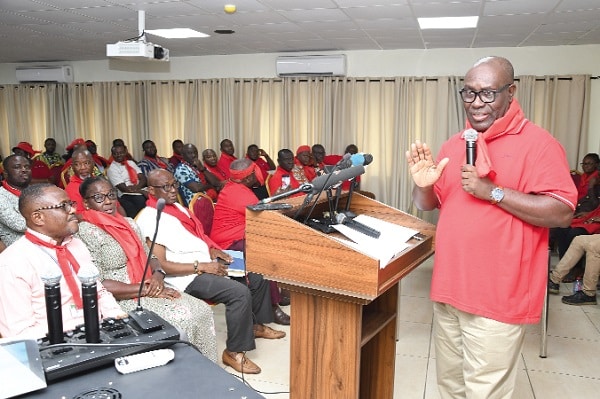
    Speaking on Joy News’ PM Express on October 8, Dr. Boakye-Danquah urged Organised Labour to prioritize dialogue rather than proceed with a strike that could potentially cripple the nation. The unions have been pushing for the declaration of a state of emergency to address illegal mining (galamsey) and safeguard the country’s water bodies, a crisis that has raised tensions across various sectors.

    “There’s a lot of backdoor conversation with Organised Labour to meet them halfway,” Dr. Boakye-Danquah revealed during the interview, adding that while these talks have not yet been publicly disclosed, significant progress is being made behind the scenes.

    He emphasized the government’s commitment to resolving the crisis without the need for drastic measures. “Anyone observing can see that the government is working,” he said, assuring the public that efforts are underway to address the concerns raised by Organised Labour.

    While acknowledging the legitimacy of the unions’ demands, Dr. Boakye-Danquah stressed the importance of maintaining open lines of communication. “I would want to reassure Labour that they should soften a bit more of their stance, especially as they are invited to a meeting tomorrow,” he stated, expressing hope that the upcoming talks will yield a positive outcome.

    With only two days left before the strike deadline, several unions under Organised Labour have already begun voting on whether to proceed. A nationwide strike could have significant repercussions for the country, but Dr. Boakye-Danquah expressed confidence that a resolution is within reach.

    “I’m aware that the various local unions are beginning to vote… but I am extremely confident that Labour, being a part of President Akufo-Addo’s fight against illegal mining, will not go on strike,” he remarked.

    He also pointed out that some labour leaders are dealing with internal challenges, such as injunctions and removal processes, which could affect the final decision on whether the nationwide demonstration will proceed.

    Despite these challenges, the government remains hopeful. Dr. Boakye-Danquah expressed optimism that within the next 24 to 48 hours, visible actions will be taken by the government to address the concerns brought forward by Organised Labour.

    The unions’ demand for a state of emergency over the galamsey crisis has been met with public and political scrutiny. Labour leaders argue that drastic measures are necessary to save the country’s water bodies and environment, while the government advocates for a more measured approach, emphasizing continued dialogue over a nationwide shutdown.

    “We want more talks, not a shutdown,” Dr. Boakye-Danquah implored, urging the unions to give the government more time to implement solutions. “I’m very sure that the outcome of the meeting will be very good,” he added.

  • Akyem Gold Mine to be sold to Chinese company for $1bn

    Akyem Gold Mine to be sold to Chinese company for $1bn

    China’s Zijin Mining Group has reached an agreement to acquire the Akyem Gold Mine in Ghana from U.S.-based Newmont Corporation for $1 billion, in a deal that signals Newmont’s strategy to offload non-core assets and focus on its Tier 1 operations.

    The transaction is set to close in the fourth quarter of 2024. According to the terms of the agreement, Newmont will receive an initial payment of $900 million in cash at the close of the deal, with an additional $100 million contingent upon the satisfaction of certain conditions. Zijin’s subsidiary, Gold Source International, will assume control of the Newmont unit that operates the Akyem project.

    In a statement released on October 8, Newmont President and CEO, Tom Palmer, emphasized that the sale is part of Newmont’s broader initiative to focus on its most profitable assets.

    “The sale of Akyem represents continued progress on the non-core asset divestiture program announced in February, supporting our focus on the Tier 1 assets in Newmont’s portfolio that will drive sustainable growth and the return of capital to shareholders,” Palmer said.

    He further noted that the Akyem project, under new ownership, is well-positioned to generate long-term benefits for local stakeholders and surrounding communities.

    Zijin Mining, which has rapidly expanded its global footprint in recent years, highlighted the Akyem mine’s potential for profitability under current and future gold price conditions. The Chinese company also indicated that Ghanaian entities had expressed interest in acquiring a minority stake in the asset, and Zijin is open to exploring such partnerships.

    Rahman Amoadu, Managing Director of Newmont Africa, underscored Newmont’s commitment to ensuring an inclusive and transparent divestment process.

    “In line with President Akufo-Addo’s address in February, we ensured that our robust divestment process provided equal opportunity for all potential buyers, Ghanaian and international, to participate,” he said. Amoadu also mentioned the involvement of the Minerals Income Investment Fund (MIIF) as part of efforts to support Ghanaian interests in the mine.

    While the sale of Akyem is a major step in Newmont’s divestiture plan, the company remains committed to its operations in Ghana. Newmont is investing between $950 million and $1.05 billion in the Ahafo North gold mining project in the Ahafo region, signaling continued confidence in Ghana as a favorable mining jurisdiction.

    The transaction is subject to regulatory approvals and customary conditions precedent. Newmont has confirmed that the sale will not have a material impact on its 2024 financial outlook.

    Citi acted as Newmont’s exclusive financial adviser in the deal, with strategic advice from Treadstone Resource Partners and legal counsel provided by Davis Graham & Stubbs LLP and Reindorf Chambers.

  • Operation Halt to be intensified as small-scale miners join galamsey fight

    Operation Halt to be intensified as small-scale miners join galamsey fight

    The Government of Ghana is set to intensify its efforts to tackle illegal small-scale mining, commonly known as galamsey, with a renewed focus on protecting the country’s river bodies and forest reserves.

    As part of this effort, the ongoing “Operation Halt” initiative, which is led by the Ghana Armed Forces, will be strengthened, and the Small-Scale Miners Association of Ghana will now be actively involved.

    In a statement, the Ministry of Information emphasized the government’s resolve: “Government in its continued efforts to clamp down on the long-standing menace of illegal small-scale mining has concluded operational measures to intensify the ongoing ‘Operation Halt,’ which is led by the Ghana Armed Forces, to rid our river bodies of all forms of mining activities.”

    Launched in April 2021, Operation Halt II was originally designed to remove illegal miners and mining equipment from Ghana’s water bodies and forest reserves, with a focus on key rivers such as Pra, Offin, Ankobra, Birim, and Ayensu.

    The operation also targeted forest reserves, with the goal of decommissioning or demobilizing mining equipment as necessary. Over time, some of these rivers showed signs of recovery, leading to a temporary easing of the operation.

    However, illegal mining activities have persisted, prompting the government to relaunch Operation Halt II in 2022. The phase of the operation, according to the government, was designed to be more decisive, with a clear directive given to the Operation Halt II team to take action without external interference.

    While Operation Halt II has made some progress, the government acknowledges that illegal mining activities continue to undermine environmental efforts. The inclusion of the Small-Scale Miners Association in this latest phase is expected to bring fresh momentum to the initiative.

    “Government reiterates its commitment to the fight against illegal small-scale mining and calls on all stakeholders to join the fight,” the statement read.

  • What happened to the soldiers deployed to protect water bodies from galamsey? – Aljazeera reporter quizzes govt

    What happened to the soldiers deployed to protect water bodies from galamsey? – Aljazeera reporter quizzes govt

    Aljazeera reporter Kent Mensah has questioned the Ghanaian government over the fate of the soldiers deployed in 2021 to protect the country’s water bodies from illegal mining, also known as galamsey.

    Despite the deployment of 200 soldiers, announced by Defense Minister Dominic Nitiwul, the galamsey menace remains largely unresolved.

    In a Facebook post on October 8, 2024, Mensah expressed his concerns, asking, “What happened to the soldiers? In 2021, the Defense Minister announced that 200 soldiers had been deployed to protect our water bodies from illegal mining (galamsey). So what became of that effort? Did the soldiers fail, or were they simply overwhelmed by the scale of the problem?”

    Mensah, a journalist with AFP, Aljazeera, and VOA, argued that the military had received state backing and significant resources for the task, yet the illegal mining crisis persists. He emphasized that it is unfair to blame other security agencies like the police when the military had been entrusted with primary responsibility.

    “We deserve answers. Blaming the police and other security agencies in this fight feels misplaced when the military, with all the state resources and backing, was tasked with protecting our water. If even the military couldn’t succeed in this mission, it signals a much larger issue at hand,” he added.

  • 2024 recruitment: Shortlisted candidates to write exams on Oct 12 – Police

    2024 recruitment: Shortlisted candidates to write exams on Oct 12 – Police

    The Ghana Police Service has progressed to the next stage of its recruitment process, inviting shortlisted candidates to participate in an examination scheduled for Saturday, October 12, 2024.

    In a recent press release, the police service advised candidates to monitor their emails and SMS messages for essential information regarding the upcoming examination.

    The exams will take place in all sixteen regional capitals across the country, ensuring that all shortlisted candidates have access to the testing locations.

    The exact exam centres are as follows; Accra: University of Professional Studies, Accra, Ashanti: Kwame Nkrumah University of Science and Technology, Kumasi, Upper East: Bolgatanga Technical University, Bolgatanga, Central: University of Cape Coast, Cape Coast, Savannah: Ndewura Jakpa Senior Technical School, Damango, Oti: Dambai College of Education, Dambai and Ahafo: Goaso Nursing Training School, Goaso.

    The others are; Volta: University of Health and Allied Sciences, Ho, Eastern: Koforidua Technical University, Koforidua, North East: College of Nursing and Midwifery, Nalerigu, Western North: Wiawso College of Education, Wiawso, Bono: University of Energy and Natural Resources, Sunyani, Western: St. John’s Senior High School, Takorad, Northern: University of Development Studies, Tamale, Bono East: Krobo Nursing Training School, Techiman and Upper West: Simon Diedong Dombo University of Business and Integrated Studies (SDD-UBIDS), Wa.

    The Ghana Police Service also took this opportunity to extend its best wishes to all candidates as they prepare for the examination.

    Additionally, they emphasized that there should be no financial payments associated with the recruitment process and encouraged anyone faced with requests for money to report such incidents to the authorities.

    In August this year, the Ghana Police Service announced a new recruitment opportunity for individuals who applied to join the service in 2021.

    The recruitment exercise attracted significant interest as the service sought to fill various positions within the organization. Starting Wednesday, August 7, 2024, qualified Ghanaians were invited to submit their applications for the available categories of General Duty Recruits and Graduate General Duties.

    To apply, candidates had to meet the following general requirements: be a Ghanaian citizen, possess good character and have no criminal record.

    Additionally, applicants were required to fulfil specific criteria for their chosen category, including age limits, educational qualifications, and physical fitness standards. The deadline for submission of applications was set for Tuesday, August 13, 2024.

  • Cocoa Carriers Association calls of strike action after 24 hours

    Cocoa Carriers Association calls of strike action after 24 hours

    The leadership of the Cocoa Carriers Association has suspended its indefinite sit-down strike, which commenced on Monday, October 7, following a key meeting with the management of the Cocoa Marketing Company (CMC) and a representative from the Ghana Cocoa Board (COCOBOD).

    In an interview with Citi Business News, Raymond Atanga Abobiga, the National Chairman of the Cocoa Carriers Association, revealed that management has requested workers to resume their duties, with a commitment to address their concerns regarding working conditions within a week.

    Mr. Abobiga confirmed that workers at the Tema, Takoradi, and Kumasi depots of CMC have returned to work, optimistic that their grievances will be resolved within the agreed time frame.

    “We negotiated with our directors and COCOBOD, and we concluded that we should continue working while they sit down and reconsider our increment. So, we decided to work today [Tuesday, October 8] and expect something good from them,” he said.
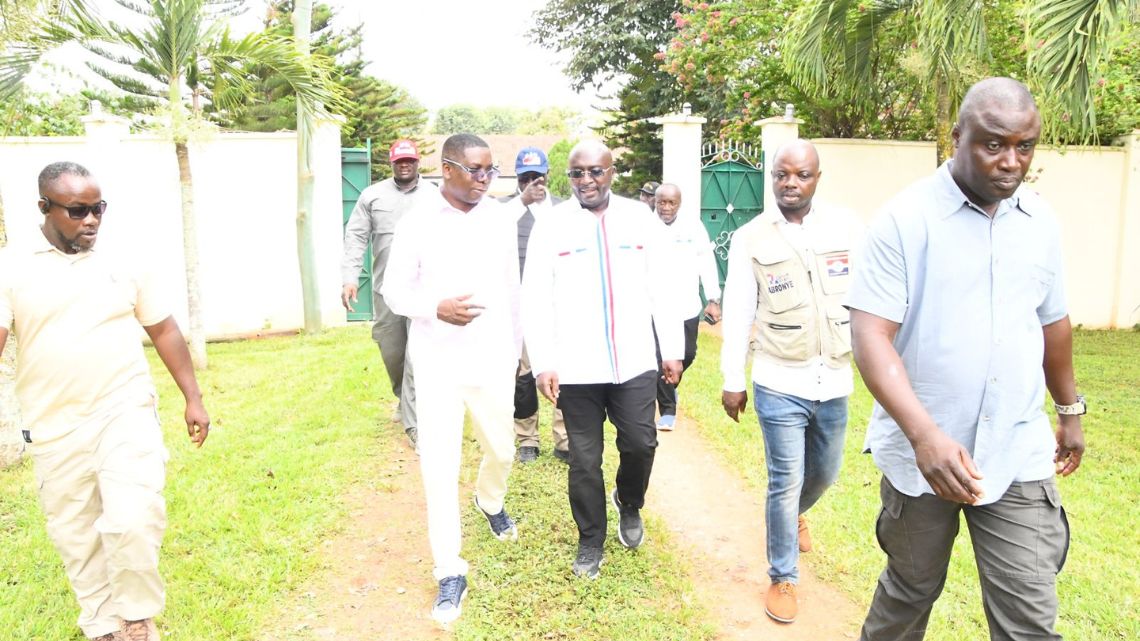
    He further explained the situation at the Kumasi depot, saying, “But then, when we reported for work today, the information came that I was not supposed to work. My colleagues in Kumasi insisted that if I wasn’t working, then they wouldn’t work either. A call then came from top management, and they said I should work.”

    “As of now, Tema is working, Takoradi is working, and in Kumasi, we are also working. That is the current situation regarding the strike,” he concluded.

  • A Judge is now a clairvoyant too? – Franklin Cudjoe reacts to Barker-Vormawor’s remand

    A Judge is now a clairvoyant too? – Franklin Cudjoe reacts to Barker-Vormawor’s remand

    President of IMANI Africa, Franklin Cudjoe, has expressed outrage over the continued remand of Oliver Barker-Vormawor, convenor of the anti-galamsey protest organized by the Democracy Hub.

    In a Facebook post, he questioned the rationale behind the decision, writing, “It is still unconscionable that someone will be remanded in jail for two weeks without bail for this under the judicial view that it is to prevent him from committing further ‘crimes.’ Really! Now a judge is now a clairvoyant too?”

    Oliver Barker-Vormawor was once again denied bail by the Circuit Court, marking the third time his request has been refused since his arrest during the demonstration two weeks ago.

    The Attorney General’s Department opposed his latest bail application, leading to the court’s decision. Both the Accra High Court and the Circuit Court had previously denied his bail requests.

    However, in a contrasting ruling, Fanny Otoo, another detainee who has been unwell since her arrest, was granted bail set at GH₵20,000 with two sureties. Barker-Vormawor’s case has now been adjourned to October 14, 2024.

    Several other protestors have also seen developments in their legal battles. Ama Governor and eight others were granted bail, set at GH₵70,000 each, while twelve additional protestors, including Felicity Nelson, were granted bail with distinct surety conditions. These varying bail terms highlight the complexity of the ongoing legal proceedings, which have significant implications for civil rights and environmental activism in Ghana.

    Earlier today, the State filed an affidavit opposing the bail applications for 20 other anti-galamsey detainees, citing that they had not been properly served, despite court documents showing that service was completed on October 2. The judge has directed the protestors’ lawyers to properly serve the State, with the next hearing for these detainees scheduled for Wednesday, October 9.

  • Where are you getting your wild mining licence figures from? – Franklin Cudjoe quizzes govt

    Where are you getting your wild mining licence figures from? – Franklin Cudjoe quizzes govt

    Franklin Cudjoe, the founding president of IMANI Africa, has challenged government officials regarding the sources of their mining license figures, questioning their accuracy in light of verified data.

    In a pointed statement, Cudjoe expressed scepticism, stating, “I don’t know where government folks are getting their wild mining license figures from to counter the mostly verified data that the government issued 1,400 plus mining licenses between 2022 and now, without proper regulation, when between 1988 and 2022, only 150 licenses were granted.”

    The Minister of Lands and Natural Resources, Samuel Abu Jinapor, has refuted claims that over 1,400 mining licences have been issued by the Ministry from 2022 to date.

    Franklin Cudjoe on mining licenses approves
    Franklin Cudjoe on mining licenses approves

    In an interview with Citi FM on October 8, 2024, Jinapor firmly rejected these allegations, describing them as inaccurate. He stated, “Straight away, that is false,” and emphasised that the number of licences issued between 1988 and 2022 is far greater than those reportedly issued in the period from 2022 to the present.
    Mr Jinapor elaborated on the mining licence approval process, explaining that it is a time-consuming and intricate procedure.

    He noted that approving a single small-scale mining application requires six separate signatures, which significantly slows down the process.

    Meanwhile, Kofi Ofosu Nkansah, the Chief Executive Officer (CEO) of the National Entrepreneurship and Innovation Programme (NEIP) has called out Cudjoe for suggesting that a significant number of mining licenses had been issued under the current government, a situation he argued has contributed to the surge in illegal small-scale mining, commonly known as “galamsey.”

    In response to Cudjoe’s assertions, Nkansah used alleged official data from the Minerals Commission to counter the narrative, highlighting inaccuracies in Cudjoe’s claims. In a Facebook post on Tuesday, October 8, he presented figures that demonstrate the number of licenses issued in recent years is far lower than previously stated by Cudjoe.

    Nkansah emphasized that the data clearly shows the Minerals Commission has not irresponsibly approved licenses, labeling Cudjoe’s allegations as unfounded. He stressed that all licenses issued have undergone a rigorous process designed to promote responsible mining practices.

    Furthermore, Nkansah pointed out that the government is making substantial efforts to formalize the small-scale mining sector to combat illegal activities, directly contradicting the criticisms leveled against it.
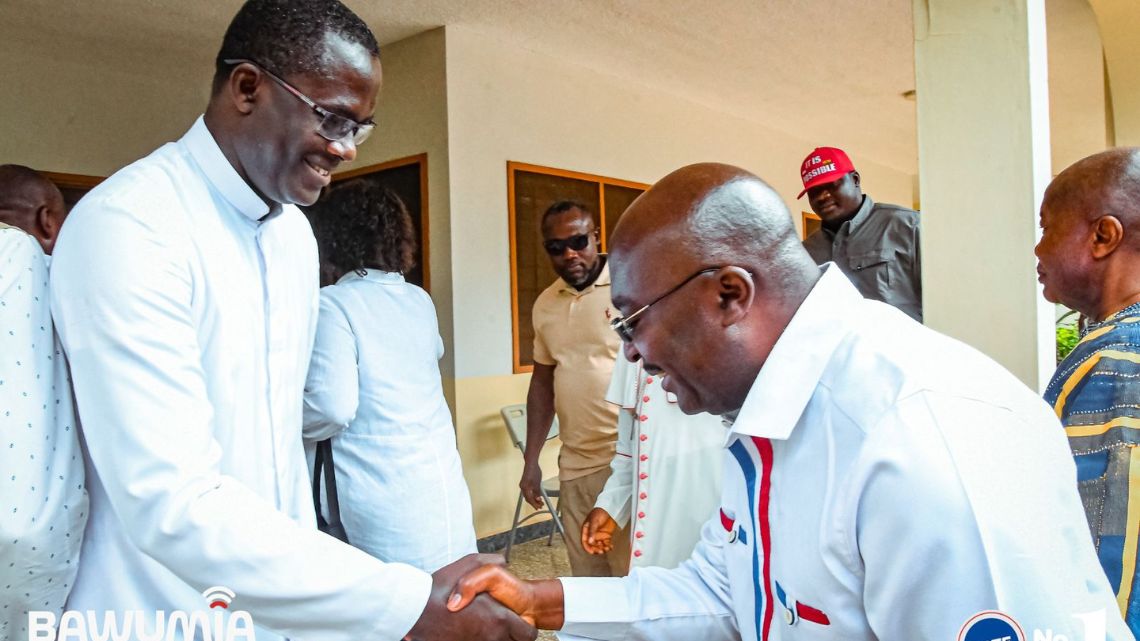
    “Dear Franklin Cudjoe, these are figures on small-scale mining licenses issued since 2012 from the Minerals Commission. The CEO presented this to Samuel Okudzeto Ablakwa’s committee in Parliament yesterday. They will issue a press release to counter all the falsehood you guys are spreading,” Nkansah remarked.
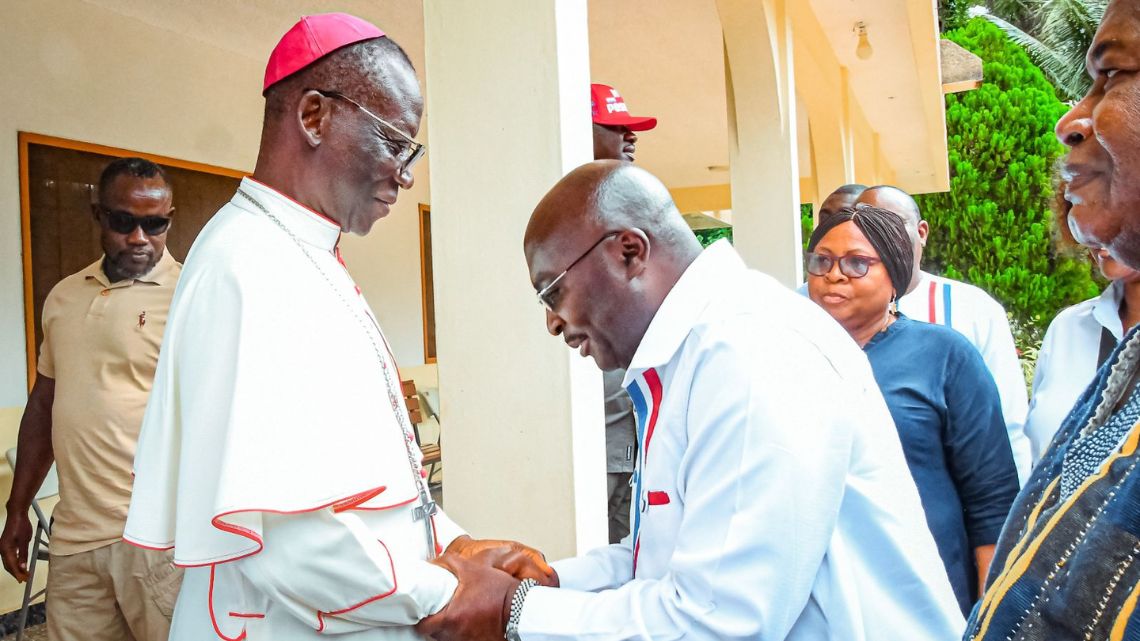
    He also noted that the National Democratic Congress (NDC) issued more licenses from 2012 to 2016 (1,402) than the New Patriotic Party (NPP) has granted in eight years (1,014). “The 2020 NPP figure was high because when the ban was lifted, there was a huge rush for licenses,” he added.

    In response, Cudjoe reiterated his position, stating, “Ignore any government-sponsored propaganda that claims over a 1,000 mining licenses were granted by 2016. As my colleague Bright Simons’ verified research shows, between 1988 and 2022, only 150 mining licenses were granted. Between 2022 and now, 1,400 plus licenses were issued and carelessly regulated simply because most of the licenses were granted by highly placed politicians to their kind who were given freedom to mine recklessly.”

  • NDC approved 1,402 mining licences in 4 years – NEIP Boss slams Francis Cudjoe

    NDC approved 1,402 mining licences in 4 years – NEIP Boss slams Francis Cudjoe

    The Chief Executive Officer (CEO) of the National Entrepreneurship and Innovation Programme (NEIP), Kofi Ofosu Nkansah, has challenged Franklin Cudjoe, the founding president of IMANI Africa, over claims regarding the issuance of mining licenses.

    Mr. Nkansah highlighted inaccuracies in Cudjoe’s assertions by presenting official data from the Minerals Commission.

    Cudjoe had previously suggested that a significant number of mining licenses were issued under the current government, which he argued has contributed to the rise of illegal small-scale mining, or “galamsey.” He criticized what he perceived as a relaxed approach by the Minerals Commission, resulting in environmental degradation and the exploitation of Ghana’s resources.

    In response, Nkansah took to Facebook on Tuesday, October 8, to present figures showing that the number of licenses issued in recent years is far lower than Cudjoe claimed. He stated that the data clearly indicates the Minerals Commission has not irresponsibly approved licenses, branding the allegations as baseless.

    He emphasized that all licenses issued have followed a rigorous process aimed at promoting responsible mining practices and noted the government’s commitment to formalizing the small-scale mining sector to combat illegal activities.

    “Dear Franklin Cudjoe, these are figures on small-scale mining licenses issued since 2012 from the Minerals Commission. The CEO presented this to Samuel Okudzeto Ablakwa’s committee in Parliament yesterday. They will issue a press release to counter all the falsehood you guys are spreading,” Nkansah wrote.

    He pointed out that the National Democratic Congress (NDC) actually issued more licenses from 2012 to 2016 (1,402) than the New Patriotic Party (NPP) has issued in eight years (1,014). He explained, “The 2020 NPP figure was high because when the ban was lifted, there was a huge rush for licenses.”

    In response, Franklin Cudjoe stated, “Ignore any government-sponsored propaganda that claims over a 1000 mining licenses were granted by 2016. As my colleague Bright Simons’ verified research shows, between 1988 and 2022 only 150 mining licenses were granted. Between 2022 and now, 1400 plus licenses were issued and carelessly regulated simply because most of the licenses were granted by highly placed politicians to their kind who were given freedom to mine recklessly.”

  • Court denies Oliver Barker-Vormawor bail a third time

    Court denies Oliver Barker-Vormawor bail a third time

    The convenor of the anti-galamsey protest organized by the Democracy Hub, Oliver Barker-Vormawor, has once again been denied bail by the Circuit Court, marking the third time his bail request has been refused since his arrest during the demonstration two weeks ago.

    The Attorney General’s Department opposed his latest bail application, leading to the court’s decision. Prior to this, both the Accra High Court and the Circuit Court had similarly denied his bail.

    In contrast, Fanny Otoo, another detainee who has been unwell since her arrest, was granted bail of GH₵20,000 with two sureties. The case has been adjourned to October 14, 2024.

    Ama Governor and eight other protestors were granted bail, set at GHC70,000 each, while twelve additional protestors, including Felicity Nelson, received bail under distinct sureties.

    The bail granted on Monday came with varying terms, complicating the ongoing legal battle that carries significant implications for civil rights and environmental activism in Ghana.

    Earlier today, the State filed an affidavit opposing the bail applications for 20 other anti-galamsey detainees. This came after the State claimed they had not been served with the applications, despite court documents showing service had been completed on October 2.

    The judge has directed that the protestors’ lawyers properly serve the State, and the case for the remaining detainees has been adjourned to Wednesday, October 9.