Media personality Serwaa Amihere has expressed her concerns regarding the conflicting prophecies from various prophets in the country about the upcoming 2024 general elections.
The GhOne journalist lamented the inconsistency in their claims, questioning why some prophets provide contradictory predictions.
Serwaa highlighted the troubling nature of these prophecies, given that they are said to originate from God, who is typically viewed as consistent and trustworthy.
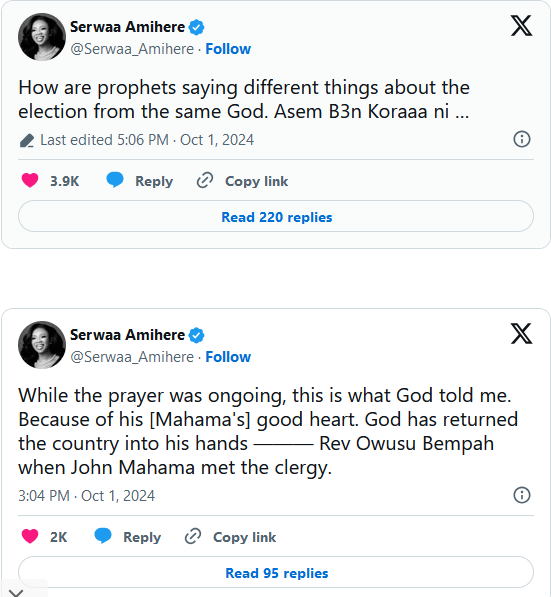
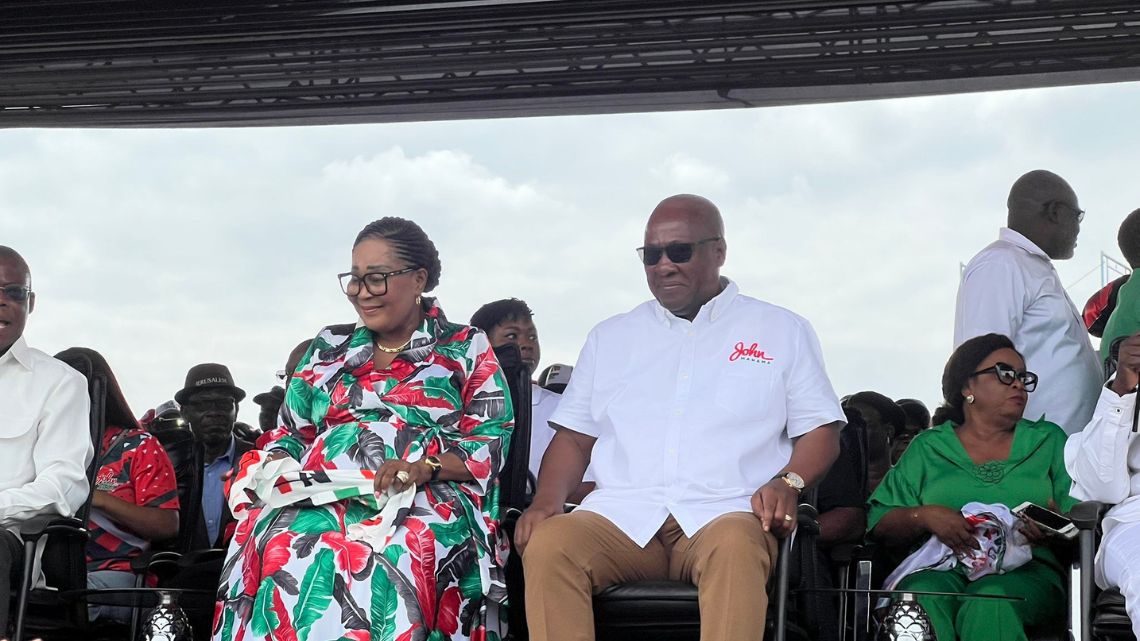
She referenced Rev. Owusu Bempah‘s statement during a prayer meeting with John Mahama, where the prophet declared, “While the prayer was ongoing, this is what God told me. Because of his [Mahama’s] good heart, God has returned the country into his hands.”
In her post on X, she asked, “How are prophets saying different things about the election from the same God? Asem B3n Koraaa ni …”
This statement comes after Prophet Owusu Bempah laid hands on Mahama during the NDC’s meeting with the clergy on October 1, 2024, claiming that God would favor Mahama and grant him his wish for a second presidential term.
However, Owusu Bempah had previously stated that there was no way Mahama would become president again, according to divine revelation.
These inconsistencies have sparked criticism from a segment of the public.
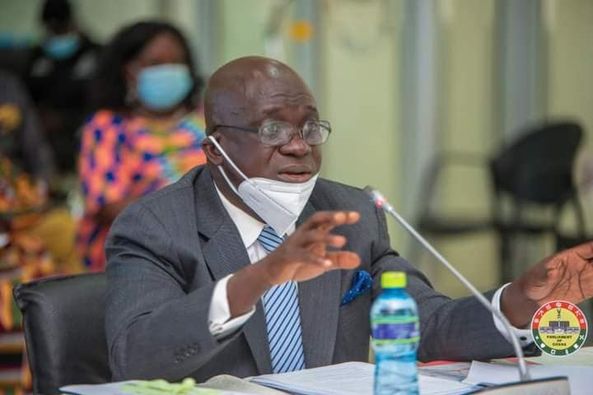
Member of Parliament (MP) for Asante Akim South, Kwaku Asante-Boateng, has raised concerns that the government’s reluctance to address illegal mining, commonly referred to as galamsey, is influenced by fears of losing the upcoming December 7 elections.
According to Asante-Boateng, the New Patriotic Party’s (NPP) previous strong stance against galamsey in 2020 contributed to their losses in several mining communities.
Speaking to journalists on October 2, he suggested that the current hesitance to impose a total ban on all forms of mining stems from this fear, which he believes could affect any political party.
He defended the government’s cautious approach, explaining that the apprehension about losing votes is a common political concern, especially in regions where galamsey is prevalent.
“We did it as a party and as a government before the 2020 elections. And if you can recount, all our seats in the mining communities that we were trying to control, we lost all the seats, the parliamentary seats there.
“So do you think for the second time, if we say we want to break the 8 and people are crying for that ban, the current government will have the guts or will find it necessary to put a ban on it?
“The fear of losing power [is delaying the ban] and that fear can happen to any party at all.”
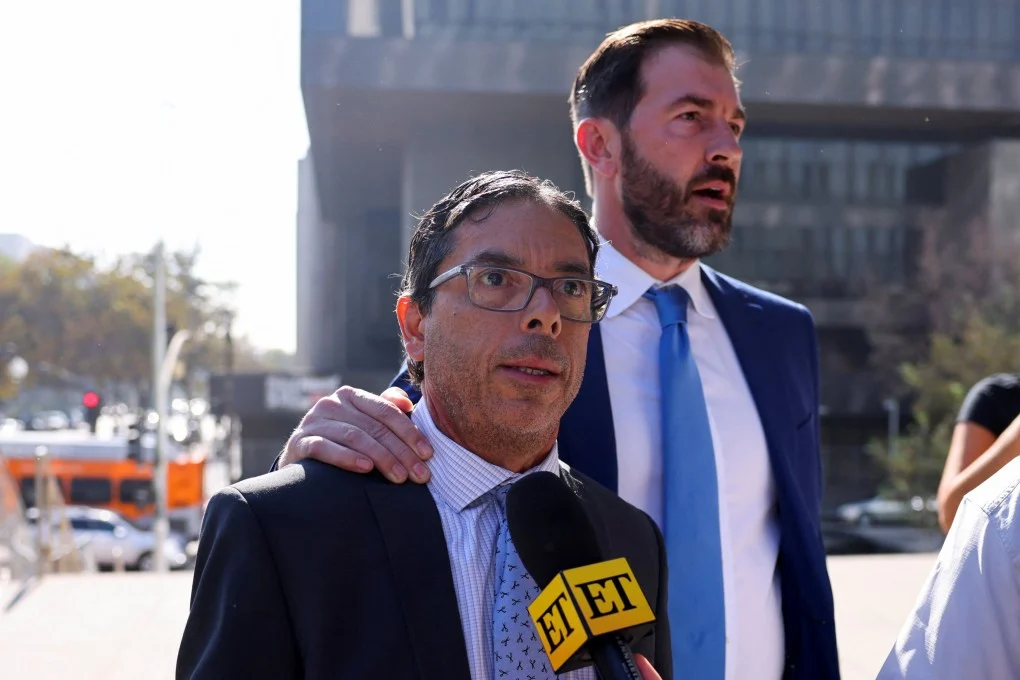
A doctor involved in the drug-related death of actor Matthew Perry has pleaded guilty in the case. Dr. Mark Chavez, 54, changed his plea to guilty in a Los Angeles court for conspiring to distribute the surgical anaesthetic ketamine.
Chavez operated a ketamine clinic and sold ketamine lozenges to Dr. Salvador Plasencia, who ultimately supplied them to Perry, the star of NBC’s sitcom Friends. In his plea agreement, Chavez admitted to obtaining ketamine from both his former clinic and a wholesale distributor using a fraudulent prescription, as per court records.
He is one of five individuals charged in connection with Perry’s death, which occurred in October 2023 when the 54-year-old actor was found dead in his backyard jacuzzi in Southern California. A post-mortem examination revealed a high concentration of ketamine in Perry’s blood, concluding that “acute effects” of the drug were responsible for his death.
I was at the LA hearing of a doctor charged over the death of Friends star Matthew Perry. Mark Chavez pleaded guilty to conspiracy to distribute ketamine. His lawyer Matthew Binninger told reporters that Mr Chavez was remorseful – I am stood behind him in the footage. pic.twitter.com/yKdKEsVrkI
Ketamine is an anaesthetic that is often used to treat depression, anxiety, and pain, and it is known to be 50 times more potent than heroin. Prosecutors allege that Perry’s assistant, Kenneth Iwamasa, collaborated with the two doctors to provide the actor with over $50,000 (£38,000) worth of ketamine in the weeks leading up to his death.
According to the indictment, the two doctors exchanged text messages discussing how much they could charge Perry for vials of the drug, with one message stating: “I wonder how much this moron will pay.”
Chavez’s plea allows him to plead guilty to a lesser charge in exchange for his cooperation with the investigation, although he could still face up to 10 years in prison. “He has accepted responsibility. He is cooperating,” his attorney stated in court.
Chavez has surrendered his passport and agreed to relinquish his medical license immediately. He is currently out on bail, with sentencing scheduled for April 2, 2025.
The General Agriculture Workers Union (GAWU) has predicted a sustained rise in food prices in the coming months, despite government policy interventions.
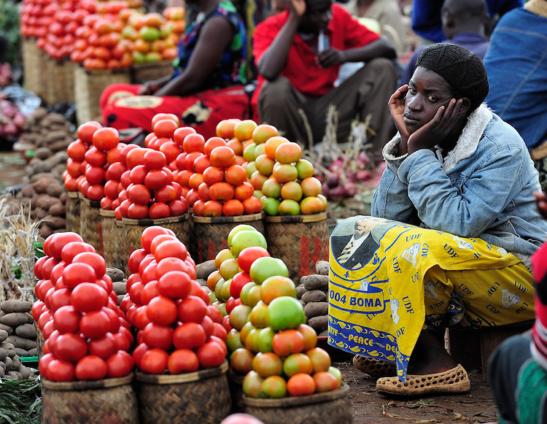
This follows a recent increase in inflation, which rose to 21.5 percent in September 2024 from 20.4 percent in August, according to the Ghana Statistical Service (GSS). The spike has been largely attributed to a rise in food inflation.
Reacting to the development, Edward Kareweh, a former General Secretary and a member of GAWU, cautioned that consumers should brace for further price hikes in foodstuffs. He pointed to several factors, including the ongoing illegal mining (galamsey) and recent dry spells, as key challenges facing farmers.
“This year, 2024, we are not going to have any significant increase in food production in the country. If total output is going to fall, it will push food inflation up. From now till December and in the early part of 2025, we should expect food inflation to push the national inflation up,” he warned.
Although the government has introduced measures to mitigate the impact, Kareweh emphasized that these interventions will have limited success if galamsey is allowed to continue. He expressed concern over the destruction of water bodies and farmlands, which poses a serious threat to the country’s food security.
He further cautioned that if illegal mining is not addressed, the prices of basic foodstuffs will continue to surge.
Year-on-year inflation for September 2024 has increased to 21.5 percent, up from 20.4 percent in August. The GSS identified food inflation as the driving force behind this increase. Food inflation surged to 22.1 percent, compared to 19.1 percent in August 2024.
In contrast, non-food inflation declined slightly to 20.9 percent from 21.5 percent in the previous month. Prior to this rise, inflation had been on a downward trend for five consecutive months.
The report also revealed that inflation for both locally produced and imported items increased during this period.
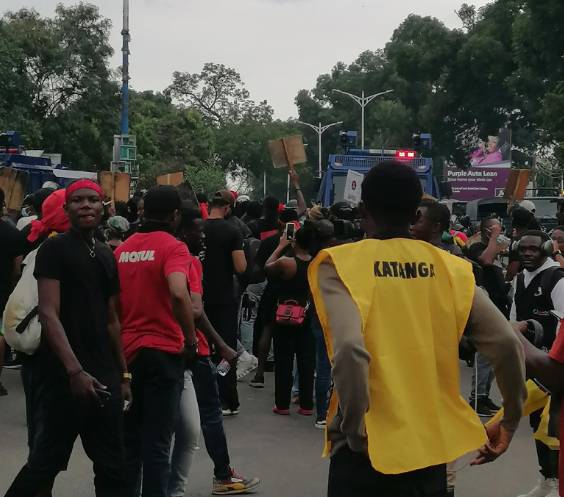
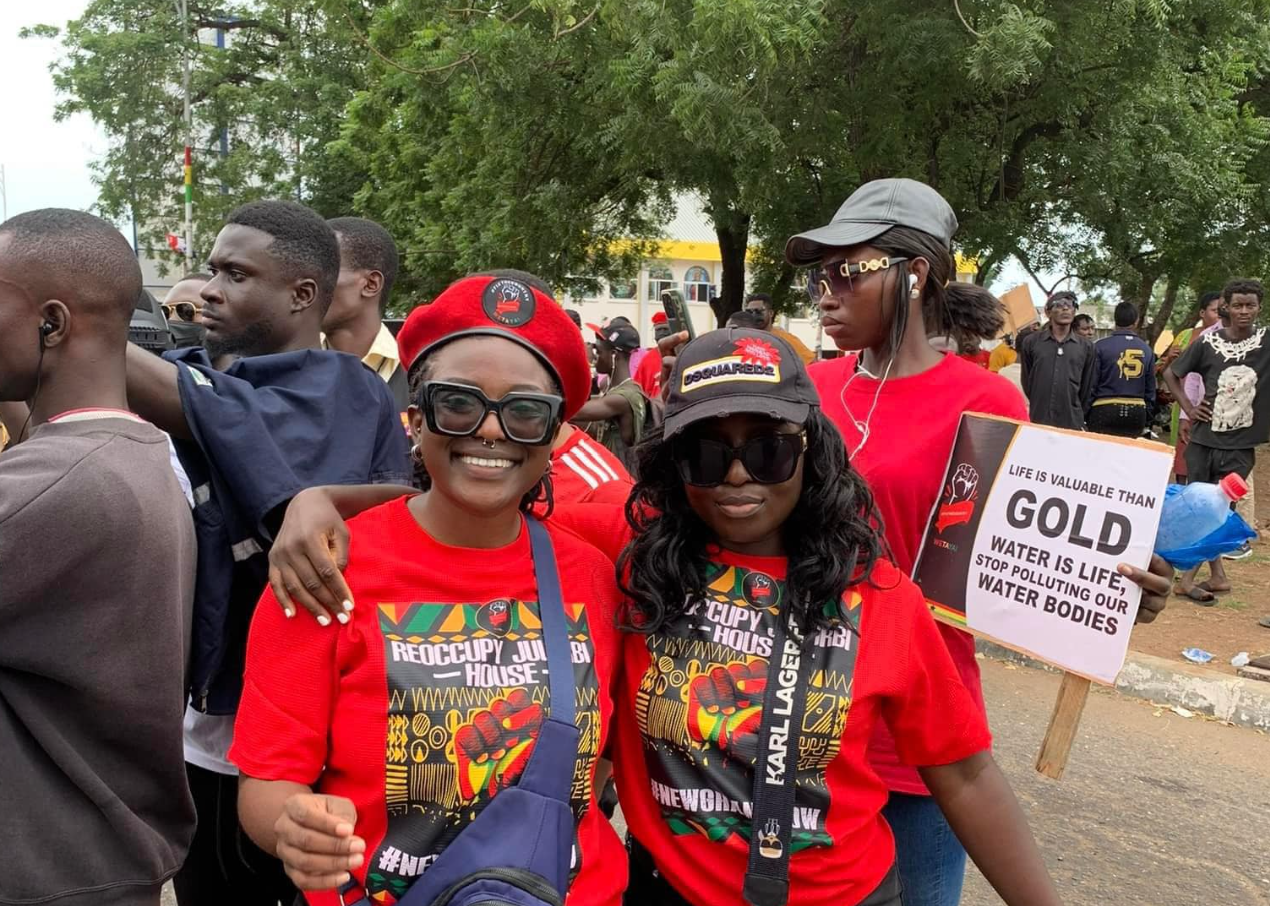
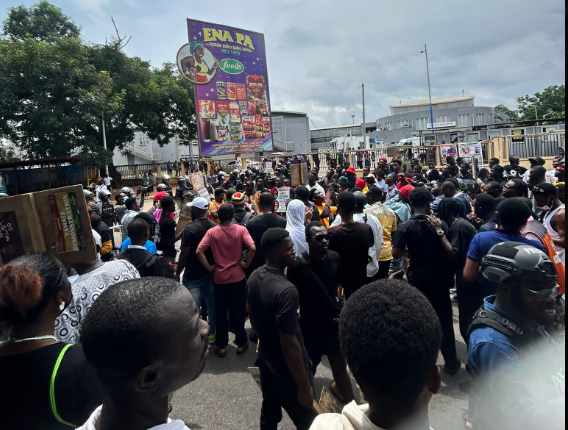
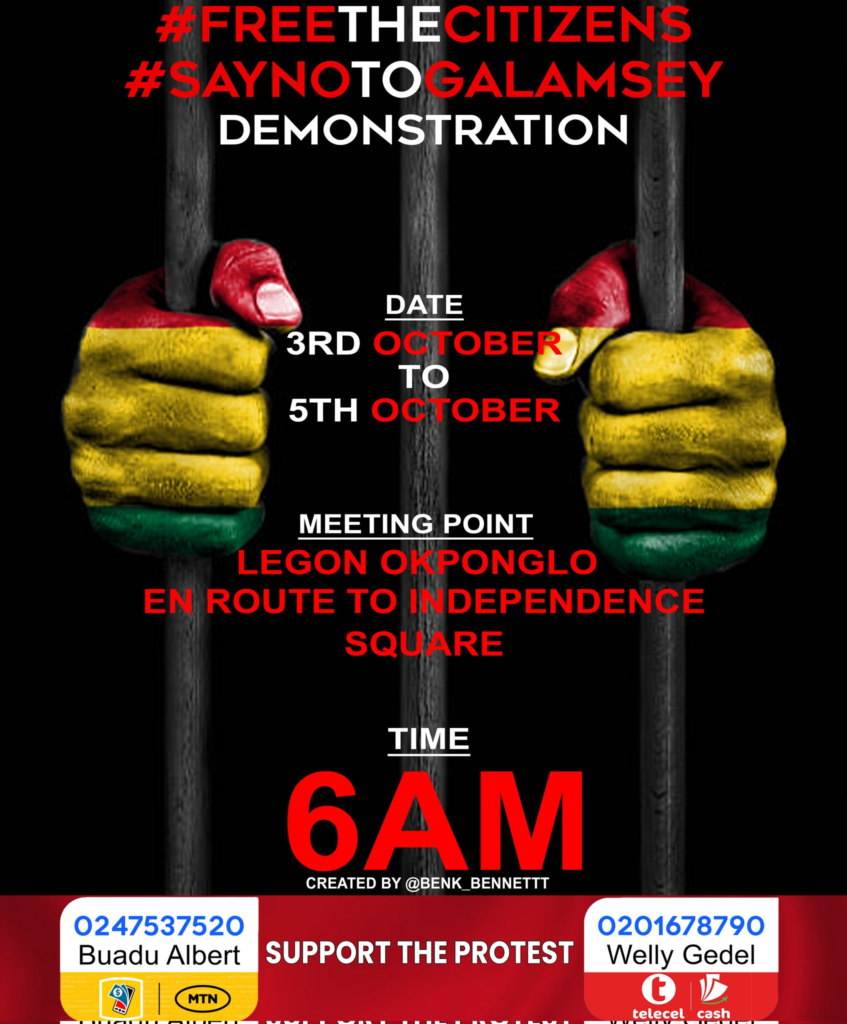
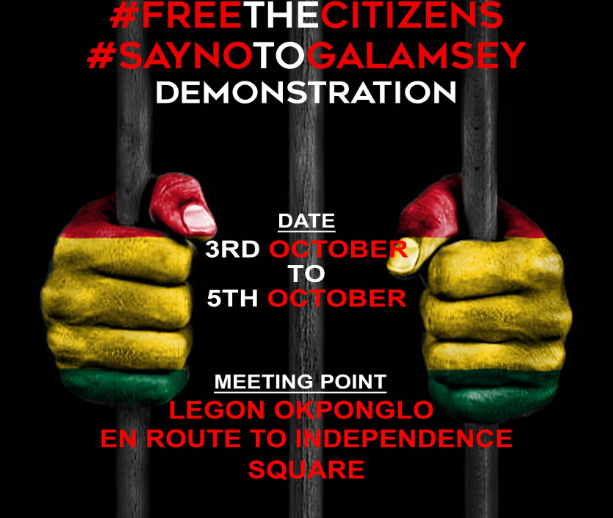
The #FreeTheCitizens Movement has commenced its 3-day protest in Accra today, running until October 5, to demand urgent action against illegal mining (galamsey) and its destructive effects on the environment.
Protesters gathered at 6 AM at Legon, Okponglo, and are set to march toward Independence Square, aiming to raise awareness about unlawful detentions and the widespread environmental damage caused by galamsey.
The protest has gained substantial backing from various groups and public figures. Among them, Katanga Fellowood, a group from the University Hall at Kwame Nkrumah University of Science and Technology (KNUST), had initially planned to participate as a collective. However, after consultations, they announced their withdrawal in deference to their leader, Odeefour.
With a focus on holding state authorities accountable, the protest is expected to draw participants from across Ghana. Organizers emphasize that the #FreeTheCitizens Movement is more than a protest—it’s a “rallying call for all Ghanaians who believe in the power of democracy, justice, and environmental preservation.”
Prominent lawyer and social media influencer, Ama Governor, has delivered a powerful message in support of the ongoing #FreeTheCitizens protest, which seeks to combat the devastating effects of illegal mining, known as galamsey, and demand government accountability.
In a letter circulating on social media, Ama Governor hailed the resilience of Ghanaian youth for standing up against environmental destruction and political injustice.
“Dear Comrades, when I say ‘Aluta!’ You respond ‘Continua!’ Ghana has never seen a day as great as this 3rd October 2024, where Ghana Youth, in spite of the lines of division planted to subvert the strength in our unity, chooses to pick up camaraderie in marching side-by-side to fight against the devastating effects of illegal mining (galamsey) on the health, resources, and well-being of the Ghanaian people,” she wrote.
Ama Governor’s letter highlighted the significance of the protest, calling it a historic moment for Ghana’s youth, as they demand both environmental justice and the release of political prisoners.
“Nkrumah smiles as timidity wails in the face of the resilience demonstrated by this historic and remarkable protest. Today, Ghana Youth arises, and not only recommits to the single began by our foremothers and fathers, but has reignited the long-lost hope of realizing Nkrumah’s Ghana.”
On one of my prison runs I passed by the Legon police station and got this letter from @Ama_governor who, with more than 50 citizens, has been unfairly kept in jail for more than a week. Please show up onsite and/or show solidarity online ❤️💪🏾#FreeTheCitizens#StopGalamseyNowpic.twitter.com/JulVUBSHQN
However, the protest, which started peacefully, descended into chaos, leading to the arrest of 53 demonstrators, including prominent activists like Oliver Barker Vormawor, Grace Asantewaa, Felicity Nelson, and Ama Governor herself. Following their arrests, 11 of the detainees, including Ama Governor, were remanded into police custody after appearing before the Accra Circuit Court. They face charges including conspiracy to commit a crime, unlawful assembly, offensive conduct conducive to the breach of peace, and assault on a public officer.
Ama Governor, visibly frustrated, voiced her displeasure after being held for over 48 hours without legal representation, food, or water. As she was escorted to the courtroom, she made her sentiments clear: “You want to see a 26-year-old lawyer in handcuffs because she said, ‘Stop Galamsey Now.’ Forty-eight hours, no lawyer, 48 hours, no food, no water. Over 48 hours, you all should be proud. These people are ridiculous. Emancipate yourselves from mental slavery.”
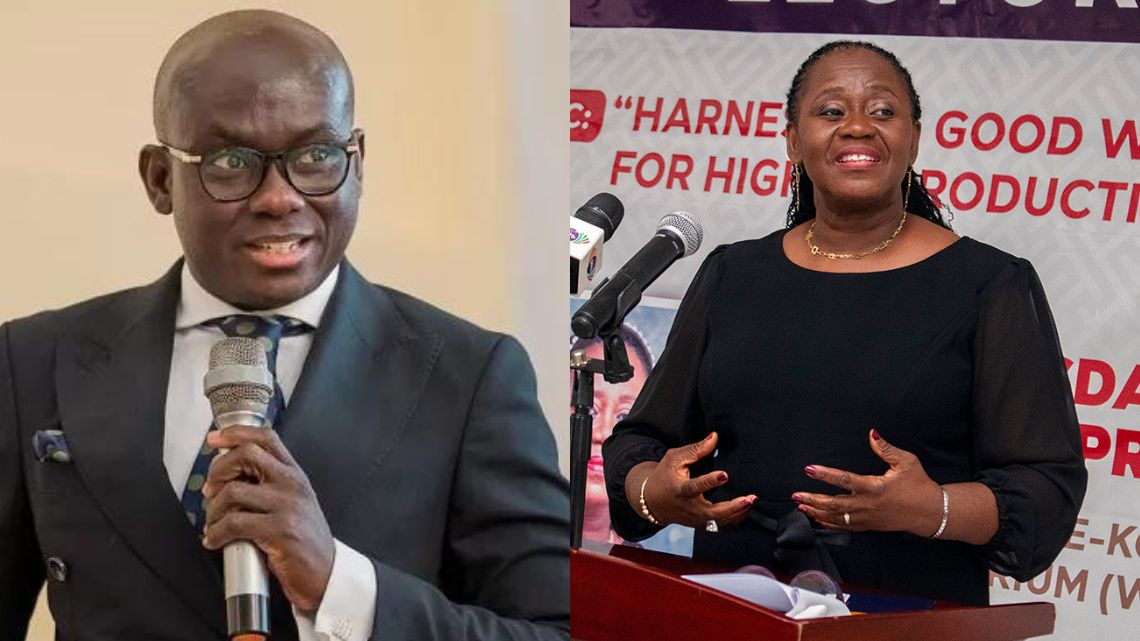
In the aftermath of the arrests, Attorney-General and Minister for Justice, Godfred Yeboah Dame, recommended that the prosecution consider bail applications during the next adjournment. “I will also advise the prosecution to consider relevant bail applications made at the next adjourned dates of the cases,” he stated.
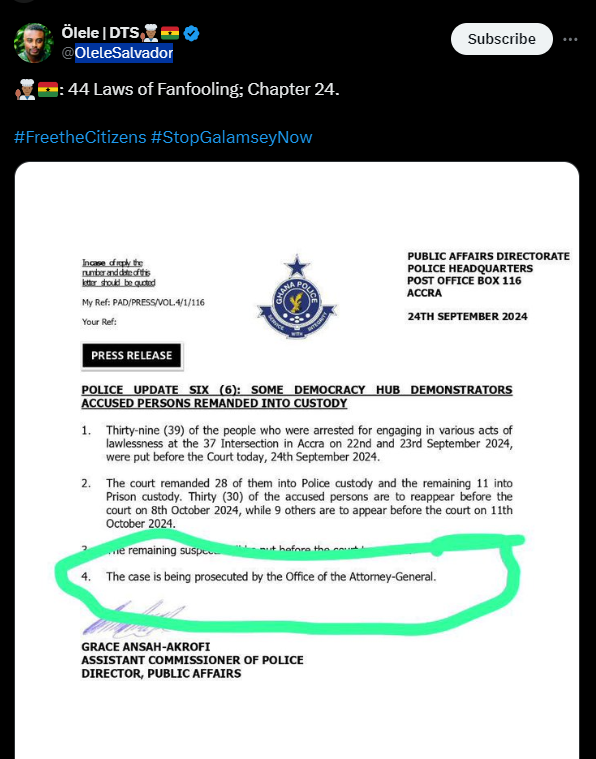
However, his statement has been met with criticism. Ghanaian entertainment journalist, Olele Salvador, accused the Attorney-General of attempting to mislead the public. In a post titled “44 Laws of Fanfooling; Chapter 24,” Salvador pointed out that the Attorney-General’s office is leading the prosecution of the detained protesters, questioning why he would now call for bail consideration when his office is handling the case.
A police statement dated September 24, 2024, confirmed that “the case is being prosecuted by the Office of the Attorney-General,” raising skepticism about the sincerity of the Attorney-General’s comments.
As the #FreeTheCitizens protest continues to draw attention, the voices of young activists like Ama Governor are echoing louder, calling for justice and an end to the illegal mining practices that are devastating the nation’s environment.
Chief Justice Gertrude Torkornoo has responded to recent criticisms from Attorney General Godfred Yeboah Dame regarding delays in the adjudication of illegal mining, or galamsey, cases in Ghana.
In addressing the Attorney General’s concerns, Chief Justice Torkornoo clarified that the delays are largely due to issues on the part of prosecutors, not the judiciary. Her comments come amid rising public pressure for the judicial system to expedite rulings on these crucial environmental cases.
Earlier, Attorney General Dame had called on judges to fast-track their handling of galamsey cases, urging them to deliver verdicts within a month. During his address on October 2, 2024, Mr. Dame underscored the need for swift judicial intervention to mitigate the severe environmental damage caused by illegal mining.
He expressed concerns that prolonged delays in the legal process are worsening the degradation of Ghana’s water bodies and forest reserves. Speaking at the Annual Conference of the Association of Magistrates and Judges of Ghana, the Attorney General voiced frustration with the slow pace of prosecuting galamsey cases, which he believes is intensifying the environmental crisis.
“It is beyond argument that the form of illegal mining known as ‘galamsey’ continues to wreak incalculable damage to our forest reserves and river bodies. A major setback to the struggle against galamsey is the rate of adjudication and punishment of offenders,” Mr. Dame stated.
Chief Justice Torkornoo, while acknowledging these concerns, reiterated that the judiciary cannot bear sole responsibility for the delays. She emphasized that the prosecution’s role is crucial in ensuring timely resolutions and called for improvements in prosecutorial processes to expedite justice.
The #FreeTheCitizens Movement has kicked off its 3-day protest in Accra today, running until October 5, to demand action against illegal mining (galamsey) and its severe impact on the environment.
Protesters gathered at 6 AM at Legon, Okponglo, and are marching towards Independence Square to raise awareness about illegal detentions and the widespread environmental devastation caused by galamsey.
The protest has attracted widespread support from various groups and prominent figures. Notably, Katanga Fellowood, a group from the University Hall at Kwame Nkrumah University of Science and Technology (KNUST), initially intended to participate as a collective. However, after consultations, they decided to withdraw in respect for their leader, Odeefour.
Organizers of the protest have stressed that the #FreeTheCitizens Movement is more than just a demonstration. They describe it as a “rallying call for all Ghanaians who stand for democracy, justice, and the protection of our environment,” and anticipate participation from citizens across the nation.
Ranking Member of the Parliamentary Select Committee on Information and Communication, Mahama Ayariga, has formally submitted a request for information under the Right to Information (RTI) Act to the Minister of Communications, Ursula Owusu-Ekuful.
Mr Ayariga’s inquiry is focused on the Next-Generation Infrastructure Company (Next-Gen InfraCo) deal, which has faced increased scrutiny regarding its implications for Ghana’s telecommunications sector.
His request comes amid growing public concern over the transparency of government contracts and their potential impact on service delivery and competition within the industry. Ayariga is seeking detailed information, including the full contractual agreement between the government and Next-Gen InfraCo, as well as the terms and financial implications of the deal for the state.
Ayariga emphasized that such agreements should not rely solely on verbal assurances but must be made accessible to his office for thorough review.
Expressing his concern, he noted that the lack of transparency surrounding the deal could hinder public understanding and scrutiny, particularly regarding its alignment with national interests. He also called for accountability, especially amid allegations that the agreement might disproportionately benefit certain private interests over the public.
“On Thursday 30th May 2024 your good self briefed the world on the deployment of 5G telecommunications technology in Ghana. This letter requests certain information from you pursuant to the Right to Information Act of Ghana,” Ayariga stated in his petition.
He continued, “Since your briefing, I have been reassigned to the office of Ranking Member of the Parliamentary Select Committee on Information and Communication. I have not sited any of the documents mentioned in your briefing, hence this request.”
The government recently announced a partnership with seven industry leaders to establish new shared infrastructure aimed at providing affordable 5G mobile broadband services across Ghana.
Partners in the initiative include Ascend Digital, K-NET, Radisys, Nokia, Tech Mahindra, along with two telecommunications firms, AT Ghana and Telecel Ghana. Together, they formed Next-Gen Infrastructure Company (NGIC), which has been granted a 5G license.
NGIC is expected to launch 5G services across Ghana within six months, with plans for expansion into other African markets. The company will be the first to build a nationwide 4G/5G network, collaborating with telecom companies to offer affordable 4G/5G-enabled fixed wireless access (FWA) devices and smartphones this year.
The partnership aims to improve digital services across education, healthcare, and financial transactions through peer-to-peer (P2P), peer-to-merchant (P2M), and merchant-to-merchant (M2M) systems. Additionally, NGIC will adopt India’s model of affordable handsets, digital platforms, and localized content to replicate this approach in Africa, starting with Ghana. The initiative is intended to bridge the digital divide and promote financial inclusion in the country.
The #FreeTheCitizens Movement is embarking on its 3-day protest in Accra from today to October 5, to demand action against illegal mining (galamsey) and its devastating impact on the country’s environment.
Protestors converged at 6 AM at Legon, Okponglo, and are set to march to Independence Square in a bid to raise awareness about unlawful detentions and rampant environmental destruction.
The protest has garnered significant support from various groups and public figures. Notably, Katanga Fellowood, a group from the University Hall at Kwame Nkrumah University of Science and Technology (KNUST), initially planned to participate in the protest collectively. However, following consultations, they announced their withdrawal as a collective body out of respect for their leader, Odeefour.
In a statement, Katanga Fellowood explained, “This decision comes after extensive consultations led by the highest King of our land, Odeefour, who, in consultation with all stakeholders, has decided to boycott the demonstration.”
Despite this, the group reaffirmed their commitment to the cause, stating, “While we may not join the demonstration in the collective manner originally planned, we stand firm in our resolve to continue the fight against the ills of society, including the devastating effects of galamsey on our green reserves and water resources.”
Katanga Fellowood has also shown financial support by handing over a GHC10,000 donation to the organizers of the protest to assist with logistics and transportation.
“Significant progress has been made towards handing over 10,000 Ghana cedis to the organizers of the demonstration to support the provision of logistics,” the group stated.
In a further show of solidarity, Ningo-Prampram Member of Parliament, Sam Nartey George, has pledged his support for the demonstration.
In a post on the X platform dated September 26, Sam George declared, “Count me in. Citizens, no matter how uncomfortable, must be allowed to have a voice. I’d put my money where my heart and mouth is. Let’s go!”
The protest, which aims to challenge illegal mining activities and demand accountability from state authorities, is expected to see participation from individuals across Ghana. Organizers have highlighted that the #FreeTheCitizens Movement is not just a protest but a “rallying call for every Ghanaian who believes in the power of democracy, justice, and environmental preservation.”
As preparations for the event continue, organizers are optimistic that the turnout will send a strong message to authorities to take swift action in addressing the environmental crisis caused by galamsey.
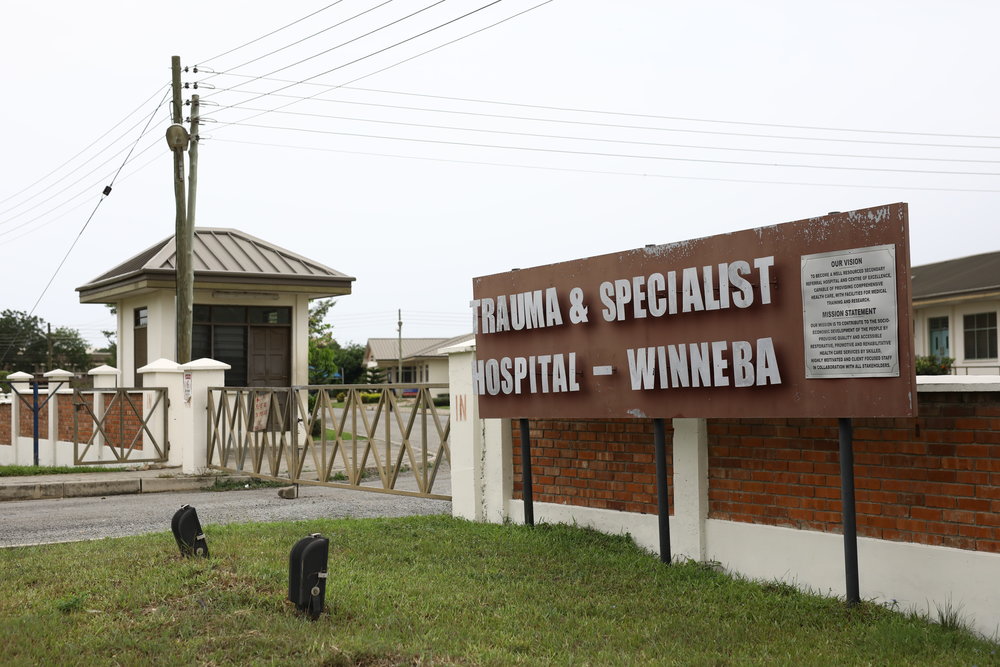
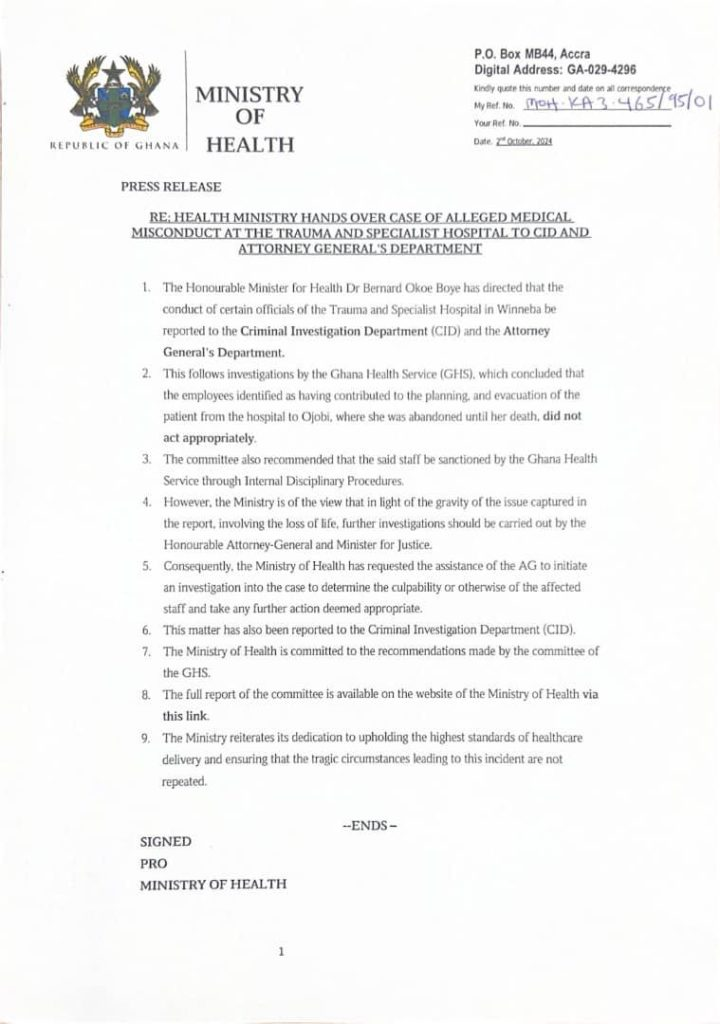
The Ministry of Health has released findings from an investigation into the tragic death of an elderly patient who was abandoned after being transferred from the Trauma and Specialist Hospital in Winneba to Gomoa Ojobi.
Following a detailed review by the Ghana Health Service (GHS), it was concluded that certain officials at the hospital acted inappropriately in handling the patient’s discharge and transportation. The report highlighted administrative lapses and failure to ensure proper care after the patient was sent back to her hometown.
The Ministry, while supporting internal disciplinary action against the responsible staff, has referred the case to the Criminal Investigation Department (CID) and the Attorney General’s Department for further investigation due to the seriousness of the matter.
The Ministry has assured the public of its commitment to ensuring the highest standards of healthcare and taking measures to prevent such incidents from reoccurring.
The full report is available on the Ministry’s official website.
The Ministry of Health has directed that the Criminal Investigation Department (CID) and the Attorney-General’s Department investigate the circumstances surrounding the death of an elderly woman who was allegedly abandoned in a bush after being discharged from the Trauma and Specialist Hospital in Winneba.
This decision comes after the Ghana Health Service (GHS) conducted investigations that revealed inappropriate conduct by some hospital officials involved in the planning and evacuation of the patient to Gomoa Ojobi, where she was later found and eventually died.
“The Honourable Minister for Health, Dr. Bernard Okoe Boye, has instructed that the conduct of certain officials at the Trauma and Specialist Hospital in Winneba be reported to the Criminal Investigation Department (CID) and the Attorney General’s Department,” the Ministry said in a statement.
According to the Ministry, the GHS report recommended that the staff involved in the incident be subjected to internal disciplinary procedures. However, the Ministry of Health believes the gravity of the issue, particularly the loss of life, warrants further investigation by the Attorney-General’s Office.
“In light of the gravity of the issue captured in the report, involving the loss of life, further investigations should be carried out by the Honourable Attorney-General and Minister for Justice,” the Ministry’s statement added.
The Ministry has formally requested the assistance of the Attorney-General’s Department to conduct a comprehensive investigation into the matter and determine the culpability or otherwise of the affected staff.
“This matter has also been reported to the Criminal Investigation Department (CID),” the statement emphasized.
The Ghana Health Service’s Director-General, Dr. Patrick Kuma-Aboagye, has already taken action by temporarily relieving the hospital’s Director of duties and forming a five-member committee to investigate the incident.
In response to the patient’s death, the hospital’s Medical Director, Dr. Prah George Kwame, provided further clarification on the treatment and discharge process. The elderly woman was brought to the hospital by the National Ambulance Service, accompanied by a Social Welfare Officer from Gomoa Ojobi, after sustaining fractures in both lower limbs. The hospital treated her with Plaster of Paris (POP) casts and provided full care, including feeding, medication, and housekeeping.
However, after six days of treatment, she was discharged on June 3, 2024, with the assurance from a social welfare officer that they would oversee her care upon her return to Gomoa Ojobi.
“Medical records confirm that the patient was treated and declared well before her discharge,” Dr. Kwame stated in the report.
The hospital, coordinating with the social welfare officers, arranged her transport back to Ojobi in an ambulance, with appropriate care and support provided during her journey. The hospital insists it fulfilled all necessary responsibilities in handling the patient’s care.
The Ministry of Health reiterated its commitment to implementing the recommendations of the GHS committee and ensuring that justice is served in the case. It also reassured the public of its dedication to upholding the highest standards of healthcare delivery in the country.
“Further updates will be provided as investigations progress,” the Ministry concluded.
The tragic circumstances surrounding the patient’s death have sparked public outcry, and the outcome of the CID and Attorney-General’s investigations will be closely monitored.
The Office of the President has informed the public about the health status of Nana Bediatuo Asante, Secretary to the President.
According to a statement, Nana Bediatuo Asante, who recently participated as a key member of President Nana Akufo-Addo’s delegation at the 79th United Nations General Assembly (UNGA) in New York, began feeling unwell after staying behind in the United States to conduct further government business.
“He then began to feel unwell and was subsequently admitted to hospital,” the statement revealed.
The Presidency reassured the public that Nana Bediatuo Asante is currently in stable condition and responding well to treatment.
“He is currently in stable condition and responding well to treatment,” the statement noted, adding that his medical team is confident about his recovery.
“Nana Bediatuo Asante’s recovery is on track, and we remain hopeful for his swift return to full strength.”
The Office of the President also requested prayers and support for Nana Bediatuo Asante and his family during this challenging time.
“We ask for continued prayers and support for him and his family during this difficult period. Further updates will be provided when necessary,” the statement added.
Nana Bediatuo Asante, who has served as President Akufo-Addo’s Executive Secretary for several years, was appointed as an Ambassador-at-Large in June 2024. His appointment was announced during a formal ceremony at Jubilee House, where he, along with nine other diplomats, was tasked with representing Ghana on the global stage.
The President, during the ceremony, emphasized the importance of the newly appointed diplomats in promoting Ghana’s interests. He urged them to strengthen bilateral ties, attract investment, and project Ghana as a beacon of stability and progress.
Ghanaian entertainment journalist, Olele Salvador, has sharply criticized Attorney-General Godfred Dame, accusing him of attempting to deceive Ghanaians with his recent call for bail consideration in the Democracy Hub protest case.
In a post titled “44 Laws of Fanfooling; Chapter 24,” Salvador shared a police press statement revealing that the Office of the Attorney-General is, in fact, the prosecutor handling the case, questioning why the A-G would request bail considerations for protestors when his own office is leading the prosecution.
The police’s press release dated September 24, 2024, confirmed that “the case is being prosecuted by the Office of the Attorney-General,” which has led many, including Salvador, to express skepticism about the A-G’s sincerity.
Attorney-General Godfred Dame, speaking at the Annual Conference of the Association of Magistrates and Judges of Ghana (AMJG) at the La Beach Hotel in Accra on Wednesday, October 2, 2024, had advised prosecutors to consider relevant bail applications for the Democracy Hub protestors at the next adjournment.
“I will also advise the prosecution to consider relevant bail applications made at the next adjourned dates of the cases,” Mr. Dame stated, positioning his office as an advocate for fairness in the ongoing proceedings.
The Democracy Hub protest, aimed at highlighting the damage caused by illegal mining (galamsey), resulted in the arrest and remand of 50 protestors, including figures like Ama Governor and Oliver Barker-Vormawor. They face multiple charges, including conspiracy to commit a crime, unlawful assembly, and offensive conduct. Despite pleading not guilty, the protestors were remanded in police custody, drawing criticism from various sectors of society.
Former President John Dramani Mahama has been among those critical of the handling of the case, calling the remand of the protestors an abuse of their rights.
While the Attorney-General has urged the police to expedite their investigations, Olele Salvador remains unconvinced, accusing the A-G of attempting to manipulate public perception with his remarks.
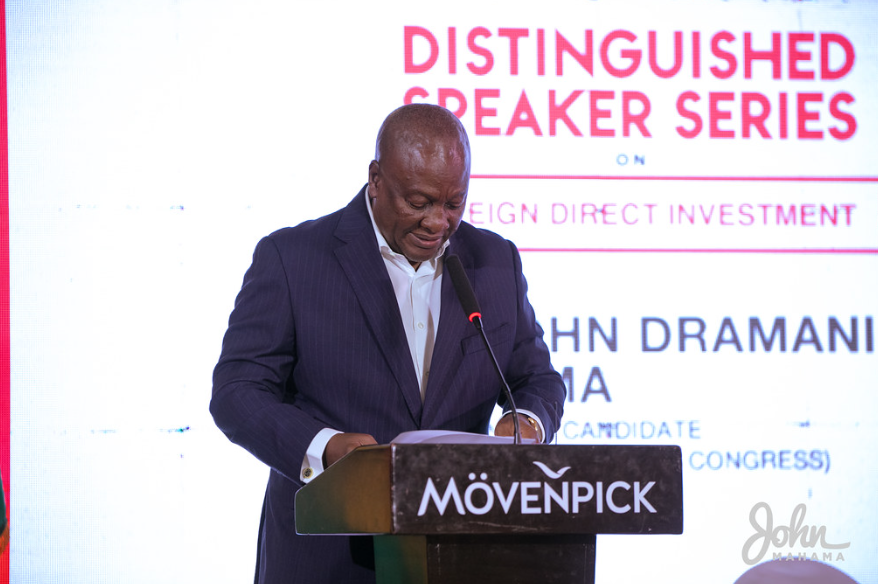
Former President John Dramani Mahama has announced that small-scale miners will be compelled to undergo skills training on responsible mining and land reclamation techniques if he is elected president in the 2024 general elections.
Addressing the clergy in Accra on Tuesday, October 1, 2024, the National Democratic Congress (NDC) presidential candidate emphasized the need for sustainable mining practices to minimize environmental harm.
“We will compel small-scale miners to undertake skills training in modern responsible methods and land reclamation techniques as part of their operations to minimize environmental harm,” Mahama stated.
Mahama also outlined a comprehensive plan aimed at tackling illegal mining, popularly known as galamsey, while promoting environmental restoration through the “Tree for Life and Blue Water” initiative. He added that public officials, including politicians, would be banned from participating in mining activities.
Presently, there is mounting pressure on the government to fire all Municipal and District Chief Executives under whose watch the practice of illegal mining is taking place. One of the individuals leading such calls is the Convener of the Media Coalition against Galamsey, Kenneth Ashigbey.
Illegal mining has emerged as a significant challenge in the country, particularly due to its detrimental impact on Ghana’s water bodies. Despite a series of government interventions ranging from deploying security forces to arresting offenders, the problem of galamsey continues unabated.
Recently, President Akufo-Addo directed the set up of a five-member ad hoc ministerial committee to engage stakeholders to assess the government’s efforts to deal with illegal mining activities.
While the reassessment continues, there are also growing calls for the government to ban small-scale mining and declare a state of emergency to protect water bodies and the country’s vegetation cover.
Government’s representatives in the sector in question have however shot down such calls, citing the economic benefit the country derives from gold production by small-scale miners.
President Akufo-Addo has urged public officials to regard public information as a national resource meant for the common good, rather than personal property.
He made this statement during the opening of the International Day for Universal Access to Information (IDUAI) in Accra on Tuesday, October 1, 2024, with the address delivered by Education Minister Dr. Yaw Osei Adutwum.
In his speech, President Akufo-Addo emphasized the need to go beyond merely enacting laws to mainstream access to information and public participation in governmental activities.
He stated, “We must embed access to information into the very fabric of our public sector institutions. Public officials must recognize that information is not their property to withhold but a public good to be shared freely.”
Highlighting Ghana’s progress in this area, the President remarked, “From the digitisation of public services to the creation of open data platforms, we are working to ensure that the walls of bureaucracy no longer stand in the way of information flow.” However, he acknowledged that while strides had been made, “much more remains to be done,” asserting his commitment to prioritizing access to information in public sector reforms.
He stressed that transforming the culture of governance from secrecy to openness was essential. “It is to ensure that every civil servant understands that their duty is not just to perform tasks behind closed doors but to engage with the public in a manner that fosters trust and collaboration,” he added.
Minister of Information Ms. Fatimatu Abubakar reported significant advancements in transparency since the implementation of Ghana’s Right to Information Act, 2019 (Act 989). She highlighted the growing awareness of the importance of access to information and the establishment of frameworks by public institutions to comply with the law.
“As we move forward, it is imperative that we mainstream access to information within all public sector institutions,” Ms. Abubakar stated. She called for a culture of openness that transcends mere compliance, urging government agencies to actively publish key documents and records.
Tawfik Jelassi, Acting Director General of Communication and Information at UNESCO, reinforced the importance of providing comprehensive and free access to public information across government levels. He asserted that “access to information was a right that should be provided by all public entities.” Jelassi also noted that the focus of this year’s Global Conference is to ensure that laws regarding access to information become effective game-changers in people’s lives, stating, “It’s not enough to have laws on the books; they must be effectively implemented.”
The collective message from President Akufo-Addo and other speakers at the event underscores the vital role of accessible information in promoting transparency, trust, and effective governance in Ghana.
The #FreeTheCitizens Movement is set to embark on a 3-day protest in Accra from October 3 to October 5, to demand action against illegal mining (galamsey) and its devastating impact on the country’s environment.
Protestors will converge at 6 AM at Legon, Okponglo, and march to Independence Square in a bid to raise awareness about unlawful detentions and rampant environmental destruction.
The protest has garnered significant support from various groups and public figures. Notably, Katanga Fellowood, a group from the University Hall at Kwame Nkrumah University of Science and Technology (KNUST), initially planned to participate in the protest collectively. However, following consultations, they announced their withdrawal as a collective body out of respect for their leader, Odeefour.
In a statement, Katanga Fellowood explained, “This decision comes after extensive consultations led by the highest King of our land, Odeefour, who, in consultation with all stakeholders, has decided to boycott the demonstration.”
Despite this, the group reaffirmed their commitment to the cause, stating, “While we may not join the demonstration in the collective manner originally planned, we stand firm in our resolve to continue the fight against the ills of society, including the devastating effects of galamsey on our green reserves and water resources.”
Katanga Fellowood has also shown financial support by handing over a GHC10,000 donation to the organizers of the protest to assist with logistics and transportation.
“Significant progress has been made towards handing over 10,000 Ghana cedis to the organizers of the demonstration to support the provision of logistics,” the group stated.
In a further show of solidarity, Ningo-Prampram Member of Parliament, Sam Nartey George, has pledged his support for the demonstration.
In a post on the X platform dated September 26, Sam George declared, “Count me in. Citizens, no matter how uncomfortable, must be allowed to have a voice. I’d put my money where my heart and mouth is. Let’s go!”
The protest, which aims to challenge illegal mining activities and demand accountability from state authorities, is expected to see participation from individuals across Ghana. Organizers have highlighted that the #FreeTheCitizens Movement is not just a protest but a “rallying call for every Ghanaian who believes in the power of democracy, justice, and environmental preservation.”
As preparations for the event continue, organizers are optimistic that the turnout will send a strong message to authorities to take swift action in addressing the environmental crisis caused by galamsey.
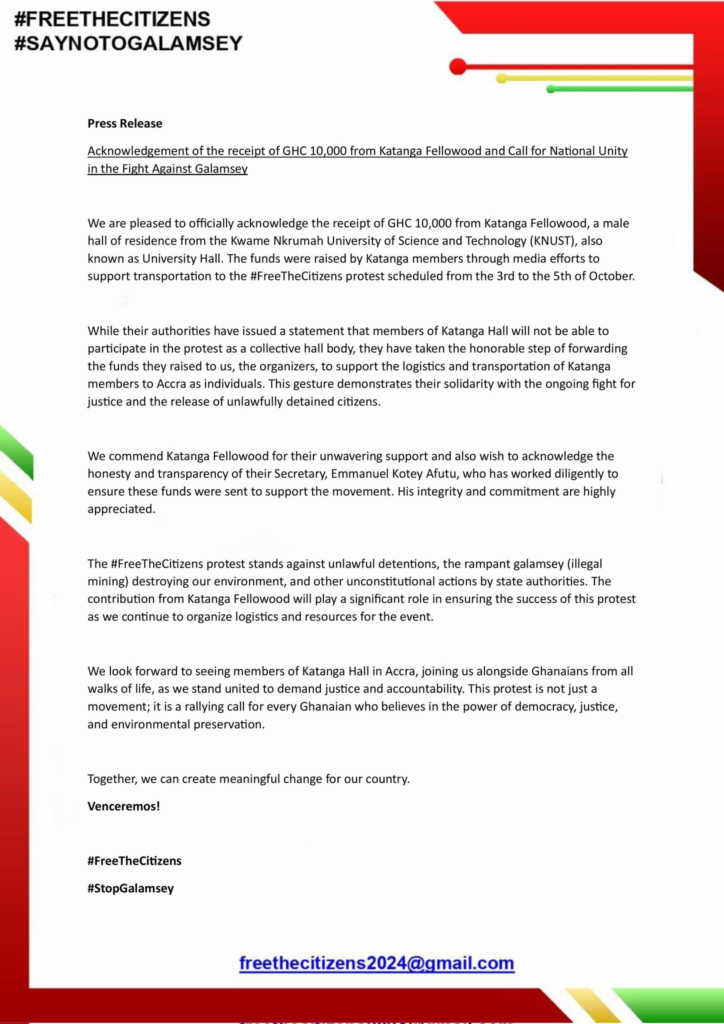
The #FreeTheCitizens movement has officially acknowledged the receipt of a GHC 10,000 donation from Katanga Fellowood, a group associated with the University Hall (Katanga) of the Kwame Nkrumah University of Science and Technology (KNUST).
The funds were raised by the Katanga group to support transportation logistics for the upcoming protest against illegal mining (galamsey) and the unlawful detention of citizens.
In a statement, the movement expressed gratitude for the financial support, noting that the funds would be instrumental in transporting protesters to Accra for the 3-day demonstration scheduled to take place from October 3 to October 5.
“We commend Katanga Fellowood for their unwavering support and commitment to the fight against injustice and the devastating effects of galamsey on our environment,” the organizers said.
Although Katanga Fellowood initially planned to participate in the protest as a collective group, they withdrew their collective involvement following consultations with traditional leaders.
The group explained that “this decision comes after extensive consultations led by the highest King of our land, Odeefour, who, in consultation with all stakeholders, including us, has decided to boycott the demonstration.”
Despite the withdrawal, the group has allowed its members to attend individually, emphasizing that “many of us will participate in the demonstration individually, adhering to the principles that have defined our commitment to justice and environmental preservation.”
The movement also praised the transparency and dedication of Emmanuel Kotey Afutu, the Secretary of Katanga Fellowood, who played a crucial role in ensuring the smooth transfer of the donation. “His integrity and commitment are highly appreciated,” the statement added.
The protest, which is set to start at Legon’s Okponglo and end at Independence Square, aims to draw attention to illegal mining activities, the destruction of water bodies, and other unconstitutional actions by state authorities.
Ningo-Prampram Member of Parliament, Sam Nartey George, has thrown his support behind the demonstration, declaring his willingness to join the cause. “Count me in. Citizens, no matter how uncomfortable, must be allowed to have a voice,” Sam George stated in a post on X (formerly Twitter).
The #FreeTheCitizens movement sees this demonstration as a rallying cry for all Ghanaians who believe in justice, environmental preservation, and the rule of law. “Together, we can create meaningful change for our country,” they concluded.
So far, a total of GHC13,400 has been donated for the demonstration.
Ghana’s Attorney-General and Minister for Justice, Godfred Yeboah Dame, has urged Chief Justice Gertrude Torkornoo to direct judges overseeing illegal mining, commonly known as ‘galamsey,’ cases to deliver their rulings within a month of the cases being brought to court.
Mr. Dame believes that such a directive would play a crucial role in addressing the ongoing environmental degradation caused by unregulated miners and unauthorized companies operating in Ghana’s forest reserves and water bodies.
Addressing the Annual Conference of the Association of Magistrates and Judges of Ghana, held at the La Beach Hotel on Wednesday, October 2, the Attorney-General expressed his concerns about the slow pace of prosecuting galamsey cases. He warned that these delays were worsening the destruction of the country’s natural resources.
“One category of cases whose speed of resolution by our courts, I often lament is the trial of illegal mining cases,” he stated. “It is beyond argument that the form of illegal mining known as ‘galamsey’ continues to wreak incalculable damage to our forest reserves and river bodies. A major setback to the struggle against galamsey is the rate of adjudication and punishment of offenders.”
In a direct appeal to the Chief Justice, Mr. Dame said: “Your ladyship, I therefore respectfully call on you to direct all judges sitting on galamsey cases to conclude the cases, the hearing of which has started, within one month from the commencement of the legal year on 10th October 2024.”
The Attorney-General also called on politicians to refrain from encouraging illegal mining through their public statements and actions. He condemned any calls for leniency or amnesty for those engaged in galamsey, stressing that such individuals should face the full force of the law.
“Politicians must also desist from encouraging galamsey through their rhetoric and actions,” Mr. Dame remarked. “Those who preach amnesty for galamsey offenders must be rejected. There should be no place for the grant of amnesty for such crimes in our body politic as the lives of citizens and the future of our nation are at risk.”
The Attorney-General’s remarks come amid growing public pressure on the government to hold accountable Municipal and District Chief Executives under whose watch illegal mining activities continue. One of the prominent voices calling for such action is Kenneth Ashigbey, Convener of the Media Coalition against Galamsey.
Illegal mining remains a significant challenge in Ghana, with disastrous effects on water bodies and the environment. Despite various government interventions, including the deployment of security forces to combat the menace, galamsey persists.
In response to the worsening situation, President Akufo-Addo recently established a five-member ad hoc ministerial committee to engage stakeholders and reassess the government’s efforts to tackle illegal mining.
Amid the reassessment, calls for more drastic measures, including a nationwide ban on small-scale mining and the declaration of a state of emergency, have gained traction. However, government officials have pushed back on these demands, citing the economic contributions of small-scale gold mining to the country’s economy.
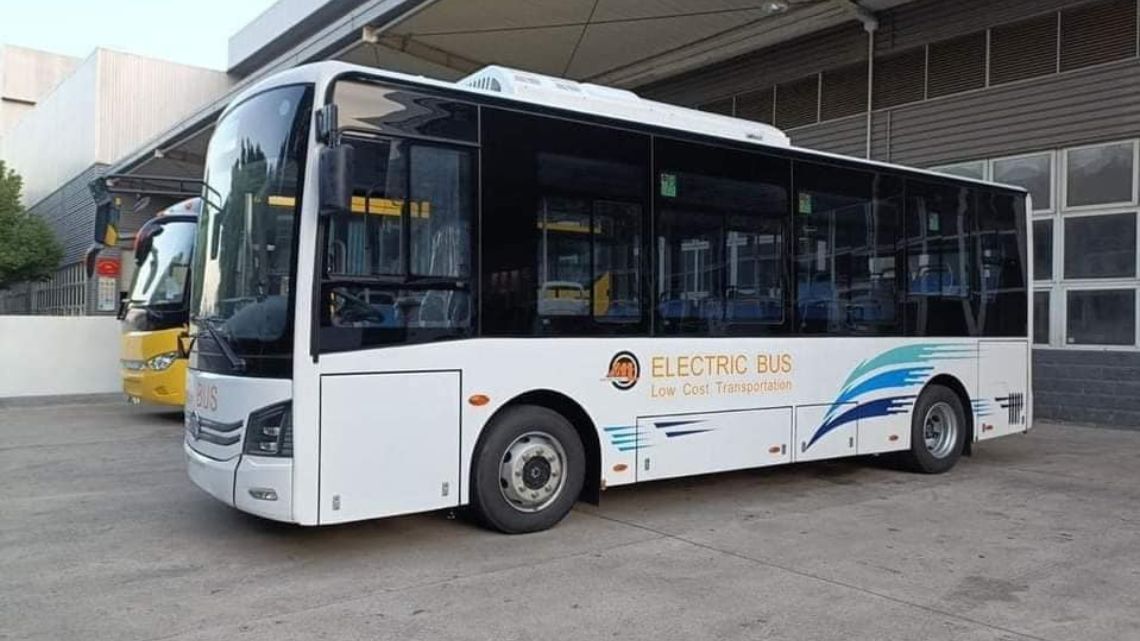
Chief Executive Officer of the National Entrepreneurship and Innovation Programme (NEIP), Kofi Ofosu Nkansah, the new electronic buses to be introduced by Vice President Dr Mahamudu Bawumia are currently on their way to Ghana.
He noted that the introduction of electronic buses is set to transform the transportation sector and significantly lower commuting costs. It is expected to reduce transportation expenses by as much as 40%.
“Promise Made – Promise Delivered… Electric Buses are coming. No fuel cost, low maintenance. Public transport fare to be reduced by about 40%,” Mr Nkansah wrote in a number of Facebook posts.
During his address at the Ofie Mega Walk in Akropong, Dr. Bawumia, the flagbearer of the New Patriotic Party (NPP), reiterated his commitment to reducing public transportation costs by at least 40% through the introduction of electric vehicles.
He confirmed that plans and estimates for the transition from traditional diesel, gas, and petrol-powered public transport to electric vehicles have been finalized, with the buses expected to arrive in Ghana before the December elections.
He emphasized that this shift will significantly lower transportation costs, ensuring the projected 40% reduction in public transport fares is realized promptly.
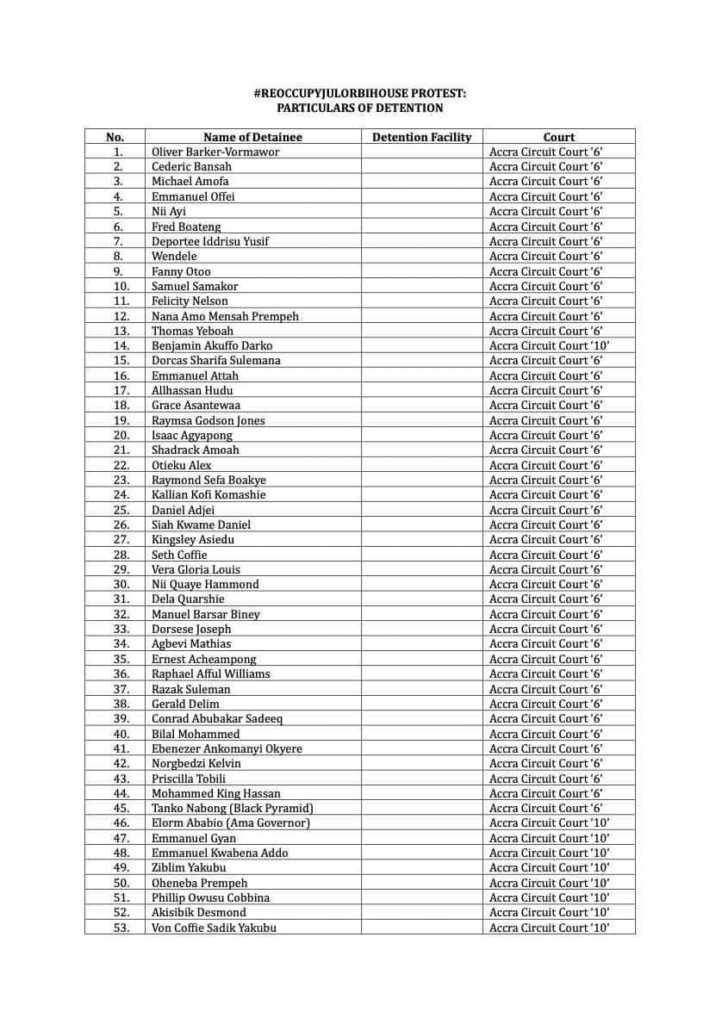
A reported list of the remanded individuals who participated in the Democracy Hub protest aimed at halting illegal mining (galamsey) has surfaced online.
The protest in the country descended into chaos, leading to the arrest of 53 demonstrators. Among the detainees are Oliver Barker Vormawor, Grace Asantewaa, Felicity Nelson and Elorm Ama Ababio, popularly known as Ama Governor.
They face charges including conspiracy to commit a crime, unlawful assembly, causing unlawful damage, offensive conduct conducive to the breach of peace, and assault on a public officer. Despite pleading not guilty, the court remanded them.
Meanwhile, Attorney-General and Minister for Justice, Godfred Dame, has urged the Ghana Police Service to expedite their investigations into the recent Democracy Hub protest, which escalated into violence in Accra.
His appeal was made during the Annual Conference of the Association of Magistrates and Judges of Ghana (AMJG), held at the La Beach Hotel in Accra on Wednesday, October 2, 2024.
Speaking under the theme “Improving the Security and Welfare of the Judiciary for Effective Justice Delivery,” Mr. Dame emphasized the necessity of swiftly concluding the investigation into the protest, which resulted in the arrest and remand of numerous individuals.
“I urge the Police Service to swiftly conclude investigations by the next adjourned dates of the cases involving the prosecution of excesses from recent protests in Accra so as to exclude by that date, all those against whom sufficient evidence cannot be found to proceed further,” the Attorney-General stressed.
He also recommended that the prosecution consider relevant bail applications at the next adjournment. “I will also advise the prosecution to consider relevant bail applications made at the next adjourned dates of the cases,” he stated.
Attorney-General and Minister for Justice, Godfred Dame, has asserted that protestors who go beyond the boundaries of free expression must face legal consequences.
His remarks came during the Annual Conference of the Association of Magistrates and Judges of Ghana (AMJG), held at the La Beach Hotel in Accra on Wednesday, October 2, 2024.
Speaking under the theme “Improving the Security and Welfare of the Judiciary for Effective Justice Delivery,” Mr. Dame emphasized the responsibility of protestors to respect community safety.
“In any advanced democracy, when protestors exceed the limits of free expression and show disregard for their communities and the safety of their own lives and that of other members of the community (irrespective of the motives for the protests embarked on), they face the rigors of the law,” he stated.
Mr. Dame’s remarks come in the wake of ongoing discussions surrounding the Democracy Hub protest against illegal mining (galamsey), which has resulted in the arrest and remand of demonstrators facing multiple charges.
To underscore his point, he referenced recent international incidents. He cited a case from July 18, 2024, in the United Kingdom, where five supporters of the “Just Stop Oil” climate campaign were sentenced to lengthy jail terms for causing a gridlock on London’s motorway.
The Southwark Crown Court found the protestors guilty of conspiracy to cause public nuisance, with the leader receiving a five-year sentence and the others four years each. “The protestors had ‘crossed the line from concerned campaigner to fanatic,’” Mr. Dame quoted the presiding judge.
Additionally, he highlighted the violence that erupted in England and Northern Ireland between July 30 and August 9, 2024, following a mass stabbing incident that killed three children. Misinformation fueled far-right riots, where protestors attacked police officers and engaged in other violent acts.
After promising to hold the protestors accountable, the new Prime Minister, Keir Starmer, ensured that “the protestors will feel the full force of the law.”
Mr. Dame warned that the legitimacy of protest motives does not exempt individuals from prosecution for unlawful actions. “Respectfully, the lesson to be drawn from the treatment of unlawful or violent expression of free speech in the United States and the United Kingdom is that the legitimacy of the declared object of specific protests does not matter,” he said.
While supporting the right to peaceful protest, the Attorney-General stressed that it must be exercised within the framework of the law.
“I can therefore understand it when the Judiciary supports the work of law enforcement officers by dealing firmly and in accordance with the law with all acts of violence and lawlessness, especially as we go into Election 2024,” he added.
Attorney-General and Minister for Justice, Godfred Dame, has called on prosecutors to consider relevant bail applications for demonstrators involved in the recent Democracy Hub protest against illegal mining (galamsey).
His statement was made during the Annual Conference of the Association of Magistrates and Judges of Ghana (AMJG), held at the La Beach Hotel in Accra on Wednesday, October 2, 2024.
Addressing the gathering, the Attorney-General emphasized the importance of ensuring fairness in the ongoing legal proceedings related to the protest.
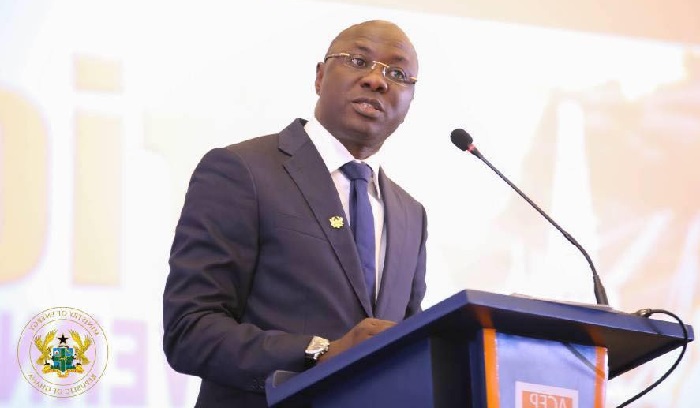
Attorney-General Godfred Dame
“I will also advise the prosecution to consider relevant bail applications made at the next adjourned dates of the cases,” Mr. Dame stated.
The protest, aimed at drawing attention to the harmful effects of illegal mining, resulted in the arrest and subsequent remand of 50 demonstrators, including 11 individuals who appeared before the Accra Circuit Court.
The demonstrators face charges such as conspiracy to commit a crime, unlawful assembly, causing unlawful damage, offensive conduct conducive to the breach of peace, and assault on a public officer. Despite pleading not guilty, the protestors including Ama Governor and Convenor for the group, Oliver Barker-Vormawor were remanded into police custody, a decision that has sparked widespread public discourse, including concerns raised by former President John Dramani Mahama, who described the remand as an abuse of their rights.
The Attorney-General also urged the police to expedite their investigations into the matter.
“I urge the Police Service to swiftly conclude investigations by the next adjourned dates of the cases involving the prosecution of excesses from recent protests in Accra, so as to exclude by that date, all those against whom sufficient evidence cannot be found to proceed further,” he emphasized.
Reflecting on the broader implications of public protests, Mr. Dame reiterated the need to uphold the rule of law. He cited international examples, such as the July 2024 sentencing of climate campaigners in the United Kingdom, to underscore the importance of prosecuting unlawful actions during protests.
He noted, “Respectfully, the lesson to be drawn from the treatment of unlawful or violent expression of free speech in the United States and the United Kingdom is that the legitimacy of the declared object of specific protests does not matter.”
While acknowledging the right to peaceful demonstration, Mr. Dame stressed that the rule of law must prevail. “Whilst acknowledging the legitimacy of concerns which motivate some protests, the State must deplore and, in fact, prosecute acts of protestors which threaten the running of essential services, infringe on the right to free movement of others, or attack the safety of security forces,” he said.
With the 2024 general elections fast approaching, the Attorney-General highlighted the critical role of the Judiciary in maintaining peace and security. He called on judicial officers to deal firmly with cases of lawlessness, stating, “The peace and territorial integrity of our nation at this time… is far greater than the pursuit of any parochial political goals, just as the right to free expression is no more paramount than the right of others to access essential services and the duty of the Police to maintain the peace of Ghana.”
Ghana’s laws on bail and remand are central to these conversations, with the legal framework designed to prevent excessive detention while ensuring that justice is served.
Section 96 of the Criminal Procedure Code, 1960 Act 30, which tackles the concerns provides:
(1) Subject to the provisions of this section, a court may grant bail to any person who appears or is brought before it on any process or after being arrested without warrant, and who
(a) is prepared at any time or at any stage of the proceedings or after conviction pending an appeal to give bail, and
(b) enters into a bond in the manner hereinafter provided, with or without a surety or sureties, conditioned for his appearance before that court or some other court at a time and place mentioned in the bond.
(2) Notwithstanding anything in subsection (1) of this section or 15, but subject to the following provisions of this section the High Court or a Circuit Court may in any case direct that any person be admitted to bail or that the bail required by a District Court or police officer be reduced.
(3) The amount and conditions of bail shall be fixed with due regard to the circumstances of the case and shall not be excessive or harsh.
(4) A court shall not withhold or withdraw bail merely as a punishment.
(5) A court shall refuse to grant bail if it is satisfied that the defendant
(a) may not appear to stand trial; or
(b) may interfere with any witness or evidence, or in any way hamper police investigations; or
(c) may commit a further offence when on bail; or
(d) is charged with an offence punishable by imprisonment exceeding six months which is alleged to have been committed while he was on bail.
(6) In considering whether it is likely that the defendant may not appear to stand trial the court shall take into account the following consideration:
(a) the nature of the accusation;
(b) the nature of the evidence in support of the accusation; (c) the severity of the punishment which conviction will entail;
(d) whether the defendant, having been released on bail on any previous occasion, has wilfully failed to comply with the conditions of any recognisance entered into by him on that occasion;
(e) whether or not the defendant has a fixed place of abode in Ghana, and is gainfully employed; (f) whether the sureties are independent, of good character, and of sufficient means.
(7) A court shall refuse to grant bail –
(a) in a case of treason, subversion, murder, robbery, hijacking, piracy or escape from lawful custody, or
(b) where a person is being held for extradition to a foreign country.
Attorney-General and Minister for Justice, Godfred Dame, has called on the Ghana Police Service to expedite their investigations into the recent Democracy Hub protest, which turned violent in Accra.
His call came during the Annual Conference of the Association of Magistrates and Judges of Ghana (AMJG), held at the La Beach Hotel in Accra on Wednesday, October 2, 2024.
Speaking under the theme “Improving the Security and Welfare of the Judiciary for Effective Justice Delivery,” Mr. Dame stressed the importance of swiftly concluding the investigation into the protest, which led to the arrest and remand of several individuals.
He urged the police to ensure that investigations are completed before the next adjournment of court cases linked to the protest.
“I urge the Police Service to swiftly conclude investigations by the next adjourned dates of the cases involving the prosecution of excesses from recent protests in Accra so as to exclude by that date, all those against whom sufficient evidence cannot be found to proceed further,” the Attorney-General emphasized.
He also advised the prosecution to consider relevant bail applications at the next adjourned dates. “I will also advise the prosecution to consider relevant bail applications made at the next adjourned dates of the cases,” he added.
The Democracy Hub protest, which sought to end illegal mining (galamsey) in the country, erupted into chaos, leading to the arrest of 50 demonstrators. Of those arrested, 11 appeared before the Accra Circuit Court and were remanded into police custody. The charges against them include conspiracy to commit a crime, unlawful assembly, causing unlawful damage, offensive conduct conducive to the breach of peace, and assault on a public officer.
Despite pleading not guilty, the court remanded them, raising concerns from various quarters, including former President John Dramani Mahama, who described the two-week remand as an abuse of their rights.
In his speech, Mr. Dame referenced international incidents to highlight how violent protests are handled in other democracies. He cited a July 2024 case in the United Kingdom, where five supporters of the “Just Stop Oil” climate campaign, who caused a gridlock on London’s motorway, were sentenced to lengthy jail terms.
“The protestors had ‘crossed the line from concerned campaigner to fanatic,’” he quoted Justice Christopher Hehir of the Southwark Crown Court. Similarly, he mentioned the prosecution of far-right and anti-immigration rioters in the UK following a mass stabbing incident in Southport.
Drawing lessons from these international cases, the Attorney-General emphasized that while the right to freedom of expression is essential, it must be exercised responsibly and within the limits of the law. “Respectfully, the lesson to be drawn from the treatment of unlawful or violent expression of free speech in the United States and the United Kingdom is that the legitimacy of the declared object of specific protests does not matter.”
He further noted, “Whilst acknowledging the legitimacy of concerns which motivate some protests, the State must deplore and in fact, prosecute acts of protestors which threaten the running of essential services, infringe on the right to free movement of others, or attack the safety of security forces.”
As Ghana approaches the 2024 elections, Mr. Dame urged the Judiciary to deal firmly with acts of violence and lawlessness to protect the country’s democratic progress. He highlighted the importance of maintaining law and order, especially during this critical period.
“The peace and territorial integrity of our nation at this time… is far greater than the pursuit of any parochial political goals, just as the right to free expression is no more paramount than the right of others to access essential services and the duty of the Police to maintain the peace of Ghana,” he concluded.
The Attorney-General’s remarks come amidst growing concerns over public demonstrations and their potential to disrupt peace and security in the lead-up to the general elections.
Attorney-General and Minister for Justice, Godfred Dame, has called on the Judiciary to uphold the law impartially, ensuring that justice is administered without being swayed by emotions, popular opinion, or public sentiments.
He made this statement during the Annual Conference of the Association of Magistrates and Judges of Ghana (AMJG), held at the La Beach Hotel in Accra on Wednesday, October 2, 2024.
Addressing the conference under the theme “Improving the Security and Welfare of the Judiciary for Effective Justice Delivery,” the Attorney-General underscored the importance of the Judiciary’s role as Ghana heads into the 2024 general elections.
“Your Ladyship, the role of the judiciary in our society will become more pronounced as we go into the general elections of 2024. Vested with the power to adjudicate on disputes between the state and its organs, state and individuals and businesses, individuals and individuals or businesses, the Judiciary is required to be an impartial arbiter. Justice is dispensed in accordance with law and law only,” he emphasized.
Mr. Dame stressed the need for the Judiciary to remain firm in applying the law, noting that justice must be delivered without bias, regardless of one’s social status.
“There is the need to ensure that crime or wrongdoing does not go unpunished for any class of society, privileged or underprivileged. In this regard, judges must understand that they work in the overall interests of the State only,” he stated.
With the upcoming presidential and parliamentary elections drawing near, the Attorney-General highlighted the critical role that the Judiciary will play in ensuring peace and stability through the fair and impartial dispensation of justice.
“As we once again prepare to usher ourselves into an important phase in the life of this nation with the conduct of presidential and parliamentary elections, it is even more important for the Judiciary to demonstrate that justice is dispensed according to law and not emotions, popular opinion, or public sentiments.”
Mr. Dame further warned against the rising tensions ahead of the elections, referring to certain actions aimed at disrupting peace and creating disorder.
“Respectfully, an unhealthy cycle in the life of the nation is occurring again. The drumbeats of violence, mayhem, incitement to violence, and civil disobedience are being beaten and indeed, have gone a notch higher. There are attempts to create tension ahead of the elections and instill fear into people through demonstrations which, in some cases, are a ruse for mounting an attack on the security forces of our nation and disrupting the running of essential public services. This, with the greatest respect, is not countenanced in any democracy.”
He urged the Judiciary to remain steadfast in upholding the law and ensuring that justice is served objectively, without succumbing to external pressures or social commentary.
The Attorney-General and Minister for Justice, Godfred Dame, has emphasized the critical role of the Judiciary in the governance of the country.
At the Annual Conference of the Association of Magistrates and Judges of Ghana (AMJG) held at La Beach Hotel in Accra on Wednesday, October 2, 2024, speaking under the theme “Improving the Security and Welfare of the Judiciary for Effective Justice Delivery,” the Attorney-General described the Judiciary’s function as “crucially indispensable” to the nation’s existence.
In his address, Mr. Dame acknowledged the vital contributions of all three arms of government—Executive, Legislature, and Judiciary—but underscored the Judiciary’s unique role.
He stated, “Respectfully, I know about the important contribution that each of the arms of State – the Executive, Legislature and the Judiciary – makes. I observe that government is always at its best and most efficient when each arm of the State has a harmonious relationship with the others and respects the limits of their authority.”
However, the Attorney-General highlighted the Judiciary’s pivotal function in safeguarding the nation’s core values. “Of the three branches of government, the one whose functions, in my view, are crucially indispensable and fundamental to our existence as a country, whether under democratic governance or not, is the Judiciary,” he said.
Mr. Dame stressed the Judiciary’s role in resolving complex and far-reaching societal issues.
“When some of the most difficult moral, social, economic, and political questions fall for resolution – issues that go to the core of the society – it is judges, who with their wisdom derived from long experience, intellect, discipline, and knowledge of the law, shoulder the grave responsibility for determining those issues in furtherance of the principle that justice should be done,” he remarked, adding, “The work of the Judiciary sits at the heart of our society and our democracy.”
As Ghana approaches the general elections in 2024, the Attorney-General noted that the Judiciary’s impartiality will be more critical than ever.
“Your Ladyship, the role of the judiciary in our society will become more pronounced as we go into the general elections of 2024. Vested with the power to adjudicate on disputes between the state and its organs, state and individuals, and businesses, the Judiciary is required to be an impartial arbiter,” he stated.
Mr. Dame also highlighted the importance of justice being applied equitably across all societal classes.
“There is the need to ensure that crime or wrongdoing does not go unpunished for any class of society, privileged or underprivileged. In this regard, judges must understand that they work in the overall interests of the State only,” he concluded.
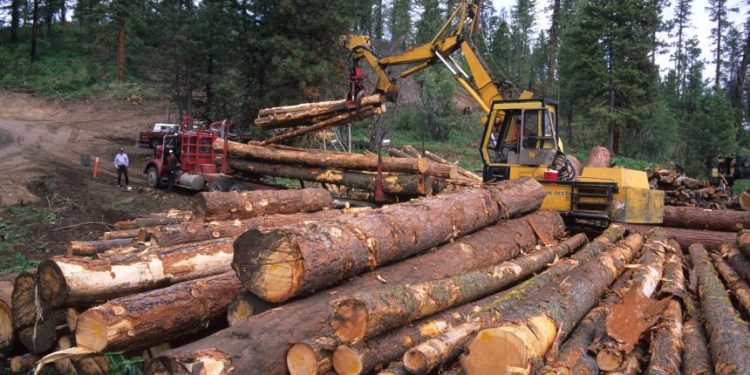
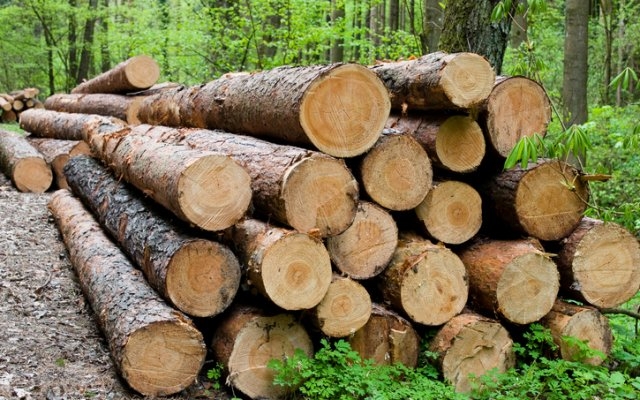
Ghana’s export of timber and wood products generated €31,256,035.35 from a total exported volume of 68,965.620 m³ during the second quarter (April to June) of 2024, according to the Forestry Commission.
However, this figure reflects a decrease of 15.27% in value and 15.34% in volume compared to the previous year, where exports totaled €36,890,952.87 from 81,462.698 m³ in the same quarter of 2023.
Despite the overall decline in both value and volume, the timber sector remains a crucial contributor to Ghana’s economy, showcasing its significance in international trade. The second quarter of 2024 recorded a total of 115 exporters engaged in the timber trade.
Among these, the top five exporters were Samartex Timber and Plywood Company Limited, Logs and Lumber Limited, Multimodal Freight Services Limited, John Bitar and Company Limited, and 3RDI Shipping Agency Limited. Together, they exported 13 different wood products across 64 species to 52 countries, reaching a total of 162 diverse buyers.
The top five products exported during this period included lumber (air-dried), lumber (kiln-dried), plywood, and billets, indicating a healthy demand for these materials. In terms of species, the leading varieties felled were teak, wawa, ceiba, eucalyptus, and denya.
Ghana’s timber exports also found their way to various global destinations, with the top five markets being India, Senegal, the United States of America, Germany, and Togo. Notably, the leading buyers during this period included Thai Phat International Company Limited, Shanghai Timber Furnishing Company Limited, Shree Sagar General Trading FZE, Miro Forestry Developments Limited, and Aron Global PTE Limited, reflecting the diverse international partnerships established by Ghanaian exporters.
Interestingly, while the overall average unit price of timber increased slightly from €452.86/m³ in Q2 2023 to €453.21/m³ in Q2 2024 (an increase of 0.08%), the exports to ECOWAS countries experienced a significant downturn.
Ghana generated €1,702,426.33 from timber exports to ECOWAS nations in Q2 2024, a stark contrast to the €3,038,606.66 earned during the same period in 2023, when export volumes were significantly higher at 7,906.619 m³.
The average unit price for timber and wood products sold to ECOWAS countries also declined from €384.31/m³ in Q2 2023 to €354.31/m³ in Q2 2024.
The decline in timber exports reflects changing market dynamics and potentially increasing competition from other timber-exporting countries. However, the diversification of export destinations and ongoing engagement in both global and regional markets demonstrate Ghana’s resilience in the timber sector.
The ECOWAS market continues to play an essential role in Ghana’s timber industry, with exports to countries like Togo, Senegal, Burkina Faso, and Niger indicating varying levels of demand.
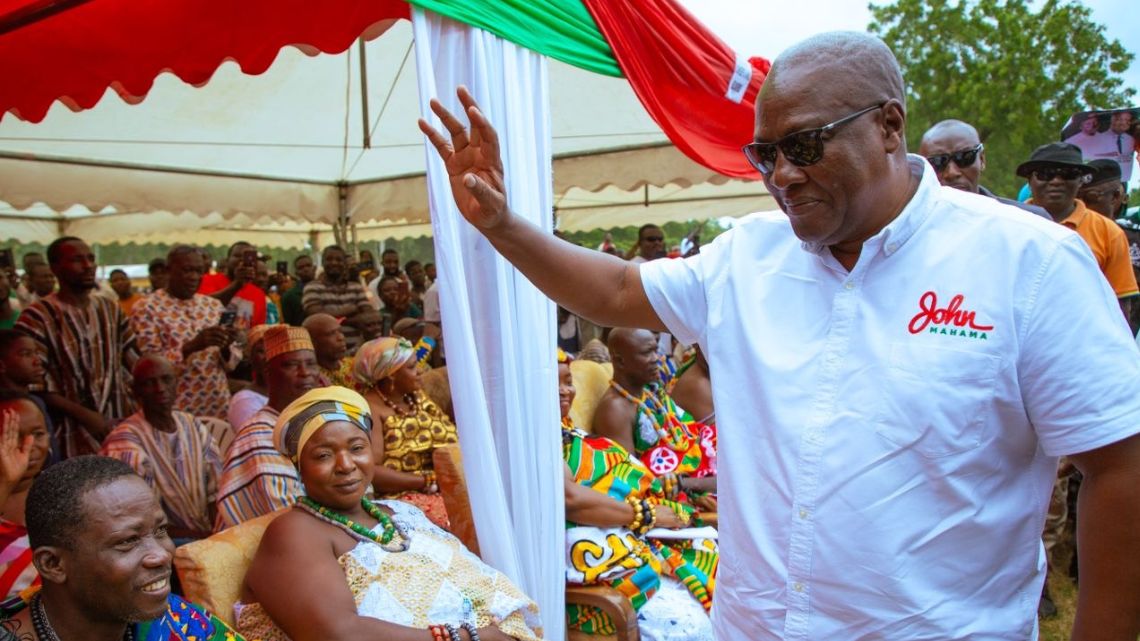
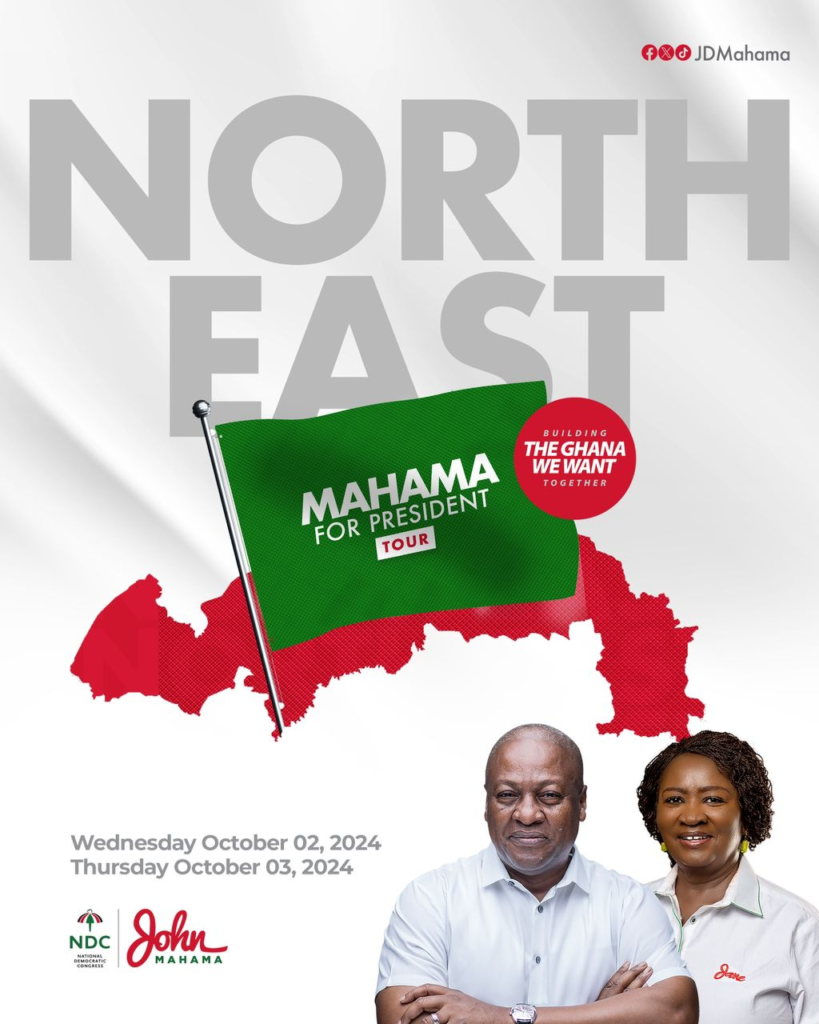
John Dramani Mahama, the flagbearer of the National Democratic Congress (NDC), is set to kick off a two-day campaign tour of the North East Region today.
This visit aims to engage with constituents and strengthen his party’s message as the upcoming elections approach. During the tour, Mahama plans to conduct a series of rallies and meetings with community leaders, party supporters, and other stakeholders in the region.
The campaign forms part of his broader strategy to mobilize support and articulate his vision for the nation, with a focus on critical issues such as education, healthcare, and economic development.
The North East Region, recognized for its rich cultural heritage and agricultural potential, has been a key focus of Mahama’s campaign efforts. He aims to connect with voters personally, addressing their concerns while highlighting the NDC’s commitment to enhancing the lives of Ghanaians in the region.
The National Labour Commission (NLC) has assured that the government will take immediate steps to address the concerns raised by Organised Labour regarding illegal mining, also known as galamsey.
This comes in light of Organised Labour’s declaration of a nationwide strike set to commence on October 10, 2024, in response to the government’s failure to tackle the pressing issue, which has severely impacted the environment and local livelihoods.
During an interview on Citi FM’s Eyewitness News on Tuesday, NLC Executive Secretary Ofosu Asamoah expressed his deep concern over the planned strike, noting its potential to disrupt the country significantly.
“It is very worrying. If you even listen to the way I speak, you will know that I am worried because how can we have the whole of the labour force in Ghana being on strike? That will be a very massive loss to the government and the people of Ghana,” he stated.
Mr Asamoah highlighted the potential economic repercussions of such a widespread strike, especially considering the current state of Ghana’s economy.
“Our present economic situation is not the best. If we are going to lose all that, I don’t think it is good for us,” he added.
He expressed hope that the government would take swift action to resolve the issues raised by Organised Labour, which could prevent the strike from occurring. “I am sure the government will take immediate steps to address their concerns,” he said.
Additionally, Asamoah announced that the NLC would meet on Tuesday, October 2, to discuss Organised Labour’s decision to strike.
In an emergency meeting on October 1, 2024, members of Organised Labour voiced their frustrations regarding the government’s inaction, having previously set a deadline at the end of September for effective measures to combat illegal mining.
Joshua Ansah, Secretary General of the Trades Union Congress (TUC), explained the rationale behind the strike, stating, “Following the expiration of our deadline and the government’s failure to meet our demands regarding illegal mining, Organised Labour has decided to declare a nationwide strike effective October 10, 2024.” He further emphasized the damaging impact of galamsey, which not only devastates the environment but also poses serious health risks to affected communities.
Illegal mining continues to pose a significant challenge in Ghana, endangering vital water bodies and ecosystems. Despite government interventions, including deploying security forces and arresting illegal miners, the issue remains unresolved.
The National Labour Commission (NLC) has expressed serious concerns about the impending nationwide strike organized by Organised Labour in response to the government’s failure to tackle illegal mining, also known as galamsey.
The strike, scheduled to commence on October 10, 2024, was declared after Organised Labour, representing various unions and workers’ groups, demanded government action by the end of September to address the pressing issue of illegal mining, which has severely impacted the environment and local livelihoods.
Speaking in an interview on Citi FM’s Eyewitness News on Tuesday, the Executive Secretary of the NLC, Ofosu Asamoah, voiced his anxiety over the planned strike, noting its potential to cause significant disruptions to the country.
“It is very worrying. If you even listen to the way I speak, you will know that I am worried because how can we have the whole of the labour force in Ghana being on strike? That will be a very massive loss to the government and the people of Ghana,” he stated.
Asamoah highlighted the severe economic consequences such a strike could have, especially given the current state of Ghana’s economy.
“Our present economic situation is not the best. If we are going to lose all that, I don’t think it is good for us,” he added.
He expressed hope that the government would take immediate steps to resolve the issues raised by Organised Labour, thus preventing the strike from going ahead.
“I am sure the government will take immediate steps to address their concerns,” Asamoah said.
Additionally, Asamoah revealed that the NLC would be meeting on Tuesday, October 2, to deliberate on Organised Labour’s decision to strike.
During an emergency meeting held on October 1, 2024, members of Organised Labour voiced their frustration with the government’s inaction, having previously set a September deadline for effective measures to combat illegal mining.
Secretary General of the Trades Union Congress (TUC), Joshua Ansah, explained the rationale behind the strike. “Following the expiration of our deadline and the government’s failure to meet our demands regarding illegal mining, Organised Labour has decided to declare a nationwide strike effective October 10, 2024,” he said. Ansah further stressed the damaging impact of galamsey, which not only devastates the environment but also poses serious health risks to affected communities.
Illegal mining remains a significant challenge in Ghana, endangering vital water bodies and ecosystems. Despite government interventions, including the deployment of security forces and the arrest of illegal miners, the issue continues to persist.
The Electoral Commission (EC) has vowed to demonstrate in court that its decision to disqualify 11 presidential aspirants from the December 7 elections was conducted in a transparent and fair manner.
During an Inter-Party Advisory Committee (IPAC) meeting at the Alisa Hotel on October 1, EC Chairperson Madam Jean Mensa emphasized that the Commission’s process was thorough and impartial.
“You come again to nominations as I said. It was an open process. There was fairness. Committees were set up. And there are reports that have been provided based on the committee’s work. The process is transparent.
“A few have taken us to court. And we will prove to the citizenry and the people of Ghana that the process is transparent and fair. The EC has nothing to hide and it has no intention to stop anybody’s presidential ambitions.”
Among those disqualified are Bernard Anbataayela Mornah of the People’s National Convention (PNC) and Kofi Siaw Asamoah of the Progressive People’s Party, both of whom have taken legal action against the EC, seeking to reverse the decision.
The governing New Patriotic Party (NPP) has urged the public to dismiss what it calls the opposition National Democratic Congress (NDC)’s “propaganda” regarding claims of a bloated voter register.
This statement comes after the NDC failed to provide evidence to back their allegations during an Inter-Party Advisory Committee (IPAC) meeting on October 1.
The Electoral Commission (EC) convened the meeting at the Alisa Hotel in Accra to address concerns about the 2024 voters’ register. The NDC had previously alleged that the register was fraught with ineligible voters and other inaccuracies, which led to a nationwide protest on September 17, calling for a forensic audit of the electoral roll.
However, the NPP contended that the NDC missed an opportunity to substantiate these claims during the IPAC session. Speaking to the media after the meeting, NPP General Secretary Justin Frimpong Kodua criticised the NDC for not presenting any concrete evidence.
“All of you [the media] were here. Tell me, all the presentations that were made by their [the NDC’s] reps, at what point in time did they even give us evidence? Did they give us the data that they turned out? None,” Mr. Kodua remarked.
He further accused the NDC of diverting from the real issue, saying, “They started talking about propaganda matters, about a roof that is leaking and using the mop to clean it. Is that why we came here? We came here based on the several allegations that you have made. Why did you run away? Why is the NDC running away?”
The NPP believes the NDC’s accusations lack merit and should be ignored by the electorate as the nation prepares for the 2024 elections.
Presidential Candidate of the Movement for Change, Alan Kwadwo Kyerematen, has reiterated his strong stance against illegal mining, commonly known as galamsey, by proposing life imprisonment for offenders as a severe deterrent.
Speaking at an Institute of Economic Affairs (IEA) encounter in Accra on October 1, 2024, Mr. Kyerematen emphasized the necessity of tougher penalties to safeguard Ghana’s environment and natural resources, criticizing the current 10-year prison sentence for illegal miners as inadequate to deter the destructive practice.
Mr. Kyerematen proposed life imprisonment as a more effective punitive measure to curb the illegal mining activities that continue to devastate the country’s water bodies and land. He also promised to introduce advanced technology aimed at restoring polluted rivers and water sources as part of his broader environmental protection agenda.
He stressed that his plan to impose life sentences would not only punish offenders but also contribute to the long-term preservation of Ghana’s natural resources for future generations. In addition to cracking down on illegal mining, he pledged to prioritize sustainable resource management, striking a balance between economic development and environmental conservation.
Mr. Kyerematen further proposed a one-year ban on small-scale and community mining, whether legal or illegal, to facilitate the restoration of polluted water bodies within that period. He stated that new legislation would be introduced to enforce a complete ban on mining in river bodies and forest reserves, with life imprisonment as the penalty for violations.
“Impose a complete ban for one year on small-scale, community mining, whether legal or illegal. Within one year we can clean all our river bodies… The introduction of new legislation and regulations will impose a complete ban on any form of mining in river bodies and forest reserves, with associated sanction regimes including life imprisonment for the violation of these new laws.”
He emphasized the importance of making punishment meaningful, saying, “Ghanaians, you need to get to the point where when you punish them, they will feel the impact of the punishment. If it is just a question of 10 years, the amount of money that they may be getting from galamsey, it will not be enough deterrent. They will go in for 10 years, come back, and continue.”
“So we have to be serious about how we deal with galamsey,” he concluded, calling on Ghanaians to support his vision for a cleaner and safer environment as a critical step toward sustainable growth and development.
Joyce Bawah Mogtari, a prominent National Democratic Congress (NDC) member and special aide to former President John Dramani Mahama, has expressed her deep appreciation for the unwavering loyalty shown by key figures within the party following the 2016 elections.
In particular, she applauded Stan Dogbe, Dr. Edward Omane Boamah, and others for their steadfast support of Mahama during what was a challenging period for the NDC.
In a social media post, Bawah Mogtari underscored the significance of loyalty and unity within the party, especially in the aftermath of the 2016 defeat, when the NDC lost both the presidency and its parliamentary majority to the New Patriotic Party (NPP).
She acknowledged that while many distanced themselves from the party’s leadership during that time, the dedication of individuals like Stan Dogbe and Omane Boamah to Mahama and the NDC’s values played a critical role in keeping the party’s morale intact.
Bawah Mogtari praised their loyalty, emphasizing that it was pivotal in maintaining Mahama’s political influence and facilitating his return as the NDC’s flagbearer for both the 2020 and 2024 elections.
“These Men have demonstrated extraordinary courage excellence and stoicism. They will always have my respect,” she wrote.
She highlighted that such commitment from key figures is essential to the NDC’s ongoing relevance and success in national politics.
Looking ahead to the 2024 elections, Joyce Bawah expressed confidence that Mahama’s inner circle, including those she commended, will continue their tireless efforts to secure victory for the NDC.
She called on all party members to emulate their loyalty and dedication as the NDC prepares for its next electoral contest.
The Chief Executive Officer of the National Entrepreneurship and Innovation Programme (NEIP), Kofi Ofosu Nkansah, has asserted that engaging with traditional priests during political campaigns should not be seen as immoral or wrong.
In a post on Facebook on Tuesday, October 1, Mr. Nkansah emphasized that Ghana is a multifaith state, and anyone seeking to serve as President must respect all major religions in the country.
“Ghana is a multifaith State. Whoever wants to serve us as President must have respect for all the major religions. Interacting with Traditional Priests on campaign tours doesn’t make anyone evil. Focus on your Religion and leave others to do theirs,” he wrote.
His remarks come in response to recent criticisms aimed at Vice President Dr. Mahamudu Bawumia for engaging with traditional priests during his campaign, which some have perceived as inappropriate.
Mr. Nkansah noted that Ghana is home to a diverse array of faiths, including Christianity, Islam, and various traditional beliefs. He highlighted that this diversity is a hallmark of the nation’s cultural richness and should be celebrated rather than criticized.
Uncertainty looms over the likely victor as Ghana approaches the December 2024 presidential elections, with contrasting polls painting divergent outcomes for the flagbearers of the two major political parties tipped to be the forerunners.
Recent data from Global InfoAnalytics suggests that John Dramani Mahama, the flagbearer of the National Democratic Congress (NDC), maintains his lead in the poll with 51.1% of the votes.
In contrast, a separate poll from Outcomes International indicates that Dr Mahamudu Bawumia of the New Patriotic Party (NPP) will emerge with 49.4% of the votes, while Mahama follows closely with 45.1%. This divergence in polling outcomes raises critical questions about voter sentiment and the potential for an election runoff, leaving political analysts and the electorate alike in a state of uncertainty.
The final field poll conducted by Global InfoAnalytics also reveals that using the likely voters’ model, Mahama is at 49.3%, while Bawumia is at 35.9%. The race is unlikely to go into a runoff as the yearly average of the poll shows Mahama at 53% and Bawumia at 36%. Voter apathy is expected to be a challenge for the governing NPP, as 16% of voters who say they will not vote are their supporters.
Importantly, the outcome of the December elections will depend on which candidate receives greater support from their base, as well as their ability to win floating voters. The poll suggests that while Bawumia receives 88% support from his base, Mahama attracts 96%, giving him an 8-point advantage. Among floating voters, Mahama leads Bawumia 54% to 23%, a 31-point advantage.
The Outcomes International poll highlights that less than 1% of the votes will be shared among other candidates, with 5.2% still undecided. A total of 25,911 respondents were interviewed across all 276 constituencies in the country, and the survey suggests that a runoff could be inevitable, as neither major party is projected to secure an outright majority in the first round.
Furthermore, the survey indicates that 49% of respondents identify with the NPP and NDC, with a considerable 3% yet to decide their preference. While Bawumia’s campaign has targeted Muslim demographics, the poll shows a significant decline in support among this group, dropping by nearly 4% from July to October 2024.
Additionally, among first-time voters, Mahama now leads with 46%, compared to Bawumia’s 38%. Notably, Mahama has gained support from 19% of voters who previously supported Nana Akufo-Addo in 2020, with greater switches occurring in regions like Greater Accra and Central.
Mahama is said to lead in twelve regions, with Bawumia only leading in four. As both candidates navigate this complex landscape, the polls reflect a deeply competitive race, with the possibility of smaller parties influencing the final outcome. With voter dissatisfaction at 77% among respondents, and the significance of party manifestos driving voter choices, the stakes are high,
Meanwhile, a recent survey by the Office of the President suggests that a run-off in the upcoming general presidential elections could be inevitable. This implies that the two major political parties; neither the National Democratic Congress (NDC) being led by former President John Dramani Mahama nor the New Patriotic Party (NPP), with its flagbearer, Vice President Dr Mahamudu Bawumia, are projected to secure an outright majority in the first round.
A total of 25,911 respondents were interviewed across all the 276 constituencies in the country. Out of this number, 12,664 (49%) were males with 13,247 (51%) being females, the survey shows.
When asked which political party they would vote for, 46.3% of the respondents mentioned the NDC and the NPP respectively while a considerable 3% are yet to decide their preference.
“The smaller parties and independent candidates shared 4.4% of the votes. This means the smaller parties have the capacity to push the elections to a run-off. Neither the NDC nor NPP can win the entire undecided component of electorates,” the survey highlighted.
In approximately 66 days, the country will reach a decisive conclusion, finalizing all projections and unveiling the true victor of the 2024 general elections.
The Electoral Commission (EC) is holding an Inter-Party Advisory Committee (IPAC) meeting today, Tuesday, October 1, 2024.
The meeting is intended to provide political parties with an opportunity to present any findings they may have regarding the Provisional Voters Register (PVR). It will also allow the EC to present an updated report on issues it has resolved with the PVR.
In a move to keep citizens informed, the Commission has announced that the meeting will be covered live, as part of its ongoing efforts to build trust in its processes. The EC is optimistic that feedback from political parties will help further strengthen the 2024 Voters Register.
This meeting follows persistent pressure on the EC to conduct a forensic audit of the Voters Register, after the National Democratic Congress (NDC) raised concerns about the integrity of the register, particularly regarding the transfer of voters without their consent.
Ghana’s export of timber and wood products generated €31,256,035.35 from a total exported volume of 68,965.620 m³ during the second quarter (April to June) of 2024, according to the Forestry Commission.
However, this figure reflects a decrease of 15.27% in value and 15.34% in volume compared to the previous year, where exports totaled €36,890,952.87 from 81,462.698 m³ in the same quarter of 2023.
Despite the overall decline in both value and volume, the timber sector remains a crucial contributor to Ghana’s economy, showcasing its significance in international trade. The second quarter of 2024 recorded a total of 115 exporters engaged in the timber trade.
Among these, the top five exporters were Samartex Timber and Plywood Company Limited, Logs and Lumber Limited, Multimodal Freight Services Limited, John Bitar and Company Limited, and 3RDI Shipping Agency Limited. Together, they exported 13 different wood products across 64 species to 52 countries, reaching a total of 162 diverse buyers.
The top five products exported during this period included lumber (air-dried), lumber (kiln-dried), plywood, and billets, indicating a healthy demand for these materials. In terms of species, the leading varieties felled were teak, wawa, ceiba, eucalyptus, and denya.
Ghana’s timber exports also found their way to various global destinations, with the top five markets being India, Senegal, the United States of America, Germany, and Togo. Notably, the leading buyers during this period included Thai Phat International Company Limited, Shanghai Timber Furnishing Company Limited, Shree Sagar General Trading FZE, Miro Forestry Developments Limited, and Aron Global PTE Limited, reflecting the diverse international partnerships established by Ghanaian exporters.
Interestingly, while the overall average unit price of timber increased slightly from €452.86/m³ in Q2 2023 to €453.21/m³ in Q2 2024 (an increase of 0.08%), the exports to ECOWAS countries experienced a significant downturn.
Ghana generated €1,702,426.33 from timber exports to ECOWAS nations in Q2 2024, a stark contrast to the €3,038,606.66 earned during the same period in 2023, when export volumes were significantly higher at 7,906.619 m³.
The average unit price for timber and wood products sold to ECOWAS countries also declined from €384.31/m³ in Q2 2023 to €354.31/m³ in Q2 2024.
The decline in timber exports reflects changing market dynamics and potentially increasing competition from other timber-exporting countries. However, the diversification of export destinations and ongoing engagement in both global and regional markets demonstrate Ghana’s resilience in the timber sector.
The ECOWAS market continues to play an essential role in Ghana’s timber industry, with exports to countries like Togo, Senegal, Burkina Faso, and Niger indicating varying levels of demand.
The Forestry Commission of Ghana has reported that the country generated €1,702,426.33 from timber exports to ECOWAS countries during the second quarter (April to June) of 2024.
This amount was secured from the export of 4,804.924 m³ of timber and wood products, indicating Ghana’s continued engagement in the regional timber market despite a decline in both volume and value compared to the previous year.
This figure reflects a sharp decrease from the €3,038,606.66 earned during the same period in 2023 when the volume of exports was significantly higher at 7,906.619 m³. The average unit price of timber and wood products also saw a decline, dropping from €384.31/m³ in Q2 2023 to €354.31/m³ in Q2 2024.
The overall decline in exports shows a shift in demand, possibly due to global market fluctuations and competition from other timber-exporting countries.
In Togo, the value of timber exports decreased from €815,314.30 in Q2 2023 to €382,156.79 in Q2 2024, despite a relatively small decline in volume from 2,056.520 m³ to 983.399 m³. Senegal also saw a decline in export value, dropping from €1,005,581.13 to €184,362.86 with volume decreasing from 2,707.041 m³ to 566.980 m³.
Burkina Faso showed a decline in revenue from €756,597.25 in 2023 to €420,293.60 in 2024, with volumes falling from 1,745.277 m³ to 1,194.280 m³. In Niger, while the value slightly decreased from €344,650.21 to €405,905.03, the volume of exports increased from 938.692 m³ to 1,208.583 m³, indicating a possible change in purchasing dynamics.
Exports to Nigeria represented a notable decrease, with revenue falling from €53,862.81 to €92,959.86, reflecting a drop in volume from 150.033 m³ to 255.849 m³. The smallest markets, such as Côte d’Ivoire and Mali, also experienced reduced demand, contributing minimally to the overall export figures.
Among the 115 exporters recorded in Q2 2024, leading companies included Samartex Timber and Plywood Company Limited, Logs and Lumber Limited, and Multimodal Freight Services Limited. These companies exported a diverse range of products, including lumber (both air-dried and kiln-dried), plywood, and billets.
In general, the Forestry Commission reports that Ghana secured €31,256,035.35 from the export of 68,965.620 m³ of timber and wood products from April to June of 2024. However, this represents a decrease of 15.27% in value and 15.34% in volume compared to the €36,890,952.87 earned from 81,462.698 m³ in the same quarter of 2023.
The top five products exported were Lumber (Air Dried), Lumber (Kiln Dried), Plywood (Overland), Plywood, and Billet, whereas the the top five favourite destinations were, India, Senegal, the United States of America, Germany, and Togo.
Provisional data on budget execution from January to July 2024 indicates that Ghana recorded an overall fiscal deficit of 2.4 percent of GDP, surpassing the budget target of 2.8 percent of GDP.
The deficit, amounting to GH¢24.8 billion, was financed through both domestic and foreign sources, with GH¢24.2 billion sourced domestically and GH¢17.4 billion from international financing.
The primary balance for the period reflects a deficit of GH¢3.8 billion, equivalent to 0.4 percent of GDP, slightly above the primary deficit target of GH¢3.5 billion (0.3 percent of GDP).
According to the 2024 National Budget Statement, the aggregate fiscal deficit, including grants, increased to 6.1 percent of GDP in 2022, up from 6.5 percent in 2021. Excluding grants, the deficit rose to 5.8 percent of GDP in 2022 from 5.0 percent in the previous year. This deterioration in the fiscal position occurred amidst rising debt servicing costs due to hikes in domestic and external interest rates, as well as increased transfers and relief supports aimed at cushioning the population against the surging cost of living.
The overall commitment basis fiscal deficit is projected to moderate from an estimated 4.6 percent of GDP in 2023 to 4.9 percent of GDP in 2024, with a further reduction expected to 2.4 percent of GDP by 2027. Similarly, the overall cash basis fiscal deficit is expected to improve from an estimated 5.3 percent of GDP in 2023 to 6.0 percent of GDP in 2024, and subsequently to 3.3 percent of GDP by 2027.
In terms of external payments, Ghana’s position remained strong in the first eight months of the year. The trade balance recorded a provisional surplus of US$2.78 billion, a significant increase from the surplus of US$1.66 billion recorded during the same period in 2023. This surplus was primarily driven by increases in gold and crude oil exports, which surged by 22.3 percent to US$12.92 billion in total exports. Notably, gold exports rose by 62.2 percent to US$7.27 billion, while crude oil exports increased by 16.7 percent to US$2.77 billion.
In contrast, cocoa exports, including both beans and products, fell by 42.7 percent to US$917.8 million as of August 2024, largely due to challenges posed by extreme weather conditions. The total imports bill also increased by 14.0 percent to US$10.14 billion during the same period. Oil imports accounted for US$3.0 billion, an increase of 3.6 percent, while non-oil imports rose by 19.0 percent to US$7.1 billion.
The buildup of international reserves continued into August 2024, with gross international reserves increasing by US$1.58 billion to reach US$7.50 billion at the end of the month, providing 3.4 months of import cover. Net international reserves also saw a boost, increasing by US$1.73 billion to US$4.92 billion at the end of August 2024. This higher accumulation in gross international reserves was primarily attributed to the strong performance of the domestic gold purchase program.
Ghana’s fiscal and external performance indicates a mixed yet improving outlook as the nation navigates economic challenges while striving for sustainability and growth.
Ghana recorded a total of $247,620,870.49 in petroleum receipts for the second quarter of 2024, according to the Petroleum Receipts and Distribution Report.
The report, released by the Ministry of Finance, reflects oil revenues gathered from two separate liftings in the Jubilee oil field.
Key highlights from the report show that 1,857,242 barrels of oil were lifted during the quarter, divided between the 75th and 76th liftings. The average reference price for a barrel of oil during this period stood at $80.318 for the 75th lifting and $86.360 for the 76th lifting. The market price per barrel ranged from $77,135,889.01 in the 75th lifting to $82,256,345.20 in the 76th lifting.
Breakdown of Revenues
The Gross Receipts from Ghana’s group lifting totalled $159,468,883.09, with $71,135,889.01 attributed to the 75th lifting and $82,332,544.08 to the 76th lifting. From this, Royalties accounted for $22,475,655.73, and the Carried and Participating Interest contributed $115,069,970.32.
The Net Carried & Participating Interest (70%) provided a significant portion of these earnings, amounting to $47,655,527.18, in addition to other petroleum receipts totalling $140,522,365.31 for the quarter.
The Corporate Income Tax contributions from major players in the sector were also substantial, with Tullow Ghana Limited paying $56,622,407.40 and KOSMOS Energy contributing $18,154,030.00.
Government Receipts
The Government of Ghana received $107,988,517.30 in net receipts from the petroleum liftings, with $52,367,048.40 coming from the 75th lifting and $56,621,468.90 from the 76th lifting.
The report also detailed that surface rental payments made by companies, including Tullow Ghana Limited and PetroSea Operating Company, contributed a smaller portion of the total earnings, at $59,093.43 and $8,725.00 respectively.
Strategic Reforms and Future Prospects
As the Ministry of Finance continues to report on petroleum revenue transparently, the sector remains a key driver of Ghana’s economy. The financial performance during the second quarter demonstrates steady growth in the industry, while the upcoming quarters are expected to provide further insight into the strategic plans for Ghana’s oil sector, especially in light of regulatory reforms.
This robust financial performance highlights the critical role of oil revenues in supporting the government’s fiscal policy and infrastructural development.
Ghana has successfully concluded her two-year tenure as the Chair of the Climate Vulnerable Forum (CVF) and the Vulnerable Twenty (V20) Group of Finance Ministers.
Under the distinguished leadership of H.E. President Nana Addo Dankwa Akufo-Addo, Ghana steered the CVF and V20 toward building a more equitable global climate governance framework, focusing on transforming the financial architecture to better serve the 1.74 billion people in climate-vulnerable countries.
During this period, significant institutional developments took place, including the establishment of a permanent independent CVF and V20 Secretariat, headquartered in Accra, Ghana.
This move solidifies the CVF as an intergovernmental organization, enhancing its coordinating capacity in global climate action. Ghana also oversaw the expansion of CVF membership from 56 to 68, strengthening the coalition’s influence and amplifying its voice on the global stage.
As a reform advocate, Ghana led several initiatives, including the operationalisation of the Central Bank Governors Working Group, which focuses on liquidity support, inclusive finance, and greening financial systems.
These actions align with the transformative Climate Prosperity Framework, which continues to deliver National Climate Prosperity Plans aimed at mobilizing and leveraging financing, while creating a pipeline of bankable projects. These Plans are securing targeted investments in adaptation and mitigation projects for CVF member countries.
Of particular significance is Ghana’s leadership in highlighting the disproportionate impact of the global debt crisis on CVF members. This led to critical engagements with the IMF and World Bank to reform the global financial architecture, ensuring that CVF members can access affordable financing despite the challenges of unsustainable debt.
Reflecting on his term as V20 Chair, Dr. Mohammed Amin Adam, Ghana’s Finance Minister and outgoing Chair, expressed gratitude to his predecessor, Mr. Ken Ofori-Atta, for his leadership.
Dr. Adam remarked, “Our advocacy for reforms in the global financial architecture is not just about numbers—it is about unlocking opportunities for our people to thrive in a world increasingly affected by climate impacts. As we pass the torch to Barbados, I remain hopeful that our collective efforts will continue to break the barriers that prevent our nations from securing a climate-resilient future.”
With the leadership transition to Barbados, both the CVF and V20 are poised for continued success. President Akufo-Addo, in handing over the Chair, expressed confidence in Barbados’ new leadership, stating, “We are proud of the foundation we have laid, and we are confident that Barbados, under the intrepid and visionary leadership of Prime Minister Mia Amor Mottley, will build on our achievements. Together, we will continue to push for climate justice and prosperity for our people.”
Ghana will continue to play an active role as part of the Troika for CVF and V20, advocating for stronger global financial systems that prioritize the needs of climate-vulnerable nations. The leadership transition to Barbados will maintain momentum in the efforts to build a just, resilient, and prosperous future for all climate-vulnerable countries.
Société Générale has officially provided the Bank of Ghana (BoG) with the full list of individuals and entities interested in acquiring shares in the bank, as part of the ongoing strategic review of its operations in Ghana.
This submission fulfills a key regulatory requirement as Société Générale reviews its ownership structure in Ghana in line with BoG’s expectations.
In May, Société Générale Ghana announced that it had begun a strategic review of its operations in the country, following reports that the French bank was considering exiting Ghana after almost two decades of operation. The bank also revealed that it had engaged investment bank Lazard to explore potential buyers for its businesses in Ghana, Cameroon, and Tunisia.
In response, the Bank of Ghana requested a comprehensive list of bidders to ensure transparency and avoid any unexpected outcomes during the sale process.
BoG Governor Dr. Ernest Addison, in a recent Monetary Policy Committee (MPC) press briefing in Accra, confirmed that the Central Bank has now received the full list of potential buyers.
“As an update, we have been furnished with all the bidders of shares that are being disposed of. So the bidding process is still ongoing and hopefully, when they decide on the preferred bidder, they will also let us know,” Dr. Addison stated.
Currently, Société Générale holds a 56% stake in its Ghanaian operations, with the Social Security and National Insurance Trust (SSNIT) owning 19%. An individual owns about 7%, while the remaining shares are held by other entities. The identities of the bidders remain of great interest as the process unfolds.
While the Bank of Ghana evaluates the prospective shareholders, Société Générale has assured its customers that it will pursue strong partnerships and investments to enhance its long-term performance and profitability.
The Electoral Commission (EC) will hold an Inter-Party Advisory Committee (IPAC) meeting today, Tuesday, October 1, 2024.
The meeting is intended to provide political parties with an opportunity to present any findings they may have regarding the Provisional Voters Register (PVR). It will also allow the EC to present an updated report on issues it has resolved with the PVR.
In a move to keep citizens informed, the Commission has announced that the meeting will be covered live, as part of its ongoing efforts to build trust in its processes. The EC is optimistic that feedback from political parties will help further strengthen the 2024 Voters Register.
This meeting follows persistent pressure on the EC to conduct a forensic audit of the Voters Register, after the National Democratic Congress (NDC) raised concerns about the integrity of the register, particularly regarding the transfer of voters without their consent.
However, the EC has maintained that calls for a forensic audit of the Provisional Voters Register are premature, as the Commission has yet to exhaust its established procedures for cleaning the register.
In response to a petition by the NDC, the Commission stated that it had largely resolved the discrepancies identified in the register and would conduct an online exhibition before the final version is released.
In a letter to the NDC, signed by EC Chairperson Mrs. Jean Mensa, the Commission explained, “The exhibition of the Provisional Voters Register allows for inspection and correction of discrepancies.” It also noted that the Commission’s District Officers are currently implementing the decisions and recommendations of the District Registration Review Officers.
Today’s IPAC meeting is expected to play a key role in addressing any remaining concerns and ensuring the integrity of the voters register ahead of the 2024 elections.
Rev. Dr. Emmanuel Kwasi Amoafo, a lecturer in the B.A., M.A., and Ph.D. Theology programs of Global University, USA, and St. Paul’s University, Nairobi has called on the church to take a leading role in the fight against illegal mining, commonly known as galamsey, in Ghana.
He advocates for active collaboration between the church and the government to tackle the crisis through proper regulation and the provision of sustainable alternatives.
In an interview on The Point of View on Channel One TV, on Monday, September 30, Rev. Dr. Amoafo stressed the importance of the church in raising awareness, urging religious leaders to use their platforms to educate Ghanaians—particularly those involved in illegal mining—on the need to protect the environment and safeguard water bodies.
When asked whether the church should take a stronger stance on environmental protection, Rev. Dr. Amoafo responded, “Absolutely, I would say that they should do it in two ways, first from the pulpit, teaching the ordinary man on the streets the importance of our God-given mandate to steward the environment in a Godly way.”
He further encouraged the church to engage with the government directly, highlighting the influence religious institutions hold over the Ghanaian populace.
“And then, secondly engaging actively with the government, because the government takes the church seriously. Especially in a country like Ghana, where virtually everybody goes to church. The government, seeking votes from the public, knows that the people listen to the church,” he remarked.
Rev. Dr. Amoafo pointed out that the church should not only call for regulation but also propose viable alternatives to illegal mining. “The church should actively engage with the government and say that we think this thing needs to be regulated this way. They need to also provide alternatives if you just tell the government to regulate it, [it doesn’t work that way],” he explained.
In his message, Rev. Dr. Amoafo urged the church to set aside political divisions and unite to combat the galamsey menace. He stressed that the church has a divine mandate to lead by example, referencing biblical teachings.
“For me, that again is a failure of theology because, in Mathew 5:13-16, God has called his people to be the salt and the light of the earth. So if the church is so divided that they cannot play that role of being the salt and the light, that’s a failure,” he noted.
Rev. Dr. Amoafo also encouraged the church to pray for divine intervention in the upcoming 2024 general elections, seeking a leader who will uphold values of peace, justice, and righteousness.
“As a united church, it doesn’t matter which denomination you are, whether Pentecostal or mainline denomination or whatever, the church should organise prayer and say, Lord, we’re coming to you at this critical time in the history of our nation, we’re crying out to you to avert bloodshed, violence and discord, and so on, you give us the leader of your choice,” he urged.
He added, “Yes, I will not say don’t demonstrate or speak from the pulpit, even as you do that, place a lot more emphasis on organising prayers for the country by the churches.”
Rev. Dr. Amoafo’s call is expected to inspire greater church participation in the ongoing fight against illegal mining, providing a moral and spiritual foundation for addressing the environmental crisis in Ghana.
Former President John Dramani Mahama has called for immediate action to address the high unemployment rate among women in Ghana.
Speaking at the launch of the NDC Women’s Manifesto on Monday, September 30, 2024, Mahama emphasized the urgent need to tackle gender inequality, particularly in the informal sector, where the majority of women lack basic social protections.
“Despite women’s significant contribution to our nation’s development, gender inequality remains pervasive, particularly in the informal sector, where 92% of workers are women, often without safety nets,” Mahama remarked.
He highlighted the importance of this sector, which contributes between 30-40% of Ghana’s GDP.
Drawing attention to statistics from the 2020 Census, Mahama revealed that poverty among women is disproportionately high. “This situation has exacerbated poverty among women, as highlighted by the 2020 Census, which indicates that of Ghana’s 7.3 million poor people, the majority—3.76 million—are women,” he stated.
Mahama expressed concern over the fact that nearly 54% of unemployed people in Ghana are women, describing it as a national challenge. “Why should poverty have a female face in Ghana, with 1.44 million women classified as extremely poor and living on less than $1.90 a day? Why should poverty have any face at all?” he questioned.
He urged that the alarming figures should not only be a wake-up call but also inspire action. “These numbers should not just shock us; they should spur us to act. Behind each number is a woman—perhaps a mother, a sister, or a daughter—who works tirelessly every day but still goes to bed hungry,” Mahama said.
Highlighting the crucial role women play in society, he stated, “They are the backbone of our communities, yet they bear the heaviest burdens of inequality. This must change.”
Mahama reiterated the NDC’s commitment to addressing these challenges through their Resetting Ghana Manifesto, with job creation being a top priority. “First and foremost, job creation is at the heart of our agenda,” he assured.
The former president outlined the NDC’s plans to implement a 24-hour economy, which would create employment opportunities for Ghanaians. “The NDC will implement a 24-Hour Economy, creating opportunities for businesses to operate around the clock in three shifts. Instead of one person working one job as a singular shift, we shall now have, for the same job, three people working in three shifts,” he explained.
He added that the initiative would lead to massive job creation and increased productivity. “Imagine the potential—thousands of new jobs created, productivity at an all-time high, and our nation reaping the benefits of a stronger economy,” Mahama said, assuring that young people and women, in particular, would benefit from this new approach.
Mahama concluded by affirming the NDC’s dedication to alleviating unemployment and poverty, promising that Ghanaians “will no longer have to suffer for jobs like before.”
The Minister for Works and Housing, Kojo Oppong-Nkrumah, has announced a major initiative to provide relief to individuals affected by the recent spillage of the Akosombo Dam.
The government is set to construct 1,000 housing units to accommodate those displaced by the disaster.
Speaking at a press conference in Accra on Monday, September 30, Oppong-Nkrumah highlighted the government’s commitment to easing the hardships faced by the displaced victims. He emphasized that providing adequate housing is a critical step in supporting the affected individuals as they recover from the impacts of the dam spillage.
The Minister assured the public that the government is prioritizing the project to deliver timely assistance.
In addition to the initial 1,000 units, Oppong-Nkrumah revealed that phase two of the housing project has been approved, which will include an additional 1,010 housing units. This expansion reflects the government’s dedication to offering long-term solutions for the affected communities.
The commencement certificate for the second phase has already been secured, allowing the project to move forward. The government is currently finalizing necessary procedures with the Public Procurement Authority (PPA) and addressing land acquisition issues to initiate construction for this phase.
These actions are crucial to ensuring that the project begins smoothly and meets the urgent housing needs of those impacted by the dam spillage.
“Now already, 115 [housing] units are under construction, and they have gone past the 60 per cent mark. Those are the units that I went to break ground for in April 2024—115 of those units. We have also approved phase 2 of 1,010 units, and we have received the commencement certificate for phase 2,” Oppong-Nkrumah stated.
Akosombo Dam Spillage Resettlement: 115 Housing Unit under construction, 60% complete – Kojo Oppong Nkrumah#UTVNewspic.twitter.com/Wx6HJNNUVD
Several victims of the Akosombo Dam spillage disaster are still living under tents erected as temporary shelters, unable to return to normal life a year after the incident. The delay in completing the housing units has left many stuck in these makeshift conditions.
On September 15, last year, the Volta River Authority (VRA) opened the floodgates of the Akosombo Dam to prevent structural damage following rising water levels. Unfortunately, the outflow displaced thousands of people in the surrounding areas. The slow response from the government and the VRA in addressing the aftermath has sparked frustration among the victims.
Convener of Occupy Ghana, Ace Anan Ankomah, has alleged that President Akufo-Addo ignored multiple letters from the organization regarding the illegal mining (galamsey) crisis, including their most recent correspondence dated September 10, 2024.
Since 2016, Occupy Ghana has consistently raised concerns about the harmful effects of galamsey on Ghana’s environment and water resources. Despite their ongoing efforts, the government has reportedly disregarded these warnings.
In an interview with Channel One TV on Monday, September 30, Ankomah expressed his deep disappointment, emphasizing that the worsening situation could have been avoided had the government acted on their recommendations.
He highlighted the urgent need for the government to recognize the severity of the crisis and take meaningful steps to address it.
Mr Ankomah warned that the unchecked spread of illegal mining could lead to severe ecological, food, and health crises in the country. He stressed that failure to tackle this issue could have devastating consequences for both the environment and citizens.
Advocating for decisive measures, Ankomah called for the confiscation of lands currently being used for galamsey operations to prevent further environmental degradation and protect communities from the negative impacts of illegal mining.
He urged the government to act swiftly, warning that without immediate intervention, the nation could face catastrophic repercussions for generations to come.
“In 2022 alone, we wrote to the president [Akufo-Addo] every week, for eight weeks. On 10th September 2024, we repeated our call. But let’s start from 28th September 2022, we wrote an open letter to the president, saying that this galamsey thing is a problem, put your foot down,” Ankomah recounted.
“3rd October 2022, we wrote a reminder one. This is the one that asked that they declare a state of emergency. 10th October 2022, the next week, we wrote reminder two, pointing out the imminent ecological and food disasters.”
“17th October 2022, the next week, we wrote a reminder three, this is where we advocated for confiscating of galamsey lands. 24th October 2022, we wrote reminder 4, in which we specifically asked the government to take action on the Akonta Mining issue. We were specific, no response, no action.”
“31st October 2022, reminder five, which we call reminder of reminders, no response. 7th November 2022, where we pointed to an imminent health disaster. When we pointed to what we had seen about deformed children and everything, no response.”
“The last one is charity begins at home, November 16, 2022, they didn’t respond. So, our last one, we repeated our call to halt it, which is 10th September 2024. This is just our engagement with the presidency,” Ankomah stated.
The flagbearer of the National Democratic Congress (NDC), John Mahama, has promised to enact the Property Rights of Spouses Bill if he is elected in the upcoming December elections.
He emphasized that the bill is essential for protecting women’s rights within marriage, ensuring they receive fair treatment, especially in cases of separation or divorce.
Speaking at the launch of the NDC Women’s Manifesto on September 30, Mahama stated, “Marriage unites spouses, and in the event of any unfortunate circumstances, properties such as buildings and farmland should be shared equally. No man should have the authority to evict a woman without her receiving her rightful share.”
In addition, Mahama announced his intention to introduce a Domestic Workers Bill to protect vulnerable workers, predominantly women, from mistreatment and abuse.
“These people are not fed, [they are] beaten and not cared for properly. This law will protect them so that there will be an end to the abuse of domestic workers. These laws will be there to deal with such people who maltreat domestic workers,” Mahama added.
Former General Secretary of the Convention People’s Party (CPP), Nana Yaa Jantuah, has joined the growing call for a forensic audit of the 2024 voter’s register.
She asserts that a thorough audit would guarantee transparency and ensure that no side can dispute the results, leading to a fair election for all parties involved.
Speaking on the JoyNews AM Show, Nana Yaa Jantuah expressed her concerns about the EC’s reluctance to allow a forensic audit, clarifying that the call for an independent expert to examine the system is not about allowing private individuals to interfere.
“I saw in the letter that they [EC] said no private person can come into their system. We are not saying a private person should come into their system. We want an expert to come into your system for all of us,” she said.
She further recalled previous suggestions, including one from former NPP member Alan Kyerematen and the NDC, which advocated for all political parties to sit around the table, review the register, and have an independent expert conduct the audit.
“At the end of the day, we take out all the nitty-gritty, all the rubbish, all the dirt, all the names that are not wanted, and everybody is satisfied that this is the register we are going with,” she added.
Nana Yaa Jantuah, who also served as Public Relations and External Affairs Director of the Public Utilities Regulatory Commission, emphasized that many stakeholders are in support of the forensic audit. She expressed disappointment in some political parties for staying silent on the issue, especially criticizing the NPP’s stance on the matter.
“This register is about all of us. I don’t see why they [EC] do not want to do it. It’s as if the NDC wants an audit, and the NDC wants to create chaos. I am a bit surprised that the NPP is acting as if they are the PR for the EC, speaking out against the audit.”
She continued, “They are saying there should not be any audit, and if there is, they would go to the Supreme Court. It is not their business. The EC themselves should come and tell us that they do not want an audit. The NPP started talking about not doing an audit even before the EC spoke.”
The opposition National Democratic Congress (NDC) has also been advocating for a forensic audit and a re-exhibition of the voter’s register, citing issues such as illegal voter transfers.
However, the Electoral Commission (EC) has expressed openness to conducting another physical exhibition of the corrected Provisional Voter’s Register but argued that it would be impractical due to the three to four weeks required for printing and distribution, given the limited time before the elections. Instead, the EC has proposed an online exhibition of the register.