Author: Andy Ogbarmey-Tettey

  • 9 Democracy Hub protestors to be arraigned Oct. 11

    9 Democracy Hub protestors to be arraigned Oct. 11

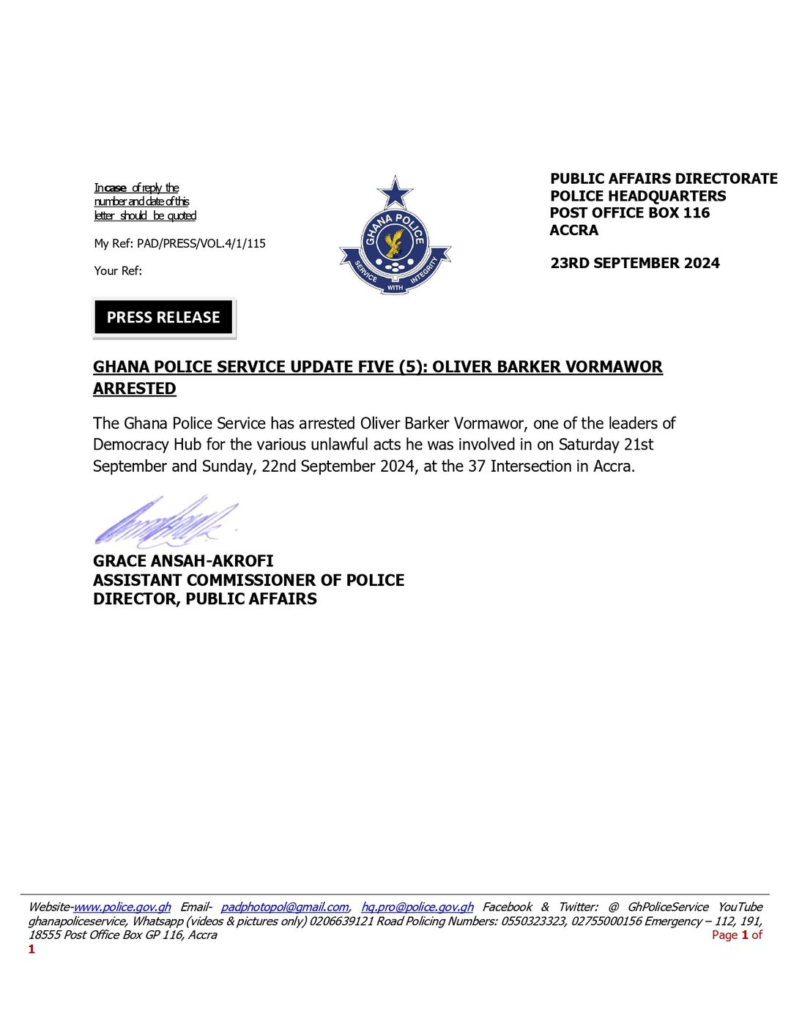
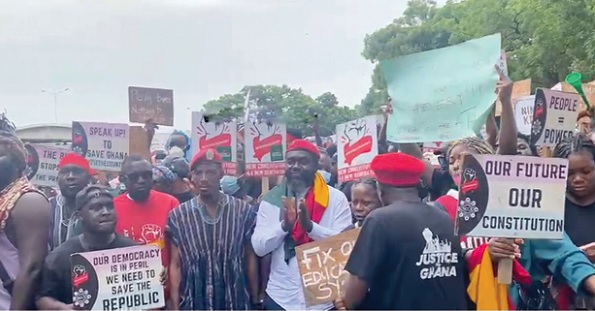
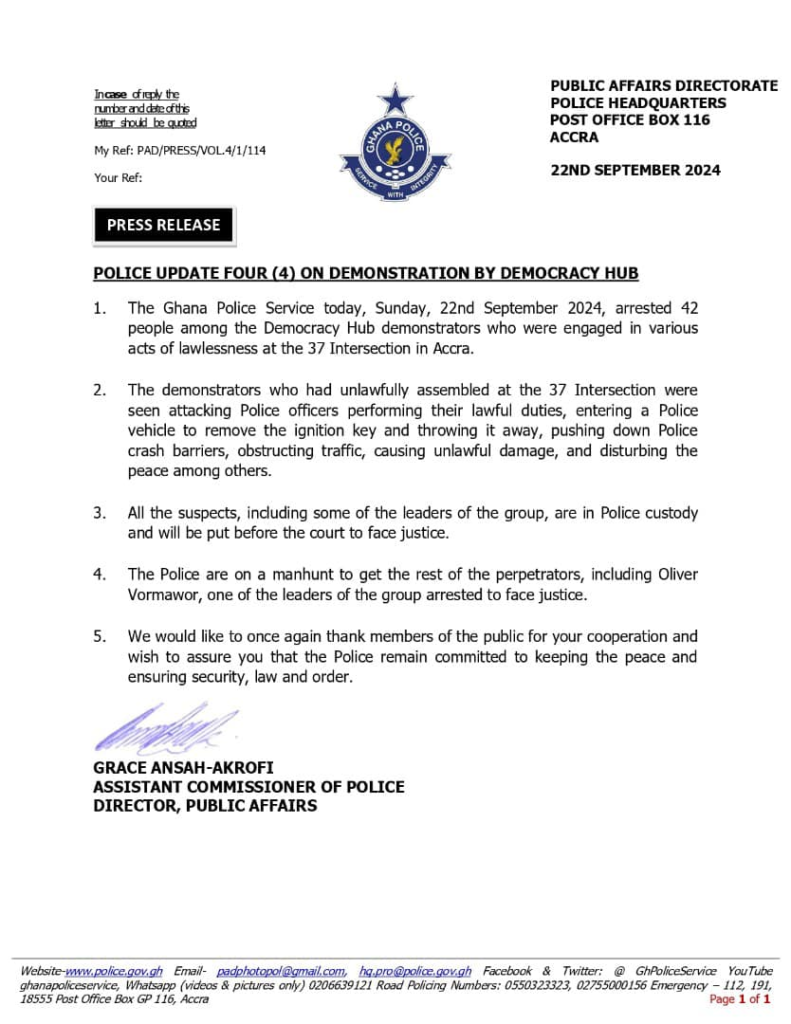
    Thirty-nine Democracy Hub protestors who were arrested for engaging in various acts of lawlessness at the 37 Intersection in Accra on September 22nd and 23rd, were brought before the court on September 24th, 2024.

    The arrests stem from protests organized by the Democracy Hub, which drew significant public attention due to the disturbances caused in the area.

    The court has remanded 28 of the accused persons into Police custody, while 11 others were remanded into Prison custody. The legal proceedings are being spearheaded by the Office of the Attorney-General.

    Out of the total, 30 of the accused are set to reappear before the court on October 8, 2024, while the remaining 9 protestors are scheduled to be arraigned on October 11, 2024.

    Authorities have indicated that the remaining suspects involved in the protests will be brought before the court to face justice. The crackdown on the protestors has sparked mixed reactions, with some calling for stricter enforcement of the law, while others argue for the protection of the right to peaceful assembly.

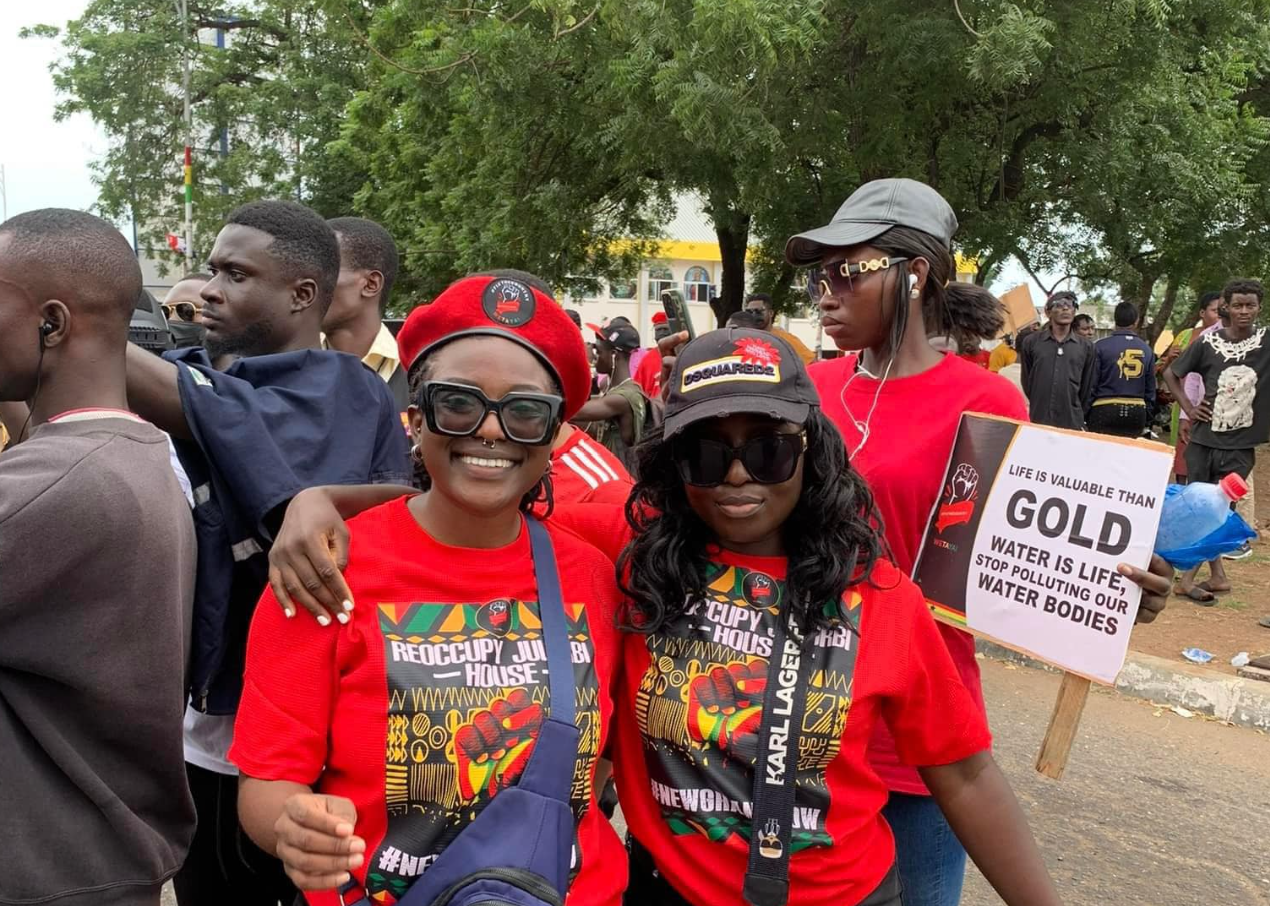
    The protests by the Democracy Hub aimed to highlight concerns over the activities of illegal miners laying waste to the country’s environment, but the incidents of lawlessness that ensued have now led to multiple legal actions against the participants.

  • Dominic Ayine’s law firm linked to GPGC amid $134m judgment debt scandal

    Dominic Ayine’s law firm linked to GPGC amid $134m judgment debt scandal

    Recent revelations have sparked concerns regarding the involvement of Dominic Ayine’s law firm in the controversial GPGC (Ghana Power Generation Company) contract.

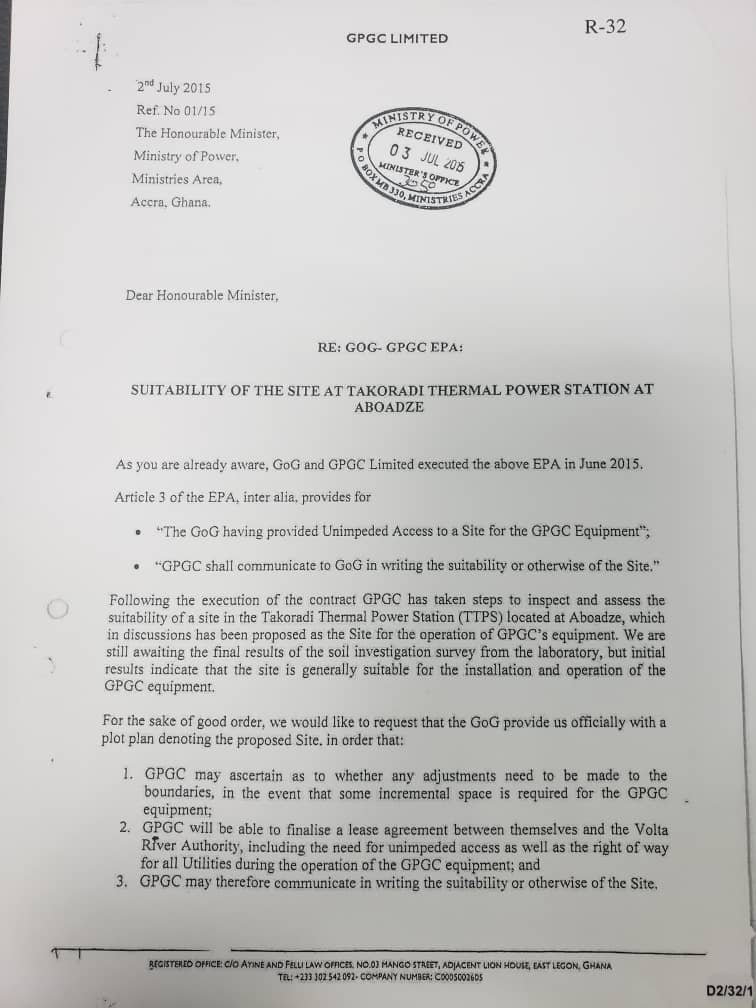
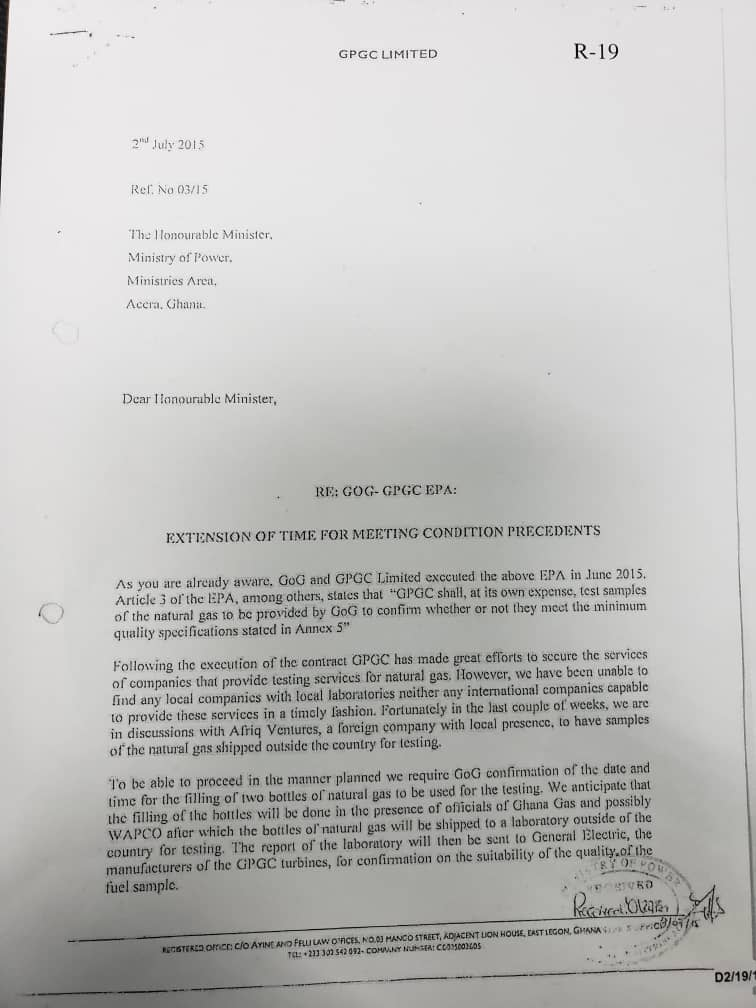
    Documents obtained indicate that the law firm of Ayine & Felli, where Edudzi Tamekloe now practices, was the registered office for GPGC when it signed a contract with the Government of Ghana (GoG) in 2015 under the John Mahama administration.

    Some individuals are questioning the potential conflict of interest given Dominic Ayine’s role as Deputy Attorney-General at the time. Ayine was involved in brokering numerous energy deals, including the Ameri Power deal, and now, his firm’s close association with GPGC raises eyebrows.

    This development has birthed speculation as to whether the terms of the GPGC agreement were deliberately designed to favor the company, especially given the harsh financial penalties involved in its termination.

    Conflict of Interest?

    The firm representing GPGC at the time of the Energy Purchase Agreement (EPA) with GoG in June 2015 per the letter was Ayine & Felli, a law firm linked to Dominic Ayine, then serving as Deputy Attorney-General under the NDC government. In recent weeks, the loud voices from some NDC-affiliated lawyers, particularly Edudzi Tamekloe, in defending the GPGC judgment debt issue have sparked debates. Many are asking if their vested interest stems from the fact that the firm’s association with GPGC was established while the contract was in force.

    According to a letter dated July 2, 2015, the firm’s address was listed as the official office for GPGC. This close link raises questions about whether the negotiation of the GPGC contract, which resulted in Ghana paying substantial termination fees, was compromised due to insider influence.

    Judgment Debt Scandal

    Documents from 2015 reveal that Ayine & Felli, the law firm of Dominic Ayine, was listed as the registered office of GPGC Limited when it entered into an Energy Purchase Agreement (EPA) with the Government of Ghana. This association has come under scrutiny following a judgment debt awarded against the country, with many questioning whether the poor negotiation of the contract’s termination terms was deliberate.

    With Ayine playing a critical role in Ghana’s energy deals as Deputy Attorney-General, some critics argue that the law firm’s involvement with GPGC may have influenced the terms of the deal, resulting in the substantial financial burden Ghana now faces.

    Ghana’s Regina House in London, one of the nation’s key commercial properties, has been taken over by Trafigura’s Ghana Power Generation Company (GPGC) due to the government’s failure to settle a $134 million judgment debt.

    This development follows a prolonged four-year effort by Trafigura to recover funds after Ghana abruptly terminated a power purchase agreement with the energy firm.

    Despite repeated attempts to secure payment, Trafigura was forced to obtain a ruling from a U.S. District Court, adding $111.4 million in mandatory interest to the arrears. This legal outcome compounded Ghana’s debt, exacerbating its financial obligations.

    The legal dispute began on January 26, 2021, when a UK tribunal awarded GPGC $134.3 million after determining that Ghana had breached its contractual obligations by terminating a power purchase agreement on February 18, 2018. Ghana had argued that GPGC failed to meet certain contractual conditions, but the tribunal disagreed, awarding GPGC damages based on an Early Termination Payment formula.

    The tribunal’s award included an interest rate of six-month USD LIBOR plus 6% and reimbursement of GPGC’s arbitration costs amounting to $3.3 million. Although Ghana made partial payments totaling $1.89 million, a significant balance remains unpaid.

    In a bid to recover the remaining funds, GPGC filed a case in the U.S. District Court in January 2024 under the New York Convention, seeking to enforce the arbitral award. Ghana failed to respond to the court’s petition and missed the March 29, 2024 deadline, leading to a ruling in GPGC’s favor. Chief Judge James E. Boasberg confirmed that the U.S. court had jurisdiction under the New York Convention, which requires member states to recognize and enforce arbitral awards, regardless of location or nationality.

    While the U.S. court did not grant pre-judgment interest, it awarded post-judgment interest at a rate specified under U.S. law, further increasing Ghana’s financial burden. As a result, Trafigura now controls Regina House until Ghana can resolve the debt crisis.

    Recent development

    Trafigura has petitioned Ghana’s Finance Minister, Dr. Mohammed Amin Adam, threatening to seize Ghana’s assets in South Africa if the debt remains unsettled.

    In its petition submitted on September 23, the energy firm requested an immediate settlement and warned of further legal action to recover the funds if the government fails to comply.

    The petition expresses frustration over the government’s delay in resolving the debt, despite multiple attempts at negotiation.

    “We would nevertheless like to reiterate the message of our previous correspondence, that we would prefer not to take any further enforcement action and instead to resolve the matter amicably by fully executing the settlement agreement, as soon as possible, ideally within this week, and receiving payment in accordance with the agreed schedule,” the letter read.

    Per the letter in question, it is not public knowledge of the exact assets in South Africa that the company seeks to secure.

  • Ghana’s educational system is doomed due to Free SHS policy – Senior Lecturer

    Ghana’s educational system is doomed due to Free SHS policy – Senior Lecturer

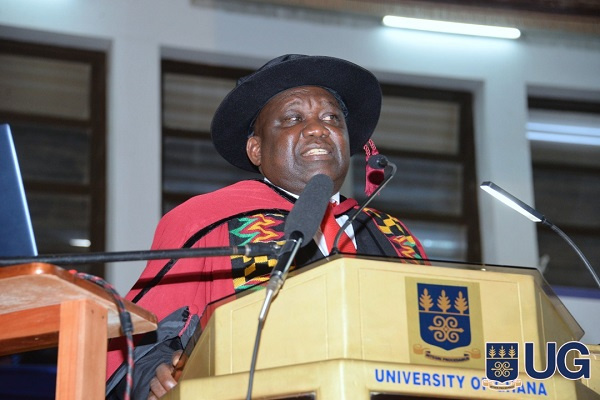
    A senior lecturer at the University of Ghana, Professor Martin Oteng Ababio, has voiced serious concerns about the Free Senior High School (SHS) policy, arguing that its implementation has exacerbated the challenges facing the country’s educational sector.

    Speaking during a campaign outreach aimed at promoting awareness of the National Democratic Congress (NDC) 2024 manifesto, Prof. Ababio expressed that while the Free SHS policy has led to a significant increase in university enrollment, the government has done little to expand infrastructure in tertiary institutions to meet the growing demand.

    He emphasized that the strain on university facilities has become more apparent since the policy’s inception, compromising the quality of tertiary education despite the rise in student numbers. Prof. Ababio noted that lecture halls, residential facilities, and teaching resources have not been adequately scaled to support the influx of students.

    “The free SHS has helped. But it has spelt the doom of the whole educational system. The number of students that are getting into the university has increased tremendously. Lectures have not increased. The lecture halls have not increased. The residential halls have not increased,” he said.

    He further explained that the large number of students in lecture halls makes it difficult for lecturers to maintain a high standard of education.

    “So we are compromising, and I am a lecturer, we are compromising quality for quantity. In a sense today, if you come to Legon, you enter a lecture hall to find 600, 800 students in one room.”

    Prof. Ababio stressed how the overcrowded conditions limit the ability of lecturers to give students the necessary academic attention, adding, “That makes it very difficult to reach out to each and every one. How many essays can you mark a day? And how many essays can you give to a student?”

    In response to these challenges, Prof. Ababio praised the NDC’s plan to review the Free SHS policy, as outlined in their manifesto, and expressed confidence that a thorough review would address the gaps in the current system and improve the overall quality of education in Ghana.

    The lecturer’s comments come amid broader discussions about the impact of the Free SHS policy on the country’s educational infrastructure and quality. Many education stakeholders have called for reforms to ensure that the system can meet the growing demand without sacrificing the quality of learning provided to students.

    Ghana’s free senior high school (Free SHS) programme, a flagship of Nana Akufo-Addo’s presidency, was launched in 2017 and more than GH¢8.4bn ($705m) has been spent on it so far.

    President Akufo-Addo has pointed to the substantial impact the FSHS policy has had, with over 5.7 million students benefiting since its inception.

    Several stakeholders have called for a review of the Free SHS policy owing to the delay in disbursement of funds for food supply to schools, among others. Professor Adei proposed that the government must focus on establishing quality education

  • “These people are ridiculous” – Ama Governor yells while being sent to court

    “These people are ridiculous” – Ama Governor yells while being sent to court

    Ama Governor, a lawyer and social media influencer, voiced her outrage after being detained for over 48 hours without food or water following her arrest during the #OccupyJulorbiHouse demonstration over the weekend.

    Ama Governor was among several protesters who were transported to court today under heavy security. The group, numbering over 12, was arrested during the three-day protest at the 37 Roundabout, where demonstrators raised concerns about illegal small-scale mining (galamsey) and the country’s economic mismanagement.

    As she was escorted to the courtroom, Ama Governor shouted, “You want to see a 26-year-old lawyer in handcuffs because she said Stop Galamsey Now. 48 hours no lawyer, 48 hours no food, no water. Over 48 hours, you all should be proud. These people are ridiculous. Emancipate yourselves from mental slavery.”

    The protest, organized to call attention to Ghana’s pressing social, environmental, and economic issues, resulted in the arrests of multiple participants. Ama Governor, a vocal participant, has highlighted the harsh treatment she endured during her detention.

    Speaking to the media after her arrest, Ama Governor revealed she was standing on the pavement near the 37 lorry station when she was apprehended by the police. She also alleged that she was physically assaulted during the arrest.

    “I don’t know why I have been picked up… they hit my neck,” she told the media.

    The arrest and treatment of the lawyer-turned-influencer has sparked discussions on social media, with many raising concerns about police handling of peaceful protesters.

    The #OccupyJulorbiHouse demonstration, named after a slang reference to the presidency, continues to gain attention as a platform for Ghanaians frustrated with the government’s handling of critical issues. So far, 39 of the arrested protestors who were arraigned yesterday have been remanded for two weeks.

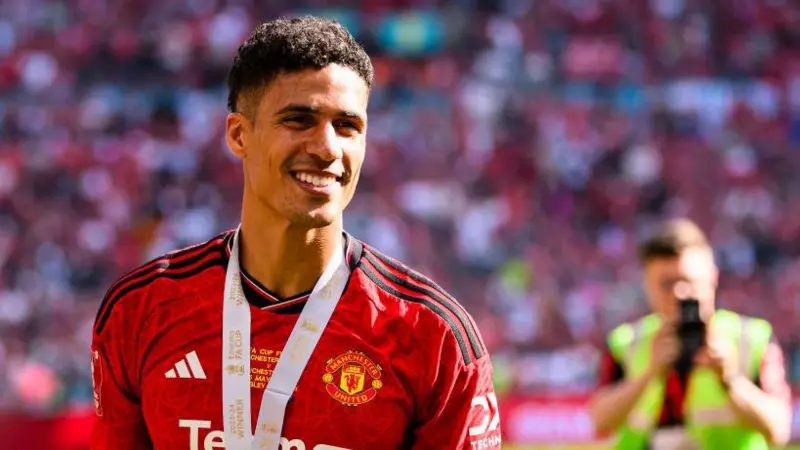
  • Man Utd defender Varane retires at age 31

    Man Utd defender Varane retires at age 31

    Former Manchester United, Real Madrid, and France defender, Raphael Varane, has officially announced his retirement from football at the age of 31.

    The center-back, who joined Italian club Como on a free transfer in July, has decided to step away from the game after suffering a knee injury on his debut against Sampdoria last month. Despite hanging up his boots, Varane will stay on with the Italian club in a non-playing role.

    “I hold myself to the highest standard, I want to go out strong, not just holding on to the game,” Varane shared in an Instagram post. “It takes a big dose of courage to listen to your heart and your instinct.”

    Varane’s career has been nothing short of illustrious. Starting at French side Lens, he spent only one season in the first team before making a big move to Real Madrid in 2011. During his 10-year stint with the Spanish giants, he won an incredible 18 trophies, including three La Liga titles and four UEFA Champions League titles, cementing his place as one of the game’s elite defenders.

    In the summer of 2021, Varane transferred to Manchester United for an initial fee of £34 million. Despite facing several injury setbacks, he made 95 appearances in all competitions for the Red Devils. He also played a key role in United’s Carabao Cup triumph in 2022 and his final match for the club was the FA Cup final victory over Manchester City in May 2023.

    Internationally, Varane’s contributions were equally significant. He made his debut for France in 2013, earning 93 caps over the span of his international career. His crowning achievement came in 2018 when he helped France win the FIFA World Cup. He was also part of the team that won the Nations League in 2021 and reached the World Cup final again in 2022.

    Reflecting on his career, Varane said, “I have fallen and risen a thousand times, and this time, it’s the moment to stop and hang my boots up with my final game winning a trophy at Wembley. I have no regrets, I wouldn’t change a thing. I have won more than I could have even dreamed of, but beyond the accolades and trophies, I am proud that no matter what, I have stuck to my principles of being sincere and have tried to leave everywhere better than I found it. I hope I have made you all proud.”

    As for his future, Varane hinted at new opportunities ahead, noting that he will remain with Como in a different capacity. “A new life begins off the pitch. I will remain with Como. Just without using my boots and shin pads. Something I am looking forward to sharing more about soon.”

    Varane has also been an outspoken advocate for player welfare, especially regarding the effects of heading the ball. In April, he shared that the repetitive action had “damaged his body” and recalled finishing a 2014 World Cup match for France on “autopilot” after suffering a concussion. He has since called for greater protection and better awareness of such issues in football.

    As one of the most decorated defenders of his generation, Varane leaves behind a legacy of excellence, professionalism, and integrity both on and off the field.

  • National Cathedral Project overseer paid GHC21K monthly despite suspended work – Basintale

    National Cathedral Project overseer paid GHC21K monthly despite suspended work – Basintale

    Executive Director/Overseer of the National Cathedral Project, Dr Paul Opoku-Mensah, is reportedly being paid by the government despite a halt in construction works.

    Deputy National Communications Officer of the National Democratic Congress (NDC), Malik Basintale, claims that Dr Paul Opoku-Mensah is being paid GHC21,000 every month.

    He made the allegation during an interview on TV3’s New Day show. He said in 2022 during the suspension of the project, Dr Paul Opoku-Mensah and some board of trustees stated that they were not being paid for their work done. He shared the payslip he retrieved from the bank the overseer allegedly works with.

    “It was a bare face lie. This is from his bank, Absa, at the Tamale branch. Every month, the government pays him GHC21,000. He earns salary for nothing,” he said.

    The National Cathedral project was suspended in 2022. Dr. Paul Opoku-Mensah who brought this to light revealed that his outfit is really cash-strapped and needs support.

    “We have the contractors and their staff on site, but the work has been suspended. We are hoping that within the next couple of weeks, as part of our fundraising and other initiatives, we can begin work again,” he revealed.

    A year later, Dr. Paul Opoku-Mensah, gave a different submission. “There have been issues that the project has been suspended, but it hasn’t. Construction has stalled, but the National Cathedral is almost an institution; it’s going to be one of the largest institutions, so the work continues on a daily basis. In addition to funding, we are already engaging with those who can provide us with artifacts. Because if you want to turn it into a world-class site, you need historical artifacts,” he said.

    The construction of the cathedral has sparked debates across various sectors of society, focusing on the necessity and timing of such a large-scale structure, as well as concerns regarding the transparency and management of allocated funds.

    Member of Parliament for North Tongu, Samuel Okudzeto Ablakwa, has accused the government of underreporting the amount of money spent on the national cathedral project. The Minister of State at the Finance Ministry, Abena Osei Asare, confirmed in Parliament on Wednesday, July 3, that the government has spent more than GH¢339 million on the National Cathedral project, which has been stalled for some time.

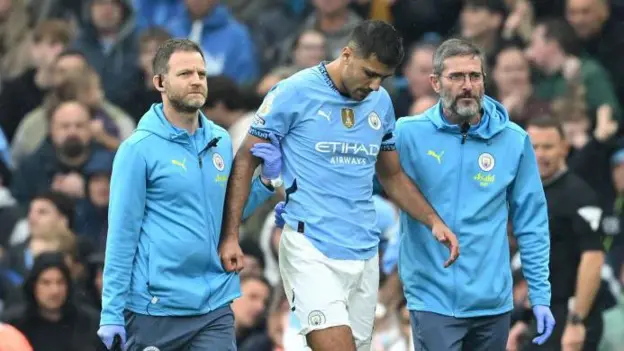
  • Man City’s Rodri injures knee ligament

    Man City’s Rodri injures knee ligament

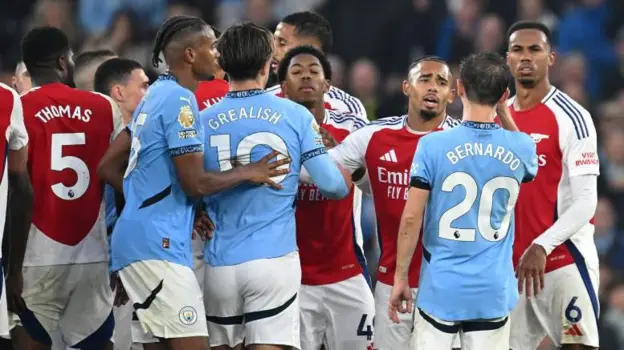
    Manchester City have confirmed that Spain midfielder Rodri has sustained a knee ligament injury following a collision with Arsenal’s Thomas Partey during their Premier League clash on Sunday.

    Rodri, a key player for City, was substituted in the 21st minute after twisting his knee during a corner set-piece.

    While the full extent of the injury is yet to be determined, Manchester City manager Pep Guardiola revealed that the 28-year-old is expected to face a lengthy spell on the sidelines.

    Speaking after Tuesday’s Carabao Cup win over Watford, Guardiola said, “Still we don’t have the definitive [diagnosis], but he will be out for a long time – a while. But there are some opinions that maybe it will be less than we expected.”

    He added, “We are waiting for the last phone calls from him and the doctors for what definitely he has and the type of surgery he has to get. We expect that tonight, tomorrow we will know exactly.”

    Rodri has traveled to Spain to consult a specialist following initial tests in Manchester. Guardiola has described him as “irreplaceable,” citing his critical role in the team’s recent success. Manchester City have not lost any of their last 48 Premier League matches when Rodri has started.

    However, his absence has proven difficult for the team in the past. Last season, City were beaten in four out of the five matches Rodri missed. Additionally, Rodri has lost just once in 50 appearances across all competitions for both City and Spain.

    Rodri was instrumental in Spain’s triumph at Euro 2024, where he was named Player of the Tournament. His stellar performances have also made him a strong contender for the Ballon d’Or, awarded to the world’s best player, next month.

    The former Atletico Madrid star, who played 63 matches for Manchester City and Spain last season, recently raised concerns about the increasing number of games in the football calendar, with expanded tournaments like the Champions League and Club World Cup. He hinted that players are “close to” striking over the physical toll it takes.

    City will now have to find a solution to cope with Rodri’s absence as they await further updates on his condition.

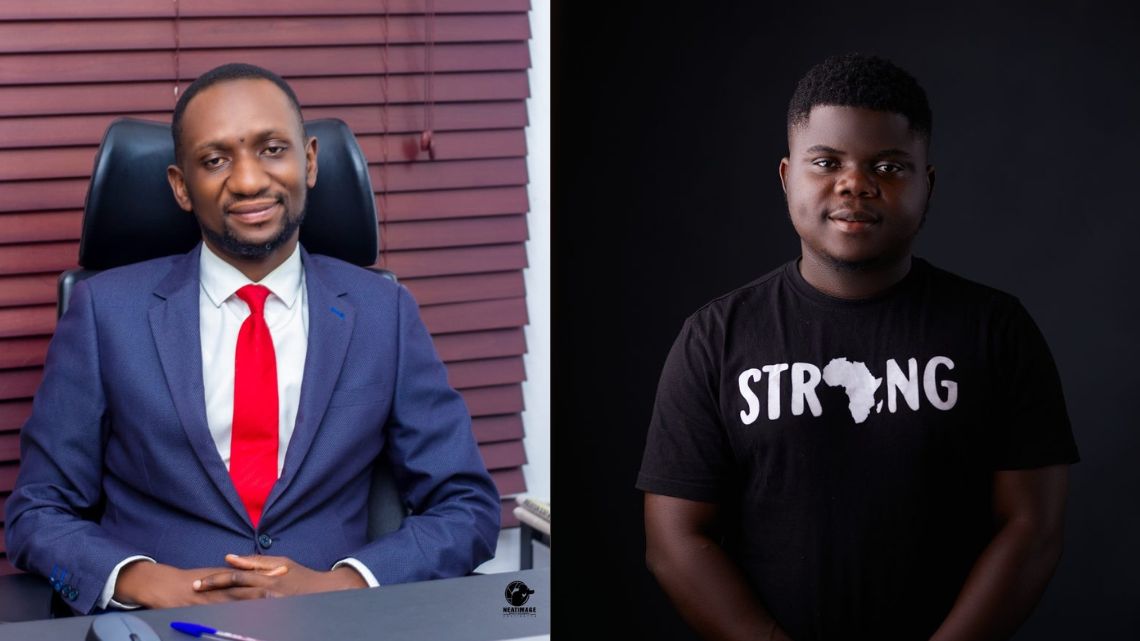
  • Wode Maya, NEIP boss ‘fight dirty’ over arrest of Democracy Hub protestors

    Wode Maya, NEIP boss ‘fight dirty’ over arrest of Democracy Hub protestors

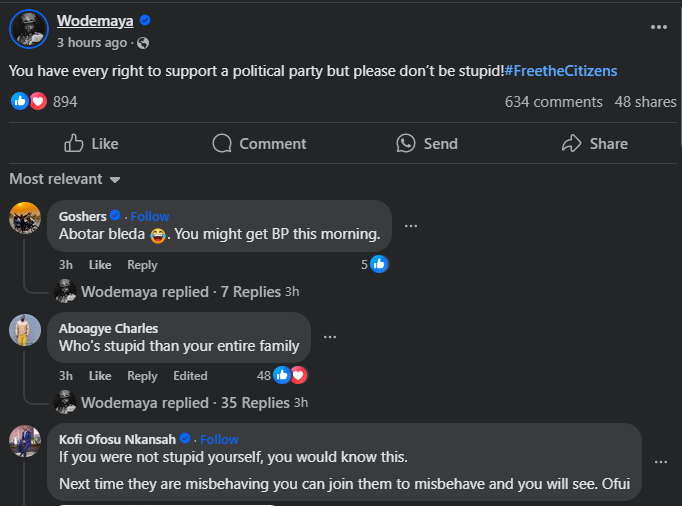
    Popular Ghanaian YouTuber, Wode Maya, and the Chief Executive Officer of the National Entrepreneurship and Innovation Programme (NEIP), Kofi Ofosu Nkansah, engaged in a banter on social media over the arrest of individuals who participated in the just-ended Democracy Hub demonstration to demand an end to the activities of illegal miners in the country.

    Out of the 42 arrested protestors, some 39 who were arraigned on Tuesday have been remanded for two weeks by the Accra Circuit Court.

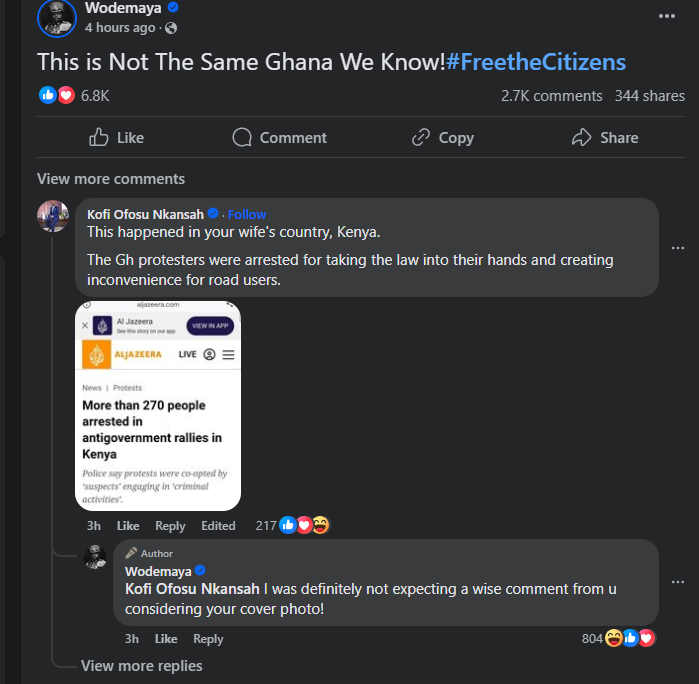
    Displeased by the Accra Circuit Court’s decision, Wode Maya in a post on Facebook requested that the arrested protestors be freed. “This is Not The Same Ghana We Know!#FreetheCitizens,” he wrote.

    In response, Kofi Ofosu Nkansah referenced the home country of the YouTuber’s wife, Kenya- where some 270 citizens were arrested for participating in a protest against the government, indicating that the protestors should not be freed for being lawless.

    “This happened in your wife’s country, Kenya. The Gh protesters were arrested for taking the law into their hands and creating inconvenience for road users.”

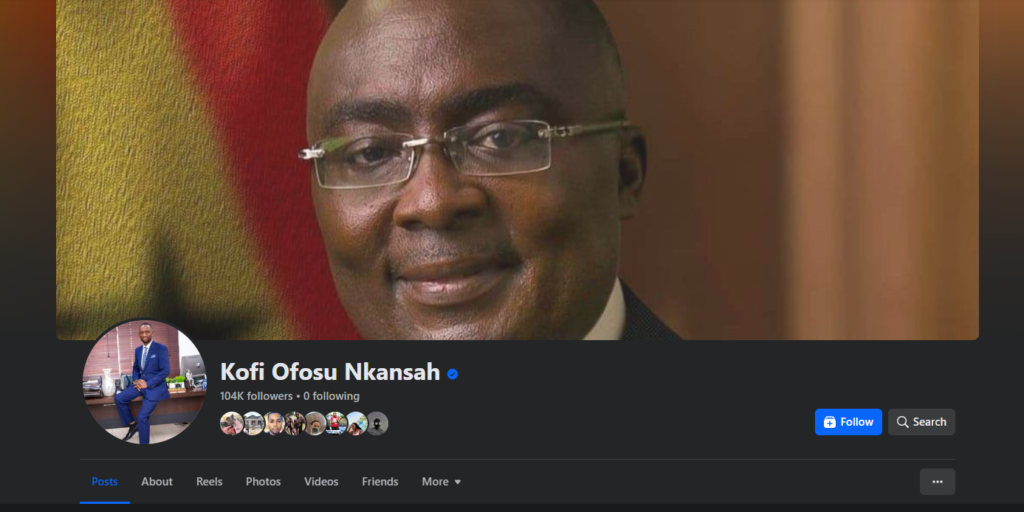
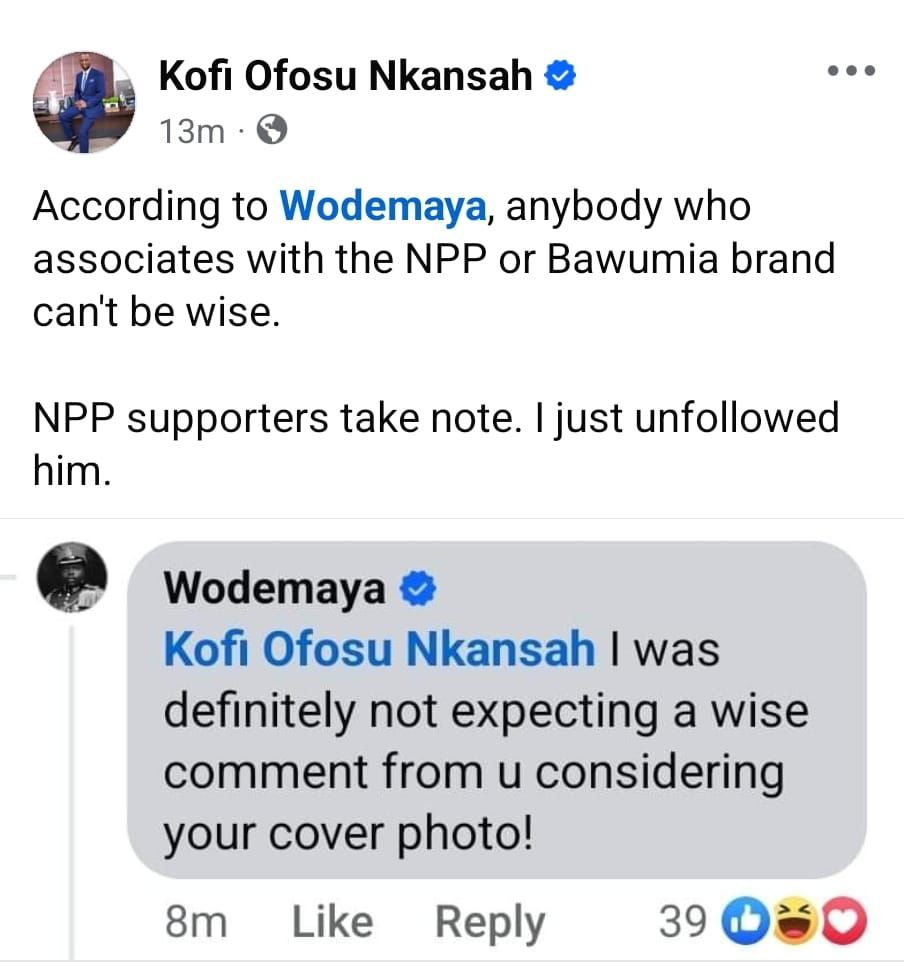
    The comment did not sit well with Wode Maya, who then jabbed Mr Nkansah saying “I was definitely not expecting a wise comment from u considering your cover photo!”

    Mr. Ofosu Nkansah’s cover photo features Dr. Mahamudu Bawumia, the NPP’s flagbearer for the 2024 elections.

    Mr Nkansah in a subsequent post, interpreted Wode Maya’s message as an attack against individuals who support the ruling New Patriotic Party (NPP).

    “According to Wodemaya, anybody who associates with the NPP or Bawumia brand can’t be wise. NPP supporters take note.”

    Following the banter, Mr Nkansah decided to unfollow the YouTuber on his social media platforms.

    Aftermath of Democracy hub protest

    The court remanded 28 of the arrested protestors into Police custody and the remaining 11 into Prison custody. Thirty (30) of the accused persons are to reappear before the court on 8th October 2024, while 9 others are to appear before the court on 11th October 2024. The remaining suspects will be put before the court to face justice. The case is being prosecuted by the Office of the Attorney-General.

  • Police’s conduct during Democracy Hub protest was professional – NEIP Boss

    Police’s conduct during Democracy Hub protest was professional – NEIP Boss

    The Chief Executive Officer of the National Entrepreneurship and Innovation Programme (NEIP), Kofi Ofosu Nkansah, has lauded the Ghana Police Service for its professionalism in managing the Democracy Hub demonstrators, despite provocation by the protestors.

    Mr. Ofosu Nkansah, in an interview with the media on Tuesday, praised the police for displaying composure in the face of unruly behavior from some of the demonstrators. According to him, the Ghana Police Service has significantly enhanced the country’s democratic image through its handling of the protest.

    “We all saw that in the face of provocation, our Police remained calm and professional. This is a complete departure from the previous governments where citizens exercising their rights were assaulted by the Police. I commend the leadership of the Police Service and urge them to continue making Ghana proud among the committee of nations,” he said.

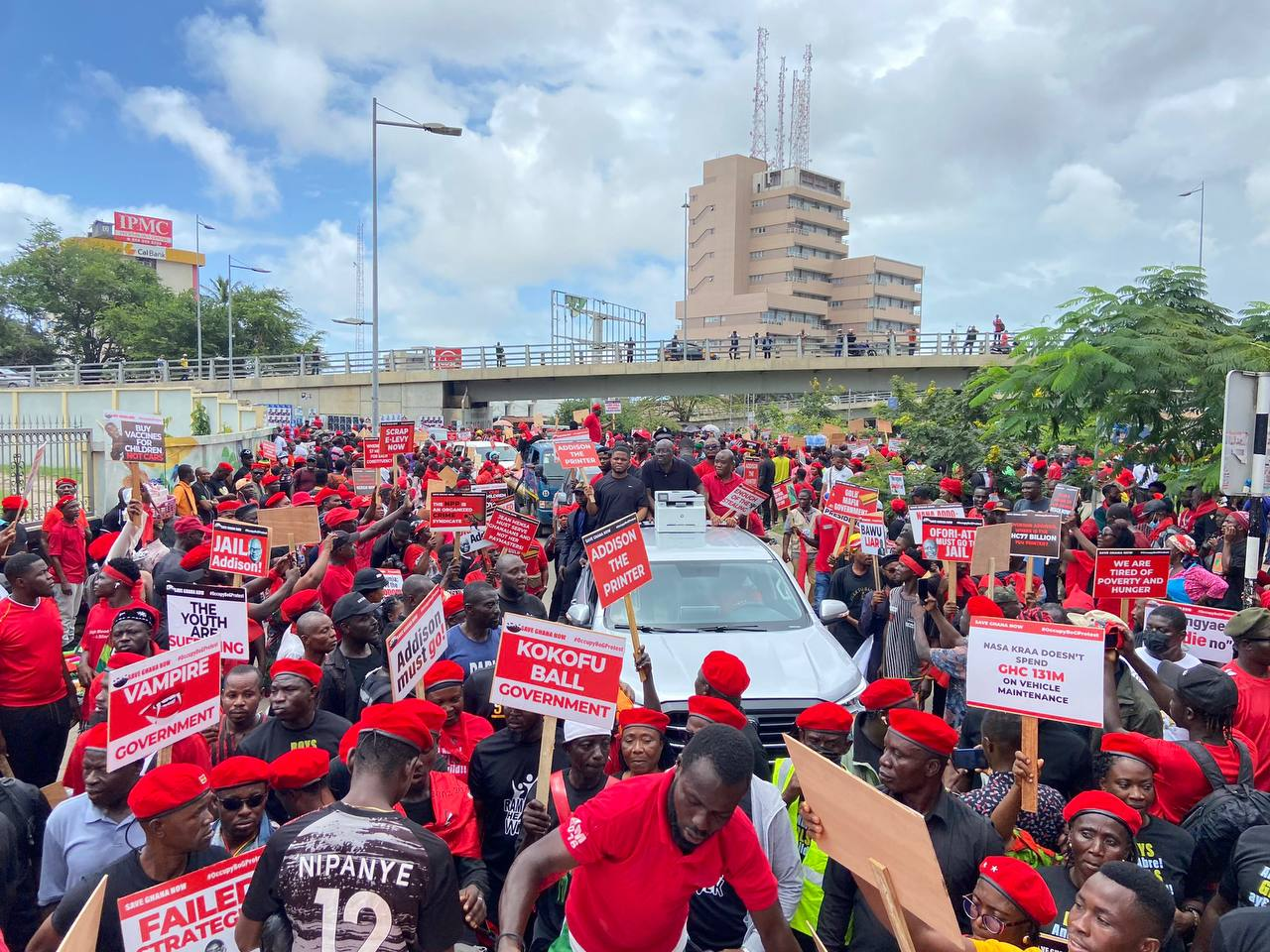
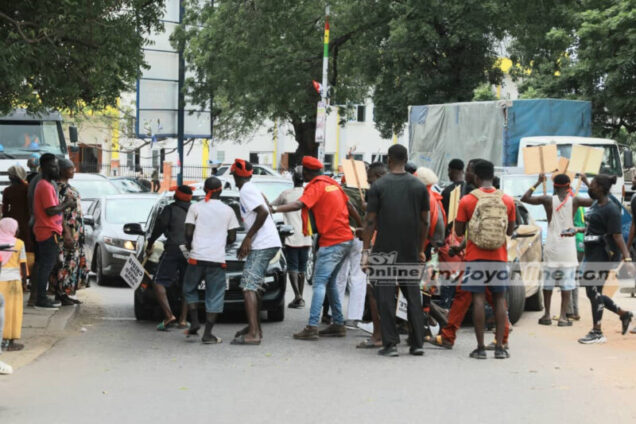
    On Sunday, September 22, violent demonstrators clashed with police officers at the 37 Intersection in Accra, leading to the arrest of 42 protesters, including some conveners of the event. Footage from the scene depicted protesters engaging in physical altercations with officers, dismantling police barricades, and attacking personnel who were trying to prevent the unauthorized gathering at the busy intersection.

    The clash occurred on the second day of a three-day protest, which had already seen significant disruptions. On Saturday, September 21, demonstrators blocked all directions of the 37 Intersection using vehicles and stones, set fires, harassed road users, and banged on vehicles. Some even played football in the middle of the road, adding to the chaos.

    The Ghana Police Service, ahead of the protests, had issued a stern warning to the organisers, labelling their actions as “unGhanaian, uncivil, and unlawful.” They highlighted the severe inconvenience caused to the public, including commuters stuck in traffic for hours, delays in medical care, and disruptions to cultural and social events such as funerals. Commercial activities were also affected, with some people missing flights and being unable to access their businesses.

    Despite offering seven alternative venues for the demonstration, the police stated that if the protesters insisted on blocking the 37 Intersection, law enforcement would take all necessary measures to maintain order and ensure the free flow of traffic. However, demonstrators disregarded these warnings, leading to the violent confrontation with police.

    As a result of the clashes, 42 protesters were arrested, and about 39 of them have been remanded by the court for two weeks as legal proceedings continue.

    The NEIP boss’ commendation comes in the wake of growing debate over the professionalism of the police and their approach in handling public protests.

    Mr. Ofosu Nkansah emphasized that the maturity shown by the police was commendable and reflective of advanced democracies. He called for continued support for law enforcement in ensuring peace and stability in the country.

  • Court denies 10 Democracy Hub protestors bail; next hearing on Oct. 8

    Court denies 10 Democracy Hub protestors bail; next hearing on Oct. 8

    Ten out of the protesters arrested during the #OccupyJulorbiHouse demonstration have been remanded after appearing in court today.

    The group, numbering about 20, was transported in different buses under heavy security presence.

    In court, the demonstrators were charged with conspiracy to commit crime, namely; unlawful assembly.

    According to JoyNews, the first batch of 12 protesters pleaded not guilty. Their case has been adjourned to October 8, 2024.

    The next batch of 9 accused persons also pleaded not guilty to charges of conspiracy to commit crime, namely unlawful assembly, causing unlawful damage, and offensive conduct due to breach of peace.

    The Ghana Police Service had reported the arrest of 42 individuals on September 22, accusing the protesters of unlawfully gathering, obstructing traffic, and engaging in public disturbances.

  • No food, water for 48 hours after arrest – Ama Governor cries out en route to court

    No food, water for 48 hours after arrest – Ama Governor cries out en route to court

    Ama Governor, a lawyer and social media influencer, has voiced her frustrations after being detained for over 48 hours without food or water following her arrest during the #OccupyJulorbiHouse demonstration over the weekend.

    She was among several protesters who appeared in court today after being transported under heavy security in a bus. The group, numbering over 12, was arrested during the three-day protest at the 37 Roundabout, where demonstrators raised concerns about illegal small-scale mining (galamsey) and economic mismanagement.

    Ama Governor, as she was being escorted to the courtroom, shouted, “You want to see a 26-year-old lawyer in handcuffs because she said Stop Galamsey Now. 48 hours no lawyer, 48 hours no food, no water. Over 48 hours, you all should be proud. These people are ridiculous. Emancipate yourselves from mental slavery.”

    Engaging the media following her arrest after standing on the pavement near the 37 lorry station over the weekend, she noted that she was assaulted by the police.

    ‘I don’t know why I have been picked up… they hit my neck,” she told the media.

    The protesters were charged in court with conspiracy to commit a crime, specifically unlawful assembly. However, their legal representatives stated that they were not provided with the exact reasons for their arrests.

    Prince Ganaku, a member of the Protest Defense team, also revealed that they are struggling to locate all 46 protesters who had been detained, claiming that the police may be planning to prolong their detention.

    Mr. Ganaku added that the lawyers had requested information on the court where the Democracy Hub detainees would be arraigned to allow them to prepare a defense, but the police had not provided any details.

  • Democracy Hub protestors accused of lawlessness arraigned today

    Democracy Hub protestors accused of lawlessness arraigned today

    Several protestors arrested during the #OccupyJulorbiHouse demonstration over the weekend appeared in court today under heavy security presence in a bus.

    The arrests occurred during the three-day protest at the 37 Roundabout, where demonstrators expressed their grievances over issues such as illegal small-scale mining (galamsey) and economic mismanagement.

    The Ghana Police Service on Sunday, 22nd September 2024, arrested 42 individuals among the Democracy Hub demonstrators for engaging in various acts of lawlessness at the 37 Intersection in Accra.

    Among those arrested was lawyer and social media influencer Ama Governor. As she was being escorted to the courtroom, she could be heard saying, “You want to see a 26-year-old lawyer in handcuffs because she said Stop Galamsey Now. 48 hours no lawyer, 48 hours no food, no water. Over 48 hours, you all should be proud. These people are ridiculous. Emancipate yourselves from mental slavery.”

    In court, the demonstrators were charged with conspiracy to commit a crime, specifically unlawful assembly. Lawyers for the protestors have stated that they were not informed of the specific reasons for their arrests.

    Earlier, the legal team representing the protestors expressed their frustration, revealing that they were still struggling to locate all 46 individuals who had been detained.

    Prince Ganaku, a member of the Protest Defense, mentioned that they are still seeking information regarding the whereabouts of all the protestors. He suggested that the police may be attempting to prolong the detention of those arrested.

    Mr. Ganaku further explained that the lawyers had requested information from the police regarding the court where the Democracy Hub detainees would be arraigned to allow them to prepare a defense. However, the police failed to provide any information.

  • Ghana’s growth in digital bank account ranked 4th in Sub-Saharan Africa

    Ghana’s growth in digital bank account ranked 4th in Sub-Saharan Africa

    Ghana has been ranked 4th in Sub-Saharan Africa for the largest growth in digital bank account ownership, according to a report by Fitch Solutions.

    The report revealed that the country experienced over 40% growth in digital bank accounts (including mobile money) between 2011 and 2022, bringing the total to a little over 60%.

    Despite this progress, Fitch Solutions noted that the growth remains relatively low when compared to global peers. The top three countries in Sub-Saharan Africa are Mauritius with over 90% growth, followed by South Africa at 82%, and Kenya at 74%.

    Following Ghana, Senegal took the 5th spot with 54%, with Tanzania, Ivory Coast, Ethiopia, and Nigeria ranking 6th to 9th respectively.

    In its article titled Navigating The Digital Banking Landscape In Sub-Saharan Africa, the UK-based firm highlighted that while the Sub-Saharan Africa (SSA) region has lagged behind other areas in banking sector development, it has led the way in digital banking advancements.

    “We estimate that SSA banking assets will represent 53.0% of Gross Domestic Product in 2024, compared to the emerging markets average of 84.8%. Limited access to traditional banking has hindered broader economic participation and growth,” the report stated.

    The rise of digital banking, driven by factors such as the proliferation of mobile phones, improved internet connectivity, and increasing regulatory support, presents immense opportunities for financial inclusion, which is essential for economic development and technology adoption in the region.

    Fitch Solutions added, “We anticipate that SSA will continue to develop its digital banking capabilities, benefiting households, businesses, traditional and challenger banks, and the broader economy. This article investigates key themes and challenges associated with digital banking in SSA, a topic we previously highlighted as influential in the region’s banking development.”

    The report further highlighted that Nigeria and Kenya stand out as key hubs for digital banking in the SSA region, driven by a blend of traditional banks and innovative fintech companies. In Nigeria, institutions like Kuda Bank and GTBank are using mobile platforms to serve unbanked and underbanked populations.

    Additionally, South Africa is recognized for its advanced financial infrastructure, while Ghana continues to surge in mobile money usage, and Tanzania experiences rapid growth in mobile banking.

    These trends signify the potential for further digital banking development across Sub-Saharan Africa, with Ghana playing a crucial role in this transformation.

  • Ghana is a ‘GalamState’ with a higher force of grand corruption – Security Analyst

    Ghana is a ‘GalamState’ with a higher force of grand corruption – Security Analyst

    Security analyst, Prof. Emmanuel Kwesi Aning, has described Ghana as a ‘GalamState,’ attributing the country’s failure to combat illegal mining, known locally as galamsey, to the inability of state actors to effectively clamp down on the activity.

    Speaking at a CSO post-engagement with political parties on mining in Aburi, Prof. Aning likened the situation to “crime convergence,” where a lack of trust in security agencies and weak laws have emboldened many to engage in illegal practices with impunity.

    “Ghana has now been characterised as a ‘GalamState’. ‘GalamState’ is a state that is captured and linked to a higher force of grand corruption. In a ‘GalamState’, the practice is normalized, and the people are silenced or limited to mere noises on the sidelines,” Prof. Aning said.

    He added, “In a ‘GalamState’, there is a perfect blend between criminally minded politicians and politically minded criminal gangs, creating a hybrid form of governance. In such a scenario, the traditional rule of the state to arrest, investigate, prosecute, adjudicate cases of accused persons, and incarcerate or fine them, which are key ingredients to the state’s resilience, are not present.”

    Prof. Aning further warned that Ghana has reached a stage where the consolidation of the ‘GalamState’ could lead to the formation of ‘mafia’ criminal gangs.

    “The crimes and collusion are so intertwined. To stop galamsey, we need to look at multiple other institutions that make these crimes possible and where there are embedded individual and group interests.”

    The destructive impact of illegal mining has left major rivers like the Bonsa in the Western Region and the Pra in the Ashanti Region heavily polluted with toxic chemicals. Forest reserves such as the Tano Nimiri in the Western North Region and the Draw River in the Western Region have also been devastated by the environmental effects of galamsey activities.

    In response to these growing concerns, civil society groups and the Trades Union Congress have called on President Akufo-Addo to impose a ban on illegal mining and declare a state of emergency in affected areas. Environmental organizations, including A Rocha Ghana and six other civil society groups, have taken legal action against the government for allowing illegal mining in forest reserves.

    The coalition, which includes Kasa Ghana, Eco-Conscious Citizens, Tropenbos, the Nature and Development Foundation, Civic Response, and the Media Coalition Against Galamsey, has pointed to the 2022 Legislative Instrument (LI) 2462, which permits mining in forest reserves, as a major contributor to environmental destruction and a threat to the livelihoods of many Ghanaians.

  • No good roads, no 2024 elections – Gyetiase, Tadiaso protestors warn

    No good roads, no 2024 elections – Gyetiase, Tadiaso protestors warn

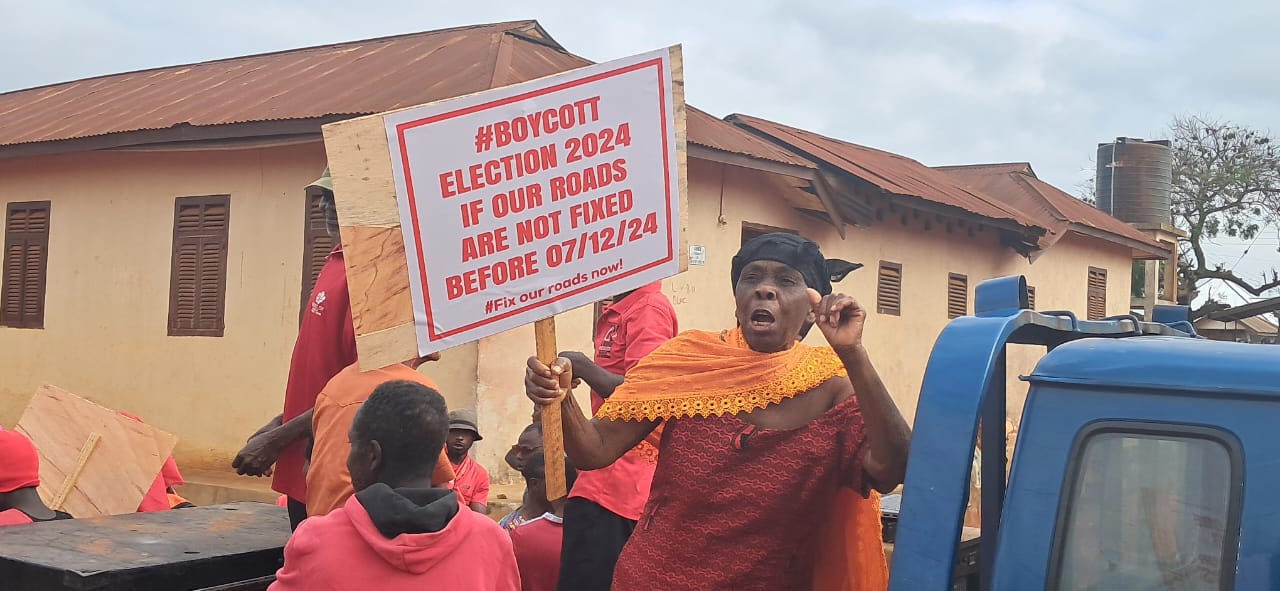
    Scores of residents from Gyetiase and Tadiaso, communities in the Sekyere Central District of the Ashanti Region, have taken to the streets in protest over the poor state of their roads, accusing successive governments of neglecting their infrastructure needs.

    The residents, mostly from farming communities, expressed frustration at their inability to access healthcare services in Asante Mampong and Nsuta due to the deplorable road conditions.

    According to the protesters, teachers and healthcare workers have frequently refused postings to their communities, citing the poor road network as a major deterrent.

    These grievances come at a time when the government is rolling out its District Road Improvement Programme, aimed at upgrading deteriorating roads in local communities. However, the people of Gyetiase and Tadiaso say they are yet to benefit from this initiative.

    In a bold statement, the protesters warned that they would boycott the upcoming December 7 elections and prevent any electoral activities in their communities unless the roads are fixed.

    “What we are saying is that the people of Gyetiase and communities are tired of bad roads. Our roads have been unconstructed and untilled since Ghana’s independence in 1957, so we are tired, we have had to put up with bad roads all this while,” said Prince Dwomoh, one of the leaders of the protest, in an interview with Channel One News.

    Dwomoh also lamented the apparent neglect of their communities, despite other areas witnessing infrastructure improvements.

    “We are all in this country and we are well aware of a number of roads being constructed by the government of Ghana. In fact, we praised the government for a lot of developmental projects being carried out. But we, the people of Gyetiase and Tadiaso, are not seeing anything here. We are part of Ghana, so we are demanding our share of the national cake.”

    He reiterated the community’s demand for immediate action: “That is what we are saying, so the government should come to our aid and construct our road for us. Other than that, we shall not take part in the 2024 elections.”

    The protesters also pointed out that they had informed all the relevant local leaders, including the District Chief Executive, Member of Parliament, and Assembly Member, but no action has been taken to address their concerns.

    “All the top people there, the DCE, the MP, the assembly member, they are all well aware of our situation, so we have informed them,” Dwomoh added.

  • Africa cannot bear the burden of climate change, we didn’t create it – Akufo-Addo to global leaders

    Africa cannot bear the burden of climate change, we didn’t create it – Akufo-Addo to global leaders

    President Akufo-Addo has called on global leaders to take urgent and collective action to address the devastating effects of climate change, particularly in Africa.

    Speaking at the United Nations General Assembly in New York, the President emphasized that Africa, despite being a minimal contributor to global emissions, disproportionately suffers from the dire consequences of climate change.

    “Africa cannot continue to bear the burden of a crisis it did not create,” Akufo-Addo stated, stressing that the continent is already experiencing the harsh effects of climate change, including floods and desertification.

    He called for “fairness, not charity,” as he advocated for climate justice that benefits everyone rather than just a privileged few.

    “At the heart of today’s crisis is the climate emergency which threatens humanity’s very existence,” he continued. “Africa, while contributing the least to global emissions, bears the heaviest burden. From floods to desertification, we are already experiencing its devastating effects. Despite the promises, the vulnerable remain abandoned.”

    Akufo-Addo highlighted the difficulty in coping with such challenges, noting that “we are told to adapt and be resilient, but how does one adapt to famine or build resilience when farmers cannot predict the seasons?”

    Fossil fuels – coal, oil and gas – are by far the largest contributor to global climate change, accounting for over 75 per cent of global greenhouse gas emissions and nearly 90 per cent of all carbon dioxide emissions, according to the United Nations.

    As greenhouse gas emissions blanket the Earth, they trap the sun’s heat. This leads to global warming and climate change. The world is now warming faster than at any point in recorded history. Warmer temperatures over time are changing weather patterns and disrupting the usual balance of nature. This poses many risks to human beings and all other forms of life on Earth.

    ” The wealthiest bear the greatest responsibility: the richest 1 per cent of the global population combined account for more greenhouse gas emissions than the poorest 50 per cent,” the UN report adds.

    The President urged world leaders to prioritize climate justice, emphasizing that Africa should not continue paying for a crisis it did not cause.

    He reiterated that climate justice is essential, not just for Africa, but for ensuring a global system that works for all nations. “We demand fairness, not charity,” he stressed, calling on the international community to act swiftly to rectify the inequalities in climate action.

    In addition to addressing climate change, President Akufo-Addo also drew attention to the wider issue of global inequality, particularly the stark gap between the rich and poor. He noted that over 700 million people, representing 8.57% of the world’s population, still live in extreme poverty.

    “As president, the vast gap between the rich and poor should be a sustained act on our conscience. Over 700 million people, representing 8.57% of the world’s population, still live in extreme poverty,” Akufo-Addo pointed out, urging world leaders to take immediate action to address this disparity.

    The President’s call to action at the UN General Assembly resonated with many who see climate change and inequality as interconnected crises that require a global response.

  • Ghana risks losing assets in SA over offsetting $134m Trafigura judgement debt

    Ghana risks losing assets in SA over offsetting $134m Trafigura judgement debt

    Oil conglomerate Trafigura has petitioned Ghana’s Finance Minister, Dr. Mohammed Amin Adam, over a judgment debt owed by the government, threatening to seize Ghana’s assets in South Africa if the debt remains unsettled.

    In its petition submitted on September 23, the energy firm requested an immediate settlement and warned of further legal action to recover the funds if the government fails to comply.

    The petition expresses frustration over the government’s delay in resolving the debt, despite multiple attempts at negotiation.

    “We would nevertheless like to reiterate the message of our previous correspondence, that we would prefer not to take any further enforcement action and instead to resolve the matter amicably by fully executing the settlement agreement, as soon as possible, ideally within this week, and receiving payment in accordance with the agreed schedule,” the letter read.

    Per the letter in question, it is not public knowledge of the exact assets in South Africa that the company seeks to secure.

    Reports indicate that Ghana’s Regina House in London, one of the nation’s key commercial properties, has been taken over by Trafigura’s Ghana Power Generation Company (GPGC) due to the government’s failure to settle a $134 million judgment debt.

    This development follows a prolonged four-year effort by Trafigura to recover funds after Ghana abruptly terminated a power purchase agreement with the energy firm. Despite repeated attempts to secure payment, Trafigura was forced to obtain a ruling from a U.S. District Court, which added $111.4 million in mandatory interest to the arrears, compounding Ghana’s debt and exacerbating its financial obligations.

    Bright Simons, the Vice President of Imani Africa, revealed on the social media platform X (formerly Twitter) that Regina House has been placed under receivership by Trafigura, an assertion later confirmed by Joy News. Simons claimed that this information had been concealed by the Ghanaian government, stirring further controversy.

    In an interview with Joy News, Ghana’s High Commissioner to the United Kingdom, Papa Owusu-Ankomah, acknowledged that Trafigura will remain in control of Regina House until the full debt is settled.

    He urged for renewed negotiations to avoid further financial penalties, stating, “Until we pay in full or come into an arrangement to pay them, Trafigura will remain in control over the receivership of the Regina House and its proceeds.” He also admitted that Ghana is facing severe financial challenges.

    The legal dispute began on January 26, 2021, when a UK tribunal awarded GPGC $134.3 million after determining that Ghana had breached its contractual obligations by terminating a power purchase agreement on February 18, 2018.

    Although Ghana argued that GPGC failed to meet certain contractual conditions, the tribunal disagreed, awarding GPGC damages based on an Early Termination Payment formula. The tribunal’s award included an interest rate of six-month USD LIBOR plus 6% and reimbursement of GPGC’s arbitration costs amounting to $3.3 million. Although Ghana made partial payments totaling $1.89 million, a significant balance remains unpaid.

    In a bid to recover the remaining funds, GPGC filed a case in the U.S. District Court in January 2024 under the New York Convention, seeking to enforce the arbitral award. Ghana failed to respond to the court’s petition and missed the March 29, 2024 deadline, leading to a ruling in GPGC’s favor.

    Chief Judge James E. Boasberg confirmed that the U.S. court had jurisdiction under the New York Convention, which requires member states to recognize and enforce arbitral awards, regardless of location or nationality.

    While the U.S. court did not grant pre-judgment interest, it awarded post-judgment interest at a rate specified under U.S. law, further increasing Ghana’s financial burden. As a result, Trafigura now controls Regina House until Ghana can resolve the debt crisis.

  • Why are you scared of releasing final voter register? – NDC quizzes EC

    Why are you scared of releasing final voter register? – NDC quizzes EC

    The Director of Elections and IT for the National Democratic Congress (NDC), Dr. Edward Omane Boamah, has raised serious concerns regarding the Electoral Commission’s (EC) reluctance to release the final voter register to the party.

    Speaking at a meeting with Civil Society Organizations (CSOs) and other stakeholders on Monday, September 23, Dr. Boamah stated, “The EC is afraid of releasing the final voter register to the party because it is scared of what more discrepancies we will expose from the register.”

    Dr. Boamah’s remarks come amid growing frustrations within the NDC regarding the EC’s failure to provide the final register ahead of the upcoming elections.

    He expressed that this delay raises troubling questions about the transparency of the electoral process, emphasizing, “The EC’s failure to make the register available reflects a lack of commitment to ensuring free and fair elections.”

    The NDC has reportedly made multiple requests for access to the final voter register, but Dr. Boamah indicated that the EC has not responded satisfactorily.

    He further hinted that the Commission’s reluctance to share the register could signal deeper issues within the electoral body, fueling suspicions of possible irregularities or attempts to manipulate the electoral process.

    “A credible voter’s register is crucial for the integrity of the elections,” he asserted, underscoring the importance of transparency in the electoral process. Dr. Boamah also pointed out that political parties, including the NDC, have a legal right to access the voter register well in advance of the elections.

    “The EC has not released the final voter’s register to the political party, but it claims it has resolved all our concerns without knowing them. But they can’t start printing the register without giving us a copy. I feel they are afraid to release the register to us because they don’t know what more discrepancies we will expose,” he concluded.

  • Ghana’s peace standing declines to 55th in global ranking; 4th in Africa

    Ghana’s peace standing declines to 55th in global ranking; 4th in Africa

    Ghana’s position on the Global Peace Index (GPI) has seen a notable decline, with the country ranking 55th in 2024 with a score of 1.938, a drop from its 51st place in 2023 and an even more significant fall from 40th in 2022.

    This dip also sees Ghana slipping from its previous position as the second most peaceful country in Sub-Saharan Africa, now ranking 4th in the region, behind Mauritius, Madagascar, and Botswana.

    The GPI, compiled annually by the Institute for Economics and Peace (IEP), evaluates 163 countries based on three key domains: societal safety and security, ongoing domestic and international conflict, and militarization.

    The report highlighted that in 2024, Sub-Saharan Africa experienced deteriorations in peacefulness across all three domains, with ongoing conflicts spilling across national borders. The index also revealed that 36 out of 44 countries in the region had been involved in at least one external conflict over the past five years.

    Mauritius remains the most peaceful country in Sub-Saharan Africa for the 17th consecutive year, with significant improvements in its Safety and Security domain. In contrast, South Sudan, despite some improvements, remains the least peaceful country in the region. Ethiopia recorded the largest improvement due to a ceasefire agreement in the Tigray region, while Gabon saw the most significant deterioration, primarily due to a military coup that ousted President Ali Bongo in August 2023.

    On a global scale, Iceland remains the most peaceful country with a score of 1.112, followed by Ireland at 1.303. Yemen, with a score of 3.397, continues to rank as the least peaceful nation worldwide.

    The report noted a worrying global trend of declining peace, with 97 countries experiencing deteriorations, compared to only 65 that saw improvements. Political instability, rising conflict-related deaths, and violent demonstrations contributed to this trend.

    In West Africa, Sierra Leone surpassed Ghana in 2023 as the most peaceful nation in the region. The National Peace Council expressed concern over these developments then, calling on Ghanaians to work together to restore peace in the country.

    Eastern Regional Chairman of the National Peace Council, Dr. Mark Boadu, emphasized the severity of Ghana’s fall, stating, “This is a cause for worry, and we must all work hard to bring back the glory.”

    In 2024, Ghana has recorded several violent protests, including the “Enough is Enough” demonstration led by the National Democratic Congress (NDC), which saw clashes between protestors and security services. The recent Democracy Hub protest against illegal mining activities also resulted in over 40 arrests.

    Globally, the GPI report shows that the world has become less peaceful for the 12th time in the past 16 years. The report noted, however, a stronger commitment to UN peacekeeping efforts, which recorded the most significant improvement among GPI indicators. Despite some positive developments, the Militarization domain saw the largest deterioration, driven by rising military expenditures. Ukraine, Myanmar, and North Macedonia recorded some of the biggest increases in military spending.

    The ongoing conflicts in Ukraine and Gaza, along with continued unrest in other regions, contributed to a decline in global peace, with 85 countries experiencing deterioration in the Ongoing Conflict domain. Meanwhile, the Safety and Security domain was the only one to record an improvement in the past year, with countries like Kazakhstan, Iran, and Uzbekistan seeing a decrease in violent demonstrations.

  • US High School students raise $22K, surprise “kind” Ghanaian Custodian with Jeep Wrangler

    US High School students raise $22K, surprise “kind” Ghanaian Custodian with Jeep Wrangler

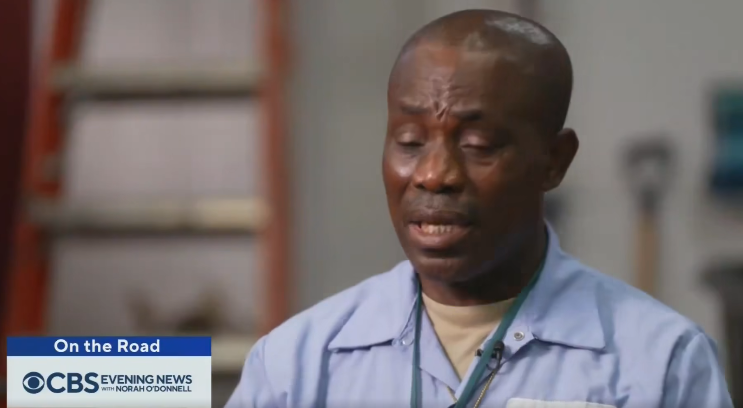
    Students at James Madison High School in Virginia came together to give Francis Apraku, a beloved Ghanaian custodian at the school, the surprise of a lifetime by raising $22,000 to buy him his dream car—a 2015 Jeep Wrangler.

    Francis, who has worked as a janitor at the school for years, was overwhelmed with emotion when the students revealed the surprise in early September. In an interview with CBS’s Steve Hartman, he described the moment with heartfelt joy.

    “My leg started shaking. I can’t stand. I was panicking. I had to get myself to the floor and I was crying,” he recalled.

    The initiative was sparked by members of the school’s football team, who had formed close friendships with Francis through casual conversations outside their weight room. These moments of connection inspired the students to show their appreciation.

    “He is always a nice person,” one student shared. “If we were to have a bad day, he’d be the first guy to say, ‘Are you okay?’ And we said, let’s do something nice for him no one would do.”

    Prior to launching the fundraiser, a student asked Francis what his heart’s desire would be if he could buy anything. Without hesitation, he expressed his dream of owning a Jeep Wrangler. Motivated by his humble wish, the students spent the next four months raising $22,000 to make it a reality.

    The act of generosity left many social media users in awe.

    “God bless these kids with more. Kudos to their parents, for raising these wonderful kids,” a user on Instagram wrote.

  • Over 5.8m NHIS cards linked to Ghana Card to support Universal Health Coverage

    Over 5.8m NHIS cards linked to Ghana Card to support Universal Health Coverage

    The Minister of Health, Dr. Bernard Okoe-Boye, has announced that a total of 5,885,583 National Health Insurance Scheme (NHIS) cards have been successfully linked to the Ghana Card as of February 2024.

    This milestone, he explained, is part of a broader initiative to streamline healthcare services and enhance data integration in support of Universal Health Coverage (UHC).

    Speaking at a press conference, Dr. Okoe-Boye emphasized the importance of this development, noting that the linkage would strengthen the national health database and ensure better healthcare delivery.

    “As of February 2024, 5,885,583 NHIS cards have been linked to the Ghana Card,” he stated, highlighting the government’s commitment to achieving UHC through strategic policies.

    Ghana’s UHC roadmap, implemented in 2020 and running until 2030, aims to ensure universal access to quality healthcare services for all citizens. The roadmap aligns with the country’s National Health Policy (2019), which focuses on strengthening healthcare systems, expanding public health interventions, and improving service availability through community health initiatives.

    The objectives of UHC, as outlined by Dr. Okoe-Boye, include providing universal access to better-managed quality healthcare services, reducing preventable maternal, adolescent, and child deaths, and increasing access to emergency public health services. The ongoing NHIS-Ghana Card integration is a key step in achieving these goals.

    On September 7, 2023, the Ministry of Health launched the National Health Database and the Health Facilities Regulatory Authority’s (HeFRA) Digitised Health Facility Assessment Platform. These initiatives aim to improve data accessibility within the healthcare sector, further enhancing efforts to meet UHC targets.

    As of March 2024, a total of 17,918,135 Ghanaians had registered for the Ghana Card since mass registration began in April 2019. In addition, Joseph Annor, Deputy Director of the Information Management System at the NHIA, revealed that 30 million Ghanaians were enrolled in the NHIS as of July 2024.

    Per reports, nearly $30 million is being saved each year by the various state institutions that have successfully integrated their systems with the National Identification Authority (NIA) database.

    The savings are being made from the absence of the procurement of new equipment, non-printing of new sector-specific cards and non-duplication of services as the Ghana Card now serves as the sole identity for health insurance, social security, taxation and business transactions.

    Dr. Okoe-Boye also announced that GHC 135.6 million had been disbursed to healthcare providers for NHIS claims for February and March 2024. This payment ensures that healthcare providers continue to deliver essential services to patients covered under the scheme.

    In a significant policy shift, the Ministry of Health is preparing to integrate major herbal medicines into the NHIS, providing patients with alternative treatment options alongside conventional medicine.

    “Not all herbal medicines are dangerous because some have gone through scientific processes and have been approved for use,” the Minister explained.

    Mental health treatments and related medications are also set to be included in the scheme, further expanding the scope of services covered by NHIS.

    Ghana is making strides toward achieving Universal Health Coverage by 2030, ensuring that citizens have access to affordable and quality healthcare services.

  • Ghana is working on an AI governance framework to enhance various sectors – Dr Nafisa Mahama

    Ghana is working on an AI governance framework to enhance various sectors – Dr Nafisa Mahama

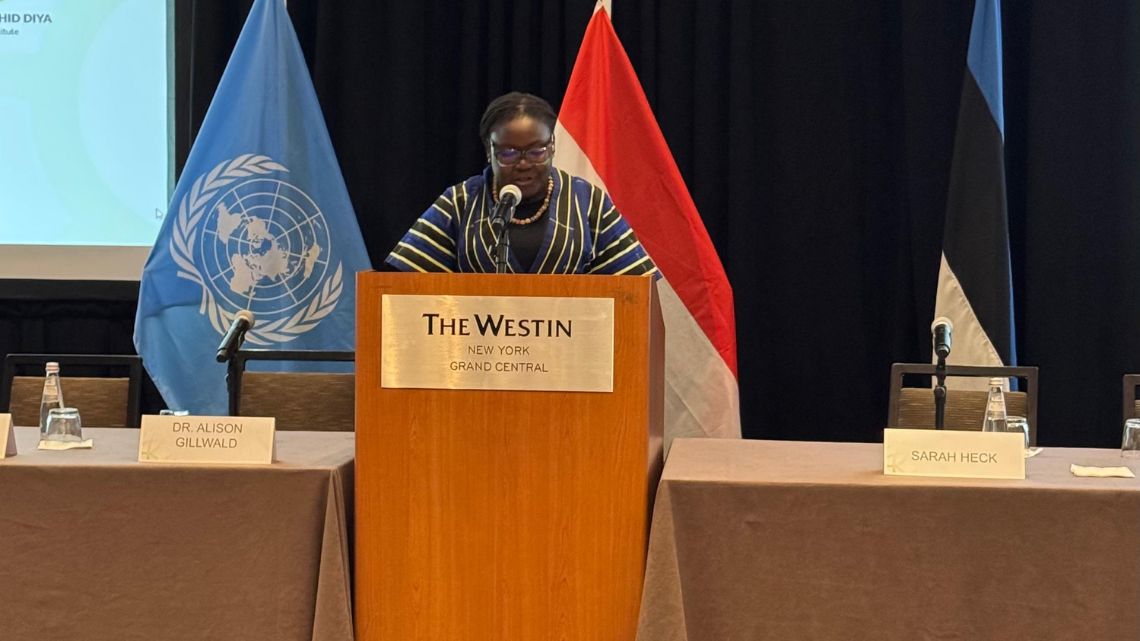
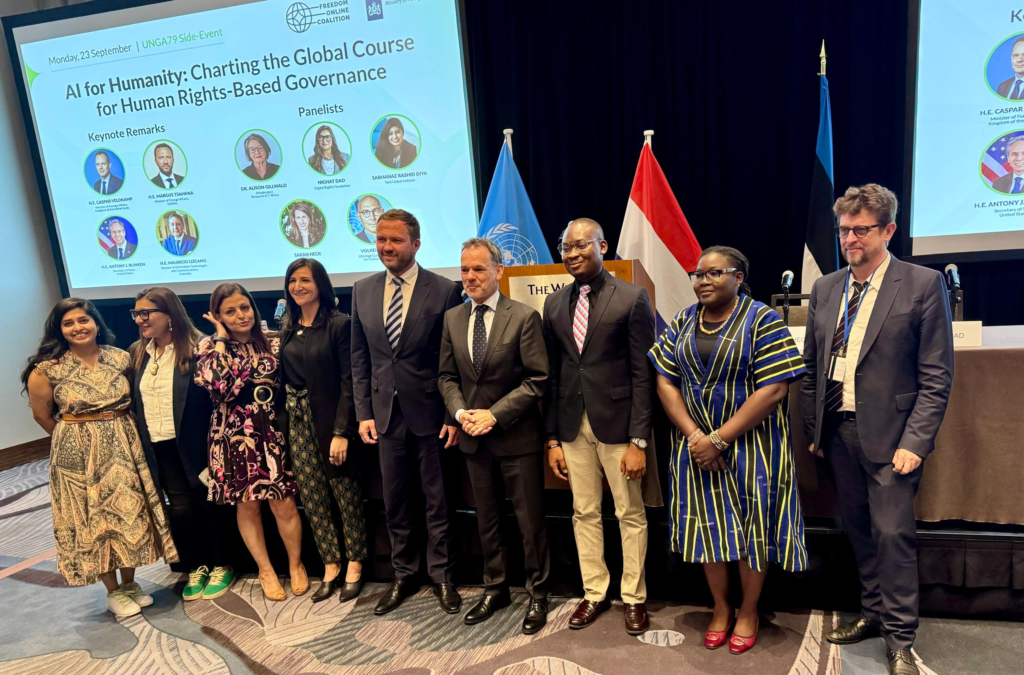
    The Director of the Information Services Department at the Ministry of Information, Dr. Nafisa Mahama, has reaffirmed Ghana’s strong commitment to advancing Artificial Intelligence (AI) as a tool to enhance key sectors such as healthcare, education, agriculture, and industry.

    Speaking at the Freedom Online Coalition (FOC) Ministerial side-event during the United Nations General Assembly (UNGA 79) in New York, she emphasized Ghana’s proactive stance on digital rights and the responsible development of AI.

    While expressing Ghana’s dedication to AI, Dr. Mahama also noted the importance of responsible governance to avoid potential risks to human rights. She highlighted the need for ethical frameworks guiding AI development in line with global human rights standards.

    “Ghana is actively developing a comprehensive AI governance framework,” she stated, adding that this includes innovative solutions like an AI-enhanced Online Application System, which aims to increase public access to information across all government sectors.

    Furthermore, Dr. Mahama outlined Ghana’s collaboration with international stakeholders to provide Advanced AI Prompt Engineering training for public relations officers across government institutions.

    “This training equips our officers with the necessary tools to leverage AI effectively for information dissemination and innovation,” she said.

    Ghana’s investment in AI, guided by ethical considerations and human rights, is positioning the country as a leader in the responsible use of AI. Dr. Mahama stressed, “By working together as a global community, we can harness AI’s potential to promote human development, prosperity, and respect for human rights.”

    As a member of the FOC, she reaffirmed Ghana’s commitment to open governance and accountability, noting that the country continues to contribute to advancing digital rights globally.

    She also recalled the 2019 enactment of the Right to Information Law, which empowers citizens with access to public information and promotes transparency in governance.

  • ‘Take your curse away’ – Manhyia Palace rejects Afia Pokuaa’s apology to Otumfuo

    ‘Take your curse away’ – Manhyia Palace rejects Afia Pokuaa’s apology to Otumfuo

    Manhyia Palace has refused to accept the apology rendered by Agoo TV journalist Afia Pokua and host of Onua TV’s ‘Bribi Gye Gye Wo,’ Mona Gucci for comments perceived as disrespectful to the Asantehene, Otumfuo Osei Tutu II, and the Asanteman.

    Afia Pokua and Mona Gucci, appeared before Manhyia on Monday, September 23, to issue their formal apologies. In a widely circulated video, Afia Pokuaa was observed kneeling before several Asante chiefs.

    However, the authorities at Manhyia Palace declined their apology

    “We don’t need anything from this child over here. She should take her sins away,” a chief said.

    The controversy began when Afia Pokua criticized the Asantehene for what she viewed as his silence during ongoing conflicts involving his subjects and other tribes, including the Bonos on Mona Gucci’s show.

    Afia Pokua had voiced her frustrations regarding what she perceived as the Ashantis’ superiority over other tribes,

    Her remarks sparked considerable outrage within the Ashanti community, leading to public condemnation and backlash from community leaders, including sub-chiefs and queen mothers.

    Realizing the gravity of their remarks, both journalists turned to social media to express their remorse but recognized the importance of a more direct apology.

    In a live broadcast, Mona Gucci admitted her regret for permitting Afia Pokua to air such controversial opinions.

    “When my guest came on the show, she made statements that hurt many. We are using this same platform to apologise. To our viewers around the world, including the Ashantis, we are truly sorry. We acknowledge your pain and concerns regarding this issue. I, Monalisa Abigail Sefakor Semeha, plead for your forgiveness. I apologise for everything that has transpired. 

    “The Asantehene is our father, and Asanteman is our family. Please forgive us,” Mona Gucci said. 

    Visibly emotional, Afia Pokua offered a lengthy apology to the Asantehene and the entire Ashanti kingdom, both locally and internationally. Dressed in funeral attire and on the verge of tears, she bowed deeply as she conveyed her sincere regret.

    She extended her apologies further, recognizing the embarrassment her comments caused the Kwahumanhene and the people of Kwahu.

    “I also apologise to the Kwahumanhene. I have brought shame upon you. My words have embarrassed the Chief and the people of Kwahu. Please forgive me; I promise not to let this happen again, “she added.

    “I offer a sincere apology to the Otumfuo Osei Tutu II. I did not speak well at all, and I accept my wrongs. I am his grandchild, child, and niece. I bow and ask for his forgiveness. 

    “I also apologise to the entire Asanteman, both home and abroad. Please forgive me. My actions were not intentional; I ask that, despite your anger, you find it in your heart to forgive me. I erred; I goofed,”  Afia Pokua said. 

  • Prepare for day of accountability – Ablakwa cautions Sports Minister over CAF stadium ban saga

    Prepare for day of accountability – Ablakwa cautions Sports Minister over CAF stadium ban saga

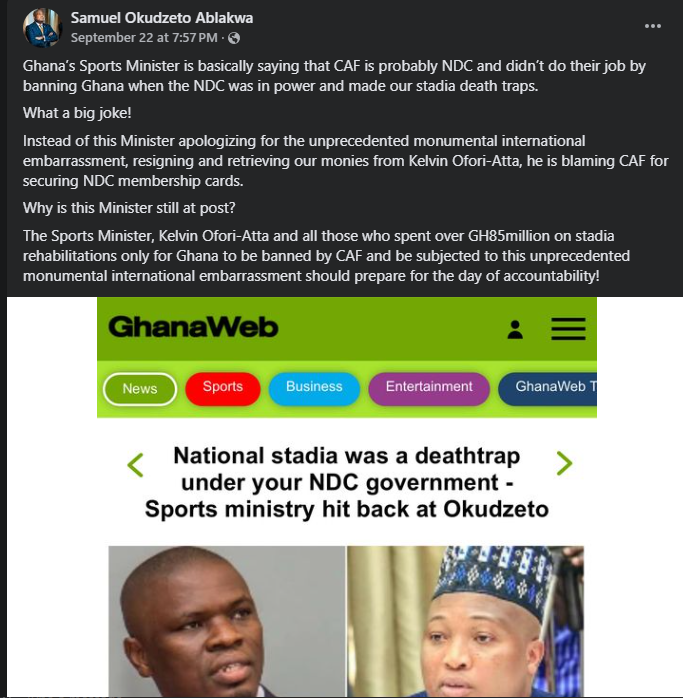
    The Member of Parliament for North Tongu, Samuel Okudzeto Ablakwa, has issued a stern warning to Ghana’s Sports Minister, urging him to take responsibility for the recent ban on the Baba Yara Stadium by the Confederation of African Football (CAF).

    In a Facebook post, Ablakwa criticized the Sports Ministry for what he described as a failure to prevent the international embarrassment Ghana faced due to the poor condition of its national stadiums.

    In his post, Ablakwa stated, “Ghana’s Sports Minister is basically saying that CAF is probably NDC and didn’t do their job by banning Ghana when the NDC was in power and made our stadia death traps. What a big joke!” He further lambasted the Minister for failing to apologize or resign over the incident, calling for the retrieval of funds allegedly spent on stadium rehabilitation.

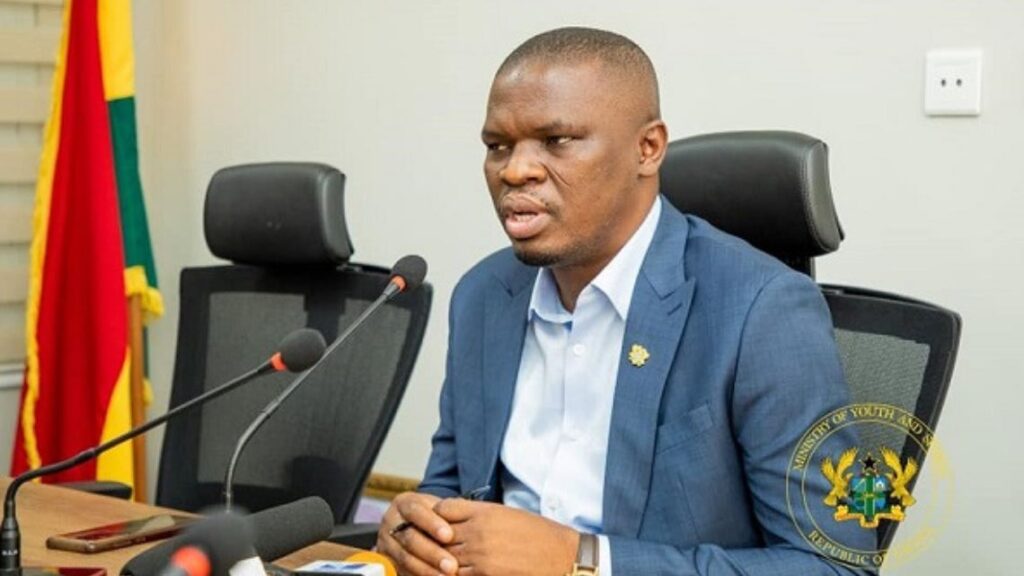
    Sports Minister Mustapha Ussif

    He added, “Instead of this Minister apologizing for the unprecedented monumental international embarrassment, resigning and retrieving our monies from Kelvin Ofori-Atta, he is blaming CAF for securing NDC membership cards. Why is this Minister still at post? The Sports Minister, Kelvin Ofori-Atta, and all those who spent over GH¢85 million on stadia rehabilitations only for Ghana to be banned by CAF and be subjected to this unprecedented monumental international embarrassment should prepare for the day of accountability.”

    Ablakwa’s comments follow CAF’s decision to withdraw its approval for the Baba Yara Stadium due to the poor condition of the pitch, despite recent renovation efforts. Ablakwa questioned how the government could spend over GH¢85 million on refurbishments and still face such a ban, suggesting that the funds may not have been utilized effectively.

    In response, the Ministry of Youth and Sports described Ablakwa’s remarks as “disingenuous” and refuted his claims. In a detailed statement, the Ministry defended the renovation works carried out on the Accra, Baba Yara, and Essipong stadiums since 2018, stating that prior to these upgrades, some facilities had been neglected for nearly a decade.

    “It is important to stress that, between 2009 and 2017, the erstwhile government did not carry out any major renovation on the Accra, Baba Yara, and Essipong stadia,” the Ministry’s statement read, countering Ablakwa’s suggestion that the renovations were ineffective.

    The Ministry further noted that both the Accra and Baba Yara stadiums have hosted several high-profile matches since the upgrades, including FIFA/CAF-certified events like the 2018 African Women’s Cup of Nations, World Cup qualifiers, and AFCON qualifiers.

    “It should be noted that FIFA/CAF Category 2 and 3 matches, including the 2018 AWCON, the 2019 AFCON qualifiers, the 2022 World Cup, and the 2023 AFCON qualifying matches were played at both the Accra and Baba Yara stadiums,” the Ministry highlighted.

    Despite these claims, Ablakwa has remained resolute in his criticism, insisting that the Ministry must be held accountable for the situation and that those responsible for the expenditure should be prepared to answer for their actions.

    The Ministry concluded its response by reaffirming its commitment to improving sports infrastructure in Ghana and ensuring that the country’s stadia continue to meet international standards.

  • 62-year-old Naa Densua was never arrested during Democracy Hub demo – NEIP CEO

    62-year-old Naa Densua was never arrested during Democracy Hub demo – NEIP CEO

    Kofi Ofosu Nkansah, the Chief Executive Officer of the National Entrepreneurship & Innovation Programme (NEIP), has refuted reports claiming that a 62-year-old woman, Naa Densua, was arrested during the recent Democracy Hub demonstration in Accra.

    The protest, aimed at addressing economic hardship and governance concerns, witnessed a confrontation between the police and demonstrators, leading to several arrests. However, Mr. Nkansah categorically denied that Naa Densua was among those detained, describing the reports as false and misleading.

    Nkansah explained that although several people were arrested for obstructing traffic and participating in unlawful activities, the elderly woman in question was not one of them. He clarified that Naa Densua was instead escorted by the police to secure an Uber ride, ensuring her safety during the unrest.

    In a Facebook post on Monday, September 23, Nkansah urged the public and media to verify their information before disseminating such stories, warning that the spread of false claims could inflame tensions between law enforcement and protesters.

    “Kindly ignore the false narrative that a 62-year-old woman was arrested during the demonstration,” he stated. “When the protesters started getting violent, the woman was escorted out of the scene. She said she wanted an Uber to her destination, and the police assisted her.”

    Meanwhile, Naa Densua, a 62-year-old convener for the #StopGalamseyNow and #ReOccupyJulorbiHouse protests, has recounted her experience with the police during the demonstration at the 37 Intersection in Accra on Sunday, September 22, 2024. She claimed that there was internal conflict among police officers regarding her arrest. While one officer argued she and her granddaughter should not be detained, another took a different stance.

    Elderly and minor who were arrested

    Naa Densua further alleged that a policewoman manhandled both her and her granddaughter while transporting them to a vehicle with other arrested protesters. She called on child advocacy groups and international organizations, such as UNICEF and Save the Children, to intervene, condemning the treatment of her 8-year-old granddaughter, Rose, during the incident.

    “We demand that the police release 8-year-old Rose, and ensure that no child is ever again caught in the crossfire of political repression. Let this be the moment that Ghana, and the world, say ‘Enough is enough!’”

    “I am calling on all child advocacy groups, both domestic and international. To UNICEF, Save the Children, World Vision, and every organisation that claims to stand for the rights and protection of children – where are you now? We need your voices, your power, and your intervention,” she added.

  • Reform laws on international arbitration in African countries – Dame tells International lawyers

    Reform laws on international arbitration in African countries – Dame tells International lawyers

    The Attorney-General and Minister for Justice, Godfred Yeboah Dame, has emphasised the need to reform the legal regulatory processes governing international arbitration in Africa.

    In his view, the rapidly evolving business climate in Africa and the increasing tendency for introduction of alternative dispute resolution clauses into commercial agreements the impact of arbitration on the economies of African countries cannot be underestimated.

    Mr. Dame made these and other remarks in his keynote address as Guest of Honour at the African Regional forum held as part of the International Bar Association’s annual conference in Mexico City, Mexico on Thursday, 19th September, 2024. Founded in 1947, the International Bar Association is the foremost international bar association of international legal practitioners, bar associations and law societies.

    The membership comprises of over 80,000 individual international lawyers from the world’s leading law firms, 190 law bar associations and law societies in over 170 countries. The annual conference of the International Bar Association opened on Sunday, 15th September, 2024 with remarks from former Mexican President, Ernesto Zedilo.

    “For all its touted advantages, it is indisputable that the nature of arbitration itself, especially the secrecy of proceedings and finality of awards, except in few very exceptional circumstances, implies that in some situations, it becomes an unwitting vehicle for perpetrating fraud and abuse against the people of Africa. It is quite curious that in some instances, companies which fail to make out any claim in domestic courts of African countries succeed in extremely huge international arbitration actions, sometimes mounted on the back of contracts which have failed to receive the relevant statutory and constitutional approvals of the countries in which they operate.”

    “This phenomenon is not because of a weakness of the judicial systems of African countries but simply because of the nature of international arbitration, particularly the secrecy of proceedings, flexibility of rules and the finality or non-appealability of awards, which I have just alluded to.” Godfred Dame stated.

    The Attorney-General observed that international arbitration has become the principal means for resolving disputes between governments and private persons. Rather unfortunately, he noted that such disputes often end up being contested at huge cost outside Africa, with London, Paris and New York being the most popular seats for arbitration.

    Even when African disputes involve two African parties, the cases tend to be subject to either the rules of the International Chamber of Commerce (ICC) or London Court of International Arbitration (LCIA) rules, and arbitration takes place with the seats being London, Paris, New York or Singapore. He noted that this development limits the opportunities for African arbitrators and stunts the development of the continent’s prowess in arbitration whilst also coming at enormous expense to the continent.

    Making reference to a recent arbitration award of over 11 billion US dollars (US$11bn) against the Government of Nigeria in international arbitration in a claim by a small offshore gas company, Process & Industrial Development Limited (P&ID), which was eventually set aside by the High Court of London in October, 2023, Mr. Dame stated that Africa suffers a lot of prejudice in the international arbitration arena.

    “Whilst international arbitration is touted to assure neutrality, privacy and efficiency in the adjudication of disputes, it cannot be disputed that African countries have been at the receiving end of some obnoxious and perverse awards. We cannot discount the prejudice Africa often suffers in international arbitration fora. We must all work towards the establishment of a justice system that guarantees all elements of the rule of law necessarily produces a business operating environment characterized by transparency, certainty and fairness.”

    Mr. Dame deplored the negative aspects of international arbitration which harm Africa and stated that there was the need to reform.

    “I should not be misconstrued as saying that Africa should shy away from international arbitration. Far from that. What I advocate for is a sober reflection on the regime for handling international arbitration on the African continent and a reform of same. The vulnerability of arbitration to abuse and fraud exposes the need for more robust safeguards in commercial disputes involving state parties, where the hard-earned purse of the nation is at stake. I deem it incompatible with the sovereignty of African nations for most of our international arbitration matters to be heard in foreign jurisdictions and with foreign countries being the seat of arbitration. “

    “It is a truism that an arbitration is international not because of the forum or place of hearing, but largely because of the parties involved and the underlying transaction. If this is the case, then there is the need to work to make Africa a highly respected home for arbitration in cases emanating from Africa. I suggest that African nations must take steps to ensure that most international arbitrations involving them take place in their respective countries and are regulated by the laws of their own countries.”

    The Attorney-General cited the case of Ghana which he noted, is taking steps to reform the regime for the conduct and hearing of arbitration involving the nation.

    “It is pertinent to indicate that Ghana seeks to make further reform to the pursuit of arbitration against the state. The nation is currently undertaking processes to ensure the passage of a law, an amendment to her State (Property and Contracts) Act, 1960, to mandate all contracts involving the State and its agencies as parties, to not only stipulate Ghana law as the governing law but also to have Ghana as the seat of arbitration and with the ADR Centre in Accra being the venue for the arbitration. With this amendment, the practice whereby the State and Ghanaian lawyers travel to various jurisdictions – Paris, New York, London, Singapore, etc. for the conduct of arbitration involving the Government of Ghana and where arbitral awards are enforced all over the world at enormous cost to the State, and in jurisdictions with legal systems alien to Ghana’s, will cease and will be consigned to history,” the A-G stated.

    Remove global regulatory barriers

    The Attorney-General and Minister for Justice also urged global leaders, particularly regulators of the legal profession around the world, to take a second look at rules regulating the practice of law across borders in view of the circumstances of the world finds itself in.

    Mr. Dame observed that “a virtualised world”, which the global community now is, implies that “law practice generally has assumed cross-border characteristics. The local jurisdiction in which law is practised is open to the world. African lawyers thus have to be world class, working as part of an open global community to resolve modern-day disputes, many of which have cross border elements.” Reflecting on the nature of legal practice around the continent and the world and the effect of globalisation on law practice, the Attorney-General had this to say.

    “If our practice is essentially and unavoidably international or cross- border, then there must be a rethink of the legal framework regulating the practice of lawyers in our respective domestic settings. We must remove the barriers of licensing regimes which constrain the capacity of lawyers to appear in jurisdictions other than where they were trained to practise, if our practice is indeed, international.

    Mr. Dame however said he was realistic in this call and that he was aware that countries may have different legal systems, different systems for training of lawyers, different licensing regimes and different standards for scrutinising and assessing compliance with rules of professional conduct and ethics.

    However, in his view, “international legal practice has shown the way. Nations appear before regional courts, international tribunals and arbitration panels constituted to adjudicate cases in accordance with law. The lawyers representing them do not require a specific licensing to appear before such panels. Therefore, it can be done. We can begin with a common understanding to provide for state counsel or lawyers who are constitutionally and statutorily empowered in their respective countries to represent nations in disputes, to be able to, without the inhibition of the requirement for licence to practise, appear freely in domestic courts of other countries when disputes involving the nation occurs.”

    Godfred Yeboah Dame further stated that “for instance, it is incongruous for state counsel to be able to appear before an arbitration panel seated in London or Nairobi without the requirement of a specific licence but the same state counsel cannot appear before the London High Court or the Nairobi High Court to defend his nation in proceedings to enforce the award resulting from the arbitration after the conclusion of the arbitration proceedings, simply because the state counsel is not qualified to practise in either London or Nairobi, as the case may be. We ought to begin the process of removing the regulatory barriers to the appearance of lawyers qualified in other jurisdictions in such proceedings. Such an exception will become the fulcrum for the development of a blueprint for a gradual harmonisation of legal training standards and ethics and the removal of regulatory barriers.”

    The impact of African Continental Free Trade Area on law practice

    Ghana’s Attorney-General and Minister for Justice also spoke about the impact of the integration of the African continent on law practice.

    He observed that the African Continental Free Trade Area, expected to connect 1.3 billion people, create a $3.4 trillion economic bloc, and above all boost commerce within the African continent, is envisioned as the largest free zone since the establishment of the World Trade Organization in 1994.

    “The African lawyer’s role in the resolution of disputes has been heightened by the setting up of AfCTA. Whereas countries have their own courts of first instance and appellate structures, the AfCFTA also has an established dispute settlement mechanism to hear trade disputes brought by aggrieved State parties.”

    Godfred Dame noted that the setting up of the AfCFTA Dispute Settlement Body has the tendency to raise questions bordering on conflicts with the statutorily recognised structures for dispute resolution in individual countries as well as questions bordering on the sovereignty of nations.

    He stated that the political endorsement by African states of the Dispute Settlement Body will ensure that the rulings of panels and the Appellate Body of AfCTA will become part of the legal acquis of African legal systems in order to bring legal security, certainty and predictability, and transparency. He observed that in addition to the firm political will of African states, the authority of the

    AfCTA’s dispute resolution mechanisms can only be established through the cooperation of lawyers around the continent.

    “I urge you all to support the AfCTA in its work, particularly, in ensuring that the dispute settlement body launched 3 years ago succeed. Respectfully, there must be a deliberate effort to train the African lawyer in the benefits, complexities and requirements for dispute adjudication in the regional integration body. African lawyers have to be voices in promoting the benefits of regional integration and the global multilateral trading system,” the A-G stated.

  • Remove global legal regulatory barriers – A-G urges International Bar Association

    Remove global legal regulatory barriers – A-G urges International Bar Association

    The Attorney-General and Minister for Justice, Godfred Yeboah Dame, has emphasized the need for global leaders, particularly regulators of the legal profession, to re-examine rules governing the practice of law across borders in light of current global circumstances.

    Mr. Dame made these remarks as the Guest of Honour at the African Regional Forum, part of the International Bar Association’s (IBA) annual conference in Mexico City on Thursday, 19th September 2024.

    Founded in 1947, the IBA is the leading international bar association for legal practitioners, bar associations, and law societies. Its membership includes over 80,000 individual lawyers from top law firms worldwide, as well as 190 bar associations and law societies from more than 170 countries. The conference opened on Sunday, 15th September 2024, with remarks from former Mexican President Ernesto Zedillo.

    In his speech, Ghana’s Attorney-General noted that the global community has become a “virtualised world,” which has led law practice to take on cross-border characteristics. He stressed that local jurisdictions are now open to the world, requiring African lawyers to be world-class professionals operating within a global legal community to resolve modern disputes with international elements.

    “If our practice is essentially and unavoidably international or cross-border, then there must be a rethink of the legal framework regulating the practice of lawyers in our respective domestic settings,” Dame said. He advocated for the removal of licensing barriers that prevent lawyers from practicing in jurisdictions outside where they were trained, in order to align with the international nature of legal practice.

    While acknowledging the differences in legal systems, training methods, licensing regimes, and standards of professional conduct across countries, Mr. Dame argued that international legal practice offers a model for overcoming these barriers. He pointed out that lawyers represent nations in regional courts and international tribunals without the need for specific licenses, demonstrating that such reforms are possible.

    He further suggested starting with a framework allowing state counsel, who are empowered by their respective countries to represent their governments, to appear in domestic courts of other nations without licensing restrictions. This, he argued, would set the stage for harmonizing legal standards and reducing regulatory barriers.

    Mr. Dame illustrated the incongruity in current regulations by highlighting the situation where state counsel can represent their nations in arbitration panels in cities like London or Nairobi without a specific license, but cannot appear in the High Courts of those cities to defend their nation in proceedings to enforce an arbitration award. “We ought to begin the process of removing the regulatory barriers to the appearance of lawyers qualified in other jurisdictions in such proceedings,” he added.

    The Impact of African Continental Free Trade Area (AfCFTA) on Law Practice

    The Attorney-General also addressed the impact of the African Continental Free Trade Area (AfCFTA) on law practice. AfCFTA, which aims to connect 1.3 billion people and create a $3.4 trillion economic bloc, is expected to boost commerce within Africa, becoming the largest free zone since the World Trade Organization’s creation in 1994.

    “The African lawyer’s role in resolving disputes has been heightened by the AfCFTA. While countries have their own courts of first instance and appellate structures, the AfCFTA has an established dispute settlement mechanism for trade disputes,” Dame noted.

    He raised concerns about potential conflicts between the AfCFTA’s dispute resolution body and domestic legal systems, as well as challenges related to national sovereignty. However, he emphasized that the political endorsement of AfCFTA’s dispute resolution mechanisms by African states would help ensure that the rulings of its panels and Appellate Body become part of African legal systems, thereby promoting legal security, certainty, and transparency.

    Mr. Dame called on African lawyers to support AfCFTA and to promote the benefits of regional integration and the global multilateral trading system, highlighting the need for training in dispute adjudication within AfCFTA’s structures.

    International Arbitration and the Need for Reform in African Law Practice

    Mr. Dame also examined the impact of international arbitration on African law practice, emphasizing the need for reforms in legal regulatory processes governing arbitration on the continent. He noted that as business in Africa evolves and more commercial agreements include alternative dispute resolution clauses, arbitration’s influence on African economies is growing.

    Referencing a recent $11 billion arbitration award against the Government of Nigeria, which was later set aside by the High Court of London, Dame argued that Africa often suffers from prejudiced outcomes in international arbitration forums. He criticized arbitration for sometimes favoring companies that fail in domestic courts but succeed in international arbitration actions.

    While recognizing the advantages of arbitration, including neutrality and efficiency, Dame warned of its susceptibility to fraud and abuse due to the secrecy and finality of proceedings. He urged the development of more robust safeguards to protect African countries in commercial disputes, emphasizing that most arbitration involving African nations should take place on the continent, governed by African laws.

    The Attorney-General cited Ghana’s efforts to reform its arbitration regime, including a proposed amendment to the State (Property and Contracts) Act, 1960. This amendment would require contracts involving the Ghanaian state to stipulate Ghanaian law as the governing law and designate Ghana as the seat of arbitration, with proceedings held at the ADR Centre in Accra. These reforms, Dame said, would eliminate the need for Ghanaian lawyers and government officials to travel to foreign jurisdictions for arbitration, reducing costs and ensuring that disputes are resolved within a legal framework familiar to Ghana.

    With these steps, he expressed optimism that Africa could become a respected hub for arbitration, where disputes involving African nations are resolved transparently, fairly, and in accordance with African legal standards.

  • You are to blame for not winning NPP presidential primaries – NEIP CEO to Alan

    You are to blame for not winning NPP presidential primaries – NEIP CEO to Alan

    Chief Executive Officer of the National Entrepreneurship & Innovation Programme (NEIP), Kofi Ofosu Nkansah, has called on Alan Kyerematen to take full responsibility for his failure to secure victory in the recent New Patriotic Party (NPP) presidential primaries.

    According to Mr Nkansah, Mr Kyerematen’s defeat should not be attributed to any alleged “systemic mafia” within the party, but rather to his own campaign shortcomings.

    This follows Kyerematen’s earlier comments, in which he hinted at a possible internal conspiracy that sabotaged his chances of becoming the NPP’s flagbearer.

    Alan Kyerematen, a presidential aspirant for the 2024 general elections

    In a Facebook post, Nkansah emphasised that the NPP primaries were conducted fairly, giving every candidate an equal opportunity to win the support of delegates. He argued that Kyerematen’s inability to build a strong grassroots base and connect with party members was a key reason for his loss.

    “Dear Chief Alan, you have yourself to blame for not becoming the next NPP flagbearer after Prez Akufo-Addo because of how you did your internal Politics, not because of any systemic mafia or bad register. If system support resulted in automatic win, you would have won the NPP 2007 primaries,” Nkansah posted.
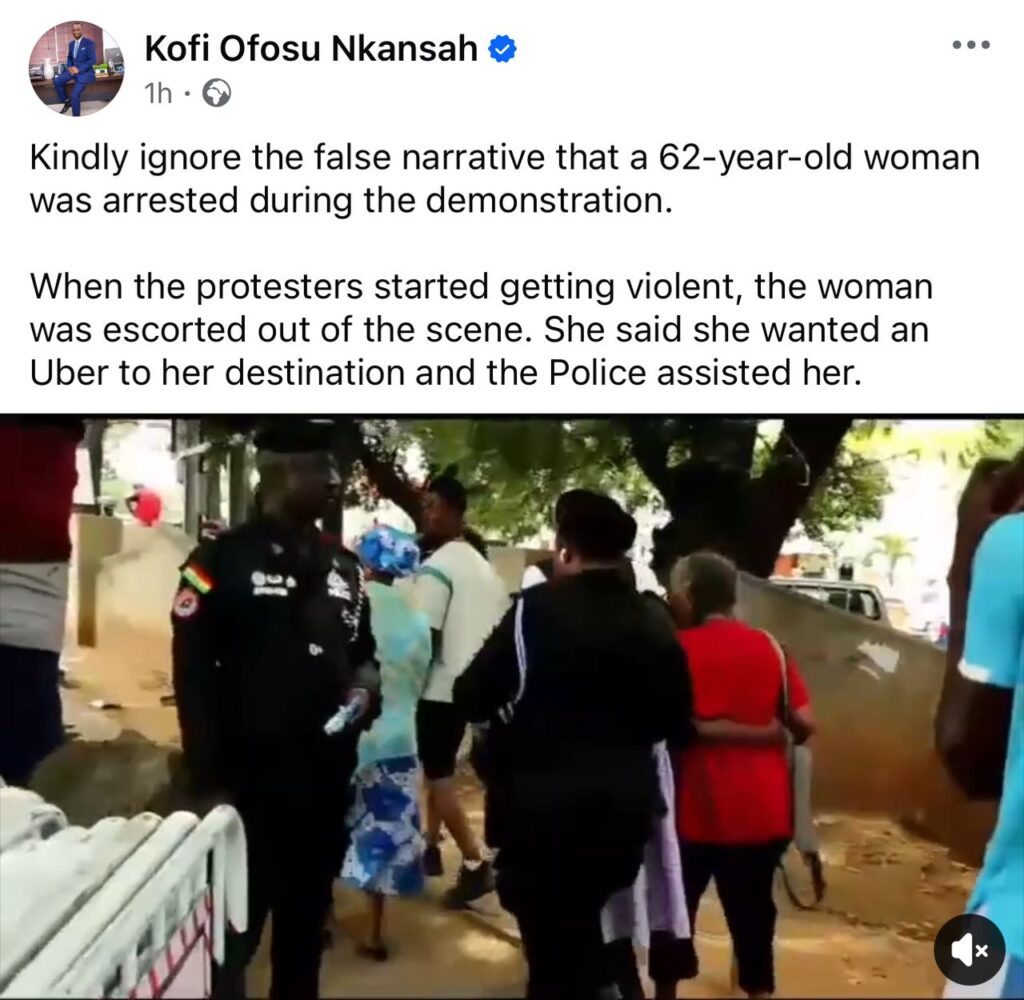
    Nkansah further criticised Kyerematen for attributing his defeat to external factors, urging him to reflect on his own campaign strategy.

    He pointed out that other candidates managed to engage with delegates more effectively, which led to their stronger performance in the polls. Instead of shifting the blame to non-existent forces, Nkansah advised Kyerematen to focus on introspection.

  • IPPs consider walking away from PPA restructuring process over delay by govt

    IPPs consider walking away from PPA restructuring process over delay by govt

    The Chamber of Independent Power Generators Ghana (IPGGs) has raised concerns over delays in securing governmental approvals for the Power Purchase Agreement (PPA) restructuring documents.

    According to the Chamber, its members are on the verge of abandoning the PPA restructuring process and reverting to their existing PPAs.

    In a statement signed by the Chairman of the IPGGs, Togbe Afede XIV, and addressed to the Ministry of Finance on August 16, 2024, the IPPs respectfully demanded an urgent meeting with Finance Minister Dr. Mohammed Amin Adam to address these pressing concerns.

    “We respectfully, as a matter of urgency, demand an appointment to meet with you to discuss and resolve these critical issues. This meeting must occur at the earliest opportunity next week, as any further delay could be catastrophic for the nation’s power supply stability. We kindly request that you confirm your availability for this meeting at your soonest convenience,” the statement read.
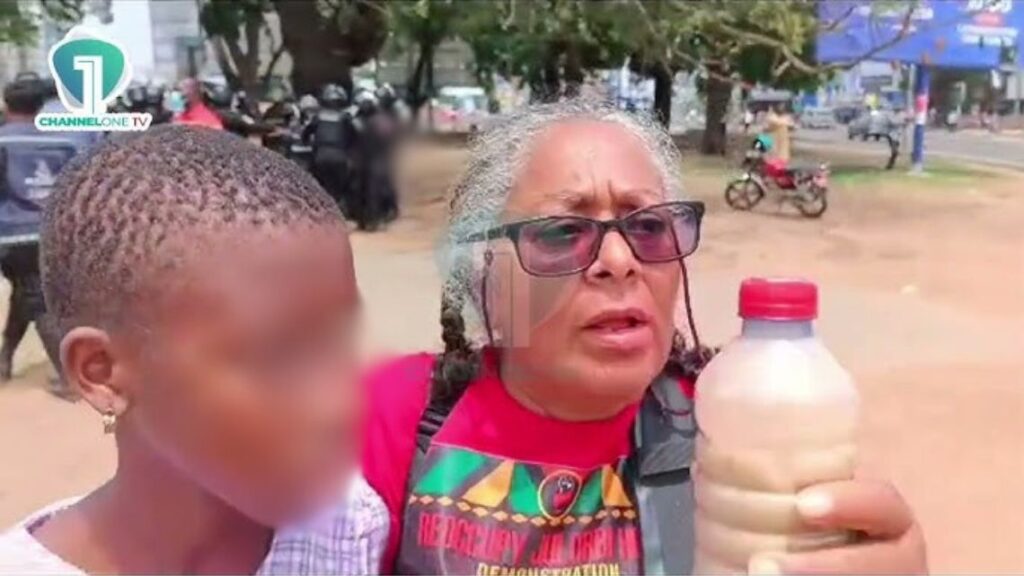
    The statement continued, “The current situation is extremely disappointing as the IPGs played a major role in working with the government to support its necessary restructuring of the country’s indebtedness in order to qualify for the IMF [International Monetary Fund] loans. Not only did many of the IPGs agree to a haircut on the arrears owed to them at the time; IPGs agreed to defer a significant portion of future payments to enable the government to recover under the IMF programme.”

    “Despite the economic hardship this caused the IPGs, we agreed to this structure to ensure the IPGs would receive consistent payments to cover our operations and debt obligations. We are hardly a year removed from shaking hands with this new arrangement, and ECG is already materially in default to the amount of $1.4 billion. As you can imagine, we feel highly betrayed by the situation we find ourselves in today,” it added.

    The Chamber concluded by stating, “We are in a dire strait as the Government of Ghana and ECG have not fulfilled their end of the bargain. If the current situation continues, the IPGs will be left with no option but to exercise their rights under their respective contracts and to discontinue any unfulfilled negotiations. At this point, we cannot guarantee our cooperation moving forward, nor can we guarantee the continued reliable supply of electricity beyond August 30, 2024.”

  • Friedkin Group ready to purchase 94% stake in Everton

    Friedkin Group ready to purchase 94% stake in Everton

    The Friedkin Group has reached an agreement to acquire Farhad Moshiri’s 94% majority stake in Everton.

    The deal, however, remains subject to regulatory approval from the Premier League, the Football Association, and the Financial Conduct Authority.

    A spokesperson for The Friedkin Group confirmed on Monday: “We are pleased to have reached an agreement to become custodians of this iconic football club. We are focused on securing the necessary approvals to complete the transaction. We look forward to providing stability to the club and sharing our vision for its future, including the completion of the new Everton Stadium at Bramley-Moore Dock.”

    The Friedkin Group initially agreed in principle to purchase Moshiri’s stake in June, but talks stalled a month later after the parties failed to finalize terms.

    This followed an earlier failed attempt by Miami-based 777 Partners to secure a deal. In addition, American businessman John Textor, who also owns Crystal Palace, entered into discussions but couldn’t close the deal due to Premier League rules prohibiting ownership of multiple clubs.

    The Friedkin Group, led by chairman Dan Friedkin, already has ties to Everton, having injected £200m into the club, which could potentially be converted to equity as part of the purchase. Friedkin, who owns Serie A club Roma, has a net worth of £5.7bn according to Forbes.

    The agreement between The Friedkin Group and Moshiri’s Blue Heaven Holdings has been signed, with finances now in place. The group’s due diligence on the club was conducted during their period of exclusivity in June, and concerns about a separate £200m loan from 777 Partners have been resolved.

    Moshiri, a British-Iranian businessman, first acquired a 49.9% stake in Everton in 2016 before increasing his holding to 94.1% in 2022. However, the club’s financial struggles were exacerbated by Russia’s invasion of Ukraine, leading Everton to suspend sponsorship deals with USM Holdings, part-owned by Alisher Usmanov. Moshiri eventually resigned as chairman of USM after Usmanov was sanctioned.

    Moshiri had previously agreed to sell his stake to 777 Partners in 2023, but the deal fell through after eight months, with the group missing the deadline to complete the takeover.

    Under his ownership, Everton endured two separate points deductions last season for breaching Premier League financial rules and are currently joint-bottom of the league with just one point from their first five games. During his tenure, the club saw eight permanent managers and two caretakers in charge of the team.

  • Oliver Barker-Vormawor arrested

    Oliver Barker-Vormawor arrested

    Convener of the Democracy Hub protest, Oliver Barker-Vormawor, has been apprehended by the Ghana Police Service for various unlawful acts during the Democracy Hub protests.

    This information was communicated by the Ghana Police Service in a press statement.

    “The Ghana Police Service has arrested Oliver Barker Vormawor, one of the leaders of Democracy Hub for the various unlawful acts he was involved in on Saturday 21st September and Sunday, 22nd September 2024, at the 37 Intersection in Accra.”

    Prior to this, he rejected claims by the Ghana Police Service that he is in hiding and has been declared wanted.

    Labeling the allegations as “baseless and misleading,” Barker-Vormawor clarified that he has been in regular communication with senior police officers regarding his whereabouts and availability.

    His response followed a police announcement of a manhunt for him and others after several Democracy Hub protesters were arrested on Sunday, September 22, for alleged acts of lawlessness during their demonstration.

    The police claimed Barker-Vormawor was evading arrest, but in a Facebook post, he firmly denied avoiding law enforcement.

    He also criticized the police’s narrative, asserting his continued cooperation with authorities and disputing the necessity for a manhunt.

    “In light of these developments, I have instructed my lawyers to urgently engage with the Ghana Police Service to seek clarification on which specific police station or office they wish me to report to. My legal team stands ready to cooperate and will be in touch with the relevant authorities to ascertain the appropriate steps required,” he posted.

    “I remain committed to the rule of law and to addressing any issues raised by the Police in accordance with due process. I expect that this engagement will provide clarity and prevent any further attempts to distort the truth.”

  • Democracy Hub protestors fail to show on Day 3 of demo after series of arrests

    Democracy Hub protestors fail to show on Day 3 of demo after series of arrests

    Following the arrest of over 40 demonstrators on Sunday, September 22, the streets around the 37 Military Hospital and El Wak Sports Stadium were deserted on Monday, as protesters did not turn up for the third and final day of the planned Democracy Hub protest.

    Despite the lack of protesters, police maintained a strong presence to prevent any disturbances. JoyNews reports that by 11:50 am, only two individuals had shown up, holding placards and standing about 30 meters from the police barricade while chanting, “Stop galamsey.”

    Both protesters were swiftly arrested by the police and transported to the central police unit.

    In light of the arrests and restrictions, the protesters have announced their intention to move their demonstrations online via social media platforms.

    Additionally, the police have declared one of the protest leaders, Oliver Barker-Vormawor, wanted following the Sunday arrests. However, Barker-Vormawor has stated that he is not in hiding and is ready to cooperate with the authorities.

  • “A policewoman manhandled me and my grand daughter” – 62-year-old Democracy Hub protestor

    “A policewoman manhandled me and my grand daughter” – 62-year-old Democracy Hub protestor

    62-year-old convener for #StopGalamseyNow and #ReOccupyJulorbiHouse protest, Naa Densua, has recounted the ordeal she and her grand daughter minor faced after being arrested by the Ghana Police Service on Sunday, 22nd September 2024 for engaging in various acts of lawlessness at the 37 Intersection in Accra during the Democracy Hub demonstration.

    According to Naa Densua, there was a conflict between some police officers over her arrest. While one officer noted that she and the minor should not be arrested, another said contrary.

    While being transported to a vehicle holding other arrested protestors, she noted that a police officer manhandled she and her grand daughter.

    “A policewoman manhandled me and my grandchildren,” she said.

    “We demand that the police release 8-year-old Rose, and ensure that no child is ever again caught in the crossfire of political repression. Let this be the moment that Ghana, and the world, say ‘Enough is enough! “I am calling on all child advocacy groups, both domestic and international. To UNICEF, Save the Children, World Vision, and every organisation that claims to stand for the rights and protection of children – where are you now? We need your voices, your power, and your intervention,” she added.

    Naa Densua bemoaned the failure of the police to apprehend individuals engaged in illegal mining activities during her arrest.

    In a video gone viral, she and the minor were put in a vehicle that kept other protestors who were arrested.

    According to CitiNews report, the two have been released.

    The Ghana Police Service on Sunday, 22nd September 2024, arrested 42 individuals among the Democracy Hub demonstrators.

    The protesters, who had unlawfully assembled at the intersection, were seen attacking police officers performing their lawful duties, entering a police vehicle to remove the ignition key and throwing it away, pushing down police crash barriers, obstructing traffic, causing unlawful damage, and disturbing the peace, among other offenses.

    In an official statement, the police noted that “all the suspects, including some of the leaders of the group, are in police custody and will be put before the court to face justice.”

    The police are actively searching for the remaining perpetrators, including Oliver Vormawor, one of the group’s leaders, to bring them to justice.

    The service thanked members of the public for their cooperation and assured that they remain committed to maintaining peace, security, law, and order.

  • We need to be united, don’t insult us – Hearts of Oak boss to fans

    We need to be united, don’t insult us – Hearts of Oak boss to fans

    Hearts of Oak head coach, Aboubakar Ouattara, has called on the club’s supporters to remain united and refrain from insulting the players and technical team in their criticism.

    The former league champions have faced intense pressure from their fans following back-to-back defeats in the 2024/25 Ghana Premier League season. However, the Phobians bounced back with a 1-0 victory over Bechem United on Sunday, September 22, at the University of Ghana Stadium.

    Following the much-needed win, Ouattara used the opportunity to address the fans, urging them to stand behind the team without resorting to insults.

    “We’re working for them [supporters]. I understand when they criticise us,” Ouattara said in a post-match interview. “You can criticise us and say anything you like, but please do not insult [us]. What we need is unity. We need to stay together, and if that happens, I think we can achieve a lot.”

    Sunday’s victory lifted Hearts of Oak to 10th place on the league table after three games, with their next fixture set against Nations FC.

  • Verstappen says swearing punishment could speed up his F1 exit

    Verstappen says swearing punishment could speed up his F1 exit

    Max Verstappen has suggested that the punishment he received for swearing during a news conference might hasten his departure from Formula 1.

    The 26-year-old Dutch driver, who has repeatedly stated that he is not driven by breaking records or having a lengthy career in the sport, expressed his frustration after the incident, which occurred following the Azerbaijan Grand Prix in Baku.

    Verstappen’s punishment came after he used profanity to describe his car’s performance during an official pre-event news conference in Singapore.

    As a result, the race stewards ordered him to “accomplish some work of public interest.” In protest, Verstappen gave short answers in the post-qualifying news conference, and later voiced his dissatisfaction to the media, calling the punishment “ridiculous.”

    “These kinds of things definitely decide my future as well,” Verstappen said. “When you can’t be yourself or you have to deal with these kinds of silly things, it’s really tiring. For me, that is not a way of continuing in the sport, that’s for sure.”

    The reigning world champion, who finished second to Lando Norris in the Singapore Grand Prix, made it clear that his patience was wearing thin. He lamented the lack of freedom to express his true feelings in the sport, stating that such restrictions prevent athletes from being authentic.

    “If you can’t really be yourself to the fullest, then it’s better not to speak,” Verstappen said. “But that’s what no one wants because then you become a robot and that’s not how you should be going about it in the sport. You should be able to show emotions in a way. That’s what racing is about. Any sport.”

    Verstappen also noted that while he was uncertain about how seriously the governing body, the FIA, would take his complaints, he was clear about his own limits.

    “For me, when it’s enough, it’s enough, and we’ll see,” he said. “Racing will go on, F1 will go on without me. It’s not a problem. But also, it’s not a problem for me.”

    He voiced his frustration over what he perceived as unfair treatment, particularly after offering voluntary support to the FIA in the past, such as working with junior stewards earlier in the year. Verstappen felt his efforts to help the governing body had not been reciprocated with fair treatment.

    “I am not a difficult person to say no. I’m like: ‘OK, sure, if that’s what you guys like, I like to help out.’ And then I get treated like that. Well, that’s just not how it works,” Verstappen explained.

    Other F1 drivers, including his title rival Lando Norris and Mercedes driver Lewis Hamilton, backed Verstappen’s stance. Verstappen shared that the Grand Prix Drivers’ Association (GPDA) found the ruling laughable, with many considering it “silly.”

    Verstappen was noncommittal about how long he would continue to adopt a defiant stance in news conferences, saying he would “see where we are at” by the time of the next race in Austin, Texas, in October. He also criticized what he saw as ill-considered decisions by race officials, including a recent fine issued to Ferrari’s Carlos Sainz for crossing the track after a crash.

    These issues overshadowed a weekend in which Verstappen finished second to Norris, keeping his title lead intact despite Red Bull’s struggles in Singapore. While Norris reduced his points deficit to 52 with six races remaining, Verstappen remains in control of the championship, though he remains frustrated with the off-track drama.

    For Verstappen, the frustrations off the track, rather than his performance on it, seem to be playing a larger role in his thinking about the future.

  • Lawyers unable to locate arrested Democracy Hub protestors

    Lawyers unable to locate arrested Democracy Hub protestors

    It is reported the legal counsel of some 42 Democracy Hub demonstrators arrested for engaging in various acts of lawlessness at the 37 Intersection in Accra cannot track their clients.

    Per reports, those arrested have been sent to various police stations in the country.

    The protesters, who had unlawfully assembled at the intersection, were seen attacking police officers performing their lawful duties, entering a police vehicle to remove the ignition key and throwing it away, pushing down police crash barriers, obstructing traffic, causing unlawful damage, and disturbing the peace, among other offenses.

    In an official statement, the police noted that “all the suspects, including some of the leaders of the group, are in police custody and will be put before the court to face justice.”

    The police are actively searching for the remaining perpetrators, including Oliver Vormawor, one of the group’s leaders, to bring them to justice.

    The service thanked members of the public for their cooperation and assured that they remain committed to maintaining peace, security, law, and order.

  • Elderly, minor arrested at Democracy hub demo released – Reports

    Elderly, minor arrested at Democracy hub demo released – Reports

    Recent reports have it that an elderly woman and a minor who were arrested by the Ghana Police Service on Sunday, 22nd September 2024 for engaging in various acts of lawlessness at the 37 Intersection in Accra during the Democracy Hub demonstration have been released.

    The elderly bemoaned the failure of the police to apprehend individuals engaged in illegal mining activities during her arrest.

    In a video gone viral, she and the minor were put in a vehicle that kept other protestors who were arrested.

    According to CitiNews report, the two have been released.

    The Ghana Police Service on Sunday, 22nd September 2024, arrested 42 individuals among the Democracy Hub demonstrators.

    The protesters, who had unlawfully assembled at the intersection, were seen attacking police officers performing their lawful duties, entering a police vehicle to remove the ignition key and throwing it away, pushing down police crash barriers, obstructing traffic, causing unlawful damage, and disturbing the peace, among other offenses.

    In an official statement, the police noted that “all the suspects, including some of the leaders of the group, are in police custody and will be put before the court to face justice.”

    The police are actively searching for the remaining perpetrators, including Oliver Vormawor, one of the group’s leaders, to bring them to justice.

    The service thanked members of the public for their cooperation and assured that they remain committed to maintaining peace, security, law, and order.

  • I introduced 24-hour economy in 2016; NDC stole it – Hassan Ayariga claims

    I introduced 24-hour economy in 2016; NDC stole it – Hassan Ayariga claims

    The Presidential Candidate of the All People’s Congress (APC), Hassan Ayariga, alleged during the launch of his manifesto on Sunday night that he introduced the concept of a 24-hour economy in 2016 and accused former President John Mahama and the National Democratic Congress (NDC) of stealing the idea.

    The event, held at the University of Professional Studies, Accra (UPSA) Auditorium, showcased Ayariga’s vision for Ghana under the theme “Transforming Ghana and Restoring Hope.”

    Ayariga is the latest candidate to unveil his manifesto following the Electoral Commission’s clearance of him and 12 others to contest the upcoming elections.

    He stated, “The 24 Hour Economy was introduced by Hassan Ayariga in 2016 and 2024. It is not for the NDC,” criticizing the NDC’s claims regarding the initiative.

    A 24-hour economy refers to an economic system where businesses, services, and activities operate continuously throughout the day and night. This system encompasses various sectors, including retail, transportation, entertainment, and public services, catering to consumer needs at any time.

    In response, Mahama emphasized at the 9th Ghana CEO Network Business Cocktail that the 24-hour economy policy would be a game-changer, pledging that a future NDC administration would actively pursue projects to transition Ghana into a fully-fledged 24-hour economy. He outlined that this vision aligns with the NDC’s goal of creating an industrialized, inclusive, and resilient economy.

    The APC also condemned the government’s “Gold for Oil” initiative, labeling it a “scam and fraudulent” policy that enriches a few at the expense of the country. The APC’s vice presidential candidate, Samuel Worlanyo Mensah, noted that the policy has benefited middlemen while the public suffers from high fuel prices. Ayariga promised to cancel the initiative if elected.

    When it was his turn to speak, Ayariga pledged that the minimum salary in Ghana would be GH¢5,000 under his administration. He proposed implementing a bi-weekly salary system, where individuals would be paid every two weeks instead of monthly.

    Additionally, he committed to increasing the minimum wage from the current GH¢18 to between GH¢150 and GH¢300, asserting that current salaries are inadequate to meet people’s basic needs.

  • Your silence is my biggest regret – Barker-Vormawor tells journalists, doctors, unions

    Your silence is my biggest regret – Barker-Vormawor tells journalists, doctors, unions

    It is Day 3 of the Democracy Hub protest, which commenced last Saturday, and its convenor, Oliver Barker-Vormawor, has expressed deep disappointment over the lack of support from professional bodies and civil society in Ghana.

    In a passionate statement, Barker-Vormawor lamented, “Today should have been the day. Professional bodies, NGOs, journalists, lawyers, doctors, academics, unions; would hold press conferences announcing that they are all joining the last day of the protest. All those who released press statements calling for urgent action. They would have stepped out to increase the pressure on the government that has deployed 2,800 police officers to stop this protest. This is what they did in Kenya!”

    He emphasized the importance of solidarity and the potential impact of unified action, stating, “They would have forced the State to arrest them. In the interest of the environment and the bigger message! This is the resilience of a society that refuses to give up! These are the things that change the course of history. We are letting a moment pass us by! Not in Ghana? My heart is truly heavy! Their silence is my biggest regret!”

    The protest has seen demonstrators blocking roads and disrupting traffic, leading to the arrest of approximately 42 individuals by the police, who are set to face court proceedings.

    As tensions rise, the call for unity among various sectors of society remains critical in the fight for accountability and change in Ghana.

    As the protest continues, the absence of widespread participation from key professional groups raises questions about collective action and the role of civil society in advocating for reform.

  • We never said ECG is going bankrupt – PURC clarifies

    We never said ECG is going bankrupt – PURC clarifies

    The Public Utilities Regulatory Commission (PURC) has dismissed media reports claiming that the Electricity Company of Ghana (ECG) is on the verge of bankruptcy, describing these claims as misreported.

    According to PURC, the reports inaccurately attributed the warning of ECG’s financial collapse to the Commission’s Executive Secretary, Dr. Ishmael Ackah. In a statement signed by its commissioners, PURC clarified that it had not issued any such warning regarding ECG’s bankruptcy.

    The Commission emphasized that the reports circulating in the media on September 18, suggesting that ECG was in financial crisis, were incorrect and misrepresented. The misreported claims originated from several media outlets, which alleged that PURC had expressed concerns over ECG’s dire financial state.

    However, PURC explained that the concerns about ECG’s finances were first raised in a letter sent by ECG’s management to the presidency and the Minister of Energy. The Commission urged the public to seek accurate information and not to rely on misleading reports.

    “The ECG in a letter to the Honourable Minister of Finance, referenced MD/MOF/V.10/018 and dated 26th August 2024, with the subject: ‘Request for Buffer Period for Cash Build-Up,’ expressed serious concerns regarding their current financial situation and warned that ‘this situation, if not addressed promptly, could lead to severe financial instability and potential bankruptcy for ECG.’”

    “The media publications wrongly created the impression that the Commission on its own originated the issue of bankruptcy without an initial appeal from ECG.”

  • Barker-Vormawor ‘missing’ at Democracy hub demo grounds after Police manhunt

    Barker-Vormawor ‘missing’ at Democracy hub demo grounds after Police manhunt

    It is Day 3 of the Democracy Hub protest, which commenced last Saturday, and reports indicate that its convener, Oliver Barker-Vormawor, is nowhere to be found, leaving fellow demonstrators stranded during their protest in Accra.

    This development follows the Ghana Police Service’s intensified efforts to apprehend him for alleged unlawful activities during the early stages of the demonstration.

    However, Barker-Vormawor has rejected claims by the police that he is in hiding and has been declared wanted. Describing the allegations as “baseless and misleading,” he clarified that he has been in regular communication with senior police officers regarding his whereabouts and availability.

    The protest, which saw demonstrators blocking roads and disrupting traffic, led to the arrest of about 42 individuals by the police. Barker-Vormawor’s absence has reportedly left many protesters confused and frustrated, as they expected him to lead them through the process.

    Meanwhile, the Democracy Hub protesters, now without their leader, are facing mounting pressure as law enforcement continues to crack down on their activities.

  • I’m not on the run, I have been engaging senior police officers – Barker-Vormawor

    I’m not on the run, I have been engaging senior police officers – Barker-Vormawor

    Convener of the Democracy Hub protest, Oliver Barker-Vormawor, has rejected claims by the Ghana Police Service that he is in hiding and has been declared wanted.

    Labeling the allegations as “baseless and misleading,” Barker-Vormawor clarified that he has been in regular communication with senior police officers regarding his whereabouts and availability.

    His response follows a police announcement of a manhunt for him and others after several Democracy Hub protesters were arrested on Sunday, September 22, for alleged acts of lawlessness during their demonstration.

    The police claimed Barker-Vormawor was evading arrest, but in a Facebook post, he firmly denied avoiding law enforcement.

    He also criticized the police’s narrative, asserting his continued cooperation with authorities and disputing the necessity for a manhunt.

    “In light of these developments, I have instructed my lawyers to urgently engage with the Ghana Police Service to seek clarification on which specific police station or office they wish me to report to. My legal team stands ready to cooperate and will be in touch with the relevant authorities to ascertain the appropriate steps required,” he posted.

    “I remain committed to the rule of law and to addressing any issues raised by the Police in accordance with due process. I expect that this engagement will provide clarity and prevent any further attempts to distort the truth.”

  • AFC Wimbledon game against Newcastle postponed over flooding

    AFC Wimbledon game against Newcastle postponed over flooding

    Newcastle United’s Carabao Cup third-round clash against AFC Wimbledon, set for Tuesday, has been postponed due to flooding at the League Two club’s stadium.

    AFC Wimbledon reported that heavy overnight rain caused “extensive” flooding of the River Wandle and surrounding areas, making the stadium unfit for the 19:45 BST kickoff.

    The match will now be rescheduled. AFC Wimbledon reached the third round after beating Bromley and Premier League side Ipswich Town on penalties.

    Newcastle, last season’s finalists, entered the competition in the second round, where they also required a penalty shootout to defeat Nottingham Forest.

  • WSL, Barclays agree on new £45m sponsorship deal

    WSL, Barclays agree on new £45m sponsorship deal

    Barclays has renewed its title sponsorship of the Women’s Super League (WSL) and Women’s Championship for another three years, in a deal valued at approximately £15 million per year, double the previous arrangement.

    This new agreement, which includes investment and marketing, represents the largest deal in women’s domestic football.

    The deal is the first major contract secured by Women’s Professional Leagues Limited (WPLL), the new company overseeing the WSL. Barclays first became the title sponsor in 2019, and the renewal reflects the growing popularity of the league, with rising viewing figures and match attendances.

    WPLL chief executive Nikki Doucet commented on the renewal: “Barclays has been a leading light when it comes to supporting women’s football and they become a founding partner for WPLL as we embark on a transformational journey to grow the game. This record multi-year investment demonstrates long-term commitment and is important because it provides positive endorsement and increased support for what we are trying to accomplish.”

    Barclays has also extended its partnership with the Premier League, agreeing to a new four-year deal.

  • Mortuary workers to strike on Sept. 27 over 4-year salary arrears; unsafe working conditions

    Mortuary workers to strike on Sept. 27 over 4-year salary arrears; unsafe working conditions

    Mortuary workers across Ghana have announced a strike starting Thursday, September 26, in protest over four years of unpaid salary arrears and unsafe working conditions.

    In a statement released by the Mortuary Workers Association of Ghana (MOWAG) on Tuesday, September 17, the workers cited the government’s failure to address long-standing grievances, including demands for improved pay, better working environments, and the provision of personal protective equipment (PPE).

    MOWAG expressed frustration at the lack of progress despite numerous negotiations with the Ministry of Health and other authorities. The workers also highlighted the absence of PPE, which they said places their health at risk, especially during the COVID-19 pandemic when they were required to handle bodies without adequate protection.

    “After years of unfulfilled promises, we have run out of patience,” the association’s leadership declared, emphasizing the vital role mortuary workers play in the healthcare system.

    They called on the government to act swiftly to meet their demands, warning that the strike could overwhelm morgues and disrupt healthcare operations nationwide.

  • “It is a miracle we played 56 minutes at the Etihad with 10 men” – Arteta

    “It is a miracle we played 56 minutes at the Etihad with 10 men” – Arteta

    Arsenal manager Mikel Arteta has described it as “a miracle” that his team came so close to victory after playing the entire second half of their 2-2 Premier League draw against Manchester City with only 10 men at the Etihad Stadium.

    John Stones’ 98th-minute equaliser denied Arsenal what would have been a monumental win against the reigning champions, after winger Leandro Trossard was controversially sent off in first-half stoppage time. Arsenal held just 12.5% possession in the second half as City relentlessly attacked, with 28 shots—the second-highest in a single half since their dramatic 2012 title-winning game against QPR.

    “There was only one team that came to play football,” City forward Bernardo Silva told TNT Sports Brazil. “The other came to play to the limits of what was possible to do and allowed by the referee, unfortunately. I’m glad we always enter the pitch to try to win every match.”

    Despite City’s dominance, Arsenal were on the verge of becoming the first away team to win at the Etihad since Brentford in November 2022, a result that would have propelled them to the top of the Premier League. However, Stones’ late goal restored City to the summit.

    “It is a miracle we played 56 minutes at the Etihad with 10 men,” Arteta said after the match. “It’s unbelievable what we have done.” Asked if his side would have won had Trossard not been sent off, Arteta responded: “I have no clue. We would have tried for sure. But what I can tell you is 99 out of 100 times if you play 56 minutes against this team with 10 men, you’re going to lose and you’re going to lose by a lot of goals.”

    Arteta expressed frustration at conceding so late, given fourth official Andy Madley had indicated seven minutes of stoppage time, but Stones’ equaliser came in the 98th minute.

    When questioned about Trossard’s red card, Arteta remained coy, stating, “It’s that obvious, so I’ll leave it to you guys.” Trossard, already on a yellow card, was sent off for kicking the ball away after barging into Bernardo Silva. Arsenal fans quickly pointed to a similar incident involving City winger Jeremy Doku, who escaped without sanction. However, the Premier League clarified that Trossard was booked for the latter offence.

    City players also accused Arsenal of “time-wasting” tactics, which were said to prolong the game. City defender John Stones was critical of Arsenal’s approach, saying, “They slow the game down. They get the keeper on the floor so they can get some information on to the pitch. We had to control our emotions during those tough times.”

    Silva echoed this sentiment, calling the game-breaking tactics “dirty” and adding, “It all started in the very first second. In the first action, we realised what was going to happen. We had a player injured after they sent him to the ground twice in 10 minutes. We had a goal conceded after the referee called our captain and then didn’t allow him to recover his position.”

    Despite the heated exchanges and frustrations, the game was a thrilling spectacle. City captain Kyle Walker remarked on BBC Radio 5 Live, “As a football match, it is a great spectacle for the Premier League. Probably not so much certain stuff – I think it’s part and parcel of the game, and we’ll say the dark arts.”

    The controversy surrounding the officiating and tactics clouded what could have been an iconic moment, with Arteta expressing disappointment that the match’s narrative was dominated by refereeing decisions rather than football.

    “I want to be involved in a game at this level that puts the game in a situation that we can enjoy and talk about it in the proper way,” Arteta said. “We’re not talking about that. It’s clear. You haven’t asked me one single tactical question.”

  • Chamber of Mines opposes calls for ban on small-scale mining

    Chamber of Mines opposes calls for ban on small-scale mining

    The CEO of the Ghana Chamber of Mines, Sulemanu Koney, has opposed calls for a ban on small-scale mining, arguing that stringent measures and effective regulation are the real solutions to the illegal mining, or galamsey, crisis in Ghana.

    Mr. Koney criticized blanket bans and moratoriums on mining activities, stating that such measures have failed to address the root cause of the problem.

    “We’ve done this before. We had a moratorium, we had a ban, and it didn’t address the problem,” he said, advocating for a more tailored approach to tackling illegal mining. “We need effective regulation. Know where you are, what you are doing, and how much you are producing. That’s real regulation,” he said in an interview on Joy News’ PM Express Business Edition,

    While large-scale mining is subject to rigorous oversight, Mr. Koney lamented the lack of regulation in the small-scale mining sector, which he believes has fueled the rise of illegal activities.

    “I work with large-scale mining firms—one of the most regulated industries in the world. In Ghana, I can count the number of regulators overseeing large-scale mining,” he noted.

    Mr. Koney stressed that banning mining is not a viable solution, as it often leads to more unregulated and hazardous practices. Instead, he called for a systematic overhaul of the small-scale mining sector, including proper training, supervision, and regulation.

    He also highlighted the security risk posed by armed illegal miners, describing the situation as a “ticking time bomb” and noting the involvement of foreign nationals in illegal mining operations. “Most of these illegal miners are not Ghanaians… and they are getting access to explosives and money. It’s a major issue,” Koney warned.

    Despite calls from several national unions for an immediate and temporary halt to all small-scale mining activities in water bodies and forest reserves, the Minister for Lands and Natural Resources, Samuel Abu Jinapor, has declined the request.

  • “They hit my neck” – Ama Governor laments after arrest by police amid Democracy hub demo

    “They hit my neck” – Ama Governor laments after arrest by police amid Democracy hub demo

    Lawyer Elorm Ababio, also known as Ama Governor, was among the dozens of Democracy Hub demonstrators arrested for engaging in various acts of lawlessness at the 37 Intersection in Accra.

    Engaging the media following after her arrest after standing on the pavement near the 37 lorry station, she noted that she was assaulted by the police.

    ‘I don’t know why I have been picked up… they hit my neck,” she told the media.

    The Ghana Police Service on Sunday, 22nd September 2024, arrested 42 individuals among the Democracy Hub demonstrators for engaging in various acts of lawlessness at the 37 Intersection in Accra.

    The protesters, who had unlawfully assembled at the intersection, were seen attacking police officers performing their lawful duties, entering a police vehicle to remove the ignition key and throwing it away, pushing down police crash barriers, obstructing traffic, causing unlawful damage, and disturbing the peace, among other offenses.

    In an official statement, the police noted that “all the suspects, including some of the leaders of the group, are in police custody and will be put before the court to face justice.”

    The police are actively searching for the remaining perpetrators, including Oliver Vormawor, one of the group’s leaders, to bring them to justice.

    The service thanked members of the public for their cooperation and assured that they remain committed to maintaining peace, security, law, and order.

  • Update: 42 Democracy hub protestors arrested; to be processed for court

    Update: 42 Democracy hub protestors arrested; to be processed for court

    The Ghana Police Service on Sunday, 22nd September 2024, arrested 42 individuals among the Democracy Hub demonstrators for engaging in various acts of lawlessness at the 37 Intersection in Accra.

    The protesters, who had unlawfully assembled at the intersection, were seen attacking police officers performing their lawful duties, entering a police vehicle to remove the ignition key and throwing it away, pushing down police crash barriers, obstructing traffic, causing unlawful damage, and disturbing the peace, among other offenses.

    In an official statement, the police noted that “all the suspects, including some of the leaders of the group, are in police custody and will be put before the court to face justice.”

    The police are actively searching for the remaining perpetrators, including Oliver Vormawor, one of the group’s leaders, to bring them to justice.

    The service thanked members of the public for their cooperation and assured that they remain committed to maintaining peace, security, law, and order.

  • Withdrawal of Ghana’s investors imminent due to galamsey – Chamber of Mines

    Withdrawal of Ghana’s investors imminent due to galamsey – Chamber of Mines

    The CEO of the Ghana Chamber of Mines, Sulemanu Koney, has warned that international investors may soon withdraw their investments from Ghana’s mining sector if the country fails to address the growing menace of illegal mining, known as galamsey.

    Speaking on PM Express Business Edition, Mr. Koney emphasized that solutions to the galamsey crisis are within reach but require strong political will and sustained effort. He outlined a path toward eradicating illegal mining in Ghana, focusing on collaboration and effective policy enforcement.

    Mr. Koney underscored the need to segment the mining sector to address the distinct challenges faced by small-scale and large-scale miners.

    “As a student of marketing, I trust in segmentation. You have a problem, segment the problem,” he advised, adding that tailored solutions are essential for each sector.

    “Let’s look at small-scale mining, help them with proper, effective regulation, and provide technical support where necessary,” he continued.

    Mr. Koney also called on the government and stakeholders to provide small-scale miners with the necessary training and resources to comply with regulations, citing lack of technical expertise as one of the root causes of illegal practices.

    “We need to know who is in charge of the small-scale mining operations, and we need technical experts approved by the Minerals Commission to assist with regulation,” he said.

    Despite the challenges, Mr. Koney remains optimistic, expressing confidence that with the right political will and commitment from all stakeholders—including traditional authorities and business leaders—Ghana can finally put an end to the galamsey issue.

    “If we mean well as a state, as a country, we can handle this. The solutions are very close to us,” he asserted. “We need to be on the ground and make sure what is right is right, and what is wrong is wrong.”

    Mr. Koney also expressed concerns about the long-term effects of galamsey on the environment and Ghana’s international reputation. He cautioned that without stricter measures, environmentally conscious investors in large-scale mining companies may soon withdraw their funds.

    “Very soon, investors in large-scale mining companies who are green-conscious may pull their funds if we don’t show that we are serious about sustainability,” he warned.

    He called for a holistic approach to solving the illegal mining problem, advocating for increased indigenous capital for small-scale mining through exploration and investment, contingent on effective regulation.