Author: Andy Ogbarmey-Tettey

  • Spain playmaker Olmo joins Barca in £51m deal

    Spain playmaker Olmo joins Barca in £51m deal

    Barcelona have secured the signing of Spanish playmaker Dani Olmo from RB Leipzig for a reported fee of 60 million euros (£51 million).

    The 26-year-old returns to his former club, where he spent his youth career before making a move to Dinamo Zagreb in Croatia back in 2014.

    Olmo has committed to a six-year contract with Barcelona, which includes a substantial release clause set at 500 million euros (£429 million).

    After helping Spain clinch their fourth European Championship title at Euro 2024, where he was one of the tournament’s joint top-scorers with three goals, Barcelona praised his versatility and goal-scoring ability.

    “Olmo is a player who shines wherever he is on the pitch, known for his individual flair and his excellent link-up play,” Barcelona stated. “He has an eye for goal, both from inside and outside the penalty area, as he demonstrated during Euro 2024.”

    During his time at RB Leipzig, Olmo contributed to the club’s success by winning two German Cups after joining in 2020. Reflecting on his time in Germany, Olmo shared his sentiments on X: “A young club, a young player. We grew up together, won our first trophies, and made history. Thank you, RB Leipzig—you will always hold a special place in my heart.”

  • $60bn Petroleum Hub project rejected by Nzema Kotoko Traditional Area

    $60bn Petroleum Hub project rejected by Nzema Kotoko Traditional Area

    The Nzema Kotoko Traditional Area has voiced strong opposition to the Ghanaian government’s proposed $60 billion petroleum hub project slated for their region, citing serious concerns over land ownership, compensation, and potential environmental damage.

    The project, announced by the Ministry of Energy, involves the allocation of about 20,000 acres in the Jomoro area for the construction of the petroleum hub.

    However, traditional leaders, led by Nana Minlah Kpanyinli III, have raised doubts about the project’s legitimacy, arguing that the land was not acquired from the rightful owners.

    The leaders claim that the Ministry of Energy bypassed the King of the Awiaso-Nzema traditional area, Awulae Kaku Ackah Ill, in favor of dealing solely with the Omanhene of Western Nzema, Awulae Annor Adjaye II.

    They are demanding clarification on the ownership and compensation issues related to the land, as well as assurances that the project will not harm the environment.

    “Our investigations subsequently revealed that the government indeed had no hand in the creation of the purported Petroleum Hub. This means it is a bunch of private individuals who have come together to prosecute the deal in the Nzema area,” said Nana Minlah Kpanyinli III.

    He added that the operating company, which has already appointed the Omanhene of Western Nzema as the chairman of its board of directors, has not purchased any land from the legitimate owners.

    The traditional leaders emphasized that under Ghanaian law, only those with rightful possession of the land can legally dispose of it, rendering the government’s claim to 20,000 acres invalid.

    They also criticized the lack of transparency in how the land was valued and raised alarms over the environmental risks the project could pose. Moreover, they expressed skepticism about the feasibility of the $60 billion investment, especially given the government’s difficulties in securing much smaller loans from the International Monetary Fund (IMF).

    “Considering that the project is a huge one, supposed to attract an investment to the tune of about USD 60 billion, what sort of information, education, or alertness has been given to the people of Nzemaland?” they questioned.

    The traditional leaders reaffirmed their firm stance that they have not relinquished their ancestral ownership of Nzemaland to any entity. They warned that any attempts to acquire their land without their consent would be strongly resisted.

    The leaders also criticized Awulae Annor Adjaye II, accusing him of disregarding the well-being of the land and its people by offering it to outsiders for personal gain. They emphasized that the Nzema people have a proud history of resilience and would defend their land vigorously.

    However, the leaders expressed a willingness to negotiate, suggesting that they might consider releasing the land in phases if their rights and interests are fully respected.

    “If the government asks for, say, 20,000 acres of land, we will release it in phases depending on how acceptable the terms are and how profitable the deal would be to our people and to our environment. Anything short of this would be resisted, even if all of us would end up in prison or be killed,” they stated.

  • I’ve never seen my dad, he told me his camera’s setting is outdated – DKB

    I’ve never seen my dad, he told me his camera’s setting is outdated – DKB

    Ghanaian comedian DKB has revealed that he has never seen his father and shared a peculiar response he received when he attempted to connect with him.

    This personal disclosure follows Ghanaian influencer Gisela Amponsah’s recent emotional remarks about her own estranged relationship with her father.

    In an appearance on the ‘Rants, Bants, and Confessions’ podcast, Gisela expressed deep resentment towards her father, describing him as a “demon” and recounting his absence throughout her childhood.

    DKB, resonating with Gisela’s experience, took to Twitter to share his own story of paternal estrangement.

    At 38 years old, he revealed he has never met his father and described a frustrating encounter he had when he tried to reach out.

    “I finally called him, but he wasn’t in Accra. I begged him to send his picture or selfie, and he said his camera’s disposition isn’t progressive,” DKB wrote. “Last I heard, he works with the Registry of Catholic University-Sunyani.”

    The comedian advised Gisela to consider herself fortunate for at least having a notion of her father’s identity, highlighting his own lack of any such connection.

    “At 38 I still don’t know my father. Appreciate yours no matter what,” he added.

    Read DKB’s post below:

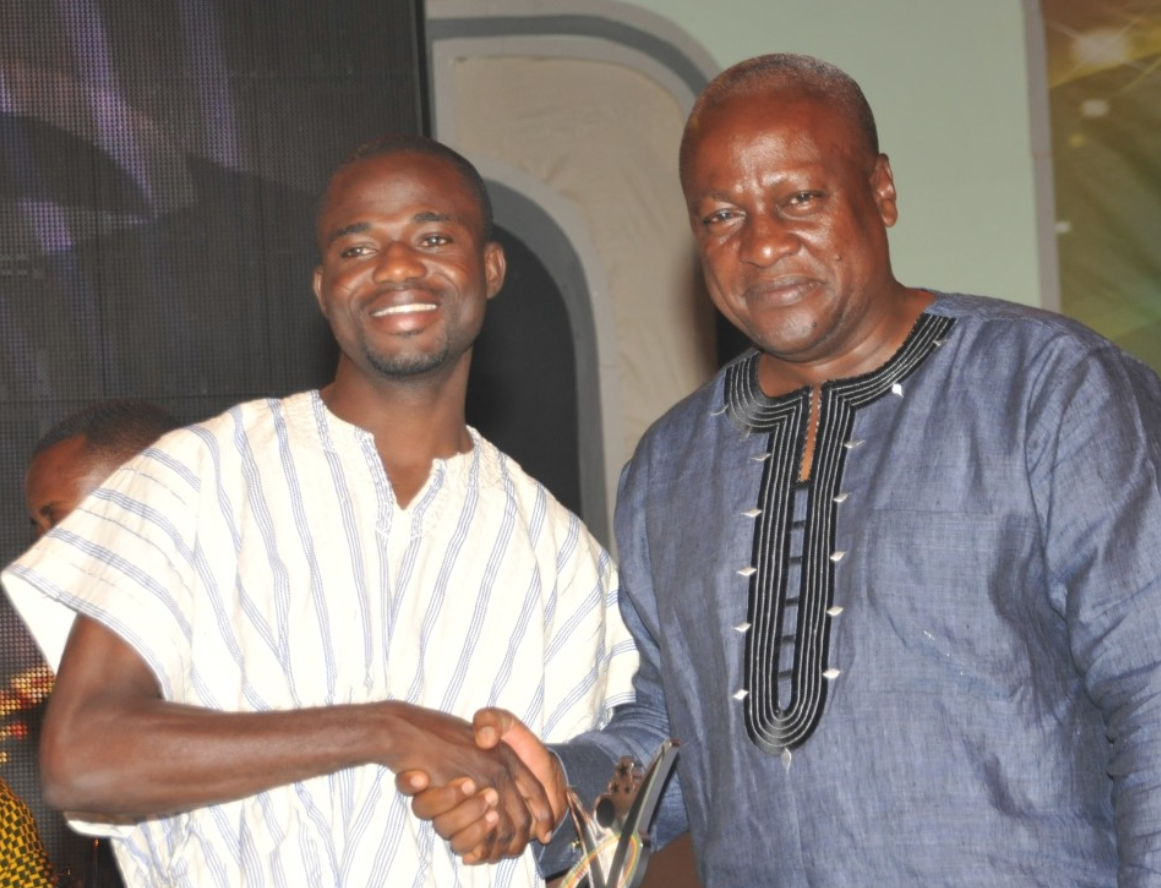
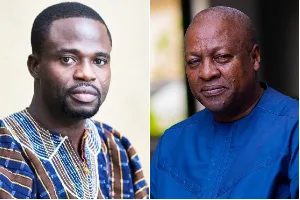
  • Mahama protected me even though I caused him to lose the elections – Manasseh

    Mahama protected me even though I caused him to lose the elections – Manasseh

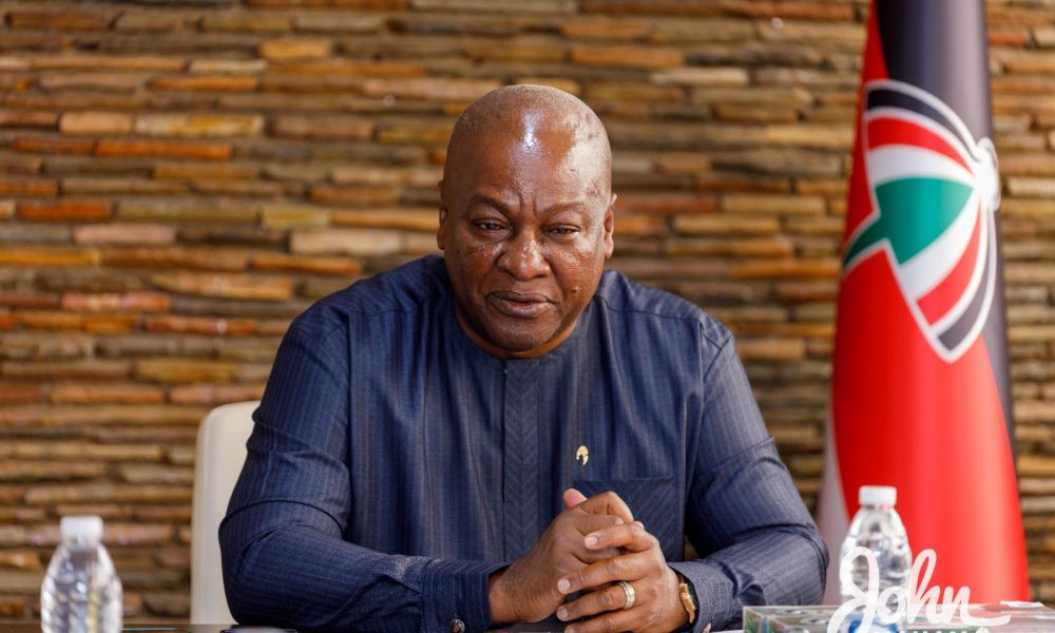
    Award-winning Ghanaian broadcast journalist and author, Manasseh Azure Awuni, has indicated that his life has been saved a number of times by former President John Mahama, the 2024 flagbearer of the National Democratic Congress (NDC).

    According to Manasseh, he did not expect to receive protection from the statement since his actions contributed to his loss in the 2016 general elections.

    But Mr Mahama bore no grudge and assured of Manasseh’s safety during an interview which got several NDC leaders concerned.

    “I sent a formal invitation to the former President, John Mahama, that I wanted to speak with him. Some of the people around him got mad. Where did I get the courage to speak to him after all these stories I did which led to him losing the elections. But what did the former president do? He met me, we sat down and said I could ask him whatever question I needed to ask. We disagreed about some of my reports and things I wrote about him but his parting words were ‘even thought I don’t always agree with you, I will protect and defend your right to say the things you say about me,” he said.

    He made this revelation at the launch of his new book christened “The President Ghana Never Got” believed to be on President Akufo-Addo on Thursday, August 8, 2024.

    The launch took place at Christ the King Parish Hall, opposite Jubilee House.

    Manasseh Azure Awuni has also opened up about his harrowing experiences as an investigative journalist during President Akufo-Addo’s tenure.

    In an interview on JoyNews’ AM Show, Mr. Awuni detailed the life-threatening challenges he has faced, which necessitated police protection and even temporary relocation to other countries.

    “I’ve personally encountered a lot of woes. If you look at the ‘fictional Agyapadie’ document, you’ll find my name in that document. I have not had it easy in this administration,” he stated.

    He recounted, “I had to go to South Africa in 2019. In 2020, I had to go to Germany. All these because of death threats.”

    Between 2019 and 2021, Mr. Awuni often had to drive with police protection due to the severity of the threats against him. The intense pressure also took a toll on his mental health, leading him to seek therapy from a clinical psychologist.

  • NPP and NDC are friends, not enemies – EC tells public

    NPP and NDC are friends, not enemies – EC tells public

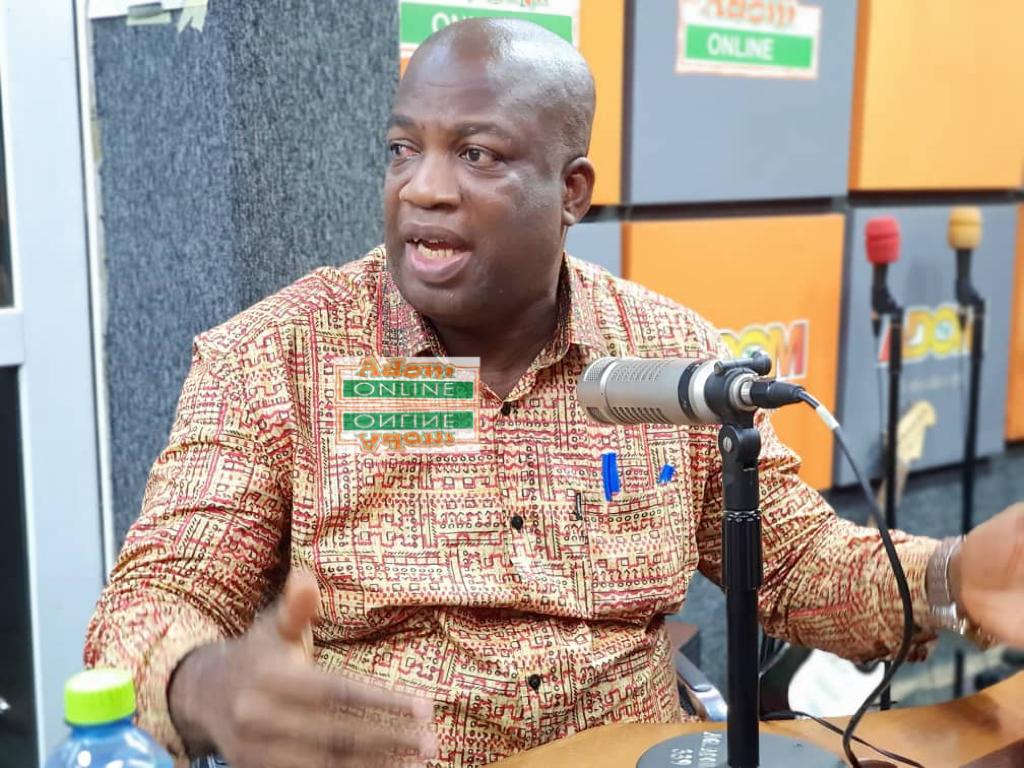
    Director of Electoral Services at the Electoral Commission (EC), Dr. Serebour Quaicoe, has stated that despite the public animosity between the National Democratic Congress (NDC) and the New Patriotic Party (NPP), the leaders of these parties maintain a cordial relationship behind the scenes.

    Dr. Quaicoe highlighted the often-overlooked aspect of Ghanaian politics while speaking at a forum on August 9.

    “One thing I find intriguing is that while the NDC and NPP publicly appear as adversaries, they share a close camaraderie once the cameras are off,” he noted during his address.

    He urged voters to remain peaceful as Ghana approaches the December general election.

    Dr. Quaicoe emphasized that election-related disputes should not lead to harm or conflict among citizens.

    The EC Director advised voters to not be swayed by the public displays of rivalry and to remember that political leaders often reconcile after heated debates.

    “I always remind voters not to be drawn into conflicts. After their public disputes, party members often enjoy a meal together, while ordinary people might end up suffering the consequences,” Dr. Quaicoe said.

    He stressed the importance of maintaining a peaceful atmosphere throughout the election period, urging the public to avoid conflicts based on political differences.

    “No one should face harm or injury because of the elections,” he concluded.

  • Carsley appointed interim England manager

    Carsley appointed interim England manager

    Lee Carsley has been appointed as the interim manager for England’s upcoming Nations League fixtures as the Football Association (FA) continues its search for a permanent successor to Gareth Southgate.

    Carsley, who is transitioning from his role as England Under-21 manager, will lead the senior team in September. This move follows Southgate’s resignation, which came two days after England’s defeat to Spain in the Euro 2024 final last month.

    “Given my familiarity with the players and the international football calendar, it’s logical for me to step in while the FA completes its search for a new manager,” Carsley stated.

    “My primary focus is on maintaining continuity and our objective is to achieve promotion in the UEFA Nations League.”

    The 50-year-old Carsley enjoyed a distinguished career as a Premier League midfielder with clubs such as Derby and Everton. After transitioning into management, he had stints with Coventry, Brentford, and Birmingham as a caretaker. He took charge of England Under-20s in 2020 and later became the England Under-21 manager, leading the team to victory in the European Championship in 2023, their first title in 39 years.

    England’s upcoming fixtures include a match against the Republic of Ireland in Dublin on September 7, followed by a home game against Finland three days later. Carsley, who earned 40 caps for the Republic of Ireland during his playing career, is set to manage these games.

    The FA has indicated that Carsley will oversee the team for these matches and possibly through the autumn, while the search for a new permanent head coach continues. FA chief executive Mark Bullingham expressed confidence in Carsley’s capabilities.

    “Lee is a highly respected coach who is well-acquainted with most of our current senior squad from his previous roles,” Bullingham said. “He represents a strong interim solution, and we trust he will manage the Nations League games effectively.”

    Carsley follows in the footsteps of Howard Wilkinson, Stuart Pearce, and Southgate, who all transitioned from managing youth teams to leading the senior squad. Southgate, who initially took on the role on an interim basis, secured the position permanently and led England through significant tournaments, including World Cup semi-finals and Euros finals.

    The FA has posted a job advertisement for the permanent role and will proceed with its recruitment process. Meanwhile, Ben Futcher will assume the role of England Under-21 manager, with details of the respective backroom teams to be announced.

  • EC told to publish 2024 polling station results before declaration 

    EC told to publish 2024 polling station results before declaration 

    The Institute for Democratic Governance (IDEG) is calling on the Electoral Commission (EC) to ensure that results from all polling stations are published before officially declaring the final results of the 2024 presidential and parliamentary elections.

    Recent electoral cycles in Ghana have seen numerous petitions at the Supreme Court, alleging irregularities and faulty processes at polling stations. The EC faced criticism in the 2020 elections after declaring the results twice due to discrepancies in tallying.

    IDEG is urging the EC to address these issues by publishing detailed polling station results on its website.

    Senior Research Fellow at IDEG, Kwesi Jonah, emphasized that despite Ghana’s ranking as the sixth most stable democracy in Africa, these steps are crucial for bolstering the country’s democratic integrity.

    “We recognize there are weaknesses in our democratic processes, particularly in the electoral sphere,” Jonah stated.

    “The European Union, which has observed Ghanaian elections since 2012, has repeatedly recommended reforms to enhance our democratic system and avoid regression.”

    Jonah stressed that publishing results from each polling station would address concerns of election rigging and ensure transparency.

    “By making these results available online, we prevent any claims of missing or tampered results. Political parties have agents at every polling station for both presidential and parliamentary elections, so they should have access to these results.”

    In response to these concerns, the Electoral Commission is implementing various reforms. Dr. Serebour Quaicoe, the Director of Training for the EC, acknowledged these recommendations but also emphasized that political parties need to accept the election results as declared.

    The move by IDEG aims to fortify electoral transparency and mitigate disputes, ensuring that the upcoming elections are conducted with greater accountability and public trust.

  • 19-year-old grabs climbing gold for Britain

    19-year-old grabs climbing gold for Britain

    Toby Roberts secured Great Britain’s 14th gold medal in Paris with a thrilling victory in the boulder and lead climbing event, marking the nation’s first Olympic medal in this sport.

    The 19-year-old climber was visibly stunned by his triumph, with his head in his hands as he watched Japanese favorite Sorato Anraku, the world silver medalist, falter on the 15-meter wall, handing Roberts the top spot.

    Roberts, who honed his skills on a DIY climbing wall built in his father’s garden, had initially placed third in the boulder section, which featured four challenging routes. He later surged to the provisional lead with a score of 92.1 out of 100.

    Anraku needed just 86 points on the lead wall to surpass Roberts, but he slipped, causing a collective gasp from the crowd of 6,000 spectators.

    “I am just lost for words,” Roberts told the BBC. “Realizing I had won the gold in that moment was simply incredible.”

    With Roberts’ gold medal, climbing, a sport introduced at the Tokyo Games, becomes the 44th different sport in which Great Britain has won an Olympic medal.

    Sorato Anraku, 17, claimed silver for Japan, while veteran Jakob Schubert, 33, earned the bronze. British climber Hamish McArthur finished in fifth place.

  • Goalkeeper Yamashita joins Man City

    Goalkeeper Yamashita joins Man City

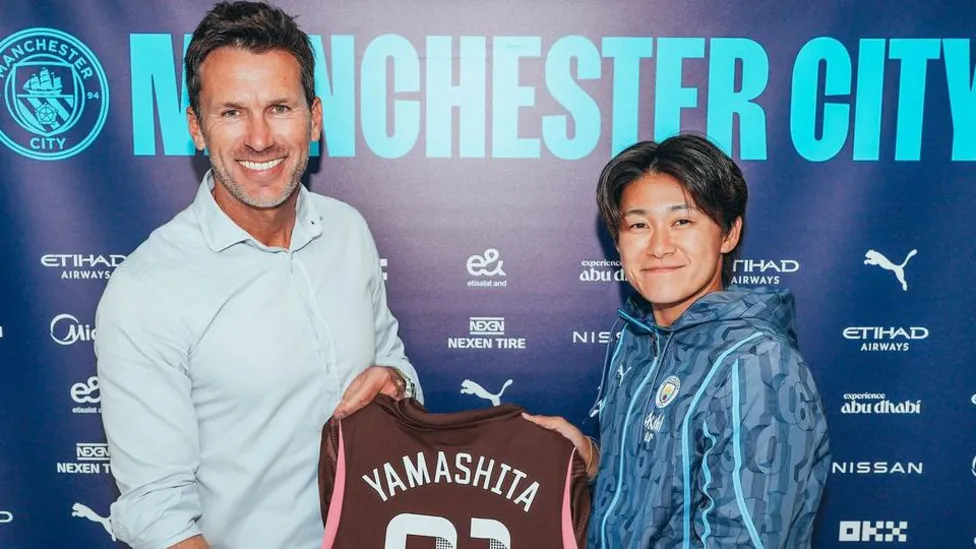
    Manchester City have strengthened their squad by signing Japanese goalkeeper Ayaka Yamashita from INAC Kobe on a three-year contract.

    This marks the 28-year-old’s first venture outside her native Japan as she embarks on a new chapter in her career.

    Expressing her eagerness for the upcoming challenge in England’s top flight, Yamashita shared her determination to push herself further.

    “I’ve achieved a lot in Asia, winning several trophies, but I felt it was time to challenge myself at a higher level,” she said. “The opportunity to play for such a renowned club still feels surreal to me.”

    Yamashita, who has played 74 times for the Japanese national team, is no stranger to success, having secured 17 major titles throughout her career.

    She previously played alongside City midfielder Yui Hasegawa at Tokyo Verdy, which adds a layer of familiarity as she joins the Women’s Super League club.

    Yamashita is Manchester City’s third Japanese signing of the transfer window, following the arrivals of defender Risa Shimizu from West Ham United and forward Aoba Fujino from Tokyo Verdy.

  • “Is this where Ghana has reached?” – MP reacts to 2-week closure of Korle Bu dialysis unit

    “Is this where Ghana has reached?” – MP reacts to 2-week closure of Korle Bu dialysis unit

    The closure of the Renal Unit at the Korle Bu Teaching Hospital has sparked widespread outrage and concern, especially after it was revealed that three kidney patients have tragically died due to the disruption in services.

    The unit, which has been closed for nearly two weeks, was reportedly shut down without any official explanation, leaving vulnerable patients in a dire situation.

    The Health Committee of Parliament has strongly condemned this closure, with members expressing shock and disappointment at the situation.

    Baffour Ahenkorah, President of the Kidney Patients Association, confirmed the deaths, stating that the closure has put an unbearable strain on patients who now have no choice but to seek treatment at expensive private facilities.

    Member of Parliament for Central Tongu and a member of the Health Committee, Alexander Roosevelt, expressed his deep concern in an interview with Citi News.

    He questioned the transparency and honesty of the National Insurance Authority (NHIA), which had recently assured the Health Committee that funds had been allocated to support kidney patients.

    “The National Insurance Authority appeared before our committee requesting an amount of 2 million cedis for payment of the bills of under 18 and above 60 people who have these conditions. And they also came out boldly a few months or weeks ago emphasizing that they had released an amount of 2 million Ghana cedis and there was going to be an additional amount of 2 million that would be given to the Korle Bu hospital to settle the bills of people with renal cases,” Roosevelt recounted.

    “I am just surprised that I’m being told that the setup has been closed down mainly because they do not have medical supplies,” he added, expressing disbelief at the current state of affairs. “Is this where Ghana has reached? It’s a very serious situation. It’s something that one cannot fathom and I can understand. How can we joke with the health of our own people?”

    The MP’s comments highlight the growing frustration and confusion over the handling of the healthcare system in Ghana, particularly at a time when critical services like dialysis are being interrupted due to administrative or logistical failures.

    The closure of the Renal Unit at Korle Bu has forced many patients to seek care at private centers, where the costs are prohibitively high, ranging from GH₵600 to GH₵1,000 per session.

    Most patients require at least two sessions per week, making the financial burden nearly impossible to bear for many.

    Baffour Ahenkorah echoed these sentiments, stressing the dire consequences of the unit’s closure. “Because Korle Bu is a government facility, the prices here are relatively moderate—not cheap, but affordable for most of us. However, private centers are charging between GH₵600 and GH₵1,000 per session. Most of us require two sessions a week, which means we need at least GH₵1,200 weekly. Many simply cannot afford this,” he said.

    He also expressed frustration over the lack of communication from the hospital authorities. “We don’t even know what is happening or why it was closed. No one has informed us, and we are left in the dark. This situation is creating serious problems for us,” Ahenkorah stated.

    The situation at Korle Bu has become a national concern, with calls for urgent action to reopen the Renal Unit and prevent further loss of life. The Health Committee of Parliament is demanding answers and accountability, as the crisis continues to highlight the challenges facing Ghana’s healthcare system.

  • Patients devastated as Korle Bu closes dialysis unit for 2 weeks

    Patients devastated as Korle Bu closes dialysis unit for 2 weeks

    The unexpected closure of the Korle Bu Teaching Hospital’s Dialysis Unit for nearly two weeks has left patients in dire straits, forcing them to seek costly treatment at private facilities.

    The lack of access to affordable care has placed immense financial and emotional strain on those who rely on the unit for life-saving dialysis.

    The shutdown, reportedly due to a shortage of essential medical supplies, has raised alarm among patients and their families.

    President of the Kidney Patients Association, Baffour Ahenkorah, has expressed frustration over the lack of communication from the hospital authorities.

    “The dialysis unit was shut down, and this Sunday will mark exactly two weeks. We don’t even know what is happening or why it was closed. No one has informed us, and we are left in the dark. This situation is creating serious problems for us,” Ahenkorah told Joy News.

    The closure has forced many patients to turn to private centers, where the cost of dialysis is significantly higher. Ahenkorah highlighted the financial burden this has created for patients who already struggle to afford treatment.

    “Because Korle Bu is a government facility, the prices here are relatively moderate—not cheap, but affordable for most of us. However, private centers are charging between GH₵600 and GH₵1,000 per session. Most of us require two sessions a week, which means we need at least GH₵1,200 weekly. Many simply cannot afford this,” he said.

    “We are human beings and deserve to be treated with respect. The fact that we have end-stage kidney failure doesn’t mean we should be neglected.”

    Ahenkorah emphasized the need for clear communication from the hospital, urging authorities to provide patients with information about when the unit will reopen. “If we know that Korle Bu will be unavailable, at least we can make alternative plans,” he added.

    The closure has also drawn condemnation from the Health Committee of Parliament, particularly following reports that three kidney patients have died as a result of the shutdown. Central Tongu MP and committee member Alexander Roosevelt criticized the decision, questioning why the unit was closed when funds had recently been allocated to support kidney patients.

    Roosevelt pointed out that the National Insurance Authority had requested 2 million cedis to assist kidney patients under 18 years and over 60 years, and had announced an additional 2 million cedis to cover the bills of renal patients at Korle Bu. Despite this, the unit remains closed, leaving vulnerable patients without access to the care they desperately need.

    As patients and their families anxiously await the reopening of the dialysis unit, the lack of communication and support from hospital authorities continues to cause distress and uncertainty.

  • 46 colleges risk closure over 8-week CETAG strike

    46 colleges risk closure over 8-week CETAG strike

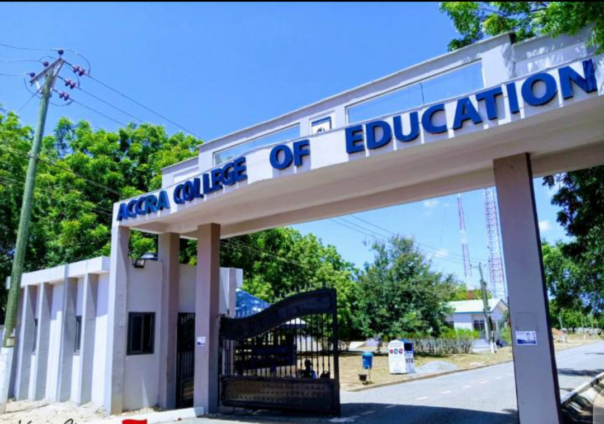
    A coalition of concerned teacher trainees in the Ashanti region is calling for the temporary closure of the 46 colleges of education across Ghana in response to the ongoing strike by their lecturers.

    The Colleges of Education Teachers Association of Ghana (CETAG) initiated the strike after the government failed to fulfill its commitment to implement outstanding compulsory arbitration awards.

    As a result, students are facing significant disruptions to their academic progress, which is taking a toll on their mental health.

    Convener of the group, Manuel Opoku Duah, expressed the students’ growing concerns: “We are in a state of limbo, not knowing whether to remain on campus or return home. Our academic journey has been halted, putting our future as qualified teachers in jeopardy. The financial strain is also affecting our mental well-being.”

    With no resolution in sight, the teacher trainees find themselves stranded, unsure of what to do next.

    “We are calling for the closure of the Colleges of Education and for students to be allowed to return home. It has been more than 21 days without any engagement with our teachers. Additionally, there should be consideration for implementing the IN-IN-OUT system, so that level 400 trainees can return to campus, as many of their tenancy agreements will expire in October. We cannot continue to live with this uncertainty,” Mr. Opoku Duah added.

    Classrooms in all 46 colleges of education have been empty since CETAG began their industrial action on June 14. The strike, now in its eighth week, has brought academic activities to a standstill, leaving students frustrated and uncertain about their future.

    The students are also troubled by the ongoing nonpayment of their six-month trainee allowances, which are essential for covering their living expenses.

  • Spurs advance talks in £60m deal for Bournemouth’s Solanke

    Spurs advance talks in £60m deal for Bournemouth’s Solanke

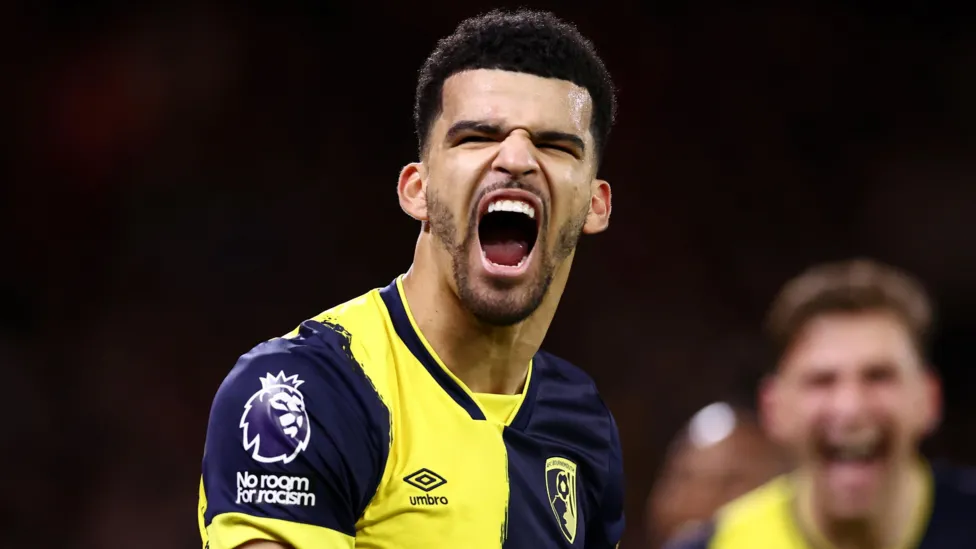
    Tottenham Hotspur are reportedly nearing a £60 million agreement with Bournemouth to secure the services of striker Dominic Solanke.

    The 26-year-old striker has a release clause of approximately £65 million, as confirmed by Bournemouth owner Bill Foley in an interview with BBC Sport last month. Despite this, the two clubs are working on a deal that would see the transfer fee settled below that figure.

    Tottenham manager Ange Postecoglou is eager to bolster his attacking options, particularly after the departure of England captain Harry Kane to Bayern Munich last summer, which left a significant gap in Spurs’ front line.

    Solanke is coming off the back of his most successful season to date, netting 21 goals in 42 appearances for Bournemouth, a performance that has clearly caught the eye of Tottenham.

    Should the transfer be finalized, it would mark Bournemouth’s most lucrative sale ever, surpassing the £40 million they received from Manchester City for defender Nathan Ake in 2020.

    Solanke initially joined Bournemouth in 2019 from Liverpool for £19 million, and Liverpool are understood to have included a substantial sell-on clause in that deal.

    In July, Foley mentioned that while he would prefer Solanke to remain at the club, Bournemouth had already identified “two or three candidates” as possible replacements if a move materializes.

  • Bottom line is Mahama is innocent, OSP can keep their advice – Sammy Gyamfi on Airbus scandal

    Bottom line is Mahama is innocent, OSP can keep their advice – Sammy Gyamfi on Airbus scandal

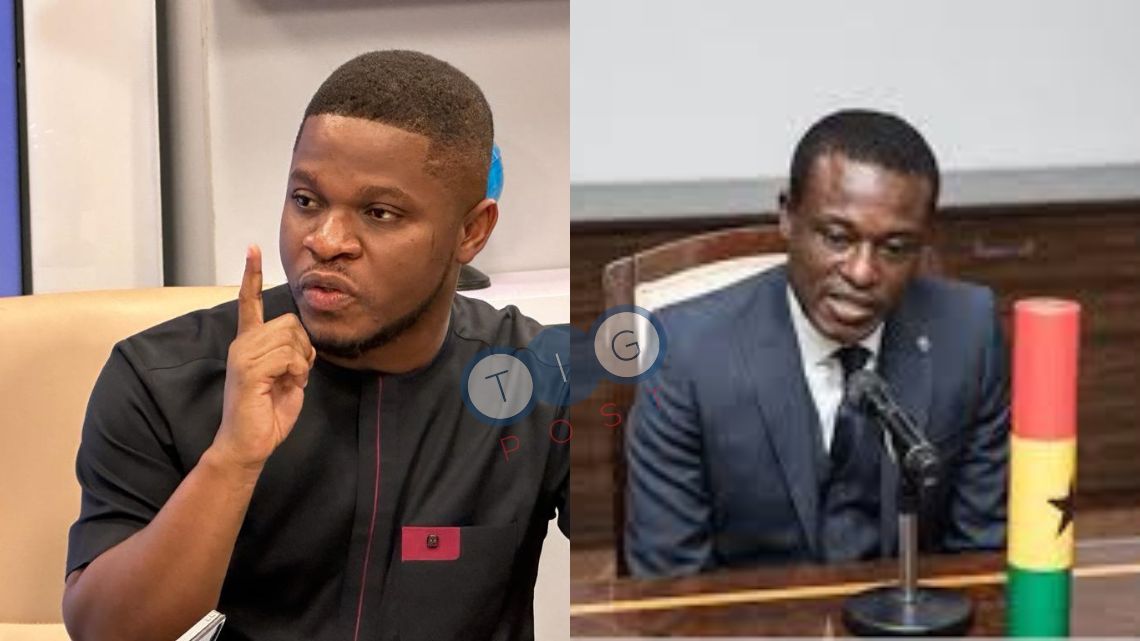
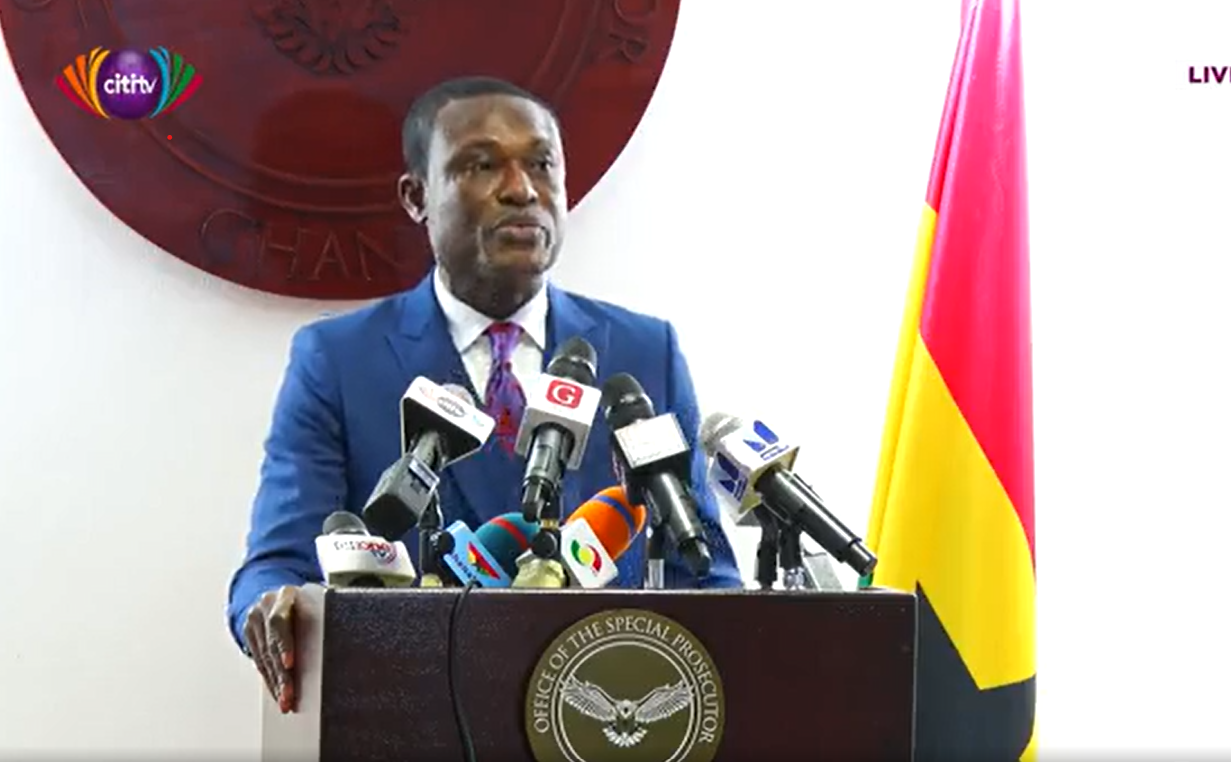
    The National Communications Officer of the National Democratic Congress (NDC), Sammy Gyamfi, has dismissed the advice offered by the Special Prosecutor regarding former President John Dramani Mahama’s involvement in the controversial Airbus procurement deal.

    This comes after the Special Prosecutor, Kissi Agyebeng, concluded a four-year investigation into the bribery allegations surrounding the deal, ultimately clearing Mr. Mahama and other officials of any wrongdoing.

    Despite this exoneration, Mr. Agyebeng expressed concerns about the former President’s interactions with Airbus officials during the transaction, suggesting that such involvement by a highly elected public official could raise suspicions of a conflict of interest.

    “It ought reasonably to have occurred to former President Mahama and the Government of Ghana that the familial relationship between former President Mahama and Foster and the direct participation by former President Mahama in the communications and meetings with Airbus officials were bound to raise reasonable suspicions of improper conduct and dealings notwithstanding any claims to good faith conduct and above board dealings,” Mr. Agyebeng stated.

    He further advised that sitting Presidents and Vice Presidents should avoid direct involvement in commercial transactions on behalf of the state.

    However, in a firm rebuttal during an appearance on JoyNews’ AM Show, Sammy Gyamfi made it clear that the NDC is not concerned with the advice given by the Special Prosecutor, emphasizing that the primary focus should be on Mr. Mahama’s exoneration.

    “The Special Prosecutor, after revealing his findings, proceeded to give advice. That is his advice; we are not interested in his advice,” Gyamfi stated. “We are not interested in suspicions. We are interested in the bottom line. The bottom line is that there was no evidence found against Mahama in the Airbus Scandal.”

    Gyamfi also challenged the expectations placed on Mr. Mahama during his time as Vice President, when the controversial transaction occurred. He questioned whether Mahama should have resigned simply because the military chose to do business with Airbus, a company whose agent happened to be his brother.

    “The Military had decided to do business with Airbus, a company whose agent was his brother. What did we expect Mahama to do? Should he have resigned as Vice President?” Gyamfi questioned.

    Sammy Gyamfi’s comments underscore the NDC’s stance that the only important outcome of the investigation is Mahama’s innocence, dismissing any additional advice or commentary from the Special Prosecutor.

  • I’ve not spoken to Efia Odo in years – Kwesi Arthur

    Ghanaian rapper Kwesi Arthur has set the record straight on his relationship with socialite and singer Efia Odo, revealing that he hasn’t spoken to her in years.

    This disclosure comes after ongoing speculation about their relationship, which Efia Odo has often hinted at in interviews.

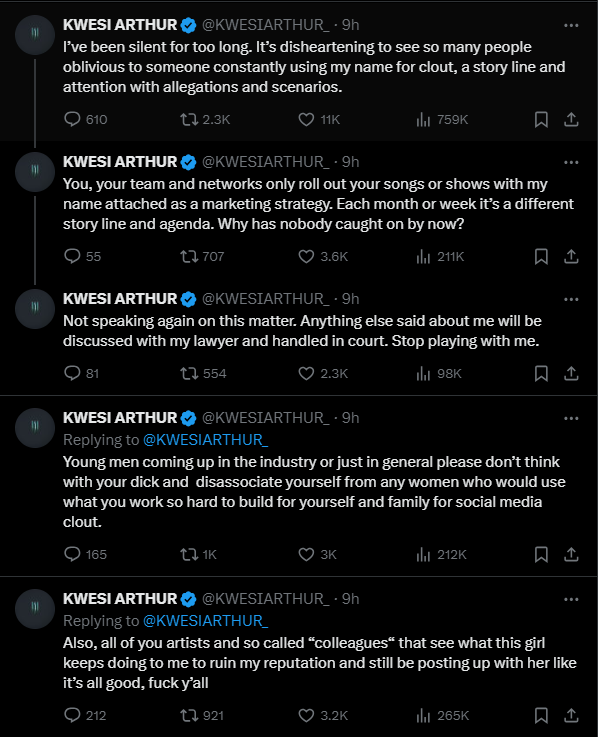
    In a candid post on X (formerly Twitter), Kwesi Arthur expressed his frustration over Efia Odo’s repeated mentions of him, accusing her of using his name for clout.

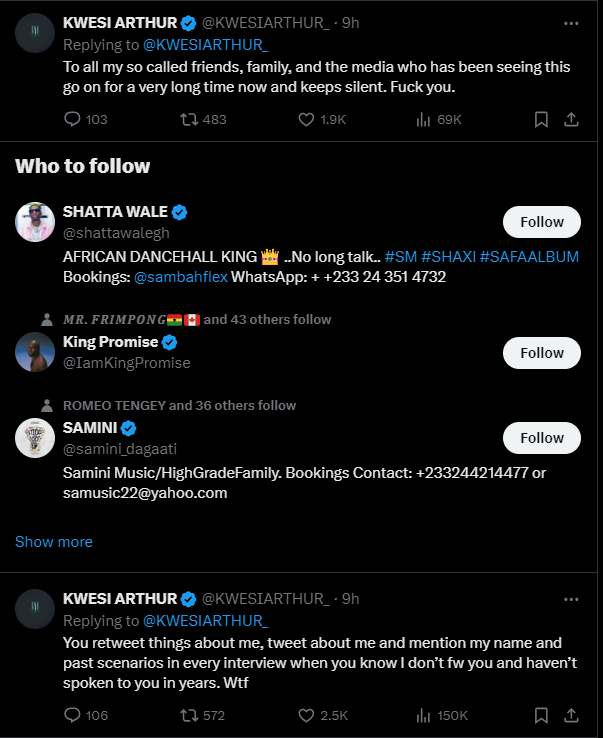
    He stated, “You retweet things about me, tweet about me, and mention my name and past scenarios in every interview when you know I don’t f*** with you and haven’t spoken to you in years. Wtf.”

    Efia Odo, who once showed strong support for Kwesi Arthur, has in recent years shifted her tone, speaking with disdain about the rapper in public.

    She has also claimed that Kwesi Arthur hurt her deeply, leading to the breakdown of their friendship. However, Kwesi Arthur has now made it clear that they are no longer in contact.

    The rapper also expressed disappointment with his industry colleagues who continue to associate with Efia Odo despite her attempts to tarnish his reputation.

    He warned young male artistes to be cautious of women who might exploit their hard-earned success for social media attention.

    Kwesi Arthur’s revelation sheds light on the strained relationship between him and Efia Odo, putting an end to rumors about their ongoing connection.

  • Kwesi Arthur ‘disses’ colleague artistes rolling with Efia Odo

    Kwesi Arthur ‘disses’ colleague artistes rolling with Efia Odo

    Ghanaian rapper Kwesi Arthur has taken a bold stand against his fellow artistes who continue to associate with socialite and singer Efia Odo, despite the ongoing controversies involving her and the rapper.

    In a fiery post on X (formerly Twitter), Kwesi Arthur expressed his displeasure, accusing some colleagues of turning a blind eye to the situation while continuing to support Efia Odo.

    Efia Odo, who has often been linked to Kwesi Arthur, has shifted from praising the rapper to openly criticizing him. In a recent podcast, she revealed that Kwesi Arthur had hurt her deeply, leading to the end of their friendship.

    This narrative, according to Kwesi Arthur, is an intentional move to tarnish his image and keep her name in the limelight.

    Taking aim at those who continue to align themselves with Efia Odo, Kwesi Arthur didn’t hold back, saying, “To all you so-called artists and ‘colleagues’ who see what this girl keeps doing to ruin my reputation but still post up with her like it’s all good, f*** y’all.”

    His message makes it clear that he feels betrayed by those in the industry who have chosen to stay silent or support Efia Odo despite her ongoing attempts to discredit him.

    Kwesi Arthur also cautioned up-and-coming male artistes to be wary of women who might exploit their fame for social media clout, advising them not to let their guard down.

    The rapper’s outburst highlights the growing tension between him and Efia Odo, as well as his frustration with colleagues who he believes are contributing to the situation by maintaining their ties with her.

  • Stay away from women who will use you for social media clout – Kwesi Arthur

    Stay away from women who will use you for social media clout – Kwesi Arthur

    Ghanaian rapper and singer Kwesi Arthur has issued a stern warning to fellow male artistes, advising them to be cautious about the women they associate with, particularly those who might use their fame for social media clout.

    His message comes in the wake of ongoing controversies involving socialite and singer Efia Odo, with whom Kwesi Arthur has been frequently linked.

    Kwesi Arthur, who has mostly remained silent about the situation, recently took to X (formerly Twitter) to express his frustration over how his name has been repeatedly dragged into the public eye by Efia Odo.

    Despite the lack of confirmation of a romantic relationship between them, Efia Odo has often hinted at a close bond in the past. However, in recent years, her tone has shifted, and she has openly spoken with disdain about the rapper.

    In a recent podcast appearance, Efia Odo revealed that Kwesi Arthur had hurt her deeply, leading to the end of their friendship. She claimed that after their fallout, she withdrew her support for him, and his career began to decline.

    This narrative, Kwesi Arthur believes, is a deliberate attempt to tarnish his reputation.

    Addressing his peers in the industry, Kwesi Arthur cautioned them against being naive, saying, “Young men coming up in the industry, or just in general, please don’t think with your d*** and disassociate yourself from any women who would use what you work so hard to build for yourself and family for social media clout.”

    He also accused Efia Odo of using his name as a marketing tool for her projects, noting that he will no longer tolerate such behavior.

    Kwesi Arthur has made it clear that any further comments or allegations against him will be handled legally, stating, “Anything else said about me will be discussed with my lawyer and handled in court.”

    In his final remarks, Kwesi Arthur didn’t hold back, calling out those who have stayed silent or supported Efia Odo in her attempts to discredit him.

  • Revealed: It took gov’t 2 years to commission Royal Ghana Gold Refinery 

    Revealed: It took gov’t 2 years to commission Royal Ghana Gold Refinery 

    In June 2022, the Deputy Minister for Lands and Natural Resources, responsible for Mines, George Mireku Duker disclosed that Ghana’s newly constructed Gold Refinery, Royal Gold Ghana is set and ready to be commissioned by August 2022 by the President of the Republic, Nana Addo Dankwa Akufo-Addo.

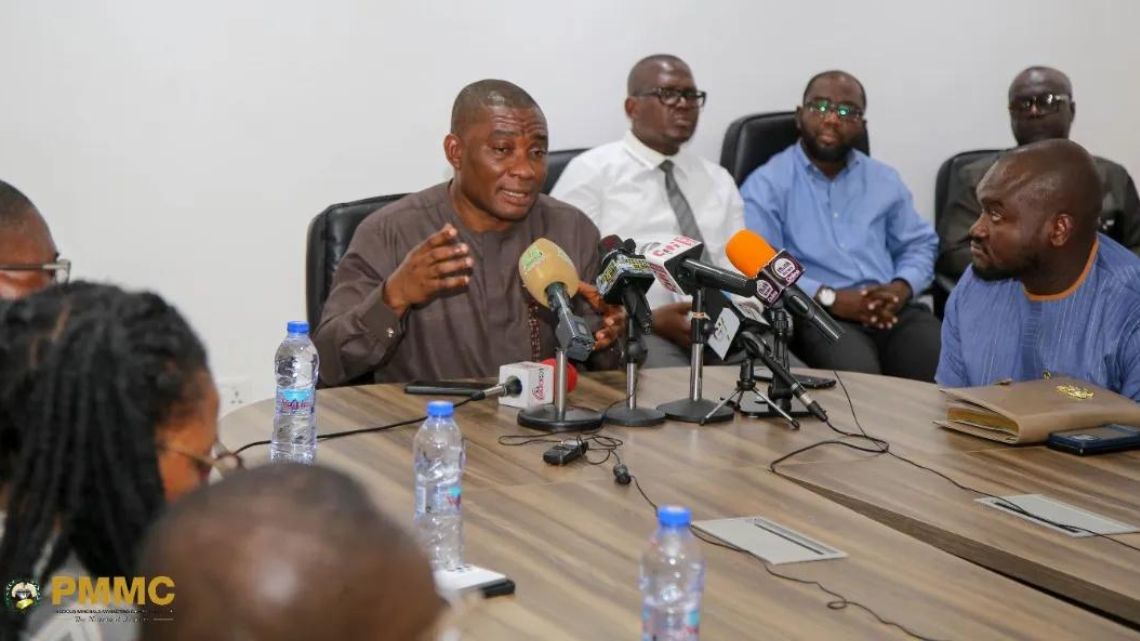
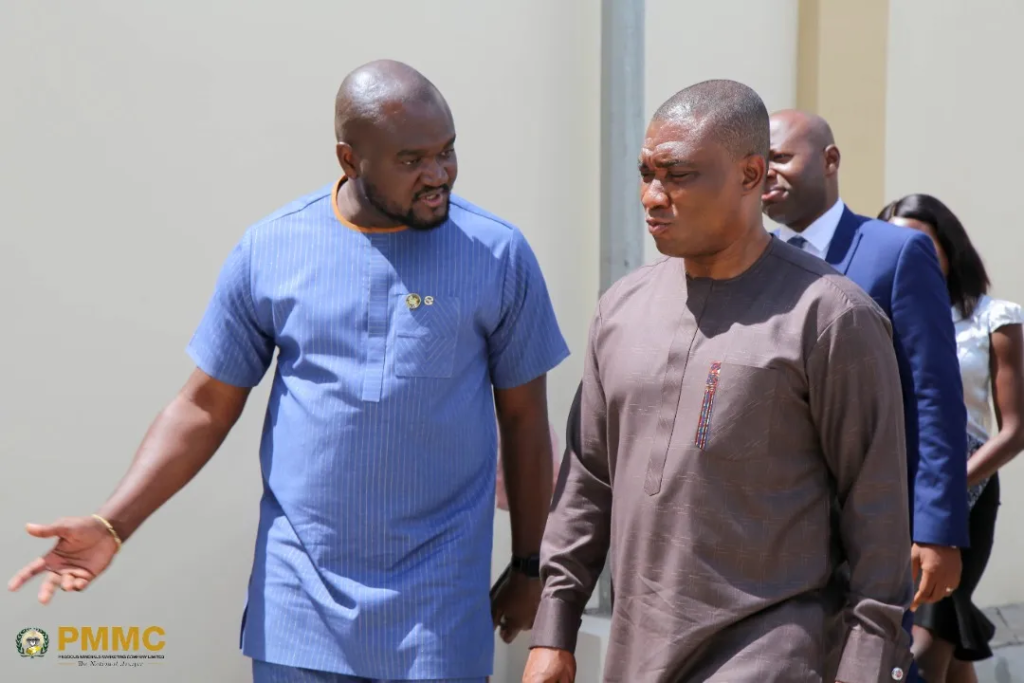
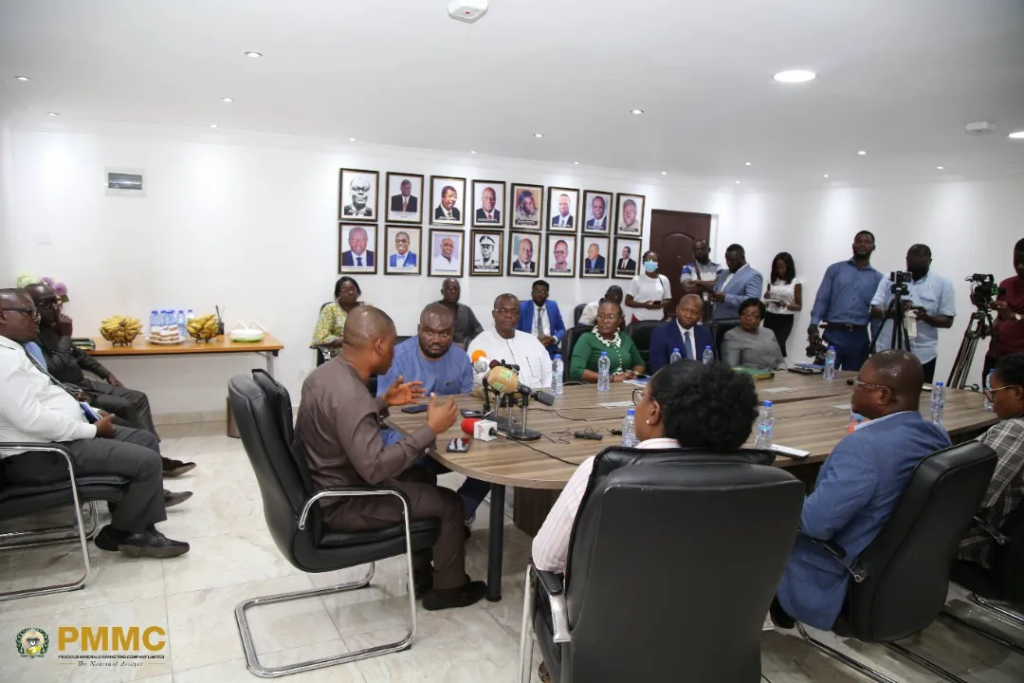
    The Deputy Minister made this known when he paid a working visit on behalf of the Sector Minister, Hon. Samuel A. Jinapor to inspect the Refinery at the Precious Minerals Marketing Company (PMMC) premises in Accra, on Tuesday, 28th June, 2022.

    During his visit 2 years ago, Mr Duker highly commended the team at PMMC saying that he is impressed with the work done and particularly happy that the vision of the President Akufo-Addo-led government, to add value to the various Minerals produced in Ghana is on course with the completion of the Refinery.

    “As we have a Refinery here in Ghana, the value addition goal of the President will be met and this tells you that we are going to expand the base, we are going to add more value and more importantly, Gold would not be exported in the raw form.”

    He assured that the government through the Lands Ministry will tick all boxes to ensure that the state-of-the-art refinery is not a “white elephant” but is put to the intended purpose for the country to benefit fully from its proceeds.

    Hon. Duker hoped that the Refinery although currently being operated by foreign Nationals, will soon create more jobs for the Ghanaian youth through knowledge sharing and also add value to gold produced in Ghana as is the goal of the President Akufo-Addo-led government.

    The Mines Deputy Minister stressed that the Ministry is interested in building local champions to set up and own Mines that will rob shoulders with those of international standards like Newmont and Anglo Gold Ashanti.

    He stressed traceability and charged officials of PMMC to ensure that the Minamata Convention on Mercury is met at all cost in the process of utilising the refinery.

    Having taken a quick tour of the premises, he disclosed that the Refinery has already taken a test of processing the raw gold “and the results I must say are of very good standards, 99.9% pure. Very similar to what we saw in South Africa on our last trip to a Gold mine there”

    The Managing Director of Precious Minerals Marketing Company, Mr. Nana Akwasi Awuah on his part, expressed his appreciation to the Deputy Minister for his involvement and efforts in securing the reduction of the 3% withholding tax on Gold exports.

    He reported to the Deputy Minister that the reduction from 3% to 1.5% has been of immense benefit as the industry has seen a good increment in production and profit since the beginning of the year.

    “In December 2021, we did less than 200 kilograms of Gold but when the reduction took effect in January this year, that figure shot up to over 100% where we did over 400kilograms which means that it is having a positive impact.”
    He added that he is also elated that through the efforts of H.E the President, the country has the first working gold refinery with state participation in-country which will add value to the ore mined.

    The Refinery, known as the Royal Ghana Gold Refinery whose construction begun in 2019, has the capacity to refine from 300 to 500 kilograms per a day through chemical and electrical methods. Some facilities available at the Refinery include the Control room, the Scanner, the Refinery section which has the Electrolycis machine, the Moulding room and the Assay laboratory, among others.

    Dreams for the refinery materialised two years after the date it was to be commissioned.

    Ghana on Thursday, August 8, 2024, officially opened a commercial gold refinery, the Royal Ghana Gold Refinery, in Accra, a significant step in the government’s efforts to add value to the country’s mineral resources.

    Vice President Dr. Mahamudu Bawumia, who commissioned the refinery, emphasized that this facility is a strategic investment that aligns with the government’s vision to add value to Ghana’s mineral resources, thus retaining more economic benefits within the country.

    He noted that, historically, Ghana has exported its gold in raw form, leading to significant revenue losses and missed job creation opportunities.

    “The government of President Nana Addo Dankwa Akufo-Addo has been determined to make value addition a critical component of our export strategy since 2017, and the launch of this refinery is a key part of realizing that vision,” Dr. Bawumia stated.

    Note: Additional source of information from Precious Minerals Marketing Company (PMMC).

  • Subject yourselves to scrutiny like I have – Mahama to Akufo-Addo, Bawumia

    Subject yourselves to scrutiny like I have – Mahama to Akufo-Addo, Bawumia

    Former President John Dramani Mahama has called on President Nana Akufo-Addo and Vice President Dr. Mahamudu Bawumia to submit themselves to the same level of scrutiny that he endured during the Airbus scandal investigations.

    This demand follows the Special Prosecutor’s recent finding, which cleared him of any wrongdoing in the high-profile case.

    In a press statement issued on Thursday, August 8, Mahama expressed his approval of the investigation’s outcome, which he said has vindicated him from the baseless accusations that were made against him. He stressed the need for transparency and accountability from all public officials, regardless of their position, and urged the current administration to uphold these standards.

    “In this spirit, we extend the same challenge to Vice President Dr. Mahamudu Bawumia and President Akufo-Addo to subject themselves to equal scrutiny and transparency as we strive for accountability in our leadership,” a part of the release read.

    Special Prosecutor Kissi Agyebeng confirmed that Mahama was not involved in the Airbus scandal, following an investigation that began in February 2020.

    The investigation revealed that Mahama, identified as Government Official 1 in UK court documents and Individual 1 in US court filings, played no role in the bribery allegations.

    Mahama has repeatedly denied any involvement in the scandal, which emerged after his administration purchased three military aircraft from Airbus. T

    he controversy was fueled by then-Minority Leader Osei Kyei-Mensah-Bonsu’s criticism of the deals, alleging that the contracts, worth over 70 million euros and more than 100 million dollars, were inflated and lacked transparency.

    The scandal gained international attention when England’s Crown Court in Southwark highlighted that Airbus had attempted to bribe officials connected to a prominent Ghanaian government figure between 2011 and 2015 to facilitate the sale of two C295 aircraft. Initially, Airbus planned to offer a 5 million euros bribe disguised as a commission to an intermediary with close ties to a key Ghanaian official overseeing the aircraft purchases.

    Mahama has consistently challenged the Akufo-Addo administration to prosecute him if any evidence of wrongdoing were found, emphasizing his commitment to transparency and accountability.

  • Parliament in search of venue for special sitting on Sep. 3

    Parliament in search of venue for special sitting on Sep. 3

    With the Parliament Chamber potentially unavailable due to ongoing renovations, the Majority in Parliament is exploring alternative venues for the special session scheduled for September 3, 2024.

    Speaker Alban Bagbin has been urged to consider using a specially constructed dome at the car park to ensure the sitting can proceed as planned.

    The call for an alternative venue follows a recall of MPs from recess, initiated by Majority Leader Alexander Afenyo-Markin. The recall was prompted by dissatisfaction with the Speaker’s decision to adjourn sittings indefinitely on July 30, 2024.

    In light of the renovation work threatening the availability of the Chamber, Speaker Bagbin has indicated that an alternative location will be communicated soon.

    Second Deputy Majority Whip Alex Tetteh Djournobuah suggested utilizing the dome at the car park, noting that it was used effectively during the COVID-19 pandemic.

    “I am not seeing any renovation works going on in the Chamber and even if it is so, we have the dome to use. In the COVID-19 time, we used the dome at the car park to transact business in Parliament and we can use that one to actually do whatever we need to do,” Djournobuah said.

  • Refining gold into 24-carat bars isn’t value addition – Bright Simons tells Bawumia

    Refining gold into 24-carat bars isn’t value addition – Bright Simons tells Bawumia

    Vice President of IMANI Africa, Bright Simons, has raised critical concerns about the recently commissioned Royal Ghana Gold Refinery in Accra, arguing that refining gold into 24-carat bars does not constitute true value addition, contrary to claims by Vice President Dr. Mahamudu Bawumia.

    Mr Simons asserts that the real value addition in the gold industry lies in creating finished products like jewelry, rather than simply refining raw gold into bullion.

    In a post on X, Simons expressed skepticism about the promises made by the government regarding the economic benefits of the new refinery.

    “I was surprised to read in the international press news that Ghana was launching its ‘first commercial gold refinery.’ I was even more surprised to hear the Vice President argue that this new refinery will enable ‘value addition,’ which in turn will lead to hundreds of jobs, and the strengthening of the Cedi,” Simons wrote.

    Reuters reported that Ghana has launched its first commercial gold refinery in Accra, marking a significant step in the country’s effort to add value to its gold production and increase national revenue.

    Simons pointed out that this is not the first time such promises have been made. He recalled similar claims made when other gold refineries were launched in Ghana, including Asap Vasa in 2013, Sahara Royal Gold Refinery in 2015, and Gold Coast Refinery in 2016. Despite these earlier initiatives, the country continues to grapple with the same challenges in achieving real value addition in the gold sector.

    He emphasized that gold refining, as it is currently practiced in Ghana, is a low-margin and high-volume business, which is inherently unprofitable when confined to converting mined gold into bullion.

    Citing the example of one of the world’s largest refineries in Perth, Australia, Mr Simons noted that such operations make a margin of just 0.17%. In Ghana, where the cost of capital is high, even achieving a 10% operating profit margin is difficult.

    Moreover, he highlighted the structural challenges facing Ghana’s gold refining industry, such as the long-standing relationships between large-scale miners and international refineries, which make it difficult for local refineries to secure significant volumes of raw gold. As a result, these refineries often rely on small-scale miners, leading to lower-quality dore (raw) gold that requires additional processing.

    He also warned about the environmental and financial pitfalls associated with refining operations in Ghana. Citing the example of Sahara Royal Gold Refinery, Mr Simons mentioned the environmental disputes it faced with nearby residents and the financial difficulties it encountered, which led to the issuance of dud cheques.

    Another significant hurdle for Ghana’s refineries is the lack of certification from bodies like the London Bullion Market Association (LBMA). Without such certification, the refined gold must be sold at a discount to less rigorous buyers, further squeezing profit margins. Simons explained that achieving and maintaining LBMA certification is a costly and time-consuming process, with insurance and security costs further eroding profitability.

    Additionally, small-scale miners are often reluctant to sell their gold at a discount to local refineries when they can obtain better prices from international aggregators in countries like India and Dubai, where tax incentives make the import of raw gold more profitable.

    Mr Simons argued that rather than focusing on refining gold into 24-carat bars, Ghana’s policymakers should prioritize real value addition by supporting the production of finished products like jewellery.

    “For gold, the really serious value-addition play is jewellery, not refining into 24-carat bars,” Simons stated.

    He also pointed out that the Precious Minerals Marketing Company (PMMC) was originally established in Ghana to lead such initiatives and suggested that government policy should focus on helping PMMC succeed in this area.

    Despite the concerns raised by Simons, the government has celebrated the opening of the Royal Ghana Gold Refinery as a significant milestone in its efforts to add value to the country’s mineral resources. The refinery, which can process 400 kilograms of gold per day, is a joint venture between Rosy Royal Minerals of India and Ghana’s central bank, which holds a 20% stake.

    During the commissioning ceremony, Vice President Bawumia emphasized the potential of the refinery to boost local job creation, retain more economic value within Ghana, and strengthen the national currency. He also highlighted the Bank of Ghana’s Domestic Gold Purchase Programme (DGPP), launched in 2021, as part of the government’s broader strategy to position Ghana as Africa’s gold hub.

    However, Simons’ critique suggests that achieving these goals will require more than just refining gold. It will demand a shift in focus toward higher-value products and a concerted effort to address the structural challenges facing Ghana’s gold industry.

  • Gov’t commissions Gold Refinery with the aim of value addition

    Gov’t commissions Gold Refinery with the aim of value addition

    Ghana has officially opened a commercial gold refinery, the Royal Ghana Gold Refinery, in Accra, a significant step in the government’s efforts to add value to the country’s mineral resources.

    The refinery, a joint venture between Rosy Royal Minerals of India and Ghana’s central bank, with the latter holding a 20% stake, has the capacity to refine 400 kilograms of gold per day.

    Initially, it will source gold dore from small-scale and artisanal miners, with future plans to secure licenses for processing gold from large-scale mining operations.

    Vice President Dr. Mahamudu Bawumia, who commissioned the refinery, emphasized that this facility is a strategic investment that aligns with the government’s vision to add value to Ghana’s mineral resources, thus retaining more economic benefits within the country.

    He noted that, historically, Ghana has exported its gold in raw form, leading to significant revenue losses and missed job creation opportunities.

    “The government of President Nana Addo Dankwa Akufo-Addo has been determined to make value addition a critical component of our export strategy since 2017, and the launch of this refinery is a key part of realizing that vision,” Dr. Bawumia stated.

    He further explained that the Precious Minerals Marketing Company (PMMC) initially partnered with Rosy Royal Minerals Limited to actualize this vision, granting part of its land for the refinery’s construction, which began in 2018 and was completed in 2022 despite delays due to COVID-19.

    The Bank of Ghana later took over PMMC’s interest in the refinery, while PMMC continues to serve as the National Assayer, ensuring quality and revenue assurance for the refinery’s products.

    Dr. Bawumia expressed optimism that with the refinery’s ability to process gold locally, Ghana will be able to sell the refined gold at its appropriate value, thereby retaining its economic worth within the country and creating numerous job opportunities for the youth.

    “In addition, the government’s intention to refine all gold produced in Ghana will further enhance our economic independence and resilience,” he added.

    He highlighted that with the Bank of Ghana’s Domestic Gold Purchase Programme (DGPP), launched in 2021, and the establishment of the refinery, Ghana is now positioned as the gold hub of Africa.

    This development marks a new era for Ghana and aligns with the government’s vision of building a resilient economy anchored on the country’s mineral resources.

    Reflecting on the broader economic implications, Dr. Bawumia explained that Ghana’s current economic structure, heavily reliant on primary commodities and imports, has historically led to a depreciating currency. However, he expressed confidence that the right policies and deliberate use of natural resources could stabilize the cedi and reduce external borrowing needs.

    Looking forward, Dr. Bawumia outlined his plans, should he become president, to invest in geological surveys and mapping of mineralized zones, ensuring that small-scale mining concessions in these areas remain 100% Ghanaian-owned.

    He also emphasized the need for increased efforts towards land reclamation in areas degraded by mining and proposed the establishment of a Minerals Development Bank to support indigenous Ghanaians in the mining sector.

    In conclusion, Dr. Bawumia stressed the importance of responsible sourcing for the refinery’s operations, given the ongoing challenges posed by illegal mining, known locally as galamsey.

    He assured that his government would adopt practical policies to address these issues, prioritizing the small-scale mining sector while ensuring environmental protection. The commissioning of the Royal Ghana Gold Refinery represents a significant milestone in Ghana’s journey towards economic transformation and value addition in the natural resources sector.

  • It’s a 419 – Manasseh Azure reacts to Mahama’s 24-hour economy policy

    It’s a 419 – Manasseh Azure reacts to Mahama’s 24-hour economy policy

    Ghanaian investigative journalist, Manasseh Azure Awuni, has expressed pessimism about the opposition National Democratic Congress’ (NDC) proposal to create a conducive environment for a 24-hour economy.

    A 24-hour economy refers to an economic system where businesses, services, and activities operate continuously throughout the day and night, without interruption.

    In such an economy, various sectors, including retail, transportation, entertainment, hospitality, and public services, remain open and accessible around the clock, catering to the needs of consumers at any time.

    Manasseh Azure says he does not buy into the idea since the policy cannot operate without an efficient economy. According to him, the current productivity level does not compel companies to go beyond the 8-hour shift to hire more individuals since there is less demand for their goods or services.

    “What have we been able to do with the 8 hours? We have not been able to fill the 8 hours with productivity. So for me, the 24-hour economy is not a policy and I have written about it. Alisa Hotels operates 24 hours because there is business. If you got to a printer who prints and there is work, nobody will tell the printer to do 24 hours, they will do it. If there is no work, they will shut down their machines and go to sleep. Some hospitals operate 24 hours. You cannot go to the ministries and tell them to operate 24 hours because you want to introduce a 24-hour policy.”

    “That should be a by-product of development and productivity that will compel people to spend more hours, hire different shifts to work. “

    When informed by Starr FM presenter, Bola Ray, that former President Mahama has promised to provide an enabling environment to ensure the policy is efficient during an interview, Manasseh described the stateman’s comments as “political talk” while emphasising the failure of the NPP government to move from taxation to production as promised years back.

    “That is a political talk that doesn’t mean anything. They say they are creating enabling environment. Some people told us they are moving from taxation and borrowing from IMF. The problems we are facing now have not been resolved,” he added.

    Mr Mahama, speaking at the 9th Ghana CEO Network Business Cocktail, reiterated that the 24-hour economy policy is a game-changer due to careful consideration.

    He pledged that a potential NDC administration would actively pursue projects and programs to transition Ghana into a fully-fledged 24-hour economy by optimizing existing resources.

    Mahama outlined that the 24-hour economy aligns with the NDC’s vision to build the desired Ghana, focusing on creating an industrialized, inclusive, and resilient economy with well-paying jobs. The vision also includes developing safe communities, protecting the natural environment, building effective institutions, and enhancing Ghana’s role in African and international affairs.

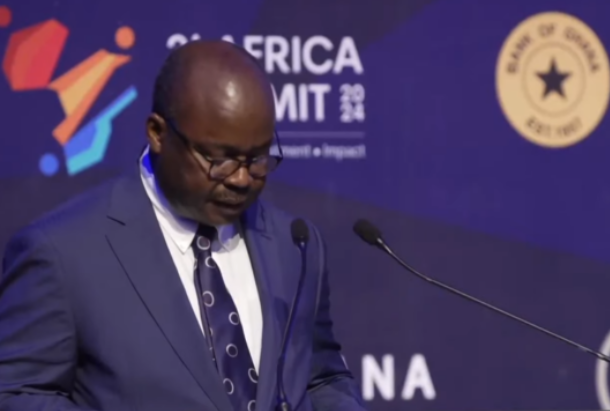
  • Domestic Gold Purchase Programme yields over $5bn in reserves – BoG

    Domestic Gold Purchase Programme yields over $5bn in reserves – BoG

    The Bank of Ghana (BoG) has revealed that more than $5 billion worth of gold reserves have been amassed under the Government’s Domestic Gold Purchase Programme since its launch in 2021.

    By December 2023, the nation’s gold reserve build-up had reached 65.4 tonnes.

    From January to June this year, the Central Bank acquired an additional 23 tonnes of gold, valued at approximately $1.6 billion, bringing the country’s total reserves to 73 tonnes.

    A significant portion of this, $1.6 billion, was utilized as equity in the Government’s ‘Gold for Oil’ initiative, aimed at stabilizing the Cedi and curbing the rising demand for foreign currencies.

    These details emerged during the official commissioning of the Royal Gold Ghana Limited (RGGL), a joint venture gold refinery, by Vice President Dr. Mahamudu Bawumia in Accra on Thursday.

    The RGGL represents a collaboration between the Precious Minerals Marketing Company (PMMC) and Rosy Royal Limited, an Indian gold refinery firm.

    At the unveiling ceremony of the $450 million refinery, Dr. Bawumia praised the PMMC and RGGL teams for the successful completion of the project. He emphasized that his administration would work on creating a policy framework to support the local currency with gold, thereby strengthening it against foreign currencies.

    “It is with great joy that I address you today on the commissioning of the Royal Ghana Gold Refinery. This historic achievement in the natural resources sector, particularly in gold, marks a significant milestone in Ghana’s journey towards economic transformation and industrialization,” Dr. Bawumia remarked.

    He highlighted the government’s commitment to adding value to the nation’s natural resources, creating jobs, and fostering sustainable economic growth. The partnership between the BoG and Rosy Royal Limited, he noted, symbolizes a shared vision for a prosperous future in Ghana’s precious minerals industry.

    The state-of-the-art refinery, equipped with advanced technology meeting international standards, is expected to significantly enhance the country’s capacity to process gold locally, thereby increasing value-addition opportunities. The RGGL aims to achieve London Bullion Market Association (LBMA) accreditation within three years, provided it sources all its gold dore responsibly.

    For over a century, Ghana has been exporting gold in its raw form, missing out on substantial revenue and job creation opportunities. Dr. Bawumia stressed that the current administration is determined to make value addition a crucial aspect of the country’s export strategy.

    “The launch of this refinery is particularly important as it fulfills a key part of this vision. Originally, this vision was to be realized through a joint venture between the PMMC and RGGL, with the PMMC granting part of its land for the construction of the refinery,” Dr. Bawumia stated.

    Construction of the refinery began in 2018 and was completed in 2022. Dr. Bawumia commended the efforts of the Board, Management, and staff of both the Bank of Ghana and PMMC for their unwavering support in bringing this national project to fruition.

    “This refinery is a strategic investment that significantly contributes to the government’s efforts to add value to our mineral resources,” Dr. Bawumia emphasized.

    Ghana’s annual gold production averaged 3.92 million ounces (122.5 tonnes) between 2018 and 2023, all of which was exported unrefined, leading to lost revenue and job opportunities. The new refinery is expected to create 80 to 120 direct jobs and up to 500 indirect employment opportunities, boosting domestic tax revenue through corporate taxes. It will also enable Ghana to refine gold to 24 carats, 99.99% purity—equivalent to a good delivery bar at the LBMA standard.

    With the ability to locally refine gold, Ghana can now sell it at a more favorable price, retaining more of its economic value. Dr. Bawumia also noted that the government’s plan to refine all domestically produced gold would further enhance the country’s economic independence and resilience.

    “With the BoG’s domestic gold purchase programme, which began in 2021, and this new refinery, we are positioning Ghana as the gold hub of Africa,” Dr. Bawumia asserted.

    “This marks a new era for Ghana and ushers us into our vision of building a resilient economy anchored on our mineral resources in a golden age of natural resource governance,” he concluded.

  • Revealed: “Ken-must-go” NPP MPs were mobilized by Bryan Acheampong

    Revealed: “Ken-must-go” NPP MPs were mobilized by Bryan Acheampong

    Member of Parliament for Abetifi and Minister for Food and Agriculture, Bryan Acheampong, has been revealed as the driving force behind the campaign by several New Patriotic Party (NPP) MPs to remove Ken Ofori-Atta from his position as Minister of Finance.

    In 2022, Ken Ofori-Atta faced significant criticism from a group of NPP lawmakers, who called for his dismissal.

    Over 90 MPs believed that Ofori-Atta had mismanaged the country’s economy, leading to widespread hardships for Ghanaians, and therefore, demanded his ousting.

    At the time, Andy Appiah Kubi, the Asante Akim North MP who served as the group’s spokesperson, was perceived as the mastermind behind the movement.

    However, it has now come to light that the true orchestrator was Bryan Acheampong. This revelation was made by renowned investigative journalist Manasseh Azure Awuni during an interview on Metro TV on Thursday, August 8, 2024, as he discussed his forthcoming book on the Akufo-Addo administration.

    “There was the ‘Ken-must-go’ campaign. At the time, someone told me that Bryan Acheampong was behind it. When I was writing the book, I realized that I needed to capture it because it was a major event in the Akufo-Addo administration,” Manasseh explained on Good Morning Ghana.

    Manasseh recounted his conversation with Acheampong: “I went to Bryan Acheampong and said, ‘I’m told you were behind the Ken-must-go rebellion,’ and he said, ‘If anybody said I was behind that, it is not accurate; I was actually in front of it.’”

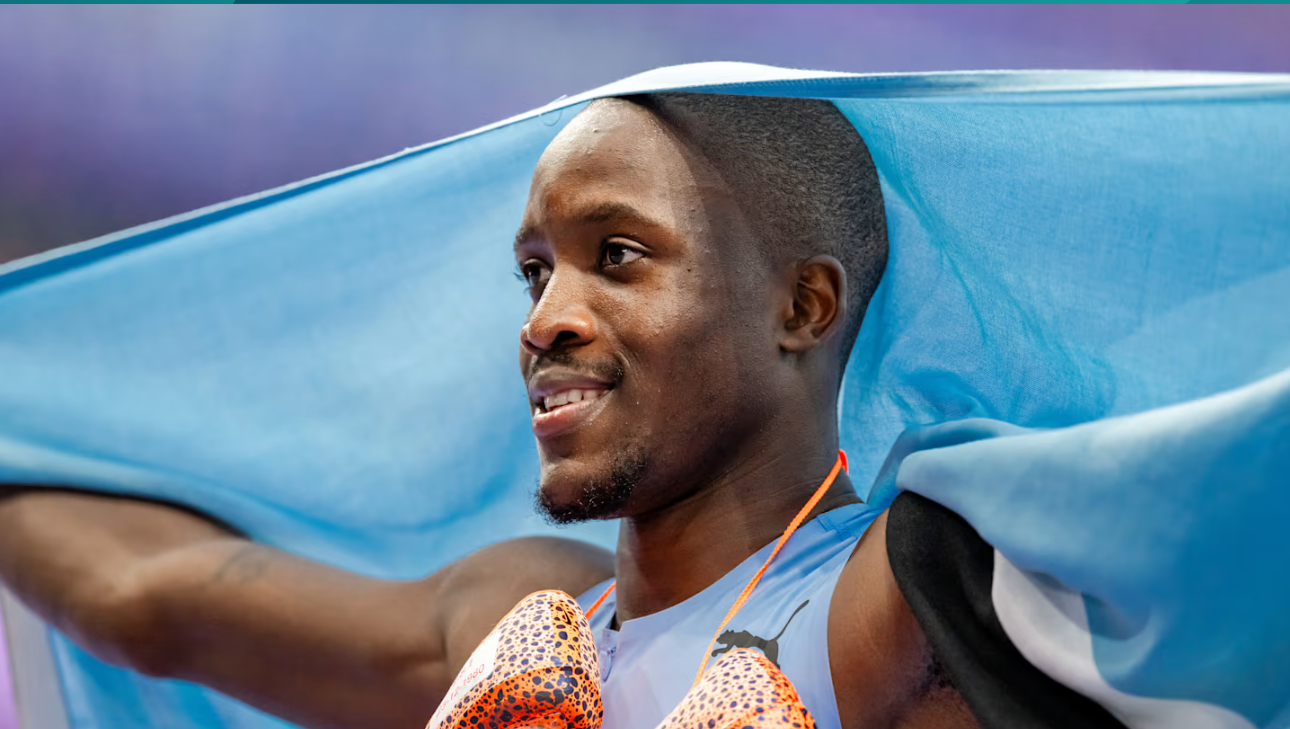
  • Botwana’s Tebogo claims men’s 200m gold medal at Paris 2024 Olympics

    Botwana’s Tebogo claims men’s 200m gold medal at Paris 2024 Olympics

    As Letsile Tebogo crossed the finish line as the new 200m Olympic champion at Paris 2024, he struck his chest in a triumphant gesture.

    The rising star from Botswana blazed to victory in an African record time of 19.46 seconds, electrifying the Stade de France crowd on Thursday, August 8. In doing so, he denied pre-race favorite Noah Lyles his anticipated sprint double.

    Lyles, who had sensationally claimed the Olympic 100m title just days earlier, couldn’t match the blistering speed of the 21-year-old Tebogo. The American finished third in 19.70 seconds, behind his compatriot Kenneth Bednarek, who secured silver with a time of 19.62.

    After the race, Lyles disclosed that he had tested positive for COVID-19. The track star, visibly struggling, needed assistance to leave the track in a wheelchair.

    Tebogo dedicated his historic win—Botswana’s first-ever Olympic gold—to his late mother, Elizabeth Seratiwa, who passed away last May. He held up his spikes to the cameras, revealing her birthdate inscribed on them, and showed her initials painted on his fingernails.

    “I believe she could be one of the happiest people on the planet,” said an emotional Tebogo, who had previously claimed 200m bronze at the world championships last year. “Because she believed in me, even when I had so much doubt in myself.”

    https://twitter.com/TrendingEx/status/1821630182525911118/video/1
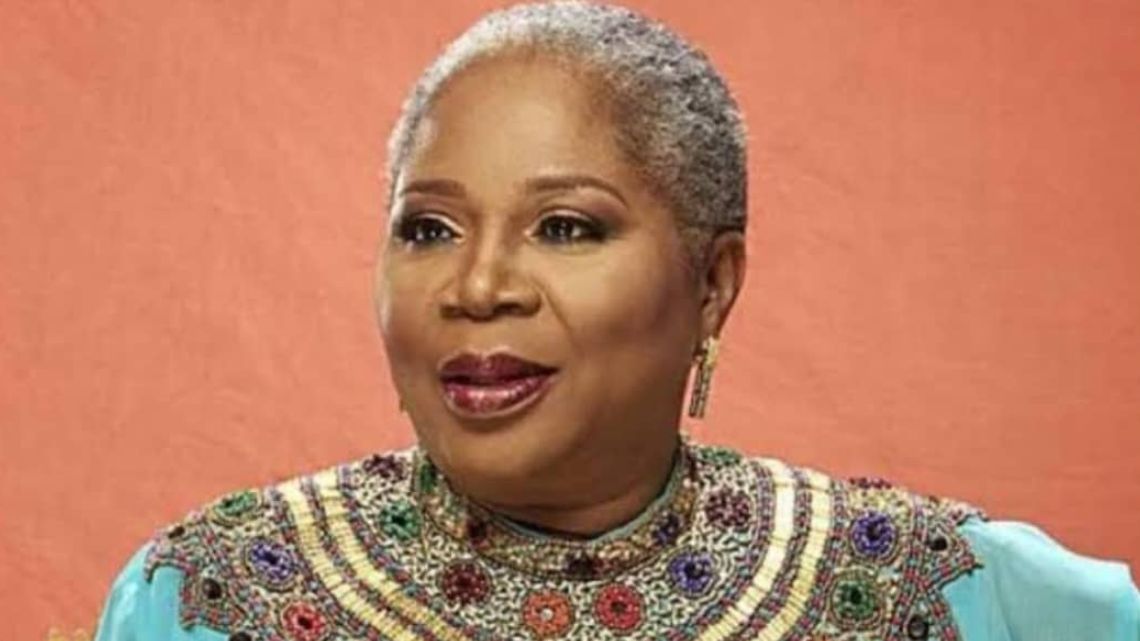
  • Nigerian icon, Onyeka Onwenu, to be buried in August – Report

    Nigerian icon, Onyeka Onwenu, to be buried in August – Report

    The family of the legendary singer Onyeka Onwenu is said to have announced that her remains will be laid to rest before the end of August.

    This was disclosed on Tuesday when a delegation from the Musical Society of Nigeria (MCSN) visited the family’s residence in Ikoyi, Lagos, to offer their condolences.

    Onyeka Onwenu, who was a respected member of MCSN, passed away suddenly last Tuesday after performing at the 80th birthday celebration of Chief Stella Okoli, the founder of Emzor Pharmaceuticals.

    During the visit, Onwenu’s sons, Abram and Tjiani, welcomed the delegation led by Orits Wiliki, Chairman of the Board of Trustees of MCSN.

    They expressed their commitment to honoring their mother’s wishes by ensuring that her remains are buried as soon as possible. While they did not specify an exact date, they assured that the iconic singer would be laid to rest before the month’s end.

    The family also noted that the details of the burial arrangements would be made public in the coming days.

    At the residence, an emotional King Sunny Ade (KSA) signed the condolence register, writing, “Dear sister and colleague, may your gentle soul rest in perfect peace. Your fans and friends all over the world will remember you forever.”

    The delegation included other prominent figures such as the flutist Tee Mac, who pledged to perform at the late singer’s service of songs, alongside Kenny Ogungbe, King Sunny Ade, and Mayo Ayilaran, the General Manager of MCSN.

  • Denu residents frustrated by ECG’s high billing system; threaten to boycott electricity use

    Denu residents frustrated by ECG’s high billing system; threaten to boycott electricity use

    The Assembly member for Denu in the Ketu South Municipality, Israel Bossman, has warned that residents might soon be forced to abandon using electricity altogether if the Electricity Company of Ghana (ECG) does not address ongoing issues with its billing system.

    Recently, the residents took to the streets in protest against what they describe as exorbitant monthly tariffs, accusing the ECG‘s billing system in the Denu District of charging them far more than their actual electricity consumption.

    They are calling for an immediate review to ensure that charges are fair and accurately reflect usage.

    In an interview with Citi News, Israel Bossman stressed the urgency of the situation, describing it as a form of extortion that must be stopped without delay.

    “With immediate effect, ECG must cease disconnecting customers or consumers of the power and fix the poor nature of the billing system and also audit some meters in the enclave,” he demanded.

    He went on to highlight the financial burden the current situation is placing on residents. “I understand that people now take loans to pay light bills, and this is not pleasant. And so trust me, a time is coming when nobody would want to use light anymore because we can’t be paying that amount of money. It is not possible. I mean something is wrong somewhere,” he added.

    On the other hand, Eunice Tweneboah-Kodua, the Public Relations Officer for the ECG in the Volta Region, assured that the concerns of the residents have been addressed. “All the things that they asked us to do, management was able to do it for them,” she stated.

    She further explained that despite resolving the issues, there were still reports of planned demonstrations. “The regional police command made us aware that the people are saying that they are still bent on going on a demonstration against us. And we asked about the issues, and the issues were the same things that they raised for us to work on.”

    Tweneboah-Kodua emphasized that ECG remains committed to resolving any outstanding concerns. “Whatever thing that they want, we are still looking into it,” she assured.

  • Former CAF boss, Issa Hayatou, dies at age 77

    Former CAF boss, Issa Hayatou, dies at age 77

    Former African football president Issa Hayatou passed away on Thursday following a prolonged illness, just one day shy of his 78th birthday, according to reports from Cameroon television.

    Hayatou, a Cameroonian national, served as the president of the Confederation of African Football (CAF) for nearly three decades, holding the position from 1988 until his unexpected defeat in 2017.

    He also briefly took on the role of acting FIFA president from 2015 to 2016 after Sepp Blatter was suspended by the global football governing body.

    A lifelong sports administrator, Hayatou’s contributions extended beyond football. He was a member of the International Olympic Committee (IOC) from 2001 until 2016, after which he was honored as an honorary member.

    However, Hayatou’s career was not without controversy. In 2011, the IOC disciplined him for his involvement in an alleged bribery scandal linked to FIFA.

    BBC Panorama reported that he received around $20,000 from the now-defunct sports marketing firm ISL in 1995. Hayatou, who was issued a reprimand, denied any wrongdoing, asserting that the money was a gift intended for his confederation.

    During his tenure leading African football, the sport on the continent made significant advancements, though Hayatou often faced criticism for being authoritarian and slow to implement innovative changes.

    In 2002, Hayatou challenged Sepp Blatter for the FIFA presidency but was soundly defeated as many African nations turned against him in favor of the Swiss candidate.

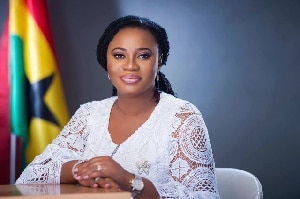
  • I had death threats but I don’t regret serving as EC Chair – Charlotte Osei

    I had death threats but I don’t regret serving as EC Chair – Charlotte Osei

    Former Electoral Commission (EC) Chairperson, Charlotte Osei, has opened up about the intense challenges she faced while in office, including multiple death threats that put her and her family’s safety at risk.

    In an interview on Joy FM, she shared how the threats became a part of her life during her tenure. “There were threats through the mail, and sometimes the security agencies would call to warn me to be careful,” she revealed during Thursday’s discussion.

    The situation was especially difficult for her young children, who faced abuse at school amid the tense political climate. Despite her usual resilience, Charlotte Osei admitted she often wondered if the job was worth the danger it posed to her family.

    “My family was very supportive and recognised that it was just for a season. All storms run out of water at some point, so everyone encouraged me to stay strong and see how things would unfold after the elections,” she recounted.

    Charlotte Osei also reflected on the unexpected challenges she encountered upon taking the role, noting that while she anticipated some difficulties, the extent of the hostility was surprising. “There were some things I expected, but it was worse than we anticipated. The sheer pettiness and creative fiction were quite surprising,” she remarked.

    She addressed rumors surrounding her political affiliations, pointing out that while scrutiny was part of the job, the fabrications were shocking. “I woke up to posters claiming I had contested for an election in Evalue Gwira, which I never did and never intended to,” she clarified.

    The former EC boss emphasized the importance of focus and resilience in such a demanding position. “You need to block out a lot of things. Those who worked closely with me knew not to send certain things my way so that I could concentrate on doing the job right. It’s about following the law,” she explained.

    “Insults will be plenty, but you learn not to take things personally. Clean hands and a clean heart—focus on doing your job,” she advised.

    Despite the challenges, Charlotte Osei expressed no regrets about her time as EC Chair. “I cannot say I regret it; it was an absolute honour to serve, and I did it to the best of my ability. I am proud of the work we did,” she concluded.

  • Mahama is a man of integrity – Joyce Bawah on OSP’s Airbus scandal findings

    Mahama is a man of integrity – Joyce Bawah on OSP’s Airbus scandal findings

    The Office of former President John Dramani Mahama has expressed great satisfaction with the recent ruling by the Office of the Special Prosecutor (OSP), which clears the former president of any involvement in the Airbus scandal.

    Special Prosecutor Kissi Agyebeng confirmed that John Dramani Mahama, the National Democratic Congress (NDC) flagbearer, had no part in the controversial Airbus dealings during his time in office.

    The OSP’s findings were announced after the investigation identified Mahama as the individual referred to as Government Official 1 by the UK court and Individual 1 by the US court in the Airbus case. Special Prosecutor Agyebeng disclosed these details during a media briefing, following investigations that began in February 2020.

    Throughout the years, Mahama has consistently denied any involvement in the Airbus scandal, even challenging the Akufo-Addo government to prosecute him if any evidence of wrongdoing was found.

    In response to the OSP’s ruling, Mahama’s office released a statement, emphasizing that the decision reaffirms the former president’s integrity and his unwavering commitment to honesty and transparency in his political career.

    “The OSP’s ruling reaffirms what we have always known: John Dramani Mahama is a man of integrity, a leader committed to the principles of honesty and transparency,” the statement read.

    The statement, signed by special aide Joyce Bawah Mogtari, also addressed the broader political context of the scandal. It criticized the current government for allegedly using the issue as a tool for political advantage, despite the UK’s Serious Fraud Office having cleared Mahama’s brother and others involved. The ruling government, according to the statement, continued to misrepresent the matter for its gain.

    A noteworthy point in the OSP’s findings, according to Mahama’s office, was the revelation that President Nana Akufo-Addo had personally requested an investigation into Mahama. This, the statement suggested, raises questions about the true motivations behind the accusations, which were seen as attempts to tarnish Mahama’s reputation.

    “The lies and fabricated stories against President Mahama over the last eight years have been consistently proven false,” the statement asserted, highlighting Mahama’s consistent cooperation with investigations and his confidence in having nothing to hide.

    Mahama’s office concluded with a challenge to Vice President Dr. Mahamudu Bawumia and President Akufo-Addo, urging them to embrace the same level of scrutiny and transparency, emphasizing the importance of accountability for all leaders.

    “In this spirit, we extend the same challenge to Vice President Dr. Mahamudu Bawumia and President Akufo-Addo to subject themselves to equal scrutiny and transparency as we strive for accountability in our leadership,” the statement added.

    The airbus bribery scandal emerged after the previous Mahama government bought three Military Airplanes from Airbus.

    Then Minority Leader, Osei Kyei-Mensah-Bonsu slammed the deals as both questionable and non-transparent, adding that the contract sums, over 70 million euros and over 100 million dollars, had been padded by the government.

    The matter gained international recognition and England’s Crown Court in Southwark in its judgement highlighted that Airbus, through intermediaries, attempted to bribe officials linked to a high-ranking Ghanaian government figure between 2011 and 2015 to secure the sale of two C295 aircraft.

    Initially, Airbus planned to pay a 5 million euro bribe disguised as a commission to an insider who had close ties to a powerful Ghanaian official overseeing the aircraft purchase deals.

  • I don’t want it – Charlotte Osei runs from MP role

    I don’t want it – Charlotte Osei runs from MP role

    Former Electoral Commission Chairperson, Charlotte Osei, has made it clear that she has no interest in running for a parliamentary seat.

    She stated that she has no plans to contest in elections to become a Member of Parliament, emphasizing that it is not part of her ambitions.

    Speaking on Joy FM’s Personality Profile on August 8, she remarked, “I have never wanted to be a Member of Parliament and I still don’t want to be a Member of Parliament. It is not one of the things on my vision board. I don’t want to be a good Member of Parliament, I don’t even want to be a bad Member of Parliament.”

    Her comments come years after a poster surfaced in December 2018, shortly after her controversial exit from the Electoral Commission, suggesting that she was running for MP in the Ayawaso West Wuogon Constituency.

    She reflected on the numerous challenges she faced during and after her tenure at the EC, including death threats and abuse directed at her children.

    Despite these hardships, she expressed gratitude for the unwavering support from her family during that difficult period.

    Charlotte Osei also pointed out that she is not affiliated with any political party, nor does she intend to join one.

  • Anybody can debate Bawumia, he doesn’t need Mahama – Basintale

    Anybody can debate Bawumia, he doesn’t need Mahama – Basintale

    Deputy National Communication Officer for the National Democratic Congress (NDC), Malik Basintale, has asserted that Vice President Dr. Mahamudu Bawumia doesn’t need to engage former President John Dramani Mahama in a debate.

    According to Basintale, any individual, regardless of their political affiliation or experience, can challenge Bawumia on policy matters.

    In an interview on TV3 on August 7, Basintale emphasized that Mahama will not participate in any debate with Bawumia ahead of the 2024 elections.

    Instead, Basintale offered to represent Mahama in any such debate, allowing the NDC flagbearer to focus on his national tour and voter outreach efforts.

    “He shouldn’t centre the debate around the NDC. The NDC is not the party to bring credibility to a debate. Alhaji Bawumia can debate Cheddar, Alan Kyerematen, Bernard Mornah, Hassan Ayariga. He can debate many people,” Basintale remarked.

    He further added, “Anybody can debate Bawumia. An 18-year-old girl in Techiman, a nursing trainee debated him for a minute, and his whole head was filled with sweat.”

    This statement comes after Bawumia recently issued a public challenge to Mahama, expressing his eagerness to debate the former president on economic and governance issues. During a rally in Bunkpurugu as part of his campaign tour, Bawumia accused Mahama of avoiding debates that would expose weaknesses in his policies, particularly critiquing the NDC’s economic plans.

    “I am looking forward to a debate with John Mahama on the economy, on the country, on the government. But I am afraid that he is running away from a debate. His people say he doesn’t want to debate. But he doesn’t want to debate because he knows I’ll expose the emptiness of his policies,” Bawumia declared.

    Despite Bawumia’s challenge, the NDC has remained firm in its stance. Deputy Spokesperson for Mahama’s campaign team, Beatrice Annan, has confirmed that the NDC flagbearer will not participate in any presidential debate organized by the Institute of Economic Affairs (IEA), reinforcing the party’s position on the matter.

  • Akufo-Addo appoints another top gov’t official as Ambassador-at-Large

    Akufo-Addo appoints another top gov’t official as Ambassador-at-Large

    President Akufo-Addo has expanded his diplomatic team by appointing Deputy Chief of Staff Fawaz Aliu as an Ambassador-at-Large, adding to his current role.

    This latest appointment marks the second time in two months that the President has designated a top official to this prestigious position, following the recent appointment of his Executive Secretary, Nana Bediatuo Asante, as an Ambassador-at-Large.

    The ceremony took place on Wednesday, August 7, at the Jubilee House, where President Akufo-Addo also named Major General Charles Kojo Abedi Awity as Ghana’s Ambassador to Serbia, and Mr. Peprah Ampratwum as Ambassador In-Situ.

    These new diplomatic roles are part of the President’s broader strategy to enhance Ghana’s international relations and promote its interests abroad.

    In his remarks, President Akufo-Addo expressed confidence that the appointees would excel in their new roles, strengthening Ghana’s diplomatic efforts and forging deeper ties with other nations. He urged them to actively seek out investment opportunities for Ghana and work to elevate the country’s global standing.

    Speaking on behalf of his colleagues, Major General Abedi pledged to serve Ghana with distinction, committing to the President’s vision for a more robust and proactive diplomatic presence.

    However, the timing and necessity of these appointments have sparked some debate among Ghanaians, particularly given the ongoing economic challenges. Critics have questioned whether the creation of additional high-level diplomatic positions is appropriate at a time when there are widespread calls for a reduction in the size of government.

    The discussion reflects growing public scrutiny of government appointments and their alignment with the country’s current economic realities.

  • AGI impeding crackdown on companies fueling exchange rate instability – Amin Adam

    AGI impeding crackdown on companies fueling exchange rate instability – Amin Adam

    Finance Minister Dr. Mohammed Amin Adam has criticized the Association of Ghana Industries (AGI) for obstructing government initiatives aimed at addressing the role of certain companies in the ongoing exchange rate fluctuations.

    The Minister pointed out that specific companies within the industrial sector have been identified as major contributors to these volatilities, with their actions exacerbating the instability of the local currency.

    During a recent engagement with the AGI, Dr. Amin Adam highlighted the need for manufacturing companies to cease practices that undermine the stability of the cedi.

    He warned that the government might soon be compelled to take action against these companies to ensure the stabilization of the currency.

    “While we have commendable corporate citizens, we also have those whose practices are harmful. For instance, some companies sell products, collect payments in cedi, then convert the cash to dollars and hoard it in banks, worsening our forex challenges. If we begin to crack down on this behavior, the AGI might accuse us of targeting their members,” the Minister cautioned.

    He provided an example to underscore his point: “One company deposited $50 million in a bank without holding any cedi. This single action caused the Cedi to depreciate by 2 points—when the rate was at 13 cedis to the dollar, it jumped to about 15 cedis due to this deposit. These practices are damaging our currency.”

    In response, AGI’s Chief Executive Officer, Seth Twum Akwaboah, expressed the association’s commitment to ethical standards, affirming that AGI would not defend any member found guilty of such activities. He assured that the association would investigate the claims and hold any culpable members accountable.

    “As an association, we operate with high ethical standards, and if any member is involved in these practices, we will expose and deal with them severely. While we were unaware of these specific instances, I do not doubt the Minister’s assertions,” Akwaboah stated.

    He further urged AGI members to adhere to best practices, adding, “In any community, there are always a few bad actors. Our member companies must stop engaging in such practices. If caught, AGI will not defend you—this is a firm assurance. However, we also need to understand the circumstances that led to such actions.”

    The AGI also took the opportunity to outline several critical challenges that must be addressed to better support industries across the country.

  • Recall of Parliament isn’t for an emergency situation – Minority

    Recall of Parliament isn’t for an emergency situation – Minority

    The Minority in Parliament has expressed strong disapproval of the recent decision by Majority Leader Alexander Afenyo-Markin to unilaterally trigger a recall of Parliament, arguing that the action was unnecessary given the scheduled timeline for the House to reconvene.

    Minority Chief Whip Kwame Governs Agbodza criticized the recall, stating, “It was not done in good faith.”

    He emphasized that while the Minority will cooperate and attend the session, the Majority side will face the challenge of meeting the required quorum to commence parliamentary business.

    This situation arises after the House was adjourned indefinitely on July 30, 2024.

    Mr. Agbodza also highlighted the inconvenience posed to parliamentary candidates who are currently focused on nominations and pre-campaign activities. He questioned the need for the recall, given that it was not driven by an urgent matter.

    In response, Majority Chief Whip Frank Annoh-Dompreh defended the decision, underscoring the importance of addressing critical government business before the election campaign period begins.

    Despite acknowledging the exhaustion of members, Annoh-Dompreh stressed, “I am not surprised by the reaction of the Minority that has been their position from day one so it is not surprising. There is a tall list of businesses to be prosecuted…suffix it to say, you know when we get back, we are heading towards election so this is a very good opportunity for us to dispense this critical government business. So this recall is important.”

    The recall has thus sparked a debate between the two sides, with the Minority questioning its necessity while the Majority insists on its importance for the effective management of government affairs.

  • OSP condemns involvement of elected officials in commercial transactions

    OSP condemns involvement of elected officials in commercial transactions

    The Office of the Special Prosecutor (OSP) has expressed strong disapproval of the involvement of elected officials in commercial transactions, particularly in reference to former President John Dramani Mahama’s role in the controversial Airbus deal.

    The Special Prosecutor, Kissi Agyebeng, highlighted the concerns surrounding Mahama’s decision to engage in the deal, which was initiated by his brother, Samuel Foster Adam.

    Speaking at a press briefing on Thursday, August 8, Mr. Agyebeng emphasized that former President Mahama’s involvement in the Airbus deal, given his position as a key decision-maker and Chairman of the Armed Forces Council during the initial stages of the campaign, should have been approached with caution.

    “Such close proximity dealings by such elected high officials of the Republic and their kin and close associates on behalf of the Republic should neither be viewed favourably nor encouraged,” Agyebeng asserted.

    He pointed out that these actions could be perceived as influence peddling or a conflict of interest, potentially tarnishing the image of the office.

    Agyebeng further argued, “The direct participation of the President and the Vice President (on behalf of the Republic) in commercial communications and meetings with commercial entities should not be encouraged either – as they expose these elected high officials to the spectre of the slightest hint of perceived corruption that may attend international business transactions. The President and Vice President should be insulated from such direct commercial dealings.”

    Despite these criticisms, the OSP was clear in stating that no evidence of corruption was found against Mahama or his brother following an extensive investigation into the scandal.

    “It seems to the OSP that the only reason why the Ghana Airbus deal found its way into the UK and US DPA was the fact that former President Mahama and Samuel Adam Foster were brothers of full blood and that former President Mahama directly participated in commercial communications and meetings with Airbus officials,” Agyebeng explained.

    The OSP’s findings indicated that while there was an agency relationship between Airbus and Samuel Foster Adam, there was no evidence suggesting that any bribes were paid to Mahama.

    “Indeed, to all intents and purposes and objectively viewed, an agency relation existed between Airbus and Foster and his associates by which Foster and his associates acted as business partners of Airbus in respect of the Airbus – Ghana deal under which Foster and his associates were to be remunerated success-based commissions,” Agyebeng concluded.

    The controversy dates back to the purchase of three military airplanes, C295s, by Ghana from Airbus between 2011 and 2015, which was presented as part of the government’s effort to modernize the Ghana Air Force.

    However, the involvement of high-ranking officials in the deal has drawn significant scrutiny, culminating in the OSP’s recent findings.

  • What exactly Akufo-Addo said about Burkina Faso that got Mahama cringing

    What exactly Akufo-Addo said about Burkina Faso that got Mahama cringing

    The National Democratic Congress (NDC) flagbearer for 2024, John Dramani Mahama, has chided President Akufo-Addo for causing a diplomatic strain between Ghana and Burkina Faso.

    Mahama said comments passed by President Akufo-Addo have caused “diplomatic tension”.

    He illustrated the importance of vigilance and cooperation with a local proverb: “When your neighbour’s beard is on fire, you fetch water and put it by your beard because it can spread to your own.”

    President Akufo-Addo‘s comments that have been referenced by the former president were uttered when he spoke alongside U.S. Secretary of State Antony Blinken on December 14, 2023.

    He alleged that Burkina Faso had hired Russian mercenaries and offered a mine as payment to the Wagner Group.

    “Today, Russian mercenaries are on our northern border. Burkina Faso has now entered into an arrangement to go along with Mali in employing the Wagner forces there,” Akufo-Addo stated, describing it as a troubling development for Ghana.

    In response, Burkina Faso summoned Ghana’s Ambassador on December 16 for “explanations.”

    Burkina Faso’s Foreign Ministry expressed its disapproval, stating that Ghana should have sought direct communication with Burkinabe authorities to obtain accurate information.

    To address the fallout, Ghana’s National Security Minister, Mr. Kan-Dapaah, led a high-level delegation to Burkina Faso, including security chiefs and officials from the Ministry of Foreign Affairs and Regional Integration. Following these efforts, both nations reaffirmed their commitment to jointly combat terrorism in the West Africa region.

  • Okudzeto throws more ‘dirt’ at Rev Kusi Boateng in latest exposè

    Okudzeto throws more ‘dirt’ at Rev Kusi Boateng in latest exposè

    Member of Parliament for North Tongu, Samuel Okudzeto Ablakwa, has once again brought to light new allegations against Rev. Victor Kusi Boateng, founder and leader of Power Chapel Worldwide, implicating him in a controversial government contract deal.

    Ablakwa alleges that Rev. Kusi Boateng, who also goes by the name Kwabena Adu Gyamfi, has been involved in questionable business practices with the incumbent Akufo-Addo/Bawumia government.

    Ablakwa claims that while Rev. Kusi Boateng has publicly stated that he has never received any government contracts, this assertion is technically accurate only because the contracts were awarded under his second identity, Kwabena Adu Gyamfi.

    According to the MP, this alternate identity has allowed Kusi Boateng to secure lucrative government contracts without directly linking them to his well-known name.

    The North Tongu MP presented evidence, including government payment vouchers, which show that two companies—EL Dunamis Limited and JNS Talent Centre Limited—owned by Kwabena Adu Gyamfi, received a total of GHS7 million for the supply of paper towels to the Ministry of Health in 2021.

    Specifically, JNS Talent Centre received its payment on July 23, 2021, while EL Dunamis was paid on August 17, 2021. Both contracts were reportedly single-sourced, raising further questions about the transparency of the procurement process.

    Ablakwa, in a statement, expressed disbelief over the scale of the contracts, remarking, “I can’t imagine how GHS7 million worth of tissues looks like.”

    He also emphasized that if it weren’t for diligent parliamentary oversight, the alleged scheme might have gone unnoticed, allowing Rev. Kusi Boateng to continue operating under what Ablakwa describes as a “criminal double identity scheme.”

    The North Tongu MP’s exposé adds to the mounting scrutiny surrounding Rev. Kusi Boateng and his alleged connections to the current administration, further intensifying the debate over the integrity of government procurement processes.

  • Case closed! No bribery and corruption – Bright Simons reacts to Airbus scandal

    Case closed! No bribery and corruption – Bright Simons reacts to Airbus scandal

    Vice President of IMANI Africa, Bright Simons, has responded to the findings of the Office of the Special Prosecutor’s (OSP) investigation into the Airbus bribery scandal, a case that has attracted widespread public attention.

    The OSP, led by Special Prosecutor Kissi Agyebeng, recently concluded its probe, determining that former President John Dramani Mahama, who was identified as “Government Official 1” in the UK court and “Individual 1” in the US court, did not engage in any corrupt activities related to the Airbus case.

    During a media briefing, Mr. Agyebeng confirmed that while Mahama was closely involved in the transactions under scrutiny, the investigation did not uncover any evidence of direct bribery by Airbus involving the former president through his close relative.

    The Special Prosecutor emphasized that although Mahama’s role in the matter might raise suspicions due to his supervisory and oversight responsibilities, the four-year investigation found no grounds for criminal charges within Ghana’s jurisdiction.

    Reacting to these findings, Bright Simons took to social media to summarize the outcome.

    He noted that the OSP’s conclusion aligns with earlier reports by the British press, which identified the key figures in the Airbus saga but found no evidence of criminal wrongdoing by the former president.

    Mr Simons highlighted that the OSP’s efforts were hampered by limited cooperation from British authorities and unsuccessful attempts to engage Interpol in apprehending certain collaborators.

    “Airbus’ acceptance of liability for corruption cannot extend to the individuals cited in the British and American investigations,” Simons wrote, underscoring the OSP’s conclusion that there is no basis for criminal prosecution in Ghana.

    He concluded that with no evidence of bribery and corruption, the Airbus scandal is effectively closed as far as the OSP is concerned.

    “In short, the Airbus issue is closed. There is no evidence of bribery and corruption,” he wrote.

  • Uncustomed vehicle users obtain a 2-month grace period to fix their documentation

    Uncustomed vehicle users obtain a 2-month grace period to fix their documentation

    The Customs Division of the Ghana Revenue Authority (GRA) has granted a 2-month grace period, from August 1 to September 30, 2024, for users of uncustomed vehicles to regularize their documentation.

    This amnesty allows vehicle owners to update their papers without incurring the penalties typically imposed if such vehicles were seized by customs officials.

    Vehicle owners are strongly encouraged to take advantage of this opportunity to avoid potential sanctions.

    After the grace period ends on October 1, 2024, the Customs Division will launch a nationwide, unannounced inspection of vehicles on the roads, with any uncustomed vehicles found during these checks set to be impounded immediately.

    The GRA urges all vehicle users to ensure their documentation is properly in order before the deadline to avoid the consequences of non-compliance.

  • GRA Custom Division to impound uncustomed vehicles from October 1

    GRA Custom Division to impound uncustomed vehicles from October 1

    The Customs Division of the Ghana Revenue Authority (GRA) has announced that it will begin impounding uncustomed vehicles across the country starting October 1, 2024.

    This follows a 2-month amnesty period, running from August 1 to September 30, 2024, granted to all users of vehicles that have not undergone the proper customs procedures.

    During this amnesty period, vehicle owners are urged to regularize the documentation of their illegally imported vehicles without facing the penalties that would typically apply if such vehicles were seized by customs officials.

    The GRA has strongly encouraged all users of uncustomed vehicles to take advantage of this opportunity to avoid future sanctions.

    Following the expiration of the amnesty on October 1, 2024, the Customs Division will carry out a nationwide, unannounced inspection of vehicles on the roads. Any vehicles found to be uncustomed will be impounded on the spot.

    Vehicle owners are advised to ensure their documentation is in order before the deadline to avoid the inconvenience and penalties associated with the impoundment of their vehicles.

  • FULL TEXT: OSP’s findings into Airbus scandal

    FULL TEXT: OSP’s findings into Airbus scandal

    The Office of the Special Prosecutor (OSP) has concluded its investigation into the Airbus bribery case, which had drawn significant public attention.

    At a press briefing on Thursday, August 4, Special Prosecutor Kissi Agyebeng disclosed that former President John Dramani Mahama was identified as ‘Government Official 1’ in the scandal.

    Despite this identification, the investigation, which spanned four years, found no evidence that Mahama received any bribes.

    Mr. Agyebeng emphasized that revealing the identities involved was necessary, given the intense public interest surrounding the case.

  • Mahama is innocent – OSP exonerates NDC flagbearer in Airbus scandal

    Mahama is innocent – OSP exonerates NDC flagbearer in Airbus scandal

    Special Prosecutor Kissi Agyebeng has revealed that the flagbearer of the National Democratic Congress (NDC) and former President of Ghana, John Dramani Mahama, played no role in the controversial Airbus scandal during his administration.

    The Office of the Special Prosecutor confirmed that after revealing that the individual referred to Government Official 1 by the UK court and Individual 1 by the US court in the Airbus scandal is former President John Mahama.

    Special Prosecutor Kissi Agyebeng made this known while briefing the media on the Office’s findings of the case after initiating investigations in February 2020.

    According to Mr Agyebeng, the UK and US courts muffled the identities of the government officials involved in the case.

    He, however, said, “we deem it necessary to reveal the identity of some of the individuals owing to the very heightened interest in the fact that the conduct of airbus was held by the up UK and US court to be able to aimed at courting undue favor and advantage from Ghanaian public officials and an elected high government official in the sale of C292 aircraft to Ghana and the persons held to be closely associated with the conduit of the courting of such undue favor and advantage….”

    “The individual described as Government Official 1 by the UK court and Individual 1 by the US court is John Dramani Mahama,” the Special Prosecutor said.

    Mahama has on several occasions refuted that he played a role in the Airbus scandal and further challenged the Akufo-Addo-led government to prosecute him should he be found guilty.

    Former President John Dramani Mahama was among the government officials implicated in the scandal, with former Special Prosecutor Martin Amidu suggesting that the label “Government Official One” in the scandal referred to the former president.

    In a communication during his tenure as Special Prosecutor, Martin Amidu disclosed how John Mahama allegedly leveraged his position to secure a Ghanaian passport for his brother, Samuel Adam Mahama.

    Martin Amidu said, “Amongst other reasons for the letter to the said Ministry, Samuel Adam Mahama’s elder brother of full blood, who without a doubt and the evidence available to this Office answers to the description of the elected Government Official 1, allegedly granted a denial interview to the Daily Graphic which published the same on June 20, 2020, fortunately containing suspected admissions that he is the elected Government Official 1 referred to in the UK judgement.

    “Serving appointees of this government have been unable to obtain the voice recording of this interview to enable the Office to confront the former president with his own admissions in the interview as answering to the description of the brother of Samuel Adam Mahama as Intermediary 5.”

    About the Airbus scandal case

    Ghana’s acquisition of three C295 military aircraft from Airbus, a process that began in 2011, has come under renewed scrutiny following a recent ruling by England’s Crown Court in Southwark.

    The purchases, which were initially presented as part of the 2009-2012 Strategic Plan of the Ghana Armed Forces, were approved by Ghana’s Parliament despite significant debate.

    These aircraft were intended to modernize the Ghana Air Force and were funded by loans from Deutsche Bank S.A.E. and Fidelity Bank Ghana Limited, with additional financing from the Brazilian Development Bank (BNDES) for related military purchases.

    The deals were met with opposition, particularly from Minority Leader Osei Kyei-Mensah-Bonsu, who questioned the transparency and legitimacy of the contracts.

    He argued that the contract sums were inflated and criticized the government for a lack of transparency, relying on publicly available information to substantiate his claims, which were largely dismissed at the time.

    The recent judgement by the Crown Court has brought these concerns back to the forefront. On January 21, 2020, the court approved a Deferred Prosecution Agreement (DPA) between the UK’s Serious Fraud Office (SFO) and Airbus SE, which admitted to extensive bribery schemes across several countries, including Ghana.

    The DPA allows the SFO to delay prosecution if the company complies with specific conditions, a decision that the court deemed fair, reasonable, and in the public interest, given the potential economic impact of immediate prosecution on Airbus.

    The court’s findings revealed that Airbus engaged in corrupt practices to secure contracts in multiple countries, including Ghana.

    The judgement highlighted that Airbus, through intermediaries, attempted to bribe officials linked to a high-ranking Ghanaian government figure between 2011 and 2015 to secure the sale of two C295 aircraft.

    Initially, Airbus planned to pay a €5 million bribe disguised as a commission to “intermediary 5,” who had close ties to a powerful Ghanaian official overseeing the aircraft purchase deals.

    Although this particular payment was never completed due to procedural safeguards, subsequent transactions were arranged through a Spanish third-party company, enabling Airbus to funnel nearly €4 million in bribes to the intermediary.

    The third-party company, inserted into the deal to bypass due diligence processes, facilitated the sale of two aircraft.

    However, the arrangement fell apart during negotiations for the third aircraft after Airbus conducted an internal investigation, leading the Spanish company to withdraw. Claims by “intermediary 5” for an additional €1.6 million related to the third aircraft were also not honored by Airbus.

    The Crown Court’s judgement does not grant Airbus and its officials immunity from prosecution. The SFO retains the right to pursue criminal charges if Airbus fails to meet the conditions of the DPA.

    Moreover, ongoing investigations could result in criminal proceedings against those who paid or received the alleged bribes, including intermediaries and associated individuals in Ghana. Under English law, the SFO could utilize Mutual Legal Assistance (MLA) agreements to pursue these charges internationally.
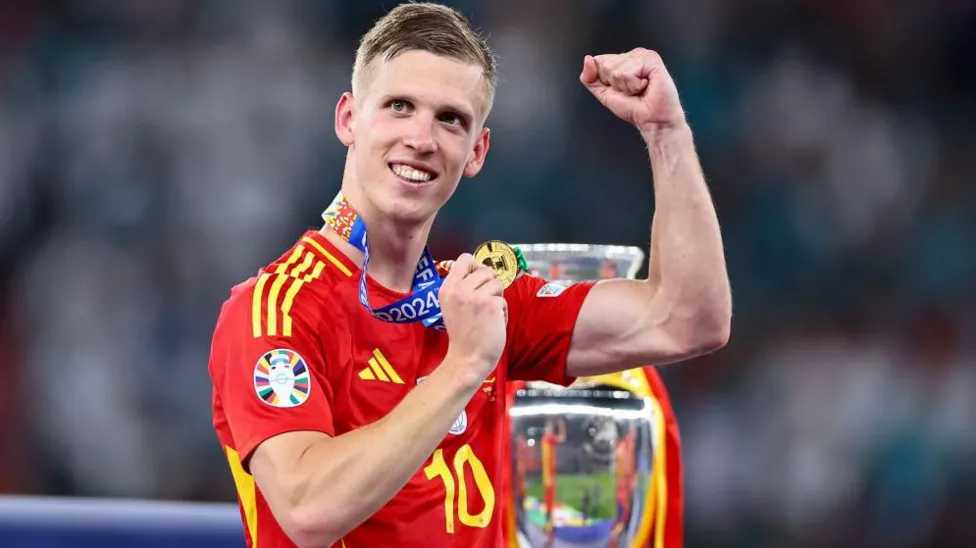
  • Paris 2024 Olympics: “We struggled to hear the calls” – Ghana’s relay team

    Paris 2024 Olympics: “We struggled to hear the calls” – Ghana’s relay team

    Ghana’s men’s 4x100m relay team faced disappointment on Thursday when they were disqualified from the final after a changeover violation during the Paris 2024 Olympics.

    The team encountered difficulties early on, with a mishap during the first baton exchange between Abdul Saminu and Benjamin Azamati putting them at a disadvantage.

    Competing alongside the host nation, France, the Ghanaian team struggled with the overwhelming noise levels in the stadium.

    According to Joseph-Paul Amoah, the loud atmosphere hindered their communication on the track, which affected their baton changes.

    “The stadium was loud, obviously because of France,” Amoah explained to Joy Sports. “Instead of using it as an advantage, I think it broke us in a way. We struggled to hear the calls, but we did our best in the circumstances.”

    Amoah emphasized that the team wasn’t nervous but found it challenging to communicate effectively due to the noise. “Going into the race, we were all calm and ready to compete but unfortunately we got disqualified,” he added.
    Ranked 7th in the world, Ghana was hoping to make the final for the second time in a row and potentially secure a podium finish. However, those aspirations will have to wait for another opportunity.

  • Gov’t Official 1 in Airbus Scandal is Mahama – OSP

    Gov’t Official 1 in Airbus Scandal is Mahama – OSP

    The Office of the Special Prosecutor has confirmed that the individual referred to Government Official 1 by the UK court and Individual 1 by the US court in the Airbus scandal is former President John Mahama.

    Special Prosecutor Kissi Agyebeng made this known while briefing the media on the Office’s findings of the case.

    According to Mr Agyebeng, the UK and US courts muffled the identities of the government officials involved in the case.

    He, however, said, “we deem it necessary to reveal the identity of some of the individuals owing to the very heightened interest in the fact that the conduct of airbus was held by the up UK and US court to be able to aimed at courting undue favor and advantage from Ghanaian public officials and an elected high government official in the sale of C292 aircraft to Ghana and the persons held to be closely associated with the conduit of the courting of such undue favor and advantage….”

    “The individual described as Government Official 1 by the UK court and Individual 1 by the US court is John Dramani Mahama,” the Special Prosecutor said.

    About the Airbus scandal

    Airbus, the European aircraft manufacturer, was accused of paying bribes in Ghana during the sale of three military aircraft.

    The aerospace company acknowledged hiring the brother of a prominent Ghanaian official as its consultant for the sale of the aircraft to the country.

    Additionally, Airbus admitted to making payments to the consultant through a third party after its Compliance Unit raised concerns about the close relationship between the consultant and the senior Ghanaian official, who played a significant role in the military aircraft purchase.

    Former President John Dramani Mahama was among the government officials implicated in the scandal, with former Special Prosecutor Martin Amidu suggesting that the label “Government Official One” in the scandal referred to the former president.

    In a communication during his tenure as Special Prosecutor, Amidu disclosed how John Mahama allegedly leveraged his position to secure a Ghanaian passport for his brother, Samuel Adam Mahama.

    Martin Amidu said, “Amongst other reasons for the letter to the said Ministry, Samuel Adam Mahama’s elder brother of full blood, who without a doubt and the evidence available to this Office answers to the description of the elected Government Official 1, allegedly granted a denial interview to the Daily Graphic which published the same on June 20, 2020, fortunately containing suspected admissions that he is the elected Government Official 1 referred to in the UK judgement.

    “Serving appointees of this government have been unable to obtain the voice recording of this interview to enable the Office to confront the former president with his own admissions in the interview as answering to the description of the brother of Samuel Adam Mahama as Intermediary 5.”

    John Mahama, however, refuted the allegations and urged Martin Amidu, who was serving as Special Prosecutor at the time, to prosecute him if he was indeed the individual referred to as Government Official One.

  • OSP updates public on findings of Airbus scandal probe

    OSP updates public on findings of Airbus scandal probe

    The Office of the Special Prosecutor (OSP) has concluded its investigations on the Airbus scandal.

    Special Prosecutor Kissi Agyebeng is briefing the media on the Office’s findings.

    About the Airbus Scandal:

    Airbus, the European aircraft manufacturer, was accused of paying bribes in Ghana during the sale of three military aircraft.

    The aerospace company acknowledged hiring the brother of a prominent Ghanaian official as its consultant for the sale of the aircraft to the country.

    Additionally, Airbus admitted to making payments to the consultant through a third party after its Compliance Unit raised concerns about the close relationship between the consultant and the senior Ghanaian official, who played a significant role in the military aircraft purchase.

    Former President John Dramani Mahama was among the government officials implicated in the scandal, with former Special Prosecutor Martin Amidu suggesting that the label “Government Official One” in the scandal referred to the former president.

    In a communication during his tenure as Special Prosecutor, Amidu disclosed how John Mahama allegedly leveraged his position to secure a Ghanaian passport for his brother, Samuel Adam Mahama.

    Martin Amidu said, “Amongst other reasons for the letter to the said Ministry, Samuel Adam Mahama’s elder brother of full blood, who without a doubt and the evidence available to this Office answers to the description of the elected Government Official 1, allegedly granted a denial interview to the Daily Graphic which published the same on June 20, 2020, fortunately containing suspected admissions that he is the elected Government Official 1 referred to in the UK judgement.

    “Serving appointees of this government have been unable to obtain the voice recording of this interview to enable the Office to confront the former president with his own admissions in the interview as answering to the description of the brother of Samuel Adam Mahama as Intermediary 5.”

    John Mahama, however, refuted the allegations and urged Martin Amidu, who was serving as Special Prosecutor at the time, to prosecute him if he was indeed the individual referred to as Government Official One.

  • Farmers losing 30% of their income due to post-harvest losses – WFP

    Farmers losing 30% of their income due to post-harvest losses – WFP

    Ghanaian farmers are losing as much as 30% of their income annually due to significant post-harvest losses, according to the World Food Programme (WFP).

    These losses, estimated at $1.9 billion each year, are primarily driven by inadequate post-harvest infrastructure, lack of market access, insufficient warehousing, bushfires, and poor road conditions, particularly affecting perishable produce.

    Executive Director of Agrisolve, Miss Elorm Goh, emphasized the severe impact on smallholder farmers during a recent stakeholders’ breakfast meeting in Accra.

    “If you lose even one percent of your produce, it’s a big deal, but in this case, farmers are losing up to 50 percent due to post-harvest challenges,” she noted.

    The event, organized by the Graphic Communications Group in collaboration with the WFP, focused on enhancing agricultural productivity by reducing these losses.

    Miss Goh called for government-led initiatives to boost private sector involvement in providing essential infrastructure, such as warehouses and processing machinery.

    She stressed that improved roads, better harvesting equipment, and more cold storage facilities could prevent the significant losses currently plaguing farmers, allowing them to retain more of their hard-earned income.

    Head of Food Systems at the WFP, Mr. Steven Odartefio, pointed out that these losses directly affect farmers‘ livelihoods, as much of their output fails to reach the market.

    “Although they harvest more, they supply less because by the time it gets to the end market, certain activities contribute to losses of the produce,” he explained.

    He advocated for the creation of local government structures to connect agribusinesses with farmers, enabling more efficient processing and reducing losses.

    WFP’s Country Director for Ghana, Madam Marbara Clemens, highlighted a partnership with the MasterCard Foundation aimed at providing technical support and post-harvest equipment to 100,000 smallholder farmers.

    This initiative seeks to enhance agricultural productivity by reducing post-harvest losses through innovative solutions provided by a network of aggregators.

    Madam Clemens also called for a national effort to improve the entire agricultural value chain, from seed production to processing, in order to attract more young people to the sector.

    By prioritizing local produce, she emphasized, Ghana can improve food security while also boosting the incomes and living conditions of smallholder farmers.

  • Ghana loses $1.9bn annually to post-harvest losses – WFP

    Ghana loses $1.9bn annually to post-harvest losses – WFP

    Ghana’s agricultural sector is facing significant financial losses, with post-harvest challenges costing the nation approximately $1.9 billion annually, according to the World Food Programme (WFP).

    The losses, which primarily affect perishable goods, are largely attributed to inadequate post-harvest infrastructure, such as insufficient machinery, lack of market access, inadequate warehousing, bushfires, and poor road conditions.

    Miss Elorm Goh, Executive Director of Agrisolve, highlighted the severe impact of these losses on smallholder farmers, who are losing about 30 percent of their income due to post-harvest inefficiencies.

    Speaking at a technical stakeholders’ breakfast meeting in Accra, she emphasized the gravity of the situation, stating, “If you lose even one percent of your produce, it’s a big deal, but in this case, farmers are losing up to 50 percent due to post-harvest challenges.”

    The meeting, organized by the Graphic Communications Group in partnership with the WFP, focused on transforming agricultural productivity in Ghana by reducing post-harvest losses.

    Miss Goh called for increased government intervention, particularly in fostering private sector participation to improve infrastructure, including the provision of adequate warehouses and processing machinery.

    “If we provide the roads, the right machinery for harvesting of produce, and more cold rooms for storage, farmers won’t be losing between 40 to 50 percent of their toil, and that will definitely be income for them,” she added.

    In addition to infrastructure improvements, Miss Goh urged financial institutions to develop innovative, tailor-made solutions for those involved in the agricultural value chain, aiming to reduce post-harvest losses and boost farmers’ incomes.

    Mr. Steven Odartefio, Head of Food Systems at the WFP, underscored the need for local government structures to facilitate connections between agribusinesses and farmers.

    “Farmers are losing their output, which has an impact on their pocket. Although they harvest more, they supply less because by the time it gets to the end market, certain activities contribute to losses of the produce,” he noted. He advocated for government support in linking agribusinesses with farmers to help transform produce and benefit smallholder farmers.

    Madam Marbara Clemens, Country Director for the WFP in Ghana, discussed a partnership with the MasterCard Foundation, which aims to provide technical support and post-harvest equipment to 100,000 smallholder farmers.

    This initiative is designed to reduce post-harvest losses and improve agricultural productivity through innovative solutions delivered by a network of aggregators.

    Madam Clemens also called for a national effort to address challenges across the agricultural value chain, from seed production to processing, to make the sector more appealing to the youth.

    She emphasized that prioritizing the patronage of locally produced goods would significantly enhance food security and improve the livelihoods of smallholder farmers.

  • Ghana disqualified in 4×100 relay at Paris 2024 Olympics

    Ghana disqualified in 4×100 relay at Paris 2024 Olympics

    Ghana’s hopes for a medal in the Men’s 4×100 relay at the 2024 Olympics were dashed on Day 13, as the team failed to qualify for the finals.

    The quartet—comprising Abdul-Saminu Rasheed, Benjamin Azamati, Ibrahim Fuseini, and Joseph-Paul Amoah—finished their heat in 38.62 seconds, placing sixth.

    A critical misstep occurred during the baton exchange between Saminu and Azamati, which proved disastrous and led to the team’s disqualification.

    This relay was seen as Ghana’s strongest chance to secure a medal at the Paris Games, especially after disappointing results in other events, including swimming, high jump, and individual sprints.

    Presently, no Ghanaian remains in the ongoing games.