Members of the association claimed that if the government does not reverse its decision, over 1,000 individuals in the region will lose their jobs.
A prohibition on the import and sale of about 20 electrical items, including air conditioners, electric kettles, and refrigerators, was recently announced by the Energy Commission.
A statement signed by the Energy Minister, Matthew Opoku Prempeh said the decision was to prevent Ghana from becoming a destination for substandard and used appliances to save the economy by reducing energy demand.
Most buyers, he said, prefer the second-hand fridges to the new ones since some of the second-hand fridges are quality than the new fridges aside from being energy efficient.
Mr Antwi suggested that the government, instead of completely banning the importation, should rather set a standard for second-hand refrigerating appliances which should be imported into the country.
He, therefore, called on the government to heed their plea and rescind the decision else they will hit the street to demonstrate against it.
His call dovetails into similar demands by the Minority in parliament.
According to the Minority, the policy if not reviewed, will not only render a vast majority of those who trade in these appliances unemployed but would equally have severe economic consequences on the already impoverished Ghanaian consumer, since many depend largely on these appliances.
A statement signed by John Abdulai Jinapor, MP-Yapei/Kusawgu Constituency and Ranking Member, Mines, and Energy Committee, said the way and manner in which the Legislative Instrument (LI) was rushed through Parliament without adequate consultation and extensive engagement with the various stakeholders was most unfortunate and appalling.
“It is important to remind the Energy Commission that best practices will require the Commission to engage in extensive consultations, particularly with the Mines and Energy Committee of Parliament, to solicit their views and input on such an important LI before implementation.
“Even more disturbing is the lack of a grace period or transition period before implementing this policy. For such a policy that has far-reaching consequences, it is only proper that some transition period is allowed to enable traders and consumers ample time to adjust to the policy, especially this time that the uncertainties in the Ghanaian economy are abound,” the statement said.
It noted that some of these used electrical appliances can be more energy efficient and durable than new ones depending on the make, brand, and standards.
This policy, the statement said clearly contradicts the Government’s position that the country has so much excess capacity.
“For the records, it must be noted that the current electricity tariff structure is graduated in bands with higher payments for higher electricity consumption which serves as a gentle caution for consumers to acquire energy-efficient appliances whether new or used ones.
“By this policy, even a returnee Ghanaian is not allowed to come along with his or her 3-month-old electrical appliance, which, by all intends and purposes, could still be as good and useful as a new one. This current policy is not only unfair but discriminatory,” it added.
The solution to achieving energy efficiency and preventing ‘DUMPING’ according to the Minority is to resort to the use of standards and effective regulatory measures rather than “this very harsh policy of banning all used electrical appliances.”
“So, the government must be ready to engage, learn from best practices, and adopt sustainable regulatory measures to achieve results other than reacting inappropriately to situations such as this.”
The Minority, therefore, called on the Energy Commission and for that matter the government, to as a matter of urgency, withdraw this current policy and allow for further consultation, engagement with the relevant stakeholders and a possible review and adjustments before the implementation of the policy.
According to the former Finance Minister, businesses in Ghana are paying more taxes currently compared to what they paid during the administration of former President John Mahama.
He avers that this phenomenon is in contrast with what was promised to Ghanaians in the build-up to the 2016 general elections.
Speaking in an interview monitored by ABC News, Seth Terkper condemned the government for the taxes it has levied on Ghanaians and businesses since they took over the governance of the country in 2017.
The argument by Seth Terkper, however, is arguable considering the fact that the Akufo-Addo government scrubbed almost 17 ‘nuisance’ taxes in its first budget as a government.
To buttress his point, Seth Terkper advanced that government has within the time in government increased the Energy sector levy and indirectly increased the Value Added Tax (VAT).
Despite the government’s intervention, though some policies that have been lauded as innovative, aimed at improving the business climate in the country, Seth Terkper is of the view that little results have been recorded.
He mentioned that the recent port reforms did not bring the expected impact as envisaged suggesting that the benchmark value that slashed import duties by up to 50 percent this year has not necessarily helped all traders but rather increased the cost of transaction for some.
After spending several years in the banking industry, Mr. Okine entered the bamboo industry to produce items like toothpicks and other things from bamboo.
Read the entire article as it appeared on www.ghanaweb.com on September 2, 2020.
In his early thirties, Kenneth worked with a blue-chip investment banking firm in Ghana and had opportunities to travel around the world.
That is a great career path that persons with knowledge in banking will not be glad to trade for anything.
But after years of such great opportunities, he was headhunted. Not by another bank, but by his side hustle.
Leaving the security of such a job, to start a company from scratch is hard, but that is exactly what Kenneth did.
His inspiration to become an entrepreneur was born out of a challenge thrown to him while in graduate school in the UK.
He told GhanaWeb that “I was in class and there was this Asian boy who led a presentation. People in the class started mocking his delivery and I joined. He turned to look at me and said, you don’t need to join them in laughing at me. You are from Africa and what do you produce?”
That question got Kenneth thinking even years after graduate school and he challenged himself to entrepreneurship.
He was clueless as to what exactly wanted to do. However, he felt bamboo crafting was just it after realising that Ghana could boast of having abundant bamboo yet imported basic items such as toothpicks.
Knowing the potential of the bamboo industry in Ghana, the ex-banker decided to get crafty with his hands.
In 2016, Kenneth Okine founded the CEO of Pamplo Ghana to produce artefacts from bamboo for the local market.
A switch in career path would normally require some sort of retraining, but not for Kenneth who learned on the job.
He started production from his backyard and gradually moved to a production site which employs some able hands.
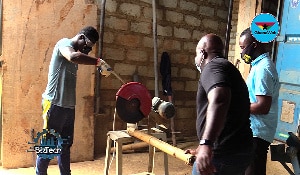
In the maiden edition of BizTech, GhanaWeb sits with Kenneth Okine to find out why he quit his high-paying finance job to focus on his side hustle; making products with bamboo.
While just one of those two stories is accurate, did you also know that a blacksmith was the man credited with creating Ghana’s renowned cocoa-producing expertise up to this point?
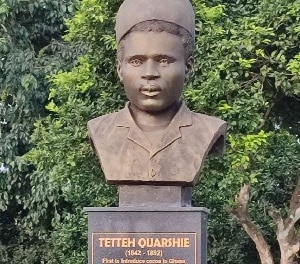
The real life of Tetteh Quarshie is that of a blacksmith who gave Ghana its most lucrative cash crop.
The 1879 story that has been told without number has somehow also missed the very fine and interesting detail that Ghana’s Tetteh Quarshie was not even the greatest farmer the country has ever had.
This historical correction was shared with GhanaWeb’s Wonder Ami Hagan when she visited the Tetteh Quarshie’s Cocoa Farm at Mampong Akuapem, in the Easter Region, in 2020.
Now, this is the true story.
Tetteh Quarshie was in Fernando Po on a missionary journey, and on his return, just like all others on such pilgrimages, there was the need for him to pass through a checkpoint.
This was to allow for all such travelers to be checked to ensure that, while on return from their respective countries at the time, they were not carrying any foreign items.
Tetteh Quarshie may not have known the effect the decision he was making at the time would have on his home country, Ghana, but he made a smart move.
Being a blacksmith, he kept all his working tools in a toolbox. This box was the last place anyone would have checked for any foreign items or goods, and so that was exactly where he kept them.
But all he could keep in there were six cocoa pods; a plant he had discovered in that country on the west coast of Africa.
It became a well-cooked plan, and over the six-week journey Tetteh Quarshie undertook on the sea in 1879, to the coast of the Gold Coast, his pods remained intact.
In the words of Thomas Awuku, who has been working at the Tetteh Quarshie Farm for years, a job handed down to him by his father, who also took over the management of the farm from Tetteh Quarshie:
“That’s the history we also learnt about him, but when I got to this stage, I realised they were telling us a lot of lies about Tetteh Quarshie. Tetteh Quarshie didn’t swallow cocoa beans before he brought them to Ghana because in the 1870s travelling was difficult. There were no aeroplanes for travelling so we travel by the sea – either with ship or canoe. Tetteh Quarshie went with the ship, and it took him six weeks from Ghana to Fernando Po, which is currently known as Equatorial Guinea.
“Assuming he swallowed the cocoa beans and for six weeks on the ship, are they trying to tell us that the whole six weeks on the sea, he couldn’t visit the washroom? And if he did, it means everything went back straight into the sea so we never got back the beans and returned back to Ghana,” he told GhanaWeb’s Wonder Ami Hagan on People and Places.
Explaining further the story, Thomas said that even on his return to the Gold Coast, Tetteh Quarshie made an unsuccessful attempt at planting the first seed in Accra, as the soil type – mostly sandy and clayey, did not allow the crop to grow.
It was only when another missionary work came and took him to Mampong Akuapem that he found good soil.
He alleged that since the government had the interests of Ghanaian workers at heart, measures had been put in place to protect them from the effects of the worldwide pandemic’s shocks on other countries’ economies.
Read the entire article, which was first published on May 2, 2022 by www.ghanaweb.com.
Accusations that President Nana Addo Dankwa Akufo-administration Addo’s is indifferent to the condition of Ghanaian workers have been refuted.
According to him, his government has the Ghanaian worker at heart hence measures were put in place to cushion workers following the emergence of the COVID-19 pandemic which impacted many livelihoods.
“It is important to put on record, at the outset, that when COVID-19 struck, and public sector workers in some countries were either relieved of their jobs or getting reduced salaries, my government continued to pay workers without any reductions, and we ensured that no public sector worker lost his or her job or getting reduced salaries.
“It cannot, therefore, be said that my government does not care about the plight of the Ghanaian worker,” he added.
President Akufo-Addo however admitted to the current living and economic conditions in the country and their impact on the Ghanaian worker and gave the assurance his government is committed to addressing the challenges.
“I will be the first to admit that conditions of service, in the wider public service, need improvement. However, these should be done within the budgetary constraints to ensure that we do not put excessive pressure on our public finances,” the president said.
He continued, “I have also acknowledged on several occasions that we are in difficult times, and the government has not thrown its hands in despair and it is not looking for an easy way out. On the contrary, we are working hard to address the current situation and those that relate to improving the quality of life for all Ghanaians.”
General Secretary for the Convention Peoples Party, Nana Yaa Jantuah, has taken a swipe at the current crop of leaders, describing them as failures.
Speaking on UTV, the CPP executive said the leadership of the country under the New Patriotic Party’s Nana Addo Dankwa Akufo-Addo are ruling the country like F9 students while individuals who can be selected to work towards economic liberation have been sidelined.
“F9 students are ruling this country and the A1s are sitting on the bench
“Someone who has led the country to this point, how else can we grade him? If his performance was taken to WAEC to be graded using the WASSCE scale, what do you think his performance would have been?
Touching on issues regarding the Domestic Debt Exchange Programme (DDEP) government is implementing, she said the country is currently facing economic struggles because of some decisions made by elements in government.
According to Nana Yaa Jantuah, the Finance Minister is being maintained while others in the NPP who are competent and capable of bringing the economy back on track, have been sidelined.
“It does not matter your relationship with the person, whether or not the person is liked, if you are able to cross carpets into other parties to pick and appoint people who will help solve Ghana’s problems, it’ll be good.
“One person I have constantly listened to addressing issues of economic importance is Mark Assibey-Yeboah and he is good. Why can’t the president take him to the finance ministry to replace Ken Ofori-Atta?” she further asked.
The government of Ghana, on December 5, 2022, launched the Domestic Debt Exchange Programme, an invitation for the voluntary exchange of the government’s domestic notes and bonds for a package of new bonds.
The move is to help the government restructure GH¢137 billion of its domestic debts to prove to the International Monetary Fund (IMF) that its debts are sustainable so that it can get the $3 billion bailout, it is seeking from the fund.
However, the government has had to extend the deadline for the programme due to opposition by individuals and entities who will be affected including individual bondholders as well as some labour unions. The new deadline is February 7, 2023.
The largest wireless provider in Africa, MTN Group Ltd., as well as Tullow Oil Plc and Gold Fields Ltd., have all received notices that they owe past taxes. The businesses all refute the assertions made by the government. The majority of Ghana’s income must now go toward paying off an estimated 576 billion cedis ($48 billion) in governmental debt.
“Ghana is clearly facing fiscal and economic challenges at the moment,” Gold Fields spokesman Sven Lunsche said in an emailed response to questions. “We are hopeful that the government will not resort to unreasonable fiscal measures that will further imperil the challenges facing the corporate sector.”
Gold Fields is in talks with the country’s tax authority to try and resolve the demand for 2018 to 2020. MTN, which has been ordered to pay $776 million, has until Friday to reach an agreement with the Ghanaian authorities.
Kosmos Energy, headquartered in Dallas, said the authorities claimed the company underpaid certain taxes and other contractual fiscal obligations. The claim is without merit and Kosmos will “vigorously dispute” it if required. Both Gold Fields and Kosmos declined to give financial details.
A spokeswoman for the Ghana Revenue Authority declined to comment when contacted by phone.
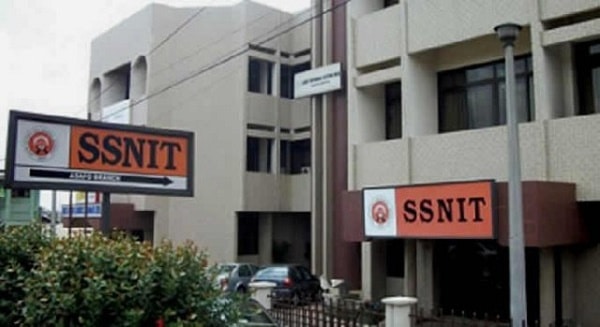
According to the article, SSNIT secured an ADB loan guaranteeing a $17 million facility for the Intercity State Transport Company to purchase a new fleet of buses.
The investigation criticized the choice, noting that despite SSNIT’s significant exposure to the company as the majority shareholder, it would still be obligated to pay if STC failed to repay the loan.
Flagbearer aspirant of the New Patriotic Party (NPP) Kennedy Ohene Agyapong has spoken out against the criticism of Black Stars players.
He argues that the amounts paid to players as winning bonuses are justified and necessary in order to incentivize them to play for their country.
Agyapong contends that players should be compensated fairly because they take on enormous financial risks by competing for their country.
“I don’t have a problem paying them to play for us. We have to encourage these stars to come home and play for us.
“Those in the foreign teams make so much money. Some make $40,000 a week, he comes here and the whole period they give him $40,000 and we are complaining.
“If this guy hurts himself and cannot play again, he loses $40,000 a week. I don’t mind paying whatever they deserve because it will motivate them to come home and serve. Ghanaians should stop complaining,” he said.
This was expressed by her at the Accra app launch for artisanal palm oil.
Read the complete article as it appeared on www.ghanaweb.com on August 2, 2021.
The Food and Drugs Authority (FDA) has urged palm oil producers to stop contaminating the finished vegetable product with the chemical substance SUDAN IV.
According to a report by Citi Business, the FDA boss noted, “We would sample and test all palm oil in the market. We are pleading with the producers, wholesalers, retailers and consumers and the public to refrain from the use of Sudan IV in palm oil.”
Delese Mimi Darko further reiterated the FDA’s resolve to fish out and sanction people adding the unwholesome chemicals in their palm oil.
One of the mechanisms to curb the menace, she mentioned, was through sampling and testing palm oils on been sold on the market.
The launch of the software was organised by the Artisanal Palm Oil Millers and Outgrowers Association was under the theme, “Introducing Digital Technology into the Palm Oil Industry to curb the menace of Sudan IV”.
On his part, the President of the Artisanal Palm Oil Millers and Outgrowers Association, Paul Amaning, assured consumers that Association will work with FDA to help filter out the increasing use of Sudan IV in locally produced palm oils.
About the Artisanal Palm Oil app
The purpose of the Artisanal Palm Oil app is to ensure that authentic and healthy palm oil is sold in the Ghanaian market.
The app has functions to detect if the QR code of the branded palm oil is approved by the Food and Drugs Authority.
The app can also display information about the producers of the palm oil with their pictures and location for consumers to easily identify the origin of the product.
National Chairman for the National Democratic Congress (NDC), Johnson Asiedu Nketia, says the changes in the party’s leadership in parliament was due in 2021.
The process delayed till last month when the party notified Parliament of changes which included replacing Haruna Iddrisu with Cassiel Ato Forson as Minority Leader.
The party also replaced Haruna’s deputy and Chief Whip.
Addressing concerns about the timing of the party’s changes, Asiedu Nketiah said the changes had actually delayed by two years.
“We needed to have done these changes as far back as March 2021, we’ve delayed and the closer we got to elections, the more difficult it will become to implement such changes and we think that that is the best time to go about the changes.
“The leadership that we have just changed, they’ve done their part. We needed them at the time we chose them, we felt that they possess the skill set that could meet the challenges as at that time and they discharged their work creditably.
“Now, we are facing new set of emerging challenges and so it is only reasonable to go for a new set of leadership that possesses the skill set that will be able to discharge the responsibilities that have emerged because of the changing times,” he told party faithful in London last week.
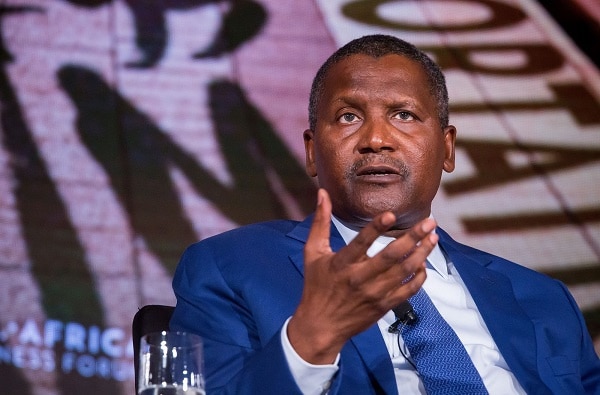
According to a Forbes Magazine compilation of Africa’s billionaires for 2023, Dangote’s achievement makes it twelve years in a row.
Due to the start-up of an oil and petrochemical refinery later this year, Dangote is anticipated to witness an increase in his net worth.
On the African continent, South African luxury goods magnate Johann Rupert took the second position despite recording a $300 million drop in fortune to $10.7 billion.
In third place was Metals and Mining magnate Nicky Oppenheimer who recorded a fortune of $8.4 billion.
In addition, about 19 billionaires from Africa were worth an estimated $81.5 billion, which is a decline from $84.9 billion recorded a year ago, despite one more billionaire listed in the ranks.
Despite recording a 4 percent drop, billionaires on the continent saw their net worth jump about 15 percent in 2022 due to rising stock prices across various regions.
Their fortunes however plummeted on the back of equity values dropping around the world.
For instance, the All Africa Standards and Poor’s index dropped by more than 20 percent in the first nine months of 2022 impacting the net worth of African billionaires.
This was followed by a late-year rally which saw the index decline by 3 percent through January 13, which was the day Forbes Magazine locked in stock prices and exchange rates for the list.
Meanwhile, only seven billionaires from Africa’s 54 countries made it to the rankings.
See the full list below:
Methodology
The Forbes list tracks the wealth of African billionaires who reside in Africa or have their primary business there, thus excluding Sudanese-born billionaire Mo Ibrahim, who is a U.K. citizen, South African Nathan Kirsh, who operates out of London and another billionaire London resident, Mohamed Al-Fayed, an Egyptian citizen. Strive Masiyiwa, a citizen of Zimbabwe and a London resident appears on the list due to his telecom holdings in Africa.
Net worths were calculated using stock prices and currency exchange rates from the close of business on Friday, January 13, 2023. To value privately held businesses, we start with estimates of revenues or profits and apply prevailing price-to-sale or price-to-earnings ratios for similar public companies. Some list members grow richer or poorer within weeks or days of the measurement date.
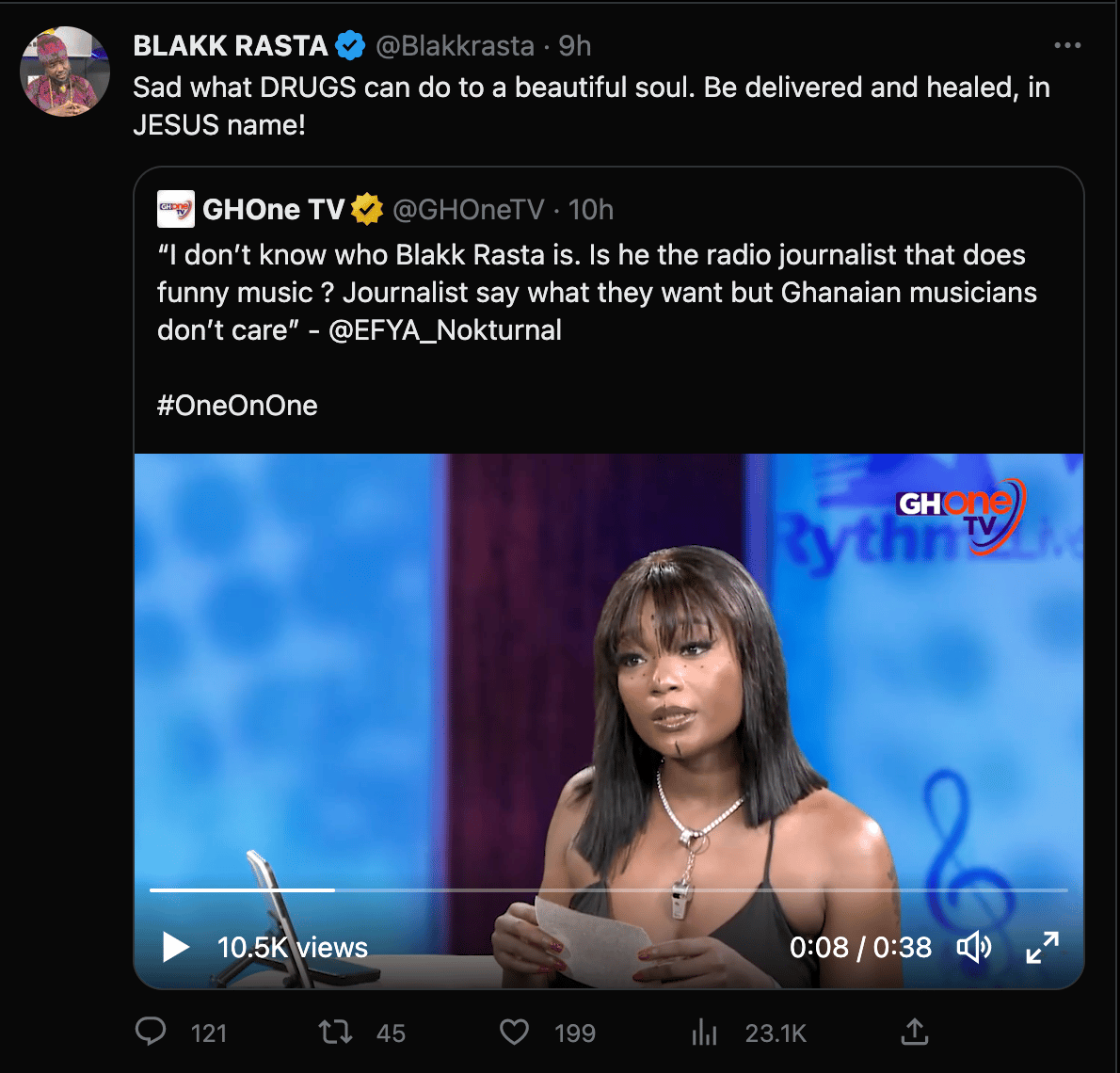
According to him, Efya has allowed drugs to destroy her soul and thus should allow herself to be healed.
His harsh comments came after Efya had said he did not know who Blakk Rasta was when she was speaking during an interview on GhOne TV.
Efya Nokturnal, even after he was helped to recognize Blakk Rasta, went on to describe him as the “funny musician who did funny songs.”
“I don’t know who Blakk Rasta is. Is he the radio journalist that does funny music ? Journalist say what they want but Ghanaian musicians don’t care”
These words did not sit well with Blakk Rasta, who decided to berate Efya and tell her to desist from the use and abuse of drugs, which could have clouded her knowledge of him.
In a quick rebuttal, Blakk Rasta wrote: Sad what DRUGS can do to a beautiful soul. Be delivered and healed, in JESUS name!
Background
Blakk Rssta on his show on 3FM had described Sarkodie’s latest work with Bob Marley as a desecration of the Reggae genre. According to him, the rapper was not the right fit for the project.
“What Sarkodie was nothing but a desecration of the legacy of Bob Marley. It is so shameful. What Sarkodie did is nothing but a desecration of the holy music of Bob Marley. It is like a king has been buried and you go and dig him up and steal his gold and diamonds that he’s been buried with. Urinate right into the grave and walk away laughing like a mad man on heat.
Sarkodie allowed himself to be used to desecrate the legacy of Bob Marley. What is special about what he did, the one way rap which has been on all these years. What Sarkodie does is one-way rap”, Blakk Rasta fumed.
These words obviously did not sit well with Efya who denied knowledge of him which has resulted in Blakk Rasta attacking him and calling her names.
The Education Minister, Dr Yaw Osei Adutwum, has says he’s committed to enhancing the education system in country.
According to him, his zeal to facilitate an improved sector during his tenure goes beyond mere rhetorics.
The Minister has come under criticism recently for some public comments regarding Ghana’s approach to educating its populace.
But speaking in an exclusive interview on the AM Show, the educationist insisted that his speeches are only geared towards drawing attention to the problems to create a sense of urgency among the stakeholders.
“I think we create awareness by telling people so that there is a sense of urgency and by the way, this is what is going on. It doesn’t mean that you are just talking about it and you are just one of them,” he said.
However, Dr Adutwum told JoyNews that it does not end there.
He told host, Bernice Abu-Baidoo Lansah that many of the challenges he talks about are at various stages of being addressed.
“I should create a sense of urgency for all of us that something is not right. I need to fix it but I’m a fixer, not a talker. So if something is not right, I’ll talk about it but if they follow me, they will see that I’m doing something about what I’m talking about,” he concluded.
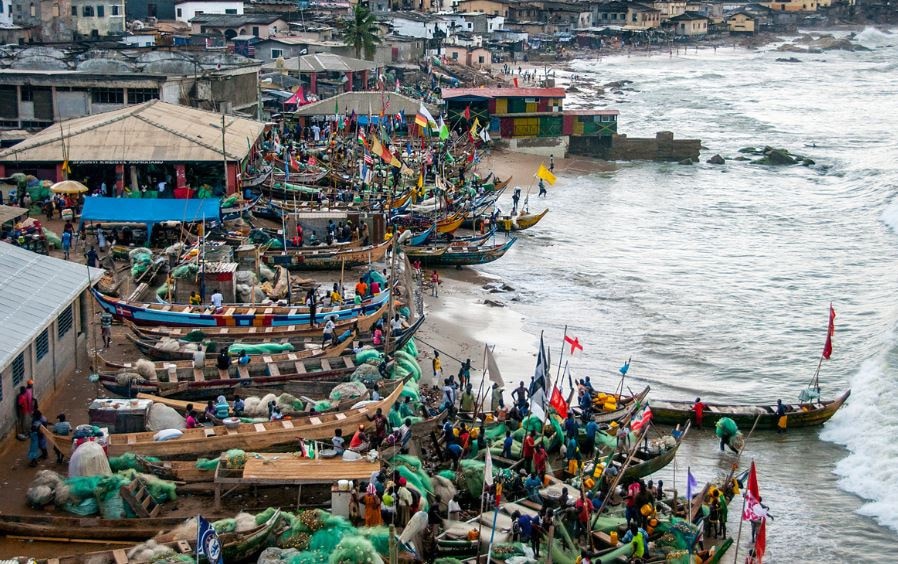
He stated that the industry’s future was not positive and that a review of the catch per vessel over time, specifically from the 1990s to 2018, showed a dramatic decline in the catch made by the fishermen.
He told the Ghana News Agency (GNA), Accra, on the sidelines of a workshop on “Emerging Issues on Capture Fisheries Management in Ghana,” “Each vessel is catching less and less and less fish, and potentially we are losing a lot.”
According to him, fishery like any other renewable resource, was such that, “if the rate at which you are extracting the resource exceeds the rate at which the resource is replenishing itself, eventually the stock will collapse.”
The workshop, which was organised under the auspices of the ENRRI-EfD Ghana, and funded by the Swedish International Development Cooperation Agency, brought together scientists and researchers from the academia, members from the Scientific and Technical Committee of the Fisheries Commission, and other stakeholders.
This, he said, was necessary to check overexploitation of the fish resources while improving the stock for the benefit of the nation.
Additionally, the country ought to build a good database for the fishing industry, he advised, saying this was critical to inform policies required to making life comfortable for those whose livelihood depended on fishing.
The workshop discussed topics relating to improving the fishing value chain, revenue lost due to illegal, unreported and unregulated fishing, premix fuel subsidy, among others.
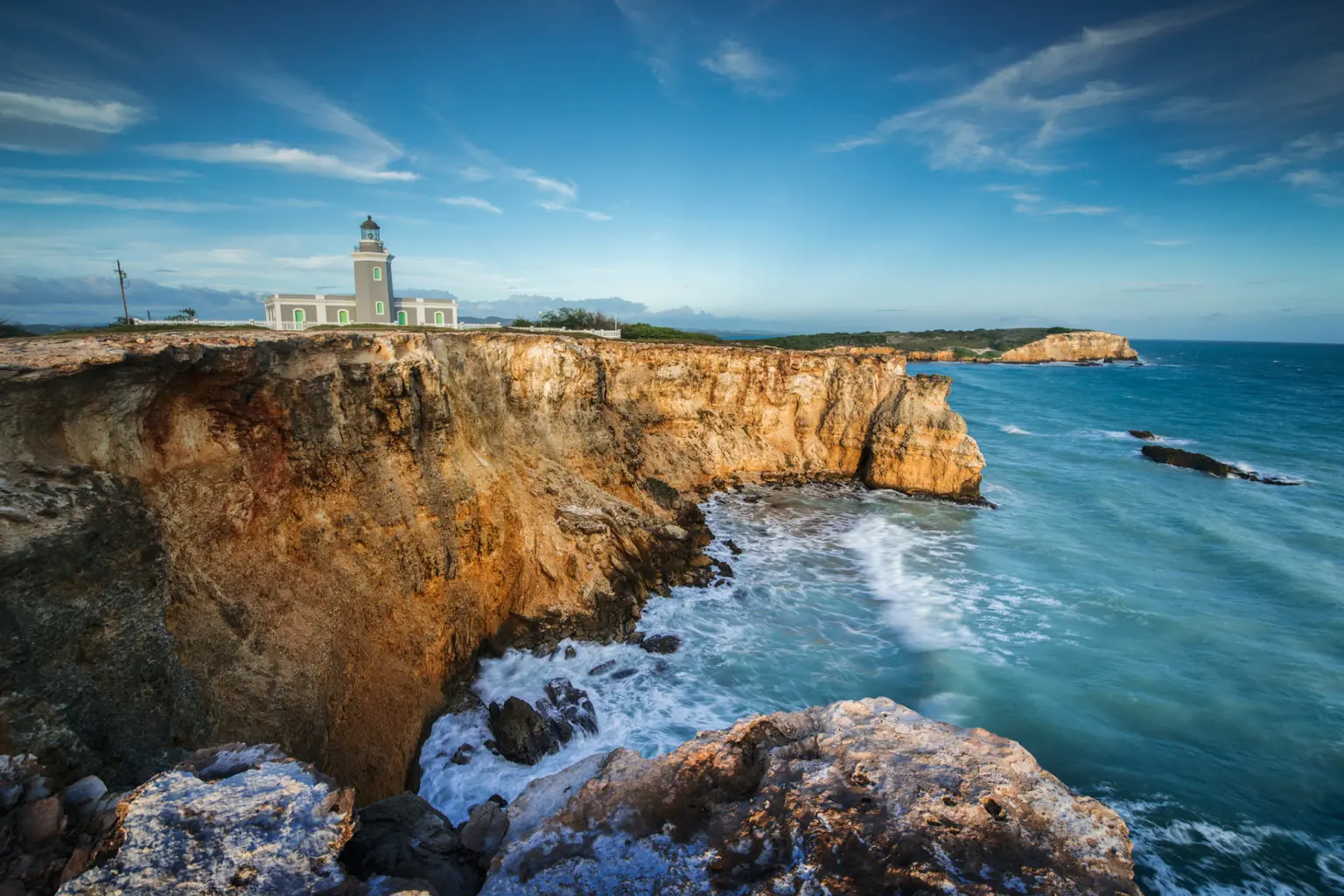
A popular American Tiktoker has fallen off a 70-foot cliff in Puerto Rico while shooting a video for his channel.
The deceased identified as Edgar Garay was on a day trip to the southwestern coast when he was last seen alive around 5:37 p.m. near the edge of the cliff.
The 27-year-old TikToker’s submerged body was recovered Monday by Puerto Rico Emergency Bureau divers after he fell off the steep coastal cliff near a lighthouse in Cabo Rojo.
According to sources, Garay’s brother Carlos, who was on the cliff with his cousin warned him repeatedly not to get too close to the edge while shooting a TikTok video.
“My brother has a TikTok account that he loved to upload videos to. Unfortunately, that was what he was trying to do when he was closer to the edge than he should have been”, Carlos revealed.
See photos below;
Garay was found in an underwater cave with massive head injuries from the fall.
Beyonce fans in Africa may not miss out on the Renaissance world tour entirely, as it’s claimed she’s in talks to bring the anticipated show to Ghana.
The music world is reeling in excitement after it was announced that the Break My Soul singer will finally perform her Renaissance album live this summer with dates confirmed for Europe and North America.
It comes more than a week after Beyonce, 41, performed an exclusive show in Dubai but left fans lingering as she didn’t perform any new tracks from the dance-infused album.
So far, the Renaissance tour will include cities such as London, Cardiff, Stockholm, Toronto, Las Vegas, Miami and Houston.
But what about Africa?
It’s long-been a sticking point for Beyonce’s fans across the continent that she rarely tours there, with her tour legs typically consisting of the Americas, Europe and Oceania.
There was renewed hope that the Brown Skin Girl singer would travel to the motherland when she released 2019’s The Lion King: The Gift soundtrack, which drew inspiration from Africa and featured a host of Afrobeats and dancehall artists.
Although to note, she did perform in South Africa in 2018 at the Global Citizen Festival where she was joined by husband Jay Z on-stage.
Well, it could finally be Africa’s time as a source has told Metro.co.uk that Beyonce is exploring whether it would be possible for her to bring Renaissance to the continent, specifically Ghana.
‘These dates only form part of the experience and there are talks to see if a more family friendly version of her show can be taken to Ghana,’ the insider said, explaining that the shows in Europe and North America will feature ‘mildly explicit’ content in light of some of the lyrics on the Renaissance album.
They continued: ‘Live Nation is eager for all of its acts to perform in new markets and would like Bey to spearhead it if they can find the right venue and partners on the ground. She is working closely with Ay Hollywood on choreography and has spent the last year producing the live arrangements for the show.’
Ay Hollywood has worked on choreography with Beyonce in the past, as well as a slew of other A-list talent such as Rihanna, Jennifer Lopez, Megan Thee Stallion and Ciara, so expect the tour to be nothing short of epic.
The source added: ‘Live Nation is especially happy because it projects that she’ll earn north of $500million (£406million).’
If Beyonce does head over to Ghana later this year, she’ll likely be in good company as she collaborated with Ghanaian artist Shatta Wale on the popular track Already from The Lion King album.
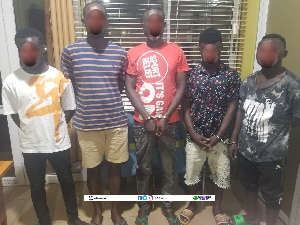
About 12 people have been detained by the Ghana Police Service on suspicion of being part of a syndicate that is to blame for several crimes throughout the nation.
According to the police, the suspects were arrested between July 2022 and January 2023 as a result of a sustained operation.
“The Police have arrested twelve people who are members of an organised crime syndicate involved in a series of carjacking, robbery and murder incidents across three regions of the country.
“The arrests follow a sustained, intelligence-led operation by a special police team which mounted surveillance on the activities of the gang between July 2022 and January 2023 in the Greater Accra, Ashanti and Eastern Regions.
A police statement dated February 1 listed the names of the suspects as Prince Opuni, Kwabena Kyei Barfour, Jeffrey Dwomoh alias Jeff, Clifford Opoku alias Spider, Samuel Adom, William Ansah, Bernard Adu Gyamfi, Anthony Tawiah alias Wizzy, Andrew Kwame Owusu, Musah Sulley, Yaw Acheampong, Charles Lotherford.
The gang according to the police operated with guns with which they attacked their victims, took over their cars and then sell off the cars to others.
“Investigations into the activities of the syndicate revealed that suspect, Jeffry Dwomoh, shot and killed one of his victims, during one of the carjacking expeditions at Brofoyedru near Ahenema Kokoben,” the police statement said.
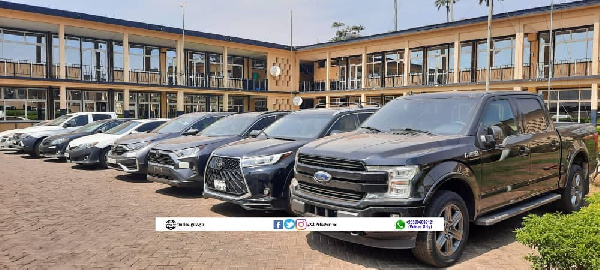
The police added that it recovered ten (10) vehicles believed to have been snatched by the gang from their victims as well as several weapons and ammunitions, and a cash amount of GHC10,010.00 from the suspects during the operation.
The police added that it is currently in the process of arresting one more suspect who is believed to facilitate double vehicle documentation for the gang.
“Police are in touch with most of the victims who are assisting the investigation and efforts are underway to contact the remaining victims,” the statement added.
Announcing the decision in a statement to B&FT, the Registrar of Companies, Jemima Mamaa Oware, said the development leaves the names open to be used by anyone interested in them – and is in line with Section 5A (2) of the Registration of Business Names Act, 1962 (Act 151) on Annual Renewals which states that: “Without prejudice to any other liability prescribed by this Act, a registration which is not renewed in accordance with this section shall lapse and the Registrar may remove from the Register the Business Name of the person whose registration has lapsed after the expiration of the period prescribed for the renewal”.
“Therefore, to avoid such Business Names falling into the public domain, and for anyone of interest to use it after it has been struck off the Business Name Register, all Business Name Owners are entreated to renew their Business Names before the end of April 2023,” she said.
Meanwhile, the OCR is expected – for the very first time from June 1, 2023 – to commence full implementation of section 126(7) of the Companies Act, 2019(Act992) which states that: “Where a company defaults in complying with the filing of annual returns and financial statements, the company and every officer of the company that is in default is liable to pay to the Registrar an administrative penalty of twenty-five penalty units for each day during which the default continues”.
A penalty unit is established by the Fines (Penalty Units) Act 2000 (Act 572), and the current monetary value per penalty unit is GH¢12.
“This means that effective June 1, 2023, an administrative charge of GH¢300 will be charged for each day the default continues against the Company and every officer of the Company until section 126 (7) is complied with,” Mrs. Oware stated.
President Akufo-Addo launched the ORC last year after a 15-year wait, with hopes that the Office would take charge of the administration and registration of companies in the country.
The vacuum created by absence of an ORC contributed to the weak system of supervision for companies in the country; therefore, its setting up is expected to bring dynamism to the business environment.
The Ministry of Works and Housing and other important stakeholders will oversee the management of the NRAS by a private sector property manager.
The initial roll out, with a seed funding of GHC30m, will take place in the Greater Accra, Ashanti, Western, Eastern, Bono East and Northern Regions, where data from the Ghana Statistical Service indicate renters have the greatest challenge with rental accommodation.
“The initial roll out, with a seed funding of Ghc30m, will take place in the Greater Accra, Ashanti, Western, Eastern, Bono East and Northern Regions, where data from the Ghana Statistical Service indicate renters have the greatest challenge with rental accommodation.”
“I don’t think we have even gotten there; he should have engaged parliament first. Because you are telling us that the money is coming from the government but I know it is not coming from the Ministry of Works and Housing because there wasn’t any provision in the budget for that,” Ranking Member on Works and Housing in Parliament, Vincent Oppong Asamoah stated.
He continued: “So, probably you need to count on the office of government machinery. I know there have been a lot of initiatives that are locked up over there and scrutiny of those projects becomes so difficult when it is under the office of government machinery. To scrutinize it is so difficult because if you want to even get the answers, who are you going to call from the office of government.
Mr. Oppong Asamoah stated that if the situation is not checked the initiative will suffer the same fate as others.
“If you call them, they will tell you about the National security issue so we cannot even go into that. That is what will happen to it but if it’s an initiative by the Ministry of Work and Housing there should be a budget allocation. So that we can also follow and see the right things are done. But so far as I have explained to you previously there wasn’t any provision in the budget so I don’t even know where they are going to gather that.”
Government commits GH¢30 million to assist tenants to rent – Asenso-Boakye
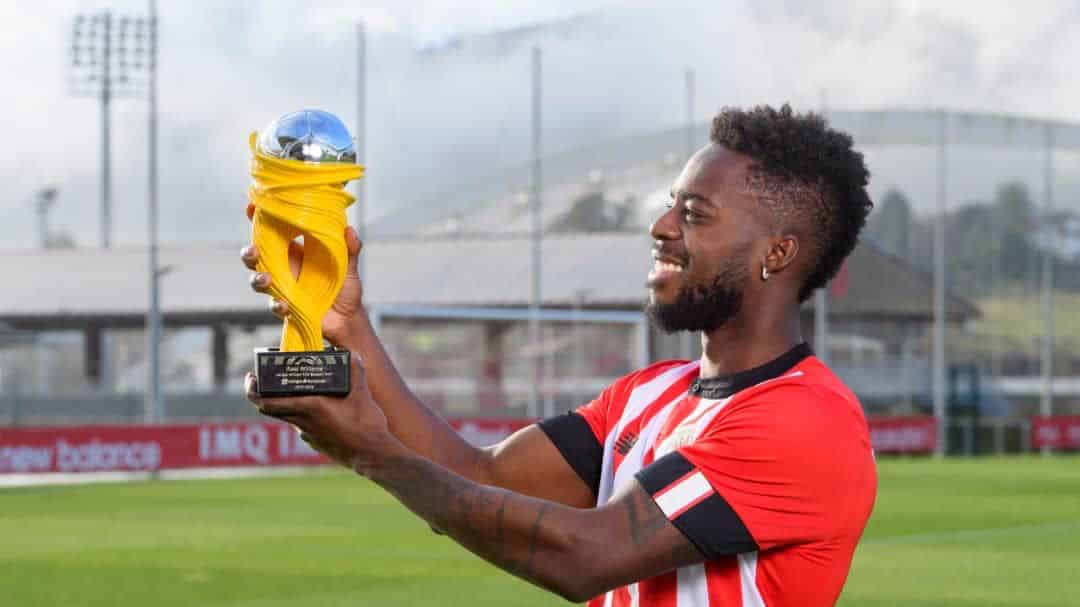
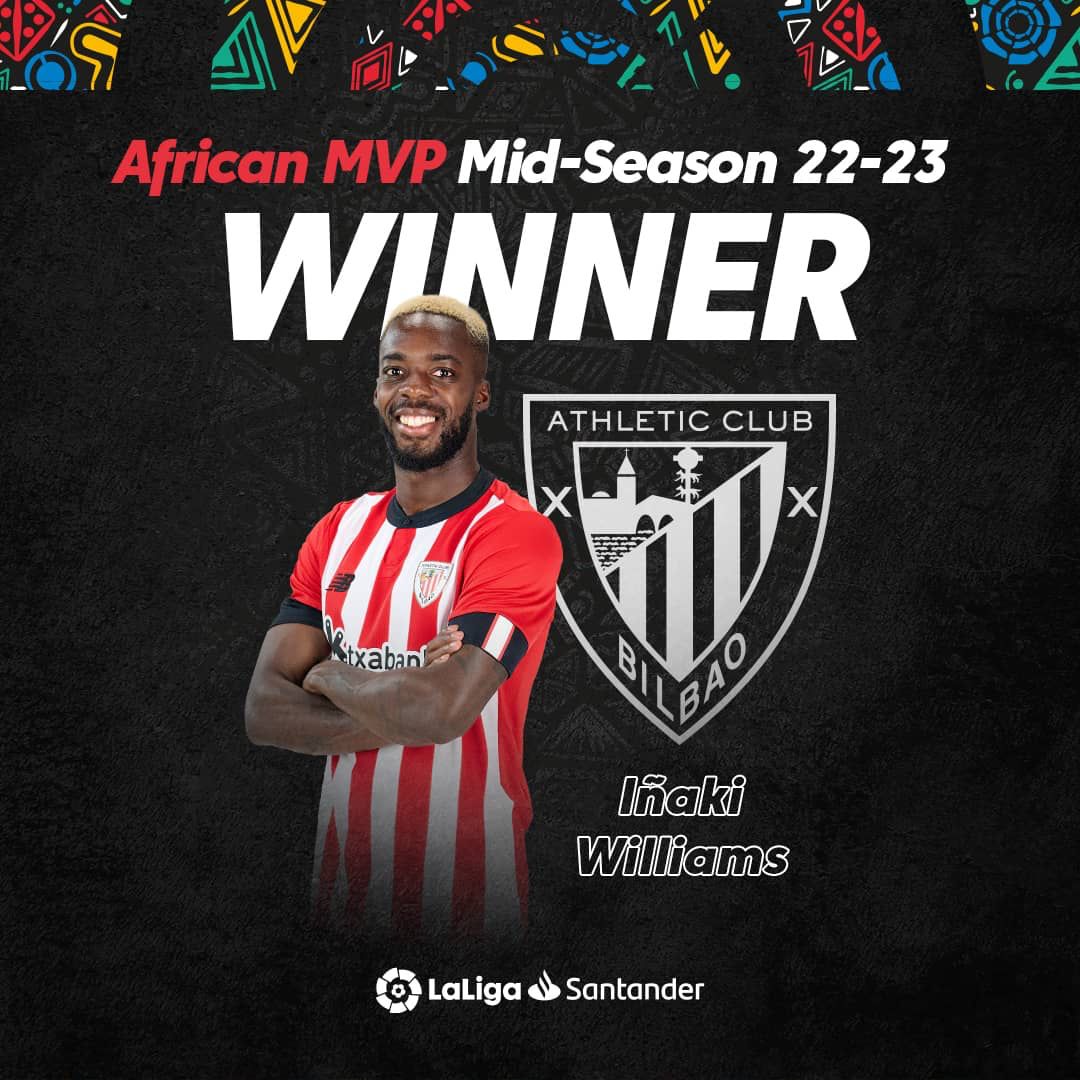
The award recognizes the best African player in Spain’s top football league based on their performance in the first half of the season.
Inaki Williams beat out his Ghanaian compatriots Joseph Aidoo, Baba Iddrisu, Abdul Mumin, and several other African players who were nominated for the award.
They include Bono, Samuel Chukwueze, Youssef En-Nesyri, Franck Kessié, Ilaix Moriba, and others.
Williams, 28, has been in excellent form this season, scoring five goals and providing an assist in 18 appearances for Athletic Club Bilbao.
His impressive performance has earned him recognition as the top African player in La Liga mid-season.
Additionally, the Ghanaian forward holds the record for most consecutive games played in La Liga, featuring in 251 straight games, before he missed a match against Celta Vigo this past weekend due to a muscle injury.
The TUC boss underlined the need for such persons to receive preferential treatment in the distribution of such national projects while speaking at the Scheme’s launch in Accra.
Despite the importance of such programs, he emphasized that they have to be carried out across the nation as intended and not only in a select few regions.
“So, we want to urge you to, as quickly as possible, extend this to all the regions because when you do something and you call it National Rental Assistance Scheme and you limit it to regions – not all the 16 regions, it’s a little problematic. It doesn’t matter how many you support in a region; I think you should try and do that,” he said.
Dr. Anthony Baah further added that in the case of single mothers, it becomes a better deal when they are offered such opportunities, more than when it is offered to others who do not necessarily have dependents.
“I also want to appeal to the ministry and all those who access the application, let’s prioritize women, especially mothers with children and without husbands; the single mothers. You see, if you provide accommodation to a single mother who has two children, it’s much better than providing accommodation for others who have no children. I’m saying this because of the experience I’ve gathered,” he added.
FIPAG, in a statement signed by its president, James Aboagye, while describing the actor’s comment as insulting, said it regrets any sentiment his comment may have attracted.
“The Film Producers Association of Ghana (FIPAG) wishes to render an unqualified apology to the Ghanaian public on behalf of the association, the film industry, actors, and all film producers for a recent statement made by actor Yaw Dabo, calling Ghanaians who sit for more than an hour to watch movies lazy people.
“The film fraternity finds the statement very unsavoury, offensive and insulting. Such behaviour or attitude is an affront to the film industry and should not be entertained and supported by well-mannered persons. Again, we are of the belief that our brother, when given another chance to respond to whatever question that was posed to him, would not repeat what he said. Any public resentment that his statement may have caused is deeply regretted,” the statement said.
Yaw Dabo, in a recent interview with journalist Saddick Adams, noted that the world has advanced to the point where people should be more focused on making money instead of spending long hours watching movies.
“Where the world is going now, everything is about money. So anyone who will sit for an hour to watch a movie is a lazy person,” he said.
Beijing Everyway Traffic & Lighting Tech. Co. Ltd requested an award of damages in the amount of “not less than US$55 million” under the terms of a treaty between the governments of the People’s Republic of China and the Republic of Ghana concerning the encouragement and reciprocal protection of investments that was signed on October 12, 1989.
The final award of the Permanent Court of Arbitration shows that at the proceedings, the Government of Ghana was represented by the Attorney-General and Minister for Justice, Godfred Yeboah Dame. Other Counsel listed as part of Ghana’s team include Ms. Diana Asonaba-Dapaah (Deputy Attorney-General); Mrs. Helen Akpene Awo Ziwu (Solicitor-General); Dr. Sylvia Adusu; Mrs. Grace Mbrokoh Ewoal and Ms. Yvonne Bannerman, all state attorneys.
Background
The dispute leading to the arbitral proceedings relates to an intelligent traffic management system project in Accra, Ghana, namely the AITMS Project. On 16th December 2011, Ghana signed a Master Facility Agreement and other related Finance Documents with the China Development Bank for a term loan facility to develop twelve (12) infrastructure projects in Ghana, including the AITMS Project. The Claimant was awarded the AITMS Project on or about April 2012. Subsequently, on 17 September 2012, the Claimant and the Ministry of Roads and Highways of Ghana signed the EPIC Contract.
Under the EPIC Contract, the Claimant, Beijing Everyway, agreed to supply equipment and provide technical services to the Respondent in respect of the planning, design, construction, supervision, operation and training for the AITMS Project in Accra. The Parties agreed to a Contract Price of US$ 100 million and an advance payment of 30%.
On 22nd December 2018, the Parliament of Ghana approved by resolution the EPIC Contract. The Commencement Date of the EPIC Contract was fixed as 26th August 2019 and the works were scheduled to be completed in 24 calendar months.
According to the Claimant, between 12th and 15th November 2019, a six (6) member team of the Ministry of Roads and Highways of Ghana conducted a technical visit to its factory and warehouses in China to inspect the production and inventory of the equipment for the AITMS Project.
During the visit, the Ghanaian delegation observed, inspected and counted the manufactured equipment prior to shipment to Ghana. In January 2020, the Department of Urban Roads of Ghana, under the instruction of the Ministry of Roads and Highways of Ghana, confirmed that Beijing Everyway could ship to Ghana the equipment inspected by the technical team in November 2019. On 15th January 2020, the Department of Urban Roads of Ghana issued an onsite work permit to Everyway for the AITMS Project, covering the installation of new traffic signals, communication network and general civil works at signalized and non-signalized intersections in Accra.
On 3rd February 2020, Everyway reported to the Department of Urban Roads of Ghana that it had loaded nineteen containers of equipment for shipment for the AITMS Project and asked it to prepare for import customs clearance in Ghana. On 21st February 2020, about six months after the commencement of the AITMS Project, the first installations at two intersections in Accra were switched on, indicating the official launch of the AITMS Project in Ghana.
During the course of the AITMS Project, the Claimant issued two Interim Payment Certificates amounting in total to US$ 21,995,728 for works that had been performed up to the date of issuance of each Interim Payment Certificate. According to the Claimant, by the time of the Notice of Arbitration (i.e. 10 February 2021), Everyway had completed works with a contractual value of at least US$ 21,995,728.
According to the Claimant, on 24th March 2020, the Minister of Finance of Ghana requested the Vice President of Ghana to convene a meeting to discuss the AITMS Project. Two meetings among the Vice President of Ghana, Minister of Finance of Ghana, Minister of Roads and Highways of Ghana, Minister of National Security of Ghana, and Deputy Attorney General of Ghana were subsequently called in early April 2020, where it was agreed that two technical teams from the Ministry of National Security and Ministry of Roads and Highways of Ghana would be formed to supervise certain of the AITMS Project. It was also further agreed that Ministry of Roads and Highways of Ghana would remain responsible for certain other aspects of the AITMS Project.
On 24th April 2020, the Vice President of Ghana issued a decision letter to direct the Minister of Finance of Ghana to convey to the China Development Bank that the project would proceed as approved, with Everyway being the contractor and the Ministry of Roads and Highways of Ghana being the implementing agency on the part of Ghana. However, on 19 November 2020, the Parliament of Ghana suddenly informed the Claimant of Parliament’s decision to rescind the approval of the EPIC Contract.
Accordingly, on 30th December 2021, the Claimant served Ghana with a notice terminating the EPIC Contract on the ground that the Respondent had “either directly or indirectly, unlawfully expropriated” the Claimant’s investment because the Parliament of Ghana, inter alia, “rescinded approval for the valid and effective EPIC Contract under which Everyway had completed substantial amount of work with (a) no national security or public interest justification, (b) no due domestic legal procedure, (c) in a discriminatory manner, and (d) with no compensation whatsoever for the damages caused.”
The Claimant sought a declaration that the Respondent has breached Article 4(1) of the China-Ghana Investment Treaty. Furthermore, the Claimant argued that Ghana had breached its duty under the Treaty to observe obligations it has entered into with regard to investments made by Chinese investors (i.e. a breach of the Umbrella Clause).
Ghana, on the other hand, argued that it has not breached the Treaty because the decision of the Parliament of Ghana to rescind the EPIC Contract with the Claimant was taken in the interests of Ghana’s national security. Ghana further submitted that the Tribunal has no jurisdiction over the Claimant’s claims.
Ghana’s submissions on the Tribunal’s lack of Jurisdiction
Arguing the objection to the jurisdiction of the tribunal at a hearing conducted virtually on 22nd March, 2022, the Attorney-General, Godfred Yeboah Dame submitted that the provision of Article 10(1) of the China- Ghana Agreement limits the Tribunal’s jurisdiction to only the determination of the quantum or amount of expropriation, and not the determination of the primary issue whether there has been expropriation at all. The Tribunal thus had no jurisdiction to determine whether Ghana expropriated the Claimant’s investment in the AITMS Project pursuant to Article 4 of the Treaty or breached its contractual obligations with the Claimant under the EPIC Contract pursuant to the Umbrella Clause obligations applicable in this arbitration through Article 3(2) of the Treaty.
The Attorney-General further argued that relying on Articles 4(1), 4(3) and 10(5) of the Treaty, it is Ghanaian courts that have jurisdiction over the question of the lawfulness of an alleged expropriation, not an arbitral tribunal. An investor bringing a claim for expropriation under the Treaty, must therefore do so “under domestic legal procedure” and under Ghanaian law.
Mr. Dame submitted to the tribunal that the object and purpose of the Treaty were not only to protect foreign investments but also to encourage foreign investment and foster economic cooperation between the two Contracting States. Accordingly, this required a balanced approach to the interpretation of the Treaty’s substantive provisions, given that a focus only on the protection of foreign investments may dissuade host States from admitting foreign investments and, thus, undermine the overall aim of intensifying the Contracting States’ mutual economic relations.
Mr. Dame referred to about twenty (20) Bilateral Investment Treaties (BIT) concluded by China prior to the China-Ghana Agreement, and pointed out that none of them provided that an investor can submit any dispute, regardless of its nature, to arbitration. Rather, these BITs provided that investors may only refer the amount of compensation to arbitration, while the question of existence and unlawfulness of expropriation is reserved for amicable settlement or domestic courts of the respective contracting states. The same was the case for other BITs entered into by Ghana with other states. Accordingly, it was evident that neither China nor Ghana recognised the right of an investor to submit the question of the existence and lawfulness of expropriation to international arbitration prior to 1989.
Claimant’s case on the Tribunal’s Jurisdiction
The Claimant opposed Ghana’s submissions and argued that the subject matter of the dispute fell under the jurisdiction of the Tribunal. The claimant argued that first, Article 10(1) of the China-Ghana Treaty provides that an arbitral tribunal has jurisdiction on “[a]ny dispute … concerning the amount of compensation for expropriation”; and second, the broad dispute resolution clauses contained in Ghana’s treaties with other countries apply in this dispute through the MFN clause contained in Article 3(2) of the Treaty.
According to the Claimant, Article 10(1) of the Treaty, when interpreted “in good faith in accordance with the ordinary meaning to be given to the terms of the treaty in their context and in the light of its object and purpose”, should be understood to include not only the question of the amount of compensation for expropriation (i.e. the question of quantum) but also the question of the unlawfulness of expropriation of the Claimant’s investment (i.e. the question of entitlement). The Claimant further argued that Articles 4(1)(a), 4(3) and 10(5) of the Treaty, read independently or jointly, do not require the Claimant to submit a claim for expropriation to the competent courts of Ghana. According to the Claimant, when the investment of a Chinese investor is expropriated by Ghana, Article 4(3) of the Treaty and Article 20(2) of the Constitution of Ghana simply give the investor an option (and not an obligation) to refer the matter to Ghanaian courts. The Claimant argued that the object and purpose of the Treaty support the Claimant’s case that an arbitral tribunal, under Article 10(1) of the Treaty, has jurisdiction to determine the question of both quantum and entitlement of expropriation.
The Claimant submitted that, according to the “most favoured nation” principle, the dispute resolution provisions of Ghana’s investment treaties with the United Kingdom (Article 10) and Denmark (Article 10) apply in the dispute between the Claimant and the Respondent and thus the Tribunal had jurisdiction over the Claimant’s claims in this arbitration.
Tribunal’s Decision
The Tribunal, upon an application of relevant principles of international investment law, came to the final decision that it does not have jurisdiction to decide the Claimant’s claims for expropriation under Article 10(1) of the Treaty.
The Tribunal stated that the ordinary meaning of Article 10(1) of the Treaty cannot be read as meaning to include the question of entitlement of expropriation. In this respect, the Tribunal noted the important qualification of the term “the amount of” prior to the terms “compensation for expropriation” as placing clear limitations on the scope of questions which can be referred to arbitration. The ordinary meaning of the phrase “concerning the amount of compensation for expropriation”, according to the Tribunal, does not include the question of entitlement or determination of whether expropriation has taken place in the first place.
Further, the Tribunal c considered that there is nothing in the China-Ghana Treaty to suggest that an investor would be precluded from referring the question of quantum to arbitration under Article 10(1) of the Treaty, once it had referred the question of lawfulness of expropriation to determination by a nation’s domestic court.
The Tribunal highlighted that it did not consider that a Contracting State may unilaterally preclude an investor from referring the matter of quantum of compensation for expropriation to international arbitration, after it has first referred the matter of entitlement to compensation or determination of expropriation, to national litigation.
The Tribunal held that the examination of the provision of Article 10(1) within the context of the China-Ghana Agreement suggested that the phrase “concerning the amount of compensation for expropriation” cannot be interpreted as vesting an arbitral tribunal with jurisdiction to decide the question of whether the expropriation is lawful or unlawful.
Thus, except for the limited scope of Article 10(1) concerning the quantum of compensation for expropriation, there is no provision which would give investors a distinct right to commence arbitration in respect of a breach of any substantive protection under the Treaty.
In conclusion, the Tribunal found that it did not have jurisdiction to decide the Claimant’s claims for expropriation under Article 10(1) of the Treaty. Also, the Tribunal considered that it did not have jurisdiction to decide the Claimant’s claims in the arbitration under Article 3 of the Treaty. The Tribunal also found that the most favoured nation provision in Article 3(2) of the Treaty cannot be used to extend the Tribunal’s jurisdiction to the Claimant’s claims in this arbitration.
Costs
In relation to Costs, the Tribunal noted that both Parties have sought their costs in respect of the arbitration to date. The Tribunal invited the Parties to directly confer and seek to agree on the issue of costs or, failing such agreement, to inform the Tribunal of their agreed format and timetable of their costs submissions within thirty (30) days of receipt of the Award. In the event that the Parties fail to agree on the issue of costs, the Tribunal will address the matter and issue an award on costs covering the arbitration proceedings to date.
Another arbitration case by Beijing Everyway
Concurrent with the proceedings at the Permanent Court of Arbitration, Beijing Everyway has instituted another arbitration seeking damages of at least US$55 million for the same subject matter at the London Court of International Arbitration. The Attorney-General has again raised objections in these proceedings, both to the procedure and the substance of the case at that forum, as well.
The family of murdered investigator Ahmed Hussein-Suale has warned New Patriotic Party presidential hopeful Kennedy Agyapong from using the name of the victim to advance his political ambitions.
Kennedy Agyapong who once called for violence to be meted on the Ahmed Suale in a recent interview on Metro TV’s Good Evening Ghana denied the allegations, again, that he had a hand in his death.
He noted that he once offered the deceased financial support to settle his fees at a time when he had no idea about his association with Tiger Eye P. I. owned by Anas Aremeyaw Anas.
But reacting to the claim by the Assin Central MP, the family of Ahmed in a statement dated February 1, 2023, said “it is preposterous to hear of Kennedy Agyapong’s claim of paying the fees of our late brother. We are very saddened by this comments and wish to state unequivocally that Kennedy Agyapong has never paid the school fees of our late son and brother. We dare him to produce any evidence to that effect.”
While calling on the public to treat the statement by the MP with contempt, the family said Mr Kennedy Agyapong cannot absolve himself from the fact that he played a role in the murder of Ahmed Suale.
“What we and the entire world know for a fact is that Kennedy Agyapong published the identity of our late brother on his Net 2 TV and further asked his thugs to harm him whenever they see him which eventually resulted in the gruesome murder of our brother and son. He should henceforth desist from using the name of our brother for political mileage,” the family emphasised.
Kennedy Agyapong appeared on Metro TV’s Good Evening Ghana as part of his campaign for the upcoming flagbearer contest of the New Patriotic Party.
Asked the death of Ahmed Suale during the interview revealed that he unknowingly paid the school fees of the former investigator.
The lawmaker narrated that it was after publishing Ahmed Suale’s photos on Net 2 TV years ago with the intent of cautioning the public against his ways, that his staff notified him that Suale (now deceased) is someone whose university tuition fees he had once paid.
Kennedy Agyapong added that if he is elected as president, he would make sure that Ahmed Suale’s murder is thoroughly investigated in order to clear his name.
“What I will do if I’m elected president is I will encourage the police to investigate the case to the bottom to uncover everything… I wanted to tell you that if I’m elected today, whether the case is dead or not I will bring it back again to investigate,” he added.
Ahmed Hussein-Saule was assassinated at Madina on Wednesday, January 16, 2019, by two unknown assailants.
The assailants shot him twice in his chest and once in his neck after breaking into his car.
The Ghana Police Service is still investigating his murder, but no one has been arrested yet.
With the industry’s umbrella organization, Ghana Association of Banks (GAB), agreeing to engage in the Programme, the Bank’s action, in conjunction with the GFSF, will minimize possible risks to the banking sector as a result of banks’ participation in the planned DDEP.
Aside from the GFSF, all the financial sector regulators will deploy regulatory and supervisory tools that mitigate risks to financial stability on the back of the DDEP.
Responding to a question at a press briefing following the 110th Monetary Policy Committee (MPC) meeting, the Governor said: “The GFSF is to be supported by the donor partners and is already capitalised at US$ 1 billion – with the World Bank pledging to support it with about US$250million. At theBank of Ghana, we have our own liquidity arrangements already with the banks and do not plan to be part of the Ghana Financial Stability Fund, which is mainly financed by external development partners”.
He assured that banks are fairly capitalised, some of which hold capital in excess of the regulator requirement; however, those impacted by the DDEP will be given enough time to recapitalise.
There are emerging signs that current macroeconomic conditions are spilling over to the banking sector. Profitability levels have declined alongside other financial soundness indicators. The central bank’s latest macro-prudential risk assessments indicated increased pressure on the solvency and liquidity of banks ahead of the DDEP implementation.
The industry’s Capital Adequacy Ratio (CAR) declined to 16.6 percent, but remained above the prudential minimum of 13 percent as at December 2022 from 19.6 percent in December 2021 – attributed to losses on mark-to-market investments, increase in risk-weighted assets of banks from the high growth in actual credit, and the price effect of Ghana cedi-depreciation on foreign currency-denominated loans.
The sector’s profitability indicators – namely the return-on-equity and return-on-assets – also declined during the period, in line with declining profit after tax and profit-before-tax respectively. The non-performing loans (NPL) ratio however improved to 14.8 percent in December 2022 compared with 15.2 percent in December 2021, on account of high credit growth relative to the increased stock of NPLs between the two periods.
Dr. Addison noted that to moderate any potential impact on the sector, the Bank has some regulatory reliefs for banks to help preserve financial stability.
“We don’t think that the forbearance measures in place will compromise the financial sector’s stability. Our banks are fairly well capitalised; as you know, most of them were holding capital in excess of the requirement. And we think those which fall slightly below the requirement will be given enough time to recapitalise; that should not compromise the integrity [of the financial sector].
“Besides that, there are backstops; both the GFSF and central bank will be there to support the system. So, I do not see any issues in terms of compromising the financial sector’s integrity,” the Governor said.
Total banking sector assets increased to GH¢221billion, representing an annual growth of 22.9 percent in December 2022 compared to growth of 20.4 percent a year earlier. Total deposits ended the year at GH¢157.9billion, representing an increase of 30.4 percent in 2022 relative to growth of 16.6 percent in 2021.
Credit continued to increase, recording growth of 30.2 percent to GH¢70.0billion from GH¢53.8billion in December 2021. Total investments, on the other hand, contracted by 4.8 percent to GH¢79.2billion in December 2022 relative to 29.0 percent annual growth in 2021, as banks rebalanced asset portfolios in response to the Domestic Debt Exchange Programme.
The Strategic Thinkers Network Africa (Stranek-Africa) has petitioned the Office of the Special Prosecutor to commence criminal prosecutions against institutions and individuals implicated in the Auditor-General’s COVID-19 Expenditure Report.
According to the group, the infractions uncovered by the Auditor General fall within the ambit of the Special Prosecutor, and necessary action must therefore be taken by the office.
“We at STRANEK-Africa petition your office to begin forthwith criminal prosecutions relating the expenditure of COVID-19 for the period of March 2022. As unravelled through a thorough audit of Ministries, Departments and Agencies, it is astonishing how the malfeasance, malpractice and negligence are replete,” the group said in a statement signed by its Executive Director, Nii Tettey Tetteh.
The special audit undertaken by the Office of Auditor General uncovered several infractions relating to government expenditure during the height of the COVID-19 pandemic.
The release of the report has attracted various reactions, with critics calling on the government to see to the prosecution of implicated individuals.
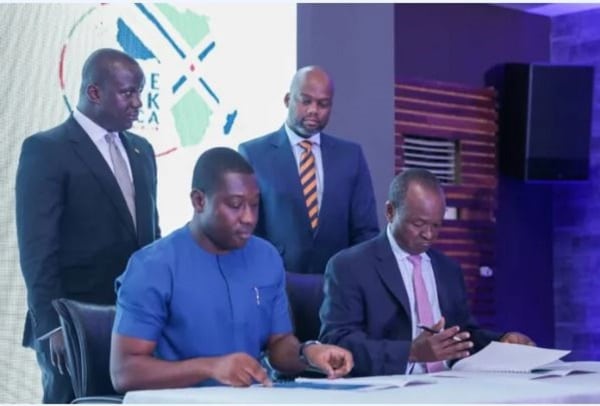
The corridor, which connects the five major sub-regional nations of Côte d’Ivoire, Ghana, Togo, Benin, and Nigeria, is in charge of transiting around 78% of West Africa’s trade volumes. Despite this and the adoption of the Africa Continental Free Trade Area (AfCFTA), the route continues to struggle with 37 official checkpoints or barriers that cause cross-border trade to take a lengthy time, sometimes up to 15 days, between the two extreme ends.
The partnership is therefore expected to eliminate barriers impeding the efficiency of trade and causing prolonged turnaround.
He mentioned that the collaboration, which started in December 2021, ensured a thorough corridor assessment that revealed a need for mutually beneficial corporation between the five countries to improve trade facilitation and Customs clearance – at both ports and land borders.
“This MoU captures the vision of African leaders and ambitions of citizens for the transformation of our continent as expressed in agenda 2063, to unleash the prosperity and economic liberalisation of Africa. While each government has put in place initiatives to advance this course, TMA’s initiatives are uniquely placed to ensure better Customs cooperation and facilitation of trade, especially across important trade corridors like this.
“The greatest challenge for our sub-region has remained how to ease the burden of land cross-border trading between Anglophone and Francophone West African countries, especially for micro and small enterprises (MSME). Now we are not far from achieving that,” he said.
He added that AfCFTA puts great responsibility on governments to ensure easy access to cross-border trade without any further delays, especially now that technical and financial support has been secured.
Trademark Africa’s Board Chairperson, Erastus Mwencha, remarked that eliminating barriers to cross-border trade is the surest way to unleash the immense impact that free trade in high-value products can offer individual economies as intended by the AfCFTA.
“As part of the pivot to West Africa, TradeMark Africa will support the secretariat of AfCFTA based in Accra to realise its vision of integrating the US$ 3.4 trillion African market. We will work with member-states to ensure governments and businesses benefit practically from the opportunities presented by these shifts; in particular, along the Lagos-Abidjan corridor.
“Our key aim remains trade facilitation, just like we have always done in the last 12 years in the East and Horn of Africa region – where time for cross-border trade has been slashed by 70 percent on average and businesses can receive certification in a day,” he said.
For his part, the Secretary-General of the AfCFTA secretariat, Wamkele Mene, reiterated that the corridor controls about 78 percent of trade volume in the West African sub-region; hence, the successful elimination of its numerous barriers will bring about efficiency and enhance the interconnection of the sub-region.
“The secretariat sees this MoU today as an important milestone because we know that leveraging on the technical expertise of TMA as an implementing agency – which we do not have, will help us reach our goal. There are pockets of success chalked up by the various blocs on the continent, but the missing link is the integration of these pockets of success on the various corridors like the East African example, and so what we need to do is to interconnect the corridors to ensure collective competitiveness,” he added.
Ed Sheeran is just thinking out loud! The 31-year-old British singer-songwriter took to his Instagram account this week to get candid with his fans in a new video.
“I realized I haven’t been that engaged in my social media and my fan base online for the past couple of years,” Sheeran admits in the clip, calling his recent posts “a bit boring.”
He goes on to offer an explanation for his online absence, saying, “Just being totally honest, I’ve had some turbulent things been happening in my personal life so I just didn’t really feel like being online and pretending to be something I’m not when I wasn’t feeling like that.”
Despite the surprising confession, Sheeran adds that “things are looking up” and notes, “I’m back online.”
Sheeran doesn’t clarify exactly what “turbulent things” he’s referring to in regards to his personal life. He does flash his wedding band several times in the video. He tied the knot with his longtime love Cherry Seaborn in 2019. The couple are parents to 2-year-old daughter Lyra and 8-month-old daughter, Jupiter.
In November 2022, Sheeran shared that he planned to release his sixth album in 2023.
On January 31, 2023, during an interview that GhanaWeb was watching on Good Evening Ghana, Agyapong stated that he would never take part in any endeavors that would make him wealthy at the expense of the citizens of Ghana.
He continued by recounting how he turned down a $3 million bribe from an Indian businessman who was trying to enlist his assistance in obtaining a government project.
“I met an Indian last week and he said there is a project that he thinks I can influence. The actual cost of the project is ($)26 million.
“The guy comes to say that he can do it for $9 (million) and of course as a businessman, he has to make a profit with whoever introduced him, $3 (million), making $12 (million). Then he said to me, I’m going to give you $3 million so I will add it to the $12 (million) to make $15 million and I said no to him.
“I said Ghana first, I don’t want the $3 million if you know you can do the job for $12 million so be it. The young men that come from America with their tickets and everything whatever you want to give to them it is okay but me I will not take any money,” he narrated.
“The Indian man, who was there with his young engineer son, said wow, I have goose pimples. I have worked in Africa for 22 years and I have never seen an African reject $3 million like you did,” he said.
This he said is the cause of the current galloping inflation the country is experiencing.
Ghana’s current inflation rate is beyond 50% with experts warning the situation could get worse.
Only this week, the central bank increased the monetary policy rate by 100 basis points moving the rate from 27% to 28%.
This a move the Bank hopes will tame inflation and deal with the Ghana cedi’s flip-flopping.
In a tweet, Dr Cassiel Ato Forson who until his appointment as Minority Leader was the Ranking Member on the Finance Committee claimed that the central bank is in breach of the Bank of Ghana (Amendment) Act.
“Inflation is @ 54.1% & MPR now @ 28 %! We are here largely because BoG has so far printed over $50bn in one year & depleted net intl reserves to record lows as of end-Dec 2022.
“BOG’s governor continues to breach Section 30(2) and 30(7) of BoG (Amendment) Act, 2016 (Act 918).”
“The Minority Leader promised to hold those responsible for this accountable.
“Those destroying livelihoods of Ghanaians will soon be held to account!”
Dr Ato Forson is pledging to turn the heat on the Bank of Ghana during his time as Minority Leader for what he says is their recklessness.
As compared to yesterday’s trading of a buying price of 10.7943 and a selling price of 10.8051. At a forex bureau in Accra, the dollar is being bought at a rate of 12.40 and sold at a rate of 12.80.
Against the Pound Sterling, the Cedi is trading at a buying price of 13.2832 and a selling price of 13.2976 as compared to yesterday’s trading of a buying price of 13.2791 and a selling price of 13.2935.
The Euro is trading at a buying price of 11.7811 and a selling price of 11.7928 as compared to yesterday’s trading of a buying price of 11.7203 and a selling price of 11.7320.
At a forex bureau in Accra, Euro is being bought at a rate of 12.70 and sold at a rate of 13.50.
The South African Rand is trading at a buying price of 0.6290 and a selling price of 0.6294 as compared to yesterday’s trading of a buying price of 0.6208 and a selling price of 0.6210.
At a forex bureau in Accra, South African Rand is being bought at a rate of 0.50 and sold at a rate of 1.10.
The Nigerian Naira is trading at a buying price of 42.7242 and a selling price of 42.7798 as compared to yesterday’s trading at a buying price of 42.6308 and a selling price of 42.7141.
At a forex bureau in Accra, Nigerian Naira is being bought at a rate of 14.00 Naira for every 1 Cedi and sold at a rate of 19.00.
Our forex bureau rates are provided by Afriswap Bureau De Change in Osu, Accra.
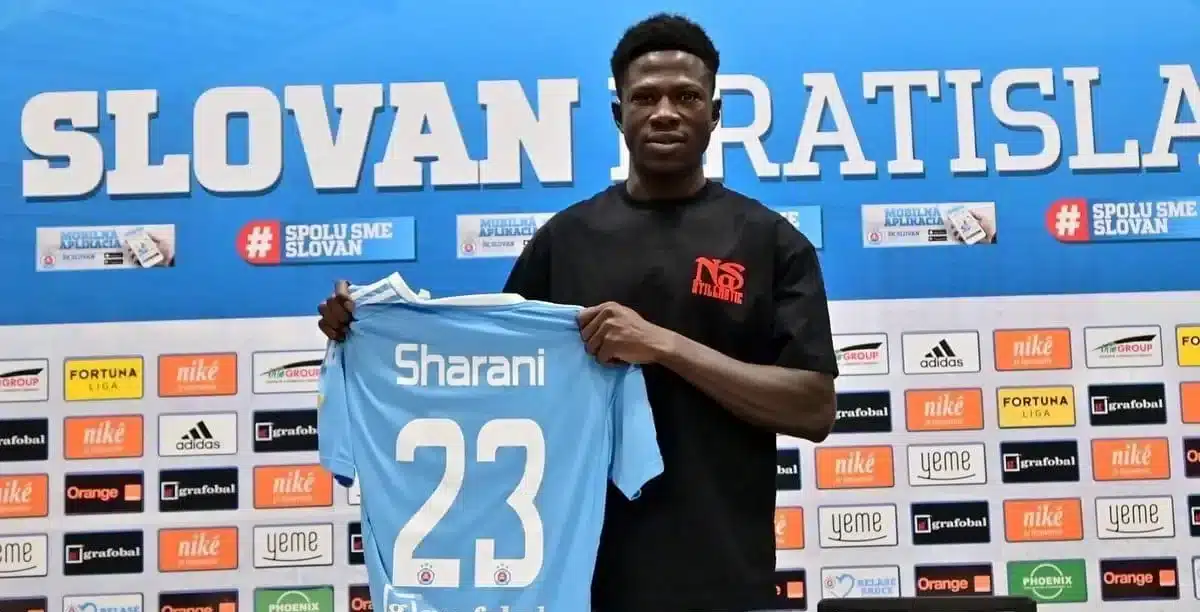
The 23-year-old has signed a one-year deal as a free agent after leaving Dunajská Streda in June 2022.
Sharani has been training with SK Slovan Bratislava since November 2022 and has made a positive impression in his winter preparatory matches, scoring one goal in three appearances.
The forward’s European football journey began with Sparta Prague, where he played for the reserve team, but was unable to secure a spot in the first team.
He then moved on to Dunajská Streda in 2019 and made 41 league appearances and scored 5 goals during his time there. During his tenure with Streda, Sharani also spent time on loan with Zemplín Michalovce and Šamorín.
The signing of Zuberu Sharani will be seen as a major boost for SK Slovan Bratislava, who are the reigning champions of the Slovakian league.
The Ghana Private Road Transport Union (GPRTU) has hinted at a potential increase in transportation costs as a result of the country’s rising cost of gasoline and replacement parts.
The GPRTU claims that since the cost of spare parts and lubricants has not decreased, an increase in transportation costs is necessary.
Abbas Ibrahim Moro, senior industrial relations officer for the GPRTU, said in an interview with Starr News that they keep an eye on market trends before making announcements.
“Currently spare parts have not been reduced, they have been increased. Some items we use in running transport have never been reduced, it has increased. We will compare some of the items that we have identified. Then with the new increased prices we can talk on any increment and any percentage that we want to ride on.
“Spare parts dealers came out and said they’ve reduced their prices and we challenged them of which they’ve not been able to publish what has been reduced. We have even identified some of the items like tyres, its prices have gone up. When we even said they haven’t reduced it, now it has gone up again,” Mr. Moro explained.
He continued: “For now, we don’t have to mention anything. It is expected to come, but it hasn’t come so let’s wait until tomorrow and see. The new fuel price will come. We will make research into some of these things and identify the actual percentage we are to come up with. Let the prices come because nobody is prepared to trade at a loss”.
Ghana’s socialite and fashion influencer, Moesha Bodoung, is of the firm belief that chubby women are currently the ‘new kind of sexy’.
She has asked women who fall in that category not to conform with norms which seek to undermine their uniqueness and beauty.
“We need chubby socialite to sell Chubby women in our great country Ghana. I would appreciate women to start coming out of their shell and don’t confine to norms of society and sell your brand to the world as the prettiest chubby model,” She wrote as caption to a post on Instagram.
Moesha also indicated that she usually highlights her curves, particularly when promoting brands online, to enable Ghanaians appreciate African women more.
“Our metabolisms are different and we all have different definitions of beauty. I gain to look curvier in most brands I work with so you can still appreciate African curvy women and when I’m off work. I go back to the small Moesha boduong”, she shared.
She however hinted at sharing some weight loss tips for her followers who seek to shed some considerable amount of weight.
“So many women are losing weight because of my new look and it makes me so happy to see how we love to work on ourselves, I would be sharing many ideas on how to loose weight quickly for that special occasion and please chubby is the new sexy.”
The fashion influencer was really active on social media and other platforms until she suddenly disappeared from the scene in the mid- months of 2022. A lot of rumors emerged during her absence but a viral video popped up when Moesha was seen confessing that she has given her life to Christ.
She resurfaced in the last months of 2022 amidst rumours of battling mental health issues and has since been engaging in acts that somewhat question her new-found Christian faith.
This is the list, updated to date, of the most expensive transfers that have ever taken place in the world of football. Although nowadays agreements with variables and bonuses make them changeable, here are the ten players who have cost the most money.
Nowadays, talent in the world of football is overflowing. Although more and more clubs are trying to detect them at an early stage in order to sign them and train them at home, some of them make their breakthrough too late and have to go for the big bucks. Here is a list of the ten players who have been paid the most money in history.
The world of football has been evolving economically. The sport has become more and more a business, which is why the financial aspect has become more and more important. The television industry boom or the pandemic have marked very specific circumstances. For example, a more and more normalised trend is that of agreeing transfers for a fixed amount, later complemented by performance bonuses.
Players who cost 100 million, but who are now worth 140 million or similar cases. In this list we count how the operations were at the time of release, as the variables condition the classification.
These are the 10 most expensive transfers in football history:
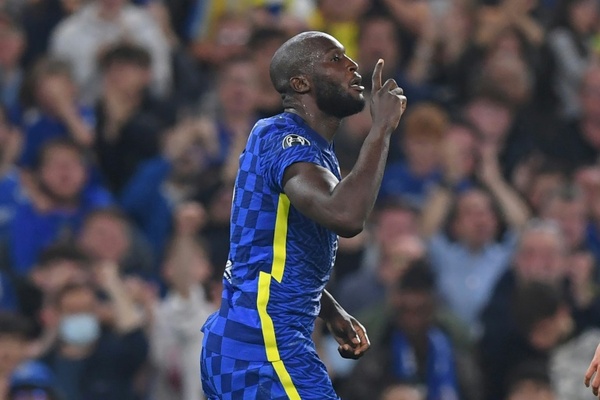
Romelu Lukaku (115 million)
Romelo Lukaku’s return to Chelsea last summer made him the biggest transfer fee in the history of the club. The 115 million that the London club paid for the player brings the total amount clubs have paid for the Belgian in his entire career to 327 million.
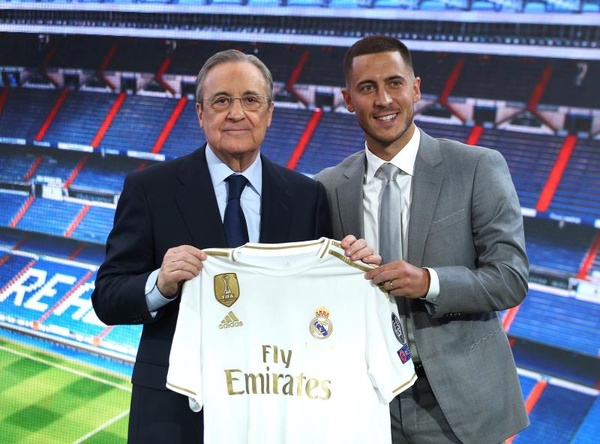
Eden Hazard (115 million)
In the summer of 2019, the Belgian cost Real Madrid 100 million euros plus a further 30 million euros in variable fees. As of today, in fact, the cost is already at 115 million euros. However, several Belgian media, following a scam in the country, published that the real amount that Chelsea had received was 160 million, something that th ‘Merengues’ denied.
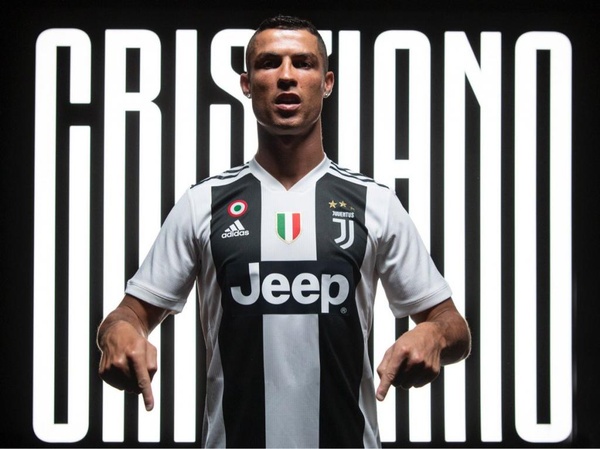
Cristiano Ronaldo (117 million)
He has made history in many ways, including the cost of his transfers. In 2009, Real Madrid landed him from Manchester United for 96 million, an outlay that no club had ever made before. Then, in the summer of 2018, the 117 million that Juventus paid to the Santiago Bernabeu side made him the highest transfer in the Serie A history.
Jack Grealish (117.5 million)
Manchester City broke the bank in the summer of 2021 with the signing of the Aston Villa captain and one of the Premier League’s most talked-about players for a whopping €117.5 million.
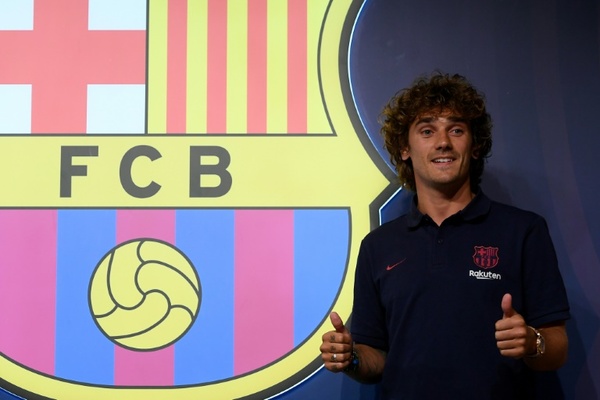
Antoine Griezmann (120 million)
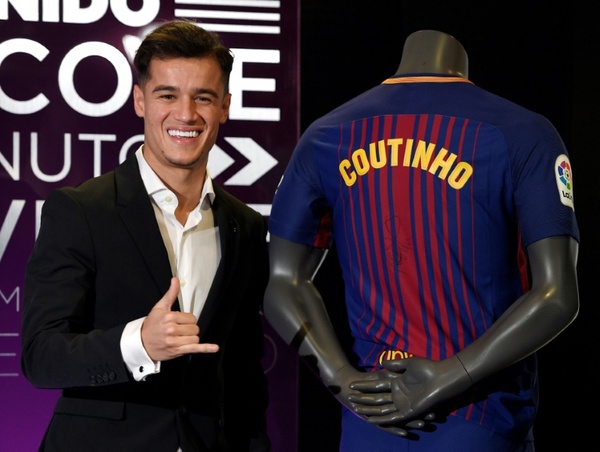
Barcelona took advantage of the Frenchman’s clause being lowered from 200 million to 120 million to sign him from Atletico Madrid, even though the red-and-whites fought to prove they were wrong. At that point, the striker matched the fixed 120 million that Barca had paid shortly before for Coutinho.
Enzo Fernandez (121 million)
Chelsea were impressed by his great performance in the World Cup and made a bid to sign him in January 2023. Although Benfica stood firm, in the end an offer of 121 million euros led to his transfer to the Blues.
Joao Felix (127.2 million)
Atletico Madrid surprised by breaking the bank to gamble on the Portuguese. To the 126 million of investment, the Madrid club had to add the 1.2 of the solidarity payment mechanism to Porto.
Ousmane Dembele (135 million)
Another example of Borussia Dortmund’s economic and sporting management and a model of modern transfer, as he cost Barcelona 105 million initially, but they have already paid 135 million for the bonuses that have been fulfilled.
Phillipe Coutinho (135 million)
Months after Dembele was the most expensive signing in Barcelona’s history, Coutinho was the next, raising the bar to the unprecedented €120m. Also included in his contract were easily enforceable variables that put the spending at around €135m.
Kylian Mbappe (145 million)
His case was the first and most famous case of a loan with an option to buy. Monaco sent him on loan to PSG with a huge mandatory purchase option of 145 million. Although at the time there was talk that it would be 180, for the remaining 35 to be fulfilled, the French striker would have to be transferred before the end of his contract (2022) or renew, which has not yet happened. This is what ‘L’Equipe’ maintains.
Neymar (222 million)
It seems very difficult for anyone to beat this record. Not only was it the biggest investment in history, it was also an unprecedented football marketing operation, given that it seemed impossible that a sheikh’s chequebook could take him away from Leo Messi. Without bonus or negotiation, PSG paid a clause that at the time seemed unaffordable.
A litre of gasoline is currently being sold by one of the market leaders, GOIL, for GH15.25 as opposed to GH13.60 previously. In contrast, diesel is now selling for $15.90 a litre, up from $15.52 previously.
Later today, new fuel rates are anticipated to be announced by other OMCs.
A 15-year-old boy from Bangladesh who hid inside a shipping container during a hide-and-seek game was found a week later in another country after being trapped.
Identified only by his first name Fahim, the teenager is reported to have lurked into the container and fallen asleep while playing with friends in the port city of Chittagong on January 11, according to India Times.
The container was then loaded onto a commercial ship bound for Malaysia, where the boy was discovered six days later on January 17 in West Port.
It turned out that he was mistakenly locked up in the Integra container ship and sailed across the Indian Ocean. He had slept off in the container only to wake up 2,000 miles away in Malaysia.
After he was found, officials reported that he had developed a fever and was taken to a nearby hospital for treatment.
Following an investigation, officials discovered that the teen had wandered into the container while playing hide-and-seek, although they initially suspected that he was involved in a human trafficking scheme.
The Chief of Defense Staff, Vice Admiral Seth Amoamo has announced plans to deploy some armoured vehicles to the troubled town of Bawku in the Upper East region.
The deployment is to help military personnel maintain peace and order in the Upper East Regional town. Vice Admiral Seth Amoamo said the deployment will also help protect personnel on the ground.
Speaking at Burma Camp after the President paid a working visit, Vice Admiral Seth Amoamo said the safety of personnel is important.
“A number of the vehicles are also being prepared for deployment to enhance troop mobility and protection for the Bawku taskforce on operation gongon.”
Meanwhile, President Akufo-Addo has announced plans to establish a War College in Ghana. The College will train Military personnel in modern warfare and other strategies.
Speaking at the 2022 WASSA Games at the Burma Camp in Accra, Akufo-Addo said the Ghana Education Trust Fund, (GETFund) would provide the initial capital for the construction.
“I have tasked the Ministry of Defense and the Military High Command to begin the process of establishing a War College in Ghana this year. The Ghana Educational Trust Fund will provide the seed capital. It will create a peaceful, secure environment for the growth and prosperity of our nation.”
Ghanaian music duo, Keche has once again indicated that the Keche Global group will remain united and not break no matter the circumstances.
They made this known in an interview with blogger, Sammy Kay. According to them, they do really fight however, they know the purpose of their journey.
Keche Joshua said they have been able to achieve their unity due to the understanding and respect they have for each other.
“We understand ourselves; we are two different people from different backgrounds but we came together. Keche is a company; it is big that Joshua is a worker of Keche and so am I. We are both staff of the Keche company but we are not the brand itself,” Andrew explained.
Andrew further added that sometimes they go to events and programs but were not talking to each other. They fake smiles to make the show happen. He said people do not really care about what they are going through. They just want to see them perform and do their best.
He went ahead to cite an example by stating that, one time they quarrelled. During that time, Joshua called him that they have been booked for a show with some good money. According to him, he organised himself and met Joshua and went to perform at the said show.
Whilst performing, he said they both had stern looks on their faces. But the job has to be done hence they executed on the day as a group regardless of how they felt.
• Some Ghanaian pastors have been widely criticized for sharing ‘unsolicited’ and ‘distasteful’ comments on national issues
• These outspoken pastors have been captured severally making such bold and controversial statements
• They seem to have stepped on many toes with such utterances
These outspoken men of God have been criticized for some controversial statements that made headlines in the country.
They have been subjected to intense backlash following such utterances as society expected that their status would have somewhat deterred them from passing such ‘immoral’ or in some cases ‘derogatory ‘comments.
From stating what have been tagged as ‘wrong judgements’ or opinions on societal issues, these ‘prophets’ tend to exist a little too far on the controversial side.
Let’s take a look at instances where pastors have been blasted for making controversial statements.
Osofo Kyiri Abosom on divorce, extra marital affairs
General Overseer of the Life Assembly Worship Centre, Christian Kwabena Andrews, popularly known as ‘Osofo Kyiriabosom’ disclosed that his wife had jilted him following his affair with another woman.
According to the preacher cum politician, the affair had resulted in a beautiful child whom he will soon outdoor to the general public.
In an address to his congregation during a service, the 2020 flagbearer of the Ghana Union Movement (GUM) noted that he is unperturbed by the said development.
While defending his actions, he explained that many beautiful women exist and therefore his wife’s decision to abandon their marriage does not bother him.
“All Ghanaians are watching me so let me set the records straight. As you can see, ‘Osofo Maame’ is no longer in her usual chair, here in church. There have been a lot of rumours about her prolonged absence. The truth is she’s no longer here. The gossip around here, note that this time I’m even speaking on live television. She has been hovering all over the place because of my beautiful child who I’ll soon show to you,” he stated.
The preacher’s comments received wild criticism, with some netizens, questioning his integrity as a preacher.
Bishop Dag Heward Mills vrs Ashanti Mornachy
Bishop Dag Heward-Mills was captured in an audio criticizing the Asantehene for not being a proactive King as he ought to be.
The bishop was caught on tape alleging that the Otumfuo’s interest lies only in playing diplomatic roles and exhibiting his ‘royalty’ at durbar’s, funerals, and so on.
Despite the fact that the ‘Man of God’ has publicly apologized for such statements which according to him were made 20 years ago, he seems to have incurred the wrath of the Kumasi Youth Association who are threatening to shut down branches of the Lighthouse Chapel International in the region.
Bishop Dag Heward-Mills has been described as ‘unsolicited ‘and distasteful by Ghanaians across social media
Owusu Bempah’s comments about Chief Imam
Rev. Isaac Owusu Bempah claimed to have witnessed signs that suggest that the Chief Imam, Sheikh Usman Nuhu Sharubutu, would die in 2019. The Glorious Word and Power Ministry, General Overseer made such predictions during the church’s New Year eve.
His prophecies at that time angered some Muslim youth who destroyed the glass windows, billboards, and other properties belonging to the popular preacher. Days after the incident, Rev. Owusu Bempah stormed the Chief Imam’s residence to apologize for his action.
Agyinasare’s comments on banking sector clean-up
The Perez Chapel presiding bishop was in hot waters for criticizing the government over the collapse of some local banks.
Bishop Charles Agyinasare, during a sermon in 2020 asked whether the locally-owned uniBank, GN Bank and UT Bank could not have been salvaged by the Bank of Ghana during its financial sector clean-up exercise.
During a sermon in July 2020, which was themed: ‘Getting rid of envy’, Bishop Agyinasare said the same “demons” that possessed politicians in the days of old to collapse local businesses still lingers.
“The demons are still at work today and we must exorcise this nation from that demon otherwise we are far from going forward. I have been asking myself: So, for Dr Kwabena Duffuor, under whose time as Minister of Finance, we had the best economic growth rate of 14 percent, there was nothing we could do with his bank?
“What about Dr Papa Kwesi Nduom, who introduced or expanded susu banking and had branches than any commercial bank with more customers? Then, my own Amoabeng, who helped me grow my money to my first $100,000, which I withdrew and gave out for the building of the Dome, as part of my contribution. Could nothing have been done to salvage some of these great institutions?” the Perez Chapel International founder asked.
His comments attracted several criticisms from some government officials including Assin Central MP, Mr. Kennedy Agyapong who believes blasted the preacher for speaking without facts.
Rev. Obofuor’s ‘cheating advice’ to men
In November 2020, General overseer of the Anointed Palace Chapel, Rev. Obofour advised men to be tactical with their extra-marital affairs.
In what was meant to be his advice for a newly wedded couple, he was captured in a viral video advising the groom to keep all his sexual escapades with other mistresses private.
It can be recalled that while officiating a wedding ceremony between gospel musician, Brother Sammy’s manager (Romeo), and his long-time girlfriend, Rev. Obofour said:
“Every wise man cheats without his wife finding out. Every wise man switches his phone off when he arrives home. Every wise man does not disturb his wife to the extent that she contracts high blood pressure. Every man who respects his home does not talk to other women in the presence of his wife.
“Every wise man saves the names of his girlfriends as ‘cement owner’, ‘languard’ etc. to avoid being caught. For instance, if I’m walking in town with my wife and I meet my girlfriend, I won’t even smile. I’ll put up a straight face,”
Following such comments, Rev. Obofour came under serious backlash from individuals who questioned his morality as an acclaimed man of God.
Duncan Williams’ ‘comment against Muslims
The Action Chapel founder in a sermon posted on social media provoked the anger within the Ghanaian Muslim community with some controversial submissions he highlighted about the religion.
In a YouTube video, Bishop Duncan Williams established that Muslims are worshipping unknown spirits and dealing with high levels of witchcraft.
“Muslims are not just praying; they are invoking all kinds of entities,” the fiery preacher declared on a clip which was posted to YouTube. They are dealing with all kinds of forces in the Pleiades, in Orion, in Arcturus, in Mazzaroth – the Zodiacs, the powers of the underworld, the water kingdom,” he stated sometime in 2016.
His utterances were embraced with heavy criticisms from Muslims across the country, particularly from, the Coalition of Muslim Organisations in Ghana (COMOG) who described his sermon as “a bundle of reprehensible fallacies and a vicious misrepresentation of the Islamic practice of prayers and worship.
Rev. Badu Kobi’s ‘ethnocentric’ comments about women
Prophet Badu Kobi was alleged to have passed some ethnocentric comments about Ashanti, Fante, and Ewe women in a viral video sometime in 2019.
The comments were met with nationwide criticism and were largely described as misogynistic and disrespectful, especially by women belonging to these tribes.
“When you marry an Ashanti lady, you have imported trouble upon yourself, they are greedy. I will not mince words, I have done research over the years to come to this conclusion. Though Fante women sometimes are foolish, but Ashanti women? No! Ayigbe (Ewe) women are too much dormant but Ashantis, they are greedy.” He stated in the video which went viral on social media
Nigel Gaisie’s comments on womanizing
The controversial pastor was under serious attack for debunking the notion that womanizing or drinking alcohol makes one a bad Christian.
Nigel in May 2021 admonished Ghanaians for using womanizing as a yardstick for determining a good or a bad pro “When a man of God drinks alcohol, it doesn’t make him fake. When a man of God steals, it doesn’t make him fake. When a man of God womanizes or a woman of God has another boyfriend or doesn’t make him/her fake.
“Every mortal vessel has a weakness, what makes a man of God fake is when he changes his covenant. If that man of God does not preach Jesus anymore, that is what makes him fake. If you say that alcohol is wrong, then condemn David, because David was a chronic drunkard and womanizer,” the man of God stated in an interview with Starr FM.
When life gives you lemons, make a lemonade. This is something the face behind fashion house, Kaalon Luxury understands all too well as he has handled the curve ball life threw at him in an impressive way.
The fashion designer recently wowed many TikTokers after he shared a video showing off one of his designs.
The beautiful wedding dress as seen on the happy bride featured intricate beadwork and a sheer neckline.
While the design is a looker, what makes this more interesting is the fact that the designer made this dress despite suffering what appears to be severe burns.
In a chat with Legit.ng’s Kumashe Yaakugh, the designer revealed that he suffered the burn when he was over a year old.
He captioned the video:
“What the devil meant for evil God turned it around for Good.”
Celebrity status has many advantages aside from free verification on social media and fat cheques from brand ambassadorial deals.
Some female celebrities who have been highly approved by the public and fashion critics as style influencers have taken advantage of their fame to create their own fashion brands.
Most of these clothing brands are primarily based on the personal style of the founders with room for creativity and uniqueness to suit their clients’ preferences.
These are lists of Ghanaian female celebrities with thriving fashion businesses in 2023
1. Salma Mumin flaunts curves in body con and a white jacket
Ghanaian actress Salma Mumin looked classy in a formfitting turtleneck jacket styled with a white jacket.
Salma Mumin owns a clothing brand, Lure by Salma has designs stylish collections for women with class.
6. Zynnell Zuh steals glances on the red carpet with this golden look
Ghanaian actress Zynnell Zuh is one of the most stylish female stars in Ghana. The award-winning celebrity always turns heads on the red carpet with her flamboyant looks.
Zynnell Zuh is the creative genius behind the bespoke Zyellant brands that style celebrities and brides.
The Ghana Police Service has arrested at least 34 women in the Tema Metropolitan Assembly of the Greater Accra Region for engaging in prostitution.
According to a report by myjoyonline.com, the arrests were made after complaints by residents of the metropolis about prostitutes parading their streets at night looking for clients.
The report indicated that the police conducted an intelligence-led operation to arrest the suspected prostitutes.
It added that preliminary investigations by the police showed that the women stand at street corners and use gestures to obtain clients for prostitution.
The suspects, who were arrested at different places in the Tema metropolis including Subon Valley at Community Seven 7, Sabrina Hotel area at Site 17 Community 1 and Viena City and Datus area both in Community 8, included Ghanaians, Liberians and Nigerians.
The report further indicated that the suspects were charged with prostitution and were arraigned before court.
The court granted each of the accused persons a bail amounting to the sum of GHC5,000 with two sureties.
The case has been adjourned to March 15, 2023, where the suspects are expected to reappear in court.
The Permanent Court of Arbitration has, in a final award dated January 30, 2023, dismissed an investor-state arbitration instituted by Beijing Everyway Traffic & Lighting Tech. Co. Ltd. (the “Claimant”) against the Government of Ghana (“Respondent”) after upholding a preliminary objection by the Attorney-General acting as counsel for the Government of Ghana.
Beijing Everyway Traffic & Lighting Tech. Co. Ltd invoked the jurisdiction of the tribunal under a Treaty between the Government of the People’s Republic of China and the Government of the Republic of Ghana Concerning the Encouragement and Reciprocal Protection of Investments concluded on 12th October 1989, seeking the award of damages amounting to “not lower than US$55 million”.
Arbitral Tribunal and Counsel on Record
The Members of the Arbitral Tribunal who delivered the final award are Professor Stavros Brekoulakis (presiding arbitrator), Mr. V.K. Rajah SC and Professor Richard Oppong.
The final award of the Permanent Court of Arbitration shows that at the proceedings, the Government of Ghana was represented by the Attorney-General and Minister for Justice, Godfred Yeboah Dame. Other Counsel listed as part of Ghana’s team include Ms. Diana Asonaba-Dapaah (Deputy Attorney-General); Mrs. Helen Akpene Awo Ziwu (Solicitor-General); Dr. Sylvia Adusu; Mrs. Grace Mbrokoh Ewoal and Ms. Yvonne Bannerman, all state attorneys.
Background
The dispute leading to the arbitral proceedings relates to an intelligent traffic management system project in Accra, Ghana, namely the AITMS Project. On 16th December 2011, Ghana signed a Master Facility Agreement and other related Finance Documents with the China Development Bank for a term loan facility to develop twelve (12) infrastructure projects in Ghana, including the AITMS Project. The Claimant was awarded the AITMS Project on or about April 2012. Subsequently, on 17 September 2012, the Claimant and the Ministry of Roads and Highways of Ghana signed the EPIC Contract.
Under the EPIC Contract, the Claimant, Beijing Eeveryway, agreed to supply equipment and provide technical services to the Respondent in respect of the planning, design, construction, supervision, operation and training for the AITMS Project in Accra. The Parties agreed to a Contract Price of US$ 100 million and an advance payment of 30%.
On 22nd December 2018, the Parliament of Ghana approved by resolution the EPIC Contract. The Commencement Date of the EPIC Contract was fixed as 26th August 2019 and the works were scheduled to be completed in 24 calendar months.
According to the Claimant, between 12th and 15th November 2019, a six (6) member team of the Ministry of Roads and Highways of Ghana conducted a technical visit to its factory and warehouses in China to inspect the production and inventory of the equipment for the AITMS Project.
During the visit, the Ghanaian delegation observed, inspected and counted the manufactured equipment prior to shipment to Ghana. In January 2020, the Department of Urban Roads of Ghana, under the instruction of the Ministry of Roads and Highways of Ghana, confirmed that Beijing Everyway could ship to Ghana the equipment inspected by the technical team in November 2019. On 15th January 2020, the Department of Urban Roads of Ghana issued an onsite work permit to Everyway for the AITMS Project, covering the installation of new traffic signals, communication network and general civil works at signalized and non-signalized intersections in Accra.
On 3rd February 2020, Everyway reported to the Department of Urban Roads of Ghana that it had loaded nineteen containers of equipment for shipment for the AITMS Project and asked it to prepare for import customs clearance in Ghana. On 21st February 2020, about six months after the commencement of the AITMS Project, the first installations at two intersections in Accra were switched on, indicating the official launch of the AITMS Project in Ghana.
During the course of the AITMS Project, the Claimant issued two Interim Payment Certificates amounting in total to US$ 21,995,728 for works that had been performed up to the date of issuance of each Interim Payment Certificate. According to the Claimant, by the time of the Notice of Arbitration (i.e. 10 February 2021), Everyway had completed works with a contractual value of at least US$ 21,995,728.
According to the Claimant, on 24th March 2020, the Minister of Finance of Ghana requested the Vice President of Ghana to convene a meeting to discuss the AITMS Project. Two meetings among the Vice President of Ghana, Minister of Finance of Ghana, Minister of Roads and Highways of Ghana, Minister of National Security of Ghana, and Deputy Attorney General of Ghana were subsequently called in early April 2020, where it was agreed that two technical teams from the Ministry of National Security and Ministry of Roads and Highways of Ghana would be formed to supervise certain of the AITMS Project. It was also further agreed that Ministry of Roads and Highways of Ghana would remain responsible for certain other aspects of the AITMS Project.
On 24th April 2020, the Vice President of Ghana issued a decision letter to direct the Minister of Finance of Ghana to convey to the China Development Bank that the project would proceed as approved, with Everyway being the contractor and the Ministry of Roads and Highways of Ghana being the implementing agency on the part of Ghana. However, on 19 November 2020, the Parliament of Ghana suddenly informed the Claimant of Parliament’s decision to rescind the approval of the EPIC Contract.
Accordingly, on 30th December 2021, the Claimant served Ghana with a notice terminating the EPIC Contract on the ground that the Respondent had “either directly or indirectly, unlawfully expropriated” the Claimant’s investment because the Parliament of Ghana, inter alia, “rescinded approval for the valid and effective EPIC Contract under which Everyway had completed substantial amount of work with (a) no national security or public interest justification, (b) no due domestic legal procedure, (c) in a discriminatory manner, and (d) with no compensation whatsoever for the damages caused.”
The Claimant sought a declaration that the Respondent has breached Article 4(1) of the China-Ghana Investment Treaty. Furthermore, the Claimant argued that Ghana had breached its duty under the Treaty to observe obligations it has entered into with regard to investments made by Chinese investors (i.e. a breach of the Umbrella Clause).
Ghana, on the other hand, argued that it has not breached the Treaty because the decision of the Parliament of Ghana to rescind the EPIC Contract with the Claimant was taken in the interests of Ghana’s national security. Ghana further submitted that the Tribunal has no jurisdiction over the Claimant’s claims.
Ghana’s submissions on the Tribunal’s lack of Jurisdiction
Arguing the objection to the jurisdiction of the tribunal at a hearing conducted virtually on 22nd March, 2022, the Attorney-General, Godfred Yeboah Dame submitted that the provision of Article 10(1) of the China- Ghana Agreement limits the Tribunal’s jurisdiction to only the determination of the quantum or amount of expropriation, and not the determination of the primary issue whether there has been expropriation at all. The Tribunal thus had no jurisdiction to determine whether Ghana expropriated the Claimant’s investment in the AITMS Project pursuant to Article 4 of the Treaty or breached its contractual obligations with the Claimant under the EPIC Contract pursuant to the Umbrella Clause obligations applicable in this arbitration through Article 3(2) of the Treaty.
The Attorney-General further argued that relying on Articles 4(1), 4(3) and 10(5) of the Treaty, it is Ghanaian courts that have jurisdiction over the question of the lawfulness of an alleged expropriation, not an arbitral tribunal. An investor bringing a claim for expropriation under the Treaty, must therefore do so “under domestic legal procedure” and under Ghanaian law.
Mr. Dame submitted to the tribunal that the object and purpose of the Treaty were not only to protect foreign investments but also to encourage foreign investment and foster economic cooperation between the two Contracting States. Accordingly, this required a balanced approach to the interpretation of the Treaty’s substantive provisions, given that a focus only on the protection of foreign investments may dissuade host States from admitting foreign investments and, thus, undermine the overall aim of intensifying the Contracting States’ mutual economic relations.
Mr. Dame referred to about twenty (20) Bilateral Investment Treaties (BIT) concluded by China prior to the China-Ghana Agreement, and pointed out that none of them provided that an investor can submit any dispute, regardless of its nature, to arbitration. Rather, these BITs provided that investors may only refer the amount of compensation to arbitration, while the question of existence and unlawfulness of expropriation is reserved for amicable settlement or domestic courts of the respective contracting states. The same was the case for other BITs entered into by Ghana with other states. Accordingly, it was evident that neither China nor Ghana recognised the right of an investor to submit the question of the existence and lawfulness of expropriation to international arbitration prior to 1989.
Claimant’s case on the Tribunal’s Jurisdiction
The Claimant opposed Ghana’s submissions and argued that the subject matter of the dispute fell under the jurisdiction of the Tribunal. The claimant argued that first, Article 10(1) of the China-Ghana Treaty provides that an arbitral tribunal has jurisdiction on “[a]ny dispute … concerning the amount of compensation for expropriation”; and second, the broad dispute resolution clauses contained in Ghana’s treaties with other countries apply in this dispute through the MFN clause contained in Article 3(2) of the Treaty.
According to the Claimant, Article 10(1) of the Treaty, when interpreted “in good faith in accordance with the ordinary meaning to be given to the terms of the treaty in their context and in the light of its object and purpose”, should be understood to include not only the question of the amount of compensation for expropriation (i.e. the question of quantum) but also the question of the unlawfulness of expropriation of the Claimant’s investment (i.e. the question of entitlement). The Claimant further argued that Articles 4(1)(a), 4(3) and 10(5) of the Treaty, read independently or jointly, do not require the Claimant to submit a claim for expropriation to the competent courts of Ghana. According to the Claimant, when the investment of a Chinese investor is expropriated by Ghana, Article 4(3) of the Treaty and Article 20(2) of the Constitution of Ghana simply give the investor an option (and not an obligation) to refer the matter to Ghanaian courts. The Claimant argued that the object and purpose of the Treaty support the Claimant’s case that an arbitral tribunal, under Article 10(1) of the Treaty, has jurisdiction to determine the question of both quantum and entitlement of expropriation.
The Claimant submitted that, according to the “most favoured nation” principle, the dispute resolution provisions of Ghana’s investment treaties with the United Kingdom (Article 10) and Denmark (Article 10) apply in the dispute between the Claimant and the Respondent and thus the Tribunal had jurisdiction over the Claimant’s claims in this arbitration.
Tribunal’s Decision
The Tribunal, upon an application of relevant principles of international investment law, came to the final decision that it does not have jurisdiction to decide the Claimant’s claims for expropriation under Article 10(1) of the Treaty.
The Tribunal stated that the ordinary meaning of Article 10(1) of the Treaty cannot be read as meaning to include the question of entitlement of expropriation. In this respect, the Tribunal noted the important qualification of the term “the amount of” prior to the terms “compensation for expropriation” as placing clear limitations on the scope of questions which can be referred to arbitration. The ordinary meaning of the phrase “concerning the amount of compensation for expropriation”, according to the Tribunal, does not include the question of entitlement or determination of whether expropriation has taken place in the first place.
Further, the Tribunal c considered that there is nothing in the China-Ghana Treaty to suggest that an investor would be precluded from referring the question of quantum to arbitration under Article 10(1) of the Treaty, once it had referred the question of lawfulness of expropriation to determination by a nation’s domestic court.
The Tribunal highlighted that it did not consider that a Contracting State may unilaterally preclude an investor from referring the matter of quantum of compensation for expropriation to international arbitration, after it has first referred the matter of entitlement to compensation or determination of expropriation, to national litigation.
The Tribunal held that the examination of the provision of Article 10(1) within the context of the China-Ghana Agreement suggested that the phrase “concerning the amount of compensation for expropriation” cannot be interpreted as vesting an arbitral tribunal with jurisdiction to decide the question of whether the expropriation is lawful or unlawful.
Thus, except for the limited scope of Article 10(1) concerning the quantum of compensation for expropriation, there is no provision which would give investors a distinct right to commence arbitration in respect of a breach of any substantive protection under the Treaty.
In conclusion, the Tribunal found that it did not have jurisdiction to decide the Claimant’s claims for expropriation under Article 10(1) of the Treaty. Also, the Tribunal considered that it did not have jurisdiction to decide the Claimant’s claims in the arbitration under Article 3 of the Treaty. The Tribunal also found that the most favoured nation provision in Article 3(2) of the Treaty cannot be used to extend the Tribunal’s jurisdiction to the Claimant’s claims in this arbitration.
Costs
In relation to Costs, the Tribunal noted that both Parties have sought their costs in respect of the arbitration to date. The Tribunal invited the Parties to directly confer and seek to agree on the issue of costs or, failing such agreement, to inform the Tribunal of their agreed format and timetable of their costs submissions within thirty (30) days of receipt of the Award. In the event that the Parties fail to agree on the issue of costs, the Tribunal will address the matter and issue an award on costs covering the arbitration proceedings to date.
Another arbitration case by Beijing Everyway
Concurrent with the proceedings at the Permanent Court of Arbitration, Beijing Everyway has instituted another arbitration seeking damages of at least US$55 million for the same subject matter at the London Court of International Arbitration. The Attorney-General has again raised objections in these proceedings, both to the procedure and the substance of the case at that forum, as well.
New Patriotic Party (NPP) presidential hopeful, Kennedy Agyapong, has narrated how he fled from a corrupt act.
He says he has never taken a bribe, thus, he is not corrupt.
Speaking in an interview on Good Evening Ghana on Tuesday, January 31, 2023, Agyapong said that he will never engage in activities that will make him rich at the expense of the people of Ghana.
He then proceeded to narrate how he rejected a $3 million bribe from an Indian businessman who wanted to get a government project with his help.
“I met an Indian last week and he said there is a project that he thinks I can influence. The actual cost of the project is ($)26 million.
“The guy comes to say that he can do it for $9 (million) and of course as a businessman, he has to make a profit with whoever introduced him, $3 (million), making $12 (million). Then he said to me, I’m going to give you $3 million so I will add it to the $12 (million) to make $15 million and I said no to him.
“I said Ghana first, I don’t want the $3 million if you know you can do the job for $12 million so be it. The young men that come from America with their tickets and everything whatever you want to give to them it is okay but me I will not take any money,” he narrated.
Agyapong, the Member of Parliament for Assin Central, said that the business told him that he (Agyapong) is the only person, he has met in Africa who has rejected such a huge amount of money.
“The Indian man, who was there with his young engineer son, said wow, I have goose pimples. I have worked in Africa for 22 years and I have never seen an African reject $3 million like you did,” he said.
New Patriotic Party presidential hopeful, Kennedy Agyapong, has refuted allegations that he is involved in the murder of the late investigative journalist, Ahmed Suale and the late Member of Parliament for Abuakwa North, JB Danquah-Adu.
Speaking in an interview on Good Evening Ghana, on Tuesday (January 31, 2023), Mr. Agyapong said that he will find the killers of the two men if he becomes president to exonerate himself.
“What I will do if I’m elected president is I will encourage the police to investigate the case to the bottom to uncover everything… I wanted to tell you that if I’m elected today, whether the case is dead or not I will bring it back again to investigate.
“The problem is if the president shows interest, the police will work and I will show interest. I will show interest because it is me who has been accused, it is important to exonerate myself,” he said.
Ken Agyapong, the MP for Assin Central, also stated that he was once detained by the US government over the murder of Ahmed Saule but he was released after investigations.
Ahmed Hussein-Saule was assassinated in Madina on Wednesday, January 16, 2019, by two unknown assailants.
The assailants shot him twice in his chest and once in his neck after breaking into his car. The Ghana Police Service is still investigating his murder, but no one has been arrested yet.
JB Danquah was murdered on February 9, 2016 at his home in Shiashi Legon, a suburb of Accra. One suspect, Daniel Asiedu, has been charged with murder over the death of the former MP and he has pleaded guilty.
Assin Central MP, Kennedy Agyapong, has disclosed that investigative journalist Anas Aremeyaw Anas, reported him to the United States (U.S) government over the death of Ahmed Hussein Suale.
Speaking in an interview with host of Good Evening Ghana, Paul Adom Otchere, on January 31, 2023, he said he was stopped for about seven (7) hours at Houston sometime after the incident happened.
“They did their investigation and everything, and later they said go [after investigations proved futile]” he said.
Many pointed accusing fingers at the Assin Fosu MP, following the death of Ahmed Suale, an investigative journalist with the Tiger Eye P.I. The accusations were rife due to the fact that Mr Agyapong had earlier displayed an image of Mr Suale on his television network (NET 2 TV) and incited the public to brutalise him. Shortly after Mr Agyapong’s comments, Ahmed Suale was assassinated by unknown men.
To bring closure to the matter, Mr Agyapong has vowed to launch a full blown investigation into the murder and bring the culprits to book.
“Now , I believe in police. Competent police. All these investigations that they’ve done, nothing pointed to Kennedy Agyapong. Are you saying they [the police] are not competent? Well, what I will do if I’m President is to encourage the police and security agencies to go and investigate the matter and get to the bottom in order to get the actual culprit.
He suspects that Anas Aremeyaw Anas may be part of the culprits because of his reaction. “He [Anas] didn’t show remorse but if I’m elected today, whether the case is dead or not, I’ll bring it back again so that we can find the murderers,” he said.
Saudi Arabia has won a bid to host the 2027 Asian Cup, the Asian Football Confederation (AFC) said on Wednesday.
The announcement was made at the AFC Congress in the Bahraini capital of Manama. Saudi Arabia was the sole bidder after India withdrew in December.
“We are excited to deliver the greatest tournament in the competition’s history. The kingdom is transforming before our eyes and we are filled with excitement for what it will look like in 2027,” the kingdom’s sports minister Prince Abdulaziz bin Turki Al-Faisal said after the announcement.
The world’s biggest oil exporter, Saudi Arabia has thrown hundreds of millions at sports deals including the acquisition of Cristiano Ronaldo, Formula One in Jeddah and the lucrative LIV Golf tour. In the coming years the Saudis, who watched as neighbours Qatar hosted the World Cup in November and December, will hold the women’s Asian Cup, the Olympic-sized Asian Games and even the Asian Winter Games on artificial snow.
The desert kingdom is also eyeing a World Cup and Summer Olympics, perhaps even a Winter Olympics, together with a swathe of other major events. It is all part of grand plans by the de facto ruler, Crown Prince Mohammed bin Salman, to modernise the Saudi economy and end its reliance on oil before the world moves on to other fuels.
“I’m sure Saudi Arabia will host a fantastic Asian Cup,” FIFA President Gianni Infantino said at the Manama congress.
The 2023 Asian Cup will be hosted by Qatar. It was previously set to be held in China but the country withdrew because of Covid. The Asian Cup is staged every four years. Qatar won the tournament’s last edition, in 2019, which was hosted by the United Arab Emirates. Saudi Arabia has won three AFC Asian Cup titles.