Nigerian superstar, songwriter, and performer, Damini Ogulu, popularly known as Burna Boy, who just headlined his 2023 Lagos Concert had his fans displeased with the outcome.
A video of Burna Boy kicking a fan who tried to touch him at his Lagos concert, where he chastised fans after keeping them waiting for 7 hours, has surfaced.
Though fans eventually stayed back and enjoyed the concert despite his comments, in a video seen on the internet, Burna can be seen kicking a fan at the concert as he tried to touch his trousers.
Burna Boy while addressing fans at the show stumped on the face of an overzealous fan who attempted to climb the podium.
In the video making rounds on social media, the fan was seen as he fell off after the unexpected kick from Odogwu.
The African giant, who has sold out iconic venues such as Madison Square Garden, State Farm Arena, and a slew of other venues around the world, recently announced that he would kick off the new year with a homecoming performance in Lagos.
The event, which was slated to start by 6 p.m. Nigerian time on January 1, 2022, did not see the African Giant climb until 3:30 a.m. Nigerian time on January 2, 2022
According to several reports by the show attendees, no sort of apology was issued by the singer, but he instead went on to claim he would have left the event if not for street-hop act Seyi Vibez. According to multiple sources, the singer claims that Nigerian fans dislike him because they have spread false rumors about him and that he is family in the past.
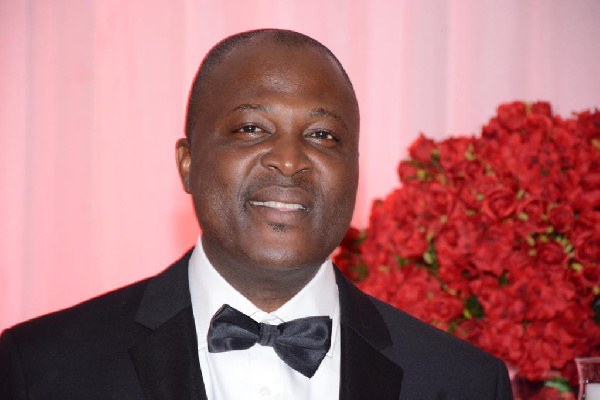
The CEO of the EIB Network, Mr. Nathaniel Kwabena Adisi, popularly known as Bola Ray has pledged a GHC1 million airtime sponsorship for the 2nd edition of Black History Festival.
At the launch at the Africa Trade House in Accra on 16th December 2022, the Media Icon who was inspired by the initiative mentioned that, he is ready to support the Black History Festival with his outfit and also connect the organizers with a rich Ghanaian in Columbus Ohio for sponsorship.
He also admonished the Ministry of Tourism to pay attention to projecting creatives from Ghana to the world.
Bola Ray believes Ghana has a lot of creative potentials that the country can put the spotlight on to generate some revenue. ‘’Ghana has a bank of creative ideas that can be refined and projected for revenue for the country, therefore, I’m calling on the Ministry of Tourism and all stakeholders in the creative industry to find a way to create an enabling environment to intentionally market what we have to the diaspora.’’
Speaking at the launch, he said, many talents have gone waste in the country, the reason being that most of these young talents do not have what it takes to lift themselves there. He added that the ministry responsible for Tourism and Creative Arts must be intentional in organizing events with excellence around the world which would feature key amongst our top artists alongside young potentials for the spotlight. Deliberate actions of that nature he stated, would put the country and many people on the Global Map.
According to the CEO of EIB, this would afford the nation, a platform to market not just musicians in Ghana but a means to project different shades of our cultural heritage to the diaspora and beyond.
He noted that the Black History Festival is a unique event that would go a long way to bridge the gap between Ghanaians in the country and other Africans in the diaspora, thus strengthening strong ties for effective business partnerships, and exchange of ideas amongst others.
Again he stated that following the success of the maiden edition of the Black History Festival which was held in Washington DC, USA in 2022, he’s optimistic that the Bureau For International Development, Exchanges, and Commerce (BIDEC), organizers of the festival with their partners would make this second edition also a success.
The second edition of BHF would be held in Columbus Ohio, USA from 15th to 18th February 2023.
The Black History Festival is aimed at the celebration of the strong ties between Governments of the United States of America and the African Union member states over the years. It is also an opportunity to celebrate the benefits of the exchange programs between the two bilateral partners.’’
The festival is being organized with support from the African Union Mission to the United States, the Office of the President of Ghana (Diaspora Affairs), and the Office of the Mayor and Accra Metropolitan Assembly (AMA) amongst other key partners to be unveiled.
Members of the East Legon Executive club, have held a lavish New Year party at their main office in Accra.
The men uniformly rocked a white pair of long sleeves with trousers, berets and suspenders at the party which took place on January 1, 2023.
Notable among those present were Dr. Kwame Osei Despite, Kennedy Agyapong, Sammy Osei Kuffour and many others.
Showbiz personalities including Nana Ama McBrown and her husband, Kofi Kinaata, Abeiku Santana, Michael Blackson and others were also spotted having a good time at the gathering.
They danced the night away and treated themselves to performances from artistes including Kofi Kinaata and so on.
Viral videos from the event stirred interesting comments, particularly about how some patrons at the event suffered wardrobe malfunctions.
Other critics described the outfit worn by the ‘big men’ as inappropriate adding that such fits are meant for young men and teenagers.
Barely a week after declaring that she wanted to become an exotic dancer, socialite Moesha Boduong has announced a new vision.
To become the most controversial and sexiest woman of God, which declaration she made on January 1, 2023 on UTV.
“I am talking about being the most controversial, sexiest woman of God,” she is heard saying in her intro on the UTV Day With The Stars programme.
Her session was a performance with musician Gambo who sang songs asMoesha danced in a thigh-long dress displaying suggestive moves.
In another clip sharing her message to Ghanains she said: “I want to tell you all that I have really been touched by God Almightly and Moesha Boduong is no more the old Moesha Boduong.”
In an earlier interview late last year with Deloris Frimpong Manso on the Delay Show, she disclosed that she has been receiving invitations to visit the United States of America to purposely dance at events.
She lamented the unfair treatment by a section of Ghanaians who wrongly criticized her for living her best life.
Moesha who wishes to leave Ghana said: “I know what I want to become. I really want to leave this country and really direct my brand to the US because I really get invitations to go to the US for a lot of events and I’m trying to really build my brand to be an exotic sexy dancer to make money off that.”
The actress who has been captured in several videos dancing her heart out explained that she loves dancing and sees nothing wrong with exhibiting her talent as a ‘born again’ Christain.
As prophets who prophesied at their respective churches during the 31st Watchnight Service continue to court conversation on both traditional and social media with their utterances, Efia Odo has also been trending after the socialite released a song on January 1, 2023.
Titled ‘Getting To The Bag’, the song comes with an official music video which has erotic scenes.
After dabbling in acting and TV hosting, Efia Odo on December 31, 2022, announced her intention to release a debut, triggering anticipation as many wondered how different her record would be and whether or not it would be worth the wait.
Some Ghana influencers be wicked pass especially them Abenkwan niggas 😂😂😂 Efia Odo give you guys money make you hype her new song give am, You collect money finish, Hype the song you say the money small and the song serf no dey bee 🤣😂😂😂 So why you boys for take the money??
2022 may have been a troubled one for Afrobeat singer,Davido, but he sure knows how to pamper himself as he has ended the year in style.
Sources reveal that the singer, who performed at the 2022 FIFA World Cup in Qatar, after mourning his son, has splashed $200,000( N149,000,000) on a new diamond necklace.
A video of the new necklace which has OBO boldly embroidered on it, excited fans, as they believe that the singer is gradually getting back on track.
To them, he deserves to be happy again after going through a difficult phase.
It has been reported that the Emerald custom piece with over 70cts is worth $200,000.
Meanwhile,Davido has announced that he will resume his craft full time in March 2023.
In a viral press statement, he hinted that fans should expect a ‘bigger and stronger Davido’ in 2023.
Following a collision between a Chinese jet and a US plane over the South China Sea, the defence ministry claims that the US twisted the facts.
Following a collision between a Chinese fighter jet and an American surveillance plane over the disputed South China Sea, China’s defense ministry accused the United States of breaking international law and engaging in “slander and sensationalism.”
The announcement was made late on Saturday, days after the US military asserted that on December 21, a Chinese J-11 fighter jet flew within 6 meters (20 feet) of a US RC-135 aircraft, causing the latter to do evasive maneuvers to avoid a collision.
But Tian Julin, a spokesperson for China’s defence ministry, said the US Indo-Pacific Command had distorted facts about the incident and that it was the US aircraft that had engaged in “dangerous maneuvers” against the Chinese jet.
Tian said the US aircraft was conducting intentional close-in reconnaissance on China’s southern coastline when the People’s Liberation Army sent fighter jets to track and monitor the plane.
Despite multiple warnings from the Chinese side, the US aircraft suddenly altered its flight stance in a “dangerous approach movement, which seriously compromised the flight safety of the Chinese military aircraft,” he said.
The defence ministry also released a video of the incident, which it said showed the US aircraft manoeuvring towards the Chinese jet.
“The United States deliberately misleads public opinion … in an attempt to confuse the international audience,” Tian said.
“We solemnly request the US side to restrain the actions of frontline naval and air forces, strictly abide by related international laws and agreements, and prevent accidents in the sea and the air.”
China claims almost the entire South China Sea as its sovereign territory, but parts of it are contested by Vietnam, the Philippines, Malaysia, Taiwan and Brunei.
Trillions of dollars in trade flow every year through the waterway, which also contains rich fishing grounds and gas fields.
US military planes and ships routinely carry out surveillance operations and travel through the region, moves that China says are not good for peace.
Relations between the US and China have been tense, with friction rising between the world’s two largest economies over a range of issues, including Beijing’s human rights record and its claims over the self-ruled island of Taiwan.
The Artic walrus continues to draw sizable crowds to Arborough, but experts warn that anyone who harms the mammal could face legal repercussions.
Due to the presence of a wandering walrus, a beach town’s New Year’s fireworks were postponed at the advise of wildlife specialists.
The animal, now known as Thor, is thought to have appeared in Scarborough, North Yorkshire, on Friday afternoon.
Many people think that the Arctic walrus is stopping for a rest as it travels north.
He was previously spotted on the Hampshire coastline last month amid sightings as far away as Brittany in France.
Image: Thor pictured taking a break on the Hampshire coastline last month
Scarborough Borough Council cancelled the town’s New Year’s Eve fireworks display on the advice of British Divers Marine Life Rescue.
Its experts had expressed concerns that loud bangs and bright flashes could cause “distress” to Thor.
They had previously requested people not to disturb the creature and cordons have been put in place.
The unusual visitor has attracted large crowds.
They are said to have witnessed some playful behaviour.
RSPCA inspector Geoff Edmond, who has determined that the walrus does not appear to be sickor injured, encouraged people to enjoy the sight from a respectful distance.
He said: “We understand it’s exciting and unusual to have the walrus take up a temporary residence, however, it’s in his best interests to be left alone as much as possible, so we’re asking people to remember he is a wild animal and avoid the temptation to get near to him and disturb him.
“We would also remind everyone that the walrus is protected under the Wildlife and Countryside Act, 1981, and so disturbing the animal may constitute an offence.”
According to the man who masterminded the prosecution of former Serbian leader Slobodan Milosevic, says Russian President Vladimir Putinshould stand trial in Ukraine this year for war crimes committed there.
Sir Geoffrey Nice told the BBC that Mr Putin was a “guilty man” in the wartime attacks on civilian targets.
The British barrister voiced his surprise that prosecutors and politicians were not “stating this out much more freely and honestly”.
Russia denies any involvement in war crimes.
But, speaking to Radio 4’s Broadcasting House programme, Sir Geoffrey described Moscow’s actions during the invasion as “crimes against humanity” – as civilian targets were being attacked.
Crimes against humanity are considered to be among the most serious offences under the so-called “rules” of war.
These laws ban attacks on civilians – or infrastructure vital to their survival – and are set out in international treaties such as the Geneva Conventions.
For example, Russia’s repeat attacks on the Ukrainian energy grid over the winter have been described as war crimes because of the harm done to civilians. Russia insists it is hitting military targets only.
Moscow’s troops have been accused by the international community of thousands of abuses since their full-scale invasion of the neighbouring country last February.
The prosecutor-general in Kyiv says more than 62,000 war crimes have so far been recorded, including the deaths of more than 450 children. The BBC has not been able to verify these figures.
Sir Geoffrey worked with International Criminal Tribunal for the Former Yugoslavia (ICTY) between 1998 and 2006.
He led the case against former Serbian leader Slobodan Milosevic, who went on trial in The Hague in 2002 for war crimes committed in Croatia, Bosnia and Kosovo.
Mr Milosevic – once known as the “butcher of the Balkans” – died in prison before the trial concluded.
Commenting on the war in Ukraine, Sir Geoffrey said the case “couldn’t be clearer” against Mr Putin, and there was “no doubt” of a chain of command leading to the man in the Kremlin.
This meant the “most important thing” was to try the Russian leader himself, rather than low-ranking soldiers, he told Broadcasting House.
He added that any trial “could be tomorrow morning, as far as I’m concerned” and should be held by Ukrainians in the Ukrainian language. Mr Putin himself would not need to be present, he said.
Sir Geoffrey speculated over a possible reason why the Russian leader had not faced tougher action so far – suggesting there could be a move to exempt him from prosecution as part of a peace deal.
He said the International Criminal Court (ICC) –which has jurisdiction over Ukraine – “has still not made a pronouncement about Putin’s responsibility for this crime”.
Sir Geoffrey said this “reluctance” raised the question of whether there was some sort of “political advantage” to not indicting the president.
But he said the idea of any peace settlement that prevented a trial of Mr Putin was an “appalling prospect” which would be “a complete denial of justice to the people of Ukraine”.
In response, the ICC rejected any assertion of “pressure or influence” on the prosecutor, Karim Khan, to delay any investigations.
Mr Khan had “gone on record repeatedly… to demonstrate that accountability is an imperative that must be achieved”, an ICC statement said.
It added that the prosecutor had been working on the ground in Ukraine to collect evidence of war crimes – and arrest warrants would be issued when enough proof had been gathered.
On the east coast of the United States, as well as in Brazil, Argentina, and the Caribbean, ken place.
Cities throughout Europe, Africa, and Asia have also celebrated the start of 2023 with firework displays.
Cities across Europe, Africa and Asia have also held firework-filled festivities marking the start of 2023.
In China, huge crowds gathered to take advantage of recently-lifted restrictions.
Until recently, the country had been following a zero-Covidapproach, continuing to enforce strict lockdowns even as other nations around the world appeared to return to normal.
However, the disease is surging across the country, and many places are placing travel restrictions on travellers from China – Australia has become the latest to do so.
The president of Taiwan, Tsai Ing-wen, used her New Year address to offer help to China to combat the recent surge in Covid cases.
In London, there was a drone display as part of a tribute to the late Queen Elizabeth, while in Edinburgh, thousands enjoyed the first full Hogmanay celebrations in three years.
There was also a tribute to Ukraine – with the London Eye lit up in blue and yellow, the colours of the Ukrainian flag.
In Ukraine, the conflict with Russia continued as air raid alerts sounded shortly after midnight and there were further strikes on Kyiv, officials said. There were no reports of injuries.
It came shortly after new year addresses from both President Vladimir Putin and President Volodymyr Zelenksy.
Mr Putin delivered a New Year address flanked by soldiers clad in full uniform, saying the country’s future was at stake.
Directly addressing soldiers in Ukraine, the 70-year-old leader praised their efforts since the invasion was launched in February, and told them that “historical rightness” was on their side.
Meanwhile, Mr Zelensky addressed Russians in their own language, telling them their president was “hiding behind you, and he’s burning your country and your future”.
And he pledged to Ukrainians that his troops would fight until “victory”.
“We fight as one team – the whole country, all our regions. I admire you all. I want to thank every invincible region of Ukraine,” he said.
Image caption, A flag-raising ceremony in Pyongyang, North Korea
Meanwhile, the North Korean leader, Kim Jong-Un, pledged to significantly increase the production of nuclear weapons. He also tested his first ballistic missile of the year early on New Year’s Day.
Croatia started 2023 with a new currency, joining the eurozone.
As revelers rang in the New Yearin Kampala, Uganda’s capital, at least nine people died in a shopping mall crush, according to authorities.
According to police, throngs racing to view a New Year’s fireworks display became jammed in a small hallway in a mall close to the capital of Uganda, killing at least nine people, including a 10-year-old boy.
Just after midnight, according to the police, people began pressing through a tunnel in the Freedom City Mall in Kampala.
“Very many people got stuck as they were entering in large numbers to see fireworks. In doing so, many people suffocated to death. So far nine people are confirmed dead,” the police statement said.
People had been celebrating the New Year at the mall which is on a highway linking Kampala to Entebbe International Airport.
“Emergency responders arrived on the scene and transported the injured individuals to the hospital, where nine were confirmed dead,” police spokesman Luke Owoyesigyire said.
Owoyesigyire added that “rash” acts and “negligence” had led to the tragedy.
The celebrations to welcome in 2023 were the first in the East African country since restrictions linked to theCOVID-19 pandemicand security issues were lifted.
Kim made his remarks as North Korea conducted an unusual late-night New Year’s Day weapons test with a short-range ballistic missile.
In order to deter the United States and South Korea, Kim Jong Un, the leader of North Korea, has ordered the creation of a new intercontinental ballistic missile (ICBM) and asked for a “exponential” rise in the manufacturing of nuclear warheads.
After North Korea launched a short-range ballistic missile off its east coast on New Year’s Eve, Kim’s declaration was made public on state media on Sunday.
During his comments at a key meeting of the ruling Worker’s Party, Kim accused Washington and Seoul of carrying out a “plot to isolate and stifle”North Korea, calling it “unparalleled in human history”, according to the official Korean Central News Agency (KCNA). He said the situation called for Pyongyang to “double down our efforts to strengthen our military power overwhelmingly” and “to safeguard our sovereignty, safety and basic national interest to cope with the dangerous military moves by the US and other hostile forces that target us”, KCNA reported.
“It highlights the importance and necessity of mass producing tactical nuclear weapons and calls for an exponential increase of the country’s nuclear arsenal,” Kim said.
He also ordered the manufacturing of a new type of ICBM “with a rapid nuclear counterattack capability as its basic mission,” KCNA said.
Kim also reportedly said North Korea plans to launch its first military spy satellite soon.
The KCNA report came as South Korea’s military said it detected a missile launched from North Korea’s capital region around 2:50am local time on Sunday (17:50 GMT on Saturday). The South Korean Joint Chiefs of Staff said the missile travelled about 400km (250 miles) before falling into the water between the Korean Peninsula and Japan.
The Joint Chiefs of Staff called the launch “a grave provocation” that hurts peace and security on the Korean Peninsula and around the world. It said South Korea closely monitors North Korean moves in coordination with the US and maintains readiness to deal with any provocations.
The US Indo-Pacific Command said in a statement that the launch highlights “the destabilising impact” of North Korea’s unlawful weapons programmes. It said US commitments to defend South Korea and Japan “remain ironclad”.
North Korea test-fired more than 70 missiles last year. Some experts say the country eventually aims to boost its weapons arsenals and increase pressure on its rivals to win concessions such as sanctions relief.
On Saturday, North Korea fired three short-range ballistic missiles towards its eastern waters.
KCNA said the country had conducted test-firings of its “super-large” multiple rocket launcher to test the weapon’s capability. It said three shells fired from the launcher accurately hit an island target off the country’s eastern coast, and that North Korea fired another shell from the launcher towards its eastern waters on Sunday.
Outside experts categorise weapons fired from the launcher as ballistic missiles because of their trajectories, ranges and other characteristics.
North Korea’s missile launch for a second straight day could be a response to rival South Korea’s recent rocket test related to its plan to establish space-based surveillance to better monitor North Korea. On Friday, South Korea’s military said it test launched a solid-fueled rocket, a type of space launch vehicle that it plans to use to put its first spy satellite into orbit in coming years.
Animosities between the rival Koreas have deepened since early last week, when South Korea accused North Korea of flying drones across the countries’ heavily fortified border for the first time in five years and sent its own drones towards its northern neighbour.
South Korea acknowledge it failed to shoot down any of the five North Korean drones it said were found south of the border. But South Korea has promised to bolster its air defence network and get tough on future provocations by North Korea.
The bloc made its remarks after a report by UNexperts revealed that Rwandan military had engaged in “direct engagement” within the DR Congo.
The M23 rebel group, which has taken over large portions of the North Kivu region in the neighboring Democratic Republic of the Congo, has received calls from the European Union urging it to cease helping Rwanda (DRC).
The DRC, the US, and a number of European nations have accused Rwanda, a smaller neighbor in Central Africa, of supporting the M23 on numerous occasions, though Kigali has always denied this.
Recently, the Tutsi rebel group has made strides that have brought Goma, the capital of North Kivu, within a few hundred kilometers.
EU foreign policy chief Josep Borrell on Saturday said the European bloc had urged Rwanda to “stop supporting the M23 and use all means to press the M23 to comply with the decisions taken by the EAC [East African Community]” at a November summit in Angola.
“It also firmly urges all states of the region to prevent the provision of any support to armed groups active in the DRC,” said Borrell.
He called on Kinshasa to “take all measures necessary to protect the civilian population in its territory”.
Under heavy international pressure to disarm, M23 joined a ceremony last week to deliver the strategic town of Kibumba to an East African military force as a “goodwill gesture” for peace.
The EAC also said the group had to withdraw to the border between the DRC, Uganda and Rwanda. However, the Congolese army promptly dubbed the Kibumba handover a “sham”.
Borrell’s comments came after a United Nations experts’ report on DRC indicated it had collected proof of “direct intervention” by Rwandan defence forces inside DRC territory between November 2021 and October 2022.
The report says Rwandan troops launched operations to reinforce the M23 against the mainly Hutu Democratic Forces for the Liberation of Rwanda (FDLR) – notably by supplying weapons, ammunition and uniforms.
Kigali sees the FDLR as a threat which justifies interventions inside the DRC.
Rwanda has also accused the DRC – where presidential elections are due next December – of using the conflict for political purposes as well as of “fabricating” a November massacre of at least 131 civilians.
A United Nations inquiry blamed the deaths on M23 rebels.
Prior to the massacre, Angola had been mediating peace talks designed to pave the way for a truce agreement.
In a statement on Saturday, Kinshasa welcomed the findings of the UN experts, which it said “put an end to the lies and manipulations” of Rwanda.
Given the gravity of the allegations, it called for the UN Security Council to examine the experts’ report with a view to possible sanctions against Rwanda.
Meanwhile, Rwanda’s President Paul Kagame blamed Kinshasa for the chaos in its volatile eastern regions in his New Year address.
“After spending tens of billions of dollars on peacekeeping over the past two decades, the security situation in Eastern Congo is worse than ever,” Kagame said in a statement on Saturday.
“To explain this failure, some in the international community blame Rwanda, even though they know very well that the true responsibility lies primarily with the government of the DRC. It is high time that the unwarranted vilification of Rwanda stopped.”
According to a long-standing agreement between the two nuclear-armed rivals, Pakistan claims to have sent the Indian embassy in Islamabad a list of its nuclear installations and facilities.
In a statement released on Sunday, Pakistan’s foreign ministry said that India had simultaneously given a list to the Pakistani embassy in New Delhi.
It stated that lists are traded yearly on January 1. Since 1992, the custom has been in place.
The neighbours have fought three wars and have had a number of military skirmishes in recent years. Last year an Indian missile accidentally landed in Pakistan, setting off alarm bells across the world.
“The list of nuclear installations and facilities in Pakistan was officially handed over to a representative of the Indian High Commission in Islamabad at the Ministry of Foreign Affairs today [Sunday],” Pakistan’s foreign office said.
The annual exchanges come at a time diplomatic ties between the two are near non-existent.
India’s foreign ministry did not immediately respond to a Reuters news agency’s request for comment.
Pakistan first officially tested nuclear weapons in 1998 and has since developed a significant stockpile of nuclear capable missiles, as has India.
With the help of China, Pakistan has recently increased its use of nuclear energy to meet the rising demand for electricity.
In a separate statement, Pakistan’s foreign office said the two countries had also exchanged a list of each other’s citizens held in prisons.
The list included 705 Indian prisoners imprisoned in Pakistan, including 51 civilians and 654 fishermen, the statement said.
It added that the Indian government also shared with the Pakistani mission in New Delhi a list of 434 Pakistani prisoners in India, including 339 civilians and 95 fishermen.
Pakistan has requested the early release and repatriation of 51 of its civilian prisoners and 94 fishermen who have completed their sentences. A request for special consular access to 56 civil prisoners has also been made.
Fishermen from each country are often arrested when they stray into the other’s waters.
President Gustavo Petro stated on New Year’s Eve that the five largest armed groups operating in Colombiahad reached an agreement with the government to a six-month truce.
The Andean nation’s internal strife, which has lasted for over six decades and claimed at least 450,000 lives between 1985 and 2018, will be resolved, according to Petro, the nation’s first left-wing president.
President Gustavo Petro announces ceasefire with the five largest armed groups to support peace talks.
Colombia’s government has agreed to a six-month ceasefire with the five largest armed groups operating in the country, President Gustavo Petro announced on New Year’s Eve.
Petro, the country’s first left-wing president, has pledged to end the Andean nation’s internal conflict, which has run for almost six decades killing at least 450,000 people between 1985 and 2018.
“This is a bold act,” Petro wrote on Twitter. “The bilateral ceasefire obliges the armed organisations and the state to respect it. There will be a national and international verification mechanism.”
Among the groups are the leftist armed group the National Liberation Army (ELN) as well as dissident groups run by former members of the now-demobilised Revolutionary Armed Forces of Colombia (FARC), Segunda Marquetalia and Estado Mayor Central.
The truce was the main objective of Petro’s “total peace” policy aimed at ending the country’s armed conflict, which has persisted despite the dissolution of FARC in 2017.
The armed groups still operating in Colombia, the world’s largest cocaine producer, are locked in deadly disputes over drug trafficking revenues and other illegal businesses, according to the Institute for Development and Peace Studies (Indepaz), an independent think-tank.
Despite the government’s efforts to negotiate with Colombia’s various armed groups, which include a combined total of more than 10,000 fighters, it has so far failed to contain the spiral of violence engulfing the country. Indepaz recorded nearly 100 massacres last year.
The ELN, the last recognised rebel group in the country, has been negotiating with the government since November.
The Segunda Marquetalia and Estado Mayor Central groups – splinter factions of FARC which broke from the 2016 peace pact – have held separate talks with the government.
AGC, the country’s largest drug gang, is made up of the remnants of extreme right-wing paramilitaries that demobilised in the early 2000s.
The government is offering the groups “benevolent treatment from the judicial point of view” for the armed actors “in exchange for a surrender of assets, a dismantling of these organisations and the possibility that they stop exercising these illicit economies”, Senator Ivan Cepeda recently told AFP news agency.
Some dissidents refused to lay down their arms alongside their FARC comrades six years ago, when the fearsome rebel group signed the deal with Bogota to end more than five decades of conflict.
Colombia has suffered more than 50 years of armed conflict between the state and various groups of left-wing fighters, right-wing paramilitaries and drug traffickers. There are currently about 90 political and criminal groups operating in the country, according to Indepaz.
The 40-year war between Senegaland rebels in its Casamance region has left legacies of landmines with diverse impacts.
Night was falling, and Boubacar Ba was once again hunting in the forest outside his hometown of Mpak in southern Senegal. Then a crack rang out, not from his rifle or another hunter. Not the Senegalese army or even the rebels waging a war for secession in the area.
It was a landmine, which blew off his right leg.
Ba tied up a makeshift tourniquet, but when he hobbled up on his left leg, he quickly discovered it was broken, and crashed back onto the forest floor.
“When someone hears these mine accidents, an explosion, they can’t go adventuring to see what happened,” without putting themselves at risk, Ba told Al Jazeera. Alone, he ended up crawling on his elbows 10km (6.2km) to find help.
That was in 2004.
The mine he had stepped on had been forgotten at the start of Senegal’s simmering civil war two decades earlier. These days, Ba walks with a slight limp, his prosthetic leg deftly hidden under his boubou and pants.
The region of Ziguinchor, along the porous borders of The Gambia to the north and Guinea-Bissau to the south, contains the last fragments of the Movement of Democratic Forces of Casamance (MFDC). The armed movement was born in 1982, pushing for the independence of Casamance, the collective of regions situated underneath The Gambia, which is enveloped by Senegal.
Peace has largely returned to the Casamance – comprising the regions of Ziguinchor, Sedhiou, and Kolda – since then. A few strongholds of fractured rebel groups hold out near the borderlands, but elsewhere, citizens mostly go about their day without a second thought, and tourists hit the beach in the resort town of Cap Skirring.
But in too many villages, mines remain. Estimates from the Senegalese National Mine Action Center (CNAMS), the government authority in charge of demining activities, put some 49 to 170 hectares (120 to 420 acres) of land, mostly all in the Ziguinchor region, as still at risk of being mined. In addition to the physical risk posed by the ordnance, the mines – planted by the Senegalese military and the rebels – often cut people off from roads, schools or farmland.
“The socioeconomic impact is real,” Emmanuel Sauvage, Senegal country director at Humanity and Inclusion, an NGO contracted by CNAMS to carry out demining operations, told Al Jazeera. “It’s affecting the whole economy.”
Boubacar Ba speaks during a meeting at the Senegalese Association of Mine Victims in Casamance, Senegal [Guy Peterson/Al Jazeera]
Finding landmines
Reports of civilian victims first appeared in the 1990s, more than a decade into the conflict. Estimates of how many people have been killed or injured are hard to pin down.
The Senegalese Association of Mine Victims (ASVM) counts 482 members on its rolls – mostly people directly injured, but also including “indirect victims”, like family members who sometimes struggle economically after a breadwinner is killed or disabled. CNAMS estimates 453 civilian injuries, and 157 deaths. Incidents are isolated, but pop up from time to time: Most recently, six people were killed by a mine returning from Friday prayers last year.
In the village of Bassere, about 8km from the Guinea-Bissau border, Pierre Marie Badji slowly waves his metal detector across the barren, brown earth. Dressed in a sky-blue kevlar vest and a face shield, he’s scanning what used to be thick brush, chewed up by a tank-like demining machine whose rotating claws eat away at the bush, seeking explosives. Badji’s metal detector is silent, so he marks the area immediately in front of him as clear, and takes another step forward.
A few dozen meters away, his colleague Papa Bourama Diedhiou is on his knees, slowly scraping away dirt. His metal detector went off, and now he’s inspecting further, hunched over what would be the blast zone if a mine indeed goes off.
It’s an old can of sardines. He tosses it away.
“If I find a mine, I’m happy,” he said. “I’m saving lives.’”
Bassere, sitting under towering baobab and kapok trees deep in one of Ziguinchor’s lush forests, was completely abandoned in 1990, though residents have started to trickle back in recent years. For a time, the Senegalese military set up an outpost here, though they left about 15 years ago. But when villagers returned, they found a plaque in the forest warning of mines. Mines found in nearby villages, and by the abandoned school on the other side of town, added to their fears.
“The forest has reclaimed 80 percent of the village,” said Bassere resident Therese Sagna. “This year, there was a lot of fruit in the woods that spoiled because no one could access it.”
Liboire Sagna, the village chief, said uncertainty about what areas are safe is preventing the rest of the village from moving back and making it impossible to build a school or clinic.
While the total at risk of having mines is small – a bit less than 2 square kilometres (1.6 square miles) maximum, mostly in the Ziguinchor region, which covers 7,352sq km (4,568sq miles) – finding scattered pockets of mines in the region’s dense, isolated forests can be a bit like finding needles in a haystack.
So far, the demining team, run by the nongovernment organisation Humanity and Inclusion, hasn’t found anything in Bassere besides sardine cans and old bullet shells. Charles Coly, the team leader, reckons it will take three months to clear the area.
A variety of deactivated landmines mostly found by the demining team over the years in Casamance, Senegal used for demonstrations and educational purposes [Guy Peterson/Al Jazeera]
A simmering conflict
Authorities in Dakar say the Casamance can be mine-free by 2026. But because demining teams can only safely work in areas without rebel presence, the success of that plan largely rests on the Senegalese military snuffing out the elusive rebel camps that remain. The conflict is arguably Africa’s longest-running war, and total victory against a small group of ideologically-driven fighters across heavily forested borderlands is far from an easy task.
Ba, now the community outreach leader at the ASVM, has contacted rebels to convince them to allow demining teams to come into their territory, as has Barham Thiam, director of CNAMS. But so far, both men say their overtures have been unsuccessful.
“I told the guy, OK, you want independence. If you get it, it would be hard for your budget to find money to destroy mines, and then to find money to rehabilitate the victims,” said Thiam. “I told him, somehow, we are working for you … If the government brings you a road, take it. A bridge, OK, whatever. A demining programme – take it.”
The continued rebel presence has been an existential threat to deminers too. Nine years ago, Fatou Diaw was kidnapped on a demining mission alongside a few colleagues. She was held in a rebel camp in the countryside for a month until government negotiations led to her and her female colleagues’ release. The men were held another month before being freed eventually.
“I [told them] we didn’t know [that area] was a red-line – otherwise, we wouldn’t have come to work there,” she says, suiting up for the demining mission in Bassere, unfazed all these years later. “We don’t work for the military,” she recalled telling the rebels. “We work for the population.”
Given the opportunity, she believes she can get the rebels to give up their mines – if not their other weapons or their cause – but “they’re not easy to convince”.
Meanwhile, recent peace agreements, like one signed in August with some of the rebel factions along Guinea-Bissau’s border, offer hope – but only applied to a few groups.
So, the conflict simmers as rebels traffic illegal timber and cannabis far out in the countryside. But it still boils over from time to time.
Amid a renewed offensive by the Senegalese military earlier this year, some 6,000 refugees fled to neighbouring The Gambia. Earlier this month, three refugees were killed in a Senegalese drone strike. The Gambian government insists that while victims were registered as refugees, the strike happened on Senegalese territory, across the porous border. Gambian opposition politicians, meanwhile, have complained that the conflict is increasingly spilling out of Senegal.
At home, the rebels are facing tough odds. The conditions that led to the revolt – land reform laws that tipped power into the hands of the Senegalese state, and an economic downturn – are ancient history to a population ground down by four decades of war.
Anyone under 40 has known conflict their entire lives. Those taking up arms in the ’80s could easily point to Casamance’s distance from Dakar – literally in terms of geography and figuratively in the lack of investment from the government – as serious grievances. Economic development projects – roads and bridges – and a new university in Ziguinchor have helped close those gaps.
For advocacy groups like the ASVM, where some members have lifelong disabilities, not even physical peace can bring peace of mind until the mines are fully rooted out.
“Even if there’s a definitive peace in the Casamance … we’re going to continue to work,” said Souleymane Diallo, ASVM’s finance chief, himself missing a leg.
A spokesman for the interior ministry controlled by the Talibansays that an explosion outside the airport resulted in numerous casualties.
Multiple people have been hurt in an explosion that occurred near Kabul’s military airport, according to a spokesman for the Taliban-run interior ministry.
“Today morning an explosion took place outside Kabul military airport, due to which a number of our citizens were martyred and injured,” spokesman Abdul Nafi Takor told Reuters news agency, adding that an investigation is underway.
He did not specify the nature or target of the explosion. There was no immediate claim of responsibility for the blast.
Local residents said a loud explosion was heard before 8am (03:30 GMT) in the vicinity of the military side of the heavily fortified airport.
They said the area had been sealed off by security forces, and all roads had been closed.
The Taliban authorities claim to have improved security since storming back to power in August 2021 but there have been scores of bomb blasts and attacks, many claimed by the local chapter of the ISIL (ISIS) armed group.
Last month, at least five Chinese nationals were wounded when ISIL attackers stormed a hotel popular with Chinese nationals in Kabul.
Hundreds of people, including members of Afghanistan’s minority communities, have been killed and wounded in attacks since the Taliban returned to power.
Ghanaian Afro-dancehall artiste, Epixode, has cautioned individuals who intend to disrespect Stonebwoy.
According to him, Stonebwoy is going the extra mile to push Afro-dancehall music worldwide, hence, anyone who intends to drag him in the mud will die.
The debate regarding which African artiste is projecting afro-dancehall music on the globe has been lingering in the music industry for some time now.
Zimbabwe’s Buffalo Souljah, Orezi from Nigeria, Samini, Stonebwoy, Shatta Wale and Mzvee from Ghana, are some of the numerous artists who have really helped pushed afro-dancehall music globally.
Earlier in an exclusive interview with celebrated broadcaster, AJ Sarpong on Citi 97.3fm, Stonebwoy, in response to the aforementioned debate, without mincing words stated that he single-handedly sold the afro-dancehall music to the World.
His claim has since stirred mixed reactions within the showbiz fraternity.
Award-winning Ghanaian entertainment Pundit Arnold Asamoah-Baidoo who earlier expressed his view on the matter said:
“He [Stonebwoy] has every right to own it especially when he has indeed projected his brand, the ‘genre’ and the country to the world. His international appeal cannot be questioned”.
However, while performing at this year’s Bhim Concert organized by Stonebwoy, Epixode applauded the ‘Therapy’ hitmaker for taking Ghanaian music to the World.
‘Big Ups to Stonebwoy for taking Ghana music to the World wider”. He said.
The ‘Atia’ crooner who was one of the outstanding performers on the night cautioned, “Anyone who would disrespect Stonebwoy for taking Ghana music worldwide, ‘I say dead’ because I am a prophet”.
It appears that Ghanaian rapper, Sarkodie, has responded to Nasty C in the midst of their alleged feud.
Earlier, in a freestyle session on South Africa-based Metro FM, Nasty C disclosed an instance where Sarkodie rejected his handshake, a development which resulted in his decision to not collaborate with the Ghanaian rapper till further notice.
Nasty C who was at that time a budding rapper, swore to never agree to collaborate with Sarkodie if he ever grew bigger in stardom.
Essentially, the two rappers do not have a song together to date, which he said is in fulfillment of that pledge.
This is despite two different occasions where according to him, Sarkodie reached out.
“See, when I first met Sarkodie, he wouldn’t shake my hand… Cool, I’m not too proud to say I’m still a fan but I held a grudge and told myself to wait till I’m the man…” Nasty rapped in a clip which went viral on social media.
But after being silent for over a month, Sarkodie has seemingly responded to Nasty C’s claims.
In his latest single titled ‘Landlord’, the Ghanaian rapper said;
“I heard the young champ is hurt I’m sorry. But anytime you meet the highest, all you need is just a marker to grab an autograph and get the f*ck out. I aint got to shake your hand so you can walk out. And so you know, it’s not me you fighting. It’s your own ego and a couple of things you’ve got to sort out. See I aint got pride to reach out to nobody. I love that Nigga, your ego is so baggy. I never reached out hommie but I know what you doing. Such smart ass touching the god is part of the plan. That shit is still old but still work. This is like Jay Z responding to Lil Durk.”
Sarkodie’s alleged reply has since stirred massive reactions on social media, thereby, skyrocketing him to top Twitter trends.
Billionaires often accumulate and increase their wealth by founding and owning stakes in multiple companies. This is because owning multiple businesses provides a consistent source of income and the potential for a sustained increase in profits and valuation.
By diversifying their investments across multiple companies, billionaires can reduce their exposure to risk and increase the chances that at least one of their businesses will be successful. One example of a billionaire who has been successful at building a diverse portfolio of companies is Aliko Dangote.
The leading billionaire, who is worth $18.7 billion, has built his businesses through a combination of strategic acquisitions and organic growth, making him the richest man in Nigeria and Africa.
For example, he recognized the potential for growth in Nigeria’s cement industry and invested heavily in the construction of cement plants and distribution networks. He has also been able to effectively manage his operations while constantly innovating and adapting to market changes.
His top-performing assets, which account for the majority of his wealth, include an 86 percent stake in Dangote Cement Plc, Africa’s largest cement company; an interest in his recently launched fertilizer complex, Dangote Fertilizer Plant; and a 72.3 percent stake in Dangote Sugar Refinery. These are his most valuable assets.
Dangote Cement Plc
His stake in the cement company is worth $8.29 billion
The majority of Dangote’s fortune stems from his 86 percent stake in publicly traded Dangote Cement. With a total capacity of 51.55 million metric tons per year, the cement company is Africa’s largest cement producer.
At the time of writing, Dangote Cement shares were valued at N261 ($0.583), giving the leading cement manufacturer a market capitalization of N4.45 trillion ($10 billion). Dangote’s stake in the cement company is currently valued at $8.29 billion in the market.
Dangote Fertilizer Plant
His stake in the fertilizer plant is worth $5.15 billion
Dangote derives a total of $5.15 billion from Dangote Fertilizer Plant, his fertilizer complex in Lagos, Nigeria.
As the continent’s largest granulated urea fertilizer complex, the $2.5 billion urea fertilizer plant was developed to meet Nigeria’s need for fertilizer, a critical component of establishing food sufficiency for Africa’s most populous country.
Dangote Sugar Refinery Plc
His stake in the sugar business is worth $315 million
Dangote Sugar Refinery Plc, Nigeria’s largest household, and commercial sugar producer, is 72.3 percent owned by Dangote. The company expects to produce 1.5 million metric tons of locally grown sugarcane this year.
Shares in Dangote Sugar were trading at N16.05 ($0.0358) at the time of writing, 31 basis points higher than their opening price on the local bourse on Thursday, giving the company a N195 billion ($435.7 million) valuation.
Dangote’s stake in the sugar company is currently worth $315 million.
NASCON Allied Industries Plc
His stake in the salt and seasoning business is worth $42 million
Dangote, the world’s richest Black person, owns 62.2 percent of Nigeria’s largest salt-processing company, NASCON Allied Industries Plc.
NASCON is a subsidiary of the Dangote Group. The company’s main activities include processing raw salt into refined, edible, and grade salt, as well as manufacturing seasoning products and vegetable oil.
Dangote’s 62.2 percent stake in the company is worth $42 million.
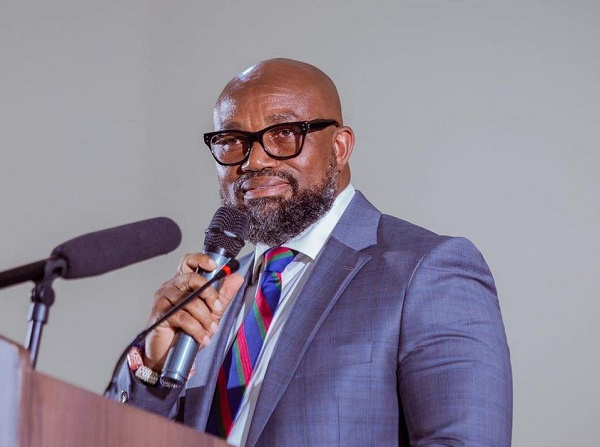
“Effective January 1, 2023, theGhana Revenue Authority (GRA) will be partnering the Metropolitan, Municipal and District Assemblies (MMDAs) in the collection of property rates in the country using a Unified Common Property Rate Platform”, the GRA announced in a statement.
The Unified Common Property Rate Platform, also known as Myassembly.gov.gh, is a complete end-to-end district revenue collection and administration platform designed to enhance the collection and accounting of property rates.
It is also linked to the Ghana.gov.gh payment platform.
The GRA said it comes with a lot of benefits to property owners.
It will help to eliminate cash transactions and payments to the staff of the Assembly.
Also, it helps with the payment of bills using mobile money, electronic cards, and bank payments, among others.
It comes with full automation of bill distribution, notifications and alerts to clients.
It also has a self-service portal for reviewing rateable values, rate bills, and checking balances, among others.
The platform also has access to real-time reporting of receipts and bill status, among others.
President of Ghana H.E Nana Addo Dankwa Akufo-Addo has stressed that it was a privilege that he had the chance to watch the late Pelé play football during his playing days.
Born Edson Arantes do Nascimento, the global icon popularly known as Pelé sadly passed away on Thursday, December 29.
In a statement to pay tribute to the football great, President Akufo-Addo said there will never be another player like Pelé.
“The whole world of sports is poorer today for the loss of one of its greatest figures, certainly its greatest soccer player, with the departure to Heaven of Edson Arantes do Nascimento, the iconic, legendary Pele. Those of us who had the privilege to witness his incomparable career will cherish forever the memories of skill, talent, determination, and sheer athleticism which we derived from his playing of the game he himself described as “the beautiful game”
“He used his towering status to be an advocate for the poor, for children, for young people, for black people, and to be an inspiration to several generations of footballers. The Ghanaian people, who admired him deeply, join me in expressing our heartfelt condolences and sympathies to his family, the Brazilian people, the Brazilian government, and football and sports lovers the world over,” President Akufo-Addo said in his statement.
H.E Akufo-Addo added, “There will never be another like him. May his soul rest in perfect peace with the blessings of the Almighty.”
World Pelé died at the age of 82 after battling cancer for years.
Bright claims that no discussions on any issue have ever taken place in any kind of meeting with the corporation.
The truth concerning IMANI’s participation with Menzgold will eventually come to light, according to Nana Appiah Mensah, also known as NAM1, in a tweet on December 24. He claims he has evidence to support his assertions, including a previously recorded meeting with IMANI that has been securely “vaulted.”
NAM1’s tweet was in response to a statement made by the President of IMANI, Franklin Cudjoe, on December 24 that read, “NAM1 must be smiling and waving at us now. This life no balance”.
However, Bright Simons responded by saying “IMANI as an org has never met Menzgold or its founders/execs in any context. 2. No exec of IMANI has met them or Menzgold privately on ANY subject EVER. 3. The suggestion that some info in a “vault” relates to secret meetings is ENTIRELY false & borders on defamation.”
Bright Simons also noted that the claims by NAM1 were “perverse and actionable at law”.
Meanwhile, the IMANI Veep referenced a GhanaWeb article with the headline “Menzgold has become a public policy issue – IMANI suggests way forward” to point out that the only analytical work done on Menzgold by IMANI urged SEC, not BoG, to take the lead & questioned the gold-based business model. That is it.”
Real Madrid will step up their pursuit of Jude Bellingham in January but are refusing to overpay for the England sensation.
Los Blancos are set to battle long-term admirers Liverpool for the Borussia Dortmund playmaker, 19, after his superb World Cup performances.
ESPN claim Real are ready to make their move and value Bellingham at £88million — a figure they will reportedly not go above.
Carlo Ancelotti is looking to freshen up his midfield with Luka Modric, 37, and Toni Kroos, who turns 33 next week, heading towards the end of their careers.
He secured the services of France starlet Aurelien Tchouameni last summer and also boasts young talents Eduardo Camavinga and Federico Valverde.
Real have been talking up their project to Bellingham but Liverpool are set to provide stiff competition as they have their own midfield issues to address.
Jurgen Klopp is aware of the need for younger legs in the engine room and Bellingham’s displays in Qatar proved he is ready to handle the pressure of playing at the highest level.
Chelsea have also been linked in recent weeks but appear to have turned their attention elsewhere with The Metro reporting that Enzo Fernandez has agreed to join them.
Enzo Fernandez was one of Argentina’s stars of the World Cup
This request is to exchange certain domestic notes and bonds issued by the Republic of Ghana, E.S.L.A. Plc, and Daakye Trust Plc (collectively, the “Eligible Bonds”) for new Ghanaian bonds.
The exchange, according to the minister, will instead be for new government of Ghana bonds with a coupon that increases to rates as early as 2025 and a longer average duration, ranging from 9.15% to 10.65% (depending on the precise series of new bonds).
The minister said the domestic debt exchange is part of a more comprehensive programme to restore debt and financial sustainability.
In the Amended and Restated Exchange Memorandum to individual bondholders, he noted: “The successful completion of this domestic debt exchange is a critical component of both the debt reduction programme and the International Monetary Fund programme discussions; it will contribute to unlocking the support of the international community and will allow Ghana to reach debt targets agreed with the IMF”.
“We need the full participation of all bondholders in this transaction. Anything less will not make us eligible for assistance. There can be no exception,” he added.
Apart from that, he said contingency plans have been prepared with applicable regulators to assist certain sectors of the economy (including the financial sector) after its participation in the exchange, to minimise negative spill-overs and safeguard the domestic economy including the establishment of a financial stability fund to provide a backstop for liquidity.
“It would also mean depleted fiscal resources to support the neediest.”
“We are acutely aware of the upfront cost of this transaction, and other aspects of our adjustment programme, to participating holders. To that end we are carving out from this exchange treasury bills (up to one-year maturity) typically held by retail investors”, the minister explained.
“Further, there is also a positive trade-off for debtholders as a group: this transaction, though resulting in reduced coupon payments from 2023, will make a positive contribution to a safer and brighter future for all Ghanaians”, he argued.
Real Madrid head coach Carlo Ancelotti issued a warning about Karim Benzema being ever better in 2023 after the Ballon d’Or winner’s double in Friday’s 2-0 victory at Real Valladolid.
Benzema missed the 2022 World Cup as France finished runners-up due to a quad injury sustained on the eve of the tournament. He has since announced his international retirement.
The 35-year-old forward brushed off that disappointment in Madrid’s first game since LaLiga’s resumption, netting an 83rd-minute penalty before doubling his tally six minutes later.
“I see Benzema very motivated, and I think you will see a different Benzema from now on in 2023,” Ancelotti told DAZN.
In the 2022 calendar year, Benzema has been involved in more goals in all competitions than any other LaLiga player, with 40.
Benzema scored 44 goals in 46 appearances for Los Blancos last term but has had an injury disrupted season this time around, netting eight times in 13 games.
On his team’s performance, Ancelotti told LaLigaTV: “There are a lot of good news from this game.
“The result first, the performance of Thibaut [Courtois], the two goals of Karim. We finished this year, that was an amazing year, in the best way.
“It was really difficult. We started well, then we had difficulties, did well first half, did well at the end of the game. It’s quite normal after you come back after a long holiday, it’s not easy.”
Madrid had plenty of representation at the World Cup and Ancelotti conceded that the mid-season re-integration has proved difficult.
“We have players with different conditions,” the Italian said. “Some players arrived yesterday.
“It’s true they also didn’t have their own break, only 10 days. There’s not a lot of time to put all of them in good condition. We have to work on this.”
Eduardo Camavinga, who only played twice for Les Bleus at Qatar 2022, earned praise from Ancelotti for his impact as a substitute, getting the assist for Benzema’s sealer.
“He has shown it since he arrived,” Ancelotti said. “He makes a difference when he enters the game because he has a lot of energy. He is an important player for us.”
Marcus Rashford was dropped from Manchester United‘s starting XI for Saturday’s trip to Wolves due to “internal disciplinary” reasons.
The England forward has been in great form for United this season and looked particularly sharp since returning from the World Cup.
He scored in each of United’s first two games after Qatar 2022, while he also got an assist in the 3-0 win over Nottingham Forest on Tuesday.
Manager Erik ten Hag has managed to get the best out of the 25-year-old after a particularly disappointing 2021-22 campaign, but something behind the scenes has put an obstacle in Rashford’s path.
Asked why he removed Rashford from the team after looking so lively in United’s two previous games, Ten Hag told BT Sport: “Internal disciplinary. No [details]. Our rules.
“Now focus on the game. He is in very good form and no-one can play all the games.”
Alejandro Garnacho was the one to benefit from Rashford being dropped, with the 19-year-old lining up in attack with Antony and Anthony Martial.
Luke Shaw kept his place at centre-back despite both Victor Lindelof and Harry Maguire being fit enough to take places alongside Rashford on the bench.
Also among United’s substitutes is talented 17-year-old midfielder Kobbie Mainoo, who will make his senior debut if he comes on.
World Cup winner Lisandro Martinez is still absent despite returning to training this week; Diogo Dalot – who is also yet to feature since the World Cup – misses out again as well.
Regardless of the distance, the weather, or the amount of traffic, these agreements are fixed and cannot be altered. The inDrive app is the second-most-downloaded mobility app in the world with over 150 million downloads to its credit. The business is active across numerous African nations, including South Africa, Nigeria, Tanzania, Kenya, Namibia, etc.
Unlike other ride hailing companies, inDrive does not use pricing algorithms and does not increase trip fares during rush hours. Once registered, the passenger inputs the A and B points of their route and offers their price for the trip when prompted by the app. Offers from available drivers will pop up on the screen.
inDrive will not charge a service fee during the first stage of the launch in Accra. This means drivers who join the platform will be able to earn even more. inDrive’s unique business model keeps the company competitive without needing to raise substantial investments. Peer-to-peer pricing, combined with the lowest service fee in the world (under 10% without VAT), alongside impactful campaigns, help organically grow brand awareness.
About inDrive
inDrive is a global IT and transportation platform. inDrive is one of the world’s fastest-growing online ride-hailing services. Its services are available in over 700 cities in 47 countries throughout the world. The company’s app has been downloaded over 150 million times. inDrive offers other services, including intercity transportation, freight and cargo services, as well as delivery services in different markets of operations.
inDrive is based in Mountain View, California, and operates regional hubs in the Americas, Asia, the Middle East, Africa and the countries of the CIS, and employs over 2,400 people. In early 2021, inDrive closed a US$140 million investment round with Insight Partners, General Catalyst, and Bond Capital.
Gabriel Jesus’ injury has the potential to derail Arsenal’s surprise Premier League title tilt — unless Eddie Nketiah can step up to fill the void.
Summer signing Jesus had been leading the line for Mikel Arteta’s men until he was injured while representing Brazil at the World Cup.
Nketiah is a promising young player but one who has not yet shown he is of title-winning calibre — and Arteta needs the Englishman to prove his worth.
Ahead of Arsenal’s trip to Brighton, we analyse the striker’s qualities.
Title challenge City have won four of the last five Premier League titles — only an outstanding effort from Liverpool in 2019-20 has disrupted the all-conquering machine that Pep Guardiola has built.
Arsenal are in good shape and sit top of the league having taken 40 points from their opening 15 games.
But the Citizens have Erling Haaland spearheading their attack. The Norwegian is well-rested following his break for the World Cup and raring to go.
Coping with injury Gabriel Jesus has been spearheading the Arsenal attack this season Gabriel Jesus has been spearheading the Arsenal attack this season Jesus’ injury was a real blow. The Brazilian has contributed five goals and five assists in 1,225 minutes of Premier League football and has been the focal point of everything the Gunners do in the final third.
He has been helped by Martin Odegaard, Gabriel Martinelli and Bukayo Saka but his absence is felt as the central striker.
Martinelli, who usually plays off the left, is an option through the middle. But the most obvious candidate to replace Jesus is Nketiah and so far he has shown signs that he can step up.
The 23-year-old — wearing Thierry Henry’s No14 — started and scored for Arsenal in their 3-1 defeat of West Ham on Boxing Day.
‘A really confident boy’ Eddie Nketiah opened his Premier League account for this term against West Ham Eddie Nketiah opened his Premier League account for this term against West Ham Arteta — speaking after the win against the Hammers — backed Nketiah to deliver on his potential.
He said: “[Nketiah] is a really confident boy. But hopefully [the goal] can give him — if he had any doubts — more confidence about what he is capable of doing.
“His performance was really, really good and on top of that he scored a great goal.
“For Eddie and for the team, I think it was really important.”
Time to shine London-born Nketiah joined Arsenal from Chelsea’s academy aged 16.
He made his first-team debut two years later and has contributed 27 goals and three assists in 112 games for the club. He also spent time on loan with Leeds — providing five goals and one assist in 19 games.
Nketiah has performed well in the Europa League and the Carabao Cup so far this season — scoring twice in the former and once in the latter. But he has found goals harder to come by in the Premier League.
He will hope that his account-opening strike against the Irons is just the first of many this term.
The business end Arsenal’s Eddie Nketiah has scored from one of his four shots on target in the Premier League Arsenal’s Eddie Nketiah has scored from one of his four shots on target in the Premier League As we move into 2023, it is sink or swim for the Gunners and Nketiah.
If he can deliver in the weeks to come and help his side sustain their title challenge, it could prove to the world that he is finally ready to deliver on his vaunted potential.
The best way to do that would be to continue his goalscoring form when Arsenal visit the Amex.
It will not be an easy task with the seventh-placed Seagulls in strong form under Roberto De Zerbi but Nketiah must continue to prove his worth if the Gunners are to have any chance of winning the title.
For an economy to thrive, private investors need to pump money into it by establishing businesses in the country.
Some of the money they make goes to the government in the form of taxes.
On the other hand, the citizens gain employment as these businesses are established, and would need persons to run them to witness growth.
What comes to mind when you hear the name Femi Otedola, Dangote? Your guess is as good as mine. These people are labelled as the richest men in Nigeria.
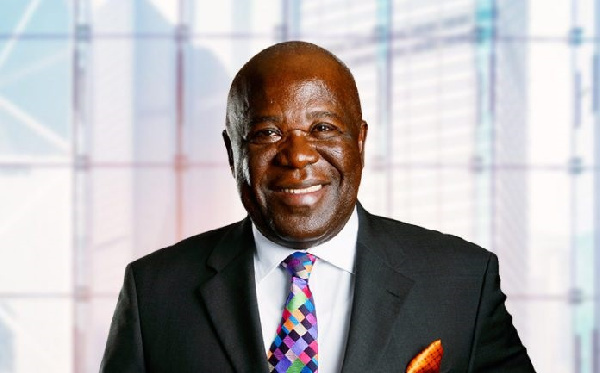
In Ghana, names like Osei Kwame Despite, Jospong, McDan, Ibrahim Mahama, and Sam Jonah are also known as top businessmen in the country.
But did you know that should these business magnates decide not to invest in the local economy, it would be wobbling?
One can argue that these men own chains of companies, support the government, and also solve one of the government’s major challenges, youth unemployment.
The mining company now employs over 3000 Ghanaian employees. Ibrahim Mahama has also invested in Asutsuare poultry farms, which was started in 2004 and produce 150,000 eggs and 10,000 live broilers a day.
He’s the owner of Dzata Cement Limited. Dzata Cement Company Ltd is touted as the first fully Ghanaian-owned cement processing factory.
The factory is located on about 10 acres of land near the Tema port. The over 200-million-dollar plant is expected to produces an average of 120 bags per minute from its two production lines.
The cement factory has a production capacity of 2.6 Million Tonnes per annum and this is the highest single cement facility in Ghana.
The factory has created five thousand direct and indirect jobs. It has provided employment opportunities for several thousands of Wholesalers and Retailers, across Ghana and the West African sub-region.
The factory commenced operations in August 2021.
Osei Kwame Despite
Osei Kwame Despite is an entrepreneur with a chain of media outlets, including UTV, Peace FM, under the name Despite Group of Companies. He owns Best Point Savings and Loans and has 50% shares in U2 Company Limited.
He also owns Neat Foods Company Limited which produces Neat Fufu, Neat Banku, Neat Abenkwan, Neat Hausa Koko, and Neat dairy products. The famous This Way Chocolate drink is also one of his products.
Jospong
Dr. Joseph Siaw Agyepong is the Executive Chairman of Jospong Group of Companies. He is the Chief Executive Officer of Zoomlion Company Limited.
This serial entrepreneur has employed several people in the sanitation sector. He currently owns Ignite Media; Metro TV, and Original FM/TV.
McDan
Business magnate, Daniel McKorley is the founder and Chief Executive Officer of the McDan Group of Companies.
McDan Group of Companies is a Ghanaian transportation and logistics company with operations in freight forwarding for land transports, sea freight, air freight and contract logistics.
He owns a private jet terminal at the Kotoka International Airport in Accra, Ghana.
Sam Jonah
Sam Jonah is a Ghanaian businessman and the executive chairman of Jonah Capital, an equity fund based in Johannesburg, South Africa. He was previously the president of AngloGold Ashanti and headed about 19 different companies.
His Jonah Capital is the second-biggest shareholder in the pan-African micro-lender, Bayport, and a major shareholder in Houses for Africa, a firm that offers middle-class residential construction projects and financing in Zimbabwe, Zambia and Nigeria.
Oduro, 38, told Al Jazeera, “I am running at a tremendous loss.” She trades in imported goods including juices, cookies, soft drinks, soaps, and chocolates, but her business is suffering greatly as a result of Ghana’s economic woes.
“Prices of goods keep soaring, and it is affecting my principal capital,” she said. “I want to close my store and find something else to do. Things are tough for me because I can’t sustain the business and I have a family to keep.”
Ghana, a country once described as Africa’s shining star by the World Bank, had the world’s fastest-growing economy in 2019 after it doubled its economic growth. But today, it is no longer the economic poster boy of West Africa. Despite being a major cocoa and gold exporter, it is currently battling its worst financial crisis in decades with inflation hovering at a record 50.3 percent, the highest in 21 years.
Ghana’s economic successes were in the limelight when the new government of President Nana Addo Dankwa Akufo-Addo took power in January 2017 and brought down inflation significantly. Under the previous government in 2016, it was 15.4 percent, and it fell to 7.9 percent by the end of 2019 and remained in single digits until the pandemic hit in March 2020.
Ghana’s budget deficit, which was about 6.5 percent of the nation’s gross domestic product before Akufo-Addo’s government came to power, was brought down to under 5 percent of GDP by the end of 2019.
“The growth that we experienced around 2017 to 2019 was actually coming from the oil sector,” Daniel Anim Amarteye, an economist with the Accra-based Policy Initiative for Economic Development, told Al Jazeera.
“We were so excited that the economy was growing, but we couldn’t devise strategies to ensure that the growth reflects in the other sectors of the economy,” he said. “For instance, we neglected the agriculture sector, and we couldn’t do any meaningful value-added investment in that sector. The government became complacent.”
According to the United Nations’ Food and Agriculture Organization, agriculture represents 21 percent of Ghana’s GDP and accounts for more than 40 percent of its export earnings. At the same time, it provides more than 90 percent of the food the country needs.
“Over the years, the government failed to invest in increasing output in the agricultural sector that will eventually lead to economic growth and transformation and food security. We are a major cocoa growing country, but we didn’t pay attention to increasing yields to translate into more foreign exchange earnings to drive economic growth and employment,” Amarteye said.
Ghanaian traders, who contribute significantly to the economy, mostly buy and sell products they import from Western countries and China, including home appliances, consumables, cars and second-hand clothes.
Due to the nature of their businesses, there is a persistent strong demand for the US dollar to pay for imports. This led to the continuous depreciation of the local currency, the cedi, which was recently described as the worst-performing on world markets.
As inflation surges, rising prices keep the cost of living accelerating for Ghanaians.
“Things are not the same anymore,” said Francis Anim, a vehicle spare parts importer. “I used to spend $5 a day with my wife and child on food alone early this year. Now we spend close to $10 [for the same amount of food]. Why?”
“We are feeling the heat,” he said. “The import duties are very high at the ports, so we have to pass on that burden to retailers, and eventually the consumer suffers. This has resulted in a high cost of living in Ghana, and the economy is not helping us either.”
A nation in crisis
The president conceded in a recent address to the nation that the West African country is in crisis. He blamed the situation on external shocks – the pandemic and Russia-Ukraine war.
However, analysts say the government took certain political and economic decisions that would have eventually exposed the weaknesses in the system even without those external factors.
For instance, to fulfil one of Akufo-Addo’s most expensive campaign pledges, his government launched a free education programme in public high schools nine months after he took office. It also provided free meals to students at primary and secondary levels.
Also in 2017, the governing New Patriotic Party scrapped what it called 15 “nuisance taxes”. These included the 17.5 percent value added tax on financial services, real estate and selected imported medicines. They also reduced import duties on spare car parts, abolished the 1 percent special import levy and the 17.5 percent VAT on domestic airline tickets.
“This brought a massive reduction in government revenue,” Williams Kwasi Peprah, a Ghanaian associate professor of finance at Andrews University in Michigan, told Al Jazeera. “To make up for the revenue shortfall, the government adopted borrowing. This increased Ghana’s bond market activities domestically and externally and, as a result, a high debt-to-GDP exposure, leading to the current debt unsustainability levels.”
From August 2017 to December 2018, Akufo-Addo’s government spent more than $2.1bn on what it called the “banking sector clean-up”.
The central bank said some banks were insolvent and were operating on life support, putting the interests of depositors at risk. The clean-up saw a reduction in the number of banks from 33 to 23 while more than 340 other financial institutions, such as savings and loans companies, had their licences revoked.
The government aimed to restore confidence and reposition the banking sector to support economic growth.
“The financial sector clean-up also cost the country more than anticipated in attaining a robust financial sector before 2022,” Peprah said.
He said the discovery of two more oilfields in 2019 led to the anticipation of more revenues. The government responded by issuing more domestic and external bonds, increasing its debt and raising spending on interest payments, social programmes and employment.
The government is Ghana’s largest employer, primarily in the fields of education, healthcare and security. It spends almost half of its budget on wages; this year, it raked in $8.2bn in estimated revenue and used about $4.2bn to pay salaries of public sector workers.
In 2017, the government also restored allowances for trainee nurses and teachers. President John Mahama lost to Akufo-Addo in the 2016 election partly for suspending those allowances two years earlier. They put a huge strain on the public purse. For the nurses’ allowances alone, the government paid more than $2.5 million annually.
“That was a poor political and economic decision the Akufo-Addo government made at that time because the country was faced with revenue challenges,” said Kwasi Yirenkyi, a financial analyst with Accra-based Data Crunchers. “The government was spending more than it was receiving, and at the same time, it failed to widen the tax net. We were slowly heading for disaster.”
The pandemic and debt load
There was a significant drop in revenue in 2020 coupled with a rise in government expenditures. They were mainly COVID-related as the government adopted a populist approach, provided free water and electricity to citizens and fed 470,000 households during a three-week lockdown that cost the nation $9.4m.
In August 2021 Akufo-Addo began what he later admitted was “an overly ambitious” construction project of 111 hospitals with an estimated price tag of more than $1bn. Pressure kept mounting on his government to fulfil a plethora of other electoral promises, such as the construction of roads, schools and markets, forcing the government to keep borrowing and leaving an economy dogged by high public debt. The most recent data released by the central bank put the country’s debt load at $48.9bn as of September. That represents 76 percent of GDP.
“Largely, the debt that we accrued were not actually prudently used to drive economic growth,” Amarteye said. “If that was done, we could have generated sufficient inflow to be able to meet repayment obligations. Borrowing is not a bad thing, but how you use it is critical. On our part, the managers of the economy failed to invest it in the critical sectors of the economy.”
The oil-exporting country produced 39.15 million barrels of crude oil from January to September, according to the 2023 budget statement read by Finance Minister Ken Ofori-Atta in Parliament in November. They brought in $873.25m in revenues for the eighth-largest oil producer in Africa. Although oil production declined between January and June, according to a report by the Public Interest and Accountability Committee, a surge in prices resulted in the government taking in more revenue than it had expected.
“Where did all the oil revenue go to?” opposition member of parliament Isaac Adongo asked. “The economy has been on life-support system because this government kept borrowing. We have now hit the ceiling, and there is no way out.”
In spite of the challenges, the government had been optimistic that the economy would bounce back after the pandemic. However, Russia’s war in Ukraine has derailed Ghana’s economic recovery. The cedi, its currency, lost more than 50 percent of its value between January and October 2022, causing Ghana’s debt burden to rise by $6bn.
“The war affected global economies and exposed fundamental weaknesses,” Peprah said. “Within a short period, prices in Ghana had increased, leading to hyperinflation and currency devaluation affecting both macro and micro levels of the economy. The Bank of Ghana did not have the needed dollars to pay for the country’s commitments. The balance of payment had deteriorated, leading Ghana to insolvency.”
Workers and traders protested from July to September over price hikes, which have increased the cost of electricity by 27 percent and water by 22 percent.
Activists and anti-corruption campaigners have also accused the government of mismanaging public finances.
“We have gold, oil and cocoa, yet we’re still foundering as a nation,” said Bernard Mornah, a leading member of the Arise Ghana pressure group. “The level of corruption under this government is unprecedented. There are so many revenue loopholes that must be blocked. Government officials are looting state funds and assets, so how do we develop?”
A 2021 Transparency International study on perceptions of corruption in Africa ranked Ghana ninth out of 49 Sub-Saharan African countries.
Investor confidence dims
Investors began to lose confidence in the economy as the government grappled with liquidity challenges. They started moving their money out of Ghana. In May, Minister Ofori-Atta introduced an unpopular e-levy, which placed a 1.5 percent tax on all electronic and merchant payments, bank transfers and remittances as part of measures to increase revenue. It brought in a paltry 10 percent of its targeted amount in its first month.
In the middle of this economic storm, credit ratings firms such as Moody’s downgraded Ghana to junk status, pushing even more investors away. At this point, Ghana was forced in July to turn to the International Monetary Fund (IMF) for relief.
It was a difficult decision for Akufo-Addo to make after he had condemned his predecessor for mismanaging the economy and taking an IMF bailout.
In December, the government reached an agreement with the IMF for a $3bn loan. However, the West African country needs to carry out a comprehensive debt restructuring in order to receive the funds.
This means that Ghana will have to renegotiate the terms of its debt with its creditors, including extending repayment period, lowering the interest rate, or reducing the overall balance owed.
Formerly regarded as an investor favourite, Ghana has also suspended payments on part of its foreign debt to preserve the fast-depleting international reserve of the central bank. There is also a freeze in hiring into the public sector among many other measures taken to cut expenditure.
“The story would have been different but for the pandemic and the Russia war in Ukraine,” Deputy Finance Minister Abena Osei-Asare said. “We have instituted clear policies to return to economic growth. We are very hopeful the economy will bounce back.”
The economy has made some gains since Ghana reached the agreement with the IMF. The cedi is recovering against the US dollar, appreciating by 63.7 percent in mid-December, according to the Bank of Ghana, after suffering a year-to-date depreciation of 54.2 percent at the end of November. But economists and scholars such as Peprah believe the long-term solution is for the government to live within its means.
“The solution to the current problem is for the government to reduce expenditure and increase revenue,” Peprah said. “It needs to ensure efficient and effective allocation of resources backed by accountability.”
For his part, Amarteye said the government must be downsized, and he called for stringent measures to check corruption.
“We have to ensure that every cedi that is extended to government agencies are accounted for,” Amarteye said. “The Office of the Special Prosecutor should be empowered to be able to deal with corruption in the system. There should be fiscal discipline, and also we have to add value to our produce by supporting the private sector to lead that particular space.”
“If that is done, jobs will be created and also the economy will bounce back,” he said.
In Odorkor, shop-owner Oduro, like many Ghanaians, wants to see a thriving economy again, one in which she can do business and feed her family.
“I have played my part as a voter,” she said. “The government must play its part too – fix the economy. This is not the Ghana we came to meet.”
The listing, according to the member of parliament for the Effia Constituency, will increase private investment in the chosen firms and strengthen the nation’s capital market.
He revealed that “we are aiming to give Ghanaians an opportunity to participate in owning parts of chosen state-owned firms that are doing well.”
Mr Joseph Cudjoe said this at a press soiree to recount the performance of the Ministry of Public Enterprises.
He said that listing the State-Owned Enterprises on the Ghana Stock Exchange would open the companies to greater transparency and the tenets of good corporate governance.
“To be able to keep track of all that is happening, we developed in 2021, a strategic plan that is reviewed annually to ensure that we are on course in keeping with our vision to be the driving force that makes specified entities work efficiently, effectively and profitably,” he said.
He noted that the assets of these entities were still on the books of Ghana, deteriorating daily while the nation had no use for them.
He emphasised that the verification of these 17 assets had been undertaken and it was time to dispose of them to stop the unproductive costs the country incurred to keep the defunct assets.
He, however, said that it was the vision of the Ministry of Public Enterprises to embark on a special programme that would improve the business development capacities of the State Enterprises in the light of AfCFTA to achieve revenue growth.
The Ministry would, therefore, organise a business development forum to share ideas and strategies to expand the capacities of the State Enterprises to grow.
“We expect that all non-profitable SEs would develop and implement strategic and turnaround plans that would provide outcomes and impacts that can be evaluated over time”.
“The framework for oversight is expected to be significantly improved through strengthening SIGA’s oversight of the State Enterprises Agencies”, he said.
As part of the responsibility of the Ministry of Public Enterprises, more than 30 state entities were visited and the Boards and managements of these entities were engaged in the need to achieve outcomes that met the expectations of the government.
Mr Joseph Cudjoe also said that the concept of the Public Enterprises League Table (PELT) was conceived to generate competition among the State Enterprises and also served as the gold standard for highlighting the performance of specified entities based on the contracts signed with SIGA.
The policies include a State Ownership Policy, a Draft Code of Corporate Governance for all SEs, training for Board Secretaries of the SEs, organisation of meetings for CEOs of SEs in conjunction with SIGA and Ministry of Finance, capacity building for
Boards of Specified Entities and meetings with the Parliamentary Committee on Employment, Social Welfare and State Enterprises.
“Let us be clear however that there is more work to be done and we are leaving no stone unturned to achieve this outcome,” he assured.
Al Hilal Ladies took to their official Instagram page to make the announcement: “The international midfielder joins Elizabeth of crescent is coming from Ghana Welcome to the senior stronghold”
Reacting to signing Elizabeth Addo Al Hilal Ladies Chairman Saad bin Nafel said: “Addo has the game-changing ability and has been in Asia with a great experience which is important for her in adapting to our style of play”
The 28-year-old played her first game yesterday, 30th December, and helped Al Hilal to a 6-3 victory against Al Nasr with one assist.
Addo joined Al Hilal Ladies from Turkish side Besiktas. She previously played for North Carolina Courage, Apollon Ladies, Jiangsu Suning, Western Sydney Wanderers, Seattle Reign, Kvarnsvedens IK, Ferencvárosi TC, and Djurgårdens IF.
In March 2020, she was part of the Ghanaian team that participated in the 2020 Turkish Women’s Cup which is an annual invitational women’s football tournament played in Turkey.
She led the team to finish 2nd in their group whilst placing 3rd overall in the competition to win the bronze medal and a trophy.
Legon Cities FC and Karela United shared the spoils after a 1-1 draw on Friday afternoon in the matchday 10 encounter of the 2022/23 Ghana Premier League season.
Both teams started the contest on a strong footing in a bid to get on the score sheet.
After 20 minutes when neither side had scored, the tempo of the game reduced a bit but still witnesses a lot of action.
In the 36th minute of the encounter, the deadlock was broken when Emmanuel Owusu Boakye found the back of the Legon Cities FC net to give Karela United the lead.
Trailing at the break, coach Maxwell Konadu had to change his approach to the game as his players resumed the second half to mount pressure on the visiting team.
After several efforts, the hosts finally had their breakthrough in the 73rd minute when Rahman Abdul equalized with a fine strike to restore parity to the game.
With no other goal in the remainder of the match, the game between Legon Cities and Karela United ended 1-1 at the end of the 90 minutes.
The President of CAF, Dr. Patrice Motsepe on behalf of the continent has paid tribute to deceased world football icon, Pelé.
The Brazilian legend passed away on Thursday, December 29, after battling cancer for a while.
Reacting to the death of the great footballer, Dr, Patrice Motsepe said Pelé will forever remain in the hearts and minds of people all over the world.
“Pelé was a unique inspiration to the African Continent and to football lovers worldwide and his death is a huge loss for supporters and fans of football globally. We have on several occasions over the past 18 months used his statement that an African Nation will win the FIFA World Cup by the year 2000, as a source of inspiration to motivate the African Nations participating in the FIFA World Cup Qatar 2022.
“We have also been inspired by the work he did and his commitment to improve the living conditions of the poor and marginalized. Pelé will forever live in the hearts and minds of football lovers in Africa and worldwide,” the CAF President noted.
Addressing the country’s debt burden, government on Monday, December 5, 2022 launched the Domestic Debt Exchange programme aimed at restructuring the country’s domestic debt to ensure sustainability. This programme is particularly relevant in the context of Ghana’s current economic challenges, including elevated inflation and interest rates, as well as a weakening cedi and recent multiple credit rating downgrades on the back of a deteriorating economic situation.
This programme, as indicated by government, is meant to alleviate the debt burden in a most transparent, efficient and expedited manner, which would minimise impacts from the domestic debt exchange policy on investors holding government bonds.
Overall, government’s policy for investors in this domestic debt exchange programme appears to be focused on minimising the impact on individual bondholders and assuring them that their investments will not be affected. Government states that it will not implement a principal haircut on eligible bonds, and that Treasury bills will be completely exempted from the exchange programme. Individual bondholders will not be affected, and will be able to exchange their existing bonds for new ones with longer maturities and stepped-up interest rates.
Government also emphasises that this domestic debt exchange programme is part of a broader agenda to restore debt and financial sustainability, and that it is working toward a restructuring of its external indebtedness. It is also seeking support from the International Monetary Fund.
Leading Indicators
Inflation in Ghana has been on the rise in recent months, reaching an annual rate of 50.3% in November 2022. This has put pressure on the country’s central bank to raise interest rates to curb inflation. The monetary policy committee (MPC) of the Bank of Ghana (BoG) concluded its last MPC meetings of the year in November 2022 by raising the benchmark interest rate another 250bps to 27.0% – continuing its fight against surging inflation and re-anchoring inflation expectations. This brings full-year rate increases to a historic 1,250bps (12.50%) in 2022.
A higher benchmark rate is targetted at reducing demand for goods and services, thus slowing the rate of inflation. However, this can also have negative consequences for the financial market as higher interest rates can make it more difficult for businesses to access credit, which could in turn slow economic growth and job creation.
Headline inflation is expected to peak in Q1-2023 and settle around 25% at end of Q3-2023 in their baseline scenario. However, implementation of the 2.5% increment in VAT and the pass-through effects of exchange rate losses remain significant risks.
The cedi, Ghana’s currency, has also been struggling in recent months – depreciating against the dollar and other major currencies. The cedi lost 0.73 against the greenback on the BoG’s interbank market in Nov 2022. Cumulatively, the local currency has depreciated by some 52% this year, rendering imported goods more expensive and reducing the purchasing power of businesses. This has also made it more difficult for government to repay its foreign debt, as it must use more cedis to buy the same amount of dollars or other foreign currencies.
Per 2023 budget, the Public Debt-to-GDP ratio stood at 75.9 percent at the end of September 2022; largely reflecting the impact of currency depreciation. The external debt as a percentage of total debt stock was 58.1 percent as at end of September 2022, up from the 48.4 percent recorded in 2021. The sharp growth in external debt stock was largely on account of the local currency’s sharp depreciation. The Ghana cedi’s depreciation added GH¢93.86billion to the external debt stock compared to the transaction effect of GH¢7.55billion.
Overall, the rate of debt accumulation increased from 20.7 percent at end-December 2021 to 32.7 percent for end-September 2022; reflecting the impact from depreciation of the Ghana cedi on external debt.
Impact on the financial market
Against this backdrop, the Domestic Debt Exchange programme can be seen as a potentially positive development for the financial market in Ghana. By swapping high-interest domestic bonds with lower-interest ones, the programme can save government millions of dollars in interest payments, which could be used to help boost the economy and address other challenges such as inflation and the depreciating cedi.
However, the DDE programme could also have negative consequences for the financial market which might be complex and very much uncertain. While it has potential to improve the country’s fiscal health and reduce the debt burden, it could also lead to increased volatility in the market.
The proposed interest rate being offered in this domestic debt exchange programme is 10% per year, with a stepped-up schedule starting at 0% in 2023, 5% in 2024 and 10% from 2025 until maturity. This proposed interest rate may have a number of impacts on investors.
Instructively, one potential impact of the DDE programme is on attractiveness of the new bonds compared to existing ones. Given that the current interest rate on existing bonds hovers around 38.82% for the 2-yr note and 48.71 % for the 20-yr bond, the proposed interest rate of 10% per year may be seen as less attractive to investors.
The debt restructuring programme’s details further dampened investor-sentiment and sent investors into a quandary, as there could be a potential loss on their investment in the long-term. Signals from the secondary market as of Friday, December 9, 2022 showed selling interest remained elevated while buying interest was elusive. Trading activities hovered around the medium- to long-term papers. At the far end of the curve, Jul-2033 (Coupon of 11.65%) was actively traded and settled at 40.50%, while Nov-2026 (Coupon of 19.00%) at the belly of the curve cleared at 39.03%.
The market very much expects yields to continue their upward trajectory as participants offload their holdings to reduce exposure amid elevated risk due to the proposed debt exchange programme.
In the context of Ghana’s current economic challenges – including elevated inflation, a depreciating cedi and interest rate increases – it will be important to closely monitor effects of the DDE programme and make any necessary adjustments to ensure its success.
It is worth noting that the exchange programme is not the only measure being taken by the government of Ghana to address the country’s economic challenges. For example, government has also implemented measures to increase revenue and reduce spending, such as increasing taxes and cutting subsidies.
Additionally, government has been working with international organisations such as the International Monetary Fund (IMF) to obtain financial assistance and support as the staff level agreement (SLA) has been achieved in record time, marking a significant milestone in Ghana’s quest for policy support for its post-COVID-19 economic recovery efforts.
Disputes over the proposed DDE programme
Despite any possible success the domestic debt exchange programme could make, it has faced opposition from some groups within the financial sector and the public at large. These groups have argued that the programme is not sustainable in the long-term, and that it exposes investors to significant risks.
One of the main concerns raised by opponents of the programme is lower interest rates on the new instruments being offered as part of the exchange. These lower rates may not be sufficient to compensate investors for the risks associated with holding Ghanaian debt, and may make the new instruments less attractive to investors. This could limit the programme’s overall success, and hence make it more difficult for government to attract investors’ participation.
Another concern raised by opponents of the programme is its potential impact on the country’s credit rating. The programme will successfully reduce the overall cost of Ghana’s domestic debt, but has led to further a downgrade of the country’s credit rating since it was first announced. This could make it more difficult and expensive for government to borrow in the future, and could have negative consequences for the country’s economy.
Despite these concerns, government remains committed to the domestic debt exchange programme and continues to believe it is a necessary and effective tool for addressing the country’s economic challenges. The programme has been adjudged appropriate for reducing overall cost of the country’s domestic debt, and improving investor confidence and liquidity in the domestic debt market.
This, when fully completed, will afford government some fiscal space to operate – as it envisages reducing, particularly, the domestic interest cost in 2023; which is estimated at GH¢31.29billion out of the total GH¢52.55billion.
These could lay the foundation for a more sustainable financial market in Ghana, and also contribute to overall stability of the country’s economy.
Addressing the Investors’ Concerns
Government can take steps to address concerns about the programme’s potential impact on the country’s credit rating. These could include implementing policies that improve overall sustainability of the country’s debt and reduce the risks associated with holding Ghanaian debt. By taking such steps, government could help convince the financial sector that the domestic debt exchange programme is a worthwhile investment and can help attract more investors.
Overall, Ghana’s government will need to take a proactive approach to address the concerns raised by opponents of the domestic debt exchange programme. By implementing policies that increase the attractiveness of new instruments being offered as part of the exchange, and which provide investors with greater confidence in the programme’s long-term sustainability, government can convince the financial sector to join the programme and support the country’s economic growth and development.
What’s next?
In conclusion, the Domestic Debt Exchange programme is a significant initiative that has potential to improve the country’s fiscal health and reduce its debt burden. The proposed interest rate may have an impact on the overall level of interest rates in the economy. If government is successful in attracting a large number of investors to participate in the exchange programme and the new bonds are widely held, this could lead to an increase in overall supply of government bonds in the market.
This, in turn, could put downward pressure on interest rates more broadly, as the increased supply of bonds may lead to a decline in their prices and a corresponding increase in their yields. On the other hand, if government is unable to attract sufficient investor interest in the new bonds, this could lead to a decline in the supply of government bonds – which could put upward pressure on interest rates.
However, it is important to carefully monitor its implementation and effects and take any necessary steps to ensure its success. By working together, government, the financial market and other stakeholders can help to support the stability and growth of Ghana’s economy.
It is also worth noting that success for the DDE programme will not depend only on the actions of government and the financial market. The broader economic environment will also play a role in determining the programme’s success. For example, factors such as global economic conditions and commodity prices could impact Ghana’s economy, and in turn effectiveness of the DDE programme.
Furthermore, the DDE programme’s success will also depend on the willingness and ability of Ghanaians to support and participate in it. For example, individual investors and institutions holding domestic bonds will need to willingly exchange their bonds for new ones with different terms for the programme to achieve its goals.
To support the DDE programme’s success, it will be important for government to communicate clearly and transparently with the public about the programme and its benefits. By providing clear and accurate information, government can help build trust and support among the public – which will be essential for the programme’s success.
Former Pope Benedict XVI has died, aged 95, almost a decade after he stood down because of ailing health.
He led the Catholic Church for fewer than eight years until, in 2013, he became the first Pope to resign since Gregory XII in 1415.
Benedict spent his final years at the Mater Ecclesiae monastery within the walls of the Vatican where he passed away at 09:34 (08:34 GMT) on Saturday.
His successor Pope Francis will lead the funeral on 5 January.
The Vatican said the body of the Pope Emeritus will be placed in St Peter’s Basilica from 2 January for “the greeting of the faithful”.
Bells rang out from Munich cathedral and a single bell was heard ringing from St Peter’s Square in Rome after the former pope’s death was announced.Media caption,
Watch: Pope Benedict XVI through the years
The head of the Catholic Church in England and Wales, Cardinal Vincent Nichols, said Pope Benedict was “one of the great theologians of the 20th century”.
In a statement he said: “I remember with particular affection the remarkable Papal Visit to these lands in 2010. We saw his courtesy, his gentleness, the perceptiveness of his mind and the openness of his welcome to everybody that he met.”
British Prime Minister Rishi Sunak called the former pope “a great theologian whose UK visit in 2010 was an historic moment for both Catholics and non-Catholics throughout our country”.
French President Emmanuel Macron said Pope Benedict “worked with soul and intelligence for a more fraternal world” and said his thoughts went out to Catholics in France and around the world.
Italy’s Prime Minister Giorgia Meloni said Pope Benedict “was a giant of faith and reason”.
“He put his life at the service of the universal Church and spoke, and will continue to speak, to the hearts and minds of men with the spiritual, cultural and intellectual depth of his Magisterium.”
The German chancellor, Olaf Scholz, said for many, not only in Germany, Pope Benedict was “a formative figure of the Catholic Church, a controversial personality and a clever theologian”.
Irish President Michael D Higgins said the former pope will be remembered for “his untiring efforts to find a common path in promoting peace and goodwill throughout the world”.
Archbishop of Canterbury, Justin Welby, said Pope Benedict was “one of the greatest theologians of his age – committed to the faith of the Church and stalwart in its defence”.
Following news of the former pope’s death people began gathering in St Peter’s Square in Rome.
Annamaria, 65, and Patrizia, 64, visiting from the northern Italian city of Bologna, said they went there immediately as soon as they heard about the death.
“We came here to pray. He was a great pontiff, certainly very different from Francis, he was a great intellectual and scholar. Like the rest of the Church we will always remember him,” Annamaria told the BBC.
Barbara Bernadas, a tourist from the Spanish city of Barcelona, said she and her boyfriend felt a sense of bewilderment when they heard the news.
“We learned of his death just as we were in St Peter’s Square. A tourist guide was just telling us where Benedict lived, it feels surreal. What will happen now? This situation is unprecedented; there are no protocols to follow for what will happen now. Certainly it is an unprecedented historical moment,” she said.
Although the former pontiff had been ill for some time, Vatican authorities said there had been an aggravation in his condition because of advancing age.
On Wednesday, Pope Francis appealed to his final audience of the year at the Vatican to “pray a special prayer for Pope Emeritus Benedict”, whom he said was very ill.
Born Joseph Ratzinger in Germany, Benedict was 78 when in 2005 he became one of the oldest popes ever elected.
For much of his papacy, the Catholic Church faced allegations, legal claims and official reports into decades of child abuse by priests.
Earlier this year the former pope acknowledged that errors had been made in the handling of abuse cases while he was archbishop of Munich between 1977 and 1982.
The Ashanti Region has recorded 27 tragic cases of residents in mining areas falling and dying in abandoned galamsey pits as of December 22, 2022.
The Regional National Disaster Management Organization in an interview with JoyNews said that these galamsey related deaths involved women and children returning or going to their farms.
The Regional NADMO Director, Frank Kwadwo Duodu told Erastus Asare Donkor that his outfit is drawing a plan to reclaim parts of the affected areas to be used for farming activities in 2023.
He also called for legislation to empower NADMO to be able to demolish structures contributing to flooding in the country.
Many parts of the Amansie Central municipality and communities along the Offin River have been turned into wastelands and death traps of abandoned pits and gullies.
According to the regional NADMO office, they recorded 27 illegal mining-related mine cave-ins and drowning in abandoned pits.
They noted that many of the cases involved women and children.
The Ashanti region also recorded 38 cases of flooding, 120 fires, 45 cases of windstorms, 12 cases of building collapse and four fuel tanker accidents.
Mr Duodu said that some of the flooding situations were preventable.
He is therefore calling for legislation to empower NADMO to take demolition action on structures cited illegally with the potential to cause flooding.
The Environmental Protection Agency (EPA) is advising religious bodies to be circumspect on their noise levels in their celebrations crossing over to 2023.
The agency began a monitoring and sensitization exercise before the yuletide by deploying officers to sanction event centres that exceed the required noise levels.
Throwing more light on the plans of the agency to regulate noise pollution on Friday night, the Executive Director of EPA, Dr. Henry Kwabena Kokofu, explained, “we are looking forward to 31st December 2022, which is a traditional period of outgoing.
“Fortunately, much of the night of 31st December 2022 will be church services and all that. We do expect some level of noise, but we will continue to monitor and ask people, particularly those who will be organising church services to moderate the noise”.
A court in Mali has sentenced 46 soldiers from Ivory Coast to 20 years’ imprisonment for conspiring against the government, and three others to death in absentia.
The soldiers were also fined more than $3,000 and convicted of carrying and transporting weapons, Prosecutor General Ladji Sara said in a statement on Friday.
Forty-nine Ivorian soldiers were arrested at the airport in Mali’s capital Bamako in July, three of whom were later released. Their arrests led to a diplomatic row between the neighbouring countries and widespread condemnation from regional allies.
The soldiers were detained when they went to work for Sahel Aviation Service, a private company contracted to work in Mali by the United Nations.
Mali’s military administration said the soldiers were acting as mercenaries, while Ivory Coast said they were part of a UN peacekeeping mission.
They were charged with attempting to undermine state security in August and convicted in a trial that began on Thursday and ended on Friday, ahead of a January 1 deadline set by the Economic Community of West African States (ECOWAS), the region’s main political and economic bloc, to release them or face sanctions.
Ivory Coast said its troops were being held hostage, and has made repeated pleas for their release. The country announced last month that it would withdraw its remaining soldiers from the UN peacekeeping mission in Mali (MINUSMA).
One of Africa’s most volatile countries, Mali has for a decade relied on regional allies and peacekeepers to contain rebels who have killed thousands of people and taken over large areas of the central and northern regions.
Mali has little to gain from antagonising a key neighbour, said Alexander Thurston, assistant professor of political science at the University of Cincinnati.
“The junta is compounding its isolation and adding to the likelihood that (the UN peacekeeping mission) will collapse,” he said.
“You’ve already noticed a decline in petrol prices. These are innovative, game-changing concepts, he claimed.
In his view, the NPP is the only party with such ideas.
“We are a government of transformational ideas and, in the last six years, we are thankful to God for the ideas that this government has been able to implement”, he noted.
He listed some of those ideas as: “One constituency-one ambulance, one district-one factory, one village-one dam, zongo development fund, planting for food and jobs, zipline drones, which are delivering medicine all across the country”.
Dr Bawumia continued: “We’ve implemented the Ghana card; 17 million people have been enrolled”, adding: “Today, if you are a student and you have a Ghana card, you don’t need a guarantor to get a student loan to go to the university. New idea – the digital address – today, we have a national property address system, so, every location, every building has a unique digital address; that has never happened in our history”.
Further, he said: “Our ports have gone paperless. We have mobile money interoperability between the mobile account and the bank account – the first country in Africa to do so”.
Additionally, he noted: “Today, because of digitalisation, if you want to enrol on the national health insurance, you just sit in your home and enrol. If you want to renew it, you sit in your home and do it on your phone. If you want to buy electricity credit, you sit in your home and buy it on your phone. It’s unprecedented. If you want to apply for your passport, you sit in your home and apply for it. It’s unprecedented.”
In the education sector, Dr Bawumia noted: “We brought free TVET and invested in the TVET institutions and we have got free senior high school education. These are all ideas that this country is benefitting from and these are ideas that did not exist before and we have God Almighty to thank”.
“This doesn’t mean our challenges are over. No”, he pointed out, saying: “The challenges will always be there and when we face the challenges, I believe the NPP government is the best government to deal with the challenges that we are facing. There’s no doubt about it”.
“We will deal with all the challenges that we are facing”.
“We haven’t finished everything but by the grace of God, the battle continues to be the Lord’s, and with good and sound policies, new ideas and transformational policies, by the grace of God, we shall overcome”.
Ghana’s Emmanuel Yeboah is set to move from Romanian side Cluj and sign for Czech giants Slavia Prague according to reports.
The 19-year-old Ghanaian striker will join Slavia Prague for €1.6million if he passes the mandatory medicals.
Yeboah, who has been playing in Europe for six months, is getting ready to make a significant career change. He joined the Romanian club in the summer transfer window.
Due to his skill and creativity on the field, he earned the nickname “99 ideas” and quickly became a standout in the CFR Cluj uniform after making an impression with the club’s second squad and being promoted to the first.
Emmanuel Yeboah had scored three goals in 17 games in the top league of Romania before the winter break.
Slavia Prague is second on the Czech Liga 1 league table with 37 points after 16 games. Slavia Prague plays their home games at the 20,000-capacity Fortuna Arena. Slavia Prague is managed by Jindřich Trpišovský.
CAf has officially unveiled the mascot for CHAN 2022 which will be held in Algeria. The tournament’s mascot is called Cobtan, or “Captain” in English.
The tournament’s first game pairs the hosts, Algeria, against Libya, another team from North Africa.
The premier of Algiers, Mr. Brahim Merad, the minister of youth and sports of Algeria, Mr. Abderrazak Sebgag, the president of the Algerian Football Association (FAF), Mr. Djahid Zefizef, the president of the Local Organizing Committee (LOC), Mr. Rachid Oukali, members of the Federal Board, members of the LOC, and representatives of the main local entities involved in the organization were all present at the mascot’s unveiling.
After competing in the tournament in Cote D’Ivoire, Sudan, and South Africa in 2009, 2011, and 2014, respectively, Ghana will be making a record-breaking fourth CHAN participation.
Group C contains the Black Galaxies along with Madagascar, Sudan, and Morocco. Ghana’s squad for the CHAN tournament is captained by Accra Hearts of Oak midfielder Gladson Awako.
He claims that the administration in which he served as vice president over the past six years had built more highways, airports, and interchanges than earlier administrations.
On December 29, 2022, the Second Gentleman was giving a speech during a ceremony of thanksgiving that the ruling New Patriotic Party (NPP) had arranged in Accra.
“We have built more roads…, there is no government that has built more roads than the government of Nana Addo Dankwa Akufo-Addo.
“We have built more factories than any other government since independence. We have built more airports than any other government,” he told teeming supporters clad in white and the party’s colours.
In the case of interchanges, he ranked the NPP the most prolific in terms of the Fourth Republic: “We have built more interchanges than any other government in the 4th Republic.”
Special prayers were said for the party’s upcoming activities especially as relates to election of a presidential candidate for the 2024 polls and parliamentary candidates across the 275 constituencies.
On his part, General Secretary of the NPP, Justin Kodua Frimpong assured that the NPP will succeed in its planned activities and sought the face of God in their programmes for 2023.
“No harm will befall us [NPP] in the coming year [2023], as we prepare to elect our presidential candidate as well as parliamentary candidates.
“We pray to God to see us through the incoming primaries. God is our only hope, we pray to him to protect us and make our primaries a successful one devoid of any untoward issues. We are praying and pleading to God to shower his blessings on NPP,” he prayed.
Hearts of Oak has sold Daniel Afriyie Barnieh to FC Zurich in Switzerland according to Kumasi FM
After the Championship of African Nations (CHAN) 2022, which runs from Friday, January 13 to Saturday, February 4, Daniel Afriyie Barnieh will join the Swiss giants.
The report added that Hearts of Oak would get $150,000 as compensation money rather than a transfer fee for the player whose contract at the club was extended until after the CHAN competition.
On 15 January 2020 Barnieh was signed on a three-year deal ahead of the 2019/20 Ghana Premier League. He made his debut on 19 January 2020 in a 2-1 away win against Liberty Professionals.
The attacker helped the Phobians win the Ghana Premier League championship two years ago and the MTN FA Cup twice in a row.
In the last two years, the 21-year-old has played for the Black Satellites, Black Meteors, Black Galaxies, and the senior national team, the Black Stars.
He guided the U-20 squad to victory in Mauritania at the 2021 African Cup of Nations (AFCON).
Afriyie Barnieh is in Egypt with the Black Galaxies preparing for the CHAN 2022 which will be held in Algeria.
Ajax Amsterdam, the Eredivisie champions, defeated Telstar 5-1 on Friday in a friendly match with Mohammed Kudus making his return to action.
The former FC Nordsjaelland midfielder played 60 minutes for Ajax who won the game convincingly.
Mohammed Kudus started the encounter as a false nine alongside Lucca and Dusan Tadic.
He was involved in every attacking move by Ajax and was close to scoring early on in the game. His shot was blocked by an opponent. The goalkeeper pushed away Mohammed Kudus’ second shot at goal.
In the 60th minute, Kudus was replaced by Dutch striker Steven Bergwijn.
This season Mohammed Kudus has made 14 appearances and scored five goals for Ajax in the Dutch Eredivisie.
Mohammed Kudus was a member of the Black Stars team that finished bottom in Group H at the 2022 World Cup in Qatar.
The 22-year-old scored twice against South Korea in Ghana’s second group game. He was named man of the match by FIFA after his performance against South Korea.
According to information received, China will lift all travel restrictions to the country on January 8th, 2022, the Union stated in a statement it released on December 29, 2022.
“GUTA has heard that COVID-19 is still prevalent in China hence our call on the Ghana Health Service to examine and evaluate the situation and advice Ghanaian travelers,” GUTA added.
Meanwhile, the resurgence of COVID-19 in China has sparked renewed fears with thousands of persons reported to have contracted a new variant of the virus.
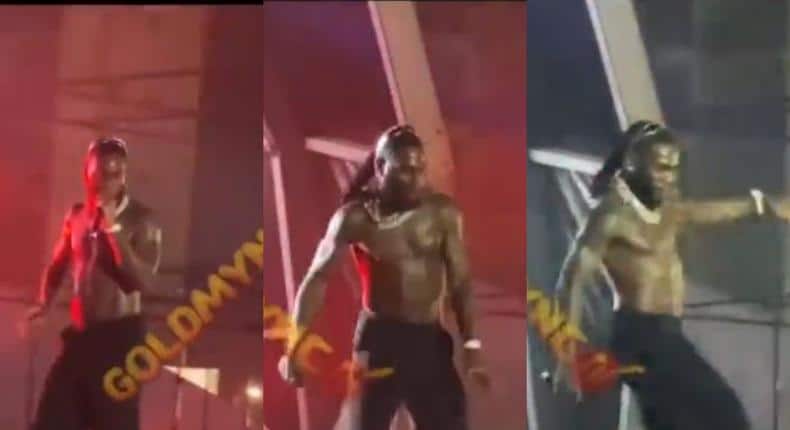




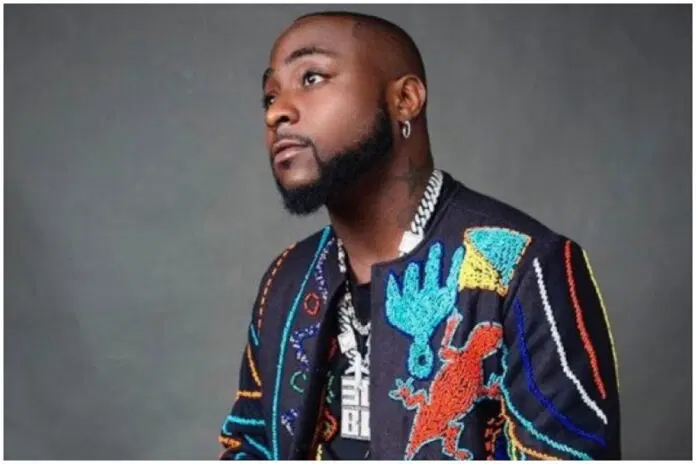

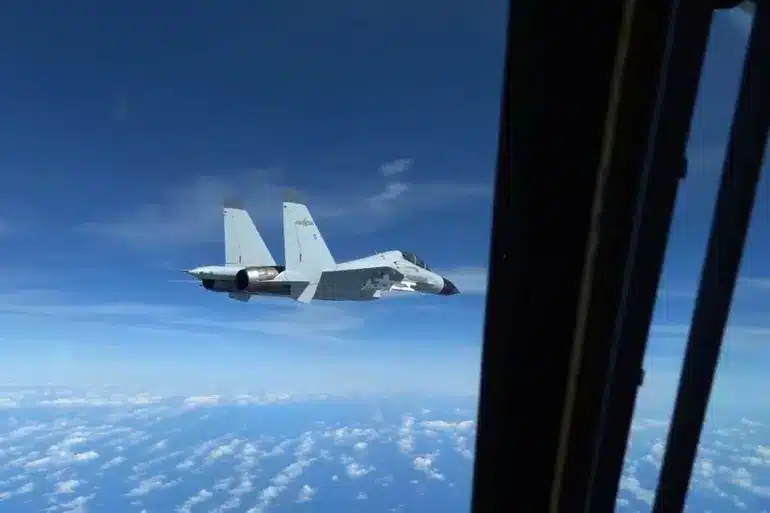
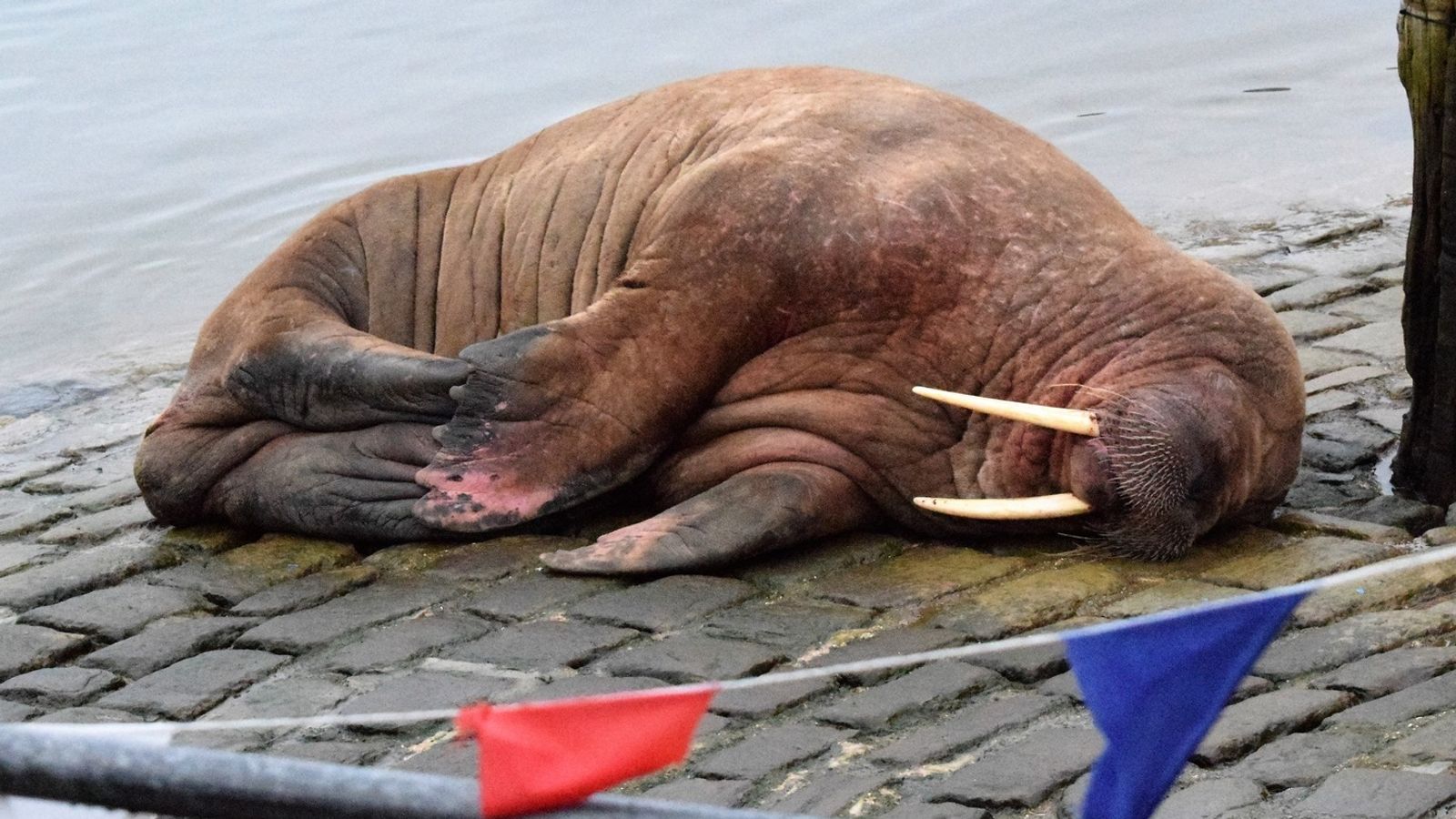
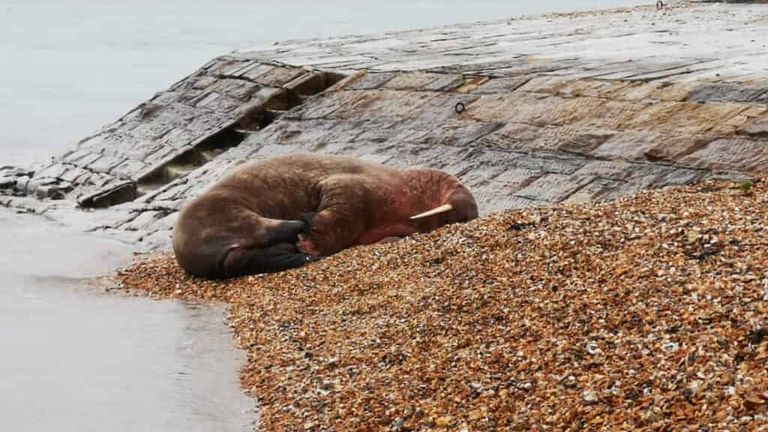
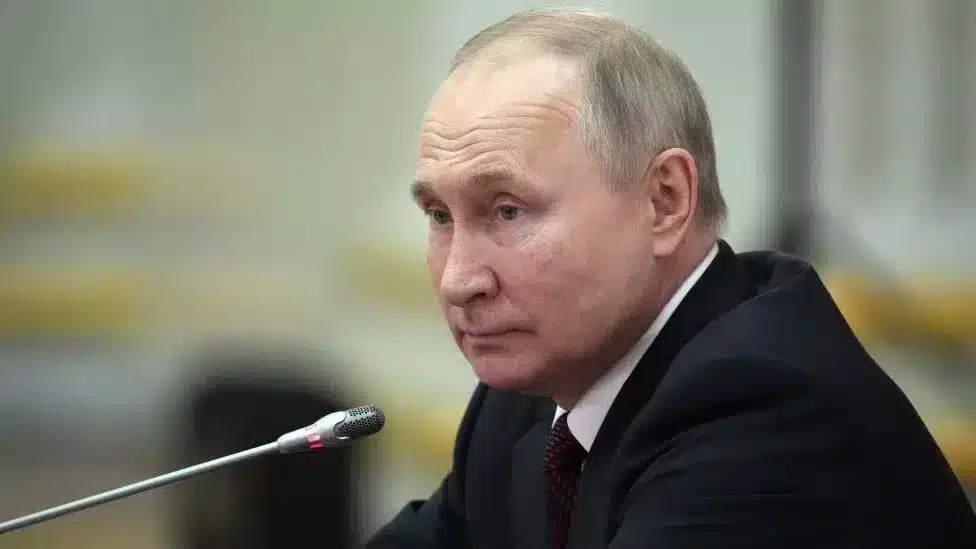
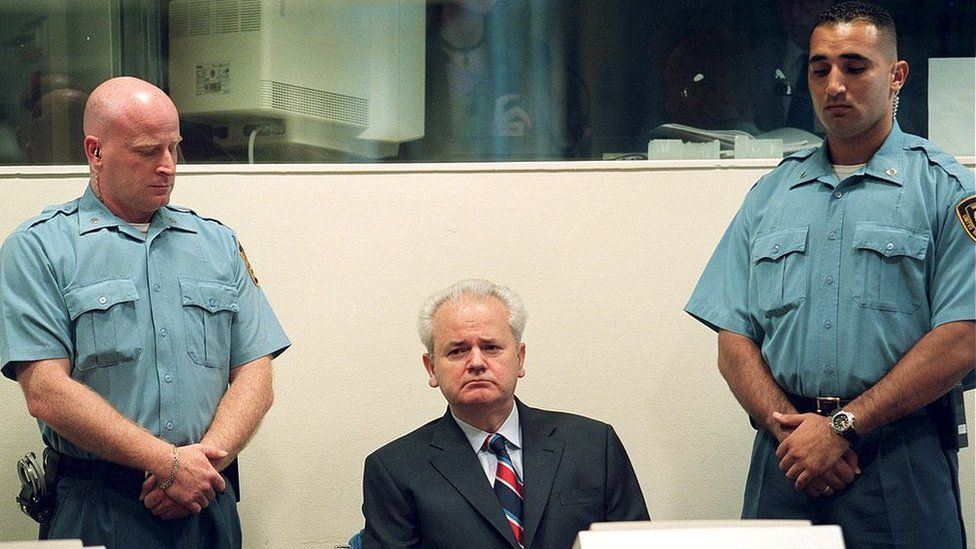

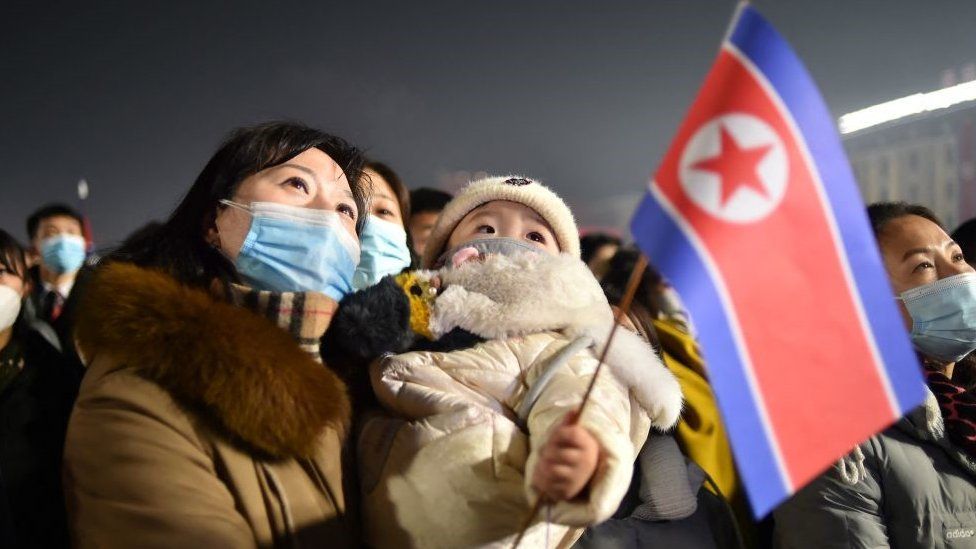

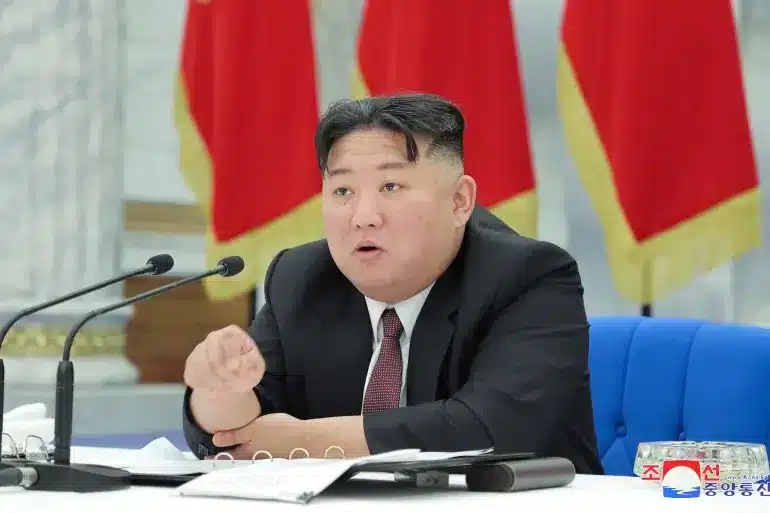
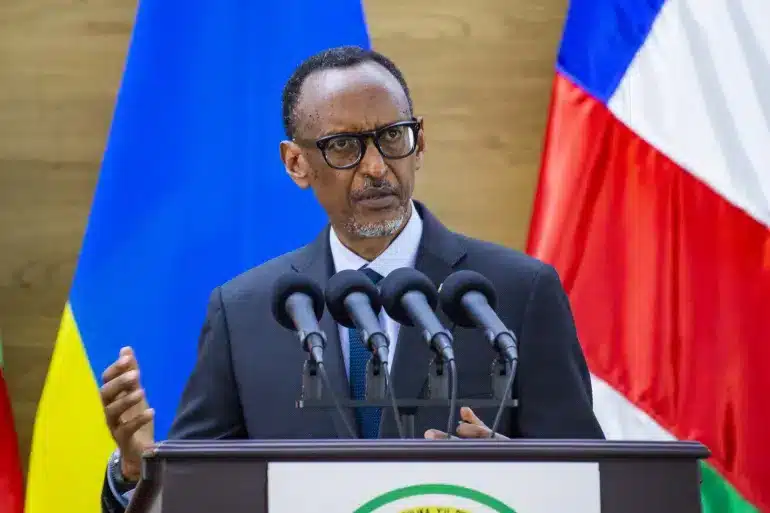
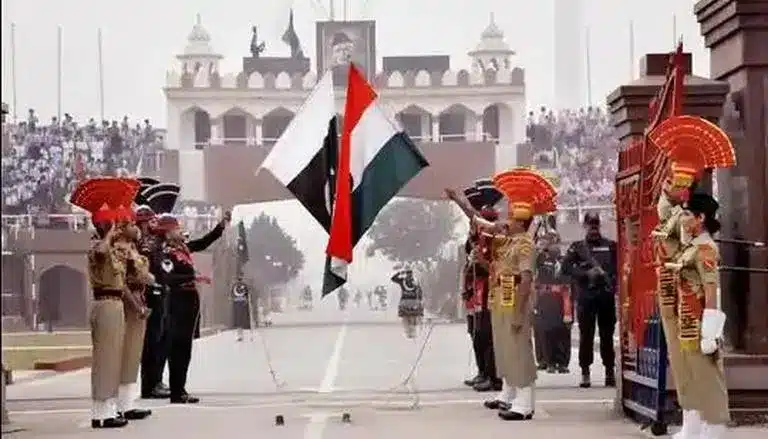
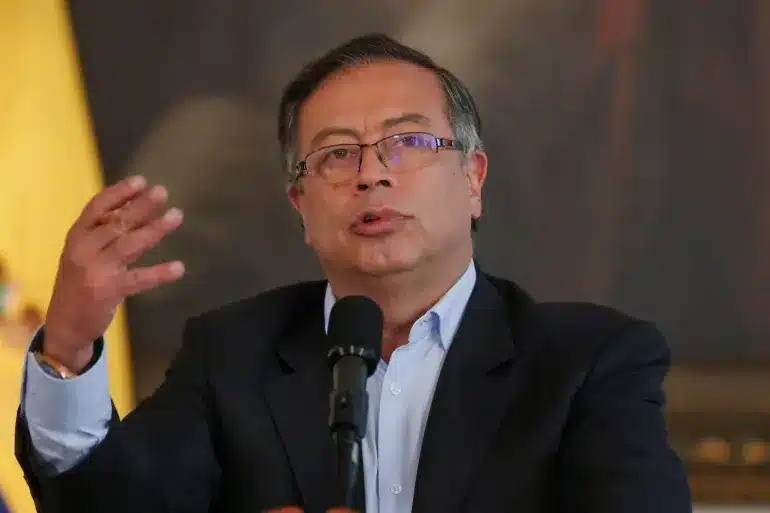


&w=707&quality=100)