He asserts that the monetary policy regime of the nation is an aspect of economic policy that, in his opinion, has evaded scrutiny over time.
The Paramount Chief of the Asogli Traditional Area stated in an opinion piece that “the inability of monetary policy to fulfill its objectives and targets has been a key element of our challenges” on GhanaWeb.
“The arguments I made in 2003, 19 years ago, are still valid today. Bank of Ghana has indexed its policy rate to past inflation, a self-fulfilling prophesy, with predictable adverse consequences for inflation and the value of the cedi,” he noted.
He further raised concern over the current monetary policy rate of 27 percent which was recently announced by the Central Bank.
“By this dogmatic interest rate policy, BoG tried to keep its policy rate above year-on-year inflation. I am surprised that today they are happy to fix their policy rate at 27%, below the year-on-year inflation rate of 40.4%, when they have always argued for the opposite.”
“It is surprising that the economists at BoG still do not understand that the year-on-year inflation is a historical concept, and that, it is not past price changes that interest rates must seek to compensate for,” the economist added.
Sharing his view on how to address the disparity in the inflation rate and monetary policy rate, Togbe Afede called for an adjustment of expected inflation for adjusted seasonality.
“Expected inflation is what astute investors are interested in, much the same way they look at forward price-earnings (P/E) ratios as opposed to trailing P/E ratios in evaluating shares for investment purposes.”
“The Fisher effect, named after Irving Fisher, defines the link between inflation, nominal interest rate and real interest rate, and explains the tendency for interest rates to rise when expected inflation is high and fall when expected inflation is low. Thus, a fall in expected inflation, if the expected real interest rate is unchanged, should cause an equal fall in the nominal interest rate,” he explained.
The current economic challenges in Ghana have reached unprecedented levels as citizens, businesses and residents have been grappling to make ends meet in rather turbulent times.
Since the start of this year, the local currency has tumbled by over 50 percent to the US dollar, the cost of living on an upsurge, fuel price hikes, job losses, worker agitations, and general frustration among the Ghanaian populace has been brewing for months.
Veteran singer Mzbel has called out her ‘haters’ in showbiz and trolled them after landing a massive gig at the upcoming Afrochella festival.
Mzbel was announced today as one of the billed artistes for the upcoming Afrochella festival.
The announcement is a massive one for the veteran singer.
Whilst Mzbel was a trendsetter in music, she is not exactly in her prime currently. Landing such a gig is a massive endorsement!
Mzbel has been receiving lots of plaudits for the deal.
Others are calling out her ‘haters’!
A fan called out Diamond Appiah, Afia Schwarzenegger, Tracey Boakye and Abeiku Santana, all of whom have massive issues with Mzbel.
They like to pretend her career is dead – Abeiku recently called her a ‘former artiste’ – yet a gig such as this completely shows Mzbel’s staying power in the game.
In jubilation, a fan of the singer wrote: “Everybody is hapi 4 MzbeL except 4 pple Afia Ghana @ 60 Abeiku East Legon Landlady🤣”
Mzbel shared the post, indicating she 100% endorses whatever her fan said!
Ghanaian actor and musician Kwadwo Nkansah Lilwinhas rubbished claims that Ghanaian artistes have filled stadiums in the past.
The Kumawood actor was reacting to Wizkid’s failure to fill the Accra Sports Stadium.
According to Lilwin, no Ghanaian artiste has successfully filled any stadium.
He stated authoritatively that he has equally played stadium shows in the past and he is certain of what he is saying.
He added that what some artiste refer to as filling stadiums is usually half or quarter of the stadium.
Citing Maccasio and Fancy Gadam’s shows in the north and some other shows in Accra and Kumasi sports stadiums, Lilwin stressed that it is an outright lie those shows had full stadium capacity.
Wizkid failed to show up at his concert following low turnout.
Hearts of Oak were defeated by Ghana’s Black Galaxies in a practice match for the 2023 Africa Nations Championship (CHAN) competition in Algeria.
On Sunday at the Ghanaman Soccer Centre of Excellence, Prampram, the Ghana Premier League heavyweights took the lead through Yaw Amankwa Baafi, but the local Black Stars rallied to upset the Phobians.
The match was preparatory game for the home-based national team players ahead of the CHAN tournament in the North African country.
Ghana is in Group C where they face defending champions Morocco, Sudan and Madagascar.
Annor Walker and his charged are keen on making impact at the tournament set to commence on January 13.
Ghana will open their account against Madagascar on January 15.
Meanwhile, Hearts of Oak also used the game to prepare their players ahead of the Ghana Premier League which continues immediately after the World Cup finals from December 19,2022.
The Phobians take a trip to Nsoatre for their match day nine game against Nsoatreman FC.
Television Show Host, Abigail Monalisa Semeha popularly called Mona Gucci has taken to social media to express her frustration over how Nigerian artist WizKid treated his fans in Ghana.
Taking to her instagram page, she added her voice to those calling Wizkidout for disrespecting his Ghanaian fans.
Wizkid was billed as the main Art of a concert dubbed ‘Wizkid Live In Ghana ‘ scheduled for 10th December, 2022.
The show was held last night but the main Art, Wizkid did not show up. Angry fans brought the issue to social media to vent their frustrations.
Wading into the trending story, Mona Gucci wrote a long note to the Musician to express how she feels about his absence at the show.
Mona acknowledged Wizkid’s talent but called him prideful. A trait she described as opposite of Wizkid’s Nigerian brother, Davido.
According to Mona, Wizkid should have apologized to appease his fans upon realizing how peeved they are but he’s yet to.
Gucci said because of that, she can sell her properties to attend Davido’s concert but won’t even stream Wizkid’s song for a dollar.
Former President John Dramani Mahama has accused the current administration of failing to efficiently deal with corruption cases and people involved.
Speaking at a lecture at the Academic City University College in Accra, the former President noted that although a difficult task, his government was able to sanction some persons implicated in corruption scandals who were later found guilty of the charges leveled against them.
However, he said the current administration has failed in this regard.
“Unfortunately that is part of the problem we are facing today that the President cannot sack people who have been accused of corruption and so on and so forth,” he said.
He recalled two instances during his administration where people who engaged in corrupt acts were sanctioned and asked the President to emulate his ways.
“There had been a procurement that had taken place and the minister had not gone through the procurement processes properly and as a result of that, there was an accusation that the cost of the procurement was far above what it should be and it created a major scandal for the government. So I asked the Attorney- General and Chief of Staff at the time to investigate the allegations. They did and the report confirmed that the procurement process has not gone through properly,” he noted.
Giving further details on the outcome of the cases, Mr Mahama said one of the culprits resigned and the other was jailed but later released on health grounds.
“I called the minister involved …and she tendered her resignation,” he recounted.
During the lecture, Mr Mahama asserted that dealing with corruption is one of the most difficult tasks Presidents face while in office.
He said this is often because of the people involved and their (close) relationship with the President.
“The very important aspect of decision-making for Presidents is dealing with corruption. It is not as easy as you think it is, and sometimes the person who has been involved in corruption is somebody that you know very well and probably somebody who has been a member of your team, but unfortunately, has fallen by the wayside,” he said.
He noted that regardless, every President must remain firm and deal with the situation fairly and squarely to serve as a deterrent to others who plan on conducting themselves in a similar manner.
The Leadership Seminar Series by Academic City University College is a programme designed as part of the University’s efforts to nurture the next generation of African leaders. It is aimed at ensuring that knowledge developed in the class is directly applied to address contemporary societal problems.
According to the facilitators of this programme, the course is expected to provide a platform for students to interact with renowned African leaders who have risen through the heights of their career; from political, innovation, education, and industrial realms through sheer force of will and have impacted many lives.
Mr Mahama who was the keynote speaker during this lecture spoke to the students about what leadership entails. He stressed that two key features of leadership are responsibility and decision making.
“Leadership is about responsibility first and decision making, you must accept responsibility for the position that you occupy and once you are the leader, people look up to you to take responsibility and based upon that responsibility, take decisive action. You cannot take proper decisions when you have not accepted responsibility for taking those decisions,” he said.
The Minority in Parliament wants the number of Supreme Court judges to be reduced to 13.
They believe this will prohibit any President from putting his faithfuls in that position.
Speaking on the floor of Parliament, Minority Leader Haruna Iddrisuemphasised that the country does not need more than 13 SC judges.
“We have seen significant numbers appointed under President Akufo-Addo to the Supreme Court of Ghana in the name of anticipated vacancies. Ghana does not need more than 13 Justices of the Supreme Court.
Article 128 of the 1992 Constitution makes room for the appointment of 9 or more justices for the Supreme Court, in addition to the Chief Justice.
In line with this, President Akufo-Addosince the beginning of his government has appointed 15 SC judges. The Minority leader who believes this number exceeds the needed number of judges called on Parliament to find a way to regulate this such that not more than 13 judges are appointed for that role.
“This Parliament somehow must find a way to limit the numbers of Justices of the Supreme Court that the President can appoint…Mr. Speaker, where there is no ceiling provided, I want to believe that the framers of the Constitution assumed that Parliament will provide for those limitations, we cannot have an open end,” he said.
Currently, Kwasi Anin-Yeboah, the Chief Justice, heads the judges at the Supreme Court.
Other judges of the apex Court include Justice Jones Dotse, His Lordship Justice Paul Baffoe Bonnie, His Lordship Justice Gabriel Pwamang, Her Ladyship Justice Agnes M.A. Dordzie, His Lordship Justice Nene Abayaateye Ofoe Amegatcher, among others.
Recently, two more namely Justice Barbara Frances Ackah-Yensu and Justice Samuel Kwame Adibu Asiedu have added up to the number after Parliament approved their nomination.
The forward will be able to play for the team in 2023 according to the deal. He is presently beginning his fifth year at the club after having already played there for four years.
“Birmingham Legion FC announced on Thursday that it had picked up contract options on six players including former Inter Allies talisman Prosper Kasim as part of a collection of key returning players for the 2023 USL Championship season.
“Legion FC exercised the option on Prosper Kasim who is tied for the club’s all-time lead with 106 appearances in the USL Championship’s regular season and playoffs,” his parent club Inter Allies FC said on Sunday.
Prosper Kasim, 25, has recorded 24 goals and 12 assists for the Legion FC in the USL Championship.
He currently ranks second in club history in both categories.
Comedian OB Amponsah has called out an industry gatekeeper, Kwaku Osei Korankye Asiedu, aka KOKA, for attempting to, and nearly succeeding, in sabotaging a recent show of his.
According to OB Amponsah, he attempted multiple times to secure sponsorship from a brand represented by KOKA for his comedy special, ‘Ghanaian By Card’, to no avail.
According to him, his attempts were fruitless as KOKA did not have time for him and treated him anyhow.
After ‘tossing’ him about like he was nothing, KOKA reportedly released some funds a few days to the concert and started making demands for his brand.
Meanwhile, Amponsah said he had already secured headline sponsorship for the show and thus KOKA’s demands could not be met.
After the successful show, the angry KOKA has apparently been going around badmouthing OB Amponsah and the comic has decided to reply by telling his side of the story.
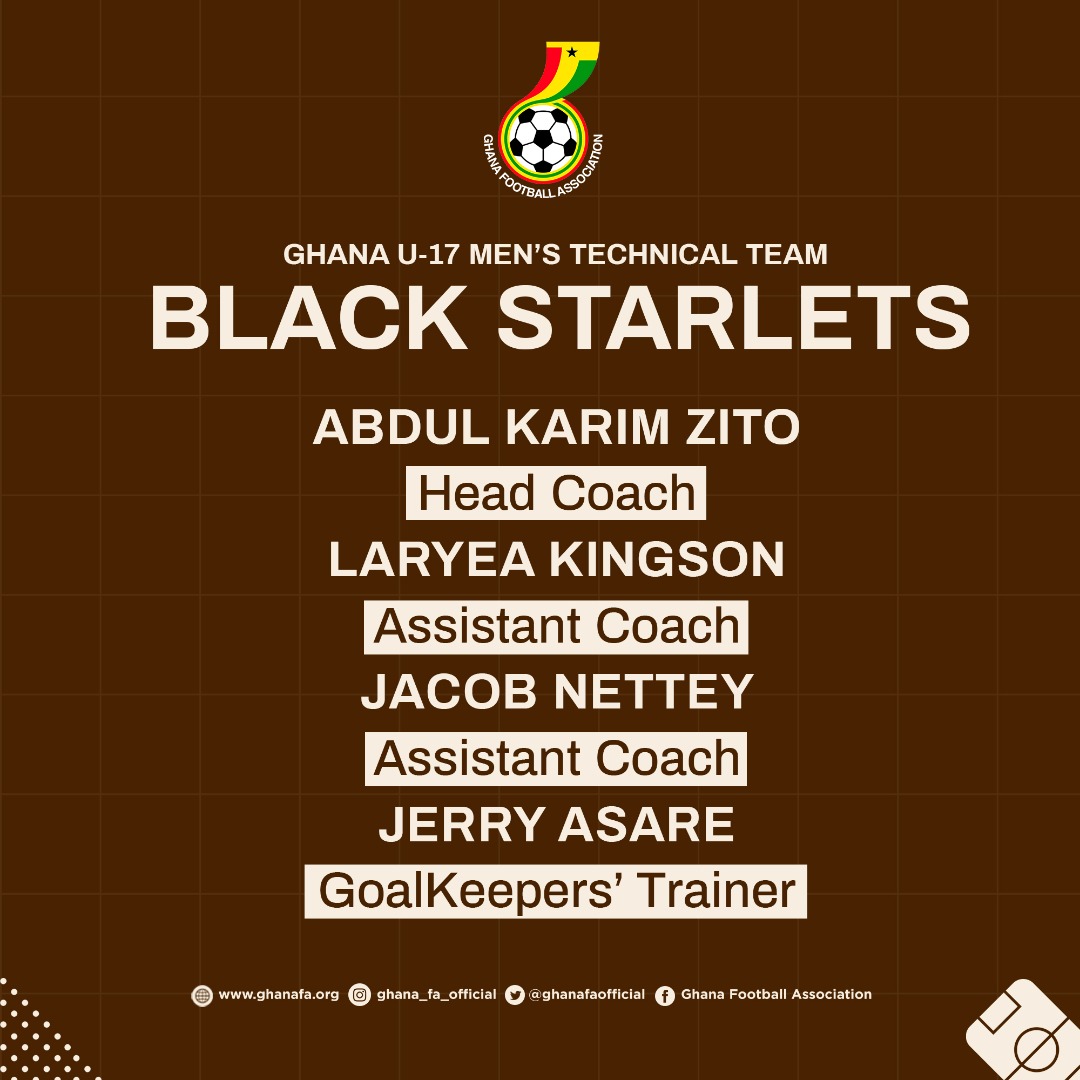
The new technical team has been tasked to assemble a formidable squad for the next edition of the WAFU B U-17 Cup of Nations and the U-17 Africa Cup of Nations.
It served as both clubs’ final practice match before league play resumed on December 19, 2022, following the conclusion of the World Cup.
The game had to end in a pulsating goalless draw in Sunyani as both teams failed to convert their chances.
Despite numerous goal scoring opportunities, both teams were unable to find the back of the net.
Kotoko coach Seydou Zerbo paraded a very strong starting lineup to face the Division One side.
Captain Richard Boadu, Stephen Amankona, George Mfegue and other top players were handed starting roles but that could not stopped Bofoakwa from negotiating for a draw.
This is a good test for the Porcupine Warriors who are keen on defending their Ghana Premier League title this season.
They currently sit 3rd position with 14 points after 8 matches into the 2022/23 campaign.
Commissioner of CHRAJ, Joseph Whittal explained that Chapter 24 of the 1992 Constitution which focuses on the Code of Conduct for public officers does not give enforcers the legal framework for sanctioning individuals who fail to declare their assets.
Speaking at the forum to mark the 2022 edition of the International Anti-Corruption Day, Mr Whittal said “we sometimes also feel helpless because when you have the law that does not critically tell you that, look, if somebody doesn’t declare before he assumes office, or he leaves office or every four years, you should give or mete out sanctions A, B, C and D, it becomes problematic.
“Indeed allegations of non-compliance with Chapter 24 of the Constitution, especially conflict of interest, and non declaration of assets and liabilities continue to dominate the media space. We all know what is happening. This year alone, the Commission received a record number of cases bordering on non-compliance and contravention of Chapter 24 of the Constitution. And we are currently investigating the same,” Mr. Whittal added.
Article 286 (1) of the 1992 Constitution clearly states that “all public office holders must submit a written declaration to the Auditor-General of all properties or assets possessed by them, as well as all liabilities payable to them directly or indirectly.
Per the law, the declaration of assets shall be made by the public officer “before taking office, at the end of every four years, and at the end of the term of his office and shall, in any event, be submitted not later than 6 months of the occurrence of any of the events specified in this subsection.”
The President, Vice-President, Speaker, Deputy Speakers of Parliament, ministers and deputy ministers of state, ambassadors, the Chief Justice and managers of public institutions are all to declare their assets.
However, Ghana’s asset declaration regime has somewhat become a toothless bulldog, and ineffective in the fight against corruption.
Although President Akufo-Addoafter assuming office in 2017 directed all his appointees to declare their assets, reports by the Fourth Estate says not all the ministers complied with the directive.
Out of over 120 ministers, only 18, according to the Fourth Estate, adhered to the constitutional provision in Article 268 (1) of the 1992 Constitution and declared their assets.
Mr Whittal, however, is optimistic that the continuous disregard of asset declaration will be a thing of the past if the Public Officers Bill (CoPO) is passed by Parliament.
He believes that the yet-to-be-passed bill will be a solution to this.
The Commissioner of CHRAJ said, “the current bill as it is, pending before Cabinet, our proposals for the type of sanctions that should be meted out to public officers depending on the stage in which the person failed to declare their asset has been captured.”
“We are hoping that the law will come into force so that we know exactly what to do.”
President Akufo-Addo is joining other African leaders in Washington DC to attend the US-Africa Leaders Summit.
The Summit is part of efforts to foster unity between the United States and Africa.
Ghana is among countries the US President Joe Biden will be hosting in Washington, DC from December 13-15, 2022.
Additionally, the US-Africa Leaders Summit will provide participants and their countries with numerous opportunities to strengthen diaspora ties, promote education and foster youth leadership.
Speaking to the media, US Ambassador to Ghana, Virginia Palmer stated that , “indeed Africa is just very important to the United States and the United States President and it is a wonderful opportunity to talk about issues of mutual concern, the climate, global security, democracy and of course economic progress, and the recovery from the COVID-19 pandemic and preparation for any other pandemic that might come.”
Touching on what the Ghanaian leader might be up to at the conference, the ambassador revealed that, “there is a youth and diaspora summit, and President Akufo-Addo is going to play a big role in that.
“Again, the year of return and the role of diaspora in both countries, I think it is very important. There is a function on peace and security and West African Security will be important for that,”she added.
She further revealed that “on the second day, there’s a whole business day…and then there will be deals that feature in that and then the third day is the actual summit and again Ghana is very important. So I know President Akufo- Addo will have very important things to say.”
According to the US States Department, the Summit will demonstrate the United States’ enduring commitment to Africa.
It will also underscore the importance of US-Africa relations and increase cooperation on shared global priorities.
Other international organizations, such as rating agencies, raised concern about Africa’s ability to pay back its loans.
According to the IMF, 20 of the continent’s 54 nations were close to or in a state of distress as of 2019.
Record commodity prices and low global interest rates have encouraged African countries to borrow as they did in the 1990s, but now some are struggling to pay up as their revenue slows along with economic growth.
Government debt as a percentage of gross domestic product in sub-Saharan Africa has doubled in the past decade, heading back toward the level it reached in 2000.
International Monetary Fund Managing Director Kristalina Georgieva said in November this is a cause for concern. Of the 54 countries on the continent, 20 are near or at distressed levels, according to the IMF, which means they face difficulties honoring their obligations.
African governments have raised about $26 billion in international markets this year, from close to $30 billion in 2018, as they took advantage of investors’ thirst for returns in a world awash with negative yields.
Volatile currencies across the continent increase the risks of borrowing in hard currency and the rising cost of serving debt could crowd out other expenditure in a region that’s home to more than half of the world’s poor people.
“The conditions are ripe for a much higher level of debt distress,” Sonja Gibbs, head of sustainable finance at the Institute of International Finance, said by phone. “Whatever triggers the next crisis, when it happens, you are likely to see a high degree of contagion risk because investors have been moving into higher yielding assets.”
“Some individual countries are getting to higher levels in terms of debt-to-GDP ratios, that’s the concern,” African Development Bank President Akinwumi Adesina said in an interview. The debt-to-GDP ratio of Africa is still “well within acceptable limits,” he said.
Costly Debt
More reliance on commercial bonds has raised servicing costs, diverting funds that could be spent on new roads or schools. Nigeria, the continent’s top oil producer, spends about the same amount every year on repaying debt as it does on infrastructure.
Countries such as South Africa, the continent’s most industrialized economy, are raising debt levels and this year had its biggest Eurobond issuance yet to help plug a widening budget deficit as economic growth slows and public-sector wages and bailouts for state companies sap resources.
External debt payments now eat up on average about 13% of the revenue of African governments from 4.7% in 2010, according to data compiled by the U.K.-based Jubilee Debt Campaign.
Overspending and crashing commodity prices in the 1990s led to a debt crisis that prompted multilateral lenders and rich nations to write off the obligations of dozens of African countries in 2005. This time around a debt pardon may not be that easy.
The complex debt structure with opaque terms and mix of different creditors will make any potential restructuring agreement more difficult.
“We’re concerned that debt relief might now become more complicated,” said Jan Friederich, a senior director at Fitch Ratings. “Nowadays there is a greater concern that governments, when they forgive any debts, might not actually help the African countries very much, but might primarily be bailing out the commercial creditors.”
Former President John Mahamahas disclosed that one of the toughest decisions he took during his tenure was to reshuffle his ministers.
Giving a lecture at the Academic City College in Accra, he noted that this move cost him a lot of friends, however, this did not deter him from sacrificing personal interest for the good of the country.
“In my time, I reshuffled some ministers and I know they were not very pleased. Of course, nobody is pleased when you drop them from office and so there are few of them who are not my best friends anymore because I dropped them from office,” he said.
His revelation follows various calls on President Akufo-Addoto reshuffle ministers who are not meeting the expectations of the public. The President is yet to heed this call and has on various occasions stressed the need not to.
For him, his ministers have performed beyond expectation, therefore, there was no need for any reshuffle.
Unlike the President who remains resolute in maintaining his appointees, Mr Mahamasaid some of the government officials who had to suffer this fate are currently at loggerheads with him.
Addressing the students on the theme “Taking Critical Decisions in Decisive Moments As a Leader, ” he advised the President to emulate him and reshuffle the ministers since it largely helps them in identifying their potential.
“After a while, take a look at the performance of your ministers and based on their performance you must decide to drop some people and you can also decide to shift some people to other places. They may be probably good but maybe they may not be finding their feet in the ministry you sent them and so after observing them for a year or two you see that this person will do better here because of certain qualities they have.”
He further stated that “sometimes you take decisions to move people because you don’t want them to create kingdoms in the Ministries in which they are. When the staff of the ministry or the agency know that this person is untouchable then it does not bring out the best in them…and that is what is happening today,” he stressed.
The founder of the Hawaiichapter of Proud Boys and another person were sentenced to four years in prison for their involvement in the Jan. 6 Capitol riot.
According to a news release from the Department of Justice, Nicholas Ochs, a 36-year-old Proud Boys leader from Honolulu, and Nicholas DeCarlo, a 32-year-old from Fort Worth, Texas, were sentenced on Friday to 48 months in prison, followed by 36 months of supervised release.
In addition to the prison terms, Ochs was ordered to pay a $5,000 fine, $2,000 in restitution, and a $100 special assessment. DeCarlo was ordered to pay a $2,500 fine, $2,000 in restitution, and a $100 special assessment.
Ochs and DeCarlo attended former President Trump’s at the Ellipse that took place prior to the riot, before joining rioters at the U.S. Capitol. After illegally entering the Capitol through the Senate Wing Doors, both men stayed in the building for 40 minutes. Ochs and DeCarlo threw smoke bombs at police, while the latter filmed the former writing “Murder the Media,” the name of the men’s social media channel, on a door to the Capitol.
“These were no teenage pranks,” prosecutors wrote. “Ochs’ conduct targeted the police and Congress — and like the conduct of every rioter that day, threatened democracy itself.”
The news arrives a few months after Ochs and DeCarlo pleaded guilty in September to obstruction of an official proceeding.
Of the 900 individuals who’ve have been arrested for participating in the Jan. 6 insurrection, more than 280 people have been charged with assaulting or impeding law enforcement.
In commemoration of his birthday, Actress, Nadia Buarishared photos of her younger brother, Jameel Buari on social media.
Jameel celebrated his birthday on Sunday, December 11th, leading Nadia to celebrate gush over him all over her timeline.
The beautiful mother-of-four shared photos of her younger half-sibling and rained words of appreciation on him.
Nadia said: “Happiest of birthdays to my sugar baby…my numero uno. Its been an absolute delight to watch you grow from a gullible and naive kid to one of the most talented and visionary minds i know. May your success go beyond all boundaries, and your happiness never exhaust. Have an utterly bodacious birthday celebration,”
Nadia’s sister, Samera, also had sweet words for Jameel, writing: “Happy to my amazing bestie!!!!! I love you @jbuari”
Jameel Buari is a video editor and movie director. He once directed Nadia during a movie, Deranged. The actress served as executive producer on that movie.
Nadia dropped a generous dose of his photos to mark his birthday.
To support his claim, Togbe Afede XIV compared Ghana’s minimum salary to that of the United Kingdom, which is GBP9.50 per hour, or GBP76 for an 8-hour workday, whereas the wage in Ghana is GH14.88 per day, less than GBP1.
“These high interest rates made it difficult for businesses to borrow to invest in the real sectors of the economy to achieve the value-addition we crave. It also perpetuated our import dependence, while making it difficult for local entrepreneurs to borrow, invest and increase local ownership of the economy,” he noted.
He further accused the BoG officials of inadvertently frustrating efforts aimed at restructuring the Ghanaian economy.
“Bank of Ghana officials have inadvertently frustrated the restructuring of the economy, which they themselves have identified as the solution to our balance of payments deficit and currency depreciation problems.”
“It is difficult to see how policy rate increases can fight cost-pushed inflation resulting from food or crude oil price increases or increased taxes on petroleum products. Sadly, even at the height of the COVID-19 pandemic, when income levels had fallen world-wide, and stimulus packages were being implemented everywhere to boost economic activity, BoG still ensured that we suffer under strangulating high interest rates,” the economist added.
While indicating that Bank of Ghana’s monetary policy decisions have not helped in improving economic policy measures over the years, Togbe Afede XIV said it has succeeded in maintaining a growth-stifling ‘high inflation – high interest rate’ environment adding that “it has also created the most profitable banking sector in Africa, if not the world, all with disastrous consequences for the cedi.”
Ex-Hearts of Oak trainer Samuel Boadu has been appointed a the new head coach of the Black Satellites
Abdul Karim Zito, who guided Ghana to victory at the Mauritania 2021 U-20 Cup of Nations, is replaced as head coach by the former Accra Hearts of Oak and Medeama SC coach.
Samuel Boadu coached Accra Hearts of Oak to their first double in two decades – Premier League and MTN FA Cup titles in the 2020/21 season.
The former Prestea Mine Stars, Ghapoha FC and Berekum Arsenal midfielder will be assisted by Desmond Offei – a 35-year-old UEFA A (Level 4) Licensed Professional football coach. Desmond is a former U-18 Head Coach and U-21 coach at Royal Antwerp FC. He is also a former Lokeren U-21 and Lusitano SAD Head Coach.
The other Assistant Coach is Salifu Fatawu – a former FC Tanga and Swedru All Blacks coach who previously worked under Karim Zito to win gold in the U-20 Africa Cup of Nations in Mauritania in 2021.
Meanwhile former Black Stars goalkeeper Fatawu Dauda has also been drafted in as goalkeepers Coach.
He played for Okwaku United, AshantiGold SC, Orlando Pirates, Chippa United, Enyimba FC and Legon Cities. Fatawu featured for Ghana at the FIFA World Cup in Brazil in 2014 and three Africa Cup of Nations tournaments in 2013, 2015 and 2017 respectively.
Their immediate assignment is to lead Ghana to the 2023 African Games slated for Accra in August next year.
Find the new U-20 technical team in the attached file:
It is estimated that Ghana loses up to $25 million annually via unfinished projects. This amount is equivalent to 667 additional three-unit classroom blocks per year which would accommodate an estimated 70,000 students, a study has shown.
The study was conducted in Ghana between 2014 and 2017 by Dr. Martin J. Williams, Associate Professor of Public Administration at the Blavatnik School of Government, the University of Oxford in collaboration with the National Development Planning Commission (NDPC) and the Local Government Service Secretariat (LGSS).
The study shows that about a third of projects started between 2011 and 2013, were never completed.
Presenting a paper on Spatial Infrastructure Data in Ghana, Dr. Williams said the costs of unfinished projects to Ghana, both economically and socially were huge, as shown by the administrative data that already exists within the government.
These administrative data included hardcopy reports or soft copy word documents submitted by local governments to MMDAs or the NDPC as part of normal annual performance reports.
By collating and transforming this data into a database covering about 14,000 projects across a wide variety of agencies and funding sources such as the District Assemblies Common Fund (DACF), GETFund, Internally Generated Funds, and central government funding.
He said 18.6 percent of MMDAs investment expenditure was on projects that were unlikely to ever be finished, noting: “that’s almost a fifth of infrastructure budget going straight into waste”.
He said, “these are mostly small projects that are being done by the MMDAs, so these are six-room classroom blocks, boreholes, wells, administrative blocks; the kind of projects that should take between four and 12 months on average”.
The study also found that contrary to popular opinion that unfinished projects were due to corruption and politics or elections, the findings showed that neither of these was the cause.
It said more work has been done on the projects than had been paid for and project completion rates were also consistent across the years.
Rather districts were spreading their resources for projects too thinly on too many projects than they could afford to complete every year, this notwithstanding, projects were more effectively delivered through local government than central government.
He said the findings were a demonstration of how administrative data could be valuable for policy preparation purposes as well as for academic work.
Following Ghana’s elimination from the 2022 FIFA World Cup, the offensive midfielder for SC Freiburg is now on vacation in Ghana.
While on his holidays, he has been gifted a Hearts of Oak jersey by the leadership of the supporters in the Greater Accra Region.
Elated with the beautiful jersey, he has been spotted rocking the rainbow colours with a smile on his face.
Daniel-Kofi Kyereh is one of the 26 players that made it into Coach Otto Addo’s final 26-man squad for the 2022 FIFA World Cup.
He featured in all three matches as a substitute in the second half. After his holidays in Ghana, he will report to SC Freiburg in Germany to prepare for the resumption of the German Bundesliga at the end of this year’s mundial.
About six weeks ago I was in New York, and for the first time in almost three decades, I struggled to sell the economic credentials of my country. When we were approaching the runway at Kotoka International Airport, at the end of my return journey, I looked outside from my window seat, and my joy about a safe return, as often, turned into sadness – the sharp contrast to what one sees when approaching the runway of the international airport of an average modern city was distressing. I asked myself, why?
Any hope of accelerating our development is now dimmed by our current economic crisis, the result of a monumental failure of leadership. I saw it coming when after only three months in office, the government rushed to raise USD2.25billion from a single source. I thought the interest rate, 19.75%, was punitive, and the redemption premium was protective of the term (duration) of the bond. I saw tell-tale signs of recklessness and I advised a more critical look at proposals from the Ministry of Finance.
Our economy is in a mess and the growing frustration and sense of helplessness among the youth is frightening. I am worried about the greed-inspired, divisive and acrimonious politics which is at the root of all this. What has become of all the love we shared as one people? How I wish we all are committed to building the Ghana that was the dream of our founding fathers.
I know what suffering is like, so I’m worried for my “fellow Ghanaians”. That is why, once again, I want to share my thoughts on our development challenges. Much of what I have to say, I have said before and are common knowledge. But there are certain things that can never be overemphasized, and there is often the compelling need to repeat what may seem obvious.
Our vulnerabilities
The COVID-19 pandemic has been a great challenge, and so has been meningitis in northern Ghana, and Ebola in some parts of Africa. These and other tragedies have exposed the vulnerability of the black race and the imperative need for our leaders to think about what we can do to further the cause of development in Africa. Here in Ghana, we seem to have missed the opportunity to strengthen our peace and unity, which are vital for development.
Our current economic challenges predate COVID and, of course, the ongoing war in Ukraine. We shall survive all of these, but we must remember always that survival is not the same as prosperity. The truth is that our people are suffering.
Our resource endowments
We are lucky, just like many other African countries, to be endowed with so much, the most important being our human resource – young and growing population. Our country, and the rest of the continent, have more than our fair share of the world’s natural resources.
About 30% of all known mineral resources are found in Africa; we have 20% of the world’s landmass and 60% of uncultivated arable land; and we have 17% of the population. Yet we account for only about 3% of global output, GDP, and a similar share of world trade. According to the International Energy Agency, Africa has 60% of the world’s best solar resources, but only 1% of solar generation capacity.
Ghana, with its fertile land, gold, diamond, bauxite, manganese, oil and gas, etc., is much better endowed than the average African country. So, the potential for development is great.
The dream of our founding fathers and the 1992 constitution
Development that provides the necessities of food, shelter, water, health, education, electricity, roads, jobs and incomes, thus good living standards, and ultimately, happiness, is the minimum that Ghanaians desire, and indeed, deserve.
Not only did the founding fathers of our nation recognise this, but they also believed that we could work for the desired development. That was what inspired the demand for independence and the proclamation that “the black man is capable of managing his own affairs”.
They also believed that we need a free, just, and democratic society in order to develop to our full potential, hence the choice of the motto, Freedom and Justice, to inspire commitment to these most basic requirements of democracy.
The framers of the 1992 Constitution underscored the need for development by providing in Article 36 (1), under The Directive Principles of State Policy, that “The State shall take all necessary action to ensure that the national economy is managed in such a manner as to maximize the rate of economic development and to secure the maximum welfare, freedom and happiness of every person in Ghana and to provide adequate means of livelihood and suitable employment and public assistance to the needy”.
The importance of individual initiative and the private sector are also recognised through the provision in Article 36 (2) (b) that “The State shall, in particular, take all necessary steps to establish a sound and healthy economy whose underlying principles shall include affording ample opportunity for individual initiative and creativity in economic activities and fostering an enabling environment for a pronounced role of the private sector in the economy”.
Happiness is the essence of life, and it is important for unity, peace, stability and for continuing development. So, without guaranteeing the freedom of every individual to pursue happiness, no nation can develop to its full potential. Thus, peace, development, prosperity and happiness for all were in the minds of our founding fathers and the framers of the 1992 Constitution.
The reality of the state of affairs
The truth is that we have failed, woefully, to achieve the ideals of the 1992 Constitution, and the vision of our founding fathers – a nation that is able to provide, under indigenous leadership, the basic necessities to all its people and ensure their happiness. We have pretended for too long.
I consider poverty in Ghana a paradox because of our enormous resource endowments – we are hungry in the midst of plenty; thirsty, while standing in the middle of the stream; and beaten by the rain, while holding our umbrellas down.
Notwithstanding all our endowments, we are now a highly indebted, bankrupt, poor country. From 35% of GDP a few years ago, our debt-to-GDP ratio is projected to balloon to 104% by year-end, 2022. We are now faced with questions about debt sustainability and our ability to find the fiscal space to fund urgent and critical development needs. Now, the fears about Ghana defaulting on its debt repayment have effectively materialised with the announcement of a domestic Debt Exchange Programme. And we are making a mockery of ourselves talking “no haircuts” when that is exactly the effect of reduction in promised coupon payments.
Holders of Ghana Government bonds have already seen the value of their investments plummet. Holders of domestic bonds have been worse. The real losses they suffered comprised of the discounts on the nominal values of their investments and the loss of value in dollar terms because of cedi depreciation.
Even more alarming is the fact that we have piled on so much debt and yet we still lack basic socio-economic infrastructure – we could not fix our roads, provide the hospitals that our people need, or schools for our kids, with many still taking lessons under trees.
Making matters worse are the galloping inflation, currency depreciation and the frightening unemployment rate. Inflation, which has been on the rise since December 2021, stood at 40.4% in October 2022. Over the same one-year period, the dollar went up (gained) 141%, from average GHS6 in October 2021 to GHS14.47, equivalent to 58.53% cedi depreciation.
Even though denied, there have been signs of a nation in crisis everywhere you turned – unsustainable indebtedness and threats of default, deteriorating socio-economic infrastructure, turmoil in the markets, and growing joblessness among our youth. So much to do, yet no jobs! And now, business failures are threatening more job losses. We have failed miserably and have fallen far behind our neighbours.
Consequences of failure
The consequences of these failures have been mass suffering and growing frustration, leading Ghanaians to leave the country in droves in search for greener pastures, preferring xenophobic isolation abroad to the stifling conditions at home. The suicide rate has been rising, and so has been the crime rate, with dire implications for our peace and security.
Over the last two years, hundreds of experienced medical professionals, trained at the expense of the state, have left Ghana for care-home jobs in the United Kingdom. By the way, the government itself is facilitating the exit of our nurses to countries that have relatively more.
As I said in September 2021, during a courtesy call by the Speaker of Parliament, Ghana would have filed for bankruptcy if it were a company. This is effectively what we have done by going back to the IMF, and with the Debt Exchange Programme.
How did we get here?
Understanding our difficulties is the first step in the search for solutions. Our chaotic economic situation is the product of a toxic mix of, among others, our dishonesty; partisanship, cronyism and tribalism; greed-fuelled corruption; lack of proper planning, and the consequent episodic approach to economic management; and bad monetary policy that has indexed our future to the past. The situation is worsened by our attitudes and beliefs, and by a constitution that has outlived its usefulness.
Respect for the truth, and the rule of law
Whilst we project ourselves as very religious, we have little respect for the truth. People are not ashamed to invoke the name of God to back the lies they tell, destroying whatever is left that is good in our value system. The way people shamelessly defend wrongdoing is worrying.
Today in Ghana, one is confused as to what the truth is, depending so much on who is talking. Some have become so self-centred that even an obviously wrong action is the best so long as they benefit from it.
Such dishonesty has undermined the principles of fairness, equality before the law, and our democracy, and has adversely impacted our peace, unity, stability and development. Truth and accountability are the foundations of democracy and development. That is why the most developed countries are the ones where the law works.
Even in managing our current crisis, we have not been served with the truth about the government’s intentions.
Divisive, tribal, winner-takes-all politics
Today, everything is seen through political lenses. The anti-nation, winner-takes-all brand of politics has politicised development, granting of tax and duty waivers, award of contracts, and appointments, even recruitment into the security services. It is shocking that even some aspirants to the Presidency shamelessly advocate for the exclusion of non-party members in the award of contracts and jobs, promising same when elected to power. So, the wrong people get the contracts, and the wrong people get the appointments. The result has been pervasive mediocrity.
Whether it is about development projects, fighting corruption, dispensation of justice, fighting Galamsey or dealing with the consequences of COVID-19, parochial political objectives have taken precedence over national interest. This has been the major factor in our acrimonious and divisive politics.
Indeed, some of our people have a false sense of ownership and entitlement and have become so accustomed to privilege that exclusivity is bad unless they are the beneficiaries. Discrimination has stifled hard work, initiative, and creativity, and has prevented the country from benefitting from all the skills and talents available.
Our constitution advocates a system that is all-inclusive and provides opportunities for all. But we do not have a model or formula for the allocation of the nation’s resources, for example, to ensure equity. Politics has become an end, losing its development objective. Our leaders have shown more commitment to remaining in power than to the development of the country.
Greed, corruption, transparency and accountability
Ghana Integrity Initiative estimated that Ghana “loses close to USD3billion to corruption annually”. There is no doubt that our budget deficit would have been narrower, and we probably would not need to borrow from external sources, if honesty and prudence had guided our spending.
The resort to single sourcing or limited tender in the award of contracts, under false certificates of urgency, has been harmful. It has allowed a few to deploy foul means to secure contracts for relatives and cronies at inflated prices that hurt everybody. While some exploit “urgency”, other officials hide under “confidentiality” to appropriate our limited resources into personal wealth.
Lack of accountability has allowed a few people, with predatory and parasitic tendencies, some of whom come into leadership or public service with the objective of enriching themselves, to profit at the expense of the majority.
Corruption has been stifling and disruptive. Some of our leaders suddenly become businessmen. They obstruct genuine entrepreneurs, frustrate them, or steal their ideas. Their methods stifle initiative and hurt the growth of the private sector. They deprive the country of development by syphoning money that could have built the roads, schools, and hospitals, and are the main reason why our economy is in such a deplorable state.
But corruption is not limited to the public sector. It is pervasive and has undermined productivity in both the public and private sectors because corrupt officials do not achieve much on the job. They spend most of their time plotting to take from the pie, instead of increasing its size. I liken them to termites at the woodwork, eating at the very foundations of our development.
Greed and the fight for control of resources has bred so much partisanship that political opponents are seen as enemies, even when the public posture is different. Our educated elite have replaced the colonialists in a more painful new scramble for our resources, raping our country mercilessly.
As someone wrote in a comment on a news article, “Corruption was not in the news in Gold Coast, but corruption has flooded the news in independent Ghana”. We have succeeded in making a once clean Ghana another word for corruption”.
Too many transactions and projects have raised eyebrows recently. These include the payment of judgement debts, the proposed Agyapa deal, the failed PDS transaction, the National Cathedral, and the sale of state lands.
Fiscal policy, planning, priorities and waste
The management of our economy has been poor. We have over the years talked about the structural defects in our economy, with regards to foreign domination, over-reliance on imports and our inability to add value to our exports. We have not been able to implement any viable strategies to correct these defects.
And, quite obviously, not a lot of thought or planning appear to have gone into some of the choices we made. We all were witnesses to the rushed introduction of the Single Spine Salary Structure and the Free SHS Programme and the sudden and reckless cancellation of road tolls without adequate planning. Many other programmes have been decided without any idea where the required resources would come from. And very soon, our small country will be boasting three international airports while our internal road network is very poor.
We also set targets without detailed roadmaps defining required actions, their timing, and their effects as was the case with the E-levy, which failed to bring in the expected revenues. All these, combined with corruption, made budget shortfalls and excessive borrowing inevitable.
We are poor, earn so little, but spend the way even the most affluent countries would not on things which are not necessary. When Houphet Boigny built the 18,000 capacity Basilica of Our Lady of Peace, in Yamousokro in 1990, 32 years ago, Ghanaians mocked at him. Little did we know that decades later, we will be attempting to outdo him with our own National Cathedral.
The large increase in the number of ministries and appointees in 2017 was, invariably a waste, because it did not make any impact, let alone produce the promised outcomes. Political motivations dictated reckless increases in the size of our parliament, with little or no thought about the extra costs – salaries, multiple ex-gratia payments, Common Fund allocations, etc., etc.
Payment to directors and employees of non-existent Keta Port, monies lost in the failed award of ECG to PDS, abandoned projects, sale of government vehicles and their replacement after four years or less, and expenditure on new voters registration, have been wasteful.
Similarly wasteful have been payment of end-of-service benefits and all manner of allowances and perks to some state employees, huge convoys, unnecessary expensive travel for mostly unproductive seminars and conferences (e.g., the reported 322 people who attended the recent UN Climate Change Conference in Egypt).
By the way, I am not sure whether, and how, our parliamentarians account for the various monies they are given for development interventions in their constituencies. Meanwhile, NABCO trainees are fasting and praying over unpaid allowances.
Our SOEs are poorly supervised. That is why they build edifices they do not need, spend almost all the revenues they generate, and pay very little or no dividends to the state. That is why their executives seize every opportunity to travel abroad, most of the time needlessly. And that is why they have policies that provide for the payment to redundant workers as much as four (4) months’ salary for every year they have worked, even when their enterprises provide Tier 3 pension contributions.
The so-called banking sector clean-up, involving the closure of some banks, was a reckless unplanned move that imposed unnecessary cost on the state. We are yet to see the cost-benefit analysis of that exercise. Meanwhile, we are paying the price for all the recklessness.
Monetary policy failure
Our monetary policy is one segment of economic policy that has escaped scrutiny over the years. Not since 2003 when I complained about monetary policy in this country has there been any open debate about how monetary policy has been conducted.
The failure of monetary policy to achieve its objectives and targets has been a key part of our problems. The arguments I made in 2003, 19 years ago, are still valid today. BOG has indexed its policy rate to past inflation, a self-fulfilling prophesy, with predictable adverse consequences for inflation and the value of the cedi.
By this dogmatic interest rate policy, BOG tried to keep its policy rate above year-on-year inflation. In their article responding to my concerns in December 2021, BOG argued that “The simple theory underpinning finance suggests that investors will always have to be compensated for inflation and that investors always factor in real interest rates in making decisions. With an inflation rate of 11 percent, the central bank’s policy rate of 13.5 percent implies a real interest rate of 2.5 percent”. I am surprised that today they are happy to fix their policy rate at 27%, below the year-on-year inflation rate of 40.4%, when they have always argued for the opposite.
It is surprising that the economists at BOG still do not understand that the year-on-year inflation is a historical concept, and that, it is not past price changes that interest rates must seek to compensate for. The relevant inflation rate for fixing the policy rate, in my view, should be expected inflation, adjusted for seasonality, etc. Expected inflation is what astute investors are interested in, much the same way they look at forward price-earnings (P/E) ratios as opposed to trailing P/E ratios in evaluating shares for investment purposes.
The Fisher effect, named after Irving Fisher, defines the link between inflation, nominal interest rate and real interest rate, and explains the tendency for interest rates to rise when expected inflation is high and fall when expected inflation is low. Thus, a fall in expected inflation, if the expected real interest rate is unchanged, should cause an equal fall in the nominal interest rate.
It is sad that our economists have failed to realise the fallacy in comparing the current interest rate to past year-on-year inflation in determining the real interest rate. BOG’s fixation of its policy rate based on this statistic, with no interest in recent month-on-month changes, has been a self-fulfilling prophesy that has only succeeded in importing past inflation into the future, plunged us into a vicious circle, and made Ghana a “high inflation – high interest rate” environment, one of the worst on the continent.
It is also wrong for BOG to persist in trying to tame inflation in Ghana using high interest rates as could be successfully done in a rich country like the UK. The minimum wage in the UK is GBP9.50 an hour or GBP76 for an 8-hour workday. In Ghana, the minimum wage is GHS14.88 per day, less than GBP1. The average cost of a litre of petrol is GBP1.69 in the UK, 2.2% of the daily minimum wage. In Ghana, the average cost of petrol is GHS16.5, 122% of the daily minimum wage.
The relativities are similar with regards to other necessities of life. So, unlike in the UK, increasing interest rates will only increase cost of living in Ghana, but will not encourage the average Ghanaian, who can hardly make ends meet, to spend less and save more.
These high interest rates made it difficult for businesses to borrow to invest in the real sectors of the economy to achieve the value-addition we crave. It also perpetuated our import dependence, while making it difficult for local entrepreneurs to borrow, invest and increase local ownership of the economy. Thus, BOG officials have inadvertently frustrated the restructuring of the economy, which they themselves have identified as the solution to our balance of payments deficit and currency depreciation problems.
It is difficult to see how policy rate increases can fight cost-pushed inflation resulting from food or crude oil price increases or increased taxes on petroleum products. Sadly, even at the height of the COVID-19 pandemic, when income levels had fallen world-wide, and stimulus packages were being implemented everywhere to boost economic activity, BOG still ensured that we suffer under strangulating high interest rates.
While BOG’s monetary policy over the years has succeeded in maintaining a growth-stifling “high inflation – high interest rate” environment, it has also created the most profitable banking sector in Africa, if not the world, all with disastrous consequences for the cedi.
The size of UK’s economy, as reflected by its GDP, was about USD2.7trillion in 2019, almost 40 times Ghana’s GDP, USD72billion. But the Bank of England (BOE) made a profit of GBP57million (USD76million) in 2020/21, down from GBP72million (USD96million) in 2019/20. BOG, on the other hand, made a profit of GHS1.57billion (USD270million) in 2020, down from GHS1.8billion (USD310million) in 2019. Thus, BOG made almost 4 times as much profit as BOE. Incredible!
Over the years, our commercial banks have made enormous profits while the real sectors, including manufacturing, have been in trouble.
BOG claimed that “The banking industry’s performance has defied the general economic downturn with strong growth across key metrics including total assets and deposits, as well as sustained improvement in profitability within the industry during the first half of 2022.”
And that, “The sector’s total assets increased by 22.8 percent to GHS200billion at end of the period, representing a 17.2 percent growth over the previous year. The domestic component of total assets recorded a higher growth rate of 23.5 percent in June 2022 compared to a growth of 18 percent in June 2021”.
They added further that “…the higher growth in the industry’s assets by mid-year was primarily on the back of an upsurge in deposits and borrowings during the review period”.
But the undeniable truth is that all these “growths” were fuelled by high interest rates, and represent a transfer of assets from government and the real sectors to the banking sector. BOG and the commercial banks’ huge parasitic profits put a lot of stress not only on the private sector, but on the public sector as well. They impose a huge burden on those outside the banking sector and frustrate the realisation of the needed structural change.
The use of the wrong inflation variable accounts for the failure of BOG’s inflation targeting policy. When in December 2021 BOE increased its prime rate from 0.1% to 0.25%, to meet a 2% inflation target, BOG, on the other hand, increased its policy rate from 13.5% to 14.5%, while targeting an inflation of 8%. BOG’s policy rate was more related to the reported year-on-year (past) inflation of 12.2% instead of its target (expectation) of 8%. BOG sought to keep their policy rate above year-on-year inflation to maintain a “positive real interest rate” based on their awkward understanding of real interest rate.
It is worth noting that Zambia’s November 2021 inflation was 19.3% but Central Bank of Zambia’s prime rate was as low as 9% in December 2021. Today, while Ghana’s inflation in October 2022 stood at 40.88%, Zambia recorded 9.7% inflation in October 2022.
Our high inflation and interest rate statistics naturally feed into external market perception of our outlook. We cannot through our policy rate give an impression of a high inflation risk outlook and expect the external financial markets to think differently. So, BOG’s approach has been costly for us in the international financial markets too.
Speaking during a press briefing on Friday, October 7, 2022, in Washington, DC, on the 2022 edition of the Babacar Ndiaye Lecture, Dr Hippolyte Fofack, Chief Economist and Director of Research at Afreximbank, elaborated on the importance of this year’s theme, “The Developing World in a Turbulent Global Financial Architecture”:
“Africa’s total external debt is about $726 billion. That makes it less than a third of Italy’s debt estimated at about US$2.8 trillion. And expressed as a percentage of GDP, Africa’s total external debt is 27%, compared to 130% in Europe. Yet African countries are more at a risk of debt distress than their European counterparts largely as a result of large spreads and default-driven borrowing rates assigned to African sovereign and corporate entities.”
Thus, BOG cannot justify the astronomically high monetary policy rates that have burdened our economy over the past 20-plus years. It has not only increased money supply over the years, fuelling price increases, but has also undermined the cedi. Contrary to their claims, we cannot use “higher interest rates to maintain exchange rate stability”, and more so when they have failed to protect the cedi as the only legal tender in Ghana. High interest rates have not and will not help us “maintain exchange rate stability”. Parity laws tell us the opposite.
On November 1, 2007, GHS1 was equivalent to USD1. GHS1 invested in Ghana government’s 91-day treasury bill on that day and rolled over for 15 years would grow to about GHS12 on
October 31, 2022. Coincidentally, the price of USD1 on October 31, 2022 was about GHS13! Obviously, this huge return on the cedi has been inflationary, and also aided cedi depreciation.
As I pointed out, inflation was 40.4% in October 2022. Along with it, the dollar went up 141%, from average GHS6 in October 2021 to GHS14.47, implying cedi depreciation of 58.53%.
Most importantly, it must be realised that the high monetary policy rates will not help efforts to remove the “structural bottlenecks” that BOG often alludes to. On the contrary, they have been the stumbling block to creating an enabling financial market where businesses can source debt capital for growth and expansion. They have made the cost of capital excessive, aggravated the supply problems in the economy and increased our import-dependence.
Today, we are locked in the same, growth-stifling, demand-side approach to the inflation problem, and find ourselves in a vicious circle of high inflation and high interest rates.
The mere fact that after over 100 years of producing cocoa, we still go abroad to borrow money to finance its purchase is ample evidence of how our banking system has failed the real sectors of our economy. Bank of Ghana has been at the centre of this problem.
Private sector and crony capitalism
We have failed to give genuine support to private initiative and create conditions for all to participate in the development process to reduce the burden on government, reduce the national debt and minimise public sector corruption.
The few initiatives in support of the private sector have been politicised. Tax waivers, duty exemptions and other incentives have become a privilege reserved for loyal party supporters instead of being targeted at sectors of the economy that need support to become globally competitive.
Great ideas and initiatives have not been supported merely because of selfish or political reasons. Crony capitalism has spelt doom for the genuine entrepreneurs, ensuring the happiness of a few, and discontent, misery and suffering of the majority.
retentious, poorly planned initiatives like NABCO have been the preferred short-term political reaction to the unemployment problem. But these, we all know, do not create real jobs, and thus cannot provide sustainable solutions to the youth unemployment problem.
Weak institutions
Many of the above issues and challenges are the result of the virtual bastardisation of many of our institutions. Parliament, for example, has been very ineffective, while the judiciary has been perceived to be politicised, leading to mistrust. These have contributed to the creation of a chaotic and toxic political environment.
Many have lost faith in the courts, and their ability to ensure justice when rights are trampled upon. And when at the same time Parliament has been weak and toothless, freedom and justice became imperilled, making a complete mockery of our democracy.
Many of our other institutions have also failed us because they have been weakened by the loss of their independence, with adverse consequences for the nation’s development. The Council of State, Electoral Commission, National Media Commission, Public Services Commission, Commission on Human Rights and Administrative Justice, National Commission on Civic Education, Lands Commission and even the military, the police service, and chieftaincy have all become politicised.
The following words of Nobel Prize laureate, Rigoberta Menchú, are quite instructive: “Without strong watchdog institutions, impunity becomes the very foundation upon which systems of corruption are built. And if impunity is not demolished, all efforts to bring an end to corruption are in vain”.
The 1992 Constitution and the President’s powers
Our constitution has outlived its usefulness, is responsible for the weakness of our institutions, and has been a major bottleneck to our development. Many of its provisions appear to belong to a different era or look like inspired by considerations than democratic or development objectives.
The excessive powers of the President, for example, and the indemnity clause that ensures that he cannot be held to account, have encouraged reckless abuse of power, and are at the root of corruption in our country.
Our President appoints people to thousands of positions and can dismiss them at will, virtually. It is the main reason why many of our institutions are politicised and weak.
Galamsey
There is no doubt in my mind that our resort to prayers and deities, instead of the law, to stop the massive destruction of our environment by unregulated small-scale miners has presented a negative outlook for our country, generally, and its economy, in particular.
At a time when environmental sustainability and issues about climate change have dominated discussions at almost every level of global policy dialogue, it is shocking that we can remain, apathetic bystanders, while a few people destroy our agricultural land and water bodies. It is hard to imagine any other country which will tolerate that level of environmental degradation.
It was not only a bad environmental practice, but laughable and wasteful to burn a few excavators, which probably cost foreign exchange to bring in, as a way of showing commitment to fighting Galamsey.
Attitudes, beliefs and value system
Our attitudes, beliefs and value system have been a major part of the problem. They have allowed under-development, poverty, and dependency to become the lot of our people, as is the case with virtually very black nation, from Haiti, the poorest country in the Western Hemisphere, to the Horn of Africa.
We seem to have replaced bad traditional beliefs with equally bad, if not worse religious beliefs. A study showed that the richest 25 countries are generally non-believers, while the poorest 20 countries, mostly in Africa, are great believers.
Many of our new pastors predict only bad news and preach mostly about the devil, bad spirits and evildoers. Every misfortune is the work of the devil, and so people must seek help from the pastor. These beliefs and practices stifle initiative and discourage hard work. They make most of our people lose trust in their own ability to effect the desired changes in their lives.
Also, we have developed a get-rich-quick attitude that does not question the source of people’s wealth and does not recognise that success must be a product of honesty and hard work. It has allowed us to become so tolerant of corruption as to virtually accept it as “business”.
Our attitudes and beliefs are also the reason why we sit aloof and allow a few people to toil with our lives and disrespect us. We watch our leaders shower praises on themselves while celebrating mediocrity.
Threats to peace, stability and unity
All the above are lingering threats to our peace, stability and unity. They have hurt our outlook and our ability to realise our full potential, and partly explain why after enjoying more than 30 years of relative peace in a turbulent West African subregion, we have little dividend to show.
Now our current economic crisis is breeding more distrust and suspicion among our people, because of perceptions of unfairness and unequal access to opportunity, much of it rooted in politics, and creating a chaotic socio-politico-economic environment. These have further negative implications for our peace, stability, unity, and development.
It is true that “money does not like noise”. But we must also appreciate that cronyism, corruption, acrimonious politics, and lawlessness also create disorderliness that deters investors.
We can turn it around
As I have always said, poverty is not God’s desire for man. We can turn our fortunes around and make a paradise out of our small country, so we would enjoy sustainable peace, unity and equitable development, maximise the welfare and happiness of every Ghanaian, and make it unnecessary for the youth to embark on hazardous journeys across deserts and seas in search of greener pastures.
The resources needed are right here. We can do it with a bold compelling vison backed by detailed planning, hard work, honesty, and genuine support for the private sector.
It would require leadership that recognises the need and encourages us to work together and do things differently. More of the same approach will not produce different results. So, we need to reflect on the way we have done things in the past, and try to mobilise and utilise better, the resources that we have.
It would require leadership that respects the truth, eschews divisiveness, and accepts that we have done enough politics, and that it is time we focus on development and the things that bind us together, put the interest of the nation ahead of personal and party interests, and unite to confront our development challenges as one people with a common destiny.
Leadership must encourage us to do away with this greed-inspired and violence-backed democratic dispensation that often denies people free choice. As former President, General Acheampong said, “I can go today and the SMC Government can go, but the problems of the nation will still remain, unless the people as a whole change from their greed, avarice and other social evils that afflict us”.
We must recognise that corruption retards development, so we all must commit to fighting it. Delia Ferreira, Chair of Transparency International, sums it up well: “People’s indifference is the best breeding ground for corruption to grow”.
Still, it would require leadership that insists on transparency and accountability in our institutions. We have gotten to a point where nothing should be confidential, including our national security spending, which is alleged to be an avenue for syphoning state funds. I would rather we go through rigorous processes and get value for money in all our transactions. I agree with Angel Gurría, Secretary General, OECD, that, “Integrity, transparency and the fight against corruption have to be part of the culture. They must be taught as fundamental values”.
We also need a development-driven fiscal policy, backed by proactive and complimentary growth-inspiring monetary policy, and accept that slogans do not produce development.
Leadership must lead a review of our constitution to align it with our aspirations. The resulting amendments should, among others, reduce the powers of the President, modify the indemnity clauses, put caps on the number of ministries, constituencies, etc., and strengthen our institutions so they can serve their various purposes.
One cannot over-emphasise the need for trustworthy, visionary, honest, humble, tolerant and selfless leadership that truly believes in democracy, is committed to the best interests of the people, and desires to leave a genuine legacy.
However, it is fair to say that the fate of our democracy, and thus, our development rests, ultimately, on us, the people. Hence the need for us to change our attitudes, eschew apathy and work hard.
But in the short term, we must get our response to the current debt crisis right. The unilateral domestic debt exchange announced is a wrong response that will destroy our credibility as a country, undermine the progress we have made in the development of our capital market, especially the debt market, and set us back several years.
As an alternative, government could decide the following quickly, and make projections of revenue and expenditure accordingly to form the basis of a new strategy in debt negotiations:
Implementation of the most drastic measures necessary to rein in corruption 2. Increase of taxes on high income earners, companies, and property
Introduction of taxes on income from tax-exempt government domestic bill and bond investments
Immediate re-introduction of road tolls at much higher rates than they were in the past 5. Suspension of non-essential new capital projects
Suspension of funding of non-essential and unproductive projects like the National Cathedral 7. Implementation of other expenditure reduction measures to affect, among others, number of
political appointments, allowances paid to public sector employees, foreign scholarships, foreign travel, vehicle procurement, and end of service benefits.
Freezing of non-essential capital expenditure by major state-owned enterprises (SOEs) and enhancement of their dividend payments to government
Support of private sector investment in infrastructural projects, and 10. Sale of non-strategic state assets.
The dangers we faced were evident, and these measures could have been implemented at least a year ago if we had not been in denial. All said, our current situation is the product of our past actions and inactions, including our apathetic attitude to corruption over the years. Our future will reflect the actions we take at this critical time in our history. Fighting poverty requires that we all join in fighting every obstacle to our prosperity.
A Patti LaBelle concert in Milwaukee was cut short on Saturday after the singer was rushed off stage due to a bombthreat, the Milwaukee Journal Sentinel reports.
Footage of the incident shows the 78-year-old senior being taken off stage mid-performance as LaBelle shouts, “Hold up” and “Wait!”
In a statement posted to Twitter, concert organizer Pabst Theater Group confirmed the bomb threat, assuring that they are “working with the artist to reschedule the show” at a later date.
“Tonight’s Patti LaBelle show at the Riverside Theater has been postponed following a bomb threat investigated by the Milwaukee Police Department,” the statement read. “We are thankful for the efforts of the Milwaukee Police Department and our customers and staff for their safe and orderly exit.”
Milwaukee Police Captain Warren E. Allen Jr. shared a statement with The Milwaukee Journal Sentinel.
“Regarding the bomb threat in the 100 block of W. Wisconsin, all patrons have been safely evacuated. Police are clearing the facility at this time. The investigation is fluid and ongoing.” In an additional statement, Allen wrote that the venue was searched by K9 units, and that “no explosive devices were discovered.” He concluded that there “is no threat to the public at this time.”
As compared to Friday’s trading of a buying price of 12.8886 and a selling price of 12.9014. At a forex bureau in Accra, the dollar is being bought at a rate of 12.60 and sold at a rate of 13.30.
Against the Pound Sterling, the Cedi is trading at a buying price of 15.3872 and a selling price of 15.4038 as compared to Friday’s trading of a buying price of 15.7343 and a selling price of 15.7527.
At a forex bureau in Accra, the pound sterling is being bought at a rate of 15.00 and sold at a rate of 16.30.
At a forex bureau in Accra, Euro is being bought at a rate of 12.80 and sold at a rate of 13.70.
The South African Rand is trading at a buying price of 0.7234 and a selling price of 0.7241 as compared to Friday’s trading of a buying price of 0.7527 and a selling price of 0.7533.
At a forex bureau in Accra, South African Rand is being bought at a rate of 0.45 and sold at a rate of 0.90.
A right back from Ghana, Andy Yiadom, played for Reading in their 1-0 English Championship victory over Coventry on Saturday.
The 31-year-old, who did not make Ghana’s final World Cup roster for Qatar in 2022, played the entire game.
In a cagey first half, both goalkeepers were called into action to maintain the 0-0 scoreline.
Reading’s Joe Lumley saved well from Callum O’Hare while Coventry’s Ben Wilson kept out a fine Yakou Meite header.
Coventry went behind 12 minutes into the second period, when Frenchman Amadou Mbengue was on hand to nod in his first Reading goal.
And City, try as they did, were unable to force a fightback as the hosts held on with relative ease.
Reading went into the World Cup recess in poor form, with only two wins from 10 games, while Coventry had won seven of their nine matches, including their last four without conceding a goal, to move from bottom of the Championship to 11th place.
Yiadom has made 20 league appearances for Reading so far this season.
President of the World Lottery Association (WLA), Rebecca Paul, has revealed that $92 billion from lottery proceeds globally have been channeled to ‘Good Causes’ project.
She indicated that the stated amount was spent last year alone and is the contributions of the various lottery bodies across the globe.
Speaking at the climax of the 60th-anniversary celebration of Ghana Lottery Authority (NLA) which she was in attendance with other executives of the WLA, Madam Rebecca Paul underscored the significance of Good Causes.
“I am happy to tell you that we spent $92 billion in 2021 alone, raised by lotteries across the globe for Good Causes”, she revealed.
The WLA President is however worried about the proliferation of illegal lotto operations she stated is hampering the objectives of lottery bodies honouring their corporate social responsibility through Good Causes.
“The biggest detriment to what is happening is illegal gaming. They don’t contribute to Good Causes, they don’t pay taxes, they don’t follow the same rules all of us do in terms of Corporate Social Responsibility. The World Lottery Association is working on how to prevent Illegal gaming across the globe. All of you here in Ghana should be very pleased with the amount of money raised for health, for education and sports”, she disclosed.
It would be recalled that at this year’s World Lottery Summit held at Vancouver, British Columbia, Canada, it was uncovered that illegal lottery activity caused a loss of revenue of a total of $1.8 trillion in 2022 alone.
As a result, the World Lottery Authority (WLA) has revealed that it will be focusing more on responsible gaming and good causes in the coming years and has asked member countries to promote these values.
Ghana’s National Lottery Authority (NLA) itself has been battling with illegal lottery activities for some time now and is determined to increase its clamp down activity with new measures.
The NLA which launched its charity arm the ‘Good Causes Foundation’ a little over a year ago is determined to develop, implement and maintain an integrated action plan based on four main pillars – education, health, youth and sports development and culture.
In order to implement a gold for oil barter strategy, the government requires large-scale miners to sell at least 20% of their gold to the Bank of Ghana in local currency.
The Chamber, however, asserts that the policy, when combined with an already-existing revenue repatriation program, would mean that miners are now keeping up to 50% of revenue in cedis, a situation it warned could have very serious repercussions for miners given the shaky nature of the local currency.
“If you combine the existing repatriation arrangement with the 20 percent, effectively mining companies are expected to convert 50 percent of their revenue into Ghana cedis and that maybe too much for the mining industry. We will continue to discuss but we want to pitch at a point where we will be able to help the country and, at the same time, we are not going to make the industry worse off.
“We may be sitting with so much cedis, and once we sit with so much cedis – a volatile currency which is wobbly – then, it actually affects you as well. So we need to calibrate it and put it at a point both parties will be happy,” says the Chamber’s Chief Executive Officer, Sulemana Koney.
Mr. Koney spoke to the B&FT on the sidelines of the 2022 Ghana Mining Industry Awards in Accra, and said much proper engagements are needed to strike a fine balance between what the industry can do to help the government and maintain a vibrant industry.
Asked if the Chamber, which is the umbrella body of all large miners, has been officially informed about the proposed oil for barter policy, he said: “As far as we are concerned, we have had conversations but essentially on the back of mutually agreed points or positions. So it is something we need to have proper conversations with the government on, but we have not had a formal communication from the Minerals Commission or sector ministry or possibly the Bank of Ghana.
“We have had conversations, no two ways about it, with the Governor of the central bank, the Vice President and Members of Cabinet that our expectations or outstanding was that it was going to be a short-term programme. We had targets for 2022 and 2023; that is what we had and we have had the occasion to find out from our member-companies how much of the target presented to us by the BoG and we have gone back to BoG to say this is what our members can do.
“So, yes we have not had a formal communication, but…we need to sit and discuss how we can work together to make sure we balance the industry because it is important that we continue to have viable mining industry,” he further added.
He also clarified that the underpinnings of the gold for oil exchange policy and the ongoing gold purchase programme by Bank of Ghana were different, as the former seeks to accumulate domestic mined gold in exchange for finished petroleum products, which the economy spends about US$380million importing every month.
This year alone, the cedi has lost over 53 percent of its value; and the gold for oil exchange policy, which Vice President Dr. Mahamudu Bawumia says would save the economy US$3billion in foreign reserves, when implemented, is one of a number of desperate measures to arrest the persistent depreciation of the domestic currency.
Meanwhile, questions have been asked about the viability of the policy, particularly how the government intends to raise as much as US$380million monthly to buy gold in exchange for petroleum products.
For instance, the policy has been described as premature and one with the potential to breed corruption by two leading energy sector civil society organisations – Africa Centre for Energy Policy (ACEP) and Institute for Energy Security (IES).
“We can always stress-test policy before announcements. Gold for oil is weird,” says Benjamin Boakye, ACEP’s Executive Director. “The common denominator is the dollar. Total gold export was US$4.8billion last year, just about how much we needed to import refined products.”
“Our monthly import bill for finished petroleum products is roughly US$380million. Can government get gold to the tune of US$380million every month for exchange of finished products?” Nana Amoasi VII, Executive Director of IES, asked.
He warned that barter is not a transparent arrangement, and could breed corruption.
He said similar arrangements – including Iran’s ‘oil for food programme’ in the 1990s, Nigeria’s recent ‘crude oil for finished products’ programme – all became avenues for corruption.
At Al Thumama Stadium, striker Youssef En-Nesyri scored the game-winning goal in the first half by leaping highest and outjumping goalkeeper Diogo Costa to the ball.
Pepe questioned Tello’s performance and suggested Lionel Messi’s criticism of the referee during Argentina’s penalty shootout victory over the Netherlands on Friday had played a part.
“We dominated the game 100 percent of the time,” Pepe said.
“I think what the referee did today; this is an Argentinian referee.
After what Messi said yesterday it seems there’s something very weird. We couldn’t play in the second half because the referee kept stopping the game.
“I’m very angry, very angry because the referee didn’t let us play.”
Walid Regragui’s men will face holders France in the semifinals at Al Bayt Stadium on Wednesday.
This comes after the analysis of the “Police-specific video material” from the incident.
Four people were hurt and properties were destroyed as a result of the disruptions these people produced, according to the police.
The suspects are a part of two competing factions, according to a news release released by the Police on Sunday.
“Following violent disturbances at the NDC’s National Youth and Women’s Congress held at Cape Coast in the Central Region on December 10, 2022, 16 people have so far been declared wanted in connection with the violence.
“While proceedings were ongoing at the Congress two rival groups violently clashed throwing stones, blocks, sticks, clubs, chairs among others, causing injury to three persons and destruction to property,” the Police said.
The Police said its swift intervention brought the issue under control.
“The intervention of the Police brought the situation under control for the processes to continue to the end without any further incident,” they said.
“A ¢10,000 reward has been set aside for any member of the public who can provide credible information to the police that can lead to the arrest of any of the suspects,” the statement concluded.
The President of the Republic, Nana Addo Dankwa Akufo-Addo, has applauded the National Lottery Authority (NLA) for its sustained efforts at maintaining its institution as a national treasure over the past 60 years, and particularly, for the Authority’s sense of commitment to fulfilling its obligation embedded in the National Lotto Act, 2006 (Act 722), to take care of the needy, the aged, orphans and the destitute.
The President was speaking at the Grand Durbar of NLA’s 60th Anniversary Celebration when he addressed the Management, Staff, leadership, and guests from the World Lottery Association and African Lotteries Association on Friday 9 December 2022, at the forecourt of the office complex of the NLA in Accra.
The NLA has over the years, supported communities, individuals, hospitals, schools, security services, leprosaria, mental institutions, youth, and sports organizations amongst others.
They have been beneficiaries of medical aid, medical outreaches, medical equipment like incubators, toilet facilities, mechanized boreholes across the country, refurbished schools, a smart lab, recreational centers, and several donations of cash, food items, and other supplies amongst many others through its Good Causes Foundation. The Foundation operates four pillars, namely, Education, Health, Youth and Sports Development, and Arts and Culture.
“Giving back to society through your Good Causes Foundation complements the efforts of government in the development of our country and it is worthy of emulation by others,” President Akufo-Addo said.
Elaborating further on the corporate social responsibility (CSR) of the NLA, President Akufo-Addo, urged the NLA to follow strictly, the high standards of the World Lottery Association (WLA) on CSR and Good Causes.
“Proceeds from lotteries the world over are known to support good causes in society. According to the World Lottery Association earnings have funded more than 1.5 million scholarships and grants.
“The WLA global data compendium has indicated that total revenues for WLA member lotteries amounted to 284 billion United States dollars in 2020, whiles in the same year, the total of funds returned to society came to 74.9 billion United States dollars” President Akufo-Addo stated.
These statistics, according to President Akufo-Addo, clearly define the focus of the global body, WLA, and that the NLA although doing well, should step up its efforts.
The President further emphasized the NLA should be up to the challenge as right here in Africa, Cote d’Ivoire has blazed the trail in line with the standards set by WLA and the NLA ought to be inspired by the Loterie Nationale de Cote d’Ivoire (LONACI) of Cote d’Ivoire.
Responsible Gaming
The President also charged the Board of Directors and the Management of NLA to ensure Responsible Gaming in the country and to endeavour to be transparent with all Ghanaians who patronize their games and services.
As a revenue, generating institution, President Akufo-Addo, says the NLA has a responsibility to continue to exercise the highest form of transparency and integrity in the conduct of its draws if the organization is to continue to enjoy the confidence the Ghanaian people have reposed in them.
“As an institution tasked with revenue generation, I will implore you to ensure that you exercise the highest form of transparency and integrity in the conduct of your draws to uphold the confidence that the public continues to have in you.
“The onus to achieve this does not only lie in your ability to generate revenue for the government and give back to society but more importantly, in ensuring that the Ghanaians who play your lottery games receive a true reflection of the daily results published” Akufo-Addo added.
Enriching lives
The NLA’s ability to ensure responsible and transparent gaming according to President Akufo-Addo is the surest way for their “promise of enriching lives through games” to hold true meaning.
“I urge you also to implement stringent policies on responsible gaming, chiefly, to prevent minus and under-age persons from patronizing your games and to help sanitize the lottery and betting space.
“The Ghanaian people are expectant of reforms that will help you live up to your vision of becoming the organization of choice and blueprint print for lottery in Africa” President Akufo-Addo admonished.
In her remarks, she stated that WLA is ready to support all the efforts Ghana is currently making to stop illegal gaming activities in the country. According to Madam Paul, the WLA has two dominant objectives and they are giving back to good courses in the countries where they have representation by way of membership and fighting all forms of illegal gaming and lottery activities.
“Part of what the World Lottery Association does is to help set up standards that our members meet and certainly, one of the most important is the corporate social responsibility (CSR) standards which you (Ghana) are applying for and working towards.
“One of the things that are most threatening to lottery that gives back to good courses are those illegal folks who do nothing. They don’t pay any taxes, they don’t give any money to good causes and they don’t follow the same rules and standards that those of us who are government-sanctioned follow” the WLA President, Rebecca Paul said.
“We are working with all the lotteries across Africa, [including Ghana] on those two initiatives [CSR and responsible gaming] which are two of our most important and we are just elated to be here in Ghana” the WLA president added.
Renewed Commitment
The Board Chairman of NLA, His Eminence, Torgbui Francis Nnonyo, in his address, welcomed the charge of the President and indicated that the NLA will work hard to be a leader in the subregion.
“The Board of NLA, together with Management will ensure the growth of this organization, and we are even more determined to ensure that NLA’s flag flies high among its peers and lives up to its vision to become the organization of choice on the African continent”.
The Director-General of NLA, Mr.Samuel Awuku the Authority was more resolute than ever to take up the challenges that lie ahead.
“We are excited about this new phase and of what the future holds as we forge ahead in our journey. We believe there will be bigger hurdles to cross and while we acknowledge the work that lies ahead, we remain resolute with a renewed commitment to do much better for our cherished patrons.” Sammy Awuku stated.
He also commended the Management, Staff, and other stakeholders for contributing to the success story of NLA.
“As is typical of every great institution, it has not been all roses on our journey, but the NLA keeps innovating to bring out the best of the institution and its stakeholders. The dedicated service and tireless sacrifices borne by Management and Staff, our loyal Lotto Marketing Companies and Retailers as well as the policies and reforms, taken by successive Boards and Director-Generals have molded this foremost organization”.
Media Personality, Nana Aba Anamoah, has taken to Twitter to highlight some reasons why Wizkid perhaps abandoned the just-ended concert at the Accra Sports Stadium.
Social media users have attributed Wizkid’s absence to various reasons and one reason that keeps popping up is the fact that the stadium wasn’t sold out to its full capacity.
Nana Aba Anamoah, who also waded into the ongoing discussion thinks that organizers perhaps couldn’t fulfil Wizkid’s demands or meet his (Wizkid’s) usual standards of performing at events.
However, in the wake of the many backlashes targeted at Wizkid, Nana Aba who has got a different opinion from that of the masses, took to Twitter and wrote;
“Wizkid is a huge star. He has standards for his concerts. If you can’t meet those standards, forget. I feel bad for all the fans that turned up. The organizers failed you.”
Meanwhile, social media has since been buzzing with all manner of trolls from disgruntled patrons who waited for 12 hours in expectation of the Nigerian singer.
Wizkid, however, is yet to either issue a statement, post an update or an apology on any of his social media platforms regarding his absence at the concert.
Gyakie, Darkovibes, Efya, Asaaka Boys and other Ghanaian musicians thrilled fans at the just-ended WizkidLive Concert on Saturday (December 10, 2022) at the Accra Sports Stadium.
The concert came off with amazing performances despite the absence of the headliner, Wizkid.
The Nigerian singer, who was supposed to perform last night, had about 5,000 people waiting for him, but he failed to show up.
Fans waited for long hours just to see Wizkid perform. The Grammy Award winner, real name Ayodeji Ibrahim Balogun, was nowhere to be found as of 3 a.m.
One could see the disappointment on the faces of patrons characterised by feelings of sadness, loss, anger and frustration as the man of the moment did not show up to perform.
YawTog, Asakaa Boys, Gyakie, Darkovibes, were heroes on the night as they gave patrons a run for their money with their electrifying performances in the midst of the painful wait.
The MC for the night, Kojo Manuel did his best to keep the fans entertained. Wizkid’s official Disc Jockey, ‘DJ Tunez’, also took over the stage with some live band tunes, expectations were high and the mood was energized as many thought the ‘Essence’ hitmaker was next.
According to reports, Wizkid failed to perform because the organizers of the show failed to fill the stadium to the brim.
Africa was represented by the Black Stars and the Atlas Lions at the 2022 World Cup in Qatar; the former team was eliminated from the competition in the group stages, while the latter team advanced to the semifinals.
Morocco defeated Portugal to become the first African country to progress to the semis of the global showpiece and given the nature of the players that featured for both nations, Jordaan believes Bafana should not be compared to their two African rivals.
“We must not equate a team that has 90% of their players coming from Europe and becoming citizens in order to be in the team,” Jordaan said as quoted by sabcsport.com.
“How’s it possible that one [Inaki] Williams is playing for Ghana, and his brother, another [Nico] Williams, is playing for Spain?
“Our focus is, we must not be distracted by that. Fundamentally, our position is [that] we must produce world-class players that can compete with the best in the world.”
According to a recently released report by the International Finance Corporation (IFC), expanding access to trade finance—credit facilities used by importers and exporters to conduct business—especially through the banking system, could increase the country’s total trade value by up to US$2.2 billion annually in the short to medium term.
It suggests that an increase in exports by approximately US$1.6billion (10.1 percent) and imports by US$500million (7.7 percent) could be attained if banks extend more facilities and at lowered costs.
“Under this scenario, Ghana would experience the second-largest export boost in the ECOWAS4 behind Senegal, at 21.6 percent, and second-largest import boost behind Nigeria, at 8 percent,” the report notes.
However, there exists a US$3billion annual deficit, with approximately 26 percent of the value of trade finance requested each year remaining unmet as banks raise concerns over perceived high credit risk and insufficient collateral as well as individual customer loan limits, insufficient documentation, and a shortage of low-cost funding for trade finance.
This trade finance deficit is consistent with the overall ECOWAS4 value, which is estimated at US$14billion, with similar reasons given for the rejection of financing requests by banks.
These factors ensured that domestic trade finance markets remain in favour of well-established bulk exporters and importers while rejections were largely skewed against small and medium-sized enterprises (SMEs), especially those which are owned and led by women.
“SMEs, with their smaller balance sheets, are more likely to face onerous collateral requirements and often lack the financial sophistication to negotiate effectively with their financiers.
Consequently, SMEs, including women-owned SMEs, are disproportionately affected by trade finance gaps,” it noted.
However, of the four countries polled, trade finance covered by bank intermediation was the highest, at 41 percent in Ghana, and at par with the continental average of 40 percent. Nonetheless, this remains well below the global average of 60 to 80 percent.
Ghana, the report suggests, however, has a relatively lower network of correspondent banks – lenders providing banking services to financial institutions in jurisdictions.
“With an average of six correspondent bank relationships, Ghana’s banks were the least internationalised of the ECOWAS4,” the report reads in part.
The average cost of a letter of credit in Ghana is around 2.3 percent and is consistent with the global emerging markets average of 2 percent. It, however, is still prohibitive enough – above 0.25-0.5 percent which is the norm in more advanced economies.
Raft of measures
Turning the narrative around would require a coordinated action from key stakeholders, and would significantly boost trade within the sub-region and provide numerous advantages in light of the African Continental Free Trade Area (AfCFTA).
“The most effective measures would include increasing the provision of trade finance through traditional and new instruments, more firmly integrating trade finance into the implementation of the AfCFTA, and expanding the range of firms that can access trade finance by working with large and small banks to extend their offerings to SMEs,” the IFC noted.
Further measures outlined include the strengthening of correspondent banking relationships, improving access to trade data, and the effective enforcement of rules for collateral while expanding the application and alternative forms of trade finance – supply chain finance, trade finance funds or working capital e-platforms – was touted.
“A higher level of digitisation could also help reduce the processing costs for trade finance instruments. Banks and other institutions can also provide training and outreach to smaller and women-owned firms to better inform them of what facilities are available, and help them to access the market,” it added.
It is estimated that adopting these measures to lower cost could see the nation’s exports to the rest of the ECOWAS4 climb by as much as 20.7 percent, and raising finance coverage to global levels of around 60 percent could raise real exports by 15.2 percent and real imports by 12.5 percent.
Black Sherif has received praise from Ghanaian actor and media personality George Quayefor staying original and telling stories that music lovers can relate to.
According to George, musicians who tell their stories in songs tend to be successful, while those who avoid sharing their experiences lose listeners.
Rating the works of Blacko, Ghana’s young rapper who has recorded huge success in the last two years, George Quaye noted that he does not possess extraordinary talent; however, staying original has been his most powerful tool.
“The thing he has that some artistes had but somewhere along the line lost is originality. In this industry, there is nothing better than telling your story and sharing your experience, especially when you are a musician…When they are sharing their own stories through music, there’s some passion…if you look at his photos, you can see a clear hustler. He has recorded huge success with Ghanaian media also offering their support,” George Quaye said in his submission on United Showbiz with Nana Ama McBrown.
The actor also added that he was not impressed with Black Sherif’s music video for his hit singles ‘Kwaku The Traveller’ and ‘Soja’.
“When we speak of music for music, rhythm and arrangement and everything else, in all honesty, it is not extraordinary, but the message in his song is what touches our hearts. Recently, I saw the video for Soja, and I was disappointed. I’ve also stated that the music video for ‘Kwaku The Traveller’ was quite disappointing.
“That is my personal opinion; I thought it could be better, but forget all of that and listen to what the man is saying. That is what is making all these international acts connect,” George Quaye noted.
According to her, the mentioned sum was spent last year alone thanks to contributions from various lottery organizations around the world.
At the culmination of the Ghana Lottery Authority’s (NLA) 60th anniversary celebration, which she attended together with other WLA executives, Madam Rebecca Paul emphasized the importance of Good Causes.
“I am happy to tell you that we spent Ninety-Two Billion Dollars in last year alone raised by Lotteries across the globe for Good Causes”, she revealed.
The WLA President is however worried about the proliferation of illegal lotto operations she disclosed is hampering the objectives of Lottery bodies honouring their corporate social responsibility through Good Causes.
“The biggest detriment to what is happening is illegal gaming. They don’t contribute to Good Causes, they don’t pay taxes, they don’t follow the same rules all of us do in terms of Corporate Social Responsibility. The World Lottery Association is working on how to prevent Illegal gaming across the globe. All of you here in Ghana should be very pleased with the amount of money raised for health, for education and sports”, she disclosed.
It would be recalled that at this year’s World Lottery Summit held at Vancouver, British Columbia, Canada, it was uncovered that illegal lottery activities which according to the Association caused loss of revenue of a total of 1.8 trillion dollars in 2022 alone.
Ghana’s National Lottery Authority (NLA) itself has been battling with illegal lottery activities for some time now and is determined to increase its clamp down with new measures put in place by the current Director-General.
The NLA which has for a little over a year now launched its charity arm the ‘Good Causes Foundation’, is determined to develop, implement and maintain an integrated action plan based on four main pillars – education, health, youth and sports development and culture.
As a result, the World Lottery Authority (WLA) has revealed that it will be focusing
Relationshipguru Derrick Jaxn has announced his divorce from wife Da’Naia.
According to Bossip, the Saturday (Dec. 10) news comes less than a month after Da’Naia warned the internet to stay out of their relationship.
Media personality Tasha K posted Jaxn in Miami during Art Basel Week with a mystery woman, prompting Jaxn to announce his divorce.
But in a lengthy Instagram post, Jaxn said the decision to divorce was made after attempts were made to save their marriage through marital counseling.
“Earlier this year after much prayer, counseling, and deep consideration, we decided to go our separate ways and filed for divorce,” Derrick said in the caption. “From falling in love as just teenagers, to becoming spouses and now co-parents, I’m grateful for the years we’ve spent together and wouldn’t trade them for anything. I was blessed to have such an amazing person in my life and will forever be thankful for all she’s meant to our family.”
The couple was married for four years prior to their divorce.
In 2021, they faced a scandal that shook up their household. Jaxn’s mistress Candice De Medeiros said she slept with him on multiple occasions, adding that she’d been inside the home he shared with his wife and children.
Da’Naia went on to address the scandal, saying she forgave him but admits she did leave when she discovered the mistress.
Nigerian singer, Wizkid, has rendered an unqualified apology to his fans after he disappointed them on Saturday.
The artist was expected to perform at a concert in Accra, however, he failed to appear at the Accra Sports Stadium for a show that he was headlining.
Wizkid was billed to perform at the Accra Sports Stadium on Saturday, December 10, 2022, alongside R2Bees, King Promise, and other Ghanaian artists but the Nigerian didn’t show up at the venue despite tweeting about the event hours before the show began.
His absence infuriated fans and patrons who had paid huge sums of money to purchase tickets for the show who decided to use social media to call him out for breaking his word and disrespecting them and wasting their time.
After more than 15 hours and his name being “dragged” on social media, Wizkid has responded on social media stating why he absconded the show.
He apologized to his fans and thanked them for making the effort to be at the concert but added that “safety and production issues “prevented him from performing on the night.
King Promisehas apologized to his fans for failing to show up at a show (WizkidLiveAccra) he was billed to perform at over the weekend.
In a statement on his Twitter handle, the artiste said performing for his fans was his topmost priority and that he did not take their love and support for granted.
In what seemed like his reason for not showing up on the night, he said: “What I will never do is to compromise your safety no matter how much I’m paid for a show.
“I apologise for last night’s mishap. I PROMISE to make it up to you really soon,” the statement read in part.
A large portion of the show went ahead despite the no-show by King Promise and other artistes billed to perform but patrons who waited till the wee hours of Sunday morning were captured bitterly compalaining especially about Wizkid’s unexplained absence.
The show and the failure of especially the headline act, Nigerian afrobeat musician Wizkid, to attend drew lots of criticism on social media with the organizers stating that Wizkid had breached his contract.
The artiste issued a statement later apologizing for the no-show, explaining that some production and security issues prevented him from putting on the high quality show that his fans deserve.
Government may generate a lot of money if it takes advantage of digitization and digitalization.
To prevent income leaks, combine digitization and revenue collection, he advised.
Before obtaining necessary services like passports, driver’s licenses, etc., tax certificates must be submitted, he continued.
Dr. Sarkodie also pointed out the tax sectors that are growing fast. He mentioned the service, industrial and agric sectors as areas that would give the government so much revenue.
“Property rates and tax exemption bill should be accelerated. Property rates can rake in GHC16 billion annually. 8 billion can also be realized from the informal sector” he opined.
Tax exemptions, he observed, can be cut by GHC5 billion to help reduce pressures on the government’s finances.
Dr. Sarkodie expressed these sentiments during the Danquah Institute’s Economic Forum which took place at the ISSER building at the University of Ghana, Legon, on Friday, December 9, 2022.
The forum was also attended by Dr. George Domfeh, Dr. Kwadwo Opoku with Professor Eric Osei Assibey as chairman.
Wizkid, a Nigerian singer, reportedly canceled a performance in Abidjan, the capital of Ivory Coast, following a similar event on December 10 in Accra.
Despite tweeting about the concert hours before it started, the musician, real name Ayodeji Ibrahim Balogun, who was scheduled to play at the Accra Sports Stadium alongside R2Bees, King Promise, and other Ghanaian artists, failed to show up.
He explained in a social media post late Sunday why he did not show up at the Accra Sports Stadium for the #WizkidLiveAccra show that he was headlining.
But multiple media reports in Ivory Coast including from the French language LSI Africa portal confirmed the Abidjan incident in a tweet.
“Expected in Accra on Saturday for a concert, the Nigerian artiste @wizkidayo never showed up. Sunday in Abidjan, he was conspicuously absent from another show, but he was seen tonight in Cotonou, Benin, where he landed on a private jet shortly before midnight,” LSI Africa tweeted late Sunday.
Meanwhile photos of Wizkid, King Promise and others aboard a private jet has been shared widely on social media. There is also a clip of his purported performance to a huge crowd in the Beninoise capital also gaining traction on social media.
i
Accra patrons incensed by Wizkid’s absence
His absence infuriated fans and patrons who had paid huge sums of money to purchase tickets for the show who decided to use social media to call him out for breaking his word and disrespecting them and wasting their time.
After more than 15 hours and his name being “dragged” on social media, Wizkid has responded on social media stating why he absconded the show.
He apologized to his fans and thanked them for making the effort to be at the concert but added that “safety and production issues “prevented him from performing on the night.
The Ghana Police Service has stated that they have shot and killed two and taken into custody one of the armed robbers who last Friday assaulted and killed a woman at Caprice in Accra.
In a press release sent out on Monday, December 12, the Police explained that ts intelligence operations led them to the thieves hiding place.
Upon arrival at their hideout, the robbers engaged the Police in a gun battle which led to the killing of the two.
It added that one of its personnel sustained a gunshot injury to his thigh and is receiving medical attention.
Meanwhile, Police intelligence operations say it will continue its hunt and get the rest of the gang members arrested.
About the incident
A viral video of the robbery attack shows the woman was attacked in her vehicle while in traffic at Caprice, near Kokomlemle.
The victim was shot in the hand and her vehicle’s rear door glass was also destroyed.
Despite Portugal losing to Morocco in the World Cup semifinals, head coach Fernando Santos admitted he has no remorse about benching Cristiano Ronaldo.
At Al Thumama Stadium, striker Youssef En-Nesyri scored the game-winning goal in the first half by leaping highest and outjumping goalkeeper Diogo Costa to the ball.
Cristiano Ronaldo climbed off the bench in the 50th minute to equal the men’s all-time appearance record of 196 in international matches, but he could not find the equaliser as their last-four hopes were dashed.
“I don’t think so, no regrets,” Santos said. “I think this was a team which played very well against Switzerland. Cristiano Ronaldo is a great player, he came in when we thought it was necessary, so no regrets.
“If we take two persons that were the most upset it is Cristiano Ronaldo and myself. Of course we are upset, but that is part of the job of the coach and the player.”
Walid Regragui’s men will face holders France in the semifinals at Al Bayt Stadium on Wednesday.
The Atlast Lions overcame Portugal to advance as the first nation from Africa to the semifinals of the international competition. At Al Thumama Stadium, striker Youssef En-Nesyri scored the game-winning goal in the first half by leaping highest and outjumping goalkeeper Diogo Costa to the ball.
Almost uniquely in Africa, the country’s football federation is prepared to invest huge sums in the national teams, with the $20m (£16.29m) devoted to women’s football over a four-year period a clear example of its aims.
“Morocco is an example to follow,” Mosengo-Omba told BBC Sport Africa.
“The government and the federation work hand-in-hand on football development of infrastructures and training programs.
“Besides, and in addition, CAF and its member associations also need to continue progressing on good governance practices to implement good intentions.”
Morocco will face holders France in the semifinals at Al Bayt Stadium on Wednesday.
Since Treasury Bills were excluded from the domestic debt exchange scheme, investor interest in short-term assets has increased significantly.
This comes after the government reported that the sale of T-bills had been oversubscribed by around 73%.
The government earned a total of 3.15 billion from the sale of Treasury notes that took place on Friday, December 9, 2022, according to auction findings from the Bank of Ghana.
This demonstrates how the money market instrument is in extremely high demand.
Although the 91-day T-bill accounted for a sizable portion of the transaction, the 182-day bill also registered some sizable sales.
This demonstrates unequivocally that investor interest in short-term assets is rising, but at the expense of government bonds, which are now less attractive due to the domestic debt restructuring.
The third week in a row has seen significant improvement in liquidity in that regard.
The projected value of the bids submitted for the 91-day T-bills was $2.19 billion. Despite this, the government chose to accept 1.422 billion of the offers.
Once more, the projected value of the bids submitted for the 182-day T-bill was $986.61 million. However, 921.21 million was approved.
For the 364-day bill, ¢62.29 million worth of bids were tendered in, whilst ¢62.12 million were accepted.
Interest rates fall
Meanwhile, interest rates on the short-term market fell for the first time since January 2022.
Whilst the 91-day T-bill yield dropped by 0.54% to 35.58%, that of the 182-bill also fell to 36.5%, from 37.2% recorded a week ago.
If the trend continues, lending rates are expected to fall.
Below is the auction results published by the Bank of Ghana