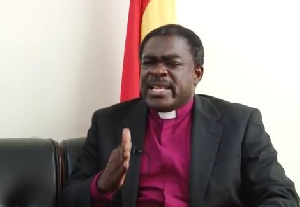
Governor of the Bank of Ghana, Dr Ernest Addison, has highlighted the steadfast fiscal approach adopted during his administration. Despite the legal provision allowing up to 5% of the previous year’s tax revenue to finance the budget, Dr. Addison confirmed that there was no budget financing from 2017 to 2019 and 2021. This assertion underscores the commitment to a responsible fiscal strategy during the specified years.
Dr Ernest Addison emphasized that the adherence to a prudent fiscal approach has yielded positive outcomes, contributing to the lowering of inflation, reduction of the policy rate, and fostering growth during the initial three years of his term.
This strategic financial management has played a pivotal role in shaping the economic landscape under Dr. Addison’s leadership at the Bank of Ghana.
Highlighting the impact of the COVID-19 crisis, Dr. Ernest Addison acknowledged the challenges it posed, particularly the escalation of debt levels and the necessity for restructuring. This recognition underscores the complexities faced by financial institutions during the global pandemic and emphasizes the need for adaptive measures.
Dr. Ernest Addison discloses a significant shift in strategy, indicating that the Bank of Ghana opted for monetary financing for the first time. This decision aligns with the approach adopted by numerous central banks globally, reflecting the unprecedented challenges presented by the circumstances, particularly the impact of the COVID-19 crisis.
He said this was a difficult decision, but it was necessary to support the government’s COVID expenditures.
“We had some good discussions going into it. The Finance Minister [Ken Ofori-Atta] went to Parliament and requested for a suspension of the Fiscal Responsibility Act due to the pandemic. This enabled us to trigger emergency provisions in the Bank of Ghana Act to provide exceptional financing for the government budget. And that’s what we did.”
“For me, it was a big reawakening, because I did not foresee that the Central Bank would be drawn into budget financing. But, given global developments, especially with central banks in advanced economies, it seemed like monetary accommodation of fiscal policy to meet COVID expenditures had become part of the norm.”, he noted.
Dr Ernest Addison also added that the International Monetary Fund also gave additional SDRs, which are central bank assets, to help governments cope with the pandemic.
He explained this meant the Bank of Ghana had to lend these resources to the government, along with invoking the emergency provisions in the Bank of Ghana Act.
The Governor admitted this was hard for him, but it was eased by the government’s successful issuance of nearly $3 billion in debt in 2021.
“Even in 2021, the government was able to successfully issue nearly $3 billion in debt. That helped to ensure the central bank didn’t have to provide financing,” he said.