The Commission on Human Rights and Administrative Justice (CHRAJ) says it is investigating some 428 public office holders for failing to declare their assets.
Mr Stephen Azantilow, Director, Anti-Corruption at CHRAJ, revealed this at a public forum on “Declaration of Assets by Public Office Holders and the Fight Against Corruption in Ghana,” in Accra on Tuesday.
Mr Azantilow, however, did not give further details on the cases as that could prejudice the outcome of the investigations
He, however, revealed in a telephone interview with the Ghana News Agency, that the investigations extended to officials who failed to declare their assets in 2020.
He added that 284 of them were also cases that were brought to the attention of the Commission in August this year.
The forum, organised by the Media Foundation for West Africa (MFWA), brought together several anti-corruption campaigners and associations as well as some political parties.
Article 286 (1) of the 1992 Constitution states that “a person who holds a public office mentioned in clause (5) of this Article shall submit to the Auditor-General a written declaration of all property or assets owned by or liabilities owed by, him whether directly or indirectly (a) within three months after the coming into force of this Constitution or before taking office, as the case may be, (b) at the end of every four years; and (b) at the end of his term of office.”
The law requires that the President, Vice-President, the Speaker of Parliament, Deputy Speakers of Parliament, members of Parliament, ministers and deputy ministers of state, ambassadors, the Chief Justice, Judges of Superior Court, Judges of Inferior court and managers of public institutions in which the state has interest submit to the Auditor-General written declarations of all property or assets owned by, or liabilities owed by them, whether directly or indirectly.
The Constitution also requires the declaration to be done before the public officer takes office.
However, Section 1(4)(c) of the Public Office Holders (Declaration of Assets and Disqualification) Act directs public office holders to meet this requirement “not later than six months after taking office, at the end of every four years and not later than six months at the end of his or her term.”
Reacting to criticisms that the Commission had failed to hold public officials who did not comply with the Act, Mr Azantilow said the absence of explicit punishment in the law had rendered it helpless.
“We sometimes also feel helpless because when you have the law that does not critically tell you that look if somebody doesn’t declare before he assumes office, or he leaves office or every four years, you should give or mete out sanctions A, B, C and D, it becomes problematic.
“And that is why when the new bill, that is the Code of Conduct Officers Bill came before us we made a lot of input and even the current bill as it is, pending before Cabinet, our proposals for the type of sanctions that should be meted out to public officers depending on the stage in which the person failed to declare their asset has been captured.
“We are hoping that the law will come into force so that we know exactly what to do,” he said.
He also added that as a Commission, its decisions were not always final.
“You people are aware that some of our decisions have been challenged in court. So, if you make a decision that does not stand the test of time, it will be challenged in court and we have faced those embarrassments so we are also careful the way we do our things,” Mr Azantilow said.
Mrs Linda Ofori-Kwafo, Executive Director, Ghana Integrity Initiative, emphasised the need for strong leadership to ensure the enforcement of the asset declaration regime.
The Finance Minister, Ken Ofori-Atta is optimistic the country will get approval from the International Monetary Fund (IMF) for an economic programme before the end of 2022.
According to him, a team of government officials will from this weekend travel to the USA for two weeks to continue negotiations with the Fund to fast-track the deal.
He was speaking to the media after paying a visit to the ‘Long Room’ at the Tema Port in the Greater Accra region.
He stated that discussions have so far been fruitful and cordial with the IMF mission team, here in Ghana.
“We will go to Washington with them and continue for another two weeks of discussions. I think we are moving in the right direction. The Debt Sustainability Analysis still continues”, he announced.
Mr. Ofori-Atta stated that issues concerning the Debt Sustainability Analysis will be a key agenda that would be looked at to decide a programme for the country.
“The Debt Sustainability Analysis is a critical component of the decision as to what to do such as structural reforms and debt operations, as well as the financing gap of the country,” he stressed.
Mr. Ofori-Atta also used the occasion to congratulate the Customs Division of the Ghana Revenue Authority for exceeding its target in the month of September, 2022.
“A huge part of the discussions also include revenue. This means that the work of customs is very important to the discussions. I looked at September figures and it looks like we exceeded the target. That’s very encouraging,” he said.
He urged the GRA to continue working in the interest of the nation – blocking revenue leakages in the system.
Galen Welsch, chief executive officer of Jibu, addressed the crowd at the opening and expressed delight in choosing Madina as his company’s entry point into Ghana. He also revealed that numerous franchise points will open throughout Accra in the ensuing two years.
Jibu is already in six other countries with over 10,000 retail points.
Mr Welsch stressed that the launch on Wednesday is not only a mere ceremony in Ghana but the launch of a “war” against sachet water.
“I want to announce that today is not just the launch of Jibu Ghana, [but] it is also a launch of a war on sachets. Jibu is here to replace sachet water. We are here to offer refills.”
He said a franchise model is what will be employed to ensure that many other franchises are established across Ghana.
A board member of Jibu Ghana, Professor Elikem Nutifafa, was full of praise for the opening of the water-producing firm in Ghana.
“As you know, for any business setting up for the first time, a lot goes into where to locate the business. In many instances, where you start your business, can make or break you,” he stated, underscoring the choice of Madina as the head office for operation.
“Madina shares many characteristics with Jibu as a brand.”
Proprietress of Gina International School in Madina Georgina Fiadzoe expressed joy about the location of the company within her school’s reach and said her pupils are already giving good testimonies, having consumed the product.
President Kurt Edwin Simeon Okraku says Ghana Football Association stands to make a lot gains if the Elite Talent Identification Program is judiciously followed and implemented.He was speaking at the launch of the Elite Talent Identification Program on Wednesday.
The Elite Talent Identification Program is a comprehensive blueprint that seeks to drive the talent identification agenda of the GFA across the various Districts and Regions of Ghana.
These talents would be selected from the Communities, Districts and Regions of Ghana to form the base of the U-15 male and female national teams after which successful talents will progress to the Black Starlets and later to the Black Stars level.
‘’If we believe in this vision, if we keep to this vision and if we follow this vision, we will not only go to Qatar and come back, we will go the next one in the United States and Canada and the one after because for our collective good tomorrow e are making huge sacrifices and investments today’’ he said.‘’And hopefully when we have served and gone, those who will take over from us will taker us to the promise land because of the investment we are making today’’.
“The road ahead will be rough and muddy but as a family and a unit that believe in the vision of investing our tomorrow, we will get there,” he added.
“The purpose is to package and disseminate to scientific and policy communities the finding of BSUIII- funded research works and those of other research working on similar topics around the world.
“We will try to utilize research methodologies in climate change, Resilience, Adaptation, and Sustainable Rural Transformation. The third one is harnessing and enhancing collaboration for future research and securing post-MFA-FFU research funding,” he said.
The Pro-vice chancellor of KNUST, Prof. Ellis Owusu-Dabo assured of the university’s commitment of rolling out climate-responsive actions to support the fight against climate change.
“Climate change is an issue that poses an existential threat to humanity and our globe. The last decade has witnessed the highest global average surface temperature which is about 0.8 degrees Celsius, higher than our industrial level as has been recorded in history.
“The University has rolled out an energy policy that is intended to guide the university community to sustainably manage energy demands and supply. This policy is in alignment with Ghana’s national energy strategy and master plan 2020 to 2030. Through our collective efforts we will create a resilient, green, healthy, liveable, and sustainable society beginning with our campuses,” he said
The BSU III partner from Aarhus University, Prof. Torsen Rodel Berg, explained the direction of international research collaboration on natural resources management and climate change.
“In the early days, we talked about plots and fields, increasingly we are now looking at farming systems and agrosystems, and food systems. And even beyond that we are looking at bio-economy, circulatory and greater connection. We are also having a focus on the plane and planetary boundaries.
“These discussions and research paradigms, moving from the environment to the climate to the planet led to three main sustainability dimensions: ecological intensification, agro-ecological and sustainable intensification,” he said.
Development Assistant at the Danish embassy, Kasper Overgaard Nielsen reiterated the Danish government’s resolve to strengthen collaboration with Ghana.
“At the Embassy of Denmark, we explore how we can further strengthen our cooperation with Ghana in the area of climate change.
One of the options is a new collaboration with the Ghanaian meteorological agency as Danish’s counterpart,” he stated.
The Building Stronger Universities (BSUIII) has funded research works, facilitated the KNUST paperless system, and bridged the Ph.D. gap among staff.
The Building Stronger Universities project is a partnership between Kwame Nkrumah University of Science and Technology (KNUST) and a consortium of Danish institutions including Aarhus University, University of Copenhagen, and CG consult.
Government has increased the Producer Price of Cocoa by 21 per cent for the 2022/2023 crop season.
This translates into GH₵12,800 per metric tonne up from GH₵10,560. The new price takes effect from Friday October 7, 2022.
Dr. Owusu Afriyie Akoto, the Minister of Food and Agriculture announced the price at a press conference in Accra.
The producer price represents 89.99 per cent of the net FOB value. This figure translates into GH¢800 per bag of 64 kg. gross weight.
He said the 21 per cent rise in the producer price of
cocoa was a testament to the Government’s resolve to ensure farmers earn a decent income and make cocoa farming lucrative.
The Minister said the Government would continue to implement initiatives to build a robust, resilient, and sustainable cocoa industry where cocoa farmers and their communities would thrive.
He said to ensure a decent standard of living for Ghanaian cocoa farmers after retirement, the Government would from November 2022 move from the pilot phase to the implementation phase of the Cocoa Farmers pension scheme.
Dr Akoto said the Committee had also approved the rates and fees for all other stakeholders in the supply chain.
These include the Buyers margin, Hauliers’ rate, warehousing, and internal marketing costs, as well as fees for disinfestation, grading and sealing and scale inspection.
He said the Government would continue to support
cocoa farmers through the pests and diseases control programme (Mass Spraying) and rehabilitation of diseased cocoa farms.
“The Government will also assist cocoa farmers by making the requisite inputs such as fertilizers available for farmers to buy to increase farm productivity,” he added.
The Minister said the Government was committed to continuing to supply certified planting materials that are drought tolerant, early bearing and high yielding.
He said the European Union would soon legislate Regulations on due diligence on Deforestation and Forest Degradation and this placed enormous responsibility on the country to ensure that cocoa was sustainably produced in Ghana.
“Issues of deforestation and forest degradation remain important in meeting the EU due diligence requirements,” he said.
He said the Government had not relented in ensuring that cocoa produced in Ghana was free from deforestation and child labour.
Dr Akoto said the Government through COCOBOD was developing the Cocoa Management System (CMS) to enable Ghana to meet the EU due diligence requirements.
Once completed, the CMS will establish a national mandatory traceability system which will be transparent and accountable.
This will ensure that all Ghana cocoa beans are traceable from the port of shipment to the plot of land that produced the beans.
He said this was a key requirement under the European Union Due Diligence requirements.
The Minister said the first component of the CMS, which involved the establishment of a reliable farmer database (farm mapping and enumeration), was expected to be completed by the end of October 2022.
He assured stakeholders that COCOBOD had made available funds, jute sacks and related logistics for the smooth take-off of the 2022/23 Main Crop Season.
The Ghana National Gas Company (GNGC) has refuted accusations that its Chief Executive Officer (CEO), Dr. Ben K. D. Asante, was involved in a $2 billion theft.
The business is requesting that the Herald Newspaper withdraw and apologize for its reporting.
Ghana Gas
The Herald in its report headline ‘GHANA GAS BOSS’ 4-YEAR OLD LETTER EXPOSES IJS$2 BILLION GNPC-GENSER LOOT’ said a February 2019 letter has emerged from the Energy Commission against the US$2 billion Genser Energy Ghana Limited “sweetheart deal” in which the Ghana National Petroleum Corporation (GNPC) buys gas at US$7.9/ mmbtu but sells it to Genser US$2.79/mmbtu.
The report added that the letter dated 17th February 2019, was written by Dr Ben K. D. Asante, now Chief Executive Officer (CEO) of the Ghana National Gas Company (Ghana Gas), who is being accused of sponsoring the negative press that the Genser-GNPC unconscionable is facing.
It further indicated that Dr. Asante, had written the letter in his capacity as Director of Technical Regulations at the Energy Commission rejecting the special treatment that Genser wanted from the Akufo-Addo government at a time when the Volta River Authority (VRA) and others were buying the same gas for US$7.9/ mmbtu.
But a year after the Energy Commission rejection of discount arrangement for Genser, GNPC under the management of Kofi Kodua Sarpong (KK Sarpong) “stepped into the fray with the $2.79 (per MMBTU) price deal, obviously at a steep discount from the regulated price then of $6.50”.
But responding to this publication, the Ghana National Gas Company Limited in a statement signed by its Head of Corporate Affairs Ernest Owusu-Bempah said “It has come to the attention of Ghana National Gas Company (“GNGC”) of publications in the Herald Newspaper with the above headline making rounds, and we wish to categorically state that; The Chief Executive Officer (CEO) of GNGC, Dr. Ben K. D. Asante never served as the Director of Technical Regulations at the Energy Commission, and neither did he sign the aforementioned letter dated 17th February 2019 as alleged by the Herald Newspaper.
“It must be noted that Dr. Ben K.D. Asante was appointed as the CEO of Ghana National Gas Company Limited in April 2017, and he has remained at this position till date. The publication in the Herald Newspaper linking Dr. Ben K.D. Asante to The Energy Commission is a deliberate matter of wrongful and unfounded claims.
“We therefore demand a full retraction and an unqualified apology from the Herald Newspaper.”
It has referred to the predicament as a threat to national security and urged the designated agencies to act quickly to avert further damage.
According to CPA, scammers are pre-registering SIM cards with the information of unwitting “Ghana Card” owners and selling them on the open market.
According to a market study CPA claimed to have done, these SIM cards are marketed between GH$10 and GH$20 at sale sites in Tip Toe Lane, Kwame Nkrumah Circle, and the Airport.
Chief Executive of CPA Kofi Kapito, addressing the media, urged the general public to desist purchasing these pre-registered SIM cards to help clamp down on the activities of the fraudsters.
“For the purpose of evidence, I have 15 of such SIM cards in my custody; I activated 3 of the SIM cards and their identity was given by the telco companies,” he said.
“These are innocent Ghanaians amongst others who may not be aware their IDs have been used in registering SIM cards on the market that could be used for any criminal activity,” he added.
Kofi Kapito has called on the National Communication Authority (NCA) and the Ministry of Communications and Digitalisation to consider the best options possible to curtail these criminal activities to enable the ongoing registration of SIM cards to be smooth and secure.
He underscored that consumers are still facing hardships in acquiring their National Identification Authority-issued cards to enable them to commit their bio details to validate their phone numbers.
This, according to him, has created a thriving black market where pre-registered SIM cards are being sold on the market despite the regulations given by the sector minister and the NCA.
Kofi Kapito thus indicated that CPA supports the re-registration of every SIM card in the country being linked to an identity and lauded Madam Ursula Owusu-Ekuful for considering the masses over the disconnection of unregistered SIM cards.
The Concerned Small Scale Miners Associationbelieves that the fight against illegal mining can be won if the government takes action beyond expressing its commitment to it.
The President of the Concerned Small Scale Miners Association, Michael Peprah, said government officials involved in the activity must be held accountable.
“We believe that the fight can only be won if we decentralise the fight to the district level, and a lot of DCEs have come out to be accomplices in this galamsey problem.”
“It is not going to be easy, but I don’t believe in words. No matter what it is, we can still salvage the problem,” he said.
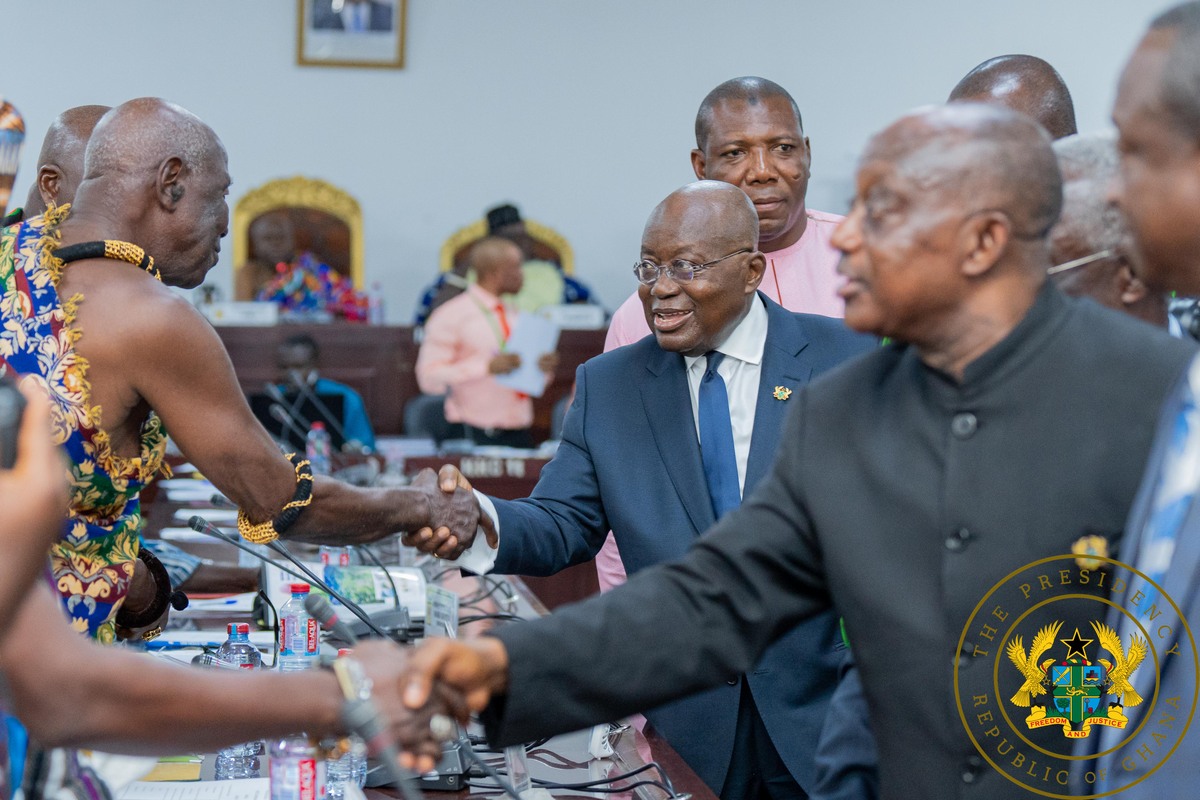
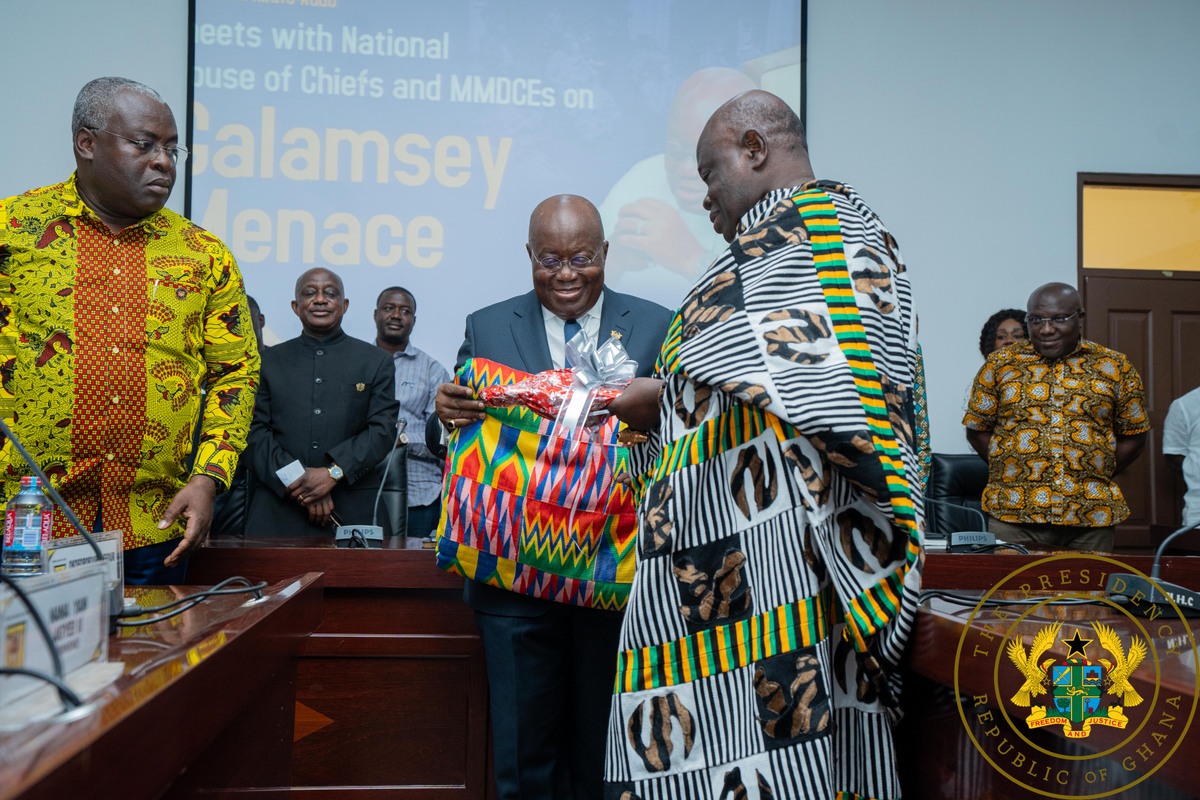
President Akufo-Addo on Wednesday held closed-door meetings with the National House of Chiefs and Metropolitan, Municipal and District Chief Executives over the grave destruction caused by illegal mining.
The President reiterated his resolve to ending the menace while charging the traditional authorities to support the government.
While speaking to MMDCEs, for instance, President Akufo-Addo said that he will not shield any government official found complicit in galamsey activities.
“I ask all of you to join hands in the fight against illegal mining. We have to win that fight, to protect our heritage for the next generation.”
The General Manager of GHOne TV, Nana Aba Anamoah has thrown a major shade at men who are weak in bed.
The controversially witty side of Nana Aba Anamoah came out to play as she diss men who particularly brag about being good in bed but in reality, are the weakest.
Nana Aba Anamoah shared a funny video where she summed up her thought in her caption.
In the video, a gentleman failed woefully at his task although he had thought of himself as the better option.
Captioning the video, Nana Aba Anamoah wrote, ‘I’ll shift your womb, I’ll shift your womb” 3 seconds later…’
The video has spurred massive reactions on social media.
Apart from the fact that the video is funny, that killer caption from Nana Aba has touched peoples’ emotions.
From September 26 through 30, the Ghana Food and Drugs Authority (FDA) hosted a delegation from the Rwanda FDA led by the Deputy Director General, Madam Umuhoza Martine, for a 5-day research tour.
The visit was in accordance with clauses of a Memorandum of Understanding that the Rwandan FDA and the Ghana FDA signed on June 24.
The study trip is a component of a program to develop Rwanda FDA’s capacity in order to help it reach WHO Global Benchmarking Tool (GBT) Maturity Level Three (ML3).
The WHO GBT, which has four tiers, is a tool for promoting universal health coverage and strengthening medical product regulation.
It represents the primary means by which the WHO objectively evaluates regulatory systems. Also, it indicates that a National Medicine Regulatory body’s system is well functioning and integrates all required elements to guarantee its stable performance.
In April 2020, the Ghana FDA became the second and one of only two countries of WHO African Region’s 47 countries to have attained a Level 3 ranking. This means that the Authority had strengthened its medicines regulatory system to ensure safety, quality and effectiveness of medical products manufactured, imported or distributed within the country.
In a welcome ceremony by the Deputy Chief Executive Officer for Health Products and Technologies, Seth Seneake, on behalf of the Chief Executive Officer, Delese Darko, presentations were made from both Ghana and the Rwandan FDA teams on their scope of operations especially in the areas of Market Authorization and Pharmacovigilance.
Some of the objectives of the benchmarking visit were to seek learning opportunities to strengthen their technical operations, enhance participants knowledge in the enforcement of Good Manufacturing Practices (GMPs), Good Clinical Practices (GCP) and Good Distribution Practices (GDP) as well as the adoption of a risk-based approach to regulatory inspections and laboratory testing.
READ ALSO:Producer Price Inflation in December rises to 8.9 percent
During the visit, the delegation led by a team from Ghana FDA conducted a GMP inspection at Unichem Ghana Limited and Good Distribution Practices and Good Storage Practice inspection at East Cantonments Pharmacy Limited to enhance their knowledge and skills in these regulatory enforcement activities.
At the end of the study tour, Dr. Raymond Muganga on behalf of Rwanda FDA expressed gratitude to the Ghana FDA for the warm reception received and the unique learning opportuning this visit has offered.
He added that the team had acquired a lot of knowledge which is expected to build the capacity of Rwanda FDA in preparation towards its attainment of WHO ML3 in the near future.
Speaking on the next steps, Patrick K. Rugambya of the Rwanda team said that following the end of the study tour, a team from Ghana FDA had started to review some of Rwanda FDA’s regulatory tools and is expected to receive comments for considerations.
In addition, Rwanda FDA looks forward to further peer learning opportunities with a visit from some staff of the FDA Ghana for further coaching and mentorship.
FDA led by Mr. Seth Seneake, in his concluding remarks, congratulated the delegation for their hard work and dedication towards this exercise.
He intimated that this has been of mutual benefits to both regulatory authorities and the FDA looks forward to augmenting this partnership for the advancement of the course of effective continental medicine regulation.
A Media Consultant, Charles Autheman, says many victims of human trafficking are not familiar with the processes they go through, and thus are vulnerable to being trafficked due to a lack of necessary information.
Mr Charles Autheman who is training 20 journalists from Ghana and Nigeria on human trafficking organised by Expertise France, noted that it is very important for survivors of human trafficking to have access to accurate information on the issues which might affect them and know how to deal with them.
Mr Charles Autheman noted that with enough and the necessary information, possible victims will be able to recognise some dangers associated with the issue and how best to deal with the risks associated with trafficking and thus report any bad or dangerous signals to the appropriate authorities.
He said, trafficking victims are often forced into cruel and dehumanizing working conditions and face difficulties seeking help.
“Though recognition of the importance and severity of human trafficking has grown in recent years, the identification and investigation of human trafficking cases remains a complex undertaking for local law enforcement,” he said.
Mr Charles Autheman said effectively responding to human trafficking requires officers and other actors within society to notice and identify victims within vulnerable groups such as migrant workers, workers in the sex industry or individuals from disadvantaged communities.
Sometimes officers may be reluctant to intervene in trafficking situations for sexual or labour exploitation due to a belief that victims were complicit with their own victimization.
Mr Charles Autheman however urged journalists from Ghana and Nigeria to intensify the awareness and education on the issue.
Journalists benefiting from the training hope to, at the end of the workshop, have more knowledge on human trafficking and be able to help raise the needed awareness on the issue.
According to Mr. Johnson Amoah, a financial analyst, the Bank of Ghana (BoG) had good reasons for withdrawing the licenses of Heritage Bank and other financial institutions during the central bank’s clean-up operation.
He clarified that the BoG provided sufficient justification for the actions against the bank.
“I’ve read rumors that the BoG was given the go-ahead to shut down Heritage Bank.
People are criticizing the Bank of Ghana’s decision, but in my opinion, there were sufficient grounds for the bank’s failure.
“The reasons were clearly given by the Bank of Ghana and I believe they make sense,” portions of his write up said.
The regulator came under section 16 (1) (a) (7) and (8) of Act 930, the Bank of Ghana may revoke a licence and appoint a receiver under section 123 of the Act where it is satisfied that an applicant provided false, misleading or inaccurate information in connection with the application for a licence or suppressed material information, and may in cases of emergency, or in the public interest revoke the licence of the bank without notice, to revoke the licence of Heritage Bank.
Further, sections 9 and 12 of Act 930 authorise the Bank of Ghana to revoke a licence if it considers that significant shareholders of a bank are not suitable.
The grounds for revocation of the licence are as follows: The bank’s capital appears to have come from sources which are suspicious. In the application for a banking licence, each shareholder of Heritage needed to demonstrate their “ability to subscribe to the shares” of the bank. The Bank of Ghana is not satisfied that the original sources of the bank’s capital are acceptable, in terms of section 9 (d) of the Banks and SDI Act, 2016 (Act 930) and section 1 of the Anti-Money Laundering Act of 2008 (Act 749) which requires acceptable capital to be obtained from lawful and transparent sources. Specifically:
The promoters of Heritage provided evidence to Bank
Controversial Afia Schwarzenegger has diverted her attention to media personality Nana Aba Anamoah.
Afia has taken an interest in fighting Nana Aba Anamoah after weeks of beefing TikToker Linda Osei and her daughters.
Afia Schwar has attacked Nana Aba for being ‘broke’ and owning nothing despite being the master of English.
In a video shared on Instagram, Afia Schwarzenegger mocked Nana Aba Anamoah, noting she has nothing to show off except English.
According to Afia Schwarzenegger, Nana Aba Anamoah is not working hard enough which is why after years of being in the media, she still cannot boast of anything.
This is not the first time Schwar is attacking Nana Aba Anamoah – she has tried on several times but the media personality always ignores her.
Apparently, Nana Aba Anamoah is organising a workshop to educate people on communication and public speaking skills. And this is the time Afia is seeking her attention to fight her.
It seems like Schwar is always jealous of people who are better than her and have the support of Ghanaians.
You wouldn’t need to find her trouble and she will come for you;
Recall that when officials from the Forestry Commission tried to stop corporate employees from mining, they were recently forced out of the forest reserve by a group of strong men.
Although the company claims to have a mining lease to operate in the forest reserve, the Ministry however says it has no right to mine in the Tano Nimiri forest reserve.
“As indicated in the Ministry’s Press Statement, dated 30th September 2022, Akonta Mining Ltd has a pending application dated 25th August 2022, for a Mining Lease over an area within the Tano Nimiri Forest Reserve. That application has not been determined by the Minister, who is mandated by law, to grant or refuse such applications.”
“And for the avoidance of any doubt, Akonta Mining Limited has NO mining lease, mineral right, and/or permit to undertake any mining operations in the Tano Nimiri Forest Reserve, and steps are currently being undertaken to enforce the Minister’s Directive issued on 30th September 2022”, a statement by the Minerals Commission read.
Touching on the matter during Peace FM’s “Kokrokoo” discussion show, Kweku Baako Jnr berated the company for having intruded on the reserve when it knew it had no authorization.
“I have checked all the licences they hold from 2011, 2012 till date and it doesn’t have one for forest reserve. But the last one which the company’s application is pending, the one in August, it has not been approved but that is in the forest reserve. So, what was the company doing there?…They had no business being in that particular place doing anything because, first of all, they haven’t approved that licence”, he told host Kwami Sefa Kayi.
He charged the government to get to the bottom of the issue stressing, “this is tough call, a really tough call that again how this matter is handled would either enhance the integrity of the fight or diminish it”.
“The issue is not that they have applied for a licence to go into a forest reserve. The issue is that you don’t have a licence yet but the company is there. Why? What kind of impunity is that?”, he exclaimed.
The Ghana Cocoa Board (COCOBOD) says it is rolling out a number of interventions to ensure that, cocoa farmers do not lose their farmlands to illegal small-scale mining, otherwise known as galamsey.
It comes on the back of concerns that several factors are pushing cocoa farmers to exchange farmlands for illegal mining, thereby threatening the cultivation and production of cocoa in the country.
Speaking on The Point of View on Citi TV, the Director of Public Affairs at COCOBOD, Fiifi Boafo, said among other things, the Board is assisting the farmers legally.
“COCOBOD is sponsoring a law to take into consideration what actually goes into the farm and the true value of it so that anyone moving in to take a cocoa farm and operating mining illegally there will have to pay the true value of the farm and this will serve as a disincentive”, he said.
He thus encouraged cocoa farmers to seek support from COCOBOD when faced with the challenge.
“The farmers do not want to give out these farms but with their level of exposure to go to court and resources not available to them, they are handicapped. That is why they give in. Our sensitization is ongoing, and I think that it has helped with that realization that, this is not the way to go. We are also giving the farmers legal representation when they fall on us for support.”
Mr. Boafo admitted that the producer price of cocoa ought to be increased to cushion farmers, but rejected suggestions the low cocoa price in Ghana is contributing to the exchange of farmlands for galamsey.
He disclosed that, farmers are selling farms between GH¢10,000 and GH¢25,000, but quickly cautioned farmers to desist from going into such paltry deals.
“The remuneration for cocoa farmers can be improved. In as much as the farmers’ income can be improved, I do not believe in the idea that based on economies of scale, that is why the farmers are giving out their farms. Sometimes it is out of ignorance and the wish to get things immediately without thinking about the effects of it”, he stressed.
The COCOBOD Public Affairs Director also stated that some traditional authorities are coercing farmers to give out farmlands.
“There are some traditional authorities who are actually aiding this because they tell farmers they are owners of the land, so it should be given back to them because they [chiefs] are being enticed by illegal miners. So they want to get the money quickly and eject these people from the land.”
He considers it sad that some claims the exercise had political undertones have been made.
Despite the liquidity support that was being provided to some banks at the time, he noted that the clean-up operation was meant to save millions of depositors’ funds.
“We don’t need to debate whether the exercise was politically driven any longer because millions of client funds were at jeopardy and banks were on the verge of failure.
If the exercise had not been conducted, it would have had a huge impact on the entire banking industry.”
“What the central bank did was rather commendable in raising the red flags of certain actions by directors of now insolvent banks who at times could not account for some of their depositors’ funds.”
The economist said this in reaction to remarks made by former UT Bank boss, Prince Kofi Amoabeng, who suggested that the defunct Heritage Bank was politically targeted by the central bank.
But according to the BoG, Heritage Bank among other things obtained its banking licence on October 4, 2016 on the basis of capital with questionable sources.
As part of its efforts to clean up the banking sector, the Bank of Ghana examined the affairs of a number of banks which included Heritage Bank Limited and discovered a number of anomalies relating to its licensing, the sources of its capital, and related party transactions.
The central bank, however, determined, pursuant to sections 9 and 12 of Act 930, the majority shareholder of the bank, Mr. Seidu Agongo, does not meet the “fit and proper person” test.
This led to the revocation of the bank’s operating license under section 16 (1) (a) (7) and (8) of Act 930 of the Central Bank.
Medeama have lined up a friendly against Samartex at the Akoon Park on Sunday.
Coach David Duncan wants to use the friendly matches to test
players on the fringes and continue to prepare amid a court injunction which has plagued the season.
The Ghana Football Association will appear in court on Friday October 14 over its legal battle with AshantiGold.
The situation has led to an abrupt suspension to the 2022-23 campaign which has prompted the club to devise strategies to keep the players fit.
The Mauve and Yellow will battle Samartex FC in an exhibition exercise on Sunday October 9, 2022 at the Akoon Community Park.
The match will afford coach David Duncan and his backroom staff the chance to explore the team following a 1-0 setback against Berekum Chelsea last week.
The two teams will use the friendly to test their mettle as they prepare to face each other in the Premier League.
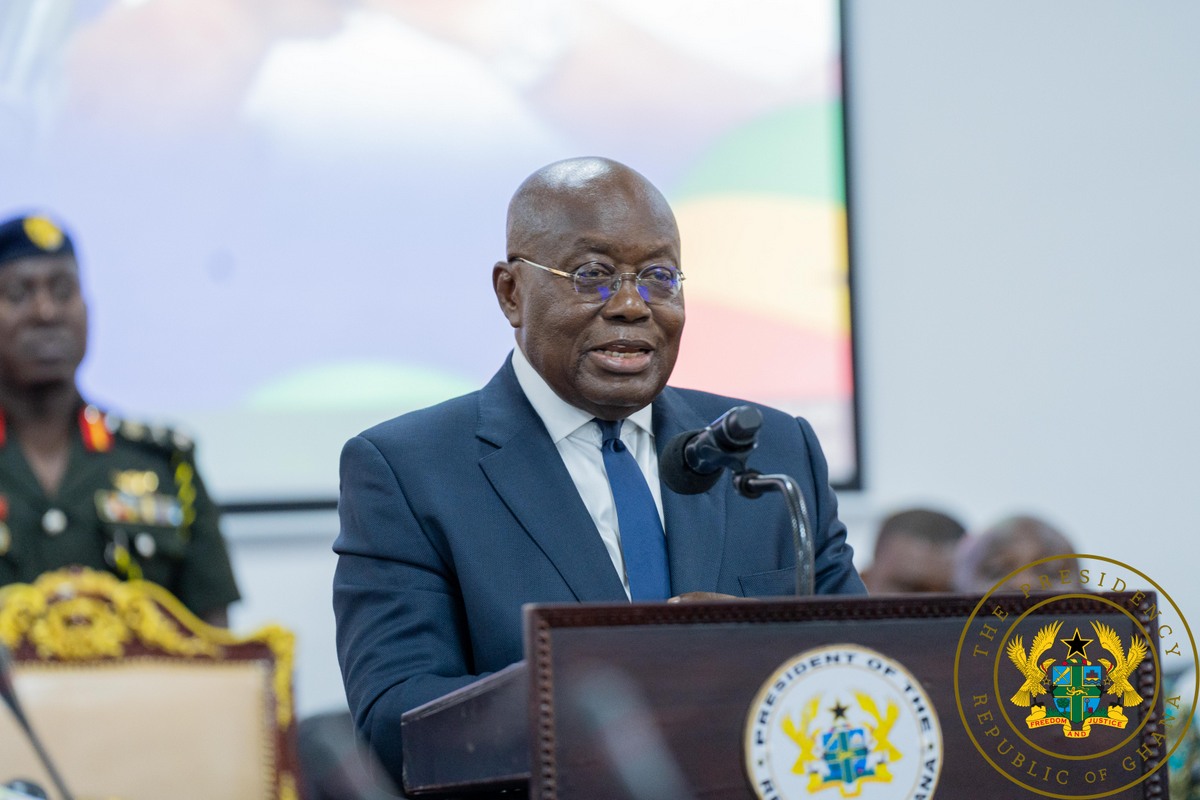
In the fight against galamsey, President Nana Addo Dankwa Akufo-Addo has reaffirmed his commitment to collaborating with chiefs, traditional leaders, and other stakeholders.
President Akufo-Addo asserted: “It is apparent that you and I must take the initiative and work closely together to do so if we are to win the struggle.
I am present today for that reason.
On Wednesday, October 5, 2022, the president addressed the National House of Chiefs. He stated that chiefs continue to be in charge of eighty percent (80%) of Ghana’s territory, while the remaining twenty percent (20%) is held in trust by the president.
What this means, he said, is that ultimately the welfare and state of the land is a joint responsibility of chiefs and the president – although, by statute, minerals in the soil belong to the president in trust for the people.
“Historically, we discharged that responsibility well. Even though for centuries we have been a mining nation, mining did not pose a threat to the health of our environment and water-bodies. The rules that you put in place for mining ensured that the sanctity of our lands remained intact and our water-bodies remained unpolluted. Tragically, in the modern era that is no longer the case. And that is why I have come to you today to talk about how, together, we can repair this dramatic situation,” he said.
President Akufo-Addo indicated that since he took office on 7th January 2017, he has made it a central feature of his presidency to lead the efforts to rid the country of the galamsey menace, with a firm commitment made in his inaugural speech on the matter.
“It has not been easy, it has not been popular, and we have not got the immediate results that I was looking for. Indeed, in the last elections of 2020 my stance on the issue cost my party and I significant losses in the mining communities. It turned out that my statement that I was putting my presidency on the line in the fight against galamsey was neither bombast nor recklessness. It was the simple truth,” he said.
The president continued: “We have tried many initiatives, including that of the Community Mining Scheme and establishing a new legal regime for dealing with the perpetrators of this phenomenon – which has imposed severe sanctions on those Ghanaians and foreigners convicted of illegal mining. Still, we have not won the fight”.
“It can only succeed if it is a truly national battle that no one seeks to exploit for political gain, as we saw in the last election. The progress of our country depends on all of us, all citizens of Ghana, all Fellow Ghanaians, pulling together to defeat this existential threat to our future,” he added.
Reiterating the stance of government, President Akufo-Addo noted that: “We are not against mining, but we cannot accept mining in a manner that risks destroying our country. Our nation has always been a mining nation. Indeed, in the 15th century when the first Europeans, the Portuguese, came to our shores they called the first European-influenced town Elmina – meaning ‘the mine’ in Portuguese – because from their ships as they approached our shores that is the activity they saw our people engaged in. It is not surprising that in colonial times we were called the Gold Coast”.
He thus asked all Ghanaians to join hands with him in the fight against illegal mining, in order to bring an end to devastation of the Ghanaian landscape and pollution of our water-bodies.
“We have to win the fight to keep our environment clean and protect our heritage for our descendants, as you did in the past,” he added.
Policy Risk Analyst, Dr Theo Acheampong, says Ghana risks not receiving funding from the International Monetary Fund (IMF) should it be discovered that the country’s debt is unsustainable.
According to him, with the country being classified as a high debt distress country by the World Bank, it will be prudent if the managers of the country commence action on debt restructuring before the situation worsens.
Speaking on JoyNews’ PM Express, he said, “The IMF would only lend if they’re sure that a country’s debt is sustainable. And they have a statement on their website which I’d like to quote here again and it says that ‘for those countries that have unsustainable debt the IMF is precluded from lending unless the member takes steps to restore debt sustainability which includes debt restructuring.’
“And to determine whether your debt is sustainable or not, there are four bands that they will do in the DNC analysis. You’re either classified as being low-risk, moderate risk, high risk or in debt distress. And as of last year, when that DNC was done in July, we were already classified as being at high risk of both external and overall debt distress.
“So giving where we are now with the extra deficit and the extra spending I personally won’t be surprised if we move up into the next category already being in debt distress which then means that we will have to fundamentally commence a debt restructuring exercise before accessing the IMF financing.”
The Ranking Member on Parliament’s Finance Committee, Dr. Cassiel Ato Forson, on the other hand says the country’s debt situation has become unsustainable largely due to the government’s refusal to heed the warnings raised by the Minority.
According to him, the government had not been properly accounting for the country’s debt to GDP situation thus creating a false sense of security.
“And this is not a secret, I’ve debated it on the floor of Parliament, I’ve written articles to support the position of the Minority, we wrote even to IMF to get them to do what is right when Ghana was in a programme and yet the government decided to ignore us. So I’m not surprised at this report,” he said.
The World Bank has classified Ghana as a high debt distress country as it projects the nation’s debt to Gross Domestic Product (GDP) of 104.6% by the end of 2022.
According to its October 2022 Africa Pulse Report, debt is expected to jump significantly, from 76.6% a year earlier, amid a widened government deficit, massive weakening of the cedi, and rising debt service costs.
It is also forecasting debt to GDP of 99.7% and 101.8% of GDP in 2023 and 2024, respectively. The size of Ghana’s economy is estimated at about $72 billion, whilst it is expected to spend about 70% of revenue this year to service its debt.
The report is coming at a time the Bank and the International Monetary Fund (IMF) are conducting a Debt Sustainability Analysis on the country. A country which is highly debt distressed is unable to fulfil its financial obligations and therefore debt restructuring is required.
The World Bank further stated that Ghana needs $1.5 billion in assistance from the IMF, which could help to shore up public finances and regain access to credit markets.
President Nana Addo Dankwa Akufo-Addo, has reiterated his commitment to working hand-in-hand with Chiefs, traditional rulers and all stakeholders in the fight against illegal mining (galamsey).
According to President Akufo-Addo, “it is obvious that, if we are to win the fight, you and I have to take the lead to collaborate closely to do so. That is why I am here today.”
Addressing the National House of Chiefs on Wednesday, (October 5, 2022), the President noted that 80 percent of the lands Ghana continue to be under the custody of Chiefs, whereas the remainder of 20 percent is held in trust by the President.
What this means, he said is that, ultimately, the welfare of the state of the lands is the joint responsibility of Chiefs and the President, although, by statute, the minerals in the soil belong to the President in trust for the people.
“Historically, we discharged that responsibility well. Even though, for centuries, we have been a mining nation, mining did not pose a threat to the health of our environment and water bodies. The rules that you put in place for mining ensured that the sanctity of our lands remained intact, and our water bodies remained unpolluted. Tragically, in the modern era, that is no longer the case. And that is why I have come to you today to talk about how, together, we can repair this dramatic situation,” he said.
President Akufo-Addo indicated that, since he took office, on January 7, 2017, he has made it a central feature of his presidency to lead in the efforts to rid the country of the menace of galamsey, with a firm commitment made in his inaugural speech on the matter.
“It has not been easy, it has not been popular, and we have not got the immediate results that I was looking for. Indeed, in the last elections of 2020, my stance on the issue cost my party and I significant losses in the mining communities. It turned out that my statement that I was putting my presidency on the line in the fight against galamsey was neither bombast nor recklessness. It was the simple truth,” he said.
The President continued, “We have tried many initiatives, including that of the Community Mining Scheme, and the establishment of a new legal regime for dealing with the perpetrators of this phenomenon, which has imposed severe sanctions on those, Ghanaians and foreigners, convicted of illegal mining. Still, we have not won the fight.”
In seeking further assistance from the National House of Chiefs in addressing the galamsey phenomenon, he noted that taking partisan political interests out of the fight against galamsey is one way forward.
“It can only succeed if it is a truly national battle, which no one seeks to exploit for political gain, as we saw in the last election. The progress of our country depends on all of us, all citizens of Ghana, all Fellow Ghanaians, pulling together to defeat this existential threat to our future,” he added.
Reiterating the stance of Government, President Akufo-Addo noted that “we are not against mining, but we cannot accept mining in a manner that risks destroying our country. Our nation has always been a mining nation. Indeed, in the 15th century, when the first Europeans, the Portuguese, came to our shores, they called the first European-influenced town, Elmina, meaning ‘the mine’ in Portuguese, because, from their ships as they approached our shores, that is the activity they saw our people engaged in. it is not surprising that, in colonial times, we were called the Gold Coast.”
He, thus, asked all Ghanaians to join hands with him in the fight against illegal mining, in order to bring an end to the devastation of the Ghanaian landscape, and the pollution of our water bodies.
“We have to win that fight to keep our environment clean, and protect our heritage for our descendants, as you did in the past,” he added.
The government of Nana Addo Dankwa Akufo-Addo has announced a 21 percent rise in the price of cocoa at the producer level.
Following a warning from the minority caucus in Parliament against any attempt to underpay cocoa farmers by declaring prices below GH1000 for a bag of cocoa, the Ghana Cocoa Board (COCOBOD) and subsequently the government made the statement.
“In light of the current state of uncertainty, the government should refrain from announcing prices below GHC 1000 per bag or GHC 16,000 per tonne.
Everyone in Ghana has seen the Cedi’s historic devaluation.
COCOBOD utilized a conversion rate of GH6 to $1 in 2021.
We wish to remind them that the dollar is now more than 10. Even at the dollar equivalent price, farmers and all stakeholders including LBCs and Haulers should receive higher prices and margins this year,” parts of a statement issued by minority’s Ranking Member on the Finance Committee of Parliament, Dr. Cassiel Ato Forson, on Wednesday, October 3, 2022 read.
In a statement issued, on the same day, by the Minister of Food and Agriculture, Dr. Owusu Afriyie Akoto, the government said that the 21 percent increase translates to GH¢800 per bag of 64 kg. gross weight and takes effect from Friday, October 14, 2022.
“The 21% rise in the producer price of cocoa is a testament to government’s resolve to ensure farmers earn a decent income and make cocoa farming lucrative. Government will continue to implement initiatives to build a robust, resilient and sustainable cocoa industry where cocoa farmers and their communities will thrive.
“To ensure a decent standard of living for Ghanaian cocoa farmers after retirement, government will from November 2022 move from the pilot phase to the implementation phase of the Cocoa Farmer’s pension scheme.
“The Scheme remains an unprecedented achievement under His Excellency Nana Addo Danquah Akufo Addo,” parts of the statement read.
Read the full statement below:
REVIEW OF THE PRODUCER PRICE OF COCOA FOR THE 2022/23 COCOA SEASON WEDNESDAY, 5TH OCTOBER 2022
Introduction
The Producer Price Review Committee (PPRC), under the Chairmanship of Hon. Dr. Owusu Afriyie Akoto, met and agreed on the Producer Price of Cocoa for the 2022/2023 season which opens, Friday, 14th October, 2022.
Producer Price
We are pleased to announce that Government has increased the producer price of cocoa by 21% from GH¢10,560 per tonne to GH¢12,800.00 per tonne. The producer price represents 89.99% of the net FOB value. This figure translates into GH¢800 per bag of 64 kg. gross weight and takes effect from Friday, 14th October, 2022.
The 21% rise in the producer price of cocoa is a testament to Government’s resolve to ensure farmers earn a decent income and make cocoa farming lucrative. Government will continue to implement initiatives to build a robust, resilient and sustainable cocoa industry where cocoa farmers and their communities will thrive.
To ensure a decent standard of living for Ghanaian cocoa farmers after retirement, Government will from November 2022 move from the pilot phase to the implementation phase of the Cocoa Farmer’s pension scheme. The Scheme remains an unprecedented achievement under His Excellency Nana Addo Danquah Akufo Addo.
Other Rates and Fees
The Committee has also approved the rates and fees for all other stakeholders in the supply chain. These include the Buyers’ margin, Hauliers’ rate, warehousing and internal marketing costs, as well as, fees for disinfestation, grading and sealing and scale inspection.
Government Support and Commitment
Government will continue to support cocoa farmers through the pests and diseases control programme (Mass Spraying) and rehabilitation of diseased cocoa farms. Government will also assist cocoa farmers by making the requisite inputs such as fertilizers available for farmers to buy to increase farm productivity. Government is committed to continuing to supply certified planting materials that are drought tolerant, early bearing and high-yielding.
Ladies and Gentlemen, as you may be aware, the European Union will soon legislate Regulations on due diligence on Deforestation and Forest Degradation. This places enormous responsibility on us to ensure that cocoa is sustainably produced in Ghana. Issues of deforestation and forest degradation remain important in meeting the EU due diligence requirements.
Once completed, the CMS will establish a national mandatory traceability system which will be transparent and accountable. This will ensure that all Ghana cocoa beans are traceable from the port of shipment to the plot of land that produced the beans. This is a key requirement under the European Union Due Diligence requirements.
I am pleased to inform you that the first component of the CMS, which involves the establishment of a reliable farmer database (farm mapping and enumeration), is expected to be completed by the end of October 2022.
Before I resume my seat, I wish to assure all stakeholders that COCOBOD has made available funds, jute sacks and related logistics for the smooth take-off of the 2022/23 Main Crop Season.
‘Sister, Sister’ star Tia Mowryhas pulled the plug on her marriage with Cory Hardrict after 14 years of marriage.
According to legal documents, obtained by The Blast, Mowry filed the dissolution of marriage in Los Angeles County Courts and is citing “irreconcilable differences” as the cause for the split. The television star is asking for joint custody of her two children and wants the court to terminate its ability to award spousal support to either party.
Mowry claims the couple entered into a prenuptial agreement, which appears to have outlined things like splitting up property, assets, and child support.
Interestingly, the document says “pursuant to the parties’Premarital Agreement, all assets and obligations of each party are her/his separate property.” In other words, she will keep all that TV money.
It should be noted, Tia seems to be taking no chances with this divorce, as she hired Kim Kardashian’slawyer — Laura Wasser — to represent her in the case.
Mowry met actor Cory Hardict on the set of their film, ‘Hollywood Horror,’ and dated for six years before getting married in 2008. The former couple welcomed their first child a few years later and currently share two minor children. Cory is an actor in his own right, starring in several TV shows in the 1990s including “ER,” “Smart Guy,” and “Felicity.”
The divorce news will come as a shock to many fans, considering Tia is very vocal and open about her longstanding relationship in Hollywood. According to Essence, “After being together for 18 years, and married since 2008, Mowry-Hardrict said one of the things she loves most about their marriage is how Hardrict’s acts of faith and belief have elevated her own self-perception.”
The actress described her marriage as not including “traditional gender roles.” Mowry said she makes the marriage an equal partnership, which avoids the traditional gender roles altogether. “We don’t put gender roles on our marriage and our relationship. If I’m working a lot and Cory’s home, he will put Cree to bed, and if dishes need to be washed, he will wash them,” Mowry told HuffPost Live. Adding, “So it’s not like, ‘Oh, I’m going to wait until my wife gets home and she’s going to be doing all that.’”
Similarly, Mowry admits that while her husband was finishing up movies like ‘American Sniper’ she was doing a few fatherly responsibilities at home. “I had to take on those responsibilities that a father would do, I was out in the backyard teaching my son how to kick a ball. We don’t put labels on each other. … It’s a team effort, and at the end of the day it’s winning and however we get there, that’s what we do.”
The two-day training course, scheduled for October 5 and 6, 2022, aims to acquaint staff with new software that will enable the institution’s credit department and other affiliated departments to process, disburse, and recover approved loans to our consumers quickly.
The program will offer the best processing efficiency for loans because to its characteristics.
The complete implementation of the different phases of the software will allow Masloc to eliminate its manual processes and align its system on an improved platform, compatible to new and complex modern banking systems used globally.
In an age of technological advancement and with institutions migrating to advanced secure digital platforms, the new Loan Management Software (LMS) training will not only equip and improve service delivery to our clients through a secure database but will also complement our efforts to promote all categories of our customers to patronise our services through simple and personalized solutions such as mobile applications, USSD shortcodes, etc.
Additionally, the goal is to equip our key users to use the software while we coordinate the full of implementation of the system to benefit our customers.
The training is for participants from our credit, IT, finance and audit departments as well as sector managers, regional and district credit managers, credit officers and regional accountants.
Masloc’s digital infrastructure would be leveraged by MSMEs, cooperatives, business associations and individuals to automate, innovate, build capacity and access credit at competitive interest rates.
The training follows the announcement, of support from the African Development Bank (AfDB) through the Ministry of Finance to boost MASLOC’s determination to establish a strong digital infrastructure to support its operations.
Participants are expected to leave the program with new knowledge and skills in line with Masloc CEO, Hajia Abibata Shanni Mahama Zackariah, strategic vision to automate all MASLOC operations to create a paperless loan application, loan repayment and efficient recovery system.
President Nana Addo Dankwa Akufo-Addo has said that due to the successful implementation and completion of compacts One and Two of the Millennium Challenge Corporation (MCC), he will make a case at the highest level in the United States for a third compact.
He expressed the hope that the US authorities would sit around the table for a new compact, looking at Ghana’s record in executing the compacts and its status as a truly functioning and stable democracy in the region, among what constituted the requirements to qualify for a compact.
The President gave the hint when the Chairman and a board member of the Millennium Development Authority (MiDA) presented the final report of the second compact to him at the Jubilee House in Accra last Tuesday.
The board, which was sworn in in 2017, supervised the execution of the second compact, which ended last Tuesday.
President Akufo-Addo said Ghana’s commitment to the rule of law remained unshaken and continued to deepen; therefore, the various elements which constituted the requirements for accessing the compact continued to be very present in the country.
He said Ghana believed that there was every reason for it to get another one, especially with the successful implementation of the two compacts, the first on agriculture and the second in the energy sector.
“If still the idea of compact is on the table in Washington, we will be interested in the discussion to enable us to embrace it for the industrial development of the country,” he said.
He described the presentation of the report by the MiDA Board as momentous in terms of the country’s relations with the US.
He recounted how, during the Kufuor Administration when the compact was initiated by the Bush government in the US, Ghana had informally made an input into its design.
The President expressed the commendation of the people of Ghana to the US government for the first compact, which was $547 million, and the second, which was over $400 million.
He also commended members of the board for the vigilance they exhibited in the execution of the work.
He noted that the country required more energy for its industrialisation drive, particularly when it wanted to venture into bauxite development, which meant that it required a more viable and reliable power sector.
PDS
President Akufo-Addo said although during the execution of the Compact Two there had been a temporary glitch over the Electricity Company of Ghana (ECG) and the PDS issue, “these are behind us and we are hoping that the American Administration will also understand that it is behind us, and that there is still a possibility for us to sit around the table to construct something that will mean a lot”.
He said the country was a functioning and strong democratic state, where majority of the people were committed to democratic values, and expressed optimism that despite the difficulties that the changing of government brought about, the change must be done through the ballot box.
All funds disbursed
The MiDA Board Chairman, Prof. Yaa Ntiamoah Baidu, said the board was charged with the responsibility of overseeing the implementation of the compact.
She said by the revised compact end date, which was June 6, this year, all projects retained and prioritised for implementation had been completed, inaugurated and handed over to the beneficiaries.
Some of the beneficiary institutions include the ECG, the Ghana Grid Company Ltd, the Ghana Standards Authority, the Energy Commission, the Public Utilities Regulatory Commission, the Ministry of Education, the Korle Bu Teaching Hospital and the Kwame Nkrumah University of Science and Technology.
Prof. Baidu said the revised compact funding following the termination of the concession agreement was $347 million and that had been fully disbursed.
The Moroccan government has issued 10 permits for farmers to legally grow cannabis for industry and export for the first time.
Farmers in the northern regions of al-Hoceima, Chefchaouen and Taounate will be allowed to produce and sell cannabis for medical, pharmaceutical, and industrial use, in accordance with a law passed by parliament last year.
The national agency regulating cannabis activity which issued the permits said farmers will be encouraged to increase legal cannabis production to meet the need of the market.
Morocco has long been one of the world’s largest producers of illegal cannabis.
It is grown in the poorest mountainous regions of the North African country and trafficked to Europe.
The government’s move to legalise cannabis production is meant to improve the conditions of the poor farmers and generate revenue for the economy.
In a post on his Twitter page after learning that the Juventus striker has decided to retire, Gyan has described his compatriot as a great player by all standards.
He adds that Kwadwo Asamoah should enjoy his time in retirement.
“Great player by all standards. It was great to play with you bro. Enjoy your retirement bro Kwadwo Asamoah,” a post on the Twitter page of Asamoah Gyan reads.
Great player by all standards. It was great to play with you bro. Enjoy your retirement bro @Asabob20
As reported on Tuesday, former Juventus star Kwadwo Asamoah has decided to hang his boots.
He enjoyed an illustrious career in Italy that spanned more than a decade. He won multiple Serie A titles with Juventus and later moved to Milan where he played for Inter Milan.
Upon his retirement, Kwadwo Asamoah has taken up a new role as a football agent.
Government has pegged the producer price for cocoa at GH¢800 per bag of 64kg.
The new price takes effect from Friday, October 7, 2022, for the 2022-2023 crop season.
This depicts a 21 percent increase from GH¢10,560 per tonne to GH¢12,800 per tonne.
Minister for Food and Agriculture, Dr. Owusu Afriyie Akotomade the announcement at a press briefing in Accra today, Wednesday, October 5, 2022.
“The 21% rise in the producer price of cocoa is a testament to Government’s resolve to ensure farmers earn a decent income and make cocoa farming lucrative. Government will continue to implement initiatives to build a robust, resilient and sustainable cocoa industry where cocoa farmers and their communities will thrive”, the Minister said.
Ghana last increased its farm gate price in 2020; from GHS515 to GHS660.
That was a historic 28% hike that followed the $400 Living Income Differential on every tonne of cocoa.
To ensure a decent standard of living for Ghanaian cocoa farmers after retirement, government will from November 2022 move from the pilot phase to the implementation phase of the Cocoa Farmer’s pension scheme.
The Producer Price Review Committee has also approved the rates and fees for all other stakeholders in the supply chain.
These include the Buyers’ margin, Hauliers’ rate, warehousing and internal marketing costs, as well as, fees for disinfestation, grading and sealing and scale inspection.
In the meantime, government says it will continue to support cocoa farmers through the pests and diseases control programme (Mass Spraying) and rehabilitation of diseased cocoa farms.
Additionally, it will also assist cocoa farmers by making the requisite inputs such as fertilizers available for farmers to buy to increase farm productivity.
“Government is committed to continuing to supply certified planting materials that are drought tolerant, early bearing and high-yielding”, Dr. Owusu Afriyie Akoto assured.
The chiefs and people of Asamang Tamfoe, a farming community near Anyinam in the Atiwa East District of the Eastern Region, have dismissed claims that the youth in the town are involved in illegal mining (galamsey).
At a press conference at Asamang Tamfoe on Monday, the Benkumhene of the town, Nana Boakye Darkwa, said the area had been licensed for a community mining programme which the government launched in June this year.
Shooting indiscriminately
On Thursday, September 29, 2022, members of the Okyeman Environmental Taskforce and the Kibi Divisional Police Command raided the town and that led to indiscriminate shootings during which some of the young men sustained gunshot wounds and had to be treated at the hospital.
Clad in red bands
Nana Darkwa, who is also the Chairman of the government’s community mining committee, clad in red band and surrounded by other members of the community, including the youth of the town all of whom were clad in red apparell, said it was unfortunate that the chief of Apapam, Osabarima Okogyeaman Apagya Ofori, should lead the Okyeman Taskforce to direct its members to shoot at innocent young men in the town who were engaged in licensed community mining but not illegal mining.
We will face them squarely
“If they come back to the community, we will face them squarely”, the Benkumhene of Asamang Tamfoe indicated.
Nana Darkwa stressed that if the Apapamhene and the taskforce were actually clamping down on illegal miners, they should have presented themselves to the Benkumhene of the town to announce their presence and intentions.
The Benkumhene pointed out that they failed to do so but rather started shooting indiscriminately leading to many of the youth sustaining gunshot wounds.
He also expressed displeasure with the involvement of the Kyebi Divisional Police Commander, Superintendent Magnus Reindorf Sam, who led the Okyeman Taskforce and called on the Inspector General of Police (IGP), Dr George Akuffo Dampare, to immediately remove the commander from the area because he did not do the right thing.
Most of the youth in the town, who were engaged in government’s community mining, said they were for peace that was why they decided not to physically confront the police and the taskforce.
According to the youth, the community mining concept was the initiative of the President, Nana Addo Dankwa Akufo-Addo, and so the President should call the Okyeman Taskforce and the Kyebi Divisional Police Commander to order.
Background
The Kibi Divisional Police Command together with the Okyeman Environmental Taskforce on Thursday, September 27, 2022 undertook a joint operation and arrested 24 young men suspected to be engaging in illegal mining at Asamang Tamfoe.
The taskforce seized some mining equipment, including excavators.
Kofi Addo, Lead Officer for 1D1F, Ministry of Trade and Industry, explained that the companies captured were either in operations, under construction, or in the pipeline, adding that the sector had many companies under its radial. As of September 2022, a total of 296 companies had been captured under the government’s flagship program, One District One Factory (1D1F).
He made this announcement at the formation of the District Implementation Support Team (DIST) of the Tema Metropolitan Assembly (TMA), which includes representatives from the Assembly, the Ghana Standard Authority, the Ghana Drug and Food Authority, the Environmental Protection Agency, the Ghana National Fire Service, the Tema Regional Police Commander, and others.
He said out of the number, 125 were in operations, 144 were under construction while 27 were in the pipeline noting that those in the pipelines had all their documentation ready to start the construction for the project.
1D1F Lead Officer also said out of the 261 districts in Ghana, the programme had so far covered 52 percent of them and was working to capture the remaining 48 percent.
He stated that the Greater Accra Region had1D1F projects in 19 districts of which the Tema Metropolis had two companies benefitting.
Mr. Addo said the Ministry of Trade and Industry had a 10-point industrial promotion agenda, which the 1D1F was part, adding that others were the Strategic Anchor Projects, Business Regulatory Reform, Industrial Park and Special Economic Zones, and the Industrial Revitalization Programme, among others.
He mentioned that the key principles of the 1D1F include private sector driven, explaining that a district could have more than one factory under the programme, and support from the district implementation support team.
He added that an existing company could be captured under the 1D1F programme for expansion or creating of new subsidiary just like in the case of Pharmanova, Everpure and Kasapreko who have expanded to other areas with the help of the initiative.
“When you have people saying we are just bringing old companies under the programme, it is not true, we capture expansions, building of new structures, and totally new companies,” he explained.
The 1D1F Lead Officer added that two districts could also come together to have one company under the programme when they realized that their raw materials and other resources could not support full independent projects.
He said among its objectives were value addition, support in import substitution, support for export, industries support, as well as opening the country up for economic activities through which jobs would be created.
He said some incentives 1D1F companies received was five years’ corporate tax free, access to utilities, duty exemption (import duty, VAT, EXIM levy and NHIS levy) for all capital goods being imported for the project.
Mr. Addo also stated that agreement had been signed with 15 commercial banks, which ensured the capping of interest rate on loans for such companies at 20 percent to ensure stable funding for the project adding that the government also subsidized 10 percent of the interest rate for companies with majority Ghanaian owned shares.
Mr. Michael Okyere Baafi, Deputy Minister of Trade and Industry (MOTI), on his part urged Ghanaians to embrace the programme, as it had come to stay as an important way to industrialize the country.
Mr. Baafi said Ghana had gotten to a stage, where it did not have a choice than to industrialize, stressing that industrialization must be a way of life for the people.
He added that “1D1F should be taken like Christianity, it must be a way of life for us, and just like social media it has come to stay.”
Mr. Yohane Amarh Ashitey, Tema Metropolitan Chief Executive chairing the inauguration said he believed in allowing the private sector to lead in industrialization therefore his resolve to ensure that the 1D1F programme was utilize by many to get more industries in the metropolis in addition to existing ones.
The Technical Director of the Ghana Football Association (GFA) Bernhard Lippert has assured that talented teenagers in the country will be given the equal opportunity to showcase what they have to offer.
The tactician gave this assurance during the official launch of the Elite Talent Identification program on Wednesday, October 5, at the GFA Secretariat in Accra.
Through the project, talented players, both male and female are set to be identified to form the basis for drafting into the various national teams in the future.
“Today is a very happy day for me as the Technical Director of the Football Association and the top management of the Association.
“When I came to Ghana, everyone was talking about the Black Stars but if we have challenges in the Black Stars, nobody is interested in what happens to the foundation of football.
“And today is the day where we implement things in a different way, from the bottom to the top. I think this will bring out good fruits in the next 3 to 5 years,” Bernhard Lippert said at the launch of the new project.
The Ghana FA Technical Director added, “We have a big foundation of top players and the elite program will work with two age groups, 11 to 14.
“Age 11-12 years will have a special training program where they train two times a week same for ages 13-14 for over 40 weeks per year.
“We train with the 12 best players in each District and later we identify from the regional selection team to make up our U-15 team.
“The positive thing for me is to have a true scouting process for our youth national teams in the future.”
Today’s launch was attended by GFA President Kurt Okraku and his Vice Mark Addo.
The National Disaster Management Organisation (NADMO) has established that about 2,000 people have been affected directly by the flooding at Weija.
Communities close to the Weija Dam, including Weija, Oblogo and Tetegu, have been submerged by loads of water after the Ghana Water Company Limited (GWCL) opened the five spill gates of the dam to spill water to save it from collapse.
The Weija-Gbawe Director of NADMO, Emmanuel Adu Boahene, who accompanied the Director General of NADMO, Nana Agyemang-Prempeh, and a team from the organisation, disclosed this to the Daily Graphic yesterday.
It was during a tour of the flooded areas to assess the extent of flooding, which was rising by the hour because of continuous spillage.
He said the NADMO team was still conducting an assessment to determine the actual number of people displaced by the floods.
Mr Adu Boahene said a haven had been created for displaced persons.
Tour
During the tour, Mr Agyemang-Prempeh visited the Weija Dam to see first-hand the spillage being carried out at Oblogo, Tatop, New Weija and the Weija estuary where he interacted with some victims of the flood.
He was accompanied by his Deputy, Abu Ramadan; the Weija-Gbawe Municipal Chief Executive (MCE), Patrick Kumor, and other officials from both the national and municipal NADMO directorates.
At Oblogo, Mr Agyemang-Prempeh told some of the victims of the flood that it was unacceptable to put up buildings within the buffer zone of the dam.
He, therefore, asked them to relocate since the place was not meant for human habitation but irrigation.
Mr Agyemang-Prempeh said he sympathised with them and would not want them to go through such an ordeal again; hence, the need to relocate since illegal structures within the buffer would be pulled down after the water had receded.
However, he said, some relief items would be presented by yesterday and today to help alleviate their plight.
The items, which would be distributed on a needs basis will include buckets, plates, blankets, mosquito nets and coil, rice, mattresses and sugar.
Flooding
The NADMO boss said flooding had been experienced from the north through to the middle belt and then down south due to rains and galamsey activities.
At the Weija Dam, for instance, he said there was no choice but to spill the excess water.
Victims
Some of the victims said they needed sleeping places and food since they had lost everything to the floods.
One of the victims, Ama Tawiah, said for three days, she had not been able to go to her house because the place was flooded and added that she had to sleep in the open under a tree.
Another victim, Patience Ametepe, said she had lost her foodstuffs and items in her small grocery shop, which she stocked only last Saturday.
“These are the items I sell to survive but now I have lost all of them in the flood. I can’t even go to my house because it is flooded and all the food items have been destroyed,” she lamented.
Cashing in
Meanwhile, some canoe owners are taking advantage of the floods to make quick profits by offerings their boats to ferry victims.
Passengers ride in small canoes for short distances at GH¢10, while transportation of personal effects over a short distance may cost about GH¢10.
ECG
The Electricity Company of Ghana (ECG) has sent notice that it had to put off the power supply to the affected areas to safeguard lives and property, since “electricity does not go well with water”.
The Accra West Regional Manager of the ECG, Ebenezer Gunney, who made that known to the Daily Graphic, said “we would restore power when we deem it safe”.
“We are assessing the situation on the ground and the power will be restored to the affected areas when we deem it safe for lives and property,” Mr Gunney said.
For his part, the Weija-Gbawe MCE said the good news was that the water levels from the Eastern Region were reducing, which could result in the closure of some gates at the dam to reduce the pressure on the affected communities.
The Ranking Member on Parliament’s Finance Committee, Dr. Cassiel Ato Forson, says government needs to commence a national discussion on how to make the country’s debt level sustainable.
According to him, it is rather clear that the country’s debt level is currently unsustainable and should the IMF confirm same that will mean the country will not receive any funding till some debt restructuring is carried out by the government.
Thus, by initiating a dialogue on debt restructuring and engaging experts from academia, civil society and across the political divide, the government can begin to address some difficult situations that may arise from the IMF bailout.
Speaking on JoyNews’ PM Express, he said, “Ghana as we speak is going through sovereign insolvency stress, we’re simply insolvent. So what we need to do is to take a decision to restructure. But the question is what kind of restructuring?
“That is the kind of conversation I believe we have to go in. We have to consider the kind of restructure that we’ll do that will safeguard the economy and preserve us going forward. I believe that is where we’ve gotten to at this stage.”
He noted that a conversation on debt restructuring now before the IMF negotiation advances any further could mean that Ghana would have a solution to making her debt sustainable and thus increasing the country’s chances at securing a programme.
“The first thing is after identifying that the debt is unsustainable how do you make it sustainable before you get the IMF programme? You need to agree on the debt relief that you will require. If you’ll need 20%, 30%, 40% of your GDP in the form of debt relief, that brings the question, who will bear that burden?
“How are you going to burden share? Are you going to tackle external, domestic or everybody else? Are you going to add official bilateral or not? At that point you need to make a decision and would debt restructuring alone do the trick? Because remember debt restructuring deals only with commercial debt holders.
“So if you’re going to deal with the official bilateral and export credit agency you need more than debt restructuring. You will need what we call debt suspension initiative under the common framework. So that will mean you’ll need a double do,” he said.
He has thus charged the government to begin the national dialogue as soon as possible before the situation worsens.
“So the situation is not as simple as we think it is, and I’m urging the government to start talking to the right people. People in academia, we have excellent people out there and this country we’re blessed with people with knowledge.
“The academia is big, you can tap into their knowledge, civil society and even the political divide, across the political divide and pick knowledge. Let’s sit down and confront the situation at the national level. Unfortunately, they’re dealing with it at the partisan and political party level, that isn’t helpful.
“The situation goes beyond politics. We need to rescue our country because this is all we have and the situation is getting bad by the day,” he added.
The MD of BOST said he took over the affairs of the Company in 2017 when it was in financial turmoil, owing foreign suppliers up to $624 million, loan indebtedness to domestic banks up to GHc416 million and Bulk Distribution Companies (BDCs) up to $37 million.
Also, the majority of its network of infrastructure including farm tanks, barges and pipelines were dysfunctional due to lack of maintenance, thus crippling its sources of revenue generation.
However, Mr. Provencal said with efficient operational management, coupled with a GHc30 million loan support from the National Petroleum Authority and BOST margin increase from three to six pesewas, BOST paid the $624 million trade liability to its foreign suppliers and made about GHC460 million profit after tax in 2021.
Moving forward in its business portfolio in the coming years, the MD of BOST said, it would move from just enhancing operational excellence towards aggressive growth in the business of transporting petroleum products across the country as well as to the landlocked nations like Burkina Faso, Mali and Niger to improve its sustainability and profitability.
More so, it would embark on rebranding of its corporate image, improve its corporate culture and human capital development as well as strengthen its trade partnerships.
Mr. Provencal noted that with support from the Ministry of Energy, petroleum hub facilities for storage purposes were being installed in the Western Region, while a-12-inch pipelines would be installed from Tema to Akosombo to improve the volumes of petroleum products from Tema Oil Refinery.
He gave the assurance that the rehabilitation of its dilapidated farm tanks and upgrading of depots would continue across the country in 2023.
Also, all individuals found culpable for various financial malfeasance after the audit of its financial statements either resigned or undergoing disciplinary action.
He gave the assurance that the company had instituted stringent measures to avert future contamination of its petroleum products.
Former Member of Parliament for Suhum, Frederick Opare-Ansahis rooting for Vice President Bawumia to become the next flag bearer of the New Patriotic Party (NPP).
In a radio interview on Accra based Asempa FM’s “Ekosii Sen” programme he explained why he thinks Vice President Dr Mahamudu Bawumia is the obvious choice to lead the NPP to Election 2024 and also why he joined the Vice President’s tour of the northern sector.
“The Vice President wasn’t starting an election campaign; instead, he was on a working tour as part of the excellent work he has been doing, especially given the situation we are in.
“Some of these travels are motivated by his steadfast support for the President and specifically focus on inspecting government infrastructure projects, and it is clear from the projects he looked at (i.e., Agenda 111 and other MMDAs sanctioned infrastructure projects),” Opare-Ansah said.
“I have seen first-hand the assurance the Vice President gives the populace and believes it is a commendable action for a Vice President to take,” he added.
“It is time to stop some NPP members’ attempts to defame the Vice President in the name of racial strife. He is a man who has served as the party’s running mate in a number of elections, and his efforts have helped us win two significant elections. Those who are doing this should stop because he is a diligent man and has not sought to disparage any of his potential contenders,” the former MP added.
When asked if he supports the Vice President’s bid, he responded that while he was aware that the Vice President hadn’t yet declared, he was prepared to do so on the Vice President’s behalf if he become reluctant to do so when the party allowed it.
He acknowledged that, despite being known as a staunch supporter of Alan Kyeremateng’s campaign previous NPP primaries, he is now firmly aligned with Bawumia’s camp because the grassroots want Dr. Bawumia to lead and he has learnt from his past experiences.
Dr. Daniel Mckorley, chairman of the McDan Group of Companies, has stated that removing all trade obstacles will enable intra-African trade to flourish and will be the best path ahead for African companies to achieve development, sustainability, and robust capability.
He believes that the African Continental Free Trade Area (AfCFTA) is a stunning platform that is starting its first voyage to tear down the barriers between North and South and East and West of Africa.
McDan was addressing IAA “Africa Rising” Conference, 2022 where he indicated that African brands are like African families, they have always known how to do it for themselves.
“So, while they rely on others, their foundation is always strong. I believe in the future of brands in Africa. It is possible if we can work within the global and local economic challenges, knowing that they are part of our business evolution, understanding also, that, the challenge of change will continually come, and navigating the business brands through this is part of the purpose to success.”
He gave some lessons in Sustaining Brands; indicating that one has to learn and teach the team to be adaptable and responsive to the tiniest level of change, Strong personalities don’t just build a business rather SYSTEMS & STRUCTURES.
“You must let your systems, structures and good governance work and your business will succeed.”
“Lesson3: Discipline is not just a keyword but a watchword. And above all, the fourth industrial revolution is closer than we ever thought. We felt it through the pandemic, we feel it now and we are going to feel it tomorrow.”
He was speaking on the Theme “Building And Sustaining Brands Through Tough Economic Seasons.”
Below is his full address at the event:
Good morning, ladies, and gentlemen
I would like to stand on existing protocols and to say welcome to all of you traveling from far and near and to you being with us virtually, you are welcome to our beautiful nation of Ghana.
I would like to thank the conveners of this relevant and noteworthy event.
To the leadership of the IAA, Mr. Joel Nettey, Madam Norkor Duah, and the entire organizing partners across for inviting me and for giving us this platform to have a conversation about brands with purpose and for people.
My topic today, “Building and Sustaining brands through tough seasons, is a topic I have spent my last couple of years living the reality of:
So, my conversation with you this morning is going to be from experience I have gathered, the lessons I have learned and where I expect to see not just my business brands, but yours and the others across our continent.
When we hear the concept about “finding opportunity in adversity” it sounds straightforward. And of course, my life story as a street boy who hustled to get by daily bread and eventually founded a significant Ghanaian brand, makes it all possible. However, our biggest challenge yet, happened very recently: When I led my Group of Companies to launch two pioneer sizeable businesses at the peak of the Covid 19 pandemic.
Over the period I have asked myself many times if I was being brave or I was being completely foolish. Whilst I have never gotten my answer, I can say the journey continues to be worth it.
The first business was in the mining sector. I started a project to build what is arguably, the largest salt mine in West Africa; a natural resource that has the potential to transform an industry, our country, and our continent.
The second was the first private jet terminal and local fixed base operator in Ghana.
These businesses were large, they were in 2 growth sectors in the country, and they had to be driven with clear direction and purpose.
The projects required physical activities for engineering, construction machinery operation, whilst keeping teams safe and healthy.
Those were challenging times but yes, it is always said that “tough times don’t last but tough people do”. Well, in this case, I had to lead my team through impossibilities to make them tough people that got through the period of the pandemic.
What are the experiences we had? What are the lessons we learned?
The first experience we had was working with technical partners who were the best in the world but had to design, organize, and coordinate a whole project across borders.
The second experience was logistics. Getting any kind of item in our value chain (even including acquiring a plane) across borders.
As some of us may know, I started my first and flagship business in logistics, my group is a logistics business and I have been in logistics for close to thirty years.
Through these trying and testing seasons I had to find creative and innovative ways to drive logistics not only for my business but also for other businesses that continued to rely on us as trusted partners.
Lessons in Sustaining Brands
Lesson1: learn and teach your team to be adaptable and responsive to the tiniest level of change
Lesson 2: Strong personalities don’t just build a business rather SYSTEMS & STRUCTURES. You must let your systems, structures and good governance work and your business will succeed
Lesson3: Discipline is not just a keyword but a watchword
And above all, the fourth industrial revolution is closer than we ever thought. We felt it through the pandemic, we feel it now and we are going to feel it tomorrow.
When I look at African Brands, what is the way forward?
The way forward for African brands for growth, sustainability, and robust capacity is to be able to break down all the barriers to trade to enable intra-African trade to flourish.
And that is why I am so excited to partner with the African Continental Free Trade Area (AFCFTA) as they begin their maiden journey to break down those walls from the North to the South and from the East to the West of Africa.
We must remember, no one is going to do it for us. African brands are like African families, they have always known how to do it for themselves. So, while they rely on others, their foundation is always strong. I believe in the future of brands in Africa.
It is possible if we can work within the global and local economic challenges, knowing that they are part of our business evolution, understanding also, that, the challenge of change will continually come, and navigating the business brands through this is part of the purpose to success.
As I conclude, I would like to share this quote with us
“It’s not the strongest species that survive, nor the most intelligent, but the most responsive to change.” – Charles Darwin
I believe that African business brands with purpose will respond to change and will sustain its growth, and leave lasting legacies
TV personality Delay has said in a tweet that success is not sexually transmitted.
Seemingly directed at women who are in the habit of seeking out wealthy men for romantic relationships in pursuit of money and success, Delay said this on October 3, 2022.
“Hello there, dating a rich guy doesn’t guarantee that you’ll make it in life,” the entrepreneur and TV show host began.
“Success is not sexually transmitted [smile emoji],” she concluded in the tweet.
Born Deloris Frimpong Manso, Delay’s Twitter bio describes her as “numbed by the will to gain.”
Hello there, dating a rich guy doesn’t guarantee that you’ll make it in life.
Success is not sexually transmitted 😊
— The Delay Show Is Back On TV3 🐆🌙☀️ (@delayghana) October 3, 2022
The residents of Wuru Community, located in the Sissila East Community in the Upper West Region, have pleaded with the government to bring developments to the area so they can pay taxes to the proper authorities and eat their fair share of the national cake.
People in the neighborhood claimed that they felt cut off from the rest of the nation and that this had prevented them from receiving fundamental advancements.
to make certain that the nation’s cake served the community well.
Mr Harduna Atiah, a business man and caretaker of the Wuru community market told the Ghana News Agency that, “There are no roads to link Wuru to other Ghanaian communities where we can transact business. No transportation, no reliable communication network, no health facilities, poor educational infrastructure and no means of modern technology for farming.”
“Currently, we have decided not to pay tax. Our taxes cannot be used to develop other areas while we suffer”, he said.
Mr Atiah said members of the community were in “prison” and asked for pragmatic efforts to be made to integrate them with the rest of the country.
The GNA traveled to the Wuru community to find out their problems and to report same for government to consider supporting them.
The community is about 70 kilometres from Tumu, which took the GNA three hours to travel to the community on a motorbike.
The community has a CHPS compound with only one male nurse stationed there with no decent accommodation, no electricity to store drugs, meant for immunization and no reliable source of drinking water.
Due to the poor nature of the road, only motorbikes can travel there, which compelled the community to transact business with neighbouring Burkina Faso thereby, rejecting the Ghana cedi as medium of exchange.
The GNA observed that the many Burkinabes who transacted business in the community did not also pay tax.
Mr Fuseini Batong Yakubu, the Sissalla East MCE said the Assembly had not been able to collect tax from the community due to the lack of access road.
He said the Assembly was planning to erect a permanent tax collection shed at the market for the tax collectors.
“I have also met with the chief and the secretary of the Bujan Area Council to hold meetings with the people to see the need to pay market tolls as that would help us to use the IGF to undertake development in the area. The business persons coming from Burkina Faso are supposed to pay income tax”, he explained.
Mr Yakubu said he had also appealed to the chief of Wuru to help in identifying and registering the number of aliens settling in the area.
Mr Stephen Azantilow, Director, Anti-Corruption at CHRAJ, revealed this at a public forum on “Declaration of Assets by Public Office Holders and the Fight Against Corruption in Ghana,” in Accra on Tuesday.
Mr Azantilow, however, did not give further details on the cases as that could prejudice the outcome of the investigations
He, however, revealed in a telephone interview with the Ghana News Agency, that the investigations extended to officials who failed to declare their assets in 2020.
He added that 284 of them were also cases that were brought to the attention of the Commission in August this year.
The forum, organised by the Media Foundation for West Africa (MFWA),brought together several anti-corruption campaigners and associations as well as some political parties.
Article 286 (1) of the 1992 Constitution states that “a person who holds a public office mentioned in clause (5) of this Article shall submit to the Auditor-General a written declaration of all property or assets owned by or liabilities owed by, him whether directly or indirectly (a) within three months after the coming into force of this Constitution or before taking office, as the case may be, (b) at the end of every four years; and (b) at the end of his term of office.”
The law requires that the President, Vice-President, the Speaker of Parliament, Deputy Speakers of Parliament, members of Parliament, ministers and deputy ministers of state, ambassadors, the Chief Justice, Judges of Superior Court, Judges of Inferior court and managers of public institutions in which the state has interest submit to the Auditor-General written declarations of all property or assets owned by, or liabilities owed by them, whether directly or indirectly.
The Constitution also requires the declaration to be done before the public officer takes office.
However, Section 1(4)(c) of the Public Office Holders (Declaration of Assets and Disqualification) Act directs public office holders to meet this requirement “not later than six months after taking office, at the end of every four years and not later than six months at the end of his or her term.”
Reacting to criticisms that the Commission had failed to hold public officials who did not comply with the Act, Mr Azantilow said the absence of explicit punishment in the law had rendered it helpless.
“We sometimes also feel helpless because when you have the law that does not critically tell you that look if somebody doesn’t declare before he assumes office, or he leaves office or every four years, you should give or mete out sanctions A, B, C and D, it becomes problematic.
“And that is why when the new bill, that is the Code of Conduct Officers Bill came before us we made a lot of input and even the current bill as it is, pending before Cabinet, our proposals for the type of sanctions that should be meted out to public officers depending on the stage in which the person failed to declare their asset has been captured.
“We are hoping that the law will come into force so that we know exactly what to do,” he said.
He also added that as a Commission, its decisions were not always final.
“You people are aware that some of our decisions have been challenged in court. So, if you make a decision that does not stand the test of time, it will be challenged in court and we have faced those embarrassments so we are also careful the way we do our things,” Mr Azantilow said.
Mrs Linda Ofori-Kwafo, Executive Director, Ghana Integrity Initiative, emphasised the need for strong leadership to ensure the enforcement of the asset declaration regime.
Multitalented Ghanaian record producer Nektunez has signed a managerial partnership deal with Konvict Kulture, a record label owned by American-Senegalese businessman Akon.
Born Noble Sogli, the Atlanta-based music maker shared the news via Twitter on Monday, October 3, 2022.
He showed his excitement by tweeting a picture of a press release covering the news which was published by American-based EIN Presswire.
He captioned the tweet thus: “Only God controls my destiny.”
In 2021, Nektunez made a huge musical impression on the global stage as a song he produced titled ‘Ameno Amapiano (Remix)’ gained viral status.
Celebrities including America’s basketball notable and sports analyst Shaquille O’Neal were seen dancing to the record in videos on the internet.
The song which has Nigerian artiste Goya Menor on it also debuted at number 7 on the U.S. Billboard Afrobeats Songs charts.
Again at this year’s Headies, Nigeria’s flagship music awards event, Nektunez and Goya Menor received the Best Street Hop Award for the song.
Konvick Kulture is one of three major recording labels founded by Akon, the others being Konlive and Konvict Muzik.
The traditional authority supported the president’s remarks at the recent UN general meeting on some of the causes of the current economic downturn during a meeting between the chiefs and President Nana Akufo-Addo on illegal small-scale mining activities (galamsey) on Wednesday, October 5 in Manhyia.
The president while delivering his address touched on the ongoing Russia-Ukraine war and said: “every bullet, every bomb, every shell that hits a target in Ukraine, hits our pockets and our economies in Africa”.
He further appealed to the government to fulfill payment of all outstanding allowances owed to the traditional authorities.
He added that the traditional authorities should also be paid other allowances to cater for the demands in the current economic circumstances.
“We urgently appeal to your government to pay Nananom’s outstanding quarterly allowances. We also demand economic, sitting and traveling allowances to reflect present-day economic conditions,” Ogyeahohoo Yaw Gyebi II said.
Government has consistently blamed the situation on the ravages of Covid-19 and the ongoing Russia-Ukraine war but has assured that it is implementing measures to mitigate the impact such as seeking an IMF programme in the interim.
Amidst the downturn, Ghanaians have lamented the impact the economic situation is having on their cost of living.
Watch the latest episode of The Lowdown below:
The Lowdown: Role of the diaspora in the development of Africa
CEO of the Aaron Manvel Foundation Millie Lorene Tucker and Gary Hope, the CEO of FLCC – Bring Back Hope Foundation underscore the need for the African diaspora to help develop the continent in this episode of The Lowdown on GhanaWeb TV. According to the women trying to make and create a change in Ghana, our forefathers were sold away and made to develop strange lands. Thus, coming back home and developing their home country is the best thing to do especially when resources are available.
After six years of losses, the Volta River Authority (VRA) has effectively reversed the company’s fortunes. In 2021, it made a profit of GH112,76,000,000, and the management is prepared to maintain the trend.
The Authority, the largest producer of electricity in the nation, has generated a profit for the past two years in a row, with a net profit of GH156 million in 2020.
Presenting last year’s performance to VRA stakeholders – including representatives from the Ministries of Energy and Finance, State Interest and Governance Authority (SIGA), the Public Utilities Regulatory Commission (PURC), Electricity Company of Ghana and the Select Committee on Mines and Energy of Parliament – at a stakeholder interface in Accra, its Board Chairman, Kofi Tutu Agyare, attributed the achievement to VRA’s Financial Recovery Programme (FRP) and a sustainability plan.
He noted that despite challenges posed by the COVID-19 pandemic and other difficulties in the energy sector, these initiatives along with cost-reduction measures, technology and an aggressive export strategy, as well as the effective leadership of the board and the management team coupled with commitment of staff, have significantly ensured the strong position VRA finds itself in.
“A state institution moving from a negative to positive deserves a standing ovation. VRA, you have done very well! You deserve applause,” Samuel Atta Akyea, Chairman of the Parliamentary Select Committee on Mines and Energy, said at the event.
Diversification and expansion
In a bid to diversify and expand its operations, the Authority increased its generation footprints with the coming onstream of the 13MWp Kaleo Solar PV Power Plant in the Upper West Region.
By 2025, VRA hopes to increase its renewable footprint to 200MW. Among the renewable projects soon to be rolled out are included a 60MW Bongo Solar Power project in the Upper East Region and a 75MW Wind Power Project at Anloga in the Volta Region.
Meanwhile, the Authority is also working with the Ministry of Energy to relocate the 250MW AMERI Plant from the VRA Aboadze Power Station to Kumasi in the Ashanti Region, and also rehabilitate its 132MW T3 Power Plant in Aboadze within the 2023 to 2024 time-frame.
Two of its simple cycle power plants in Tema and Kpone in Accra will also be converted into combined cycle plants for generation efficiency.
Reigning VGMA Artiste of the Year, KiDi, has disclosed that the resurfacing of his old tweets that led to public humiliation and backlash was a political move.
According to the ‘Touch it’ hitmaker, he initially had no idea where the old tweets came from but investigations revealed that they came from a National Democratic Congress (NDC) account.
Speaking in an interview on Angel FM’s Yadwumanie with DJ Ohemaa Woyeje, KiDi explained that usually issues of this nature appear when the individual involved has said or done something but in his case he doesn’t know circumstances that led to that.
“Later when we investigated, we realised that it came from an NDC account…”, he told host of the show.
Explaining further, the award-winning artiste said “they just went back and started searching for people who have said something about Mahama so that they will give them pressure to say something about Nana Akufo-Addo as well because when Mahama came you spoke about him but with Akufo-Addo you are silent. it was just political…”
He added that the agenda of the perpetrators was probably to compel him to speak against the current administration just as he criticized ex-President John Mahama but it escalated and ‘everybody was like KiDi too has said some foolish things before so let’s go dig them out’.
When asked how he has been coping with the incident, he replied that “it has been hard…I won’t lie to you…I don’t want anybody to go through this because it is tough.”
KiDi mentioned that the sad part is that people don’t check the date those comments were made but “I dont blame anybody, the people who took the screenshots to Facebook cropped out the time stamp” and it gives the impression that it was something recent.
“Honestly, I hope people forgive me …this is something I said ten years ago…I’m not even the same person I was a year ago…I’ve grown, I’ve learnt to be different, to be kind, show basic human courtesy.
“Even though you did it ten years ago, it is still wrong. people are affected”, he said while apologizing to all the victims.
Most Reverend Philip Naameh, the President of the Ghana Catholic Bishops’ Conference, has called on the government to address the rising poverty levels and discrimination in the distribution of state resources to avoid insurgency.
He said: “Poverty and rising inequalities have fostered a culture of hopelessness in our Ghanaian communities, and this has contributed to the recruitment of many of the youth into violent activities, putting the country at risk of external attacks.”
Most Rev Naameh underscored the urgent need for government to distribute development fairly among all groups to avoid widespread perception of discrimination and exclusion among the citizens, to strengthen the peace and social cohesion.
Speaking at the launch of the Sahel Peace Initiative (SPI) Phase II at Bolgatanga, in the Upper East Region, Most Reverend Naameh who is also the Metropolitan Archbishop of Tamale Catholic Diocese, noted that the high unemployment, corruption and unequal access to capital leading to unrest in some Sahelian countries also affected Ghana.
He said there had not been a comprehensive agenda to create enabling environment, particularly for the youth to thrive and that had made them vulnerable to attempts by terrorists’ groups to be recruited to cause instability.
“Once we create this vulnerability for our youth and many of our citizens, then, we invite the conflict even without intending it.
“Evidence of this is the reported incidents of activities of extremists in some neighbouring countries like Mali, Niger, Burkina Faso and along some border communities in Northern Ghana, giving widespread perception that governments in the Sahel are failing to provide critical social services,” he stressed.
Most Rev Naameh said it was “a big scandal” for majority of the citizens to be discriminated against when it came to the distribution of development projects, adding that “leaders must be committed to the common good of all Ghanaians.”
“While the majority are poor and struggling to get one meal a day, others can afford everything from the same Ghana, even primary school, they will send their children to Europe and America and this a big scandal which I call on those who manage our resources to address and do so immediately.
“If there is hardship, let everybody living in Ghana experience it but if some are excluded from it and take a life which approaches more of a wealthy country, then I will say that it is not right,” he said.
The archbishop commended government for efforts being made in the security and said it needed to make security presence visible in communities in Northern Ghana, especially those bordered by the countries which had experienced violence, to ensure that the country was protected.
The SPI is a peace project being rolled out by the Catholic Church with funding from the Catholic Relief Services (CRS), to create awareness on threats of terrorism, promote social cohesion through advocacy and build the resilience of communities affected by conflicts in the Subregion.
It would also work with relevant stakeholders to find mitigating measures to resolve conflicts through mediation and dialogue and respond to humanitarian needs of people affected by the threats and conflicts.
The project is being coordinated by the National Catholic Secretariat (NCS) and implemented by the Navrongo-Bolgatanga Catholic Diocesan Development Organisation (NABOCADO), a faith development organization.
Mr. Thomas Awiapo, the Executive Secretary, NCS, said the project which would involve women in the peacebuilding processes would build the capacity of communities especially the youth to enable them to identify early warning signals of activities of terrorism and help to combat them.
In the fight against galamsey, President Nana Addo Dankwa Akufo-Addo has reaffirmed his commitment to collaborating with chiefs, traditional leaders, and other stakeholders.
President Akufo-Addo asserted: “It is apparent that you and I must take the initiative and work closely together to do so if we are to win the struggle.
I am present today for that reason.
On Wednesday, October 5, 2022, the president addressed the National House of Chiefs. He stated that chiefs continue to be in charge of eighty percent (80%) of Ghana’s territory, while the remaining twenty percent (20%) is held in trust by the president.
What this means, he said, is that ultimately the welfare and state of the land is a joint responsibility of chiefs and the president – although, by statute, minerals in the soil belong to the president in trust for the people.
“Historically, we discharged that responsibility well. Even though for centuries we have been a mining nation, mining did not pose a threat to the health of our environment and water-bodies.
“The rules that you put in place for mining ensured that the sanctity of our lands remained intact and our water-bodies remained unpolluted. Tragically, in the modern era that is no longer the case. And that is why I have come to you today to talk about how, together, we can repair this dramatic situation,” he said.
President Akufo-Addo indicated that since he took office on 7th January 2017, he has made it a central feature of his presidency to lead the efforts to rid the country of the galamsey menace, with a firm commitment made in his inaugural speech on the matter.
“It has not been easy, it has not been popular, and we have not got the immediate results that I was looking for. Indeed, in the last elections of 2020 my stance on the issue cost my party and I significant losses in the mining communities.
“It turned out that my statement that I was putting my presidency on the line in the fight against galamsey was neither bombast nor recklessness. It was the simple truth,” he said.
The president continued: “We have tried many initiatives, including that of the Community Mining Scheme and establishing a new legal regime for dealing with the perpetrators of this phenomenon – which has imposed severe sanctions on those Ghanaians and foreigners convicted of illegal mining. Still, we have not won the fight”.
In seeking further assistance from the National House of Chiefs in addressing the galamsey phenomenon, he noted that taking partisan political interests out of the fight against galamsey is one way forward.
“It can only succeed if it is a truly national battle that no one seeks to exploit for political gain, as we saw in the last election. The progress of our country depends on all of us, all citizens of Ghana, all Fellow Ghanaians, pulling together to defeat this existential threat to our future,” he added.
Reiterating the stance of government, President Akufo-Addo noted that: “We are not against mining, but we cannot accept mining in a manner that risks destroying our country. Our nation has always been a mining nation.
Indeed, in the 15th century when the first Europeans, the Portuguese, came to our shores they called the first European-influenced town Elmina – meaning ‘the mine’ in Portuguese – because from their ships as they approached our shores that is the activity they saw our people engaged in. It is not surprising that in colonial times we were called the Gold Coast”.
He thus asked all Ghanaians to join hands with him in the fight against illegal mining, in order to bring an end to devastation of the Ghanaian landscape and pollution of our water-bodies.
“We have to win the fight to keep our environment clean and protect our heritage for our descendants, as you did in the past,” he added.
As compared to yesterday’s trading of a buying price of 9.6302 and a selling price of 9.6398. At a forex bureau in Accra, the dollar is being bought at a rate of 10.75 and sold at a rate of 10.90.
Against the Pound Sterling, the Cedi is trading at a buying price of 10.8513 and a selling price of 10.8641 as compared to yesterday’s trading of a buying price of 10.9871 and a selling price of 11.0000.
The Euro is trading at a buying price of 9.4978 and a selling price of 9.5082 as compared to yesterday’s trading of a buying price of 9.5898 and a selling price of 9.6003.
At a forex bureau in Accra, Euro is being bought at a rate of 10.25 and sold at a rate of 10.50.
The South African Rand is trading at a buying price of 0.5401 and a selling price of 0.5404 compared to yesterday’s trading of a buying price of 0.5460 and a selling price of 0.5461.
The Nigerian Naira is trading at a buying price of 45.2776 and a selling price of 45.3679 as compared to yesterday’s trading of a buying price of 45.2413 and a selling price of 45.2538.
At a forex bureau in Accra, Nigerian Naira is being bought at a rate of 12.00 Naira for every 1 Cedi and sold at a rate of 15.50.
The Deputy Majority Leader, Alexander Afenyo-Markin, says while free movement within the ECOWAS sub-region is being embraced, this must be done within a framework that ensures the safety of member states’ borders and their stability.
According to him, with conflicts and jihadist insurrections taking place across the sub-region, member states have increasingly become wary of people that troop into their country, Ghana not being an exception.
This he says have led to the extra checks and scrutiny that occur at various borders across the sub-region.
Speaking at the 2022 extraordinary session of the ECOWAS Parliament, Afenyo-Markin noted that while free movement within the sub-region is guaranteed, Parliamentarians should work to educate their constituents about the limitations and protocols that surround such free movement.
“Free movement is something we should all embrace after all, one of the bona fides of getting ECOWAS in place was to create that atmosphere where as a sub-region we’ll not be limited by borders. But also, member countries have their challenges.
“The challenge of security, the challenge of political instability, so you’d realise that member states are also finding ways of controlling the free movement in a manner that they can manage so that they know who is coming in, what purpose, why and all that,” he said.
He added, “Member states or citizens of the sub-region are supposed to meet certain conditions if they’re trading in a member state. All these are very essential. To me as parliamentarians we should continue to create the awareness, let our citizens know the community protocols if they want to move from their home country to another we should be able to interact more and explain to our people but at the same time, we should also let our citizens appreciate the security challenges.”
Expounding on Ghana’s concern with immigration at its northern borders, he noted that the instability of the Sahel countries poses a grave concern to Ghanaian authorities as their persistence could lead to a spill over into the country; destabilising Ghana as well.
“My country Ghana for instance is very much concerned about its northern border with Burkina Faso. The instability in Mali, Niger and Burkina Faso is of great concern to Ghana and if we don’t control the influx, it would undermine our own security.
“So in this case, it cannot be that in controlling, or regulating, or seeing to it that you put in measures to prevent an influx you’re preaching community protocol of free movement. There’s an essential need to ensure that there is security in your own country so that people will not come in under the pretext of ECOWAS citizens to destabilise your country,” he said.
Andrew Egyapa Mercer, the deputy minister of energy, has made suggestions that the government intends to take use of the recent finding of lithium deposits in the nation to encourage domestic solar battery production.
He claims that the action is intended to advance Ghana’s goal on the usage of renewable energy and its drive toward an energy transition.
The deputy energy minister stated that the finding will present significant potential for the manufacturing of renewable equipment for the African market during the inaugural edition of the Africa Energy Conference 2022, which was organized by the Business and Financial Times.
“The opportunity for an industrial and commercial venture into the renewable market has a potential to generate revenue, job creation and energy security enhancement.”
“Ghana’s recent discovery of high-grade lithium is an achievement the government intends to leverage in exploring the real possibility of manufacturing solar batteries locally,” he stated.