The Western Regional Security Council has placed a GH¢10,000 bounty on the six armed robbers who allegedly killed a 61-year-old man and injured his wife in Takoradi.
The police are on a manhunt for the robbers who allegedly shot Mr. Charles Kwakye, who was in the country with his 42-year-old wife, Monica Nda, to complete their building project, among other things.
They were domiciled in Switzerland.
The couple was attacked around 2pm on Monday, April 12 at Amanful in Takoradi. The armed men who took away their valuables reportedly sped off on two unregistered motorbikes.
Three days earlier, two other people had been shot in similar attacks and are currently receiving medical attention at the Effie Nkwanta Regional Hospital.
Already in Sekondi-Takoradi, the police have begun an aggressive stop and search operation and the seizure of all unregistered motorbikes and tricycles, popularly called “Aboboyaaâ€.
They have also increased visibility as residents express anxiety about the current events.
In a news release dated Wednesday, April 14 and signed by the Western Regional Head of Public Affairs Unit of the Ghana Police Service, Deputy Superintendent of Police Olivia E.T. Adiku, the Regional Security Council (REGSEC) is offering a reward of GH¢10,000 for anyone who gives information leading to the arrest of the six suspects.
It says “any person with such credible information should report to the nearest police station or call the Western Regional Police Command on telephone numbers 0249983333, 0244591076 and 0245961522â€.
“You can also call Toll free on 18555, 191, and 112 to reach the police or send WhatsApp message to the police on 02026639122â€.
It adds: “The Command assures the public of utmost confidentiality and further assures especially the residents in the Sekondi Takoradi metropolis and its environs that the security situation is calm and under control.â€
Minister of Railways Development, Mr. John-Peter Amewu says about 80 percent of the 97 km Tema-Mpakadan railway line has been completed.
He noted that the project would be completed sooner than expected and that the rail bridge across the Volta River at Senchi in the Eastern Region would be completed by the end of August.
Mr Amewu, said the rail construction work is progressing, adding, he is quite encouraged by what the construction company was doing so far.
The Minister made this known during his tour of the Tema-Mpakadan Rail Line where he and his entourage were conducted around the project sites by officials of AFCONS Infrastructure Limited, the Tema-Mpakadan Railway Project contractor.
During the tour, the Minister and his entourage paid a courtesy call on Odeneho Kwafo- Akoto III, the Akwamuhene at his Palace at Akwamufie in the Eastern Region.
The Minister formally introduce himself to the Paramount Chief and as tradition demanded, briefed the Chief on the ongoing rail construction works in his traditional area.
Mr Amewu’s tour also took him to the construction site of the Mpakadan Rail head Terminal at Mpakadan and the Volta Rail Bridge at Senchi both in the Eastern Region.
He also inspected the Doryumu Railway Station and the completed track works at Kilometre (Km) 27 to Km 34.
The Minister said the major challenge so far had to do with chainage 97; where the rail line ends, that is the Mpakadan itself.
Mr Amewu said it was important to have a terminal there, however the terminal had not been built into the contract, “so we’ve started some discussions to see how that terminal can be worked out”.
“It would not be anything that would be quite expensive, it would just be a ramp port, that can encourage loading and offloading of some of the containers when they arrived from Tema Port.”
He said the Ministry of Transport was in-charge of the dredging and remove of tree stumps in the Volta Lake to facilitate free movement barges (shoal-draft flat-bottomed boats, built mainly for river and canal transport of bulk goods).
The Tema-Mpakadan rail line is part of the 1,000km Ghana-Burkina Faso Railway Interconnectivity Project which will link Ghana from Tema to Burkina Faso’s capital Ouagadougou.
With regards to the Ghana-Burkina Faso railway connectivity project, Mr Amewu said his Burkinabe counterpart was expected to meet him in Accra for discussions.
He recalled that they both held a meeting on the project in Ouagadougou for about three weeks, during which they laid down the framework for the project.
“We’ve gone so far, we are now at the third phase where we are asking for requests for proposals. Three companies have been short-listed for that section and immediately we complete the process for proposal, we expect construction to start latest by November 2022.
He said that section of the project would be on build operate and transfer (BOT), but what the Government would be doing on its own to improve the financial viability of the project was for them to continue the Tema-Mpakadan section.
Mr. Amewu said the Ministry of Finance had already approved the purchase of two coaches for the Tema-Mpakadan rail line for the transportation of passengers.
President Nana Addo Dankwa Akufo-Addo has wished all Muslims in Ghana the best, as they begin their month-long fast.
Mr. Akufo-Addo posted the message on Facebook earlier today, Wednesday, 14th April 2021.
In the post, he said: “This is a month of intense devotion and commitment to the principle of love, sacrifice, and dedication to duty and I wish all Muslims the best of the month.”
Meanwhile, Vice-President Mahamudu Bawumia has reminded his fellow Muslims to be mindful of the existence of the COVID-19 pandemic and strictly adhere to safety protocols as the month-long Ramadan fast begins.
Muslims all over the world started the annual Ramadan fast on Tuesday.
The period brings Muslims together for congregational prayers to break their fast in the evenings.
In his Ramadan message posted on his Facebook wall, Dr. Bawumia encouraged Muslims to be “mindful of the presence of COVID-19 and continue to observe the safety protocols, especially in our various mosques.”
He also urged Muslims to pray for the prosperity of Ghana and loved ones during the holy month.
In yet another case of spousal murder rocking the country in recent times, a 40-year-old farmer has confessed to killing his wife, police have said.
A District Magistrate Court in Somanya in the Eastern Region presided over by His Lordship, Justice A. Alafa, has remanded Prosper Negble who is suspected of the murder of his wife, Believe Sackitey, aged 28 at Somanya.
The suspect who hails from Kakadedzi, a village in the Volta Region, has been subsequently charged with murder, contrary to Section 46 of the Criminal Offence Act 1960 (ACT 29) and is to reappear before the court at an unspecified date.
He was arrested on Saturday, April 10, 2021, for allegedly killing his wife at the Gameli Guest House in Somanya when the two checked into the facility on April 5, 2021.
Police say, the suspect in his statement on Monday, April 12, confessed to murdering Believe and pleaded for forgiveness from Ghanaians.
Detective/Inspector Francis Dornyo told the court that the manager of the Gameli Guest House who is the complainant in the case on Tuesday, April 6, received a call from the receptionist at the facility that he had discovered the lifeless body of a female guest in a pool of blood with knife wounds in Room 1 of the facility.
This was after the deceased together with a male companion checked in the previous day, April 5, 2021.
According to Detective/Inspector Francis Dornyo, on Tuesday afternoon, April 6, 2021, at about 12 noon, when it was time for the guests to check out, the receptionist visited the room only to see the lady in a pool of blood.
The manager of the facility who was informed of the incident quickly rushed to the guest house to verify the situation after which he rushed to the Somanya District Police Headquarters where he lodged a complaint.
Police together with the complainant then proceeded to the guest house where they found Believe Sackitey in a pool of blood on a bed in the room.
The suspect in a face mask was subsequently arrested at the Somanya District Police Headquarters on Saturday, April 10, 2021, after he was identified by the receptionist at the facility as the other person who checked into the facility with the victim.
This was when the suspect and an uncle of the deceased honoured an invitation by the police to ascertain the truth of the death of his wife.
It was later discovered that the suspect checked into the guest house with the Pseudonym, Charles Tetteh.
The Paramount Queen of the Ga State, Naa Deedee Omaadru III has returned to Ghana after a five-year stay in the United States of America.
She was received at the VIP lounge of the Kotoka International Airport on Tuesday by a high powered Ga delegation led by Nii Adote Otintor III, the Acting President of the Ga Traditional Council amidst pomp and pageantry and a rich display of Ga culture and tradition.
Other notable members of the welcoming delegation were the Greater Accra representative of the council of state, Hon. Stanley Adjiri Blankson, Greater Accra Regional Minister, Hon. Henry Quartey, Hon Mohammed Adjei Sowah and Hon. Alfred Okoe Vanderpuije current and immediate past Mayor of Accra respectively.
The rest are the Greater Accra Chairman of the New Patriotic Party (NPP), Divine Otoo Agorhom, Hon. Oboshie Sai Cofie, Dr Lord Commey and Hon. Nii Laryea Afotey Agbo and a host of others.
Delivering a brief welcome address, Mr Sowah expressed the joy her return had aroused in the hearts of all well-meaning Gas.
“We’re extremely grateful for your return and the presence of all political heads across the political divide, our chiefs, queens, elders of the Ga state are united in welcoming you.
It’s significant to say that we are very much united and the Ga-Adangbe people have taken their place in the system of governance in this country,” he emphasised.
Naa Ga, who was visibly overwhelmed by the reception accorded her expressed her appreciation to the President of the Republic of Ghana, His Excellency Nana Addo Dankwa Akufo-Addo, the people of the Ga State and some key personalities for the significant roles they had played to ensure she reigns successfully.
“I thank Nii Agyiri Blankson and Dr Alfred Okoe Vanderpuije for their immense support. I’m happy to have come to meet people from both NPP and NDC, that is what I like so that one day when the almighty God calls me to rest I will be carried around the world for people to see that I also played my part so thank you all.”
She further re-echoed the need for people of the Ga State to unite to propel massive development in the area as well as safeguard the future of the Ga child.
The Ga Manye was later paraded through some historic streets in Accra and was later welcomed by the Ga Mantse, King Tackie Teiko Tsuru II at the Gã Mantsɛ Sɛ̃i shiã with the performance of some traditional rites and customs.
The Parliamentary Joint Select Committee on Local Government, Science, Environment and Technology, Finance and Works and Housing on Tuesday, paid a working visit to the Takoradi market circle to inspect the progress of the redevelopment of the Takoradi Market.
The Chairman of the committee, Mr Emmanuel Akwasi Gyamfi, commended the Sekondi-Takoradi Metropolitan Assembly for the efforts in securing a temporary site for traders to be relocated to pave the way for construction works to begin on the new market.
He commended the management of the project for their resourceful management of waste at the market centres and urged them to continue to improve upon their good work.
Mr Gyamfi said the provision of a temporary site for traders would make things easier unlike during the construction of the ultra-modern Kejetia market where traders were not properly relocated.
He said preparations done so far would pave way for a smooth transition from the temporary allocated market site when the construction of the new market is completed within the 30 calendar months duration.
The Parliamentary select committee chairman appealed to the media to sensitise the market women to comply with the Assembly’s regulations to expedite their movement to the temporary allocated market site.
He called on the media to educate the traders that their movement was only a temporary situation and that they would be moved back to the market after the completion of work.
Mr. Kwabena Okyere Darko -Mensah, Regional Minister and Member of Parliament for Takoradi, stated that the relocation site was about 70 percent complete and that numbers were already allocated to each store for easy identification and movement.
He assured the traders that their various shops would be handed over to them immediately after the new market is completed.
The MP for Takoradi called on the traders and market women to cooperate with the contractor to ensure quality work.
The Metropolitan Chief Executive (MCE) for Sekondi-Takoradi Metropolitan Assembly (STMA) Mr. Abdul Mumin-Issah said provisions have been made for all the traders at the market circle area to move to the temporary site.
He said the streets within the market area would be blocked and used as a trading site for hawkers.
Mr Issah announced that traders would finally be moved to the temporary market from 19th – 26th April 2021 to pave way for work to begin at the market circle.
Some Military Officers who are being held allegedly over treason-related charges have lamented to an Accra High Court over how some of their colleagues have been detailed to follow them to court.
Mr Eric Pongo, who held the brief of Kojogah Adawudu, indicated that Colonel Kojo Gameli, his client who is on court bail is being followed to the court.
Counsel for Warrant officer II Esther Saan, Ziyeli Agambilla, also indicated that his client was also being given a military escort to the court.
A practice, both lawyers found to be intimidating and needless, praying the court to intervene.
Squadron Leader Sandra Efusah Nana Agyemang, a lawyer of the Ghana Armed Forces who stood as a friend of the court explained that the said: “military escort†was part of the Ghana Armed Forces protocol and the practice did amount to intimidation but offer some morale to the accused.
The trial Judge, Mr Samuel K Asiedu, a Justice of the Court of Appeal sitting with additional responsibility as a High Court judge, held that he saw nothing wrong with the practice since the practise did not infringe on the rights and liberties of those officers.
Dr Frederick Yao Mac Palm and ten others are being held over alleged treason charges.
All the accused persons have met their bail conditions except Donyo Kafui, Johannes Zikpi, a civilian worker for the Ghana Armed Force and Corporal Seidu Abubakar, a soldier.
Prosecution had earlier told the Court that Dr Mac Palm is a medical doctor and the Director for the Citadel Hospital, Donyo, alias Ezor is a blacksmith, Debrah is a Freight Manager, whereas WO 2 Saan, Corporal Abubakar, Lance Corporal Ali and Sylvester Akanpewu are soldiers.
Prosecution said Colonel Kojo Gameli and Assistant Commissioner of Police (ACP) Benjamin Korsi Agordzo are senior military and Police officers in that order. All the accused belong to “Take Action Ghana,†a Non-Governmental Organisation.
According to the Prosecution in June 2018, security agencies picked up intelligence of the group’s intention to overthrow the government and usurp executive powers, thus, they held several meetings to that effect at the expense of Dr Mac Palm.
Prosecution mentioned some of the issues discussed at the meetings as recruiting more soldiers, acquire arms, procurement of electronic gadgets, on how to capture the President among some key personalities in government as well as drew a road map for their operation.
Prosecution said their discussions also included whether to kill the President, adding that, all these were recorded.
According to prosecution, Zikpi, who is skilled in communication gadgets, was recruited by Colonel Gameli, whilst Donyo was employed by Dr Mac Palm to manufacture arms, and that Colonel Gameli had also advised Dr Mac Palm to be careful with the site for their meetings.
The Prosecution said Donyo was brought to Accra from Alavanyo in the Volta Region, to the Citadel Hospital to manufacture local arms and was agreed later that Dr Mac Palm would procure more to augment his armoury.
Prosecution said investigations revealed that the group was incorporated in August 2018 and a WhatsApp platform was created to recruit members, where ACP Agordzo was added, and he, in turn, supported them with GH¢1,000.00 and drafted a speech for Dr Mac Palm.
The prosecution said on September 19, 2019, Dr Mac Palm and Donyo went to the Military Shooting Range to test fire their weapons where they were arrested.
According to the prosecution after their release, they went to the hospital to conceal the manufactured weapons, but luck eluded them when the military and other security agencies stormed there the next day, leading to their arrest. The rest were also arrested and handed over to the National Investigations Bureau,(NIB)where a search at the Hospital revealed the weapons.
The media has been urged to use their various medium to educate the public about the COVID-19 vaccination to clear all the doubts concerning the exercise.
Mr. Ransford Antwi, the Chief Executive Officer (CEO) of Sun City radio, a Sunyani-based radio station observed that constant sensitization would help people psychologically to clear all their fear and the myths about the jab.
He was speaking to the Ghana News Agency in an interview in Sunyani after taking his first jab of the vaccine at the Sunyani Municipal Health Directorate.
Mr. Antwi said the public has confidence in the media and believed information read and heard in the media because the people have trust that the media gives accurate information both current and past.
He observed that many people have lost their lives with the COVID-19 infection whilst others were still seriously sick and therefore urged the general public to take advantage and get vaccinated to protect their lives, families and people in their communities.
Miss Beatrice Dartey, a Midwife at the Municipal Hospital commended the media practitioners and the general public for their enthusiasm to be vaccinated.
Running mate of former President John Dramani Mahama, Professor Naana Jane Opoku-Agyemang has on behalf of the former president presented Ghc10,000 to the family of the late 10-year-old-boy who was allegedly murdered for ritual purposes.
She went to commiserate with the bereaved family today, Tuesday, April 13, 2021.
She described the incident as desirable and one that should allow the nation to do a soul-searching exercise for the direction of the country.
She prayed and consoled the family and asked God to strengthen them in these trying times.
She took to Facebook saying: “I spent my morning in Amanfrom near Kasoa commiserating with the mother and family of the 10-year-old who was gruesomely murdered allegedly by two teenagers.
This despicable episode demands national soul searching and an honest enquiry into the direction of our country.
Even as a mother and grandmother, I do not pretend to fully comprehend what my fellow mother is going through at this moment save to offer prayers and words of sincere sympathy.
On behalf of Former President John Dramani Mahama and the NDC, we made a token donation of GHS10,000.00 to the family.
May Allah grant solace and strength to the bereaved family particularly in this holy month of Ramadan.â€
The Institute for Energy Security (IES) is projecting prolonged power outages if the cash flow problems of the utility companies are not addressed soon.
According to Institute, the Electricity Company of Ghana and Northern Electricity Development Company (NEDCO) are making power losses of about 30%.
The country in recent times has been facing intermittent power supply, the latest of which was last night, a situation distributors attributed to a fault at the Aboadze Ahomaso transmission line.
But speaking on the situation, Executive Director of the institute, Nana Amoasi VII said the situation will worsen if the monetary problems in the power sector are not checked.
“We see more of a cash flow challenge on the utilities and if it continues, then of course, Dumsor will stay with us for a long time.â€
He insists there is this cash constraint because the utility companies, ECG and NEDCO are as distributers are saddled with both technical and commercial losses.
“They [ECG and NEDCO] take the power generated by the producers through the transmitter, GRIDCO and they have to sell this power to consumers. They have high technical loss, they have high commercial losses.”
The Minister of Gender, Children and Social Protection, Lawyer Sarah Adwoa Safo has assured caterers under the school programme that the government will pay them all arrears in due course.
A statement issued by the Minister said a process is currently ongoing to establish the state of indebtedness to caterers who cooked but have not been paid.
She asked the caterers to exercise patience while the process to pay them is ongoing.
The Tema Regional Police Command of the Ghana Police Service is calling on the general public to assist in arresting some persons who are still on the loose after escaping from police custody on Sunday, April 4, 2021.
According to the police, 12 suspects who were held custody at the Zenu-Atadeka District Police escaped following an incident where a suspect poured hot porridge in the face of the police officer who was on duty on April 4, 2021.
The police added that while 7 of the escapees have been rearrested, 5 of them are still on the run.
The five are Richard Remeo, 30, Sulemana Ibrahim, 23, Abu Sadique, 29, Ibrahim Fuseini, 26, and Aziz Fuseini, 38 are still being haunted by the police.
Seven prisoners have escaped from Prison custody in Sandema in the Upper East region.
According to information available to MyNewsGh, the convict prisoners who had been kept in a separate cell awaiting their transportation to Gambaga prisons suddenly appeared violent and apprehensive and started hitting the cells metal gate.
The Police on duty while in the process of taking steps to call for reinforcement to prevent their intended plans, seven out of the ten convict prisoners escaped by forcing the metal plate at the lower part of the gate inn to gain ingress to the corridor and forced the wooden door leading to the charge office open.
The seven include Amondrn Azaari, Kwesi Achalipaabey, Albert Walera, Awenyok David, Moses Amoak, Kaseley Nab and Abaniakame Adocta.
Meanwhile, there is a manhunt for the prison escapees whiles disciplinary action has been taken against defaulters.
An unidentified young man has been found dead at the Ndaama Abowie beach in the Winneba Township.
Chief Superintendent Samuel Asiedu Okanta, the Effutu Municipal Police Divisional Commander, told the Ghana News Agency in an interview that the deceased would be in his late twenties.
He said on Wednesday, April 7, at about 0845hrs, the assemblyman for the area reported at the station that a young man was lying dead at the seaside.
The Commander said his men were dispatched to the scene and found the body of a tall man, fair in complexion, lying naked in a supine position.
Chief Supt Okanta said an inspection was conducted on the body but no marks of violence was found.
Community members at the scene who were interviewed by the police said he was not known in the area.
The body has since been deposited at the Effutu Municipal Government Hospital Mortuary for preservation and identification.
Chief Supt Okanta called on the public to assist the police in identifying the deceased.
Committee Members elected from 20 electoral areas within its three sub metros.
The swearing-in ceremony which was led by His Lordship Justice Samuel Boakye Yiadom, a high court Judge, on Thursday at the Accra City Hall of the Assembly sworn in 100-unit committee members.
The Metropolitan Chief Executive of Accra, Mohammed Adjei Sowah advised the unit committee members not to be partisan in the discharge of their duties.
“It is important for all of us to work together. By law, the Assembly is non-partisan. You are all not supposed to wear party colours in their communities when discharging your duties,” he said.
Mayor Adjei Sowah referred to the Local Government Act 963 and stressed the need for unit committee members to take responsibility and work diligently per the laws of the country.
“Your responsibility as a member of the unit committee of the Assembly comes with a lot of work…In discharging your duties, it must be in pursuant of the Assembly’s vision and laid down laws of the country,” he said.
He also advised the newly inaugurated Unit Committee Members to work closely with their respective sub metros through regular visits and sharing ideas that would aid in the development of our communities.
The Metro Coordinating Director of AMA and secretary to the Unit Committee, Mr Benjamin Armah revealed that the Assembly would soon organise an orientation programme for Unit Committee Members which would outline their functions and duties.
Mr Armah lamented on conflicts between Unit Committee Members and their Assembly members in the discharge of their duties.
He said the relationship between the assembly members and their unit committee members must be cordial and emphasised the need for cooperation between the two to make their work easy.
The Presiding Member of AMA, Alfred Asiedu Adjei congratulated all 100-unit committee members and reminded them that their performance would be evaluated by their electorates who would decide whether to retain them or push them out of office.
Born on February 23, 1997, Maame Esi Swatson, a product of University of Ghana Basic School, Ghana Christian High School and Mach1 Aviation Academy became the youngest female commercial pilot in Ghana at age 21.
Now a First Officer with Passion Air, a Ghanaian airline company, Audrey flies the Dash8 Q-400 aircraft.
She first went to the Mach1 Aviation Academy in South Africa, for her flight training when she was 18 years old after completing her secondary education. At age 19, she had her first solo flight with Mach1 Aviation Academy and went on to obtain her Commercial Pilot Licence at age 21.
Like every career, Miss Swatson had her own topsy turvy moments.
“Apart from God and my parents, I owe everything I am and everything I hope to be to school. Without the education I have received during my lifetime, the friends I have met and have networked with, the great teachers that have been there for me since day one, I would not be able to move on to a more positive place in my life. I would not be able to have a chance to even become a pilot, to be given a chance to inspire other children that whatever they dream of, they can actually be. Education has fulfilled me and I am a more positive person because of it,” she recounted in a media interview.
She is currently the CEO of an aviation company called Excel Aviation, with the dream to aid young women like her to fulfil their dreams.
Audrey Esi Swatson was celebrated by the Ministry of Aviation. In 2016 she attended a sponsored conference in the USA as the first African female pilot by International Women in Aviation. She was nominated and honoured at The Future Awards Africa Prize for Young Person of the Year (Ghana).
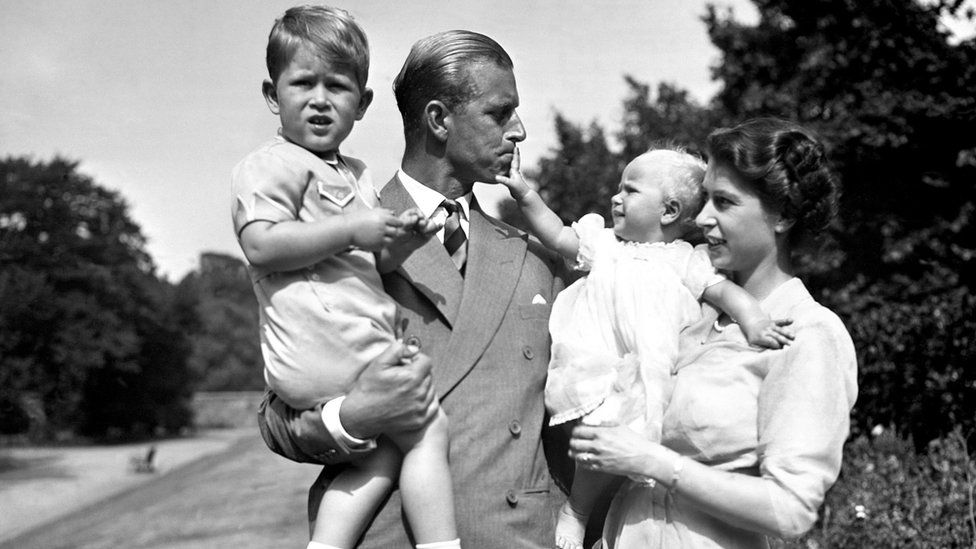
Since the announced passing of the death of Prince Charles of Britain, the longest-serving consort (69 years 62 days) of the British monarch, tributes have poured in for the late husband of Queen Elizabeth II, who died at 99.
Leaders across the world have joined in the tall chain of people paying tributes even as many have touted the supported nature of the late former Navy officer.
But here in Ghana, it has not only been a privilege to have had the late royal of the British monarchy been associated with the country in one too many ways, but our recent history has recorded at least three instances when our Heads of State have been honoured to be in the presence of Prince Philip.
Here are a few photos as we remember the late Duke of Edinburgh:
I send my deepest condolences to Her Majesty The Queen and the Royal Family.
His Royal Highness The Duke of Edinburgh devoted his life to service to his country. His commitment and devotion to duty offer inspiration. pic.twitter.com/bl8LGxWcIK
A report shared by a Facebook user claims that eating banku, local fermented corn and cassava based food wrapped in polythene, is equivalent to smoking 135 sticks of cigarettes.
Initial investigations reveal that this claim has been seen making its rounds online. With this re-circulation, the discussion has picked up again with over 300 comments and 148 shares so far.
Dubawa takes a look at the dangers of wrapping banku in rubber to find out if indeed it amounts to smoking 135 cigarette sticks.
Verification
Further search by Dubawa revealed that the claim made its rounds some years ago and has been dug up again. In 2017, Yen.com published an article that stated that wrapping banku with polythene equals smoking cigars. In their report, they cited one Dominic Gyamfi, a researcher at the University of Ghana Medical School for making the statement. The difference however is that Dominic is alleged to have made mention of 136 sticks of cigarettes as opposed to the 135 mentioned in the recent post.
Attempts to reach the purported source of the original claim, Dominic Gyamfi, have been unsuccessful. His input will be recorded and the report updated as soon as there is success in that regard.
However, Dubawa spoke to Dr. Bismark Dwobeng, a Radiation Oncologist at Komfo Anokye Teaching Hospital to find out if he had come across the claim or any research in that regard. He said he had not heard of the claim nor come across any research that suggests the relation to eating banku wrapped in plastic and smoking 135 sticks of cigarettes.
The similarity between cigarettes and plastic bags.
We found that Cigarette butts or filters are made with plastic!
The filters at the base of a cigarette are made with plastic and are sometimes made from “recycled common plastic terephthalate(PET) from fizzy drinks bottles into membranes for filtration, including cigarette filter tips.â€
Studies have found that cigarette butts are toxic even after being extinguished. Butt emissions as they are called contain carcinogens, nicotine, and toxins found in all tobacco products. An article by newscientist.com also suggests that a single cigarette butt that is soaked in a litre of water for 96 hours leaches out enough toxins to kill half of the fresh or saltwater fish exposed to them.
Image source: Facebook.com
Existing Evidence on the dangers of plastic food packaging
Widely published literature on the dangers of using plastics in food packaging exists.
An article by health.harvard.edu which features an interview with Dr. Russ Hauser, Chairperson of the Department of Environmental Health, and Frederick Lee Hisaw, Professor of Reproductive Physiology at Harvard University Public Health department, Havard T.H. Chan School of Public Health, sheds light on some different types of plastics, based on their composition:
Polypropylene
Polyethylene
Polyethylene terephthalate
Polycarbonate
All these types of plastic contain a variety of chemicals that have different properties like colorants, antioxidants and plasticizers. The possibility of harm being caused to humans who are exposed to the many chemicals within these plastics is high, especially over an extended period of contact albeit in “very low-dose chemical exposures.â€
Key among the chemical components that are regarded very harmful to humans, according to Dr. Hauser, are phthalates and bisphenol A (BPA), both of which are endocrine disruptors. These substances interfere with the actions of human hormones.
Phthalates are used to make plastics more flexible and can be found in plastic wraps and food packaging within which the plastics bags used in wrapping banku can be found. Other studies also suggest decreased fertility, neurodevelopmental issues, and asthma in humans because of links to the presence of phthalates.
Cigarette butts/filters on the other hand are made of a type of plastics called, cellulose acetate which constitutes 95% of the butt. The remaining 5% is made up of papers and rayon. The cellulose acetate tow fibers are thinner than sewing thread, white, and packed tightly together to create a filter that can look like cotton.
In April 2019, a Graphic report provided expert views on the dangers of packaging food in plastic,
Mr. Kofi Essel, the Head of the Food Inspectorate Division of the Food and Drugs Authority (FDA), stated in the report that eating from polythene regularly can cause cancer in the stomach because particles from the plastic can get into the food.
“Most people are careless or ignorant of the health implications of this act. Chemicals from polythene often leach into foods, especially chemicals can easily dissolve into cooked oily foods, and this can have serious health implications on consumersâ€, Mr Essel is quoted to have said.
This was also corroborated by the Chairperson of the Media and Apologetics Committee of the Ghana Dietetics Association and a lecturer at the University of Health and Allied Sciences (UHAS), Nana Kofi Owusu, and a lab Technician from MEDILAB, Ms Gloria Tamaklo.
The Math: Questions that arise from the claim, leaving gaps in context.
Is one ball of plastic-wrapped banku equal to the suggested 135 sticks of cigarette smoked or does the quantity of plastic-wrapped banku balls consumed affect the relation to cigarette sticks smoked?
Does the toxicity content of one plastic bag or plastic wrap equate the toxicity content of 135 cigarette butts?
So far, we have not come across any research that calculates the toxicity content of both subjects in question in order to provide empirical evidence. The claim can therefore not be readily proven.
Conclusion
Although it has been established that putting consumables into plastics can be harmful to the body, it remains unclear whether eating banku wrapped in plastic equates to smoking 135 or 136 sticks of cigarettes.
A teacher at the Autism Awareness, Care and Training Centre, Grant Baiden, has underscored the need for the public to stop describing children with Autism as demons or spiritually cursed.
He said autism is not caused by spiritual attacks and only ignorant persons who would make such arguments.
Speaking on Frontline on Rainbow Radio 87.5Fm with care support and training children with Autism will be just like any other child.
He indicated that there was a need for intensified campaigns to give the public more insight into autism as a condition.
He also disputed assertions that autism is not contagious as some persons have claimed.
He said it is also not true that persons who care for children with autism are prone to being autistic.
Grant Baiden further noted that another misconception is that it is linked to intellectual disability.
He said when diagnosed with autism at an early age, and with training and care, children will see tremendous growth through the years.
He outlived nearly everyone who knew him and might explain him.
And so we have been left with a two-dimensional portrait of the duke; salt-tongued and short-tempered, a man who told off-colour jokes and made politically incorrect remarks, an eccentric great-uncle who’d been around forever and towards whom most people felt affection – but who rather too often embarrassed himself and others in company.
With his death will come reassessment. Because Prince Philip was an extraordinary man who lived an extraordinary life; a life intimately connected with the sweeping changes of our turbulent 20th Century, a life of fascinating contrast and contradiction, of service and some degree of solitude. A complex, clever, eternally restless man.
His mother and father met at the funeral of Queen Victoria in 1901. At a time when all but four of Europe’s nations were monarchies, his relatives were scattered through European royalty. Some royal houses were swept away by World War One; but the world into which Philip was born was still one where monarchies were the norm. His grandfather was the King of Greece; his great-aunt Ella was murdered along with the Russian tsar, by the Bolsheviks, at Ekaterinberg; his mother was a great-granddaughter of Queen Victoria.
His four older sisters would all marry Germans. While Philip fought for Britain in the Royal Navy, three of his sisters actively supported the Nazi cause; none would be invited to his wedding.
When peace came, and with it eventual economic recovery, Philip would throw himself into the construction of a better Britain, urging the country to adopt scientific methods, embracing the ideas of industrial design, planning, education and training. A decade before Harold Wilson talked of the “white heat of the technological revolution”, Philip was urging modernity on the nation in speeches and interviews. And as the country and the world became richer and consumed ever more, Philip warned of the impact on the environment, well before it was even vaguely fashionable.
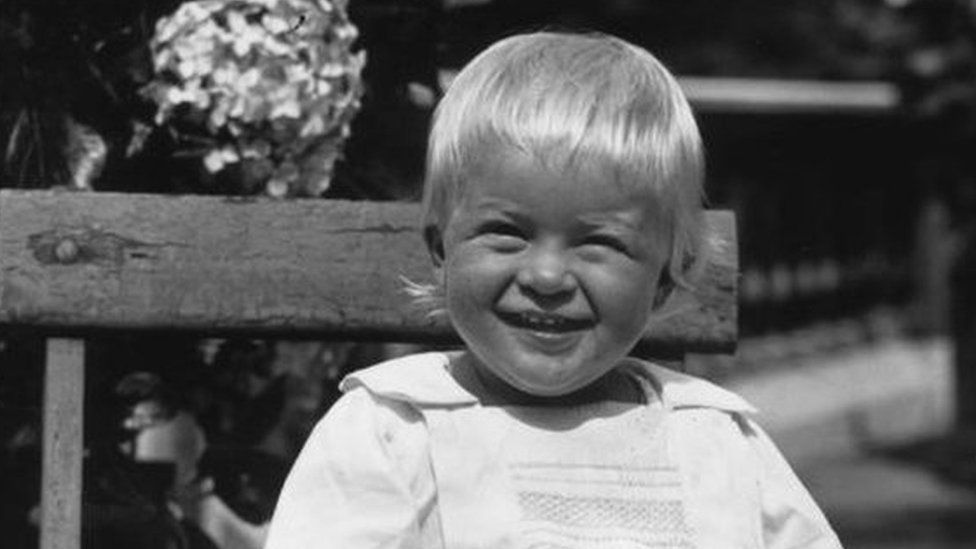
image captionEighteen months after his birth, his family was in exileimage captionHis childhood quickly taught him the values of self-reliance
He was forged by the turmoil of his first decade and then moulded by his schooling. His early years were spent wandering, as his place of birth ejected him, his family disintegrated and he moved from country to country, none of them ever his own. When he was just a year old, he and his family were scooped up by a British destroyer from his home on the Greek island of Corfu after his father had been condemned to death. They were deposited in Italy. One of Philip’s first international journeys was spent crawling around on the floor of the train from an Italian port city, “the grubby child on the desolate train pulling out of the Brindisi night,” as his sister Sophia later described it.
In Paris, he lived in a house borrowed from a relative; but it was not destined to become a home. In just one year, while he was at boarding school in Britain, the mental health of his mother, Princess Alice, deteriorated and she went into an asylum; his father, Prince Andrew, went off to Monte Carlo to live with his mistress; and his four sisters married and went to live in Germany. In the space of 10 years he had gone from a prince of Greece to a wandering, homeless, and virtually penniless boy with no-one to care for him.
“I don’t think anybody thinks I had a father,” he once said. Andrew would die during the war. Philip went to Monte Carlo to pick up his father’s possessions after the Germans had been driven from France; there was almost nothing left, just a couple of clothes brushes and some cuff-links.
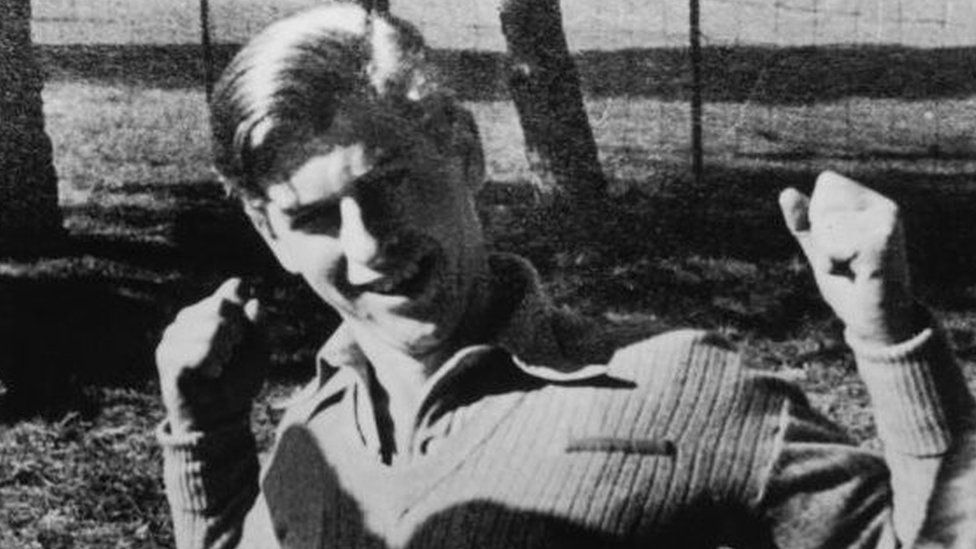
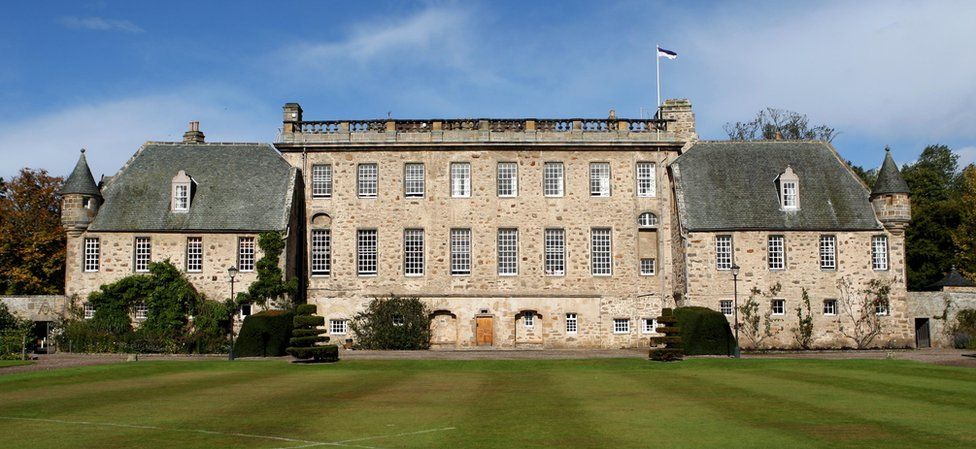
By the time he went to Gordonstoun, a private school on the north coast of Scotland, Philip was tough, independent and able to fend for himself; he’d had to be. Gordonstoun would channel those traits into the school’s distinct philosophy of community service, teamwork, responsibility and respect for the individual. And it sparked one of the great passions of Philip’s life – his love of the sea.
Philip adored the school as much as his son Charles would despise it. Not just because the stress it put on physical as well as mental excellence – he was a great sportsman. But because of its ethos, laid down by its founder Kurt Hahn, an exile from Nazi Germany.
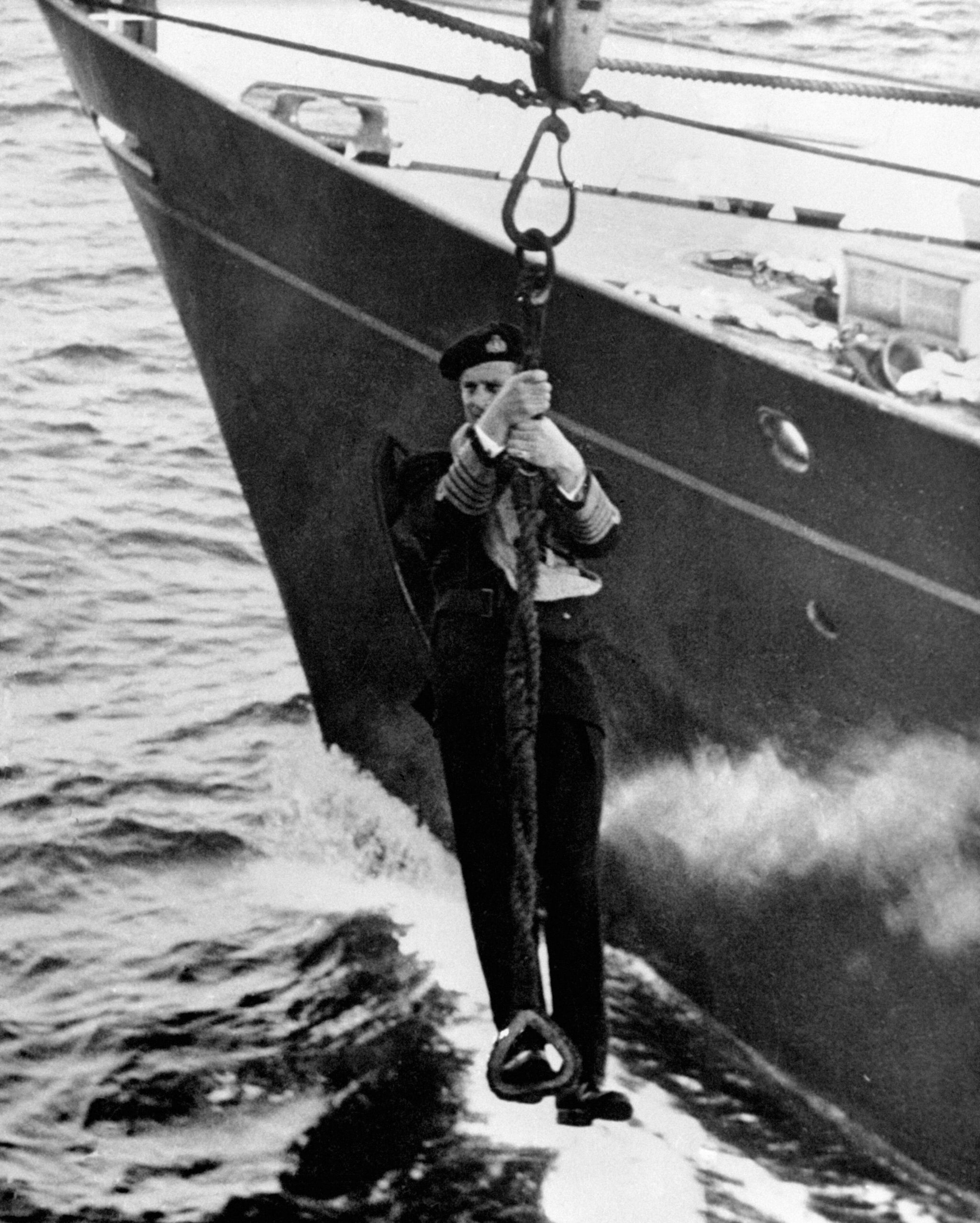
image captionPrince Philip became one of the youngest first lieutenants in the Royal Navyimage captionBut he had to give up his career to support the Queenimage captionThe Duke of Edinburgh’s children would not bear his name, Mountbatten
That ethos became a significant, perhaps the significant, part of the way that Philip believed life should be lived. It shines through the speeches he gave later in his life. “The essence of freedom,” he would say in Ghana in 1958, “is discipline and self-control.” The comforts of the post-war era, he told the British Schools Exploring Society a year earlier, may be important “but it is much more important that the human spirit should not be stifled by easy living”. And two years before that, he spoke to the boys of Ipswich School of the moral as well as material imperatives of life, with the “importance of the individual” as the “guiding principle of our society”.
And at Gordonstoun was born one of the great contradictions of Philip’s fascinating life. The importance of the individual was what in Kurt Hahn’s eyes differentiated Britain and liberal democracies from the kind of totalitarian dictatorship that he had fled. Philip put that centrality of the individual, and individual agency – the ability we have as humans to make our own moral and ethical decisions – at the heart of his philosophy.
And yet he was throughout his life, first in the navy and then in the many decades of life in the Palace, tightly bound by rules of tradition, of precedent, of command and hierarchy. He had little, if anything, in the way of agency. Did he say one thing and do another, as members of the Royal Family are often accused of? Or was his first choice – to serve – by necessity his last?
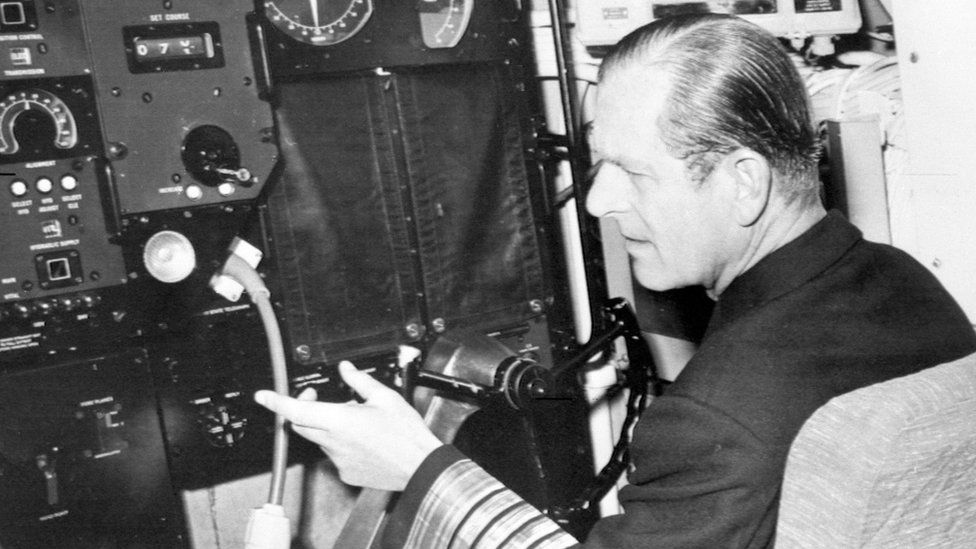
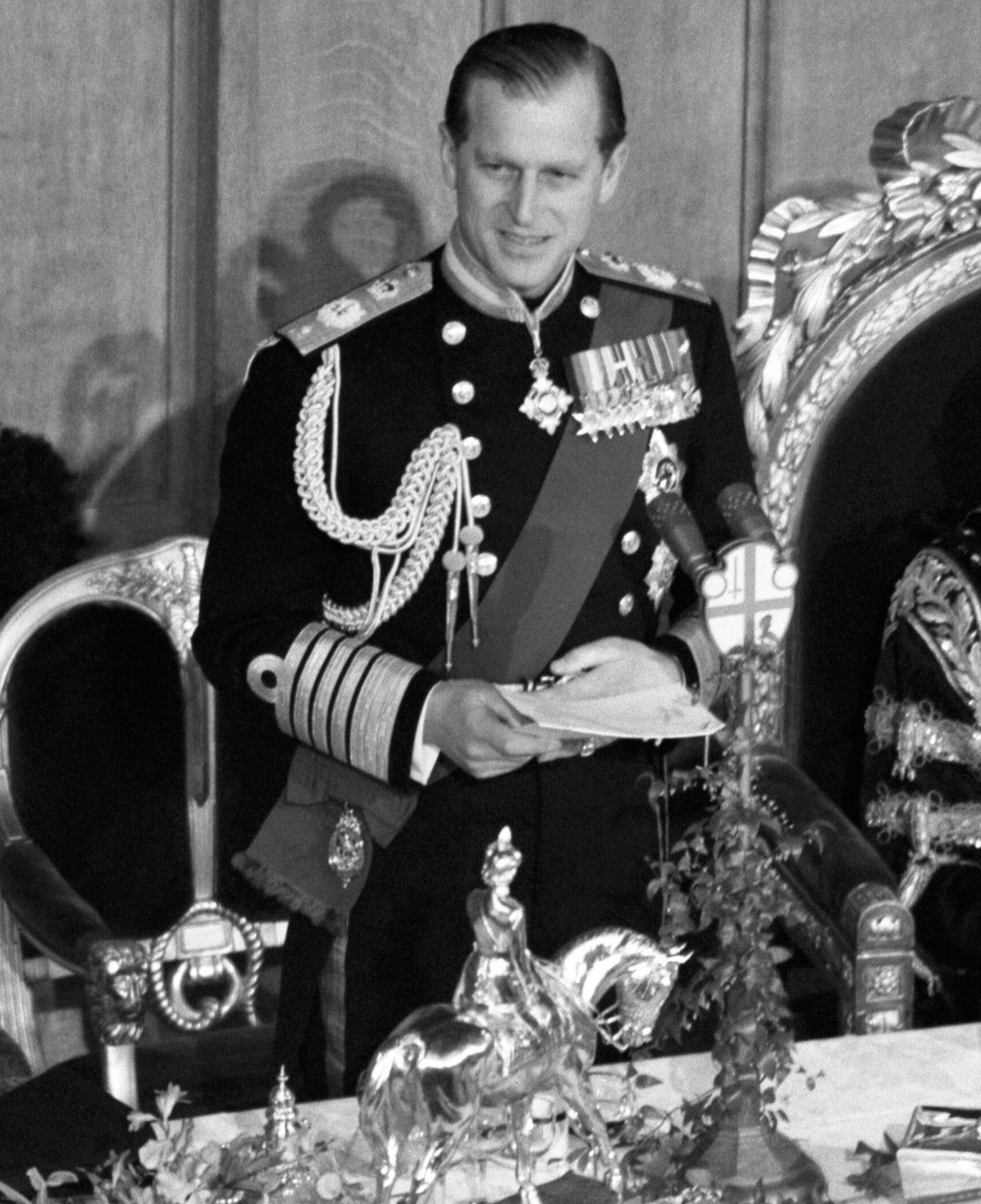
image captionThe navy ran deep in the Duke of Edinburgh’s family. He is pictured sitting at the wheel of the nuclear-powered submarine HMS Churchillimage captionPrince Philip gave between 60 and 80 speeches every year, decade after decade, on topics that reflected his vast range of interests
At Dartmouth Naval College in 1939, the two great passions of his life would collide. He had learned to sail at Gordonstoun; he would learn to lead at Dartmouth. And his driving desire to achieve, and to win, would shine through. Despite entering the college far later than most other cadets, he would graduate top of his class in 1940. In further training at Portsmouth, he gained the top grade in four out of five sections of the exam. He became one of the youngest first lieutenants in the Royal Navy.
The navy ran deep in his family. His maternal grandfather had been the First Sea Lord, the commander of the Royal Navy; his uncle, “Dickie” Mountbatten, had command of a destroyer while Philip was in training. In war, he showed not only bravery but guile. It was his natural milieu. “Prince Philip”, wrote Gordonstoun headmaster Kurt Hahn admiringly, “will make his mark in any profession where he will have to prove himself in a trial of strength”.
Others had their reservations about the brilliant and ambitious young officer. In peace, once he had his own command, he drove his men hard, much too hard for some. “If he had a fault, it was a tendency to intolerance,” wrote one biographer. That kind of comment would recur. Contemporaries were more blunt. “One of his crew,” writes another biographer, “said he would rather die than serve under him again.”
In Dartmouth in 1939, as war became ever more certain, the navy was his destiny. He had fallen in love with the sea itself. “It is an extraordinary master or mistress,” he would say later, “it has such extraordinary moods.” But a rival to the sea would come.
When King George VI toured the Naval College, accompanied by Philip’s uncle, he brought with him his daughter, Princess Elizabeth. Philip was asked to look after her. He showed off to her, vaulting the nets of the tennis court in the grounds of the college. He was confident, outgoing, strikingly handsome, of royal blood if without a throne. She was beautiful, a little sheltered, a little serious, and very smitten by Philip.
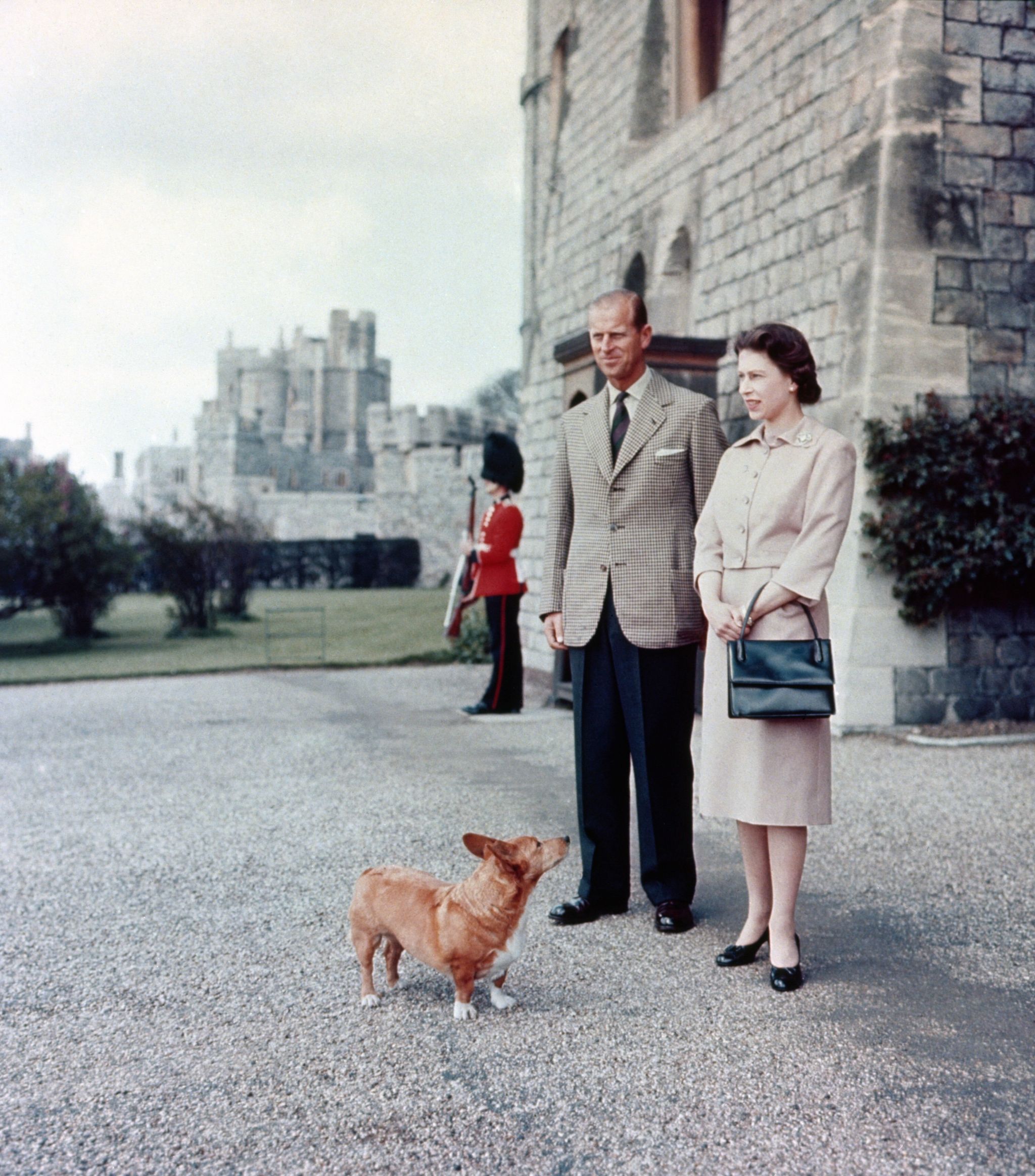
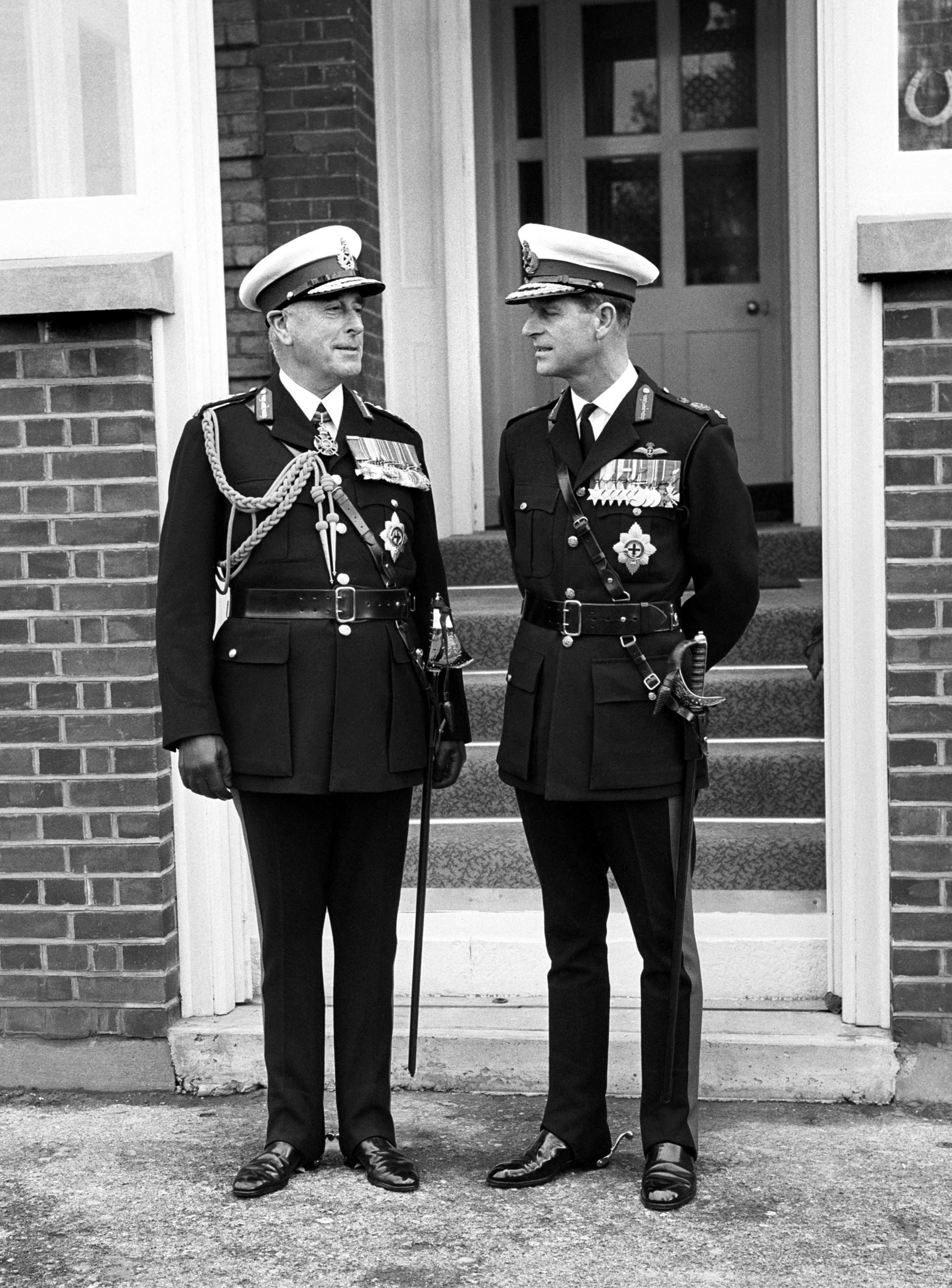
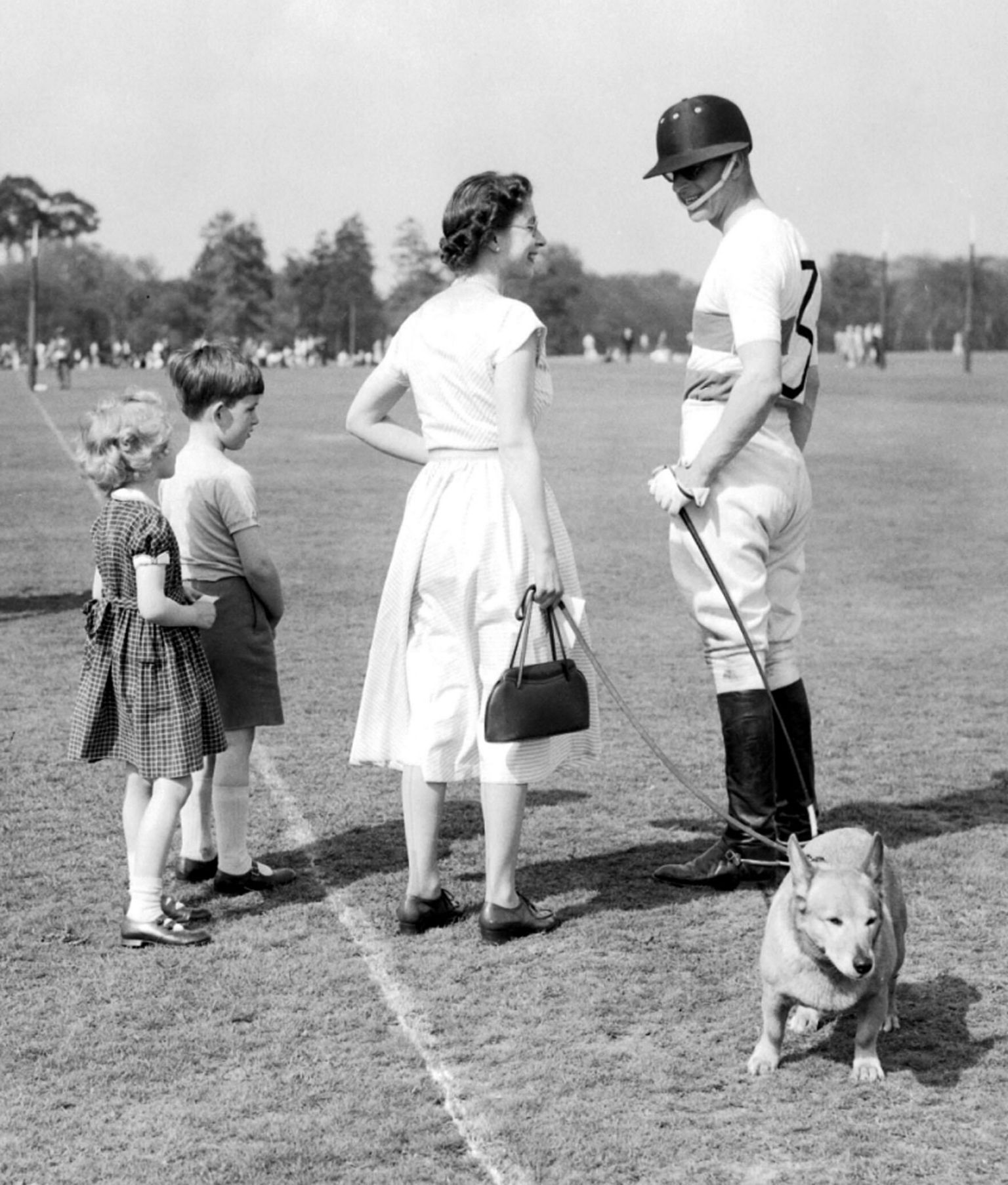
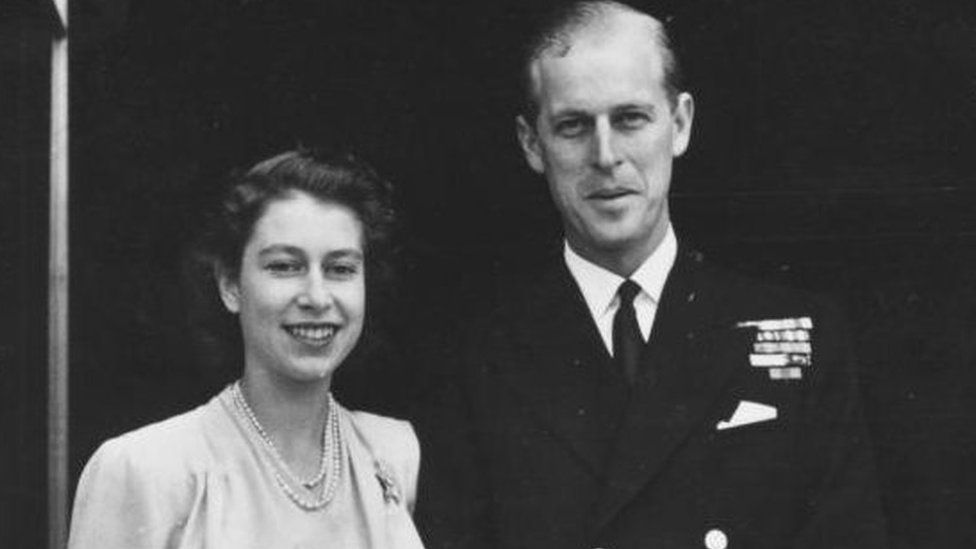
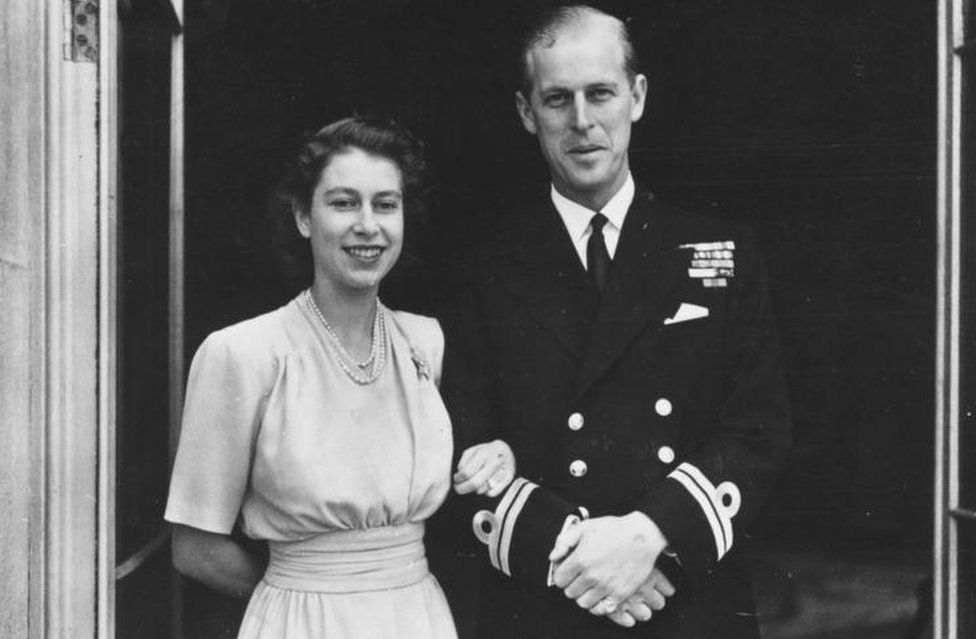
image captionPrince Philip with his uncle, Earl Mountbatten, at the Royal Marines Barracks in 1965image captionThe Queen, with one of the Royal corgis, chats with polo-playing Prince Philip at Windsor Great Parkimage captionTheir engagement was announced in July 1947
Did he know then that this was a collision of two great passions? That he could not have the sea and the beautiful young woman? For a time after their wedding in 1948, he did have both. As young newlyweds in Malta, he had what he so prized – command of a ship – and they had two idyllic years together. But the illness and then early death of King George VI brought it all to an end.
He knew what it meant, the moment he was told. Up in a lodge in Kenya, touring Africa, with Princess Elizabeth in place of the King, Philip was told first of the monarch’s death. He looked, said his equerry Mike Parker, “as if a tonne of bricks had fallen on him”. For some time he sat, slumped in a chair, a newspaper covering his head and chest. His princess had become the Queen. His world had changed irrevocably.
For someone who almost never displayed anything close to self-pity, and rarely spoke of his own emotions, he was by his own standards candid about the loss of his naval calling. “There’s never been ‘if only’,” he said once, “except perhaps that I regret not having been able to continue a career in the navy”. Those who knew the man and his passions are blunter. The former First Sea Lord, Admiral Lord West, says Philip did his duty; but of the end of his time in the navy he says, “I know it was a huge loss to him. I know it.”
That moment, when princess became Queen, revealed another great contradiction of Philip’s life. He was born and brought up in a world almost entirely run by men. He was a rugged, physical man who was brought up and then worked in an entirely male environment. He celebrated masculinity, telling Mike Parker on the birth of his first son Charles, “It takes a man to have a boy.” But literally overnight, and for 65 years to follow, it became his life to support his wife, the Queen.
He would walk behind her. He would give up his job for her. He would apologise if he came into a room after her. At her coronation he knelt before her, his hands enclosed by hers, and swore to be her “liege man of life and limb”. His children would not bear his name, Mountbatten. “I’m nothing but a bloody amoeba,” he exclaimed at that. But there was nothing to be done. She was the Queen. He was her husband.
Prince Philip talked of the upending of circumstance little. “Within the house,” he said of the time before the Queen’s accession, “I suppose I naturally filled the principal position. People used to come and ask me what to do. In 1952 the whole thing changed very, very considerably.”
image captionPrince Philip had hundreds of patronages and projects with a focus on youth, science, the outdoors and sportimage captionPrince Philip helped sustain the monarchy
The transition to life in the Palace was brutal. “Philip,” said his equerry, “was constantly being squashed, snubbed, ticked off, rapped over the knuckles… I felt Philip did not have any friends or helpers.” Philip may not have helped himself; one biographer writes that in the early years Palace staff felt he was “difficult to deal with… prickly… arrogant… defensive”. He was looked upon with suspicion by some in the court, as something of an adventurer, as perhaps a fortune hunter. He had German blood, and this was just after the herculean effort of defeating Nazi Germany.
In response, Philip began what would become a lifetime of near-ceaseless activity; abroad he was at the side of the Queen on the long tours they undertook, sometimes breaking off to pursue interests particular to him – sporting, industrial or research. She nearly always travelled with him as her companion; but he also travelled alone. It was he, not she, that made the farewells to colonial possessions in the 1950s and 1960s.
At home there were patronages and projects, hundreds upon hundreds of them, with a focus on youth, science, the outdoors and sport. He played cricket, squash, polo; he swam, sailed, rowed and rode horses and carriage drove. He learnt to fly, and developed his own photographs.
Within the Palace he was a moderniser, striding the corridors, rootling around the cellars, trying to find out what everyone did. He took over the management of the estate at Sandringham and over the years significantly redeveloped it.
“He believes he has a creative mission,” wrote an early biographer, “to present the monarchy as a dynamic, involved and responsive institution that will address itself to some of the problems of contemporary British society.”
He was young and very good looking; he smiled and joked and was at ease in front of the cameras. When he visited a boys’ club in London in the late 1950s, a photo shows him with a broad smile on his face, looking crisp in a double-breasted pinstripe suit, his hair slicked back with brilliantine, surrounded by the upturned faces of boys and their mothers all shoving and trying to get close to him. There is more than a whiff of Beatlemania to the moment.
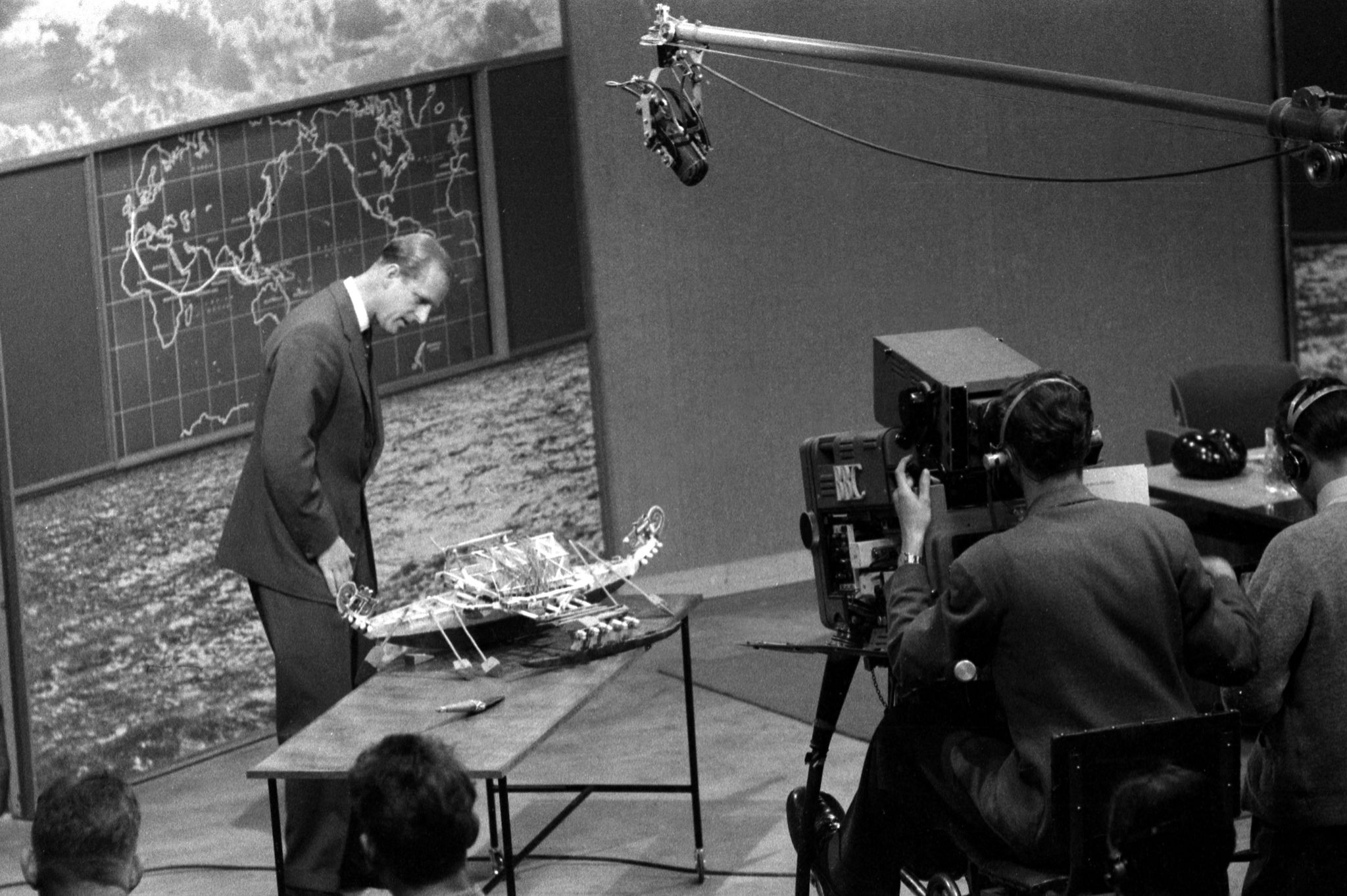
In his study on the first floor of Buckingham Palace, overlooking the gardens and Green Park, surrounded by thousands of books, with a model of his first command HMS Magpie to one side, he would research and write and type out his speeches. (In 1986 he would buy, always the moderniser, what he called a “splendid gadget” that he called “a miniature word processor”.) He gave between 60 and 80 speeches every year, decade after decade, on topics that reflected his vast range of interests.
Out of the speeches comes a picture of the man. For someone who sat through so much of it, he was clearly impatient with ceremony. “A lot of time and energy,” he told students and staff at the Chesterfield College of Technology, “has been spent on arranging for you to listen to me to take a long time to declare open a building which everyone knows is open already.”
Reflecting his dizzying range of interests, there was sometimes a touch of the gentleman-farmer to his thoughts – well-organised arguments that don’t really go anywhere, a lot of anecdotal evidence (“it seems to me…”) garnered from his extensive travels.
Despite modernising instincts, he was a conservative, somewhat suspicious of the machinations of the big city. He spoke of “urban dwellers” and of the “average citizen” dumping rubbish from their car. He preferred practical solutions to highfalutin theory – “The enterprise is doomed,” he told the Commonwealth Conference on Industrial Relations, “if it is allowed to enter the rarefied atmosphere of theory.”
He was an environmentalist before anyone really knew what that was. He warned of the “greedy and senseless exploitation of nature.” And in 1982 he brought up a topic that now grips us, but back then was almost never spoken of, “a hotly-debated issue directly attributable to the development of industry… the build-up of carbon dioxide in the atmosphere,” which he referred to as the “greenhouse effect”.
image captionHis relationship with his eldest son improved in later years
And he constantly did himself down, shrugging as to why anyone should want to hear him speak: “I have very little experience of self-government,” he told one audience, “I am one of the most governed people you could meet….” His example of irrational behaviour? – “making and listening to speeches on important occasions”. Or speaking before the Brussels Expo in 1958 – “I feel I can claim to be an expert at going round exhibitions.” He knew most speeches were a dull formality that had to be got through – and he was happy to let his audience have a laugh at his expense.
It is another contradiction in a life of them; that someone who cared so much about how we live our lives, about how to pursue a good and moral life, about how government and society might try to channel our instincts, should end up being popularly portrayed as a saloon-bar bore, his retirement from public life in 2017 accompanied by lists of his “gaffes”, off-colour comments and salty jokes.
That he could be rude, startlingly so at times, there is no doubt. Part of it was impatience, that dynamo whirring away, the desire to get things done double-quick. Part of it may have been deafness, inherited from his almost wholly deaf mother. But part of it was just plain bad manners, a disregard for what others felt and a thoughtlessness that came from position and temperament.
There was for a long time a fair amount of barking and shouting at those who failed to please him, and not a lot of thanking those that did.
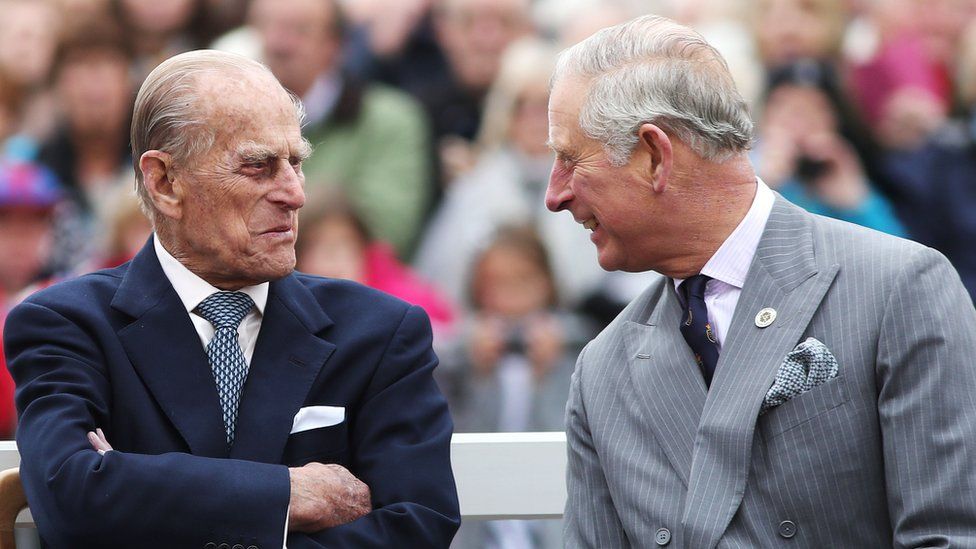
Looking back down the decades, two great contrasts stand out. The first, that between a life led in the public eye, and a really quite private man. The boy shuttling between guardians and schools and countries quickly learnt to seal off his private side from public view. Inside the Palace it became his world view. Most of his biographers’ personal queries were met with a shrug, as if to say “I don’t know why you are bothering”. He once said of his son Charles: “He is a romantic, I am a pragmatist. And because I don’t see things as a romantic would, I’m [perceived as] unfeeling.” There can be little doubt that he was stung by the accusation. But his inner thoughts were not for public consumption.
And the second great, related, contrast is that between the near unceasing whirl of his public life, and a degree of solitude in his private. Of course there was family, though all his sisters pre-deceased him. But few, if any, great friendships are recorded, a corollary of his private nature and the pattern of his many decades. “Life,” wrote one biographer, “hasn’t enabled him to build up friendships. He is going round the world at such a lick.” And royalty is its own curious cage, repelling outsiders. “What the royal family offers you is friendliness,” said the late James Callaghan, prime minister in the 1970s, “not friendship.”
Major General Charles Stickland of the Royal Marines, of which for 64 years Philip was Captain General, tells of when the duke flew into an exercise in Norway. He was supposed to say a quick hello to the enlisted men and then have lunch with the commanding officer. Instead he “asked two of the corporals to spoon food into his mess tin, sat on a Bergan [rucksack], told stories and chatted away with my troops when he was supposed to be having a posh lunch and then got back on the helicopter, having inspired a group of young men as to why it was great to be a Royal Marine”.
It was vintage Philip; no ceremony, hierarchy pushed to one side, the big group over the more intimate gathering.
Because of his desire for privacy, because of his position, and because nearly all who knew him best have gone, our understanding of him will always be incomplete. But that’s also because of what kind of person he was, because of the contradictions and contrasts that emerged over the decades. “A mercurial man like His Royal Highness,” said the artist and architect Sir Hugh Casson, “needs a loose fit portrait.”
He was asked once what his life had been about (the sort of question that normally received an incredulous snort). Had it been about supporting the Queen? “Absolutely, absolutely,” he replied. He didn’t see himself as a leader, though lead he could. And his own achievements he consistently played down. Accepting the Freedom of the City of London in 1948, he spoke for himself and for what he called other “followers”, with trademark modesty. “Our only distinction,” he said, “was that we did what we were told to do, to the very best of our ability, and kept on doing it.”
The Duke of Edinburgh, arguably the world’s most famous husband, has died at the age of 99.
He spent seven decades in the shadow of his wife, the UK’s Queen Elizabeth II – but his force of personality meant he would never be simply a professional spouse.
So who was the man beside the monarch, and how did he come to marry the Queen?
A husband but never a king
First things first: The Duke, also known as Prince Philip, was never in line for the throne – which his eldest son stands to inherit – and never held the title of king.
That’s because in the UK, a woman who marries the monarch can use the ceremonial title of queen – but men who marry the monarch can’t use the title king, which can only be used by male sovereigns.
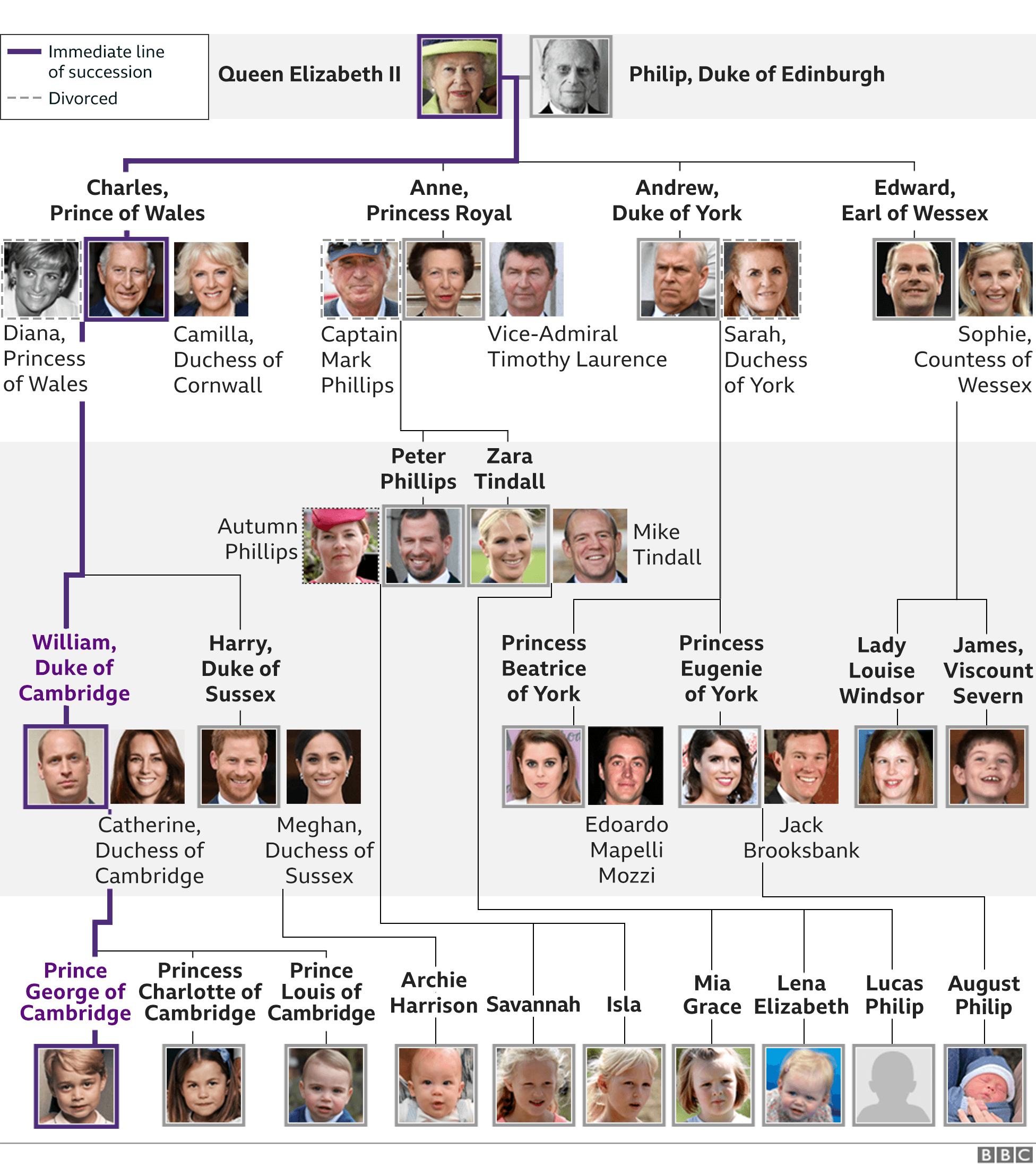
The Queen and Prince Philip had four children together: Prince Charles, 72, Princess Anne, 70, Prince Andrew, 61, and 57-year-old Prince Edward.
As they tell it, Philip often exerted his will when they were young.
Royal biographer Ingrid Seward quotes Prince Andrew as saying of his childhood: “Compassion comes from the Queen. And the duty and discipline comes from him.”
But Andrew also remembered how his father made time to invent bedtime tales, or listen to his children read Rudyard Kipling’s Just So Stories.
Prince Philip lived long enough to see his eight grandchildren grow up, and to welcome 10 great-grandchildren.
Curiously, Philip’s journey to Buckingham Palace began back in 1922, in a crib made from an orange box.
He was born on 10 June 1921 on the Greek island of Corfu, the youngest child and only son of Prince Andrew of Greece and Princess Alice of Battenberg.
That heritage made him a prince of Greece and Denmark, but the following year the family was banished from Greece after a coup.
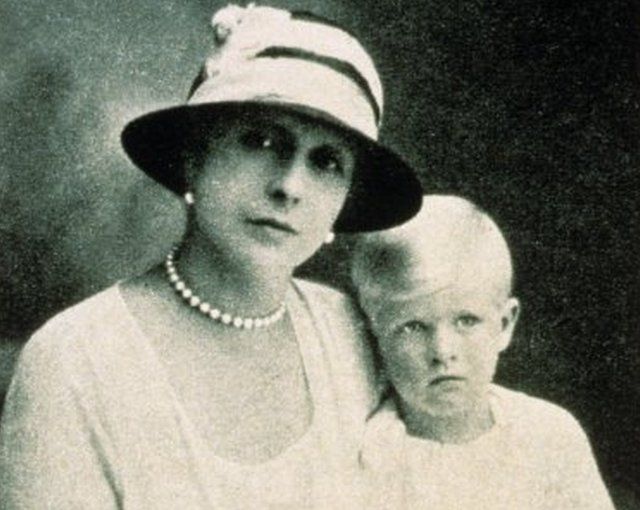
image captionPrincess Alice and the young Prince Philip, after being exiled from Greece
A British warship carried them to safety in Italy, with baby Philip dozing in a makeshift fruit crate cot.
What was his upbringing like?
Philip’s childhood was fragmented, and darkened by a series of losses.
In 1930, when he was eight years old, his mother was committed to a secure psychiatric centre after suffering a nervous breakdown.
Philip saw little of either parent in the years that followed. His father retreated to the French Riviera with a mistress, and his mother’s relatives in the UK helped raise him. He would later adopt their surname, Mountbatten – an anglicised form of the family name Battenberg.
A Scottish boarding school, Gordonstoun, passed for home during his teens. Its founder and headmaster was Jewish educational pioneer Kurt Hahn, who had been forced out of Germany for condemning the Nazis.
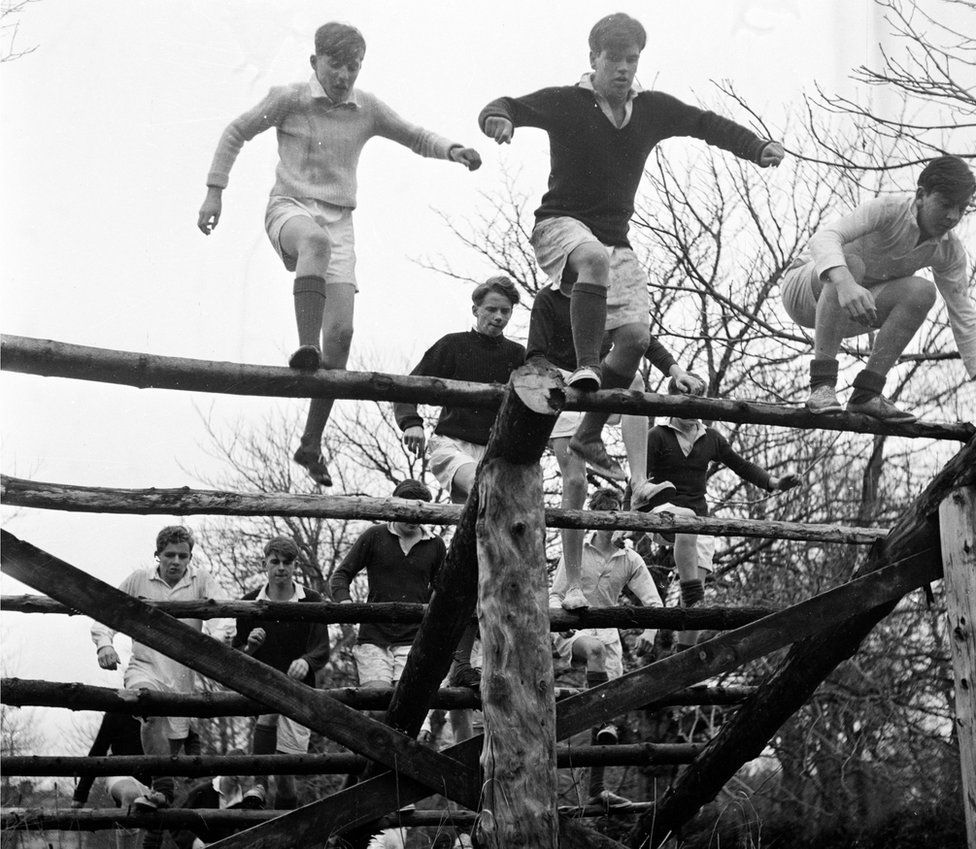
The school gave Philip structure, and nurtured his self-reliance. Its somewhat Spartan regime saw pupils rise early for a freezing shower and cross-country running, which Hahn believed would combat the “poisonous passions” of adolescence.
image captionPupils at Gordonstoun School tackle an obstacle courseimage captionAt Gordonstoun, boys were put through a rigorous exercise programme alongside their academic studies
In 1937, one of Philip’s four sisters, Cecilie, died in an air crash along with her German husband, mother-in-law, and two young sons. She was heavily pregnant at the time.
Cecilie had recently joined the Nazi party, which had near-totalitarian control of Germany. Grieving Philip, aged 16, walked through the streets of Darmstadt behind his sister’s coffin, past crowds giving “Heil Hitler” salutes.
“It’s simply what happened,” Prince Philip later said of that time. “The family broke up. My mother was ill, my sisters were married, my father was in the south of France. I just had to get on with it. You do. One does.”
How did Philip court the Queen?
When Philip left school, Britain was on the verge of war with Germany. He joined the Britannia Royal Naval College in Dartmouth (the UK’s naval academy), where he proved a brilliant cadet and graduated top of his class.
When King George VI paid an official visit in July 1939, Philip was charged with entertaining his young daughters, Princesses Elizabeth and Margaret.
Their governess, Marion Crawford (employed as a guardian for the princesses), recalled later that Philip had “showed off a great deal”. He made quite an impression on the 13-year-old Elizabeth, as would soon become clear.
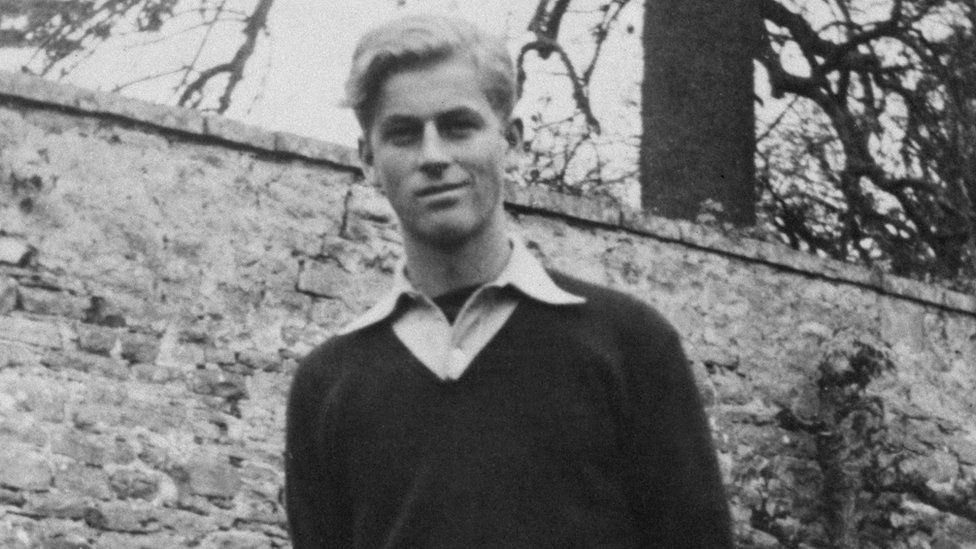
image captionA rare picture of Prince Philip at Gordonstoun, shortly before he met Princess Elizabeth
Prince Philip served with distinction in World War Two, seeing military action for the first time in the Indian Ocean. By October 1942, he was 21 years old – and one of the Royal Navy’s youngest first lieutenants.
The teenaged princess and the officer kept in touch by letter. Over Christmas 1943, after Philip had been to stay with the Royal Family, a photograph of him in naval uniform appeared on her dressing room table. It was a decisive gesture from a reserved but determined young woman.
Some aides were sceptical. A famous sneer (since attributed to more than one official) claimed the prince was “rough, ill-mannered, uneducated and would probably not be faithful”.
But naysayers could do nothing to deter the future Queen.
According to biographer Philip Eade, Philip’s letters from 1946 reveal an ardent young man with a new sense of purpose.
He wrote to his soon-to-be mother-in-law: “I am sure I do not deserve all the good things that have happened to me. To have been spared in the war and seen victory, to have been given the chance to rest and to re-adjust myself, to have fallen in love completely and unreservedly, makes all one’s personal and even the world’s troubles seem small and petty.”
image captionPrincess Elizabeth and her husband-to-be outside Buckingham Palace in 1947, after announcing their engagement
King George gave Philip permission to marry his daughter. But first there were some tweaks to make.
The erstwhile Prince of Greece and Denmark became a naturalised British subject, formally joined the Church of England and abandoned his foreign titles.
On his wedding day, 20 November 1947, he was made Duke of Edinburgh, a name he was widely known by for the rest of his life. He was 26, and his new wife 21.
The royal couple would have just over four years (and two children) together before duty came knocking.
The fateful news reached them at a game lodge in Kenya, during their 1952 tour of the Commonwealth. King George VI, Elizabeth’s father, was dead at 56.
Commander Michael Parker, the Duke of Edinburgh’s friend and private secretary, described the moment he realised his wife was now Queen.
“He looked as if you’d dropped half the world on him. I have never felt so sorry for anyone in all my life. He just breathed heavily, in and out, as though he were in shock. He saw immediately that the idyll of their life together had come to an end.”
Philip’s naval ambitions were curbed. The new Queen Elizabeth would need her husband by her side.
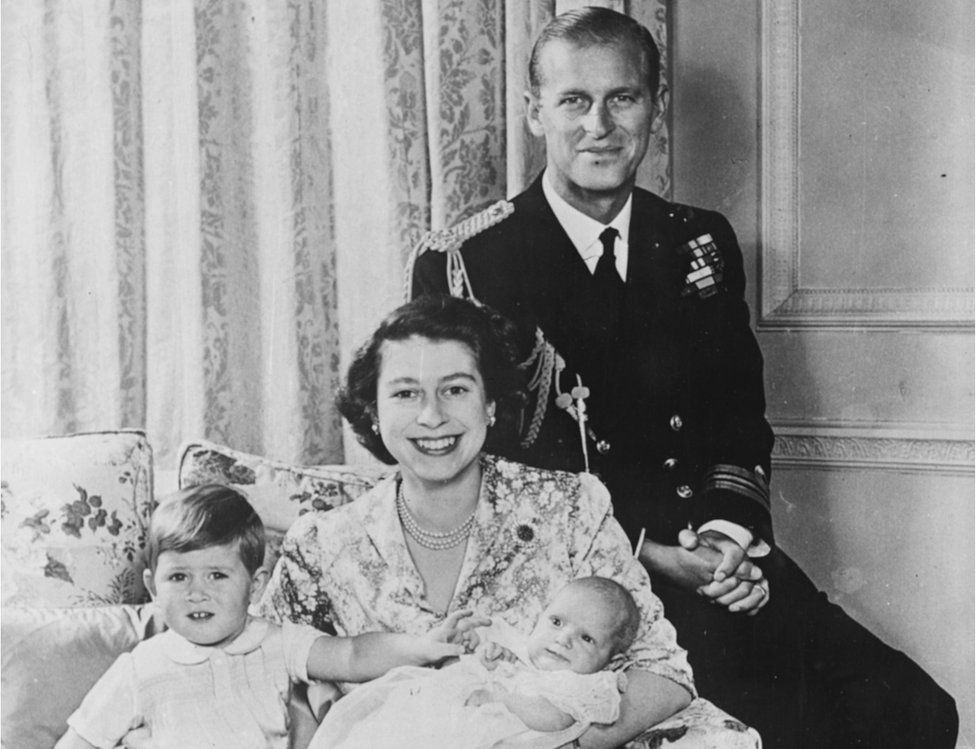
image captionPrincess Elizabeth and Prince Philip with their baby daughter Princess Anne and son Prince Charles, in 1950
The Duke of Edinburgh was named as the Queen’s consort. His primary function was to support his wife.
A long-running row broke out in the early 1950s when Philip wanted the Royal Family to take his surname, Mountbatten.
“I am the only man in the country not allowed to give his name to his children!” he fumed when the Queen was persuaded to keep Windsor. “I’m nothing but a bloody amoeba!”
Philip struggled to find purpose in the limited role set out for him. But as a natural pragmatist, he was determined to blow fresh air through the stuffier corridors of Buckingham Palace.
How did Philip change the monarchy?
The Duke never forgot his family’s forced exodus from Greece, and believed monarchies must adapt to survive.
He set up informal lunches where the Queen could meet people from a broader range of backgrounds. The footmen – palace servants with a traditional uniform – stopped powdering their hair. And when he learned the palace was running a second kitchen exclusively to feed the royals, he had one shut down.
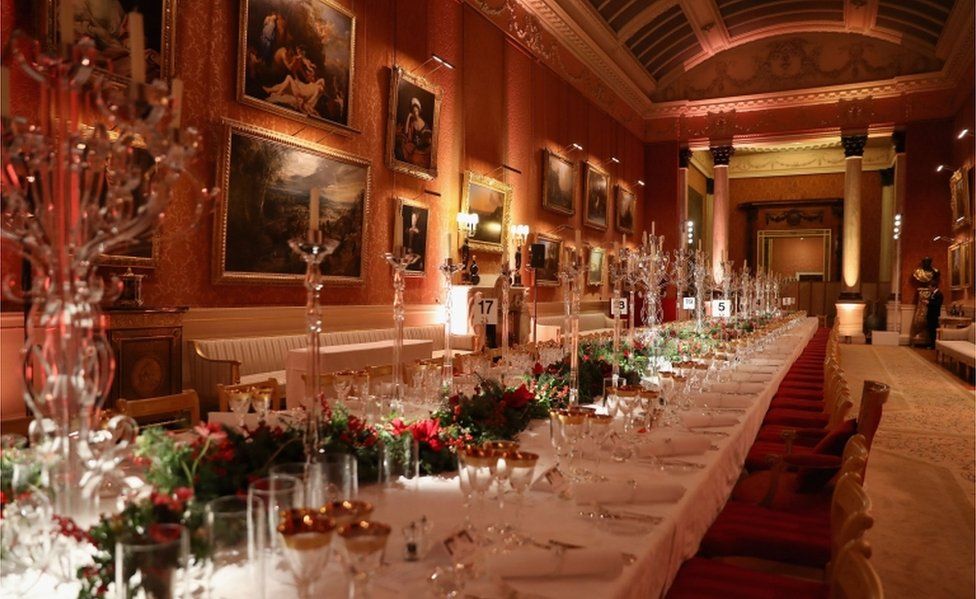
image captionA table prepared for dinner at Buckingham Palace
Some changes were more personal, and reflected his childlike love of gadgets. Before the Coronation, when Philip and the future Queen moved into Clarence House in 1949, he happily installed an array of labour-saving devices, including one in his wardrobe that would eject a suit at the push of a button.
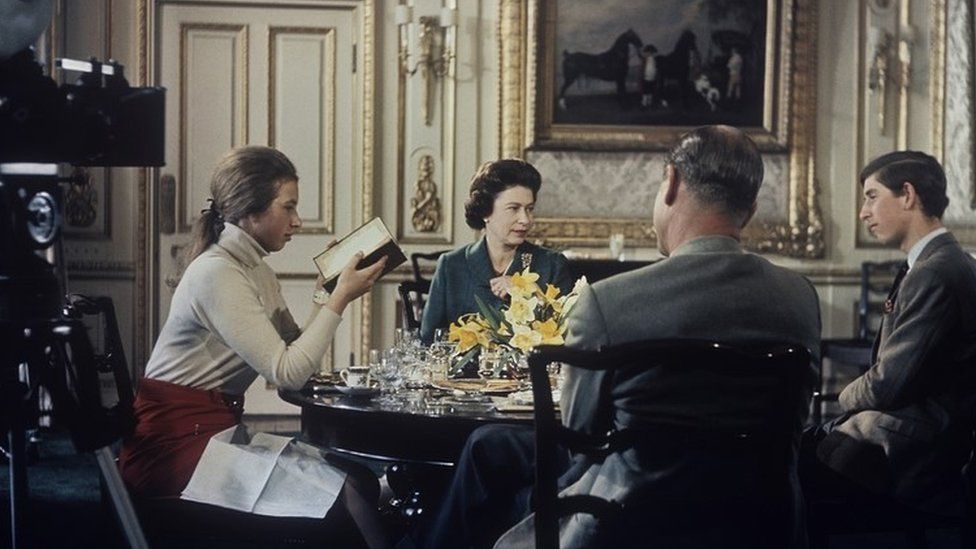
The Duke also championed a 90-minute fly-on-the-wall BBC documentary entitled Royal Family, which aired in 1969 and was considered landmark television.
It featured the Queen feeding carrots to her Trooping the Colour horse, watching TV and discussing salad at a Balmoral barbecue while Princess Anne cooked sausages.
At Buckingham Palace, Philip had intercoms put in so that servants no longer had to ferry written messages to his wife. He carried his own luggage, and cooked his own breakfast in his rooms with an electric frying pan – until the Queen objected to the smell.
image captionPrince Philip was heavily involved with the ground-breaking documentary Royal Family
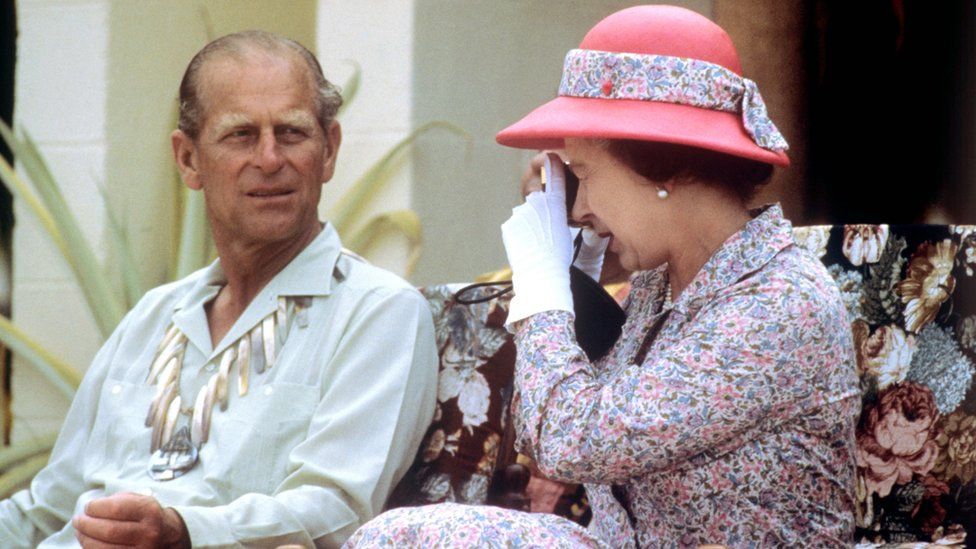
Accompanying the globetrotting Queen on Commonwealth tours and state visits, he visited 143 countries in an official capacity, making use of his fluent French and German.
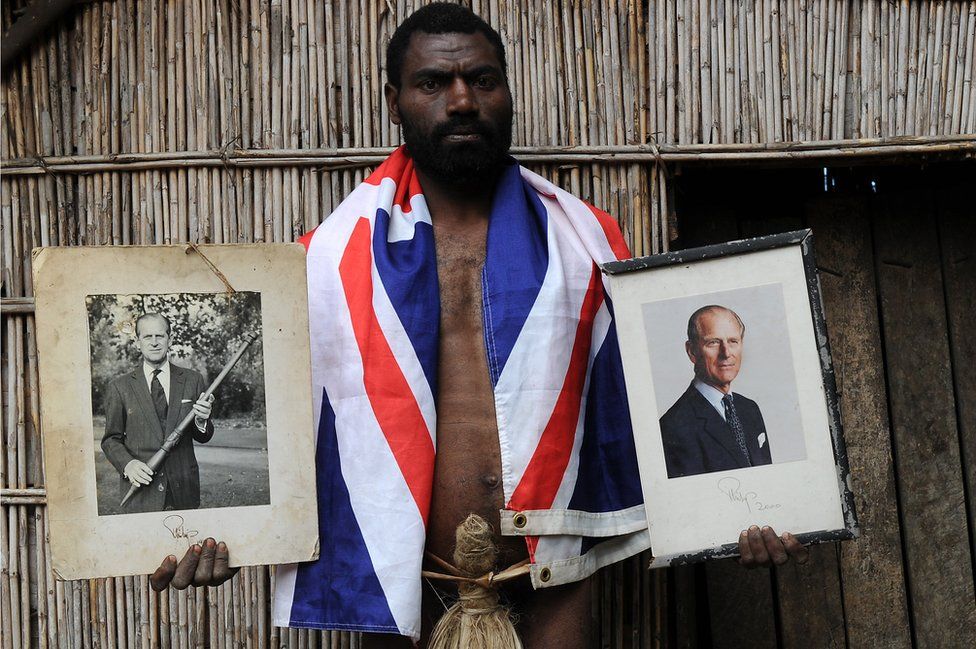
The countries included Vanuatu, a South Pacific island nation, where he is revered by one rainforest community as the reincarnation of an ancient warrior.
image captionOn Tanna island in Vanuatu, some islanders view Prince Philip as a sacred figure
But one of his most enduring legacies is the Duke of Edinburgh’s Award, founded in 1956 at the urging of his former headmaster, Kurt Hahn.
Participants aged 14-25 can gain awards by doing volunteer work, learning physical activities and skills, and undertaking an expedition like a mountain trek or a sailing trip. In 2016, almost 1.3 million young people were taking part in the scheme in more than 130 countries and territories worldwide.
“If you can get young people to succeed in any area of activity,” its founder told the BBC, “that sensation of success will spread over into a lot of others.”
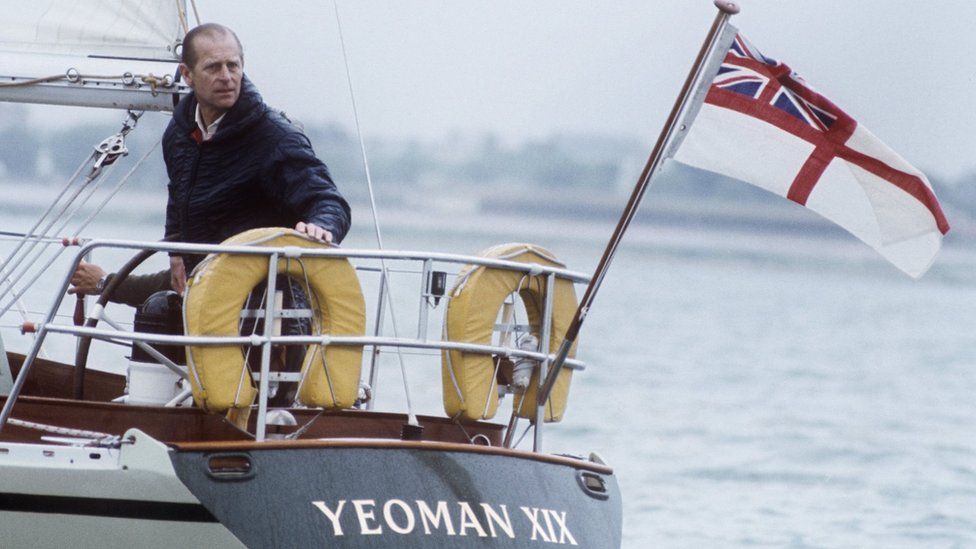
In his spare time, Philip was a talented sportsman. He learned to sail at Gordonstoun, and became a regular competitor in the regatta at Cowes, on the Isle of Wight, where sailing races are held each summer.
He loved equine sports, including carriage driving, and was among the UK’s top four polo players in the mid-1960s.
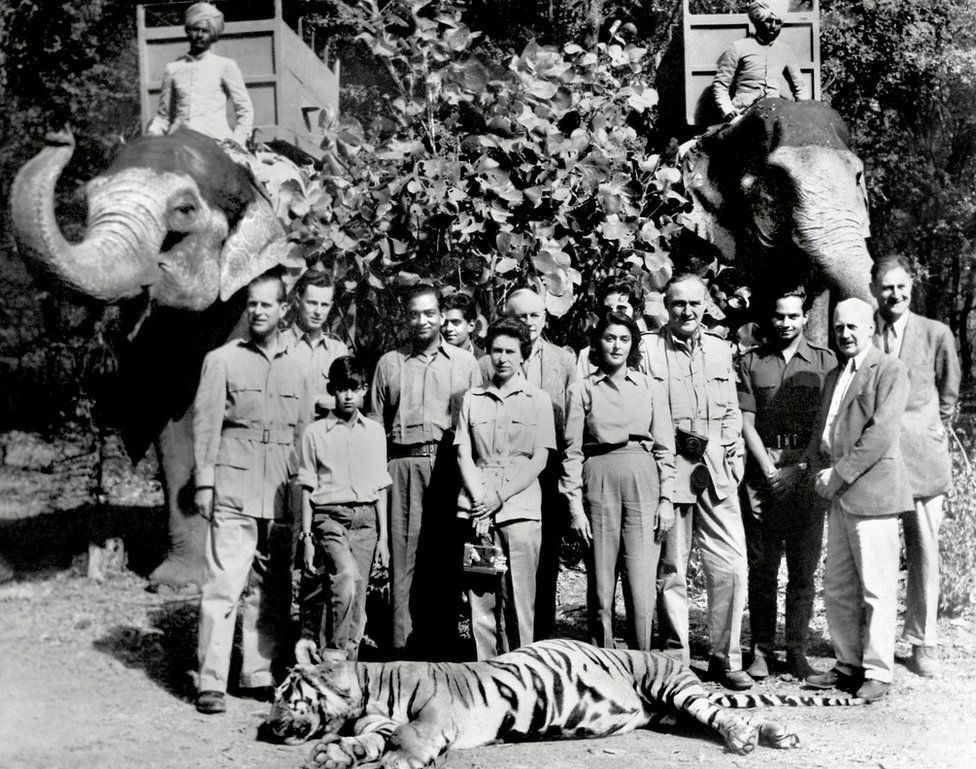
He was also a committed environmental campaigner and wildlife advocate, becoming president of the World Wildlife Fund (UK) in 1961 – though he faced criticism when a picture emerged of him on a tiger shoot with the Queen in India the same year.
image captionThe Queen (C), between the Maharaja and Maharani of Jaipur, India, and Prince Philip (L) pose with the tiger he killed in 1961
In his own words, and the Queen’s…
Asked to sum up his contribution to British life, Prince Philip responded with typical frankness: “I’ve just done what I think is my best. Some people think it’s all right. Some don’t. What can you do? I can’t change my way of doing things. It’s part of my style. It’s just too bad, they’ll have to lump it.”
The prince drew repeated controversy by making outspoken or racially insensitive comments, including in 1986 when he told a group of British students in China: “If you stay here much longer you’ll all be slitty-eyed.”
Critics deemed him gaffe-prone and out of touch. His defenders saw the prince as a product of his times who was trying to share a joke.
Insiders said laughter was the glue that kept the forthright Prince Philip and the Queen together. He himself suggested it was her tolerance.
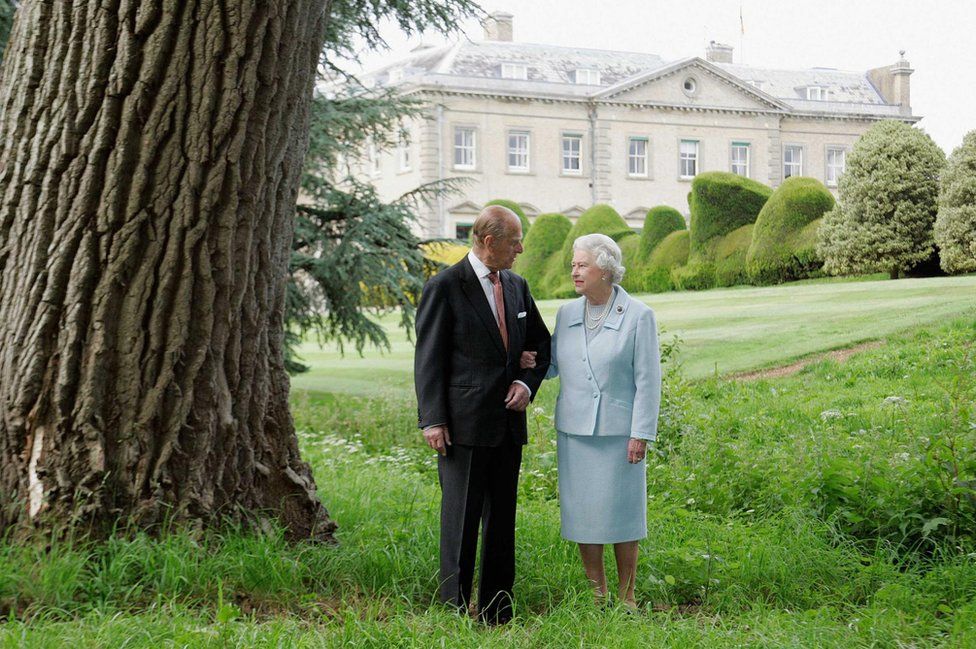
image captionQueen Elizabeth II and Prince Philip, pictured in 2007, spent seven decades together
The Queen’s once-favoured speech-opener, “my husband and I…”, was mocked in the 1960s and afterwards by satirists who called it archaic and stilted. She retired the phrasing, but the sentiment remained.
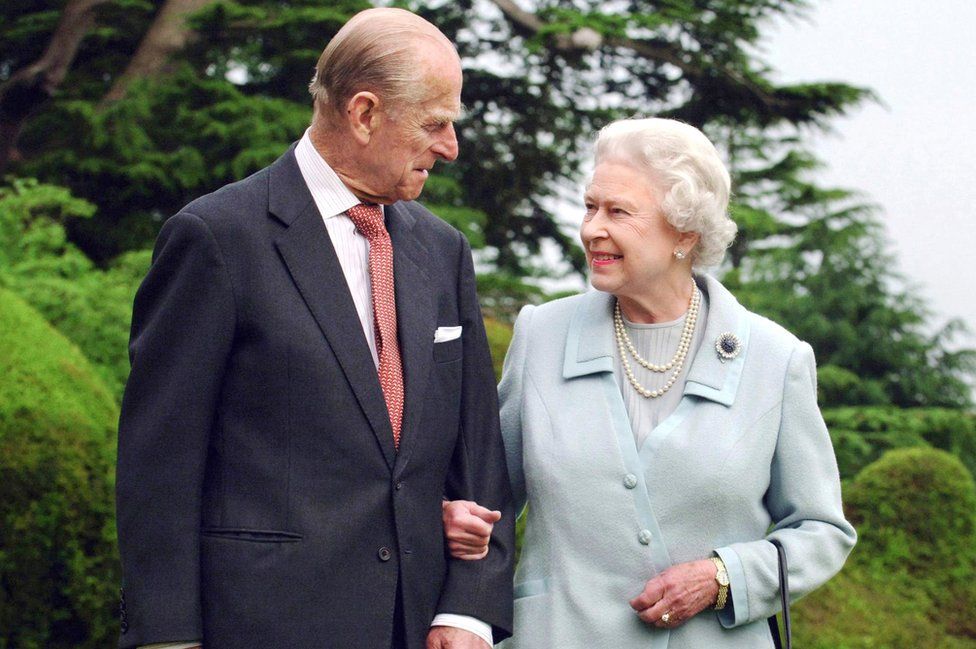
Her Majesty, now simply “I”, summed up Prince Philip in a heartfelt speech for their Golden Wedding anniversary.
“All too often, I fear, Prince Philip has had to listen to me speaking. Frequently we have discussed my intended speech beforehand and, as you will imagine, his views have been expressed in a forthright manner.
“He is someone who doesn’t take easily to compliments but he has, quite simply, been my strength and stay all these years, and I, and his whole family, and this and many other countries, owe him a debt greater than he would ever claim, or we shall ever know.”
Police have re-arrested seven out of 12 suspects who broke jail on Sunday, April 4 in Zenu-Atadeka in the Kpone-Katamanso municipality.
The 12 escaped from police custody after one of them, Aziz Fuseini, who was about to be put in cell, poured hot porridge onto the face of the officer on duty.
The officer had opened the cell gates to cast Aziz in when he poured his breakfast, already in his hand, on the officer. Aziz and 11 others, who were already in detention, thus escaped.
But police said three of the re-arrested were picked from a hideout in Kubekrom No. 2 on the same day of escape while three were picked from Juapong in the Volta Region on Tuesday, April 6 with support of information from the public.
The six have already been convicted by an Ashaiman Circuit court on their own plea on charges related to their escape.
“The seventh person, Sumaila Karim aged 21 surrendered to the Police on 8th April, 2021 and will also be arraigned before the Court for escaping from lawful custody,†the Tema Regional Command of the Ghana Police Service said in a statement on Thursday, April 8.
The Command is making all efforts to re-arrest the remaining five suspects.
It has, therefore, called for public support.
The five are Richard Remeo, 30, Sulemana Ibrahim, 23, Abu Sadique, 29, Ibrahim Fuseini, 26, and Aziz Fuseini, 38.
The National Union of Ghana Students (NUGS) has chided the Ghana Education Service (GES) for postponing the reopening date for final year students in senior high schools.
GES in a press release on Tuesday, April 6, 2021, announced that it had postponed the reopening date for final year students to May 5, 2021.
It explained that “this is to give the form 3 students an uninterrupted instructional period till they write their final examination.â€
Although GES has apologized to parents and affected students for the delay in communicating the directive, it has come under heavy criticisms from various stakeholders in the education sector as some final year students had already reported to school.
Commenting on the issue, NUGS in a statement signed by its President, Isaac Jay Hyde, and dated Thursday, April 8, 2021, described the activities of GES as “shambolic†adding that “the level of ineptitude and gross inconsistencies by management of GES cannot be overemphasized.â€
Chronicling a number of times GES had to alter the academic year, NUGS said GES cannot continuously make parents and students pay for their “incompetenceâ€
“This is certainly not the first time an unfortunate decision like this has been announced at the last minute by GES.
“GES recently inconvenienced Form One students and their parents by changing their reporting date from 10th March to 18th March 2021.
“They have repeated this canker of an attitude coupled with a very late notice to form three students who have a limited time to prepare adequately for their final exams.
“In fact, since 2018, the Ghana Education Service has changed reopening dates eight (8) times, leaving both parents and students to suffer the brunt of their decisions†parts of the statement read.
NUGS further charged GES to “wake up from their slumber†and effectively discharge its duties.
“We support any initiative that advances the cause of education and eliminates barriers to educational growth of every Ghanaian child. Beyond brilliant policies is also the need for proper implementation in order for us to achieve the maximum benefits of such initiatives.
“The GES has fallen short in recent times. The leadership of GES must wakeup from their slumber. The recent happenings at the GES does not only affect the Ghanaian students competitiveness at the global stage +ut also threatens the success chalked over the years within the educational front.
“It is our hope this level of incompetence has not come to stay,†the statement read.
More than 40 houses and structures at Green Belt site, close to the Weija Dam, have been demolished by the Ga South Municipal Authority (GSMA).
The demolition followed several warnings by the Municipal Authority against such illegal structures to protect the Dam.
Mr Felix Ofosu Teye, the GSMA Engineer, in an interview with the Ghana News Agency, said the Dam served close to 4,000 people in the Greater Accra Region and that allowing structures and settlements around the water source was dangerous.
He said the Assembly had cautioned the property owners since 2015 and 2018 and that they could not be allowed to continue to pollute the water.
“Moving around the structures we also noticed that some of them have connected their sewage system close to the water, which is very dangerous,†Mr Teye said.
Some had been summoned, especially those with their sewage connected to the water body, he said.
The Ministry of Health (MOH) on Thursday warned the public against fake 2021 admission forms for prospective applicants wishing to enter Public Health Training Institutions.
“The Ministry wishes to notify the public, especially parents and prospective applicants that, it has not commenced the sale of the 2021 admission forms yet†a statement signed by Mr Kwabena Boadu Oku-Afari, the Chief Director of the MOH said.
The statement, copied to the Ghana News Agency in Tema, said “the announcement circulating on some news portals and social media platforms is not from the Ministry of Health but may have been designed to lure unsuspecting applicants to part with their money.â€
It said the Ministry would officially communicate the date for the sale of the 2021 Public Health Training Institutions admission forms.
The Ministry said the process of applying for entry into such institutions was transparent and started with the purchase of application codes from designated banks, where after payments, applicants were given vouchers with unique PIN codes and serial numbers with a validity period.
“Applicants can only use the PIN code and serial number to access the application online,†it said and indicated that only applicants, who met the admission requirements, would be invited to attend a competitive interview at the school of their choice.
The Ministry, therefore, urged the general public to disregard the online and social media announcement regarding the 2021 admission into Public Health Training Institutions.
Two more suspects have been arrested by the Ghana Police Service in connection with the gruesome murder of a 10-year-old boy at Coca-Cola near the Great Lamptey Mills School in Kasoa.
The two suspects identified as Charity and Desmond Nii Adjei are both being investigated by the Criminal Investigative Department (CID) for the offence of abetment to commit a crime, to wit murder.
The Head of Public Relations at the CID unit stated that the two suspects were arrested by the police after investigators set off a manhunt for the perpetrators involved in the crime.
DSP Juliana Obeng, who spoke to Joy News in an interview monitored by GhanaWeb, added, the suspects will be assisting the police with its investigations into the murder of Ishmael Mensah Abdallah.
She further cautioned the media to be circumspect in their reportage.
“Investigations are still ongoing, we stressed the need for us to be circumspect in our reportage because the case is quite sentimental; we do not want to toy with the emotions at this moment,†DSP Obeng said.
On Wednesday, the spiritualist alleged to be at the centre of the killing was also arrested by the Central Region Police.
The two teens were also remanded into police custody bringing to 5, the number of suspects nabbed in the case so far.
Minority Leader Haruna Iddrisu has reiterated his confidence in Speaker Alban Bagbin to make the legislative arm of government accountable, responsive and transparent.
According to him, Alban Sumana Kingsford Bagbin is a man who is impartial and will execute his duties neutrally.
“We have the 7th Speaker of the 8th Parliament, not just the ordinary but the most experienced among our group, the most qualified among our group…we trust that he will be fair and firm as Speaker of Ghana and not just [to] any political group in Ghana.
“I can only today remind Mr Speaker of his oath that I will do right to all manner of persons without […] affection or ill will. A [huge] obligation he himself accepted before Parliament when he pledged that he will be neutral and impartial,†Haruna Iddrisu said at a thanksgiving event held in honour of Alban Bagbin in the Waala Traditional Area of the Upper West Region.
Alban Bagbin has recently been accused by Majority Leader Osei Kyei-Mensah-Bonsu of turning parliament into an enclave of the opposition NDC.
But Haruna Iddrisu insists: “I have faith in Speaker Alban Sumana Bagbin and I have faith that he would lead the reforms that this country needs particularly for Parliament to make Parliament a more responsive, accountable and transparent institution that contributes to improving the well-being and quality of the Ghanaian.â€
Child Rights International, a child-centred organisation in Ghana has called on the media and other stakeholders to protect the identity of two teenagers suspected to be involved in the murder of a 10-year-old boy for money rituals at Kasoa.
According to a statement sighted by GhanaWeb, the display of faces of the two suspects on various media platforms is against Section 3 (2) & (3) of the Juvenile Justice Act states that: (2) A person shall not in the course of arrest, investigation or trial of an offence connected with a juvenile, or at any other stage of the cause or matter, release any information for publication that may lead to the identification of the juvenile.
It, therefore, becomes unlawful to expose the faces of the two suspects on any platform or reportage.
Child Rights International has described the circulation of their images and videos without any protection as “unethicalâ€.
“We are, hereby, appealing to the media and relevant stakeholders to stop displaying the identity and pictures of the suspects. We entreat them to allow the law to take its course to avoid any potential danger to the two suspected teenagers,†parts of the statement read.
Read the full statement below:
Child Rights International has expressed dismay in the murder of a 10-year-old boy by two teenagers in Kasoa, a suburb of Central Region. The organisation, which is committed to the inherent dignity of every child, condemns the act and expresses its condolence to the family of the murdered boy.
However, as a child-centred organisation, the reportage from the media is unethical and does not protect their privacy and dignity, the victim and the two suspects are teenagers and therefore must be protected and handled lawfully.
Section 3 (2) & (3) of the Juvenile Justice Act states that: (2) A person shall not in the course of arrest, investigation or trial of an offence connected with a juvenile, or at any other stage of the cause or matter, release any information for publication that may lead to the identification of the juvenile.
In (3); Any person who contravenes subsection (2) commits an offence and is liable on a summary conviction to a fine not exceeding 250 penalty units or to a term of imprisonment not exceeding 12 months or to both.
In view of the above, the teenagers and victims are being displayed on various media platforms and this is against the Juvenile Justice Act. It is the duty of the media to treat this issue with all seriousness, considering the teenagers involved. Although some people may not see anything wrong, it is not lawful to publicly parade and expose the identity and pictures of the two teenagers.
We understand the public is upset, judging how the two teenagers planned and carried out the act. Notwithstanding, we should try and protect their identity, bearing in mind that any public exposure of the teenagers could also put them in danger.
We are, hereby, appealing to the media and relevant stakeholders to stop displaying the identity and pictures of the suspects. We entreat them to allow the law to take its course to avoid any potential danger to the two suspected teenagers.
On Tuesday, April 6, 2021, the Ghana Education Service (GES) announced the postponement of the reopening date for all Form 3 Senior High School students to May 5.
The statement which many described as “untimely” came in on the day set for the initial reopening. Checks from various schools confirmed that some students had already reported to their campuses at the time of the GES directive.
Speaking on the back of this development, the Conference of Heads of Assisted Secondary Schools (CHASS), has called on school authorities to respect the GES directive by catering for students who are currently in school until they receive money from the parents and guardians to return home.
The National Secretary of CHASS and Headmaster of the St. Peters Senior High School, Kwame Owusu Adiomi, in an interview with UniversNews stated that his school also received some SHS 3 students on Tuesday.
“The information that came to us, GES says whatever it takes to keep them till they have had a remittance from their parents to go back home.†He further added “In my school, for instance, the parents brought them themselves so they sent them back. At St. Peters, the parents brought them, so when they heard the announcement, most of them I can say without any shred of doubt that my students come by private transport so they drove them and we were able to hold some mini -PTA meeting before they left. However, my prefects are here always to monitor the activities of the school together with the National Science and Maths Quiz students.â€
The Ghana Education Service explained that the move is to provide final year students ample time to study for their West African Senior School Certificate Examinations.
Read the statement by the Ghana Education Service below:
Kumasi Asante Kotoko crushed Bechem United at the Obuasi Len Clay Stadium on Wednesday afternoon in their outstanding Ghana Premier League game.
The match initially was scheduled to be played on 25th February, 2021 but was rescheduled due to torrential rains at Kotoko’s then home grounds the Accra Sports Stadium.
Kumasi Asante Kotoko shot into the lead with a ferocious free-kick from centre back Ismail Abdul Ganiyu from about 30 yards to open the scores for Kotoko in the 12th minute.
Silky Brazilian midfielder Fabio Gama added the second goal after being teed up by Andy Kumi before unleashing a fierce shot into the bottom corner of the net to double Kotoko’s lead in the 42nd minute.
After scoring the goal the Brazilian dedicated the goal to his pregnant wife Aniele Ribiero who is carrying their second child.
Andy Kumi flicked home deftly with the back of his head from a perfect cross from full-back Imoro Ibrahim in the 63rd minute to give Kotoko a three nil lead and his first goal for the club.
The porcupine warriors acquired the talented striker from lower-tier side Unistar Academy during the second round of the transfer window.
He came on briefly in their 1-1 drawn game against Techiman Eleven Wonders last Saturday.
Three minutes after coming on as a substitute for Kumasi Asante Kotoko in the Ghana Premier League for his debut, Michael Vinicius scored.
The Brazilian import was introduced into the game in the 79th minute as a replacement for Francis Andy Kumi.
Three minutes later he was celebrating wildly after he scored a fortuitous goal on his debut to give Kotoko a 4-0 win.
Augustine Okrah hit the upright with a shot, and from the rebound, Godfred Asiamah’s low shot is blocked but only as far as Michael Vinicius, who curled it home for a goal on his debut.
Kotoko’s 4-0 triumph means they lie third on the league table two points adrift league leader Great Olympics.
The Vice President Dr Mahamudu Bawumia has told the Minister of Fisheries and Aquaculture, Mavis Hawa Koomson to deal with the issue of premix fuel diversion immediately.
Dr Bawumia said this issue has been a major concern to the government over the years.
“One of the critical areas also of concern to the government over the years has been the distribution of premix fuel to our fisher folks.
“The Honourable Minister for Fisheries is here and it is a major concern that she will have to address as she starts her tenure. The huge subsidies on premix fuel make it attractive for people in illicit activities to divert the product to retail outlets.
“We are truly concerned when this heavily subsided premix fuel meant for our fisher folks to enhance their economic activities and improved their livelihoods do not actually reach them.
“So, as part of efforts to sanitize the distribution of premix fuel and management of the associated subsidies, the government launched a process that actually digitized the distribution of premix fuel in the country.
“I must commend the NPA for adding to this process the impetus by establishing this fuel monitoring system and I am happy to note that the NPA is already working with plans to extend this fuel monitoring system to the various landing beaches,†he said while speaking at the official launch of the retail fuel monitoring system organized by National Petroleum Authority in Accra on Wednesday April 7.
The event was attended by officials of the Ghana Revenue Authority, Oil Marketing Companies, and the Ministry of Fisheries.
Dr Bawumia also assured stakeholders in the petroleum sector that the government of President Nana Addo Dankwa Akufo-Addo will create an enabling environment for their businesses to thrive.
The “GRA and NPA will have to get together and harmonize the credit they offer to the OMCs,†he said.
He added “Let me assure all players in the petroleum downstream sector that the government of His Excellency Nana Addo Dankwa Akufo-Addo will continue to create the enabling environment for your businesses to thrive.
“To the consuming public, the government will continue to ensure the availability at all times the quality petroleum products at competitive prices.â€
Lebanese run United Steel Company owes the Ghana Revenue Authority 649 million Ghana Cedis in unpaid taxes.
The heavily indebted steel products maker also owes nine banks and many creditors several millions of Ghana cedis, bringing its total debt burden to 1.6 billion Ghana cedis as of 2020.
The Company has therefore plunged into administration, according to documents sighted by the Ghana News Agency.
A group of administrators chaired by Mr Felix Addo has taken over the management of the company and will determine as soon as possible the fate of the once toasted company in the steel sector.
Options available to the administrator include the termination in part or whole of the company
The group which includes Law Professor Emeritus Fiadjoe, is being guided by the Corporate Insolvency and Restructuring Act.
In an interview with Mr Jonas Ayi, a consultant, who spoke on behalf of the administrator, said,†Our mandate is derived from Corporate Insolvency and Restructuring Act. We will ensure all that is payable to laid-off personnel are (done) in accordance with the law.â€
On whether the company will be liquidated, he said,†Our answer is that this is the decision for the creditors of the company. This decision will be made at the next adjourned watershed meeting.â€
The United Steel Company has an installed capacity of 180,000 metric tonnes with a workforce of 489. Its shareholders include Abdul Majeed Mikati, Sameer Quraman and Frank Ofori.
Both former management of the Company and the Ghana Revenue Authority could not be reached for comment.
The resolution of a 30-year-old impasse between Private Lotto Operators and the National Lottery Authority (NLA) is at the brink of collapse due to the conduct of some members of the Ghana Lotto Operators Association (GLOA).
Also the conduct of its allied group known as Concerned Lotto Agents Association of Ghana (CLAAG) is also not good.
In a statement copied to the Ghana News Agency in Accra, the NLA stated that, there was no policy for KGL Technology Limited to take over from the Authority, which was confirmed by the Minister of Finance, Mr Ken Ofori-Atta, during his vetting at the Appointments Committee of Parliament.
“It is instructive to place on record that NLA is not creating any form of monopoly for KGL Technology Limited and urged the media and the public to totally disregard the allegations by GLOA”.
“For the avoidance of doubt, Keed Ghana Limited is not the same as KGL Technology Limited in terms of operations.
“Keed Ghana Limited was duly licensed by the NLA to operate a dividend-based game on behalf of NLA known as Lucky 3 with an official shortcode of *987#.
“On the other hand, KGL Technology Limited is an online lotto marketing company duly licensed by the NLA to operate the 5/90 Original Lotto on behalf of the Authority with the official short of *959#.
The statement said the allegations by GLOA against KGL Technology Limited and its Chief Executive, Mr. Alex Dadey and Keed Ghana Limited was baseless.
It said KGL Technology Limited was fully legal and recognized by the NLA as an online lotto marketing company responsible for the operation of *959# on behalf of NLA and the partnership between the NLA and KGL Technology Limited could be best described as a GAME CHANGER.
It said the partnership was a million times more profitable to the NLA than the licenses issued to members of Ghana Lotto Operators Association including Alpha Lotto Limited.
The statement said KGL Technology Limited was not indebted to the NLA by GHC20 million and was important that the media and the public totally ignored and rejected the unsubstantiated allegations by GLOA against KGL Technology Limited.
The statement said GLOA sought to create misleading information that there was a KGL Cabal with intentions of creating a monopoly over online Lotto for KGL Technology Limited to the disadvantage of the State and other Lotto Operators.
It said KGL Technology Limited was a wholly-owned Ghanaian company with no political attachments and had a track record and perfect platform which was useful to the revenue mobilization efforts of NLA.
It said the attempts by GLOA to link KGL Technology Limited to Government appointees was unfortunate and needed to be totally ignored by the media and the public and there were no hidden intentions, and absolutely no “take-over” schemes to surrender NLA to KGL Technology Limited.
The statement KGL Technology Limited was only an online Lotto marketing company duly licensed by NLA and operated on behalf of NLA aimed at supporting the revenue generational capacity of the Authority and they supported any statement issued by the Public Relations Unit against the illegal activities of Alpha Lotto Limited as it was illegally operating a Short Code as well as conducting live Draws on GTV.
The statement said the NLA had every power to curtail the illegal short code, and illegal Live Draws of Alpha Lotto Limited and the NLA would not hesitate to revoke the licenses of Private Lotto Operators who were not operating within the terms and conditions of their respective licenses.
“The Authority as the regulator will also not allow any private lotto operator to operate a shortcode without the appropriate license from the Board of NLA.
“The lNLA) as the regulator would not allow any private lotto company to conduct independent live draws on TV without a Draw Committee duly constituted by NLA in accordance with the National Lotto Act 722 and Lottery Regulations, 2008(L.I. 1948).
“The statement said the NLA had stated that the licenses issued by Mr Kofi Osei-Ameyaw, the former Director-General to all Private Lotto Operators were without approval.
“In accordance with the National Lotto Act 722 and Lottery Regulations 2008(L.I.1948), the licenses issued by the former Director-General, Mr Kofi Osei-Ameyaw to the Private Lotto Operators are not grounded in law because it is only the NLA Board that has the powers and authority to grant licenses to companies or individuals who want to operate Lotto in Ghana.
“President Akufo-Addo is fully committed to protecting the NLA from collapsing and setting the records straight once again, KGL Technology Limited is not indebted to NLA by GHC20 million.
“The only recalcitrant group here is the members of GLOA/CLAAG, and the NLA would like to caution members of GLOA that they cannot fight NLA, the regulator through the media or Court and become successful.
“NLA shall never allow the illegal activities of some GLOA and CLAAG members to collapse NLA”.
The statement said KGL Technology Limited and Keed Ghana Limited had their respective licenses duly approved by the Board of NLA in accordance with the National Lotto Act 722 and Lottery Regulations, 2008(L. I. 1948).
“All the licenses for members of GLOA/CLAAG signed by the former Director-General, Mr Kofi Osei-Ameyaw were without approval and all allegations against Presidency, Appointees, Alex Dadey, Razak Kojo Opoku and Ernest Mote are all baseless and lies that the media and public must ignore.
“So far so good, the NLA was happy with the KGL Partnership and absolutely no media noise from GLOA, CLAAG and their “Allies” would stop the partnership between NLA and KGL Technology Limited because the partnership is a Game changer and more profitable to NLAâ€, the statement concluded.
Henry Quartey, the Greater Accra Regional Minister has issued a directive to the National Disaster Management Organization to demolish a structure on a waterway at Lashibi in Accra.
The Minister who sighted the facility during a tour of the city with officials of NADMO directed them to quickly demolish the building.
He tasked NADMO to work with National Security to ensure that the facility is brought down.
“The Engineer has said he has not authorized this structure to be here. I do not have a problem when people are building but especially with the rains about to set in, we cannot allow these things to go on. NADMO, you will get the machines, National Security will assist you, and it has to go down.â€
Vincent Blah Quarshie, the Municipal Engineer of Tema West Assembly lamented that efforts by his outfit to have the facility demolished have yielded no positive result.
The Tema Director of NADMO also made appeals for the demolition of unauthorized structures around at Tema Community Seven Post Office.
He, according to Citi FM stated that the structures on the path pose risk to life and property.
A clinical psychologist and lecturer at the Methodist University College Aldoplh Awuku, has appealed to authorities to regulate contents in Ghana’s media space.
He indicated that there is too much liberty in the space with some churning out unwholesome contents with a negative influence on children.
The lecturer said although parents have the responsibility to guide their children in what they watch, the authorities in charge of regulation should also do their best in ensuring sanity in the media space.
He was responding to the story of a 10-year-old-boy said to have been killed for alleged ritual purposes by two teenagers in Kasoa.
He was speaking on Frontline on Rainbow Radio 87.5FM.
â€The quest for contents to help children develop good behaviour is what we have to pursue as a nation. We have a lot to do as citizens. We cannot blame the children because we have regulatory bodies in the country and they have to bear the blame for what we have witnessed,†he added.
He bemoaned the lack of attention on social issues affecting us and focusing only on politics and this will come back to bite us in the most dangerous manner.
Former President John Agyekum Kufuor has charged the media not to give their platforms to fraudulent people and tricksters who make vain promises.
His comments follow the recent murder of a 10-year-old boy by two of his friends at Coca-Cola near the Great Lamptey Mills School, a suburb of Kasoa in the Central Region, all in the name of making quick money.
He indicated that the two suspects, alleged minors, who are aged 16 and 17, were victims of people who have been paying attention to fraudulent TV personalities.
“How could young people do this? What do they know? Unfortunately, [the] media […] are giving so much exposure to tricksters and fraudulent people, promising everything. When you look at them you should know that these are people who are themselves just bad and ignorant. That is not the way for our society to go,†Kufuor told Joy Prime in an interview monitored by GhanaWeb on Tuesday.
Kufuor further urged media houses to cut out content and people that could “defraud the societyâ€.
He admonished: “We need to do that, [the] media and, of course, the authorities too should come up and tackle all these people who are now virtually hijacking the airwaves with vain promises and trickery. They should be eradicated….â€
According to the Police, one of the suspects confessed that a spiritualist, whom they had discovered on television agreed to help them become instant billionaires if they would provide a human being and a sum of GH¢5,000.
The two, per the police charge sheet, admitted that they killed the 10-year-old Ishmael by hitting his neck with a club.
This was after luring him into an uncompleted building under the guise of selling him a video game at Lamptey Mills, a suburb of Kasoa in the Central Region.
This development has incensed a large segment of the Ghanaian society who are calling for an end to the appearance of spiritualists and Mallams on television who promise unreasonable get-rich-quick avenues for the unsuspecting youth.
The Managing Director of the State Transport Corporation (STC), Nana Akomea has called on State authorities to check the influx of children hawking and begging in the streets.
The culture of children under the age of eighteen (18) years hawking or begging for alms on the streets has become a matter of concern and a disturbing issue in the country.
It is currently easy to spot the young children, some even toddlers between the ages of four and five, on the street begging for alms.
Speaking on Peace FM’s “Kokrokoo” programme, Nana Akomea queried the authorities why they have relaxed the laws of the land ensuring no child is found on the streets.
He warned against such act stressing it poses a threat to the lives of the children, therefore calling on the authorities to prevent the children, particularly ones belonging to parents who are natives of sub-Saharan African countries, from going into the streets.
“The law is the law. Children should not be on the streets begging. It’s enshrined in the Children’s Act,” he stated.
Percival Kofi Akpaloo, the founder of the Liberal Party (LPG), has averred that the National Communication Authority (NCA) and National Media Commission (NMC) have the power to clamp down on media houses promoting activities of mallams and ritualists.
Mr. Akpaloo said contrary to claims that the bodies have what it takes to stop these activities on television and on the radio.
Speaking on Frontline on Rainbow Radio on 87.5Fm, he said the NMC has the power to regulate contents on television and the media in general.
The politician was reacting to the murder of the 10-year-old boy un Kasoa forme alleged ritual purposes.
He said life is not a shortcut and young persons should understand that working hard is the best.
Such acts in the media space he added is affecting the moral fibre of society.
He told host Kwabena Agyapong that these persons parading themselves as money doublers should be treated as criminals.
He charged the Ministries of the interior, information and defence to also act with immediate effect.
The Circuit Court in Accra has adjourned the trial of the CEO of Menzgold, a defunct gold dealership company, Nana Appiah Mensah aka NAM1 to May 27.
This was because, the sitting judge, Her Honour Evelyn Asamoah has taken her leave.
In court on Tuesday when all the parties were present, the Clerk of the Court upon instructions adjourned the cases to later dates.
NAM 1 was in court with a heavy security presence.
Warning
At the last court sitting on March 2, the court warned it would be forced to strike out the case in which the Chief Executive officer (CEO) of Menzgold Ghana Limited Nana Appiah Mensah (NAM1) has been arraigned for defrauding.
The court is unhappy about the delay on the part of the prosecution to file the necessary documents to commence the trial.
On that day, ASP Sylvester Asare, the prosecutor in the case, again prayed the court, to give them more time be to able to file their witness statement and other documents.
It was the case of the prosecution that, the number of victims involved in the case is over 16, 000 people and therefore more time would be required by the prosecution to do the necessary investigations.
ASP Asare prayed with the court for time and begged the court not to strike out the case.
Background
October 1, 2020, ASP Asare told the court that the prosecution is hopeful the trial will commence this legal year.
According to him, ASP Asare, “the instructions from our solicitors is that they are working hard to forward their advice to the court.â€
He told the court that “as we begin the legal year, this matter will be commenced†before praying court to grant them an adjournment.â€.
While acknowledging that the prosecution appears to “always come here with one story or the other†ASP Asare prayed the court to “indulge us,†over the delay.
Charges
NAMI was initially charged with abetment of crime, defrauding by false pretences, carrying on a deposit-taking business without a licence, sale of minerals without a licence, unlawful deposit-taking, and money laundering.
It is alleged that the accused had taken various sums of money, totalling GH¢1.6 billion from customers.
The State had previously on June 24, 2020, filed new charges against the CEO of Menzgold, also known as NAM 1 at the Accra Circuit Court.
ASP Sylvester Asare then told the Court that his directives were that he should hold on to the new charges and the plea taking of the accused.
On July 20 2020, ASP Asare told the court that, they were seriously working to advise the court on the matter.
He said when the advice is ready they will issue a hearing notice to the accused persons to appear before the court to do the needful.
Bail
The Circuit Court on July 26, 2019, granted NAM 1 bail in the sum of GH¢ 1 billion cedis with five sureties, three to be justified.
He had pleaded not guilty to all initial 13 charges levelled against him by the State. The state had since amended its charged sheet which is yet to be moved.
He is also to report to the police every Wednesday at 10:00 hours.
A former Deputy Health Minister, Bernard Okoe-Boye has disclosed that Ghana only received first shots of the AstraZeneca COVID-19 vaccines under the COVAX equitable vaccine sharing platform.
In late February 2021, Ghana became the first country in the world to receive vaccines under the COVAX platform.
600,000 shots were delivered to much fanfare at the Kotoka International Airport, KIA; and a national rollout started in early March with President Nana Addo Dankwa Akufo-Addo receiving the first shot.
Speaking on Tuesday evening (April 6) on the Face To Face program on Accra-based Citi TV, the former deputy minister said Ghana was ready to purchase the second shots if need be.
“We rolled all (600,000 shots) out, as we speak, I am sure we will be nearing 700,000 (vaccinations). Remember, apart from COVAX, we have had supplies from the Africa medicine supplies platform.
“We are working hard, the president himself is involved, the Minister of Health is involved, the Ghana Health Service, we are all involved. Remember, if we even have to buy the vaccines outside COVAX, we are willing to do that especially for the second dose,†he added.
He also disclosed that the government, through the Bank of Ghana, BoG, has raised Letters of Credit to purchase vaccines especially Sputnik V the Russian vaccines passed for emergency use in Ghana last month.
“As I speak, government is working on LCs to purchase vaccines, some of the Sputnik vaccines, we are looking at buying in the short term about 2 million. In the medium to long term before the end of the year, we are looking at about 10 million from Sputnik.â€
Asked about how long it will take for the jabs to arrive in the country, he assures that once agreements were reached, the supplies could be delivered in under 24 hours.
“Luckily, most of these are not put on a ship, so a maximum of six, eight or maximum 12 hours and the vaccines are here, anything can happen any day. LCs have gone all the way to Bank of Ghana with Ghana having made commitments to buy them,†he added.
The Minister of Energy, Dr Matthew Opoku Prempeh has appealed to Ghanaians to remain calm as steps are taken to address the intermittent power outages being experienced in some parts of the country.
According to him, there was no way the government would allow the country to slip back into the prolonged period of power outages between 2012 and 2016 which became known as ‘Dumsor’.
“We are working feverishly to resolve the challenges which have arisen as a result of technical difficulties with our transmission lines and it is our hope that that issue will be resolved by the end of the year” he assured.
Dr Prempeh made the call yesterday when he paid a day’s working visit to the Ghana Grid Company (GridCo).
The visit was to afford him first-hand information on the scope of work currently being undertaken to address the power challenges.
The Minister said what was happening had nothing to do with financial challenges as being speculated but rather purely technical.
He explained that most of the transmission lines currently transporting electricity to the various substations were as old as the 1950s and 60s and had not witnessed any remarkable improvement.
“These our lines that we have just been informed about, were strung in the 50s and some in the 60s. The power it was supposed to transmit to Accra has increased tremendously due to the expansion of Accra yet the lines have remained the same. They are now giving us lines that can improve the power situation in Accra,” he emphasised.
Dr Prempeh said what was required now was the forbearance of the Ghanaian because what was being planned and implemented would better improve the situation for all.
“We should all be sincere and truthful in our communication. In 2016, the whole country was given periods when we are to receive power and when to be off. In 2016, the government of the day told us it was a generation problem. Even the opposition then said the government did not have money to buy fuel to power the generators. This is not a generation problem, this is not about fuel so how can we call it ‘Dumsor’?” he queried.
He said government had included in the budget for this year the provision to improve on the electricity supply systems and it was going to continue until the whole country’s system improves.
The Director of Engineers Project at GridCo, Mr Owusu Afriyie said the site for the Volta-Achimota-Transmission upgrade was constructed in 1965 and had not seen any upgrade since.
He said the company was currently upgrading it to ensure that it is able to transfer more load to Accra.
Mr Afriyie explained that when completed, the lines would increase their load capacity by about three-fold from the current 420mega watts to about 1200mega watts.
He noted that the project had commenced from the Volta substation which was one of GridCo’s Bulk Supply Point in Tema to Achimota, a distance of about 27kilometres.
“By the completion of this project, we will have more power to the Achimota substation transferred from the Volta substation to the Electricity Company of Ghana (ECG) to distribute,” he emphasised.
Dean of the School of Performing Arts at the University of Ghana, Professor Kofi Agyekum, popularly known as Opanyin Agyekum has vehemently resented the gruesome murder act by two teenagers at Kasoa in the Central Region.
The two teenagers named Felix Nyarko, 15, and Nicholas Kini, 17, allegedly murdered a 10-year-old boy at Lamptey Mills in Kasoa on Saturday.
The deceased, Ishmael Mensah, was a Class Four pupil of the Maranatha School.
It is believed the teenagers committed the ghastly act for ritual money purposes.
Making a submission on Peace FM’s “Kokrokoo” programme, Opanyin Agyekum bemoaned the teenagers’ crime blaming it on the moral corruption of the society.
According to him, the nation has lost the relevance of its cultural values which guide and govern the behaviour of people.
He also slammed the teenagers over the insatiable quest to kill a human for money.
“What at all are they looking for?. . For how long did they nurture the thought to commit murder? How many hours or days went into their planning?” he queried.
Opanyin Agyekum called for a revolution in society in order to churn out good teenagers and youth.
“We need a cultural revolution,” he stressed.
He further left a moral lesson for the Ghanaian youth saying “a good name is better than riches”.
The Food and Drugs Authority (FDA) has indicated that it has begun laboratory investigations to find out whether fish washed ashore at the Osu Castle beach are good for consumption or not.
A statement issued by the Authority noted that “The FDA in collaboration with other state agencies have been engaged in investigating and addressing the matter of various species of fishes washed ashore on some beaches since Friday, 2nd April 2021.
“While laboratory investigations are ongoing, the Authority warns the general public to desist from consuming the fish washed ashore in view of the potential risk to health and safety.â€
Some fish were found along the shores of the Osu Castle beach on Friday.
Also, over 80 large fish were washed ashore at the Axim-Bewire beach in the Nzema East Municipality on Sunday, 4 April 2021.
The FDA further stated that inspection teams have been dispatched to fish markets including the Osu Mandela market in the Korle-Klottey Municipal Assembly. to prevent the washed-ashore fish from entering into the food chain, FDA
The Authority has also intensified its public education and sensitisation on quality parameters and signs of contamination of fish in the fishing communities and fish markets.
FDA regional offices along the coastline in the Central and Volta regions have also been alerted and are replicating similar efforts in towns along the coast.
The FDA further advised the general public “to be guided by the freshness of the eyes and redness of the gills of fish that they seek to purchase.
“The washed-ashore fish typically show signs of popped out and unclear eyes, dull colouration of gills, bloating around the abdominal areas and/or possible oozing of foul scented fluidsâ€.
“The public is hereby advised to report all suspected cases of possession or selling of these washed-ashore fishes to the FDA or local authorities. The consuming public is also cautioned to be wary of both fresh and recently smoked fish which are being sold at unusually low pricesâ€, the statement added.
Former Communications Advisor to Former President John Dramani Mahama, Mr Ben Dotse Malor, has said that what is working in the power sector in New York or Singapore must also work in Accra, Ghana.
His comments follow the explanation given by management of the Ghana Grid Company Limited (GRIDCo) for the power outages in some parts of Accra on Saturday, April 3.
GRIDCo has said that a conductor on the Tema-Accra East transmission line fell at Trasacco leading to power outages in major parts of the Greater Accra region on Saturday.
According to GRIDCo, the maintenance team was able to work round the clock to restore power to Mallam, Achimota and Accra Central Bulk Supply Plants at about 4:30 AM on Sunday.
“Power supply has however been reduced to 50% in these areas around Trasacco as the team works permanently to fix the fault,†a statement by GRIDCo said.
Contributing to a Facebook commentary on this development, Mr Dotse Malor said “You would never hear something like this so often in London or New York. It takes a major disaster for people to lose power and for some it is a once-in-a-lifetime mishap. What is working in New York or Tokyo or Singapore MUST work in Accra.â€
Several household appliances in rooms on the ground floor of a three-storey building, which houses nine police officers and their families of the Nkawkaw Police Command in the Kwahu West Municipality, have been burnt beyond recognition.
The items include fridges, television sets, furniture, dresses and others
None of the officers on the ground floor was able to salvage any belonging in the three storey-building situated at Fire Stone Area in Nkawkaw.
No one was hurt as all the occupants had to run with just their underwear. They were sent to the Nkawkaw Central Police for asylum.
The cause of the accident was not readily known.
Some of the occupants told Onua TV that over the weekend that they heard the other occupants shouting only for them to come out and realize the entire ground floor was in flames.
They said personnel from the Ghana National Fire Service were called in to come and put the fire under control.
The Kwahu West Municipal Chief Executive, Yaw Owusu Addo, who was at the scene to commiserate with victims, explained that all the officers have lost their entire belongings.
He said since they need to start life all over again, he will meet with the Commander to see how best to help them.
The Member of Parliament for Nkawkaw Constituency, Joseph Frimpong, who was also at the scene, urged the victims to calm down at this hard time.
The MP assured that he would meet with the Assembly and the Police Commander to provide a place for the officers and their families.
Nanewodokope, a farming community that grows crops such as cassava, maize and others have embarked on a self-initiated development project in the area.
The aim is targeted at addressing some challenges affecting the community.
Residents in the area, a suburb of Xavi within the Akatsi South Municipality of the Volta region, have for years now been struggling for access to good roads, water and electricity.
The challenges, according to them, have brought discomfort to members of the area after several pleas and appeals to present and past government officials were made.
During a visit by the Ghana News Agency (GNA) to the community on Tuesday, the 3.5 Kilometre road linking Xavi and Dagbamatey was seen under construction without any financial assistance from the government.
Mr Shine Foster Agorsor, the Assemblymember for the area during an interaction with the GNA on the project, revealed that residents from their own pockets, raised an amount of over GH¢3,500 to reshape the road for the first time since the establishment of the road.
He commended the members within the area for effectively utilising their personal resources to achieve an intended target.
“This move by my people must be lauded, and I urge other communities in my area to emulate it since the government cannot face it alone,” he said.
Mr Agorsor also expressed appreciation to his predecessors for making frantic efforts towards the construction of the road during their tenure in office but “the Municipal Assembly did not help.”
Mr Daniel Nani Nanewodo, an opinion leader from the community and also the Assistant Headmaster of Mafi Kumasi Senior High School on his part, expressed dissatisfaction about the neglect of his community, adding “we are in dire need of many projects such as electricity, water and good roads”.
He indicated, members of the community mostly suffer snake bites as a result of the bushy nature of the road and the absence of electricity.
Mr Dogbey George and Mr Daniel Nanewodo, elders of the town, have further appealed to Mr Leo Nelson Adzidogah, the Municipal Chief Executive MCE for the area and other private donors to come to their aid.
A cross-section of the public in Koforidua has expressed worry over the disregard of COVID-19 protocols during funerals and other social gatherings like wedding ceremonies.
The public, therefore, wants the government to strictly enforce the restrictions on funerals and social gatherings in general to prevent further spread of the deadly virus.
Speaking with the GNA in separate interviews in Koforidua, people were worried that flouting of social distancing protocol during such gatherings could escalate the spread of the virus.
Kwame Kyi, a retired health worker, said lately people were not observing the private burial directive and worse of all, it was the failure to practise handwashing with soap under running water, which was worrying.
He said people were organising funerals as if there was nothing at risk and cautioned people to stay away from funerals for their own safety.
He called on the government to as a matter of urgency, come out with an enforcement plan to ensure that the security services took full charge and enforced all directives on social gatherings.
Madam Grace Ayeh, a trader, described the manner in which funerals were being conducted as serious, and that if care was not taken the infection rate of the disease would surge.
She said over the weekend she observed about three separate funerals in her community, heavily attended, yet without any due regard for health protocols.
She indicated that the situation was not too good considering that people were getting the virus and some were dying.
Madam Grace also called for strict enforcement of the directives on funerals to prevent the spread of the disease.
The GNA observed during visits to some funeral grounds at Betom, Adweso and Mile 50, all suburbs of Koforidua in the New Juaben South Municipality, that funerals were held in open spaces with large gatherings with no regard for health protocols.
Even though the government had rolled out the national COVID-19 vaccination strategy, health experts admonished the public to continue observing the wearing of nose mask and practise handwashing as well as keep social distance from each other, which was critical to achieving a holistic control of the pandemic.
Whiles church services were allowed without restrictions on numbers, funerals, on the other hand, had been restricted to only 25 people at burial grounds in the latest government directive in containing the spread of the virus.