Author: Persis

  • “Police discrediting DCOP Waabu’s  comments on election security strange” – John Mahama

    “Police discrediting DCOP Waabu’s comments on election security strange” – John Mahama

    The 2024 flagbearer of the National Democratic Congress (NDC), John Dramani Mahama, has expressed astonishment at the police administration’s decision to distance itself from DCOP Gabriel Prince Waabu’s comments on election security.

    Speaking at the Ahmadiya Muslim Mission’s centenary celebration in Gomoa Pomadze, Central Region, Mahama found it strange for the Service to disassociate itself from a statement of fact and even consider subjecting DCOP Waabu to internal discipline.

    DCOP Gabriel Prince Waabu, Director General in Charge of Research, had made comments during the launch of Joy FM’s 2024 elections coverage, stating, “We’re not maybe going to involve the military… It’s going to be only the Police, the Prisons, Fire, and then Immigration that are going to conduct this election. They are going to support us; it is our baby.”

    Responding to concerns about violent incidents involving the elections security taskforce, DCOP Waabu clarified that elections are internal matters within the police’s clear-cut mandate. However, this did not sit well with the police administration, which apologized to the military.

    John Mahama described the police response as unacceptable and emphasized the need for security services to maintain neutrality for a peaceful election.

    He defended DCOP Waabu’s assertion that election security is the primary responsibility of the police service. Mahama emphasized that the police decide on inviting sister security services to participate in the National, Regional, and District Election Security Taskforce.

    Addressing the role of the military, Mahama highlighted that the Ghana Armed Forces are called upon when the police cannot handle a situation.

    He stressed that election security is not part of the immediate mandate of the military, stating, “The military is not supposed to be in polling centers or collation centers but deployed to a safe location when the police cannot handle a situation.”

  • “If you make a mistake and approach me, I will prove to you that I am not stupid” – Ken Agyapong tells ‘Judas’ NPP MPs

    “If you make a mistake and approach me, I will prove to you that I am not stupid” – Ken Agyapong tells ‘Judas’ NPP MPs

    Member of Parliament (MP) for Assin Central and a former aspirant for the New Patriotic Party (NPP) flagbearership, Kennedy Agyapong, has cautioned fellow MPs who maligned him during the party’s presidential primary.

    The Assin Central MP, who spoke on the latest episode of the KSM show, alleged that some of his colleagues stabbed him in the back as they spread lies about him.

    He said he was not going to pursue them, but he would not hesitate to confront any such person who comes near him in the future.

    “If you make a mistake and approach me, I will give it to you well well,” he warned KSM.

    Kennedy Agyapong added that the boldness of any such person to try and approach him would be a direct affront to his intelligence, which he would not tolerate.

    “Such people, the mere fact that they get the courage to come to you means that at the back of their mind you are stupid, and I will prove to you that I am not,” he asserted.

    Kennedy Agyapong lost the NPP flagbearership to Vice President Dr. Mahamudu Bawumia in November 2023. Dr Bawumia clinched the contest with 61.43% of votes, while Kennedy Agyapong came second in the four-man race with 37.41%.

    The Assin Central MP stated that he had no issue with those who voted or campaigned for the vice president, but he felt bitter about the character assassination that some people, including those he regarded as associates, inflicted on him.

  • “We shall see”! – Nana Obiri Boahen threatens to form new party after Bawumia snub

    “We shall see”! – Nana Obiri Boahen threatens to form new party after Bawumia snub

    Former Deputy General Secretary of the ruling New Patriotic Party (NPP), Nana Obiri Boahen, has allegedly announced his intention to break away from the party and form a new political entity.

    The decision, as captured in a viral audio clip, is attributed to what Boahen perceives as serial neglect by the NPP, particularly evident in his exclusion from the presidential campaign team of NPP flagbearer Mahamudu Bawumia.

    In the audio, a voice purported to be Nana Obiri Boahen laments historic neglect, expressing the toll it has taken on him.

    He declares, “We won’t look on for it (the party) to be destroyed. I think the die is cast; we must also form a political party,” during an interview with a radio show host.

    When questioned about his exclusion from the NPP campaign team, Boahen asserts, “It shows my efforts are not recognised, so, now I am going to form my own party. I won’t listen to anyone; no one will convince me otherwise. At this stage, the battle lines are drawn, and I won’t listen to anyone. I am going to form mine.”

    He claimed that several people had called him and promised to fund his new venture, “and I have accepted it; I am going away. They think I am insignificant, but we shall see.”

    The NPP has not officially reacted to Boahen’s threat, which could potentially split the party’s base and jeopardise its chances of retaining power in the 2024 elections.

    Boahen’s move comes as a surprise, as he had been vocal in defending and promoting the party and its candidate in recent media interviews.

  • How govt allegedly squandered US$12m on failed Agyapa deal

    How govt allegedly squandered US$12m on failed Agyapa deal

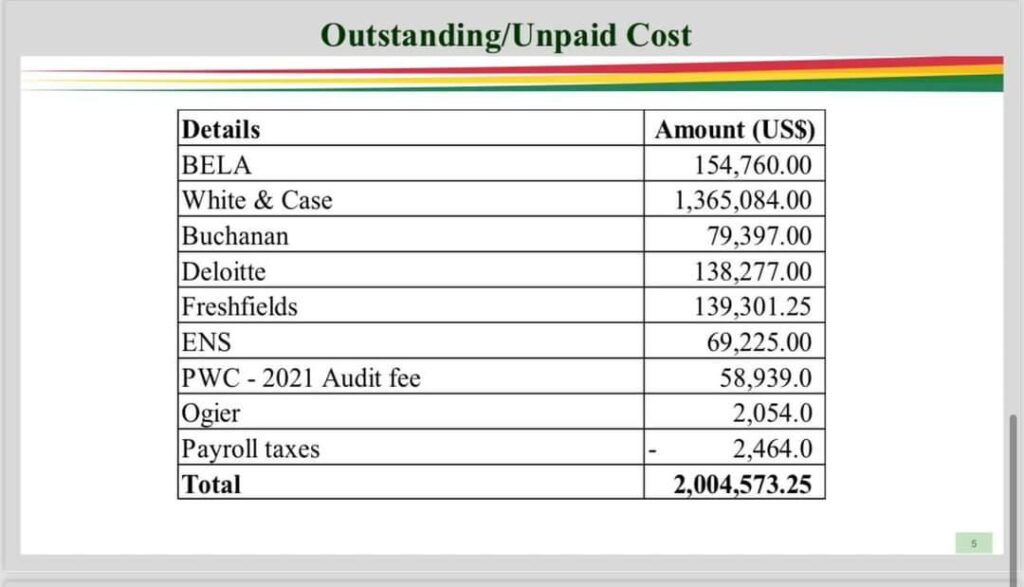
    A startling revelation has emerged detailing how the government reportedly wasted US$12 million on the aborted Agyapa deal, a scheme aimed at raising funds for development projects through Ghana’s mineral royalties.

    The Vice President of IMANI Africa, Bright Simons, a policy think tank, took to X (formerly Twitter) to disclose a breakdown of payments made in the controversial deal. According to Simons, 10 entities, both local and international, received various sums from the deal.

    The major beneficiary was Imara, a company that served as the transaction advisor and allegedly pocketed over US$9.6 million. Legal and audit firms also received payments, along with over US$1.5 million designated for staff salaries. The Ghana Stock Exchange was also reportedly among the recipients.

    Simons further highlighted an outstanding payment of US$2 million that the Minerals Income Investment Fund (MIIF), the state agency behind the deal, has yet to settle.

    The Agyapa deal intended to create a special purpose vehicle (SPV) in the tax haven of Jersey to manage Ghana’s mineral royalties. However, it faced suspension in 2021 after public outcry, opposition from civil society groups, and the National Democratic Congress (NDC).

    The Chief Executive Officer of MIIF, Edward Nana Yaw Koranteng, recently informed the Parliament’s Public Accounts Committee about the expenditure on the deal. Parliament has since written to Mr. Koranteng, seeking details and supporting evidence regarding the US$12 million expenditure.

    Koranteng claimed that the funds were spent on the Agyapa SPV, consultancy fees, rental of office accommodation, and processes leading to the initial public offering for the entity’s listing on the London Stock Exchange.

    Simons questioned the transparency and accountability of the deal and raised concerns about the role of the Auditor General in overseeing such matters. He emphasized the lack of visibility into the list of payees, including subcontractors such as law firms, PR firms, and finance houses in Ghana.

    Simons expressed doubts about accountability, particularly given the secretive nature of the deal set up in the tax haven of Jersey, and criticized the Auditor General’s apparent oversight of such issues.

    “If you are staring at the Agyapa ‘money spent so far’ accounts and wondering who these ‘staff’ (Directors etc) are that have been paid $1.5m of Ghana money, well, why do you think some of us kept complaining about it being set up in the secretive tax haven of Jersey? Note also that this isn’t the full list of payees. There were subcontractors, including some law firms, PR firms and finance houses in Ghana. You see how opaque everything is? Even at this point? Do supporters still think that accountability would be possible once operational? Bear in mind that this matter wasn’t flagged by Ghana’s Auditor General (AG). It came up because of a random question at the PAC hearing in Parliament. Based on what I see, I can say that the AG doesn’t flag 90% of PFM issues. A Jersey SPV? With such weak institutions?”

  • Sputnik V scandal: I was working so hard to keep us alive, yet my own colleagues were against me – Agyeman Manu

    Sputnik V scandal: I was working so hard to keep us alive, yet my own colleagues were against me – Agyeman Manu

    Former Health Minister Kweku Agyeman Manu has staunchly defended his actions in the procurement of Sputnik V vaccines during the COVID-19 pandemic two years ago, dismissing allegations and characterizing the situation as a potential setup against him.

    The Dormaa Central Member of Parliament (MP), Mr Agyeman Manu, emphasized that he did not execute the procurement single-handedly, suggesting a coordinated effort by certain individuals to undermine him. He stressed that his primary concern during the pandemic was saving Ghanaian lives, refuting any peripheral considerations at the time.

    In an interview with Starr FM on Wednesday, February 21, he expressed disappointment with some parliamentary colleagues who, according to him, failed to appreciate his explanations.

    Despite being cleared of any wrongdoing, he lamented that the health committee in Parliament did not accept his explanations.

    “I had done no wrong, but some people just wanted to pitch me up and put wrongdoing on me. I was doing that one in good faith, collaborating, and having meetings, I didn’t do that transaction myself alone. Then all of a sudden, ‘You didn’t come to Parliament, in an emergency.’ No matter how much I tried to explain, the health committee in Parliament would not accept anything,” he stated.

    The lawmaker revealed that he felt so disheartened during the episode that he considered requesting charges to be brought against him in court. Despite challenges, he asserted his dedication to serving the nation and adhering to due processes during the procurement, vehemently denying any wrongdoing or violation of the law.

    “No matter how much I tried to explain, the health committee in Parliament would not accept anything. At one stage, I got so down that I was even requesting that they charge me to court because I thought that my explanations would have been accepted in court rather than in front of my own colleagues on the committee. Whether it was mischief or something, I wouldn’t be able to tell, but that was what happened,” he stated.

    “Subsequently, even when that was dying down, another group in the chamber was trying to cite me for perjury, and they were asking for a censure motion on me. These were times that I felt that I had done so well, I was working so hard to try to keep us alive even in the midst of a massive pandemic on the globe,” he explained.

    “I don’t know what is going to happen, but that is what it is. I will still insist and continue to say I did no wrong. I never can be cited for any wrongdoing. But it gave me pressure because that was in my nature,” he insisted.

    The former Health Minister remains resolute in maintaining his innocence and highlighting his commitment to the well-being of Ghanaians during challenging times.

  • Watch how Osei Kyei-Mensah Bonsu reacted to the question, “Are you going to be removed as majority leader?”

    Watch how Osei Kyei-Mensah Bonsu reacted to the question, “Are you going to be removed as majority leader?”

    Majority Leader Osei Kyei-Mensah-Bonsu has responded with a terse “No comment” to recent reports speculating his imminent replacement as the leader of the caucus in Parliament.

    The corridors of Parliament served as the backdrop for this brief interaction with a journalist on February 20, 2024.

    This cryptic reaction unfolded mere hours after the caucus officially dismissed swirling rumours suggesting that Alexander Kwamena Afenyo-Markin, the Deputy Majority Leader, was poised to take over the helm.

    Addressing the speculations in a press conference, Joseph Osei Owusu, First Deputy Speaker of Parliament and Member of Parliament for Bekwai, unequivocally declared, “The publications that are going around are false. The majority caucus has not made any changes to its leadership, and the majority caucus has not contemplated making any changes to its leadership, and we want to tell you to ignore any such publications. We are confident in our leadership, and the status quo shall remain.”

    Kyei-Mensah-Bonsu, also the Minister of Parliamentary Affairs, recently weathered a ministerial reshuffle unscathed but found himself excluded from the New Patriotic Party (NPP) presidential campaign team.

    Additionally, he is in the final term of his parliamentary tenure, having served close to three decades in the chamber.

    The speculated changes to the Majority benches included Alexander Afenyo-Markin assuming the roles of Majority Leader and Minister for Parliamentary Affairs, Frank Annoh-Dompreh becoming Deputy Majority Leader, Habib Iddrisu stepping into the role of Majority Chief Whip, and Patricia Appiagyei or Freda Prempeh as the new First Deputy Majority Chief Whip. Alex Tetteh Djornobuah was also mentioned as a potential Second Deputy Chief Whip.

    As the political landscape simmers with anticipation, Kyei-Mensah-Bonsu’s enigmatic response adds an air of mystery to the unfolding situation, leaving political observers eager to unravel the fate of the Majority Leader position.

  • Ghanaian father of four gunned down in shocking Canada shooting

    Ghanaian father of four gunned down in shocking Canada shooting

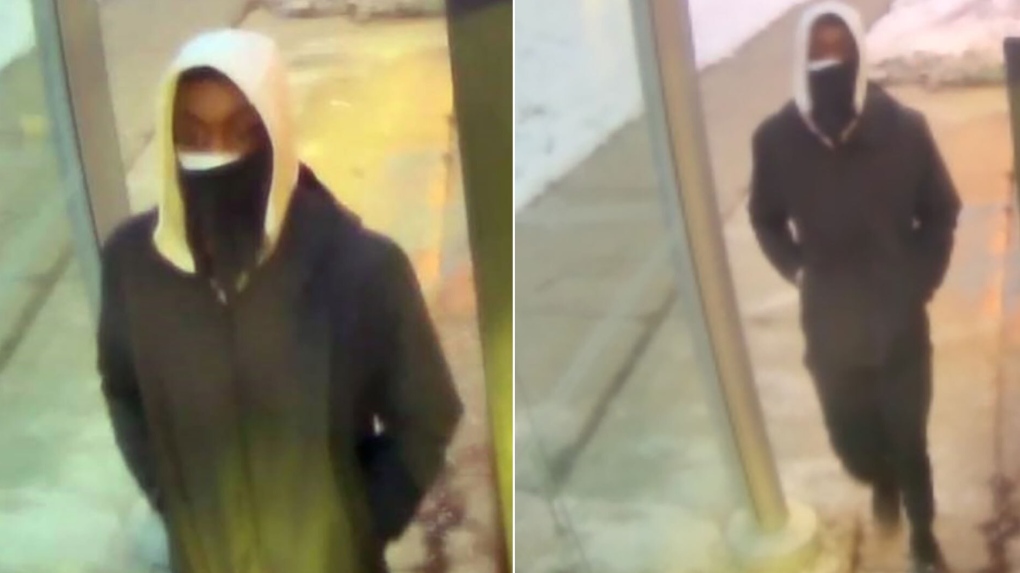
    A 39-year-old Ghanaian, Adu Boakye, who recently relocated to Canada just three months ago, has been fatally shot in what authorities have confirmed as a random shooting incident.

    The shooting occurred in the North York area in northwest Toronto, with Adu Boakye becoming one of two victims in this senseless act of violence. The incident took place at Jane Street and Driftwood Avenue, prompting a swift response from the police.

    According to a police statement on the matter, the incident unfolded on Saturday, February 17, 2024, around 3:05 p.m. Upon receiving a call reporting the shooting, police rushed to the scene.

    Adu Boakye was found with gunshot wounds, and despite life-saving measures and immediate transportation to the hospital, he succumbed to his injuries and was pronounced dead.

    The victim, identified as Adu Boakye, had recently moved to Canada, leaving behind a life in Ghana to seek new opportunities in his adopted country.

    Detective Phillip Campbell, in a subsequent media interview, revealed that Adu Boakye and another unnamed 16-year-old boy fell victim to indiscriminate shootings less than 24 hours apart while waiting for a bus in the Jane Street and Driftwood Avenue area.

    “Our investigation thus far has revealed there is no relationship between Mr. Boakye and the individual, or individuals, who shot him,” said Det. Phillip Campbell. He emphasized that both victims were innocently going about their business when they were shot.

    The police have released some details about the assailant, describing the incident as a gang attack. They are urging the public to come forward with any information that could lead to the arrest of the perpetrator. The shocking incident highlights the need for heightened awareness and community cooperation to ensure the safety of residents in the North York area and beyond.

  • Radio Twi has become a pan-Ghanaian “social convenience technology” – Bright Simons

    Social innovator and commentator, Bright Simons, has sparked a debate on the role and status of Twi, one of the most widely spoken languages in Ghana.

    He claimed in a recent tweet that Twi, traditionally associated with the Akan ethnic group, has transcended its cultural roots and become a common medium of communication for all Ghanaians.

    “Controversial but true: ‘Radio Twi’ is no more a cultural asset of the Akans. It has become a pan-Ghanaian ‘social convenience technology’. Native Twi speakers can sometimes not even recognise it. Like waakye, jollof, hiplife or azonto, it is not about authenticity but resonance,” he tweeted.

    Simons included images of data on the Twi language to support his claim.

    One was an article about Mozilla, a global software company, including Twi in their common voice data system, a project collecting and validating voice data for various languages to improve speech recognition technology.

    He also displayed a survey showing that Peace FM, a Twi station, is rated top on the list of radio national ratings, followed by several other Twi stations such as Adom FM, Nhyira FM, and Okay FM.

    Simons’ tweet comes at a time when the Ghanaian parliament is set to introduce the use of local languages on the floor of the House, promoting Ghanaian culture and safeguarding it from potential extinction.

    According to Order 63 of the new Standing Orders, Members of Parliament (MPs) will be permitted to use any of the local languages, with interpretation and translation provided to ensure understanding by all present.

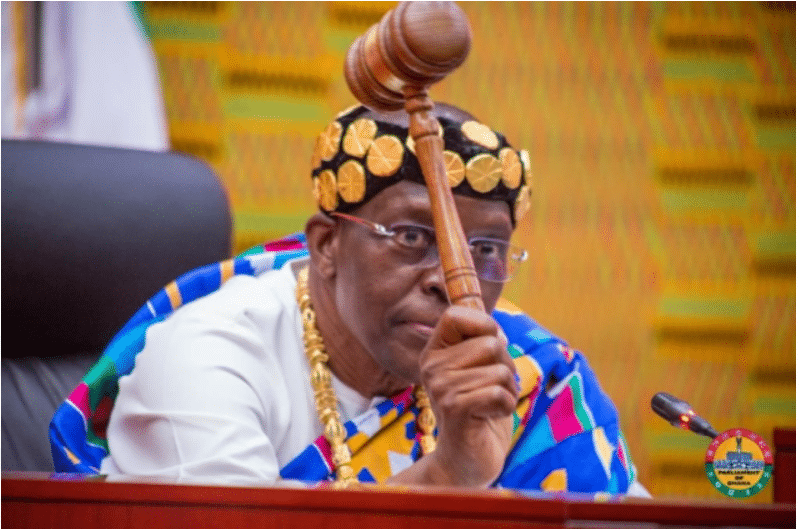
    This initiative, scheduled to commence during the second meeting of the fourth session of the Eighth Parliament, was confirmed by the Speaker of Parliament, Alban Sumana Kingsford Bagbin.

    He stated that necessary arrangements, including the provision of translators and appropriate gadgets, would be made to facilitate a seamless implementation. The new measure is expected to be implemented following the Easter break.

    The move by the parliament has generated a lot of conversation on which of the about 80 languages in Ghana will be dominant in the House and which one can be added to English as the official language.

    Some have argued that Twi, being the most widely spoken and understood language in the country, should be given priority and recognition.

    Others have opposed this idea, saying that it would marginalise other languages and ethnic groups.

    Bright Simons’ observation undoubtedly adds to the conversation about the Twi language’s dominance and influence in Ghana.

    His tweet has elicited mixed reactions from the public, with some agreeing with his view and others challenging it.

    The debate over language and identity in Ghana is not new, but it has gained new momentum and relevance in light of the recent developments and trends.

  • Love Project gives new life to school library in Afienya

    Love Project gives new life to school library in Afienya

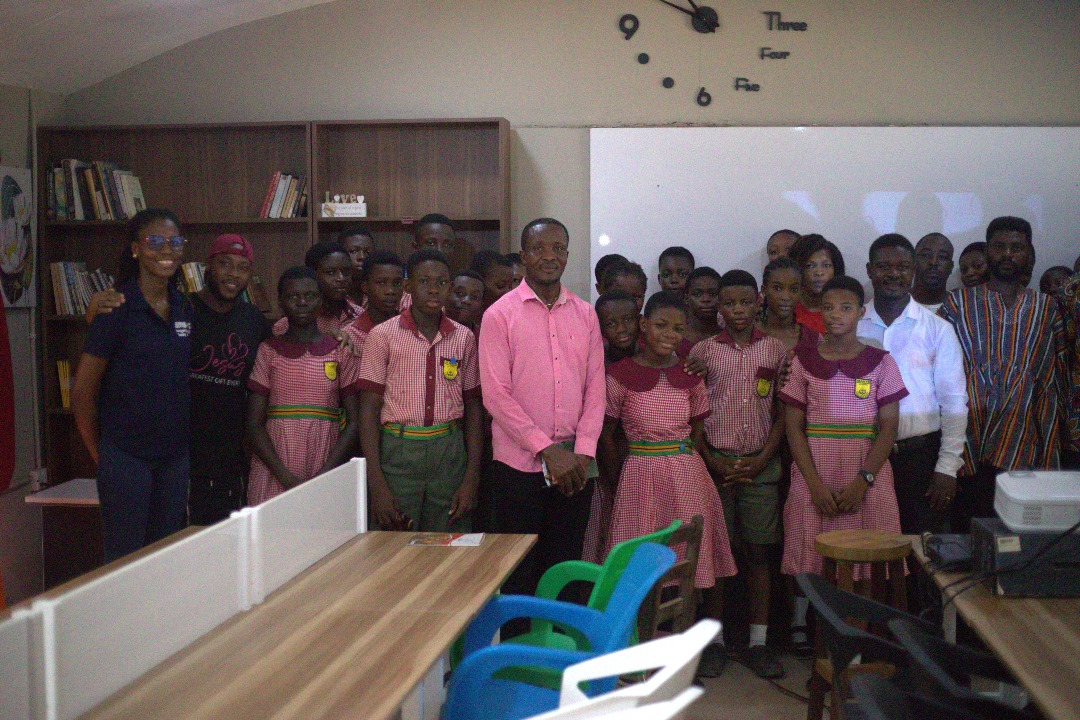
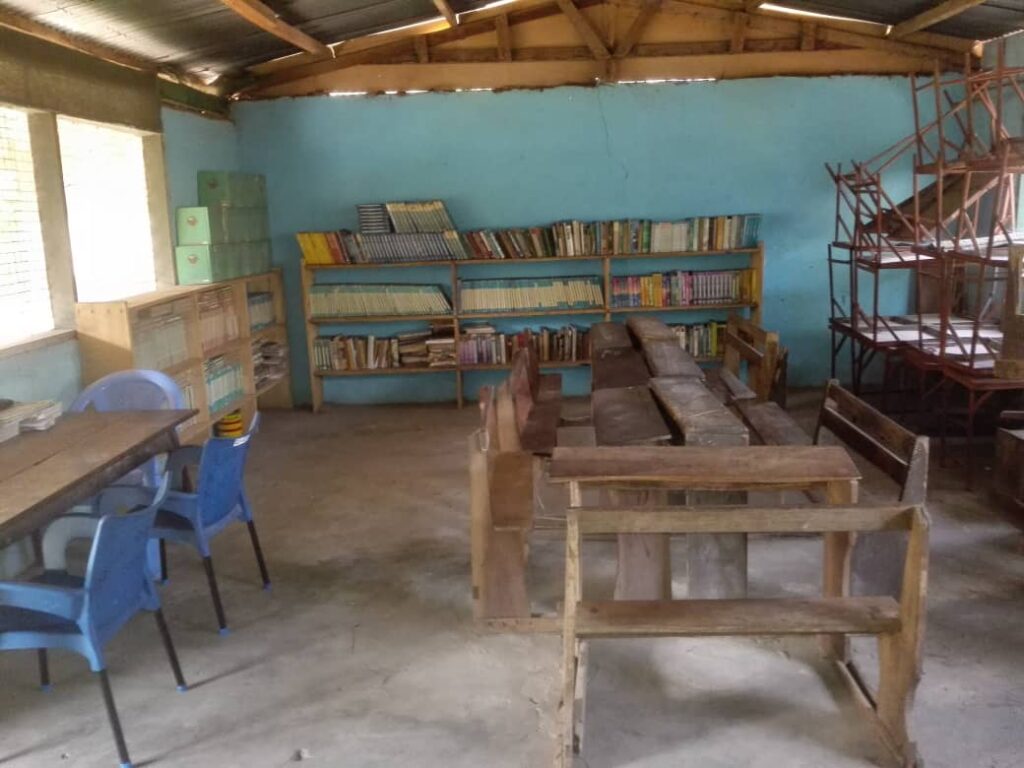
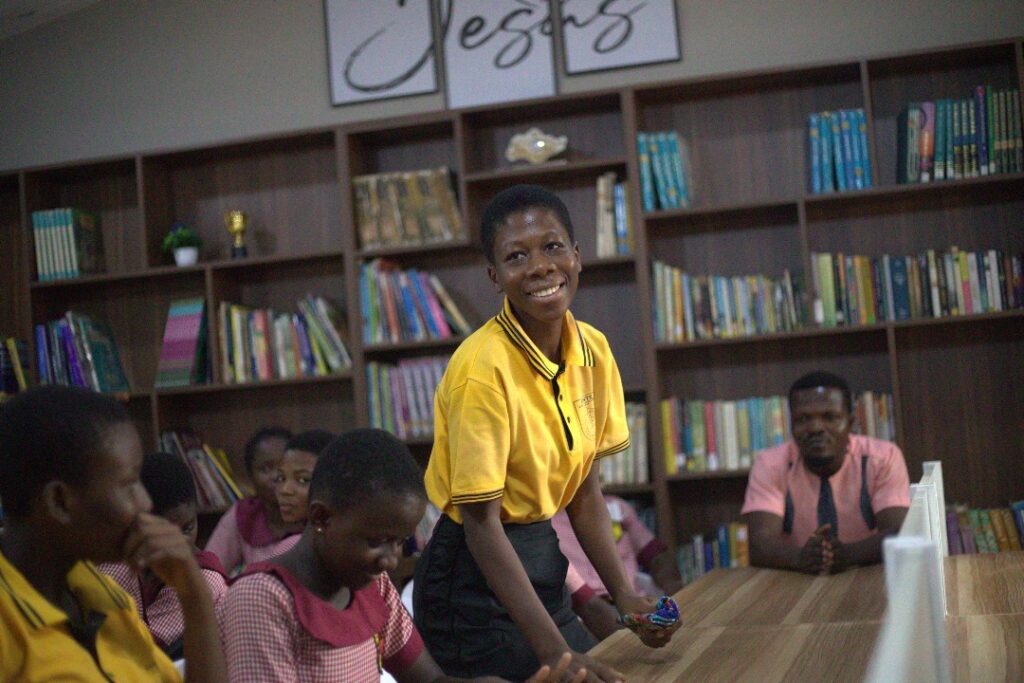
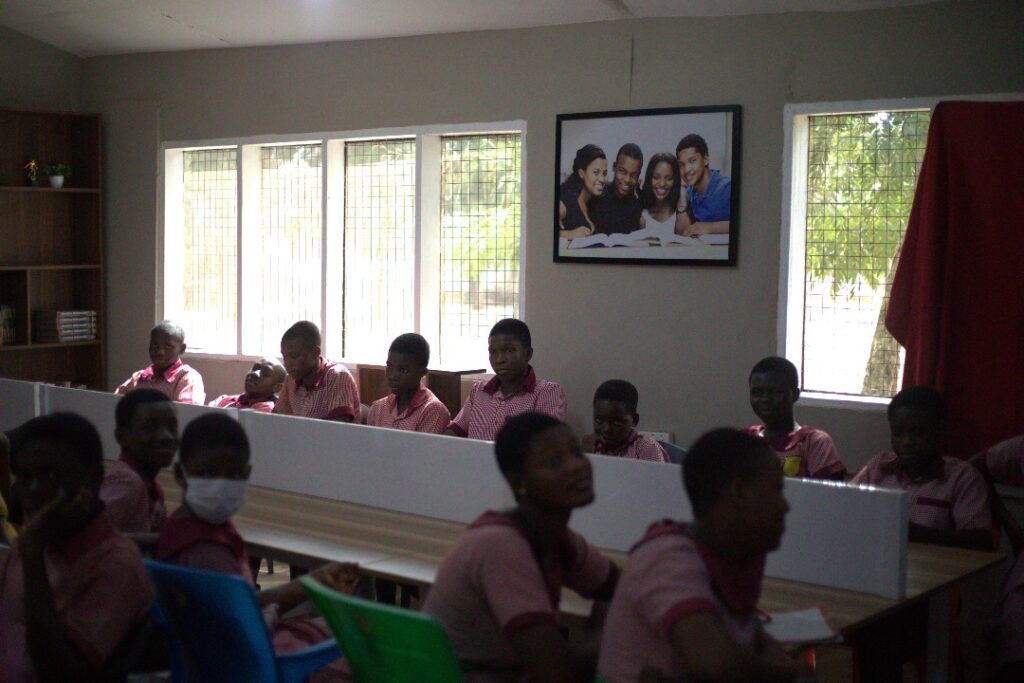
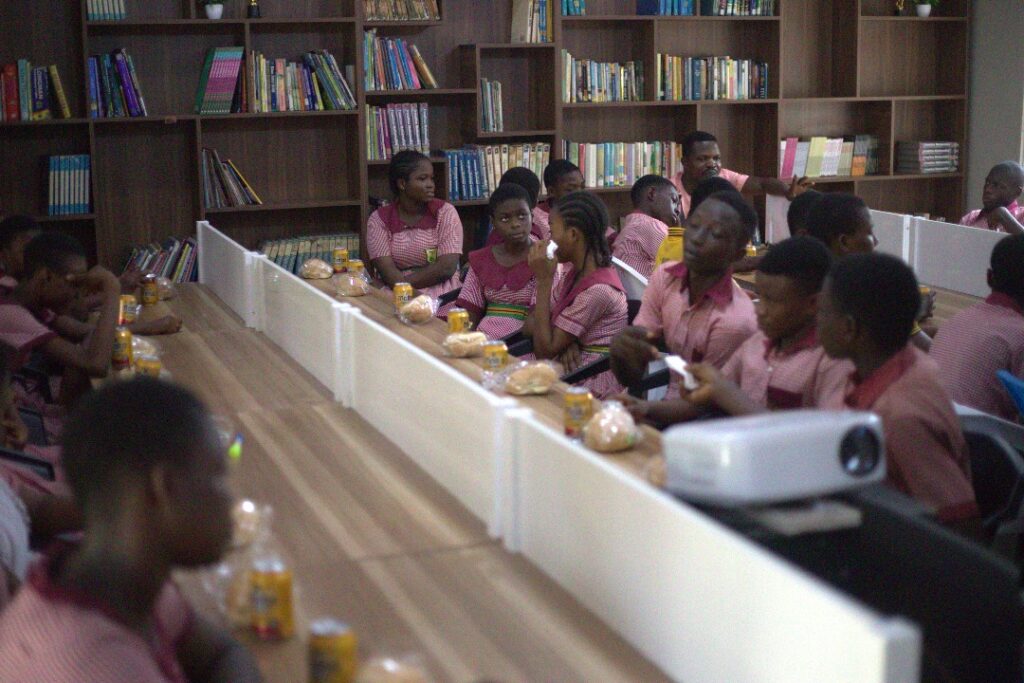
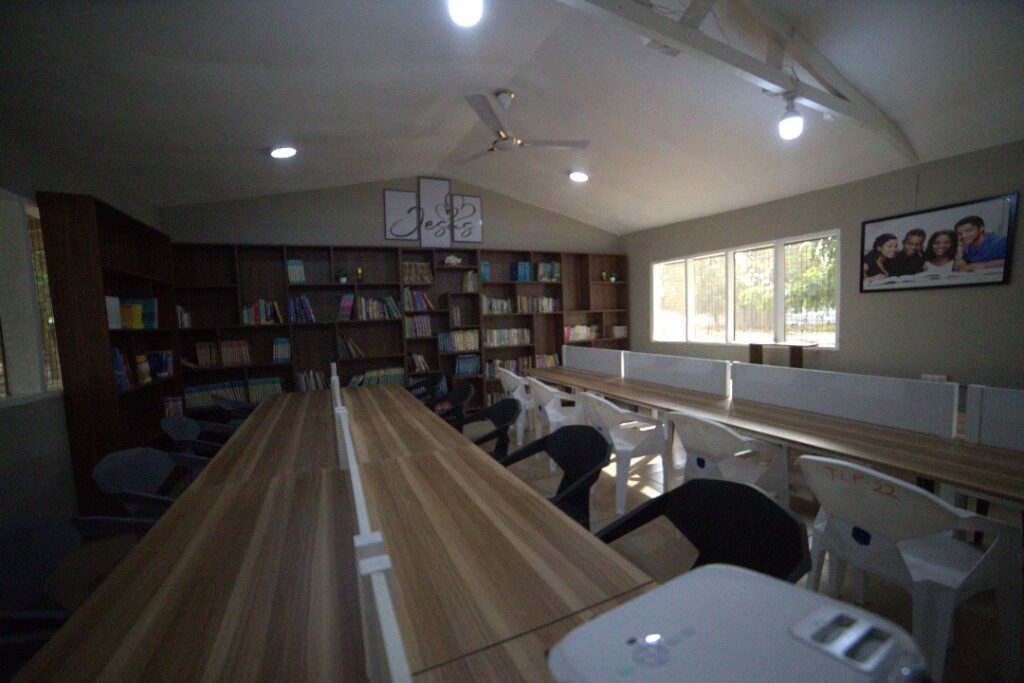
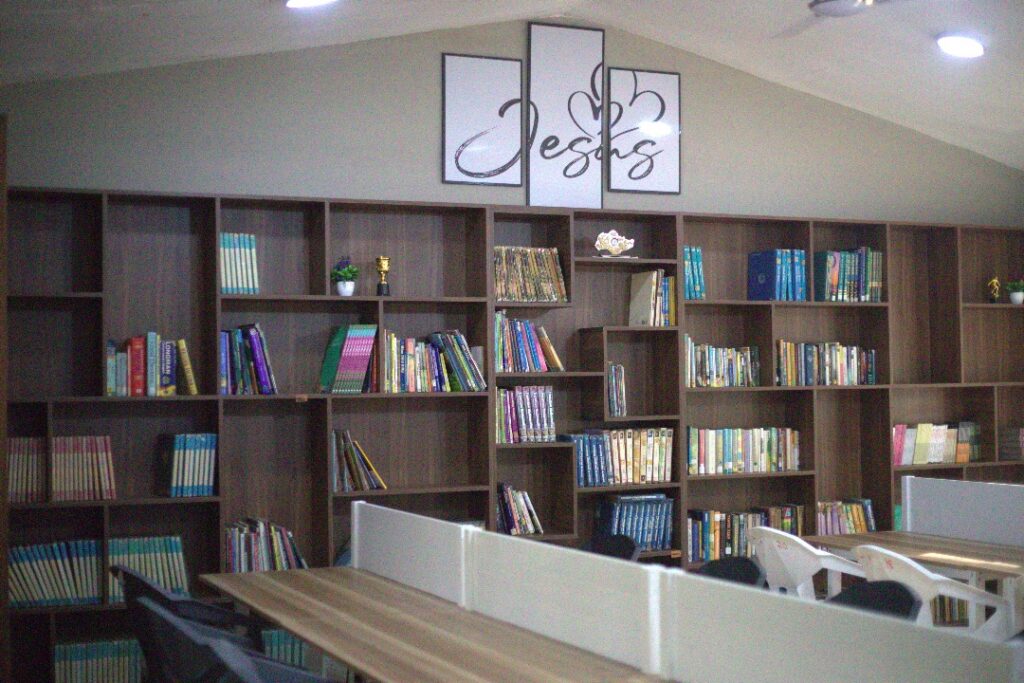
    The Love Project, a non-profit organization, in a remarkable initiative, has revitalized the library at the Mante School of Excellence in Afienya.

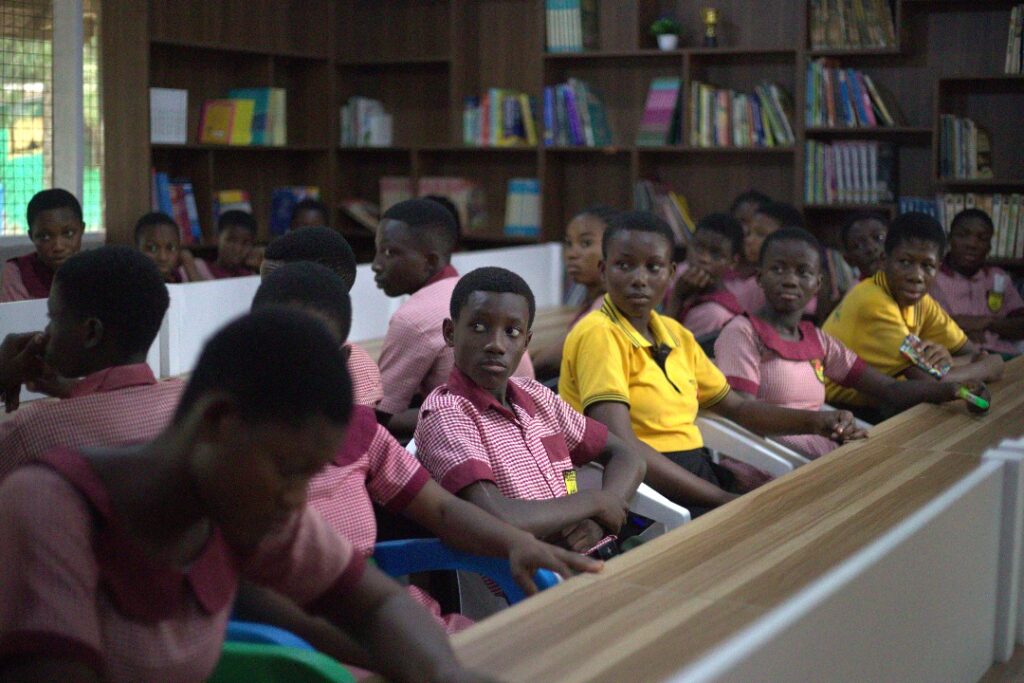
    The once dilapidated space has undergone a major makeover, now featuring new books, furniture, and improved air conditioning.

    The Love Project, dedicated to fostering reading and learning in underprivileged communities, chose the Mante School of Excellence as one of its beneficiaries. 

    Rebecca Lamptey, co-founder of the Love Project, sharing the genesis of the project during the unveiling of the first phase in December last year, said  that their decision was birthed from their bi-annual trips to the school to provide career guidance and counseling to students.

    “We identified Mante School of Excellence, and decided that we would be coming here at least twice a year, speak with them, do some career guidance and counselling with the JSS 2-3 students, so that at least  they are sort of exposed to the many opportunities out there. Along the line, through our interactions, we realized that they were quite limited in what they knew, especially with exposure. They were very limited with exposure, and we had to think through how we could help bridge that gap. Books expose you to the whole world, a whole new world that you otherwise would not have known. So we decided to help them with their library and try and set it up for them,” she said.

    The Love Project collaborated with friends and supporters who generously donated books and funds for the library’s renovation. The project received support from the Ghana Library Authority, Akenkan Bookstore, Beulahland Floral Products and Services, and SkodPro, which provided expertise in fabricating the furniture in the library.

    Sally Aryee-Atta, a volunteer and educationist, expressed her happiness in being part of the project, emphasizing her belief in the power of reading.

    “I have been reading since I was a child, and it took me far. We have come to dedicate a beautiful library filled with books. And these books have been dedicated by friends and loved ones, all part of the Love Project,” she stated.

    George Tawiah Mante, the headmaster of the Mante School of Excellence, expressed gratitude for the transformation, emphasizing the positive impact on students’ knowledge and learning.

    “..they changed the face of our library into what we’re seeing today. We’re saying we’re very grateful for all the partners and people who spent their money, their time, and their energies to bring this library to the state it has today. It has changed the face of our school and I believe that this school will have a lot of benefits from it and also other people who will come into the library, they will increase their knowledge in reading and learning.”

    A few months after the first phase was completed, the Love Project returned to the school on Valentine’s Day 2024 to finish what they had started by providing louvre blades for the windows, tables, and chairs so that students could have a comfortable place to sit and use the library facility.

    Students and teachers expressed their appreciation to the organisers of the project. Ibrahim Rashidat, the school prefect, promised the students will efficiently use the facility to improve their reading and vocabulary, thanking the Love Project for their generosity.

    “We really want to say thank you. We really appreciate it. We also promise that we will visit this place and improve our reading and vocabulary. Thank you for everything,” she said with a smile.

    Araba Abaidoo, a Love Project member, highlighted the essential role of reading for children and its impact on building vocabulary and exposure to new ideas.

    Edwin Dawutey, a teacher, expressed his excitement about the project, foreseeing a positive impact on students’ reading habits for generations to come.The Love Project, having now completed this transformative initiative, aims to extend its impact to other schools and communities in need.

    They invite more individuals to join their cause and share the love for reading and learning.

  • Parliament to introduce local languages

    Parliament to introduce local languages

    Parliament is set to introduce the use of local languages on the floor of the House to promote Ghanaian culture and prevent its potential extinction.

    According to Order 63 of the new Standing Orders, a Member of Parliament (MP) may use any local language, subject to interpretation and translation for the understanding of all. This initiative is expected to commence during the second meeting of the fourth session of the Eighth Parliament.

    The Speaker of Parliament, Alban Sumana Kingsford Bagbin, assured that necessary facilities, including translators and appropriate gadgets, would be put in place for a smooth implementation. The planned launch is expected to occur after the Easter break, pending any unforeseen challenges.

    Statement and Contributions

    The discussion on the use of local languages gained prominence in Parliament when the Second Deputy Minority Leader, Emmanuel Armah-Kofi Buah, presented a statement advocating for the promotion and preservation of the Nzema Language.

    Mr Buah, also the National Democratic Congress MP for Ellembele in the Western Region, highlighted the decline in interest in teaching and learning the Nzema language in educational institutions despite its inclusion in the curriculum.

    This prompted members to call for the use of local languages in basic schools to enhance language promotion and better understanding of various subjects. They proposed that science subjects, including chemistry, could be taught in local languages, akin to practices in the Asia Tigers.

    Direction and Referral

    In response, the Speaker directed that the statement be referred to the committees on Education, Culture, Tourism, and Finance for a decision. This referral aims to encourage the Ghana Education Service to embrace the concept of using local languages in basic schools, promoting Ghanaian culture and tourism, and considering financial implications.

    Recall and Implementation of New Standing Orders

    Parliament, upon reconvening on February 6, 2024, began implementing its new Standing Orders. The introduced changes include a daily roll call of members and the recitation of the national pledge.

    These measures, captured in Orders 14 and other relevant sections, seek to ensure a credible attendance record, instil discipline, and promote a sense of duty among MPs.

    The new Standing Orders replace the old ones, which had been in place since 2006. The Speaker clarified that the oral roll call does not negate the signing of attendance books in the chamber or at the committee level.

  • Check out Ken Ofori-Atta’s alleged new appointments

    Amidst a major cabinet reshuffle, former Finance Minister Ken Ofori-Atta is reportedly set to assume the role of Senior Presidential Advisor on the Economy and will also serve as the President’s Special Envoy on International Investment and the Capital Markets, as reported by Asaase Radio.

    This revelation comes directly from sources within the Office of the President, adding a new chapter to Ofori-Atta‘s distinguished career. As the former Finance Minister, he held the position for an impressive seven years, making him the longest-serving finance minister in Ghana’s Fourth Republic.

    As Ofori-Atta steps into his new advisory roles, Kwaku Afriyie, the former Minister of Environment, Science, Technology, and Innovation, is also slated to become an advisor. According to Asaase’s sources, Afriyie will take on the crucial role of President Akufo-Addo’s Special Envoy on Climate.

    The reshuffling of roles within the government signals a strategic move, with Mohammed Amin Adam, the current Minister of State at the Ministry of Finance, assuming the position of the substantive Minister for Finance.

    This transition is expected to be seamless, ensuring continuity in the government’s debt restructuring negotiations with private creditors and for Ghana’s second review under its extended credit facility (ECF) arrangements with the International Monetary Fund.

    The developments do not end here, as sources from the Office of the President hint at further significant changes, possibly announced later today. The morning’s press release from Jubilee House primarily focused on ministerial appointments presented to the Speaker of Parliament, with consequential matters regarding appointees.

    Inside sources at Jubilee House anticipate the potential reshuffling of the Majority leadership in Parliament, a move that might be officially disclosed following a scheduled National Executive Committee meeting of the New Patriotic Party(NPP) on Monday.

    This suggests a broader restructuring within the government’s leadership, marking a pivotal moment for Ghana’s political landscape. This is happening some nine months to Ghana’s next general election.

  • Ken Ofori-Atta given two new appointments – Report

    Ken Ofori-Atta given two new appointments – Report

    Amidst a major cabinet reshuffle, former Finance Minister Ken Ofori-Atta is reportedly set to assume the role of Senior Presidential Advisor on the Economy and will also serve as the President’s Special Envoy on International Investment and the Capital Markets, as reported by Asaase Radio.

    This revelation comes directly from sources within the Office of the President, adding a new chapter to Ofori-Atta‘s distinguished career. As the former Finance Minister, he held the position for an impressive seven years, making him the longest-serving finance minister in Ghana’s Fourth Republic.

    As Ofori-Atta steps into his new advisory roles, Kwaku Afriyie, the former Minister of Environment, Science, Technology, and Innovation, is also slated to become an advisor. According to Asaase’s sources, Afriyie will take on the crucial role of President Akufo-Addo’s Special Envoy on Climate.

    The reshuffling of roles within the government signals a strategic move, with Mohammed Amin Adam, the current Minister of State at the Ministry of Finance, assuming the position of the substantive Minister for Finance.

    This transition is expected to be seamless, ensuring continuity in the government’s debt restructuring negotiations with private creditors and for Ghana’s second review under its extended credit facility (ECF) arrangements with the International Monetary Fund.

    The developments do not end here, as sources from the Office of the President hint at further significant changes, possibly announced later today. The morning’s press release from Jubilee House primarily focused on ministerial appointments presented to the Speaker of Parliament, with consequential matters regarding appointees.

    Inside sources at Jubilee House anticipate the potential reshuffling of the Majority leadership in Parliament, a move that might be officially disclosed following a scheduled National Executive Committee meeting of the New Patriotic Party on Monday.

    This suggests a broader restructuring within the government’s leadership, marking a pivotal moment for Ghana’s political landscape. This is happening some nine months to Ghana’s next general election.

  • Full list of Ministers reshuffled by Akufo-Addo

    Full list of Ministers reshuffled by Akufo-Addo

    President Nana Addo Dankwa Akufo-Addo has unveiled significant changes to his ministerial team in a major cabinet reshuffle, responding to growing calls for a shake-up.

    A document issued by the Communications Directorate of the Jubilee House has revealed that the President “has relieved the following
    Ministers and Deputy Ministers of their portfolios in government, with immediate effect.”

    The Valentine’s Day ministerial shake-up sees the removal of the controversial Minister of Finance, Ken Ofori-Atta, who has faced criticism from his party’s MPs, according to sources close to the presidency.

    As part of this, ministers who lost their parliamentary seats during the party’s primaries or did not contest in their constituencies have been replaced with new hands, primarily MPs.

    This surprising decision, especially regarding Ofori-Atta’s prominent role in the government, has raised eyebrows among political observers.

    Ministers exiting

    Ken Ofori-Atta – Finance

    Ambrose Dery – Interior

    Kwaku Agyeman Manu – Health

    Dr. Kwaku Afriyie – Environment, Science, Technology and Innovation

    Kwasi Amoako-Atta – Roads and Highways

    Below is the full list of reshuffled ministers

  • 7 ways to take care of your hair during harmattan

    7 ways to take care of your hair during harmattan

    The Harmattan season brings with it dry and dusty conditions that can take a toll on your hair. During this period, it’s essential to adopt a hair care routine that focuses on hydration, protection, and nourishment. Here are some tips to keep your hair healthy and vibrant during the Harmattan:

    1. Moisturize Regularly: The dry Harmattan air can strip your hair of its natural moisture, leaving it prone to breakage. Use a moisturizing shampoo and conditioner to keep your hair hydrated. Consider deep conditioning treatments to restore moisture and prevent dryness.

    2. Protective Styling: Opt for protective hairstyles that minimize exposure to the harsh elements. Braids, twists, or buns can help shield your hair from the dust and dry winds characteristic of the Harmattan season.

    3. Cover Up: Wear hats, scarves, or head wraps to provide an extra layer of protection against the dry and dusty air. This not only shields your hair but also adds a stylish touch to your look.

    4. Limit Heat Styling: Excessive use of heat-styling tools can contribute to dryness and damage, especially in dry weather conditions. Minimize the use of flat irons and curling irons, and when you do, always use a heat protectant to prevent damage.

    5. Stay Hydrated: Proper hydration starts from within. Drink plenty of water to maintain the moisture balance in your body, which reflects on the health of your hair. Hydrated hair is less prone to dryness and breakage.

    6. Trim Regularly: Regular trims help eliminate split ends and prevent further damage. During the Harmattan season, it’s especially crucial to keep your hair ends healthy to avoid breakage and maintain overall hair vitality.

    7. Use Natural Oils: Incorporate natural oils such as coconut oil, argan oil, or olive oil into your hair care routine. These oils provide deep nourishment, lock in moisture, and create a protective barrier against environmental factors.

    Disclaimer: The information provided in this article is for general informational purposes only and is not a substitute for professional advice. Always consult with a qualified hair care professional or dermatologist for personalized guidance based on your specific hair type, condition, and any underlying health concerns. The author and publisher disclaim responsibility for any adverse effects resulting directly or indirectly from the use of the information provided in this article.

  • Major shake-up in Akufo-Addo’s administration: Ken Ofori-Atta finally out! – Reports

    Major shake-up in Akufo-Addo’s administration: Ken Ofori-Atta finally out! – Reports

    President Nana Addo Dankwa Akufo-Addo is set to unveil significant changes to his ministerial team in a major cabinet reshuffle, responding to growing calls for a shake-up.

    DailyGuideNetwork and Asaase Radio reports suggest that the new ministers are already in line to meet the president at the Jubilee House for briefings ahead of the official announcement, expected possibly on Wednesday, February 14, 2024.

    The Valentine’s Day ministerial shake-up is poised to witness the removal of the controversial Minister of Finance, Ken Ofori-Atta, who has faced criticism from his party’s MPs, according to sources close to the presidency.

    Sources explain that the reshuffle is comprehensive, aimed at fortifying the party’s position as the country approaches the December election.

    As part of this, ministers who lost their parliamentary seats during the party’s primaries or did not contest in their constituencies will be replaced with new hands, primarily MPs.

    This surprising decision, especially regarding Ofori-Atta’s prominent role in the government, has raised eyebrows among political observers.

    Reported Key Appointments in the Reshuffle:

    1. Daniel Nii Kwartei Titus-Glover – New Greater Accra Regional Minister:
      • Titus-Glover replaces Henry Quartey, bringing extensive experience to bolster regional development efforts in the capital.
    2. Dr. Mohammed Adam Amin Anta – Minister of Finance Designate:
      • Dr. Adam Amin Anta, MP for Karaga, and Minister of State at the Finance Ministry, takes over from Ken Ofori-Atta. His technocratic background signals the government’s commitment to economic stability amid ongoing International Monetary Fund (IMF) discussions.
    3. Lydia Alhassan – New Sanitation and Water Resources Minister:
      • Lydia Alhassan, MP for Ayawaso West Wuogon, replaces Freda Prempeh. This move follows Prempeh’s loss in the parliamentary primary to Dr. Gideon Buoko.
    4. Andrew Agyepa Mercer – Minister of Tourism:
      • Mercer, currently the Deputy Minister of Energy and MP for Sekondi, is appointed as the Minister of Tourism. This strategic move aims to boost the tourism sector and attract more visitors to the country.
    5. Henry Quartey – Interior Minister Designate:
      • Henry Quartey, a respected figure in the government, is appointed as the Interior Minister Designate. His previous role as deputy at the same ministry adds to his suitability for maintaining internal security and safeguarding the nation’s borders.
    6. Ophelia Hayford Mensah – Minister for Environment Science, Technology, and Innovation:
      • Ophelia Hayford Mensah, MP for Mfantesman, replaces Dr. Kwaku Afriyie, bringing her expertise and passion for environmental conservation to address climate change and implement green initiatives.
    7. Other Appointments:
      • Ms. Fatimatu Abubakar becomes the substantive Information Minister.
      • Kojo Oppong Nkrumah moves to Works and Housing.
      • Francis Asenso Boakye takes over from Kwasi Amoako-Attah as Roads and Highways Minister.
    8. Deputy Ministers:
      • Abdul-Aziz Musah Ayaba (Deputy Minister).
      • Prince Hamid Armah (Deputy Minister).
      • Dr. Nana Ayew Afriyie (Deputy Minister).
      • Martin Adjei Mensah Korsah, among others.

    This cabinet reshuffle is expected to generate both excitement and anticipation among Ghanaians as they await the implementation of new policies and initiatives under the reconfigured cabinet.

  • Driver’s mate comment: Bawumia’s political strategists did an awful job – Prof Mensah

    Driver’s mate comment: Bawumia’s political strategists did an awful job – Prof Mensah

    Criticism has arisen over Vice President Mahamudu Bawumia‘s political strategy, with Professor Kobby Mensah, a lecturer at the University of Ghana Business School (UGBS), expressing dissatisfaction with the quality of communication deployed by Bawumia’s team.

    The critique, posted on X on February 7, 2024, highlighted the perceived failure in positively projecting the Vice President after his recent lecture outlining his vision if elected president.

    Professor Mensah, a consistent critic of Bawumia‘s political candidature, pointed out a notable observation. Despite addressing various issues in his lecture, Bawumia’s statement regarding his role as not being in full charge of the government machinery gained more attention, particularly through the analogy of a driver’s mate.

    This trend on social media overshadowed the substantive issues raised in the lecture.

    The driver’s mate analogy served as Bawumia’s anchor, emphasizing that, if given the opportunity as president, he would carve out his distinct path. However, the aftermath of the statement saw Bawumia trending more for the analogy than for the crucial aspects of his vision.

    In his critical post, Professor Mensah suggested that Bawumia’s political strategists should consider a pay cut for what he deemed an “awful job done.”

    He emphasized that the Vice President could only trend as a “Mate,” and even the digitalization initiatives presented failed to gain substantial traction.

    While supporters of the government defended Bawumia‘s analogy, asserting his influence in the Akufo-Addo administration, the opposition seized the opportunity to criticize the Vice President.

    Accusations were hurled, alleging that Bawumia had distanced himself from President Nana Addo Dankwa Akufo-Addo due to perceived incompetence and political expediency.

    As the New Patriotic Party (NPP) flagbearer, Bawumia gears up for the 2024 presidential elections, where he will compete against former President John Dramani Mahama. Having served as vice president since 2017, Bawumia aims to secure the presidency in 2025.

    The critiques on his recent communication strategy have raised questions about the effectiveness of his campaign messaging.

  • Election 2024: NDC blasts EC for keeping voters in the dark

    Election 2024: NDC blasts EC for keeping voters in the dark

    With only 298 days remaining until December 7, the Director of Elections and IT of the National Democratic Congress (NDC), Dr Omane Boamah, has expressed dissatisfaction with the Electoral Commission of Ghana (EC).

    Dr Boamah, a former Minister for Communication, voiced his concern over the EC’s failure to announce the dates for events leading up to the upcoming general elections.

    Less than a year away from the elections, Dr Boamah emphasized the importance of Ghanaians having a detailed calendar outlining the events for the 2024 polls.

    In a post shared on X on Tuesday, February 13, 2024, he expressed bewilderment that the electoral calendar had not been released with less than 300 days remaining until the traditional general election day in Ghana, December 7.

    “298 Days to the December 07 Presidential and Parliamentary elections, yet the Electoral Commission has still not disclosed the Electoral Calendar,” he wrote.

    The reason for the delay in releasing the calendar remains unclear. There is speculation that the EC’s proposal to change the general election day from December 7 to November 7 might be a contributing factor. The NDC has already rejected this proposed change by the EC.

  • Why NFL chose Ghana for Super Bowl LVII ad

    Why NFL chose Ghana for Super Bowl LVII ad

    The advertising company behind the NFL’s #SuperBowl ad-themed “Born to Play,” featuring Ghana, has unveiled the reason for selecting the country for the ad.

    Chairman of 72andSunny, Glenn Cole, explained in an interview saying,” every year for the Super Bowl the NFL has one advertisement where we try to reintroduce our brand values, something in service of the sport and celebrate something happening in the sport that inspires people. And usually it is to show people that football is for everyone. And this season there was just a lot of energy around the game and other parts of the world.”

    “The NFL is in Germany, they play games in Germany, they play games in London, they announced they are going to play a game in Brazil, and a Ghanaian player, Jeremiah, who was just named the best dressed man in the NFL, well deserved has been showing up and representing for Ghana thought the season and that got mass attention, and so we just said, well we want to turn our attention into international and between Jeremiah and some other stories we heard we started looking at Africa and the Africa camps the NFL hosts,” he added.

    Cole highlighted the impact of the NFL athlete camp in Accra, Ghana, where former Super Bowl champion Osi Umenyiora delivered an inspiring speech to young participants.

    The speech, according to Cole emphasized the life-changing potential of the camp, not only for individual players but for the broader community.

    “We saw a speech by the leader of the NFL athele camp, Osi Umenyiora, who is a former Super Bowl champion, talking to the young men who were at the camp and his message was want you to know that this could change your life in the next few days. This is a life-changing opportunity and if it changes your life, it will change all these other people’s lives in your life. And I want you to show up with that mindset,” he noted.

    Inspired by these stories, 72andSunny chose Ghana as the backdrop for their ad. “We were so inspired by that. And so we said, that is where we have to go for our story,” Cole noted.

    The 15-second teaser, aired during the AFC championship game on CBS, showcased NFL stars Saquon Barkley, Justin Jefferson, and Cameron Jordan in Accra’s vibrant market, displaying their athletic skills.

    Directed by Nigerian filmmaker Andrew Dosunmu of Little Minx, with Malik Hassan Sayeed as cinematographer, the teaser is part of the “Born to Play” campaign.

    The campaign, a tribute to the NFL’s international efforts, emphasizes the development of local talent worldwide, creating pathways to the league.

    The full Super Bowl ad, shot in Accra, Ghana, was aired after Usher’s Halftime Show, revealing the diversity behind the scenes. the main character ‘Kwesi’ was portrayed by Nigerian called Eldad Ebehi Osime.

  • NDC’s Beatrice Annan caught ‘pants down’ over Free SHS comment

    NDC’s Beatrice Annan caught ‘pants down’ over Free SHS comment

    A member of the National Democratic Congress (NDC) communications team, Beatrice Annan, has been exposed for lying about the party’s stance on the Free Senior High School (SHS) policy.

    A Twitter user, @Bagya_Nurudeen, posted a compilation of old videos that showed Annan claiming that the NDC never campaigned against the Free SHS policy, which was initiated by the Akufo-Addo-Bawumia administration.

    The video, which was captioned “This year, no amount of propaganda and lies will be tolerated. @Beatrice_Annan1 has been exposed” with a pro-New Patriotic Party (NPP) slogan, “Say no to the NDC”, showed Annan speaking on Metro TV’s Good Morning Ghana programme.

    “The NDC never campaigned against Free SHS. The NDC was the political tradition that introduced progressive Free SHS,” she said amid shrieks of laughter from another member on the panel who seemed to disagree with her position.

    However, the video also showed other clips of NDC leaders, such as flagbearer John Mahama, General Secretary Fiifi Kwetey, and Director of Interparty and CSOs Relations Peter Boamah Otokunor, speaking heavily against the Free SHS policy and the method of implementation.

    “Free SHS will not be feasible because if you look at the cost of education in this country, in any country, it is very, very expensive,” said Otokunor.

    “When today you look at the NPP going all over the country shouting Free SHS, Free SHS, Free SHS. That is, all lie be lie,” said Kwetey.

    The compilation also had a snippet of an NDC rally where members chanted “Free education 419, Free education 419”. 419 in this context means ‘fraud’.

    The video has sparked a lot of reactions online, with many people accusing Annan and the NDC of being dishonest and hypocritical about the Free SHS policy, which has increased access and quality of secondary education in the country.

    Some people also questioned the credibility and competence of Annan to speak on such matters.” She didn’t have the records, and possibly by then, she was in school,” @AtingaAdombire wrote in the comments in response to the video.

  • Akufo-Addo has failed to put his own house in order – Kwesi Korang

    Akufo-Addo has failed to put his own house in order – Kwesi Korang

    Founder and leader of Patriot Ghana, Kwesi Korang, a group affiliated with the New Patriotic Party (NPP), voiced his concern that President Nana Addo Dankwa Akufo-Addo has left the party divided despite his achievements for the country.

    Speaking on Frontline on Rainbow Radio on February 12, 2024, Korang expressed the view that Akufo-Addo, unlike former President Kufour, has not proven to be a unifier within the party. He pointed out that Kufour successfully united the party after being elected as a presidential candidate, even bringing on board individuals who initially opposed his candidacy.

    Korang highlighted the contrast by stating, “But that is not the case today. Today, even when you are far away, you will be able to discover that there is division in the party.”

    Acknowledging Akufo-Addo’s governance achievements, such as the construction of schools, hospitals, and roads, Korang emphasized the importance of addressing the bitterness and division within the party for overall success.

    He urged President Akufo-Addo to focus on uniting the party, stating, “He has failed to put his own house in order. If he can build the party, the blessings, and appreciation he seeks will come to him.”

    In conclusion, Korang stated, “Akufo-Addo is aware he has failed to unite the party. If he were candid and truthful, he would admit to this fact. Those who are his assigns and associates are aware that Akufo-Addo has failed in uniting us.”

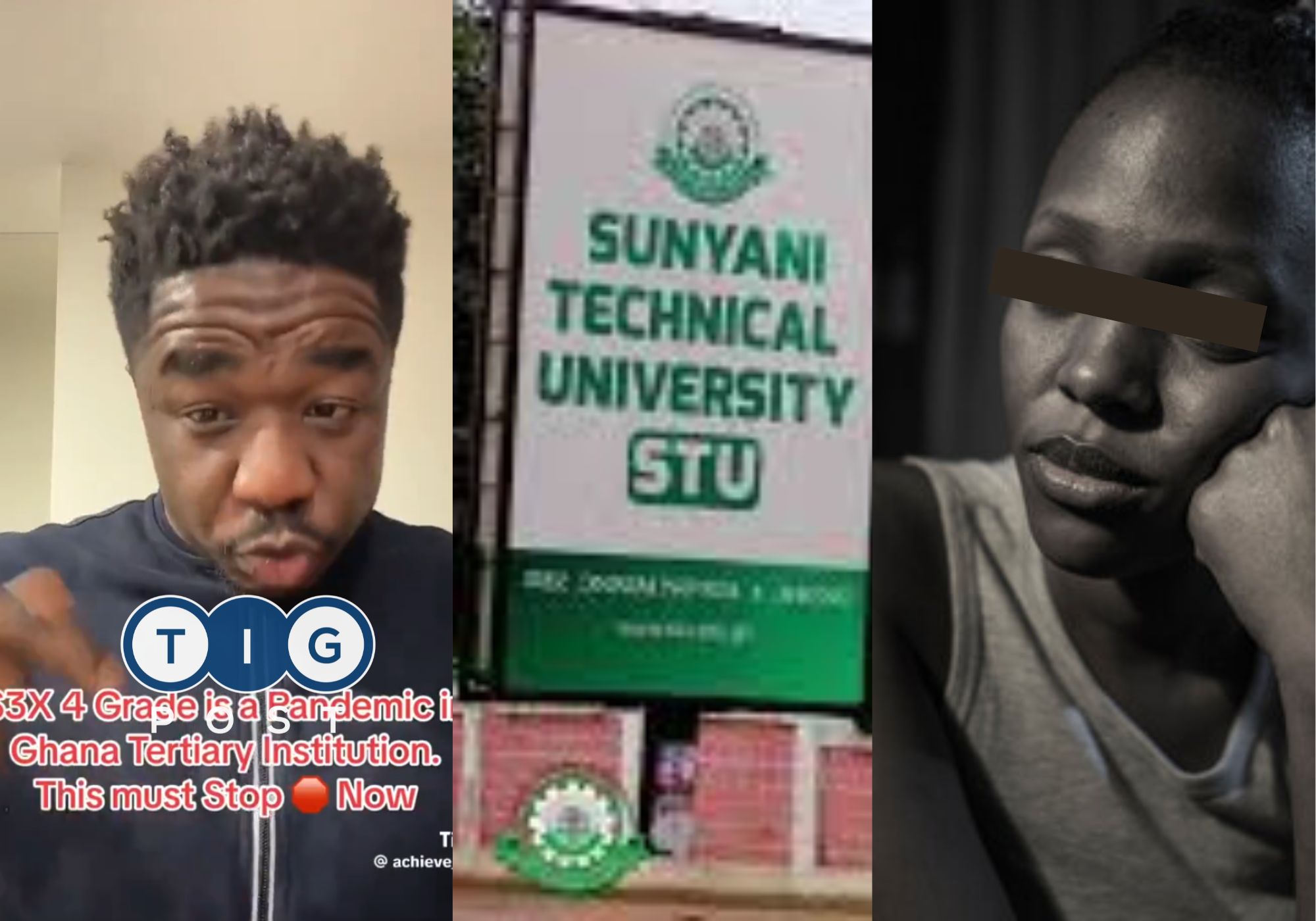
  • STU sex scandal: He sleeps with them, rapes them, and threatens them with ‘juju’ – Ex-SRC prez exposes lecturer

    A former Student Representative Council (SRC) president of Sunyani Technical University (STU) has come forward with disturbing allegations against an unnamed lecturer, accusing him of sexually abusing and harassing female students.

    The former SRC president, now a doctor in the British army, revealed these shocking revelations in a viral video on social media. The accusations include claims that the lecturer preyed on vulnerable female students, coercing them into sexual relationships.

    “If you ever attended STU please come close and let’s talk about something. If you are still a student of Sunyani Polytechnic, come and let’s have a conversation. Not just them, but anyone else who has been able to have a tertiary education, please come close and let’s have a conversation.

    There was a lecturer in the school who disrespected women. Not only women but also men. But he mostly demeaned the vulnerable ladies. When he proposes love to you, and you reject him, he will fail you. He sleeps with the students, forces himself on them, and has sex with them,” he said.

    While refraining from disclosing the lecturer’s identity, the former SRC president provided hints about his department and history within the institution.

    “There was a time when this lecturer became a dean. He was in the marketing department.  And that lecturer, I know you are listening to me now. You are watching me,” he noted.

    Additionally, he alleged that the lecturer sent explicit content, made uninvited nighttime visits to female students’ hostels, and exhibited violent and abusive behaviour towards male students, especially during exams.

    “Some of our sisters are suffering and this particular lecturer I am talking about, he was the worst of all. If you are a woman, and he professes love to you, and you reject him, he will disgrace you. He used to send nudes to students. He goes after female students by visiting them late in the night at their hostels. Paying unannounced visits.”

    According to the former SRC president, the lecturer boasted about possessing charms and amulets, which he allegedly used to intimidate and manipulate both students and staff. He highlighted an incident involving an alleged rape during a school excursion, asserting that the lecturer’s purported use of charms contributed to a lack of accountability in that case.

    “This same lecturer, there was a time in school when a group went for an excursion and there was an alleged rape case and nobody could say anything about it. Nothing came out of it because the lecturer has amulets around his wrists and waist, and he keeps claiming he has charms, he has charms. Many would be saying as for this person, he deals with charms and so if you cross him, he will cast a spell on you. He fights with men on campus. He fails some and even has the guts to publicly tell them during exams, that “you, I will fail you, animal, fool!” he claimed.

    Despite the serious nature of the allegations, the former SRC president challenged the lecturer to refute the claims, promising to provide video, pictures, and voice evidence to substantiate his accusations. He further dared any other lecturer or institution in Ghana to dispute the allegations, emphasizing his readiness to expose more misconduct.

    Expressing concern for the affected students, the former SRC president called on authorities, including the board of governors, the vice chancellor, the Ministry of Education, and the police, to investigate the matter thoroughly and take appropriate action against the accused lecturer.

    “I dare you to come out and challenge me and I dare any lecturer all over Sunyani Polytechnic now Sunyani Technical University, to come out and dare me. Like you will see, video pictures and voice evidence. This is against the ethics of a lecturer. He is currently still at the school as I speak. I dare you, come out and chase me now, and you will see video evidence. All the way from 2012. Then you will know that yes, we still keep records. Ghanaian women are suffering. Akufo-Addo, Ministry of Education, IGP, investigate into these matters, some ladies are suffering,” he mentioned.

    Acknowledging the negative publicity generated, the former SRC president apologized to his alma mater, commending the current vice-chancellor, Professor Ing. Kwadwo Adinkrah-Appiah, for transforming the school and restoring its image.

    “Sunyani Ploy, today this video I am recording is not meant to disgrace you. Prof. Ing. Adinkrah-Appiah, you have done great work. You have elevated the school to a great level because there was a time when the school was sinking. But today, the school has regained its strength. God bless you and make you great. May all your workers continue to help you so that you can continue the good work that you are doing.”

    He concluded by speaking on behalf of the victims, urging authorities to address the trauma and injustice experienced by those affected by the lecturer’s alleged misconduct.

    “The reason I am so eagerly speaking is because 5 female students have contacted me telling that “Doc, because of what this man did to us, we have no interest in men and so now we are lesbians.” two of them are telling me that “Doc because of what this man did, we have never had a stable relationship”.  We commit that lecturer into God’s hands and the gods of our land,” he noted.

  • Akufo-Addo under pressure to sack Ken Ofori-Atta for Bawumia’s sake – Bright Simons

    Akufo-Addo under pressure to sack Ken Ofori-Atta for Bawumia’s sake – Bright Simons

    President Nana Akufo-Addo is under intense pressure to make major changes to his cabinet, as rumours and speculations swirl about a possible ministerial reshuffle.

    According to a tweet by Vice President of IMANI Africa, Bright Simons, the president is being pushed to:

    • Sacrifice Finance Minister Ken Ofori-Atta to bolster Vice President Mahamudu Bawumia at the polls;
    • Accept Energy Minister Matthew Opoku Prempeh as running mate to Bawumia despite resistance;
    • Axe some top ministers considered aloof by grassroots folks.

    But Mr Simons believes that “this President hates pressure”.

    The tweet, which has sparked a lot of reactions online, reflects the growing discontent and dissatisfaction with some of the president’s appointees, especially the finance minister, who has been accused of mismanaging the economy and plunging the country into hardship.

    Ofori-Atta, who is a cousin of the president, has faced several calls to resign from both the opposition National Democratic Congress (NDC) and some members of his own party, the New Patriotic Party (NPP).

    He has also been the target of protests and petitions, demanding accountability and transparency in his handling of public funds.

    Some of the controversial policies and decisions that have tainted his reputation include:

    • The introduction of the 1.5% E-levy tax on electronic transactions, which has been met with widespread resistance and criticism from various stakeholders, including traders, consumers, civil society groups, and even some MPs from the ruling party.
    • The alleged unconstitutional withdrawals from the Consolidated Fund for the construction of the National Cathedral, which has been challenged in court by some citizens and civil society groups.
    • The alleged illegal payments of oil revenues into offshore accounts, which have been questioned by the minority in parliament and some anti-corruption campaigners.
    • The alleged deliberate and dishonest misreporting of economic data to parliament, which has been exposed by some economists and analysts.

    Ofori-Atta’s performance and credibility have also been affected by the poor state of the economy, which has been hit hard by the COVID-19 pandemic, high inflation, depreciation of the cedi, rising debt, and low revenue.

    However, the president has so far shown no signs of losing confidence in his finance minister and has defended him on several occasions.

    But the pressure on the president to make changes to his cabinet is not only coming from the opposition but also from some members of his own party, who are concerned about the impact of the current situation on their electoral fortunes.

  • Akufo-Addo reportedly ‘fighting’ NPP over Bawumia-Napo ticket

    Akufo-Addo reportedly ‘fighting’ NPP over Bawumia-Napo ticket

    President Nana Akufo-Addo is reportedly facing internal party pressures to accept Energy Minister Matthew Opoku Prempeh as the running mate of choice for the New Patriotic Party’s (NPP) flagbearer, Dr Mahamudu Bawumia.

    This is according to IMANI Africa’s Vice President, Bright Simons, who also asserts that the president is also allegedly dealing with growing calls from within the NPP for a possible ministerial reshuffle ahead of the upcoming elections.

    The situation has sparked conversations about potential changes in key positions within the government.

    Mr Simons, took to Twitter to highlight the growing tensions within the ruling New Patriotic Party (NPP). According to Simons, the President is being urged to consider specific actions:

    1. Sacrifice Finance Minister Ken Ofori-Atta to strengthen Vice President Mahamudu Bawumia’s electoral standing.
    2. Accept Energy Minister Matthew Opoku Prempeh as the running mate to Bawumia, despite facing resistance.
    3. Remove some top ministers perceived as distant from grassroots sentiments.

    Simons, however, expressed skepticism, suggesting that the President may resist such pressures, stating, “This president hates pressure.”

    According to some media reports and social media posts, Napo has emerged as one of the favourites of the party and the public to partner Bawumia, who is seen as the heir apparent of President Nana Akufo-Addo.

    Napo, who is also the Member of Parliament for Manhyia South constituency in the Ashanti Region, is regarded as one of the best-performing and most influential ministers in the government.

    He has also been endorsed by some groups and individuals, including the Council of Zongo Chiefs, who have urged Bawumia to select him as his partner .

    However, Napo’s candidacy may face some opposition from some factions and regions within the party, who may prefer other candidates.

    As the race for the 2024 elections heats up, all eyes are now on Akufo-Addo and the NPP, awaiting further developments and the resolution of this internal conflict. In the meantime, Ghanaians are left pondering the potential impact of this disagreement on the ruling party’s chances of staying in power.

  • John Mahama picks Naana Jane Opoku-Agyemang as running mate

    John Mahama picks Naana Jane Opoku-Agyemang as running mate

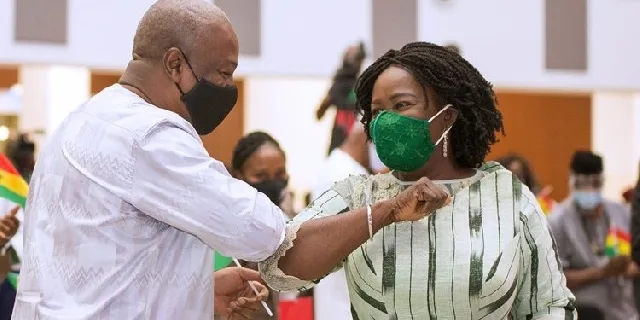
    Former President John Dramani Mahama has reportedly chosen Professor Naana Jane Opoku-Agyemang as his running mate for the 2024 presidential election, according to Asaase Radio.

    Professor Naana Jane Opoku-Agyemang, who previously served as the Minister of Education during Mahama’s presidency from 2013 to 2017, was also his running mate in the 2020 general election, which the NDC lost.

    This decision, if true, signals the NDC’s commitment to maintaining a vice presidential candidate from the Central Region, continuing a trend that started in 2012.

    This marks the second time in the history of the NDC that a running mate has been chosen consecutively. The NDC, since the beginning of the Fourth Republic, has traditionally had different running mates for each election.

    John Mahama, in 2012, ran with Paa Kwesi Amissah-Arthur and won, while in 2016, the same pair lost the election. In 2020, following Amissah-Arthur’s death, Mahama selected Professor Naana Jane Opoku-Agyemang, resulting in another electoral defeat.

    The NDC, according to Asaase, initially considered potential candidates from three regions—Ashanti, Central, and Eastern. However, the nod ultimately went to Naana Jane Opoku-Agyemang from the Central Region.

    Among the notable figures considered were Julius Debrah, a former chief of staff from the Eastern Region, and Kwame Awuah-Darko, a politician and entrepreneur from the Ashanti Region.

    While there are differing opinions within the NDC about the political impact of retaining Professor Naana Jane Opoku-Agyemang as the running mate, the decision reflects a strategic choice in the party’s pursuit of the December 2024 general election victory.

  • VIDEO: Former Sunyani Technical University SRC prez ‘exposes’ sex hungry lecturer

    VIDEO: Former Sunyani Technical University SRC prez ‘exposes’ sex hungry lecturer

    A former Student Representative Council (SRC) president of Sunyani Technical University (STU) has come forward with disturbing allegations against an unnamed lecturer, accusing him of sexually abusing and harassing female students.

    The former SRC president, now a doctor in the British army, revealed these shocking revelations in a viral video on social media. The accusations include claims that the lecturer preyed on vulnerable female students, coercing them into sexual relationships.

    “If you ever attended STU please come close and let’s talk about something. If you are still a student of Sunyani Polytechnic, come and let’s have a conversation. Not just them, but anyone else who has been able to have a tertiary education, please come close and let’s have a conversation.

    There was a lecturer in the school who disrespected women. Not only women but also men. But he mostly demeaned the vulnerable ladies. When he proposes love to you, and you reject him, he will fail you. He sleeps with the students, forces himself on them, and has sex with them,” he said.

    While refraining from disclosing the lecturer’s identity, the former SRC president provided hints about his department and history within the institution.

    “There was a time when this lecturer became a dean. He was in the marketing department.  And that lecturer, I know you are listening to me now. You are watching me,” he noted.

    Additionally, he alleged that the lecturer sent explicit content, made uninvited nighttime visits to female students’ hostels, and exhibited violent and abusive behaviour towards male students, especially during exams.

    “Some of our sisters are suffering and this particular lecturer I am talking about, he was the worst of all. If you are a woman, and he professes love to you, and you reject him, he will disgrace you. He used to send nudes to students. He goes after female students by visiting them late in the night at their hostels. Paying unannounced visits.”

    According to the former SRC president, the lecturer boasted about possessing charms and amulets, which he allegedly used to intimidate and manipulate both students and staff. He highlighted an incident involving an alleged rape during a school excursion, asserting that the lecturer’s purported use of charms contributed to a lack of accountability in that case.

    “This same lecturer, there was a time in school when a group went for an excursion and there was an alleged rape case and nobody could say anything about it. Nothing came out of it because the lecturer has amulets around his wrists and waist, and he keeps claiming he has charms, he has charms. Many would be saying as for this person, he deals with charms and so if you cross him, he will cast a spell on you. He fights with men on campus. He fails some and even has the guts to publicly tell them during exams, that “you, I will fail you, animal, fool!” he claimed.

    Despite the serious nature of the allegations, the former SRC president challenged the lecturer to refute the claims, promising to provide video, pictures, and voice evidence to substantiate his accusations. He further dared any other lecturer or institution in Ghana to dispute the allegations, emphasizing his readiness to expose more misconduct.

    Expressing concern for the affected students, the former SRC president called on authorities, including the board of governors, the vice chancellor, the Ministry of Education, and the police, to investigate the matter thoroughly and take appropriate action against the accused lecturer.

    “I dare you to come out and challenge me and I dare any lecturer all over Sunyani Polytechnic now Sunyani Technical University, to come out and dare me. Like you will see, video pictures and voice evidence. This is against the ethics of a lecturer. He is currently still at the school as I speak. I dare you, come out and chase me now, and you will see video evidence. All the way from 2012. Then you will know that yes, we still keep records. Ghanaian women are suffering. Akufo-Addo, Ministry of Education, IGP, investigate into these matters, some ladies are suffering,” he mentioned.

    Acknowledging the negative publicity generated, the former SRC president apologized to his alma mater, commending the current vice-chancellor, Professor Ing. Kwadwo Adinkrah-Appiah, for transforming the school and restoring its image.

    “Sunyani Ploy, today this video I am recording is not meant to disgrace you. Prof. Ing. Adinkrah-Appiah, you have done great work. You have elevated the school to a great level because there was a time when the school was sinking. But today, the school has regained its strength. God bless you and make you great. May all your workers continue to help you so that you can continue the good work that you are doing.”

    He concluded by speaking on behalf of the victims, urging authorities to address the trauma and injustice experienced by those affected by the lecturer’s alleged misconduct.

    “The reason I am so eagerly speaking is because 5 female students have contacted me telling that “Doc, because of what this man did to us, we have no interest in men and so now we are lesbians.” two of them are telling me that “Doc because of what this man did, we have never had a stable relationship”.  We commit that lecturer into God’s hands and the gods of our land,” he noted.

  • Many of my colleagues are now lesbians because of this man! – Ex-SRC prez ‘exposes’ STU lecturer

    Many of my colleagues are now lesbians because of this man! – Ex-SRC prez ‘exposes’ STU lecturer

    A former Student Representative Council (SRC) president of Sunyani Technical University (STU) has come forward with disturbing allegations against an unnamed lecturer, accusing him of sexually abusing and harassing female students.

    The former SRC president, now a doctor in the British army, revealed these shocking revelations in a viral video on social media. The accusations include claims that the lecturer preyed on vulnerable female students, coercing them into sexual relationships.

    “If you ever attended STU please come close and let’s talk about something. If you are still a student of Sunyani Polytechnic, come and let’s have a conversation. Not just them, but anyone else who has been able to have a tertiary education, please come close and let’s have a conversation.

    There was a lecturer in the school who disrespected women. Not only women but also men. But he mostly demeaned the vulnerable ladies. When he proposes love to you, and you reject him, he will fail you. He sleeps with the students, forces himself on them, and has sex with them,” he said.

    While refraining from disclosing the lecturer’s identity, the former SRC president provided hints about his department and history within the institution.

    “There was a time when this lecturer became a dean. He was in the marketing department.  And that lecturer, I know you are listening to me now. You are watching me,” he noted.

    Additionally, he alleged that the lecturer sent explicit content, made uninvited nighttime visits to female students’ hostels, and exhibited violent and abusive behaviour towards male students, especially during exams.

    “Some of our sisters are suffering and this particular lecturer I am talking about, he was the worst of all. If you are a woman, and he professes love to you, and you reject him, he will disgrace you. He used to send nudes to students. He goes after female students by visiting them late in the night at their hostels. Paying unannounced visits.”

    According to the former SRC president, the lecturer boasted about possessing charms and amulets, which he allegedly used to intimidate and manipulate both students and staff. He highlighted an incident involving an alleged rape during a school excursion, asserting that the lecturer’s purported use of charms contributed to a lack of accountability in that case.

    “This same lecturer, there was a time in school when a group went for an excursion and there was an alleged rape case and nobody could say anything about it. Nothing came out of it because the lecturer has amulets around his wrists and waist, and he keeps claiming he has charms, he has charms. Many would be saying as for this person, he deals with charms and so if you cross him, he will cast a spell on you. He fights with men on campus. He fails some and even has the guts to publicly tell them during exams, that “you, I will fail you, animal, fool!” he claimed.

    Despite the serious nature of the allegations, the former SRC president challenged the lecturer to refute the claims, promising to provide video, pictures, and voice evidence to substantiate his accusations. He further dared any other lecturer or institution in Ghana to dispute the allegations, emphasizing his readiness to expose more misconduct.

    Expressing concern for the affected students, the former SRC president called on authorities, including the board of governors, the vice chancellor, the Ministry of Education, and the police, to investigate the matter thoroughly and take appropriate action against the accused lecturer.

    “I dare you to come out and challenge me and I dare any lecturer all over Sunyani Polytechnic now Sunyani Technical University, to come out and dare me. Like you will see, video pictures and voice evidence. This is against the ethics of a lecturer. He is currently still at the school as I speak. I dare you, come out and chase me now, and you will see video evidence. All the way from 2012. Then you will know that yes, we still keep records. Ghanaian women are suffering. Akufo-Addo, Ministry of Education, IGP, investigate into these matters, some ladies are suffering,” he mentioned.

    Acknowledging the negative publicity generated, the former SRC president apologized to his alma mater, commending the current vice-chancellor, Professor Ing. Kwadwo Adinkrah-Appiah, for transforming the school and restoring its image.

    “Sunyani Ploy, today this video I am recording is not meant to disgrace you. Prof. Ing. Adinkrah-Appiah, you have done great work. You have elevated the school to a great level because there was a time when the school was sinking. But today, the school has regained its strength. God bless you and make you great. May all your workers continue to help you so that you can continue the good work that you are doing.”

    He concluded by speaking on behalf of the victims, urging authorities to address the trauma and injustice experienced by those affected by the lecturer’s alleged misconduct.

    “The reason I am so eagerly speaking is because 5 female students have contacted me telling that “Doc, because of what this man did to us, we have no interest in men and so now we are lesbians.” two of them are telling me that “Doc because of what this man did, we have never had a stable relationship”.  We commit that lecturer into God’s hands and the gods of our land,” he noted.
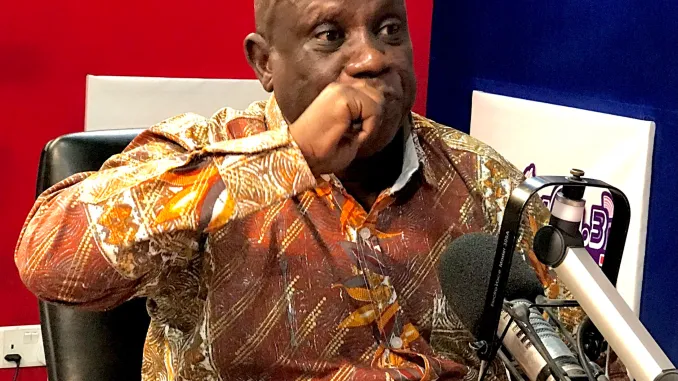
  • “I am the spare driver” – Old video of Mahama pops up following Bawumia’s ‘driver’s mate’ statement

    “I am the spare driver” – Old video of Mahama pops up following Bawumia’s ‘driver’s mate’ statement

    An old video featuring former President John Dramani Mahama describing himself as a “spare driver” has resurfaced, adding fuel to the ongoing debate sparked by Vice President Mahamudu Bawumia’s analogy of being a “driver’s mate” in the Nana Addo Dankwa Akufo-Addo government.

    Bawumia, in a recent statement on his plans for Ghana as a presidential candidate, likened his role as vice president to that of a driver’s mate but emphasized that if elected President in 2024, he would be in the driver’s seat with constitutionally mandated authority.

    “As Vice-President, I am like a driver’s mate. But if, by the Grace of God, you make me President, I will be in the driver’s seat with constitutionally mandated authority to pursue my vision and my priorities. Clearly, the initial conditions that we inherited in 2017 are not the same as will be in 2025. Therefore, my priorities will be different. We have done many good things, and I will be seeking to build on them,” Dr. Bawumia noted.

    The emergence of the old video has intensified the debate, with both Mahama and Bawumia being presidential candidates for the 2024 elections. Critics argue that Bawumia’s analogy was an attempt to distance himself from the failures of the current government, while Mahama’s supporters contend that Mahama took responsibility for his role in the Mills-led government.

    In the 2012 video taken during a presidential debate organised by the Institute of Economic Affairs (IEA), Mahama, who succeeded late President John Atta Mills, urged Ghanaians to vote him as president for his second and final term, portraying himself as the “spare driver” completing Mills’ unexpired term.

    “The NDC government has done a lot in four years. Our constitution gives our president two terms, take it that I am the spare driver, caretaker or whatever; Prof. Mills of blessed memory started the process, and I am finishing his unexpired term. I believe that the NDC government deserves a second term to be able to build on the foundation it has laid in these four years, and I am certain that Ghanaians would vote for me and turn me from the spare driver that I’ve been described as, into the actual driver of the bus leading us into the destination that we want to go to,” he stated.

    The contrasting descriptions have sparked a heated online debate, with supporters of both sides arguing over the perceived differences between a spare driver and a driver’s mate. Pro-Mahama supporters claim a clear distinction, while pro-Bawumia advocates accuse NDC members of hypocrisy and undue criticism.

  • Ghanaians troll Nigeria after AFCON loss: No Light, no Grammys, no AFCON trophy, no president

    Ghanaians troll Nigeria after AFCON loss: No Light, no Grammys, no AFCON trophy, no president

    In the aftermath of Nigeria’s defeat to Ivory Coast in the 2023 African Cup of Nations (AFCON) final, Ghanaians seized the opportunity for payback in the ongoing social media banter.

    The Super Eagles, despite reaching the finals, were defeated 2-1 by the host nation, and Ghanaians wasted no time in taunting their Nigerian counterparts for their recent misfortunes.

    Ghanaian social media users, including notable figures, flooded their pages with jabs aimed at Nigeria. The trolling encompassed various aspects, from mocking the well-known power blackout issues in Nigeria to referencing Nigeria’s loss to South Africa at the recent Grammys.

    Some even directed their taunts at the Nigerian political establishment.

    The Super Eagles, aiming for their fourth AFCON trophy, fell short in the final, allowing Ivory Coast to secure their third title. This victory places Ivory Coast on par with Nigeria on the top winners’ chart, led by Egypt.

    For Ghanaians, this trolling session served as a form of retaliation after enduring weeks of mockery for their national team’s disappointing performance in the tournament.

    Ghana exited the 2023 AFCON in the group stages, managing only a single point from three group matches.

    The 2023 AFCON, held in Ivory Coast from January 10 to February 11, witnessed the host nation not only organizing the event but also emerging as the tournament’s champions.

    Ivory Coast now joins the list of countries that have hosted and won the AFCON, following the footsteps of Egypt, Ghana, Nigeria, Algeria, and Tunisia.

  • Chef Smith has now cooked for over 260 hours, beats Chef Faila’s record of 227 hours

    Chef Smith has now cooked for over 260 hours, beats Chef Faila’s record of 227 hours

    A Ghanaian chef, known as Chef Smith, is on the verge of breaking the Guinness World Record for the longest cooking marathon by an individual. He has already cooked for over 260 hours, surpassing the previous record of 227 hours, held by another Ghanaian chef, Faila Abdul-Razak.

    Chef Smith, whose real name is Kwame Smith, started his cook-a-thon on February 1, 2024, at the Amadia Shopping Centre in Accra, and plans to finish on March 6, 2024. He aims to cook for a total of 360 hours, or 15 days, to set a new record.

    He has been preparing various dishes from different regions and countries and has received support and donations from the public, celebrities, and politicians. He has also been broadcasting his cook-a-thon live on his Twitter account and YouTube channel.

    Chef Smith says he is not doing his cook-a-thon to undermine Chef Faila, but rather to challenge himself and showcase his talent and love for cooking. He also says he applied for the Guinness World Records approval in September 2020, and that his cook-a-thon is not a sudden or spontaneous attempt.

    “It’s very unfortunate how people like to jump to conclusions and in my case, for instance, I’m not enjoying the public support because Ghanaians think that my cook-a-thon attempt is just to undermine Faila’s record.

    “That is far from it, what I’m doing is not to rival Faila or anyone at all. It is an ambition that I started pursuing last year after getting the inspiration from Nigeria’s Hilda Baci who did hers in May. I applied in July but was turned down.

    “God being so good, I was given the green light in September last year and it’s just a coincidence that the time I’m ready is coming right after that of another Ghanaian,” he told Graphic Showbiz in an interview on Tuesday, February 6.

    Chef Smith is a product of the College of Tourism and Hospitality Management of National University, Philippines, and an international executive chef.

    He says he was inspired by Nigeria’s Hilda Baci, who held the record with 93 hours in May 2020, before it was broken by Ireland’s Alan Fisher, who clocked in 119 hours and 57 minutes in June 2020.

  • “Do you still kill humans for traditional purposes?”- Watch Otumfuo’s executioner’s chilling response

    “Do you still kill humans for traditional purposes?”- Watch Otumfuo’s executioner’s chilling response

    In a Twitter-posted video capturing a pivotal moment at the Kuntunkuni Durbar, held at the Manhyia Palace on February 8, 2024, an exchange between a journalist and Otumfuo‘s executioner has left many intrigued.

    The durbar was organized to commemorate the 150th anniversary of the Sagrenti War of 1874.

    Interviewer: Do you executioners, still kill humans for traditional purposes?

    Otumfuo’s Executioner: That’s a mystery; I can’t reveal my secrets to you. But when the time is right, you’ll find out how it all unfolds.

    The journalist’s inquiry, though direct, received a cryptic response from Otumfuo‘s executioner, shrouding the traditional practices in an air of mystery.

    The chilling nature of the exchange has sparked curiosity and discussions, prompting contemplation on the enigmatic rituals that may still persist in certain traditional contexts. As the video circulated on social media, viewers were left pondering the executioner’s words.

    Watch the video below

  • US investor who wants Ghana re-colonized linked to Ursula Owusu

    US investor who wants Ghana re-colonized linked to Ursula Owusu

    Recent revelations have surfaced linking a US investor, Erik Prince, who has advocated for the colonization of Africa, to Ian Hannam, a British deal-maker with ties to Ghana’s Ministry of Communications.

    The connection was established by a news article that Vice President of Imani Africa, Bright Simmons, shared on his Twitter page.

    Titled “Ex-JPMorgan Banker Invited Erik Prince on Secret Venezuela Trip”, the report stated that Hannam, a former JPMorgan banker, had once orchestrated a trip that Erik Prince took to Venezuela, as part of the former’s exploration for potential gold investments.

    However, with Prince openly expressing views on the colonization of Africa and Latin America, concerns have been raised about his association with Hannam, who has also recently signed a deal with Ghana through the Ministry of Communications, headed by Ursula Owusu.

    According to a February 10, 2024 article by The Intercept titled “Erik Prince Calls for U.S. to Colonize Africa and Latin America”, Mr Prince is reported to have said, “If so many of these countries around the world are incapable of governing themselves, it’s time for us to just put the imperial hat back on, to say, we’re going to govern those countries, … ’cause enough is enough, we’re done being invaded. …You can say that about pretty much all of Africa, they’re incapable of governing themselves,” during an episode of his Off Leash” podcast. If you go to these countries, and you see how they suffer under absolutely corrupt governments that are just criminal syndicates, a lot of them deserve better.

    Hannam’s deal with Ghana involves a joint venture between state-owned AT (formerly AirtelTigo) and Hannam Investments, aiming to transform the Ghanaian telecom operator. Hannam, known for his tough dealmaking style and past involvement in geopolitical strategies, has reportedly invested $150 million in the venture in exchange for an 85% controlling stake.

    While the Ministry of Communications has praised Hannam’s credentials, questions have been raised about the transparency of the deal. Simmons, in his article, questions the valuation of AirtelTigo and the implications for Ghanaian taxpayers. The reported valuation suggests a remarkably low value per subscriber, raising concerns about the potential cost to the Ghanaian public.

    The AirtelTigo deal, shrouded in limited public disclosure, has sparked criticism for the absence of a competitive bidding process. Simmons points out the apparent favouring of Hannam’s offer over others, raising suspicions about the potential outcomes for Ghanaian taxpayers and the overall fairness of the deal.

    As the controversy unfolds, calls for additional scrutiny have been made. The involvement of an overseas investor like Hannam Investments according to Bright Simmons requires the need for Parliamentary ratification. If Parliament opts for stringent oversight, Hannam may face challenges navigating inquiries into the details of the deal, potentially unveiling more about this deal in other countries and affiliations.


    Read more from Bright Simmons at brightsimons.com

  • PHOTOS: A list of the 7 artefacts returned to the Asante Kingdom 

    PHOTOS: A list of the 7 artefacts returned to the Asante Kingdom 

    The Fowler Museum in Los Angeles on the occasion of the 150th anniversary of the Sagrenti War has permanently returned seven significant artefacts, once belonging to the Asante kingdom.

    Recognizing the historical importance of this repatriation, TIGpost has undertaken the responsibility to provide a detailed account of each of these revered items.

    The items, looted during the 19th century from British-colonized Ghana, found a home at the Fowler Museum at the University of California, Los Angeles, in the 1960s, until their return on Thursday 8th February 2024.

    Among the repatriated artefacts are an elephant tail whisk, an ornamental chair crafted from wood, leather, and iron, gold stool ornaments, a gold necklace, and bracelets.

    View below images of the returned artefacts:

    1. Royal Stool Ornaments (2):

    Among the repatriated treasures are two royal stool ornaments, intricately crafted and symbolizing the regality and authority of the Asante ruler. These pieces hold historical significance, having been part of the Asante kingdom’s heritage before being looted during the Sagrenti War.

    2. Royal Necklace:

    A royal necklace, adorned with cultural motifs, is one of the returned artefacts. Such necklaces were traditionally worn by royalty and symbolized not only wealth but also the esteemed position of the wearer within the Asante society.

    3. Bead Bracelet or Anklet with Gold Disk:

    This intricately designed bracelet or anklet, featuring a gold disk, showcases the craftsmanship and attention to detail characteristic of Asante art. Such adornments were often worn for ceremonial and symbolic purposes.

    4. Bracelet or Anklet:

    Another piece among the returned artefacts is a bracelet or anklet, embodying the cultural richness and aesthetic preferences of the Asante people. These items were not merely accessories but held deep cultural significance.

    5. Elaborate Elephant Tail Whisk:

    The collection includes an elaborate elephant tail whisk, a ceremonial item used in traditional Asante rituals. Such whisks were emblematic of authority.

    6. Ornamental Carved Chair:

    An ornamental chair, intricately carved and studded with brass and iron embellishments, is part of the repatriated artefacts. This chair is a testament to the skilful craftsmanship that made Asante art renowned worldwide.

    As Independent Ghana, we celebrate the return of these artefacts, recognizing the importance of preserving and showcasing the rich cultural heritage of the Asante kingdom. The homecoming of these treasures marks not only a restoration of historical items but also a reaffirmation of cultural identity and pride.

  • Fowler Museum permanently hands over 7 pieces of Asante artefacts to Asantehene “with great emotion”

    Fowler Museum permanently hands over 7 pieces of Asante artefacts to Asantehene “with great emotion”

    During the Kuntunkuni Durbar on February 8, 2024, the Fowler Museum officially returned seven historical artworks to Asantehene Otumfuo Osei Tutu II. 

    The artefacts, including a royal stool once belonging to Asantehene Kofi Karikari, were part of treasures looted from the Palace during the Sagrenti War of 1876 and the indemnity forced upon the Asante by the British at the end of the conflict.

    Dr. Silvia Forni, the Director of Fowler Museum, expressed deep emotion during the presentation, stating, “It is with great emotion that I stand here today to present to Your Majesty seven historical artworks.” 

    She highlighted the troubled history of these pieces, acknowledging their witness to tragic moments in the Asante Kingdom’s history. Dr. Forni praised the craftsmanship, artistry, and the long tradition that made Asante art famous worldwide.

    “These works are now here and forever returned to the Asante people. These pieces have had a long and troubled history. They are witnesses to tragic moments in the history of the Asante Kingdom. They are also a Testament of the long tradition of beauty Artistry and craftsmanship that have made Asante art famous throughout the world,” Dr Forni said.

    In a symbolic gesture, the Fowler Museum relinquished its display of these artefacts, signifying the end of showcasing stolen treasures. Dr. Forni expressed gratitude for the opportunity to present the items to Otumfuo, emphasizing the hope that this return marks the beginning of a new relationship. 

    “We are delighted to see them come back to the people of the Palace and the descendants of the rightful owners. As we return these objects today, it is our hope that this will not be the end of this story but the beginning of a new relationship. Museums love to shine light on beauty and at the Fowler Museum we will no longer have these wonderful pieces on display. We are honored by your offer to have replicas made for us so that we will however have the opportunity to tell our visitors a better story in our gallery. One that does not glorify the violent history of the past but foregrounds respect and highlights the Contemporary importance and vitality of Asante culture,” she noted.
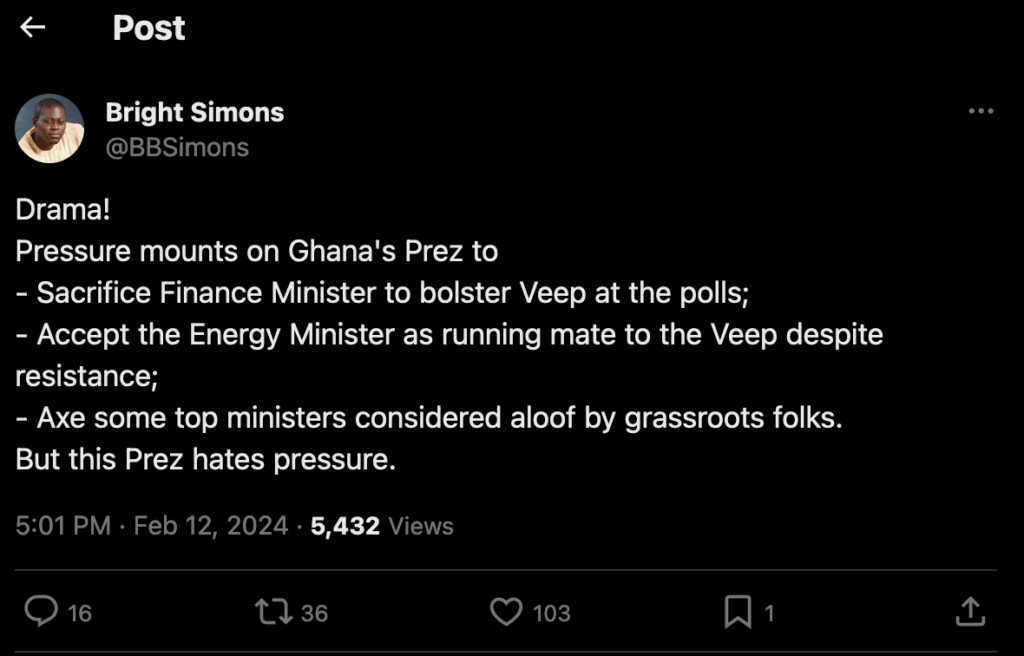
    She acknowledged the significance of the 150th commemoration of the Sagrenti War and pledged collaboration with the Palace Museum in the years to come. “My colleagues and I are grateful to Your Majesty for allowing us to present this work to you on this 150th commemoration of the Sagrenti War and look forward to collaborating with the Palace Museum in the years to come, thank you.”

    The artefacts were formally presented by Fowler Museum leadership, including Dr. Erica Jones, the Senior Curator of African Arts and Manager of Curatorial Affairs, and Dr Richel Raynor, Director of Registration and Collections Management. 

    Otumfuo Osei Tutu II received the items during the Kuntunkuni Durbar, symbolizing the return of these historical treasures to their rightful owners and marking a significant moment in the history of Asanteman.

  • Aburi Girls had the guts to offer me a coffin and an ambulance! – Deceased student’s father

    Aburi Girls had the guts to offer me a coffin and an ambulance! – Deceased student’s father

    The family of 16-year-old Stacy Okyere, who tragically passed away at Aburi Girls Senior High School, is demanding an independent investigation into the circumstances surrounding her death.

    Mr. Kingsley Okyere, Stacy’s father, expressed shock and anger at the school’s response to the situation, revealing that they offered to provide a coffin and an ambulance after his daughter’s demise.

    Stacy, a Form 1 student who had been at the school for just a month, died on February 4, prompting her family to question the school’s actions leading up to her death.

    Despite denials from a high-ranking source at Aburi Girls Senior High School stating that Stacy did not die on the school premises, Mr. Okyere insists that the school’s inaction contributed to his daughter’s death.

    “The school has killed my child, and when the issue happened, they had the guts to sit me down and tell me they will buy the coffin and provide an ambulance. If I didn’t have money, would I have brought my child to school in the first place?” Mr. Okyere expressed his dismay at the school’s response.

    He received a call from his daughter’s housemistress at 8 pm on Sunday, February 4, instructing him to pick up Stacy due to illness. Despite feeling, it was too late, Mr. Okyere rushed to the school in 34 minutes from Ablekuma, facing police intervention as they recognized it as an emergency.

    Upon arrival, he found Stacy lying unconscious on the floor, surrounded by her classmates. The housemistress, however, was seated in another room.

    Distraught, Mr. Okyere hurriedly transported Stacy to the Tetteh Quarshie Memorial Hospital in Mampong, but she was confirmed dead on arrival.

    The grief-stricken father questioned why the school didn’t prioritize taking his daughter to the hospital and expressed frustration about the school’s health insurance, which seemingly did not facilitate prompt medical attention.

    The family’s call for an independent investigation aims to uncover the truth behind Stacy Okyere’s untimely death at Aburi Girls Senior High School.

  • “Know that power is transient, your time will end soon” – Otumfuo’s advice to politicians

    “Know that power is transient, your time will end soon” – Otumfuo’s advice to politicians

    The Asantehene, Otumfuo Osei Tutu II, delivered a strong message to politicians at the Kuntunkuni Durbar, held at the Manhyia Palace on February 8, 2024. The durbar was part of the events commemorating the 150th anniversary of the Sagrenti War fought between the Asantes and the British colonial forces in 1874.

    The Asantehene advised politicians to rule with love rather than power, as power is transient and will soon end. He stated, “Politicians must know that power is transient. Use love to rule. If you rely on your power, remember that your time will end soon.”

    Emphasizing the importance of Asante to Ghana’s stability and development, he warned against cheating or undermining Asanteman, stating, “All political parties must know that without Asante, Ghana cannot stand. We are not above anyone; we are equals, but I won’t allow anyone to cheat us.”

    Expressing displeasure at the hostility some people show towards the Asante kingdom and its people, he highlighted the historical peaceful coexistence with other ethnic groups on their land. He questioned the reciprocation of their love with hatred, saying, “We live here in love… The Zongos are on our land, we live in peace. Ewes are here, and we have Anloga here, as well as Fantes in New Town. Why is our love being reciprocated with hatred? Let’s be united. All those who plot against the kingdom must stop.”

    The Asantehene’s words at the Kuntunkuni Durbar conveyed a clear message to politicians and the public, urging them to prioritize love, unity, and respect in their dealings with Asanteman.

    The durbar also showcased the rich culture and history of Asante, along with the return of some looted Asante artefacts by British troops in 1874.

    The durbar saw attendance from thousands of people, including chiefs, queen mothers, elders, and dignitaries from various sectors and regions.

  • “So far as the Golden Stool remains, Asanteman is untouchable!” – Otumfuo declares

    “So far as the Golden Stool remains, Asanteman is untouchable!” – Otumfuo declares

    At the Kuntunkuni Durbar held at the Manhyia Palace, the Asantehene, Otumfuo Osei Tutu II, delivered a powerful message, emphasizing the invincibility of Asanteman as long as the Golden Stool remains intact.

    In a resolute declaration, he stated, “So far as the Golden Stool remains, no one can touch Asanteman. It is the soul of Asanteman, and Nananom used their blood to protect it.”

    Reflecting on the city’s history, Otumfuo recalled the destruction by colonial forces 150 years ago, underscoring the remarkable fact that the Golden Stool remained untouched.
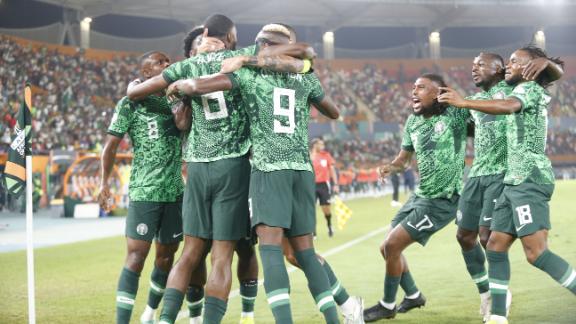
    He issued a stern warning, saying, “You will be overcome if you decide to take out Asante.”

    In a plea for unity, Otumfuo expressed dismay at the reciprocation of love with hatred, citing the harmonious coexistence of various communities, including the Zongos, Ewes, Anlogas, and Fantes, on Asanteman‘s land. He urged for solidarity, stating, “Let’s be united. All those who plot against the kingdom must stop.”
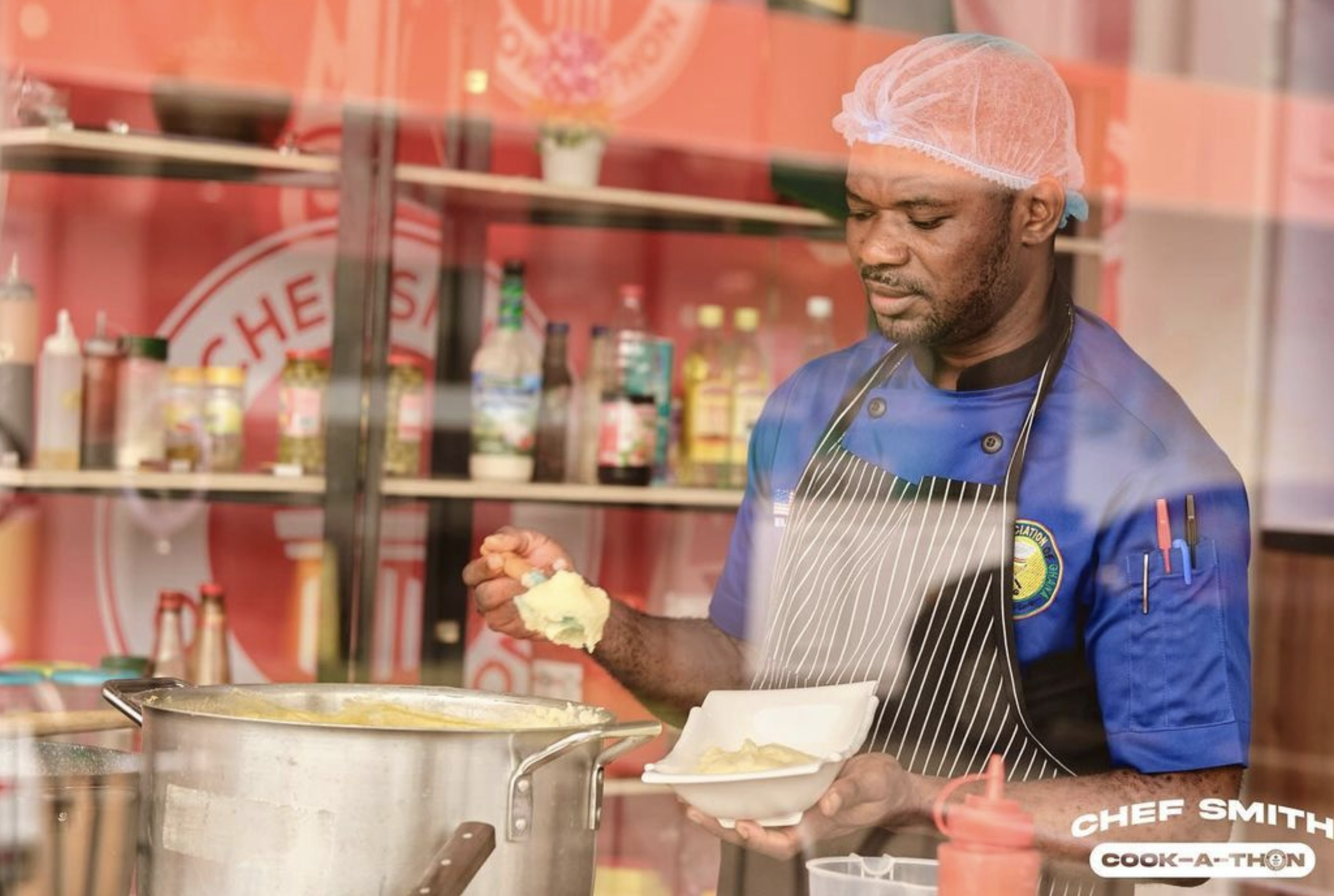
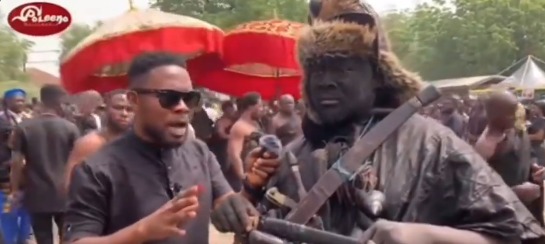
    Politicians received a specific message from Otumfuo as he reminded them of the transient nature of power. He advocated for ruling with love rather than relying solely on authority, cautioning, “If you rely on your power, remember that your time will end soon.” He highlighted the integral role of Asante in Ghana’s stability, stating, “Without Asante, Ghana cannot stand.”

    Otumfuo concluded by affirming the equality of all but expressed a firm stance against any attempts to deceive or cheat Asanteman, saying, “We are not above anyone; we are equals but I won’t allow anyone to cheat us.”

    The durbar was attended by thousands of people, including chiefs, queen mothers, elders, and dignitaries from various sectors and regions.

    The durbar was characterized by the rich display of Asante culture, such as music, dance, and regalia. The Asantehene and his retinue of chiefs wore the traditional mourning cloth, Kuntunkuni, to signify the solemn nature of the event. The durbar also witnessed the return of some of the Asante artefacts that were looted by the British troops, which were handed over to the Asantehene by the Fowler Museum of the University of California in Los Angeles.  

  • “Zongos, Ewes, Anlogas, Fantes, are on our land, why the hatred?” – Otumfuo asks

    “Zongos, Ewes, Anlogas, Fantes, are on our land, why the hatred?” – Otumfuo asks

    The Asantehene, Otumfuo Osei Tutu II, has expressed his displeasure at the hatred and hostility that some people have towards the Asante kingdom and its people. He said that Asantes have always lived in peace and harmony with other ethnic groups on their land, and wondered why their love was being met with hatred.

    “We live here in love… The Zongos are on our land, we live in peace. Ewes are here, and we have Anloga here, as well as Fantes in New Town. Why is our love being reciprocated with hatred? Let’s be united. Asante is alive,” he said.

    The Asantehene was speaking at the Kuntunkuni Durbar at the Manhyia Palace on February 8, 2024. The durbar was part of the events to commemorate the 150th anniversary of the Sagrenti War, which was fought between the Asantes and the British colonial forces in 1874.

    The Sagrenti War resulted in the destruction of Kumasi, the capital of the Asante kingdom, and the looting of many Asante artefacts by the British troops. However, the Golden Stool, the sacred and symbolic throne of the Asante kings, was never captured by the invaders.

    The Asantehene said that the Golden Stool was the soul of Asanteman and that the ancestors had shed their blood to protect it. He warned that anyone who attempted to take out Asante would be overcome by the power of the Golden Stool.

    “150 years ago, the whites destroyed this city, but the Golden Stool remained untouched. So far as the Golden Stool remains, no one can touch Asanteman. It is the soul of Asanteman, and Nananom used their blood to protect it. You will be overcome if you decide to take out Asante. All those who plot against the kingdom must stop,” he said.

    The Asantehene also advised politicians to rule with love and not with power, as power was transient and would soon end. He said that all political parties should recognise the importance of Asante to the stability and development of Ghana. He said: “Politicians must know that power is transient. Use love to rule. If you rely on your power, remember that your time will end soon. All political parties must know that without Asante Ghana cannot stand. We are not above anyone; we are equals but I won’t allow anyone to cheat us.”

    The durbar was attended by thousands of people, including chiefs, queen mothers, elders, and dignitaries from various sectors and regions.

    The durbar was characterised by the rich display of Asante culture, such as music, dance, and regalia. The Asantehene and his retinue of chiefs wore the traditional mourning cloth, Kuntunkuni, to signify the solemn nature of the event. The durbar also witnessed the return of some of the Asante artefacts that were looted by the British troops, which were handed over to the Asantehene by the Fowler Museum of the University of California in Los Angeles.

  • Otumfuo to replace looted Ashanti artefacts with replicas in UK museum

    Otumfuo to replace looted Ashanti artefacts with replicas in UK museum

    Asanteman, led by Otumfuo Osei Tutu II, the 16th Asantehene, has announced a plan to create replicas of the royal Ashanti artefacts that were stolen by the British in the 19th century.

    The plan comes after the Fowler Museum of the United Kingdom returned seven of the original artefacts to Asanteman on February 8, 2024, marking the 150th anniversary of the Sagrenti War.

    The Fowler Museum, which had displayed the looted artefacts for decades, will not leave the gallery empty, but will instead exhibit the replicas made by Asanteman. The replicas will reflect the beauty, artistry, and craftsmanship of the Ashanti culture, as well as the respect and reconciliation between the two parties.

    The Director of the Fowler Museum, Dr Silvia Forni, expressed gratitude for the offer to make replicas. She said, “We are honoured by your offer to make replicas for us so that we will forever have the opportunity to tell our visitors a better story in our gallery, one that does not glorify the violent history of the past but is formed around respect and highlights the contemporary importance and vitality of Asante culture.

    Dr Forni also acknowledged the recent research conducted by Dr Erica Jones, the Senior Curator of African Arts and Manager of Curatorial Affairs, on the artefacts, which led to the decision to return them.

    She said, “It is with great emotion that I stand here today to present to Your Majesty seven historical artworks, some of which were looted from the Palace in 1876 and others that were part of the indemnity the Asantes were forced to pay to the British at the end of the Sagrenti War.

    She praised the craftsmanship of Asanteman and emphasized the history that the artefacts have witnessed. She said, “These pieces have had a long and troubled history. They are witnesses to tragic moments in the history of the Asante Kingdom. They are also a testament to the long tradition of the beauty, artistry, and craftsmanship that have made Asante art famous throughout the world.

    The ceremony, which was held at the Kuntunkuni Durbar in Kumasi, was attended by key figures such as Dr Richel Raynor, Director of Registration and Collections Management at the Fowler Museum, Ivor Agyeman-Duah, a Ghanaian historian and museum economist, and Prof Kwesi Ampene, Chair of the Department of Music at Tufts University and a Fellow of the Ghana Academy of Arts and Sciences.

    The Sagrenti War was a conflict that took place in 1874 between the British Army and the Ashanti Kingdom’s warriors. The war resulted in the death of several prominent Ashanti chiefs and Ashanti soldiers.

  • Aburi Girls waited 7 hrs to call me, I got there in 34 min from Ablekuma – Deceased student’s father

    Aburi Girls waited 7 hrs to call me, I got there in 34 min from Ablekuma – Deceased student’s father

    Father of Stacy Okyere, the deceased Aburi Girls Senior High School student, Mr Kingsley Okyere has claimed that the school notified him a staggering 7 hours after his daughter fell ill.

    Despite the delayed alert, he raced to the school from Ablekuma in just 34 minutes, highlighting the urgency and distress surrounding the tragic incident.

    Stacy Okyere, a Form 1 student, succumbed to an undisclosed illness on February 4, only a month after joining Aburi Girls SHS. Her grieving father, Kingsley Okyere, accuses the school of negligence, asserting, “The school has killed my child.”

    Mr. Okyere received a distressing call from his daughter’s housemistress at 8 pm on that fateful Sunday. Despite expressing his frustration at the delayed notice, he rushed to the school, covering the distance in record time. Recounting the ordeal, he states, “I used 34 minutes from Ablekuma to Aburi Girls. I was driving at top speed and was even stopped by the police, who later understood it was an emergency.”

    Upon arrival, the distraught father found Stacy lying unconscious on the floor, surrounded by her peers. His wife’s anguish filled the room as they discovered the dire state of their daughter. Mr. Okyere promptly took matters into his own hands, rushing Stacy to the Tetteh Quarshie Memorial Hospital in Mampong.

    “I carried my daughter from the floor and rushed to the car. My friend drove us to Tetteh Quarshie Memorial Hospital at Mampong, and while we were in the car, I kept blowing air through my daughter’s mouth to try and keep her alive,” he narrates.

    Despite the frantic efforts, Stacy was pronounced dead-on-arrival at the hospital. Staff at Mampong confirmed her demise, adding another layer of sorrow to the grief-stricken family.

    Mr. Okyere vehemently asserts that his daughter had no pre-existing health conditions, challenging the school’s version of events. He questions why the institution failed to promptly transfer Stacy to the hospital and criticizes the lack of urgency in seeking medical attention for his ailing child.

    Efforts to obtain the school’s perspective were futile, as the Headmistress remained unavailable for comment. The Assistant Headmaster redirected inquiries to the Headmistress, who did not grant an interview, leaving unanswered questions about the school’s response and healthcare protocols.

    The tragic incident has prompted concerns about health and safety facilities in schools, with education advocates emphasizing the need for robust health protocols and facilities to safeguard students’ well-being.

    As the family demands an independent investigation into Stacy’s death, the Aburi Girls SHS community is grappling with the aftermath of a student’s untimely demise and the broader questions it raises about the healthcare infrastructure within educational institutions.

  • “My daughter had no health issue!” – Father of deceased Aburi Girls SHS student ‘cries out’

    “My daughter had no health issue!” – Father of deceased Aburi Girls SHS student ‘cries out’

    The family of 16-year-old Stacy Okyere, a Form 1 student at Aburi Girls Senior High School, is demanding an independent investigation into the circumstances surrounding her sudden death on February 4.

    Stacy’s father, Kingsley Okyere, emphatically states, “My daughter has no health issue,” as he accuses the school of negligence and demands answers regarding the delayed response that may have contributed to her untimely demise.

    Stacy, who had only been at the school for a month, fell ill around noon, according to her father, but the family was only informed at 8 pm to come and take her to the hospital.

    Mr. Okyere expressed frustration at the school’s handling of the situation, stating that immediate measures should have been taken to ensure his daughter’s well-being.

    Upon reaching the school, Mr. Okyere discovered his unconscious daughter lying on the floor, surrounded by her peers. Despite his frantic efforts to rush her to the Tetteh Quarshie Memorial Hospital in Mampong, Stacy was pronounced dead on arrival. The devastated father asserts that the school’s delayed response contributed to his daughter’s untimely death.

    “You can even make enquiries at her former school; they will tell you that she rarely gets sick,” Mr. Okyere emphasized. He accuses the school of negligence and questions the purpose of the health insurance they provided when enrolling Stacy.

    Education watchdog, Africa Education Watch’s Executive Director, Kofi Asare, sees this incident as indicative of widespread deficiencies in health and safety facilities in schools. He points out the absence of resident nurses in many schools and the lack of clear guidelines on managing health issues from the Ghana Education Service (GES).

    While the school’s version of events is yet to be obtained, it has been revealed that parents at Aburi Girls have previously raised concerns about healthcare. Limited resources in the school clinic and a shortage of medication have forced the institution to refer most cases to the hospital, according to parents. The need for additional nurses has been a recurring issue.

    As the family mourns the loss of their daughter, the call for an independent investigation intensifies, shedding light on potential flaws in the school’s health and safety protocols.

    Mr Okyere’s added, “The school has killed my child, and when the issue happened, they had the guts to sit me down and tell me they will buy the coffin and provide an ambulance. If I didn’t have money, would I have brought my child to school in the first place?”

  • IMF ‘warns’ Ghana to stick to bailout programme

    IMF ‘warns’ Ghana to stick to bailout programme

    The International Monetary Fund (IMF) has underscored the significance of Ghana’s unwavering dedication to its bailout program to fully reap its benefits.

    The institution has stressed the need for the effective implementation of structural reforms, especially after disbursing the $600 million second tranche to the government.

    However, Ghana faces the challenge of reconciling anticipated revenue shortfalls due to the planned suspension of the VAT on electricity, following strong opposition from the Trades Union Congress (TUC).

    Despite this, the IMF’s Director of the African Department, Abebe Selassie, emphasized the crucial nature of adhering strictly to the agreed-upon austerity measures to navigate the economic crisis.

    Speaking in a webinar on February 5 from Washington, DC, Mr Selassie highlighted the importance of Ghana continuing to implement the program as envisioned.

    He stated, “These programs are designed to be implemented over three or four years, and it is important that Ghana sticks to the course and sees the program being implemented over the next three years.”

    Despite the challenges, Mr Selassie acknowledged Ghanas positive performance within the program, with reforms yielding results and signs of economic stabilization becoming evident.

    He noted that Ghana’s program is being implemented effectively, and official creditors are signalling their support, including debt relief consistent with Ghana’s needs.

    In late January, the Bank of Ghana confirmed the receipt of $600 million as the second tranche intended for budget support and currency stabilization, bringing the total disbursement to $1.2 billion out of the approved $3 billion under the three-year extended credit facility granted in May 2022.

    The next review of Ghana’s IMF program is scheduled for June 2024, aiming to secure the third tranche of around $360 million. The IMF’s encouragement for Ghana to adhere to the bailout program’s guidelines underscores the country’s ongoing efforts to navigate economic challenges and implement necessary reforms.

  • Bawumia pledges to abolish controversial Taxes, sparks speculations of discord in Economic Management Team

    Bawumia pledges to abolish controversial Taxes, sparks speculations of discord in Economic Management Team

    Vice President Dr. Mahamadu Bawumia, has in a surprising turn of events, expressed reservations about some key government tax impositions, hinting at possible internal disagreements within the Economic Management Team (EMT) over various tax policies, notably the Electronic Transactions Levy (E-Levy).

    During a nationwide address, he pledged to eliminate taxes such as the E-Levy and the 15% VAT on domestic electricity consumption if elected President.

    Dr. Bawumia expressed his vision to transform Ghana into a cashless economy, emphasizing the need to encourage electronic payment channels rather than discourage them through taxes.

    He announced, “To accomplish this, there will be no taxes on digital payments under my administration. The E-Levy will, therefore, be abolished.”

    Additionally, he outlined plans to scrap the Value Added Tax on electricity consumption and the Emissions Tax through proposed tax reforms aimed at restructuring the Ghana Revenue Authority, enhancing the tax regime, broadening the tax base, and increasing tax revenue.

    Estimates indicated that a substantial portion of revenues, approximately 13% of GDP or $24 billion in 2023, remained uncollected due to individuals operating outside the tax net. Dr Bawumia asserted that implementing new policies in 2025 would provide fiscal space to eliminate certain taxes without compromising deficit targets.

    The Vice President’s stance raised eyebrows as it seemingly contradicted the government’s previous decisions, leading to speculation about internal discord within the EMT.

    Dr Bawumia, known for his earlier opposition to excessive taxation, has been vocal about shifting the economic focus from taxation to production.

    This development comes after organized labour geared up for a nationwide demonstration on February 13 to protest the 15% VAT on electricity consumption, deeming it detrimental to workers in the challenging economic environment. Subsequently, the government issued a notice to suspend the tax implementation, citing the need for consensus building on the way forward.

    The situation adds another layer of complexity to the ongoing discussions surrounding tax policies in Ghana, leaving citizens and experts curious about the dynamics within the government’s economic decision-making body.

  • Govt backs down on 15% VAT on electricity after public outcry

    Govt backs down on 15% VAT on electricity after public outcry

    Government in response to mounting pressure, has opted to defer the intended enforcement of a 15 percent Value Added Tax (VAT) on the local consumption of electricity.

    A press release from the Ministry of Finance, dated Wednesday, February 7, conveyed the directive instructing both the Electricity Company of Ghana and the Northern Electricity Distribution Company to halt the imposition of the levy.

    The statement read, “On behalf of the Government, MoF would like to inform ECG and NEDCO to suspend the implementation of the VAT directive pending further engagement with key stakeholders, including Organised Labour.”

    “The Ministry expects that these engagements will birth innovative, robust, and inclusive approaches to bridging the existing fiscal gap while bolstering economic resilience.”

    In the wake of this development, Organised Labour, which had threatened a nationwide protest against the VAT implementation, maintained its stance that only a complete withdrawal of the tax would prevent the planned demonstration scheduled for next Tuesday, February 13.

  • FULL TEXT: Bawumia’s vision for ‘Ghana’s Next Chapter’

    FULL TEXT: Bawumia’s vision for ‘Ghana’s Next Chapter’

    GHANA’S NEXT CHAPTER: SELFLESS LEADERSHIP AND BOLD SOLUTIONS FOR THE FUTURE

    by

    DR. MAHAMUDU BAWUMIA

    VICE-PRESIDENT , AND NPP PRESIDENTIAL CANDIDATE, REPUBLIC OF GHANA

    UNIVERSITY OF PROFESSIONAL STUDIES (UPSA)

    7TH FEBRUARY 2024

    Ladies and Gentlemen,

    1. Three months ago, I was elected as leader and flagbearer of the New Patriotic Party (NPP) to lead the party into the 2024 Elections. I am eternally grateful to His Excellency the President, Nana Addo Dankwa Akufo-Addo, for giving me the opportunity to serve as Vice-President.
    1. Just 11 days ago, the party also completed its election- of parliamentary candidates for 2024 elections. Let me use this opportunity to also appreciate the leadership and grassroots of our beloved party, the NPP, for the seamless organization of the Parliamentary Primaries following on the equally successful Presidential contest.
    1. I believe the time has now come for me to speak to you, the good people of Ghana, about my candidature, what we have experienced as a nation, my vision and priorities, and why I believe I am the best candidate for the presidency of this country in the 2024 Presidential election.
    1. I recognize that submitting myself to your service, the electorate, to vote for me as President, is no different from interviewing for a job. One needs to tell a prospective employer what he has accomplished in his previous job, and how he can successfully deliver in the new position he is seeking. Which is what I seek to do in this speech. Even

    though tonight is about sharing my vision and policy priorities with you, I crave your indulgence to broadly set up the context. I will first talk about the record of our government and my contribution as Vice President,  before laying out my vision. So I ask for your patience.

    1. Ladies and Gentlemen, when we assumed office in 2017, we were confronted with an economy with declining economic growth along with several problems and challenges. A graphic description of the state of the economy at the  time  was provided by the former President and my main opponent for the 2024 presidential election, who announced to the nation when he was President that all the meat was finished and the economy was left with bones. Notwithstanding the difficult economy we inherited, we had to get on with it and start to fix the problems.
    1. We started with a clear, decisive and deliberate program to, among other things, stabilize the economy, fix dumsor, fix the NHIS, fix the roads, clear the arrears, make education free and accessible, significantly enhance social protection for the vulnerable in society, industrialize our economy, tackle youth unemployment and empower farmers. Between 2017-19 all the key economic indicators such as economic growth, agricultural growth, industry growth inflation, interest rates, fiscal deficit, exchange rate depreciation, and trade balance were moving in the right direction.
    1. However, between 2020 and 2022, we experienced severe challenges, triggered by the pandemic which brought the world and our country to a thundering halt. We may be tired of hearing it but there is no avoiding the fact that the COVID-19 pandemic, and the Russia-Ukraine war, resulted in the greatest economic depression in the world since the 1930s, with most countries recording negative GDP growth. The severity, especially of the Pandemic, was captured in the words of the IMF Managing Director then thus: “this is a crisis like no other…Pandemics don’t respect borders, neither do the economic shocks they cause. The outlook is dire. We expect global economic activity to decline on a scale we have not seen since the Great Depression.”
    1. Supply chain disruptions and the rising price of oil resulted in major increases in the prices of fuel, freight and food across the globe.
    1. I believe it is worth pointing out that in addition to the external factors, there were two major items of expenditure that are critical to understanding the difficult economic situation we have faced. And these are, the banking sector cleanup and the energy sector excess capacity payments. The three items

    (including Covid-19 expenditure) cumulatively amounted to GHC50.1 billion and this was financed from borrowing.

    1. The fiscal deficit which was reduced from 8.4% in 2016 to 4.1% by 2019 increased to 10.8% in 2020 (as a result of revenue declines in the midst of increasing expenditiures). In addition, our debt became unsustainable. Along with many emerging market economies, Ghana lost access to international capital market financing. This resulted in a balance of payments crisis as Ghana had to continue to honour its debt service obligations, energy payments and the import bill. We faced a serious global and domestic economic crisis.
    1. There were many who predicted that we were going to end up like the situation in Sri Lanka with fuel shortages, food shortages, inability to pay workers, dumsor, anarchy and chaos. Indeed, Ghanaians were hit by rising food prices, increased exchange rate depreciation, rising fuel prices, rising transport fares. Bond holders also saw a sharp decline in their net worth following the debt restructuring program. We faced very challenging times. But with calm leadership and the support and understanding of the good people of Ghana, we weathered the storm. The government had to seek IMF support to stabilize our economy and restore fiscal and debt sustainability over the next three years.
    1. I must salute and give particular recognition to the Bank of Ghana, which has come under unfair criticism for taking the necessary measures which helped pull the economy back from the brink. The central bank provided needed financing to the Government at that critical moment. What the Bank of Ghana did was very responsible, in putting the interest of the good citizens of Ghana first.
    1. The data available shows that the financing provided to Government by the Bank of Ghana was temporary. The Bank of Ghana has provided zero financing  to  Government  in  five out of the last seven years (2017, 2018, 2019, 2021 and 2023). The Bank of Ghana financing to government in the COVID-19 year of 2020 and liquidity crisis year of 2022 was because of a domestic and global crisis (underperforming domestic revenue and no access to international capital markets).

    Ladies and Gentlemen,

    1. The good news is that the data shows that the economy is recovering from the crisis we faced. Inflation has declined from 54% in January to 23% in December 2023. Economic growth is rebounding, spending is under control with the fiscal deficit as a percentage of GDP has declined from 10.8% in 2020 to 4.2% in 2023. The debt to GDP ratio, after increasing from 61.2% in 2019 to 76.6% in 2021 has declined  to  66.4%  in 2023. And exchange rate depreciation has also slowed down sharply since February 2023, Whereas the exchange rate depreciated by 30% in 2022, between February and December 2023, it only depreciated by 9%.
    1. What is remarkable is that notwithstanding the domestic and global crisis that we have experienced between 2020 and 2022, the economic performance as measured by the key economic indicators (such as GDP growth, Agricultural growth, industry growth, Trade Balance, Exchange rate depreciation, lending rates, Gross international reserves and jobs) is better than that of the 2013-2016 period when there was no global crisis. Let me give some examples:

    GDP Growth

    1. On GDP growth, it is worth noting that between 2013- 2016, Ghana’s GDP growth averaged 3.9%. During our first term (2017-2020) GDP growth increased to an average of 5.3%. Following COVID-19 and the global slowdown, Ghana’s GDP growth declined to an average of 4.9% between 2017 and 2022. What is remarkable about this performance is that notwithstanding the global economic crisis from COVID-19 and the Russia-Ukraine war, economic growth under our government is still stronger on average than under the 2013- 2016 era preceding our coming into office.

    Agricultural Growth

    1. The stronger GDP growth performance in the 2017-2022 period is underpinned by a strong agricultural GDP growth which increased from an average of 2.9% between 2013-2016 to an average of 6% (double) between 2017 and 2022. We have made a lot of progress in agriculture even though there is more to be done. Rice imports for example have declined by 45% (from 805,000MT to 440,000MT) between 2021 and 2023! The goal is to be a net exporter of rice by 2028. It is clear that some of our policy interventions such as planting for food and jobs have born fruits.

    Industry

    1. Industrial GDP growth also followed a similar trend. After averaging 3.3% between 2013 and 2016, industrial growth increased to an average of 7.5% between 2017 and 2020. Industrial Growth however declined after the global crisis with a recorded average growth rate of 5% between 2017 and 2022. Again, what is remarkable about this performance is that notwithstanding the global economic crisis from COVI-19 and the Russia-Ukraine war, industrial growth under our government is still stronger on average than under the 2013- 2016 era. Our programs and policies such as the revival of Anglogold Ashanti (Obuasi mine), revival of Ghana Publishing Company, revival of Ghanapost, revival of State Housing Corporation, revival of State Transport Corporation, IDIF, and the attraction of international automobile companies to Ghana, amongst others have clearly yielded positive results. The Ministry of Trade reports that under IDIF, 169 factories are currently in operation and 152 factories are under construction. 211 out of the total of 321 (66%) are new projects whist 110 companies are existing projects being supported.

    Trade Balance

    1. Ghana’s trade balance (the difference between exports and imports) prior to 2017 was in persistent deficit (for best part of 30 years!). Between 2013 and 2016 the trade deficit averaged $2.5 billion. The trade balance improved significantly to a surplus that averaged $1.8 billion between 2017 and 2020. Notwithstanding the global crisis, Ghana has continued to record a trade surplus which has averaged $1.9 billion between 2017 and 2022, a better performance than in the 2013-2016 period when there was no global crisis. This is evidence that we have indeed increased productivity and exports relative to imports.

    Gross International  Reserves

    1. Ghana’s gross international reserves also increased from an average of $5.8 billion in the 2013-2016 period to an average of $7.9 billion between 2017 and 2022.

    Exchange Rate

    1. On the performance of the cedi exchange rate, it is interesting to note that between 2013 and 2016 the cedi depreciated by an average of 17.7%. Between 2017 and 2020 there was a significant decline in the cedi depreciation to an average of 7.5%. The average cedi depreciation further declined to 6.8% between 2017 and 2021. However, following the 30% depreciation of the cedi in 2022, the average cedi depreciation between 2017 and 2022 is 10.75%. So again, notwithstanding the domestic and global economic crisis, the depreciation of the cedi under our government is lower than what we inherited from the 2013-2016 period.

    Interest Rates

    1. In the area of Bank lending rates, the story is the same. Bank lending rates averaged 27.5% between 2013 and 2016. During our first term, average bank lending rates declined to 23.7%. Following the global and domestic crisis, bank lending rates increased slightly to an average of 25% between 2017 and 2022. Even though bank lending rates increased to 35% in 2022, on average interest rates have been lower in the 2017-2022 period.

    JOBS

    1. What is probably the most remarkable development in terms of the economy is that our government has created 2.1million jobs between 2017 and 2022 notwithstanding the global economic crisis. The public sector recruited 1.2 million people while the private sector created 975,000 jobs (per SSNIT data) . We recruited 100,000 more health workers, 100,000 more teachers, more than doubled the fire service personnel, etc. Our government has quite clearly created more jobs in a seven year period than any government. This is truly remarkable under the circumstances even though we still have to create more jobs.
    2. Clearly notwithstanding the economic crisis, this government has been able to steer the ship of the nation away from catastrophe. In the face of the crisis, the overall performance of the economy in areas such as GDP Growth, agricultural growth, industrial growth, trade balance, gross international reserves and job creation demonstrated resilience.
    1. Available data also shows that notwithstanding the challenging economy we inherited, and the global economic crisis that ensued, government has chalked a  large number of achievements across the country. Due to time constraints I will not be able to enumerate all these achievements. However, government will soon outdoor our Performance Tracker which details all of our achievements in every sector and every district in Ghana. I will just name a few:
    1. Undertaken a major roads construction and rehabilitation program across the country (over 11,674 Km according to the Ministry of roads and highways). I am not aware of any government that has done as much in the roads sector since independence.
    2. We have initiated or overseen the construction/rehabilitation of more railways than any other government since 1992 ( Achimota-Nsawam, Accra-Tema, Kojokrom-Tarkwa, Kojokrom – Manso, Tema-Mpakadan)
    1. We have extended more rural telephony network  than any other government since 1992 (increasing from 78 sites to 1008 sites)
    2. Constructed more public libraries than any other government since 1992. We have increased the total number of public libraries from 61 in 2017 to 115 by 2023.
    1. We have established 702 cyberlabs in public schools and 81 communities since 2017.
    1. Constructed more fish landing sites than any other government since 1992(Axim, Dixcove, Moree, Mumford, Winneba, Senya Breku, Gomoa Fetteh, Teshie, Keta, Osu, Ekumfi, Mfantseman)
    1. We have constructed two major fishing harbours in Elmina and James Town (almost complete).
    1. We have completed 18 district hospitals, two regional hospitals, 20 polyclinics, and 75 CHPS compounds. We are also in the process of building more district hospitals than any other government since independence under Agenda 111
    1. We have constructed more sanitation facilities than any other government since 1992. As a result, we have increased the proportion of the population with access to toilet facilities from 33% in 2016 to 59% in 2022. Also, 5,400 communities have also been declared open-defecation free since 2017.
    1. Constructed more sports facilities than any other government since 1992. We have completed six new multi- purpose sports stadiums, and four on-going in each of the ten old regions, completed the University of Ghana Stadium in Legon, built multi-sports facilities at Borteyman for the African Games, as well as increased public astro turf in Ghana from  3 in 2016 to over 150 now, with many on-going.
    1. Provided more vehicles and equipment  (including  boats and helicopters) to the security services than any other government since 1992 and we will continue to prioritize national security going forward.
    1. We have constructed more infrastructure and implemented more development policies in the zongo communities than any other government since 1992. The Zongo

    Development Fund has completed over 200 infrastructure projects.

    1. Abolished the 3 month arrears policy for teachers
    1. Constructed more courts and accommodation for the judiciary than any other government since 1992. Constructing 120 courts (80 completed) and 150 bungalows for the judiciary.
    1. Completed 1,609 projects by the development authorities
    2. Kept the lights on after four years of dumsor by paying $1 billion a year in excess capacity charges
    1. Restored teacher training allowances that were cancelled
    1. Restored Nursing training allowances that were cancelled
    1. To make sure our education sector is not left out of the digital revolution, we are providing free Wifi to our senior high schools (710), 46 Colleges of Education, 260 district education offices, and 13 public universities.
    1. Increased Scholarships beneficiaries by 70%
    2. Extended NHIS coverage to childhood cancers
    3. Extended NHIS coverage to Hydroxyurea for sickle cell patients
    4. Saved the deposits of 4.6 million bank depositors by saving the banking system from collapse
    1. Doubled the capitation grant
    1. Provided free water to all households for a whole year during COVID-19
    1. We provided free electricity to life line consumers and a 50% discount to other consumers for a whole year during COVID-19.
    2. It is important to note that between 2009 and 2016, the average annual increase in end user electricity tariffs was 50% per year! Between 2017 and 2023 on the  other  hand,  the average annual increase was 11.1%. This is the lowest annual average increase in electricity tariffs for any government since 1992.
    1. We abolished or reduced 21 separate taxes  in  our  first term (before the global crisis)
    2. We also reduced import duties by 50% between 2019 and 2021 even though traders did not reduce prices for consumers as they promised to do.
    3. Introduced the National Rental Assistance Scheme to assist people with rent advance and 1,393 people have benefited so far.
    4. Increased the share of the DACF to persons with disabilities by 50%
    5. Reduced infant mortality per 1000 live births from 37.9 in 2016 to 32.6 in 2022
    6. We have implemented Free TVET and
    7. We have also implemented Free SHS with an increase in enrollment from 800,000 in 2016 to 1.4  million  by 2022. The year 2023 has recorded the highest ever level of enrollment in SHS of around 500,000 students. The performance of the students at WASSCE is also the best since  2015  and  we  have also achieved gender parity.

    DIGITAL GHANA

    Ladies and Gentlemen,

    1. We were elected into office in December 2016 to solve many of the systemic problems and challenges that our citizens were facing and which we had highlighted in our manifesto (e.g. no unique identity, no property address system, fake birth certificates, etc). We had lived with many of these problems since independence.
    1. For me, to lead is to solve. Indeed, all my adult life,  my biggest motivation is about finding solutions; solutions that improve lives; solutions that make public services efficient and accessible; solutions that make society progress; solutions that protect the public purse; solutions that make our businesses competitive. I derive my greatest satisfaction from solving problems and I have done so whenever I am given the opportunity and will do more if I am given the mandate to do so.
    1. I had long held the view that many of these problems facing the economy could be resolved through digitalization. In fact in my 2010 book on Monetary Policy and  Financial  Sector Reform in Africa, I proposed digitalization amongst others as the way forward for African countries.
    1. So when we assumed office in 2017, as Vice-President, I made the decision, with the blessings and support of the President, to focus on the critical but underdeveloped systems that would expand the economy, improve systems, and create jobs through digitalization. Therefore, as the Minister for Finance oversees the budget (fiscal policy) and the Governor of the central bank also focused on monetary and exchange rate policy, I focused on the complementary data and systems improvement that would ensure the ease of doing business and change the fundamentals of the economy, making it more dynamic and responsive to modern trends, and the management of it more scientific and efficient.
    1. I was, thankfully, appointed as Chairman of the Economic Management Team (EMT). As a sub-committee to Cabinet, we do not have any decision-making powers, but I am very proud of the quality of advice we have been providing over the years to Cabinet.
    1. As Vice-President, I was asked by the President to assist in solving some of the problems that were inhibiting the transformation of Ghana’s economy. My approach was to help formalize the economy through digitalization as stated in our 2016 manifesto. This is why my office has had oversight responsibility for many of the government’s digitalization projects. We can only build a vibrant modern nation if we have strong systems and institutions that work. Very soon, Artificial Intelligence (AI) will transform the world, how are we preparing Ghana for this new phenomenon? I will now come to how we are using digitalization to transform the economy and preparing our society to be competitive as Africa is busily becoming the largest single market in the world, with its 1.4 billion people.

    ADDRESSING THE ISSUE OF UNIQUE IDENTITY

    1. A major problem that we had as a country was the absence of a unique identity for citizens and residents. With oversight from my office, the National Identification Authority moved quickly with the issuance of biometric national ID cards (The Ghanacard) to the population. The Ghanacard project was initiated by President Kufuor. So far, some 17 million people have been enrolled on the Ghanacard by the NIA.  Between 2007 and 2016, only 900,000 cards were issued! With the Ghanacard, the identity of people (even dead people) can be established using their fingerprints. With the Ghanacard, every Ghanaian, regardless of location or status, whether  rich or poor, now can be officially registered and recognized as a Ghanaian. Before this, it was possible for someone to be born, live and die in Ghana without ever being registered.
    1. Identity fraud, age cheating, football age, people cheating on their retirement age, fake birth certificates and fake passports, etc. will no longer be possible with the Ghanacard. Today, because your bank account or SIM card is linked with your Ghanacard, people cannot borrow money from  a  bank and disappear and appear with a new name as used to happen leading to higher interest rates. The Ghanacard can also be used to travel from abroad into Ghana across 44,000 airports in the world. The Ghanacard is the major element in many of the digitalization initiatives to follow. That is why its successful implementation has been so important to me.

    A PROPERTY ADDRESS SYSTEM FOR GHANA

    1. To solve the problem of a lack of a working address system in Ghana, with oversight from my office, we have leveraged on GPS technology to implement a digital address system for Ghana capturing every square inch of land. Today, every property in Ghana has a unique digital address along  with street names and house numbers. Finding directions to any location is now very easy.

    PROMOTING FINANCIAL INCLUSION

    1. Ladies and Gentlemen, we faced a major problem of very few people having access to and financial services. To solve this problem, I championed the implementation of Mobile money interoperability (MMI). MMI has made it possible to transfer money seamlessly across different mobile money providers and between bank accounts and mobile wallets.

    Today, because of mobile money interoperability (MMI), you can transfer money from a customer of one mobile money service provider to a customer of a different mobile money service provider and also make payments from your mobile money account into any bank account and you can receive payments from any bank account into your mobile money account. This can be done 24 hours a day!

    1. Apart from achieving financial inclusion, , MMI has also significantly promoted a cashless culture, especially by our market women and the business community, thus reducing robberies and attacks of market women and business folks on our highways. Robbers used to attack vehicles carrying traders, knowing they were carrying cash, but now, many traders don’t carry cash, because they keep their monies on their mobile wallets for seamless transactions wherever they are.
    1. You can also receive remittances from abroad directly onto your mobile phone without the need to go to a bank or Western Union Money Transfer. Because the mobile money account performs just like a bank account, as a result of MMI, over 90% of Ghanaian adults have mobile money accounts that function like bank accounts. We have basically solved the problem of financial exclusion in Ghana. The State of Inclusive Instant Payment Report has ranked Ghana as number one in Africa in terms of access to financial inclusion! Ghana has 100% access to financial inclusion! Today because of digitalization anyone can do banking and digital financial transactions 24 hours a day!
    1. The data shows that at the end of 2016, total cumulative value of mobile money transactions was GHC 78.5 billion. Following MMI, the total cumulative value of mobile money transactions has increased to over GHC 1.9 trillion at the end of 2023. Therefore, between 2016 and 2023, following MMI, momo transactions have increased by 2,335%! (a 23-fold increase!). This is why Ghana continues to be the fastest growing mobile money market in Africa.
    1. The digital payments  infrastructure  is  boosting  e-commerce in Ghana. Businesses are booming over Instagram, Facebook, Twitter, etc. Many people who cannot afford to rent or build shops are able to do business on the internet at little cost with deliveries helped by digital address and payments using mobile money interoperability. This can be done 24 hours a day! Ghana is currently ranked number 6 in Africa in terms of e-commerce after Mauritius, Nigeria, South Africa, Tunisia and Morocco according to UNCTAD.

    ADDRESSING EFFICIENT DELIVERY AND CORRUPTION IN THE PUBLIC SERVICE

    1. Our approach to improving the delivery of public services is to minimize human contact as much as possible. Therefore, we embarked on an aggressive digitalization of the processes of service delivery across many public institutions with coordination from my office:
    1. Digitalization of the passport office: We digitalized the passport office with oversight from my office. With digitization, the average turnaround time for the acquisition of passports has been significantly reduced and today you can apply for your passport online from home 24 hours a day. The digitization of the passport application process has resulted in a major increase in the number of passports processed annually as well as the revenue yield to the passport office. In 2018, a total of 346,911 passports were issued with a revenue of GHC11.8 million. By 2023, the passport office issued 751,761 passports with a revenue of GHC94.0 million. The ultimate objective is to eradicate human interface in all phases of the passport application process, to give true meaning to the online filling and processing of forms. I will come back to this shortly when I get to my vision and priorities.
    1. Digitalization of the ports- Paperless Ports: Previously, the bureaucracy in the clearing of goods at Ghana’s ports involved a lot of paperwork and used to be largely manual. This caused delays, corruption, inefficiencies, frustration and loss of revenue to government. Many citizens who had cleared goods at the country’s ports had horror stories about their experiences at the ports. With oversight from my office, the introduction of a paperless port system has reduced the layers and simplified the process, reduced the time needed to clear goods and the avenues for corruption and increased efficiencies and revenue mobilization at the ports.
    1. Digitalization of the DVLA: The DVLA offers two traditional services: Driver Licensing and Vehicle Registration related services. These services have been fully digitized.
    1. Motor Insurance Database: My office also worked with the National Insurance Commission to implement the Motor Insurance Database. The objective of the introduction of the Motor Insurance Database is to provide more safeguards for the millions of Ghanaians who travel by road by ensuring vehicles are insured. It also curbs the menace of vehicles with fake motor insurance stickers plying our roads, thus endangering lives and property.
    1. With the digitalization of motor insurance in Ghana, Members of the public can also self-check the authenticity of their insurance policy by dialing a USSD code *920*57# and follow the instructions thereafter to know the insurance status of the vehicle 24 hours a day! Today you can also apply for insurance for your vehicle on your mobile phone  and receive your insurance sticker electronically 24 hours a day!

    Births and Deaths Digitalization:

    1. With oversight from my office, we have digitized the births and deaths registry and we have just completed the integration of the births  and  deaths  registry  database with the databases of the Ghana Health Service and the National Identification Authority, so that the record  of  births  and deaths would be consistent across all these databases.
    1. Starting in this first quarter of 2024  (in fact I  will launch this in a few weeks), new born children will be given a Ghanacard number but the actual card  will  be  issued  when the child is after age six when his or her the biometrics are fully formed.
    1. Scholarship Secretariat Applications:

    In the past, candidates applying for scholarship usually had to travel from all parts of Ghana to Accra to take part in the application process. This caused a great deal of inconvenience for applicants seeking government sponsorships. The manual processes of the Scholarship Secretariat resulted in an inefficient administration of scholarships in the country.

    1. With the digitalization of the scholarship secretariat, candidates can now apply for scholarship from the comfort of their homes 24 hours a day, take an aptitude test and be interviewed in their own districts.

    Ghana.Gov Platform:

    1. To make it easy to access government services, I led the initiative to establish the Ghana.Gov platform which was implemented with oversight from my office. The Ghana.gov portal is a one-stop shop for accessing government services. So far, out of 1,516 of Ministries, Departments and Agencies targeted, we have onboarded 1,503 on to the Ghana.Gov platform for e-government services (99% of MMDAs have been onboarded!). All payments made on the Ghana.Gov platform go directly into the government accounts ensuring transparency. Since 2020, a total of GHC 201 billion has been collected for Government on the platform.
    1. For services onboarded and receiving payments, you should be able to apply for and obtain any government service online through the Ghana.Gov platform 24 hours a day!. Digitization has therefore dealt a severe blow to corruption involved in the collection of payments by different institutions for government. The progress Ghana has made in the provision of e-government services is remarkable. According to the UNDP 2022 E-Governance index, Ghana is ranked Number one in West Africa and Number four in the whole of Africa in terms of E-Governance and ahead of countries such as Rwanda, Botswana, Cote d’Ïvoire, Senegal, Kenya and Uganda.
    1. With oversight from my office, digitalization at the Electricity Company of Ghana (ECG), has allowed buying electricity credit on your mobile phone through  the  Mobile ECG App. This has provided relief to customers who no longer have to queue for long hours to buy electricity units. Also, for people whose credit runs out at odd hours they can purchase electricity credit on their mobile phones 24 hours a day! Now for people who need a new service or separate meter from ECG, they can also apply online 24 hours a day! 3.5 million people are on the ECG App. As a result of the digitization, ECG’s monthly revenue collections have increased from GHC 450 million per month to GHC 1.2 billion a month (an increase by 166%)

    DOMESTIC REVENUE MOBILIZATION

    1. Ladies and Gentlemen,  Ghana  has  a  major  challenge  in the area of domestic revenue mobilization. The tax/GDP ratio is about 14.0% compared to 27% for South Africa and 34% for the advanced (OECD) countries. Most  adults  are  outside the tax net and compliance is very low. At the beginning of 2017, only 4% of the adult population of Ghana had Tax Identification Numbers (TIN).
    1. To increase the number of people with TIN numbers, I proposed that we designate the Ghanacard number as the TIN number. In doing this, we increased the percentage of adults with TIN numbers from 4% to 85%! It is now incumbent on the GRA to use this database  in  tax  collection  and  broaden the tax net.
    2. Furthermore, with oversight from my office, the SSNIT, NHIS, GRA, Passport, CAGD payroll, DVLA, SIM card, Bank account etc. have been linked to the NIA database. Today your SSNIT number is your Ghanacard number, your NHIS number is your Ghanacard number, your TIN number is your Ghanacard number etc. The integration of the databases is allowing us to successfully weed out ghost workers on payroll. A biometric audit of the National Service Scheme payroll alone found 44,707 ghost workers and potential ghost workers between 2022 to 2024, this has saved Ghana a total of GHC 356 million. Also, SSNIT has suspended payment of GHC 480 million to 29,000 ghost pensioners using the Ghanacard. We have also integrated the CAGD payroll database with the NIA database to eliminate ghost workers on government payroll. Through digitalization we have finally been able to solve the longstanding problem of ghost workers on government payroll.
    1. Digitalization of the tax filing process: Many people, including highly educated people, find the process of filing taxes complex. To make it easier and less cumbersome to file taxes, I challenged the GRA to come up with a simple to use mobile App to enable ordinary people file and pay taxes using their mobile phones and this has been done. Today, you can file your taxes 24 hours a day!

    IMPROVING THE EFFICIENCY OF HEALTHCARE DELIVERY

    Digitalization of Hospitals and Medical Records:

    1. To make healthcare easily accessible across the country, we have overseen the connection of health facilities under the Ghana Health Service (GHS) on to one digital platform. So far, all teaching hospitals and all regional and district hospitals have been connected and can talk to each other. The goal is to network over 90% of all hospitals in Ghana by the end of next year.
    2. So, currently, if you are referred from a hospital like Tamale Teaching Hospital to Korle-bu Teaching Hospital in Accra, you do not need to carry a folder. All your records will be seen and monitored by the doctor in Korle Bu when you arrive. Patients will have only one digital folder wherever they go. Your health records can be accessed 24 hours a day from any of the 302 networked hospitals so far.
    1. National Health Insurance Authority (NHIA): Digitizing the operations of the NHIA has helped reduce fraudulent

    claims. The renewal of all national health insurance registrations used to take place at the various NHIA district offices. This led to backlogs and long queues. In some instances people slept for days at some district offices. These delays hampered the operations and limited the revenue streams of the NHIA.

    1. With oversight from my office, we have digitized the enrollment for and renewal of National Health Insurance membership. Following digitalization, renewal of health insurance registration via mobile phone (*929#) can take place 24 hours a day and this has eliminated these bottlenecks and also increased access to health care by those who need the services most.

    Medical Drones

    1. Ladies and Gentlemen, I remember with so  much  pain when my father underwent an operation in Tamale Teaching hospital. He was losing blood that night and the doctors were trying to get blood for him. We rushed to the blood bank but it was closed. I tried to get the phone number of the one in charge and made several calls to no avail. We were running against time and by the morning my dad  had  died.  That painful experience is forever with me. So when I heard about the Zipline drone technology that could deliver blood and other medicines in an emergency, I was determined to get it for Ghana to save many lives that are needlessly lost.
    1. I went to Sillicon Valley in the USA and had a meeting with the co-founder of Zipline (Robert Keller) and convinced him to set up Zipline in Ghana. When I announced the imminent arrival of Zipline in Ghana, our friends in the opposition said the drones were for taking pictures of women in their bathrooms!
    1. Ladies and Gentlemen, previously, hospitals and clinics in remote and largely rural communities like Nyangbo Sroe in Afajato South, Afram Plains , Yagaba or Yunyoo had difficulty getting medical supplies especially in times of emergencies involving, for example snake bites, child-birth, blood loss, floods, etc. Many lives are needlessly lost because the hospitals are unable to access critically needed supplies on time. To address this problem, Ghana opted to partner Zipline, the world’s largest automated on-demand delivery service for medical supplies.
    1. There are six Zipline Distribution Centres (DC) in Omenako (Eastern Region), Mpanya (Ashanti Region), Vobsi (North East Region), Sefwi Wiawso (Western North Region), Kete Krachi (Oti Region) and Anum (Eastern Region). Zipline has made millions of deliveries of medicines, blood and vaccines to very remote parts of Ghana and has saved many lives. Zipline services are available 24 hours a day!
    1. I should add that Ghana currently has the largest medical drone delivery service in the world! What is even more impressive is that the drone centers are 100% manned by young talented Ghanaians.
    1. National Electronic Pharmacy Platform:

    Ladies and Gentlemen, in 2019, I challenged the Pharmaceutical Society of Ghana during their Annual meeting in Ho to go digital and place all pharmacies on a digital platform for ease of access by Ghanaians. The Pharmacy Council in collaboration with the private sector has completed work on a digital platform for all pharmacies in Ghana.

    1. Basically, the National Electronic Pharmacy Platform will offer the opportunity to everyone through a mobile phone to upload your prescriptions and find out which pharmacies near you have the medicines. Secondly you can compare the prices for the same drug offered by different prices so that you can buy from the lowest priced pharmacies.
    2. Ghanaians will experience the E-Pharmacy Platform in full operation this year when every pharmacy is onboarded. E- pharmacy services will be available 24 hours a day!
    1. Ladies and Gentlemen, over the last seven years we have witnessed what some international observers have described as an “extraordinary digitalization ” of the Ghanaian economy. But this extraordinary digitalization has not happened in a vacuum. We have had to put in place the critical infrastructure to support digitalization. I should note that 93% of the NCA licensed fibre optic network in Ghana (7,234 km) has been constructed since 2017. In addition, we have implemented a National Government Cloud Infrastructure, cybersecurity infrastructure and deployed the Public Key Infrastructure (PKI) to provide another layer of security to citizens to support digitalization.
    1. What is  remarkable  about  Ghana’s  digitalization  journey is that the various initiatives were implemented using local IT companies and local talent. It was deliberately done that way.
    1. Ladies and Gentlemen, so if as my prospective employer you as ask me the question: “So Dr. Bawumia, you want to be President of Ghana. Can you tell us what you did for Ghana in your capacity as Vice-President?” I will say in response that I have, with the support of the President ,  had the honour and privilege to be given the opportunity to initiate, champion or oversee many problem solving policy initiatives including:
    • Many of digitalization initiatives that I have just discussed,
    • No Guarantor student loans with Ghanacard
    • One Constituency One ambulance
    • Zipline Drones
    • Agenda 111
    • Sinohydro Barter Agreement
    • Provision of Hydroyurea under NHIS for Sickle Cell Patients
    • Zongo Development Fund
    • Bank of Ghana Gold Purchase Program
    • Gold for Oil Policy
    • Abolishing the filling of embarkation and disembarkation cards at the airport
    • Go Ride taxi service for local taxi drivers
    • System to tackle ghost names on government payroll
    • And many more.
    1. It is important to note that many of the transformational policy initiatives that we have introduced since 2017 are being done for the first time since independence. What is interesting is that because many of them have not been done before,

    many people who think in terms of impossibility argued that they are not possible but we made them possible.  Criticisms and name calling eventually gave way to reality as the nation is greatly benefiting from these initiatives which I championed.

    1. What we have been able to accomplish so far shows that it is possible for Ghana to achieve  many  things  that  some believe to be impossible. It is possible if we put our minds to it. We need to break the shackles of impossibility and embrace the mindset of possibility.

    My Vision

    Ladies and Gentlemen,

    1. As Vice-President I am like a driver’s mate. But if, by the Grace of God, you make me President, I will be in the drivers seat with constitutionally mandated authority to pursue my vision and my priorities. So, what do I want to do in terms of vision, priorities and policies if you give me the opportunity, by the Grace of God, to become President of the Republic of Ghana?
    1. Ladies and Gentlemen, in this regard, I have been engaged in a lot of consultation and doing a lot of thinking in the last

    few months about lessons of the last seven years as well as my vision and priorities as I seek to become President of the Republic of Ghana. Clearly, the initial conditions that we inherited in 2017 are not the same as will be in 2025. Therefore, my priorities will be different. We have done many good things and I will be seeking to build on them.

    1. My vision is to create a tent big enough to accommodate all our people, to tap into the resourcefulness and talents of our people irrespective of our different ethnic, political and religious backgrounds, to channel our energies into building the kind of country that assures a food self-sufficient, safe,  prosperous, and dignified future for all Ghanaians, to create sustainable jobs with meaningful pay for all, and for Ghana to participate fully in the fourth industrial revolution using systems and data.

    To realize this vision:

    A MINDSET OF POSSIBILITIES

    1. We must have a mindset of possibilities and not impossibilities. The challenges we must overcome as a country are too important to let our political differences derail us. There is a critical failure of mindset that manifests itself

    in the absence of core values, patriotism and principles within our society. We need to invigorate the can-do spirit of the Ghanaian to believe that we can even do better than we ever imagined if we put our minds to it. For example, our students from Mamfe Girls and Prempeh College have won international robotic competitions against their peers in the US, Germany and South Korea. We must apply the same mindset of beating the world in robotics, Sing-a-Thons and Cook-a-Thons to every sphere of activity. We must believe IT IS POSSIBLE!!!. This must be inculcated in our children from home and in school. This is why we are going to introduce a growth mindset curriculum to help students build critical skills such us problem solving, risk taking, opportunity spotting and design thinking.

    SUSTAINED MACROECONOMIC STABILITY

    1. Ladies and Gentlemen, a major goal of my government would be to attain and sustain macroeconomic stability with low inflation, low interest rates, exchange rate  stability  and low budget deficits.

    PRUDENTLY MANAGING GOVERNMENT EXPENDITURE, INCREASING REVENUE AND LEVERAGING THE PRIVATE SECTOR

    1. To sustainably reduce the budget deficit and interest rates, my government will enhance fiscal discipline through an independent fiscal responsibility council enshrined in the Fiscal Responsibility Act, 2018 (Act 982). The Fiscal responsibility Act will also be amended to add a fiscal rule that requires that budgeted expenditure in any year does not exceed 105% of the previous years tax revenue. This will prevent the experience of budgetary expenditures based on optimistic revenue forecasts which don’t materialize.
    1. Furthermore my government will reduce the fiscal burden on government by leveraging the private sector. Under the two-term administration of His Excellency Nana Akufo- Addo’s government, we have put in place many social safety nets like free SHS, Free TVET, etc. With all these social safety nets in place, my government will now focus on jobs, and wealth creation by the private sector for all Ghanaians. My administration will incentivize the private sector to complement government in the provision of many infrastructure and other services to reduce government expenditure and improve maintenance.
    1. The private sector will be encouraged to build roads, schools, hostels, and houses for government to rent or lease to own. The demand  for  roads  construction is massive  and this has historically placed a huge burden on the budget. I believe that the private sector should finance the construction and maintenance of roads through PPP concession arrangements . Also, government will move towards leasing rather than purchasing vehicles, printing equipment, etc. The private sector will have the responsibility for maintaining the equipment. With this approach, the budget can save very significant outright cash expenditure annually from various items across different Ministries, Departments and Agencies. This policy will energize the private sector and create many jobs.
    1. Enhancing the role of the private sector along with fiscal and administrative decentralization, improving our systems and the way our institutions function will lead to greater efficiency; cutting waste and ensuring value for money in procurement. The move towards the private sector provision of many public services would create fiscal space of at least 3% of GDP. This represents a major paradigm shift. Additionally, an efficient system of governance will require even fewer ministers. Therefore I would have no more than 50 ministers and deputy ministers.

    A NEW TAX SYSTEM

    1. To increase government tax revenue, we have to reform and refocus the Ghana Revenue Authority (GRA) towards broadening the tax base. Unfortunately, the pressure that is placed on GRA staff to collect revenues makes them focus on existing tax payers. Sometimes they even have to go to sit in peoples shops to monitor sales (a process known as invigilation). In fact, many businesses feel harassed by this process and the constant audits of their operations. This has to stop. We must strike the right balance between collecting revenue and allowing businesses to thrive. Our job is to protect the productive forces.

    Estimates suggests revenues amounting to 13% of GDP (or $24 billion in 2023) are not collected because people are outside the tax net. Even collecting half of or a quarter of this annually will be a game changer for public finances. To do this, we need to inculcate and enforce a culture of people filing their tax returns. Incentives must be provided to encourage people to file their tax returns even if they will pay zero taxes. We need a fresh start.

    1. The current tax regime has been with us since independence and it has failed us. Many of the wealthy do not pay taxes (including property taxes). Too much discretion results in corruption. We want a regime that is easy to understand, easy to comply with and easy to  enforce and that is not subject to so much discretion. Many individuals and businesses find our tax system cumbersome and confusing and many feel harassed by the GRA.
    1. My administration will introduce a very simple, citizen and business-friendly flat tax regime. A flat tax of a % of income for individuals and SMEs (which constitute 98% of all businesses in Ghana) with appropriate exemption thresholds set to protect the poor. With the new tax regime, the tax return should be able to be completed in minutes! We will also simplify our complicated corporate tax system and VAT regime.
    1. To start the new tax system on a clean slate, my government will provide a tax amnesty (i.e. a complete exemption from the payment of taxes for a specified period and the waiving of interest and penalties) up to a certain year to individuals and businesses for failures to file taxes in previous years so that everyone will start afresh.
    1. Tax digitalization will be implemented across all aspects of tax administration. Everyone will be required to file a very simple tax return electronically through their mobile phone or computer. There will be no manual or paper filing  of  taxes from 2025. Faceless assessments will provide  transparency and accountability. There will be no need for GRA to send officers to go sit in shops. E-invoicing, as being implemented by the GRA will be extended to all companies. Estonia, India and Mexico will provide very useful models for Ghana in the area of tax digitalization.
    1. Any audits by GRA would also be done electronically and facelessly by GRA. Furthermore, no entity would be audited more than once in five years unless anomalies are detected which the individual or company does not correct after being given the opportunity to do so.
    1. We will amend the law such that if there is a dispute about tax assessment, a binding arbitration will take place through a body constituted by institutions such as the Ghana Arbitration Center, Institute of Taxation, AGI, Institute of Chartered Accountants, PEF, and Ghana Employers Association with a mandate to resolve any appeal in a maximum of three months. This will not affect companies who by their agreements have such arbitrations taking place in international jurisdictions.
    1. With cuts in government expenditure, the private sector undertaking expenditure that would normally be done by government and the new tax regime that will enhance compliance, broaden the tax base, and increase tax revenue, the situation we are going to face in 2025 is going to be very different from the situation we faced in 2020 and 2022. With the policy measures implemented thus far, we have outperformed the IMF fiscal deficit target of 5% of GDP by attaining a fiscal deficit of 4.2% in 2023. The new policies that I am proposing to implement in 2025 will give us the fiscal space to eliminate some taxes such as  the VAT on electricity, the emissions tax and the betting tax without compromising our deficit target.

    BUILD A DIGITAL ECONOMY AND MAKE GHANA A DIGITAL HUB

    1. I want to build a Ghana where we leverage technology, data and systems for inclusive economic growth. I want us to apply digital technology, STEM, robotics and artificial intelligence for the transformation of agriculture, healthcare, education, manufacturing, fintech and public service delivery. As part of this process it is my goal to eliminate the digital divide by achieving close to 100% internet penetration. We have already made very significant progress in this direction by increasing internet penetration from 34% in 2016 to 72% in 2023 (by more than double!!!). The task in the next four years is to move from 72% to close to 100%! It is possible!
    2. I want to see Ghana build the digital talent we require for the Fourth Industrial Revolution. This will mean providing digital and software skills to hundreds of thousands of youth. This along with other policies, will create jobs for the youth, including school dropouts. In collaboration with the private sector, we will train at least 1,000,000 youth in IT skills, including software developers to provide job opportunities worldwide.
    1. Generally, there will be an enhanced focus on TVET education. My government will also support the establishment of a National Open University Ghana in collaboration with the private sector with a focus on Technical and vocational skills and ICT.
    1. Ladies and Gentlemen, to help our youth get jobs, I believe it is time to rethink the concept of our current national service scheme. My government will propose that those who after completion of their education can secure jobs would be exempted from national service. National service will no longer be mandatory and students will have the option to decide whether to do national service. This will also encourage companies to go to campuses for recruitment annually.
    2. Ladies and Gentlemen, to prepare our children for  the fourth industrial revolution workplace I will enhance the repositioning of the education system towards STEM, Robotics, Artificial Intelligence and vocational skills to cope with the demands of the fourth Industrial Revolution and job creation. My government would make coding and robotics standard in senior high school. The foundation is  being laid with the provision of laptops to SHS students soon. Teachers have already been given the requisite training. Following the senior high school students we will also implement a One student one laptop policy for tertiary students through the provision of a zero interest loan with a 70% discount on the cost of the laptop (payable over 4 years) for tertiary students who need the laptops.
    1. Furthermore, to become a digital hub in Africa, Ghana’s telecoms industry needs more investment. The cost of data for the ordinary Ghanaian has become too expensive. It goes against the very ethos of our digitalization journey. The industry cannot continue to operate at the efficiency  and pricing levels of the least efficient operators. The focus has to be on the best efficiency and pricing for the  consumer.  I commit to working with industry players  in  setting  clear policy guidelines that will remove any  investor  uncertainty and difficulties in business planning, including the expeditious allocation of spectrum, driven more by the goal of enhancing digital inclusion and less by revenue considerations.

    REDUCING THE COST OF LIVING

    1. Ladies and Gentlemen, a major priority of my government will be to reduce the cost of living. The cost of living in the world has increased massively following the COVID pandemic and the Russia-Ukraine war. Global inflation increased from 1.55% in 2016 to 8.27% at the end of 2022 (a five fold increase!). In particular, the increase in the cost of living has been driven by increases in food prices, energy prices, housing (rents) and transport prices. Any attempt to reduce the cost of living on a sustainable basis must therefore tackle agriculture, energy, housing and transport prices and that is what I am going to do.
    1. I want a Ghana where we attain food security through the application of technology and irrigation to commercial large scale farming. We will also promote the use of agricultural lime to reduce the acidity of our soils, enhance soil fertility and get more yield from the application of fertilizers. Ghana has an abundance of limestone to do this. I will prioritise the construction of the Pwalugu Dam by using private sector financing to crowd-in grant financing.
    1. My administration will work to reduce the cost of public transport between 30-40% with the adoption of electric vehicles for public transportation. The public transport pricing formula is dominated by two key variables; the price of fuel and the price of spare parts. Electric vehicles do not use petrol or diesel and spare parts are minimal. That is what will bring down the fares for EVs. More importantly, transport fares for EVs will be stable and the constant and large increases in fares will become a thing of the past.
    1. Under a Housing for All policy, I will also  have  a  major focus on the provision of Public Housing in the same manner that Singapore did– We will partner with the private sector to build large housing estates without the government having to borrow or spend. Also, the National Rental Assistance scheme (which is working so well) will be enhanced to deal with the problem of demands for rent advance of two years and more.

    POWER SECTOR REFORM

    1. As part of the effort to reduce the cost of living, my government will implement policies to have energy self- sufficiency at reduced cost through solar and other renewables with the application of market efficiency to the energy market. We will diversify the generation mix by introducing 2000MW of solar power and additional wind power through independent power producers to reduce our dependence on oil and gas by the end of my first term in office. This will significantly reduce the cost of electricity.
    1. The fact that current residential, commercial and industrial consumer’s power is still neither reliable nor cost competitive is a testament that the regulatory and administrative measures so far implemented have not fully achieved the objectives we have set for ourselves in dealing with the legacy issues we inherited.
    1. Therefore, like the telecom market, we shall work to bring in the efficiency of markets, and expand competition from more private sector participation in generation and retail.
    1. With reliable and cost competitive power, we will attract more manufacturing capacity into the country, create more jobs, improve services, export more products, and support our AfCFTA strategy to improve the participation of Ghanaian industries in intra-africa exports and trade.
    1. To assist in the transition to green energy, there will be no import duty on solar panels.

    A GOLDEN AGE FOR THE MAXIMIZATION OF THE BENEFITS FROM NATURAL RESOURCES

    1. Ladies and Gentlemen, as President, I will usher Ghana in a Golden age for the maximization of the benefits from our natural resources like gold, lithium, bauxite, and so on. The key to doing this is value addition and Ghanaian ownership. We need a new paradigm in natural resource contracts.
    1. Some of the key policies I will implement to maximize our benefits from our natural resources will include:
    • Formalize, regularize and regulate environmentally sustainable small scale mining. About one  million  people are engaged in small scale mining. Our goal would be to help grow small scale mining companies into large scale tcompanies with capacity building and assisting them to access financing to acquire equipment.  We  can  create many millionaires in the small scale mining industry if we support them.

    • My government will support the Minerals Commission and key stakeholders to formalize the Artisanal and Small- Scale Gold Mining (ASGM) sector with the objective of ensuring that the activities of the entire value chain are sustainably and responsibly done so that most of the gold produced by this sector can be sold to the Bank of Ghana (BoG) and be eligible to be part of the gold reserves of the central bank.
    • In line with this, we will license all miners doing responsible mining .  Districts Mining Committee (including chiefs) will provide initial temporary licenses to miners.
    • As long as miners mine within the limits of their licenses (e.g No mining in river or water bodies), there will no longer be any seizure or burning of excavators.
    • I will fully decentralize the minerals commission as well as Environmental Protection Agency (EPA) and ensure that they are present in all mining districts.

    • Every Ghanaian in Small Scale Mining will register under Ghana Small Scale Miners Association with their Ghanacard
    • We will, in collaboration with the large mining companies, convert abandoned shafts into community mining schemes
    • Open more new community mining schemes
    • District mining committees should be responsible for reclamation and replanting
    • Pension scheme for small scale miners like we have done for cocoa farmers.
    • Introduce vocational and Skills training on sustainable mining for small scale miners in the curriculum of TVET institutions.
    • Provide equipment to government authorities in mining communities to undertake reclamation of land
    • We will set up state of the art common user gold processing units in mining districts in collaboration with the private sector.
    • My government will also conduct an audit of all concessions with various licenses and new applications. This will allow government to know licenses that have expired, and non-compliance with licensing conditions.
    • To encourage exploration, I will abolish the VAT on exploration services (like assaying) to encourage more exploration.
    • We will establish, in collaboration with the private sector, a Minerals Development Bank to support the mining industry.
    • We will establish (through the private sector) a London Bullion Market Association (LBMA) certified gold refinery in Ghana within four years.
    • All responsibly mined small scale gold produced  will  be sold to the central bank, PMMC or MIIF and  will  be required to be refined before export.

    INCREASE GHANA’S GOLD RESERVES TO SUPPORT THE CEDI

    1. Ladies and Gentlemen, a major factor influencing macroeconomic stability is the consistent depreciation of the cedi against foreign currencies. This is usually caused by pressure on our foreign exchange reserves. Appreciably increasing our reserves of gold at the central bank combined with prudent fiscal policy, is therefore one of the surest ways to keep the exchange rate stable.
    2. Two policies that helped rescue the economy from catastrophe in the recent crisis were the Bank of Ghana’s domestic gold purchase program and the gold for oil program. The domestic gold purchase program (DGPP) is a program where the Bank of Ghana boosts its foreign exchange reserves by buying locally produced gold with cedis. Before this program, the total gold reserves of Ghana since independence was 8.7 tons. This compares to 3,352 tons for Germany, 2,814 tons for the IMF, 2,451 tons for Italy, and 8,133 tons for the United States. It did not make sense to me that Ghana, the largest gold producer in Africa, will have some of the lowest holdings of gold reserves so I proposed to the Bank of Ghana to start a Gold Purchase Program.
    1. The Gold for oil program on the other hand allows the payment for oil imports with gold. So importers provide cedis which the Bank of Ghana uses to buy gold and pays the suppliers of the oil. This reduces the pressure on Ghana’s foreign exchange reserves and stabilizes the exchange rate.

    The Bank of Ghana (BoG) has purchased 26 tonnes of gold (US$1.73 billion) since inception of the domestic gold purchase program under its gold for reserves policy. The government of Ghana’s Gold for Oil programme which started  in late December of 2022 has purchased 16 tonnes of gold (US$1.06 billion) that has been available for the import of petroleum products. Together, the gold for reserves and gold for oil programmes have unlocked US$2.79 billion to meet external payments of the country in just over a year. These  two  policies  have allowed us to build foreign exchange reserves, pay for critical imports like fuel, and stabilize the exchange rate. It is important to note that the $2.79 billion unlocked is almost equivalent to the $3 billio loan we have obtained from the International Monetary Fund to be disbursed over three years! What is clear to me is that if we had started implementing these policies say 20 years ago, Ghana would be in a very different situation today.

    1. However, given the large amount of gold reserves Ghana has, this is just the tip of the iceberg. Ghana has seven large gold belts stretching from Axim and Winneba to Nangodi and Lawra. According to the Geological Survey Department, the belts cover an area of 43,000 square kilometres, with about 50% (21,000 km) not explored yet. The conservative estimate is that the potential quantum of gold in these unexplored belts is around 5 billion ounces. This has a market value today of $10 trillion dollars. My government will engage exploration experts from the universities and geological Institutions to assist in exploring our seven gold belts. However, even if only 5% of this 5 billion ounce estimate materializes, it will be a game changer for Ghana.
    2. My government will provide the Geological Survey Department and our universities with resources annually to undertake a mapping of areas where  we  have  gold reserves. As a matter of policy, we will legislate  that  concessions  in these areas with proven reserves will be 100%  Ghanaian owned since with proven gold reserves, we can easily raise the capital required and hire the expertise.
    3. Our policy will be to build Ghana’s gold reserves appreciably to reach a point when we have sufficient gold reserves to keep our external payments position sustainably strong. This, along with a supportive fiscal discipline, will provide long-term stability for the exchange rate of the  cedi and at the same time reduce our dependence on the Eurobond markets.
    4. I believe that the maximization of the benefits from our natural resources will help create jobs, improve livelihoods, and also improve the conditions of service of Ghanaian workers.

    INDUSTRIALIZATION FOR JOBS

    1. Ladies and Gentlemen, I will continue our policy of industrialization (in areas such as agro-processing (cocoa, cashew sheanuts, etc.) salt, gold and lithium refining and manufacture of batteries, and automobile assembly and manufacture) and also empower the local business sector, especially startups and SMEs to drive investment and growth in Ghana, thus significantly boosting job creation. We must also protect local industry from smuggled imports that evade import duties.
    1. Special Economic Zones ( Free Zones) will also be created in  collaboration  with  the  private  sector  at  Ghana’s  major border towns such as Aflao, Paga, Elubo, Sankasi and Tatale to enhance economic activity, increase exports, reduce smuggling and create jobs.
    1. Tema port will be fully automated and benchmarked to be as efficient as some of the best ports in the world like Hong Kong, Singapore and Dubai. Also there will be a new policy of aligning the duties and charges at Tema port to the duties and charges at Lome Port. Basically duties and charges at Tema Port should not be higher than Lome, our main competitor. This will also reduce smuggling and tax avoidance. Also for spare parts importers duties will be at a flat rate per container (20 or 40 foot).

    DEALING WITH CORRUPTION THROUGH DIGITALIZATION AND A CASHLESS SOCIETY

    Ladies and Gentlemen,

    1. I entered politics to serve the nation. My passion is solving problems. My passion is helping the poor, vulnerable and disadvantaged in society. Accumulation of wealth is not and has never been my passion or ambition. This why throughout my public life I have pursued policies, especially through digitalization, to check corruption in places like the ports,

    DVLA, NHIS, Passport Office, CAGD, etc. So I have a  solid track record in fighting corruption. And I have earned a reputation for doing so.

    1. One of the most potent weapons against corruption is transparency. Many corrupt activities are cash-based. Apart from the obvious economic benefits of moving in the direction of a cashless society, the literature  does  indicate  that  the more electronic payments are used in transactions as opposed to cash, the more there  is traceability and therefore the less the corruption. I would like to bring Ghana close to a cashless economy in the shortest possible time.  So  far  the Bank of Ghana, has  made  a  lot  of progress  in  this  direction by putting in place a lot of the systems and infrastructure required. These include mobile money interoperability, merchant interoperability, Universal QRCode payment system, Gh-Link, debit cards, Ezwich, and GhanaPay. We have put in place  the  necessary  infrastructure  for  Ghana  to go cashless.
    1. Recently the Bank of Ghana has completed a pilot of a digital version of the Ghana cedi note in Sefwi Wiawso. This is known as central bank digital currency (CBDC) or e-cedi. The e-cedi is designed to work online and offline and will be launched by the Bank of Ghana in due couse. In my humble opinion, the e-cedi, with appropriate privacy protections, will be the ultimate weapon in our fight against corruption

    because it will provide transparency, reduce the risk of fraud, robbery, tax avoidance, and money laundering since it will be easy to track the movement of money and identify suspicious activity. The e-cedi will quicken the pace of Ghana’s move towards a cashless or near cashless society.

    1. To move towards a cashless economy however, we have to encourage the population to use electronic channels of payment. To accomplish this, there will be no taxes on digital payments under my administration. The e-levy will therefore be abolished.
    1. Furthermore, I will cause to be published online details of all public contracts for public scrutiny.

    DEVELOPING A CREDIT SYSTEM FOR GHANA

    1. Ladies and Gentlemen, in  advanced  economies,  workers are able to easily access  credit to  purchase  basic  items  such as Televisions, cars, and houses. They are able  to  do  so because the credit system works and it is supported by individualized credit scoring by credit rating agencies.  In Ghana, such a credit system is yet to develop and therefore life is harder for workers. It is my goal to make it easier and

    cheaper to access credit by Leveraging on our data and systems such as Ghanacard, GhanapostGPS, Mobile money Interoperability, DVLA, GRA, Bank Accountts, etc. to build an efficient credit system and mortgage market in Ghana underpinned by individualized credit scoring and the digitalization of land titling and transfer. We look forward to starting individualized credit scoring in Ghana this year and this will make it easier for Ghanaians to access credit at lower interest rates.

    NATIONAL DEVELOPMENT PLAN

    1. I believe we can find broad contours of a national development plan for which we can find consensus in areas such as education, health, industrialization, environment etc. I will support such a consensus national development plan. Specifically, I will propose to amend Article 87 of the 1992 Constitution as well as the NDPC Act (Act 479) to mandate political party manifestoes, and consequently Economic and Social policies of governments, as well as budgets, to be aligned to the agreed on broad contours in specific sectors.

    CONSTITUTIONAL REVIEW

    1. The current constitution was designed mainly for political stability and it has achieved that . We need to amend it with the help of Parliament to align it more for national development. In that context, I am committed to the process to amend the 1992 Constitution through extensive public consultation, with key emphasis on issues such as ex-gratia, the rights of dual citizens, election of MMDCEs to deepen decentralization, and empowering institutions while reducing the power of the President.

    COLLABORATION WITH FAITH-BASED ORGANIZATIONS

    1. I want a Ghana where we place an emphasis on values and doing the right things, with the human factor playing its appropriate role in curbing corruption, bribery, crime, dishonesty, etc. A culture of governance founded on ethical values, transparency, professionalism and meritocracy to create a modern government machinery, that exhibits more intensity and determination to impose order, discipline and enforce compliance of the rules and regulations that are in place.
    1. In this regard, we will have a strong partnership between government and faith-based organizations. The contribution of Faith-Based Organizations (FBOs) e.g. Catholic Bishops Conference, Christian Council, Pentecostal Council, and Muslim Council, in areas such as education, health, infrastructure, and youth development is very significant and complements Government’s efforts.

    TOURISM, SPORTS AND CREATIVE ARTS

    1. Ladies and Gentlemen, I will also have a major focus on policies, tax and other incentives to increase private and public investment in tourism, creative arts and sports for more job creation. We will build on the Year of Return, Beyond the Return, December in Ghana. We will introduce other initiatives such as digital and streaming platforms for our artists to make tourism and the creative arts a growth pole in Ghana. Tax incentives will also be provided for film producers and musicians. To boost tourism and job creation, my government will implement an e-visa policy for all international visitors to Ghana to enable visas to be obtained in minutes subject to security and criminal checks.
    1. Sports is a multi-million dollar industry and an enabler for the youth. However, we have not realized our full sports potential, and we cannot maximize the full potential of Ghana sports, with the same funding module we have operated with since independence. My government will therefore, prioritise the creation of incentives for corporate sponsorship as a sustainable module of financing sports development and promotion for our national teams, including football, athletics and boxing at all levels. This will take the financial pressure off government, and also enable government to redirect more support to other sports disciplines.
    1. My government, as part of a broad sports development vision, will establish the Ghana School Sports Secretariat, which will be an agency under the ministry responsible for sports, in collaboration with other stakeholders such as the GES and sports federations. My government will also seek school-level collaboration with international sports bodies like the NBA and NFL to make Ghana a hub for these emerging sports in Africa, to create more opportunities for young people. We have already tried this with the NFL, the governing body for American Football, which agreed to host in Ghana, in 2022, the first ever NFL Flag Football in Africa after my engagement with them. This paved the way for 10 young Ghanaians to be selected to the United States to represent Africa in a global NFL tournament last year. Another set of young Ghanaians, who were picked after the 2nd NFL Africa Football was also held in Ghana last year, are currently in the United States to represent Africa.

    CARE FOR THE VULNERABLE AND SPECIAL NEEDS

    1. I want to build a nation that cares for and invests in the vulnerable like persons with disabilities, the aged, street kids, lepers, cerebral palsy patients, etc. in cooperation with faith based institutions and the private sector. My government will also focus on special needs. To start with, we will recruit 1,000 special education teachers and retrain teachers on how to work with special needs students. We will also train more speech and language therapists and occupational and behavioural therapists.

    ADDITIONAL PRIORITIES

    1. Ladies and Gentlemen, we have secured visa free travel to a growing list of countries for the benefit of our citizens and businesses. However, the acquisition of passports by Ghanaians at home and abroad has continued to be difficult for many even though it has significantly improved. So far, Ghana has about 4.5 million passport holders and 17 million people enrolled on the Ghanacard (which is also an e- passport). To make it easy for Ghanaians to obtain passports,

    under my government, any Ghanacard holder will only have to pay a fee for a passport . If you a holder of a Ghanacard, you will not need to apply separately for a passport. You just provide Your Ghanacard number and pay the fee through your mobile phone. This is because the Ghanacard contains all the information and biometrics required for a regular passport. Your passport can then be delivered to your home using your digital address.

    1. A Bawumia administration will prioritize the full implementation of the Affirmative Action Act as should hopefully have been passed by January 2025.
    1. Under my government, Free SHS will continue and we will improve upon it.
    1. My government will expand infrastructure at medical schools as well as the Ghana Law School to support an increase in admission for students for medical and legal studies.
    2. Ladies and Gentlemen, These are just my initial ideas. The manifesto team for the campaign will come out with a comprehensive manifesto in due course.

    CONCLUSION

    1. Ladies and Gentlemen, so far, I have spoken about the economy, my contributions, my vision my priorities and policies. In conclusion, the choice Ghanaians face in 2024 is between Vice-President Bawumia and former President Mahama. It is fundamentally a choice between the future and the past. We have to ask ourselves a number of questions in making that choice:
    • If you want someone you can you trust to come up with innovative and impactful ideas to transform Ghana, then it is Dr. Bawumia.
    • If it is someone with personal integrity who is not corrupt, and can be trusted to fight corruption, then your choice, clearly, is Dr. Bawumia.
    • And, if the person you have in mind is someone you can trust to work hard and tirelessly and selflessly for Ghana, it is Dr. Bawumia.
    • If you want a leader who has a proven record, and who you can trust to create jobs for the youth, it is Dr. Bawumia.
    • A man to trust to take care of the poor, disabled and vulnerable, It is Dr. Bawumia.
    • if you are looking for the man who has the vision and commitment to prepare Ghana for the Fourth Industrial revolution, it is Dr. Bawumia.
    • If you are looking for the man who is more committed to protecting and using our natural resources for the benefit of Ghanaians, It is Dr. Bawumia.
    • Who will be more accountable to Ghanaians? A one term president like my competitor, or a person who can look to the long-term development of Ghana because he can have two terms? It is Dr. Bawumia.
    • who can you trust to protect and  improve Free SHS? Once again, it is Dr. Bawumia.
    • Who can you trust to improve the National Health Insurance Scheme and improve the quality of healthcare in Ghana? It is Dr. Bawumia.
    • who has demonstrated a commitment to the development of deprived communities like the Zongo Communities? it is Dr. Bawumia.
    1. Ladies and Gentlemen, many people have said that I am the most impactful Vice President in Ghana since independence. I do not intend to compare what I have achieved as Vice President under President Akufo-Addo to that of a Vice President who could not, perhaps, make a mark. I would let you be the judge of that. But I can say that I have never been President of Ghana before. I am presenting myself to you for the first time to ask for your precious vote to serve you as your President. And in all humility, I would like you to give me the opportunity to become one of the most impactful presidents in Ghana’s history.
    1. I have outlined many far-reaching measures in this speech. These are measures that should put us on the right path and transform our economy. I know that many of us might be tempted to say we have heard many bright and even brave ideas before, and that will be true. Many will say the problem we have is not the lack of ideas, but implementation. Many will say the problem is leadership. Ladies and gentlemen, I offer only what has guided me throughout my life. Hard work, personal integrity, accountability.
    2. I am eager to serve. I am ready to work. I am determined to make a difference; a positive difference. I will work for you and with you; with honesty and integrity; with wisdom, and decisiveness. I have  clarity in my mind  as  to  what I  want to do from day one if you make me President. I will not ask for a honeymoon to cool-off and think about what to do with the responsibility you would give me. I am prepared and ready to work if you give me the opportunity. You know what I stand for. You know my vision. My vision is all about fulfilling your mission. I believe in the ingenuity of the  Ghanaian. Together, we can succeed in building a progressive society of possibilities, enterprise, compassion, open opportunities and shared prosperity for every Ghanaian, born rich or poor, born in the north or the south, born Christian or Muslim, born girl or boy.

    With your support, prayers, and God’s guidance, we can win together. IT IS POSSIBLE!!!

    Thank you for your attention. God bless you and

    God bless our homeland Ghana

  • We have created more jobs than any gov’t in the 4th republic – Bawumia

    We have created more jobs than any gov’t in the 4th republic – Bawumia

    Vice President and flagbearer for the New Patriotic Party (NPP), Dr. Mahamudu Bawumia, has adjudged the current administration as the best in terms of job creation in the country since 1993.

    Dr Bawumia was addressing the nation during a speech to outline his plans for the country as potential next president under the theme, “Ghana’s Next Chapter: Selfless Leadership and Bold Solutions for the Future.”

    During his address, Dr. Bawumia highlighted various aspects of the economy the NPP government has developed since 2017 and outlined significant achievements made under President Akufo-Addo so far. He expressed a deep desire to build on these achievements and make Ghana a better place.

    Providing examples of development projects undertaken since the government assumed office in 2017, Dr. Bawumia mentioned initiatives such as the Free SHS program, the One District One Factory agenda, and the National Digitalization Agenda, which includes providing unique digital identities for all Ghanaians.

    Addressing the topic of job creation, Dr. Bawumia stated, “Let me talk about jobs. What is probably the most remarkable development in terms of the economy is that our government has created 2.1 million jobs between 2017 and 2022. Notwithstanding the global economic crisis. The public sector recruited 1.2 million people, while the private sector created 975,000 jobs, according to SSNIT data. We recruited 100,000 more health workers, 100,000 more teachers, and more than double the fire service personnel, and so on. Our government clearly has created more jobs in the last 7 years than any other government in the Fourth Republic. This is truly remarkable, under the circumstances, even though we still have to create more jobs. Notwithstanding the economic crisis, this government has been able to steer the ship of the nation away from catastrophe.”

    He also touched on several other topics, such as the current state of the economy in terms of GDP, inflation, debt, and revenue; the effect of COVID-19 and the government’s response to the pandemic; the impact of the Russia-Ukraine war on global oil prices and Ghana’s energy sector; and the criticisms leveled at the Bank of Ghana for its monetary policy and exchange rate management.

    Dr Bawumia expressed confidence in the NPP’s track record and competence and urged Ghanaians to vote for him and his party in the upcoming presidential election.

  • ‘Ghetto youth’ endorse Cheddar for president: “You are the only one who can save Ghana, we are with you!”

    ‘Ghetto youth’ endorse Cheddar for president: “You are the only one who can save Ghana, we are with you!”

    A video of a group of young men, some shirtless, with tattoos and dreadlocks, declaring their support for Nana Kwame Bediako, also known as Cheddar, has gone viral on social media.

    The video was posted by a Twitter user, @eddie_wrt, who captioned it: “The ghetto youth, who are often overlooked and marginalized, have a powerful message for the leader of the New Force, Nana Kwame Bediako (also known as Cheddar).”

    In the video, one of the young men, who spoke on behalf of the others, said: “Cheddar, this morning we come in peace. We have realized you are the only one who can save Ghana because we have noticed our leaders have no plan for us. Look at the amount of children on the streets, look at the amount of people who are very talented and can help Ghana but are on the streets. So Cheddar, as for us, we are now with you, so you can save Ghana. So we have started campaigning for you so you can become our next leader. Thank you very much.”

    The young men, who did not identify themselves as the “ghetto youth”, expressed their dissatisfaction with the current state of affairs in Ghana and their hope for a better future under Cheddar’s leadership.

    They also said they were ready to mobilize their peers and communities to vote for Cheddar in the upcoming presidential election.

    Cheddar is the leader of the New Force movement, a political party that he announced in January 2024, after declaring his intention to run for president.

    Cheddar is a Ghanaian businessman, entrepreneur, industrialist, philanthropist, and real estate mogul. He is the founder and CEO of the Kwarleyz Group, which encompasses several brands, including Belfast City & Property Management, Petronia City Construction, and Wonda World Estates.

    Cheddar has promised to transform Ghana into an industrial hub and a global player if elected as president. He has also pledged to support journalists, youth, women, and other vulnerable groups through various initiatives.

    The video of the “ghetto youth” endorsing Cheddar has generated mixed reactions from the public, with some praising their courage and enthusiasm, and others questioning their credibility and motives.

    Watch the video below:

  • Parts of Moesha’s body stopped functioning after brain surgery at UGMC – Blogger claims

    Parts of Moesha’s body stopped functioning after brain surgery at UGMC – Blogger claims

    Actress Moesha Budong is currently facing a critical health situation, battling for her life following what has been described as a life-altering stroke.

    The revelation comes from a GoFundMe campaign initiated by her brother, Ebito Bodoung, who stated, “My sister Moesha Bodoung recently experienced a life-altering stroke, and her journey to recovery has just begun. The impact of the stroke on her life has been immense, affecting her mobility, speech, and overall quality of life. But we believe in the power of God, love, support, and community to bring about positive change!”

    According to information provided by blogger itellmymind, the distressing incident unfolded on the night of January 12th between 10 and 11 pm at a guest house in Fise, Amasaman, where Moesha reportedly frequently lodges for her private activities.

    She was in her nightwear and sporting the same hairstyle as seen in videos she had posted earlier, reflecting her comfort and happiness at the location.

    On that fateful evening, Moesha is said to have placed an order for kenkey and fish. However, after consuming the meal, she began experiencing severe vomiting and weakness.

    itellmymind noted that Moesha, being hypertensive, typically neglects her medication. The situation escalated when she fell and hit her head on the ground, prompting the staff of the guest house to rush her to the Minutes Medical and Fertility Hospital in Fise, Amasaman.

    Upon arrival at the hospital, Moesha was immediately taken to the emergency ward for a swift examination. After two hours, she regained consciousness but was unable to speak. Initial concerns that her inability to talk was due to saliva in her mouth were dismissed after further observation.

    Subsequent medical procedures, including a CT scan, revealed that she was bleeding in the head, requiring urgent attention at the University of Ghana Medical Centre (UGMC) for an operation.

    However, delays in settling the medical bills hindered the transfer, impacting the progress of her survival. Before the eventual move, parts of Moesha’s body had already experienced a loss of function.

    The unfolding details surrounding Moesha’s health crisis continue to generate widespread concern and speculation, with supporters anxiously awaiting updates on her condition.

  • What Moesha was wearing when she was allegedly rushed to the hospital, revealed

    What Moesha was wearing when she was allegedly rushed to the hospital, revealed

    Actress Moesha Budong is currently facing a critical health situation, battling for her life following what has been described as a life-altering stroke.

    The revelation comes from a GoFundMe campaign initiated by her brother, Ebito Bodoung, who stated, “My sister Moesha Bodoung recently experienced a life-altering stroke, and her journey to recovery has just begun. The impact of the stroke on her life has been immense, affecting her mobility, speech, and overall quality of life. But we believe in the power of God, love, support, and community to bring about positive change!”

    According to information provided by blogger itellmymind, the distressing incident unfolded on the night of January 12th between 10 and 11 pm at a guest house in Fise, Amasaman, where Moesha reportedly frequently lodges for her private activities.

    She was in her nightwear and sporting the same hairstyle as seen in videos she had posted earlier, reflecting her comfort and happiness at the location.

    On that fateful evening, Moesha is said to have placed an order for kenkey and fish. However, after consuming the meal, she began experiencing severe vomiting and weakness.

    itellmymind noted that Moesha, being hypertensive, typically neglects her medication. The situation escalated when she fell and hit her head on the ground, prompting the staff of the guest house to rush her to the Minutes Medical and Fertility Hospital in Fise, Amasaman.

    Upon arrival at the hospital, Moesha was immediately taken to the emergency ward for a swift examination. After two hours, she regained consciousness but was unable to speak. Initial concerns that her inability to talk was due to saliva in her mouth were dismissed after further observation.

    Subsequent medical procedures, including a CT scan, revealed that she was bleeding in the head, requiring urgent attention at the University of Ghana Medical Centre (UGMC) for an operation.

    However, delays in settling the medical bills hindered the transfer, impacting the progress of her survival. Before the eventual move, parts of Moesha’s body had already experienced a loss of function.

    The unfolding details surrounding Moesha’s health crisis continue to generate widespread concern and speculation, with supporters anxiously awaiting updates on her condition.

  • Moesha reportedly went blank after eating Kenkey and fish at guest house – Report

    Moesha reportedly went blank after eating Kenkey and fish at guest house – Report

    The mysterious health crisis surrounding TV and social media sensation Moesha Budoung has taken a concerning turn, with emerging information hinting at a possible connection to a food-related incident that landed her in critical condition in the hospital.

    Moesha Budoung is currently battling for her life, as disclosed in a GoFundMe campaign initiated by her brother, Ebito Bodoung.

    In the fundraiser’s statement, Ebito expressed, “My sister Moesha Bodoung recently experienced a life-altering stroke, and her journey to recovery has just begun. The impact of stroke on her life has been immense, affecting her mobility, speech, and overall quality of life. But we believe in the power of God, love, support, and community to bring about positive change!”

    While this stands as the only official statement from a family source regarding her current situation, other accounts from alleged friends and close associates suggest that she collapsed while dancing at a club.

    Adding another layer to the unfolding story is an account from entertainment blogger itellmymind. According to the blogger, Moesha was staying at a guest house in Fise, Amasaman, in the Greater Accra region. The incident allegedly occurred on the 12th of January between 10 and 11 pm.

    As per itellmymind’s narrative, Moesha, in her usual nightwear and hairstyle, ordered kenkey and fish that evening. Following the meal, she began vomiting and became significantly weakened. It is noted that Moesha, being hypertensive, often neglects her medication. The situation escalated as she fell and hit her head on the ground, prompting staff at the guest house to rush her to the Minutes Medical and Fertility Hospital in Fise, Amasaman.

    Upon reaching the hospital, Moesha was taken to the emergency ward, where she underwent a swift check-up. After two hours, she regained consciousness but was unable to speak. A subsequent CT scan revealed bleeding in her head, necessitating her transfer to the University of Ghana Medical Centre (UGMC) for an operation. However, delays in settling the bills impeded the process, causing a deterioration in the functioning of parts of her body.

    The unfolding events surrounding Moesha’s health crisis continue to capture public attention and concern as the details gradually come to light.

    Moesha Buduong is a popular figure in Ghana’s entertainment industry, known for her roles in movies and TV shows, as well as her modeling and social media presence. She gained international attention in 2018, when she gave a controversial interview to CNN reporter Christiane Amanpour, in which she talked about sex, love, and gender in Ghana.

    As of the time of writing, the GoFundMe account has raised $6,013 USD out of $10,000 goal. Many fans and celebrities have expressed their support and well-wishes for Moesha on social media, hoping that she will recover soon and resume her career.

    This is a developing story and we will keep you updated as more information becomes available.

  • Details of how Christian Atsu’s body was found finally revealed; “I saw a shoe” – Agent recounts

    Details of how Christian Atsu’s body was found finally revealed; “I saw a shoe” – Agent recounts

    The wife, sister, and agent of the late Ghanaian footballer, Christian Atsu, have in a heartfelt interview with UK-based The Athletic, shared their experiences coping with the loss, a year after the tragic incidents in Turkey that led to his untimely death.

    Christiana Twasam, Nana Sechere, and Marie Claire-Rupio, Christian Atsu’s surviving spouse, opened up about the challenges they faced in dealing with the demise of their beloved family member.

    Recalling the traumatic moments surrounding his disappearance and death, Christiana Twasam expressed her devastation upon arriving at the collapsed Renaissance Residence five-star block where Christian was trapped.

    “When I got there, I was devastated because I thought no one was going to survive in that building,” says Christiana, recalling the sight.

    She vividly described the anguish of waiting for rescuers, hoping to hear her brother’s name among the survivors, only to face the heartbreak of identifying bodies.

    “We would call out his name,” Christiana said. “The rescuers would alert us if they sensed a life, then bring out the body, and you’d be asked to verify if it was someone you knew. It broke my heart when you saw a body bag coming — it was going to be your own relative or not. We were like a family around the fire in the evening. When someone verified their relative and broke down, it reminded you that one day you would too,” she said in reflection.

    Photo credit: theathletic.com

    Nana Sechere, Christian Atsu’s agent, shared a glimmer of hope during the search, recounting the discovery of a shoe that resembled Christian’s Yeezy trainers. This find provided a crucial clue, affirming that they were on the right track in their efforts to locate him.

    “I spotted a shoe that looked very much like Christian’s through the legs of one of the search team. He threw it over to me and it was one of his Yeezy trainers. We found the other one from the pair soon after, and it told us we were looking in the right place.”

    Despite moments of hope, the family’s quest to find Christian ended tragically when, after days of searching, they received the heartbreaking news that his lifeless body had been located.

    “Two officials took us to a body bag lying on the floor,” he says. “We had seen so many, that even before they were opened (we knew they) weren’t the right shape or size for Christian. But I could tell by the shape of it that it was Christian. We saw him and we broke down.” he narrated.

    It has been a year since the missing of Christian Atsu was announced following an earthquake in Turkey. The former Black Stars player was trapped under the rubble for about three days before he was found lifeless on February 8, 2023.

    The family continues to grapple with the profound loss of a man known not only for his prowess on the field but also for his philanthropic endeavors.

    Read the full interview on theathletic.com