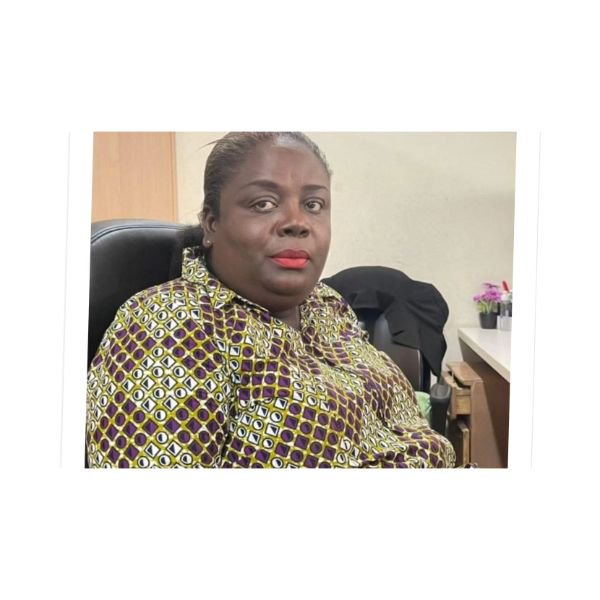
Ghanaian veteran actress and editor at Graphic Showbiz, Jayne Buckman-Owoo, has been confirmed dead following a brief illness.
Madam Jayne’s demise occurred on Friday morning, August 18, 2023.
Although the exact cause of her passing has not been disclosed, it is known that Jayne, aged 49, had been grappling with a short-term ailment.
Throughout her remarkable career spanning over two decades, she made significant contributions to the creative landscape.
She was associated with Graphic Showbiz, where she served as a staff writer. Her coverage extended to significant events both within Ghana and on the international stage.
Jayne’s impact on the creative industry was substantial, and her dedication was acknowledged at the Golden Age Creative Arts Awards (GACAA) held at the Alisa Hotel in Accra in 2021.
It was during this event that she received long-overdue recognition for her Excellence in Leadership within the Creative Arts sector. A well-deserved citation was presented to honor her remarkable contributions.
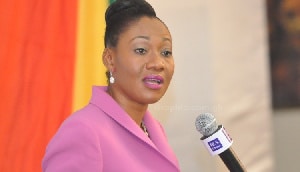
The Chairperson of the Electoral Commission (EC), Jean Mensa, has announced that the commission has taken significant measures to eliminate 15,000 names of minors and non-citizens from the voters’ register.
This revelation was made during a press conference called ‘Let the Citizen Know’ held in Accra on Thursday, August 17.
Addressing the matter, she acknowledged that the 2020 registration process had exposed instances in which minors and non-citizens names were featured in the voters’ list by exploiting the guarantor system.
To tackle this issue, the EC established District Registration Review Committees, which diligently worked over several weeks to identify and remove ineligible names from the register.
“Our experience from the 2020 registration highlighted that a number of minors and foreigners utilized the guarantor system to become part of our roll. In order to rectify this and eliminate minors and foreigners from the 2020 register, the EC formed District Registration Review Committees, which worked diligently over several weeks to purge the names,” she explained.
“The process of removing the names of unauthorized individuals from our list was time-consuming and labor-intensive. Throughout the registration, around 40,000 cases involving minors and non-citizens were challenged, resulting in the removal of approximately 15,000 ineligible entries,” she confirmed.
Ms. Mensa stressed that the EC’s decision to adopt the Ghana Card as the sole identification document for voter registration is not intended to disenfranchise citizens. Rather, it’s a strategic move aimed at enhancing the credibility of the electoral roll and preventing similar occurrences.
She clarified that the Commission no longer sees value in maintaining the guarantor system, which has become outdated. Thus, the choice to adopt the Ghana Card as the exclusive identification method for voting.
Furthermore, she elaborated that employing the Ghana Card is the most reliable method to safeguard the integrity of Ghana’s electoral roll.
A recognized security expert, Dr. Adam Bonaa, has expressed his view on the Vigilantism and Offences Act of 2019, characterizing it as a mere symbolic document that has not yielded any discernible or practical outcomes so far.
According to Dr. Bonaa, despite the implementation of the Act, there hasn’t been a single instance of prosecution under its provisions.
This lack of enforcement, in his opinion, underscores the fact that the Act has not fulfilled its intended purpose.
During an interview with the media, Dr. Adam Bonaa stated that he is unsurprised by this outcome, given the circumstances that led to the creation of the Vigilantism and Related Offences Act.
He cited his own involvement as a board member of the Small Arms Commission, providing him with insights into matters related to vigilantism and related offenses.
Dr. Bonaa commented on the genesis of the Vigilantism Act, recalling how it was hastily introduced by the president, who issued a two-week ultimatum for the development of the Act, threatening to involve parliament otherwise.
Highlighting the lack of successful prosecutions under this law, Dr. Bonaa questioned the effectiveness of the legislation.
He pointed out that gun ownership is not a trivial matter, as it involves significant costs. Those who possess firearms typically fall into certain categories, and in his opinion, these individuals should have a greater understanding of the law and its implications.
The conversation on the Legal Agenda, which included Richard Sena Hotor, a legal practitioner, alongside the host, delved into an in-depth discussion about the law and its efficacy in achieving substantial outcomes.
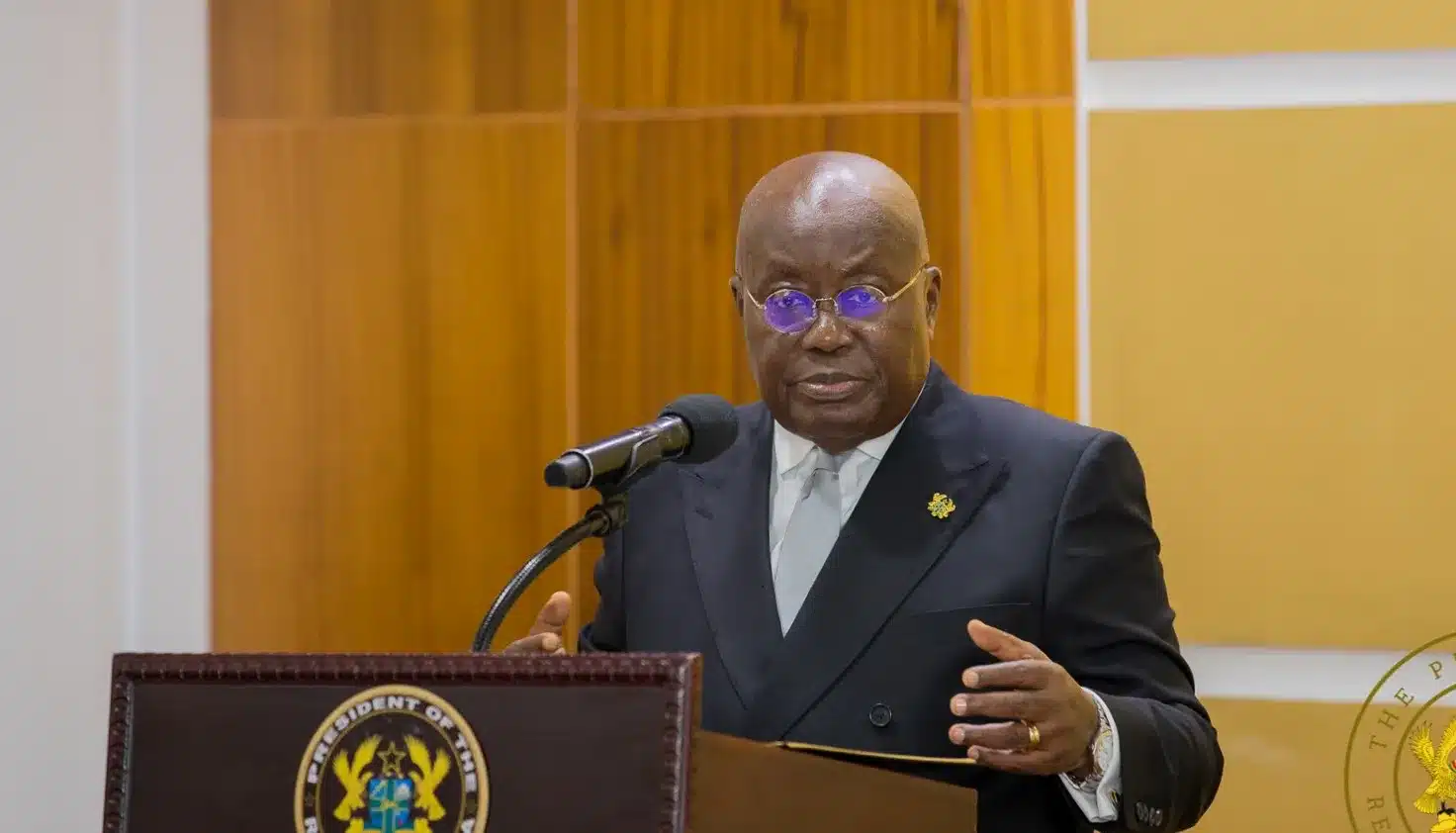
The Centre for Public Opinion and Awareness (CenPOA) has cautioned President Akufo-Addo against allowing personal ties with the French to impact his decisions regarding the Niger coup.
The Executive Director of CenPOA, Michael Donyina Mensah, noted that French business interests in Niger could lead to speculations about their involvement in the crisis, potentially seeking support from individuals like Akufo-Addo due to their close relationship.
In an interview with the media, Mensah urged caution, emphasizing that the intervention in Niger’s crisis should be well-considered, especially given Ghana and Nigeria’s central roles in ECOWAS efforts.
”I want to advise President Akufo-Addo to tread cautiously in how he intervenes in the matter. There are speculations that the French are behind what is happening because they want to protect their business interests. If they are indeed behind what is happening, they will need people to help them, and President Akufo-Addo is a possible target. He is a possible target because of his strong ties and relationship with the French”.
”As a result, we want to caution President Akufo-Addo to examine his actions critically. He should be cautious in his approach and consider the potential consequences for Ghana. He should not let his personal interests, relationships, or ties influence his decision. He has strong ties with the French government, so he will most likely be apprehended for it. However, we request that you exercise caution and refrain from doing anything that could have serious consequences for Ghana”.
Mensah stressed that diplomatic solutions must be fully explored before resorting to military action, as the coup in Niger had already occurred without casualties.
He underscored the need for careful decision-making and avoiding actions that might have severe consequences for Ghana.
Chairperson of the Electoral Commission (EC), Jean Mensa, has emphasized that individuals vouching for more than ten people during the voter registration process will be prosecuted as per its regulations.
To ensure accurate registration, the EC limits each person’s vouching to a maximum of ten individuals.
Additionally, anyone vouching for a foreigner violates the law and will face appropriate action.
During a press briefing on August 17, 2023, Jean Mensa highlighted the required identification documents for voter registration and cautioned that those disregarding the guidelines would face legal consequences.
She urged the media to aid in educating citizens about this aspect of the law.
Mensa also announced that district-level elections, slated for December 19, 2023, will be held across the country, except in the Nkoranza North and South districts, where they will occur in 2025.
She encouraged active participation in these nonpartisan elections, which elect representatives for local government structures.
The district-level elections, held every four years, encompass all 6,272 electoral areas, excluding Nkoranza North and South due to security concerns.
The Chairperson disclosed that the Commission has outlined a comprehensive program for the 2023 district-level elections, to be disclosed soon.
She urged citizens to take advantage of the ongoing voter registration process and actively engage in the upcoming elections on December 19, 2023.
Chairman of the Political Affairs Committee of the Conventional People’s Party (CPP), Kwame Jantuah, has advised President Akufo-Addo to strongly oppose the deployment of the ECOWAS standby force to Niger.
The ECOWAS Committee of Chiefs of Defence Staff has declared their determination to use all available means to restore constitutional order in Niger.
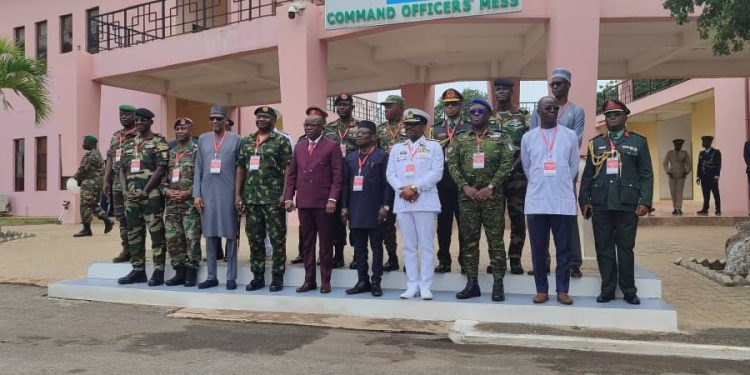
During a two-day extraordinary meeting held in Ghana, the ECOWAS Committee of Chiefs of Defence Staff discussed the deployment of the ECOWAS standby force in the Republic of Niger.
In a session with high-ranking officers, Ambassador Abdul Musah, ECOWAS Commissioner of Political Affairs, Peace, and Security, explained that while diplomatic engagement with the military rulers in Niger remains ongoing, any further defiance by the junta could prompt a response to protect the regional bloc’s principles, involving contingency plans.
Speaking on the Weekly Review segment of the Morning Starr with Naa Dedei Tettey, Mr. Jantuah, the Political Affairs Chairman of CPP, cautioned against the deployment of the ECOWAS standby force in Niger.
“May I ask a question, what is the interest of Ghana, is the interest of Ghana in Niger Ghanaians? Is that what it is because right now the price of onions has gone up. Some of the trucks are stacked at the border. Are you saying, sometimes you don’t seem to understand it, onions, tomatoes can we not grow them here?
“Listen to President Obasanjo when he talks about this particular issue, it is because of the intransigence of our leaders, who are not able to do what they are supposed to do that is creating this. Look in Ghana here, our government should thank the people, the people don’t want these kinds of things, the people don’t want a coup. But the people are suffering and people believe in the thumb,” Mr. Jantuah stated.
He questioned Ghana’s vested interest, underscoring economic challenges and potential repercussions.
Jantuah emphasized that a military invasion of Niger might result in adverse consequences for supporting nations as well.
He warned about the risk of retaliatory missile strikes and referred to the insurgency along the Bawku border.
He urged President Akufo-Addo to take a stand against military intervention, given Ghana’s history with coups, and advocated for a diplomatic approach instead.
“The missiles won’t start flying in Niger, all the countries that have come together to attack them and the others who are defending them will throw missiles into your country. Remember Bawku and we have insurgence on that border. When the people start coming and taking our gold deposits we are in big trouble.
“They should think about this clearly, and let me end by saying President Akufo-Addo should be one President in the midst of all to say no, Ghana has experienced coups and coups haven’t helped us, yes, but this isn’t the way to go. Let’s negotiate.”
A group of dissatisfied food suppliers have converged at the premises of the National Food Buffer Stock Company (NAFCo), seeking payment for overdue arrears connected to food deliveries to senior high schools nationwide over the past two years.
Starting their protest in July, the suppliers engaged in several days of picketing at the Buffer Stock site after their appeals to the government for owed payments went unanswered, affecting their ability to sustain their businesses.
Their disappointment grew when they received only a partial settlement for their arrears, despite Minister for Food and Agriculture, Bryan Acheampong, assuring them of full payment by July 17.
Subsequently, the suppliers discovered that the Buffer Stock Company had actually received funds from the Ministry of Finance on the aforementioned date, but only a portion of the owed sum was disbursed.
With the promise of the remaining payment by August 17, the suppliers decided to gather at the NAFCo premises, demanding the resolution of the matter.
The suppliers underscored their financial challenges amid the current economic climate and emphasized the importance of the outstanding payments to sustain their businesses. They are urging the government to uphold its commitment and expedite the full payment process.
The National Commission for Civic Education (NCCE) has expressed concerns over Ghana’s hosting of the Africa Continental Free Trade Area (AfCFTA) Secretariat.
In light of recent uprisings in West Africa, the NCCE has highlighted the potential security challenges arising from the opening of Ghana’s borders for free trade, as this could provide an opportunity for violent extremist groups to infiltrate the country.
During discussions with Parliament’s Public Engagement Department, Deputy Chairperson of the NCCE, Samuel Asare Akuamoah, emphasized the necessity of a collaborative effort to safeguard Ghana’s democracy while ensuring the successful implementation of the AfCFTA.
Akuamoah remarked, “Winning the bid to host the AfCFTA Secretariat wasn’t a simple achievement. Amid over 50 competing countries, we emerged victorious and committed to opening our borders as well as those of the continent. However, considering the context of West Africa, where the secretariat is situated, we are concerned about the presence of jihadist groups, violent extremists, and coup d’état situations. This presents a challenge. Therefore, as we engage with communities, whether through parliamentary service alone or in conjunction with us, addressing radicalization and violent extremism should be a key focus.”
A group of individuals, suspected to be hired thugs, have attacked a team of masons who were constructing a fence around a royal burial ground in Kotwi, a neighborhood in Atwima Kwanwoma in the Ashanti region.
This aggressive action followed allegations that the masons defied an order issued by Ashanti’s paramount leader, Otumfuo Osei Tutu II, to have the burial ground fenced for its protection.
Several masons shared their accounts of the incident, stating that they were working on a fencing contract assigned by the area’s family head when they were confronted and assaulted by the unknown thugs who abruptly halted their work.
“They questioned our authority to work there, and upon mentioning the Abusuapanin, they started physically attacking us, demanding we stop. They proceeded to demolish the work we had done. This isn’t the first time these strongmen have come to halt our work through violence,” reported the masons.
According to these workers, the thugs, claiming to be acting on behalf of the chief of Kotwi, asserted that only the chief had the right to award contracts for the site.
Further investigations revealed that the royal burial ground, Anokye Banmu, has suffered encroachment and various forms of degradation. Apart from unauthorized construction, the site has witnessed the dumping of waste, defecation, and activities like milling, drinking establishments, and mechanical work, causing noise and unpleasant conditions.
During a visit to Anokye Banmu, graves and tombstones of royals, possibly descendants of Okomfo Anokye and other members of the Ashanti kingdom, were observed.
Abusuapanin Kwabena Mensah, the head of the Kotwi royal family, was instructed by Otumfuo Osei Tutu II to fence Anokye Banmu to protect it from further damage due to encroachment, misuse, and degradation.
Nana Kwadwo Amoah Ampem Okogyeabour, Executive Director of Corruption Combat International and a descendant of Otumfuo Osei Tutu II, appealed for swift action against those responsible for the attack. He alleged that his investigation indicated the chief of Kotwi sent the hired thugs.
He emphasized, “I could not understand why the chief, who should protect Asanteman’s property, would oppose those safeguarding it. I investigated and found that the Kotwi Chief ordered the thugs to stop the work. This is an act of arrogance. I urge the Asantehene to take action against this barbaric act.”
However, secretary to the Kotwi chief, Nana Sei Tutu, contradicted these claims, stating that the Abusuapanin lacked the authority to permit such work on Anokye Banmu.
He asserted that Nana Kwabena Mensah was not the Abusuapanin as claimed by others. Nana Sei Tutu urged the public to dismiss these allegations.
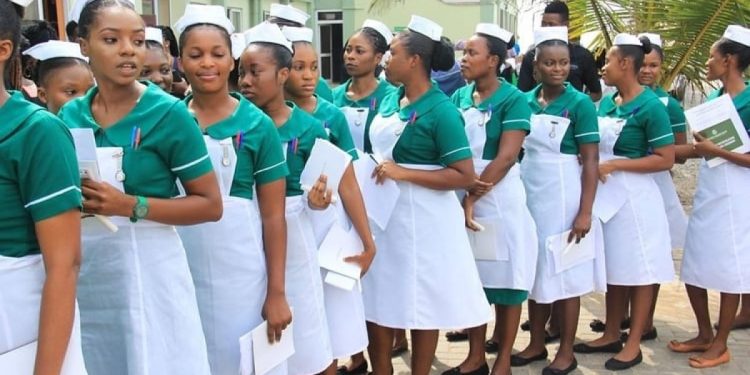
Ghana Health Service (GHS) Director General, Dr. Patrick Kuma Aboagye, has revealed that over 500 senior Ghanaian nurses passed away in 2022.
The service is now strategizing to recruit and train new nurses to address the gap left by these departures.
Speaking at an August 17, 2023, press briefing by the Ministry of Information, Dr. Patrick Kuma Aboagye affirmed the plan to bring in more nurses over the next two years as part of their strategy.
“In the past year, we lost around 525 nurses, but we are presently in the process of recruiting additional nurses nationwide,” he stated.
He emphasized that achieving Universal Health coverage by 2030 is a primary objective for the Ghana Health Service.
The service is working to strengthen primary healthcare and collaborate with partners to enhance the quality and patient-centeredness of healthcare delivery.
A flagbearer hopeful of the New Patriotic Party (NPP), Dr. Owusu Afriyie Akoto, has distinguished himself as the sole candidate among the ten vying for the party’s flagbearer position with comprehensive plans to enhance the quality of life in Ghana.
Asserting that his approach stands out, he underscored his vision of propelling agriculture to underpin the growth of various economic sectors and his ambitious initiative to create enterprises for the NPP.
These concepts, he believes, are highly feasible, and when implemented, they will deliver the long-awaited positive transformation that Ghanaians have yearned for.
Based on his extensive travels across the nation, Dr. Afriyie Akoto acknowledged the diminished optimism among people due to their enduring economic struggles.
Fueled by this observation, he is galvanized to challenge conventional business principles and enhance the lives of the populace.
During an interview at his campaign office in Accra on August 15, 2023, he expounded that his vision of establishing NPP-owned enterprises isn’t groundbreaking, as similar endeavors have prospered globally.
These ventures, he noted, have generated substantial income and job opportunities for party activists.
“The morale of the people are down. The revival of their morale is based on what I intend to do. I have big plans for Ghana – plans that can generate income for the development of our great NPP to pay our activists handsomely to encourage them to work hard for this party; and plans to use agriculture to develop the other sectors of the economy. These are ambitious plans that I have prioritized to implement when given the nod to lead the NPP and Ghana,” he noted.
Elaborating on his aspirations for the NPP, Dr. Akoto, a former two-term Member of Parliament for Kwadaso, shared his vision to establish a network of party-owned businesses on national, regional, and constituency levels, all managed by a central holding company.
These enterprises, he explained, would provide a revenue stream for party operations and create employment opportunities for members.
Drawing inspiration from examples such as Taiwan’s Kuomintang (KMT), South Africa’s ANC, and Rwanda’s RPF, who have developed substantial business interests, Dr. Akoto envisioned a parallel scenario for the NPP.
He emphasized that this approach is pragmatic and sustainable, allowing the party to flourish while positively impacting society.
“In essence, my vision for the party is based on proven models from other parts of the world. For instance, the African National Congress (ANC) in South Africa owns various businesses, including mining and insurance companies. This strategy enables them to pay reasonable wages to their members and activists, fostering job creation and development. I intend to bring this vision to the New Patriotic Party, elevating our capabilities and transforming lives,” he affirmed.
Concerning his vision for the country, Dr. Akoto underlined the untapped wealth in Ghana’s agricultural sector.
He proposed agriculture as the catalyst to break the cycle of poverty and debt dependency. Drawing from his experience as the Minister of Food and Agriculture, he advocated for comprehensive support to farmers and the establishment of enabling institutions.
His leadership in founding the Tree Development Authority (TDA), aimed at nurturing six key tree crops, showcased his commitment to transforming Ghana’s agricultural landscape.
Dr. Akoto aspires for these efforts to mirror cocoa’s success, potentially yielding annual revenues ranging from US$6 billion to US$12 billion for the nation.
“This is my vision – a vision of utilizing agriculture to address poverty at its core. We must move away from perpetual borrowing and reliance on external institutions. Ghana’s farmers, with the right support, have the capacity to drive this change. My priority is to empower them and facilitate the creation of necessary institutions,” he asserted.
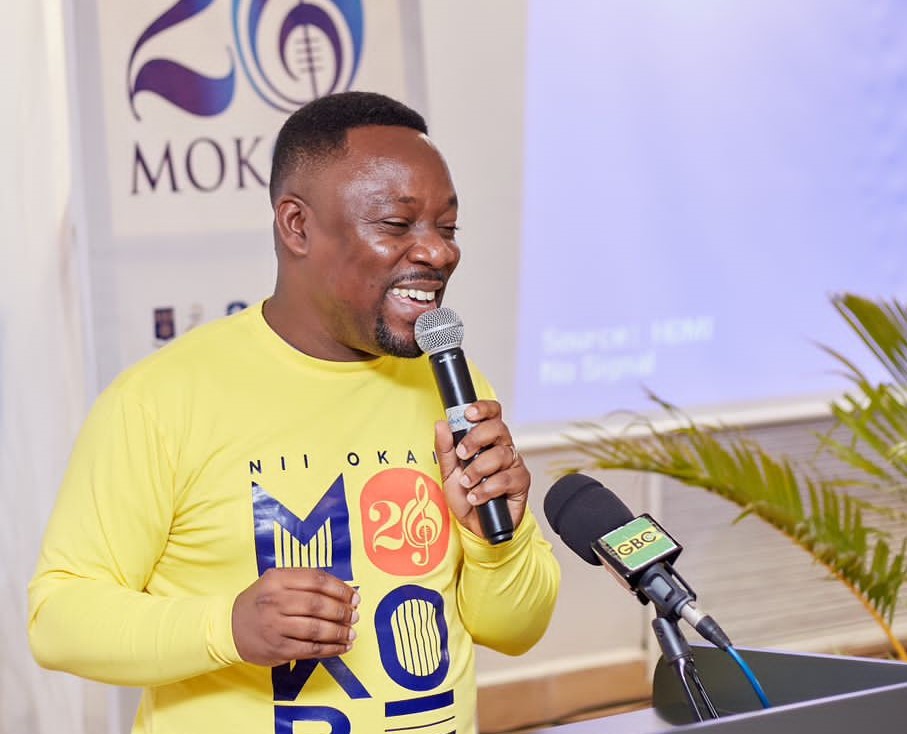
Prominent Ghanaian gospel musician and pastor, Nii Okai, has officially launched the Moko Be @20 Celebration Concert, scheduled to take place on September 17, 2023, at the ICGC Zoe Temple in Tema, Accra.
The launch occurred at the Medical Training and Simulation Centre of the University of Ghana Medical Center (UGMC) in Legon on August 17, 2023.
Addressing the audience, Nii Okai outlined the upcoming activities for the 20th celebration of his iconic debut album, reflecting on significant moments that shaped contemporary gospel music in Ghana.
“Moko be is a collective effort of musicians, producers, singers, volunteers, and partners who believe in our divine call to proclaim God’s sovereignty through our contemporary gospel music. Over the past two decades, I’ve had the privilege of nurturing gifted artists who are now making a global impact. I’m excited to share the stage with them on September 17 in Tema, where it all began,” he added.
The concert’s lineup includes Joe Mettle, Koda, Eugene Zuta, MOGmusic, Kofi Karikari, Naa Mercy, David Osabutey, Lordina the Soprano, and others, most of whom have collaborated with Nii Okai since his album’s release.
Gospel musician, Eugene Zuta who was also at the launch stated that working with KODA introduced him to Ataa Nii Okai.
He added that joining the Moko Be launch on December 24, 2003, marked his entry into team virtue.
According to him he admires Nii Okai’s love for God, dedication to people’s growth, and visionary leadership.
He stated that celebrating 20 years of ‘Moko Be’ means celebrating a man of God whose obedience continually influences music ministry in Ghana and beyond, impacting God’s kingdom.
“I had the chance to work with KODA, who introduced me to Ataa Nii Okai. I joined the Moko Be launch in 2003 and became part of team Virtue. Being close to this vessel of God has impacted my spiritual growth, ministry, and leadership. I’m inspired by his love for God and his visionary leadership. As we celebrate 20 years of Moko Be, I celebrate a man of God whose obedience positively influences music ministry in Ghana and beyond,” he remarked.
Lead pastor of ICGC Zoe Temple, Reverend Kojo Amo-Asare, chaired the launch event and welcomed attendees to Tema and his church for the celebration concert.
He commended Nii Okai’s exemplary ministry.
Minister Esther Godwyll delivered worship songs, including a moving rendition of ‘Moko Be’.
Professor Nana Akyaa Yao of UGMC Paediatric Centre detailed a partnership campaign with Nii Okai Saving Hearts Foundation (NOSHF).
It involves mission teams from Boston Children’s Hospital Heart Center and Kinderherzen from Germany, aiming to provide heart surgeries to 20 needy children. This initiative would increase NOSHF’s beneficiaries to 41 since its inception in 2013.
Mr. Franklin Eleblu of IT Consortium provided information about ticketing and fundraising through the Chango app and the shortcode 887273#.
Ticket options include ghs70 (single), ghs120 (double), ghs200 (VIP Heartsavers), ghs25 / usd5 (online viewing), and the ticket hotline is 0246156915.
Mr. Felix Nyano-Fosu of Total Family Health Organisation (TFHO) endorsed the celebration with sponsorship and recounted Nii Okai’s ministry work on the KNUST campus.
CEO of Hephzibah Christian Center, Mr. Patrick Oduro, unveiled the celebration’s mascot and announced an upcoming brand association with NOSHF.
The Chairperson of Ghana’s Electoral Commission (EC), Jean Mensa, has emphasized that the proposed constitutional instrument, aimed at designating the Ghana Card as the exclusive document for voter registration, is not intended to disenfranchise Ghanaians.
Speaking to the media at the Electoral Commission’s headquarters on Friday, Jean Mensa clarified that the Commission is looking to move away from the guarantor system, which she believes has become obsolete.
This is the reason behind the decision to adopt the Ghana Card as the sole identification document for voting purposes.
Jean Mensa went on to elaborate that employing the Ghana Card as the primary means of identification is the most reliable method to safeguard the credibility of Ghana’s electoral roll.
“The current proposal in Parliament, the Constitutional Instrument, does not intend to reintroduce the guarantor system. We have observed that the guarantor system has not been effective. Thirty years ago, when we embarked on this journey without the Ghana Card, it was necessary to implement a system that would enable individuals without documentation to register. Today, with the presence of the Ghana Card, we must depend on it as the most reliable means to maintain the accuracy of our electoral register.”
She contended that the draft Constitutional Instrument, currently under parliamentary consideration, was motivated by the Commission’s commitment to conducting elections that are credible, transparent, fair, and peaceful. This decision arose from the challenges faced by the Commission during the registration process in 2020.
“As a Commission dedicated to organizing elections that are credible, transparent, fair, and peaceful, we sought to establish and uphold the credibility of the foundational document, which is the voters’ register. This is why we proposed the use of the Ghana Card as the sole means of identifying an individual’s citizenship or age.”
“Our experience from the 2020 Registration Exercise highlighted that a number of minors and non-citizens managed to enter the electoral roll through the guarantor system. To eliminate underage individuals and non-citizens from the 2020 register, the Electoral Commission set up District Registration Review Committees, which worked for several weeks to remove such names. It required significant time and effort to rectify the presence of ineligible individuals in our electoral roll. We contested around 40,000 cases involving minors and non-citizens and ultimately removed around 15,000 individuals from the register.”
Ghana has been selected as one of the 25 nations to be granted £210 million in funding by the United Kingdom (UK) government. This funding is aimed at tackling the pressing challenge of antimicrobial resistance (AMR) in the next three years.
This substantial funding will be utilized through collaborative efforts between the UK Government and countries in Asia and Africa, aiming to combat AMR and mitigate the threat it poses both globally and to the UK.
This landmark investment stands as the largest ever contribution to global AMR surveillance by any nation.
The Foreign, Commonwealth & Development Office of the UK High Commission in Ghana released a statement confirming this initiative.
The announcement coincides with the visit of the UK’s Health Secretary of State, Steve Barclay, to India for his inaugural G20 Health Ministers’ meeting.
Allocated from the British Government’s aid budget, this funding will aid the activities of the Fleming Fund to address AMR in Asian and African countries, ultimately reducing the menace it presents to societies.
This effort will fortify surveillance capabilities in around 25 nations that confront the highest levels of AMR risk and burden. These countries include Indonesia, Ghana, Kenya, and Papua New Guinea. Over 250 laboratories will be upgraded and equipped with cutting-edge technology.
The funding will also incorporate new genome sequencing technology, facilitating the tracking of bacterial transmission across humans, animals, and the environment.
The statement highlights, “It will also strengthen the international health workforce by supporting 20,000 training sessions for laboratory staff, pharmacists, and hospital personnel, and over 200 Fleming Fund scholarships to enhance expertise in microbiology, AMR policy, and One Health – which acknowledges the interrelation between humans, animals, and the environment.”
Steve Barclay, the UK’s Secretary of State for Health and Social Care, emphasized the significance of addressing AMR, noting that the substantial funding would enable countries at highest risk to combat this issue, enhancing global safety.
Antimicrobial resistance leads to the deaths of approximately 1.27 million people worldwide each year, as antibiotics and current treatments become ineffective against infections. The alarming statistic includes one in five deaths among children under five.
The investment is also designed to support the UK-India Fleming Fund partnership, valued at up to £3 million. This partnership aims to accelerate collaboration on AMR surveillance within the health sectors of both nations and facilitate the realization of their shared roadmap for 2030.
As part of his India visit, Steve Barclay will visit India’s National Centre for Disease Control, where joint efforts between the Indian Government and the Fleming Fund are targeting antimicrobial resistance.
The visit will also involve a showcase of innovative health technology, promoting collaboration between UK and Indian artificial intelligence and digital health firms to further transform healthcare in both nations.
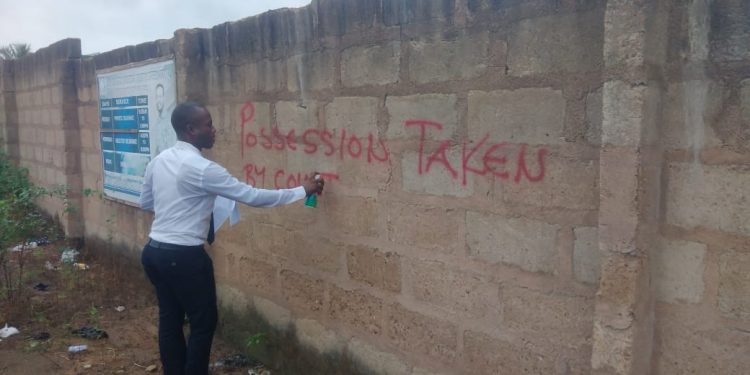
More than 5,000 residences in the Millennium City district of the Central region face imminent demolition due to encroachment activities.
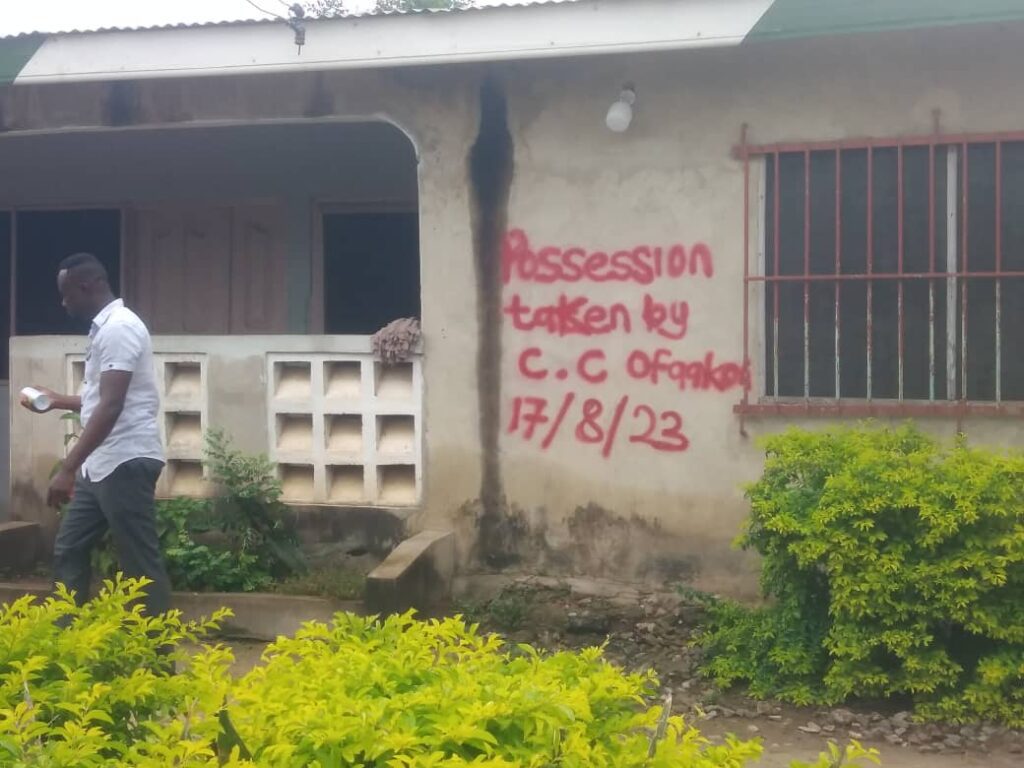
The area’s developer has commenced the initial phase of the demolition process, marking the affected housing units for future removal.
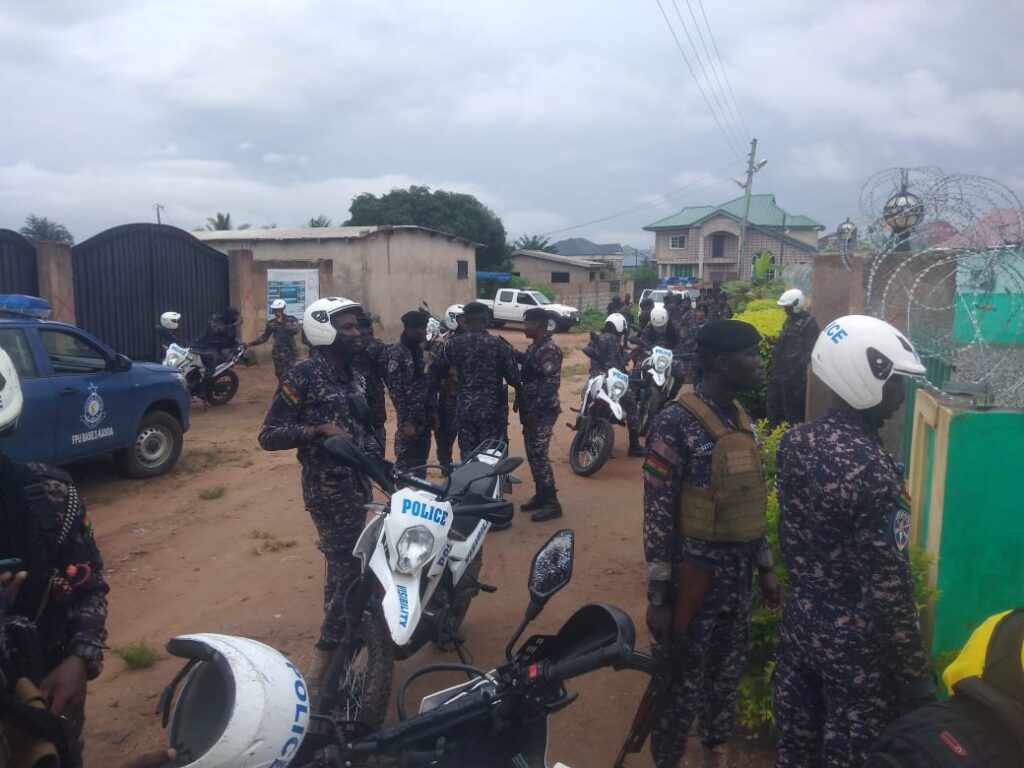
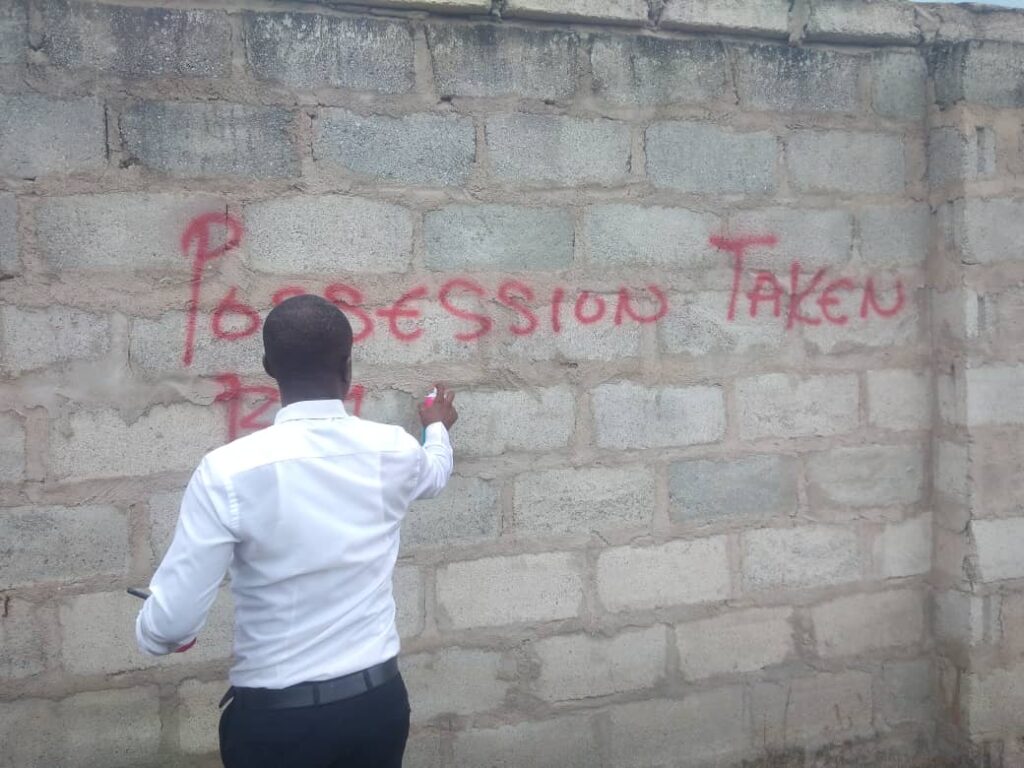
A team of over 100 police officers from the Central East Police Command is supervising the process of labeling the housing units for demolition. Each marked unit now bears inscriptions indicating impending removal.
21st-century Construction Limited, the developer, revealed that they obtained a court order from the Ofaakor District Court to address the encroachment activities within their property.
They expressed concern over how encroachment is adversely affecting their operations.
The developer further emphasized that those whose houses have been marked should be aware that this is the initial phase, with the demolition phase to follow.
They urged affected residents to engage in renegotiations or face demolition.
“If you have seen Police men going round in Millennium City, it is by the order of the court. People are trying to destroy our estate. Most of them are foreigners and because of small money, they are giving us trouble.
“Our clients are unable to develop their land when they buy from us. They keep saying I don’t have any land in Millennium City, but I am daring them to come forward with documents. We went to Ofaakor Circuit Court to take a court order to move the encroachers from our land.
“Those whose houses have been earmarked must know that this is the first phase of the exercise, the second phase will be the demolition stage. They must either come forward for renegotiation or face demolition,” Kofi Asthma the developer at Millennium said.
“The issue of landguard is disturbing the peace of the people of Millennium City. They demand digging fees, threatening the lives of developers, and making life unbearable for developers,” Kofi Asthma added.
Ghanaian journalist, Ridwan Karim Dini-Osman, known for receiving international awards, has recently shared a distressing incident during his stay at the Protea Hotel Fire & Ice by Marriott Johannesburg Melrose Arch in South Africa.
Allegedly, a considerable amount of money, totaling $1000 USD and €200 Euros, was stolen from his briefcase within his hotel room.
Expressing his shock at the incident, Dini-Osman felt compelled to share the incident as a stern caution for those who prioritize safety and trust in hospitality establishments.
His original purpose in South Africa was to attend an awards ceremony, with his accommodation pre-arranged by the event organizers at the aforementioned hotel.
However, what seemed like a reputable choice turned into an unfortunate situation that he believes cannot go unaddressed.
During his five-day stay in room 107, Dini-Osman’s briefcase, containing the stolen cash, remained untouched in his hotel room.
He emphasizes that there was no reason for him to withdraw cash from it since he had both his visa card on hand and a per diem allowance provided by the event organizers.
Dini-Osman alleges that the money was stolen by the hotel staff and suspects that the cleaning staff, who were the only ones with access to his room, were involved.
Upon discovering the theft on August 5, 2023, Dini-Osman promptly reported the incident to both the local police and the hotel management, expecting a thorough investigation.
However, he was disappointed to receive an email indicating that both the hotel and its staff were absolved of any responsibility.
Expressing genuine concern for the well-being of fellow travelers, Dini-Osman stresses that safety, security, and trust should be upheld and respected at all times when selecting accommodations.
He asserts that the Protea Hotel Fire & Ice by Marriott Johannesburg Melrose Arch failed to meet these fundamental expectations, highlighting the importance of choosing establishments that prioritize guest safety and security.
A Nigerian preacher, Prophet Abel Boma, has invoked prayers against potential coups in West Africa, revealing that he received a revelation about a coup plot in Ghana.
In his prophetic message, he advised people across West Africa not to entertain thoughts of orchestrating coups against their governments.
In a TikTok video, he cautioned that a coup in Ghana would not be beneficial for the nation.
“Spread this message to the people of Ghana: a coup will not bring good results. Anyone considering a coup as a solution will experience continuous betrayal in that nation for generations,” Boma declared.
The recent coup in Niger has reignited discussions about the prevalence of military takeovers in Africa, particularly in West Africa.
Instances of military-led changes in government have occurred in countries like Mali, Burkina Faso, and Guinea.
Ghana’s President Akufo-Addo promptly condemned coups in the West African subregion following the Niger incident.
Speaking during Liberia’s Independence Day celebrations, he emphasized that ECOWAS must unite to eliminate coups in the region, aiming to eradicate widespread poverty.
Ghana also hosted a meeting of the ECOWAS Committee of Chiefs of Defence Staff on August 17, 2023, to address the Niger coup.
The meeting aimed to finalize plans for deploying a standby military force to Niger, with the objective of removing the junta that toppled the government.
This gathering followed the ECOWAS Authority of Heads of State and Government’s directive during an Extraordinary Summit on the political situation in Niger, held on August 10, 2023, in Abuja, Nigeria.
Ghana is poised to achieve its first current account surplus in two decades during 2023, according to predictions from, a UK-based firm, Fitch Solutions.
Fitch Solutions anticipates that Ghana’s current account will show a surplus of 1.3% of its Gross Domestic Product (GDP) for the year, a remarkable turnaround from the 2.1% GDP deficit recorded in 2022.
The revision in Fitch Solutions’ 2023 forecast comes in response to unexpectedly low import growth during the first half of the year. A 13.0% year-on-year contraction in merchandise imports, driven by subdued domestic demand and reduced global commodity prices, has contributed to this shift.
While exports also declined by 7.2%, the trade surplus rose to $299.6 million, up from $245.7 million during the first half of 2022.
Bank of Ghana (BoG) data reveals that the overall current account balance achieved a surplus of $0.8 billion in the initial half of 2023, contrasting with a $1.1 billion deficit during the corresponding period in 2022.
Fitch Solutions expects this robust trade surplus to persist in the second half of 2023 due to ongoing import contractions and weakened domestic conditions, including elevated inflation levels and reduced purchasing power.
The firm also indicates that the current restrictive monetary conditions will hinder businesses’ capacity to finance growth ventures, leading to delayed corporate expansion plans and consequently less demand for imported capital inputs.
Former Ghanaian highlife music sensation, Andrew Alexander Nii Akrashie, OJ Blaq has passed away on August 17, 2023, just a year after he publicly embraced Christianity.
OJ Blaq had faced a life-threatening situation when he was diagnosed of kidney failure. Following a remarkable recovery, he devoted himself to religious ministry through song.
Tragically, OJ Blaq’s demise surprised many, especially as anticipation grew for his debut gospel album, ‘Show Dem’.
Videos emerged after his death, in which he recounted his struggle with kidney failure and his spiritual transformation.
Condolences flooded in as his fans and the public mourned his passing. Many expressed their sadness and sent well-wishes to his family.
Previously, OJ Blaq had shared his decision to transition from secular to gospel music after his near-death experience.
He attributed his revival to his renewed Christian faith and emphasized the importance of using music to positively impact the younger generation while glorifying God.
Watch video here:
Video of OJ Blaq sharing how God saved him after two kidney failures surfaces
A group of intrepid drivers who embarked on a journey from Ghana to London, Wanderlust have gained online recognition.
A TikTok video by @kooemmaone showcased the achievement, revealing that a car company in the UK was preparing to auction these remarkable vehicles.
The question of whether these history-making vehicles should be sold abroad or returned to Ghana as monuments was raised by @kooemmaone, sparking diverse opinions among commenters.
Some advocated for the cars to be brought back to Ghana, while others suggested selling them in the UK.
The travelers’ journey also involved car repairs during their trip, which were documented and shared online.
Their feat has garnered praise and attention, with various individuals expressing pride and suggesting potential destinations for these notable vehicles.
While the journey generated admiration, it also ignited discussions about the future of these vehicles, their significance, and their impact on tourism and national history.
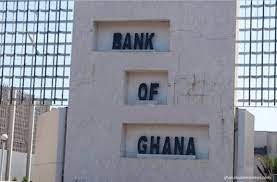
The Bank of Ghana (BoG) has rejected claims of breaching procurement laws in the development of its new headquarters in Ridge, Greater Accra.
BoG asserts that it acquired all necessary approvals from the Public Procurement Authority (PPA) prior to initiating construction.
Dr. Philip Abradu-Otoo, BoG’s Head of Research, revealed this information while speaking to the media on August 17, 2023.
He assured that the central bank will promptly provide comprehensive details and documentation related to the headquarters’ construction.
“All requisite approvals were secured from the PPA; we adhered to all procurement regulations,” Dr. Abradu-Otoo emphasized.
Context:
The response from BoG comes in response to allegations by Samuel Okudzato Abalkwa, the Member of Parliament for North Tongu. Abalkwa suggested that the building’s cost had been inflated from US$81 million to $250 million.
He also disputed claims that the project’s initiation occurred during the previous National Democratic Congress government and raised concerns about governance breaches.
Addressing these concerns, Dr. Abradu-Otoo emphasized that the PPA meticulously evaluated all pertinent documentation related to the construction process. He stressed the bank’s commitment to transparency and compliance with the country’s laws.
Furthermore, Dr. Abradu-Otoo defended the decision to use the Restricted Tendering Procurement Method, noting its justification and approval by the PPA.
He reiterated that detailed information about the entire process would soon be disclosed to dispel any uncertainties in the public domain.
Bank of Ghana on Headquarters Justification:
The Bank of Ghana had previously clarified that an assessment of its current headquarters’ structural integrity in the Central Business District of Accra indicated its inadequacy for its intended purpose. The building, constructed in 1960, was found unsuitable for major seismic events.
The bank’s statement emphasized, “The structural integrity assessment revealed that the main building lacks the necessary strength required for safe usage.”
BoG also highlighted that constructing a new headquarters was a top priority to enhance operational efficiency, positioning it as a potential host for the Regional Central Bank. This position was substantiated by the bank’s hosting of the West African Monetary Institute (WAMI) for the sub-region.
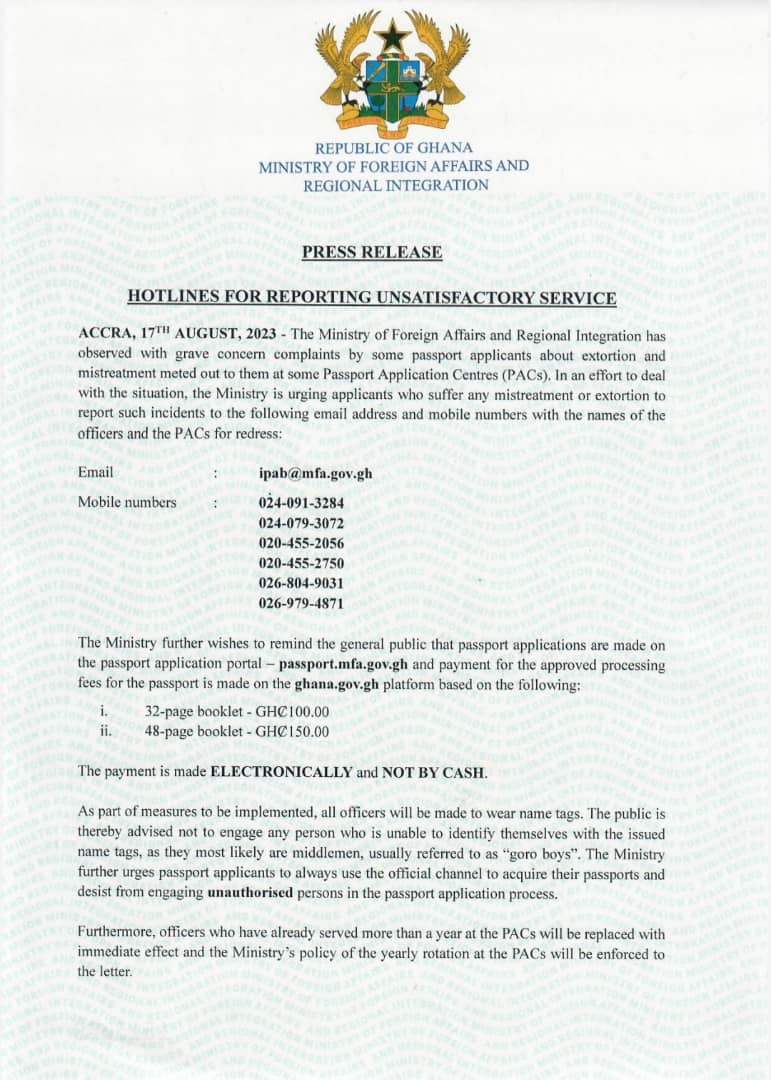
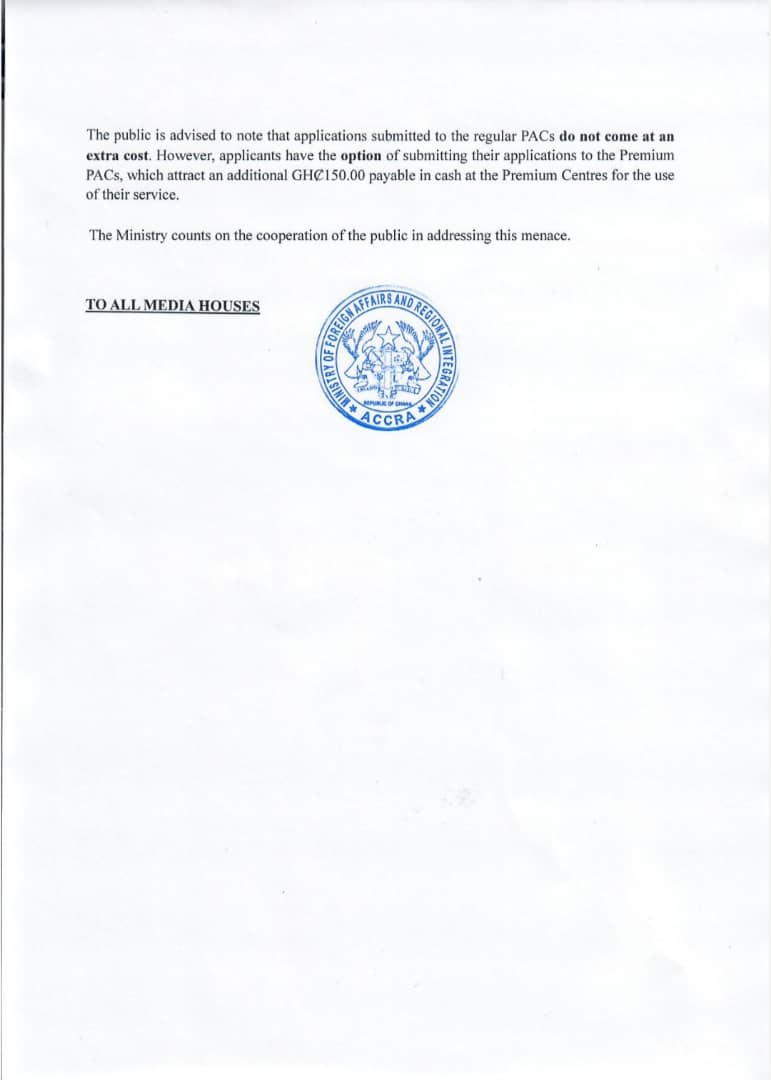
The Ministry of Foreign Affairs and Regional Integration has issued hotlines for individuals facing mistreatment and extortion at passport offices nationwide.
Applicants encountering misconduct or extortion from staff are encouraged to contact the provided hotlines or send emails:
The Minister of Foreign Affairs, Shirley Ayorkor Botchwey, expressed concern about corruption within staff and intermediaries during an impromptu passport office visit.
In a statement dated August 17, the Ministry acknowledged the reported incidents and introduced the hotlines to address the issue.
“The Ministry of Foreign Affairs and Regional Integration expresses deep concern regarding reports of mistreatment and extortion at certain Passport Application Centers (PACs). To combat this problem, the Ministry urges affected applicants to report any instances of corruption or mistreatment.”
The Ministry also advised applicants to avoid dealing with staff lacking proper identification badges.
Furthermore, the Ministry reiterated its commitment to rotating officers who have served for more than a year.
Please see the complete statement by the Ministry of Foreign Affairs and Regional Integration below:
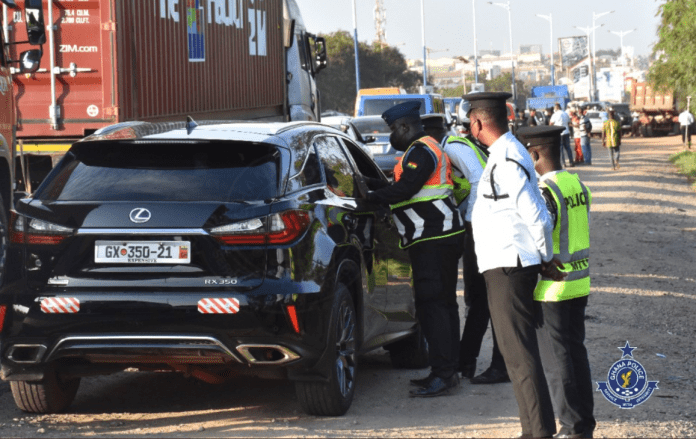
The Motor Transport and Traffic Directorate (MTTD) of the Ghana Police Service has unveiled plans to introduce an innovative automated system named Traffitech-GH, designed for the purpose of enforcing road traffic regulations.
The Traffitech-GH system, as outlined by MTTD, incorporates advanced camera and sensor technology to autonomously capture images or videos of vehicles that violate road traffic laws, such as exceeding speed limits and running red lights.
Director-General of MTTD, COP Francis Ebenezer Doku, conveyed this development during an inaugural meeting with stakeholders.
He elaborated that Traffitech-GH will utilize a combination of fixed, mobile/in-vehicle, and radar gun devices to capture instances of speeding and red-light violations, among other infractions.
Mr Doku explained that photographic or video evidence of road traffic offenses will be instantly transmitted to the MTTD office for validation.
Subsequently, notifications will be dispatched via SMS to the respective vehicle owners, indicating the incurred penalty and the need for payment.
He further clarified that the system will encompass various transgressions, including expired roadworthiness certificates, improper overtaking, failure to wear seat belts, usage of expired driving licenses, driving uninsured vehicles, mobile phone usage while driving, and misuse of sirens.
COP Francis Doku emphasized that the Traffitech-GH notifications will furnish comprehensive details, including the location, date, and time of the committed traffic violation, along with the vehicle’s registration number, description of the offense, and the corresponding fine amount and payment deadline.
He hastened to add that the fine associated with a Traffitech-GH violation can be settled through multiple avenues, such as Mobile Money, online transactions via the website www.Traffitech-GH.gov.gh, or in-person at authorized banks.
This payment must be completed within 14 days from the issuance of the violation notification.
Beyond this timeframe, individuals failing to comply will incur an additional 1% penalty daily on top of the original Traffitech-GH fine.
COP Francis Doku expressed his optimism that the implementation of Traffitech-GH will significantly enhance the enforcement of road traffic laws and regulations.
He also appealed to the general public to embrace and adhere to this novel automated system, thereby contributing to a reduction in road accidents.
The district level elections will take place on December 19, 2023.
This information was made known by the Chair of the Electoral Commission (EC), Jean Mensa, during a press conference in Accra on Thursday, August 17,
The electoral event is set to encompass 6,252 electoral areas and span across 38,672 polling stations nationwide.
Mensa conveyed her assurance that comprehensive information regarding the elections will be promptly disseminated to the public.
In her statement, she urged eligible voters to capitalize on the opportunity for voter registration and enroll themselves for voting purposes.
Madam Jean Mensa further appealed to the citizens to actively engage in the upcoming election asserting that this engagement stands as the most certain avenue for fostering local-level development.
“We, as a commission, wholeheartedly encourage eligible voters to avail themselves of the voter registration process and complete their registration.
“Additionally, we call upon the general populace to enthusiastically participate in the forthcoming district level elections, scheduled for December 19th. It is through such participation that we can collectively drive the progress and development of our local communities,” she expressed.
A collaborative effort between the Ghana Police Service and the National Intelligence Bureau (NIB) in Assin Fosu successfully intercepted an articulated truck transporting 250 bags of government-subsidized fertilizer meant for farmers.
The fertilizers, including varieties like Cocoa Ahuoden, Cocoa Aduane, and Cocoa Nti, were allegedly being smuggled to Ivory Coast.
The operation led to the arrest of three individuals: Seth Yeboah, the driver; Smaila Ahor, a houseboy; and Iliasu Abubakar, a driver with the Ghana National Ambulance Service in Assin North. The suspects were apprehended on Sunday in Assin Juaso and transferred to the NIB head office in Accra for further investigation.
Nana Kwasi Fori, the Central Regional Chief Farmer, revealed that suspicions were raised about the suspects’ activities, prompting the NIB officials to monitor their movements. Upon discovering the truck stuck with the subsidized fertilizer, authorities intervened.
It was disclosed that Iliasu Abubakar, the ambulance driver, had enlisted the help of the other two individuals in this illegal operation.
Nana Ofori cautioned all those involved in such illicit activities, including farmers cooperating with wrongdoers, to cease their actions or face legal consequences.
He encouraged the public to report any suspicions to the Ghana Police Service for appropriate action.
The Ashanti Regional Directorate of the Ghana Education Service (GES) has reported that a total of 108 pregnant girls and 104 nursing mothers participated in the 2023 Basic Education Certificate Examination (BECE) in the region.
Alongside these candidates, a total of 117,084 students took part in the examination.
According to the Public Relations Officer for the regional directorate, in an interview with the media on August 15, 2023, the overall candidate count included 57,973 males and 59,111 females.
The examination also saw 314 candidates marked as absent due to various reasons, including dropouts, illness, and travel.
Additionally, it was revealed that the Kumasi Metropolis had the highest number of examination centers with 36, accommodating a total of 9,878 candidates.
In contrast, the Sekyere Afram Plains District recorded the lowest number of candidates, with a total of 367 students participating.
Defence Chiefs from the 15 countries within the Economic Community of West African States (ECOWAS) have affirmed their willingness to join a standby force aimed at reinstating democratic governance in Niger Republic.
This move follows a military coup carried out by the Presidential Guards in Niger, resulting in the overthrow of President Mohamed Bazoum.
In response, ECOWAS issued a seven-day ultimatum for the military junta to restore power or face potential sanctions, including the use of force.
Despite the junta’s dismissal of ECOWAS‘ threat and their commitment to resist international intervention, the regional body called upon Defence Chiefs of member states to activate the standby force and facilitate the restoration of democracy in Niger.
During a meeting in Accra, Ghana, on August 17, the Defence Chiefs, excluding those from military-controlled states and Cape Verde, expressed their readiness to support the reestablishment of civilian rule in Niger.
The Chief of Defence Staff of Nigeria, General Christopher Gwabin Musa, also emphasized their stance against the coup plotters.
A member of the communications team of the governing New Patriotic Party (NPP), Lawrence Kwesi Botchway Jnr, has lauded the remarkable leadership and lasting impact of the former Minister of Education and current Minister of Energy, Dr. Matthew Opoku Prempeh, on national development.
He particularly highlighted Dr. Opoku Prempeh’s pivotal role in preventing an electricity crisis in the country.
In an interview, Botchway described Dr. Opoku Prempeh as the “architect of Ghana’s energy success,” commending his accomplishments in propelling the nation towards a more sustainable economy through effective management of the energy sector.
He further lauded the minister’s dedication and effectiveness in maintaining continuous power supply, even during the challenges of the COVID-19 pandemic.
“We must laud the Minister’s dedication and effectiveness in keeping the lights on and the nation running. NAPO’s timely and effective response showcased his mastery of the energy landscape, ensuring uninterrupted power supply till now and even during the challenging COVID-19 epoch. Unlike the past era of ‘dumsor’, Ghana experienced stability and reliability in its power infrastructure, a testament to Dr. Opoku Prempeh’s strategic leadership in the energy sector,” he stated.
Botchway also emphasized the transformative impact of the Free Senior High School (SHS) policy, which was championed by Dr. Opoku Prempeh and President Akufo-Addo.
He cited significant statistics, showcasing the substantial increase in student enrollment from 6,000 in 2016 to 1.2 million today.
Botchway attributed this growth to visionary leadership and not just political maneuvering, highlighting President Akufo-Addo’s role in making education accessible to all students, regardless of their background.
Botchway concluded by praising President Akufo-Addo’s legacy, which he sees as a gift to Ghana’s future generations.
He emphasized that the Free SHS policy has dismantled financial barriers, allowing both privileged and disadvantaged students to access quality education.
Historian, Anokye Frimpong has voiced his reservations about renaming Ghana’s premier university after Joseph Boakye (J.B) Danquah, one of the Big Six figures in the country’s history.
Speaking to the media, Mr Frimpong contended that JB Danquah’s legacy doesn’t merit such an honor.
Mr Frimpong stated that there has been a distortion of JB Danquah’s accomplishments in recent times, aiming to present him as more dominant than certain peers who also played a role in Ghana’s journey to independence.
The University of Ghana, Legon, recently made headlines as President Akufo-Addo expressed interest in renaming the institution in honor of the late J.B. Danquah.
Akufo-Addo cited Danquah’s unwavering dedication and pivotal role in inspiring the university’s establishment as the basis for this proposal.
He announced this during the University’s 75th Anniversary Thanksgiving Service.
However, this move has faced criticism, with some asserting that the President is seeking to amplify the prominence of his predecessors in Ghana’s historical narrative during his tenure.
The historian pointed out that J.B. Danquah’s significant contributions were primarily focused on African studies, specifically his exploration of the Akan concept of God.
He noted that Danquah’s Ph.D. thesis explored this topic, which later earned recognition and recommendation from Ghana’s founder, Dr. Kwame Nkrumah, to the Institute of African Studies.
“In Ghana’s history, J.B. Danquah has a place, but we must avoid overestimating his impact. He notably influenced African studies and was a pioneer in the Akan concept of God, as evidenced by his Ph.D. Kwame Nkrumah recognized his work and endorsed it to the international community.
However, he argued that JB Danquah didn’t make significant strides in political leadership that would warrant certain honors, aside from the various recognitions he received.
“ In terms of academics studies is a colossus who must be respected. In terms of politics he never founded the United Gold Coast Convention (UGCC) as people speculate. The one who founded the party was from Nzema, a rich man known as George Alfred Grant A.K.A Paa Grant,” he added.
Contrary to popular belief, Frimpong debunked claims that J.B. Danquah was the leader of the United Gold Coast Convention (UGCC).
He attributed the founding of the UGCC to George Alfred Grant, also known as Paa Grant, a wealthy individual from Nzema.
Established in 1948 through an Ordinance, the premier institution in the country, the University of Ghana, was initially known as the University College of the Gold Coast.
Its fundamental objective was to facilitate and advance university education, as well as foster research and learning.
With a strong commitment to making significant contributions both nationally and globally, the University embarked on a Strategic Plan in 2014.
Encompassing the period from 2014 to 2024, this strategic initiative aims to reinforce the positive outcomes derived from evaluating the University’s mission and practices.
The plan seeks to position these accomplishments within the ever-evolving landscape of higher education, spanning across Ghana and beyond.
Former Sanitation Minister, Cecilia Dapaah, has condemned the special prosecutor’s move to secure a freeze and seizure order on her assets, denouncing it as an effort to perpetuate arbitrary power based on distorted facts and ensuing media frenzy.
This information was revealed by her legal team as they contested the application on Thursday.
Before Justice Edward Twum, lawyers from both sides debated the confirmation of the orders for property seizure and freezing on Thursday.
The office of the special prosecutor, represented by Dr. Isidore Tuffour, contended that the order adheres to the Special Prosecutor Act (959) and is meant to prevent the concealment of properties suspected to be connected to corruption.
The confirmation application seeks to seize $590,000 and GHC 2,730,000 discovered during a search of Dapaah’s three associated houses.
Dr. Tuffour stated in court that Dapaah couldn’t account for the funds, and the ownership of the money is disputed.
Cecilia Dapaah’s lawyers, led by Victoria Barth, argued that the confirmation application violated the outlined procedure in the Special Prosecutor Act. She asserted that the application should have been brought within seven days after the seizure, as specified in section 32(2) of the Act.
Barth further argued that the discovery of substantial amounts in Dapaah’s home doesn’t justify property seizure. She maintained that the applicant hadn’t provided sufficient grounds to prove the money’s corruption connection.
The special prosecutor’s office also intends to freeze Dapaah’s bank accounts at Prudential Bank and Societe Generale.
The anti-corruption lawyers contended that the court must ensure the respondent is being investigated for corruption, which they believe they have demonstrated.
However, Dapaah’s lawyers countered that being investigated for corruption doesn’t alone justify freezing her accounts.
According to them, the Special Prosecutor Act necessitates reasonable grounds for believing the property is tainted.
The Judge adjourned the case to August 31 for his ruling after hearing arguments from both sides.
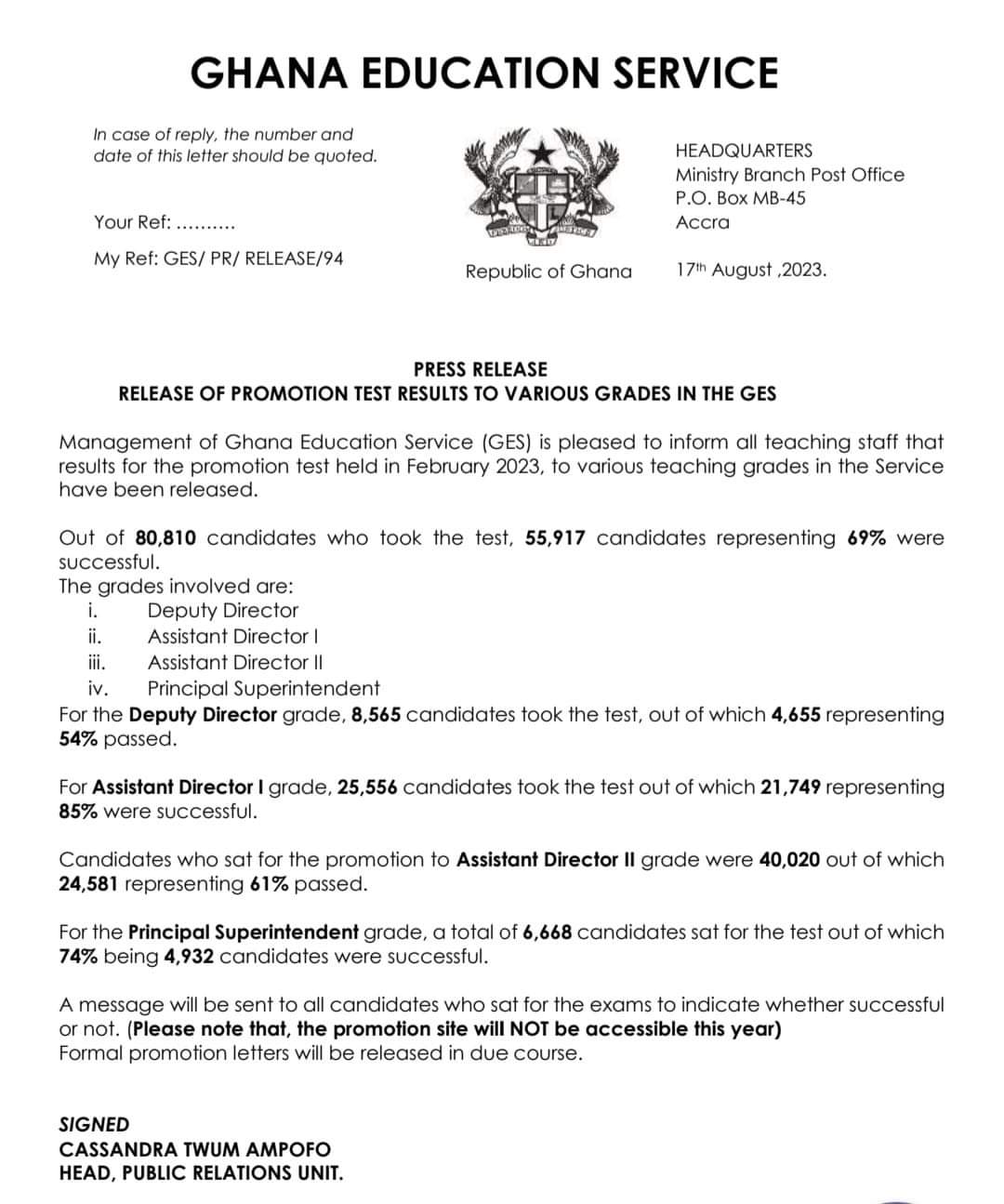
Results of the recent teachers’ promotional examination, administered by the Ghana Education Service (GES), have unveiled a 69% achievement rate for candidates who participated in the February test.
This implies that 31% of examinees fell short of meeting the necessary criteria for advancement.
From a total of 80,810 participants, 55,917 individuals have triumphed, securing their progression into higher educational leadership positions.
The examination acted as a gateway for those aspiring to roles such as Deputy Director, Assistant Director I, Assistant Director II, and Principal Superintendent within the Deputy Director grade.
GES conveyed that candidates will receive notification of their success or lack thereof via text message.
“A message will be sent to all candidates who sat for the exams to indicate whether successful or not. (Please note that, the promotion site will NOT be accessible this year) Formal promotion letters will be released in due course,” GES stated in a release.
“A message will be sent to all candidates who sat for the exams to indicate whether successful or not. (Please note that, the promotion site will NOT be accessible this year) Formal promotion letters will be released in due course.”
The Electoral Commission (EC) has revealed that the voter registration process for individuals who have turned 18 will begin from September 12 to October 2, 2023.
The registration will occur at all 268 district offices nationwide. During this period, the EC will also provide the option for replacing a voter’s ID card at a fee of GHC10.
The announcement was made during a press conference named ‘Let the Citizen Know’ held in Accra.
Jean Mensa, the Chairperson of the Electoral Commission, addressed the media, stating that the voter’s registration exercise aims to include Ghanaians who have attained the age of 18 since the last registration in 2020.
It will also cater to those older than 18 who couldn’t register in 2020 due to various reasons.
Jean Mensa explained, “The EC will conduct the voter’s registration across all 268 district offices of the Commission. The exercise is scheduled from September 12 to October 2.”
Furthermore, she disclosed that the District Level Assembly Elections (DLE) are set for December 19, 2023.
The elections will encompass all 6,272 electoral areas across districts, with the exception of Nkoranza North and South in the Bono region. These two districts will not hold elections until 2025.
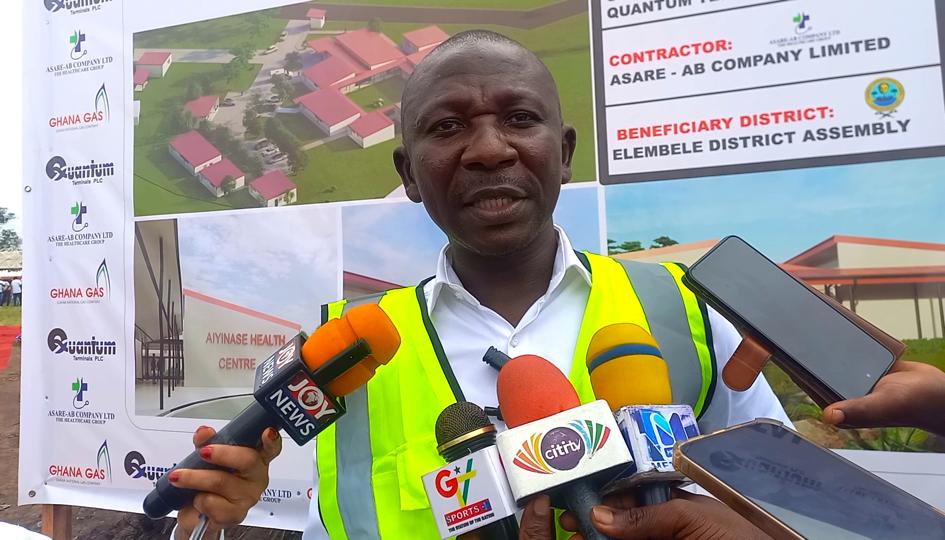
Ghana National Gas Company (GNGC) and Quantum Terminals (QT) have jointly launched the reconstruction of Anyinase Health Centre into a 20-bed facility which will cost $2 million.
The move addresses the deteriorating state of the health center and its limited services for over a quarter of Ellembelle District’s population in the Western Region.
Despite its importance to residents and GNGC workers due to its proximity to the company’s headquarters, the center had suffered decay and offered only outpatient services.
The Corporate Responsibility and Community Relations Manager at GNGC, Stephen Donkoh, stated that the 12-month upgrade aligns with the company’s health support policy for the community.
“How do we give back to the community? We have five thematic areas– provision of educational infrastructure, health, sports, water and sanitation and skills building. Today is the first time we are fulfilling our policy on health delivery, so far as Ellembelle District is concerned, in appreciation of the support that the people have given to the company. Upon completion, it will enable the Ayinase health centre to offer 80 percent of services offered by the Ekwe District Hospital”, he added.
QT’s Brands and Communication Manager, Samuel Bonuedie, highlighted their commitment to community welfare, emphasizing the positive impact of their operations.
The health center’s revitalization is a shared goal between QT and Ghana Gas, aimed at enhancing healthcare standards.
Ellembelle District Health Director, Dr. Augustine Kwesi Amoakoh, praised GNGC and QT for enabling the health center to provide comprehensive emergency obstetric care and extended in-patient services.
MP for Ellembelle, Emmanuel Armah Kofi-Buah, and District Chief Executive, Kwasi Bonzoh, lauded GNGC and QT as responsible corporate entities in Ellembelle.
ECOWAS Commissioner for Political Affairs, Peace, and Security, Abdel-Fatau Musah, has defended the regional organization’s stance on military intervention in Niger, describing calls for the decision to be reversed as unjustified.
Speaking at the Extraordinary Meeting of the ECOWAS Committee of Chiefs of Defence Staff held in Accra, Ambassador Musah highlighted the severity of the situation in Niger.
The purpose of the meeting was to strategically outline an intervention plan for Niger, pending approval from ECOWAS leaders.
Ambassador Musah affirmed that if ongoing diplomatic efforts fail, the standby force is prepared to take resolute action.
He emphasized ECOWAS’s unwavering commitment to ensuring peace and stability within Niger.
Underlining the significance of democratic governance, Ambassador Musah stressed the utilization of all available means to guide Niger back to its rightful democratic trajectory.
“In case of all other options proving futile, the brave West African forces—both military and civilian—are ready to fulfill their duty. Your bravery has been consistently demonstrated,” Ambassador Musah conveyed.
He further stated, “We will ensure the restoration of constitutional order in the country through every means at our disposal.”
Ambassador Musah reiterated that ECOWAS’s dedication mirrors its commitment to preserving democratic principles and safeguarding the political landscape of the region.
Abdul-Fatau Musah also unveiled the substantial resources and capabilities that ECOWAS possesses to tackle the situation.
He disclosed that the regional body has the necessary assets to effectively address and counter the disruptions caused by the Niger junta, working towards reestablishing democratic governance in the nation.
Former Deputy Minister of Trade and Industry, Robert Ahomka-Lindsay, has proposed a review of the Ghana Investment Promotion Centre Law 2013, stating that its relevance has waned.
The law [Act 271] currently prohibits foreigners from engaging in certain trades or enterprises reserved for Ghanaian citizens.
The Ghana Statistical Service, in its inaugural Trade Vulnerability Report, highlighted a significant trade imbalance for Ghana in 2022. Imports surpassed exports by GH₵4.5 billion, indicating a substantial economic challenge.
In an interview with the media, Mr. Ahomka-Lindsay stated that, “To be candid, the GIPC 2013 law has outlived its utility and requires revisiting.”
The former deputy trade minister underscored the importance of governmental collaboration with investors to process Ghanaian goods, thereby enhancing the country’s competitiveness on the global stage. He advocated against allowing foreigners to trade in products intended for local consumption. Drawing attention to China and the United States as examples, he highlighted their trade strategies that align with their requirements, contrasting them with Ghana’s approach.
Mr. Ahomka-Lindsay urged the government to articulate its trade objectives, allowing regulations and laws to mirror these goals.
He elaborated, “Part of our dilemma is that we haven’t clearly defined our aspirations and aligned our legal framework accordingly. Countries like China, the U.S., and Asian nations have clear goals and they adjust their policies accordingly. If Ghanaians require bread, for instance, and we can’t produce it ourselves, it doesn’t mean we lack the capacity to create the necessary inputs. We possess ample cocoa beans that can be processed, so we should attract Foreign Direct Investment (FDI) to establish processing plants.”
“Foreign Direct Investors should refine our products, enhance their value, and contribute to the growth of our cocoa exports. FDI should be strategically integrated into our economic objectives,” he emphasized.
Mr. Ahomka-Lindsay lamented the lack of value addition in many Ghanaian businesses, hindering their competitiveness. He posed the question, “How can we compete when 80 percent of our businesses lack value-added components?”
When queried about whether Ghana‘s economy is excessively liberalized, he responded, “Our challenge lies in misaligned priorities.”
The National Council for Curriculum and Assessment (NaCCA) intends to implement Quick Response Codes (QR codes) on textbooks, aimed at distinguishing authorized from unauthorized materials.
During an examination of chosen public and private schools in Accra, NaCCA unveiled this strategy.
Director-General of NaCCA, Professor Edward Appiah, noted the prevalence of unapproved textbooks in some schools. QR codes, he explained, are being introduced to guarantee the use of authorized materials.
Mr Appiah added, “What we have realised is that in a couple of weeks and days, you hear NaCCA’s name, and it is about whether the books are approved or bad books are in the system. So we have taken it upon ourselves to visit the schools, monitoring and sensitising. Because we realise that sometimes the schools do not even know the difference between approved and unapproved books. And the market is such that publishers will want to sell, so they will bring out anything, and we think that we have to come out this time to sensitise the schools, especially the private schools.”
“So far we have gone to some of the private and public schools. We saw one or two books which were not approved… Of course, we are coming up with QR codes which will be on all approved books so that anybody who buys such books, you can just scan, and you will be able to know whether the book has been approved”.
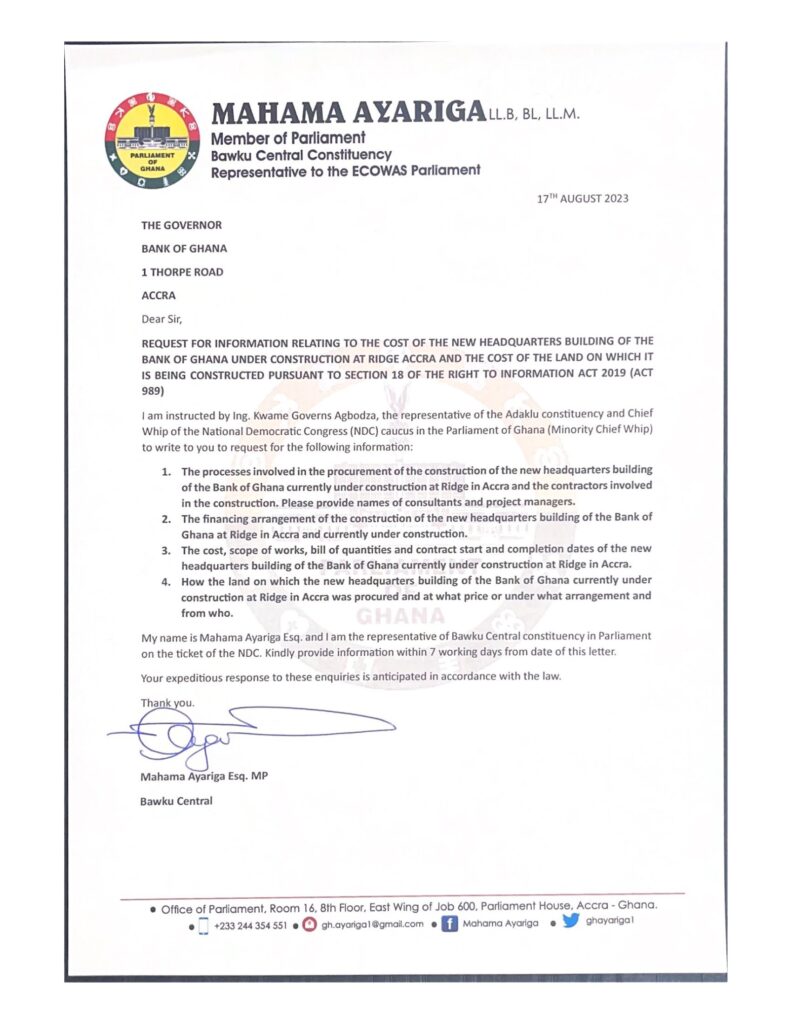
The Minority caucus within Parliament has issued a demand to the Bank of Ghana (BoG), stipulating a seven-day timeframe for the provision of details concerning the expenses related to its forthcoming headquarters in Accra, as outlined in accordance with section 18 of the Right To Information Act (ACT 989).
The Minority caucus within Parliament has issued a demand to the Bank of Ghana (BoG), stipulating a seven-day timeframe for the provision of details concerning the expenses related to its forthcoming headquarters in Accra, as outlined in accordance with section 18 of the Right To Information Act (ACT 989).
The caucus is requesting various information from the bank, including details about the land procurement process for the new headquarters building, as well as the names of consultants and project managers.
This request was communicated through a press statement issued by Mahama Ayariga, the Member of Parliament for Bawku Central, who is also a private legal practitioner.
“My name is Mahama Ayariga Esq and I am the representative of Bawku Central constituency in Parliament on the ticket of the NDC. Kindly provide information within 7 working days from the date of this letter.
“Could you also provide clarification on the acquisition of the land on which the ongoing construction of the Bank of Ghana’s new headquarters at Ridge in Accra is situated? Specifically, we request information on the procurement process, the associated costs, the arrangement particulars, and the parties involved,” he added.
In response to the scrutiny, the central bank released a statement on August 9, explaining that a structural assessment had deemed the current Bank of Ghana (BoG) Head Office building, constructed in the 1960s, inadequate for its purpose.
It further disclosed that the building could not withstand significant seismic activity or strong winds, and that the decision to construct a new headquarters aimed to support operational efficiency and establish a potential future regional Central Bank headquarters.
The controversy was sparked when the Minority Leader, Dr. Cassiel Ato Forson, revealed that the BoG was allocating $250 million for a new headquarters while facing financial challenges.
Dr. Forson accused the Governor of printing money to fund the project, claiming that the Bank was financially strained.
He demanded the Governor and his deputies’ resignation within 21 days, stating that their actions set a concerning precedent. Dr. Forson stressed that their call for resignation was driven by concerns over accountability and transparency.
“The Bank of Ghana does not have money but spending $250million for a new head office, which means he is printing additional money to finance this project,” Dr Forson said.
“We have to get this Governor out and let us have a new Governor. If we allow him to stay in the office, we will set bad precedent for future managers to do the same,”
“We demand the immediate resignation of the Governor and his deputies within 21 days. We will march to occupy the central bank to save the Bank of Ghana if he fails to reign. The March will ensure accountability. He has messed us up so much that we cannot wait to see his back,” he said.
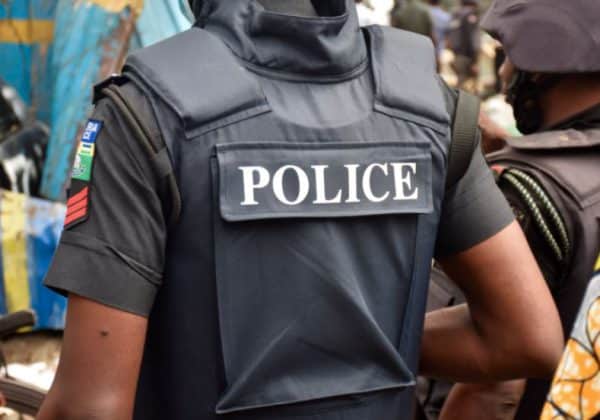
A 17-year-old young man, Kwesi Boateng has lost his life following an alleged assault by two police officers in Mamaso, Birem North District of the Eastern Region.
The grieving family is fervently seeking justice in response to this heartbreaking incident.
Prior to his untimely demise, Kwesi Boateng was employed at a car wash facility in Maamaso, a neighborhood near New Abirem in the Eastern Region.
According to accounts from friends and family, the two police officers purportedly subjected the teenager to physical violence due to what they deem a minor mistake.
A colleague of the deceased shared his recollection: “I was in the midst of working on a vehicle when the police officers arrived. Kwesi borrowed the pressure washer from me to clean his carpet. In the process, water accidentally splashed onto the policemen. They confronted Kwesi, and although he explained that it wasn’t intentional, they grew agitated.”
He further explained: “The situation escalated, and they reported the incident to the car wash owner. Despite the owner’s apologies, I witnessed one of the officers forcefully knocking Kwesi to the ground.”
The father of the deceased, Chairman Akimodis, expressed that his son lost his life due to the injuries inflicted by the officers.
“My son was brutally beaten. He succumbed to his injuries shortly after we transported him to the Abirem Police Station. An extensive investigation is imperative to identify those responsible for my son’s death. If justice is not served, I will employ all means at my disposal. I hail from Larteh, and I am prepared to rally the entire extended family of the policemen if necessary.”
Following the assault, the victim was admitted to the New Abirem Government Hospital before his unfortunate passing.
Although details of the deceased’s condition during his hospitalization remain undisclosed by the New Abirem Government Hospital, Dr. Sekyi Attaa Larbi, a medical doctor at the facility, cited legal restrictions on sharing patient information.
“By legal guidelines, I am prohibited from revealing a patient’s information to a third party. Regrettably, I cannot comply with your request.”
The Eastern Regional Police Command has taken custody of the deceased’s body from the I & I Private Mortuary in Afosu for an autopsy to be conducted in Accra, without the accompaniment of family members.
Family members, however, have contested this action, making their presence felt at the mortuary and demanding the return of the body. Rebecca Owusu, the elder sister of the deceased, articulated their stance:
“We insist on reclaiming my brother’s body. How could the police take the body away without informing us? This document is evidence that a body has been deposited here. Our demand is clear: we want our brother’s body back.”
The Member of Parliament representing North Tongu, Samuel Okudzeto Ablakwa, has brought to light a significant surge in the expenses associated with the new Bank of Ghana (BoG) headquarters.
The project’s original estimated cost of $80 million has skyrocketed to an astonishing $250 million at the present juncture.
In an extensive message posted on his Facebook account, Ablakwa also asserted that a construction company, designated through a singular-source procurement process by the Public Procurement Authority (PPA) for the venture, lacks proper registration within the country.
This startling disclosure has deepened suspicions surrounding irregularities and potential improprieties throughout the selection and authorization procedure.
The MP for North Tongu further emphasized that a distinct company was granted PPA approval for overseeing project management services a full three months before its official registration.
Ablakwa also rejected assertions that the decision to construct a fresh headquarters for the Central Bank originated during the prior National Democratic Congress (NDC) administration.
“From the intercepted documents, procurement for the project did not commence under the NDC or during the tenure of Hon. Ato Forson as Board Member, neither did it start during the presidency of H.E. John Mahama, contrary to the vicious fabrications by some desperate NPP apologists.
“The BoG’s unacceptable use of the Restricted Tendering Method amounts to a blatant violation of the Public Procurement Act, 2003 (Act 663) as amended in Act 914. Section 38 of Act 663 provides a limited scope for the use of Restricted Tendering in circumstances where goods, services or works are available only from a limited number of suppliers or contractors;
“From the intercepted documents, the BoG handpicked the following companies: i) Messrs. WBHO Ghana Limited, ii) Messrs. Man Enterprise, iii) Messrs. DeSimone Limited, iv) Messrs. Ronesans Holdings and v) Messrs. Goldkey Properties;
“It is not clear what criteria the BoG used in selecting its preferred 5 companies when Ghana’s built environment can boast of many established and celebrated construction firms such as Consar, Berock, Maripoma, Mawums, M. Barbisotti, First Sky, Antartic, Ussuya, Regimanuel, and so on and so forth.”
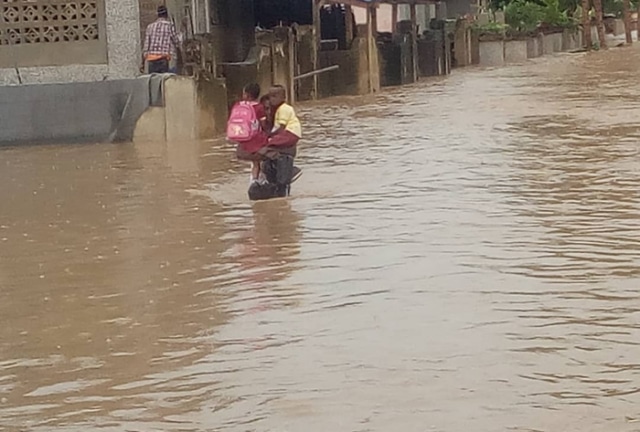
Heavy rainfall in various parts of the North East Region, has claimed five lives as well as leaving several injuries.
The disaster unfolded with four individuals losing their lives in the floodwaters of the East Mamprusi and West Mamprusi municipalities.
Additionally, a person was tragically killed when a building collapsed in the Yunyoo/Nansuan District.
The victims’ bodies were discovered days after the torrential downpour wreaked havoc across the region, with drainage systems and ponds becoming their final resting places.
The North East Regional Director of the National Disaster Management Organisation (NADMO), John Kwaku Alhassan, confirmed these distressing events to the media.
He added that the deceased have been handed over to their grieving families for proper burial rites.
Alhassan’s team is actively assessing the extent of the devastation caused by the floods. The goal is to provide prompt emergency relief to the affected individuals.
Alhassan noted the grim reality that the flooding situation is worsening, causing extensive property damage throughout the region.
“The situation is not too good because some of the areas are being cut off, with other buildings collapsing,” he stated.
NADMO is also proactively engaged in raising awareness among residents living along the White Volta. Through community announcements in churches and markets, people are being urged to relocate to higher ground to preempt further catastrophes.
Background:
The aftermath of the downpour resulted in severe inundation of parts of the West Mamprusi and East Mamprusi municipalities.
Notably, Walewale, the capital of the West Mamprusi Municipality, became isolated from Nalerigu, the regional capital.
This isolation was caused by the destruction of a bridge and a dam at Tinguri due to the floods, rendering the primary road connecting the two towns impassable.
The repercussions of this disaster left residents of the affected areas without homes, while travelers between Walewale and Nalerigu were stranded due to the inaccessibility of the route. Countless individuals were displaced, and valuable assets including houses, farmlands, livestock, and property were swept away by the deluge.
Among the affected communities are Gaagbini, Tinguri, Mimima, Kuruguduri, Walewale, Nalerigu, Yunyoo, and Chereponi.
A medical condition characterized by inflammation of the liver, Hepatitis, poses a significant threat to human health due to its diverse transmission modes and potential impact on survival.
The Director-General of the Ghana Health Service (GHS), Dr. Patrick Kuma-Aboagye, emphasizes that despite its severity, hepatitis is not a death sentence.
Early detection and treatment play a crucial role in preventing the progression of the disease to more severe stages, such as chronic hepatitis or cirrhosis.
According to Dr. Kuma-Aboagye, timely identification of viral hepatitis is essential to initiate treatment promptly, which in turn prevents disease advancement, transmission, complications, and overall public health issues. Regular screenings, particularly for high-risk populations, are pivotal for detecting infections early and ensuring appropriate medical intervention.
The mode of viral hepatitis transmission, primarily through body fluids, renders everyone susceptible to infection, potentially leading to serious consequences. Transmission can occur through various means, including unprotected sexual contact, sharing contaminated needles or syringes, mother-to-child transmission during childbirth or breastfeeding, consumption of contaminated food or water, and direct contact with infected feces.
Dr. Kuma-Aboagye emphasizes that the most accessible method to prevent and manage infections is screening.
Hepatitis can silently infiltrate the body, causing damage before symptoms emerge. Early detection through screening enables timely intervention, preventing liver damage and reducing the risk of severe complications. It’s worth noting that asymptomatic individuals can still transmit the virus to others.
The Director-General urges all citizens to undergo screening, stressing that this step is vital for achieving Ghana’s goal of diagnosing 90% of Hepatitis B and C cases and providing treatment for at least 80% of affected individuals, thereby curbing the growing disease burden. He highlights that while some forms of hepatitis are curable, others are manageable, allowing infected individuals to lead normal lives if detected and treated early.
Viral Hepatitis
Hepatitis denotes liver inflammation and is commonly triggered by viral infections. The five primary types of viral hepatitis—A, B, C, D, and E—are caused by distinct viruses, sharing similar modes of transmission through contact with infected individuals’ bodily fluids or blood.
Notably, the hepatitis virus is present in blood and certain bodily fluids, and transmission occurs when non-immune individuals come into contact with these fluids. Transmission can occur via various means, such as unprotected sex, needle-sharing, and mother-to-child transmission during childbirth.
Symptoms of viral hepatitis vary based on the virus type and infection stage. These include fatigue, jaundice, loss of appetite, nausea, and vomiting. Importantly, not all infected individuals exhibit symptoms, especially in the early stages of infection.
Antiviral medications, vaccines, and interventions tailored to specific virus types (A, B, C, D, or E) can manage infections, prevent complications, and enhance recovery prospects. While no effective vaccine exists for hepatitis C, early diagnosis can mitigate resultant health problems and transmission risks.
Preventing viral hepatitis involves practicing good hygiene, getting vaccinated (where available), practicing safe sex, avoiding needle-sharing, and adhering to safe medical procedures.
Dr. Adwoa Agyei-Nkansah, a hepatologist, confirms the curability of Hepatitis C but highlights the obstacle of expensive testing and treatment costs, particularly for economically disadvantaged patients. Efforts are underway to subsidize diagnostic costs and encourage more individuals to seek medical attention, contributing to Hepatitis eradication.
Testing Hesitancy and National Burden
Despite a growing burden of hepatitis infections and fatalities in Ghana, diagnosis, treatment, and awareness remain low. Dr. Atsu Godwin Seake-Kwawu, the Programme Manager of the National Viral Hepatitis Control Programme, reveals that the country houses 1.5 million people with Hepatitis B and C, resulting in over 3,000 annual deaths from liver cancer and cirrhosis. However, testing hesitancy has led to only a small percentage of individuals with chronic Hepatitis B (HBV) and Hepatitis C receiving proper diagnosis and treatment.
Dr. Seake-Kwawu emphasizes the importance of testing, particularly for pregnant women, to ensure early treatment and prevent transmission to unborn babies. He notes that the World Health Organization (WHO) targets hepatitis elimination by 2030 and encourages Ghanaians to undergo regular testing to know their status and receive timely treatment.
The GHS is intensifying efforts to eliminate viral hepatitis, implementing initiatives such as screening pregnant women for the condition and providing post-delivery vaccinations to curb virus spread. Dr. Seake-Kwawu underscores the significance of prevention, testing, treatment access, and chronic care, considering the expensive medication costs.
The Ghana Statistical Service (GSS) has announced its intent to conduct a comprehensive census on both informal and formal businesses across the country, aimed at boosting effective decision-making to foster business prosperity.
This census will be executed in two distinct phases.
The inaugural phase is scheduled for mid-October 2023, followed by the second phase in 2024.
The GSS underscores that this census will mark a significant improvement over economic censuses held since 1962, encompassing not only formal enterprises but also non-profit organizations.
At the Ghana 2023 Integrated Business Establishment Survey (IBES I) Stakeholders Consultative Meeting, Prof. Samuel Kobina Annim, the Government Statistician, emphasized the substantial benefits this survey will bring to the country. He outlined two key objectives of the census.
The first objective is to aid businesses in escaping the limitations of informality. The Service recognizes that various perspectives classify businesses and workers as informal. The census seeks to align with different development partners and policy instruments to address this informality challenge.
The second advantage will emerge during the second phase of the 2023 Ghana Integrated Business Establishment Survey. It will focus on overcoming challenges faced during the pandemic, specifically in providing data to navigate these difficulties.
Prof. Annim reiterated the paramount significance of this data collection initiative in shaping policymaking. He earnestly appealed to all business owners for their cooperation in this endeavor.
The Member of Parliament for Ningo Prampram, Sam Nartey George, has cautioned President Akufo-Addo against hastily engaging in a military intervention in Niger in the wake of the recent coup.
He has urged the President to avoid putting Ghanaian soldiers’ lives at risk.
Using Twitter as his platform, the MP emphasized that Ghana’s military currently stands as a testament to the commitment and professionalism of the nation’s officers.
However, he expressed concern that the government has not adequately invested in the necessary tools and equipment to support them.
He wrote, “Dear President @NAkufoAddo, you know better than us all the pitiful state of our armed forces for foreign military intervention in another sovereign state. You know that despite the professional attitude and disposition of our gallant officers, you have failed to retool and equip our forces. Do not send them to untimely useless death!”
Invoking international law, the lawmaker cited Article 2(4) of the United Nations Charter, which prohibits any state from taking illegal actions that undermine the sovereignty of another nation.
He also challenged the notion of military intervention being considered by President Akufo-Addo and other West African leaders within the Economic Community of West African States (ECOWAS).
“Article 2(4) of the UN Charter prohibits the illegal action you and your cronies in ECOWAS are considering. Even if you wanted to hide under Article 42, do you have a UNSC resolution authorising an intervention? There is no clear evidence of the 3-basis required to trigger R2P so respect the sovereignty of Niger,” he stated.
He advocated for a more pragmatic approach involving non-kinetic measures to engage, rather than an aggressive stance aimed at appeasing external powers. He insisted that any decision to involve the Ghana Armed Forces in a senseless war should require the approval of Parliament, emphasizing the demand for the same.
Sam George further recommended focusing the nation’s limited resources on improving the living conditions of Ghanaians and refraining from interfering in other countries’ affairs. He concluded by using the phrase “‘Dzi wo fie asem’ Mr President,” which translates to “Mind your business, Mr. President.”
A contender for the flagbearer position of the New Patriotic Party (NPP), Dr. Owusu Afriyie Akoto, has strongly criticized the party’s leadership for its handling of the ongoing race to select the party’s presidential candidate for the 2024 elections.
During an interview with the media, Dr. Afriyie Akoto, a former Minister of Food and Agriculture, accused the party’s leadership of displaying bias in their approach to dealing with individuals who are disregarding the party’s rules.
He expressed concern that the unfolding events in the campaign for the primaries are indicative of a lack of discipline within the NPP.
He highlighted that while high-ranking officials within the party and the government openly endorse a particular candidate without facing repercussions, those who declare their support for him and other candidates are facing punitive measures.
“There is some sort of force being used – intimidation… those contractors who do not seem to be for this candidate are not paid when they complete their jobs. And they have taken huge sums of money from the banks and the interest rates are 35%, 40%. They are not paid and are being punished for supporting someone else.”
“But if somebody has done a job or a contract with the government, and they are not paid, while are those who declare for that particular candidate are paid,” he said.
Dr. Afriyie Akoto made allegations about contractors who are openly supporting certain candidates in the race being denied payment for their work.
He claimed that these contractors are being subjected to some form of coercion and intimidation, resulting in their non-payment, despite having completed their contracts.
He stated that these contractors have borrowed substantial amounts from banks with high interest rates and are consequently suffering financial hardships due to the lack of payment and the associated interest costs.
The NPP is currently conducting its presidential primaries, with ten individuals vying for the position.
The primaries are scheduled for August and November 2023. A super delegate conference is planned for August 26, 2023, to narrow down the number of contenders to five, while the main primaries are set to take place on November 4, 2023, to select the party’s presidential candidate for the upcoming 2024 elections.
The list of candidates includes notable figures such as Vice President Dr. Mahamudu Bawumia, former Trade Minister Alan Kyerematen, energy expert Kwadwo Poku, Attorney General and Minister of Justice Joe Ghartey, former General Secretary of the NPP Kwabena Agyei Agyepong, MP for Assin Central Kennedy Ohene Agyapong, former MP for Offinso North Dr. Kofi Konadu Apraku, and former Energy Minister Boakye Agyarko.
The Member of Parliament (MP) representing Ningo-Prampram in the Greater Accra region, Samuel Nartey George, has expressed apprehensions regarding the potential repercussions of employing the military to mediate in Niger’s leadership turmoil.
He voiced his concerns about President Akufo-Addo’s failure to adequately equip and strengthen the Ghana Armed Forces (GFA), despite the unwavering dedication and professionalism exhibited by its officers.
President Akufo-Addo has announced Ghana’s commitment to providing troops for a regional standby force aimed at reinstating the deposed president, Mohamed Bazoum, and his government in Niger.
This initiative would involve engaging Niger’s soldiers who were responsible for the ousting and currently hold control.
“Focus our scarce resources on improving the living conditions of Ghanaians and stop poking your nose in other Country’s matters. Dzi wo fie asem Mr President,” he said.
On August 16, Sam George posted a message urging President Akufo-Addo to allocate the nation’s limited resources towards improving the well-being of Ghanaian citizens, rather than involving the country in external conflicts.
He additionally implored President Akufo-Addo to refrain from making decisions that could result in unnecessary loss of life and untimely confrontations.
“Direct our scarce resources towards enhancing the lives of Ghanaians and abstain from interfering in the internal affairs of other nations. Attend to your own concerns, Mr. President,” he commented.
The MP referred to Article 2(4) of the United Nations Charter, arguing that this provision restricts the use of military interventions, a path being contemplated by “you [President Akufo-Addo] and your associates in ECOWAS.”
He questioned the validity of using Article 42 as justification and asked whether there existed a United Nations Security Council resolution sanctioning such an intervention. He pointed out that the necessary three criteria for invoking the Responsibility to Protect (R2P) principle were not clearly evident, underscoring the importance of respecting Niger’s sovereignty.
Mr. George further urged the president to adopt a thoughtful and judicious approach for resolving the crisis in Niger, rather than pursuing military intervention that might align with the interests of external powers.
He emphasized that any decision to commit Ghana Armed Forces personnel to a futile and unnecessary conflict should require the approval of Parliament, a demand he put forth.
The phrase ‘Dzi wo fie asem,’ which translates to “mind your own business,” gained prominence in politics when the late President John Evans Atta Mills, faced with pressure from political adversaries to interfere in the turmoil of Cote d’Ivoire at the time, asserted that he preferred to concentrate on domestic matters rather than meddle in the affairs of other sovereign nations.
The Kumasi Metropolitan Assembly (KMA) has decided to implement a fine of GH¢500 for the release of tricycles that are seized for violating the ban on tricycle activities within the Central Business District.
Numerous tricycles were confiscated, and their owners were apprehended during the Assembly’s enforcement of the ban on August 1.
Although the Assembly announced the ban on July 25, it encountered strong opposition from operators, resulting in a gradual rollout.
However, the enforcement was ramped up on August 1. Currently, twelve defiant operators are undergoing trial and have been granted bail at a rate of GH¢30,000 each.
During its 2nd Ordinary Meeting on July 28, the Assembly passed a resolution stipulating that any subsequently impounded tricycles would be required to pay GH¢500 before being released.
Furthermore, taxis and trotros found engaging in illegal loading at unauthorized areas will also face a fine of GH¢500.
Sprinter and bus operators will be subject to fines of GH¢800 and GH¢1000, respectively, for similar offenses.
Cargo vehicles that violate the same directive will be subject to fines ranging from a minimum of GH¢600 to a maximum of GH¢1500.
The President of the Ophthalmology Society of Ghana, Dr. Dziffa Ofori-Adjei, has outlined the process of obtaining cornea tissues for transplants in the country.
She highlighted that while living donors are often used in other transplantations, such as kidney transplants, cornea transplants can only be performed using cornea tissues from deceased individuals.
In an interview with the media, Dr. Ofori-Adjei advocated for the implementation of legislation in Ghana to support these transplantations.
She clarified that cornea transplant involves taking cornea tissues from a deceased person and transplanting them into another individual who needs them for vision restoration.
Unlike kidney transplants, where living donors can be utilized, cornea transplants solely rely on donors who have passed away and are no longer using their eyes.
Dr. Ofori-Adjei explained the process further, stating that individuals who wish to donate their organs, including their corneas, typically indicate their intention through signed agreements before their passing. These signed agreements form the basis for cornea transplants and similar procedures.
Dr. Dziffa Ofori-Adjei, along with a Consultant Ophthalmologist Surgeon and cornea specialist at the Korle-Bu Teaching Hospital, Dr. Gladys Fordjour, further emphasized the importance of enacting legislation on organ transplants in Ghana.
Corneal blindness is a significant public health concern in the country, affecting numerous individuals annually.
Cornea transplantation has the potential to restore sight and enhance the overall quality of life for these individuals.
However, the absence of a comprehensive legal framework regarding cornea donations has hindered the realization of the benefits that this life-altering procedure can provide.
Three years ago, a wealthy and well-liked man received a tip-off suggesting that his wife was involved in a romantic relationship with his chauffeur.
In response, he enlisted the services of a detective who returned with a collection of unsettling photographs capturing his wife and the driver in various luxurious settings, confirming the husband’s suspicions.
When he confronted his wife, she admitted to the affair but also claimed that her husband’s actions had driven her to it.
The man was taken aback by his wife’s explanation. Through tears, he expressed his emotions, saying, “I’ve provided homes for you, replaced your cars every two years, financed your global travels, and offered you unlimited financial resources. Why would you do this to me, and why with my driver? Why… why…”?
The truth is, many men unknowingly push their partners away. Often, we inadvertently hurt and mistreat them, disregarding the fact that women possess hearts that can be shattered by our deeds and oversights. At times, we fail to recognize our transgressions until it’s too late.
What prompts women to distance themselves?
Excluding her from discussions: In a relationship, collaborative decision-making holds significant value to a woman. This practice makes her feel appreciated and valued. A partnership built on equality fosters a stronger connection, as both partners define goals and work collectively toward achieving them.
Regrettably, many Ghanaian men hold the belief that their wisdom surpasses that of their female counterparts. Consequently, they may disregard their partner’s contributions, making her feel isolated and potentially causing her to drift away.
Neglecting to show appreciation: Women invest a great deal in their relationships. They exhibit a higher level of empathy compared to men and are often willing to make substantial sacrifices for the sake of the relationship. It’s essential for them to know that their efforts are acknowledged.
Expressing gratitude generates feelings of value, importance, affection, and desire. Simple phrases such as “I love you,” “thank you,” and “you mean so much to me” hold immense significance. Without appreciation, a woman’s motivation to give her best dwindles, leading to potential disengagement.
Treating her as you would a man: Men and women possess distinct attributes—both physically and emotionally. For instance, women tend to process words more deeply. A seemingly minor comment to a man might carry significant weight for a woman. Criticizing your male friend’s dirty shirt might be brushed off, but such a remark can deeply wound a woman. Failing to treat your partner as a unique individual can unknowingly drive her away.
Overlooking her emotional needs: Relationships are built on fulfilling needs. Among a woman’s primary requirements are affection, companionship, commitment, and financial security. She longs for romance—expressions that foster closeness, passion, and intimacy. Gentle gestures like touch, cuddling, and embraces matter immensely. Regular, spontaneous gifts serve as demonstrations of love and goodwill.
Your presence and support provide her with a positive self-image, security, and tranquility. Your significance to her transcends material possessions like cars, money, and houses. Engaging in enjoyable activities together and spending quality time enriches her experience. Your partner seeks emotional security, your honesty, openness, and reliability.
Are you unintentionally pushing your partner away?
Maintaining a strong bond with your partner hinges on seemingly small gestures such as spending time together, acts of service, physical touch, and thoughtful gifts. These seemingly modest acts are actually monumental.
Your partner yearns for your companionship more than anything else. It’s essential to treat her with the respect you’d expect for anyone you care about. By making her feel cherished as a woman, you’ll avoid pushing her away.
Elevate your partner as your foremost priority. Treating her well transforms her into an exceptional woman, enabling her to reach her full potential. Prioritize her happiness, and in turn, you’ll find your own happiness. When you ensure her well-being, you forge a truly harmonious partnership.
The Director for the North East Region at the National Disaster Management Organisation (NADMO), Alhassan John Kweku, has emphasized the pressing need for additional food relief supplies to address the evident threat to food security in the area.
He expressed that the aid received from the NADMO headquarters has proven to be significantly insufficient to adequately support the substantial number of individuals affected by the floods.
On August 9, heavy rainfall in certain parts of the North East Region resulted in severe flooding in numerous communities throughout the vicinity.
The floodwaters completely submerged extensive hectares of farmland, exacerbating the challenges concerning food security.
Furthermore, segments of the Walewale-Gambaga-Nalerigu highway were washed away by the deluge.
Tragically, the floods have claimed the lives of five individuals.
Member of Parliament for Assin Central Constituency and Chairman of the Defence and Interior Committee, Kennedy Ohene Agyapong, has expressed his support for the deployment of Ghanaian troops to Niger if the Economic Community of West African States (ECOWAS) decides on a military intervention.
ECOWAS has urged member states to establish a standby force as a potential solution to the crisis in Niger.
The regional body aims to secure the release of President Mohamed Bazoum from house arrest and reinstate him as the constitutionally-elected head of state.
Scheduled for August 17, ECOWAS’ Committee of Chiefs of Defence Staff will meet in Accra to determine the best course of action for restoring constitutional order in Niger.
In an interview with the media, Agyapong, a former member of the ECOWAS Parliament, asserted that a combined West African military effort would act as a deterrent to other states in the sub-region.
“We have an obligation as Ecowas countries and you cannot run away from it,” he said.
He highlighted that ECOWAS member countries have a responsibility to address such situations and prevent coup attempts. Agyapong emphasized that the situation in Niger should be used as an example to discourage future coup d’état attempts, considering the increasing frequency of such incidents in the region.
“should serve as a deterrent because coups d’etat is becoming rampant in Ecowas so we should use Niger to serve as a deterrent and say anybody who tries again, Ecowas will come after them and this is not the first time”.
Recognizing Ghana’s vital contribution to the force, he labeled Ghana as the second most significant country in West Africa and stressed the nation’s importance within ECOWAS.
“In fact, the second most important country in West Africa is Ghana. I’ve been an Ecowas member [of Parliament] before so it is an obligation.”
Agyapong asserted that allowing coups to occur within the sub-region could have serious consequences for political stability, leading to arrests, dissolution of parliaments, and curbs on press freedom.
“If we make a mistake and we allow coups d’etat all over West Africa, tomorrow it will be me and you and the first thing is that the two of us will go to jail first before anybody.
“They will dissolve Parliament, they will arrest journalists, check all the coups. So, the security of this county is very very important and no matter the amount of money prevention is better than cure. Prevention will not cost you as much as you are curing it,” he added.
He emphasized the significance of prioritizing security and prevention measures to avoid costly remedies.