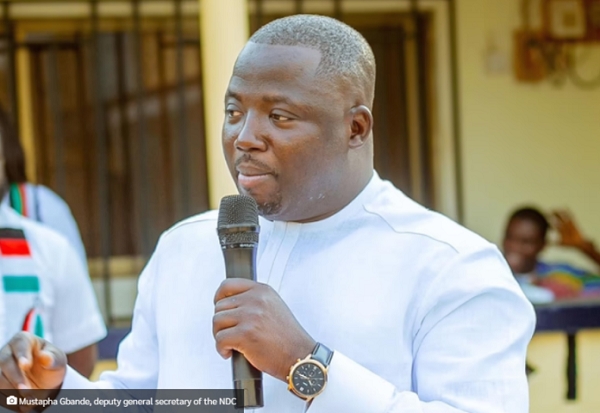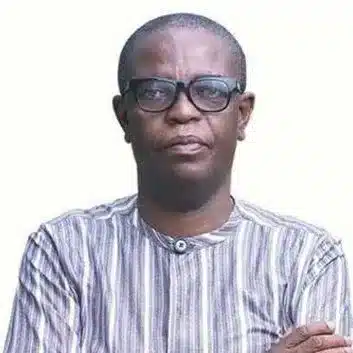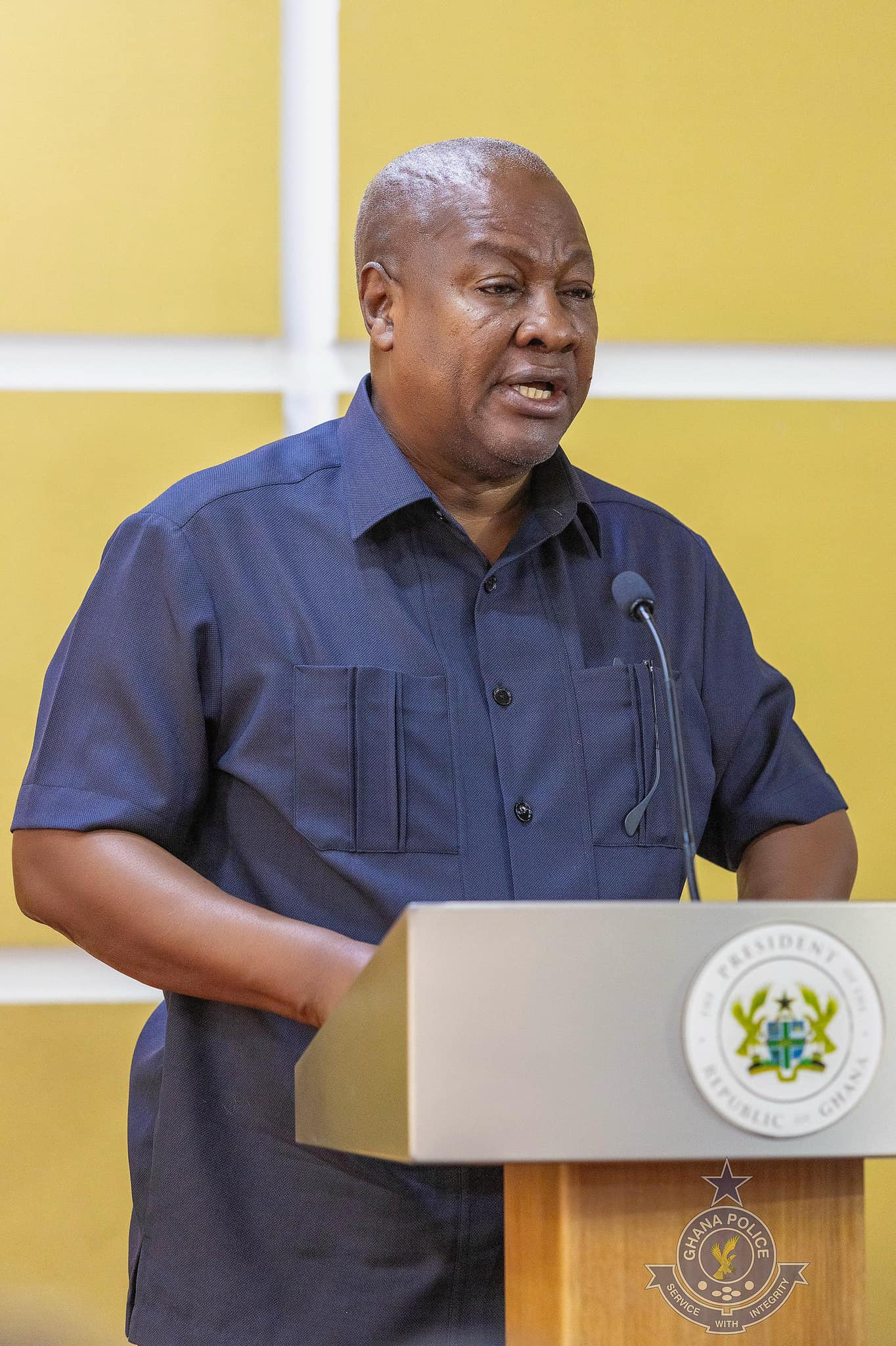
The Supreme Court has set April 30 to deliver its ruling on an application by Akwatia MP, Ernest Kumi, challenging an injunction that initially barred him from being sworn in.
Despite the injunction, Kumi went ahead with his swearing-in on January 6, leading to contempt charges at the High Court. He is now asking the Supreme Court to nullify the injunction and prevent the High Court judge from presiding over the case.
His legal team, led by Gary Nimako Marfo, argues that the High Court lacked the authority to issue the injunction. They claim the case stems from an election petition filed by NDC parliamentary candidate Henry Boakye on December 31, 2024. However, they argue that under electoral laws, such petitions can only be filed within 21 days of the official gazette publication of election results. According to them, the official gazette was published on January 6, 2025, making the petition premature.
Boakye’s legal team, however, disputes this claim. Lead counsel Bernard Bediako Baidu insists that the Electoral Commission (EC) had already gazetted the results on December 24, 2024. He maintains that the document presented by Kumi’s lawyers is inaccurate, citing inconsistencies in the gazette number.
Meanwhile, the EC’s legal representative, Justin Amennuvor, pointed out that neither side presented the official gazette to the High Court before its decision. Instead, the judge relied on an online report referenced by the NDC’s legal team. He argued that the injunction should be overturned since it was issued without verifying the official gazette.
A five-member Supreme Court panel, led by Justice Gabriel Pwamang, will issue its final decision on April 30.
The Ga Traditional Council has officially announced a ban on drumming and noise-making as part of the traditional preparations for the upcoming Homowo festival.
In a statement released to the public, the Council specified that the ban will take effect from Monday, May 12, 2025, and will remain in place until June 12, 2025.
“The Ga Traditional Council hereby informs the general public that, as part of the customary rites leading to the annual Homowo festival, there will be a ban on drumming and noise-making within the jurisdiction of the Ga State from Monday, May 12, 2025, to June 12, 2025,” the statement read.
It further clarified that the Homowo festival is observed on different dates across the Ga State, and as such, communities including Osu, La, Nungua, Tema, Kpone, Prampram, and Ningo will impose their own restrictions after June 12, 2025.
Each of these traditional areas will provide further details regarding their specific timelines.
The Council also reminded the public that this ban is not only a cultural practice but also holds legal backing under the 1992 Constitution of Ghana.
The annual restriction on noise-making is a key ritual in the lead-up to the festival, observed in reverence of Ga traditions.
The following measures will be enforced during this period:
All worship centers are required to confine their activities to their premises.
Noise-making, including clapping of hands and the use of tambourines and other musical instruments, is prohibited.
The placement of loudspeakers outside of church and mosque premises is banned.
Roadside evangelism with megaphones and other loudspeakers should be completely avoided.
Funeral rites and related activities are also prohibited during this period and up to one week after the official ban is lifted. Funerals can resume starting Friday, June 20, 2025.
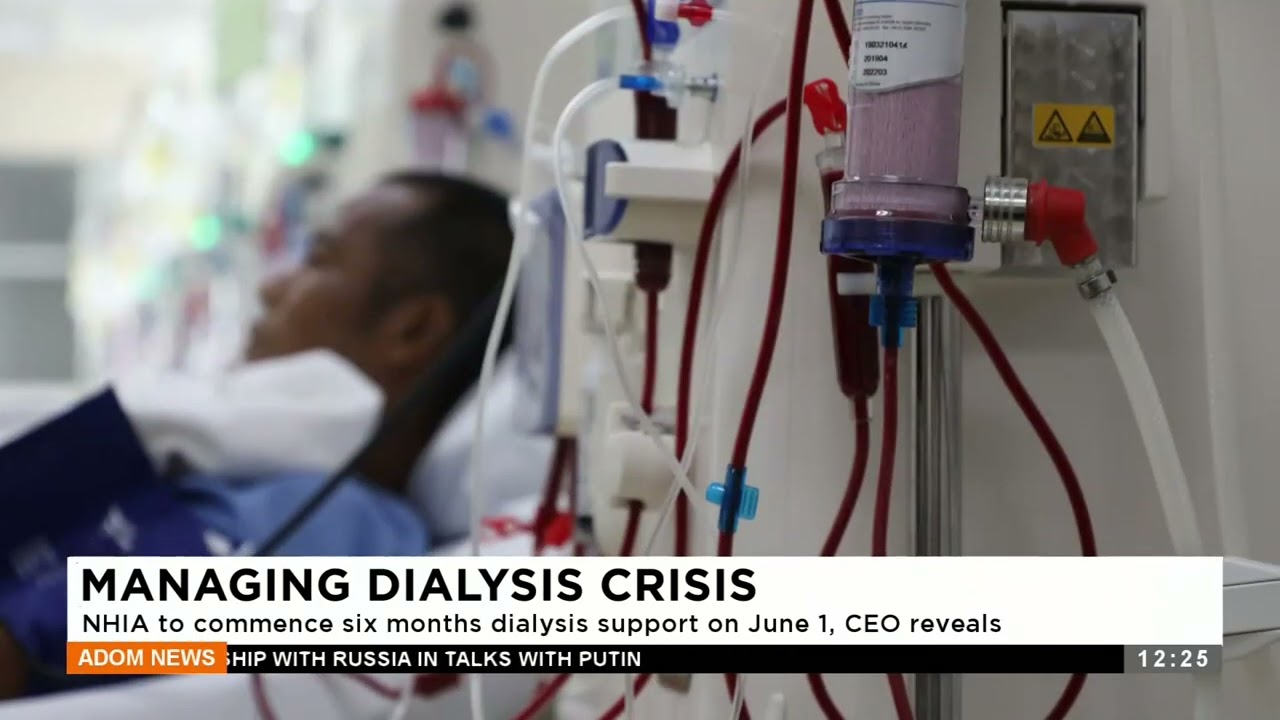
The National Health Insurance Authority (NHIA) is set to implement a new payment system that will see healthcare providers receive reimbursements on a weekly basis.
This follows the government’s decision to lift the cap on the National Health Insurance Fund (NHIF), a move announced by Finance Minister Dr. Cassiel Ato Forson during the 2025 budget presentation.
In a statement issued on March 25, 2025, NHIA Chief Executive Dr. Victor Asare Bampoe emphasized that this initiative aligns with President John Dramani Mahama’s commitment to strengthening the National Health Insurance Scheme (NHIS).
He assured that payments for vetted claims would now be processed swiftly and consistently.
To maintain the integrity of the scheme, the NHIA has cautioned healthcare providers against imposing unauthorized charges on patients.
The authority reiterated that claims submitted must accurately reflect services rendered, warning that any violations would attract strict penalties.
Additionally, the NHIA has pledged to enhance transparency by publishing payment records online and intensifying facility inspections to ensure compliance with scheme regulations.
Ranking Member of Parliament’s Defence and Interior Committee, Rev John Ntim Fordjour, has urged an end to the friction between Ashanti Regional Minister, Dr. Frank Amoakohene, and the Ghana National Fire Service (GNFS), emphasizing the need for unity and support for firefighters.
The dispute was triggered after ADO1 Alex King Nartey, a public relations officer of the GNFS, criticized the minister in an interview, accusing him of undermining firefighters during their response to the Adum Market blaze.
His remarks sparked tension, prompting the GNFS to issue a formal apology to Dr. Amoakohene on March 25, 2025.
Despite the apology, Rev Ntim Fordjour insists fire personnel should not face intimidation or unfair treatment over the matter.
“All politicians are entreated to serve in humility. Egoistic whims and caprices of a populist regional minister cannot be allowed to demoralise and victimise our gallant fire officers who professionally and most patriotically risk their lives daily to extinguish fires in our country,” he remarked.
The Assin North legislator maintained that the apology from the fire service should mark the conclusion of the matter and warned against punitive measures against any personnel.
“Whatever happened, let’s move on! This letter should settle it all. No further disciplinary action will be countenanced. No fire officer will be allowed to suffer any unfair termination, transfer or demotion as a result of the ego of a politician who should rather be supporting and resourcing our fire officers to discharge their duties. Ghana National Fire Service is woefully underfunded and misunderstood,” he stated in a social media post.
His remarks follow reports that ADO1 Nartey could face disciplinary sanctions, including a potential reassignment.
Rev Ntim Fordjour reiterated the importance of prioritizing the welfare of fire service personnel, urging political figures to focus on improving resources for emergency responders rather than engaging in actions that dampen morale.
Finance Minister Dr. Cassiel Ato Forson has assured Ghanaians that the 2025 budget is designed to prioritize their concerns and improve their livelihoods.
Speaking in Parliament on Tuesday, March 25, during the conclusion of discussions on the Budget Statement, he reaffirmed the government’s commitment to seeing its proposals fully executed.
“This budget reflects our determination to put the people first, and we will ensure its successful execution for the benefit of all Ghanaians,” he stated.
He emphasized that the document is not just a collection of economic projections but a strategic framework aimed at addressing the challenges citizens face.
“This budget is not just figures on paper; it is a comprehensive plan to address the real concerns of Ghanaians. We have listened, and we are responding with practical solutions,” he added.
Dr. Forson acknowledged Ghana’s persistent economic difficulties and stressed that resolving them requires a methodical and sustainable approach.
“The problems of this country did not arise overnight, but we have begun the process of resolving them systematically and sustainably,” he noted.
He urged Ghanaians to support the government’s plans, highlighting that the budget is a crucial step toward long-term economic stability and national progress.
Consumer rights organization CUTS International is pushing for government intervention in MultiChoice Ghana Limited’s decision to raise subscription fees, arguing that customers were given inadequate notice ahead of the increase.
The revised pricing, set to take effect on April 1, will see an average 15% rise across all packages. MultiChoice Ghana has defended the adjustment, pointing to rising inflation and economic conditions as key factors influencing the change.
However, CUTS International has taken issue with the short timeframe customers were given to adjust. While acknowledging that price increases are normal in a deregulated market, the advocacy group insists that subscribers deserve more time to prepare.
Speaking to Citi Business News, CUTS International’s West African Regional Director, Appiah Kusi Adomako, highlighted MultiChoice’s stronghold on satellite television in Ghana, particularly its exclusive rights to premium sports content.
“DSTV has some kind of dominance when it comes to satellite TV. They have access to premium content like the EPL and the UEFA channel and this has given them some leverage on the market, and other competitors don’t have access to this kind of content. DSTV is trying to abuse its dominant role in the market,” he remarked.
He further called on regulatory bodies to ensure fair treatment for consumers by extending the notice period.
“If it was not having this dominant role, I am not sure it would have done this. I want to ask the Ministry of Communication and Trade to compel DSTV to rescind it on its one-week notice and give Ghanaians a minimum of a month notice as per the terms of a good contract,” Adomako stated.
With just days remaining before the new pricing takes effect, consumers and advocacy groups are watching closely to see if the government will take action.
The Manhyia Palace Museum has taken a decisive step toward recovering looted Asante artifacts by partnering with Justice and Repair, an organization dedicated to advocating for the return of stolen cultural heritage.
A Memorandum of Understanding (MOU) formalizing the partnership was signed on Tuesday, March 25, 2025, at the Manhyia Palace in Kumasi, Ghana.
Officials from both institutions attended the signing ceremony, which aims to strengthen efforts to negotiate the return of artifacts taken from the Asante kingdom.
Manhyia Palace Museum Director, Ivor Agyemang-Duah, and Justice and Repair Executive Council Member, Yvonne Darkwa Opoku, signed the agreement.
Their collaboration will enhance advocacy initiatives and provide strategic support in engaging international institutions that hold Asante treasures.
“The agreement between the two will empower the Manhyia Palace Museum through advocacy and negotiations to reclaim artifacts that were stolen from the kingdom in the past.”
The MOU builds on recent successes, including the return of 32 royal objects by the British Museum and the Victoria and Albert Museum in April 2024.
These golden artifacts, originally seized during the Anglo-Asante Wars, are now preserved at the Manhyia Palace Museum.
Justice and Repair, headquartered in Accra, will provide research and logistical support to ensure more cultural artifacts are returned.
“This milestone agreement marks a crucial step towards rectifying historical injustices and promoting cultural heritage preservation,” Yvonne Darkwa Opoku stated.
With this partnership in place, the Manhyia Palace Museum is poised to intensify efforts to restore key pieces of Asante history, reinforcing the kingdom’s cultural legacy.
The acting Managing Director of the Precious Minerals Marketing Company (PMMC), Sammy Gyamfi, has emphasized the need to reform Ghana’s gold export system through the proposed GoldBod framework, which will grant exclusive authority to a single state-backed entity for gold exports.
Mr. Gyamfi, speaking on JoyNews’ PM Express on Tuesday, March 25, highlighted the financial setbacks caused by the current unregulated export system.
He noted that Ghana has been losing significant foreign exchange earnings, which has contributed to the depreciation of the Cedi.
“The unstructured, unregulated system led to a situation where we were not getting the forex we are supposed to get as a nation, from the gold we export from Ghana,” he explained.
Currently, multiple entities, including private companies licensed by the Ministry of Lands and Natural Resources, as well as institutions like the PMMC and the Bank of Ghana, are involved in gold exports. However, Mr. Gyamfi pointed out that many private exporters struggle to compete in the market, leading some to shut down operations while others resort to smuggling.
“If the person wants to export through legal means, he loses out completely. So most of these people, especially the foreigners, they buy to smuggle, and when they smuggle, the state is deprived or denied of the forex,” he said.
According to him, the smuggling of gold has worsened Ghana’s foreign exchange crisis, making it difficult for businesses to access dollars, which in turn raises the cost of imports and drives inflation.
To tackle these challenges, Mr. Gyamfi outlined the GoldBod initiative, which will centralize all gold exports under a single entity. This approach, he stressed, will ensure that foreign exchange earnings from gold sales are promptly repatriated to stabilize the Cedi.
“So under the GoldBod, no one can export gold except the GoldBod, and once we are the ones exporting, all the dollars will come back,” he stated.
Under the existing system, private gold exporters are mandated to return 80% of their forex earnings within 30 days, but compliance has been a major issue. Mr. Gyamfi assured that GoldBod will eliminate delays in forex repatriation, guaranteeing that 90% of gold export earnings are credited to the Bank of Ghana on the same day, with the remaining amount arriving within 48 hours.
“When you have GoldBod, you buy the gold, you export the gold. When you export the gold that same day, you get 90% of the dollars in the country. It’s in your account at the Bank of Ghana.
“So we don’t have to wait for 30 days for an exporter, a private person, to bring us dollars. Because it is GoldBod, once we export that same day, we get 90 to 95% of the dollars, and within 48 hours, the remainder of the dollars come,” he assured.
The GoldBod framework, if implemented, is expected to enhance transparency, curb smuggling, and strengthen Ghana’s foreign exchange reserves by ensuring direct and immediate repatriation of earnings from gold exports.
The Greater Accra Regional Minister, Linda Akweley Ocloo, has announced the successful restoration of 126 streetlights across the region, marking a significant step toward improving visibility and safety in the capital.
This follows her earlier commitment to ensuring that at least 70 percent of the region’s streetlights would be operational within 50 days of taking office.
During an assessment tour on March 25, Ocloo revealed the streets and highways that had benefited from the restoration, which includes key areas like the George Walker Bush Highway, ACP to Pokuase, Independence Avenue (Jubilee House), and the New Town Junction to Ashaiman road.
However, she acknowledged that the restoration of streetlights along the Tema Motorway and the Accra-Tema Beach Road has not yet been completed due to ongoing construction works in those areas.
Ocloo assured that the government remains committed to promptly addressing any remaining streetlight issues, ensuring that all areas in the region benefit from better infrastructure and enhanced security.
“Today, March 25, marks exactly my 50 days in office and I am pleased to report that significant progress has been made and in all, about 126 streetlights have been worked on, including some highways, town roads, and community roads across the 29 MMDAs in the region.
“I must mention that the Tema Motorway and the Accra-Tema Beach Road, which is of very much concern to the general public, could not be lightened because of the ongoing construction works.”
The Greater Accra Regional Minister, Hon. Linda Akweley Ocloo, has addressed the public on the completion of the installation of streetlights across 129 streets in the region, in fulfillment of her promise to ensure the lightening up of Accra within her first 50 days in office. pic.twitter.com/8FcRknbYqM
A severe rainstorm that swept through Accra on Tuesday, March 25, caused significant damage in multiple areas, leaving one person injured and various structures impacted.
A tree fell on a vehicle in front of the Kotobabi Police Station, sending the driver to the Police Hospital for treatment.
The individual is said to be receiving medical care, though there is no update on their condition.
At the A&C Mall in East Legon, the storm brought down a solar panel car park shed, damaging more than 50 vehicles.
The rainstorm also wreaked havoc at the Accra College of Education, where several buildings were affected. Part of a newly constructed washroom facility was damaged, and flooding in the dormitories led to students losing personal items.
Eric Kwasi Azong, the SRC President of Accra College of Education, shared his account of the damage
“We had some of the rain entering into some of the dormitories and then had to flood the dormitories which caused a lot of inconvenience to the students. As well as some of the roofs on some of the lecturers’ bungalows were taken off and then some carpenters are on site trying to fix the situation.”
Despite the extensive damage, there have been no fatalities reported. Authorities and repair teams are working to assess the full extent of the destruction and begin the necessary repairs.
Energy and Green Transition Minister, John Abdulai Jinapor, has voiced serious concerns over the disappearance of more than 1,350 Electricity Company of Ghana (ECG) containers from the Tema Harbour.
An investigative committee set up to probe the issue has uncovered widespread procurement breaches spanning several years.
Sharing an update on the matter via Facebook on Tuesday, March 25, Mr. Jinapor revealed that he had received a comprehensive 103-page report detailing the irregularities.
“The findings from the committee report are very disturbing, with over 1,350 of the containers missing from the Tema port aside from serious procurement breaches in the past few years,” he stated.
He further assured the public that authorities would take decisive action to hold those responsible accountable.
“The law enforcement agencies will surely be tasked to hold culprits liable,” he emphasized.
The revelations have sparked concerns about financial mismanagement and oversight in the energy sector. With the government promising to take action, many will be watching closely to see how the situation unfolds.
The decision to sell AirtelTigo has come under intense scrutiny, with the Minister for Communications, Digital Technology, and Innovations, Samuel Nartey George, expressing strong disapproval of the individuals who handled the deal.
According to him, their actions have severely undermined the country’s interests, and he did not hold back in labeling them as “enemies of the state.”
His concerns stem from the fact that despite the company’s GHC3.5 billion debt, it was sold for a token price of just one dollar. Speaking to journalists in Parliament on Monday, March 24, he questioned the rationale behind the transaction and the burden it has placed on the government.
“Those who managed the AirtelTigo process are enemies of our state and individuals who have no sense of patriotism. So for anybody to have told us that they bought AirtelTigo for 1 dollar, and now that we have taken over the ministry, ATC (American Tower Company), just one of the companies AirtelTigo owes, has presented us with a bill of 1.5 billion Ghana Cedis,” he stated.
He further revealed that concerns about AirtelTigo’s outstanding debts were raised during discussions with officials from the American Embassy, shedding more light on the financial challenges tied to the transaction.
“The American Embassy, along with their team, was in my office, and one of the major issues raised was the indebtedness to ATC. The debt sitting on the books of AirtelTigo exceeds 3.5 billion Ghana Cedis.
“So if someone told you that they bought it for 1 dollar, who is going to pay the 1.3 billion that is sitting there and accumulating interest?” he questioned.
The controversy surrounding the deal has fueled public debate, with many calling for greater accountability and transparency in the handling of state assets.
Accra experienced a powerful rainstorm on Tuesday afternoon, as strong winds and lightning wreaked havoc across the city.
The storm, which struck suddenly after a sunny morning, left a trail of destruction in its wake.
One of the hardest-hit areas was Kokomlemle, where the storm caused brief disruptions to the transmission of several radio stations under the Multimedia Group.
Meanwhile, at the A&C Mall in East Legon, the winds proved destructive, toppling a carport and damaging multiple vehicles.
The chaos extended to the city’s roads, as the downpour intensified rush-hour traffic congestion. Frustrated drivers and commuters found themselves stuck for extended periods, prompting many to call on the police to manage the situation.
Prior to the storm’s arrival, the Ghana Meteorological Agency had issued warnings about adverse weather conditions. The agency later reinforced its forecast, stating:
“The weather over Ghana this evening will be mostly cloudy with cases of localised thunderstorms with or without rain expected to affect some places in the coastal, middle, transition and northern sectors of the country.”
🎯Evening Forecast
The weather over Ghana this evening will be mostly cloudy with cases of localised thunderstorms with or without rain expected to affect some places in the coastal, middle, transition and northern sectors of the country. pic.twitter.com/qNcrkhWBNU
— Ghana Meteorological Agency (@GhanaMet) March 25, 2025
Despite the advanced warning, the sudden shift from clear skies to heavy rainfall caught many off guard. The aftermath of the storm serves as a stark reminder of the need for preparedness as Accra enters its rainy season.
President John Mahama has initiated consultations with the Council of State following the submission of three petitions calling for the removal of Chief Justice Gertrude Sackey Torkornoo.
Minister for Government Communications, Felix Kwakye Ofosu, confirmed in a statement that the petitions have been referred to the Council of State in accordance with Article 146 of the 1992 Constitution.
Although the specifics of the petitions remain undisclosed, this move marks the commencement of a constitutional process that could bring significant shifts within Ghana’s judiciary.
The Council of State is now tasked with reviewing the petitions and advising the President on the appropriate course of action as outlined in the constitution.
In a related development earlier this year, former President Nana Akufo-Addo rejected a petition seeking to remove Chief Justice Torkornoo. After consultations with the Council of State, he determined that the petition, submitted by Prof. Stephen Kwaku Asare, lacked merit and did not establish a prima facie case for further investigation.
The petition alleged misconduct and incompetence on the part of Chief Justice Torkornoo, citing issues such as panel reconstitution, issuance of practice directions, and constitutional violations. However, after review, the petition was dismissed due to insufficient evidence.
The procedure for the removal of the Chief Justice is governed by Article 146 of the 1992 Constitution. According to the constitutional provisions:
Article 146 – Removal Of Justices Of Superior Courts And Chairmen Of Regional Tribunals
1) A Justice of the Superior Court or a Chairman of a Regional Tribunal shall not be removed from office except for stated misbehaviour or incompetence or on ground of inability to perform the functions of his office arising from infirmity of Body or mind.
(2) A Justice of the Superior Court of Judicature or a Chairman of a Regional Tribunal may only be removed in accordance with the procedure specified in this article.
(3) If the President receives a petition for the removal of a Justice of a Superior Court other than the Chief Justice or for the removal of the Chairman of a Regional Tribunal, he shall refer the petition to the Chief Justice, who shall determine whether there is a prima facie case.
(4) Where the Chief Justice decides that there is a prima facie case, he shall set up a committee consisting of three Justices of the Superior Courts or Chairmen of the Regional Tribunals or both, appointed by the Judicial Council and two other persons who are not members of the Council of State, nor members of Parliament, nor lawyers, and who shall be appointed by the Chief Justice on the advice of the Council of State.
(5) The committee appointed under clause (4) of this article shall investigate the complaint and shall make its recommendations to the Chief Justice who shall forward them to the President.
(6) Where the petition is for the removal of the Chief Justice, the President shall, acting in consultation with the Council of State, appoint a committee consisting of two Justices of the Supreme Court, one of whom shall be appointed chairman by the President, and three other persons who are not members of the Council of State, nor members of Parliament, nor lawyers.
(7) The committee appointed under clause (6) of this article shall inquire into the petition and recommend to the President whether the Chief Justice ought to be removed from office.
(8) All proceedings under this article shall be held in camera, and the Justice or Chairman against whom the petition is made is entitled to be heard in his defence by himself or by a lawyer or other expert of his choice.
(9) The President shall, in each case, act in accordance with the recommendations of the committee.
(10) Where a petition has been referred to a committee under this article, the President may-
(a) in the case of the Chief Justice, acting in accordance with the advice of the Council of State, by warrant signed by him, suspend the Chief Justice;
(b) in the case of any other Justice of a Superior Court or of a Chairman of a Regional Tribunal, acting in accordance with the advice of the Judicial Council, suspend that Justice or that Chairman of a Regional Tribunal.
(11) The President may, at any time, revoke a suspension under this article.
MultiChoice Ghana (DSTV) has disclosed that it will be revising its subscription fees upward by an average of 15% across all packages, with the new rates set to take effect on April 1, 2025.
This marks the third price increment within a short period, following two adjustments in 2024 that triggered strong dissatisfaction among customers.
Consumer rights organization CUTS International has raised objections to the abrupt announcement, urging DSTV to adopt a more transparent approach by giving customers sufficient notice before altering fees.
“The brief notification period may not have given subscribers enough time to assess their options or make necessary adjustments. Respecting consumers is crucial in any marketplace, particularly when services are prepaid and billed on a recurring basis,” CUTS International stated in a press release.
They further emphasized that clear and timely communication about pricing adjustments is not just a courtesy but a necessary step in maintaining consumer trust and loyalty.
DSTV’s pricing strategy has also faced resistance in Nigeria, where a similar attempt to increase rates was met with widespread rejection from subscribers.
Former Assin MP Kennedy Ohene Agyapong has dispatched a team to Adum in the Ashanti Region to assess the damage caused by a recent fire outbreak that destroyed several trading shops.
The team’s mission is to evaluate the extent of losses and provide immediate assistance to affected traders.
In a statement issued on Tuesday, March 25, Agyapong’s spokesperson, Kwaku Amoh-Oarteh, Esq., reaffirmed the former MP’s commitment to supporting the victims.
He assured traders that they would not be left to deal with the aftermath alone.
The team, which includes representatives from Agyapong’s office and other key stakeholders, will interact with traders, document their losses, and explore ways to provide relief. Their findings will also inform strategies to prevent similar disasters in the future.
“As a businessman, he understands the immense effort required to build the long hours, the sacrifices, and the hopes for a better future. To see it all taken away in an instant is painful beyond words. He feels your pain and shares in your frustration,” the statement emphasized.
Agyapong also called on the Ghana National Fire Service, the Police, and other relevant agencies to enhance market safety protocols, improve emergency access, and enforce stricter fire prevention measures.
He further assured that upon his return to Ghana, he would personally visit the affected market, engage with traders, and discuss the best way forward to help them rebuild.
Denmark is mobilizing support from other European Union (EU) member countries to expand its efforts in improving water access in Northern Ghana, Danish Ambassador to Ghana, Tom Nørring, has announced.
Speaking at a stakeholder meeting in Accra with Ghana Water Limited and the Council for Scientific and Industrial Research, Ambassador Nørring emphasized the need for a collective approach to tackling water scarcity in the region.
“This mission is not Denmark’s alone. We will be bringing other EU member countries on board to join this initiative,” he stated.
Denmark has already committed GH₵1 million this year to enhance access to clean water in Bolgatanga and Wa, a move expected to benefit over 10,000 residents.
The initiative is part of Denmark’s broader strategy, launched last August, to prioritize water solutions in Africa.
To ensure sustainable impact, the Danish water treatment company Alumichem will collaborate with local authorities to implement advanced water purification solutions.
“We’ve worked with Alumichem in the past, alongside local authorities here in Ghana, to build highly efficient and effective water treatment facilities,” the ambassador added.
Denmark has long supported global water initiatives, particularly in Africa, with the goal of doubling the export of Danish water technology by 2030.
By bringing in additional EU partners, the project aims to expand its reach and provide lasting solutions to water challenges in underserved communities across Northern Ghana.
The Ghana National Fire Service (GNFS) has issued a formal apology to the Ashanti Regional Minister after a member of its Public Relations Team, AD01 Alex King Nartey, made remarks deemed inappropriate regarding the recent fire outbreak at Adum, Kumasi.
In a statement signed by Acting Chief Fire Officer Daniella M. Ntow Sapong, the GNFS described the officer’s comments as “uncomplimentary” and distanced itself from the remarks.
The service expressed “unreserved and sincere” regret to the Minister and the Chief of the Ashanti Regional Security Council (REGSEC).
Acknowledging the role of the regional leadership in handling the fire disaster, the GNFS reaffirmed its commitment to strengthening fire safety measures and improving response efforts in the region.
To maintain professionalism within the service, the GNFS assured the public that disciplinary measures would be taken against the officer responsible to prevent similar occurrences in the future.
“We appreciate your contribution, sacrifices, and untiring efforts that contributed to the Operational Response and Management of this unfortunate fire incident,” the statement read.
The fire service further pledged to enhance collaboration with regional authorities to ensure a more effective fire prevention strategy and emergency response system.
Background
A massive fire erupted on Friday, March 21, at a commercial building near the Adum Central Market in Kumasi, leaving shops and properties in ruins, with losses amounting to thousands of Ghanaian cedis.
As firefighters battled the inferno, Ashanti Regional Minister Dr. Frank Amoakohene visited the site and became visibly frustrated upon seeing a fire tender he believed was out of water. Questioning the firefighters, he raised concerns about their level of preparedness in handling such emergencies.
His reaction sparked discussions about the challenges facing the Ghana National Fire Service (GNFS) in effectively responding to fire incidents.
However, GNFS Public Relations Officer Alex King Nartey defended the service, arguing that public confrontations would not resolve operational challenges.
According to Mr. Nartey, ensuring an efficient firefighting system requires proper planning and adequate resources rather than verbal exchanges during crises.
Communications Minister, Sam George, has taken decisive action against irregular employment at Ghana Post Limited, authorising the dismissal of close to 100 staff members.
The affected employees were hired after the December 7, 2024, elections, a period during which the minister insists due processes were not observed.
Addressing the press on Tuesday, Sam George reaffirmed his commitment to enforcing proper recruitment protocols within the ministry. He stressed that he would not retain staff whose appointments did not align with standard procedures.
“If you are a minister and you take over a ministry that has 3,117 staff in the ministry and its agencies and 600 were recruited after December 7, you cannot expect me to come and inherit such a mess, and so the rationalisation is ongoing,” he stated.
He further revealed that he had signed off on additional dismissals at Ghana Post, saying, “Today, I have authorised a termination of a few more at Ghana Post, almost 100 that were done post-election.”
The minister explained that the irregular hiring had created inefficiencies within the ministry, as positions were filled without following the required guidelines. He maintained that his priority is to ensure a streamlined and effective workforce.
“We are cleaning up the ministry to make sure that it is lean and efficient and carries out its works,” he added.
This move is part of a broader government effort to review and reverse post-election appointments in the public sector, which officials argue were not conducted in accordance with laid-down procedures.
Former Vice President, Dr. Mahamudu Bawumia, has stepped in to support traders affected by the devastating fire at Adum, Kumasi, with a donation of GH¢200,000 and 1,000 bags of cement to assist in rebuilding their businesses.
The fire, which broke out on Friday, March 24, tore through the busy commercial hub, destroying numerous shops and stalls and resulting in losses worth millions of Ghana cedis.
On Tuesday, March 25, Dr. Bawumia visited the affected area, offering his condolences to the traders and urging both individuals and private businesses to provide assistance.
“I am donating GH¢200,000 and 1,000 bags to the victims, and I urge private individuals to also support the traders in getting their livelihoods back,” he stated.
The devastating fire, erupted at dawn on Friday, displaced over 5,000 traders and shop owners, leaving many counting their losses.
Firefighters battled tirelessly to contain the flames, with the GNFS commending their efforts in a statement issued on Sunday.
Ghana is losing billions in revenue due to the illegal transfer of gold, Finance Minister Dr. Cassiel Ato Forson has revealed.
According to him, at the peak of Ghana’s economic crisis in 2022, an estimated 60 tonnes of gold—valued at $1.2 billion—were smuggled out of the country through illegal channels.
In a post on X, Dr. Forson lamented the economic toll of illicit gold trade, questioning how much the country could have gained if those resources had remained within the local economy.
“Imagine the impact if that wealth had stayed in our economy!” he stated, emphasizing the need to curb illegal mining and smuggling, which continue to drain Ghana’s revenue.
Gold is one of Ghana’s most valuable natural resources, but for too long, illicit smuggling has deprived our economy of billions in revenue.
At the peak of our economic crisis in 2022, 60 tonnes of gold—worth an estimated $1.2 billion—left Ghana through illegal channels.… pic.twitter.com/1p4GqnUAO0
— Cassiel Ato Forson(PhD) (@Cassielforson) March 25, 2025
To address the issue, the minister disclosed that he had engaged officials from the UK-Ghana Gold Programme.
The initiative is focused on breaking the connection between illegal artisanal mining and organized crime, ensuring that Ghana fully benefits from its natural resources.
The Financial Intelligence Centre (FIC) has frozen all company accounts belonging to Bills Micro-Credit and Quick Credit & Investment Micro-Credit, as per reports.
Additionally, the personal accounts of the companies’ Founder, Richard Nii Armah Quaye, and CEO, Romeo-Richlove Kweku Seshie, have also been frozen.
This action, taken in line with Section 56(1) of the Anti-Money Laundering Act, 2020 (Act 1044), was outlined in a confidential letter dated March 21, 2025, and took effect immediately. The freeze remains in place as authorities continue gathering information.
The move comes as the Ghana Revenue Authority (GRA) confirmed on March 24 that Richard Nii Armah Quaye is currently undergoing a personal income tax assessment.
Officials are reviewing an outstanding tax liability exceeding GHS 30 million, which has yet to be settled.
In addition to the tax probe, reports suggest that one of Mr. Quaye’s vehicles was previously subject to an import duty of GHS 11.4 million a matter that has since been resolved.
The investigation into Mr. Quaye’s finances gained attention shortly after his lavish 40th birthday celebration, which was widely shared on social media.
It remains unclear whether regulatory authorities had initiated the probe before or after the high-profile event.
Amid ongoing scrutiny, Bills Micro-Credit Limited recently issued a statement distancing itself from its founder’s personal finances.
The company emphasized that it operates as a separate legal entity and does not finance or support Mr. Quaye’s private expenses or events.
Furthermore, the company clarified that while Mr. Quaye is its founder, chairman, and majority shareholder, he does not hold the position of CEO.
The statement sought to dispel public speculation linking the company’s financial activities to Mr. Quaye’s personal affairs.
Authorities have yet to provide further details on the next steps regarding the frozen accounts.
Authorities have yet to make any arrests following the brutal attack on a Forestry Commission officer in the Offin Shelter Belt Reserve, according to the Nkawie District Manager of the Forest Services Division, Abraham Essel.
The officer, a member of the Rapid Response Team, Fuseini Sulemana, was ambushed and severely wounded by unidentified armed individuals while conducting an operation against illegal mining activities in the Ashanti Region. He remains hospitalized and is awaiting surgery.
Speaking on Eyewitness News on Citi FM, Mr Essel revealed that security forces, including the divisional police command and the regional security coordinating unit, had inspected the crime scene but found no trace of the assailants.
“As of now, no arrests have been made. I mentioned earlier that the divisional police command and the regional security coordinating unit, jointly in conjunction with my office, visited the scene,” he stated.
By the time authorities arrived, all mining equipment, including excavators, had been removed, further complicating investigations.
Despite his injuries, Sulemana’s condition remains stable, and preparations for his surgery are ongoing. Essel, who has been by the victim’s side throughout the ordeal, expressed hope for a successful procedure.
“He has been prepared for surgery, and so we are only hoping that the surgery will be successful. But his condition is stable per the assessment that the doctors have made,” Essel noted.
The attack has raised fresh concerns about the safety of forest protection officers amid ongoing battles against illegal mining in Ghana’s reserves. Authorities continue to investigate the incident.
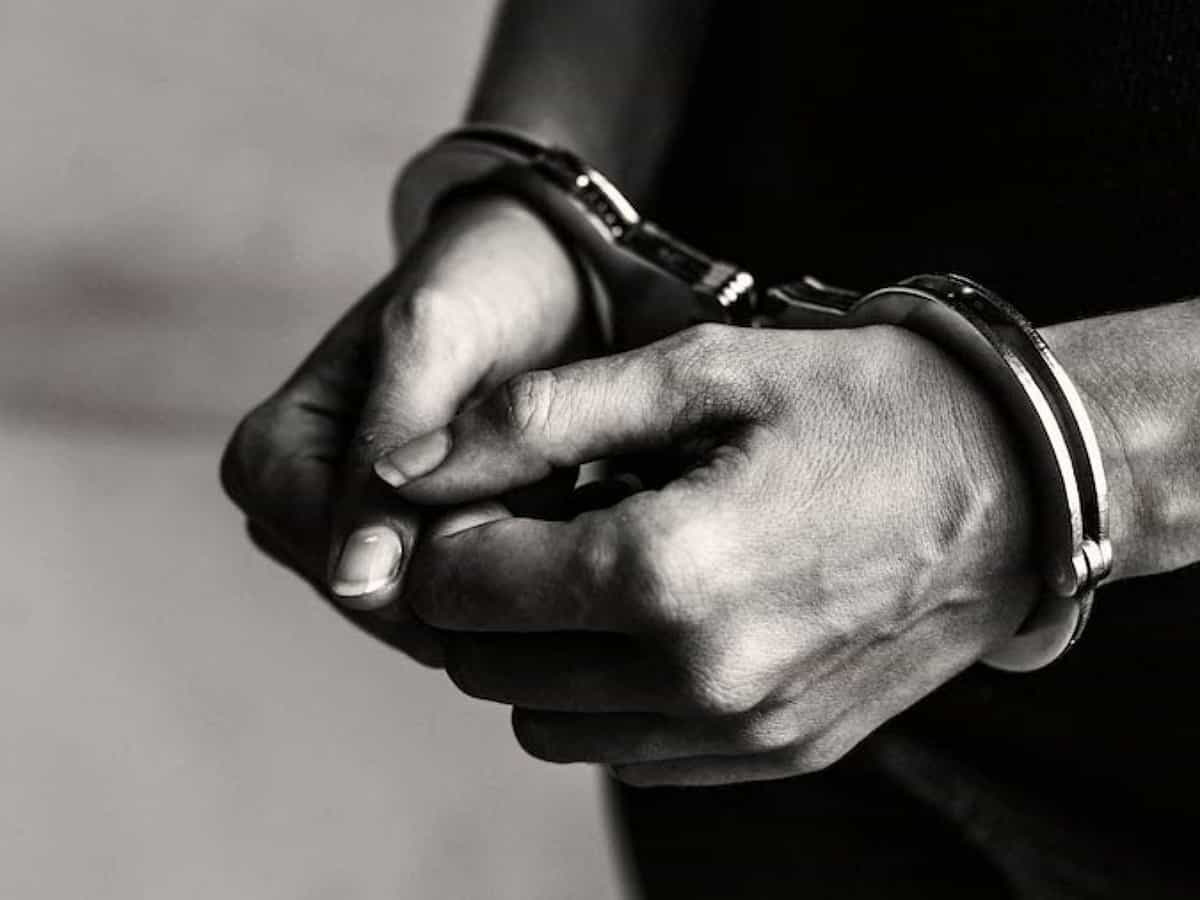
Lawyers for former National Signal Bureau (NSB) Director, Kwabena Adu Boahene, have pushed back against attempts to label him and his wife, Angela Adjei Boateng, as criminals, insisting they deserve fair treatment.
In a statement signed by his legal counsel, Samuel Atta Akyea, the defense argued that Mr. Boahene, a respected former official with global networks, and his wife, a prominent businesswoman, should not be subjected to public humiliation.
“Mr. Kwabena Adu Boahene cannot be called a common criminal, and neither can his wife, Angela Adjei Boateng. Prior to this sordid exposé, Mr. Boahene was the immediate past Director of the National Signal Bureau and a man who is networked internationally. His wife, Angela, has never been a woman of straw and is engaged in considerable business activities,” the statement emphasized.
The legal team dismissed allegations that Mr. Boahene flew economy class to disguise himself, as claimed by the Attorney-General.
“Our client was in the business class, a fact which is easily verifiable,” the lawyers stated.
They also questioned why a person seeking to evade justice would voluntarily return to Ghana via an official entry point instead of using unofficial routes.
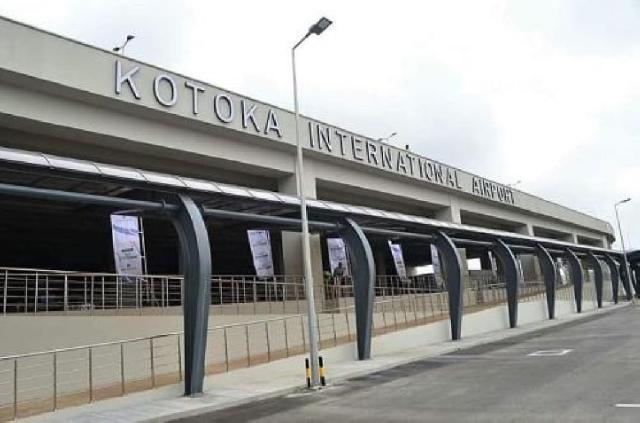
**“It beggars belief that a criminal should be audacious enough to fly out of the jurisdiction through Kotoka International Airport, a security area, and return on his own free will to Accra, while the criminal routes of the Togo and the Ivory Coast borders are the safe options available to him.
“Obviously, the Attorney-General is using a different eyeglass and we cannot fault him for that,”** they added.
Mr. Boahene was arrested on March 20, 2025, upon his arrival at Kotoka International Airport from the United Kingdom.
His detention was reportedly carried out in a coordinated operation involving the Economic and Organised Crime Office (EOCO), led by Deputy Director Raymond Archer, and officials from the Attorney-General’s Department.
According to his legal team, he was initially informed of an immigration issue with his passport before being publicly handcuffed and taken into custody.
They argue that the manner in which he was arrested suggests an agenda of persecution rather than due legal process.
Mr. Boahene is facing accusations of misappropriating state funds and laundering money through real estate investments in Ghana and abroad.
During a March 24 press briefing, Attorney-General and Minister of Justice, Dr. Dominic Ayine, revealed that the case stems from alleged financial irregularities tied to a $7 million cyber defense system contract.
Attorney General and Minister of Justice, Dr. Dominic Ayine, has disclosed that eight individuals have been interrogated as part of ongoing investigations into the National Service Scheme (NSS) scandal, with the probe expected to conclude by mid-April.
During a press briefing on Monday, March 24, Dr. Ayine provided an update on the progress of the investigations, revealing significant findings, particularly regarding financial irregularities within the National Service Scheme.
He disclosed that investigators had gathered substantial evidence pointing to corruption and financial mismanagement within the scheme.
“I can confirm that investigation will conclude in the National Service and Sky Train scandals by the middle of April for prosecutions to proceed,” he said during a briefing.
Dr. Ayine further indicated that authorities had traced suspicious financial transactions involving senior officials.
“In the National Service scandal, eight suspects have been interrogated, and a good number of them have started ‘singing’ literally,” he stated. “We will give you details of their songs at the appropriate time.”
He also alleged that there were attempts to cover up the scandal by influencing media coverage.
On the Sky Train project, Dr. Ayine assured the public that findings would soon be disclosed. A prior Auditor-General’s report had highlighted that $2 million had been spent on the $3 billion initiative, yet feasibility studies remained inconclusive.
Further investigations suggest that some officials within the National Service Scheme manipulated payroll records by inserting thousands of ghost names to divert funds for personal gain.
“We also have evidence that the CEO of the National Service Scheme and others paid a Ghanaian MP to kill the story in the media and to defend them,” Dr Ayine added.
Describing the situation as a developing case, Dr. Ayine encouraged the public to stay updated.
“This is a developing story, and more of it will come out very soon,” he assured.
Investigations into the former Director-General of the National Signals Bureau (NSB), Kwabena Adu-Boahene, have revealed a complex web of financial misconduct involving real estate acquisitions and suspicious monetary transfers.
Attorney-General and Minister of Justice, Dr. Dominic Ayine, has accused Adu-Boahene of misappropriating millions of dollars meant for a cyber defense project.
A significant portion of these funds was allegedly funneled into private investments, including high-end properties in Accra and overseas.
Reports indicate that Adu-Boahene, in collaboration with his wife, covertly managed a private firm that served as a channel for diverting state resources.
Authorities believe this operation enabled him to amass substantial personal wealth over time.
A comprehensive dossier detailing his financial activities, asset acquisitions, and offshore holdings has been compiled.
These revelations are expected to play a key role in forthcoming legal proceedings against him.
Below is the full list of assets and transactions under investigation:
Attorney-General and Minister of Justice, Dominic Ayine, has hinted at a series of high-profile corruption cases set to be exposed in the coming weeks, cautioning Ghanaians to prepare for shocking revelations of financial misconduct and abuse of power by former government officials.
Speaking at a press conference on Monday, March 24, Ayine disclosed that ongoing investigations have uncovered alarming cases of illicit transactions within key state institutions.
His comments come in the wake of the arrest of Kwabena Adu-Boahene, former Director-General of the National Signals Bureau (NSB), who is accused of diverting $7 million intended for a cyber defense system into private accounts.
According to Ayine, the Adu-Boahene case is only the tip of the iceberg, with more startling revelations expected soon.
“We are working diligently on several dossiers that will shock the conscience of the nation. If what suspect Adu-Boahene and his wife have done is like a Thrilla in Manila, please brace yourself for a Ramble in the Jungle in the next few weeks,” he stated.
Investigations have revealed that in January 2020, Adu-Boahene signed a contract on behalf of the government with Israeli firm RLC Holdings Limited for the procurement of cyber defense software valued at $7 million. However, instead of executing the contract, he allegedly transferred GH¢27.1 million from the NSB’s Fidelity Bank account into a private BNC account at Universal Merchant Bank (UMB).
As the probe widens, Ayine reaffirmed the government’s commitment to holding accountable those implicated in financial mismanagement.
Former Chief Executive Officer of the Ghana Infrastructure Investment Fund (GIIF) and a central figure in the Sky Train financial scandal, Solomon Asamoah, is reportedly evading prosecution by taking refuge in Senegal, according to Attorney General and Minister for Justice, Dr. Dominic Ayine.
Addressing the ongoing investigation, Dr. Ayine revealed that $2 million was disbursed for the controversial Sky Train Project at the request of then-GIIF Board Chairman, Professor Christopher Ameyaw-Akumfi, and Solomon Asamoah.
He noted that authorities initially traced Asamoah to South Africa after he departed Ghana on February 2, but he later relocated to Senegal and has refused to return for questioning.
“In respect of SkyTrain, we can confirm that the $2 million was paid at the request of the chairman of the Board of Directors of the Ghana Infrastructure Fund (GIIF), Professor Christopher Ameyaw-Akumfi, and then CEO, Solomon Asamoah who is currently hiding in Senegal. We tracked him first and noticed that he was in South Africa. So, he left Ghana on February 2, to South Africa.
“We were monitoring him there, and then he left, and he is now in Senegal. When we contacted him, he told us that he would not come to Ghana until three months from now.
“In respect of SkyTrain, we can confirm that the $2 million was paid at the request of the chairman of the Board of Directors of the Ghana Infrastructure Fund (GIIF), Professor Christopher Ameyaw-Akumfi, and then CEO, Solomon Asamoah who is currently hiding in Senegal. We tracked him first and noticed that he was in South Africa. So, he left Ghana on February 2, to South Africa.
“So we are patiently waiting for him. If he wants to be tried in absentia, that is his choice to make. But we have the prosecutorial authority to prosecute him in absentia. The person who acted with him to transfer that money, Prof Akumfi is in the country. So, if there is going to be a delay, we will start the prosecution with him being a suspect who is being tried in absentia,” he stated.
We were monitoring him there, and then he left, and he is now in Senegal. When we contacted him, he told us that he would not come to Ghana until three months from now.
The Sky Train Project, introduced under the previous New Patriotic Party (NPP) administration, was envisioned as a transformative solution for Ghana’s urban transportation network.
However, it has become entangled in allegations of financial mismanagement, prompting scrutiny from investigators.
Dr. Ayine reaffirmed the government’s commitment to ensuring accountability, stating that legal proceedings will proceed, regardless of whether Asamoah chooses to return voluntarily.
The Minority in Parliament has accused the Attorney General (A-G) of exceeding his constitutional role by directing raids, authorizing arrests, and personally leading investigations against former government officials.
They argue that his duty is to provide legal counsel to investigative agencies and ensure fair prosecution, not to assume the role of law enforcement.
Speaking at a press conference on Monday, March 24, Second Deputy Minority Whip Jerry Ahmed Shaib condemned the Attorney General’s actions, insisting they compromise the integrity of the justice system.
He called for an immediate end to what he described as an abuse of office.
“The Attorney General is an officer of the court. His interest is to assist the court in dispensing justice when investigators bring their case and evidence. The posture of the new A-G undermines this rule. He is no longer acting as an officer of the court but instead acting as someone who has conducted his own inquisition, determined the guilt of a suspect, and is seeking to force his views on the court.
“The practice undermines the role of the attorney general and undermines the administration of justice. All well-meaning voices that respect the operations of the rule of law should call on the attorney general to put an end to this immediately,” he stated.
He stressed that this approach undermines public trust in the legal system and urged all defenders of the rule of law to speak out against it.
The Minority also criticized what they described as an “unlawful” raid on the residence of former Bank of Ghana Governor, Dr. Ernest Addison.
They claim the operation lacked transparency and was later acknowledged as inappropriate by National Security Coordinator Major General Francis Adu-Amanfoh (retired).
They also alleged that an apology had been extended to Dr. Addison following the incident.
“If indeed a court-issued warrant existed, why was it not presented to Dr Addison before or during the raid? Why was the force used to overpower his private security? Why was the CCTV camera dismantled and taken away? Transparency is a hallmark that ensures lawful enforcement.
“The failure to follow basic procedures causes doubt on the legality and intent of the operations. No amount of legal, or public relations spin can undo the fact. Dr Addison’s home was raided under highly questionable circumstances.
“If their actions were truly lawful and above board, why did the national security coordinator, find it necessary to call and apologise to Dr Addison, via the phone of Richard Jakpa? If there was no wrongdoing with the conduct of the security officers, what exactly was the apology for? ” he questioned.
At least 25 Palestinians, including women and children, were killed in Israeli airstrikes across Gaza, according to hospital reports on Monday.
The attacks come nearly a week after Israel abruptly ended a ceasefire with Hamas, unleashing heavy bombardments that have left hundreds dead.
Amid the escalating violence, Egypt has put forward a new proposal to restore the ceasefire.
According to an Egyptian official, the plan would see Hamas release five captives in exchange for Israel allowing humanitarian aid into Gaza and agreeing to a temporary pause in fighting.
The proposal also includes the release of hundreds of Palestinian prisoners.
A Hamas official confirmed the group had “responded positively” to the offer but did not provide further details.
Both officials spoke anonymously, as they were not authorized to discuss the negotiations publicly.
In Mogadishu, the Sudanese community has built a strong support system, finding comfort in shared traditions and collective resilience.
During Ramadan, this bond is even more evident as families gather for iftar, sharing familiar dishes like aseeda and balila.
The community also organizes a five-a-side football tournament, bringing together both Sudanese and Somali players in the spirit of unity.
“As you can see behind me, love brings us together,”said Ishag Ali Mohamed, a Sudanese academic who now teaches Arabic at the Somali Digital Media Academy.
Watching a match from the sidelines, he added, “This is how we spend all of Ramadan, filled with beautiful activities. And it almost feels like you’re not in a foreign land.”
But Mohamed’s journey to this new home was far from easy. Fleeing the violence in Sudan, he was forced to leave everything behind. In 2023, the country descended into war as tensions between the military and the paramilitary Rapid Support Forces erupted into full-scale conflict.
Trapped for months in his home, Mohamed and his family lived in constant fear”One of the most painful incidents was when I was at home with my family, and a massive ‘dana’ explosive (shell) fell on our house,” he said.
“It destroyed a wall, cut down trees, and shattered doors. The entire neighborhood thought we had died.”
The war has taken a devastating toll, with over 20,000 lives lost and more than 14 million people displaced.
Many have been forced to seek refuge elsewhere, including Somalia, where Mohamed has managed to rebuild his life.
Despite the trauma of war, the Sudanese in Mogadishu have created a sense of home away from home.
In their gatherings, meals, and shared experiences, they find solace—and in the face of adversity, they hold onto hope.
One year into his presidency, Bassirou Diomaye Faye’s administration has drawn both praise and criticism.
While his government has prioritized economic reforms, anti-corruption efforts, and food security, opinions on its progress remain divided.
Supporters believe the country is on the right track, though they emphasize the need for openness to feedback.
“The project is so far good,” said a young resident of Dakar. “We’re confident it is going to work. But they have to accept criticism.”
However, others are disappointed, arguing that the government has yet to deliver on its promises. A motorcycle taxi driver voiced his frustration: “We haven’t seen any of the promises from the government [implemented]. They had asked us to fight by promising young people projects and assuring us that there would be work. But we haven’t seen anything yet.”
Since taking office, Faye has introduced measures to ease food inflation, ordered an audit of the previous administration, and initiated efforts to revitalize the agricultural sector. Yet, some opposition figures say these actions are not enough.
“This is indeed a disappointment. Insofar as the referential document is concerned, there are no projects they have launched that actually emanate from their referential called Senegal Vision 2050. I think that, for the time being, we need to find mechanisms to revive our economy,” said opposition leader Mouhamdou M. Mane.
In response, Prime Minister Ousmane Sonko’s government has rolled out policies aimed at cleaning up public administration, cutting down waste, and optimizing financial management. Some political analysts see progress in these efforts.
“I consider the balance sheet to be generally positive. When you look at two laws, justice, which was a bit of a weak point, and which was much criticized, he organized a conference on justice,” observed political analyst Mamadou Thior.
With expectations still high, many Senegalese are looking to Faye’s government for concrete results, particularly in economic and social sectors, as he enters his second year in office.
A founding member of the New Patriotic Party (NPP), Dr. Nyaho Nyaho-Tamakloe, has weighed in on the party’s decision to refer former Dome-Kwabenya MP, Sarah Adwoa Safo, to its disciplinary committee.
According to him, Adwoa Safo should have openly addressed the difficulties she faced within the party rather than remaining silent. He believes that if the leadership failed to acknowledge her grievances, she should have taken the bold step of resigning.
During an interview on JoyNews on March 23, he stated “When she (Adwoa Safo) realised things were not going well, she should have come out earlier to talk about it, and if the leadership failed to listen to her then she should have resigned”.
Dr. Nyaho-Tamakloe criticized what he described as a common fear among Ghanaian politicians—the reluctance to resign even when they no longer align with their party’s values.
“That is the problem of the Ghanaian politician, we fear to resign,” he noted.
His comments follow the NPP’s decision to refer Adwoa Safo to its National Disciplinary Committee over remarks she made in recent media engagements.
Adwoa Safo recently made headlines for her strong criticism of the NPP’s Election Review Committee, chaired by Prof. Mike Oquaye.
She dismissed the committee’s work as lacking credibility and claimed it was formed to sideline certain individuals while favoring others.
“A very bogus committee. A committee is intentionally put together to find certain facts and push certain candidates out so that others can be favored. Do you call that a credible fact-finding committee?” she questioned.
Speaking on JoyNews on March 20, 2025, she directly accused Prof. Oquaye of being conflicted and unfit to lead the committee.
“If Prof. Mike Oquaye thinks he has integrity and credibility, I want him to include in his report because his son, Mike Oquaye Jnr., lost his seat. He should give us a detailed report on that,” she said.
She further challenged the committee’s impartiality, insisting that a more independent figure should have been appointed instead of Prof. Oquaye.
“Your backyard is burning, and yet you think the best person to lead a fact-finding committee that includes that very constituency, is you? Why not select an independent person? There are other credible members. I am attacking the chair, not other members. Couldn’t we have found someone else?” she argued.
Following her statements, the NPP’s General Secretary, Justin Kodua Frimpong, issued a statement on March 20, 2025, indicating that Adwoa Safo had violated party directives.
The party had earlier cautioned members against publicly discussing internal matters in ways that could harm the NPP’s image. However, Adwoa Safo’s defiance has now led to disciplinary proceedings against her.
It remains to be seen what action the party will take following her referral to the Disciplinary Committee.
Gunmen struck a drinking spot in Binduri Down, a suburb of the Binduri District in the Upper East Region, on the night of Sunday, March 23, leaving six people with gunshot wounds.
Three of the victims succumbed to their injuries, while the other three are currently receiving treatment at the Bawku Presbyterian Hospital.
According to eyewitness accounts, the assailants arrived on a motorbike, opened fire on patrons, and fled the scene immediately after.
Although the motive remains uncertain, some sources believe the attack could be connected to a recent shooting in Atuba, a nearby community, where two people were killed. That incident was reportedly linked to the ongoing Bawku conflict.
The renewed chieftaincy tensions between the Kusasis and Mamprusis, which reignited in October 2024, have so far resulted in approximately 79 deaths.
Healthcare services in the Nkwanta South Municipality of the Oti Region are under severe strain due to a night-time curfew imposed in response to recent violent clashes.
Medical personnel say the restrictions, which run from 8:00 PM to 6:00 AM, are significantly affecting their ability to provide critical care, particularly emergency services and community outreach programs.
The curfew, enforced by the Ministry for the Interior since January 28, was introduced to curb escalating tensions following deadly tribal conflicts.
However, the unintended impact on healthcare has raised serious concerns, with medical staff now hesitant to work at night due to security risks.
Dr. Osei Kuffour Afreh, the Oti Regional Director of Health Services, expressed his deep concern over the situation, emphasizing the growing fear among health workers. He noted that the prevailing insecurity has already resulted in a tragic loss within the health sector.
“The curfew is really affecting healthcare delivery in the Nkwanta South Municipality. Unfortunately, during the recent clashes in January this year, through that, one of our health workers, an IT manager, was shot dead at home,” he stated.
According to Dr. Afreh, the anxiety among medical staff has made it increasingly difficult for them to attend to patients in need.
The dangers faced by health workers were further highlighted when a vehicle transporting personnel for an outreach program came under gunfire.
“One of our vehicles that was en route to the community for outreach services also received some bullets of about 30 bullet holes,” he revealed.
The situation has left many in the municipality concerned about access to healthcare, particularly for those in critical need of medical attention during curfew hours. With no immediate resolution in sight, stakeholders are calling for urgent measures to ensure both security and uninterrupted healthcare delivery.
An officer from the Forestry Commission’s Rapid Response team is in critical condition after being assaulted by a group of armed illegal miners in the Offin Shelterbelt Forest Reserve, located in the Ashanti Region.
The officer sustained a deep machete wound to the knee during the attack. The assailants, wielding both firearms and machetes, ambushed the team as they attempted to disrupt unauthorized mining operations, according to a report by JoyNews’ Erastus Asare Donko.
Before entering the forest, the team had recorded footage of armed men stationed at a checkpoint near the reserve’s entrance. However, upon advancing further, they were met with a planned ambush by the miners, who had concealed themselves in the vegetation.
The injured officer, whose identity has not yet been disclosed, is currently receiving medical care at the Komfo Anokye Teaching Hospital (KATH) in Kumasi.
Illegal mining remains a major concern in the Offin Shelterbelt Reserve, causing significant environmental degradation and threatening local water sources.
The Forestry Commission, in collaboration with security agencies, has been working to combat these activities and safeguard protected lands.
Authorities have yet to issue a statement on the incident or confirm whether any arrests have been made.
Ghana Water Limited (GWL) has raised concerns over the massive amount of water lost before reaching consumers, disclosing that only 48 percent of treated water is successfully delivered.
The company attributes the remaining 52 percent of losses to factors such as pipeline leaks, unauthorized connections, and inefficiencies within the distribution network.
Speaking at a forum in Accra, the acting Chief Executive Officer of GWL, Adam Mutawakilu, stressed the severity of the situation, describing it as a major challenge affecting both service delivery and financial stability.
“As at the end of December 2024, non-revenue water was 52 percent. So that means the moment we produce water and dispatch, only 48 percent gets to customers,” he stated.
Non-revenue water, which refers to treated water that fails to generate income due to system losses, has become a pressing issue for the company. The high percentage of unaccounted-for water contributes to supply shortages, affecting many communities and straining resources.
Mutawakilu further explained that continuous problems such as leaking pipelines and illegal connections remain significant obstacles to efficient water distribution.
With the scale of losses impacting both consumers and the company’s finances, GWL is calling for urgent action to improve infrastructure and curb wastage in the water supply system.
Attorney-General and Minister for Justice, Dr. Dominic Ayine, is scheduled to provide a media update today [Monday, March 24] on the progress of the Operation Recover All Loot (ORAL) initiative.
This was announced by Minister of Government Communications, Felix Kwakye Ofosu, through a social media post.
The upcoming briefing follows the ORAL Committee’s report submission to President Mahama in February, which outlined over 2,000 cases of alleged corruption.
In response, the President ordered Dr. Ayine to begin immediate investigations, reaffirming that Ghana will no longer be a safe haven for corruption.
Today’s briefing follows findings from the Operation Recover All Loot (ORAL) Committee, which has identified approximately $21.19 billion in potential recoveries from misappropriated state assets and undervalued land transactions.
During the handover of the committee’s report on February 10, 2025, in Accra, ORAL Chairman Samuel Okudzeto Ablakwa detailed cases that could significantly improve Ghana’s financial standing.
Investigations into 36 high-profile corruption cases alone could yield $20.49 billion if successful.
“If we are successful in recoveries, we can retrieve as much as 20.49 billion United States dollars,” Ablakwa stated. Among the key cases cited were the National Cathedral project, the Power Distribution Services (PDS) deal, and the Saltpond decommissioning project.
The committee also reported significant undervaluation of state lands, leading to a revenue loss of $702.8 million. Ablakwa highlighted instances where valuable lands were sold at prices far below market value.
“Some people acquired prime Cantonments land for as low as 42,000 cedis—land that should fetch $500,000 or more per plot at fair market value,” he revealed.
The ORAL Committee believes reassessing these transactions and reclaiming undervalued lands could contribute substantially to economic recovery. “If we just ask people to pay the real market value, we stand to recover this amount,” Ablakwa added.
The committee’s efforts have also gained international attention, with forensic firms offering assistance in tracking offshore assets linked to corruption. “We have received a number of international requests to support this initiative, particularly in forensic tracking of offshore accounts,” Ablakwa noted. Some firms have proposed working without upfront fees, instead requesting a share of successfully recovered assets.
As Ghana faces economic challenges, Ablakwa underscored the importance of these recoveries. “This amount is far more than what we have been chasing the IMF for, and subjecting ourselves to all kinds of conditionalities,” he remarked, emphasizing that effective asset recovery could help restore financial independence.
The Operation Recover All Loot Committee was established on December 18, 2024, by President John Dramani Mahama to track and reclaim looted state assets.
It is chaired by North Tongu MP Samuel Okudzeto Ablakwa and includes former Auditor-General Daniel Yao Domelevo, retired Commissioner of Police Kofi Boakye, private legal practitioner Martin Kpebu, and investigative journalist Raymond Archer.
With Dr. Ayine set to brief the public, attention will be on the government’s approach to prosecutions, asset recovery, and policies to prevent future misappropriation of state resources.
Electrochem Ghana Limited is advancing its $500 million integrated salt project in Ada, aiming to transform Ghana’s salt industry by increasing production to up to five million tonnes annually.
Despite setbacks, including a $20 million loss from a recent attack, the company remains steadfast in its goal to complete the ambitious project by 2027.
As part of the initiative, Electrochem has already invested $120 million in constructing salt works, the foundation for raw salt production. Additionally, work is underway on a $40 million salt refinery with a daily processing capacity of 100 metric tonnes, along with $85 million worth of chemical processing plants for caustic soda and bromine.
Beyond production, Electrochem envisions establishing an industrial park to attract manufacturers reliant on salt-based raw materials, such as a P.O.P cement plant. The company also plans to set up a university dedicated to industry research and workforce training.
CEO of the McDan Group, Electrochem’s parent company, Kwaku Ampromfi, stated that with a target of producing three to five million tonnes of salt annually, relying solely on road transport is neither cost-effective nor sustainable.
He has revealed that, the company plans to invest $100 million in building a port to enhance logistics and ensure efficient transportation.
“We are seeking to produce a minimum of three to five million tonnes of salt annually. To handle these kinds of volume, transporting by road is neither safe nor economical.
“So, the plan is to build a port, which will then be used to move these volumes. We expect this to cost about US$100 million.
“Putting all of these together, we are looking at a total investment of US$500 million. We expect all these projects, some of which have already commenced, to come on stream within two years,” he added.
Meanwhile, the Minerals Income Investment Fund (MIIF) has reinforced its support for Electrochem by making a GH¢365 million equity investment in the company.
A key condition of MIIF’s investment requires Electrochem to be listed on the Ghana Stock Exchange within three years.
However, this process has been delayed due to the absence of a board of directors for the Securities and Exchange Commission (SEC) since August 2024.
Gospel musician Grace Ashly has expressed her belief that Ghana’s national football team, the Black Stars, performs better under National Democratic Congress (NDC) administrations.
Speaking in an interview with Nana Romeo, the singer, known for her patriotic football anthems, highlighted her preference for the NDC’s leadership when it comes to sports development in Ghana.
“When the NDC is in government, many aspects of life in Ghana, especially in sports, tend to improve. Also, I have the freedom to pursue my goals for the Black Stars when the NDC is in power. Let’s pray for the NDC’s success,” she said.
Grace Ashly, who has composed several songs for the Black Stars, also reaffirmed her readiness to contribute more to the national team if given the chance.
“I am always ready to do more songs for the Black Stars if I am given the opportunity by the leaders,” she added.
The gospel singer has played a major role in boosting national team spirit with her music. Her 2014 World Cup song, Yenie, was widely embraced by football fans and became a nationwide hit.
Her comments have sparked debate, with some sports fans supporting her stance, while others argue that football success is not tied to political leadership.
Broadcast journalist Afua Pokuaa Vim Lady has claimed that Kofi Adoma is struggling with suicidal thoughts after recent comments made by Dormaahene, Osaagyefo Oseadeeyo Nana Agyemang Badu II.
In a detailed Facebook post, Afua Pokuaa alleged that Dormaahene’s remarks, which she described as propaganda, have deeply affected Kofi Adoma’s mental well-being.
Dormaahene, who had previously remained silent on last year’s Kwafie Festival controversy, finally addressed the issue during a public gathering. He stated that many had been wondering why he had not spoken on the matter earlier.
According to him, there has been a pattern where, whenever the Bono people achieve something significant, certain individuals attempt to discredit their success with fabricated stories.
He cited an incident from August last year and the controversy surrounding comments made by US-based TikToker Naana Donkor Arthur as examples of such misinformation.
Afua Pokuaa suggests that these recent developments have taken a toll on Kofi Adoma, leaving him in a deeply distressed state.
Nigerian activist and content creator, Mr Macaroni, has strongly criticized the country’s governance system, citing a lack of accountability and a culture where power and wealth take precedence over justice.
Reacting to the suspension of Senator Natasha Akpoti-Uduaghan, he decried the absence of consequences for those in positions of authority.
“It’s not as if these countries that we call ‘Saner climes’ are not corrupt oo. The difference between these countries and Nigeria is the sense of accountability at the very least. In Nigeria, there is no regard for law and order,” he stated in a post on X on March 7, 2025.
He condemned the widespread abuse of power, pointing to the unchecked actions of government officials and law enforcement agencies.
“From the impunity in the Senate to the shamelessness and abuse of power by security agents, to the total lack of regard for the Nigerian people, everyone is free to act as irresponsibly as they wish so far they have power or money. The real problem we have is the zero consequence for actions,” he said.
His remarks come in the wake of Senator Akpoti-Uduaghan’s suspension, which followed her accusation of sexual harassment against Senate President Godswill Akpabio.
The senator’s removal from office has sparked national debate on issues of gender inequality and misuse of power within Nigeria’s political space.
Mr Macaroni warned that without accountability, corruption and lawlessness would only continue to flourish.
“The rot in this country will continue to eat deep because no matter the gravity of the offence you commit or the amount of Nigerian lives that are at risk because of the reckless behaviour of a few, money, power and influence will wash the guilty as white as snow,” he added.
His statement has reignited conversations on governance, with many Nigerians echoing concerns over the persistent lack of justice and accountability in the country.
Finance Minister Dr. Cassiel Ato Forson has refuted claims circulating on social media that he approved a $1.7 million single-source procurement contract for the Ministry of Finance.
In a Facebook post, Dr. Ato Forson described the allegation as false and urged the public to disregard it.
“My attention has been drawn to yet another baseless and misleading claim circulating about an alleged $1.7 million single-source procurement contract approved by me. This claim is completely false and should be disregarded,” he stated.
The Minister emphasized that since assuming office, he has not authorized any procurement, reaffirming his commitment to transparency and responsible economic management.
Similarly, the Public Procurement Authority (PPA) has distanced itself from the alleged approval, stating that it has not granted any such clearance to the Ministry of Finance.
“It has come to the attention of the PPA that a letter circulating on social media purports to grant single-source approvals to the Ministry of Finance for the engagement of Ostec Limited in respect of the implementation of Middleware and Oracle Business Intelligence Enterprise Edition with data warehouse.
The Authority would like to clarify that it has not granted any such approvals. We therefore entreat the general public to ignore the said letters in circulation,” the PPA stated.
The allegations have sparked public discussions on government procurement processes. However, with both the Finance Minister and the PPA denying any involvement, the claims remain unverified.
Ghanaian musician King Promise is confident that he will take home the Artiste of the Year award at this year’s Telecel Ghana Music Awards.
According to him, his dedication and hard work over the past year make him a strong contender for the prestigious honor. While performing at Richard Nii Quaye’s 40th birthday celebration, he boldly declared, “your incoming Artiste of the Year.”
Emphasizing his efforts, he added, “nobody work pass me,” suggesting that his contributions to the industry set him apart from the competition.
King Promise is in a fierce race for the award alongside Black Sherif, King Paluta, Team Eternity, Joe Mettle, Stonebwoy, and Kwaku Smoke.
Last year, he lost the title to Stonebwoy in a tightly contested category. However, he remains hopeful that this time, he will emerge victorious.
The Energy Ministry has rescinded its earlier announcement regarding the appointment of John Ayiku Ocansey as the Acting Deputy Managing Director of the Electricity Company of Ghana (ECG).
In a statement issued on Saturday, March 18, the Ministry clarified that its previous communication, dated March 17, 2025, which introduced Mr. Ocansey to the role, was sent in error and has now been revoked.
*”We refer to our letter with Ref. No. Z.A.6/247/01ª dated 17th March 2025 introducing Mr. John Ayiku Ocansey as the new Acting Deputy Managing Director of Electricity Company of Ghana (ECG).
“We wish to inform you that our earlier letter was inadvertently written and hereby wish to withdraw same,”* the statement read.
This development comes amid growing calls for a substantive leadership at ECG, following the recent inauguration of a seven-member committee tasked with exploring private sector participation in the company. The initiative aligns with President Mahama’s directive to address the persistent management challenges plaguing the state-owned power distributor.
ECG has long struggled with inefficiencies, financial instability, and procurement irregularities, leading to a substantial deficit. The company remains heavily reliant on government support, with over $2 billion allocated from the national budget to sustain its operations. This financial burden has raised concerns about ECG’s sustainability and its broader impact on the economy.
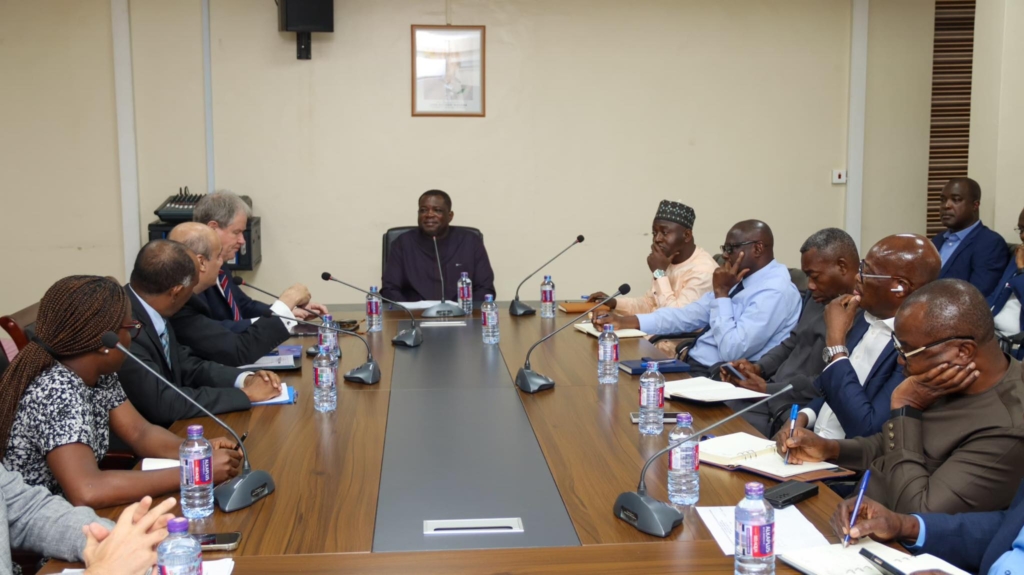
The newly formed committee’s mandate to assess private sector involvement is seen as a crucial step toward addressing these operational and financial challenges, ensuring ECG’s long-term stability and efficiency.
The government is set to introduce an all-in-one digital platform aimed at providing young entrepreneurs easy access to information about available programs, funding options, and investment opportunities.
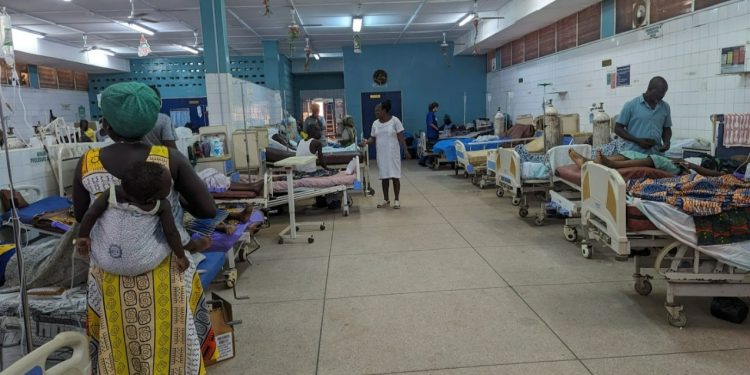
The platform, which will integrate all 21 ministries, aims to streamline access to government-backed initiatives, driving youth-led economic growth.
The announcement was made by the Minister of Youth Development and Empowerment, George Opare Addo, at the AgriBiz Youth and Women Dialogue held in Accra.
He highlighted the platform’s potential to help young people make informed decisions about where to invest and how to grow their businesses.
“We are creating a digital platform where all ministries will showcase their programs and funding opportunities. This will enable young people to make informed decisions about where to invest and how to develop their businesses,” Opare Addo stated.
The initiative comes at a time when Ghana’s youth unemployment rate is 19.7%, with 57% of the population under the age of 25. Experts believe that targeted interventions are crucial to equipping young people with the tools needed to succeed in business and entrepreneurship.
Executive Director of Africa Skills Hub, Daniel Antwi, also spoke at the event, emphasizing the importance of agribusiness in driving economic development.
He stressed the need for bold leadership and strategic investments to empower youth and women-led agribusinesses by facilitating access to land, capital, and technology.
“This is not just a conversation; this is a defining moment. We must reimagine agribusiness as a catalyst for growth and ensure young people and women have the resources, capital, and access they need to thrive,” Antwi asserted.
He further highlighted the potential of innovation in food production, processing, and trade to boost the economy and create sustainable livelihoods for youth and women in agribusiness.
Afua Ansre, the UN Women Ghana Country Representative, also reinforced the urgency of engaging young people in agribusiness, particularly through technology-driven solutions.
She pointed out that innovations such as drone-assisted irrigation, AI-driven soil analysis, and digital marketplaces are opening up new economic opportunities across Africa.
“We must change the perception of agribusiness and ignite passion among our youth. Across Africa, young entrepreneurs are leading agritech innovations, from drone-assisted irrigation to AI-driven soil analysis and digital marketplaces. These advancements are unlocking new economic opportunities,” she said.
Africa Skills Hub, a leading enterprise support organization, continues to drive youth and women’s economic empowerment through skills development, entrepreneurship training, and business incubation.
Its programs have impacted thousands of young entrepreneurs across Ghana, providing them with the expertise to build sustainable businesses and contribute to national development.
The National Road Safety Authority (NRSA) has issued a directive to advertising companies to stop erecting billboards on road medians, citing serious safety risks for pedestrians and motorists.
Acting Director General of the NRSA, Abraham Amaliba, stressed that such billboards obstruct visibility and endanger road users. His comments followed an inspection of the East Airport road underpass in East Legon, Accra, after a viral video showed a pedestrian raising concerns about billboard placement on the median.
“People should remove those obstacles on the median because we are beginning to wage a war against such billboards. First and foremost, the height of the billboard does not provide clear visibility beyond it, and they are lined up in a way that makes it difficult to recognize an oncoming vehicle,” he stated.
He also noted that while local assemblies are responsible for issuing permits for billboards, the NRSA will investigate who authorized these structures.
“Normally, the assemblies issue permits for these structures, so we will investigate who first erected these billboards. Luckily, their contact details are on them, so we will verify whether they have the necessary permits. If not, we will ask them to comply by removing the billboards because they pose a hazard to road users, especially pedestrians,” he added.
The NRSA has vowed to strictly enforce road safety regulations and ensure that all billboards violating safety standards are removed.
A devastating fire outbreak in Adum, the commercial hub of Kumasi, has left nine people injured and several others traumatized.
This was revealed by the Ashanti Regional Manager of the National Ambulance Service, Sommik Duut Millon, while engaging the media.
According to him, some victims suffered panic attacks and had to be rushed to nearby hospitals.
“We attended to many casualties. In fire outbreaks, it is common for people to experience panic attacks, and those involved in firefighting efforts can also sustain injuries. We treated about three firefighters who were injured and transported them to the Manhyia and Komfo Anokye hospitals.
“We also attended to victims who suffered panic attacks, with some in a traumatized state. In total, we managed about nine casualties, provided medical care, and later transferred them to the hospital. So far, feedback from the hospitals indicates that the victims are responding well to treatment, with some already discharged,” he added.
The incident, which occurred in the early hours of Friday, March 21, destroyed numerous shops and properties.
The fire spread rapidly due to the congested layout of the market, making it difficult for firefighters to maneuver through the area.
Ashanti Regional Fire Commander, ACFO II Peter Tetteh, highlighted the challenges they faced in accessing the fire scene.
As the blaze intensified, desperate shop owners scrambled to salvage their goods in an attempt to minimize losses.
Authorities have launched an investigation to determine the exact cause of the fire while urging business owners to prioritize fire safety measures.
Ghanaian music icon Samini has raised concerns about the low earnings of actors in the country’s film industry, emphasizing that their remuneration does not match the effort and dedication they put into their craft.
During an appearance on the Sincerely Accra podcast, Samini reflected on his own experiences on movie sets, revealing that despite having acting talent, he has not pursued it as a career due to the physical and financial challenges involved.
“It’s a very, very draining profession to be in,” he remarked.
He noted a significant disparity between what musicians and actors earn, stressing that those in the film industry deserve better. He pointed out that A-list musicians can take home between GH₵150,000 and GH₵250,000 for a full-band live performance, while lesser-known musicians earn between GH₵15,000 and GH₵20,000 for a 30-minute show.
In contrast, A-list actors struggle to secure GH₵10,000 to GH₵20,000 for an entire film project, which may require up to three weeks of rigorous work on set.
“Some of the big names can push for up to GH₵25,000, but that even depends on who is hiring them. Meanwhile, lesser-known actors are sometimes paid as little as GH₵2,000 for weeks of work. It’s crazy, and something has to be done about it,” he stated.
To address this issue, Samini proposed a structured payment system that ensures fair compensation. He suggested that A-list actors should receive no less than GH₵50,000 per movie, B-list actors should be paid at least GH₵30,000, and no mainstream actor should earn below GH₵15,000 for any role.
According to him, implementing such a structure would not only improve the financial well-being of actors but also enhance the overall quality of Ghanaian films. He urged producers, directors, and key industry players to reassess how actors are compensated.
“I think you can afford to pay them slightly more,” he added.
DopeNation’s absence from this year’s Telecel Ghana Music Awards (TGMA) nominees list has sparked discussions, with many wondering why the Ghanaian music duo was not recognized despite their hit song Zormizor making waves.
Addressing the issue, Robert Klah, Head of Communications and Public Events at Charterhouse Productions, revealed on Hitz FM (March 19, 2025) that the duo did not submit their song for consideration. He emphasized that despite its popularity, Zormizor could not be included without an official entry.
“One would expect that on a platform like this, in the year under review, their place would certainly be established. Unfortunately, when there was no filing, and we tried to reach out for consent, we couldn’t get it,” Klah explained.
His clarification follows speculations and concerns raised by entertainment analyst DJ Slim, who questioned whether DopeNation had failed to file for nominations or simply ignored the awards’ research team.
In response, DopeNation alluded to undisclosed challenges within the music industry, stating that out of respect for certain individuals, they preferred to remain silent. They also referenced their frustration from 2021 when the ‘Group of the Year’ category was removed, warning that the industry risks losing its “true artistes” if such issues persist.