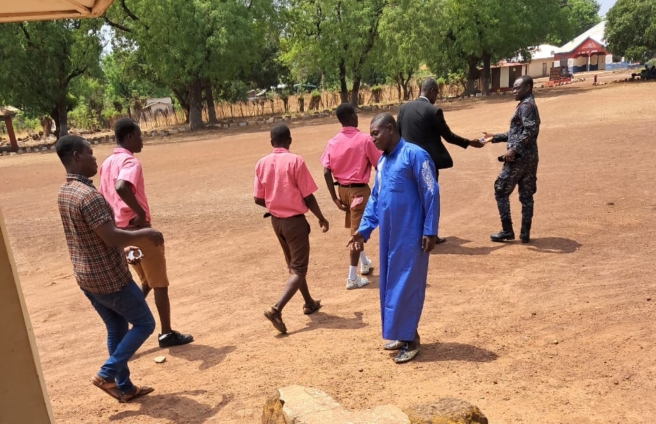
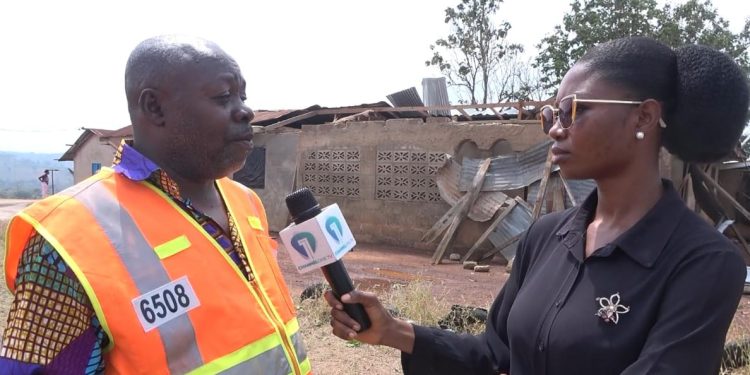
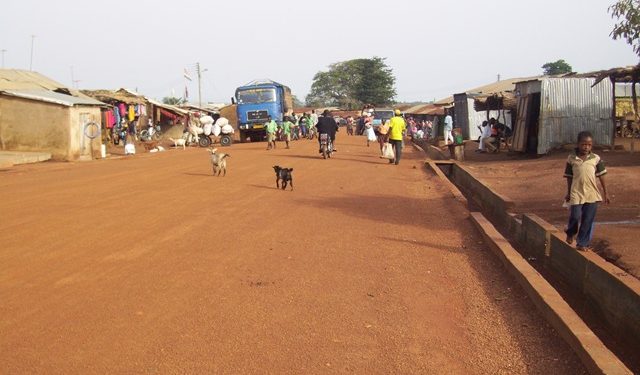
More than thirty students from Sawla Senior High School (SHS) in the Sawla-Tuna-Kalba District of the Savannah Region have been indefinitely suspended for engaging in various forms of misconduct.
A large proportion of those affected are female students, accused of violating Ghana Education Service’s (GES) regulations by possessing mobile phones on campus.
A seven-member committee, constituted by the school administration to investigate the issue, found the students guilty of the accusations, leading to their suspension.
Sawla SHS has previously come under scrutiny over reports of inappropriate relationships between teachers and students, which resulted in expulsions and suspensions.
Meanwhile, some parents have voiced their dissatisfaction, arguing that they were not formally notified before the school implemented the disciplinary action.
One concerned parent criticized the school’s decision, saying,“If I entrusted my child into your care, why should I be asked to send her packing without receiving official notice about the students involved? What kind of management is this?”
Another parent, Ferida Issahaku, voiced her frustration over the lack of communication.“I only heard about the suspension from a friend. I should have been informed, and perhaps even gone to collect her. As of now, she hasn’t returned, and we don’t know her whereabouts.”
Sawla SHS previously faced criticism for its subpar results in the 2022 West African Senior School Certificate Examination (WASSCE), placing among the lowest-performing schools in the nation. The Savannah Region, where the school is located, also registered the poorest scores across the country.
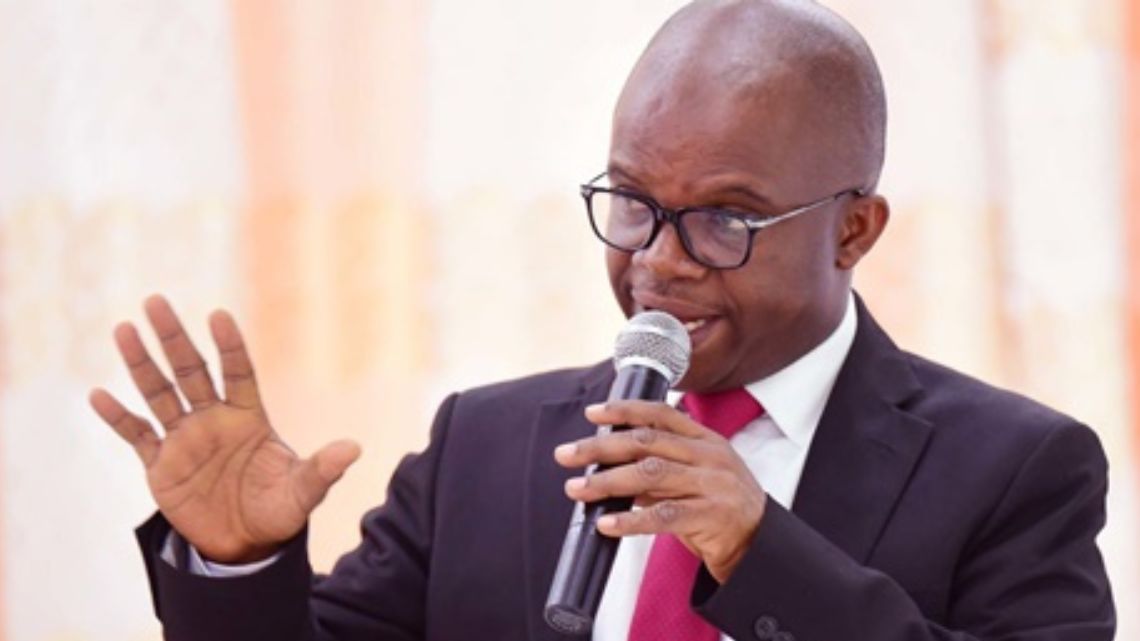
The Noguchi Memorial Institute for Medical Research (NMIMR) has unveiled the FACS Discover S8 Cell Sorter, the most advanced system of its kind in Africa and the Middle East, to enhance research into cancer, infectious diseases, and immune system functions.
Procured through internally generated funds (IGF), this state-of-the-art technology will eliminate the need to send medical samples abroad for specialized testing. Developed by Becton Dickinson (BD) International Ltd, the BD FACSDiscoverTMS8 Cell Sorter facilitates high-precision single-cell analysis, revolutionizing diagnostics and biomedical investigations.
At the inauguration, NMIMR Director, Prof. Dorothy Yeboah-Manu, underscored the machine’s transformative impact on Ghana’s healthcare landscape.
“For numerous medical conditions, hospitals previously had to ship samples overseas, sometimes as far as South Africa,” she pointed out.
She urged diagnostic laboratories to take advantage of this breakthrough, emphasizing that Ghana now possesses the technological capacity for in-depth disease analysis locally.
“With this groundbreaking equipment, we can now assess immune responses to cancer, infectious diseases, and other conditions without outsourcing sample testing,” she added.
NMIMR also introduced a newly renovated molecular biology suite, financed by the Government of Ghana, aimed at strengthening disease diagnostics, genetic studies, and epidemic response efforts.
Prof. Yeboah-Manu highlighted the machine’s critical role in pharmaceutical research, vaccine trials, and monitoring cancer treatments.
“Before deploying a vaccine, trials must evaluate immune system reactions. This technology allows us to conduct those assessments right here in Ghana,” she noted.
She also emphasized its significance in cancer therapy, explaining, “By analyzing how cells respond to chemotherapy, this system enhances treatment strategies and improves patient outcomes.”
Prof. David Dodoo-Arhin, Director of Research, Innovation & Development at the University of Ghana, commended NMIMR’s achievements in medical research, affirming that the new technology would propel investigations in immunology, oncology, and infectious diseases.
Prof. Michael Ofori, Head of NMIMR’s Immunology Department, assured that the machine would be fully utilized to secure research grants, attract further investments, and elevate Ghana’s position in cutting-edge biomedical research.
Trade between Ghana and China soared to an all-time high of $11.84 billion in 2024, marking a significant leap in their economic cooperation.
This record-breaking trade volume cements China’s status as Ghana’s leading trading ally and highlights the increasing depth of their economic ties.
Ghana’s exports of gold, cocoa, and crude oil continue to fuel this growing trade relationship, while China supplies essential goods such as machinery, electronics, textiles, and building materials.
The surge in trade reflects the impact of strategic agreements, including the Belt and Road Initiative (BRI) and the Forum on China-Africa Cooperation (FOCAC), which have bolstered investment and infrastructure growth.
China remains a powerhouse in global commerce, reporting a GDP of nearly 135 trillion yuan (approximately $18.5 trillion) in 2024, with a 5% growth rate and a 28% contribution to global economic expansion.
Since establishing diplomatic relations in 1960, Ghana and China have maintained a thriving partnership built on mutual respect and shared economic ambitions. Chinese enterprises have played a vital role in Ghana’s progress, particularly in infrastructure, energy, telecommunications, and mining.
With trade and investment continuing on an upward trajectory, both nations anticipate further economic advancements, reinforcing their strategic collaboration.
To commemorate this historic trade milestone, a grand celebration took place at the University of Ghana Sports Stadium during the 2025 Chinese Lantern Festival.
The event brought together esteemed figures, including President John Dramani Mahama, Chinese Ambassador to Ghana Mr. Tong Defa, Minister of Foreign Affairs Samuel Okudzeto Ablakwa, senior government officials, industry leaders, and members of the Chinese community in Ghana.
The festival showcased a vibrant display of Chinese cultural performances, with traditional music and dance captivating attendees. The highlight of the evening was a spectacular lantern-lighting ceremony, where thousands of glowing lanterns in red, gold, and blue ascended into the night sky, symbolizing unity and a shared vision for prosperity.
Chinese Ambassador Mr. Tong Defa emphasized the importance of the 65-year diplomatic relationship between Ghana and China, describing it as a testament to enduring trust and cooperation.
“China has been Ghana’s largest trading partner and a major investor for many years. Last year, our bilateral trade reached an all-time high of $11.84 billion, demonstrating the strength of our economic cooperation,” Ambassador Tang said.
He highlighted China’s contributions to Ghana’s infrastructure, citing key projects in transportation, healthcare, and education. Reaffirming China’s dedication to Ghana’s industrialization and agricultural modernization, he underscored plans to expand cooperation in technology, manufacturing, and human capital development.
“As we celebrate 65 years of diplomatic ties, we look forward to enhancing our collaboration in infrastructure, technology, and people-to-people exchanges. Our friendship is built on shared aspirations for economic prosperity and social development,” he added.
As part of efforts to strengthen cultural exchanges, he announced that 2026 has been designated as the China-Africa Year of People-to-People Exchanges, aimed at deepening socio-economic and cultural ties between the two nations.
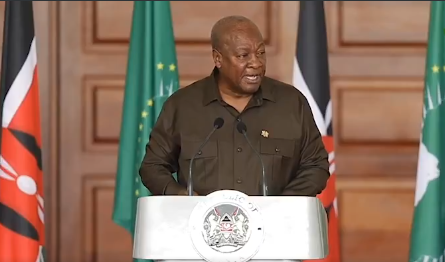
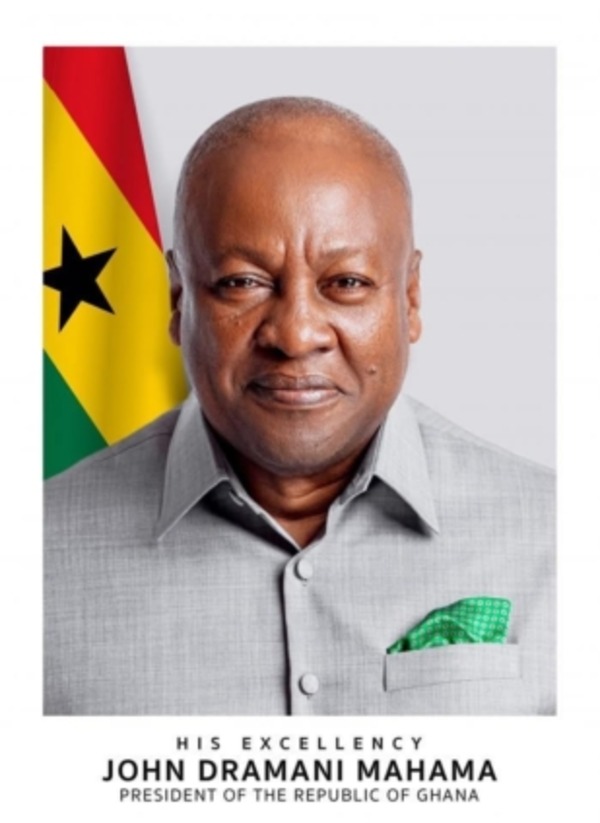
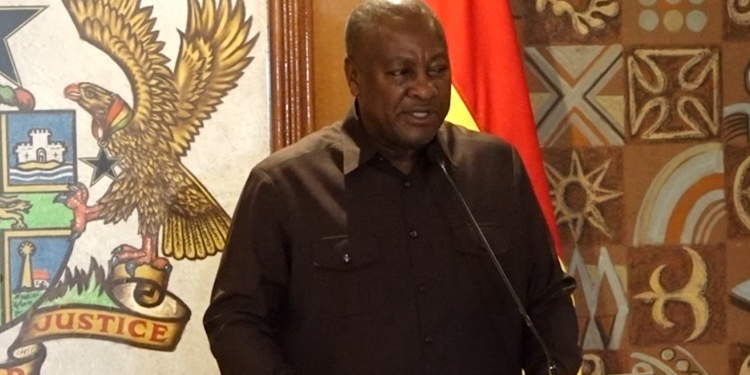
Delivering the keynote address, President John Dramani Mahama commended the evolving Ghana-China relationship and its critical role in Ghana’s economic transformation.
“Over the years, Ghana and China have witnessed remarkable progress in trade and investment, benefiting both our economies,” President Mahama stated.
He encouraged Chinese investors to explore opportunities in Ghana’s value-added industries, manufacturing, and technology-driven sectors, reiterating the government’s commitment to fostering a business-friendly climate.
“As I mentioned in my inaugural address, Ghana is open for business again. I invite our Chinese partners to explore the vast opportunities available, ensuring a win-win situation for both nations,” he said.
Beyond economic collaboration, President Mahama highlighted the importance of educational and cultural exchanges, acknowledging the benefits Ghanaian students have received through scholarships and technical training programs in China. He also stressed the need for increased cooperation in digital innovation and technology to accelerate Ghana’s economic growth.
With trade at an all-time high and both nations eager to deepen their partnership, the future of Ghana-China economic relations looks promising, setting the stage for greater cooperation and shared progress.
The Majority Chief Whip, Rockson Nelson Dafeamekpor, has advocated for a more structured approach to the vetting process, proposing that ranking members on the Appointments Committee be allocated specific time frames to pose their questions.
In his statement before the investigative committee, Dafeamekpor recognized the usual practice of granting ranking members unlimited time to interrogate nominees but suggested that this approach needs to be reassessed.
He recommended that the chairman establish clear boundaries, such as allowing each member to ask three primary questions, followed by three supplementary ones.
“He explained this would ensure a more structured and efficient process, with each member knowing they are allowed a maximum of six questions, regardless of how they are framed. “This would allow them to complete their inquiries within a reasonable time frame, whether 30 minutes or an hour”, he said.
He also expressed concern over the substantial influence afforded to the ranking member, pointing out that this could result in endless questioning. This is compounded by the fact that the ranking member can follow up on questions asked by other committee members.
He commented, “The ranking member has been given so much power to interrogate matters, sometimes to infinity. This poses a problem when they follow up on other members’ questions. I don’t think it’s right.”
He pointed out that the ranking member should also have a designated time frame to ensure that the process remains equitable and organized for everyone involved.
Without these guidelines, he warned, “If the ranking member attempts to grandstand, the vetting could take days. There need to be clear guidelines in place to streamline the process.”
Mr. Dafeamekpor emphasized the need for well-defined, structured protocols to improve the overall fairness and speed of the vetting process.
President John Dramani Mahama has instructed Attorney General and Minister of Justice, Dr. Dominic Ayine, to launch an immediate probe into allegations of corruption uncovered by the ‘Operation Recover All Loots (ORAL)’ committee.
This order comes after the committee presented a detailed report exposing financial irregularities and the misuse of public funds.
In receiving the report on Monday, February 10, he said: “I have promptly handed over the report to the Attorney General and Minister of Justice, and I give him firm instructions to commence immediate investigations into the cases reported in here.”
Mahama has also directed him to initiate legal proceedings against anyone accountable for corruption or similar offenses.
Furthermore, he issued a stern warning to those who assume they can exploit the state without facing consequences, emphasizing that this stands as a strong declaration—Ghana will no longer permit corruption.
He added, “To those who stand for integrity, accountability and the rule of law, I assure you that this government remains your steadfast partner in building a nation where honesty and hard work are rewarded.”
President Mahama restated his administration’s resolve to curb corruption and ensure that Ghana’s wealth serves the interests of its people.
“It is with great solemnity and a deep sense of duty that I receive this comprehensive report of Operation Recover All Loot, an initiative that represents unwavering commitment to the fight against corruption, financial malfeasance, and the misappropriation of public resources,” Mahama stated.
He underscored that the misuse of public funds stifles national development, diminishes trust in leadership, and exacerbates social inequalities. The ORAL initiative was introduced to reclaim improperly acquired state assets and ensure they benefit the Ghanaian people.
President Mahama lauded the ORAL team for their unwavering commitment and ethical approach in fulfilling their mandate without seeking financial rewards.
He emphasized that the detailed investigations, legal interventions, and asset recoveries documented in the report reaffirm his government’s resolve to uphold accountability and foster good governance.
“The findings of this report make for sober reading. They reveal the scale of financial linkages that have cost our nation dearly—resources that should have been invested in education, healthcare, infrastructure, and social development,” Mahama noted.
While the revelations are troubling, the report also signals hope that through collective action, Ghana can restore lost assets and curb future financial mismanagement. The President pledged that the report’s submission is just the first step, with legal proceedings to follow where necessary.
“The recommendations of the report will be carefully studied, and where legal action and investigations are warranted, they will be pursued without fear or favour. Every resource recovered will be channelled back into national development, and mechanisms will be strengthened to prevent such losses in the future,” he affirmed.
President John Mahama has vowed to root out corruption, stressing that Ghana will no longer be a breeding ground for financial misconduct.
Issuing a firm warning, he declared, “For those who think they can defraud the state and escape justice, let this serve as a strong warning: Ghana is no longer a safe haven for corruption.”
He made this statement on Monday while receiving a detailed report from the Operation Recover All Loots (ORAL) committee. The task force, which he commissioned, was assigned to trace and recover state assets allegedly misappropriated by officials of former President Akufo-Addo’s administration.
Mahama reaffirmed his government’s dedication to upholding integrity, ensuring accountability, and strengthening institutions that protect public funds.
“To those who stand for integrity, accountability, and the rule of law, I assure you that this government remains your steadfast partner in building a nation where honesty and hard work are rewarded,” he said.
The president further emphasised, “We must all play our part—citizens, civil society, the media, and public officials alike. Together, we will build a Ghana that is just, transparent, and prosperous for generations to come.”
The Operation Recover All Loots (ORAL) Committee, headed by Chairman Samuel Okudzeto Ablakwa, submitted a dossier of 2,417 cases to President Mahama. Ablakwa noted that if the investigations lead to successful asset recoveries, Ghana could reclaim an estimated $21.19 billion.
The report identified frequently misappropriated government properties, including state-owned lands and official residences.
ORAL, a presidential initiative focused on combating corruption, was set up to trace and recover unlawfully acquired public assets. Upon receiving the report, President Mahama promptly instructed Attorney General and Minister for Justice, Dr. Dominic Ayine, to initiate thorough investigations and pursue legal action where necessary.
The president reaffirmed that accountability would be upheld, stressing that justice would be served impartially, without bias or favoritism.
President John Dramani Mahama has highlighted the findings of the Operation Recover All Loot (ORAL) Committee as a clear indication of the financial losses that have depleted the nation’s wealth.
Speaking to the press after receiving the committee’s report on Monday, February 10, 2025, he underscored that the investigations, legal proceedings, and asset reclamations detailed in the report reflect his administration’s dedication to transparency and responsible governance.
“The findings of this report make for sober reading. They reveal the scale of financial leakages that have cost our nation dearly, resources that should have been invested in education, healthcare, infrastructure, and social development. But they also offer hope that through our collective efforts, we can reclaim what is ours and deter future acts of economic sabotage,” he said.
President Mahama assured Ghanaians that the government will carefully study the recommendations in the report and pursue legal actions where necessary.
“As we receive this report, let me assure the Ghanaian people that the work does not end here. The recommendations of the report will be carefully studied, and where legal action and investigations are warranted, they will be pursued without fear or favor,” he stated.
President Mahama guaranteed that his government will meticulously examine the report’s findings and initiate legal proceedings as deemed necessary.
“I have promptly handed over the report to the Attorney General and Minister of Justice and given firm instructions to commence immediate investigations into the cases reported here, with a view to prosecuting anyone found liable for corruption or related offenses,” he added.
Mahama underscored the importance of a collaborative approach to combating corruption, urging individuals, advocacy groups, the press, and government officials to uphold integrity and foster accountability.
“This is a defining moment in our fight against corruption. We must all play our part — citizens, civil society, the media, and public officials alike. Together, we will build a Ghana that is just, transparent, and prosperous for generations to come,” he said.
The five-member ORAL team was entrusted with detecting and recovering unlawfully acquired state assets.
The immediate past Chairman of the Operation Recover All Loot (ORAL) Committee and Minister for Foreign Affairs, Samuel Okudzeto Ablakwa, has revealed that the committee’s intervention averted the destruction of 50 bungalows that were at risk of being demolished.
“Thanks to the establishment of ORAL, we have been able to save 50 bungalows that were on the verge of being demolished,” Ablakwa announced.
The Committee’s Chairman disclosed that anxious public servants had reported that private developers were on the verge of razing their homes.
“We received distress calls from public servants who said people had queued up so-called private developers ready to demolish their bungalows,” he said.
During the report presentation to the President on Monday, February 10, Mr. Ablakwa disclosed that the threatened bungalows were properties of multiple government bodies, such as the Ministry of Foreign Affairs, the Ministry of Gender, Children and Social Protection, and the Council for Scientific and Industrial Research (CSIR), among others.
“We have provided the details of these bungalows, some belonging to the Ministry of Foreign Affairs, Ministry of Gender, and the Council for Scientific and Industrial Research (CSIR), and all of that. But for the president establishing ORAL, we take the view that all of these 50 bungalows would have been demolished,” he stated.
The Operation Recover All Loots (ORAL) Committee handed over its report to President Mahama, detailing 2,417 instances of suspected corruption.
Acknowledging their efforts, the President lauded the team for their diligence and selflessness, noting that they carried out their work without requesting any financial reward.
He stated that “every pesewa” retrieved through the operation would be directed toward national development, stressing that Ghana will no longer tolerate corruption.
The President then forwarded the report to the Attorney General and Minister of Justice, tasking him with investigating the cases and taking appropriate action where required.
Bodi MP, Samson Ahi, has criticized the current minority in Parliament for opting for disorder instead of coordinated boycotts when expressing opposition.
He argued that this approach has disrupted parliamentary activities and made governance more challenging.
“The normal parliamentary practice is that if a group does not support a certain course of action, they will register their displeasure by walking out. But this current Minority will not stage a walkout; instead, they will make the place ungovernable. They ensure that nothing can proceed,” he mentioned this while appearing before the panel examining the vetting disorder.
He lamented the lack of an immediate remedy for this tactic, highlighting that while exiting the chamber is the most suitable form of protest, the minority continues to reject that option.
“Unless security intervenes, which I do not recommend, it will be difficult to maintain order in the chamber,” he added.
Mr. Ahi proposed that Parliament implement well-defined measures to regulate behavior during crucial discussions.
He noted that the Privileges Committee has the mandate to address disorder, providing members with a platform to report cases of misconduct.
“If a member’s conduct disrupts parliamentary proceedings, a complaint can be lodged on the floor. If the Speaker finds merit in the complaint, the matter is referred to the Privileges Committee, which has the authority to recommend sanctions,” he explained.
Mr Ahi underscored that the Privileges Committee’s dormancy has hindered the enforcement of parliamentary rules. He emphasized the urgent need to reestablish the committee to restore order and accountability.
On Thursday, January 30, turmoil erupted during the Appointments Committee’s vetting of President Mahama’s ministerial nominees, escalating tensions in the chamber.
The confrontation between the majority and minority factions led to property damage, prompting Speaker Alban Bagbin to establish a special committee to probe the incident.
The Operation Recover All Loot (ORAL) Committee has recorded 2,417 complaints from individuals and Civil Society Organisations (CSOs).
Chairman Samuel Okudzeto Ablakwa disclosed this on Monday, February 10, while submitting the committee’s conclusive report to President John Dramani Mahama.
This initiative is a crucial part of broader measures aimed at curbing corruption and reclaiming unlawfully acquired public assets.
“We received 1,493 calls through the toll-free line. We also received 924 emails. Fortunately, all the calls are recorded automatically, and the emails have also been preserved for verification and validation.
“In total, the number of complaints received amounts to 2,417 complaints.”
He highlighted the importance of the ORAL Committee, posing the question of what alternatives the petitioners would have pursued if the President had not initiated it.
“So, those who had any doubt about how relevant and timely the President’s intervention was at the time, this is your evidence. 2,417 complaints received. Where would all of these people have gone if President Mahama had not set up the ORAL preparatory team?”
Investigative journalist Manasseh Awuni Azure has criticized president Mahama for halting numerous court cases against former government officials.
He cautions that this move undermines Ghana’s anti-corruption efforts and establishes a troubling precedent.
“For a president vowing to reset Ghana and prosecute government officials who have stolen or caused money to be stolen from the public purse, the mass clearance is a wrong start. It’s a dangerous precedent,” Azure stated.
He asserts that terminating these legal proceedings grants immunity to individuals who ought to face judicial scrutiny.
Azure cautions that this action establishes a troubling benchmark, implying that politicians could escape accountability down the line.
“What President Mahama is telling the NPP officials his administration will charge is very simple: if you are charged, drag the case as long as you can, and if your party comes into office, the court process will be truncated, and you will be set free,” he said.
He asserted that justice must be driven by due process rather than political considerations, with the judiciary tasked with examining evidence and making determinations.
Additionally, he highlights the importance of openness in governance, stating, “The Attorney-General must not truncate prosecution just because he has the power to do so. That power belongs to Ghanaians and must be exercised in our interest,” he asserted.
According to him, if Mahama genuinely seeks to transform Ghana, he must uphold accountability instead of absolving individuals suspected of misconduct.
Majority Chief Whip, Nelson-Rockson Dafeamekpor, has accepted responsibility for the disorder that erupted during the Appointments Committee’s proceedings on January 30, recognizing the impact of leadership on the situation.
The altercation between the Majority and Minority factions during the vetting of ministerial nominees resulted in damage to public property, leading Speaker Alban Bagbin to establish an investigative committee to examine the incident.
“I take responsibility, so when my punishment came, I took it in good faith,” Dafeamekpor stated in response to the incident.
He admitted that while some contested the fairness of the penalties, his commitment to taking responsibility remained steadfast.
Appearing before the special committee investigating the February 10 disturbances, Mr. Dafeamekpor noted that there were varying opinions among those involved about who should bear the consequences for the chaos.
“Others disagreed that essentially if punishment were to be meted out, it ought not to be me,” he explained. However, he maintained that it was important to punish leaders when things go wrong.
Reflecting on the breakdown of mediation efforts that led to the disorder, Dafeamekpor identified a pivotal moment in the events.
“Consensus building failed for that night. If my counterparts were not minded to insist on their modus operandi for that day, we wouldn’t have experienced that,” he continued.
He noted that tensions escalated when some individuals deliberately disrupted the proceedings, overturning tables and chairs, making it nearly impossible to restore order.
“Once they decided to disrupt, raise tables, raise chairs, what can I do? What could I have done?” he questioned. “Just to suffer for the punishment.”
Dafeamekpor concluded by emphasizing that the situation could have been handled more effectively to prevent the upheaval.
“A lot of things ought to be streamlined,” he said, leaving open the possibility for future reforms to prevent such disruptions from occurring again.
A 53-year-old Ghanaian fisherman residing in Ireland has sadly passed away following a tragic accident on a trawler.
The deceased, identified as Moses Odonkor from Skibbereen, reportedly suffered fatal injuries on February 4, 2025, while working aboard the vessel.
Authorities have described the incident as a workplace accident, stating that it happened while the crew was deploying heavy nets near the Porcupine Bank in Irish waters, according to Sunday World.
Despite frantic efforts by his fellow crew members to save him, he succumbed to his injuries before emergency responders could intervene.
His sudden death has left the fishing community in shock, with his colleagues remembering him as a skilled and respected crew member known for his cheerful personality.
Following the accident, the trawler returned to the port in Castletownbere.
Odonkor had lived in Ireland for over 20 years, and this is not the first tragedy to hit his family. In 2023, his two-year-old son, Joshua, tragically died after choking on a grape.
He is survived by his wife, Philomena Odonkor, and two children, Isaac and Emmanuel.
Meanwhile, his remains are expected to be flown back to Ghana later this week, Sunday World added.
Gunmen launched an assault on a bus en route from Bawku to Bolgatanga, claiming one life and leaving five others in critical condition.
Despite military personnel escorting the vehicle, the attackers ambushed the bus, but security forces managed to prevent further casualties.
The wounded passengers were swiftly transported to the Upper East Regional Hospital in Bolgatanga for emergency treatment.
While the attackers’ motives remain uncertain, the assault is believed to be connected to the ongoing chieftaincy dispute in Bawku.
This attack follows a recent incident in which armed assailants, disguised in military uniforms, invaded a residence and gunned down a woman along with her two children.
After a brief period of calm, hostilities have reignited, bringing the total number of fatalities in the conflict to 46 since its resurgence in October 2024.
Terrified residents are calling for heightened security measures to curb the violence and restore stability in the area.
Foreign Affairs Minister Samuel Okudzeto Ablakwa has shared how the traditional rulers he invited to support him during his vetting on January 30, 2025, had to make a swift exit due to the disorder that erupted during the session.
Appearing before the special committee as a witness, Ablakwa recalled that he arrived with the chiefs, expecting a routine vetting process.
However, the atmosphere quickly became turbulent, forcing them to leave abruptly.
He stated that although his vetting was initially set for 12:30 pm, it was postponed until 8 pm. Ablakwa further recounted that upon arrival, they encountered fierce opposition from Minority members, who challenged his presence and insisted that he would not be vetted.
“We expected to be vetted that evening, and we also expected that our chiefs and other eminent guests would receive an apology for the delay from 12:30 PM to 8 PM. However, to our surprise, as we entered the room, we faced hostility. The Minority members became furious when they saw me entering with my delegation. They demanded to know why I was there and insisted that I would not be vetted.
“I was really taken aback. I was surprised because I had my invitation letter, yet I was being told I was not supposed to be there. Meanwhile, members of the committee had informed me to come in. We had been waiting in a holding area, and the Chief Whip signalled that we could now proceed. When I entered, the Honorable Akandoh was about to take his turn.
“He was just about to be sworn in, and I was ushered to the third seat on my left to wait for my turn. After Honorable Akandoh, I was supposed to be vetted. Then, the hostility began, escalating into violence which was an utterly despicable scene,” Ablakwa recounted.
The North Tongu MP characterized the experience as both distressing and humiliating for him as a legislator.
He recounted how some paramount chiefs questioned whether such chaos was a regular occurrence in Parliament, while another, gripped by fear, hastily exited the scene.
Ablakwa suggested that, given the unsettling events of that night, some of the chiefs may be unwilling to accompany him to Parliament in the future.
“We were traumatized. I was deeply embarrassed as a member of Parliament. I recall paramount chiefs asking me, ‘Is this what you people do here? What is the meaning of this?’ One chief even told me he feared for his life. Some of them had to quickly escape because they were unsure if the violence based on the way tables were being overturned and destruction was taking place would escalate further.
“With microphones, PA systems, and other items being destroyed, some chiefs feared they might be hit and decided to flee. I am now wondering if they will ever be willing to honour an invitation to Parliament again after what happened that night.
“This incident must be condemned in no uncertain terms. Instead of apologizing for their despicable conduct and the trauma they caused to invited guests, they held a press conference the next day, falsely claiming that we had smuggled ourselves in. It was like adding insult to injury,” Ablakwa stated.
The Minority Caucus in Parliament has opted to temporarily disengage from the Ad-hoc Committee investigating the disturbances that disrupted the Appointments Committee’s proceedings on January 30, 2025.
Their decision stems from concerns over the committee’s leadership, particularly the continued chairmanship of Emmanuel Kwasi Bedzrah, whom they accuse of partiality.
Although they initially took part in the probe, the Minority later withdrew, formally notifying the committee through a letter.
They have also submitted a memorandum to Speaker Alban Bagbin, outlining their concerns and seeking his intervention.
The caucus clarified that this move does not signify a refusal to cooperate but rather a necessary step to uphold transparency, procedural fairness, and the credibility of the inquiry.
Minority Leader Alexander Afenyo-Markin asserted that their stance is intended to protect the integrity of the committee’s work and safeguard Parliament’s credibility.
“Pursuant to this, and given the significance of the issues raised, the Minority Caucus considers it prudent to await the Speaker’s response before taking any further steps in relation to the Committee’s work.
“This should not be misconstrued as an unwillingness on the part of the Minority to engage with the Committee. Rather, it is a necessary step to ensure that due process is followed and that the process remains fair, impartial, and credible.
“We trust that the Speaker will address these concerns in a manner that upholds the integrity of the Committee’s work and the broader interests of Parliament,” parts of the memorandum read.
The contest for the District Chief Executive (DCE) position in Nkwanta North took a dramatic turn as tensions flared among Konkomba youth, leading to a physical altercation over the shortlisted candidates.
While some supported the final selection, others strongly believed that Konkombas had been unfairly sidelined in the process.
A total of 14 candidates were shortlisted for DCE positions in the Oti Region, but discontent arose after all 17 Konkomba aspirants were excluded, sparking outrage among a section of the youth.
Dissatisfied Konkomba youth, backed by some National Democratic Congress (NDC) executives, accused the vetting committee—led by Oti Regional Minister John Kwadwo Gyapong—of deliberately marginalizing their tribesmen.
Speaking at a press briefing, Nkwanta North NDC Deputy Communications Officer, Gideon Bilinyi, alleged that Mr. Gyapong intentionally orchestrated the exclusion of Konkomba candidates. He referenced an audio recording in which the minister allegedly downplayed the role of Konkombas in the region, instead favoring Ewes.
In the leaked recording, Mr. Gyapong was reportedly heard saying, “When discussing Oti, I prioritize Ewes. Should Konkombas be the focus? No, trust the Ewes because they are the majority.” These remarks fueled further outrage, especially after all Konkomba applicants were left out of the selection.
However, another group defended the vetting process, insisting that the committee conducted an objective assessment and selected the most qualified individuals.
A spokesperson, Ernest Lagsah, alleged that Nkwanta North MP, John Oti Bless, attempted to pressure the committee into selecting his preferred candidate, but the panel stood firm and refused to be influenced.
“Hon. John O.K Bless attempted to corrupt the process by compromising on standards laid for the committee. He insisted on his choice; thus, Mr. Anthony Kwesi Ntefui, who performed woefully during the process was included in the list. However, the committee disagreed hence he resorted to inciting his thugs to accuse the Regional Minister of bias against Konkombas”, he said when addressing the press in Kpassa.
He asserted that all shortlisted candidates were deserving of the position and urged President Mahama to choose the best-suited individual to head the Nkwanta North District.
“If His Excellency, John Dramani Mahama finds them [shortlisted applicants] worthy, we encourage him to appoint any of them as our District Chief Executive in fulfillment of the provisions of the constitution and his promise to ensure balance in his appointments”, he said.
Mr. Lagsah recognized the role other ethnic groups in the Oti Region played in securing victory for the NDC and in electing Konkomba representatives for the parliamentary seats of Krachi Nchumuru, Krachi East, and Nkwanta North.
However, tensions flared during the press briefing, leading to a confrontation that was swiftly diffused by the Chief of Kpassa, Ubor Tassan Konja IV, preventing any escalation into violence.
Ubor Tassan Konja IV urged both sides to maintain peace and accept President Mahama’s final decision on the district’s leadership.
“Everyone cannot be DCE, let us support whoever is appointed to occupy the position. What we want is development and progress. I am pleading with you. I don’t want us to experience the repercussions of the tribal conflict in 2012. President Mahama will appoint whoever qualifies to lead us”, he stressed.
National Security operatives have intercepted a large consignment of counterfeit currency and suspected gold bars concealed in twelve 20-foot shipping containers.
Acting on intelligence, officers carried out a raid at a warehouse in Sapeiman, located in the Ga South Municipality, where they discovered the illicit haul.
During the operation, bundles of fake US dollar notes were uncovered, hidden inside wooden crates and encased in cement to evade detection.
Authorities also confiscated counterfeit Ghana cedi notes, along with fraudulent Ghana Army uniforms and boots, heightening security concerns.
Officials revealed that two of the containers remain missing, with intensified efforts in place to track them down.
Meanwhile, a pursuit is underway for four suspects, including a key figure known only as Alhaji. National Security has assured the public that investigations are ongoing to dismantle the syndicate and ensure all those involved are held accountable.
A raging fire broke out late Sunday night, February 9, along the Agbogba to Ritz Junction Road near Madina, demolishing multiple structures.
The inferno consumed several wooden and container units, leaving businesses and homes in devastation.
Firefighters from the Ghana National Fire Service (GNFS) arrived promptly, working to extinguish the flames and prevent further destruction.
GNFS spokesperson Alex King Nartey stated that the fire spread quickly due to the combustible materials in the affected structures.
“This is at Agbogba, close to the Police Station involving about 30 wooden structures. It is a lot of wooden and container structures planted together so it made the spread of the fire much easier.”
Despite the fire partially affecting at least 10 structures, firefighters managed to shield over 50 nearby buildings, preventing a more severe calamity.
A major hurdle in containing the blaze was the difficulty in accessing locked containers, many of which were fortified with air conditioning units and reinforced doors.
Alex King Nartey underscored the issue of restricted access, emphasizing how it hindered efforts to bring the fire under control.
“Accessibility alone is one of the problems as we are struggling to get to the seat of the fire to fight it,” he lamented.
Firefighters also encountered additional hazards from nearby Electricity Company of Ghana (ECG) poles, with reports indicating that some responders suffered electric shocks during the operation.
Senior Partner at AB & David Africa, David Ofosu-Dorte, has urged African nations to see a potential Donald Trump presidency as a turning point for reducing dependence on foreign aid and prioritizing economic self-sufficiency.
Speaking on the Citi Breakfast Show with Bernard Avle, Ofosu-Dorte highlighted Trump’s history of significantly cutting funding for the United States Agency for International Development (USAID) and the broader impact on Africa.
He argued that Trump’s foreign policy stance should push African countries to rethink their development strategies and invest in long-term, locally driven solutions.
Under Trump’s administration, major reductions were made to foreign aid programs, including USAID, which has played a crucial role in supporting healthcare, education, food security, and governance initiatives across the continent.
A particularly significant move was the withdrawal of $613 million in aid from South Africa due to policy disagreements over land redistribution, raising concerns about the future of critical programs such as HIV/AIDS treatment and economic development initiatives.
Ofosu-Dorte also pointed to Trump’s dismissive attitude toward Africa, noting that African leaders were not invited to his inauguration.
“This is an opportunity for us to take charge of what is important to us. Trump doesn’t care about Africa and he didn’t even invite Africa to his inauguration.
“About South Africa, he is talking about stopping their aid because of land issues and you look at the amount of money [$613 million] he is taking away, it tells us that Africa should realise there are things we need to do for us.”
Ghana Water Company Limited (GWCL) has urged residents grappling with water shortages to remain calm, assuring them that urgent measures are being implemented to resolve the situation.
The company acknowledged the difficulties communities are facing and reiterated its dedication to restoring a consistent water supply as swiftly as possible.
Several towns, including Tamale, Bimbilla, Kasoa, and Ho, have suffered extended water shortages, disrupting daily routines.
In Ho, the crisis has worsened, putting immense pressure on vital institutions like hospitals and prisons, which have been compelled to seek alternative water sources to continue operations.
Speaking to Channel One TV’s Adwoa Tenkorama, GWCL Communications Manager Stanley Martey reassured residents that steps were being taken to address the problem.
He specifically guaranteed that Ho’s water supply would stabilize within a week, stressing that the company was working tirelessly to restore normalcy across all affected regions.
“We sincerely apologise for the inconvenience caused, but as we have stated, we are working around the clock to restore supply. By the end of the week, we expect the situation to improve within the municipality,” he stated.
He added that a backup water pump had been serviced and was ready for use, while another was scheduled for installation by Thursday.
“Having two standby pumps will serve as a short-term solution to this challenge,” he added.
Mr. Martey also condemned unauthorized water usage, highlighting that it aggravates the shortage for other residents.
A fire outbreak has taken the lives of a nurse at Kumasi South Hospital, Linda Agyemang, and her three children at Gyinyase in the Asokwa Municipality of the Ashanti Region.
Despite frantic efforts by neighbors and bystanders to save them, the family remained trapped inside their three-bedroom home as the intense flames made entry impossible.
The blaze erupted in the early hours of Saturday, leaving the community in distress. Firefighters responded swiftly after being alerted and managed to douse the fire, but the victims were found in the bathroom, burned beyond recognition.
Three other occupants of the house were successfully rescued and are currently receiving treatment at Kumasi South Hospital.
The charred remains of the deceased have been conveyed to the Komfo Anokye Teaching Hospital (KATH) for preservation, while authorities have commenced investigations to determine the cause of the fire.
Ashanti Regional Fire Service PRO, DO II Peter Addai, confirmed the heartbreaking incident.
“At 44: 08 – 44: 32At 4:36 AM on 8 February 2025, we received a distress call reporting a fire at Gyinyase near Tubi hotel. We quickly dispatched our fire tenders to attend to the fire, when we got there the fire was wild alright so we called for a second attendant to help. We lost four people in that fire but the cause of the fire is still under investigation”
President John Dramani Mahama has appointed Brigadier General Paul Seidu Tanye-Kulono as the interim Director-General of the Ghana Ports and Harbours Authority (GHPA).
Brigadier General Tanye-Kulono, an accomplished military officer and legal practitioner, is currently the Deputy Commandant at the National College of Defence Studies (NCDS) at Burma Camp, Accra.
He possesses a Master of Laws (LLM) in Litigation and Alternative Dispute Resolution from the George Washington School of Law, a Master’s degree in Management Studies from Osmania University in India, and a Master of Arts in International Affairs from the University of Ghana. He became a member of the Ghana Bar in 2015.
His professional development includes military training from the Royal Military Academy Sandhurst, the United States Army Command and Staff College, and the Kofi Annan International Peacekeeping Training Centre.
Brigadier General Tanye-Kulono has held several high-ranking positions, including Chief Coordinator at NCDS, Assistant Commandant at the Training and Doctrine Command, and Deputy Director-General of Training at GHQ.
He has also contributed significantly to international peacekeeping efforts, serving as Deputy Force Provost Marshal and Special Investigations Officer at UNIFIL Headquarters.
With vast experience in counterterrorism, strategic defense planning, and operational command, he is expected to bring a wealth of knowledge and leadership to his new position at GHPA.
Parliament’s Marshal, Lt. Col. Samuel Kofi Owusu, has maintained that sufficient security measures were in place during the ministerial vetting session conducted by the Appointments Committee on Thursday, January 30.
A dispute between the Majority and Minority escalated into a confrontation, resulting in damage to public property and leading Speaker Alban Bagbin to establish an investigative committee to examine the events.
Appearing before the committee on Friday, January 30, Lt. Col. Owusu asserted that security arrangements had been properly implemented prior to the unexpected altercation.
“We provided enough security at the committee sitting, I think we provided the necessary security for the committee meeting, but little did we know that it would go to the extent of damaging state property,” the Marshal remarked.
The Marshal stated that the table’s wiring was interconnected, and when it was shifted, it pulled the consoles along, causing them to topple and break apart.
“The moment the table was pulled, because the cables were interconnected, that was when the consoles now fell from the table to hit the ground and shattered into pieces,” he explained.
He added “As much as possible, we were also holding them in place so that they were destroyed.”
Despite security officers’ attempts to avert damage, the Marshal conceded that the situation worsened when a console toppled and broke as the table was raised.
“It was unfortunate that a particular console fell when the table was lifted and got broken,” the Marshal stated, expressing regret over the incident that led to the destruction of government property.
The Attorney-General has withdrawn the case against the convener of the Democracy Hub protesters, who were apprehended for rallying against illegal mining (galamsey).
The demonstrators, who took to the streets to push for stronger government action against environmental destruction, were arrested and charged following their protest.
However, the Attorney-General’s office has officially dropped all charges, bringing the case to an end.
Approximately 53 individuals, including convenor Oliver Barker-Vormawor and Ama Governor, were among those detained during the protest.
The demonstration aimed to highlight the adverse effects of illegal mining on the environment, particularly its impact on farmland, rivers, and forests.
Environmental activists have persistently called attention to the widespread damage caused by unchecked mining activities.
President John Mahama has unveiled plans to implement a strict code of conduct for government officials.
He emphasized that this initiative is designed to promote accountability, prudence, and ethical leadership.
Speaking at the swearing-in of newly appointed ministers at the Jubilee House on Friday, February 7, 2025, Mahama reaffirmed his administration’s stance against arrogance, lavish spending, and the mismanagement of public funds.
“This government will be characterized by humility and a deep sense of responsibility toward Ghanaians. There will be no room for extravagance or self-importance. The resources under your care belong to the people who entrusted us with leadership,” he declared.
As part of cost-cutting measures, the President has imposed restrictions on unnecessary official travel. He directed the Chief of Staff to enforce the policy, ensuring that all travel is approved in advance by his office and undertaken with restraint.
“The hallmark of this government will be modesty and respect for the Ghanaian people. There will be no room for arrogance and pomposity. The resources you will be working with belong to the Ghanaian people who put us in office,” he stated.
President Mahama underscored his resolve to tackle corruption, highlighting that the impending code of ethics would explicitly define the boundaries for government officials.
He also disclosed that the committee spearheading Operation Recover All Loot (ORAL) is scheduled to present its report to him on February 10.
“No first-class air travel will be allowed. Also, all traces of affluence and lavish lifestyles are to be avoided,” John Mahama warned.
“While it is good to hold past officeholders accountable, it is even better to prevent corruption in the first place. I will hold all my appointees to the strictest standards of accountability,” he stressed.
Mr. Mahama encouraged his ministers to demonstrate honesty and ethical leadership, stressing that their primary obligation is to uplift the lives of Ghanaians, not to amass personal wealth.
“Our mission as a government is not to dispossess the people we govern of their dignity, livelihoods, and opportunities. Rather, it is our duty to enrich our country and ensure the fair distribution of the gains of progress and prosperity to all,” he concluded.
President John Dramani Mahama has imposed restrictions on non-essential travel for government officials, underscoring his administration’s dedication to humility and responsible financial management.
Speaking at the swearing-in of 17 ministers, he emphasized the importance of financial prudence and warned against excessiveness and displays of arrogance.
“The hallmark of this government will be modesty and respect for the Ghanaian people. There will be no room for arrogance and pomposity in this government. The resources that you will be working with belong to the Ghanaian people who put us in office. Those resources are not to be wasted on opulence and extravagance,” he stated.
To minimize unnecessary expenses, the President instructed the Chief of Staff to formally notify all government officials about the travel restrictions.
“I have asked the Chief of Staff to write to all government appointees that I have imposed a ban on non-essential travels forthwith to cut down expenditure. Any travel that is deemed essential and necessary must be cleared first with the Chief of Staff, and such travels will have to be undertaken with modesty—no first class,” he declared.
President Mahama also advised government officials to refrain from extravagant displays of wealth and to adopt a modest lifestyle that aligns with his administration’s commitment to financial prudence.
This directive is part of a broader initiative to ensure the responsible management of public funds for the benefit of all Ghanaians.
Emmanuel Bedzrah, the head of the committee probing the disturbances that erupted during the ministerial vetting on January 30, 2025, has rejected accusations from the Minority Caucus that he is biased.
Addressing the issue, Bedzrah reaffirmed his neutrality, stating, “We are waiting for them to come and testify. I have not seen any accusation against me for being biased. I am not biased, you have all seen the work we have been doing.
“We were even surprised that they didn’t show up. We are waiting for them on Monday, and if they fail to appear, we will invoke constitutional provisions as well as the standing orders”.
His remarks come in response to demands from the Minority in Parliament for his removal, citing concerns over his impartiality and alleging a conflict of interest.
Committee member Kwame Anyimadu Antwi stressed the need for a leadership reshuffle within the committee to maintain the integrity of the investigation.
Speaker Alban Bagbin formed the committee, chaired by Bedzrah, who also serves as MP for Ho West, to examine the events leading to the vetting disruptions. The altercation arose from disagreements between the Majority and Minority over the scheduling of proceedings, escalating into a physical confrontation and damage to equipment.
Other members of the investigative committee include Kwame Anyimadu-Antwi, Gizella Akushika Tetteh-Agbotui, Abena Osei Asare, Zanetor Agyeman-Rawlings, Vincent Oppong Asamoah, and Bede Anwataazuma Ziedeng.
Legal expert Kwame Jantuah has raised concerns about the increasing tendency of governments to assign political figures to lead state institutions rather than selecting seasoned professionals with the requisite technical skills.
He noted that this recurring pattern across successive administrations undermines the country’s economic stability.
Jantuah emphasized that appointing individuals without the necessary expertise hampers the efficiency and effectiveness of these organizations.
He stressed the need for leadership grounded in industry-specific knowledge to ensure state institutions function optimally.
“Some of the institutions need technical management to handle it not politicians. This bit where we put politicians everywhere creates a challenge for the system because if you the politician don’t understand the company you have been put in, and the civil servants who are there to teach you end up teaching you the wrong things, how would you know if you are doing the right thing or not?” he said on TV3 NewDay on Friday, February 7, 2025.
He underscored the necessity of placing skilled professionals at the helm of state institutions to ensure efficiency.
Jantuah called on the government to differentiate between agencies that demand technical expertise and those that can operate under political leadership.
He recommended that institutions requiring specialized knowledge be overseen by experienced professionals, while political appointments should be reserved for non-technical roles.
“It’s not all the research that you do will make you understand the nitty-gritty of it, and TOR is a typical example. Maybe it’s high time we looked at the different parastatals and see which one needs real technical management staff to manage the institution and not politicians,” he said.
Jantuah, a key figure in the Convention People’s Party (CPP), warned that without this shift, people driven by self-interest would infiltrate political parties solely to secure appointments, even without the necessary competence.
He cautioned that this trend could undermine institutions and diminish their effectiveness.
“Somebody who wants to manage GNPC or some of the big parastatals will put his way through, work very hard, get into the good books of the president, and will be appointed somewhere but doesn’t understand anything of where they have been put,” he ended.
La Dadekotopon MP, Rita Naa Odoley Sowah, has raised concerns about the disorder that erupted during the vetting session on Thursday, January 30, 2025.
She stated that she felt unsafe and refrained from moving around due to the large number of people in the room, which created a tense and risky environment.
The vetting process for Kwabena Mintah Akandoh and Samuel Okudzeto Ablakwa sparked heated exchanges between the Minority and Majority members of the Appointments Committee.
A disagreement arose when the Minority pushed for the session to be postponed to Friday, January 31, while the Majority insisted on proceeding as planned.
The standoff escalated into a chaotic scene, with furniture and microphones being removed in an apparent effort to disrupt proceedings.
Appearing before the Special Committee investigating the disturbances on Friday, February 7, Odoley Sowah emphasized the need to regulate the number of attendees in the vetting hall to ensure order and security.
“I felt very unsafe but I had to be calm in my seat.When you look at this hall and the number of people that come in, if there is any danger, where do you pass? I didn’t know what was going on outside this room, and so I didn’t want to risk going out—that’s why you saw me seated quietly in my chair,”she added.
Sowah expressed satisfaction that the vetting guidelines, particularly those restricting the number of visitors, would be strictly observed.
“I am happy that the rules governing this appointments vetting will be adhered to because the number of visitors that troop into this room is not the best,” she said, adding, “You have visitors or guests of appointees or nominees also joining in the argument.
“I saw some of them moving from where they were supposed to be and coming round the table, and I don’t think that’s the best.”
She advocated for an overhaul of the guidelines to enhance safety.
“If we can consider the in and out and the number of people coming in, I think it will be the best for us. I really felt unsafe,” Sowah stated.
The Minister for Foreign Affairs, Samuel Okudzeto Ablakwa, has vehemently criticized the disorder that erupted during the Appointments Committee sitting on January 30, describing it as disgraceful and deeply regrettable.
While testifying before the Parliamentary Committee on Friday, February 7, the North Tongu MP voiced his disappointment over the conduct of the Minority members, asserting that their disruptive actions had subjected Parliament to intense public scrutiny and disrepute.
Ablakwa emphasized that the chaotic scenes had severely dented public confidence in the legislative body, stressing that such behavior dealt a serious blow to Parliament’s credibility and reputation.
“I was terribly disappointed and embarrassed as a Member of Parliament because I believe that the title honourable is earned by conduct and what happened that night was very disgraceful and shameful and the sad part is that it was the same week that the Minority Chief Whip had brought up a matter at plenary that he had been called silly and that he will not accept it and this conduct happened in less than 48 hours.
“All of us were bashed and brought into disrepute but you cannot actually blame the public and so I was embarrassed and I still feel embarrassed and I think there is a lot we have to do as an institution to reclaim our image and restore our honour and dignity before members of the public.”
Pusiga MP, Laadi Ayii Ayamba, has revealed fresh details regarding the turmoil that erupted during the Parliamentary vetting session on January 30.
According to her, the disruption escalated when Minority Chief Whip, Frank Annoh-Dompreh, allegedly instructed his colleagues to disconnect cables and interfere with equipment, worsening the disorder.
Testifying before Parliament’s Special Committee investigating the incident, Ayamba, who serves on the Appointments Committee, recounted that the Minority had initially planned to stage a walkout, refusing to participate in the vetting process.
She noted that despite calls from the Majority for them to exit peacefully and allow proceedings to continue, the Minority declined.
“We told the Minority that if you said you were tired, you should leave and let those of us who form qurom to continue with the vetting but they said no, they want to cause distraction,” she told the MP.
She further alleged that the situation took a turn for the worse when Annoh-Dompreh reportedly instructed members to tamper with the equipment, including cables and consoles, just as the nominees were about to be sworn in.
Ayamba added that some Minority MPs, including Jerry and Hon. Baafi, resorted to flipping tables in protest, further disrupting the session.
“It was when we asked the Clerk to administer the oath that the Minority started shouting, you this woman, you are an NDC woman and that is where I started calling on the Chairman of the Committee to call them to order and that is when Jerry came in and said they will not vet and by the time he tried turning, an order came from the Minority Chief Whip to disconnect the cables and so Jerry and Hon. Baafi started lifting the table.”
Nkwanta North MP, John Oti Bless, has accused Minority Leader Alexander Kwamena Afenyo-Markin of orchestrating disruptions during the vetting process by instructing Minority members to deliberately derail proceedings.
A heated confrontation erupted between the Minority and Majority members of the Appointments Committee over the vetting of Kwabena Mintah Akandoh and Samuel Okudzeto Ablakwa, resulting in a tense standoff.
The dispute arose when the Minority demanded a rescheduling of the session to Friday, January 31, while the Majority remained resolute on proceeding as planned.
The impasse escalated into disorder, with chairs being displaced and microphones unplugged in what appeared to be an attempt to stall the process.
Appearing before the investigative committee on Friday, February 7, Oti Bless alleged that Minority Chief Whip Frank Annoh-Dompreh, following Afenyo-Markin’s directives, ordered committee members to tamper with equipment and disrupt the vetting session.
“Before the incident occurred, Dr. Afriyie approached the Minority Leader for Akandoh to be vetted, but the Minority ignored him. The Minority Chief Whip also wanted Akandoh to be vetted, but the Minority Leader rejected their request and stated that whatever would happen should happen. I was watching them,” he recounted.
“Mr. Chairman, this is a straightforward matter. Everything that happened that day was caused by the Minority Leader. A leader who watches or stands by while subordinates vandalize or destroy state property without uttering a word or stopping them is as guilty as the perpetrators. From what I witnessed, the Minority Leader instigated his members to misbehave.”
Former State Insurance Company (SIC) shareholder and chartered insurer, Larry Jiagge, has voiced his frustrations over SIC’s financial practices and the National Insurance Commission’s (NIC) response to regulatory infractions.
Speaking on Joy FM’s Super Morning Show on Friday, February 7, Mr. Jiagge alleged that in 2023, SIC took loans to finance shareholder dividends, painting a misleading picture of financial health.
“They went to borrow money to pay that dividend, I can tell you that for a fact, I was a shareholder then.”
This statement brought attention to the company’s questionable financial practices, particularly its dependence on loans to distribute dividends.
Mr. Jiagge revealed that stakeholders only gradually uncovered the full extent of these issues, noting that certain aspects were too sensitive for public discussion. However, his chief concern was the NIC’s failure to properly regulate the insurance industry.
He criticized the commission for not enforcing its own policies, stating that despite repeatedly raising these concerns in writing, the NIC failed to take decisive action.
The lawyer’s remarks followed reports that former SIC Insurance Company Limited Managing Director, Hollistar Duah-Yentumi, had refused to hand over to the newly appointed acting MD, James Agyenim-Boateng, and had taken legal action to challenge her dismissal.
“There are things you can’t talk about on air. Some of these problems had the stamp of the National Insurance Commission,” Mr Jiagge said.
He added, “They don’t enforce their own law, and I had pointed this out to them in writing all the time.”
The lawyer also expressed his disappointment over SIC’s asset sales, recalling his efforts to raise objections as a shareholder.
Mr Jiagge noted that he officially petitioned the NIC on the issue, but despite his persistent follow-ups, the Commission took a full year to reply.
When their response finally came, it merely reinforced SIC’s position, claiming that the asset disposals had received shareholder approval.
“They should abide by their own law, the law they created” he advised.
The Operation Recover All Loot (ORAL) Committee is set to deliver its final report to President John Dramani Mahama next week as part of efforts to combat corruption and retrieve misused public funds.
The committee, responsible for verifying claims of financial misconduct, has evaluated more than 700 complaints from the public.
President Mahama affirmed that the findings would be referred to the relevant investigative agencies for necessary follow-up and action.
“Those currently in office should know that they will be held to the same standard as we are holding the past regime. Next week, the ORAL Committee will present its report to me, and I will refer it to the investigative agencies to begin their work against those who have misappropriated the nation’s resources,” the President said during his thank-you tour in the Central Region.
Concerning the halted Komenda Sugar Factory project, the President has mandated the Minister of Trade, Agribusiness, and Industry to present a thorough status report to accelerate its completion.
“We are determined to continue with the project so that the Central Region can become Ghana’s leading producer of sugar,” he stated.
The New Patriotic Party (NPP) Parliamentary Candidate for Ablekuma North, Nana Akua Afriyie, has outrightly rejected any possibility of a rerun of the parliamentary election in the constituency.
She affirmed that all required records are intact, dismissing calls for a fresh election stemming from disputes over the collation process.
A High Court ruling on January 4, 2025, instructed the Electoral Commission (EC) to complete the collation of results and announce winners for four pending parliamentary elections. While results have been declared in three constituencies, Ablekuma North remains unresolved.
Collation resumed on January 8, 2025, but was disrupted due to missing results from three polling stations. The EC initially planned to continue the process on January 17, 2025, at 8:00 AM. However, following a security assessment, the Ghana Police Service advised postponement.
Nevertheless, the EC, in a statement on January 17, disclosed that law enforcement did not provide sufficient security at the collation center, resulting in an incursion by party supporters and another suspension of proceedings.
“I don’t agree in any way. We are not going for any rerun. We are going to collate those three polling stations.” Afriyie declared.
Former President John Dramani Mahama has reaffirmed his resolve to enhance the Free Senior High School (Free SHS) programme, promising to tackle its challenges and elevate educational standards.
During his ‘Thank You Tour’ in the Central Region on Thursday, February 6, 2025, Mahama stressed that education remains a fundamental pillar of his development agenda.
He outlined plans to improve the Free SHS system by establishing a reliable funding source and decentralizing food procurement to streamline operations.
“Education will remain a priority and we will work to provide the best possible learning environment for our children at all levels.
“And ensure that our youth have the skills needed to compete in the global economy. We plan to improve the Free SHS programme to secure dedicated funding and decentralised food procurement.”
He further announced plans to introduce a “no academic fees” policy to ease the financial strain on continuing students and expand tertiary education infrastructure to accommodate the increasing student population.
“Additionally, we will introduce a ‘no academic fees’ policy offering financial aid to continuing students and expand infrastructure for tertiary institutions.”
The Minority in Parliament is calling for the Ghana Health Service (GHS) leadership to be summoned over the recurring outbreaks of Cerebrospinal Meningitis in the country.
This appeal follows a statement by Dr. Sebastian Sandaare, MP for Daffiama Bussie Issa, who informed Parliament that 14 deaths have been recorded from 60 suspected cases in the Upper West Region in 2025.
Responding to the report, Minority Chief Whip Frank Annoh-Dompreh decried the fact that such preventable illnesses continue to claim lives and urged the Ghana Health Service to appear before Parliament to outline measures being implemented to curb the outbreak.
“The leadership of the Ghana Health Service should come and tell us why this matter is where it is. In this time and age, we can’t allow such basic aliments to take lives. Interestingly, the Upper East shares a border with the Upper West. And if we’re not careful, it will result in a calamity.
“This is an ailment that is taking the lives of people, innocent Ghanaians. And that part of the world, statistics have shown that poverty is so pronounced so they may not even have the wherewithal to procure the vaccines.”
The First Deputy Speaker, Bernard Ahiafor, meanwhile, suggested various strategies for the Ghana Health Service to implement to contain the spread of the disease.
“The Ministry of Health should take immediate action to create awareness, conduct contact tracing, intensify provision of medical care to the affected victims and consider the establishment of the public health emergency fund.”
President John Dramani Mahama has affirmed that the findings from the Operation Recover All Loot (ORAL) Committee will be turned over to the relevant investigative bodies to examine individuals suspected of misappropriating public resources.
He indicated that the committee is set to deliver its report next week.
Speaking during his ‘Thank You’ tour in the Central Region on Thursday, February 6, Mahama reiterated his administration’s resolve to combat corruption, both within his government and that of his predecessor.
He assured Ghanaians that his leadership is committed to serving the collective interest rather than favoring an elite few, emphasizing that integrity and accountability remain key pillars of his governance.
“Next week, the ORAL committee that I set up is going to present its report to me. And I will refer it to the investigative organisations to start their investigations against people who have misappropriated the resources of this nation,” he stated.
Mahama restated his commitment to establishing a comprehensive accountability system and a strict ethical code for individuals in positions of authority.
He emphasized that both former and serving officials would be subject to the same level of scrutiny.
“Even as we investigate those who have just left office, and we carry out our Operation Recover All Loot, those who are current office bearers should also know that they will be held to the same standard as we are holding the past regime,” he asserted.
The former president of the Ghana Bar Association (GBA), Sam Okudzeto, has voiced concerns over the escalating incidents of lawlessness in the country, particularly surrounding the December 7 elections.
In an interview with Beatrice Adu on TV3’s Agenda program on Wednesday, February 6, 2025, Okudzeto warned that these unlawful actions threaten the very foundation of Ghana’s democratic principles.
He argued that much of the election-related controversy stems from the behavior of political figures, rather than any fault of the Electoral Commission (EC).
The former GBA president also shared alarming accounts from the election period, where reports surfaced of EC officials being coerced, with some even facing gun threats to ensure specific candidates were declared victors, further highlighting the rise of lawlessness in the nation.
“It is not the EC’s job to fight political parties. They are trying not to give the impression that they are against any particular group. But how do people go and set fire to ballot boxes in an electoral office? What does that mean? It’s hooliganism.
“Now, we become a country of hooligans. How do people go and set up fire to the ballot boxes in an electoral office? What’s the meaning? It’s hooliganism when people felt that the CI127 kind of guided the elections”, he stated.
Mr Okudzeto stressed that any disagreements regarding electoral results should be addressed through the pink sheets, as they represent the definitive and authorized record of the elections.
“When there is confusion over who has won, let’s go to the pink sheets and see what they say. That is final. How can some claim not to have it? Were they not at the polling station? That is the lie of lies,” he added.
He urged political parties to take on more accountability and demonstrate a stronger commitment to upholding democratic peace.
The 2024 general elections were marred by a significant rise in electoral violence, with 76 incidents reported, according to a collaborative report by CDD-Ghana, CODEO, WANEP, and NERG.
Key electoral materials and Electoral Commission offices in Damango and Ayensuano were destroyed, raising alarms over the elections’ legitimacy.
The aftermath of the elections was also characterized by acts of arson, assaults, and attacks on political party offices, largely fueled by disillusioned supporters of the ruling party who were upset over delays in political appointments.
The Minority Chief Whip, Frank Annoh-Dompreh, has stated that the New Patriotic Party (NPP) will obstruct parliamentary activities until the Ablekuma North Constituency is appropriately represented in Parliament.
The processing of results for the constituency has been suspended for the past month due to ongoing disputes regarding the election outcome. One such disagreement resulted in the destruction of property at the Electoral Commission’s regional office.
Speaking to party supporters during a visit to the NPP’s Parliamentary Candidate for Ablekuma North, Ekua Afriyie, Annoh-Dompreh declared that the National Democratic Congress (NDC) would face unrest until the matter is settled.
“If the NDC, led by Mahama Ayariga, continues to deny that the NPP won the seat and distract the Electoral Commission’s process, they will never have peace in Parliament,” he said.
He further stated that if the Inspector General of Police (IGP) fails to hold accountable the NDC supporters from Ablekuma North who disrupted the collation process, the NPP members of Parliament will “persist with their demonstrations” to voice their dissatisfaction.
Annoh-Dompreh also set a seven-day ultimatum for the Electoral Commission (EC) to announce the winner for the constituency, underlining the need for a quick resolution.
“We are giving the EC one week; they must come and declare our candidate as the winner of the Ablekuma North election.”
In the meantime, both Ewurabena Aubyn of the NDC and Ekua Afriyie of the NPP have put up billboards asserting their victory in the contested election.
The former Managing Director of SIC Insurance PLC, Hollister Duah-Yentumi, has taken legal action against the company and her successor, James Agyenim-Boateng, who was appointed by President John Dramani Mahama.
Duah-Yentumi claims that her contract was unfairly terminated, despite it being set to last until January 1, 2028.
As part of her lawsuit, the former MD is requesting the court to mandate SIC Insurance to compensate her salary and benefits through to 2028.
She is seeking an annual salary of GH¢840,000, SSNIT contributions, GH¢200,000 for housing, and a clothing allowance worth 10% of her salary.
Additionally, she is demanding allowances for entertainment, meals, and professional expenses, alongside payment for utilities, taxes, and provisions for her household staff, security, and gardener. Duah-Yentumi is also asking for a company car and fuel benefits.
Below are her demands as stated in the writ of summons:
a. Gross basic salary of GH¢840,000.00 per annum, which is subject to an annual upward review rate of 15%.
b. Payment of the plaintiff’s Social Security and National Insurance Trust (SSNIT) and provident fund.
c. The provision of official accommodation and its maintenance to a suitable standard, at a cost of up to GH¢200,000.00.
d. A clothing allowance of 10% of the annual basic salary, payable once a year by the end of the payment year.
e. An entertainment allowance of 10% of the annual basic salary, payable monthly in twelve (12) equal instalments per year over the tenure of this contract.
f. A monthly canteen allowance of GH¢850.00.
g. A professional allowance of GH¢1,200.00.
h. Payment of all utility bills, property rates, and other taxes levied on her official residence.
i. Payment of annual membership dues for only one professional association of her choice.
j. Payment of membership fees for a health or sports club of her choice, not exceeding GH¢3,000.00 per annum, paid directly to the sports club.
k. Provision of one domestic (house) help or cash in lieu of GH¢3,000.00.
l. Provision of one personal security officer at the MD’s residence or cash in lieu of GH¢3,000.00.
m. Provision of one gardener at the MD’s residence or cash in lieu of GH¢2,000.00.
n. Provision of medical care for the managing director, her spouse, and five children below the age of 18, or up to 22 years if still schooling or unemployed, at the Bob Freeman Clinic.
o. Provision for the sole use of the managing director of a suitable company car (i.e. a V8 Toyota Land Cruiser) and payment of all expenses related to its maintenance and insurance.
p. Provision of 450 litres of fuel per month for the official vehicle.
q. The company car referred to above shall be sold to the managing director upon the expiration or termination of this agreement in accordance with the company’s asset disposal policy. Disposal of the vehicle to the managing director upon earlier termination of this agreement by the managing director shall be at the board’s discretion.
r. The managing director shall be entitled to thirty (30) working days of paid vacation (exclusive of statutory holidays) each year at such times as the board may approve.
s. The managing director shall be entitled to an annual familiarisation tour to any destination. SIC shall pay an amount not exceeding US$3,000.00 for an air ticket for the trip upon proof of undertaking the trip. The annual familiarisation benefit is a “use it or lose it” benefit.
t. The managing director’s annual familiarisation tour shall be considered part of her entitled paid vacation days each year and shall therefore be deducted from the total entitled days when taken.
u. The managing director shall be paid a per diem of US$810 for all international travels for seven (7) days towards the familiarisation tour referred to in section 5.3 (xiii). Payment shall commence before her departure.
v. Provision of a personal accident and life insurance cover in an amount equivalent to five (5) times the managing director’s annual basic salary.
w. In the course of her duties, the managing director shall be provided with a business-class airline ticket for official trips and be paid a per diem of US$810.00 per day.
x. Payment of an annual bonus shall be based on the achievement of set targets. The amount payable shall be determined in accordance with the Bonus Policy of the company.
y. Benefits and allowances that are not specified in this contract but to which the MD may be entitled will be paid at the current General Manager’s rate plus twenty (20) percent.
The plaintiff claims that the salary and benefits outlined are to undergo a 15% annual increase review.
The Ghana National Fire Service (GNFS) has issued a warning about a looming shortage of bush meat, caused by the rapid depletion of wildlife in the country.
In an interview with the Ghana News Agency (GNA) in Sunyani, Kwame Adomako, the Assistant Divisional Officer Grade One (ADOI) and Bono Regional Public Relations Officer for the GNFS, highlighted that the loss of wild animals is accelerating this problem.
With the onset of the dry season, Adomako urged for a collective effort to safeguard wildlife, stressing the need for immediate action to protect animal populations.
He noted,“we don’t hunt for bush meat in the dry seasons”.
He reminded the public that the nationwide restriction on group hunting remains enforced and urged everyone to play a role in ensuring the ban is upheld.
ADOI Adomako pointed out that under PNDCL 229, penalties for violations are clearly outlined and cautioned that offenders would face legal action.
ADOI cautioned that the harmattan season is likely to be harsher this year and advised farmers, palm wine tappers, and smokers to refrain from carrying open flames into the bush.
The harmattan, usually occurring between late November and mid-March, is characterized by dry, dusty winds from the north-east.
To curb fire outbreaks, ADOI mentioned that the GNFS will deploy taskforces and fire volunteers to local areas for vigilance. He also warned that individuals responsible for starting fires would be prosecuted in accordance with Law 229.
“We don’t go hunting expeditions in the dry season because that is the period the animals also breed,” he stated.
Education Minister Haruna Iddrisu has appealed to the University of Ghana to revise accommodation fees, reducing them from GHC 3,000 to GHC 2,500 for both incoming and continuing students.
This recommendation was put forward during a discussion on February 6, 2025, with the university’s leadership, including Vice-Chancellor Prof. Nana Aba Amfo and the Student Representative Council (SRC), at the Ministry’s headquarters in Accra.
“I have asked the Vice Chancellor to reduce the residential facility fees by 25 percent and I have subsequently asked her to engage you (SRC) in the future on any fee announcement.”
In response, Vice Chancellor Prof. Nana Aba Amfo affirmed the University’s readiness to implement the Minister’s directive.
“We have listened to you our Minister and also our students, and we can afford to reduce it to 25 percent across the board, and going forward there will be adequate student engagement.”
The President of the SRC, Maradona Adjei Yeboah, expressed gratitude for the fee reduction but urged that students who had already paid the higher rates be refunded.
“We are thankful for the reduction at least it will reduce some sort of burden from our parents, there should be a refund for those who have already paid.”
University authorities confirmed that around 80 percent of students had already paid their residential fees.
The Volta Regional Minister, James Gunu, has announced that expanding Ho’s water supply infrastructure is projected to cost approximately $52 million, based on estimates from the Ghana Water Company Limited (GWCL).
During an interview on PM Express on JoyNews, Mr. Gunu underlined the necessity of implementing a long-term solution to address the city’s water shortages.
He acknowledged the hefty price tag but stressed that the expansion must be tailored to support Ho’s rapidly increasing population.
“In actual fact from the report that I stormed it is about 52 million dollars. That is a report from the Ghana Water Company but I told them we need to sit down and evaluate this properly because the expansion should be able to take care of the growing populace because we don’t want to do something whereby in the next 10 or 20 years we will face the same challenge.
“In 1992/1993, when this facility was constructed, Ho had a population of about 5,000 but today, it is over 250,000, and the demand is over 30,000 meters. If we are planning for the future, we must consider a population of over 500,000,” he said.
He highlighted that Ho’s growing population, fueled by an increase in universities, educational institutions, and other developments, underscores the need for a sustainable water supply system.
Acknowledging the high cost, Mr. Gunu expressed hope that international funding would be secured to support the expansion.
He stressed the importance of meticulous planning to prevent future water shortages and to fulfill the UN’s Sustainable Development Goal 6, which aims for universal access to clean water and sanitation.
“It is very expensive but we hope that other donor partners will come in, and let’s see whether we can get some grants to enable the Ghana Water Company to expand this facility so that we can have a sustainable supply of water to serve the growing population of Ho and its environs.
The technical experts in charge must help the government expand this facility so we can ensure a sustainable water supply for Ho and its surrounding areas,” he added.
In January, there were multiple instances of system failures, with the latest one stretching over a week. What began as sporadic pump malfunctions late last year has now escalated to a full shutdown.
The sole working pump at the intake station of the Ghana Water Company Limited’s Kpeve headworks in the South Dayi District has broken down beyond repair.
This pump is one of three that have become outdated after more than 30 years of service. At present, there are no functional pumps available at the intake station to draw water from the Volta River, which is then processed at the Kpeve plant and distributed to over 100,000 residents in the affected areas.
Water crisis: Cost of expanding water pump will be about 52 million dollars – James Gunu, Volta Regional Minister.#PMExpresspic.twitter.com/WozHdxYpgP
Ghana Grid Company Ltd (GRIDCo) has reassured the public that it has put in place steps to avert power failures, commonly known as “dumsor,” during the ongoing maintenance by the West Africa Gas Pipeline Company (WAPCo). The maintenance began on February 5 and is expected to conclude by March 2, 2025.
In a statement released jointly with the Electricity Company of Ghana Ltd (ECG), GRIDCo confirmed that, under the guidance of the Ministry of Energy and Green Transition, adequate supplies of liquid fuel have been secured to maintain operations at critical plants in Tema as an alternative energy source.
Speaking with Citi Business News, the executive Director of the Institute of Energy Security (IES), Nana Amoasi VII, praised the government’s foresight in securing fuel reserves to guarantee a continuous power supply.
“The postponement of the maintenance programme gives the government ample time to build up liquid fuel reserves. If the exercise proceeds and national gas flow to power plants in the Eastern enclave is disrupted, there will be enough liquid fuel to keep the plants operational,” he explained.
Amoasi also mentioned that plants like Asogli and the entire Tema power facility will stay operational, ensuring there is no decline in power generation capacity.
“This will allow the government to proceed with confidence, avoiding criticism, and ensuring consumers enjoy a steady and reliable power supply,” he added.
The Member of Parliament for Nsawam Adoagyiri, Frank Annoh-Dompreh, has suggested that the Minority caucus’ attempt to block the approval of Samuel Okudzeto Ablakwa as Minister of Foreign Affairs and Sam Nartey George as Minister of Communications, Digitalisation, and Innovation had the support of certain MPs from the Majority caucus.
During a parliamentary session on February 4, 2025, discussing the confirmation of ministerial nominees, the New Patriotic Party (NPP) Minority caucus called for a secret vote to decide the fate of Ablakwa and Sam George.
They argued that, due to disagreements over the nominations, a confidential ballot would be the most appropriate way to handle the matter.
Nevertheless, the Majority approved both nominees after the Minority caucus chose to abstain from the voting process.
In an interview on Asempa FM on February 5, 2025, Annoh-Dompreh revealed that some MPs from the National Democratic Congress (NDC) were reportedly ready to vote against Ablakwa and Sam George if the vote had been conducted secretly.
He also explained that the Minority caucus receives information from sources within the Majority, which is how they became aware of these internal dynamics.
“… At that time, if we wanted to assemble our members, we would have. We also had intel on their side. There are times you give in to the vote, and times you don’t because we had intel. Some of the people were grumbling that we were going to vote against them. There was pressure from their side, and the presidency telling them to make sure to attain their numbers,” he said.
The Minority Chief Whip further explained that these MPs ultimately withdrew their intentions due to supposed pressure from senior figures and their potential aspirations for future appointments.
When the host asked how they could have known which MPs voted against their party, Annoh-Dompreh explained, “If we had done the secret voting, we would have known because we know the number of NDC MPs, which is 187, including the independents. They may not know the individuals, but they have their intelligence and suspects.”
A speeding VIP bus with registration number GW 6575-21 has rammed into a 17-year-old motorcyclist, leading to his untimely death on the Borae Kete-Krachi Highway in the Oti Region.
The fatal accident occurred on the afternoon of Wednesday, February 5, 2025, leaving residents in shock and sorrow.
Eyewitnesses told Adom News that the bus, traveling from Dambai to Krachi at an excessive pace, struck the young rider as he navigated the road.
The victim, identified only as Unyimbe, suffered critical head injuries and succumbed to his wounds instantly.
Distraught residents have appealed for the installation of speed humps to curb reckless speeding in the area.
Police officers have since inspected the crash site and launched an inquiry.
Road users are being urged to adhere to speed regulations and exercise caution to prevent further mishaps.
A devastating fire broke out early Wednesday morning at the Kisseman Airways slum, tragically claiming the life of a four-month-old baby and causing significant property damage.
Eyewitnesses reported that the blaze was likely sparked by a candle that had been left burning unattended by the baby’s mother. The fire erupted while they were asleep, and upon hearing the infant’s cries, they rushed to the scene to find the wooden structure fully engulfed in flames.
Efforts by residents to save the child were unsuccessful.
The Ghana National Fire Service (GNFS) responded quickly, with teams from the Legon and Abelempke stations reaching the location at 04:24 am, just 12 minutes after the emergency call was made at 04:12 am. However, some residents have disputed this timeline, claiming the fire service arrived nearly an hour later.
Victims of the fire, speaking with Citi News, are urgently appealing for government aid, as they have lost all their belongings and have nowhere to turn.
Edna, an eyewitness, recounted, “I was asleep when I heard a child scream around 4 am. I came out only to find the whole place in flames. I screamed for help and then went into my room to bring my children outside.
“Some of the guys in the area came out. We tried to tend the fire but were unsuccessful. The majority of our things were burnt into ashes by the time the fire service got here,” Edna, a victim of the fire said.
“We tried our best to tend the fire but we couldn’t. All our properties are burnt. We are suffering, we have nowhere to go. A little support for us will be deeply appreciated,” Emmanuel, another victim said.