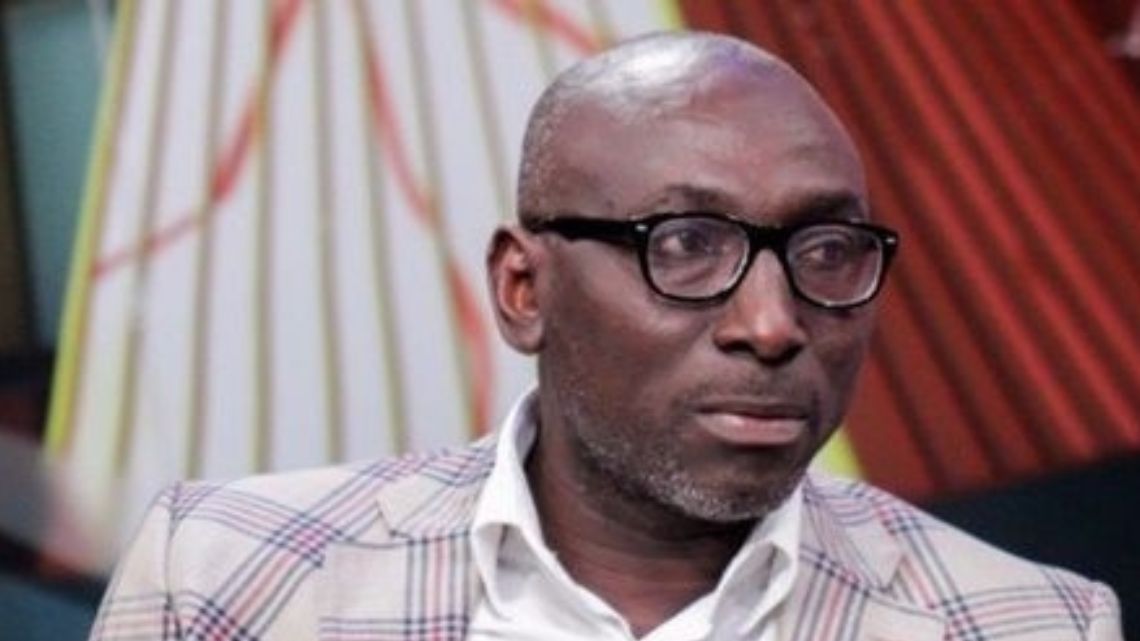
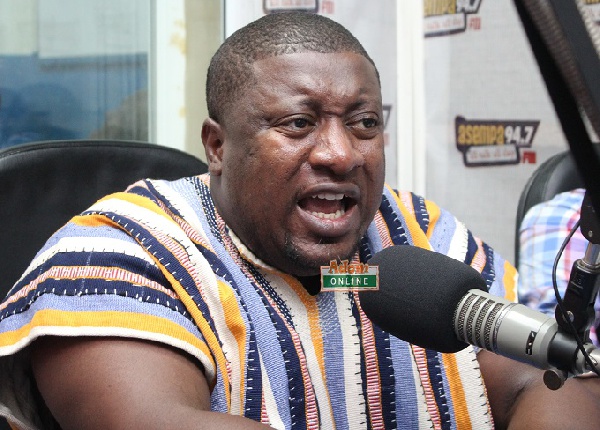
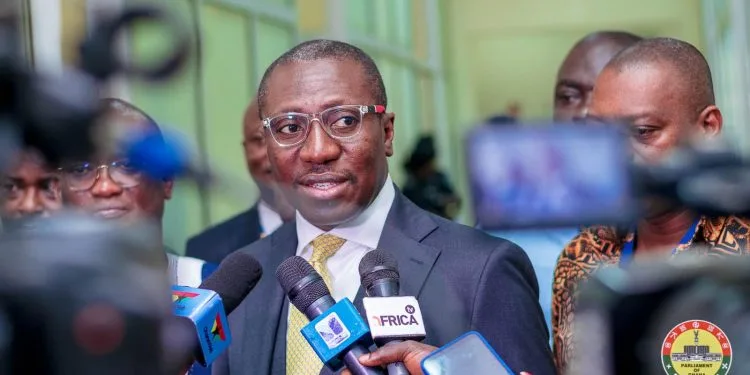
Former Attorney General Martin Amidu asserts that the recently surfaced CCTV footage of the break-in at former Finance Minister Ken Ofori-Atta’s residence has completely undermined the narrative pushed by the Office of the Special Prosecutor (OSP).
Amidu argues that the video footage provides irrefutable proof, debunking claims that the operation was either a hoax or the work of imposters.
“The CCTV images have turned the tables on the Special Prosecutor, Parliament, and the President,” he said.
According to him, this contradicts the OSP’s claim that “the purported raid on Mr Ofori-Atta’s residence was staged or at best an imposter action in an attempt to court disfavour for the OSP and to derail the investigation.”
Mr. Amidu chastised the OSP for attempting to shift blame onto Ofori-Atta, noting that the former minister was out of the country when the incident took place.
“This narrative appeared to carry the morning, but for the fact that the victim was not an ordinary Ghanaian without the means to own a CCTV system installed in his home.”
He insisted that the footage exposes falsehoods in the OSP’s version of events and leaves the government with no escape from accountability.
The former Attorney General also rebuked Parliament for downplaying the seriousness of the break-in instead of addressing what he sees as a grave violation of Ofori-Atta’s rights.
“Rather than holding the perpetrators accountable, Parliament engaged in political point-scoring,” he remarked.
He also took issue with Majority Leader Mahama Ayariga’s response, calling his statement that the raid was “regrettable and unfortunate” an inadequate attempt to sweep the matter under the rug.
Amidu then turned his criticism to President John Mahama, arguing that as head of state and chair of the National Security Council, he bears ultimate responsibility for the actions of security agencies under his command.
“The burden is now upon the President to admit that he ordered the invasion or that it was conducted on his blind side. Either way, the nation demands accountability,” he declared.
Drawing historical comparisons, he warned against the unchecked abuse of power, referencing the 2002 invasion of the late President John Evans Atta Mills’ residence under the administration of John Agyekum Kufuor.
“The repeat of such impunity twenty-two years down the line must not go unpunished under President Mahama’s watch,” Martin Amidu warned.
“If he really intends to reset this country forward and not backward, he must act decisively.”
Amidu also raised concerns about the involvement of Richard Jakpa, pointing to parliamentary disclosures that allegedly link him to the raid.
“The emergence of Richard Jakpa in this operation, coupled with the OSP’s attempts to frame Ofori-Atta as the mastermind, strongly suggests collusion between the National Security Coordinator’s Office and the OSP,” he argued.
He demanded an independent and transparent investigation to uncover the true motives behind the invasion.
Amidu also criticized Vice-President Mahamudu Bawumia, accusing him of remaining passive in the face of state-led human rights violations.
“Bawku burned while Mahamudu Bawumia slept under the Akufo-Addo government. Today, our rights and freedoms are under attack while the sitting Vice-President remains silent,” he lamented.
Concluding his remarks, Mr. Amidu made a strong call for accountability, stressing that those behind the illegal invasion must be held responsible.
“Ghana must reset forward, not backwards to yesteryears. That is what the electorate voted for, and no media psyops can deflect the enormity of such unlawful acts by government assets and agents,” he concluded.