Years of insufficient rainfall across Kenya, Somalia, and Ethiopia have caused the worst drought in 40 years and conditions akin to famine in the hardest-hit areas, aid groups say.
An unprecedented four failed rainy seasons have killed millions of livestock, destroyed crops, and forced 1.1 million people from their homes in search of food and water.
“The world needs to act now to protect the most vulnerable communities from the threat of widespread famine in the Horn of Africa,” said WFP executive director David Beasley.
“There is still no end in sight to this drought crisis, so we must get the resources needed to save lives and stop people plunging into catastrophic levels of hunger and starvation.”
At the start of 2022, WFP warned that 13 million people across the three countries faced starvation, and appealed for donors to open their purses at a time of great need.
But funds were slow in coming, with Russia’s invasion of Ukraine among other crises drawing attention from the disaster in the Horn, humanitarian workers said.
Russia’s invasion also sent global food and fuel prices soaring, making aid delivery more expensive.
By the middle of the year, when rain failed to appear again in Kenya, Ethiopia and Somalia, the number in extreme need soared to 20 million and warnings of famine grew more urgent.
WFP says by September, at least 22 million people could face starvation.
“This number will continue to climb, and the severity of hunger will deepen if the next rainy season… fails and the most vulnerable people do not receive humanitarian relief,” WFP said in a statement.
“Needs will remain high into 2023 and famine is now a serious risk, particularly in Somalia” where nearly half the population of 15 million is seriously hungry.
WFP said $418 million was needed over the next six months to help the worst-off.
Last month, the United States announced $1.2 billion in emergency food and malnutrition treatment to help avert famine in the Horn of Africa, and urged other nations to do more.
His Eminence Richard Kuuia Baawobr is now the highest-ranking member of the Roman Catholic Church in Africa.
The election took place in Accra, Ghana, during the 19th Plenary Assembly of SECAM, whereby 130 participants, including cardinals and bishops representing over 600 catholic bishops of Africa came from all corners of the continent.
Another Cardinal, His Eminence Fridolin Besungu Ambongo of the Archdiocese of Kinshasha, in the Democratic Republic of Congo, was elected First Vice-President, while Most Rev. Lucio Andrice Muandula of the Diocese of Xai Xai, in Mozambique, was elected Second Vice President.
The new President of SECAM, His Eminence Richard Kuuia Baawobr, was created a Cardinal on May 29, 2022 by Pope Francis and will be officially installed Cardinal on August 27, 2022.
This is the first time since the establishment of SECAM, 53 years ago that a Ghanaian has been elected the President of SECAM.
The SECAM, established in 1969 in Kampala, Uganda during the visit of St. Pope Paul VI, was born out of the desire of African Catholic Bishops present at the Second Vatican Council to speak with one voice on matters pertaining to the Church in Africa.
The Symposium, headquartered in Accra, consists of eight regional associations:
-Association of Episcopal Conferences of Central Africa (ACEAC).
Association of Episcopal Conferences of Central African Region (ACERAC).
Assembly of the Catholic Hierarchy of Egypt (AHCE).
Association of Member Episcopal Conferences of Eastern Africa (AMECEA).
Episcopal Conferences of the Indian Ocean (CEDOI).
Regional Episcopal Conference of North Africa (CERNA).
Inter-Regional Meeting of the Bishops of Southern Africa (IMBISA).
Reunion of Episcopal Conference of West Africa (RECOWA/CERAO).
Spain and Brazil reported their first monkeypox virus-related deaths on Friday, followed by Spain reporting its second death on Saturday, marking what are thought to be the first fatalities linked to the current outbreak outside of Africa.
Spain is one of the world’s worst-hit countries, with 4,298 people there infected with the virus, according to the health ministry’s emergency and alert coordination centre.
“Among the 3,750 patients … 120 have been hospitalised and two have died,” the Spanish health ministry said in a report.
In Brazil, a 41-year-old man died of monkeypox, local authorities said on Friday.
The man, who local media said had serious immune system problems, died on Thursday in Belo Horizonte, the capital of the southeastern Minas Gerais state.
He “was receiving hospital treatment for other serious conditions”, the state health ministry said in a statement.
“It is important to underline that he had serious comorbidities, so as not to spread panic in the population. The death rate is very low” for monkeypox, said Minas Gerais health secretary Fabio Baccheretti, who added that the patient was undergoing cancer treatment.
A global health emergency
Brazil’s health ministry has recorded close to 1,000 monkeypox cases, mostly in Sao Paulo and Rio de Janeiro states, which are also in the country’s southeast.
Early signs of the disease include a high fever, swollen lymph glands and a chickenpox-like rash.
The World Health Organization (WHO) last Saturday declared the monkeypox outbreak a global health emergency.
According to the WHO, more than 18,000 cases have been detected throughout the world outside of Africa since the beginning of May.
The disease has been detected in 78 countries, with 70 percent of cases found in Europe and 25 percent in the Americas, WHO chief Tedros Adhanom Ghebreyesus said on Wednesday.
As cases surge globally, the WHO on Wednesday called on the group currently most affected by the virus men who have sex with men to limit their sexual partners.
Ghebreyesus told reporters that the best way to protect against infection was “to reduce the risk of exposure”.
“For men who have sex with men, this includes, for the moment, reducing your number of sexual partners, reconsidering sex with new partners, and exchanging contact details with any new partners to enable follow-up if needed,” he said.
The disease usually heals by itself after two to three weeks, sometimes taking a month.
A smallpox vaccine from Danish drugmaker Bavarian Nordic, marketed under the name Jynneos in the United States and Imvanex in Europe, has also been found to protect against monkeypox.
A selection of the week’s best photos from across the continent and beyond:
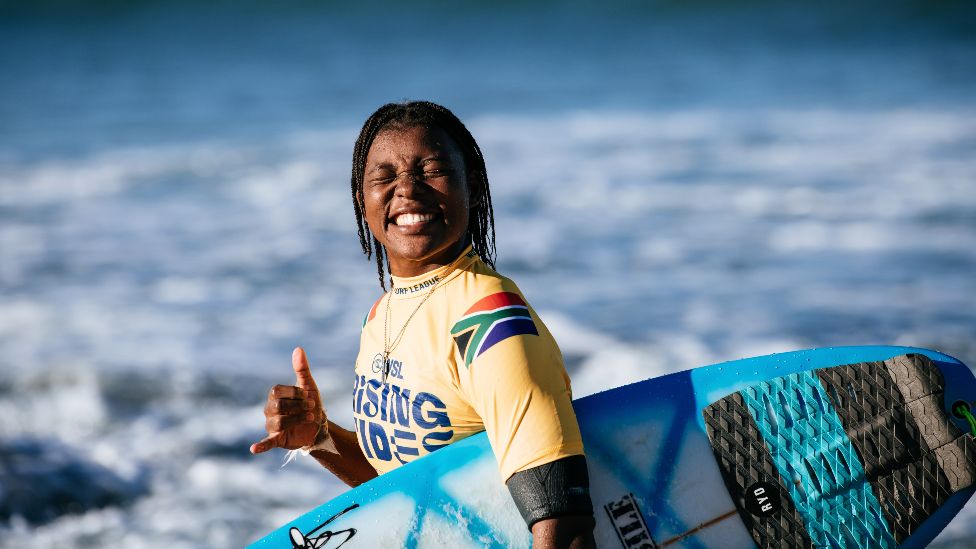
IMAGE SOURCE,GETTY IMAGES Image caption, The Corona Open J-Bay is an annual competition held at Jeffreys Bay in the Eastern Cape province.
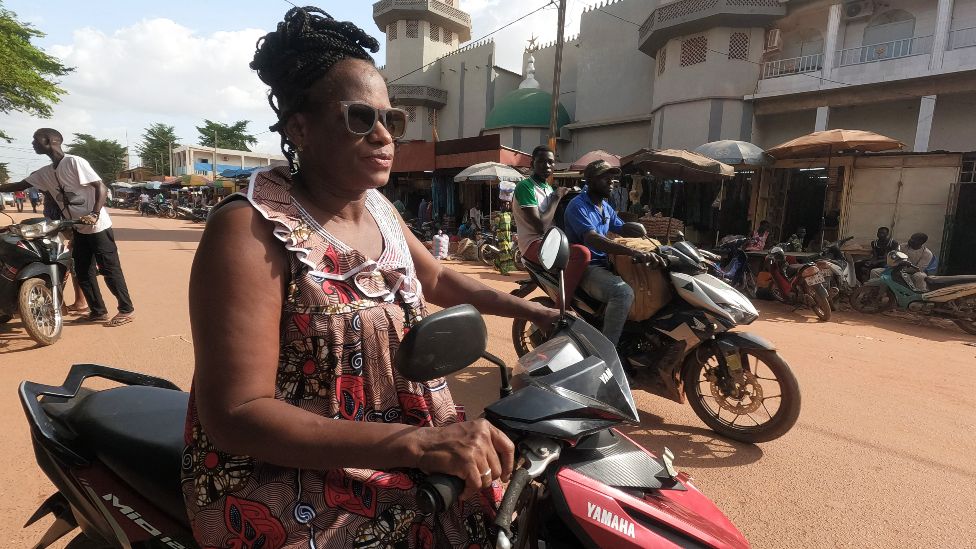
IMAGE SOURCE,GETTY IMAGES Image caption, The next day a woman is pictured in traffic in Ouagadougou, capital of Burkina Faso – a country where reportedly nearly all adults own a motorcycle.
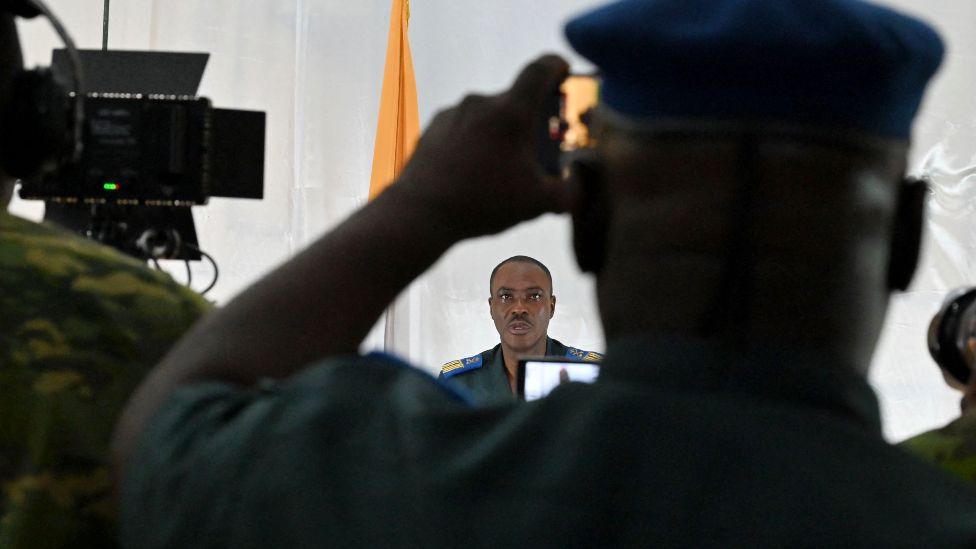
IMAGE SOURCE,AFP Image caption, An army officer in Ivory Coast addresses the media on Wednesday – about a row over the arrest of Ivorian soldiers at the main airport in neighbouring Mali.
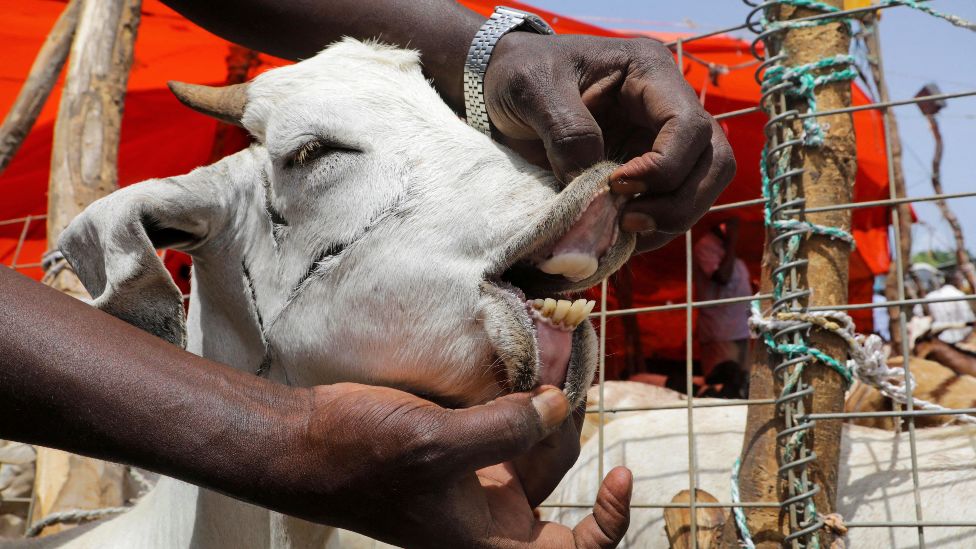
IMAGE SOURCE,REUTERS Image caption, Ahead of the Muslim festival of Eid, a goat’s teeth are checked at a livestock market in Somalia’s capital, Mogadishu, on Friday…
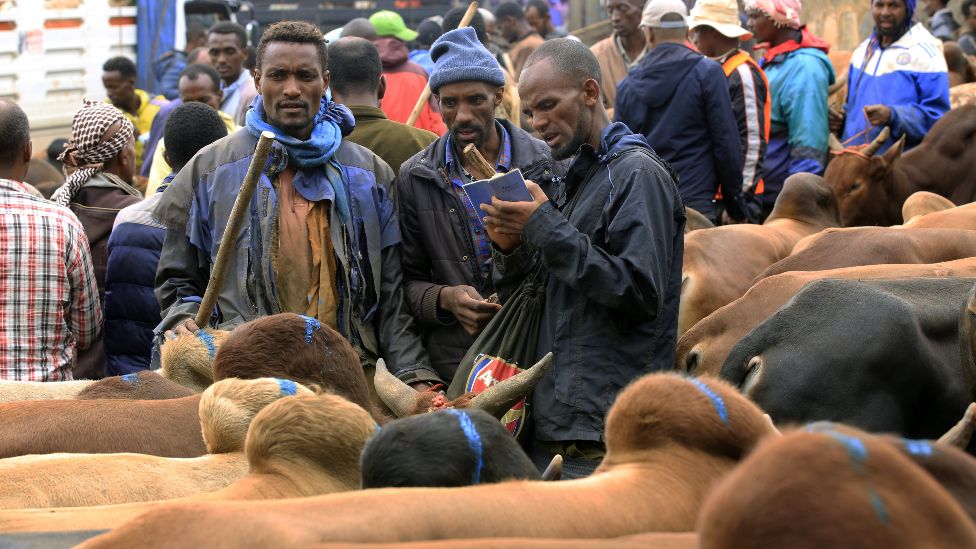
IMAGE SOURCE,GETTY IMAGES Image caption, On the same day in Ethiopia’s capital, Addis Ababa, a similar market is busy with those preparing for the festival…
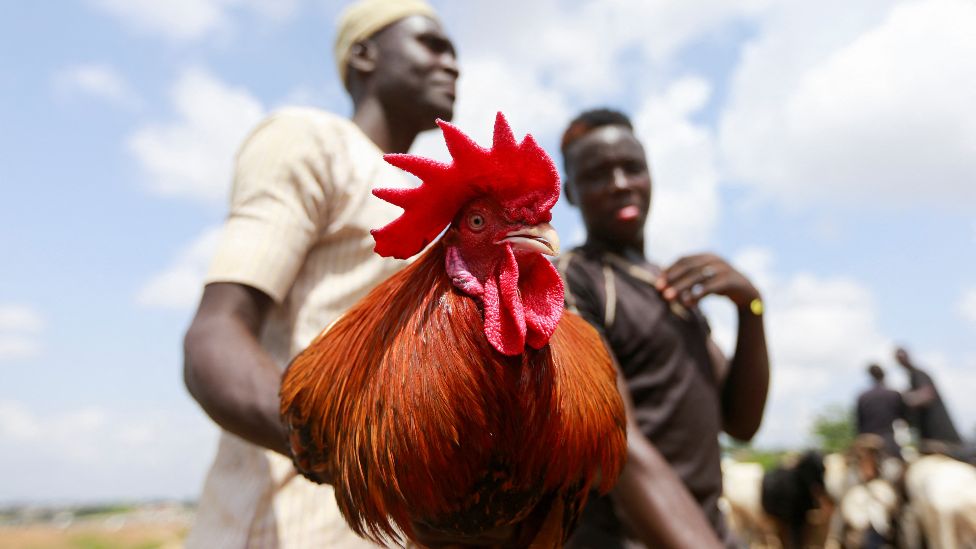
IMAGE SOURCE,REUTERS Image caption, Eid al-Adha means Festival of the Sacrifice – and often involves sacrificing an animal. Here a cockerel is seen at a market on Friday in Nigeria’s capital, Abuja…
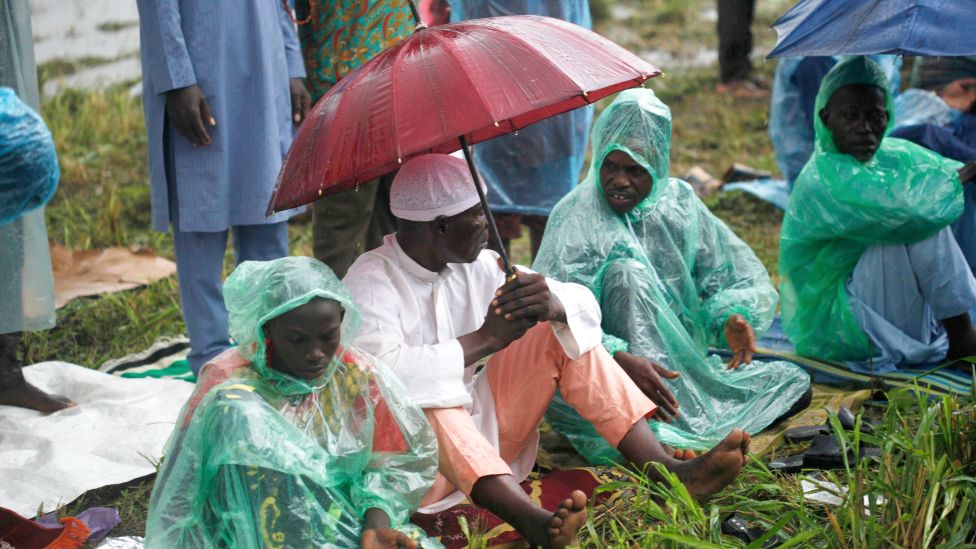
IMAGE SOURCE,EPA Image caption, In Nigeria, Eid was marked on Saturday – and in Lagos the heavens open during the morning prayer in the city…
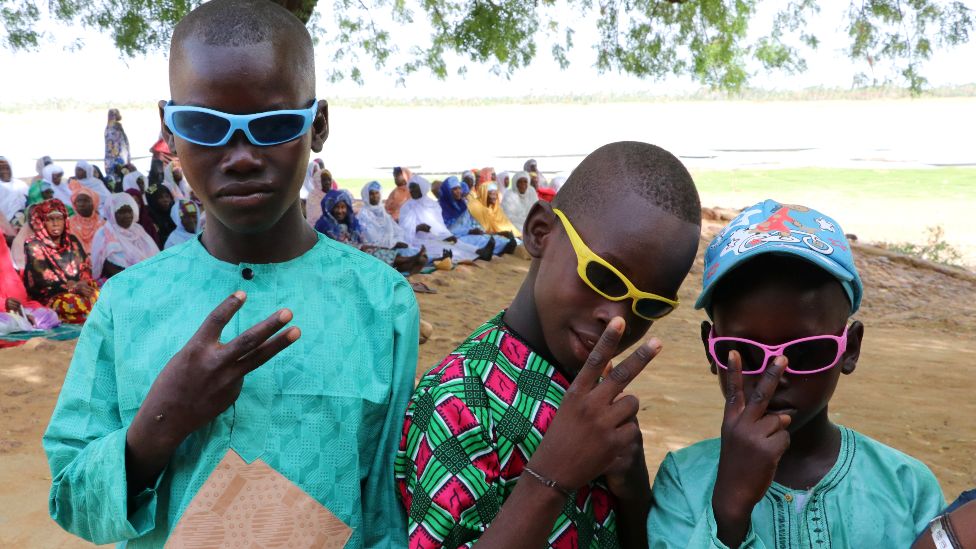
IMAGE SOURCE,GETTY IMAGES Image caption, Mali too celebrated Eid on Saturday – with these children dressed up at prayers held in the village of Djiakaking in the central region of Segou…
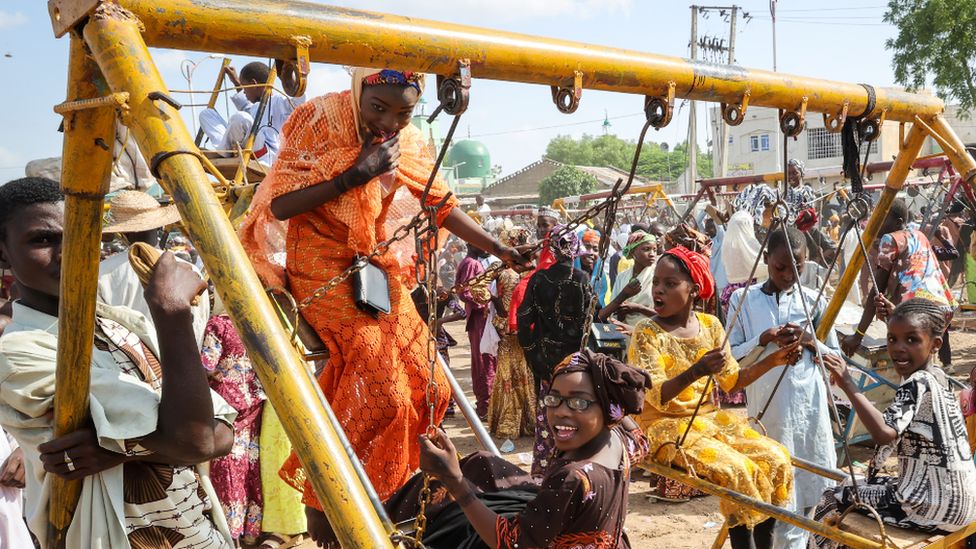
IMAGE SOURCE,GETTY IMAGES Image caption, The Eid festivities in Nigeria’s northern city of Kano continued into Monday, with children seen here at an amusement park.
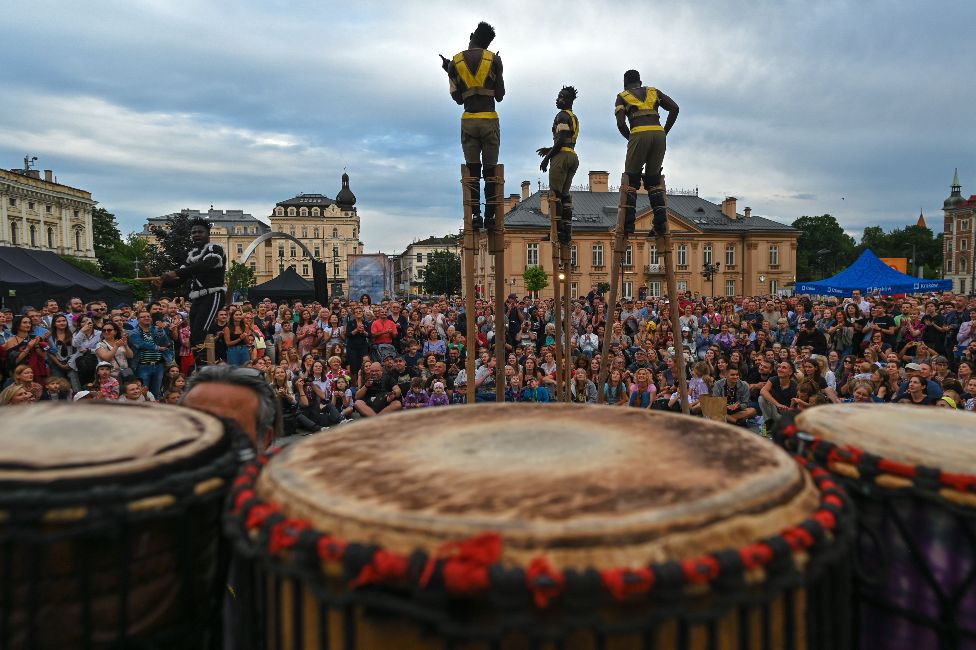
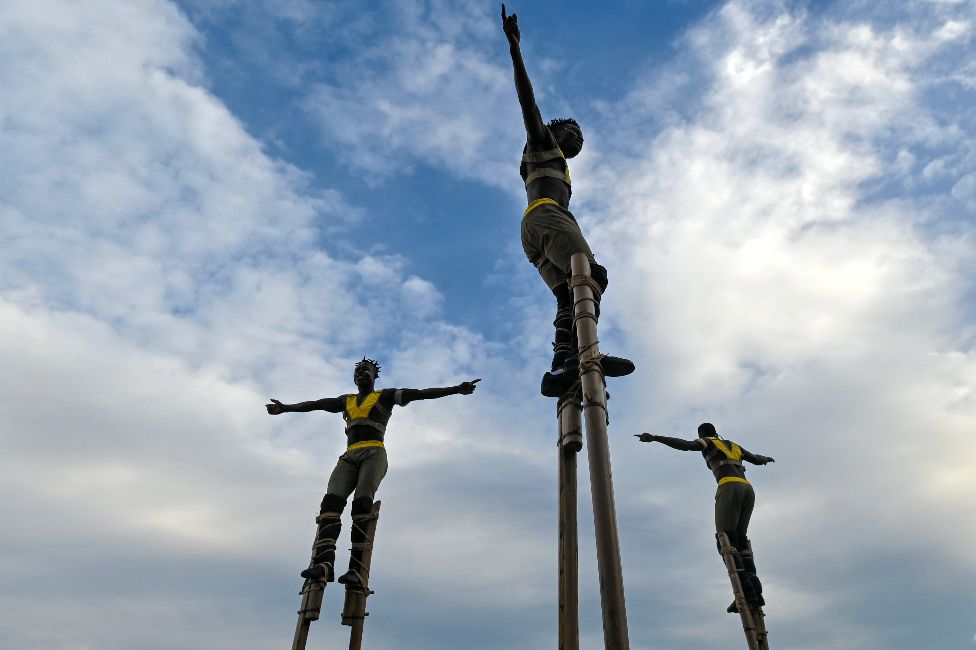
IMAGE SOURCE,GETTY IMAGES Image caption, Performers from Togo – a troupe called Afuma – tower over an audience in Poland on Saturday…
IMAGE SOURCE,GETTY IMAGES Image caption, The men on stilts are taking part in the Ulica Festival – three days of street theatre in the southern Polish city of Kraków.
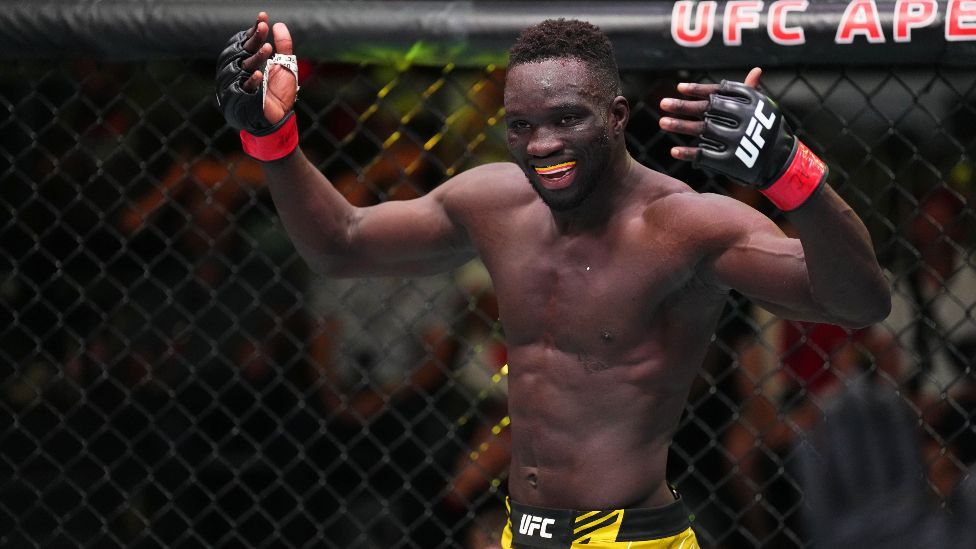
IMAGE SOURCE,GETTY IMAGES Image caption, On the same day, Ugandan mixed-martial-arts fighter David Onama soaks up the atmosphere at a UFC Fight Night in the US city of Las Vegas, where he defeated Garrett Armfield.
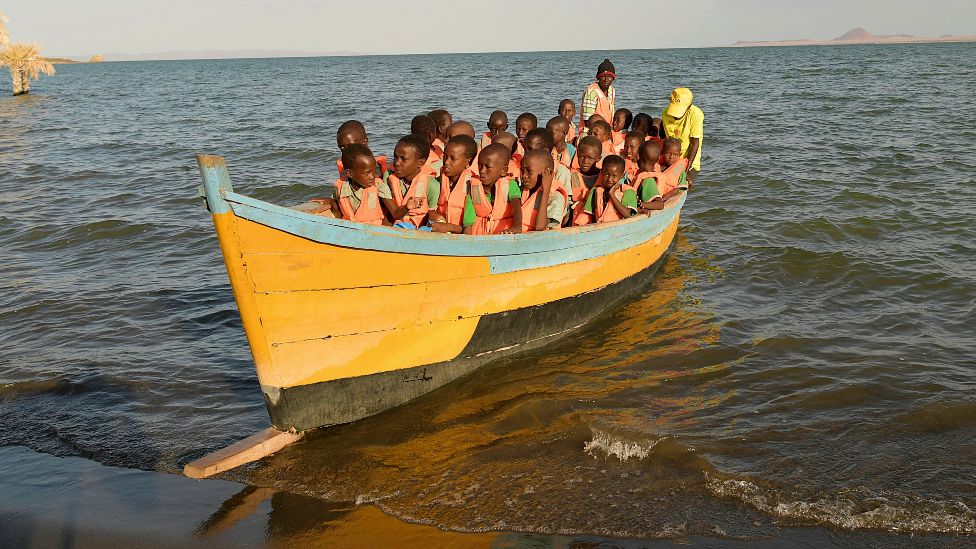
IMAGE SOURCE,AFP Image caption, Children in northern Kenya take a boat to school on Wednesday as the rising water of Lake Turkana has made it impossible for them to go by land…
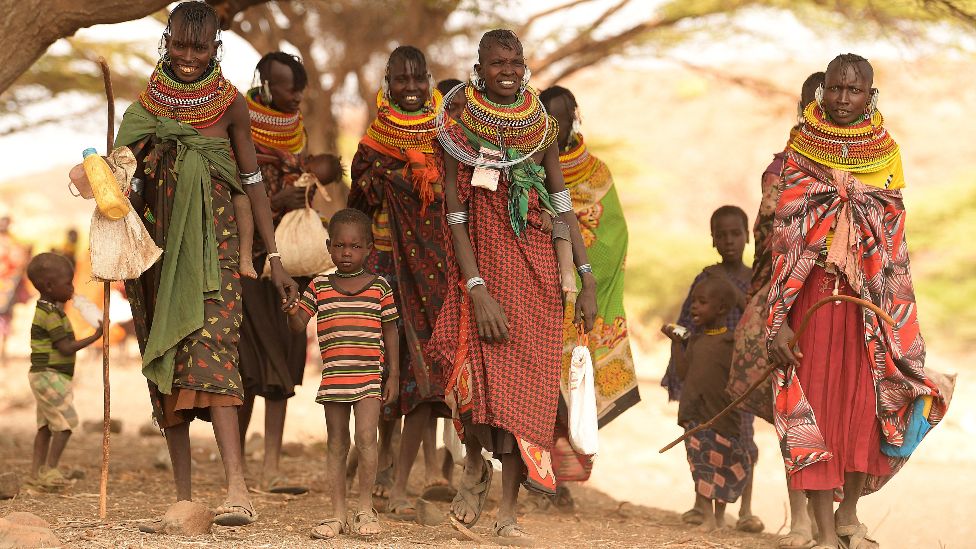
IMAGE SOURCE,AFP Image caption, However the area is also affected by drought and on Tuesday, people gather under a tree to attend an outreach clinic to help tackle health issues related to the lack of rain.
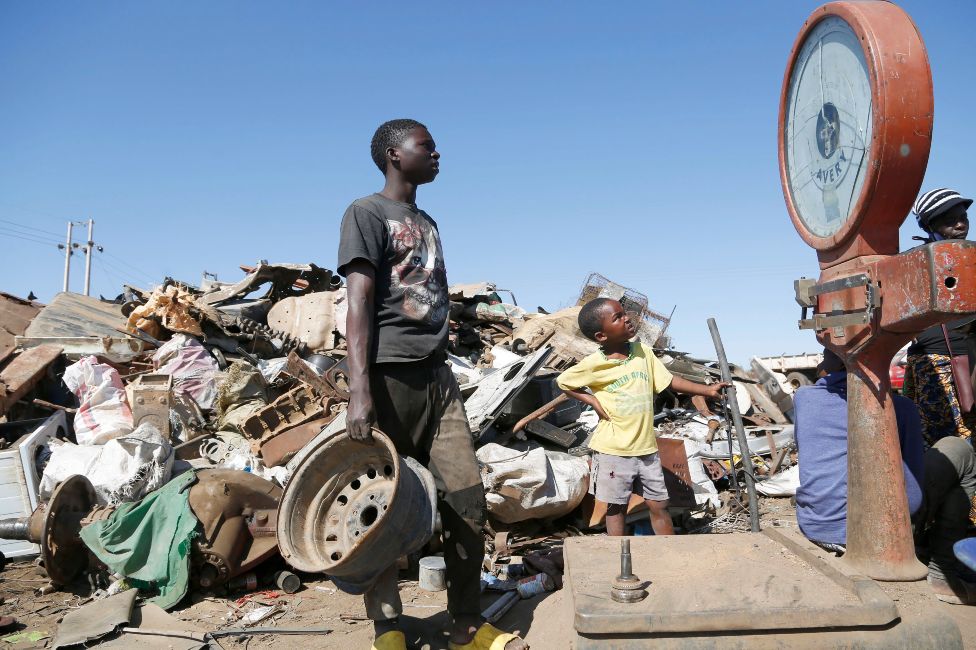
IMAGE SOURCE,EPA Image caption, On Friday, a scale is monitored at a scrap-metal dealer in Zimbabwe’s capital, Harare, where high levels of unemployment have left many looking for alternatives sources of income.
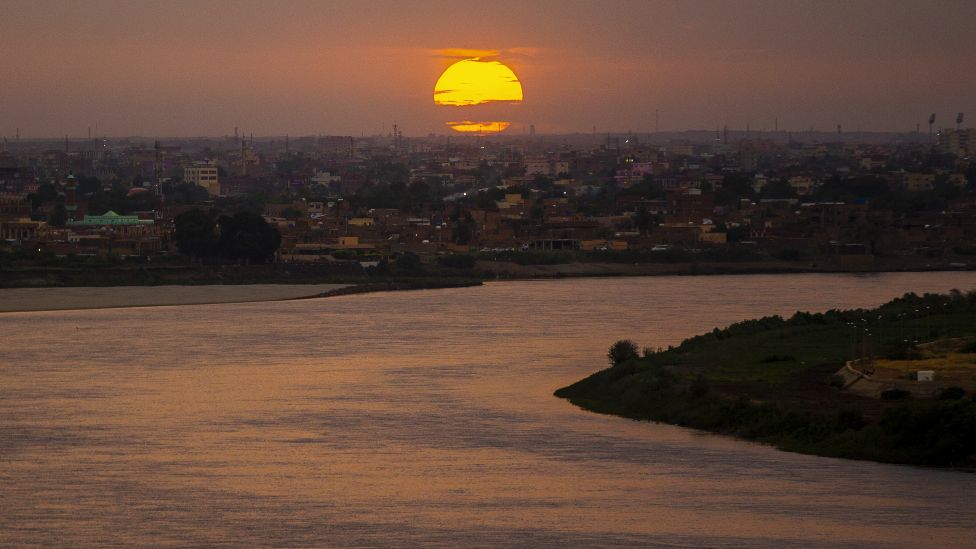
IMAGE SOURCE,GETTY IMAGES Image caption, On Sunday, the sun is seen setting over the River Nile in Sudan’s capital, Khartoum.
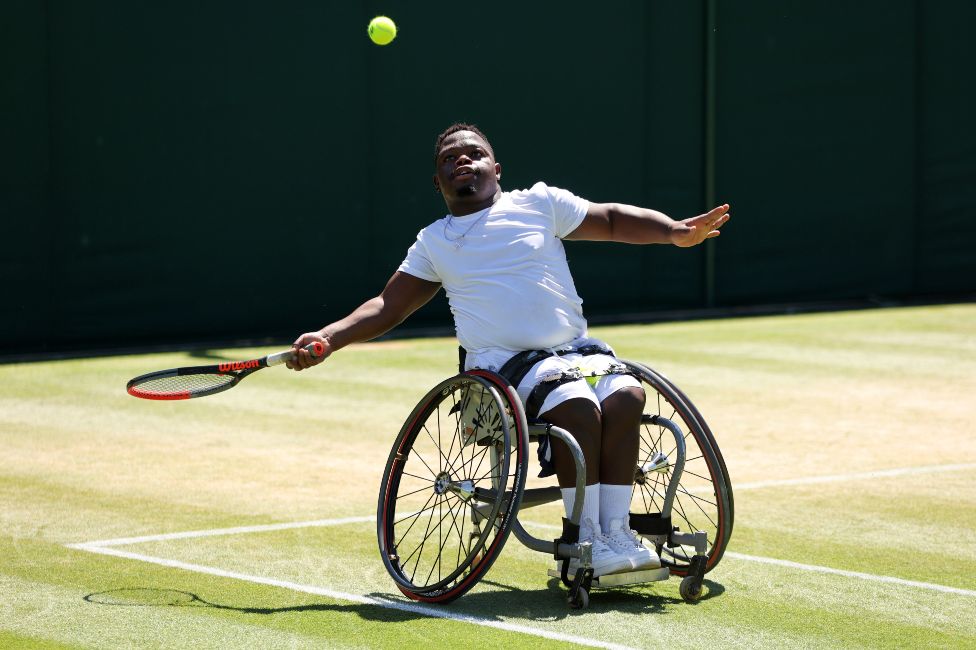
IMAGE SOURCE,GETTY IMAGES Image caption, South Africa’s Donald Ramphadi plays at Wimbledon during the quad wheelchair men’s doubles semi-final on Friday – but a mechanical issue with his wheelchair forced him to retire…
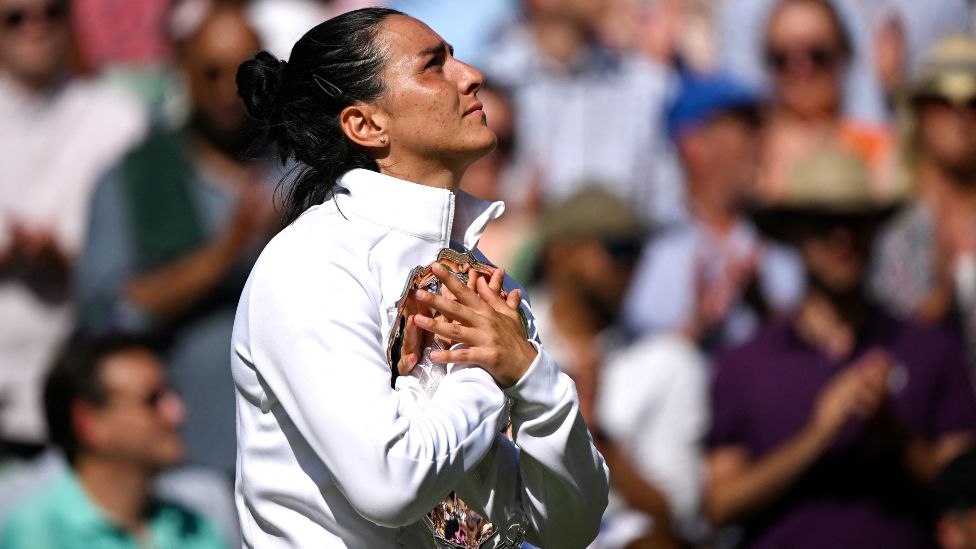
IMAGE SOURCE,REUTERS Image caption, There is also heartbreak for Tunisia’s Ons Jabeur, who was runner-up on Saturday at Wimbledon’s women’s singles final…
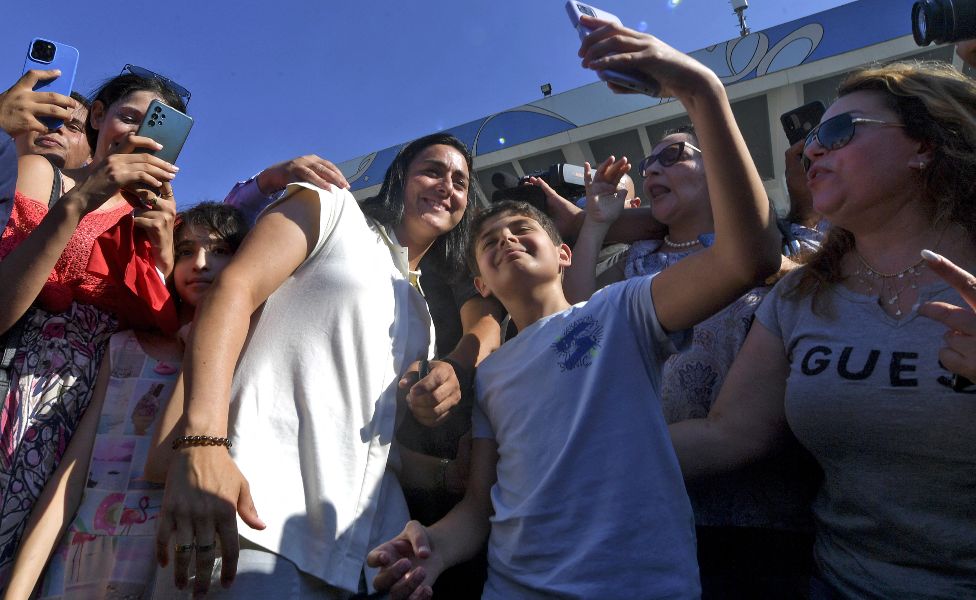
IMAGE SOURCE,GETTY IMAGES Image caption, Nonetheless the tennis star is greeted as a hero on her return to Tunisia, posing with fans in Tunis on Wednesday.
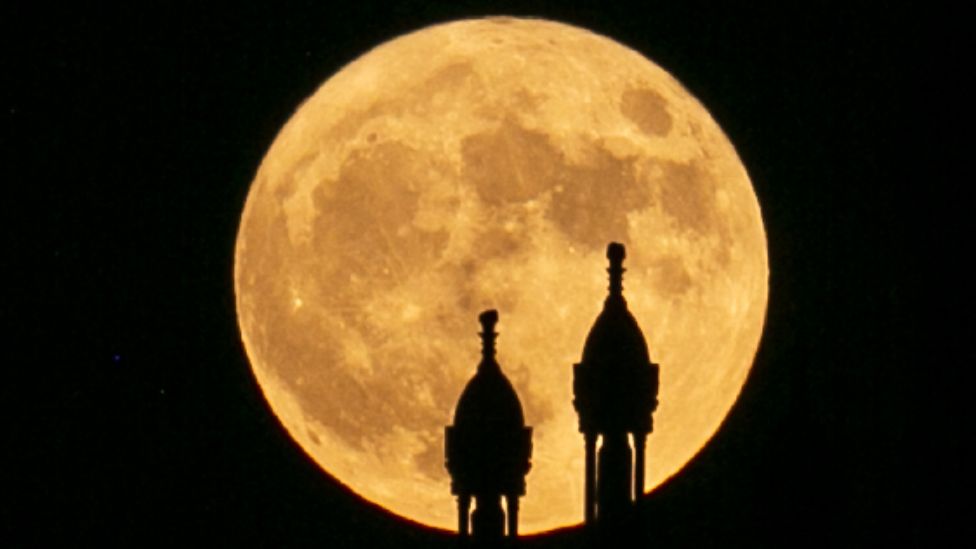
IMAGE SOURCE,AFP Image caption, And that evening the supermoon is seen rising over the Tunisian capital.
A new survey suggests that two thirds of young African people are not optimistic about the direction of their country or continent – but remain positive about their personal futures.
Researchers conducted more than 4,000 face-to-face interviews across 15 countries for the African Youth Survey.
More than half said they wanted to emigrate in the next few years, while nearly 80% planned to start their own business.
They said governments should prioritise creating well-paid jobs, reducing corruption and fighting climate change to help Africa progress.
About three quarters of the participants said they saw China as the strongest foreign power on the continent eclipsing the US which had previously held the role.
Accommodation is one of mankind’s most essential needs. However, it doesn’t come cheap. This reality is most problematic in Africa where millions of people often resort to shanties/ghettos, due to their inability to afford decent living conditions.
In this article, we shall be looking at 9 most expensive countries to rent a one bedroom apartment in Africa. This is based on property price to income ratio, which Investopedia defines as the ratio between a median home price compared to the median annual household income within a particular region.
While compiling the list, we also considered affordability index, which basically measures “an average person’s ability to purchase a particular item, such as a house in a particular region, or to afford the general cost of living in the region.”
Also note that the statistics used in compiling this listicle is courtesy of Numbeo, the leading global provider of perceived consumer prices and other statistics.
Below are the 9 most expensive African countries to rent a one bedroom apartment
Ghana: This West African country has a property price to income ratio of 87.65%, as well as an affordability index of 0.04%. A one bedroom apartment in Accra’s city centre could cost as much as $884.46 per month. And the average monthly net salary after tax is $344.84.
Kenya: Kenya’s property price to income ratio is 24.24%, even as the affordability index stands at 0.29%. A one bedroom accommodation in Nairobi’s city centre goes for an average of $389.62 per month. And the average monthly net salary is $493.38.
Algeria: Next we have this Northern African country which has a property to income ratio of 18.25% and an affordability index of 0.61%. A one bedroom apartment in the centre of Algiers, Algeria’s capital city, goes for an average price of $211.85 per month. Meanwhile, the average monthly salary is $250.09.
Nigeria: Africa’s most populous country has a property to income ratio of 16.11%, even as affordability index 0.31%. In the commercial capital of Lagos, a one bedroom apartment at the city centre could go for as high as $1,567 per month. Meanwhile, the average net salary in the city is $232.93.
Morocco: Morocco has a property price to income ratio of 12.60% and an affordability index of 0.98. In the centre of the country’s capital city of Rabat, a one bedroom apartment goes for an average of $469.49 per month. Meanwhile, the average net salary in the city is $429.62.
Egypt: Egypt has a property price to income ratio of 12.04% and an affordability index of 0.61%. A one bedroom apartment in Cairo’s city centre goes for an average of $225.40 per month. Meanwhile, residents in the city earn an average monthly net salary of $258.89.
Tunisia: Tunisia has a property to income ratio of 11.75% as well as an affordability index of 0.61%. In the centre of Tunis, a one bedroom apartment could go for $228.95 per month. The average monthly net salary in the city is $271.59.
Mauritius: This island nation has a property to income ratio of 9.71% and a property affordability index score of 0.61%. At the centre of Port Louis, the country’s capital, a one bedroom apartment can go for an average rental price of $393.97 per month. The average salary is $455.
South Africa: SA has a property to income ratio of 3.07% and an affordability index of 2.93%. At the centre of Johannesburg, a one bedroom apartment can go for $422.94 per month. Meanwhile, the monthly net salary is $1,535.73.
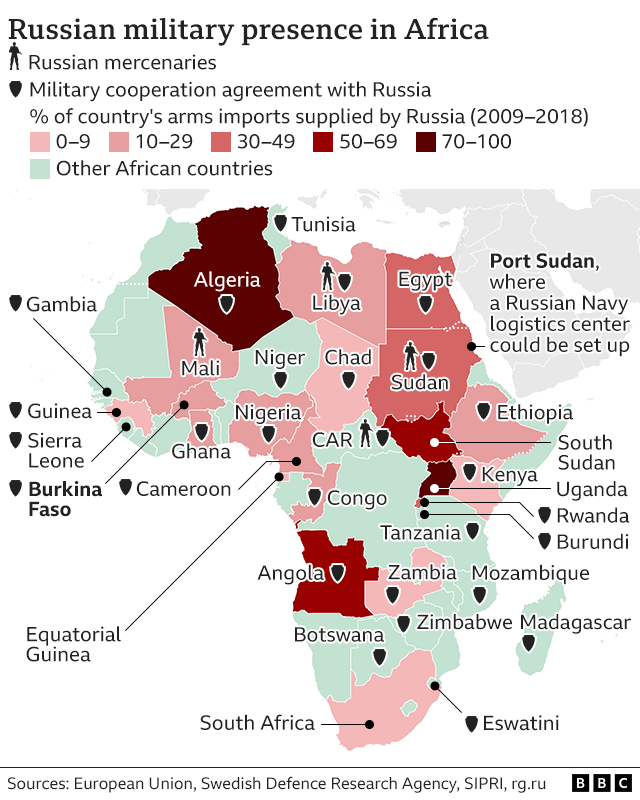
Russia has been expanding its influence in Africa in recent years and after the invasion of Ukraine, it will be expecting its new-found allies to provide support, or at least remain neutral, in international bodies such as the UN.
From Libya to Mali, Sudan, the Central African Republic (CAR), Mozambique and elsewhere, Russia has been getting more involved – often militarily with help fighting rebels or jihadist militants.
At the UN Security Council, Kenya, currently a non-permanent member, made its opposition to Russian action in Ukraine very clear.
But there has not yet been a loud chorus from other countries backing Kenya’s position. The continental body, the African Union, expressed “extreme concern” about what was going on, but was muted in its criticism of Russia.
South Africa, which is a partner of Russia in the Brics group, has called on the country to withdraw its forces from Ukraine but said it still held out hope for a negotiated solution.
And on Wednesday the deputy leader of the Sudanese junta, Mohamed Hamdan “Hemeti” Dagolo, led a delegation to Moscow in a sign of closer ties between the two countries.
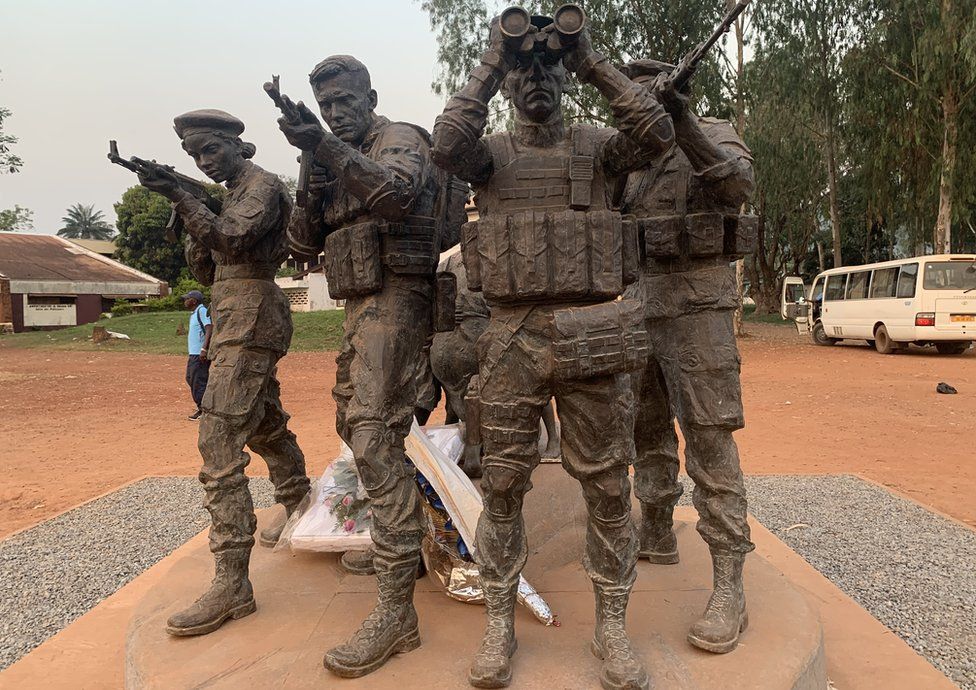
A monument to the Russian military has been put up in the capital of the Central African Republic
One of the clearest examples of how alliances have been shifting in Africa came just a week before Russia’s attack on Ukraine with the ending of French involvement in fighting jihadists in Mali.
Mali’s Prime Minister Choguel Maiga confirmed, in an interview with France24, that his country has signed military co-operation agreements with Russia. But he denied that the controversial Russian private military company, the Wagner Group, was involved.
This Russian help in Mali, along with a reported offer to the military government in Burkina Faso, fits a pattern over the past five years where Russia has intensified steps to increase its influence in Africa, both official and informal.
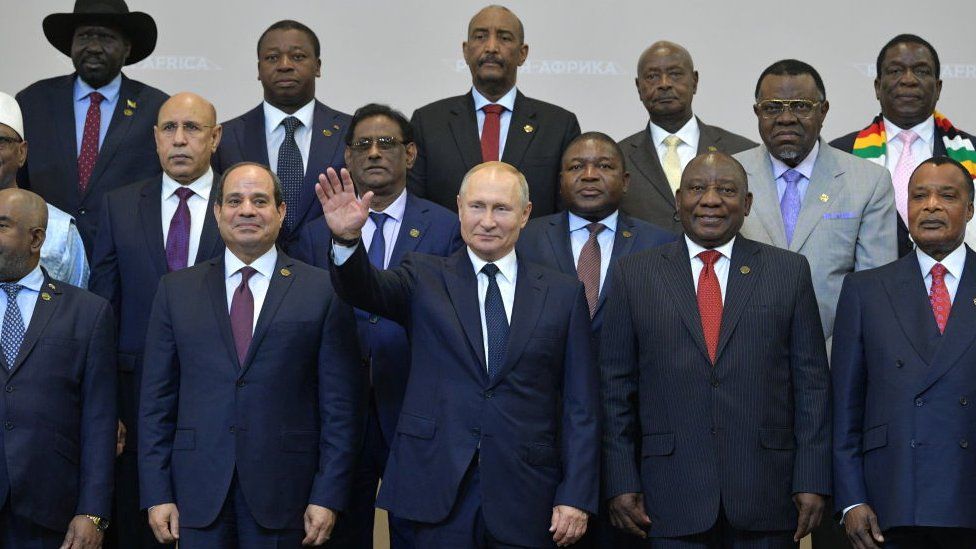
As the renewed Russia-Africa engagement gained momentum, a 2019 summit in the southern Russian city of Sochi was attended by delegates from more than 50 African countries, including 43 heads of state.
President Vladimir Putin addressed the leaders, appealing to a history of backing liberation movements and pledging to boost trade and investment.
The 2019 Sochi summit drew almost all of Africa’s heads of state
But there has also been another kind of presence: the opaque provision of security to governments in a number of African countries, in the form of training, intelligence and equipment, as well as involvement of Russian mercenaries in local conflicts.
As Mr Putin indicated, there are historic ties stretching back to the days of the USSR, Russia’s predecessor, when Africa was one of several spheres of competition between it and the US.
But from the collapse of the USSR in 1991 to the early part of the last decade, as Russia went through a period of transition, relations with Africa were not top of the agenda.
Then, regaining superpower status became a foreign policy priority for the Russian president.
New export markets
In 2014, following Russia’s annexation of the Ukrainian peninsula of Crimea and the international sanctions which followed, there came a sharp deterioration in relations with the US and the European Union.
Faced with the threat of international isolation, Moscow started the search for new allies.
“As a result of sanctions, Russia needed to look for new markets for its exports,” said Irina Abramova, director of the Africa Institute at the Russian National Academy of Sciences.
But it was more than markets that Russia was after – it also wanted increased global influence.
In 2014 it got involved in Syria’s civil war, backing President Bashar al-Assad in part to highlight the mess the West was making and show how Russia could fix it.
From Syria it later moved on to the African continent.
Irina Filatova, an honorary professor of the University of KwaZulu-Natal in South Africa, says Russia’s key task in Africa was to discredit Western influence, in much the same way as in Syria.
It wanted to show that the Europeans, for example, had failed to contain the jihadist threat in the Sahel.
It did this through a dual policy in Africa, combining official military instructors working in some countries, and informal agencies, such as the Wagner Group, fighting in a number of others.
Mercenaries
The CAR was the first African country where Russian mercenaries from the Wagner Group appeared in 2017.Â
Allegations of atrocities carried out by the mercenaries have become common, but Russia has consistently denied that any of its citizens were involved in war crimes or violence against civilians.
Russian mercenaries have also been active in Libya, Sudan, Mozambique and Mali, with varied levels of success.
In another sign of the growing significance of the continent, Africa has become a key market for Russia’s arms industry. Almost half of all the arms coming into Africa come from Russia, according to the country’s state arms export agency.
The main importers are Algeria and Egypt, but there have been new markets in Nigeria, Tanzania and Cameroon.
UN votes
But there is also a prize for closer ties on the diplomatic front.
Africa, in total, has more than a quarter of the votes at the UN General Assembly, and can be a powerful collective voice in other international bodies.
A 2021 report on perspectives of Africa-Russia co-operation, published by Moscow’s Higher School of Economics, pointed out that African countries have tended to be neutral when it comes to Russia’s actions in the past.
“None of the African countries introduced any sanctions against Russia [after 2014]. In the voting in the UN on Ukraine-related issues, most countries of the continent express a neutral position,” the report said.
With the invasion of Ukraine, if that neutral stance continues, or if it is translated into more vocal support, then Russia’s efforts over the past few years could be seen to have paid off.
At the moment, Bwayira hospital in Lilongwe, Malawi’s capital is not suited to storing the COVID-19 vaccines which have been most successful in medical trials.
Moderna and Pfizer/BioNTech vaccines, which have declared success rates of 90 percent plus, need storing in deep freeze temperatures of minus 20 and minus 80 degrees Celcius respectively.
Countries like Malawi face some daunting challenges.
First, they have to compete for doses of vaccines with wealthy nations. Any vaccines they do acquire will need large stable storage facilities with reliable power supplies.
Refrigerators like this keep supplies at two to eight degrees Celcius.
Malawi already has a robust vaccine programme called Expanded Programme on Immunisation (EPI).
But in a report in the science journal Nature, the Director of Africa CDC (Centres for Disease Control and Prevention) said most existing vaccine programmes are for children.
Dr. Nonhlanhla Rosemary Dlamini is the World Health Organisation’s Malawi Representative.
She says: “So normal vaccines that we are using in our EPI (expanded programm on immunisation) schedule right now are between 2 to 8 degrees centigrade but as you may have seen, the two vaccines that have now come up with the effectiveness of over 90 percent require ultra-cold chain, from minus 20 degrees centigrade to minus 80 degrees centigrade. The kind of equipment that many countries have including Malawi is not that ultra-cold chain kind of equipment. As we are doing our assessment we look at that, but however, we still do not know what kind of vaccine is going to come into the country.”
Dlamini believes funding from the vaccine alliance GAVI has meant Malawi has been able to set up some cold chain facilities, but this would not be adequate to supply the vaccines needed.
According to Africa CDC the continent needs to vaccinate 60 percent of its population to gain the minimum requirement of herd immunity.
To achieve this Africa CDC says it will need about 1.5 billion doses of vaccine.
The cost of the vaccine and of building systems and structures required for the delivery of it is estimated at between seven and ten billion American Dollars.
The World Bank says Malawi is one of the poorest countries in the world.
Dr. Charles Mwansambo is the Principal Secretary for Health in Malawi.
He believes other vaccine candidates such as the Oxford AstraZeneca vaccine might be more suited.
“Though it is seventy percent effective, there might be a schedule that may improve that performance. So if we are to look at the last candidate I just talked about, as a country, we are ready because the EPI programme already has these storage facilities and Malawi is one of those countries on the continent that does well in its immunisation programes so we have the infrastructure in place already in all the regions. So we have warehouses that can keep this vaccine,” says Mwansambo.
At the local hospital Fanny Banda and Ellenita Patrick wait to be seen.
“The vaccine could have started in Malawi or better yet, it could have started in all the countries at the same time. This is because COVID-19 has affected every country. If they choose to start to start with a few countries, it means people in countries left to wait will have died at the time the vaccine reaches them,” says Banda.
Patrick says: “Malawi does not have the capacity to handle the vaccine on its own. It would have been better if a nongovernmental organization gave a hand to make sure that every one gets the all-important vaccine.”
Ellenita Patrick, another Lilongwe resident, believes Malawi needs lots of support to implement the vaccine.
“Malawi does not have the capacity to handle the vaccine on its own. It could have been better if nongovernmental organization gave a hand making sure that everyone gets the all-important vaccine,” she says.
According to Mwansambo, Malawi and other lower income nations will get access to vaccines around the middle of 2021 through COVAX set up by various organisations to ensure lower income countries get equitable access to vaccines.
This initiative, however can’t stop wealthier countries from engaging in bilateral deals with the companies making these vaccinations.
Mwansambo is hoping power supplies in the country will be reliable enough to support a large scale vaccination programme.
“Any cold chain will need power so we also rely on our electricity supplier Escom (Electricity Supply Corporation of Malawi) to make sure that they make the power readily available. I must say that in the recent two months they have been very reliable as regards power distribution because that was the major challenge when we were introducing the other vaccines with all the blackouts but now the blackouts are a thing of the past,” he says.
According to Mwansambo, Malawi’s government has set up a committee to decide who will be eligible to be in the first twenty percent of the population to receive a vaccine.
Dlamini says the WHO has already issued guidance on this.
She says: “WHO, our advice is that it should be front line health care workers and when I say health care workers I don’t just mean the nurses and doctors, I mean the sweepers who work in that area, the cleaners the physiotherapists everyone who is a front line worker at risk and then the MAITAG (Malawi Immunization Technical Advisory Group) will give us the list of who that should be. It’s the elderly, and then people with comorbidities and people with chronic illnesses, for instance, a person with diabetes, a person has high blood pressure, a person has TB (tuberculosis). Those are the people who are going to form that first 20 percent.”
At the moment, Bwayira hospital in Lilongwe, Malawi’s capital is not suited to storing the covid19 vaccines which have been most successful in medical trials.
Moderna and Pfizer/BioNTech vaccines, which have declared success rates of 90 percent plus, need storing in deep freeze temperatures of minus 20 and minus 80 degrees Celcius respectively.
Countries like Malawi face some daunting challenges.
First they have to compete for doses of vaccines with wealthy nations. Any vaccines they do acquire will need large stable storage facilities with reliable power supplies.
Refrigerators like this keep supplies at two to eight degrees Celcius.
Malawi already has a robust vaccine programme called Expanded Programme on Immunisation (EPI).
But in a report in the science journal Nature the Director of Africa CDC (Centres for Disease Control and Prevention) said most existing vaccine programmes are for children.
Dr. Nonhlanhla Rosemary Dlamini is the World Health Organisation’s Malawi Representative.
She says: “So normal vaccines that we are using in our EPI (expanded programm on immunisation) schedule right now are between 2 to 8 degrees centigrade but as you may have seen, the two vaccines that have now come up with the effectiveness of over 90 percent require ultra-cold chain, from minus 20 degrees centigrade to minus 80 degrees centigrade. The kind of equipment that many countries have including Malawi is not that ultra-cold chain kind of equipment. As we are doing our assessment we look at that, but however, we still do not know what kind of vaccine is going to come into the country.”
Dlamini believes funding from the vaccine alliance GAVI has meant Malawi has been able to set up some cold chain facilities, but this would not be adequate to supply the vaccines needed.
According to Africa CDC the continent needs to vaccinate 60 percent of its population to gain the minimum requirement of herd immunity.
To achieve this Africa CDC says it will need about 1.5 billion doses of vaccine.
The cost of the vaccine and of building systems and structures required for the delivery of it is estimated at between seven and ten billion American Dollars.
The World Bank says Malawi is one of the poorest countries in the world.
Dr. Charles Mwansambo is the Principal Secretary for Health in Malawi.
He believes other vaccine candidates such as the Oxford AstraZeneca vaccine might be more suited.
“Though it is seventy percent effective, there might be a schedule that may improve that performance. So if we are to look at the last candidate I just talked about, as a country, we are ready because the EPI programme already has these storage facilities and Malawi is one of those countries on the continent that does well in its immunisation programes so we have the infrastructure in place already in all the regions. So we have warehouses that can keep this vaccine,” says Mwansambo.
At the local hospital Fanny Banda and Ellenita Patrick wait to be seen.
“The vaccine could have started in Malawi or better yet, it could have started in all the countries at the same time. This is because COVID-19 has affected every country. If they choose to start to start with a few countries, it means people in countries left to wait will have died at the time the vaccine reaches them,” says Banda.
Patrick says: “Malawi does not have the capacity to handle the vaccine on its own. It would have been better if a nongovernmental organization gave a hand to make sure that every one gets the all-important vaccine.”
Ellenita Patrick, another Lilongwe resident, believes Malawi needs lots of support to implement the vaccine.
“Malawi does not have the capacity to handle the vaccine on its own. It could have been better if nongovernmental organization gave a hand making sure that everyone gets the all-important vaccine,” she says.
According to Mwansambo, Malawi and other lower income nations will get access to vaccines around the middle of 2021 through COVAX set up by various organisations to ensure lower income countries get equitable access to vaccines.
This initiative, however can’t stop wealthier countries from engaging in bilateral deals with the companies making these vaccinations.
Mwansambo is hoping power supplies in the country will be reliable enough to support a large scale vaccination programme.
“Any cold chain will need power so we also rely on our electricity supplier Escom (Electricity Supply Corporation of Malawi) to make sure that they make the power readily available. I must say that in the recent two months they have been very reliable as regards power distribution because that was the major challenge when we were introducing the other vaccines with all the blackouts but now the blackouts are a thing of the past,” he says.
According to Mwansambo, Malawi’s government has set up a committee to decide who will be eligible to be in the first twenty percent of the population to receive a vaccine.
Dlamini says the WHO has already issued guidance on this.
She says: “WHO, our advice is that it should be front line health care workers and when I say health care workers I don’t just mean the nurses and doctors, I mean the sweepers who work in that area, the cleaners the physiotherapists everyone who is a front line worker at risk and then the MAITAG (Malawi Immunization Technical Advisory Group) will give us the list of who that should be. It’s the elderly, and then people with comorbidities and people with chronic illnesses for instance, a person with diabetes, a person has high blood pressure, a person has TB (tuberculosis). Those are the people who are going to form that first 20 percent.”
There was a sense of optimism about the European Union’s relationship with the African continent in March 2020 when EU development commissioner Jutta Urpilainen and EU High Representative Josep Borrell announced their new Africa Strategy.
“The European Union is Africa’s first partner by all accounts: trade, investment, development, cooperation, security. We want this to remain, to scale it further and make it even more efficient,” Borrell told journalists.
2020 was expected to be a crucial year for the two continents to develop their relationship.
The new strategy announcement was seen as a curtain-raiser with a planned AU-EU summit rounding off the year.
In October 2020, the heads of state from 55 African Union and 27 EU nations and their delegations were supposed to celebrate the new partnership at a summit in Brussels.
In addition, a successor to the Cotonou Agreement, which regulates economic relations between the EU and more than 70 former colonies in Africa, Asia and the Pacific region, was to be hammered out.
With Germany holding the EU Council presidency from July to December, the country was expected to play a decisive role.
“Africa is an important aspect of our foreign policy,” promised German Chancellor Angela Merkel during a keynote speech in May.
Two continents that need each other
Things turned out differently than expected, though.
The EU-Africa summit has been postponed to 2021 because of the coronavirus pandemic, while a proposition for a virtual meet-up failed to find support.
The new Africa strategy still hasn’t been approved by EU member states.
And a replacement for the Cotonou Agreement, which expires in December 2020, is nowhere in sight.
“The EU is very much preoccupied with itself — partly due to the COVID-19 crisis,” says Mathias Mogge from VENRO, an umbrella organization for development NGOs in Germany. “Partnerships with Africa have since faded into the background.”
But it’s not just the Europeans who are pulling the hand brake. African nations are also frustrated with the current relationship with Europe.
“Relations between Europe and Africa were never fair. Despite terms like ‘international cooperation,’ it’s an unequal exchange where Europe plays the role of a mentor and Africa plays the role of a school pupil,” says Nigerian researcher Lynda Iroulo from the German-based GIGA Institute of African Affairs.
Those working for civil society in Africa have a similar view. According to a recent VENRO poll of 221 employees from various African NGOs, half of them said cooperation with Europe “does not work well” or “not at all.”
Conflicts over trade and migration
Economic relations are a major point of dispute. With 31% of exports and 29% of imports, the EU is an important trading partner for Africa.
But the relationship is extremely unequal. European states import mainly raw materials from Africa while exporting valuable manufactured goods to the continent. African economies barely stand a chance of escaping a vicious dependence cycle.
“This lopsided structure doesn’t help eliminate the continent’s problems like high unemployment rates and a large informal sector,” says Robert Kappel, a political scientist focusing on Africa.
Migration is another hotly contested topic. The EU routinely pressures African countries to secure their borders to stem the influx of irregular migrants crossing into Europe. Those who do so are rewarded with hefty sums of money from Europe.
It’s difficult for most Africans to legally migrate to Europe unless they belong to specific professional groups desperately needed by Europe.
“African governments are certainly not satisfied with this,” Ghanaian migration expert Stephen Adaawen told DW last year.
Well-educated African returnees are important for developing local economies. In addition, governments benefit from the remittances sent by citizens living abroad, Adaawen pointed out.
Little enthusiasm
Also, the EU’s new Africa Strategy has failed to draw much interest. The EU wants to work more closely with Africa in five key areas: green transition, digital transformation, sustainable growth and jobs, peace and governance, and migration and mobility.
But, says Mathias Mogge von VENRO, the strategy is one-sided.
“We would like to develop such strategies with the African Union, and African and European civil society. That way, it wouldn’t look as if the EU was dictating something that Africans have to react to,” he says.
Whether 2021 will now become the crucial year for EU-Africa relations depends on whether the planned AU-EU summit takes place early in the year.
Critically, leaders on both continents need to agree on the summit’s objectives.
“Relations between Europe and Africa can’t continue as is,” says political scientist Kappel. “A completely new start is needed.”
Like the rest of the world, Africa has been paying close attention to the US election, since the United States still wields significant influence on what happens there. “Whoever is in charge in Washington and the policies they pursue have direct and indirect consequences for the continent,” Achille Mbembe, a Cameroonian political analyst, told DW.
According to The Associated Press, Joe Biden has attained enough electoral college votes to become the next US president. Biden has pledged to unite the US after a bitter and hotly contested vote. President Donald Trump, for his part, has claimed that the Democrats have “stolen” the election and refused to concede defeat. Instead, Trump and his Republican party have launched multiple legal challenges in a bid to overturn the election outcome.
“Many Africans look at the US elections in a very cynical way — cynical in the sense that they know what stolen elections are all about,” Mbembe said. “They know about incumbents not wanting to concede that they have been defeated.” Some Africans have joked on social media that the US is becoming more or less like a post-colonial African state.
A bad example for Africa?
“It is surprising for Europeans and Americans, but not for Africans,” Togolese activist Innocent Sossou said of Donald Trump’s decision to declare himself the winner of the November 3 election. Trump is challenging the results in several states and wants a recount in Wisconsin.
It is common for opposition parties in African countries to contest election results. This was recently the case in Guinea, where the opposition presidential aspirant, Cellou Dalein Diallo, proclaimed he had won before the Electoral Commission published the official results. “But the paradox in the United States is that it is the president who speaks of fraud,” Sossou said.
Ivorian journalist Mah Camara says the US has set a bad precedent for Africa, with presidents on the continent possibly taking their cue from the happenings before and during the election. Among other things, Trump has complained for weeks that the mail-in ballots — which were requested by millions of voters due to the ongoing COVID-19 pandemic — are susceptible to voter fraud. However, there has been no credible evidence that massive irregularities took place.
‘Democratic debacle’
Donald Trump’s refusal to accept defeat — especially since he is the outgoing president of a country that is taken by many Africans as an example to be followed — left civil society activist Henri Mutombo in shock.
“Trump’s exit leaves us, the African youth, perplexed. We have been observing from a distance, but when this country, which gives a lot of lessons in democracy to African countries, starts to experience this democratic debacle, we wonder whether the world is in peril,” Mutombo said.
Even Germany has expressed concern about a very explosive situation in the United States and warned of a constitutional crisis. Such a statement is often issued after controversial elections in Africa.
‘Preaching water and taking wine’
According to Patrick Gathara, a Kenyan political satirist and commentator, the 2020 US election has exposed the democratic weaknesses within the world’s largest economy.
“For a long time, the US has been one of the loudest proponents of peaceful, free and fair elections and democracy in general,” Gathara told DW. “It has been preaching to Africa and in many ways helping us to improve our democracies, but it seems like while the US was preaching water, it was taking wine.”
The Kenyan political analyst went as far as to say that it was high time the US learned from some African countries, such as Ghana, how to conduct credible elections. “Over the last 50 years, African countries have done a lot of work on their electoral and democratic systems,” Gathara said. “Many African countries have learned how to contain the executives; the era of the ‘big African man’ has passed on.”
For Mbembe, Trump never made the African continent a priority in his presidency. “He considered Africa as a burden. He might have shown some interest, but only in terms of the overall fight against so-called Islamic terrorism,” he said.
Mbembe hopes that Biden will show more interest than Trump in advancing democracy in the continent. Nevertheless, he believes democracy in Africa will be the product of internal struggles within societies: “It can’t come from outside. It won’t be outsourced.”
The cost of borrowing for businesses and consumers across Africa continues to fall as banks cut interest rates on loans.
Governments across the continent are hoping cheaper lending rates will encourage more businesses to take out a loan to invest in rebuilding after the pandemic.
In Kenya the banks have cut the cost of credit to all time lows, taking their cue from reductions in the benchmark rate set by the Central Bank of Kenya, which says lending rates have fallen below 12%, their lowest since 1991.
But breathing new life into the economy, after business activity stalled during lockdown, is being hampered by banks being cautious about lending, after many companies in financial difficulties asked for repayments to be suspended.
Loan defaults in Kenya have risen to a 13-year high, as industries have scaled back amid the pandemic, cutting jobs or putting staff on unpaid leave.
Data from the Central Bank of Kenya shows credit to the private sector expanded more than 7% in the year to June, half the ideal rate for the economy.
Governments hope lower interest rates will encourage businesses to borrow for new investment, but the Kenya Bankers Association has warned companies trying to survive will not take out a loan, just because it is cheaper.
Meanwhile in Uganda businesses are being encouraged to lease equipment and pay for it in stages, rather than taking out a big loan to buy assets outright, which would add to their debt burden.
Addad Iraguha, the Head of Asset Finance at Absa Uganda and the President of Uganda Leasing Association, told the BBC “the pandemic has created both opportunities and challenges for the leasing industry”.
He says investors should recognise the opportunities created by the growing demand for healthcare products amid the pandemic.
Flamboyant Nigerian banker Akinwumi Adesina has been re-elected chairman of the African Development Bank (AfDB) after weathering a political storm over allegations of corruption.
Mr Adesina ran unopposed and gained 100% of votes cast at the AfDB’s annual meeting, held via video link, to secure a second term, a statement by the bank said.
His re-election came after an independent panel last month upheld a decision of the AfDB’s ethics committee to clear him of all charges.
The panel’s decision was seen as a rebuff to US Treasury Secretary Steven Mnuchin, who pushed for a review of the ethics committee’s decision.
Whistleblowers had accused the Nigerian of giving contracts to friends and appointing relatives at the bank.
Mr Adesina denied all wrongdoing.
A charismatic speaker, who is known for his elegant suits and bow ties, he has led the bank since 2015.
The International Committee of the Red Cross (ICRC) says more than 40,000 people across Africa are registered as missing as a result of conflict, migration and climate shocks.
It says almost half of them are children.
Conflicts in Ethiopia, Somalia, the Democratic Republic of Congo, Libya and Cameroon are having a big impact.
But the situation is most severe in north-east Nigeria and the coronavirus pandemic has made the job of finding missing relatives even harder.
In north-eastern Nigeria, the ICRC says more than 20,000 people are registered as missing.
Its teams are also searching for more than 5,000 people in South Sudan – they are trying to help mothers like Juma Kedai Korok whose son was abducted by an armed group four years ago. She hasn’t heard from him since.
The ICRC says there’s been an increase in the number of people whose relatives are missing in Libya – most of them young men who entered the country on the migration route to Europe.
The ICRC says more than 20,000 people are registered as missing in north-eastern Nigeria
The World Economic Forum is partnering with the Government of Ghana to launch the first Country Financing Roadmap (CFR) initiative in Africa.
This government-led project, in collaboration with the Sustainable Development Investment Partnership, a World Economic Forum and OECD/DAC joint initiative, seeks to address bottlenecks in the financing of the Sustainable Development Goals (SDGs).
A statement issued by the Forum, says “Just as the global community enters the Decade of Action to deliver on the SDGs, the COVID-19 pandemic has afflicted the world, creating an upheaval in health systems and devastating impact on the global economy.
While the economic and social crisis is seriously affecting every country, Ghana is emerging as a social and sustainability champion. Although the country has been affected by the pandemic, the government continues to work assiduously in containing the impact on society.
Still, Ghana, despite recent economic gains, is threatened by challenges such as climate change and desertification, challenges that could exacerbate inequalities in different parts of the society and set back the economy.
Accordingly, the country stands committed to using the SDGs as its framework for its post COVID-19 recovery, as well as in building back better.â€
“The optimal way to recover from this crisis and build a more inclusive and resilient society is to frame the economic and social recovery in the context of the SDGs. As such, we are delighted to partner with the World Economic Forum on the Country Financing Roadmap. Through this initiative, working closely with other key partners, we will identify key SDGs financing gaps and determine a set of actions to unlock capital for critical investments in our countryâ€, says Dr. Eugene Owusu, Special Advisor to the President of Ghana on SDGs.
Member of the Executive Committee of the World Economic Forum, Terri Toyota, said that, “As the COVID-19 pandemic has led to an economic crisis around the world, it is clear that sufficient finance cannot be mobilized from the public sector alone. The existing financial gap to pursue the 2030 Agenda must be filled by effective private-public cooperation.â€
“The Government of Ghana has shown tremendous leadership as an SDG champion, and our partnership will be instrumental to inform and advance our joint efforts to open new markets,†she added.
Funded by the Government of Denmark, the European Commission, and the Swedish International Development Cooperation Agency, the Ghana CFR initiative builds on existing assessments and experience from the public and private sector, international organizations, civil society and multilateral institutions, with the aim of defining an action plan to scale up financing for the SDGs.
The director of Africa Centre for Disease Control has expressed concern about Tanzania’s handling of the coronavirus pandemic.
Dr John Nkengasong told BBC’s Newsday that there was no enough data to determine the situation in Tanzania.
He said the centre had developed a continental joint response strategy to be able to defeat the virus.
“We continue to hope and plead that Tanzania could come forth and report the situation as it is so that we can work collaboratively to stem this virus out of the continent,” he said.
He emphasised on the need for all African countries to work together.
“We continue to reach out [to Tanzania] but we are not having the response that we expect,” he said.
Tanzania’s President John Magufuli has insisted that his country has been “saved” from the virus and declared the country virus free.
The country is getting ready for October elections and is an electioneering mood. People have been going about their business with no masks or social distancing.
The authorities have warned of strong winds and massive sea waves hitting East Africa from Thursday.
In Kenya, the meteorological department has said that the strong winds “could blow off roofs and cause structural damage”.
Tanzania has also warned of five days of severe weather, including gales, along its entire coastline and elsewhere in the west and northern parts of the country.
The Rwanda Meteorology Agency said many parts of the eastern and southern provinces are likely to experience strong winds.
Some African artistes have tasted their shares of successes in recent years. A lot of them have been able to take their art beyond the shores of their nations and have also linked up with their counterparts in other countries.
Despite the lockdown some of these musicians have still been able to rack up millions into their accounts. Here’s a list of African wealthiest artistes from the richest downwards:
1. Don Jazzy (Nigeria)
According to Forbes, Don Jazzy was rated the 39th “most powerful celebrity in Africa”. He is the current CEO of Mavins record label, he makes his money from multiple sources including juicy endorsement deals. He is reportedly worth $100 million.
2. Akon (Senegalese – American)
The US – based singer has seen his fair share of music fortune. He has made good profit from a range of business ventures like Konvict clothing, Pepsi soccer Ad campaign etc. He has a $80 million.
3. Black Coffee (South Africa)
With a net worth of about $60 million, Black Coffee comes second after Akon when ranking the richest African musicians. It is so obvious that he is occupying this position considering that he is one of the sought after producers in Africa. He is the richest artiste in his home country south Africa.
4. Davido (Nigeria)
Born to a wealthy family, nobody flashes wealth better than David Adeleke also known as Davido. Apart from his show offs, Davido has got multiple worldwide hits and collaborations with various international stars. He is reportedly worth $20 million.
5. WizKid (Nigeria)
He has been in the business for a few years, there is no doubt Wizkid is unarguably the king of contemporary afro beats music. He has worked with international stars and Grammy winning producers. He is worth $12 million.
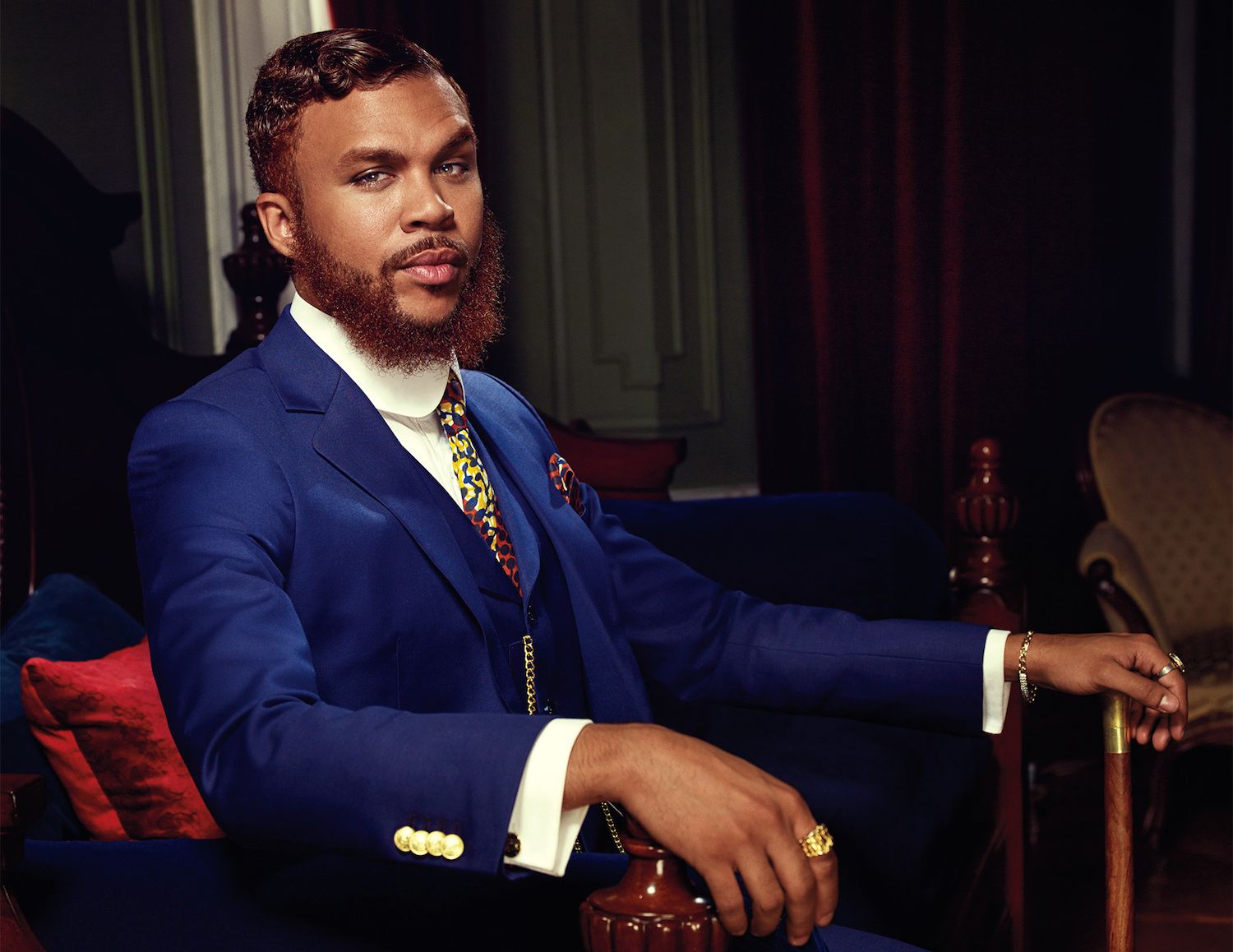
6. Jidenna (Nigerian – American)
Jidenna was born in the united states but fully accepts his African roots. The 35 years old rapper, songwriter and record producer knew he would be in the music industry even from age 10. He got his first breakthrough with the hit song “Classic Man” with millions of copies sold around the world. He is reportedly worth $7 million.
7. Sarkodie (Ghana)
He is one of the best that has come out of Ghana. Michael Owusu Addo also known as Sarkodie has been rated one of the best rappers in Africa. He is worth $7 million.
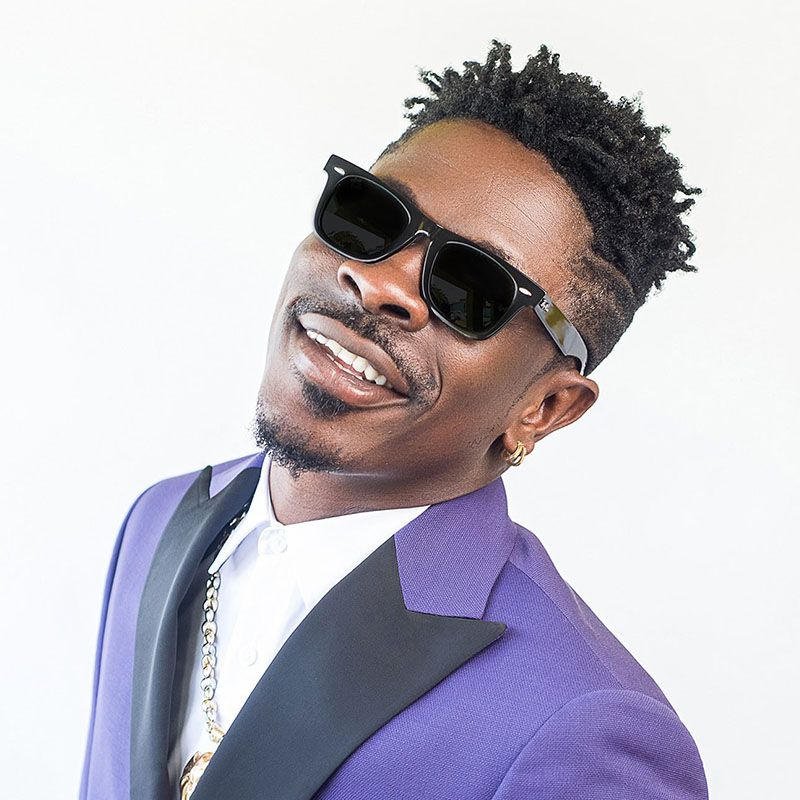
8. Shatta Wale (Ghana)
He won the artiste of the year in 2014. The bandana dancehall king effortlessly flaunts his luxury cars and mansions on social media. He is worth $6.2 million.
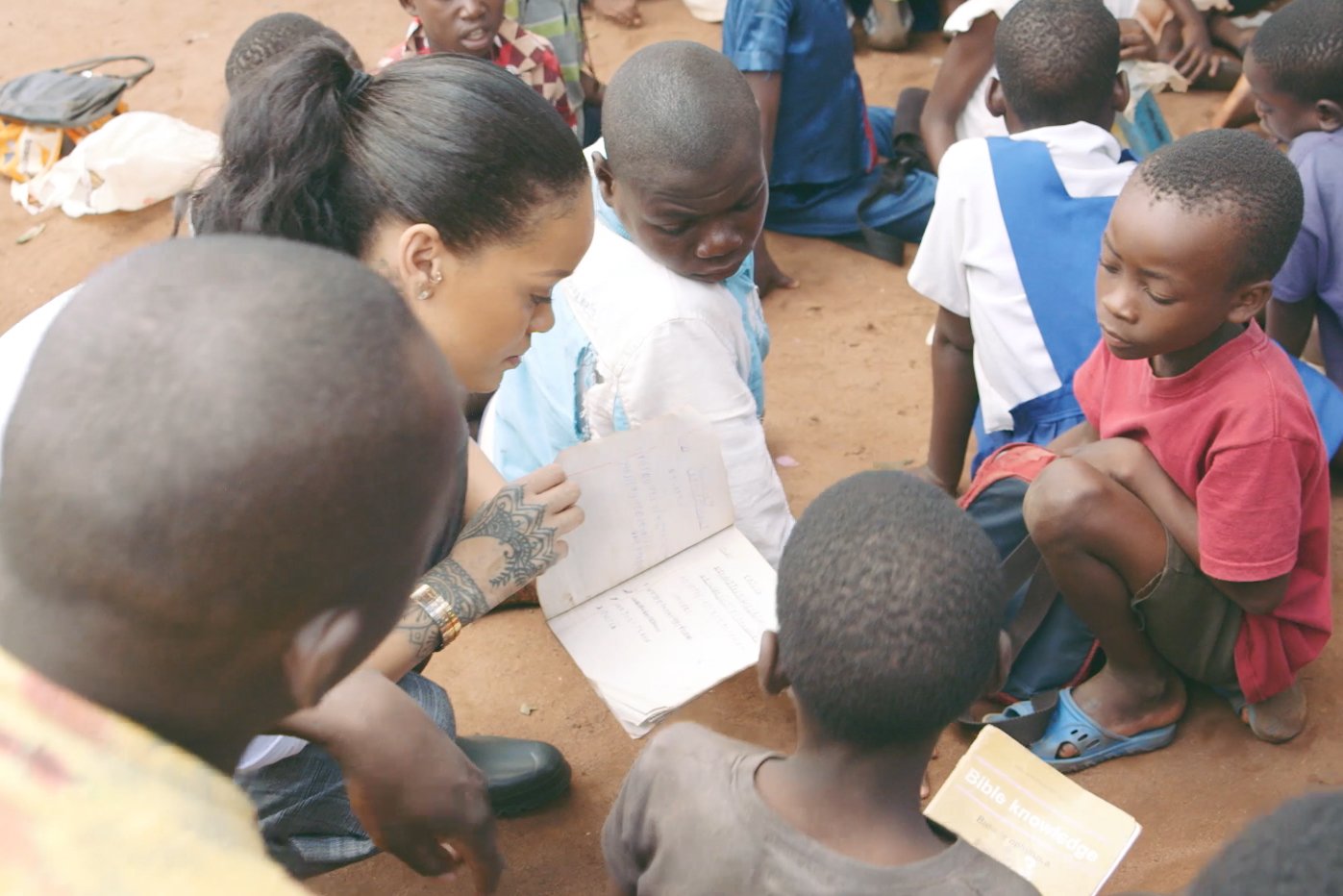
The 32 years old American singer/song writer, and multi Grammy award winning musical artiste is a big time philanthropist.
Rihanna is one of those celebrities despite being rich and famous has an undeniable heart for humanity. She is a big time philanthropist but does it on a low-key.
She has numerous foundations, notably to help women and children around the world, the Believe foundation, to help sick children and the Clara Lionel Foundation (CLF).
Rihanna believes the girl child (females) in Africa need to be empowered, because in some poor African countries many don’t have access to education. For this course, she built a school for young females in Malawi.
She said; I feel strongly that all children everywhere should be afforded the opportunity of a quality education, therefore I’m proud to announce Clara Lionel Foundation’s partnership with education advocacy leaders like the Global Partnership for Education and Global Citizen. Working together, I know we can amplify our efforts and ensure that millions of children gain access to education globally.
Ghanaian Rapper Micheal Owusu Addo popularly known as Sarkodie has lamented over the problems the African continent is facing.
The Award winning rapper has released his new track which talks about the slavery of the African continent by the Westerners. The rapper lamented in his new song titled “Brown paper bag†how the Westerners stole the riches of the African continent and still rule the blacks.
In a recent post made by the rapper, he lamented on how the African continent was facing depression due to the slavery they find themselves in. He tweeted “A rich continent but we facing depression. They strip us naked and try to take out possessions and now we facing recession #brownpaperbag 🖤✊ðŸ»
African countries have secured 90 million test kits for the novel Coronavirus for the next six months, a regional disease control body said on Thursday, urging states and donors to boost testing capabilities on the continent as quickly as possible.
“We needed to increase our testing very quickly to about 10 to 20 million tests to move ahead of the curve. This is a call to action which means we have to rally everybody,†said John Nkengasong, head of the Africa Centres for Disease Control and Prevention (Africa CDC), a branch of the African Union bloc.
Nkengasong presented a new initiative, the Partnership to Accelerate Testing in Africa (PACT), which aims to increase testing across the continent. He added that 3.4 million tests have been conducted in Africa so far, about 1,700 tests per 1 million people, compared to 37,000 tests per 1 million in Italy and 30,000 per 1 million in Britain.
Last week South Africa said it had a backlog of more than 96,000 unprocessed specimens awaiting coronavirus tests, reflecting what the government called a global shortage of test kits.
Even with the supplies from PACT and other sources, there is a supply gap of around 25 million tests needed to match the testing rate of Europe, according to the Tony Blair Institute for Global Change.
So far Africa has 161,793 confirmed cases of the novel coronavirus, with 4,592 deaths and 69,953 recoveries, according to a Reuters tally based on government statements and World Health Organization data.
The head of the Africa Centres for Disease Control and Prevention has called for a greater effort to counter coronavirus at a time when there is evidence it is increasingly being spread within the community in countries across the continent.
John Nkengasong said it was time to test people with flu-like symptoms and to increase measures like social distancing, the wearing of masks and hand washing.
So far the virus has multiplied more slowly in Africa than in Asia or Europe.
Experts believe this could be partly due to Africa’s young population.
However predictions are difficult to make on a continent where there have now been around 120,000 cases, from a population of more than one billion.
Two leaders in Africa’s climate change adaptation industry have called for more government and private sector partnerships in order to build self-funding business models of enabling the continent to reduce the effects of climate change.
Speaking on a webinar from Nairobi, Edward Mungai, chief executive officer of the Kenya Climate Innovation Center, said unlike governments, private sector will be able to build businesses that generate revenue from activities that reduce the effects of climate change.
“We need to disseminate more information to people across the continent so that they can understand what is climate change and the arising business opportunities they can take advantage of,” Mungai said.
Dan Asare-Kyei, chief executive officer of Esoko in Ghana, who provides digital information and financial access services to farmers, said businesses arising from climate adaptation include providing improved seeds to farmers, providing mini-drip irrigation systems and cottage food processing.
Other opportunities include agriculture micro-insurance, solar mini-grids, and weather forecast information.
Asare-Kyei said what is need is governments in Africa to develop public-private-partnerships so that the projects implemented to caution people from the effects of climate change can then be developed to long lasting business models.
They said organizations that are helping micro and small businesses develop their climate resilience and adaptation ideas require funding to prepare these businesses to move to a stage where they can get semi-commercial loans and then full commercial loans.
“Through the public-private-partnerships, money coming through the government for climate change would be used to develop a self-sustaining project,” Asare-Kyei said.
Mr. Prosper Bani, the former Chief of Staff, has called on African leaders to invest in disaster risk prevention to address the continent’s response to unforeseen crisis.
According to him, Africa’s development is being challenged by the lack of a strategy to link disaster risk reduction to development initiatives.
This was in a statement he issued and copied to the Ghana News Agency in Accra.
The Africa Regional Strategy for Disaster Risk Reduction in July 2004 emphasized the importance of policymakers to look at strengthening institutional frameworks, risk identification, knowledge management, governance, and emergency response and demanded a political commitment to addressing comprehensive policies on disaster risk reduction as part of development plans.
Mr Bani, who was also a former Head of United Nations Development Programme Crisis Prevention and Recovery Team for Africa, said lack of these commitments was a major challenge faced by most African countries.
He stated that the absence of preventive infrastructure had caused significant challenges in the development effort of most African countries.
This, he explained, had manifested in prolonged droughts, devastating floods, uncontrolled bushfires, landslides, tropical cyclones, volcanic eruptions, health epidemics, pandemics such as Ebola and the coronavirus, affecting sustainable development.
“There is evidence that the world and Africa, in particular, have been inundated with Protocols, Action Plans, Guidelines, and numerous international agreements on disaster risk reduction, and in particular how to reduce the risk and impact of disasters.
The latest had been the development of an Action Plan for Africa following the Sendel Framework of 2015 which was finalized in 2016”, he added.
Mr Bani was of the view that African leaders must invest in the implementation of the Action Plan which could have mitigated the impact on the economies of member states during the coronavirus.
“The plans must articulate clearly what the problems are and how they would be addressed. It should reflect a verifiable budget and expenditure plan, awareness-raising to bring along the citizens to become conscious and aware of their responsibilities in the fight to reduce the spread”.
The World Health Organization (WHO) has issued a warning against people using untested remedies for coronavirus.
Africans deserve access to medicines that have gone through proper trials even if they are derived from traditional treatments, it said.
Its statement comes as Madagascar’s president is promoting a herbal tonic for treating Covid-19 patients.
The African Union (AU) said it wanted to see the scientific data on the “safety and efficacy” of the product.
The tonic, known as COVID-Organics, was tested on fewer than 20 people over three weeks, a presidential aide told the BBC – which is not in line with WHO guidelines on clinical trials.
This can be a lengthy process in which a potential drug is tested in four phases, scaling up from a trial on a small number of patients to using it on a population countrywide.
Despite these reservations, several African countries, including Guinea-Bissau, Equatorial Guinea and Liberia, have already ordered COVID-Organics, which is produced from the artemisia plant – the source of an ingredient used in a malaria treatment – and other Malagasy plants.
Last week, Madagascar’s President, Andry Rajoelina, spoke to an online meeting of African leaders about the tonic.
Following that meeting the AU asked to see more details about COVID-Organics which could be reviewed by the Africa Centres for Disease Control and Prevention (Africa CDC).
In its statement, the WHO welcomed innovations based on traditional remedies and plants but said they “should be tested for efficacy and adverse side effects”.
“Africans deserve to use medicines tested to the same standards as people in the rest of the world,” it added.
On Monday, more than $8bn (£6.5bn) was pledged to help develop a coronavirus vaccine and fund research into the diagnosis and treatment of the disease.
Dozens of research projects trying to find a vaccine are currently under way across the world.
Most experts think it could take until mid-2021, about 12-18 months after the new virus first emerged, for a vaccine to become available.
Several African countries acted swiftly in trying to prevent the spread of coronavirus by imposing lockdowns or curfews. But these are now beginning to be lifted as governments try to balance health and economic interests.
The easing of the lockdowns has added urgency to the need to find treatments.
Madagascar has recorded 151 cases of Covid-19 and no deaths, Africa CDC says.
The president imposed a lockdown on the three major cities, but these have now been relaxed, the AFP news agency reports.
During the middle of the 19th century, Africa was referred to as the “Dark Continent†by the United States of America journalist turned explorer Henry Morton Stanley because little was known about the mysterious land itself. Little did they know that Africa was not just a single country but a whole continent with fifty-five countries and over thousands of tribes and languages spoken by the people.
The western world did not regard Africa and its people because the African people were not able to write their own history. This notwithstanding, made the Europeans felt that there was no civilization in Africa. But in the actual sense, Africa was already civilized in its own special ways. The African had their own system of doing things before the arrival of the Europeans on the African continent.
Upon their arrival on the African continent, the Europeans had no knowledge that the people of Africa had an education. They perceived that the people of Africa had no education and so they preempted the African continent with western education. But the fact remains that, the people of Africa had education systems in every country.
Additionally, every country on the African continent had what was called the visual language or proto writings. In Ghana, for instance, the Ghanaians (Gold Coast) were using symbols in their communications. Some of these symbols were Gye Nyame, Sankofa, Akonfona and many more. The Nigerians, Angolans and the Congolese also had similar symbols they also used in their communications. They were also considered as African alphabets and could be used in forming sentences as well.
Taking the Gikuyus for example, they also had a wonderful system of education. Mothers and nurses were primarily the teachers. It was believed that, before a child grew up, the child must be taught certain things including songs, and the history of their ancestors, tribes, and families. These teachings transcended to knowing almost everything about the community in which they lived. So, even though they had no formal education, they had their own special way of keeping their history and preserving them.
In the Timbuktu (Mali) culture, scriptures, manuscripts, and the teachings of Islam were stored on scrolls, tied and kept for years. One can also conclude that African had a way of learning mathematics as well. Between Congo and Rwanda, dated about 1500 years ago was a bone called “Ishango Bone†which was used for calculation and writing. Today, this form of calculation has found its way in the western world and no credit whatsoever is giving Africans. This tells the world that, the people of Africa had a sophisticated way of education.
Another aspect that depicts that the African continent could never be described as a dark continent is medicine. Before the Europeans arrived with their European way of curing diseases, the people of Africa had their own system of curing the same diseases. In the Gikuyu country, for example, the people had clear ideas as to the nature of the disease and which treatment was required in various cases. Some diseases were due to natural causes, controllable by medication; and a wide range of herbs was used for medical purposes. Other diseases were beyond ordinary control and called for magical treatment.
Africans believe that herbs can cure all kinds of diseases. It was however believed that the medicines produced by the western countries were all made from some specific herbs which have been diluted with other chemical substances hence reducing its natural contents from curing a disease instantly. In Ghana for example, when a person broke the leg, the herbalist will as a form of an experiment to show that his client could be saved, will shatter the leg of a hen, and use herb on it. If the hen was healed, it’s them believed that his client would also be healed by the same herb.
These methods of healings worked perfectly and are still relevant to all Africans in this 21st Century.
Civilization in Africa before the arrival of the Europeans took different forms and one of those is communication. Though there were no formal means of communication, the people of Africa had a very unique way of communicating.
Unlike today, there are various means of communication like television, radio, Facebook, WhatsApp, and others, it was not so during that juncture. However, if the ruler or the elders of a community wanted to communicate to their subjects, a messenger was sent to sound a gongon or drums. When the people heard these instruments sounded, they knew there was a meeting being called by the elders and they followed to the venue in that line. In the Nile valley civilization, a stone was used as a bell because it sounded like a bell and so whenever it was sounded, the people knew what it was meant for.
Governance is one of the important institutions Africans cherished most before the Europeans arrived on the continent. Before the inception of the European role which suppressed the African system of government, Africans were already practicing the monarchical system of government. The people were governed by chiefs and kings. Without official police and military officers, the chiefs were able to assemble built bodied men who were referred to as guards. The chiefs presided over disputes and resolved them amicably. Moreover, the chief also made sure that people who were found guilty were punished to sever as a deterrent to others. Taking the Ghana empire, for example, the empire was ruled by the Asante king. The Asante kingdom was so powerful that all the people were submissive to the authorities and this has continued till today.
The Americans and the Europeans believe that Christopher Columbus was the first person to complete four voyages across the Atlantic Ocean but it is vividly clear that this happens to be inaccurate. Because Africans could not write their own history, the fact has been obliterated that an African was the first person to take such a voyage with a canon sponsored by the then Malian king, Mansa Musa. Religion, Agriculture, Trade and Architecture all depict that Africans already had civilization before the arrival of the Europeans on the African continent.
From the above discussions, we can all agree that most of the things Africans practiced before the Europeans arrived have resurfaced in the western world today. Many people from the western world travel to some African countries in such of some of these things which they thought did not even exist. It has come to light that, the western world erred in describing Africa as a dark continent. Africa was already civilized before the American journalist turned explorer arrived on the African continent because what he came to do Africa had already been done by some Africans. Lack of written history by Africans culminated in the description of Africa as a dark continent by the western world.†Until the lion learns how to tell its own story, the hunter will forever remain the protagonist.â€
Disclaimer : “Opinions expressed in this article are the sole responsibility of the author(s) and do not in any way reflect those of backend.theindependentghana.com. Our outfit will hereby not be liable for any inaccuracies contained in this article.â€
Africa must “wake up” to the coronavirus threat and prepare for the worst, the head of the World Health Organization (WHO) has said.
The continent should learn from how the spread of virus has sped up elsewhere, Tedros Adhanom Ghebreyesus said.
He warned that while Africa’s confirmed cases were currently low – around 640 – there was no reason for complacency.
“Africa should wake up, my continent should wake up,” said the Ethiopian, the WHO’s first African head.
Health experts warn that strained public health systems in Africa could become quickly overwhelmed if the virus takes hold, especially in overcrowded urban areas.
“WHO’s recommendation is actually mass gatherings should be avoided and we should do all we can to cut it from the bud, expecting that the worst could happen,” Mr Tedros told a news conference in Geneva, where the WHO is based.
In Africa, 16 people have died from Covid-19, the respiratory illness caused by coronavirus: six in Egypt, six in Algeria, two in Morocco, one in Sudan and one in Burkina Faso.
In South Africa, which has 116 cases, President Cyril Ramaphosa has declared a state of disaster, restricting travel, closing schools, banning mass gatherings and ordering bars to close or limit numbers to 50.
The country has also banned all cruise ships from its ports. This comes despite tests coming back negative for six people on board a cruise ship, which had been put under quarantine. All 1,700 people are now free to leave the ship and return home.
Anyone breaking South Africa’s coronavirus measures will be subject to a fine, or even imprisonment.
The World Health Organization (WHO) has announced that Africa has recorded 17 coronavirus deaths since the virus was confirmed in the continent.
In the last 24 hours, Gambia, Mauritius and Zambia announced their first cases of coronavirus. The deaths recorded in the continent were in Algeria, Burkina Faso, Egypt, Morocco and Sudan.
A tweet by the World Health Organization, Africa region reads;
633 CONFIRMED #COVID19 CASES IN #AFRICA IN 33 COUNTRIES AND 17 DEATHS. IN PAST 24 HRS, THE GAMBIA, MAURITIUS & ZAMBIA HAVE ANNOUNCED FIRST CASES. @WHO  IS SUPPORTING COUNTRIES WITH SURVEILLANCE, DIAGNOSTICS & TREATMENT.
South Africa on Wednesday reported six new confirmed cases of Covid-19, the respiratory disease caused by the new coronavirus all involving people who had travelled to Europe.
Thirteen people have now tested positive in South Africa, according to the National Institute for Communicable Diseases.
The new cases are a 33-year-old woman who had been in Italy; a 34-year-old man and a 33-year-old woman who had been in Germany.
Others are a 57-year-old man who had been in Austria and Italy; a 40-year-old man who had been in Portugal; and a 36-year-old man who had been in multiple countries including Germany, Austria, Switzerland and Turkey.
“Some of these patients are already in hospital, while some, specifically those who are asymptomatic, are in self-quarantine,†the institute said in a statement.
Experts consider Africa to be at high risk due to its close links with China the epicentre of the coronavirus epidemic and the weak health systems that many African countries have.
But outbreaks have been rather limited on the continent so far.
More than 110,000 people have been infected worldwide so far.
By Tuesday, the World Health Organisation had recorded 99 confirmed Covid-19 cases in nine African countries: Algeria, Cameroon, Egypt, Morocco, Nigeria, Senegal, South Africa, Togo and Tunisia.
Authorities in Burkina Faso and Congo have also announced their first confirmed cases, all involving people who had been in Europe.
Egypt and Algeria have had the highest number of cases. Only one death has been reported so far, in Egypt.
As the threat of coronavirus disease looms over the continent, the World Health Organisation (WHO) promised to support African Union Member States on a common preparedness and response strategy.
WHO joined Health Ministers in an Emergency Meeting on the Coronavirus Disease Outbreak, which was convened on 22 February by the African Union Commission in Addis Ababa, Ethiopia.
Dr Matshidiso Moeti, WHO Regional Director for Africa joined H.E. Amira Elfadil, Commissioner for Social Affairs, African Union Commission in welcoming the ministers.
WHO has conducted a survey with countries to assess their overall readiness for COVID-19 and found the regional readiness level was an estimated 66%.
“WHO finds there are critical gaps in readiness for countries across the continent,†said Dr Moeti. “We need urgently to prioritize strengthening the capacities for countries to investigate alerts, treat patients in isolation facilities and improve infection, prevention and control in health facilities and in communities.â€
The African Ministers of Health discussed a joint communique on how to prepare for and potentially respond to COVID-19 and expect to conclude their discussions in a few days.
WHO plays an active role in supporting countries to coordinate preparation efforts and so far has deployed more than 40 experts to ten countries to support coordination, treatment, infection, prevention and control, community engagement, surveillance and laboratory disease control. WHO has assisted countries in building their diagnostic capacity for COVID-19, and currently 26 laboratories are able to test for the new pathogen, up from just two early this month.
“The threats posed by COVID-19 has cast a spotlight on the shortcomings in health systems in the African Region,†said Dr Moeti. “Countries must invest in emergency preparedness. This investment is worthwhile when you consider the cost of responding to outbreaks, which for the 2014 Ebola outbreak was estimated at close to $US 3 billion. “
Preparedness efforts which countries already have in place are paying off. For instance, investments in Ebola preparedness for the nine neighbouring countries to the Democratic Republic of the Congo, have yielded some dividends in relation to COVID-19.
Most of these countries now have partner coordination structures in place, points-of-entry screening has been strengthened (particularly at major airports) and isolation units have been upgraded to manage suspected cases.
Over the years, WHO has developed a national influenza network of laboratories and health facilities. The laboratories, which are members of the network have been able to scale up their diagnostic capacity quickly and health facilities in the network are monitoring for severe acute respiratory infections and influenza-like illnesses.
using these conditions as a proxy for COVID-19 as they present with similar symptoms. So far this monitoring has not found any clustering or spike of influenza-like cases.
As of February 20, 2020, countries reported that since 22 January, countries report that 210 people have been investigated for COVID-10 in the WHO African region. 204 cases have been ruled out and six cases are still pending.
Every year, the Global Firepower list ranks countries all over the world based on the strength of their military.
The countries are given a Power Index (‘PwrIndx’) score based on the workforce, airpower, land forces, naval forces, natural resources, financials, logistical capability, and geography.
The smaller the PwrIndx score, the stronger a nation’s technical fighting capability is. The perfect score is 0.0000, which, according to Global Firepower, is “realistically unattainable.“
Here are the seven African countries with the most powerful militaries:
Egypt
Power index – 0.1872
Total Population – 99,413,317
Total Military Personnel – 920,000 (est.) (0.9%)
Egypt military
Egypt was also ranked as the most powerful military in Africa in 2019.
Algeria
Power index – 0.4659
Total Population – 41,657,488
Total Military Personnel – 280,000 (est.) (0.7%)
Soldiers arrive at the site of a military plane crash near the village of Ouled Gacem in eastern Algeria, about 500km (311 miles) from the capital Algiers February 12, 2014. REUTERS/Louafi Larbi
Reuters
South Africa
Power index – 0.4985
Total Population – 55,380,210
Total Military Personnel – 81,300 (est.) (0.1%)
Members of the South African National Defence Force (SANDF) return after taking part in a Capability Demonstration at the Roodewal Bombing Range in Makhado, in the northern province of Limpopo, May 9, 2013. REUTERS/Siphiwe Sibeko
Reuters
Nigeria
Power index – 0.6485
Total Population – 203,452,505
Total Military Personnel – 120,000 (est.) (0.1%)
Nigerian Army on patrol (Head Topics)
. Angola
Power index – 0.8379
Total Population – 30,355,880
Total Military Personnel – 107,000 (est.) (0.4%)
Angolan troops practice room-clearing maneuvers in Luanda as U.S. Marines observe. U.S. Marine Corps photo
US Marine Corps Photo
Morocco
Power index – 0.8408
Total Population – 34,314,130
Total Military Personnel – 510,000 (est.) (1.5%)
undefined
AFP
Ethiopia
Power index – 0.8581
Total Population – 108,386,391
Total Military Personnel – 162,000 (est.) (0.1%)
Ethiopia army (Mail & Guardian)
Mail & Guardian
Weakest militaries in Africa
On the lower end of the list we have these five:
Liberia
Power index – 5.5737
Total Population – 4,809,768
Total Military Personnel – 2,100 (est.) (0.0%)
Losseni Fofana of the Ivory Coast Republican forces (FRCI) and commander of the military operation in the Tai area, stands with his men during a patrol on the road to Para village, in the western Tai area near Ivory Coast’s border with Liberia, June 17, 2012. REUTERS/Luc Gnago
Reuters
Somalia
Power index – 4.6404
Total Population – 11,259,029
Total Military Personnel – 20,000 (est.) (0.2%)
Somalia’s military are reportedly under-funded
AFP
Sierra Leone
Power index – 4.2063
Total Population – 6,312,212
Total Military Personnel – 8,500 (est.) (0.1%)
Sierra Leone court acquits 13 soldiers accused of mutiny
Gabon
Power index – 3.3736
Total Population – 2,119,036
Total Military Personnel – 5,000 (est.) (0.2%)
President Ali Bongo is paraded before the military in Gabon in 2017.
Nigeria-based Africa Arbitration (AA) has named renowned Ghanaian legal practitioner, Ace Ankomah, as its personality for the month of February 2020.
The AA is designed to project the arbitration industry and jurisprudence in Africa. It has been created to showcase some of the intelligent and experienced arbitration practitioners that Africa has to offer to the international arbitration community.
AA is run under the guidance of an Advisory Council made up of senior international arbitration practitioners and academics drawn from across Africa, America, Europe and the Middle East, all of whom are widely recognized for their extensive experiences advising and representing on disputes in Africa.
AA features the Africa Arbitration Blog (AAB), which provides a wide-reaching platform for brilliant arbitration practitioners to project their thoughts on arbitration issues to the international arbitration community.
In a publication on the organisation’s website, Mr Ankomah talks about himself, selected publications to his name, the attitude of the courts in Ghana towards arbitration as well as his thoughts on how arbitration can be enhanced on the African continent.
Mr Ankomah, who was called to the Bar in 1992, currently works at Bentsi-Enchill, Letsa & Ankomah as Managing Partner.