Tag: Africa

  • The 10 richest people in Africa at the start of 2022

    Africa’s billionaires saw their wealth increase significantly in 2021, similar to the previous year, despite the long-term effects of the Covid-19 pandemic on business activities and the operations of companies and financial assets controlled by these ultra-wealthy individuals during the year.

    According to Forbes, 18 of these individuals had a net worth of $84.9 billion at the end of 2021, which is 15-percent or $4.7 billion more than their combined net worth of $73.8 billion at the end of 2020.

    Billionaires such as Aliko Dangote and Abdul Samad Rabiu have seen their wealth increase by more than $1 billion since the beginning of the year, while Natie Kirsh, Johann Rupert, and Mohammed Al Amoudi have seen their wealth decrease by more than $200 million.

    This is how they stand as at January 25, 2022.

    #1 Aliko Dangote

    Net worth: $20.4 billion

    Nationality: Nigerian

    For the eleventh year in a row, Nigerian billionaire Aliko Dangote remains the continent’s richest man, with a net worth of $20.4 billion derived from his stake in Dangote Cement Plc, Africa’s largest cement manufacturer.

    So far in 2021, the billionaire’s net worth has increased by more than $1.3 billion due to an increase in the share price of his flagship company, Dangote Cement Plc, as investors react to news of the leading cement maker’s planned share buy back program.

    #2 Johann Rupert

    Net worth: $11.4 billion

    Nationality: South African

    Johann Rupert, South Africa’s richest man, ranks as the continent’s second-richest man with a net worth of $11.4 billion. The billionaire saw his wealth rise by $3.88 billion in 2021 as shares in his Luxury goods holding company, Richemont, increased by more than 60-percent during the year.

    His net worth has dropped by $565 million since the beginning of the year as investors profit from Richemont shares.

    #3 Nicky Oppenheimer

    Net worth: $8.18 billion

    Nationality: South African

    Nicky Oppenheimer, who formerly ran diamond mining firm DeBeers before selling it to mining firm Anglo-American a decade ago, has a net worth of $8.18 billion, making him the third-richest man in Africa and the second-richest man in South Africa.

    The majority of his fortune is held in private equity investments in Africa, Asia, the United States, and Europe through London-based Stockdale Street and Johannesburg-based Tana Africa Capital.

    His net worth has increased by $225 million since the beginning of the year, owing to the revaluation of his private equity investments.

    #4 Natie Kirsh

    Net worth: $7.68 billion

    Nationality: Emaswati

    Nathan “Natie” Kirsh of Swaziland is the fourth-richest man in Africa, with a fortune of $7.68 billion at the time of writing. Kirsh made his fortune through his ownership of Kirsh Group, a closely held conglomerate that owns a majority stake in the food supply company Jetro Holdings.

    So far in 2021, Kirsh’s net worth has dropped by more than $595 million, or 7.2 percent, as a result of a drop in the valuation of his private equity investments.

    #5 Abdul Samad Rabiu

    Net worth: $7.5 billion

    Nationality: Nigerian

    With a net worth of $7.5 billion, Abdul Samad Rabiu, the founder of one of Africa’s fastest growing manufacturing conglomerates, BUA Group, ranks as the fifth-richest man in Africa and the second-richest man in Nigeria.

    The majority of the billionaire’s wealth comes from his 97 percent stake in his cement company, BUA Cement Plc, while the recent increase in his net worth to $7.5 billion was driven by the recent listing of his consolidated food business, BUA Foods.

    #6 Mike Adenuga

    Net worth: $6.7 billion

    Nationality: Nigerian

    Mike Adenuga, the founder of Nigerian telecom company Globacom Limited and majority owner of Nigeria’s pioneer petroleum marketer, Conoil Plc ranks as the third-richest man in Nigeria and the sixth richest on the continent of Africa.

    As of press time, January 25, his wealth is valued at $6.7 billion thanks to the valuation of his interest in Globacom Limited, Nigeria’s third-largest telecom service provider.

    #7 Mohammed Al Amoudi

    Net worth: $6.45 billion

    Nationality: Ethiopian

    Mohammed Al Amoudi is the richest man in Ethiopia and the seventh-richest man in Africa, with a net worth of $6.45 billion.

    The majority of the Ethiopian billionaire’s wealth is derived from his industrial assets in Sweden, Saudi Arabia, Ethiopia, and Morocco, as well as his stake in Svenska Petroleum Exploration, Preem, Sweden’s largest oil refiner, and a 67 percent stake in Samir, Morocco’s sole oil refiner.

    #8 Nassef Sawiris

    Net worth: $6.29 billion

    Nationality: Egyptian

    Egypt’s richest man and a scion of Egypt’s richest family Nassef Sawiris ranks as the eighth-richest man in Africa with a wealth of $6.29 billion at the time of drafting this report.

    The majority of the Sawiris’ $6.29 billion fortune stems from his stake in Dutch fertilizer producer OCI N.V. and his 3.72 percent stake in German sportswear manufacturer Adidas.

    #9 Issad Rebrab

    Net worth: $5.1 billion

    Nationality: Algerian

    Issad Rebrab, the founder and CEO of Cevital and Algeria’s richest man, is the ninth-richest man in Africa, with a fortune of $5.1 billion derived from his business interest in Cevital Group.

    Cevital Group is Algeria’s largest privately held company, and it owns one of the world’s largest sugar refineries, capable of producing 2 million tonnes of refined sugar per year.

    #10 Naguib Sawiris

    Net worth: $3.4 billion

    Nationality: Egyptian

    With a fortune of $3.4 billion, Naguib Sawiris, the elder brother of Egypt’s richest man, Nassef Sawiris, is the second-richest man in Egypt and the tenth-richest man in Africa.

    The billionaire amassed his fortune after selling Orascom Telecom to Russian telecom firm VimpelCom (now Veon) in a multibillion-dollar transaction in 2011. He is currently a shareholder in Orascom TMT Investments and Ora Developers, a real estate developer.

  • Akufo-Addo draws inspiration from reggae star Peter Tosh in rallying call for a new Africa

    Ghanaian president, Nana Addo Dankwah Akufo-Addo, this week received a standing ovation after delivering a speech in the United States of America.

    The president was addressing the opening ceremony of the US-Africa Leaders’ Summit held in Washington DC.

    Drawing inspiration from Jamaican reggae star Peter Tosh, Nana Akufo-Addo, charged Africans in the diaspora that they remain an important part of the quest to change the African story.

    “Let us remember that the destiny of all black people no matter where they are in the world is bound up with Africa. We should never forget that famous admonition of the celebrated Jamaican reggae star Peter Tosh and I quote don’t care where you come from, as long as you are a black man, you are an African.”

    It is on this premise that Nana Akufo-Addo, charged all blacks in the diaspora to help make Africa a place for investment, progress, and prosperity and not where the youth flee with the mirage of a better life in Asia of the Americas.

    Nana Addo said the time had come for all Africans both home and abroad to help change the African narrative. He said the characterization of Africa as the home of diseases, hunger, poverty and illegal mass migration must end.

    Nana Addo used the Chinese diaspora and how they helped China’s resurgence into a global manufacturing giant through direct forex investments as a test case.

    According to the president of Ghana, this will help the continent attain the respect it deserves on the global stage.

    He added that this agenda is what has driven his government to rally Africans in the diaspora to come home as part of the “Beyond the Return campaign’.

    “If we stop being beggars and spend African money inside the continent, Africa will not need to ask for respect from anyone, we will get the respect we deserve. If we make it prosperous as it should be, respect will follow,” the president said.

    Describing the people of Africa as resilient, the president further called for solidarity amongst countries within the continent to attain their shared aspirations.

    “Africans are more resilient outside the continent than inside. We must bear in mind that to the outside world, [there’s] nothing like Nigeria, Ghana or Kenya, we are simply Africans. Our destiny as people depends on each other,” he said.

    According to the president, the continent possesses the needed skill and manpower but requires a concerted political will to “work”.

    A number of African leaders have travelled to Washington to join a discussion aimed at strengthening the continent’s cooperation with the US amid concerns about Chinese and Russian influence.

    Source: Ghanaweb

  • Facebook hit with $2 billion lawsuit over political violence in Africa

    In a recent lawsuit, Facebook is charged of contributing to political upheaval on the continent and is being held accountable by requesting more than $2 billion in reparation funds as well as significant improvements to the service’s content moderation procedures on the continent.

    It is the most recent case in which the platform has been linked to racial violence in developing countries.

    As a result of the company’s use of hate and violence in conflict-torn Ethiopia, Facebook has violated more than ten articles of Kenyan law, according to the class-action lawsuit filed in Nairobi, Kenya, where Facebook established a significant content moderation hub in 2019.

    Additionally, it claims that in comparison to the United States, the firm does not invest enough resources in content monitoring on the continent.

    Abrham Meareg, an Ethiopian scholar who is looking for political asylum in the US, is one of the lawsuit’s plaintiffs. He claims that last year, amid Ethiopia’s ongoing civil war, his father was murdered by extremists as a result of incitement that circulated on Facebook.

    Meareg Amare Abrha, Meareg’s father, was a well-known chemistry professor and Tigrayan ethnicity. According to an affidavit Meareg submitted in the case, he was killed on November. 3, 2021, after a gang of individuals on motorbikes followed him from the university and shot him twice in front of his house. After extremists eventually took over the family house, Meareg’s mother escaped to Addis Ababa, the nation’s capital.

    “My father didn’t get any chance to convince people that he was innocent,” Meareg said in an interview, from his home near Minneapolis, where he is now living. “He didn’t get the choice to clarify the hate speech and disinformation. They just shot him and killed him in a brutal way.”

    The case follows criticism of Facebook usage during war in areas like Myanmar and India. The website received harsh criticism for allowing hate speech and incitement to violence to flourish on its platform in Myanmar, where state violence against the nation’s Muslim Rohingya minority has raged for years.

    Source: News Central 

  • Africa urged to optimise refinery capacity to alleviate poverty

    Africa must invest in oil and gas infrastructure and refineries if it is to overcome energy poverty and attain energy security.

    This would ensure energy security on the continent and speed up intra-African commerce in oil and gas.

    The announcement was made in Accra during the Africa Energy and Infrastructure Forum and Awards.

    In order to debate solutions to some of Africa’s major energy concerns, local content, and private sector and industry titans gathered on a single platform, policymakers, the private sector, and stakeholders.

    The Africa Energy and Infrastructure Forum and Awards organised by African Leadership Magazine focused on “Building the Sustainable Future of the African Energy Industry”.

    According to the African Development Bank, Africa needs a minimum of 10 billion dollars annually in the next 10 years to help address energy infrastructure gaps.

    Speaking at the forum, the Special Advisor to the South African Minister for Mineral Resources and Energy, Mr. Sello Helepi, said South Africa is working to replace fossil fuels with gas in the transportation sector.

    He said to solve energy poverty, African states must work together.

    “We believe that it is important that the refinery should not just recover oil, refine it and trade with it and send it away. The refining capacity on the continent is not at an optimal level, where we need it to be,” he explained.

    The Minister of State at the Presidency, Mrs. Freda Prempeh, called for harmonisation of efforts in the sub-region to accelerate energy trade.


    Minister of State at the Presidency, Mrs. Freda Prempeh

    Mrs. Prempeh said, “disparities in the organisation of the sector and the diversity of regulations, there is a strong need for harmonization to create a coherent stable and attractive framework in the sub-region. Member States are still far from allowing free trade provided for in the ECOWAS Energy protocol. Uncertainty about the adequate degree of openness to competition at the National level.”

    African Leadership Magazine Group Managing Editor, Kingsley Okeke said the forum “is the only way we can encourage local content, the only way we can drive those conversations to people and look inward and say do we have the resources? How do we as Africans develop our resources and not subject our resources to the West?”

    Awards were presented to stakeholders for their contribution to the development of the energy sector.

  • The European Union reiterates its desire to strengthen ties with Africa

    The European Union (EU) has expressed its commitment to expand cooperation with Africa in a range of aspects, including energy, food, and migration.

    Following their 11th Commission-to-Commission meeting, co-chaired by European Commission President Ursula von der Leyen and African Union Chairperson Moussa Faki Mahamat, the EU and the African Union issued a joint statement, noting that the ongoing conflict in Ukraine had harmed the economies of Europe and Africa. It was noted that current conflicts and tensions have exacerbated global food and energy security.

    European Union Reiterates Desire To Expand Cooperation With Africa (News Central TV)

    “Africa and Europe are bound by geography and a common destiny. Through sustainable investments worth at least €150 billion, the Global Gateway Africa-Europe Investment Package is the EU’s positive and substantial offer, which will help strengthen the continent’s resilience,” said von der Leyen.

    Talking about the need to expand cooperation between the European Union and Africa, Mahamat, for his part, said: “We value our strategic partnership with the European Union and its active support to Agenda 2063. The destinies of our two continents are interlinked and we want to continue building a partnership of equals for the benefit of sustainable development for all.”

  • Ghana’s Cardinal Richard Baawobr dies in Rome at 63

    Ghana’s Cardinal, His Eminence Cardinal Richard Kuuia Baawobr has died at age 63.

    According to a statement issued by the Secretary General Missionary Of Africa, the Cardinal passed away on Sunday, November 27.

    “Our confrere was taken by ambulance from the Generalate to the Gemelli Hospital at 5.45pm and we received the sad news at 6.25pm. May Richard rest in the peace of his Lord whom he so generously served,” parts of the statement read.

    Ghana's Cardinal Richard Baawobr dies in Rome at 63

    The Secretary General further commiserated with the late Cardinal’s family, diocese, his fellow bishops, and his friends.

    Cardinal Kuuia Baawobr was hospitalised in August at the Santo Spirito Hospital in Rome shortly before the Vatican ceremony in which he was to receive a red biretta from Pope Francis.

    He underwent a heart surgery during the period and was discharged on Friday, November 18 from Agostino Gemelli University Hospital/Policlinic where he had been transferred to on Saturday, October 15.

    The 63-year-old received the title of cardinal while being treated in the Roman hospital. Pope Francis asked people to pray for Baawobr at the end of his homily for the consistory.

    Baawobr was recently elected head of the African bishops’ conference, the Symposium of Episcopal Conferences of Africa and Madagascar (SECAM), at the end of July.

    He has led the Diocese of Wa, in northwest Ghana, since 2016, and is known locally for his charity and care for people with mental disabilities in a country where the stigmatization of mental illness is still high.

    Six years ago he launched a diocesan street ministry that brings together parish volunteers and health care professionals to provide care and medical assistance for people with mental disabilities who have been abandoned by their families.


  • Women in Africa face the highest risk of being murdered by family members, UN reports

    UN has reported that , women and girls in Africa are more likely than anywhere else in the world to be killed by intimate partners or other family members.

    According to the report, the continent has the highest level of violence against women in relation to its female population.

    In 2021, approximately 45,000 women and girls worldwide will have been murdered by intimate partners or other family members.

    When broken down, this means that more than five women or girls are killed by someone in their own family every hour.

    The report released jointly by the UN Office on Drugs and Crime (UNODC) and UN Women, says that even as the numbers are shocking, the true scale of femicide may be much higher.

    By absolute numbers, Africa had the second-highest cases of female intimate partner/family-related killings, at 17,200, with Asia leading at 17,800. The Americas had 7,500 cases and 2,500 in Europe.

    “Data on gender-related killings committed in the public sphere are particularly scarce, making it difficult to inform prevention policies for these types of killings,” it says.

    The UN is calling for the strengthening of protection mechanisms for women human rights defenders and women’s rights activists.

    “I call upon governments and partners across the world to increase long-term funding and support to women’s rights organisations,” UN Women executive director Sima Bahous said.

    The UN report comes as the global commemoration of 16 days of activism against gender-based violence begins on Friday.

  • Fact-checking Giorgia Meloni’s claim about France’s “exploitation” of Africa

    A video of Giorgia Meloni, a right-wing politician who has become Italy’s new prime minister, accusing France of using a “colonial currency” to “exploit the resources” of African countries has been widely shared on social media.

    There have been recent tensions between the two countries over how to deal with African migrants. Italy refused to allow a migrant rescue ship to dock, France accused the Italians of “unacceptable behaviour”.

    The video clip shows Ms Meloni claiming that “50% of everything that Burkina Faso exports ends up in… the French treasury”.

    On 19 November, Dutch commentator Eva Vlaardingerbroek tweeted the video, saying “I bet Emmanuel Macron now regrets to have picked a fight with Giorgia Meloni”. This got tens of thousands of retweets.

    On 20 November, the Daily Mail wrote about the video clip with the headline: “Italy’s new firebrand PM launches blistering diatribe saying immigration from Africa would STOP if countries like France halted exploitation of continent’s valuable resources”.

    But the video clip with Ms Meloni is actually from 2019 – long before she became prime minister – and her comments back then were wrong.

    What did Giorgia Meloni claim?

    The video is from an interview given on 19 January 2019 on the private Italian TV channel La 7, when Ms Meloni was an MP and leader of the right-wing party, Brothers of Italy.

    Ms Meloni holds up a CFA franc bank note, describing it as a “colonial currency” that France prints for 14 African countries which, she claims, it uses to “exploit the resources of these nations”.

    Screengrab of video showing Italian Prime Minister Giorgio Meloni with subtitle of claim about Burkina Faso exports
    Image caption, The clip has been widely shared on social media

    She then holds up a picture of a child working in a gold mine in Burkina Faso and claims that “50% of everything that Burkina Faso exports ends up in… the French treasury”.

    “The gold that this child goes down a tunnel to extract, mostly ends up in the coffers of the French state.”

    The video clip ends with her saying “the solution is not to take Africans and bring them to Europe, the solution is to free Africa from certain Europeans who exploit it”.

    We looked into a similar claim in 2019 when another Italian politician blamed France for impoverishing Africa and encouraging migration to Europe.

    What is the evidence?

    France does print currency – the CFA franc – for 14 African countries, including Burkina Faso. Participation in this currency is voluntary.

    The currency was created by France in the late 1940s to serve as legal tender in its then-African colonies.

    CFA franc banknotesIMAGE SOURCE,GETTY IMAGES

    At the time Ms Meloni made her claim in 2019, France required African countries that used the CFA franc to deposit 50% of their foreign exchange reserves (not their exports) with the French treasury, in return for a guaranteed exchange rate with the Euro.

    These countries were free to access these reserves at any time if they wanted to and France paid them interest while holding them (at 0.75%).

    France didn’t “demand 50% of everything Burkina Faso exports” either.

    According to World Bank data, France isn’t even among the top five destinations for Burkina Faso exports in total value, the leading export being gold. In 2020, it exported nearly 90% of its gold to Switzerland.

    We asked Ms Meloni’s office if she still stands by her comments but have not received a reply. The French government has not responded to our request for a comment either.

    What’s happened since?

    In December 2019, reforms to the CFA zone were announced, dropping the requirement that countries in the zone deposit half their reserves in France.

    France began the process of transferring reserves back last year, according to news reports.

    The IMF said in March this year that the account where these reserves were held in France had been closed, and that the Central Bank of West African States (which controls monetary policy for eight countries including Burkina Faso) now manages the reserves.

    It is free to deposit these where it chooses.

    A map showing the 14 CFA franc countries

    Why is the French currency zone controversial?

    Critics of the CFA currency arrangement have called it a relic of colonialism, saying it has impeded economic development for the 14 African countries that are part of it.

    They also argue that they have no say in deciding monetary policies agreed to by European nations in the Eurozone.

    An article for the US-based Brookings Institute last year said that while countries using the CFA franc had generally seen lower inflation, the CFA franc arrangement limits their policy options, particularly in dealing with the impact of the coronavirus pandemic.

    Other economists have pointed out that annual average GDP growth – the increase in the value of all goods and services produced – of CFA countries and other African economies has been fairly comparable over time.

    A woman holding a printout of a franc note during protests in Rome in 2019IMAGE SOURCE,GETTY IMAGES
    Image caption, Protests against the currency were held in Rome in 2019

    France defends the currency system as ensuring a “stable economic framework” for the economies that are part of it, and as the currency is pegged to the Euro it says it provides better protection against economic shocks and helps control inflation.

    And countries are free to leave the zone, it adds.

    Source: BBC

  • Free Africa from certain Europeans who exploit it – Giorgia Meloni

    Italian Prime Minister, Giorgia Meloni, made a passionate call to heads of state in European countries to cease from deliberately taking advantage of Africa.

    In an interview dated 2019 – long before she became prime minister shared by broadcaster Darren Grimes, the Prime Minister stated that none to little has been done to ensure Africa is independent.

    She cited an instance where Burkina Faso continues to feed France, even after colonisation, due to some stringent deals made.

    “Burkina Faso is one of the poorest nations in the world. France prints colonial money for Burkina Faso, which has gold. In return they demand that 50% of everything that Burkina Faso exports end up in the coffers of the French treasury.

    “The gold that this child goes down a tunnel to extract mostly ends up in the coffers of the French state,” she said.

    According to her, taking Africans and bringing them to Europe is not the way to go about ensuring Africa is self-reliant. For her, “the solution is to free Africa from certain Europeans who exploit it and allow these people to live off what they have.”

    Most, if not all African countries, are unable to govern themselves without western influence. Since their independence, these countries have had a hard time to operate independently since they remain dependent on foreign countries.

    Source: The Independent Ghana


  • Ghana’s Cardinal Kuuia Baawobr discharged from hospital

    Ghana’s Cardinal Richard Kuuia Baawobr has been discharged from hospital after undergoing a heart-related surgery in Rome.

    On 18 November 2022, the Cardinal was discharged from Agostino Gemelli University Hospital where he had been on admission since 15 October 2022.

    The Cardinal is now staying at the Generalate of the Missionaries of Africa (White Fathers) in Rome.

    Richard Cardinal Kuuia Baawobr, Bishop of Wa, Ghana is said to be suffering from a heart-related condition that may require surgery.

    “..Richard Cardinal Kuuia Baawobr who since his arrival in Rome fell ill and has been hospitalized with problems of the heart and it seems he may need to have surgery. Let’s remember him as well,” Pope Francis said.

  • Twitter agrees to negotiate severance with laid-off Africa staff after legal threat

    Lawyer for Twitter Africa employees who were laid-off earlier this month by the social media giant has confirmed that the company has reached out to the former employees after a threat to sue over discrimination.

    The unnamed lawyer confirmed to a CNN Africa journalist, Larry Madowo, that the company had “finally agreed to negotiate with the laid-off Africa team.”

    Madowo, who has been keenly reporting on the story, reiterated in a November 22 tweet, that the redundant staff “weren’t offered severance until CNN reported” their plight and that they weren’t “allowed to negotiate their separation terms until” CNN report was aired.

    Africa office closed down four days after opening

    The Africa office was closed four days after employees who had over the last year been working remotely converged at the Africa Headquarters located in Ghana.

    They initiated legal action against the new owner of the platform, Elon Musk, over discrimination and the imbalance in the severance pay they were offered compared to others who were laid off in the United States and Europe upon his takeover.

    Madowo revealed the contents of their termination emails in his earlier reports, which read in part: “The company is reorganizing its operations as a result of a need to reduce costs. It is with regret that we’re writing to inform you that your employment is terminating as a result of this exercise.

    “Your last day of employment will be 4th December 2022. You will be placed on garden leave until your termination date,” the November 4 letter read.

    Watch the GhanaWeb Excellence Awards nominees reveal video below:

    The staff hired a lawyer who was on the verge of suing the world’s richest man, Elon Musk, over this matter. They also reported Twitter to the Chief Labour Officer in Ghana over breaches in the way their appointments were terminated.

    “It is clear that Twitter, under Elon Musk, is either deliberately or recklessly flouting the laws of Ghana, is operating in bad faith and in a manner that seeks to silence and intimidate former employees into accepting any terms unilaterally thrown at them.

    “Without pressure from higher authorities, they are clearly not willing to provide a fair or just package in order to minimize the hardship of this takeover and the resulting loss of jobs on their workforce in Africa.”

  • Fired Twitter Africa staff to sue Elon Musk over sacking, unfair severance packages

    The employees of the Twitter Africa office in Ghana have initiated steps to take legal action against their employer, Elon Musk, over the imbalance in the severance pay they have been offered.

    This is in comparison to other colleagues of the microblogging site in other parts of the world, like the United States, where a proper outline of severance packages have been offered to the sacked employees.

    It would be recalled that at the start of November 2022, just a few days after the Twitter Africa office started physical operations from its location in Accra, all the staff of the office received termination notifications via their personal emails.

    The CNN’s Larry Madowo reported that this was so because the Twitter Africa staff had been locked out of their work emails as well as from accessing their working machines.

    “The company is reorganizing its operations as a result of a need to reduce costs. It is with regret that we’re writing to inform you that your employment is terminating as a result of this exercise.

    “Your last day of employment will be 4th December, 2022. You will be placed on garden leave until your termination date,” the termination notices to them on November 4 read.

    The earlier story also indicated that unlike other staff of Twitter in other locations of the world, the Africa staff received no indications of severances.

    “At least for the African staff, that email did not even mention them by name; it just said ‘see attached.’ And even though Elon Musk said everybody who got fired would be getting at least three months severance above the law – that’s in the US, those in Africa office didn’t get a next step, or if they’re going to get any severance at all, which some lawyers in Ghana are now pointing out could be a violation of Ghanaian employment law,” Larry Madowo added.

    But in an updated report by the CNN, it has said that the displeased sacked Africa staff want fairness in the severances they are being offered.

    The staff have since taken a lawyer who is on the verge of suing the world’s richest man, Elon Musk, over this matter, Larry has said.

    “They are asking to be treated the same way Twitter treated employees who were departing in the US and Europe; they want three months severance pay like Elon promised and other relevant benefits: stock investing, continued healthcare, and that sort of thing.

    “But they feel that’s not happened; they have not been treated the same way as everyone at Twitter,” he stated.

    The journalist also reported that it was only after the CNN’s first report on this subject that Twitter offered the Africa staff a severance pays.

    He added that the team got personal emails that claimed to give them what they called “Ghana mutual separation agreement and it offered a certain figure. They say this email claims to have been arrived at after a negotiation with the staff but they say they have actually never negotiated with anyone at Twitter.

    “In fact, they don’t even have a way to contact anyone at Twitter because their emails keep bouncing back. So, they’ve rejected that severance pay offer, they have hired a lawyer and have written a demand notice to Twitter, asking Twitter to comply with Ghanaian employment laws.”

    The Africa staff of Twitter have also petitioned the Ministry of Employment in Ghana to compel Twitter to do the right thing, he added.

    Here is a portion of that notice to the authorities in Ghana:

    “It is clear that Twitter, under Elon Musk, is either deliberately or recklessly flouting the laws of Ghana, is operating in bad faith and in a manner that seeks to silence and intimidate former employees into accepting any terms unilaterally thrown at them.

    “Without pressure from higher authorities, they are clearly not willing to provide a fair or just package in order to minimize the hardship of this takeover and resulting loss of jobs on their workforce in Africa.”

    It is worth mentioning that the Twitter Africa staff includes some employees who were hired from Nigeria and other countries and they want to be paid to move back to their countries.

  • Only 0.5% of 18 million metric tonnes of cassava is processed in Ghana

    The Chief Executive Officer of Bankyekrom Limited, Sarpei Kwadey, has revealed that despite the high volumes of cassava produced in the country, only a fraction of it is processed.

    According to him, 10 million metric tonnes of cassava remain un-harvested each year, while annual production amounts to 18 million metric tonnes – thereby ranking the country among the tuber’s top five producers in Africa. However, of this quantity only a measly 0.5 percent is processed.

    This, he said, is worrying; given more than 70 percent of farmers in Ghana produce cassava, and the sector contributes about 22 percent of agricultural GDP.

    “We need huge tracts of land to cultivate cassava on a large scale, as well as skilled labour, mechanisation and planting materials,” Mr. Kwadey said at the maiden Cassava Multi-Stakeholder Forum held in Accra and organised by the Ghana Incentive-based Risk-sharing System for Agriculture Lending (GIRSAL) in partnership with the Development Bank, Ghana (DBG) and Ghana Industrial Cassava Stakeholder Platform (GICSP).

    The forum was held to identify opportunities and key challenges facing the national agenda of industrialising the cassava ecosystem, and the key interventions that would support solutions for an effective and efficient value chain pivoted around major, small and medium processors.

    Chairman of the GICSP, Chris Quarshie, noted that the high starch content in cassava root is an important characteristic that makes the crop a potential industrial cash-crop. However, lack of varieties in cassava prevents starch production in large quantities; and, therefore local ethanol-consuming industries use imported raw materials for production due to inadequate supply.

    He said: “This country consumes about eight million tonnes of cassava annually, and records 10 million tonnes of annual surplus that is un-harvested and left in the ground to rot. We have cassava, but we need to get the variety that is high in starch, high-yielding, and will be of interest to industries”.

    Mr. Quarshie added that cassava has a low risk-profile and matures between 20 and 24 months, depending on the variety. He therefore called for proactive policies, financing and capacity building for players in the industry.

    On his part, Mr. Duker of the Development Bank Ghana assured that the bank will collaborate with key stakeholders to help fund and support businesses to grow the cassava value chain.

    According to him, this will be done by helping to unlock sectors with transformational potential and providing thought-leadership on policy development to stimulate a conducive environment for agri-businesses.

    “This we will do through our holistic approach to combine finance, capacity-building and market development.”

    Mr. Duker explained that DBG focuses on four key sectors: agribusiness, manufacturing, ICT and high value services.

    “The importance of unlocking value within key agriculture value chains must not be understated. So, that explains why we are here today as a sponsor for this event.”

    He added that DBG’s mandate is to grow the private sector, and unlock growth for the economy by working constructively with stakeholders to address the finance gap for long-term capital in a catalytic way – while delivering a beneficial Ghanaian credit market that works for everyone sustainably.

    He called for urgent action through a joint effort to address challenges faced in the cassava sector. “We need to do it differently. What does this mean? We need to collaborate on setting new standards together, and this requires that we have authentic conversations. We are here this morning to roll-up our sleeves and work together to come up with solutions which allow us to take the important next steps.”

  • EU, 4 member countries to provide over 1bn euros for climate adaptation in Africa

    The European Union (EU) climate policy chief Frans Timmermans told the COP27 summit in Sharm El-Sheikh on Wednesday that the bloc and four member countries will provide more than one billion euros for climate adaptation in Africa.

    He added that the four members are France, Germany, the Netherlands, and Denmark and that other countries could join.

    The sum is a starting point, he said.

    Timmermans also said the EU will provide 60 million euros for loss and damage and will present ideas today on how to take loss and damage negotiations forward.

    No fewer than 154 countries signed the UNFCCC in June 1992, agreeing to combat harmful human impacts on the climate.

    Since then, COP meetings have been held (almost) annually to discuss how exactly that should be achieved, and monitor what progress has been made.

    At COP26 in Glasgow in 2021, many were shut out due to vaccine inequity, travel restrictions, and high costs.

    Those who did manage to attend had to navigate a range of logistical issues which plagued the conference, from massive queues to a shortage of entrance permits.

    Combating the devastating effects of climate change requires mobilizing governments, corporations, finance, and civil society.

    And so, at COP27, currently ongoing, public and private sector leaders have united in Sharm El-Sheikh, Egypt, to seek solutions alongside BCG, the exclusive COP27 consulting partner.

  • Opoku Prempeh woos European support for Africa’s energy transition

    The Minister of Energy, Dr. Matthew Opoku Prempeh, has told world leaders that the aim of Africa is to develop without being caught up in a place of pollution.

    He said that the need for the developed world, including Europe, to transition in the area of energy, should be done hand in hand with Africa and not in a way that gives the continent the impression that it is not invited.

    Making a spirited contribution as a guest during a forum held on the sidelines of the 2022 United Nations Climate Change Conference in Egypt, the minister urged the world’s leaders to be equally interested in Africa’s transition.

    “Africa doesn’t want to pollute to develop. We want to have clean, sustainable, reliable, affordable energy to develop but someway somehow, somebody must pay for it. If you want Africans to pay for it, it will take a longer time so don’t tell me that when I say I’ll transit in 2070, you say it’s not ambitious. It is very ambitious in Ghana if I have to find 562 billion to do my transitional plan,” he said.

    Dr. Matthew Opoku Prempeh explained further that Africa needs support to go through the right channels in doing this right alongside the rest of the world.

    “So, for those who are talking, and we all know for the poor person who is hungry, he doesn’t care about where the food is coming from; he has to feed the family. So, if you want the food to come from a place, then provide him the access, the ability to be able to cultivate and do the needful.

    “So, all Africa is saying is that this transition, we all want to participate. It must be just, it must be fair, it must be equitable and not at the expense of Africa,” he stated.

    The minister also stated that there is the need for the world leaders to know that energy is a must for all.

    He said that while he calls for support for Africa, should it not come, the continent will develop nonetheless but not through the right channels.

    “Energy is not a luxury; it’s a fundamental right and so governments must work to ensure that the whole population has access to energy, to develop socio-economically… when a person doesn’t have energy, how does the person become productive?… the world should understand that if they don’t support Africa through grants, leverage funds, concessional funding, and also taking the hard work out, Africa will develop anyway, and they might develop through the bad way,” he said.


  • Diabetes killed 416,000 people in Africa in 2021

    Diabetes mellitus took the lives of 416,000 people on the African continent last year, thus becoming one of the leading causes of death in Africa by 2030.

    The World Health Organization (WHO) Representative to Ghana, Mr. Francis Kasolo who disclosed this in a statement read on his behalf at Ghana’s commemoration of the 2022 World Diabetes Day, said 24 million adults in Africa are currently living with the condition.

    The number was, however, predicted to swell by 129 percent to 55 million by 2045.

    Diabetes is a chronic metabolic disease typically characterised by high sugar in the blood. Types are ‘Type 1’, affecting usually children with little or no insulin, ‘Type 2’, usually occurring after 18 years with poor response to insulin and ‘Gestational Diabetes’, one that is caused by pregnancy among women.

    Mr Kasolo said Diabetes is the only major non-communicable disease for which the risk of dying early is increasing, rather than decreasing.

    The commemoration, organised by the Ministry of Health, was on the theme: “Access to Diabetes Care”.

    He said epidemiological trends were reflected in Ghana as Type-2 Diabetes affected approximately six per cent of adults, a percentage that is expected to rise.

    The WHO Representative said the known factors include family history and increasing age, along with modifiable risk factors such as overweight and obesity, sedentary lifestyles, unhealthy diets, smoking and alcohol abuse.

    When left unchecked and without management and lifestyle changes, Diabetes, he said, could lead to several debilitating complications like heart attack, stroke, kidney failure, lower limb amputation, visual impairment, blindness, and nerve damage.

    To enhance controlling of the condition, Mr Kasolo appealed to governments of WHO member states to prioritise investment in essential products like insulin, glucometers and test strips, explaining: “This is critical to ensure equitable accessibility for everyone living with diabetes, no matter where on the continent they are”.

    Dr Efua Commeh, Acting Programme Manager, Non-communicable Diseases, Ghana Health Service, said Diabetes affected a significant number of children, many of whom were not recognised.

    “Children with this condition will live with it for very long time and it will affect productivity. Moreover, there are many who walk around with the condition without knowing about it,” she noted.

    In Ghana, she said Diabetes prevalence is between six and seven per cent, adding: “Obesity, hypertension, unhealthy diet and lifestyles are rising and it’s therefore, not surprising that diabetes is also rising among the public”.

    Dr Commeh said more than 200,000 people passed through the Out Patient Department of health facilities every year with diabetes, including gestational conditions.

    Deputy Minister of Health, Tina Mensah who launched the commemoration, said rate of Diabetes infection is beyond the government health system and called on health development partners to join hands with the government to control the condition in Ghana.

    Mr. Steven Arthur, a representative of Roche, a biotech company, who said Diabetes is a lifestyle disorder, encouraged the public to acquire a certified glucometer to check their sugar levels every morning before breakfast and two hours after lunch.

    He also asked those with Diabetes to engage in physical activities at least 150 minutes per week, spread within three discontinuous days.

    Mr Arthur admonished the public to consume only low, good quality calories, as bad ones affected sugar levels with sweetness and unhealthy fats.

    “There are a lot of apps that can help you to track your sugar and calories levels and also try to visit your Diabetes Specialists regularly to enable them modify your treatments accordingly,” he said.

    DISCLAIMER: The Views, Comments, Opinions, Contributions and Statements made by Readers and Contributors on this platform do not necessarily represent the views or policy of Multimedia Group Limited.


    Source: GN

  • Seth Terkper joins Bentley University faculty as visiting scholar

    The executive director of PFM Tax Africa, Seth Terkper, will be teaching at Bentley University in the United States as a visiting scholar from January 2023.

    Terkper, a former finance minister, will collaborate with outstanding finance professors at the university in research, teach courses on public finance and participate as keynote speaker in seminars that will be opened to the university community and the public.

    Bentley University (based in Waltham, Massachusetts), is a prestigious private University focused on business programs. It offers undergraduate, masters, and PhD programmes in business disciplines. Its undergraduate tuition is US$56,500 per year.

    It was founded in 1917 as a college of accounting and finance in Boston’s Back Bay Neighborhood.

    “We are very delighted to have Hon. Terkper joining our faculty with such a wealth of experience,” says Kartik Raman, George and Louis Kane Professor of Finance and Chair of Finance Department. “We have no doubt that he will make quite an impact with his presence, knowledge and experience.”

    Terkper has vast experience in global and national public finance. He previously served as the Minister of Finance under the John Mahama administration, during which he was at some point given additional concurrent responsibilities as Minister of Power.

    He previously worked for a decade in the Fiscal Affairs Department (FAD) of the International Monetary Fund (IMF).

    He is currently on the expert roster for the African Development Bank (AfDB), IMF, World Bank, and other global financial institutions, and serves on several steering committees focused on global policy issues.

    “Bentley University has a great track record in training some of the best business and finance professionals I’ve had the privilege of working with,” Terkper said.

    “I am therefore honoured by this opportunity to go there as a visiting scholar and contribute to training and research at this great institution with a proud history and a very bright future.”

    His expertise is in public financial management (PFM), including taxation, financial and fiscal accounting. He has a keen interest in structural fiscal reforms that will ensure a smooth transition from low-income country (LIC) to middle income country (MIC) status – as the minister who received the official notification from the WB and AFDB on his country’s transition.

    Terkper has written several reviews and articles and has published a book on Value Added Tax (VAT). He is the Founder and Executive Director of PFM-TAX Africa (Network) Ltd.

    He currently does some part-time teaching at the University of Ghana and has taught occasionally in other universities in Ghana, UK, and US.

    Terkper is a Fellow of the Institute of Chartered Accountants, Ghana (ICAG), and holds degrees from Harvard University, Kennedy School of Government (MPA; Cert. Tax), Strayer University (MBA), and University of Cape Coast (Bachelor of Commerce, and Diploma in Education). He is married with two children.

  • Musk’s closure of Twitter Africa office unfortunate – Akufo-Addo

    President Akufo-Addo says Twitter’s decision to fold up its satellite office in Africa is unfortunate.

    “We had looked forward to its presence,” he told journalists in the US.

    The President added: “It was not too long ago that it was up, but I understand it is part and parcel of a global restructuring of a company that is taking place under the new owner.”

    “I think that is very unfortunate that, that should take place. The more organisations like that have local outlets, the better for all of us.”

    The tumultuous start to Elon Musk’s reign saw sweeping reductions in the workforce at the social media company.

    Musk’s Twitter laid off nearly all the employees in its only African office just four days after it opened in the Ghanaian capital Accra.

    reports say that only one employee appears to have been retained in the Ghana office after the global job cuts.

    “It’s very insulting,” one former employee said in an interview with CNN. “They didn’t even have the courtesy to address me by name. The email just said ‘see attached’ and yet they used my name when they gave me an offer.”

    Musk has fired half of Twitter staff, ushered out most of the top executives, and ordered the remaining staff to stop working from home.

    The company has reportedly also made huge reductions in India, one of its biggest markets. It laid off more than 90% of its staff in Asia’s third-largest economy last weekend, according to a Bloomberg report.

  • Africa’s mega-cities look to mass transit to ease growing pains

    Each day, the Lagos consultant leaves home before dawn, arrives for work early and takes a nap before starting his day.

    He then stays until 9pm — that way, he escapes the chaos and gridlock that can transform his 29-kilometre (18-mile) drive into a three-hour nightmare.

    By the time he gets home, Balogun says, his daughters are fast asleep. But, he adds wryly, his blood pressure has remained in the safety zone: “Lagos traffic can cause a health hazard.”

    Balogun’s trek highlights the plight of Nigeria’s economic hub and other fast-growing African cities as the world’s population reaches the eight billion mark in the coming days.

    In a metropolitan area sprawling across nearly 1,200 square kilometres (460 square miles), much of which has been informally settled, Lagos’s 20 million people struggle each day with notoriously poor infrastructure, except for a few wealthy enclaves.

    Worst problem

    Arguably the worst problem is transport. The city is dependent on roads — and they are a choke of cars, trucks, motorbikes and packed yellow Danfo minibuses, along with hawkers who weave in between the unruly lanes of traffic.

    Seeking to change this, the Lagos State government has drawn up ambitious plans, including a new airport and a mass transit network of trains, buses and ferries.

    “For the economy of any city to thrive, your transport system must be adequate, efficient,” Lagos metropolitan transport authority chief Abimbola Akinajo told AFP.

    “It is a big part of what we need to get right in order for the city to function right.”

    Delayed train network

    But experts say the funding and logistical challenges of this blueprint are mountainous, and some wonder whether some basic questions have been asked.

    “We have to understand, what is Lagos? Whether Lagos as a state, Lagos as a metropolis, or as a megacity,” said Muyiwa Agunbiade, a University of Lagos urban development professor.

    “If you don’t know the population, it’s difficult for us to plan for the people.”

    Delivering big transport projects on time and on budget is a headache almost anywhere in the world.

    City rail network

    But in Lagos’s case, a much-trumpeted city rail network has been delayed by more than a decade.

    Akinajo acknowledged funding and implementation problems had snarled the scheme but insisted a part of one rail line would be finished this year and start taking passengers by early 2023.

    Engineers are running test trains along half of the Blue line route — one of six in a planned network to eventually link rail to more regulated buses and ferries.

    With one line running, Akinajo said, Lagos hopes investors will come. British advisers and the French development agency are helping.

    Agunbiade agreed getting things moving was crucial.

    “If you have all this working, it will be a major game changer.”

    Urbanising Africa

    The challenges facing Lagos are mirrored elsewhere in quickly urbanising Africa, where population growth typically outstrips basic infrastructure and planning.

    DR Congo’s Kinshasa and Tanzania’s Dar es Salaam are on track to join Lagos as the world’s three most-populated cities by 2100, according to researchers at the University of Toronto Global Cities Institute.

    Dar es Salaam already has had some success with its dedicated bus rapid transit routes, which widened roads to reduce dense congestion.

    Kinshasa is more complex — a civil war in the early 2000s and regional violence in 2016 added displaced people to the city’s swiftly growing population.

    The roads are so clogged with traffic that many people prefer to walk. Public transport is by taxis and minibuses dubbed “spirits of death”.

    “When you see the size of the traffic jams and the mass of people, you realise road transport cannot solve the problem,” said Martin Lukusa, Kinshasa’s director of public transport.

    The “Metrokin” project is still under construction to rehabilitate old rail lines.

    Water a ‘quicker win’

    Lagos State is also eyeing another resource — using the lagoon that lies between the city and a narrow strip of coast on the Atlantic as a means of transport.

    Lagos State waterways agency chief Oluwadamilola Emmanuel said the plans are to increase the number of operators and expand jetty and safety infrastructure.

    Around 300 private boat operators will be brought into a more regulated system along with larger state ferries able to move more people.

    Small boat owners recently formed a union, making a transition easier, he said.

    “Water is a quicker win because we have a natural asset,” he said, acknowledging the need to overcome Lagosian worries about marine safety to encourage more use.

    Travelling from mainland Ikorodu to the Victoria Island business area can take two hours by car, but small boats can skip across the lagoon in 25 minutes.

    The trip, though, is pricey — at 1,000 naira ($2.30), it is double a Danfo bus ride.

    “The vision is there,” said one development partner. “Financing is a problem. Cost is also a problem. There will still be a lot of people who will pay less to sit in a bus.”

    Lindsay Sawyer, an urban studies researcher at Sheffield University in northern England, agreed that to tame the traffic, the city had to keep costs low and absorb existing informal structures.

    “It’s about affordability and capacity. The Danfo are still everywhere because they are still the most affordable option,” he said.

    Most harried Lagos commuters can only wait for solutions.

    “It’s a madhouse,” said Lagos stock manager Ochuko Oghuvwu, who commutes 20 hours a week. “By now Lagos should have a metro line.”


    Source: theeastafrican.co.ke

  • Akufo-Addo leads Ghana’s climate negotiators to COP27

    President Nana Addo Dankwa Akufo-Addo will lead Ghana’s delegation of climate negotiators to this year’s 27th Conference of Parties to the UNFCCC (COP27) in Egypt.

    COP27, scheduled for 7 to 18 November, would be hosted in the Egyptian city of Sharm El-Sheikh and will provide the platform for climate activists and negotiators to discuss, propose actions and make decisions towards facilitating the implementation of the various Articles of the Paris Agreement and the Glasgow Climate Pact.

    At a pre-COP media briefing organised by the Ministry of Environment, Science, Technology and Innovation in Accra, Dr Kwaku Afriyie, the sector minister, said Ghana’s team was ready to present the real needs of the African people at the conference.

    “Ghana will participate actively at the negotiations, and the Presidency implementation summit and also host a number of events at the Ghana Pavilion.

    “We will launch the Article six framework and sign some additional bilateral agreements with Sweden and Singapore. Other sectors will host events relating to their mandate, i.e., energy, forestry, transport, finance etc,” Dr Afriyie said.

    He said Ghana, which host the Presidency of the Climate Vulnerable Forum (CVF), would also demand as a moral right, funds from the developed world to address issues of loss and damage being experienced by Africa due to greenhouse emissions from the big polluters.

    He argued that Africa, which continues to feel the highest impact of the climate change phenomenon but contributes just less than 5% of such emissions needed to be helped to mitigate and adapt to such impacts.

    The minister said the Inter-governmental Panel on Climate Change report released in February this year, projected the likelihood of some 118 million vulnerable people in Africa being affected by the impact of climate change by the year 2030 if nothing is done to curb climate issues.

    “With regard to loss and damage, Ghana recognises the impact of loss and damage on women, youth, children and other vulnerable groups and calls for the integration of these groups.

    “Finance for loss and damage is key…We expect delivery of new climate finance under the New Collective Quantifies Goal on climate Finance… We will follow up with our CVF colleagues and push to ensure that is achieved.”

    Meanwhile, altogether, 322 Ghanaian activists from both state and non-state institutions have registered on the government’s portal to attend and participate in COP27.

    Dr Afriyie explained that of the total, participants from government institutions account for 226, while those from non-state actors are 72 and those belonging to the Climate Vulnerable Forum (CVF) 24.

    “Half of the number on the government platform are NGOs and partner institutions who decided to go through some institutions to be registered.

    “Therefore, the actual government staff attending the COP is about 150…People attending this will be participating in diverse programming including negotiations, workshops, side events and bilateral meetings. Sponsorships are also from diverse sources.”

    Source: Asaase

  • Malaria mosquito from Asia spreading to Africa

    Scientists say that an invasive species of malaria-carrying mosquito from Asia has spread to Africa, where it poses a particular threat to city-dwellers.

    In Africa, where the majority of global deaths from malaria occur, the disease is mostly spread by a mosquito specific to rural areas.

    But the Anopheles stephensi species of mosquito, which is responsible for most of the cases seen in Indian and Iranian cities, breeds in urban water supplies – and is resistant to most insecticides in common use.

    The mosquito has already caused cases in Djibouti and Ethiopia to rise, seriously complicating efforts to eradicate the disease.

    Researchers say that if it spreads widely in Africa it could put nearly 130 million people at risk.

    Source: BBC

  • Don’t allow GES staff to supervise WASSCE again -Africa Education Watch to WAEC

    Education think tank, Africa Education Watch, is admonishing the West Africa Examination Council (WAEC) to stop the use of supervisors from the Ghana Education Service (GES) and solely use external supervisors during the West Africa Senior School Certificate Examination (WASSCE).

    The group made the call at the launch of its 2022 WASSCE monitoring report.

    “The low number of supervisors that were appointed by WAEC was a huge challenge in the supervision of the just-ended WASSCE. WAEC must end the use of GES staff as supervisors and use external agents to supervise the WASSCE”, Programme Officer at the Africa Education Watch, Kwasi Nimo Jnr. stressed.

    He also said, findings showed that centers that had GES supervisors recorded high cases of exam malpractice.

    This he says is problematic as the country strives to fight the canker of examination malpractices, hence, the reversal of the practice.

    “GES staff cannot be made to supervise their own students with an interest for them to pass to enhance their own KPIs. This is what we are recommending because our monitoring report showed that, whenever there are WAEC supervisors on the ground, there is orderliness and no cheating”.

    The education think tank added that the Ministry of Education (MOE) and WAEC should re-negotiate the fees for invigilators and supervisors to realistic levels and ensure prompt payments.

    The report revealed that the involvement of the Bureau of National Investigations (BNI) contributed greatly to the low incidence of question leakages.

    It also called on the Ministry of Education to explore the possibility of providing access to market-led, pre-university distance programs for candidates who score at least E8 in all subjects to improve and pursue other careers.


  • Enslaved African Chico Rei hid gold in his hair to raise funds to buy his freedom

    Chico Rei is believed to have hailed from the West Central African Kingdom of Kongo. He was born in the early 1800s into the royal family. His fortunes took a different twist when some members of his family and himself were captured by slave raiders and shipped to work on the plantations in Europe.

    Chico and his family were put in the hilly region of Vila Rica where they worked in the gold mines of Minas Gerais. While working the mines, Chico was determined to attain his freedom from the harsh conditions of the mine pits.

    He began hiding the gold he picked from working in the mines. When he had enough, he sold it to buy his freedom. He proceeded to rescue his family after he made enough profits from a goldfield he bought in Vila Rica, shortly after he became a free man.

    Oral tradition also states that the gold he used to purchase his freedom came from his former slave owner as a gift for his sterling work output. Historical records posit that when Chico and his family established themselves after their freedom, they initiated steps to have the Church of Saint Iphigenia built which is currently being used by the Brotherhood of Our Lady of Rosary.

    Brazilian historian Diogo Luiz de Almeida Pereira de Vasconcelos wrote about the exploits of Chico in his book ‘História antiga de Minas’ published in 1904. Chico has become a folklore legend in Brazilian popular culture with schools and theatres staging drama and plays about his feats. In 1964, Rio de Janeiro’s Salgueiro samba school held a play depicting the heroic deeds of Chico Rei.

    The character Chico symbolizes the horrors of Africans captured and placed in the mines and plantations of European states, their trials while under captivity and their eventual freedom. His story has been used by playwrights and local Afro-Brazilian groups to promote the story of resilience and victory by enslaved people.

    A discovery of a mine blocked with stones by a local resident in 1946 has been named Chico Rei’s mine. The mother of the teenager who found the gold mine was resolute it was synonymous with what was described in Histórias da terra mineira by Maria Bárbara de Lima. It has been decorated with lights to increase visibility in the one-mile-deep mine shaft.

    The authorities have used the place to promote tourism by setting up a small restaurant and opening it to the public. Over half a decade now, there has been a conscious effort to promote the values of Chico Rei in scholarly articles and literature in Portuguese, English, and Spanish.

    His story is important because the Afro-Brazilian population, though in the minority, has become a significant pillar in the history and economic growth of Brazilian society.

    He is believed to have lived the different sordid experiences many enslaved people endured after being shipped from Africa to work in the gold mines of southeastern Brazil and earn his freedom through his ingenuity.

    DISCLAIMER: Independentghana.com will not be liable for any inaccuracies contained in this article. The views expressed in the article are solely those of the author’s, and do not reflect those of The Independent Ghana

    Source: face2faceafrica.com

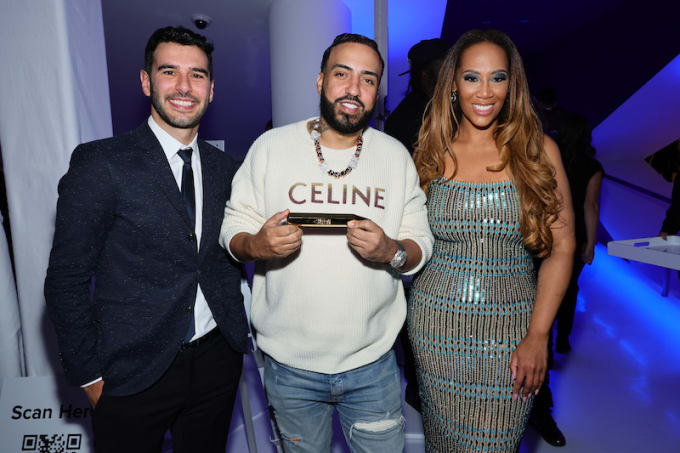
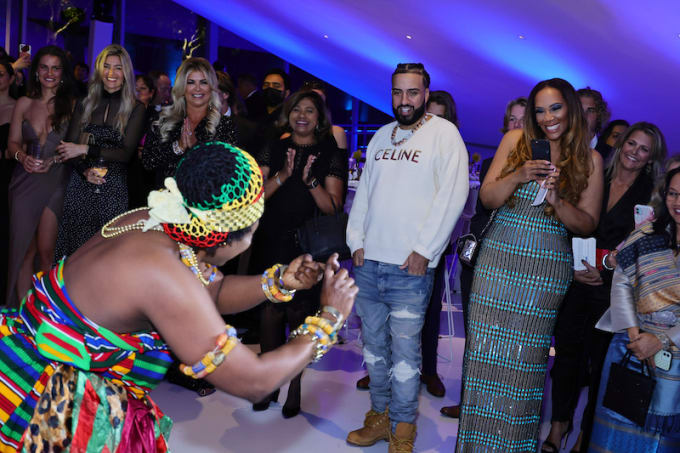
  • French Montana honored for his humanitarian work in Africa, helping to raise over $200 million

    French Montana puts his money where his mouth is.

    The Moroccan-born artist has consistently used his platform to promote and fund charitable causes relating to education, immigration, and health. French’s philanthropic work was celebrated Thursday night during the annual Pencils of Promise Gala, where he received the 2022 Innovator Award for humanitarian efforts in Africa.

    French was recognized for helping raise more than $226 million for healthcare in Uganda, as well as his financial support for the Budondo Suubi “Hope” Health Center. The facility is said to be the region’s primary source of healthcare for new and expectant mothers as well as their babies.

    “MAKING MORE HISTORY FOR MY PEOPLE!” French wrote on Instagram. “Thank you @pencilsofpromise for honoring me with the Innovator Award at last night’s gala. ✏️ Healthcare and education is a fundamental part of our human rights and should be accessible across the globe. I’m grateful for PoP acknowledging my work in maternal healthcare in Africa. PoP is doing groundbreaking work globally to keep kids in school and make sure they have a safe environment to learn.”

    The gala also honored Meadow Walker, the daughter of late actor Paul Walker. She received this year’s Activist Award for her achievements as PoP’s Global Ambassador. Board members Ricky and Lisa Novak were also presented with the Philanthropist Award, while Brittny and Eric Knight received the Vanguard Award.

    You can check out more photos, via Theo Wargo/Getty Images, and a video from the event below.

    French Montana Honored for Humanitarian Work

    French Montana Honored for Humanitarian Work

    French Montana Honored for Humanitarian Work

    Source: Complex.com

  • Telecel Group’s Africa Startup Initiative Program to visit Accra to Scout for Ghana’s best startups

    Africa’s leadingTelecommunications company, Telecel Group, is set to roll out its flagship social accelerator and investment program, the Africa Start–up Initiative Program (ASIP) powered by Startupbootcamp AfriTech in Ghana beginning next week.

    The ASIP/SBC/AfriTech scouting team will be in Accra on 27th October 2022 to scout for prospective start-ups for enrolment in the program after holding similar events inAbidjan, Lagos, Kampala, Addis Ababa, and Nairobi.

    Applications for Cohort 3 of the ASIP Accelerator program which will be launched in February 2023, opened in August this year.

    “We usually encourage start-ups to attend the country FastTrack events to enable them to get real time feedback from our panel of experts. From our experience, about 20 percent of start-ups that attend the events usually make it to the final round. It is a fantastic opportunity to network with our investment team and get more information about the program”, said Henry Ojuor, the Director of the Accelerator Program.

    The Ghana FastTrack to be held at the Accra Digital Centre,coincides with Ghana Digital Innovation Week.

    “The Ghana Digital Centre (GDCL) is excited to host the Fasttrack event. It comes at a time when GDCL is intensifying collaborations with key stakeholders to identify and create opportunities that accelerate the growth of digital start-ups in line with its objective of fostering innovation and entrepreneurship through the provision of platforms for business incubation, business acceleration, digital research,and development programs”, said Kwadwo Baah Agyemang, the Managing Director of the Ghana Digital Centre.

    The Executive Deputy for Telecel Group and Director of ASIP, Eleanor Azar, said: “The potential we see in Ghana is exponential and we look forward to welcoming more Ghanian Start-ups to ASIP. The support of the Accra Digital Center to pursue our goals in Ghana and launch the ASIP Initiative has been instrumental, and we look forward to more events like this”.

  • Strong dollar is wreaking havoc on food imports from Africa to Asia

    Food importers from Africa to Asia are scrambling for dollars to pay their bills as a surge in the US currency drives prices even higher for countries already facing a historic global food crisis.

    In Ghana, importers are warning about shortages in the run up to Christmas. Thousands of containers loaded with food recently piled up at ports in Pakistan, while private bakers in Egypt raised bread prices after some flour mills ran out of wheat because it was stranded at customs.

    Around the world, countries that rely on food imports are grappling with a destructive combination of high interest rates, a soaring dollar and elevated commodity prices, eroding their power to pay for goods that are typically priced in the greenback. Dwindling foreign-currency reserves in many cases has reduced access to dollars, and banks are slow in releasing payments.

    “They cannot afford it, they cannot pay for these commodities,” said Alex Sanfeliu, world trading head for crop giant Cargill Inc. “It’s happening in many parts of the world.”

    The problem isn’t a new one for many of the countries — nor is it limited to agricultural commodities — but the reduced purchasing power and dollar shortages are compounding wider strains across global food systems following Russia’s invasion of Ukraine.

    The International Monetary Fund has warned of a catastrophe at least as severe as the food emergency in 2007-08, US Treasury Secretary Janet Yellen called for more food aid for the most vulnerable, while the World Food Programme says the globe is facing its largest food crisis in modern history.

    On the ground, many importers are struggling with rising costs, shrinking capital and difficulty in obtaining dollars to ensure their shipments are released from customs on time. That means cargoes get stuck at ports or may even be diverted to other destinations.

    “There was always a historical strain on making these payments, but at the moment it’s unbearable pressure,” said Tedd George, a consultant specializing in Africa and commodities markets.

    In Ghana, where the cedi has lost about 44% this year against the dollar — making it the second-worst-performing currency in the world — there are already worries about supplies ahead of Christmas.

    “We think there is going to be a shortage of some food items,” said Samson Asaki Awingobit, executive secretary of Ghana’s importers and exporters association which includes buyers of grains, flour and rice. “The dollar is swallowing our cedi and we are in a hopeless situation.”

    To be sure, some countries may be cushioned by their purchases in other currencies like euros, while energy-exporting nations will profit from overseas revenues. Global food-commodity costs have also fallen for six straight months, giving hopes for a relief to consumers.

    But the soaring dollar threatens to erode some of that benefit, according to Monika Tothova, an economist at the United Nations’ Food and Agriculture Organization, which sees this year’s global food import bill at a record high.

    The situation is still fragile. Concerns are mounting anew over supplies out of the Black Sea region as the war in Ukraine escalates and there are questions over the future of the deal to ship grains out of Ukrainian ports. Weather shocks have driven volatility in recent months, stocks are low and soaring fertilizer and energy prices are boosting food production costs.

    As the Federal Reserve continues to tighten monetary policy, the dollar’s strength versus currencies in emerging and developing markets will add to inflation and debt pressures, the IMF said in its global outlook this week.

    In flood-ravaged Pakistan, government moves to prevent foreign-exchange outflows meant that containers holding food like chickpeas and other pulses piled up at ports last month, sending prices surging, according to Muzzammil Rauf Chappal, the chairman of the Cereal Association of Pakistan.

    The situation eased after the appointment of new finance minister who pledged to clear pending transactions for businesses that have been delayed because of a dollar shortage in its interbank market.

    “The situation was quite dangerous,” said Chappal, whose company is the country’s biggest private sector wheat importer. “We were expecting the country to face a serious grain crisis.”

    In Egypt, one of the world’s top wheat importers, shortages have plagued private sector mills that supply flour for bread that isn’t part of the country’s subsidy program.

    About 80% of millers have run out of wheat and stopped operations as some 700,000 tons of grain remain stuck at the country’s ports since the start of last month, according to the Chamber of Cereal Industry. The supply ministry said Wednesday it would provide wheat and flour to private sector mills and pasta factories.

    Cargill’s Sanfeliu said he expects global wheat trade flow to shrink by as much as 6% in the upcoming months, with corn and soybean meal flows dropping by as much as 3%, as developing countries struggle to pay for food and animal feed.

    In Bangladesh, business conglomerate Meghna Group of Industries may have to cut the amount of wheat it had planned to import before the war broke out amid at least a 20% jump in wheat import costs due to the stronger dollar, said Taslim Shahriar, the company’s procurement official.

    “Currency fluctuations are creating huge losses for the company,” said Shahriar. “We have never seen this before.”

    –With assistance from Arun Devnath, Abdel Latif Wahba, Asantha Sirimanne, Tarso Veloso Ribeiro, Souhail Karam, Katarina Hoije, Ama Tanoh and Eddie Spence.

    Source: Fortune.com


  • Little Africa, the Afro-Brazilian community where every enslaved African is free

    The Afro-Brazilian community, Little Africa, is home to thousands of Africans, but, it is a region where its Black heritage continues to suffer an onslaught from the local authorities. Some historians have traced it to attempts initiated by colonial authorities to shift the Black history of the enslaved who have made Rio de Janeiro port city their home to the back burner.

    But, folktales of Little Africa have been used in poems, music, and cultural narratives, with the site attaining UNESCO status, according to rioonwatch.org. Known traditionally as Peda Sal Dol in Portuguese which literally means large and salt, the community inhabitants of African descent feel they are not in bondage. That is why they call the city Little Africa.

    In the early 1800s, the region was popular in trading activities in salt because the stones on the beach played a significant role in crystallizing the salt. But, over the years, the story of the region changed when the presence of enslaved Africans made it a hub of their survival when slavery was outlawed in Brazil in 1831. The slaves earned their keep working in Little Africa and it became a safe refuge for freed Africans from Bahia.

    The enslaved Africans entertained all and with time Little Africa became a community on its own. Despite the huge presence of the African community in Brazil, there are concerns there are attempts by the authorities to overshadow their identity and culture. Historians argue that despite recent renovations of the port city through the Porto Maravilha project and the African Heritage Circuit, the presence and role of enslaved descendants were subtly buried.

    In 2005, Little Africa was recognized as a city endowed with a rich African heritage and acknowledged as the home of samba. This linkage was drawn because Little Africa is known for popularising samba and Carnival in Rio de Janeiro. Despite attempts to dim the African heritage, the people of Little Africa have been preserving their culture through oral tradition and their music, according to Riotur.

    It is a region with a high Black population and recognized by London’s TimeOut magazine as one of the nice places for tourists to visit with lively pubs and serene beaches.

    The history of Pedra do Sal is largely linked to the transatlantic slave trade where many slaves were transported to the region to work in the plantations. Little Africa is also home to monuments representing the slave past of Brazil and rich Afro-Brazilian culture, history, handicrafts, and food. The city virtually thrives on its colonial past and customs passed on from generation to generation.


    Source:Face2faceAfrica

  • Ministers push for Africa Ebola co-ordination team

    African health ministers attending a high-level meeting following the Ebola outbreak in Uganda want two regional health bodies to set up an Africa Ebola co-ordination task force.

    They said this would oversee preparedness and response to the current outbreak as well as other epidemics in the continent.

    The latest Ebola outbreak has so far killed 19 people in Uganda, including four health workers. The virus has now spread to five districts.

    Acting director of the Africa Centres for Disease Control, Ahmed Ogwell, says Africa needs to stop seeking international assistance, as it is on its own during pandemics.

    “This is not the first outbreak of the Sudan strain of Ebola virus here in Africa and particularly here in Uganda,” he told the gathering in the Ugandan capital, Kampala

    “As Africa, we must now do things differently, appreciating that for the most time we will be on our own. Knowing that we are on our own, though, needs to motivate us so that we can do things on our own but not alone,” he added.

    Plans are under way to test two vaccines in a small group of people who had contact with Ebola patients.

    The Africa CDC says the continent is dealing with 11 different public health outbreaks. They are monkeypox, cholera, flooding, influenza, lassa fever, measles, yellow fever, hepatitis E, and the Crimean – Congo haemorrhagic fever.

    Source: Ghanaweb

  • Bagbin urges African MPs to prioritize climate change

    The Speaker of Parliament, Alban Bagbin has urged Parliamentarians across Africa to pay much more attention to climate change.

    Addressing the 145th Inter-Parliamentary Assembly Conference in Kigali, Rwanda Ghana’s Speaker emphasized on the risk of climate change on the continent.

    “I can tell from the Members of Parliament from CVF countries and observer states in attendance that as parliamentarians we have made a clear and conscious decision to rise to the challenge of ensuring action on climate change. That is very encouraging indeed.

    “We should also consider what we can do to mobilize other key actors within the space to create a lot more awareness and readiness to act so that in a concerted manner, we can confront today’s climate change demands. In unity, as we told, lies strength. We can achieve a lot more together than if we leave national institutions, state and global actors to operate in silos,” he stated.

    As the leader of the Ghana’s delegation to the conference, Mr. Bagbin touched on the effects, risks and challenges of climate change and the critical role of Parliaments and Parliamentarians have to focus on.

    “Yes, the world is facing serious threats from the impacts and risks of climate change, but we also have an opportunity to seize upon new technologies and approaches that can help us adapt and build our resilience to this challenge.

    “For example, today, a lot more people are using digital devices for their work, for communication and for storing information. Consequently, it has led to a reduction in the reliance on paper, which goes to reduce deforestation. Bear in mind that trees, by being an important source of oxygen and absorbing carbon dioxide, help to reduce climate change.”

    The Speaker also commended Hon Dr. Emmanuel Marfo, who was confirmed Chairman of the GPG during the conference.

    Dr. Emmanuel Marfo is also the Chairperson of the Environment Science and Technology Committee, which is the relevant Committee in whose remit climate change issues fall in the Ghana Parliament.

    “I place my utmost faith in his capabilities to ensure the success of the priorities of the CVF GPG and in support of the CVF priorities of 1.5ºC Ambition, Adaptation, Loss and Damage and Finance.

    “The Parliament of Ghana is committed to support the work of the CVF GPG through the Chairperson of the CVF GPG. May I also take this opportunity to thank our Host Parliament, the Parliament of Rwanda, and Rt. Honorable Speaker, Donatille Mukabalisa, for hosting us. My appreciation also goes to the Secretary General of the IPU for facilitating the meeting of the CVF GPG.”

  • Africa needs ‘ethical and moral uprightness as guiding principles’ – Mahama

    Former President John Dramani Mahama has shared nuggets that can put Africa on the right footing in seeking to better the lot of people on the continent.

    He identified among others absolute accountability of institutions, ethical and moral uprightness and stoic fidelity to the truth as three such values Africa needs.

    His views were contained in a Facebook post dated October 9 sharing portions of a speech he delivered at the Liberty University’s convocation event last week in the United States.

    “Absolute accountability, not just by government but by the institutions of state in service to the people and not themselves, will go a long way to remedy many of the systemic problems that affect our African people.

    “In Africa, we need ethical and moral uprightness as guiding principles, and a stoic fidelity to the truth and to do right by our people above all other considerations,” his post accompanied by photos of his engagement read.

    Mahama was a special guest of honour at the 2022 Liberty University Convocation in Lynchburg, Virginia where he delivered a speech to a packed auditorium.

    He described Ghana as “an island of religious calmness in a sea of turbulence,” citing how “almost all our surrounding neighbours have in recent times experienced some major form of insurgency, coup d’etats or other conflicts, including religious conflicts.”

    He explained the situation in Ghana’s northern neighbours, Burkina Faso and Mali, where insurgents are running roughshod.


  • Africa needs ‘ethical and moral uprightness as guiding principles’ – Mahama

    Former President John Dramani Mahama has shared nuggets that can put Africa on the right footing in seeking to better the lot of people on the continent.

    He identified among others absolute accountability of institutions, ethical and moral uprightness and stoic fidelity to the truth as three such values Africa needs.

    His views were contained in a Facebook post dated October 9 sharing portions of a speech he delivered at the Liberty University’s convocation event last week in the United States.

    “Absolute accountability, not just by government but by the institutions of state in service to the people and not themselves, will go a long way to remedy many of the systemic problems that affect our African people.

    “In Africa, we need ethical and moral uprightness as guiding principles, and a stoic fidelity to the truth and to do right by our people above all other considerations,” his post accompanied by photos of his engagement read.

    Mahama was a special guest of honour at the 2022 Liberty University Convocation in Lynchburg, Virginia where he delivered a speech to a packed auditorium.

    He described Ghana as “an island of religious calmness in a sea of turbulence,” citing how “almost all our surrounding neighbours have in recent times experienced some major form of insurgency, coup d’etats or other conflicts, including religious conflicts.”

    He explained the situation in Ghana’s northern neighbours, Burkina Faso and Mali, where insurgents are running roughshod.

  • Education must remain a priority for global development – Akufo-Addo

    President Akufo-Addo has charged Member States of the United Nations Educational, Scientific and Cultural Organisation (UNESCO) to ensure that education remains a priority in the common development agenda of countries.

    As the recently appointed Domestic Financing champion of the Global Partnership for Education, President Akufo-Addo sought the co-operation and support of UNESCO “to work towards developing sustainable homegrown financial solutions, so we can develop the educational system for the future we want in our various countries.”

    Addressing the 215th Meeting of the Executive Board of UNESCO, on Monday, 10th October 2021, in Paris, France, the President noted that the world does not have the luxury to pick and choose which crises it wants to fix.

    “At this moment, we cannot pick and choose between funding guns and education. We cannot pick and choose between the interests of the present generation and the future of our girls and boys. We cannot choose geopolitical concerns over preserving our cherished cultural heritages, lest we perish universally,” he said.

    Due to global instability, however, President Akufo-Addo noted that, education has become one of many competing priorities of domestic budgets, with development aid to the education sector also seriously under pressure.

    “Indeed, countries reduced their spending on education after the onset of the COVID-19, and, at the same time, direct aid to education by bilateral donors fell by some three hundred and fifty-nine million dollars ($359 million), which is not compatible with the objectives of the Addis Ababa Action Agenda for financing sustainable development and the goals of the SDGs,” he said.

    The President continued, “We are further informed that prospects for reaching funding target, through voluntary contributions, are uncertain as several long-term donors have already reduced significantly their voluntary contributions to UNESCO due to a change in development cooperation priorities, thereby significantly impacting our planned programme implementation.”

    In spite of these challenges, President Akufo-Addo commended UNESCO for the lead role it played in ensuring the success of the Transforming Education Summit, held on the sidelines of the UN General Assembly in September this year.

    Necessitated by the seminal “Futures of Education” report from UNESCO, the President indicated that the Transforming Education Summit, and, indeed, the pre-summit held here in Paris, have been extremely successful in getting the world to reflect deeply on the trajectory of educational systems, and how to addresses the challenges of our time.

    Touching on Global Priority Africa Programme, which has been adopted by the UNESCO General Conference at its 41st Session, President Akufo-Addo was delighted that UNESCO has made Africa a Global Priority, and was delighted to see UNESCO’s flagship programmes as being relevant to achieving the objectives of the Africa Union’s Agenda 2063, i.e. “The Africa We Want”.

    He also urged UNESCO’s Executive Board to help win the fight against Climate Change, especially as the planet is heading towards a dangerous tipping point as a result of climate change.

    In furtherance of this, he commended UNESCO for the effort to strengthen the “Man and Biosphere Programme”, whose goal is to help protect nature and biodiversity loss globally, through the Biosphere Reserve Concept.

    “I urge UNESCO Member States to strengthen measures, at their respective national levels, that recognise formally the contribution of Biosphere Reserves, and designate more biosphere reserves and geoparks as a sure way for solving the climate crisis”, he added.

    In concluding, the President informed the Executive Board of the news that Accra has been named as the UNESCO World Book Capital for 2023, making Accra part of the prestigious World Book Capital Cities Network.

    This, he stated, is an acknowledgement of the giant strides Ghana and Africa are making in developing Ghana’s book and creative arts industry.

    “The year-long programme to celebrate this honor done us by UNESCO will commence from 23rd April 2023, which is celebrated globally as the World Book and Copyright Day. I wish to use this opportunity to invite you all to join Ghana in this year-long celebrations,” the President added.

  • No Nigerian airline on list of 10 best performing airlines in Africa 2022

    No Nigerian airline on top performing airlines in Africa 2022

    With the Nigerian government’s launch of a national carrier, Nigeria Air, attention has shifted to other national airlines operating in Africa, including privately owned ones.

    Unarguably, air travel is one of the hallmarks of a developed economy, aiding global interaction, commerce and international trade.

    The International Air Transport Association (IATA) projected that the airline industry would make a massive comeback as economies worldwide recover from the debilitating effects of COVID-19.

    According to IATA’s projection, the industry losses will reduce to $9.7 billion from the October 2021 projection of $11.6 billion loss, a net margin of 1.2 per cent.

    Also, IATA said that industry profitability for 2023 is achievable, with North America already expected to deliver about $8.8 billion in 2022.

    The global airline body said that gains are improving yields and helping airlines to reduce losses despite rising labour and fuel costs.

    The body said that industry revenue is expected to reach about $782 billion, a more than a 54.5 per cent increase and that flights operated in 2022 are expected to amount to $33.8 million, an increase of 86.9 per cent compared to 2019, with 38.9 million flights.

    Passenger revenues are also expected to account for $498 billion of total industry revenue, doubling 2021 revenue of $239 billion.

    Additionally, cargo revenues will account for $191 billion of industry revenues, a decline from the $204 billion recorded in 2021.

    Some countries in Africa with robust airline industries will benefit from IATA’s optimistic forecast in 2022 and 2023.

    Here are the best-performing airlines in Africa

    Air Seychelles

    Fastjet

    Safair

    RwandAir

    Air Mauritius:

    Kenya Airways

    South African Airways

    Royal Air Maroc

    Ethiopian Airlines


    Source: Mynigeria.com

  • BizTech: All about the ‘Nimde3’ mobile application targeting 1 million with IT skills

    As part of efforts to bridge the access gap within Africa for digital literacy, a team of individuals have developed a unique mobile application to serve this purpose.

    The aim of the app which is known as ‘Nimde3’ seeks to provide basic to intermediate IT skills which can be accessed through respective local and foreign languages.

    Executive Director of Slamm Foundation, Francisca Boateng, taking her turn on GhanaWeb TV’s BizTech emphasised the importance of infusing digital technologies to bridge Africa’s literacy gap and access to education.

    She explained that although some 50 percent of the world’s population have access to the internet, there still remains a fraction of about 20 percent without access to digital education.

    “The rationale behind developing this mobile application is to bridge the literacy app and offer access to education. We are targeting to reach some 1 million people who can gain access by using the mobile application which offers wide-ranging IT education,” Francisca Boateng said.

  • Former Ghana FA boss Kwesi Nyantakyi shares how Ghanaian clubs can make impact in Africa

    Former Ghana FA president Kwesi Nyantakyi explained how Ghanaian clubs can make meaningful impact in Africa.

    Ghanaian clubs particularly Kotoko and Hearts of Oak have failed to make impact in the Africa inter club competitions in recent times.

    And the former CAF Vice President is of the opinion that Ghanaian clubs can perform well in Africa by recruiting quality players and also getting the qualified technical brains.

    “I feel the quality of players is also a problem. Asante Kotoko sold all their quality players to teams they will be competing with. So, if you sell these players to your competitors you don’t expect to do well” he told Kings TV GHSports.

    “I feel we must invest in players and the technical team so they can train the players well, it is very important. It’s all about money and we need a way to support teams playing in Africa by giving them some financial incentives.

    “Berekum Arsenal and King Faisal didn’t reach the group stage but Hearts of Oak and Asante Kotoko did but they did not pay the money so the Fund collapsed.  It was one of the ways government wanted to help in supporting the clubs in Africa, the FA were just facilitators”.

  • Kenyan leader calls for Africa to lead in clean energy

    Kenya’s President William Ruto is calling for African countries to give priority to climate change, which has devastated the continent, by leading in development of clean energy.

    He says despite being the most affected by climate change, Africa has the opportunity “to lead the world and show that we do not need to destroy the climate to prosper”.

    Writing in the UK’s Guardian newspaper, he points out how millions of Kenyan people and in the Horn of Africa are suffering from a devastating drought due to climate change.

    “Climate change drives the droughts that affect the provision of water; destroys lives and livelihoods; cripples food production, and destroys our homes and infrastructure”.

    He says the current energy crisis, which has been made worse by the Ukraine war, calls for less reliance of fossil fuels and more investment in clean energy.

    He cites Kenya’s efforts, whose energy uses he says comprise 74% clean energy, while committing to a 100% by 2030.

    He says Kenya will now demand the delivery of finance and technology that Africa needs to adapt to climate change, at the globalclimate summit in Egypt next month.

  • Africa calls for New Public Health Order

    The African Union Commission and Africa Centres for Disease Control and Prevention (Africa CDC) have called on governments, multilateral organisations, philanthropies, the private sector, and civil society organizations to support the full implementation of Africa’s New Public Health Order to drive global health security.

    The request for support was made at a series of events leading up to the 77th United Nations General Assembly.

    The New Public Health Order for Africa is a roadmap to sustainable health outcomes and health security. It is defined by five pillars:

    1. Strong African Public Health Institutions that represent African priorities in global health governance and that drive progress on key health indicators;
    2. Expanded Manufacturing of Vaccines, Diagnostics, and Therapeutics to democratize access to life-saving medicines and equipment;
    3. Investment in Public Health Workforce and Leadership Programs to ensure Africa has the workforce it needs to address health threats;
    4. Increased Domestic Investment in Health, including the domestic mobilization of financial resources, human capital, technical resources, and networks; and
    5. Respectful, Action-Oriented Partnerships to advance vaccine manufacturing, health workforce development, and strong public health institutions.

    Call to strengthen African Public Health Institutions

    African leaders called for support to strengthen Africa’s public health institutions, including the Africa CDC which led the coordination of Africa’s pandemic response, helping to significantly reduce loss of life during COVID-19.

    “To achieve [its public health goals], the African Union Assembly in February 2022 granted Africa CDC autonomy to be able to fulfil its mandate, supporting member states to achieve health sovereignty,” said African Union Chairperson Moussa Faki. “But Africa CDC alone cannot meet this challenge,” he added.

    “If you don’t have strong public health institutions before an emergency when the emergency comes it doesn’t matter how many resources you have. You’ll still struggle,” said Dr Ahmed Ouma, Acting Director of the Africa Centres for Disease Control and Prevention.

    Call to support vaccine manufacturing in Africa

    Leaders also called upon all vaccine-purchasing mechanisms, such as the Global Alliance for Vaccination and Immunization (GAVI), to purchase at least 30 per cent of their vaccines from manufacturers in Africa.

    While Africa currently produces one per cent of its routinely used vaccines, it has set a bold target of meeting up to 60 per cent of its vaccine demand through regional manufacturing by 2040.

    By making explicit commitments to offtake vaccines from Africa, vaccine-purchasing mechanisms can stimulate private sector investment in vaccine manufacturing.

    Call to support health workforce development

    Health workforce development was another prominent focus. According to the WHO, Africa currently has a ratio of 1.55 health workers (physicians, nurses, and midwives) per 1,000 people.

    This is below the WHO threshold density of 4.45 health workers per 1,000 people needed to deliver essential health services and achieve universal health coverage.

    “Health workers are a crucial pillar in a well-functioning health system. Yet, they have been historically deprioritized in discussions about improving health systems,” said President Cyril Ramaphosa in a statement read on his behalf by South Africa Health Minister Dr Joe Phaahla.

    “It is good economics to invest in the health workforce as the return is measurable and dependable,” he added.

    Leaders urged greater investment in health workforce development, and specifically called for stronger support of Community Health Worker programs in Africa.

    “Experience shows that professional community health workers who are properly paid, trained, equipped, and supervised are best prepared to provide essential health services in their communities,” said President Ellen Johnson Sirleaf.

    She also highlighted that most community health workers in Africa are women who perform exceptional work but are unpaid for their efforts. “It is time to correct this injustice,” she urged.

    Respectful, Action-oriented Partnerships

    To advance progress towards stronger public health institutions, a robust workforce, and medical manufacturing in Africa, the Africa CDC and African Union Commission need partners. Leaders emphasised that the nature of these partnerships is important and called for partnerships oriented around principles of mutuality and respect, that recognize African knowledge and expertise and deliver contextually-relevant support and programs.

    Partners of the African Union Commission and Africa CDC underscored that delivering a New Public Health Order for Africa is key to strengthening the global health infrastructure and ensuring better global preparedness to effectively respond to infectious disease outbreaks in the future.

    “Achieving this future will take partnership, and not just any partnership but partnership that’s rooted in respect – and that means starting by listening, understanding, and then responding to real needs and top priorities,” said Reeta Roy, President and CEO of the Mastercard Foundation, which last year partnered with the Africa CDC to launch the $1.5 billion Saving Lives and Livelihoods initiative.

    The Saving Lives and Livelihoods initiative has purchased vaccines for over 65 million people in Africa and is enabling the vaccination of millions more.

    The initiative is also designed to drive health workforce development and strengthen the Africa CDC to ensure long-term health security.

    Source: Myjoyonline.com

  • Are military takeovers on the rise in Africa?

    Military coups were a regular occurrence in Africa in the decades after independence and there is concern they are starting to become more frequent.

    This year has seen two takeovers in Burkina Faso as well as a failed coup attempt in Guinea Bissau. In 2021, Africa witnessed a higher number of coups compared with previous years.

    A senior African Union official, Moussa Faki Mahamat, has expressed concern about “the resurgence of unconstitutional changes of government”.

    When is a coup a coup?

    One definition used is that of an illegal and overt attempt by the military – or other civilian officials – to unseat sitting leaders.

    A study by two US researchers, Jonathan Powell and Clayton Thyne, has identified over 200 such attempts in Africa since the 1950s. About half of these have been successful – defined as lasting more than seven days.

    Burkina Faso, in West Africa, has had the most successful coups, with nine takeovers and only one failed coup.

    Zimbabwean soldierImage source, Getty Images
    Image caption, There were celebrations after the Zimbabwe army intervened against President Mugabe in 2017

    Sometimes, those taking part in such an intervention deny it’s a coup.

    In 2017 in Zimbabwe, a military takeover brought Robert Mugabe’s 37-year rule to and end. One of the leaders, Maj Gen Sibusiso Moyo, appeared on television at the time, flatly denying a military takeover.

    In April last year after the death of the Chadian leader, Idriss Déby, the army installed his son as interim president leading a transitional military council. His opponents called it a “dynastic coup”.

    “Coup leaders almost invariably deny their action was a coup in an effort to appear legitimate,” says Jonathan Powell.

    How often are there coups in Africa?


    The overall number of coup attempts in Africa remained remarkably consistent at an average of around four a year in the four decades between 1960 and 2000.

    Jonathan Powell says this is not surprising given the instability African countries experienced in the years after independence.

    Bar chart of Africa coups

    “African countries have had conditions common for coups, like poverty and poor economic performance. When a country has one coup, that’s often a harbinger of more coups.”

    Coups dropped to around two a year in the two decades up to 2019.

    We are only three years into the current decade and while in 2020 only one coup was reported (in Mali), in 2021 there was a noticeably higher than average number – six coups or attempted coups were recorded.

    There were successful coups in Chad, Mali, Guinea and Sudan and failed military takeovers in Niger and Sudan all in that year.

    In September 2021, the UN Secretary-General António Guterres voiced concern that “military coups are back,” and blamed a lack of unity amongst the international community in response to military interventions.

    “Geo-political divisions are undermining international co-operation and… a sense of impunity is taking hold,” he said.

    Judd Devermont from the US-based Center for Strategic and International Studies, believes a “lenient” approach by regional and international bodies “has enabled coup leaders to make minimal concessions while preparing for longer stays in power”.

    Mahamat Idriss Déby ItnoImage source, Reuters
    Image caption, Mahamat Idriss Déby Itno succeeded his father as Chadian leader in April 2021

    Ndubuisi Christian Ani from the University of KwaZulu-Natal says popular uprisings against long-serving dictators have provided an opportunity for the return of coups in Africa.

    “While popular uprisings are legitimate and people-led, success is often determined by the decision taken by the military,” he says.

    Which countries have had the most coups?


    Sudan has had the most coups and attempted takeovers amounting to 17 – six of them successful.

    In 2019, long-serving leader Omar al-Bashir was removed from power following months of protests. Bashir had himself taken over in a military coup in 1989.

    Nigeria had a reputation for military coups in the years following independence with eight between January 1966 and the takeover by Gen Sani Abacha in 1993.

    Map showing African countries with most coups

    However, since 1999 transfers of power in Africa’s most populous nation have been by democratic election.

    Burundi’s history has been marked by eleven separate coups, mostly driven by the tensions between the Hutu and Tutsi communities.

    Sierra Leone experienced three coups between 1967 and 1968, and another one in 1971. Between 1992 and 1997, it experienced five further coup attempts.

    Ghana has also had its share of military coups, with eight in two decades. The first was in 1966, when Kwame Nkrumah was removed from power, and in the following year there was an unsuccessful attempt by junior army officers.

    Overall, Africa has experienced more coups than any other continent. Of the 14 coups recorded globally since 2017, all but one – Myanmar in 2021 – have been in Africa.


    Source: BBC

  • How Timbuktu Flourished During the Golden Age of Islam

    For centuries, the city of Timbuktu, located in the center of present-day Mali in Western Africa, thrived as one of the bustling centers of culture and learning during the Golden Age of Islam.

    The region’s legacy as an intellectual destination begins with the Epic of Sundiata. According to the 13th-century epic poem, the Mandinka prince of the Kangaba state, organized a successful resistance against the harsh Sosso king Sumaoro Kanté—and a new empire was born.

    The Mali Empire on the upper Niger River then grew in power and prestige. When the powerful Malian king, Mansa Musa I, peacefully annexed the city of Timbuktu in 1324 after returning from his pilgrimage to Mecca, the empire became a hub of exceptional learning, culture and architecture.

    Timbuktu’s Origins as Ancient Trading Post

    Mansa Musa depicted sitting.

    Mansa Musa I was the ruler of the Mali Empire in West Africa from 1312 to 1337.

    Google Arts & Culture

    Timbuktu had been a seasonal trading post established in 1100 A.C., where the Saharan Desert and the Niger Delta meet, creating a lush and lucrative agricultural zone. Powerful West African kingdoms and the pastoralist Tuaregs of the Southern Sahara traded here. And when Islam came to Tuareg societies as early as the 8th century, the Tuaregs passed along the religion through trading posts like Timbuktu, facilitating connections between Arab-Islamic and West African peoples.

    Under Mansa Musa I and his successors, Timbuktu transformed from a small but successful trading post into a center of commerce and scholarship, making the Mali empire one of the most influential of the Golden Age of Islam. Powerful West African kings and Islamic leaders traveled from far and wide to Timbuktu to trade, learn and foster strong political allies.

    By the 16th century, Timbuktu hosted 150 to 180 Qur’anic schools, or Maktabs. Malian rulers also built great mosques, not only for spiritual practice, but also as centers of learning of mathematics, law, grammar, history, geography, astronomy and astrology.

    Madrasas Built for Worship and Scholarship

    Sane Chirfi, who represents the family which looks after the mausoleum of Alpha Moya in Timbuktu, in front of the mausoleum. The mausoleum was among several restored following damage by al Qaeda-linked insurgents in 2012.

    Sane Chirfi, who represents the family which looks after the mausoleum of Alpha Moya in Timbuktu, in front of the mausoleum. The mausoleum was among several restored following damage by al Qaeda-linked insurgents in 2012.

    Google Arts & Culture

    While the Tuaregs built the first mosque, the Sankoré Mosque, in Timbuktu in the 1100s A.C., Mansa Musa I made significant improvements to it, inviting important Islamic scholars, or Ulama, to enhance its prestige. Mansa Musa I then built the Djinguereber Mosque, paying the renowned Islamic scholar Abu Ishaq Al Saheli 200 kilograms of gold to oversee its construction. Later in the 15th century, when the Tuareg ruler Akil Akamalwa came to power in the Mali empire, he built the great Sidi Yahya mosque. Together, these three centers of learning, or Madrasas, still function today as Koranic Sankore University, making it the oldest higher-education facility in Sub-Saharan Africa.

    Mosques and schools proliferated in Timbuktu, mirroring what was found in the other flourishing Islamic cities of Cairo and Mecca. In his article African Bibliophiles: Books and Libraries in Medieval Timbuktu, California State University, San Bernardino librarian Brent D. Singleton writes that “in Timbuktu, literacy and books transcended scholarly value and symbolized wealth, power, and baraka (blessings),” and that the acquisition of books specifically “is mentioned more often than any other display of wealth.”

    The knowledge contained within the books reflected the fabric of Malian society. Dr. Abdel Kader Haidara, a Malian scholar who oversees the preservation of over 350,000 manuscripts from this era, says that “in addition to the academic and scholarly literature, there are many parts that contain poetry and dedications to women.” Haidara adds that women have prominent roles in maintaining Malian heritage and contribute to the meticulous work of preserving ancient manuscripts.

    Timbuktu was also unique from other major Islamic cities during the Golden Age of Islam. For example, while Cairo and Mecca maintained an open access policy to its mosque libraries, the libraries of Timbuktu all seem to have been private collections of individual scholars or families, according to Singleton.

    Knowledge Passed Down Through Books—And Oral Histories

    A view of an ancient manuscript from Timbuktu.

    A view of an ancient manuscript from Timbuktu.

    Google Arts & Culture

    It is not surprising that books in Timbuktu were prized possessions that were passed down from generation to generation. The practice mirrors the West African tradition of oral histories passed down by griots, esteemed West African musicians and storytellers who were the keepers of the history of the empires and royal families.

    Griots originated from the same Mandinka ethnic group that Sundiata hailed from and were responsible for composing his epic. Much like Islamic scholarship and bookmaking in Timbuktu, the role of a griot was only passed down through lineage and was acquired through extensive apprenticeship. Griots continue to practice today and include Malian musicians such as kora player Toumani Diabaté, who can trace his griot lineage to the Golden Age of Islam.

    The Mali Empire declined in the 15th century, and was replaced by the Songhai Empire. Askia Muhammad, a military leader from the Malian city of Gao, reigned from 1492 and 1528 and fortified the Islamic learning tradition in Timbuktu that his predecessors had set forth. But soon, Timbuktu found itself under threat when the Moroccan Saadian dynasty invaded the Songhai Empire in the late 16th century. Much of Timbuktu’s centers of learning were destroyed and many people’s possessions, including important manuscripts, were lost.

    The cities of Timbuktu and Gao were nonetheless able to maintain a high degree of autonomy from the Saadians, and in 1632, they declared independence from the Saadian dynasty. However, the Golden Age of Islamic scholarship, architecture and culture in the Songhai empire and across West Africa had seriously diminished.

    Attacks on Timbuktu’s Manuscripts

    Destruction of manuscripts by the jihadists at the Institute of Ahmed Baba in Timbuktu in 2012.

    Destruction of the manuscripts by the jihadists at the Institute of Ahmed Baba in Timbuktu in 2012.

    Google Arts & Culture

    The city’s manuscripts were still widely used to educate in the Qur’anic schools and great mosques during the Saadian occupation of the Songhai empire. But when the French arrived in West Africa in the 17th century, many of the cultural products of Timbuktu were looted and taken to Europe, ending the widespread practice of learning through the manuscripts.

    These were not the only attacks on the legacy of Timbuktu. In 2012, militants tied to al Qaeda in the Islamic Maghreb (AQIM) took over Northern Mali and began destroying anything perceived as haram or forbidden to their religious practice, including generations-old manuscripts that characterized the ancient city of Timbuktu.

    With a small team, Haidara rescued over 350,000 manuscripts from 45 different libraries in and around Timbuktu and hid them in Bamako—the capital of Mali. On many occasions Haidara and his allies were threatened by al Qaeda militants and accused of stealing—a crime punishable by death or mutilation. But Haidara eventually built the Mamma Haidara Library in Bamako, naming it after his father, who was also a scholar and keeper of manuscripts. In 2022 Google Arts & Culture launched an online archive of manuscripts guarded by Haidara and his team.

    “While griots recall history from memory and ingenuity, the manuscripts are the discernible history of Mali,” says Haidara. The manuscripts serve as tangible evidence that the Mali Empire and its great city of Timbuktu were foundational to the legacy of West African and Islamic scholarship. Through the work of Haidara, mirroring the oral tradition of groups like the griots, the preservation of Malian history remains a continuous mission.

    “Even I don’t know everything that is in the manuscripts,” says Haidara. “Everyday I learn something new from and about them.”


  • Female Warriors Who Led African Empires and Armies

    Long before—and during— the European colonization of Africa, ancient kingdoms and empires thrived for centuries on the continent. Some were headed by women, including female warriors who led armies against invading European powers to defend their people from conquest and enslavement.

    Even though Black women have been at the forefront of impressive exploits in combat, their stories are often overlooked. The following African female warrior queens and all-female armies are among those who fought for freedom from colonial occupation.

    1. Queen Amanirenas, circa 40 B.C.

    A statue of Queen Amanirenas.

    An illustration of a statue of Queen Amanirenas, who ruled the Kingdom of Kush.

    Mikroman6/Getty Images

    Queen Amanirenas ruled the Kingdom of Kush from 40 B.C. to 10 B.C., in the Nubian region, now modern-day Sudan. When Roman emperor Augustus conquered neighboring Egypt in 30 B.C.—with plans to next invade Kush—Amanirenas launched a surprise attack on the Romans.

    Leading an army of 30,000 from the frontlines, Amanirenas successfully captured three Roman-ruled cities. But it wasn’t long before Rome retaliated, invading Kush, destroying the Kingdom’s capital and selling thousands into slavery. After years of bitter fighting and significant casualties on both sides, negotiations to end the war began in 24 B.C., culminating in a peace treaty five years after the fighting first began.

    Although the hostilities ended in a stalemate, Queen Amanirenas—unlike many of her neighbors—was victorious in resisting conquest by Rome, never ceding large swaths of territory or paying taxes to the empire. Amanirenas is remembered throughout the Nile Valley and beyond as the Nubian queen who conquered the Romans.

    2. Queen Nzinga Mbande (c. 1583-1663)

    Queen Nzinga Mbande was monarch to the Mbundu people who fought against the Portuguese and their expanding slave trade in the 17th century.

    Queen Nzinga Mbande was monarch to the Mbundu people who fought against the Portuguese and their expanding slave trade in the 17th century.

    Science Source/Photo Researchers History/Getty Images

    An adept politician and skilled military strategist, Queen Nzinga Mbande was the ruler of the Mbundu people in what is now Angola.

    With the growing demand for slave labor, Portugal had established a colony near Mbundu land to expand the slave trade. Nzinga became queen in 1626 after her brother, the former king, committed suicide in the face of rising Portuguese encroachment. But before she became queen, at her brother’s request, Nzinga met with the Portuguese to negotiate peace.

    An adept negotiator, she formed a strategic alliance with Portugal in 1622. Facing attacks from rival African aggressors looking to capture people for the slave trade, Nzinga’s pact with the Portuguese allowed her to fight enemy tribes to enslave for Portugal in exchange for weapons and an agreement that the Portuguese would cease slave raids on the Mbundu people.

    But by the time she became queen in 1626, Portugal had broken its side of the deal. Nzinga refused to give in to the Portuguese without a fight. In 1627, she formed a temporary alliance with the Dutch—an enemy of the Portuguese—and led an army against them.

    Through her leadership, Nzinga successfully held off the Portuguese forces for decades, personally leading her troops into battle—even while in her sixties. Despite multiple attempts by the Portuguese to capture Nzinga, they never succeeded. She died peacefully in her 80s, after a long life of defending her people from colonial rule.

    Queen Nanny (c. 1685-c. 1750)

    Queen Nanny of the Maroons, as she appears on the Jamaican $500 bill.

    Queen Nanny of the Maroons, as she appears on the Jamaican $500 bill.

    Johan10/Getty Images

    Queen Nanny was the leader of the Jamaican Maroons, a community of formerly enslaved Africans who fought the British for their freedom.

    As a child, Nanny was kidnapped from Ghana and enslaved in Jamaica. She escaped, joining other formerly enslaved people who sought refuge in the island’s Blue Mountain region. By 1720, thanks to her exceptional leadership and military skills, she’d become head of the Maroon settlement. That year she began to train her people in guerilla warfare.

    Queen Nanny led the Maroons into dozens of successful battles, freeing over 800 enslaved people. Her clever strategies allowed the Maroons to catch the heavily armed British by surprise and decimate their numbers.

    By 1740, the British were forced to sign a peace treaty with the Maroons, guaranteeing their freedom. In 1975, the government of Jamaica declared Queen Nanny a National Heroine and awarded her the title of “Right Excellent” for her strength and courage. Her portrait appears on the $500 Jamaican dollar bill.

    The Dahomey Amazons (1600s-1890s)

    A member of the Dahomey Amazons, who were an all-female military regiment of the Kingdom of Dahomey (now Benin) which lasted until the end of the 19th century.

    A member of the Dahomey Amazons, who were an all-female military regiment of the Kingdom of Dahomey.

    History/Universal Images Group via Getty Images

    Named after the race of women warriors from Greek mythology, the Dahomey Amazons were an all-female military regiment in the Kingdom of Dahomey, now present-day Benin.

    Reportedly assembled in the mid-to-late 1600s, the Amazons were known for their indifference to pain and fierceness in battle, as well as having great socio-political influence over their kingdom. To protect and enrich their own empire, there were periods when the Amazons cooperated with European colonialists, selling captured enemies from regional scuffles in exchange for weaponry and goods.

    By the mid-1800s, they numbered between 1,000 to 6,000 women. When the French invaded Dahomey in 1892, the Amazons put up an aggressive resistance. Afterward, the French soldiers noted their “incredible courage and audacity” in combat, as cited by the African American Registry, an online consortium of Black history educators.

    Fierce battling between the Amazons and Europeans continued, but the African female warriors were eventually outnumbered and outgunned and, within a few years, they were largely wiped-out.

    While the Amazons were certainly powerful fighters, Leonard Wantchekon, a professor of politics and international affairs at Princeton University, argues it’s important to look beyond the shock value of their female warrior status when considering the Amazons’ legacy in history.

    “The most important feature of the Amazons was not that they could kill like men,” says Wantchekon, a Benin native. “They were also regular people with regular lives, as well as well-respected cultural and political leaders in their communities.”

    There is a widespread misconception that gender equity is a western value, adds Wantchekon, when in fact, European colonization was a detriment to women’s rights in Benin, where the French disassembled the Amazons and banned female education and political leadership.

    “When we push back against this misconception and embrace the culture of gender equality that was thriving in Benin and places like it before colonization,” Wantchekon adds, “it is a way to embrace the legacy of this exceptional group of African female leaders that European history tried so hard to erase.”

    Yaa Asantewaa (c. 1840-1921)

    Yaa Asantewaa was queen of the Ashanti Empire in what is now modern-day Ghana.

    Yaa Asantewaa was queen of the Ashanti Empire in what is now modern-day Ghana.

    The History Collection/Alamy Stock Photo

    Yaa Asantewaa was queen of the prosperous Ashanti Empire, also called Asante, in now modern-day Ghana. As queen, she was the official protector of the empire’s most sacred object, the Golden Stool. Made of solid gold and believed to house the soul of the nation, the stool represented the royal and divine throne of the empire. When British troops invaded in 1886, and demanded possession of the sacred object, Asantewaa refused. Instead, she led an army against them.

    I shall call upon my fellow women. We will fight the white men. We will fight until the last of us falls in the battlefields,” Yaa Asantewaa famously said.

    For months, starting in 1900, Asantewaa’s troops laid siege to the British occupying forces, who very nearly collapsed. Only after the British brought in several thousand additional troops and pounds of artillery were they able to defeat Asantewaa’s army. Asantewaa—who fought alongside her people until the very end—was captured and exiled to the Seychelles until her death in 1921. Her bravery and resistance in spite of the impossible odds have made her one of history’s most famous warrior queens to this day.

  • Africa’s New Tomorrow: Enabling Growth in Africa’s Agricultural Economy

    Agriculture has a vital role to play in Africa, as enabling sustainable growth on the continent will require addressing the issue of food security. Because agriculture still remains a predominantly labour-intensive industry in many African countries, it can also provide much-needed employment opportunities for young people.

    Absa Group, one of Africa’s largest diversified financial services groups with a presence in 14 countries, is the largest agricultural funder in South Africa, and has been working hard to grow its lending book in other African markets.

    Roux Wildenboer, Sector Head: Agriculture at Absa Corporate and Investment Banking (CIB), says the continent currently relies heavily on food imports. This needs to change to improve food security and meet the needs of a fast-growing population. “There are countries with enormous production potential, such as Kenya, Tanzania, Zambia, and Mozambique,” he says.

    While Kenya is famous for tea and horticultural products, Tanzania is a major producer of cashew nuts, Zambia’s largest crop is maize, and Mozambique produces a range of starch products (rice, maize, sorghum, and cassava). Ghana – the world’s top cocoa producer – is another country where Absa CIB is focusing its efforts, as Absa already has a presence there.

    Harvesters Picking Tea Leaves

    “The investment scenario in agriculture in these regions has traditionally been poor, but we’ve seen green shoots over the past 10 to 15 years,” says Wildenboer. “We’ve seen overall agricultural production in Africa increasing, but not nearly enough to become food secure. However, it is encouraging to see increasing investment from the private sector. What’s needed for further agricultural growth (beyond an enabling regulatory environment) is hard infrastructure, such as road and railway networks, and electricity.”

    Roux says that financial institutions have a role to play in helping to fund agricultural and infrastructure projects (such as storage facilities or water and irrigation projects), but that technology is also an important consideration.

    “Most of the production increases in Africa over the last 20 years have been obtained by increasing area under cultivation and not productivity. Technology is going to play an enormous role in boosting productivity,” he says. “For example, soil testing, data capturing and information analysis can assist small-scale farms with planting the right varieties for their conditions. Agricultural technology is also about what type of fertiliser you should use, and weather technology that helps to adapt planting schedules.”

    Young scientist using a digital tablet while working with crops on a farm

    Not all solutions are high-tech, however. Some smaller-scale farmers are making use of collective schemes where they share the cost and access to tools, such as tractors or harvesting equipment. Roux believes that partnerships that contribute to more inclusive agricultural development are key in establishing the agriculture economy of the future.

    “Absa recognises a significant opportunity to finance the trade flows (import and export) of agricultural commodities regionally and internationally, and also to finance new and expanded food processing facilities in replacement of imported products and to enhance export earnings,” he says.

    The drive towards localisation

    Isana Cordier, Sector Head: Consumer Goods and Services at Absa CIB believes that localising food production is another priority for the continent. Covid-19 disrupted the sector and showed weaknesses in global supply chains, highlighting the need for countries to produce more of their own food. This also plays into trends like conscious consumerism, further driving localisation efforts.

    “More and more, retailers are looking to source local and sustainably grown produce to meet consumer demands,” Cordier says. “Consumers are wanting products that are ethically sourced, locally produced, and organic, for example, which affects supply chains. There’s therefore a lot of pressure on retailers to really understand those supply chains. This is not only because people want to support conscious consumerism and job creation through localisation, but also because the pandemic has made countries aware of the need to be more self-sufficient. The shorter the supply chain, the less risk of products being stuck on the other side of a border. Given international geopolitical instabilities and rising fuel prices, localisation is likely to remain a priority.”

    Another major trend affecting food supply chains is the surging demand for online shopping, buying directly from producers, and home deliveries. Changes in shopping patterns affect the retail environment, and in turn, the producers and suppliers in the food sector. On top of this, payments and cash management trends are shifting too.

    While Cordier says this may not seem like it’s directly connected to agriculture, she believes that it’s important for financial institutions to take note of the ripple effect of consumer spending patterns and how they influence supply chain and investment decisions.

    “We work hard to understand our data and our clients’ data to keep abreast with what is driving consumer behaviour, as this informs investment strategy,” she says. “Understanding our consumers and our clients influences everything we do from a banking perspective.”

    Absa CIB’s understanding of the cyclical and seasonal nature of agriculture, coupled with its banking experience, enables it to sculpt custom solutions, tailored to individual projects and needs.

    Source: BBC

  • Africa needs to upgrade its food systems during Year of Nutrition, reports warn

    As Africa continues with its Year of Nutrition, which was declared for 2022 by the African Union, two leading agronomists have said that the time is right for African countries to transform their food systems to tackle hunger.

    Writing recently on the Devex website, a global media platform for the development community, Josefa Sacko, a leading agronomist and AU Commissioner for Agriculture, and Agnes Kalibata, President of the Alliance for a Green Revolution in Africa (AGRA), noted: “As the world scrambles to address the current crises, the continent is reminded that only Africans can take responsibility for building climate resilient, nutritious, and inclusive systems that leave no one behind — as envisioned by the Sustainable Development Goals.

    “This is why the African Union declared 2022 as the Year of Nutrition and why we must implement the national food systems pathways agreed upon at the UN Food Systems Summit in 2021.

    “Progress made to date will be undone if we fail to lead and fail to act now,’ Sacko and Kalibata argued.

    Last week in New York, President Nana Akufo-Addo echoed this call when he addressed the UN General Assembly, urging investors to support the roll-out of Africa’s lucrative agro-industry to guarantee global food security.

    In the wake of overlapping food systems shocks, such as climate-induced drought and floods, locust attacks, the Covid-19 pandemic, and conflict, the World Bank has warned that for each one percentage point increase in food prices, 10 million people are thrown into extreme poverty.

    If food prices stay this high for a year, global poverty could go up by more than 100 million people, it added.

    Sacko and Kalibata highlighted a number of achievements in African agricultural production after decades of stagnation, pointing out that the continent witnessed sustained agricultural growth of 4.73 per cent a year on average between 2000 and 2018.

    But, currently, “Africa is struggling to achieve the SDGs”.

    “The African Common Position and national food systems pathways will not happen without stakeholders at every stage of the food system taking ownership — governments, the private sector, finance institutions, producers, and civil society,” Sacko and Kalibata wrote.

    The IMF, in a recent blog, also picked up on the issue of weak food systems in Africa, pointing out that “climate change is intensifying food insecurity across sub-Saharan Africa, where Russia’s war in Ukraine and the pandemic are also adding to food shortages and high prices”.

    “One-third of the world’s droughts occur in sub-Saharan Africa, and Ethiopia and Kenya are enduring one of the worst in at least four decades.

    “Countries such as Chad are also being severely impacted by torrential rains and floods,” the IMF said.

    The multiple crises that have created rippling effects on Africa’s food systems were brought into sharp focus at this year’s Africa Green Revolution Forum (AGRF) in Kigali

    The AGRF is Africa’s premier platform for discussing the continent’s food systems and agricultural transformation and managing food crisis.

    “We have already heard from the governments of Ghana, Malawi and Rwanda at the AGRF on how they are implementing their food systems pathways to inspire other countries,” Sacko and Kalibata said.

    In New York, President Akufo-Addo made a direct call for more investors in the continent’s agro-industry: “Africa is ready for business. Africa needs you and you need Africa.”

    In Angola, Paramount Energy and Commodities has pumped $500 million into the country’s food sector, as it looks to develop the agro-industry in Africa.

    It said that poor processing capacity in Africa was leading to post-harvest losses of fruit and vegetables of between 35-50 per cent or 15-25 per cent for grains.

    The company said in a statement that sustainable, long-term, and self-sufficient solutions to the current global commodities crisis must be carried out rapidly, “otherwise even more people will face alarming levels of hunger and poverty”.

    Paramount pointed out that by enabling access to affordable energy and food supply the economies of Africa could “flourish, economic activity is stimulated, and local entrepreneurship encouraged, ultimately leading to a more equal distribution of wealth and power”.

    Sacko and Kalibata noted optimistically: “Farmers are increasingly using innovative approaches and scientific research combined with traditional knowledge to increase the productivity of their fields, diversify their crops, boost their nutrition, and build climate resilience.”

    Source: GNA

  • Rwanda to host 2022 GUBA awards on Sept. 29, tickets out

    The 2022 edition of Grow, Unite, Build, Africa (GUBA) Awards is scheduled to take place on the September 29th, 2022 at the breathtaking Kigali Convention Center in Rwanda.

    The ceremony, which is the 13th edition, will celebrate community organizations and role models from across the globe including entrepreneurs, charities, media moguls, and activists.

    Commenting on the upcoming event, GUBA Enterprise president and CEO, Dentaa Amoateng MBE said, “The GUBA Awards this year seek to celebrate a historical hero within the Rwandan and African communities. Under the theme ‘Ndabaga – Drumbeat of Dreamers and Legends’ the Awards strive to convey the power of determination and focus. The story of Ndabaga is a keystone of Rwandan folklore, representing bravery and determination”.

    “If ever there was a time to unite and celebrate the best of diversity, it is now. It is incredibly important to recognize the achievements of role models and community organizations across the world that deserve recognition for their work and impact, so that we as Africans, can tell our own stories. The GUBA Awards, therefore, aim to reward individuals who continue to persist and show great courage within their various fields,” she added.

    Already, the Rwandan Convention Board and the government of Rwanda have both endorsed the awards and are hoping to welcome guests into the capital, Kigali.

    Ticket link for the events can be obtained from www.gubaawards.com/tickets with all formal enquiry being handled by admin@gubaawards.co.uk .

    Designed to highlight the most inspirational and trailblazing individuals within Africa and its diaspora community, the GUBA Awards continue to gain endorsements from high-profile figures such as H.E. Nana Akufo-Addo (President of Ghana), H.E Jean-Claude Kassi Brou (The President of the ECOWAS Commission) and more.

    Past winners of GUBA awards include Dr. Ngozi Okonjo-Iweala, Dr. Natalia Kanem, Dr. Diane Karusisi, Vice President Epsy Campbell Barr, Sir Sam Jonah (Executive Chairman, Jonah Capital), and Cherie Blair (Barrister, Writer) Patrick Awuah (Founder of Ashesi University), Richelieu Dennis among several high profile individuals.

    About GUBA awards

    As a social enterprise, GUBA is dedicated to the advancement of diaspora Africans and Africans back home through various socio-economic programs and initiatives.

    The GUBA Awards, an initiative of the enterprise, is instituted to celebrate, acknowledge, and support businesses and individuals in Africa and the African diaspora.

    The Awards began in 2010 in the United Kingdom and have been held in the United States and Ghana respectively.

    Source:citinewsroom.com

  • He never had time for us – Kwame Nkrumah’s son opens up on childhood times

    A son of Ghana’s first president, Onsy Nkrumah has said that Dr. Kwame Nkrumah spent little time with his family as result of his goals of attaining independence for Ghana and African unification.

    According to him, he has  few or no memories of his father growing up, as Dr Nkrumah was frequently on the move.

    Ornsy, who described his father as someone who “lived like a soldier,” claimed that he was unaffected by his attitude because he also shared in the dream of uniting Africa.

    Instead of dwelling on what he did not get from his father, Ornsy Nkrumah has opted to focus on the virtues his father espoused that made him a successful leader.

    The CPP stalwart said that it is his fervent prayer to see Africa unite as his father dreamed, noting that a united Africa.

    “He never had time for the family. He was completely devoted and selfless. He lived like a soldier for Ghana and Africa. I think Ghana is in debt and Africa owes him a great debt forever and ever. Hopefully, we can live up to the 10% of his sacrifice and achieve some if not all of his objectives.”

    “My views are selfless as his. I would like to see Ghana and Africa at their best. My regular prayer is to see Africa united before I’m gone. If we do achieve that before I’m gone, I will put in my will that we should have a great party”, he said.

    Onsy Nkrumah also opened up his relationship with his siblings, Gamal, Samia, and Sekou Nkrumah.

    He disclosed that he had a great relationship with Gamal but was not so cool with Samia and Sekou Nkrumah.


  • Desmond Tutu’s daughter barred from leading funeral

    Mpho Tutu van Furth married her wife, Marceline, in December 2015, and was subsequently forced to give up her permission to officiate as a priest in South Africa.

    The late Desmond Tutu’s daughter has been barred by the Church of England from leading a funeral because she is married to a woman.

    Mpho Tutu van Furth is an Anglican priest in the Diocese of Washington DC and had been asked to officiate at the funeral of her late godfather, Martin Kenyon, in Shropshire on Thursday.

    Ms Tutu van Furth told BBC News it “seemed really churlish and hurtful”.

    The Diocese of Hereford said it was “a difficult situation”.

    The Church of England does not permit its clergy to be in a same-sex marriage because its official teaching is that marriage is only between one man and one woman.

    However, its sister Anglican church in the US, The Episcopal Church, does allow clergy to enter into gay marriages.

    “Advice was given in line with the House of Bishop’s current guidance on same-sex marriage,” a statement from the Diocese of Hereford said.

    The former Bishop of Liverpool, the Right Reverend Paul Bayes, who is a campaigner for the church to change its position on sexuality, said to “plead that things are difficult is not good enough”.

    “We urgently need to make space for conscience, space for pastoral care, and space for love,” he said.

    After Mr Kenyon’s family was told of the Church’s decision, they moved the funeral service from St Michael and All Angels in Wentnor, near Bishops Castle, to a marquee in the vicarage next door so Ms Tutu van Furth could officiate and preach.

    “It’s incredibly sad,” Ms Tutu van Furth told BBC News. “It feels like a bureaucratic response with maybe a lack of compassion.

    “It seemed really churlish and hurtful. But as sad as that was, there was the joy of having a celebration of a person who could throw open the door to people who are sometimes excluded.”

    Martin Kenyon, then 91, became an internet sensation in December 2020 with his frank answers during a CNN interview after receiving the Covid-19 vaccine.

    Asked how it felt to be one of the first people in the world to receive the jab, he said: “I don’t think I feel much at all”. But added he hoped not to have the “bug” now because he had granddaughters.

    “There’s no point in dying when I’ve lived this long, is there?” he said.

    Mr Kenyon was close friends with the late South African Archbishop, Desmond Tutu.

    Ms Tutu van Furth was forced to give her up right to officiate as a priest in South Africa after she married Marceline van Furth, a Dutch academic, in 2015.

    Her father Desmond Tutu, who died in December 2021, won the Nobel Peace Prize in 1984 for his struggle against apartheid in South Africa. He also campaigned in favour of gay rights and backed same-sex marriage.

    “I would refuse to go to a homophobic heaven. No, I would say sorry, I mean I would much rather go to the other place,” he said in 2013. “I would not worship a God who is homophobic and that is how deeply I feel about this.”

    He added: “I am as passionate about this campaign as I ever was about apartheid. For me, it is at the same level.”

  • Africa needs stronger influence on global economic order – Akufo-Addo

    President Nana Addo Dankwa Akufo-Addo on Wednesday advocated for a more inclusive and effective global financial system that meets Africa’s liquidity and debt sustainability needs.

    Addressing the 77th annual high-level debate of the United Nations General Assembly, he said the present global economic downturn, which has left many African economies in turmoil, was a pointer that the continent needed a stronger influence on the global economic order.

    The high-level General Debates of the UNGA77 opened Tuesday, September 20, 2022 with the theme, “A watershed moment: Transformative solutions to interlocking challenges.” It would end on Monday, September 26.

    Reinforcing his point, the President noted that the COVID-19 pandemic, coupled with the Russian war in Ukraine, had seen inflation rates surging a record four times higher in several African countries, including Ghana, making the cost of food very unaffordable, especially for the urban poor.

    “Moreover, the spillover from central banks raising interest rates to combat inflation has been severe beyond borders, as global investors pull money out of developing economies to invest in bonds in the developed world.

    “This has led to depreciating currencies and increased borrowing costs; meaning we need to raise and spend more of our own currencies to service our foreign debts in US dollars.”

    President Akufo-Addo pointed out that making matters worse, was credit rating agencies that had been “quick to downgrade economies in Africa, making it harder to service our debts.”

    He emphasised that the international financial architecture was skewed significantly against developing and emerging economies like Ghana, saying, “the tag of Africa as an investment risk is little more than, in substance, a self-fulfilling prophecy created by the prejudice of the international money market, which denies us access to cheaper borrowing, pushing us deeper into debts.”


    “It has become clear, if ever there was any doubt, that the international financial structure is skewed significantly against developing and emerging economies like Ghana… The avenues that are opened to powerful nations to enable them take measures that would ease pressures on their economies are closed to small nations.

    “The financial markets have been set up and operate on rules designed for the benefit of rich and powerful nations, and, during times of crisis, the façade of international co-operation, under which they purport to operate, disappears.

    “These are the savage lessons that we have had to take in, as the world emerged from the grip of the coronavirus to energy and food price hikes, and a worldwide rise in the cost of living. The necessity for reform of the system is compelling,” he stressed.

    Touching on the theme of the 77th session, President Akufo-Addo stated: “We do not have the luxury of being able to pick and choose which big problem to solve.

    None of them can wait; the economic turbulence requires urgent and immediate solution; the turmoil and insecurity in many parts of the world require urgent attention; and so does the need to tackle the problems posed by climate change.”

    “A watershed moment, indeed, it is, and history will judge us harshly if we do not seize the opportunity to make the changes that will enable us deal with the many problems we face,” he told the gathering.

    Many of the speakers at the Assembly focused their debates on the war in Ukraine, the soaring energy and food prices, climate action and ending COVID-19 pandemic.

    Source: GNA

  • Nkrumah’s political, economic ideologies still relevant for Africa’s development – Pan Africanist

    Mr Harrison Owusu, a Movement Coordinator of Africans Rising, a Pan-African movement, has paid tribute to the late Osagyefo Dr Nkrumah, Ghana’s first President, for championing the cause of the continent’s progress.

    He said, Dr Nkrumah’s belief in “a united and wealthy Africa independent of foreign aids and donors to realise the people’s development agenda, is still relevant today.”

    “To us as a Pan-African movement, there cannot be a better time for the continent to begin to embrace the late Dr Nkrumah’s ideologies than now.

    “His vision in seeing to a united Africa, where the people could interact and trade freely, utilising the continent’s mass resources for the benefit of the people, should be considered critically, in the wake of the current development challenges facing the people,” the Movement Coordinator told the Ghana News Agency, in an interview in Accra.

    Ghana on Wednesday, September 21, marked the Kwame Nkrumah Memorial Day, a holiday commemorating the birthday of Ghana’s first prime minister, and first president.

    Nkrumah was born Kwame Francis Nwia Kofie in the south-west of the Gold Coast in 1909.


    His educational career would see him study economics and sociology in America in the late 1930’s, where he nursed the ambition to lead the emancipation of the African continent.

    His charismatic leadership advanced the cause of independence for most countries on the continent, especially sub-Saharan Africa.

    Political scientists argue that Nkrumah’s philosophy dictated his political career and his quest for national and continental unity.

    Mr Owusu bemoaned the current plight of the continent – poverty, travel restrictions across the borders, hunger, language barrier, and over-dependence on the western world for economic activities.

    The time has come for the continent to work hard, engender self-confidence and pull resources together within the Pan-Africanism context for its sustainable development.

    He advocated for the use of a common currency across Africa in order to facilitate business and economic activities.

    Additionally, the respective governments ought to ensure that their borders were not that restrictive to enhance the movement of the people in the name of African unity.

    Source:GNA

  • Africans don’t need reparations; we need good leadership – Offei-Ansah

    Publisher at the Africa Briefing, Jonathan Offei-Ansah, has advised Ghana and other African countries to give up on seeking restitution from their former colonial masters.

    He asserted that the continent doesn’t need leader who come to power for their personal gains, but those who will nurture the nation’s natural and people riches to create opportunity for all of its citizens.

    “The issue of reparation began long ago; even in America, they are talking about reparation to African Americans. But one has to be realistic. This is arguable, but I believe that it is a mirage to talk about reparations. I believe it is never going to happen.

    “What we need today as Africans is good leadership, good governance, leadership that will serve the people, that will have the welfare of the whole nation at heart. Not leadership that comes in to serve themselves,” he said in a TV3 interview on Monday,” he said in a TV3 interview on Monday, Septemeber 19.

    He added that even if Africa gets reparations, it will be when it is united, and its demands come from a position of strength and not in its current state.

    The publisher also said that African leaders must be wary of the presence of the Chinese on the continent. According to him, the Chinese are only in Africa to rob the continent of its natural resources.

    Meanwhile, at the beginning of a four-day summit with diaspora participants in August 2022, President Akufo-Addo argued that Africa deserved compensation for the slave trade.

    He said the effect of the slave trade was being felt today as a result of the drain it had on the population and development of the continent. He insisted that calls for reparation for the slave trade were long overdue.

    “Reparations for Africa and the African Diaspora are long overdue. Predictably, the question of reparation becomes a debate only when it comes to Africa and Africans. We believe the calls for reparations for Africa are just,” President Akufo-Addo said.

    The death of Queen Elizabeth II has reopened the reparation debate in many African countries. Some have said the Britain monarchy must return all the historic artefacts they took from African countries and also repay the African Continent for the resources, both human and material, it used to develop the United Kingdom during the eras of slavery and colonialism.

  • The 2 Ghanaian university founders transforming the lives of young Africans through education

    Education can be really expensive, but as the narrative has always been, it is a necessary evil.

    And it is this motivation that has led two Ghanaians to focus their energies and investments on building the educational structure of Africa through higher education.

    Patrick Awuah and Fred Swaniker of Ashesi University and the African Leadership University, respectively are blazing the trails of African education and, by that, developing a continent of bright, inquisitive, resilient, and passionate people.

    In this Friday GhanaWeb feature, we put a spotlight on these two personalities and their achievements in the education sector of the African continent.

    In the biographies of Patrick and Fred below, you will get to understand better their stories and how it is they are working to churn out a generation of Africans who are academically different but in a very critical way.

    Patrick Awuah, Founder and President, Ashesi University

    The following biography of Patrick Awuah is culled from the official website of his university, Ashesi University

    Patrick Awuah is the Founder and President of Ashesi University, a private, not-for-profit institution that has quickly gained a reputation for innovation and quality education in Ghana.

    In 2012, Ashesi University was ranked as one of the top ten Most Respected Companies in Ghana, and was the first educational institution to win the award. In the same survey, Patrick Awuah was named the 4th Most Respected CEO in Ghana.

    Before founding Ashesi University, Patrick worked as a Program Manager for Microsoft where, among other things, he spearheaded the development of dial-up internet working technologies and gained a reputation for bringing difficult projects to completion.

    He holds bachelor’s degrees in Engineering and Economics from Swarthmore College; an MBA from UC Berkeley’s Haas School of Business; and honorary doctorates from Swarthmore College, Babson College, and the University of Waterloo.

    He has won many prestigious international awards including the MacArthur Fellowship; the McNulty Prize; Membership of the Order of the Volta — one of Ghana’s highest awards, given to individuals who exemplify the ideal of service to the country, and the World Innovation Summit for Education Prize. In 2015, Patrick was named one of the World’s 50 Greatest Leaders by Fortune, and received the Elise and Walter A. Haas International Award, given to UC Berkeley alumni with distinguished records of service to their countries.

    Patrick served on the Advisory Committee on Voluntary Foreign Aid (ACVFA) of the U.S. Agency for International Development from 2010 to 2016. He is a Fellow of the Africa Leadership Initiative of the Aspen Global Leadership Network; a member of the Council on Foreign Relations; and a member of the Tau Beta Pi honor society for excellence in engineering.

    Honourary Doctorates
    • Honourary Doctor of Laws, Swarthmore College, 2004
    • Honourary Doctor of Laws, Babson College, 2013
    • Honourary Doctor of Engineering, University of Waterloo, 2018

    Major Awards

    • Membership of the Order of the Volta by President of Ghana, His Excellency J.A. Kufuor, 2007
    • John P. McNulty Prize, 2009
    • Social Entrepreneur of the Year, Schwab Foundation for Social Entrepreneurship, 2014
    • 2015 Elise and Walter A. Haas International Award, University of California, Berkeley, 2015
    • MacArthur Fellowship, 2015
    • WISE Prize Laureate, 2017

    Summary of Other Affiliations and Awards:

    • Fellow of the African Leadership Initiative—Aspen Global Leadership Network
    • Member, US Council of Foreign Relations
    • Member: Tau Beta Pi Honor Society for Excellence in Engineering.
    • Member, TED Fellows Program: 2007 TED/Global, 2009 TED Fellow
    • Ghana Web, 2005 Person of the Year
    • Young Global Leader, 2007, World Economic Forum
    • Winner, 2009 Microsoft Alumni Foundation “Integral Fellow” award
    • Winner, John P. McNulty Prize 2009, Aspen Institute
    • Ghana’s 8th Most Respected CEO, 2010 (PricewaterhouseCoopers)
    • Winner, Educational Development, Millennium Excellence Awards 2010, Ghana
    • Member, Advisory Committee on Voluntary Foreign Aid (ACVFA) of the U.S. Agency for International Development, March 2010 – March 2016
    • Ghana’s 4th Most Respected CEO, 2012 (PricewaterhouseCoopers)
    • Leading Through Innovation Award, University of California, Berkeley, Haas School of Business, 2012
    • Paul Harris Fellow, The Rotary Foundation of Rotary International, 2013
    • Elon Medal for Entrepreneurial Leadership, Elon University, 2014
    • 50 Greatest Leaders in 2015, Fortune Magazine, 2015

    Fred Swaniker

    Fred Swaniker of the Africa Leadership University based in Rwanda is a Ghanaian whose inspiring story of struggles led him to start what is one of the model universities for leadership on the African continent.

    The following profile is also made available by the official website of the school.

    Fred was recognized by US President Obama in 2010 and again in 2013 for his work in developing Africa’s future leaders.

    He has been recognised as a Young Global Leader by the World Economic Forum, by Forbes Magazine as one of the top ten young ‘power men’ in Africa, and by Echoing Green as one of the fifteen ‘best emerging social entrepreneurs in the world’.

    He is a Fellow of the Aspen Institute’s Global Leadership Network and was a TED Fellow in 2009.

    Fred began his professional career as a consultant with McKinsey and Company and has an MBA from Stanford Business School, where he was named an Arjay Miller Scholar, a distinction awarded to the top 10% of each graduating class at the business school.

    He was born in Ghana but has lived and worked in about 10 different African countries. Fred is deeply passionate about Africa and believes that the missing ingredient on the continent is good leadership.

    In line with this, Fred founded the African Leadership ‘Group’—an ecosystem of organizations that includes African Leadership Academy, African Leadership Network, Africa Advisory Group, and of course, ALU.

    Collectively, these institutions aim to transform Africa by identifying, developing, and connecting three million game-changing leaders for Africa by 2060.

  • Drought in Africa threatens millions of children — UN

    As many as 40 million children are “one disease” from catastrophe as the Horn of Africa and Sahel experience the worst drought in four decades, according to UNICEF.The United Nations International Children’s Emergency Fund (UNICEF) has warned that children in the Horn of Africa and Sahel regions “could die in devastating numbers unless urgent support is provided.”

    That’s as the number of drought-stricken people in Ethiopia, Kenya and Somalia — without access to adequate supplies of water — rose from 9.5 million to 16.2 million in the space of just five months, according to the relief agency.

    “When water either isn’t available or is unsafe, the risks to children multiply exponentially,” UNICEF Executive Director Catherine Russell said. “Across the Horn of Africa and the Sahel, millions of children are just one disease away from catastrophe,” she added.

    Twin threat of drought and conflict

    UNICEF said drought and conflict in Burkina Faso, Chad, Mali, Niger and Nigeria were driving up water insecurity, resulting in 40 million children facing high to extremely high levels of water vulnerability.

    According to UNICEF’s figures, 2.8 million children in the Horn of Africa and Sahel regions are already suffering from severe acute malnutrition, meaning that they are at risk of dying from waterborne diseases at a rate 11 times higher than well-nourished children.

    Nearly two-thirds of children affected are under the age of 5. The organization said that as natural water sources dried up, the knock-on effect was significant increases in the price of water. In parts of Kenya prices had risen by as much as 400% while in parts of Somalia increases of up to 85% were reported.

    The worst drought in decades

    Climate change and extreme weather events have increased natural disasters over the past 50 years, according to the World Meteorological Organization and the UN Office for Disaster Risk Reduction.

    The rainy season for much of sub-Saharan Africa is April through June. Not enough rain fell during that period.

    This year would be the third consecutive year where the East African and Horn of Africa regions have not received enough rain.

    Although droughts are common in this region, they have become more severe. There is growing scientific evidence that climate change has exacerbated the effects of droughts.

    Source: Deutsche Welle