A man is running across Africa to raisemoney for charity, but he’s worried he might have trouble with his visa.
Russell Cook from Worthing, West Sussex, had planned to run 360 marathons in 240 days.
The 26-year-old had to make the challenge last longer because some bad things happened, like an armed robbery.
Mr Cook said that it all depends on if he can get permission to go into Algeria and then cross the border into Mauritania.
“I’ve been traveling for 278 days, running 12,000km [7,456 miles] through 13 countries, and raised over £140,000 for charity. But now everything is uncertain,” he said.
“If we don’t get the visas, then we can’t continue. “
The tough journey started at the furthest point south in South Africa on April 22nd and will end at the furthest point north in Tunisia.
Mr Cook wanted to travel 9,320 miles (14,500km) and cross 16 borders, but he had some problems with his visas, health, and politics, so he had to make the journey longer.
Mr Cook, who is called “Hardest Geezer”, asked for help from those who have been following the challenge to get a visa.
“He said it’s the only choice we have. “”We have no other way to reach the very top of Africa. “
The event is for The Running Charity and it has collected £142,659 until now.
Tag: Africa
-

Man travelling length of Africa troubled over visa problem
-

Julius Malema visits Ghana; advocates economic emancipation for Africa
South African politician Julius Malema has emphasized the need for Africa to move beyond mere political freedom and strive for economic emancipation.
He made the call on his visit to Ghana on January 23, 2024.
Acknowledging Ghana’s long-standing history of democracy on the continent, Malema pointed out the persistent challenge of economic control, which he believes remains in the hands of those who previously colonized the nation.
Known for his outspoken stance on economic justice and pan-African unity, Julius Malema underscored the significance of breaking free from economic dependencies that trace their roots to the colonial era.
“…political freedom without economic emancipation is meaningless,” he asserted, challenging the prevailing status quo that has left many African nations grappling with economic structures established during the colonial period.
During his address, Malema highlighted the fact that Ghana’s democracy stands as one of the oldest on the continent, yet economic power remains concentrated in the hands of entities with historical ties to colonial powers. This, he argued, hampers the true realization of independence and hinders the progress and prosperity of the African people.
“Ghana’s democracy is very old compared to other democracies in the continent but the means of production are still owned by those who previously colonized us,” Malema pointedly stated, urging African nations to reassess their economic frameworks and explore strategies for reclaiming control over their resources. The South African politician believes that economic autonomy is essential for the continent to achieve genuine sovereignty.
Malema’s message resonates with the broader sentiment across Africa, where discussions about economic independence have gained prominence. Advocates have argued that a united front is crucial in breaking the chains of economic exploitation, with the belief that only through collaboration and solidarity can African nations truly prosper.
“The unity of Africa is a threat to the enemies of Africa,” Malema emphasized, highlighting the importance of fostering a sense of unity among African nations. He stressed that a divided Africa only serves the interests of external powers, perpetuating a cycle of economic dependency.
-

Africa can become better if risky yet innovative ventures are privately funded – Akufo-Addo
President Akufo-Addo has emphasized the importance of attracting private funding, particularly for innovative endeavors, to achieve Africa’s development goals.
He believes this path can be pursued alongside other efforts to safeguard the future of African economies.
The President addressed Heads of States and the international business community at the Timbuktoo: Unleashing Africa’s Startup Revolution event during the World Economic Forum in Davos, Switzerland, on January 16, 2023.
The Timbuktoo initiative, a private-focused undertaking, aims to address the gap in early-stage risk capital and enhance integration among African innovation players, from universities to corporates to investors.
“2023 was the year African economies consolidated their recovery and demonstrated resilience and adaptability while navigating an uncertain global environment,” after bracing with obvious bruises, the turbulences that heralded the beginning of the 2020s.
The goal is to empower startups to capture opportunities in the African market, ultimately birthing over a thousand startups with a significant impact on more than a hundred million livelihoods, generating over ten billion dollars in wealth and value for Africa’s economies.
President Akufo-Addo, discussing the interplay between finance, entrepreneurship, technology, and youth empowerment, stated that 2023 marked the year when African economies demonstrated resilience and adaptability, with average growth reaching 4.1% in 2023 and a forecasted growth of 4.3% in 2024.
“Economic growth has rebounded, with an average GDP of 3.2% for the first nine months of 2023, compared to 2.9% within the same period in 2022, the exchange rate is more stable, and interest rates are softening.”
“Indeed, for many African leaders, our foremost challenge now, and over the short term, is to ensure that we put in place the right structures to enable young Africans create innovative and compelling businesses that can contribute significantly to job creation and sustainable economic growth,” he added.
He cited Ghana’s turnaround, with improved GDP growth, stable exchange rates, and softened interest rates.
While acknowledging challenges, the President expressed satisfaction that most African countries were moving in the right direction. He highlighted the need for structures that enable young Africans to create innovative businesses contributing to job creation and sustainable economic growth, given Africa’s youthful population, projected to double by 2050.
President Akufo-Addo emphasized Africa’s attractiveness for entrepreneurs and investors, noting the continent’s positive growth trends in venture capital deals. He revealed that Africa raised $5.2 billion in venture capital in 2022, representing 3% of the global volume. Despite the impacts of COVID-19, Africa’s need for $574 billion annually until 2030 to finance the Sustainable Development Goals underscores the crucial role of private sector investments in post-pandemic recovery and transformation.
-
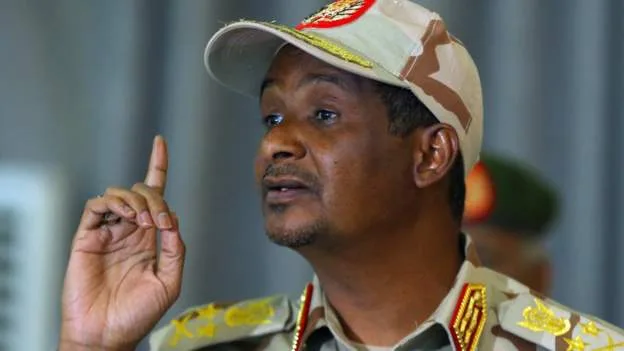
Sudan opposes regional bloc’s attempts for mediation
The government of Sudan has stopped taking part in peace talks led by a group called Igad from East Africa.
It had been trying to get the army and the rival paramilitary RSF to talk and stop the nine-month civil war.
The foreign ministry said it stopped working with Igad because they added Sudan to a meeting without permission and invited the RSF leader Mohamed Hamdan Dagalo to come.
He recently went to many African countries to get more people to support him politically.
Since the war started in April, about 7. 5 million people had to leave their homes. -

Cape Verde earns historic malaria-free status in West Africa
A country in Africa has been declared free from malaria for the first time in 50 years.
Cape Verde got a special status from the World Health Organization (WHO) because it hasn’t had any local transmission of a disease for three years.
Experts say this is a big accomplishment.
Malaria kills a lot of people in Africa. In 2022, 580,000 people died from the disease in Africa, which is 95% of all the deaths around the world.
The sickness is because of a complicated germ that is passed on by mosquito bites.
Some places are using vaccines to prevent malaria, but the best way to stop the disease is to keep an eye on it and avoid getting bitten by mosquitoes.
Cape Verde, a tiny group of islands near West Africa, has worked for many years to improve its health care and make sure everyone can get diagnosed and treated for illnesses.
The surveillance officers have been finding and controlling cases of diseases early, and also getting rid of mosquitoes.
Cape Verde has a plan to control malaria. They provide free care and testing for people from other countries who come to visit or move there. They want to stop the spread of malaria from Africa to Cape Verde.
This success shows how many health professionals, collaborators, communities, and international partners worked hard and were dedicated to the cause. “Cape Verde’s Health Minister, Dr. Filomena Gonçalves, told the BBC that it shows what can be done when people work together to make public health better. ”
Dr Dorothy Achu Fosah, from the WHO Africa office, said her organization is happy with the results and with the fact that malaria has been eliminated from the country.
Health experts say that Cape Verde has done an impressive job in controlling and getting rid of a disease. Other small countries can learn from their success and see that their methods can be effective.
Malaria used to be on all of Cape Verde’s nine inhabited islands, but now it’s only on one island, Sáo Tiago. The last efforts to get rid of it are focused there.
DrAchu from the WHO said that the country being made up of many islands is also a big reason for its success.
It’s easier to track the spread of the disease on an island compared to a big piece of land.
In Nigeria, Tanzania, and the Democratic Republic of Congo, many people move between countries, which makes it hard for one country to get rid of the disease by itself.
DrTedros Adhanom Ghebreyesus, the head of the World Health Organization, said that Cape Verde’s success in fighting malaria gives us hope that we can use tools, including vaccines, to dream of a world without malaria.
Mauritius, an island nation in Africa, was the last country in sub-Saharan Africa to be declared free from malaria in 1973. Algeria, in the northern part of Africa, got this title in 2019. -
UCC dispels ‘unfounded’ claim of ban in Nigeria over fake degrees
The University of Cape Coast (UCC) has denied the accuracy of a narrative claiming that its operations have been halted by the Nigerian Federal government.
UCC clarified that it does not have direct operations in Africa‘s most populous nation, nor has it granted a franchise for its programs to be conducted in the country.
This clarification comes in response to a GhanaWeb article referencing media reports in Nigeria that suggested three Ghanaian universities, including UCC, had been prohibited by the National Universities Commission (NUC) of Nigeria.
“The University of Cape Coast (UCC) does not have any outlet or campus operating in Nigeria, neither has it granted franchise to any institution in Nigeria to run its programmes.
“All international students, including Nigerians, wishing to study at UCC apply directly to the University for consideration,” their statement dated January 4, 2024 read in part.
The statement further pointed out that UCC was different from the Cape Coast University (CCU) purportedly banned in Nigeria.
It also reassured members of the university community to disregard the publication.
UCC PRESS STATEMENT
FOR IMMEDIATE RELEASE
THURSDAY, 04 JANUARY, 2024.
RE: UCC OPERATIONS IN NIGERIA BANNED
Cape Coast, Thursday, 4th January, 2024: The attention of Management of the University of Cape Coast (UCC) has been drawn to a false news item on Ghanaweb, indicating that the operations of the University of Cape Coast have been banned in Nigeria.
‘The University wishes to refute the allegations as follows:
1. The University of Cape Coast (UCC) does not have any outlet or campus operating in Nigeria, neither has it granted franchise to any institution in Nigeria to run its programmes.
2. All international students, including Nigerians, wishing to study at UCC apply directly to the University for consideration.
3. It is interesting to note that, in a haste to drag the image of the University in the mud, Ghanaweb, with little information and without crosschecking, quickly ran to the market with the name of a certain Cape Coast University (CCU) to represent the solid brand of the University of Cape Coast (UCC).
4. Management wishes to assure its cherished stakeholders and the general public that the University holds very dear its solid brand as an excellent academic institution with world-wide acclaim and, for that matter, would not do anything untoward to tannish its hard-won reputation ‘as the Number One University in Ghana and West Africa, and the Seventh in Africa, according to the 2024 Times Higher Education (THE) World University Rankings.
5. We would entreat all persons and institutions, as we have always done, to, at all times, verify with the university, the authenticity of certificates purported to have been issued by the University of Cape Coast.
In the light of the above, Management wishes to entreat its stakeholders and the public to disregard the malicious publication.
Major Kofi Baah-Bentum (Rid), Psc, APR
DIRECTOR, DIRECTORATE OF PUBLIC AFFAIRS
-END-
-

Man who rode across Africa surprised by Will Smith
Famous actor Will Smith surprised a man from Guinea by giving him a phone call. The man had traveled across Africa on a bicycle to go to university.
Last year, Mamadou Safayou Barry made news for walking a really long way – about 4,000 kilometers (or 2,500 miles).
In a video call to Cairo, where Mr Barry is studying, Smith told him he was very impressed by his hard work and gave him a new bike and a laptop as a gift.
“I want everyone to hear your story,” the main actor in many hit movies said.
In a video on Smith’s YouTube channel, the student seemed really surprised to be talking to the Men in Black actor. “Look, it’s Will Smith. ” Barry said with a smile. “I really like many of the movies you’ve made. ”
“I don’t know how to thank you. I really don’t know how to thank you,” he said when he found out about the presents.
Smith’s team reached out to the media in September after Mr. Barry’s story was published. They said it had moved the actor. They wanted to find out how to talk to him.
In May of last year, a 25-year-old person left Guinea in West Africa to go to Al-Azhar University in Egypt. They were hoping to get accepted there.
The man, who is married and has one child, couldn’t pay for a plane ticket. So, he rode his bike for four months through Mali, Burkina Faso, Togo, Benin, Niger, and Chad instead.
During his journey, he was stopped and held by the police three times without any good reason – two times in Burkina Faso and one time in Togo.
However, things changed for Mr. Barry when he got to Chad. A reporter talked to Mr. Barry and shared his story on the internet. This led some kind people to pay for a plane ticket for him to go to Egypt.
When he arrived in Cairo, he was given the chance to go to university to study Islamic subjects and then study engineering. He also got a full scholarship.
“When you decide to go on a trip, the universe works in your favor to support you,” Smith told Mr. Barry, who was smiling, quoting author Paulo Coelho.
In the video, someone is pushing a bicycle and giving it to the student, also giving him the laptop.
Smith gave vouchers so he can buy flights to Guinea to see his family, or so his family can come visit him. -

Here are Africa’s top 9 trending music and entertainment currently
Within the realm of music and entertainment blogs, these online platforms are strategically crafted for the distribution of entertainment news and the showcasing of musical content. Typically, music bloggers sift through a diverse range of content, including recent music releases, upcoming concerts and festivals, and noteworthy happenings in the music industry.
Beyond event coverage, these bloggers delve into detailed reviews of albums, singles, and live performances. Some blogs may focus on specific music genres, while others present a wide array of musical styles.
These platforms play a crucial role as a gateway to discovering new music, gaining insights into favorite artists, and staying updated on the latest developments in the dynamic music industry. Africanmusic has compiled a list of the top music blogs in Africa to guide music enthusiasts in exploring the diverse musical landscape of the continent.
PlusNaija: Plusnaija is a widely acclaimed Nigerian blog website that acts as a comprehensive hub for music enthusiasts, presenting the freshest and most noteworthy tunes from across the globe. Going beyond catering to African music lovers, the platform also boasts an extensive collection of foreign music available for download. Plusnaija ensures users have effortless access to a varied spectrum of content, including political news, diverse musical genres, and BBNaija updates, ensuring they remain well-informed about the latest trends in the industry.
Audiomack: Audiomack stands out as an all-encompassing platform, offering an extensive music streaming and audio discovery experience. It serves as a conduit for artists and creators to share their music and podcasts with a worldwide audience, accessible through both its mobile apps and website. Founded in 2012 by a team that includes Dave Macli, David Ponte, Thomas Klinger, Ty Wangsness, and Brian Zisook, Audiomack provides the flexibility of unlimited uploads for music and podcasts, guaranteeing users constant access to a rich and diverse range of content.
Naijacreep: Positioned as a leading Nigerian music and entertainment hub, Naijacreep, spearheaded by visionary Adebiyi Sodeeq, caters to the discerning tastes of music enthusiasts. Focused on delivering both streaming and downloadable music, along with captivating entertainment content, Naijacreep has emerged as the go-to destination for aficionados seeking the latest releases and updates.
NaijaGizmos: Recognized as a trending website covering music and entertainment news in South Africa and Nigeria, NaijaGizmos is revered for its continuous updates on Amapiano, Hip-hop, Gqom, RnB, Afro-house, and more. Noteworthy for engaging effectively with the South African audience, it stands as a prominent player in the music website landscape.
Heartlandngr: A celebrated Nigerian website, Heartlandngr, caters to the insatiable appetite of news enthusiasts, offering a diverse range of updates from Nigeria. Covering political and entertainment news, Heartlandngr has become the preferred destination for those seeking comprehensive news updates.
The36vibes: A prominent entertainment platform, The36vibes specializes in providing comprehensive updates on movies, including news and trailers. The platform caters to movie enthusiasts across various categories, solidifying its status as a preferred destination for those seeking the latest releases and updates from Nollywood, Hollywood, Korean Drama, and beyond.
Thelensng: As one of Nigeria’s most visited websites, Thelensng captivates users with its outstanding content. Serving as a comprehensive source for news-related needs, it provides informative resources and regular updates, making it a go-to destination for individuals seeking reliable information.
Zamusic: Positioned as South Africa’s premier website for music, news, and entertainment, Zamusic delivers daily updated content, earning acclaim from prominent entertainment sites in the country. With effective engagement with the South African audience, Zamusic stands out as a reliable source for the latest updates in the entertainment scene.
Zatracks: Recognized and esteemed as a prominent South African website, Zatracks caters to the diverse interests of music enthusiasts. Renowned for its extensive offerings, the platform consistently informs its audience about the latest releases in South African and African music, positioning itself as the primary destination for those seeking the latest tracks from the region and beyond.
These music and entertainment blogs play a crucial role in enhancing the understanding and appreciation of the art form. Offering features like album reviews, artist interviews, and explorations of music history, these blogs provide enthusiasts with a platform to actively engage with their favorite artists and delve into the intricacies of the music world. Whether guiding decisions on purchasing a new album or attending a concert, turning to these blogs enriches the overall music experience.
-
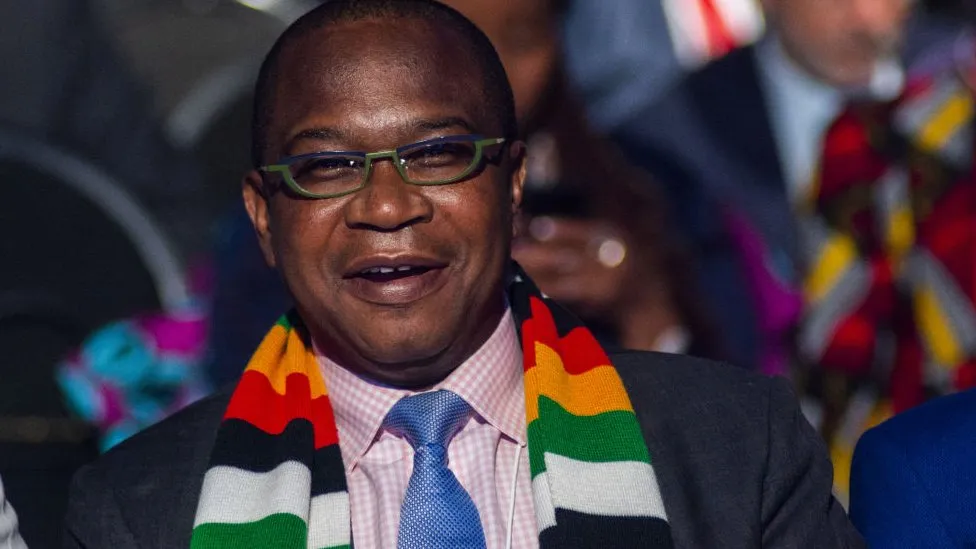
Startlingly as Zimbabwe’s finance minister rated as best in Africa
A lot of people in Zimbabwe are surprised that Mthuli Ncube was chosen as the “Best African Finance Minister of the Year” because the country’s economy is struggling.
One person on X, which used to be called Twitter, said the award was like praising a captain for steering a ship into an iceberg.
Another person said it was the funniest joke of the past ten years.
Zimbabwe has a very high unemployment rate, as high as 85%, according to experts.
According to Reuters, most transactions are done in US dollars because people don’t trust their local currency.
Reputation Poll International is a company that gives awards for good reputation. They gave Mr Ncube an award on Sunday.
The minister, chosen by President Emmerson Mnangagwa in 2018, told the Herald newspaper that he was happy to get the honor.
He said that the recognition was for the work he and the Treasury team did to lead the transformation of the economy.
But, activist Hopewell Chin’ono said that the award was a “disrespect” to Zimbabweans.
He was very surprised, especially after Mr. Ncube’s new budget, when Mr. Chin’ono called it “the worst budget for the people that Zimbabwe has ever had”.
Taxes will go up and the cost of a passport will increase to $200 (£160) from $120, which will make it the most expensive in the region.
Mr Chin’ono said that Mr Ncube is running the worst economy in the world because of his bad and dishonest decisions.
Zimbabwe’s economy has been having a difficult time for many years. The Zimbabwe dollar was stopped being used in 2009 because prices were going up really fast – even by the hour – due to very high inflation.
Critics say the ruling Zanu-PF party, led first by Robert Mugabe and then by Mr Mnangagwa, did not manage things well. They say that the Western countries’ sanctions are the reason for their problems.
Zimbabwe had by-elections on the weekend because some MPs from the main opposition party were removed.
Zanu-PF candidates won 7 out of 9 by-elections, but they still need 3 more seats to have enough power to change the constitution. -

Large delegations at COP28 defended by African nations
Many African governments are explaining their choice to send a lot of people to the COP28 climate conference in Dubai, even though many people are not happy about it.
The UN’s list showed that Nigeria, Morocco, Kenya, Tanzania, Ghana, and Uganda sent the most people.
Nigeria sent 1,411 people, Morocco sent 823, and Kenya sent 765.
Officials from Nigeria and Kenya said that some of their delegates were not paid for by the government because they were representing the media, non-profit organizations, and private companies.
Both countries also said that some of the people on the list are joining in from a different location.
Nigeria is the largest country in Africa and has the biggest economy. Because it has a lot of natural resources, it is important for Nigeria to take action on climate change. That’s why they will have more delegates at a meeting than any other African country. This was said by an adviser to Nigeria’s President Bola Tinubu.
Kenya’s State House spokesperson Hussein Mohammed said on a TV station that the number of people at the event was not as high as reported because it included those who signed up but didn’t actually go.
He said that the national government had only approved 51 important representatives and the other ones had been supported by different groups.
The Tanzanian government said that over 90% of its delegations were paid for by private companies. -

70-year-old woman from Uganda gives birth to twins – Hospital
A 70-year-old woman from Uganda just gave birth to twins using IVF treatment. She is now the oldest woman in Africa to have children.
Safina Namukwaya gave birth to a boy and a girl at the Women’s Hospital International and Fertility Centre in Kampala, Uganda.
“This story is not only about successful medical treatment, but also about the inner strength and determination of people,” the hospital posted on Facebook.
After Ms Namukwaya had a successful caesarean delivery on Wednesday.
Ms Namukwaya told the NTV channel that she had her second baby in three years, after having a girl in 2020.
She said she had a lot of problems during her pregnancy, like the father leaving her.
Men don’t want to hear that you are pregnant with more than one baby. “Since I got here, my husband has never come to visit me,” she said.
Ms Namukwaya said she didn’t know how she would take care of the children, but she was happy to have them after being made fun of for not having children for many years.
“Once, a little boy teased me and said that my mother cursed me to never have a child and die,” she said. -
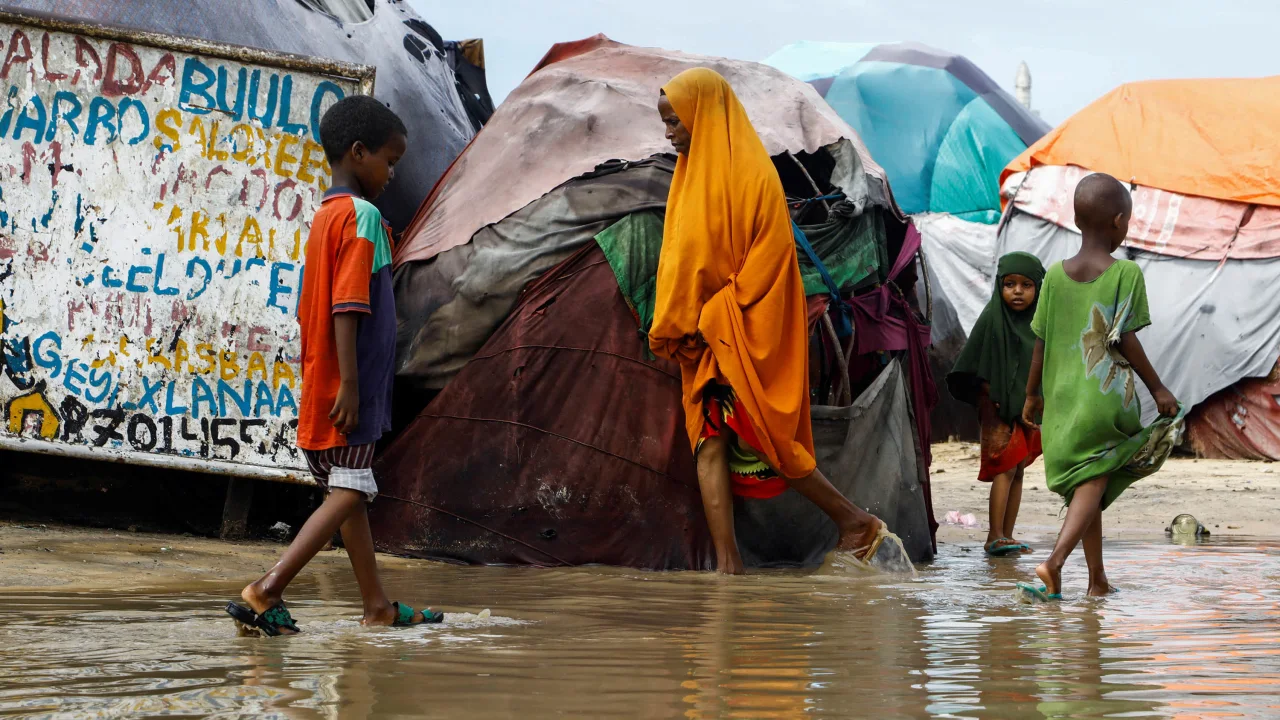
Flooding in Somalia claims about 100 lives
The floods from heavy rains in Somalia have killed 96 people, according to the state news agency SONNA.
“96 people have died in Somalia’s floods,” said SONNA on X (previously known as Twitter). Mahamuud Moallim, the head of the country’s disaster management agency, confirmed the number.
Somalia has been hit hard by heavy rains since October, like other countries in East Africa. These rains are caused by the weather patterns El Nino and Indian Ocean Dipole.
Both are weather patterns that affect ocean temperatures and lead to more rain than usual.
The flooding is the worst in many years and has forced about 700,000 people to leave their homes, according to the United Nations.
The heavy rains caused big floods all over the country. This made people move from their homes and made a bad situation caused by fighting even worse.
In Kenya, floods have caused 76 deaths and forced many people to leave their homes. The flooding has also damaged roads and bridges and left many people without food and shelter. -

Pilot intends to motivate Liberians after flying plane across Atlantic Ocean alone
Abner Yonly, a pilot from Liberia who lives in the US, is coming back to Liberia after flying a plane across the Atlantic Ocean all by himself. He is the first black person to do this in a small plane.
Mr Yonly started his trip in Maryland, in the US. Then he went across the North Atlantic to Canada, Greenland, Iceland, the Faroe Islands, the UK, France, and Spain.
He arrived in Africa in Morocco and has now landed safely in Dakar, Senegal.
MrYonly is supposed to arrive at Roberts International Airport in Liberia at 4:00 PM GMT on Wednesday, as per his flight schedule.
Mr Yonly said in a statement that he wanted to be a pilot and also wanted to inspire others.
I realized during training that I could be a leader and inspire my generation to do amazing things, not just learn how to fly,” he said.
Mr Yonly wants to inspire other Liberians, especially young people born after 1980, by becoming the first Liberian-born pilot to fly a plane.
“Our mom and dad told us about Air Liberia, which is flown by pilots from Liberia. ” We didn’t see it. This will show them that if you work hard and stay determined, you can make your dreams come true. -
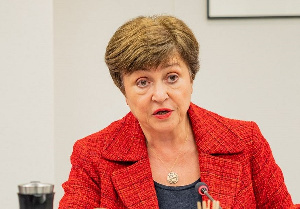
2023 has been challenging for Africa but 2024 will get better – IMF
Managing Director of the IMF, Kristalina Georgieva, has noted that African economies faced multiple challenges throughout the year.
She highlighted that these economies were still recovering from the impact of the global pandemic, COVID-19, while simultaneously grappling with high borrowing costs and the rising cost of living.
As African nations strive to overcome their economic difficulties, the IMF remains optimistic that these economies will regain their footing in the upcoming year.
Kristalina Georgieva emphasized that the outlook for 2024 is promising, indicating a gradual strengthening of economic activity and notable growth. Additionally, there’s a positive trend of decreasing high inflation rates and narrowing fiscal imbalances.
“We had very productive discussions on Africa’s economic prospects. This year has been a difficult year for Africa. The region is still emerging from the Covid-19 pandemic and African countries have been hit by high borrowing costs (“funding squeeze”) and a cost-of-living crisis,” She said.
In Ghana, the local economy faced a significant downturn in 2020 due to the outbreak of the COVID-19 pandemic. It remained in a fragile state for an extended period, and the situation was further exacerbated by the Russia-Ukraine war.
In an effort to combat high inflation and stabilize the economy, the government announced on July 1, 2022, its decision to seek a $3 billion financial bailout program from the International Monetary Fund (IMF). Subsequently, an IMF team visited the country from July 6 to July 13, 2022, to engage with Ghanaian authorities regarding potential economic support.
A staff-level agreement between the Government of Ghana and the IMF was successfully reached in December 2022. On May 17, 2023, the IMF’s executive board granted approval for Ghana’s $3 billion loan facility.
The first installment of $600 million was received by the Bank of Ghana (BoG) on Friday, May 19, 2023. The government’s objective with the IMF program is to restore macroeconomic stability and ensure debt sustainability, among other objectives.
-
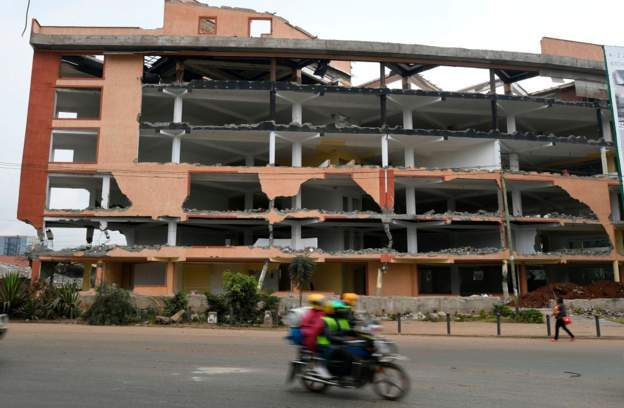
Kenyan land sale sparks controversy as homes are destroyed
A Kenyan company that is mostly owned by the government has faced backlash for wanting to sell some of its land. This land used to have homes where people lived for a long time, but these homes were destroyed.
Many expensive homes, churches, and a mosque were destroyed over the weekend because a court decided that East African Portland Cement (EAPC) is the rightful owner of the land.
The court said that EAPC can remove the people who had come to live in a portion of the 17. 40 square kilometers (4,300 acres) of land, which has been causing a legal argument for a long time.
The demolitions made many Kenyans very angry, especially the people who lived there. They felt it was very mean because they had spent a lot of money buying the land and building on it.
They said they were not sure why the EAPC did not talk to them instead of tearing down the buildings.
They mentioned that the destruction occurred before they had a chance to challenge the court’s decision. Some people accused President William Ruto of saying that residents would be forced to leave in order to make room for the growth of an industrial area.
EAPC let people know that they want to sell something by putting an announcement in newspapers on Tuesday. The regularisation model is used to refer to specific pieces of land.
It means that parties who are currently using the land will be given priority. They have been given 14 days to stake their claim. If they don’t, the plots will be sold to the public. The sale will be done by people who want to sell and people who want to buy.
The company has stated that the part of the land for sale is not the same as the area where buildings were destroyed.
However, people are asking why the buildings had to be destroyed. “Why did they let buildings get destroyed if this was their plan from the beginning. ” Adam Maina, a popular figure on social media in Kenya, questioned on X platform.
“This is what happens when dishonest people who are also not capable run the government,” stated Nairobi Senator Edwin Sifuna.
It is quite common for buildings that were constructed unlawfully on public land to be destroyed in Kenya. Sometimes people believe that they have political reasons behind their actions. -
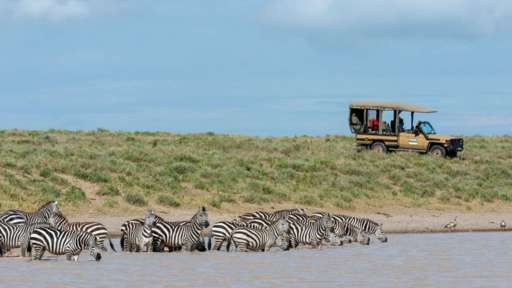
Serengeti becomes Africa’s best park for the seventh time
For the seventh time in a row, Tanzania’s Serengeti National Park has been named the best in all of Africa.
In this year’s World Travel Awards (WTA), a global organization that seeks to honor excellence in travel and tourism, it triumphed over six other parks on the continent.
Since 2019, the Serengeti, which is well-known for the annual migration of wildebeests, has won the honor each year.
The Serengeti’s “stunning five-time victory” was acknowledged by the Tanzania National Parks Authority (Tanapa).
Other competitors from Africa included the Central Kalahari Game Reserve in Botswana, the Etosha National Park in Namibia, the Kidepo Valley National Park in Uganda, the Kruger National Park in South Africa, and the Masai Mara National Reserve in Kenya.
-
Serengeti named Africa’s top park for the seventh time
Tanzania’s Serengeti National Park has been chosen as the top park in Africa for the fifth consecutive time.
It won against six other parks to receive the World Travel Awards this year. The World Travel Awards is a global organization that recognizes outstanding achievements in travel and tourism.
The Serengeti, known for the large number of wildebeests that migrate there, has won the award every year since 2019.
The Tanzanian National Parks Authority (Tanapa) was very happy and proud that the Serengeti won five times in a row.
Other African countries that were also considered for the title of “best national park” included Botswana’s Central Kalahari Game Reserve, Namibia’s Etosha National Park, Uganda’s Kidepo Valley National Park, South Africa’s Kruger National Park, and Kenya’s Masai Mara National Reserve. -
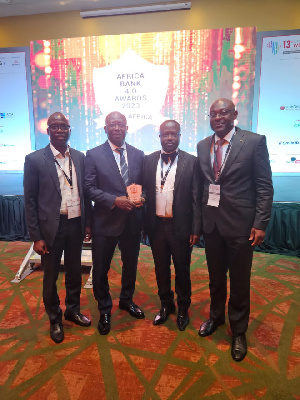
CEO of GhIPSS honored as ‘Most Inspiring Leader in Payments across West Africa’
CEO of the Ghana Interbank Payment and Settlement System (GhIPSS), Archie Hesse, has been bestowed with the distinction of “Most Inspirational Payments Business Leader in West Africa.”
This award acknowledges his outstanding contributions to the payments sector, advocacy for digital payment solutions, and dedication to enhancing financial inclusivity across West Africa.
The esteemed accolade was presented during the recent Africa Bank 4.0 Summit hosted in Lagos, Nigeria. The Africa Bank 4.0 Awards were established to honor and commend the commitment of various entities, associations, and service providers in the financial services domain. These awards are designed to spotlight trailblazers and forward-thinkers who transcend conventional boundaries in the Fintech sector, rendering access to finance across Africa more accessible, innovative, convenient, and affordable.
Mr. Hesse’s journey with GhIPSS commenced when he assumed the role of General Manager in charge of Projects and Business Development shortly after its inception as a wholly-owned subsidiary of the Bank of Ghana. Over time, he ascended to the position of Chief Executive Officer, succeeding the company’s inaugural CEO, Mr. Fred France.
As CEO, Mr. Hesse has overseen the remarkable metamorphosis of GhIPSS, collaborating closely with banks and non-bank financial institutions to introduce a diverse range of electronic payment channels to the public. Noteworthy innovations include Mobile Money Interoperability, GhQR, and GhanaPay.
His central mission has consistently revolved around advancing financial inclusion and broadening the spectrum of instant electronic payment alternatives available to the public. Under his stewardship, GhIPSS has achieved several industry milestones and has received international acclaim for its achievements.
In response to receiving the award, Mr. Hesse conveyed his humility at the recognition and emphasized the vital importance of continually pushing the industry’s frontiers. He extended his gratitude to the dedicated staff, management, and board of GhIPSS for their unwavering support, underscoring the pivotal role they played in this achievement.
“Without a great team, this wouldn’t have been possible. So, I want to celebrate the staff, the management, and the board for their respective roles and particularly encourage the staff and management to aim to even exceed their current performance,” he noted.
-
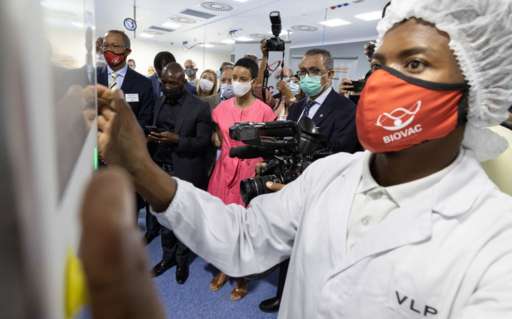
African pharmaceutical companies secure funding for development of new vaccines
The Bill & Melinda Gates Foundation has awarded a combined sum of $40 million (£32 million) to support the endeavors of two African vaccine manufacturers and a Belgian biotechnology company in the creation of innovative mRNA vaccines.This initiative encompasses the prestigious Institut Pasteur de Dakar in Senegal and the South African-based biopharmaceutical firm, Biovac.
Each of these entities will be granted $5 million to procure mRNA vaccine research and manufacturing technology developed by the Belgian company Quantoom Biosciences.
This technology is designed to enhance the efficiency and cost-effectiveness of mRNA vaccine production.
Quantoom Biosciences itself has been allotted $20 million to further advance its research and manufacturing technology for vaccines, with the potential to further decrease the production costs of mRNA vaccines.
The remaining $10 million is expected to be allocated to other vaccine manufacturers.
As part of this funding arrangement, these organizations will engage in research and development efforts focused on vaccines for global diseases, including those that are prevalent in Africa.
Dr. Amadou Sall, the Head of Institut Pasteur, has stressed that this funding marks a crucial and essential stride toward achieving vaccine self-sufficiency in the region.
-
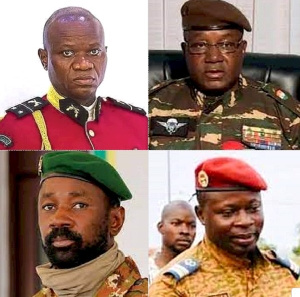
You cannot claim love for Ghana when you endorse coups – Political hostorian
A political historian and Research Fellow at the African Studies Department of the University of Ghana, Dr. Ebenezer Ayesu, has voiced his disapproval of Ghanaians who advocate for the military to seize control of the democratic government.
Dr. Ayesu contends that coups have had detrimental effects on the well-being of numerous nations currently under military governance.
He further asserts that coup d’états hold no allure, and those advocating for them may not have the country’s best interests at heart.
“If you know the history of Ghana, if you love the country and you know where we are coming from, you will never about the presence of coup in the country. Ever since Kwame Nkrumah was overthrown, all the progress the country was making in development has stalled. Even those who started coups in this country allowed some space because of how it was destroying the country,” Dr. Ayesu said in Twi during an interview on Neat FM and monitored by GhanaWeb.
He also elucidated that some individuals might be advocating for a coup in Ghana because they believe it’s a means to accumulate substantial wealth and attain recognition.
“For some, they are able to speak in Ghana because of coups. It is through the coups they have properties and names. Some people don’t even deserve to be in parliament but they are there because of coups. Those are the people who want a coup in this country at all costs,” Dr. Ebenezer added.
The research fellow additionally contended that when a coup d’état occurs in a country, the progress and welfare of the population come to a standstill.
“As journalists, you can testify that when you go around the country, all the government projects that were started during Kwame Nkrumah and Busia’s reign have all stalled because of coup d’états. All these things would not have seen the light of day if not because of coups,” he concluded when he was speaking to journalists at the University of Ghana.
-
Gates Foundation grants $40M for Africa’s access to mRNA vaccines
The Bill & Melinda Gates Foundation is set to allocate $40 million to support the accessibility of mRNA vaccines for protection against various diseases in Africa.
This funding will be directed towards a Belgian biotech company, as well as two prominent African vaccine manufacturers.
Quantoom Biosciences, based in Nivelles, will receive $20 million to advance its work on enhancing the mRNA manufacturing platform, known as Ntensify.
Simultaneously, the Institut Pasteur de Dakar in Senegal and Biovac in South Africa will each receive $5 million to acquire this technology.
An additional $10 million will be made available to other vaccine manufacturers interested in utilizing this platform.
mRNA vaccines played a pivotal role in revolutionizing the global response to the COVID-19 pandemic. However, access to these vaccines was severely unequal.
In response, various initiatives have emerged to address this imbalance and harness this innovative technology to combat existing threats that disproportionately impact lower-income nations, such as malaria and tuberculosis.
The World Health Organization initiated its mRNA vaccine technology hub in Cape Town in April of the current year. Notably, Afrigen Biologics, a member of this hub, has already developed Africa’s first mRNA vaccine for COVID-19 in the laboratory.
Nevertheless, the production of mRNA vaccines remains costly, particularly when scaling up production to meet the demands of testing and deploying safe and effective vaccines.
Quantoom’s Ntensify platform offers a solution by enabling more cost-effective and efficient production of mRNA batches at scale, as highlighted by a Gates Foundation spokeswoman ahead of the official announcement at the 2023 Grand Challenges Annual Meeting in Dakar on Monday.
“(This) is an important and necessary step towards vaccine self-reliance in the region,” said Dr Amadou Sall, chief executive of the Institut Pasteur de Dakar.
Ntensify originally received its funding from the Gates Foundation through its parent company, Univercells, back in 2016.
Afrigen has already begun utilizing this platform, including its application in the development of vaccines for Rift Valley fever and gonorrhea. Gates and Afrigen have indicated that this platform has the potential to reduce vaccine development costs by half when compared to traditional mRNA technology.
“The second generation (of mRNA) is to reduce the cost,” said Petro Terblanche, Afrigen’s chief executive, on a phone call from Dakar on Sunday.
-
China invests billions in infrastructures in Africa
Last month, Zimbabwe’s Hwange power station added two new units for generating electricity. This is a common occurrence for big infrastructure projects in Africa.
In a rural area of a country in southern Africa, government officials and the Chinese ambassador came together to celebrate and praise the expansion of a coal-fired plant. The purpose of the plant is to decrease power outages in the country, and China provided the funding for it.
The project received around $1 billion in loans from China several years ago. However, China has stopped funding new coal-powered projects overseas now. This project is just one of many expensive projects in Africa that are supported by Chinese lenders as part of Xi Jinping’s Belt and Road Initiative.
The money from China has made a big difference in Africa. People in big cities like Lagos, Nairobi, and Addis Ababa can now travel every day on new railways, highways, and airports built with Chinese loans and with the help of Chinese construction companies.
Now, as the world continues to build infrastructure for the past ten years, there are concerns about how Beijing will guide the initiative in the future. People are wondering if China will reduce its funding due to new challenges and changes in its plans.
China is facing challenges in repaying debts due to the economic impact of the Covid-19 pandemic and the war in Ukraine. Additionally, China itself is experiencing financial difficulties, and there is a growing need to address environmental concerns. These factors are putting pressure on how China lends money and how countries borrow from China.
New research from the Boston University Global Development Policy Center indicates that there is a noticeable change happening. They have observed a consistent decrease in the number of new loans given by Chinese organizations to African governments. This decline has become more pronounced in the last two years.
The amount of money lent through new loans decreased significantly. In 2016, it was at its highest point, $28. 5 billion, but last year it was just under $1 billion. This is the second year in a row that lending has dropped below $2 billion. According to researchers, this decline may not only be due to the pandemic but also a bigger change in lending practices. This could mean there will be fewer large loans given out in the future.
“The Belt and Road Initiative seems to be making adjustments,” said the report’s author, Oyintarelado Moses, when speaking to CNN.
And this phenomenon might not only happen with Chinese money in Africa.
Moses, a data analyst at the Global China Initiative, predicts that the new phase of Belt and Road lending will probably have less overall financing due to a decrease in loan averages worldwide.However, it is difficult to know exactly how much money is leaving China to support global development because the government of China does not publicly disclose this information, and there are many different financial organizations involved.
The information from the Global Development Policy Center mainly looks at loans given by African governments or loans that have a guarantee from the government. This means that loans from China that are given directly to private individuals or companies for projects in Africa are not included in the data.
Some experts say that the main reasons Beijing became the world’s biggest lender to other countries are still the same. This means that Beijing will keep giving money to both big and small projects in the future, but we don’t know how much they will give.
What happens next can affect how much money developing countries get for building important things like roads and buildings.
Policymakers will be observing a big international forum happening next month in Beijing for clues about what will happen next.
Xi started a plan that would become very important to his foreign policy when he visited Kazakhstan in 2013.
There, the Chinese leader said that the ancient Silk Road should be improved so that countries can have stronger economic connections, deeper cooperation, and more opportunities for development.
After that, a lot of money in the form of loans has been given by both development finance institutions and China’s commercial banks to build railroads, power plants, highways, ports, and telecoms in developing countries.
This helped China’s economy by giving it a way to use its extra industrial capacity and money. It also helped China to make connections with over 150 countries and increase its influence around the world.
A lot of its friends have gained advantages from the new buildings and roads.
But the projects that fall under the Belt and Road initiative have caused concerns because of poor environmental and labor practices, as well as risky loans. Critics believe that China has burdened low- and middle-income governments with excessive debts compared to their economies.Beijing disagrees with these statements and thinks that the initiative is a way for people all over the world to increase economic opportunities and share them with others. Beijing believes that this initiative can create new ways for economic growth.
Now, there are new economic situations happening because countries are still dealing with the effects of the pandemic while also being affected by higher interest rates and prices of goods caused by the conflict in Ukraine.
The most important thing we need to understand is that the time of low interest rates and cheap money from China going into these countries has come to an end. And now China is the largest country that collects debts in the world, said Ammar A. Malik is a senior scientist at AidData research lab in the US. The lab also keeps track of money that China gives to other countries.
The challenge for China is to ensure that these countries have enough money and that these projects work well, so that China can get their repayments with interest and on time.
In the past few years, some governments that owe money to China and other lenders have asked for more time to pay back their debts or for some of the debt to be forgiven. China has given loans to help out these struggling borrowers, and has also worked together with other lenders to come up with a plan to ease their debt burden.
Malik said that some countries with low and middle incomes may not be able to borrow more money because of their financial troubles.
But many poorer countries still want to get money for big projects that are important for their economies to grow. There are reasons for both China and the receiving countries to keep working together, so financing may not slow down.
China is currently facing tough economic challenges at home as it continues its second decade of the Belt and Road.
The economy was supposed to get better after Covid, but that hasn’t happened. Now, local governments are dealing with a lot of debt because of a property crisis.
We are not sure yet how much Beijing’s own economic problems will affect its lending to other countries in the future. However, Moses from the Global Development Policy Center says there are already some signs of impact.
Beijing is currently focusing more on using its foreign exchange reserves and increasing liquidity to address domestic challenges. This shows that lenders are now more focused on meeting the financial needs within the country.
However, despite the economic issues China is facing, some of the reasons why China was originally investing in global infrastructure projects, such as creating new investment chances in a slowing economy, are still important to them, says Austin Strange, a professor at the University of Hong Kong.
He said that this basic idea is probably still true as the slowdown continues, especially because tensions between countries are making it harder for Chinese companies in certain industries to invest more in developed countries.
Representatives from over 100 countries will meet in Beijing for a Belt and Road forum soon, and policymakers worldwide will be paying attention to see how the initiative will develop.
China is not just paying attention to loans getting smaller, but they might also focus more on environmental problems, improving social safety nets, and doing proper research. This is because Beijing and its banks are learning from the project’s first ten years, according to analysts.
A report from AidData in 2021 found that around 35% of projects under the Belt and Road initiative, which were managed only by Chinese organizations from 2013 to 2017, faced difficulties in their implementation. These challenges included issues related to the environment, corruption controversies, and violations of labor rights.
China in 2017 provided instructions on promoting an environmentally friendly Belt and Road initiative. It emphasized the need for sustainable development and the protection of the environment. Recently, officials have started asking for “small and beautiful” projects that they think local people will like.
In 2021, Xi promised that China will not construct any new coal power plants in other countries.
But compared to Western lenders who impose their own environmental and other rules on the projects they support, China has typically let the recipient country choose the type of project. This could restrict how well Beijing can achieve its environmental goals.
Researchers at the Global Development Policy Center say that in the future, when lending money to Africa, there will be fewer big loans of more than $500 million. Instead, there will be more loans with smaller amounts below $50 million, which will have positive effects on society and the environment.
China will probably keep providing money for projects that support its political goals and try to gain influence over the United States. The United States has also started its own programs to compete with China’s spending on foreign development.
China used to give a lot of money for big infrastructure projects around the world, but now they are probably giving less. However, there are probably still some countries near China that are enthusiastic about the Belt and Road Initiative and want to work with China.
If Chinese policymakers and project leaders have invested a lot to improve how they manage projects in the last ten years, then new projects should benefit from what they have learned in the past. “Looking back can be helpful in this situation. ” -
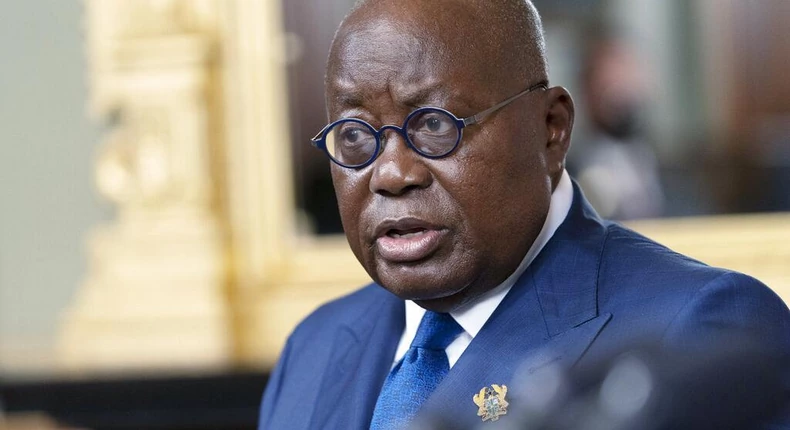
Akufo-Addo urges diasporans to consider averting their investment capital to Africa
President Akufo-Addo has issued an invitation to Africans living in the diaspora, urging them to redirect their investment portfolios towards the continent.
He emphasized that with the establishment of the Africa Continental Free Trade Area (AfCFTA), the stage is now set for the continent to attract their investments, facilitating its industrial development and transformation.
During his address at the inaugural Global Africa Forum (GAF), which was jointly organized by the Africa Prosperity Network (APN) and the Africa-America Institute (AAI) on Thursday, September 21, 2023, on the sidelines of the 78th UN General Assembly in New York City, the theme of the event underscored this pivotal message, “Mobilising Global Africa Investment to Boost Intra-African Trade,” President Akufo-Addo said it is time for Africans to spend their monies on the continent to make her the wealthy place it ought to be.
“Like the vision of our forebears, the AfCFTA sets the stage for Africa’s industrialization and transformation. What is required now is for our respective governments and businesses to show bold leadership. We need coherent and complimentary strategic actions by governments and businesses.
“The right mix of policies and strategies for exports, value addition to raw commodities and a greater sense of purpose to ensure a robust intra-Africa trade, to drive agricultural growth, economic diversification and the much-needed industrialization of the continent” President Akufo-Addo said.
“As the saying goes, nothing succeeds as much as success. If we work at it, if we stop being beggars and spend Africa’s money inside the continent, Africa would not have to ask for respect from anyone, we will get the respect we deserve.
“Twenty years ago, thirty years ago, China was not where it is today. China does not ask anyone for respect today, she does not need to. Let us make our continent the joyful and prosperous place it should be and the respect will follow” Akufo-Addo added.
Concrete areas of investment
Wamkele Mene, the Secretary-General of the Africa Continental Free Trade Area (AfCFTA) secretariat, addressed the gathering by outlining the four major areas of interest identified by AfCFTA for potential investors to explore on the continent.
These areas encompass the manufacturing sector, the pharmaceutical industry, the agriculture sector, and the newly established AfCFTA Adjustment Fund, which has a value of one billion dollars and aims to support investments in productive sectors.
“The fund is not intended for budget support. It is intended for productive sector investments. What we envisage is that you as the diaspora with global capital, will see the adjustment fund as a vehicle for channeling your investment and to see returns on your investments,” Wamkele Mene said.
“These are the four areas that we have identified which are concrete, which we believe will be long lasting and impactful and will create job opportunities in Africa so that millions of young Africans stop being buried deep in the Mediterranean. We can create jobs for them at home on the African continent and that is why I think this dialogue is so very important” he added.
In attendance
In addition to President Akufo-Addo, the forum was graced by the presence of several other dignitaries, including Professor Benedict Oramah, who serves as the President and Chairman of the Board of Directors of Afreximbank, and H.E. Albert Muchanga, the AUC Commissioner for Trade and Industry.
The event also saw the participation of esteemed individuals such as Dr. Amany Asfour, who holds the position of President of the Africa Business Council, Ms. Ahunna Eziakonwa, Assistant Secretary-General UNDP-RBA, Derrick Johnson, the President of NCAAP, Mr. Julius Mwale, the President and CEO of SBA Technologies Inc, along with numerous other prominent leaders in the Global Africa business community.
-
Allow Africa to benefit from its energy riches for its people – Energy Minister
Energy Minister, Dr. Mathew Opoku Prempeh, has emphasized the necessity for Africa to be permitted to utilise all energy resources at its disposal for the benefit of its population.
Speaking at the 24th World Petroleum Congress (WPC) in Calgary, Canada, the Minister announced this.
In the wake of the energy transition, he reaffirmed Ghana’s steadfast commitment to fully utilizing its hydrocarbon resources for the shared economic prosperity of its population.
Dr. Mathew Opoku Prempeh stressed that oil and gas exploration and production will go on for the foreseeable future in order to maintain the supply of natural gas, which is our go-to fuel for transitional purposes.
Read his full statement below:
We continue to pitch a strong narrative of Ghana and for that matter Africa being allowed to use every energy resource at its disposal for the benefit of its people.
For this reason, I did not mince words at a Ministerial session on Monday at the opening of the 24th World Petroleum Congress (WPC) in Calgary, Canada, reiterating Ghana’s firm stance on fully exploiting its hydrocarbon resource for the shared economic prosperity of its citizens in the wake of the energy transition.
I made the point that oil and gas exploration and production will continue in the next few decades to ensure the availability of natural gas, which for us, is the transition fuel. Cognizant of the impacts of hydrocarbons on the environment, I indicated that we have already included Carbon Capture and Storage and other green interventions in our Energy Transition Framework to duly take care of emissions.
I further used the opportunity to market Ghana’s sedimentary basins which have huge oil and gas prospects and can be leveraged to develop the clean energy resources and green infrastructure we require.
-
Africa to access clean energy with $50billion – Energy Expert
International energy expert Dr. Johnstone Chikwanda has estimated that approximately $50 billion will be needed to finance interventions that allow Africa to provide access to inexpensive and clean energy to millions of people who currently lack it. This is in line with the Sustainable Development Goal (SDG) 7’s recommendations.
SDG 7 calls on all nations, particularly those in Africa, to pledge to guarantee universal access to cost-effective, dependable, sustainable, and modern energy for everyone by 2030.
In the same period, it is anticipated that technology will advance and infrastructure will be expanded to provide cutting-edge, environmentally friendly energy services to all developing nations, especially the least developed ones.
According to Mr. Chikwanda, a novel finance strategy, such as an Internet connection charge, must be considered in order to make it feasible given the urgency of connecting the African region and bringing millions of people who lack energy on board.
“If the Western world or perhaps Africa could insert a small levy in the Internet connection or in the mobile telephony communication – as proposed by the late Kofi Annan, within one year or so more than US$50billion could be raised to fund this.
“Other monies have to come from grants and green climate funds; and also note that some bonds can be raised to finance the energy transitions, as well as taxes, direct investments and so on. We are also beginning to see individuals using their own savings, and maybe loan borrowings, to connect themselves to clean energy at the household level,” he said.
Energy experts emphasize that Africa is falling short of its global energy commitments, with most countries on the continent having a mere 13 percent rural electrification rate. Dr. Chikwanda, speaking as part of the ‘Africa we want series’ organized by PIED Africa, highlighted the extensive repercussions of failing to achieve Sustainable Development Goal 7 (SDG 7), as it is intertwined with other sustainable development goals.
Dr. Chikwanda pointed out the interdependence of SDGs related to poverty eradication and economic development on electrification. He stressed the importance of adequate energy security for modern economies, the necessity of electricity for quality education services, especially with ICT integration in schools, and the critical role of electricity in achieving the SDG for quality healthcare.
To attain universal connectivity in Africa, Dr. Chikwanda advised following the blueprint adopted by the African Union (AU), which aims to harmonize the numerous regulatory power frameworks existing across the continent, such as the Southern African power pool, East African power pool, North African power pool, Central African power pool, and West African power pool. Harmonizing these frameworks and interconnecting them will facilitate electricity transfer between regions.
The harmonized regulatory framework at both continental and regional levels is expected to pave the way for the creation of an African energy market, encourage private sector involvement in the energy sector, and mobilize the substantial financial and technical resources necessary for providing modern energy access to all.
During a virtual discussion on energy organized by PIED Africa under the theme ‘Africa’s energy transition and how it can be financed,’ Dr. Kelvin Kemm, Chairman of Stratek Global in South Africa, advocated for the exploration and utilization of nuclear power as a means to generate electricity for the African population.
-
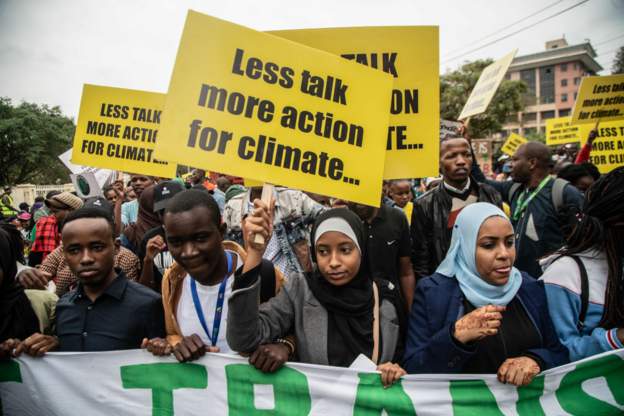
Climate activists oppose sale of carbon credits in Africa
Environmental advocates are opposing Africa‘s proposition to trade carbon credits with foreign nations.
Many companies and countries from abroad have agreed to spend a lot of money to buy carbon credits from the Africa Carbon Markets Initiative (ACMI). The United Arab Emirates, for example, promised to purchase $450m (£358m) worth of carbon credits.
But, organizations like Greenpeace Africa and Friends of the Earth Africa believe that purchasing carbon credits from Africa is not a real solution to climate change. They think it will actually make pollution worse because it allows polluters to balance out their emissions.
Putting money into carbon markets is not a good solution. GreenPeace Africa said that the true environmentally friendly investment can be found in renewable energy sources.
Can you make this text simpler.
Africa’s carbon markets were a big topic at the Africa Climate Summit in Nairobi, Kenya this week.
On Monday, Kenya’s President William Ruto mentioned that trading carbon credits is a beneficial solution. It can help reduce harmful emissions and also bring in money for Africa.
Restoring and growing Africa’s natural carbon storage areas is not only important for the environment, but it also has tremendous economic opportunities. Ruto said that if we lived in a fair world, they could absorb a lot of carbon dioxide, which should earn us a lot of money.
ACMI wants to help Africa’s carbon markets create 300 million carbon credits every year by 2030. -
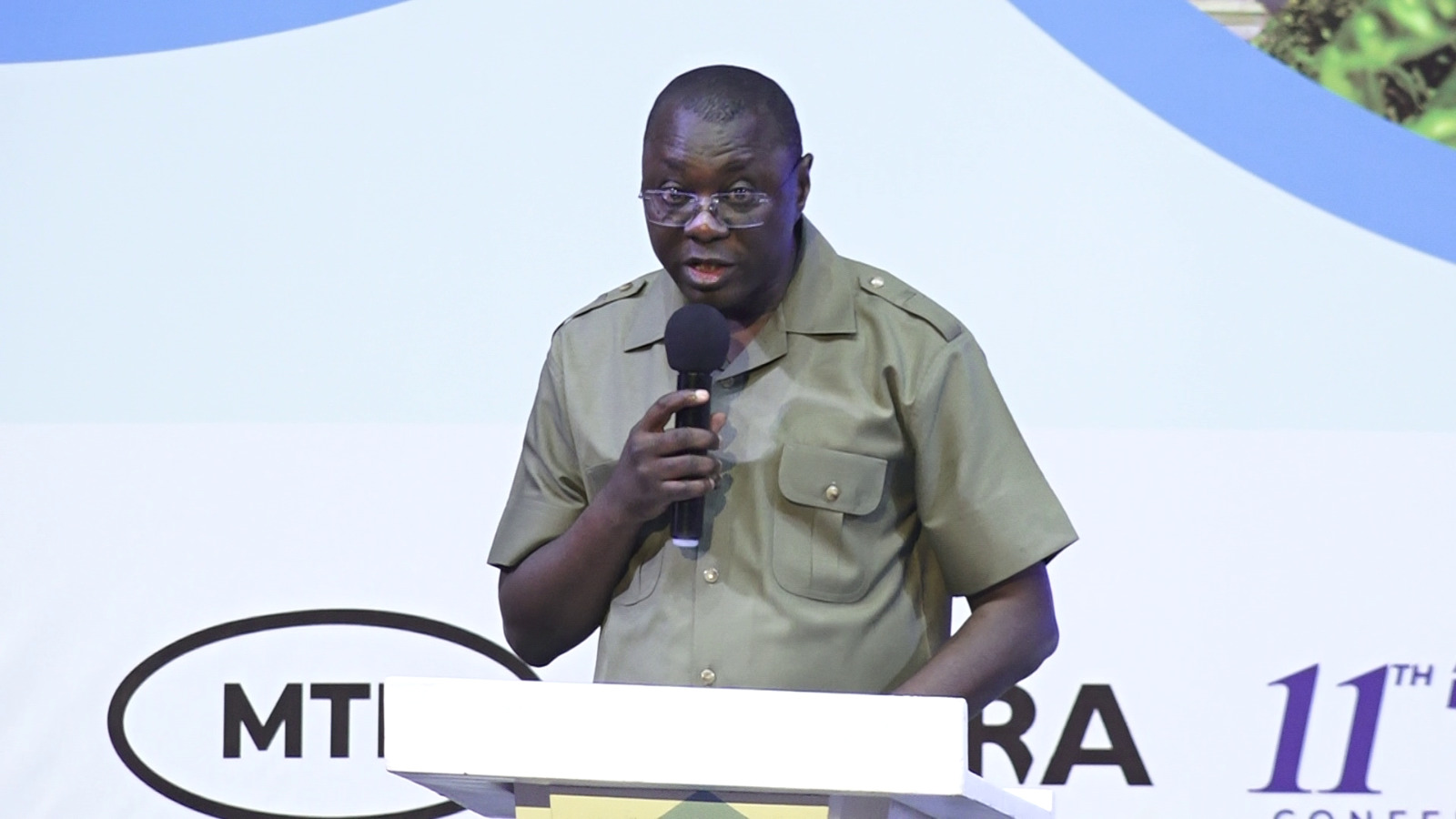
Dr. Adam shares ways Africa might lessen perceived risk, earn investments
Minister of State at the Finance Ministry, Dr. Mohammed Amin Adam, clarified that “perceived risk” entails the belief that a country or continent lacks the capacity to enhance the value of investments, thus hindering returns.
To alter this perception, Dr. Adam stressed the importance of African leaders collaborating, sharing knowledge, and standardizing regional regulations. Such harmonization would ensure consistency and reliability in regulations, regardless of the political climate, thereby mitigating the perceived investment risk in Africa.
Dr. Adam pointed out that available data indicates that out of the $2.3 trillion earmarked for global renewable energy investment, only $55 billion has been directed towards Africa. He attributed this discrepancy to the continent’s inconsistent policies.
Speaking in an interview with journalists on the sidelines of Africa Climate Summit 2023 in Nairobi, Kenya, Dr. Mohammed Amin Adam said, “It is important for us to develop partnerships among ourselves with the aim of creating a regional policy environment that can incentivize investment.”
“We must collaborate, share knowledge, and have harmonized regional regulations so that, regardless of the political environment, the regulations are consistent and sound. This should help to reduce the perceived risk of investing in Africa and allow us to attract the level of investment we need,” he stated.
The Minister of State at the Finance Ministry added that, “The international capital market is not favourable to Africa when it comes to access to capital because they often side with what we call perceived risk…That is the perception. But in reality, we have measures and policies in Africa that reward investments. Therefore, the reason for the perceived risk needs to be addressed.”
Dr. Adam did point out that Africa does not have easy access to capital on the global capital market.
-
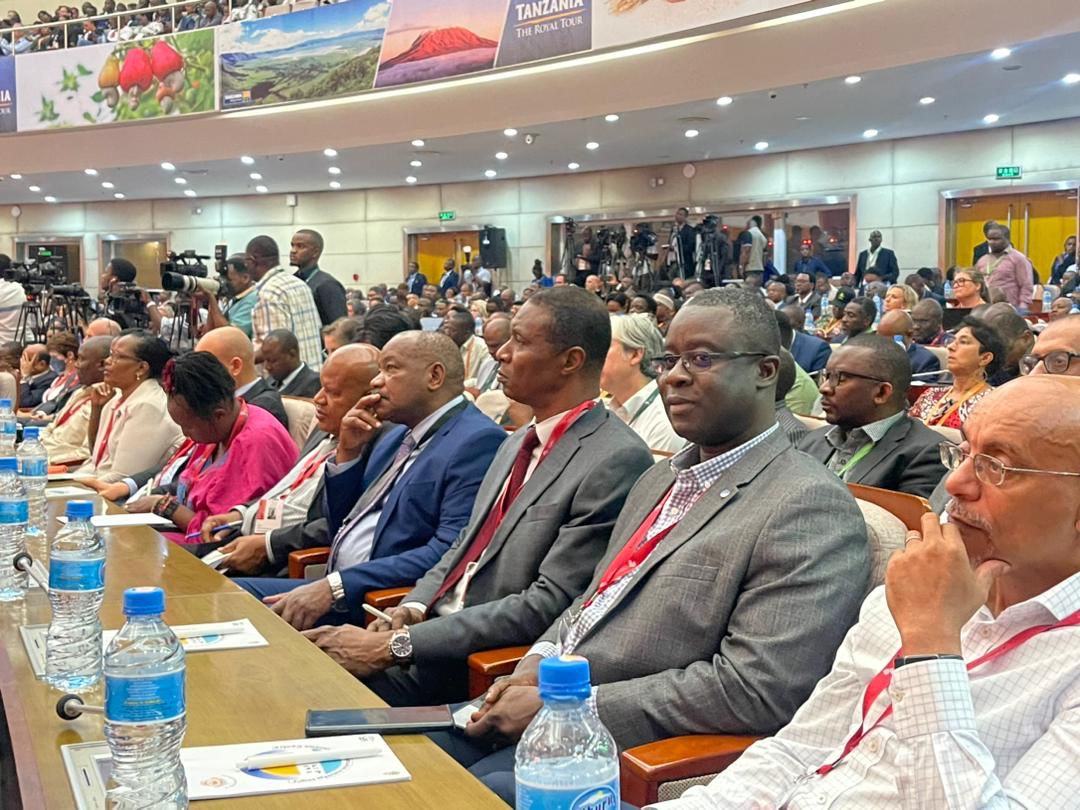
More coherent agricultural policies needed in Africa – Wa East MP
The Deputy Ranking Member on the Food and Agriculture Committee in Parliament, Dr. Godfred Seidu Jasaw, has emphasized the need for African governments to collaborate in shaping more cohesive agricultural policies to address food insecurity challenges on the continent.
During his address at the 2023 Africa Food Systems Forum (AFSF) in Dar es Salaam, Tanzania, Dr. Jasaw highlighted the prevalent incoherence in agricultural policies across Africa, as indicated in the biennial review report of the Comprehensive Africa Agriculture Development program. He underscored the necessity for immediate corrective measures.
The event, titled “Parliamentary and Policymakers Forum: Enabling the Trade Environment for Business,” examined the pivotal role of fostering a conducive environment for businesses in the food systems sector to flourish.
Moderated by Dr. Apollos Nwafor, Vice President of Policy and State Capability at AGRA, the session delved into policies, legislation, and regulations that can attract investments and support the growth of small and medium-sized enterprises (SMEs) in the agriculture and food sectors.
Dr. Jasaw called upon African nations to ensure alignment between the executive and legislative branches in formulating and enforcing agricultural policies, emphasizing the importance of involving legislators in policy development and implementation.
He also advocated for increased and timely funding of agricultural initiatives in Africa, recognizing the critical role of budget allocation in achieving agricultural targets, especially in rainfed regions. Dr. Jasaw stressed the necessity for collaboration between the executive and legislators to hold the government accountable in this regard.
Rose Kayi Mivedor, Togo’s Minister of Investment, echoed Dr. Jasaw’s sentiments, highlighting her country’s commitment to prioritizing agricultural investments to enhance the well-being of its rural population. She detailed Togo’s policies aimed at improving access to land, seeds, and fertilizer, as well as efforts to reduce prices and implement irrigation and training programs to boost agricultural productivity.
Former Tanzanian President Dr. Jakaya Kikwete, delivering the keynote address, urged African nations to leverage the African Continental Free Trade Area (AfCFTA) to advance agriculture.
He lamented that some African countries had yet to ratify AfCFTA, emphasizing its potential to unify the continent economically.
Dr. Kikwete highlighted AfCFTA as a unique opportunity to transform the food system, create wealth, and ensure food security, emphasizing the need for a transformation of smallholder farmers, who constitute a significant portion of African agriculture.
-
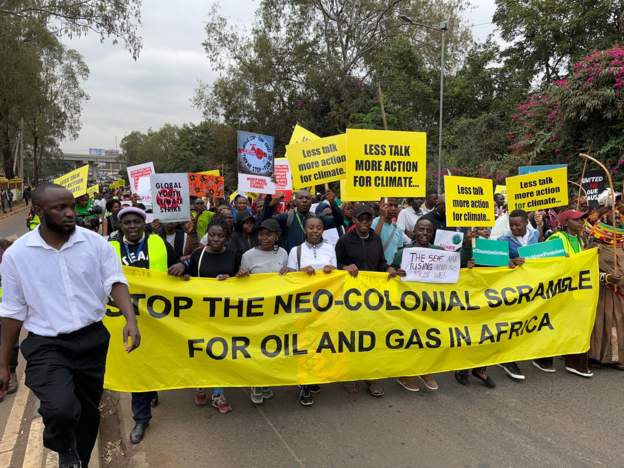
African climate summit taken over by the West – campaigners claim
Many people from different African countries are protesting the Africa Climate Summit in Nairobi. They believe that the event has been taken over by big companies and governments from the Western world.
The organizers referred to the march as a “different meeting” compared to the main conference happening at the Kenyatta International Conference Centre in Nairobi, Kenya’s capital city.
They say that the plans for the summit have been taken over by companies, consultants, and organizations that support the West and are pushing their own interests.
We are here to show how strong people can be. Hardi Yakubu, from the African Rising Movement, said that what is happening at KICC is benefiting the large companies that are causing pollution.
In a letter to Kenya’s President William Ruto, more than 100 organizations and climate change groups from Africa and other countries asked African leaders to avoid “fake solutions like carbon markets, where rich countries can keep polluting. ”
Teresa Anderson, from the charity ActionAid, says that the formal summit created a space for corporations to show themselves as the solution to climate change, while leaving out the people who are actually affected.
They want to create a group of African experts to change the summit’s plan, center on renewable energy, encourage open conversations between citizens and policymakers, and make sure there is enough money for climate efforts. -
Coups are not the answer – UN Secretary-General says
In the wake of a series of coups in African countries, United Nations Secretary-General Antonio Guterres issued a warning on Friday, stating that military takeovers exacerbate problems and are not the solution to governance challenges.
He emphasized the importance of establishing credible democratic institutions, the rule of law, and strengthening international bodies like the African Union to promote peace, stability, and democracy on the continent.
Additionally, Guterres highlighted the need to address the root causes of political instability, particularly the lack of development.
“Development is a central objective if we want to create conditions for peace and stability in Africa.”
His remarks follow Wednesday’s coup d’état in Gabon, the eighth in Africa since 2020. In July of the previous one, the military seized power in Niger.
-
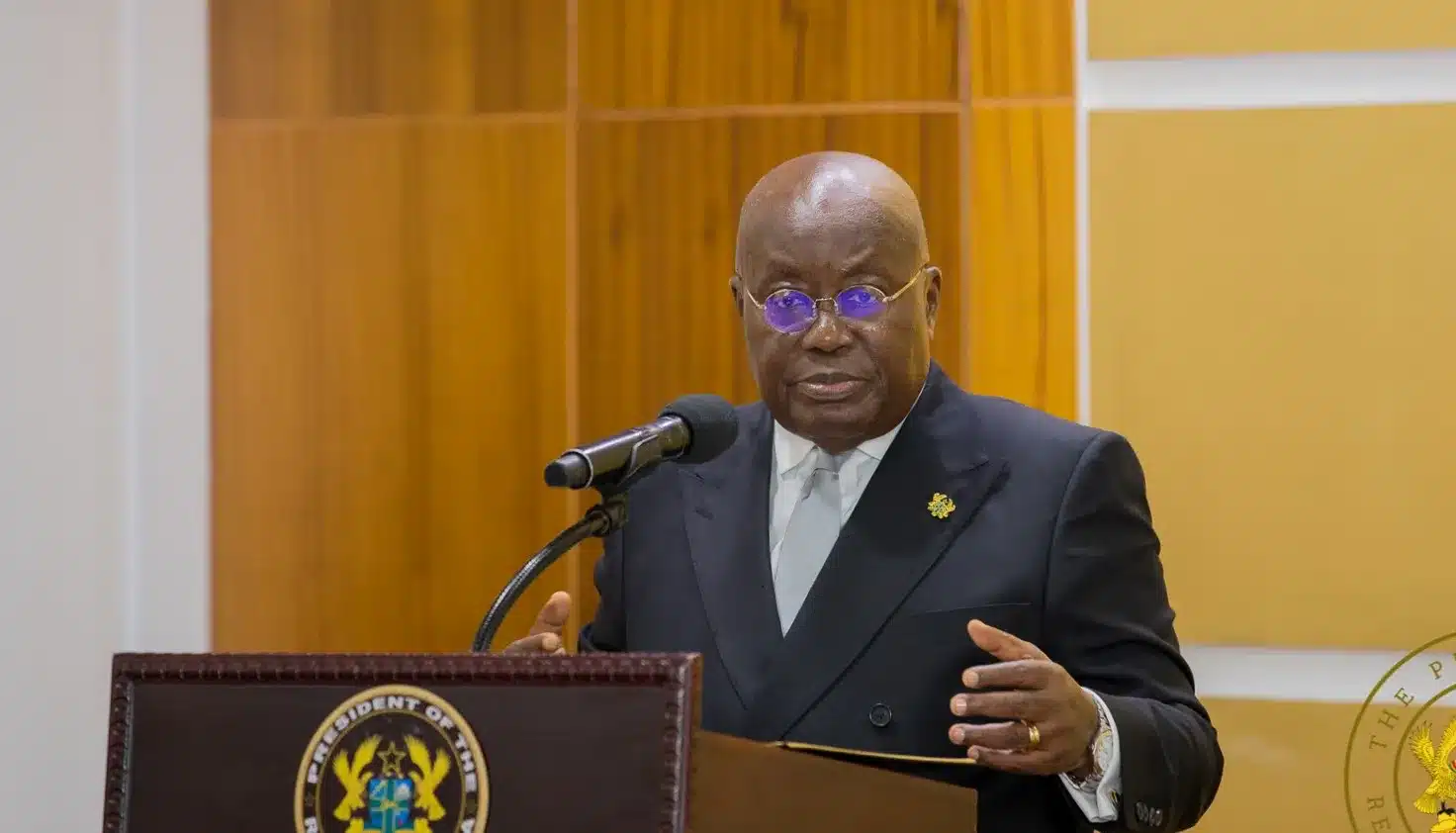
UK commits £210M to address Antimicrobial Resistance in Ghana, other nations
Ghana has been selected as one of the 25 nations to be granted £210 million in funding by the United Kingdom (UK) government. This funding is aimed at tackling the pressing challenge of antimicrobial resistance (AMR) in the next three years.
This substantial funding will be utilized through collaborative efforts between the UK Government and countries in Asia and Africa, aiming to combat AMR and mitigate the threat it poses both globally and to the UK.
This landmark investment stands as the largest ever contribution to global AMR surveillance by any nation.
The Foreign, Commonwealth & Development Office of the UK High Commission in Ghana released a statement confirming this initiative.
The announcement coincides with the visit of the UK’s Health Secretary of State, Steve Barclay, to India for his inaugural G20 Health Ministers’ meeting.
Allocated from the British Government’s aid budget, this funding will aid the activities of the Fleming Fund to address AMR in Asian and African countries, ultimately reducing the menace it presents to societies.
This effort will fortify surveillance capabilities in around 25 nations that confront the highest levels of AMR risk and burden. These countries include Indonesia, Ghana, Kenya, and Papua New Guinea. Over 250 laboratories will be upgraded and equipped with cutting-edge technology.
The funding will also incorporate new genome sequencing technology, facilitating the tracking of bacterial transmission across humans, animals, and the environment.
The statement highlights, “It will also strengthen the international health workforce by supporting 20,000 training sessions for laboratory staff, pharmacists, and hospital personnel, and over 200 Fleming Fund scholarships to enhance expertise in microbiology, AMR policy, and One Health – which acknowledges the interrelation between humans, animals, and the environment.”
Steve Barclay, the UK’s Secretary of State for Health and Social Care, emphasized the significance of addressing AMR, noting that the substantial funding would enable countries at highest risk to combat this issue, enhancing global safety.
Antimicrobial resistance leads to the deaths of approximately 1.27 million people worldwide each year, as antibiotics and current treatments become ineffective against infections. The alarming statistic includes one in five deaths among children under five.
The investment is also designed to support the UK-India Fleming Fund partnership, valued at up to £3 million. This partnership aims to accelerate collaboration on AMR surveillance within the health sectors of both nations and facilitate the realization of their shared roadmap for 2030.
As part of his India visit, Steve Barclay will visit India’s National Centre for Disease Control, where joint efforts between the Indian Government and the Fleming Fund are targeting antimicrobial resistance.
The visit will also involve a showcase of innovative health technology, promoting collaboration between UK and Indian artificial intelligence and digital health firms to further transform healthcare in both nations.
-
It’s necessary for Africa to break free from IMF, World Bank constraints to leverage AfCFTA – Obasanjo
African nations have been pushed to use the African Continental Free Trade Area (AfCFTA) to free themselves from the economic restraints placed on them by colonialism, neocolonialism, and imperialism.
It must flee from the subtle recolonisation tactics being pursued through the “honeyed policy shackles” of the International Monetary Fund, World Bank and the United Nations (UN) dogma.
Former Nigerian President Matthew Okikiola Ogunboye Aremu Obasanjo declared that the treaties and conventions on trade and commerce that imperialist institutions agreed to and signed before and after independence were not intended for the development of Africa.
“The restructured socio-economic and political neocolonialism characterised by its underlining capitalism, neoliberal globalisation, and cultural subjugation of Africa by the Britain Wood institutions is a recipe for continental failure,” he said.
“Thus, if African countries continue to depend on these instruments as the launch pad for their development, the Continent will at last fail regardless of its endowments.”
“The rippling dividend is the mocking economic growth, abject poverty, starvation, joblessness and youth hopelessness.”
Former President Obasanjo, an Honored Fellow of the African Youth and Governance Convergence (AYGC), conveyed this message during the 25th Session of AYGC, held in Mankessim within the Central Region.
Commencing on Saturday, August 12, the seven-day gathering brought together 65 delegates from 27 African nations, along with participants from the United States of America and Canada.
The objective of the forum is to unify the youth, cultivating a shared African identity while harnessing their potential to encourage responsible behavior and active participation in advancing sustainable development.
The event also aims to provide them with the necessary tools, platforms, and responsiveness to assert their rights, thus fostering social accountability, transparency, and fairness.
The Youth Bridge Foundation and partners put the programme together on the theme: “Advancing Youth Inclusive Governance, Peace, and Security: The Digital Innovation Factor.”
The ex-President emphasized that the AfCFTA offers a chance to boost trade and thereby enhance the economic prosperity of individual nations.
The establishment of this trade area is projected to elevate intra-African trade by $35 billion annually while curbing external imports by $10 billion.
Moreover, it holds the promise of opening doors for the expansion of small businesses, potentially elevating around 30 million individuals from the grips of extreme poverty.
Despite these significant advantages, he expressed his concern about African nations’ excessive reliance on the Bretton Woods Institutions. This dependence involves combining loans with specific conditions, which in turn promote the ‘Washington Consensus’ principles of a ‘free market’ doctrine.
Similarly, he lashed at leadership across the continent, saying: “The greatest failure of African leaders is the lack of full understanding of what being independent means and what it entails.
“The reason the colonial powers were here and why they committed all those atrocities even matter. Independence meant hard work to serve ourselves and our interests better than the colonial power.”
Early African leaders had the incorrect ideas, according to former president Obasanjo, by restricting independence to the right to free speech, the raising of national flags, leisure, and enjoyment.
Early African leaders were unaware of the unfairness of the newly established political, judicial, and neo-political systems.
“It is important to rebrand and turn Africa around for the world to know that Africans are one and good people with natural resources and diverse culture and we need strong partnerships with the diaspora to do this.”
“Let us build the human resources of Africa by extending a hand of friendship to them so that together we can help change the narrative of the continent, now and in the future.”
-
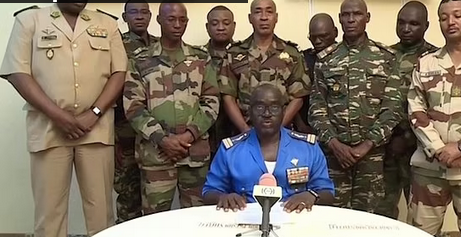
Africa likely to experience 2 more coups if Niger situation is not properly addressed – WANEP
Executive Director for the West Africa Network for Peacebuilding (WANEP), Chukwuemeka Eze, has raised concerns about the possibility of more military takeovers in Africa if the ongoing situation in Niger is not effectively addressed.
The warning comes as tensions continue to rise in the West African nation.
Mr Eze in an interview on JoyNews, emphasised the urgent need for swift and comprehensive action to prevent the situation from escalating further, stressing that the potential fallout from the situation could have far-reaching implications for the stability of the region.
“We did our analysis and we felt that there could be two more [situations] if nothing is done in Niger and that’s not a trajectory that we want to go again. This is becoming very very very worrisome,” he added.
Niger, a landlocked country in West Africa, has been grappling with political turmoil in recent months. The concerns stem from a combination of factors, including political dissent, economic challenges, and social unrest.
The Economic Community of West African States (ECOWAS) has intervened in the situation and has ordered ‘immediate activation’ of the standby force in Niger to restore democracy.
Speaking on the development, the security analyst entreated ECOWAS to take decisive action in handling the crisis.
“I think the fundamentals for me is whether there’s an existing protocol that forbids the coup d’etat in West Africa and whether these countries actually have ascribe to it through their national government,” he said.
“The fact that we did not act in Burkina or Mali the way we should act, also tells me that lessons are being learnt,” he added.
The analyst’s earlier prediction hinges on the notion that if the situation in Niger is not adequately addressed, it could serve as a precedent for similar events in other parts of the African continent. Military takeovers have historically been a concern in various African nations, and the analyst’s warning underscores the need for regional and international stakeholders to engage diplomatically and collaboratively to mitigate the risk.
The stability of African countries is crucial not only for their citizens but also for regional peace and security. The analyst’s warning serves as a call to action for leaders, diplomats, and international organizations to work together to find a peaceful resolution to the crisis in Niger.
-
Kwame Nkrumah set a bar none of our following presidents can meet – Sam George
Ningo-Prampram Member of Parliament, Sam Nartey George, is of the view that the legacy left by late former President Dr Kwame Nkrumah cannot be matched by any of his successors.
While contributing to the subject of coup d’etats in Africa on JoyNews on Monday, Mr George noted that Dr Nkruamh proved to the world, particularly the West, that the black man is capable of managing his own affairs.
However, he noted that after his passing, all the leaders Ghana has encountered have failed to fill the shoes once worn by the country’s first president and prime minister following its independence from British colonial rule on 6th March 1957.

Ghana’s founding father, Osagyefo Dr. Kwame Nkrumah “Look, a black man, Kwame Nkrumah, showed that it is possible.
“Over the weekend, I took my kids across about three regions and showed them a few things Nkrumah did and you know what my soon to be 8-year-old son said to me, he said ‘Nkrumah did a lot for Ghana and he wasn’t President for a very long time.’ And I said yes, he set a bar that nobody can meet.
“None of our following Presidents have been able to meet,” he said.
According to the Ningo-Prampram legislator, Ghana has not seen such impressive development as the current crop of leaders are more interested in serving themselves than the citizens.
“So it is possible if you have the leadership, the desire to serve your people and not to serve yourself,” he said.
Mr Nartey George is of the view that Ghana and Africa as a whole need “a crop of young leaders who are afrocentric in their thinking and will say to the West and Europe, ‘we will stay, hold our own, trade among ourselves, and we will only trade with you if you are willing to come and negotiate with us as equals.’”
The MP stressed that the older generation have failed the current generation. Citing President Akufo-Addo as reference, he noted that the president cannot demand a return to democratic governance in Niger when he failed to criticize the likes of Alassane Ouattara, who attempted to run for a third term by altering Ivory Coast’s constitution.
“This whole talk by Akufo-Addo that the hunter must withdraw and allow democratic institutions. What did he say when his friend Alhassan Wattra attempted to change the constitution of Ivory Coast. What did he say when his friend in Senegal tried to do it? It is that hypocrisy of African leadership that is leading to a revolution in the younger generation of Africans to say these old folks have had their day, and it is time for us to take our destiny into our own hands,” he stated.
Ouattara reversed an earlier commitment and announced his intention to participate in the October 31 election, prompting allegations that he is emulating the actions of other African leaders who have manipulated constitutional rules to retain control.
Although Ivory Coast’s legislation restricts presidential terms to two, Ouattara argues that the adoption of a new constitution in 2016 effectively reset the counter, thereby permitting him to seek re-election.
-
Ban on rice importation by India, likely impact on Ghana, other African countries
The recent decision by India, the world’s largest rice exporter, to ban rice exports is expected to have a significant impact on rice prices in Ghana.
This move by the Indian government, aimed at addressing domestic inflation concerns, has raised concerns about potential global food price increases.
India accounts for more than 40% of the world’s rice shipments, making it the leading rice exporter. As a result of the export ban, rice prices from various Asian nations have already risen in the global markets, and traders predict further substantial increases in the near future.
In 2022, Ghana imported rice worth $552 million, making it the 13th largest rice importer globally.
Rice was the third most imported commodity in Ghana during that year. Notably, Ghana imported rice worth over $100 million from India, according to data from the Observatory of Economic Complexity (OEC).
The repercussions of this export ban will soon impact Ghana, affecting not only the prices of non-basmati rice but also basmati rice varieties. Experts warn that this ban adds to the challenges faced by the global rice market, which has already experienced price hikes of 15%-20% since September 2022.
Based on current trends, the cost of a 50kg bag of non-basmati rice, typically priced between GHC750 and GHC800, is expected to surpass GHC1000 in the coming days. As India plays a significant role as a major rice supplier to important markets in Asia and Sub-Saharan Africa, these regions are particularly vulnerable to disruptions in the rice market.
Moreover, it is important to note that forty-two countries rely on India for over 50% of their total rice imports, making it difficult to easily substitute Indian imports with those from other major rice exporting nations like Vietnam, Thailand, or Pakistan. In Africa, India’s market share in 2022 surpassed 80% for several countries.
-
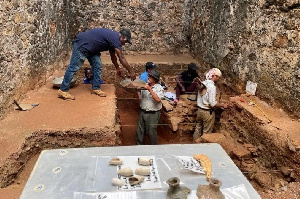
‘First English slave fort in Africa’ located in Ghana by Archaeologists
Ghana has once again captured the world’s attention as news emerged confirming the beginning of the story of slavery in Africa, particularly in Ghana.
Leading an archaeological team, Prof. Christopher DeCorse, an archaeologist from Syracuse University in the United States of America, successfully uncovered the exact location of what is believed to be the first English slave fort in Africa.
The team diligently worked under the ruins of Fort Amsterdam, carefully extracting remains of an older fort called Kormantine. Buried beneath the earth, the long-lost fort has kept the archaeologists busy as they methodically sift through distinct layers of soil, as reported by the BBC.
Among the ruins, the team discovered significant artifacts such as gunflints used in old-fashioned guns, tobacco pipes, broken pottery, and the jawbone of a goat. These findings provide evidence of “the first English outpost established anywhere in Africa.”
Prof. Christopher DeCorse expressed his excitement, stating that any archaeologist who claims not to be thrilled when making such discoveries is not entirely truthful. He announced this pivotal moment in the history of European involvement in Africa during the slave trade era with great enthusiasm.
This archaeological discovery may shed light on the lives of early traders and the activities that took place, as well as the experiences of those who were sold as slaves and the impact on the surrounding community.
According to the report, the slave trade began at the location of Fort Kormantine in 1663 when King Charles II granted a charter to the Company of Royal Adventurers of England Trading into Africa, later known as the Royal African Company. The company was given a monopoly on the trade of human beings.
Two years later, the Dutch seized the fort, but it does not diminish the fact that Fort Kormantine played a crucial role in the early stages of the slave trade.
“We don’t have that many details on exactly what these early outposts of the slave trade looked like, which is one of the things that make uncovering the foundations of Fort Kormantine interesting,” Prof DeCorse added.
-

Ghana’s coast holding ‘first English slave fort in Africa’ – Report
The first English slave fort in Africa appears to be located in Ghana, according to the BBC.
Per BBC’s report, Archaeologist Christopher DeCorse from Syracuse University is leading the excavation and proudly displaying rare artifacts on a makeshift table near the dig site.
Among the artifacts are a gunflint, tobacco pipes, broken pottery, and the jawbone of a goat, all of which provide valuable insights into the past.
According to DeCorse, these findings suggest the existence of “the first English outpost established anywhere in Africa.”
“Any archaeologist who says they are not excited when they find something are not being entirely truthful,” the professor from Syracuse University in the US says with a broad smile.

The site of the dig, under the blue canopy, is inside Fort Amsterdam built by the Dutch
The excavation takes place in the ruins of Fort Amsterdam, on Ghana’s coastline, where the remains of an older fort named Kormantine are believed to be buried.
The team carefully combs through layers of soil, using soft-bristle brushes and trowels, and sieves the disturbed soil removed from the trenches.
Ancient maps referred to a Fort Kormantine in the area, and the name of the nearby town, Kormantse, is closely related. The fort’s discovery may shed light on the lives of early traders, enslaved people, and their impact on the local community.
Fort Kormantine, built by the English in 1631, played a pivotal role in the early stages of the slave trade.
It started as a trading post for gold and ivory but later became a warehouse for goods used to buy slaves.
Additionally, it served as a holding point for those kidnapped in various parts of West Africa before being transported to the Caribbean for plantation work.
The exact location of Fort Kormantine had been a matter of speculation, but initial digs in 2019 near Fort Amsterdam provided clues.

Nigerian Omokolade Omigbule says it was “mind-blowing” to see the remains of the English fort Recently, during further excavations, the team uncovered a six-meter-long wall, a door post, foundations, and a drainage system made of red brick, indicating an English presence predating the Dutch fort.
The artifacts found at the site, including a rusty gunflint and tobacco pipes with small bowls, align with the early 17th Century timeframe.
“It was mind-blowing, seeing first-hand the remnants, the footprints of an actual building subsumed under a new fort,” says the student from the University of Virginia.
“Seeing the imprints of these external forces in Africa first-hand and being a part of such a dig takes me back a few hundred years, it feels like I was there.”
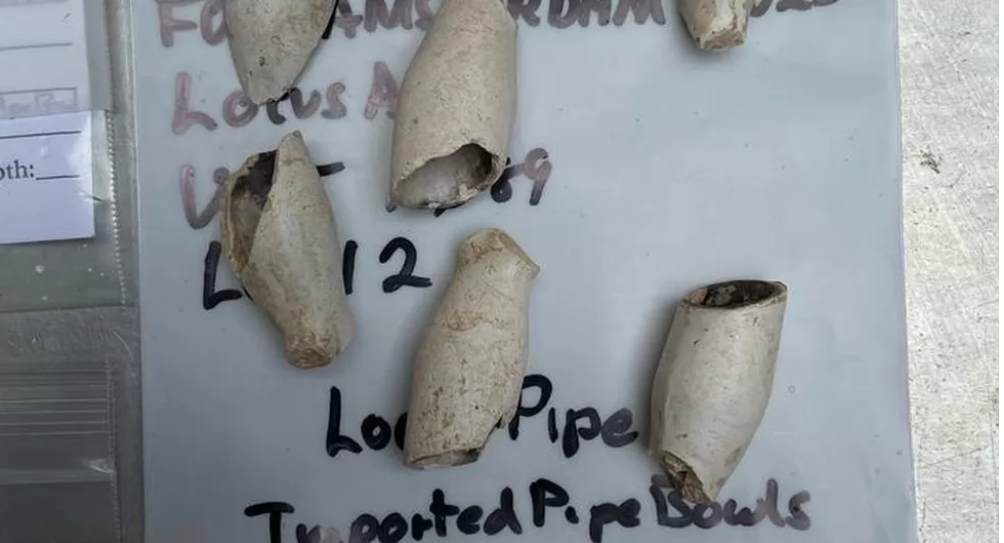
These bowls of tobacco pipes were among the artefacts found at the site The presence of a goat jawbone suggests that the English may have domesticated local animals as an additional protein source despite being near abundant fishing grounds.
The work of archaeologists will continue for the next three years, focusing on unraveling Fort Kormantine’s architecture, appearance, and significance to gain a deeper understanding of this historical landmark.
-

August to bring magnificent display of double-supermoons
August will culminate with two massive, spectacular lunar eclipses as the moon approaches its closest point to Earth. A supermoon occurs when the moon appears full and is at this point in its orbit; this month, there will be two of them.
According to calculations from retired NASA astronomer Fred Espenak, the first of the supermoons will peak at 2:32 p.m. ET on Tuesday, meaning lunar watchers in Europe, the United Kingdom, Africa, and the Middle East can see the orb glowing at its fullest in the night sky at a distance of about 222,158 miles (357,530 kilometres) from Earth. You may be sure that on August 1st evening, the moon will seem full for watchers in the United States. Due to their proximity, supermoons typically appear brighter and larger than regular full moons, however this difference isn’t always visible to the unaided eye.
According to The Old Farmer’s Almanack, this week’s full moon is also known as the “sturgeon moon” since it happens around the time of year when indigenous populations discovered in the past that the giant freshwater fish were simple to catch in the Great Lakes. Looking towards the southeast after sunset on Tuesday is the best time to see the sturgeon supermoon from the United States.
A full moon will then appear on August 30 at a distance of roughly 222,043 miles (357,344 km), making it an elusive super blue moon. This will be the closest full moon to our planet this year.
Typically occurring only once every two and a half years, a blue moon is a second full moon that occurs inside the same calendar month. For instance, the most recent blue moon took place in October 2020.
The almanack predicts that the super blue moon on August 30 will peak at 9:36 p.m. ET. If local weather permits, the celestial orb will also be visible on August 31st.
However, despite its name, it won’t actually appear blue. According to Encyclopaedia Britannica, the phrase “blue moon” actually derives from a 16th-century idiom that meant something happened once in a blue moon.
What exactly are a supermoon, blue moon, and full moon?
A full moon occurs once a month when the near side of the moon is completely illuminated by the sun in the night sky.
Supermoons are less frequent.
The moon does not orbit Earth in a complete circle, which causes several lunar displays. Instead, the moon travels on an elliptical course that resembles an oval, bringing it closer to the Earth at specific times. According to NASA, the precise distance between Earth and the moon can vary by up to 26,222 miles (42,200 km).
Supermoons happen when the moon is full and near or at its perigee, or closest point to Earth (in scientific jargon).
According to the National Space Centre of the United Kingdom, this is what astronomers refer to as a “perigean full moon,” which can look up to 30% brighter and 14% larger than full moons that occur at the furthest point from Earth.
Some claim that the term “supermoon” is overused because it can be used to describe full moons that don’t come at the closest point to Earth and don’t always stand out dramatically from regular full moons to the human eye.
Supermoon isn’t an official astronomical term, but according to NASA, it “is used to describe a full Moon that comes within at least 90% of perigee.” These lunar occurrences are also frequent: Three or four supermoons normally occur each year.
According to researcher Adam Block, an operations expert at the University of Arizona’s Steward Observatory in Tucson, the moon often appears greatest in the sky when it is close to the horizon, producing an optical illusion. And whether the moon is in supermoon territory has nothing to do with this phenomena.
The illusion vanishes entirely if you spin around in the opposite direction and are flexible enough to bend over and stare between your legs at the moon upside down, according to Block.
Although they are not extremely uncommon or physically distinctive, supermoons do have an influence on Earth. According to NASA, the Earth’s oceans may see higher tides as a result of the moon’s proximity.
However, blue moons are less frequent. The phrase today usually refers to two full moons occurring in the same calendar month, however it originally referred to an additional full moon occurring during the same tropical year, or the time between two equinoxes.
The August 30 full moon is particularly unique because not all blue moons are supermoons. According to Espenak’s research, the next time two supermoons coincide in the same month will be in January 2037.
Sometimes, several lunar events coincide on the same night to produce a really unique sky-watching experience, as was the case on January 31, 2018, when the final full moon of the month was also a blood moon, or total lunar eclipse, in addition to being a blue moon and a supermoon. When the full moon acquires a reddish hue from Earth’s shadow, those occurrences take place.
-
Russia to aid reduction of Africa’s debt load with a $90m pledge
In order to help reduce Africa’s debt burden, the Russian government pledged more than US$90 million during the Second Summit of the Russia-Africa Economic and Humanitarian Forum.
This aid is intended to support the continent in addressing its debt issues.
A significant portion of African countries’ debt issues with the East European giant has already been settled, with Moscow writing off their indebtedness amounting to US$23 billion.
In his address at the Summit, Russian President Vladimir Putin acknowledged that African states continue to face challenges related to displays of colonialism, particularly in the economy.
“The main thing is that the Summit has again confirmed the firm resolve of both Russia and Africa to continue developing mutually beneficial partnerships and seeking new forms and areas.
“We appreciate this and are convinced of the successful future of Russia-Africa relations.
“They rest on the traditions of time-tested friendship, and historical experience of multifaceted productive interaction dating back to the early period in African states’ formation,” he noted.
The adoption of the St Petersburg Declaration emerged as one of the key highlights of the Summit.
Through this declaration, the participating parties have committed to creating a fair and democratic multi-polar world order based on the universally recognized principles of international law and the United Nations Charter.
Africa, with its 1.3 billion people and 54 nations, forming the largest voting bloc at the UN, has successfully convinced an increasing number of powers, including the United States (US), to organize such gatherings.
The Summit extensively discussed the prospects for further developing relations between Africa and Russia, with a specific focus on supporting the continent’s national sovereign development.
The primary objectives emphasized were ensuring equitable access to food, fertilizers, modern technologies, and energy resources, as highlighted by Yuri Ushakov, the Kremlin Foreign Policy Advisor.
The growing role of Africa was acknowledged, and there was a rising demand for an African stance on global affairs.
Additionally, on the sidelines of the Summit, the 2023-2026 Russia-Africa Partnership Forum Action Plan was signed by Russian Foreign Minister Sergei Lavrov and AU Director of Peace and Security Division of the Intergovernmental Authority on Development, Mr. Siraj Tagesa Shurafa.
Comoros President and Chairman of the African Union, Mr. Azali Assouman, expressed his observations during a joint press conference, where he highlighted Russia’s consistent support to the continent during challenging times.
“It was one of the first countries to help with fighting colonialism, apartheid and slavery.
“So, for many centuries, we have had good relations, but this time we need a new impetus to the relationship to take it forward,” said Mr Assouman.
He expressed gratitude to Russia for committing to support Africa by providing training for professionals and supplying grain.
Regarding the Russia-Ukraine political crisis, the AU Chair advocated for peace between the two countries, stating, “What we need is a ceasefire because war is always unpredictable. The longer it lasts, the more unpredictable it becomes.”
Numerous other African leaders also called for peaceful resolutions to the conflict.
South African President, Cyril Ramaphosa, emphasized the importance of negotiations, dialogue, and commitment to the UN Charter for achieving peaceful and fair resolutions to conflicts.
President of the Republic of Congo, Denis Sassou Nguesso, emphasized the significance of the African initiative, urging an end to the Russian-Ukrainian conflict.
The African Union Commission Chairman, Moussa Faki Mahamat, stressed that the conflict is having a negative impact on the entire world, expressing concern over the grain supply issue. He emphasized the urgent need to resolve the problem of food shipments to countries in need.
-
US$500, €590 owned by a Ghana Gas official reportedly stolen at Russia-Africa summit – Report
At the recently concluded Russia-Africa summit held in St. Petersburg from 28th to 29th March, an undisclosed member of Ghana’s delegation experienced a loss of money from their hotel room.
The summit saw the gathering of various African leaders and government representatives who engaged with the Russian president and other high-ranking officials.
Ukrainian journalist Igor Suskho reported that several guests at the event had incidents of burglary recorded in their hotel rooms.
“Russia: 3 attendees of the Russia-Africa Summit from Ghana, Burundi, and Argentina found their hotel rooms burglarized in St. Petersburg. $500 and €590 in cash stolen from the hotel room of an executive from Ghana’s gas company,” his tweet read.
Ghana participated in the summit, but GhanaWeb’s verification revealed that President Nana Addo Dankwa Akufo-Addo was not present in the family photo taken at the conclusion of the event.
The leader of the Ghanaian delegation remains unidentified, despite GhanaWeb obtaining documents indicating the presence of a substantial delegation consisting of government officials and private sector representatives.
This 2023 edition of the Russia-Africa summit marks the second occurrence following the initial summit in Sochi in 2019.
-
Why Africa is the new center of the world’s bell trade
The international trade in church bells marks the beginning of a new age for Christianity, one with Africa at its core.
“Our bells are like the thermometer of the faith… Through our trade, we can immediately understand where the faith is most alive, and where it is waning,” says Armando Marinelli, an artisan church bell-maker from Italy.
“We currently have orders from Tanzania, Nigeria, [Democratic Republic of] Congo… So we can tell that, whereas faith here in Italy is a bit up and down, in Africa it’s thriving.”
His foundry, Campagne Marinelli, is centuries old, and bells made there hang in some of Italy’s most well-known locations, including the Vatican’s St. Peter’s Square and the Leaning Tower of Pisa.
The declining popularity of Marinelli bells in homes now mirrors the fall of Christianity in western Europe, historically the center of the religion.
The Marinelli bells are therefore sent across the oceans rather than being placed in adjacent residences.
We tracked the Marinelli bell to Odoni in south-western Nigeria for a BBC World Service documentary where we discovered a vibrant Christian community.
“The bell, we see it as the voice of God… the church in Africa is booming,” announces Father Cletus, the parish priest.
“We believe the re-evangelisation of the Earth is going to happen from sub-Saharan Africa, Nigeria in particular,” agrees Pastor Paul Enenche of Dunamis International Gospel Centre.
“Believe in that!”
-

Russia can replace Ukraine in supply of grain to Africa
President Putin has stated that Russia has the capability to replace Ukraine as a supplier of grain to Africa after withdrawing from a deal that allowed safe shipment of grain across the Black Sea.
In a statement from the Kremlin, Moscow announced its willingness to provide grain to Africa on both commercial and free-of-charge terms. Previously, in the year leading up to June 2022, Russia was a major exporter of wheat to Africa, shipping 10.8 million tonnes. During the same period, Ukraine exported 6.3 million tonnes of wheat to the continent.
President Putin expressed confidence in a record harvest this year in Russia. The country is set to host the second Russia-Africa summit later in the week.
The termination of the Ukraine grain deal was met with regret from the African Union, whose member states have been severely impacted by the surging food prices.
There are reports suggesting that Moscow is seeking to supply grain to Africa through a partnership involving Qatar and Turkey, although it remains uncertain whether they will accept this arrangement.
-
African democracy at risk due to declining satisfaction – CEO of Afrobarometer
During the Africa Drive for Democracy Conference – Elders Retreat in Arusha, Tanzania, Afrobarometer CEO Joseph Asunka addressed participants and shared concerning news about the declining satisfaction with democracy across Africa. Asunka emphasized that this decline is eroding citizens’ confidence in democratic governance.
The conference provided a valuable platform for former heads of state and key elders to come together and engage in discussions about the current state of democracy in Africa. Their collective wisdom and imagination were harnessed to explore potential pathways for revitalizing and sustaining democracy on the continent.
Asunka highlighted several factors that might be contributing to the growing dissatisfaction with democratic rule in Africa.
These factors include non-compliance with presidential term limits, an increase in crime and insecurity, and rampant corruption within the political system. Addressing these issues is essential for restoring faith in democratic institutions and ensuring the prosperity of democratic governance in the region.
“The data shows that Africans’ commitment to democracy remains strong,” he said.
“However, governments and elected leaders have failed to meet these popular democratic aspirations. This has led to a decline in popular confidence in democratic governance and an increasing attraction to military rule and intervention.”
According to recent data from Afrobarometer, which surveyed 36 countries in 2021/2022, it was found that a significant majority of Africans, around two-thirds (66%), prefer democracy as their preferred form of government. Furthermore, there is a strong rejection of one-man rule (80%), one-party rule (78%), and military rule (67%) among the surveyed populations.
However, the data also reveals that only 38% of Africans express satisfaction with the functioning of democracy in their respective countries.
Noteworthy attendees at the conference included Joachim Chissano, Ernest Bai Koroma, Hailemariam Desalegn, and Jakaya Mrisho Kikwete, who are former heads of state from Mozambique, Sierra Leone, Ethiopia, and Tanzania, respectively. Tanzanian President Samia Suluhu Hassan graced the event as the guest of honour.
During the conference, these esteemed leaders emphasized the importance of finding practical and actionable solutions to strengthen democracy in Africa. Their shared commitment reflects the recognition of the challenges and opportunities ahead in preserving and enhancing democratic governance on the continent.
“Unless and until African governments address the deficiencies in democratic governance and deliver essential public services to their people, democracy will remain an aspiration never to be meaningfully realised,” Hassan said.
Addressing the conference theme, “Securing Africa’s democratic future through learning and engaging,” Koroma said confronting these challenges demands collective action to preserve and strengthen democratic norms and institutions.
“We’re all in this together because we believe in the transformative power of democracy,” he said.“No doubt democracy is not without obstacles, but together we must confront the
challenges that threaten its foundations: poor leadership, ineffective citizenship, corruption, poverty, political polarisation, rogue elections, and all the attendant ramifications of social
unrest and political instability.”Throughout the discussions, participants acknowledged the vital role of African elders in shaping the continent’s democratic future.
Across a continent that has experienced 21 coups in eight years, Afrobarometer data show that the extent of citizens’ opposition to military rule has declined by 10 percentage points over the past decade.
Only three of the 36 surveyed countries (Liberia, Uganda, and Sudan)
have recorded significant increases in their resistance to military rule. Worryingly, a slim majority (53%) of citizens are willing to endorse military intervention if elected leaders abuse their power.The Africa Drive for Democracy Conference – Elders Retreat served as a platform for constructive dialogue, seeking concrete approaches to advance democracy and ensure sustained democratic gains for Africa.
-

Netflix’s African cartoon series achieves new heights with tv series
Supa Team 4 is the first original African cartoon series on Netflix.
The eight-part television series follows four female teenage superheroes who are trying to preserve their city in a futuristic version of Lusaka, Zambia’s capital.
The series’ Zambian writer and creator, Malenga Mulendema, expressed her hope that it will pave the way for more African stories to be told on streaming services like Netflix.
“The story is similar across the continent – the talent is there and the stories are there but the opportunities are few and far between.
“With partnerships with companies like Netflix, you have more chances to create and have the world see your stories.”
After being selected as one of the winners of an all-African talent contest sponsored by Disney and the animation studio Triggerfish, Malenga Mulendema developed the series.
Sampa the Great, a rapper, singer, and songwriter from Zambia, has also donated her voice to the series and performed the title song.
“Animation series shaped our childhoods and to know young Zambians get to see what they’ve never seen on TV before is amazing!” she posted on Instagram.
The series will be available in English and Zulu.
-

UK imposes sanctions on Wagner leaders for their work in Africa
The UK government has imposed sanctions on 13 individuals and businesses associated with Wagner Group’s activities in Mali, Sudan, and the Central African Republic.
Wagner mercenaries have been involved in providing security services in various African nations.
One of the individuals sanctioned is Konstantin Aleksandrovitch Pikalov, often referred to as the “right-hand man” of Wagner’s leader, Yevgeny Prigozhin. Pikalov faces accusations of human rights abuses.
Furthermore, Wagner fighters have been accused by the US of engaging in illicit gold deals on the African continent to enrich themselves.
In the past, Wagner fighters played a significant role in Russia’s invasion of Ukraine until a recent attempted mutiny last month.
“The Wagner Group is committing atrocities in Ukraine, as well as acting with impunity in countries like Mali, Central African Republic and Sudan,” UK Development Minster Andrew Mitchell said.
“These sanctions expose despicable individuals who have commissioned violations of international humanitarian law, holding them to account for the severe harm they are inflicting on innocent civilians for financial gain.”
-

Our activities in Africa to continue – Wagner Group chief says
Founder of Russia’s private military company Wagner, Yevgeny Prigozhin, stated in an interview with Afrique Media TV that his mercenaries intend to maintain their operations in African countries where they are currently deployed.
We continue to work in all the countries where we started or are now doing this work of co-operation and development,” he said in an interview published on the pro-Kremlin TV’s Facebook page.
“If the assistance of the Wagner Group is needed anywhere to combat gangs and terrorists and to protect the interests of the people of these countries, we are ready to begin immediately to fulfil this task after agreeing on the conditions.”
He added that “there was no, and there will be no reduction in our programmes in Africa”.
After rumors surfaced regarding the potential withdrawal of Wagner mercenaries from Mali and the Central African Republic, Yevgeny Prigozhin, the founder of the private military company, addressed the speculation. His statements came in the aftermath of a brief mutiny he staged in Russia on 24 June.
It is worth noting that rights groups have accused Wagner mercenaries of committing human rights abuses in both Mali and the Central African Republic.
-
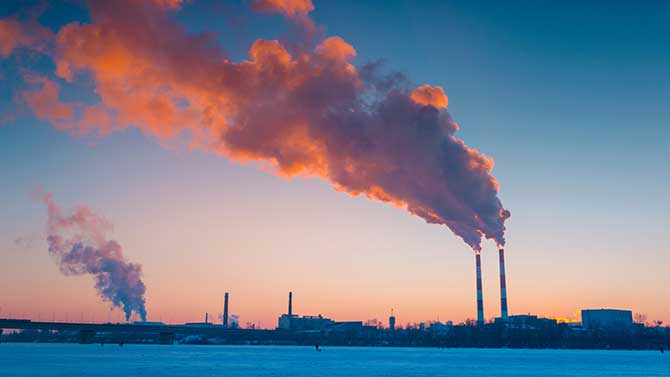
Africa faces new obstacle in EU’s revised carbon border scheme
European Union’s Carbon Border Adjustment Mechanism (CBAM) has been designed to incentivize cleaner manufacturing practices in countries from which it imports goods.
Starting in October on a temporary basis, the CBAM will implement a carbon tax on exports bound for the European Union.
But the measure has elicited concern in Africa which counts Europe as a major export market.
A study carried out by the African Climate Foundation and the London School of Economics suggests that the CBAM’s economic repercussions will be ‘far-reaching’ and most strongly felt in Africa.
Their modelling based on €87 per ton suggests that the CBAM would lead to around $25 billion in losses based on 2021 GDP levels, nearly four times higher than what the EU gave to Africa in development assistance in 2021.
Products such as iron and steel, cement, aluminium, fertiliser, hydrogen, and electricity – which make up a significant portion of Africa’s exports to Europe, will be the first victims of the mechanism.
After 2026, the CBAM’s scope will extend to other products, potentially leading to bigger economic loss.
Experts say the measure is punitive, and dramatically reduces the space for developing countries to achieve growth and to create jobs.
Our guest this week is Faten Aggad, the senior advisor climate diplomacy and geopolitics at the African Climate Foundation.
Uganda mulls zero tax on electric cars
Uganda is racing to switch to e-mobility despite having limited infrastructure in the country. Authorities say waiving tax on electric vehicle imports will encourage mass adoption.
The goal is to reduce pollution and to improve Kampala’s green credentials.
East Africa sees record growth in FDI
East African countries defied economic turbulence in 2022 to post a 17 percent growth in foreign direct investment, with South Sudan and Kenya seeing the highest percentage increases.
On the contrary, Inflows fell in Southern, western and central Africa.
-
Africa’s top innovation award handed to Ugandan engineer
The CEO and founder of Yunga, a neighborhood digital security network that improves neighbor-to-neighbour safety, is the Ugandan Anatoli Kirigwajjo. He just received “The Africa Prize for Engineering Innovation,” which is intended to foster the innovation of Africans.
Through a physical gadget, smartphone app, or SMS service, Yunga connects neighbors to one another and to police within a 20-kilometer radius, offering security at a reasonable price.
The Royal Academy of Engineering in the UK established the award, which is given following an eight-month training and mentoring period.
“I developed Yunga after losing $1,300 worth of assets in a break-in, with little chance of the thieves being caught. We hope that with our household networks, communities will become harder targets for criminals. This will ensure safety, which in turn will create the space for economic activities to thrive,” says Mr Kirigwajjo.
Over 180 instances of neighborhood crime have already been stopped because to Yunga, and they intend to expand to other African markets including Ghana, Kenya, and Nigeria.
-
New global financial model being promoted to fit Africa
Amid rising interest rates, inflation, and commodity shocks, the probability of simultaneous debt crises in Africa has increased.
The International Monetary Fund (IMF) estimates that approximately 30 percent of emerging markets and 60 percent of low-income countries may encounter challenges in meeting their debt obligations.
Furthermore, there has been a noticeable transformation in the global credit landscape over the past decade. China and private bondholders have emerged as the primary creditors for low-income economies, rendering traditional debt structures less effective in addressing present-day debt issues.
In light of these circumstances, African countries face the task of navigating these challenges while simultaneously seeking to enhance domestic resources, develop robust capital markets, and secure access to affordable international private capital.
During the Shareholders General Meeting of Africa50, an infrastructure lender, held recently in Lome, Togo, African financial and political leaders explored various approaches to improve financial and credit accessibility.
They unanimously agreed on the need for a fundamental shift and advocated for a re-engineering of the global financial architecture that better suits the unique needs of the continent.
-
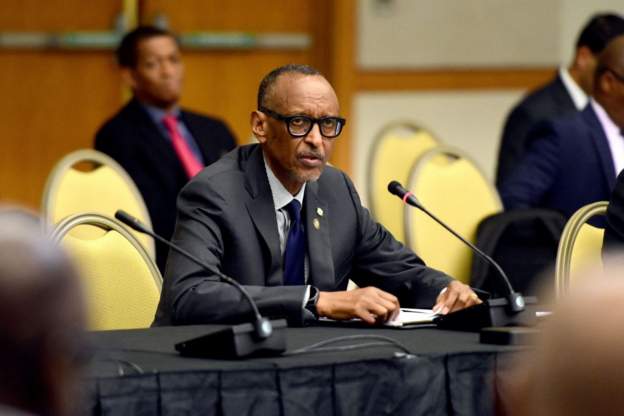
Do not be comfortable blaming others for our problems – Kagame tells African leaders
At the 45th Caribbean Community (Caricom) summit in Trinidad and Tobago, Rwandan President Paul Kagame pressed for closer connections between Caribbean and African nations and urged both areas to stop pointing the finger at one another for their issues.
“We should not be comfortable blaming others for our problems, including the harm we inflict on ourselves,” President Kagame said.
“The starting point here is how we govern our own individual countries, striving to be the best we can be, with a culture of accountability,” he added in a statement.
“We need to come together in real terms and focus on concrete initiatives which address the challenges that nations like ours face today,” Mr Kagame said.
He emphasized the need for both areas to promote more inclusive credit terms for nations that require loans as well as more collaboration in the fight against climate change.
He also spoke about opportunities for both regions to improve connectivity when it comes to “transport and telecommunications”.
He also mentioned Haiti, which Rwanda has previously said it was willing to support in terms of security and peacekeeping, according to the Miami Herald.
President Kagame said his country “cannot look away” and that Rwanda’s own painful history shows that “nothing is beyond repair”.
Haiti has descended into increasing lawlessness since the assassination of President Jovenel Moïse in July 2021.