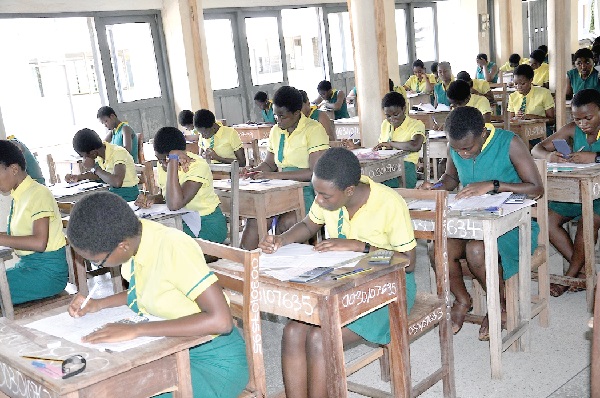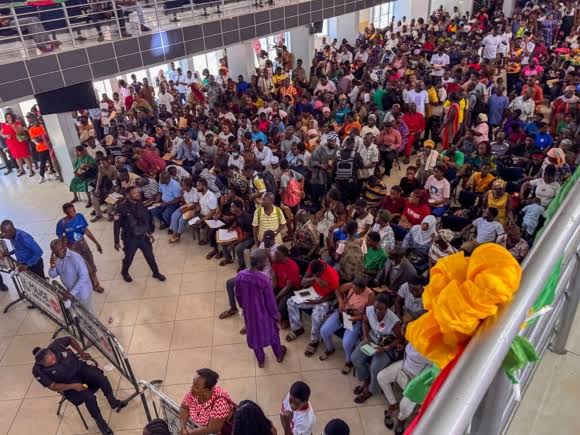
Computerized School Selection and Placement System in Ghana: Challenges and the way forward↗
The purpose of the paper is to review literature on the challenges and the way forward of the Computerised School Selection and Placement System (CSSPS) in Ghana.
Literature informs us that the key challenge to the Computerised School Selection and Placement System was the human factor in terms of refusal of parents and students to accept placement into other schools apart from their chosen high-endowed schools.
It is also found from the literature in this paper that there was the challenge of some parents not being able to pay the school fees for their wards who have been placed in private schools due to the high cost of private schools’ fees.
Methodologically, this paper relied primarily on secondary sources of information such as online literature on computerised school selection, archives, some excerpts from the Daily Graphic, among others.
Parents, Headteachers of Junior High Schools (JHS) and Senior High Schools (SHS), students, policy makers, and stakeholders in education were the focus of this study.
Finally, the review established that the CSSPS has become fertile ground for bribery and corruption in our dear country, Ghana.
From the review, it is therefore recommended that there be a need to revisit the policy of developing some of the senior high schools in each region as model schools, with all the modern facilities required in a standard second cycle school.
Also, we recommend that the Ministry of Education (MOE) and the Ghana Education Service (GES) should provide inputs in time to the least endowed schools and also upgrade the infrastructural facilities in the least endowed schools to make them attractive to students so as to reduce pressure on the highly endowed schools.
Finally, we encourage stakeholders to get on board for us to see how best we could evaluate and modify the system for the betterment of the children and our nation.
Keywords: Non-Governmental Organisations, challenges, prospects, students, second-cycle institutions, mechanical, manual.
Introduction
Prior to the initiation of the Computerised School Selection and Placement System (CSSPS), the selection and placement of students in second-cycle institutions was machine-driven and labour-intensive.
The manual system was laborious and time-consuming. It was also characterised by several limitations and flaws, such as misplacement of student registration cards and forms, wrong shading of index and code numbers by students and heads of JHSs, undue delay in admissions, as well as loss of admission letters.
Furthermore, the manual system was highly susceptible to human manipulation and machinations such as bribery and corruption.
Rich and affluent parents used their monetary influence to secure placement for their wards in good and extremely endowed schools to the disadvantage of good students from poor homes.
Similarly, the influence and pressure from “old boys” and “old girls” associations, PTA officials, protocol admissions, and insatiability by some heads of second-cycle institutions plagued the admission procedures of the manual system.
Additionally, before the introduction of the CSSPS innovation, heads of very good and highly endowed schools indiscriminately and unilaterally set high personal cut-off grade points and admission standards to attract only the exceptionally good and gifted students to the detriment of the less brilliant and rural-setting students.
Furthermore, in the era of the manual system, the period of the release of the Basic Education Certificate Examination (BECE) results was a terrible period for parents and students.
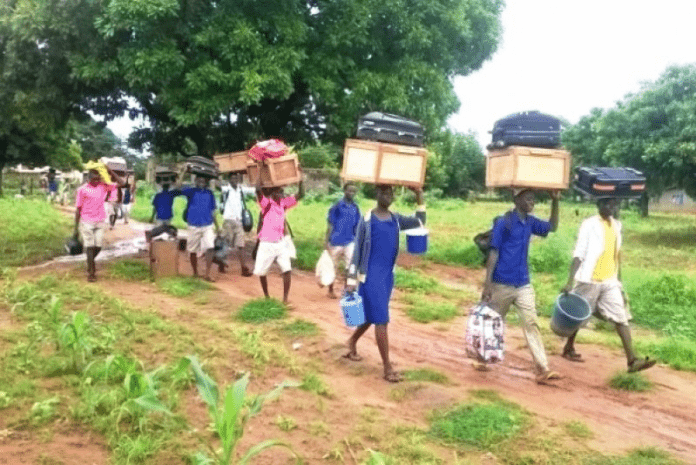
Nervous parents had to travel to the selected schools of their wards to ascertain the admission status of their wards and to pay the admission fee on time to secure the place; otherwise, it would be given to another person.
Indisputably, these problems that lumbered the manual system made it unbefitting as a selection and placement tool.
However, the question that is often asked is whether the CSSPS has succeeded in surmounting the inadequacies that were inherent in the manual system.
The peak of the problem is: What are the challenges and prospects of the Computerised School Selection and Placement System in Ghana?
Hence, the main aim of this paper is to review literature on the challenges and prospects of the Computerised School Selection and Placement System in Ghana.
Literature Review
Pre-Computerized School Selection and Placement System
In 1987, the Government of Ghana embraced a new educational system as part of the several reforms initiated to address deficiencies in the public sector.
The long-term objective of the reform is to achieve universal basic education, expand, and increase access to secondary and tertiary education.
To fulfil this, the educational system was given a new dimension with particular emphasis on diversification of content and quality.
With the motive of increasing access to secondary and tertiary education, the Basic Education Certificate Examination (BECE) was introduced.
Until recently, admissions to Senior High Schools had been the duty of heads of senior secondary institutions who met to select candidates for their schools based on merit and other factors defined by their communities.
The selection and placement of qualified BECE candidates into Second Cycle schools of their choice was performed manually.
Every year, heads of Senior High Schools and Technical Institutes together with Ghana Education Service (GES) officials met at selected regional centres to conduct the selection exercises (GINKS, 2008).
The Computerised School Selection and Placement System in Ghana
The CSSPS is the acronym for Computerised School Selection and Placement System. It is an automated merit-based computerised system which has replaced the laborious Manual System of Selection and Placement (MSSP) of qualified BECE candidates into second cycle (Senior High Schools and Technical/Vocational) institutions in Ghana.
The CSSPS was introduced in 2005 as part of the Ministry of Education (MOE) and Ghana Education Service (GES) grand plan of programmes and interventions intended to expand access and improve the quality of education through teaching and learning as well as curricular development.
The enactment of programmes and interventions was facilitated with the support of stakeholders in education, who also include Non-Governmental Organizations (NGOs) and development partners.
The main purposes for the introduction of the CSSPS were: to improve and enhance efficiency in the school transition process (that is, transition from Junior High School to Senior High School); increase transparency, fairness and cost-effectiveness.
Added to these was to increase access and participation in secondary education and finally to ensure equity and speed in the selection and placement process (Ajayi, 2009).
In order to be eligible for consideration by the CSSPS process, candidates have to complete specially designed cards and scannable forms for processing by a computer software which was specifically and specially developed for the system.
Since 2005, the process of selection and placement into senior high school, secondary technical and vocational school has been computerized. The
main objectives for the introduction of the CSSPS were to promote efficiency, transparency, fairness and equity and speed in selection and placement. The main features of the CSSPS are as follows;
Selection is based on scores of six subjects. A total of six subjects are used for the selection; this comprises four core subjects and two other best subjects.
The core subjects are English, Mathematics, Science and Social Studies for Senior High Schools. For technical institutions, Pre-Technical Skills replace Social Studies as the fourth core subject.
To qualify for selection and placement candidates’ grade in any of the four core subjects should not exceed five.
The minimum grade for each of the best other two subjects should not exceed six and if added to the four core subjects must not exceed an aggregate of 30.
A candidate whose grade for any of the core subjects exceeds five or cancelled by the West African Examinations Council (WAEC) will be deemed as not qualified for selection and placement.
Inauguration of the Computerized School Selection and Placement System in Ghana
Ghana inaugurated a Computerized School Selection and Placement System (CSSPS) in September 2005 with the aim of increasing transparency and enhancing the competence of the school transition process.
Prior to this, the student selection and school admission were carried out manually at annual meeting of head teachers in each region following the announcement of examination results; students were required to choose all three of their schools from a single region to reduce the administrative burden of manual school assignment.
Additionally, student selection cards were misplaced, and parents routinely complained that school assignment was based on preferential treatment and not actually on merit because well-connected students were admitted into top and highly endowed schools even if they did not have the requisite grades.
The computerization mechanism was therefore designed to address several of the insufficiencies inherent in the manual system.
Under the CSSPS, students could pick schools from multiple regions and there was to be limited interference from headmasters in the school’s selection and assignment process.
The CSSPS uses a deferred acceptance algorithm for school assignment (Gale & Shapley, 1962). Under this procedure students are ranked according to their priority levels (that is, test scores in the case of the CSSPS); they are then proposed as a match to their first-choice school in order of their test score rankings.
Students are assigned to their first choice if there is a space available. If the student is unassigned in the first round, then the second-choice school is considered, and the process repeats.
In the second round, a student can displace another student who was assigned in the first round if the first-round student has a lower examination score. Under this algorithm, there is no penalty for ranking schools in an arbitrary order within the set of the three first choice schools.
This contrasts with the Boston mechanism, which does not allow already assigned or placed students to be displaced in subsequent rounds.
There are therefore, clear incentives for making a premeditated first choice under the Boston mechanism, which does not apply under the deferred acceptance algorithm.
Students who are not placed or assigned to any of their chosen schools are assigned to any available space in their district or whenever possible.
However, students who receive the passing grade may not be assigned to any school at all, if there are no spaces or vacancies remaining. Students are informed of their placement and are given 30 days to report at their schools of placement once the school year begins.
Heads of SHS are then required to report any unfilled places to the Ministry of Education so that the spaces can be allocated to previously unassigned students.
Ajayi (2009) revealed and exposed the fact that there is imperfect compliance to this regulation and anecdote evidence suggests that certain schools under report the availability of spaces in order to reserve some which they then allocate at their own discretion.
To eliminate this problem, as a result of Ajayi’s revelation in the 2009 school placement exercise; many schools were assigned more students than the declared places.
During the current school assignment process, the CSSPS makes enough effort to address socio economic inequality. Several schools were evaluated and assigned a deprivation score ranging from 0 (non–deprived) to 9 (highly-deprived).
These scores are used to scale up test–scores for students from low–resourced Junior High School (JHS) and the rural schools in an attempt to compensate for the weaknesses of attending under-resourced schools especially in the rural areas.
It can be noticed that the successive attempts of enhancement in the mechanism of selection and placement into SHSs is to enhance efficiency and to increase access into second cycle institutions since there is always excess demand for placement over the existing vacancies in the secondary schools.
Potential Benefits of the Computerized School Selection and Placement System
The CSSPS presents numerous potential benefits among which are:
achieving the government’s long-term objective of universal basic education, expanding, and increasing access to secondary and tertiary education;
reduction in stratified societies (class societies) since the system does not discriminate between the rich and the poor;
enhanced national integration through the system’s ability to allow students to choose schools from more than one region;
improved teaching and learning since selection and placement are done on merit;
effective, efficient, transparent, simple and speed in the procedure of selection and placement;
removal of decentralized selection constraints on regional basis by allowing the choice of schools from any combination of regions (www.ghanaschoolsnet.com, 2011);
promotion of fairness and equity by enabling pupils who performed well to gain admission to schools of their choice irrespective of whether the school is a first, second or third option. The system also ensures that no school admits more students than the vacancies available for each programme;
reduction in human error during the process of capturing registration data;
easy access to placement results through Short Messaging Service (SMS) where candidates only text their identity card numbers and instantly receive replies on their placement status indicating the secondary school where they were placed and the program (SISCO, 2007). Compared to the manual method of selection and placement, parents and guardians now see the computerized system as being more objective than subjective.
Challenges of the Computerized School Selection and Placement System (CSSPS)
There have been allegations of corruption in the media (Aboagye, 2011) in spite of various assurances from the Ministry of Education. Among the problems and criticisms are the following:
Some parents complain that because of high cost of private schools fees, those who find their wards placed in the private schools do have problem of school fees.
Also because of the distributive nature of the system, students who are placed in schools far away find it difficult to cope with distance.
There is also the problem of female students being placed in male schools and vice versa (Asare, 2010).
While these problems have been attributed to the registration process in the schools where most students make mistakes in shading wrong, some people think the CSSPS is not working well (GINKS, 2008).
It also alleged that some heads of schools do not make available to candidates the WAEC register which lists all schools with designated codes for correct shading. It is also reported that about fifty thousand errors were committed in 2011 alone due to the above challenges faced by the new system of selection (www.ghanaschoolsnet.com, 2011; GINKS, 2008).
It is in the light of these problems that this paper tries to assess the CSSPS from the stake- holders’ perspective. Among the stakeholders for this research are Heads of both JHS and SHS, parents whose wards have gone through the CSSPS, students who have gone through the CSSPS as well as the implementers of the CSSPS.
Babah (2011) researched on the topic; “Stakeholders’ Perception of The Computerized School Selection and Placement System: A Study of The Greater Accra Region, Ghana.”
The study was intended to find out whether the CSSPS was a better alternative to the manual system in the process of selection of qualified students in the Senior High Schools (SHSs) in the Greater Accra Region of Ghana.
A sample size of 306 was selected from a population of 994. Stratified and simple random sampling procedures were employed to select the subjects in the study sample. Respondents to the questionnaire and interview were randomly selected.
A pilot study was conducted in the Eastern Region to test the validity and reliably of the instrument.
The Cronbach’s alpha coefficient reliability at 0.7 was recorded. The data generated was processed and converted into percentages to facilitate the analysis and discussion processes.
From the data collected and analysed, some of the challenges were found as; placement of students in distant schools not selected, inadequate information on the demographic features of the school, inability of candidates securing their first-choice school, errors in the selection process by candidates and refusal of parents and students to accept alternative placement.
In summation, the researcher stated that the key challenge to the CSSPS was the human factor in terms of refusal of parents and students to accept placement into other schools apart from their chosen endowed schools.
In support of this argument, Gyaase and Adu-Gyamfi (2012) highlighted the challenges of the CSSPS as: some parents complain that because of the high cost of private schools’ fees, those who find their wards placed in the private schools do have problems with school fees.
Also, because of the distributive nature of the system, students who are placed in schools far away find it dangerous to cope with distance.
Finally, they mentioned that there is the challenge of female students being placed in male schools and vice versa.
Following the above challenges, Wesley-Otoo and Anokye (2016) discovered and discussed some challenges facing the CSSPS in Ghana. They highlighted the following;
Lack of fairness in the distribution of school facilities is a challenge. Analysis of the SHSs, as captured by the appraisal document of the Secondary Education Improvement Project, shows that schools do not have the same funding in educational resources. If all schools had the same resources, the system would have been highly appreciated by all stakeholders. This implies that efforts to address the unfairness in school resources and or facilities will,
to a large extent, make things much better than they are now. It has been observed that the issue of unfairness often makes parents and students choose schools described as Category “A” schools to the neglect of other ones. These ‘A’ schools are commonly recognised to be well endowed and popular and for which reason most parents would like their children to attend them. A review of the choice pattern of some Category “A” and “C” schools has shown that high information asymmetry on schools and/or preference for highly endowed SHSs at the expense of the so-called less-endowed ones.
Poor publication of school information to the public has been identified to have posed some discomfort to the selection and placement exercise. Due to the dignity of most people to have their children in Category “A” schools, there have been series of direct appeals for admission from major stakeholders, including religious organisations, traditional rulers and old student groups.
Insufficient and inaccurate data provided by candidates during registration for Basic Education Certificate Examination (BECE) have also been posing challenges. Sample cases have shown that male students whose forms bear “females” usually end up being placed in wrong ‘sex’ schools.
Other problems include choice of schools without reference to their residential status and programmes on offer, the lack of concern of parents in the registration of their children resulting in rejection of placements by some parents and choice of schools without reference to the level of financial preparedness on the part of parents.
In addition to the above, an online report by the Daily Graphic as of 16th September 2019 mentioned that the CSSPS challenge goes beyond errors with the system.
Candidates are desirous to be placed in high-endowed schools, and, therefore, we find some schools getting more students than they can accommodate, whilst the reverse is the case for some schools.
A clear example is in the year 2019, when all 721 public SHSs in the country declared 520,298 vacancies, while the number of candidates who qualify to be placed were 473,728.
This, ordinarily, should be good news that all the candidates will secure placement, with as many as 46,570 places remaining vacant.
While some schools are flooded with students, with some not getting accommodation for their students, other schools have their gates wide open, without anybody entering. The reason for this is that there is a notion that some schools are superior to others.
Another challenge discussed by the Daily Graphic (2019) is that while the CSSPS may be a good initiative, reports of excessive human interference certainly defeat the goal of the system.
In line with that, it was stated categorically that, currently, there are claims that some schools and officials of the Ghana Education Service (GES) are demanding certain amount of money specifically between GHc2,500 and GHc5,000 to get schools
changed and some parents have actually succumbed and paid for the favour. This must be a serious gap on our conscience as a nation.
Subsequently, our children now come to perceive that money is the solution to their failures even when they do not deserve some class of schools.
Discussions
Firstly, the review found out that CSSPS has been bedeviled with challenges such as; placing students in distant school which they did not select, placing students in schools which are opposite to their gender, low chances of candidates securing their first-choice of senior high schools selected and errors in the selection process by candidates and refusal of parents and students to accept alternative placement.
Confirming what is above, Babah (2011) mentioned that the key challenge to the CSSPS was the human influence in terms of refusal of parents and students to accept placement into other schools apart from their chosen endowed schools.
Secondly, it can be inferred from the review that there was the challenge of some parents complaining that they cannot pay the school fees for their wards who have been placed in private schools due to the high cost of private schools’ fees.
We can decipher from the review that the CSSPS was faced with the challenge that some female students were placed in male schools and male students were placed in female schools.
Gyaase and Gyamfi (2012) maintained that some parents complain that because of the high cost of private schools’ fees, those who find their wards placed in the private schools do have problems of school fees.
They also added that there is challenge of female students being placed in male schools and vice versa.
Finally, the review established that the CSSPS has become a fertile ground for bribery and corruption in our dear country Ghana.
The 2019 daily graphic report stated emphatically that there are allegations that some schools and officials of the Ghana Education Service (GES) are demanding between GHc2,500 and GHc5,000 to get schools changed and some parents have succumbed to this irregular act.
This act is a clear example of bribery and corruption, which is a serious stain on the moral uprightness of our dear nation, Ghana.
Conclusions
From the review done, it is can be concluded by the researchers that human factor is a necessary evil adding up to the challenges of the Computerized School Selection and Placement System (CSSPS).
Furthermore, some parents are not being able to pay the school fees for their wards who have been placed in private schools because of the high amount of fees being paid by these private schools. As part of the conclusions, it was also revealed that CSSPS has become a fertile ground for bribery and corruption.
for people who wield authority when it comes to the placement of Senior High School students. Some students are also placed in distant schools which they did not select, and also placed in schools which are opposite to their gender.
These problems are worrying and disturbing. In view of these distasteful conclusions, the following recommendations have been made by researchers.
Recommendations
In the face of the challenges bedevilling the CSSPS in Ghana, and as a policy measure, we recommend the following to help us move forward as a nation;
We must revisit the policy of developing some of the senior high schools in each region as model schools, with all the ultra-modern facilities required in a standard SHS, as a way of reducing the human traffic at these highly sought schools.
If the nation is able to do this, it will go a long way to motivate many students to choose those model schools, as they know that the quality of education that they will receive in other schools will not be compromised and sacrificed.
Ministry of Education (MOE) and Ghana Education Service (GES) should provide inputs in time to the least endowed schools and also upgrade the infrastructural facilities in the least endowed schools to make them attractive to students so as to reduce pressure on the highly endowed schools.
If all schools had same or parallel distribution of resources regarding infrastructure, staff and instructional resources, the CSSPS would have been appreciated by many people. We, therefore, urge policy makers and other stakeholders of education to get on board for us to see how best we could review and modify the system for the betterment of our children and our dear nation.
References:
Amedahe, F.K; & Asamoah-Gyimah, E. (2005). Introduction to educational research. Cape Coast: Centre for Continuing Education of the University of Cape Coast (CCEUCC)
Ajayi, K. (2009). Strategic behaviour and revealed preferences; lessons from choice and student’s placement in Ghana. Berkely: University of California.
Babah, P. A. (2011). Stakeholders’ perception of the computerized school selection and placement system: A study of the Greater Accra Region, Ghana. Unpublished master’s thesis, University of Cape Coast, Cape Coast.
Bacchus, M.K. (1966). Education for development and underdevelopment: Guyana’s educational system and its implications for the third world. Waterloo, Ontario., Canada: Wilfrid Laurier University Press.
CSSPS Report, (2005) Computerized School Selection and Placement System. Accra: MOE (Ministry of Education)
CSSPS Report, (2006) Computerized School Selection and Placement System. Accra: MOE (Ministry of Education)
Daily Graphic (2019). Allow CSSPS to work efficiently. Retrieved from https://www.graphic.com.gh/daily-graphic-editorials
Descombes (2003). A good research guide: For small scale social research projects. (2nd ed) Maidenhead United Kingdom: Open University Press
Duflo, E. Dupas, P., & Kremer, M. (2008). “Peer effect and the impact of tracking: Evidence from a randomised evaluation in Kenya” A working paper.
Ebel, R. L. (1972). Essentials of educational measurement. Engle-wood Cliffs, NJ: Prentice Hall, Inc.
Editorial Statement (2008). Accept CSSPS admission. Junior Graphic (2008 Wed, Nov.19) pp. 19-25.
GINKS. (2008). Man or P.C: Ghana’s S.S.S selection process.
Retrieved from http://www.ginks.org
Gyaase, P. O., & Gyamfi, S. A. (2012). Transparency, equity and accessibility to secondary education in Ghana through e-governance: Stakeholders perspective of the computerized school selection and placement system in Ghana. International Journal of Basic Education, 2(2), 104-116.
Robinson A. (1990). Co-operation or Exploitation? The argument against co-operative learning for talented students. Journal for the Education of the
Gifted. 5, 13.
Sarantakos, S. (2005). Social Research (3rd ed) Palgrave. New York: Academic Press.
SISCO. (2007). Computerised school selection and placement system: Local solutions to local problem. Accra: Somuah Information Systems Co.
Wesley-Otoo, E., & Anokye, K. (2016). CSSPS: Success, challenges and the way forward. Retrieved from https://www.graphic.com.gh.
DISCLAIMER: Independentghana.com will not be liable for any inaccuracies contained in this article. The views expressed in the article are solely those of the author’s, and do not reflect those of The Independent Ghana

 Review major capital allocation decisions.