Tag: BoG

  • BoG has accumulated significant reserves to meet dollar  demand – Finance Minister

    BoG has accumulated significant reserves to meet dollar demand – Finance Minister

    The Finance Minister, Dr. Mohammed Amin Adam, has assured businesses and market stakeholders that the Bank of Ghana (BoG) has accumulated significant dollar reserves to meet market demand.

    Speaking at a press briefing in Washington, D.C. during the Annual IMF and World Bank meetings, Dr. Amin Adam emphasized that the current reserve levels should reassure those concerned about foreign exchange availability.

    “We should look at the current reserve position of the Bank of Ghana, and that should give everyone some comfort about its ability to meet market demand,” he stated. By the end of August 2024, Ghana’s international reserves reached $7.5 billion, according to BoG data.

    Dr. Amin Adam also highlighted expected inflows that could further stabilize the cedi. Ghana anticipates a $360 million disbursement from the IMF in December, pending the approval of the third program review. Additionally, a $300 million disbursement from the World Bank under its Development Policy Operations (DPO) Series is expected, further boosting foreign currency reserves.

    “These expected inflows, in addition to what the Bank of Ghana already has, should help in stabilising the cedi going forward,” the finance minister remarked, addressing recent concerns over forex fluctuations.

    The cedi has recently come under pressure, with some forex bureaus reportedly selling the dollar above GHS17, despite BoG’s data indicating rates below GHS16. Analysts attribute this volatility to increased dollar demand as businesses prepare to finance Christmas imports and restock for next year, fearing potential depreciation. Speculation surrounding the upcoming December elections has also driven up foreign currency demand.

    In response, the BoG has actively intervened to meet dollar demand through its dollar auction program, targeting Bulk Oil Distribution Firms and conducting weekly auctions for commercial banks to maintain a steady supply. These measures form part of a broader strategy by the BoG to stabilize the cedi and manage market uncertainty, aiming to minimize the currency’s depreciation amidst fluctuating market dynamics.

  • Phase 2 of DDEP had limited effect on 2023 Financial Performance – BoG

    Phase 2 of DDEP had limited effect on 2023 Financial Performance – BoG

    The Bank of Ghana has disclosed in its 2024 Financial Stability Review that Phase 2 of the Domestic Debt Exchange Programme (DDEP) had a relatively low impact on the audited financial performance of banks in 2023.

    This outcome is attributed to lower levels of holdings and improved restructuring terms. Additionally, some impairments had already been accounted for by banks in 2022, and they generally reported a strong rebound in financial performance in 2023.

    The report highlighted that the Government of Ghana negotiated and restructured bond holdings of pension funds amounting to GHS30.01 billion in August 2023. Looking ahead, the report indicated that external debt restructuring, particularly concerning Eurobonds, could lead to further impairments for banks and other participating financial institutions.

    To address potential impacts from the government’s debt operations, the report noted that regulatory relief measures implemented by financial sector regulators, the execution of recapitalisation plans, and the establishment of the Ghana Financial Stability Fund will help mitigate risks in the financial sector.

    Furthermore, the Financial Sector Strengthening Strategy (FSSS), developed in 2023, aims to coordinate regulatory interventions to swiftly identify and address risks to the financial system.

    On a positive note, the report emphasized that domestic debt restructuring has created some fiscal space for the government and contributed to a reduction in the debt-to-Gross Domestic Product ratio. The second phase of the DDEP was launched on July 14, 2023, involving the restructuring of Cocoa Bills (GH¢8.1 billion) and locally issued US dollar-denominated bonds ($808.99 million).

  • Bright Simons fights BoG’s plan to build a corporate office in Tamale

    Bright Simons fights BoG’s plan to build a corporate office in Tamale

    Honorary Vice-President of civic group IMANI Africa, Mr. Bright Simons, has expressed confusion over a new tender issued by the Bank of Ghana (BoG) for the construction of a corporate office in Tamale, following the Auditor General’s report last year that flagged a significant increase in BoG’s foreign exchange payments, partly attributed to the same project.

    An excerpt from the Auditor General’s report pointed out by Simons indicates that BoG had already spent a significant portion of foreign exchange payments—over $84 million—on this same project in 2022.

    The report attributes 30.7% of the total payments of $117 million to the construction of the Tamale office, alongside infrastructure for the African Games.

    The recent tender issued by BoG, with a deadline of September 5, 2024, calls for the construction of a corporate office in Tamale.

    Upon discovering this new tender, Simons raised questions as to why another tender is being issued for a project that was supposedly already accounted for in the previous payments.

    “If such substantial payments were already allocated to the project, why is a new tender being issued in 2024 for the same office? Was the previous funding used effectively, or is there a gap in the project’s completion and accountability?” were some of the questions he raised.

    To this end, Bright Simons has expressed his concerns, stating, “Last year, the Auditor General flagged a big increase in Bank of Ghana forex payments of more than $84m. One of the reasons given was that a new corporate office in Tamale was being built. Imagine then my confusion seeing a new BoG tender to build a corporate office in Tamale.”

  • Being named as a next of kin doesn’t mean you inherit the account – BoG clarifies misconceptions

    Being named as a next of kin doesn’t mean you inherit the account – BoG clarifies misconceptions

    Next of kin, is simply a nominee designated by the account holder, serving as the main contact if the bank cannot reach the account holder according to Bank of Ghana (BoG).

    This implies that the next-of-kin designation in banking is meant for locating the account holder, not for determining who inherits the account.

    “This person should be close and know a lot about the account holder, and that is why in practice, many people would use some of their close relatives, Mr. Augustine Amoako Donkor, Assistant Director, Financial Stability Department of BoG, has said.

    He was speaking on the topic, “The Next-of-Kin Concept,” as part of a two-day media capacity building workshop for selected journalists in the Ashanti Region.

    The workshop, which sought to deepen the understanding of participants in the operations of BoG and also build their capacity in financial reporting, was attended by 25 journalists.

    Resource persons from the Central Bank took them through microeconomic analysis and significance of microeconomic indicators, monetary policy practice in Ghana, inflation dynamics in Ghana, developments in foreign exchange market, as well as interpretation of the Monetary Policy Committee Pack.

    Mr. Donkor said a customer of a bank reserves the right to choose even a friend who knows much about him/her as the next of kin because the main purpose is to have someone who can provide information on why the account holder is not reachable.

    Processes to retrieve funds in the account of a deceased customer, according to him, is entirely a different issue when it is established that the owner of the account has indeed died.

    “To inherit or have access to the bank account of deceased person, one will have to be named in the deceased person’s will as a beneficiary of the account,” Mr. Donkor clarified.

    He explained that a named beneficiary would need to undergo a legal process in which a court of competent jurisdiction grants probate. This probate would give the beneficiary the legal authority to access the deceased person’s account.

    In cases where the account holder dies without a will, those with an interest in the estate must apply to be appointed as administrators. This requires the issuance of Letters of Administration by a court of competent jurisdiction, which would then allow them access to the deceased person’s account, the BoG official added.

    “In Ghana, this concept of next-of-kin is not defined in our laws, so our discussion is based on what traditionally has been the practice, and that is what is likely to continue until such time that as a country we include this in a particular law,” he said.

  • Transactions conducted through mobile money services surpasses GHS1.9tr – BoG

    Transactions conducted through mobile money services surpasses GHS1.9tr – BoG

    The Bank of Ghana’s (BoG) 2023 FinTech Sector Report indicates substantial advancements in the nation’s digital financial sector, with mobile money accounts exceeding 65 million and total transaction values surpassing GH¢1.9 trillion.

    This development represents a significant achievement in Ghana’s pursuit of a more inclusive and cashless economy.
    The surge in this sector is fueled by the growing acceptance of mobile financial services, which offer a dependable and efficient way for millions of Ghanaians, particularly in underserved and rural regions, to obtain financial services.

    According to the report, mobile money has established itself as a prominent player in Ghana’s financial framework, with transaction volumes growing exponentially each year.

    The Bank of Ghana emphasizes the vital contribution of Rural and Community Banks (RCBs) to the national financial inclusion strategy.

    The central bank has pointed out that RCBs, which act as crucial financial service providers for rural communities, have a unique chance to utilize technology and digitalization in their operations.

    By implementing digital solutions, RCBs could effectively narrow the financial access divide in rural areas, delivering more customized services tailored to the needs of local populations.

    At the 23rd Annual Chief Executive Officers’ Conference held in Ho, Mrs. Elsie Addo Awadzi, the BoG’s Second Deputy Governor, stressed the significance of digital transformation for the rural banking sector through remarks made by Mr. Yaw Sapong, Director of the Other Financial Institutions Supervision Department.

    She emphasized that RCBs should capitalize on technology to broaden their reach and enhance the quality of their service offerings.

    Mrs. Awadzi highlighted the BoG’s dedication to promoting financial inclusion through digital initiatives, referencing the success of the Ghanapay initiative, which serves as a national digital payments platform aimed at improving financial service access, particularly in rural regions.

    She encouraged RCBs to adopt this platform and build collaborations with FinTech companies via the ARB Apex Bank to foster innovation and tailor their offerings to customer needs.

    Furthermore, she emphasized the necessity for RCBs to move beyond standard financial products, asserting that to effectively assist rural communities, they must create specialized financial solutions that address the specific requirements of local populations.

    This entails comprehending the financial rhythms of farmers, small-scale traders—particularly women and individuals with disabilities—and local enterprises.

    By providing services such as savings and loan products that align with agricultural and business cycles, RCBs could ensure that their offerings remain relevant and accessible to their intended clients, she stated.

    She noted that this strategy would not only bolster the financial well-being of rural communities but also position RCBs as the primary source for financial services in those areas.

    To maintain this progress, Mrs. Awadzi urged RCBs to invest in capacity building and effective corporate governance practices, suggesting that enhancing staff skills would enable RCBs to adapt to changing financial needs, while robust governance structures would promote accountability and long-term stability.

    Mr. Alex Kwesi Awuah, Managing Director of ARB Apex Bank, also praised the successful rollout of the Financial Sector Development Project (FSDP).

    With support from the Government of Ghana and the World Bank, the FSDP has played a crucial role in implementing digital banking platforms for RCBs, facilitating seamless and secure digital financial services for their clients.

    Mr. Awuah pointed out that the digital transformation of RCBs has not only enhanced their operational effectiveness but also allowed them to broaden their customer base, integrating more Ghanaians into the formal financial system.

    The 23rd Annual CEOs Conference convened 147 CEOs from RCBs nationwide, offering a forum for rural banking leaders to explore challenges, opportunities, and the future of the sector.

    Held on the theme: “Positioning Rural Banking at the Centre of the National Financial Inclusion Agenda,” the event also featured representatives from the Bank of Ghana, executives from the Association of Rural Banks, and the Board Chairman of ARB Apex Bank, Dr Toni Aubyn.

    As the rural banking sector continues to play a pivotal role in Ghana’s financial landscape, the adoption of technology and a customer-centric approach will be essential in ensuring sustainable growth and widespread financial inclusion across the country.

  • BoG’s eCedi wins prestigious award in London

    BoG’s eCedi wins prestigious award in London

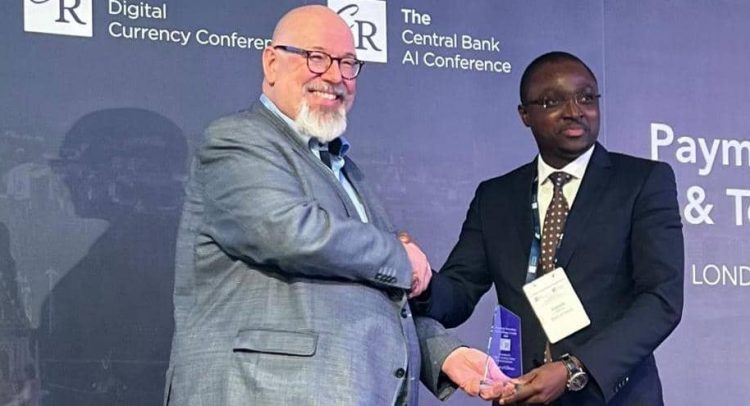
    The Bank of Ghana (BoG) has been awarded the Innovation in Digital Currency Design for Financial Inclusion during the 2024 Payment, Innovation, and Technology Week, which took place in London, UK, from September 23 to 26.

    The event was organized by Currency Research.

    This recognition was based on the Bank’s effective design of the eCedi, featuring strong governance, accessible (both online and offline) functionality, interoperability, and infrastructure aimed at advancing financial inclusion.

    The Bank’s approach to ecosystem engagement was also a key factor in earning this award. This approach included:

    1. Involvement of banks and payment service providers in the eCedi pilot.
    2. Organizing the eCedi Hackathon, which encouraged the public to present innovative ideas.
    3. Conducting a live trial of the eCedi at the 3iAfrica Summit, allowing participants to make payments at the Digital Village for goods and services.
  • Kwahumanhene directed to step aside as ADB Board chair over GHC2m fraud

    Kwahumanhene directed to step aside as ADB Board chair over GHC2m fraud

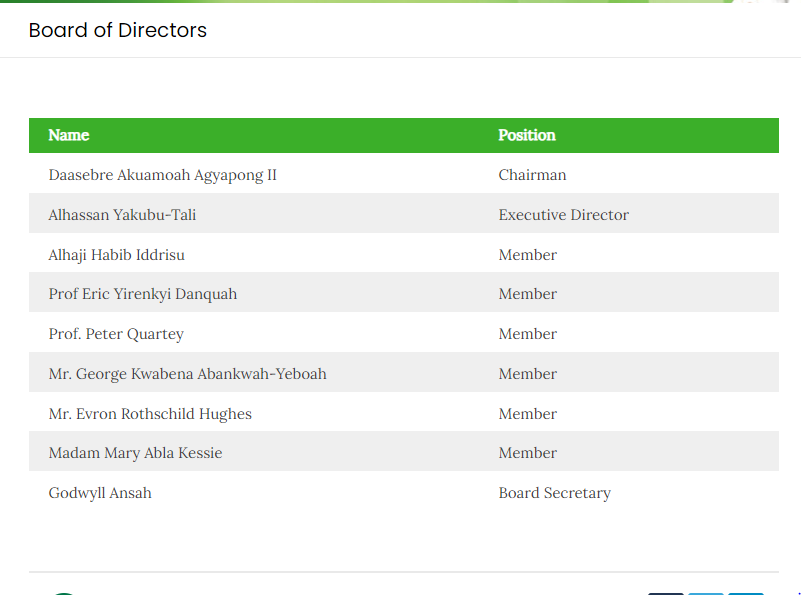
    The Bank of Ghana (BoG) has directed Daasebre Akuamoah Agyapong II, the Kwahumanhene, to step aside from his position as the Board Chairman of the Agricultural Development Bank (ADB) following allegations of misconduct involving a GH¢2 million transaction.

    In an October 10 letter, the BoG indicated that Daasebre Akuamoah Agyapong II’s “continued holding of office as a Director of the ADB has become untenable due to the irreparable damage these events have caused to the image of the bank.”

    The directive was issued in accordance with Section 103 (2)(d) of the Banks and Specialised Deposit-Taking Institutions Act, 2016 (ACT 930), and ordered him to “immediately resign from your position as a director of the ADB and appropriately handover.”

    The allegations first surfaced when a whistleblower, Collins Darkwah Aboagye, filed a formal petition to the Office of the President.

    In the petition, Mr. Aboagye detailed accusations of misconduct related to the GH¢2 million transaction, which reportedly involved potential conflicts of interest, financial mismanagement, and actions that compromised the fiduciary responsibilities of Daasebre Akuamoah Agyapong II in his role as Board Chairperson of ADB.

    Agricultural Development Bank PLC (ADB) is a universal bank offering a full range of banking products and services in Consumer, Corporate, Parastatals/Public Sector, SME, Agribusiness, Trade and E-Banking services. Its business focus is universal banking with a developmental focus on Agriculture and more.

    The Bank successfully listed on  the Ghana Stock Exchange (GSE) on December 20, 2016. The new ownership structure of the Bank is:

    1. Financial Investment Trust -64.05%
    2. Government of Ghana – 21.50%
    3. Ghana Amalgamated Trust PLC- 11.26%
    4. Retail investors and ADB staff – 3.2%.
  • BoG’s rate cut unlikely to lower T-bill yields – Report

    BoG’s rate cut unlikely to lower T-bill yields – Report

    The Treasury bill (T-bill) market is anticipated to maintain high yields, even after the Bank of Ghana (BoG) implemented a notable cut in its policy rate.

    Recently, the central bank reduced its Monetary Policy Committee benchmark rate from 29 percent to 27 percent.
    However, the impact of this reduction on T-bill yields seems limited due to the government’s significant domestic financing needs.

    Another factor contributing to the persistently high yields is tight market liquidity. Analysts suggest that the strong demand for domestic financing amid rising price pressures, combined with investors’ absorption of the central bank’s policy change, is likely to sustain elevated yields in the near term.

    In its latest market review, Databank commented, “Despite the sharp cut in benchmark rate, we believe that heavy domestic financing needs will keep yields elevated in the coming week”.

    Databank also noted that any potential adjustment in the BoG’s 56-day bill yield could lead to a decrease in T-bill yields, although this has yet to occur.

    The ongoing increase in T-bill yields highlights the broader challenges the government faces in meeting its weekly auction targets.

    Recent auctions have seen a continuous upward trend in yields across various tenors. The 91-day T-bill rose by 63 basis points (bps) to 25.20%, reaching its highest level since October 2023.

    Additionally, the 182-day and 364-day bills increased to 26.85 percent and 28.35 percent, reflecting rises of 11 bps and 60 bps, respectively, from the previous week.

    This current rate environment marks a significant change from the first half of 2024, when T-bill yields were declining.

    At the end of June 2024, the 91-day bill was at 24.87 percent, while the 182-day and 364-day bills were at 26.80 percent and 27.79 percent, respectively. This reversal signifies rising borrowing costs for the government, which is under pressure to secure adequate funding in the domestic market.

    According to Apakan Securities, last week’s T-bill auction experienced the steepest undersubscription in five months.

    The auction, conducted on Friday, achieved only 64 percent of the government’s ambitious GH¢7.44 billion target.

    Investors submitted bids totaling GH¢4.47 billion across all tenors, with the Treasury accepting all to meet maturing obligations of GH¢3 billion. This undersubscription was anticipated, given the historically high target set for that week.

    “This is the largest weekly target we’ve seen, and the undersubscription is a clear indication of the financing pressure government is facing,” Apakan Securities stated in its market review.

    The auction’s coverage ratios for targets and maturity were 0.64x and 1.61x, respectively, highlighting a significant shortfall in bids against the government’s financing requirements.

    This week, the Treasury plans to offer GH¢5.98 billion across the 91-day to 364-day range to cover the maturing face value of GH¢3 billion.

    The next T-bill auction is scheduled for Friday, October 4, 2024, and market participants will closely watch whether the government can secure the necessary funds amid ongoing liquidity challenges.

    On the secondary market, trading activity declined last week, with total volumes falling by 17.92 percent week-on-week to GH¢349.73 million.

    New bonds dominated trading, comprising 99.6 percent of the total volume. Notably, the February 2027 bond, with an 8.35 percent coupon rate, was the most actively traded, making up about 66 percent of the total volume. The February 2028 bond, offering an 8.50 percent coupon rate, also attracted significant interest, clearing at 25.16 percent.

    Market observers anticipate continued trading activity following the BoG’s 200 basis points rate cut, which could draw more investor interest toward medium-term papers.

    However, the long-term outlook remains uncertain, with analysts highlighting the government’s ongoing domestic financing needs as a critical factor likely to keep T-bill yields elevated in the short term.

  • BDCs to access BOG’s $120m for FX in Q4 2024

    BDCs to access BOG’s $120m for FX in Q4 2024

    Bank of Ghana (BoG) is set to auction $120 million to Bulk Oil Distribution Companies (BDCs) during the fourth quarter of 2024, matching the amount allocated to them in both the second and third quarters.

    According to the Central Bank’s Forex Forward Auction Calendar, $40 million will be auctioned each month, beginning with $20 million in October 2024.

    This pattern will continue into November 2024, with two auctions scheduled on November 13 and November 27.

    Similarly, two auctions will take place in December, on December 12 and December 27, offering $20 million each time.

    The Central Bank has outlined that the auctions will be conducted between 9:30 am and 10:30 am on the specified dates, with results announced by 3:00 pm.

    The process will adhere to the guidelines available on the Bank of Ghana’s website.

    The purpose of these dollar auctions is to provide BDCs with sufficient foreign exchange to purchase refined petroleum products, helping to maintain stability in the oil import market and improve dollar liquidity in the foreign exchange system.

  • Ghana posts 2.4% fiscal deficit in first 7 months of 2024 – BoG

    Ghana posts 2.4% fiscal deficit in first 7 months of 2024 – BoG

    Provisional data on budget execution from January to July 2024 indicates that Ghana recorded an overall fiscal deficit of 2.4 percent of GDP, surpassing the budget target of 2.8 percent of GDP.

    The deficit, amounting to GH¢24.8 billion, was financed through both domestic and foreign sources, with GH¢24.2 billion sourced domestically and GH¢17.4 billion from international financing.

    The primary balance for the period reflects a deficit of GH¢3.8 billion, equivalent to 0.4 percent of GDP, slightly above the primary deficit target of GH¢3.5 billion (0.3 percent of GDP).

    According to the 2024 National Budget Statement, the aggregate fiscal deficit, including grants, increased to 6.1 percent of GDP in 2022, up from 6.5 percent in 2021. Excluding grants, the deficit rose to 5.8 percent of GDP in 2022 from 5.0 percent in the previous year. This deterioration in the fiscal position occurred amidst rising debt servicing costs due to hikes in domestic and external interest rates, as well as increased transfers and relief supports aimed at cushioning the population against the surging cost of living.

    The overall commitment basis fiscal deficit is projected to moderate from an estimated 4.6 percent of GDP in 2023 to 4.9 percent of GDP in 2024, with a further reduction expected to 2.4 percent of GDP by 2027. Similarly, the overall cash basis fiscal deficit is expected to improve from an estimated 5.3 percent of GDP in 2023 to 6.0 percent of GDP in 2024, and subsequently to 3.3 percent of GDP by 2027.

    In terms of external payments, Ghana’s position remained strong in the first eight months of the year. The trade balance recorded a provisional surplus of US$2.78 billion, a significant increase from the surplus of US$1.66 billion recorded during the same period in 2023. This surplus was primarily driven by increases in gold and crude oil exports, which surged by 22.3 percent to US$12.92 billion in total exports. Notably, gold exports rose by 62.2 percent to US$7.27 billion, while crude oil exports increased by 16.7 percent to US$2.77 billion.

    In contrast, cocoa exports, including both beans and products, fell by 42.7 percent to US$917.8 million as of August 2024, largely due to challenges posed by extreme weather conditions. The total imports bill also increased by 14.0 percent to US$10.14 billion during the same period. Oil imports accounted for US$3.0 billion, an increase of 3.6 percent, while non-oil imports rose by 19.0 percent to US$7.1 billion.

    The buildup of international reserves continued into August 2024, with gross international reserves increasing by US$1.58 billion to reach US$7.50 billion at the end of the month, providing 3.4 months of import cover. Net international reserves also saw a boost, increasing by US$1.73 billion to US$4.92 billion at the end of August 2024. This higher accumulation in gross international reserves was primarily attributed to the strong performance of the domestic gold purchase program.

    Ghana’s fiscal and external performance indicates a mixed yet improving outlook as the nation navigates economic challenges while striving for sustainability and growth.

  • BoG receives share acquisition list from Société Générale

    BoG receives share acquisition list from Société Générale

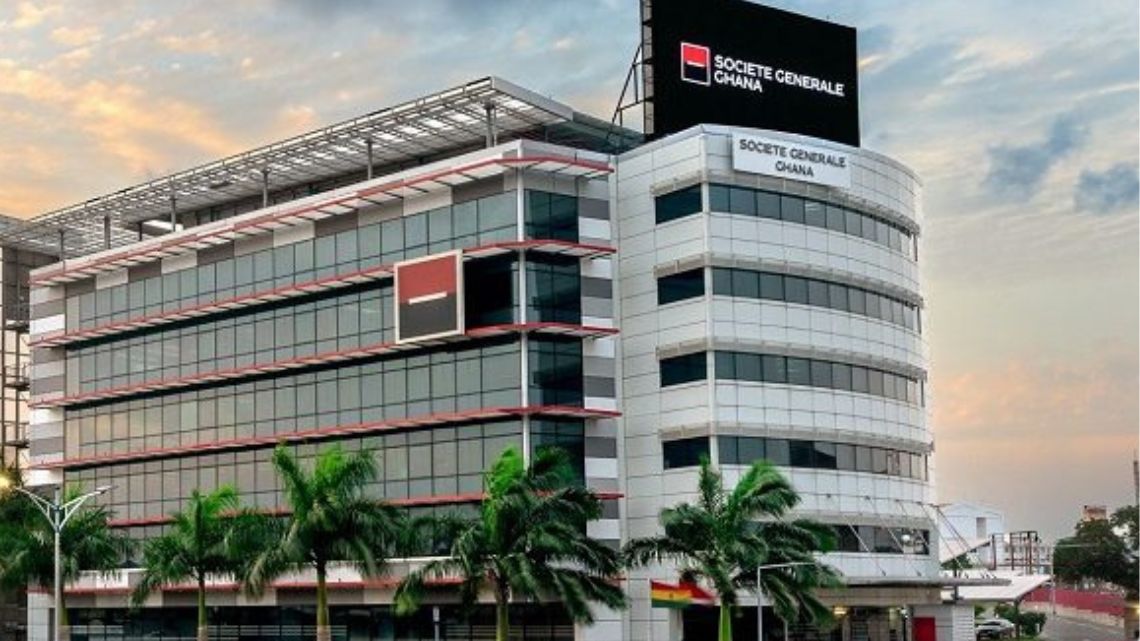
    Société Générale has officially provided the Bank of Ghana (BoG) with the full list of individuals and entities interested in acquiring shares in the bank, as part of the ongoing strategic review of its operations in Ghana.

    This submission fulfills a key regulatory requirement as Société Générale reviews its ownership structure in Ghana in line with BoG’s expectations.

    In May, Société Générale Ghana announced that it had begun a strategic review of its operations in the country, following reports that the French bank was considering exiting Ghana after almost two decades of operation. The bank also revealed that it had engaged investment bank Lazard to explore potential buyers for its businesses in Ghana, Cameroon, and Tunisia.

    In response, the Bank of Ghana requested a comprehensive list of bidders to ensure transparency and avoid any unexpected outcomes during the sale process.

    BoG Governor Dr. Ernest Addison, in a recent Monetary Policy Committee (MPC) press briefing in Accra, confirmed that the Central Bank has now received the full list of potential buyers.

    “As an update, we have been furnished with all the bidders of shares that are being disposed of. So the bidding process is still ongoing and hopefully, when they decide on the preferred bidder, they will also let us know,” Dr. Addison stated.

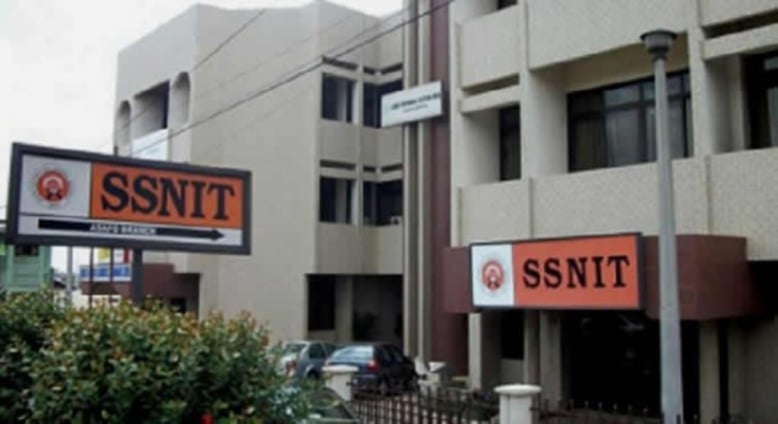
    Currently, Société Générale holds a 56% stake in its Ghanaian operations, with the Social Security and National Insurance Trust (SSNIT) owning 19%. An individual owns about 7%, while the remaining shares are held by other entities. The identities of the bidders remain of great interest as the process unfolds.

    While the Bank of Ghana evaluates the prospective shareholders, Société Générale has assured its customers that it will pursue strong partnerships and investments to enhance its long-term performance and profitability.

  • This is how much you need to be able to invest in Ghana’s Gold Coin – BoG reveals

    This is how much you need to be able to invest in Ghana’s Gold Coin – BoG reveals

    Financial Markets Advisor to the Governor of the Bank of Ghana, Dr. Stephen Opata, has advised potential investors in Ghana’s Gold Coins to prepare a minimum investment of ₵10,000.

    He mentioned that the coins, which will be accessible to the public via commercial banks, are expected to be priced starting at approximately ₵10,000.

    “So initially, obviously, if you want to buy the quarter-ounce coin, you must have savings of ₵10,000 minimum; you must have that. So if you don’t have that, then you would not be able to do that (invest),” he stated during an appearance on Metro TV’s Bottomline program on Monday, September 30, 2024.

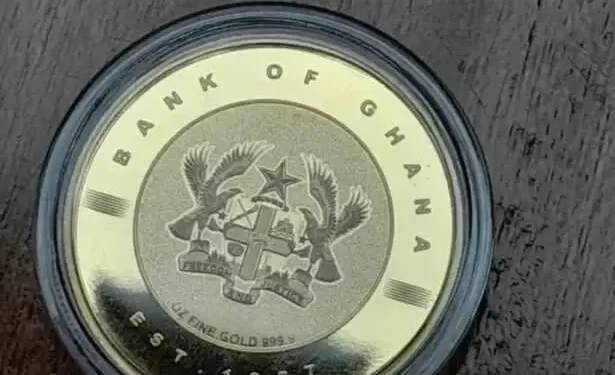
    The Bank of Ghana (BoG) recently unveiled the Ghana Gold Coin, aimed at offering Ghanaians more diverse investment opportunities.

    These coins, which will come in various sizes, are part of the central bank’s Responsible Gold Sourcing Policy Framework.

    Dr. Stephen Opata noted that the BoG’s goal is to promote greater inclusivity by introducing these coins, allowing more people to participate in the investment.

    “Like I said, if we are able to tokenise this, that’s the next stage that will become very interesting, then we will have more inclusion. So the next stage is going to be interesting.

    We want to go into this project in phases, and as we gauge the success and roll this out, we will see that more people will be included. We will even get to the point where Ghanaians should be able to buy this using their mobile money account,” he stated.

    Dr. Ernest Addison, Governor of the Bank of Ghana, announced that the newly introduced ‘Ghana Gold Coin’ is made from refined dory gold, achieving a purity level of 99.99%.

    Backed by the central bank, the coins have been officially issued and guaranteed.

    During a press briefing last week, Dr. Addison highlighted that the gold coins aim to relieve pressure on the cedi by offering an alternative investment option for those who typically buy and hoard foreign currency like the dollar.

  • Drop in inflation rates has improved business, consumer confidence – BoG

    Drop in inflation rates has improved business, consumer confidence – BoG

    The economy is beginning to recover, with both consumer and business confidence increasing, according to recent surveys by the Bank of Ghana (BoG).

    The August 2024 reports indicate significant improvement in overall sentiment, driven by lower inflation, robust GDP growth, and companies meeting their short-term targets.

    This boost in confidence is mainly due to continuous improvements in the macroeconomic landscape.

    Speaking at a press briefing after the 120th Monetary Policy Committee (MPC) meeting, Dr. Ernest Addison, Governor of the Bank of Ghana, emphasized the key drivers behind this positive outlook.

    “Consumer confidence improved on account of easing inflationary pressures, which has led to optimism about future economic conditions,” Dr. Addison noted.

    He further noted that business confidence has risen as companies achieved their short-term goals and expressed optimism about their future prospects, driven by improving economic conditions.

    This surge in confidence aligns with stronger-than-expected economic growth. Provisional data from the Ghana Statistical Service for Q2 2024 showed real GDP growth at 6.9%, a significant jump from 2.5% in the same period of 2023.

    Non-oil GDP growth was particularly notable, reaching 7%, compared to 3.1% a year ago.

    Leading the recovery was the industry sector, which grew by 9.3%, rebounding from a 2.6% contraction last year. The services and agriculture sectors also showed strong growth, recording 5.8% and 5.4% respectively.

    This economic recovery is further supported by key indicators suggesting sustained improvement in activity. The real Composite Index of Economic Activity (CIEA), a central bank tool for tracking short-term economic trends, grew by 1.6% in July 2024, a sharp reversal from the 2.8% contraction seen in the same period in 2023. Key drivers of this positive trend included increased construction, rising household consumption, and a boost in both exports and imports.

    Dr. Addison stressed that improvements in the macroeconomic environment were closely linked to the ongoing disinflation process, which remains on track.

    Headline inflation dropped steadily, reaching 20.4% in August, down from 22.8% in June 2024. Food inflation, in particular, fell to 19.1% in August from 24% in June, while non-food inflation also decreased slightly to 21.5%.

    “The disinflation process remains on track, supported by a tight monetary policy stance and easing food inflation,” Dr. Addison said.

    He also highlighted that the Bank’s core inflation measure, which excludes volatile items like energy and utilities, eased to 19.4% in August from 22.1% in June.

    This renewed consumer and business confidence is expected to fuel further economic activity. The Purchasing Managers’ Index (PMI), which tracks the performance of manufacturing and services, reflected this upward trend, rising to 51.1 in August from 50.1 in July.

    A PMI reading above 50 indicates expansion in business activity, reinforcing the belief that the economy is on a sustainable recovery path.

    The central bank projects continued economic growth, with inflation expected to ease towards its target range of 13-17% by the end of the year.

  • Interest rates drop as BoG lowers Monetary Policy Rate to 27%

    Interest rates drop as BoG lowers Monetary Policy Rate to 27%

    The Bank of Ghana (BoG) has reduced its Monetary Policy Rate by 200 basis points, lowering it to 27%.

    This is the second cut since 2021, aimed at reducing inflation and providing relief to borrowers.

    Following a nine-month hold at 29%, which was previously reduced from 30% in January, the latest cut is expected to offer temporary relief to borrowers in the coming months.

    During the 120th Monetary Policy Committee briefing on Friday, September 27, BoG Governor Dr. Ernest Addison explained that the decision reflects recent inflationary declines and positive economic developments.

    “In the assessment of the Committee, preliminary data since the last MPC meeting held in July 2024 indicates that macroeconomic conditions have generally improved. Headline inflation has eased, and growth has picked up.

    “Fiscal policy implementation has been robust, providing impulse that is supportive of growth, while monetary conditions have remained tight and supportive of the disinflation process.”

    “Headline inflation, since the first quarter, has declined for five consecutive months by 5.4 percentage points. Core inflation has also declined sharply over the same comparative period by 6.9 percentage points. These trends suggest that the disinflation process is on course.”

    “The latest forecasts show that inflation will continue to ease towards the range target of 13-17 per cent for the year and steadily track back towards the medium-term target of 6-10 per cent by the end of 2025, barring unanticipated shocks. At the current juncture, the committee judged the risks to the inflation outlook as fairly balanced.”

    “Given these considerations, the Committee decided to lower the Monetary Policy Rate by 200 basis points to 27.0 per cent.”

  • Ghana Gold Coin to mop up extra liquidity from the banking sector – BoG

    Ghana Gold Coin to mop up extra liquidity from the banking sector – BoG

    The Bank of Ghana (BoG) has introduced the Ghana Gold Coin as part of a strategic initiative aimed at absorbing excess liquidity from the banking sector.

    This move, under the BoG’s domestic gold programme, is expected to provide Ghanaians with a new investment opportunity while stabilizing the local currency and reducing reliance on the U.S. dollar.

    Speaking at the Monetary Policy Committee (MPC) meeting on Friday, September 27, Dr. Ernest Addison, Governor of the Bank of Ghana, announced that the Ghana Gold Coin will be available in three denominations: a one-ounce coin, a half-ounce coin, and a quarter-ounce coin. These coins will be sold in commercial banks within the next two weeks, with prices to be published on the BoG’s website.

    “The Ghana Gold Coin is manufactured from dowry gold dug out of Ghana, refined to 99.99 per cent purity, and is issued and guaranteed by the BoG,” Dr. Addison said.

    He added that the design features the Ghana coat of arms on the front and the Independence Arch on the back. “The coin will be packaged in a wooden story box, with a transparent coin holder and a certificate of ownership,” he noted.

    Dr. Addison explained that this initiative aligns with the central bank’s efforts to manage liquidity and promote gold as a secure investment for residents. “The Ghana Gold enables the BoG to mop up extra liquidity from the banking sector and will supplement the use of our BoG bills. It offers an additional investment option for savers residing in Ghana to benefit from the BoG domestic gold purchase programme,” he remarked.

    This introduction of the Ghana Gold Coin forms part of the BoG’s broader strategy to strengthen the economy and reduce the hoarding of foreign currencies, particularly the U.S. dollar.

    The next MPC meeting is scheduled for November 20-22, 2024, with the policy decision to be announced on Monday, November 25, 2024.

  • Gold coin introduction, not a solution to cedi depreciation – Prof Bokpin to BoG

    Gold coin introduction, not a solution to cedi depreciation – Prof Bokpin to BoG

    Economist Professor Godfred Bokpin has expressed scepticism about the Ghana Gold Coin as a remedy for the cedi’s depreciation.

    On Friday, the Bank of Ghana (BoG) introduced the Ghana Gold Coin, a new investment product aimed at curbing dollar hoarding. The initiative is part of the domestic gold programme, designed to soak up excess cash in circulation and bolster the cedi’s strength against major currencies.

    The coin will come in three versions: one-ounce, half-ounce, and quarter-ounce, and will be sold through commercial banks within two weeks. BoG Governor Dr. Ernest Addison, speaking at the Monetary Policy Committee meeting on September 27, noted that coin prices will be made available on the central bank’s website.

    While the initiative is expected to reduce market liquidity and stabilize the cedi, Professor Bokpin argues that it falls short of offering a long-term solution to the currency’s persistent decline.

    But Prof Bokpin in an interview on Eyewitness News on Citi FM on Friday, indicated that “I associate with the intervention from the central bank to the extent that there are very limited alternative avenues right now in the market and therefore any genuine attempt to offer alternatives would be welcomed, and the next important question as you rightly asked is whether this is the solution.

    “We have been waiting for this all this while, and I think it is not too hard to look for that and to conclude that that is not the solution.”

    “The reason is as much as we acknowledge that this is an alternative, the market is dry largely also because of confidence and all of that. This is not the solution.”

    Prof Bokpin stressed that the introduction of the coin was not a substitute for managing the economy well.

    I want to believe that it is not packaged as a substitute for managing the economy well because the fundamental thriving factors pushing the cedi to lose its own against the major trading currencies when it comes to fiscal discipline when it comes to enhancing the capacity of the local economy, less import reliance, adding value to the export of your raw commodities, this doesn’t substitute for all of that,” he added.

  • Policy rate reduced from 29% to 27% – BoG

    Policy rate reduced from 29% to 27% – BoG

    The Bank of Ghana has lowered the monetary policy rate by 200 basis points, reducing it from 29 percent to 27 percent.

    Dr. Ernest Addison, who serves as the Chairman of the MPC and Governor of the BoG, explained that this decision is linked to the cedi’s relative stability, a downward trend in inflation moving towards a more balanced state, effective implementation of fiscal policies, and overall improved macroeconomic conditions.

    Additionally, he pointed out a notable enhancement in the reserves held by the Central Bank of Ghana.

    This announcement was made by Dr. Addison during a press conference on Friday, September 27, 2024, which coincided with the 120th meeting of the Monetary Policy Committee.

  • Cedi depreciates by 24.3% against dollar in nine months – BoG

    Cedi depreciates by 24.3% against dollar in nine months – BoG

    The Ghana cedi has depreciated by 24.3% against the US dollar on the interbank forex market as of September 2024, according to the Bank of Ghana’s latest Summary of Economic and Financial Data. This marks a slower depreciation compared to the 22.9% decline recorded during the same period last year.

    The data indicates that the cedi lost 7.7% of its value to the dollar in March 2024, increasing to 18.6% depreciation by June 2024. On the retail market, the cedi is currently trading at an average of GH¢16.45 per dollar, while the Bank of Ghana quotes one dollar at GH¢15.70.

    Against other major currencies, the cedi has also experienced significant losses. It has depreciated by 27.7% against the British pound, now trading at GH¢20.93. The cedi has also lost 25.0% of its value against the euro, with the current rate at GH¢17.49.

    Slower Depreciation of the Cedi

    Despite these figures, the cedi’s depreciation has slowed in recent weeks. Demand pressures for foreign currencies appear to be easing, leading to a less rapid decline in the value of the cedi.

    Last week, the local currency depreciated by 1.21% against the dollar, a slower rate compared to the previous week’s 1.84%. Similarly, it weakened by 0.71% against the pound, down from 1.43% the previous week. However, the cedi recovered its 0.42% weekly loss against the euro on the retail market.

    Since the beginning of the year, the cedi has lost about 25.61% of its value against the US dollar, reflecting the persistent challenges facing the local currency.

  • 8 additional data providers, users of credit reporting system gain approval from BoG

    8 additional data providers, users of credit reporting system gain approval from BoG

    In 2023, the Bank of Ghana reported receiving 13 applications from non-banking companies seeking recognition as data providers and authorized users of the Credit Reporting System (CRS).

    Of these applications, eight were approved by the central bank. According to the BoG’s annual report on credit activities, these approvals enable the respective companies to contribute data to credit bureaus and access credit information from them.

    As of December 2023, a total of 33 companies had been officially designated as part of the system. The report explained that the approvals were granted based on the companies’ involvement in trade credit or the processing of data essential to enhancing the credit reporting framework.

    The approved institutions included retailers, fintech companies, and credit unions.

    The Bank of Ghana also initiated discussions with the Microfinance and Small-Scale Loans Centre (MASLOC) and the Ghana Enterprise Agency to develop procedures for their participation in the CRS.

    Additionally, the central bank began talks with the Electricity Company of Ghana (ECG) to further expand the system by incorporating relevant data for a more comprehensive CRS.

    “The engagement, when completed, will allow ECG to submit credit information to credit bureaux to improve the credit reports of consumers and businesses.”

  • BoG intensifies effort to combat financial fraud

    BoG intensifies effort to combat financial fraud

    The Bank of Ghana (BoG) has intensified monitoring mechanisms within the financial sector to curb the rising number of fraud cases.

    This follows the release of its latest annual Fraud Report, which revealed that the number of staff involved in fraudulent activities in banks and Specialized Deposit-Taking Institutions (SDIs) jumped from 188 in 2022 to 274 in 2023, reflecting a 46 percent increase.

    Additionally, the financial losses due to fraud climbed by 7 percent, reaching 88 million cedis over the same period.

    In an interview with Joy Business, the Deputy Director of the Financial Stability Department at the BoG, Dr. John Dadzie, mentioned that strategies have been set in place to require banks to provide a detailed plan to address the issue.

    “The Bank of Ghana is concerned about fraud prevention across all banks. We do not differentiate between institutions with higher or lower fraud rates. Upon releasing our reports, we write to all banks to submit strategies outlining their plans to minimize fraud incidence and related losses”, he said.

    Dr. Dadzie stated that the aim of the BoG is reduce fraud in the financial sector to the lowest level to discourage staff and the public from being enticed to engage in fraudulent acts.

    He added that it is the wish of the bank to stop from fraudulent activities from occurring in the first place.

    “Fraud is fraud and from the regulators point of view, we are looking at not having fraud situations at all. Even if a bank has one or two incidences of fraud, the impact could be very significant”, he pointed out.

    Declining to mention specific names of banks involved, Dr. Dadzie said the mandate of the central bank is to put in measures that will prescribe punitive actions for anybody involved in fraud in the financial sector.

    “The Bank of Ghana is very much concerned not just in terms of who has more or less. Fraudulent activities are unacceptable, and from a regulator point of view, we aim to eliminate such occurrences entirely. Even isolated incidents of fraud can have significant consequences for banks”.

  • Non-performing loans ratio in banking sector increased to 24.2% in 2023 – BoG

    Non-performing loans ratio in banking sector increased to 24.2% in 2023 – BoG

    The Bank of Ghana’s July 2024 Monetary Policy Report has disclosed that the Non-Performing Loans (NPL) ratio in the banking sector increased to 24.2% in June 2024, compared to 18.7% in June 2023.

    Even when adjusted for fully provisioned loan losses, the NPL ratio climbed to 10.8% in June 2024, up from 7.8% the previous year, indicating a rise in all categories of non-performing loans.

    This increase in the NPL ratio is attributed to the faster growth of non-performing loans compared to total loans during the review period.

    The industry’s total NPL stock surged by 49.4%, reaching GH¢20.4 billion in June 2024, up from GH¢13.7 billion, showing a deterioration in both domestic and foreign currency-denominated loans.

    The private sector, being the largest recipient of bank credit, accounted for the majority of non-performing loans.

    Its share of NPLs increased slightly to 95.6% in June 2024, from 95.5% in June 2023. Meanwhile, the public sector’s share dropped marginally to 4.4% from 4.5% in the same period.

    Among the sectors, agriculture, forestry, and fishing reported the highest NPL ratio at 56.4%, up from 30.0% a year prior, followed by the transportation, storage, and communication sector, with an NPL ratio of 49.1%, up from 22.1%.

    The construction sector’s NPL ratio rose to 36.8% from 32.8%, while the electricity, water, and gas sector saw an increase to 20.6% from 7.8%. The commerce and finance sector remained steady at 20.2%.

    Mining and quarrying recorded the lowest NPL ratio at 13.7% in June 2024, slightly higher than the 12.7% recorded in June 2023.

  • Banking sector’s financial health has strengthened – BoG

    Banking sector’s financial health has strengthened – BoG

    The July 2024 Bank of Ghana monetary policy report reveals a strong and profitable banking sector with improved capital buffers.

    Key indicators show a healthy liquidity position with core liquid assets rising to 47.1% of total deposits and 35.8% of total assets by June 2024, up from previous years.

    The Capital Adequacy Ratio (CAR) remains robust at 14.3%, meeting regulatory standards.

    Profitability indicators show a continued positive trend, though growth rates in profits moderated compared to last year. Net interest income grew by 19.4%, while total income increased to GH¢23.0 billion.

    The sector’s operational efficiency improved, with a decrease in the cost-to-income ratio and better management of operating expenses.

    The report also highlights a significant rise in offshore balances and a shift in borrowing patterns, with increased domestic borrowings and a decline in long-term external borrowings.

    The Credit Conditions Survey indicates an easing in loan conditions for enterprises and households, with expectations of continued easing in the near future.

    Overall, the banking sector shows signs of recovery and stability, though concerns over asset quality persist. The outlook remains positive, with ongoing recapitalisation and strict credit standards essential for maintaining good performance.

  • SSNIT contribution by private sector surges by 2.4% – BoG Report

    SSNIT contribution by private sector surges by 2.4% – BoG Report

    The Bank of Ghana’s Monetary Policy Report for July has revealed an increase in private sector contributions to the Social Security and National Insurance Trust (SSNIT) Pension Scheme (Tier-1).

    The report highlights a 2.4% rise in SSNIT contributions for the first half of 2024, reflecting steady growth in labor market activities within the manufacturing sub-sector.

    In May 2024, total private sector workers’ contributions surged by 39.6% year-on-year to GH¢470.92 million, compared to GH¢337.23 million during the same period in 2023. Cumulatively, for the first five months of 2024, contributions grew by 28.8%, amounting to GH¢1.97 billion, up from GH¢1.53 billion recorded in the corresponding period of 2023.

    The total number of private sector SSNIT contributors, which is used as a gauge of employment conditions, also saw a 2.7% increase to 1,007,341 in May 2024, compared to 980,808 during the same period in the previous year. For the first five months of 2024, the total number of contributors rose by 4.8% to 5,063,676, from 4,829,487 recorded in 2023.

    Employment growth which may have resulted from the progress recorded in the manufacturing sub-sector is said to have spurred the surge in contributions.

    The Bank of Ghana’s report also indicates an improvement in direct tax collection, with total direct taxes increasing by 43.7% year-on-year in May 2024 to GH¢4.11 billion, compared to GH¢2.86 billion in May 2023. The cumulative total direct taxes collected for the first five months of 2024 amounted to GH¢22.19 billion, up 31.6% from GH¢16.86 billion during the same period last year.

    Income tax, comprising PAYE and self-employed contributions, accounted for 48.8% of the total direct tax collected, while corporate tax contributed 38.4%, and other tax sources added 12.8%.

    In terms of labor demand, the number of jobs advertised in selected print and online media remained stable, with a total of 2,968 job adverts in June 2024, slightly down from 2,993 in June 2023. Cumulatively, job adverts for the first half of 2024 increased by 2.4% to 17,278, compared to 16,866 during the same period in 2023.

    These trends, as outlined in the Bank of Ghana’s report, reflect positive developments in the country’s labor market and overall economic performance.

  • Govt raked in GHC22.19bn from total direct tax collected in first 5 months of 2024 – BoG

    Govt raked in GHC22.19bn from total direct tax collected in first 5 months of 2024 – BoG

    The Ghanaian government recorded significant growth in direct tax collections for the first five months of 2024, raking in a total of GH¢22.19 billion, according to the Central Bank’s July 2024 Monetary Policy Report.

    This marks a 31.6 percent increase compared to the GH¢16.86 billion collected during the same period in 2023.

    A direct tax is a type of tax that is paid directly to the government by the individual or organization on whom it is imposed.

    The report further detailed that activities within the manufacturing sub-sector, as indicated by trends in direct tax collection and private sector workers’ contributions to the Social Security and National Insurance Trust (SSNIT) Pension Scheme (Tier-1), also improved as of May 2024.

    “Total direct taxes increased by 43.7 percent (year-on-year) to GH¢4.11 billion in May 2024, relative to GH¢2.86 billion recorded in May 2023,” the report highlighted.

    This notable growth in tax revenue was driven by various sub-tax categories, with income tax (PAYE and self-employed) accounting for the largest share at 48.8 percent. Corporate tax contributed 38.4 percent, while “other tax sources” made up the remaining 12.8 percent.

    Additionally, private sector contributions to the SSNIT Pension Scheme (Tier-1) surged by 39.6 percent year-on-year, reaching GH¢470.92 million in May 2024, up from GH¢337.23 million during the same month in 2023.

    For the first five months of 2024, cumulative contributions grew by 28.8 percent, totaling GH¢1.97 billion, compared to GH¢1.53 billion recorded in the corresponding period of 2023.

  • Banking sector’s total assets rise by 33.3% to GHS323.2bn – BoG

    Banking sector’s total assets rise by 33.3% to GHS323.2bn – BoG

    The Bank of Ghana’s latest Monetary Policy Report reveals that the banking sector’s total assets surged to GH¢323.2 billion by June 2024, marking a 33.3 percent increase from the previous year. This growth is a substantial rise compared to the 21.2 percent increase recorded in June 2023.

    The report attributes this significant expansion in assets to a robust growth in deposits and the depreciation of the Ghana cedi.

    “Foreign assets grew by 57.6 percent in June 2024, compared to 74.5 percent in June 2023, while domestic assets grew by 31.0 percent in June 2024, up from 17.8 percent growth same period last year”, it said.

    The report indicates that the proportion of foreign assets within the total assets rose to 10.2 percent, up from 8.6 percent, while the share of domestic assets fell to 89.8 percent from 91.4 percent in June 2023.

    “Investments grew by 19.2 percent to GH¢107.2 billion in June 2024, up from a growth of 11.0 percent in June 2023, due to a significant growth in both short-term and long-term instruments”.

    It pointed out that the growth in investments reflected a 7.3 percent growth in short-term bills, from a growth of 149.6 percent in June 2023, while long-term investments (securities) also grew by 28.6 percent in June 2024, having contracted by 23.2 percent in June 2023.

    The mixed growth in both bills and securities investments culminated in a reduced share of investments in total assets to 33.2 percent in June 2024, from 37.1 percent in June 2023. Gross loans and advances rose by 15.6 percent to GH¢84.5 billion in June 2024, relative to a 15.4 percent growth in June 2023. Growth in net loans and advances (gross loans adjusted for provisions and interest in suspense) also moderated to 10.3 percent, from 11.3 percent during the same period last year.

    The report stated that the higher growth in assets was funded by increases in deposits and other funding sources. Deposits remained the main source of funding for the banking sector, accounting for 76.1 percent share of total assets in June 2024, from 77.4 percent in June 2023.

    Deposits improved by 31.1 percent to GH¢245.9 billion in June 2024, as against 42.8 percent growth recorded in June 2023.

    “The foreign currency component of deposits grew by 29.8 percent to GH¢81.2 billion in June 2024, relative to a growth of 62.5 percent in June 2023, suggesting some currency depreciation effect on the overall growth in total deposits”.

    According to report, borrowings also picked up by 44.4 percent to GH¢23.2 billion in June 2024, up from 39.1 percent contraction recorded in June 2023.

    “The growth in borrowings reflected an uptick in both short-term foreign and domestic borrowings while long-term domestic and foreign borrowings contracted”.

    “Short-term domestic borrowings of GH¢15.2 billion at end-June 2024 suggested a growth of 83.0 percent, relative to a contraction of 33.6 percent recorded in June 2023”, it added.

    Long-term domestic borrowing, however, contracted by 17.6 percent in June 2024, down from a growth of 45.1 percent during the same period in 2023. Short-term foreign borrowings grew by 33.2 percent, after contracting by 75.7 percent in June 2023, while long-term foreign borrowings contracted by 2.5 percent, from the 16.2 percent contraction registered in June 2023.

  • Ghana’s gross international reserves surge by $670m – BoG

    Ghana’s gross international reserves surge by $670m – BoG

    Ghana’s Gross International Reserves (GIR) has recorded a significant increase, surging by US$670 million by the end of June 2024.

    According to the Central Bank of Ghana’s Monetary Policy Report for July 2024, the country’s gross reserves now stand at US$6.87 billion, equivalent to 3.1 months of import cover. This represents an improvement from the December 2023 figure of US$5.92 billion.

    The report also indicated that GIR, excluding encumbered and petroleum assets, rose to US$4.52 billion at the end of June 2024. This compares favourably to the US$3.68 billion recorded in December 2023.

    In May 2024, Ghana’s Finance Minister, Dr Mohammed Amin Adam, confirmed earlier signs of improvement, announcing that the country’s Gross International Reserves had reached US$6.2 billion, covering 2.7 months of import cover by the end of February 2024.

    Dr Amin noted, “This marks an improvement from $5.9 billion recorded in the corresponding period of 2022.”

    The Finance Minister further projected that the reserves would continue to grow, aiming to reach a level that would provide 4.4 months of import cover in the medium term.

    The anticipated growth, according to Dr. Amin, is expected to be driven by “external inflows from institutions such as the IMF, World Bank, and other development partners.”

    Dr. Amin also highlighted key initiatives contributing to this upward trend, including the government’s Oil for Gold programme, the Bank of Ghana’s Gold for Reserve programme, and the Cocoa syndicated funds.

    Despite ongoing pressures on the exchange rate, the Minister underscored that the cedi has shown stability, stating that depreciation against the US dollar had reduced from 54% in November 2022 to 27.8% by the end of December 2023.

  • Unauthorized lending platforms will be clamped down – BoG

    Unauthorized lending platforms will be clamped down – BoG

    The Bank of Ghana (BoG) has reaffirmed its commitment to cracking down on unauthorized lending apps that employ unethical practices to recover debts, including the illegal publication of defaulters’ personal information.

    Addressing participants at the MTN Ghana Mobile Money @15 Fintech Stakeholders’ Forum, Kwame Oppong, the Director of Fintech at the BoG, underscored the central bank’s zero-tolerance policy towards activities that destabilize the financial sector.

    He made it clear that the Bank of Ghana is determined to root out these illegal operations, which have been associated with extreme consequences, including suicides by those unable to repay loans.

    “It is a crime to threaten loan defaulters with the publication of their pictures and confidential data,” Mr Oppong stated firmly.

    He warned that no product or service should be introduced into the Ghanaian financial space if it poses a threat to the sector’s stability or jeopardizes the livelihoods of individuals and businesses.

    In recent months, a troubling trend has emerged where unauthorized lending apps resort to extreme measures, such as publicly shaming borrowers by sharing their images and private information.

    Mr Oppong condemned this practice, questioning how such methods could be justified. “How is this a way of making a living—by putting people on suicide watch, threatening to announce to the world that they owe you?” he asked.

    To combat these illegal activities, the BoG is collaborating with the Economic and Organised Crime Office (EOCO) and other security agencies to take action against offenders.

    “This is why the Bank of Ghana, in partnership with EOCO and security agencies, conducted a raid that led to the arrest of over 200 individuals, including foreigners,” Oppong recalled.

    At the same forum, Shaibu Haruna, the Chief Executive of Mobile Money Limited, reiterated MTN’s commitment to enhancing safety measures and increasing education on mobile money fraud. He emphasized that building trust among customers is a top priority as the company continues to develop its services.

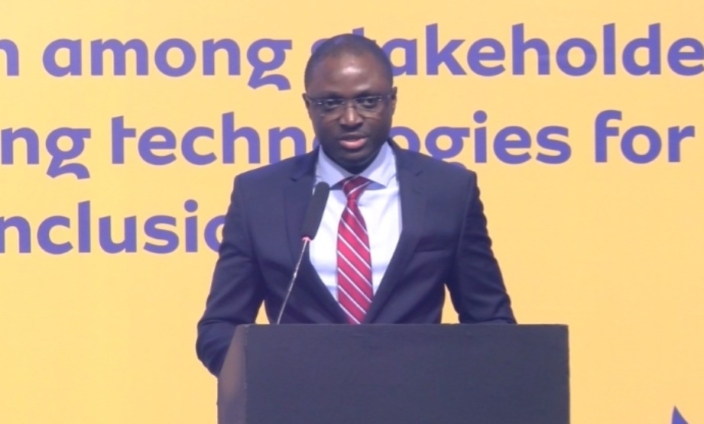
    The MTN Mobile Money @15 Fintech Stakeholders’ Forum, held under the theme “Building Trust and Cooperation Among Stakeholders: How to Maximize the Impact of Emerging Technologies for the Promotion of Financial Inclusion,” brought together key players in the financial technology sector. The event focused on the impact of new technologies on the financial industry and the importance of strong regulatory frameworks to foster trust among users and stakeholders.

  • Collateral registrations increase sharply in Q2 of 2024 – BoG

    Collateral registrations increase sharply in Q2 of 2024 – BoG

    Bank of Ghana has reported that the second quarter of 2024 has recorded 80,873 in collateral registrations in it latest Collateral Registry Quarterly Brief.

    This represents a 59.5% annual growth from the 50,695 registrations recorded during the same period in 2023.

    In Q2 2024, Savings and Loans Companies topped the registrations with a total of 69,328—a substantial 74.2% rise from the 39,796 recorded in the same period of 2023. Rural and Community Banks (RCBs) also saw an increase, with registrations growing by 28.7%, from 6,019 in Q2 2023 to 7,747 in Q2 2024.

    In contrast, banks saw a sharp decline in registrations, dropping by 43.4% from 2,534 in Q2 2023 to 1,433 in Q2 2024. Leasing Companies had the fewest registrations, with only four recorded during the period under review.

    The total number of searches conducted at the Collateral Registry in Q2 2024 increased by 10.1% compared to the previous year, reaching 15,617, up from 14,184 in Q2 2023. Savings and Loans Companies were responsible for the majority of searches, accounting for 74.1%, followed by RCBs at 17.6%, and banks at 4.6%.

    Microfinance Institutions and Micro Credit Companies conducted the fewest searches, representing 0.8% and 0.1%, respectively. Other lending institutions and the general public made up the remaining 2.7% of searches in the second quarter of 2024.

  • I didn’t breach national security by probing BoG’s $20m transfer – Ablakwa

    I didn’t breach national security by probing BoG’s $20m transfer – Ablakwa

    Member of Parliament for North Tongu, Samuel Okudzeto Ablakwa, has defended his actions in sharing details of a $20 million transfer from the Bank of Ghana (BoG) to the Central Bank of Liberia, insisting that he did not breach national security protocols.

    Earlier, Mr. Ablakwa took to social media platform X to reveal that the Ghana Revenue Authority (GRA) had cleared an amount of $20 million intended for the Central Bank of Liberia.

    He pointed out discrepancies between documents addressed to the GRA, which indicated that the money was sent to the Bank of Ghana for safekeeping before being transferred to Liberia, and records from Ghana’s central bank, which suggested a different narrative.

    The Bank of Ghana responded with a statement, describing the legislator’s actions as “unfortunate” and expressing concerns that his disclosure could compromise sensitive financial information, raising significant security issues. The central bank clarified that the $20 million was transferred to its account as part of an established arrangement with the Central Bank of Liberia.

    However, speaking on JoyFM’s Newsnight, Mr. Ablakwa dismissed these concerns, asserting that he had not breached any security protocols. He emphasized that his actions were part of his responsibilities as a legislator, aimed at holding public institutions accountable.

    “It is part of our work as Members of Parliament to carry out oversight to let all institutions know that we are on top of our job. We are watching, we are keenly monitoring, and we are carrying out oversight,” Mr. Ablakwa said.

    He explained that his intention in posting the issue on social media was simply to seek clarity on the matter, without any ulterior motives. Regarding the issue of posting flight details, which the BoG highlighted as a security concern, Ablakwa clarified that it was an oversight, as the details were included in the documents he shared. He also emphasized that he did not include any flight details in his write-up and that no flight information had been provided regarding the re-exportation of the funds.

    “We are carrying out our mandate, it is pure oversight, and I do not see the national security breach in this matter,” he added.

    Ablakwa also noted that the $20 million in question was secure and had not been stolen, questioning the basis of the national security concerns raised by the BoG. He highlighted the increasing incidents of money laundering as a justification for his scrutiny, asserting that he was merely fulfilling his role as an MP.

    Meanwhile, Mr. Ablakwa expressed satisfaction with the explanations provided by the Bank of Ghana and the Liberian government regarding the transfer.

  • Central Bank of Liberia responds to Ablakwa’s claims over 20m dollars transfer to BoG

    Central Bank of Liberia responds to Ablakwa’s claims over 20m dollars transfer to BoG

    Central Bank of Liberia (CBL) has addressed the controversy regarding the recent transfer of US$20 million to Ghana’s central bank, the Bank of Ghana (BoG), following the disclosure of the documents by North Tongu Member of Parliament, Samuel Okudzeto Ablakwa.

    In a statement released on Wednesday, August 28, 2024, and reviewed by GhanaWeb, the CBL confirmed that it is the rightful owner of the transferred funds.

    The statement clarified that the US$20 million was sent to the BoG as part of an ongoing agreement under which the Bank of Ghana provides overnight custody for Liberia’s cash imports.

    “The importation of United States dollars is part of the Bank’s normal function, which is required to meet the needs of the economy, including the USD withdrawal demands and needs of the Government of Liberia and the commercial banks.

    “CBL and the Bank of Ghana (BoG) have a long-standing Cash Custody Agreement executed for the BoG to provide overnight custody for CBL imported cash when shipped from London by Travelex Currency, which is an international currency shipment company,” part of the statement reads.

    It added, “These cash shipments by flights are cleared through both the Ghana and Liberia Customs, thus validating their legitimate sources.

    The CBL once again emphasises its commitment to transparency and accountability and encourages the media to always reach out to the Bank to verify any information about the Bank’s operations before publication.”

    Background:

    Samuel Okudzeto Ablakwa, MP for North Tongu, has raised serious concerns regarding a US$20 million transfer to the Bank of Ghana, citing discrepancies in the documentation.

    On August 27, 2024, Ablakwa posted on X about the situation, revealing that the US$20 million, which was cleared by the Ghana Revenue Authority (GRA), is intended for the Central Bank of Liberia.

    According to Ablakwa, while official documents sent to the GRA indicate that the funds have been deposited with the Bank of Ghana for safekeeping until they can be transferred to Liberia, other documents from the Bank of Ghana suggest a different story.

    Ablakwa is closely monitoring the situation to ensure that the funds are indeed forwarded to Liberia as intended and not retained by the Bank of Ghana as some documents might imply.

    “I am keenly tracking the movement of some US$20 million cash which arrived in Ghana via KIA this afternoon. The cash has since been cleared by officials of the Bank of Ghana.

    The Bank of Ghana must offer explanations on why supporting documents are not consistent with the content of its August 21, 2024, letter to customs and airport officials seeking to clear the uncirculated banknotes.

    “Even though the Bank of Ghana claims the money was ordered by the central bank of Liberia and that the cash will be re-exported to Monrovia whenever there is an available flight, other intercepted documents, including an airway bill indicate emphatically that the consignee is the Bank of Ghana and not the central bank of Liberia.

    He added, “My international partners and I will keep tracking this US$20 million cash from London to confirm if indeed the fresh banknotes will be transferred to Liberia, when the transfer will be carried out, and if the full amount will be transferred.”

    The MP shared a document from the Bank of Ghana asking the GRA to clear the US$20 million, stating that it would be transferred to Liberia later.

    He also shared an airline bill, which is supposed to show that the US$20 million belongs to the Bank of Ghana.

  • BoG slams Ablakwa over $20m transfer claims, quizzes his attitude as an MP

    BoG slams Ablakwa over $20m transfer claims, quizzes his attitude as an MP

    Bank of Ghana has addressed concerns raised by MP Samuel Okudzeto Ablakwa regarding a $20 million transfer he questioned for inconsistent documentation.

    In a statement dated Wednesday, August 28, the central bank criticised Ablakwa’s allegations, clarifying that the funds were designated for the Central Bank of Liberia, as previously disclosed.

    While the statement didn’t explicitly name Ablakwa, it expressed disappointment over his decision to publicly share documents related to the transfer, implying that such actions were inappropriate and potentially misleading.

    Bank of Ghana has addressed concerns raised by MP Samuel Okudzeto Ablakwa regarding a $20 million transfer, clarifying that the funds were part of an agreement with the Central Bank of Liberia.

    The bank criticised the public sharing of sensitive documents, calling it “unfortunate” and raising security concerns.

    They emphasised that the transfer was executed according to standard procedures and assured the public that there was no misconduct involved.

    The bank also urged caution when handling sensitive financial matters to avoid unnecessary alarms and risks.

    “For the avoidance of doubt, the Bank of Ghana has had a long-standing currency transfer arrangement with the Central Bank of Liberia since 2004, and per this agreement, the Bank of Ghana receives imported currency on behalf of the Central Bank of Liberia for re-export to Monrovia.

    The said Uncirculated Banknotes mentioned in the social media discussions on August 27 are part of this long-standing arrangement.

    When all logistical arrangements, including scheduled flights, are finalised, these would be re-exported to the Central Bank of Liberia.

    “As part of administrative processes and security protocols, all relevant stakeholders are officially informed of the entry and exit of consignments related to this arrangement.

    Unless there is mischief intended, there was no reason for this matter to have become an issue for public discussion,” part of the statement stated.

    “Currency management is a sensitive operation and has security implications; therefore, it is unfortunate that a lawmaker would circulate such sensitive procedural and administrative clearance letters involving another sovereign nation in a bid to misinform and disinform the public and attach a narrative that seeks to suggest some wrongdoing on the part of the Bank of Ghana.”

    The arrangement between the Bank of Ghana and the Central Bank of Liberia signifies mutual trust between the two countries and a testament to the strong bond of friendship between Accra and Monrovia,” the statement added.

    Samuel Okudzeto Ablakwa, the North Tongu MP, raised concerns about a $20 million transfer to the Bank of Ghana, questioning the consistency of related documentation.

    He pointed out that while Ghana Revenue Authority (GRA) documents indicated the funds were for safekeeping before being transferred to the Central Bank of Liberia, records from the Bank of Ghana suggested a different story.

    Ablakwa is monitoring the situation to ensure the funds are properly transferred to Liberia and not retained by the Bank of Ghana as claimed.

  • Next of Kin must follow legal processes to access bank accounts – BoG

    Next of Kin must follow legal processes to access bank accounts – BoG

    The Bank of Ghana (BoG) has advised individuals to thoughtfully select their next of kin, emphasizing that the chosen person should not only be of legal age but also capable of providing necessary information about the account holder when required.

    This guidance addresses a widespread misunderstanding that naming someone as the next of kin automatically grants them access to the account funds upon the account holder’s death.

    According to a notice from BoG Secretary Sandra Thompson, specific legal steps must be taken by the next of kin to access the deceased’s account.

    These steps include submitting a death certificate, letters of administration, or letters of probate.

    “To inherit or have access to the account of a deceased customer, one will have to be named in the deceased customer’s Will as a beneficiary of the account, and a court of competent jurisdiction will have to grant Letters of Probate to empower the person who has been named in the Will as a beneficiary, to obtain access to the deceased customer’s account.

    “Administrators of the estate of a person who dies intestate can be appointed through Letters of Administration (L.A.) issued by a court of competent jurisdiction, which grants access to a deceased customer’s account.

    “Based on this understanding, it is important to choose a Next of Kin who is capable of providing relevant information about you, when the need arises. As much as possible we encourage the choice of Next-of-Kins to be of legal age,” part of the statement read.

  • Monetary policy will remain tight until inflation firmly declines – BoG

    Monetary policy will remain tight until inflation firmly declines – BoG

    The Bank of Ghana (BoG) has affirmed its commitment to maintaining a stringent monetary policy stance until inflation shows a consistent downward trend.

    In July 2024, the Monetary Policy Committee of the BoG maintained the policy rate at 29.0% for the third consecutive time, as Ghana has experienced a fourth consecutive decline in the inflation rate. Currently, the inflation rate stands at 20.9%.

    In a statement to the International Monetary Fund (IMF), the central bank outlined its approach, which aims to steer inflation back within its target range of 8 ± 2 percent.

    BoG emphasized that its monetary policy decisions will remain data-driven to ensure a swift and controlled disinflation process toward the set inflation target.

    “Our policy decisions will continue to be data-dependent to ensure a fast-paced and orderly disinflation path towards the inflation target; the BoG stands ready to adjust the policy stance to ensure inflation evolves as envisaged under our monetary policy consultation clause (TMU Section II),” the statement read.

    Additionally, the central bank reiterated its commitment to absorbing excess liquidity and ensuring the policy rate effectively impacts the market.

    “We are committed to continue absorbing excess liquidity and making sure our policy rate is fully transmitted to the market. In doing so, we will review the increased reliance on reserve requirements and the new tiering framework to ensure they deliver on their objectives,” the bank stated.

    The BoG is also focused on enhancing its inflation-targeting framework, improving the Forecast and Policy Analysis System (FPAS), strengthening macroeconomic data collection (including the BoG inflation expectations survey), and sharpening its analytical capabilities and communication strategy.

    As part of its broader strategy, the central bank aims to rebuild Ghana’s official international reserves to cover at least three months of imports by the end of the IMF program.

    However, challenges in the cocoa sector, larger-than-expected payments to Independent Power Producers (IPPs), and uncertainties surrounding debt restructuring have prompted BoG to seek a modification of its Quantitative Performance Criteria (QPC).

    The request includes adding an asymmetric adjustor to address unforeseen debt servicing needs related to bondholders and commercial creditors.

    Despite these headwinds, BoG remains committed to adhering to its foreign exchange intervention budget as it works towards rebuilding reserves.

  • BoG maintains benchmark rate at 29% to combat inflation pressures

    BoG maintains benchmark rate at 29% to combat inflation pressures

    The Bank of Ghana’s Monetary Policy Committee has decided to keep the benchmark interest rate at 29 percent, a strategic choice intended to address inflation uncertainties caused by currency pressures, changes in utility tariffs, and increasing fuel prices.

    Economic analysts have characterized this decision as a cautious approach to managing the economy during these challenging times.

    In an interview with CNBC Africa, Karen Kwarteng, Head of Global Market Sales at Stanbic Bank Ghana, examined the effects of the central bank’s decision to maintain the benchmark rate at 29 percent.

    She pointed out that although there was a previous 100-basis point rate cut, keeping the current rate is seen as essential to temper inflation and support disinflation efforts in the latter part of the year.

    The Bank of Ghana has set an inflation target of 13 to 17 percent by the end of the year, in line with the government’s 15 percent goal.

    Karen Kwarteng also emphasized the importance of strong fiscal consolidation as a complementary measure to monetary policy.

    “Key government initiatives such as the Ghana.gov platform and the Ghana Integrated Financial Management Information System are pivotal in these efforts.”

    The Standard Bank Executive further expressed optimism about the appreciation of the local currency in the near term, attributing this to the restructuring of the €13.1 billion bonds and anticipated IMF disbursements in November.

    She noted that “These factors are expected to provide much-needed support to the currency despite ongoing challenges such as declining cocoa earnings, which have hampered the regulator’s capacity to intervene in the forex market.”

    In recent times, high lending rates, driven by elevated reference rates, have continued to pose challenges for businesses in Ghana seeking affordable credit.

    Nevertheless, Karen Kwarteng commended the resilience of Ghana’s banking sector, which has shown stability following the domestic debt restructuring program.

    She also acknowledged that “Support from regulatory and governmental bodies has been instrumental in this recovery, enabling banks to navigate the post-restructuring landscape effectively.”

    As Ghana navigates the challenges of inflation management and strives for economic stability, the collaboration between monetary and fiscal authorities will be crucial.

    The focus on fiscal consolidation, prudent financial management, and strategic monetary policy is aimed at addressing current economic challenges and paving the way for a more resilient and sustainable future for the country.

    The Bank of Ghana’s decision to hold the benchmark rate at 29%, therefore, reflects a strategic approach to managing inflation and economic stability.

    With continued efforts in fiscal consolidation and supportive monetary policies, the country will likely overcome current economic challenges and achieve sustainable growth.

    The resilience of the banking sector and optimism about currency appreciation further contribute to a cautiously positive outlook for the country going forward.

  • BoG says Gold for Oil Policy remains in effect

    BoG says Gold for Oil Policy remains in effect

    Bank of Ghana (BoG) has confirmed that the Gold for Oil policy introduced by the government is advancing according to schedule.

    This initiative was implemented to tackle Ghana’s declining foreign currency reserves and the significant dollar demand from oil importers, which was negatively impacting the Cedi and increasing living expenses.

    In a report to the Public Accounts Committee of Parliament on Monday, August 12, Dr. Maxwell Opoku-Afari, the First Deputy Governor of the Bank of Ghana, offered an update on the progress of the policy.

    “The gold for oil programme is on track and the reason why the risk for the separate account is mitigated somehow is that the Central Bank’s participation in terms of financial contribution to the gold for oil is capped and nothing more is being added to that.

    “So it is the receivables that are coming from within that cap amount that has been used to continue to finance the gold for oil programme.”

    The Gold for Oil policy, as outlined by the government, involves settling payments for imported oil products with gold, facilitated through direct exchanges with gold acquired by the Central Bank.

    The G40 Programme Framework, dated February 3, 2023, details the policy’s execution, which involves two payment methods: barter trade or using foreign exchange obtained from selling gold to a broker.

    In the barter method, suppliers who agree to accept gold in exchange for petroleum products receive the equivalent amount of gold from the Bank of Ghana (BoG).

    Alternatively, through the Broker Channel, the BoG enters into a gold supply agreement where it sells gold to a broker, who then provides the foreign currency needed to pay for the petroleum products.

  • GAB calls for the publication of names of dud cheque offenders to restore payment confidence

    GAB calls for the publication of names of dud cheque offenders to restore payment confidence

    Ghana Association of Banks (GAB) has urged the Bank of Ghana (BoG) to make public the names of businesses and individuals who have been penalized for issuing dud cheques.

    The association argues that publishing these names in national newspapers is essential to reinstating confidence in cheques as a trustworthy payment method.

    John Awuah, the Chief Executive of GAB, stressed during an interview on Joy News that such transparency would act as a significant deterrent, preventing others from engaging in the practice of issuing dud cheques.


    “If someone sees their neighbor’s name on this list, it will ensure they avoid making the same mistake,” Awuah stated.


    He noted that the individuals and businesses in question have repeatedly issued dud cheques over the years, highlighting that this practice is not only against central bank regulations but also constitutes a crime under the Criminal Offenses Act.

    “Issuing dud cheques undermines trust in the payment system, which is why this issue is so critical,” Mr. Awuah stressed.


    On August 6, 2024, the Bank of Ghana revealed that it had penalized 47 individuals and 245 businesses for repeatedly issuing dud cheques—at least three times—between January 2022 and January 2024, despite prior warnings.

    As a consequence, these offenders have been prohibited from issuing cheques and accessing new credit facilities in Ghana for three years, starting from June 28, 2024.

    Mr. Awuah cautioned that the continued issuance of dud cheques could result in a widespread rejection of cheques as a viable payment method, posing serious risks to the financial system.

    He highlighted that numerous businesses have already incurred losses due to this practice and called on regulators to take decisive action to restore confidence in the payment system.

    Echoing this concern, Seth Twum Akwaboah, CEO of the Association of Ghana Industries, expressed worries about the repercussions of the Bank of Ghana’s sanctions on businesses, particularly regarding their ability to secure new credit from banks over the next three years.

  • Domestic Gold Purchase Programme yields over $5bn in reserves – BoG

    Domestic Gold Purchase Programme yields over $5bn in reserves – BoG

    The Bank of Ghana (BoG) has revealed that more than $5 billion worth of gold reserves have been amassed under the Government’s Domestic Gold Purchase Programme since its launch in 2021.

    By December 2023, the nation’s gold reserve build-up had reached 65.4 tonnes.

    From January to June this year, the Central Bank acquired an additional 23 tonnes of gold, valued at approximately $1.6 billion, bringing the country’s total reserves to 73 tonnes.

    A significant portion of this, $1.6 billion, was utilized as equity in the Government’s ‘Gold for Oil’ initiative, aimed at stabilizing the Cedi and curbing the rising demand for foreign currencies.

    These details emerged during the official commissioning of the Royal Gold Ghana Limited (RGGL), a joint venture gold refinery, by Vice President Dr. Mahamudu Bawumia in Accra on Thursday.

    The RGGL represents a collaboration between the Precious Minerals Marketing Company (PMMC) and Rosy Royal Limited, an Indian gold refinery firm.

    At the unveiling ceremony of the $450 million refinery, Dr. Bawumia praised the PMMC and RGGL teams for the successful completion of the project. He emphasized that his administration would work on creating a policy framework to support the local currency with gold, thereby strengthening it against foreign currencies.

    “It is with great joy that I address you today on the commissioning of the Royal Ghana Gold Refinery. This historic achievement in the natural resources sector, particularly in gold, marks a significant milestone in Ghana’s journey towards economic transformation and industrialization,” Dr. Bawumia remarked.

    He highlighted the government’s commitment to adding value to the nation’s natural resources, creating jobs, and fostering sustainable economic growth. The partnership between the BoG and Rosy Royal Limited, he noted, symbolizes a shared vision for a prosperous future in Ghana’s precious minerals industry.

    The state-of-the-art refinery, equipped with advanced technology meeting international standards, is expected to significantly enhance the country’s capacity to process gold locally, thereby increasing value-addition opportunities. The RGGL aims to achieve London Bullion Market Association (LBMA) accreditation within three years, provided it sources all its gold dore responsibly.

    For over a century, Ghana has been exporting gold in its raw form, missing out on substantial revenue and job creation opportunities. Dr. Bawumia stressed that the current administration is determined to make value addition a crucial aspect of the country’s export strategy.

    “The launch of this refinery is particularly important as it fulfills a key part of this vision. Originally, this vision was to be realized through a joint venture between the PMMC and RGGL, with the PMMC granting part of its land for the construction of the refinery,” Dr. Bawumia stated.

    Construction of the refinery began in 2018 and was completed in 2022. Dr. Bawumia commended the efforts of the Board, Management, and staff of both the Bank of Ghana and PMMC for their unwavering support in bringing this national project to fruition.

    “This refinery is a strategic investment that significantly contributes to the government’s efforts to add value to our mineral resources,” Dr. Bawumia emphasized.

    Ghana’s annual gold production averaged 3.92 million ounces (122.5 tonnes) between 2018 and 2023, all of which was exported unrefined, leading to lost revenue and job opportunities. The new refinery is expected to create 80 to 120 direct jobs and up to 500 indirect employment opportunities, boosting domestic tax revenue through corporate taxes. It will also enable Ghana to refine gold to 24 carats, 99.99% purity—equivalent to a good delivery bar at the LBMA standard.

    With the ability to locally refine gold, Ghana can now sell it at a more favorable price, retaining more of its economic value. Dr. Bawumia also noted that the government’s plan to refine all domestically produced gold would further enhance the country’s economic independence and resilience.

    “With the BoG’s domestic gold purchase programme, which began in 2021, and this new refinery, we are positioning Ghana as the gold hub of Africa,” Dr. Bawumia asserted.

    “This marks a new era for Ghana and ushers us into our vision of building a resilient economy anchored on our mineral resources in a golden age of natural resource governance,” he concluded.

  • Close all unregulated businesses to save depreciating cedi – BoG told

    Close all unregulated businesses to save depreciating cedi – BoG told

    The Institute of Statistical Social and Economic Research (ISSER) has called on the Bank of Ghana (BoG) to evaluate and address the informal forex market to eliminate unregulated activities that disrupt the country’s exchange rate regime.

    In its 2024 Mid-Year Budget Review, titled “A Critical Assessment of the 2024 Mid-Year Budget,” ISSER emphasized the need for the Central Bank to intensify its efforts against illegal forex operations that contribute to exchange rate instability.

    The report recommends that the Bank of Ghana work closely with security agencies to target and shut down unregistered businesses within the financial sector.

    “Assess the size of the informal forex market and institute efforts to reduce its dominance and activities that drive exchange rate instability. The Bank of Ghana, in collaboration with law enforcement agencies, should clamp down on unregistered and unregulated businesses,” the review states.

    Additionally, ISSER advised that both the central bank and fiscal authorities ensure that the Development Bank of Ghana offers affordable funding to the agricultural sector to stimulate the local economy.
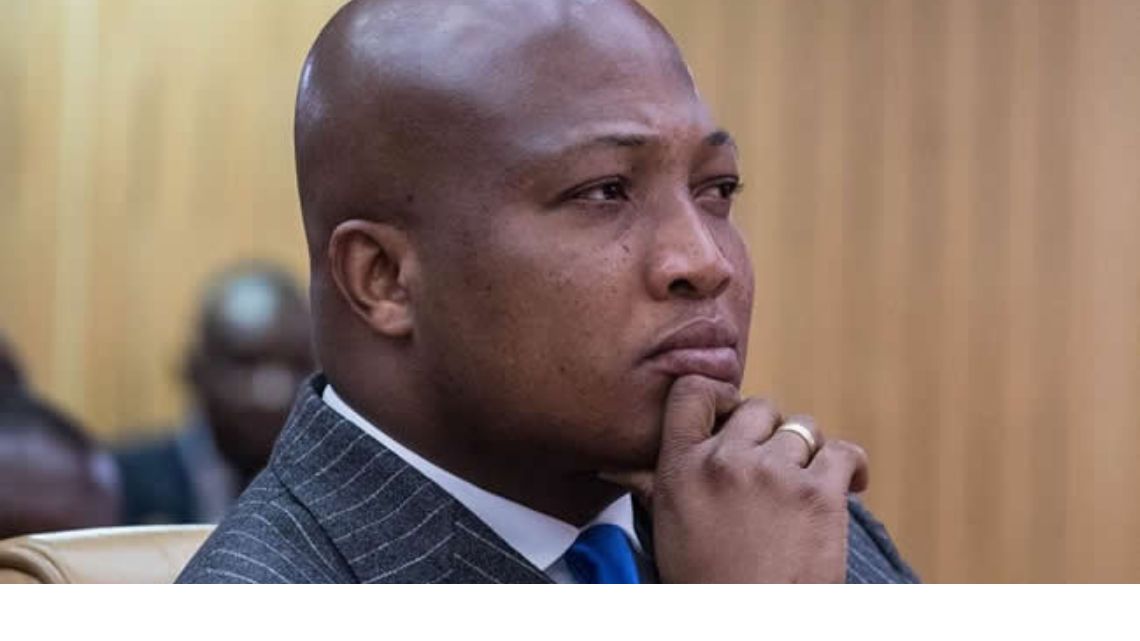
    “Effective monetary and fiscal policy coordination is needed to support macroeconomic stability and growth. The Bank of Ghana and fiscal authorities should strengthen their partnerships and institutional coordination with global and regional financial and economic institutions, development partners, and the private sector to unlock resources to catalyse and sustain economic recovery,” the report suggests.

    Moreover, ISSER highlights the importance of providing lower-cost financing to the agricultural and light manufacturing sectors to enhance local production and export competitiveness.

    “The central bank and the fiscal authorities should ensure that the Development Bank of Ghana provides a cheaper source of funding to the agricultural and light manufacturing sectors to support higher value addition. This will significantly enhance local industry’s ability to produce import substitutes and improve export competitiveness,” the review mentions.

  • BoG expresses confidence to handle external shocks

    BoG expresses confidence to handle external shocks

    The Bank of Ghana (BoG) is confident in its ability to protect the economy from external shocks due to a significant increase in reserves during the first half of the year.

    This advancement also enhances the bank’s capacity to stabilize the foreign exchange market.

    Governor Dr. Ernest Addison highlighted that the bank’s reserve levels have greatly improved, thanks to a favorable external payments balance and a surplus in the current account.

    As of June 2024, the bank’s gross international reserves rose by $947 million to reach $6.87 billion, covering 3.1 months of imports. Meanwhile, net international reserves increased by $1.31 billion to $4.50 billion.

    Dr. Addison attributed this strong reserve growth to the Domestic Gold Purchase Programme, which has accelerated the accumulation of reserves beyond what was projected under the IMF-supported initiative.

    Economic outlook
    The bank observed that global economic activity exceeded expectations in the first quarter of 2024, with the IMF’s growth projections for advanced economies indicating steady performance.

    Nonetheless, ongoing inflation in the services sector, driven by rising wages, may prompt central banks to maintain elevated interest rates for an extended period, potentially impacting growth outlooks.

    Domestic economy
    Ghana’s GDP growth for the first quarter of 2024 exceeded expectations, with economic activity proving resilient despite a restrictive policy approach.

    Job Openings

    High-frequency indicators point to stronger growth prospects, although consumer and business confidence has weakened due to exchange rate depreciation and elevated food prices.

    The bank anticipates a shift in these sentiments as the exchange rate stabilizes and macroeconomic stability improves, which should bolster economic activity.

    Fiscal front
    On the fiscal front, the bank said fiscal policy implementation so far has been on track and aligned with the IMF programme.

    However, it said staying on the course of the fiscal consolidation path for the rest of the year should lock in stability in the overall macroeconomic conditions.

    Banking sector performance
    Concerning the banking sector’s performance, the bank noted that in the first half of the year, the sector showed signs of continued recovery from the effects of the Domestic Debt Exchange Programme.

    Total assets in the banking sector increased by 33.3% to GH¢323.1 billion by the end of June 2024, compared to a 21.2% growth rate at the end of June 2023. Indicators of profitability, liquidity, and efficiency also saw improvements during this period.

    The Capital Adequacy Ratio (CAR), after accounting for reliefs, remained steady at 14.3% from June 2023 to June 2024. Without reliefs, the CAR was 10.6% in June 2024, up from 7.4% in June 2023.

    Despite these positive developments, the central bank highlighted that high credit risk continues to pose a challenge to the sector’s recovery.

    The industry’s Non-Performing Loans (NPL) ratio stood at 24.1% in June 2024, an increase from 18.7% in June 2023.

    Nevertheless, the bank expressed optimism that steady profit growth, adherence to recapitalization plans, and stringent credit underwriting standards would support the sector’s full recovery and resilience.

    Regarding domestic price trends, the bank noted some uncertainty about the inflation trajectory for the year due to recent exchange rate pressures, increases in utility tariffs, and rising ex-pump fuel prices.

    These factors have led to a slightly higher inflation outlook for the year. While inflation is expected to stay within the target range, there is a slight risk of it rising above the target.

    To address this, the bank emphasized the need for maintaining a strong monetary policy stance coupled with robust fiscal consolidation efforts to achieve the year-end inflation goals.

    Key statistics
    Gross International Reserves: US$6.87 billion (end-June 2024)- Net International Reserves: US$4.50 billion (end-June 2024)-

    Current Account Surplus: Significantly improved, aided by strong gold exports, robust remittances, and debt suspension.

  • Allow BoG to operate independently – IMF advises Gov’t

    Allow BoG to operate independently – IMF advises Gov’t

    The International Monetary Fund (IMF) urges the Cabinet to prioritize adopting the amendments to the Bank of Ghana Act to enhance the Central Bank’s independence.

    This recommendation comes in light of the Central Bank’s significant financial exposure to the Ghanaian government.

    The IMF emphasizes that recapitalizing the Bank of Ghana should be approached cautiously, considering the fiscal limitations under the Economic Credit Facility program.

    While the IMF acknowledges the Bank of Ghana’s dedication to a prudent monetary policy, it notes that further progress is required to implement the Fund’s safeguards assessment recommendations.

    “A tight policy stance—supported by robust liquidity absorption operations—is warranted until inflation approaches the target band. Against the backdrop of the recent currency depreciation, the BoG should remain prudent to ensure a reduction in the still high and volatile inflation and re-anchoring of inflation expectations. Continued progress in advancing Fund’s advice on safeguards is also warranted”.

    BoG should continue rebuilding international reserves

    It continued that the BoG should continue rebuilding international reserves and accelerate reforms to its foreign exchange intervention framework.

    While commending the large outperformance of reserves accumulation in 2023, the IMF noted that it is partially the result of temporary factors and that, going forward, limiting foreign interventions remains key to rebuilding external buffers.

    It urged the BoG to adopt a formal internal foreign exchange intervention policy framework, implement all FX interventions through an open and price-based FX auction mechanism; and reform the cedi reference rate.

    These measures, it believes, would better underpin exchange rate flexibility, and deepen the exchange rate market,

  • A-G orders BoG to recover COCOBOD’s GHS8.241bn debt

    A-G orders BoG to recover COCOBOD’s GHS8.241bn debt

    The Auditor-General’s 2023 report has urged the Bank of Ghana to take steps to recover GH¢8.241 billion that the Ghana Cocoa Board (COCOBOD) owes.

    The report highlights that COCOBOD has consistently failed to meet its loan repayment obligations to the central bank.

    By December 31, 2022, the outstanding principal amount had reached GH¢8.241 billion.

    It suggested that the central bank should adopt measures to reduce its risk exposure to quasi-government entities and set up clear repayment schedules for future loans.

    The report also recommended that the Bank of Ghana formalize its “Gold Purchase Programme” with the Precious Mineral Marketing Company (PMMC).

    The Auditor-General pointed out the lack of a formal agreement for these transactions, which has left key details, such as fees or commissions paid to PMMC, unconfirmed.

    It stressed the importance of having formal agreements for such transactions to ensure both transparency and accountability.

  • BoG made profit under Mahama but losses under Akufo-Addo – Economist

    BoG made profit under Mahama but losses under Akufo-Addo – Economist

    A recent analysis by economist Scott Bolshevik, has shed light on the Bank of Ghana’s (BoG) financial trajectory, revealing a decline in performance under President Akufo-Addo’s administration.

    Taking to the X platform, he shared data from 2012 to 2023 illustrating a stark contrast between former president, John Dramani Mahama’s tenure and president Akufo-Addo.

    His data revealed that in 2012, BoG recorded a profit of GH₵574 million, reflecting a stable and positive financial environment.

    The following year, 2013, saw an increase in profit to GH₵713 million, continuing the positive trend and suggesting effective financial management and growth.


    The year 2014 maintained profitability with GH₵580 million, though slightly lower than the previous year.

    This was followed by a rise in 2015, where the bank achieved a profit of GH₵616 million, indicating ongoing stability.

    In 2016, the bank’s performance improved further with a profit of GH₵813 million, demonstrating robust financial health.


    The positive trend, however, reversed in 2017 when the Bank of Ghana reported a profit of GH₵929 million, the highest in this period.

    Despite this peak, the financial outlook began to deteriorate the following year.


    In 2018, the bank experienced its first significant loss of GH₵1.8 billion, signaling the beginning of financial troubles. The situation worsened in 2019, with losses escalating to GH₵3.1 billion.

    This downward spiral continued into 2020, with the losses reaching a severe GH₵6.1 billion, highlighting critical issues in the bank’s financial management.


    The year 2021 saw a reduction in losses to GH₵4.6 billion, but this was still substantial, reflecting ongoing financial instability.

    The situation further deteriorated in 2022, with the Bank of Ghana reporting an unprecedented loss of GH₵60.8 billion, marking the peak of its financial crisis.


    In 2023, the losses slightly decreased to GH₵10.5 billion, but this reduction did little to offset the previous years’ severe financial setbacks.


  • COCOBOD owes BoG over GHC8bn – Auditor General

    COCOBOD owes BoG over GHC8bn – Auditor General

    The 2023 Auditor General Report has called on the Bank of Ghana to recover GH¢8.241 billion owed by the Ghana Cocoa Board (COCOBOD).

    The report highlights that COCOBOD has repeatedly defaulted on loans provided by the Bank of Ghana, resulting in an outstanding principal amount of GH¢8.241 billion as of December 31, 2022.

    The Auditor General has recommended that the Central Bank establish policies to mitigate its exposure to quasi-government entities and ensure clear repayment plans are in place for loans.

    Furthermore, the report urges the Bank of Ghana to formalize its “Gold Purchase Programme” agreement with the Precious Minerals Marketing Company (PMMC). The Central Bank had engaged PMMC to handle gold purchases and sales on its behalf.

    However, the Auditor General found that a formal agreement for these transactions was missing.

    “As a result, we could not confirm salient terms of the engagement including fees or commissions paid to PMMC for their services. Transactional relationships of this nature must be formalized with an agreement,” the report emphasized.

  • BoG justifies ongoing construction of new headquarters despite GHS10.5bn loss

    BoG justifies ongoing construction of new headquarters despite GHS10.5bn loss

    The Bank of Ghana (BoG) has defended its choice to persist with the new head office construction, despite facing a substantial loss of 10.50 billion cedis in 2023.

    Last year, the Central Bank allocated $82 million to contractors for the ongoing project, even while grappling with financial difficulties.

    The decision to continue with the project has been questioned, with MP Yusif Suleman challenging its practicality given the bank’s financial situation. Mr. Suleman voiced these concerns during a Public Accounts Committee session on Friday.

    Stephen Opasa, Special Advisor to the BoG Governor, justified the continuation of the construction, arguing that the project is too advanced to be stopped now.

    He pointed out that the bank’s losses were attributable to multiple factors, not just the construction costs.

    Mr. Opasa acknowledged Mr. Suleman’s concerns but contended that halting the project at this stage would be inefficient and costly, given the contractors already engaged.

    “The alternative was to stop the project. While we understand the perspective of minimizing losses, the losses in 2023 and 2022 were not solely due to this project. Halting it might not have been the best decision given the circumstances, with contractors actively engaged and the project significantly advanced.”

    The Bank of Ghana’s defense arises as the institution is pursuing a government bailout to bolster its capital and advance its policy goals.

  • Our losses wasn’t because of new head office project – BoG

    Our losses wasn’t because of new head office project – BoG

    The Bank of Ghana (BoG) has justified its decision to proceed with the construction of its new head office, even as it reported a substantial loss of 10.50 billion cedis for the year 2023.

    Despite the financial setback, the Central Bank allocated $82 million to contractors for the project over the past year.

    The ongoing construction has drawn criticism, particularly from MP Yusif Suleman, who questioned the project’s feasibility in light of the bank’s financial difficulties. Suleman raised these concerns during a Public Accounts Committee hearing on Friday.

    In response, Stephen Opasa, Special Advisor to the BoG Governor, defended the bank’s stance, explaining that halting the construction would have been impractical and costly. He noted that the project’s advanced stage and ongoing contractor engagements made it inefficient to pause.

    Opasa acknowledged the MP’s concerns but argued that the losses incurred by the BoG in 2023 and 2022 were due to factors beyond the construction project.

    He elaborated, “I hear you that maybe we could have stopped that project to reduce the losses, but contractors were still on site and all that and therefore stopping that I am not sure whether it would have been the best decision”

    He compared the situation to a personal project, stating, “Maybe if it was your house, you could have stopped and when things got better, you continued, but contractors were on site. This is a project that was way advanced.”

    As the Bank of Ghana continues its construction efforts, it is also seeking government assistance to bolster its capital and support its policy goals.

  • Construction of new head office did not contribute to our financial losses in 2023 – BoG

    Construction of new head office did not contribute to our financial losses in 2023 – BoG

    The Bank of Ghana (BoG) has defended its choice to proceed with the construction of a new head office, despite reporting a significant loss of 10.50 billion cedis in 2023.

    Last year, the Central Bank paid $82 million to contractors for the project.

    The decision has drawn criticism, with MP Yusif Suleman questioning the project’s viability given the bank’s financial difficulties. Suleman raised his concerns during a Public Accounts Committee hearing on Friday.

    In response, Stephen Opasa, Special Advisor to the BoG Governor, argued that halting the project was not feasible due to its advanced stage.

    He stressed that the bank’s losses were attributable to various factors beyond the construction costs.

    Opasa acknowledged the MP’s concerns but asserted that stopping the project halfway would have been inefficient and more costly due to ongoing contractor commitments.

    “The other alternative was to stop the project. So, I see your point in management but as I explained earlier the losses we incurred in 2023 and 2022 we know how they occurred. It is not because of this project that we incurred losses.

    “I hear you that maybe we could have stopped that project to reduce the losses, but contractors were still on site and all that and therefore stopping that I am not sure whether it would have been the best decision.

    “But I hear you clearly. Maybe if it was your house, you could have stopped and when things got better, you continued, but contractors were on site. This is a project that was way advanced,” he stated.

    The BoG’s defense comes as the bank is also pursuing a government bailout to recapitalize and support its policy objectives.

  • Supreme Court backs BoG’s move to revoke UniCredit’s license

    Supreme Court backs BoG’s move to revoke UniCredit’s license

    The Supreme Court has upheld the Bank of Ghana’s (BoG) decision to revoke the operating license of Unicredit Ghana Limited.

    In a unanimous ruling, the Supreme Court reversed the Court of Appeal’s decision and affirmed the High Court’s ruling, which had found that the BoG acted correctly in revoking the license under the relevant legal provisions.

    On August 16, 2019, the BoG declared Unicredit Ghana Limited insolvent and revoked its license under section 123 of the Banks and Specialized Deposit-Taking Institutions

    Act of 2016 (Act 930). This action was based on the company’s insolvency.

    Hoda Holdings Limited, the majority shareholder of Unicredit, sought judicial review of the BoG’s decision at the Human Rights Division of the High Court, requesting an injunction against the bank’s interference.

    Justice Gifty Agyei Addo of the High Court upheld the legality of the BoG’s decision, finding it in accordance with section 123 of Act 930 and not arbitrary.

    Hoda Holdings then appealed to the Court of Appeal, which overturned the High Court’s decision. The appellate court, consisting of Justices Janapare A. Bartels-Kodwo, Merley Wood, and Gbiel Suurbaareh, ruled that the BoG had not followed the procedural requirements in section 16(3&4) of Act 930, which mandates a hearing before revoking a license.

    Dissatisfied with this ruling, the BoG appealed to the Supreme Court, arguing that the Court of Appeal had misinterpreted the law.

    The five-member panel of the Supreme Court, led by Chief Justice Gertrude Torkornoo and including Justices Mariama Owusu, Prof. Henrietta Mensa-Bonsu, Ernest Yao Gaewu, and Yaw Darko Asare, agreed with the High Court.

    They confirmed that Unicredit was given written notice of its capital insufficiency and liquidity issues, along with an opportunity to respond, thus validating the BoG’s actions as compliant with legal standards.

    “We are also satisfied that the revocation of UniCredit’s license was done in accordance with the stipulated law appearing on the face of the record, and therefore reversed the decision of the Court of Appeal while upholding that of the High Court.”

  • BoG revocation of UniCredit license revoked – Supreme Court affirms

    BoG revocation of UniCredit license revoked – Supreme Court affirms

    The Supreme Court has validated the Bank of Ghana’s (BoG) decision to cancel Unicredit Ghana Limited’s operating license.

    In a unanimous ruling, the court overturned the Court of Appeal’s decision and confirmed the High Court’s verdict in Accra, which determined that the BoG did not err in revoking the license, having strictly adhered to legal procedures.

    On August 16, 2019, the BoG declared UniCredit Ghana Limited insolvent and rescinded its license to operate as a savings and loans company, in accordance with section 123 of the Banks and Specialized Deposit Taking Institutions Act of 2016 (Act 930).

    Hoda Holdings Limited, the majority shareholder of UniCredit, subsequently filed a petition with the Human Rights Division of the High Court, requesting a judicial review of BoG’s decision to revoke UniCredit’s license and an injunction to prevent the bank from disrupting UniCredit’s operations.

    Justice Gifty Agyei Addo, presiding over the High Court, ruled that the notice of Unicredit’s license revocation was lawful since it cited section 123 of Act 930 and was based on insolvency, as specified by the same section.

    The court further determined that the BoG’s action in revoking Unicredit’s license was reasonable and neither arbitrary nor capricious, as the records supported BoG’s claim of capital insufficiency.

    Court of Appeal

    Not satisfied with the decision, Hoda Holdings proceeded to the Court of Appeal to challenge the decision, and the court reversed the decision of the High Court.

    The Court of Appeal comprising Justices Janapare A. Bartels-Kodwo, Merley Wood and Gbiel Suurbaareh had held that the Bank of Ghana in revoking the license of UniCredit under section 123 of Act 930 should have followed the steps provided in section 16(3&4) of Act 930.

    It also held that the failure of the Bank of Ghana to comply with the procedure in section 16(3&4) of Act 930 meant that UniCredit was not given a hearing before its license was revoked.

    Supreme Court

    Unhappy with the Court of Appeal’s ruling, the BoG took their case to the Supreme Court, contending that the decision was not supported by the evidence and that the court had misinterpreted the meaning of section 16(7) of Act 930.

    A five-judge panel of the Supreme Court, led by Chief Justice Gertrude Torkornoo and including Justices Mariama Owusu, Prof. Henrietta Mensa-Bonsu, Ernest Yao Gaewu, and Yaw Darko Asare, concluded that extensive communications indicated that UniCredit had received written notice regarding capital deficiencies and liquidity issues, along with proposed actions and a chance to respond in writing.

    The Supreme Court stated it was convinced that the records clearly showed a hearing between UniCredit and the BoG occurred before UniCredit’s license was revoked.

    “We are also satisfied that the revocation of UniCredit’s license was done in accordance with the stipulated law appearing on the face of the record, and therefore reversed the decision of the Court of Appeal while upholding that of the High Court.”

  • #OccupyBoGdemo postponed to August 13

    #OccupyBoGdemo postponed to August 13

    The Minority in Parliament has postponed its planned protest against the Governor of the Bank of Ghana (BoG), Dr. Ernest Addison, and his two deputies.

    The demonstration, originally scheduled for July 30, will now take place on August 13.

    In a letter addressed to the police on July 23, the Minority cited the launch of the National Democratic Congress’s (NDC) 2024 campaign in Tamale on July 27 as the reason for the delay.

    Many Minority members will be participating in the campaign launch, leaving them inadequate time to prepare for the protest.

    The letter, signed by Dr. Casiel Ato Forson, noted “following our discussion and conclusion of the date with your office, the National Democratic Congress (NDC) announced the 27th of July 2024 as the date of the launch of our national campaign in Tamale.”

    “Given that this date is so close to our planned demonstration in Accra, the 27th July date has become inconvenient.”

    The Minority requested the rescheduling of the protest, citing sections 1, 2, and 3 of the Public Order Act 1994 (Act 491).

    “Pursuant to sections 1, 2, and 3 of the Public Order Act 1994 (Act 491), I hereby write to request for the rescheduling of the demonstration from its original date of Tuesday 30th July, 2024 to Tuesday 13th August, 2024, between the hours of 8:00am and 6:00pm. The route remains the same,” the letter signed by Dr Casiel Ato Forson stated.

  • Our decision to revoke GN Savings and Loans’ licence was guided by thorough evaluation – BoG

    Our decision to revoke GN Savings and Loans’ licence was guided by thorough evaluation – BoG

    The Director of Communications for the Bank of Ghana (BoG) has addressed recent concerns by confirming that the Central Bank provided significant support to GN Bank during its liquidity issues.

    He explained that the BoG collaborated closely with GN Bank, especially after GN Bank’s request to be reclassified as a Savings and Loans institution.

    The decision to revoke the licence of GN Savings and Loans was described as a necessary measure to safeguard the integrity of the banking industry.

    “We tried to take our time with the case of GN Bank. When depositors started shouting all over the country because the Savings and Loans company could not meet depositors withdrawals it was time to act,” Mr Otabil said.

    Adding “Aside from the reported cases in the media, the Financial Stability Department of the Bank of Ghana received complaints of the company’s inability to pay their deposits on demand. To ensure an orderly exit of the company and protect the sanctity of the banking sector, the company’s licence had to be withdrawn in accordance with the provisions of the Banks and Specilised Deposit-Taking Institutions, Act 2016 (Act 930)”.

    Mr. Otabil emphasized that the BoG has detailed the infractions that led to the revocation of GN Savings and Loans’ licence.

    GN Bank, unable to meet the revised minimum capital requirement of GHS400 million by December 31, 2018, sought reclassification to a Savings and Loans company, which the BoG approved.

    However, by August 2019, the BoG had to revoke the Savings and Loans licence after continued liquidity problems and customer complaints were brought to the attention of the Financial Stability Department.