Tag: BoG

  • BoG expresses confidence to handle external shocks

    BoG expresses confidence to handle external shocks

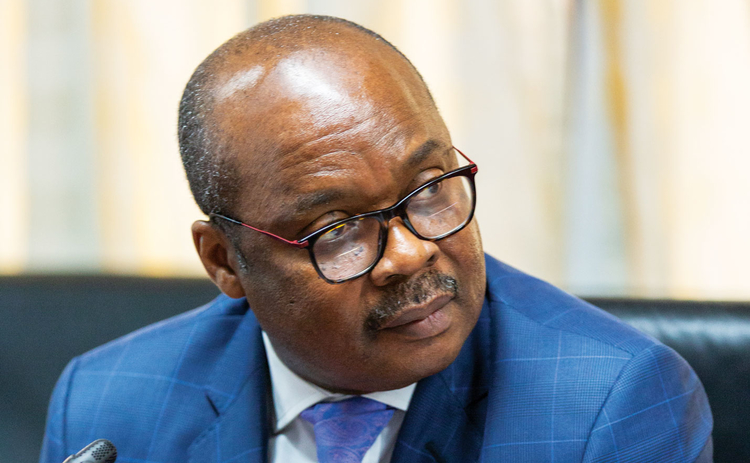
    The Bank of Ghana (BoG) is confident in its ability to protect the economy from external shocks due to a significant increase in reserves during the first half of the year.

    This advancement also enhances the bank’s capacity to stabilize the foreign exchange market.

    Governor Dr. Ernest Addison highlighted that the bank’s reserve levels have greatly improved, thanks to a favorable external payments balance and a surplus in the current account.

    As of June 2024, the bank’s gross international reserves rose by $947 million to reach $6.87 billion, covering 3.1 months of imports. Meanwhile, net international reserves increased by $1.31 billion to $4.50 billion.

    Dr. Addison attributed this strong reserve growth to the Domestic Gold Purchase Programme, which has accelerated the accumulation of reserves beyond what was projected under the IMF-supported initiative.

    Economic outlook
    The bank observed that global economic activity exceeded expectations in the first quarter of 2024, with the IMF’s growth projections for advanced economies indicating steady performance.

    Nonetheless, ongoing inflation in the services sector, driven by rising wages, may prompt central banks to maintain elevated interest rates for an extended period, potentially impacting growth outlooks.

    Domestic economy
    Ghana’s GDP growth for the first quarter of 2024 exceeded expectations, with economic activity proving resilient despite a restrictive policy approach.

    Job Openings

    High-frequency indicators point to stronger growth prospects, although consumer and business confidence has weakened due to exchange rate depreciation and elevated food prices.

    The bank anticipates a shift in these sentiments as the exchange rate stabilizes and macroeconomic stability improves, which should bolster economic activity.

    Fiscal front
    On the fiscal front, the bank said fiscal policy implementation so far has been on track and aligned with the IMF programme.

    However, it said staying on the course of the fiscal consolidation path for the rest of the year should lock in stability in the overall macroeconomic conditions.

    Banking sector performance
    Concerning the banking sector’s performance, the bank noted that in the first half of the year, the sector showed signs of continued recovery from the effects of the Domestic Debt Exchange Programme.

    Total assets in the banking sector increased by 33.3% to GH¢323.1 billion by the end of June 2024, compared to a 21.2% growth rate at the end of June 2023. Indicators of profitability, liquidity, and efficiency also saw improvements during this period.

    The Capital Adequacy Ratio (CAR), after accounting for reliefs, remained steady at 14.3% from June 2023 to June 2024. Without reliefs, the CAR was 10.6% in June 2024, up from 7.4% in June 2023.

    Despite these positive developments, the central bank highlighted that high credit risk continues to pose a challenge to the sector’s recovery.

    The industry’s Non-Performing Loans (NPL) ratio stood at 24.1% in June 2024, an increase from 18.7% in June 2023.

    Nevertheless, the bank expressed optimism that steady profit growth, adherence to recapitalization plans, and stringent credit underwriting standards would support the sector’s full recovery and resilience.

    Regarding domestic price trends, the bank noted some uncertainty about the inflation trajectory for the year due to recent exchange rate pressures, increases in utility tariffs, and rising ex-pump fuel prices.

    These factors have led to a slightly higher inflation outlook for the year. While inflation is expected to stay within the target range, there is a slight risk of it rising above the target.

    To address this, the bank emphasized the need for maintaining a strong monetary policy stance coupled with robust fiscal consolidation efforts to achieve the year-end inflation goals.

    Key statistics
    Gross International Reserves: US$6.87 billion (end-June 2024)- Net International Reserves: US$4.50 billion (end-June 2024)-

    Current Account Surplus: Significantly improved, aided by strong gold exports, robust remittances, and debt suspension.
  • Allow BoG to operate independently – IMF advises Gov’t

    Allow BoG to operate independently – IMF advises Gov’t

    The International Monetary Fund (IMF) urges the Cabinet to prioritize adopting the amendments to the Bank of Ghana Act to enhance the Central Bank’s independence.

    This recommendation comes in light of the Central Bank’s significant financial exposure to the Ghanaian government.

    The IMF emphasizes that recapitalizing the Bank of Ghana should be approached cautiously, considering the fiscal limitations under the Economic Credit Facility program.

    While the IMF acknowledges the Bank of Ghana’s dedication to a prudent monetary policy, it notes that further progress is required to implement the Fund’s safeguards assessment recommendations.

    “A tight policy stance—supported by robust liquidity absorption operations—is warranted until inflation approaches the target band. Against the backdrop of the recent currency depreciation, the BoG should remain prudent to ensure a reduction in the still high and volatile inflation and re-anchoring of inflation expectations. Continued progress in advancing Fund’s advice on safeguards is also warranted”.

    BoG should continue rebuilding international reserves

    It continued that the BoG should continue rebuilding international reserves and accelerate reforms to its foreign exchange intervention framework.

    While commending the large outperformance of reserves accumulation in 2023, the IMF noted that it is partially the result of temporary factors and that, going forward, limiting foreign interventions remains key to rebuilding external buffers.

    It urged the BoG to adopt a formal internal foreign exchange intervention policy framework, implement all FX interventions through an open and price-based FX auction mechanism; and reform the cedi reference rate.

    These measures, it believes, would better underpin exchange rate flexibility, and deepen the exchange rate market,

  • A-G orders BoG to recover COCOBOD’s GHS8.241bn debt

    A-G orders BoG to recover COCOBOD’s GHS8.241bn debt

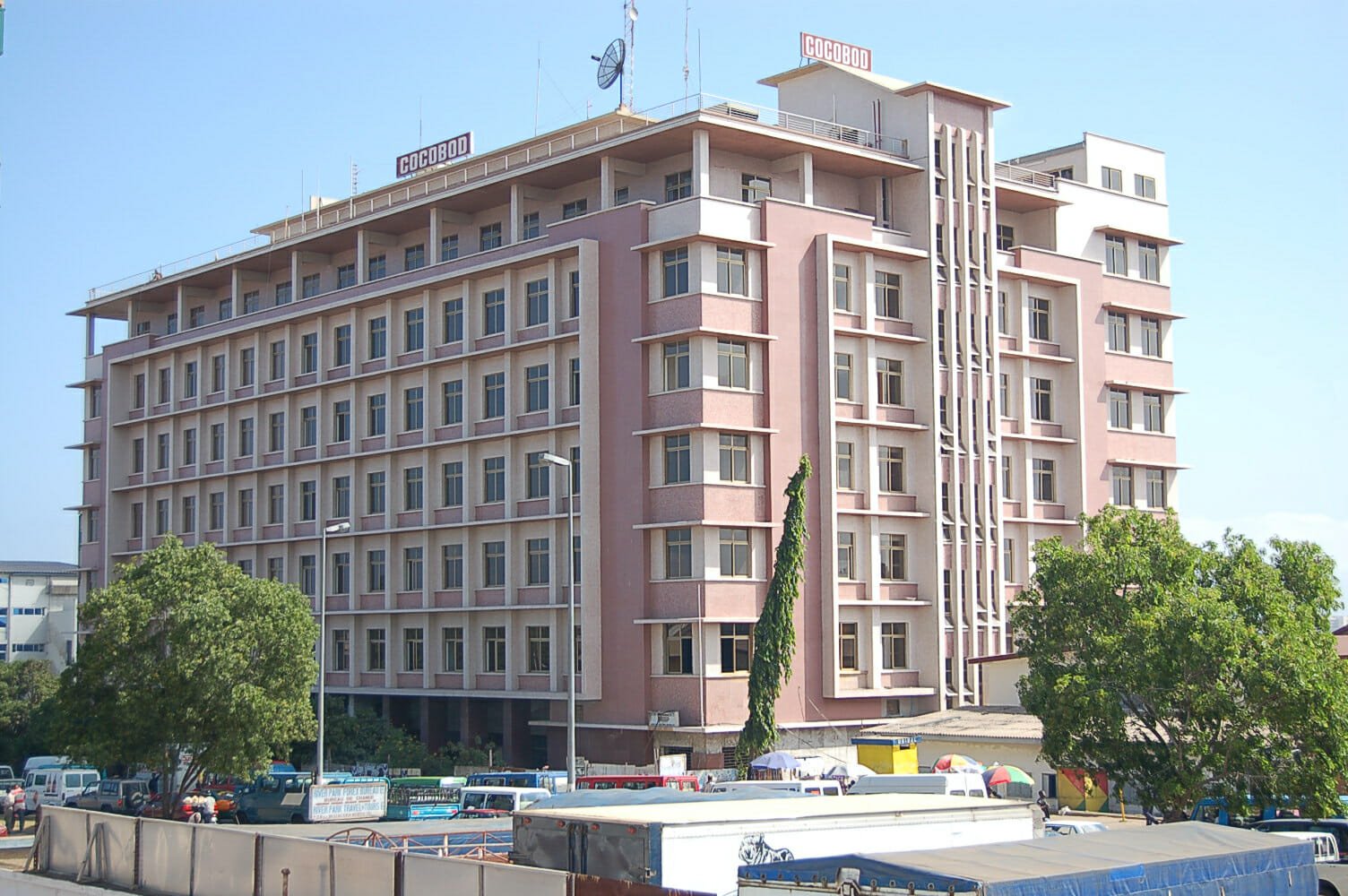
    The Auditor-General’s 2023 report has urged the Bank of Ghana to take steps to recover GH¢8.241 billion that the Ghana Cocoa Board (COCOBOD) owes.

    The report highlights that COCOBOD has consistently failed to meet its loan repayment obligations to the central bank.

    By December 31, 2022, the outstanding principal amount had reached GH¢8.241 billion.

    It suggested that the central bank should adopt measures to reduce its risk exposure to quasi-government entities and set up clear repayment schedules for future loans.

    The report also recommended that the Bank of Ghana formalize its “Gold Purchase Programme” with the Precious Mineral Marketing Company (PMMC).

    The Auditor-General pointed out the lack of a formal agreement for these transactions, which has left key details, such as fees or commissions paid to PMMC, unconfirmed.

    It stressed the importance of having formal agreements for such transactions to ensure both transparency and accountability.

  • BoG made profit under Mahama but losses under Akufo-Addo – Economist

    BoG made profit under Mahama but losses under Akufo-Addo – Economist

    A recent analysis by economist Scott Bolshevik, has shed light on the Bank of Ghana’s (BoG) financial trajectory, revealing a decline in performance under President Akufo-Addo’s administration.

    Taking to the X platform, he shared data from 2012 to 2023 illustrating a stark contrast between former president, John Dramani Mahama’s tenure and president Akufo-Addo.

    His data revealed that in 2012, BoG recorded a profit of GH₵574 million, reflecting a stable and positive financial environment.

    The following year, 2013, saw an increase in profit to GH₵713 million, continuing the positive trend and suggesting effective financial management and growth.


    The year 2014 maintained profitability with GH₵580 million, though slightly lower than the previous year.

    This was followed by a rise in 2015, where the bank achieved a profit of GH₵616 million, indicating ongoing stability.

    In 2016, the bank’s performance improved further with a profit of GH₵813 million, demonstrating robust financial health.


    The positive trend, however, reversed in 2017 when the Bank of Ghana reported a profit of GH₵929 million, the highest in this period.

    Despite this peak, the financial outlook began to deteriorate the following year.


    In 2018, the bank experienced its first significant loss of GH₵1.8 billion, signaling the beginning of financial troubles. The situation worsened in 2019, with losses escalating to GH₵3.1 billion.

    This downward spiral continued into 2020, with the losses reaching a severe GH₵6.1 billion, highlighting critical issues in the bank’s financial management.


    The year 2021 saw a reduction in losses to GH₵4.6 billion, but this was still substantial, reflecting ongoing financial instability.

    The situation further deteriorated in 2022, with the Bank of Ghana reporting an unprecedented loss of GH₵60.8 billion, marking the peak of its financial crisis.


    In 2023, the losses slightly decreased to GH₵10.5 billion, but this reduction did little to offset the previous years’ severe financial setbacks.


  • COCOBOD owes BoG over GHC8bn – Auditor General

    COCOBOD owes BoG over GHC8bn – Auditor General

    The 2023 Auditor General Report has called on the Bank of Ghana to recover GH¢8.241 billion owed by the Ghana Cocoa Board (COCOBOD).

    The report highlights that COCOBOD has repeatedly defaulted on loans provided by the Bank of Ghana, resulting in an outstanding principal amount of GH¢8.241 billion as of December 31, 2022.

    The Auditor General has recommended that the Central Bank establish policies to mitigate its exposure to quasi-government entities and ensure clear repayment plans are in place for loans.

    Furthermore, the report urges the Bank of Ghana to formalize its “Gold Purchase Programme” agreement with the Precious Minerals Marketing Company (PMMC). The Central Bank had engaged PMMC to handle gold purchases and sales on its behalf.

    However, the Auditor General found that a formal agreement for these transactions was missing.

    “As a result, we could not confirm salient terms of the engagement including fees or commissions paid to PMMC for their services. Transactional relationships of this nature must be formalized with an agreement,” the report emphasized.

  • BoG justifies ongoing construction of new headquarters despite GHS10.5bn loss

    BoG justifies ongoing construction of new headquarters despite GHS10.5bn loss

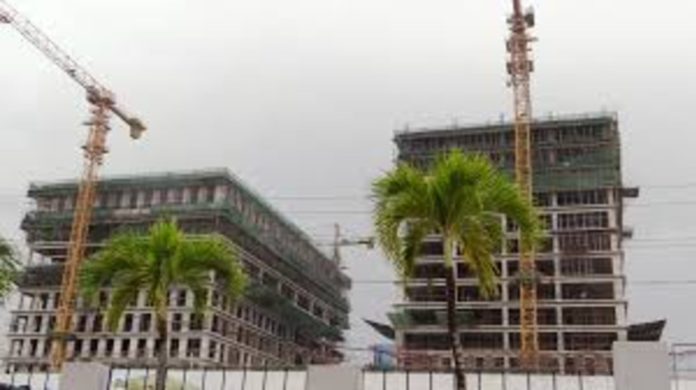
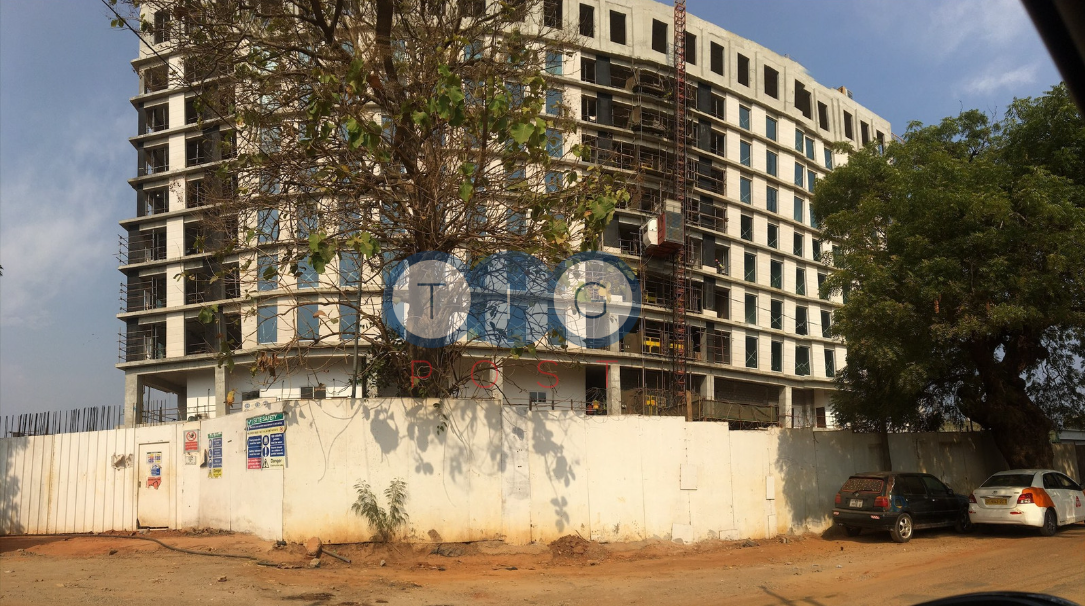
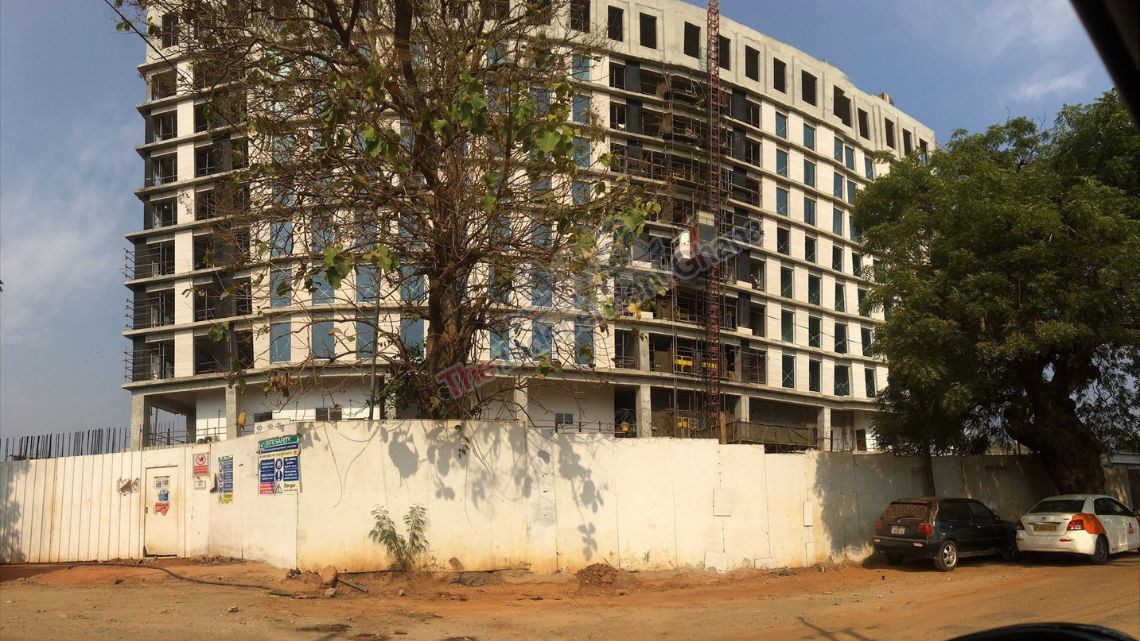
    The Bank of Ghana (BoG) has defended its choice to persist with the new head office construction, despite facing a substantial loss of 10.50 billion cedis in 2023.

    Last year, the Central Bank allocated $82 million to contractors for the ongoing project, even while grappling with financial difficulties.

    The decision to continue with the project has been questioned, with MP Yusif Suleman challenging its practicality given the bank’s financial situation. Mr. Suleman voiced these concerns during a Public Accounts Committee session on Friday.

    Stephen Opasa, Special Advisor to the BoG Governor, justified the continuation of the construction, arguing that the project is too advanced to be stopped now.

    He pointed out that the bank’s losses were attributable to multiple factors, not just the construction costs.

    Mr. Opasa acknowledged Mr. Suleman’s concerns but contended that halting the project at this stage would be inefficient and costly, given the contractors already engaged.

    “The alternative was to stop the project. While we understand the perspective of minimizing losses, the losses in 2023 and 2022 were not solely due to this project. Halting it might not have been the best decision given the circumstances, with contractors actively engaged and the project significantly advanced.”

    The Bank of Ghana’s defense arises as the institution is pursuing a government bailout to bolster its capital and advance its policy goals.

  • Our losses wasn’t because of new head office project – BoG

    Our losses wasn’t because of new head office project – BoG

    The Bank of Ghana (BoG) has justified its decision to proceed with the construction of its new head office, even as it reported a substantial loss of 10.50 billion cedis for the year 2023.

    Despite the financial setback, the Central Bank allocated $82 million to contractors for the project over the past year.

    The ongoing construction has drawn criticism, particularly from MP Yusif Suleman, who questioned the project’s feasibility in light of the bank’s financial difficulties. Suleman raised these concerns during a Public Accounts Committee hearing on Friday.

    In response, Stephen Opasa, Special Advisor to the BoG Governor, defended the bank’s stance, explaining that halting the construction would have been impractical and costly. He noted that the project’s advanced stage and ongoing contractor engagements made it inefficient to pause.

    Opasa acknowledged the MP’s concerns but argued that the losses incurred by the BoG in 2023 and 2022 were due to factors beyond the construction project.

    He elaborated, “I hear you that maybe we could have stopped that project to reduce the losses, but contractors were still on site and all that and therefore stopping that I am not sure whether it would have been the best decision”

    He compared the situation to a personal project, stating, “Maybe if it was your house, you could have stopped and when things got better, you continued, but contractors were on site. This is a project that was way advanced.”

    As the Bank of Ghana continues its construction efforts, it is also seeking government assistance to bolster its capital and support its policy goals.

  • Construction of new head office did not contribute to our financial losses in 2023 – BoG

    Construction of new head office did not contribute to our financial losses in 2023 – BoG

    The Bank of Ghana (BoG) has defended its choice to proceed with the construction of a new head office, despite reporting a significant loss of 10.50 billion cedis in 2023.

    Last year, the Central Bank paid $82 million to contractors for the project.

    The decision has drawn criticism, with MP Yusif Suleman questioning the project’s viability given the bank’s financial difficulties. Suleman raised his concerns during a Public Accounts Committee hearing on Friday.

    In response, Stephen Opasa, Special Advisor to the BoG Governor, argued that halting the project was not feasible due to its advanced stage.

    He stressed that the bank’s losses were attributable to various factors beyond the construction costs.

    Opasa acknowledged the MP’s concerns but asserted that stopping the project halfway would have been inefficient and more costly due to ongoing contractor commitments.

    “The other alternative was to stop the project. So, I see your point in management but as I explained earlier the losses we incurred in 2023 and 2022 we know how they occurred. It is not because of this project that we incurred losses.

    “I hear you that maybe we could have stopped that project to reduce the losses, but contractors were still on site and all that and therefore stopping that I am not sure whether it would have been the best decision.

    “But I hear you clearly. Maybe if it was your house, you could have stopped and when things got better, you continued, but contractors were on site. This is a project that was way advanced,” he stated.

    The BoG’s defense comes as the bank is also pursuing a government bailout to recapitalize and support its policy objectives.

  • Supreme Court backs BoG’s move to revoke UniCredit’s license

    Supreme Court backs BoG’s move to revoke UniCredit’s license

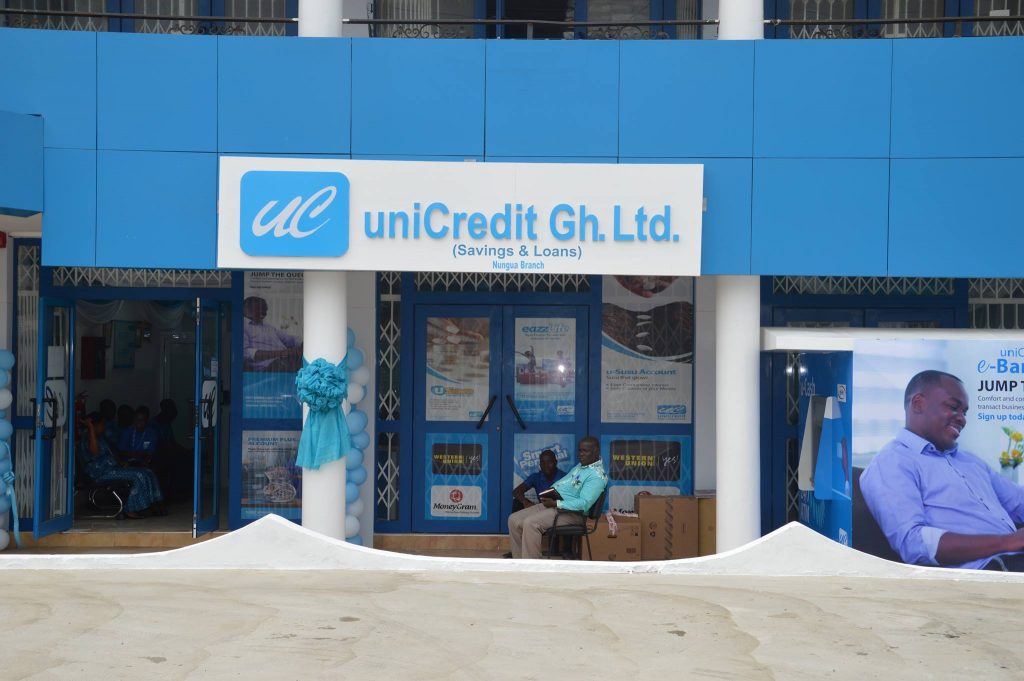
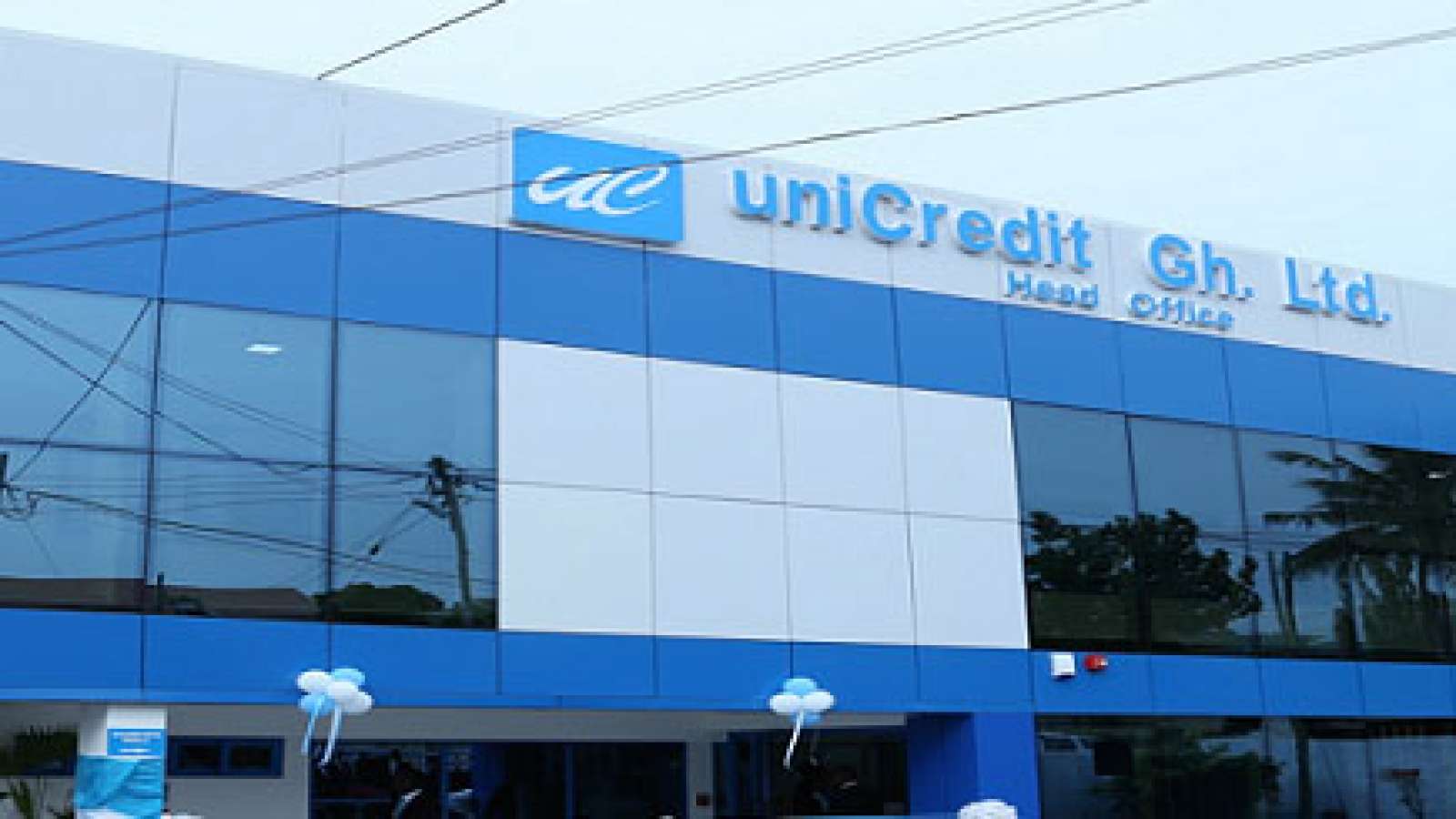
    The Supreme Court has upheld the Bank of Ghana’s (BoG) decision to revoke the operating license of Unicredit Ghana Limited.

    In a unanimous ruling, the Supreme Court reversed the Court of Appeal’s decision and affirmed the High Court’s ruling, which had found that the BoG acted correctly in revoking the license under the relevant legal provisions.

    On August 16, 2019, the BoG declared Unicredit Ghana Limited insolvent and revoked its license under section 123 of the Banks and Specialized Deposit-Taking Institutions

    Act of 2016 (Act 930). This action was based on the company’s insolvency.

    Hoda Holdings Limited, the majority shareholder of Unicredit, sought judicial review of the BoG’s decision at the Human Rights Division of the High Court, requesting an injunction against the bank’s interference.

    Justice Gifty Agyei Addo of the High Court upheld the legality of the BoG’s decision, finding it in accordance with section 123 of Act 930 and not arbitrary.

    Hoda Holdings then appealed to the Court of Appeal, which overturned the High Court’s decision. The appellate court, consisting of Justices Janapare A. Bartels-Kodwo, Merley Wood, and Gbiel Suurbaareh, ruled that the BoG had not followed the procedural requirements in section 16(3&4) of Act 930, which mandates a hearing before revoking a license.
    Dissatisfied with this ruling, the BoG appealed to the Supreme Court, arguing that the Court of Appeal had misinterpreted the law.

    The five-member panel of the Supreme Court, led by Chief Justice Gertrude Torkornoo and including Justices Mariama Owusu, Prof. Henrietta Mensa-Bonsu, Ernest Yao Gaewu, and Yaw Darko Asare, agreed with the High Court.

    They confirmed that Unicredit was given written notice of its capital insufficiency and liquidity issues, along with an opportunity to respond, thus validating the BoG’s actions as compliant with legal standards.

    “We are also satisfied that the revocation of UniCredit’s license was done in accordance with the stipulated law appearing on the face of the record, and therefore reversed the decision of the Court of Appeal while upholding that of the High Court.”

  • BoG revocation of UniCredit license revoked – Supreme Court affirms

    BoG revocation of UniCredit license revoked – Supreme Court affirms

    The Supreme Court has validated the Bank of Ghana’s (BoG) decision to cancel Unicredit Ghana Limited’s operating license.

    In a unanimous ruling, the court overturned the Court of Appeal’s decision and confirmed the High Court’s verdict in Accra, which determined that the BoG did not err in revoking the license, having strictly adhered to legal procedures.

    On August 16, 2019, the BoG declared UniCredit Ghana Limited insolvent and rescinded its license to operate as a savings and loans company, in accordance with section 123 of the Banks and Specialized Deposit Taking Institutions Act of 2016 (Act 930).

    Hoda Holdings Limited, the majority shareholder of UniCredit, subsequently filed a petition with the Human Rights Division of the High Court, requesting a judicial review of BoG’s decision to revoke UniCredit’s license and an injunction to prevent the bank from disrupting UniCredit’s operations.

    Justice Gifty Agyei Addo, presiding over the High Court, ruled that the notice of Unicredit’s license revocation was lawful since it cited section 123 of Act 930 and was based on insolvency, as specified by the same section.
    The court further determined that the BoG’s action in revoking Unicredit’s license was reasonable and neither arbitrary nor capricious, as the records supported BoG’s claim of capital insufficiency.

    Court of Appeal

    Not satisfied with the decision, Hoda Holdings proceeded to the Court of Appeal to challenge the decision, and the court reversed the decision of the High Court.

    The Court of Appeal comprising Justices Janapare A. Bartels-Kodwo, Merley Wood and Gbiel Suurbaareh had held that the Bank of Ghana in revoking the license of UniCredit under section 123 of Act 930 should have followed the steps provided in section 16(3&4) of Act 930.

    It also held that the failure of the Bank of Ghana to comply with the procedure in section 16(3&4) of Act 930 meant that UniCredit was not given a hearing before its license was revoked.

    Supreme Court

    Unhappy with the Court of Appeal’s ruling, the BoG took their case to the Supreme Court, contending that the decision was not supported by the evidence and that the court had misinterpreted the meaning of section 16(7) of Act 930.

    A five-judge panel of the Supreme Court, led by Chief Justice Gertrude Torkornoo and including Justices Mariama Owusu, Prof. Henrietta Mensa-Bonsu, Ernest Yao Gaewu, and Yaw Darko Asare, concluded that extensive communications indicated that UniCredit had received written notice regarding capital deficiencies and liquidity issues, along with proposed actions and a chance to respond in writing.

    The Supreme Court stated it was convinced that the records clearly showed a hearing between UniCredit and the BoG occurred before UniCredit’s license was revoked.

    “We are also satisfied that the revocation of UniCredit’s license was done in accordance with the stipulated law appearing on the face of the record, and therefore reversed the decision of the Court of Appeal while upholding that of the High Court.”

  • #OccupyBoGdemo postponed to August 13

    #OccupyBoGdemo postponed to August 13

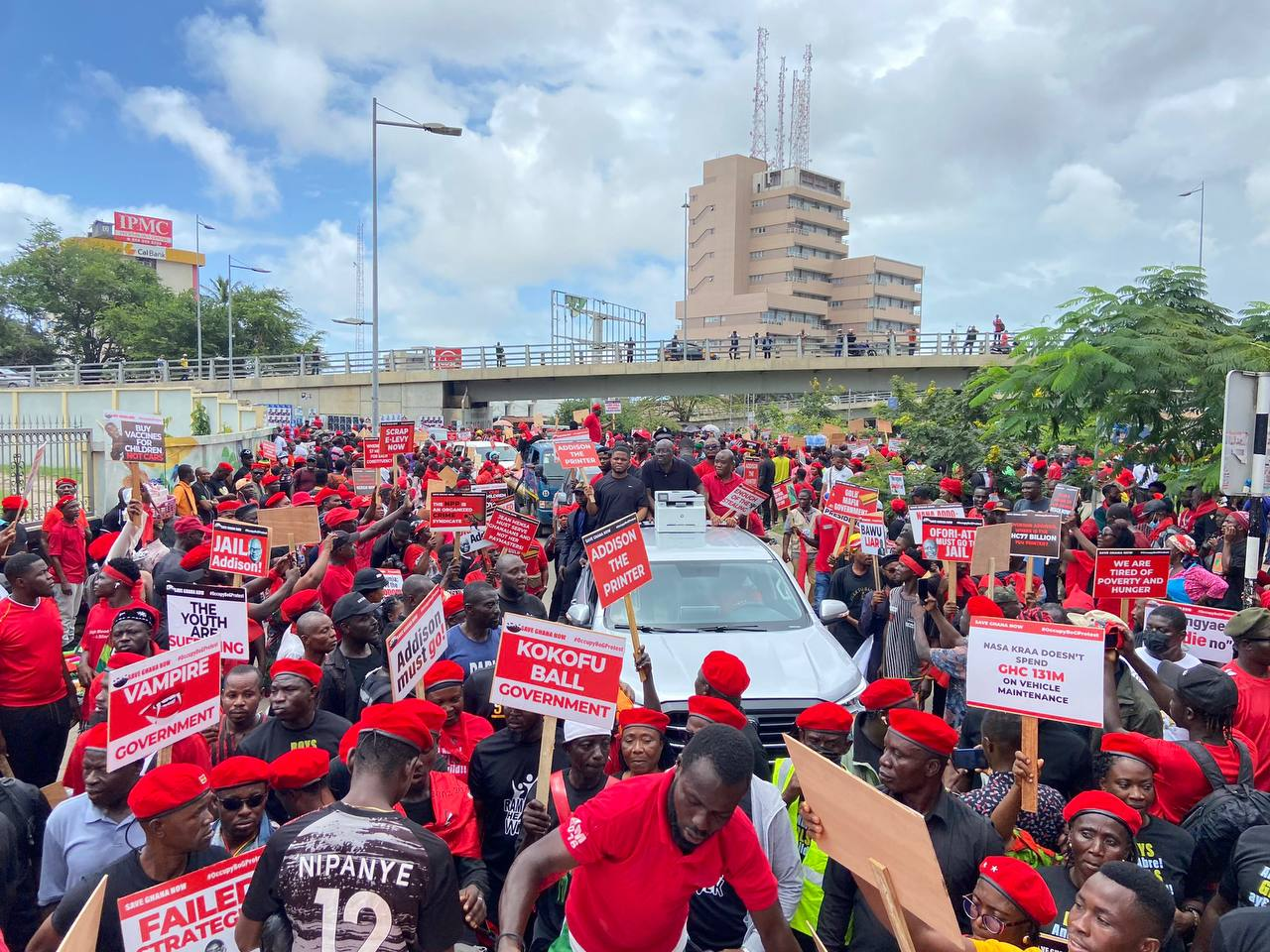
    The Minority in Parliament has postponed its planned protest against the Governor of the Bank of Ghana (BoG), Dr. Ernest Addison, and his two deputies.

    The demonstration, originally scheduled for July 30, will now take place on August 13.

    In a letter addressed to the police on July 23, the Minority cited the launch of the National Democratic Congress’s (NDC) 2024 campaign in Tamale on July 27 as the reason for the delay.

    Many Minority members will be participating in the campaign launch, leaving them inadequate time to prepare for the protest.

    The letter, signed by Dr. Casiel Ato Forson, noted “following our discussion and conclusion of the date with your office, the National Democratic Congress (NDC) announced the 27th of July 2024 as the date of the launch of our national campaign in Tamale.”

    “Given that this date is so close to our planned demonstration in Accra, the 27th July date has become inconvenient.”

    The Minority requested the rescheduling of the protest, citing sections 1, 2, and 3 of the Public Order Act 1994 (Act 491).

    “Pursuant to sections 1, 2, and 3 of the Public Order Act 1994 (Act 491), I hereby write to request for the rescheduling of the demonstration from its original date of Tuesday 30th July, 2024 to Tuesday 13th August, 2024, between the hours of 8:00am and 6:00pm. The route remains the same,” the letter signed by Dr Casiel Ato Forson stated.

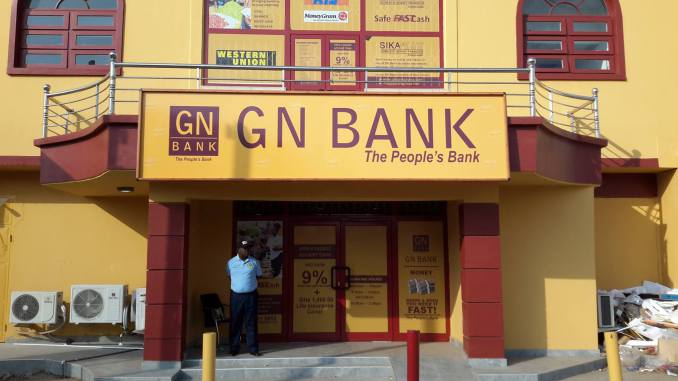
  • Our decision to revoke GN Savings and Loans’ licence was guided by thorough evaluation – BoG

    Our decision to revoke GN Savings and Loans’ licence was guided by thorough evaluation – BoG

    The Director of Communications for the Bank of Ghana (BoG) has addressed recent concerns by confirming that the Central Bank provided significant support to GN Bank during its liquidity issues.

    He explained that the BoG collaborated closely with GN Bank, especially after GN Bank’s request to be reclassified as a Savings and Loans institution.

    The decision to revoke the licence of GN Savings and Loans was described as a necessary measure to safeguard the integrity of the banking industry.
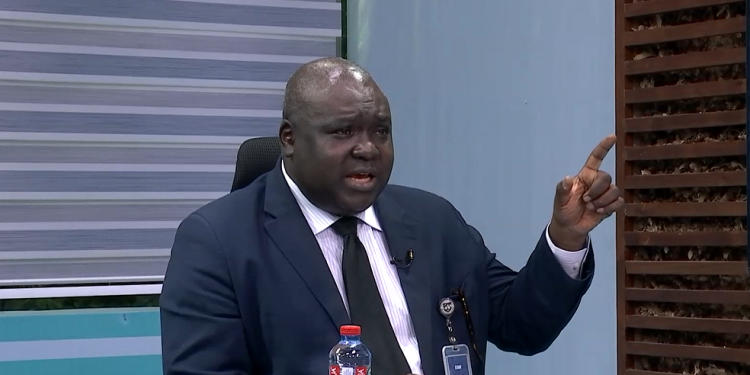
    “We tried to take our time with the case of GN Bank. When depositors started shouting all over the country because the Savings and Loans company could not meet depositors withdrawals it was time to act,” Mr Otabil said.

    Adding “Aside from the reported cases in the media, the Financial Stability Department of the Bank of Ghana received complaints of the company’s inability to pay their deposits on demand. To ensure an orderly exit of the company and protect the sanctity of the banking sector, the company’s licence had to be withdrawn in accordance with the provisions of the Banks and Specilised Deposit-Taking Institutions, Act 2016 (Act 930)”.

    Mr. Otabil emphasized that the BoG has detailed the infractions that led to the revocation of GN Savings and Loans’ licence.

    GN Bank, unable to meet the revised minimum capital requirement of GHS400 million by December 31, 2018, sought reclassification to a Savings and Loans company, which the BoG approved.

    However, by August 2019, the BoG had to revoke the Savings and Loans licence after continued liquidity problems and customer complaints were brought to the attention of the Financial Stability Department.

  • We are committed to promoting the integrity, stability of Ghana’s financial system – BoG

    We are committed to promoting the integrity, stability of Ghana’s financial system – BoG

    The Bank of Ghana (BoG) has reaffirmed its commitment to maintaining the integrity and stability of the financial system.

    The central bank announced that it will continue to work closely with law enforcement agencies to target illegal deposit-taking activities, ensuring that those involved are prosecuted under the law.

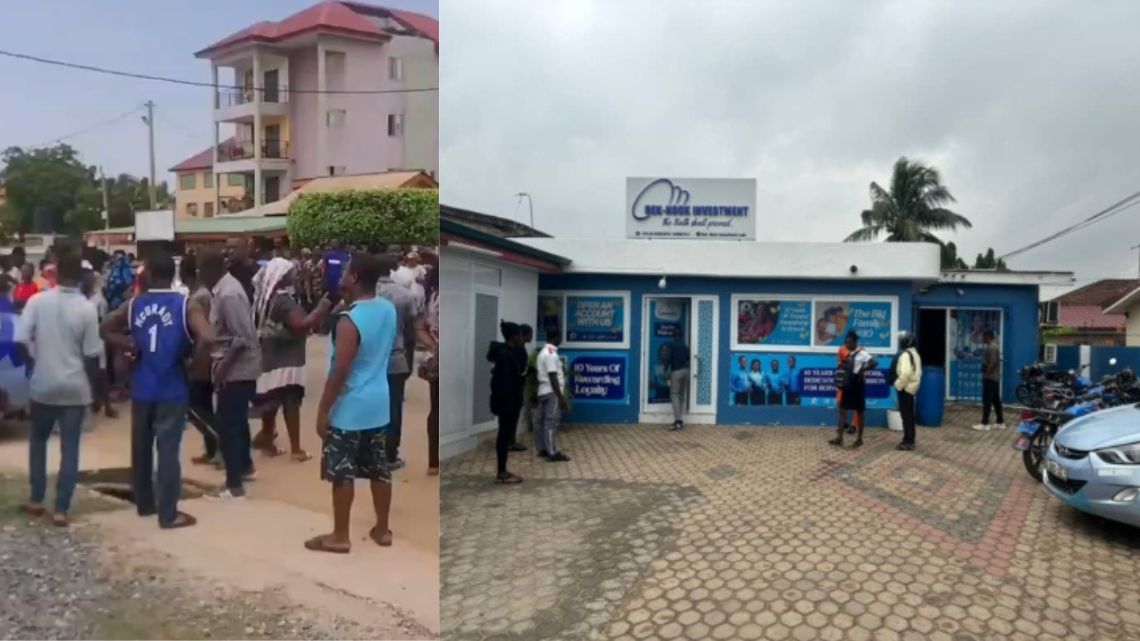
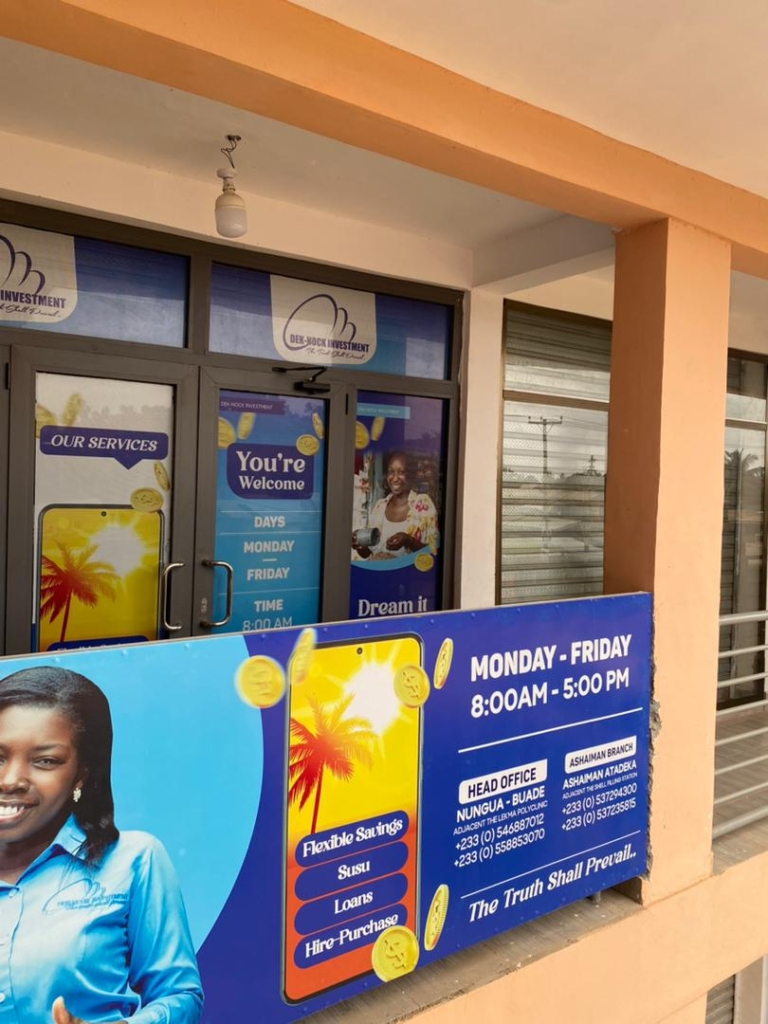
    This assurance follows the recent closure of Dek-Nock Investments by the Ghana Police Service, in collaboration with the Bank of Ghana.

    Effective July 19, the business, which operated in Nungua and Ashaiman in the Greater Accra Region, was shut down for unauthorized deposit-taking, a violation of Section 6(1) of the Banks and Specialised Deposit-Taking Institutions Act, 2016 (Act 930).

    The Bank of Ghana confirmed that investigations into Dek-Nock Investments are ongoing.

    Customers of the company have been advised to stay calm while the situation is resolved, and the public will be updated on further actions as they occur.

    “All customers of Dek-Nock Investments are urged to remain calm while investigations continue. The general public and all stakeholders will be kept informed of the next line of action.

    “In collaboration with the respective Law Enforcement Agencies, the Bank of Ghana will continue to clamp down on illegal deposit-taking operations and all offenders shall be dealt with in accordance with the law.

    “The Bank assures the general public of its commitment to promoting the integrity and stability of the financial system,” the statement said.

  • Customers of Dek-Nock Investments panic, march to facility’s premises after closure by BoG

    Customers of Dek-Nock Investments panic, march to facility’s premises after closure by BoG

    Dozens of Ghanaians are in a state of shock and agony after the Ghana Police Service and the Bank of Ghana (BoG) closed down Dek-Nock Investments, located in Nungua and Ashaiman in the Greater Accra Region.

    The closure, which took place on July 19, 2024, was executed in accordance with Section 20(2)(g) of the Banks and Specialised Deposit-taking Institutions Act, 2016 (Act 930).

    The BoG released a statement indicating that Dek-Nock Investments was involved in unauthorized deposit-taking activities, a violation of Section 6(1) of Act 930.

    “The Ghana Police Service is conducting further investigations into the operations of Dek-Nock Investments,” the statement said.

    In a video gone virial on social media, several customers beseeched the company’s premises demanding for their money.

    The BoG has urged customers of Dek-Nock Investments to remain calm as investigations continue, assuring that the public and all stakeholders will be kept informed about the next steps.

    The statement emphasized the BoG’s commitment, in collaboration with law enforcement agencies, to clamping down on illegal deposit-taking operations. Offenders will be prosecuted to maintain the integrity and stability of the financial system.

    “The Bank assures the general public of its commitment to promoting the integrity and stability of the financial system,” the statement affirmed.

    For further information, inquiries can be directed to the Other Financial Institutions Supervision Department of the Bank of Ghana via telephone numbers 0302-666174-6.

  • BoG partners with Ghana Police to shut down Dek-Nock Investments for unauthorized deposit-taking

    BoG partners with Ghana Police to shut down Dek-Nock Investments for unauthorized deposit-taking

    Ghana Police Service has collaborated with the Bank of Ghana (BoG), to shut down Dek-Nock Investments, which operated in Nungua and Ashaiman within the Greater Accra Region

    The action which took place on July 19, 2024, is in accordance with Section 20(2)(g) of the Banks and Specialised Deposit-taking Institutions Act, 2016 (Act 930).

    According to a statement from the BoG, Dek-Nock Investments was involved in illegal deposit-taking activities, violating Section 6(1) of Act 930.

    “The Ghana Police Service is conducting further investigations into the operations of Dek-Nock Investments”, it said.

    The statement urged all Dek-Nock Investments customers to stay calm as investigations proceed.

    “The general public and all stakeholders will be kept informed of the next line of action”.

    The Bank of Ghana has pledged to work with relevant law enforcement agencies to persistently combat illegal deposit-taking activities, ensuring that all violators are prosecuted according to the law.

    “The Bank assures the general public of its commitment to promoting the integrity and stability of the financial system”.

    “Kindly direct any enquiries and further information to the Other Financial Institutions Supervision Department of Bank of Ghana. You may call telephone numbers 0302-666174-6”, the statement concluded.

  • Ghana’s economy is recovering – BoG reiterates

    Ghana’s economy is recovering – BoG reiterates

    Governor of the Bank of Ghana (BoG), Dr. Ernest Addison, has emphasized recent positive economic indicators indicating a recovery during his address at the SME Growth and Opportunity Summit in Accra on July 16, 2024.

    The Governor pointed to data from independent sources supporting arguments for economic stabilization.

    Addressing attendees, Dr. Addison highlighted the stabilization of the exchange rate following uncertainties related to debt restructuring negotiations with external creditors. He attributed this stability in part to the successful performance of the Bank of Ghana’s Gold Purchase program.

    Regarding Ghana’s Gross International Reserves, Dr. Addison reported a significant improvement, noting that by the end of April 2024, reserves had increased to US$6.59 billion, providing a 3.0 months import cover, compared to US$5.91 billion at the end of December 2023.

    Dr. Addison underscored the BoG’s commitment to supporting small and medium-sized enterprises (SMEs), acknowledging their crucial role in Ghana’s economy. He announced ongoing initiatives, including a collaborative study with the Development Bank of Ghana and the University of Ghana Business School, aimed at understanding SME constraints and formulating targeted policies to foster growth.

    Furthermore, the Governor urged increased investment in the SME sector to boost Ghana’s exports, emphasizing the potential of SMEs in driving economic expansion and job creation. He assured stakeholders of the BoG’s continued efforts to enhance SMEs’ access to financial services and digital literacy training, thereby facilitating their integration into cross-border trade activities.

    In conclusion, Dr. Addison reaffirmed the Bank of Ghana’s commitment to implementing comprehensive financial development programs that support SMEs, promote economic stability, and contribute to Ghana’s sustainable growth trajectory.

  • Finance Expert calls for increase in BoG’s minimum capital requirement for banks

    Finance Expert calls for increase in BoG’s minimum capital requirement for banks

    A finance expert affiliated with the Centre for Social Justice (CSJ), Haruna Alhassan, has underscored the urgent need for Ghana’s central bank to revise upward the minimum capital requirement for banks.

    Speaking at the 13th Leadership Dialogue Series themed “Ghana’s Economy from 2025 – 2028: The Hard Choices,” Alhassan highlighted the detrimental impact of debt exchange and currency depreciation on banks’ financial strength.

    According to Alhassan, the current minimum capital levels, set at GH¢400 million during the Bank of Ghana’s recapitalization exercise between 2018 and 2019, have significantly eroded due to cedi depreciation.

    What was once equivalent to $100 million has now dwindled to less than $40 million in today’s terms, marking a nearly 60% loss in capital value for Ghana’s banking sector.

    “The existing minimum capital requirements no longer suffice for banks to independently finance critical projects,” stated Alhassan, stressing the necessity for a recalibration to bolster the sector’s resilience. He cautioned against a uniform approach to setting new capital thresholds, recognizing varying capacities among banks.

    Alhassan also addressed Ghana’s foreign exchange challenges, advocating for stricter controls over reserves to prioritize essential imports amid the cedi’s steep depreciation.

    The Ghanaian currency has experienced a notable 14% decline against the dollar by May 2024, exacerbated by supply shortfalls in forex markets.

    He criticized excessive spending on non-essential imports like artificial and human hair, emphasizing the need to redirect resources towards vital machinery and equipment imports crucial for economic development.

    The Leadership Dialogue Series, a flagship event of CSJ aimed at fostering civic education and political engagement, provided a platform for Alhassan to delve into these critical economic issues.

    His proposals come amidst widespread economic concerns in Ghana, including high inflation rates and a sluggish economy, which have dampened business confidence and growth prospects.

    Georgina Danso, a Ghanaian businesswoman, echoed these sentiments during the event, highlighting the detrimental impact of economic instability on local enterprises.

    She urged the incoming government to take decisive action to inspire confidence and stimulate economic recovery, emphasizing the need for substantive measures over rhetorical assurances.

    The current economic challenges faced by Ghana, including inflationary pressures and currency volatility, have sparked debates over the government’s economic policies and management practices.

    While external factors like the Russia-Ukraine war and the Covid-19 pandemic have been cited as contributing factors, critics argue for more robust economic strategies and accountability measures to mitigate ongoing hardships.

  • BoG must increase capital requirement for banks under next govt – Finance Expert

    BoG must increase capital requirement for banks under next govt – Finance Expert

    Finance expert at the think tank Centre for Social Justice (CSJ), Haruna Alhassan, has stated that the central bank will need to increase the minimum capital requirement for banks under the next government to strengthen the nation’s financial sector.

    In his keynote address at the 13th Leadership Dialogue Series, “There are currently banks with minimum capital that really cannot finance impact-making projects on their own and sometimes even when they come together,” the Fellow of the CSJ Finance Pillar said.

    Between 2018 and 2019, the Bank of Ghana required banks to have a minimum capital of GH¢400 million, which was equivalent to $100 million at that time.

    Due to the depreciation of the cedi, GH¢400 million now amounts to less than $40 million. Haruna Alhassan highlighted that this nearly 60% reduction in capital reflects substantial erosion of the banking sector’s capital in Ghana.

    “For banks to be able to have that same strength as we envisaged in 2018 and 2019, we would need to look at raising the minimum capital requirements,” he stated.

    He further noted that when a new minimum capital requirement is implemented, some banks might face difficulties, so the Bank of Ghana should avoid a “one-size-fits-all” approach.

    The Leadership Dialogue Series, where Haruna Alhassan gave his address, is the premier civic education program of the CSJ, a left-leaning policy think tank. This annual event seeks to foster broad political participation and patriotic values through stimulating discussions with experts and prominent national figures.

    In his informative virtual speech, Alhassan recommended that the Bank of Ghana limit the use of the country’s foreign exchange reserves to essential commodities or critical imports to mitigate the rapid depreciation of the cedi.

    The Ghana cedi has been on a notable decline, worsening since last year. By May 2024, the cedi had depreciated by 14% against the dollar. Partly due to shortages in foreign exchange supply, the local currency, which was valued at GH¢11.97 to a dollar in January and GH¢12.33 in the retail market, had dropped to GH¢15.66 per dollar on the retail market by July 11, 2024.

    “I don’t see why we should be spending so much hard cash importing artificial and human hair when we need that money to import machinery…this is a situation where we don’t have enough money, we don’t have enough FX,” Alhassan said.

    Prior to Haruna Alhassan’s keynote address at the virtual event, which was streamed live on Facebook, YouTube, and Zoom, Georgina Danso, a Ghanaian businesswoman, spoke about how businesses are managing challenges like high inflation, partly due to the depreciating cedi.

    Danso noted that the current economic climate has led to a loss of optimism within the business community and urged the next government to inspire and rejuvenate confidence in the private sector.

    “Not just with impressive oratory tossed around… we are talking about a government that will actually take action,” she reiterated.

    Since 2019, President Nana Akufo-Addo’s administration has grappled with record-high inflation, exacerbated by a rapidly depreciating local currency and a sluggish economy.

    Though excessive borrowing, corruption, poor economic decisions, and mismanagement are often cited as causes for the current issues, the government attributes the situation to the Russia-Ukraine war and Covid-19. Many independent analysts, however, dispute this justification.

  • Bank customers filed 695 complaints in 2023 – BoG

    Bank customers filed 695 complaints in 2023 – BoG

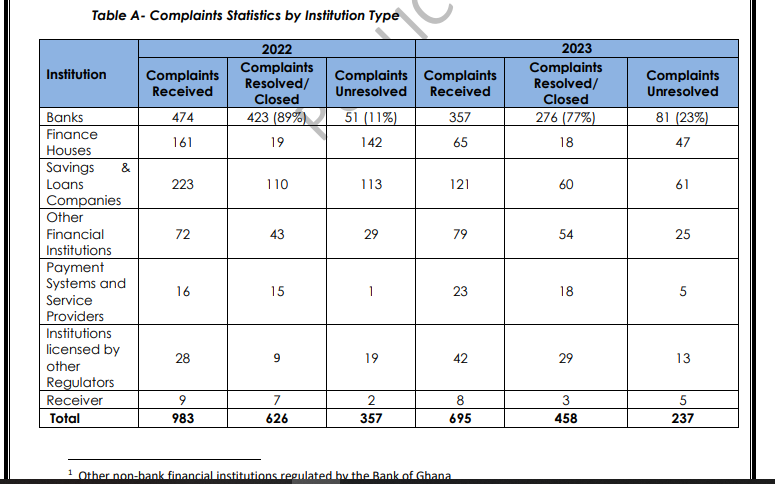
    The Bank of Ghana (BoG) has reported a notable decrease in customer complaints lodged against banks, specialized deposit-taking institutions (SDIs), other financial institutions, and payment systems and service providers in 2023.

    According to their 2023 Complaints Management Report, a total of 695 complaints were received throughout the year, marking a 29% reduction from the 983 complaints recorded in 2022.

    Despite the decrease in overall complaints, the report highlighted that the complexity of complaints had increased, requiring more time and effort for resolution by the Bank of Ghana.

    Out of the 695 complaints received in 2023, 458, constituting 66% of the total, were successfully resolved by the end of the year. This reflects a slight improvement from the 64% resolution rate achieved in 2022.

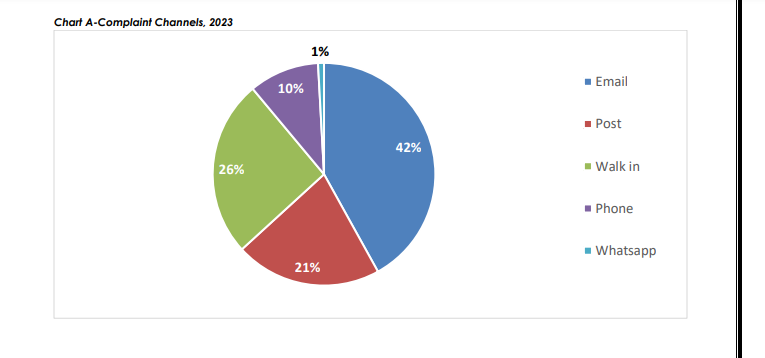
    The preferred channel for lodging complaints was predominantly email, which accounted for 42% (291 complaints) of the total complaints received in 2023. This was followed by walk-in complaints, which made up 26% (179), and postal submissions at 21% (148). Phone calls constituted 10% (71), while a minimal 1% (6 complaints) were submitted via WhatsApp.

    According to the report, the popularity of email as a complaints channel is attributed to its convenience in allowing complainants to submit supporting documentation alongside their grievances. This facilitates a more comprehensive and efficient handling of complaints by the Bank of Ghana.

    The Bank of Ghana remains committed to improving its complaints resolution process, aiming to address customer concerns promptly and effectively across the financial sector. As the complexity of complaints continues to evolve, efforts are underway to enhance complaint management strategies and ensure fair outcomes for all stakeholders involved.

    The decline in total complaints for 2023 reflects both positive trends in customer satisfaction and ongoing challenges in the financial services sector, underscoring the importance of robust complaint resolution mechanisms in maintaining trust and accountability within Ghana’s financial industry.

  • Directors, others found culpable in financial sector cleanup don’t qualify to hold key positions – BoG

    Directors, others found culpable in financial sector cleanup don’t qualify to hold key positions – BoG

    The Bank of Ghana (BoG) has issued a firm reminder to banks, Specialised Deposit-Taking Institutions (SDIs), and the general public regarding the stringent criteria for holding key positions within Regulated Financial Institutions (RFIs).

    The reminder specifically underscores that individuals implicated in the 2017-2019 financial sector clean-up, as well as former directors of failed banks and SDIs since the enactment of the Banks and Specialised Deposit-Taking Institutions Act, 2016 (Act 930), are ineligible to hold significant roles under the “fit and proper person” criteria.

    In a recent notice, the BoG highlighted the importance of maintaining the gains achieved through the financial sector clean-up, which was necessitated by poor corporate governance and imprudent risk-taking that led to the collapse of several RFIs.

    To address these issues, the BoG introduced the Corporate Governance Directive in 2018 and the Fit and Proper Persons Directive in 2019, aimed at reinforcing sound corporate governance practices and entrenching the central bank’s gatekeeping role.

    To further bolster governance disclosure practices, the BoG issued the Corporate Governance Disclosure Directive in 2022, aligning with Pillar III of the Basel Capital Accord, which relates to regulatory and public disclosures. These measures are designed to ensure transparency and accountability within the financial sector.

    The BoG’s notice reiterated that significant stakeholders, directors, and key management personnel must always possess good repute and demonstrate sufficient knowledge, skills, and experience to fulfill their duties in accordance with the Fit and Proper Persons Directive, 2019.

    The directive sets forth rigorous standards, including assessing whether a person has previously been a director or involved in the management of any institution that:

    • Had its license revoked,
    • Has been or is being wound up by a competent court or authority, within or outside Ghana,
    • Has gone into receivership, insolvency, or involuntary liquidation.

    The central bank emphasized the importance of these standards in safeguarding the integrity and stability of Ghana’s financial sector.

    By enforcing these criteria, the BoG aims to promote the safety and soundness of RFIs, ensuring that only individuals of high ethical and professional standards are entrusted with leadership roles.

    The BoG’s notice serves as a crucial reminder to all stakeholders to adhere to these directives and ensure that the financial sector remains robust and resilient.

    Banks, SDIs, and the general public are encouraged to take note of these regulations to maintain the trust and confidence of depositors and investors.

  • Bad Corporate Governance partly to blame for 2017 financial sector clean-up – BoG

    Bad Corporate Governance partly to blame for 2017 financial sector clean-up – BoG

    The Bank of Ghana (BoG) has reiterated that poor corporate governance was a significant factor contributing to the excessive and irresponsible risks taken by some financial institutions, which ultimately necessitated a comprehensive clean-up exercise in 2017.

    This clean-up was essential to secure depositors’ funds and protect the integrity of the financial sector.

    To prevent a recurrence of these issues, the BoG introduced several directives aimed at bolstering corporate governance within the financial sector.

    In 2018, the Corporate Governance Directive was issued, followed by the Fit and Proper Persons Directive in 2019. These measures were designed to embed sound corporate governance practices in Regulated Financial Institutions (RFIs) and to reinforce the BoG’s gatekeeping role within the sector.

    Furthermore, to enhance governance disclosure practices by RFIs, the BoG released the Corporate Governance Disclosure Directive in 2022. This directive outlines regulatory expectations under Pillar III of the Basel Capital Accord, focusing on regulatory and public disclosures.

    A statement issued by the BoG on July 11, 2024, reaffirmed that significant shareholders, directors, and key management personnel must always be of good repute and possess the necessary knowledge, skills, and experience to fulfill their duties in accordance with the Fit and Proper Persons Directive, 2019.

    The Fit and Proper Standards, as outlined in the directive, consider various criteria to ensure the integrity of individuals in these roles.

    This includes assessing whether a person has previously been a director or directly involved in the management of a company or institution whose license was revoked, or which was wound up by a competent court or authority, either within or outside Ghana.

    The standards also evaluate if a person has been associated with a financial company that has gone into receivership, insolvency, or involuntary liquidation.

    The BoG’s notice emphasized the obligation of RFIs, under the Banks and Specialised Deposit-Taking Institutions Act, 2016 (Act 930) and the Fit and Proper Persons Directive, 2019, to ensure the ongoing fitness and propriety of significant shareholders, directors, and key management personnel.

    Importantly, the BoG reminded the public that individuals directly implicated in the 2017-2019 financial sector clean-up, as well as former directors of failed banks and Specialized Deposit-taking Institutions (SDIs) since the enactment of Act 930, are not eligible to hold key positions under the fit and proper persons criteria.

    “Banks, Specialized Deposit-taking Institutions, and the general public are to note the above for their information,” the statement concluded.

  • Second phase of Minority’s #OccupyBoGProtest to take off on July 30

    Second phase of Minority’s #OccupyBoGProtest to take off on July 30

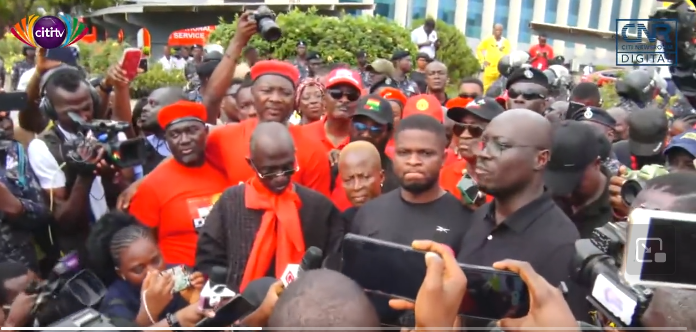
    The Minority caucus in Parliament has formally informed the Ghana Police Service of their plans to stage a protest demanding the resignation of the Governor of the Bank of Ghana (BoG), Dr. Ernest Addison, and his two deputies.

    Mahama Ayariga, Member of Parliament for Bawku Central, sent a letter to the Greater Accra Regional Police command outlining their grievances and intentions.

    The protest is scheduled for Tuesday, July 30, 2024, from 8 am to 6 pm in Accra, Greater Accra Region.

    Starting at Obra Spot in Kwame Nkrumah Circle, the demonstrators will march through Adabraka to Kingsway and culminate at the Bank of Ghana headquarters.

    The protest is centered around concerns regarding the ongoing construction of the BoG’s new headquarters in North Ridge.

    “The Governor of the Central Bank and his board continue to engage in wasteful spending on the new Bank of Ghana Corporate head office building and refuse to answer questions on the latest cost of the building which, we are told, has now further escalated to over Two Hundred and Seventy Million United States Dollars (USD$270 million) from its original estimated cost of USD81,882,640.00.

    “The Governor again has embarked on the construction of a new house for the Governor himself at a speculated cost of Forty Million United States Dollars (USD$40million) and has refused to disclose to us the actual cost when the Minority wrote to him requesting the information on the cost of the Governor’s house under construction.”

    The caucus members organized a comparable protest on October 3, 2023, in response to the Bank’s reported GH¢60.81 billion loss in the 2022 fiscal year.

    “Governor Addison has acted illegally in printing money for government without recourse to Parliament and similarly wrote off about GH¢48.4 billion of government debt. After the BoG recorded a colossal loss of over GH¢60.8 billion and negative equity of over GH¢55 billion we concluded that the bank has become insolvent. This is now confirmed by the BoG request for recapitalization by Central Government,” the Minority’s letter added.

  • The term of BoG Governor must overlap that of the President to ensure continuity – IEA

    The term of BoG Governor must overlap that of the President to ensure continuity – IEA

    The Institute of Economic Affairs (IEA) is urging substantial revisions to the Bank of Ghana Act 2016, with a particular focus on extending the tenure of the Central Bank Governor.

    This move is aimed at ensuring continuity and shielding the position from the influence of presidential terms.

    During a Stakeholders’ Forum titled “Reviewing the Bank of Ghana’s Act to Promote Transparency, Accountability, and Effectiveness,” Senior Scholar Prof. Alexander Bilson Darku presented the IEA’s viewpoint.

    He stressed the necessity of protecting the Central Bank from excessive governmental interference, particularly concerning the Governor’s tenure and conditions of service.

    Prof. Darku asserted that the proposed amendments would bolster Ghana’s economic stability by enhancing the independence and operational effectiveness of the Bank of Ghana.

    “Maintaining the autonomy of the Governor is paramount for ensuring the transparency, accountability, and overall effectiveness of the Central Bank,” he noted.

    The forum delved into several critical aspects, including the composition of the Bank of Ghana’s board, the Governor’s appointment process, and the regulatory framework governing lending limits to the government.

    A consensus emerged on the importance of aligning the Governor’s term with that of the President to promote continuity and effective governance.

    “There was a consensus on the necessity for Ghana to carefully consider aligning the term of the Bank of Ghana Governor to overlap with that of the President to ensure continuity and effectiveness in governance,” Prof. Darku explained.

    The IEA’s call for amendments highlights the need for a more insulated and stable leadership at the Bank of Ghana, aiming to foster a regulatory environment that can withstand political pressures and maintain its focus on economic stability and growth.

  • More taxes: Bank of Ghana is broke, Ghanaians to pay for it – Sammy Gyamfi

    More taxes: Bank of Ghana is broke, Ghanaians to pay for it – Sammy Gyamfi

    National Communications Officer for the National Democratic Congress (NDC), Sammy Gyamfi has reiterated government’s intention to introduce what he describes as Bank of Ghana (BoG) recapitalization tax.

    An add-on to it’s about fifty taxes introduced since his assuming office in 2017.

    During an interview with TV3’s Captain Smart on Onua TV’s Maakye Show, he revealed that, government plans introduce a levy to aid the recapitalization of the Central Bank. Nobody he said would be excluded he added.

    “They will call it Bank of Ghana (BoG) recapitalization levy. They would add it to your VAT, everyone would be made to pay.

    As they have printed money and spent it recklessly among themselves, they are coming tax, trotro drivers, fisherfolks, among other informal sector workers to raise money to go fix their self induced mess” he noted.

    He went on to slam the government over the huge sum of money pumped into the new Bank of Ghana headquarters which is currently still under construction.

    Highlighting the incompetence of the incumbent government and the deteriorating value of the Ghana Cedi against the dollar, he jabbed that,

    “Amid this they have awarded a contract in dollars, $250 million when they are after people charging in dollars because they aren’t even confidence in their ability to sustain the dollar hence they have awarded a contract in dollars which is equivalent to GHS 3 billion” he added.

    He went on to express his frustration over the perceived misuse of public funds.

    “You just can’t make sense of this, its become so cheap, that everyone is dipping their hands into state coffers. So Akufo-Addo did you come to solve Ghana’s problems or you came to came to become a problem for Ghanaians to solve?

    What crime did we commit against these people(NPP)? where did we go wrong? I weep when I sit to read these documents. What Ghana is going through is a rape of our public purse.

    Sammy Gyamfi’s revelation is a reiteration of NDC’s Ato Forson’s claims about a year ago.

    It will be recalled that in 2023, the Minority Leader in Parliament, Dr. Cassiel Ato Forson during a press conference on August 9, 2023 announced government’s intention to introduce a new tax in addition to it’s about fifty since his assuming office in 2017.

    Colleagues, ladies and gentlemen of the media, fellow countrymen and women let me assure you that very soon Ghanaians would be made to pay for Bank of Ghana recapitalisation levy.

    A tax to recapitalise the central bank of Ghana. So as we speak the Central Bank has collapsed.

  • BoG directs Ayariga to PPA for full disclosure of money spent in setting up new Head Office

    BoG directs Ayariga to PPA for full disclosure of money spent in setting up new Head Office

    The Bank of Ghana (BoG) has refused to disclose the total cost of its new head office building to Bawku Central MP, Mahama Ayariga.

    In response to Mr. Ayariga’s inquiry for comprehensive financial details about the construction project, the BoG directed him to the Public Procurement Authority (PPA) for further information.

    The BoG stated that their decision to withhold the full financial breakdown is based on procedural requirements that specify such information must be obtained through the PPA.

    In a letter to the lawmaker, the BoG stressed that all procurement processes and financial transactions for the new head office have adhered to established regulatory frameworks and oversight mechanisms.

    “With the approval of the Public Procurement Authority (PPA), the BoG awarded a contract for the construction of a bank duty post, at the premises of the old BoG clinic.”

    “The BoG went through the necessary procurement processes in accordance with the Public Procurement Act, 2003 (Act 663) as amended by the Public Procurement Amendment Act, 2016 (Act 914) in 2022. The cost and details of the construction may be obtained from the PPA,” an excerpt of the letter said.

    An advocate for transparency in government projects, Mahama Ayariga, voiced his dissatisfaction with the BoG’s reply.

    He contends that as a public entity, the BoG is duty-bound to offer clear and comprehensive details regarding the expenses for the new head office.

    Mr. Ayariga asserts that transparency is essential to uphold accountability and public confidence in the stewardship of national resources.

    The BoG’s new head office project has attracted public interest and scrutiny, with numerous stakeholders demanding more disclosure of the project’s financial details.

    The refusal to reveal the complete cost directly has ignited further discussion about the transparency and accountability of public entities in Ghana.

  • Recapitalization of BoG in the offin to save bank’s credibility – Governor

    Recapitalization of BoG in the offin to save bank’s credibility – Governor

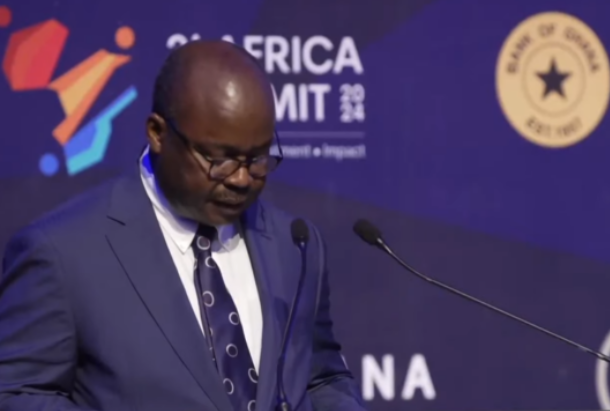
    The Governor of the Bank of Ghana (BoG), Dr. Ernest Addison, has announced plans for the recapitalization of the central bank, aimed at bolstering its credibility amidst ongoing financial challenges and structural reforms.

    Dr. Addison made this disclosure during a joint press conference in Accra on July 1, 2024, attended by representatives from the Ministry of Finance and the International Monetary Fund.

    Speaking at the conference, Dr. Addison emphasized the necessity of recapitalization to support planned reforms outlined in a memorandum of understanding (MoU) between the Bank of Ghana and the Ministry of Finance.

    The MoU, expected to be signed soon, aims to address the central bank’s financial losses, which totaled GHS 10.5 billion in 2023 and GHS 60.9 billion in 2022.

    “The recapitalization of the central bank will strengthen its credibility and enable it to effectively fulfill its mandate of managing monetary policy and ensuring price stability,” Dr. Addison stated.

    He highlighted the importance of steadfastness and commitment in implementing structural reforms throughout the year to restore the bank’s financial health and operational capacity.

    The recapitalization plan will include determining the required capital, establishing a timeline for recapitalization, and identifying sources of funding.

    Dr. Addison underscored that these measures are crucial for safeguarding the Bank of Ghana’s ability to fulfill its critical role in the nation’s economic stability.

    In August 2023, Minority Leader Dr. Cassiel Ato Forson accused government of planning to impose a Bank of Ghana (BoG) recapitalization levy on Ghanaians.

    He alleged that this levy is intended to shore up the central bank, which he claims is on the brink of collapse due to mismanagement.

    The National Democratic Congress (NDC) demanded the immediate resignation of BoG Governor Dr. Ernest Addison and his deputies, holding them responsible for the reported GH¢60 billion losses in 2022.

  • BoG withholds cost of new Head Office Building, directs Ayariga to PPA

    BoG withholds cost of new Head Office Building, directs Ayariga to PPA

    The Bank of Ghana (BoG) has declined to disclose the complete cost of its new head office building to Mahama Ayariga, Member of Parliament for Bawku Central.

    In response to Ayariga’s request for detailed financial information regarding the construction project, the BoG redirected him to the Public Procurement Authority (PPA) for further clarification.

    Citing procedural protocols, the BoG stated that all financial details related to procurement processes must be accessed through the PPA.

    The central bank emphasized that the construction contract for the new head office was awarded with the approval of the PPA, adhering to the stipulations of the Public Procurement Act, 2003 (Act 663), as amended by the Public Procurement Amendment Act, 2016 (Act 914).

    In a letter to Mr Ayariga, the BoG underscored its commitment to transparency and compliance with regulatory frameworks governing public expenditures.

    The excerpt from the letter read, “The BoG went through the necessary procurement processes in accordance with the Public Procurement Act, 2003 (Act 663) as amended by the Public Procurement Amendment Act, 2016 (Act 914) in 2022. The cost and details of the construction may be obtained from the PPA.”

    Mahama Ayariga, known for advocating transparency in government projects, expressed dissatisfaction with the BoG’s response.

    He argued that as a public institution, the BoG has a responsibility to provide clear and comprehensive information about expenditures on its new head office.

    Mr Ayariga stressed that transparency is crucial for fostering accountability and maintaining public trust in the management of national resources.

  • BoG board members paid over GHC5m as allowance in 2022 – Report

    BoG board members paid over GHC5m as allowance in 2022 – Report

    Each of the 10 board members of the Bank of Ghana (BoG) received GH¢510,000 in allowances last two years, as reported in the central bank’s 2022 audited annual report and financial statement.

    This occurred despite the board presiding over a GH¢60 billion unprecedented loss.

    According to the report, “fees and allowances paid to non-executive directors during the year amounted to GH¢5.10 million.”

    In the year when the central bank recorded its worst performance in recent history, each board member received an average of GH¢42,500 monthly, totaling GHC510,000 annually—a 60.9% increase compared to 2021.

    In addition to the governor and his two deputies, these 10 board members constitute the governing board of the bank, as mandated by the Bank of Ghana Act, 2002 (Act 612).

    The Board is entrusted with formulating policies critical to achieving the bank’s objectives and provides strategic direction on its operations.

    It convenes at least once every two months to deliberate on matters within its statutory responsibilities and those referred to it.

    But who were these board members?

    The Bank of Ghana (BoG) released its full-year 2022 audited financial statements on July 28, 2023, which drew widespread criticism due to the substantial loss reported.

    According to the financial statements, the bank recorded a total loss of GH¢60 billion.

    This figure has unfortunately been subject to politicization, with GH¢53.1 billion of the losses attributed directly to the government’s domestic debt restructuring exercises (phase 1 and II), as clarified by the BoG.

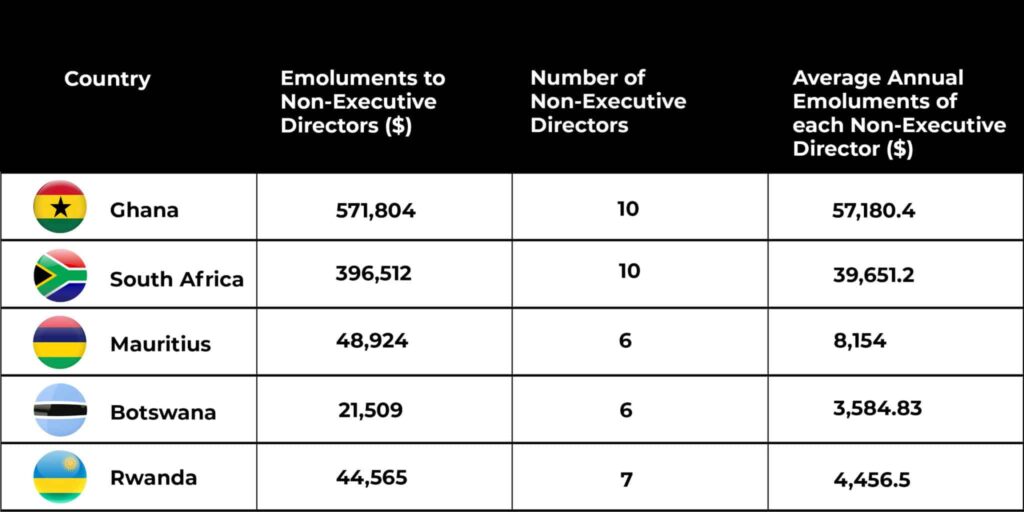
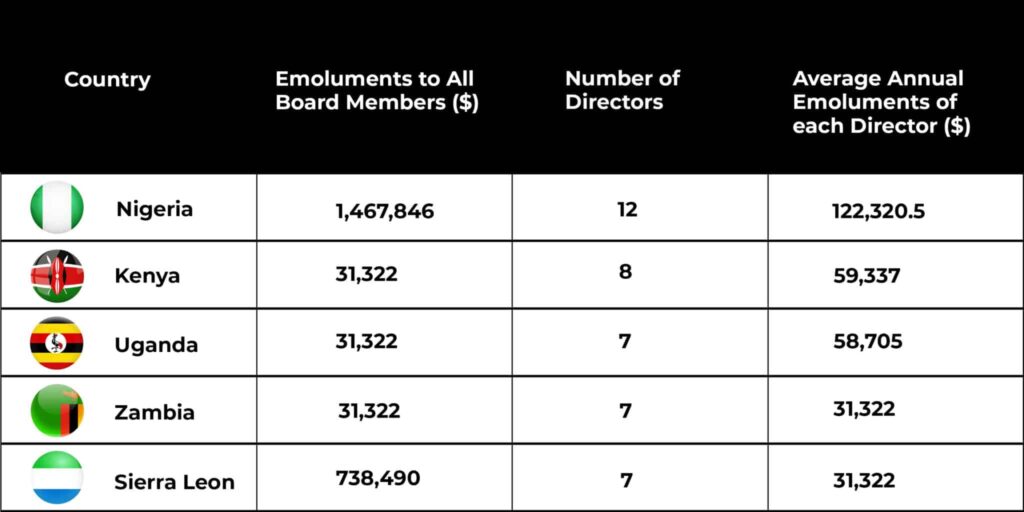
    In terms of compensation, Ghana’s non-executive directors at the central bank receive some of the highest emoluments on the continent.

    On average, they are compensated more favorably than their counterparts in South Africa, Botswana, Mauritius, and Rwanda.

    Annual emoluments received by non-executive board members in Ghana, South Africa, Mauritius, Botswana, and Rwanda in 2022 exemplify this trend.

    In Kenya, Uganda, and Zambia, where the compensations of executive directors are combined with those of non-executive directors, Ghana’s figures remain competitive. However, Nigeria and Sierra Leone compensate their central bank directors at significantly higher rates.

    The Fourth Estate converted the GH¢5.1 million received by the BoG’s non-executive board members into U.S. dollars for seamless comparison with other African countries. Using the average exchange rate of ¢8.9191 per dollar in 2022, they facilitated a clear understanding of these comparisons.

    Before 2020, the BoG’s annual reports typically consolidated the emoluments of non-executive and executive directors, making it challenging to ascertain the specific amounts paid to non-executive directors.

    However, the 2020 annual report disclosed that the board of directors received GH¢1.96 million in 2019. Since then, the emoluments of non-executive directors have steadily increased. By 2020, their fees and allowances had risen by GH¢670,000, and during the COVID-19 pandemic in 2021, these figures escalated from GH¢2.63 million to GH¢3.17 million.

    By 2022, amid significant losses incurred by the bank, these emoluments surged to GH¢5.10 million. Concurrently, the BoG’s top management, including the Governor, his deputies, and senior executives, received GH¢16.79 million in short-term employee benefits. This marked a nearly quadruple increase from the GH¢4.49 million recorded in 2017.

    During this period of rising fees and allowances, particularly in 2021, Finance Minister Ken Ofori-Atta urged Ghanaians to bear the burden and collaborate to revive the economy.

    In April 2022, the government implemented a 30% salary reduction for all its top appointees as part of austerity measures to address the country’s financial challenges.

    Additionally, stringent measures were imposed, including restrictions on foreign travel except for essential statutory purposes, a 50% decrease in expenditures related to meetings and conferences, and a halving of fuel coupon allocations.

    “We have decided also to continue with the policy of a 30 % cut in the salaries of political office holders including the President, Vice President, Ministers, Deputy Ministers, MMDCEs, and SOE appointees in 2023,” he said.

    During his October address on the state of the economy, President Nana Akufo-Addo reiterated this policy, stating, “We have also decided to maintain a 30% salary cut for political office holders, including the President, Vice President, Ministers, Deputy Ministers, MMDCEs, and SOE appointees in 2023.”

    Members of the Council of State also voluntarily agreed to reduce their monthly allowances by 20% until the year’s end in response to the country’s economic challenges.

    However, it seems that these austerity measures did not extend to the central bank.

    The Bank of Ghana has faced intense scrutiny since revealing its significant financial loss. Since August 2023, the Minority in Parliament has demanded the resignation of Governor Dr. Ernest Addison and his two deputies, blaming them for what they call financial mismanagement.

    “We are resolved to embark on popular action to occupy the Central Bank and drive out the team of inept, callous, and criminal mis-managers of the finances of this country and save the Bank of Ghana. The March to Ensure Accountability will begin in 21 days if the Governor of the Bank of Ghana does not do the needful and pack bag and baggage out of that sacred institution that he has so desecrated. Dr Ernest Addison Must Go! There has to be an end to impunity and it is now,” the Minority Leader, Dr Cassiel Ato Forson, said.

    When the Governor and his deputies refused to resign, the Minority staged a demonstration. However, Dr. Addison reportedly informed Central Banking, an international business website, that he had no plans to resign. He characterized the Minority’s protests as “completely unnecessary.”

    “The Minority in Parliament has numerous channels in civilized societies to voice their grievances, not through street demonstrations like hooligans,” Dr. Addison remarked.

    Nevertheless, Bright Simons, Honorary Vice President of IMANI Africa, described the scale of the chaos caused by Ghana’s central bank managers as “the scope of the mess” created by the managers of Ghana’s apex bank as “eye-popping from a historical point of view.”

  • Persons, institutions that misused depositors’ funds during financial sector clean-up must be prosecuted – BoG

    Persons, institutions that misused depositors’ funds during financial sector clean-up must be prosecuted – BoG

    The Governor of the Bank of Ghana (BoG), Dr. Ernest Addison, has called on the government to take legal action against shareholders of banks and financial institutions implicated in the recent financial sector clean-up.

    At a joint press conference held with the Ministry of Finance and the International Monetary Fund (IMF) on Monday, July 1, Dr. Addison emphasized the importance of holding individuals accountable for their roles in mismanagement and misconduct.

    Expressing concern over the government’s slow response to these issues, Dr. Addison urged for more prompt and decisive measures to address the financial irregularities.

    He stressed the need to recover funds that were misappropriated or mishandled during the clean-up exercise, highlighting the critical nature of ensuring justice and legal consequences for those responsible.

    “It is taking a really long time to bring all of these matters to a close. However, it is important that the state needs to persevere and pursue these shareholders who have misappropriated depositors’ funds,” Dr. Addison stated.

    He further pointed out that significant amounts of money claimed to have been used for the financial sector clean-up are currently held in assets by shareholders, and he called for the law to take its course in these matters.

    From mid-2017 to the end of December 2018, the Bank of Ghana undertook a comprehensive banking sector clean-up, including recapitalization and various regulatory reforms.

    These efforts aimed to enhance the safety, soundness, and stability of the financial system, thereby supporting economic growth.

  • BoG’s foreign exchange reserves reach $907M

    BoG’s foreign exchange reserves reach $907M

    Dr. Ernest Addison, the Governor of the Bank of Ghana (BoG), has announced that the Central Bank has amassed foreign exchange reserves amounting to $907 million as of June 27, 2024.

    This revelation underscores the BoG’s efforts to bolster the country’s economic stability and strengthen its financial position amidst global economic fluctuations.

    Foreign exchange reserves are crucial assets held by central banks in foreign currencies, including cash and other reserve assets like gold. These reserves play a pivotal role in managing a nation’s balance of payments, influencing the exchange rate of its currency, and instilling confidence in financial markets.

    Dr. Addison disclosed this significant milestone during a joint press conference held between the Ministry of Finance and the International Monetary Fund (IMF) on Monday.

    He emphasized that the BoG’s current foreign exchange reserves exceed the targets set under the IMF programme, reflecting robust management and strategic accumulation efforts.

    Highlighting the strategic importance of these reserves, Dr. Addison affirmed the BoG’s commitment to collaborating closely with commercial banks to ensure their adequate capitalization.

    This partnership aims to empower commercial banks to effectively fulfill their mandates in supporting economic growth and financial stability across Ghana.

  • BoG made a loss of GHC47bn in 2023, not GHC10bn – Adongo reveals

    BoG made a loss of GHC47bn in 2023, not GHC10bn – Adongo reveals

    Isaac Adongo, the Ranking Member of the Finance Committee of Parliament, has accused the Bank of Ghana (BoG) of falsifying figures related to the institution’s effectiveness.

    According to him, the Central Bank is currently under-declaring the losses the institution had to incur in the previous year.

    The Bank of Ghana has disclosed a significant financial loss of GH₵10.50 billion for the fiscal year ending 2023, marking a notable improvement from the GH₵60.9 billion loss reported in 2022. This financial setback is primarily attributed to a substantial rise in total interest expenses related to its open market operations, which surged by GH₵6.7 billion during the period under review.

    According to the Bank’s 2023 Annual Report and Financial Statement, the increase in expenses was deemed necessary to manage the country’s excess liquidity and support the broader macroeconomic adjustment programme aimed at stabilizing inflation rates.

    But Isaac Adongo believes a quadruple of the figure quoted by the Central Bank has been lost.

    “I have reason to show to you that the Bank of Ghana is cooking the books. I held a press briefing in this room when I showed you that thee impairment of 48 billion last year, they wrote off 32 billion. They didn’t dispute it. So the impairment was 16 billion. In this report, in a note, you have stated that that impairment has increased from 16 billion to 53 billion. Is that not an impairment of 37 billion. And you write of impairment as expenditure. When you write off the expenditure, you will see that the Bank of Ghana made a loss of 47 billion, not 10 billion.”

    He noted that he has received a copy of the Central Bank’s recent report after reaching out to the establishment.

    Despite the incurred loss, the Bank of Ghana highlighted that its aggressive open market operations yielded positive results, contributing significantly to a notable slowdown in inflation to 23.2% by the end of 2023, down from a staggering 54.1% recorded at the close of 2022.

    Total operating expenses for 2023 were reported at GH₵19.2 billion, showcasing a significant decrease from the GH₵66.9 billion recorded in the previous year. This reduction was attributed to lower impairment charges on loans and advances, as well as adjustments in the Bank’s holdings of Government of Ghana securities.

    As of December 31, 2023, the Bank of Ghana and its subsidiaries reported total liabilities surpassing total assets by GH₵65.36 billion. The institution also clarified that no funds were allocated for reserve appropriation, given the reserve amount remained in deficit at the end of the financial year.

    In addressing policy solvency concerns, the Bank assured stakeholders of its ability to generate sufficient realized income to cover the costs associated with its monetary policy operations. The Board of Directors and Management reaffirmed that the policy solvency outcome for 2023 aligns with the strategic objectives outlined in the previous fiscal year.

  • Ato Forson’s letter for the establishment of LCs was addressed to BoG – Richard Jakpa

    Ato Forson’s letter for the establishment of LCs was addressed to BoG – Richard Jakpa

    The third accused person in the ambulance case trial, Richard Jakpa, has provided testimony asserting that the letter from the first accused, Dr. Cassiel Ato Forson, concerning the establishment of Letters of Credit (LCs), was appropriately addressed to the Bank of Ghana (BoG) and not to the Controller and Accountant-General’s Department (CAGD).

    Mr. Jakpa, the third accused, highlighted that the letter authorizing the establishment of LCs for the procurement of ambulances was addressed to the BoG and was issued on behalf of the then Finance Minister, Seth Terkper.

    He argued that this detail is crucial for understanding the context and appropriateness of the authorization process.

    Jakpa’s testimony served as a defense against allegations that Dr. Ato Forson acted improperly in the ambulance procurement process.

    He emphasized that the procedure followed by Dr. Forson was consistent with standard governmental practices and that directing the letter to the BoG aligns with the usual protocols for such financial transactions. This, he argued, should mitigate claims of wrongdoing attributed to Dr. Ato Forson.

    The controversy surrounding the procurement of the ambulances has seen Dr. Ato Forson accused of financial malfeasance, with prosecutors alleging that he bypassed established procedures.

    However, Jakpa countered this by stating that addressing the letter to the BoG was not only appropriate but also necessary for the timely and efficient execution of the procurement.

    Jakpa explained that the BoG is the correct entity for handling such transactions, as it oversees the country’s monetary policy and financial operations.

    He detailed how the BoG, rather than the CAGD, is typically responsible for issuing LCs due to its role in managing the nation’s foreign exchange and international financial transactions.

    This distinction, he noted, is critical in ensuring that financial processes adhere to proper channels, reinforcing that Dr. Ato Forson’s actions were in line with standard practices.

    However, the prosecution argued that the seal on the document indicates the authority of the former Deputy Minister, not the Minister. This contention remains a focal point in the case as the trial continues to unfold.

  • Supreme Court supports BoG’s license revocation of UniCredit

    Supreme Court supports BoG’s license revocation of UniCredit

    The Supreme Court, in a unanimous decision, overturned the Court of Appeal’s ruling and upheld the High Court’s decision in the case involving The Republic versus the Bank of Ghana (BoG), Ex Parte Hoda Holdings Limited.

    In its ruling, the Supreme Court affirmed that the Bank of Ghana was justified in revoking the license of UniCredit Ghana Limited.

    Chief Justice Araba Esaaba Sackey Torkornoo presided over the five-member panel, which also included Justices Mariama Owusu, Prof. Henrietta Joy Abena Nyarko Mensa-Bonsu, Ernest Yao Gaewu, and Yaw Darko Asare. The ruling was issued on June 26, 2024.

    Background

    On August 16, 2019, the Bank of Ghana declared UniCredit Ghana (UniCredit) bankrupt and annulled its license to operate as a savings and loans company.

    The Bank of Ghana justified its actions under section 123 of the Banks and Specialised Deposit Taking Institutions Act of 2016 (Act 930).

    Following this decision, HODA Holdings Limited, the majority shareholder of UniCredit, filed an application at the Human Rights Division of the High Court. Their application sought judicial review of the Bank of Ghana’s decision to annul UniCredit’s license and requested an injunction to prevent the Bank from interfering with UniCredit’s operations.


    High Court Ruling on the Case

    On March 18, 2021, Justice Gifty Agyei Addo’s High Court ruling favored the Bank of Ghana, affirming that UniCredit was financially distressed before its license was terminated.

    The court also determined that contrary to UniCredit’s assertion of being denied a hearing, the Bank of Ghana had issued numerous notices to UniCredit.

    “Directing it to rectify its capital deficiency failing which the Bank of Ghana would exercise its powers under s.123 of Act 930.”

    The Court also affirmed that the Bank of Ghana acted correctly in revoking UniCredit’s license.

    It upheld that the Bank of Ghana’s actions to revoke UniCredit’s license and place it under receivership were in accordance with Act 930.

    Appeal of the case by HODA Holdings

    Hoda Holdings Ltd lodged an appeal with the Court of Appeal in response to the High Court’s decision.

    On July 7, 2022, the Court of Appeal, composed of Justice Janapare A. Bartels-Kodwo, Justice Merley Wood, and Justice G.S. Suurbaareh, overturned the High Court’s ruling and sided with Hoda Holdings Ltd.

    The Court of Appeal determined that the Bank of Ghana’s revocation of UniCredit’s license under section 123 of Act 930 should have adhered to the procedures outlined in section 16(3&4) of the same Act. It also found that the Bank of Ghana’s failure to comply with these procedures meant that UniCredit was not afforded a hearing before its license was revoked.

    BoG’s Appeal to the Supreme Court 

    The Bank of Ghana, which had some concerns with the decision of the Court of Appeal, also filed an appeal at the Supreme Court against the decision of the Court of Appeal. This has resulted in the new ruling by the highest court of the land on this particular case.

  • Advance payment limit for imports raised to $200K per importer

    Advance payment limit for imports raised to $200K per importer

    The Bank of Ghana (BoG) has raised the maximum advance payment for the importation of goods and services to $200,000.

    This change is part of the Central Bank’s amendment to the rules governing advance payments for imports.

    The new limit, a 300% increase from the previous $50,000 cap, will take effect on Monday, July 1, 2024.

    Under the revised regulations, importers using the advance payment option can now make a maximum payment of $200,000 per transaction.

    The Bank of Ghana stated in a notice, “With effect from 1st July 2024, the maximum amount permitted using the Advance Payment option for imports has been increased from US$50,000.00 to US$200,000.00 per transaction, per importer.”

    Advance payment is a method in international trade where the buyer places funds at the seller’s disposal before the shipment of goods or services.

    These payments are processed within 24 hours of receiving the customer’s request.

    In addition, documents required for the amendment are as follows:

    1. A Customer instruction or request.
    2. A valid Import Declaration Form (IDF).
    3. A Pro forma or Commercial Invoice outlining the details of the transaction.
    4. An Undertaking by the importer to submit clearing documents within a period not exceeding: (i) 90 days from payment of invoice for general merchandise or finished goods. (ii) For capital goods such as plant, machinery and equipment with long manufacture periods, the period shall be 180 days which can be extended with prior approval from the Head, Financial Markets Department, Bank of Ghana.
    5. A Sales Contract or Supplier Agreement detailing payment terms and schedules. (Optional)
  • BoG needs recapitalization for violating guidelines that caused banking sector crises – Economist

    BoG needs recapitalization for violating guidelines that caused banking sector crises – Economist

    Executive Director of Revenue Mobilisation Africa, Geoffrey Kabutey Ocansey, expressed the view that the Bank of Ghana might require recapitalization similar to the collapsed banks due to mismanagement of affairs.

    The economist contended that the central bank has recently exhibited poor management, resulting in losses over the past couple of years.

    For the financial year ending in 2023, the BoG reported a loss of GH¢10.5 billion.

    This loss was attributed to a significant increase in total interest expenses on open market operations by the Central Bank, amounting to GH¢6.7 billion during the review period.

    The Bank clarified that the rise in expenses was essential to manage the economy’s excess liquidity and to support the disinflation process as part of a broader macroeconomic adjustment program.

    As of December 31, 2023, the Bank of Ghana and its subsidiaries had total liabilities exceeding total assets by GH¢65.36 billion.

    Total operating expenses for 2023 amounted to GH¢19.2 billion, representing a significant decrease from the GH¢66.9 billion recorded in 2022.

    In August of the preceding year, the BoG defended its new $250 million headquarters.

    In response, Geoffrey Kabutey Ocansey highlighted that the circumstances leading to the central bank supervising the collapse of several financial institutions mirror those currently affecting them.

    During an interview on Frontline on Rainbow Radio 87.5FM, he stated that one of the primary reasons for the BoG’s intervention in collapsing the banks was poor governance and a breach of sector guidelines.

    He cautioned that failure to address these losses could have adverse effects on the economy, potentially impacting monetary policy and endangering the central bank’s independence and reputation.

    “If care is not taken, the Bank of Ghana would have to be recapitalized based on the same reasons it used in collapsing the banks. The Bank of Ghana advised the government to collapse banks and other financial institutions. But when you evaluate the work of the BoG currently, you will discover that they are worse than the banks that collapsed. The bank would have to be recapitalized based on the same principles it used in the collapse of the other banks,” he told host Kwabena Agyapong.

    He pointed out that as the bank couldn’t finance the government’s budget or provide loans to it, the government has turned to other banks, leading to a rise in Treasury rates and heightened interest in loans for small and medium-sized enterprises (SMEs).

  • European Central Bank seemingly defends BoG on incurring losses

    European Central Bank seemingly defends BoG on incurring losses

    The European Central Bank (ECB) recently shed light on the sources of central bank profits and losses, underscoring that the primary mandate of a central bank is to maintain price stability, rather than to generate profit.

    This explanation was part of a podcast released on February 23, 2023, following the publication of the ECB’s financial statement for the year ending 2022.

    The podcast stressed the importance of central banks focusing on their core mission of keeping prices low and stable, even if it means incurring losses.

    “In today’s difficult economic environment, central banks across the world are either making or warning of losses. It’s important to remember though that central banks are not like ordinary companies; they can lose money and still operate effectively,” the podcast stated.

    Although the discussion centered on the context of the ECB and the central banks in the 20 countries using the Euro, it provided valuable insights into how and why central banks globally incur losses. “A central bank doesn’t work towards making a profit. Its mandate is actually to keep prices stable,” the podcast revealed.

    The ECB clarified that, unlike ordinary companies, central banks’ primary objective is not to make profits or avoid losses at all costs. “We are a public institution and like an ordinary company, we can make profits and losses, but making profits or avoiding losses at all costs is not our aim. Our aim is to keep prices stable,” the podcast explained, further stressing that profit is “basically a by-product of what we do, of our mandate.”

    Analyzing the composition of costs to the ECB, the podcast highlighted that a significant source of costs is the interest paid on deposits from commercial banks. “When banks deposit money with us, and banks do deposit money with us because they have accounts with us just like citizens have accounts with commercial banks, commercial banks have accounts with the Euro system and we pay interest rates on these deposits and that’s, I would say, the biggest source of costs.”

    The ECB sets three key interest rates, including the deposit facility rate, which determines the interest paid to banks on their deposits. This is analogous to the cost of open market operations used by some central banks to manage excess liquidity in the economy.

    “These losses that we’ve seen this year have been down to different things, some of them a little bit more tricky to explain than others, but this last point that we talked about, the interest rates, this is key here because they’re closely linked to some of those losses. I just want to zoom out a second to look at the economic environment that we’re in right now because it’s also important. Inflation is high and we are raising our key interest rates to tackle that including the deposit facility,” the ECB explained.

    Reflecting on similar scenarios, the Bank of Ghana recently released its Annual Report and Financial Statements, revealing a cost of GH¢8.3 billion on its open market operations aimed at curbing inflation. This substantial cost has significantly contributed to reducing inflation from 54.1% at the end of December 2022 to 23.2% by the end of December 2023.

    The Bank of Ghana emphasized that maintaining low and stable inflation is a prerequisite for economic growth and that within a floating exchange rate regime, it also contributes to exchange rate stability. The Bank of Ghana’s medium-term inflation target is 8%, with an acceptable fluctuation range of plus or minus 2% of this target.

  • GN Bank didn’t engage in illegal foreign currency transfers, it had over GHC30m – Dr Nduom fights BoG

    GN Bank didn’t engage in illegal foreign currency transfers, it had over GHC30m – Dr Nduom fights BoG

    Groupe Nduom has contested the Bank of Ghana’s (BoG) statements from August 16, 2019, regarding the revocation of GN Bank’s license.

    The BoG, on June 14, defended its decision to revoke GN Bank’s license, asserting that the revocation was due to significant regulatory violations.

    The Central Bank claimed that GN Bank’s failure to adhere to critical financial regulations and banking standards jeopardized its operational stability.

    The BoG highlighted issues related to capital adequacy, liquidity, governance, and risk management, stating that these deficiencies necessitated the revocation of GN Bank’s license. Furthermore, the BoG implied that restoring GN Bank’s license, as demanded by the bank’s management, was not feasible.

    In a release on Sunday, June 16, Groupe Nduom argued that the BoG’s declaration of GN Savings’ insolvency was based on “wildly inaccurate” information.

    The group demanded the restoration and upgrade of GN Savings’ license, asserting that the BoG’s claim of insufficient funds was incorrect. Groupe Nduom stated that GN Savings had more than the GHS30.33 million cited by the BoG in its decision.

    The group emphasized that GN Savings complied with all regulatory requirements and that the BoG was aware of this.

    “The statements Bank of Ghana (BoG) issued on August 16, 2019, regarding GN Savings are wildly inaccurate. BoG was aware that GN Savings had available to it more than the GHS30.33 million that it relied upon to declare it insolvent; GN Savings was not allowed by regulation and GN Bank did not engage in illegal foreign currency transfers; GN Savings complied with all requirements laid down by BoG as a savings and loans company and wrote a detailed report in June 2019 to prove that its business was moving positively forward,” the statement read.

    Groupe Nduom asserted that the BoG’s decision was a mistake that must be admitted and corrected. They also highlighted that the Government of Ghana, its agencies, and contractors owe Groupe Nduom companies over GHS7.1 billion.

    They argued that with these funds, GN Savings could pay its customers and have enough capital to be restored as a universal bank.

    “These facts are indisputable. BoG made a mistake that it must admit to and correct. Today, the Government of Ghana, its agencies and contractors owe Groupe Nduom companies over GHS7.1 billion. With this money, customers will be paid and GN Savings will have enough capital to become a universal bank once again,” the statement concluded.

  • Video: Know your cash supply chain – BoG explains

    Video: Know your cash supply chain – BoG explains

    Bank of Ghana (BoG) is the sole authority mandated to issue and redeem currency according to Section 35 of the Bank of Ghana Act (2002), Act 612.

    Mr. Dominic Owusu, Head of the Currency Management Department at the Bank, emphasised this in an educational video produced by the central bank’s Communications Department.

    He stated that one of BoG’s primary objectives is to protect and ensure the integrity, confidence, and trust in the currency for economic transactions.

    Mr. Owusu noted that it takes a year to procure banknotes for economic transactions, urging Ghanaians to keep their notes clean.

    He explained that banknotes are not printed in Ghana but are produced abroad and distributed under strict security across the country.

    https://www.youtube.com/watch?v=4pKDnFACEuo

    Once the money reaches the Bank of Ghana branches and agencies, commercial banks withdraw these funds and make them available to the public.

    He further indicated that when banknotes are dirty, counterfeiters find it easier to introduce fake notes into the system.

    He reiterated the importance of keeping notes neat, adding that clean notes aid in intercepting counterfeit currency, thereby ensuring the integrity of economic transactions.

  • CAGD and BoG won’t accept LCs without Finance Minister’s authorisation seal – Richard Jakpa tells court

    CAGD and BoG won’t accept LCs without Finance Minister’s authorisation seal – Richard Jakpa tells court

    Richard Jakpa, the third accused in the ongoing ambulance case, provided detailed insights into the procedural safeguards employed by the Ghanaian government for financial authorizations during his court testimony on Thursday, June 13.

    Mr. Jakpa, a businessman, explained the standard procedures he followed when dealing with the Ghanaian government. He revealed that communications typically originate from the Secretaries of Chief Directors or Deputy Ministers, who forward letters to the office of the substantive Minister of Finance.

    According to Mr. Jakpa, once these communications are received, the substantive Secretary of the Minister of Finance seeks the Minister’s approval. Upon receiving approval, the Secretary affixes the authorization seal on the letter.

    Only after this crucial step do the Controller and Accountant General’s Department (CAGD) or the Bank of Ghana (BoG) proceed with implementing the instructions contained in the letter.

    Mr. Jakpa emphasized the importance of this authorization seal, which bears the Finance Minister’s approval. He insisted that without this security measure, neither the CAGD nor the BoG would act on any directive to debit Ghana’s consolidated accounts, whether for local or international payments.

    “The authorization seal, bearing the Minister of Finance’s approval, is crucial. Without it, the CAGD and BoG won’t accept letters of credit (LCs) or any other financial directives,” Mr. Jakpa stated.

    During his cross-examination, he highlighted that this stringent process is designed to safeguard Ghana’s financial integrity. It ensures that only the Finance Minister, with proper authorization and oversight, can authorize debits from the country’s consolidated account for payments related to services rendered or work completed by any Metropolitan, Municipal, and District Assembly (MMDA).

    Mr. Jakpa underscored that this rigorous approval process is essential to maintaining transparency and accountability in the management of the nation’s finances. His testimony shed light on the meticulous measures in place to prevent unauthorized financial transactions and protect the country’s economic interests.

  • BoG reaffirms its decision regarding GN Savings & Loans collapse

    BoG reaffirms its decision regarding GN Savings & Loans collapse

    The Bank of Ghana has reiterated its stance on the revocation of GN Savings and Loans Company’s license, stating that it stands by its decision.

    This comes in response to a recent video by Dr. Papa Kwasi Nduom, Chairman of Group Nduom, alleging that the collapse of his bank was instigated by former Finance Minister Ken Ofori-Atta due to perceived threats.

    Director of Communications at the Bank of Ghana, Bernard Otabil, clarified that the Central Bank’s action was warranted, citing violations of financial regulations, including the Foreign Exchange Act of 2006 (Act 723), as the reason for the license revocation.

    “At the end of the day, it is not in the interest of the central bank or we don’t go out there and say this institution must actually be closed down at all cost. It depends on how the institution is run, it depends on what the institution itself has stated that it wants to do and on respecting the prudential norms. In fact, let me make it clear that the GN Bank and GN Savings and Loans were actually disrespectful to the central bank.

    “For instance, if you go through the books you will see that there was a transfer of dollars, and pounds and Euros to International Business Solutions which is an institution affiliated to the group network based outside which was in direct breach of the Foreign Exchange Act of 2006 (Act 723). These provisions are there. Our statement of August 16 2019, we stand by that statement and in that statement, we have given all the reasons behind the revocation of the license of GN Savings and loans,” he said in a report on 3news.com.

  • Your demand for 2023 financial statement, others is receiving attention – BoG to Ayariga

    Your demand for 2023 financial statement, others is receiving attention – BoG to Ayariga

    The Bank of Ghana (BoG) has responded to the queries raised by the Member of Parliament (MP) for Bawku Central, Mahama Ayariga, regarding losses documented in the 2023 financial statement and the rising expenses linked to its headquarters.

    These inquiries were made under section 18 of the Right to Information Act 2019 (Act 989).

    In acknowledgment of the MP’s concerns, the central bank has assured him that his requests are receiving due attention.

    They have communicated to him that he can anticipate hearing from them shortly regarding the information he has sought.

    In a letter dated Thursday, June 6, addressed to the legislator, the Bank of Ghana encouraged him to await their forthcoming response, assuring him that they would furnish the requested information in due course.

    “The Bank acknowledges your receipt of your letter dated June 3, and notes the content thereof.

    “We write to inform you that your request is receiving attention,” the BoG letter said.

    The Bank of Ghana reported a loss of GH₵10.5 billion for the financial year ending in 2023.

    The primary cause for this deficit was a notable surge in total interest expenses on open market operations by the Central Bank, which rose by GH₵6.7 billion during the review period.

    In August 2023, the Bank of Ghana also defended its new $250 million headquarters.

    In a statement released on Monday, June 3, Ayariga stated, “I write on the instructions of the Minority Leader of Parliament to request for the following information: Detailed particulars of the status of the write-offs made in respect of government’s indebtedness to BoG.

    “Reasons for the combined losses of approximately GH₵70 billion as stated in the BoG’s financial statements for 2022 and 2023. The status of the further expenses on the infamous head office building, which costs keep escalating.”

    He further asked for “Reasons for recording a policy rate of 30% in 2023 as this is the highest record of policy rate in the last 20 years. Detailed particulars on the costs of the new construction at the premises of the old BoG clinic. Reasons for the total currency issuance expense of GH₵688.87 million as stated in BoG’s financial statement and annual report for 2023.”

  • BoG acknowledges receipt of Ayariga’s petition on 2023 losses, others

    BoG acknowledges receipt of Ayariga’s petition on 2023 losses, others

    The Bank of Ghana (BoG) has responded to the demands made by the Bawku Central Member of Parliament, Mahama Ayariga, regarding information on losses recorded in the 2023 financial statement and the escalating costs associated with its head office, as per section 18 of the Right to Information Act 2019 (Act 989).

    The central bank has assured the MP that his requests are receiving the necessary attention and that he can expect to hear from them soon regarding the information he has requested.

    In a letter dated Thursday, June 6, addressed to the lawmaker, the Bank of Ghana encouraged him to await their response, assuring him that they will provide the requested information in due course.

    “The Bank acknowledges your receipt of your letter dated June 3, and notes the content thereof.”

    “We write to inform you that your request is receiving attention,” the BoG letter said.

    The Bank of Ghana reported a loss of GH₵10.5 billion for the financial year ending in 2023, primarily attributed to a substantial increase in total interest expenses on open market operations, which rose by GH₵6.7 billion during the review period.

    In August of the preceding year, the Bank of Ghana also defended its new $250 million headquarters.

    In a statement released on Monday, June 3, Mr Ayariga stated, “I write on the instructions of the Minority Leader of Parliament to request for the following information: Detailed particulars of the status of the write-offs made in respect of government’s indebtedness to BoG.”

    “Reasons for the combined losses of approximately GH70 billion as stated in the BoG’s financial statements for 2022 and 2023. The status of the further expenses on the infamous head office building, which costs keep escalating.”

    He further asked for “Reasons for recording a policy rate of 30% in 2023 as this is the highest record of policy rate in the last 20 years. Detailed particulars on the costs of the new construction at the premises of the old BoG clinic. Reasons for the total currency issuance expense of GH688.87 million as stated in BoG’s financial statement and annual report for 2023.”

  • BoG emphasizes inflation management despite experiencing financial deficits

    BoG emphasizes inflation management despite experiencing financial deficits

    The Bank of Ghana (BoG) has reaffirmed its dedication to implementing policies aimed at maintaining stable inflation levels, aligned with its medium-term target of 8 percent.

    Despite reporting a GH¢10.5 billion loss for 2023, the central bank remains focused on its mandate of ensuring price stability.

    Director of Communications, Bernard Otabil, emphasized in a statement that reducing inflation to the target level is essential for achieving sustainable economic growth and ensuring long-term economic prosperity in Ghana.

    “Achieving low and stable inflation helps to promote exchange rate stability under a floating currency regime,” Mr. Otabil said.

    The BoG’s financial statements for 2023 revealed that total operating income surged by 47.3 percent to GH¢8.80 billion, primarily driven by interest from investments in overseas securities and bonds, penalties imposed on institutions for regulatory violations, and various fees and charges.

    However, the bank also faced substantial expenses, with the cost of open market operations soaring more than fivefold to GH¢8.3 billion, compared to GH¢1.7 billion in 2022.

    Mr. Otabil clarified that the increased costs associated with open market operations were essential to absorb excess liquidity in the economy and support the process of reducing inflation.

    “Reducing inflation by over 30 percentage points, the Bank of Ghana incurred GH¢8.3billion costs on open market operations,” he said.

    “Central bank actions are socially beneficial actions, and that is the special character of central banks. Central banks can make losses, get into negative accounting equity and function completely successfully. Therefore, central banks are not expected to compromise policy objective to report handsome profit.”

    Despite the losses incurred, BoG’s vigorous liquidity absorption efforts helped reduce inflation to 23.2 percent by the end of 2023, a significant drop from 54.1 percent at the end of 2022.

    Mr. Otabil stressed that a financial loss does not indicate a loss of policy effectiveness and stated that the bank’s decisive measures to curb inflation reinforce its credibility and dedication to its mission.

    “Our strong actions to control inflation reinforce our credibility and commitment to our mission. Showing that we can effectively manage inflation boosts confidence both domestically and internationally. This trust is vital for attracting foreign investment and maintaining favourable trade conditions,” Mr. Otabil said.

    “The 2023 financial statements demonstrate our unwavering commitment to our price stability mandate and the well-being of all Ghanaians,” the Director insisted.

    Watch the video below;

  • Mahama Ayariga demands answers from BoG on gov’t write-offs and financial losses

    Mahama Ayariga demands answers from BoG on gov’t write-offs and financial losses

    The Member of Parliament for Bawku Central, Mahama Ayariga, has taken action by demanding specific information from the Bank of Ghana (BoG) under the Right to Information (RTI) Act.

    Upon the directive of Minority Leader Dr. Cassiel Ato Forson, Mr Ayariga has formally requested detailed particulars, including the status of write-offs concerning the government’s indebtedness to the Bank of Ghana.

    In addition to this, the former Information Minister seeks explanations for the combined losses of approximately GHS 70 billion as reported in the Bank of Ghana’s financial statements for 2022 and 2023.

    Mr Ayariga has also raised concerns about the escalating costs related to the controversial head office building and has requested an update on the expenses.

    He has urged the Bank of Ghana to respond to his demands within the seven-day period stipulated by the RTI Act.

    “Detailed particulars of the status of the write-offs made in respect of Government’s indebtedness to BoG.”

    “Reasons for the combined losses of circa GHS70 billion as stated in the BoG’s financial statements for 2022 and 2023,” an excerpt of his request stated.

  • Without DDEP securing IMF bailout would have been difficult – BoG

    Without DDEP securing IMF bailout would have been difficult – BoG

    Director of Research at the Bank of Ghana (BoG), Dr. Philip Abradu-Otoo, has clarified that obtaining a bailout from the International Monetary Fund (IMF) would have been difficult without implementing the Domestic Debt Exchange Programme (DDEP).

    To stabilize the economy, the government initiated the IMF program and introduced the DDEP, which led to some bondholders experiencing reductions in their investments and coupons.

    In 2022, the BoG reported a loss of GHS 60.9 billion due to impairments from the domestic debt exchange program.

    In an interview with Bernard Avle on The Point of View on Citi TV, Dr. Abradu-Otoo highlighted the challenges the government would have faced without the DDEP, noting that they would have needed to revisit other components of the program.

    Dr. Abradu-Otoo attributed the BoG’s 2022 losses to the domestic debt exchange program.

    “The biggest one was the impairment we had on the securities we were holding. Like any other individual, the BoG also held government securities. Out of that GHS 60.9 billion, GHS 48 billion were impairments—losses incurred on our books due to the DDEP.”

    He emphasized, “For the debt exchange program, nobody had a haircut on the principal. For the BoG, we had a side haircut, a top haircut, and the amount itself was cut into two. We had three cuts because we needed to secure the IMF program. It would have been tough to move forward quickly. Then we would have had to revisit other parts of the DDEP.”

    When asked if the BoG would have disagreed with the impairment if given the choice, he confirmed, “Yeah.”

    A Memorandum of Understanding (MoU) for the early recapitalization of the Bank of Ghana is expected to be signed by the end of the third quarter of this year. This follows significant losses by the Central Bank for two consecutive years.

    The MoU is a strategic move to restore the financial health of the central bank and improve its equity position after posting a GHS 10.5 billion loss in 2023 due to high expenditure related to monetary interventions and a GHS 60.9 billion loss in 2022 from impairments during the domestic debt exchange program.

    The Ministry of Finance and the Bank of Ghana will sign the MoU to ensure the Central Bank can continue its mandate of managing monetary policy and ensuring price stability.

    “The biggest one was the impairment we had on the securities that we were holding. Just like any other individual, the BoG was also holding government securities. Out of that GHS 60.9 billion, GHS 48 billion of that were impairment. That is the losses that we incurred on our books, as a result of the DDEP.

    He emphasised, “For the debt exchange programme, nobody had a haircut on the principal…for the BoG, we had the side haircut, and top haircut and the amount itself was cut into two. We had three, we had to do that because we needed that to secure the IMF programme. It would have been tough to move forward very fast. Then we would have come back to the drawing board and relook at the other parts of the DDEP.”

  • Currency printing: BoG spent GHS 675.4m – Report

    Currency printing: BoG spent GHS 675.4m – Report

    Bank of Ghana (BoG) provided its 2023 Annual Report and Financial Statement, which shows that the bank’s currency printing expenses in 2023 totaled GH¢675.4 million.

    According to the study, the sum is a 107.4% rise over the GH¢325.64 million that was reported in 2022.

    The report additionally indicated that, in contrast to GH¢6.54 million in 2022, the Central Bank spent GH¢7.32 million in 2023 on other currency management operations.

    In 2023, agency fees hit GH¢6.136 million, a GH¢4.75 million increase from the year before.

    According to the study, this resulted in a total currency issue expense of GH¢688.87 million in 2023.
    Additionally, the research stated that in 2023 there were GH¢44.55 billion in circulation.

    In 2023, there was an overall GH¢44.55 billion in circulation, as opposed to roughly GH¢36.07 billion in 2022.

    There were GH¢29.7 billion in cedis, GH¢16.9 billion in dollars, GH¢988 million in pounds, and GH¢4.68 billion in euros among the various currency deposits. The total in other currencies was GH¢25.45 million.

    In 2023, there were GH¢12.32 billion of the GH¢200 note in circulation, as opposed to GH¢9.87 billion the year before.

    In 2023, there were GH¢14.57 billion of the GH¢100 note in circulation, compared to GH¢8.69 billion in 2022.

    In 2023, there were GH¢8.06 billion, GH¢5.06 billion, and GH¢2.46 billion worth of GH¢50, GH¢20, and GH¢10 notes in circulation.

    Furthermore, in 2023, there were GH¢1.09 billion, GH¢31.6 million, and GH¢11.27 million of the GH¢5, GH¢2, and GH¢1 notes in circulation.

  • BoG fails again, announces GHC10.50bn loss after lossing GHC60bn the previous year

    BoG fails again, announces GHC10.50bn loss after lossing GHC60bn the previous year

    The Bank of Ghana has announced a loss of GHC10.50 billion for the financial year ending 2023.

    This significant loss is primarily attributed to an increase in total interest expenses on its open market operations.

    During the period under review, these expenses surged by GHC6.7 billion.

    This GH₵10.50 billion loss is, however, a substantial improvement compared to the GHC60.9 billion loss the Central Bank reported in 2022 following the impairment of its holdings of marketable government stocks and non-marketable instruments during the domestic debt exchange program.

    The Bank explained that the rise in expenses was necessary to manage the economy’s excess liquidity.

    It was also meant to support the disinflation process as part of the broader macroeconomic adjustment programme.

    The Bank of Ghana and its subsidiaries had total liabilities surpassing total assets by GH₵65.36 billion as of December 31, 2023.

    The total operating expenses for 2023 were GH₵19.2 billion, a significant decrease from the GH₵66.9 billion recorded in 2022.

    This reduction is attributed to lower impairment charges on loans and advances and the Bank’s holdings of Government of Ghana securities.

    The Bank of Ghana further explains that “this Open Market Operations activity, which accounted for a major portion of the loss incurred, yielded positive results.”

    The Bank of Ghana’s 2023 Annual Report and Financial Statement revealed that “the aggressive mopping up operations, contributed to slowing down inflation to 23.2 per cent by the end of 2023, significantly down from the rate of 54.1 per cent at the end of 2022.”

    According to the report, no funds were allocated for reserve appropriation, as the reserve amount was in deficit as of December 31, 2023.

    The Central Bank promptly added a note on policy solvency, emphasizing its ability to generate sufficient realized income to cover the costs associated with conducting monetary policy operations.

    In the opinion of the Board of Directors and Management, the policy solvency outcome for 2023 is consistent with the perspective held in 2022.

  • Bank of Ghana’s currency printing expenses increased by 107% – Report

    Bank of Ghana’s currency printing expenses increased by 107% – Report

    The 2023 Annual Report and Financial Statement published by the Bank of Ghana revealed that the bank allocated GH¢675.4 million for currency printing in 2023.

    The report indicated that this expenditure marks a 107.4% increase from the GH¢325.64 million spent in 2022.

    Moreover, the report highlighted that the Central Bank incurred GH¢7.32 million in 2023 for other currency management activities, up from GH¢6.54 million in 2022.

    Agency fees in 2023 amounted to GH¢6.136 million, compared to GH¢4.75 million in the previous year.

    Consequently, the total expense for currency issuance reached GH¢688.87 million in 2023, as detailed in the report. The report also noted that GH¢44.55 billion were in circulation in 2023.

    In total, GH¢44.55 billion was in circulation in 2023, an increase from approximately GH¢36.07 billion in 2022.

    Regarding deposits in different currencies, there were GH¢29.7 billion in cedis, GH¢16.9 billion in dollars, GH¢988 million in pounds, and GH¢4.68 billion in euros. Other currencies amounted to GH¢25.45 million.

    Regarding currency in circulation, GH¢12.32 billion worth of GH¢200 notes were in circulation in 2023, up from GH¢9.87 billion in the previous year.

    For GH¢100 notes, the circulation amount was GH¢14.57 billion in 2023, compared to GH¢8.69 billion in 2022.

    The circulation amounts for GH¢50, GH¢20, and GH¢10 notes in 2023 were GH¢8.06 billion, GH¢5.06 billion, and GH¢2.46 billion, respectively.

    In addition, GH¢1.09 billion, GH¢31.6 million, and GH¢11.27 million worth of GH¢5, GH¢2, and GH¢1 notes were in circulation in 2023.

    As for coins, 231.02 million GH¢2 coins were in circulation in 2023, while GH¢1 coins numbered 207.49 million.

    There were GH¢253.56 million, GH¢120.99 million, and GH¢54.64 million worth of 50 pesewa, 20 pesewa, and 10 pesewa coins, respectively, in circulation last year.

  • BoG lost GHS10.5bn in 2023

    BoG lost GHS10.5bn in 2023

    Bank of Ghana (BoG) reported a loss of GH₵10.50 billion for the financial year ending 2023.

    This loss was primarily driven by a significant increase in total interest expenses related to the Central Bank’s open market operations, which rose by GH₵6.7 billion during the review period.

    The Bank attributed these heightened expenses to efforts to manage excess liquidity in the economy and support the disinflation process as part of a broader macroeconomic adjustment program.

    As of December 31, 2023, the Bank of Ghana and its subsidiaries faced a situation where total liabilities exceeded total assets by GH₵65.36 billion.

    Despite this, the total operating expenses for 2023 amounted to GH₵19.2 billion, a significant decrease from the GH₵66.9 billion recorded in 2022.

    This reduction was mainly due to lower impairment charges on loans and advances and the Bank’s holdings of Government of Ghana securities.

    Notably, the GH₵10.50 billion loss in 2023 represents a marked improvement from the GH₵60.9 billion loss incurred in 2022.

    The previous year’s loss was largely due to the impairment of the Bank’s holdings of marketable government stocks and non-marketable instruments during the domestic debt exchange program.

    The Bank of Ghana further explains that “this Open Market Operations activity, which accounted for a significant portion of the loss incurred yielded positive results.

    The aggressive mopping up operations, contributed to slowing down inflation to 23.2 per cent by the end of 2023, significantly down from the rate of 54.1 per cent at the end of 2022.”

  • “We don’t want to be surprised” – BoG tells Société Générale on shares acquisition

    “We don’t want to be surprised” – BoG tells Société Générale on shares acquisition

    The Governor of the Bank of Ghana (BoG), Dr. Ernest Addison, has informed the management of Société Générale Ghana that the central bank expects transparency regarding the individuals interested in acquiring shares in the bank.

    On Wednesday, May 8, the Managing Director of Société Générale Ghana, Hakim Ouzzani, dismissed media reports suggesting the bank was exiting Ghana as mere rumours, stating that such reports did not originate from the bank.

    In a statement on Thursday, May 9, the management of Société Générale Ghana acknowledged that the Société Générale Group had initiated a strategic review.

    Regarding the situation, Governor Addison noted that the central bank has not yet received any formal information on the bank’s next steps.

    Dr Addison said this during the 118th Monetary Policy Committee (MPC) press conference in Accra on Monday, May 27.

    “This is an area where we have not formally received any information from SG both from their group or from the office in Accra.

    “I have had discussions with their office in Cote I’dvoire and I have complained that we don’t want to be surprised.

    “We are hearing things in the air and we want to see the long list of those that are interested in acquiring their shares, we do not even want to see the shortlist. So I have expressed those concerns to their representatives in their Cote D’Ivoire office and hopefully we will hear something from the group very soon.”

    Meanwhile, Société Générale Ghana has assured that further details will be communicated in accordance with applicable legislation at the appropriate time.

    “Societe Generale Ghana has been informed that Societe Generale Group, which holds 60.22% of Societe Generale Ghana, has initiated a strategic review. If a concrete development were to be decided, a subsequent communication will be made at the appropriate time according to applicable legislation,” the statement said.