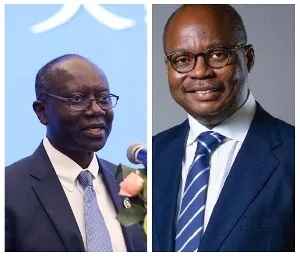
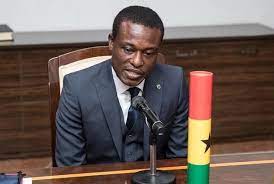
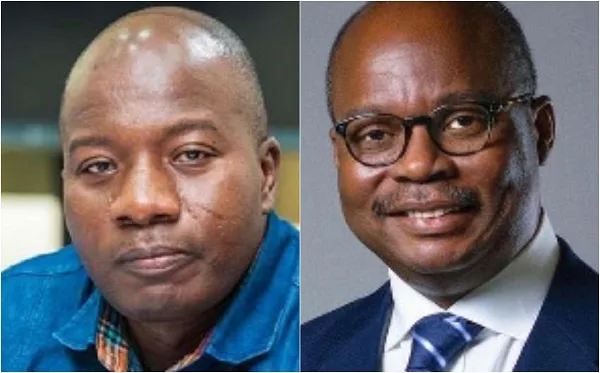
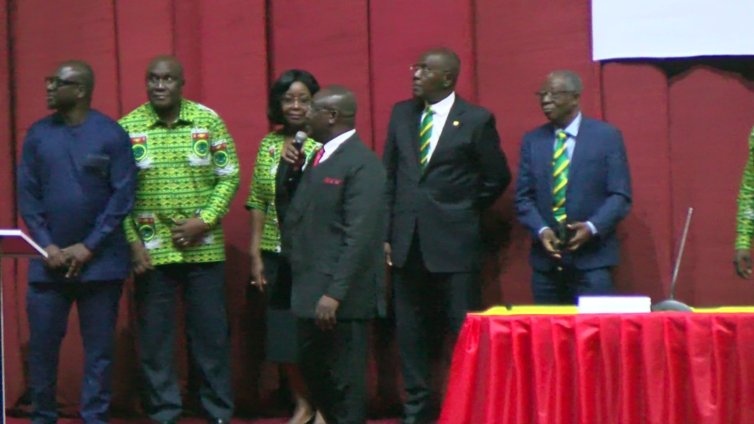
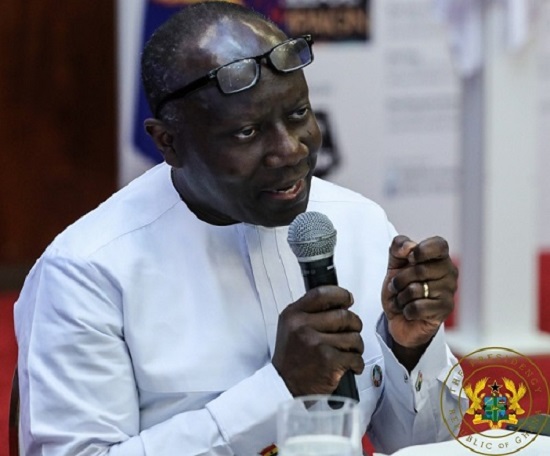
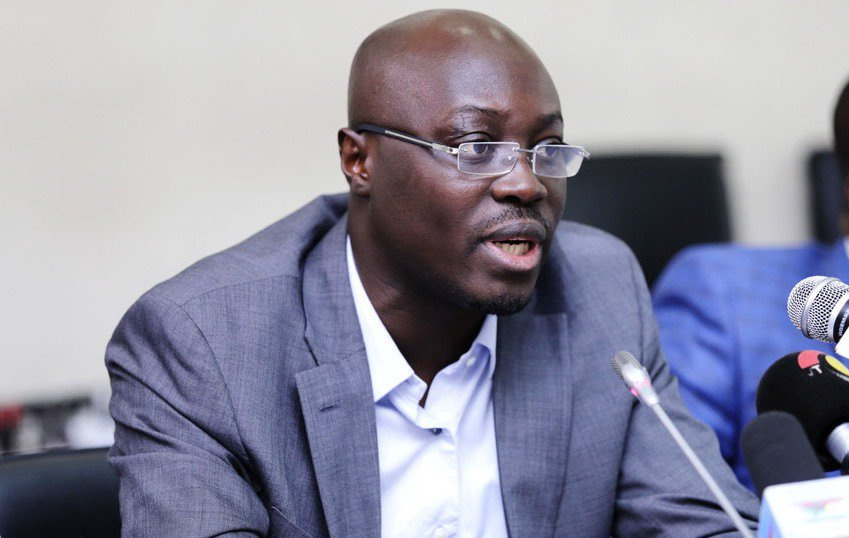
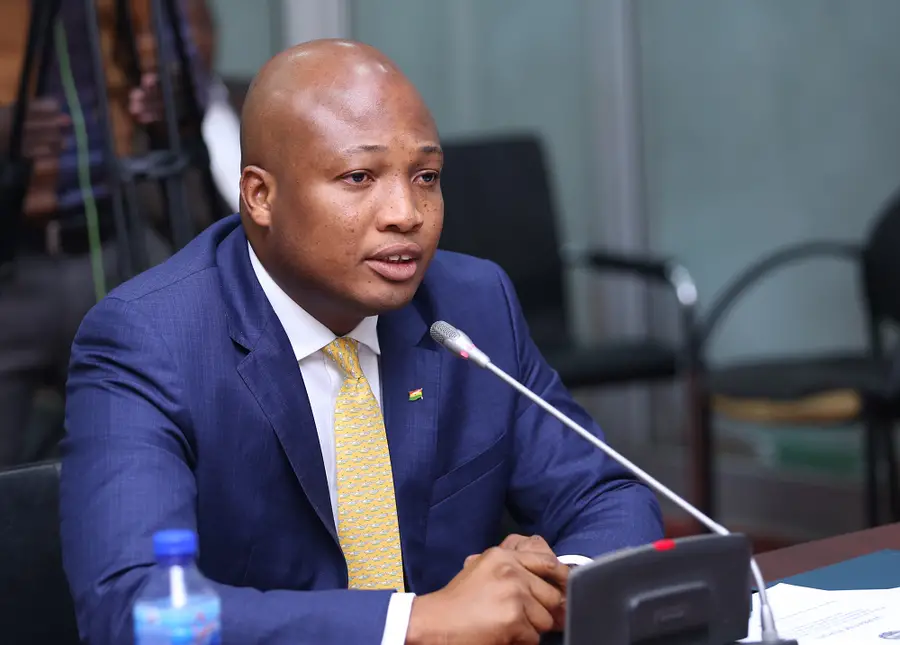
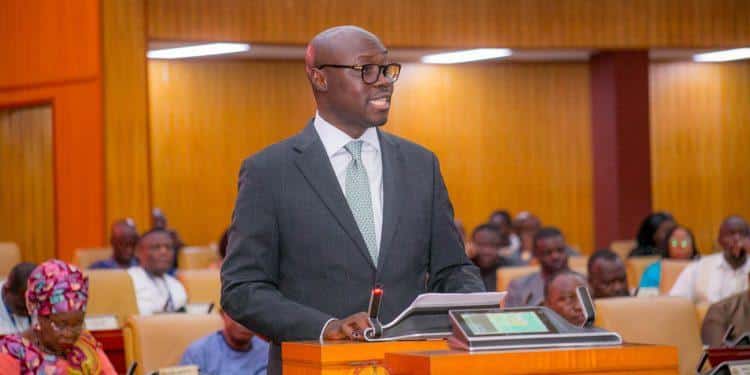
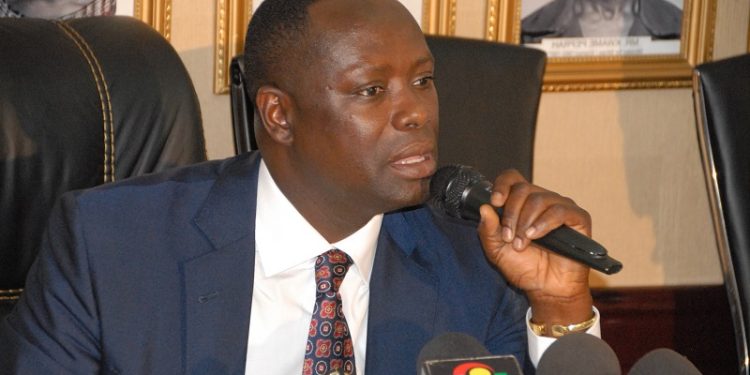
Finance Minister Ken Ofori-Atta has lauded the successful collaboration between the Treasury and the Bank of Ghana, resulting in a significant reduction in inflation from a peak of 54.1% to 26.4%.
Speaking at the Bank of Ghana’s End-of-Year Cocktail, Ofori-Atta expressed pride in the collective effort to reset the financial architecture.
Despite facing challenges over the past three years, he emphasized that the country has turned the corner toward a more resilient and transformed economy.
“Together, we have strived to reset our financial architecture”.
“And despite the challenges over the last three years, I am proud that we have ‘turned the corner’ toward a more robust and transformed economy”, he added.
Mr Ofori-Atta said: “Indeed, amidst these trials, our united front in managing the Bank of Ghana’s balance sheet has been nothing short of heroic.”
“More importantly, the Ghana Statistical Services (GSS) reported that inflation has slowed down to 26.4% in November 2023 from 35.2% in October 2023”, he pointed out, adding: “In effect, the Bank and the Treasury’s collaborative efforts have halved inflation (from 54.1% in December 2022) in under 12 months”.
The Finance Minister acknowledged the heroic efforts in managing the Bank of Ghana’s balance sheet amidst trials.
He highlighted the positive impact of the collaborative efforts, stating that inflation has halved from 54.1% in December 2022 to 26.4% in November 2023, as reported by the Ghana Statistical Service.
While welcoming the news of slowing inflation, Mr Ofori-Atta acknowledged that many people still face severe cost-of-living pressures.
He emphasized the need to stay the course and continue working towards reducing inflation to single digits as quickly as possible.
Looking ahead to 2024, the Finance Minister called for pushing boundaries, working with equanimity, and dispelling any sense of nihilism.
He expressed confidence that, despite the ongoing journey, Ghana will not only prevail but also move towards a more prosperous future with economic freedom and social mobility for all.
The Bank of Ghana’s Interbank forex rates for today, December 19, 2023, reveal the trading values of the Ghana Cedi against various foreign currencies.
Against the US Dollar, the Cedi is listed at a buying price of 11.6373 and a selling price of 11.6489.
However, at a Forex bureau in Accra, the dollar is being bought and sold at slightly different rates, with a buying rate of 12.10 and a selling rate of 12.25.
Moving to the Pound Sterling, the Cedi’s buying price is 14.7258, and the selling price is 14.7417. At a Forex Bureau in Accra, the Pound Sterling is being bought at a rate of 15.10 and sold at 15.50.
For the Euro, the Cedi has a buying price of 12.7122 and a selling price of 12.7248. Meanwhile, at a Forex Bureau in Accra, the Euro is being bought at a rate of 12.80 and sold at 13.30.
The South African Rand trades at a buying price of 0.6247 and a selling price of 0.6252. In Accra’s forex bureau, it is bought at a rate of 0.40 and sold at 1.10.
The Nigerian Naira has a buying price of 68.6630 and a selling price of 69.0770. In Accra’s forex bureau, it is bought at a rate of 9.00 Naira for every 1 Cedi and sold at 15.00. Lastly, for the CFA, the buying price is 51.5495, and the selling price is 51.6006. At a forex bureau in Accra, it is bought at a rate of 17.30 CFA for every 1 Cedi and sold at 19.80 CFA for every 1 Cedi.
The Bank of Ghana (BoG) has released data indicating a significant surge in tourist arrivals, recording 304,171 individuals in the third quarter of the current year.
This marks a notable increase from the 258,246 visitors recorded in 2022, reflecting an impressive annual growth rate of 17.8%. The central bank attributes this rise to a boost in tourism-related activities during the specified review period.
In contrast, a recent report from Joynews reveals a decline in international trade at Ghana’s principal harbors, Tema and Takoradi.
The decline is specifically observed in laden container traffic for both inbound and outbound containers during the third quarter of 2023.
The total container traffic witnessed a decrease of 2.1%, dropping from 158,514 in the second quarter of 2023 to 155,146.
“Total container traffic for inbound and outbound containers decreased by 2.1% to 155,146, from 158,514 recorded in Q2 2023,” the news portal said.
Analysts link this downturn in port activities to subdued international trade dynamics and point to ongoing geopolitical tensions as additional contributing factors during the review period.
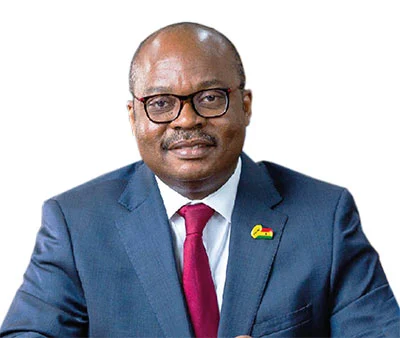
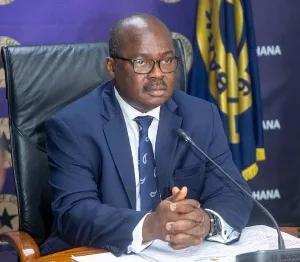
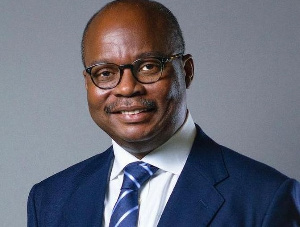
Bank of Ghana (BoG) Governor Dr. Ernest Addison has expressed confidence in the economic outlook for 2024.
Speaking at the BoG’s end-of-year cocktail event, Dr. Addison highlighted his optimism, anticipating a “significant improvement in the operating environment for businesses” in the coming year.
He affirmed that the policy mix under the IMF-supported Post COVID-19 Programme for Economic Growth (PC-PEG) is yielding positive results.
Dr. Addison noted that despite inflation reaching a peak of 54.1 percent in December 2022, it declined to 26.4 percent in November 2023, emphasizing that the high inflation in 2022 was a temporary anomaly.
He also pointed out improvements in the country’s external sector position, with the build-up of foreign exchange reserves contributing to forex market stability.
“As you are aware, there has been considerable noise from our detractors who have celebrated the high inflation recorded in 2022. Today, we are vindicated that inflation in 2022 was just a blip and we are quickly returning to where we were before the crisis,” he stated.
The Governor highlighted positive signals from high-frequency economic indicators, suggesting a likelihood of surpassing GDP growth projections for 2023.
He emphasized the evolving role of central banks in the face of global challenges and credited the economy’s progress to effective collaboration between the BoG and Ministry of Finance.
Dr. Addison reassured attendees about the stability of the financial sector, noting that banks’ profitability remained robust through October 2023, and the industry’s capital adequacy ratio exceeded the revised prudential minimum.
In November, the BoG’s Monetary Policy Committee (MPC) maintained the benchmark policy rate at 30 percent, citing indications of greater macroeconomic stability.
Finance Minister Ken Ofori-Atta also spoke at the event, highlighting achievements such as the establishment of the Consolidated Bank of Ghana and the Development Bank raising US$10 billion in Eurobonds.
He expressed confidence in continuing policies to ensure economic freedom and social mobility in 2024.
Today, on December 18, 2023, the Bank of Ghana has released the Interbank forex rates, revealing the current exchange rates for various currencies against the Ghana Cedi.
The Ghana Cedi is trading against the United States Dollar (USD) at a buying price of 11.6373 and a selling price of 11.6489 according to the Interbank rates. In Forex bureaus in Accra, the dollar is being bought at a rate of 12.05 and sold at 12.25.
Against the Pound Sterling (GBP), the Cedi is trading at a buying price of 14.7933 and a selling price of 14.8093. At Forex Bureaus in Accra, the pound sterling is being bought at a rate of 15.00 and sold at a rate of 15.40.
For the Euro (EUR), it is trading at a buying price of 12.7079 and a selling price of 12.7206. In Forex Bureaus in Accra, the Euro is being bought at a rate of 12.80 and sold at a rate of 13.30.
The South African Rand (ZAR) is trading at a buying price of 0.6362 and a selling price of 0.6367. In Forex bureaus in Accra, the South African Rand is being bought at a rate of 0.40 and sold at a rate of 1.10.
The Nigerian Naira (NGN) is trading at a buying price of 68.2069 and a selling price of 68.2396. In Forex bureaus in Accra, the Nigerian Naira is being bought at a rate of 9.00 Naira for every 1 Cedi and sold at a rate of 15.00.
As for the West African CFA (CFA), it is trading at a buying price of 51.5665 and a selling price of 51.6180.
In Forex bureaus in Accra, the CFA is being bought at a rate of 17.30 for every 1 Cedi and sold at a rate of 19.80 for every 1 Cedi.
These rates are provided by Afriswap Bureau De Change in Osu, Accra.
The Bank of Ghana (BoG) has issued a caution to consumers regarding schemes that promote sophisticated products to the general public, which may not be easily understood.
The Central Bank warns that such schemes could be Ponzi schemes designed to attract unsuspecting individuals to invest in fraudulent products.
In a circular to the public, it said “beware of institutions whose operations overly revolve around one person, such as the Chief Executive Officer”.
“For example, it should be a source of concern if payment of matured investments cannot be made to customers because the Manager has travelled”, it explained.
“Is the interest rate offered to you far above the industry average or the Treasury Bill Rate? Be careful! If the interest rate looks too good to be true, it is probably not true”.
It further cautioned consumers to exercise caution with institutions that urgently request them to renew their investments, even when it goes against their preferences.
“It could be a warning sign of an emerging crisis”, it added.
It encouraged the public to reach out to the Bank of Ghana Market Conduct Office for any inquiries.
The Minority in Parliament has issued a letter directed to the governor of the Bank of Ghana (BOG), Dr. Ernest Addison, seeking confirmation of his availability to receive their petition.
The correspondence comes in the aftermath of the #OccupyBOG demonstration, where the Minority group passionately called for the resignation of Dr. Addison and his deputies.
During the protest, the Minority faced challenges presenting their petition directly to the BOG governor due to his unavailability.
Insistent on the significance of a personal handover, the Minority, in their letter dated Monday, 11 December 2023, emphasized the need for Dr. Addison to be physically present to accept their petition.
The letter, signed by Minority leader Dr. Cassiel Ato Forson, urges Dr. Addison to communicate his availability by Monday, 18 December 2023, ensuring a proper and direct transfer of their concerns.
This announcement was made during a press briefing following a meeting of the Monetary Policy Committee.
“What maybe left now is the official launch by the Finance Ministry,” he said.
The Ghana Financial Stability Fund has been established with the primary objective of mitigating potential impacts on financial institutions arising from the Domestic Debt Exchange Programme (DDEP). Additionally, a parallel strategy known as the Insurance Sector Strengthening Strategy (ISSS) is being developed, and the African Development Bank (AfDB) is expected to assist in its implementation by 2024.
To ensure effective governance of the Fund, the following measures are being implemented:
a. Investment Committee (IC): The Fund will be governed by a nine-member Investment Committee, with four independent experts recommended by industry associations and approved by the Ministry of Finance (MoF).
b. Development Partners (DPs): Development Partners may recommend observers to the committee, subject to the approval of the Minister for Finance. Other Development Partners may provide support to Fund A or B, with terms agreed upon with the Government of Ghana.
c. Regulatory Approval: The Bank of Ghana (BoG) and other relevant regulators will approve recapitalization plans, instruments, and criteria for their respective financial institutions. The Investment Committee will then make investment decisions based on these approvals regarding eligible financial institutions.
d. Solvency Fund A2 Secretariat: The Ghana Amalgamated Trust (GAT) will serve as the secretariat for Solvency Fund A2 and establish a ring-fenced operational framework for managing the Fund.
e. Fund A1 Project Unit: Fund A1 will have a project unit at the Ministry of Finance specifically for World Bank funded projects.
The Bank of Ghana Governor, Dr Ernest Addison is optimistic the fund will help the country’s economic recovery drive.
The registered user base for internet banking witnessed a notable increase of 16.40%, rising from 970,435 in 2021 to 1,129,387 in 2022.
According to the Bank of Ghana’s Payment Systems Oversight Annual Report 2022, the value of internet banking transactions demonstrated a substantial uptick of 43.03%, reaching ¢80.43 billion in 2022, compared to the ¢56.23 billion recorded in 2021
Similarly, registered mobile banking customers experienced a growth of 15.38%, surging from 5,845,960 in 2021 to 6,745,337 in 2022.
Likewise, the value of mobile banking transactions was estimated at ¢38.47 billion in 2022, reflecting a growth of 47.34% from ¢26.11 billion in 2021.
However, the cumulative number of ATMs deployed by banks witnessed a marginal decline of 0.97%, decreasing from 2,278 in 2021 to 2,256 by the end of December 2022.
Conversely, the number of POS devices increased by 6.13%, rising from 12,643 at the end of December 2021 to 13,418 in December 2022.
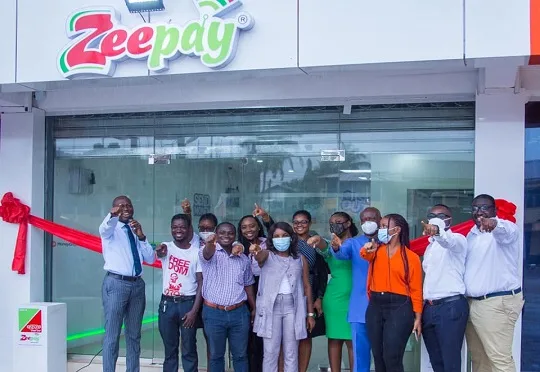
Zeepay Ghana Limited has initiated discussions with the Bank of Ghana (BoG) to resolve the temporary suspension of its forex license.
Last week, the Central Bank took this action, citing Zeepay’s failure to use the average interbank exchange rate published by the Ghana Association of Banks and the Bank of Ghana for converting settlement funds into the local currency.
Zeepay faced a fine for breaching sections 3(1) and 15(3) of the Foreign Exchange Act, 2006 (Act 723). However, in an official statement, Zeepay confirmed that ongoing talks are in progress to address and rectify the situation.
The company reassured the public of its commitment to strict compliance with all regulatory guidelines and clarified that its general operational license remains unaffected, ensuring its continued business operations.
“With Reference to the recent Bank of Ghana Notice (Notice No. BG/GOV/SEC/2023/20) dated November 20, 2023, and titled “Fine and Suspension of Forex Licence of Zeepay Ghana Limited”, we write to inform the general public that we are currently in discussions with the Bank of Ghana to resolve the issues raised in the Notice. However, please note that our general operating licence was not expressly impacted by the Bank’s recent decision. We will ensure strict compliance with all regulations and guidelines”, Zeepay said in its statement.
The sanction according to the Bank of Ghana should serve as a strong warning to all participants in the forex market including banks, forex bureaus, forex brokers, Dedicated Electronic Money Issuers (DEMIs), Enhanced Payment Service Providers (EPSPs) and Money Transfer Operators (MTOs) and that they should “adhere strictly to the applicable forex market regulations and guidelines.”
The Bank of Ghana (BoG) is issuing a warning to exporters regarding the necessity of repatriating proceeds to the country.
Under the Foreign Exchange Act, 2006, Act 723, and the associated Letter of Commitment (LOC), exporters are mandated to bring back proceeds of merchandise through a bank, excluding those with retention arrangements. This repatriation should constitute 100 percent of the export value of all merchandise exports.
Despite these regulations, some exporters are reportedly violating the law.
Mr. Eric Kweku Hammond, Assistant Director of the Banking Department at the Bank of Ghana, highlighted that exporters found guilty could face a fine of 5000 penalty units, equivalent to Ghc60,000, or a prison term of up to ten years, or both.
Speaking at a forum organized by the Ghana Shippers’ Authority (GSA) and BoG, Mr. Kwaku Hammond stressed the significance of repatriating export proceeds. This practice contributes to building reserves, strengthening the local currency, boosting trading activities, and supporting Ghana’s transformation agenda.
Mr. Kwaku Hammond emphasized the enduring nature of the LOC and assured exporters that collaborative efforts with the BoG could address challenges encountered with the system.
Charles Darling Asiedu Sey, the Tema branch Manager of the Ghana Shippers Authority, explained that the forum aims to tackle specific challenges faced by exporters.
He said export holds deep significance for national development stating that “It is the lifeblood contributing significantly to our Gross Domestic Product (GDP), job creation, and government revenue. It plays key role in shaping our economy, fostering international trade relations and positioning Ghana on the global stage”.
The National Export Development Strategy (NEDS), according to Charles Sey, lays out a bold course for the ensuing ten years.
“It envisions the growth of non-traditional exports(NTEs) from 2.8 billion dollars in 2020 to a substantial 25.3billion dollars in 2029.This growth is coupled with a profound structural transformation aimed at positioning Ghana as a competitive export -led industrialized economy”.
He emphasized that the Ghana Shippers’ Authority (GSA) is collaborating with service providers to improve the quality of shipping services. This involves a thorough review of export-related policies, simplifying procedures, reducing bureaucracy, and fostering a more conducive business environment.
Mr. Sey advocated for ongoing assessments of the export value chain to pinpoint bottlenecks, enhance Ghana’s exportable capacity, and facilitate trade with other countries, with a specific focus on addressing non-tariff barriers.
The 1st Vice President of the Ghana Institute of Freight Forwarders (GIFF), Paul Kobina Mensah, provided insights into the fundamentals of exports. His presentation covered aspects such as insurance, negotiating favorable trade conditions (INCOTERMS), sales contracts, freight negotiation, high freight charges, and strategies to reduce shipping costs.
During the forum, participants expressed various concerns, including the surge in freight charges, challenges with the Letter of Commitment (LOC) system, the application of exchange rates higher than the BoG rate at ports, bureaucratic hurdles, and the absence of financial and technical support from the government and regulators.
The Bank of Ghana is set to shutter some Non-Bank Financial Institutions (NBFI) grappling with acute liquidity issues.
The Central Bank has cited these liquidity challenges as a significant hurdle for these institutions in fulfilling their financial obligations to clients and depositors.
Despite the regulator’s efforts to sustain these institutions, the difficulties persist, prompting the impending closure. Dr. Ernest Addison, the Governor of the Bank of Ghana, conveyed this information during the Monetary Policy Committee press briefing.
He highlighted that certain legacy institutions in the non-banking sector are still unable to meet depositor payments.
“You know that we have some legacy institutions in the non-bank sector that are in a sense not able to meet depositor payments and these are legacy problems.
“We have not been able to raise the necessary resources which would allow those institutions to be resolved and the depositors’ funds returned to them. It’s an issue that we’re looking closely at under this IMF programme”.
The Governor, without disclosing the specific institutions, noted that provisions would be made to address the challenges posed by these legacy issues.
“The plan is to set aside some resources from the budget hopefully, and once those resources are identified, we will take care of that legacy problem in the non-bank financial institution sector”.
In the period spanning 2017 to 2019, the Central Bank initiated a banking reform that resulted in the closure of numerous financial entities across Tier 1, 2, and 3 categories. This extensive action, known as the Banking Sector Cleanup, led to the revocation of licenses for 420 financial institutions.
Governor of the Central Bank, Dr. Ernest Addison, announced that private sector credit experienced a contraction of 7.5% during the review period in October 2023.
He explained that banks are directing their resources toward short-term investments instead of extending credit, responding to the heightened risks associated with lending amid deteriorating macroeconomic conditions and the impact of the Domestic Debt Exchange Programme (DDEP).
Dr. Addison provided this information during the 115th Monetary Policy Committee (MPC) press briefing on November 27, 2023, highlighting a significant shift from the 57.3% growth recorded in October 2022.
“In real terms, credit to the private sector contracted significantly by 31.6 percent relative to a growth of 3.0 percent recorded over the same comparative period,” Dr Addison said.
He continued, “On the money market, interest rates broadly tightened at the short end of the yield curve. The 91-day and 182-day Treasury bill rates fell marginally to 29.40 percent and 31.37 percent respectively, in October 2023, from 31.53 percent and 32.61 percent respectively, in October 2022.”
“The rate on the 364-day instrument, however, increased to 33.16 percent from 32.32 percent over the same comparative period,” the BoG Governor added.
For the second time in a row, the BoG has maintained the policy rate at 30%, citing core inflation measures that are beginning to trend lower.
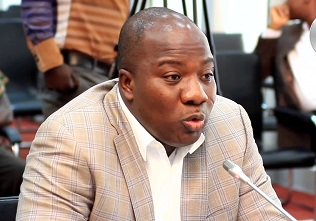
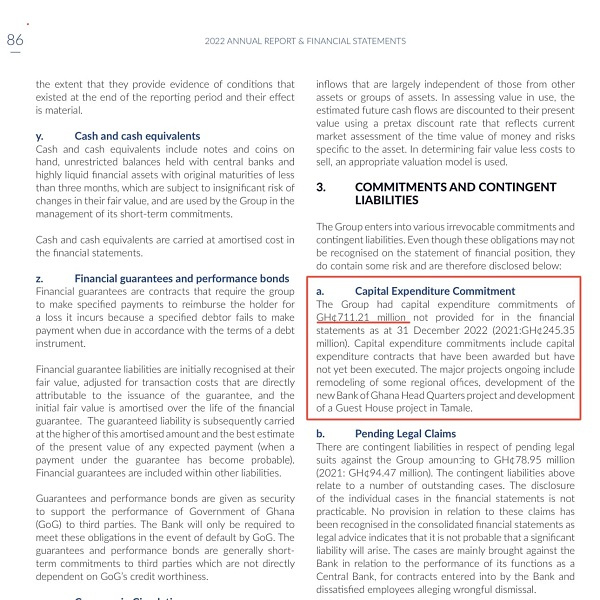
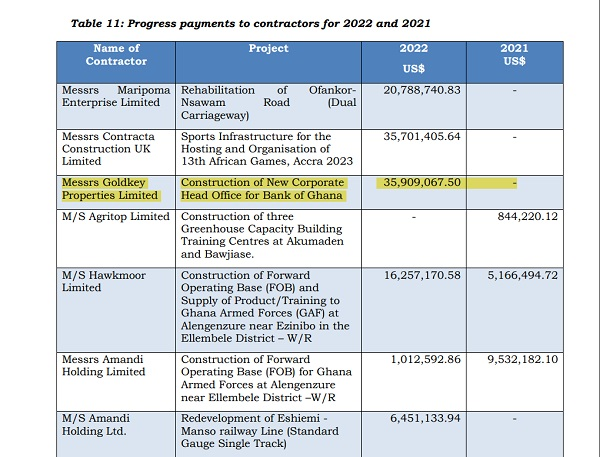
Office of the Special Prosecutor (OSP) has initiated an inquiry into suspected corruption surrounding the procurement procedures for the new headquarters of the Bank of Ghana in Accra.
This investigation was prompted by an official complaint filed by the Member of Parliament for Bawku Central on October 30, citing substantial irregularities in the procurement process for the project.
The complaint specifically points out a significant escalation in the project cost, soaring from USD 121,807,517.94 to USD 222,799,760.55, despite a relatively modest expansion in the scope of work.
In his formal grievance, the MP implicated the Bank’s Governor, Deputy Governors, the Board of Directors, and the project contractor, Goldkey Properties Ltd, as potential suspects in the alleged corrupt practices.
“I hereby make a formal complaint to your office to investigate what I believe to be a case of corruption in the procurement of the new headquarters building of the Bank of Ghana at Ridge in Accra. The suspects in this case include the Governor, Dr Ernest Addison and the Deputy Governors of the Bank of Ghana, namely: (1) Dr Ernest Addisson 1st Deputy Governor; Dr Maxwell Opoku Afari, 2nd Deputy Governor, Mrs ElsieAddo Awadzi.”
“The Members of the Board of Directors should also be investigated. The other suspect is the Chief Executive Officer of Messrs. Goldkey Properties Ltd, who are the contractors. The project consultants supervising the work should also be investigated.”
The MP emphasised the importance of a comprehensive investigation by the OSP to guarantee accountability and transparency in the project.
On Friday, November 17, officials from the OSP visited the MP to document his statement and gather additional details regarding the allegations.
The OSP is currently examining the complaint and the evidence provided by the MP, and its subsequent actions will be determined based on the findings of this review.
The Office of the Special Prosecutor (OSP) has initiated investigations into suspected corruption in the procurement process of the new Bank of Ghana headquarters in Accra.
The investigation was prompted by a formal petition from Bawku Central MP, Mahama Ayariga, who raised concerns about the substantial increase in project cost without approval from the Public Procurement Authority (PPA).
Mr Ayariga alleged the involvement of the Bank’s Governor, Deputy Governors, the Board of Directors, and the project contractor, Goldkey Properties Ltd, in suspected corruption activities.
“I hereby make a formal complaint to your office to investigate what I believe to be a case of corruption in the procurement of the new headquarters building of the Bank of Ghana at Ridge in Accra. The suspects in this case include the Governor Dr Ernest Addison and Deputy Governors of the Bank of Ghana, namely: (1) Dr Ernest Addisson 1st Deputy Governor, Dr Maxwell Opoku Afari, 2nd Deputy Governor, Mrs Elsie Addo Awadzi.”
“The Members of the Board of Directors should also be investigated. The other suspect is the Chief Executive Officer of Messrs. Goldkey Properties Ltd who are the contractors. The project consultants supervising the work should also be investigated.”
According to Mr Ayariga, he wrote to the BoG Governor for an explanation, and received a response in a letter dated 22nd August 2023 and referenced SF/GEN/7/2023/75, to the effect that “he is unable to provide me with the full details of the project design variation which has led to the price escalation for reasons of “National Security”.”
For the Bawku Central MP, “this refusal to explain the price escalation founds my suspicion of corruption in the procurement,” his petition to the OSP further read.
Meanwhile, the OSP staff has taken Mr Ayariga’s statement as part of the investigation, per credible information reaching The Independent Ghana.
The Bank of Ghana’s Interbank forex rates on November 21, 2023, reveal that the Ghana Cedi is currently trading against the dollar at a buying price of 11.5552 and a selling price of 11.5668.
In Accra’s Forex bureau, the dollar commands a buying rate of 12.00 and a selling rate of 12.20.
Against the Pound Sterling, the Cedi is valued at a buying price of 14.4382 and a selling price of 14.4538.
At a local Forex Bureau in Accra, the pound sterling is acquired at a rate of 14.65 and sold at a rate of 15.15.
The Euro stands at a buying price of 12.6429 and a selling price of 12.6544.
In Accra’s Forex Bureau, the Euro transacts at a buying rate of 12.70 and a selling rate of 13.20.
The South African Rand holds a buying price of 0.6282 and a selling price of 0.6288.
At an Accra-based forex bureau, the South African Rand is bought at a rate of 0.40 and sold at a rate of 1.10.
The Nigerian Naira trades with a buying price of 70.9004 and a selling price of 71.8372.
In an Accra forex bureau, the Nigerian Naira is bought at a rate of 9.00 Naira for every 1 Cedi and sold at a rate of 15.00.
As for the CFA, it is quoted at a buying price of 51.8363 and a selling price of 51.8834.
At an Accra-based forex bureau, the CFA is purchased at a rate of 17.00 CFA for every 1 Cedi and sold at a rate of 19.50 CFA for every 1 Cedi.
Our forex bureau rates are provided by Afriswap Bureau De Change in Osu, Accra.
Note that these rates may be different at a forex bureau near you. Our forex bureau rates are provided by Afriswap Bureau De Change in Osu, Accra.
The Bank of Ghana has declared that it has fined and suspended the forex licence of fintech company Zeepay Ghana Limited for violating clause 7.3(a) of the Inward Remittance.
The Central Bank issued the statement in a communication signed by the Secretary of the BoG, Sandra Thompson.
According to the forex regulation, clause 7.3(a) states that the settlement bank shall “use the average interbank exchange rate published by the Ghana Association of Banks on the day the transfer is received or as prescribed by Bank of Ghana for the conversion of settlement funds into local currency”.
Following the non-compliance by the Ghanaian-owned business, the BoG has “suspended the Forex Licence of Zeepay Ghana Limited from November 27th, 2023, to December 8th, 2023, for violation of sections 3(1) and 15 (3) of the Foreign Exchange Act, 2006 (Act 723),” the statement detailed.
The statement additionally warned participants in the industry to strictly adhere to the relevant regulations and guidelines of the forex market.
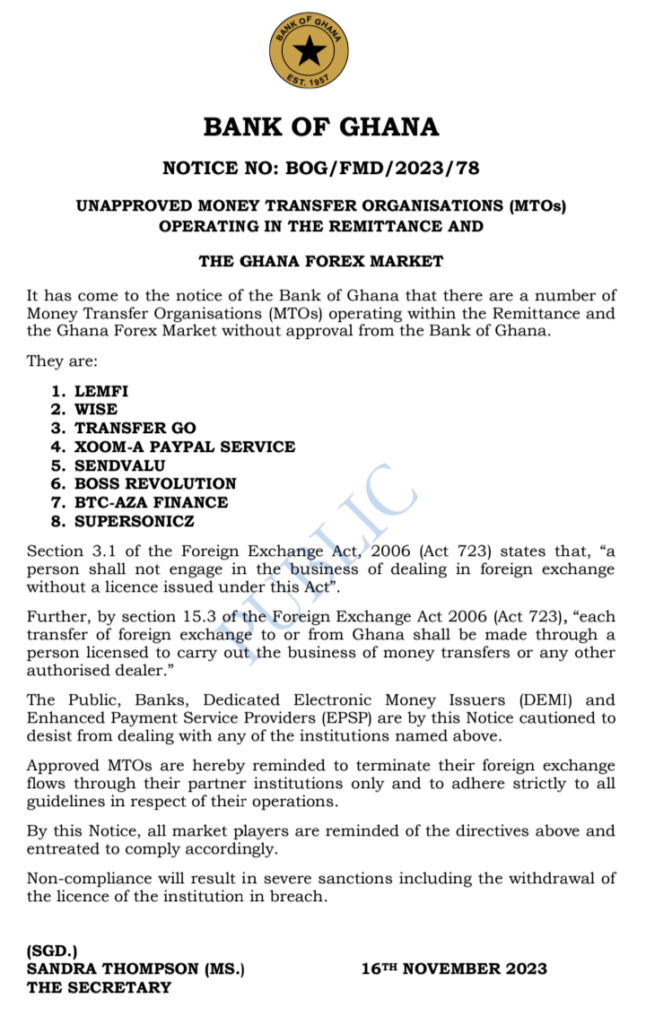
The Bank of Ghana (BoG) has cautioned the public about the risks associated with dealing with unauthorized Money Transfer Organizations (MTOs) within the country.
In an official statement released on Thursday, November 16, the central bank emphasized that numerous MTOs operating in the remittance and Ghana Forex Market did not possess approval from the Bank of Ghana.
The unapproved entities listed in the statement comprise “LEMFI, WISE, TRANSFER GO, XOOM-A PAYPAL SERVICE, SENDWALU, BOSS REVOLUTION, BTC-AZA FINANCE, and SUPERSONIC.”
The Bank of Ghana has explicitly cautioned the general public, banks, Dedicated Electronic Money Issuers (DEMI), and Enhanced Payment Service Providers (EPSP) against engaging in any transactions with the specified institutions.
Additionally, the central bank has reiterated its directive to approved Money Transfer Organizations (MTOs), urging them to exclusively route their foreign exchange flows through their authorized partner institutions while strictly adhering to all operational guidelines.
The statement emphasized, “By this Notice, all market players are reminded of the directives above and entreated to comply accordingly. Non-compliance will result in severe sanctions, including the withdrawal of the license of the institution in breach.”
This advisory notice is issued as a precautionary measure to enforce adherence within the financial sector and safeguard the public from potential risks linked to unapproved money transfer entities.
The Bank of Ghana (BoG) continues to express concern over the involvement of bank staff in financial sector fraud.
Speaking at the 60th Anniversary of the Chartered Institute of Bankers Conference in Accra on behalf of the Governor, Dr. Bernard Otabil, the Director of Ethics and Internal Investigations at the Central Bank, noted that although there has been a reduction in reported cases, it remains a top concern for both the Central Bank and the banking sector.
The Bank of Ghana emphasizes that a single fraud case involving an employee affects the entire industry and undermines public confidence. Dr. Otabil highlighted that the decrease in fraud cases last year indicates that more efforts are needed to address this issue.
“A single case of fraud, involving an employee of a bank or any financial institution, affects the whole industry and weakens public confidence in the industry. Although the 2022 Banks, SDIs, and PSPs Fraud report showed a decline in staff involvement in fraud cases to 188 in 2022 from 278 in 2021, the persistence of these unethical acts among employees of Banks and SDIs remains a concern. As reported, most of the incidents involving bank staff and had to do with cash theft (cash suppression) from customers’ accounts and fraudulent withdrawals on accounts of customers”. he said.
The Chartered Institute of Bankers Ghana utilized the event to unveil a new curriculum focused on ethics and professionalism for industry practitioners.
The President of the Chartered Institute of Bankers Ghana, Benjamin Amenumey, anticipates that the new curriculum will enhance the professionalism of its members.
The conference on Banking and Ethics, held under the theme “Redefining Professionalism in Banking through Ethics,” aimed to address issues related to ethics and professionalism in the banking industry.
Fitch, the ratings agency, has projected an increase in the foreign reserves of the Bank of Ghana (BoG) to reach $7.7 billion by 2025, up from $4.4 billion in 2022. This would provide a three-month import cover.
The agency stated, “Current account surpluses and projected disbursements from international financial institutions will increase Bank of Ghana’s foreign reserves by an estimated $1.1 billion per year in 2023-2025, after a $4.4 billion fall in 2022, reaching $7.7 billion (about three months of current external payments) in 2025, from 1.6 months in 2022.”
Fitch also expects a current account surplus of 1.1% of GDP in 2023, compared to a 2.1% deficit in 2022, driven by non-payment of interest on selected external debt pending a restructuring and a notable reduction in merchandise imports.
The agency anticipates that the current account will remain in surplus in 2024 and 2025, with the value of the cedi against the dollar expected to strengthen as a result.
However, Fitch believes that another round of local-currency debt exchange is unlikely in the near future. These debt exchanges have led to a debt service reduction of ¢52 billion in 2023, equivalent to about 6% of estimated 2023 GDP or 39% of estimated 2023 revenue and grants.
As of August 2023, Ghana’s Gross International Reserves (GIR), excluding Encumbered Assets and Petroleum Fund, stood at $2.08 billion, providing approximately 1.0 month of import cover. According to the Bank of Ghana’s September 2023 Summary of Economic and Financial Data, reserves increased from $1.406 billion (0.7 months of import cover) in April 2023 to $2.162 billion (1.0 month of import cover) in May 2023, and $2.235 billion in June 2023 (1.0 month of import cover).
Reserves remained at $2.239 billion (1.0 month of import cover) in July 2023 and $2.089 billion (1.0 month of import cover) in August 2023.
Member of Parliament for Bawku Central, Mahama Ayariga, has petitioned the Office of the Special Prosecutor (OSP) to investigate the procurement of the new headquarters building of the Bank of Ghana (BoG) at Ridge in Accra.
The MP wants the following individuals to be probed over their suspected corruption and corruption-related offenses: BoG Governor, Dr Ernest Addison, and his two deputies; the Board of Directors; the Chief Executive Officer of Messrs. Goldkey Properties Ltd and the project consultants supervising the work.
In his petition dated October 30, Mr Ayariga accused the BoG Governor and his team of failing to justify the increase in price for the projects from USD121,807,8517.94 to USD222,799,760.55 (about 84%) when the scope of work rose by 36 percent.
“In spite of a written request to the Governor of the Bank of Ghana under the Right to Information Act, the Governor and his team have not been able to explain to me how there was a price escalation from USD121,807,8517.94 to USD222,799,760.55 (about 84%) when the scope of work increased from 73,000 square meters to about 107,737 square meters (36.9%).”
He noted that the Bank of Ghana had originally priced the project at USD100,857,924.48 for 73,000sq.m but got the project awarded to Messrs. Goldkey Properties Limited, in the same year, at a contract sum of USD121,807,8517.94.
A subsequent variation in the scope of work of about 36.9% saw a project cost escalation of 84%, which has resulted in the about 107,737 sq.m building project now costing USD222,799,760.55, he said.
According to Mr Ayariga, he wrote to the BoG Governor for an explanation, and received a response in a letter dated 22nd August 2023 and referenced SF/GEN/7/2023/75, to the effect that “he is unable to provide me with the full details of the project design variation which has led to the price escalation for reasons of “National Security”.”
For the Bawku Central MP, “this refusal to explain the price escalation founds my suspicion of corruption in the procurement.”
Mr Ayariga holds the assertion that the Office of Special Prosecutor has jurisdiction to investigate all cases of suspected “corruption and corruption-related offences” by public officers and private persons working with public officials under sections 2(a) and 79 of the Office of Special Prosecutor Act, 2017 (Act 959).
He therefore announced his willingness to testify “to all the facts I have come across in this matter and I believe your office will be able to obtain all the details of the variations of the project design and costing variations to arrive at a conclusion on this matter.”
“I count on you to carry out a thorough investigation of this matter and brief the Ghanaian people appropriately and where necessary to carry out prosecutions,” the petition concluded.
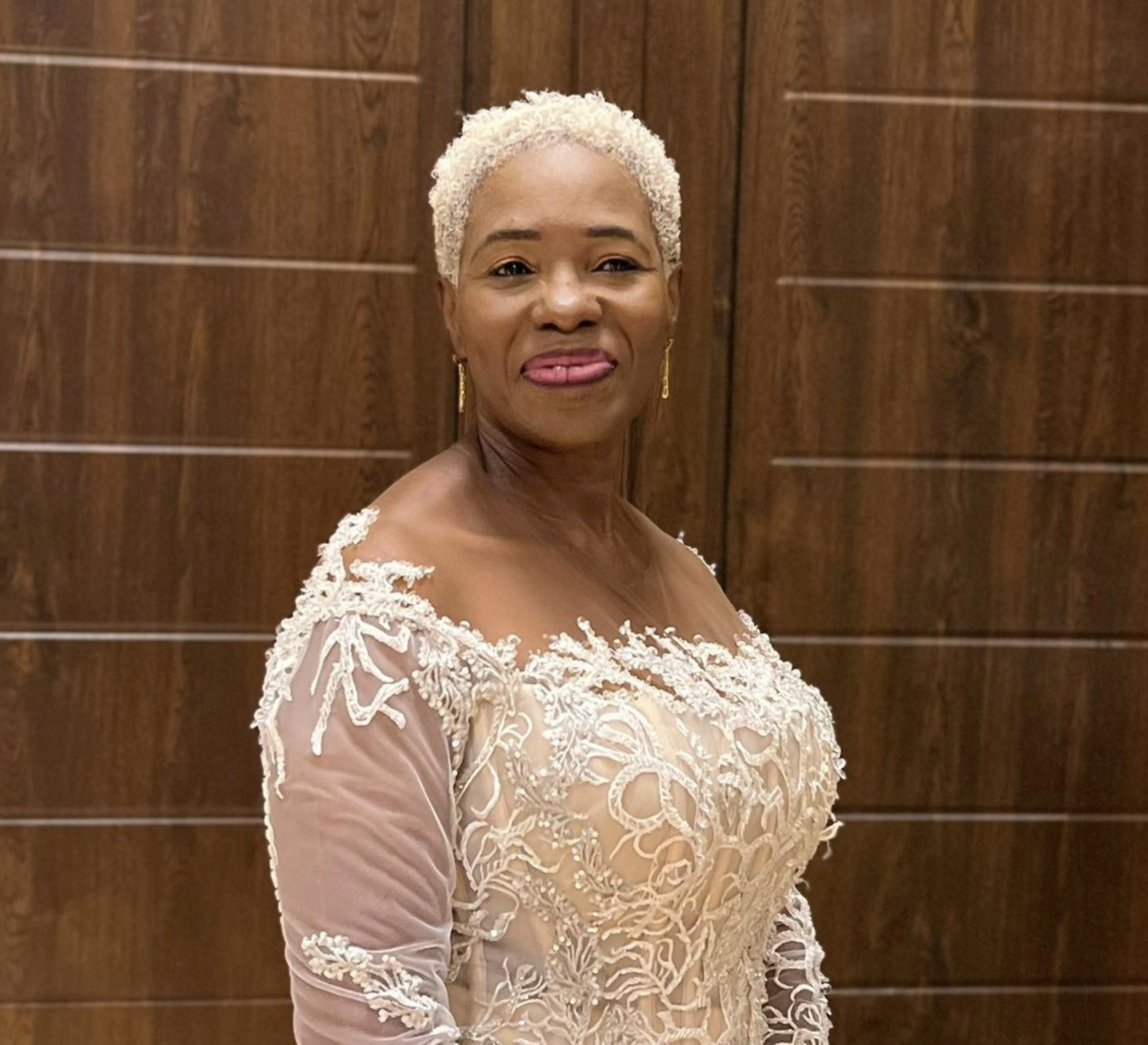
A Board Member of the Bank of Ghana (BoG), Mrs Comfort Ocran, has recently shared her perspective on maintaining a youthful and stress-free life during an interview with TV3 presenter Cookie Tee on the show “Today’s Woman.”
In response to a question about her secret to staying youthful and refreshed, Mrs. Ocran attributed it to divine grace, simple lifestyle choices, and a positive mindset. “I always say it is the grace. It is the Grace of God,” she said with a smile.
Mrs. Ocran emphasised that she believes in the grace of God and that, in her view, a combination of factors contributes to her youthful appearance. She cited exercise, her dietary choices, and her commitment to avoiding stress as key elements in her approach to life.
“I think, if I look at it, I believe it is a combination of exercise, the kind of food I eat and also just deciding not to be stressed,” she noted.
According to Mrs. Ocran, “Life is not hard, so don’t make life hard. Life is actually how you choose to make it.” She shared two strategies she employs to manage stress effectively. When faced with stressful situations, she turns to gospel music, particularly worship songs, which help her relax and find solace. Alternatively, she goes for hikes, which she finds rejuvenating.
“When someone or something is stressing me out, two ways, either I go and play some gospel music, especially the worship ones and before I realise because I am singing, I am cool. Or I will go for a hike,” she mentioned.
Revealing her daily walking routine, Mrs. Ocran disclosed that she used to walk seven kilometres from her home to the office, a practice that contributed to her overall happiness. She pointed out that regular exercise is a key component of her well-being.
During her walks, she also engages in positive self-talk. She explained that if she finds herself overly focused on a challenge or difficulty, she consciously shifts her perspective to seek out opportunities and lessons in the situation.
This change in mindset, she believes, helps her feel better and ultimately leads to happiness. She concluded her message by reiterating her belief that life is not inherently difficult, but rather a product of one’s choices.
According to Comfort Ocran, Ghanaian motivational speaker, life is not hard, it is how you choose to make it. pic.twitter.com/V7ShkD81F0
A Board Member of the Bank of Ghana (BoG), Mrs Comfort Ocran, has recently shared her perspective on maintaining a youthful and stress-free life during an interview with TV3 presenter Cookie Tee on the show “Today’s Woman.”
In response to a question about her secret to staying youthful and refreshed, Mrs. Ocran attributed it to divine grace, simple lifestyle choices, and a positive mindset.
Mrs. Ocran emphasised that she believes in the grace of God and that, in her view, a combination of factors contributes to her youthful appearance. She cited exercise, her dietary choices, and her commitment to avoiding stress as key elements in her approach to life.
According to Mrs. Ocran, “Life is not hard, so don’t make life hard. Life is actually how you choose to make it.” She shared two strategies she employs to manage stress effectively. When faced with stressful situations, she turns to gospel music, particularly worship songs, which help her relax and find solace. Alternatively, she goes for hikes, which she finds rejuvenating.
Revealing her daily walking routine, Mrs. Ocran disclosed that she used to walk seven kilometres from her home to the office, a practice that contributed to her overall happiness. She pointed out that regular exercise is a key component of her well-being.
During her walks, she also engages in positive self-talk. She explained that if she finds herself overly focused on a challenge or difficulty, she consciously shifts her perspective to seek out opportunities and lessons in the situation. This change in mindset, she believes, helps her feel better and ultimately leads to happiness. She concluded her message by reiterating her belief that life is not inherently difficult, but rather a product of one’s choices.
After TV3 shared the interview video on Twitter, it garnered various responses from social media users. Some commended Mrs. Ocran’s insights, while others expressed contrasting opinions.
One Twitter user, @gr8_konfidence, mentioned understanding her perspective, possibly implying that Mrs. Ocran’s positive outlook stems from her background.
However, not all responses were positive. @goldenpappy15 criticised her for alleged misdeeds, highlighting a perception of unfair financial advantage.
Another user, @mandemghana, questioned Mrs Ocran’s role as a board member of the Bank of Ghana, possibly expressing surprise at her comments on a public platform.
Lastly, @Trenchesbabe brought up the topic of political corruption and criticised public figures for allegedly misusing funds.
Highlights from the Bank of Ghana’s (BoG) Income Statement as of August 2023, indicate that banks in the country wrote off a total of ¢2.416 billion as bad debt during the first eight months of the year.
This figure represents a notable increase of 36.4% compared to the previous year. To provide context, this amount surpasses the GH¢1.713 billion in bad loans recorded at the end of June 2023.
The bad debt provisioning primarily included losses related to loans and depreciation, among other factors.
The Bank of Ghana’s report also noted a decline in the asset quality of the banking industry during the review period. This deterioration is evident through the increase in both the Non-Performing Loan (NPL) stock and the Non-Performing Loan (NPL) ratio.
Specifically, the industry’s NPL ratio rose from 14.3% in August 2022 to 20.0% in August 2023. Similarly, when adjusted for fully provisioned loan loss categories, the NPL ratio surged from 3.8% to 9.0% during the same period. This was attributed to the growing presence of sub-standard and doubtful loans within the NPL stock.
The rise in the NPL ratio was attributed to the NPL stock’s faster growth relative to the total loan growth during the reference period. The banking industry’s NPL stock increased by 53.6%, reaching ¢14.5 billion in August 2023, up from ¢9.5 billion in August 2022.
This increase can be partially attributed to the revaluation of foreign currency NPLs and the deterioration of some domestic currency loans.
When categorizing the NPLs by economic sector, the private sector accounted for the majority of non-performing loans. In August 2023, approximately 95.0% of NPLs were linked to the private sector, a slight decrease from the 95.9% recorded in August 2022. Meanwhile, the public sector’s share of NPLs increased to 5.0% from 4.1% compared to the previous year.
Finance Minister Ken Ofori-Atta has confirmed the establishment of a monitoring desk jointly operated by the Ministry of Finance and the Bank of Ghana (BoG) to oversee the financial matters of the Ghana Cocoa Board (COCOBOD).
The purpose of this initiative is to instill financial discipline in COCOBOD’s expenditure.
COCOBOD, tasked with supervising cocoa production and exports in the country, has been facing substantial annual losses, which the International Monetary Fund (IMF) has identified as a significant threat to both the sector and the government’s fiscal endeavors.
Per reports from JoyNews, the Minister emphasized that the procurement of fertilizers and the construction of cocoa roads will be closely monitored to ensure strict adherence to budgetary constraints.
“Both the Governor of the Central Bank and the Minister of Finance – myself, will now be on the Board and we also setting up a desk at the Finance Ministry that will interact with the finance division of COCOBOD to make sure the issues of fertilizers, cocoa road are all brought into an ambit of discipline. Those begin to tell you how we are getting into the issue of expenditure,” he said.
The Finance Minister is in London for negotiations with the nation’s external creditors, seeking their agreement to a 40 percent reduction in the planned restructuring of Ghana’s $10 billion debt.
A successful outcome of these negotiations would pave the way for the disbursement of the second tranche of the International Monetary Fund (IMF).
Mr. Ofori-Atta expresses his optimism that a favorable agreement will be reached before the year’s end.
“I am sure most people were expecting to be sometime next year but I think we will be able to do it before next year.”
In the meantime, President Akufo-Addo remains hopeful that the Ghanaian economy is on a path to recovery, even in the face of the challenges his administration has encountered.
He points out that inflation, a significant contributing factor, is steadily decreasing, signaling a favorable economic outlook.
As a result, he is confident in achieving a single-digit inflation target before the conclusion of his term in 2024.
The Governor of the Bank of Ghana (BoG), Dr. Ernest Addison, has stressed the necessity of boosting multilateral coordination and regulatory efficiency to effectively manage sovereign debt issues in low-income countries (LICs).
He proposed the establishment of a robust Global Sovereign Debt Roundtable (GSDR) to address this need.
During the IMF-African Caucus Meeting at the World Bank/IMF Meetings in Marrakech, Morocco, Dr. Addison underscored the significance of this initiative.
“We call for a carefully designed debt resolution mechanism, especially for vulnerable members with large domestic creditors – such as Ghana, to help avert domestic financial market instability,” Dr. Addison stated in his address to attendees at the conference.
He emphasized the need for a well-designed debt resolution mechanism, especially for vulnerable members with substantial domestic creditors, such as Ghana, to mitigate the risk of domestic financial market instability.
Additionally, he highlighted the need to enhance the G20 Common Framework (CF) to ensure a more timely, orderly, equitable, inclusive, and transparent debt restructuring process for distressed members in the region, including countries like Ghana, Ethiopia, and Malawi.
Given the acute debt challenges faced by African economies, worsened by factors such as the COVID-19 pandemic, the Ukraine conflict, tightening global financing conditions, and climate-related disasters, Dr. Addison urged the IMF to provide crucial support to vulnerable African economies.
He suggested that the IMF should adapt its lending toolkits to changing global conditions and align PRGT access thresholds with those of the GRA to facilitate uniform treatment and easier access to adequate Fund support for vulnerable members.
Dr. Addison also stressed the importance of securing additional pledges from willing donors to close resource gaps in PRGT, reinforcing the IMF’s finances while protecting the quota share of vulnerable members.
He emphasized the need for tailored capacity development and surveillance support from the Fund, in collaboration with international partners, to address member-specific challenges and restore public debt sustainability.
These recommendations are presented at a critical juncture when over half of sub-Saharan African (SSA) members face high debt distress risk, and the region’s economic growth is projected to further decelerate in 2023.
Dr. Addison’s proposals aim to offer immediate relief to struggling economies and foster inclusive and sustainable growth in the region.
The call for a stronger GSDR and enhanced cooperation between the IMF, MDBs, and RDBs underscores the urgency of addressing global economic challenges affecting low-income countries.
A Security Policy Expert associated with the Centre for Security Dialogue and Peace Advocacy, Anthony Acquaye, has expressed serious concerns regarding the potential security consequences of recent comments made by the Governor of the Bank of Ghana (BoG), Dr. Ernest Addison.
Dr. Addison had characterized the organizers of the #OccupyBoG Protest as “hooligans” and suggested they should have explored alternative legitimate channels to voice their calls for his resignation.
In response, Mr Acquaye issued a statement cautioning that such remarks from a figure in a security-sensitive position like the governor could elevate the risk of targeted attacks against him, his two deputies, and BoG staff.
Acquaye emphasized that referring to the protesters as “hooligans” raised concerns about the safety and security of anyone associated with the Bank of Ghana.
He acknowledged that the decision by the governor and his deputies to remain absent when the demonstrators attempted to present their petition might have been a prudent measure to avoid escalating tensions and potential civil unrest.
However, Acquaye argued that labeling the protesters as “hooligans” was unwise from a security perspective.
He stated that any security risk assessment classifies a place, an establishment, or an element within it as a security zone when it becomes a targeted risk of attack.
“I say unequivocally that, if truly this remark which largely described the demonstrators as ‘Hooligans’ being attributed to Governor, Dr Ernest Addison is authentic, then he, Addison is putting himself, his two deputies, including the staff of the Central Bank into high targeted risk of public attack,” part of the statement read.
Therefore, the characterization of the Bank of Ghana as a security zone implies that all its staff, information, and assets must be secured for protection since they are all potential targets of attack.
Acquaye also explained that the level of risk an individual or element faces within a security zone
“Having credited the decision by the Governor and his two deputies on AWOL in connection to receive the demonstrators’ petition as wise to avoid incurring the anger of the protesters for the sake of their safety and security, at that moment when tempers were very high and could have triggered civil unrest, as the protesters seem to have been more than the Police on the ground to safeguard them.
“It is totally security and safety unwise for such comment to come from an element of security zone, targeted as critical risk of attack. Let me state on record that, for any security risk assessment to determine and establish a place, an edifice or an establishment as a security zone, all elements within and around the place or in the establishment are targeted risks of attack, and therefore need to be protected. So, what it means is that, declaring Bank of Ghana as a security zone, makes all its staff, its information and assets to be secured for protection since they are all targeted risks of attack,” he stressed in the statement.
depends on their perceived involvement in the issue that necessitated the security zone declaration.
He urged Dr. Addison and his deputies to recognize the heightened risk levels they now face and to refrain from making provocative statements that could increase the risk of attack, not only for themselves but also for their family members.
In conclusion, Anthony Acquaye highlighted the importance of avoiding provocative language in sensitive situations, especially for individuals in positions of authority, to ensure their safety and the security of those around them.
“Even though, a security zone can be temporary or permanent, every element within or around that has been secured as part of the security zone has its own targeted risk level of attack depending on how integral that element is seen to be involved in the issue at hand that had called for the security zone declaration.
“The Governor, Dr Ernest Addison and his two deputies, must know and understand that they are all under high level of targeted risks of public attack and must refrain from such provoking utterances that can increase their risk levels of attack, including their family members by the public and further make the 24/7 high security close protection provided by security architecture too difficult and dangerous for their close protection team,” the concluding part of the statement read.
Deputy Chief Executive of the National Youth Authority, Akosua Manu, has asserted that the Occupy Bank of Ghana protest was misdirected because the Bank of Ghana is not involved in the cultivation of food crops for assessing food inflation.
In an interview with the media, Akosua Manu contended that while holding institutions accountable is essential, it should be done within the appropriate scope.
She explained, “some of the things that the minority talked about, if they are talking about factors that affect inflation including food, it is not BoG that plants maize or plantain to determine that, it doesn’t come to them. Secondly if you want to have a conversation about him resigning, he doesn’t appoint himself, take it to the right authority for that to happen, so it becomes a question of gimmicks and games”.
She also acknowledged the government’s approach to the Bank of Ghana for assistance, asserting that it falls within the bank’s purview.
Akosua Manu argued that the Bank of Ghana could even provide loans to the government, such as an overdraft or in another manner as deemed appropriate by the bank.
However, Akosua Manu criticized the Bank of Ghana’s Governor, Dr. Ernest Addison, for referring to the protesters as hooligans, stating, “in the end, I disagree with the description of the protesters as hooligans; he performed poorly on that front. No one can make me believe that they were the right words to use”
The protest, known as Occupy Bank of Ghana (BoG), was organized by the Minority group in Parliament, the National Democratic Congress (NDC), CPP, PNC, and various civil society organizations.
The demonstration, which took place on October 3, 2023, called for the resignation of the Bank of Ghana Governor and his two deputies.
Thousands of protesters marched through the streets of Accra, demanding the resignations in light of the bank’s GH¢60 billion loss in the 2022 fiscal year and the contentious $250 million US dollar new head office project of the central bank.
Deputy Chief Executive Officer (CEO) of the National Youth Authority and a member of the Communication Team of the New Patriotic Party (NPP), Akosua Manu, has expressed her objection to the term ‘hooligans’ used to describe the participants in the #OccupyBoG protest.
This term, employed by the Governor of the Bank of Ghana, Dr. Ernest Addison, does not align with her perspective, and she contends that it is an inappropriate characterization of the protesters.
In response to an undelivered petition submitted by the organizers of the demonstration, which aimed to compel the head of the central bank and his two deputies to step down, Dr. Addison made it clear that he had no intentions of acceding to their demands.
In his response, the Governor of the BoG called the protesters ‘hooligans.’
“The Minority in parliament have many channels to channel their grievances in civilised societies, not through demonstrations in the streets as hooligans,” he is reported to have said in an interview with the international business website, Central Banking.
“Hold institutions accountable but make sure that the things you want to hold them accountable to are things within their remit… I, for instance, am surprised that the governor, as CEO, also doubles as chair of the board. That’s not good corporate governance; it’s not
“… but at the end of the day, I disagree with the word ‘hooligans’ ascribed to the protesters.
“He didn’t do well; he didn’t do well on that score and I’ll take no precedence on that and nobody can convince me that those were the appropriate words to use,” she said.
Member of Parliament (MP) for Bulsa North, James Agalga, has made claims that the President of Ghana lacks the courage to fire the Governor of the Bank of Ghana (BoG), Dr. Ernest Addison, and his deputies because he is complicit in the corruption.
He implies that only a demonstration can force these people to leave since they are unfit for office.
“They are square pegs in a round hole. So they are no longer fit to be in those offices, and that is why we are seeking their removal with this protest.
“We know Akufo-Addo hasn’t got the balls to sack them because he has participated in the corruption that has been unleashed on us by Addison and his cohorts. If they were competent, would they bring us to this point?
“The conduct of Addison and his cohorts smears Akufo-Addo with corruption, and anything short of their removal will spell doom and be disastrous for this country.
“We need to ensure that the Bank of Ghana is functioning because when it’s not functioning, our economy is going to crumble. If Addison were principled, he himself would have thrown in the towel,” he said during the October 4 Occupy BoG demonstration
Host of Metro TV’s ‘Good Evening Ghana’ programme, Paul Adom Otchere has rendered an apology to Head of Security at the Bank of Ghana, Wing Commander Kwame Asare Boateng whom he feels was disrespected by the leadership of #OccupyBoG protest who stormed the streets of Accra on Tuesday October 3, 2023.
He explains that under no circumstance should Ato Forson disrespect such a man because he holds a higher profile better than him.
If you look at this man’s profile and Ato Forson’s profile, given that Ato Forson has been elected by some people, I respect that. But if you look at the two profiles Ato forson should not be able to tell him that “you have disrespected me because they say you should come for the petition.” I am really apologizing to this man for the way in which the minority held him in such contempt,” he said.
As the group, which has been calling for the resignation of Dr. Ernest Addison, the Governor of the Bank of Ghana, had initially planned, they intended to submit a petition to the leader of the institution.
In a more extreme scenario, the Minority Leader in Parliament, Dr. Cassiel Ato Forson, anticipated that either of the Governor’s two deputies would step forward to accept the petition.
However, this anticipated course of action did not materialize.
Instead, the document was received on behalf of the Governor by Wing Commander Kwame Asare Boateng, the Head of Security at the Bank of Ghana.
Nevertheless, the group declined to hand over the petition to this representative of Dr. Ernest Addison, the Governor of the Bank of Ghana, and prior to this, Dr. Cassiel Ato Forson, the Minority Leader in Parliament, delivered a statement.
We never said we are going to present our petition to the head of security or to someone in charge of security, with all due respect.
“They have actually mismanaged the affairs of the central bank; they have mismanaged the affairs of monetary policy. Today, Ghana, our beloved country is on its knees. you are not the one responsible, and we will not give you our petition,” he stated.
Banking Consultant Nana Otuo Acheampong has come forward to offer support to the Bank of Ghana and its governors.
In response to the Minority’s demand for the resignation of the Central Bank’s Governor and his deputies due to alleged mismanagement of the bank and unauthorized printing of money to support government spending, Nana Otuo Acheampong defended the Governor, Dr. Ernest Addison, stating that he had not erred in agreeing to write off 53.1 billion cedis of government debt stemming from the Domestic Debt Exchange Programme (DDEP).
During an appearance on PM Express, Nana Otuo Acheampong asserted that the Bank of Ghana is not obligated to seek parliamentary approval before making such decisions.
“There was zero financing in 2017, 2018, 2019 and 2021. It was only in 2020 that there was no zero financing and 2022 because of the International Monetary Fund, IMF.
“The 2020 one, Covid is accepted and the legislators are there, they know what should have happened. Is it the Bank of Ghana which has to make the application or the Ministry of Finance? Bank of Ghana doesn’t stand on its own, it stands under the Ministry of Finance. So if they have a beef, then I would have thought the gun should be directed at the Ministry of Finance but not at Bank of Ghana because they are under the Ministry.
“So if they have to go to Parliament to seek any breach of the law or an exception, then the Ministry will do that and not Bank of Ghana,” he argued.
The Member of Parliament for Bawku Central, Mahama Ayariga, holds a contrary viewpoint.
He maintains that the Bank of Ghana’s failure to notify Parliament amounts to a violation of the BoG Act, and as a result, the Governor should face the repercussions.
“The Bank of Ghana Act poses a responsibility on the Central Bank to be an adviser to the government on financial matters, fiscal matters, monetary policies. The Central Bank is supposed to be advising.
“First and foremost, his [Governor’s] failure in advising government not to create the financial mess that has ultimately affected the Central Bank itself is something that we should be holding him accountable for. And as far as we are concerned, the law says that he should come and inform Parliament. So, I don’t know where and in which law he [Nana Otuo Acheampong] has been told that the Central Bank is under the Ministry of Finance.“
In the meantime, the Minority in Parliament remains resolute in its call for the Governor’s resignation.
During an appearance on the Super Morning Show, Samuel Okudzeto Ablakwa, the MP for North Tongu, affirmed that the Minority, along with other demonstrators, holds the expectation that a new Governor will address the issues within the Central Bank.
“If a new governor takes office, we don’t expect that new governor to continue on this reckless path.
“A new governor will not continue with this Bank of Ghana project which is now around 300 million dollars in a time of crisis. No responsible leader will do that, so a new governor will address that matter.
“A new governor will now decide to follow the law and will not print money illegally to the tune of 77 billion. I mean, you print money illegally to the tune of 77 billion and still manage to make losses of 60.8 billion, so where did the money go?” he quizzed.
“All the illegal printing, where did that money go? What was it used for? So a new governor, new deputies will be law abiding. They will not embark on this total recklessness. So it is the first step” he argued.
Member of Parliament for Ningo-Prampram, Sam Nartey Goerge, has refused to render an apology to Wing Commander Kwame Asare Boateng for his watchman comment.
On Tuesday, the Bank of Ghana Governor, Dr Ernest Addison failed to show up to receive the petition from the NDC MPs who participated in the #OccupyBoGprotest.
The leadership of the OccupyBoG protest was met by Wing Commander Kwame Asare Boateng and a host of the Bank’s leaders, who told the protesters that Dr Addison was in a meeting with a team from the International Monetary Fund (IMF) and was therefore unavailable to receive the petition.
BoG Director of Security, Wing Commander (Rtd) Kwame Asare-Boateng (Esq)
Upset by the development, Mr Sam George called Dr Addison a coward for sending a “watchman to come and meet us” instead of being present.
“We were told stories that he wasn’t well and later told that he would come and receive our petition and we stood there for an hour and more and still failed to show up and sent a watchman to come and meet us.”
“I’ve always maintained that man (Dr. Ernest Addison) is a coward, and we will protest till he comes out to receive our petition,” he said.
His comment did not bode well for some members of the public, including Pius Enam Hadzide, Chief Executive Officer of the National Youth Authority (NYA). He called on Mr George to apologise.
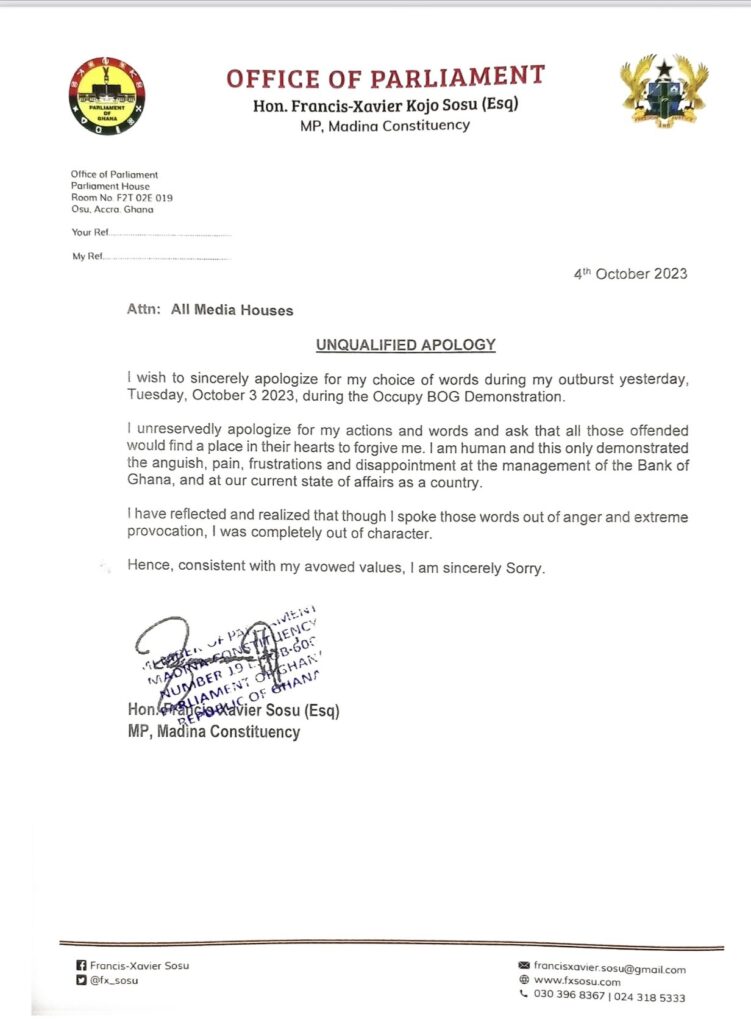
Member of Parliament for Madina Constituency, Francis-Xavier Sosu, has issued an unqualified apology for his use of vulgar language during the #OccupyBoGprotest on Tuesday, October 3.
The protest, organised by the NDC minority group in Parliament and some civil society organisations, was aimed at expressing their displeasure over the alleged illegal printing of money by the Bank of Ghana and the poor state of the economy.
Sosu, who is also a human rights lawyer, was captured on video hurling profanities in Ga at the President and his government, accusing them of corruption and mismanagement.
However, in a statement issued on Wednesday, October 4, Sosu said he regretted his choice of words and asked for forgiveness from all those offended.
He said he spoke out of anger and frustration at the Bank of Ghana and the current state of affairs in the country, but admitted that he was completely out of character.
He said he had reflected and realised that his actions were not consistent with his avowed values.
“I wish to sincerely apologise for my choice of words during my outburst yesterday, Tuesday, October 3 2023, during the Occupy BOG Demonstration. I unreservedly apologise for my actions and words and ask that all those offended would find a place in their hearts to forgive me. I am human and this only demonstrated the anguish, pain, frustrations and disappointment at the management of the Bank of Ghana, and at our current state of affairs as a country. I have reflected and realised that though I spoke those words out of anger and extreme provocation, I was completely out of character. Hence, consistent with my avowed values, I am sincerely Sorry,” he said.
Sosu is one of the vocal members of the NDC minority in Parliament and a deputy ranking member of the Constitutional, Legal and Parliamentary Affairs Committee.
I wasn’t intoxicated during the protest yesterday. I was basically consumed by anger and frustration toward the mismanagement at the BoG – Hon. Xavier Sosu ( Member of NDC) #GHToday w/ @Serwaa_Amiherepic.twitter.com/kZ2u9MH5x2
The Bank of Ghana (BoG) is urging banks to swiftly rebuild their capital buffers, particularly by receiving equity capital injections from shareholders.
This move aims to enhance resilience and further bolster the economy. The push for this capital rebuilding stems from the robust growth in bank profits, which comes after substantial losses incurred in 2022 due to the Domestic Debt Exchange Programme.
Dr. Ernest Addison, the Governor of the Bank of Ghana, made this announcement during the 40th Annual General Meeting of the Ghana Association of Banks (GAB). He assured that the early implementation of the Ghana Financial Stability Fund would offer additional support for recapitalization to eligible banks.
This support would align with the criteria and governance framework established in consultation with the International Monetary Fund and the World Bank.
Dr. Addison took the opportunity to reiterate the Central Bank’s commitment to closely monitoring developments in the banking sector, especially in light of the Domestic Debt Exchange Programme and other emerging risks. He emphasized that the Central Bank would take decisive actions as necessary to address any emerging issues.
Furthermore, the Bank of Ghana will ensure the safety of depositors’ funds and maintain stability and resilience in the financial system.
“The Bank appreciates the collaborative approach adopted by GAB and we encourage the association to continue to engage on issues with the aim of building a resilient banking system, within the confines of the law.”
The Governor emphasized the Bank of Ghana’s unwavering commitment to fostering a robust, secure, and sustainable banking sector that contributes to the nation’s growth objectives.
“While several policy measures have been implemented over the recent past, a lot remains to be done to promote a more resilient banking industry. Going forward, the Bank will continue to strengthen its regulatory and supervisory framework to promote confidence in the financial system”.
Furthermore, alongside the goal of maintaining the profitability levels achieved by banks during the initial eight months of 2023, the Governor emphasized that the Bank of Ghana will actively tackle particular risks associated with high-performing loans, deficient corporate governance, and ineffective risk management systems. This approach is intended to bolster robust risk management practices within banks, including addressing cybersecurity and information security-related risks.
Additionally, the regulatory authority will persist in implementing the Basel II/III capital standards, with the objective of fortifying the banking sector’s resilience.
The Member of Parliament for Bawku Central, Mahama Ayariga, has declared his intention to lodge a formal complaint against the Governor of the Bank of Ghana (BoG), Dr. Ernest Addison, and his deputies with the Office of the Special Prosecutor.
The action is in response to concerns over contracts awarded for the construction of a new central bank headquarters.
In a letter dated October 2, 2023, addressed to the Governor, Ayariga conveyed his intention to take this step due to the lack of transparency regarding the awarded contracts.
“I write to inform you that I will refer you and your deputies to the Office of the Special Prosecutor for investigation and possible prosecution. This is in relation to the matter of the award of a contract for the construction of a new head office building for the Bank of Ghana. I suspect that your team, in collusion with the contractors, overpriced the project with a possible view to obtaining personal gain. I reject your use of “national security considerations” as a reason to refuse to answer my questions properly. My decision to report you is in view of your refusal to provide a proper response to my request for information pursuant to the Right to Information Request,” Mahama said in the letter.
He expressed suspicions of overpricing the project, possibly for personal gain, and rejected the use of “national security considerations” as a reason for withholding information.
Mr Ayariga warned that he would pursue the BoG Governor until he provides clarity on the contract awards to Messrs. Goldkey Properties Limited.
He specifically questioned how a project originally priced at USD 100,857,924.48 for 73,000 sq. m. escalated to USD 121,807,851.94 in the same year and further expanded by approximately 36.9% in scope of works, resulting in a project cost increase of 84%, ultimately costing USD 222,799,760.55.
He emphasized that this inquiry was motivated by a commitment to the nation and the pursuit of a better Ghana.
“Let me assure you that we will pursue you until you come clean on how a project which you yourself had originally priced at USD100,857,924.48 for 73,000sq.m got awarded to Messrs. Goldkey Properties Limited, in the same year, at USD121,807,8517.94 and how a variation in scope of works of about 36.9% increase has led to a project cost escalation of 84% increase which has resulted in the 107,737sq.m now costing USD 222,799,760.55. This is a project priced in United States Dollars. This we do for the love of country and in pursuit of A Better Ghana,” he stated.
Meanwhile, the Minority in Parliament plans to stage a demonstration on Tuesday, October 3, against the Governor. They allege that mismanagement of the central bank under his leadership has resulted in a loss of GH¢60 billion.
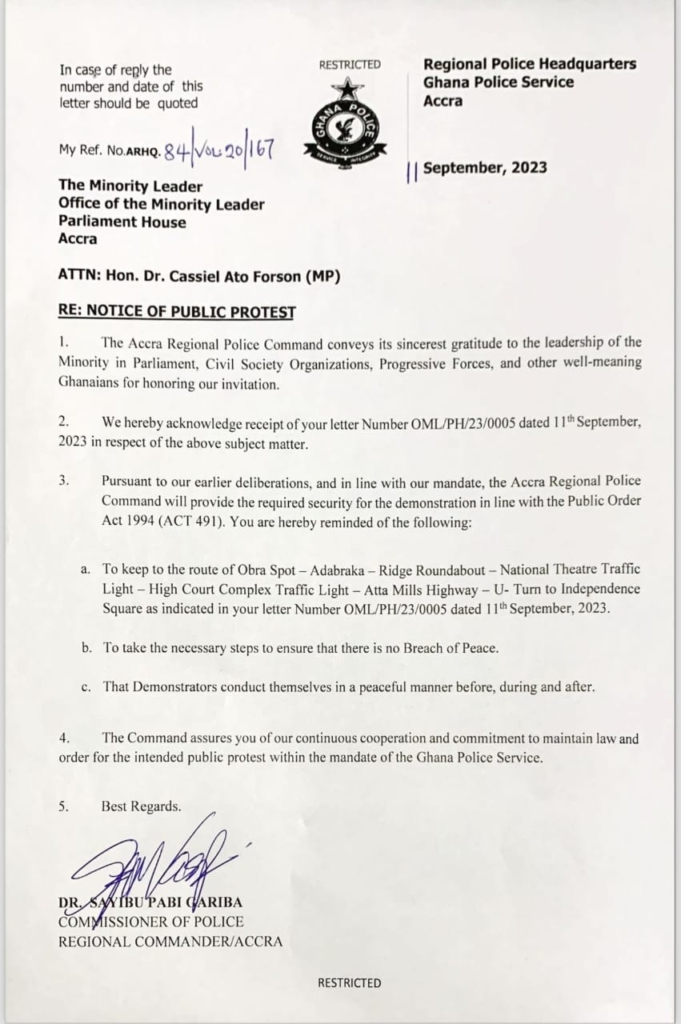
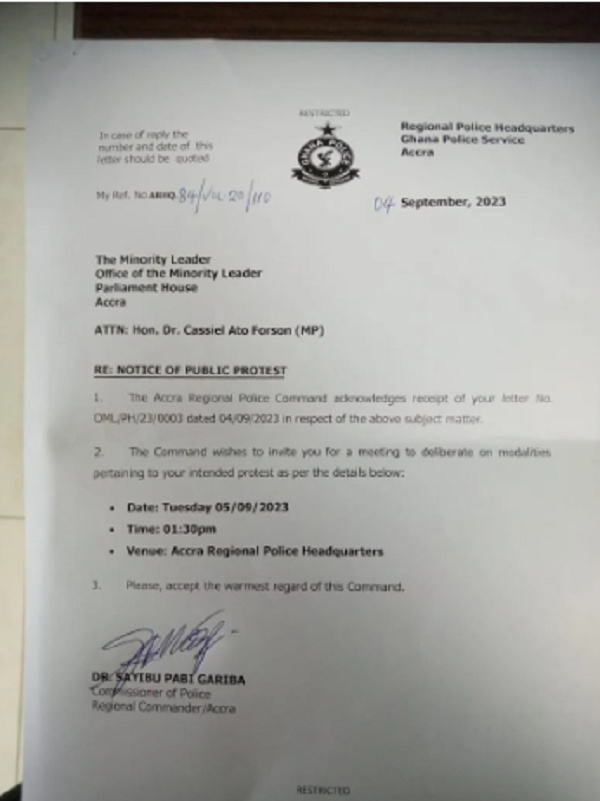
The Accra Regional Police Command has given its approval to provide security for the opposition National Democratic Congress (NDC) and several Civil Society Organizations as they plan to carry out a demonstration against the Bank of Ghana (BoG).
In an official statement released by the police, the provision of security on Tuesday, October 3, is in accordance with the provisions of the Public Order Act 1994 (ACT 491).
Additionally, the Command has issued a reminder to the demonstrators to strictly adhere to the planned route, which was outlined in their letter dated September 11. The designated route is as follows: starting from Obra Spot, proceeding through Adabraka, Ridge Roundabout, National Theatre Traffic Light, High Court Complex Traffic Light, Atta Mills Highway, and concluding with a U-Turn to Independence Square.
The police also warned that leaders of the protest should ensure that there is no breach of peace adding that “demonstrators conduct themselves in a peaceful manner before, during and after.”
The Command has provided assurance to the protest organizers of its ongoing cooperation and dedication to maintaining law and order during the planned public demonstration, in accordance with the responsibilities of the Ghana Police Service.
This agreement follows a series of discussions and engagements between the Ghana Police Service and the protest organizers.
Originally scheduled for September 5, the initial protest aimed to address various economic inconsistencies under the current administration of the Bank of Ghana.
During a meeting held with the leadership of the Accra Police on August 23, the protest organizers revealed the proposed routes for their event.
These routes included starting near Parliament House, proceeding through Osu Cemetery traffic light, High Court Complex, Ministry of Finance, Kinbu, Makola – Rawlings Park, Opera Square, and concluding at the premises of the Bank of Ghana Head Office.
The Police expressed their readiness to provide security for the demonstrators on the initially scheduled protest day. However, after conducting a comprehensive assessment of public order and security concerns, the protest leaders were kindly urged to reconsider the proposed routes.
In light of these considerations, the protest has been postponed and rescheduled for Tuesday, October 3rd.
Governor of the Bank of Ghana, Dr. Ernest Addison, has emphasized that the Central Bank can effectively fulfill its role as the government’s lender without requiring positive equity.
He noted that despite the impairment losses reported in the financial year 2022, the Central Bank maintains sufficient buffers to offer the necessary liquidity support to banks.
Speaking during a press briefing at the 114th Monetary Policy Committee (MPC) session in Accra on September 25, 2023, Dr. Addison highlighted that the Central Bank maintains a robust buffer position, even though it reported negative equity in 2022.
“Yes, the BoG can assist as the lender of last resort,” the BoG Governor said.
He also stated that commercial banks maintain 12% of their deposits with the central bank as liquidity, implying that the BoG has resources to fall back on if any of them require assistance.
“The central bank can operate effectively even in the presence of negative equity, we don’t need positive equity to be effective and we don’t have to print money to do that,” Dr Addison explained.
However, he highlighted that no bank has approached the central bank for liquidity assistance yet. Nevertheless, he emphasized that the Bank of Ghana (BoG) stands prepared to provide the necessary liquidity support to banks in accordance with the established guidelines.
Meanwhile, the interbank weighted average lending rate among banks increased to 26.59 percent in August 2023, up from 21.93 percent in August 2022, aligning with the rises in the monetary policy rate.
As a result, the average lending rates offered by banks rose to 31.78 percent in August 2023, compared to the 27.96 percent recorded in August 2022.
The banking sector, according to the BoG, has maintained its stability, with the industry’s total assets increasing to GH¢244.7 billion in August 2023, up from GH¢204.6 billion in August 2022.
Additionally, this growth in bank assets was primarily funded by a substantial 38.9 percent increase in deposits, rising from GH¢136.7 billion in the corresponding period.
However, total borrowings by banks contracted by 41.0 percent, decreasing to GH¢13.9 billion in August 2023 from GH¢23.5 billion in the previous year.
Data from the Bank of Ghana reveals that as of August 2023, Ghana’s export earnings experienced a 9% decline. According to the report, the total exports during this period amounted to US$10.76 billion, which is notably lower than the US$11.81 billion recorded in August 2022.
For the initial eight months of the year, the trade account showed a surplus of US$2.0 billion, in contrast to the US$1.6 billion recorded in the same period the previous year. This surplus was primarily a result of import compression and a decrease in exports.
Gold exports remained Ghana’s dominant export commodity, followed closely by cocoa. Gold exports increased from US$4.22 billion to US$4.67 billion.
The total export earnings saw an 8.9% year-on-year decline to US$10.8 billion, primarily due to a significant reduction in crude oil and cocoa products exports. Crude oil exports, in particular, dropped by US$1.5 billion, attributed to an 18.8% decrease in production volumes and a 23.6% decline in prices. Meanwhile, cocoa exports only slightly decreased from US$1.61 billion to US$1.60 billion. Additionally, oil exports saw a significant decline from US$3.82 billion to US$2.65 billion, while other exports decreased from US$2.16 billion to US$2.11 billion.
The trade balance to GDP ratio increased to 2.6%, higher than the 2.1% recorded in 2022.
On the import side, Ghana experienced a reduction from US$10.25 billion to US$8.74 billion. Total imports contracted by 14.7% to US$8.8 billion, compared to the previous year’s US$10.3 billion. This decline was attributed to a 13.1% contraction in non-oil imports to US$6.1 billion and an 18.2% dip in oil and gas imports to US$2.7 billion.
Nana Appiah Mensah, also known as NAM 1, the founder of Menzgold, has pleaded not guilty for allegedly defrauding more than 16,000 individuals of GH¢1.6 billion through the company.
In his defense, NAM 1 denies any wrongdoing related to bypassing Ghanaian laws to operate an unlawful gold deposit-taking business.
NAM 1’s legal counsel, Kwame Akuffo, asserted in the High Court on Tuesday, September 19, that his client did not engage in any activities that violated the Banking and Specialised Deposit-Taking Institutions Act, 2016 (Act ).
Mr. Akuffo further contended that it was officials from the Bank of Ghana (BoG) who had advised NAM 1 to change the company’s name from Menzbank to Menzbanc.
“Indeed, in meetings with the BoG, it was the BoG that recommended that a third accused company (Brew Marketing Consult) be set up in order to ensure that the gold marketing business was kept distinct from the business of Menzgold,” the counsel said.
“I will skip the names because the court may take evidence from them in camera,” counsel said, reports Graphic Online’s Emmanuel Ebo Hawkson from the courtroom.
In the meantime, NAM 1 has entered a plea of not guilty to a total of 39 charges, encompassing violations of Act 930, defrauding by false pretense, fraudulent breach of trust, and money laundering.
The court proceedings, presided over by Dr. Ernest Owusu-Dapaa, a Justice of the Court of Appeal serving as an additional High Court judge, resulted in NAM 1 being granted bail in the amount of GH¢500 million, with the requirement of four sureties.
As part of the bail conditions, Justice Owusu-Dapaa also mandated NAM 1 to surrender his passport to the Court’s Registrar and to report to the headquarters of the Criminal Investigations Department (CID) every Thursday.
Member of Parliament (MP) representing North Tongu, Samuel Okudzeto Ablakwa, has strongly criticized the Bank of Ghana (BoG) for allegedly allocating over GH¢711 million in 2022 for various projects, including the remodeling of regional offices, the construction of a guest house, and a new head office.
He raised concerns about these expenditures, particularly in the midst of an ongoing economic crisis in the country.
Ablakwa took to Facebook on Tuesday, September 19, 2023, to express his dismay, pointing out that the BoG had initially attempted to conceal these financial transactions.
However, the alleged expenditures were brought to light by independent auditors from the auditing firm Deloitte. Ablakwa questioned the need for such secrecy if the central bank believed its actions were above board.
“Thanks to independent auditors at Deloitte, we now know from page 86 of the Bank of Ghana’s 2022 Annual Report and Financial Statements that the Bank of Ghana made a staggering GH¢711.21 million expenditure commitment in its crisis year of 2022 on reckless projects such as its scandalous new head office, remodelling of regional offices and construction of a guest house in Tamale.
“What is equally disgraceful and condemnable was BoG’s attempt to conceal these risky humongous transactions by its disingenuous refusal to disclose them in its original financial statement presented to auditors. Regrettably, the auditors had to make their own discovery.
“If the Bank of Ghana had nothing to hide and was really proud of its sleazy new headquarters project and all the other dubious constructions, why did they deploy such elaborate opaque concealment schemes just to avoid accountability?” he quizzed.
The MP disclosed a fictitious document purporting to be from Deloitte that claimed the BoG failed to disclose GH711.21 million in capital expenditure commitments in its financial statement as of December 31, 2022.
According to the paper, the biggest expenditure projects included remodeling a few regional branches of the central bank, building a new headquarters for the Bank of Ghana, and building a guest house in Tamale.
The Chief Executive Officer of the now-defunct Menzgold Ghana Limited, Nana Appiah Mensah, commonly referred to as NAM1, has refuted allegations of violating financial regulations to operate an illicit gold dealership business.
NAM1 is currently facing trial for allegedly defrauding more than 16,000 clients of the defunct company, amounting to GH¢1.6 billion.
During his appearance before the High Court on Tuesday, September 19, 2023, NAM1’s legal representative, Kwame Akuffo, asserted that his client had not contravened the provisions of the Banking and Specialised Deposit-Taking Institutions Act, 2016 (Act).
Rather, the lawyer claimed that officials from the country’s central bank, the Bank of Ghana, had advised his client to streamline operations by changing the name of the gold deposit-taking institution from Menzbank (formerly Menzgold) to Menzbac.
“Indeed, in meetings with the BoG, it was the BoG that recommended that third accused company (Brew Marketing Consult) be set up in order to ensure that the gold marketing business was kept distinct from the business of Menzgold,” counsel said, he is quoted by Graphic Online.
Kwame Akuffo, the attorney for NAM1, did not, however, give the identities of the BoG representatives he claimed gave his client the alleged advice.
He said that at the opportune time during the trial, he would exercise his right to subpoena BoG officials to testify before the Court in order to assist his client’s defense. He said that this might alter.
“I will skip the names because the court may take evidence from them in camera,” counsel for NAM1 told the High Court.
The High Court, presided over by Dr. Ernest Owusu-Dapaa, a Justice of the Court of Appeal sitting as an additional High Court judge, later granted bail to Nana Appiah Mensah on Tuesday in the amount of GH500 million with four sureties.
According to state prosecutors, NAM1 is accused of violating Act 930 of the BoG, fraud by false pretense, money laundering, and fraudulent breach of trust on about 39 counts.
According to the 2022 Auditor-General report, the Bank of Ghana paid Messrs Goldkey Properties Limited $35,909,067.50 for the development of a new corporate office in Tamale.
For the time period under consideration, the central bank paid additional payments to the contractors, according to a JoyNews story seen by GhanaWeb Business.
The report said the “total progress payments to contractors for the period under review were US$117,150,255.37 compared with US$32,246,487.75 for the corresponding period of 2021, representing an increase of US$84,903,767.62 or 263.3%.”
The Auditor-General’s report has highlighted that the increase in expenditure can be attributed to two significant projects: the construction of the Bank of Ghana corporate office in Tamale and the development of sports infrastructure for the hosting and organization of the 13th African Games in Accra.
According to the report, these projects accounted for 30.7% and 30.5%, respectively, of the total expenditure amounting to US$117,150,255.37.
In response, the Bank of Ghana (BoG) has clarified the necessity for a new corporate office building, stating that their current facility in Accra is no longer suitable for its intended purpose. A structural integrity assessment conducted by the central bank revealed that the existing head office, constructed in the early 1960s, lacks the structural capacity to withstand major earth tremors.
Despite these reasons, some individuals and groups, including the Minority caucus in parliament, have criticized the BoG’s decision to embark on this project. They argue that it is irresponsible for the central bank to pursue the construction of a new head office, especially considering the challenging economic landscape. The BoG’s financial reports indicate a total asset base of GH¢60.8 billion and a negative equity of GH¢55.1 billion, leading to concerns about the potential strain on the nation’s resources.
Critics emphasize that many Ghanaians are already facing economic hardships, and they call for immediate measures to alleviate this burden. However, the BoG remains steadfast in its decision, noting that the new headquarters is already 41% completed and is projected to be fully operational by September 2024.
As of September 11, 2023, the Bank of Ghana’s Interbank forex rates indicate that the Ghana Cedi is trading against the US Dollar with a buying price of 11.0461 and a selling price of 11.0571.
In Accra’s forex bureaus, the US Dollar is being purchased at a rate of 11.40 and sold at a rate of 11.65.
Against the Pound Sterling, the Cedi has a buying price of 13.7833 and a selling price of 13.7993.
In Accra’s forex bureaus, the Pound Sterling is being bought at a rate of 14.35 and sold at a rate of 14.85.
The Euro is traded at a buying price of 11.8332 and a selling price of 11.8449.
In Accra’s forex bureaus, the Euro is being purchased at a rate of 12.10 and sold at a rate of 12.60.
The South African Rand has a buying price of 0.5786 and a selling price of 0.5790.
In Accra’s forex bureaus, the South African Rand is being bought at a rate of 0.35 and sold at a rate of 0.95.
The Nigerian Naira is traded with a buying price of 69.7320 and a selling price of 69.7410.
In Accra’s forex bureaus, the Nigerian Naira is purchased at a rate of 11.00 Naira for every 1 Cedi and sold at a rate of 16.00.
As for the CFA, it has a buying price of 55.3789 and a selling price of 55.4336.
In Accra’s forex bureaus, the CFA is being bought at a rate of 16.50 CFA for every 1 Cedi and sold at a rate of 20.50 CFA for every 1 Cedi.
Please take note that these rates could vary at a currency bureau close to you. Afriswap Bureau De Change in Osu, Accra, provides our exchange rates.
Our forex bureau rates are provided by Afriswap Bureau De Change in Osu, Accra.
The Greater Accra Police Command has extended an invitation to the Minority in Parliament for a meeting scheduled for Tuesday, September 5, 2023.
The meeting aims to discuss the upcoming #OccupyBoG demonstration, which is intended to protest against the Governor of the Bank of Ghana, Dr. Ernest Addison, and his deputies.
This is the second time the Minority and the Police are meeting over the matter.
Originally planned for September 5, 2023, the Minority in Parliament has decided to reschedule their demonstration and picketing to September 12, 2023. This change in date is attributed to the recent court proceedings that took place on September 4, 2023.
The Police secured an injunction to halt the protest. They registered dissatisfaction with the intended route to be used by the Minority, arguing that it would affect public safety and order.
In a recent statement, Dr. Cassiel Ato Forson, the Minority Leader, explained in a statement that the court was unable to provide an immediate ruling due to the substantial preliminary legal objections raised by the lawyers representing the Minority in Parliament.
According to the Minority in a statement dated Monday, September 4, protestors would use its earlier proposed route.
The march will commence from the frontage of Parliament House – Osu Cemetery Traffic Light Ministry of Finance – High Court Complex – Kinbu – Makola – Rawlings Park – Opera Square – Bank of Ghana.
In response to this development, the Police, through a letter addressed to Dr. Cassiel Ato Forson, has requested a meeting on September 5, 2023, to discuss the logistical and operational details of the demonstration.
Member of Parliament representing North Tongu, Samuel Okudzeto Ablakwa, has released documents revealing an ongoing legal dispute concerning the land upon which the new Bank of Ghana (BoG) headquarters is currently under construction.
Ablakwa, who has been unveiling a series of revelations regarding the BoG building project, asserts that the land was initially appraised at approximately GH¢91 million. At one point, the BoG reportedly offered the landowners GH¢100 million for the parcel.
However, the central bank eventually withdrew its interest in the land. Subsequently, in 2020, the government invoked a compulsory acquisition provision through an Executive Instrument (E.I) in lieu of compensation for the land, which, as Ablakwa discloses, has not been paid. According to experts, the total amount, along with accrued interests, has now reached 400 million cedis.
Originally, the land was owned by the State Insurance Company (SIC). It became entangled in legal proceedings after ITALCONSTRUCT INTERNATIONAL LIMITED obtained guarantees from SIC for a loan from IVORY FINANCE COMPANY, which subsequently defaulted. The loan agreement was established in 2013, with the consent judgment delivered in 2014.
Ablakwa reveals that in August 2019, the Bank of Ghana, despite being aware of the ongoing litigation and the consent judgment, approached the managements of both SIC and IVORY FINANCE. The BoG reportedly offered GH¢100 million to both entities to acquire the land for their new headquarters project.
“Interestingly, BoG did not pursue their offer and rather placed IVORY FINANCE under receivership,” following which the E.I. of October 2020 was issued, and even with that due compensation, according to his sources, had yet to be paid.
“Based on the Consent Judgement which has not been set aside, the interest and penalties which have accrued and factoring inflation — experts confirm that a combined compensation will not be less than a staggering GHS400million,” his post of September 5, 2023 read in part.
Click on link below for Ablakwa’s full post on Facebook:
The Member of Parliament for Bawku Central, Mahama Ayariga, has criticized the Inspector General of Police (IGP), Dr. George Akuffo Dampare, asserting that he has constitutional responsibilities to fulfill when citizens are required to protest, regardless of the situation.
Mr Ayariga emphasized that the IGP holds a position of authority and responsibility because citizens entrust him with the task of maintaining peace and order in the country, including ensuring the safety and security of the public during various events, including peaceful demonstrations.
He stressed that the IGP must do everything possible to facilitate citizens’ exercise of their freedom to protest, and he pointed out that the IGP is paid and provided with the necessary resources to function effectively, so he cannot refuse to work if those resources are available.
“The IGP is not there on his own. He should take off his uniform and check to see if he is the IGP. He has constitutional obligations to live up to expectations when citizens must demonstrate, no matter how difficult the task. Even if it is difficult, the IGP must assure the demonstrators’ safety, security, and protection,” Mahama Ayariga said.
His comments come at a time when the Minority in Parliament is having an impasse with the Police over the approved route for its demonstration to demand the removal of the BoG Governor, Dr Ernest Addison.
Mr Ayariga expressed his dissatisfaction with the performance of key government officials, particularly the IGP, and emphasized the importance of holding public servants accountable for their constitutional duties and responsibilities.
He noted that when citizens want to exercise their right to protest, it is the IGP’s responsibility to provide them with the necessary protection and security to ensure that the protests remain peaceful and that individuals or groups attempting to disrupt the peace are prevented from doing so.
He warned that the IGP could be the next public officer to be removed from office due to his behavior.
“We cannot offer you the resources, budget, recruit for you, or equip you with logistics such as vehicles, and you claim you are unable to accomplish your job. After the governor of the Bank of Ghana, we will demand the expulsion of the IGP,” he added.
On September 1, 2023, lawyers representing the Minority in Parliament submitted an affidavit at the High Court in Accra, contesting the police’s application to prohibit their planned picketing in front of the Bank of Ghana (BoG).
The Minority intended to march through key streets and the Bank of Ghana’s premises, demanding the resignation of the central bank’s Governor and his deputies, alleging mismanagement of the institution.
Following a meeting with the police, the Minority was advised to alter their planned routes, a suggestion they rejected. Consequently, the police filed an application seeking to halt the protest, prompting the Minority to respond with a counter-affidavit.
The court is scheduled to hear the application on Monday, September 4, 2023, while the protest is set for September 5.
In a statement, the Minority explained, “Lawyers for the Minority in Parliament yesterday filed with the registry of the High Court in Accra, an affidavit in opposition to the ill-advised and unfortunate application by the Accra Regional Police for an Order to prohibit our upcoming #OccupyBoGProtest march slated for Tuesday, 5th September 2023.”
They further stated, “The Minority in collaboration with Arise Ghana, other Civil Society Organisations, and well-meaning Ghanaians are resolved to embark on this historic protest march to demand the immediate resignation of the Governor of the Bank of Ghana and his two Deputies, for superintending a colossal loss of GHS66.8 billion in 2022 alone, which has occasioned a Negative Equity of GHS55.1 billion, as well as other acts of financial malfeasance that have completely destroyed the Central Bank.”
The Minority and allied progressive groups affirmed their commitment to their cause, vowing not to relent until the Governor, his deputies, and the Board of Directors resigned.
Their message was clear: “The Minority group and other progressive forces remain focused and will not relent until Misgovernor Addison, his complicit Deputies, and pliant Board of Directors resign. Aluta continua Victoria aserta!”
The current Bank of Ghana (BoG) administration is a crime scene, according to the Minority Caucus in Parliament.
Speaking at a public forum before their #OccupyBoG demonstration at the University of Professional Studies, Accra (UPSA), the Minority expressed dissatisfaction with the Central Bank’s extensive lending to the government over the past year.
Mahama Ayariga, Member of Parliament for Bawku Central, noted that despite fiscal challenges in 2016, which was also an election year, former President John Dramani Mahama did not need to borrow from the central bank.
However, the current management of the Central Bank, in their view, has engaged in financial malpractice, effectively transforming the Bank into a crime scene.
The planned protest, set for September 5, 2023, aims to voice the Minority’s dissatisfaction with the Governor of the BoG and his deputies, whom they accuse of mismanaging the apex bank. They are calling for their resignation.
Despite an injunction against the protest and police suggestions for alternative routes, the Minority Caucus has rejected these measures and remains committed to proceeding with their demonstration.
The Minority in Parliament has expressed their unwavering determination to embark on a protest to demand the removal of the Bank of Ghana (BoG) Governor, Dr Ernest Addison, and his two deputies despite an injunction granted by a High Court.
The Accra Regional Police Command of the Ghana Police Service successfully obtained an injunction to halt a planned demonstration for September 5, citing disagreements over the intended route for the protest.
The planned demonstration involved a march from Parliament House to the headquarters of the Central Bank, but the Police say the Central Bank’s headquarters is a designated security zone, hence cannot be among the locations. The Police also noted that the intended route poses potential risks to public order and safety and therefore called for a change in route.
While engagements between the Minority and the Police were ongoing over the matter, the latter proceeded to the High Court to receive an order that would halt the Minority from taking its planned route.
Reacting to the recent development, Deputy Minority Leader Emmanuel Armah-Kofi Buah emphasized the National Democratic Congress (NDC) MPs disappointment with the Police.
He, however, assured that the protest will take place as scheduled by hook or crook.
“We received a letter on Wednesday from the Ghana Police Service accompanied by a bailiff from the Accra High Court who served a notice or motion for an order to prohibit our Bank of Ghana protest, and we must say that we are very disappointed with this development which is an attempt to scatter the protest which is intended to hold the governor and his deputies accountable for their mismanagement of the bank which resulted in an unprecedented and colossal loss of GH¢60.8 billion, an amount which has had serious consequences on the economy and pushed close to one million Ghanaians into poverty.”
“And let us assure the people of Ghana that, as representatives, we will keep our sacred duty and we will uphold the public interest in line with our constitutionally guaranteed right to publicly protest, and we want to assure the people of Ghana that we have resolved to embark on this protest and nothing will stop us.”
Meanwhile, the High Court has scheduled a hearing on this matter for Monday, September 4, 2023.
Reason for BoG demo
The Minority has expressed dissatisfaction over the unauthorized printing of over GH¢80 billion by the central bank for the Akufo-Addo government.
According to the Minority, the Central Bank by so doing, has pushed some 850,000 Ghanaians into poverty.
On the matter, the BoG Governor, Dr Ernest Addison has explained that the central bank did not provide funding for the government until 2020 and 2022, during the COVID-19 Pandemic and after investors in the capital market declined to lend to the government.
According to him at a press conference on Monday, August 21, the central bank strictly adhered to the zero financing of government expenditure until the economic difficulties set in last year.
Dr Addison said the financing of government policies last year was undertaken with prior consultation with the International Monetary Fund (IMF).