Tag: Chinese

  • W/R: Police nab 5 suspects in connection with armed robbery incident at Chinese firm

    W/R: Police nab 5 suspects in connection with armed robbery incident at Chinese firm

    Five suspects have been nabbed by the police for the involvement in an armed robbery incident at a Chinese heavy-duty machinery company, Velotop Co. Ltd at Malta, a suburb of Asankrangwa in the Amenfi West Municipal Assembly.

    The group reportedly invaded the premises of the machinery company with pump-action guns, a pistol, and machetes on Thursday, March 12, 2026, at about 7:20 p.m. They allegedly made way with GHS 200,000 after holding workers of the company hostage.

    The vehicle of the suspects, a black Toyota Voxy vehicle with registration number GS 576-25 was intercepted at a checkpoint during an inspection by the police.

    One iPhone 13 mobile phone, one Nokia C300 mobile phone, one Villooan mobile phone, two CCTV camera decoders, three pairs of handcuffs, two pump action guns, 14 AA cartridges, and cash amounting to GHS 198,200 were retrieved by the police during the inspection.

    Meanwhile, the police has revealed that efforts are underway to arrest the leader of the gang and any other accomplices.

    Last month, the gang leader, Eric Acheampong Adu, in a robbery incident at Ohwim Tigo Junction in Kumasi, has been confirmed dead.

    Addressing the media on Monday, February 23, the Inspector-General of Police (IGP) Christian Tetteh Yohuno, disclosed that the deceased, who is specialised in the snatching of pickup and Land Cruiser vehicles, sustained gunshot wounds during the operation with the police and later passed on.

    The IGP noted “Suspect Eric Acheampong Adu, who sustained gunshot wounds during the operation, has passed on. Our investigation further established that this criminal syndicate, led by the deceased suspect, specialised in the snatching of pickup and Land Cruiser vehicle”.

    The four other culprits; Akwasi Manu, Bashiru Tanko, Kwaju Amponsah and Emmanuel Kwame Apea are in police custody assisting with investigations. Akwasi Manu was arrested after the police traced a mobile phone belonging to the deceased in his possession on Wednesday, February 18. Bashiru Tanko, was arrested at Atonsu High School Junction in Kumasi on February 19.

    Kwaju Amponsah and Emmanuel Kwame Apea, on February 21 and 22 at Hwireso near Buokrom and the Danyame Soldier Barracks in Kumasi, respectively. On Tuesday February 10, the gang reportedly attacked the victim, identified as Andrews Amankwa, shot him, and made away with his Toyota Hilux vehicle. Andrews Amankwa was receiving treatment at the hospital was later pronounced dead.

    In recent years, the Ghana Police Service has made significant progress in tackling robberies and prosecuting offenders. The Service assured the public of its commitment to ensuring security, law, and order across the country.

    On February 2, five persons have been arrested for their alleged involvement in a robbery attack that occurred on December 2 last year at Nkaseim in the Ahafo Region.

    The armed suspects invaded the Goaso–Tepa road and simultaneously attacked the Nkaseim Police Station, the Adwumapa Cocoa Buying Company, the Kobby Gold Buying Company, and the Asutifi Rural Bank area in Nkaseim, stealing their belongings. Stolen belongings of the victims include two AK47 rifles, unspecified amounts of cash, and other valuables.

    In a Facebook post on Sunday, February 1, the police disclosed that the armed robbers also shot one victim during the attack, causing injuries.

    They include 45-year-old Mahamadu Sagio, 28-year-old Shaibu Issah Jallo, 25-year-old Bukari Sulley, also known as Tailor, a commercial tricycle rider, 35-year-old Mutar Kofi, and 40-year-old Abdul Suleman. Meanwhile, three other suspects, identified as Dauda, Mohammed Ali, and Hoyeefi, are on the run.

    On Thursday, January 29, seven individuals were arrested over a highway robbery incident that took place last year on the Tamale–Buipe highway, during which a member of the Council of State was assaulted.

    The suspects, identified as Rashida Yussif, Aaron Abaana, Wilson Abasong, Muntaru Iddrisu, Aminu Zibrilla, Innusa Sumaila and Haruna Safianu, were arrested on January 11, 2026, after weeks of sustained investigations.

    Addressing the media at the Police Headquarters in Accra, the Director-General of the Criminal Investigations Department (CID), COP Lydia Yaako Donkor, disclosed that inquiries into the case are still ongoing.

    She recounted that the incident occurred on July 21, 2025, when the victim was travelling on the Tamale–Buipe highway and was attacked by six armed men who fled with several personal items, including mobile phones, cash, wristwatches, reading glasses, laptops and other valuables.

    “The arrests form part of intelligence-led operations aimed at dismantling highway robbery networks across the country,” COP Donkor said.

    She also revealed that a separate police operation led to the arrest of five suspects linked to another robbery incident at Nkasei in the Ahafo Region.

    According to her, the suspects — Muta Kofi, Mahamadu Sajoe, alias Salifu, Shaibu Issah, Abdul Suleman and Bukari Sule, alias Taylor — were picked up on different dates following investigations into a robbery that occurred on December 2, 2025.

    She explained that the suspects, together with other accomplices, allegedly mounted a blockade on the Goaso–Tepa road while armed and launched attacks on unsuspecting motorists.

    COP Donkor added that investigations into both robbery cases are still underway as police efforts continue to recover stolen property and track down additional suspects.

    She further appealed to the public to stay alert, place a premium on personal safety when travelling, and refrain from sharing sensitive information with strangers, as police intensify nationwide operations to combat criminal activity.

    Last year, the government intensified security efforts along the Walewale-Bolgatanga Highway by deploying military personnel and drones to curb rising attacks on passenger buses.

    Minister for the Interior, Mr. Muntaka Mohammed-Mubarak, made this known in Parliament on Tuesday, March 18, 2025, while responding to concerns raised by the Member of Parliament for Walewale regarding escalating robberies and vehicle burnings in the North East Region.

    According to Mr. Muntaka Mubarak, although Walewale has seen a steady decline in armed robbery cases—from 30 incidents in 2022 to 18 in 2024—the attacks targeting passenger buses remain a pressing concern.

    He linked the recent surge in highway violence to the ongoing Bawku chieftaincy conflict, explaining that the unrest was spilling over into surrounding areas and contributing to insecurity along the route.

    To address the situation, the government imposed a curfew on Walewale and its environs on February 15, 2025, while also reinforcing security operations in the area.

    In addition to the military deployment, extra police officers have been dispatched from Tamale to support the Walewale District Command. The government has also increased logistical support, including the provision of more patrol vehicles.

    Furthermore, three police bases have been established in Walewale, Janga, and Gombiliga, each manned by 30 officers to enhance security patrols. To protect traders, police escorts have been introduced for market women traveling to and from Walewale’s markets.

    Despite these interventions, Mr. Muntaka Mubarak acknowledged that no arrests were made in connection with this year’s robbery incidents. He noted that tracking suspects had been challenging due to the widespread use of motorbikes in the area but remained optimistic about the impact of the new surveillance measures.

    “I will continue engaging the police, and with drone surveillance now in place, I believe we will see improvements. But as of now, I have no information on arrests,” he said.

    Authorities remain hopeful that these enhanced security measures will restore safety along the highway and deter further attacks.

    The Ghana Police Service announced its readiness to face any criminal network and criminal activities with rigour after the boost that comes with the government handing over forty armoured vehicles.

    President Mahama handed over the vehicles yesterday, Thursday, December 4, in a handing-over ceremony held at the Ghana Police Headquarters in Accra, and in response to this, the IGP, Christian Tetteh Yohunu, in an acceptance speech, sent a word of caution to all who seek to disrupt national security and peace that his outfit will relentlessly pursue and apprehend anyone involved in criminal activities.

    “Let me use this opportunity to send a strong word of caution to persons who have decided to threaten the security of this country: we are coming for you. You can run all you want and hide wherever you wish, but we will surely get you,” taunting the police service’s achievements so far under his leadership.

    “We have made several breakthroughs. In addition to numerous robbery attempts that have been foiled through sustained intelligence operations, we have successfully arrested suspects who operated under the illusion that they could get away with crime.

    “These include the suspect behind the rural bank robberies, the robbery of the Radiance Filling Station, the robbery at Enfasatia, attacks on mobile vendors, the Wire and Bullet serial murders, vehicle theft syndicates, and perpetrators behind fake online food-delivery platforms,” he mentioned.
  • Collapsed bridge at DRC cobalt mine kills 32

    Collapsed bridge at DRC cobalt mine kills 32

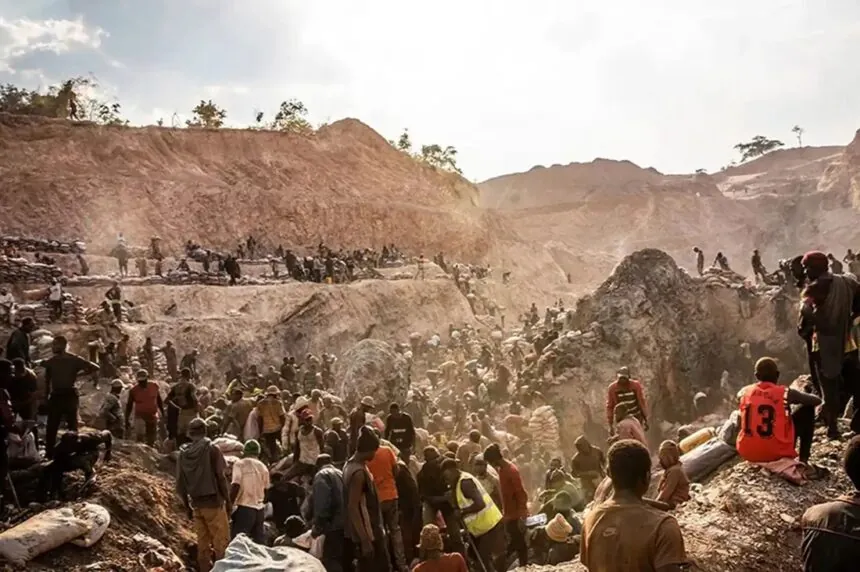
    A collapsed bridge in the Democratic Republic of Congo has killed thirty two (32) people at the Kalando copper and cobalt mine in Lualaba Province.

    According to officials, wildcat miners forced their way onto the site despite a safety ban, causing the makeshift bridge to give way under overcrowding.

    SAEMAPE, the small-scale mining agency, says gunfire from soldiers triggered panic, leading miners to rush toward the bridge before it collapsed.

    The agency puts the death toll at more than 40.

    The Kalando mine has long been disputed between wildcat miners, a cooperative overseeing operations, and the site’s legal operators, who reportedly include Chinese interests.

    Authorities have suspended operations, while rights groups are calling for an independent investigation into the military’s role. The army has not commented.

    The DRC is the world’s top producer of cobalt but continues to face concerns over unsafe mining conditions and ongoing conflict linked to mineral resources.

    Months ago, shock and grief gripped the Democratic Republic of Congo after the horrific death of football referee Patrick Ngalamulume, who was brutally killed by a mob in the eastern city of Bukavu.

    The 36-year-old, widely known by his nickname “Ngalas,” was attacked in the Irambo neighbourhood overnight between May 5 and 6, 2025.

    He was accused by locals of theft—a charge that remains unproven—and was violently beaten before being set on fire by a furious crowd.

    Witnesses say the gruesome incident played out in public view, with no response from police or emergency services as the situation escalated.

    The killing has sparked outrage and mourning across the country, particularly within the sporting community.

    “It was horrifying. No one could stop it. The anger was uncontrollable,” said one local who witnessed the lynching but asked to remain anonymous for fear of reprisal.

    Patrick Ngalamulume, a respected member of the Bukavu Urban Football Association (EUFBUK), had a clean record and was widely regarded for his integrity and dedication to refereeing.

    His tragic death has deeply shaken the local football fraternity and sparked widespread mourning across civil society.

    “We have lost not just a referee, but a man who believed in fair play and justice,” said a senior official with EUFBUK. “To think he was denied the very justice he upheld is heartbreaking.”

    In a strongly worded statement, the Football Association condemned the killing:

    “We are deeply saddened by the senseless and barbaric murder of Patrick Ngalamulume. We call on the authorities to arrest all those involved and restore trust in the rule of law.”

    The Football Kenya Federation (FKF) also joined in expressing solidarity, adding:

    “Football must remain a sport that unites, not one that becomes entangled in the breakdown of law and order.”

    The lynching underscores the deteriorating security in parts of eastern Congo, where armed rebel groups like M23 have weakened state control, and vigilante justice has become common.

    “The government must act. This level of barbarity cannot become a norm,” said a Bukavu local official. “People are losing faith in the justice system, and we’re seeing the dangerous consequences of that.”

    In recent months, Bukavu and neighbouring Goma have seen a rise in similar acts of mob justice, a symptom of the growing void left by an overwhelmed and under-resourced justice system.

    Civil society groups, sports authorities, and local leaders have called for an independent investigation into the killing, the arrest of those responsible, and urgent action to prevent further breakdowns in law enforcement.

    Patrick Ngalamulume’s tragic death serves as a grim reminder of what happens when fear replaces justice. His memory now stands as both a loss and a call—for accountability, reform, and the protection of all citizens under the law.

    In 2024, six people were killed and many were arrested after attacks on the home of a friend of President Felix Tshisekedi and the presidential palace in Congo. The military said it was a failed attempt to take over the government.

    In December, Tshisekedi won the election again even though the opposition wanted a new vote because they thought the process wasn’t fair.

    Six people were killed, including 3 attackers and their leader, Christian Malanga, who is against the current government. The army said they also arrested around 50 people involved in the attack.

    Soldiers in military uniform fought with the guards of Vital Kamerhe, a lawmaker who is close to the president of Congo. Kamerhe’s spokesperson wrote on social media site X, saying that the guards stopped the intruders and made sure that the politician and his family were safe.

    Two security guards were also murdered, Ekenge stated.

    In the beginning, the news said the men with guns were from Congo’s army. Later, they said the men were connected to Malanga. He posted a video on Facebook from inside the president’s house, threatening Tshisekedi.

    The army spokesman said Malanga was killed in a gunfight with the presidential guards.

    Ekenge said on TV that the attempted government takeover was stopped by the Congolese military and police and everything is ok now. He also said that three Americans, including Malanga’s son, were involved in the plot.

    The attack happened when Tshisekedi’s ruling party was already dealing with a crisis over a parliamentary election. This election was supposed to happen on Saturday but got postponed.

  • 10 Chinese arrested for illegal gold trading at Asankragua

    10 Chinese arrested for illegal gold trading at Asankragua

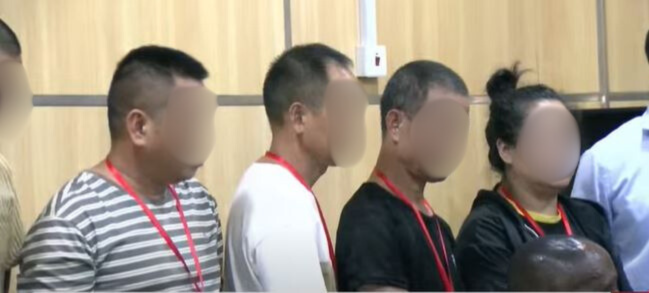
    Ten Chinese nationals involved in illegal gold trading at Asankragua in the Western Region are currently in police custody.

    The arrest was championed by the GoldBod Taskforce just 48 hours after the government announced a nationwide ban on foreign involvement in the local gold trade.

    The culprits were nabbed from a private residence where their illicit gold transactions ensued.

    In addition to the arrest, 1.3kg of gold worth nearly GHS1.4 million, over GHS1.3 million in cash, a pump-action gun, and a significant quantity of suspected money-laundering casino cards were also seized through the solid intelligence of informants.

    GoldBod CEO, Sammy Gyamfi, has assured the media that the arrested individuals will face full prosecution by the laws of Ghana and not be deported.

    “We mean business, and this time around, you cannot engage in illegal gold trading and gold smuggling and go scot-free,” he said.

    He adds that the swift action by the task force informs illegal operators, particularly foreigners, that Ghana is stepping up efforts to bring order to the gold trade and implement its ban on foreign involvement in gold transactions.

    “The grace period is over and we have given countless warnings upon warnings. And so when you are arrested now, there will not be anything like deportation,” he said.

    Mr Gyamfi further stated that he has told the investigators to put together a very strong and solid case, using the evidence that the workers on the ground have gatherered.

    “By tomorrow, they will be arraigned before court, we will be praying the court remands them into custody for further investigations and it is our hope that we will get a favourable outcome,” he added.

    Meanwhile, the government is set to launch a new task force to clamp down on illicit gold-smuggling activities in the country.

    Speaking at a press conference earlier this week, the Chief Executive Officer (CEO) of the Ghana Gold Board (GoldBod), Sammy Gyamfi, revealed that as part of broader measures to combat smuggling and illegal trading of gold in the country, President Mahama would launch a special task force on July 8, 2025.

    He thus cautioned traders to secure the appropriate licence to engage in any form of gold trading in the country, saying, “But for those who are hell bent on trading illegally without the licenses, we are serving notice that we are coming after you”.

    “This event would be the inauguration of the GoldBod task force. So, 8th of July at 8:30 a.m. at the National Security Secretariat, popularly called Blue Gate — there is a yard in there… and the media are cordially invited,” he revealed.

    The task force would be given a special mandate with specific powers as police officers to wage war against smuggling and all forms of illegal gold trading activities in the country.

    Meanwhile, Mr Sammy Gyamfi (Esq.) had stressed that persons who engage in gold trading without Goldbod licenses after June 21 will be prosecuted.

    He stressed this during a meeting with the Chamber of Licensed Gold Buyers last month.

    “As we have announced, by the 21st of this month, we shall ensure that only holders of Goldbod licenses are able to buy gold, and so if you are not licensed by the GoldBod, you cannot buy gold after June 21st. It will constitute a punishable offense to do so.”

    Mr Gyamfi urged the gold buyers to forge partnerships that will boost compliance with the new GoldBod licensing regime.

    The acting CEO noted that the process for registering has been made seamless and is devoid of corruption.

    “We have removed the human interface element and so there is no corruption, bribery, inducements, or favoritism. It is a very transparent and competitive process and once you qualify, you get the license. I don’t take or demand bribes before I issue license.”

  • 11 including 4 Chinese arrested for illegally mining along Bonsa River

    11 including 4 Chinese arrested for illegally mining along Bonsa River

    The Western Central Regional Police Command has arrested eleven suspects for illegal mining activities along the Bonsa River bank in the Western Region.

    The suspects, comprising seven Ghanaians and four Chinese, were arrested on 31st March through sustained intelligence-led operations against illegal mining activities.

    Five of the suspects, Wei Qinwei, Yao Yongji, Nsoh Oto Agologo, Kwadwo George Sergio, Emmanuel Van Atta, were arrested at a site in Bonsa, while the remaining 6 suspects, Nuang Shichuan, Huang Xinbao, Douglas Ayambilla, Elvis Aborta, Michael Tettey Komlorm and Ibrahim Dauda were arrested at Wassa Agona.

    All the suspects are in custody and will be put before the court to face justice.

    The Police Service has assured the general public, especially communities within the Western Central Regional Police Command, that it remains committed to fighting crime and ensuring security law and order in the country.

  • 3 Chinese, Ghanaian nabbed for illegally mining on River Pra

    3 Chinese, Ghanaian nabbed for illegally mining on River Pra

    National Security officers have arrested three Chinese nationals and a Ghanaian near the Pra River in the Shama District for allegedly engaging in unlawful mining.

    The suspects, whose identities have not been disclosed, were reportedly carrying out activities under the guise of sand extraction.

    They have been handed over to the Western Regional Police Command in Sekondi for further action.

    Hashem Tankonu, who led the operation, noted that some illegal miners now disguise their activities as sand winning to evade detection.

    “Behind the house at the corner, there is a galamsey set up there that you see that they are doing galamsey but if you are not smart, you will be fooled by that facade of sand winning.

    “But then in actual terms, they are doing the sand winning and they are doing the galamsey alongside the sand winning and you will not suspect it.”

  • 3 Chinese, Ghanaian busted for illegal mining activities on River Pra

    3 Chinese, Ghanaian busted for illegal mining activities on River Pra

    A joint operation by National Security operatives has led to the arrest of three Chinese nationals and a Ghanaian accomplice suspected of engaging in illegal mining along the Pra River near Supom-Dunkwa in the Shama District of the Western Region.

    The suspects, whose identities have not been disclosed, were reportedly operating under the guise of sand-winning. They have since been handed over to the Western Regional Police Command in Sekondi for further investigations.

    Hashem Tankonu, a National Security officer who led the operation, revealed that illegal miners have been disguising their activities to evade detection.

    “Behind the house at the corner, there is a galamsey set up there that you see that they are doing galamsey but if you are not smart, you will be fooled by that facade of sand winning.

    “But then in actual terms, they are doing the sand winning and they are doing the galamsey alongside the sand winning and you will not suspect it,” he explained.
    Authorities say further investigations will be conducted to determine the extent of the illegal mining activities and the network involved.
  • 2 Chinese involved in Aisha Huang’s galamsey case irregularly obtained work, residence permits – Court told

    2 Chinese involved in Aisha Huang’s galamsey case irregularly obtained work, residence permits – Court told

    The Accra High Court has heard that two Chinese nationals, Li Wei Guo and Shi Mei Zhi, allegedly involved in illegal mining operations linked to Aisha Huang, irregularly obtained work and residence permits.

    This revelation came as part of an ongoing trial involving three accused persons, including a Ghanaian, Nana Kwame Opoku, also known as Obolo.

    Li Wei Guo and Shi Mei Zhi face charges of conspiracy and undertaking mining operations without a license, contrary to Ghana’s Minerals and Mining Act, 2006 (Act 703), as amended by Act 995. They are also accused of making false representations in obtaining immigration permits, breaching provisions of the Immigration Act, 2000 (Act 573).

    The court heard that between 2017 and 2018, the two Chinese nationals, assisted by Nana Kwame Opoku, acquired land at Dunkwa Nwinso in the Eastern Region, where they engaged in illegal mining activities. Investigations revealed that their work and residence permits were fraudulently secured, raising further legal concerns about their stay and operations in Ghana.

    The case forms part of broader investigations into illegal mining activities associated with Aisha Huang, the “Galamsey Queen.” Huang, recently sentenced to four years in prison for her role in illegal mining and re-entering Ghana after deportation, was linked to several foreign nationals accused of facilitating or participating in galamsey operations across the country.

    Cross-examination of the second accused was completed on November 13, with the third accused opening his defense the following day. The trial continues as the state seeks to address the alleged violations of Ghana’s immigration and mining laws.

  • GSA shuts down Chinese manufacturing company involved in producing unaccredited mattresses

    GSA shuts down Chinese manufacturing company involved in producing unaccredited mattresses

    The Ghana Standards Authority (GSA) has shut down ZXZ Company Limited, a Chinese-owned manufacturer of Moonda brand mattresses, located in Afienya-Accra, due to the use of uncertified materials.

    This action followed a tip-off that led to a market survey uncovering the company’s use of substandard products.

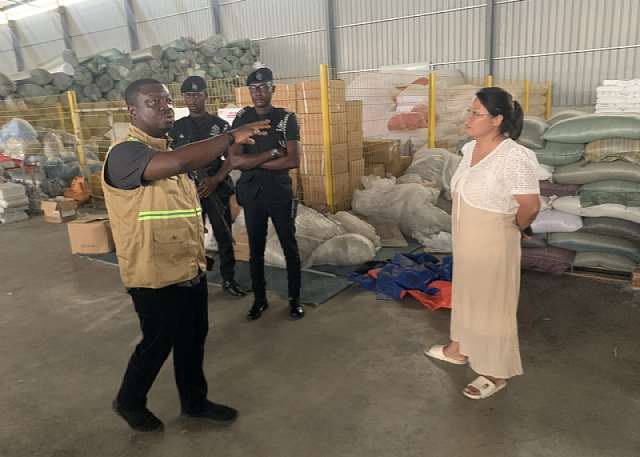
    During a joint operation involving GSA officials, the Ghana Police Service, and media representatives, it was discovered that the company was using polystyrene instead of the approved polyurethane for mattress production, violating GSA regulations.

    Additionally, the firm was found assembling televisions, refrigerators, and sound bar speakers under the brand name Asano without the necessary GSA registration.

    A Chinese supervisor on-site claimed that the materials were acceptable in China, but later admitted that the company lacked the required licenses to operate.

    Although she stated that the factory had only been running for five months, an employee revealed that she had been working there for two years.

    Head of the Special Products Unit at GSA, George Anti highlighted the alarming extent of unlicensed production in the facility.

    He emphasized the importance of adhering to regulatory standards to ensure consumer safety, noting that using polystyrene for mattresses poses significant health risks.

    “Ghana is open for business, but it must be done within the right regulatory framework. It makes no sense to invest heavily in establishing a facility and then operate illegally.”

    The GSA has pledged to discard the substandard products and require the factory to obtain proper certifications and use approved materials before it can reopen.

    Anti further stressed that while Ghana welcomes business, it must be conducted within the appropriate regulatory framework, and companies must comply with the law to avoid penalties.

    In a related discovery, the GSA found a Chinese-operated plastic recycling plant without a license in the same industrial zone.

    The authority has issued a warning to all foreign manufacturing firms operating without registration to comply immediately to avoid punitive actions.

    Watch video below:

  • Chinese govt to support Africa with over $50m in the next 3 years

    Chinese govt to support Africa with over $50m in the next 3 years

    The Chinese government plans to offer $50.6 billion in financial aid over the next three years to African nations to implement the 10 key initiatives agreed upon during the 2024 Forum on China-Africa Cooperation (FOCAC) summit held recently in China, according to Chinese Ambassador to Ghana, Tong Defa.

    During a press briefing at his residence in Accra on Wednesday, September 12, 2024, he discussed the outcomes of the FOCAC summit.

    Defa stated that President Xi Jinping informed the 53 African leaders who participated in the forum that $29.5 billion of the support would be in the form of credit lines, $11.3 billion in various types of assistance, and at least $9.8 billion would come through investments by Chinese companies in Africa.

    Additionally, President Jinping said China would back Africa’s issuance of panda bonds within China to foster tangible cooperation across various sectors.

    The summit, considered the largest diplomatic engagement between China and Africa, aims to strengthen and deepen the partnership between the two regions.

    It seeks to deliver significant social and economic benefits to the people of both Africa and China.

    China is looking to build on its longstanding partnership with Africa, which is grounded in mutual respect and shared goals for prosperity.

    Ambassador Defa further noted that President Jinping reaffirmed his commitment to deepening ties with Ghana, aiming to boost political trust and foster collaboration in diverse sectors.

    He added that China is eager to broaden its cooperation with Ghana, particularly in agriculture, fisheries, energy, mineral resources, and infrastructure, while expressing hopes that Ghana will continue to provide favorable conditions for Chinese businesses and citizens.

    Defa also mentioned that President Jinping highlighted the FOCAC Beijing Summit’s role in summarizing the historical experiences of China-Africa relations and laying out a roadmap for joint modernization efforts, leading the way for collaboration within the Global South.

    The 10 cooperation initiatives between China and Africa include a focus on cultural exchange, with plans to create a platform for sharing governance experiences, establish a China-Africa knowledge network for development, and invite 1,000 African political party members to China to enhance dialogue.

    The second major initiative is the Partnership Action for Trade Prosperity, which includes opening up China’s market further and offering zero-tariff treatment to Least Developed Countries (LDCs) that have diplomatic ties with China, transforming China’s vast market into a significant opportunity for Africa.

    Additionally, the Partnership Action for Industrial Chain Cooperation, aimed at pushing forward the Pilot Zone for In-depth China-Africa Economic and Trade Cooperation, launching an “African SMEs empowerment programme”, and jointly building a digital technology cooperation centre.

    The fourth action is the Partnership Action for Connectivity, including putting in place a China-Africa network featuring land-sea links and coordinated development for the benefit of trans-regional development in Africa.

    The Partnership Action for Development Cooperation, aimed to implement 1,000 “small and beautiful” livelihood projects to deliver more fruits of development to African people.

    Besides, the Partnership Action for Health, un­der which China would be sending 2,000 medical personnel to Africa to support the development of the Africa Centres for Disease Control and Prevention.

    Furthermore, the Partnership Action for Agriculture and Livelihoods is another action under the partnership, in which China would be providing Africa with emergency food assistance, building standardised agriculture demonstration areas, and creating at least one million jobs for Africa.

  • Deal with any of our officials who breaches your laws – China govt to Ghana

    Deal with any of our officials who breaches your laws – China govt to Ghana

    China’s government has asked Ghana to take legal action against any of its officials who violate local laws.

    The directive comes amid ongoing concerns over illegal mining activities involving some Chinese nationals.

    Galmsey activities have severely damaged Ghana’s water bodies and forest reserves.

    Recently, the Ghana Water Company Limited (GWCL) reported a deepening water crisis, linking the pollution of vital water sources to illegal mining operations.

    The GWCL has warned of imminent water supply issues in Cape Coast, Elmina, and surrounding areas, noting that the Sekyere Hemang Water Treatment Plant is struggling with insufficient raw water due to contamination from galamsey activities.

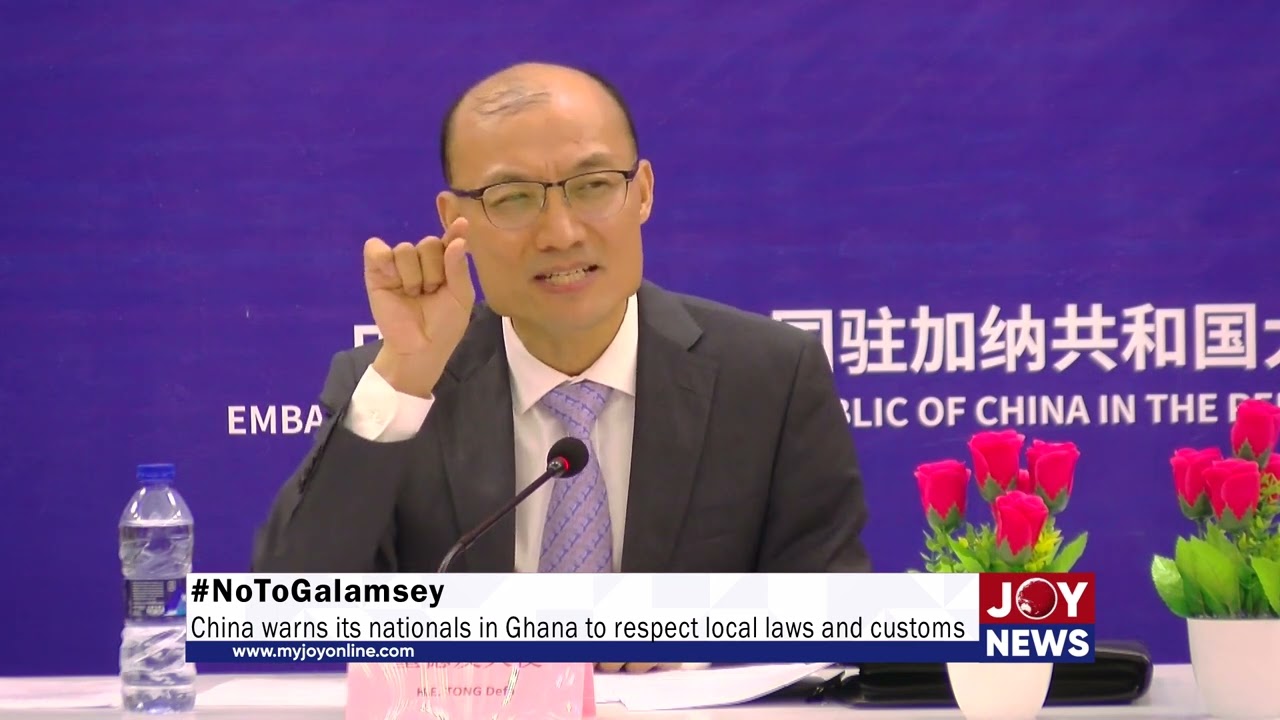
    In response, Chinese Ambassador to Ghana, Tong Defa, who was speaking during a recent press conference acknowledged that some Chinese nationals are involved in illegal mining but stressed that the Chinese government strongly opposes such activities.

    “I know there are some Chinese involved in this illegal mining but we discourage them.We always request Chinese citizens here to do things legally, to do things according to laws and regulations and even traditional customs. I know there are some Chinese involved in illegal mining but we discourage them. Our president has told president Akufo-Addo to deal with any Chinese official who commits illegal sins in Ghana should be dealt with according to the law,” Mr. Tong stated.

    Chinese Ambassador to Ghana Tong Defa highlighted a 2018 agreement between President Akufo-Addo and the Chinese President, which established that any Chinese nationals involved in illegal activities in Ghana would be held accountable under local laws.
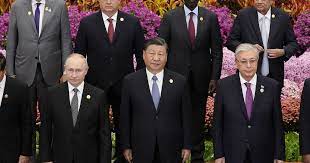
    Ambassador Tong reaffirmed China’s position against illegal mining, stating, “We discourage Chinese people from doing this illegal mining,” the Chinese ambassador noted.

    Amid growing frustration over the ineffective response to the galamsey crisis, Organised Labour has reacted strongly. On September 11, 2024, the group warned the government of a potential nationwide strike by the end of the month if swift and effective measures are not implemented to tackle the worsening situation.

  • ‘Donkomi’: 18 excavators, 16 land cruisers sold by Jubilee House staff for GHC68M to Chinese – Report

    ‘Donkomi’: 18 excavators, 16 land cruisers sold by Jubilee House staff for GHC68M to Chinese – Report

    A startling report has unveiled a major corruption scandal involving the sale of government-owned vehicles and excavators at the Jubilee House, Ghana’s highest office.

    According to the report by GhanaNews, 18 excavators and 16 Toyota Land Cruisers were sold by staff at the Jubilee House for a total of GH¢68 million to a Chinese national, Zhang Feng.

    The shockingly low prices at which these state assets were sold have drawn widespread condemnation, with the scandal being labeled as “donkomi,” a local term for selling items at bargain-basement prices.

    At the center of the controversy is Dominic Oppong Adjei, the Director of Transport and Logistics at the Jubilee House. He is accused of orchestrating the sale of these vehicles, which were allegedly sold at just GH¢2 million per vehicle—a price that has raised serious questions about the integrity of the process. The vehicles, including several models of high-end Toyota Land Cruisers, were sold under the provisions of Section 1348(6) of the Customs (Control and Management) Act, Cap. 15.05, which governs the disposal of goods.

    The report reveals that the transactions were conducted with the approval of the Comptroller of Customs and the Ghana Jubilee House, using bid forms as a legal cover. However, the drastically reduced prices have sparked outrage, with critics questioning whether the sales were conducted in the state’s best interest or if they were part of a larger corrupt scheme.

    The vehicles involved in the sale have been identified with specific chassis numbers recorded in official documents, including:

    • Toyota Land Cruiser with Chassis No. JTEF411F970037690
    • Toyota Land Cruiser with Chassis No. JTEBE11F300976708
    • Toyota Land Cruiser with Chassis No. JTMAABBEAN4004323
    • Land Cruiser Diesel with Chassis No. GR4879-23
    • Land Cruiser V8 with Chassis No. JTMNY051J5114049809
    • Land Cruiser V8 with Chassis No. JTLBV9F596X241834
    • Land Cruiser – GB1927924
    • Land Cruiser V8 Diesel with Chassis No. JTEBH3FJ605038700

    These transactions were reportedly signed and witnessed by Yakubu Mohammed and Clement Wilkinson, implicating them in the scandal as well. The involvement of these officials has led to increased scrutiny of the sale process and the broader management of government assets within the Jubilee House.

    Intermediaries and Cover-ups

    The report also highlights the use of intermediaries in the transactions, with several Ghanaian nationals, including some Municipal Chief Executives (MCEs), allegedly serving as fronts to conceal the involvement of the Chinese buyer. This use of intermediaries suggests a deliberate attempt to obscure the true nature of the sales and has further deepened the controversy surrounding the scandal.

    The revelations have sparked a public outcry, with civil society groups and anti-corruption advocates demanding immediate action. They are calling for a thorough investigation into the matter and the suspension of all individuals involved, including Dominic Oppong Adjei, Yakubu Mohammed, and Clement Wilkinson. There are also calls for a comprehensive review of the procedures for disposing of government assets to prevent similar scandals in the future.

    There has been no official response from the government or the Jubilee House.

  • $900k gold stolen from Chinese mining firm in Ghana – Report

    $900k gold stolen from Chinese mining firm in Ghana – Report

    Earlier this year, a Chinese mining firm reported losing 12kg (26lbs) of gold, worth US$900,000, in an armed robbery in Ghana.

    Beijing Xiaocheng Technology Stock Co, a Shenzhen-listed company, shared details of the heist in its recent half-year financial report.

    The report noted that the robbery took place on April 18, and that “five to six” suspects have been arrested by Ghanaian police. Despite this, the gold remains missing, and authorities are actively searching for it.

    This incident highlights the increasing security challenges faced by Chinese companies operating in Africa, where China has invested heavily in mineral resources. In response, Beijing has promised to bolster protection for its assets and workers abroad.

    The robbery targeted Akroma Gold Mining Co, a subsidiary of Beijing Xiaocheng, located in Esaase in Ghana’s Kwahu West municipality.

    Approximately 11 armed individuals, wearing masks, breached the processing facility from an undeveloped section of the mine. The attack resulted in stolen gold and injuries to several workers, including Chinese nationals, though no fatalities occurred.

    Following the robbery, Beijing Xiaocheng has implemented stricter security measures at the Akroma mine, which has since returned to regular operations. The Ghanaian government has offered a reward for information leading to the arrest of the perpetrators.

    Beyond gold mining, Beijing Xiaocheng operates a 20MW solar power station in Ghana, which has been in operation for over a decade.

    Gold remains a crucial export for Ghana, generating US$9.53 billion in revenue in 2022. The majority of Ghana’s gold exports go to the United Arab Emirates, with significant amounts also being sent to Switzerland, India, and Hong Kong.

  • Chinese mining firm in Ghana suffers $900,000 loss in major gold heist – Report

    Chinese mining firm in Ghana suffers $900,000 loss in major gold heist – Report

    A Chinese mining company has reported the loss of 12kg (26lbs) of gold, valued at US$900,000, during an armed robbery in Ghana earlier this year.

    Beijing Xiaocheng Technology Stock Co, a gold mining firm listed on the Shenzhen stock exchange, announced in its mid-year financial report on Wednesday that “five to six” suspects had been apprehended and are currently in police custody in Ghana.

    Security forces in the West African country were, “still searching for the whereabouts of the gold”, according to the company.

    Africa has long been a key investment destination for Chinese companies seeking minerals and resources abroad, but concerns over security risks are increasing. In response, Beijing has pledged to enhance the protection of its workers and assets overseas.

    Beijing Xiaocheng, a company involved in gold mining, production, processing, and sales, stated that Ghanaian security agencies had offered a reward for information leading to the arrest of those responsible for the robbery on April 18.

    The company reported that 11 individuals were suspected of participating in the armed attack on its subsidiary, Akroma Gold Mining Co, located in Esaase, in Ghana’s eastern Kwahu West municipality.

    Following the incident, Akroma implemented stricter security measures at the gold mine.

    According to local media reports from April, heavily armed assailants targeted the company’s processing area, seizing gold and assaulting several workers, including Chinese expatriates.

    Beijing Xiaocheng revealed that the masked attackers infiltrated the Akroma processing plant through an undeveloped section of the mine.

    Despite security personnel being overpowered, resulting in injuries to workers, including Chinese nationals, there were no fatalities.

    The robbers escaped with 12kg of gold that was scheduled for export that day, resulting in a direct economic loss of US$900,000, according to the company’s financial report.

    Beijing Xiaocheng, which operates three gold mines in Ghana, confirmed that the Akroma mine had resumed normal operations after the attack.

    The company also operates solar power generation projects, including a 20MW photovoltaic power station in Ghana that has been in operation for over a decade.

    Gold is Ghana’s leading export, generating US$9.53 billion in revenue in 2022, according to data from the Observatory of Economic Complexity. Nearly half of Ghana’s gold is exported to the United Arab Emirates, with Switzerland, India, and Hong Kong also being major buyers.

  • Pambros Salt Factory employees rally against suspected land transfer to Chinese

    Pambros Salt Factory employees rally against suspected land transfer to Chinese

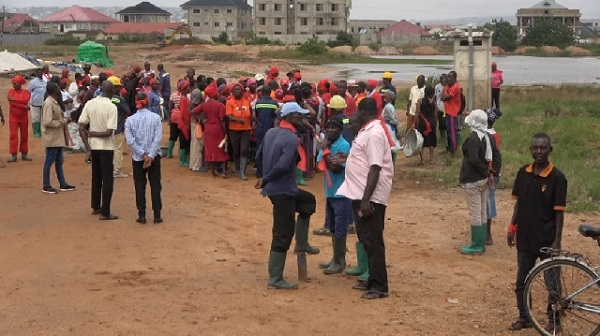
    Employees of the Pambros Salt Factory near Weija Junction in the Greater Accra Region have staged a protest against what they claim is an effort by certain traditional authorities to hand over portions of the salt mining area to Chinese business interests.

    Adorned in red and black, the workers vehemently opposed the move, fearing it could result in significant job losses.

    It has been reported that more than 1,000 workers might lose their jobs if the land transfer goes through.

    Many workers voiced concerns about the threat to their livelihoods, calling for urgent action to halt the takeover.

    “We’ve noticed that the Chinese have started encroaching on our land. They are destroying it, and we won’t agree to this because we have nowhere else to go. Pambros produces salt, just like Sege, and we are contributing our quota.”

    The worker also highlighted the importance of the salt industry to the nation, saying, “We even learned that the Jubilee House spends a lot on salt. If our jobs are destroyed, how can we support the country as local producers? President Akufo-Addo must take action on this. They have even employed the services of land guards, and it is scary.”

    Another worker voiced similar worries, demanding fairness in the situation.

    “We must not sit as a country and watch ordinary Ghanaians suffer. It is unfair to give our land to the Chinese. I want to beg the traditional authorities to ensure justice is served. They just came to take over our land without our knowledge,” he said.

  • 3 Ghanaians and a Chinese arrested for allegedly tampering with ECG meters

    3 Ghanaians and a Chinese arrested for allegedly tampering with ECG meters

    Police have detained four individuals, comprising three Ghanaians and a Chinese national, for their roles in tampering with and installing meters from the Electricity Company of Ghana (ECG).

    Wisdom Sewlorm, an agent assigned to install ECG meters, saw his employee, Ernest Afatsawu, manipulate the meters and sell them to a Chinese plastic manufacturing company for GH₵1200.

    Rulian Shan, the manager of the Chinese company, and his sales manager, Ali Yakubu, were apprehended on Friday, August 2.

    Both Ernest and Wisdom are currently under investigation following their summons.

    The ECG estimates that the financial loss due to this incident amounts to over GH₵77,000 from July to August.

    Paul Abariga, Director of Investigation, Prosecution, and Security, revealed that the four suspects are scheduled to appear in court on Wednesday. Additionally, the contract with the implicated ECG contractor will be terminated.

    Abariga stated, “There are meters that are being installed in many parts of our operational area and there have been some investigations reported to this directorate that some of the meters that are being installed are tempered with before they are installed so we undertook investigations, and we’ve come to realise that the intel that we’ve gathered, and the reports given to us are certainly true.

    “Based on that we got for instance these four people arrested on four. They had a meter that was supposed to be residential and they were using it in a factory to manufacture plastic bowls at Oblogo near Weija.”

    “So we want to put all the four together. By the end of the day we would have finished with our investigations on them so that we put them before court tomorrow”.

  • I will import Chinese, American, European to come work for us in Ghana – Cheddar

    I will import Chinese, American, European to come work for us in Ghana – Cheddar

    Leader of the New Force Movement, Nana Kwame Bediako, popularly known as Cheddar or Freedom Jacob Caesar, has expressed his intention to recruit individuals from China, America, and Europe to contribute their efforts towards Ghana’s benefit.

    He stated that rather than allowing foreigners to exploit our resources due to their specialized skills, he prefers to redirect their capabilities towards benefiting the country.

    He emphasized a strategy of harnessing the skills of these foreigners who currently exploit the country’s resources for their own gain.

    “In fact I intend to import talents. The idea of me telling you that I am going to take the Chinese and keep them here to work for 4 years in hard labor is part of importing talents. But I am cutting the importation system out because they are already here and they’ve spoilt my water. After that I will still bring different types of people from the world. From Europe, from America, from everywhere. They have to come and work for us. The same gold they can drill, they can do the job for us,” the leader of the New Force Movement explained.

    Meanwhile, Cheddar has officially declared intention to contest the upcoming December 7 presidential election as an independent candidate.

    He said the decision to contest as an independent candidate was due to delays in acquiring the necessary approval from the Electoral Commission to form a political party.

    “We believe that if we have to wait for three months and we are guaranteed to still get this license, we would not have two months to even campaign or market for this party,” he stated.

  • CSAG avails itself to address dismissal of galamsey cases involving Chinese nationals

    CSAG avails itself to address dismissal of galamsey cases involving Chinese nationals

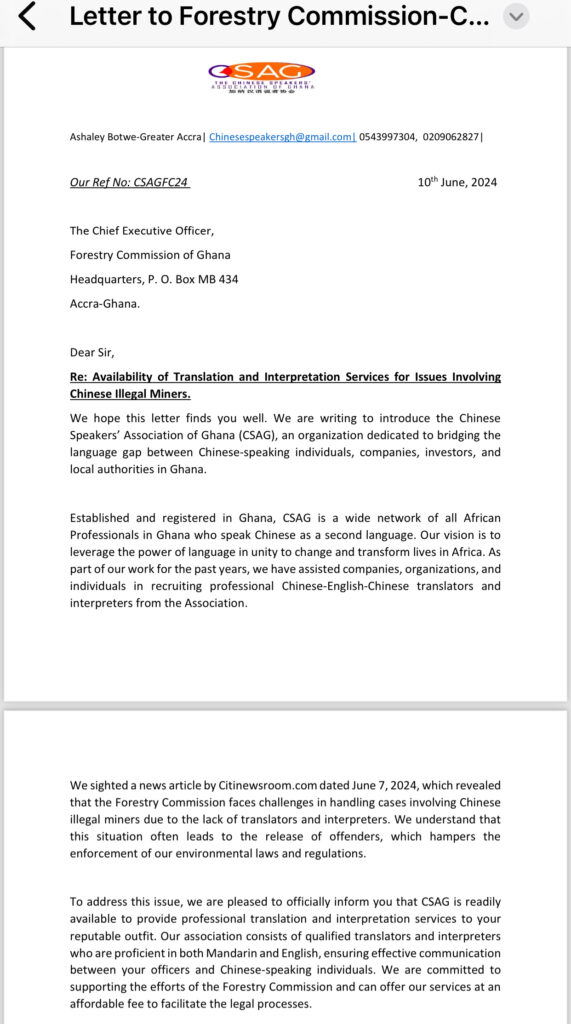
    The Chinese Speakers Association of Ghana has responded to a recent news report highlighting the lack of interpreters needed to prosecute Chinese nationals involved in illegal mining activities.

    In a detailed statement, the Association refuted these claims and expressed their readiness to provide interpreting services at a reasonable rate.

    They are urging the government to engage with them to address this pressing issue.

    This comes after Deputy Greater Accra Regional Manager of the Forestry Commission, George Agbenowoshi, revealed a concerning issue regarding the prosecution of Chinese nationals involved in illegal mining activities, known as galamsey.

    According to Mr Agbenowoshi, Chinese illegal miners arrested are often released by courts due to a lack of interpreters.

    Speaking at a mini ceremony organized by Parliament for the 2024 Green Ghana Day, Mr Agbenowoshi explained that the language barrier causes cases to drag on in court, ultimately resulting in dismissal.

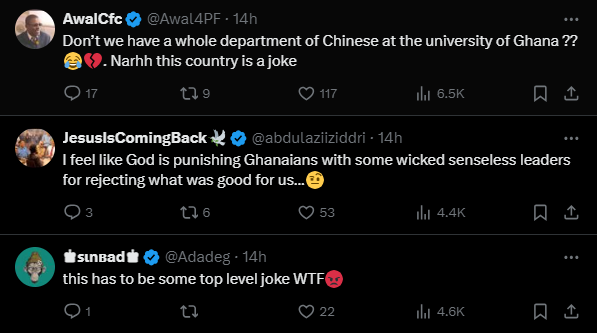
    The comment made by the Commission has not been welcomed by members of the general public who believe Ghana has Chinese interpreters. They cited tertiary institutions such as the University of Ghana where Chinese is being taught as a course.

    According to Ghanaian users on social media, Chinese tutors could be used by the court as interpreters to ensure delivery of justice is not marred.

    As of May 2023, Attorney General Godfred Dame said the office of the Attorney-General and Department of Justice was conducting criminal prosecutions against 727 persons who engaged in illegal mining activities across the country.

    Meanwhile, the Forestry Commission in the Greater Accra Region has identified the lack of logistical support, including vehicles and motorbikes, at its district offices as a major obstacle to combating illegal mining and other degrading activities.

    See post below:

  • Galamsey cases are thrown out over difficulty in finding Chinese interpreters – Forestry Commission

    Galamsey cases are thrown out over difficulty in finding Chinese interpreters – Forestry Commission

    Deputy Greater Accra Regional Manager of the Forestry Commission, George Agbenowoshi, has highlighted a concerning issue regarding the prosecution of Chinese nationals involved in illegal mining activities, known as galamsey.

    According to Mr Agbenowoshi, these individuals are frequently arrested but often released by the courts due to a lack of interpreters, leading to cases being dismissed.

    He emphasized that the language barrier causes cases to drag on in court, ultimately resulting in dismissal.

    Speaking at a mini ceremony organized by Parliament for the 2024 Green Ghana Day, Agbenowoshi also expressed concerns about the challenges faced by district Forestry offices nationwide. He specifically mentioned the untimely release of funds and the legal hurdles encountered in prosecuting Chinese nationals involved in illegal mining activities.

    “We have the challenge of timely release of funds for forestry-related activities including plantation activities in our sector and issues sent to court have been there for years without redress. Issues of mining activities involving Chinese that take an interpreter to translate are often thrown out of court as a result of the lack of an interpreter.”

    The report by the Commission has not been welcomed by members of the general public who believe Ghana has Chinese interpreters. They cited tertiary institutions such as the University of Ghana where Chinese is being taught as a course.

    In May 2023, Attorney General Godfred Dame said the office of the Attorney-General and Department of Justice was currently conducting criminal prosecutions against 727 persons who engaged in illegal mining activities across the country. 

    The minister enumerated other challenges impeding speedy prosecution of alleged illegal miners as lack of interpreters in cases involving foreign nationals and unwillingness of witnesses to give testimonies in courts for fear of being threatened by accused who lived in the same community as them. 

    In the case of a Ghanaian, it is now a term of a minimum of 15 years imprisonment and maximum of 25 years, together with a fine of minimum of 10,000 penalty units and not more than 15,000 penalty units.

    In the case of a non-Ghanaian, Act 995 enhanced the punishment for the same offences to a term of a minimum of 20 years imprisonment and maximum of twenty-five years, together with a fine of a minimum one hundred thousand penalty units and not more than three hundred and fifty thousand penalty units.

    The new punishment regime is in contrast to the situation under Act 703 passed in 2006, which prescribed a penalty of a minimum of 3,000 thousand penalty units or imprisonment of not more than five years for the offence of trading in minerals and mining without a licence.

  • US intends to apply significant additional tariffs on Chinese green energy imports – AP

    US intends to apply significant additional tariffs on Chinese green energy imports – AP

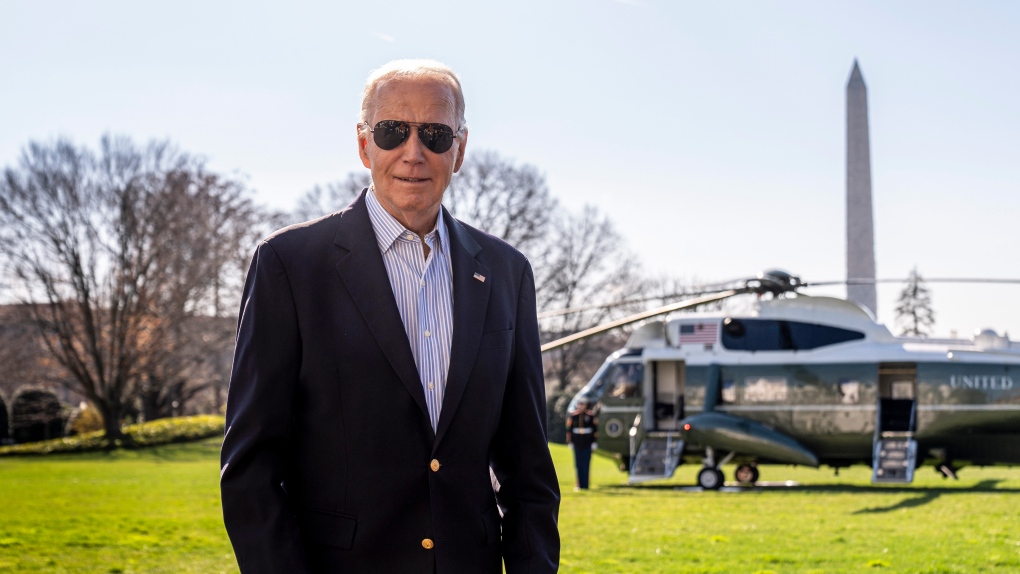
    The Biden government wants to add big new taxes on electric cars, computer chips, solar panels, and medical supplies that come from China. This is according to a US official and someone else who knows about the plan.

    Taxes on electric cars might go up four times from 25% to 100%. The people talked about the plan but wanted to stay anonymous because they weren’t allowed to give details before it was officially announced.

    The taxes will be revealed on Tuesday. The Democratic administration is upset with China for making too many EVs and other products, which they think is a danger to US jobs and security.

    Rich countries like the United States and Europe are worried that a lot of cheap stuff from China will take over their own factories. The US is worried that China’s green energy products will hurt the big investments made in green energy by the Democrats’ Inflation Reduction Act signed by President Joe Biden in August 2022.

    The extra taxes also have some political power as we head into the November election for president. Both Biden and Trump have said they will be strong when dealing with China, which is the second largest economy in the world and a rising rival to the United States.

    Biden wants to compete with China, not fight with them. He wants to use government money to help businesses build new factories and technology, but he also wants to limit what we sell to China.

    Trump wants to put big taxes on things from China to make the US sell more to China than it buys from there. He keeps saying that Biden’s support for electric vehicles will make American factory jobs move to China.

    Tuesday’s announcement will likely keep some taxes that were put in place during Trump’s time in office on around US$360 billion worth of things from China. The new tax on imports would make products like syringes from China and solar equipment more expensive.

    There is a chance that taxes could cause a bigger fight over trading between the two countries as they react to each other’s actions. China wants to be better at using technology and make more money.

    China is making fewer lithium-ion batteries for electric vehicles, cell phones, and other electronic devices. This is happening as China is getting more criticism from Western countries.

    China’s Ministry of Industry and Information Technology made a new rule to better manage the lithium-ion battery industry and improve its quality.

    A document was put on the ministry’s website for people to give their thoughts on. It says that companies should focus on making better technology, improving quality, and reducing costs instead of making their business bigger.

    The draft says that lithium battery plants that are built in farmlands or industrial areas where building is limited should be closed.

    Katherine Tai, who represents US trade, is reviewing the tariffs put in place during the Trump administration. Republican lawmakers, Jason Smith and Adrian Smith, are pushing for the review to be finished quickly.

    “They wrote a letter to Tai this week saying that if the four year review is not done soon, it could cause big problems for US farmers, manufacturers, innovators, small businesses and workers. ”

    Ohio Senator Sherrod Brown tweeted on Friday that tariffs alone are not sufficient. We must stop Chinese electric cars from being sold in the United States. “Full stop”

    The Biden government will look into Chinese-made “smart cars” that can collect private information about the people driving them. In February, the Commerce Department said they are investigating if “connected vehicles” from China and other unfriendly countries could be a threat to our national security.

    Not many Chinese electric cars are in the US right now. But officials are concerned that cheap models might come into the US soon, even with a 25% tariff.

    A new car made by a Chinese company called BYD came out last year. It costs about $12,000 in China. The car’s quality is as good as expensive US-made electric cars, and it’s making the US car industry worried.

    The Alliance for American Manufacturing, which is made up of businesses and the US Steelworkers union, shared a report in February. It said that bringing cheap cars from China to the US could seriously hurt the US auto industry. The report also said that the US auto industry makes up 3% of the country’s economy.

    Janet Yellen, the person in charge of the money in the US government, visited China in April. She talked about how the Chinese government gives money to companies that make electric cars, their batteries, and solar energy equipment. The US government also wants to help these industries grow in America.

    “China is now too big for the rest of the world to handle its large capacity. ” She said that the things China does today can change prices all over the world.

    “When a lot of low-cost products from China are sold in the global market, it makes it harder for American and other foreign companies to stay in business. ”

    According to Bloomberg News and The Wall Street Journal, there is a plan for new tariffs.

  • Chinese driver receives recognition after efforts in minimising number of deaths in highway collapse

    Chinese driver receives recognition after efforts in minimising number of deaths in highway collapse

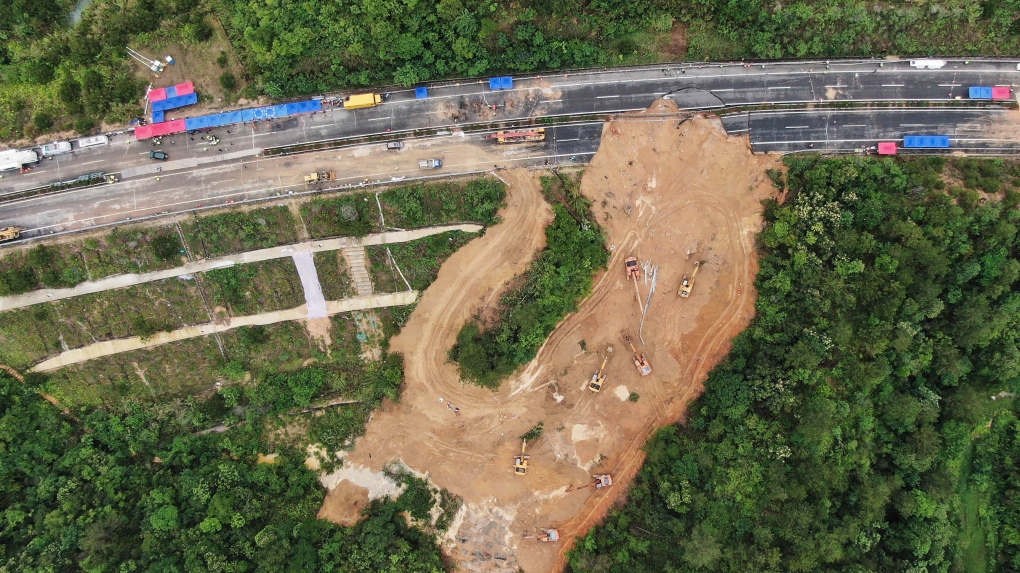
    A Chinese truck driver is being praised for parking his truck across a highway to stop more cars from falling down a hill. This happened after a road in the mountainous south of China collapsed, and at least 48 people died.

    Wang Xiangnan was driving on a highway in Guangdong province, which is an important place for business in southern China, on Wednesday. At about 2 am, Wang saw some cars going the other way on the highway and another driver told him about the road collapse, according to the local news.

    Wang, a former soldier, quickly used his truck to block the highway and stop many vehicles from entering danger, according to Jiupai News. At the same time, his wife left the truck to tell other drivers about what was happening.

    “I didn’t really think about it. ” I wanted to make the cars stop,” Wang said to the Chinese news organization.

    Wang’s brave actions were praised by people on social media in China and he also received recognition from the China Worker Development Foundation.

    The organization said on Friday that it gave Wang 10,000 yuan (US$1,414) with the help of a car company. A charity project connected to Alibaba Group Holding, a big tech company, also gave the same amount to Wang, according to the newspaper Dahe Daily. Wang said he will give the money to the families of the people who got hurt in the accident.

    The local news also said that another man had bent down to stop cars from going on the highway.

    The accident happened after a month of lots of rain in Guangdong. Some of the 23 cars fell into a deep hole and caught on fire, making a lot of smoke.

    Around 30 people had to go to the hospital. On Saturday, someone left the hospital, according to state broadcaster CCTV. The others were getting better, but one is still very sick.

    On Saturday, the government of Meizhou city in Guangdong announced that they will be checking all highways, railways, and mountain roads in the city. A group headed by the local governor is looking into why the collapse happened, according to Southcn. com

    The Chinese government sent a leader to make sure recovery efforts are going well and to ask for better safety measures. This happened after President Xi Jinping and the Communist Party asked for it. Two government officials, Premier Li and Qiang, are working quickly to deal with the tragedy.

    Zhang Guoqing, a member of the ruling Communist Party, was sent to deal with the disaster because they are worried about public anger. This is the latest in a series of deadly failures in infrastructure.

  • Five Chinese nationals and their local driver slain in suicide attack – Pakistani authorities

    Five Chinese nationals and their local driver slain in suicide attack – Pakistani authorities

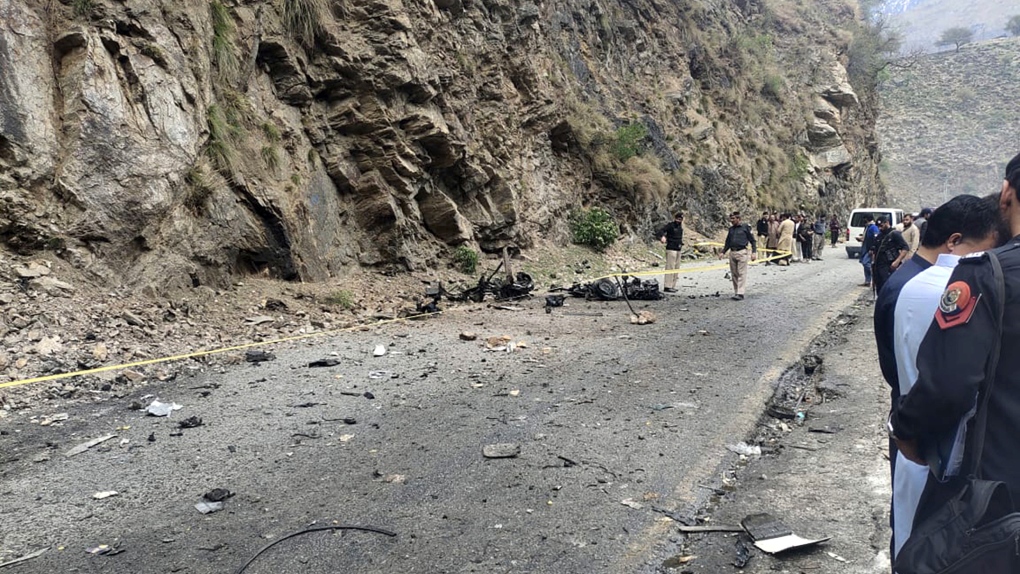
    In northwest Pakistan, a driver deliberately collided their car, which was carrying explosives, into another vehicle on Tuesday.This incident killed five people from China and their driver from Pakistan. This information comes from the police and government officials.

    The attack happened in Shangla, a district in Khyber Pakhtunkhwa province. This was confirmed by the local police chief, Bakhat Zahir. He said that the five people who died were construction workers and engineers who were going to the biggest hydropower project in Pakistan, the Dasu Dam, where they worked.

    The Khyber Pakhtunkhwa province is next to Afghanistan. The Pakistani Taliban have increased their attacks there in the past few years.

    Officials said the dead bodies were taken to a hospital close by, and security teams began a big search in the area to find any other people involved. The police are looking into the attack.

    On Tuesday, there was an attack in Baluchistan just a few days after Pakistani forces killed eight militants who were shooting at a convoy of Chinese people near the Gwadar port. This all happened in the Baluchistan province.

    The BLA wants to be free from the government in Islamabad.

    Pakistan’s leader, Mohsin Naqvi, spoke out against the attack and expressed sympathy for the families of those who died. He said: “China’s friends in Pakistan are being targeted by the enemy,” but he didn’t say who the enemy is. He promised to punish those responsible very severely and hoped the attack would not harm the relationship between Pakistan and China.

    Naqvi went to China’s embassy in Islamabad and told the Chinese ambassador, Jiang Zaidong, about the attack. He promised to do a complete investigation, as per the ministry of interior.

    Many Chinese people are working in Shangla on big projects like building roads, power plants, and farming, as part of the China-Pakistan Economic Corridor.

    The CPEC, also called the One Road Project, is very important for Pakistan’s government, which is running out of money and facing a really bad economic crisis. This is a project in China called the Belt and Road Initiative. It’s a big plan to connect China to other countries in Asia by rebuilding the Silk Road.

    Chinese workers building things in Pakistan have been hurt by bad people.

    In July 2021, a suicide bomber exploded a vehicle near a bus carrying Chinese and Pakistani workers, killing at least 13 people, including 9 Chinese nationals. This caused Chinese companies to stop working for a while.

    Pakistan has increased the security for projects related to CPEC.

  • Prove 2 Chinese out of 10 arrested for galamsey are dead – Judge tells Prosecutor

    Prove 2 Chinese out of 10 arrested for galamsey are dead – Judge tells Prosecutor

    The Magistrate of the Sefwi Wiawso District Court, His Worship Eric Baah Boateng, has directed Chief Inspector George Asante Noye, a prosecutor in a case involving the arrest of 10 illegal miners, to provide documentary evidence of the death and cremation of two Chinese nationals at the next court sitting scheduled for April 15, 2024.

    The arrest of the 10 individuals, including four Chinese nationals and six Ghanaians, occurred on December 12, 2023, by staff of the Forestry Commission for engaging in illegal mining in the Krokosua Hills Forest Reserve.

    The Chinese nationals were identified as Men Shi Yu, 30; Weng Yong Cheng, 30; Wen FU Lin, 58; and Lee Pin, 60.

    The Ghanaian suspects were Edward Owusu, 25; Kwesi Frank, 42; Abudu Dramani, 41; and Joe Nabur, 27. Two police officers, Detective Sergeant Yahaya Andrews and Lance Corporal Azantillow, were also involved.

    During the court’s third sitting on March 15, 2024, only the six Ghanaians, including the two policemen, were present, while the four Chinese nationals were absent. The Prosecutor informed the court that two of the Chinese nationals had died and been cremated.

    Magistrate Eric Baah Boateng instructed the Prosecutor to bring the sureties for the deceased Chinese nationals to court at the next sitting to provide documentary evidence of their death and cremation. The case was adjourned to April 15, 2024, and has been referred to the Attorney General’s Department in Takoradi for advice.

  • Nsawam Prison officers helped Chinese prisoner escape – Court told

    Nsawam Prison officers helped Chinese prisoner escape – Court told

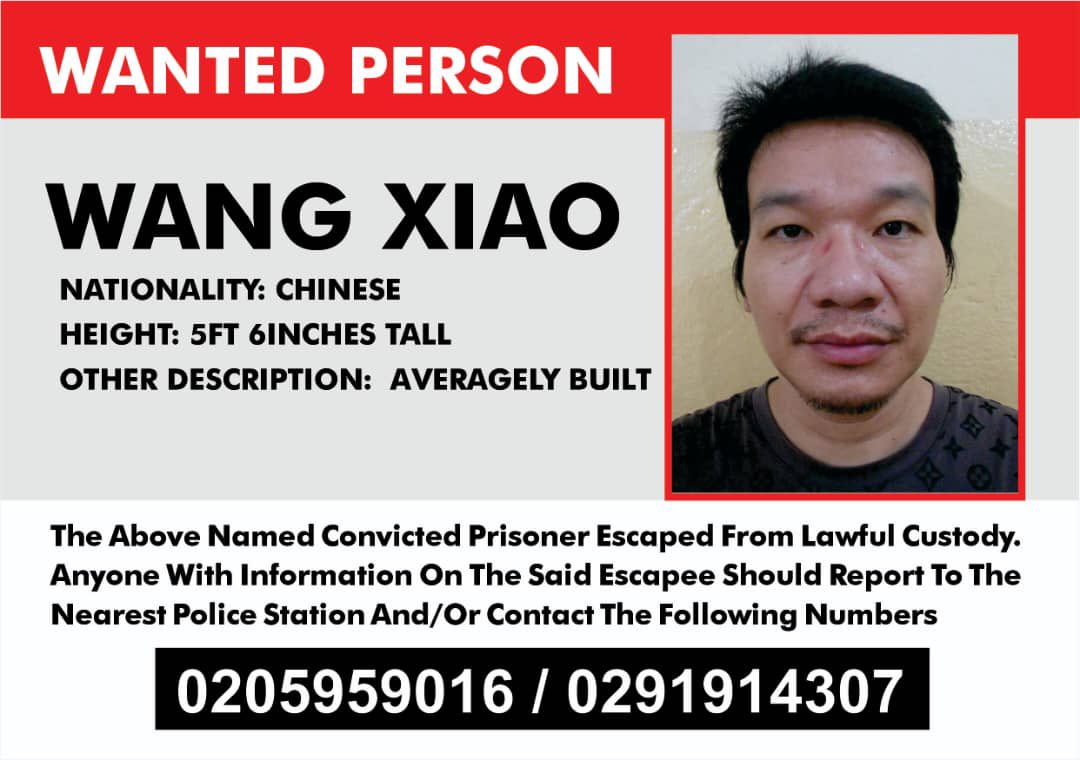
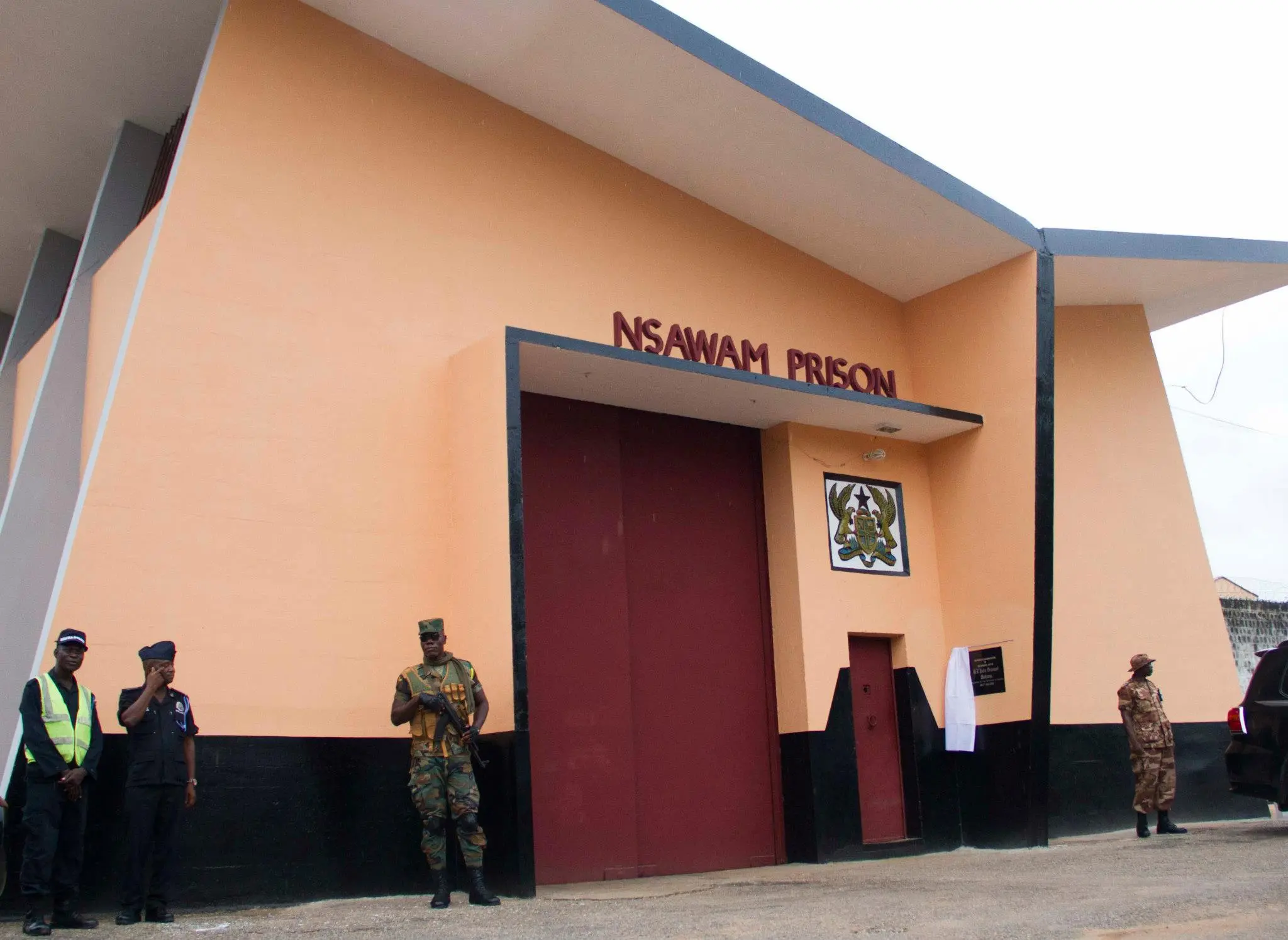
    Two prison officers, Joseph Oteng and Sergeant Isaac Boateng Bonsu, have been brought before an Accra Circuit Court on charges of aiding the escape of Wang Xiao, a Chinese convict at Nsawam Medium Prison.

    The officers are facing charges of conspiracy and aiding escape. It was alleged that they initially claimed to their superiors that after escorting Wang Xiao to the hospital, they were approached by a Toyota Vitz car, which then drove away with the convict.

    However, CCTV footage from a hotel exposed their deceit. The footage showed that the accused officers took Wang Xiao to a hotel to meet his wife in a room.

    The convict and his wife allegedly escaped over the room’s balcony while the officers waited in the hotel reception area.

    The prosecution said that on February 7, 2024, at around 0700 hours, the two officers were detailed to escort Wang Xiao, a Chinese national serving a one-year sentence at Nsawam Medium Security Prisons, to Korle-Bu Teaching Hospital for treatment.

    The prosecutor said that after the convict was treated by a medical officer at the hospital’s Dental Department, the two accused agreed to accompany him to the Oceans Hotel in Korle Gonno to meet his wife for a discussion in exchange for a reward of GHC1,000, which they agreed to split.

    According to Chief Inspector Alorwu, the accused removed the convict’s handcuffs and took him to the hotel reception. The second accused, Bonsu, informed the receptionist that they were there to see someone in one of the rooms.

    The prosecution said the two accused sent the convict to the room, where they met his alleged wife, who offered them KFC rice and drink while she “spends some time with the husband alone.”

    Upon returning to the hotel room to contact the convict, the accused discovered that both the convict and his alleged wife had fled through the balcony.

    The prosecutor said that after the convict fled, the accused proceeded to Tema Station Hockey to hide the handcuffs with a witness in the case.

    They immediately called their superiors in Nsawam and informed them that when escorting the convict from the hospital, they were unexpectedly stopped by a yellow and black unregistered Toyota Vitz taxi, and the inmate leapt into the taxi and fled with it.

    The prosecutor said the accused were interrogated by their superiors at the Prisons National headquarters, who then submitted a formal complaint to the Police on February 13, 2024.

    During investigations, the accused led the police to the hotel. A review of CCTV footage revealed that the convict and his wife jumped from the balcony of the first-floor building and fled while the accused were relaxing in the reception area after receiving meals from the convict’s wife.

    The prosecutor said that it was only when the hotel staff alerted them to check on the prisoner that they realized he had escaped.

    The accused have pleaded not guilty, and the court, presided over by Mrs. Afia Owusua Appiah, has granted them bail in the sum of GhC100,000 each, with two sureties to be justified.

    They are scheduled to reappear on April 9, 2024. The prosecution, led by Chief Inspector Wisdom Alorwu, stated that the complainant was the third in command at the Nsawam Medium Security Prisons, and the accused were serving under his supervision.

  • US to investigate whether Chinese cars are risk to national data security

    US to investigate whether Chinese cars are risk to national data security

    The United States is checking to see if cars from China could be a threat to national security. They might put limits on the cars because of worries about their technology.

    The United States Commerce Department needs to investigate because cars gather a lot of personal information about the people inside them and use cameras and sensors to record detailed information in the United States. “The White House said they are working on fixing the infrastructure. ”

    The study will also look at cars that can be controlled or stopped from far away.

    President Joe Biden said that China’s rules could bring a lot of their cars to our market, which could be dangerous for our national security. “I won’t allow that to happen while I’m in charge. ”

    White House officials told reporters that it’s too soon to say what they might do and said they haven’t decided yet if they will ban or limit Chinese cars.

    Officials told news people the U. SThe government has a lot of power and can make big decisions that affect a lot of people.

    Biden said it is a big plan to make sure cars in the U. Sare better for the environment. The roads from countries we are worried about, like China, do not harm our security as a nation.

    The Alliance for Automotive Innovation, a group that represents big car companies like General Motors, Toyota, and Volkswagen, wants the Commerce Department to talk to them before making any decisions that could affect their industry.

    The group asked Commerce to focus on deals that might be dangerous for the U. SProtecting the economy and the safety of the country, but not stopping small transactions that could affect vehicle safety.

    Not many Chinese-made small trucks and cars are being brought into the US. Gina Raimondo, who is in charge of trade, said the government is doing something to stop problems from getting big and causing danger to our privacy and safety.

    Chinese companies that make electric cars have been relying on Southeast Asia, the Middle East, and Europe as their biggest markets for selling their cars to other countries. BYD, the biggest seller of electric cars in the world, has said many times that it doesn’t have any plans to sell its cars in the U. SThe company is searching for a place in Mexico to build a factory to make cars for the local market.

    BYD announced on Wednesday that it will start selling its Dolphin Mini EV in Mexico for 358,800 Mexican pesos (US$21,019. 33), which is less than half the price of the cheapest Tesla.

    The Chinese foreign ministry did not respond right away to a request for comment on Thursday.

    Cui Dongshu, who is the secretary general of China Passenger Car Association, said it is unfair to single out cars from a certain country that have smart sensors and put restrictions on them.

    The Biden administration is thinking about adding extra taxes on cars made in China. They are also feeling pressure to limit the number of electric cars from China that are brought into the US through Mexico.

    The United States The U. Shas made rules to help people use less. The electric vehicle battery supply chain is being moved away from China. Companies and consumers will not get tax benefits if they use materials from China in their supply chains.

    In December last year, China was accused of breaking trade rules and causing problems for global supply chains. China is in control of making the batteries for electric cars, and now others are trying to make a new supply chain that doesn’t rely on China.

    In November, a group of both Democratic and Republican people in the United States worked together. Politicians are worried because Chinese companies are collecting and managing important information while testing self-driving cars in the US.

    The Commerce Department wants to hear opinions for 60 days and then think about making rules to solve problems. The probe will also look for information about US-made cars, such as where the software is from.

    The United States didn’t allow Chinese telecom companies to do business there because they were worried about data security. They said Huawei and ZTE were a danger and couldn’t operate in the U. SCarriers must take their equipment out of the United States. Networks are connected systems of computers or other devices that can communicate and share information with each other. The White House said China is putting a lot of limitations on the United States. Foreign cars and other foreign vehicles driving in China. “Biden said that we should not let Chinese connected vehicles operate in our country without protections. ”

    In the past few years, China has made its rules for managing data in the country stricter. Most industries have to ask for approval before they can send data to other countries.

    In May, the government made stricter rules about how car companies can use data. They also suggested that smart cars in China should not send data to other countries, but should use Chinese cloud services instead.

  • Chinese in Ghana reportedly use parliament house to celeberate new year

    Chinese in Ghana reportedly use parliament house to celeberate new year

    Twitter user @wuuhuuu1 has raised concerns about the alleged allocation of an entire parliament building for a Chinese New Year celebration.

    The user questions how this decision was made and whether the Chinese parliament would extend the same courtesy for celebrating Homowo, a significant festival of the Ga people in Ghana.

    The criticism reflects a broader sentiment of feeling disconnected from one’s cultural identity and values in the midst of foreign influence.

    Watch video below:

  • Two Chinese fishermen killed after Coast Guard pursues them at sea

    Two Chinese fishermen killed after Coast Guard pursues them at sea

    Two Chinese men who were fishing in the water near Taiwan’s Kinmen islands died after the Taiwanese coastguard tried to catch them.

    Taipei said the fishing boat went into Taiwanese waters on Wednesday without permission.

    Four fishermen on a boat refused to be checked by the authorities, and the boat overturned when the authorities tried to follow them.

    Beijing was very upset about the incident and said it really hurt the feelings of people in Taiwan and China.

    Kinmen is very close to China, just 3km away, and is on the front line of the conflict between China and Taiwan.

    China thinks of Taiwan as a part of its own country and may use force to make it part of China someday.

    Recently, people who live in Kinmen have said they are seeing more Chinese boats that dig up sand and mud near the island. The group of islands has around 180,000 people and is 187km away from Taiwan’s main island.

    The coastguard said two out of the four people on the Chinese boat were declared dead at the hospital after attempts to revive them didn’t work.

    “The other two people are okay and have been taken to Kinmen for more investigation by the prosecutors,” the statement said.

    Wednesday’s incident happened when things were already getting tense between the two groups. In January, Taiwan chose a new leader that China sees as wanting to split from China.

    China’s office that deals with Taiwan has asked the Taiwanese government to look into the situation and help the families of the victims.

    Zhu Fenglian, a person who speaks for the government, said that the ruling party in Taiwan is taking Chinese fishing boats without permission and hurting the fishermen in a violent way.

    She said that Beijing thinks that the communities on both sides of the Taiwan Strait are like one big family.

    She said they have worked hard to make things easier for fishermen on both sides.

    The Taiwan government supported the coastguard’s actions on Thursday and asked China to stop doing the same things in their waters.

    “Taiwan’s Mainland Affairs Council said that many Chinese fishing boats have been coming into our off-limits waters and catching valuable fish, especially during the Lunar New Year. ”

    “We feel very sorry that the Chinese crew did not work with our law enforcement and this bad thing happened,” it said.

  • Chinese inmate left our custody with prison guards – Korle Bu

    Chinese inmate left our custody with prison guards – Korle Bu

    The Korle Bu Teaching Hospital (KBTH) refutes claims that a Chinese inmate escaped while receiving toothache treatment.

    The prison service reported the escape of the Chinese national serving a one-year jail term for theft during medical care at the facility.

    KBTH’s Public Relations Officer, Mustapha Salifu, disputed the accuracy of the media report, stating that the inmate left the hospital with the prison guards who accompanied him.

    He said “The report in the media is not very accurate.”

    Mr Salifu explained that the inmate, Wang Xiao, came to KBTH for a dental check-up, accompanied by two prison guards on Monday, February 12, 2024.

    After examination and assessment, it was determined that Wang Xiao needed an X-ray examination, incurring extra costs. Due to insufficient funds, the appointment was rescheduled for Friday, February 9, 2024.

    “He [Wang Xiao] came to the KBTH in the company of two prison guards on the account of a toothache. Once he got to the hospital, we observed that he was in handcuffs. But they moved out and reported back at about 8 am for the registration formalities.

    “After the registration, he was asked to pay an amount of GH¢167 because he was a non-Ghanaian. He then proceeded to the consulting room where he was attended to and assessed. After the assessment, it happened that he had to go for an X-ray examination. While going for the X-ray, he was still in handcuffs,” he stated.

    Mr Salifu emphasized that Wang Xiao left the clinic with the prison guards and has not returned since. He clarifies that the inmate did not escape while in KBTH custody and was not admitted to the hospital; it was a routine visit to the clinic for dental concerns.

    “But he left the clinic in the company of the prison guards. So, as far as we are concerned, the inmate left with the guards that came with him and he did not escape while in our custody,” he stated.

    “Let me mention that, the patient was not on admission. It was just a visit to the clinic and his condition did not require that he was admitted to the ward,” he added.

  • Prisons Service manhunts Nsawam Prison Chinese escapee

    Prisons Service manhunts Nsawam Prison Chinese escapee

    The Ghana Prisons Service is in search of a Chinese inmate at the Nsawam Maximum Security Prison, Wang Xiao, who is currently at large.

    According to the Public Relations Officer of the Ghana Prisons Service, Superintendent Abdul Latif Adamu, Wang Xiao, escaped during a dental medical assessment at the Korle-Bu Teaching Hospital in Accra on Wednesday, February 7, 2024.

    Wang Xiao is serving a one-year jail term for theft at the Nsawam Maximum Security Prison.

    Engaging the media on February 12, 2024, Superintendent Abdul Latif Adamu, said, “as it stands now, the issue is seriously under investigation, and we have mounted a strategy to search for and, if possible, recapture him.”

    “That is why investigations are very necessary to establish how it happened and the factors that actually caused it. We have gotten a lot of leads that have proven to be successful in what we are doing,” he added. 

    Meanwhile, a photo of Wang Xiao, who is currently at large, has emerged.

    In the image titled “Wanted Person”, Wang Xiao is described as 5 feet, 6 inches tall, and averagely built. Anyone who comes into contact with him is advised to report to the nearest police station or call 0205959016 or 0291914307.

  • Photo of Chinese in Nsawam jailbreak pops up

    Photo of Chinese in Nsawam jailbreak pops up

    A photo of Wang Xiao, an inmate at the Nsawam Maximum Security Prison, who is currently at large has emerged.

    In the photo shared by Graphic Online, Xiao is 5 feet 6 inches tall and is averagely built.

    Wang Xiao was serving a one-year jail term for theft at the Nsawam Maximum Security Prison but escaped during a medical assessment at the Korle-Bu Teaching Hospital in Accra on Wednesday, February 7, 2024.

    Superintendent Abdul Latif Adamu, the Public Relations Officer of the Ghana Prisons Service, confirmed the escape and revealed that the inmate was undergoing medical examination at the Korle-Bu Teaching Hospital at the time of the incident.

    During an interview on Citi FM on February 12, 2024, he elaborated that despite being escorted by prison officers, Xiao managed to escape.

    “It is indeed true that an incident like that has come to the attention of the service, and we can confirm that, yes, an escape has happened at the Korle-Bu Teaching Hospital where an inmate, a Chinese to be specific who was sent there for assessment for medical care, unfortunately, escaped,” he said.

  • Chinese Nsawan prisoner breaks jail during a medical review

    Chinese Nsawan prisoner breaks jail during a medical review

    Ghana Prisons Service has broken its silence regarding the reported escape of a Chinese national who was serving a one-year jail term for theft at the Nsawam Maximum Security Prison.

    The incident took place during the individual’s medical assessment at the Korle-Bu Teaching Hospital in Accra on Wednesday, February 7, 2024.

    Superintendent Abdul Latif Adamu, the Public Relations Officer of the Ghana Prisons Service, confirmed the escape and revealed that the inmate, Wang Xiao, was undergoing medical examination at the Korle-Bu Teaching Hospital at the time of the incident.

    During an interview on Citi FM on February 12, 2024, he elaborated that despite being escorted by prison officers, Xiao managed to escape.

    “It is indeed true that an incident like that has come to the attention of the service, and we can confirm that, yes, an escape has happened at the Korle-Bu Teaching Hospital where an inmate, a Chinese to be specific who was sent there for assessment for medical care, unfortunately, escaped.

    “As it stands now, the issue is seriously under investigation, and we have mounted a strategy to search for and, if possible, recapture him. he was a convict serving a one-year jail term. the inmate in question was on transfer to Korle-Bu Hospital; it was a dental problem,” he said.

    Superintendent Abdul Latif Adamu continued, “Officers were deployed to supervise him to ensure that he was escorted to the hospital and then back to the facility but unfortunately, this happened.

    “That is why investigations are very necessary to establish how it happened and the factors that actually caused it. We have gotten a lot of leads that have proven to be successful in what we are doing,” he added.

    In a separate report by the state-owned graphiconline.com, DSP Irene Pokuah Wiredu, Head of Media Relations for the service, disclosed that a wanted person notice has been issued, urging the public to assist in re-arresting Wang Xiao.

  • Prisons Service confirms escape of Chinese inmate from Korle Bu

    Prisons Service confirms escape of Chinese inmate from Korle Bu

    Ghana Prisons Service has broken its silence regarding the reported escape of a Chinese national who was serving a one-year jail term for theft at the Nsawam Maximum Security Prison.

    The incident took place during the individual’s medical assessment at the Korle-Bu Teaching Hospital in Accra on Wednesday, February 7, 2024.

    Superintendent Abdul Latif Adamu, the Public Relations Officer of the Ghana Prisons Service, confirmed the escape and revealed that the inmate, Wang Xiao, was undergoing medical examination at the Korle-Bu Teaching Hospital at the time of the incident.

    During an interview on Citi FM on February 12, 2024, he elaborated that despite being escorted by prison officers, Xiao managed to escape.

    “It is indeed true that an incident like that has come to the attention of the service, and we can confirm that, yes, an escape has happened at the Korle-Bu Teaching Hospital where an inmate, a Chinese to be specific who was sent there for assessment for medical care, unfortunately, escaped.

    “As it stands now, the issue is seriously under investigation, and we have mounted a strategy to search for and, if possible, recapture him. he was a convict serving a one-year jail term. the inmate in question was on transfer to Korle-Bu Hospital; it was a dental problem,” he said.

    Superintendent Abdul Latif Adamu continued, “Officers were deployed to supervise him to ensure that he was escorted to the hospital and then back to the facility but unfortunately, this happened.

    “That is why investigations are very necessary to establish how it happened and the factors that actually caused it. We have gotten a lot of leads that have proven to be successful in what we are doing,” he added.

    In a separate report by the state-owned graphiconline.com, DSP Irene Pokuah Wiredu, Head of Media Relations for the service, disclosed that a wanted person notice has been issued, urging the public to assist in re-arresting Wang Xiao.

  • Police launch manhunt after armed attack on Chinese miners in Akyem Akokoaso

    Police launch manhunt after armed attack on Chinese miners in Akyem Akokoaso

    The Akyemansa District Police Command has launched an intensive manhunt following a daring attack on a group of Chinese miners in Akyem Akokoaso, a farming community in Ofoase Ayirebi. 

    The armed assailants reportedly robbed the miners of GHS10,000,000 in cash and two gold bars in a brazen assault.

    According to sources cited by Citi News, the incident unfolded on Friday around 7 pm when the armed men descended upon the site of the Jia Xin Industrial Mining Company Limited. In a violent confrontation, the assailants shot two Chinese miners, inflicting severe injuries. One miner was shot in the leg, while the other sustained injuries to the testicles. Subsequently, the perpetrators fled the scene with the stolen cash and gold bars.

    Swift medical attention was provided to the injured miners, who were promptly transported to the hospital. Thankfully, they are reported to be in stable condition, thanks to the timely intervention of healthcare professionals.

    In response to the alarming incident, police authorities, in collaboration with the management of the mining company, have initiated investigations to apprehend the perpetrators and bring them to justice. 

    The launch of a vigorous manhunt underscores the seriousness with which law enforcement is treating the incident, as efforts are intensified to track down the armed assailants responsible for the brazen attack.

    The robbery has sent shockwaves through the community, highlighting concerns about the safety and security of mining operations in the area. It also underscores the need for enhanced security measures to protect miners and deter criminal activities in mining communities.

    As investigations unfold, authorities are urging anyone with relevant information regarding the incident to come forward and assist in the ongoing efforts to apprehend the perpetrators. 

    The swift resolution of this case is crucial not only for the victims and their families but also for restoring a sense of security and stability in the affected community.

  • Chinese anti-fraud app has ability to track Tibetans – Report

    Chinese anti-fraud app has ability to track Tibetans – Report

    A new report says that a Chinese app, originally made to stop fraud, might be used to watch over Tibetans.

    The Tibet research groups found out that the app could spy on people by looking at their texts, internet history, and personal information.

    They also claimed that some Tibetans were being made to get the app.

    Rights groups are saying that rules in Tibet have gotten stricter in the past few years, making an already tightly controlled area of China even more restricted.

    In recent years, the government has increased watching and controlling what people do, especially during the pandemic.

    Regions like Tibet and Xinjiang are being closely watched because they are politically sensitive. Beijing has been worried about regions wanting to break away for a long time. They have started to crack down even more under the rule of Xi Jinping, who has stressed the importance of staying together as a country.

    The new report talks about the National Anti-Fraud Centre app that came out in 2021. It was done by Turquoise Roof and Tibet Watch.

    The report didn’t have proof that the app was specifically trying to track Tibetans. But it did say that the app supports a lot of spying and could help the Chinese government control them.

    The National Anti-Fraud Centre created an app to help stop scams. It can find fake texts and calls and lets people report scams. It also helps people get help from the police fast. China has been working hard to stop internet and phone scams in the past few years.

    Turquoise Roof checked the app and found that some parts of it could be used for spying.

    The app can watch for new text messages and see the calls and websites that have been visited. The spyware can record passwords and take pictures to collect information about the user and their environment.

    The report said that the face recognition feature can also be used to collect a lot of information about Tibetans to keep track of them better.

    One way is by making Tibetans download the app. Last year, a refugee said he was stopped by police on his way home from school and was told to put the app on his phone.

    Issues with the app being downloaded without permission came up shortly after it was released, when it was put on around 200 million phones.

    Some local government offices required their workers to download the app. Others had to use the app to sign their children up for school or get ID cards. The Financial Times reported this.

    The newspaper also talked to people who said the police contacted them because the app showed they had looked at foreign financial news sites like Bloomberg.

    Turquoise Roof found out that the Chinese government is keeping a big list of Tibetan people who they think could cause problems. The database used a software from a company in the US called Oracle.

    They said it was okay to guess that any information collected by the anti-fraud app could be used in this database.

    The report asked the Chinese government to make stronger privacy rules and to look into claims of forcing people to download the app.

    It asked companies and governments around the world to not support China’s mass surveillance programs.


    Beijing has had strong control over Tibet since it sent soldiers in 1950 to enforce its power over the area.

    Some people who work to make changes say that China restricts Tibetans from traveling freely by controlling their passports. China also closely watches how Tibetans communicate with others outside of their country.

    Tibet Watch has recorded many cases of Tibetans getting taken by the police because of what they said on WeChat. They also found that some accounts and words that were seen as too political were shut down or removed.

    China has used a lot of surveillance in Xinjiang to control the Uyghur people, not just in Tibet.

    In 2019, Human Rights Watch discovered that officials were using a system to watch and track where people in Xinjiang were going and what information they were sharing.

    In the same year, some newspapers found out that border police were putting apps on people’s phones to watch them when they visited the area.

  • China denies political motives in Mayday lip-sync investigation

    China denies political motives in Mayday lip-sync investigation

    China denies media reports alleging political motives in Mayday lip-sync investigation.

    The claims suggest Beijing pressured Mayday to make pro-China comments, leading to the inquiry when the band refused.

    Beijing’s Taiwan Affairs Office dismisses the reports as “fake news” and a “complete fabrication.”

    Taiwan states it is examining the claims made regarding the investigation.

    Mayday, celebrated for their “positive rock music,” stands as one of Taiwan’s most successful acts in mainland China.

    According to an internal Taiwan security note reported by Reuters, China’s National Radio and Television Administration requested Mayday to publicly support Beijing’s stance that self-governed Taiwan is an integral part of China.

    While China views Taiwan as a renegade province destined for its control, Taiwan asserts its independence with a separate constitution and democratically elected leadership.

    Reports suggest Beijing aimed to leverage Mayday’s influence, particularly among the youth, to sway voters ahead of Taiwan’s upcoming presidential and legislative elections on January 13.

    CNN, citing a recent Taiwan security briefing, reports that requests for Mayday to support Beijing’s stance extended for months, coinciding with the start of the band’s China tour in May.

    According to officials at the briefing, when Mayday declined the requests, Chinese authorities reportedly collaborated with state media to raise discussions about the band’s purported lip-syncing and issued threats of penalties.

    In China, commercial regulations prohibit lip-syncing before paying audiences due to its deceptive nature. Violation incurs a fine of 100,000 yuan ($14,110, ÂŁ11,240), potential performance bans, and license revocation for show organizers. While rarely enforced, some Chinese social media users question why Mayday is seemingly singled out, given the prevalence of lip-syncing among performers in the country.

    Taiwan’s Mainland Affairs Council is investigating the claims, expressing concern that if true, they would further worsen “negative impressions” of the Chinese Communist regime among Taiwanese youth.

    Taiwan’s major political parties criticize Chinese authorities over alleged political meddling.

    The Kuomintang opposition party strongly condemns such actions, stating that if the allegations are true, it will not only be rejected by fans but also harm the sentiments of the Taiwanese people, offering no benefit to cross-strait exchanges, according to spokesman Wang Min-shu.

    The ruling Democratic Progressive Party asserts that the reports demonstrate China’s determination to interfere in Taiwan’s election, stopping at nothing.

    China’s Taiwan Affairs Office dismisses the accusations as deliberate moves by Taiwanese authorities to spread rumors, condemning it as insidious and malicious political manipulation. Chen Binhua, a spokesperson for the office, urges Taiwan compatriots to recognize these schemes and not be deceived.

    The investigation against Mayday became public in early December. While the band and its music label deny lip-syncing, they express cooperation with Chinese authorities.

    Amid increasing military and political pressure, China has heightened its influence ahead of Taiwan’s crucial presidential race, exemplified by deploying a record number of military planes near the island.

  • Dr. Acheampong highlights Chinese negotiation tactics in debt restructuring talks

    Dr. Acheampong highlights Chinese negotiation tactics in debt restructuring talks

    The Ghana Shippers Authority, in collaboration with the Bank of Ghana, has conducted an awareness workshop on the Bank of Ghana Letter of Commitment requirement for the repatriation of export proceeds.

    The Letter of Commitment is a prerequisite for approving export shipments to exit Ghana’s Ports and Borders.

    Since its implementation in 2016, the requirement has garnered significant attention, primarily due to the sanctions associated with non-compliance stemming from a lack of awareness among exporters.

    Monica Josiah, the Tema Branch Manager for the Ghana Shippers Authority, emphasized that the workshop aimed to address exporters’ and customs house agents’ concerns and complaints regarding non-compliance.

    “The Chinese will always negotiate hard. Ghana would have to come down a little bit on some of the things we are also asking for. If you look at some of the recent market statements, we were pushing for a 30% to 40% haircut on the commercial side, and I suspect a similar thing on the bilateral creditors.

    “We need to conclude the deal before the year ends. The more uncertainties that we have, the more this ends up hurting the economy, especially as we get into next year [2024]. The traditional pressures that we see on the exchange rate will start,” he was quoted by myjoyonline.com.

  • Ukraine worries about drone shortage after Chinese restrictions

    Ukraine worries about drone shortage after Chinese restrictions

    Drones have had a big impact on the war in Ukraine, used a lot by both sides. China’s decision to limit the amount of goods it exports has raised worries that there might be a shortage of supplies.

    A lot of these things are made in China and bought ready to use. We need more supplies because many of them get lost in the fighting.

    However, it seems like there may be fewer Chinese drones and drone parts accessible to both Ukraine and Russia.

    Based on a report by a London think tank called the Royal United Services Institute (Rusi), Ukraine loses around 10,000 drones every month.

    Many volunteer groups have used donated money to help the Ukrainian army get new supplies.

    Commercial drones are used together with military drones that are specifically made for fighting, like the Turkish Bayraktar drones used by Ukraine and the Iranian Shaheds used by Russia.

    The Chinese government recently put new rules in place starting from 1 September. These rules are for bigger drones that weigh more than 4kg. They also apply to certain equipment like cameras and radio modules that are used with drones.

    Chinese manufacturers of this equipment now have to ask for permission to sell it overseas and give certificates to show who will use it. The government in Beijing, which has not criticized Russia for invading Ukraine, says Chinese drones should only be used for business, not military, reasons.

    Ukrainian volunteers and soldiers are not greatly affected by the recent Chinese restrictions on drones. The popular lightweight Mavic drones made by DJI are still easily available.
    But, they are saying that there is a problem getting the parts they need, and they are also worried that it might get even worse later on.

    Lyuba Shypovych, the leader of Dignitas, a big Ukrainian volunteer group that provides the military with drones, said that the only difference for now is that they are buying the remaining stock in European warehouses more actively. “But we don’t know what we will be doing in the future. ”

    She is very concerned about whether there will be enough thermal imaging cameras available.

    The shorter days and longer nights are affecting our military supplies and how we conduct warfare because we have fewer thermal imaging drones. She said our units cannot see well at night. This impacts both drones that are already made and come with thermal imaging cameras, as well as the individual parts used to build drones.

    It is especially important to have enough parts for people who build their own drones or make upgrades on ones they bought.

    The effect is being noticed. According to a drone operator named Oddr, China’s license restrictions have reduced Ukraine’s ability to acquire drone parts. “However, we are searching for other options to ensure that our drones continue to function just like they did previously. ”

    This is the most recent problem that volunteers have in getting drones for the Russian and Ukrainian armies.

    The biggest company that makes drones for business, DJI, stopped selling directly to both countries two months after the big attack started in February 2022. They also stopped their distributors everywhere in the world from selling DJI products to customers in Russia or Ukraine.

    Ms Shypovych said that there were a lot fewer Chinese drones for sale in Europe between August and September 2022.

    It’s doubtful that it occurred randomly. “She says European countries are where Ukrainians get drones from. ”

    When the BBC asked DJI, they couldn’t say for sure if the number of drones they were giving to distributors in Europe had changed or not.

    None of the 10 UK companies that sell DJI products and were asked by the BBC were able to comment on the issue.

    A recent investigation by The New York Times found that Chinese companies have reduced the number of drones and parts they sell to people in Ukraine.

    However, other countries are also impacted by this situation, not just Ukraine.

    Russia’s Kommersant newspaper said that the regulations put in place by China’s government on drone exports have made it very difficult for Russia to receive the supplies they need. This has caused a shortage of certain parts, like thermal imaging cameras.

    When Russian buyers can’t get drones directly, they often go to other countries like Kazakhstan to buy Chinese drones. However, it has become tougher for them because Kazakhstan has made its own rules about importing drones.

    To reduce the effects of the Chinese restrictions, Ukrainian volunteers have been working hard to find other options made in different countries, both in the West and Ukraine.

    Anatoly Polkovnikov, who assists in getting drones, shares that a Ukrainian start-up is getting ready to start producing drone motors.

    He believes that the Chinese restrictions won’t affect the overall situation and is hopeful for the future. I think that in the future, they will encourage more production in Ukraine.

    The war in Ukraine is the first time drones have been used in a big way, and both sides want to continue using them a lot.

  • New Zealand landlord loses dispute with Chinese embassy over trash case

    New Zealand landlord loses dispute with Chinese embassy over trash case

    A landlord in New Zealand got into an argument with the Chinese embassy over throwing away trash and ended up losing a claim for NZ$960 ($559; ÂŁ462).

    Chandler Investments Limited said that the embassy did not pay for cleaning and other expenses when they moved out of a rented Wellington mews house.

    A group that settles disputes between tenants and landlords decided that the embassy could not be held responsible because it has special protection as a government institution.

    This means that a government cannot be taken to court in another country unless it agrees to it.

    Chandler Investments Ltd wanted to get paid for doing cleaning, taking out the trash, and cutting keys. They said they should be paid NZ960 ($559; ÂŁ462) for their services.

    But in official documents reviewed by the BBC, a judge named Rex Woodhouse decided that the tribunal did not have the power to handle the case, so it was thrown out.

    Representatives from the Ministry of Foreign Affairs and Trade (MFAT) of New Zealand were at the tribunal hearing. However, neither side involved in the claim showed up. Woodhouse contacted someone from the Chinese embassy, but they didn’t have any information about this application, according to what he wrote in his judgment.

    The person who wanted to rent the place was identified as the “Embassy of the People’s Republic of China”. They asked for payment for damages in May, after the rental period ended.

    The MFAT said that there are some cases where immunity does not apply in commercial situations but the judge did not agree that renting a house to an embassy is a commercial transaction.

    Owner Chris Chandler told local media that the situation was unexpected and surprising. He also mentioned that he thought the amount of money involved would not have had much significance for the embassy.

    MrChandler said that our property manager recommends not having any more diplomats and this advice applies to others in the same area too.

    This has happened before in New Zealand, where a landlord got into a dispute with an embassy over a rental agreement.

    In 2018, a complaint was filed against Eva Tvarozkova, who works as a deputy chief for the European Union. The complaint said that she owed more than $11,700 (NZ$20,000) for rent and other expenses at a house in Wellington.

    The court first said the landlord could have the money, but later the government said Ms Tvarozkova could not be punished because she had diplomatic immunity. They wanted to have another court session.

  • Kenya’s additional Chinese loans are “not sustainable” – Analyst

    Kenya’s additional Chinese loans are “not sustainable” – Analyst

    Despite Kenya’s public debt reaching $70 billion, President William Ruto joins other global leaders in Beijing for the tenth-anniversary meeting of China’s Belt and Road Initiative (BRI), which strives to link Africa, Asia, and Europe through extensive infrastructure and energy projects.

    President Ruto seeks an additional $1 billion in loans from China.

    Several infrastructure projects in Kenya have been developed as a result of the Belt and Road Initiative (BRI), one of which is the Standard Gauge Railway line that connects Nairobi, the country’s capital, to the Rift Valley via the port city of Mombasa.

    Despite being built at a cost of $4.7 billion, it has had many difficulties, including as delays and limited freight service uptake.

    The SGR, which began operations in 2017, was initially designed to serve other landlocked nations in eastern and central Africa as well as the neighboring country of Uganda to the west.

    But Uganda withdrew, choosing instead to collaborate with a Turkish company to build its main line.

    The majority of the line was built last week with loans from Chinese banks.

    Based on government data, Kenya owes China $6 billion at the moment.

    Karuti Kanyinga, a research professor at the Institute for Development Studies at the University of Nairobi, said Kenya’s “largest creditor today is China.”

    “We are paying through the nose and most of our earnings are actually going to paying Chinese loans and that is not going to be sustainable,” he said.

    Ruto has taken steps to cut back on government spending, including requesting that all ministries cut their budgets by more than 10%, as several of its Chinese loans are due to mature in the current fiscal year.

    Critics counter that by continuing to take on large debt, he has broken his pledges.

  • Report highlights Chinese loans’ role in enhancing African infrastructure

    Report highlights Chinese loans’ role in enhancing African infrastructure

    A report from Peking University in China, has it that Chinese loans to African countries have made a favorable contribution to the continent’s economic expansion, enhancements in infrastructure, and the development of human capital.

    The report indicated that Chinese loans have had a positive impact on African economic growth, with a range of 0.176% to 0.300%. Furthermore, it noted a beneficial influence on infrastructure development, with a range of 0.027% to 0.084%.

    The study, titled “A Study on the Effectiveness of China’s Sovereign Financing in Africa,” was carried out by the Department of International Department Cooperation at Peking University’s Institute of New Structural Economics (INSE) in China.

    China has been a major lender, providing $160 billion in financial commitments to African countries, which accounts for 56% of loans issued over the last two decades. The objective of China’s financial support for African nations aligns with the United Nations’ 2030 Sustainable Development Goals.

    The report utilized regression analysis, using Chinese loan data from Boston University, covering 49 African countries from 2000 to 2020. It employed regression methods to estimate the causal relationship between Chinese loans and six key dimensions: economic growth, job creation, infrastructure enhancement, export earnings, foreign direct investment, and school enrollment rates.

    The report revealed a positive impact on export earnings, ranging from 0.244% to 0.33%, and on inflows of foreign direct investment, from 0.293% to 0.533%.

    Furthermore, the report found that a 1% increase in loans led to a 0.118% to 0.212% increase in enrollment rates and a 0.143% to 0.167% increase in industrial job creation.

    The report also included case studies, such as the Mombasa-Nairobi Railway in Kenya, which indicated that railway projects in the transport sector were associated with the highest average cost. Although these projects contributed to reducing carbon emissions by replacing road transportation, they were found to be less ideal for financial credibility.

    The report highlighted the success of projects like the Soubre Hydropower Plant in Cote d’Ivoire and the Adama Wind Farm in Ethiopia, as they harnessed natural resources to overcome electricity shortages and reduce carbon emissions.

    Additionally, projects like the Bole International Airport in Ethiopia and the Tanzania National Fiber Optic Backbone were credited with fostering regional public good growth.

    A well-drilling project in rural Senegal improved basic hygiene conditions and offered alternative water purification methods.

    In the education sector, the report commended the University of Ghana for developing a distance learning system, narrowing the digital divide, and enhancing human capital through digital capacity.

    China has supported 33 training and education programs, totaling $1.6 billion, which encompass vocational training and the construction of public schools.

    In terms of recommendations, the report advised African countries to establish systematic and long-term data collection at the project level of sovereign financing and implement a growth-oriented evaluation mechanism. For the international community, it called for advanced economies and industrialized countries to focus strategically on infrastructure projects in Africa.

    At the macro level, the report recommended that Chinese creditors promote future financing for Africa, build a multilayer Chinese financial system, and enhance support for Africa to bolster global economic prosperity.

    Mr. Wu Peng, Director-General of the Department of Africa Affairs at China’s Foreign Affairs, reiterated China’s commitment to honoring all promises made at the G20 summit to ensure sustainable infrastructure development in African countries.

    Mr. Ibrahima Sory Sylla, the Senegalese Ambassador to China, welcomed the report for providing valuable guidance to African countries in evaluating projects accurately.

    Mr. Ivan Zyuulu, the Zambian Ambassador-Designate to China, expressed appreciation for China’s support of Africa’s development and appealed for an extension of loan repayment periods.

    Mr. Allan Joseph Chintedza, the Ambassador of Malawi to China, called on the International Monetary Fund, the World Bank, and the Chinese government to support Malawi’s transition from an agriculture-based economy to an industrialized nation.

  • Can Xue: Chinese novelist who started writing again at age 30

    Despite being relatively unknown in her own country, she is a Chinese author who has been highly speculated to win the Nobel Prize in Literature this year.

    In the end, Can Xue, a writer of unconventional fiction, did not win, but Jon Fosse from Norway did. However, Can Xue has become much more famous.

    She had a difficult childhood during a very chaotic time in the 20th Century.

    Can Xue was one of eight children and she was a teenager when the Cultural Revolution began in China. This period brought about a lot of chaos and violence for almost ten years.

    When the Communist purge happened, her father, who worked as a director at a newspaper, was sent to the countryside and made to do hard manual work. Her mother, who had the same job, was also made to do it.

    When her mom and dad were taken, she, her brothers and sisters, and their grandma had to take care of themselves. They were able to stay alive by eating pumpkin flowers and weeds that they collected from the mountains. At some point, they had to eat Can Xue’s father’s old clothes, including a fur coat. Her grandma got sick from working too much and not eating enough, and she later died from swelling.

    Can Xue could not continue her education and only finished elementary school. She started writing again when she was almost 30 years old.

    A coming together of Eastern and Western cultures.

    Can Xue is a writer who was born in 1953 in Hunan province and uses the pen name Deng Xiaohua.

    When she was young, her father owned many books about philosophy, particularly Marxism, and she was always around them.

    But everything changed when the Cultural Revolution occurred. This was a movement started by Mao Zedong to get rid of things in society that were considered against communism, such as capitalist ideas, traditional practices, and cultural elements.

    Her parents were mistreated along with many others in the country. They were publicly embarrassed, put in jail for no reason, hurt, and had their things taken away.

    This means that she was not able to receive a proper education. However, she still loved to read and write. She learned English on her own and read a lot of books from the Western world while she had different types of jobs. She did many jobs like being a teacher, a tailor who worked for herself, and even an unlicensed village doctor in China.

    She started writing in the 1980s and created a unique style different from other Chinese authors, but this style made her not well-known.

    “Chen Xiaozhen, an editor at her publisher Hunan Wenyi, said in a report in the South China Morning Post that many readers dislike her writing style, but it also makes Can Xue stand out and be different. ”

    Today, she has written many books, including novels, shorter novels, and short stories, and some of them have been translated into English.

    In 2015, her book The Last Lover received a prize for being the best translated fiction. She was also nominated for the International Booker prize in the past for her book Love in the New Millennium.

    She mentions famous Western writers like Kafka, Tolstoy, Shakespeare, and Dante as major inspirations for her writing.

    According to an article on the China Internet Information Centre, she said her ideas come from the West, but she brings them to China to develop and grow in its deep and rich history of 5,000 years.

    I don’t make art like the West or China, but I create my own unique style. I love Chinese culture very much. I came into the world in this place. I stay here. I don’t have to learn what my heart already knows.

    If Can Xue had won, she would have been the second person from China to receive a Nobel Prize in Literature. The first person to win that prize was the novelist Mo Yan in 2012.

    Can Xue was competing against famous and respected authors like Margaret Atwood, Haruki Murakami, and Salman Rushdie. However, she was considered one of the top contenders by the bookmakers this year.

    The committee that gives out awards said that they are giving a prize to the person who has created the best piece of literature that goes in the right direction. The winner gets a lot of money.

    China’s literary atmosphere refers to the overall characteristics and trends in the world of literature in China.

    When someone asked Can Xue about her thoughts on China’s literary scene, she expressed dissatisfaction and negativity.

    “I’ve said it before, but I don’t have any hope,” she said to a Chinese news outlet called Sixth Tone in an interview conducted in 2016. In China, people are holding on to old things and not changing or throwing them away. If you don’t follow tradition with them, then you’re seen as different and ignored.

    But Can Xue, who lives in Beijing, said she will keep writing for the young people of China.

    There are only a few forward-thinking Chinese people at the moment, so I have high expectations for the young generation. “They are in their twenties now,” she said.

    “In 20 years, if people have spiritual problems or if material things don’t fulfill their needs, they may choose to read one of my books. ”

  • US imposes sanctions on Chinese companies in fentanyl crackdown

    The US has imposed penalties on 25 companies and people in China who are believed to have helped make drugs called fentanyl.

    Fentanyl is a very strong drug that is used to help with pain or make people feel relaxed. It is causing a big problem with drug addiction in the United States.

    Attorney General Merrick Garland said that the drug’s supply chain usually begins with chemical companies in China.

    China disagreed with the sanctions and stated that the fentanyl crisis actually started in the United States.

    The Chinese foreign ministry told AFP news agency that they strongly disagree with the United States’ punishment and legal action against Chinese businesses and people. They believe that this is a serious violation of the rights and interests of those companies and individuals.

    The Chinese government is taking strong action against drug crimes. We closely monitor and control the chemicals that are used to make other substances.

    Trying to put pressure and sanctions on someone, in this case the United States, will not solve their own problems. The text means that it will only make it harder for China and the US to work together on controlling drugs.

    In April, a person speaking for the Chinese foreign ministry said that there is no illegal trading of fentanyl between China and Mexico.

    This happened after the Mexican President, Andrés Manuel López Obrador, asked the Chinese government for help to prevent the alleged entry of fentanyl and its ingredients into Mexico.

    The US government says that Mexican criminal groups are providing fentanyl to people all over the US who use it.

    Doctors are allowed to prescribe Fentanyl, but there has been a big increase in opioid addiction in the US over the last few decades. This has caused more illegal production and accidental overdoses.

    In 2022, the drug caused a very high number of deaths – 109,680 in total.

    The US government put restrictions on a group operating in China that makes and sells illegal drugs, including fentanyl.

    Officials are saying that companies involved in the fentanyl supply chain often use incorrect addresses and false labels to prevent their products from being recognized by law enforcement.

    According to the treasury, the individuals and entities affected by the sanctions are from China and Canada. There are 12 entities and 13 individuals from China, and two entities and one individual from Canada.

    The sanctions will stop the entities from using their US assets and prevent Americans from doing business with them.

    Merrick Garland is planning to go to Mexico with other important people to discuss ways to stop the flow of illegal drugs.

    Mr Garland told reporters that we have identified the individuals responsible for harming the American people with fentanyl.

    We understand that this network includes the leaders of the cartels, the people who transport drugs for them, the people who hide their money, the people who operate secret labs, the people who protect them, the people who provide them with weapons, and the people who provide them with chemicals.

    “And we understand that the global supply chain of fentanyl, which results in the deaths of Americans, often begins with chemical companies in China. ”

    The US justice department has revealed charges against eight Chinese companies and 12 of their workers for making and selling fentanyl and methamphetamine drugs. They are also accused of distributing opioids and making sales from precursor chemicals.

    Nobody has been taken into custody and the Chinese government did not collaborate with US authorities during the investigations, according to Mr.

  • John Jinapor expresses concern over presence of oil tankers in Ghana by Chinese firm

    Deputy Energy Minister, John Jinapor, has engaged in discussions regarding the loading and unloading of petroleum products by the Chinese company Sentuo Oil Refinery.

    He questioned, “Why would a Chinese company bring in 300 tankers to this country?” He emphasized the importance of encouraging foreign participation but noted that it must not negatively impact local interests.

    Jinapor added, “In as much as you want to do business in Ghana don’t kill our local businesses.”

    The Tanker Drivers Union has expressed concerns about the impact of Chinese refinery Sentuo Oil continuing to unload fuel locally.

    A union member stated that if this practice persists, they will cease transporting fuel throughout the country.

    He emphasized that Ghanaian laws dictate that the transportation of petroleum products should exclusively be handled by Ghanaian companies, and foreign firms like the Chinese one should not be allowed to unload petroleum products.

    The member added that boycotting their business is a last resort if no action is taken, as it would inevitably result in fuel shortages in the country.

    He highlighted the historical role of Ghanaian tanker drivers in distribution and questioned why the refinery sought to distribute with its own tankers when other entities like Shell and BP relied on them for transportation, even painting their tankers with the respective companies’ emblems.

    He emphasized the need to protect their business, particularly considering the financial commitments many drivers have in the form of loans.

  • Chinese authorities give Uyghur scholar life sentence

    Chinese authorities give Uyghur scholar life sentence

    China has allegedly imprisoned a well-known Uyghur scholar for the rest of his life. He is accused of posing a threat to the country’s safety.

    Rahile Dawut’s sentence was approved after she asked for a review of her case in 2018, as reported by the US-based human rights group, Dui Hua Foundation.

    The professor, who is 57 years old, tried to change a decision but she was not successful this month.

    China has been accused of committing very serious crimes against the Uyghur people and other ethnic groups in Xinjiang, who are mostly Muslims.

    Human rights organizations think that China has forcefully imprisoned over one million Uyghurs for a number of years in a vast system of camps that the government refers to as “re-education camps”.

    It has caused many people to go to jail for a long time.

    John Kamm, executive director of the Dui Hua Foundation, said that the punishment given to Professor Rahile Dawut is a very sad event. It is a big loss for the Uyghur community and for those who value the right to study and learn freely.

    He asked for her to be let go right away and brought back safely to her family.

    Her daughter, Akeda Pulati, said she is always concerned about her mother.

    I feel really sad when I think about my innocent mom having to spend her whole life in prison. “China, please be kind and set my innocent mother free,” she said in a message shared by Dui Hua.

    In December 2018, Ms. Dawut had a trial in a court in Xinjiang. She was arrested the year before for a crime called “splittism”, which means she was accused of putting the country’s security at risk.

    A person from the Chinese government confirmed that Dui Hua has been sentenced to life in prison, the group announced.

    Ms Dawut is really good at knowing about Uyghur stories and customs. She used to teach at Xinjiang University College of Humanities before she was taken into custody.

    In 2007, she started the Ethnic Minorities Research Centre at the university. She also did research in Xinjiang by visiting different places and studying the people living there. She taught at universities in the United States and United Kingdom, including prestigious ones like Harvard and Cambridge.

    Dui Hua stated that Ms. Dawut is one of many Uyghur intellectuals who have been captured, taken into custody, and put in jail since 2016.

    Many countries, including the US, accuse China of committing genocide in Xinjiang. China is being accused by important human rights organizations, Amnesty and Human Rights Watch, of committing terrible crimes against people.

    China says that the accusations are not true.

    According to the Chinese Ministry of Foreign Affairs spokesperson Mao Ning, she does not have any information regarding Ms Dawut’s case.

    There are around 12 million Uyghurs, who are mostly Muslim, living in Xinjiang. Xinjiang is also known as the Xinjiang Uyghur Autonomous Region and is located in the northwest of China.

    New information gathered by the BBC in 2022 showed that China has been using “re-education camps” and that they often have armed officers. The documents also mentioned a policy where officers are allowed to shoot and potentially kill anyone who tries to escape from these camps.

  • US and Canada must collaborate to combat Chinese interference – MP

    US and Canada must collaborate to combat Chinese interference – MP

    A Canadian politician recently spoke to US lawmakers and called for the US and Canada to work together to stop foreign interference from China.

    China supposedly targeted Michael Chong because he criticized their record on human rights.

    He was asked to talk about his personal experience in front of a committee in the US Congress that oversees China.

    He said that what Beijing is doing puts Canada in serious danger.

    Mr Chong explained to the bipartisan committee on Monday that his experience is just one example of how Beijing is meddling in Canada. A lot of times, people don’t notice or tell about other cases, and the people who are hurt have to keep it a secret and suffer alone.

    This year, Canada said that China tried to spread false information about Mr. Chong on WeChat.

    Mr Chong said that he found out from Canadian intelligence that Beijing has been collecting information about him and his relatives in Hong Kong for the past three years. In 2021, Mr. Chong suggested in the government meeting that China’s treatment of its Uyghur minority population is considered a genocide.

    China has said many times that they are not trying to scare or control Mr. Chong or get involved in Canadian matters. The Chinese embassy in Canada said that Mr. Chong criticized China for his own political reasons.

    “The Chinese embassy spokesperson said that a lie is always a lie, whether it is in Canada or in the United States,” according to an email.

    In his statement, the Conservative politician explained how China has been involved in his country in different ways.

    He said that Chinese international students in Canadian universities are being forced by Beijing to spy on other students and activists who are considered unfriendly to the Communist Party of China.

    He also mentioned the problem of Beijing-controlled “police stations” in Canada that are said to have forced some Chinese citizens to return to China.

    China says they don’t have police stations abroad, they have service centers for their citizens who are overseas.

    Mr Chong decided to stop communicating with his family in Hong Kong because he was worried that they might be in danger.

    “He said that many, many other people have done the exact same thing. ” This is one of the results of China’s actions to control people in different countries.

    Mr Chong asked the US and Canada to join forces and work together on this problem.

    He said that we can do this by sharing information and making public China’s attempts to interfere. This is important to protect our basic freedoms, democratic systems, and the international rules that we follow.

    Lawmakers from both the Democratic and Republican parties in the US government praised Mr. Chong’s testimony, who spoke before the Congressional-Executive Commission on China.

    Democratic Senator Jeff Merkley said that young activists who expressed their concerns about the worsening situation in Hong Kong have been continuously targeted. He also mentioned that there is ongoing and intense pressure on Uyghurs globally.

    The commission, which started in 2000, watches over China’s alleged bullying tactics and keeps track of individuals who have disappeared or been imprisoned for political reasons.

    Recently, the relationship between Canada and China has been strained because people found out about alleged attempts to intimidate Mr.

    Canada decided to kick out a Chinese diplomat in May because of the problem. China then responded and asked a Canadian diplomat to leave their Shanghai Consulate.

    The intelligence agencies have said that Beijing tried to disrupt the 2019 and 2021 federal elections.

    Canada started an investigation last week to look into how China and other countries are interfering in their affairs.

  • Security services issue warning regarding Chinese political infiltration

    Security services issue warning regarding Chinese political infiltration

    Westminster is very excited because a person who works for the Parliament got arrested for possibly being a spy for China.

    Last year, Ken McCallum, who is in charge of MI5, gave a talk about the dangers to Britain’s safety. He cautioned that the Chinese Communist Party is strategically planning for the long term.

    They not only want to influence important politicians from different political parties but also younger people starting their careers in public life, slowly making them feel obligated to them.

    We got a big clue about what Mr. McCallum was talking about last weekend when we found out about the arrest.

    The Times newspaper reported that China is trying to influence people in less important positions in politics. They said that MI5, a British intelligence agency, warned the Conservative Party in 2021 and 2022 that two potential candidates for Parliament might be working as spies for China.

    The Conservatives have neither confirmed nor denied the story. A spokesperson said that if they receive trustworthy information about security concerns regarding potential candidates, they take action.

    The newspaper did not give any information about the people who might become candidates, or how close they were to being chosen.

    Two trusted sources told the BBC that the security services have sometimes cautioned the Conservative Party to be cautious of individuals who are trying to succeed in politics.

    However, they mentioned that these warnings are not common and they usually do not provide specific reasons for suspecting the individuals involved. The security services do not regularly check the backgrounds of Conservative candidates. Instead, they reach out to them first if they have any concerns.

    The BBC has learned that important officials in the government have been told not to talk about secret work in pubs near Parliament because they are worried that spies from other countries could listen in.

    One person said they were told that in crowded places around Westminster, you can’t be sure who is present, and that rumors about politicians or officials can be useful for foreign influence operations.

    They said that the warnings were not about people who work as researchers for parliament being foreign agents, but that others nearby who seem to be either employees of parliament or visitors might actually be spies.

  • British PM raises ‘strong concerns’ about Chinese interference following detention of member of parliament

    British PM raises ‘strong concerns’ about Chinese interference following detention of member of parliament

    The Prime Minister of the UK, Rishi Sunak, expressed his worry and disapproval to China’s leader about possible Chinese involvement in the UK’s democratic process. This came after an employee of parliament was arrested under suspicion of spying for China.

    Speaking to reporters at the G20 meeting in New Delhi on Sunday, Sunak said he talked to Chinese Premier Li Qiang about a few concerns, including interference in our parliamentary democracy.

    This happened after two men were arrested in the UK for breaking a law about keeping secrets. It was reported that a person who works for the government and has connections to important politicians from the Conservative Party, including a security minister named Tom Tugendhat, was also arrested on suspicion of spying for China.

    The Sunday Times, a newspaper from the UK, revealed on Sunday that the researcher was taken into custody with another person on March 13th.

    London’s Metropolitan Police have stated that they have arrested two men, one in his 30s in Oxfordshire, southern England, and another in his 20s in Edinburgh, Scotland.

    “The inquiry is being done by police officers from the Met’s Counter Terrorism Command. This department is responsible for investigating cases related to accusations of Official Secrets Act and spying offenses,” the statement explained.

    The two men taken to a police station in south London were released on police bail until early October, as stated.

    China’s embassy in London said that the accusations of spying are not true.

    A spokesperson said that the claim of China stealing British intelligence is made up and meant to harm China’s reputation.

    “We strongly disagree with it and urge the people in the UK who are involved in anti-China political schemes to stop orchestrating this fake political drama,” the statement said.

    The Sunday Times reported that the parliamentary researcher who was arrested is connected to Alicia Kearns, the chairperson of the British government’s foreign affairs committee.

    In a post on Saturday on X, which used to be called Twitter, Kearns said that they would not comment on the alleged connections. They said that it is important for everyone to make sure that the authorities’ work is not put in danger.

    A group of politicians from different parties who are focused on relations with China, called the Inter-Parliamentary Alliance on China (IPAC), said in a statement on Saturday that they were shocked by reports that someone who may be working for the government of China had secretly entered the UK Parliament.
    The alliance wants the authorities to share the name of the person who is accused. They also hope that justice will be done quickly.

  • Chinese spy claims to be Parliament researcher detained

    Chinese spy claims to be Parliament researcher detained

    A scientist working at the UK Parliament has been taken into custody for breaking a law called the Official Secrets Act. There are accusations that he was gathering secret information for China.

    The police arrested two men in March. One is in his 20s and the other is in his 30s.

    People who know about the situation have told the BBC that one of them worked as a researcher for a parliament member and dealt with matters related to international affairs.

    According to the Sunday Times, it is believed that the researcher had connections with multiple Conservative Members of Parliament.

    On Sunday morning, the UK government stated that Rishi Sunak had raised concerns about China’s interference with a high-ranking Chinese official.

    A spokesperson said the prime minister met with the Premier of China during a big meeting in India, and “expressed his worries about China’s involvement in the UK’s government system. ”

    The Sunday Times said that the researcher had connections to the security minister Tom Tugendhat and the chairwoman of the foreign affairs committee Alicia Kearns, among other people.

    Many government officials refused to talk about security matters.

    The police in London said that they arrested one man in his 30s at a place in Oxfordshire, and another man in his 20s at a place in Edinburgh.

    “Authorities searched both the houses and another address in east London. ”

    Both men were brought to a police station in south London and later let go on police bail until a date in early October.

    The special police unit in charge of handling terrorism cases is looking into crimes related to spying.

    The researcher was able to talk to Mr Tugendhat before he became security minister in September last year.

    It is said that Mr. Tugendhat did not have much contact with the man, and he did not do any business with him when he was a minister.

    The Sunday Times said that there is a man who hasn’t been given a name. It was also mentioned that he lived in China for a while.

    Conservative politician Alicia Kearns acknowledged the paper’s report but chose not to say anything about it. She explained that it is important to protect the work of the authorities and not put it at risk, even though she understands people are curious about it.

    When asked about the report on a BBC show, Justice Secretary Alex Chalk said he couldn’t talk about individual cases.

    He supported the current approach with China, saying that the UK was correct to interact with the country. However, Sunak emphasized the importance of being careful when moving forward.

    He said on Sky News, “I am confident that the parliamentary authorities will learn any necessary lessons. ”
    Chinese spying worries.

    The arrests will start the discussion again about London’s connection with Beijing. There is increasing worry about Chinese spying and meddling in Parliament, and people are asking if more should have been done to prevent these dangers.

    Last year, there was a warning about Christine Lee’s unusual involvement in Parliament.

    MI5 accused her of engaging in political interference by giving money to support the work of Members of Parliament. This was all said for China.

    Other countries like Australia and Canada have also accused China of spying or interfering with their politics. However, the Chinese government has denied these claims.

    In the past few years, there has been more and more conflict and worry about spying and other safety risks. But in the last few months, both the United States and the United Kingdom have been trying to make things better and improve their relationship with China.

    The UK’s Foreign Secretary James Cleverly went to Beijing less than two weeks ago and said to the BBC that it wouldn’t be believable to separate or disconnect.

    In response to the arrests, Iain Duncan Smith, a Conservative MP, said it is important for us to understand the increasing danger that the Chinese Communist Party, led by President Xi, now presents.

    He also criticized the UK’s way of dealing with China, asking: “What did Cleverly’s visit to Beijing, where he showed excessive respect and obedience, cost us. ”

    Conservative Member of Parliament Tim Loughton said: “This shows even more proof of how much influence the Chinese Communist Party (CCP) has in British institutions.

    Once again, the safety of Parliament may have been put in danger, which reminds us that we have to see the CCP as a dangerous foreign enemy.

    The Intelligence and Security Committee of Parliament released a report in July, saying that the government was not quick enough to recognize the security threats from Beijing.

    The report said that China seems to really want to interfere with the UK government. They are targeting officials and organizations at different levels to try and influence the UK’s political thinking and decision-making about China.

    This text says that there were difficulties in prosecuting cases related to spying because, at the time, it was not illegal to be a spy for another country.

    MI5 and other intelligence agencies have always said that the old Official Secrets Act was not good enough for dealing with activities by unfriendly countries. The United States and Australia have been able to use more abilities.

    New rules for investigating spying and other security dangers were put in place this summer in the UK. However, the arrest of the two men happened before these new rules were implemented.

  • South Africa to receive president of China on a state visit

    South Africa to receive president of China on a state visit

    South African officials have confirmed that Chinese President Xi Jinping will visit their country next week and attend the Brics conference while there.

    Brics, which stands for Brazil, Russia, India, China, and South Africa, is sometimes viewed as a replacement for the G7 group of industrialised nations.

    After a state visit to Russia in March, Mr. Xi will be travelling abroad for the second time this year.

    It comes as the heads of the Brics states are scheduled to meet next week and discuss prospective membership expansion. Several African nations, including Algeria, Egypt, and Ethiopia, have previously expressed a desire to join the union.

    Questions about whether the president of Russia would personally attend the conference initially cast a shadow over it; however, the presidency of South Africa later clarified that he would not.

    Because South Africa is a signatory to the ICC and is consequently obligated to assist in his arrest, if Mr. Putin had left Russian territory, he would have been subject to an International Criminal Court (ICC) arrest order because of the war in Ukraine.

  • Philippines alleges China used water cannons against its ships in South China Sea

    Philippines alleges China used water cannons against its ships in South China Sea

    In the South China Sea, the Philippines has accused Chinese Coast Guard vessels of firing water cannons and engaging in “dangerous manoeuvres” against its ships.

    The Philippine Coast Guard (PCG) issued a statement Saturday that was posted on its official Facebook account. “The Philippine Coast Guard (PCG) strongly condemns the China Coast Guard’s (CCG) dangerous manoeuvres and illegal use of water cannons against PCG vessels,” the statement read.

    Ships bringing supplies to military personnel stationed on Ayungin Shoal, also known as Second Thomas Shoal, in the Spratly Islands chain, also called in China as the Nansha Islands, were being escorted by PCG vessels.

    The shoal’s Chinese name is Renai Reef.

    China accused the Philippines Coast Guard (PCG) of trespassing in its seas in a response released on Sunday.

    According to a statement on the China Coast Guard’s website, “Two Filipino supply vessels and two coast guard vessels illegally intruded into the waters adjacent to Renai Reef in China’s Nansha Islands.”

    The Chinese coast Guard carried out the required checks in accordance with the law and stopped the Philippine vessels from transporting illicit building materials. According to the statement, Gan Yu urged the Philippine side to immediately stop its infringement operations in that maritime area.

    Chinese territorial claims to the islands and the South China Sea were reaffirmed by Gan Yu, who also vowed that the country will continue to enforce the law there.

    While this was going on, the US State Department declared its support for the Philippines and urged China to respect freedom of navigation. In a statement released on Saturday, it said that “(China) has no legitimate claim to the maritime area surrounding Second Thomas Shoal.”

    Tension between Manila and Beijing has always been centred on the South China Sea.

    Beijing asserts “indisputable sovereignty” over the majority of the islands and nearly the whole 1.3 million square mile South China Sea. Included in this are the Spratlys, an archipelago of 100 tiny islands and reefs that are also fully or partially claimed by the Philippines, Malaysia, Brunei, and Taiwan.

    However, Manila refers to the region as the West Philippine Sea. It purposefully grounded the BRP Sierra Madre, a navy transport ship manned by Filipino troops, on Second Thomas Shoal in 1999 to bolster its territorial claims.

    Filipino fishermen nearby have allegedly been harassed by Chinese warships, according to Philippine maritime authorities.

    When Manila expressed “great concern” about the presence of Chinese vessels in the disputed waterway in December, relations became tense.

    After meeting a month later, Chinese President Xi Jinping and Philippine President Ferdinand Marcos Jr. decided to boost their bilateral economic relations and pick up their oil exploration negotiations despite tensions over disputed waterways.

  • 11 people die amid Beijing’s heaviest downpour in ten years

    11 people die amid Beijing’s heaviest downpour in ten years

    As Typhoon Doksuri‘s leftovers dumped the highest rainfall in a decade over portions of northern China, deadly downpours caused landslides and floods that damaged roads and carried away cars in Beijing.

    According to footage posted on official television and social media, two days of rain have overflowed riverbeds near the western edge of the Chinese capital, turning once-calm streams into furious torrents that have washed into people’s houses and destroyed entire streets.

    According to state broadcaster CCTV, more than 127,000 people have been evacuated from the city and at least 11 individuals have died and 27 more have gone missing.

    According to CNN Weather, the vast metropolis, which is home to around 22 million people, had an average of 175.7 millimetres (almost 7 inches) of rain over the course of 48 hours.

    The downpours were much worse in the western districts, which were the hardest hit and where the majority of fatalities were reported. According to data from Beijing’s meteorological department, the average rainfall in the Mentougou area was above 18 inches, while the nearby Fangshan experienced 16 inches of rain.

    The storm is the deadliest to hit Beijing since 2012 floods, which claimed 77 lives and which the government originally attempted to hide.

    Typhoons and torrential rains are a summertime occurrence in China, but experts warn that climate change has increased the frequency and destruction of these yearly rains. In 2021, flooding in Zhengzhou, the heart of Henan province, claimed at least 300 lives.

    CCTV broadcast videos of a road bridge that had split in half in Beijing, with a queue of motorists on top as many vehicles in the river below were being washed away.

    Videos published on X, formerly known as Twitter, showed footage of a sinkhole that appeared outside of a west Beijing mall and flooding at the Beijing Daxing Airport.

    While trying to flee the advancing floods, rescue personnel and locals could be seen in other footage wading through water that was waist deep.

    State media stated that Chinese President Xi Jinping ordered an increase in search and rescue activities on Tuesday.

    According to state-run news agency Xinhua, Xi stated that “the affected people should be properly resettled, and the damaged infrastructures… repaired as soon as possible to restore the normal production and living order.”

    Although they had issued a warning prior to the storm’s arrival that torrential rains could harm crops and fields just weeks before the typical autumn harvest, Chinese authorities have not yet provided estimates of probable financial damages.

    One of the most powerful typhoons to strike China recently was Doksuri. In the Fujian coastline province in the southeast, where it made landfall, more than 2.6 million people were reportedly impacted, according to authorities.

    As it moved north, the typhoon lost strength and became a storm, although it still dumped copious amounts of rain.

    At least 39 people were killed by the typhoon in the Philippines before it made landfall in Fujian, and it also devastated sections of southern Taiwan.

    According to a state-run radio station, hundreds of passengers aboard trains that were left stranded on the rural outskirts of Beijing were among those affected by the chaos.

    Based on interviews with two passengers travelling from Zhangjiakou, a city in the neighbouring province of Hebei that served as the site of some of Beijing’s 2022 Winter Olympics events, to Mentougou, a state-affiliated TV station in the southwest province of Guizhou reported that some passengers were stranded for 30 hours without food.

    “As the rain continues to fall, there appear to be landslip warning signs in the front. A train cannot move either forward or backward. One passenger told the TV network that some passengers were already feeling queasy.

    “Supplies can’t get in, and people are starving… We are unable to leave since the car door is locked, according to the second passenger.

    According to Xinhua, which cited Beijing’s state railway operator, at least 1,870 passengers and 68 crew members were finally brought to safe ground by Monday afternoon after being stuck on two trains.

    According to the rail operator, a different train was still stuck at a different station, where staff members had to wade through deep muck to bring food and water to the stranded passengers.

    There is little hope of respite even as Doksuri fades away.

    With storm tides expected to batter coastal parts of eastern Zhejiang province till Thursday, authorities are bracing for inbound Khanun, the sixth typhoon scheduled to hit China this year.