Tag: coronavirus in Ghana

  • Finance Minister gets approval for ¢1.2b to fund Coronavirus Alleviation Programme

    The Finance Committee of Parliament has approved an amount of ¢1.2 billion for government to access money from the Contingency Fund to finance the Coronavirus Alleviation Programme (CAP).

    The Finance Minister, Ken Ofori Atta on Wednesday, presented to Parliament, the policy document on CAP, seeking approval to spend ¢1.2 billion.

    This follows demands by the Minority for government to provide details of funding of the money requested by the Minister to tackle coronavirus and its impact on the economy.

    According to Ken Ofori Atta, ¢280 million will go into food packages and hotmeals while ¢40 million to the National Buffer Stock Company.

    An additional ¢200 million will be used to cater for bills on water and sanitation, ¢241 will cover tax waiver for health personnel.

    Explaining further, he said ¢80 million will be spent on the allowance for health staff, ¢2 million will be used to cover transportation for health workers ¢600 million will be disbursed as soft loans to businesses.

    Chairman of the Finance Committee, Dr. Mark Assibey Yeboah says his office is writing a letter to authorise the Finance Minister to withdraw the money for spending.


    Dr. Assibey says Article 177(1) of the 1992 Constitution, mandates the committee to grant approval of such nature without plenary approval.

    Below is the policy document on the Coronavirus Alleviation Programme (CAP)

    Final Statement to Parliame… by The Independent Ghana on Scribd

    Source: myjoyonline.com


  • Coronavirus: Hohoe MP urges government to consider persons living with HIV/AIDS

    Member of Parliament for Hohoe, Dr Bernice Adiku Heloo, has urged government to as a matter of urgency include persons living with HIV/AIDS in the ongoing social intervention programmes targeted at the poor and vulnerable as a result of the partial lockdown due to the Coronavirus pandemic.

    Government through the Ministry of Gender, Children and Social Protection has started feeding, clothing and accommodating some 15, 000 head porters and homeless persons who have been displayed since the lockdown was pronounced.

    According to the MP, persons living with HIV/AIDS already have a compromised immune system and are susceptible to the coronavirus hence the need to pay special attention to their needs.

    She noted that since most persons living with HIV/AIDS are poor, vulnerable and cannot afford to feed themselves during this period, it is important government prioritise them in the ongoing social intervention efforts to cushion them.

    Dr Heloo also encouraged government to work with identifiable groups such as NAP+ who work with persons with the disease for the necessary assistance.


    Source: Christian Kpesese, Contributor

  • Coronavirus has exposed all the FAKE prophets in Ghana Captain Smart

    Broadcast Journalist, Captain Smart has called out Ghanaian Prophets who claim they can foretell happenings in the future but failed to foresee the deadly coronavirus coming into Ghana.

    In a video Thebbcghana.com sighted, the radio presenter took them on for claiming to have been inspired by God yet none of them could prophesy about the coming of coronavirus.

    According to Captain Smart, they should bow their heads in shame for not seeing the deadly coronavirus coming.

    It has become normal in Ghana for some acclaimed men of God to prophesy on the eve of every New Year. On 31st December, almost all churches are packed with regular attendees, returnees, as well as first-time visitors.

    Video Below:


    View this post on Instagram


    #coronavírus #covıd19

    A post shared by The BBC Ghana (@officialbbcghana) on

    Source: Thebbcghana.com

  • Covid-19: Bunso Water Treatment Plant shut down again over galamsey

    Management of Ghana Water Company Limited in the Eastern Region is struggling to produce water for residents living in and around Bunso due to the pollution of the Birim River by illegal Miners.

    The Bunso Water Treatment Plant is intermittently shut down over alarming levels of raw water turbidity several months now.

    The situation has, however, worsen this week making it impossible to produce water for customers.

    The Bunso Water Treatment Plant pumps raw water from the Birim river to produce about 60,000 gallons of treated water to serve residents in communities such as Bunso,Nsutem ,Etukrom, and its environs.

    The activities of illegal Miners in the Birim River continue to pollute raw water source increasing the Water turbidity sometimes to as high as 20000NTU which is almost impossible to treat.

    According to the Ghana Water Company Limited, the expected raw water turbidity level ideal for treatment should be less than 3000NTU.

    On April 7, 2020 for instance, water Production started with raw water turbidity level of 2760NTU as at 6:00am but the turbidity rose to 20820NTU around 10:00am forcing authorities to shut down the plant.

    As at the time of filing this story at about 4:00pm on April 8, 2020, the raw water turbidity was close 8000NTU.

    The Public Relations Officer of the Eastern Regional Office of the GWCL, Kwadwo Daase, said the situation is worrying. According to him, the Bunso Water Treatment Plant hardly operates 24 hours without being shut down over increased raw water turbidity.

    The inability of GWCL to produce water to serve its customers threatens the fight against coronavirus pandemic in Ghana as frequent handwashing with soap under running water is required.

    Source: Starrfm.com.gh 

  • COVID-19: Mahama donates PPEs to Komfo Anokye Teaching Hospital

    The Flagbearer of the National Democratic Congress, H. E. John Dramani Mahama has donated 50 sets of PPEs and 50 pairs of Gum Boots to the Komfo Anokye Teaching Hospital (KATH) to support Health Workers at the Facility in our national efforts to defeat COVID-19.

    The presentation was done on behalf of the Flagbearer by a delegation led by the Ashanti Regional Chairman of the National Democratic Congress, Mr. Augustus Andrews, Dr. Joseph Akpalo, Professor Ohene Adjei, both former CEOs of KATH, Mr. Kwame Zu, the Ashanti Regional Secretary and other Regional Executives of the NDC.

    The delegation thanked the Health Workers for their bravery, sacrifices and dedication to the Nation.

    The Chief Executive Officer of the Komfo Anokye Teaching Hospital, Dr. Oheneba Owusu Danso, received the items on behalf of the Hospital and expressed his appreciation to the Flagbearer for his kind gesture.


    Source: kingdomfmonline.com

  • Here are the regions that have so far recorded coronavirus cases

    Ghana has confirmed 313 COVID-19 cases as of April 8, 2020, the Ghana Health Service said in its latest update.

    One confirmed case of COVID-19 has been recorded in the Central region after Greater Accra, Ashanti, Northern, Eastern, Upper West, and the Upper East Region recorded cases of the deadly virus.

    In the Greater Accra region, 274 cases were recorded whiles the Ashanti region came second recording 25 cases.

    The Northern region recorded 10 whiles Eastern, Upper West, Upper East, and the Central Region recorded 1 respectively.

    In all, the country has recorded 313 COVID-19 cases as of April 8, 2020, with six deaths recorded.

    A total of 161 cases were reported from the routine surveillance, 37 from enhanced surveillance activities and those from travelers under mandatory quarantine in both Accra and Tamale are 115.


    Source: pulse.com.gh

  • Coronavirus: Ashanti region tightens lockdown

    The Ashanti Region Minister, Simon Osei-Mensah, has announced additional measures in ensuring that community spread of Coronavirus is curbed in his region.

    A statement he issued on Wednesday, April 8 said within the past three weeks, for instance, more foreigners have thronged the Region, raising concerns.

    The Region, whose capital and adjoining communities are under lockdown, is therefore taking measures to ensure that the Imposition of Restrictions Law, 2020 (Act 1012) announced by President Nana Addo Dankwa Akufo-Addo on Friday, March 27 is strictly observed.

    “All special market days of the various markets in all communities within the Ashanti Region are indefinitely suspended,” Mr Osei-Mensah stated.

    “However, daily market activities in various communities will go on as usual.”

    In order to observe the social distancing protocol, the Region has declared illegal any gathering of all kinds, even for keep fit.

    “Anyone who engages in these activities will be arrested by the Security Agencies and prosecuted by the Court of Law with all sanctions applied under the Imposition of the Restrictions Act 2020 (Act 1012.”

    On the foreigners who have already found their way into the region, the Minister indicated that they are in custody.

    Some 17 Nigeriens have already been screened and repatriated and about 116 Togolese and Beninois are under surveillance.

    “Considering the health and security implications this phenomenon poses to the region, anybody who is caught transporting foreigners into the region in such large groups as well as any landlord who harbors such people shall be dealt with in accordance with the laws of the country.”

    The Ashanti Region has so far recorded 25 cases of the novel disease.


    Source: 3news.com

  • Coronavirus patient on the loose in Kumasi MP claims

    The Member of Parliament for Manhyia North, Collins Owusu Amankwah has disclosed that an individual who has tested positive for COVID 19 is in hiding in the Tafo Municipality of the Ashanti Region.

    According to the vice-Chair on the Interior and Defense Committee of parliament, the patient absconded from an isolation centre in the country.

    The MP made the frightening revelations in an interview on Kumasi-based Nhyira FM Thursday.

    The MP, however, refused to disclose the exact isolation centre the patient was being kept.

    He argued, “even in Senegal someone strangled a nurse and run away with two other patients on isolation.”

    He however assured that medical and security personnel overseeing isolation and quarantine centres are on high alert continuously monitoring patients and suspected cases and are ready to do quick follow-ups if the numbers run short.

    Out of the three hundred and thirteen (313) cases of COVID 19 recorded in the country, the case count in the Ashanti region stands at twenty-five (25).


    Source: starrfm.com.gh

  • Coronavirus effects: Banks leading healing efforts

    Commercial banks in the country have announced a raft of interventions aimed at resuscitating the economy from the coronavirus scourge and to mitigate the impact of the pandemic on individuals and businesses.

    The banks, working through its mother body, Ghana Association of Bankers (GAB), issued a statement on Monday detailing their soothing response to the plight of their clients amid the coronavirus pandemic.

    Among the raft of reliefs include a two percent reduction on existing and new loans, tailored packages for clients and special loans of up to 3 billion cedis for pharmaceutical companies.

    “As an essential service provider, banks view this call to duty as a service to country in times of need,” a statement issued the GAB stated.

    As has been witnessed elsewhere, sustained contraction should be avoided to lessen the pain of any consequential economic downturn and we are able to play our part in that regard, it added.

    The banks are also working out special loans to manufacturers of pharmaceutical products during the pandemic to enable them acquire critical medical equipment that will boost their production capacity.

    “The GAB is in final stages of discussions with the central bank and the Finance Ministry and member banks to set up gross loans on preferential terms of up to GHS 3billion to pharmaceutical companies that decide to switch production lines,” the statement indicated.

    For businesses and individual clients, the banks will be holding bilateral discussions with those with loan exposures to arrive at tailored solutions be agreed with their bankers.

    “We note the real challenges facing the airlines and general transportation business, hotels and other tourism related businesses, shippers and our clients who are staff of these worst affected businesses,” the statement said.

    As operators in the financial services industry, the banks pledged to monitor the impact of the virus on global health systems and supply chains and proffer the needed support.

    Source: classfmonline.com

  • COVID-19: Your safety is government’s top priority Akufo-Addo to Health Workers

    President Nana Addo Dankwa Akufo-Addo, has assured all health workers in the country that his administration has as its frontline agenda, the safety of all health care practitioners in the country.

    The President gave the assurance to health workers when he met them at the Jubilee House today the 8th of April 2020, as part of his government’s broad consultations will all major players in the health sector of the nation amidst the country’s fight against the novel Coronavirus, Covid-19.

    “Some of the things you have heard me say, the special arrangements that are being made for health workers, all of it is within the objective of ensuring that you feel reasonably protected, reasonably secured to be able to go out and give off your best,” President Akufo-Addo said.

    “It would be excellent if all the demands or wishes that you have could all be met. It won’t be, but we will do our best to meet the essential ones and that is what we are trying to do,” President Akufo-Addo added.

    Participation

    Amongst the various associations under the broad spectrum of health workers of Ghana who participated in the meeting were the Ghana Registered Nurses and Midwives Association, Pharmaceuticals Society of Ghana, Allied Health Professionals, Ghana Association of Certified Registered Anaesthetics and the Ghana Physician Assistants Association. Their leaders where given the opportunity to address the gathering to articulate their interests and concerns to the President.

    Confusion over Frontline Workers


    Madam Pepetual Ofori-Ampofo, President of the Ghana Registered Nurses and Midwives Association, in her addresed indicated that nurses and midwives are demotivated and feel unappreciated by government following the many explanations given to the President’s statement on allowances for frontline health care workers. It was her contention that every nurse, midwife, physician assistant and nurse anesthetist everywhere is exposed to Covid-19 and they should all enjoy government’s incentive package on allowance. All other representatives and leaders of the other organized group also suggested same.

    President Akufo-Addo in a response to the concerns of the health care workers noted that it is obvious that the issue of who a frontline worker ought to be must be clearly defined in order to streamline and name the actual beneficiaries of government’s tax waivers for health that he announced on the 5th of April 2020. He assured the health workers that the issue will be resolved.

    PPE

    The availability of Personal Protective Equipments (PPEs) was the other major concern to all the health workers who were present at the meeting. They urged government to make good its promise to ensure the supply of PPEs to all health workers. On that score, President Akufo-Addo acknowledged the shortfall while indicating that the local production of PPEs will bridge the shortages that exist in certain places in the country.


    Source: classfmonline.com

  • Increase in coronavirus cases in Ashanti Region down to active surveillance – Dr Tenkorang

    The Regional Health Director of the Ashanti Region Dr Emmanuel Tenkorang says the upsurge in COVID-19 cases in the region is down to active surveillance.

    The Ashanti Region has seen an increase in cases from 17 as at Monday, April 6 to 25 as of April 7, 2020.

    Dr Tenkorang says they have identified some hotspots in the region and residents should not panic by the rise as this is due to active surveillance.

    “So far we are having close to about 10 hotspots, any positive case we get that area becomes a hotspot, we started with 5 now we are moving close to 10. We must not be worried if we adhere by the protocols and guidelines there is no need for panic,there is an active surveillance work ongoing hence more cases are been recorded” he told Luv FM.

    The Central Region became the latest region to record a COVID-19 case.

    As at 7th April 2020, 23:30 hr, a total of 313 cases of COVID-19 with six (6) deaths had been recorded in Ghana.

    The regional distribution of the cases are as follows: Greater Accra Region has most cases (274) followed by the Ashanti Region (25), Northern Region (10), Upper West Region (1), Eastern Region (1), Upper East Region (1) and Central Region (1).

    A total of 161 cases were reported from the routine surveillance, 37 from enhanced surveillance activities and those from travellers under mandatory quarantine in both Accra and Tamale are 115.


    Source: primenewsghana.com

  • Coronavirus: Akufo-Addo directs cabinet to come out with broader stimulus package

    President Nana Addo Dankwa Akufo-Addo has directed cabinet to put together a broader stimulus package to reignite the Ghanaian economy by the time the battle against the COVID-19 is over.

    Mr Kojo Oppong Nkrumah, the Minister of Information, who made this known at a press briefing on Tuesday in Accra, said the President gave the directive during an emergency Cabinet meeting.

    The Minister said under the coronavirus alleviation programme, there was some GHC600 million that was supposed to be used as soft loans.

    “Yes that is there but there will be the need to do a broader and more elaborate stimulus programme, which is being worked upon and will be announced subsequently.”

    Mr Oppong Nkrumah recalled that the President has directed the Minister of Finance to make available the cedi equivalent of $100 million to enhance Ghana’s Coronavirus preparedness and response plan.

    This amount is to fund expansion of infrastructure, purchase of materials and equipment, and public education.

    Mr Oppong Nkrumah said of the $100 million, $65 million was readily available for the coronavirus programme.

    He said the remaining $35 million dollars was a loan, which was to be approved by the World Bank Board for the Coronavirus programme.

    “The $35 million is to be approved by the World Bank Board hopefully today; so that disbursement can be done as well for the preparedness programme,” Mr Oppong Nkrumah said.

    “The second part of it is the Coronavirus alleviation package or programme, which is budgeted at a $219 million cedi equivalent which is being taken from the oil funds.”

    He recalled that Parliament recently approved a transfer of that amount of money into the contingency fund.

    Mr Oppong Nkrumah said the Constitution says that the Committee responsible for financial measures in Parliament was the Committee that was clothed with the power to decide how that money, once it was in the contingency fund should be used.

    He said the Minister responsible for Finance was going to make an application and the Committee would consider it to allow for that fund to be made available for the Coronavirus alleviation programme; declaring that “and we are expecting that to be a smooth process”.

    He said the said amount was being used for the social interventions and related matters that were being outlined; which the President spoke to it in his address during his fifth broadcast to the nation on Sunday on the COVID-19 outbreak.

    Source: GNA

  • Ofori-Atta presents document on COVID-19 Alleviation Programme to Parliament

    The Minister for Finance, Ken OforiAtta, has presented to Parliament the policy document on the Coronavirus Alleviation Programme (CAP).

    The Ministry is seeking approval to spend ₵1.2 billion.

    Giving the breakdown, the sector minister said GH₵280 million will go into food packages and hot meals.

    An amount of GH₵40 million has been allocated to the National Buffer Stock Company.

    An additional GH₵200 million will be used to cater for bills on water and sanitation, GH₵241 will cover tax waiver for health personnel.

    The GH₵80 million will be spent on the allowance for health staff; GH¢2 million will  cover transportation for health workers; and GH₵600 million to be disbursed as soft loans to businesses.

    Final Statement to Parliament COVID-19 Alleviation Programme by The Independent Ghana on Scribd

    Source:

  • Coronavirus: Power sector expansion in Ghana, others to slowdown – Report

    The power sectors of many markets in Sub Saharan African countries including Ghana are at risk of a slowdown in expansion following the COVID-19 global pandemic.

    This is due to the global slowdown in economic activity, leading to lower export revenues in the region as well as weakening local currencies.

    According to Fitch, “As economic growth in the region slows or even contracts, this will negatively impact on the scope for investment in new power projects, and holds the risk of stalling governments’ drive to increase electrification rates.”

    The international ratings agency said the simultaneous collapse in oil prices, resulting from both the global economic slowdown as well as the price war between Saudi Arabia and Russia, will exacerbate this effect in markets reliant on oil exports for revenues, adding “especially as our Oil & Gas team expects little chance of the power sectors of many markets in Sub Saharan African countries including Ghana are at risk of a slowdown in expansion following the COVID-19 global pandemic.

    This is due to the global slowdown in economic activity, leading to lower export revenues in the region as well as weakening local currencies.

    According to Fitch, “As economic growth in the region slows or even contracts, this will negatively impact on the scope for investment in new power projects, and holds the risk of stalling governments’ drive to increase electrification rates.”

    The international ratings agency said the simultaneous collapse in oil prices, resulting from both the global economic slowdown as well as the price war between Saudi Arabia and Russia, will exacerbate this effect in markets reliant on oil exports for revenues, adding “especially as our Oil & Gas team expects little chance of an agreement being reached between Saudi Arabia and Russia.”

    “We also expect that non-hydropower renewable projects across the region will face an increased risk of delays, as they rely heavily on imported components whose supply chains have slowed down or even stopped completely”, it said.

    However, it noted that depending on how long the pandemic lasts, and on the further global response to it, the short turnaround times associated with non-hydropower renewable projects will likely result in shorter delays than other generation types.

    “We highlight that South Africa and Nigeria are particularly vulnerable to the detrimental economic effects of COVID-19, creating a more pronounced risk for their power sectors and plans for expansion.”n agreement being reached between Saudi Arabia and Russia.”

    “We also expect that non-hydropower renewable projects across the region will face an increased risk of delays, as they rely heavily on imported components whose supply chains have slowed down or even stopped completely”, it said.

    However, it noted that depending on how long the pandemic lasts, and on the further global response to it, the short turnaround times associated with non-hydropower renewable projects will likely result in shorter delays than other generation types.

    “We highlight that South Africa and Nigeria are particularly vulnerable to the detrimental economic effects of COVID-19, creating a more pronounced risk for their power sectors and plans for expansion.”

    Source: classfmonline.com

  • ‘Use COVID-19 break to learn, build spiritual lives’ – Students told

    The President of the Foundation for Generational Thinkers (FOGET), an NGO, Mr Prosper Afetsi, has called on students at home to use the period they are at home as a result of the coronavirus (COVID-19) pandemic to also build their spiritual life in order to become complete human beings.

    He said as physical as human beings were, there was also their spiritual aspect, hence the need to build that and also get closer to their maker in order to have a fulfilled life.

    “I believe because of academic pressure a lot of young people don’t have the opportunity to develop themselves spiritually now that academic session is on hold I believe it is an opportunity for students to develop spiritual life.

    “They can pray more, fast a little bit and read the Bible regularly in these times. I believe it will also make them complete and focused as human beings so that spiritually they can also be strong because the Bible says we do not wrestle against flesh and blood but against principalities, powers and spiritual wickedness in high places,” Mr Afetsi told the Daily Graphic.

    Hope
    He expressed the hope that by the time the pandemic was over and returned to full session, they would be better people, more focused, resilient, intelligent and sharper.

    The FOGET President said although things were not going the way as they expected as a result of COVID-19, students, right from the basic to the university level, should not give up but be encouraged and have hope and faith that things would get better sooner.

    Future
    That, according to him, was in spite of the fact that they did not know what the future held for them as the pandemic kept wrecking havoc across the globe with more people dying.

    “It is really true that things are not going according to plan because of the situation we are in. For instance, Basic Education Certificate Examination (BECE) candidates should finalise their preparations while the West African Senior School Certificate Examination (WASSCE) candidates should have been writing their final paper by now but this is not the case,” he said.

    Mr Afetsi said as young people, they should be able to do what they could do and leave the rest to the authorities and trust that God would be with those in the frontline (health workers) to deliver excellent services.

    Keep learning
    He advised students to keep their future aspirations high and keep learning through the virtual learning initiative on television and on the Internet introduced by the Ministry of Education and the Ghana Education Service, rather than sit at home idle since that would not help them, saying that “don’t use the closure of schools to idle about to avoid running into troubles”.

    For those in locked down areas, he said they should stay at home while those in the other regions that were not part of the lockdown should desist from gallivanting since the pandemic was no respecter of persons.

    He said they should take advantage of the period at home and make the most out of it, adding that they should adhere to all the protocols to avoid contracting the disease by washing hands with soap under running water regularly, use hand sanitisers and observe social distancing.

    Slow learners, especially final- year students, he said, could use the opportunities to catch up with the fast learners by revising their notes, read wider, solve more questions, do practical work, among other things.

    Source: graphic.com.gh

  • Korle-Bu Accident and Emergency Centre nurses call off boycott

    Nurses at the Accident and Emergency Centre at the Korle-Bu Teaching Hospital have resumed work Wednesday following a successful meeting they held on Monday, April 6 with the head of department (HOD) of the centre.

    They are however, warning that they would not hesitate to withdraw their services if at any point in time they felt the safety of staff and patients was being threatened by the actions and inactions of the management team.

    “It is important to note that we are resuming work against our earlier position to have all tests results before resuming work. This decision was taken with our dear clients in mind, considering the important space occupied by the Accident and Emergency Centre. The Korle-Bu Teaching Hospital in the Ghanaian healthcare industry and more especially this trying time of fighting an invisible deadly viral agent,” a letter signed by the nurses at the centre to the HOD said.

    The letter which did not give details of the meeting held between the nurses and the HOD, was copied to the chief executive officer of the hospital.

    Boycott
    On Monday, staff of the centre said they were not going to work until they were all tested for the Coronavirus (COVID-19).

    According to them, they wanted to ensure that they were all safe before resuming work after a patient who was on admission at the facility tested positive for the disease.

    The staff said they feared for their lives given the situation at the place.

    An initial press statement from the staff, especially the nurses said they were not going to work because of the fear of contracting the COVID-19.

    Statement
    “We write in line to the content of a letter circulating about a patient who tested positive to COVID-19 at the Accident and Emergency Center. It is sad to inform our heads of department that it has created fear and panic among we the nurses who are always close to the patients.

    “We write with deep pain and regret as such information has been kept from us and consequently putting us at risk. As we write this letter, a substantial number of nurses at the center are not in their right state of mind. We are emotionally and psychologically stressed and saddened with fear and panic,” it said.

    The nurses said their head of department informed them of a planned mass testing for staff but they were yet to be informed of a date for the exercise.

    “We, therefore, come together as aggrieved nurses of this center that we are not working until everyone in the department is tested and results submitted and sorted out.

    “Also, all the appropriate PPE should be provided to aid us work effectively and efficiently without putting ourselves and patients at risk,” the statement said.

    Provision of those demands, they said would help them deal with all forms of psychological and emotional stress, “so we can work with sound minds and give our patients the best of care”.

    Staff
    During a visit to the Accident Centre, some of the staff told the Daily Graphic that although a disinfection exercise was carried out at the place over the weekend, they too had to be tested “to be sure that we are safe before working.”

    They said as the country had introduced measures to prevent the further spread of the disease, it would be prudent to have them tested so that it does not spread further.

    Source: graphic.com.gh

  • Coronavirus: Use funds prudently – Akufo-Addo to Trust Fund Board

    President Akufo-Addo has charged the board of trustees of the Coronavirus National Trust Fund to spend all monies that would be realised through the fund judiciously.

    The President gave the admonishing to the trustees after he administered the oaths of office, allegiance and secrecy to them at a brief ceremony at the Jubilee House on Wednesday, April 8, 2020.

    “You have been chosen to be at the frontline of mobilising whatever funds that are available within the population to assist in the fight. This fight is one for all of us and, therefore, it requires a maximum focus and concentration on our part.

    “It will be a big burden for you the days to come, but I am sure that you will be up to it,” President Akufo-Addo said.

    Chair of Board of Trustees

    Retired Chief Justice, Sophia Akuffo, in her response as Chairperson of the board of trustees on behalf of her co-trustees indicated that the work they are going to be doing is novel but they are committed to it and will ensure that the true and proper intended beneficiaries of the fund are those that will enjoy it.

    “On behalf of my colleagues, I deeply thank the President and I assure him we are going to perform excellently”, Justice Sophia Akuffo said.


    The Trustees

    Apart from Justice Sophia Akuffo, the rest of the eight-member board of trustees are Archbishop Bishop Justice Akrofi, Mr Jude Kofi Bucknor, Mrs Gifty Afenyi-Dadzie, Mrs Elsie Addo Awazi, Dr Ernest Ofori Sarpong, Dr Abdul Sameed Tanko and Dr Collins Asare, who will also double as the secretary to the board.

    Act 1013

    The full name of the Act of Parliament that established the fund is “Novel Coronavirus COVID-19 National Trust Fund Act, 2020 (Act 1013)”.

    The mandate of the fund, as stated in Act 1013, is to, among others, raise money to complement the efforts of the government to combat the COVID-19 pandemic and also to design a programme for helping the vulnerable and the needy with the amount of money realised.


    Source: ClassFMOnline.com

  • COVID-19: Well not shield any officer involved in death of civilian in Kumasi Police

    The Ashanti Regional Police Command has stated that it will not shield any of its officers found culpable in the case of a civilian who was allegedly beaten to death for breaking the lockdown directives.

    A police statement indicated that the said officers had spotted the deceased Tweneboah Koduah, aged 33 years at Konkori a village near Trede in the Atwima Kwawoma District of the Ashanti Region, publicly smoking Indian hemp.

    The statement added that on seeing the Police vehicle approaching he took to his heels but was chased and subsequently arrested. A search immediately conducted on him revealed he had on him dried leaves suspected to be Indian hemp concealed in a brown envelope in his pocket.

    The police added that the suspect was arrested and put in the bucket of the Service vehicle to Trede Police Station. The deceased is alleged to have jumped from the moving vehicle and hit his head on the ground sustaining a cut on his occiput. He was rushed to Gary Marvin Hospital at Trede for treatment, where he was admitted.

    Below is the full statement

    1. It has come to the attention of the Ashanti Regional Police Command of an online story on MyNews Gh.com, captioned “COVID-19 lockdown Police beats man to death in Kumasi”.

    2. Preliminary investigation has it that the Officers involved in the story are from the Regional Visibility Headquarters and were deployed on a normal everyday night Police patrol duty and not on “Operation COVID Safety” duty, as was reported in the story.

    3. The said officers had spotted the deceased Tweneboah Koduah, aged 33years at Konkori a village near Trede in the Atwima Kwawoma District of the Ashanti Region, publicly smoking Indian hemp.

    That on seeing the Police vehicle approaching he took to his heels but was chased and subsequently arrested. A search immediately conducted on him revealed he had on him dried leaves suspected to be Indian hemp concealed in a brown envelope in his pocket.

    4. He was arrested and put in the bucket of the Service vehicle to Trede Police Station. The deceased is alleged to have jumped from the moving vehicle and hit his head on the ground sustaining a cut on his occiput. He was rushed to Gary Marvin Hospital at Trede for treatment, where he was admitted.

    5. On Tuesday 7th April 2020 at about 3:00 pm, he was referred to the Komfo Anokye Teaching Hospital for further treatment but died on the morning of Wednesday 8th April 2020.

    6. The Regional Police Command has received different reports from the family of the deceased, eyewitnesses and the Police. The Command has therefore tasked the Regional Crime Officer to commence a full-scale investigation into the incident.

    7. The Regional Command takes a very serious view of the incident and will not shield any person found to have been culpable. The Regional Police Command, therefore, urges the family of the deceased and all persons who have any information, pictures or videos on the incident are invited to come to the Regional Crime Officer to assist in the investigation.

    8. The Police wish to remind all residents of our commitment to protecting life and property.


    Source: starrfm.com.gh

  • COVID-19: 50 fishmongers suspended for failing to do social distancing

    Fifty fishmongers who refused to heed directives for social distancing to prevent the spread of Coronavirus (COVID-19) in the Tema Canoe Basin fish market have been suspended indefinitely.

    This means they would only be allowed to operate after the virus has subdued.

    Naa Korkor Abo, Queen mother of Tema Canoe Basin, disclosed this to the Ghanaian Times here yesterday in an interview during a clean-up exercise.

    She said fishmongers, one of the privileged few allowed to work during the lockdown in the Tema Metropolis, needed to observe hygiene protocols to prevent the spread of the virus in order not to betray the trust the President had reposed in them.

    Naa Abo said the suspension was to signal to the traders that the leadership was serious to stamp out the virus, because allowing it to spread would be disastrous and more costly for the country to deal with.

    The Queen mother said the traders had been encouraged to go home as soon as they sold their fish stock.
    She thanked the Tema Metropolitan Public Health Emergency Committee for the sensitisation they were doing about the disease in the area and the hand washing items they donated to the market.
    Naa Abo, however, appealed to corporate bodies and NGOs to donate more hygiene items to meet the demand of their numbers.

    She made a case for the aged and vulnerable residents of Tema New Town to be considered in the distribution of relief items for the poor and needy as part of interventions to deal with Coronavirus.


    Source: ghanaiantimes.com.gh

  • We’ve identified about 10 coronavirus hotspots in Ashanti Region – Dr Tenkorang

    The Regional Health Director of the Ashanti Region, Dr Emmanuel Tenkorang says the upsurge in COVID-19 cases in the region is down to active surveillance.

    The Ashanti Region has seen an increase in cases from 17 as at Monday, April 6 to 25 as of April 7, 2020.

    Dr Tenkorang says they have identified some hotspots in the region and residents should not panic by the rise as this is due to active surveillance.

    “So far we are having close to about 10 hotspots, any positive case we get that area becomes a hotspot, we started with 5 now we are moving close to 10. We must not be worried if we adhere by the protocols and guidelines there is no need for panic,” he told Luv FM.

    The Central Region became the latest region to record a COVID-19 case.

    As at 7th April 2020, 23:30 hr, a total of 313 cases of COVID-19 with six (6) deaths had been recorded in Ghana.

    The regional distribution of the cases are as follows: Greater Accra Region has most cases (274) followed by the Ashanti Region (25), Northern Region (10), Upper West Region (1), Eastern Region (1), Upper East Region (1) and Central Region (1).

    A total of 161 cases were reported from the routine surveillance, 37 from enhanced surveillance activities and those from travellers under mandatory quarantine in both Accra and Tamale are 115.


    Source: primenewsghana.com

  • COVID-19: Government considering to absorb electricity bills of Ghanaians – Majority Leader

    Government is considering absorbing electricity bill for all Ghanaians as part of ways to fight the Covid-19 pandemic.

    That’s according to the Majority Leader, Osei-Kyei Mensa Bonsu who has disclosed that the government is weighing the option of absorbing electricity bill or reducing electricity tariff in the country.

    President Nana Addo Dankwa Akufo-Addo earlier this week announced that government will absorb water bill of all Ghanaians for the next three months to help fight the Covid-19 pandemic.

    “The Ghana Water Company Ltd and the Electricity Company of Ghana have been directed to ensure the stable supply of water and electricity during this period. In addition, there will be no disconnection of supply. Furthermore, Government will absorb the water bills for all Ghanaians for the next three months, i.e. April, May and June. All water tankers, publicly and privately-owned, are also going to be mobilised to ensure the supply of water to all vulnerable communities.”

    The decision has been commended by many, but the opposition NDC has also called for further reliefs for the people of Ghana during the lockdown period.

    According to the General Secretary for the NDC Asiedu Nketia, reduction in electricity, fuel and data will help Ghanaians cope with the days they are expected to be home.

    Speaking in a radio interview Osei Kyei Mensa Bonsu said the government is considering that option over the past two weeks.

    “This has been on the table, the cabinet is considering it over the past two weeks. But a determination will be made and of course, you would have to look at the circumstances and standing of the country, the national purse now before you make any determination…”

    He explained that it must be a careful decision not to inflict mortal wounds on the economy because after the pandemic the economy will need to bounce back.

    “Don’t forget the country will have to bounce back after all these things so you will want to see which recourse will not inflict a mortal wound on the economy.”


    Source: primenewsghana.com

  • Coronavirus: Sekondi Central Prison appeals for fumigation materials

    The Sekondi Central Prison is in dire need of fumigation materials to sanitise its premises against any infection, particularly during this COVID-19 pandemic.

    The Prison currently houses more than 800 inmates in its Male and Female cells.

    DSP Samuel Amarfio, the Regional Operations officer of the Prison, told the Ghana News Agency that fumigating the premises had become a priority in these abnormal times.

    He, therefore, called on benevolent institutions to go to their aid with fumigation machines and chemicals adding; “We can even use the inmates to carry out the task should we have all the equipment needed for the exercise.”

    “Overcrowding is a major problem in many of the country’s cells and with the outbreak of the deadly COVID-19 much is needed to curb the situation”.

    Meanwhile, President Akufo-Addo has announced an amnesty package for some 800 inmates to save the prisons of congestion.


    Source: GNA

  • Unemployed graduates more vulnerable than Kayayei, feed them too Odike tells Akufo-Addo

    Founder of the United Progressive Party (UPP), Akwasi Addai Odike has faulted government over its classification of some individuals as “vulnerable” in the wake of the COVID-19 without recourse to a thorough judgement to the individual plight of citizens in such a time.

    He says not all head porters (kayayei), street hawkers and shoeshine boys who prior to the lockdown earned a living through non-formal activities can be classified as vulnerable because some of them used to make “unbelievable savings” on a daily basis.

    According to him, unemployed graduates who had no means of earning a living prior to the lockdown could be the most vulnerable in the present circumstances and so must also be brought into the bracket by government.

    He was commenting on the decision by government to serve some 400,000 individuals in the Greater Accra and the Greater Kumasi Metropolitan areas with daily hot meals and dry food packages throughout the period of the partial lockdown in those areas, when he made these remarks in an interview in Kumasi-based Angel FM monitored by MyNewsGh.com on Tuesday.


    Source: mynewsgh.com

  • Coronavirus: Stop wearing hand gloves – Research scientist to Ghanaians

    Failure on the part of some Ghanaians to frequently change their hand gloves in this period of COVID-19 has raised concerns as it has emerged that the act can be a significant cause of the spread of the deadly disease.

    A Research Scientist at the Department of Pathology, Division of Virology at the University of Cambridge, Sabastine Eugene Arthur, has admonished Ghanaians to stop using hand gloves as one of the measures to curb coronavirus.

    According to him, the hand gloves when used incorrectly, can easily spread infections to other people and the environment.

    Speaking in a telephone interview on Peace FM’s news analysis program, The Platform show, hosted by Nana Yaw Kesse, the Ghanaian Researcher, however, recommended proper handwashing as a substitute for wearing the gloves.

    “Let’s keep observing the required protocols. Social distancing is very important. And the way some Ghanaians are using their hand gloves is very disturbing, I wish they don’t use it all, in fact, they should stop it immediately. To break the chain of infection, one must observe this key measure…and that is to perform hand hygiene when working or at home. Proper handwashing is very crucial in this fight”, SE Arthur admonished, as monitored by Ghanaguardian.com

    Meanwhile, Ghana has recorded another death in the pandemic, shooting the total number of COVID-19 deaths in the West African nation to 6 as of Wednesday, April 8, 2020.

    The Ghana Health Service in its updates, revealed that 23 new cases have been recorded, bringing Ghana’s total case count at 313.

    Source: ghanaguardian.com

  • Finance Minister gets approval for ¢1.2b to fund Coronavirus Alleviation Programme

    The Finance Committee of Parliament has approved an amount of ¢1.2 billion for government to access money from the Contingency Fund to finance the Coronavirus Alleviation Programme (CAP).

    The Finance Minister, Ken Ofori Atta on Wednesday, presented to Parliament, the policy document on CAP, seeking approval to spend ¢1.2 billion.

    This follows demands by the Minority for government to provide details of funding of the money requested by the Minister to tackle coronavirus and its impact on the economy.

    According to Ken Ofori Atta, ¢280 million will go into food packages and hotmeals while ¢40 million to the National Buffer Stock Company.

    An additional ¢200 million will be used to cater for bills on water and sanitation, ¢241 will cover tax waiver for health personnel.

    Explaining further, he said ¢80 million will be spent on the allowance for health staff, ¢2 million will be used to cover transportation for health workers ¢600 million will be disbursed as soft loans to businesses.

    Chairman of the Finance Committee, Dr. Mark Assibey Yeboah says his office is writing a letter to authorise the Finance Minister to withdraw the money for spending.

    Dr. Assibey says Article 177(1) of the 1992 Constitution, mandates the committee to grant approval of such nature without plenary approval.

    Below is the policy document on the Coronavirus Alleviation Programme (CAP)


    Source: myjoyonline 

  • I can’t donate PPEs when I’m still paying my debt after primaries – Halidu Haruna

    A failed National Democratic Congress (NDC) parliamentary candidate for the Ablekuma Central Constituency in the Greater Accra Region, Alhaji Halidu Haruna, has indicated his outfit cannot donate Personal Protective Equipment (PPE) to help fight Corovavirus disease (COVID-19).

    The comment was his direct response to Ghanaians knocking at his door to donate PPEs to the Sukura Community Hospital in Accra as part of his contribution to Ghana’s fight against the pandemic.

    The former presidential staffer in a post on his Facebook page, hit back at his detractors, indicating he cannot make any such donation. He justified that he was yet to recover from the debt he incurred during the 2019 primaries.

    “Those asking me to come and donate PPEs to Sukura hospital, I’m still paying my debt after the primaries. I will, when I finish”, his post read.

    His assertion has however sparked feud on social media. While some think he spoke so well, others say he is arrogant and the very reason he will never get NDC ticket to be MP in Ablekuma Central.

    Source: ghanaguardian.com

  • AfDB Group unveils $10 billion COVID-19 response facility

    The African Development Bank Group on Wednesday announced the creation of the COVID-19 Response Facility to assist regional member countries in fighting the pandemic.

    The Facility is the latest measure taken by the Bank to respond to the pandemic and will be the institution’s primary channel for its efforts to address the crisis. It provides up to $10 billion to governments and the private sector.

    Akinwumi Adesina, President of the African Development Bank Group, said the package took into account the fiscal challenges that many African countries are facing.

    “Africa is facing enormous fiscal challenges to respond to the coronavirus pandemic effectively. The African Development Bank Group is deploying its full weight of emergency response support to assist Africa at this critical time. We must protect lives. This Facility will help African countries to fast-track their efforts to contain the rapid spread of COVID-19,” Adesina said, commending the Board of Directors for its unwavering support.

    The Facility entails $5.5 billion for sovereign operations in African Development Bank countries, and $3.1 billion for sovereign and regional operations for countries under the African Development Fund, the Bank Group’s concessional arm that caters to fragile countries. An additional $1.35 billion will be devoted to private sector operations.

    Commenting on the Facility, Acting Senior Vice-President Swazi Tshabalala said: “The setting up of the Facility required a collective effort and courage by all our staff, Board of Directors and our shareholders.”

    Two weeks ago, the Bank launched a record-breaking $3 billion Fight COVID-19 Social Bond, the world’s largest US dollar-denominated social bond ever on the international capital market. Last week, the Board of Directors also approved a $2 million grant for the World Health Organization for its efforts on the continent.

    “These are extraordinary times, and we must take bold and decisive actions to save and protect millions of lives in Africa. We are in a race to save lives. No country will be left behind,” Adesina said.


    Source: Graphic.com.gh 

  • COVID-19: Korle-Bu Accident and Emergency Centre nurses call off boycott

    NURSES at the Accident and Emergency Centre at the Korle-Bu Teaching Hospital have resumed work Wednesday following a successful meeting they held on Monday, April 6 with the head of department (HOD) of the centre.

    They are however, warning that they would not hesitate to withdraw their services if at any point in time they felt the safety of staff and patients was being threatened by the actions and inactions of the management team.

    “It is important to note that we are resuming work against our earlier position to have all tests results before resuming work. This decision was taken with our dear clients in mind, considering the important space occupied by the Accident and Emergency Centre. The Korle-Bu Teaching Hospital in the Ghanaian healthcare industry and more especially this trying time of fighting an invisible deadly viral agent,” a letter signed by the nurses at the centre to the HOD said.

    The letter which did not give details of the meeting held between the nurses and the HOD, was copied to the chief executive officer of the hospital.

    Boycott
    On Monday, staff of the centre said they were not going to work until they were all tested for the Coronavirus (COVID-19).

    According to them, they wanted to ensure that they were all safe before resuming work after a patient who was on admission at the facility tested positive for the disease.

    The staff said they feared for their lives given the situation at the place.

    An initial press statement from the staff, especially the nurses said they were not going to work because of the fear of contracting the COVID-19.

    Statement
    “We write in line to the content of a letter circulating about a patient who tested positive to COVID-19 at the Accident and Emergency Center. It is sad to inform our heads of department that it has created fear and panic among we the nurses who are always close to the patients.

    “We write with deep pain and regret as such information has been kept from us and consequently putting us at risk. As we write this letter, a substantial number of nurses at the center are not in their right state of mind. We are emotionally and psychologically stressed and saddened with fear and panic,” it said.

    The nurses said their head of department informed them of a planned mass testing for staff but they were yet to be informed of a date for the exercise.

    “We, therefore, come together as aggrieved nurses of this center that we are not working until everyone in the department is tested and results submitted and sorted out.

    “Also, all the appropriate PPE should be provided to aid us work effectively and efficiently without putting ourselves and patients at risk,” the statement said.

    Provision of those demands, they said would help them deal with all forms of psychological and emotional stress, “so we can work with sound minds and give our patients the best of care”.

    Staff
    During a visit to the Accident Centre, some of the staff told the Daily Graphic that although a disinfection exercise was carried out at the place over the weekend, they too had to be tested “to be sure that we are safe before working.”

    They said as the country had introduced measures to prevent the further spread of the disease, it would be prudent to have them tested so that it does not spread further.


    Source: Graphic.com.gh 

  • Professor Margaret Kweku calls for attitudinal change in coronavirus fight

    Professor Margaret Kweku, National Democratic Congress (NDC) Parliamentary Candidate for Hohoe Constituency has called on the citizenry to adhere to all preventive and precautionary measures in the fight against the novel coronavirus disease.

    Professor Kweku who educated the Likpe Bala community on COVID-19 and measures to prevent its spread said there was a need for community sensitization on the disease especially farming communities where they may not access media information.

    She said the virus, which was spreading fast required extensive education to villages in order to prevent unforeseen circumstances of overburdening health facilities while the government also adopted measures such as the closure of schools and borders as well as ban on social gatherings among others.

    The Professor noted that most people in the communities had misconceptions such as the use of “akpeteshie” as a cure for the disease, which needed to be addressed to prevent people from using it as a remedy.

    She called on bar operators to practice the use of disposable cups in serving customers, which could not be reused since they may not adequately disinfect the glasses used. This she expected would result in a behavioural change among the citizenry.

    The community expressed gratitude for the education and pledged to adhere to all measures to curb the spread of the virus as well as educate each other in the communities.

    Professor Kweku carried out similar community sensitization fora in Hohoe Ahado, Likpe Mate, Gbi Godenu, Gbi Wegbe, Lolobi Ashambi, Fodome Helu, Santrokofi Gbodome and Alavanyo Kpeme.

    Source: GNA

  • BoG Hospital is Mahamas legacy Ato Forson replies Kweku Baako

    Parliament has stated unequivocally that the Bank of Ghana (BoG) Hospital, which was built whilst former President John Dramani Mahama was in office, is the legacy of John Dramani Mahama.

    According to him, even though the hospital was built with public funds, the former president provided the needed leadership and vision to make sure that the project was successful.

    In a statement cited online by GhanaWeb, the Ajumako-Enyan-Esiam Member of Parliament, who was responding to some comments by Abdul Malik Kweku Baako, indicated that even though the central bank has autonomy, it does not apply when it comes to the use of public funds.

    “It must be made clear that the Central Bank makes profit through its operations. The profit of the Bank of Ghana is a public fund; hence the use of the funds is subject to the directives of the Government of the day under the laws of Ghana thereof,” his statement read.

    Mr Forson, who was also a board member of the central bank noted: “It was the vision and policy directive of President Mahama during that era which informed the construction of the Bank Hospital”.

    “For the record and for the avoidance of any scintilla of doubt, the Government of Ghana is the shareholder of the Bank of Ghana just as the Ghana Cocoa Board,” he added.

    Ato Forson further chided Kweku Baako, stating that with his selective amnesia he only remembers the autonomy of Bank of Ghana but has forgotten that the 1992 Constitution of Ghana and the BoG Act, 2002 (Act 612), prescribes the responsibility of price stability including inflation, interest rate and the management of the currency to the Bank of Ghana and he [Baako] blamed Mahama for the depreciation of the cedi.

    “Mr. Baako can continue to do his blinded PR for the Government he prefers; however, he is not entitled to his own set of facts,” he stressed.

    Read Cassiel Ato Forson‘s full article below.

    The Bank Hospital remains an undeniable John Mahama legacy

    As former Deputy Minister responsible for Finance and one who served on the board of the Bank of Ghana from 2013 to 2017, I confirm without equivocation that the Bank Hospital is a President John Mahama legacy.

    The Bank Hospital was built using public funds at the time H.E. John Mahama was President of the Republic. President Mahama provided the leadership and vision that was needed at the time to conceptualize and establish the hospital.

    Mr. Baako needs to understand that the central Bank has functional autonomy and that autonomy does not apply when it comes to the use of public funds.

    It must be made clear that the Central Bank makes profit through its operations. The profit of the Bank of Ghana is a public fund, hence the use of the funds are subject to the directives of the Government of the day under the laws of Ghana thereof.

    Having served on the Board of the Bank of Ghana, I can impeccably confirm that it was the vision and policy directive of President Mahama during that era which informed the construction of the Bank Hospital.

    For the record and for the avoidance of any scintilla of doubt, the Government of Ghana is the shareholder of the Bank of Ghana just as the Ghana Cocoa Board.

    It is trite knowledge that the government of the day apart from appointing the Governor and Deputy Governors, making appointments to the baord; the Government offers policy direction on how income (profit) accrued from a public institution which has functional autonomy is utilized.

    There is no gainsaying in the fact that the novel coronavirus pandemic has brought to the fore the great vision and sound judgement of President Mahama in positively altering the health landscape of our country. From the Bank Hospital to the Ridge Hospital to the University of Ghana Hospital to the Dodowa Hospital to the Upper West Regional Hospital to the Maritime Hospital and many others, President Mahama stands vindicated for the superiority of his vision in transforming the health sector of Ghana.

    The least President Mahama deserves especially from someone who claims to be his friend is an honest admission of the facts.

    How ironic that when it suits Mr. Kwaku Baako, he blames President Mahama for the depreciation of the currency during his tenure without recourse to the 1992 Constitution of Ghana and the Bank of Ghana Act, 2002 (Act 612) which prescribes the responsibility of price stability including inflation, interest rate and the management of the currency to the Bank of Ghana and yet by some warped logic and selective amnesia, he only remembers the Bank of Ghana’s functional autonomy now simply because he must deny President Mahama credit.

    Mr. Baako can continue to do his blinded PR for the Government he prefers, however, he is not entitled to his own set of facts.

    As a former member of the Bank of Ghana Board, I am honoured to assert that The Bank Hospital is a proud legacy of the NDC and John Mahama. No amount of unprincipled propaganda gymnastics can change this obvious fact.

    Perhaps Mr. Baako should use all that energy to tell us what investments his darling President Akufo-Addo has made in the health sector since assuming the Presidency particularly at this crucial time when we are at war against COVID-19.

    Facts shall always be sacred.

    Signed,

    Cassiel Ato Forson (MP)

    Ranking Member, Finance Committee of Parliament.

    Ex-Member, Board of Bank of Ghana.

    Source: www.ghanaweb.com

  • Central Region records first coronavirus case

    The Central Region has recorded its first Coronavirus (COVID-19) case which happens to be a 57-year-old man.

    The patient, a clergyman by profession, according to the Regional Health Directorate travelled to the United Kingdom (UK) and returned to Ghana on 17th March 2020.

    The man, being a diabetic patient was asked by his doctor to run some tests. It was through these tests that his coronavirus status became known.

    All the people in the lab at the time tests were run on the man are contacts that are to be isolated in a holding area, officers of the Regional Health Directorate have said.

    The Regional Minister, Kwamena Duncan addressing a press conference confirmed the case and further urged the good people of the Central Region to remain calm and exercise the measures outlined to fight the coronavirus.

    He added that the Regional COVID-19 Response Team is up to the task and will work hard to ensure the disease does not spread.

    Enhanced contact tracing and testing ongoing in Ghana have resulted in an increased number of confirmed COVID-19 cases.

    As at 7th April 2020, 23:30 hr, a total of 313 cases of COVID-19 with six (6) deaths have been recorded.

    The regional distribution of the cases are as follows: Greater Accra Region has most cases (274) followed by the Ashanti Region (25), Northern Region (10), Upper West Region (1), Eastern Region (1), Upper East Region (1) and Central Region (1).

    A total of 161 cases were reported from the routine surveillance, 37 from enhanced surveillance activities and those from travellers under mandatory quarantine in both Accra and Tamale are 115.

    The period for mandatory quarantine for travellers who arrived 21-22 March 2020 has ended. In all, a total 1,030 travellers were quarantined during the period. Out of these, 79 (7.7%) were positive during the initial testing whilst 951 were negative. Twenty-six (26) among those that were initially negative were found to have converted to be positive at the exit screening, bringing to a total of 105 which constitutes 10.2% among the travellers that were quarantined.

    With regards to enhanced contact tracing and testing, as at 7th April 2020, a total of 11,016 samples from contacts have been processed and 37 (0.34%) have been confirmed positive for COVID-19.

    Source: kasapafmonline.com

  • Coronavirus: Kumasi central market traders to go on double-tracking system

    The Kumasi Metropolitan Assembly (KMA) has announced that traders at the Kumasi Central Market will begin a shift system with 1,942 members dealing in all assorted commodities of all trade associations allowed to sell in the market daily.

    This follows the closure of the market on Tuesday, 7 April 2020 with the explanation that the traders have not been observing the World Health Organisation’s social distancing protocol, which is recommended as one of the key ways of preventing the spread of COVID-19.

    According to the KMA, it received reports of the “blatant disregard” by the traders to the social distancing protocol on Monday, 6 April 2020.

    “The scary nature of the report warranted an emergency METSEC meeting with the 11-member committee of the Kumasi Central Market as well as other leaders of the 67 trade associations of the market” a statement issued by the Chairman of METSEC Osei Assibey Antwi said.

    According to the KMA, in a statement signed by its Public Relations Officer (PRO) Henrietta Afia Konadu Aboagye, the assembly reached this decision after a joint meeting with the Metro Security Council (METSEC) and the eleven-member Steering Committee and leaders of the 67 trade associations of the market.

    It indicated that “a shift shall be practised by the traders, henceforth, in the Central market, that each shift shall be identified by a uniquely designed identity card in red, gold and green colours”

    The statement continued: “Five thousand eight hundred and twenty-five (5,825) shall be grouped into three, with each group being identified with the card” prescribed and that “only 1,942 members, dealing in all assorted commodities of all trade associations shall be allowed to trade on each day.”

    It added that although the market shall be reopened on “Wednesday, 8 April 2020 to formalise all arrangements pertaining to the rotational system to be practised”, there “shall be no trading activities.”

    The market will, however, “officially be opened for trading activities on Thursday, 9 April 2020.”

    Source: classfmonline.com

  • Its now 313 Ghana records more coronavirus cases

    Coronavirus has killed one more person in Ghana, while 25 more people have tested positive.

    This brings the total deaths to six, while the overall infection cases rise to 313.

    Enhanced contact tracing and testing is ongoing in Ghana and has resulted in an increased number of confirmed COVID-19 cases.

    The regional distribution of the cases are as follows: Greater Accra Region has the most cases (274) followed by the Ashanti Region (25), Northern Region (10), Upper West Region (1), Eastern Region (1), Upper East Region (1) and Central Region (1).

    A total of 161 cases were reported from routine surveillance, 37 from enhanced surveillance activities and those from travellers under mandatory quarantine in both Accra and Tamale were 115.

    The period of mandatory quarantine for travellers who arrived 21-22 March 2020 has ended. I

    In all, a total of 1,030 travellers were quarantined during the period.
    Out of these, 79 (7.7%) were positive during the initial testing whilst 951 were negative.

    Some 26 among those that were initially negative were found to have converted to be positive at the exit screening, bringing to a total of 105 which constitutes 10.2% among the travellers that were quarantined.

    With regards to enhanced contact tracing and testing, as at 7th April 2020, a total of 11,016 samples from contacts have been processed, and 37 (0.34%) have been confirmed positive for COVID-19.

    Source: theghanareport.com

  • Don’t stigmatize coronavirus patients – Psychology lecturer

    A psychology lecturer at the University of Ghana, Charles Wiafi Akenten says stigmatizing against persons with COVID-19 can affect the fight against the global pandemic.

    He is of the view that most people may decide to hide when they develop symptoms of the deadly virus because of the fear of being stigmatized.

    “If I know that I will be rejected and stigmatize, people will be pointing fingers at me which in the long run will affect my self-esteem then if there is a way I can hide without letting people know I have the symptoms I will do that. It means I will infect many people, coughing is involved and many may be force to come out but if they don’t the lives of people are in danger”.

    Ghana has recorded 287 cases of COVID-19 with 5 deaths so far.

    256 of the cases were confirmed in the Greater Accra region while 12 were confirmed in the Ashanti Region.

    10 cases have been confirmed in the Northern Region while the Upper West Region, Upper East region and Eastern Region have recorded one case each.

    President Akufo-Addo announced that a decision to extend or not the lockdown which ends on Monday will be made this week.


    Source: primenewsghana.com

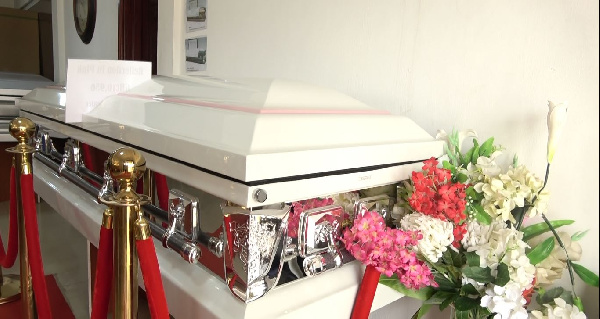
  • Coronavirus: How centuries old tradition of funerals has been affected in Ghana

    Funerals are a big deal in Ghana and it is not uncommon, in some parts, for a ceremony to last up to seven days, drawing thousands of crowds adorned in flowing red and black robes and gold jewellery.

    Some families even hire professional mourners to cry at the funeral of their loved one because “it serves as a reward to the person who has died,” says Adwoa Yeboah Agyei, who owns The Funeral Shop and Services, a franchise with locations across Accra.

    Anguished families

    But a centuries-old tradition has come to a halt.

    Since Ghana’s President Nana Akufo-Addo suspended all public gatherings in mid-March in the wake of the coronavirus pandemic, burials have been limited to no more than 25 people in the West African nation.

    Obed Ampadu-Asiamah’s 73-year-old father, Daniel, passed away soon after the announcement following complications from a stroke.

    Obed has been scrambling to make painful phone calls send notices informing attendees he could only invite 25 family members and friends. They originally expected 2,000 people and an official funeral has been postponed to a later date.

    ?”We had to cut all the in-laws and the grandchildren. None were able to attend,” he told CNN, his voice shaking.

    “We could only provide six slots for members on my father’s side of the family and three for members of his church.”

    The large funeral home they rented to hold the ceremony was moved into a small, private chapel within the same venue.

    Face masks concealed the anguish on the faces of mourners dressed in red and black, as they stood several feet apart with heads bowed in remembrance of a highly respected man, who established churches in parts of West Africa.

    Livestreaming burials

    At Transitions, Ghana’s largest private funeral home, a once heavy flow of ceremonies now trickles at a slow pace.

    Genevieve Carnelius, the general manager, stated that finances and operations have been badly affected, but says her priority now is to work with clients like Obed to remotely reschedule their loved ones’ funerals to uncertain future dates.

    The home currently offers online live streaming from their chapel, where Ampadu-Asiamah’s burial service took place, and where mourners across the globe can view the ceremonies of their loved ones.

    Once a lucrative sector, businesses catering to funerals are reeling.
    Maryam Abdullah is a fashion designer who sews traditional garments primarily for weddings and funerals.

    In an empty shop once bustling with customers, she sighed as she explained how Covid-19 has affected her business.

    “No one is coming. Even the people who have already brought cloths for me to sew have not returned to pick them up, said Maryam. She understands why, though. “If this is what it takes to stop the spread of this coronavirus, I am okay.”

    For now, she prefers her clients to stay at home because she feels more protected from contracting the virus herself, but it will only be a matter of time before funds run dry, she added.


    A stray from traditional customs

    Shaking hands with the family of the deceased is a deep-rooted tradition in many Ghanaian tribes that has taken place for hundreds of years and has become a mandatory part of ceremonies to show respect for the dead, says Queen Naa Tsotsoo Soyoo I, a Ghanaian Queen mother, who forms part of a powerful group of traditional women leaders.

    She explained how significant the ban on mass funeral gatherings has affected the customs of such ceremonies.

    “A significant part of funerals is bringing families together to embrace through handshakes, hugs and to mourn in close proximity of one another,” said Queen Naa.

    “The immediate implication of what is now taking place is that families will be unable to connect. This is something that has never happened in generations and it is definitely going to have a social impact.”

    Despite all the sudden changes to traditional practices at funerals, she acknowledged that certain inherent rites will never go away. For example, in Islam, the second largest religion practised in Ghana, senior Muslim members of the community must recite Quranic verses over the deceased immediately after designated family members perform a ritual cleansing of the body.
    The person must be buried within 24 hours of death.
    ??
    “With all that is going on, the testament of a funeral will always be a view of how a person lived life and the core of every funeral is that the individual is sent off with respect and dignity,” she added.

    No one can predict how long the effects of Covid-19 will alter lives as we once knew it. But Queen Naa is certain of one thing. “There will be many celebrations of life when this is all over.”


    Source: cnn

  • Coronavirus: Deputy Attorney-General, wife donate GHC20,000 to Trust Fund

    Deputy Attorney-General, Godfred Yeboah Dame and his spouse, Dr. Joycelyn Dame, have donated GHC20,000 to support the work of the COVID-19 National Trust Fund set up by President Nana Addo Dankwa Akufo-Addo.

    The cheque for the amount was received by the Chief of Staff, Akosua Frema Opare yesterday, at the Jubilee House yesterday.

    The Chief of Staff expressed appreciation for the commendable gesture, and hoped that it would inspire other members of government and the entire citizenry to do the same.

    In a short interview, Mr. Dame noted that the nation finds itself in unchartered waters and called for extraordinary support from all of its citizens.

    “The President of Ghana had exhibited exceptionally bold and decisive leadership at this time. It was thus in the right vein for all to selflessly lend a hand and support his endeavours to steer the nation out of this unprecedented emergency,” he said.

    He promised assisting, as much as possible, the vulnerable in the area where they live.


    Source: dailyguidenetwork.com

  • 33 persons quarantined in Obours municipality test negative for COVID-19

    Thirty-three (33) persons placed under mandatory quarantine in Juaso at the Asante Akim South Municipality of the Ashanti region, where former MUSIGA President, Bice Osei Kuffour (Obour) is contesting for Parliamentary candidate on the ticket of the governing NPP, have all tested negative.

    The said persons are said to have had some form of contact with the deceased dad of the late musician, who tested positive for the deadly COVID-19.

    According to a letter written to one of the individuals, Mr Frimpong Oduro, the Health Directorate said, “The Asante Akim South Municipal Health Directorate wishes to inform you that results of your laboratory test for COVID-19 is negative.”

    The letter signed by the Municipal Health Director of Health Services in the Municipality, Reuben Osei-Antwi, however, urged all persons who have tested negative to continue abiding by the safety precautions as listed by the Ghana Health Service.

    The Health Directorate is still awaiting the test results of 25 persons who voluntarily presented themselves for testing.

    Read the letter below:


    Source: ABCNewsgh.com

  • Coronavirus: Court remands Nigerian for taking blood sample of pregnant women

    A 34-year-old Nigerian has been arrested for allegedly defying the restriction order by taking blood samples of pregnant women and residents at Gbese Community, a suburb of James Town without legal authority.

    Chukwuka James, 34, has therefore been remanded by the Accra Circuit Court presided over by Afia Owusuwaa Appiah to re-appear on April 15, 2020.

    His plea was not taken because prosecution had indicated it will need time to augment their facts with new information.

    In court on Wednesday, the Prosecution led by Chief Inspector Gulliver Tenkorang told the court that the suspect was arrested holding medical equipment.

    He told the court that certain amendments needed to be added to the facts and will need one week to have that done. He subsequently prayed for the suspect to be remanded.

    The court while remanding the suspect to reappear on April 15, for his plea to be taken, ordered the prosecution to file their disclosures before the next court date.

    Tears flow

    The suspect immediately after being remanded broke down in tears while kneeling before the court and asking for clemency.

    He said it was not intentional that he came out that day and begged for forgiveness.


    Brief facts

    The facts of the case as presented to the court were that Chukwuka James, 34, is a Nigerian national and currently resides at Newtown, in Accra.

    According to Chief Inspector Tenkorang, the prosecutor in the case, due to the outbreak of COVID-19 pandemic, the president by Executive Instrument 65 in accordance with provisions of the Imposition Restrictions Act 2020 (Act 1012) imposed a two-week lockdown on some specified areas, including the area of suspect in Newtown on March 30, 2020.

    He told the court that on April 4, 2020, at about 0900 hours, police had information that the suspect was taking blood samples, checking BP, and sugar level of residents in Gbese Community.

    According to him, the police proceeded to Gbese in James Town and arrested the suspect who had in his possession glucometer, thermometer, test strips and gloves.

    Upon interrogation, the suspect informed the police that he is a distributor of food supplement and admitted that he went to Gbese to check the blood pressure of his client.

    He said it came to light that suspect does not fall within the exemption group with regards to the imposition of restrictions on all persons in Ghana.

    A pregnant woman who lives in Gbese Community confirmed to police that her blood pressure was checked by the accused person.


    Source: starrfm.com.gh

  • KNUST: No more project work for final year students, take a look at what the new arrangement is.

    Earlier today, a communique was released by school management that spelt out some measures they had put in place to ensure that in as much as students are not physically present on campus, teaching and learning will go on and the semester will not be disturbed much.

    All final year students are therefore by this communique being asked to convert all their project work into long essays since they cannot move around to collect data.

    If however, you have been able to collect data you will be assessed on the work done so far.

    For postgraduate students, works should be submitted by email or virtual classrooms to their lecturers.

    Take a look at the full communique below:


    Source: Kuulpeeps.com

  • Coronavirus may die naturally – Dr Nsiah-Asare

    Former Director-General of the Ghana Health Service and Presidential Advisor on Health, Dr. Anthony Nsiah-Asare, has said that Coronavirus may die off naturally after three months.

    He says like the life span of any other virus which bears the characteristics of flu, they naturally have a three month life span and they seem not to exist again after the period.

    Speaking on Okay FM’s ‘Ade Akye Abia’ programme, he explained that they are anticipating that the global community will be free in about three months time.

    “However, we are only hoping that this type of virus does not change in any form again. If it continues to remain in its current state then we are sure of fighting it off within the next three months.”

    “We are pleading with Ghanaians not to be alarmed as the number keeps increasing,” he said.

    He urged Ghanaians to continually observe the daily hygiene protocols and safety measures put in place by the Ministry of Health and the Ghana Health Service.

    He assured that the Ghana Health Service is working vigorously with contact tracing to stop the virus from spreading further.


    Ghana’s Coronavirus cases have increased to 287

    The 73 new cases which were recorded as of Monday, April 6, were discovered following measures for enhanced contact tracing and testing.

    The Great Accra Region has the most cases numbering 256 followed by the Ashanti Region which has 18 cases. The Northern Region has 10 cases, while the Upper West Region Eastern Region and Upper East Region have a case each.

    A total of 172 cases were reported from the routine and enhanced surveillance activities and those from travellers under mandatory quarantine in both Accra and Tamale are 115.

    The period for mandatory quarantine for travellers who arrived 21-22 March 2020 has ended. In all, a total of 1,030 travellers were quarantined during the period

    Out of these, 79 were positive during the initial testing whilst 951 were negative. Twenty-six (26) among those that were initially negative were found to have converted to be positive at the exit screening, bringing to a total of 105 among the travellers that were quarantined.


    Source: peacefmonline.com

  • Coronavirus outbreak to trigger roughly 195 million job losses – ILO

    The COVID-19 crisis is expected to wipe out 6.7% of working hours globally in the second quarter of 2020 — equivalent to 195 million full-time workers, the International Labour Organization (ILO) said Tuesday.

    “Workers and businesses are facing catastrophe, in both developed and developing economies,” said ILO Director-General Guy Ryder, addressing journalists via video conference.

    “We have to move fast, decisively and together. The right, urgent measures could make the difference between survival and collapse,” he said from the ILO headquarters in Geneva.

    Ryder underlined that substantial reductions in employment were foreseen in Arab countries with 8.1% or 5 million full-time employees, Europe with 7.8% or 12 million full-time workers and Asia and the Pacific with 7.2% or 125 million full-time workers.

    The sectors most at risk include accommodation and food services, manufacturing, retail and business and administrative activities.

    Massive losses are expected across different income groups, but especially in upper-middle-income countries of 7%, translating to 100 million full-time workers.

    “This far exceeds the effects of the 2008-9 financial crisis,” said Ryder.

    “Perhaps more strikingly, that reduction translates into the loss in three months of 195 million full-time jobs equivalent around the world and this is calculated with the basic assumption of a working week of 40 hours,” he explained.

    “If you look at the economic and social issues we are discussing today, they are in effect a direct consequence of deliberate policymaking in the field of health,” he added.

    Ryder said the ILO, which represents organized labor, employers and countries, supported an integrated approach to the health, economic and social dimensions of the pandemic as is taken by the UN.

    The eventual increase in global unemployment during 2020 will depend substantially on future developments and policy measures.

    “There is a high risk that the end-of-year figure will be significantly higher than the initial ILO projection of 25 million,” said Ryder.

    The ILO said that more than four out of five people — 81% — in the global workforce of 3.3 billion were currently affected by full or partial workplace closures.

    Source: aa.com.tr

  • What coronavirus reveals about educational inequality in Ghana

    Kwabena Opoku-Agyemang, a lecturer at the University of Ghana, is looking for new ways to carry on teaching his students.

    He has no other choice. Ever since Ghanaian President Nana Addo Dankwa Akufo-Addo ordered last month the indefinite closure of all schools to curb the spread of the new coronavirus, many of the country’s higher educational institutions began exploring options in online learning.

    “I plan to use WhatsApp and Zoom to make the classes more interactive,” said Opoku-Agyemang, who teaches literature courses at the Accra-based university’s Department of English. “I will also be having guest artists and guest lecturers join in. The artists will use Instagram Live, while the guest lecturers will probably use Zoom.”

    Yet, it won’t be easy. “Stable electricity – we had an extended power cut yesterday; reliable internet; student engagement,” said Opoku-Agyemang, listing some of the challenges threatening the success of the move online.

    Stark inequalities

    Ghana confirmed its first case of coronavirus on March 12 and has since reported a total of 287 infections and five deaths. In a bid to keep the rapidly spreading virus at bay, the government has announced a series of sweeping measures including banning mass gatherings and shutting down all borders and schools.

    But the coronavirus pandemic has revealed the stark regional, social and economic inequalities in Ghana’s educational system.

    Closing schools indefinitely has long been the reality for many high school students in northern Ghana, where educational facilities operate with limited infrastructure compared to those in the more affluent south. This has often manifested in high schools’ inability to resume classes on time due to a shortage of teachers, delays in feeding grants and a lack of building facilities which, on occasions, have resulted in children having to study under trees.

    Beyond regional disparities, social class has also been a determining factor in the quality of education. Many wealthier Ghanaians send their children to private schools (primary and junior high) given that public schools are often resource poor.

    Homeschooling as an alternative

    Since the shutdown of schools on March 16, some parents have opted for homeschooling to mitigate the effect on their children’s education. But many are quickly realising that this is not as easy as they anticipated, despite receiving support from schools to facilitate homeschooling

    “There are many distractions. Some days she wants to watch TV only,” said Nora Akemson Avicor, an Accra-based parent of a four-year-old girl based in Accra. “Some days I am super busy with the business and we don’t even get time to do anything at all.”

    While parents who have formal education can actively manage their children’s learning via homeschooling, this is not an option for those who are not formally educated, especially in the country’s north.

    “The shutdown will affect the pupils drastically. Many children will not have the chance to learn while at home,” said a basic school educator in Tamale, northern Ghana. “They think they are on holiday. Even in the community, you see children roaming about and it looks like they don’t even know that they are supposed to stay at home.”

    An educator at a junior high school in the Sagnarigu municipality added: “Many of the children only learn at school, they don’t study at home. Since we have been home, if you ask many of the students, they will tell you that they haven’t opened a book. And these are students preparing to write the BECE.”

    BECE, or Basic Education Certificate Examination, is the standardised exam junior high school students have to take to get into senior high schools, while WASSCE, or West African Senior School Certificate Examination, is the exam taken by senior high school students to get into universities and colleges. Although the WASSCE has been suspended indefinitely, the Ghana Education Service is currently “in serious discussions” with the West African Examinations Council about the conduct of the BECE.

    To address the situation, the Ministry of Education on April 3 launched TV learning for senior high school students. State broadcaster GBC will also begin airing TV lessons for primary and junior high schools on April 13, and there are plans to produce similar content for radio learning.

    Struggles in higher education

    At the same time, higher educational institutions have begun training lecturers in online instruction as they actively turn to web-based alternatives.

    So far, the University of Ghana has worked with Vodafone to make SIM cards available to students to enable them to access the college’s digital learning platform, Sakai.

    But according to a student of the university, the cards’ 5 gigabytes of monthly internet data are hardly enough to cover their needs. Students have been told they will still be able to use their SIM cards to access learning platforms even after they have run out of data, but some of them are not confident that this will happen until they actually witness it.

    Although some universities are using built-in, already existing learning platforms such as Sakai to facilitate learning, others have to turn to services such as Google Classroom, WhatsApp, YouTube and Zoom.
    In one class at the University for Development Studies in Nyankpala, class sessions are currently being run on WhatsApp.

    “The WhatsApp is purposely for discussions pertaining to the course – and it’s not all that effective,” Abdul, a student, said. “And not everyone is on the platform. Some don’t have smartphones and others can’t afford a bundle [internet data]. So they usually tell you some areas to learn on your own and if you have any problems you can raise it in the class group chat and then we can discuss it.”

    At the same time, many students worry about the effectiveness and feasibility of online pedagogy since lecturers who are not technologically literate may find it difficult to manage online teaching.

    “I only have confidence in two of my lecturers being able to teach online,” said Titi, a student at the University of Ghana. “The rest, God will provide.”

    A lecturer at the University for Development Studies, Eliasu Mumuni, said he expected technical issues, “especially with the grownups”.

    “It will take some time to orient people to it,” he added. “The students are feeling like it’s time to rest but we are here pushing them to learn in an environment that is not conducive.”

    Digital divide and alternatives

    Despite recent efforts by the Ghana Education Service and various higher educational institutions to move pedagogy online, there is a wide digital divide that will make the goal of online learning difficult to achieve in a country where less than half of the population is believed to have mobile phone internet access.

    On March 30, the Ghana Education Service announced that it had developed “an online study platform” for all senior high schools and that plans were in place to develop and make available a learning platform for basic schools. People who have attempted to use the platform for senior high school students have already began reporting challenges in accessing and using it.

    Once fully operational, these platforms will only be available to those who have access to internet data, smartphones, tablets and computers, which leaves out a large number of students who lack access to these technologies. Even with students with them, high costs of internet data can mitigate their access to learning.

    As a result, many students at the higher educational level who have little to no access to digital tools will find themselves stuck at the periphery of the educational system while their more privileged colleagues continue to learn.

    Looking ahead, it is important to consider how the most marginalised will be affected by moving education online.

    Telecommunications companies should also step up collaboration with higher educational institutions to facilitate access to free unlimited data to students to participate in digital learning.

    Parents should explore ways to teach their children by drawing on Ghana’s indigenous knowledge systems This type of pedagogy can take the form of storytelling in indigenous languages; teaching children folksongs; helping children improve their indigenous language proficiency; teaching children about indigenous gastronomy and nutrition; sharing family, ancestral, ethnic and national oral histories among others.


    Source: aljazeera.com

  • Coronavirus: China must help ease the debt burden of Africa – Ken Ofori-Atta

    Finance minister Ken Ofori-Atta has called on China to help ease the debt burden of African countries facing economic woes due to the Coronavirus pandemic, Reuters reports.

    The African continent is not the hardest hit by covid-19, however, its countries are already facing the grim impact.

    “My feeling is that China has to come on stronger,” Ofori-Atta said during a conversation on Monday with Masood Ahmed, president of the Washington-based Center for Global Development.

    “African debt to China is $145 billion or so, over $8 billion of payments is required this year … So that needs to be looked at.” He added.

    In the face of the outbreak, some African governments are calling for several financial assistance, including support for a moratorium on all external debt and eventually some debt write-offs.

    Ken Ofori-Atta says African countries are seeking ways to increase their special drawing rights (SDR), a form of foreign exchange reserves managed by the IMF, to shield against commercial debt defaults.

    “This should not happen,” Ofori-Atta added. “So we should find a way to increase SDRs or for the Europeans to offer their SDRs as a way out.”

    Ofori-Atta now chairs the Development Committee a ministerial-level forum that advises the World Bank and the International Monetary Fund (IMF) on development issues.

    Source: www.ghanaweb.com

  • Contacts of Upper West COVID-19 patient test negative Minister

    All contacts that were traced to the only COVID-19 case in the Upper West Region have tested negative for the disease.

    According to the Regional Minister, Dr Hafiz Bin Salih, about 46 persons who were identified as close contacts of the patient have all tested negative for the disease.

    Speaking on Accra-based Citi FM, Dr Bin Salih said the patient was responding to treatment.

    “According to my health authority, the patient is responding to treatment and so far, all the contact people whose samples were taken have proven negative. The tests are negative and that is pleasing to the people of the Upper West Region,” he said.

    The first case in the region was announced by the Minister on March 27, 2020.

    According to the Minister, the patient is a 42-year-old Ghanaian who visited UK, Spain and returned to Ghana through Egypt.

    “The good thing is that, even before the test result came out positive, the suspect was in self-quarantine. He has isolated himself because he had returned from countries where the disease is prevalent…This should not bring fear into us. It does not mean he is going to die,” the Minister said at a press conference on Tuesday.

    According to health workers, the patient joined a public transport to the Upper West Region from Accra and was confirmed positive of COVID-19 on March 27, 2020.

    Subsequently, samples of persons including health workers who contacted the patient were taken for testing.

    Source: Citinewsroom.com

  • Lockdown: Probe killing of civilian by a military officer – Group

    The Centre for Victims of Injustice (CenVI, GH) has called for a thorough investigation into the alleged killing of a civilian by a Military officer at Ashaiman on Monday 6th April 202.

    Although the Ghana Armed Forces (GAF) has said its investigating the matter, CenVI GH said the investigations must be transparent.

    “We call for swift investigation into the killing and the appropriate sanctions for the officer involved. While we acknowledge the magnitude of the challenge and efforts made by the government to fight COVID-19 across the country, we are also alarmed by several reports and videos circulating on social media showing violations of human rights, that include beating of civilians by law enforcement agencies tasked with ensuring compliance of the lockdown. As the nation observes the 14-day lockdown, the rights of citizens must be respected and protected, including the right to health care, security, and access to food and water,” CenVI, GH said in a statement.

    “The lockdown must have a human face; enabling citizens and the general public to have access to vital needs and relief for those who can no longer earn a living since the majority of Ghanaians are daily earners and live below the poverty line.

    “As a matter of urgency, the government in the coming days should implement transparent income support programs targeted at the most vulnerable populations. Millions of Ghanaians who live in slums and informal settlements without access to basic services are at higher risk of COVID-19 infection.

    “We are of the view that the government should ensure the rights to health, food and water are realized in such settlements under this pandemic. “


    Source: classfmonline.com

  • Coronavirus: Kumasi Central market to be reopened tomorrow

    The Kumasi Central Market will officially be re-opened for trading activities on Thursday, April, 09, 2020, a statement by city authorities said.

    Ahead of the reopening,authorities are billed to formalize all arrangements today, April, 08,2020 pertaining to the rotational system to be practiced.

    This comes after the joint meeting with eleven member steering committee of the Metro Security Council(METSEC) and leaders of the 67 trade associations of the market.

    The Central market was closed down days ago due to traders disregard for social distancing amid the spike in coronavirus outbreak.


    Source: kasapafmonline.com

  • Coronavirus: Government must consider stimulus package for the media – UPDN

    The United Press for Development Network (UPDN) has asked the government to provide stimulus package for the media following the role in helping fight against the coronavirus infection in Ghana.

    The UPDN commended the Government for the decision to provide stimulus package, tax exemption, feeding grants for all front line workers, Police, Military Officials among others.

    A statement signed by Kofi Asante Mensah, President of UPDN said : “ Since the announcement by President Akufo-Addo on Sunday, April 5, 2020, we have observed massive enthusiasm among the aforementioned officials, this we believe will help in combating the Novel Coronavirus.

    “UPDN is by this statement appealing to the Government to immediately consider some stimulus package for the media which is at the forefront of disseminating information and leading public education nationwide.

    As we encourage the media to pay attention to all safety protocols, UPDN calls on government to support the inky fraternity in the provision of PPE’s to enable and enhance field reportage in the wake of the deadly COVID – 19.

    “The Media plays a very critical and pivotal role in winning this “global insurgency” and the earlier we retool them the better.”


    Source: classfmonline.com

  • Coronavirus: Dalex Finance to offer loans at zero percent interest

    Dalex Finance is set to offer loans to all DalexSwift Investment clients at zero percent interest rate, Kenneth Thompson, Chief Executive Officer (CEO) of Dalex Finance has said.

    The drop in the interest rates on loans from 24 percent per annum to zero percent will take effect from Monday, April 6, 2020 till June 30, 2020.

    In an interview with the CEO on Monday in Accra, he said the decision was part of the Company’s efforts to support Ghanaians during the COVID-19 partial lockdown and to alleviate the hardships customers were facing during these difficult times.

    “Dalex Finance is aware that the immediate concern of its clients is sustenance and their financial well-being. To help forestall their anxieties, the company at this difficult time, is extending a helping hand to all its DalexSwift customers by dropping interest rates. The minimum contribution is one cedi,” he said.

    He explained that DalexSwift Investment existed to make it easy and appealing for young Ghanaians to invest towards the things they wanted.

    Launched three years ago, DalexSwift is targeted at young persons and has over 130,000 registered accounts.

    “Dalex Swift by its very design relies on zero personal contact for registrations, to make investments, redemptions, loan applications, and loan disbursements.”

    Mr Thompson advised citizens to ‘choose wisely’ during the lockdown period and invest in their health, relationships and skills.

    Dalex Finance is a wholly Ghanaian owned and operated Specialized Deposit-taking Institution (SDI) licensed by the Bank of Ghana (BoG).

    Dalex Finance has been in operation in Ghana since 2006 and is currently the leading digital finance company in its sector.

    Source: GNA

  • COVID-19: Well define who qualifies as frontline health worker soon Akufo-Addo

    President Nana Akufo-Addo says the government will in the coming days give a clear definition of who qualifies as frontline staff in the fight against the coronavirus.

    Controversy has been brewing over who qualifies as a frontline staff after President Akufo-Addo announced some incentives for that group of health workers in his last national address on COVID 19 updates.

    Speaking at a meeting with the leadership of the Ghana Medical Association, President Akufo-Addo said finality will be brought to the matter to prevent any doubts.

    “Effort is being made on the part of the government, to arrive at an acceptable definition, and I think your input will be very necessary and required, so that we get a definition that makes sense for everybody and which addresses the issue of people who are also in the frontline, as it were, of dealing with this disease,” President Akufo-Addo said.

    The President said the government is committed to ensuring that health workers are supported as they deliver essential services to the populace especially amidst the outbreak of Coronavirus.

    “On my part and on the part of government, we will continue to see what we can do to meet you halfway, ease the issues that you have. I think you heard my broadcast the other day, I indicated the measures that we want to put in place to support you in the work that you are doing,” Akufo-Addo noted.

    The President added that several interventions have already been rolled out to ease the burden on health workers.

    “Buses for nurses and health workers have started plying the streets of Accra, the allowances that are going to be paid to health workers are being worked out by the Finance Minister, and, very soon, in the course of this month the first payments are going to be made,” he said.


    Source: citinewsroom 

  • CBO prepares to implement CREMA in Kayoro to protect forest reserve and wildlife

    The Sanyiga Kasena Gavara Kara (SKGK), a community Based Organization (CBO) has started processes to implement a Community Resource Management Area (CREMA) in the Kassena West District, of the Upper East Region, to protect the forest reserve and wildlife in the area.

    The new CREMA located in Kayoro, falls within the Chiana and the Sisilly Forest reserves and the communities around the area, are trained to ensure that the forest vegetative cover, wild life and other natural features are protected from illegal activities.

    The Chiefs and committees in those communities would also be educated on by-laws governing forest protection and boundary separation.

    The three reserves in the area are the PIDO Hills forest reserve, the Chiana Forest reserve in the Kassena Nankana West District and Sissilly North in the Sisaala East District, where a total of nine communities are found namely Kayoro, Katiu, Nakong, Kapu, Wuru, Basisong, Kunchogo, Banum and Pido where Kayoro and Katiu are adjacent to the Nazinga Game Reserve.

    As part of the preparation processes, the SKGK CREMA is being supported by the BUSAC Fund to enable it increase sensitization activities and is expected to educate people on the by-laws and boundary separation efforts of Forest Reserves.

    Mr Frank Pwamebam, the Executive Secretary of SKGK who thanked BUSAC Fund for the support, reiterated the need for proper processes to be followed in the implementation process.

    He noted that it was important to involve the CREMA communities, volunteers and committee members in the process of demarcating the forestry boundaries.

    “We want the people to benefit from the CREMA and to also sustainably use their natural resource properly and therefore there is the need to make proper enforcement of the laws and proper boundary demarcations,” Mr Pwamebam reiterated in an interview with the GNA in Bolgatanga.

    He said climate change was fast approaching and noted that putting in place adaptation plans will help communities to mitigate climate change and its toll on the natural resources.

    He said the on-going education was a way to ensure proper procedures were followed and prevented people from encroaching on the resource.

    SKGK went into full operation in 2016 with a first time joint funding support from BUSAC Fund towards preparation and gazetting of the by-laws.

    Source: goldstreetbusiness.com