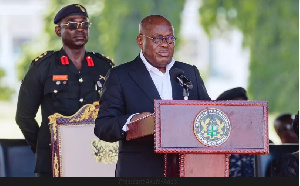
President Akufo-Addo emphasized that his role in addressing corruption allegations is not to exonerate or condemn individuals but to ensure due process through independent bodies.
During a public event, he highlighted the significance of upholding the rule of law and independent investigations when dealing with corruption accusations against government appointees.
Akufo-Addo stressed the importance of respecting institutions responsible for detecting, prosecuting, and punishing corruption crimes, emphasizing that such institutions should be accorded the necessary respect unless their conduct is proven otherwise.
He mentioned that every alleged act of corruption against his appointees has been subject to investigation by independent bodies, including CHRAJ, CID of the police, and, in some cases, by parliament itself.
“It is important for the rule of law that the public institutions responsible for detection and prosecution and the punishment of corruption of crime be accorded respect until their own conduct is impeached. If that respect is not accorded to the foundation, an orderly government can be easily subverted to the loss and pain of each and everyone of us. That is why so far, every single alleged act of corruption levelled against any of my appointees has been investigated by independent bodies such as CHRAJ,CID of the police and in some cases by parliament itself.
“It is not my job to clear or convict any person accused of wrongdoing or engaging in acts of wrongdoing despite the effort of some who tag me as the clearing agent,” he said.
He affirmed that he does not interfere in the affairs of the institutions responsible for investigating his appointees and highlighted that the court and law enforcement agencies are tasked with clearing or convicting individuals based on the outcome of investigations.
“That is the job of the court and the law or enforcement agencies. My job is to act on allegations of corruption by referring the issues to the appropriate agencies for the relevant enquiry and actions and if necessary the suspension of the affected official pending the conclusion of the investigation. That is exactly what has been done since I assumed the mantle of leadership since January 2017,” he noted.
Justice of the Appeals Court, Anthony Henry Cofie, has refuted claims of corruption within the judiciary, stating that certain perceptions of corruption associated with the judiciary are unfounded.
Speaking during his appearance before the vetting committee in parliament, Justice Cofie highlighted the challenge of judges not being able to hold press conferences to clarify their positions.
He acknowledged that addressing the perception of corruption is complex, particularly because discussions around judges can be subjective.
Justice Cofie shared insights into the efforts made within the judiciary, stating that there is an association of judges that conducts regular seminars on corruption and ethics for its members. He explained that judges receive training on ethical matters and corruption prevention almost every year.
Nominated by President Akufo-Addo, Justice Cofie has been put forward for consideration to join the Supreme Court.
On Thursday, December 21, President Akufo-Addo will inaugurate the assessment of Ghana’s inaugural National Anti-Corruption Action Plan (NACAP) at the Jubilee House.
NACAP serves as Ghana’s comprehensive framework for advancing anti-corruption initiatives and fostering national development. The plan comprises strategic action items formulated and endorsed through nationwide consultations involving various stakeholders.
This development comes on the heels of the successful execution of NACAP, aligning with Ghana’s commitments under the United Nations Convention Against Corruption (UNCAC), the 1992 Constitution, and the President’s steadfast dedication to combating corruption.
According to a press release from the Ministry of Information’s Public Relations Unit, having executed the plan, the subsequent phase involves evaluating the strides made in the battle against corruption under NACAP.
The efficacy of NACAP lies in its integration, as the action plans seamlessly become part of the National Development Planning, thereby incorporating them into the routine annual activities of public institutions, including ministries, departments, and agencies (MDAs).
The formulation of NACAP involved a collaborative effort of experts and anti-corruption practitioners organized into a working group.
Representatives from institutions such as the Commission on Human Rights and Administrative Justice, Office of the President, Internal Audit Agency, Parliament of Ghana, Judicial Service of Ghana, Office of the Attorney General and Ministry of Justice, National Development Planning Commission, and the Public Services Commission played integral roles.
Other contributors to the formulation included the Ministry of Finance, Africa Peer Review Mechanism, Economic and Organised Crime Office, Ghana Integrity Initiative, Ghana Anti-Corruption Coalition, Ghana Centre for Democratic Development, the Justice and Human Rights Institute, African Parliamentarians Network Against Corruption, and Development Partners.
The event will be broadcast live on the state broadcaster and other private media platforms at 10 am.
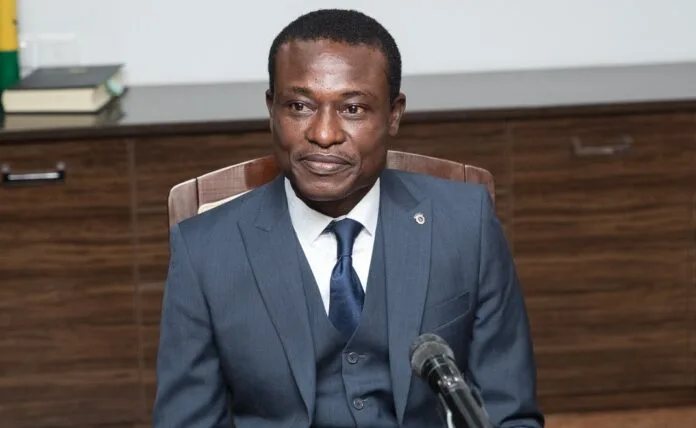
The Attorney-General and Minister for Justice, Godfred Yeboah Dame, participated in a high-level panel discussion at the 10th Session of the Conference of States Parties to the United Nations Convention against Corruption (COSP 10) in Atlanta, USA.
During the discussion, Mr. Dame highlighted research findings indicating that women in Ghana are less susceptible to corruption than men.
The Attorney-General advocated for the empowerment of women as a crucial tool in combating corruption.
Under the topic “The Power of Gender Equality and Inclusion to Combat Corruption,” Mr. Dame presented insights from the first corruption survey in Ghana, conducted in 2021 by the Commission on Human Rights and Administrative Justice (CHRAJ) and the Ghana Statistical Service (GSS) with UNODC assistance.
The survey, involving 15,000 respondents, revealed that women in Ghana are less prone to corruption, with male public officials being twice as likely to solicit bribes as their female counterparts. The survey indicated that men are three times more likely to accept bribes than women, even though corruption disproportionately affects women.
Mr. Dame emphasized the positive impact of women’s empowerment on public institutions, efficiency, and corruption reduction.
He cited examples within Ghana, including the representation of over 90% women among state attorneys in the Office of the Attorney-General and Ministry of Justice, contributing to efficiency and minimal corruption.
He also highlighted instances where women heading public institutions, such as the Judiciary, led to increased efficiency and reduced corruption.
The Attorney-General called for the promotion and advancement of women in all aspects of public life, emphasizing the direct correlation between gender equality and the fight against corruption.
Drawing from Ghana’s experiences, Mr. Dame announced the nation’s co-sponsorship of a resolution on the gender dimensions of corruption at the UN Conference on Corruption in Atlanta.
The resolution, aimed at addressing gender-related aspects of corruption, received support from the States parties to the UN Convention against Corruption during the conference.
The panel discussion featured insights from various participants, sharing experiences and perspectives on gender equality’s role in combating corruption across different countries and continents.
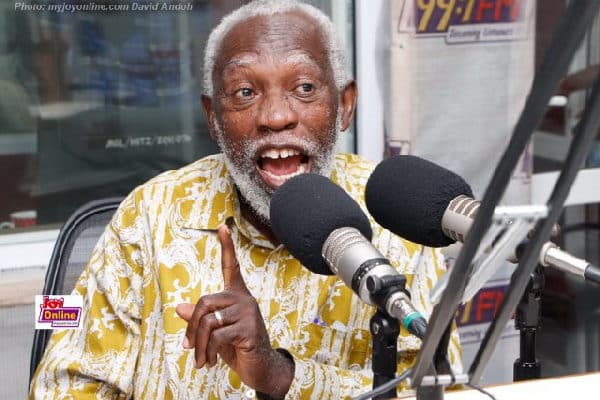
A Physician, Author, and Politician, Dr. Arthur Kobina Kennedy, has criticized leaders, both past and present, during an appearance on JoyNews’ Newsfile Change Speaker Series VI.
In his discussion, he highlighted prevailing narratives and delved into the fundamental issues confronting Ghana.
Contrary to popular calls for constitutional reforms, Dr. Kennedy expressed disagreement, asserting that the root cause of the country’s challenges wasn’t necessarily the constitution or a lack of ideas. Instead, he pointed to the execution of those ideas as the central problem.
In essence, he believes that the effectiveness in implementing policies and ideas is more crucial to addressing Ghana’s issues than making changes to the constitution or generating new ideas.
This perspective underscores the importance of execution and governance in solving the nation’s challenges, according to Dr. Kennedy.
“I’ve heard a lot of Ghanaians, including some of your speakers, talk about constitutional reforms. Unfortunately, our problem is not constitutional reforms or ideas. Indeed, when you talk about ideas from Nkrumah’s seven-year development plan up to now, we’ve had ideas. The problem is execution. Our problem, therefore, is not our Constitution,” he said.
Dismissing the notion that the old men at the helm of leadership are responsible for the country’s disappointing lack of developmental progress, Dr Kennedy said our developmental failings have nothing to do with the age of the leaders but everything to do with their lack of competence, and the vindictive nature of politics in Ghana.
Dr. Arthur Kennedy also disagreed with the perception that Ghanaians have an inherently flawed character. Drawing attention to the global diaspora of Ghanaians who have exhibited discipline and adherence to rules abroad, he stated that the problem is due to the systemic issues within Ghana’s structures.
“People say we have a bad character as Ghanaians. Not true. Every year thousands of Ghanaians get on planes and travel all around the world. When they get there the next year, they show up to work on time. They obey the rules, they drive within speed limits. The problem is not the Ghanaian, it is the systems that we are running,” he said.
Dr Kennedy contended that the nation has weak institutions.
“I think we have weak institutions and let me give you just a couple of examples. Our Electoral Commission was weakened by the removal of charges of some of its members with the appointment of partisans to take their place. Our Auditor General, Domelevo, was blatantly removed by the president with the shameful connivance of our own Supreme Court,” he stressed.
Enumerating various issues, from the absence of meritocracy in appointments to the side-lining of the diasporan community and non-inclusive governance, Dr Kennedy said the nation is grappling with deep-rooted challenges.
He emphasised that there is bad leadership, characterised by vindictiveness, nepotism, and policies lacking in equity and compassion.
“Then, of course, there is the bad leadership, which is the elephant in the room. We have vindictive leadership. Then there is non-inclusive governance. We have policies devoid of equity and compassion, allowing a newborn mother who is bleeding to death to die because she cannot buy fuel for an ambulance. It’s not the policy of a compassionate government allowing people to die because they cannot get dialysis, and the dialysis unit owes a few million cedis in debt when we can spend $400 million putting up a Cathedral, it’s not what a compassionate government should do,” he said.
“We have selfish leaders. Indeed, in the old days, people used to be ashamed of corruption, so they practiced it secretly. Now they do it blatantly. Our leaders are bad, but we are unpatriotic citizens. We accept bribes in order to vote. We defend our party leaders regardless of what they do.”
Transitioning from the delineation of problems to a visionary discussion of solutions, Dr Kennedy advocated for the building of robust institutions, citing examples from history and contemporary politics.
Transparency in asset declaration, political party reforms, and the probing of past officeholders were among the proposed measures.
He also emphasised the power of public sentiment in shaping governance, pointing to instances where public opprobrium had influenced positive change.
Calling for meritocracy and civic responsibility, the activist urged citizens to call out bad leaders, support individuals of integrity, fulfill their civic duties, and vote patriotically.
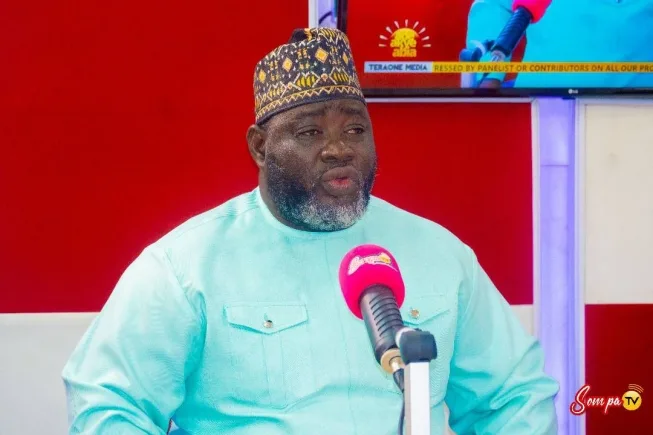
Third National Vice Chairman of the ruling New Patriotic Party (NPP), Alhaji Masawud Osman, has levied accusations against the Office of the Special Prosecutor (OSP), claiming political bias and proposing a reevaluation of its effectiveness.
Alhaji Osman alleges that 60% of the Office of the Special Prosecutor (OSP) staff maintains affiliations with the opposition National Democratic Congress (NDC), raising concerns about potential influences on prosecutions.
He censured Special Prosecutor Kissi Agyebeng, casting doubt on his impartiality and advocating for an inquiry into his suitability for the position.
Alhaji Osman additionally asserted that Agyebeng has considerably enlarged the staff of the OSP but has achieved minimal results in the fight against corruption.
He accused Agyebeng of unfairly targeting the NPP, citing the investigation into alleged irregularities at the Customs Division under the current government.
He said the focus solely on auctions from 2016 to 2022 raises questions about why similar events under the previous NDC administration haven’t been investigated.
Additionally, Alhaji Osman criticized the disparity in the OSP’s handling of allegations of vote-buying. He noted the probe launched into the NPP parliamentary primaries while no similar action was taken regarding accusations against the NDC.
Former Minister for Power, Dr. Kwabena Donkor, is advocating for a thorough investigation into the Electricity Company of Ghana’s (ECG) procurement of 200 motorbikes for the Police Service.
On December 11, 2023, the ECG made a donation of 200 motorbikes to the Police Service in a bid to enhance the operational capacity of the law enforcement agency.
The Board Chairman of ECG, Mr. Keli Gadzekpo, who spearheaded the donation, also pledged an additional 800 motorbikes to be delivered in subsequent batches.
Expressing his concerns in an interview, Dr. Kwabena Donkor criticized the management of ECG for the motorbike purchase, citing the substantial indebtedness of the company.
He urged the management of state entities, particularly those facing financial challenges, to take responsibility for their commercial viability.
“It is high time that managements of state entities especially commercial state entities take responsibility for their commerciality. If Ghana Ports and Harbours Authority had done the donation, I would have had no qualms about it because they are profitable. But for a loss-making entity that is throwing the future and security of this country into danger because of their indebtedness to go donating 200 motorbikes is the height of irresponsibility.”
Calling for action, Dr. Donkor called on the Ministers for Energy and Public Enterprises to hold the ECG management accountable. He expressed the need for an investigation into the donation, asserting that it may not be in the national interest and could potentially be driven by procurement motives.
In his disappointment, Dr. Donkor, a former Minister of Power and member of the Energy Committee of Parliament, stated, “I am extremely disappointed as a former Minister of Power, as a member of the Energy Committee of Parliament, and representing the good people of Ghana in this House.”
Vice President Dr. Mahamudu Bawumia has reiterated the government’s commitment to addressing challenges in the informal economy through the implementation of the Ghana Card, a crucial element of the digitalization agenda.
Speaking at the 20th edition of the Ghana Club 100 Awards on Saturday, December 9, the NPP flagbearer highlighted the adverse effects of the informal economy, including issues like age cheating, identity fraud, and the proliferation of counterfeit documents such as insurance, birth certificates, and passports.
Dr. Bawumia stressed the significance of transitioning from an informal economy to a more disciplined and transparent system, pointing out the problems associated with informality, such as corruption, lawlessness, tax evasion, and an unbanked society.
To tackle these challenges and unlock the transformative potential of the economy, the Vice President noted that the government initiated a formalization process, with the digitalization initiative playing a crucial role and the Ghana Card serving as its anchor.
He emphasized that by digitizing government services through Ghana.gov.gh and other initiatives, the government aims to enhance transparency, clarity, and efficiency in the system.
Dr. Bawumia stated that these measures contribute to reducing corruption, as services can be accessed without the need for bribes. He highlighted the inherited issues of the informal economy, including corruption, lawlessness, tax evasion, and identity fraud, which made it challenging for the economy to reach its full potential.
The government’s focus on formalization and digitalization aims to create a transparent and disciplined economic system.
“You look at an economy in the informal sense which turned to be undisciplined, the society is undisciplined because the economy is informal and there are no consequences for bad actions, you have a society where corruption prevails, you have lawlessness, you have a tax dodging society, you have an unbanked society, you have a loan repayment dodging society, identity fraud, people assuming identities of others, lack of address systems, age cheating, fake insurance, fake birth certificates, fake passports, no functional address systems, ghost workers on government payrolls.”
“These ills of the informal economy that we really inherited made it very difficult for the economy to transform to its potential. That is why we set out to formalize the economy to make sure that the economy works in a transparent system. In that area of formalisation of the economy we realized heavily on digitalization of the economy to formalize the economy.”
The Office of the Special Prosecutor (OSP) has issued a clarion call to all Ghanaians to support the fight against corruption.
In a statement to commemorate International Anti-Corruption Day, the OSP commended its whistleblowers and entreated all Ghanaians to emulate their actions.
“We commend our confidential sources and whistleblowers for their valuable contribution to the work of the OSP. We encourage citizens and residents to join us in the fight against corruption.
“We are reminded of the essence and utility of eradicating the menace of corruption in aid of building our country on fairness, justice, and transparency. Let us envision a future where every citizen and resident lives with the legitimate expectation that integrity will triumph over deceit and the rule of law will prevail. The fight against corruption is a shared responsibility, and together we can build a prosperous Ghana,” the OSP shared.
Annually observed on December 9th, International Anti-Corruption Day commemorates the passage of the United Nations Convention Against Corruption on October 31, 2003. The day serves to enhance public awareness and commitment to anti-corruption initiatives.
In its statement, the Office of the Special Prosecutor (OSP) reaffirmed its dedication to combating corruption in the country.
“As we commemorate International Anti-Corruption Day and the anniversary of the United Nations Convention Against Corruption (UNCAC), the Office of the Special Prosecutor reaffirms its commitment to the fight against corruption in all its forms.
“Our vision is clear – to render corruption costly and unattractive, and we remain resolute in fulfilling this mandate. We will strengthen our collaboration with other law enforcement agencies and international partners to robustly build skill and expertise to suppress and repress corruption notwithstanding the formidable odds and barriers in this quest,” the OSP stated.
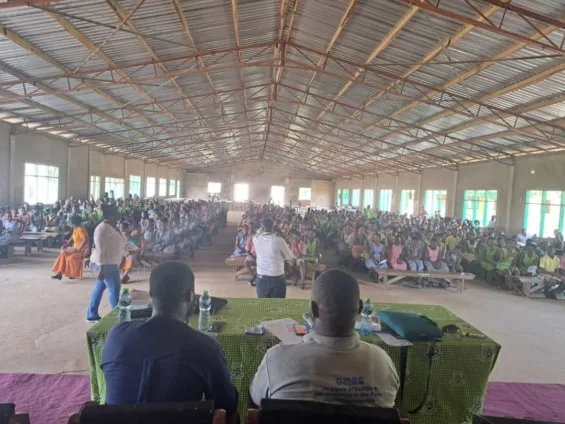
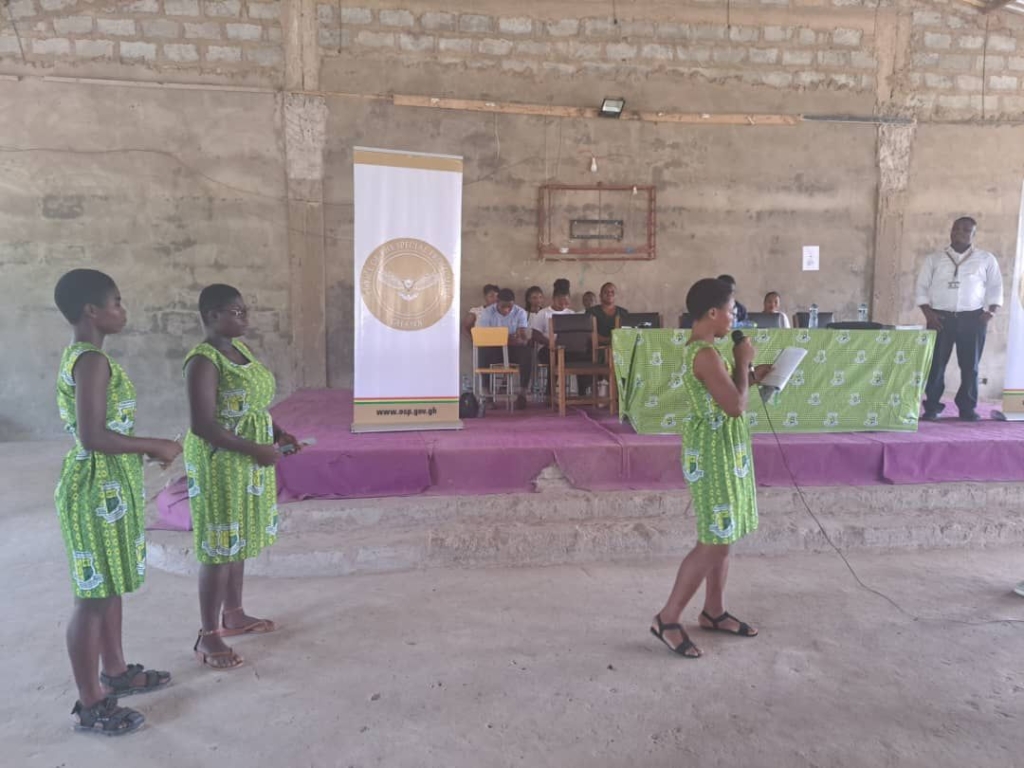
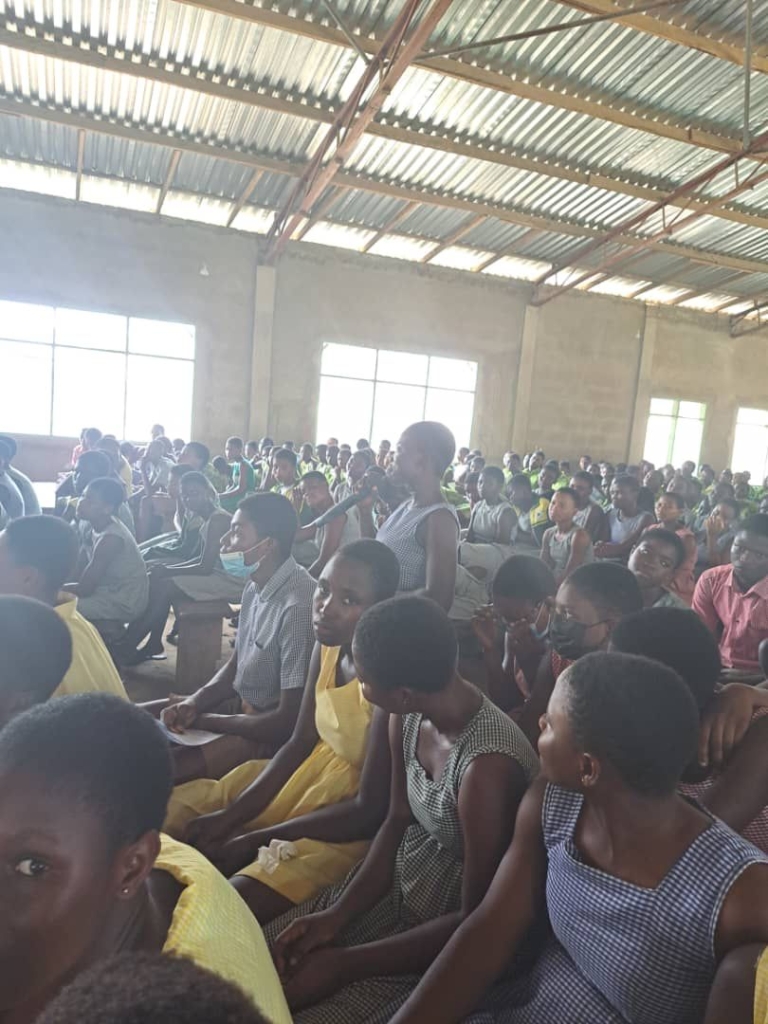
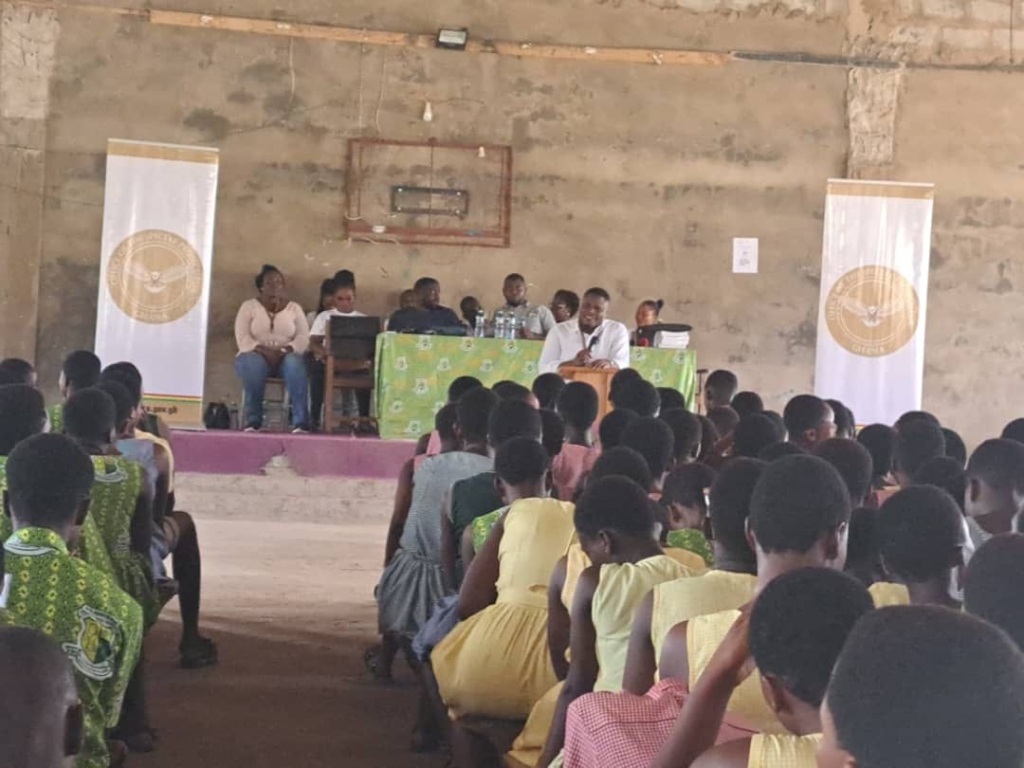
The Office of the Special Prosecutor (OSP) joined forces with the Ghana Anti-Corruption Coalition (GACC) and members of the Local Accountability Network (LANet) to organize an anti-corruption seminar for students at Prampram Senior High School in the Greater Accra region.
The seminar, held in commemoration of International Anti-Corruption Day on Saturday, December 9, is part of the OSP’s broader Youth in Anti-Corruption Campaign.
Executive Director of Salt and Light Ministries, Dr. Joyce Aryee, has voiced deep concern over what she perceives as unexplained and widespread corruption in Ghana, a country where 70% of the population identifies as Christians.
Addressing attendees at the 17th graduation ceremony for 29 postgraduate students in PhD and Masters in Theology programs at Akrofi-Christaller Institute of Theology, Mission, and Culture in Akropong-Akuapem, Dr. Aryee highlighted the discrepancy between the professed Christian values and the deteriorating moral fabric.
She noted a growing dissatisfaction with the church’s perceived role as the anticipated “salt and light” in Ghanaian society and Africa at large.
“Fifty years and over, there are concerns that the church has not become the expected salt and light of our society. To the contrary, questions are being asked as to how a country with 70% self-professed Christians can experience such a value deficit in so many areas of our national life. For instance, how do we explain the pervasive corruption of our society when a high percentage of Ghanaians process to be Christians?” Dr. Joyce Aryee said.
Dr. Aryee referred to research indicating the ongoing expansion of Christianity in Africa, surpassing growth rates observed in other continents.
She stated “for the first time in the history of the world Christians population in Africa has hit over 650 million , projected to reach 1.25 billion by 2050 more than second and third place contending continents Latin America and Europe which have Christian population of 705 million and 490 million respectively”.
Dr. Aryee underscored the necessity for a paradigm shift to make a more impactful contribution to the African continent. She called on the graduates to engage in introspection, reassess their roles in society, and align their actions with the mandates given by God.
Rev Dr. Benhardt Y. Quarshie, the Rector of Akrofi-Christaller Institute, highlighted the institution’s response to current economic challenges by introducing new programs and significantly reducing academic fees. These measures aim to facilitate the enrollment of more Ghanaian students.
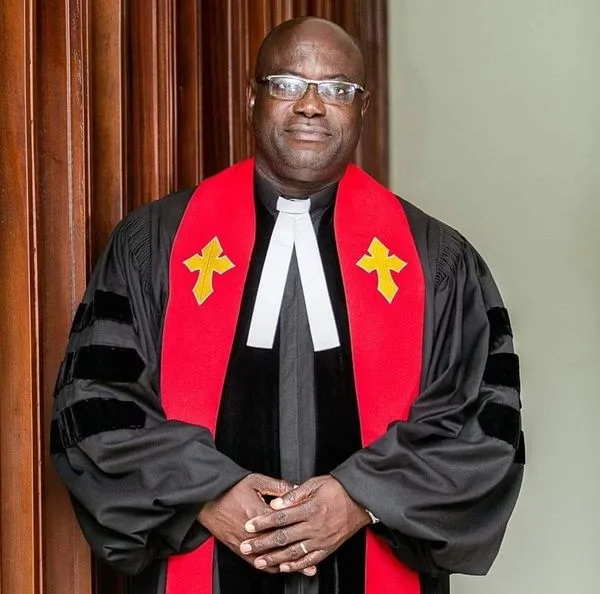
During the ceremony, honorary PhDs were conferred upon Dr. Alex Glover and Dr. Robert Aboagye Mensah. Distinguished figures present at the event included Apostle Prof. Opoku Onyinah, former Chairman of The Church of Pentecost, and the New Moderator of the Presbyterian Church of Ghana, Most Reverend Dr. Abraham Nana Opare Kwakye.
The Akrofi-Christaller Institute of Theology, Mission, and Culture, accredited by the Ghana Tertiary Education Commission (GTEC), serves the broader Christian community in Ghana and Africa as a postgraduate research institution with a Presidential Charter to award its own degrees.
Former Rector of the Ghana Institute of Management and Public Administration (GIMPA), Professor Stephen Adei, has proposed that the government consider declaring amnesty for individuals who come forward to report instances of corruption.
According to him, the current scenario portrays those reporting corruption as offenders themselves, being labeled as extortionists.
In order to facilitate a more effective fight against corruption, Professor Adei suggests a shift in the approach, where individuals providing information about corrupt practices are not penalized but rather encouraged through the provision of amnesty.
“If the state wants to have evidence of corruption let us declare amnesty or pardon for those who report corruption and for Parliament to subsequently make a law to back it. As at the moment the victims are equally criminals as the extortioners if they come out,” he said.
Professor Stephen Adei emphasized that the findings from reports by Transparency International (TI) and Afro-Barometer serve as evidence supporting his assertion that corruption is causing harm to Ghana.
“And it is not a phenomenon limited to the Akufo-Addo regime, nor the Ministry of Roads which the Honourable Amoako Atta himself said is full of ‘thieves.’ The recent disturbing new dimension about corruption in Ghana is that, now, in 67% of the cases, according to the 2022 United Nations Office of Drugs and Crime report on corruption in Ghana, the public officials in Ghana demand the bribe bold-facedly upfront.
“That is all I illustrated with the case of the Ministry of Roads because someone that week had cried to me that such a demand was made to him,” Prof Adei said in a statement while reacting to alleged misdeeds against him.
Prof Adei had alleged in an interview with TV3 that he had information to the effect that persons seeking road contracts were told: “Road contracts will be given to you, provided you pay 1 million upfront….”
He said “One of the greatest disappointments of Nana Akufo-Addo‘s regime is that honestly, he raised the hope of Ghanaians. Ghanaians expected they have gotten a leader with a vision, with the charisma, with the determination and it seems if he doesn’t redeem himself in the next 14 months, he would go down in history as one of the most disappointing leaders,” he said.
Responding to these allegations, the Minister of Roads and Highways, Kwasi Amoako-Attah, took action on Monday, October 23, 2023, by formally requesting the Executive Director of the Economic and Organized Crime Office (EOCO) to conduct a thorough investigation into the matter.
The Roads Ministry expressed surprise at the allegations, emphasizing that the procedures leading to the award of road contracts are conducted openly, transparently, competitively, and in strict adherence to the law.
“Given that the alleged conduct borders on the commission of crime against the Republic, the Minister of Roads and Highways, Hon. Kwasi Amoako-Attah, has today, 23rd October 2023, requested the Executive Director of the Economic and Organized Crime Office (EOCO) to fully investigate the allegations.
“The Ministry wishes to assure the public that it shall cooperate fully and support EOCO in the conduct of its investigation,” a statement issued by the Ministry on Monday, October 23 said.
Contrary to the commonly held belief that he is affiliated with the ruling New Patriotic Party, Professor Adei has explicitly denied such associations. He emphasized that he has never actively sought any position within any government administration.
“First, I have never joined any political party in my life. Thus, I am not a member of the New Patriotic Party or the National Democratic Congress or any other party. Neither have I ever lobbied for any position within any administration. In the same vein, neither have I refused to serve my country when called upon and I think I have the requisite capacity to do so.”
He added “This road contract would be given to you, provided you put one million upfront, not after you have gotten the money. This is what Akufo-Addo must be thinking about and if he knows about it, he must be ashamed.
“That now his people demand from you a certain amount before you would be considered for a job. Why? Because when they get it, whether the government pays you or not they have gotten their money. It is as if people are in a hurry to loot the country before the end of Akufo-Addo’s term.”
Under the leadership of its new Moderator, Rt. Rev. Dr. Abraham Nana Opare Kwakye, the Presbyterian Church of Ghana has attributed the deteriorating socio-economic growth of the country to corruption.
The moderator emphasized the need for a collective awakening to a new era of accountability to protect the well-being of the broader society.
During his inaugural address at the induction service, Rt. Rev. Dr. Abraham Nana Opare Kwakye reiterated the Church’s commitment to combatting practices that hinder the nation’s progress. He stressed that the church will continue to demand accountability from the government.
“The tendency of some of our fellow citizens to loot the national coffers is a matter of great public concern, and we shall not relent in speaking against any such acts, no matter who is found in the line of fire. I promise you that the PCG shall not fail to speak against these practices.”
“The rising unemployment and hopelessness in the country as a result of the global economic crisis and other factors are major security concerns, and the church will not relent in its efforts to demand accountability,” the Moderator added.
In a departure from his usual energetic demeanor since officially assuming the role of fighting corruption, Kissi Agyebeng displayed a rare moment of frustration during a recent press conference organized by the Special Prosecutor’s Office.
Known for projecting readiness for action, Agyebeng’s demeanor at the press conference indicated that, at present, his commitment to uproot corruption is sustained mainly by his patriotism.
He gathered a team of journalists to highlight the challenges he faces within the judiciary, hindering his efforts to prosecute cases successfully. According to Mr Kissi Agyebeng, catastrophe lies ahead should the OSP’s fight against corruption be continually impeded.
“As I said, I wasn’t sounding like a prophet of doom but there is doom looming ahead of us, that very soon a murderer will boldly walk to go to seek an injunction. Should I feel frustrated and resign? I took an oath and in my life when I take on the reins to do something, I do it to the best of my ability,’ he said on Wednesday.
This comes in the wake of the dismissal of certain requests and applications made by the Office of the Special Prosecutor (OSP) in its ongoing efforts to combat corruption.
In July 2022, an Accra High Court rejected a request by the Office of the Special Prosecutor (OSP) to freeze the assets of the late Kwadwo Owusu Afriyie, known as Sir John, the former CEO of the Forestry Commission. This decision came after the OSP had initially frozen all of Sir John’s assets as part of an investigation into the acquisition of state lands and properties mentioned in his will. Despite the OSP’s application to the court for confirmation of the freezing order, Justice Afia Serwaa Asare Botwe dismissed the case.
Similarly, in June, another Accra High Court instructed the OSP not to proceed with executing an arrest warrant against former Presidential staffer Charles Bissue. The court not only restrained the OSP from applying for an additional arrest warrant but also prohibited the publication of notices declaring Mr. Bissue as wanted within the 10-day period of the interim injunction.
Further instances of dismissal included the case involving former Sanitation Minister Cecilia Dapaah. In August, the Financial and Economic Division of an Accra High Court directed the OSP to return all funds seized from the former minister and clarified that it could not confirm the freezing of her bank accounts and other properties.
Lastly, a High Court in Accra annulled a report by the OSP implicating two individuals in the Labianca case, Colonel Kwadwo Damoah and Joseph Adu Kyei.
The report accused them of misconduct in connection with favorable tax treatment granted to Labianca Company. However, the High Court ruled that the OSP had exceeded its authority in making adverse findings, and an order of prohibition was granted to prevent further investigation into Damoah and Kyei in connection with the Labianca case. The court also imposed costs of GHC 10,000 against the OSP.
The Office of the Special Prosecutor has hit hard at the judiciary, questioning recent decisions on cases filed by the office.
Kissi Agyebeng says the court's position is stifling the fight against corruption.
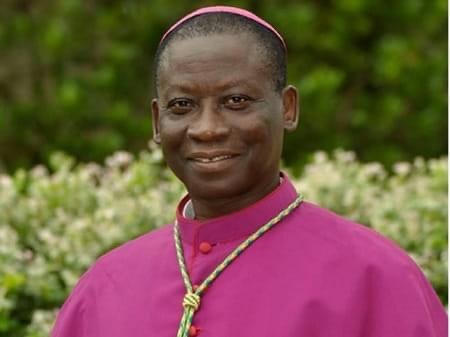
President of the Ghana Catholic Bishops’ Conference, Rev. Matthew Kwasi Gyamfi, has voiced concern about the pervasive and uncontrolled corruption that he believes is stifling Ghana.
Speaking at the opening ceremony of the 2023 plenary assembly in the Sunyani Diocese on November 13, 2023, Rev. Gyamfi expressed dismay over the country’s persistent impoverishment despite being an oil producer.
“Can the governments explain to us why we are in this economic mess? What explanations can the two political parties give to Ghanaians for the unfavourable agreements we sign on our oil, minerals, power generation etc.? Countries that have these resources in abundance are rich. Why do we remain poor? Ghanaians no longer accept the old explanations that the Governments of Ghana have been giving,” he said.
He highlighted the debilitating impact of uncontrolled corruption, describing it as widespread and seemingly almost legalized. Rev. Gyamfi raised critical questions about the effectiveness of the current democratic system, which, in his view, disproportionately benefits a privileged few while leaving the majority of the population behind.
Furthermore, he criticized the audacious impunity and arrogance displayed by some politicians in defending corrupt practices. Rev. Gyamfi also took aim at successive governments for the deterioration in the country and the surge in corruption.
“Both governments keep borrowing, and we are now in a deep financial crisis. Why are we in this economic and financial quagmire? The massive uncontrolled corruption is suffocating the nation. It appears corruption is legalized. What should Ghanaians do since the existing form of democracy help only a few and leaves the majority behind? What about the impunity and arrogance of some politicians and their defence of corruption?”
“Should the constitution not be changed or bettered for it to work for all Ghanaians instead of for a few? Should the legal system not be re-equipped to uproot corruption? What about our Parliament where the interest of the people is sacrificed for personal and party interests? Why have we not implemented the findings of the Constitutional Review Committee?” he quizzed.
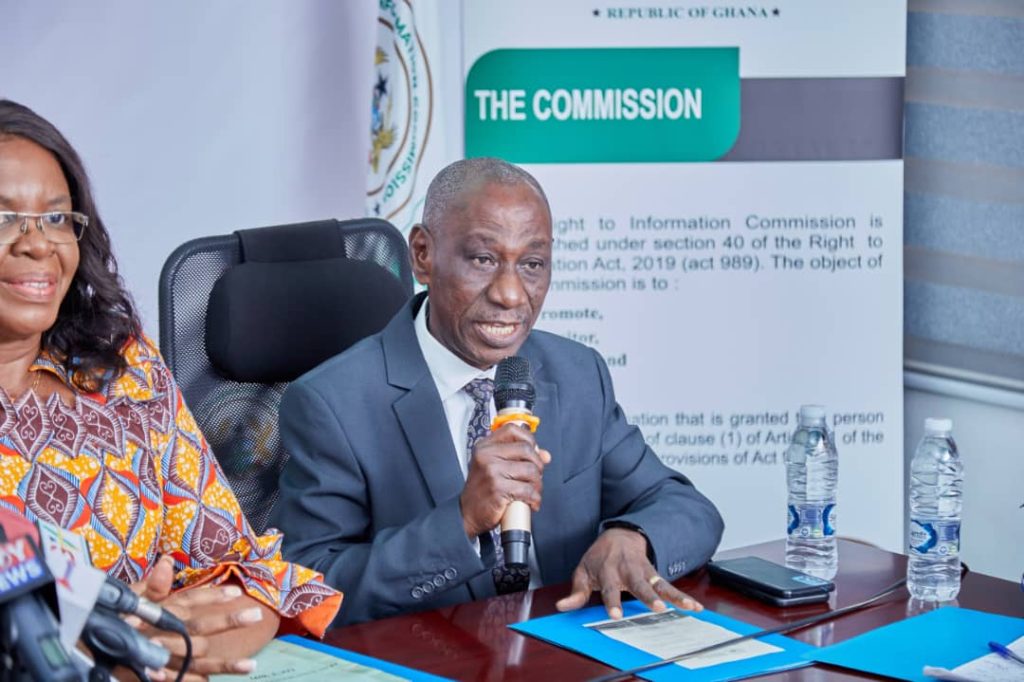
Board Chairman of the RTI Commission (RTIC), Justice (Rtd) Kwesi A. Ofori Atta, has emphasized the significance of the Right to Information (RTI) law as a powerful tool in combating corruption and encouraging active public engagement in governance.
He noted that the RTI law has evolved into a fundamental measure for fostering transparency in governance and public discussions, serving as a mechanism to enhance democracy and good governance.
Justice (rtd) Atta, who said this in Wa during a stakeholders’ forum on the RTI law, indicated that: “This law has been made for all of us and everybody can take advantage of it.”
Representatives from public and private institutions, Civil Society Organizations, Persons with Disabilities, and students gathered for a forum addressing the theme: “Your Right to Access Information and the Role of the Right to Information Commission Under Act 989.”
This forum was organized as part of the RTIC’s initiatives to enlighten the public about the clauses within the RTI law and empower them to assert their right to information as stipulated by the Act.
“If this law will help us bring down corruption or even expose corruption and promote transparency, all of us must participate.
“Like a double-edged sword, the RTI has the potency to create an avenue for transparency and accountability that engulfs every individual and entity. So, the government, state authorities and entities are brought under the microscope of scrutiny by affording people the chance to ask for information”, he added.
He stressed that all individuals and stakeholders in Ghana carry the responsibility of ensuring the effective implementation of the RTI Act 2019 (Act 989).
Yaw Sarpong Boateng, Esq., the Executive Secretary of the RTIC, during his presentation, encouraged the public to utilize the RTI law to request information from public institutions and to report instances where those institutions fall short.
He highlighted that individuals requesting information under the RTI law weren’t obligated to provide reasons for their inquiries. However, he emphasized the responsibility of using the acquired information in accordance with the law.
Boateng clarified that every public institution should have an updated repository managed by an RTI Officer, accessible to any Ghanaian upon formal request under the RTI law.
He also specified that certain information is exempt from public access under the RTI law, citing reasons such as national security, policy planning, law enforcement, international relations, economic interests, and privileged information.
Peter Maala, the Upper West Regional Coordinating Director, representing the Regional Minister, pledged the support of the Regional Coordinating Council and the Municipal and District Assemblies in ensuring the effective implementation of the RTI law.
During the session, some participants inquired about the establishment of an RTIC office in the region to enhance access to its services.
The participants were encouraged to serve as ambassadors for the RTIC, spreading awareness and education about the RTI law throughout the region.
Distinguished Business Management Consultant and the CEO of Ishmael Yamson & Associates, Dr. Ishmael Yamson, has expressed his belief that the level of corruption in Ghana is vividly reflected in the country’s economic state.
He noted that almost every leader since the era of Dr. Kwame Nkrumah, Ghana’s first President, has left the nation in a financially dire condition upon the end of their tenures.
During an interview with Joy News’ Evans Mensah, Dr. Yamson, a prominent figure in the private sector known for his substantial contributions to business growth, shared his perspective.
He also condemned the alleged incidents of vote-buying that occurred during the recently concluded presidential primaries of the ruling New Patriotic Party (NPP).
In Dr. Yamson’s view, corruption in Ghana has reached an alarming level and is on the rise.
He expressed shock and anger over the audacity of individuals who openly admitted to paying significant sums during the NPP primaries, suggesting that political leadership was seemingly for sale to the highest bidder.
Dr. Yamson was particularly concerned about how vote-buying influences corruption when politicians assume public office.
He also attributed a significant portion of the pervasive corruption in Ghana to the role of political party financing.
“Now, when that man or woman has paid all that money to acquire the position, to go to parliament, where is he going to get the money to pay back? I have a clip that I have been showing to people. Someone who has contested parliament and sat in parliament offered to say that yes we paid. My competitors paid, I didn’t pay that much but they paid and I also paid.”
“There’s no shame even about telling people that you got that position not on merit but only because you could raise more money, or bribe your way into that office. And he actually answered the question; ‘when I get there whose money do you think I am going to use but state money? I will make sure I get the money and pay.”
“So, I think that we have a problem with corruption and we have to accept it” he noted.
“Helping others to buy our votes will not in any way change Ghana. It will not change this country” he stressed angrily.
“This country, for as long as we have leaders who have come into office indebted to people and they have to pay them back, Evans I am sorry. I am painting too bleak a picture, but it’s the reality” he told the host.
“…Because even if you yourself as an individual have not dipped your hands into the state coffers, what about all your followers and what have you done about them?”
He rebuked President Akufo-Addo for his remarks regarding the case of former Sanitation Minister Cecilia Dapaah, who was accused of hoarding millions of cedis in her residence.
“My greatest disappointment was when recently we had a case about a Minister who had so much money in her home, and the President said he hoped her integrity would be proven in the end. Why would the President even get involved in this when there are state agencies handling the matter?.”
“If you are our leader and you express trust in someone, how can you expect your followers to claim that the person is untrustworthy? It’s simply not feasible. I don’t believe that President Akufo-Addo has effectively curbed corruption in this country; he has not. If he had, why do we continue to witness a multitude of scandals emerging regularly, and why hasn’t he taken decisive measures to address and prevent them? Why have none of his associates who have been implicated in wrongdoing been held accountable or incarcerated?” he inquired.
Chief Executive Officer (CEO) of the National Youth Authority (NYA) Pius Enam Hadzide, has refuted claims that President Akufo-Addo does not walk the talk when it comes to the country’s fight against corruption.
Speaking on TV3’s NewsDay programme, Mr Hadzide noted that contrary to reports, the president has heavily invested in institutions set up to fight corruption.
“Akufo-Addo is not fighting corruption in the studios or with his slogan. He is committing resources to the antigraft institutions. Check the budget allocations.
“The Office of the Special Prosecutor (OSP) was introduced by him, and he appointed a known NDC member who rose to the status of running mate of the NDC,” he added.
According to Mr Hadzide, such a man cannot be labelled as the’mother serpent of corruption’ and also be blamed for the actions of some individuals.
He also lashed out at individuals who have accused NPP officials of corruption-related activities but have failed to provide any form of evidence.
“This cannot be someone who is interested in corruption. He appointed an NDC man because he is genuinely at heart and committed to fighting corruption and that is Akufo-Addo for you. He has made sure everything is investigated. Why will you blame him when you people run around and make baseless allegations and when they are investigated and it has no merit, you say he is a clearing agent? What should he do? Because of your baseless allegations he should jail people?” he quizzed.
A prominent member of the ruling New Patriotic Party (NPP), Dr. Kobina Arthur Kennedy, has sided with former Special Prosecutor Martin Amidu’s description of President Akufo-Addo as the “mother serpent of corruption.”
The US-based medical practitioner believes that the president has shown no dedication to the anti-corruption cause. According to him, the president’s posture and actions towards sensitive issues prove him right.
“The problem is not forming new institutions; it is in our hearts. The president’s body language, his temperament and attitude is not geared towards fighting corruption, and Martin Amidu was right that he is the mother serpent of corruption…” he told JoyNews during an interview.
He added: “It is a very fair assessment, look at who he appointed as head of the Public Procurement Authority, the person he appointed as head of Public Procurement Authority to begin with had ethical challenges under the Kufuor administration, so, it is not like people didn’t know who he was.
“But he got the job anyway. Then the president along the line of course is talking about it, he says that this time around we even have a Minister for Public Procurement.
“Not only that, we have a board of directors for the Public Procurement Authority. In spite of that, the head of Public Procurement Authority forms a private company on the side, that bids for contracts and gets them and sells them on the side, and he did that for years under the very noses of his board of directors and the minister who was supposed to take care of procurement.
“And all what it took was Manasseh Azure, one journalist, to expose them. So where was the security agencies? Where was the police? Where was the Attorney General’s Department? Where was anybody?” he questioned.
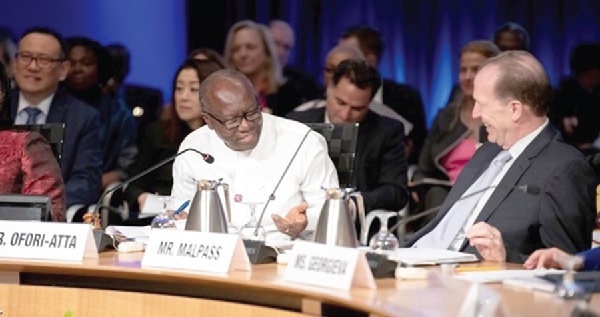
Ghana has reached out to theInternational Monetary Fund (IMF) seeking their assistance in tackling the issue of corruption within the country.
This request is in line with Ghana’s commitments under the $3 billion IMF programme, from which Ghana is anticipating a second installment of $600 million in November.
The IMF programme’s primary objectives are to address Ghana’s existing economic challenges and foster transparency and anti-corruption measures.
As part of this comprehensive program, the Ghanaian government has made a formal request to the IMF for technical support to conduct a corruption diagnostic assessment within its governance framework.
This assessment is crucial as it will contribute significantly to the ongoing efforts aimed at updating the National Anti-Corruption Action Plan.
Additionally, the government is set to rectify weaknesses within the current asset declaration system for public officials by enacting a new Conduct of Public Officers Act.
During a press briefing at the IMF-World Bank meetings in Marrakech, Morocco, the IMF’s African Department Director, Abebe Aemro Selassie, provided an update on Ghana’s progress.
He emphasized that this initiative represents Ghana’s dedication to promoting good governance and fighting corruption, as specified in the IMF programme.
Selassie stated, “On the governance diagnostic report, I think the request has been made [but] I’m not sure where we are in terms of being able to provide that, but as soon as we have the resources, we will do that. And it’s just a matter of time, I believe.”
Meanwhile, the IMF has pledged to provide all necessary support to the creditors to ensure that Ghana receives the second installment of IMF funds and can proceed with the programme.
Selassie further explained, “Action is also needed from the creditor side, and I have to tell you that, you know, whereas it took, I think, something like 9 months or more for Zambia to get the official creditor committee to be created, in Ghana’s case it was fairly rapid. So that’s what allowed us to go to the board and get the program approved. And we’re very hopeful that the ongoing discussions among official creditors will also expeditiously allow us to conclude the upcoming review. Again, the most recent Mission reached an agreement with the government on policies that are needed to tackle the most recent issues and also put in place an important budget for next year. So Ghana has done its fair share, and it’s for creditors to take steps, and we’re not going to be asking the government to do more adjustments because creditors haven’t asked either, so you know we will provide all the information necessary so creditors can move to allow us to go to the board as soon as possible.”
Ghana has submitted a request to the International Monetary Fund (IMF) for technical assistance to address issues related to corruption. This request aligns with Ghana’s commitments under the $3 billion IMF program, from which Ghana is expecting a second tranche of $600 million in November. The IMF program aims to address Ghana’s current economic challenges and promote transparency and anti-corruption efforts in the country.
As part of this program, the Ghanaian government has requested IMF technical assistance to conduct a governance corruption diagnostic assessment. This assessment will contribute to ongoing efforts to update the National Anti-Corruption Action Plan. Additionally, the government is expected to address weaknesses in the existing asset declaration system for public officials by enacting a new Conduct of Public Officers Act.
The IMF’s African Department Director, Abebe Aemro Selassie, provided an update on Ghana’s progress during a press briefing at the IMF-World Bank meetings in Marrakech, Morocco. This initiative is part of Ghana’s commitment to promoting good governance and combating corruption as outlined in the IMF program.
“On the governance diagnostic report, I think the request has been made [but] I’m not sure where we are in terms of being able to provide that, but as soon as we have the resources, we will do that. And it’s just a matter of time I believe.”
Meanwhile, the IMF says it will provide all that is needed to the creditors, so Ghana can get the second tranche of IMF cash and move the programme forward.
“Action is also needed from the creditor side and I have to tell you that, you know, whereas it took I think something like 9 months or more for Zambia to get the official creditor committee to be created, in Ghana’s case it was fairly rapid. So that’s what allowed us to go to the board and get the programme approved. And we’re very hopeful that the ongoing discussions among official creditors will also expeditiously allow us to conclude the upcoming review. Again the most recent Mission you know reached an agreement with the government on policies that are needed to tackle the most recent issues and also put in place an important budget for next year. So Ghana has done its fair share, and it’s for creditors to take steps, and we’re not going to be asking the government to do more adjustments because creditors haven’t asked either, so you know we will provide all the information necessary, so creditors can move to allow us to go to the board as soon as possible,” Abebe Aemro Selassie added.
The Chartered Institute of Supply Chain Management (CISCM) has called on the government to take legal action against those who mismanage and embezzle state funds, with the intention of discouraging misconduct in the public sector.
The institute emphasizes the necessity for the government to fully enforce existing laws to deter corruption in the public sector, especially given the economic challenges the country is facing in the aftermath of the global Covid-19 pandemic.
Mr. Richard Asante-Amoah, the Lead Executive of CISCM, made these remarks during the press launch of the 2023 CISCM recognition and dinner event held on Monday. He also advised members of the institute to uphold high standards of professionalism in their work.
The event is scheduled for January 13, 2024, and nominations are now open for individuals and institutions to submit their entries to the award committee.
Mr. Asante-Amoah stressed that members should adhere to the ethics and principles of their profession and distance themselves from any fraudulent activities that could tarnish the Institute’s reputation. He encouraged institutions to hire members of the institute, as they have undergone training to become professionals and are guided by the profession’s ethics.
He further emphasized that Ghana could overcome its economic challenges by setting aside political differences and allowing individuals with the necessary professional background to assume positions they are capable of managing.
Mr. Paul Victor Avudzivi, the Planning Committee Chairman of the 2023 CISCM recognition and award night, announced that outstanding individuals, personalities, and institutions from the past year would be acknowledged. This recognition aims to serve as mentors and motivate others in the industry.
The National Chairman of the National Democratic Congress (NDC), Johnson Asiedu Nketiah, has addressed the recent anti-corruption commitments made by Assin Central Member of Parliament, Kennedy Agyapong.
In an interview with Oyerepa TV earlier in the week, Johnson Asiedu Nketiah, popularly known as General Mosquito, asserted that Agyapong, who is currently an aspirant for the New Patriotic Party (NPP) flagbearer position, is involved in the corruption within the government.
However, he suggested that Agyapong is positioning himself as a virtuous figure to garner votes in the presidential primaries scheduled for November 4.
“He is pretending, knowing that Ghanaians are tired of the rot and corruption currently going on, he is positioning himself as an anti-corruption crusader to get their support to win an election but he doesn’t have any intention of winning and coming to fight corruption,” he stated.
Mr Agyapong is set to compete for the NPP’s flagbearer position, alongside three other contenders, namely Vice President Dr. Mahamudu Bawumia, Dr. Owusu Afriyie Akoto, and Francis Addai-Nimoh.
The NPP has scheduled November 4, 2023, for the election to choose a successor to President Nana Addo Dankwa Akufo-Addo as the party’s leader.
Presidential aspirant for the New Patriotic Party (NPP), Kennedy Agyapong, has cited corruption as one of the many problems the country is currently facing.
On how to tackle the canker, Mr Agyapong indicated that he would implement an approach similar to that of former Nigerian President Buhari.
This measure would entail providing a 6-month ultimatum for corrupt individuals to surrender themselves to the relevant enforcement agencies and return the monies stolen.
Following the expiration of the deadline, he notes that anyone caught will face the law.
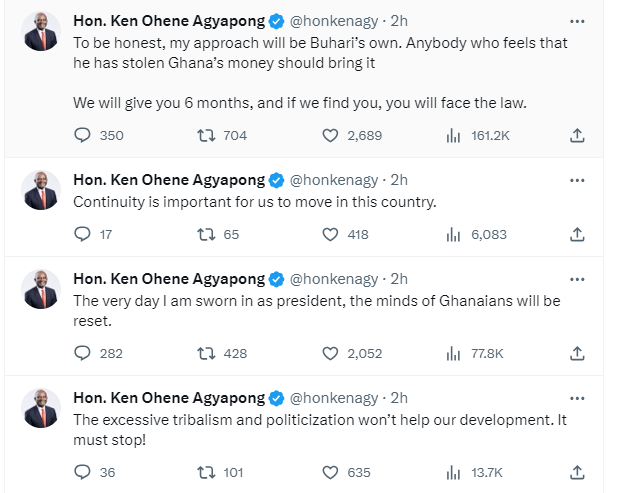
“To be honest, my approach will be Buhari’s own. Anybody who feels that he has stolen Ghana’s money should bring it. We will give you 6 months, and if we find you, you will face the law,” he noted.
The Assin Central MP made this known in a series of tweets today on how to ensure Ghana sees significant development.
To be honest, my approach will be Buhari’s own. Anybody who feels that he has stolen Ghana’s money should bring it
We will give you 6 months, and if we find you, you will face the law.
Presidential aspirant for the New Patriotic Party (NPP), Kennedy Agyapong, has noted that overhauling the mindset of Ghanaians will be the very first step he takes as president.
He communicated this planned initiative via a Twitter post on October 6.
He wrote: “The very day I am sworn in as president, the minds of Ghanaians will be reset.”
In earlier and subsequent tweets, the Assin Central MP spoke on a number of issues he believes are derailing the country’s progress.
He made mention of tribalism, politicization, lack of continuity and corruption.
“The excessive tribalism and politicization won’t help our development. It must stop!”
“Continuity is important for us to move in this country.”
On how to tackle corruption, Mr Agyapong indicated that he would implement an approach similar to that of former Nigerian President Buhari, where he would give the culprits a 6-month ultimatum to surrender.
Following the expiration of the deadline, he notes that anyone caught will face the law.
“To be honest, my approach will be Buhari’s own. Anybody who feels that he has stolen Ghana’s money should bring it We will give you 6 months, and if we find you, you will face the law,” he noted.
Member of Ghana’s ruling New Patriotic Party (NPP), Richard Nyamah,lamented the country’s high level of corruption.
On Tuesday, September 12, 2023, Nyamah claimed that practically every Ghanaian engages in corrupt behaviour to escape challenging circumstances.
The majority of people moan about corruption, but you see them bribing police officers and other government officials when they run into problems.
“99.9% of the people of Ghana are corrupt in our hearts, in our minds, and in our souls. What we are good at doing is sitting and pointing fingers and telling people how bad they are doing.
“I have fought it (corruption) physically, I have fought it spiritually, and I have prayed. I’ve done all this and I’m saying that internally, something needs to change in our mental thinking process.
“You take even the cultural makeup and the environment; it is all encouraging corruption. What we like to do is that Oh, this one is corrupt, and we sit down and talk about the person.
“You turn next and you are the worst. You are bribing the policeman or you are doing something – we all do it to get out of a situation,” he said.
The aspiring parliamentarian indicated that he has taken the decision not to criticise corrupt practises until something drastic is done to liberate the minds of Ghanaians from corruption.
“… it has taken me that lonely fight to realise thatI’m not different from all these people I’ve been accusing of corruption and so it’s time to just call it quits until something dramatic happens—maybe some external force drops on our heads and our minds change.”
He added that the state agencies that are in charge of fighting corruption, including the Office of the Special Prosecutor (OSP), know that the fight is lost and are merely engaging in pretence.
“You ask them one on one in their rooms and you finish and go into your room and cry… They know what they’re doing is window dressing. The problem is bigger than that. This country is a mess.”
President Akufo-Addo has provided evidence to back his claim that his administration has combatted corruption better than any other government in the 4th Republic.
In his speech at the opening ceremony of the 2023–2024 Ghana Bar Conference in Cape Coast, he made this known.
He noted that, personifying the adage “charity begins at home”, every single alleged act of corruption levelled against any of his appointees has been investigated by independent bodies, such as CHRAJ, the CID, and, in some cases, by Parliament itself.
He said: “From the allegations against the then Minister-Designate for Energy, Boakye Agyarko, at his parliamentary confirmation hearings in 2017; to that against the former CEO of BOST, Hon. Alfred Obeng; to those against the then two deputy Chiefs of Staff at the Office of the President, Hon. Francis Asenso Boakye and Hon. Samuel Abu Jinapor; to the conflict of interest allegations against the Minister for Finance, Ken Ofori-Atta; to the claims of extortion against the then Trade and Industry Minister-designate, Alan Kyerematen, at his parliamentary confirmation hearings in 2017;
Also, “allegations of doubling in visa racketeering against the then deputy Minister for Youth and Sports, Pius Hadzide, and the then Director General of the National Sports Authority, Hon. Robert Sarfo Mensah who, even though exonerated by the CID, later resigned; the Chairperson of the Board of the National Sports Authority, Hon. Kwadwo Baah Agyemang ; to the allegations of bribery levelled against the Secretary to the Inter-Ministerial Committee on Illegal Mining, Charles Bissue; to those involving the dismissed acting CEO of the Public Procurement Authority (PPA), A. B Adjei; and the dismissed CEO of the National Youth Authority, Emmanuel Asigiri,” he named as other cases.
The president stressed that “they have all been investigated and, in most cases, cleared by the authorised institutions of our state, and not by President Akufo-Addo. “
“The latest episode involving the former Minister for Sanitation and Water Resources, Hon. Cecilia Abena Dapaah, is evident for all to see. I am not aware of any government in the 4th Republic subjecting so many of its officials to such investigations and inquiries. At the same time, several officials of the previous Mahama administration, such as William Matthew Tetteh Tevie, Alhaji Salifu Mimina Osman and Eugene Baffoe-Bonnie, in the infamous $4 million NCA scandal, have been tried and convicted of various corruption-related offences, and several others, including Dr. Stephen Opuni, the former CEO of COCOBOD, and Hon. Cassiel Ato Forson, the Minority Leader in Parliament, are standing trial as we speak.”
He clarified that none of the accountability institutions of state, including the new Office of Special Prosecutor, have ever indicated any pressure from the Executive over their investigations.
“There are some who refuse to accept my method of proceeding and have characterised me as a ‘clearing agent’, because, for them, the mere allegation without more is enough to merit condemnation of the public official. For my part, I will not set aside due process in the fight against corruption, no matter how much opprobrium this incurs for me,” he added.
President Akufo-Addo has asserted that his government’s actions in combating corruption are among the most robust anti-graft measures implemented since Ghana gained independence.
President Akufo-Addo emphasized that he has not provided protection to any of his appointees facing allegations of misconduct.
He made this known while addressing the 2023 Ghana Bar Conference held at the University of Cape Coast on Monday, September 11.
“I accepted the invitation to speak here in order to take advantage of this occasion to place, once again, my government’s record on corruption for public scrutiny. It will show that my government has undertaken, arguably, the boldest initiatives since our nation attained independence, nearly sixty-six (66) years ago, to reform and strengthen the capacity of our institutions to tackle corruption in the public sector.
“What I have done is to show you that my government has fought and is fighting corruption not just in high-sounding words, but, actually, in concrete deeds. We have shunned mere exhortations and showy denunciations of unproved corruption. It has been a holistic approach.”
To ensure government officials do not take their position for granted, engage in corrupt activities, the president noted that his administration has made institutional reforms, enacted additional requisite laws.
“Our fight against corruption has been grounded in legislative, financial, and institutional action, and not on mere lip service,” he added.
With all these achievements, the president noted that they were not done solely by his effort, as he is not mandated by the law to sanction corrupt government officials.
Such responsibility, he said, lies in the hands of the courts and law enforcement agencies.
He admitted that “My job is to act on allegations of corruption by referring the issue or issues to the proper investigative agencies for the relevant enquiry and action, including, if necessary, the suspension of the affected official, pending the conclusion of investigations.
“That is exactly what has been done since I assumed the mantle of leadership on January 7, 2017. The latest episode involving the former Minister for Sanitation and Water Resources, Hon. Cecilia Abena Dapaah, is evident for all to see.”
For the second time, President Akufo-Addo has urged his critics to channel their concerns regarding what they perceive as a delay in the delivery of justice for corruption and related activities through the proper channels.
The president emphasized that the responsibility for investigating and passing judgment on individuals accused of corruption rests with law enforcement agencies, not with him.
Speaking at the opening ceremony of the 2023–2024 Ghana Bar Association (GBA) conference on Monday, he emphasised that “It is not my job to clear or convict any person accused of wrongdoing or engaging in acts of corruption.”
“That is the job of the courts and the law enforcement agencies,” he added.
His remarks follow criticisms from both the general public and the opposition National Democratic Congress (NDC), who have accused the government of not taking sufficient measures to penalize individuals allegedly involved in corrupt practices.
Former President John Dramani Mahama has asserted that President Akufo-Addo’s leadership has fostered an environment conducive to corruption.
However, President Akufo-Addo has absolved himself of responsibility and directed attention to the relevant institutions that should handle such matters.
This is not the first instance where the President has clarified his stance on addressing corruption. Back in 2019, during the same event hosted by the Ghana Bar Association (GBA), concerns about corruption were raised, particularly regarding the government’s crackdown on illegal mining and the confiscation and destruction of mining equipment.
Allegations had surfaced implicating some government officials in illegal mining activities, prompting calls for the President to take stern action against his appointees.
The President, however, noted that “It is not my job to clear or convict any person accused of wrongdoing or of engaging in acts of corruption”.
“My job is to act on allegations of corruption by referring the issue or issues to the proper investigative agencies for the relevant inquiry and necessary action. That is exactly what has been done since I assumed the mantle of leadership on 7th January 2017”.
The President said this while addressing members of the Ghana Bar Association at the Annual Bar Conference in Takoradi Tuesday, September 9, 2019.
President Akufo-Addo has for the second time entreated his critics to divert their frustrations over what they deem a delay in justice delivery on corruption and corruption-related activities through the appropriate channels.
According to the president, the onus to investigate or pass judgement on individuals accused of corruption does not fall on him but on law enforcement agencies.
Speaking at the opening ceremony of the 2023–2024 Ghana Bar Association (GBA) conference on Monday, he emphasised that “It is not my job to clear or convict any person accused of wrongdoing or engaging in acts of corruption.”
“That is the job of the courts and the law enforcement agencies,” he added.
His comments come after some members of the general public and the opposition National Democratic Congress condemned the government for failing to ensure individuals allegedly caught engaging in corrupt activities are sanctioned.
Former President John Dramani Mahama believes that President Akufo-Addo has created a conducive environment for corruption to thrive.
But President Akufo-Addo has absolved himself of blame, pointing to the institutions that need to be engaged over the matter.
This is not the first time the President has made his mandate clear when it comes to tackling corruption. In 2019, at the same event held by the GBA, the confiscation and destruction of mining equipment due to the government’s fight against illegal mining raised corruption concerns. It was alleged that some government officials were involved in galamsey. Some individuals called on the President to go hard on his appointees.
The President, however, noted that “It is not my job to clear or convict any person accused of wrongdoing or of engaging in acts of corruption”.
“My job is to act on allegations of corruption by referring the issue or issues to the proper investigative agencies for the relevant inquiry and necessary action. That is exactly what has been done since I assumed the mantle of leadership on 7th January 2017”.
The President said this while addressing members of the Ghana Bar Association at the Annual Bar Conference in Takoradi Tuesday, September 9, 2019.
President Akufo-Addo has once again refuted the tag ‘clearing agent’ in the country’s fight against corruption and corruption-related activities.
In recent times, government officials such as former Sanitation Minister, Madam Cecilia Dapaah, have been involved in corruption and corruption-related activities for which they are being investigated.
Pending the determination of the case, President Akufo-Addo expressed his confidence in the integrity of Madam Dapaah. This prompted condemnation by the opposition National Democratic Congress (NDC) and some members of the public.
Reacting to this concern at the 2023/2024 annual general conference of the Ghana Bar Association on the theme: “Ensuring High Standard and Integrity in Public Life: The Role of Legal Profession,” the president noted that it is unwise to pass judgement on his subjects before investigations are concluded.
“There are some who refuse to accept my method of proceeding and characterise me as a clearing agent. Because for them, the mere allegation without more is enough to merit the condemnation of the public officer,” he said.
According to the president, he will continue to chart this course despite being labelled a “clearing agent” by some critics.
“For my part, I will not set aside due process in the fight against corruption. No matter how much opprobrium this incurs for me,” he added.
For the president, he has done no ill, as none of the state’s accountability institutions, including the new Office of Special Prosecutor, have reported any interference from the executive branch regarding their investigations.
This is not the first time the president has been tagged as a “clearing agent”. In 2021, the President came out to the public to indicate that he had no power to absolve any individual accused of corruption, as that was not part of his mandate.
Chairman of the opposition National Democratic Congress (NDC), Johnson Asiedu Nketiah, has taken a swipe at the Akufo-Addo-led government, asserting that corruption has flourished under its watch, owing to the favorable conditions it has fostered.
He contended that the government has turned corruption into a buy-and-sell affair, where unscrupulous individuals can pay a paltry sum to gain permission to engage in various wrongdoings that harm the public purse.
Speaking at the swearing-in ceremony for some newly elected Executives of the party on Wednesday, September 6, he said: “We have never come this low, where corruption in government has become like an American buffet. Eat all you can, only for $10. So once you pay the gate fee, which is an appointment from the Akufo-Addo’s government, you enter there and eat everything you can.”
“In fact, if you allow yourself to be outdone in the race to amass wealth from the system then you blame yourself,” he added.
The Akufo-Addo led government has been tagged as one where corrupt individuals go unpunished due to their alleged affiliation with those in power.
The president has been accused of not walking the talk when it comes to combating corruption.
A prominent advocate against corruption, Vitus Azeem, condemned the efforts of the president to check corruption, noting that individuals must be sanctioned to register government’s commitment to the agenda.
“He’s not doing anything physical, there’s nothing on the ground. He’s even worse by way of always trying to exonerate some of his appointees from allegations that he has not even investigated. The best thing as a president is to call the person, and find out what has happened and if there’s a need for a committee to investigate you do that. But the president is the first person to come out and declare the person innocent. That is why he’s called a clearing agent. Apart from using it for a political game, you need to be able to investigate and sanction people that are guilty,” Vitus Azeem said.
Most recent among the critics is former President John Mahama, who in a Facebook Live address on September 6, 2023, said government has misappropriated limited resources and overspent instead of investing in essential infrastructure for job creation and overall development.
“President Akufo-Addo and his administration have failed to address the pressing challenges they have exerted on the people of our country. Misapplying our precious scarce resources and overspending instead of building the critical infrastructure this country needs for job creation and development. Their promises during their campaigns have not been fulfilled leaving the ordinary Ghanaian burdened with the consequences of their incompetence, cluelessness and shameless arrogance.”
“Today, some Ghanaians glorify and make excuses for corruption because the NPP government has allowed it to permeate every aspect of our society. This must not be accepted as the norm. It hinders progress on many fronts, denying our youth many opportunities that could come their way if state resources were meaningfully applied. We cannot allow this dire state of affairs to continue.
“We must all join the fight against corruption, and demand accountability from our leaders. We must not allow corruption to continue to hold our country back,” he said.
The Executive Director of the Ghana Integrity Initiative (GII) has conveyed her dissatisfaction with the court’s directive instructing the Office of the Special Prosecutor (OSP) to return confiscated funds to the embattled former Sanitation Minister, Cecilia Dapaah.
Mary Addah expressed her view that these developments underscore the challenging nature of combating corruption in Ghana, often being a solitary endeavor.
She emphasized the importance of state institutions unequivocally supporting anti-corruption efforts in all circumstances. During an appearance on JoyNews’ Newsfile programme on Saturday, September 2, Addah articulated her belief that the court’s decision was not in the best interest of the country.
“This is one of the instances where it is difficult to comprehend what exactly is going on. The Office of the Special Prosecutor is one that will help this country if we want to fight corruption, and we continue to support them to carry out their investigations and prosecutions of corruption and corruption-related offenses, and what this judgement brings to bear is that fighting corruption continues to remain a very lonely endeavor,” she told host, Samson Lardy.
On Thursday, August 31, the Financial and Economic Division of an Accra High Court issued a directive instructing the Office of the Special Prosecutor (OSP) to return all funds that had previously been seized from the embattled former Sanitation Minister, Cecilia Dapaah.
The Court further mandated that compliance with this ruling must be accomplished within a seven-day timeframe. Additionally, the Court clarified that it could not affirm the freezing of her bank accounts and other assets.
Subsequently, the OSP released a statement in response to the Court’s order, expressing its respect for the directive while simultaneously disagreeing with it, citing what it deemed as errors in the decision.
“While the OSP respects the Court’s decision, it disagrees with the decision of the Court. First, the OSP believes that the Court’s computation of the time limitation is, with respect, erroneous.”
“The OSP searched three (3) private residences associated with Ms. Dapaah over the course of two (2) weeks. The searches and discovery were ongoing during that period. There is little doubt that the OSP filed its application within the statutory window once the search and discovery window is considered.”
The OSP further clarified that its decision to freeze the accounts was not based on public sentiments as it is purported.
“The freezing order was not based on public sentiments. Rather, it was based on court processes filed in a criminal matter before the Circuit Court, Accra involving Ms. Dapaah as the complainant. Further, the freezing order was effected to aid the investigation, as required by law, not on the basis of the investigation, as indicated by the Court. Therefore, it cannot be said that the OSP did not carry out proper investigations to warrant the freezing order. The investigation has only commenced, and it is ongoing.”
The OSP is investigating Madam Dapaah for corruption and corruption-related offences following the revelation that she was keeping more than $1 million in her house.
Chief Wole Olanipekun, SAN, a Senior Advocate of Nigeria and former Chairman of the Nigerian Body of Benchers, has called for a thorough examination and audit of past administrations in Nigeria.
He believes that such an audit would shed light on the reasons for the country’s economic challenges, the collapse of refineries despite significant expenditures on refurbishment, and other pressing issues.
Speaking at a colloquium held in Abuja to commemorate the 25th anniversary of Chief Joe-Kyari Gadzama’s elevation to the rank of Senior Advocate of Nigeria, Olanipekun also advocated for the renaming of Nigeria.
He argued that the name “Nigeria” was imposed by the colonial masters and carries a demeaning connotation.
He suggested that the country should adopt a name that reflects its indigenous identity and evokes a strong sense of pride and ownership.
Furthermore, Olanipekun urged President Bola Tinubu to initiate a probe into past administrations to uncover the reasons behind the country’s current challenges.
He raised questions about the state of the economy, the use of allocated funds, the condition of critical infrastructure like airports, and the devaluation of the national currency, the Naira. He stressed the importance of accountability and transparency in addressing these issues.
The colloquium aimed to bring together experts and stakeholders to discuss pressing national issues and find solutions to the challenges facing Nigeria.
It addressed concerns such as corruption, nepotism, electoral rigging, and the need for good governance and transparency at all levels of government.
The event was chaired by retired Justice of the Supreme Court, Mrs. Mary Odili, and attended by notable dignitaries, including the Attorney-General of the Federation and Minister of Justice, Prince Lateef Fagbemi, SAN.
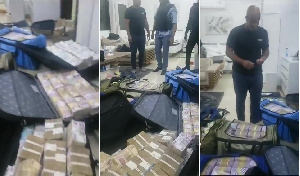
A politician has been caught in Gabon with a substantial amount of cash at their residence, mirroring the situation involving Cecilia Dapaah.
Recall that Cecilia Dapaah was recently in the news following reports of a theft case at her home, involving allegations that her house staff had stolen significant amounts of money. Subsequently, there were also reports indicating that the Office of the Special Prosecutor discovered additional funds at her residence after conducting a search in her apartment.
A similar event has occurred in Gabon. Two videos have rapidly circulated in the wake of the announcement of the August 30, 2023 coup in Gabon.
The more contentious video depicted a purported substantial cash find within the residence of a detained politician.
Various reports have associated the seized funds with one of the seven politicians held in custody by the junta, facing allegations of treason, money laundering, corruption, and other accusations.
Others have even alluded to the monies having been found at the home of president Ali Bongo himself, which according to experts is farfetched.
GhanaWeb is unable to independently authenticate the ownership of the funds especially as neither the junta nor the media have reported on it.
What the video contained:
In the 23-second video, about a dozen big travel suitcases have been flung open and each one is filled with bundles of cash to the brim.
From what this reporter saw, the bundles are largely untouched with their polythene wrapper and are likely to have been dispatched from the central bank or a holding point.
The officials inspecting the sums include one in simple clothes whiles another, dressed like a member of the security agency is also sighted.
There are armed security men also captured in the video.
Some experts have warned that in times like this, such amounts could be planted at homes of politicians as a way of implicating them for trumped-up charges by adversaries who may be in position of power.
Verification:
In order to be sure that the particular video has not at any point been circulated online, GhanaWeb did a video verification using InVid WeVerify software.
From our findings, the video has not previously been uploaded online. A further search of screenshots from the video did not return any old matches via Google Reverse Image and Tin Eye searches.
The other video was a 53-second video of the ousted president, Ali Bongo, confirming the coup whiles calling for allies across the world to make “noise.”
It generated considerable reaction from people who slammed him for being desperate about power and holding on despite failing health.
Almost all media channels across the world have use it in full or in part for their reports on the situation in Gabon.
Other videos that gained popularity were the formal announcement of the coup plus the announcement of Brice Oligui Nguema as head of the transition.
Fundraising Manager at Ghana Integrity Initiative (GII), the local chapter of Transparency International, Michael Boadi, has highlighted the importance of overseeing the financial aspects of political campaigns.
His comment is in a bid to bolster the fight against corruption.
“We cannot successfully combat corruption without controlling the financing of political parties. We must establish mechanisms to regulate political campaign finance,” stated Boadi during a session at the Ghana News Agency’s Boardroom Dialogue in the Tema Regional Office.
The event centered around the theme, “The fight against corruption in the Fourth Republic: A Mirage or Reality?”
Boadi pointed out that political campaign financing had become a significant catalyst for corruption, often leading to misappropriation of the country’s abundant resources if left unchecked.
“The situation is becoming increasingly perilous. According to research by the Centre for Democratic Development-Ghana, winning a parliamentary seat costs approximately US$300,000.00, a figure that continues to rise,” he noted.
Questioning the source of substantial funds required for political campaigns, Mr Boadi raised concerns over transparency and accountability.
“If a parliamentary seat in a smaller constituency demands $300,000.00, one must ponder the source of even larger sums spent by presidential candidates,” he commented.
Boadi stressed the urgency of disclosing the origins of funding for political parties and their candidates at both the presidential and parliamentary levels.
He warned that the failure to scrutinize funding sources could potentially lead to criminal entities such as money launderers, drug traffickers, and terrorists wielding influence over the country’s political landscape.
The efficacy of anti-corruption efforts, Michael Boadi argued, hinges on addressing these challenges and ensuring greater transparency.
He cautioned against the politicisation of corruption investigations, which has, in some instances, impeded the functionality of relevant institutions and dampened public interest in their proceedings.
To remedy this, Boadi suggested that corruption investigations be conducted transparently and without external interference. Such an approach, he believed, would encourage citizens to actively participate in the fight against corruption in Ghana.
A survey conducted by the United Nations Office on Drugs and Crime (UNODC) in partnership with the Commission on Human Rights and Administrative Justice (CHRAJ) and the Ghana Statistical Service (GSS) has revealed a number of corrupt institutions in the country.
Ghana Police Service came out on top as the most corrupt institution.
Among all public officials, police officers have emerged as the most vulnerable to bribery, exhibiting a concerning prevalence rate of 53.2 percent.
Following closely, officers from the Ghana Immigration Service (GIS) and customs officers from the Ghana Revenue Authority (GRA) also registered significant positions on the list, with bribery rates of 37.4 percent and 33.6 percent, respectively.
Taking the second position on this list are the members of the judicial system, including prosecutors, judges, and magistrates.
It is, however, important to note that Ghana has set up some institutions to combat corruption in the country.
CHRAJ
Commission on Human Rights and Administrative Justice (CHRAJ) is backed by the 1992 Constitution of Ghana and by its enabling Act, Act 456, in 1993 to investigate all instances of alleged or suspected corruption and the misappropriation of public monies by officials and to take appropriate steps, including reports to the Attorney-General and the Auditor-General, resulting from such investigations.
EOCO
The Economic and Organised Crime Office (EOCO) is mandated to detect, investigate, prevent, and prosecute all serious economic and organised crimes in Ghana.
OSP
The Office of the Special Prosecutor (OSP) is an independent specialised agency responsible for performing four (4) main functions.
The OSP is tasked with investigating specific cases of alleged or suspected corruption or corruption-related offences involving public officers and persons who have been entrusted with prominent public functions in Ghana or a foreign country or an international organisation such as senior political party officials, government officials, judicial officials, military officials, a person who is or has been an executive in a foreign country of a state-owned company, a senior political party official in a foreign country, and an immediate family member or close associate of such a person, as well as persons in the private sector involved in the commission of such offences.
The OSP is mandated to prosecute offenders involved in the commission of corruption and corruption-related offences on the authority of the Attorney-General.
The OSP is empowered to recover the proceeds of corruption and corruption-related offences.
The OSP is required to stake steps to prevent corruption.
Financial Intelligence Centre
The Financial Intelligence Centre (FIC) is the national centre for the receipt and analysis of suspicious transaction reports and other information relevant to predicate offences of Money Laundering/ Terrorist Financing and Proliferation Financing (ML/TF&P) and to disseminate actionable intelligence to competent authorities.
The Financial Intelligence Centre (FIC) was established by section 4 of the Anti-Money Laundering Act, 2008 (Act 749) as amended.
Public Procurement Authority
Public Procurement Authority (PPA) is established by the Public Procurement Act, 2003 (Act 663) as a regulatory body responsible for the effective implementation of the Public Procurement Law in Ghana.
The Authority seeks to ensure fairness, transparency and non-discrimination in public procurement in order to promote a competitive local industry and increase the confidence of our varied stakeholders in public procurement processes in the country and beyond.
NCCE
The National Commission for Civic Education is an independent, non-partisan governance institution set up under Article 231 of the Constitution of the Republic of Ghana and the National Commission for Civic Education Act, 1993, Act 452 of the Parliament of Ghana.
The Commission works to promote and sustain democracy and inculcate in the Ghanaian citizenry, the awareness of their rights and obligations, through civic education.
One function of the NCCE is to formulate, implement and oversee programmes intended to inculcate in the citizens of Ghana awareness of their civic responsibilities and an appreciation of their rights and obligations as free people
Police CID Anti-corruption unit
The Police Criminal Investigation Department’s anti-corruption unit probes criminal matters.
President of Uganda, Yoweri Museveni, has responded to the World Bank over its intentions to halt future loan requests.
On August 8, the bank declared that it was pursuing legal action against the nation as a result of the recent passing of an anti-LGBTQ bill.
The president said that the behavior of the international lender amounted to trying to persuade Ugandans to renounce their faith and culture in exchange for money in a letter to the people that was published on Twitter.
Despite the fact that discussions with the lender to formalize areas of collaboration were in progress, he claimed that the East African nation would still thrive with or without funding.
Full text: Museveni’s message to the nation
Ugandans, especially the Bazzukulu. Greetings.
Things are moving well in Uganda in spite of the corruption of some Public Servants and some elements of the political class.
Last night, an official from the World Bank rang me to alert me about the statement from that Bank regarding the suspension of any new requests from Uganda for loans. I want to inform everybody, starting with Ugandans, that Uganda will develop with or without loans.
It is, therefore, unfortunate that the World Bank and other actors dare to want to coerce us into abandoning our faith, culture, principles and sovereignty, using money. They really under-estimate all Africans.
We do not need pressure from anybody to know how to solve problems in our society. They are our problems. We are continuing to talk with the World Bank so that both they and we avoid this diversion if possible.
Central Regional Communications Officer for the National Democratic Congress (NDC), Gabriella Tetteh has labeled President Akufo-Addo has waded in recent corruption scandals involving the current administration.
Speaking in an interview, she said the current administration, led by President Akufo-Addo has failed woefully in the fight against corruption.
To her, it appears the ‘god of corruption’ has been awakened by the current administration led by President Akufo-Addo.
“The bigger problem is that as a country, we have failed in the fight against corruption and under President Akufo-Addo’s regime, we have failed woefully, she said.
She made the remarks during a conversation on Cecilia Dapaah’s recent corruption saga where she intimated that Ghanaians have lost confidence in the current as a result of various corruption scandals that have emerged.
Making reference to the country’s ranking on the Global Index on Corruption, she expressed the view that Ghana’s performance in terms of the fight against corruption is abysmal.
Additionally, she said Ghanaians have totally lost confidence in the President due to the economic hardships that the country has been plunged into.
“The hope Ghanaians had in [President Akufo-Addo] which led to them voting to elect him as President has totally diminished. Ghanaians no longer have confidence in him,” she added.
Former Sanitation Minister, Cecilia Abena Dapaah, has recently been in the news following a theft case involving two of her house helps.
The women, an 18-year-old, and a 32-year-old, are said to have stolen huge sums of money from the former Minister’s home. The case is currently in court, however, the Special Prosecutor has taken up the matter for further investigations.
Meanwhile, Ghanaians have questioned the source of wealth of the former minister.
Vice President Dr. Mahamudu Bawumia has emphasized the importance of the digitalization efforts he has spearheaded during the tenure of President Nana Addo Dankwa Akufo-Addo’s government.
Speaking at the inaugural Nation Development Conference organized by the Church of Pentecost, which focused on the significance of building moral values to drive Ghana’s development, Dr. Bawumia highlighted that their administration not only advocates for moral values among Ghanaians but has also implemented concrete measures to address unethical behavior.
He specifically cited the successful example of digitalizing the operations of the Electricity Company of Ghana (ECG), which effectively put an end to the misappropriation of state funds within the company.
The digitalization drive played a crucial role in curbing the stealing of funds and promoting transparency in the management of state resources.
“We noticed some very, very interesting piece of data which speaks to the problems of ECG. We look at the data and for a period of four years or so the revenue of ECG was virtually constant. We said this cannot be possible. How can you get more customers and revenue was virtually the same?
“They didn’t even take their time to change the value, so we sent in a team to look at the architecture of revenue collection at ECG and digitalise the process. They were collecting GH¢450 million a month.
“When we sent in the team, there was subrogate, a malware was introduced into the system by people working right there and we then brought in a whole new architecture. And after the completion of this digitalisation process, GH¢450 million a month increased into GH¢1.2 billion every month,” he narrated.
During the inaugural National Development Conference, Vice President Dr. Mahamudu Bawumia highlighted the significant achievements made through digitalization efforts in the Akufo-Addo government. He cited examples such as the Electricity Company of Ghana (ECG) where digitalization effectively curbed misappropriation of state funds. Furthermore, revenue collection agencies, including the Passport Office, saw a remarkable increase in revenue from GH¢1 million to GH¢64 million per year, demonstrating the success of these measures.
The conference, held in collaboration with the Ghana Journalists Association, centered on the theme “Moral Vision and National Development.” Its primary focus was to discuss the necessity of a national moral vision accompanied by a concerted effort for overall national development.
The event was graced by prominent figures, including Vice President Dr. Mahamudu Bawumia, Speaker of Parliament Alban Bagbin, Chief Justice Gertrude Torkornoo, and former Presidents John Agyekum Kufuor and John Dramani Mahama.
Various government officials attended the conference, including Minister for Finance Ken Ofori-Atta, Minister for Chieftaincy and Religious Affairs Stephen Asamoah Boateng, and Chief of Staff Akosua Frema Osei-Opare.
The conference, which commenced on July 27, 2023, was attended by Members of Parliament, including Majority Leader Osei Kyei-Mensah-Bonsu, as well as members of the Council of State. Notably present were also members of the Board of Trustees of the National Cathedral of Ghana, representatives from various churches in Ghana, and representatives from the National Chief Imam.
Ghana Anti-Corruption Coalition (GACC) has extended its anti-corruption campaign to selected basic schools as part of the activities to commemorate the 2023 Africa Union (AU) Anti-Corruption Day.
The campaign aims to raise awareness among students about the negative impact of corruption and their role in combating this societal issue.
The AU Anti-Corruption Day, observed on July 11 across the continent, provides an opportunity to assess progress made in anti-corruption efforts, identify areas for improvement, and explore new strategies.
This year’s theme focuses on celebrating the 20th anniversary of the adoption of the African Union Convention on Preventing and Combating Corruption, highlighting achievements and challenges.
GACC, through its Local Accountability Network (LANet), engaged pupils from various basic schools in 31 districts across 14 regions of Ghana. In the Ashanti Region, for instance, GACC organized an interactive session at Santasi M/A Basic School.
During these engagements, the students were educated on the importance of actively opposing corruption as responsible citizens.
The discussions revolved around identifying corrupt practices and encouraging the children to reject corruption in all circumstances. They were encouraged to embrace values such as honesty, lawfulness, patriotism, discipline, and the protection of their integrity both at home and within the school environment.
In a speech delivered on behalf of Mrs. Beauty Emefa Narteh, the Executive Secretary of GACC, it was highlighted that Ghana has demonstrated its commitment to combating corruption. The country has signed and ratified the African Union Convention on Preventing and Combating Corruption (AUCPCC), joining a group of 48 nations that have subscribed to this important covenant.
Furthermore, Ghana has developed the National Anti-Corruption Action Plan (NACAP) as a comprehensive framework to guide and enhance anti-corruption efforts within the country. NACAP serves as a roadmap, outlining strategies and actions aimed at preventing and addressing corruption in various sectors of society.
“What remains, however, is the domestication of the key aspects of the convention, including criminalising illicit enrichment, diversion of state property as well as conflict of interest,” she stated.
He called on the Executive and Parliament to work towards passing the Conduct of Public Officers Bill into law to enhance the fight against corruption in Ghana.
Corruption, according to her, remained a reality in Ghana and called on Ghanaians to revisit our cultural values that prohibited corrupt conducts.
Madam Aba Oppong, a Representative of LANet, underscored the need for the youth to be targeted in the fight against corruption to ensure sustainability in the campaign.
She said the greatest corruption against children was early sexual encounter which was mostly perpetrated by adults who were supposed to protect such children and advocated stiffer punishment for culprits.
That is the way to go as a country to reduce the increasing rate of teenage pregnancy, school dropouts and general child delinquency, she opined.
Former Minister of Justice and Attorney General, Betty Mould Iddrisu, has expressed concerns regarding the Office of the Special Prosecutor (OSP), implying that its establishment was motivated by a desire to pursue political prosecutions.
Expressing her disagreement with the OSP, Mould-Iddrisu stated, “the OSP is not an office that I’ve ever agreed with because I believe that it was set up, if you ask me quite frankly, for political prosecutions.”
In a classfmonline.com report, she argued that existing institutions are already in place to combat corruption, such as the Ministry of Justice and the Attorney General’s office, rendering the OSP redundant.
Mould-Iddrisu cited the criminal code and the Economic and Organized Crime Office (EOCO) as examples of effective institutions for addressing corruption.
Mould-Iddrisu also expressed concerns about the erosion of the Attorney General’s power due to the establishment of the OSP.
She believed that the name “Office of Special Prosecutor” implies the need for special attention, which she sees as unnecessary.
Questioning the effectiveness of the OSP in tackling everyday corruption issues, such as driving on the streets or entering public buildings, Mould-Iddrisu suggested that the focus of the OSP may be primarily on high-profile cases involving individuals from specific political parties, rather than effectively addressing pervasive corruption.
Betty Mould-Iddrisu raised doubts about the Office of the Special Prosecutor and its potential for political misuse, stating her belief that existing institutions and laws are sufficient for handling corruption cases.
A survey by Afrobarometer has revealed a drastic rise in corruption across 36 African countries in 2021 and 2022.
In these countries, the report indicates a significant increase of 46% in corruption, a moderate increase of 12%, and a stagnation at approximately 20%.
According to the survey, nearly 58% of Africans state that corruption has intensified in their respective countries over the past year.
Afrobarometer emphasized the situation has notably deteriorated in 12 out of 30 countries surveyed in both 2014/2015 and 2021/2022.
The report further highlights specific countries where corruption has witnessed a sharp surge, including Senegal (leading with a 39-percentage point increase), Burkina Faso (+29 points), Gabon (+24 points), Cameroon (+23 points), and Côte d’Ivoire (+22 points).
“Almost six in 10 Africans (58%) say that corruption in their countries increased over the past year. The situation has worsened significantly in 12 of the 30 countries surveyed in both 2014/2015 and 2021/2022, most dramatically in Senegal (where perceptions of increasing corruption have risen by 39 percentage points), Burkina Faso (+29 points), Gabon (+24 points), Cameroon (+23 points), and Côte d’Ivoire (+22 points).
In contrast, Afrobarometer’s report highlights a remarkable improvement in Benin, where the proportion of respondents reporting an increase in corruption dropped significantly by -61 percentage points.
Additionally, Afrobarometer notes that while a majority of Africans acknowledge the increase in corruption within their countries, there is a prevailing fear among individuals to report such cases to authorities.
“A majority of Africans say that corruption has increased in their countries, but an even larger proportion fear retaliation should they report corrupt acts to the authorities,” Afrobarometer hinted in its report.
Maame Akua Amoah Twum, Afrobarometer’s communications coordinator for anglophone West and North Africa, revealed these findings during a corruption webinar hosted by the Data for Governance Alliance in partnership with the African Union Advisory Board Against Corruption.
The webinar’s theme was “Civil society organizations’ Contribution to driving accountability in the Fight against Corruption in Africa.”
This event served as a prelude to the 20th anniversary celebration of the adoption of the African Union Convention on Preventing and Combating Corruption (AUCPCC), scheduled to take place on 11th July 2023 in Arusha, Tanzania.
Investigations into four significant cases have been concluded by the Office of the Special Prosecutor (OSP).
The four prominent cases are; a case related to the Gaming Commission, Charles Adu Boahen, a former Minister of State at the Finance Ministry, a wealthy businessman involved in attempting to bribe Members of Parliament, and Charles Bissue, the former Secretary of the Inter-Ministerial Committee on Illegal Mining.
The Office of the Special Prosecutor made this known in a Half Yearly Report.
Charles Adu Boahen
The Office has concluded investigation into a referral by the President of the Republic in respect of suspected corruption and corruption-related offences regarding Charles Adu Boahen, a former Minister of State at the Ministry of Finance.
The corruption allegations are contained in an investigative documentary titled, Galamsey Economy – published by Tiger Eye P.I. and the investigative journalist, Anas Aremeyaw Anas.
According to the Special Prosecutor, he will issue directives and further action on the matter in due course.
Unnamed Wealthy Businessman
The Special Prosecutor has indicated that he will issue directives and further action on the matter in due course.
The OSP expressed its gratitude to the Rt. Hon. Speaker of Parliament and his staff for their cooperation and assistance during the investigation.
Gaming Commission of Ghana
The Office has concluded investigation into suspected corruption and corruption-related offences in respect of the procurement and the award of a contract to Turfsport Ghana Limited by the Gaming Commission of Ghana.
According to the Special Prosecutor, he will issue directives and further action on the matter in due course.
Charles Bissue
The Office has concluded investigation into allegations of the use of public office for profit against Charles Bissue, during his tenure as Secretary to the erstwhile Inter-Ministerial Committee on Illegal Mining (IMCIM), arising from an investigative documentary titled Galamsey Fraud Part I published by Tiger Eye P.I. and the investigative journalist, Anas Aremeyaw Anas.
This investigation is a subset of a wider investigation on illegal mining and the activities and operations of the IMCIM.
The Special Prosecutor will issue directives and further action on the matter in due course.
Ongoing Investigations
Electricity Company of Ghana Limited Investigation is ongoing in respect of suspected corruption and corruption-related offences regarding the termination of a Distribution, Loss Reduction and Associated Network Improvement Project contract between the Electricity Company of Ghana Limited and Beijing Xiao Cheng Technology (BXC).
Illegal Mining Investigation is ongoing in respect of suspected corruption and corruption-related offences regarding illegal mining – referred to as Galamsey.
The investigation targets some officials of the Ministry of Lands and Natural Resources and the Forestry Commission. It also targets the activities and expenditure of the dissolved Inter-Ministerial Committee on Illegal Mining (IMCIM), especially in respect of the seizure and management of excavators, machinery, road vehicles, and gold nuggets.
The investigation further targets the activities of Akonta Mining Limited and other companies; nationals of foreign countries allegedly involved in illegal mining; and allegations of corruption and corruption-related offences against some Municipal and District Chief Executives.
National Sports Authority
Investigation is ongoing in respect of suspected corruption and corruption-related offences regarding contracts awarded by the National Sports Authority for the provision of goods and services to the following entities:
• Acoma Green Consult • Tabee Gh. Limited • Wanschie Car Rentals • Obiri Car Rentals • No Farmer No Fortune • STC Clinic • Bobina Solutions • Mum & Sons Signature
Ghana Water Company Limited
Investigation is ongoing in respect of suspected corruption and corruption-related offences regarding contracts awarded by Ghana Water Company Limited for the provision of goods and services to the following entities: • Nayak 96 Enterprise • Dencom Construction Works • Edmus Limited • Jomaks • Espab Construction Limited • Roger More Construction Limited • Velech Enterprise • Intermec Gh. Limited • A.J.I. Trading & Construction Limited
Customs Division of Ghana Revenue Authority
Following the publication by the Office of an investigation report on 3 August 2022 in respect of a complaint against Labianca Company Limited and the Customs Division of Ghana Revenue Authority, the Special Prosecutor directed the commencement of a wider investigation into the issuance of customs advance rulings and markdowns of benchmark values.
Investigation is also ongoing in respect of suspected corruption and corruption-related offences regarding the auction sales of vehicles and other goods by the Customs Division between 1 July 2016 and 15 August 2022.
Airbus SE
Investigation is ongoing in respect of alleged bribery by Airbus SE, a European multinational aerospace corporation, regarding the sale and purchase of military aircrafts for the Republic. The Office is engaged with INTERPOL and the central authorities of the United Kingdom and the United States under the mutual legal assistance regime.
Bank of Ghana
Investigation is ongoing in respect of the banking and financial sector crisis that precipitated the collapse of some banks and financial institutions and the financial sector clean up and recapitalisation reforms.
The investigation targets alleged corruption and corruption-related offences perpetrated by some officials of the Bank of Ghana, banks, specialised deposit-taking institutions, and financial holding companies.
Ghana Police Service
Investigation is ongoing in respect of suspected corruption and corruption-related offences in regarding the recruitment exercise of Course 51 of Cadet Officers Training at the Ghana Police Academy.
The investigation targets specific cases of alleged corruption and corruption-related offences and acts of the use of office for profit, abuse of office, abuse of power, favouritism, nepotism, victimisation and the selection of unqualified persons.
Estate of Kwadwo Owusu-Afriyie alias Sir John
Investigation is ongoing in respect of alleged improper acquisition of state protected land at the Achimota Forest enclave and the Sakumono Ramsar site by the deceased former Chief Executive of the Forestry Commission.
Following the refusal by the High Court, Accra to affirm the freezing order issued by the Special Prosecutor, the Office appealed to the Court of Appeal, Civil Division, Accra for a reversal of the decision of the High Court to facilitate the investigation and the final resolution of the matter.
Other Cases
The Office is also investigating one hundred and fifty (150) other cases at various levels of consideration. These would be publicised if the Special Prosecutor determines that they are within the mandate of the Office and that they should be moved past the preliminary investigation stage.
This is a policy intended to protect the privacy of individuals and the business operations of institutions and companies, and to avoid unnecessary stigmatisation.
Special Prosecutor, Kissi Agyebeng, has once again emphasised the need for sufficient budgetary allocation to support the office’s efforts in combating corruption.
In the Half Yearly Report, concluding in June 2023, the Special Prosecutor expressed concern over the Office of the Special Prosecutor (OSP) operating without a defined budget.
“We continue to emphasise the need for the State to pay particular attention to the funding needs of the Office,” Mr Agyebeng stated in the report.
He said the Office had proven that with sufficient funding, it was best placed to prevent and reduce the menace of corruption and corruption-related activities.
“It is in our collective interest to build a resilient, independent, and technologically advanced Office of the Special Prosecutor to stay ahead of and effectively repress corruption and corruption-related actors,” he said.
In the half year report, the OSP is pursuing four criminal cases in court, conducting investigations into nine suspected corruption and corruption-related offences, concluded four investigations, with 150 other cases at various levels of consideration.
The criminal cases include, the Republic versus Sumaila Abdul-Rahman, Stephen Yir-Eru Engmen, Patrick Seidu, and Andrew Kuundaari, who are facing 11 counts of corruption and corruption-related offences on procurement.
In the case of the Republic versus Issah Seidu, Mr Seidu, an official of the National Insurance Commission (NIC) has been charged with failing to comply with a directive to declare his income and property.
Mr Seidu and three others are also being investigated for their roles in suspected corruption in the importation of 10,000 bags of rice.
There is also the Republic versus Adjenim Boateng Adjei and another, where the former Chief Executive of Public Procurement Authority and his brother-in-law are being tried on procurement issues by using public office for profit.
Mr Adjei has been charged with eight counts of using public office for profit and nine counts of directly and indirectly influencing the procurement process to obtain an unfair advantage in the award of public contracts.
His brother-in-law has been charged with one count of using public office for profit.
The fourth criminal case before the court involves Mr Alexander Kwabena Sarfo-Kantanka, the President’s nominee for the position of Chief Executive of Juaben Municipal Assembly in the Ashanti Region, who have been charged with 26 counts of corruption in respect of a public election.
One of the cases that the OSP has concluded investigations into involves Mr Charles Adu Boahen, a former Minister of State at the Ministry of Finance.
It is over corruption allegations arising from an investigative piece “Galamsey Economy”, published by Tiger Eye P.I. and investigative journalist, Anas Aremeyaw Anas.
The OSP said it had also had concluded investigation into allegations of the use of public office for profit against Charles Bissue, during his tenure as Secretary to the erstwhile Inter-Ministerial Committee on Illegal Mining (IMCIM).
It also arose from an investigative documentary titled “Galamsey Fraud Part I” published by Tiger Eye P.I. and investigative journalist, Anas Aremeyaw Anas.
Investigations into allegations of attempt to bribe members of majority caucus of Parliament by unnamed and wealthy businessman has also been concluded, the OSP stated in the half year report.
It has also concluded investigations into suspected corruption and corruption-related offences in respect of the procurement and the award of a contract to Turfsport Ghana Limited by the Gaming Commission of Ghana.
Apostle General of the Royalhouse Chapel International, Reverend Sam Korankye Ankrah has warned that Ghana’s democracy is in danger of implosion because of the loss of interest in our democratic practice by many despondent citizens.
Rev. Ankrah argued that due to the failure of the political class to use the country’s resources for everyone’s benefit and the unacceptable actions of politicians such as greed, corruption and extreme politicking, many have lost hope in the country’s democracy.
“Our politicians, I want you to know that people are hurting, people are suffering to the extent that we’ve come to the place where people are losing faith in our democratic practice to go the polls to even vote because at the end of the day when we elect our officers and officials and we entrust the leadership of this nation and the resources into their hands, at the end of the day, we don’t see the resources being turned into everybody’s benefit. We see greed, corruption, fighting, politicking from the beginning to the next election,” he lamented.
Rev, Korankye Ankrah does not shy away from criticising the political class when he deems fit. He has regularly chastised them for failing to deliver on their mandate.
Africans in the public and private sectors have been urged by former president, John Dramani Mahama to tackle corruption.
Mr. Mahama described corruption as an economic malady that hinders development.
He raised concerns about graft, which he said thrives due to the layered irresponsibility of institutions and state actors who are required to fight it.
The former president made these comments when he was the Special Guest at the 53rd Annual Conference of the Nigeria Institution of Surveyors and Valuers (NIESV) under the theme, “Asset Valuation as a Global Anti-Corruption Tool: The Nigeria Experience.”
“Because corruption is a global challenge, its scope and seriousness have led to calls for a worldwide response and cooperation in the fight against it. Corruption is an economic malady. Mr Chairman, corruption hinders economic development, diverts investments from infrastructure, institutions, and social services, and undermines efforts to achieve other country-specific development goals and targets. And we all know why. Graft thrives due to the layered irresponsibility of institutions and state actors that must fight it. Whichever way you visualise it, corruption must be fought whether it occurs in the public or private sector”.
He highlighted discretionary power, economic rent, strong legal system as elements required to fight corruption.
“There are at least three elements required for corruption to occur. First, someone must have discretionary power, which includes the ability to influence the formulation of regulations and administer them. Second, economic rent must be associated with discretionary power, primarily when higher rents are related to the misuse of discretionary power. Third, when the governance or legal system offers a sufficiently low probability of detection or sanction for wrongdoing,” the flagbearer of NDC posited.
According to him, corruption scares investors away from investing in a country.
“Corruption also retards growth because bribes paid by investors to secure investment licenses, including building permits, increase the cost of doing business and, consequently, reduces the incentive to invest in a country. Corruption also has adverse effects on productivity. If the permits and licenses needed by innovators or new producers are obtained by paying bribes, that could impede the entry of new goods or technology onto the markets of many economies,” he asserted.
Mr. Mahama advised the Nigerian Institution of Estate Surveyors and Valuers to champion efforts to enhance data availability.
“Finally, the Nigerian Institution of Estate Surveyors and Valuers must champion efforts to enhance real-time data availability, improve technology adoption for land and real estate services online, and formulate relevant legislation for property management,” he urged.
SPEECH: KEYNOTE PRESENTATION BY HE JOHN DRAMANI MAHAMA ON ASSET VALUATION AS A GLOBAL ANTI-CORRUPTION TOOL AT THE 53RD ANNUAL CONFERENCE OF THE NIGERIAN INSTITUTION OF ESTATE SURVEYORS & VALUERS, ILORIN- KWARA STATE.
Mr President, the Governing Council, and the entire membership of the NIESV, please accept my sincere gratitude for this invitation. I am also grateful to the Governor of Kwara State and my brother Abdul-Rahman Abdul-Razaq, for graciously acting as my host and landlord.
Let me also compliment you, members of the Institution, for your immense contribution to Nigeria’s national development, policy advocacy and formulation on housing, land compensation payment, property rating, land administration, and management.
I am impressed with the twenty-five (25) Professional Groupings under the Institution (NIESV) and the existence of fifty-nine (59) Branches across the country. I admire the vibrancy and discipline of the NIESV.
Ladies and gentlemen, corruption can be described as an instrument of murder because its effects can lead to loss of citizens lives due to deprivation of critical public infrastructure and services. Surveyors, Architects, and Engineers who sign-off on poorly constructed or shoddy infrastructure projects like roads, bridges, buildings, and railways can lead to loss of lives due to fatal accidents.
Because corruption is a global challenge, its scope and seriousness have led to calls for a worldwide response and cooperation in the fight against it. Corruption is an economic malady. It means different things in different contexts, but, my brothers and sisters, whichever form it takes and no matter the context, corruption is a feature of poor governance and ethics in both public and private sectors.
And we all know why. Graft thrives due to the layered irresponsibility of institutions and state actors that must fight it. The World Bank explains corruption as the abuse of public office for private gain in the public sector. On the other hand, Transparency International (TI) says corruption within the private sector is the misuse of entrusted power for personal gain.
Whichever way you visualise it, corruption must be fought whether it occurs in the public or private sector.
Your Excellency Governor, distinguished guests, there are at least three elements required for corruption to occur. First, someone must have discretionary power, which includes the ability to influence the formulation of regulations and administer them. Second, economic rent must be associated with discretionary power, primarily when higher rents are related to the misuse of discretionary power. Third, when the governance or legal system offers a sufficiently low probability of detection or sanction for wrongdoing.
The World Economic Forum estimates suggest that the global cost of corruption is at least US$2.6 trillion. This equals 5 per cent of the global gross domestic product (GDP). The World Bank has also disclosed that businesses and individuals pay more than $1 trillion in bribes yearly.
This being the case, the international community, and I am talking about development partners, international organisations, non-governmental organisations, academic experts, and professional bodies, continue to advocate an integrated and comprehensive approach to fighting corruption worldwide.
Among the approaches and initiatives adopted by the international community are the United Nations Convention Against Corruption, the United Nations Convention against Transnational Organized Crime, the United Nations Declaration against Corruption and Bribery in International Commercial Transactions, the International Code of Conduct for Public Officials and Nationals, as well as International Codes of Conduct for Professionals. The African Union Convention on Preventing and Combating Corruption is another germane instrument.
While these initiatives have had a variable impact at stopping illicit financial flows, definitely more needs to be done using all instruments available to the international community and individual nations in the fight against corruption. The advocacy of these international agencies and initiatives is highly commendable, especially as it relates to the pervasive and negative impact of corruption on economic growth and development of nations.
Empirical evidence shows that because of its secrecy, corruption distorts incentives and market signals and aggravates economic distortions. This is because enormous productive resources, such as human talent, which should be channelled to constructive engagements, are diverted into rent-seeking activities for financial rewards and further into escaping detection and punishment.
Mr Chairman, corruption hinders economic development, diverts investments from infrastructure, institutions, and social services, and undermines efforts to achieve other country-specific development goals and targets. Corruption also retards growth because bribes paid by investors to secure investment licenses, including building permits, increase the cost of doing business and, consequently, reduces the incentive to invest in a country.
Corruption also has adverse effects on productivity. If the permits and licenses needed by innovators or new producers are obtained by paying bribes, that could impede the entry of new goods or technology onto the markets of many economies.
Specifically, the impact of corruption in our nation states show that high corruption rates contribute to high inflation rates. Corruption-induced inflation contributes to high cash and unproductive capital inflows into an economy and leads to macroeconomic instability. These eventually impact microeconomic activities as prices of goods and services and the cost of living in general increase, culminating in labour agitation for commensurate increases in wages and salaries.
The Central Bank is then compelled to respond with policies to help reduce inflation and achieve price stability. Some of these policies include monetary measures that increase the primary lending rates of banks through the base rates to induce low lending till the excess cash is mopped up from the system. This is certainly inimical to the growth of businesses that rely on credit to survive. This relates to SMEs in particular.
Also, because of our current interconnectedness, we have open economies that allow the easy transfer of funds, which often could include financial rewards from corruption related activities. Corruption, therefore, has the negative effect of robbing a country of productive capital gained from graft because the proceeds may be transferred to foreign bank accounts.
The practice of capital flight from corruption will worsen the growth of developing countries if the international community does not enforce the Conventions and Declarations against corruption.
Mr Chairman, the international community has embarked on a global anti-corruption fight across several sectors, including real estate. We all admit, without question, that the real estate sector remains a very vibrant sector whose economic health impacts every sector of an economy.
Real estate is a factor of production in the same light as labour and capital. Real estate provides unique, tangible, and intangible benefits that attract investors. Compared to other asset classes, real estate investment, studies have shown, is a store of value, a hedge against inflation, and a good portfolio for investment diversification. Real estate investment serves as a cash flow stream from tenant’s rent payments.
In 2022, a Real Estate Market Size Report revealed that the size of the professionally managed global real estate investment market increased from US$10.5 trillion in 2020 to US$11.4 trillion in 2021. The estimates were from 37 markets in America, Europe, the Middle East, Africa, and Asia Pacific. Keep in mind that COVID-19 was ravaging the world between 2020 and 2021.
Therefore, real estate asset and property valuation are a critical factor in asset investment decision-making and a vital tool for the global fight against corruption. Asset valuation is an exercise conducted by professionals in public agencies, private companies, organisations, and individual professionals.
Considering the heavy reliance on physical asset collateralisation by our financial intermediation systems, including government-required performance bonds, the mechanisms deployed for asset valuation must be scientific, transparent, and credible.
Unfortunately, despite the good aspirational intents, African countries have frequently been bedevilled with the ripple effects of skewed valuations driven by the wilful narrow ends of a few.
Considering the enormity of the consequences of perversely attributed values to assets, asset valuation deservedly demands and requires increased attention from critical actors, such as the Nigerian Institution of Estate Surveyors and Valuers. Similar attention is also needed from your counterparts in my country, Ghana, and across the globe.
I dare say that among several vices, dubious valuation for assets that are used as collateral deposited with financial institutions or for business valuations during Initial Public Offering (IPOs), mergers and acquisitions are at the top of the list of potential dangers to the growth of the private sector.
Our fragile financial intermediation systems’ security and growth face significant risks from poorly done asset valuation. To remain relevant in pursuing economic and social progress and distributive justice and equity, you as professionals must rise to the occasion and create a more responsive regime to aid Africa’s renaissance and growth.
You must work to build Africa as a centre of excellence in the asset valuation space. It is possible for Africa to offer global leadership in this sector, the same way we have done in leading the world in the deployment of mobile and e-money.
A multifaceted interventionist approach is required to improve the asset and business valuation environment to restore credibility in the operational mechanisms deployed by professionals in this regard.
To achieve this aspiration, Africa needs to offer contextually relevant solutions and valuation mechanisms that are fit for purpose, consider the peculiarity of our building systems and the comparable higher durability. We must also anticipate future economic, social, and geographic occurrences and their impact on asset values.
In Africa, assets, especially houses, offer more than a monetary value. Assets may have ancestral relevance, must never be flipped in an economic exchange or sale, and are often appreciated beyond monetary value.
I suggest that professionals such as yourselves reinforce the unique value proposition of Africa and espouse cherished and touted African values in valuation mechanisms. Professionals must measure their relevance beyond a mere regulatory anchor that insists people use their services.
Do not get me wrong – regulation is critical to promote sustainable cohesion, growth, and development. However, professionals must always ask if people will voluntarily request their services if there is no regulatory requirement.
I am encouraging your Institution to take up the challenge and embark on a massive outreach to engage Nigerians. Professionals have often assumed that being technically competent is enough to sustain their relevance.
Well, it is not. For instance, the number of technical jargons in your reports can be reconsidered, especially from the end user’s perspective. Ultimately, your service is to your clients, who may not always be as technically apt as you are.
Related to this is the number of disclaimers that accompany most of your reports, almost absolving valuers from significant professional misconduct and abuse. This may require a critical reconsideration.
Asset valuation service users may require asset valuation for several reasons. At the very minimum, asset valuation must identify the right price for an asset so that the purchaser does not mistakenly overpay for the acquisition, nor does the seller erroneously accept a discounted price. This means all parties, without any moral hazard, can determine the actual value of the business in the event two companies merge or one firm acquires another. Mr Chairman, we must agree that if we are to improve asset valuation in the quest to tackle corruption globally, there must be a limit to using arbitrary powers for asset valuation. Instead, we should amplify tried and tested distinct methods that rely on valuation standards.
Overstating the assets and understating their liabilities has led to the crash of some multinational corporations and had reverberating effect on the whole world economy. In the United States, as recent as the late 2000s, the failure of real estate appraisers to abide by standards led to overvalued properties that are perceived to have contributed to significant mortgage defaults, which impaired the capital reserves and operating ability of many financial institutions and led to a crisis in the world financial system that spread beyond the borders of the US.
As a person who has served in public office at the highest level, let me tease your minds by raising the issue of the requirement for public officers to declare their assets prior to taking office and upon exit from office. This regime of declaration of assets is a useful tool in the fight against corruption, but in many cases is not utilized to maximum effect.
The assets declaration forms must be filled by the individual prospective public office holder. In Ghana, the individual is asked to list all assets and properties they own. Examples are houses, farms, vehicles, jewellery etc. You are also required to assign values to each of these assets.
How will physical examination of assets and valuation assist to strengthen the assets declaration regime to assist the fight against corruption? What role can the determination of the net worth of a public officer before and after office assist in curbing the canker of corruption.
It is good practice that valuation or appraisal organisations require their members to adhere to a particular set of standards. The American Society of Appraisers (ASA) and the Royal Institute of Chartered Surveyors (RICS) insist on standards and performance measurements partly because they wish to avoid the mistakes of their past.
Performance measurement is not an exact science, but I urge you to allow these indices to guide your noble efforts borne out of your intrinsic motivation to right the wrongs of the past. The Lagos State Real Estate Regulatory Authority, beneficial ownership legislation, and the development of an online portal for planning applications have brought more clarity for example. Through transparency, Nigeria can better tackle corruption in the real estate sector.
Mr Chairman, Surveyor President, Distinguished Ladies and Gentlemen, my speech has mapped out asset valuation as a vital tool for national development. We are yet to maximise the potential of asset valuation as a tool for nation-building and anti-corruption. Let us constantly strive to improve and enforce existing global anti-corruption conventions designed to curtail the negative impacts of corruption on national economies.
In addition to the Institution’s efforts, Estate Surveying and Valuation Companies must adhere to laws and standards and take internal steps to prevent corruption in asset valuation. Please also partner with government to implement global standards and national professional codes of conduct and standards.
Finally, the Nigerian Institution of Estate Surveyors and Valuers must champion efforts to enhance real-time data availability, improve technology adoption for land and real estate services online, and formulate relevant legislation for property management.
With the leadership and commitment of the NIESV, asset valuation as a global anti-corruption tool will take firm roots in Nigeria with the hope that the giant of West Africa will rise again and soar like the eagle that calls its compatriots to obey.
Former President John Dramani Mahama was in Ilorin in the Kwara State of Nigeria on Thursday as a Special Guest of the Nigerian Institution of Estate Surveyors and Valuers.
Mr Mahama addressed the Institution’s 53rd annual national conference, which started on June 19, 2023.
Speaking at the Conference on “Asset Valuation as a global anti-corruption Tool”, the statesman entreated Nigerian Institution of Estate Surveyors and Valuers to reinforce the unique value proposition of Africa and espouse cherished and touted African values in valuation mechanisms.
“Professionals must measure their relevance beyond a mere regulatory anchor that insists people use their services.
“Do not get me wrong – regulation is critical to promote sustainable cohesion, growth, and development. However, professionals must always ask if people will voluntarily request their services if there is no regulatory requirement.
“I am encouraging your Institution to take up the challenge and embark on a massive outreach to engage Nigerians. Professionals have often assumed that being technically competent is enough to sustain their relevance,” he added.
Efforts to address corruption in Nigeria have been ongoing. The country has established anti-corruption agencies, including the Economic and Financial Crimes Commission (EFCC) and the Independent Corrupt Practices and Other Related Offences Commission (ICPC), to investigate and prosecute corruption cases.
Additionally, Nigeria has signed and ratified international anti-corruption conventions and implemented domestic legislation to combat corruption.
However, despite these measures, the fight against corruption in Nigeria remains challenging.
Factors such as weak institutional frameworks, lack of transparency, political interference, and inadequate enforcement have hampered progress in combating corruption effectively.
In his bid to become the flagbearer of theNew Patriotic Party (NPP) and potentially the President of Ghana, Kennedy Agyapong has pledged to adopt a zero-tolerance approach towards corruption and any activities related to corruption.
That, he said, would ensure accountability from public office holders and deliver the desired development for Ghanaians.
“I believe in accountability. If God gives me the nod, he (pointing at his Campaign Manager) will be the Chief of Staff. Listen to me very carefully, one strike and he is out. Ghana first, he comes second,” he said.
“If he does anything against this country, I will fire him. That is the only way we can move this country forward. So, can you imagine if I have fired my Chief of Staff. The rest would sit up because even if the Chief of Staff has been fired, what about me the director, what about me the manager? It trickles down and we become discipline.”
Mr Agyapong made the remarks after filing his nomination forms to contest the flagbearership of the NPP, inAccra.
The MP also mentioned creation of job opportunities for the teeming youth if elected as flagbearer of the Party and ultimately, the president as his priority.
He said Ghana had abundant natural resource such as arable land which supported agriculture.
“I have visited about 180 constituencies and have come to realise that we as politicians have done a disservice to the nation. With the arable lands, seas, rivers that God has given to us, we are endowed with so many minerals, a lot of opportunities in this country. But, everywhere you go, especially Volta Region, the resources are untapped. And I want Ghanaians to give the opportunity and challenge me that, I will make sure I turn the fortune of this country around, he said.
“I don’t believe in theory. I am a pragmatic person, I believe in practical things. What I saw in Volta Region, what I saw in Afram Plains area and Northern Region, believe me that we can change this country.”
Mr Agyapong stressed that Ghana’s inflation and interest rate woes where attributable to the country’s inability to produce and export more to earn .
He said, going forward, Ghana must pursue rigorous agro-processing policies to add more value to its raw materials to boost its foreign exchange earning.
“I don’t believe in theory. Your inflation will be stable only when you have been able to stabilize prices, interest rate will be stable only when we stabilize our prices here and especially when our export exceeds import and we have excess of the foreign currency, that is when we can stabilize this country.
“It is not only book. Let’s get down to work,” he added.
He called for a change in the mindset of Ghanaians which made them feel inferior to citizens of other countries, stressing that, the time had come for them to be patriotic and put the country first.
He also urged delegates and Ghanaians at large, to “have faith in me that there is a new dawn that is going to change this country.”
The NPP opened nomination for its presidential primary May 26, 2023.
The one-month long exercise is expected to close on Saturday, June 24, 2023.
The Party has scheduled August 26 for its Special Elections as well as November 4, for the National Conference to elect a flagbearer for the 2024 general election.
Former President John Dramani Mahama has been extended a special invitation to the 53rd annual national conference of the Nigerian Institution of Estate Surveyors and Valuers, held in Ilorin, Kwara State.
The conference, which commenced on June 19, 2023, will feature Mr. Mahama as a keynote speaker on Thursday, June 22, 2023.
During his address titled “Asset Valuation as a Global Anti-Corruption Tool,” Mr. Mahama will leverage his extensive experience as Ghana’s former president to shed light on the detrimental impact of corruption on economies.
Focusing on various forms of corruption, he will emphasize how it hampers economic growth and development.
Additionally, Mr. Mahama will offer valuable insights and recommendations on effectively utilizing valuation and professional standards to combat corruption.
The aim is to inspire innovative approaches within the real estate sector and provide fresh perspectives to conference attendees.
This participation by Mr. Mahama is viewed as a significant contribution to ongoing anti-corruption efforts and the promotion of transparency, not only in Nigeria but globally as well. The Nigerian Institution of Estate Surveyors and Valuers has a strong commitment to upholding ethical standards and professionalism in the real estate industry.
By inviting influential figures like Mr. Mahama, the institution seeks to foster collaboration, knowledge sharing, and ultimately strengthen the fight against corruption while promoting good governance in the sector.