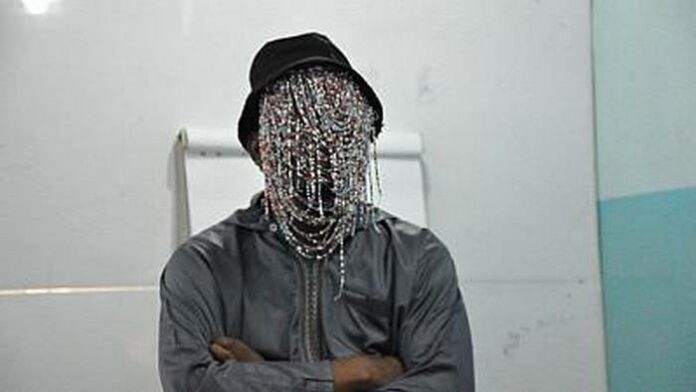
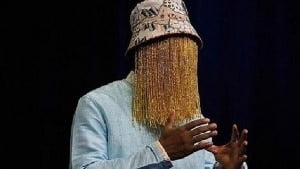
Director of research at the Institute of Economic Affairs (IEA), Dr. John Kwakye, has cautioned investigative journalist, Anas Aremeyaw Anasagainst setting up people to commit crimes in a way to expose them.
Dr Kwakye says setting people up to commit a crime is unacceptable and should be condemned.
His comments come after Anas said that he would be releasing a documentary on corruption in Ghana before the 2024 general elections.
Anas said this exposé will shake the foundation of the country.
He said these while answering questions in an interview on whether Anas was a ‘terrorist’ as was recently said by a High Court judge.
Anas defended his methods and talked about corruption in Africa.
He said “The work that I am doing now might be the last before we get into the [2024] elections. But already the signs are very clear and I can tell you that the foundation would be shaken once again.”
“There are a couple of international ones that are about to be released. But this one, talking to you as a Ghanaian, I mean the foundation of Ghana would be shaken,” he is reported to have said.
Commenting on this in a tweet, Dr Kwakye said “If Anas isn’t interested in cashing in on the elections, he should wait to publish his documentary after not before.
“Anas shouldn’t think that he can hold the whole country to ransom. No one is without blemish in this world. He himself isn’t an angel. Anas should work to catch people who commit actual crimes. He shouldn’t set people up to commit crimes. That’s unacceptable and should be condemned.
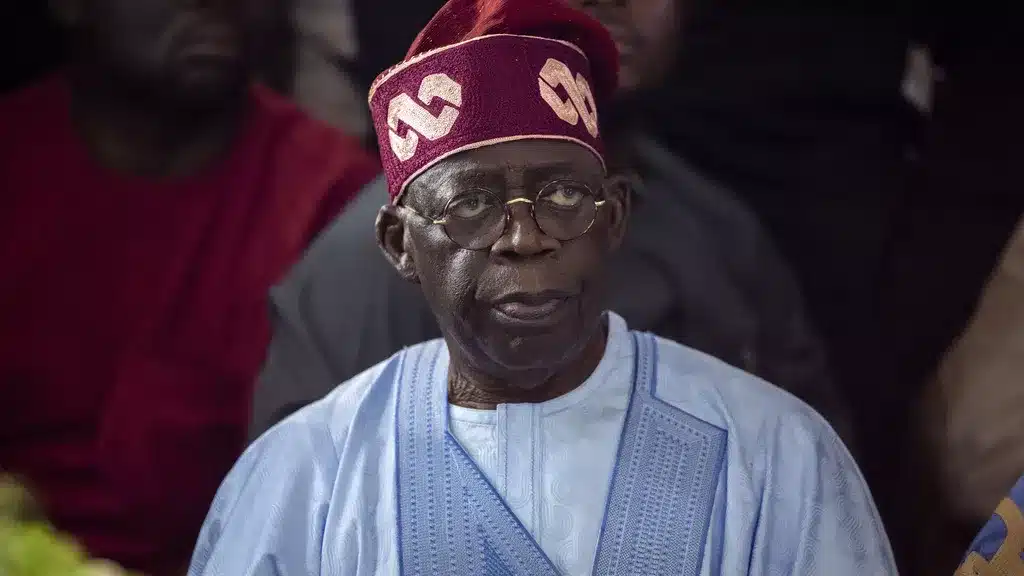
Nigeria’s President Bola Tinubu has been placed head of the economic and financial crimes unit, Abdulrasheed Bawa, on indefinite administrative leave for abuse of office.
The suspension was due to “weighty allegations of abuse of office”, against Bawa, a statement from the presidency said late on Wednesday June 14 2023.
The move came a week after the president suspended the country’s central bank Governor Godwin Emefiele.
Local media have reported that Bawa is currently being interrogated by Nigeria’s secret police, like Emefiele.
A spokesman for the unit, officially known as the Economic and Financial Crimes Commission (EFCC) did not immediately respond to calls for comment.
Created 20 years ago, the EFCC investigates and prosecutes financial crimes, including money laundering and corruption.
The long-serving MP bemoaned the over monetizing of political process and the costly nature of seeking and acquiring power using MPs as a case in point.
“”Everyone who has lost is complaining that they don’t have the funds to match up with the money that is being thrown into our elections. If we don’t change the trend, what is going to happen in our next two or three elections?” he said
According to the Majority Leader of Parliament, the trend, if it continues, will lead to a time when only rich people can make it to parliament.
“What it means is that you can’t come to parliament if you are not loaded. That is why I keep asking for a review of the constitutions by the political parties,” he stated in an interview on Okay FM.
The majority leader further cautioned that the situation is promoting corruption and that citizens must also rethink how they contribute to the monetization of politics.
“I keep saying that nobody in politics is a Father Christmas, so they will eventually recoup whatever money they end up spending. Once their party wins, they will ensure they recoup through contracts and other means. Nobody is an angel in this country. Aside from that, they will further accumulate more money for the next election,” he stated.
The just-ended parliamentary and presidential primaries of the opposition National Democratic Congress recorded instances of alleged vote-buying.
In the Ejura Sekyere Odumase Constituency, a candidate, Juliana Kinang-Wassan, was captured on video throwing wads of cash from the roof of her vehicle at a polling center.
She eventually lost the election, which was contested by five other candidates; however, there have since been calls for her to be investigated for engaging in vote-buying.
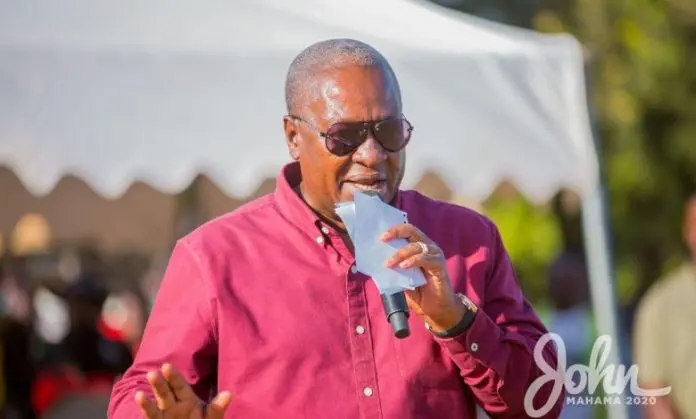
John Dramani Mahama, the former President of Ghana, has pledged to create a favourable environment for anti-corruption institutions to clamp down on corrupt officials if he wins the upcoming presidential election.
Mr. Mahama has stated that corrupt government officials will be discouraged from engaging in corrupt practices during his tenure.
Speaking to delegates in Lambussie in the Upper West Region, he reiterated that corrupt individuals will be punished regardless of their political affiliation under the next National Democratic Congress (NDC) government.
Mr. Mahama emphasized that he would allow anti-corruption institutions to function independently and that he would not interfere or shield anyone who engages in corrupt activities.
He stated that anyone who is caught stealing public funds will face the full force of the law, whether they are in his government, past governments, or the previous government of the New Patriotic Party (NPP).
“It doesn’t matter whether you belong to our government or past governments, if you steal the people’s money we will deal with you. If elected as President, I will allow anti-corruption institutions to work. Nobody should come and call me to save them when they catch you. Any person whether in my government or outside my government or in the previous NPP government, if the anti-corruption institutions are dealing with you that is your business because we must save this country,” Mr. Mahama said.
The Office of the Special Prosecutor(OSP) has received the United States’ Assistant Secretary for International Narcotics and Law Enforcement Affairs, Todd D. Robinson.
He arrived in Ghana on Tuesday, May 9.
He had a series of discussions with Special Prosecutor Kissi Agyebengat the office of the Special Prosecutor in Accra.
The discussions centred on cooperation and shared commitment on detecting and deterring corruption.
Assistant Secretary for International Narcotics and Law Enforcement Affairs of the US, Todd D. Robinson, has paid a working visit to the OSP.

Discussions with the SP, Kissi Agyebeng, centred on cooperation and shared commitment on detecting and deterring corruption. pic.twitter.com/hZdgOYevYS

— Office of the Special Prosecutor-Ghana (@ospghana) May 9, 2023
The Executive Director of the Institute of Liberty and Policy Innovation (ILAPI), has opined that fighting galamsey, is almost impossible.
According to Mr. Peter Bismark Kwofie, corruption is tough to combat, and galamsey would follow in the same footsteps.
The policy expert stated on Rainbow Radio 87.5 FM’s Frontline that we do not have to deceive ourselves.
He stated, “I want to state on record that the fight against galamsey, like corruption, is never-ending. No amount of institutions established to combat corruption and galamsey will be successful. We have every law. We have all of the state institutions. We have mining rules in place, yet people are still mining illegally. It is really straightforward and simple to do. However, these laws have been broken.”
He was replying to Prof. Frimpong-Boateng’s newest findings and the alleged involvement of some key government officials.`
He added that “The Frimpong-Boateng report is not new. As a think tank, we conducted various investigations and discovered that chiefs and politicians are members of the conspiracy. According to a CDD-Ghana study, some politicians indulge in galamsey during election seasons to raise funds for their campaigns. Some clergy, media personnel, and security personnel are among those involved.
However, political influence has grown. We notice that attorneys are now involved. It informs you that fighting galamsey will be incredibly difficult,” he continued.
He defined the war against galamsey as both political and economic, making it difficult for anyone to risk their presidency in the fight.
He stated that some political leaders are so powerful that dropping them is tough.
He also mentioned that the cultural factor and the role of chiefs in galamsey fighting cannot be neglected.
On the question of economics, he stated what the resolution would be in ensuring that people involved in galamsey are offered alternative livelihoods.
One of his disappointments was the report’s failure to identify anyone detained and prosecuted for galamsey.
He would have been relieved to learn that some people had been arrested and prosecuted.
He emphasised that while committing to fight galamsey provides hope, it is not the key tool in the struggle and that the president’s pledge to put his presidency on the line was political hyperbole.
He claimed that the administration had no clear policy in place to combat galamsey.
The latest 2022 Country Report on Human Rights Practices published by the U.S. Department of State has made some damning revelations about some agencies and agents in Ghana.
The report, sectioned into seven parts discusses the total disregard for the respect for the integrity of persons; civil liberties; freedom to participate in political process; corruption and lack of transparency in government; posture towards alleged abuses of human rights; discrimination and societal abuses, as well as the rights of workers happening in Ghana.
This article will delve into the first section of the report – Respect for the Integrity of the Person.
Killings
Government through its agents has been accused of unlawful killings. The report cited the shooting incident in February where police officers killed one and injured eight others at the palace of the Yendi Chief after opening fire.
Although the six officers involved in the incident were suspended with reduced pay, the Police administration failed to release the results of its internal investigation – derailing accountability.
The 2022 Country Report on Human Rights Practices also bemoaned the demise of Albert Donkor, who passed away while in police custody for his alleged involvement in a series of robberies.
“In a departure from typical practice, police did not announce an operation or arrest had taken place until more than three weeks later,” the report bemoaned.
Donkor’s death prompted protests in Nkoranza which also led to the death of an individual after a clash between the youth and police.
“As of November police had not concluded an internal investigation into both deaths,” the report added.
Ghana’s inability to unravel the eight deaths that took place during the 2020 elections is another major concern highlighted in the report.
At least two of the victims were killed by the National Elections Security Task Force, composed of military and police units, per a portion of the report.
Torture
Although the report was unable to cite specific instances, it nonetheless accused state agencies such as the Police of abusing detained suspects and other citizens.
It noted that victims were unwilling to stand up against the police and in instances where they did, the “police generally denied allegations or claimed the level of force used was justified.”
“Impunity remained a significant problem in the Ghana Police Service, particularly regarding corruption and bribery. The investigation and complaints processes did not effectively address reports of abuses and bribery. Results of internal police investigations were almost never publicly released,” the report further revealed.
The Office of the Inspector General of Police and the Police Professional Standards Board, per the report investigated claims of excessive force by police force members. It is unknown whether sanctions were meted out or not.
Abusive Physical Conditions
Ghana’s prison and detention centers have been considered abusive to the fact that they are overcrowded, have poor sanitary conditions, medical care and subpar food which is mostly inadequate.
“Meals routinely lacked fruit, vegetables, or meat, forcing prisoners to rely on charitable donations and their families to supplement their diet.”
The report noted that as of September 2022, overcrowding stood at 150 percent of capacity per information from the Ghana Prisons Service.
The huge number got about 100 prisoners sharing one toilet which often overflowed with excrement.
“There were no facilities to support intersex or transitioning persons,” the report highlighted as a challenge to LGBTQ persons whose presence is frowned upon by society.
On treatment of detainees, the report stated that authorities frequently detained individuals without charge or a valid arrest warrant for periods longer than 48 hours, contrary to the law.
It noted that for instance, 30 members of the LGBTQI+ community who were arrested by the Police on June 26, 2021, and were only released on June 28, 2021. The charges of unlawful assembly – the reason for the arrest, were later dropped due to lack of evidence.
The report also lamented the lengthy pretrial detention where the government kept prisoners in extended pretrial detention (up to many months) due to “police failure to investigate or follow up on cases, case files lost when police prosecutors rotated to other duties every three years, slow trial proceedings marked by frequent adjournments, detainees’ inability to meet bail conditions that were often set extremely high even for minor offenses, and inadequate legal representation for criminal defendants.”
The law provides for the right of any person to challenge the lawfulness of his or her arrest or detention in court, but lack of legal representation for detainees inhibited this right, the report added.
Denial of fair public trial
The reported highlighted the role of corrupt judges who prevented fair trials. These unidentified judges are said to have accepted bribes to expedite or postpone cases, “lost” records, or issued favorable rulings for the payer of the bribe.
“A judicial complaints unit within the Ministry of Justice headed by a retired Supreme Court justice addressed complaints from the public, such as unfair treatment by a court or judge, unlawful arrest or detention, missing trial dockets, delayed trials and rendering of judgments, and bribery of judges. The government generally respected court orders,” the report mentioned.
Visit the IndependentGhana.com for the remaining sections of the 2022 Country Report on Human Rights Practices.
Ghana’s first and Former Special Prosecutor Martin Amidu has claimed that investigative journalist Anas Aremeyaw Anas is afraid of his own reputation as an anti-corruption businessman rather than a sincere anti-corruption activist.
Mr. Amidu claimed that Anas may have hurt himself by using a power of attorney to file the lawsuit rather than doing so himself out of fear of having his true identity revealed in an article on Justice Eric Baah’s High Court’s decision to dismiss a GHS25 million defamation suit filed by the investigative journalist against Assin Central MP Kennedy Agyapong.
“Anas A. Anas knowingly and voluntarily caused his action to be commenced by one Listowell Bukarson on behalf of Anas A. Anas as the plaintiff. This was by virtue of a power of attorney authorizing him to bring the action in the name of the plaintiff, Anas A. Anas on 18 June 2018 for twenty-five million Ghana cedis (GHS25million) damages. The writ of summons was amended on 20 November 2018 after the defendant had filed his statement of defence on 13 November 2018. The Plaintiff then replied on 21 January 2019 to close the pleadings. The filing of the action through an attorney as an agent of a principal is not controversial and is enabled by law”, Mr Amidu said in a long article.
He noted: “Any act in any court required or authorised by the law to be made or done by a party in such court may be done by an authorised agent. The question is whether the attorney can testify on behalf of the plaintiff on matters which are not within his personal knowledge. Did the attorney see or witness the transactions alleged? As far as the requirement that he should testify about what he actually did see or heard is concerned, the attorney could not testify about what the plaintiff himself witnessed or heard”.
Mr Amidu indicated: “The rule against admissibility of hearsay evidence is statutory. Anas A. Anas, the plaintiff, put himself in a situation of being incapable of giving relevant and primary evidence in person and be cross-examined because he lives in the fear of his own shadow as an anti-corruption entrepreneur and not as a genuine anti-corruption crusader”.
To him, “Anas A. Anas, thus, lost the only opportunity to publicly tell the court his version of the facts within his personal knowledge and to be cross-examined to establish his credibility”.
He believes “genuine anti-corruption crusaders do not hide their faces behind masks”.
Read Mr Amidu’s full article below:
The High Court (General Jurisdiction 2) Accra, on 15 March 2023 after hearing the defamation action brought by Anas A. Anas against Kennedy Agyepong and considering the evidence adduced at the trial concluded that:
“I state in conclusion, that whereas all the statements founded on exhibits KOA1, KOA2, KOA3 and KOA4 were truthful and factual, thereby sustaining defendant’s defence of justification and fair comment, the statements in plaintiff’s exhibit C; though capable of defamatory meanings, were not proven to have actually defamed the plaintiff. I found the claims of plaintiff merit-less. It is hereby dismissed.”
ANAS A. ANAS AS THE PLAINTIFF
Anas A. Anas the Plaintiff dabbles both as a lawyer and an “internationally acclaimed investigative journalist”. Anas A. Anas knowingly and voluntarily caused his action to be commenced by one Listowell Bukarson on behalf of Anas A. Anas as the plaintiff. This was by virtue of a power of attorney authorizing him to bring the action in the name of the plaintiff, Anas A. Anas on 18 June 2018 for twenty-five million Ghana cedis (GHS25million) damages. The writ of summons was amended on 20 November 2018 after the defendant had filed his statement of defence on 13 November 2018. The Plaintiff then replied on 21 January 2019 to close the pleadings. The filing of the action through an attorney as an agent of a principal is not controversial and is enabled by law.
Any act in any court required or authorized by the law to be made or done by a party in such court may be done by an authorized agent. The question is whether the attorney can testify on behalf of the plaintiff on matters which are not within his personal knowledge. Did the attorney see or witness the transactions alleged? As far as the requirement that he should testify about what he actually did see or heard is concerned, the attorney could not testify about what the plaintiff himself witnessed or heard.
The rule against admissibility of hearsay evidence is statutory. Anas A. Anas, the plaintiff put himself in a situation of being incapable of giving relevant and primary evidence in person and be cross-examined because he lives in the fear of his own shadow as an anti-corruption entrepreneur and not as a genuine anti-corruption crusader. Anas A. Anas thus lost the only opportunity to publicly tell the court his version of the facts within his personal knowledge and to be cross-examined to establish his credibility. Genuine anti-corruption crusaders do not hide their faces behind masks.
READING AND EVALUATING THE JUDGMENT
I have painstakingly read and re-read the 64-page judgment of the trial High Court in ANAS v AGYEPONG using all the knowledge, experience, and arsenals in the legal armory I have acquired over the past upwards of four and half decades (45 years) when I held myself out as a private legal practitioner, a public officer serving in various capacities, including Deputy Attorney General, Minister of the Interior, and Attorney General, amongst others. I declined for personal reasons my proposed elevation as a justice to the Supreme Court in 1999. I am now retired and hold no licence to practice law.
But I say that while one may disagree with the judgment or aspects of the judgment of the learned trial judge in the case, no rational person learned in the law can fault the trial judge for the transparent and accountable manner he went about stating the facts, the issues, the burden of proof and other methodological procedure that enabled him to arrive at his evaluation of the evidence and the conclusions upon his appreciation and understanding of the evidence that unfolded before him at the trial. I make these statements based solely upon the content of the judgment which I downloaded from open source when the media published it. I read the judgment without any previous bank of knowledge about Mr. Justice Eric Baah, JA, sitting as an additional High Court Judge. I have never known or remember ever meeting him, and to the best of my recollection it was the first time I was hearing about him or reading a judgment authored by him. In my candid view after reading the judgment over and over again, I was left in no doubt that the learned trial judge had performed his judicial duty as a trial judge would do based on his appreciation of the evidence before him and the law as he elucidated and understood it. The trial judge exhibited a consciousness of the fact that generally in a civil trial, the burden of proof is on the preponderance of probabilities.
The judge underscored the evidential requirement that where, however, a criminal act is the issue in a civil trial, the burden of persuasion requires proof beyond reasonable doubt, though the sufficiency of the evidence required to attain that standard would depend, to a large extent, on the gravity of that particular offence. The trial judge also exhibited a consciousness of the fact that he was not sitting as a criminal trial court trying crimes but as a civil court trying a case of defamation which had in issue allegations of criminal act(s). The trial judge through the thoroughness of his analysis and legal reasoning demonstrated in his judgment that he was not convicting any of the parties to the action of any criminal offence or having the power to sentence any of them.
The judge reminded himself of his duty to evaluate the evidence, the facts, the law and make findings on the balance of probabilities whether the plaintiff had made out a case of defamation or had failed to do so as a result of the defence put forward by the defendant. In performing his duty as a trial civil court for the tortious offence of defamation he made findings that there was on the balance of probabilities forgery, blackmailing, bribery and corruption, an alleged murder, etcetera, justifiably made by the defendant against the plaintiff. But these findings did not constitute criminal convictions for which the losing party may be sentenced to jail. A trial court or appellate court commits no offence in making such findings and giving judgment based upon those findings in civil trials and civil appeals.
The rules of evidence make it clear in Ghana that in civil trials the availability of a judgment convicting a person for a crime at a criminal trial does not even relieve the civil trial judge from satisfying himself on the evidential burden in the civil trial where a criminal act is in issue. Section 127(1) of Ghana’s Evidence Decree, 1975 (Act 323) and the accompanying Commentary throws light on this matter.
POLITICAL ENVIRONMENT AND COHORT SCANDALIZATION OF THE COURT
After reading the judgement of the trial court several times, I decided to research how the judgment was perceived in the politicized environment of Ghana of today where even truth is turned on its head by paid political communicators, partisan political elites, and politicians seeking raw political power with no iota of the basic democratic morality or values premised on the interest of the ordinary citizen.
Anas A. Anas’s Action and Reaction to Judgment
Anas A. Anas was not compelled by the judiciary to bring an action for defamation before any level of the court system against Kennedy Agyepong. He consciously and voluntarily chose to do so in the expectation that he may prevail at the trial. Any party losing in the trial court has a right of appeal if he formed the view that there were appealable grounds against the decision of the trial court. The right of appeal is exercisable by both parties up to the Supreme Court provided they guide against abusing the process of the court with spurious actions and appeals. But a losing party or his cohorts who impute partiality or impropriety to the judge or court commit the offence of scandalizing the trial judge, the court, and the administration of justice as an institution and are in contempt of Court whether or not the losing party subsequently files an appeal against the judgment.
The decision of Supreme Court in the case of REPUBLIC v MENSA-BONSU & OTHERS, EX PARTE ATTORNEY-GENERAL [1995- 96] 1 GLR 377 governs the situation.
Anas A. Anas, a lawyer, and the founding partner in Cromwell Gray LLP with William Agyebeng, now the Special Prosecutor, and his cohorts appeared to assume that when a trial goes against one’s expectations, the trial judge must be vilified and attacked as an excuse for filing an appeal.
The plaintiff was reported to have said, amongst other things, about the judgment that went against him that:
“My team of lawyers and I have carefully studied the judgement delivered by the court and we are unanimous that the judge made an overreach and descended into the arena and made a criminal pronouncement about me as if I was standing a criminal trial.”
The civil action for defamation which Anas A. Anas voluntarily brought before the trial court involved criminal acts which were the issue in a civil trial and the trial judge was bound to make determinations on them in the civil trial. How could the trial judge do that without using the rules of evidence on the burden of proof which any trial court is bound to consider in making its findings on the evidence?
The impression that by performing his judicial functions in exercise of the judicial power guaranteed under the 1992 Constitution the trial judge had descended into the arena of conflict is an attack on the independence and impartiality of the judge and constitutes a scurrilous abuse of the court.
One who has confidence in his cause will quietly go on appeal without making any political fussy to save face.
Reaction from the Media Foundation for West Africa (MFWA) & The Fourth Estate
On the same day, another investigative journalist who has received the Anas Aremeyaw Anas investigative journalist award from the Press Foundation and is associated or works under a project of the Media Foundation for West Africa (MFWA), heaped scandalous abuse on the trial judge, the court, and the judiciary as an institution. He was quoted to have said, inter alia, that:
“The judge said what Anas does is “investigative terrorism” and not investigative journalism. Having gone through the judgment, however, one won’t be an inch away from the truth to conclude that what happened is judicial terrorism.” The Executive Director of the MFWA in an interview on JoyNews’ Newsfile on Saturday, 18 March 2021 (who works with the journalist who scandalized the trial judge, court and the judiciary as engaged in “judicial terrorism”) was reported to have used words disparaging and constituting scurrilous abuse of the court and the judiciary as an institution. He was quoted on open source as saying that: ‘the Judges’ decision “went beyond probing whether what Kennedy Agyapong said was true, or not true, justifiable, fair and whatever, to actually himself defaming the character of Anas.”’
It is an abuse of the independence guaranteed the media under the 1992 Constitution to accuse a judge sitting as a judge in exercise of his judicial functions and powers of defaming the character of a plaintiff who voluntarily submitted himself to the jurisdiction of the court and gave evidence to the court through an agent-attorney.
The imputation of partiality and impropriety to the court, the administration of justice, and the trial judge’s character constitutes contempt of scandalizing the judge and the administration of justice. As Mrs. Justice A. Dordzie, J (as she then was) decided in the REPUBLIC v GENERAL PORTFOLIO & 3 OTHERS, Suit No. MISC. 932/96, High Court, Accra, 9 August 1996 (Unreported), the slightest suggestion of bias will be contempt and thus the defence of fair comment is not recognized in contempt scandalizing the court. It is the last thing one would have expected from the MFWA.
CDD-Ghana’s Endorsement of Subterfuge and other pending matters
On the same JoyNews’ Newsfile on Saturday, 18 March 2023, Dr. Pumpuni Asante of CDDGhana was reportedly quoted to have said that there are many cases that demand that the investigators resort to deception in order to bring the issue to the attention of the public for thorough investigations to be conducted in order to punish the perpetrators.
Dr Asante is reported to have justified the unethical use of subterfuge by the executive branch, and private and unlicensed covert investigators in the following words:
“… there are many issues around corruption that you have to use subterfuge to get to the matter. … And often when it happens, it will lead to an investigation—a substantive investigation—like in the FIFA case, it led to a substantive investigation and then it helps society to address these problems in society,”
Dr. Pumpuni Asante’s disdain for investigatory and prosecutorial ethics which is the foundation of constitutionalism, democracy and the rule of law that upholds the dignity of the citizen from covert state and private unlicensed investigatory overreach for the preservation of the right to be presumed innocent and the right against self-incrimination only confirms my earlier conclusions about what I referred to in my article, “The Fight Against Corruption Requires A High Degree of Crusading Integrity And Not Entrepreneurship” of 16 September 2022 on the supposed doyen of the NGO’s, CDD-Ghana.
CDD-Ghana is the supposed doyen of the entrepreneurial NGOs in Ghana because as reported in a Modern Ghana article, “Corruption Watch Ghana is an initiative by the Ghana Center for Democratic Development (CDD-Ghana) and a coalition of anti-corruption civil society organizations including, Ghana Integrity Initiative (GII), Ghana Anti- Corruption Coalition (GACC), and Africa Center for International Law and Accountability (ACILA)…” I came to the considered conclusion in my article of 16 September 2022 on the high degree of crusading integrity required to fight corruption and not entrepreneurship that:
“The same influence peddling or trading of influence can be seen on the website of the OSP where two of the leading foreign influenced NGOs have become integral partners of an independent OSP: Afrobarometer-Center for Democracy and Development (CDD), and Ghana Integrity Initiative (GII) – without the slightest shame of any conflict of interest in rigging the elections to Chairpersonship of the governing council of the OSP and violating Section 22 of Act 959 which forbids the OSP from accepting any funds directly or indirectly from anybody except from or through the Ministry of Finance.
This partnership clearly negates the independence of the OSP and now enhances the ability of the NGOs to use influence peddling or trading of influence to source funds, grants and donations from foreign sources first to meet their administrative expenses and salaries, and secondly to interfere in the independent operations of the OSP.”
It is Dr. Pumpuni Asante and CDD-Ghana’s unethical approach to hallowed law enforcement and prosecutorial rules and conventions that has led him to trivialize a considered judgment of a court of competent jurisdiction in Ghana by justifying subterfuge in investigations which the trial court found as being inconsistent with the rule of law and justice in the defamation claim by the plaintiff. I am not surprised by the attitude of CDD-Ghana and its Corruption Watch Ghana initiative because one of their close associates was brave enough to confess to the Deputy Special Prosecutor and I when I was the Special Prosecutor that they had funded a journalist to undertake covert investigation of a public official.
The associate told us that, thereafter the associate negotiated with the Minister for National Security to persuade the President to refer the resultant covert investigation to the Office of the Special Prosecutor (OSP) for further investigation and prosecution. When the Government had done the associate’s bidding, the anti-corruption coalition petitioned the Commission for Human Rights and Administrative Justice as well. The CDDGhana had gotten the head of its close associate unto the OSP without ever stopping to think of how unethical it was to involve the OSP as an independent anti-corruption agency in a covert investigation funded by one of its minions on the OSP governing board.
The conflict of interest involved in the whole funded “subterfuge” operation by the CDDGhana’s associate tainted the independent investigatory and prosecutorial discretion of the OSP. I found it unconstitutional and unethical as a former Deputy Attorney General and Attorney General to have exercised any prosecutorial discretion in the referral by the Presidency obtained through blackmail before I resigned as the Special Prosecutor. These are the very anti-corruption civil society organizations who are the leading foreign funded and influential NGOs in Ghana now constituting integral partners of a supposedly independent OSP.
The journalist for hire or for sale who was funded for the covert operations has received multiple year after year awards from this associate of the CDD-Ghana without any disclosure of the hiring or buying fees paid to the journalist for his entrepreneurial services as an investigative journalist. The audio and video materials admitting the funding used to hire or buy the investigative journalist is available on open source for those who care to research it. The reader should only make sure he accesses the full original audios and videos of the interviews and not the subsequent edited ones also now easily available on open source.
Political reaction to the judgment at UPSA in lecture on financing political campaigns
I also found it amazing that the judgment of the trial court became an instrument of cheap politicking on 22 March 2023 at a lecture on financing political campaigns, at the UPSA auditorium.
The august Speaker, who is also a contender for one of the political party’s flagbearership position at the coming party primaries was quoted as having said that:
“God willing, in 2025, when I have the opportunity to be the President of Ghana who has been a President before, I will come with priceless experience to fix our broken nation. I want us to build the Ghana we want together by writing – not footnotes, not pages but – chapters in the anticorruption history of our dear country Ghana. We must also uphold human rights, including freedom of expression and not be describing some journalists as terrorists.” (Emphasis supplied).
The problem I have with the insertion of the above last sentence as a cheap innuendo and malicious castigation of the court and the judge in the Speaker’s speech is that Nana Addo Dankwa Akufo-Addo excelled and exhibited more sophistication in deceiving Ghanaians for their votes at the 2016 elections only to throw those values and promises to the wind as President of Ghana. My second issue was whether the former Excellency even found time to read the trial judge’s 64 -page judgment in which the judge reminded himself in Section H, at page 11 to 13 of his considered judgment on “H. Defamation and Freedom of Expression.”
As part of the trial judge’s analysis of freedom of expression versus the right to human dignity and its defence through the law of defamation, the court, amongst other things, at page 13 paragraph 2 stated that:
“The right to free speech and dignity of the individual are two competing constitutionally guaranteed values, none of which is superior to the other…In contest in this case is the defendant’s right to free speech and expression, and the plaintiff’s right to the inviolability of his dignity and reputation…The law of defamation however gives this court jurisdiction to umpire a dispute between an individual’s right to dignity, and the right to free speech and expression, as this case presents.”
I shudder to think that the august Speaker at the UPSA whose main topic had to do with financing political campaigns was just copying from Nana Akufo Addo’s 2015-2016 over flogged psychological deception play book just to attain political power. My third concern was the deceptive allegation that the trial judge tagged journalist as terrorists without reference to the context of the findings and decisions contained in the trial court’s judgment. The judgment states upon the available evidence at pages 60 to 62 of the judgment that:
‘In his evidence in chief, defendant contended that the meeting in exhibit KOA4, was to plot to entrap the Prime Minister of Ivory Coast and the President of Ghana. The conversations in exhibits KOA3 and KOA4 appear very much to confirm that claim. …As the fake Sheik stated in exhibit KOA3 “they planned it very well.”
The President and the Prime Minister who plaintiff and his team targeted are the leaders of their nations. They embody the soul and spirit of the nations. ….However, a pre-emptily, unjustified attacks on their credibility, unprovoked by any credible suspicion of a specific act of corruption engaged in or about to be engaged in by them, such as drawing them into a trap so as to be caught in a contrived corruption set up, as was alleged by the defendant, and backed by exhibits KOA4, was unwarranted and devious. It should be understood that as officers caught by plaintiff in his investigations have lost their jobs, an entrapped president may be compelled to resign out of shame or public pressure. That means, the plaintiff through his investigative antics can cause the removal of a president, and thereby upend the mandate given to him at the elections. That is not investigative journalism. It is investigative terrorism. It is exercise of indirect political power under the cloak of journalism (page 60). The serious aspect is that political, enemies of a president who could not stand him at an election, may hire the plaintiff to entrap him to undermine his presidency. Enemies of a state can also hire him just to destroy the political hierarchy.
Xxxx
In all honesty, the plot by plaintiff and his group in exhibit KOA4 has nothing to do with journalism. It was a scheme for grabbing power by the back door and satisfying plaintiff’s insatiable taste for power, publicity, fame, awards, and rewards. Since the president is an embodiment of the soul of the nation, any unwarranted plot out of nothing to entrap him to destroy his reputation and undermine his authority is reproachable.
The attacks of defendant on plaintiff on that ground deserves commendation and not condemnation (page 61). I hold in respect of exhibits KOA3 and KOA4, that any statements based on them were justified and passed the test of fair comment. In the result, the court finds established the defence of justification and fair comment in relation to the statements of defendant based on exhibits KOA1, KOA2, KOA3 and KOA4. Since those statements were justified, they could not have actually defamed the plaintiff (pages 62).’ I will rest my comments and criticism about the unwarranted political intervention by the former President without stirring further the hornets’ nest with other observations on the integrity of being an honest leader and a return of a Christ the messiah operating on my mind.
Judgment based on evaluation of Exhibits, facts and evidence permissible by law
The trial judge’s findings and conclusions are derived from the evidence as he evaluated them from “Exhibits KOA1, KOA2, KOA3 and KOA4”.
I hold no brief for his appreciation of the facts, the evidence and conclusions on the law. But he is empowered by the 1992 Constitution to perform his judicial functions and exercise the judicial power entrusted to him as a superior court judge. The appellate process is clearly provided for in the Constitution and laws of Ghana to ensure the rule of law and not the rule of public opinion for the attainment of raw abusive political power.
RESPONSIBILITY OF ANTI-CORRUPTION CRUSADERS AND POLITICAL LEADERS
I hold the view that those who aspire to genuinely crusade against corruption as investigative journalists, and to lead this nation in the exercise of the executive power ought to show an example in upholding the integrity of the judicial process instead lending their voices to the cohorts of a losing party to scandalize and bring the administration of justice into disrepute. It should also be remembered that there are abundant documentary and other evidence of who created and facilitated Anas A. Anas’s rise as an anti-corruption entrepreneur and a covert political agent with unaccountable privileges. The OSP investigated these facts during my tenure in the pending Charles Bissue corruption investigation case reported to the OSP by letter under the signature of Kissi Agyebeng, who was then Anas A. Anas’ law firm partner at Cromwell Gray LLP. Kissi Agyebeng is now the Special Prosecutor.
Anti-corruption as an endemic profitable enterprise for covert property acquisitions
The fight against corruption has become the darling child of the most corrupt members of civil society organizations who see anti-corruption as a profitable enterprise which protects and removes every suspicion from those entrepreneurs of being endemically corrupt themselves. It is easy to squander donor funds under the guise of fighting corruption without raising an eyebrow. I wish one could make an inventory of the properties acquired by some of the management of the so called entrepreneurial anti-corruption civil society organizations and compare them to the acquisitions made by some honest public officers and the honest political office holder after several years of long service to mother Ghana.
CORRUPT NON-DISCLOSURES OF BENEFICIAL INTERESTS AND CONCLUSIONS
As I went about studying, examining, and analyzing the 64-page judgment in ANAS A. ANAS v KENNEDY AGYEPONG and researching the comments against the judgment I came across the fact that some of the critics and participants in the discourse on the judgment including JoyNews’ Newsfile were recipients of the Anas Award for Best Journalist set up by The Press Foundation. The Press Foundation, from open source material, was established by Anas A. Anas’s agent and attorney in the GHS25million defamation case, Listowell Bukarson, who commenced the action on Anas’ behalf as the plaintiff.
These recipients of the Anas Award for Best Journalist have written, conducted radio and TV interviews scurrilously abusing and scandalizing the court without disclosing their interest and stake in the fortunes of Anas. A. Anas as the plaintiff or in his agent in the court who conferred the awards upon them in Kumasi and Bolgatanga through the Press Foundation. This is evidence of malicious criticism of the court and the trial judge. Presenting oneself to the public as an honest, impartial, and independent broker in maliciously criticizing the judgment of the court and scandalizing the court while being a beneficiary of an award set up in the suppose honour of the losing plaintiff is unpardonable corruption in the broadest and unethical sense.
Courting and creating a perception of goodwill and integrity from the innocent public through subterfuge is a worse form of corruption also in a broadest and immoral sense. It is professionally unethical and corrupt, whichever profession or professions one belongs to. Ghana shall rise again one day in probity, transparency, and accountability under the 1992 Constitution.
Ghana’s first Special Prosecutor Martin Amidu has made a statement regarding the recent dismissal of a defamation lawsuit Kennedy Ohene Agyapong, a member of parliament for Assin Central, had filed.
Investigative journalist and attorney Anas Aremeyaw Anas filed the lawsuit and sought damages in the amount of 25 million cedis.
After reading the 64-page judgement, Amidu wrote a comprehensive analysis of it. He made numerous comments regarding the decision, starting with how Anas filed the case and choose which witnesses to call.
He observed how Anas “knowingly and voluntarily caused his action to be commenced by one Listowell Bukarson on behalf of Anas A. Anas as the plaintiff” via a power of attorney authorizing Bukarson to bring the action in the name of the plaintiff, Anas A. Anas on 18 June 2018.
Sequel to the filing, the writ of summons was amended on 20 November 2018 after the Agyapong had filed his statement of defence on 13 November 2018. The Plaintiff then replied on 21 January 2019 to close the pleadings.
Amidu said whiles he appreciated the legality of the route that Anas chose to file his case, “The question is whether the attorney can testify on behalf of the plaintiff on matters which are not within his personal knowledge,” the piece read in part.
He, however, observed that the decision by Anas to use his a surrogate to give evidence showed that he was really not ready to speak to the issues and to be cross examined in his own case.
“Did the attorney see or witness the transactions alleged? As far as the requirement that he should testify about what he actually did see or heard is concerned, the attorney could not testify about what the plaintiff himself witnessed or heard. The rule against admissibility of hearsay evidence is statutory.
“Anas A. Anas, the plaintiff put himself in a situation of being incapable of giving relevant and primary evidence in person and be cross-examined because he lives in the fear of his own shadow as an anti-corruption entrepreneur and not as a genuine anti-corruption crusader.
“Anas A. Anas thus lost the only opportunity to publicly tell the court his version of the facts within his personal knowledge and to be cross-examined to establish his credibility. Genuine anti-corruption crusaders do not hide their faces behind masks,” he stressed.
Amidu’s writeup tited: “SCANDALIZING THE COURT BY COHORTS OF ANTI-CORRUPTION ENTERPRENUERS AS A RESULT OF THE ANAS A. ANAS v KENNEDY AGYEPONG JUDGMENT IS DANGEROUS FOR GHANA’S DEMOCRACY: BY MARTIN A. B. K. AMIDU,” went on to touch on other issues about the ruling and the trial judge as well as copious critique of how civil society and political actors have made questionable comments on same.
Anas vs. Ken Agyapong defamation case
An Accra High Court on Wednesday, March 15, 2023, struck out a defamation suit brought by investigative journalist, Anas Aremeyaw Anas against Assin Central Member of Parliament, Kennedy Ohene Agyapong.
The plaintiff, filed the case in 2018, seeking among other reliefs monetary damages to the tune of GH¢25 million.
However, the court presided by Justice Eric Baah despite finding various claims made by the defendant against the plaintiff as potentially defamatory, ruled that the comments were factual and fair.
The court subsequently dismissed the suit and awarded the defendant a sum of 50,000 Ghana cedis to cover his legal costs.
The MP has subsequently referred to the ruling as a victory for straight talk over investigative terrorism.
The journalist also expressed grave misgivings about the ruling describing it in part as a travesty of justice. He, has also confirmed that his legal team will file an appeal, stressing that his fight against corruption will continue unabated.
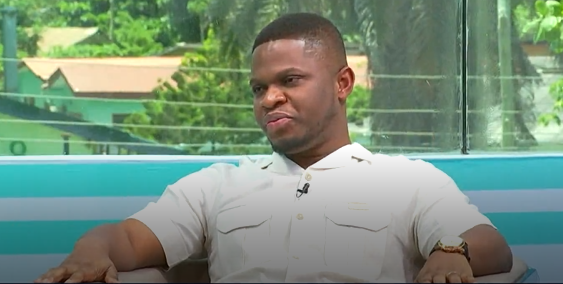
The National Communications Officer for the National Democratic Congress (NDC), Sammy Gyamfi, has alleged that President Akufo-Addo is responsible for corruption in the country.
He again accused President Akufo-Addo of promoting corruption to the extent of going ahead with investigations to exonerate his appointees accused of engaging in corruption-related cases.
Sammy Gyamfi further slammed government officials for engaging in corruption which he said has taken a toll on the economy.
In an interview with Umaru Sanda Amadu, on Face to Face on Citi TV, Sammy Gyamfi claimed, “they have come to promote corruption.President Akufo-Addocame to enable corruption, if corruption was a human being, its name would have been President Akufo-Addo. If you wanted to see corruption, and you saw President Akufo-Addo you would have found your answers”.
He stressed, “no President in the history of this country has promoted corruption than President Akufo-Addo. This President engages in corruption, his Vice President engages in corruption, and their officials engage in corruption. When they are caught by state agencies, they either fight them or even before investigations are done, the President comes out to whitewash himself and sometimes his corrupt officials”.
He wondered why the President conferred a national award on the Health Minister, Kwaku Agyemang-Manu, who has been indicted by the Auditor General for misusing COVID-19 funds.
“As I speak with you, the Health Minister Kwaku Agyemang -Manu has been indicted by the Auditor General for paying $81 million for vaccines not supplied. Instead of sacking this man, President Akufo-Addo conferred a national award [Order of the Volta-Companion] on him. He also engaged in procurement breaches of Sputnik V vaccines,” he said.
Gambian protesters are assembling to protest against corruption through the capital Banjul after a youth group affiliated with the main opposition party called for a demonstration.
Lawyer Ousainu Darboe, the leader of the United Democratic Party (UDP), in a WhatsApp audio had earlier called on supporters to be peaceful ahead of a corruption demonstration slated for Friday.
The UDP Youth Wing recently applied for a police permit for a peaceful procession against corruption. This came after several corruption allegations were reported about government institutions and other local government councils.
Lawyer Darboe called on Gambians to be part of the peaceful demonstration starting from Jah oil in Banjul to the National Assembly in Banjul.
He pointed out that when this kind of activity happens, some criminals always want to capitalise on the occasion to get involved in the crowd and act unlawfully and be destructive. However, the UDP leader said they would be very vigilant to those people while calling on the police to also help in identifying such criminals.
The country’s biggest opposition leader emphasised that everyone knows that UDP is a law-abiding party, calling on the party militants to follow the rule of law, ignore insults and other confrontations.
“I call on Gambians who are concerned about corruption to join us, especially the UDP supporters,” he added. “The demonstration will start from 11 a.m to 2 pm. Everyone should come out to show their concerns on corruption.”
Captain Prince Kofi Amoabeng (Rtd) a Ghanaian businessman, has advised political leaders not to interfere with systems put in place to check corruption.
He asked them to rather empower those who managed the systems and hold them accountable where necessary.
“We can only address corruption when we put systems in place and make sure these systems work to a fault. Political leadership must set the example and sanction anybody who goes foul to them whether it’s their relative or party mate but unfortunately, no leader in politics has the guts to do it,” he noted.
Captain Amoabeng (Rtd) said this at the 6th Edition of the “Timekeeping Dialogue Series”, in Accra.
The event created the platform for discussions around businesses, Government officials, and how individuals can become better at utilising time.
He said the African had the potential to do the right thing and even better than the Western world, however, the huge drop in respect and appreciation for core African values had caused retarded growth of African nations.
“The African has got the potential to do what is right and even do it better than the Western world but in our own setting, you won’t get that chance. And the fear for me is that the trend doesn’t look good at all.
“We are losing our values by the day; there is no respect in our homes, and likewise in the schools, you have people buying questions and people are becoming more corrupt in every aspect. So, we are getting worse and not even trying to get better.
“It has gotten so bad that all institutions have become politicised. When I was in the Army, you could not discuss politics or religion but now one’s promotion is based on his or her political affiliation. Policemen are paying to enter the Police Service, among other corrupt acts.”
Captain Amoabeng (Rtd) also the Co-Founder of UT Bank, said political leaders knew the ways to curb corruption, yet “no democratically elected leader would go for it”.
He, however, discarded the option of a coup d’état because they had also failed to provide viable solutions over the years.
He advised businesses to love their clients, serve them to the best of their abilities and not exploit them.
They should also love and respect every member of their staff without discrimination to ensure the success of their businesses.
Captain Amoabeng (Rtd) said just like political leaders, business owners must put systems in place to check their staff and be the first to abide by the rules.
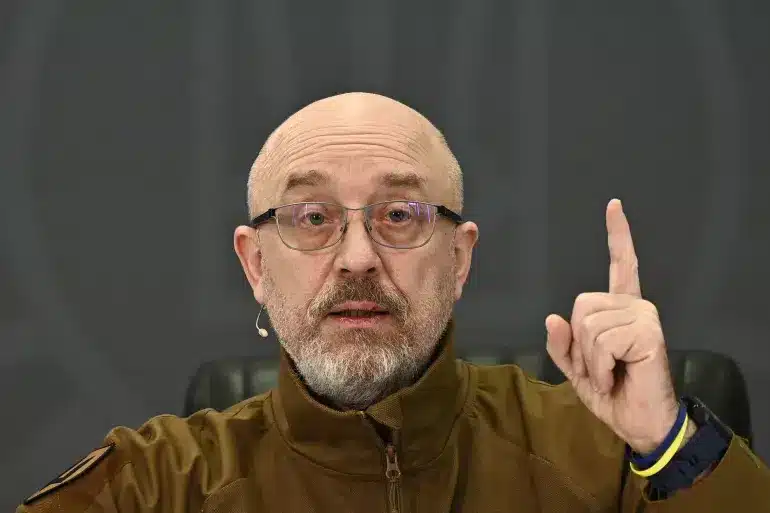
The highest-profile change in the government since a corruption scandal at the defence ministry last month would be the removal of Oleksii Reznikov.
According to a senior legislator, Ukraine is planning to replace its defence minister, Oleksii Reznikov, with the head of its military spy agency in a high-profile cabinet shuffle following corruption scandals and ahead of an anticipated Russian offensive.
David Arakhamia announced on the Telegram messaging app on Sunday that Kyrylo Budanov , the 37-year-old head of Ukraine’s GUR military intelligence agency, would take over Reznikov’s 56-year-old ministerial position.
There was no immediate statement from Zelenskyy on replacing Reznikov, a former lawyer who became defence minister in November 2021, a few months before Russia launched its full-scale invasion on February 24, 2022.
Reznikov has helped secure Western weapons to buttress Ukrainian forces, and his removal as defence minister would be the highest-profile government change in a slew of resignations and sackings following a corruption scandal late last month and Zelenskyy’s pledge for Ukraine to meet Western standards of clean governance.
The scandal involved food contracts that envisaged paying vastly inflated prices. Amid the public outcry, one of Reznikov’s deputy ministers has been fired, while two other senior officials have also since left their posts.
Arakhamia said that Ukraine’s “force” agencies – like the defence ministry – should not be headed by politicians during wartime but by people with a background in defence or security.
“Kyrylo Budanov will head the defence ministry, which is absolutely logical in wartime,” the legislator said.
Holding the rank of major general, Budanov has headed the military intelligence since August 2020.
“Time and circumstances require reinforcement and regrouping. This is happening now and will continue to happen in the future,” Arakhamia said. “The enemy is preparing to advance. We are preparing to defend ourselves,” he added, referring to Ukrainian fears that Russia is planning a vast new offensive this month.
Ukraine is planning its own counteroffensive but is waiting for the arrival of battle tanks and infantry fighting vehicles from Western allies.
Arakhamia added that Reznikov would be made minister of strategic industries but did not say when the moves would be formalised.
Reznikov had said earlier on Sunday that any decision on a reshuffle was up to Zelenskyy and that an internal audit of procurement procedures at the defence ministry was under way. The ministry’s own anti-corruption department had “failed” to do its job, he told reporters, and needed to be “completely rebooted”.
He told the Ukrainian Fakty ICTV online media later in the evening that the transfer to the new ministry was news to him.
“If I suddenly received such an offer from the president of Ukraine or the prime minister, I would refuse it, because I do not have the expertise,” Reznikov was quoted as saying.
Ukrainian presidential adviser Mykhailo Podolyak, when asked about the reshuffle on national television on Sunday night, said: “Reznikov was extremely efficient in terms of communication with our partners. And this is a very important component in this case.”
Podolyak said that Reznikov’s “wonderful” personal relations with allies have helped Ukraine secure billions of dollars of military aid to fend off the Russian invasion.
“Negotiations are not just mathematical formulae but also personal relationships. And trust. Unfortunately, today we are losing a measure of trust in us,” Podolyak said.
“The timing is not so important,” said William Courtney, senior fellow at the Rand Corporation, a United States-based think tank.
“The main thing is that the new minister of defence be capable,” Courtney told Al Jazeera. “The new minister of defence would have to be the representative of the ministry of defence to the parliament, to the presidency, and also to many in the West. Oleksii Reznikov has enjoyed a good reputation in the West as an effective minister of defence, who understood the broad political implications of what was going on. Hopefully, the new minister will perform the same role and not seek to duplicate the military strategy functions.”
New Patriotic Party (NPP) presidential hopeful, Kennedy Agyapong, has narrated how he fled from a corrupt act.
He says he has never taken a bribe, thus, he is not corrupt.
Speaking in an interview on Good Evening Ghana on Tuesday, January 31, 2023, Agyapong said that he will never engage in activities that will make him rich at the expense of the people of Ghana.
He then proceeded to narrate how he rejected a $3 million bribe from an Indian businessman who wanted to get a government project with his help.
“I met an Indian last week and he said there is a project that he thinks I can influence. The actual cost of the project is ($)26 million.
“The guy comes to say that he can do it for $9 (million) and of course as a businessman, he has to make a profit with whoever introduced him, $3 (million), making $12 (million). Then he said to me, I’m going to give you $3 million so I will add it to the $12 (million) to make $15 million and I said no to him.
“I said Ghana first, I don’t want the $3 million if you know you can do the job for $12 million so be it. The young men that come from America with their tickets and everything whatever you want to give to them it is okay but me I will not take any money,” he narrated.
Agyapong, the Member of Parliament for Assin Central, said that the business told him that he (Agyapong) is the only person, he has met in Africa who has rejected such a huge amount of money.
“The Indian man, who was there with his young engineer son, said wow, I have goose pimples. I have worked in Africa for 22 years and I have never seen an African reject $3 million like you did,” he said.
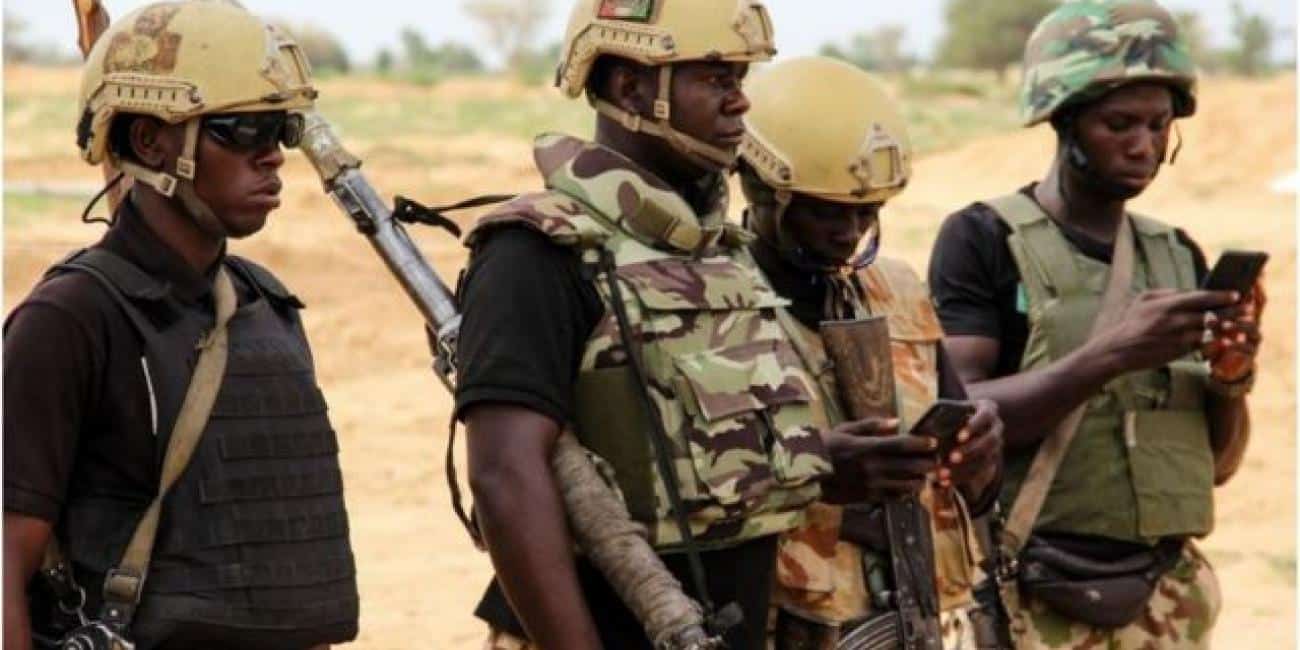
Despite escalating security issues the military is now facing in several areas of the nation, SaharaReporters has learned that a total of 34 troops are leaving the Nigerian Army.
The soldiers, drawn from various formations of the army across the country, all belong to junior cadres who are mostly at the forefront in the field.
They include warrant officers, staff sergeants, sergeants, lance corporals, corporals and privates.
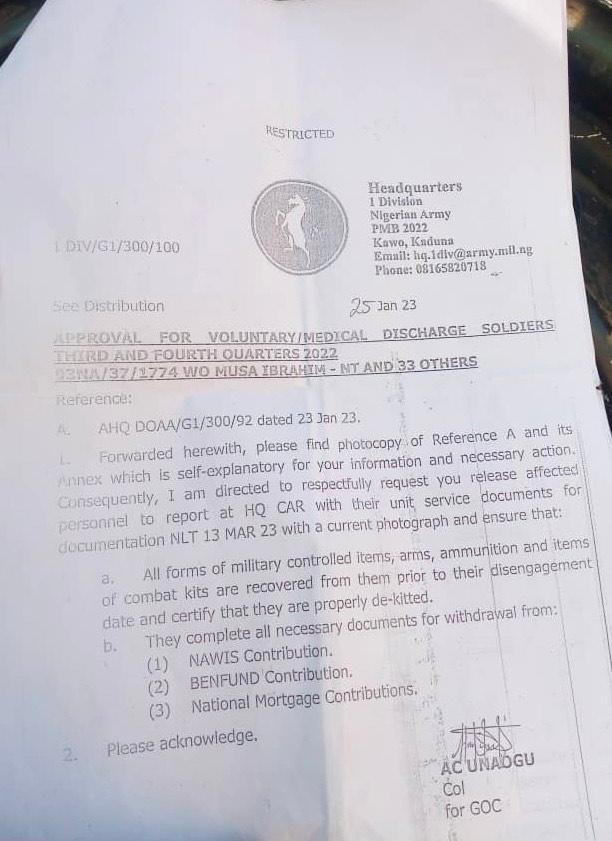
The Chief of Army Staff has since approved their formal disengagement.
The list of the exiting soldiers did not distinguish between those embarking on voluntary retirement and those leaving the army on medical grounds.
However, none of them has attained retirement age or the mandatory years of service.
The soldiers in a letter to the army chief under Reference NA/COAS/001, quoted the Harmonised Terms and Conditions of Service soldiers/rating/airmen (Revised) 2017.
The approval of their voluntary disengagement dated January 25, 2023, was signed by Colonel AC Unadgu and exclusively obtained by SaharaReporters during the weekend.
According to Unadgu, the 34 soldiers are to submit all military properties in their possession.
There have been allegations of corruption in the Nigerian Army which some of the soldiers have blamed on the issue – soldiers overstaying in the Northeast.
According to some soldiers, the army is the epitome of deep-seated corruption. They noted that corruption is affecting the prosecution of the anti-terrorism war in Northeast Nigeria.
Recently, army personnel deployed for counterinsurgency operations in Borno State lamented that those who were to relieve them three months after they were asked to leave the battlefield had yet to resume.
The soldiers complained that they were being forced to confront Boko Haram militants, adding that their low morale and lack of willingness to continue to fight made it possible for terrorists to dislodge some military camps recently.
They complained of abandonment and accused the military authorities of keeping them on the front beyond their approved period of stay
In 2022, over 500 soldiers in the Northeast and other theatres of operation wrote to the Chief of Army Staff, Lt Gen General Faruk Yahaya, seeking voluntary retirement.
Recently, some personnel attached to the 198 Special Forces of the Nigerian Army in Borno accused their Commanding Officer, Lieutenant Colonel Abdulahi Hassan Ali of corruption and financial mismanagement.
Some of the soldiers who spoke to SaharaReporters claimed Ali had been diverting their allowances.
According to the soldiers, the unit will soon witness a complete breakdown of order and discipline over the unpaid allowances and alleged bad treatment by their commander.
“We calling on them to quickly treat and investigate the reason why our commander has refused to pay soldiers all their operations funds which were directed to us in 198 Special Force Battalion, under 402 SF brigade.
“The Nigerian Army gave 198 Special Force Commanding officer, Lieutenant Colonel Abdulahi Hassan Ali millions of Naira to give his soldiers for Operation Thunder Strike that was conducted in Kaduna State in 2021 but he refused to pay them accordingly,” one of the soldiers said.
“The Borno state governor, His Excellency Governor Zulum gave 198 and 199 Special Forces Battalion funds; worth millions of Naira to give soldiers after they returned back to Maiduguri, Borno state from Kaduna state. To motivate/moralize soldiers for Operation desert sanity which was conducted in 2022 in Borno state. But both battalions’ commanders refused to give these soldiers their entitlements.
“The resent Sallah money worth millions of Naira which was given to the 134, 198 and 199 special forces battalions under 402 SF Brigade by the same Borno state governor Zulum as welfare was also diverted. The commanders of 134 and 199 battalions shared the money to their soldiers while Ali who is leading 198 SF refused to pay us.
“In the ongoing operation forest sanity in Kaduna state, cows and motorcycles captured around Damba and Kudenden general area are being hidden in his newly built house in Kano and farm.
“This is a man who I sed (sic) to convert soldiers’ entitlements, he has been pocketing the battalion’s feeding money every months. You know we dare not challenge or ask our commanding officer about all the money and other allowances but we have family and relatives that we are taking care of at our various homes. So Nigerians should please help us out.”
In 2022, some army personnel also accused President Buhari of failing to check corruption and financial mismanagement among some top military officers while soldiers continue to cry on a daily basis.
The soldiers in an open letter to the President accused top army officers of corruption and extortion.
They said despite their numerous complaints, nobody was saying anything about their unpaid allowances by the military finance corps.
The letter had read, “We want to start by saying that it is a shame on General Muhammadu Buhari for failing to address the financial mismanagement of Nigerian soldiers while they continue to cry on the (sic) daily basis.
“Soldiers of the Nigerian Army have complained severally (sic) how their money is being short pay (sic) by the Army Finance and nobody is saying anything about it.
“Nigerian soldiers have complained severally (sic) how they have been given 20% of the 100% allowance which was signed into law by the President Buhari since (sic) 2017 which is known as MAFA. No one is saying anything and the President is not interested to follow up or investigating (sic) the matter.
“The salary of our soldiers is being paid through POS, phone transfer in connection with banks by the army finance department. Our soldiers have been crying but no one is saying anything.
“Our Soldiers continue to buy their uniforms themselves and every other kit needed to protect the people and the nation. No uniform allowance, no boot allowance, and nobody are (sic) saying anything.
“The soldiers we don’t see as anything are the ones that are keeping this country moving. They are using their lives as a wages (sic) between Nigerians and our adversaries.
“When these boys will strike, they won’t be able to enjoy all the money they are stealing and hiding for (sic) their children. When they will strike, running to another country will be too late for us. When they will strike, they (sic) won’t be room for amendment.
“Pay our soldiers their money in full and do it now. Army finance should not have anything to do with our soldiers’ salaries and allowances.”
A high court in Rwanda has sentenced a former youth and culture minister to five years in prison over corruption charges, extending a previous sentence by a year.
The original sentence, which came last year, against Edouard Bamporiki was a rare case of a top official convicted over corruption in the country.
He was suspended from cabinet last May and put under house arrest while being investigated for corruption and misuse of power. He remained under house arrest until this ruling.
Bamporiki confessed to the charges on Twitter and asked President Paul Kagame for forgiveness, but in September a court sentenced him to four years – which he appealed.
On Monday, a high court judge in the capital, Kigali, said “justice needs to be served to set an example”.
The 39-year-old poet and filmmaker was previously a vigorous supporter of President Kagame and the ruling party and rose rapidly through the ranks.
His lawyer, Evode Kayitana, told the BBC that they had not decided on whether to appeal.
Founder and leader of Perez Chapel International, Archbishop Charles Agyinasare, wants politicians to be at the forefront of the fight against corruption.
He said the rate at which politicians are amassing wealth and how they fund campaigns, fighting against corruption will not end anytime soon.
According to him, it is important that politicians fight corruption because the country is fast sinking due to the rate of the act.
He made these comments during his address to the leadership of the NDC when they joined his congregation for a thanksgiving service on Sunday, January 8, 2023. “It’s obvious the greatest enemy of this nation is corruption, but looking at the way political parties fund their activities and campaigns, our view is that we are not going to [win the] fight [against] corruption anytime soon.
Those political businesses who fund politicians end up hijacking the wealth of the nation. Politicians should help us fight this because our nation is sinking too fast, and we cannot continue in this direction,” Citinewsroom.coom quoted the founder and leader of the Perez Chapel International.
Johnson Aseidu Nketiah, National Chairman of the NDC, led the delegation to join the Christian community to thank God for helping the Party to have a successful congress late last year.
Mr Fifi Fiavi Kwetey, General Secretary of the Party, Madam Shirley Ayittey, Second Vice Chairman, Mr Godwin Ako Gunn, Second Deputy National Communication Officer, Mr Emmanuel Nii Ashie Moore, Greater Accra Regional Chairman, and some NDC Members of Parliament (MPs) were at the service.
The special prosecutor, Kissi Agyebeng, has made an appeal for cooperation from the public in the fight against corruption.
He is, however, concerned about the posture of government in the fight for which his office was specially formed years ago.
Agyebeng told Accra-based JoyNews that he expected more from the government in terms of the anti-corruption fight.
“On the part of the government, is the government ready for the fight against corruption? From where I sit, I have not seen much. I have not seen much commitment. I have heard lip service on too many occasions paid to the fight against corruption”, he stated submitted on the NewsFile programme (December 31).
“If we want to fight corruption, we must all get involved” he urged.
He also called on Parliament to play its policy and policing role of checking corruption in state institutions.
Doing so, he noted was the best way to help offices like his and other anti-graft bodies to march forward and achieve tangible results in their biid to root out corruption.
He submitted further that with collective efforts and resolve, “we can bring corruption down,” cautioning persons engaged in such malpractices to be rest assured that they will be “found, prosecuted and jailed.”
Government appointees have routinely been accused of engaging in corruption with President Nana Addo Dankwa Akufo-Addo said to be paying only lip service to the fight against the canker.
According to the 2021 edition of the annual corruption ranking chart by Transparency International, Ghana ranked 73rd out of 180 countries on the Corruption Perception Index, CPI, report released on April 4.
“Ghana’s current performance is still below 50 which is the expected average, thus leaves much to be desired,” the report noted.
Out of 49 African countries ranked, Ghana placed 9th with Senegal, each bagging a score of 43.
The sixteen months’ salary owing to Special Prosecutor Kissi Agyebeng, according to anti-corruption activist Vitus Azeem, poses a significant corruption risk.
The Minority in Parliament alleged that per documents available to them, the Special Prosecutor has not drawn a salary since he was sworn into office on August 5, 2021.
Speaking to Starr News, Vitus Azeem said this is a corruption risk that has to be addressed with the utmost urgency.
“I’m not surprised but it’s very unfortunate, what will be the reason? You appoint somebody and give the person an appointment letter and fix the person’s salary and for sixteen months you are not paying the person and you expect the person to be going to work. Is it that the salary has not been determined or there’s no money to pay? It is unfortunate but I’m not surprised because this is not the first time it is happening. We even have ministers coming out and saying we have not been paid, why it is so, I don’t understand. How do you expect the person to survive?
He added: “It is a corruption risk because if I don’t have money to spend and I have to pay my child’s school fees and then somebody comes to offer me money in the morning, I would be tempted to take it. So if the government is serious about the fight against corruption then it needs to do something about that practice.”
French rugby chief Bernard Laporte has been given a two-year suspended prison sentence and a 75,000 euro (£64,000) fine for corruption, nine months before the country hosts the World Cup.
Hours after the verdict the FrenchRugby Federation president stepped down as vice-chair of World Rugby.
The world governing body has referred the matter to its ethics officer.
Laporte was also banned from holding rugby posts for two years, but that is suspended pending an expected appeal.
“World Rugby notes the decision by World Rugby Vice-Chairman Bernard Laporte to self-suspend from all positions held within its governance structures with immediate effect, following his conviction by the French court in relation to domestic matters and pending his appeal,” World Rugby said in a statement on Tuesday night.
“While acknowledging Laporte’s self-suspension and right of appeal, given the serious nature of the verdict World Rugby’s Executive Committee has referred the matter to its independent ethics officer for review in accordance with its integrity code.
“World Rugby will not be making further comment until the conclusion of the independent process.”
French Sports Minister Amelie Oudea-Castera earlier said the sentence was an “obstacle for Bernard Laporte to be able, as it stands, to continue his mission in good conditions” as federation president.
Oudea-Castera called for a “new democratic era to allow French rugby to rebound as quickly as possible and sufficiently healthy and solid, with a governance by the federation that will have the full confidence of the clubs”.
According to French news agency AFP, the court ruled that Laporte had showed favouritism in choosing France’s shirt sponsor.
In March 2017, Laporte awarded a 1.8m euro (£1.5m) shirt sponsor contract to close friend Mohed Altrad, the billionaire owner of Top 14 champions Montpellier.
Altrad was given an 18-month suspended sentence and 50,000 euro (£42,800) fine. Both men deny any wrongdoing and Altrad’s lawyer said he would study the decision before deciding on whether to appeal.
In February 2017, Laporte signed a 180,000 euro (£154,000) deal with Altrad group for his image reproduction rights and prosecutors claim Laporte did not deliver the services paid for.
Altrad’s logo still features on France’s shirts, with Laporte, 58, negotiating a follow-up deal in 2018.
Laporte, who coached France to the 2003 and 2007 World Cup semi-finals, was also found guilty of intervening with disciplinary action against Altrad’s club Montpellier. He was convicted of helping to reduce a fine against the club from 70,000 euros (£60,000) to 20,000 euros (£17,000).
In November, financial prosecutors searched the headquarters of France’s 2023 Rugby World Cup organisers as part of a government inquiry into the management of the organising committee.
‘Laporte’s rugby future thrown into doubt’ – analysis
BBC rugby union correspondent Chris Jones
Laporte is one of the most powerful men in world rugby and was set to be a prominent figure at next year’s World Cup in France, but this verdict throws his future involvement in the sport into serious doubt.
Even though Laporte is expected to appeal, his position at World Rugby is untenable with the governing body referring the matter to their independent ethics officer, who was appointed earlier this year after a governance review in 2021.
Laporte’s charges are not connected to World Rugby or Rugby World Cup activities, but it is nonetheless an unwanted episode for the governing body given his influence both in France and on the global stage.
Speaking at the 2nd Annual District Auditors’ Conference on Monday, December 12, 2022, the Vice President since assuming office in 2017, the Akufo-Addo government has made a sustained, aggressive push in the fight against corruption by enacting laws, tightening existing ones, and introducing greater digitalization in governance and the use of public funds while increasing resources allocated to the fight.
“On assuming office, corruption was prevalent in many areas such as the DVLA, where one had to pay a bribe to ‘goro boys’ in order to get a drivers licence; same thing at the Passport Office; Customs and other officers were having a field day at the ports; it was difficult renewing ones NHIS, and for some reason, dockets kept getting ‘missing’ at the courts.
“There was inadequate funding for anti-corruption agencies; the Right to Information Law had not been passed; there was no legal backing for a beneficial assets register; and no law on Witness Protection.
“But since 2017, we have taken a number of far-reaching steps in the fight against corruption, including the implementation of a digitization agenda to disrupt corruption in the public sector.
“To further boost the fight against corruption, deficits in logistics and personnel of law enforcement agencies, especially the Ghana Police Service, and other accountability institutions, are being addressed,” he emphasized.
“For instance, since 2017, Government has increased budgetary allocations to all the accountability institutions of State, including Parliament of Ghana, the Judiciary, CHRAJ, EOCO, the Office of the Attorney-General and Ministry of Justice, the Auditor General, the Office of the Special Prosecutor and the Ghana Police Service,” Dr Bawumia stated in Accra.
While commending the Auditor General, Mr Johnson Akuamoah Asiedu, the Board of the Audit Service and staff of the Service for the “very good work being done”, Vice President Bawumia reminded the District Auditors and their colleagues across the country that when corrupt activities such as financial improprieties such as misappropriation of funds, payroll fraud, and contract and procurement irregularities take place, the expectation of the taxpayers is that the public officials who commit these financial crimes would be sanctioned according to law.
“One of the functions of the Auditor-General which can combat these financial malpractices is disallowance of any item of expenditure which is contrary to law and surcharge the amount of any expenditure disallowed.
“The public, and, in particular the Civil Society Organisations have expressed dissatisfaction that the Auditor-General has not performed this critical function effectively. I am informed that the District Auditors will use greater part of this conference to discuss this very important topical issue of disallowance and surcharge. I expect these discussions to produce outcomes to inform the processes for disallowances and surcharges.
“Nevertheless, let me assure the Auditor-General and Members of the Audit Service Board that in the same spirit of cooperation, The Government of Nana Addo Dankwa Akufo-Addo will continue to provide the necessary support to the Audit Service to ensure that it operates independently as the Constitution of the Republic of Ghana mandates.”
In an investigation into alleged bribes from the World Cup host Qatar, Belgian investigators searched offices at the European Parliament in Brussels on Monday.
Since Friday, there have been 20 searches conducted in Belgium, and parliament president Roberta Metsola warned MEPs that “democracy is under attack.”
Four people have been taken into custody by Belgian police, including Greek MEP and vice-president of the European Parliament Eva Kaili.
Any wrongdoing has been refuted by Qatar. On Tuesday, MEPs will discuss the scandal.
Since Friday, the IT resources of 10 parliamentary employees have been “frozen” to prevent the disappearance of data necessary for the investigation.
The four suspects arrested by Belgian police have been charged with “participation in a criminal organisation, money laundering and corruption”, prosecutors said in a statement on Sunday.
Ms Kaili – an MEP for eight years – was suspended from her duties as one of 14 vice-presidents by parliament president Metsola.
She has also been suspended from the parliament’s Socialists and Democrats Group and expelled from the Greek centre-left Pasok party.
IMAGE SOURCE,REUTERS Image caption, Eva Kaili was arrested on Saturday and has reportedly had her assets frozen
Prosecutors in Greece have reportedly frozen all of Ms Kaili’s assets.
Six people were detained on Friday as part of the investigation into allegations that Qatar bribed EU officials to win influence. Two were later released.
No suspects have been publicly named, but Ms Kaili is understood to be among those who have been indicted.
The three other accused are all Italian citizens and her partner Francesco Giorgi, who is a parliamentary assistant, is among those reportedly charged.
The BBC’s Brussels correspondent, Jessica Parker, says details released by Belgian authorities in the last few days left many people’s jaws on the floor in EU circles.
MEPs who spoke to our correspondent say they are shocked by both the scale and blatancy of the accusations.
‘European democracy under attack’
European Commission President Ursula von der Leyen said the accusations were “very serious” and called for the creation of a new ethics body to oversee the bloc.
Ms Metsola vowed to MEPs that the parliament’s integrity would be restored.
“European democracy is under attack and our free and democratic societies are under attack,” she said.
Watchdogs and MEPs said the bribery investigation could represent one of the biggest corruption scandals in the parliament’s history.
Prosecutors said they suspected a Gulf state had been influencing economic and political decisions of the parliament for several months, especially by targeting aides.
Local media has named the state as Qatar, although the Qatari government said any claims of misconduct were “gravely misinformed”.
Ms Kaili’s responsibilities as vice-president include the Middle East. She has been a defender of Qatar in the past.
The European Parliament is the EU’s only directly elected institution. Some 705 members of parliament, elected by voters in the 27 nations which make up the EU, meet to scrutinise proposed legislation and vote through European law.
MEPs generally enjoy immunity from prosecution, but not in cases where “a member is found in the act of committing an offence”, the parliament says.
The Agbogbomefia of the Asogli State, Togbe Afede XIV, has expressed dissatisfaction over the rate at which corruptionis destroying the country’s scarce resources.
The outspoken chief said if the government had dealt properly with issues of corruption, the current economic crisis wouldn’t have been upon the country.
According to him, the government has not backed expenditure with honesty and prudence.
Togbe Afede XIV opined that had these two virtues been exhibited, the country would not be needing a loan from external sources.
According to him, the country’s budget deficits would have been reduced as well.
“Ghana Integrity Initiative estimated that Ghana ‘loses close to USD3billion to corruption annually’.
“There is no doubt that our budget deficit would have been narrower, and we probably would not need to borrow from external sources, if honesty and prudence had guided our spending,” he said.
He thus blamed this on the use of single source in awarding government contracts.
This, he explained that makes way for government apparatchiks and cronies to dupe the state.
“The resort to single sourcing or limited tender in the award of contracts, under false certificates
of urgency, has been harmful.
“It has allowed a few to deploy foul means to secure contracts for relatives and cronies at inflated prices that hurt everybody.
“While some exploit ‘urgency’, other officials hide under ‘confidentiality’ to appropriate our limited resources into personal wealth.
The venerable chief made these comments in in a 14-page opinion piece over the weekend.
Former President John Dramani Mahama has stated that dealing with corruption is one of the most difficult tasks for Presidents.
This, he explained is due to the persons that are usually involved in the practice. Mr Mahama observed that in most instances, the people implicated in the corrupt act are closely related.
“The very important aspect of decision-making for Presidents is dealing with corruption. It is not as easy as you think it is, and sometimes the person who has been involved in corruption is somebody that you know very well and probably somebody who has been a member of your team, but unfortunately, has fallen by the wayside,” he said.
Speaking at a lecture at Academic City University College on Friday, Mr. Mahama said when this happens, as a President, you have to gather the courage to act. This, in his view, would serve as a deterrent to others.
The ex-President cited two instances he had to deal with during his tenure in which one of the culprits resigned and the other was imprisoned but pardoned by government on health grounds.
“There had been a procurement that had taken place and the minister had not gone through the procurement processes properly and as a result of that, there was an accusation that the cost of the procurement was far above what it should be and it created a major scandal for government. So I asked the Attorney- General and Chief of Staff at the time to investigate the allegations. They did and the report confirmed that the procurement process has not gone through properly …I called the minister involved …and she tendered her resignation,” he recounted.
He, however, stated that punishing persons involved in corrupt practices has not been the case with the current government.
“Unfortunately that is part of the problem we are facing today that the President cannot sack people who have been accused of corruption and so on and so forth,” Mr. Mahama asserted.
The Leadership Seminar Series by Academic City University College was designed as part of the University’s efforts to nurture the next generation of African leaders. It is aimed at ensuring that knowledge developed in the class is directly applied to address contemporary societal problems.
It is expected that the course will provide a platform for students to interact with renowned African leaders who have transcended from political, innovation, education, and industrial realms through sheer force of will and have impacted many lives.
Addressing students as the Keynote Speaker for the event, former President, John Dramani Mahama took the students through what leadership entails.
“Leadership is about responsibility first and decision making, you must accept responsibility for the position that you occupy and once you are the leader, people look up to you to take responsibility and based upon that responsibility, take decisive action. You cannot take proper decisions when you have not accepted responsibility for taking those decisions,” he explained.
The city of Angola, Luanda, hosted the penultimate summit of the 79-member Organization of African, Caribbean, and Pacific States on Friday.
It’s the tenth heads of state summit that the OACPS has held and the first of three that Angola will hold as the rotating presidency.
The theme for this year’s meeting is titled “Three Continents, Three Oceans, a Common Destiny: Building a Resilient and Sustainable OACPS.”
Angola decided that it should focus on the pressing issues of climate change and good governance, including combatting corruption.
For the Maldives climate change is a threat to its very existence.
According to the World Bank, with “future sea levels projected to increase in the range of 10 to 100 centimetres by the year 2100, the entire country could be submerged”.
“Most of the existential dangers faced by our communities are driven by climate change,” says Dhumya from Maldives.
A Mozambican court has sentenced the son of a former president and others to prison for their role in the “tuna bonds” corruptionscandal.
Ex-President Armando Guebuza’s son, Ndambi Guebuza, and two former heads of intelligence, Gregorio Leao and Antonio do Rosario, each got 12 years behind bars.
Eight of their co-accused were convicted and sentenced to between 10 and 12 years.
“The crimes committed have brought consequences whose effects will last for generations,” Judge Efigenio Baptista said while handing down the sentences.
A total of 19 people had been charged with blackmail, embezzlement and money laundering over their alleged roles in Mozambique’s biggest financial scandal. Eight have been acquitted for lack of evidence.
The scandal involved the country borrowing more than $2bn ($1.6bn) from international banks, much of it without the knowledge or approval of the country’s parliament, triggering an economic crisis.
Glencore has agreed to pay $180 million to the Democratic Republic of the Congo (DRC) to settle corruption allegations, the latest payment in a string of graft cases it has faced around the world.
The Anglo-Swiss mining company announced on Monday that the agreement with DRC covers “all present and future claims arising from any alleged acts of corruption” committed by the Glencore Group between 2007 and 2018.
It comes months after Glencore announced settlements with authorities in the United States, the United Kingdom, and Brazil totaling $1.5 billion to resolve all allegations of corruption and market manipulation.
The US Justice Department said in May that Glencorepaid more than $100m to intermediaries over 10 years, “intending that a significant portion of these payments would be used to pay bribes to officials” in Nigeria, Cameroon, Ivory Coast, Equatorial Guinea, Brazil, Venezuela and Congo.
In DRC, Glencore acknowledged that it paid $27.5m to third parties with the goal that a portion be used to bribe Congolese officials to secure improper business advantages, according to the Justice Department.
“Glencore is a long-standing investor in the DRC and is pleased to have reached this Agreement to address the consequences of its past conduct,” Chairman Kalidas Madhavpeddi said in a statement on Monday.
The company “looks forward to continuing to work with the DRC authorities and other stakeholders to facilitate good governance and ethical business practices in the country,” he added.
Last month, a British court ordered Glencore to pay more than 280 million pounds ($341m) for using bribes to bolster its oil profits in five African countries.
It pleaded guilty in June after an investigation launched by the United Kingdom’s Serious Fraud Office in 2019 found it paid bribes worth a combined $29m to gain access to oil in Cameroon, Equatorial Guinea, Ivory Coast, Nigeria and South Sudan.
Malawi’s Vice-President Saulos Chilima has been arrested on suspicion of accepting bribes in exchange for government contracts,according to the country’s anti-corruption agency.
According to the statement, he is accused of receiving $280,000 (£230,000) from a British businessman “and other items.”
On Friday, Dr. Chilima pleaded not guilty to the corruption charges.
He had already been stripped of his authority when he was first charged by the Anti-Corruption Bureau in June.
It had accused him and 83 other Malawian officials of having corrupt dealings with a British businessman named Zuneth Sattar.
Dr Chilima, who is now out on bail, is facing six charges, the first time a sitting vice-president has been in this position in Malawi.
He was questioned by anti-corruption officials on Friday morning in offices that had been cordoned off by security officials. Previous attempts to question him had been disrupted by his supporters.
His backers appeared to clash with police as he entered the court in the capital, Lilongwe, on Friday afternoon, the Reuters news agency reports video from local media as showing.
While some Malawians see the arrest as a serious move in the fight against corruption, Dr Chilima’s backers say that it is part of a political witch hunt.
Mr Sattar, who was born in Malawi, was arrested in the UK in October last year and is out on bail.
He is accused of using connections with senior Malawi government officials and politicians to fraudulently obtain contracts to supply goods and services.
The contracts related to armoured personnel carriers, food rations and water cannons, the Financial Times reported in May.
Mr Sattar has denied all wrong doing.
Dr Chilima came to power in 2020 as the running mate of President Lazarus Chakwera. They are from different political parties but entered a coalition to defeat the incumbent Peter Mutharika.
The vice-president had previously campaigned on an anti-corruption platform, promising to end decades of sleaze in government and ending poverty in one of the world’s poorest countries.
“Corruption has the power to rupture a country and its people beyond repair. Corruption has the power to make a government lose its legitimacy over its people,” the vice-president is quoted in a 2021 Anti-Corruption Bureau newsletter as saying.
In efforts to clamp down on corruption and its related activities in the country, ABAK Foundation, a Non-Governmental Organisation, in collaboration with the Centre for International Private Enterprise and Connected Development, has launched an initiative dubbed “Follow the Money.”
This campaign seeks to use innovative techniques to prompt and empower citizens to monitor project implementation and government budgets.
It is to ensure accountability of all, especially public officers, in the country.
The initiative, which was launched in Kumasi, is part of the National Endowment for Democracy funded project entitled Global Anti-Corruption Mobilisation Phase IV.
While highlighting the essence of this project, Executive Director for ABAK Foundation, Mr Philip Duah, also mentioned that his outfit would advocate and track government spending on projects in communities, especially those with international funding.
Further, he noted that in order to keep the government accountable, it is critical for the populace to be properly educated about how policies and programs are being implemented.
He contended that the failure of citizens to demand accountability from public officers has largely contributed to delays and shoddy implementation of development projects, hence the need for the public to be sensitised on how to hold public officials accountable.
Throwing more light on the initiative, Founder of Connected Development, Mr Hamzy Lawal, said it had yielded positive results in other jurisdictions through empowerment of the citizenry and stressed the need to ensure beneficiaries of projects owned them.
He further raised concerns over the alarming rate ofembezzlement of public funds and corruption related activities in Africa and charged citizens to play a crucial role in curbing the menace by closely monitoring how such funds are expended.
Mr Stephen Azantilow, Director, Anti-Corruption at CHRAJ, revealed this at a public forum on “Declaration of Assets by Public Office Holders and the Fight Against Corruption in Ghana,” in Accra on Tuesday.
Mr Azantilow, however, did not give further details on the cases as that could prejudice the outcome of the investigations
He, however, revealed in a telephone interview with the Ghana News Agency, that the investigations extended to officials who failed to declare their assets in 2020.
He added that 284 of them were also cases that were brought to the attention of the Commission in August this year.
The forum, organised by the Media Foundation for West Africa (MFWA),brought together several anti-corruption campaigners and associations as well as some political parties.
Article 286 (1) of the 1992 Constitution states that “a person who holds a public office mentioned in clause (5) of this Article shall submit to the Auditor-General a written declaration of all property or assets owned by or liabilities owed by, him whether directly or indirectly (a) within three months after the coming into force of this Constitution or before taking office, as the case may be, (b) at the end of every four years; and (b) at the end of his term of office.”
The law requires that the President, Vice-President, the Speaker of Parliament, Deputy Speakers of Parliament, members of Parliament, ministers and deputy ministers of state, ambassadors, the Chief Justice, Judges of Superior Court, Judges of Inferior court and managers of public institutions in which the state has interest submit to the Auditor-General written declarations of all property or assets owned by, or liabilities owed by them, whether directly or indirectly.
The Constitution also requires the declaration to be done before the public officer takes office.
However, Section 1(4)(c) of the Public Office Holders (Declaration of Assets and Disqualification) Act directs public office holders to meet this requirement “not later than six months after taking office, at the end of every four years and not later than six months at the end of his or her term.”
Reacting to criticisms that the Commission had failed to hold public officials who did not comply with the Act, Mr Azantilow said the absence of explicit punishment in the law had rendered it helpless.
“We sometimes also feel helpless because when you have the law that does not critically tell you that look if somebody doesn’t declare before he assumes office, or he leaves office or every four years, you should give or mete out sanctions A, B, C and D, it becomes problematic.
“And that is why when the new bill, that is the Code of Conduct Officers Bill came before us we made a lot of input and even the current bill as it is, pending before Cabinet, our proposals for the type of sanctions that should be meted out to public officers depending on the stage in which the person failed to declare their asset has been captured.
“We are hoping that the law will come into force so that we know exactly what to do,” he said.
He also added that as a Commission, its decisions were not always final.
“You people are aware that some of our decisions have been challenged in court. So, if you make a decision that does not stand the test of time, it will be challenged in court and we have faced those embarrassments so we are also careful the way we do our things,” Mr Azantilow said.
Mrs Linda Ofori-Kwafo, Executive Director, Ghana Integrity Initiative, emphasised the need for strong leadership to ensure the enforcement of the asset declaration regime.
The Board Chairman of MTN Ghana, Dr. Ishmael Yamson, has attributed the slow pace of the country’s development to greed and corruption on the part of political actors.
Successive governments have taken steps to ensure various sectors of the country are developed, but the progress has not been satisfactory.
Speaking at the Inter-Generational Dialogue organized by Pali Global in Accra, Dr. Ishmael Yamsonbelieves that leaders should be responsible to the people that voted them into office.
“The issue arises when it comes to execution and implementation. And I can tell you that in our country, we have only two problems; greed and corruption.”
Dr. Ishmeal Yamsonreiterated concerns of political actors failing woefully for not implementing their manifesto when they ascend into power.
“But I tell you, I take time to read manifestos but when it comes to implementing the manifesto it raises issues and this is because we are greedy and corrupt.”
“Whether it is about galamsey, Free SHS or whatever, if we don’t believe and behave like we are in the West, that we don’t touch state money because the punishment is just there, with this, whether NPP or NDC is in government, the country will prosper.”
“How long does it take to build the Western rail lines? It will never be built because of greed and corruption,” he insisted.
The Inter-Generational dialogue rallied young people across the country at the Ghana Academy of Arts and Sciences to discuss issues of transformational leadership.
The former justice minister of ChinaFu Zhenghua, who led multiple anti-corruption campaigns, has been imprisoned for bribery.
In July, Fu pleaded guilty to collecting 117 million yuan ($14.7 million; $16.5 million) in gifts and cash.
Chinese media reported he’d received a suspended death sentence to be commuted to a life sentence in two years.
His conviction comes amid a sudden crackdown on officials ahead of a key Communist Party congress next month.
China’s ruling party holds the event once every five years and this time President Xi Jinping is expected to be given a historic third term and consolidate his hold on power.
Fu’s jailing follows the sentencing of three former police chiefs this week. All four men are not only accused of corruption but also of being disloyal to Mr Xi.
They are all alleged to have been part of a corrupt political circle led by another ex-security figurehead, Sun Lijun, who is currently awaiting his sentence.
Fu was China’s justice minister from 2018 to 2020, after a career where he worked his way up from being a policeman to the deputy head of China’s Ministry of Public Security.
He led several high-profile investigations into corrupt politicians – including a probe that broughtdown Zhou Yongkang, one of the most powerful officials in recent years to be convicted of bribery.
In October last year, the party’s internal watchdog announced it was investigating Fu for “serious violations of discipline and national laws”.
He was dismissed from public office and then in March this year expelled from the Community Party. He was arrested a month later on corruption charges.
Prosecutors said he took advantage of his authority to seek gains for others and himself on business contracts, official positions, and even legal cases.
He noted that the battle requires a high level of decency and intentional moral practices.
“God did not give to us other states, rather He gave this country called Ghana, therefore, we must build this nation for ourselves to its highest core, corruption is an act against the state and the interest of generations yet unborn,†Mr Richard A. Quayson, CHRAJ Deputy Commissioner, said.
Mr Quayson said this stated at the 16th edition of the Monthly Stakeholders seminar organized by the Ghana News Agency and aimed at providing a platform for both state and non-state organizations to address national issues to enhance development.
Speaking on the topic: “Public Service Integrity in the fight against corruption,†Mr Quayson said people needed to understand that corruption was unacceptable in society hence educating one another through capacity-building and enhancement systems to change our societies.
The Deputy CHRAJ Commissioner explained that integrity of the public sector or public integrity mandated public officials to use the powers and resources of the state entrusted under their care effectively, honestly, and for public purposes.
He noted that public service integrity was essential for building strong institutions and assured citizens that the government was working in their interest, not just for the select few.
“Integrity is not just a moral issue, it is also about making economies more productive, public sectors more efficient, societies and economies more inclusive,†Mr Quayson stated.
He said building human capacity was the basic thing to do to avoid corruption and build a sense of public integrity in public sector workers.
Mr Quayson said public sector integrity was introduced to help curb the issue of corruption, “helping public sector workers not to be corrupt, making it difficult to be corrupt, and then deterring them from it.â€
He then admonished stakeholders, the media, institutions, organizations, and individuals in the public offices to help report persons who engage in corrupt activities.
Mr Francis Ameyibor, the Ghana News Agency Tema Regional Manager, called for greater collaboration between the anti-corruption institutions and the media to ensure that corrupt officials were exposed.
Other speakers include Mr Kenneth Thompson, Chief Executive Officer of Delax Finance, who spoke on “navigating through the current economic crisis with or without the International Monitory Fundâ€; and Dr Amma Benin, Head of Paediatric Department, International Maritime Hospital (IMAH), who spoke on “addressing the health needs of children, adolescents and women, a sure way to build a healthy societyâ€.
Dr Joseph Swanzy, a Medical Practitioner at IMAH, also spoke on “adolescent health issues and how to address them.â€
A Nigerian judge on Monday rejected a request by the federal government to extradite a suspended police chief to the United States to face charges linked to fraud.
Commissioner Abba Kyari has denied involvement in what a U.S. indictment describes as an elaborate scheme to defraud a Qatari businessperson of more than $1 million, masterminded by a Nigerian celebrity fraudster known as “Hushpuppi”.
Kyari has denied any wrongdoing.
He is in prison awaiting trial on separate charges of alleged criminal conspiracy, official corruption and tampering with exhibits after his arrest by the local drug enforcement agency in February.
On Monday, High Court Judge Inyang Ekwo said Kyari could not be extradited because of that trial in Nigeria and handing him over to the United States would breach the country’s extradition law.
“By that fact, it (the extradition request) is incompetent, it is equally bereft of merit and ought to be dismissed and I make an order dismissing this case,” Ekwo said in a ruling.
The Minister of Justice and Attorney General Abubakar Malami could not be reached for comment.
Kyari was one of six people indicted over the alleged fraudulent scheme last year, according to a statement from the U.S. Attorney’s Office, Central District of California.
Nigeria has long struggled to control the problem of financial scams, often perpetrated by email.
Vice President Dr Mahamudu Bawumia has opined that the corruption and indiscipline are the major factors hindering the country’s development.
These problems, he noted, have been with the country since its independence because no government has come up with a data-driven solution to fix them.
“The problems that we have as a nation are, we are largely undisciplined society, a corrupt society, a lawless society, an untrustworthy society, an inefficient government bureaucracy, a tax-dodging society, an informal society and a non-transparent society.
“… since independence, governments after governments have, by and large, not focused on building systems to reduce bribery and corruption, the systems that will make the delivery of public service efficient, systems that will enhance domestic revenue mobilisation and the systems that will make life generally easier for Ghanaians,†3news.com reports.
The vice president said that it is for this reason that the government of President Akufo-Addo is investing so much to build the digital infrastructure of the country to block all the loopholes that encourage corruption in the country.
“This is why we have adopted the policy of digitalization. This government is building a system that will enhance transparency, promote accountability, discipline, trustworthiness and enable inclusiveness. You fight corruption with systems, you do not fight corruption with rhetoric.
We are trying to identify everybody uniquely, that is why we are issuing the Ghana Card,†Bawumia is quoted to have said at the Ghana Baptist Convention 59th Annual Session in Ejura in the Ashanti Region on Tuesday, August 23.
Anti-corruption campaigner, Vitus Azeem, has asked President Akufo-Addo to relieve the Council of State member of her position.
His comment comes on the heels after an amount of GH¢1.074 million was retrieved by the Office of the Special Prosecutor from the Labianca Company Limited, a frozen foods company, belonging to the member of the Council of State.
According to the investigative report, Madam Asomah-Hinnehused her position as a member of the Council of State and a member of the Board of Directors of the Ghana Ports and Harbours Authority (GPHA) to influence a favourable decision from the Customs Division of the Ghana Revenue Authority (GRA), leading to a reduction in the tax liabilities of Labianca Limited.
This, according to the report, reduced the benchmark values of the goods imported by Labianca Limited, translating to reduced tax obligations of the company to the state.
Following the reports of corruption-related offences involving her and her company, Mr Azeemstated that if the President is really committed to the anti-corruption fight, steps should be taken to ensure that madam Asomah-Hinneh leaves her position.
“This Council of State member should have resigned by now. If the leadership, the President and his executive are determined to fight corruption, that should be the case,†Azeem told Accra-based Citi News.
He holds further that the President must conduct further investigations into the corruption report issued by the Office of the Special Prosecutor.
Titled: “Report of Investigation into Alleged Commission of Corruption and Corruption-Related Offences involving Labianca Group of Companies and the Customs Division of the Ghana Revenue Authority,†it implicated the Council of State member as using her position to get favourable tax exemption decisions.
“The Special Prosecutor, like the former one, is probably struggling to do his best, but I am not sure if he will be given the necessary cooperation and the necessary support [he will succeed],†Azeem added.
Regional lead for Africa and the Middle East Government Partnership, Theo Chirivu, has asked the government to incorporate anti-corruption policy to clamp down corruption in Ghana.
According to him, implementing an anti-corruption policy will create an environment in which the canker will be less likely to
proliferate.
Suggesting some of the effective and efficient initiatives suitable to fight corruption in the country, Mr Chirivu noted that instituting an open government regime will nib the menace in the bud.
The concept of open government is promoting citizen-centered governance by increasing civic participation, improving transparency and strengthening accountability.
Civil society working hand in hand with the government , in his view, increases levels of trust and social capital, improves policymaking, and increases oversight of the use of public resources.
He emphasized that “open government partnership is important because it is a way of deterring corruption but it is also important in the sense that it enables citizens to know who is doing business with the government, who is getting contracts for the government especially with political influence that are getting contracts with the government.â€
Theo Chirivu also encouraged the government to take prudent measures to improve financial transparency.
In that regard, he stated that revenue leakages in the country can be prevented by ensuring that both private and public institutions disclose data on beneficial owners.
He stated that transparency about beneficial ownership is aimed at preventing owners of companies from operating in secrecy.
This, he says, will prevent many illegalities, such as tax evasion.
“Beneficiary transparency is very important because this is how you are able to find out who is actually doing business with the government, how they are getting contracts and make sure that it limits and reduces the amount of corruption, fraud and illicit financial flaws.â€
Corruption in Ghana is touted to have increased over the years.
According to an afrobarometer report undertaken by the Ghana Centre for Democratic Development (CDD-Ghana), Ghana ranked 73rd on the Corruption Perceptions Index in 2021.
The perceptions of corruption among public officials and public institutions increased in 2022 compared to 2019.
Among key public officials, the police, MPs, judges, magistrates, and tax officials are most widely perceived as corrupt.
The police institution scored 65 per cent, which placed it at the top of the table, while the Presidency followed in second position with 55 per cent.
The most trusted institutions, on the other hand, are the Ghana Armed Forces (GAF), religious leaders, and traditional rulers.
A Kenyan court on Thursday ordered vice presidential candidate Rigathi Gachagua to refund about $1.7 million to the state.
 Rigathi Gachagua of the United Democratic Alliance (UDA) Party, is the running mate of Kenya’s Deputy President William Ruto
The court determined that the funds were proceeds of corruption. Gachagua’s lawyers had argued that the funds were payment for the supply of goods and services to the government but High Court Judge Esther Maina ruled that there was no evidence to prove the claim.
Gachagua is deputy president William Ruto’s running mate. He said the judgment was intended to undermine his candidacy in the Aug. 9 election, before calling it a ‘sham trial’.
He vowed to appeal the ruling.
Gachagua’s accounts were frozen in 2020 following a request by the government.
The funds came from the Kenya Informal Settlements Programme, the State Department for Special Planning, the Ministry of Health, and several county governments.
Anti-corruption crusader, Vitus Azeem has attributed the increasing rate of corruption in institutions to the lack of commitment on the part of government to ensure the prosecution of offenders.
According to him, institutions including the Office of the Auditor General have consistently released reports which expose corrupt practices by some officials.
These officials are however not tried in a court of law.
His comments follow a survey conducted by the Center for Democratic Development (CDD-Ghana) which revealed the ranking of top 10 state institutions perceived to be corrupt.
In an interview with Citi News, Vitus Azeem said government must show dedication by ensuring that corrupt officials face legal action.
“From 2020 to 2022, how many cases are before the courts from the Office of the Special Prosecutor? How much money has the Office recovered from corrupt practices? It is just not about the setting up of the institutions and claiming to be giving them money.â€
“Every year, the Auditor General comes out with its report, and it ends there. How many people have been prosecuted from the audit report? Government has set up institutions and is financing them, and so if we are not seeing the results, it cannot boast that it has resourced them.â€
According to the Afrobarometer study undertaken by the CDD-Ghana, police are believed to be the most corrupt people in Ghana.
The Office of the Presidency followed in second place on the corruption perception.
For the police service, 65 percent of Ghanaians believe most police are corrupt, while 31 percent believe only some police are corrupt.
At the Presidency, 55 percent of Ghanaians said it was mostly corrupt, while 40 percent said it was partly corrupt.
Legislators, judges and magistrates and tax officials rounded up the top five perceived corrupt institutions.
At the bottom of the list, Non-governmental organisations, Private media and public media were viewed more favourably as being the least corrupt.
Per the report, 77 percent of Ghanaians believe corruption has increased.
This figure has risen from 53 percent of Ghanaians in 2019.
Only 6 percent of Ghanaians currently believe corruption is reducing.
In line with this, the most recent Corruption Perception Index released by Transparency International showed that Ghana has failed to make significant progress in its fight against corruption.
Between 2020 and 2021, Ghana maintained its score of 43, which is still below the average, with countries scoring higher viewed as less corrupt and those with the least scores being more corrupt.
As far as fighting corruption is concerned, fewer than 30 percent of Ghanaians believe that people can
report corruption without fear of retaliation, which is a decline of 4 percentage points compared to 2019.
Among key public institutions, the Ghana Armed Forces, religious leaders, traditional leaders, and the courts are the most trusted.
In general, trust in institutions declined between 2019 and 2022, with trust in the presidency declining by 25 percentage points.
Two leading figures vested in Finance in Parliament have clashed over the alleged printing of GH¢22 billion by the Bank of Ghana for injection into the economy.
Ranking Member on Finance, Dr. Cassiel Ato Forson first made the allegation on Mondayand repeated same on the floor of Parliament on Tuesday blaming the rising inflation rate on that measure by the Central Bank
“In the 2020 budget, the project was that the government was going to take zero amounts from the Central Bank only for us to see that between January to June 2022, this administration has taken GH¢22 billion cedis from the Central Bank of Ghana. When the Bank of Ghana gives money to the government it is called printing of money and that is unacceptable.â€
However, this was sharply rebutted by a Deputy Minister for Finance, Dr John Kumahwho indicated that the stated amount is an overdraft advanced by the Bank to the government.
He indicated that there was nothing illegal about it.
“If you read section 30 of the Bank of Ghana Act, it is within the remit of the law for Bank of Ghana to grant overdrafts and support to the Central government without printing money.â€
Minority spokesperson on Finance, Cassiel Ato Forson had accused the Governor of the Bank of Ghana (BoG) of printing more currency for the country without approval from Parliament.
The former Deputy Finance Minister said the BoG and government have perpetuated illegality which must be dealt with.
“Between January and June 2022, the Minister responsible for Finance and the government went to the Central Bank, and they encouraged the BoG to print money worth GH¢22 billion. They have printed GH¢22 billion fresh money without the knowledge of Parliament and without informing all of usâ€, he said.
Ato Forson said this is hidden on page 97 of Appendix 2a of the mid-year budget under the section on Bank of Ghana.
Teachers and lecturers in private schools in Ghana have been identified as the highest recipients of bribes in Ghana.
This is based on a report by the United Nations Office on Drugs and Crime (UNODC).
According to the report, teachers and lecturers in the private sector scored 9.6% in the bribery analysis by the UNODC.
The next on the list were doctors, nurses and midwives in private hospitals, who were pegged at 7.6%.
Security guards in the private sector followed next with a bribery rating of 7.3%; while employees from insurance companies followed in 4th place with 4.1.
In 5th place was other business employees who were rated at 3.7%; with bank employees at the base of the ratings with 3.6%.
In the public sector, the Ghana Police Services was ranked first amongst ten other top recipients of bribe.
The Ghana Integrity of Public Services Survey (GIPSS) has revealed that Ghana lost approximately GHC5 billion in cash through the payment of bribes to public officials in 2021.
The maiden national survey dubbed: “Corruption in Ghana – people’s experiences and views,” conducted by the Commission for Human Rights and Administrative Justice (CHRAJ) in collaboration with the Ghana Statistical Service (GSS) and the United Nations Office on Drugs and Crime (UNODC) indicated that bribes were paid by citizens for various purposes.
Giving further details the survey said that 33.6 per cent citizens to speed up procedures; 15.8 per cent, as a sign of appreciation; 13.8 per cent, to avoid the payment of fine; 10.8 per cent to avoid problems, and 3.1 per cent, to avoid the cancellation of public utilities.
It further indicated that apart from the cash payment, which contributed 84.8 per cent of the forms of bribe paid, 13.3 per cent of the bribes paid were food and drinks; 9.7 per cent, exchange for other services; 5 per cent valuables, and 2.2 per cent animals.
In spite of measures instituted by successive governments to curtail corruption, the canker is still prevalent in the country.
The report revealed that the Ghana Police Service, Immigration Service and the custom officers of the Ghana Revenue Authority (GRA) were the three top institutions that received bribes.
The three were followed by the Lands Commission, Driver and Vehicle Licencing Authority(DVLA), Passport Agency officials, and prosecutors, judges and magistrates, with elected government officials being the least recipients.
Also Government Statistician, Professor Samuel Kobina Annim, who was speaking at the launch of the report, more than a quarter of the country’s adult population (26.7 per cent) paid bribes to a public official in 2021.
He also mentioned that most of the bribes were paid at the direct request of the public officials involved, as six out of 10 bribes paid (59.4 per cent) were directly requested by those officials.
About the report
The aim of the report was to ascertain the prevalence of corruption and, give benchmark indicators that can be used to inform relevant policies to curb administrative corruption in various public institutions in the country.
It collected evidence-based information from 15,000 households across the country involving people who were 18 years and older on the forms of corruption affecting the population of Ghana.
Corruption Watch Ghana has petitioned the Special Prosecutor to investigate the alleged acquisition of several acres of State lands situated within the Achimota Forest and at Ramsar sites in Sakumono in the Greater Accra Region.
This comes after the controversy sparked by documents containing details of the alleged acquisition of lands by the late Forestry Commission CEO Kwadwo Owusu Afriyie, popularly known as Sir John.
The particulars of the alleged acquisition of the alleged State lands were in the Last Will and Testament of Sir John as revealed by The Fourth Estate.
Corruption Watch in a statement said its petition for the investigation of these acquisitions is premised on the provisions of Section 1, Sub-section 3 of the Office of the Special Prosecutor Act, 2017 (Act 959).
These mandate the Office of the Special Prosecutor to investigate alleged or suspected cases of corruption or a corruption-related offence involving public officers.
“It is worth emphasizing that the deceased was a public officer and a politically exposed person per the Office of the Special Prosecutor Act, 2017 (Act 959), when he served as the CEO of the Forestry Commission and singularly or jointly allegedly acquired the said lands with other natural and artificial persons during the period he was the CEO of the said Commission. One such person was Charles Owusu, also a public officer, and a politically exposed person.â€
“Furthermore, Corruption Watch draws inspiration from Section 179C of the Criminal Offences Act, 1960 (Act 29), which makes it an offence for a person to use public office for profit. We note that the offence is committed by both the person who holds public office who dishonestly abuses the office for private gain or benefit and other persons who collaborate with the public officer to so abuse the office,†the statement said.
Whether the Republic of Ghana owned the said lands at the time of their alleged acquisition by Kwadwo Owusu Afriyie, Jakaypros Limited, Fasoh Limited, DML Limited, and Charles Owusu;
The circumstances of the alleged acquisition;
The Beneficial Owners of the companies implicated in this transaction and compliance with the reporting requirements of such persons where they are PEPs under sections 13, 35, and 126 of the Companies Act 2019 (Act 992);
Who authorized the alleged sale or purchase of the lands?
Whether the interests in the lands have been registered?
Under what authority did the person(s)/ institution authorize the sale or purchase?
Whether any amount of money was paid for the said lands, and to whom?
Whether the politically exposed person(s) and public officers who own these properties have complied with the Code of Conduct for Public Officers under Chapter Four of the 1992 Constitution, particularly relating to Article 286 of the Constitution?
The propriety or otherwise of the said sale or purchase?
Whether other natural or artificial persons who are politically exposed persons have also acquired lands
illegally within the Achimota Forest and Ramsar site in Sakumono.
The US government announced today that former Honduran president Porfirio “Pepe” Lobo has been barred from entering the country on accusations of accepting bribes from drug traffickers in exchange for political favours.
Lobo, who ruled Honduras between 2010 and 2014, and his wife, Rosa Elena Bonilla Ãvila, cannot enter the United States “for participating in significant corruption,” said US Secretary of State Antony Blinken.
“While in office, president Lobo accepted bribes from the drug trafficking organization Los Cachiros in exchange for political favours,” Blinken said in a statement.
“As first lady, Rosa Lobo committed significant acts of corruption through fraud and embezzlement of public resources for personal benefit,” he added.
Blinken noted that while these acts “have undermined the stability of democratic institutions in Honduras,” the former president has yet to be convicted and the former first lady has been released from prison pending a new trial.
For the same reasons, their children, Fabio Porfirio Lobo and Ambar Naydee Lobo Bonilla, and the youngest, whose name was not informed, were also banned from entering the United States.
The State Department had previously included former President Lobo and his wife on a list of “corrupt and undemocratic” Central American leaders and former governors, known as the Engel List, released earlier this month.
A lecturer at the University of Education Winneba (UEW), Mr. Samuel Ziggah, has asked Ghanaians to partly blame teachers for the corruption in our public space and life.
The psychologist believes that some teachers have contributed to the corruption, mismanagement on the part of leaders we have had in the past and today.
In assigning his reasons, the lecturer said an ineffective teacher is a dangerous person to society.
In his view, such teachers and their effect may not be seen immediately but in several years and students who go through their hands become a threat to the development of the country.
According to him, teaching is not preaching in a church for anybody at all to join.
He argued that we need competent, qualified and skilled persons as teachers to help produce disciplined, qualified and skilled people for the job market.
He said the inefficiencies of some teachers could affect every aspect of our economic life.
In an example, he said if an accounting student does not get quality teaching from a qualified teacher, that student could grow to become an incompetent professional who could create a serious economic crisis for an organisation.
The National Democratic Congress (NDC) has asked President Nana Akufo-Addo to be sincere to Ghanaians by accepting that he is susceptible to influence.
Addressing a press conference in Accra on Wednesday, Mr Fifi Fiavi Kwetey, Spokesperson on the NDC manifesto, said the President must accept that he was susceptible to both internal and external influences and remove the “incorruptible mantra†around him.
Mr Kwetey said: “We are not asking for perfection. That is not what we are asking for because there is no perfect leader in any part of the world, not even in America, in England, not in China, no where do we have a perfect leader. We have humans, so there is no problem about being human and being imperfect.â€
“Kwame Nkrumah was not perfect, Jerry Rawlings, my personal mentor, hero was not perfect, he was human, President Mills, President Kufour and President Mahama, all of them were human, and President Akufo-Addo, human as well.
“But the danger is not simply about being imperfect. The danger is when you have an imperfect being who absolutely has made what we call hypocrisy and deception something that could literary threaten the country then there is danger,†he added.
The conference was to challenge the President to speak out on a video circulating in sections of the media over an alleged corruption misconduct levelled against him.
Mr Kwetey said leadership was all about credibility and that if the President wanted Ghanaians to entrust him the power of the country for another four years, he must come clean and clear about recent corruption allegations levelled against his government.
He further challenged the President to immediately speak out on the said video to give Ghanaians the assurance that he was incorruptible and was committed to the corruption fight.
Mr Kwetey, who is also the Member of Parliament for Ketu South, said the NPP-led administration had failed in their bid to fight corruption and urged Ghanaians to vote massively for the opposition NDC in the upcoming general elections.
He also urged the media and Civil Society Organisations to speak out against issues that had the tendency to deprive the country of the development it deserved.
The Alliance for Social Equity and Public Accountability (ASEPA) has dragged President Akufo-Addo to the Commission on Human Rights and Administrative Justice (CHRAJ) for collecting a $40,000 a bribe.
According to a statement signed by its Executive Director, Mensah Thompson, he claims the President took the money to influence his decision not to fire the Director of Urban Roads.
“In a video documentary which is attached and labelled as exhibit 1, the President is seen collecting a bribe of $40,000 from individuals believed to be related to the (Director of Urban Roads) who had visited him at his private residence at Nima.
“The purpose of this meeting was to influence the President in his decision on calls by his party members to sack the Director of Urban Roads.â€
However, Mr Thompson alleges that after taking the money from the spouse of the Director, her husband continued to remain in office till date despite several calls for his removal from office.
Among other things, ASEPA is asking CHRAJ to investigate the circumstances leading to the bribery of the President at his private residence in Accra
ASEPA also wants CHRAJ to carry a forensic audit on President Akufo-Addo personal bank accounts to ascertain the flow of funds into his personal accounts.
The Alliance wants the Commission to find out the sources of the funds to establish whether there is link between the funds and the award of any government contract or the appointment of any public official.
Former Special Prosecutor Martin Amidu has once again questioned the commitment of President Akufo-Addo in the fight against corruption suggesting the President is only faking the fight.
According to him, the conduct exhibited by the President following the submission of the findings of his Corruption Risk Assessment conducted into the Agyapa deal has demonstrated that his anti-graft campaign is pretentious and rhetorical.
In an earlier letter, the then-Special Prosecutor had cited instances where President Akufo-Addo had instructed that he holds onto the report on the Agyapa Mineral Royalties Transaction in anticipation of a response from his cousin, the Finance Minister Ken Ofori-Atta who had been indicted by the corruption assessment for issues of bid-rigging among others. Ken had used his private company Databank and its affiliate Imara Corporate Finance based in South Africa as part of deal and paid himself.
Also involved is the transaction is another cousin of President Akufo-Addo, Gabby Asare Otchere-Darko who through his private law firm Africa Legal Associates got involved under a shadowy circumstances.
Gabby’s involvement just like Ken Ofori-Atta was cloaked as an international legal arrangement in which the UK-based law firm White and Case was mentioned to The Herald by Gabby during the paper’s investigation into Agyapa/Asase Royalties Limited.
Another law firm tied to the transaction is Ace Ankomah’s Bentsi-Enchill, Letsa & Ankomah. Interestingly, this firm as always has remained silent. Gabby and Ofori-Atta who have separately spoken on their involvement gave conflicting details.
Martin is unhappy with President’s attempt to mispresent him to Ghanaians as a difficult and an unreasonable personality to work with, following his Corruption Risk Assessment.
Martin, in another letter to President in response to what the fourth family member of the Akufo-Addo who doubles as his Secretary; Nana Bediatuo Asante sent him in response to the reasons behind his resignation, declared that the President to be “Mother serpent of corruption”.
In a 27-page response to the President dated Friday, November 27, he called Nana Bediatuo Asante a laxy lawyer who doesn’t read but rushes into responses thus “making false and frivolous character assassination attacks on my integrity for cheap political point scoring”.
He added, “I shudder to think of the impression being created to the domestic and international community that this dear country of ours, Ghana, is now being run on autopilot”.
The former special prosecutor several times called President Akufo-Addo “ANTI-CORRUPTION MOSES” and asked “Mr President, kindly tell Ghanaians your reason for refusing to interdict or order the Municipal Chief Executive for the Bawku Municipal Assembly to vacate her office, even on voluntary or compulsory leave like you unconstitutionally did to Mr. Daniel Domelevo, the constitutionally appointed Auditor-General of Ghana, after my several pleas with you, and in spite of the fact that the first prosecution witness in the case gave his evidence-in-chief, was cross-examined and discharged on 12th November 2020 in the case of the Republic v Haiia Hawa Ninchema & 7 Others. After informal communications with you to do so failed, I wrote formally to you on 8th September 2020 attaching the interdiction letters of her co-accused public officers who had been interdicted in the same case and stating, inter alia, that: “Your decision is important to vindicate your known commitment to fighting corruption and the promise we exchanged in January 2018 before I accepted to be the Special Prosecutor.”
He lamented that “She is still working at her post when her co-accused who are also citizens of Ghana are on interdiction. My dear former “ANTI-CORRUPTION MOSES” this is just one example to remind you, Mr President, that you should not have unleashed your attack dogs on my integrity as being responsible for the failure of the Special Prosecutor in the fight against corruption under your Presidency. How could I succeed when this single example shows that my former “ANTI-CORRUPTION MOSES” failed me anytime his ox was gored like in the Agyapa Royalties Transactions anti-corruption assessment report. It would come as no surprise to me when all the accused persons in the two pending corruption cases in the High Court since March 20191 left behind are acquitted and discharged after my resignation. Bawku is where I grew up and the people of Bawku know the President’s corrupt partisan injustice that she is at post even today while the other public officers are on interdiction”.
“Mr President, the politically induced witch-hunting audit you ordered into the Office of the Special Prosecutor on Monday 23rd November 2020 after you had accepted my resignation from the date I assumed Office in 2018 to the date of your acceptance of my resignation simply because of my professional work on the suspected corruption infested Agyapa Royalties Limited Transaction anti-corruption assessment report will never intimidate me. You may end up rendering at naught the effectiveness of the Office in the performance of its statutory functions and undermine your own acclaimed vision of fighting corruption during your second term in Office. Mark my words, Mr. President!
To him, “the President of Ghana only looked like the innocent flower of the fight against corruption but was indeed the mother serpent of corruption under the innocent looking flower of anti-corruption”.
Martin, mentioned what to him is unspoken code declared by President know as “IT IS OUR TURN TO EAT” with a gang of people made up of his family members saying this is akin to Kenya under the Mwai Kibaki administration.
Martin Amidu explained that “When I told the President on the 23rd October 2020 and on 1st November 2020 that he had no authority to usurp the functions of the Special Prosecutor it should have been clear to him that his interpretation had exceeded his authority under article 58(1) of the Constitution.”
The former Special Prosecutor believes the reaction of the President under the circumstance makes it clear that the President’s role in the deal is much more pronounced than earlier publicised describing him as “the mother corruption serpent” in the arrangement.
“The unconstitutional assumptions made by the President constitute the very conduct exhibited for the first time to me by the President which convinced me beyond every reasonable doubt that he only looked like the innocent flower but is the mother corruption serpent under the Agyapa Royalties Transactions,” he said.
In another paragraph, Martin Amidu emphasised that “when I met the President on 23rd October 2020, I received the shock of my life when he demanded that I took no further action on the Agyapa royalties transaction anti-corruption assessment report for another week.”
“That was when it was divinely revealed to me that the President whom I trusted so much for integrity only looked like the innocent flower of anti-corruption but he was really the mother corruption serpent under the innocent-looking flower.”
Martin Amidu resigned from his position as Special Prosecutor on November 16, three years after he was appointed by President Akufo-Addo.
Vice President Dr. Mahamudu Bawumia has said that as far as the fight against corruption in the country is concerned, the Akufo-Addo-led government has demonstrated an uncommon boldness in the face of it.
According to the vice president, the ruling NPP government has shown more commitment to fighting corruption in public spaces than the erstwhile NDC government led by John Dramani Mahama ever did.
Dr. Bawumia said he can “confidently state that this government is the first in years to demonstrate an uncommon boldness and commitment to fighting corruption.â€
While attempting to give reasons for his claim Dr. Bawumia said the NPP government in its first years has strengthened legal frameworks to fight corruption.
Citing the establishment of the Office of the Special Prosecutor amongst other Dr. Bawumia said “Why do I say so? Over the last four years, we have strengthened the regulatory and legal framework to fight corruption, by implementing several digitisation initiatives as well as passing into law, several pieces of anti-corruption related legislation including the Witness Protection Act of 2018, the Office of the Special Prosecutor Act of 2018, and the Right to Information Act of 2019, to unearth public sector corruption.â€
The vice president was speaking at a forum Thursday, November 26, 2020.
He also argued that the Akufo-Addo-led government has demonstrated leadership in the fight against corruption by adopting technology in the operations of some institutions to reduce the risk of corruption.