Tag: Debt

  • US debt ceiling talks continue with new 5 June deadline

    US debt ceiling talks continue with new 5 June deadline

    The US Treasury Secretary has stated that if lawmakers do not extend the debt ceiling by June 5, the US will run out of money to pay its debts.

    The new deadline allows Republicans and the White House a little more time even as President Joe Biden expressed hope for reaching a deal quickly.

    An emerging agreement would limit most spending for two years, exempting military and veterans programmes.

    Issues such as tougher eligibility for government aid are a sticking point.

    Mr Biden told reporters on Friday: “I’m hopeful we’ll know by tonight whether we are going to be able to have a deal.” Midnight passed without any word of an agreement.

    US Treasury Secretary Janet Yellen said without a deal the projected resources of the US would be inadequate to meet the country’s spending commitments during the week of 5 June, 10 days away.

    Such a default would upend the economy and have global impact.

    Republicans have been seeking spending cuts in exchange for raising the $31.4tn (£25tn) debt limit, a law which caps how much debt the US government can accrue.

    The US Treasury had previously warned the US could run out of money to pay all of its bills as soon as 1 June, unless Congress lifted the limit to allow the government to borrow more.

    ‘Crunch time’

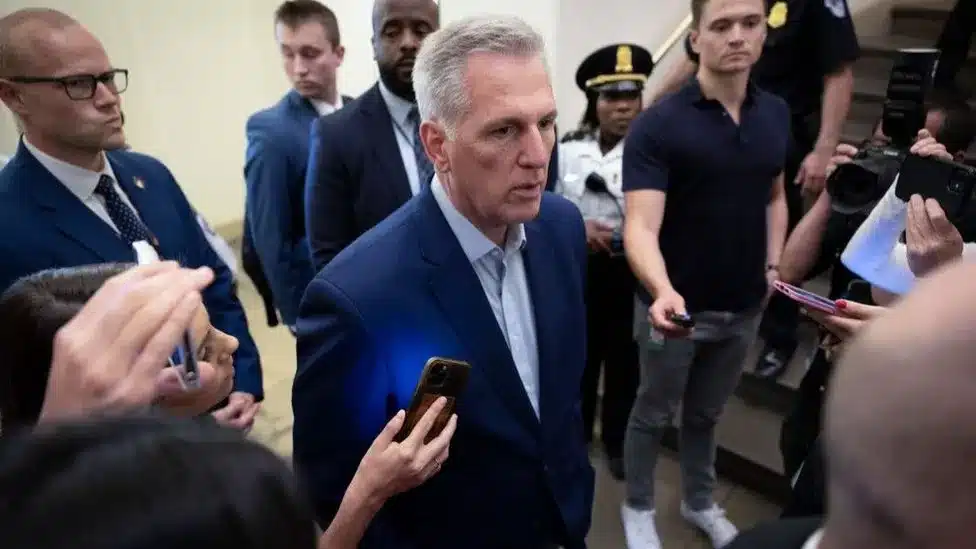
    Kevin McCarthy, who leads Republicans in the House as Speaker, said on Friday that he thought the two sides had “made progress” after working into the night on Thursday.

    “We know it’s crunch time,” he said. “I thought we made progress yesterday. I want to make progress again today and I want to be able to solve this problem.”

    A day earlier, President Joe Biden also said the negotiations were moving forward, though the White House on Friday afternoon said talks could spill into the weekend.

    US media have reported that the emerging deal would raise the debt limit for two years – removing it as a political issue until after the 2024 presidential election.

    It could also strip $10bn from the Internal Revenue Service, scaling back the $80bn boost approved last year – despite Republican objections – for the tax collection agency to hire more auditors.

    Republican efforts to impose tougher work requirements for recipients of certain government benefits remained a sticking point, however.

    Congressional lawmakers have largely returned to their constituencies ahead of the Memorial Day weekend in the US – but have been told to be ready to return in the event of a deal.
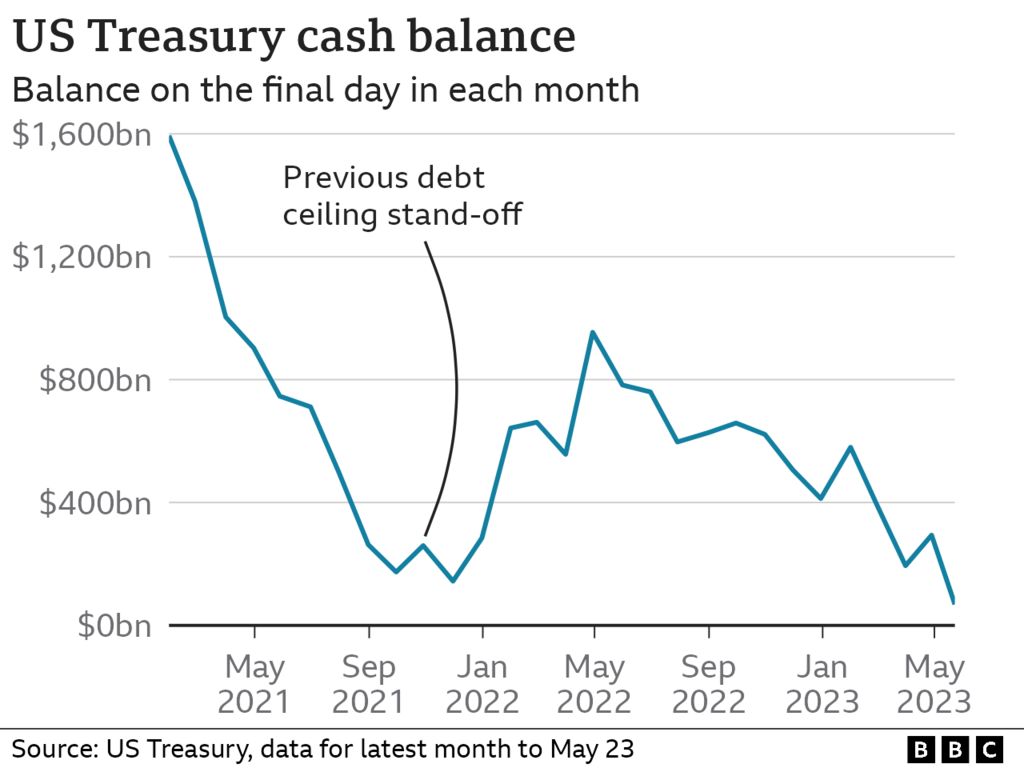
    US cash balance graphic

    The brinksmanship has rattled many observers, who say it erodes confidence in US governance and injects uncertainty into the global financial system.

    Earlier this week one of the big credit ratings firms, Fitch Ratings, warned it was considering stripping the US of its top-notch rating, pointing to the fight – a version of which has recurred numerous times over the last decade.

    In an assessment of the US economy on Friday, the International Monetary Fund said the US needed to do more to reduce its public debt load, which has increased rapidly in recent decades.

    But it urged the country to change its laws to avoid debt-ceiling stand-offs, which it said create an “entirely avoidable systemic risk to both the US and the global economy”.

    It said the debt cap should be automatically increased when Congress approves spending.

    “To avoid exacerbating downside risks, the debt ceiling should be immediately raised or suspended by Congress, allowing negotiations over the FY2024 budget to begin in earnest,” it added.

    The US must borrow money to fund the government because it spends more than it raises in taxes.

    Republicans have said they will not raise the debt ceiling unless the government reduces its spending in the years ahead. They are seeking cuts in areas such as education and other social programmes.

    Democrats have countered with proposals to raise certain taxes.

    The three major US stock indexes jumped on Friday on hopes a deal would be presented soon.

    But worries about the impact of a possible default helped drive up US mortgage rates this week and investors are also demanding higher payments in return for some kinds of government bonds.

    Any agreement formed between the two sides will need to be turned into a legislative text to be approved by Congress.

    Mr McCarthy has promised to give lawmakers 72 hours to review the bill, and at least 24 hours’ notice if they have to return to Washington early. If a deal is reached, a vote could happen early next week.

    Some Republicans have already said the potential spending limits appear too modest, while some Democrats have raised opposing concerns.

    With Congress already broken up for Memorial Day, there is little wiggle room for objections.

    The Senate would also have to vote on the bill, which would then go to the White House for signing.

    Lawmakers could also temporarily lift the debt cap to give the talks more time.

  • US Congress inches closer to debt ceiling deal – Joe Biden

    US Congress inches closer to debt ceiling deal – Joe Biden

    Congress recesses for the holiday weekend while US President Joe Biden claims progress has been made in negotiations with leading Republican Kevin McCarthy over the US debt ceiling.

    The pair aim to reach a deal on raising the government borrowing limit for two years so it can keep paying its bills.

    Investors’ fears of the US defaulting on its debts have grown – despite assurances that talks are progressing.

    Mr Biden spoke of “several productive conversations” with Mr McCarthy.

    During a White House event on Thursday, the president said his staff remained in conversation with the team of Mr McCarthy, the House speaker – and that the two sides were “making progress”.

    He added: “I made clear time and again defaulting on our nation debt is not an option.” He said Americans deserved certainty over issues such as social security payments.

    The debt ceiling is a spending limit set by Congress which determines how much money the government can borrow – an issue on which Democrats and Republicans disagree.

    With no deal yet struck, the Treasury has warned that the US will not have enough money to pay all of its bills as soon as 1 June.

    Analysts say there could be severe economic consequences if the US fails to honour its obligations.

    ‘Two-year deal’
    Details of a potential pact – outlined by Reuters and the New York Times – could allow Republicans to say they cut spending, while Democrats could say they defended domestic programmes.

    A US official told Reuters that the White House was considering scaling back an increase of the Internal Revenue Service to hire more auditors, which was intended to target wealthy Americans.

    The Times reported negotiators were closing in on a deal that would raise the debt limit for two years while imposing strict caps on spending besides military or veterans for the same period.

    Republicans are seeking spending cuts to government programmes, in exchange for raising the $31.4tn (£25tn) cap on government borrowing.

    Is there enough time for a US debt ceiling deal?
    Could a US debt default unleash global chaos?
    The 14th amendment explained
    Mr Biden said the two sides had different visions for how to get America’s “fiscal house in order”, but added that all leaders involved agreed that default was not an option.

    Mr McCarthy – who leads Republicans in the House and has been the most high-profile public face of the talks for his party – earlier said Democrats and Republicans had worked past midnight on Wednesday and would continue to negotiate.

    “There’s a couple of issues still hanging out there that we’ve got to get done,” he said. “We’re gonna work 24/7 to try to make that happen.”

    Another key Republican said he believed a deal to raise the nation’s debt-ceiling deal was “likely” by Friday afternoon.

    “We are inching closer to a deal. I think it’s some of the finer points they are working on right now,” Rep Kevin Hern told Reuters news agency. “You are likely to see a deal by tomorrow afternoon.”

    “Neither side is going to get exactly what they want,” White House press secretary Karine Jean-Pierre said.

    A very simple guide to the debt ceiling?
    Four sticking points holding up debt ceiling deal
    Could a US debt default unleash global chaos?
    The S&P 500 and the Nasdaq were trading higher at midday on Thursday, lifted by positive updates on earnings from some companies, while the Dow Jones Industrial Average was down about 0.6%.

    That followed several days of declines.

    Fitch Ratings, one of the big three credit ratings agencies, on Wednesday said it had put the US on “negative watch” – the first step toward lowering the country’s credit rating.

    It cited “increased political partisanship” and weak governance compared to other countries that hold its top rating.

    “The brinkmanship over the debt ceiling, failure of the US authorities to meaningfully tackle medium-term fiscal challenges that will lead to rising budget deficits, and a growing debt burden signal downside risks to US creditworthiness,” the company said.

    Graphic shows rising US debt
    Any agreement formed between the two sides will need to be turned into a legislative text to be approved by Congress.

    Mr McCarthy has promised to give lawmakers 72 hours to review the bill, and at least 24 hours’ notice if they have to return to Washington early. If a deal is reached this week, a vote could happen early next week.

    There is little wiggle room for objections to be raised, as the Senate would also have to vote on the bill, which would then go to the White House for signing.

    Lawmakers could also temporarily lift the debt cap to give the talks more time.

  • Adopt a progressive approach for debt recovery – Govt to PURC

    Adopt a progressive approach for debt recovery – Govt to PURC

    Government has requested that the PURC postpone at least 35% of the upcoming energy pricing adjustment due to the current economic hardships that Ghanaians are experiencing.

    Ahead of the PURC’s expected quarterly adjustment of electricity tariffs, Government Officials are reported to be impressing on the regulator to be measured in its efforts to clear the outstanding debts owed to Power Producers.


    Forex-related debts owed to power producers are reported to have increased by some 1.2 billion cedis as a result of the non-application of the proposed 44% increase in tariffs in the last adjustment window.

    It will be recalled that though the utility providers requested a 44% increase in order to clear outstanding debts, the PURC allowed only a 29% increase.

    The outstanding 15% is said to have accumulated an extra debt of some 1.2 billion cedis since then. Major Independent Power producers are reported to be threatening to switch off their plants if Government does not pay up the arrears.


    Our sources within the Government say while the Government is keen to avoid blackouts emanating from shutdowns, it is also wary of allowing the PURC to fully impose the needed 27.9% increase in the upcoming window to clear the extra debts.

    Reports say the Government late Tuesday Night urged the PURC to defer part of the expected increase until such a time when economic conditions improve.

    Though the cost of living is gradually reducing after recent hikes, Government sources say conditions should be allowed to improve some more before the full debts are cleared.

    The deferment is expected to enable the Utility providers clear parts of their debts while cushioning Ghanaians for the period.

  • Debt cancellation: Will Ghana’s engagement with China be productive?

    Debt cancellation: Will Ghana’s engagement with China be productive?

    Ghana is facing a severe economic crisis and seeking a $3 billion credit facility from the International Monetary Fund (IMF) to avoid a potential collapse. 

    However, securing the support of its creditors is essential to obtain the IMF loan, and China is a significant creditor of Ghana. 

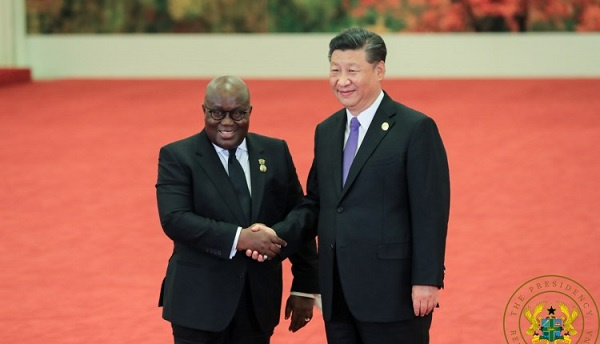
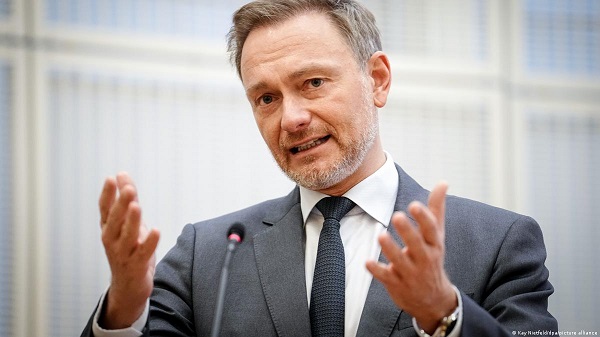
    As a result, Ghana’s President Akufo-Addo has appealed to Germany’s Finance Minister Christian Lindner to encourage China’s participation in the country’s economic recovery programmes. 

    Germany’s Finance Minister Christian Lindner

    “We have good relations with China. We would like you to encourage China to participate in these programmes as quickly as possible,” President Akufo-Addo said.

    In response, German Ambassador to Ghana, Daniel Krull, advised that Ghana reduces the size of her government to reflect the current economic challenges.

    “I can only compare with the other countries like mine and I can come to the conclusion that there is a huge number, the number is much higher than in my country, so that may bring me to the conclusion that there is room for improvement,” he said.

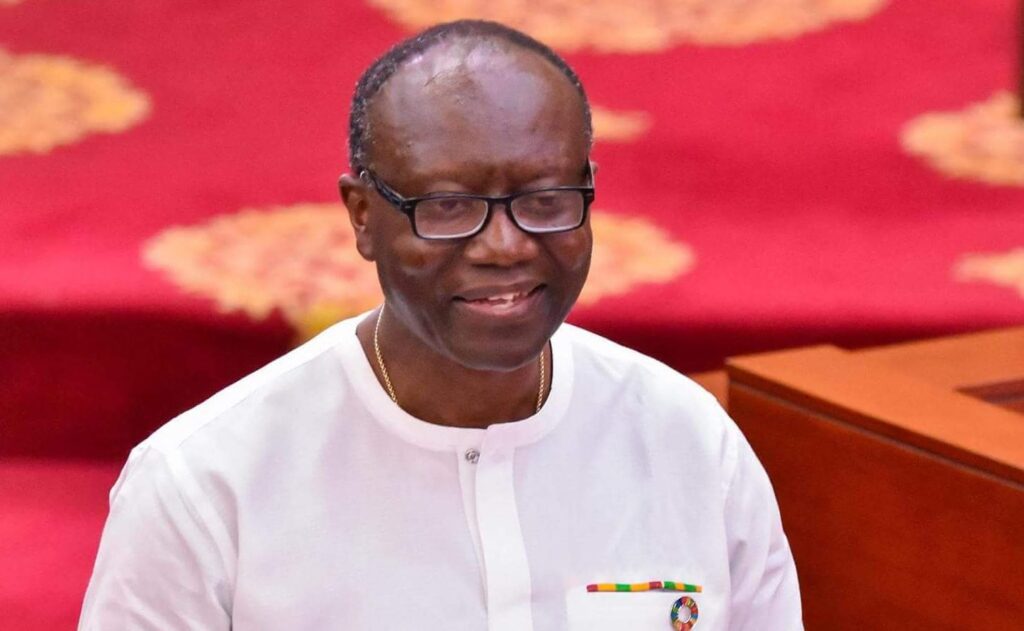
    Ghana’s Finance Minister Ken Ofori-Atta also initiated talks with China in February 2023 to discuss the former’s debt situation and explore possible solutions. 

    Ken Ofori-Atta
    Finance Minister Ken Ofori-Atta

    However, some experts are sceptical that Ghana’s engagement with China will be productive due to the country’s unique debt circumstances.

    According to Dr. Ishmael Hlovor, an international development expert, Ghana’s debt situation is more complicated than the debt of the 27 countries whose debts China cancelled in 2019. 

    These debts were getting to maturity, and there was something small left on them, whereas Ghana’s debt has more commercial lending components. 

    “In 2019 for instance, about 27 countries’ debts were cancelled. But if you scrutinise those loans, they were loans that were getting to maturation and there was something small left on them, but our situation is a little bit complicated because of commercial lending,” he told JoyNews.

    Therefore, Ghana should lower its expectations about debt cancellation and seek other ways to restructure its debts, such as extending the repayment period, lowering interest rates, or swapping debts with other creditors.

    Moreover, there is another school of thought that believes that Ghana’s stance on the Russia-Ukraine war could further complicate its negotiation with China, given China’s friendly relationship with Russia. 

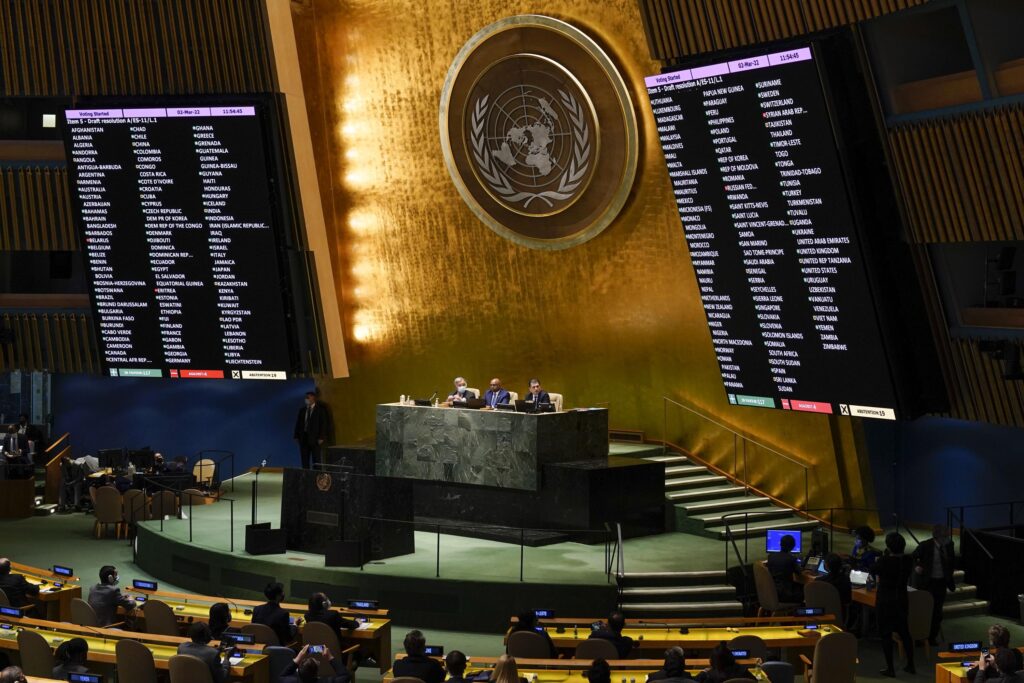
    On February 24, 2023, Ghana supported a UN General Assembly resolution condemning Russia’s invasion of Ukraine, along with Nigeria, Ivory Coast, Egypt, and Kenya. 

    UN General Assembly

    President Akufo-Addo emphasized that “great powers trampling on small nations is not something that we welcome,” and Ghana would continue to hold its position. However, China has not directly condemned Russia’s invasion of Ukraine or otherwise and called for a cease-fire and peace talks instead. 

    Prior to this, President Akufo-Addo ratted out Burkina Faso, accusing the neighbouring country inviting in mercenaries from Russian firm Wagner.

    “To have them operating on our northern border is particularly distressing for us in Ghana,” he said in December 2022.

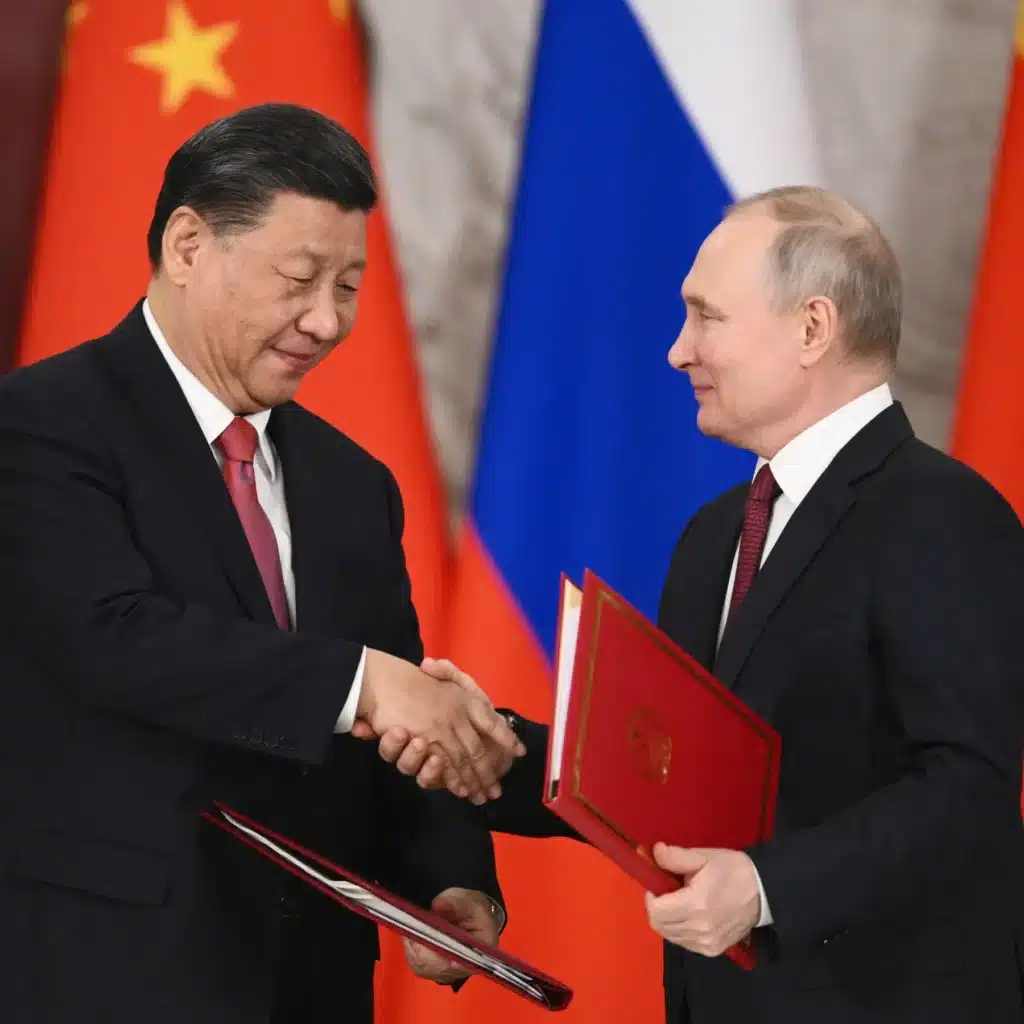
    China has close ties with Russia, as evidenced by the “no limits” partnership agreement signed between Beijing and Moscow in February 2022. More interesting is Chinese President Xi Jinping’s visit to Russia and their subsequent signage of another partnership agreement that seeks to deepen China-Russia relations. 

    Xi Jinping and Vladimir Putin

    It remains uncertain how China will respond to Ghana’s request for debt relief. 

    However, Ghana’s engagement with China could provide an opportunity for both countries to strengthen their economic ties and collaborate on infrastructure and development projects. 

    Ghana could leverage China’s Belt and Road Initiative, which aims to promote trade, investment, and connectivity between China and countries along the ancient Silk Road, to enhance its transport, energy, and communication infrastructure. 

    Nonetheless, Ghana must balance its engagement with China’s economic interests and its foreign policy objectives and ensure that it pursues sustainable and equitable development.

    Source: The Independent Ghana

  • DDEP: 85% participation rate not reflecting reality of Ghana’s debt crisis – Bright Simons

     Honorary Vice President of IMANI Africa, Bright Simons, claims that the government’s 85% participation rate in the domestic debt exchange programme does not accurately reflect the amount of debt that needs to be treated in order for the government to be able to pay off its debt in a sustainable manner.

    He noted on JoyNews on Saturday that while the government had first stated that it was attempting to restructure 137.2 billion cedis in debt, on the 7th of February, as the program’s deadline drew near, the sum had been reduced to 130 billion cedis.

    However, after the deadline, when participation had been finalized the government announced that the debt to be treated had once again been reduced to 97 billion cedis.

    “Now what we’re saying is that these are gimmicks in a way and it’s nice to tell a good story and it’s true that this government has hit 85%. But the truth of the matter is that that was only because we reduced the total amount of bonds that you claim you now need to fix or you’re able to fix which is called the eligible debt.

    “So you only get the 85% if you don’t use the final adjusted number which is the 130 billion, but if you use the 97 billion,” he explained.

    He noted that while the 85% paints a good picture for the government’s programme, the drastic reduction in the debt base to be treated poses a big problem.

    “The reason why that is important to the whole purpose of that exercise is because we can’t pay the debt. So if you’re only treating a small percentage of the problem then the bigger problem remains. So that is the key issue at stake.

    “That 85% participation rate, it’s a good-looking number but it doesn’t reflect the reality of how much debt the government felt at the end of the programme, not at the beginning, at the end of the programme on 7th February was critical to be treated in order for the government to be able to continue to service its debt. That’s the argument that we are making,” he said.

    Source: MyJoyOnline

  • Stop the sabotage and deal with your own debt – China to US over Zambia debt relief

    Stop the sabotage and deal with your own debt – China to US over Zambia debt relief

    Beijing and Washington are competing for dominance in Africa, where Chinese banks are the dominant lenders.

    According to the Chinese government, Washington should stop pressuring Beijing to reduce Zambia’s debt and instead concentrate on preventing a domestic government default that might have an impact on the world economy.

    “The biggest contribution that the US can make to the debt issues outside the country is to cope with its own debt problem and stop sabotaging other sovereign countries’ active efforts to solve their debt issues,” the Chinese embassy in Zambia said in a statement on Tuesday.

    The US government has a cap of $31.4 trillion on how much it can borrow, and it reached that limit on Thursday.

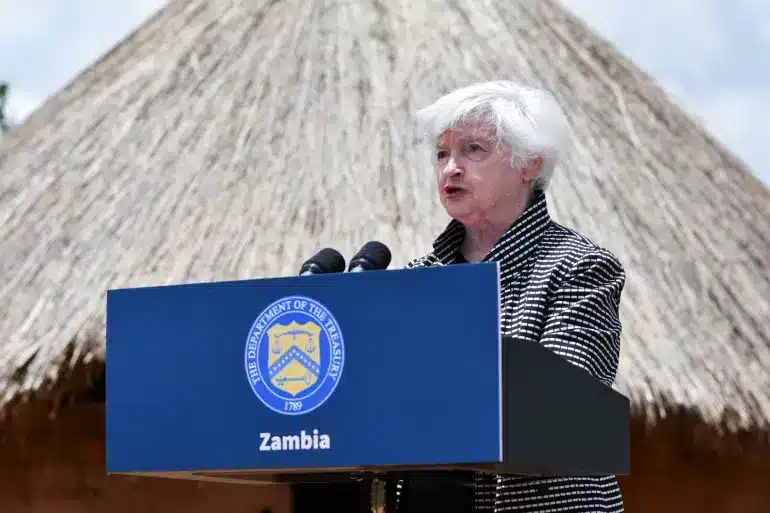
    US Treasury Secretary Janet Yellen implemented “extraordinary measures” to ensure the US government can continue paying its bills in the short term and then travelled to Africa. On a visit to Zambia, she said it was crucial for the country to address its heavy debt burden with China.

    The country failed to make a $42.5m bond payment in November 2020, becoming Africa’s first sovereign nation to default during the COVID-19 pandemic.

    “It’s taken far too long already to resolve this matter,” Yellen said on Monday.

    Washington is trying to woo African nations as the influence on the continent of its rivals Russia and China grows.

    During her visit to Africa, which also included Senegal and South Africa, Yellen pushed to expand US trade and business ties.

    “The United States is all in on Africa, and all in with Africa,” Yellen said on Friday in Dakar as she touted the fruits of a new “mutually beneficial” US economic strategy towards Africa.

    In responding to Yellen, China zeroed in on the battle between Republican lawmakers and Democratic President Joe Biden’s administration over raising the US debt limit to allow more borrowing to keep the government running.

    “Even if the US one day solves its debt problem, it is not qualified to make groundless accusations against or press other countries out of selfish interests,” the Chinese embassy statement said.

    Chinese development banks have emerged as major lenders to poor countries around the world for natural resources, transport and power projects although that lending has fallen sharply and steadily since 2016, according to Boston University’s Global Development Policy Center.

    New loan commitments dropped to eight projects totalling $3.7bn in 2021, down from a peak of 151 projects worth $80bn in 2016, according to data compiled by the centre.

    At present, 22 low-income African countries are either already in debt distress or at high risk of debt distress, according to the UK-based Chatham House. Chinese lenders account for 12 per cent of Africa’s private and public external debt, which increased more than fivefold to $696bn from 2000 to 2020.

    Washington has repeatedly expressed concern in recent weeks over Beijing’s alignment with Moscow as Russia wages its invasion of Ukraine.

    Russian President Vladimir Putin in December said he expected his Chinese counterpart, Xi Jinping, to visit in 2023. If it were to take place, analysts say the visit could be interpreted as a public show of solidarity amid the war in Ukraine.

    Last month, then-Chinese Foreign Minister Wang Yi suggested China would deepen ties with Russia in the year ahead.

    He also blamed the US for the deterioration in relations between the world’s two largest economies, saying Beijing has “firmly rejected” Washington’s “erroneous China policy” of applying pressure on trade and technology and criticising China over human rights and its claims to a broad swath of the Western Pacific.

  • Swap our debts for climate interventions – Akufo-Addo to rich countries

    President Akufo-Addo has asked rich countries to allow heavily indebted poor African countries to swap their debts with climate interventions.

    The President has been addressing the world at this year’s United Nations Climate Change Conference, COP27 in Egypt.

    Ghana is currently facing crippling economic crisis fueled by huge debt.

    The debt situation is proving to be a major stumbling block to getting an IMF deal in time.

    Ghana is seeking a $3 billion bailout but the IMF has made it clear it will not lend to a country with unsustainable debt levels.

    The IMF team has already worked with the finance ministry to complete a debt sustainability analysis.

    The IMF executive board is expected to base its final decision on the report which may include debt restructuring.

    President Akufo-Addo took advantage of the COP27 stage to raise the issue with the rich world.

    “I urge those who hold African debt to commit to debt for climate swap initiatives,” the President said.

    The President did not hold back in dismissing the global financial architecture as not fit for purpose.

    He said a “Radical restructuring of the global financial architecture as proposed by the African finance ministers to accommodate the demands of the developing world is of urgent necessity.

    “It is evident that with these poly crisis that it is not fit for purpose.”

    The President once again took on the rich world for failing to honor a pledge to release $100 billion to help developing countries deal with the impact of climate change.

    He also announced that his government will soon be launching a number of climate interventions to create jobs for Ghanaians.

    This he says will happen through the rollout of initiatives that will promote regenerative agriculture that requires less fertilizers and reforestation with strong biodiversity content.

  • Akufo-Addo outlines 12 measures to restore economic stability by 2028

    As part of the measures to restore Ghana’s economy to prosperity, the government have outlined some steps to be taken to stabilise the economy by 2028.

    This was outlined by the president during his address on October 30.

    Here are some of the measures Akufo-Addo outlined

    1. To restore and sustain debt sustainability, we plan to reduce our total public debt to GDP ratio to some fifty-five per cent (55%) in present value terms by 2028, with the servicing of our external debt pegged at not more than eighteen per cent (18%) of our annual revenue also by 2028.

    2. We are committed to improving the revenue collection effort, from the current tax-revenue to GDP ratio of thirteen (13%) to between eighteen and twenty per cent (18-20%), to be competitive with our peers in the West Africa Region. The GRA is rolling out an extensive set of measures to support this enhanced revenue mobilisation. All of us must do our patriotic duty and support the GRA in this exercise.

    3. We are aiming to restore and sustain macroeconomic stability within the next three (3) to six (6) years, with a focus on ensuring debt sustainability to promote durable and inclusive growth while protecting the poor.

    4. We have decided to review the reforms in the energy sector, capping of statutory funds, implementation of the exemptions Act and a new property rate regime. We have decided also to continue with the policy of thirty percent (30%) cut in the salaries of political office holders including the President, Vice President, Ministers, Deputy Ministers, MMDCEs, and SOE appointees in 2023, just as we will continue with the thirty percent (30%) cut in discretionary expenditures of Ministries, Departments and Agencies.

    5. we will review the standards required for imports into the country, prioritise the imports, as well as review the management of our foreign exchange reserves, in relation to imports of products such as rice, poultry, vegetable oil, tooth picks, pasta, fruit juice, bottled water and ceramic tiles, and others which, with intensified government support and that of the banking sector, can be manufactured and produced in sufficient quantities in Ghana.

    6. We must, as a matter of urgent national security, reduce our dependence on imported goods, and enhance our self-reliance, as demanded by our overarching goal of creating a Ghana Beyond Aid.

    7. We must work to ensure that the majority of goods in our shops and market places are those we produce and grow here in Ghana. That is why we have to support our farmers and domestic industries, including those created under the 1-District-1-Factory initiative, to help reduce our dependence on imports, and allow us the opportunity to export more and more of our products, and guarantee a stable currency that will present a high level of predictability for citizens and the business community. Exports, not imports, must be our mantra! Accra, after all, hosts the headquarters of the Secretariat of the African Continental Free Trade Area.

    8. Enhanced supervisory action by the Bank of Ghana in the forex bureau markets and the black market to flush out illegal operators, as well as ensuring that those permitted to operate legally abide by the market rules. Already some forex bureaus have had their licenses revoked, and this exercise will continue until complete order is restored in the sector;

    9. Fresh inflows of dollars are providing liquidity to the foreign exchange market and addressing the pipeline demand;

    10. The Bank of Ghana has given its full commitment to the commercial banks to provide liquidity to ensure the wheels of the economy continue to run in a stabilised manner till the IMF Programme kicks in and the financing assurances expected from other partners also come in;

    11. Government is working with the Bank of Ghana and the oil-producing and mining companies to introduce a new legal and regulatory framework to ensure that all foreign exchange earned from operations in Ghana is initially paid to banks domiciled in Ghana to help boost the domestic foreign exchange market; and

    12. The Bank of Ghana will enhance its gold purchase programme.

  • Williams Peprah: Ofori-Atta must ask IMF and World Bank for debt relief on existing loans

    A finance expert and an associate professor with Andrews University in Michigan, USA, Prof Williams Kwasi Peprah has said the Finance Minister, Ken Ofori-Atta must ask the Bretton Woods institutions for debt relief on existing loans.

    He said the move will automatically help to manage and reduce the country’s ballooning national debt. 

    Speaking with Benjamin Offei-Addo on the Asaase Breakfast Show on Friday (14 October) Prof Peprah said, “If I were the Finance Minister [Ken Ofori-Atta] even putting my plans [together], my number one strategy that will be on that plan is asking IMF and World Bank to give me debt relief on the loans that they have given to me and then I’ll now talk about the [new] US$3 billion loan.

    “Because if IMF gives us the debt relief, it frees us space; it means that we are not going to pay and straight away our debt will reduce because we’ll write it off our books,” he said.

    The government began discussions with the Washington-based multilateral lender last July, reversing a pledge by President Nana Akufo-Addo’s administration not to seek a financial programme from the IMF.

    Ghana has been battling to stabilise a debt pile that increased to 78.3% of gross domestic product at the end of June from 62.5% five years ago.

    However, the International Monetary Fund (IMF) has cooled speculation that Ghana is poised to start talks on restructuring its debt under plans to secure a US$3 billion loan from the Fund.

    According to the Bretton Woods institution, the restructuring of Ghana’s debt will depend on the outcome of an IMF debt sustainability analysis (DSA) report.

    The IMF director of communications, Gerry Rice, who disclosed this at a news conference in Washington, DC, said the DSA report will show if there is a need for debt restructuring in the first place and, if necessary, how it should be carried out, as well as which areas will be affected.

  • Debt restructuring must be fair to local investors – Analyst

    A financial analyst, Jerome Kuseh, has urged the government to treat local investors fairly should it decide to restructure its external and domestic debt.

    According to him, there is a need for the government to restructure external debts, as doing so would aid domestic investors to avoid losses in their businesses. “Now let’s say you are going to give them [local investors] a haircut, but the foreign investors who only decided to only buy your Eurobonds, they are not going to be subjected to a haircut. Where is the fairness in that situation?” “The domestic market stayed with you and kept oversubscribing, even to treasury bills. Now, these investors are going to be punished,” he is quoted by citibusinessnews.com.

    The need for debt restructuring has recently arisen due to Ghana’s debt stock growing unsustainable as a result of the depreciation of the Ghana Cedi and the difficulty in obtaining loans as a consequence of downgrades by rating agencies.

    Debt restructuring, a strategy adopted by business entities or individuals, happens when a debtor in financial difficulty receives a concession from a
    creditor in line with a consensual agreement or a court order.

    The procedure entails haggling over a lower interest rate and extending the loan’s repayment time. This approach can help debtors who are struggling to pay their bills due to numerous factors that may have posed a challenge for them to do so under the terms and conditions that have been agreed on.

    The government of Ghana is expected to participate in some debt restructuring procedures as part of the country’s debt sustainability agreement with the IMF.

    According to the IMF, the initiative will strengthen the legitimacy of government policies, re-establish trust in the central bank’s ability to control inflation, and build up foreign exchange reserves to sustain the local currency against adverse circumstances. However, financial experts argue that a restructuring of the country’s debt may cause a number of banks to go bankrupt suddenly.

    In the meantime, former Deputy Minister of Finance, Cassiel Ato Forson, has asserted that the country’s debt is unmanageable as “public debt to GDP is now about 100 percent” therefore, debt restructuring is currently the only option for the country.


  • Sri Lanka defaults on debt for first time in its history

    Sri Lanka has defaulted on its debt for the first time in its history as the country struggles with its worst financial crisis in more than 70 years.

    It comes after a 30 day grace period to repay $78m (£63m) of unpaid debt interest payments expired on Wednesday.

    The governor of Sri Lanka‘s central bank said the country was now in a “pre-emptive default”.

    Defaults happen when governments are unable to meet some or all of their debt payments to creditors.

    It can damage a country’s reputation, making it harder to borrow the money it needs on international markets, which can further harm confidence in its currency and economy.

    Asked whether the country was now in default, central bank governor P Nandalal Weerasinghe said: “Our position is very clear, we said that until they come to the restructure [of our debts], we will not be able to pay. So that’s what you call pre-emptive default.

    “There can be technical definitions… from their side they can consider it a default. Our position is very clear, until there is a debt restructure, we cannot repay,” he added.

    Sri Lanka is seeking to restructure debts of more than $50bn it owes to foreign creditors, to make it more manageable to repay.

    The country’s economy has been hit hard by the pandemic, rising energy prices, and populist tax cuts. A chronic shortage of foreign currency and soaring inflation had led to a severe shortage of medicines, fuel and other essentials.

    In recent weeks, there have been large, sometimes violent, protests against President Gotabaya Rajapaksa and his family due to the growing crisis.

    The country has already started talks with the International Monetary Fund over a bailout and needs to renegotiate its debt agreements with creditors.

    The government has said previously that it needs as much as $4bn this year.

    Mr Weerasinghe also warned that Sri Lanka’s already very high rate of inflation was likely to rise further.

    “Inflation obviously is around 30%. It will go even [higher], headline inflation will go around 40% in the next couple of months,” he said.

    Source: BBC

  • Debt stock peaks at GH¢273bn in September

    Ghana’s debts reached an all-time high in September this year on the back of increased borrowing to make up for shortfalls in revenues and fund rising expenditures.

    Data from the Bank of Ghana (BoG) showed that the public debt stock stood at GH¢273.8 billion in September this year, the highest since the bank started releasing data on how much the country owes.

    The September this year stock was equivalent to 71 percent of total economic output, measured by gross domestic product (GDP), according to the data released by the central bank ahead of a press conference Monday.

    The debt stock was GH¢201.9 billion (59.8% of GDP) in September last year but rose by 35.6 percent to GH¢273.8 billion this September.

    It also showed that GH¢71.9 billion was added to the debt stock within the 12-month period.

    The data further showed that the share of the debt into external and domestic debt were almost at par, with the foreign component slightly above those procured locally.

    The foreign component was GH¢138.5 billion, equivalent to 35.9 percent of GDP while the domestic share was GH¢135.3 billion, representing 35.1 percent of GDP.

    Although a norm for countries, the weight of Ghana’s debt relative to its revenues has been worrisome, with the International Monetary Fund (IMF) and the World Bank Group consistently ranking the country as a high-risk debt distress country since 2015.

    Source: Class FM

  • Borrowing goes through the roof as East Africa amasses $73b in external debt

    Countries in the region have seen increased borrowing over the past decade, amassing $73.8 billion in external debt.

    The International Debt Statistics 2021 report by the World Bank shows that between 2009 and 2019, countries in the region increased external borrowing by nearly four times, from $19.9 billion to $73.8 billion.

    During the period, Kenya was the biggest borrower raising the stock of external debt from $8.5 billion to $34.2 billion, followed by Tanzania, from $7.6 billion to $19.5 billion.

    Uganda and Rwanda accumulated $13.9 billion and $6.2 billion in external debt over the decade, from $2.7 billion and $1.1 billion respectively.

    Burundi, however, saw the stock of its external debt decline from $607.2 million in 2009 to $578.4 million in 2019.

    SLOW GROWTH

    “The overhang of debt may slow investment and growth for years to come, a burden on the poor that now needs to be addressed by creditors across the world taking prompt steps to permanently reduce unsustainable debt stocks for the poorest countries,” said David Malpass, the World Bank Group president.

    In the region, the report shows that in 2019 Kenya spent $3 billion in principal repayments and $1.2 billion in interest repayments, while Tanzania spent $1.1 billion and $200 million respectively.

    For Uganda, $166 million went into principal repayment and $115 million in interest repayment, with Rwanda spending $31.5 billion and $133.2 million respectively.

    The report states that with almost half of all low-income countries either already in debt distress or at a high risk of it, the burden of debt is bound to worsen with countries borrowing more to tackle the Covid-19 pandemic.

    Many countries applied for debt relief with the International Monetary Fund in October, which granted a six-month extension to 28 low income nations with Rwanda being among the beneficiaries.

    Total external debt stocks of low-income countries eligible for debt service suspension rose by nine per cent in 2019 to $744 billion, equivalent on average to one-third of their combined gross national income.

    “The risk is that too many poor countries will emerge from the Covid-19 crisis with a large debt overhang that could take years to manage,” said Mr. Malpass.

    He added that to build durable economic recoveries, countries will need to achieve long-term debt sustainability.

    The report shows that the external debt stock of 120 low and middle-income countries rose by 5.4 percent in 2019 to $8.1 trillion, a rate of accumulation almost identical to that in 2018, but close to half the 10.5 percent rise in external debt stock recorded in 2017.

    The increase in external debt stocks in 2019 was the outcome of net debt inflows of $383 billion.

    Countries in sub-Saharan Africa accounted for the largest share of net long-term inflows at 24 per cent, followed by the East Asia and Pacific region.

    Source: theeastafrican.co.ke

  • Ghana spends GH¢6.40bn on interest payments in 1st quarter

    The government of Ghana spent GH¢6.40bn on interest payments in the first quarter of 2020.

    This represented 1.7% of Gross Domestic Product (GDP) and in line with the envisioned target of GH¢6.42 billion.

    According to the Bank of Ghana, total interest payments constituted almost 64% of domestic revenue, undermining fiscal flexibility.

    While domestic interest payments outturn was close to the proposed target, external interest payments were somewhat above the planned target due to additional payments not factored in the programme targets, it said.

    Together with wages and salaries, they accounted for over 120% of domestic revenue, suggesting a lack of fiscal space and inherent rigidities in the budget execution.

    Wages and salaries amounted to GH¢6.50 billion (1.7% of GDP), above the envisioned target of GH¢5.94 billion (1.5% of GDP).

    The situation means that government depends on grants and other sources of funds to finance capital projects, raising concerns going forward.

    In 2020, the government is expected to spend GH¢23 billion on interest payments but that may not be so because of the coronavirus pandemic.

    Some multilateral institutions and sovereign nations that support the government budget may cut loan repayment schedule or cancel some debts owed them.

    Source: Class FM

  • Ghana obtains US$500m debt repayment freeze from World Bank

    President Nana Addo Dankwa Akufo-Addo has announced that Ghana has obtained a $500-million dollar freeze in debt and interest repayment for the rest of this year from the World Bank.

    The move is part of a broader pan-African effort for debt relief due to the negative impact of the novel coronavirus pandemic, the President said.

    In his seventh update to the nation on COVID-19, the President said last Friday, African Finance Ministers, led by Mr Ken Ofori-Atta, and his South African counterpart, achieved a nine-month debt standstill from the World Bank for all qualifying members of the International Development Association (IDA), starting from May 1, 2020.

    The total amount for the beneficiaries on the continent is $44 billion.

    “In the case of Ghana, this amounts to a freeze in principal and interest payments for the year, amounting to $500 million,” he explained.

    “This will create greater fiscal space to help make the Ghanaian economy much more resilient.”

    President Akufo-Addo lauded Ken Ofori-Atta, who is leading the continent’s debt relief efforts for his hard work and outstanding leadership.

    He urged him to leave no stone unturned to achieve an even greater and comprehensive debt relief programme for Africa.

    The Government welcomed the three billion Ghana cedis credit and stimulus package from the commercial banks, under the auspices of the Ghana Association of Bankers, with support from the Bank of Ghana, to revitalise Ghanaian industries.

    The stimulus package is to offer financial relief to especially the pharmaceutical companies.

    Additionally, the President said, the one billion United States-dollar- Rapid Credit Facility, secured from the International Monetary Fund, without any pre-condition, and approved by Parliament, would be used to help close the financial gap created by the COVID-19 pandemic.

    So far, the Government has allocated a GHc1.2 billion, under the Coronavirus Alleviation Programme, to support households and businesses.
    Out of that amount, GHc280 million would be used to provide food for the vulnerable and free water for all Ghanaians in April, May and June.

    A total of GHc323 million is being used to motivate frontline health workers leading the fight against COVID-19, while a GHc600 million assistance package is for micro, small and medium-scale businesses.

    Additionally, the Government is absorbing the full electricity bills of one million active lifeline customers and granting 50 per cent subsidy to the other categories of power consumers at a total cost of one billion Ghana cedis.

    The President lifted the ban on the three-week partial lockdown of COVID-19 hotspots areas, including Accra, Tema, Kasoa, Greater Kumasi and its contagious districts.

    He, however, maintained the other restrictions, including the ban on public gatherings, public funerals, indefinite closure of schools, closure of the border and urged the strict observance of social distancing.

    Ghana’s case count for COVID-19 now stands at 1,042, with nine deaths and 99 persons fully recovered, after 68,591 sample test results were declared.

    Source: GNA