Tag: EC

  • Change in election date should take effect in 2028 – NDC

    Change in election date should take effect in 2028 – NDC

    The National Democratic Congress (NDC) has expressed support for changing the date of national elections but suggests implementing the reform from 2028.

    This stance comes after an Inter-Party Advisory Committee (IPAC) meeting where the Electoral Commission (EC) proposed moving the election date from December 7 to November 7.

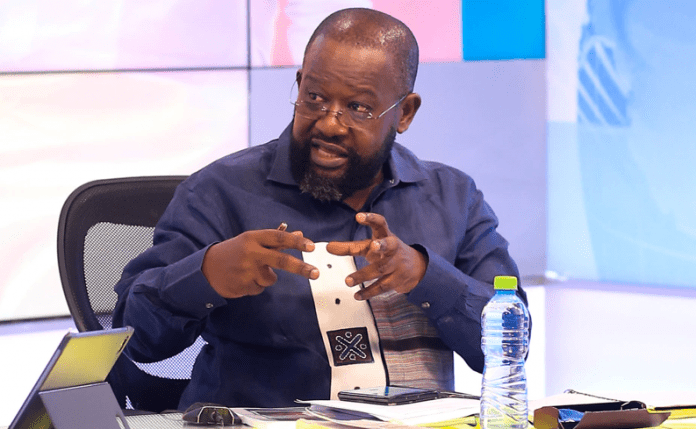
    The NDC had initially opposed the proposal but, following the meeting, the party’s Director of Elections, Dr. Omane Boamah, stated that they now agree to the reform, proposing a delayed implementation starting in 2028. He mentioned that this decision was reached by consensus.

    “The NPP agreed that the date of effectiveness should not be 2024. They agreed,” adding that “The EC only convenes the meeting and listens to the consensus.”

    Contrary to the National Democratic Congress’s (NDC) suggestion of implementing the election date change from 2028, the New Patriotic Party (NPP) asserts that they prefer the reform to be applied for the 2024 election.

    Evans Nimako, Director of elections for the NPP noted “Others who said the EC should consider changing it said it could be considered in 2028. So what is this position that the NPP supported the position that should be done in the next elections? Do they speak for us?

    “They had said that if elections were to be conducted today, they are going to be the victorious party. And even if EC says that they are bringing it earlier so you win, you are still running away from it.”

  • Yendi: EC yet to declare winner in NPP Parliamentary Primaries

    Yendi: EC yet to declare winner in NPP Parliamentary Primaries

    The NPP Parliamentary Primaries in Yendi concluded without an officially recognized winner, according to the Electoral Commission (EC).

    Disruptions during the counting process prevented the declaration of a clear victor.

    Even though the official declaration is pending, both candidates, Farouk Mahama and Abibata Shani, have individually claimed victory.

    Addressing the matter on JoyNews, Director of Electoral Services for the EC, Dr. Serebuor Quaicoo, underscored that an official winner has yet to be determined.

    Simultaneously, concerns have arisen as 28 Majority members lost their bid to contest in the December 2024 Elections during the recently concluded primaries. There is worry that this might adversely affect the functioning of the house, including government business.

    Nevertheless, First Deputy Speaker Joseph Osei-Owusu reassures that the significant number of Majority members losing their seats will not impact parliamentary work.

  • EC engages political parties over 2024 election date change

    EC engages political parties over 2024 election date change

    The Electoral Commission (EC) is set to convene an Inter-Party Advisory Committee (IPAC) meeting today to continue discussions on its proposal to change the date for the general elections.

    The proposed shift is from December 7 to November 7 for both Presidential and Parliamentary elections to enable all electorates to exercise their franchise.

    This comes after a petition by the Seventh Adventist Church, indicating that Saturday, December 7, is a Sabbath day.

    The church has called in the Attorney-General’office to support amending the election day to either November 1 or 2.

    The Church leadership petitioned the Attorney-General’s office to support a bill amending the election day to either the 1st or 2nd Tuesday of November.

    The opposition National Democratic Congress (NDC) has expressed opposition to the proposal, arguing that it does not allow sufficient time for the EC to organize a trouble-free poll.

    Meanwhile, sources within the New Patriotic Party (NPP) suggest that the party’s leadership is still deliberating on the matter before reaching a decision.

    IPAC meetings provide a platform for political parties to review election-related activities, voice grievances, and offer constructive inputs, serving as an advisory body to the Electoral Commission.

  • No one has been declared winner – EC on NPP Primaries in Yendi

    No one has been declared winner – EC on NPP Primaries in Yendi

    The NPP Parliamentary Primaries in Yendi has concluded without an officially recognized winner, as declared by the Electoral Commission (EC).

    Disruptions during the counting process led to the absence of a clear victor. Despite the lack of an official declaration, both candidates, Farouk Mahama and Abibata Shani, have asserted their individual victories in the contest.

    Addressing the situation on JoyNews, Dr. Serebuor Quaicoo, the Director of Electoral Services for the EC, emphasized that an official winner has not yet been determined.

    In a related development, 28 members on the Majority side lost their bid to contest in the December 2024 Elections during the recently concluded primaries. This has raised concerns about the potential impact on the functioning of the house, including government business.

    However, offering reassurance, the First Deputy Speaker, Joseph Osei-Owusu, stated that despite the significant number of Majority members losing their seats, the work in Parliament will not be adversely affected.

  • EC, political parties to deliberate on date for 2024 elections

    EC, political parties to deliberate on date for 2024 elections

    On Monday, January 29, the Electoral Commission (EC) is scheduled to convene with various political parties at the Inter-Party Advisory Committee (IPAC) meeting to continue discussions on its proposal to change the date for the general elections.

    The proposed amendment suggests shifting the date for both Presidential and Parliamentary elections from December 7 to November 7.

    The Opposition National Democratic Congress (NDC) has expressed opposition, citing concerns that the proposed timeline may not provide the EC with sufficient time to organize a seamless election.

    In contrast, sources within the New Patriotic Party (NPP) suggest that the party’s leadership is still deliberating on the matter before arriving at a decision.

    In a noteworthy development, the National Democratic Congress (NDC) has reversed its earlier decision to boycott IPAC meetings. The party communicated this reversal in a statement dated Sunday, January 28, 2024, signed by its General Secretary, Fifi Fiavi Kwetey.

    IPAC meetings play a crucial role in facilitating a platform for political parties to review election-related activities and policies, express grievances officially, and contribute constructive inputs.

    Additionally, IPAC serves as an advisory body to the Electoral Commission.

    The NDC’s leadership had boycotted IPAC meetings in 2021, citing perceived bias and lack of transparency during the 2020 general elections. However, in their recent statement, the NDC stated that the decision to rescind the boycott was made through “enhanced consensus-building.”

  • I won’t watch you “throw our country into chaos” – Agbodza fumes again at EC over indelible ink usage

    I won’t watch you “throw our country into chaos” – Agbodza fumes again at EC over indelible ink usage

    Kwame Governs Agbodza, the Minority Chief Whip in Parliament and Member of Parliament for Adaklu, has raised concerns about the Electoral Commission’s decision to eliminate the use of indelible ink in the upcoming 2024 general elections.

    He expressed scepticism and found it suspicious that the same ink was employed in the New Patriotic Party (NPP) parliamentary primaries held on Saturday, January 27, 2024.

    Agbodza suggested that the EC’s proposal to abandon indelible ink, which is crucial for preventing multiple votes, might be a strategy to manipulate the elections in favour of the ruling party.

    In light of this, he has vowed to keep the Commission in check and not allow it “throw our country into chaos”

    Jean Mensah is using INDELIBLE INK for the NPP internal elections. Why is it necessary to do this for the NPP elections but not necessary for the NATIONAL ELECTIONS? She will NEVER be allowed to throw our country into chaos .2024 ELECTIONS WILL HAPPEN WITH INDELIBLE INK AT ALL COSTS,” his X post read.

    In a recent press conference, the Electoral Commission (EC) announced that the use of indelible ink would no longer be necessary during elections.

    The commission indicated that they have implemented a biometric authentication system to replace indelible ink, which is a semi-permanent dye traditionally applied to a voter’s finger, to prevent double voting.

    This new approach is currently being tested in the ongoing district elections.

  • Nov 7 date will help us have ample time to deliver – EC justifies

    Nov 7 date will help us have ample time to deliver – EC justifies

    The Electoral Commission (EC) has provided justification for its proposal to shift the date of the upcoming general election from December 7 to November 7, 2024

    The proposed shift in the election date, according to the Commission will serve as a measure to afford the EC ample time to execute its responsibilities effectively.

    During an Inter-Party Advisory Committee (IPAC) a meeting on Monday, January 22, 2024, the deputy chairperson of the Electoral Commission in charge of Corporate Services, Dr Bossman Asare stated that “organising the elections within three weeks will be very tight”.

    He added that” Beyond that, the time for the inauguration you have a new government and an old government leaving office, the time will be too short”.

    According to him, the EC had been advocating for a change in the election date long before the church’s petition.

    “Let me state very clearly that it had nothing to do with what the Adventist Church brought in the form of a petition,” he added.

    This justification comes after Chairperson of the Commission, Jean Mensa, proposed that the Commission is contemplating a shift in the election date from December 7 to November 7.

  • Changing election date was something we considered in 2020 – EC

    Changing election date was something we considered in 2020 – EC

    The Electoral Commission (EC) has revealed that it contemplated changing the election date for the 2024 general election as early as 2020.

    The clarification comes after Chairperson of the Commission, Jean Mensa, reportedly proposed that the Commission is contemplating a shift in the election date from December 7 to November 7.

    She revealed this adjustment during a meeting with the Inter-Party Advisory Committee (IPAC) on Monday, January 22.

    This development to many, aligns with with a recent proposition put forth by the Seventh-day Adventist Church, which aimed to modify the election date based on religious considerations.

    The church, referencing Saturday, December 7, 2024, as a day dedicated to divine worship, formally appealed to the Attorney-General’s office, urging support in sponsoring legislation to amend the election day.

    However, the deputy chairperson of the EC in charge of Corporate Services, Dr Bossman Asare has stated that “Let me state very clearly that it had nothing to do with what the Adventist Church brought in the form of a petition.

    According to him the intention to change the 2024 election date was considered in 2020 comes after certain political parties proposed a change in date with the reason being that “in the event there was a run-off, the EC will have exactly 21 days, and right after the 21 days, the next one week would be the inauguration”.

    “This was something the Commission had thought about from 2020, but we did not have enough time to be able to put it into action in 2020. Yesterday [Monday], when we met at IPAC, we made it very clear to the parties that this was a proposal that came from the political parties themselves in 2015,” he said.

    “The reason they gave at the time was that in the event there was a run-off, the EC will have exactly 21 days, and right after the 21 days, the next one week would be the inauguration.

    “Apart from that too, we gave a reason that the time for the EC to work on organising the elections within three weeks will be very, very tight. Beyond that, the time for the inauguration you have a new government and an old government leaving office, the time will be too short,” he added.

  • Proposal to change election date to Nov 7 not a response to SDA’s petition – EC clarifies

    Proposal to change election date to Nov 7 not a response to SDA’s petition – EC clarifies

    The Electoral Commission (EC) has clarified that its proposal to move the general election day to November 7 is unrelated to a petition by the Seventh-day Adventist Church.

    The current December 7 date coincides with a Saturday in 2024, prompting the suggestion for a change.

    Chairperson Jean Mensa, who presented the proposal at an Inter-Party Advisory Committee (IPAC) meeting on January 22, 2024, also advocated for the election day to be declared a public holiday.

    Jean Mensa asserted that such a move could enhance civic engagement and contribute to a stronger democratic culture.

    This aligns with a recent proposal from the Seventh-day Adventist Church, citing religious considerations for changing the election date.

    The church, designating Saturday, December 7, 2024, as a day of worship, petitioned the Attorney-General’s office to amend the election day.

    However, Dr. Bossman Asare, the deputy chairperson of the Electoral Commission in charge of Corporate Services, clarified that the EC had been advocating for a change in the election date long before the church’s petition.

    “Let me state very clearly that it had nothing to do with what the Adventist Church brought in the form of a petition.

    “This was something the Commission had thought about from 2020, but we did not have enough time to be able to put it into action in 2020. Yesterday [Monday], when we met at IPAC, we made it very clear to the parties that this was a proposal that came from the political parties themselves in 2015,” he said.

    He indicated that the move to change the date for the election is to allow for more time to correct mistakes as well as adequate time for run-offs in the event that they are needed.

    “The reason they gave at the time was that in the event there was a run-off, the EC will have exactly 21 days, and right after the 21 days, the next one week would be the inauguration.

    “Apart from that too, we gave a reason that the time for the EC to work on organising the elections within three weeks will be very, very tight. Beyond that, the time for the inauguration you have a new government and an old government leaving office, the time will be too short,” he added.

    He stated that political parties initiated the proposal in 2015, emphasizing the need for more time to address errors and accommodate potential run-offs.

    The move aims to provide the EC with a 21-day window for a run-off and additional time for the inauguration process.

    Mr Asare emphasized that the proposed change was not influenced by the Adventist Church’s petition but was a result of concerns raised by political parties in 2015.

  • EC proposes November 7 for 2024 elections

    EC proposes November 7 for 2024 elections

    The Electoral Commission (EC) is contemplating a shift in the election date from December 7 to November 7.

    The Chairperson of the Commission, Jean Mensa, reportedly proposed this adjustment during a meeting with the Inter-Party Advisory Committee (IPAC) on Monday, January 22.

    In addition to the date change, the EC suggested that the election day be designated as a national holiday.

    The rationale behind this proposal, as explained by the EC Chairperson, is to boost civic engagement and contribute to the development of a more robust democratic culture.

    This proposal echoes a recent suggestion by the Seventh Day Adventist Church, whose followers emphasized that Saturday, December 7, 2024, is a day dedicated to the worship of God.

    The Church leadership petitioned the Attorney-General’s office to support a bill amending the election day to either the 1st or 2nd Tuesday of November.

    The objective is to ensure an inclusive democratic exercise without intentionally hindering anyone from exercising their voting rights.

    The Church leaders expressed the belief that the bill should be sponsored by the Office of the Ministry of Justice and Attorney-General (Executive) due to its nature, and they requested a meeting with the Honourable Minister in this regard.

    Furthermore, there is a prevailing opinion that holding the election in November would provide sufficient time for the completion of all transitional arrangements, particularly in the event of a change in government, ensuring a smooth handover of political power before January 7 in accordance with the provisions of the 1992 Constitution.

    “It is the considered view of the Church that this bill should be sponsored by the Office of the Ministry of Justice and Attorney-General (Executive) because of its nature. Hence, the request for this meeting with the Honourable Minister in that regard,” the Church leadership stated.

  • NPP outlined procedural framework for Parliamentary Primaries on January 27th

    NPP outlined procedural framework for Parliamentary Primaries on January 27th

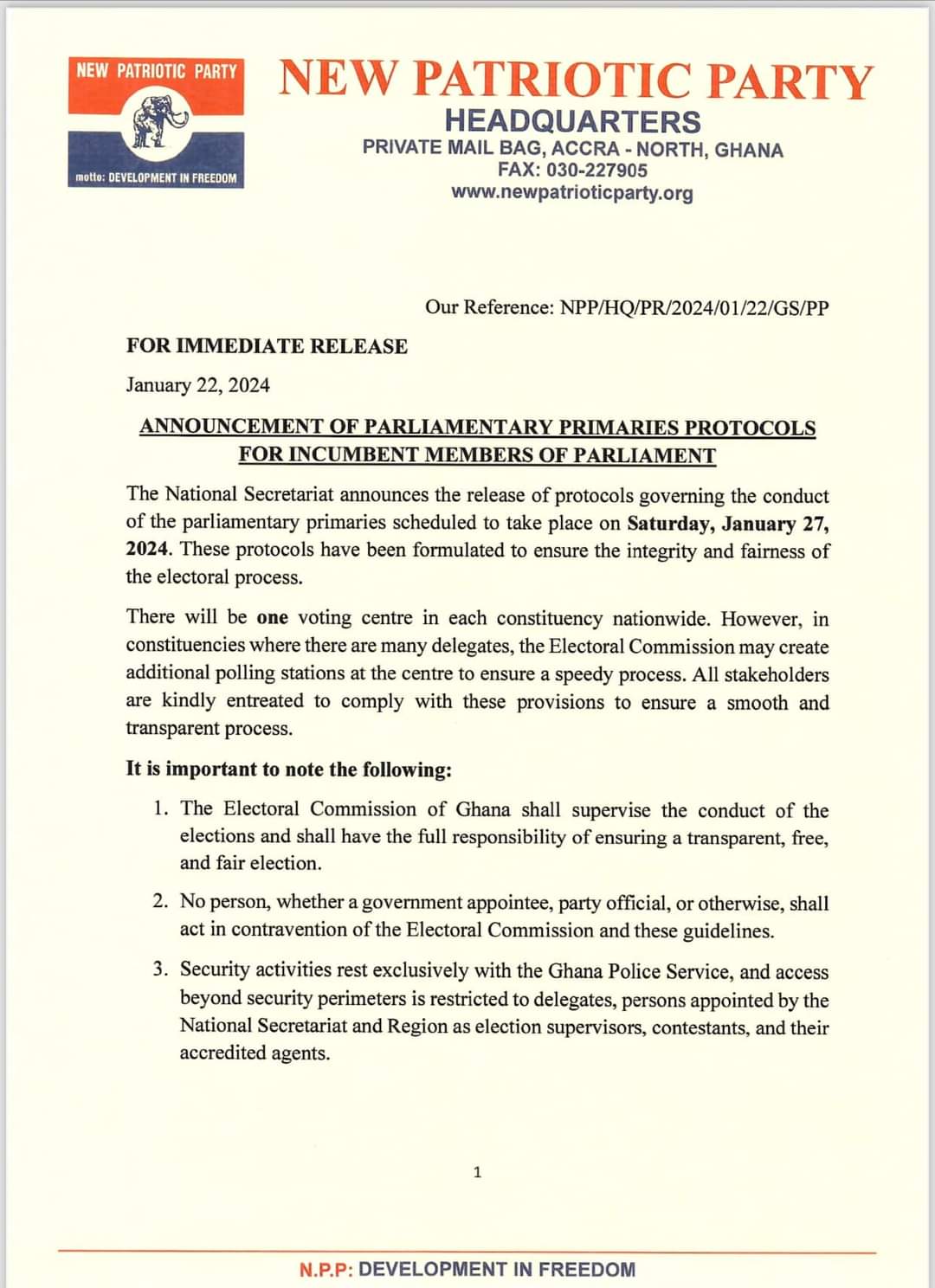
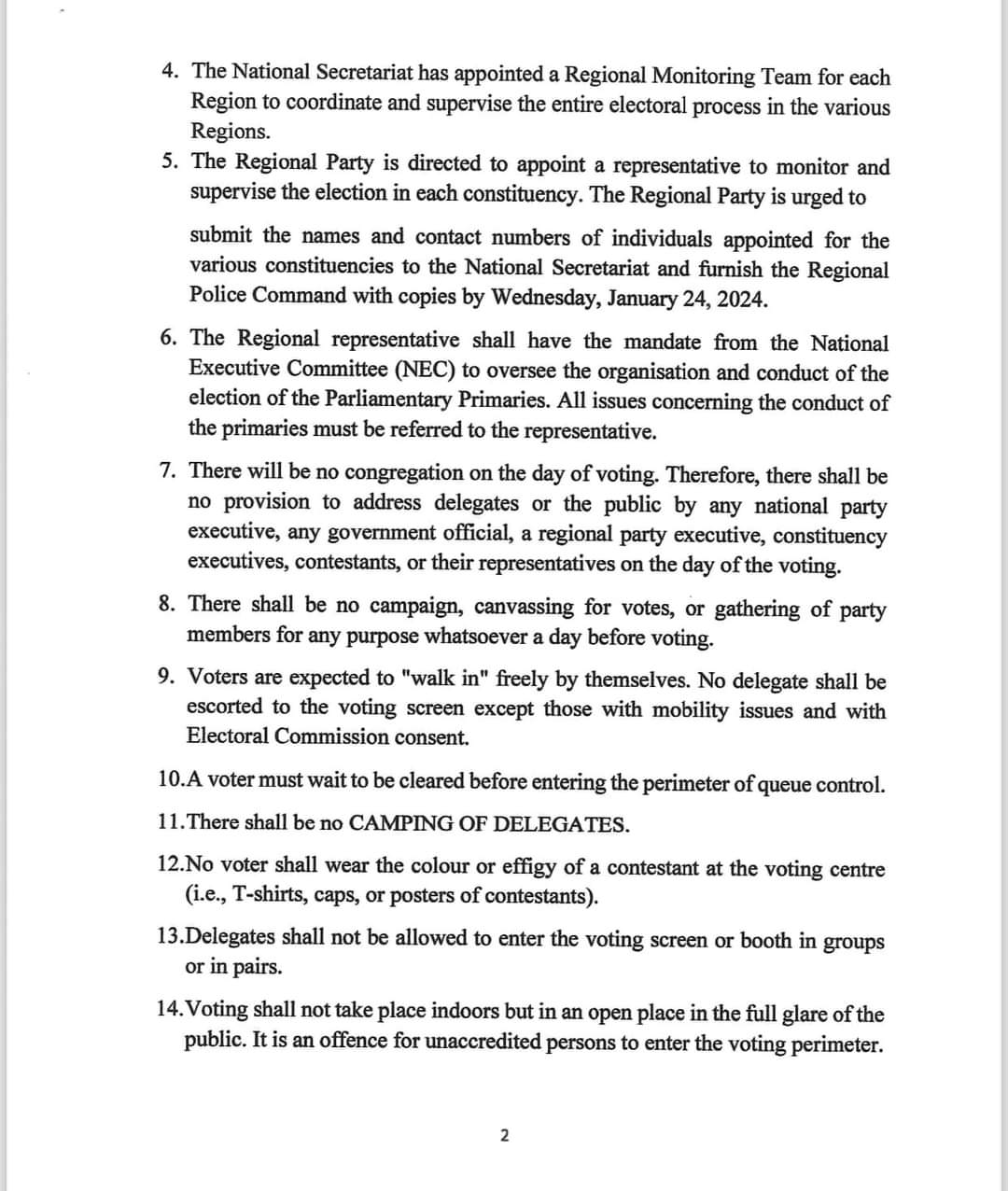
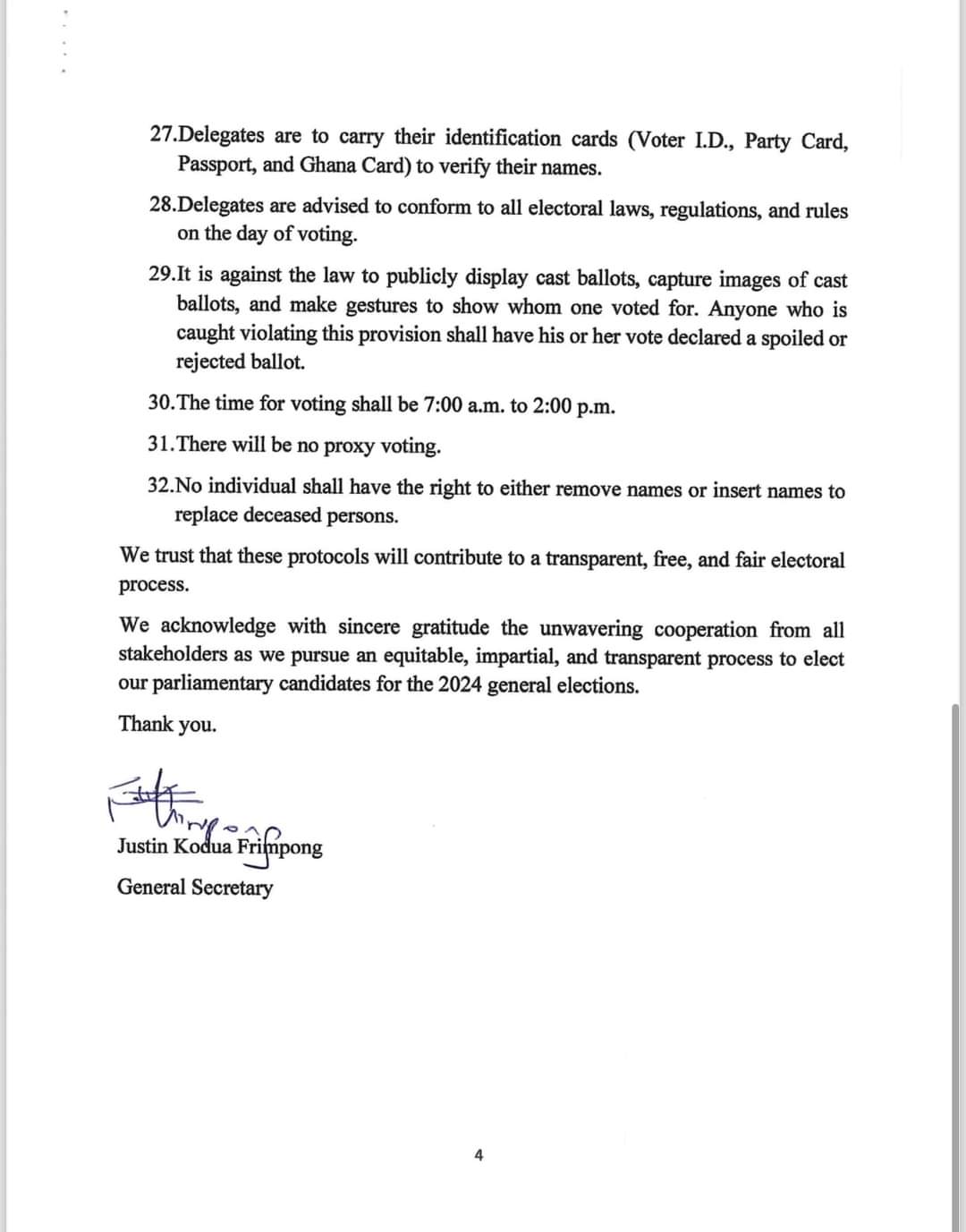
    National Secretariat of the New Patriotic Party (NPP) has unveiled the comprehensive protocols that will govern the conduct of the upcoming January 27th parliamentary primaries slated for Saturday, January 27, 2024.

    A press statement dated January 22, 2024, reveals that the party has devised protocols aimed at safeguarding the integrity and fairness of the parliamentary primaries, as stated by the New Patriotic Party (NPP).

    “There will be one voting centre in each constituency nationwide. However, in constituencies where there are many delegates, the Electoral Commission (EC) may create additional polling stations at the centre to ensure a speedy process. All stakeholders are kindly entreated to comply with these provisions to ensure a smooth and transparent process,” it stated.

    It said the EC would supervise the conduct of the elections and shall have the full responsibility of ensuring a transparent, free, and fair election.

    “No person, whether a government appointee, party official, or otherwise, shall act in contravention of the Electoral Commission and these guidelines.”

    “Security activities rest exclusively with the Ghana Police Service, and access beyond security perimeters is restricted to delegates, persons appointed by the National Secretariat and Region as election supervisors, contestants, and their accredited agents,” it stated.


  • Indelible ink: Change must be cautious when we are used to something – Prof Mike Oquaye tells EC

    Indelible ink: Change must be cautious when we are used to something – Prof Mike Oquaye tells EC

    Former Speaker of Parliament Professor Aaron Michael Oquaye, has voiced apprehension regarding potential adverse effects on the upcoming general elections if the Electoral Commission (EC) proceeds with its proposal to eliminate the use of indelible ink.

    Professor Oquaye emphasized the need for caution on the part of the Commission in implementing such changes.

    EC Chairperson, Jean Mensa had announced in a press conference that the Commission is contemplating doing away with indelible ink, citing confidence in the verification systems in place.

    Both the NPP and the opposition NDC have urged the EC not to proceed with this proposal. In a parliamentary debate, MP for South Dayi, Rockson Nelson Dafeamekpor, cited Article 51 of Ghana’s 1992 constitution, asserting that the use of indelible ink is essential for the smooth conduct of elections.

    Article 51 of the constitution empowers the Electoral Commission to make regulations for the effective performance of its functions, including voter registration and the conduct of public elections and referenda.

    In an exclusive interview with 3News’ Beatrice Adu, the member of the New Patriotic Party’s (NPP) Council of Elders stressed the importance of the Electoral Commission proceeding cautiously, particularly in an atmosphere of limited mutual trust.

    He recounted a similar situation before the 2016 general election when he warned then-EC Chairperson Charlotte Osei about the legal ramifications of attempting a vote recount.

    “Definitely, when we are used to something and you want to change it, you must change it cautiously….and in fact, I have had the opportunity to tell the Electoral Commissioner this and that is a personal feeling and especially in an atmosphere where we don’t trust each other very much, I will go cautiously….otherwise people might think that there is something untoward being planned,” he explained.

    “In the last election that brought President Akufo Addo to power, I was the chairman of the Constitutional and Legal Committee of the NPP, Madam Charlotte announce on TV… that if she saw that the voting was that close, she would ask for a re-count to determine all controversies; I in my capacity wrote her a letter …….that ‘you have no such power….‘the laws are clear…….so I advised the young woman, you dare not do that. If you do it, you’ll go to jail. Nobody is above the law, whether you are EC chairman or whatever or even a Minister. In fact, even the President. You can be found liable and jailed…..we are under the law….if you want to be beyond the law, go and live in the wilderness, alone ”

    ”If I had my own will, unless the trust is built and there’s consensus on it, the little money that we’ll spend on the ink,….Afterall, in our local parlance, we say that plenty fish don’t spoil the soup.”

    Professor Oquaye emphasized the rule of law, stating that no one, whether an EC chairman, Minister, or President, is above the law. He urged the current EC Chair to maintain the use of indelible ink until sufficient trust is established in the country’s electoral systems.

    He concluded by highlighting the importance of consensus-building and trust, suggesting that using indelible ink, despite the associated costs, contributes to maintaining the integrity of the electoral process, as the local saying goes, “plenty fish don’t spoil the soup.”

  • We don’t trust you, thread cautiously – Prof Mike Oquaye warns EC over removal of indelible ink

    We don’t trust you, thread cautiously – Prof Mike Oquaye warns EC over removal of indelible ink

    Former Speaker of Parliament and member of the governing New Patriotic Party’s (NPP) Council of Elders, Professor Aaron Michael Oquaye, has expressed concerns regarding the potential negative consequences of the upcoming general elections if the Electoral Commission (EC) proceeds with its proposal to eliminate the use of indelible ink.

    Professor Oquaye emphasized the need for caution on the part of the Electoral Commission, indicating that the decision to abandon indelible ink should be approached carefully.

    The EC Chairperson, Jean Mensa, had announced in a press conference that the Commission is contemplating discontinuing the use of indelible ink, citing confidence in the verification systems they have implemented.

    In an exclusive interview with 3News’ Beatrice Adu, Professor Michael Oquaye highlighted the importance of the Electoral Commission exercising caution in this matter, underscoring the principle that nobody is above the law.

    “Definitely, when we are used to something and you want to change it, you must change it cautiously….and in fact, I have had the opportunity to tell the Electoral Commissioner this and that is a personal feeling and especially in an atmosphere where we don’t trust each other very much, I will go cautiously….otherwise people might think that there is something untoward being planned,” he explained.

    Professor Aaron Michael Oquaye cited a previous case that occurred before the 2016 general election. At that time, Charllotte Osei served as the Chairperson of the Electoral Commission.

    Professor Oquaye claimed that he had warned her about the possibility of facing legal consequences, including the prospect of imprisonment, if she attempted to recount votes in violation of the provisions laid out in the law.

    “In the last election that brought President Akufo Addo to power, I was the chairman of the Constitutional and Legal Committee of the NPP, Madam Charlotte announce on TV… that if she saw that the voting was that close, she would ask for a re-count to determine all controversies; I in my capacity wrote her a letter …….that ‘you have no such power….‘the laws are clear…….so I advised the young woman, you dare not do that. If you do it, you’ll go to jail. Nobody is above the law, whether you are EC chairman or whatever or even a Minister. In fact, even the President. You can be found liable and jailed…..we are under the law….if you want to be beyond the law, go and live in the wilderness, alone ”

    He further advised the EC Chair to allow the use of indelible ink until the country has built enough trust around our electoral systems.

    ”If I had my own will, unless the trust is built and there’s consensus on it, the little money that we’ll spend on the ink,….Afterall, in our local parlance, we say that plenty fish don’t spoil the soup.”


    Both the governing New Patriotic Party (NPP) and the opposition National Democratic Congress (NDC) have voiced their opposition to the Electoral Commission’s proposal to eliminate the use of indelible ink.

    During a parliamentary debate, Rockson Nelson Dafeamekpor, the Member of Parliament for South Dayi, representing the opposition NDC, argued that the use of indelible ink is mandated by the 1992 Constitution for the proper and smooth conduct of elections. He contended that removing the use of indelible ink would constitute a breach of the constitution, specifically citing Article 51.

    Article 51 of Ghana’s 1992 constitution states “51 The Electoral Commission shall, by constitutional instrument, make regulations for the effective performance of its functions under this Constitution or any other law, and in particular, for the registration of voters, the conduct of public elections and referenda, including provision for voting by proxy. 52 There shall be in every region and district a representative of the Electoral Commission who shall perform such functions as shall be assigned to him by the Commission“.

  • NDC gives EC 7 days ultimatum to reverse decision not to use indelible ink 

    NDC gives EC 7 days ultimatum to reverse decision not to use indelible ink 

    Member of Parliament for South Dayi, Rockson Nelson Dafeamekpor, has issued a stern ultimatum, giving the Chairperson of the Electoral Commission (EC), Jean Mensa, seven days to retract the administrative directive abolishing the use of indelible ink in elections.

    In a letter dated January 9, Mr Dafeamekpor described the directive as unlawful.

    “By this letter, therefore, I demand that, within 7 days, upon receipt of same, you withdraw the said administrative directive unlawfully revoking the statutory use of the indelible ink as part of our electoral authentication process as it undoubtedly amounts to a unilateral REPEAL of Regulation 33, sub-regulation 2, Paragraph (c) of Constitutional Instrument 127, 2020 without any recourse to Parliament, the only Constitutionally mandated organ of state with power so to do,” Mr Dafeamekpor wrote.

    The National Democratic Congress legislator explained that, “If your said directive is allowed, it will be tantamount to a sinful usurpation of the legislative powers of the Parliament of Ghana.”

    It is worth noting that Mrs. Mensa declared the discontinuation of indelible ink usage in district-level elections and all subsequent polls.

    She explained that the decision is a step towards improving the electoral process and implementing a more robust identification system.

    She explained at a media briefing on Monday, December 18 that the biometric identification system flags anyone who attempts multiple registrations; hence, anyone verified after voting cannot vote again.

    “The issue of indelible ink, the question is when we were not doing biometric, we were basically using your face, your card. We look at your face and we say this picture looks like you. Biometric technology makes it difficult for a person who has been verified and cast their vote to come a second time.

    “So, there is no need for indelible ink. Once you have been verified, it goes into the system and you cannot come back a second time,” she said.

    However, Mr Dafeamekpor cautioned thus, “Be assured that if you fail to heed to this request, I shall employ every other lawful remediable steps available to me without any further recourse to you including, but not limited to, the invocation of the penal sanctions contained in Regulation 45 of CI 127 against you and your staff(s).”

  • It’s our duty to ensure a free and fair elections in 2024 – Akufo-Addo to Ghanaians

    It’s our duty to ensure a free and fair elections in 2024 – Akufo-Addo to Ghanaians

    In his annual Christmas message to the nation, President Akufo-Addo has emphasized the critical role of Ghanaians in ensuring a transparent and credible 2024 general election.

    Acknowledging the upcoming ninth General Election on December 7, 2024, as a pivotal moment in the country’s democratic history, the President underscored the need for responsible conduct by all citizens.

    He urged Ghanaians to embrace the democratic process with a sense of duty, emphasizing the collective responsibility to uphold the principles of fairness, transparency, and openness in the electoral system.

    President Akufo-Addo reminded the nation of its unique standing as a beacon of stable constitutional governance on the African continent, especially within the context of the Fourth Republic.

    “Next year is an important year in our democratic journey, we will hold on 7th December 2024 the ninth General Election in the history of the 4th Republic. Which has witnessed the longest period of stable Constitutional governance in our entire history.

    “We all have a duty to conduct ourselves in such a manner that we have a free, fair and transparent election that will enable the Ghanaian people to choose in peace and serenity the person who will manage the affairs on their behalf for the next four years,” Mr. Akufo-Addo stated.

    The Ghanaian leader expressed confidence in the resilience and commitment of the people, expressing his belief that Ghanaians would once again demonstrate their dedication to democratic ideals.

    He highlighted the significance of the electorate’s peaceful and informed participation in choosing a leader who would effectively manage the nation’s affairs for the subsequent four years.

    President Akufo-Addo concluded his message by reinforcing his optimism, stating,“I am confident yet again Ghanaians will rise to the occasion and reinforce the status of Ghana as a bastion of democracy on the Africa continent,” President Akufo-Addo added.

    The President’s call for a responsible and participatory electoral process resonated as a rallying cry for the citizenry to contribute to the enduring success of Ghana’s democratic legacy.

  • EC never faced technical challenge during District Level Elections – IMANI Africa

    EC never faced technical challenge during District Level Elections – IMANI Africa

    President of IMANI Africa, Franklin Cudjoe, criticized the Electoral Commission (EC) for attributing the recent shortcomings in the District Assembly election to “technical challenges.”

    In his scathing assessment, Cudjoe argues that the EC’s explanation not only lacks sincerity but also reveals deeper-seated issues pertaining to the Commission’s overall planning and transparency.

    Mr Cudjoe brings attention to a noticeable contradiction within the EC’s narrative.

    Despite their earlier assurances of preparedness weeks before the election, the Commission now cites last-minute technical difficulties as the cause of the disruptions.

    “This whole conversation about technical issues for the lapse the EC had cannot be true. You see if they are saying that maybe someone’s name was misspelled or something on the ballot, maybe yes. You can’t tell me that 12 hours or 6 hours to the elections, you didn’t know that you didn’t have all the accoutrement.

    “These are not technical issues, they are just blatant disregard for the processes, it should have been ready two weeks earlier”.

    This incongruity, according to Cudjoe, suggests a fundamental flaw in the Commission’s ability to anticipate and address logistical challenges in a timely manner.

    The seasoned analyst dismisses the notion that the encountered issues were purely technical, asserting that the revelation of insufficient resources hours before the election demonstrates a blatant disregard for established electoral processes.

    Mr Cudjoe contends that such essential components should have been adequately prepared at least two weeks in advance.

    Furthermore, he took the EC to task for what he perceives as a “headstrong” approach and a lack of collaboration with stakeholders.

    According to him, the exclusion of voices from diverse political parties contributes to avoidable problems, as evident in the recent election disruptions.

    “The EC has been very headstrong…If they had internalized some of these issues, I don’t know why they would then wake up and tell us recently that in the main 2024 polls, they will close polls at 3 pm. What kind of signs went into that type of decision?

    “Well, if you are going to have an election and this District level election is an example of some of the processes that were bungled, would you think that 3 pm should applied to every polling station? Would you want to do something like that”? he added.

  • There was no technical issues, EC just blatantly disregarded the electoral processes –  Franklin Cudjoe

    There was no technical issues, EC just blatantly disregarded the electoral processes –  Franklin Cudjoe

    President of IMANI Africa, Franklin Cudjoe, has vehemently criticized the Electoral Commission (EC) for dismissing recent lapses in the District Assembly elections as mere “technical challenges.”

    He asserted that this explanation is disingenuous and points to deeper issues regarding the Commission’s planning and transparency.

    Mr. Cudjoe emphasized that the EC’s earlier assurances of preparedness, provided weeks before the election, are contradictory to their claims of last-minute technical difficulties.

    “This whole conversation about technical issues for the lapse the EC had cannot be true. You see if they are saying that maybe someone’s name was misspelled or something on the ballot, maybe yes. You can’t tell me that 12 hours or 6 hours to the elections, you didn’t know that you didn’t have all the accoutrement.

    “These are not technical issues, they are just blatant disregard for the processes, it should have been ready two weeks earlier”.

    In addition to his earlier criticism, Franklin Cudjoe further scrutinized the Electoral Commission (EC) for what he described as a “headstrong” approach and a lack of collaboration with stakeholders. He expressed the belief that excluding voices from various political parties and stakeholders contributes to avoidable problems, as evidenced by the recent District Assembly elections.

    “The EC has been very headstrong…If they had internalized some of these issues, I don’t know why they would then wake up and tell us recently that in the main 2024 polls, they will close polls at 3 pm. What kind of signs went into that type of decision?

    Speaking on the Big Issue, Mr Cudjoe added “Well, if you are going to have an election and this District level election is an example of some of the processes that were bungled, would you think that 3 pm should applied to every polling station? Would you want to do something like that”? he added.

  • Prioritize peace and transparency in 2024 elections – National House of Chiefs to EC

    Prioritize peace and transparency in 2024 elections – National House of Chiefs to EC

    The National House of Chiefs has called on all stakeholders involved in Ghana’s electoral process to prioritize the establishment of a peaceful and transparent environment for the upcoming 2024 polls.

    Emphasizing the importance of free and fair elections, the National House of Chiefs warns that a failure to ensure such could lead the country down a path of violence reminiscent of past elections.

    Addressing a meeting in Kumasi, President of the National House of Chiefs, Ogyeahoho Yaw Gyebi II, stressed the need for a transparent electoral process to prevent the violence that has marred previous elections.

    He called upon the Electoral Commission (EC), political parties, media, election observers, and the electorate to focus on campaigns centered on issues rather than resorting to insults or attacks on opponents.

    Ogyeahoho Yaw Gyebi II urged the EC, in collaboration with all stakeholders, to foster an atmosphere conducive to free, fair, and peaceful elections, encouraging losers to accept their defeat graciously.

    Highlighting the detrimental impact of electoral violence, he emphasized that Ghana should strive to avoid such costs and uphold the unity of the nation.

    “The EC, political parties, media, election observers, and electorates should focus on free and fair elections and our campaigns should be based on issues. Campaigning should be decent and should be focused on issues not insults or attacks on opponents.

    “The EC working with all stakeholders should continue to promote the atmosphere for free, fair and peaceful elections so that losers will accept their loss in good faith. Electoral violence is expensive and should be avoided at all costs. We have only one country. That is Ghana,” he stressed.

  • GHC786.9M approved by Parliament for EC towards 2024 elections

    GHC786.9M approved by Parliament for EC towards 2024 elections

    On Wednesday, Parliament approved a sum of GH¢786.9 million for the Electoral Commission’s (EC) services for the year ending December 31, 2024.

    The House also urged the Finance Ministry to address the GH¢140.7 million shortfall to ensure that the processes and conduct of the 2024 Presidential and Parliamentary Elections are not compromised.

    Mr. Osei Kyei-Mensah-Bonsu, the Majority Leader and Leader of Government Business in Parliament, and Chairman of the Special Budget Committee of Parliament, moved the motion for the House to approve the budgetary allocation for the EC.

    He explained that the additional request of GH¢140.7 million was what the Commission had budgeted for, and unfortunately, the Finance Ministry could only allocate GH¢786.9 million to it.

    “The Commission insists that without the GH¢140.7 million, it will be difficult to conduct timeously and in a proper way, the Presidential and Parliamentary Elections as slated for December 2024.” 

    The Majority Leader explained that the Special Budget Committee deemed it necessary to insist on providing the Electoral Commission (EC) with the GH¢140.7 million.

    The EC has plans to undertake various activities and procure equipment for the successful conduct of the 2024 Presidential and Parliamentary Elections.

    According to the Majority Leader, these activities include the procurement of additional BVDs (Biometric Verification Devices) and BVRs (Biometric Voter Registration machines) to increase the number of polling stations, recruitment and training of electoral officers, replacement of exited staff, upgrade of data center, and the purchase of ICT equipment.

    The EC proposed a budgetary request of GH¢932.03 million for the 2024 financial year to meet these critical needs. However, the Finance Ministry allocated only GH¢786.9 million, resulting in a budget shortfall of GH¢140.7 million.

    The Special Budget Committee insisted on addressing this shortfall to ensure the effective implementation of the EC’s planned programs and activities.

    “Again, the Commission further informed that the shortfall would compel the Commission to reduce its critical activities necessary for a successful conduct of the 2024 general elections and therefore, appeals to the Committee to intervene to ensure that the proposed budgetary amount is approved and released on time to enable the Commission to undertake these planned programmes as scheduled,” Mr Kyei-Mensah-Bonsu said.  

    “The Committee is of the view that the activities of the Electoral Commission are time-bound and extremely critical to the stability of the country and therefore, any impediment in the way of the Commission may be costly to the country.” 

    Mrs. Patricia Appiagyei, Member of the Special Budget Committee and Chairperson of Parliament’s Committee on Government Assurance, who seconded the Motion, highlighted an issue related to the use of indelible ink during the December 19th, 2023, District Level Elections.

    “Mr Speaker, we don’t know whether it is because of the harmattan or any other thing. We also noted, as we have rightly shown concern to the Commissioner or the Chair of the Electoral Commission, that the ink which we have been told that it was produced in Ghana is one that can easily be rubbed of. 

    “We were rightly informed that the ink is never produced in Ghana, and at the same time we were also educated that what they have done is to even get rid of the indelible ink, currently nobody uses the indelible ink, and it was rightly proven yesterday. But we have shown serious concern about the use of that indelible ink.” 

    Mrs. Appiagyei emphasized the importance of urging the Ministry of Finance to ensure that the Electoral Commission (EC) is adequately equipped to organize credible elections in 2024. Mr. Kofi Iddie Adams, an MP for the National Democratic Congress (NDC), reiterated the significance of maintaining the use of indelible ink for marking voters who have exercised their franchise.

    Mr. Ahmed Ibrahim, Deputy Minority Whip and NDC MP for Banda, called on the House to ensure timely releases of budgetary allocations to the EC by the Finance Ministry. Mr. Frank Annoh-Dompreh, the Majority Chief Whip and NPP MP for Nsawam-Adoagyiri, also stressed the need for collaborative efforts to ensure that sufficient funds are made available to the electoral body to fulfill its mandate.
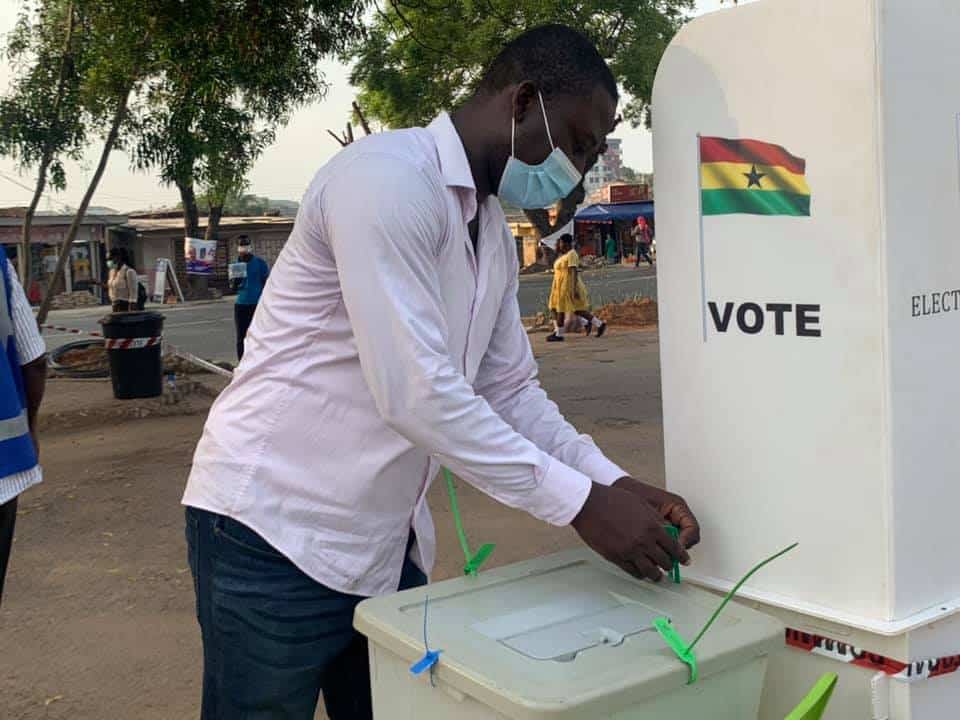
  • Decision to scrap indelible ink risks election day chaos – Security Analyst tells EC

    Decision to scrap indelible ink risks election day chaos – Security Analyst tells EC

    Security and safety analyst, Dr. Adam Bonaa, has criticized the Electoral Commission’s recent decision to eliminate the use of indelible ink in the upcoming 2024 general election.

    Dr. Bonaa argued that the decision appears to lack careful consideration, emphasizing that indelible ink plays a pivotal role in ensuring the integrity of the electoral process.

    Speaking in an interview with GhanaWeb, Dr. Bonaa highlighted the prevailing issues of mistrust, distrust, and suspicion that often surround public elections in the country.

    He expressed concerns that abandoning indelible ink, a widely recognized tool for preventing double voting, might escalate tensions on election day.

    “It looks like the policy is not a well thought through policy. If you look at the issues we have when it comes to public elections in this country, they are issues to do with mistrust, distrust and suspicion.

    “You don’t want a situation where you are going to have an all-out confrontation amongst the citizenry vis-a-vis the EC officials and the security officers who are supposed to be manning the polling centres.

    “So to say that the indelible ink is not going to be used again is almost saying you are calling for an all-out war on election day because looking at the issues going into election 2024, there is suspicion everywhere.

    “NPP is telling us it wants to break the 8, NDC says it is staging a comeback and you already have some former officers or members of the NPP going independent and also threatening to win the elections. So if anybody tells you that 2024 elections is going to be quiet, that person probably does not understand what they are saying,” he stated.

    Dr. Bonaa cautioned against underestimating the potential for confrontations between citizens, Electoral Commission officials, and security officers responsible for managing polling centers.

    He suggested that signaling the discontinuation of indelible ink could be interpreted as inviting chaos, particularly given the heightened political atmosphere leading up to the 2024 elections.

    The Electoral Commission recently announced at a press conference that indelible ink would no longer be required, as a biometric authentication system would replace it. The system is being piloted during the ongoing district elections.

    EC Chairperson Jean Mensa expressed confidence in the new system, stating that once a voter is verified, they cannot come back for a second attempt.

    Despite the EC’s assurances, Dr. Bonaa argued that the decision might complicate the work of security agencies on election day. He called for the Electoral Commission to reconsider its stance and emphasized the importance of conducting extensive stakeholder engagement before making decisions with significant security implications.

    Dr. Bonaa acknowledged the EC’s independence but urged them to prioritize comprehensive discussions with relevant stakeholders to maintain public trust in the electoral process.

  • You cannot close polls at 3pm when you fail to start voting process on time – Majority leader tells EC

    You cannot close polls at 3pm when you fail to start voting process on time – Majority leader tells EC

    Majority Leader in Parliament, Osei Kyei-Mensah-Bonsu, has urged the Electoral Commission (EC) to reconsider its proposed plan to close polls at 3 pm instead of 5 pm during the 2024 general elections.

    The Minister for Parliamentary Affairs expressed concern that such a decision could potentially disenfranchise eligible voters.

    Speaking during the budget approval debate for the EC on Wednesday, December 20, Osei Kyei-Mensah-Bonsu underscored the importance of maintaining the 5 pm voting schedule.

    He referenced the recent district assembly elections, revealing that upon his arrival at the polling station, the voting materials had not yet arrived.

    “The attempt to reduce voting time from 5 pm to 3 pm, we should interrogate it. I believe it is too early for the EC to do it. [On Tuesday] when I went to vote, the materials had not been assembled yet even though I got there at 8:15, I had to stay until 9:20 to start voting, already two hours wasted.”

    The Electoral Commission (EC) has defended its decision to change the closing time of voting from 5:00 pm to 3:00 pm during the 2024 general elections.

    EC Chairperson Jean Mensa highlighted that this adjustment is intended to facilitate the transparent and orderly collation of votes by electoral officers in broad daylight.

  • Some electoral areas to hold district level elections today

    Some electoral areas to hold district level elections today


    Today, Thursday, December 21, the Electoral Commission (EC) is set to conduct elections in district assemblies where the polls were previously postponed.

    Approximately 40 districts in the Ashanti and Eastern Regions experienced delays due to errors on ballot papers, challenges in the distribution of voting materials, and malfunctions of Biometric Verification Devices (BVD).

    Following the setbacks in the District Level Elections held nationwide on Tuesday, December 19, stakeholders, including the Coalition of Domestic Election Observers (CODEO), expressed disappointment in the challenges encountered.

    CODEO attributed the issues to the EC’s failure to fulfill its responsibilities and called for improved performance in subsequent polls.

    The National Democratic Congress (NDC) issued a stern warning to the EC, urging the commission to rectify technical challenges and avoid repeating the same issues in the upcoming 2024 polls.

    The party emphasized the need to prevent any untoward incidents and called for a more effective electoral process.

  • Eliminating the use of indelible ink during election is  unconstitutional – Minority to EC

    Eliminating the use of indelible ink during election is unconstitutional – Minority to EC

    The Minority caucus in Parliament has alleged that the Electoral Commission (EC) is violating the constitution by discarding the use of indelible ink in upcoming elections.

    This accusation comes in response to the EC’s announcement of plans to eliminate the use of indelible ink, a traditional method applied to voters’ fingers to prevent multiple voting.

    The EC, led by Chairperson Jean Mensa, intends to replace indelible ink with more “modern” verification methods in district-level elections and subsequent polls, aiming to enhance the electoral process.

    However, during a debate on the budget estimate for the EC in the coming year, the First Deputy Minority Whip, Ahmed Ibrahim, and Member of Parliament for South Dayi, Rockson Nelson Dafeamekpor, argued that the EC’s action goes against the regulations passed by Parliament for the effective performance of its functions.

    “The issue of the non-use of the indelible ink breaches the law…Mr Speaker, you cannot come to Parliament with an instrument where protocols have been outlined and you as an administrative fiat decide that you won’t go according to the protocol.

    “The use of indelible ink is part of the regulations that we put in the instrument for the effective performance of the Electoral Commissioner so, you cannot decide that you would not apply it. She must do things that will help her perform effectively.”

  • District level election challenges should be blamed on Jean Mensa – Gbande

    District level election challenges should be blamed on Jean Mensa – Gbande

    The Deputy General Secretary of the National Democratic Congress (NDC), Mustapha Gbande, has attributed the disruptions during Tuesday’s assembly and unit committee elections in some voting centers across the country to the inadequate leadership skills of Ghana’s Electoral Commissioner (EC).

    In an interview on Eyewitness News on Citi FM, Gbande expressed the NDC’s close scrutiny of the election processes to prevent the recurrence of electoral mistakes in the upcoming 2024 general elections.

    “We are very interested, and we have been very much interested in the activities of this election because it has a bearing on the next elections that will be organized. So, we followed keenly as far as the district assembly elections are concerned.”

    “The situation that we find ourselves in as a nation is largely because we have an electoral commissioner who does not believe in consensus building and does not want to learn. We would have avoided this situation if she had engaged stakeholders and had been willing to do what was right.”

    Mr Gbande emphasized that the nation’s current situation is primarily due to having an electoral commissioner who lacks belief in consensus building and is unwilling to learn.

    He suggested that the challenges could have been avoided through engagement with stakeholders and a commitment to doing what is right.

    He further warned that if the electoral commissioner does not improve her leadership skills, the 2024 elections may face negative consequences.

    “What is more shocking is that six hours before the election, the commissioner did not envisage that inventory might not have reached the centers, and she did not even check to ensure that they were in order. This clearly tells us that we are dealing with Jean Mensa, who is largely incompetent and has demonstrated low experience in terms of elections management. It is dangerous going into 2024, particularly if the same personality is still going to be our electoral commissioner.”

  • Assembly elections: Biometric system fails to differentiate identical twins in Accra

    Assembly elections: Biometric system fails to differentiate identical twins in Accra


    An intriguing incident unfolded at the Methodist Church polling station in the Ga-North constituency of the Greater Accra Region during the district-level elections.

    Despite being identical twins, a voter was denied the right to vote as the biometric system identified her as having already voted, even though her twin sister had successfully gone through the identification process earlier.

    The Presiding Officer at the polling station characterized this as an unprecedented occurrence, suggesting it could be an attempt at double voting or a minor system glitch.

    Residents, who were familiar with the twin sisters, expressed surprise at the system’s failure to distinguish between them.

    One concerned resident raised questions about the potential challenges posed by such incidents, pondering if similar situations would arise with numerous sets of twins.

    Stressing the need for the Electoral Commission to address this minor challenge, the resident noted that the twin who was denied voting refrained from complaining due to the nature of the district-level election.

    The Electoral Commission’s decision to eliminate the use of indelible ink in this election and subsequent polls came under scrutiny following the incident. Traditionally, indelible ink is applied to voters’ fingerprints to prevent double voting and indicate those who have exercised their franchise.

    The Commission’s rationale, as explained by EC chair Jean Mensa, was centered on the robust identification system provided by biometric technology, making it difficult for a verified voter to cast a second vote.

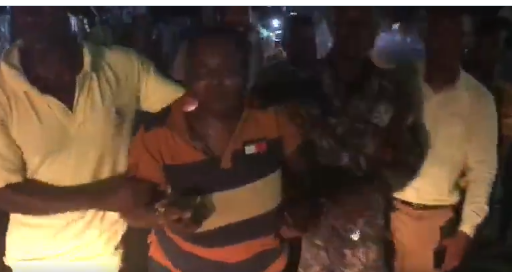
  • Video: EC officer caught stealing for NPP Assembly aspirant in Suhum district-level election

    Video: EC officer caught stealing for NPP Assembly aspirant in Suhum district-level election

    A video making rounds on social media has highlighted electoral malpractice in the district-level elections held on Tuesday, December 19, 2023.

    Per reports, an Electoral Commission officer attempted to rig the Suhum district-level elections in favour of one, Nartey Anomah, who is allegedly affiliated with the New Patriotic Party (NPP).

    The female officer’s actions were to go against the National Democratic Congress’ Saddick Adams.

    In the video shared by X user, @MichaelFianyo1, a caution was sent to EC officials who intend to exhibit such alleged acts in the 2024 general elections.

    “This EC woman was caught red handed stealing for an NPP assembly aspirant in Nartey Anomah electoral area in Suhum to change figures against the NDC Saddick Adams. We are sending a strong warning to all EC officials against 2024 we are more than vigilant and we won’t spare,” the caption of the video read.

    The video also revealed the arrest of the EC official by officers of the Ghana Police Service.

  • Rescheduling of district-level election unpardonable; 2024 elections cannot be business as usual – NDC to EC

    Rescheduling of district-level election unpardonable; 2024 elections cannot be business as usual – NDC to EC

    The Director of Elections for the National Democratic Congress (NDC), Dr. Edward Omane Boamah, has criticized the Electoral Commission for postponing local assembly elections in certain areas on the day of the polls.

    Dr. Boamah urged the electoral management body not to repeat such actions during the 2024 polls.

    This comes in response to the rescheduling of district-level elections in parts of the Ashanti and Eastern regions from Tuesday, December 19, 2023, to Thursday, December 21, 2023.

    The EC cited technical challenges for the rescheduling and apologized for any inconvenience caused, assuring voters that the elections would proceed on the new date.
    In a post on X formerly Twitter, Dr Boamah said, “The Electoral Commission of Ghana must learn lessons from this avoidable and unpardonable mistake. 2024 elections can not be business as usual!”

  • Technical challenges prompt EC to postpone district level elections in certain areas

    Technical challenges prompt EC to postpone district level elections in certain areas

    The Electoral Commission (EC) has rescheduled the district-level elections in select electoral areas in the Ashanti and Eastern Regions, citing technical challenges with the printing of ballots by the EC’s contractors.

    As reported by JoyNews in the Ashanti region, districts such as Bantama, South Sontreso, Atwima Nwabiagya, Atwima Mponua, Dadeso, and Santasi will not participate in the current exercise due to delays in the delivery of voting materials by the Electoral Commission.

    In a statement signed by the Acting Head of Public Relations for the EC, Michael Boadu, the affected areas are now scheduled to partake in the elections on Thursday, December 21, 2023.

    The overall exercise was anticipated to cover 6,215 electoral areas across 216 metropolitan, municipal, and district assemblies, excluding the Nkoranza North and South in the Bono East Region.

    With over 66,000 individuals competing for District Assembly and Unit Committee positions in the District Level Elections, the EC’s data reveals 18,755 assembly member candidates and 47,502 unit committee member candidates, totaling 66,257 candidates.

    Among the assembly candidates, 17,474 are males (94%), while females are 1,106 (6%). For unit committee candidates, 40,923 are males (88%), and females are 5,413 (11.6%).

    Despite the increased number of candidates compared to previous years, voter enthusiasm remains low, consistent with the historical trend of voter apathy in the District Level Elections since its inception in 1988. Data shows varying voter turnout percentages over the years, with a notable decline in participation in some periods.

    Furthermore, the participation of women in these elections has been consistently low, presenting a challenge to achieving balanced representation.

  • Ashanti Region: Logistical hurdles disrupt district-Level elections

    Ashanti Region: Logistical hurdles disrupt district-Level elections

    Several electoral areas in the Ashanti Region will be excluded from today’s district-level elections due to logistical challenges. Notable areas affected include South Suntreso, Bantama, Atwima Nwabiagya, Atwima Mponua, Dadieso, and Santasi.

    Some residents arriving at polling stations found them empty, lacking electoral officers and necessary logistics for the voting process.

    Residents reported receiving public announcements in the early hours, advising them not to visit the centers as the voting had been rescheduled.

    Despite this setback, citizens are prepared to fulfill their civic duty and cast their votes the following day once logistical challenges are resolved.

    Contrastingly, in other parts of the region, the electoral process has commenced smoothly, with electoral officers expecting significant voter turnouts.

  • EC reschedules district-level elections in some areas in Ashanti, Eastern Regions

    EC reschedules district-level elections in some areas in Ashanti, Eastern Regions

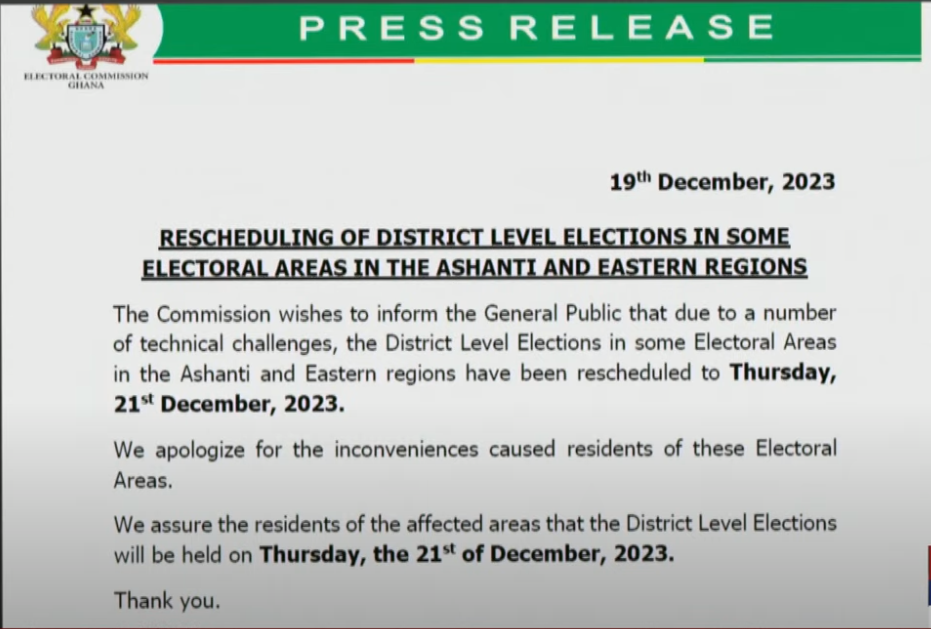
    The Electoral Commission (EC) has announced the postponement of the district-level elections in some electoral areas in the Ashanti and Eastern regions.

    The elections were slated for Tuesday, December 19, but in a press statement, the Commission noted that they have been rescheduled to Thursday, December 21, 2023.

    The EC cited “a number of technical challenges” as reason for its recent decision. Lower Manya in the Eastern Region is among the affected areas.

    “We apologize for the inconveniences caused residents of these Electoral Areas. We assure the residents of the affected areas that the District Level Elections will be held on Thursday, the 21st of December, 2023,” the statement concluded.

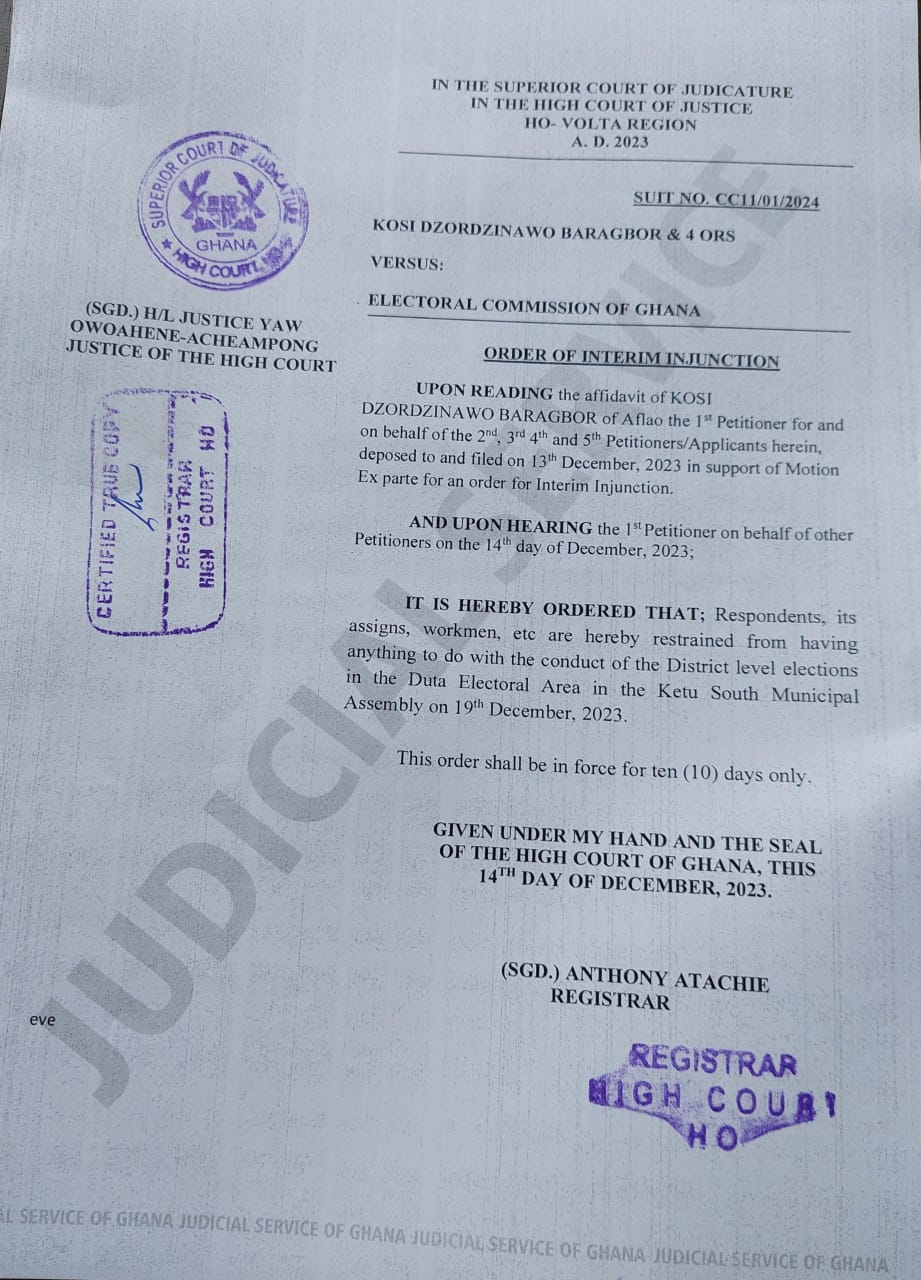
    Meanwhile, five individuals in the Duta Electoral Area of Ketu South have obtained an interim injunction, through an ex parte motion, to prevent the Electoral Commission (EC) from conducting the upcoming District-Level Elections in the area on December 19, 2023.

    The order, which is valid for ten days, restrains the EC, its assigns, and workmen from any involvement in the elections.

    A total of over 66,000 individuals are vying for positions as assembly and unit committee members in these local polls.

    As per the Electoral Commission’s recent statistics, there are 18,755 candidates contending for assembly member roles and 47,502 candidates for unit committee membership, summing up to 66,257 candidates.

  • Lower Manya District: Assembly and unit committee elections postponed

    Lower Manya District: Assembly and unit committee elections postponed


    The electoral process in Lower Manya, Eastern Region, has encountered a setback as reports indicate the cancellation and subsequent postponement of the assembly and unit committee elections.

    The decision to reschedule the elections was reportedly prompted by a shortage of ballot papers, a crucial component for the smooth conduct of any election.

    Sources have revealed that the information regarding the cancellation reached stakeholders an hour after the scheduled commencement of the elections, conveyed by the Municipality’s Electoral Commission Director.

    The absence of adequate ballot papers led to a swift response, resulting in the decision to defer the elections to a later date, which is yet to be communicated.

    While Lower Manya grapples with this unexpected development, other parts of the country are actively engaged in the electoral process. Across Metropolitan, Municipal, and District Assemblies (MMDAs), citizens are participating in the crucial task of electing assembly members and unit committee representatives.

    The broader context of this local electoral undertaking involves over 66,000 individuals vying for various positions within the assembly and unit committees.

    According to statistics from the Electoral Commission, this figure encompasses 18,755 assembly member candidates and 47,502 unit committee member candidates, creating a dynamic electoral landscape across 6,215 electoral areas spread throughout 216 MMDAs.

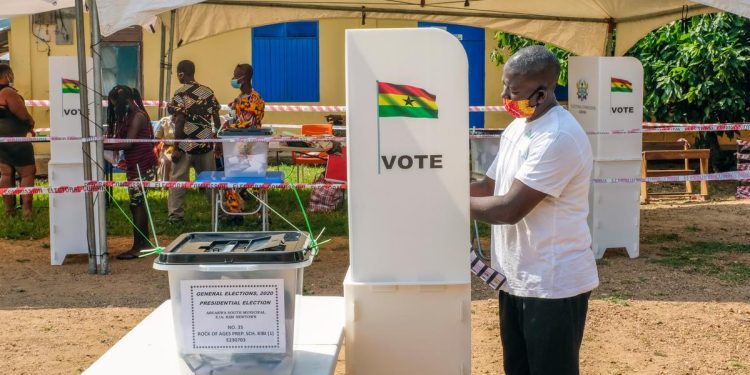
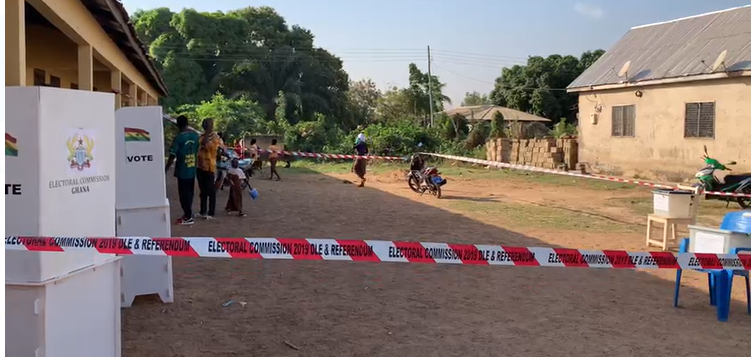
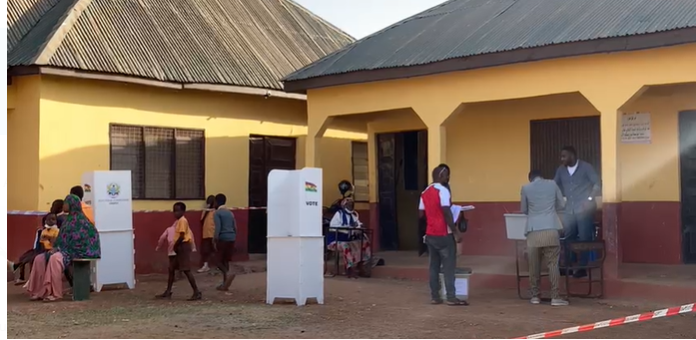
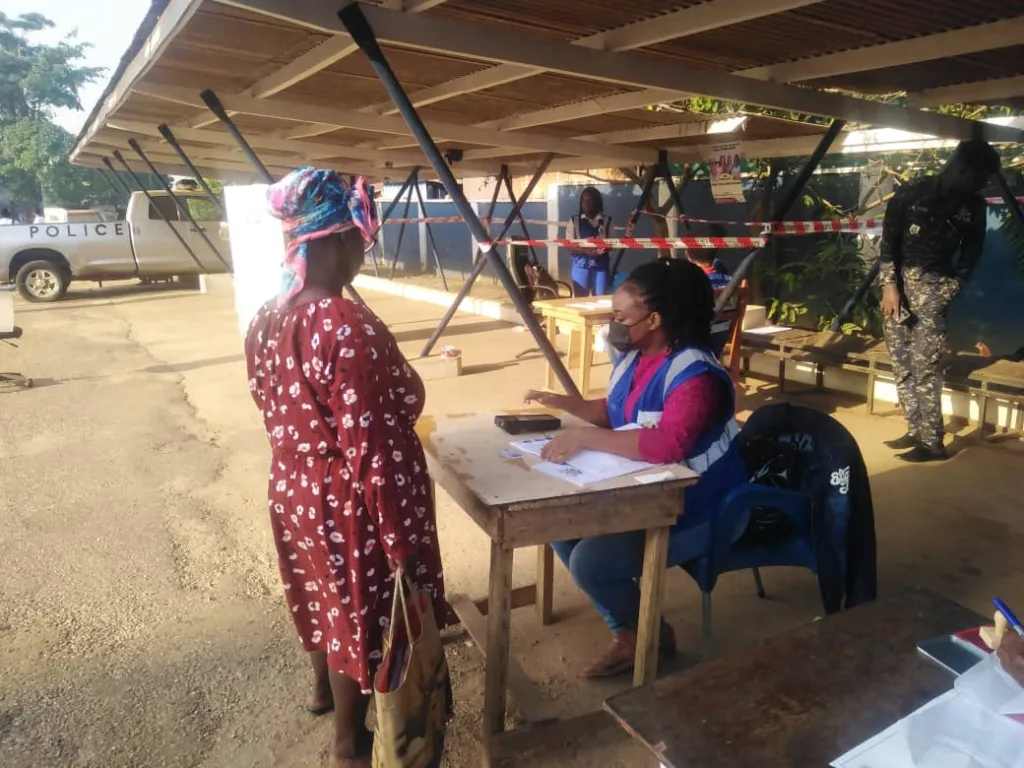
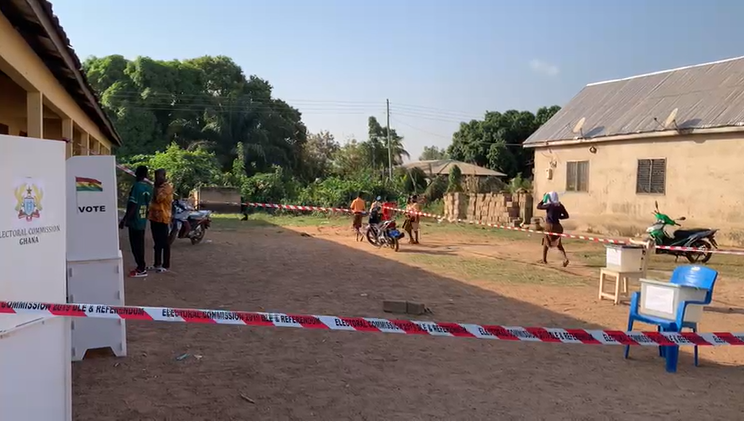
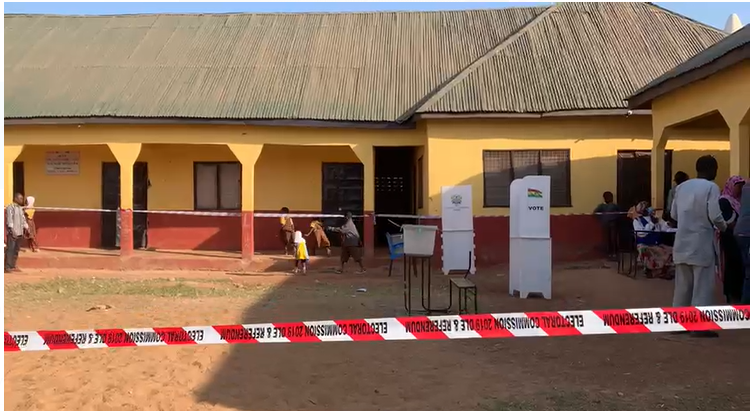
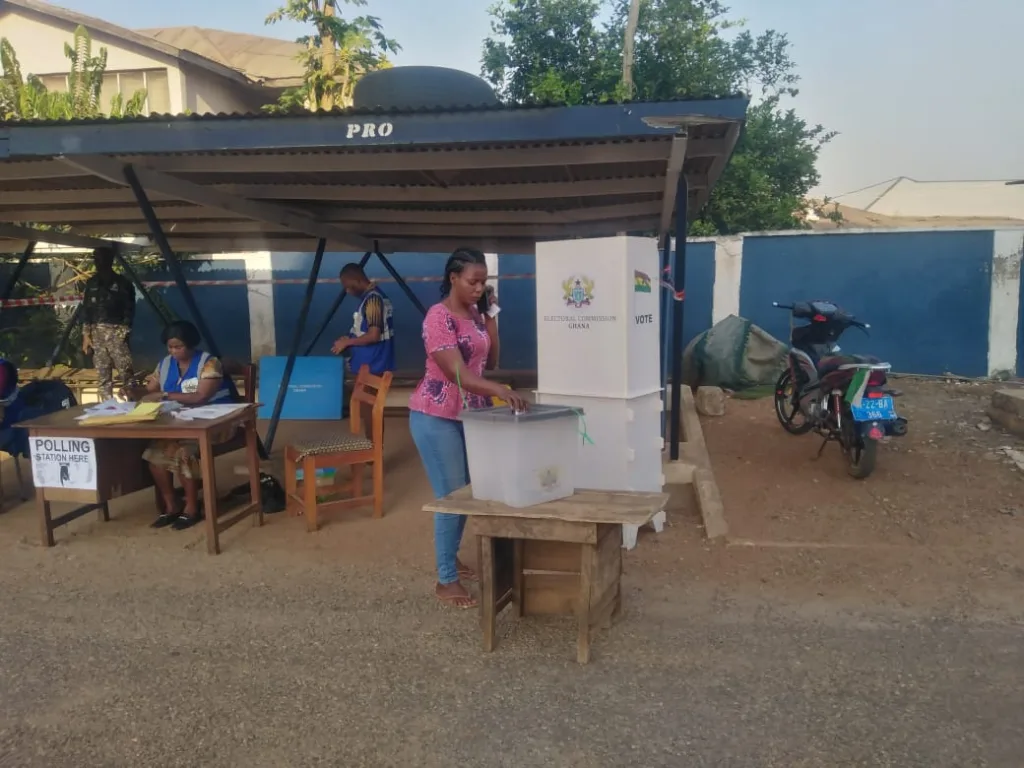
  • Photos: District Level Elections underway

    Photos: District Level Elections underway

    The ongoing voting process is taking place nationwide to elect assembly members and unit committee members.

    A total of over 66,000 individuals are vying for positions as assembly and unit committee members in these local polls.

    As per the Electoral Commission’s recent statistics, there are 18,755 candidates contending for assembly member roles and 47,502 candidates for unit committee membership, summing up to 66,257 candidates.

    This electoral contest spans 6,215 electoral areas, covering 216 Metropolitan, Municipal, and District Assemblies (MMDAs).

  • EC introduces biometric system to replace usage of  indelible ink in elections

    EC introduces biometric system to replace usage of indelible ink in elections

    The Electoral Commission (EC) has declared that the use of indelible ink will be obsolete in the upcoming district-level election and subsequent polls.

    Indicating a departure from traditional methods, the EC Chair, Jean Mensa, stated during a press conference ahead of the December 19 district-level election that this decision is part of the Commission’s efforts to enhance the electoral process and establish a robust identification system.

    Jean Mensa emphasized that with the introduction of biometric technology, the need for indelible ink has diminished.

    In the absence of indelible ink, the biometric identification system becomes pivotal in preventing double voting.

    “The issue of indelible ink, the question is when we were not doing biometric we were basically using your face, your card. We look at your face and we say this picture looks like you. 

    “The biometric technology makes it difficult for a person who has been verified and cast their vote to come a second time. So, there is no need for indelible ink. Once you have been verified, it goes into the system and you cannot come back a second time,” she said.

    She explained that once a voter has been verified and cast their vote, the system records the information, making it impossible for that individual to vote again.

    Previously, facial recognition and card verification were employed, but the advent of biometric technology has significantly enhanced the security and efficiency of the electoral process.

    The biometric system effectively identifies and flags any attempts at multiple registrations, ensuring the integrity of the voting system.

    Expressing confidence in the efficacy of the new system, Jean Mensa challenged anyone attempting to vote twice to test the system’s capabilities, noting that such actions would be deemed electoral offenses.

    She reiterated that the biometric technology recognizes facial features and fingerprints, making it foolproof against attempts at casting multiple votes.

  • EC scraps usage of indelible ink in elections

    EC scraps usage of indelible ink in elections

    The Electoral Commission (EC) of Ghana has declared that indelible ink will not be used in the district-level election and subsequent polls.

    Indelible ink, a semi-permanent dye applied to voters’ fingerprints, is traditionally used to indicate that a person has cast their vote and to prevent double voting.

    Jean Mensa, the chairperson of the EC, announced this decision at a press conference preceding the district-level election scheduled for December 19.

    The omission of indelible ink is presented as part of the Commission’s efforts to enhance the electoral process and establish a more robust identification system.

    “The issue of indelible ink, the question is when we were not doing biometric we were basically using your face, your card. We look at your face and we say this picture looks like you.”

    “The biometric technology makes it difficult for a person who has been verified and cast their vote to come a second time. So, there is no need for indelible ink. Once you have been verified, it goes into the system and you cannot come back a second time,” she said.

    Jean Mensa, has stated that the biometric identification system in place will identify and flag anyone attempting multiple registrations. This, she emphasized, ensures that individuals who have already been verified and cast their ballots cannot vote again.

    Jean Mensa expressed confidence in the effectiveness of the new system and issued a challenge, daring anyone to attempt voting twice to test the system’s capability.

    “Once you have been verified, it goes into the system and you cannot come back a second time. You can try it, if you wish at this election. Of course, it will be deemed as an electoral offence. Because of biometric technology your facial features are recognised, or your fingerprint is recognised. You cannot go a second time,” she added.

  • District Level Elections: Double voting, electoral fraud will be prevented through biometric technology – EC

    District Level Elections: Double voting, electoral fraud will be prevented through biometric technology – EC

    Electoral Commission (EC) is set to introduce new technologies during today’s District Level Elections (DLEs), offering a glimpse into the strategies anticipated for the 2024 elections.

    Chairperson Jean Mensa highlighted the implementation of an advanced verification system aimed at thwarting double voting and electoral fraud.

    With a staggering 66,000 individuals vying for positions in District Assemblies nationwide, the technological upgrade is positioned as a crucial safeguard.

    Mrs. Mensa emphasized the efficacy of the biometric technology in preventing duplicate votes, urging voters to comply with electoral regulations.

    “The biometric technology makes it difficult for a person who has been verified and cast their vote to come a second time. Because once you have been verified, it goes into the system, and you cannot come back a second time.”

    “So you can try it if you wish at this election. Of course, it will be deemed an electoral offence, but because of biometric technology, your facial features are recognized, or your fingerprints are recognized, you cannot go a second time,” she said.

    As the District Level Elections unfold, the incorporation of these advanced technologies marks a significant step toward modernizing Ghana’s electoral infrastructure and fortifying the democratic process against malpractices.

  • Ghanaians elect their DCEs today

    Ghanaians elect their DCEs today


    Preparations are complete for the District Level Elections (DLEs) scheduled for today, Tuesday, December 19, 2023.

    A staggering total of 66,257 candidates are set to compete for assembly and unit committee positions in this local electoral event.

    The Electoral Commission’s statistics break down the numbers into 18,755 assembly member candidates and 47,502 unit committee member candidates.

    The electoral stage spans 6,215 electoral areas, encompassing 216 Metropolitan, Municipal, and District Assemblies (MMDAs).

    Dr. Sereboe Quarcoo, the Director of Electoral Services at the EC, has affirmed that thorough preparations have been undertaken to ensure a well-organized and successful election.

    He reassured the public that all necessary materials, except for ballot papers, are readily available, and measures are in place to address any potential shortages promptly.

    “With the exception of ballot papers, all the materials are there, and when we are going, we don’t go with partial delivery; we go with full delivery, so we are not expecting to have shortages. All things being equal, in case there are shortages, the district office will respond to such shortages,” he added.

  • We expect an incident-free District Level Elections – EC

    We expect an incident-free District Level Elections – EC

    The Electoral Commission (EC) of Ghana assures that it has implemented comprehensive measures to guarantee the fairness of the upcoming district-level elections.

    Chairperson of the Commission, Jean Mensa, emphasizes that historical data indicates low participation in these elections. Therefore, the EC has proactively undertaken measures to ensure the smooth conduct of the electoral process.

    “Experience over the years shows that this election is not highly participated in and we would like to entreat all Ghanaians and assure them that the Electoral Commission has put in place all arrangements, all necessary arrangements and modalities have been put in place for a smooth incident-free election and we will like to entreat all Ghanaians to take their time to go to their polling stations to cast their votes,” she said.

    The Chairperson of the Electoral Commission (EC), Jean Mensa, conveyed this information during a press briefing on Monday, December 18, in anticipation of the district-level elections scheduled for Tuesday, December 19.

    Madam Mensa emphasized the significance of the election in contributing to the nation’s developmental objectives, noting that many developmental initiatives originate at the local assembly level.

    “Let us make this election meaningful. We are all aware that developments start at the district level  and therefore it is important that as citizens we have a say and a stake in who brings development to our various districts,” she added.

    Jean Mensa urged all Ghanaians to participate in the electoral process by casting their votes for members of their assembly and unit. Additionally, she cautioned against engaging in activities that could disrupt the orderly conduct of the electoral exercise.

  • You can only have a bright future if you embrace honesty and hard work – Kennedy Agyapong tells VVU graduates

    You can only have a bright future if you embrace honesty and hard work – Kennedy Agyapong tells VVU graduates

    Addressing graduates at Valley View University’s commencement ceremony, the Member of Parliament for Assin Central, Kennedy Agyapong, underscored the pivotal role of honesty and hard work in shaping the future of young professionals.

    Mr Agyapong, who served as the guest speaker, went beyond the traditional emphasized on academic achievement, asserting that degrees alone don’t guarantee success in the evolving landscape.

    In his speech, Mr Agyapong shared insights into the diverse paths to success, citing examples of individuals who thrived despite not achieving top academic accolades.

    He urged the graduates to recognize that their academic certificates would truly become valuable assets when coupled with a steadfast commitment to hard work and honesty.

    “I have gone through the mix, I have seen some students making it with third class. I want to assure you that whether you are third class, second class upper or even lower, in the school of life, your first class is just two letters which I call H and H; that is honesty and hard work.

    “These two will determine your success in the future. It is not the degree you acquire today that will work towards the future. If you don’t work towards the future, your certificate will be in your room forever,” he stated.

    He continued: “Today, we are all happy for you as parents, teachers and all. Your parents are happy because you are no longer going to be their burden. The moment you go home and remove the gown, they will say to you, the world is waiting for you. They are not happy because you’ve gone through four years of first degree and another two years of masters and that is the end of life. The real part of life lies ahead of you.”

    Expanding on this theme, the Assin Central MP delved into the broader concept of success, emphasizing that the journey ahead is shaped not only by the degrees earned but by the character, dedication, and principles instilled in individuals. He challenged the graduates to view their commencement as a launchpad, not a final destination, and to recognize the profound influence of qualities like honesty and hard work in navigating the complexities of life.

    Moreover, Mr Agyapong articulated three fundamental qualities—patriotism, honesty, and discipline—as essential for survival, particularly in the local context.

    He motivated the graduates to become catalysts for positive change by transforming their mindsets, attitudes, and perceptions of life. Emphasizing that change begins with individual responsibility, he urged them not to limit their aspirations to academic achievements but to embrace personal development and societal contribution.

    “Three things we need to survive, especially in this part of the world, is to be patriotic. We need to be honest and we need to be disciplined. I know you all are calling for change but the change is you. You need to change first, not only do politicians have to change.

    “You need to change your mindset, attitude and the way you perceive life. When you take this advice, you will be a different human being. When they mentioned my name, you all applauded now, I entreat you all to take your destiny into your own hand. Don’t let the gown be the end of your life and think you have achieved everything,” he stated.

    Despite Agyapong’s political endeavors, including a bid in the New Patriotic Party (NPP) presidential primaries, where he contested against Vice President Dr. Mahamudu Bawumia, his message at Valley View University transcended political boundaries.

    It focused on instilling values and principles that extend beyond academic realms, offering the graduates a broader perspective on the journey that lies ahead.

  • Nkoranza North and South district Assembly elections postponed to 2025 – EC

    Nkoranza North and South district Assembly elections postponed to 2025 – EC

    The Electoral Commission (EC) has announced the exclusion of voters in Nkoranza North and South Districts from the upcoming district Assembly elections.

    Dr. Serebour Quaicoe, the Director in charge of Electoral Services, revealed this information during an interview on Adom FM’s morning show, Dwaso Nsem, on Monday.

    The EC is scheduled to conduct the elections in 6,215 electoral areas spread across the 216 Metropolitan, Municipal, and District Assemblies (MMDAs) on Tuesday, December 19, 2023.

    However, Dr. Quaicoe clarified that the two districts did not meet the four-year threshold for the electoral process. The last district-level election occurred on December 17, 2019, while the two districts held theirs on April 16, 2021, due to specific reasons.

    Consequently, Dr. Quaicoe announced that the elections for the two districts would take place in 2025.

    Nevertheless, the EC has affirmed its preparedness for the overall exercise, indicating that electoral materials have already been deployed to some electoral areas, with ongoing deployments in others.

  • Injunction filed by 5 persons to halt local elections in Duta Electoral Area

    Injunction filed by 5 persons to halt local elections in Duta Electoral Area


    Five individuals from the Duta Electoral Area in Ketu South have submitted an interim injunction seeking to prevent the Electoral Commission (EC) from holding the upcoming District Level Elections in the region.

    The ex parte motion specifically bars the EC, its agents, and employees from any involvement in the organization of the District Level Elections in the Duta Electoral Area on December 19, 2023.

    This order remains in effect for ten (10) days.

    The petitioners further extend the injunction to include all 24 candidates and registered voters in the Duta Electoral Area.

    The petitioners stated, “We also filed a Motion Exparte for an interim injunction to restrain the Electoral Commission from having anything to do with the conduct of the District Level Elections in the Duta Electoral Area on the 19th day of December 2023.”

    The High Court in Ho, under the authority of His Lordship Yaw Owoahene–Acheampong, has generously approved the Motion Exparte, restraining the Electoral Commission, its agents, employees, etc., from participating in the District Level Elections in the Duta Electoral Area on the 19th day of December 2023.

    This order is valid for ten (10) days.

    DISTRICT-LEVEL ELECTIONS IN THE DUTA ELECTORAL AREA INJUNCTED

    1. This is to inform the general public, especially all registered voters in Duta Electoral Area, all citizens of Duta at home and abroad and all residents within the Duta Electoral Area that we have successfully filed a Petition against the Electoral Commission and some four candidates in the District Level Elections in the Duta Electoral Area.

    2. We also filed a Motion Exparte for an interim injunction to restrain the Electoral Commission from having anything to do with the conduct of the District Level Elections in the Duta Electoral Area on the 19th day of December 2023.

    3. The High Court, Ho presided over by His Lordship Yaw Owoahene –Acheampong graciously granted the Motion Exparte and restrained the Electoral Commission, its assigns, workmen, etc. from having anything to do with the conduct of the District Level Elections in the Duta Electoral Area on the 19th day of December, 2023. The Order shall be valid for ten (10) days.

    4. We humbly write to notify the general public especially all the Twenty – Four (24) candidates, and all registered voters in the Duta Electoral Area that the District Level Elections in the area have been injuncted.

    5. We serve notice and notice is hereby served that there will be NO Assembly member and Unit Committee member elections in the Duta Electoral Area on Tuesday 19th day of December 2023.

    5. We are deeply sorry for any inconvenience this may cause you.

    6. It is in the interest of the sovereignty of Ghana, the integrity and sanctity of public elections in Ghana and the collective interest of the DUTA ELECTORAL AREA.

    7. Please bear with us.

    Dated 18th day of December 2023.

    MARCUS AGBORBIA for and on behalf of the Petitioners.
    0243211572

    CC:

    1. All 24 candidates

    2. All registered voters in Duta

    3. All Chiefs and Elders in Duta

  • Jean Mensa’s leadership at EC is an autocratic one – Peace FM’s Kwabena Marfo

    Jean Mensa’s leadership at EC is an autocratic one – Peace FM’s Kwabena Marfo

    A prominent on-air personality with Peace FM, Kwabena Marfo, has leveled accusations against the Chairperson of the Electoral Commission (EC), Jean Mensa.

    Mr Marfo contends that Jean Mensa is operating within the EC in an autocratic manner, making decisions unilaterally without seeking advice or considering potential consequences.

    He drew attention to Mensa’s previous role as the Executive Director at the Institute of Economic Affairs (IEA), where she had critiqued certain decisions made by the EC chair at that time.

    In a candid statement during an interactive session on Neat FM’s morning show on December 15, 2023, Marfo expressed his reservations regarding the proposed changes by the EC to eliminate the use of indelible ink during elections.

    He argued passionately that indelible ink, a traditional feature of the electoral process, serves as a crucial safeguard against double voting.

    According to Marfo, “The Electoral Commission, it seems like they don’t like peace, and when there is peace, they don’t want it. Jean Mensa was criticizing a lot of issues during her time at the IEA platform; she used to talk as an angel. But the same issues she used to criticize, she is now doing those 10 times as the EC chair, autocratic leadership.”

    His concerns are primarily centered around the perception that the EC, under Mensa’s leadership, is making decisions without due consideration for potential conflicts or heeding the advice of others.

    Mr Marfo strongly emphasized the importance of indelible ink, a long-established element of the electoral process, in preventing fraudulent activities such as double voting.

    “Nobody advises her; she does as she pleases. If she is doing something that might cause chaos or conflict, she doesn’t care,” he asserted.

    “It is better to use the ink, how much at all is the ink, she cannot give any guarantee to show that one cannot double vote. Her explanation doesn’t make sense, now if she wants to do things differently on her own, she will also see things differently,” he lamented.
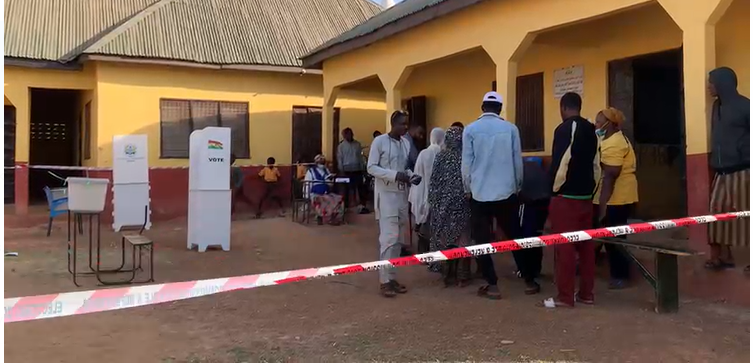
    The EC, in response to these concerns, has announced its intention to cease using indelible ink on voters’ fingers during elections.

    The rationale provided by the EC is based on the efficiency of the biometric verification system in preventing instances of double voting.

    Director of Electoral Services at the Electoral Commission, Dr. Serebour Quaicoe, clarified that the biometric system, coupled with strict voter register controls, renders indelible ink unnecessary.

    He explained that the biometric verification process ensures that each voter is verified only once, thereby eliminating any possibility of multiple voting.

  • Make sure your proposed modifications do not cause chaos in 2024 elections – Kwame Jantuah to EC

    Make sure your proposed modifications do not cause chaos in 2024 elections – Kwame Jantuah to EC

    Private legal practitioner Kwame Jantuah has issued a cautionary message to the Electoral Commission (EC), urging prudence to avoid potential chaos resulting from its proposed modifications.

    His concerns arise in response to the EC’s suggestion of reducing the close of polls from 5 pm to 3 pm and making the Ghana Card the sole proof of identification during elections.

    The EC asserts that these proposed adjustments aim to enhance transparency and orderly vote tallying by electoral officers in daylight.

    The use of the Ghana Card as the exclusive identification document is intended to address concerns related to the participation of non-citizens in elections.

    “This is not a party issue. This is a national issue we have to discuss and make sure that we do it in such a way that everybody is clear,” he added.
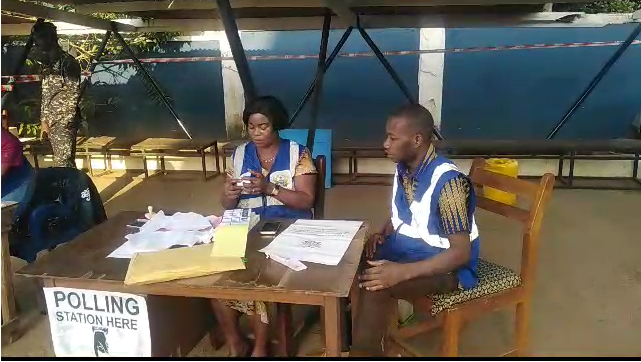
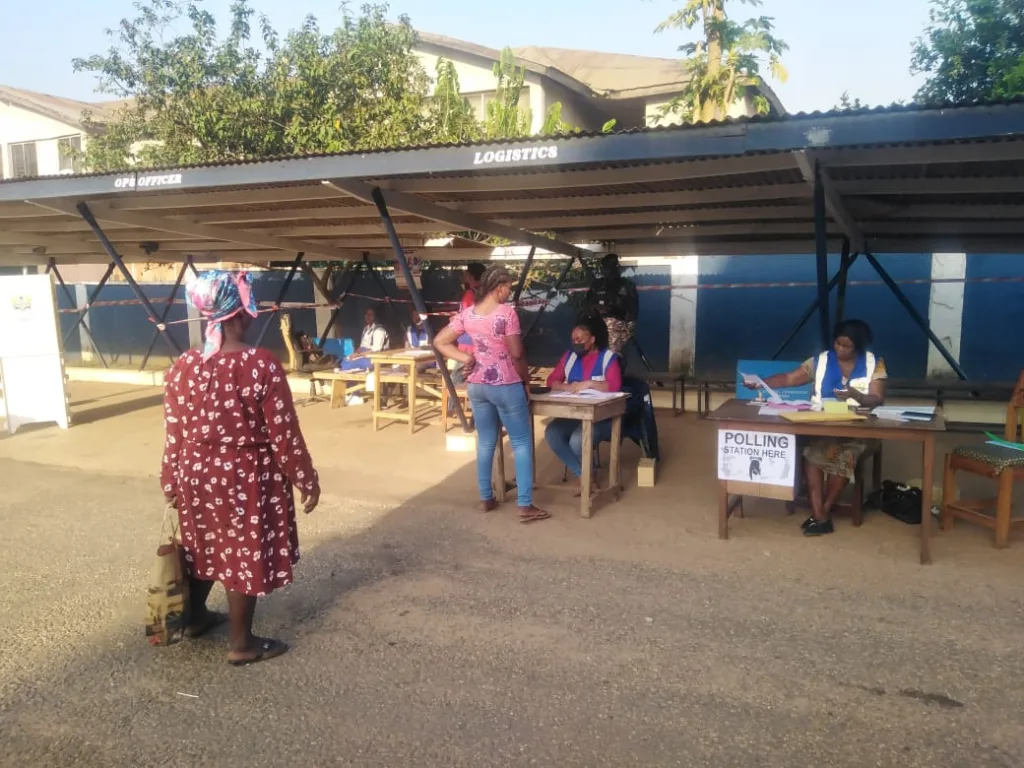
    In response to these proposals, Mr Jantuah criticized the EC’s previous insistence on using the Ghana Card as the sole identification for voter registration, emphasizing that it nearly deprived many individuals of their civic responsibility due to a lack of the document.

    Expressing reservations about the Ghana Card requirement, Jantuah cautioned, “How many people have a Ghana Card? She should be very careful she doesn’t cause mayhem. What is the issue? The issue is the counting at night? Make it possible for counting to happen at any given time that elections end. That is what she should be concentrating on and not trying to disenfranchise voters.”

    Jantuah further called for the National Commission for Civic Education (NCCE) to be empowered to conduct extensive public education instead of shortening the polling hours to 3 pm.

    “Give NCCE a lot of money to start training and educating people that ‘don’t wait until the last minute to go and vote, as much as possible, get there early,” he said.

    Kwame Jantuah also suggested to the EC to draft a Constitutional Instrument to Parliament to change the date of the general elections from December 7 to the first Saturday of December in an election year.

    “Maybe what the EC should do, should probably send a C.I. to Parliament and indicate that elections should be held first Saturday of the month of December instead of 7 because 7 can fall on a weekday but if it’s the first Saturday, at least not a lot of people work on Saturdays and employers will be prepared to give leverage for voting.

    “Maybe that is what we should be looking at instead of saying that you drastically would change from 5 pm to 3 pm. Even if we want to try it, move it an hour to say, 4 pm, to give people the time,” he added

  • Return to IPAC, we miss your presence – EC to NDC

    Return to IPAC, we miss your presence – EC to NDC

    The Chair of the Electoral Commission (EC) has invited the National Democratic Congress (NDC) to resume attendance at the Inter-Party Advisory Committee (IPAC) meetings.

    Following the 2020 general elections, the NDC had boycotted all IPAC sessions. The EC Chairperson extended this invitation during a stakeholders’ meeting on inter-party dialogue organized by the National Peace Council (NPC) at Peduase in the Eastern Region on Thursday.

    “I would like to use this opportunity to invite the leadership of the National Democratic Congress to our IPAC meetings. We do realize that since 2021, the NDC has not been present at our IPAC meetings. We miss them, we miss their fire. I extend an olive branch, and in the interest of the peace of our country. We invite them to IPAC,” she stated.

    Simultaneously, the EC Chairperson justified the decision to shift the closing time of voting from 5:00 pm to 3:00 pm during the upcoming 2024 general elections. Emphasizing the need for transparent and orderly collation of votes, she pointed out that this adjustment was informed by lessons learned from the 2020 elections, where around 70 percent of voting centers witnessed minimal activity by 1:00 pm.

    Mrs. Mensa stressed that the goal of this adjustment is to diminish the historically long queues during elections, streamlining the voting process for citizens.

    She outlined plans to ensure that all polling stations have a threshold of 500 voters or below, coupled with an increase in the number of polling stations nationwide.

    Drawing from the 2020 experience and feedback from observer groups, Mrs. Mensa proposed closing the polls at 3:00 pm, citing that by that time, 70 percent of polling stations were empty as most voters had already cast their votes.

    This adjustment aims to facilitate the counting and collation of votes in broad daylight, promoting transparency and orderliness in the electoral process.

    “In 2020, 70 percent of our polling centers had a voter threshold of 500 and below. This time we intend to ensure that all our polling station centers have a threshold of 500 voters and below. In the same vein, we will increase the number of our polling stations nationwide. We believe that this will go a long way to reduce the long queues that characterize our elections and allow for a smooth, seamless, hassle-free voting process. In 2020, it took voters not more than five minutes to cast their votes due to the introduction of this policy.”

    “Based on our 2020 experience and also feedback from several observer groups, we propose to close the polls at 3:00 pm. Our experience in 2020 reveals that by 1:00 pm, 70 percent of our polling stations were empty of voters as most voters had cast their votes. This made it possible because the threshold of most polling centers was reduced to 500 voters per voting center. This was coupled with the robust verification devices that were deployed to the polling stations. We are convinced that by closing the polls at 3:00 pm, we will be able to count and collate in broad daylight, and this will promote the needed transparency and orderliness that we so desire,” Mrs. Mensa said.

  • EC’s 3pm poll closure proposal met with skepticism from NPP, NDC

    EC’s 3pm poll closure proposal met with skepticism from NPP, NDC

    Ghana’s two major political parties, the ruling New Patriotic Party (NPP) and the opposition National Democratic Congress (NDC), are expressing reservations about the Electoral Commission (EC)’s proposal to close the 2024 elections at 3pm.

    The EC, led by Chairperson Jean Mensa, has defended the decision to shift the voting closure time from 5:00 pm to 3:00 pm during the upcoming general elections.

    Mensa emphasized that the adjustment is aimed at facilitating transparent and orderly collation of votes by electoral officers in broad daylight. Despite this explanation, Richard Ahiagbah, the NPP’s Communications Director, has urged the EC to ensure that the proposed change does not disenfranchise eligible voters.

    In an interview with Citi FM on Thursday, December 14, he stated that the party would only accept the proposal if the Commission assured them that voters would be given the comfort they deserve and that none would be turned away.

    “We receive that with some cautious optimism, to the extent that the EC can provide us with the necessary comfort that electorates would not be found wanting on the day of the election. But assuming that they provide that comfort for us, it is ideal for us to be able to close the polls early so that collation and things that need to be done to prepare results are done in daylight before dark.”

    “So I think that is the import of that proposal that we first need to be sure that it will not result in people being turned away,” he stated.

    Mustapha Gbande, the Deputy General Secretary of the National Democratic Congress (NDC), cautioned on Citi FM that the party would resist any attempts by the Electoral Commission (EC) to manipulate the election in favor of a particular political party. He stressed that it is premature for the party to make any comments on the EC’s position at this stage.

    “For us, we welcome a response that will give Ghanaians a feeling that there’s a credible, transparent general election at the end of the day. We have resolved as a party that we are going into 2024 with full force, we are going to an election to win. Rigging that election is a great impossibility and will be resisted with all force, so it behoves on the EC to assure all political parties of a transparent election.”

    He added, “That will be a big relief for this country. It’s early days yet, we will see as the conversation unfolds what our technical directors will advise the party to do, what the NPP will come up with, and what other parties will come up with.”

  • More polling stations to be created ahead of 2024 elections – EC

    More polling stations to be created ahead of 2024 elections – EC


    The Electoral Commission (EC) has indicated that preparations are underway to establish additional polling stations ahead of the 2024 elections.

    The EC aims to reduce the number of voters per polling station to 500, with the intention of alleviating congestion at voting centers.

    During an Inter-Party Advisory Committee (IPAC) forum in Accra, Jean Mensa, the Chairperson of the EC, highlighted the need for more polling stations to enhance the efficiency of the electoral process.

    In addition to creating new polling stations, the EC has suggested the possibility of adjusting the closing time for voting from 5:00 pm to 3:00 pm during the upcoming 2024 general elections.

    “In 2020, 70 percent of our polling centres had a voter threshold of 500 and below. This time we intend to ensure that all our polling station centers have a threshold of 500 voters and below. In the same vein, we will increase the number of our polling stations nationwide.

    “We believe that this will go a long way to reduce the long queues that characterize our elections and allow for a smooth, seamless, hassle-free voting process. In 2020, it took voters not more than five minutes to cast their votes due to the introduction of this policy. Based on our 2020 experience and also feedback from several observer groups, we propose to close the polls at 3:00 pm,” Jean Mensa said.

  • Let the Ghanaians decide, do not rig elections – Mahama to EC

    Let the Ghanaians decide, do not rig elections – Mahama to EC

    As the upcoming elections draw near, John Dramani Mahama, the Flagbearer of the opposition National Democratic Congress (NDC) for the 2024 elections, has earnestly appealed to the Electoral Commission (EC) to ensure a fair and credible general election without any form of manipulation.

    Addressing an enthusiastic gathering of students at the Wiaso College of Education and Nursing Training in the Western North Region during the ‘Building Ghana Together’ tour, the former president emphasized the crucial role the Electoral Commission plays in upholding the integrity of the electoral process.

    Mahama expressed, “They should do their duty to God and country. They shouldn’t cheat for anybody. I don’t want them to cheat for me and they shouldn’t rig the election for anybody. They should let the wishes of the Ghanaian people prevail,” he said.

    Directing his appeal to the Electoral Commission officers, Mahama urged them to conscientiously carry out their responsibilities on Election Day, adhering strictly to the established rules and regulations.

    He emphasized the need for a free and transparent electoral environment.

    Reflecting on his previous experience as President of Ghana, Mahama asserted, “Electoral Commission Officers, I am appealing to your conscience and your heart, on that day 7th December when you come out, do your work as strictly and according to the rules as possible”.

    “I have that experience, I have been President of Ghana before and you all know the work that I did when I was President. I know that on 7th December, 2024, Insha Allah, NDC will win the election”.

    Encouraging the supporters, Mahama urged them to exercise their right to vote in large numbers, expressing his belief that the NDC’s return to power would contribute to the country regaining its economic strength.

  • The law does not bar politicians from contesting assembly elections – EC

    The law does not bar politicians from contesting assembly elections – EC

    The Electoral Commission (EC) has clarified that Ghana’s laws do not prohibit politicians from taking part in the district-level elections.

    According to Dr. Serebour Quaircoo, the Director of Electoral Services at the EC, political figures are permitted to compete in the elections but not on political platforms.

    Dr. Quaircoo emphasized that there is no legal restriction preventing politicians, including party chairpersons, from participating in the December 19th elections.

    However, he specified that parties should refrain from endorsing such candidates or mobilizing support on their behalf.

    “If I am a party chairman, I can contest as an assembly member. The law doesn’t stop me; the only thing is that during my campaign, I should not state that people should vote for me because I am a party member. Being a party member does not disqualify me from contesting, but during the contest, my party should not sponsor me by campaigning for me and urging people to vote for me; that is what the law frowns upon.”

  • EC assures of readiness to hold District assembly election

    EC assures of readiness to hold District assembly election

    The Electoral Commission (EC) has declared its preparedness to oversee the forthcoming district-level elections across more than 38,000 polling stations nationwide.

    This commitment extends to conflict-prone areas such as Bawku in the Upper East Region and Nkwanta in the Oti Region.

    The Deputy Commissioner in charge of Corporate Services, Dr Bossman Asare, affirmed that the Commission has received assurances from all security services, ensuring sufficient protection on the day of the elections.

    “We are not experts when it comes to security. We work with the Ghana police service under the Election Security Task Force. And as we speak now, we haven’t received information to the effect that we cannot have elections in the Oti area. No information like that has come out and come Tuesday, all the 38,315 polling stations are going to have the elections… including conflict areas.”

    In an interview on JoyNews, Dr. Bossman Asare emphasized that the Electoral Commission will only reconsider its decision if presented with a report that contradicts their current stance.

    “We’ve never had any information to the contrary. If we hear the information that let’s say Bawku, if we hear anything or we receive any credible information to that effect, we are going to advise ourselves,” he added.

    In the meantime, the Electoral Commission has established an ambitious goal of achieving a 60% voter turnout in various districts. This target surpasses the expectations set by the Local Government Ministry, which is aiming for a 50% voter turnout.

    “So we are also looking at something between 50 to 60%. And as a commission we we think that many Ghanaians are interested in the process and the measures we’ve also put in place should be able to ensure that people come out in the numbers” he explained.

    According to Section six of the Local Governance Act 2016 (Act 936), as amended by Act 940, district-level elections (DLEs) in Ghana are scheduled every four years, occurring a year prior to Presidential and Parliamentary elections. Since 1988, Ghana has conducted eight consecutive local-level elections to enhance citizen participation.

    The Electoral Commission (EC) initiated the nomination process for the district-level elections in November of the current year. Aspiring candidates are required to obtain nomination forms from the Electoral Commission’s district offices.

    The elections are slated to take place in 6,272 electoral areas across 259 districts out of a total of 261. Notably, Nkoranza North and South in the Bono East regions will not have elections in 2023, as polls were conducted in April 2020, with the next scheduled for both districts in 2025.

    As outlined in the EC’s program of activities for the 2023 DLEs, the nomination period for candidates ran from November 16 to 17. The notice of poll for the elections was posted from November 29 to December 4, 2023. A platform for aspirants to communicate their messages to the electorate was available from December 1 to 14, 2023, with the election scheduled for Tuesday, December 19, 2023.

  • It is not your mandate to provide Police motorbikes – Kwabena Donkor tells ECG

    It is not your mandate to provide Police motorbikes – Kwabena Donkor tells ECG

    Former Minister of Power, Dr Kwabena Donkor, has strongly criticized the Electricity Company of Ghana (ECG) for donating 200 motorbikes to the Ghana Police Service.

    The Ghana Police Service received 200 motorbikes from ECG on December 11, 2023, as part of the company’s initiative to enhance police operations nationwide.

    The Member of Parliament for Pru East expressed his disapproval of the donation, considering ECG’s substantial indebtedness to Independent Power Producers. Dr. Kwabena Donkor described the gesture as a display of irresponsibility on the part of ECG.

    In addressing journalists, Dr. Kwabena Donkor called for an investigation by the Ministers of Energy and State Enterprises, emphasizing the need for appropriate action to be taken in response to the controversial act.

    “I read with shock on Tuesday that the Electricity Company of Ghana had donated 200 motorbikes to the Ghana Police Service. Ordinarily, any such donation would have attracted my approval. But with this particular one, ECG has no business taking over the responsibility of the state to provide logistics for the Ghana Police. ECG is in debt for billions of cedis. Indeed, 2 weeks ago, the Minister of Finance had to intervene to stop Sonon Asorgli from shutting down because of ECG’s indebtedness to IPPs. For an entity that cannot pay its indebtedness, they have no business buying motors for the Ghana Police. It is the height of irresponsibility on the Management of ECG to donate motorbikes to the Ghana Police when they cannot pay their debt. I call on the Ministers of Energy and State Enterprises to call the ECG management to book.”

  • Guan residents want District election deadline moved to Dec. 28

    Guan residents want District election deadline moved to Dec. 28

    Residents of the Guan area in the Oti Region have raised concerns about the limited timeframe provided for obtaining nomination forms for the upcoming District Assembly election.

    They argue that the short duration between the announcement of nominations and the deadline is inadequate for proper preparation.

    The Electoral Commission (EC) declared the opening of nominations for the District Assembly elections scheduled for December 19, 2023, on November 8, 2023.

    Initially, the Guan district was excluded from the nomination process due to the constituency not being formally established. The EC had assured residents of Guan that they would be informed of the nomination date for their district at a later time.

    On December 4, 2023, the Electoral Commission (EC) eventually opened nominations for the Guan Constituency with a deadline set for December 8, 2023. The brief notice period has sparked notable concerns among residents and potential candidates in the area.

    Fred Agbenyo, a parliamentary aspirant of the opposition National Democratic Congress (NDC) in the Guan Constituency, has voiced his concerns about the nomination deadline. Speaking on Citi News, Agbenyo urged the Electoral Commission (EC) to reconsider the December 8, 2023 deadline for nominations.

     “You know this is a farming season and this is a farming area. Everybody wakes up to go to the farm in the morning so until somebody tells them that they’ve opened the nomination, they are unaware. If they don’t hear it on the radio, they are not aware. It is becoming a major concern for a lot of people in the area. So we are pleading with the EC that if they would not mind, they should extend the date for the election to at least the 28th of this month, so the people can prepare adequately,” he said.

    He further emphasized the importance of the Electoral Commission (EC) actively informing the public about the newly created constituency.

    “We are also appealing to the Electoral Commission, since the C. I 119 that was laid out matured, they should put up a public notice that the Guan constituency has been created to allay the fear and all the things the people are going through.”