Tag: ECOWAS

  • Evidence for Bazoum’s prosecution for high treason secured – Niger junta

    Evidence for Bazoum’s prosecution for high treason secured – Niger junta

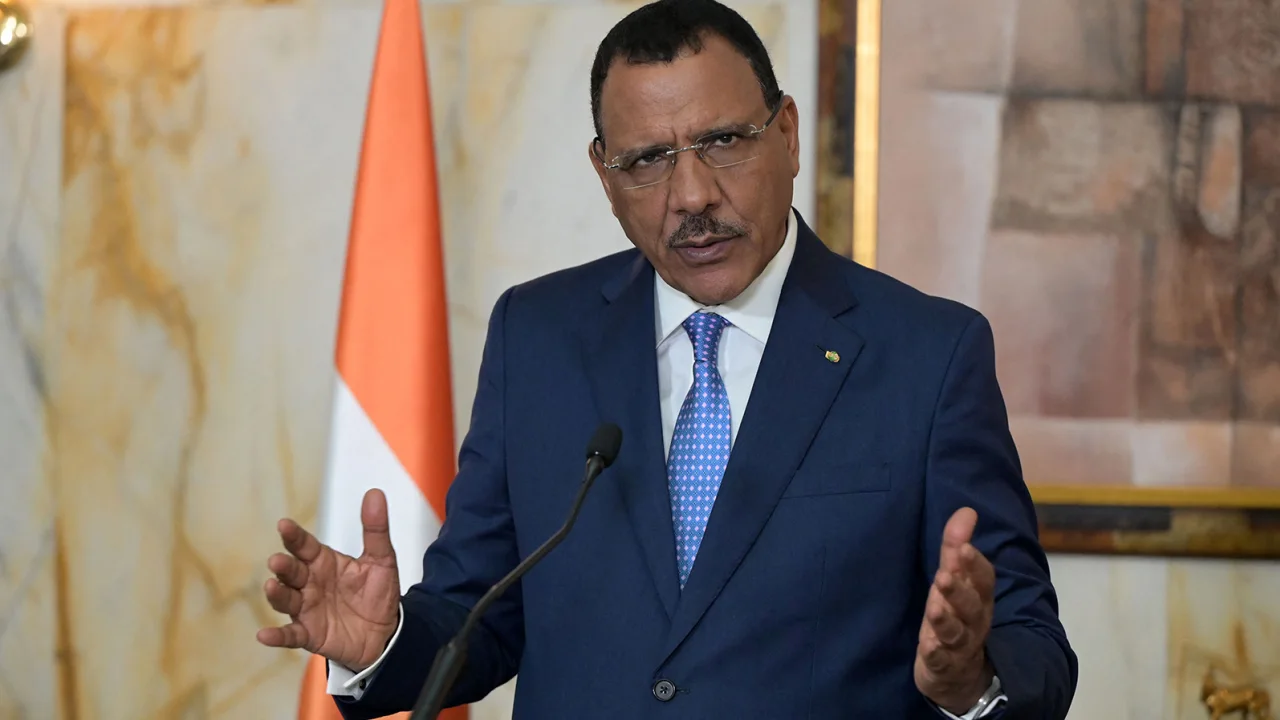
    The Niger junta raised the stakes in its brinkmanship against important neighbours in West Africa who have sworn to restore constitutional order in the coup-torn nation on Sunday by claiming it had acquired evidence to prosecute the country’s former President Mohamed Bazoum for “high treason.”

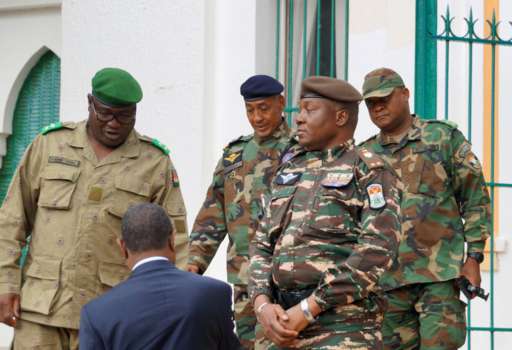
    The statement was made by the National Council for the Safeguard of the Homeland (CNSP), the military council that overthrew the government in July. “The Nigerien government has to date, gathered the necessary evidence to prosecute the deposed president and his local and foreign accomplices before the competent national and international authorities for high treason and undermining internal and external security of Niger,” the statement read.

    Since late last month, when Bazoum was overthrown in a coup d’état by the presidential guard, Niger has been plunged in political upheaval. A volatile region of Africa plagued by coups and militant fanaticism was once again in the dark after the coup in July.

    One of the few democracies still in existence in the Sahel was Niger, which is located at its centre.

    Following Niger’s independence from France in 1960, there were years of military coups, which came to a stop with Bazoum’s election victory in 2021.

    Following the coup, the leaders of the Economic Community of West African States (ECOWAS) imposed sanctions and gave the military junta a week to resign or face possible military intervention.

    However, the military junta in Niger has received support from Mali, Burkina Faso, and Guinea, three additional West African countries that have all recently undergone military coups, raising the possibility that the conflict could escalate into a crisis for the entire region.

    Bazoum has said that the junta has denied him “all human contact” and hasn’t given him food or medicine.

    The CNSP refuted the claims in a statement, claiming that the expelled leader frequently consults his doctor, with the most recent visit occurring on Saturday.

    The statement said that the doctor raised no concerns regarding Bazoum’s health.

    West African leaders have intensified their criticism of the coup organisers in Niger and commanded the “activation and deployment” of a regional standby army to help the nation return to constitutional order.

    A source told CNN on Sunday that the regional political and economic union known as ECOWAS announced the formation of a parliamentary committee that it intends to dispatch to Niger to meet with coup leaders.

    The insider also stated that on Monday, committee members will initially communicate through Zoom before meeting with coup leaders, but she did not specify when this would occur. The source further stated that the parliamentary committee had 12 members and was presided over by Ahmed Idris Wase, the first deputy speaker of the ECOWAS parliament from Nigeria.

    ECOWAS previously gave coup leaders until August 6 to release and restore Bazoum as president and hand over authority, failing which they would be subject to potential military intervention.

    According to ECOWAS, a separate effort to meet with the Nigerien military junta on Tuesday with the African Union and the United Nations “was aborted” when the military leadership in Niamey informed them of “their unavailability to receive the tripartite delegation.”

    In the meantime, in the capital city of Guinea, Conakry, self-proclaimed Niger defence chief Gen. Moussa Salaou Barmou met with Mamadi Doumbouya, the head of the junta and interim president of Guinea. In 2021, Guinea too saw a military takeover.

    At the meeting on Saturday, Doumbouya declared, “We are pan-African, and we will always be there.”

    Gen. Abdourahamane Tchiani, the newly appointed military chief of Niger, has also appealed to Mali for assistance despite Mali’s significantly diminished military might.
  • Russia cautions ECOWAS against using force

    Russia cautions ECOWAS against using force

    Following the announcement by regional organisation ECOWAS that it would build a standby force, Russia issued a warning that military intervention in Niger would result in a “protracted confrontation.”

    The Russian foreign ministry warned that such an intervention would cause instability throughout the Sahel region.

    formally supporting the coup. Russia does not.

    The US, meanwhile, which supports efforts to reinstate ousted leader Mohammed Bazoum, claims that its Wagner mercenary force is profiting from the unrest.

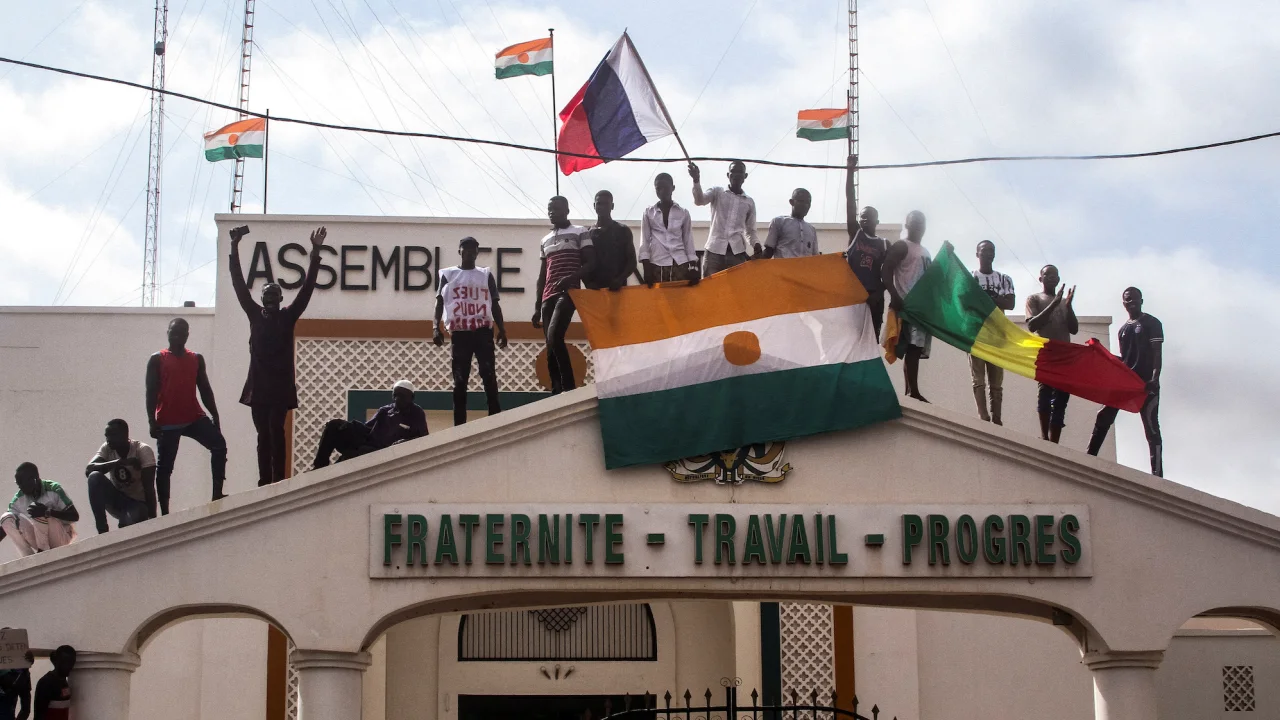
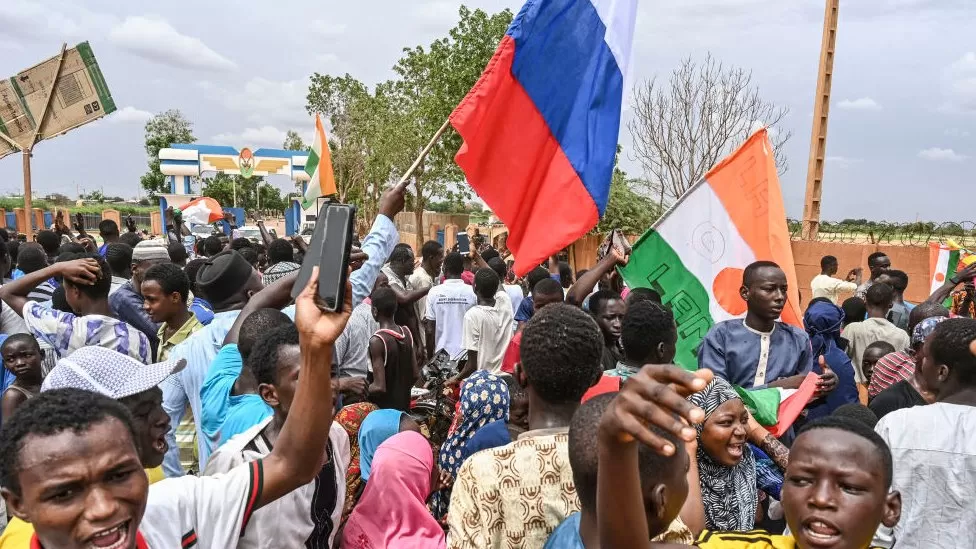
    At a French military installation close to the capital of Niamey on Friday, coup sympathisers demonstrated with some carrying Russian flags and yelling “down with France, down with ECOWAS.”

    In Niger, military outposts operated by the US and France have been used to start operations against Islamist groups elsewhere in the area.

    According to reports, military representatives from Ecowas nations will meet on Saturday to develop plans for a military intervention.

    However, Nigeria’s President Bola Tinubu declared on Thursday that “no option is taken off the table, including the use of force as a last resort.” The bloc has stated that it is still open to finding a diplomatic solution to the problem.

    The US has urged the junta to step down and allow the restoration of the nation’s democratic constitution without expressly endorsing military intervention.

    The most recent declarations from Ecowas leaders have received no response from the Niger junta.

    Fears are mounting for Mr. Bazoum’s health and safety as he is being held captive since the military overthrew the government on July 26.

    According to Josep Borrell, the head of EU foreign policy, he and his family had been “deprived of food, electricity, and medical care for several days.”

    Volker Turk, the UN’s commissioner for human rights, stated that he had reliable information that the custody conditions “could amount to inhuman and degrading treatment”.

    According to the rights organisation Human Rights Watch, Mr. Bazoum informed them last week that he and his family were subjected to “inhuman and cruel” treatment.

    According to Mr. Bazoum, “My son is sick, has a serious heart condition, and needs to see a doctor,” he told them, according to HRW.

  • Niger coup: Citizens should be a priority no matter what decision you make – FOSDA to ECOWAS

    Niger coup: Citizens should be a priority no matter what decision you make – FOSDA to ECOWAS

    The Foundation for Security Development in Africa (FOSDA) has emphasised the importance of prioritising the safety and security of citizens in Niger in any actions planned by the Economic Community of West African States (ECOWAS).

    This stance comes following ECOWAS decisions made during its meeting in Abuja, where it endorsed the deployment of a standby force to Niger as part of its measures.

    However, Rhissa Ag Boula, a former Tuareg insurgent who has now become the tourism minister in Niger, mentioned that his newly established political party intends to work towards reinstating ousted President Mohamed Bazoum.

    Theodora W. Anti, the Executive Director of FOSDA, commented on these developments, underscoring that maintaining peace and security for the people of Niger should be of the utmost importance.

    “For FOSDA, the peace of the Country and the sub-region and the safety of citizens should be the guiding forces for all of ECOWAS’s intervention,” Madam Anti stated in a tweet.


    The Extraordinary Summit was convened as a continuation of the recent one held on July 30, 2023, in response to what ECOWAS has termed the unlawful confinement of President Mohamed BAZOUM by the Presidential Guard members in the Republic of Niger on July 26, 2023.

    Following the meeting held in Abuja, Nigeria, on August 10, 2023, a communiqué was issued by ECOWAS. In the communiqué, ECOWAS once again strongly condemns the attempted coup d’état and the ongoing unauthorised detention of President Mohammed Bazoam, his family, and his government members.

    Furthermore, the Authority cautioned member states against taking any actions that could impede the ongoing process.

    “Warn member states who, by their action, directly or indirectly, hindered the peaceful resolution of the crisis in Niger about the consequences of their action before the community.

    “Uphold all measures and principles agreed upon by the extraordinary Summit held in Niger on July 30, 2023.”

  • Niamey filled with fear and fury as ECOWAS threatens to use force

    Niamey filled with fear and fury as ECOWAS threatens to use force

    In Niamey, the capital of Niger, Zara Kada offers servings of rice, fish, and vegetables to her patrons who are seated on wooden benches. The widowed mother of seven depends on this company for her survival, but it is in jeopardy due to the rise in food costs caused by the economic sanctions that were put in place when the military took over.

    “The price of cooking oil has gone up in addition to that of rice. In just one week, there has been an increase of 2,500F CFA ($4: £3), she explains as she stands beside her modest food stand. This is an issue for us because there will be no profits, only loses if I cook the rice and I can’t sell it.

    Mohamed Bazoum, the nation’s democratically elected president, was ousted by the Niger army two weeks ago, drawing strong international criticism.

    The sixth military takeover in the region in just three years is being resisted by the Economic Community of West African States (ECOWAS).

    Abdel Fatau Musah, the head of Ecowas security, tells the BBC, “We are drawing the line in the sand.”

    He states that there is a virus and wonders whose country would be the next if we do not resolutely halt what has occurred there.

    Therefore, Ecowas reacted swiftly by stopping all financial transactions and electricity supply. In a particularly severe step for the landlocked Niger, ECOWAS also closed its land borders, preventing vital imports.

    Following a second emergency conference on the Niger situation, regional leaders have now ordered the creation of a military force on standby, ready to invade the nation should the military maintain its hold on power.

    Real rage at the responses of the regional governments and the prospect of military intervention can be seen on the streets of Niamey.

    The Niger soldiers are prepared to defend their nation from any type of invasion. They may rely on having the backing of the general public as well as its allies. We’re prepared,” declares Bana Ibrahim.

    The 46-year-old is one of the unit’s leaders. The self-defense unit was formed in response to the Ecowas statement.

    We are here to defend our country because the country is being attacked by ECOWAS mercenaries, says Moudi Moussa, another member of the force. They are what I refer to as mercenaries working for [French President Emmanuel] Macron. Therefore, we are here to defend Niger and its people.

    Since the coup, businesses like Ms. Kada’s have suffered, while Ibrahim Souleymane’s is doing better.

    He selects white, blue, and red pieces of cloth from his crowded tailor shop to represent the Russian tricolour.

    “I began making flags when the [General] Tchiani coup was about to happen. For Russia in particular. Because they use it to assist our fighters who have seized control, a lot of people come to buy it, he claims.

    Even though the flags of Russia and France, the previous colonial power in Niger, share the same colours, some people’s opinions of the two European nations couldn’t be more dissimilar.

    “Because we are at war with France, people buy it [the Russian flag]. The military wants to put an end to France’s long history of causing us issues, says Mr. Souleymane.

    The coup has sparked widespread anti-French sentiment throughout the nation. Paris is accused of unfairly profiting from Niger’s natural wealth while the majority of the population lives in poverty and continuing to exercise undue influence there even after independence.

    Moscow has developed tight ties with the nearby countries of Mali and Burkina Faso, two other former French possessions that have recently experienced military coups. Through its propaganda channels, Russia is portrayed as a superior ally for African nations.

    As a result of its diminished reputation among the populace in several francophone nations, France is now supporting ECOWAS’ unpopular action in Niger.

    The Parisian administration issued a statement in which it “affirms its full support for all the conclusions” of the meeting this week.

    As Mr. Bazoum was a close ally of both the US and France and permitted them to have military bases in the country to help fight Islamist insurgents who are targeting the entire Sahel region of West Africa, regional heads of state are being accused on social media networks of serving the interests of Western powers.

    Ecowas has been charged with being influenced by France by protesters.

    But what are the chances that ECOWAS will follow through on its threat to employ force?

    According to West Africa analyst Marie-Roger Biloa, “They still say it’s on the table, but I think it’s up for negotiation.”

    There are many people who oppose the military option, which will prove to be quite delicate. Even past Nigerian leaders and prime ministers are pleading with you not to assault their nation militarily. The populace will suffer greatly as a result.

    Ms. Biloa thinks that in order to prevent additional coups on the continent, particularly in cases where military elites might take advantage of the inadequacies of civilian authority to gain power, regional leaders will need to find a solution.

    She claims that African governments are struggling to meet the requirements of the populace.

    “You have a vast population that is extremely young, unemployed, and uncertain of the future. You can always find supporters for you when you oust the incumbent in this political environment.

    Ms Kada is concerned that an ECOWAS invasion could unleash a dangerous Pandora’s Box on her nation from her food stall back in Niamey.

    Conflicts like this one are difficult to predict because we only know how they begin.

  • Niger defence summit in West Africa postponed

    Niger defence summit in West Africa postponed

    The West African chiefs of defence staff conference that was scheduled to discuss the coup in Niger has been abruptly postponed.

    The regional organisation, Ecowas, had scheduled the talks, which were supposed to take place on Saturday in Accra, Ghana.

    The delay was not explained. The activation of a military force in standby to restore civilian government in Niger was ordered by West African leaders on Thursday.

    Friday in Niamey, large groups of coup sympathisers rallied close to a French military post to protest Ecowas and France.

    The family of the ousted president of Niger has drawn the deep concern of US Secretary of State Antony Blinken, who claims they are being imprisoned in deplorable circumstances.

  • Increased hostility between Niger and its neighbors in West Africa

    Increased hostility between Niger and its neighbors in West Africa

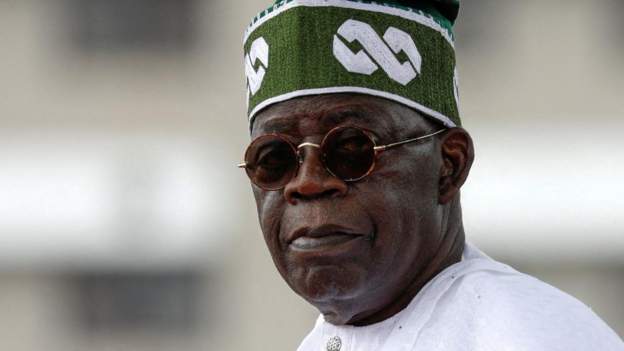
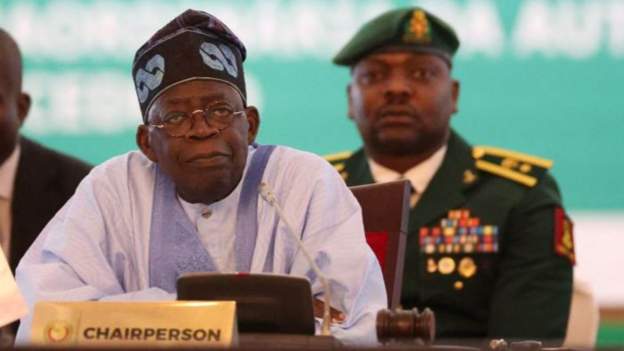
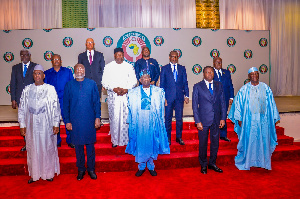
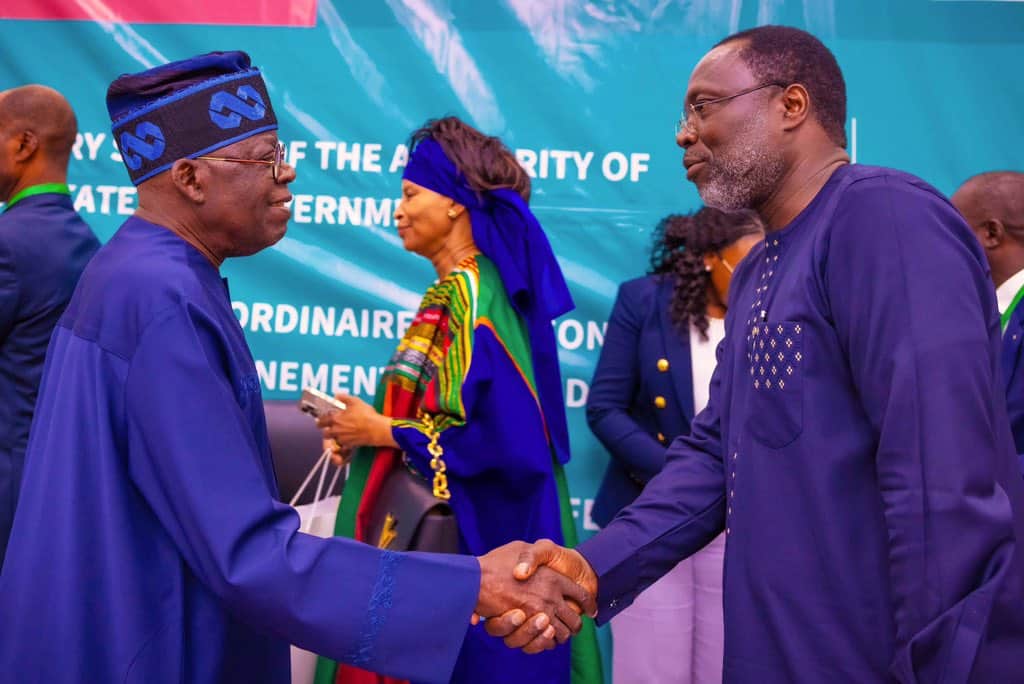
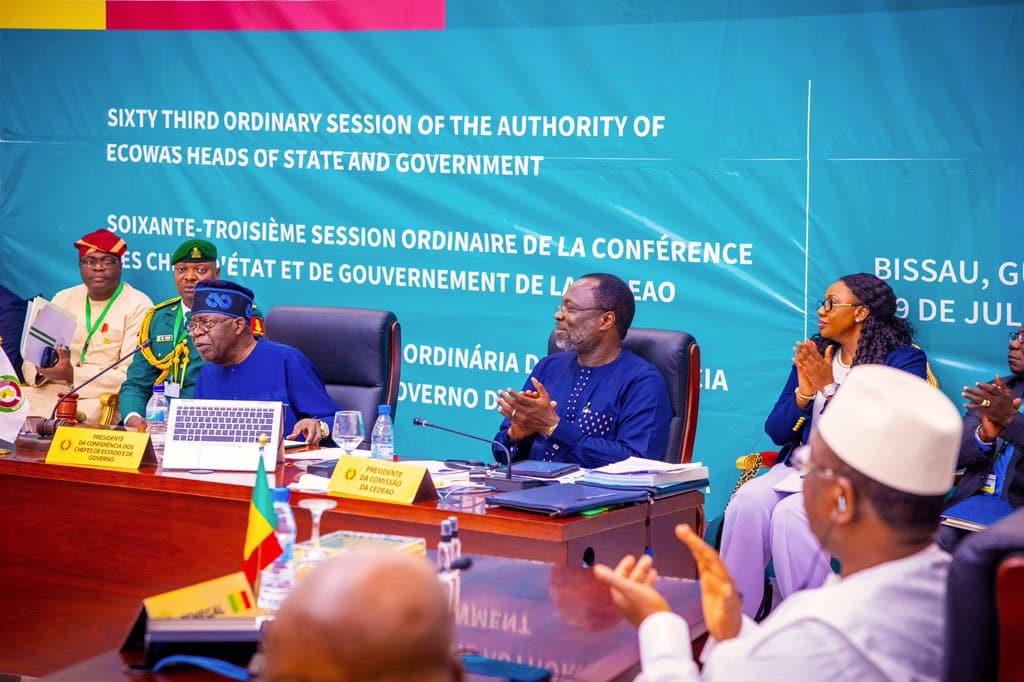
    Nigeria’s President, Bola Ahmed Tinubu, participated in the ECOWAS meeting held in Abuja, Nigeria, on Thursday, August 10, 2023.

    During this meeting, West African leaders discussed their next steps in response to the defiance of Niger’s military junta, which failed to meet their deadline for reinstating the ousted president.

    However, experts suggest that the regional bloc, ECOWAS, might be running out of viable options as support for a military intervention wanes. (AP Photo/Gbemiga Olamikan)

    In light of a military junta’s refusal to step down after seizing power through an undemocratic abduction of Niger’s president, West African nations have placed their armed forces on standby, prepared for a potential military intervention.

    The Economic Community of West African States (ECOWAS), a coalition of 15 nations, convened on Thursday and issued a statement that strongly denounced the unlawful detention of President Mohamed Bazoum of Niger.

    While the final decision entails the readiness of troops that could potentially intervene in a matter of weeks, ECOWAS underscores its ongoing pursuit of a peaceful resolution to the ongoing crisis.

    President Alassane Ouattara of Ivory Coast confirmed his nation’s involvement in the operation, alongside Nigeria and Benin.

    Ouattara informed reporters that the coup in Niger constitutes a “terrorist act” and highlighted that diplomatic negotiations with military leaders have so far yielded no progress.

    “We cannot let this continue, we have to act,” Ouattara said. “We will not accept coup d’etats.”

    Any military action could be dangerous for Bazoum. Military junta leader Gen. Abdourahmane Tchiani has threatened to kill the abducted president if neighboring countries invade Niger.

    Tchiani has refused diplomatic negotiations from the West, including officials from the State Department, and entrenched himself in power this week by appointing his own officials to lead the government.

    The situation in Niger has quickly spiraled out of control since the coup in late July displaced Bazoum in the capital of Niamey. ECOWAS imposed a deadline on Sunday to release Bazoum, which the military junta ignored. Leaders instead closed all flights in and out of the country.

    Tchiani has justified the overthrow by citing an economic crisis and soaring violence in the West African nation.

    Some in Niger have supported the coup because of concerns about corruption during Bazoum’s administration, along with a compounding economic insecurity and violence crisis.

    Two West African nations have also supported Niger’s military leaders, Burkina Faso and Mali. Their governments are military-led and suspended from ECOWAS membership. It’s unclear how both nations might respond to military intervention in Niger.

    The African Union on Friday supported the ECOWAS activation of troops.

    In a statement, African Union Commission Chairman Moussa Faki Mahamat expressed “deep concern about the deterioration of the conditions of detention of President Mohamed Bazoum.”

    “The Chairman of the Commission calls on the whole of the international community to unite all its concrete efforts to save the life and the moral and physical integrity of President Mohamed Bazoum,” he said.

  • US supports peaceful resolution of Niger coup

    US supports peaceful resolution of Niger coup

    The United States has expressed its gratitude for the proactive approach of the West African regional bloc ECOWAS in pursuing all possible avenues for achieving a peaceful resolution to the coup in Niger. ECOWAS recently sanctioned the establishment of a “standby” military force in response to the situation.

    US Secretary of State Antony Blinken affirmed his alignment with ECOWAS leadership in their call for the restoration of constitutional order in Niger following the military coup on July 26th, which led to the ousting of President Mohamed Bazoum.

    In an official statement, Blinken asserted that the US would hold the Niger junta responsible for the security and well-being of Mr. Bazoum, his family, and the individuals from his government who have been detained.

    Both the US and the United Nations had previously expressed concerns about the health and safety of the deposed president, who has been held under house arrest for more than two weeks.

    Despite a Sunday deadline for the junta to reinstate President Bazoum or face potential military intervention, the military leaders chose a different course of action. They have formed a new cabinet to govern the nation, disregarding the ultimatum put forth by ECOWAS.

  • Ayariga commends ECOWAS’ deployment of standby force to Niger

    Ayariga commends ECOWAS’ deployment of standby force to Niger

    The Member of Parliament representing Bawku Central and a prominent figure within the Economic Community of West African States (ECOWAS) Parliament, Mahama Ayariga, has commended the regional organization’s decision to deploy its standby force for the purpose of restoring constitutional order in Niger.

    Ayariga emphasized the significance of pursuing a diplomatic resolution to the crisis in Niger, while also underlining the importance of showcasing ECOWAS’ military capabilities.

    He noted that the military junta in Niger has shown reluctance to engage in dialogue since the coup on July 27, making it imperative for ECOWAS to assert its military strength as a means of reinforcing its diplomatic efforts.

    “While we are firmly of the belief that diplomatic channels should ultimately prevail, it is crucial that the military option remains a viable consideration. The parties involved in Niger must grasp that ECOWAS possesses the capacity to enforce its decisions. Without this demonstration of capability, the efficacy of diplomatic avenues could be compromised. Thus, it is unsurprising that ECOWAS is preparing to exhibit its strength to the Nigerien junta, highlighting its ability to effectively enforce its directives.”

    Ayariga emphasized that although dialogue remains the ultimate path to resolution, such discussions cannot progress without the Nigerien junta recognizing ECOWAS’ capacity.

    In addition to his comments on the crisis, the Bawku Central representative urged the sub-region to collectively determine the core values it wishes to uphold throughout its developmental journey.

    Ayariga emphasized that if principles like the rule of law and democracy hold significant importance, then all member states must be willing to make the necessary sacrifices to uphold these values, regardless of the challenges that may arise.

    “In our capacity as a sub-region, it is imperative that we establish a clear stance on the values that hold the utmost significance for us. If upholding the rule of law and democracy stands as a cornerstone, then we must collectively be prepared to face any obstacles in safeguarding these principles. No cost should be considered too high when it comes to preserving the integrity of these cherished values.”

  • ECOWAS directs ‘prompt activation’ of standby force in Niger

    ECOWAS directs ‘prompt activation’ of standby force in Niger

    West African leaders ratcheted up their criticism of the coup leaders in Niger on Thursday, ordering the “activation” and “deployment” of a regional standby force to reestablish the rule of law in the nation.

    Economic Community of West African States (ECOWAS) leaders called for a deployment “to restore constitutional order in the Republic of Niger,” according to a statement read by Omar Alieu Touray, President of the ECOWAS Commission, at a meeting in Abuja, Nigeria, after the one-week deadline they gave the military junta in Niger had passed.

    What the “deployment” and “activation” of the force would entail was not immediately obvious. The declaration emphasised a “determination to keep all options on the table for the peaceful resolution of the crisis.”

    Since late last month, when the presidential guard overthrew President Mohamed Bazoum in a coup d’état, Niger has been mired in political upheaval. Days afterwards, ECOWAS responded by imposing sanctions and giving the military junta in power one week to disband or risk military intervention.

    On Sunday, August 6, that deadline passed without causing the political climate to change. The leaders of ECOWAS have stated that they would only send soldiers in a last-ditch effort to resolve the problem diplomatically.

    The regional bloc will “uphold all measures and principles agreed upon by the extraordinary summit held on Niger on July 30th 2023,” whereby severe penalties were established against the military regime in Niger.

    Touray also issued a warning over the repercussions for “member states who by their action directly or indirectly, hinder the peaceful resolution of the crisis.”

    The president of Ivory Coast, Alassane Ouattara, revealed that all the leaders of the 15-nation ECOWAS organisation had attempted to communicate with the junta but had been warned that they would hold the leader “as a hostage” instead.

    We must take action; we cannot allow this to continue, added Ouattara.

    He said that he had told his country to mobilise soldiers in preparation of the ECOWAS operation, saying the military junta should fight extremists “and not try to kidnap a democratically elected president.”

    Mali and Burkina Faso, led by soldiers who overthrew the government, have declared their support for the Niger junta and issued a warning that any military action will be interpreted as an act of war. Additionally, Guinea has endorsed Niger.

    A military source told CNN that the Nigerian armed forces appeared to be getting ready for a potential military intervention this week. At dusk on Sunday evening, a convoy of about 40 pick-up trucks carrying troops from other parts of the nation entered the capital.

    Assembling the ECOWAS forces takes time, several analysts told CNN that a military action in Niger was probably not near.

    According to Murtala Abdullahi, a defence and security expert based in Abuja, the communique is “about mobilising the necessary resources should an intervention be needed, but it’s also a signal to the junta in Niger that ECOWAS is prepared to take necessary actions, including force, should talks fail.”

    The bloc provided no timetable, and the current head, Nigerian President Bola Tinubu, insisted that using force would only be a last choice. Abdourahamane Alkassoum, a security analyst for CNN, noted that the Nigerien military has been gaining popularity locally as ECOWAS continued to talk tough, suggesting that the news may be interpreted in Niger as being more urgent.

    Another analyst recalled that ECOWAS‘s deployment to Gambia in 2017—a less challenging assignment than Niger—took 7 weeks.

    According to Cameron Hudson, a senior associate at the Centre for Strategic and International Studies, “the mission to Gambia was much more straightforward.” A hostage rescue of a president who is under house arrest and being exploited as a human shield by the junta would take place in Niger, not only as an intervention.

    He continued, “Niger has a sizeable army that has been trained by the US and is battle-tested after years of a counterinsurgency.

  • Leading Muslim cleric from Nigeria meets coup leader from Niger

    Leading Muslim cleric from Nigeria meets coup leader from Niger

    Sanusi Lamido Sanusi, a former governor of Nigeria’s central bank and the Emir of Kano, met with the leader of the military coup in Niger on Wednesday in the Nigerean capital Niamey in an effort to mediate the issue.

    The coup commander, Gen. Abdourahmane Tchiani, has avoided multiple envoys, including one from the West African regional organisation, Ecowas. This is the first delegation he has personally met.

    Sa’ad Abubakar III, the Sultan of Sokoto, Victoria Nuland, the US Acting Deputy Secretary of State, and other African Union and UN delegations have all been ignored by Gen Tchiani in the past.

    The Ecowas chairman, Nigerian President Bola Tinubu, would get a “message” from Mr. Sanusi, who said he had spoken with Gen. Tchiani on Wednesday.

    The leaders of Niger and Nigeria are expected to hold substantive conversations after our arrival, Mr. Sanusi continued.

    It occurs as the heads of state of the Ecowas are about to meet in Abuja, Nigeria, to debate the next steps after the military junta in Niger disregarded an ultimatum to reinstate deposed President Mohamed Bazoum.

  • Coup leaders in Niger reject diplomatic efforts from AU, ECOWAS

    Coup leaders in Niger reject diplomatic efforts from AU, ECOWAS

    Niger’s military administration has rebuffed the recent diplomatic endeavor by African nations aimed at reinstating constitutional order following the July 26 coup. This rejection stands in defiance against pressure from both the United States and the United Nations to engage in negotiations.

    Reports from the French publication Jeune Afrique reveal that the African Union (AU) had intended to dispatch a collaborative mission involving representatives from the United Nations and the West African ECOWAS bloc to Niger on Tuesday. However, the military government withheld permission and also imposed a closure on Niger’s airspace.

    Leaders within the Economic Community of West African States (ECOWAS) are gearing up for a summit scheduled for Thursday, where they plan to address the impasse with Niger’s coup leaders. These leaders have defied a Sunday ultimatum to reinstate the ousted President Mohamed Bazoum. Although discussions on the potential for military intervention are on the agenda, ECOWAS emphasizes that this is considered a final option.

    An AU spokesperson has confirmed the denial of mission access to Reuters, while ECOWAS has chosen not to comment on the matter. The coup leaders had previously declined interactions with a high-ranking US representative and another delegation from ECOWAS that had attempted to negotiate.

    During Bazoum’s tenure, Niger made significant progress in containing a violent insurgency that had ravaged the Sahel region. The nation also held strategic importance as a key Western ally, particularly after its neighboring countries distanced themselves from their former colonial patron France in favor of Russia.

    Niger’s status as the seventh-largest global producer of uranium, a vital fuel for nuclear energy, adds to its strategic significance.

    “There’s no doubt that diplomacy is the best way to resolve this situation,” US Secretary of State Antony Blinken told French radio station RFI on Tuesday.

    He mentioned that the support of the United States was behind ECOWAS’s endeavors to reinstate order. However, he refrained from discussing the fate of the 1,100 US troops stationed in Niger, a location where troops from France, Germany, and Italy are also present.

    The United Nations conveyed that Secretary-General Antonio Guterres vehemently endorsed mediation efforts undertaken by ECOWAS.

    On Friday, the defense chiefs of ECOWAS reached a consensus on a potential military action strategy, which is anticipated to be deliberated by their respective heads of state during the upcoming summit in Abuja, Nigeria’s capital.

    In response, the West African bloc has enforced sanctions on Niger, with its Western allies opting to suspend aid.

    Acting Deputy Secretary of State of the US, Victoria Nuland, embarked on a journey to Niamey on Monday. Regrettably, she was denied authorization to meet with coup leader Abdourahamane Tchiani or detained President Bazoum. Instead, she engaged in a two-hour conversation with other senior army officers.

    “These conversations were extremely frank and at times quite difficult because, again, we’re pushing for a negotiated solution. … They are quite firm in their view of how they want to proceed, and it does not comport with the Constitution of Niger,” Nuland told reporters.

    In the preceding week, ECOWAS dispatched a delegation to Niamey under the leadership of Abdulsalami Abubakar, a former military leader of Nigeria. However, Tchiani declined to meet with him.

    In stark contrast, Tchiani engaged in a meeting on Monday with a united delegation hailing from Mali and Burkina Faso. These are neighboring nations where the military has similarly taken control from civilian governments. The military regimes in these two countries have openly expressed their solidarity with the coup in Niger.

    “We will not accept military intervention in Niger. Our survival depends on it,” Abdoulaye Maiga, a spokesman for Mali’s military government, said in an appearance on Niger state television.

    Western allies worry that Niger might follow Mali’s example, where a military government overthrew French soldiers and UN forces in 2021 and welcomed in mercenaries from Russia’s Wagner Group in their place.

    Hundreds of people were executed last year by fighters thought to be from Wagner working with the Malian army in a savage military attack, according to witnesses and rights organizations. Wagner and the army refute the accusations.

  • Tinubu responds to criticism of Niger involvement

    Tinubu responds to criticism of Niger involvement

    Bola Tinubu, the president of Nigeria, has replied to criticism on the choice to consider a potential military intervention in Niger following the coup last month.

    He claimed that the Ecowas regional bloc made this decision, not Nigeria, along with the demand that the leaders of the military coup in Niger restore the expelled president.

    It happens at a time when Mr. Tinubu, who is also the current chairman of Ecowas, is facing criticism for allegedly advocating military intervention in Niger.

    The president “has deemed it necessary to state unequivocally that the mandate and ultimatum issued by Ecowas is that of Ecowas’ position,” according to a spokesperson for the Nigerian government.

    The representative also claims that Ecowas is responsible for Niger’s financial sanctions in a statement.

    Ecowas previously stated that it favours a diplomatic and political solution that restores Mohamed Bazoum to his position as the elected president of Niger. If the junta continues to be obstinate, it was stated that a military intervention would be the “last resort.”

    Following the Ecowas deadline’s expiration on Sunday, the Ecowas heads of state will meet on Thursday in Abuja, the capital of Nigeria, to discuss the best course of action for Niger.

  • We are unable to host ECOWAS due to safety concerns – Niger junta

    We are unable to host ECOWAS due to safety concerns – Niger junta

    The leaders of Niger’s ruling military junta have declined a high-level diplomatic visit, citing concerns over the safety of the visiting delegates.

    Originally, representatives from the regional organization Ecowas, the African Union, and the United Nations were scheduled to arrive today.

    However, the leaders of the coup conveyed to Ecowas that the imposition of sanctions and the looming prospect of invasion by the bloc had led to public discontent. As a result, they explained that the delegation could not be received in a peaceful and secure manner.

    Additionally, the coup leaders disclosed that both Niger’s land and air borders were presently closed.

    Reports emerging from the capital city, Niamey, indicate that despite the fact that the ousted President, Mohamed Bazoum, was democratically elected, numerous individuals view the coup as a positive development.

    Amid these events, Washington has issued a warning about the potential involvement of Russian Wagner mercenaries exploiting the situation resulting from Niger’s coup.

  • Tinubu comes under fire over the military’s involvement in Niger

    Tinubu comes under fire over the military’s involvement in Niger

    Bola Tinubu, the president of Nigeria, is under intense domestic pressure because he threatened to use military force to put an end to the coup in neighbouring Niger.

    Despite the Senate being under the authority of Mr. Tinubu’s party, local media reports that there was substantial opposition to military action at a session on Saturday.

    However, there has also been widespread national opposition of the threat of war. This was especially true among MPs from states near the more than 1,500km (930 mile) long border with Niger.

    The West African regional bloc Ecowas gave the junta until Sunday to relinquish power or face potential military action.

    Since Mr. Tinubu currently serves as Ecowas’ chairman and Nigeria is its most powerful member, the choice was widely regarded as being his.

    Despite the fact that the junta disregarded the ultimatum, Ecowas did not send troops right away in response. Many Nigerians, who seek a diplomatic solution to the problem, were relieved to hear this.

    Given that Nigeria and other nations must obtain parliamentary approval before sending the military, some people dispute whether a seven-day timetable was reasonable.

    Many people are also horrified that President Tinubu‘s instructions to cut off electricity to Niger resulted in blackouts in Niger’s capital city of Niamey and other areas.

    Critics assert that this violates a deal that allowed Nigeria to construct a dam on the River Niger, while Mr. Tinubu’s supporters assert that the power outages are intended to put pressure on the junta to restore ousted President Mohamed Bazoum’s rule without resorting to force.

    Strong linkages exist between Nigeria and Niger on the racial, economic, and cultural levels, and any military action against Niger would have an impact on northern Nigeria, which already faces significant security issues.

    Mr. Tinubu should not “rush into an avoidable conflict with a neighbour at the behest of global politics,” according to a powerful group of Muslim clerics in northern Nigeria.

    Mr. Bazoum was a crucial friend of the West and permitted the US and former colonial powers France to maintain military bases there to aid in the war against militant Islamists wreaking havoc throughout much of West Africa.

    If Ecowas does deploy force, the military juntas in Mali and Burkina Faso have threatened to support the coup leaders in Niger, perhaps igniting a huge regional confrontation.

    Currently, Mr. Tinubu is the centre of attention. He has been the most outspoken in denouncing military coups in West Africa and claimed last month that Ecowas cannot consist of “toothless bulldogs.”

    “We must be adamantly pro-democracy. Without democracy, there can be no government, freedom, or rule of law. Soon after assuming control of the regional organisation, Mr. Tinubu remarked, “We won’t accept coup after coup in West Africa again.

    According to the constitution of Nigeria, the National Assembly, which is made up of both the upper and lower chambers of parliament, must provide its consent before the president can send out troops.

    Given the opposition Mr. Tinubu is up against, it is uncertain whether he will win their support.

    Prof. Khalifa Dikwa, a professor at the University of Maiduguri and a prominent elder in northern Nigeria, declared, “Ecowas wentof, the Nigerian president also wentof.”

    The Senate’s leader, Godswill Akpabio, challenged the Ecowas parliament to offer “solutions to resolve this logjam as soon as possible” in a cautious statement following Saturday’s closed-door meeting.

    President Tinubu’s stern stance against coups may have its roots in his personal history. Early in the 1990s, he served as an MP for just over a year until elections were thrown out, parliament was dissolved, and Gen. Sani Abacha took over.

    He became a part of the pro-democracy movement, which fought for the restoration of civilian authority, putting him in the sights of the military, which ultimately drove him into exile. After the passing of Gen. Abacha, one of Nigeria’s most ruthless and corrupt military leaders, he returned in 1998.

    However, many Nigerians believe that President Tinubu did not consider the internal repercussions of deploying force, and that Ecowas was hasty in delivering an ultimatum to the junta.

    “Up until the Berlin Conference [in 1884–1885], when foreign powers established Africa’s current borders, Niger was a continuation of the northern half of Nigeria. You anticipate that the North will start a war with itself?

    President Tinubu, like his predecessor Muhammadu Buhari, and his national security adviser, Nuhu Ribadu, a former policeman, neither have military backgrounds.

    Last week, Ecowas army chiefs released a statement of their own, stating that they saw military involvement as a “last resort” in most cases.

    Critics accuse Mr. Tinubu of rushing through important choices in the past, citing the fact that he abruptly ended a decades-long gasoline subsidy in May during his first speech as president, causing pandemonium.

    On Thursday, Ecowas leaders will meet in Abuja, the capital of Nigeria, to choose their course of action.

    It is difficult to imagine other West African nations joining any military involvement without Nigeria, even though some have pledged to do so. If the National Assembly does not support them, it is unlikely that they will.

    Mr. Tinubu is both the president of Nigeria and the chairman of Ecowas. Acting in the regional interest and in defence of democracy is necessary for the one, but it could be highly expensive for the other party.

  • Armed forces in Niger send reinforcements after missing deadline to surrender power

    Armed forces in Niger send reinforcements after missing deadline to surrender power

    Just hours after the military junta in charge of the country rejected an important regional bloc’s deadline to surrender control, a military source informed CNN that Niger’s armed forces have started deploying reinforcements to the capital in preparation for a potential military intervention.

    Around 40 pick-up trucks came in a convoy at dusk on Sunday night, carrying troops from other regions of the nation to comfort a worried populace and be ready for a possible conflict.

    Since late last month, when the presidential guard overthrew President Mohamed Bazoum in a coup d’état, Niger has been mired in political upheaval. Days thereafter, the Economic Community of West African States (ECOWAS) reacted by imposing sanctions and giving the military junta in power a week to abdicate or risk military intervention.

    Sunday came and went without any political shift as a result of that deadline. Bazoum is still in exile, and nobody knows for sure where he is. The junta’s official name, the National Council for the Safeguard of the Homeland, continues to effectively rule Niger. According to a junta leader, Niger’s armed forces would close the nation’s airspace owing to the possibility of military involvement.

    It’s not obvious what happens next. Although the leaders of ECOWAS have stated that they prefer a peaceful resolution to the issue, they have also stated that they are willing to use force as a last resort to restore the democratically elected government of Niger. On Thursday, the group will meet once more to discuss the situation.

    The capital, Niamey, has been shaken by the uncertainty. While others tried to evacuate, other individuals flocked to supermarkets to stock up on essentials like rice and cooking oil. Most lines out of the capital, according to local bus company employees, were fully packed.

    On Monday, many customers purchasing food and supplies at the crowded Wadata market, located east of the capital’s core, expressed concern about what might happen.

    Mariama Sabo, a 31-year-old cleaner, said, “Our country is on the verge of descending into a crisis that we have never encountered. We’re genuinely terrified.

    Fruit vendor Salifou, 27, was concerned for his company’s future. Even though the border between the two countries is currently blocked, he imports his produce from Benin.

    Salifou stated, “My stock is completely depleted and that really worries me.”

    Concerns about the rising price of food were voiced by others.

    A woman by the name of Salamatou remarked, “The authorities should show some sense of responsibility towards us or else it will be difficult.” “They need to bring peace and lower prices at the same time.”

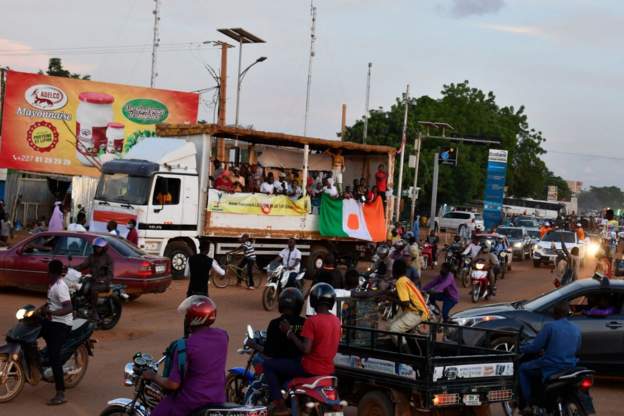
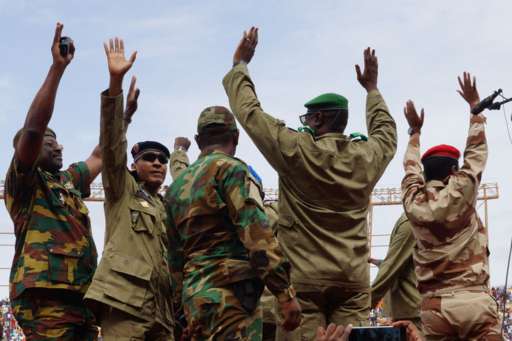
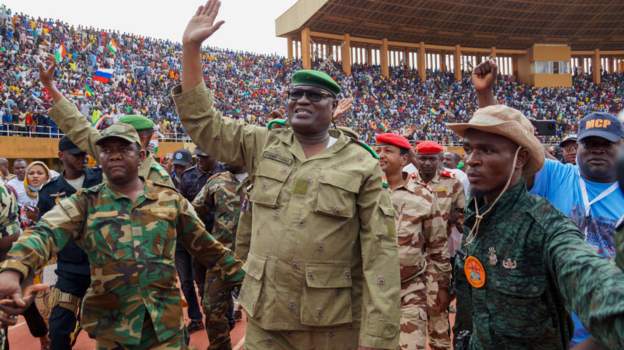
    Meanwhile, pro-junta protesters gathered on Sunday in a 30,000-seat stadium in Niamey to declare their allegiance to the military regime and opposition to ECOWAS sanctions.

    Niger is still one of the world’s poorest nations despite having a plethora of natural resources. Many Nigerians, especially the younger generation, continue to blame France, an imperial power, for the country’s persistent poverty. Those who support the new military government see it as a chance to break diplomatic ties with French influence.

    A bricklayer named Ali Maikano who resides in the nation’s capital declared he was prepared to fight alongside the army to oppose French interests there.

    At the Wadata market, Maikano told CNN, “Enough is enough, we’ve suffered a lot under this regime that’s given everything to France, and we’re not afraid of ECOWAS or anyone else.”

    The democratic neighbours and Western allies of Niger are particularly interested in the future of the country’s elected administration. On the grounds that Niger was a reasonably stable democracy in a region rife with political unrest, terrorism, and Islamist insurgencies, the United States and France stationed hundreds of troops, many of whom support counterterrorism activities.

    Russia has tried to use the geopolitical crisis in West Africa in recent years to increase its power and influence, particularly through the mercenary company Wagner. Wagner has operations in a number of nations, including the neighbouring Mali, where a military coup in 2021 resulted in the establishment of a military government. Wagner soldiers have been hired to repress resistance and support local defence forces in their fight against uprisings and insurrections.

    Wagner made contact with the coup leaders in Niger, according to the French Foreign Ministry, but it was not apparent if the two parties were working towards a cooperation.

    According to a ministry spokesperson, “We can see that Wagner is in an opportunistic and predatory logic, so they may be tempted to take advantage of the whole situation.”

    Yevgeny Prigozhin, the leader of Wagner, appeared to pitch the private military business to the new government of Niger shortly after the coup was carried out.

    Given the vulnerability of West African democracies like those in Mali and Burkina Faso, where a coup occurred in 2022, Niger’s democratic neighbours are concerned that the coup could have a cascading effect.

    Currently, both nations are supporting the junta in Niger. They said last week that any military action in Niger would be viewed as “an act of war” against all three nations.

    According to the Malian Armed Forces, both nations are sending delegations to the Nigerian capital Niamey “in solidarity with the people of Niger.”

    Regarding sending delegations to Niger, Burkina Faso has not yet made any public statements, and the country’s ministry of foreign affairs has not yet acknowledged CNN’s request for confirmation of their attendance.

  • Italy urges West African group to grant Niger junta more time

    Italy urges West African group to grant Niger junta more time

    The foreign ministry of Italy has urged Ecowas, the regional organisation for West Africa, to extend the deadline set for the coup’s organisers in Niger to restore ousted leader Mohamed Bazoum.

    “Diplomacy is the only available option. Antonio Tajani, the foreign minister of Italy, said on Monday, “I hope that the Ecowas ultimatum, which expired last night, will be extended today.

    After ignoring the deadline, the junta in Niger closed the nation’s airspace late on Sunday. International flights were either forced to make a diversion or return to their home country as a result.

    The army asserted that it thinks two African nations have started making plans to invade Niger but provided no proof.

    Since the deadline passed, Ecowas has not released any remarks.

  • France stops funding Burkina Faso

    France stops funding Burkina Faso

    All budgetary and development assistance from France to Burkina Faso has been halted.

    The announcement follows a statement from the military administration in Burkina Faso that any use of force against the coup leaders in the adjacent Niger would constitute a declaration of war.

    The similar stance has been adopted by the Mali military government.

    It happens after a deadline set by the West African bloc Ecowas for the military coup leaders in Niger to reinstate ousted President Mohamed Bazoum and restore constitutional order expired on Sunday night.

    Regarding the next course of action, which could involve military intervention, Ecowas has not yet made a statement.

    This would be the “last option” if all other political and diplomatic measures were unsuccessful, according to the grouping previously.

  • Group cautions ECOWAS over military intervention in Niger

    Group cautions ECOWAS over military intervention in Niger

    The Pan-African movement known as Africans Rising has issued a strong condemnation of the recent military seizure of power in Niger.

    Soldiers, primarily from the presidential guard, carried out a takeover on July 27, resulting in the capture of Niger’s President Mohamed Bazoum. This event led to the dissolution of the constitution, the suspension of all institutions, and the closure of the country’s borders.

    Since July 2, President Mohamed Bazoum has remained in the custody of the presidential guard. In response to these alarming developments, Africans Rising has called upon international and regional organizations, including the African Union and ECOWAS (Economic Community of West African States), to engage in constructive dialogues with all relevant stakeholders. The aim of such dialogues is to ensure the restoration of peace and stability within the nation.

    Africans Rising has stressed the importance of seeking peaceful resolutions and has expressed its disagreement with the threats of military intervention that have been voiced by certain ECOWAS member states.

    The movement strongly asserts that such actions would result in the unnecessary loss of innocent lives and escalate the existing challenges within the nation. Instead, they emphasize the significance of engaging in dialogue and employing diplomatic solutions that won’t worsen the predicament faced by the impoverished population.

    Furthermore, the movement offers guidance to European and Western nations, urging them to refrain from meddling in the internal affairs of African countries.

    They firmly reject any attempts to transform West Africa or any other African region into a battleground for proxy conflicts among competing global powers. Africans Rising staunchly upholds Africa’s sovereignty and autonomy, underscoring that the continent should not be treated as an extension of any external nation or continent.

    “We must resist any moves that will make West Africa or any part of Africa the threatre of war by proxy between competing powers. It is very important for external powers from West and East to steer clear of Africa’s internal affairs and desist from making reckless statements hinting at military action. We will not tolerate any such rhetoric. Africa is not the extension of any other country or continent.”

  • ECOWAS implements border closure against Niger Republic

    ECOWAS implements border closure against Niger Republic

    In a demonstration of support for the democratically-elected government of President Mohammed Bazoum in Niger Republic, the Economic Community of West African States (ECOWAS), a prominent West African regional organization, has directed Nigeria to temporarily close its border with Niger.

    This directive was made public through a press statement delivered by Nigeria’s Acting Comptroller General of Customs, Bashir Adeniyi.

    The situation in Niger, following the military coup that ousted President Bazoum, has prompted ECOWAS to call for restrictions on movement along the border areas.

    As a result, the Nigerian government has taken the necessary steps to comply with ECOWAS’ directive and temporarily halt cross-border activities with Niger Republic.

    Acting Comptroller General Adeniyi emphasized that the closure aims to ensure the safety and security of Nigerian citizens and fellow ECOWAS member states. He urged those who typically travel through Niger Republic to reach Libya to remain at home for their own safety.

    Only Nigerians returning to their home country are allowed to cross the border during this period.

    To enforce the border closure effectively, the Nigeria Customs has deployed its personnel to block any unorthodox roads that might be used by foreigners attempting to infiltrate the country through alternative routes. This measure is taken to maintain the integrity of the border closure and protect the interests of both Nigeria and ECOWAS at large.

    “You know Sokoto and Niger Republic, we are a homogeneous society, with the same language, religion and culture, but we have a colonial boundary which we must respect,” he added.

  • ECOWAS gets support from France to reverse Niger’s military coup

    ECOWAS gets support from France to reverse Niger’s military coup

    The French foreign ministry announced on Saturday that France will assist ECOWAS’s attempts to undermine the military coup in Niger.

    On Saturday, Niger Prime Minister Ouhoumoudou Mahamadou and the Niger ambassador met in Paris with French Foreign Minister Catherine Colonna.

    Earlier, Colonna said the coup leaders in Niamey had until Sunday to hand back power, otherwise a threat by member countries of the Economic Community of West African States (ECOWAS) to stage a military intervention had to be taken “very seriously”.

    “The threat is credible,” she said on French public radio.

    On Saturday, France did not provide explicit details regarding whether its support would involve military assistance for an ECOWAS intervention in Niger.

    On the preceding Friday, ECOWAS announced that its military chiefs had reached an agreement on a potential intervention plan in Niger.

    “All the elements that will go into any eventual intervention have been worked out,” ECOWAS commissioner Abdel-Fatau Musah said.

    These included “the resources needed, and including the how and when we are going to deploy the force”, he added.

    “We want diplomacy to work, and we want this message clearly transmitted to them [the junta] that we are giving them every opportunity to reverse what they have done,” Musah said.

    The leaders of the coup have threatened to use force against you.

    Mali and Burkina Faso, both under military leadership since 2020, have issued warnings that any regional intervention would be viewed as a “declaration of war” against them.

    Russia, which has been expanding its presence in the Sahel region in recent times, expressed the belief that a foreign intervention would not lead to a resolution of the crisis.

    In contrast, neighboring countries Benin and Germany advocated for continued diplomacy to de-escalate the situation.

    On Friday, the United States announced the suspension of some aid to Niger in response to the coup.

    Washington is pausing “certain foreign assistance programmes benefitting the government of Niger”, Secretary of State Antony Blinken said in a statement.

    “As we have made clear since the outset of this situation, the provision of US assistance to the government of Niger depends on democratic governance and respect for constitutional order,” Blinken said, adding that Washington would continue to review its foreign assistance as the situation on the ground evolves.

    Blinken did not specify what programmes would be affected but said life-saving humanitarian and food assistance, as well as diplomatic and security operations to protect US personnel, would continue.

    “We remain committed to supporting the people of Niger to help them preserve their hard-earned democracy and we reiterate our call for the immediate restoration of Niger’s democratically-elected government,” Blinken said.

  • Niger’s pro-coup demonstrations go on as Biden calls for Bazoum’s release

    Niger’s pro-coup demonstrations go on as Biden calls for Bazoum’s release

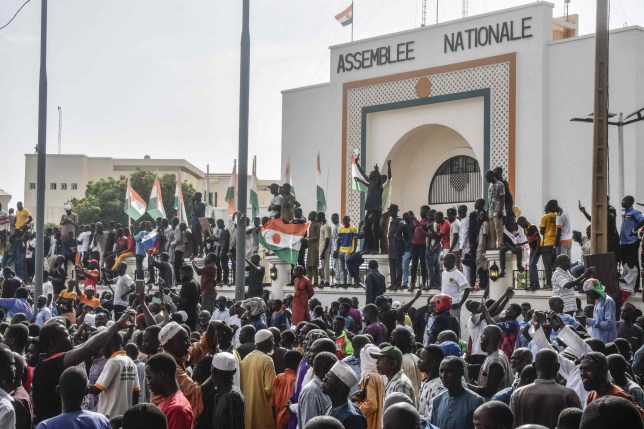
    In the nation’s capital, Niamey, hundreds of supporters of Mohamed Bazoum, the democratically elected president of Niger, have assembled for a large rally. Some of them are waving enormous Russian flags.

    Following a summons from a coalition of civil society organizations on the day of the 63rd anniversary of the country’s independence from France, the protesters gathered at Independence Square in the center of the city on Thursday.

    One of the protesters, Issiaka Hamadou, stated that regardless of whether assistance comes from “Russia, China, or Turkey, if they want to help us,” “only security that interests us” is what matters.

    “We just don’t want the French, who have been looting us since 1960 – they’ve been there ever since and nothing has changed,” he said.

    In order to combat armed groups in the Sahel, France deploys about 1,500 soldiers in Niger.

    Economic Community of West African States (ECOWAS) sanctions have been imposed in response to the coup, and the African Union, United Nations, and Western nations have all condemned it.

    But coup leader General Abdourahamane Tchiani remained defiant on Wednesday, saying he “refuses to give in to any threats, wherever they come from”.

    The immediate release of Bazoum and his family is required, as well as the preservation of the nation’s democracy, according to a statement made earlier on Thursday by US President Joe Biden.

    “In this critical moment, the United States stands with the people of Niger to honour our decades-long partnership rooted in shared democratic values and support for civilian-led governance,” he said.

    “The Nigerien people have the right to choose their leaders,” Biden said. “They have expressed their will through free and fair elections- and that must be respected.”

    The removal of Bazoum, 63, has also been criticised by Russia which said the situation was “cause for serious concern”. The Kremlin’s comments came days after Wagner mercenary boss Yevgeny Prigozhin appeared to show support for the coup.

    Bazoum’s victory in the 2021 elections that ushered in Niger’s first peaceful transition of power was seen as a new start for a country that had seen four previous coup attempts since independence from France in 1960.

    Leaving Niger

    Amidst the political turmoil in Niger, ECOWAS made a demand on Sunday for the coup leaders to reinstate Bazoum to power within a week or face the potential “last resort” of military intervention. This call came alongside a violent demonstration outside the French embassy, where protesters smashed windows and chanted anti-French slogans.

    In response to the escalating situation, several European countries have initiated evacuation operations to ensure the safety of their nationals. France, in particular, carried out an evacuation operation that saw almost 1,000 people being transported to safety, primarily consisting of French citizens, but also including individuals from the United States and Germany.

    In light of the upcoming protests in Niamey on Thursday, France has also urged Niger’s new military government to guarantee the safety of its embassy. The French foreign ministry emphasized that such measures are vital to uphold foreign diplomatic rights and the safety of diplomatic personnel, as mandated by international law, especially under the Vienna Convention.

    However, Niger’s new military government, as represented by Tchiani, expressed that French citizens had no reason to leave the country and were not facing any threats. Despite this stance, concerns remain high, and diplomatic efforts are underway to ensure the security and protection of all nationals during this tense period.

  • Niger junta fights ‘inhumane’ sanctions by ECOWAS

    Niger junta fights ‘inhumane’ sanctions by ECOWAS

    Leader of the recent military coup in Niger has strongly criticized the sanctions imposed on the country by the West African regional bloc, ECOWAS, labeling them as “illegitimate, unfair, and lacking compassion.”

    General Abdourahamane Tchiani firmly asserted that his administration would not succumb to regional or international pressures to reinstate Niger’s elected President, Mohammed Bazoum.

    During a televised address, General Tchiani also reassured that French citizens had no reason to be alarmed.

    Following an attack on its embassy in Niamey by demonstrators on Sunday, Paris confirmed the successful evacuation of nearly 1,000 individuals, including 560 French nationals.

    Late on Wednesday, the US State Department announced a partial evacuation of its embassy in Niger, urging non-essential staff and their families to depart.

    In an effort to mediate with the coup leaders, an Ecowas delegation led by Nigeria’s former military head of state, General Abdulsalami Abubakar, has arrived in Niamey, the capital of Niger. Concurrently, West African military leaders have convened in Abuja, Nigeria’s capital, for discussions.

    Brigadier General Tukur Gusau, the spokesperson for Nigeria’s military defense, informed the BBC that they view a military resolution as the final resort.

    The presentation of their military strategy is scheduled for Friday, to be showcased before the heads of state of Ecowas.

    Subsequently, these leaders will determine the subsequent steps to be taken by the regional bloc concerning Niger.

  • Brits stuck in mud receive stern warning during military coup

    Brits stuck in mud receive stern warning during military coup

    This morning, a queue of foreign nationals with suitcases in hand formed outside an airport in the nation’s capital as they awaited a third flight of evacuation.

    The West African nation has been thrown into a political crisis a week after a military coup deposed and imprisoned Mohamed Bazoum, the first democratically elected president.

    Fears that their inhabitants would become stranded prompted France, Italy, and Spain to declare evacuations for their populace.

    Despite violent protests erupting in the last 48 hours, the UK and the US are both behind schedule in making such announcements.

    To protest the former colonial power, supporters of the coup even tried to invade the French embassy on Sunday and burn it on fire.

    Thousands of people were observed marching through Niamey, the nation’s capital, while singing the name of Vladimir Putin and brandishing Russian flags.

    It happened when the paramilitary Wagner organisation, which already has mercenaries in Mali, offered to back the coup.

    Currently, there are no commercial airline choices to depart because Niger’s borders are also closed.

    The situation in the country is still ‘volatile,’ and numerous states have declared states of emergency, therefore the Foreign Office (FCDO) has warned against all travel there.

    The FCDO stated, “We have been closely monitoring the situation in Niamey since July 26.”

    “Protests can be violent, and the mood can shift suddenly and unexpectedly.” British nationals are advised to stay inside.

    Those who plan to depart are urged to register with the FCDO as soon as possible and to keep up with travel safety recommendations.

    On two flights on Tuesday, French military in Niamey evacuated hundreds of people, the majority of whom were citizens of France.

    Meanwhile, the Italian defence minister confirmed that an Italian military plane carrying 99 people, including 21 Americans and citizens of other nations, made an early morning landing in Rome.

    After a third flight was cancelled the previous evening, hundreds of people gathered outside the terminal of the city’s airport before daylight in an attempt to depart.

    While parents sought to protect their children from what was occurring, some people tried to sleep on the floor, while others played video games or spoke on the phone with relatives who were eager to hear updates.

    A passenger who asked to remain anonymous for security concerns added, “I haven’t told them very much, just that they’re going home.”

    In a statement on Sunday, the West African regional group (ECOWAS) announced travel and economic restrictions against Niger, warning that if the coup leaders do not restore Mr. Bazoum within a week, force may be used.

    Burkina Faso and Mali emphasised on Monday that any military action against Niger would be regarded an act of war against them.

    A joint statement declared, “All military intervention against Niger will be regarded as a declaration of war against Burkina Faso and Mali.”

    Before the violent coup, the nation was seen as one of the remaining democracies in the region and a cooperating partner with whom Western nations might fight the extremist bloodshed that has decimated the region.

    Millions of dollars have been invested in the nation by the US, France, and other European nations as military aid and assistance.

    The special representative for West Africa and the Sahel stated that initiatives other than the threat of force are being made to restore democracy during a virtual United Nations meeting on Tuesday night.

    According to Leonardo Santos Simao, “One week can be more than enough if everyone talks in good faith and wants to prevent bloodshed.”

    However, “different member states are preparing themselves to use force if necessary,” he continued.

  • Head of Niger coup talks with junta in Mali that is linked with Wagner

    Head of Niger coup talks with junta in Mali that is linked with Wagner

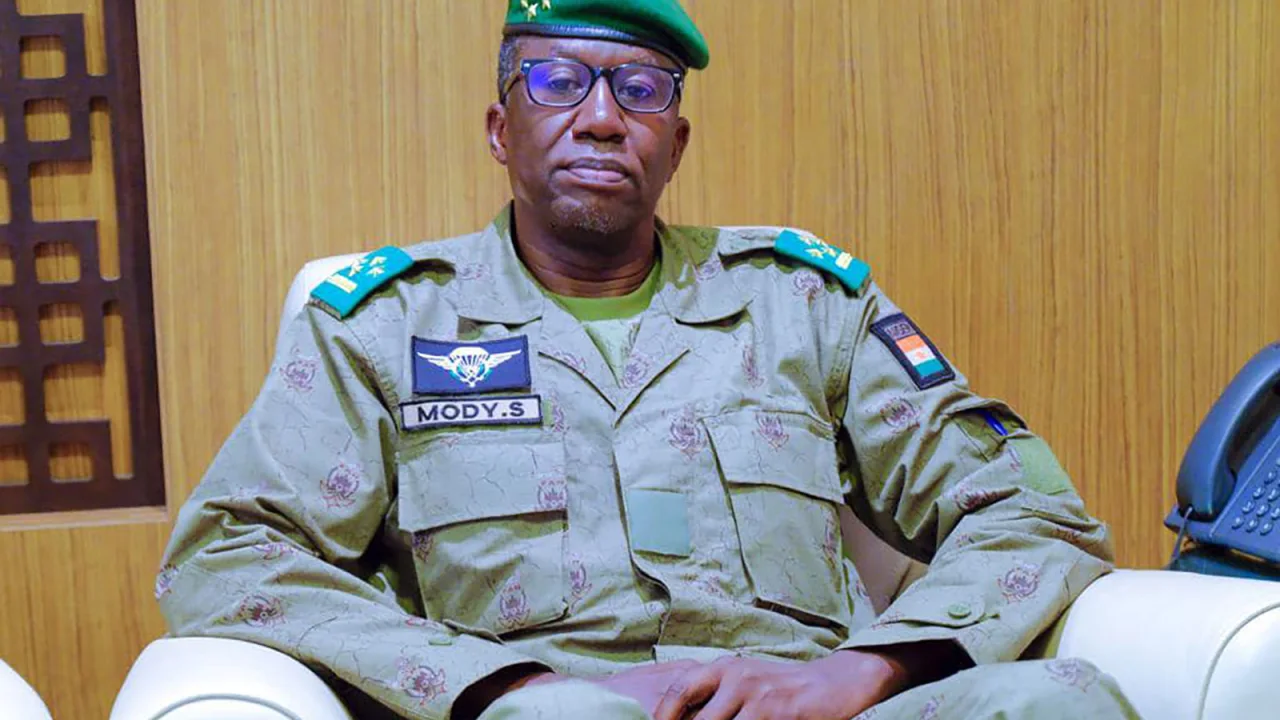
    Amid rumours of a potential interest in the Wagner mercenary group, which has a presence in the nation, General Salifou Mody, one of the Niger soldiers who took control in a military coup last week, visited Mali on Wednesday, according to the Mali presidency.

    According to images and a statement shared on Facebook by the Mali presidency, Assimi Gota, the interim president of Mali, hosted Mody and a sizable Nigerien military group on Wednesday.

    According to the Mali presidency, Mody described the gathering as “part of a complex regional context” and thanked the country’s leaders “for their support and accompaniment since the seizure of power by the CNSP,” a reference to the National Council for the Safeguard of the Homeland, where Mody serves as vice president.

    To put down an Islamist insurgency building around the intersection of the frontiers of Mali, Burkina Faso, and Niger, hundreds of Wagner contractors are stationed in Mali at the country’s military junta’s invitation.

    Yevgeny Prigozhin, the head of Wagner, praised the coup last week in the landlocked West African nation, saying his private military firm could potentially assist in scenarios similar to the one taking place in Niger.

    Western leaders, particularly the US and France, who are both major players in Niger’s campaign against local Islamist insurgencies, were disturbed by the abrupt removal of President Bazoum of Niger last week.

    The Russian mercenary outfit may now look for fresh chances in Niger, US officials have warned. According to State Department spokesman Matt Miller, “I wouldn’t be surprised to see Wagner try to exploit this situation to their own advantage as they’ve attempted to exploit other situations in Africa to their own advantage.”

    According to Miller, “any attempt by the military leaders in Niger to bring the Wagner forces into Niger would be a sign, yet another sign that they do not have the best interests of the Nigerien people at heart.”

    Wagner’s involvement in and complicity with atrocities against civilian populations in Sudan, Mali, and the Central African Republic, where they have been used to support local defence forces against rebellions and insurgencies and suppress opposition, have been documented by numerous CNN investigations as well as other ones by human rights organisations.

    Countries in the Sahel area, where the danger of Islamist extremism has destabilised local administrations and caused volatility in recent years, have reacted to the coup in different ways.

    The governments of Mali and Burkina Faso said on Monday that they would regard any armed involvement as “an act of war” against them and prepared their armed forces for battle.

    General Mody informed his host, according to a statement from the Mali presidency, that he was there to look into “ways and means to strengthen our security cooperation, at a time when some countries are planning to intervene militarily in our country.”

    The Economic Community of West African States (ECOWAS) threatened to use force on Sunday if the deposed president of Niger, Mohamed Bazoum, was not restored within a week.

    For the military officials implicated in the coup attempt, their families, and any civilians who choose to take part in any institutions or governments established by the officials, ECOWAS also imposed a travel restriction and asset freeze.

    Mali and Burkina Faso declared their support for the Nigerien government and declared they would oppose any ECOWAS sanctions taken against the country, calling them “illegal, illegitimate, and inhuman.” On Monday, Guinea also reaffirmed its support for Niger.

  • This is the ‘last option’  – ECOWAS says as it sends delegation to Niger

    This is the ‘last option’ – ECOWAS says as it sends delegation to Niger

    Following last week’s coup in Niger, ECOWAS has taken a strong stance by imposing sanctions on the country.

    The regional bloc has also warned that the situation could escalate to the use of force within a week if the ousted President Bazoum is not reinstated.

    In efforts to address the situation, ECOWAS dispatched a delegation to Niger for negotiations with the military officials who orchestrated the coup. Meanwhile, defense chiefs from the region have gathered for a two-day meeting in Nigeria to discuss the unfolding developments.

    The Economic Community of West African States (ECOWAS) is resolute in its demand for the reinstatement of elected President Mohamed Bazoum within the specified timeframe.


    “The military option is the very last option on the table, the last resort, but we have to prepare for the eventuality,” said Abdel-Fatau Musah, ECOWAS commissioner for political affairs, peace and security.

    “There is a need to demonstrate that we cannot only bark but can bite,” he told reporters in Abuja.

    Former Nigerian military leader Abdulsalami Abubakar is leading the ECOWAS delegation to Niger, and discussions with the military government have commenced in Niamey, according to Musah.

    Additional details about the mission are not clear, as Amos Lungu, spokesperson for the ECOWAS Commission, has not responded to queries from Al Jazeera.

    The military administration in Niger is under the leadership of General Abdourahmane Tchiani, who formerly headed Bazoum’s presidential guard. Tchiani took control after detaining Bazoum in his palace on July 26 and subsequently declaring himself head of state.

    Previously, ECOWAS had dispatched Benin President Patrice Talon and interim military leader Mahamat Idriss Deby from Chad to engage in negotiations with Tchiani.

    ECOWAS has encountered challenges in halting the decline of democratic practices in West Africa. Several member states, including Mali, Burkina Faso, and Guinea, have experienced coups within the past two years. Additionally, there was an attempted coup in Guinea-Bissau.

    However, ECOWAS has adopted its most resolute stance yet towards Niger. This includes the implementation of various sanctions, such as the closure of regional borders with the nation.

    The bloc also slapped financial sanctions on the coup leaders and the country, freezing “all commercial and financial transactions” between member states and Niger, one of the world’s poorest nations, often ranking last on the United Nations Human Development Index.


    A source at Niger’s power company Nigelec told the AFP news agency on Wednesday that neighbouring Nigeria has disconnected the high-voltage line transporting electricity to Niger. The latter depends on Nigeria for 70 percent of its power.

    The sanctions have prompted Mali and Burkina Faso, both still ruled by the military, to say that any intervention in Niger would be considered a declaration of war against them, too.

    Niger coup supporters attack French embassy
    Niger is a key Western ally in a fight against armed groups and the coup has been condemned by foreign powers who fear it could allow the groups to gain ground.

    “The UK very much welcomes ECOWAS’ actions and [they] are indeed decisive actions with a strong commitment to democracy,” said British Foreign Secretary James Cleverly after meeting Nigerian President Bola Tinubu in Abuja on Wednesday.

    The coup leaders announced overnight they had reopened Niger’s land and air borders with Algeria, Burkina Faso, Chad, Mali and Libya after closing them last week.

    The reopened land borders are mainly in remote desert areas. Niger’s key entryways for trade and commerce remain closed due to imposed by ECOWAS.

    France, the United States, Germany, and Italy have troops in Niger on anti-rebel and training missions, helping the army to fight groups linked to al-Qaeda and ISIL (ISIS).

    There has been no announcement of troops being withdrawn so far. Germany’s defence minister said on Wednesday that there were no concerns about the safety of German soldiers.

    Any Western military intervention to restore democracy must be ruled out, as it would be “perceived as a new colonisation”, said Italian Foreign Minister Antonio Tajani.

  • Niger electricity outages attributed to coup sanctions

    Niger electricity outages attributed to coup sanctions

    Following the coup last week, major cities in Niger are currently experiencing rolling blackouts.

    According to Nigelec, the energy utility of Niger, Nigeria has suspended supply to its northern neighbour as a result of the power shortages.

    Sanctions have been placed on Niger as a result of the coup by the West African trading bloc ECOWAS, but it is unclear if these measures cover electrical supplies.

    The Niger conflict is the topic of a meeting between ECOWAS defence chiefs in Nigeria.

    The military junta in Niger was given a week to resign or risk military intervention by West African leaders on Sunday.

    European nations are currently pulling their citizens out of Niger.

    The power is only on for roughly an hour at a period for residents of the cities of Niamey, Maradi, and Zinder before being shut off for up to five hours.

    In Niger, where supplies are often consistent and reliable, power outages like these are uncommon.

    However, Nigeria, the nation’s wealthier neighbour to the south, is highly reliant on it as its primary source of electricity.

    Regarding the power outages in Niger, the Transmission Company of Nigeria has refrained from speaking.However, a source who would not be named informed the BBC that a presidential decree caused the supply to Niger to be turned off on Tuesday.

    The democratically elected president of Niger, Mohamed Bazoum, was deposed by his own presidential guards who were stationed outside his palace last week.

    Gen. Abdourahmane Tchiani, commander of the presidential guard, was appointed president while the constitution was suspended.

    The Niger’s borders with Algeria, Burkina Faso, Libya, Mali, and Chad will now be reopened, according to the military government. It still has closed borders with Nigeria.

    Following the coup, mediation is continuing, and a delegation from Ecowas (the Economic Community of West African States) is meeting in Niger on Wednesday. Gen. Abdulsalami Abubakar, a former military head of state in Nigeria who managed the nation’s 1999 transition from military rule to democracy, is currently in charge of it.

    According to reports, the delegation also includes Muhammadu Sa’adu Abubakar III, the Sultan of Sokoto, who is Nigeria’s most senior Muslim leader. He is also quite powerful in Niger, which was once a part of the Sokoto Caliphate, a stronghold before colonial administration.

    The first evacuation flights have now begun to land in Europe. Early on Wednesday, 262 French nationals arrived in Paris amid anti-French sentiment in the nation.

    Following the coup, there have been protests against the former colonial power, and the French embassy has even come under attack.

    Regarding the roughly 1,000 French soldiers stationed there as part of operations to combat Islamist militants, France claims it has no intentions to send them home.

  • Prime Minister of Niger pleads for international assistance in light of military coup

    Prime Minister of Niger pleads for international assistance in light of military coup

    In order to reverse a military coup, Niger‘s first democratically elected president has appealed for international assistance.

    Undoing the coup, said to Prime Minister Ouhoumoudou Mahamadou, is essential to protect democracy in West Africa.

    Mr. Mahamadou is currently in France because, when borders closed as a result of the coup, he was abroad for international meetings.

    He claimed that protecting countries further south “against the spread of terrorism” and supporting democracy in the area should be anchored by Niger.

    Because Niger is a vulnerable nation, Mr. Mahamadou called the coup a calamity. Nearly four million individuals already reside in this nation with food insecurity.

    A 300,000-strong number of internally displaced individuals live in this nation.

    Last week, coup leaders announced the removal of democratically elected President Mohamed Bazoum on live television.

    According to the constitution of Niger, the president has a wide range of authorities, including the choice of the prime minister.

    On Sunday, the ECOWAS regional organisation in West Africa issued travel and economic restrictions against Niger and threatened to use force if the coup leaders did not restore Mr. Bazoum within a week.

    Spain, Italy, and France all declared citizen evacuations on Tuesday.

    Mr. Mahamadou pointed out that since 2020, there have been three comparable instances in Guinea, Burkina Faso, and Mali.

    The whole of West Africa’s democracy is in jeopardy if a fourth coup is verified, he continued, adding that there is no reason why a fifth coup shouldn’t occur, followed by a sixth.

    For the ECOWAS nations, survival is at stake. It’s a credibility issue for the entire world community. Niger must continue to be a democratic nation.

    One of the West’s final democratic allies in the fight against Islamic radicals in West Africa was his administration.

    In terms of security, not just for the rest of Africa but also for the rest of the world, Niger is a crucial nation, And Mr. Mahamadou.

    Because “the armed forces are preoccupied with issues other than ensuring the country’s security, you can understand that this will enable the jihadists to move forward on the ground,” he cautioned that Niger’s current instability “could encourage the further development of insecurity linked to jihadists.”

    The president “is definitely a hostage,” according to Mr. Mahamadou, who added that he is in contact with Mr. Bazoum and that the president is “in good spirits” and “ready to face the situation.”

    Because they claim to be “patriots,” he thought the coup leaders would accept the ECOWAS request to reinstate Mr. Bazoum rather than risk military involvement.

  • Dr. Vladimir Antwi Danso’s analysis of the Niger coup

    Dr. Vladimir Antwi Danso’s analysis of the Niger coup

    International Relations Analyst, Dr. Vladimir Antwi Danso, has shared the recent coup in Niger comes as no surprise, as he believes all the necessary elements for a coup are present in Africa.

    He pointed out that the signs of Niger’s potential coup were evident following the toppling of the Malian leader.

    Dr. Antwi Danso had previously expressed his concerns during a meeting discussing Mali, where he predicted that Niger could be susceptible to a coup, but unfortunately, his warning went unheeded.

    Regarding the possibility of ECOWAS (Economic Community of West African States) taking military action in Niger, he doubts its effectiveness, stating that such a move could exacerbate the situation.

    The analyst emphasized that any democratic system in Africa that doesn’t truly cater to the needs of its people is prone to facing similar repercussions.

    Dr. Antwi Danso stressed the importance of tailoring the continent’s democracy to align with its socio-historical and cultural realities as a crucial step towards political stability.

  • Europeans forced to flee Niger as nearby West African juntas warned against intervening

    Europeans forced to flee Niger as nearby West African juntas warned against intervening

    After a presidential coup threw the West African nation into a political crisis that polarised its neighbours, France is getting ready to remove its citizens from Niger.

    The “situation in Niamey,” when pro-military supporters gathered in front of the French Embassy in the Nigerien capital to protest against the region’s post-colonial influence, prompted the French Foreign Ministry to announce that it will expel French and European nationals on Tuesday.

    According to a statement from the French embassy to French people in Niger received by CNN, France will plan the air evacuation of its citizens from Niamey in conjunction with Nigerien authorities.

    The operation, which would take advantage of Niamey’s relative calm, will start very soon and end fast, according to the message.

    French nationals who wanted to be evacuated were told to carry food and water with them while they waited before boarding.

    After other West African leaders slapped financial and travel sanctions against the coup plotters, Burkina Faso and Mali declared in a joint statement that any military intervention against Niger would be deemed war on them.

    The two nations stated in a joint statement on Monday that “all military intervention against Niger will be considered equivalent to a declaration of war against Burkina Faso and Mali.”

    Countries in the Sahel area, where the danger of militant extremism has destabilised local governments and caused turbulence in recent years, reacted differently to the sudden removal of President Mohamed Bazoum on Wednesday.

    The military junta was given one week to release and reinstall Bazoum after the Economic Community of West African States (ECOWAS) issued a stern warning against it on Sunday. They also warned that they did not rule out the “use of force” if their demands were not satisfied.

    For the military officials implicated in the coup attempt, their families, and the citizens who agree to participate in any institutions or governments established by the officials, West African leaders imposed a travel ban and asset freeze.

    Following the coup, financial help to Niger was also halted by France and the European Union.

    Mali and Burkina Faso declared their support for the Nigerien government and stated they would not take part in any ECOWAS sanctions against the country, calling them “illegal, illegitimate, and inhuman.”

    On Monday, Guinea declared its support for Niger and stated it would not join any actions taken against Niger.

    In a statement, the Guinean presidency commended the Nigerien people and warned that “illegitimate and inhumane” sanctions would cause ECOWAS to break up. It continued to express concern that a military invasion would cause a humanitarian catastrophe “that could reach far beyond Niger’s borders.”

  • Winneba to host ECOWAS Parliament 2023

    Winneba to host ECOWAS Parliament 2023

    In a move to promote sub-regional integration and decentralized governance, Winneba has been chosen for the second time to host the Extraordinary Session of the Economic Community of West African States (ECOWAS) Parliament in September 2023.

    The decision was driven by the Ghanaian delegation, led by Alexander Kwamena Afenyo-Markin, who advocated for hosting such events outside the capital city to provide members with the opportunity to engage with different parts of the country.

    Afenyo-Markin emphasized that bringing governance and international conferences to the regions serves to connect with the people and foster positive development opportunities.

    Speaking in Monrovia, Liberia, after a joint delocalized meeting, he expressed optimism about the potential benefits of hosting the ECOWAS Parliament in Winneba, including growth, development, and tourism, as well as the upgrading of facilities for the region’s long-term benefit.

    The success of previous events in Winneba has set a precedent, and the Ghanaian government is committed to ensuring all necessary protocols, security arrangements, and facilities are in place to ensure the comfort and convenience of all participants.

    Afenyo-Markin encourages other member states to consider hosting international conferences in various regions, spreading opportunities beyond capital cities.

  • 2023 ECOWAS Parliament to be hosted in Winneba Ghana

    2023 ECOWAS Parliament to be hosted in Winneba Ghana

    As part of the sub-regional integration process of bringing governance to the doorsteps of the people, Winneba, will in September 2023 host the Extra Ordinary Session of the Economic Community of West African States (ECOWAS) Parliament, in Ghana. 

    This would be the second time Ghana would host the ECOWAS Parliament which convenes twice a year. 

    The 2023 First Ordinary Session of Parliament, opened on Monday, May 8, 2023, in Abuja and ended on Friday, May 26, 2023. 

    The session was convened under Article 21.1 of the Supplementary Act relating to the enhancement of the powers of the ECOWAS Parliament, which provided that Parliament should meet twice a year in Ordinary Sessions to provide a platform to deliberate and strengthen Member States’ position on issues of regional and continental importance. 

    As provided for in Article 32 of the supplementary Act, the Session also provides the President of the ECOWAS Commission to present a general report on the implementation of the Community Work Programme to the Plenary. 

    This allows the House to be updated on developments in the Community and followed by debates, expressed opinions and recommendations. 

    Further, National Delegates also have the chance to present their country’s reports to inform the Body of unfolding developments in their respective Member States and the status of implementation of their community’s texts. 

    Mr Alexander Kwamena Afenyo-Markin, the leader of the Ghanaian delegation announced in Monrovia – Liberia at the end of a joint delocalized meeting, when he interacted with the media. 

    He explained that the Conference being hosted out of the capital would bring governance to the doorsteps of the people and create an opportunity for the region by way of putting it on the visibility map for development. 

    “This will also allow Member States not only to connect to build consensus towards ECOWAS Development but also an opportunity to travel outside the capital city to familiarise themselves with neighbour countries,” he said. 

    Mr Afenyo-Markin, also the New Patriotic Party (NPP), Deputy Majority Leader in Parliament and a Member of the ECOWAS Parliament, further told Journalists that international programmes created opportunities for growth, development and tourism; and Winneba being the capital of one of the Municipalities in the Central Region was more than ready to welcome the ECOWAS delegation. 

    According to him, the Session would also market the region, the Effutu Constituency and the city which was a coastal city for greater opportunities.  

    He maintained that such Sessions projected facilities towards development and urged his colleagues to push for more opportunities and take advantage of such possibilities.  

    “We cannot always over-concentrate in the capital cities; we need to move out and spread opportunity to the people,” he said.   

    The Effutu NPP Member of Parliament (MP), told Journalists from Member that this will not be the first of its kind, particularly when Winneba 2021 successfully hosted a delocalised meeting and an Extra Ordinary Session, and therefore a precedent had been set. 

    … “We are optimistic that this will be better than before. The Ghanaian government will put in place the necessary protocols for all MPs, focal persons and staff, security arrangements will be in place. Winneba, which is the capital of my constituency, is just an hour’s drive from Accra on a good road,” he said. 

    Mr Afenyo-Markin noted that Members were already used to that route with facilities going to be there to host them, adding “As I did indicate, we hope to make it a pleasurable time, profitable time for all; we encourage all of you to come and take part in the programme,” he said.

  • 8 sanctions imposed by ECOWAS on Niger after coup

    8 sanctions imposed by ECOWAS on Niger after coup

    On July 30, in Abuja, Nigeria, an extraordinary meeting of West African leaders was convened under the auspices of the Economic Community of West African States (ECOWAS) bloc.

    The primary purpose of the meeting was to discuss the recent coup in Niger, which resulted in the removal of democratically elected President Mohamed Bazoum and the assumption of power by Gen. Abdourahmane Tchiani-led junta.

    After the meeting concluded, a series of sanctions were imposed on the country, which includes:

    1. Closure of land and air borders between ECOWAS countries and Niger;

    2. Institution of ECOWAS no-fly zone on all commercial flights to and from
    Niger;

    3. Suspension of all commercial and financial transactions between
    ECOWAS Member States and Niger;

    4. Freeze of all service transaction including utility services;

    5. Freeze of assets of the Republic of Niger in ECOWAS Central Banks;

    6. Freeze of assets of the Niger State and the State Enterprises and
    Parastatals in Commercial Banks;

    7. Suspension of Niger from all financial assistance and transactions with
    all financial institutions, particularly, EBID and BOAD;

    8. Travel ban and asset freeze for the military officials involved in the coup
    attempt. The same applies to their family members and the civilians who
    accept to participate in any institutions or government established by
    these military officials;

    9. Calls on WAEMU and all other regional bodies to implement this
    decision.

    Nigerian president Bola Ahmed Tinubu is the current Chairperson of ECOWAS having been elected barely a month ago.

  • GDP may increase to $900b by the  West African capital market – WAMI

    GDP may increase to $900b by the West African capital market – WAMI

    Director General of the West African Monetary Institute (WAMI), Dr. Olorunsola Olowofeso, has emphasized that the successful implementation of the West African Capital Market Integration (WACMI) initiative could significantly boost the ECOWAS economy. He mentioned that the integration has the potential to increase the ECOWAS economy from $777 billion to approximately $900 billion.

    The WACMI initiative, spearheaded by the West African Monetary Institute, aims to create an open platform for the listing, trading, and settlement of capital market securities, as well as facilitate transactions for West African countries.

    During a capacity-building session for financial market operatives, Dr. Olowofeso highlighted the numerous benefits of a fully integrated capital market. He emphasized that such integration would enhance liquidity access, strengthen economies, and streamline capital access for businesses within the West African economic bloc. By fostering cooperation and collaboration among participating countries, the initiative aims to unlock the region’s economic potential and promote sustainable growth and development.

    “By the time we integrate the capital market, it will increase the GDP of West Africa from $777 billion to over $800 billion to $900 billion and that would be a plus to Africa in terms of job, liquidity and infrastructure development“

    Additionally, he expressed that the institute is actively collaborating with other member countries, namely Gambia, Guinea, Liberia, and Sierra Leone, to develop a robust capital market infrastructure. This effort is aimed at ensuring the seamless functioning of the program and promoting economic growth across the region.

    Regarding concerns about whether an open capital market platform in the West African Economic block might hinder Ghana’s securities market growth, Rev. Daniel Ogbarmey Tetteh, the Director General of the Securities and Exchanges Commission, reassured that the integration would have a positive impact.

    Instead of derailing Ghana’s capital market, the integration would actually deepen and enhance it, fostering healthy competition within the market. This alignment with other West African countries would open up new opportunities and strengthen Ghana’s position within the broader regional context.

    “So within the contest of an integrated market, it means that we will be exposing the benefits of the Ghana market to other practitioners. So I think that we shouldn’t be worried about the integration, rather it will open up to better opportunities which will make us competitive”.

    He added that the Securities and Exchanges Commission is embarking on a capital market master plan which will tie into the West African initiative to strengthen the local market.

     Abena Amoah, Chief Executive Officer of the Ghana Stock Exchange also stated that the move will offer improved diversification of funds which could reduce risk.

    “It will enable fund managers to structure a fund which will enable you to diversify portfolios in different markets. This improves diversification and concentrated risk management tools.”

  • ECOWAS trains 30 lawyers on cultural restitution

    ECOWAS trains 30 lawyers on cultural restitution

    A comprehensive training program has been conducted for 30 lawyers from the 15 member states of the Economic Community of West African States (ECOWAS).

    The objective of this training was to equip the participants with the necessary knowledge and skills pertaining to the restitution and repatriation of stolen cultural items from West Africa.

    Over the course of five days, a workshop was organized, enabling the establishment of a database and the accumulation of expertise in the domain of cultural property restitution among the member states.

    This workshop served as a platform to share valuable insights, techniques, and protocols for the effective recovery of cultural artifacts.

    Additionally, the workshop facilitated the development of a protocol outlining the procedures, steps, and tools to be employed for the restitution of cultural property.

    This protocol has been made accessible to all member states, serving as a practical resource for future cultural property restitution endeavors.

    Dubbed; ‘Capacity building of member states lawyers on restitution procedures and review of the ECOWAS Action Plan on the return of cultural property to their countries of origin,’ the programme was held in Accra on Friday.

    During the training, Mr. Mark Okraku-Mantey, the Deputy Minister of Tourism, Arts, and Culture (MoTAC), delivered a speech through Mr. John Agbeko, the Chief Director of MoTAC.

    In his address, Mr. Okraku-Mantey emphasized the significance of the training program and highlighted the exploration of principles related to restitution and reparation. He recognized these principles as essential steps in acknowledging past wrongs, rectifying historical injustices, and rebuilding the rich cultural heritage of the region.

    Mr. Okraku-Mantey further stressed the importance of member countries fully implementing the ECOWAS Action Plan 2019-2023 on the restitution of cultural property to its countries of origin.

    He emphasized the need for unified efforts among member countries, stating that it is crucial for all countries to move in the same direction in order to achieve this common goal.

    Mr. Okraku-Mantey expressed his deep appreciation for the participants’ unwavering dedication to the repatriation of stolen cultural items back to Africa and their active involvement in the workshop.

    He commended them for their commitment, acknowledging that their efforts in this important cause are truly praiseworthy.

    He extended his gratitude for the invaluable contributions each participant has made, recognizing the significance of their input in advancing the goals of cultural heritage preservation and restitution.

    Highlighting some of the challenges faced member states, he said “our biggest challenge is taking inventory of our stolen items, ratification of various con­ventions dealing with reparation and restitution, as well as, the implementation of existing laws in reparation and restitution.”

  • ECOWAS court ruling sparks controversy

    ECOWAS court ruling sparks controversy

    The ECOWAS Community Court of Justice (CCJ) has dismissed a suit against the Government of Ghana (GoG) over the controversial Agyapa deal, a gold royalties monetisation transaction that has been widely criticised by civil society groups and anti-corruption campaigners.

    The suit was filed by three anti-corruption groups — Transparency International, Ghana Integrity Initiative (GII) and the Ghana Anti-Corruption Coalition (GACC) — in December 2020, seeking an order to halt the implementation of the Agyapa deal.

    They argued that the deal was dominated by “politically exposed persons” and violated the rights of Ghanaians to have permanent sovereignty over the country’s natural resources as provided under the African Charter on Human and People’s Rights.

    However, the court, sitting in Abuja, Nigeria, last Tuesday, ruled in favour of the government and threw out the case of the three civil society organisations. The court said the detailed reasoning for its decision would be made available later.

    The Agyapa deal, which was approved by Parliament in August 2020, involves the creation of a special purpose vehicle (SPV) called Agyapa Royalties Limited to receive a percentage of Ghana’s gold royalties from mining companies and use it to raise funds on the London Stock Exchange.

    The government says the deal is intended to maximise the country’s mineral wealth and invest it for the benefit of Ghanaians. However, critics say the deal is opaque, unfair and prone to corruption.

    The deal was also opposed by the former Special Prosecutor, Martin Amidu, who resigned from his post in November 2020 after releasing a scathing report on the deal. He accused the government of interfering with his work and warned of “bid rigging, corruption activity including the potential for illicit financial flows and money laundering”.

    The Leader of the Alliance of Civil Society Organisations (CSOs) in the extractive sector, Dr Steve Manteaw, has described as misleading the reports concerning the ECOWAS court’s ruling on the Agyapa deal.

    He said that the ruling was mainly centred on the human rights and sovereign rights of Ghanaians over their natural resources and not the merit of the Agyapa deal.

    “Misleading in the sense that the case before the ECOWAS court was not for the court to determine the merit of Agyapa. It bordered heavily on human rights and sovereign rights of citizens as to what is done with their natural resources and this is what the court pronounced on and not the merit of Agyapa or not,” he was quoted by citinewsroom.com.

    He also said that there was an extensive quotation on the African Charter on Human Rights which clearly indicated that the matter before the court had more to do with human rights than corruption.

    Transparency International and its Ghanaian chapter have expressed disappointment at the ECOWAS court’s ruling, saying that it leaves people’s rights at risk.

    They said that they remain convinced that the proposed sale would serve corrupt interests and not the people of Ghana, and called on the government to terminate the already stalled Agyapa deal once and for all.

    They also said that they will analyse the court’s reasoning once it is available in writing and decide on their next steps.

  • Transparency International disappointed in ECOWAS court ruling on Agyapa Royalties deal

    Transparency International disappointed in ECOWAS court ruling on Agyapa Royalties deal

    Transparency International and the Ghana Integrity Initiative have expressed their dissatisfaction with the ruling of the Economic Community of West African States (ECOWAS) Court of Justice on the lawsuit concerning Ghana’s Agyapa Royalties deal.

    The suit brought by the Ghana Integrity Initiative and Transparency International Ghana against the Agyapa Royalties deal has been dismissed by the ECOWAS Court, delivering a significant outcome in the legal battle surrounding the controversial deal.

    This means that the court would not be ordering the government of Ghana to stop the sale of the country’s gold royalties through the Agyapa deal.

    In a statement on its website (www.transparency.org), the Ghana Anti-Corruption Coalition and Transparency International said that one of the reasons for their disappointment is that the judges saw no need for an action to prevent the violation of the rights of Ghanaians that is bound to happen iff the deal proceeds.

    They indicated that the deal would serve corrupt interests and not the people of Ghana, and call on the government to terminate the already stalled Agyapa deal once and for all.

    “After more than a year since first hearing the case brought by the Ghana Integrity Initiative, the Ghana Anti-Corruption Coalition and Transparency International, the judges have now ruled in favour of the government of Ghana. A comprehensive analysis of the court’s reasoning will be possible only after the judgement is available in writing.

    “Based on the read-out of the judgement during yesterday’s hearing, the court is refusing to act primarily because harm has not yet occurred. It is unfortunate that judges did not see the merit in our plea that the court should prevent the impending violations of people’s rights over their natural resources,” parts of the statement read.

    It added that it is now up to the Parliament of Ghana and the president to ensure this deal, which is not in the interest of the country, is not approved.

    About the suit against the Agyapa Royalties deal:

    The court dismissed all the reliefs of the plaintiff; Transparency International, and its subsidiary the Ghana Integrity Initiative, during a virtual hearing held on July 11, 2023.

    Transparency International, Ghana Integrity Initiative and Ghana Anti-Corruption Coalition sued the Ghanaian government over the Agyapa deal at the ECOWAS court.

    Below are the reliefs Transparency International was seeking:

    1. A declaration that the Defendant’s actions towards entering into a relationship agreement with Minerals Income Investment Fund and Agyapa Royalties Limited in respect of transactions surrendering the sovereignty of Ghana over its gold mineral resources in perpetuity constitute an interference with the right guaranteed under Article 21(1) of the African Charter on Human and Peoples Rights as well as violation of Articles 2(1) And (2), 3(1), 16(1) And 17(3) of The Revised African Convention On The Conservation Of Nature And Natural Resources (revised Maputo Convention).

    2. An order restraining Defendant from implementing the Agyapa deal, and cancelling/terminating the already existing contracts.

    3. An order mandating the Defendant, where it desires to raise immediate funds from gold royalties, to restart the planning, impact assessment, consultations and other preparations in line with its international human rights law obligations.

    4. An order mandating the Defendant to undertake a thorough and impartial investigation into the alleged corruption offences and ensure that any alleged perpetrators are brought to justice and held accountable for any violations.

    5. An order mandating Defendant to immediately review its existing relevant national laws and policies to:

    (a). Provide for adequate and effective safeguards against violation of the Right to Free Disposal of Wealth and Natural Resources by public officials and public bodies.

    (b). Follow Revised ECOWAS Treaty’s fundamental principles enshrined in Article 4 paragraphs g) and h) and ensure compliance with its Article 31.

    (c). Ensure that any entity with the function of sovereign wealth fund complies with the best international standards, such as the Santiago Principles.

    6. Other consequential order (s) as this honourable court may deem fit to grant in the circumstance.

    Read the full story originally published on July 11, 2023 by transparency.org

    About the Agyapa Royalties deal:

    The deal started in June 2018 when Parliament passed the Minerals Income Investment Fund (Act 2018) to manage the equity interests in mining companies and also receive royalties on behalf of the Government of Ghana.

    The Minerals Income Investment Fund is mandated to manage and invest these royalties and revenue it receives on behalf of Ghana and invest them for higher returns.

    To do this, the law enables the Fund to establish Special Purpose Vehicles (SPVs) to appropriate these investments.

    Amendment

    In July 2020, the government introduced an amendment to the Act to ensure that the SPVs that the Fund would establish to manage investments get unrestricted independence.

    On the back of the amendment and the original provisions of the act, the Minerals Income Investment Fund set up an offshore limited liability company known as Agyapa Royalties Limited (previously Asaase Royalties Limited).

    The Agyapa Royalties Ltd is incorporated in Bailieick of Jersey in the UK, a tax haven. It has been incorporated in a tax haven to cut out the associated high tax charges to the returns that will accrue to the state from the investments.

    Agyapa Royalties Limited is registered in Ghana as an external company.

    How Agyapa Royalties will operate

    – Agyapa Royalties Limited will trade shares on the Ghana Stock Exchange and the London Stock Exchange for the private market.

    – Mineral Income Investment Fund will remain the majority shareholder.

    – ARL will raise between $500 million and $750 million for government to use for developmental initiatives – the government has revealed the four key areas of investment will be education expenditure, primary capital, health and infrastructural development.

    – Future resources from gold royalties will go to ARL shareholders instead of the Mineral Investment Fund and for that matter government. Essentially, the government is mortgaging expected royalties from gold in exchange for about $500 million – $750 million from ARL.

  • Nigeria’s VAT performance is the worst in West Africa, according to FG

    Nigeria’s VAT performance is the worst in West Africa, according to FG

    The Federal Government has expressed worry about Nigeria’s Value Added Tax, which is the lowest in the region of West Africa.

    The administration emphasized the need for a shift in policy while labeling the situation as alarming, saying that the country’s VAT rate was less than 1% of Gross Domestic Product.

    During the opening ceremony of a three-day workshop on the harmonization of Nigeria’s VAT Act with ECOWAS guidelines, Basheer Abdulkadir, Director of Tax Policy in the Federal Ministry of Finance, Budget, and National Planning, voiced his concern.

    The initiative was put together by the ECOWAS Commission as part of the support program for West Africa’s tax transition.

    The PATF sought to achieve better coordination in the ECOWAS and West African Economic and Monetary Union areas as well as improved management of local revenue.

    In order for poor households to benefit from the VAT policy, Abdulkadir, who claimed that Nigeria’s VAT exemptions did not line up with those of ECOWAS, urged for the exemption of a select few items and services from VAT.

  • Agyapa Royalties deal suit dismissed by ECOWAS Court

    Agyapa Royalties deal suit dismissed by ECOWAS Court

    The Economic Community of West African States (ECOWAS) Court of Justice dismissed the lawsuit filed by the Ghana Integrity Initiative and Transparency International Ghana against the Agyapa Royalties deal.

    This means that the court would not force Ghana’s government to halt the selling of the country’s gold royalties through the Agyapa contract.

    During a virtual hearing on July 11, 2023, the court dismissed all of the plaintiff’s reliefs, Transparency International and its subsidiary, the Ghana Integrity Initiative.

    The court has yet to explain its decision.

    Transparency International, Ghana Integrity Initiative, and Ghana Anti-Corruption Coalition filed a complaint with the ECOWAS court against the Ghanaian government over the Agyapa agreement.

    Below are the reliefs Transparency International was seeking:

    1. A declaration that the Defendant’s actions towards entering into a relationship agreement with Minerals Income Investment Fund and Agyapa Royalties Limited in respect of transactions surrendering the sovereignty of Ghana over its gold mineral resources in perpetuity constitute an interference with the right guaranteed under Article 21(1) of the African Charter on Human and Peoples Rights as well as violation of Articles 2(1) And (2), 3(1), 16(1) And 17(3) of The Revised African Convention On The Conservation Of Nature And Natural Resources (revised Maputo Convention).

    2. An order restraining Defendant from implementing the Agyapa deal, and cancelling/terminating the already existing contracts.

    3. An order mandating the Defendant, where it desires to raise immediate funds from gold royalties, to restart the planning, impact assessment, consultations and other preparations in line with its international human rights law obligations.

    4. An order mandating the Defendant to undertake a thorough and impartial investigation into the alleged corruption offences and ensure that any alleged perpetrators are brought to justice and held accountable for any violations.

    5. An order mandating Defendant to immediately review its existing relevant national laws and policies to:

    (a). Provide for adequate and effective safeguards against violation of the Right to Free Disposal of Wealth and Natural Resources by public officials and public bodies.

    (b). Follow Revised ECOWAS Treaty’s fundamental principles enshrined in Article 4 paragraphs g) and h) and ensure compliance with its Article 31.

    (c). Ensure that any entity with the function of sovereign wealth fund complies with the best international standards, such as the Santiago Principles.

    6. Other consequential order (s) as this honourable court may deem fit to grant in the circumstance.

    About the Agyapa Royalties deal:

    The agreement began in June 2018, when Parliament established the Minerals Income Investment Fund (Act 2018) to handle equity holdings in mining firms and receive royalties on behalf of the Ghanaian government.

    The Minerals Income Investment Fund is tasked with managing and investing the royalties and revenue it collects on behalf of Ghana in order to maximize returns.

    To accomplish this, the statute authorizes the Fund to create Special Purpose Vehicles (SPVs) to appropriate these investments.

    In July 2020, the government proposed a modification to the Act to ensure that the SPVs established by the Fund to handle investments have complete independence.

    The Minerals Income Investment Fund established an offshore limited liability company known as Agyapa Royalties Limited (formerly Asaase Royalties Limited) in response to the change and the original requirements of the legislation.

    The Agyapa Royalties Ltd is incorporated in the UK tax haven of Jersey. It has been incorporated in a tax haven to avoid the hefty tax costs linked with the returns that will flow to the state from the investments.

    Agyapa Royalties Limited is an external corporation registered in Ghana.

  • Agyapa Royalties deal lawsuit dismissed by ECOWAS court

    Agyapa Royalties deal lawsuit dismissed by ECOWAS court

    The ECOWAS Court of Justice has ruled to dismiss the lawsuit filed by the Ghana Integrity Initiative and Transparency International Ghana against the controversial Agyapa Royalties deal which was announced in 2020.

    The ECOWAS court’s decision implies that it will not be issuing an order to halt the Ghanaian government from proceeding with the sale of the country’s gold royalties under the Agyapa deal.

    The court dismissed all the reliefs of the plaintiff; Transparency International, and its subsidiary the Ghana Integrity Initiative, during a virtual hearing held on July 11, 2023.

    The court is however yet to give the reason for its judgment.

    Transparency International, Ghana Integrity Initiative and Ghana Anti-Corruption Coalition sued the Ghanaian government over the Agyapa deal at the ECOWAS court.

    Below are the reliefs Transparency International was seeking:

    1. A declaration that the Defendant’s actions towards entering into a relationship agreement with Minerals Income Investment Fund and Agyapa Royalties Limited in respect of transactions surrendering the sovereignty of Ghana over its gold mineral resources in perpetuity constitute an interference with the right guaranteed under Article 21(1) of the African Charter on Human and Peoples Rights as well as violation of Articles 2(1) And (2), 3(1), 16(1) And 17(3) of The Revised African Convention On The Conservation Of Nature And Natural Resources (revised Maputo Convention).

    2. An order restraining Defendant from implementing the Agyapa deal, and cancelling/terminating the already existing contracts.

    3. An order mandating the Defendant, where it desires to raise immediate funds from gold royalties, to restart the planning, impact assessment, consultations and other preparations in line with its international human rights law obligations.

    4. An order mandating the Defendant to undertake a thorough and impartial investigation into the alleged corruption offences and ensure that any alleged perpetrators are brought to justice and held accountable for any violations.

    5. An order mandating Defendant to immediately review its existing relevant national laws and policies to:

    (a). Provide for adequate and effective safeguards against violation of the Right to Free Disposal of Wealth and Natural Resources by public officials and public bodies.

    (b). Follow Revised ECOWAS Treaty’s fundamental principles enshrined in Article 4 paragraphs g) and h) and ensure compliance with its Article 31.

    (c). Ensure that any entity with the function of sovereign wealth fund complies with the best international standards, such as the Santiago Principles.

    6. Other consequential order (s) as this honourable court may deem fit to grant in the circumstance.

    About the Agyapa Royalties deal:

    The deal started in June 2018 when Parliament passed the Minerals Income Investment Fund (Act 2018) to manage the equity interests in mining companies and also receive royalties on behalf of the Government of Ghana.

    The Minerals Income Investment Fund is mandated to manage and invest these royalties and revenue it receives on behalf of Ghana and invest them for higher returns.

    To do this, the law enables the Fund to establish Special Purpose Vehicles (SPVs) to appropriate these investments.

    Amendment

    In July 2020, the government introduced an amendment to the Act to ensure that the SPVs that the Fund would establish to manage investments get unrestricted independence.

    On the back of the amendment and the original provisions of the act, the Minerals Income Investment Fund set up an offshore limited liability company known as Agyapa Royalties Limited (previously Asaase Royalties Limited).

    The Agyapa Royalties Ltd is incorporated in Bailieick of Jersey in the UK, a tax haven. It has been incorporated in a tax haven to cut out the associated high tax charges to the returns that will accrue to the state from the investments.

    Agyapa Royalties Limited is registered in Ghana as an external company.

    How Agyapa Royalties will operate

    – Agyapa Royalties Limited will trade shares on the Ghana Stock Exchange and the London Stock Exchange for the private market.

    – Mineral Income Investment Fund will remain the majority shareholder.

    – ARL will raise between $500 million and $750 million for government to use for developmental initiatives – the government has revealed the four key areas of investment will be education expenditure, primary capital, health and infrastructural development.

    – Future resources from gold royalties will go to ARL shareholders instead of the Mineral Investment Fund and for that matter government. Essentially, the government is mortgaging expected royalties from gold in exchange for about $500 million – $750 million from ARL.

  • KAIPTC launches 2023 Political Advisor Course for African Peace Support Operations

    KAIPTC launches 2023 Political Advisor Course for African Peace Support Operations

    The Kofi Annan International Peacekeeping Centre (KAIPTC) has initiated the 2023 Political Advisor Course (PolAd23) for heads of missions and operational commanders.

    This ten-day residential course aims to train Political Advisors for UN Missions in Africa, AU and ECOWAS operations and missions.

    Participants include senior civilians, police personnel, military personnel, and NGOs in advisory positions or potential future Political Advisors.


    Organized in collaboration with the Austrian Federal Ministry of Defence, this course is the sixth in a series.

    It seeks to enhance the understanding of Political Advisors’ core tasks in conflict and crisis situations and improve the quality of information they provide.


    The course covers various areas, including the Role of a PolAd, Policy Advising in different missions, Reporting and Speechwriting, Public Diplomacy, Analytical tools for PolAds, Negotiation, and Mediation.


    By equipping participants for UN Missions in Africa, African Union operations, and ECOWAS military missions, the course enhances the ability of senior personnel from African countries and organizations to effectively fulfill the tasks of political advisors in conflict and crisis contexts.


    The complex political and security environments in many African regions make it challenging for heads of missions and operational commanders to comprehensively assess and analyze the political consequences of their actions.

    This course aims to address these challenges and keep participants updated on the latest developments in African and International Security Policies.

    The Commandant of KAIPTC, Major General Richard Addo Gyane, highlighted the critical role of political advisors in providing mission leadership with accurate analysis of political developments and making recommendations to address issues of concern.

    He emphasized the significance of peace for national, regional, and global development and emphasized the need for formalized training of Political Advisors for UN, AU, and ECOWAS missions.


    Thus, Maj Gen Gyane said the course was being organised to formalise training of Political Advisors for Commanders of Operations and/or Heads of Missions of UN, AU and ECOWAS missions.


    “I can assure you that the facilitators on this course, with their diverse backgrounds and rich experience, will definitely strive to equip you with the necessary tools to enable you function effectively and efficiently in your current or future roles as Political Advisors,” he said.


    The Commandant added that, “I have no doubt that this training will expose you to internationally required competencies and standards for Political Advisors and I am certain that it will enable you to better understand the dynamics of conflict and crises management in order to function effectively in Multi-Dimensional Peace Support Operations.”

  • Tinubu elected ECOWAS chairman

    Tinubu elected ECOWAS chairman

    President Bola Ahmed Tinubu of Nigeria is now Chairman of the Economic Community of West African States (ECOWAS).

    This was announced at the 63rd Ordinary Session of the Authority of Heads of State and Government of ECOWAS on July 9.

    Tinubu takes over from President Umaro Embalo of Guinea Bissau as ECOWAS chair.

    President Tinubu in his acceptance speech pledged to ensure democracy in African states that form part of ECOWAS. 

    “We will take democracy seriously. Democracy is very tough but it is the best form of government,” he said.

    In a Twitter post, Tinubu described the development as a noteworthy affirmation of Nigeria’s continued leadership in the sub-region and the African continent.

    “As Chairman of the important coalition, I renew my dedication and that of our nation to the cause of peace and progress as we foster the collaboration and commitment required to tackle trans-border issues of security, economic growth and sustainable development,” he added.

    Considered one of the pillars of the African Economic Community, ECOWAS was set up to foster the ideal of collective self-sufficiency for its member states namely Benin, Burkina Faso, Cabo Verde, Côte d’Ivoire, The Gambia, Ghana, Guinea, Guinea Bissau, Liberia, Mali, Niger, Nigeria, Sierra Leone, Sénégal and Togo.

    Source: The Independent Ghana | Andy Ogbarmey-Tettey

  • Akufo-Addo visits Guinea Bissau

    Akufo-Addo visits Guinea Bissau

    On Saturday, 8th July 2023, President Akufo-Addo embarked on a journey from Ghana to lead the Ghanaian delegation at the 63rd Ordinary Session of the Authority of ECOWAS Heads of State and Government, taking place in Bissau, the capital of Guinea Bissau.

    During this gathering, the Heads of State will engage in discussions regarding the withdrawal of MINUSMA from Mali, the progress of the ECOWAS Single Currency Programme, and the political challenges faced by Mali, Burkina Faso, and Guinea.

    Accompanying President Akufo-Addo are Hon. Albert Kan Dapaah, the Minister for National Security, as well as officials from the Presidency and the Foreign Ministry.

    The President is scheduled to return to Ghana on Sunday, 9th July 2023. In his absence, Vice President, Alhaji Dr Mahamudu Bawumia will assume the responsibilities of acting President, as mandated by Article 60(8) of the Constitution.

  • Afriyie Akoto obtains tractor deal for Ghana

    Afriyie Akoto obtains tractor deal for Ghana

    A flagbearer hopeful of the New Patriotic Party (NPP), Dr. Owusu Afriyie Akoto, has successfully secured a tractor manufacturing plant deal for Ghana, aiming to enhance mechanized farming and promote agricultural growth.

    The deal is expected to benefit other countries in the West African sub-region as well.

    Discussions between Dr. Akoto and Hattat Traktör directors during his visit to Turkey focused on creating an enabling environment for the business, policy formulation, and accessibility and affordability issues.

    Dr. Akoto, emphasizing Africa’s potential as an investment destination, highlighted the benefits of establishing the manufacturing plant in Ghana, including access to the ECOWAS community market.

    The directors of Hattat Traktör plan to visit Ghana to present their proposal officially to the government. Hattat Traktör, established in 1998, produces tractor models with advanced technology and has received awards for its designs and performance.

    Dr. Akoto, prioritizing the agricultural sector, believes public funding and mechanized farming can drive Ghana’s economic development.

    The growth of mechanization in Ghana’s agricultural sector has been relatively low, and efforts to modernize and increase mechanization are crucial for sustainable productivity.

    The potential establishment of the Hattat Traktör assembling plant in Ghana would significantly contribute to mechanized farming, bolstering food security in the country and the ECOWAS community at large.

  • ECOWAS and African Courts forge new 5-year cooperation agreement to enhance mandate implementation

    ECOWAS and African Courts forge new 5-year cooperation agreement to enhance mandate implementation

    The ECOWAS Court and African Court have signed a Memorandum of Understanding (MOU) in Arusha, Tanzania. The MOU outlines new initiatives aimed at enhancing the execution of their mandates and promoting collaboration between the two courts.

    Both courts agreed under the MOU, which was signed on 24th June 2023 at the end of a three-day judicial dialogue of the judges and officials of both courts, to cooperate through staff exchanges, representation in each other’s programme, undertake joint training, knowledge and information sharing.

    The cooperation also extends to the publication of their respective jurisprudence as well as research and capacity building within the framework of their constituent instruments.

    The MOU, which succeeds the 2018 inaugural MOU by both courts that lapsed in March 2021, is intended to reinforce the existing good relationship between the courts in the protection of human and peoples’ rights.

    During the dialogue, the two Courts discussed a wide range of issues relating to their respective mandates during which a number of presentations were made by their officials followed by discussions on their respective jurisprudence.

    This is mainly in the areas of human rights; their overlapping jurisdictions; their structures, appointment procedures and tenure; funding; access to the two Courts, admissibility of cases, challenges on compliance with their decisions and mechanisms put in place for the implementation of their decisions, among others.

    Their legal staff also held a working session to share experiences and exchange ideas on matters of common interests, particularly on case management, drafting of judgments, legal aid, enforcement of judgments as well as the challenges and measures taken to resolve the identified challenges.

    In addition, they reviewed their inaugural MOU which expired in March 2021 and identified the challenges that impeded the effective implementation of its provisions. They then recommended its renewal and made proposals with a view to ensuring that the successor MOU is more effective and implementable.

    The two Courts also adopted a five -year Plan of Action for the effective implementation of the MOU.

    The closing ceremony of the dialogue was jointly presided over by the Presidents of the two courts, Honorable Justice Edward Amoako Asante and Honorable Lady Justice Imani Aboud of the ECOWAS and African Courts respectively.

    The delegation of the ECOWAS Court, accompanied by some Judges of the African Court, visited the United Nations International Residual Mechanism for Criminal Tribunals (IRMCT) and the East African Court of Justice also based in Arusha, United Republic of Tanzania.

  • Winneba to host 2023 ECOWAS extraordinary session

    Winneba to host 2023 ECOWAS extraordinary session

    Winneba in the Central Region will host the Economic Community of West African States (ECOWAS) extraordinary session in September 2023.

    This is the second time the city is hosting the event as it did same last year.

    Over three hundred delegations made up of MPs from across member states, experts, and journalists, among others, are expected to be in attendance

    Speaking to the media, the Member of Parliament for Effutu, Alexander Afenyo-Markin said the city is ready to host the event, adding that the necessary facilities are in place to host the event.

    “I am happy to announce that by the grace of God, after successfully hosting the first ECOWAS extraordinary session in Winneba in 2021, it has pleased the Speaker and the entire ECOWAS Parliament Secretariat to select Winneba for another extraordinary congress in September”.

    “The necessary letters have been written and delivered to the authorities, so we are going to start the necessary processes to receive the over three hundred people made up of MPs, experts, and journalists. We have the necessary facilities and infrastructure to host them.”

    The MP added that choosing Winneba was also strategic since it is closer to Accra.

    “Winneba is just an hour’s drive away from Accra by road and if there is traffic, you could spend just an hour and a half, so it is not out of reach that our Parliamentarians will leave Accra and come to Winneba for the session.”

  • Akufo-Addo visits Guinea-Bissau

    Akufo-Addo visits Guinea-Bissau

    On Sunday, May 14, 2023, President Akufo-Addo accompanied a Ghanaian delegation on a State Visit to the Republic of Guinea-Bissau.

    The visit is to honor an invitation from its President, His Excellency, Umaru Sissoco Embalo, Chairperson of the ECOWAS Authority of Heads of State and Government.

    Also, the visit will help deepen the already strong relations that exist between the two countries, as well as explore other areas of co-operation to their mutual benefit.

    Whilst in Guinea-Bissau, the President will hold bilateral talks with President Embalo; he will receive the Amilcar Cabral Medal, the highest national honour of Guinea-Bissau; deliver a lecture at the Law Faculty of the University of Amilcar Cabral; and interact with the contingent of Ghanaian soldiers stationed in Bissau, who are part of the ECOWAS Stabilisation Support Mission.

    The President was accompanied by the Minister for Foreign Affairs, Hon. Shirley Ayorkor Botchway, and officials from the Presidency and Foreign Ministry.

    The President will return to Ghana on Tuesday, 16th May 2018, and in his absence, the Vice President, Alhaji Dr Mahamudu Bawumia, shall, in accordance with Article 60(8) of the Constitution, act in his stead.

  • ECOWAS demands release of Nigerian abducted children

    ECOWAS demands release of Nigerian abducted children

    The kidnapping of 80 persons last week in northern Nigeria has been denounced by  Economic Community of West African States (ECOWAS).

    In Zamfara state, many of those taken hostage were women and teenagers who had been gathering firewood.

    ECOWAS demanded the release of the kids in a statement.

    It’s unclear who carried out the abductions. Armed criminal gangs frequently demand ransom while kidnapping people in Zamfara. This latest episode in a string of brutal crimes in Nigeria.

    Armed gangs killed more than 70 people in two separate attacks in the central state of Benue last week.

    On Friday, a camp for internally displaced people in the area of Mgban was targeted by gunmen and dozens killed.

    And a week ago, a number of residents were shot in the remote village of Umogidi. Some were decapitated.

  • ‘I have Black friends, family relations’ – Tunisia president disclaims racist views

    ‘I have Black friends, family relations’ – Tunisia president disclaims racist views

    President Umar Sissoco Embalo of Guinea-Bissau recently met with Tunisian President Kais Saeid in Tunis on his diplomatic stopover to address recent racist remarks made by his host.

    Embalo said on Twitter that his trip was official business as the leader of the Economic Community of West African States (ECOWAS).

    According to him, the Tunisian leader who had been under fire following reports that he made anti-Black Africa comments pleaded innocent to the viral accusations.

    The Tunisian leader said in a video posted on Twitter that he is not racist because he has “African friends”, adding that members of his family “are married to Africans.”

    On his part, the visiting president wrote on Twitter: “As President of ECOWAS, I visited President Kais Saied to inquire about the situation of sub-Saharan Africans in Tunisia.

    “Referring to the distortion of his remarks, he assured of his belief in the African values of union, welcome and respect and to preserve them,” Embalo wrote in a tweet accompanied by videos and photos of his visit.

    Saied alleged that undocumented immigration from sub-Saharan African countries was aimed at changing Tunisia’s demographic composition, drawing criticism from human rights activists.

    His comments during a meeting of the National Security Council followed the arrests of dozens of migrants this month in a crackdown.

    “The undeclared goal of the successive waves of illegal immigration is to consider Tunisia a purely African country that has no affiliation to the Arab and Islamic nations,” Saied said, adding that the influx of irregular migrants must quickly be ended.

    A number of West African countries subsequently flew their stranded national back whiles the African Union issued a strongly worded condemnation of his reported remarks.

  • Guinea-Bissau President lauds Ghana’s leadership in Africa

    Guinea-Bissau President lauds Ghana’s leadership in Africa

    Ghana has earned accolades from Guinea-president, Bissau’s Umaru Sissoco Embalo, for taking the lead in the continent’s quest for independence.

    According to him, Dr. Kwame Nkrumah, Ghana’s first president, inspired numerous African nations to continue their fight for independence because of his outstanding leadership qualities.

    Mr. Embalo, who is also the Chairperson of the Economic Community of West African States (ECOWAS) said that Ghana remained a powerful force that Africa looked to for democratic administration.

    He said this when he was giving a speech during Ghana’s 66th Independence Day celebration at Adaklu Tsrefe.

    “Nkrumah’s legacy is still valid for the whole of Africa,” President Embalo, the special guest at the event said.

    He added that the people of Guinea-Bissau remained grateful to Ghana for supporting that country’s democratic journey.

                       Bilateral cooperation

    President Embalo said his country looked forward to greater bilateral corporation with Ghana towards improving the welfare of their peoples and social development in both countries.

    The celebration was on the theme: “Our unity, our strength, our purpose”.

    The special guest said he was highly honoured to take part in the Independence Day celebration as Ghana still stood tall with gallantry for the liberation of the African continent.

    The celebration took part on a carnival note with a large number of people from all works of life turning up at the venue long before sunrise.

    When President Nana Addo Dankwa Akufo-Addo turned up at the venue soon after 10 a.m., the crowd burst into a state of euphoria with loud applause as he lit the perpetual flame.

    The day also featured thrilling cultural displays, with chiefs from more than 50 paramountcies in the region and others present.

    Among them were the Chairman of the Council of State and Omanhene of the Juaben Traditional Area, Nana Otuo Siriboe II; the President of the Volta Region House of Chiefs and Paramount Chief of Anfoega, Togbe Tepre Hodo IV; the Agbogbomefia of the Asogli State, Togbe Afede XIV, the Awomefia of Anlo, Torgbui Sri II; the Paramount Chief of Adaklu, Togbe Gbogbi Atsa V; the Paramount Chief of Ziavi, Togbe Kwaku Ayim IV, and the Paramount Chief of Klefe, Togbe Kwaku Dzaga.

                                      Activities on the ground

    The Youth Resource Centre at Adaklu Tsrefe, near Ho, the Volta regional capital, was a sight to behold as the security agencies treated members of the public who converged there for Ghana’s 66th Independence anniversary to artistic display of skills and drills. 

    The 20 contingents drawn from the various security agencies, namely the Ghana Armed Forces (GAF), Customs Division of the Ghana Revenue Authority (GRA), the Ghana Prisons Service, the Ghana Police Service, the Ghana Immigration Service (GIS), the Ghana National Fire Service (GNFS), as well as the National Ambulance Service (NAS) engaged in a quick match past, after performing various drills.

    The GAF, in particular, performed more drills and displayed essential skills, including risky rescue operations and gymnastic displays to the admiration of spectators. 

    Displays

    The displays by the security commenced with soldiers from the physical training school of the GAF, based at the El-Wak Barracks.

    They engaged in physical fitness displays and rescue exercises. 

    Led by Lt Paa Kwesi Owusu of the 66 Regiment, the officers engaged in a series of ground operations, including forehead springs, dive and roll in pairs, running hand springs in pairs, staggered dive and roll, front somersault in pairs as well as individual skills.

    The breath-taking moment for the gathering was when the soldiers took a dive and somersaulted through the loop with flames of fire around it.

    The team also engaged in gymnastic displays including the pyramid formation.

    As if that was not enough, the Special Force Unit of  theGAF took the display to another level with deployments of ground troops to support an air assault team on a mock risky mission to rescue a government appointee from terrorists who are demanding hefty ransom. 

    About 10 rescuers, with a Belgian trained dog, Hazy, rappelled down a helicopter that hung about 70 metres from the ground to conduct the rescue exercise. 

    Equipment

    Aside from the gymnastics, the security agencies also demonstrated their capacity to execute their mandate with the showcasing of sophisticated weapons, armored vehicles, fire-fighting equipment, helicopters, motorbikes for improved visibility and other resources. 

    The Ghana Police Service also showcased some equipment and new units such as the Canine Unit and the Formed Police Unit, alongside crowd control vehicles and three helicopters.

    Besides the security services, 14 selected senior high and basic schools also took part in the march past at the centre.

    A 21-gun salute by the GAF was flooded by fly pasts by a fighter jet, heralding the end of the parade and an invitation to the President to deliver the anniversary speech.

    With patriotic songs in a background, the gun salute was sounded amid cheers from the crowd.

    Cars and human beings competed for space at the venue, giving security personnel a hectic time controlling the crowd at the celebration which witnessed no untoward incident.

  • Mahama asks EC to emulate Nigeria’s INEC

    Mahama asks EC to emulate Nigeria’s INEC

    Former President John Dramani Mahama has expressed reservations over the administration of elections in Ghana compared to that of Nigeria.

    Mr Mahama, who is on a pre-election tour to Nigeria under the auspices of the West African Elders Forum (WAEF), was impressed with the faith  that all the candidates and parties have in the Independent Electoral Commission (INEC) of Nigeria.

    He indicated that every political party in Nigeria has testified that INEC has acknowledged and taken their concerns into account.

    He lamented that same cannot be attributed to Ghana’s Electoral Commission (EC). According to him, the EC used to be amongst the top election administration organisations in the world.

     “I can’t say the same for my Electoral Commission (EC), which was once among the top election administration organizations in the world,” he said.

    Mr. Mahama bemoaned what he called “hostility” meted out by the “EC and her other Commissioners” to the NDC, saying he wishes the EC could inspire the same level of confidence in all parties like the INEC.

    However, the former president believes that his wish would remain so due to what he described as the EC’s rejection of all efforts by the National Peace Council to organize a meeting between the Commission and the two major political parties, the NDC and the NPP.

    “Regrettably, I am not hopeful this will happen when we have an EC that has blatantly spurned all efforts by the National Peace Council to host a meeting between the Commission and the two major political parties, the NDC and NPP,” he said.

    Former President John Dramani Mahama heads The West African Elders Forum (WAEF) in a duty to ensure a peaceful election as Nigeria seeks to elect a new president.

    The Forum consists of former leaders in the sub – region including former President of Nigeria , Goodluck Ebele Jonathan, former Beninese President, Boni Yayi, Fatoumata Tambajang, former Vice President of the Gambia, former Burkinabe prime minister and president of the Economic Community of West African States (ECOWAS)  Kadre Ouedraogo and Dr. Erastus Mwencha, former Deputy Chair of the African Union (AU).

    Mr. Mahama is expected to be on the ground for the February 25 Presidential and National Assembly elections as well as the March 11, 2023, state elections.