Ghana’s energy, health, and transport sectors are set to benefit from a commitment of more than €800 million, approximately GH¢13 billion from the European Union (EU) and its member states, as parts of the Global Gateway initiative.
According to the EU Ambassador to Ghana, Mr. Irchad Razaaly, €55 million of the fund will be designated to support local vaccine production, €62 million for retrofitting the Kpong Dam and €370 million will be utilized for development in cities in Northern Ghana.
While speaking Europe Day Reception in Accra, the Ambassador disclosed the EU’s interest in Ghana’s priorities, particularly in youth empowerment, trade, security and climate resilience.
Europe Day celebration is organized annually bringing together Diplomatic Corps, government dignitaries, private sector leaders, civil society actors, and media professionals.
Through the Global Gateway initiative, hundreds of infrastructure projects with investments with support for regulatory standards, technology sharing and expertise, all aimed at strengthening the economic resilience of partner countries such as Ghana.
The initiative is being spearheaded by the Team Europe mobilizing all EU institutions, Member States, their Development Financial Institutions, the European Investment Bank (EIB), the EBRD and the European private sector.
He said, “The EU remains a credible, reliable and dependable partner to Ghana. In these turbulent times, it is ever more important to collaborate with like-minded friends and allies. We are here to stay.”
Tag: EU
-

EU, Member States pledge €800m for Ghana’s energy, health, and transport sectors
-
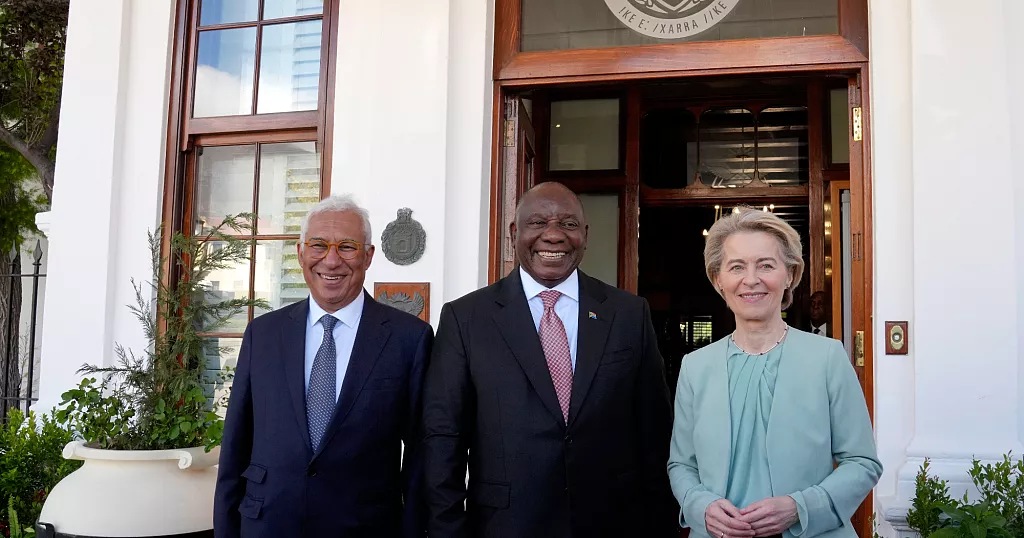
South Africa secures €4.7bn EU investment to boost economy
The European Union has committed €4.7 billion ($5.1 billion) to South Africa, aiming to enhance the country’s renewable energy transition and vaccine manufacturing.
This investment, announced during the first EU-South Africa bilateral summit in seven years, reflects a renewed focus on economic and political collaboration.
A Shared Journey of ReconciliationAt the summit, European Commission President Ursula von der Leyen underscored the similarities between South Africa and the EU, both of which overcame historical conflicts through reconciliation.
“South Africa remains an emblem of hope for the world,” von der Leyen stated. “Today, we are together announcing an investment package to mobilize €4.7 billion in South Africa.”President Cyril Ramaphosa reinforced the importance of global partnerships in upholding democracy and international law.
“This is the time to work together in defense of what we believe in—democracy, the rule of law, including the respect for international law and international humanitarian law,” Ramaphosa said.
As South Africa’s largest trading partner in sub-Saharan Africa, the EU seeks to strengthen economic cooperation. Von der Leyen stressed the importance of reliable partnerships and resilient supply chains.
“We want to strengthen and diversify our supply chains, but we want to do it in cooperation with you,” she said.
A significant portion of the investment is allocated to South Africa’s Just Energy Transition Partnership (JETP), a multilateral effort to reduce carbon emissions.
The EU’s commitment comes as the U.S. pulls back from a similar agreement.
“We know that others are withdrawing, so we want to be very clear with our support,” von der Leyen affirmed. “We are doubling down, and we are here to stay.”
Amid shifting geopolitical dynamics, the EU reaffirmed its support for South Africa’s leadership in the G20. Ramaphosa aims to use the country’s presidency to push for debt relief and climate financing for developing nations, priorities that have been sidelined by the U.S.
Relations between South Africa and the U.S. have become increasingly strained. Tensions escalated following South Africa’s legal challenge at the UN’s top court, accusing Israel—a key U.S. ally—of genocide in Gaza. In response, Washington imposed sanctions and cut financial aid, citing human rights concerns and alleged ties to groups such as Hamas and Iran.
Adding to the rift, U.S. Secretary of State Marco Rubio has avoided key G20 meetings hosted by South Africa and signaled that Washington will provide limited support for international cooperation through the bloc.
Trade Disputes Cast a Shadow Over DiplomacyWhile the EU-South Africa summit marked a deepening of economic collaboration, transatlantic tensions were also at play. U.S. President Donald Trump recently announced plans to impose a 200% tariff on European wine, Champagne, and spirits in retaliation against EU proposals to tax American whiskey.
Von der Leyen responded with a firm stance.
“We will defend our interests. We’ve said it and we’ve shown it, but at the same time, I also want to emphasize that we are open for negotiations.”
Despite global uncertainties, the summit underscored a growing EU-South Africa partnership focused on trade, energy, and governance.
-
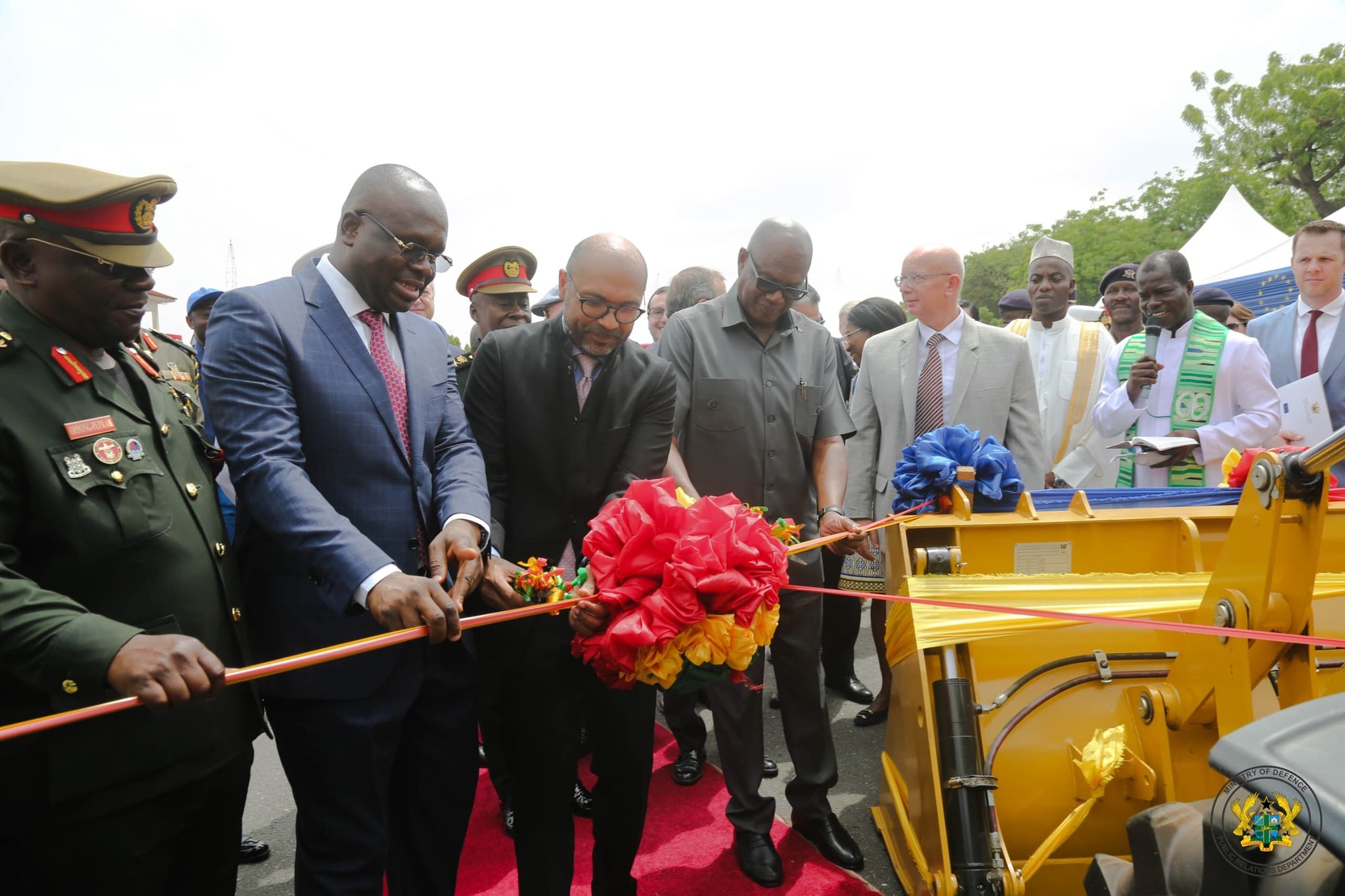
EU donates non-lethal equipment to GAF
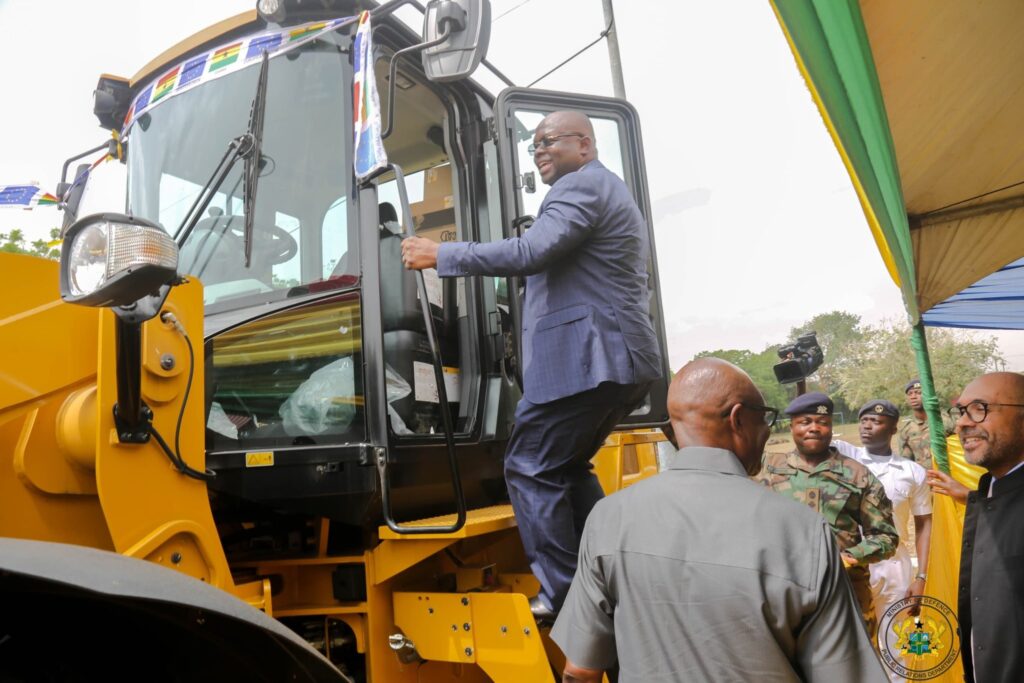
The European Union has donated a range of non-lethal equipment to the Ghana Armed Forces (GAF) to bolster their operational effectiveness and enhance national security efforts.
The donation, which includes civil engineering tools, advanced communication systems, and riverine assets, was officially handed over at a ceremony held at the 49 Engineer Regiment last week.
According to the Defence Minister, Omane Boamah, the equipment will play a crucial role in strengthening Ghana’s human security initiatives, supporting social interventions, and safeguarding vulnerable borders.
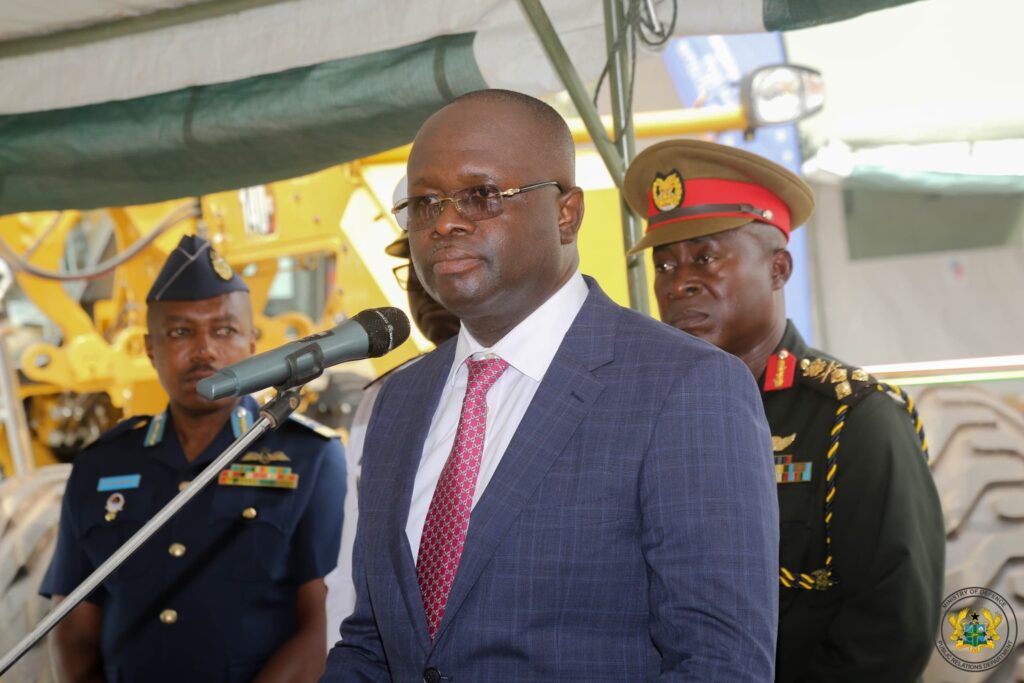
It is also expected to enhance the military’s capacity to counter emerging security threats.
The ceremony was attended by senior military officers, government officials, members of the diplomatic corps, and the media, who all acknowledged the significance of the collaboration in addressing Ghana’s security challenges.
-
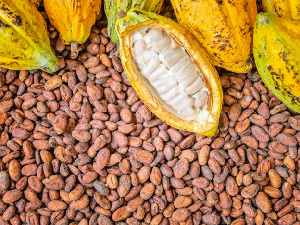
Ghana’s cocoa to undergo heavy metal screening by EU, Japan in September
Beginning September, the European Union (EU) and Japan will conduct heavy metal tests on cocoa exports from Ghana, citing contamination risks associated with illegal mining.
This development could have a significant impact on Ghana’s cocoa trade, particularly in key international markets.
At a conference on responsible small-scale mining, acting COCOBOD CEO Dr. Randy Abbey stressed the urgent need to address illegal mining, warning that it poses a serious threat to Ghana’s reputation as a top cocoa producer.
“The European Union and Japan have indicated that from September this year, they will begin testing for heavy metals, especially nickel, in our cocoa. The premium status of our cocoa, which gives us extra money, is under serious threat because they are starting with nickel. North America and most parts of Asia will follow shortly,” he cautioned.
Dr. Abbey also noted that COCOBOD will face increased financial pressure due to this new requirement.“As a result of this, COCOBOD will have to spend significant amounts of money to set up state-of-the-art laboratories at the Quality Control Center in Tema to meet the standards and test for these heavy metals. The testing is no longer just for moisture and other known factors.
“Now, they want to test for heavy metals because of the stories and the reality of the impact of illegal mining in cocoa-growing areas,” he explained.
As global buyers impose stricter rules, Ghana is under growing pressure to mitigate the environmental harm from illegal mining to safeguard its cocoa exports.
-
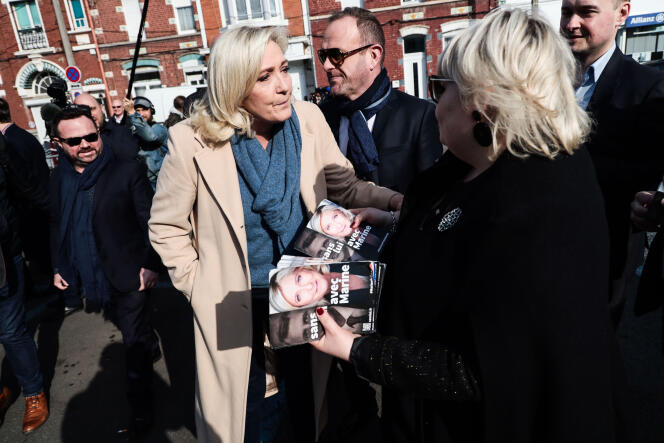
Marine Le Pen faces trial over alleged misappropriation EU funds
Leader of France’s far-right National Rally and a prospective presidential candidate, Marine Le Pen, is set to stand trial in Paris on Monday over allegations of misusing European parliamentary funds.
Alongside her, more than 20 top party officials face similar accusations, with prosecutors claiming they employed parliamentary assistants who were actually working on party activities instead of performing their roles for the European Parliament, which was financing them.
Should Le Pen be convicted, she could be subjected to fines, imprisonment, and possibly barred from holding public office for up to a decade, dealing a serious blow to her hopes of running for the presidency.
She has denied wrongdoing, and party spokesman Laurent Jacobelli said, “We are going to prove that there is no system to embezzle money from the EU.”
“We are going to prove that it is possible to be an assistant to a European parliamentarian and get involved in the life of the RN (National Rally),” the spokesman told French media on Monday.
Upon arriving at court, Marine Le Pen expressed confidence, maintaining that neither she nor her colleagues had broken any political regulations. Her father, Jean-Marie Le Pen, 96, the founder of the National Front (now the National Rally), is also facing charges but will not attend due to health reasons.
The case revolves around accusations of fraudulent employment arrangements dating back to 2015, covering parliamentary assistant contracts from 2004 to 2016.
Prosecutors claim that one of the individuals listed as a parliamentary assistant was actually serving as a bodyguard for Le Pen and her father.
They are seeking to reclaim over €3 million (£2.5 million), although the party has already reimbursed €1 million (£834,000), stating that this payment does not imply guilt.
The trial, anticipated to last nearly two months, comes as Le Pen, a former EU lawmaker and long-time party leader, prepares for a possible presidential bid in 2027.
She previously stepped down from leading the National Front in 2017 after running in the 2012, 2017, and 2022 presidential elections.
Le Pen’s political platform has focused on curbing immigration by limiting social benefits to French nationals and emphasising law enforcement and tax cuts.
Despite her party’s surprising third-place finish in the French parliamentary elections in June, where the left-wing bloc won the most seats, her party had recently secured a significant victory in the European Parliament elections. Following those elections, President Emmanuel Macron formed a right-leaning government.
-

FIFA faces lawsuit as European leagues, player unions accuse them of ‘abuse of dominance’
Premier League has joined the legal battle against FIFA over alleged “abuse of dominance” concerning the international football calendar.
The European Leagues organization, representing professional divisions in England, announced that a complaint will be submitted to the European Commission in collaboration with the players’ union FIFPRO Europe, citing competition law grounds.
FIFA’s decision to expand the Club World Cup to 32 teams from 2025, scheduling it after domestic and international matches conclude, has sparked concerns about the excessive demands placed on players due to congested schedules.
The Professional Footballers’ Association (PFA) has said of taking a stance against FIFA: “The complaint will explain that FIFA’s conduct infringes EU competition law and notably constitutes an abuse of dominance: FIFA holds a dual role as both the global regulator of football and a competition organiser.
This creates a conflict of interest, which, consistent with recent case law of the EU courts, requires FIFA to exercise its regulatory functions in a way that is transparent, objective, non-discriminatory and proportionate.
FIFA’s conduct in respect of the international match calendar falls well short of these requirements.
“This complaint, that will be formally filed by European Leagues, LaLiga, and FIFPRO Europe will run in parallel to separate actions initiated by individual leagues and player unions at national level.
The English, French and Italian player unions brought an action with the Brussels commercial court in June. European Leagues and FIFPRO Europe have already informed the European Commission of their decision and look forward to working closely with the Commission, relevant public institutions and football stakeholders throughout the investigation process.”
FIFA are yet to grant a mandatory 28-day break during annual off seasons, with league and player unions claiming that world football’s governing body has “consistently refused to include national leagues and player unions in its decision-making process”, while also asserting that “the international match calendar is now beyond saturation and has become unsustainable for national leagues and a risk for the health of players”.
FIFA will be fighting its corner and pointed out that current calendars have been unanimously approved by its ruling council. A statement given to Sky News reads: “The current calendar was unanimously approved by the FIFA Council, which is composed of representatives from all continents, including Europe, following a comprehensive and inclusive consultation, which included FIFPRO and league bodies.FIFA’s calendar is the only instrument ensuring that international football can continue to survive, co-exist, and prosper alongside domestic and continental club football.
Some leagues in Europe – themselves competition organisers and regulators – are acting with commercial self-interest, hypocrisy, and without consideration to everyone else in the world. Those leagues apparently prefer a calendar filled with friendlies and summer tours, often involving extensive global travel.
By contrast, FIFA must protect the overall interests of world football, including the protection of players, everywhere and at all levels of the game.”
-

Ghana’s exports to EU countries surged by 200 million euros in 2023
Ghana’s trade with the European Union (EU) showed promising trends in 2023, with exports to the EU rising by 8% to reach 2.6 billion euros, up from 2.4 billion euros the previous year.
The data from the Ministry of Trade and Industry indicates that in 2023, exports worth 200 million euros were recorded.
Meanwhile, imports from the EU to Ghana decreased from 3.7 billion euros in 2022 to 3.3 billion euros in 2023, reflecting an 11% decline.
The Ministry of Trade and Industry reported that the total trade volume between Ghana and the EU amounted to 6 billion cedis in 2023, underscoring the significant economic partnership between the two regions.
Speaking at the 2nd Ghana-EU Business Forum, Minister for Trade and Industry, KT Hammond, highlighted Ghana’s increasing export figures and assured investors of Ghana’s status as a favorable destination for investment.
“The 2023 export figures from Ghana saw an 8% increase, reaching 2.6 billion euros, while imports from the EU declined by 11% from 3.7 billion euros to 3.3 billion euros,” Minister KT Hammond noted during the forum.
The forum, themed “Fostering Investment in Non-Traditional Chains Under EU Global Gateways Strategy,” aimed to bolster trade and investment relations between Ghana and the EU.
It served as a platform for discussions on enhancing economic cooperation, particularly in non-traditional sectors aligned with the EU’s global strategy.
Deputy Director-General of the European Commission, Directorate-General for International Partnerships, Myriam Ferran, reiterated the EU’s commitment to advancing sustainable development goals through strengthened trade and investment ties with Ghana.
“This strategy underscores the EU’s commitment to collaborating with like-minded partners to build sustainable infrastructure and connectivity worldwide,” stated Myriam Ferran, emphasizing the EU’s role in fostering sustainable bonds through robust partnerships.
In a significant move, the European Union launched a 32 million Euros Special Measure on Manufacturing and Access to Vaccines, Medicines, and Health Technologies in Africa (MAV+) during the forum.
This initiative aims to bolster vaccine manufacturing and pharmaceutical industry development in Ghana, reflecting the EU’s proactive stance in supporting health infrastructure in Africa amidst global challenges.
-

EU announces 12% increase on Schengen visa for Ghanaians
The European Commission, a division of the executive branch of the European Union (EU), has announced a 12% hike in visa application fees for short-stay Schengen visas (type C) to its member nations, effective Tuesday, June 11, 2024.
Adult foreign nationals, including Ghanaians, are now required to pay €90, marking a €10 rise from the prior €80 fee for a Schengen visa.
Children aged 6 to 12 will also see an increase, with visa fees now set at €45, up by €5 from the previous €40 charge. However, visas for children under 6 will remain free, according to a report by graphic.com.gh.
The European Commission explained that the increase in the cost of Schengen visas is due to the “general Union-wide inflation rate and the weighted average of the salaries of Member States’ civil servants between July 1, 2020, and July 1, 2023.”
Schengen visas enable non-European Union citizens to visit any member country within the Schengen zone for up to 90 days within a 180-day period.
This visa facilitates travel across all Schengen countries during its validity but does not permit stays exceeding 90 days or engagement in employment/business activities within the zone.
The Schengen area comprises twenty-six European countries, including Austria, Belgium, Czech Republic, Denmark, Estonia, Finland, France, Germany, Greece, Hungary, Iceland, Italy, Latvia, Liechtenstein, Lithuania, Luxembourg, Malta, Netherlands, Norway, Poland, Portugal, Slovakia, Slovenia, Spain, Sweden, and Switzerland. These countries have abolished internal border controls.
Per media reports, visa agencies and travel firms can now opt to elevate their service charge for processing Schengen visa applications from €40 to €45.
Furthermore, the fee for extending a Schengen visa remains steady at €30.
-
EU criticises taxation on lottery winnings
European Lotteries have voiced opposition to government-imposed taxes on lottery winnings and levies on the gaming industry.
Speaking at a training program on responsible gaming hosted by the National Lottery Authority (NLA) in Accra, European Lotteries Head of Legal, Phillipe Vlaemminck, told the B&FT: “Lottery already benefits society in many positive ways, so it is important for some governments to reconsider taxing the industry.”
He argued that people want to play, and they want to ensure the small amounts that are won do not attract taxes.
Described as a game of chance that benefits society, Vlaemminck emphasised that it is very unnecessary for governments to tax winnings on the lottery, adding: “That is the standard in many places, such as the rest of Europe, the Americas and Asia, which are tax-free for winnings because the whole profit is given back to society.”.
The Ghana Revenue Authority (GRA) currently imposes a 10 percent withholding tax on all lottery winnings as income from lottery operations, along with a 20 percent tax rate on Gross Gaming Revenue (GGR).
Vlaemminck emphasised that when players lose, society benefits through developmental projects; lottery provides an opportunity for people to dream, and when they lose, society wins.
He also highlighted Ghana’s dynamic lottery market in Africa, praising the National Lottery Authority (NLA) as a leading gaming operator on the continent.
The European Lotteries commended the NLA for its deep commitment and interest in global industry developments, which enhances knowledge-sharing and positions the Authority as a responsible gaming operator.
During the training, the Director-General of the NLA, Sammi Awuku, stated that the program is crucial for helping the Authority track and crack down on illegal lottery strategies within the system.
Mr. Awuku explained that the certificated program will assist lotto marketing companies and private lotto operators in understanding the negative impacts of illegal lotto operations on their revenues and how they can support the NLA in curbing this issue.
He expressed the NLA’s willingness to collaborate with the European Lotteries in meaningful ways, including adopting AI and technology in the lottery industry.
The training included sessions on responsible gaming, combating illegal lottery operations, anti-money laundering, and the use of new technologies in gaming.
-

Israel must give reverence to UN court – EU Foreign Chief
The leader of the European Union’s foreign policy has said on Sunday that Israel needs to follow the decisions of the United Nations’ top court and stop its attack in the southern Gaza city of Rafah. They also asked if the authorities in the West Bank are involved in violence against Palestinians.
Palestinian Prime Minister Mohammad Mustafa got attention from two EU nations and Norway, who promised to recognize a Palestinian state. Josep Borrell urged Israel to stop withholding tax money meant for the Palestinian authorities.
At the end of the week, many people asked for Israel to change how it fights against Hamas in Gaza. The international community is putting pressure on Israel through court and diplomacy.
Borrell said that Israel has pushed the Palestinians to the edge of a disaster because the situation in Gaza is really bad. The West Bank is in danger and could explode at any moment.
While many people are focused on Gaza, we should also pay attention to what is happening in the West Bank where the Palestinian Authority is located.
We are seeing a lot more violence happening in a cycle. Extremist settlers are attacking aid going to Gaza without any care, and it’s hurting a lot of people. And they have a lot of weapons. “And the question is, who is giving them weapons. And who is not stopping this attack from happening,” Borrel asked.
Rights groups and Palestinians say Israeli forces protect armed settlers who attack Palestinian towns and nomadic communities.
Borrell said that the violence from the settlers is happening at the same time as Israel is building more settlements and taking more land.
Borrell also disagreed with Israel’s threats to cut off money to the Palestinians. On Wednesday, Finance Minister Bezalel Smotrich said he would stop giving money to the Palestinian Authority from taxes. This could make it hard for them to pay their employees.
In the 1990s, Israel collected taxes for the Palestinians, and then used the money to put pressure on the Palestinian Authority. After the attack by Hamas on Oct 7 that started the war in Gaza, Smotrich stopped sending money. But Israel decided to send the money to Norway, and Norway then sent it to the PA. Smotrich said on Wednesday that he was stopping that agreement.
Borrell said that money that has been unfairly kept should be given back. Norwegian Foreign Minister Espen Barth Eide was beside him when he said this.
Eide was in Brussels to give important papers to Mustafa before Norway formally recognizes Palestine as a state. This action has made Israel very angry, even though it does not have much impact.
Norway, Spain and Ireland will officially recognize a Palestinian state on Tuesday. These countries have been friendly with both Israelis and Palestinians and have supported the idea of a Palestinian state for a long time.
The three nations’ decision to support Palestinian officials is good news for them. They have been trying for many years to create their own country in east Jerusalem, the West Bank, and the Gaza Strip. These areas were taken over by Israel in the Mideast war in 1967 and they still control them.
âRecognition is really important to us. “It’s the most important thing anyone can do for the Palestinian people,” Mustafa said. “This is really good for us. ”
Around 140 countries, which is more than two-thirds of the United Nations, acknowledge that there is a Palestinian state. However, most of the 27 EU nations still do not recognize it. Some people have said they will know it when the time is good.
The EU, the United States, and Britain, and others support the idea of a separate country for Palestinians next to Israel. They believe it should happen as part of a peaceful agreement.
Belgium, who is in charge of the EU right now, said that the Israeli hostages held by Hamas should be released first and the fighting in Gaza should stop. Other governments support a new plan for two separate states, even though talks between Israel and the Palestinians broke down 15 years ago.
On Sunday, Israel was told by the United Nations to stop fighting in Gaza. This put more pressure on Israel, which is already feeling isolated.
A few days ago, the boss lawyer for the International Criminal Court asked to arrest Israeli leaders, including Prime Minister Benjamin Netanyahu, and Hamas officials.
The fighting in Gaza began when Hamas fighters crossed the border and attacked, killing 1,200 people and taking 250 people as hostages. Israel’s recent attack has led to the deaths of over 35,000 Palestinians, says Gaza’s Health Ministry. It has also created a major crisis and a severe food shortage. -

EU condemns Russia’s removal of border markers
The European Union (EU) has condemned Russia’s removal of buoys marking the border with Estonia on the Narva River.
Estonian officials reported that 24 out of 50 buoys placed to mark sailing routes were removed in the early hours of Thursday.
Tensions over the border have escalated since Russia’s full-scale invasion of Ukraine in 2022. EU foreign policy chief Josep Borrell stated that “such actions are unacceptable.”
“This border incident is part of a broader pattern of provocative behaviour and hybrid actions by Russia, including on its maritime and land borders in the Baltic Sea region,” he said in a statement.
Moscow has objected to the placement of floating markers, which are used to prevent boats from entering foreign waters, and has disputed the planned locations of approximately half of the 250 buoys, according to Estonia’s border guard service.
Estonian Prime Minister Kaja Kallas stated that she is seeking to clarify the situation with Russia.
She said it appeared to be part of a “broader pattern” of action by Moscow to use “tools related to the border to create fear and anxiety”.
Estonia’s foreign ministry said it had summoned Russia’s chargé d’affaires and said it was treating the move as a “provocative border incident”.
In a statement, Estonia demanded the “immediate return” of the buoys. This development follows a brief publication by the Russian defense ministry proposing a revision of its maritime border in the Baltic Sea earlier this week.
The proposal was deleted after causing concern among NATO members, including Estonia. Moscow has not yet commented on the matter.
-

EU gives Lebanon 1billion euros in aid amid surge in unlawful immigration
The European Union said on Thursday that they will give 1 billion euros (about US$1. 06 billion) to Lebanon. Some of the money will be used to strengthen border control to stop people from Lebanon coming to Cyprus and Italy.
The agreement is like other EU aid deals for countries like Egypt, Tunisia, and Mauritania to make their borders stronger. This is happening as more people in Lebanon are not being nice to Syrian refugees, and there are a lot more Syrian refugees leaving Lebanon and going to Cyprus without following the rules.
Ursula von der Leyen, the head of the European Union, said in Beirut with Cypriot President Nikos Christodoulides that the help will begin this year and continue until 2027.
The majority of the help, which is 736 million euros, will help Syrian refugees and other vulnerable people in Lebanon. Another 200 million euros will go to support Lebanese security services in controlling the borders and migration. These numbers were given by the Cypriot government.
Some money would be given to fishermen in Lebanon so they don’t sell their boats to smugglers.
Von der Leyen said the EU will also work on a “better plan to help Syrian refugees go back home” in cooperation with the UN refugee agency. The group will keep providing legal ways for refugees to settle in Europe, she said.
Lebanon’s temporary Prime Minister Najib Mikati liked the plan and said that if Lebanon is safe, then Europe is safe too. He also said that if the problem gets worse, it won’t just affect Lebanon, but it will also affect Europe.
Lebanon has been having a really bad financial crisis since 2019. There are almost 780,000 Syrian refugees who are officially registered in Lebanon, and many more who are not officially registered. Lebanon has the most refugees per person in the world.
Lebanese leaders have been asking other countries for a long time to help the refugees either move to a new country or go back to Syria, even if they don’t want to. Lebanon’s security forces have increased sending Syrians back to their country in the last year.
More problems started after a leader of the Lebanese Forces party, Pascal Suleiman, was killed last month in what military officials said was a failed car robbery by a group from Syria. The event caused some people to attack Syrians.
At the same time, officials in Cyprus say too many Syrian people are coming to their country without permission, especially by boat from Lebanon.
The UNHCR in Lebanon said that they confirmed 59 boats leaving with 3,191 passengers between January and mid-April, compared to only 3 boats with 54 passengers last year. Normally, only a small number of boats try to cross the much more dangerous water in the winter. In 2023, UNHCR saw 65 boats leave with 3,927 people on board.
Cyprus has a new plan to stop the arrival of migrants. Last month, Cyprus stopped accepting Syrian asylum requests. Human rights groups say the Cypriot coast guard sent back five boats with around 500 asylum seekers from Lebanon. Cypriot officials said that it is not true.
Bassel al-Shayoukh, a Syrian refugee from Idlib, has been living in Lebanon since 2014. He said his brother and some relatives were on a boat that was sent back. Now he wants to go on the journey by himself.
“At first, I thought the war in Syria would end in a year or two,” he said. But it continued for a long time. In Lebanon, the same thing happened every year. Things started to get even more bad.
Shayoukh said he is worried about getting hurt by people who are trying to enforce the law or being sent back to Syria after Lebanese authorities refused to extend his permit to stay in the country.
His 17-year-old nephew, who didn’t want to say his name because he was afraid for his safety, said the Cypriot coast guard started moving their boat away by making waves. “I was really scared. ” “I can’t swim,” he said. “I believed we were going to be killed. ”
The people on the boats didn’t have any food or water for three days. Then they went back to Lebanon. The teen said that.
In Lebanon, the army arrested them; the ones with UNHCR were let go and the rest were sent out of the country.
Mohammed Sablouh, a lawyer in Lebanon who helps refugees and migrants, says the Lebanese government is ignoring the increase in migration on purpose to put pressure on the rest of the world.
The Lebanese army didn’t answer when asked about what they’re doing to stop smuggling.
On Thursday, they announced aid before the yearly fundraising conference for the Syrian crisis in Brussels at the end of the month. After 13 years of fighting, people are tired of donating money while everyone is focused on helping people affected by wars in Ukraine and Gaza.
The president of Cyprus said that Thursday was a very important day. He asked European officials to make some areas in Syria safe for people to go back to.
The situation in Lebanon cannot continue like this. It’s not good for Cyprus, and it’s not good for the European Union, Christodoulides said.
However, some Lebanese officials don’t think that the European aid will fix the problem.
Lebanese Forces leader Samir Geagea told The Associated Press this week that European authorities are mainly worried about refugees not going to Europe.
“We have a problem because we can’t have a lot of Syrian refugees coming to our country illegally,” Geagea said. He wants the Syrians to go back to areas in Syria that are controlled by either the government or opposition.
But Shayoukh says he doesn’t have anywhere to go.
The government in Damascus is after him because he is against the Syrian President Bashar Assad. He also said that the Islamist group in his hometown is acting like the government’s intelligence services in silencing people who disagree with them. -

Azumah Nelson ‘fights’ EU Ambassador tomorrow
Azumah Nelson, a boxing legend, is set to step back into the ring on Saturday, May 4, marking his return after nearly two decades since his last exhibition fight.
In this special event dubbed “Diplo-Rumble,” Azumah Nelson, a three-time former World Champion, will spar against European Union Ambassador Irchad Razaaly.
The exhibition match aims to showcase the transformative power of sports in nurturing positive change among youth.
Taking place at the Bukom Boxing Arena in Accra, “Diplo-Rumble” is a highlight of the partnership between the European Union and Ghana, coinciding with the annual Europe Month celebrations.
The event will draw boxing enthusiasts, members of the diplomatic corps, government officials, and aspiring young boxers.
Tickets for the event are priced at GH¢5, with all proceeds dedicated to acquiring equipment for youth boxers.
At a face-off event in Accra, the EU Ambassador to Ghana, Irchad Razaaly, said, “Boxing is a sport that requires discipline, dedication, and, above all, mutual respect. It is a sport that transcends language, culture, and nationality, allowing individuals from all walks of life to come together and compete on a level playing field.”
“The European Union recognises the power of sports to break down barriers and empower all those who show talent and commitment. That is why we are working with Azumah Nelson and the Ghana Boxing Federation to promote sports diplomacy and support the talented youth of Ghana.
The event will be a highlight of our 2024 Europe Month celebrations, which are focused on youth and skills,” he added.
Azumah “Zoom Zoom” Nelson also commented, “I am a firm believer in the power of sports diplomacy. Throughout my career, I have seen first-hand the incredible impact that boxing can have in bringing people together, fostering understanding, and promoting peace.”
“As a proud ambassador of boxing, I am passionate about using this sport as a platform for promoting dialogue and creating opportunities for our younger generations. Sports helps to break down barriers, and build bridges.”
-
We know Ghana will not sign anti-LGBT+ Bill – EU
The European Parliament has conveyed trust in Ghana’s adherence to its human rights commitments, expressing hope that the controversial Promotion of Human Rights and Family Values Bill, commonly referred to as the Anti-LGBT+ bill, will not be enacted into law.
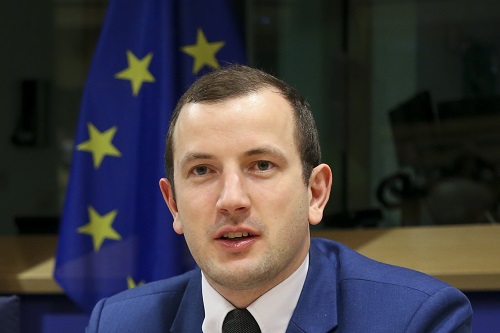
Commissioner for Environment, Oceans, and Fisheries, Virginijus Sinkevičius, speaking on behalf of High Representative/Vice-President Josep Borrell, underscored the EU’s position in a speech. He highlighted Ghana’s ongoing dedication to human rights, which has faced scrutiny following the bill’s passage in the Ghanaian Parliament.
“The constitutionality of the Bill has been challenged and it is currently scrutinised by the Supreme Court. It is also to be noted that the Bill also still requires presidential assent to enter into force.
The President has publicly reiterated his commitment to the respect of Human Rights and has expressed his concern about seeing a ‘backsliding‘ on human rights in the event of the adoption of the Bill.
“Senior members of the Ghanaian Government have also highlighted the Bill’s potential financial consequences and losses for the 2024 budget.
“We are, therefore, confident that Ghana will stand firm in the commitments it has made on national and international Human Rights,” he stated.
After enduring years of deliberation in parliament and navigating through various stages, the bill faced persistent opposition and efforts by its opponents to either nullify it entirely or at least amend certain sections. Nevertheless, on February 28, 2024, parliament ultimately passed the bill.
Amid mounting concerns surrounding the legislation, President Nana Addo Dankwa Akufo-Addo has opted to await the Supreme Court’s ruling before making a decision regarding the bill’s assent.
-
COCOBOD worried about cost of new EU regulations on deforestation for farmers
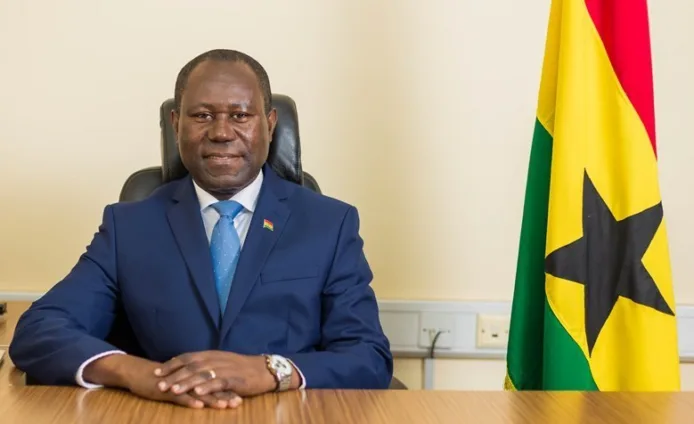
The Chief Executive Officer of Ghana Cocoa Board (COCOBOD), Joseph Boahen Aidoo, has expressed serious concerns about the implementation of the new EU Regulations on Deforestation and its potential cost implications for farmers and producing countries.
The new regulations require producing countries to comply with strict measures aimed at protecting the environmental ecosystem, leading to sustainable and ethically sourced cocoa.
While acknowledging the noble intentions behind these regulations, which align with efforts already underway in some countries, such as Ghana, there are significant ethical and economic concerns. Countries like Ghana, Cote d’Ivoire, and Cameroon are grappling with the question of who will bear the extra costs of compliance.
Ghana, for instance, had already initiated and completed the Cocoa Management System (CMS), a critical requirement for the cocoa traceability system, with full roll-out planned for October this year.
However, Joseph Boahen Aidoo emphasized that the cost implications of compliance cannot be overlooked. It has the potential to not only increase the cost of cocoa but also pose social and economic challenges to farmers already struggling with difficult economic conditions in their respective countries.
“Ghana is very much aligned to implementing the European Union regulations but this will come at a cost to farmers and producing countries which is likely to increase the cost of cocoa from Ghana, Cote d’Ivoire and Cameroun,” Mr Boahen Aidoo emphasised on Tuesday during a panel discussion at the ongoing World Cocoa Conference in Brussels, Belgium.
Mr. Boahen Aidoo emphasized that well before the EU contemplated the new regulations, producing countries, notably Ghana, had already taken steps to tackle the numerous challenges linked to climate change and its impact on production.
“Yes, the regulations are meant to enhance the awareness of sustainable production, but for us we were already bothered about the way climate change was affecting production and disrupting local activities, so even before the idea of the regulations were conceived, Ghana had already started mapping farms which is another element because without the polygon maps you cannot trace the source of the cocoa,” he stressed.
However, he noted that the new regulations overlook issues related to costs and the responsibilities for the expensive technologies and tools required to implement these programs. He pointed out that these costs are prohibitive for individual farmers to bear.
“So now the conclusion is that having done all that, who pays for the cost, right from the polygon maps, bringing in the technology and the training because you need real time data to make it work, which means that since this has not been factored in the new EU regulations, the operator has to pay and this is going to make cocoa from Ghana, Cote d’Ivoire and Cameroun very expensive.”
In light of this, some argue that the burden of paying for the cost of compliance should be shared, with a portion borne by the wealthier nations that consume the majority of the cocoa produced.
Given the significant investments required for compliance and the economic pressures faced by producing countries, proponents of this view believe that the EU and other developed countries should be willing to support cocoa-producing countries in their efforts to source cocoa ethically and sustainably.
-

Azumah Nelson to battle EU Ambassador on May 4 exhibition match at Bukom Boxing Arena
Legendary boxer Azumah Nelson is set to step into the ring once again, this time facing off against Irchad Razaaly, the European Union Ambassador to Ghana.
Scheduled for Saturday, May 4, 2024, the exhibition match will take place at the Bukom Boxing Arena in Accra.
This event is part of the EU Month celebrations slated for May, with the bout carrying the theme “Diplo-Rumble: Empowering Youth Through Sports.” The aim of the match is not only to showcase the boxing prowess of young athletes from Bukom but also to promote youth empowerment through sports.
“The European Union Delegation to Ghana is proud to announce a series of events that will highlight the importance of youth and skills development in the European Union-Ghana partnership,” said Mr Razaaly, EU Ambassador to Ghana.
Another significant event lined up for the EU Month celebrations is the annual partnership dialogue between the EU and the Government of Ghana, scheduled for May 6.
Chaired by Vice President Dr. Mahamudu Bawumia, this dialogue will bring together ambassadors from EU member states accredited to Ghana, along with representatives from government institutions such as the Ministry of Finance (MoF) and the Ministry of Foreign Affairs and Regional Integration (MFARI).
The agenda for this meeting includes discussions on trade, security, and sustainable development, aiming to strengthen Ghana-EU relations.
Following this dialogue, the annual Europe Day Reception will take place on May 9 at the EU Ambassador’s Residence in Accra.
This reception, known as one of the largest diplomatic gatherings in Accra, promises to be a noteworthy event during the EU Month celebrations.
-

EU official calls on G7 to strengthen air defence for Ukraine
The EU’s top diplomat has asked G7 foreign ministers to quickly give Ukraine more air defence systems. He said taking too long could make the war go in Moscow’s favor.
If we don’t have more Patriot air defense missiles to protect against Russian attacks, Ukraine’s power system will be ruined. EU foreign policy chief Josep Borrell said that no country can fight without electricity at home, in the factories, and in the front line.
He was talking at a meeting with G7 foreign ministers on the Italian island of Capri. They were discussing Russia’s war in Ukraine and the growing tensions in the Middle East because of Iran’s attack on Israel.
Secretary of State Antony Blinken agreed with Borrell’s request, and said that he wanted the U. Sto also do the same. Congress has agreed to give money to Ukraine, but other countries also need to help out.
“At this time, it’s really important for all the people who support Ukraine to do everything they can to help Ukraine defend itself against Russian aggression,” Blinken said after talking to Ukrainian Foreign Minister Dmytro Kuleba.
The Italian Foreign Minister, Antonio Tajani, wants to impose more punishments on Iran for its recent attack and to give real support to Ukraine to defend itself from Russia’s invasion.
“Tajani said that if Ukraine doesn’t win, Putin won’t talk about peace. ”
Foreign ministers from several countries were meeting in Capri to talk about wars in Ukraine and between Israel and Hamas. They wanted to send a united message about these conflicts. On Wednesday, leaders from the European Union met in Brussels and promised to increase punishments on Iran for sending drones and missiles to groups in Gaza, Yemen, and Lebanon.
Borrell said the EU will make the sanctions stronger and add more to punish Tehran and stop future attacks on Israel. He also said that Israel should be careful.
“I don’t want to make it sound worse than it is, but we’re very close to a war in the Middle East. It could have big effects on the rest of the world, especially in Europe,” he cautioned. “Please, don’t do it anymore. ”
Kuleba and NATO’s Jens Stoltenberg were at the Capri meeting as visitors. Kuleba said his country needs important help with military equipment like guns, bullets, and defense systems because Russia is moving closer to the border.
He said thank you to Germany for giving Ukraine a new Patriot battery. He also asked the US Congress to approve some money that has been delayed.
“We will work with other countries to help Ukraine get air defence systems. ” “Kuleba said it’s really important. ”
President Joe Biden approved a plan to give Ukraine $61 billion in aid. This shows that both Democrats and Republicans support the funding bill.
Blinken said he wants the bill to be discussed in the House this weekend and emphasized that the US cares a lot about Ukraine doing well.
“If Putin isn’t stopped, he will not only attack Ukraine but also continue with more aggression,” Blinken said after talking with Kuleba. “Other countries might see this and decide to start their own attacks. ” And there will be a lot of fighting and not a lot of peace and safety.
Borrell agreed and said Europe needs to help Ukraine defend itself, not just rely on Washington.
“He said we need to make clear decisions to send more air defense to Ukraine. ” We have Patriots and anti-missile systems. We need to move them from our base to Ukraine to help in the war that is happening there. I think we will do it, but we need to do it fast. -
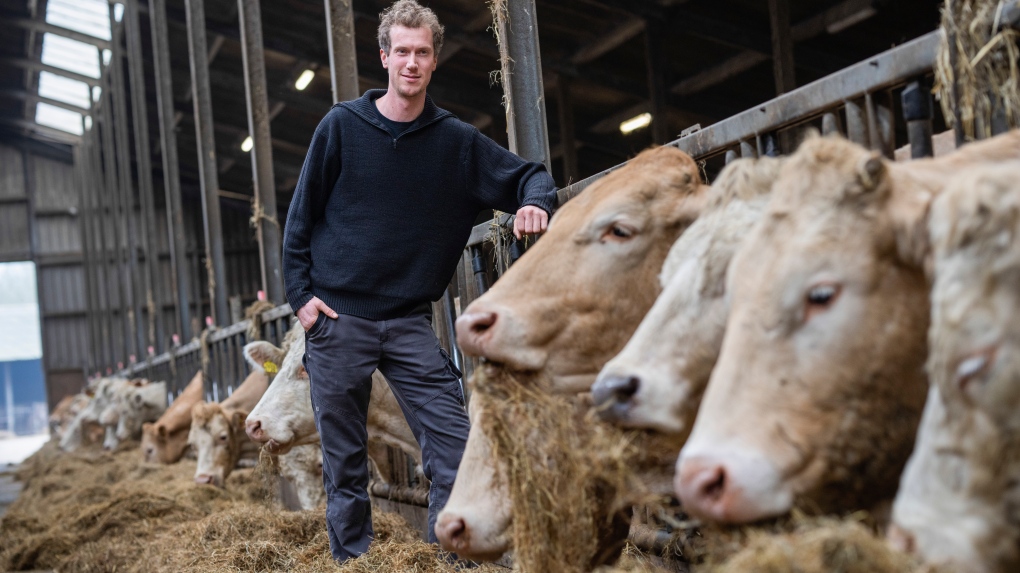
Farmers in Netherlands demonstrate against EU regulations
In a barn in the flat fields of the northern Netherlands, Jos Ubels is holding a new baby cow called Blonde d’Aquitaine. It is the newest animal to join his group of over 300 dairy cows.
Europe is making farmers like Ubels follow more rules to help with climate change. He spends one day each week dealing with paperwork for the European Union and government officials. They want to decide when farmers can plant and harvest crops, and how much fertilizer or manure they can use.
At the same time, foreign products that are cheaper are lowering the prices for their crops, even though they don’t have to follow the same rules. Mainstream political parties didn’t help farmers with their problems for many years, according to Ubels. Now the extreme right is getting involved.
In many countries in the EU, like Finland, Greece, Poland, and Ireland, farmers are getting more and more upset as the June EU parliamentary elections get closer.
Ubels is the second leader of the Farmers Defence Force, which is one of the most well-known groups to come out of the movement. The FDF started in 2019 and now also exists in Belgium. Its symbol is a crossed double pitchfork. It is linked to similar groups in other EU countries and is leading a planned protest in Brussels on June 4. It wants 100,000 people to come to the EU capital and influence the election results.
Ubels said we should stand up and fight back now. “We’re finished with being quiet and doing as we’re told. ”
Did he stop believing in democracy. “No” I no longer believe in politics. And that is one step away.
The FDF is saying that they are losing confidence in the law.‘Don’t give up’
In March, angry farmers from Belgium caused chaos at a protest outside EU headquarters in Brussels. They set fire to a subway station entrance and threw eggs and liquid manure at the police. In France, people tried to break into a government building to protest.
In a video from another protest, FDF leader Mark van den Oever said he was disgusted by two politicians and that they would soon be the focus of attention. The FDF denies that this was a threat of physical violence.
In the EU, during the winter, groups of tractors stopped ships from coming into ports and blocked big roads. This happened for a few days and was one of the most serious protests by farmers in 50 years.
Farmers and the European Union have not always gotten along well. What’s different now is that people are moving more toward the very conservative side.
After World War II, Europe was very poor and hungry, especially during the winter. They really needed to make sure they had enough food. The EU helped make sure there was plenty of food for the people and helped farmers sell their products to other countries. They also give farmers more than 50 billion euros each year.
However, even though farming is very important, the EU knows that farmers make about 40% less money than people who don’t work on farms. Also, 80% of help goes to only 20% of the farmers who are well-off. Many of the 8. 7 million farm workers in the bloc are poor or almost poor.
The EU wants to make strict rules to protect the environment and farming as part of its plan to stop climate change by 2050. Farming in the EU produces a lot of greenhouse gases, like nitrous oxide from fertilizers, carbon dioxide from vehicles, and methane from cows. These gases make up over 10% of all greenhouse gas emissions in the EU.
Reducing these emissions has made farmers make sudden changes to their usual practices during a time when they are already struggling financially. The cost of things and people’s wages are higher because of the COVID-19 pandemic and rising prices. Farmers are making less money because people are spending less.
And then there is a war happening in the neighboring country. After Russia invaded Ukraine in February 2022, the EU allowed Ukraine to import agricultural goods without paying tariffs. Some of these goods don’t have to meet the EU’s strict environmental rules. Imports increased a lot from 7 billion euros in 2021 to 13 billion euros the next year. This caused too much of the products and lower prices for farmers, especially in Poland.
Marion Maréchal, a candidate for France’s extreme right Reconquest. party, told farmers at a protest to keep going and not give up. This happened earlier this year. “You have to be outside on the roads. ” You need to speak up and be noticed. “You have to,” she tried to say, but was interrupted by people shouting “Don’t give up. Don’t give up. “ -

European Commission to suggest EU-Bosnia accession negotiations
The European Commission wants the European Union to start talks with Bosnia and Herzegovina about joining.
On Tuesday, President Ursula von der Leyen said the EU will ask countries to start talks with Sarajevo, even though there are still ethnic divisions in the Western Balkans. This is because the West is concerned about the increasing influence of Russia and China in the region.
Bosnia, along with five other countries (Albania, Serbia, Kosovo, Montenegro, and North Macedonia) in the Western Balkans, are working to join the European Union.
In the 1990s, there were some attempts to bring six countries together to stop the wars and problems in the region. But people are getting impatient because there hasn’t been much progress for a long time.
However, Russia’s attack on Ukraine and efforts by Moscow and Beijing to gain more influence are making the West pay more attention and are encouraging EU officials to speed up the process.
“We have learned that we can’t just wait for the Western Balkans to get closer to us,” von der Leyen told the European Parliament. “We can’t just say the door is open. ” We should also support them in every way on their journey to join our group.
EU leaders will talk about the suggestion at a meeting in Brussels next week. There’s a chance that the member states won’t support it because Milorad Dodik, a pro-Russian leader who wants to separate Bosnia, is still working against the presidency and other government jobs in the country.
Bosnia is still divided into different ethnic groups, even after the war in the 1990s. In December, Dodik said he wanted to continue making the country weaker until it breaks apart.
The European Commission plans to suggest that the European Union start talking with Bosnia and Herzegovina about joining.
On Tuesday, President Ursula von der Leyen said the EU wants to start talks with Sarajevo, even though there are still divisions between ethnic groups in the Western Balkans. This is because the West is concerned about Russia and China’s increasing influence in the region.
Bosnia is one of six countries in the Western Balkans that are in the process of joining the EU. The other countries are Albania, Serbia, Kosovo, Montenegro, and North Macedonia.
In the 1990s, people tried to bring six countries together to stop the wars and problems in the region. But now, people are getting frustrated because there hasn’t been any progress for a long time.
But Russia entering Ukraine and gaining influence is making Western countries pay more attention and pushing EU officials to speed up their work.
“We have found that we can’t just sit and wait for the Western Balkans to get closer to us,” said von der Leyen to the European Parliament. “It’s not okay to just say the door is open. ” We must help and support them as they work towards joining our union.
EU leaders are going to talk about the suggestion at a meeting in Brussels next week. Member states may not approve it because Milorad Dodik, a pro-Russian, separatist Bosnian Serb leader, keeps working against the presidency and other political roles in the country.
Bosnia is still divided by different ethnic groups, even many years after the war in the 1990s. In December, Dodik said he wanted to keep making the country weaker until it breaks apart.
Bosnia became a candidate to join the EU in 2022. Countries who want to join the group must follow a long process to make sure their laws and standards are the same and show that their government and economy are fair and follow the rules of democracy.
Von der Leyen said Bosnia still needs to improve but has also made big progress.
She said that more has been accomplished in a little over a year than in more than ten years. “First, Bosnia and Herzegovina now completely agrees with our foreign and security plans, which is very important in times of political unrest. ”
She also said good things about the country for working hard to stop illegal money activities, supporting terrorism, and controlling how people move into the country.
“The country is proving that it meets the requirements for membership and that its people want to be part of our family,” she said. “The message from Bosnia and Herzegovina is easy to understand. ” We need to make sure our message is easy to understand. The future of Bosnia and Herzegovina depends on us working together.
Bosnia is maybe the weakest of the Balkan countries. There are still problems between different ethnic groups even after the 1992-95 war, where many people died and millions had to leave their homes. -
EU slaps Apple with US$2 billion fine over music streaming competition
The European Union has fined Apple for breaking antitrust rules on Monday. The fine is the first of its kind for Apple in the EU. A big technology company has to pay almost 2 billion dollars for not being fair to other music streaming services.
Apple stopped app developers from telling iPhone and iPad users about cheaper music subscriptions that they can get outside of the app. This was said by the European Commission, who are in charge of making sure there is fair competition between companies in the European Union.
That is against the law according to EU rules about competition. Apple behaved this way for almost ten years, which meant many people paid much more money for music streaming subscriptions, according to the commission.
Five years ago, Swedish streaming service Spotify complained about something, and now the company has been ordered to pay a 1. 8 billion euro fine after a long investigation.
The EU is working to make Big Tech companies follow the rules. They fined Google a lot of money and are also accusing Meta of messing with online ads. The commission is also looking into whether Apple’s mobile payments service is breaking antitrust laws.
Apple responded strongly to the commission and Spotify, saying it will challenge the fine.
The company said that the decision was made even though the Commission didn’t find any real evidence that consumers were being hurt. The decision also doesn’t consider the fact that the market is doing well, has lots of competition, and is growing quickly.
Spotify is expected to gain from the decision. They have a large share of the music streaming market in Europe and have been in talks with the commission many times over the years. They do not pay Apple for using its App Store.
“Surprisingly, the decision made today only makes a successful European company even stronger in the digital music market,” Apple said.
The committee’s investigation first focused on two things. Apple makes app developers use its own payment system, which charges a 30% fee on all subscription sales.
However, the EU changed their focus and are now looking at how Apple stops app creators from informing their users about cheaper ways to pay for subscriptions without using an app.
The investigation discovered that Apple stopped streaming services from telling users about the cost of subscription offers outside of their apps. This also included not allowing links in their apps for users to pay for other subscriptions or sending emails to inform users about different pricing options.
The fine comes at the same time as new EU rules aimed at stopping big tech companies from controlling online markets are about to start.
The Digital Markets Act starts on Thursday and gives rules to big companies like Apple, Meta, Google, and ByteDance. They could get big fines if they don’t follow the rules.
The DMA’s rules are meant to stop big tech companies from doing the same things that Apple is being investigated for. Apple has said it will follow the rules in Europe by letting iPhone users use different app stores and allowing developers to use other payment methods.
The commission is also looking into whether Apple’s mobile payments service is unfair to other companies. Apple has said it will let other companies use its tap-and-go mobile payment system to try to solve the problem. -
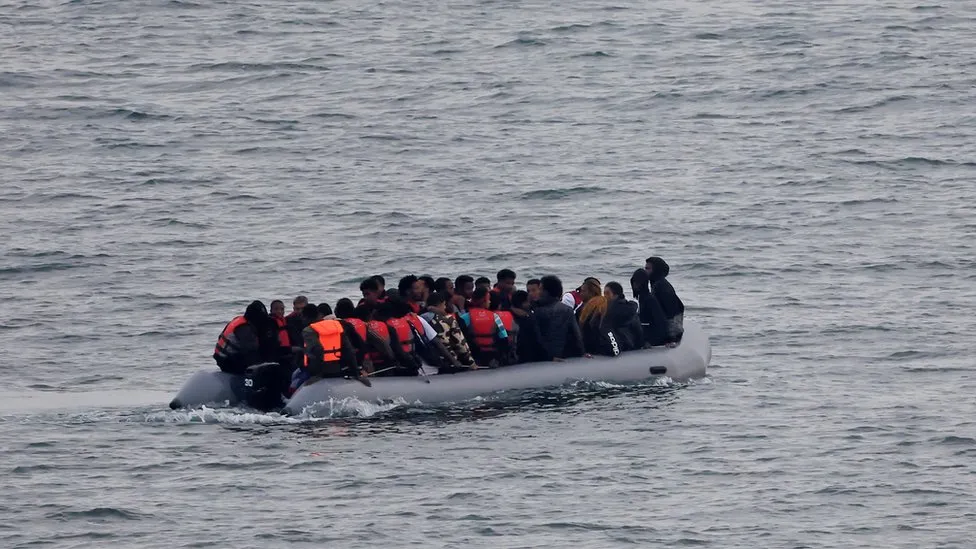
UK and EU to ink new agreement to address minor boat crossings
The UK is making an agreement with the EU’s border agency to work together to stop small boats from crossing the English Channel.
We made a deal with Frontex to share more information and knowledge.
This is the newest step in a plan to work together to stop illegal immigration.
Last year, about 30,000 people moved from France to the UK by crossing the Channel. This was a decrease of one third from 2022.
However, the overall amount was still the second highest number ever.
The agreement involves training for the UK and EU border agencies to learn from successful strategies in other countries, working together to create new technologies, and sending staff to both sides to coordinate efforts to prevent people from crossing the border.
Frontex and UK Border Force officials will sign the agreement in London. The Home Secretary and the European Commissioner for Home Affairs will also be there.
Mr Cleverly said that immigration crime and people smuggling are big problems all around the world, and we need to work together to find solutions.
“Our important agreement with Frontex and the UK is a big move in stopping illegal migration, keeping our borders safe, and preventing boats from coming in. ”
The home secretary said on BBC Radio 4’s Today programme that the deal is about sharing information and cooperating on operations, not about sending migrants back to their home countries.
He said the government is thinking about making agreements with more countries to return people, like they did with Albania in December 2022.
Lucy Moreton, who represents border force staff, said that the deal will not address the bigger problem of migration because it does not include a returns agreement.
She said Today that the UK would not regain access to the Eurodac database after Brexit.
The database keeps the fingerprints of asylum seekers and migrants who have come into a European country. This can prove that they have permission to live in other countries and help them go back.
Last year, the Prime Minister Rishi Sunak said that stopping the boats was one of his five main goals.
Up to now, 1,716 people have crossed the dangerous way this year, which is less than the 2,720 people in the same time last year.
In May, Mr Sunak and European Commission President Ursula von der Leyen agreed to work together to stop small boats from crossing the UK-EU border. Now they have made a deal to put their agreement into action.
In March, the UK agreed to give France almost £500m over three years to help hire more police officers and build a new jail. -

EU launches formal probe into TikTok for potential online content violations
The European Union will conduct an investigation into whether TikTok, owned by ByteDance, violated online content regulations designed to safeguard children and ensure transparent advertising, an official announced on Monday.EU industry chief Thierry Breton made the decision following a review of TikTok’s risk assessment report and its responses to information requests, corroborating a report by Reuters. This move places the social media platform at risk of facing substantial fines.
“Today we open an investigation into TikTok over suspected breach of transparency & obligations to protect minors: addictive design & screen time limits, rabbit hole effect, age verification, default privacy settings,” Breton said on X.
“The publications that are going around are false, the majority caucus has not made any changes to its leadership, and the majority caucus has not contemplated making any changes to its leadership and we want to tell you to ignore any such publication,” he said, when the majority caucus addressed the media in Parliament on Tuesday [Feb 20, 2024].
He said the majority caucus was confident in their leadership and that the “the status quo shall remain.”
The European Union’s Digital Services Act (DSA), which came into effect on February 17, mandates stringent measures for all online platforms, especially large ones like TikTok, to combat illegal online content and ensure public safety.
ByteDance, the parent company of TikTok based in China, could be subject to fines up to 6% of its global turnover if TikTok is found to have violated DSA regulations.
TikTok affirmed its commitment to collaborating with experts and the industry to ensure the safety of young users on its platform. The company expressed readiness to provide a detailed explanation of its efforts to the European Commission.
“TikTok has pioneered features and settings to protect teens and keep under 13s off the platform, issues the whole industry is grappling with,” a TikTok spokesperson said.
The European Commission said the investigation will focus on the design of TikTok’s system, including algorithmic systems which may stimulate behavioural addictions and/or create so-called ‘rabbit hole effects’.
The investigation will also examine whether TikTok has implemented adequate and proportionate measures to safeguard the privacy, safety, and security of minors. Additionally, the Commission is scrutinizing TikTok’s provision of a dependable database on advertisements to enable researchers to analyze potential online risks.
This investigation follows the second inquiry under the Digital Services Act (DSA) since Elon Musk’s social media platform, X, faced scrutiny from the EU in December last year.
The investigation will also examine whether TikTok has implemented adequate and proportionate measures to safeguard the privacy, safety, and security of minors. Additionally, the Commission is scrutinizing TikTok’s provision of a dependable database on advertisements to enable researchers to analyze potential online risks.
This investigation follows the second inquiry under the Digital Services Act (DSA) since Elon Musk’s social media platform, X, faced scrutiny from the EU in December last year.
-
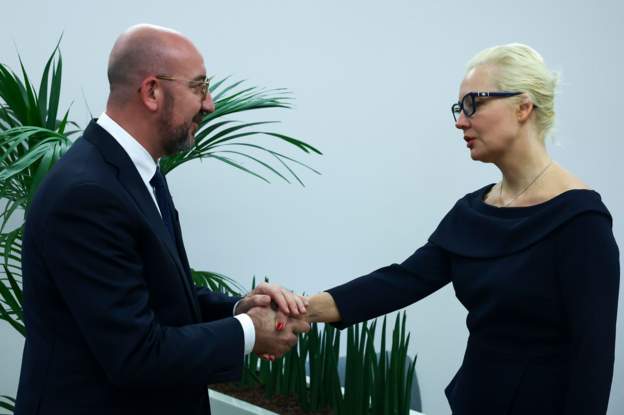
EU representatives meet with Yulia Navalnaya
As we mentioned before, Yulia Navalnaya is in Brussels to meet with EU officials at the Foreign Affairs Council.
We have received photos of her shaking hands with European Council President Charles Michel, before going into a private meeting.
Maria Pevchikh, a Russian journalist and anti-corruption activist who has collaborated with Alexei Navalny, is also attending the meeting.
We will give you all the information as we receive it. -

EU leaders announce a €50 billion aid package for Ukraine
All 27 leaders of the European Union agreed to give Ukraine a €50 billion aid package after Hungary had initially stopped the agreement.
The President of Ukraine, Volodymyr Zelensky, is happy about the new money. He thinks it will make the country stronger financially.
Ukraine’s economy ministry said it thinks it will get the first part of the money in March.
People were worried that the Prime Minister of Hungary would once again stop the deal, like he did at a meeting in Europe last December. Viktor Orban, who is a close friend of the Russian president Vladimir Putin in the European Union, said he wants to make the EU change its policy towards Ukraine. He also questioned the idea of giving money to Kyiv for the next four years.
The package will give money to cover pensions, salaries, and other expenses for the next four years. The US Congress is delaying military help for Ukraine.
They announced the agreement shortly after the meeting started. This surprised many people because they thought the discussions would take a long time, as Mr. Orban and the other EU leaders had very different opinions.
A source who works in diplomacy told Reuters that the new agreement includes talking about it every year and checking it again in two years, if necessary.
Mr Orban wanted to vote on the package every year. But this could have allowed Hungary to stop the deal every year.
“A good day for Europe,” said Ursula von der Leyen, the president of the European Commission, on X.
Ukraine’s President Volodymyr Zelensky thanked the leaders of the European Union. He mentioned that the decision was made by all 27 leaders. He also said that the package would help make Ukraine’s economy and money more stable for a long time.
The money was really important for Ukraine’s finances, and it also needs Europe to keep supporting it.
Ukraine’s Foreign Minister Dmytro Kuleba said that Europe needs to invest in its own security. He said that Ukraine is standing up to Russia for everyone – stopping Vladimir Putin from trying to change the world by using force.
Polish Prime Minister Donald Tusk didn’t like how Mr. Orban was acting, and said on X that maybe Viktor Orban could be convinced to change his mind. “Let’s” -

Apple to permit competing app shops on iPhones in EU
Apple will let people in the EU use different app stores on their Apple devices from March.
Right now, people with an iPhone or iPad can only get apps from the company’s App Store.
Apple says its rules keep users safe.
However, some people say that it unfairly controls the market, forces customers and developers to use only its services, and charges developers a fee of up to 30%.
This means that if developers don’t follow Apple’s rules or don’t want to pay fees, they can’t reach the millions of people who use Apple products.
The UK will not make the changes right now. But they are working on a new law that might make Apple follow the same rules.
Epic, the company that makes Fortnite, took their popular game off the App Store because they didn’t agree with the store’s rules. You can’t find it on the App Store since 2020, but you can still play it on the internet.
In theory, this change could allow iPhone users in Europe to download the Fortnite app from a different app store.
The change happens as the EU’s Digital Markets Act starts working. The new law is meant to make sure big companies that control things like search engines and app stores play fair and don’t give unfair advantages to smaller businesses.
Apple also said it will let people in the EU choose a different web browser instead of using Safari when they first open it.
However, it said that even though it was making strict rules for new apps and stores, it thought that this might make it easier for customers to be at risk of getting viruses, scams, and fraud from apps from other places.
“Today, we are making changes to follow the rules of the Digital Markets Act in the European Union. This will help keep EU users safe from privacy and security risks that come with this regulation,” Apple stated.
The big US tech company sells expensive products and says they provide extra security.
Android apps can now be found in more different stores. However, malware is more common on Android devices than on Apple ones.
The new EU rules and UK proposals both aim to keep markets open and fair so that many companies can do well and compete with each other. -

Lack of funds impedes SMEs’ success in EU market – Compete Ghana
The team leader at Compete Ghana Technical Assistance, Nicholas Gebara, has highlighted that due to insufficient financial support and technical expertise, small- and medium-sized enterprises (SMEs) struggle to fulfill substantial orders from the European Union (EU) market.
He noted the challenges faced by SMEs when confronted with sizable orders from EU clients, citing their limited production capacity in comparison to the demands.
Mr Gebara urged SMEs to enhance their organization and structure to align with EU market requirements.
To facilitate this, he recommended increased collaboration between the government and the private sector, emphasizing the need for joint efforts to empower SMEs in capitalizing on export opportunities within the EU.
Gebara emphasized that collaboration could contribute to capacity-building, facilitate access to financial support, and provide training for SME owners. These concerns and recommendations were shared during the Compete Ghana Programme’s closing ceremony.
The Compete Ghana Programme, funded by the EU through the Ghana-European Interim Economic Partnership Agreement (iEPA), focused on capacity-building for 40 traders from both large companies and SMEs.
The program aimed to equip them with the knowledge to leverage the benefits of the iEPA.
Operating at both institutional and private sector levels, the program aimed to streamline regulatory frameworks related to iEPA and guide the private sector to comprehend and utilize the agreement’s requirements and benefits.
The iEPA agreement, initiated in 2016, seeks to establish a more competitive trading relationship between Ghana and the EU.
Under this agreement, EU companies can trade and invest in Ghana, producing goods for export to the broader African market.
Additionally, the removal of tariffs on intermediary goods and machinery from the EU under the iEPA facilitates cheaper inputs for Ghanaian production.
Deputy Minister for Trade, Oheneba Nana Ama Dokua Asiamah-Adjei, commended the Compete Ghana Programme, emphasizing its role in promoting innovation, enhancing competitiveness, and creating a conducive environment for business growth.
She highlighted the program as a testament to the efficacy of partnerships in advancing trade capabilities and sustainable development opportunities.
-
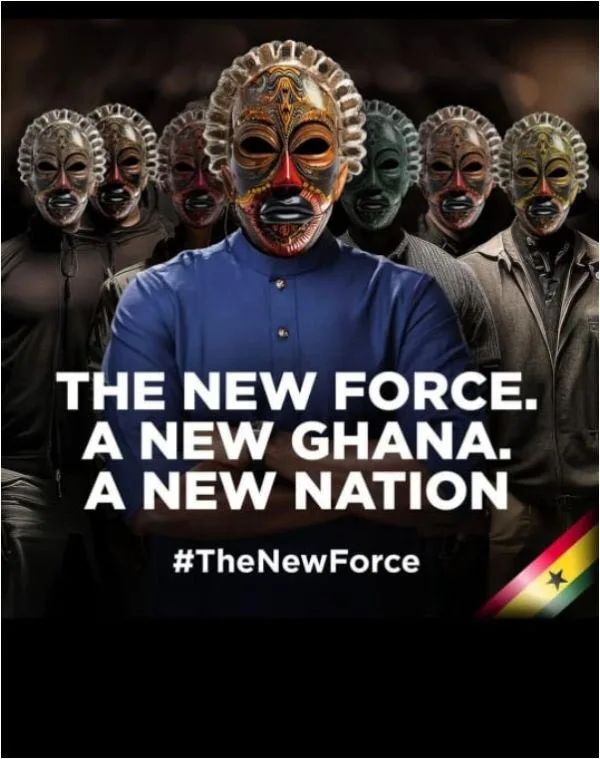
We are sorry for the abuse against Shalimar Abbiusi – New Force to Belgium, EU
The political movement New Force has issued a sincere apology to the Kingdom of Belgium, the European Union (EU) committee, and the international community for the mistreatment of Shalimar Abbiusi by Ghana’s security agencies.
New Force expressed regret for Shalimar’s unsettling experience stating that it tarnished Ghana’s human rights reputation and its standing within the international community.
Shalimar was arrested and detained after appearing in the political movement’s campaign video, facing charges of obtaining a student residency permit by false declaration and experiencing a prolonged detention by the National Investigation Bureau, along with the alleged search and ransacking of her home.
After the state prosecutors dropped all charges against Shalimar Abbiusi, she was subsequently rearrested by the Immigration Service outside the courtroom. Following her rearrest, she was deported the next day.
“The movement acknowledges the strain on her family and sympathizes with their aggrieved feelings over reported gross misconduct and malpractice by trusted officials. Shallie has since returned to the Kingdom of Belgium. The New Force stands for the empowerment of people,” the New Force said in a statement.
The New Force group called on the international community not to reciprocate the displeasure experienced by the country in response to Shalimar Abbiusi’s treatment.
“We hope that Ghana reconsiders their reported misuse of power for political interests and realigns herself with a robust legal framework that preserves our global standing as a country of justice and peace. To us, the integrity of our country and its international reputation is more important than partisan political interest,” it added.

-
EU allocates €32m to enhance vaccine production in Ghana
The European Union (EU) has unveiled an additional €32 million investment to enhance Ghana’s vaccine manufacturing capabilities.
This initiative, termed the ‘special measure,’ aims to foster an enabling environment and a thriving ecosystem for developing a skilled workforce in the domestic vaccine production sector.
It also seeks to facilitate technology transfer and the exchange of best practices between Ghana and EU member-states.
Supported by €1 billion from the EU budget and European development finance institutions, such as the European Investment Bank (EIB), under the EU’s Global Gateway, this initiative is part of the Team Europe initiative on manufacturing and access to vaccines, medicines, and health technologies in Africa (MAV+).
The EU Ambassador to Ghana, Irchad Razaaly, highlighted the commitment to work together with Ghana to ensure optimal quality in vaccine production.
“This is one of several mechanisms the EU is rolling out in Ghana and across Africa to support local manufacturing of vaccines. The EU’s focus is to work together with Ghana to ensure optimal quality in the production of vaccines, and we have been delivering on this promise.”
The EU’s previous support includes a €5 million seed grant to the vaccine-manufacturing unit at DEK Vaccine Limited and a project, in collaboration with the German Development Cooperation, to upgrade the vaccine licensing capacity of the Food and Drugs Authority.
Razaaly emphasized the EU’s ability to adapt to emerging needs, showcasing the impact of strong government commitment in attracting additional support from development partners.
The EU plans to build on existing initiatives, support manufacturers, strengthen the regulatory environment, create partnerships on research and development, and facilitate the transfer of knowledge and technology.
He commended Ghana’s progress in achieving vaccination goals outlined in its ambitious roadmap, expressing optimism that, with the support of Team Europe and other key partners, the country’s goal to graduate from Gavi, the Vaccine Alliance, by 2029 will become a reality.
-

Hungary refuses to provide Ukraine €50 billion in EU funds
Hungary said no to giving Ukraine €50bn ($55bn; £43bn) in EU aid, even though they agreed to start talking about Ukraine joining the EU.
“Last night’s shift summary: Hungarian Prime Minister Viktor Orban said they vetoed giving extra money to Ukraine after talks in Brussels on Thursday. ”
EU leaders said they will start talking about aid again at the beginning of next year.
Ukraine needs a lot of money from the EU and US to keep fighting against Russian forces that are in their country.
Mr Orban said no to help shortly after EU leaders said yes to Ukraine, Moldova, and Georgia joining the EU.
Hungary, which is friends with Russia, has not supported Ukraine’s membership, but did not stop it from happening.
Mr Orban briefly left the room where they were negotiating. Officials said it was planned and helpful. The other 26 leaders continued with the vote.
He said on Hungarian state radio on Friday that he tried for eight hours to stop his EU friends from going ahead, but he couldn’t persuade them. He said Ukraine joining the EU would take a while. If the parliament in Budapest wanted to, they could still prevent it from happening.
Ukraine’s President Volodymyr Zelensky was happy about the EU’s decision to start talking about Ukraine joining the EU. He called it a win.
Dutch Prime Minister Mark Rutte said that Ukraine still has money for a few more weeks, so we don’t need to give them aid right now, despite Mr Orban’s disagreement.
“We said yes to the 26 countries,” he added. Viktor Orban from Hungary has not been able to do that yet. I think we can make a deal at the beginning of next year. We plan to do this in late January.
At a meeting in the early morning on Friday, Mr. Michel said that almost all EU leaders agreed on the aid package and budget plans for the group. But Sweden still needs to get approval from its parliament.
“He said we will talk about this again soon and we will try to all agree. ”
Ukraine really wants the $61 billion in US military help, but it’s taking a long time for the decision to be made because the Democrat and Republican politicians can’t agree.
Ukraine fought back against Russia’s occupying forces, but they had to stop when winter started. People are worried that Russia has stronger weapons and could win.
President Zelensky’s wife, Olena, said in a BBC interview last week that Ukrainians could be in serious danger of dying if Western countries don’t keep giving them money.
Ukraine and Moldova want to join the EU because Russia attacked Ukraine. They both became candidates last June, but Georgia was not chosen at that time.
Mr Zelensky was happy about the EU saying he could be a member. “Ukraine won this. It’s a win for them. ” A win for all of Europe. “Winning helps us feel motivated, inspired, and stronger,” he wrote on X.
Moldova’s President Maia Sandu said she was happy to welcome Ukraine on the path to joining the EU. “We owe our presence here today to Ukraine’s strong fight against Russia’s harsh invasion,” she wrote.
This year, Moldova said Russia was trying to take control of Chisinau.
White House Adviser Jake Sullivan is happy that the EU decided to start talks with Ukraine and Moldova. He thinks this is an important step for them to join Europe and the Atlantic partnership.
German leader Olaf Scholz said that he was happy that other leaders showed their support for Ukraine and Moldova, and he believes that both countries are a part of Europe. A diplomat at the meeting said that Mr. Scholz suggested that Mr. Orban should leave the room so that the vote could happen.
The leader of Hungary said on Facebook that he doesn’t agree with his colleagues about Ukraine joining the EU. Hungary does not want to join in this wrong choice.
Mr Orban thinks that Ukraine shouldn’t receive a lot of money from the EU because it’s not a member of the group.
Earlier today, President Vladimir Putin made fun of Ukraine and said that Western support was running low. He said, “Sorry for being rude, but they are getting everything for free. ” But those free things might not be available forever.
Negotiations to join the EU can last a long time, so Ukraine’s decision on Thursday doesn’t mean they will definitely become a member.
Countries that want to join the European Union need to make changes to follow rules about things like laws and the economy. The EU’s leaders have said Ukraine is doing a good job, completing over 90% of the required changes in areas like justice and fighting corruption. -
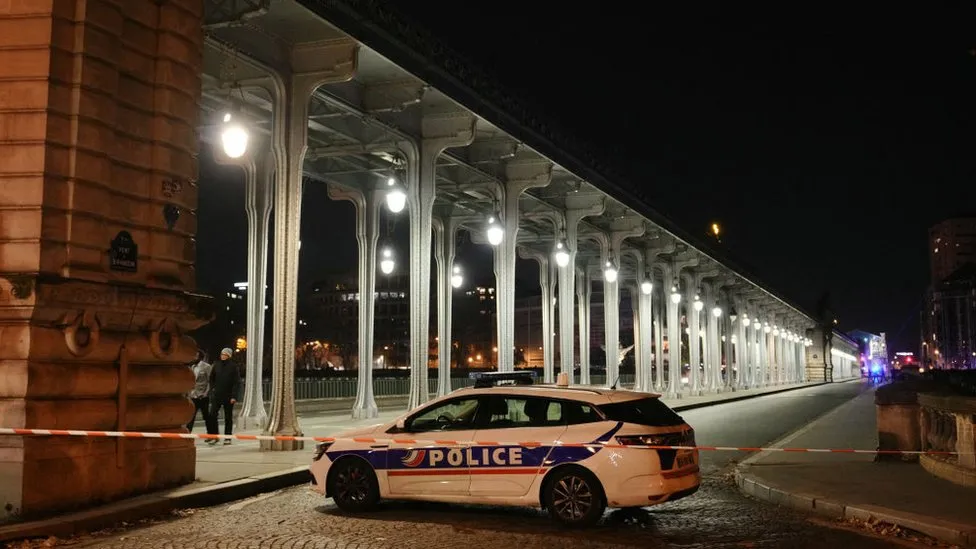
‘Huge risk of Christmas terrorist attacks’ – EU warns
A high-ranking EU official said there is a big chance of terrorist attacks in the European Union during the upcoming holiday season.
Ylva Johansson, from the European Home Affairs Commission, said that the fighting between Israel and Hamas is making people more divided and increasing the chances of violence.
She made these comments a few days after a visitor was killed by being stabbed in Paris.
The EU is giving an extra €30m (£26m) for more security, said Ms Johansson.
She did not say if there was any particular information that caused the warning.
“We recently saw it in Paris, and we have seen it before too,” she said before a meeting of EU interior ministers.
German Interior Minister Nancy Faeser said that the EU needs to watch out for threats and propaganda, as there is a high risk of violent Islamist attackers becoming more emotionally charged and radicalized.
Several European countries have experienced an increase in hate crimes after Hamas gunmen attacked Israeli communities, resulting in about 1,200 deaths and many people being held hostage in Gaza. Israel went into Gaza and more than 15,000 people have been killed, according to the health ministry run by Hamas.
European Union ministers met after a violent attack happened near the Eiffel Tower on Saturday. A 23-year-old German tourist named Collin B was killed, and his girlfriend and a British tourist were injured in the attack.
The young German couple went to Disneyland Paris and the Louvre, and took pictures in front of the Eiffel Tower before the attack.
Police said that the 26-year-old French suspect, named Armand R, who is from a non-religious Iranian family, promised to follow the Islamic State group.
The man who was caught at the place had been in jail before for making a plan to cause terror in the La Défense area of Paris.
In 2020, the French police talked to him because he was in contact with Abdoullakh Anzorov, who killed teacher Samuel Paty.
The prosecutor in charge of stopping terrorism, Jean-François Ricard, said that Armand R’s mother was worried about his actions, but there wasn’t enough proof to do anything about it at that time.
Germany is very worried about a possible attack and is being extra careful.
Two boys were stopped in different places in the country last week because the police thought they might be planning to do a militant Islamist attack on a Christmas market in Leverkusen.
A 20-year-old person from Iraq, who came to Germany last year, is being held by the police for allegedly planning to carry out a knife attack at a Christmas market in Hannover.
The leader of German intelligence in the state of Thuringia, Stephan Kramer, said that people who support Hamas could be very dangerous. He thinks they could cause problems at big events like the Paris Olympics and Euro 2024 football championships, not just at Christmas markets. -

Dr. Congo regrets EU’s decision to cancel its poll observation mission
The Congo government is sorry that the European Union is no longer going to watch the election there.
The Democratic Republic of Congo is going to have elections for president and parliament on 20 December. There are 23 people running for president. The political situation is very tense.
The observer mission was canceled while the EU mission’s deployment discussions were still going on, according to the state-run ACP news agency.
The government said it is dedicated to having fair, open, and free elections. It also said that it would be happy to have observer missions as long as they follow the laws of DR Congo.
The EU said it pulled out its team that was supposed to watch over the election. They couldn’t use the necessary communication equipment like satellite phones and internet kits.
80 to 100 observers from the EU were going to be sent to watch the general elections on December 20th. -
Ghana takes strategic measures for compliance with EU’s CS3D cocoa sector requirements
Ghana is proactively preparing for anticipated changes that will reshape sustainable practices in the cocoa sector.In collaboration with the International Trade Centre (ITC), Ghana’s Cocoa Board, the European Union (EU), the Organization of African, Caribbean and Pacific States (OACPS), and ISEAL, a workshop was conducted in Accra on November 23.
The workshop addressed the impact of the EU CS3D on stakeholders in Ghana’s Cocoa value chain and provided insights on navigating the impending changes.
The EU’s approval of a directive mandates companies to conduct sustainability due diligence across their supply chains. This directive requires businesses to establish systems for identifying, preventing, and mitigating environmental and social risks, encompassing both a company’s operations and its sourcing model.
The workshop focused on how stakeholders in Ghana’s cocoa sector can adapt to these forthcoming changes.
Dr. Ebenezer Owusu, Deputy Chief Executive of Agronomy and Control at COCOBOD, acknowledged the challenges posed by illegal mining to the project. Despite these challenges, he expressed hope that Ghana could successfully complete the pilot by March 2024.
“The illegal mining agents talk to the farmers. I want to give you say five thousand cedis. Give this area of your farm to me to use for galamsey. They need money so some of these farmers will go for it without thinking that if they leave that land and harvest their Cocoa, within 3 or 4 years, they will get more than that.
National Program Coordinator for Green and Inclusive Value Chains, Mr. Larry Attipoe, told reporters outside the workshop that the action will assist farmers in exporting their produce via the EU.
“The project is to ensure that value chain have the information. Secondly that we start to prepare by asking how we ensure we are complying with human rights regulations and also ensure that we are respecting the environment in our value chain,” he said.
For his part, the Netherlands Ambassador to Ghana , HE Jeroen Verheul said “Cocoa is a very important product in the trade between Netherlands and Ghana and the EU regulations we are discussing here have strong impact on the way we trade Cocoa.
What we want to achieve with this workshop is to enhance collaborations between all the different persons involved in the value chain of cocoa and chocolate.”
The stakeholder workshop, themed ‘Ghana’s Experience, Preparation, and Challenges Towards Meeting the EU Corporate Sustainability Due Diligence Directive (CS3D),’ was organized in collaboration with the Ghana Cocoa Board, OACPS, ISEAL, and the EU’s Directorate General for International Partnerships (EU-DG INTPA). The workshop received substantial support from the Dutch Ministry of Foreign Affairs through the Netherlands Trust Fund (NTF V) program.
In line with pilot programs on EUCS3D accompanying measures under ITC’s guidance, the workshop aimed to enhance collaboration between buyers and value chain partners.
These programs, focusing on the implementation of mandatory human rights and environmental due diligence sustainably, emphasize a bottom-up approach that amplifies the voices of small farmers, processing operations, and consumer-facing companies.
The collaboration is co-financed by OACPS, the EU, and the Dutch Ministry of Foreign Affairs, and implemented in partnership with the International Coffee Organization (ICO).
Since the unveiling of the proposal for Corporate Sustainability Due Diligence (CS3D) in February 2022, Ghanaian stakeholders have been actively considering how to operationalize its requirements.
The Ghana Cocoa Board, in partnership with ITC’s Alliances for Action sustainable agribusiness initiative, has been leading discussions, organizing training sessions, conducting readiness assessments, and seeking feedback to formulate a comprehensive action plan.
-
New EU sanctions to prohibit sale of Russian diamonds
Diamonds may last forever, but not when it comes to imports from Russia to the European Union.
Russia is the largest producer of rough diamonds mined from hundreds of mines under permafrost in Siberia, which accounts for a third of the world’s diamond supply.
The European Commission is currently proposing to extend to the diamond sector a series of sanctions imposed on Russia since its large-scale invasion of Ukraine.
The move is part of a round of 12 EU measures against Moscow, scheduled to take effect in January. It is linked to the G7, which is also discussing the ban. Since 2022, EU sanctions have targeted Russian coal, gas, gold, vodka and even caviar.
But diamonds mined in Russia‘s northeast are still used in engagement rings, necklaces and earrings around the world.
The EU has so far avoided a ban, largely because Belgium wants to protect the city of Antwerp: the diamond capital of the world.The Flemish-speaking port city has been a diamond center since the 15th century.
More than 80% of all rough diamonds mined worldwide are traded here, and before the war, every four rough diamonds were one is from Russia.
The cobbled streets of Antwerp’s diamond district are lined with shops with windows filled with sparkling jewellery.
There are security cameras everywhere, covering an area about a square mile wide.
“Russia represents a very big business for Antwerp: switching your entire operation to a new supplier is a huge headache,” explains Thierry Tugendhaft, a diamond trader for more than 30 years.
“Importing non-Russian diamonds will be very expensive because everyone will goto the same supplier. ”This means they will also become more expensive for the average consumer.In a corner of his office, Thierry opened a giant safe and took out a small white envelope, folded in half.
Inside are three sparkling, perfectly polished diamonds.
Before the war, half of its stones came from Russia. Their appeal lies in their high quality, shape and availability.
The final decision on the European Commission’s proposed ban will be taken by the 27 EU member states in the coming weeks.
But many Antwerp diamond dealers saw this coming and have come under pressure from the companies they deal with to suspend supplies from Russia.
Mr Tugendhaft now sources his supplies from a mine in Canada, but some of his colleagues are not so lucky.
“Some of the major Russian diamond trading companies have gone bankrupt. They are very dependent on Russia. ”Critics have long complained that diamond imports from Russia are unethical because most of the money goes straight to the Kremlin.
More than 90% of Russia’s diamonds are produced by a single company called Alrosa, which is largely owned by Russian government agencies. Last April, the US banned rough diamond imports from Russia and imposed sanctions on Alrosa. In the first half of 2023, ALrosa generated revenue of $1. 9billion(£17billion)
“There is a direct link between Russian diamond purchases and the financing of the war in Ukraine,”explains Filip Reyniers, director of IPIS, an Antwerp-based research institute.
“Russian diamonds should be considered conflict diamonds. ”Also known as blood diamonds, conflict diamonds are gems sold to finance war. The ongoing war means Russia needs money.
To bias Kormind, chiefexecutiveof77Diamonds,one of Europe’s largest diamond firms,said:“Russia desperately needs money to finance its war and that’s why Russian diamonds are increasingly cheaper“.
He stopped importing Russian gems weeks after the invasion of Ukraine-leading to a surge in his business costs – and he believes the rest of the industry should have taken a tougher stance. “Because cheaper to buy from Russia, many people turn a blind eye and do not disclose that they are sourcing from Alrosa,” he said.
“Unlike other products, such as coffee, tea or chocolate, the diamond trade has never been transparent,”explains Filip Reyniers of IPIS. “A diamond transshipped with a certificate of origin, diamond packages are often mixed. so it is difficult to know their origin. ”
Diamonds can change hands 20 to 30 times between the mine and the market.
This lack of traceability is why the trade is so attractive to criminal activity and why critics say the European ban is flawed.
“This is something that doesn’t exist today at an industry scale,” Filip Reyniers said. “For this ban to be effective, there needs to be real assurance that you can fully trace the origin of your diamond. ”The main complication is that 90% of the world’s diamond supply is shipped overseas to be cut and polished, regardless of where it is mined.
And once the diamonds are polished and ready to ship, they are labeled as originating from India.
Analysts say it is essential to fill this huge gap. But so far, Indian Prime Minister Narendra Modi has challenged the West to reduce economic ties with the Kremlin.
“If India does not participate, the ban will not take effect,” Reyniers said. “There are half a million people involved in the diamond industry in India,” said trader Thierry Tugendhaft.
“They need a livelihood, they don’t want to lose their jobs. ”
But Western countries account for around 70% of global demand for diamond jewelery – and something needs to be done urgently.
“Russian diamonds now symbolize war and human rights violations,” Belgian Prime Minister Alexander De Croo said in September.
And some believe EU sanctions will have an impact.“Some Russian diamonds will still enter the European market,” Filip Reyniers said.
But he believes the ban will cause fewer people to buy the jewelry used to fund the Kremlin’s war in Ukraine.
-

EU and Ghana sign funding deals to support pivotal economic sectors
The European Union (EU) has entered into a 42-million euro Financing Agreement with Ghana, with the aim of promoting sustainable development, fostering economic growth, and strengthening key sectors crucial for the EU-Ghana partnership.
These Financing Agreements mark a new era of cooperation and progress between the two parties, focusing on green transition for agribusiness, sound public financial management, and private sector development.
The agribusiness component will support the sustainable development of four value chains, including shea, soybean, vegetables, and beekeeping. It will also back sustainable cocoa production and initiatives to prevent deforestation and promote reforestation, in compliance with EU Deforestation Regulation and Forest Law Enforcement Governance and Trade Voluntary Partnership Agreement (FLEGT).
This investment in agribusiness aims to uplift smallholder farmers, generate employment, enhance productivity, and improve market access. It will enhance the competitiveness of agricultural products, drive economic growth, and promote a sustainable and inclusive agriculture sector.
The other component recognizes the vital role of the private sector in the green and digital transition. It will support access to innovative, green finance for Micro, Small and Medium Enterprises (MSMEs), enhance the regulatory environment, and develop digital and green business skills, while fostering connections between academia and industry.
Furthermore, the agreement will promote sound public financial management, ensuring stability, transparency, and accountability. It will enhance gender and green responsiveness, transparency, and accountability, reinforcing audit and procurement functions.
Mr. Ken Ofori Atta, the Minister of Finance, expressed his gratitude for the partnership, highlighting the mutual benefits it will bring to both countries. He emphasized the commitment to efficient resource coordination for development, especially during the Ghanaian economy’s rebound.
Mr. Irchad Razaaly, the EU Ambassador to Ghana, underscored the comprehensive approach to sustainable development, serving as a catalyst for the implementation of the EU’s Global Gateway Strategy. He emphasized the strength of the EU-Ghana partnership and their shared commitment to sustainable development.
-
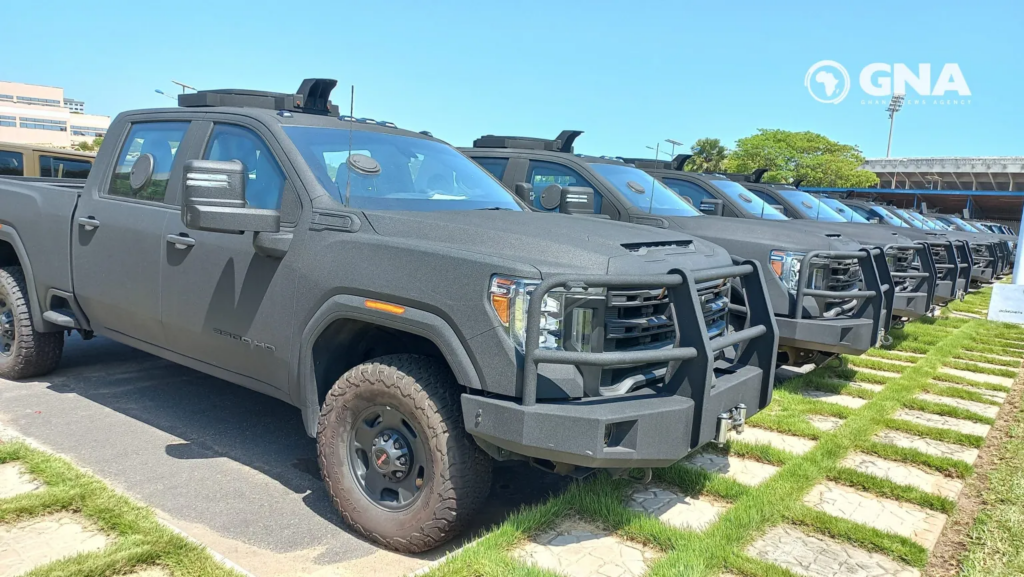
EU provides Ghana with 105 armoured vehicles to aid terrorism fight
The European Union (EU) has contributed 105 armored vehicles to Ghana as part of their support to strengthen the country’s efforts in combating terrorism and violent extremism.
These vehicles, comprising 13 Land Cruiser pickups, 10 GMC Sierra, Toyota Land Cruisers, Toyota Single Cabins, Chevrolet Silverado, and Sierra pickups, are a component of the €20 million EU aid package to Ghana for its counterterrorism endeavors.
This contribution is part of a more extensive €616 million EU initiative aimed at reinforcing the defense and security capabilities of the four coastal nations in the Gulf of Guinea.
During the vehicle commissioning ceremony in Accra on Saturday, President Nana Addo Dankwa Akufo-Addo expressed concern over the recent attempts by terrorists and extremist groups to extend their influence from the Sahel to the coastal West Africa region. The President emphasized that such actions posed a significant security threat to the stability and people of Ghana.
He further noted that the recent incidents of terrorist activities in neighboring countries like Burkina Faso, Togo, and Benin underscored the urgent need for Ghana to enhance its counterterrorism measures.

President Akufo-Addo emphasized the importance of collaborative efforts between countries and partners like the EU in addressing the terrorist threat in the West African region and ensuring enduring peace.
“It is imperative to understand that no single country can confront the terrorist threat on its own,” Nana Akufo-Addo said.
“Within the context of our collective efforts, and the pooling of resources, we appreciate the significance the 105 military vehicles donated by the European Union. These vehicles will play a pivotal role in our efforts to fortify Ghana’s northern frontiers against terrorists,” the President added.
President Akufo-Addo also pledged to ensure the effective utilization of the vehicles provided by the EU.
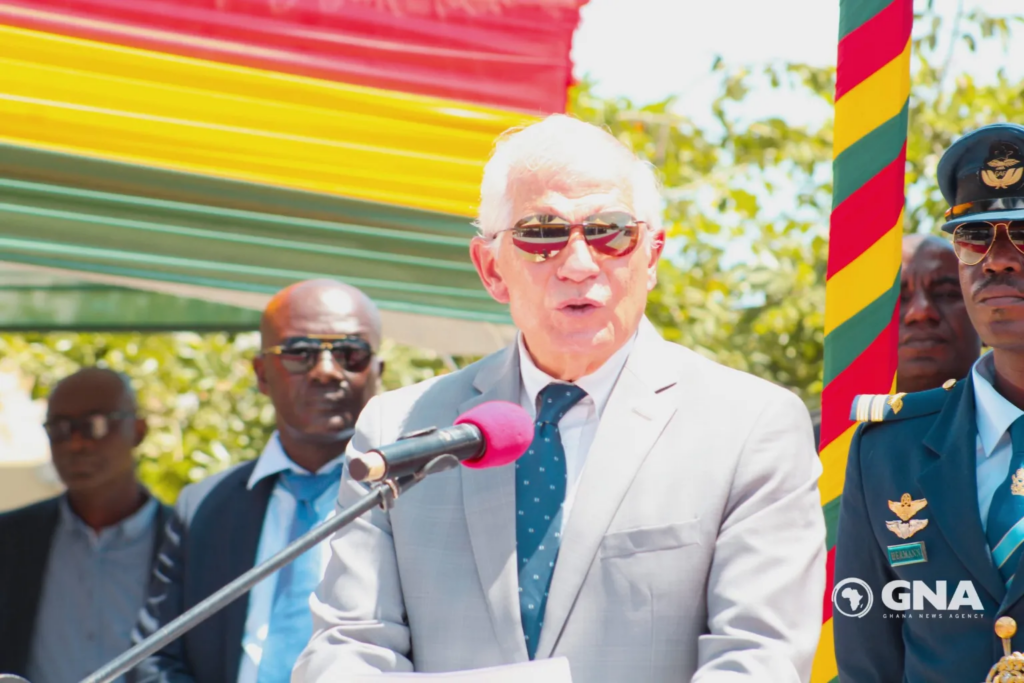
“Ghana stands ready to continue to collaborate with the European Union to safeguard our mutual security interests, particularly in the West Africa region,” he added.
Mr. Joseph Borrell Fontelles, the High Representative and Vice President of the EU, stressed that Ghana holds a pivotal position in safeguarding regional stability.
He emphasized that the spread of insecurity from the Sahel region to the Gulf of Guinea nations is not merely a risk but a current reality that demands proactive and decisive action.
“A reality that our partners cannot and should not face alone,” he said.
Mr. Fontelles stated that the provision of the vehicles to Ghana solidified the enhancement of the security and defense collaboration between the two entities, introducing a fresh perspective to their enduring partnership.
He further guaranteed that Ghana would receive additional military equipment, encompassing assets for intelligence gathering and surveillance, military engineering tools, explosive ordnance disposal equipment, and electronic warfare systems, all of which would significantly support the nation’s efforts in combating terrorism.
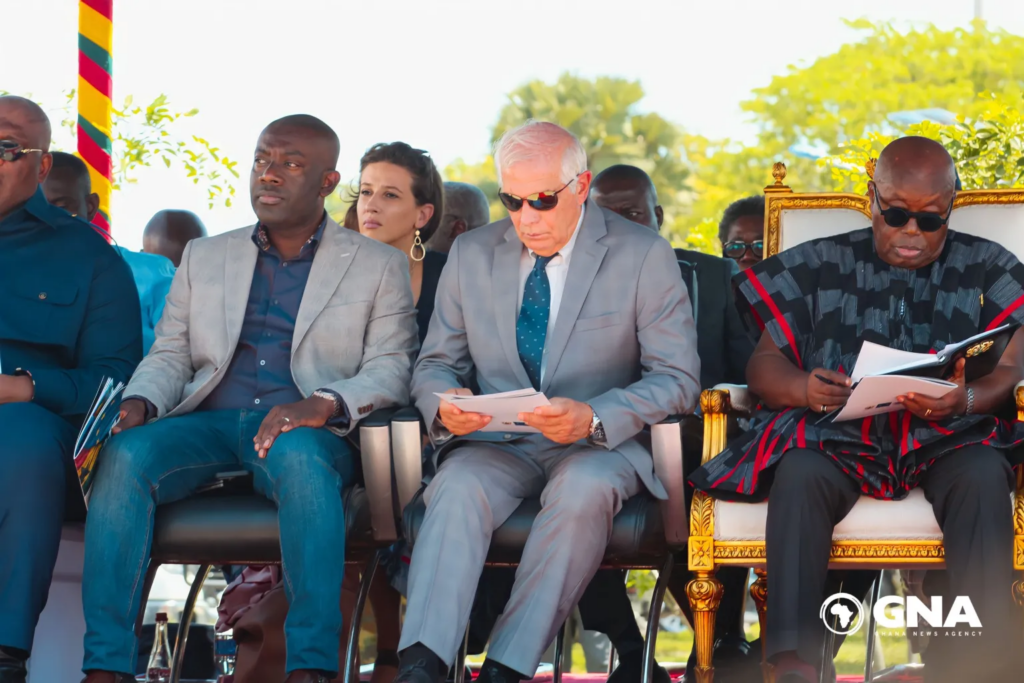
“We are confident that this support will benefit not only Ghana, but the entire sub region as well,” he added.
Mr. Fontelles also emphasized the necessity for Ghana to enhance service delivery and job opportunities, particularly for young people and women, as a measure to proactively deter any potential acts of terrorism.
“Investments for socio-economic inclusion, in the Northern regions of Ghana in particular, is key,” he said, adding that a large proportion of its current bilateral cooperation – €203 million for 2021-2024 was dedicated to those priorities.
“The EU is also supporting Ghana in the promotion of sustainable growth, digital and green transitions, climate resilience, reinforcement of health and education systems,” he indicated.
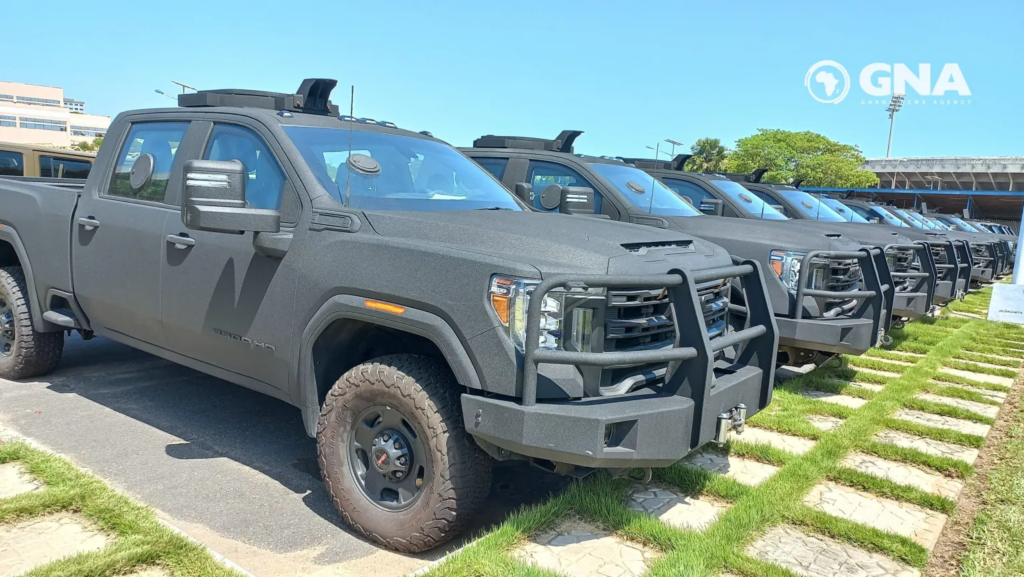
Mr Albert Kan Dapaah, Minister of National Security, said the donation of the armoured vehicles to Ghana was a “testament to the diligent efforts and unwavering commitment of the Government” in strengthening the bounds of cooperation between Ghana and the EU for mutual benefits.
“We believe today’s event also symbolizes the significant step forward in the strengthening of cooperation between Ghana and the European Union.
“Together, we work towards safeguarding our mutual security interests, contributing to peace and stability, not only in Ghana, but across the West African region,” he added.
-

EU investigates X for allegedly ‘allowing’ Israel-Hamas disinformation on app
The European Union (EU) is looking into Elon Musk’s X due to concerns that it may be sharing terrorist and violent content, hate speech, following the recent attack by Hamas on Israel.
This investigation, which is the first one following the EU’s new tech rules, will also examine how complaints are dealt with.
X, which used to be called Twitter, announced that it got rid of many accounts related to Hamas from their platform.
The EU has told TikTok and Meta that they need to do more to fight against lies and false information.
Social media companies have noticed a big increase in false information about the fighting between Israel and Hamas. This includes fake pictures and wrongly titled videos.
Thierry Breton, who is in charge of the EU’s industry, announced on Thursday that the EU has asked X to provide information to check if they are following the Digital Services Act (DSA). This law aims to safeguard users of large technology platforms, and it has been recently implemented.
Earlier on Thursday, Linda Yaccarino, who is the main boss of a company, said that they had gotten rid of many accounts related to Hamas and had done something about lots of content since the attack on Saturday. They did this because Mr Breton wrote a letter to them on Tuesday.
The EU has labeled Hamas, a Palestinian militant group, as a banned terrorist organization.
Over 150 people were captured and brought to Gaza, and around 1,300 individuals lost their lives during the violent attacks conducted by Hamas in Israel over the weekend.
So far, over 1,500 people have died in Gaza after Israel began attacking in response to previous attacks.
The UN’s World Food Programme says that the situation in Gaza is very bad. There is not enough food and water because of an Israeli blockade. Israel is saying that they will not lift the blockade until the people they are holding captive are released.
MrBreton wrote a letter to Mr. Musk, expressing concern that the platform X has not removed “violent and terrorist content” even after being warned about it.
MrBreton didn’t explain the disinformation he talked about in the letter, but he said many untrue images and facts were shared a lot on social media.
In his reply about X, Mr. Musk said that our policy is to be open and clear about everything. He knows that the EU also appreciates this approach.
“Please tell us about the rule-breaking incidents you are suggesting happened on X, so that the public can know about them. ”
The DSA became a law in November, but companies were allowed some time to ensure that their systems followed the rules.
On 25 April, the commission listed the biggest online platforms – the ones with more than 45 million EU users – that would have to follow the strictest rules, including X. The law became active in August, four months later.
Under the new rules, big companies must identify and evaluate possible dangers they might create, share that evaluation, and take steps to handle the issue.
If a company does not follow DSA rules, they may have to pay fines up to 6% of their total earnings or their service might be temporarily stopped.
X has until 18 October to explain how it handles crisis situations and until 31 October to address other topics.
MrMusk got rid of Twitter’s Trust and Safety Council right after he bought the company in 2022. Created in 2016, the volunteer council had around 100 separate groups that gave advice on topics like hurting oneself, harming children, and spreading messages of hatred.
At the moment, a representative from Meta said to the BBC that they are working day and night to make sure their websites are secure. They have put together a special team of experts to watch over what’s happening. -

EU asks for clarification about Polish visa controversies
The European Union has told Poland to investigate and address claims of lots of fraud with visas linked to the country’s ruling party.
According to Polish media, migrants gave money to Polish consulates and private companies to make their visa applications faster. The amount they paid could be as high as $5,000 (£4,000).
A spokesperson for the European Commission said they asked Warsaw to answer specific questions within two weeks.
The Polish government said the claims of widespread fraud were ridiculous.
Germany has also told Poland to give information about how many visas were given and the nationalities of the people who got them.
On Tuesday, German Interior Minister Nancy Faeser spoke to Polish Interior Minister Mariusz Kaminski about some very serious accusations.
The Polish government said that many visas were given out unlawfully, but they disagree with the opposition’s belief that the actual number is a lot more.
The Law and Justice party (PiS) is known for being very strict against immigration. They are campaigning against immigration ahead of the national elections on 15 October.
During a very heated campaign, the opposing party has referred to it as “the largest scandal we have encountered in the 21st Century” and “corruption in the highest ranks of the government”.
It gives around a few hundred thousand visas for people from Asia and Africa.
“I said no to the crazy actions of the other side that are causing harm to Poland,” Mr. Kaminski stated, talking about his conversation with the German person on the other end of the line.
The minister being worried is normal. “I told Poland’s Radio Zet that I comforted her and advised her not to believe this nonsense. ”
Polish Deputy Foreign Minister Piotr Wawrzyk was fired at the end of August when the accusations came out.
The foreign ministry is being checked and inspected, and Poland’s anti-corruption bureau has searched the ministry.
The government department said it would cancel all agreements with outside companies that have been doing visa applications work since 2011.
Seven people were accused of something, and three of them are still being held in jail.
The Law and Justice party wants to be in power for a third time, but it’s not clear if they will get enough votes to have full control in the upcoming parliamentary elections.
The other side has used the scandal to say that the government’s rules on reducing immigration are not working.
Poland put up a long fence made of steel along its border with Belarus last year. They did this to prevent migrants from entering their country. They also sent many soldiers to help with this task.
In late 2021, Warsaw experienced a big problem when migrants were stuck at the border in extremely cold weather. The government said that Belarus was purposely directing the migrants towards the border in a negative and unfriendly way.
Poland strongly opposes the EU’s idea of transferring migrants from countries with lots of arrivals to other member states.
In the past few weeks, immigration has been a big topic in Europe. Italy asked the EU for assistance because 8,000 migrants came to the island of Lampedusa in just three days.
Polish Deputy Prime Minister Jaroslaw Kaczynski said on Tuesday that moving migrants to different places was basically encouraging the human trafficking business.
The ruling party is against a new movie by director Agnieszka Holland that talks about the problem of people moving across the border with Belarus. The government is accusing Green Border of hurting the reputation of Poland and disrespecting those who protect their country, even though critics have liked it. -

EU halts food aid to Somalia amid theft investigation
The European Union has officially halted its payments to the World Food Programme (WFP) for the delivery of humanitarian aid to Somalia.
According to Balazs Ujvari, a spokesperson for the European Commission, this action is a precautionary measure to protect EU funds.
A UN investigation has uncovered extensive theft of aid that was intended for vulnerable Somalis, with local officials, members of the security forces, and humanitarian workers implicated.
In the previous year, the European Union allocated more than $7 million (£5.6 million) to WFP operations in Somalia.
The US Agency for International Development has stated that it does not currently have plans to suspend food aid to Somalia.
-
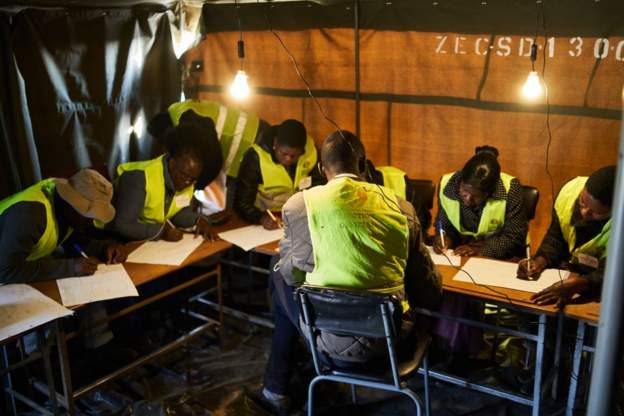
EU cuts off financial support for electoral body in Zimbabwe
The European Union (EU) has announced the suspension of financial aid to Zimbabwe’s electoral body due to concerns surrounding its conduct during the contested August elections.
Since 2022, the EU has been among the donors supporting a project aimed at enhancing the capabilities of the Zimbabwe Electoral Commission (ZEC). This project, managed by the United Nations Development Programme, was originally set to conclude in December 2024.
The EU had contributed $4.7 million (£3.7 million) to this project, with some funds already expended.
However, on Tuesday, the EU disclosed its decision to withdraw support from the project, citing ongoing scrutiny of the project “due to concerns raised by several international election observers regarding the independence and transparency of ZEC during the 2023 elections.”
The EU emphasized that this withdrawal of funding is intended to encourage responsible management of EU development funds.
The process of suspending aid has begun, and the EU has communicated its plan to both ZEC and Zimbabwe’s finance ministry. Nevertheless, the EU also stated its intent to continue monitoring developments in Zimbabwe and may consider resuming support in the future.
-

Ukraine sues neighbours in EU over ban on food imports
Ukraine has recorded claims to the World Exchange Organization (WTO) against Slovakia, Poland and Hungary over their bans on nourishment imports from Kyiv.
It said such confinements were a infringement of universal commitments by Ukraine’s EU neighbors.
They say the bans are required to ensure their agriculturists from cheap imports.
Russia’s full-scale attack of Ukraine final year all but closed the most Dark Ocean shipping paths, with huge grain amounts finishing up in central Europe.
“It is vitally critical for us to demonstrate that person part states cannot boycott imports of Ukrainian products,” Ukrainian Economy Serve Yulia Svyrydenko said in a explanation on Monday.
“That’s why we are recording claims against them [Slovakia, Poland and Hungary] to the WTO.”
She included that Ukrainian exporters had “as of now endured and are proceeding to endure critical misfortunes” since of the one-sided bans.
Poland said it would keep up its boycott notwithstanding.
“We keep up our position, we think it is redress, it comes about from an financial investigation and powers inferred from EU and worldwide law,” said government representative Piotr Mueller.
“A complaint some time recently the WTO doesn’t awe us.”
Final Friday, the European Commission – the EU’s official body – chosen not to amplify a boycott concurred prior this year on Ukraine’s grain imports into Bulgaria, Hungary, Poland, Romania and Slovakia.
The Commission has more than once expressed that it isn’t up to person EU individuals to create exchange approach for the 27-strong alliance.
But the governments in Budapest, Warsaw and Bratislava resisted the Commission’s move, declaring their national confinements. -

Finish old ones, but don’t start new ones – IMF,EU orders COCOBOD to quit road projects
The Ghana Cocoa Board (COCOBOD) has announced its intention to cease the construction of cocoa roads after the current ongoing projects are concluded.
COCOBOD had launched the Cocoa Road Programme with the aim of addressing transportation challenges related to delivering agro-inputs to cocoa farmers and facilitating the evacuation of cocoa beans.
Joseph Boahen Aidoo, the CEO, revealed during the 50th Anniversary Celebration Symposium of the Cocoa Clinic that this change in policy is a result of discussions with the European Union and the International Monetary Fund (IMF).
Both of these entities, he explained, had raised questions about COCOBOD’s involvement in road construction and suggested a focus on its core functions instead.
“The EU sent a team last year to do due diligence on sustainable production and when they came, they wanted to know why COCOBOD was involved in cocoa roads construction because it is not a core business of COCOBOD, and they insisted that we take that venture out of our equation; and, of course, the IMF is also saying the same thing”.
“They say that we can continue with what we are currently constructing and not start new ones”, Mr Boahen said.
In order to improve farmers’ access to healthcare, he also described plans for building healthcare facilities in cocoa-growing areas, noting instances of farmers having to travel far for care as motivation.
“I have had the experience where a woman, who was in labour and couldn’t deliver, had to be carried in a hammock and travelled over 28 kilometres and couldn’t survive.
“And, when we look at the countryside to see how our cocoa farmers struggle to access health delivery, you will be touched to do something; and that is why, as an institution, it is important to bring health services and facilities as close to these farmers as possible”.
-
EU, IMF directs COCOBOD to halt road projects
Ghana Cocoa Board (COCOBOD) has announced its intention to cease the construction of cocoa roads after the ongoing projects are finished.
The Cocoa Road Programme was launched by COCOBOD with the aim of resolving transportation difficulties related to delivering agricultural inputs to cocoa farmers and streamlining the evacuation of cocoa beans.
During the 50th Anniversary Celebration symposium of the Cocoa Clinic, CEO Joseph Boahen Aidoo conveyed that this change in policy originates from discussions held with the European Union and the International Monetary Fund (IMF).
Both entities, he said, questioned COCOBOD’s involvement in road construction, urging a focus on core functions.
“The EU sent a team last year to do due diligence on sustainable production and when they came, they wanted to know why COCOBOD was involved in cocoa roads construction because it is not a core business of COCOBOD, and they insisted that we take that venture out of our equation; and, of course, the IMF is also saying the same thing”.
“They say that we can continue with what we are currently constructing and not start new ones”, Mr Boahen said.
He also outlined plans for establishing healthcare centres in cocoa-growing communities to enhance medical accessibility for farmers, citing instances of arduous journeys for healthcare as a driving factor.
“I have had the experience where a woman, who was in labour and couldn’t deliver, had to be carried in a hammock and travelled over 28 kilometres and couldn’t survive.
“And, when we look at the countryside to see how our cocoa farmers struggle to access health delivery, you will be touched to do something; and that is why, as an institution, it is important to bring health services and facilities as closer to these farmers as possible”.
-
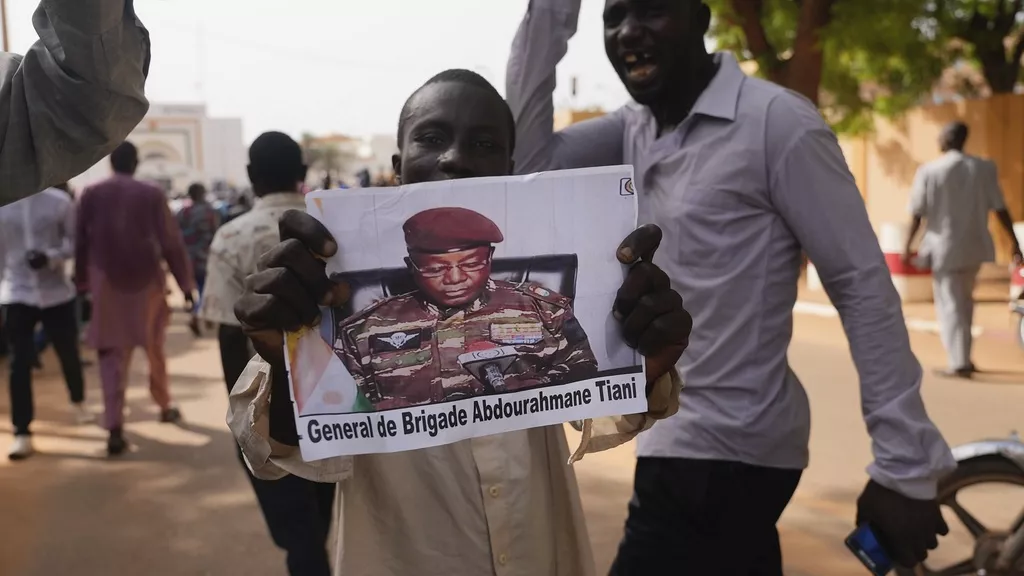
EU condemns detention of ministers in Niger
The detention of former government ministers by Niger’s new junta was denounced and their immediate release was sought by the European Union on Monday
“The EU denounces the continued arrests of ministers and senior officials of President Mohamed Bazoum’s government by the putschists in Niger,” EU foreign policy chief Josep Borrell said on Twitter, renamed X. “We call for their immediate release ,” he added.
Ousted President Mohamed Bazoum ‘s party has warned that the West African country is at risk of becoming a “dictatorial and totalitarian regime” after a series of arrests. The Nigerien Party for Democracy and Socialism (PNDS, in power), denounced the “abusive arrests” of four ministers – Interior, Petroleum, Mines and Transport – as well as the head of its national executive committee.
The European Union, which views Niger as a crucial pillar of security in the unstable Sahel area, has denounced the coup there. It stopped providing fiscal assistance to Niamey and issued a warning that it might follow this coup with fresh sanctions.
The elite presidential guard overthrew Mr. Bazoum on July 26, a Western friend whose victory just over two years ago marked the first peaceful transfer of power in Niger since independence.
Despite having uranium resources, Niger is one of the world’s poorest nations. It is the third nation in the area to have a coup since 2020, following Mali and Burkina Faso, and is beset by attacks from organizations affiliated with the Islamic State and Al-Qaeda.
-
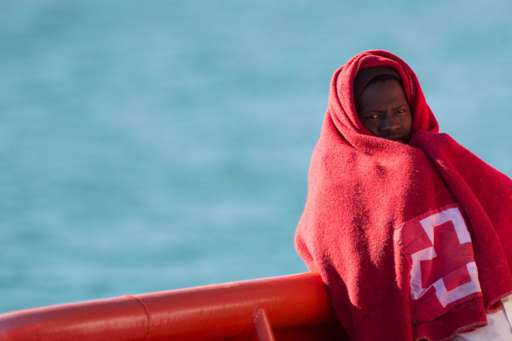
Border-policing deal signed between Tunisia and EU
President of Tunisia, Kaïs Saïed, has signed a partnership agreement with the European Union, which includes measures to combat people trafficking, given Tunisia’s status as the primary departure point for migrants attempting to cross the Mediterranean to Europe.
The deal was announced in Tunis by European Commission President Ursula von der Leyen, who pledged enhanced cooperation in areas such as border management and search and rescue operations.
Italy’s Prime Minister, Georgia Meloni, representing the far-right, hailed the agreement as an important step towards establishing a genuine partnership in addressing what she referred to as the “migration crisis.”
However, some members of the European Parliament have called for the agreement to be contingent upon respect for democracy and the rule of law in Tunisia. President Saïed had dissolved the parliament in 2021 and has undertaken constitutional reforms.
In recent months, there have been reports of racist violence targeting black Africans in Tunisia, following controversial statements made by President Saïed, who alleged a conspiracy to alter the demographic composition of the Arab-Muslim nation.
-

Spain to assume EU leadership after PM’s visit to Ukraine
Prime Minister Pedro Sanchez will travel to Kiev this weekend to demonstrate the EU’s unwavering support for Ukraine as Spain assumes the rotating EU chair, according to authorities.
Sanchez “will kick off the EU presidency on Saturday, July 1, in Ukraine … to demonstrate with his presence the unfaltering European Union support” to the country, said a statement from his office.
The announcement was made as Sanchez attended an EU summit in Brussels, during which Zelenskyy, participating via videolink, confirmed the visit.
-

Zimbabwe and Ghana sign cooperation agreement to strengthen relations
Ghana and Zimbabwe have signed a historic general cooperation agreement, paving way for a formal framework to enhance political and socio-economic relations between the two countries.
The agreement was signed yesterday in Accra in the presence of Zimbabwean President Emmerson Dambudzo Mnangagwa.
The signing ceremony was attended by Finance and Economic Development Minister Professor Mthuli Ncube and Ghana’s Deputy Minister for Foreign Affairs, Kwaku Ampratwum Sarpong.
The event took place on the sidelines of the ongoing 30th Annual Meetings of the African Development Bank. The signing was also witnessed by Zimbabwe’s Ambassador to Ghana, Kufa Chinoza, and Ghana’s envoy to Harare, Ambassador Grant Ntrakwa.
Following the signing ceremony, Deputy Minister Sarpong emphasized the historic nature of the event. He noted that although Zimbabwe and Ghana have maintained relations for over 60 years, no formal agreements have been in place to enhance cooperation until now.
Deputy Minister Sarpong highlighted the significance of formalizing the relations between the two countries, allowing for a more focused approach to cooperation. Priority areas such as agriculture, tourism, and aviation will be explored for collaboration.
He emphasized the need for diligent implementation to elevate the bilateral relations between Ghana and Zimbabwe.
Ambassador Chinoza, speaking to the media after the signing ceremony, regarded the agreement as a crucial starting point.
He expressed the hope that it would eventually evolve into a comprehensive joint permanent and bi-national cooperation agreement.
Ambassador Chinoza emphasized the importance of further enhancing cooperation between the two countries.
The historical connection between Zimbabwe and Ghana traces back to their founding Presidents, Robert Mugabe and Kwame Nkrumah, both driven by the pan-Africanist ideology. The shared history includes Mugabe marrying in Nkrumah’s country.
Zimbabwe has been actively seeking to strengthen cooperation with various countries as part of its Second Republic’s engagement and re-engagement initiative.
This pursuit of collaboration comes after years of isolation resulting from sanctions imposed by the United States and the European Union, which aimed to isolate Zimbabwe from the international community due to its implementation of the Fast Track Land Reform program.
The program aimed to rectify colonial injustices related to land ownership and ensure equitable access to land for indigenous Zimbabweans.
President Mnangagwa returned to Zimbabwe following the signing ceremony, concluding his visit to Ghana.
-

EU launches initiative to address climate change-related crises
The European Union (EU) has begun an interventionist project aimed at protecting residents of coastal towns in Nigeria’s Niger Delta region from the severe consequences of climate change.
The Security Component Coordinator of the project known as “Coping with Climate Change as a Cause of Conflict in Coastal Communities of West Africa (C7-West Africa),” Air Commodore Darlington Abdullahi, announced this during a two-day Inception/Ceremony and Cooperative Planning Event in Yenagoa, Bayelsa State.
Explaining further, Air Commodore Abdullahi promised that the EU will render support to the affected area in the best possible approach, just as it will get commitments from state and non-state actors regarding the project.
The Governor of Bayelsa state, Sen. Douye Diri, who was represented by Secretary to the State Government, Gideon Ekeuwei, called on the European Union, to intensify their support approach in helping coastal communities from negative effects as a result of climate change.
Ekeuwei also thanked the Italian Shipping Academy for appointing the Nigeria Maritime University as the local implementing partner, adding that the state government is ready to partner with the EU to ensure the success of the project.
Fielding questions from journalists, leaders of coastal communities expressed optimism of better days ahead for their people who suffer negative impacts, as well as, conflicts that are induced by climate change.
Also present at the event are Nigeria’s Chief of Defence Staff and Director-General of the National Environmental Standards, Regulations Enforcement Agency (NESREA) and the Chairman of the Bayelsa State Traditional Rulers Council who applauded a train the trainers’ workshops scheduled to hold in Rivers, Akwa Ibom, Delta, and Cross River States soon.
-
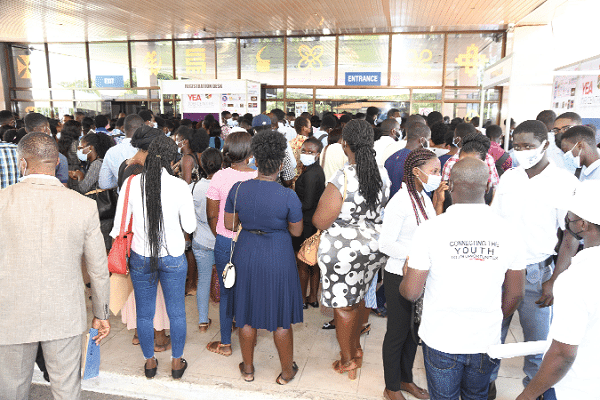
EU to support unemployed Ghanaian youth
The European Union (EU) has revealed that plans are underway to ensure that unemployed Ghanaian youth find jobs.
The initiatives are the EU-Ghana Pact for Skills worth €25 million and the Jobs, Migration and Development project worth €9 million.
Mr lrchad Razaaly, the EU Ambassador to Ghana made this known at a reception and an exhibition event to commemorate the Europe Day in Accra.
Europe Day held on May 9, every year celebrates peace and unity in Europe.
It is to commemorate the Schuman Declaration in 1950, only five years after the most horrific war in modern history in which 50 million people lost their lives.
The Ambassador said the Union recently inaugurated the Ghanaian-European Centre for Jobs, Migration and Development, together with Germany and the Ghanaian government.
The centre provides direct support to returning migrants and resident Ghanaians looking for jobs and training in Ghana and in Europe.
He said young people were ready to jump at new opportunities and this had been seen through their projects and initiatives, with over €3 billion currently invested in Africa on youth, skills and education at large.
He said in Ghana, “we support over 100,000 young job seekers to gain skills and training through a number of projects.”
He said the Union had seen that young people were open to learning and this was through the ever increasing applications to the EU’s Erasmus+ programme.
Last year, the Union sent off 45 talented Ghanaian students to European universities, the highest number of Ghanaian students eager to start rich academic and cultural experiences.
He said through the same Erasmus+ programme, hundreds of students in Ghana would also benefit from high-quality training and support to enter a competitive job market.
“When we put together all the scholarships served by the EU and its Member States, it is several hundreds of Ghanaians getting the opportunity to acquire world-class knowledge and training, foster long-lasting links between Ghana and Europe and find new opportunities for exchanges and investments,” he added.
The Ambassador said through their GrEEn worth €20.6 million and WACOMP worth €6.2 million projects were jointly supporting over 500 young entrepreneurs and youth-led enterprises and they have seen their innovativeness and creativity.
Mr Mustapha Ussif, Minister of Youth and Sports, expressed gratitude to the Union for their continuous support of the youth in the area of education through the provision of scholarships for Ghanaian students to study in various European universities.
“We are hopeful that other EU projects in the pipeline, aimed at empowering and developing the youth will be launched soon for mutual benefits,” he added.
-

Sudan: Attack on US diplomatic convoy in Khartoum
A U.S. Embassy convoy was attacked in Sudan, according to Washington’s top ambassador, who also condemned “indiscriminate military operations” as the nation’s armed forces and a potent adversary continued to use heavy weapons in populated areas.
The convoy of clearly marked embassy vehicles was attacked on Monday April 17 2023, and preliminary reports link the assailants to the Rapid Support Forces, the paramilitary group battling Sudan’s military, U.S. Secretary of State Antony Blinken told reporters. Everyone in the convoy was safe, Blinken said.
The convoy attack in Khartoum, along with earlier assaults on aid workers and the EU envoy’s residence in the Sudanese capital, signaled further descent into chaos since the battle by two rival generals for control of Africa’s third-largest country erupted over the weekend.
More than 185 people have been killed and more than 1,800 wounded, according to U.N. figures, which did not include a breakdown of civilians and combatants. The Sudan Doctors’ Syndicate said Tuesday that at least 144 civilians were killed and more than 1,400 wounded since Saturday.
The overall death toll could be much higher because clashes in Khartoum have prevented the removal of bodies in some areas. The two sides have been using tanks, artillery and other heavy weapons in densely populated areas.
Late Monday, fighter jets swooped overhead and anti-aircraft fire lit up the skies as darkness fell. Fighting resumed early Tuesday around each side’s main bases and at strategic government buildings — all of which are in residential areas.
Satellite images from Maxar Technologies taken Monday showed damage across Khartoum, including security service buildings. Tanks stood guard at a bridge over the White Nile River and other locations in the capital.
Satellite images from Planet Labs PBC, also taken Monday, showed some 20 damaged aircraft at Khartoum International Airport, which also has a military side. Some had been completely destroyed, with one still belching smoke. At the El Obeid and Merowe air bases, north and south of Khartoum, several fighter jets were among the destroyed aircraft.
Top diplomats have urged the two rival generals — armed forces chief Gen. Abdel-Fattah Burhan and RSF leader Gen. Mohammed Hamdan Dagalo — to halt fighting.
The State Department said late Monday that Blinken spoke by phone separately with the two generals.
“I made very clear (in my calls) that any attacks or threats or dangers posed to our diplomats were totally unacceptable,” Blinken told reporters at the Group of Seven wealthy nations meeting in Japan on Tuesday,
He appealed for an immediate 24-hour cease-fire, as a foundation for a longer truce and a return to negotiations. “Indiscriminate military operations have resulted in significant deaths and injuries, recklessly endangering civilians, diplomats, including U.S. personnel, and humanitarian personnel,” he said.
Dagalo said in a series of tweets Tuesday that he had approved a 24-hour humanitarian truce after speaking to Blinken while the Sudanese military said more troops would join the battle and that it would “widen the scope of its operations” against the RSF.
Burhan and Dagalo, former allies who jointly orchestrated an October 2021 coup, have dug in, demanding the other’s surrender. The violence has raised the specter of civil war just as Sudanese were trying to revive the drive for a democratic, civilian government after decades of military rule.
The Sudanese military blamed the RSF, which grew out of the notorious Janjaweed militias in Sudan’s Darfur region, for the attack on the U.S. convoy and an earlier assault on the home of the EU envoy in Khartoum.
The European Union’s foreign policy chief, Josep Borrell tweeted Monday that the EU ambassador to Sudan “was assaulted in his own residency,” without providing further details.
The RSF denied involvement in the attack on the ambassador’s home, instead blaming the military. However, a Western diplomat in Cairo said the residence was ransacked by armed men in RSF uniforms. No one was hurt but the armed men stole several items, said the diplomat who spoke on condition of anonymity because he was not allowed to talk to media.
Under international pressure, Burhan and Dagalo had recently agreed to a framework agreement with political parties and pro-democracy groups, but the signing was repeatedly delayed as tensions rose over the integration of the RSF into the armed forces and the future chain of command.
Both generals have a long history of human rights abuses and their forces have cracked down on pro-democracy activists.
Only four years ago, Sudan inspired hope after a popular uprising helped depose long-time autocratic leader Omar al-Bashir.
But the turmoil since, especially the 2021 coup, has frustrated the democracy drive and wrecked the economy. A third of the population — around 16 million people — now depends on humanitarian assistance in the resource-rich nation.
-

COCOBOD urges EU to ensure favorable cocoa pricing legislation
Ghana Cocoa Board (COCOBOD) has drawn the attention of the European Union to its unfavorable cocoa pricing legislation.
Chief Executive Officer of the Board, Mr Boahen Aidoo, while engaging a four-member delegation from the European Union in Accra this week, stated that the right price must be paid for Africa’s cocoa.
For him, a revision is imperative since “cocoa is the only crop which has preserved Ghana’s forest and supported global effort.”
Ghana is the second largest supplier of cocoa in the world. The Anglophone country is ranked after Côte d’Ivoire.
A review of the cocoa pricing legislation by the EU is key since it is the largest importer of cocoa, accounting for 60% of world imports.
The National Buffer Stock Company in 2022 revealed that of the $130 billion global chocolate industry, cocoa exported from Africa rakes in only a small slice.
On his part, Head of Cooperation, EU delegation to Ghana, Massimo Nina, who led the delegation, admitted that the present current pricing framework does not ensure the wellbeing of cocoa farmers as they are not able to rake in enough profit.
He gave the assurance that the European Union would take the necessary steps to improve the livelihoods of farmers it receives cocoa from.
In November 2022, the EU contributed €25 million to enhance the economic, social and environmental sustainability of cocoa production in Côte d’Ivoire, Ghana and Cameroon.
With regards to pricing, COCOBOD has introduced the Living Income Differential (LID) policy to mitigate poverty among cocoa farmers in Côte d’Ivoire and Ghana.
Again, the Board has put in place the Cocoa Management System (CMS) to ensure cocoa traceability and sustainability, an initiative that has received commendation from the European Union.
“I must say your processes towards ensuring sustainability, traceability and elimination of child labour within the sector are on a good track,” Massimo Nina said.
Meanwhile, COCOBOD has assured its commitment to maintaining its status as the best producer of premium quality cocoa in the world, while ensuring that cocoa cultivation is devoid of deforestation and use of services of children in cocoa farms.
Source: The Independent Ghana