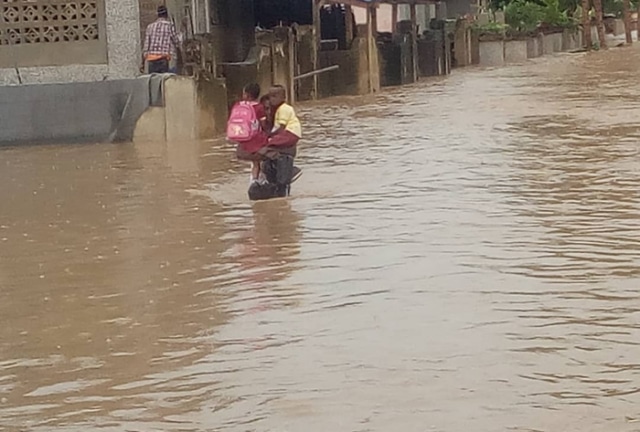
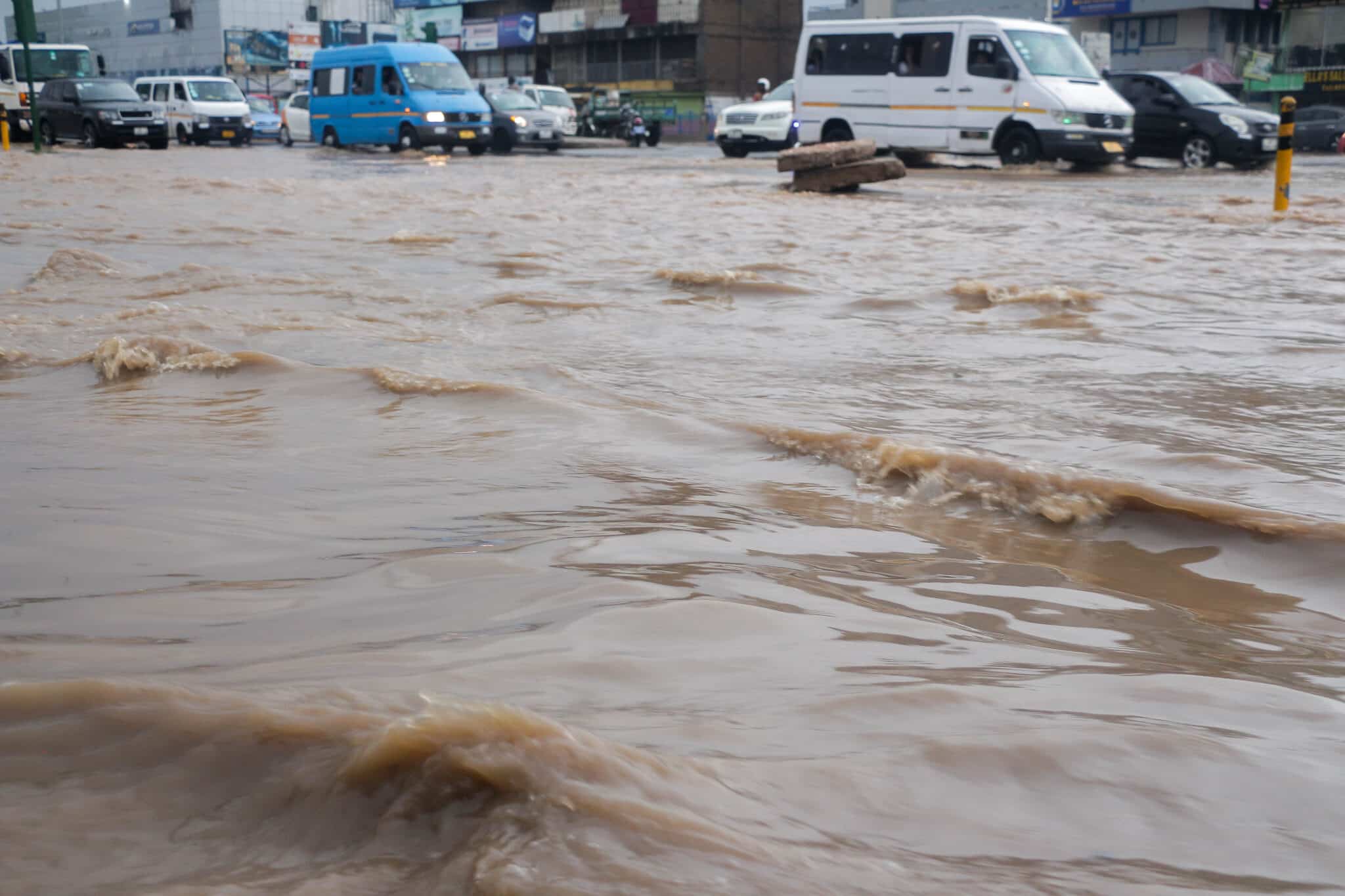
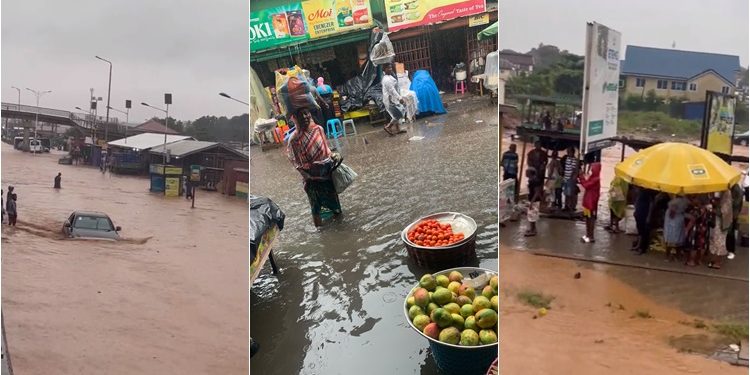
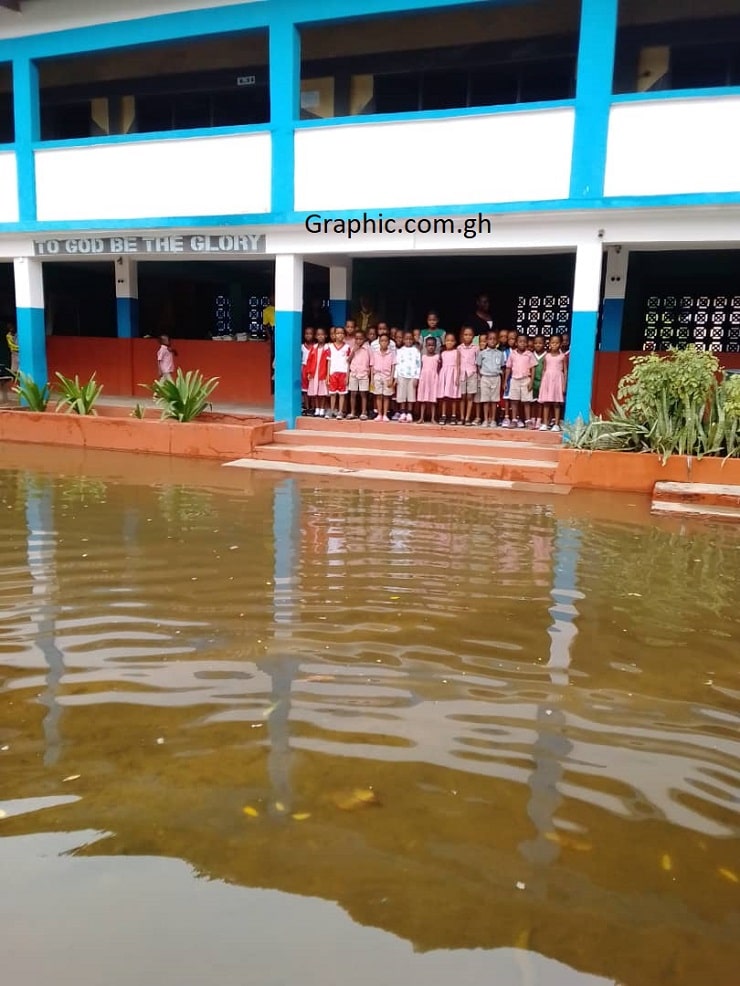
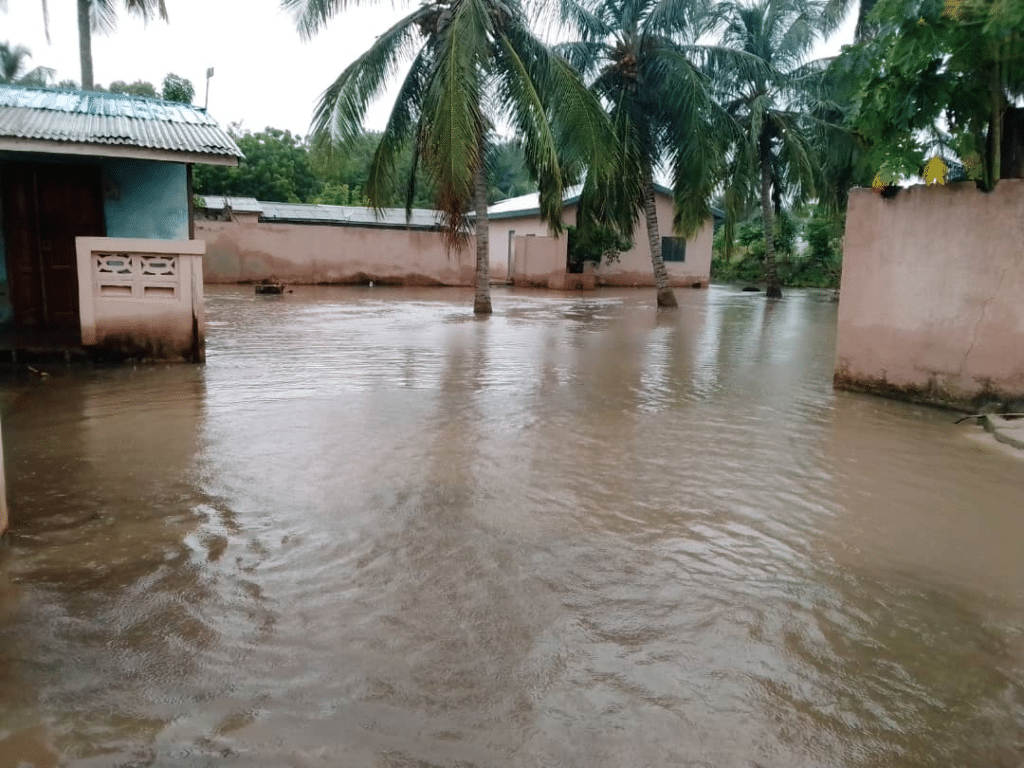
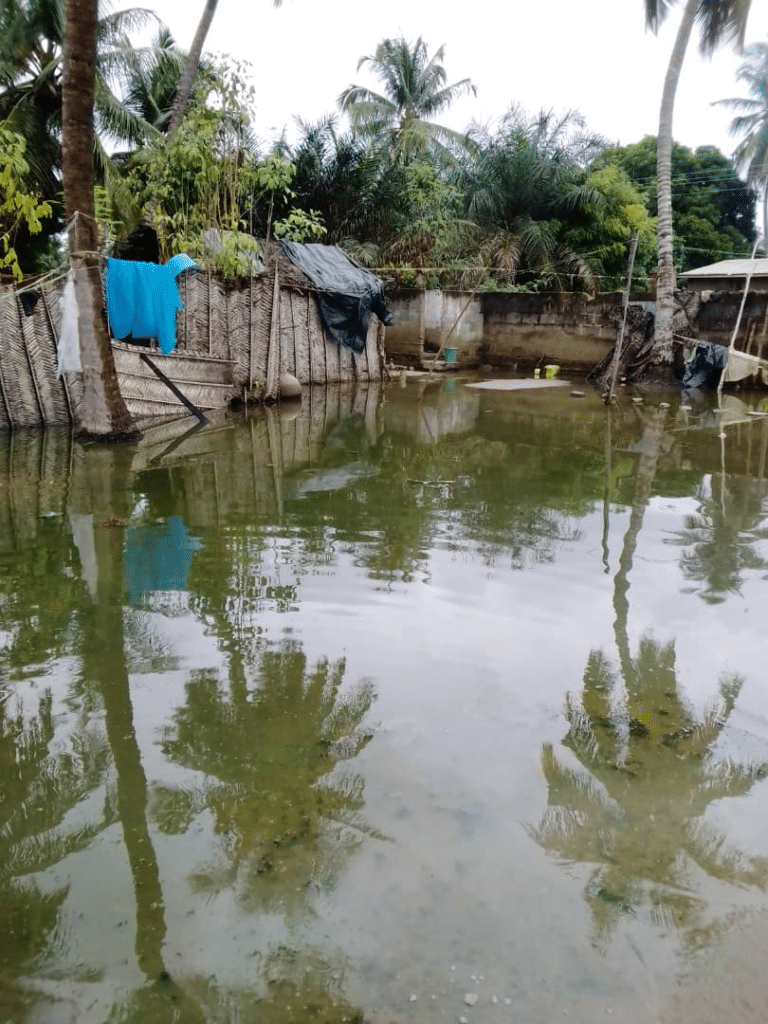
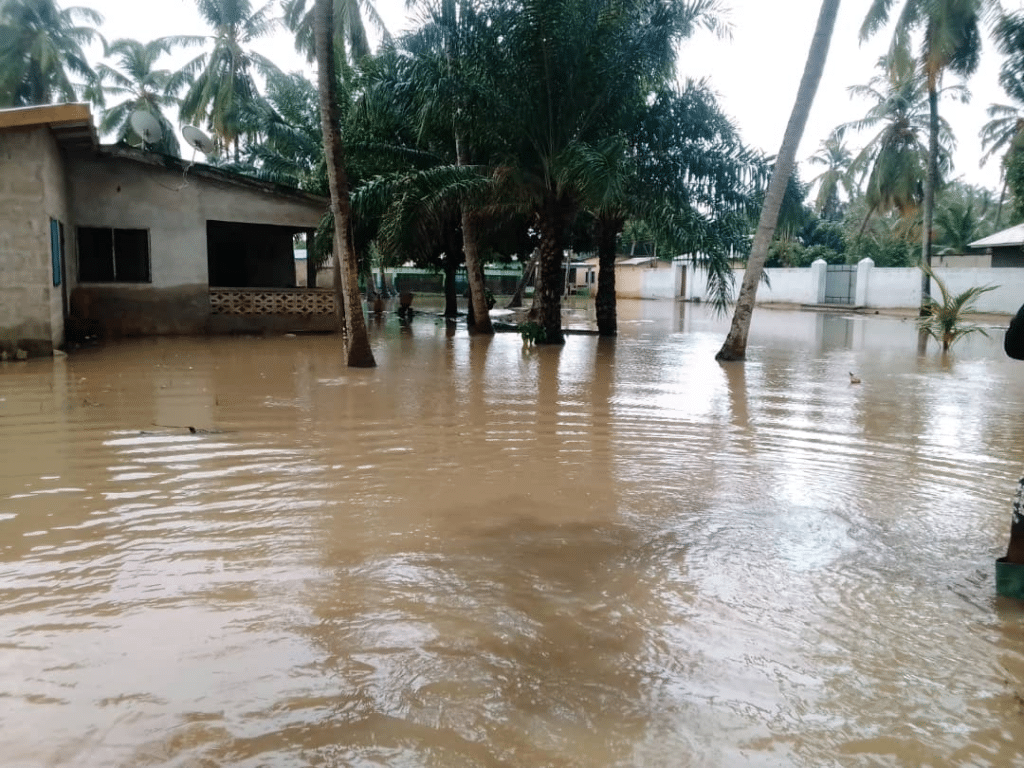
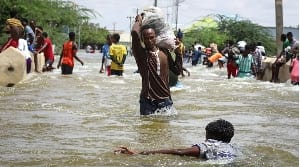
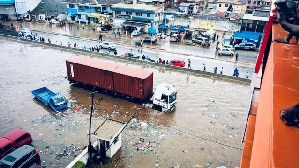
Ho, the regional capital of Volta, was submerged in floods last Saturday, after a downpour that was the heaviest in three decades.
The rain, which lasted for six hours, measured 189.2 millimetres, according to the Environmental Protection Agency (EPA). The second highest rainfall recorded in Ho during the period was 152.2 millimetres in 2006.
The floods affected several areas, including Ho-Bankoe, Ho-Donokodzi, Ho Barracks-New Town, Ho-Adzimakope, and Ho-Powerhouse. More than 1,000 people were displaced and many properties were damaged.
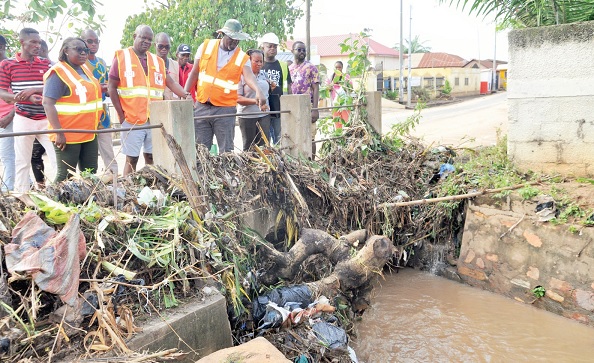
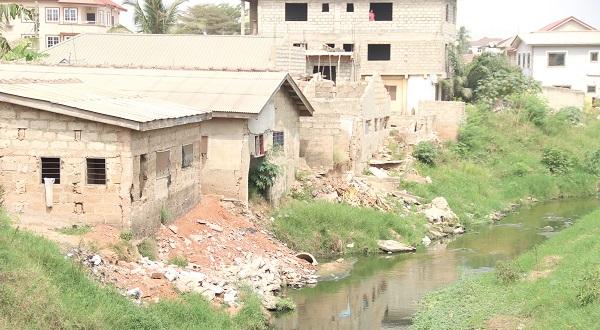
The EPA and the Ho District Meteorological Office attributed the floods to choked and narrow drains, as well as structures built on waterways.
The EPA Regional Director, Hope Smith Lomotey, warned that the people living in low-lying areas along water courses must relocate to higher grounds as soon as possible, as more rains were expected in the coming days.
He also urged the residents to respect the environment and dispose of their rubbish properly to avoid blocking the gutters.
He said the final destination of flowing water was the sea and once its course was blocked the result was often disastrous.
“We must all respect the environment to avoid a repetition of this kind of horror in future,” he said.
The Ho Central MP, Benjamin Kpodo, blamed the Ho Municipal Assembly for failing to enforce its environmental by-laws and building regulations.
He said the assembly was negligent in allowing people to build on waterways and not clearing the drains regularly.
He called on the assembly to take immediate action to prevent further floods in the area.
The National Disaster Management Organisation (NADMO) is still assessing the damage caused by the floods and providing relief to the affected people.
Reports from local officials and state media suggests that , heavy rainfall in Chongqing and other parts of southwestern China has resulted in the deaths of fifteen people, with four individuals still missing.
China has been experiencing extreme weather conditions, including heavy rains and intense heatwaves, as global temperatures continue to rise.
The residents of Beijing and various other regions have been advised to stay indoors due to temperatures exceeding 35 degrees Celsius (95 degrees Fahrenheit).
The recent torrential rains in Chongqing represent one of the most severe natural disasters in China this year, claiming multiple lives.
“The heavy rains, mainly seen in the areas along the Yangtze River, have triggered floods and geological disasters, disrupting the lives of more than 130,000 people in 19 districts and counties,” state-run news agency Xinhua said.
Images from state broadcaster CCTV posted on social media on Tuesday showed torrents of muddy water in Chongqing’s heavily affected Wanzhou District overflowing embankments and pieces of debris being swept away.
And the Communist Party-backed People’s Daily posted photos of ongoing rescue efforts Wednesday, showing emergency responders helping residents evacuate flooded residential buildings.
On the outskirts of Chongqing, workers on Tuesday discovered that a closed-off railway bridge had collapsed after it was “damaged by the impact of mountain torrents”, CCTV said.
The government dispatched a working group to Chongqing early on Wednesday morning to oversee disaster relief efforts.
More is still to come, with officials warning that China is set to face “multiple natural disasters in July, including floods, severe convection weather, typhoons and high temperatures”.
In response, President Xi Jinping has ordered that “authorities at all levels must give top priority to ensuring people’s safety and property”, Xinhua said Wednesday.
China’s finance ministry has issued 320 million yuan ($44.2 million) in disaster relief to affected regions, which it said would be used by local governments to boost emergency search and rescue efforts.
– Widespread damage – In neighbouring Sichuan province, authorities said more than 460,000 had been affected by the heavy rain this month, Xinhua reported.
About 85,000 people have been evacuated from their homes as a result of the rain, officials said, with “flash floods in mountainous areas” and “possible mudslides in some parts” of China expected this week.
Scientists say that rising global temperatures — caused largely by burning fossil fuels — increase the likelihood of extreme weather events such as the flash floods and heatwaves experienced in many Asian countries in recent weeks.
China recorded an average of four days in which temperatures exceeded 35 degrees every month in the first half of this year, the highest since national records began in 1961, according to aNational Meteorological Center statement on Sunday.
In June, Beijing sweltered through a total of 14 days of temperatures exceeding 35 degrees, matching the record set in July 2000, according to the state-run Beijing Evening News.
Minister of Works and Housing, Francis Asenso-Boakyehas stated that specific human activities are impeding the government’s efforts to achieve effective outcomes in flood prevention measures.
Despite allocating GH¢450 million for drain construction and desilting since 2018, the government claims that these activities have made it challenging to tackle the recurring issue of flooding.
The minister highlighted issues such as the obstruction oflagoons and wetlands for development purposes, construction on drainage channels that impede stormwater flow, dumping of waste in drains that reduce their capacity, and inadequate enforcement of planning and building laws by local authorities.
“It has become more evident that human activities are severely impeding the government’s efforts to tackle flooding. The observation includes blocking of lagoons and wetlands with construction materials for development purposes, building on drainage channels and blocking the free flow of stormwater, dumping of solid waste in drains thereby reducing their capacity to hold stormwater and the gap in the enforcement of planning and building laws by the various MMDAs,” Mr Asenso-Boakye bemoaned while providing a brief to Parliament on measures by the government to contain the situation.
The Minister further intimated that flooding in the capital is considered a national security issue and his Ministry is engaging with other relevant agencies to resolve the issue.
“Cabinet noted the need to consider flooding in Accra as a national security issue since effective law enforcement has a role to play in resolving the issue. Subsequently, the Cabinet constituted a committee to develop a comprehensive plan with appropriate measures to strengthen the enforcement of laws relating to lands and siting of buildings
“While the Committee does its work, my Ministry will continue its engagement with the National Security Ministry in seeking support for the Assemblies to enforce planning laws and building regulations.”
He also gave an update on the progress of projects aimed at mitigating the effects of flooding in Accra.
“Since 2018, the government has committed more than GH¢400 million to address flooding under a special progaramme. Under this programme, 384 desilting projects and 202 channel projects were initiated.
“Today, 370 desilting projects representing 96 percent have been completed and 84 drainage channel projects have been completed, with the remaining 118 at various stages of completion and the effects have been the mitigation of flood hazards in beneficiary communities.”
The death toll from floods in South Africa’s Kwazulu-Natal province has reached at least seven, and it is anticipated to increase further.
Several regions in the southeastern parts of the province are currently undergoing recovery efforts following severe rains and storms earlier this week.
The bodies of a woman in her 20s and a teenage girl were recently recovered from a canal in the city of Durban.
According to provincial authorities, at least 70 homes have been destroyed, leaving over 150 individuals without shelter.
Disaster management teams are continuing to assess the extent of the damage caused by the floods.
The heavy downpour on Friday night, June 23 has claimed the life of a National Disaster Management Organization (NADMO) officer,Sulemana Ahmed at the Ashanti Region.
The victim was tragically swept away along with his motorbike in Duase, located in the Kumasi Metropolis, while he was on his way home from work.
After an extensive search, residents in the area discovered his body in a drain Saturday morning.
Sulemana Ahmed, in his 40s, not only served as an officer with NADMO but also held the position of former Organizer of the National Democratic Congress in the Old Tafo Constituency.
The unfortunate incident marks the fifth fatality caused by the relentless heavy rains this week.
Prince Osei, the Assembly Member for the Duase Electoral Area, informed Citi News that several residents spotted the body in the drain and promptly reported the incident to the police. With their assistance, the body was successfully recovered from the drain.
The police have taken custody of the deceased and transported the body to the Komfo Anokye Teaching Hospital.
NADMO’s warning comes two days after four bodies were recovered from floodwaters in various towns in the Ashanti Region following Wednesday’s downpour.
The Ashanti Regional Director of NADMO, Frank Duodu, urged the public not to risk their lives during a downpour.
He admonished the public to take warnings from the Ghana Meteorological Agency (GMA) seriously during the rainy season and act accordingly.
“Make sure that when the rains are coming, we follow the warnings of the Meteo Agency and if there is no need to go to places you know are flood-prone areas, don’t go.”
Mr. Duodu also advised the public to take shelter on higher ground whenever it is raining.
“You find high places to lodge when the rains are coming but if it turns out to be what we witnessed on Wednesday, not that the place got flooded, but you decide to go through the flood waters, then I will say there is more that we have to do.”
Four people drowned at Atafoa, Sepaase, and Tafo, all in the Ashanti Region, on Wednesday, June 21st night.
The brother of one of the victims in the Atafoa incident died when he dived into the river to find the deceased on Thursday, June 22nd.
Policy and Planning lecturer at the Kwame Nkrumah University of Science and Technology (KNUST), Stephen Takyi has warned that more floods will be recorded during this rainfall periods.
He also made a projection of more deaths to be recorded during the floods as a result of the failure of the authorities at various cities to develop urban strategic plans.
As a planning expert, Stephen Takyi noted that indiscriminate sales of land, especially the wet lands by land overseers have contributed to the floods the country is facing.
The lecturer was contributing to a panel discussing on Otec FM’s morning show ‘Nyansapo’, hosted by Captain Koda, on Thursday, June 22, 2023.
He was reacting to the deaths recorded in Kumasiand Accra during the torrential rain that hit the country on Wednesday, June 21, 2022.
“If you look at how Ghana development process has been planned, flooding during the raining season will account for more deaths, and this will bring residents uprising against the politicians,” he furiously said.
“Lands are sold indiscriminately by city authorities and chiefs without hesitation, wet lands are been sold, lands earmarked for social infrastructures are also sold, making it impossible for free flow of rain water during rainfalls,” he added.
To prevent floods and its related casualties, Stephen Takyi advised residents to resist any attempts by cities’ authorities and chiefs who may attempt to sell flood-prone and reserved areas to save their lives.
The public is being urged by the National Disaster Management Organization (NADMO) to exercise caution and refrain from traversing through floodwaters
NADMO’s warning comes two days after four bodies were recovered from floodwaters in various towns in the Ashanti Region following Wednesday’s downpour.
The Ashanti Regional Director of NADMO, Frank Duodu, urged the public not to risk their lives during a downpour.
He admonished the public to take warnings from the Ghana Meteorological Agency seriously during the rainy season and act accordingly.
“Make sure that when the rains are coming, we follow the warnings of the Meteo Agency and if there is no need to go to places you know are flood-prone areas, don’t go.”
Mr. Duodu also advised the public to take shelter on higher ground whenever it is raining.
“You find high places to lodge when the rains are coming but if it turns out to be what we witnessed on Wednesday, not that the place got flooded, but you decide to go through the flood waters, then I will say there is more that we have to do.”
Four people drowned at Atafoa, Sepaase, and Tafo, all in the Ashanti Region, on Wednesday, June 21st night.
The brother of one of the victims in the Atafoa incident died when he dived into the river to find the deceased on Thursday, June 22nd.
The Deputy Director of Forecasting at the Meteorological Department, Dr. Joseph Porturphy, has advised residents residing in flood-prone areas to relocate to btter places as therainy seasonhas commenced.
This, he says, is due to the fact that the rains are expected until the second week of July, since it is the rainy season.
“So we will plead again if it is a flood-prone area, then you just move out. If the rains subside then you come back,” he appealed.
This follows reports of flooding in some parts of Accra after Wednesday’s downpour.
One of the suburbs of Ngleshie Amanfro in the Ga South Municipality, Peace Town, has been completely cut off by the torrential rain.
Dr. Portuphy also advised against commuting to frequently flooded areas, adding that alternate routes must be taken.
Again, he advised drivers to be cautious on the road and to park their vehicles when in flooded areas until the water recedes.
— Flood Fighters Movement #stopthefloods (@floodfightersgh) June 21, 2023
Flooding also took over the Accra-Winneba Road forcing commuters to use one side of the double-lane road.
This is towards the West Hills mall on the Accra Winneba road. The other side heading to Accra is totally flooded so all commuters are using the side towards the mall. This is not new, it has been like this since🤦🏾♂️🤦🏾♂️🤦🏾♂️. #Floodspic.twitter.com/W0HaGGTKxI
Some 20 communities in theKetu South municipalityhave been flooded following the three weeks of persistent rains in the area.
The distressing condition has brought every economic activity in the area to standstill, holding the people hostage in their homes with no hope of relief in sight.
So far, five basic schools whose classrooms are filled with water have been close down until further notice.
No relief items
The Municipal Director of the National Disaster Management Organisation, Torgbi Alossodetold the media on Monday morning (June 12) that there were no immediate relief items for the flood victims.
“We are studying the situation and assessing the damage prior to providing relief items for the displaced people,” he added.
The worst affected areas are Agbawema, Ahiatakukope, Awakorme, Hastukope, and Akame.
Others are Lokove, Ahorfe, Dzisakope, and Yegbefume, near Agbozume; and some communities in Klikor.
MP’s tour
Meanwhile, the Member of Parliament (MP) for Ketu South, Abla Dzifa Gomashie, has called for the immediate closure of all schools in the municipality for the safety of the children.
“The roads leading to the schools which are not tarred are now covered with large volumes of water, and that is dangerous,” she explained.
The MP called on NADMO to live up to its responsibility and respond to the situation at hand promptly.
The Municipal Chief Executive, Maxwell Lugudor said the floods in the Agbozume and Klikor were caused by lagoons bursting their banks.
He said the assembly was set to dredge the lagoons as an immediate response to the problem.
In the long term, he said, the assembly would build mini dams in some of the border communities to serve as receptacles to the floods.
Kardashynka, Maryna and Valentyna’s southern Ukrainian hamlet, is a quiet area.
A charming group of cottages on the eastern bank of the Dnipro River, occupied by Russia.
Even with the liberation of Kherson city last November, the neighbours hadn’t been able to cross the river to go there because of bridges being destroyed.
In a chain of events few could predict, they finally made that journey this week, while being rescued from the recent catastrophic floods.
“A boat was passing, we started shouting and waving,” says Maryna.
Much of her surrounding area has been devoured by the Dnipro since the destruction of the Khakovka dam upstream.
Their homes sit close to this watery front line which separates Ukrainian-controlled and Russian-occupied territory.
“We’ve been waiting for help,” says Maryna. “Valentyna is 86, I’m 76 but with many illnesses.
“It’s been very difficult. There was no power, no reception, it was like we were on an uninhabited island.”
She becomes emotional and begins to weep.Image caption,
Viktor Kovalenko’s wife was killed by shelling a few days ago
They’re joined by their friend Viktor Kovalenko, whose wife was killed by shelling across the river a few days ago.
Before being rescued, he had to collect her death certificate from the Moscow-installed officials who now rule his neighbourhood.
“I buried her next to my mother. I told her to wait for me,” he says.
The pain he’s experiencing is visceral.
“I kept cursing the Russians in their faces. I don’t know how they didn’t kill me. If only you knew how great our life was together. Now I have no wife, no house, nothing.”
The eastern bank has seen the worst of the flooding, and it’s clear Maryna, Valentyna and Viktor are the lucky ones.
Hundreds of people there have been posting on the Telegram app asking to be rescued from there.
“Help me please!” writes Svitlana, who says there are 35 trapped people at an address. “They’re all on a nearby roof, children are screaming and crying,” she says.
“Three days without food and water, we are dying slowly. Please, please.”
On one local list, published on Friday, we’ve seen the names of 150 people who are reportedly missing.
Aliona posts: “Asking urgently! There is a 1939-born grandmother and 1958-born disabled woman. They need to be evacuated! Help!”
Our team called several numbers of people who said they were stuck on the Russian side, but there was no answer.Image caption,
Viktor has been helping to evacuate people
Dozens of people across Ukraine have responded with their addresses and an offer to provide accommodation after their rescue.
Ukraine’s military says it has been co-ordinating rescues from the eastern bank, but claimed “fearless volunteers” were carrying out some of the evacuations.
On board one rescue boat, as we weave through the vast expanse of Kherson’s flooded port, volunteer Viktor tells us he came under Russian fire while attempting such a trip.
“The problem is, Russian soldiers are waiting there and waiting for volunteers or soldiers to arrive so they can shoot them,” explains Viktor as he offers a lift to people trapped in their apartment blocks.
The BBC has not been able to independently verify these claims.
“Even now, working is difficult. At this very moment, Kherson is under attack. There was also shelling on the island, a rocket struck 30m away from us.”
In the last few days of reporting from Kherson, the city has come under increased shelling and the military administration has advised volunteers not to venture out on to the water.
But that hasn’t deterred people like Viktor, who continues to search for those trapped, still in need of help.
The World Bank has granted government with an additional $150 million in finance to strengthen flood risk management and solid waste management for over 2.5 million people in the Odaw River Basin of the Greater Accra Region.
In a press release copied to Ghana Business News, the World Bank said the Greater Accra Region accounts for over 40 percent of non-oil GDP and faces increased flood risks that may reduce the economic and social development potential of the country.
The Bank indicated that urban floods have become more frequent and of higher intensity due to fast-growing development and occupation of flood risk areas, inadequate and unmaintained drainage systems, and solid waste accumulation along waterways.
The flood event of June 3, 2015, affected 53,000 people and caused major damage and losses in the housing, transport, water, and sanitation sectors amounting to $55 million, with an estimated $105 million reconstruction cost. At the time, the GARID project – a dedicated programme of interventions – was designed to address these challenges, it said.
Pierre Laporte, the World Bank Country Director for Ghana, Liberia, and Sierra Leone, said: “The World Bank is happy to support Ghana in these times of macroeconomic challenges and to help contribute to a holistic flood management approach through this additional financing of GARID. This is critical to achieving the World Bank’s twin goals of ending extreme poverty and boosting shared prosperity, as well as increasing the resilience of African cities.
“This additional support fills a financing gap resulting from the triggering of the Contingency Emergency Response Component (CERC) in 2020 due to the COVID-19 pandemic and the inclusion of resettlement compensation for approximately 2,800 project affected persons. It also addresses cost overruns for major infrastructure investments due to inflation and engineering requirements,” he said.
The Bank states that the project will continue to prioritize investments that enhance resilience to flood risks and improve solid waste management systems in targeted communities of the Odaw River Basin area.
“The planned flood mitigation infrastructure investments under GARID will directly reduce the flooding risks for urbanizing and economically productive areas of the Greater Accra Region, limiting the direct flood hazards on more than 138,000 people” said Catherine Lynch, Senior Urban Specialist and Task Team Leader for GARID project.
Movement of motorists was heavily impeded Thursday morning at the Kpone Barrier portion of the main Tema-Aflao N1 road due to flood waters following an early morning downpour.
Some motorists and their passengers complained of staying in gridlocks between two and five hours before making their way out of the situation.
Joy News’ Carlos Calony who toured the affected areas said the floods blocked the road in front of the Bel-Acqua Bottling Company where commuters virtually sailed through running waters.
The main Accra –Tema Motorway did not fare any better, as the rains forced a heavy gridlock that ensured vehicles moved at a snail’s pace.
The heavy downpour on Thursday, May 18, 2023 in Accra has left the Mamprobi JHS, Mamprobi Sempe classrooms flooded with some students and teachers standing on desks.
Teachers had to abandon classes and seek shelter as the rain entered the classrooms in the early hours of Thursday.
In a viral video some of the teachers and students could be seen standing on desks as they waited for the rain to stop to resume learning.
GhanaWeb gathered that this has been the situation at the school for a long time, with teachers having to put classes on hold to seek shelter for students anytime it rains.
Students sometimes have to use learning hours to sweep and scoop water out of their classrooms whenever it rains before they canresume learning.
The death toll from the flooding and landslides that struck Rwanda’s north, west, and south on May 2 grew to 130 by Thursday morning, according to the government’s deputy spokesperson Allain Mukuralinda.
In addition, 77 individuals were injured, with 36 receiving treatment in local hospitals and five people are still missing. The district of Rubavu was hit the hardest, with over 1,000 homes destroyed due to ongoing rainfall.
Rescue teams are still working to recover bodies that are trapped in landslides and collapsed houses.
In response to this crisis, various authorities, military forces, religious organisations and humanitarian groups have initiated interventions since Wednesday.
Affected individuals have been provided with essential items such as tents, blankets, food, and basic household utensils. Some people have also been accommodated in safe zones such as churches and schools.
According to a statement by the office of Rwandan president, rescue interventions including relocating residents from affected areas to safer zones have been carried out. Affected districts also increased from four to nine: Nyabihu, Rubavu, Karongi, Rutsiro, Gakenke, Burera, Musanze Ngororero, and Nyamagabe in the northern, western, and southern provinces.
It started raining on Tuesday around 11 pm and by Wednesday morning, over 50 people were declared dead. Among the victims is a family of five that was all killed in the disaster.
“My deepest condolences to the families and loved ones of the victims of the landslides and floods that occurred last night in the Western, Northern, and Southern Provinces. We are doing everything within our means to address this difficult situation. I am personally following up on the response closely,” President Kagame took to Twitter to console survivors.
Rwanda normally experiences heavy rains and hailstorms between January and April, which often result in the loss of lives especially those living in high-risk zones.
In Kigali, 27,000 families still reside in high-risk zones where disaster always looms when it rains.
The deaths from the latest floods bring the toll to 197 lives lost since January, according to Rwanda’s Ministry of Emergency Management.
Search and rescue operations
Rwandan authorities have launched a search and rescue operation to locate victims of the floods and assist those affected by the disaster. Emergency facilities have been set up to help those who have lost their homes. Funeral preparations for those who died are underway.
Rwanda’s Minister of Emergency Management Marie Solange Kayisire on Wednesday morning said that the latest floods were because of the rains that soaked mountains and that victims were not only families living in high-risk zones given the mountainous nature of the region.
At least 408 disaster cases were recorded in this period. These include 107 windstorm cases, 66 rainstorms, three mine disasters, 77 lightning cases, seven landslides, 13 house collapses, eight hailstorms, 29 floods as well as 98 fires.
The Rwanda Meteorology Agency released a weather forecast for May, indicating above-average rainfall ranging between 50mm and 200mm across the country.
The forecast stated that the first 10 days of May 2023 would have a higher amount of rainfall in many parts of the northwestern region ranging between 175mm and 200mm. Four districts of Ngororero, Rubavu, Nyabihu, Rutsiro and Karongi were affected by the heavy rains on the night of May 2.
According to the weather forecast, Rulindo, Gakenke and Gicumbi districts are also likely to see similar amounts of heavy rains in the next few days.
On Wednesday morning, the main road from Kigali, crossing through Rulindo, Gakenke, Musanze and Nyabihu districts to Rubavu, was closed due to landslides.
The three-hour downpour on Tuesday, March 7 has resulted in flooding in some areas of Ghana’s capital Accra.
Parts of the city including the Kwame Nkrumah Circle, Kasoa, andDzorwuluwere flooded after the rains.
In some of these areas, a significant portion of the water had lot of trash floating on them.
Social media posts with images and videos highlighted how some pedestrians found it difficult to go to their destinations in cars since major roadways were flooded due to the downpour.
Some drivers had to ploy different routes to get to their destination.
Below are some of the areas affected after the heavy downpour on Tuesday, March 7, 2023:
Filth and flood waters take over Kwame Nkrumah Circle#GTVBreakfast pic.twitter.com/1LRe529ig1— GTV Ghana (@GTV_Ghana) March 7, 2023
Dzorwulu Traffic light 4:50 am pic.twitter.com/WiVbep0IPm— KING OF ACCRA (@kingofaccra) March 7, 2023
Some parts of the Kasoa-Accra stretch are flooded due to the heavy downpour this dawn. This has caused traffic because part of the road that leads to Accra when coming from Kasoa has been affected by the floods. Drivers should be careful when using that route. pic.twitter.com/HzqD6AWVxN— Benedict Lemaire Agyenkwah (@QwabenaChamps) March 7, 2023
4 persons were arrested just last night for pouring garbage into the gutters in my Municipality~MCE Ga West Municipal
TODAY Accra,Floods after a torrential rainfall. People calls for Govt’s intervention as usual. Funny????#citicbs #joynews pic.twitter.com/b1P9L8OdHh
Speaking on the sidelines of a stakeholder discussion on how to address the plastic waste menace in Ghana, an initiative by Blue Skies Limited and the University of Northampton to find circular economic solutions to plastics, a researcher and a senior lecturer at the University of Northampton, Dr. Ebenezer Laryea called on the government to “spearhead a massive behavioural change drive to help reduce the use of plastics and their related pollution of the environment.”
Minister of works and housing, Francis Asenso-Boakye, has asked metropolitan, municipal, and district assemblies (MMDAs) in flood-prone districts to take swift, legal action to demolish all unauthorised structures situated on watercourses before the rainy season starts.
The minister also urged the assemblies to desilt and prepare storm drains ahead of the rains to reduce the chances of flooding, especially in Accra.
He has specifically directed the Ledzokuku Municipal Assembly to stop ongoing building construction works by private developers on the Kpeshie Lagoon Wetlands in Teshie, a suburb of Accra.
The Kpeshie Lagoon Wetlands, the Kordjor River, all in the Ledzokuku Municipal Assembly, as well as La Dade-Kotopong where parts of the buffer is, were experiencing heavy construction by private developers, some of them filling the reserved buffer, which is meant to hold excess volumes of water flow during heavy rains.
Mr Asenso-Boakye gave the charge last Wednesday when he toured some of the storm drains and flood-prone areas in Accra, to assess at first hand the situation on the ground.
He was accompanied by the Director of the Ghana Hydrological Services Authority, Dr John Kissi, and some engineers from the ministry.
The areas visited included Ledzokuku-Krowor, La Dade Kotopon and Ngleshie Amanfrom municipalities.
The chief executive officers of the relevant assemblies and their technical teams joined the tour.
Indiscipline
Mr Asenso-Boakye noted that flooding in Accra was largely as a result of indiscipline on the part of the public who built on wetlands left as a buffer for streams, rivers and lagoons, as well as those who blocked watercourses, filled them up with stones and sand in order to build on them.
He explained that while the ministry was tasked with the conceptualisation and classification of policies and programmes for the systematic growth of the country’s infrastructure, it was the duty of local assemblies to maintain such works and ensure that they were fit for purpose.
He, therefore, tasked MMDAs to periodically desilt storm drains and maintain them for the rains.
“We are the cause of our own problem, and we will need some level of discipline. So, this morning, I am embarking on site visits to check on our drains to see how prepared we are ahead of the rainy season,” he said.
He said the free flow of storm water alone could prevent flooding in some parts of the city, but that the activities of some few individuals had blocked drains.
“That is why these areas flood during the rainy season,” he said.
Investments
So far, Mr Asenso- Boakye said, the government had spent GH¢450 million on mitigation mechanisms as part of efforts to fight perennial floods, especially in Accra where the results of flooding had sometimes been catastrophic.
He said the ministry was in talks with the Finance Ministry to make available some funds to continue with the dredging works to expand existing drains.
“We will do our part as a government, but we need all of you to send the message across because we can’t keep on doing some of these things and expect to develop as a country. So, all of us must come together and fight these things now,” the minister added.
Task force
Meanwhile, the Chief Executive of La Dade Kotopon Municipal Assembly, Rev. Solomon Kotey Nikoi, urged the minister to appeal to Cabinet to set up a task force that would address the development of reserved lands, including wetlands, into residential communities.
He said the task force could be similar to the one set up to fight galamsey, with a clear mandate and timelines.
Rev. Nikoi, who complained to the minister about his safety, explained that anytime he embarked on exercises to restrict such developments, he was threatened, and that had been a major concern for him and his team over the years.
“What we are seeing here is becoming a national issue, and we have to get to a place where we put together a task force like we are doing with the galamsey because these developers have weapons; they threatened me that they will kill me. It’s not easy. I can’t sleep. They asked me to find out how the previous Chief Executive of the assembly died,” Rev. Nikoi said.
He added that: “We come and stop them and sometimes we have to sleep here to prevent them. Last year, they nearly killed one of our guys.
“It’s a challenge, and all of us, including the media and security agencies, have to come together. Yesterday, we arrested some of the trucks. Sometimes they carry arms; we can’t fight them”.
A total of 25,000 people were evacuated from California on Monday as a result of the latest in a spate of Pacific storms that have been linked to at least 12 fatalities, including the whole town of Montecito and neighboring portions of the Santa Barbara coast.
Authorities in 17 California areas, including the Montecito evacuation zone, are concerned that a recent string of torrential downpours might unleash deadly cascades of mud, stones, and other debris in hillsides stripped bare of vegetation by previous wildfires.
Mandatory evacuations were ordered five years after Montecito, a wealthy coastal community 90 miles northwest of Los Angeles, was devastated by mudslides caused by heavy rains in January 2018, which resulted in extensive damage and the deaths of more than 20 people.
Raquel Zick, a Santa Barbara County sheriff’s spokesperson, told Reuters that sheriff’s deputies were out navigating flooded roads in armored high-clearance BearCat SWAT vehicles to rescue residents stranded by high water.
Oprah Winfrey, the owner of Oprah Winfrey Network, and Prince Harry and his wife Meghan from the United Kingdom are just a few of the roughly 9,000 residents of Montecito, many of whom live in lavish houses in the lovely town.
If they were among those compelled to leave the area was not immediately evident. During the New Year’s vacation, Winfrey was rumored to have traveled to Hawaii.
Ellen DeGeneres, an actress and comedian who is also a well-known resident of Montecito, shared a video selfie on Twitter showing herself in the rain next to a torrent rushing through what she described as a typically dry creek bed close to her home.
The performer, garbed in a hooded jacket, tweeted that she had been advised to “shelter in place” rather than evacuate since her home was on higher ground.
“We need to be nicer to Mother Nature, because Mother Nature is not happy with us,” she said in the video. “Let’s all do our part. Stay safe, everybody. Yikes.”
All 15 districts of Montecito were ordered to immediately evacuate along with portions of the city of Santa Barbara and adjacent areas of Carpinteria and Summerland where “burn scars” posed a threat of mudslides, the Montecito Fire Department said.
Social media video posted online by TMZ.com showed a man paddling his kayak in the middle of a flooded street in Santa Barbara. The Los Angeles Times reported numerous road closures from flooding and debris flows, including sections of U.S. highway route 101 in Santa Barbara and Ventura counties.
Along the central California coast, some 14,000 people were ordered evacuated early on Monday from four Santa Cruz County communities inundated with flash floods, extreme tides and heavy runoff from local mountains, said Brian Ferguson, a spokesperson for the state Office of Emergency Services.
Nearly 4,000 more people in the town of Wilton remained under evacuation orders due to flood threats from breached levees along the Cosumnes River south of Sacramento, the state capital. Another 42,000 residents of roughly a dozen counties were under evacuation warnings, Ferguson said.
The torrential rains, along with heavy snow in mountain areas, were the product of yet another “atmospheric river” of dense moisture funneled into California from the tropical Pacific, powered by sprawling low-pressure systems churning offshore.
At least a dozen fatalities have been attributed to several back-to-back storms that have lashed California since Dec. 26, including a toddler killed when a redwood tree was blown over his family’s trailer home last week.
Experts say the growing frequency and intensity of such storms, interspersed with extreme dry spells, are symptoms of climate change, posing greater challenges to managing California’s precious water supplies while minimizing risks of floods, mudslides and wildfires.
The six storms since just after Christmas have been accompanied by pounding surf that has battered seaside communities, as well as fierce, gale-force winds that have uprooted thousands of trees weakened by prolonged drought.
The National Weather Service (NWS) has warned the latest onslaught would impact most of California’s 39 million residents, with up to 5 inches of additional rain expected to fall near the coast and more than a foot of snow on the Sierra Nevada mountains over the next few days.
The high winds have wreaked havoc on the state’s power grid, knocking out electricity to tens of thousands of Californians. As many as 120,000 homes and business were without electricity on Monday morning, according to data from Poweroutage.us.
U.S. President Joe Biden has approved an emergency declaration authorizing the Federal Emergency Management Agency (FEMA) to coordinate disaster relief efforts and mobilize emergency resources in California.
(Reporting by Erica Urech in Montecito, Calif.; Writing and additional reporting by Steve Gorman in Los Angeles; Additional reporting by Daniel Trotta in Carlsbad, Calif. and Brendan O’Brien in Chicago; Editing by Josie Kao and Christopher Cushing)
The biggest floodsin years have reportedly killed more than 120 people in the Democratic Republic of the Congo’s capital, Kinshasa, according to the authorities.
Most of the dead were in hillside areas which suffered landslides in torrential rain.
One journalist reported seeing the bodies of nine members of the same family whose home had collapsed.
A three-day period of national mourning is beginning on Wednesday.
Correspondents say there has been a big increase in the number of people moving to Kinshasa in recent years and the city suffers from inadequate drainage and poor urban planning.
Floods caused by Monday night’s heavy rains in Kinshasa, the capital of the Democratic Republic of the Congo, wrecked many homes and blocked off one of the main entrances to the city.
The damage left a third of the city with no water and electricity, according to authorities. Most of the dead were in hillside areas which suffered landslides.
Kinshasa has about 15 million inhabitants and is one of the most densely populated capitals in Africa.
Prime Minister Sama Lukonde visited the affected neighbourhoods on Tuesday together with the city’s Governor Gentiny Ngobila.
The governor said the provincial government will pay all the funeral expenses for the deceased.
The worst floods in years have left more than 120 people dead in Kinshasa, the capital of the Democratic Republic of the Congo,according to the authorities.
While heavy rains persisted for hours and several homes collapsed, major roads in the city centre were flooded.
Many of the fatalities occurred in landslide-prone hillside areas.
Three days have been set aside for national mourning, according to the government.
The death toll, which was first estimated to be at least 55, jumped to more than 120 by Tuesday evening.
Entire neighbourhoods were flooded with muddy water, and houses and roads ripped apart by sinkholes, including the N1 highway that connects the capital to the country’s main port of Matadi.
“We’ve never seen a flood here on this scale,” said Blanchard Mvubu, who lives in one of the worst affected areas.
“I was asleep and I could feel water in the house. It’s a disaster – we’ve lost all our possessions in the house, nothing could be saved.”
Prime Minister Jean-Michel Sama Lukonde led a government delegation through parts of Kinshasa to assess the damage on Tuesday.
He said officials were still searching for more bodies.
Earlier on Tuesday, the president of the Democratic Republic of Congo joined the United States in blaming climate change for the major flooding.
“The DRC is under pressure but unfortunately it’s not sufficiently heard or supported,” President Félix Tshisekedi told Secretary of State Antony Blinken as they met at a US-Africa summit in Washington.
The flooding was an example of “what we have been deploring for some time,” he said, adding that those countries which were responsible for pollution should do more to help those which are suffering.
His spokesperson said the president might cut short his trip to the US because of the disaster.
Kinshasa is located on the River Congoand has seen a huge population influx in recent years, with 15 million people now living there.
Many dwellings are shanty houses built on flood-prone slopes, and the city suffers from inadequate drainage and sewerage.
In November 2019, about 40 people in Kinshasa died in floods and landslides.
Two people have died in South Africa and 15 others are missing after a flash flood in a river swept away worshippers taking part in a church ceremony.
Some of the more than 30 congregants were standing on rocks in the river on Saturday when a torrent of water surged through, an eyewitness said.
The pastor was saved after he clung on to an overhanging tree branch, he added.
Rescuers resumed the search of Johannesburg’s Jukskei river on Sunday.
It is notorious for flooding during South Africa’s rainy season.
The search operation involves the police and fire service as well as specialist aquatic rescue teams, Robert Mulaudzi spokesperson for the City of Johannesburg Emergency Management Services said.
Victor Ncube, who had been taking part in the church service, told local news station eNCA that he managed to pull out five people from the river who had been swept 100 metres downstream.
Others had been carried too far down the river for him to try to save them, he said.
Of the 33 who had been at the service, 15 are still unaccounted for, the authorities say.
The recent floodshave killed at least 50 persons in 11 communities in Adamawa and injured 71 others.
Executive Secretary of Adamawa Emergency Management Agency (ADSEMA), Malam Suleiman Mohammed, made the declaration on Friday in Yola when he spoke with the News Agency of Nigeria (NAN).
He blamed the flooding on the release of water from Lagdo Dam in neighbouring Cameroon.
Mohammed said also that the flood destroyed 172,000 farmlands and food crops worth millions of naira.
“Some of the affected local government areas are Numan, Shelleng, Yola South, Yola North, Demsa, Mayo Belwa and Michika,’’ he said.
He added that the agency had provided clothes, foodstuffs, drugs, mosquito nets, blankets and buckets for victims to assuage their suffering.
“The items were donated by the state government, the Federal Government and by other donors,’’ he said.
Mohammed also told that ADSEMA would collaborate with the National Emergency Management Agency to move affected communities to safer areas.
“We will continue to sensitise the communities about the dangers of living in flood-prone areas,’’ he said.
Flood waters at Weija and its environs have begun to recede, revealing the extent of devastation caused following the opening of the spill gates of the Weija Dam last week.
The recession of the flood waters is as a result of the opening of the Weija estuary and a reduction in the volume of water from the Eastern Region into the Weija Dam.
Consequently, residents who abandoned their homes for fear of their lives have gone back to clean up and salvage remaining personal effects and other items.
The first casualty of the flooding has also been found at Tetegu — a 55-year-old man known as Addi Kwashie, aka Chocholotso.
His body was discovered by the Weija Police around 12:30 p.m.
Kwashie had reportedly run to take cover in a nearby house but ended up getting drowned.
Visit
This came to light when the Daily Graphic visited areas affected by the floods when the Ghana Water Company Limited (GWCL) opened four spill gates of the Weija Dam to allow for the flow of excess water from the facility to save it from collapse.
At New Weija, Tatop, Tetegu, White Cross, Oblogo, among others, there were traces of the levels the flood waters had reached in homes, shops, schools and other facilities.
Some of the traces were at the ground, window and door levels.
There were also traces of refuse and debris in the homes of people at the various places.
On standby were the Marine Police, with their boat; personnel from the Weija Divisional Command of the Ghana Police Service, members of the Ghana Ambulance Service and the Ghana National Fire Service.
At Tetegu, for instance, for the first time in three days, the asphalted road leading to the town could be seen as residents cleaned their shops and homes.
Due to the power outage in the affected flooded areas, people who had generators switched them on to operate their businesses.
Recovering
A victim of the flooding at New Weija, Emmanuel Afari, told the Daily Graphic that with the water receding, he and his family were now trying to test whether or not their electrical gadgets would work.
He said their clothes would all be washed, since Kente and other materials were all submerged in the flood.
Another resident, Alhaji Seidu, said he had lived in the area for 25 years but had never seen anything like the recent flood.
“I have not been home for the past three days and I am now going to see what is left in my house. We had to temporarily relocate when the flood came to our home,” he said.
Zenabu Azumah, another victim, said apart from losing her personal belongings, her business too had been badly affected, as bags of beans for ‘waakye’, cartons of fish and a new fridge were destroyed by the flood.
“I lost all my clothing and all I have left is what I wore on that day. I am still wearing it,” she said.
Meanwhile, the Weija-Gbawe Municipal Director of the National Disaster Management Organisation (NADMO), Emmanuel Adu-Boahen, told the Daily Graphic that the organisation was assessing the extent of damage and the number of people displaced.
For his part, the Public Relations Officer of the Weija-Gbawe Municipal Assembly, Julius Sarpei, said the assembly members had been tasked to identify people who had been affected and displaced by the flooding, since they were with them on the ground.
He said as of 11 a.m. yesterday, the assembly was yet to take delivery of relief items from NADMO.
Businesses
While on the rounds, the Daily Graphic team observed that vulcanisers around Tetegu, Tatop and Weija were not working due to the power outage.
The Electricity Company of Ghana (ECG) had indicated that until it was safe to restore power, it would not do so.
Yaw Opoku of Tatop Company Limited, manufacturers of concrete products, said the company could not work as a result of the flooding of its yard.
Sumaila, a vulcaniser, who was seen sitting idle, said he could not work because there was no light to power the machine.
He said he could only hope that the flood waters would recede further for the light to be switched on, since he had not worked for the past four days.
At the Talented Royal School where some staff members were seen clearing the debris left by the flood, the Headmaster, Anthony Torgorme, said nothing was destroyed, except for the debris that was left on the compound.
The school, he said, had to be closed, since they could not access it because of the flood.
Support
At Tetegu, members of the National Council of Zamarama Chiefs had gathered to visit some of their members who were hit by the flood.
The President of the council, Chief Musah Yahaya Yandu, said between 80 and 90 per cent of its members lived at Tetegu and so they were at the place to assess the impact of the flood in the homes of those members.
Once that was done, he said, “then we will see how best to assist them”.
Five basic schools in New Juaben North Municipality in the Eastern region have been closed due to the flood disaster.
The schools were flooded destroying teaching and learning materials.
Addressing the media, the Municipal Chief Executive Comfort Asante said measures are being put in place for the BECE candidates preparing to write their exams this month.
One person died while 2686 made up of 977 children and 1708 adults were affected by the floods.
203 households have either collapsed completely or partially damaged.
The MCE said the assembly has mobilized relief materials to be distributed to the affected persons being sheltered in churches, mosques, and community centers.
The assembly is however appealing to groups, NGOs, and religious bodies to come to their aid.
The students joined efforts to retrieve properties belonging to their colleague’s family
Several communities in the Weija Gbawe Municipality have been submerged in flood waters following the spilling of excess water from the Weija Dam.
The Ghana Water Company Limited on Sunday, October 2, 2022, commenced the spilling of excess water in the dam.
Visiting Weijaand its environs on Tuesday, October 4, 2022, GhanaWeb TV cameras captured several residents who had been displaced by the spilled water flooding their homes.
Dozens of students at the Weija D/A Junior High School were sighted assisting some schoolmates whose home had been flooded to evacuate their properties.
A parent of the affected student lamented the impact of the flooding which she noted had destroyed her valuables.
According to the mother of three, she had lost some GHC1,500 to the flood waters in addition to several belongings.
Boats take over as homes at Weija ‘drown’ under water after dam spillage
0 seconds of 3 minutes, 6 secondsVolume 90%
Some of the residents who spoke to GhanaWeb also bemoaned the impact of the flooding which they described as unprecedented.
Some of the affected communities include Weija, Oblojo and Tetegu.
Weija residents stranded as their homes are flooded over dam spillage
0 seconds of 6 minutes, 6 secondsVolume 90%
Weija residents displaced after dam spillage
0 seconds of 15 secondsVolume 90%
Watch the latest episode of The Lowdown below:
The Lowdown: Role of the diaspora in the development of Africa
CEO of the Aaron Manvel Foundation Millie Lorene Tucker and Gary Hope, the CEO of FLCC – Bring Back Hope Foundation underscore the need for the African diaspora to help develop the continent in this episode of The Lowdown on GhanaWeb TV. According to the women trying to make and create a change in Ghana, our forefathers were sold away and made to develop strange lands. Thus, coming back home and developing their home country is the best thing to do especially when resources are available.
Flood on Monday took over a new bridge being constructed around Kotonkarfei town in Kogi State on the Abuja-Lokoja Expressway, leaving many motorists and other road users stranded and in a difficult moment to navigate the busy road.
Commuters were held up for several hours, resulting in heavy traffic buildup that extended to Lokoja-Koton-Karfe road.
Many vehicles got trapped as there was no alternative route, Daily Trust reports.
Mallam Ahmadu, a driver who spent hours on the road, said there was apprehension among commuters.
Policemen, soldiers, and officials of the Federal Road Safety Corps (FRSC) as well as youth volunteers were drafted to the scene before orderliness was restored.
But an eyewitness said the gridlock on the Murtala Muhammadu Bridge in Jamata Community may take a longer period to clear as impatient motorists have taken over all the lanes of the highway, making it difficult for smooth traffic flow.
Some residents of Kyebi in the Eastern Region have lamented the impact of illegal mining activities in the area which has recently resulted in flooding in the Kyebi township.
Following days of heavy rain, the Birim River which has been badly affected by galamsey had its banks overflowing and flooding the Kyebi township.
Some of the areas affected by the flooding included the Kyebi Circuit Court.
In a video sighted by GhanaWeb, some residents of Kyebi are heard lamenting the effects of galamsey in area.
“This is Kyebi and there is the court which has been entirely flooded. The fire service are on their way to rescue people. The Birim River has flooded the entire town,” a man is heard saying amidst blaring siren in the background.
“Our people get angry when we complain about galamsey. They claim galamsey has benefits, when Nana (Amoatia Ofori Panin II) talks about it they complain and claim it is their source of livelihood. Now see what galamsey has done to us,” a woman is also heard in the video saying.
Meanwhile, there is a renewed public conversation about the impact of illegal mining on Ghana’s water and forest reserves.
Currently, several water bodies are under threat from the galamsey activities while forest covers are being depleted by the day.
The attempt to breach it displaced up to 100,000 people from their homes.
But on Monday, the province’s minister for irrigation told Reuters the water level of the lake had “not come down”.
Sindh province produces half of the country’s food supply, exacerbating fears that many will face serious food shortages in a country already struggling with an economic crisis.
Floods in Pakistan have affected some 33 million people and killed at least 1,314, including 458 children, Pakistan’s National Disaster Management Agency said.
Estimates suggest the floods have caused at least $10bn (£8.5bn) of damage.
But the move risked affecting an estimated 400 villages – a total of 135,000 people – who would be left without homes. Officials told villagers to evacuate at the weekend.
On Monday however, officials said water levels at the lake had remained dangerously high.
Jam Khan Shoro, the provincial minister for irrigation told the news agency Reuters that water levels had not come down but declined to say if there would be subsequent attempts to relieve the lake of its bloated banks.
Pakistan is facing one of its worst climate-induced natural disasters in years, as record torrential rainfall and melting glaciers in the country’s northern mountains have caused devastating floods and submerged almost a third of its territory underwater.
Meanwhile, the UN children’s agency Unicef said more children were at risk of dying from the disease in Pakistan due to the shortage of clean water.
The disaster has also highlighted the stark disparity between countries that are the largest contributors to climate change and countries that bear the brunt of its impact.
Pakistan produces less than 1% of global greenhouse gas emissions but its geography makes it extremely vulnerable to climate change.
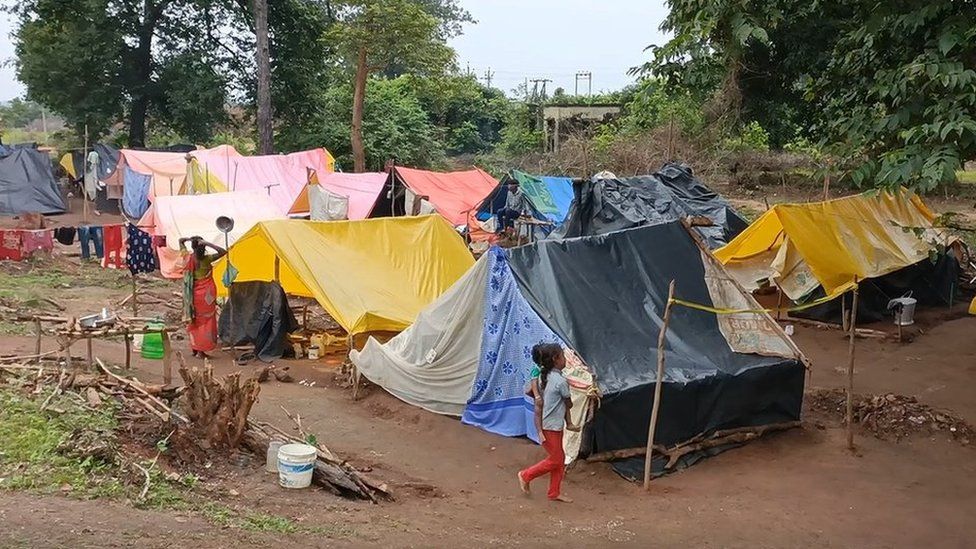
“It’s been over a month of living with nothing,” Neelakka Modem, a tribal woman from the western Indian state of Maharashtra, says gloomily as rain trickles down her rickety plastic tent.
She and her family, along with 700 others, were forced to abandon their homes in Somanpalli village in Gadchiroli district after heavy rains in July triggered massive floods. They have been camping along a national highway ever since.
“The authorities came in the middle of the night and asked us to move to safety. We left with nothing but the clothes we were wearing,” Ms Modem, 70, recalled.
The state government has provided food and water, but living by the highway carries risks – speeding vehicles, wild animals, including deadly snakes, are common in this region which is home to dense tropical forests.
Back in the village, Ms Modem’s son Madhukar, a farm labourer, is trying to salvage whatever he can from their destroyed house. But Ms Modem wonders if they will ever go back.
“We can’t live there anymore – the place is inhabitable. The government should rehabilitate us elsewhere,” she said.
Image caption, Residents of Somanpalli village in Gadchiroli have been living in camps along a highway
Heavy rainfall is common during the monsoon in Gadchiroli district, which is surrounded by forests. Here, the Godavari river, the second longest in India, along with its tributaries, forms a flood-prone zone between June and September. During those months, if often overflows and enters the villages.
But residents say the flooding has become worse in recent years.
Torrential rains this year between 11 July and 19 July left a trail of devastation- at least 34 of the 52 towns and villages along the riverbank in Gadchiroli were submerged for days, while three of them, including Somanpalli, were almost wiped out as water levels rose to their highest point in 35 years.
The rains have stopped now, but people are yet to return home or start rebuilding their lives.
“I’ve never seen a flood like this. This time, it has taken everything,” Ms Modem said.
Image caption, The lush region of Gadchiroli receives heavy rainfall every year, Image source, ANI
Villagers and environmental experts say the heavy floods are caused by the discharge of water from a nearby dam in Medigadda – a village in the neighbouring state of Telangana. But authorities have denied the claim.
“The dam has no effect on the flood situation in Gadchiroli and its neighbouring areas. In fact, because of the construction of flood banks, heavy damages could be avoided during the recent floods,” said Dr Rajat Kumar, a senior official in Telangana’s irrigation department.
Mr Kumar added that irrigation officials in his state were “continuously coordinating” with their counterparts in Maharashtra over the situation.
The dam, known as Lakshmi Barrage, is located on the border between Maharashtra and Telangana. It was constructed in 2016 after the two states signed a water-sharing agreement.
Since its inception, the project has been embroiled in controversies over the alleged violation of environment laws – a claim denied by both state governments.
“People had opposed construction of this dam and there were protests, but the government of Maharashtra and Telangana did not pay any heed – now, we are suffering because of that,” said Ranjit Gagapurwar, a local social activist.
He added that villagers who live on the banks of the Godavari river needed to be relocated permanently because “it will flood every monsoon”.
Jitendra Shiktode, a government officer in Maharashtra who is in charge of Gadchiroli, said: “We are trying hard to help the villagers. But it’s not possible to relocate them so quickly.”
Image caption, Environmental experts say that the intensity of floods in the region has increased over the years
Experts, however, say that the issue is not just about rehabilitation, but about the management of hydro projects.
“Every dam is a potential source of disaster. That’s the reality and one needs to be aware of it,” says Himanshu Thakkar, an environmental activist and water expert, who is also the coordinator of South Asia Network on Dams, Rivers and People (SANDRP).
“It’s not just that the dam could break, but also if it is not operated properly, it could lead to floods.”
On 8 August, India’s ministry of water resources had acknowledged that “faulty operations of reservoirs may sometimes result in flooding of downstream regions.”
Mr Thakkar explained how this could happen: “India has concentrated rainfall in three-four months of monsoon. So if a dam is filled right at the beginning of the season and it rains further, authorities end up releasing water from the dam while the area downstream is already flooded, worsening the situation.”
One of the things to ensure proper operation of dams is a “rule curve” or a graph that shows when and how a dam is to be filled gradually through the season.
This graph, Mr Thakkar explained, must be designed considering the siltation and carrying capacity of the downstream river, or the tide timings, if the dam is close to the coast.
Image caption, Residents say that a dam located in the neighbouring state of Telangana is responsible for the floods
Besides, authorities also need to regularly update the curve to accommodate changes in rainfall patterns. “Increasingly we are witnessing late monsoons. So we need to change the rules accordingly,” he said.
This is extremely important for regions like South Asia, where extreme weather events like floods are expected to become more frequent amid rising temperatures, according to a 2022 report by the Intergovernmental Panel on Climate Change (IPCC).
Back in Somanpalli, water levels have reduced. But villagers are still living by the highway.
They fear another deluge since the monsoon is not over yet.
“What’s the point in going back? We have lost everything,” Ms Modem said.
One-third of Pakistan has beencompletely submerged by historic flooding, its climate minister says.
Devastating flash floods have washed away roads, homes and crops – leaving a trail of deadly havoc across Pakistan.
“It’s all one big ocean, there’s no dry land to pump the water out,” Sherry Rehman said, calling it a “crisis of unimaginable proportions.”
At least 1,136 people have died since the monsoon season began in June, according to officials.
The summer rain is the heaviest recorded in a decade and is blamed by the government on climate change.
“Literally, one-third of Pakistan is underwater right now, which has exceeded every boundary, every norm we’ve seen in the past,” Ms Rehman told AFP news agency.
“We’ve never seen anything like this,” the minister added.
Of those who are known to have died, 75 were in the past 24 hours alone, officials said on Monday, adding that the death toll is expected to rise.
Speaking to the BBC, Pakistan’s Foreign Minister Bilawal Bhutto-Zardari said one-third of those killed are believed to be children.
“We’re still coming to grips with the extent of the damage,” he added.
Officials estimate that more than 33 million Pakistanis – one in seven people – have been affected by the historic flooding.
Heavy waters in the country’s northern Swat Valley have swept away bridges and roads, cutting off entire villages.
Thousands of people living in the mountainous area have been ordered to evacuate – but even with the help of helicopters, authorities are still struggling to reach those who are trapped.
“Village after village has been wiped out. Millions of houses have been destroyed,” Prime Minister Shehbaz Sharif said on Sunday after flying over the area in a helicopter.
Those who managed to escape have been crowded into one of many makeshift camps across the country.
“Living here is miserable. Our self-respect is at stake,” flood victim Fazal Malik told AFP from a school that was being used to home some 2,500 evacuees in the north-western Khyber Pakhtunkhwa province.
Provinces like Sindh and Balochistan are the worst affected but mountainous regions in Khyber Pakhtunkhwa have also been badly hit.
This year’s record monsoon is comparable to the devastating floods of 2010 – the deadliest in Pakistan’s history – which left more than 2,000 people dead.
There is also growing concern about the looming cost of building back from this disaster, and Pakistan’s government has appealed for financial help from aid agencies, friendly countries and international donors.
“A very early, preliminary estimate is that it is big, it is higher than $10bn (£8.5bn),” Planning Minister Ahsan Iqbal told Reuters.
Almost half of the country’s cotton crop has been washed away and vegetable, fruit, and rice fields have sustained significant damage, he added.
But Mr Sharif said the resumption of a loan by the International Monetary Fund (IMF), worth around $1.2bn (£1bn) over the coming year, would be of major assistance in reviving the economy.
The programme, which Pakistan entered into in 2019, had been suspended earlier this year after Islamabad failed to meet targets set by the lender.
On Saturday the UK government announced it had allocated up to £1.5m ($1.8m) for the flood relief efforts.
Speaking separately, Queen Elizabeth II said said was “deeply saddened to hear of the tragic loss of life and destruction” caused by the flooding.
“The United Kingdom stands in solidarity with Pakistan as it embarks on its recovery,” she added.
A rice farmer near the south-eastern city of Sukkur in the Sindh province, told AFP news agency that his fields had been devastated by the flooding.
“Our crop spanned over 5,000 acres on which the best quality rice was sown and is eaten by you and us,” 70-year-old Khalil Ahmed said. “All that is finished.”
Sindh is so inundated with water that emergency workers are struggling to reach those in need of help.
“There are no landing strips or approaches available… our pilots find it difficult to land,” a Pakistani military official told AFP.
After Silimboma in the Kumbungu Constituency was completely destroyed by the terrible impacts of the torrential rains, the MP for Kumbungu, Alhaj Dr. Hamza Adam, and constituency executives went to the community to examine the extent of the devastation.
Others have had portions of their homes damaged, along with their cattle, clothing, and food supplies.
During the visit, Dr. Hamza Adam made a passionate appeal to the National Disaster Management Organisation(NADMO) to, as a matter of urgency, step in to help alleviate the plight of the residents in all ways possible in these trying moments.
He also bemoaned the inefficiencies of the NADMO largely due to resource constraints and therefore implored the Ministry of Interior to place a premium on the resource allocation to the organisation, which would help them to be proactive in their mandate instead of always being slowly reactive.
A preliminary assessment of the situation could largely be linked to the construction of the Kumbungu-Gbulung road where the contractor has not made sufficient provision for drains, gutters and appropriate bridges to allow for free flow of water.
Dr Hamza Adam, therefore, called on the Ghana Highways Authority and the Contractor to make the necessary engineering adjustments in order to avert future occurrences of this nature.
He again made an appeal to other agencies like NGOs, Philanthropists and individuals to come to the aid of the community with food, clothing, and building materials, among others.
The miners became trapped on 3 August when a wall in a tunnel collapsed and water from an adjacent chamber gushed into the three shafts.
Officials say the water has to drop to a depth of 1.5m (5ft) to allow rescuers to enter the shafts safely.
But on Sunday, it suddenly rose again to more than 20m.
The governor of Coahuila state, where the coal mine is located, said the water was probably flowing into the shafts from a nearby disused mine. Governor Miguel Riquelme said engineers were trying to find the source of the leak so they can block it.
More than 200 million liters have been pumped from the shafts so far, but the rescue work has been hampered by a number of setbacks.
Last week, a special underwater drone carrying a camera was lowered into one of the shafts.
Relatives of the miners had hoped the drone would provide them with long-awaited news on their loved ones, from whom there has been no sign of life since the accident 12 days ago.
But the drone failed to reach the depth at which the miners are believed to have become trapped.
“There are a great number of solid obstacles and turbulence in the water, which make visibility very limited,” a statement said.
“These are not conditions in which we can send in search and rescue teams.”
Relatives of the 10 trapped miners again expressed frustration and anger at the slow pace of the rescue effort and at what they said was a lack of communication.
“We want them (authorities) to tell us what is happening: if they have identified the places where water is coming through and why,” a member of miner Sergio Cruz’s family told Reuters news agency.
Priests in the area have been saying prayers for the miners’ rescue.
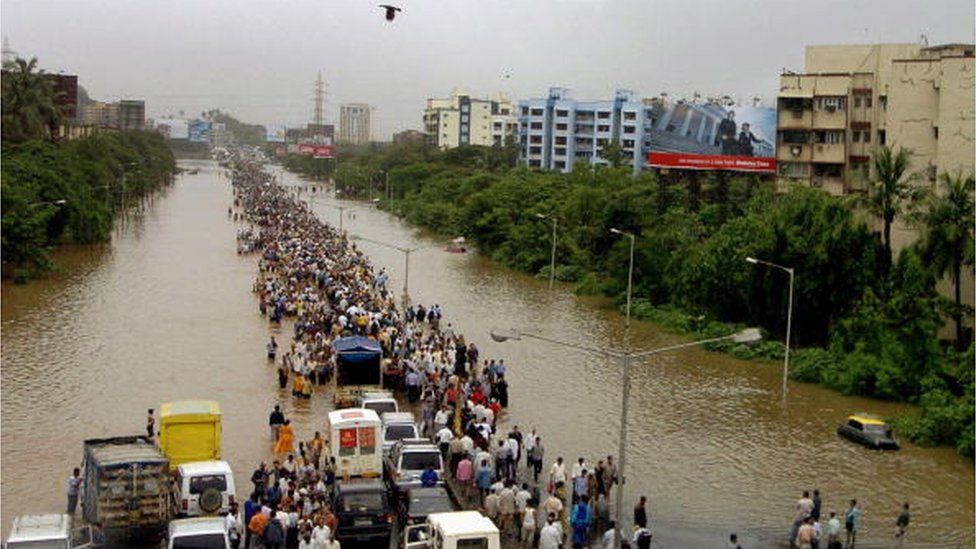
Parts of the city have been inundated in waist-deep water since Monday, bringing life to a standstill.
Monsoon rains are common in Mumbai around this time of the year.
But experts say climate change and unchecked urban development has made rains more intense and less predictable in recent years.
Thousands of people migrate to Mumbai every day in search of jobs which fuels rapid construction, that is very often unregulated.
Many areas have ageing drainage systems and that causes flooding as well. The city’s vast mangrove swamps, which act as a natural buffer during floods, have also been built over in the past few decades.
IMAGE SOURCE,GETTY IMAGES Image caption, Commuters had to walk through floodwaters past stranded motor vehicles
On Thursday, Mumbai’s civic body banned people from visiting beaches on the days for which the weather forecasting agency has predicted heavy rainfall.
In many areas, waterlogging led to huge traffic snarls and people were seen wading through brown and black murky water which flooded the streets.
Bus services and commuter trains – which are the lifeline of the city’s transport system – were also disrupted, leaving people stranded on stations for hours.
Heavy rains have also battered Mumbai’s neighbouring districts. Traffic on a key national highway connecting Mumbai to the tourist state of Goa was diverted after a landslide in Chiplun city.
Authorities said that work to remove the debris was underway, but that the movement of vehicles along the route would be affected for least two days, news channel NDTV reported.
Meanwhile, the IMD has also issued flood alerts for the southern state of Kerala and parts of Himalayan state of Himachal Pradesh amid incessant rains.
The Minister for Works and Housing, Francis Asenso-Boakye has warned the general public to desist from depositing solid waste into the drains in the country.
He noted that such behaviour is causing floods in some parts of the country.
“We cannot overlook the negative effects that our subculture of dumping refuse into open drains is having on our efforts to improve community resilience to flooding.
“I hereby admonish every citizen to desist from depositing household solid waste into the drains in the bid to support efforts of the government to maintain drainage capacity,†he said at a press conference in Accra on Sunday June 27.
He further revealed some of the initiatives introduced to deal with floods.
“A flood early warning system is being developed to enhance the flood resilience of communities within the Odaw drainage basin and beyond,†Mr Asenso-Boakye said.
Floods in Northern Ghana have claimed a total of 35 lives from 2018 to 2020, according to statistics from the National Disaster Management Organisation (NADMO).
Within the same period, the floods collapsed a total of 69 bridges disconnecting some communities and rendering them inaccessible.
The statistics also indicated that in 2018 alone about 100,000 people were displaced bringing upon them untold hardships on the affected families.
STAR-Ghana Foundation has, therefore, been convening series of dialogue sessions to initiate conversations and partnership for joined-up efforts on long term and sustainable solutions to the perennial flooding in Northern Ghana.
Madam Eunice Aabenyadzi, Programmes Manager, STAR-Ghana Foundation, in one of the forums in Wa noted that the forum would provide a platform for stakeholders to contribute to a roadmap and implementation plan for improving responses to the flood situations in Northern Ghana.
She said the annual torrential rainfall and the spillage of the Bagre Dam had often resulted in the flooding of communities along the White Volta Basin in Northern Ghana, which was associated with loss of lives, livelihoods and property.
Madam Aabenyadzi pointed out that losses and destructions associated with the floods had often seen government and development partners through NADMO responding with temporary forms of relief.
She said most often, there were no resources for post-floods rehabilitation and reconstruction, which often left the affected persons vulnerable to subsequent foods.
The STAR-Ghana Programme Manager noted that floods have long-lasting impact on the already fragile livelihoods, food security, access to education and health, hence the need to shift from emphasizing the response towards the need for preparedness in building the resilience of communities.
“When you respond to floods, you are meeting the immediate needs of the communities but beyond that, livelihoods have to be recovered and economies rebuilt when we focus attention on resilience and preparedness, we will be contributing to long-lasting solutions to how to manage the situationâ€, she said.
Madam Aabenyadzi noted that government alone and a few organisations supporting NADMO would not be able to raise all the resources required to meet the short and long term needs of the communities and families affected by the floods.
She said this was why they were targeting key stakeholders including churches, traditional authorities, and local and international civil society that were already working in the sector.
She stressed that if they approached the issue from a collective perspective, they would be able to raise enough resources both internally and externally to address the perennial flood challenge.
Dr Chrys Anab, Lecturer, Department for Sustainable Development Studies, University for Development Studies (UDS), Tamale, noted that people needed a minimum of two years to recover from the impact of floods, adding that, relief items were good but were reactionary measures that were often not adequate to mitigate the sufferings of the flood victims.
He said this explained the need for a coordinated response to the issue of floods and disaster risk reduction in the north and called for attitudinal change in favour of disaster mitigation efforts.
Mr Peter Maala, Chief Director of the Upper West Regional Coordinating Council who delivered a speech on behalf of the Regional Minister, Dr. Hafiz Bin Salih, said the issue of flooding had become an annual ritual, which demanded concerted efforts to proffer sustainable solutions to it.
He described the forum as timely because very soon the Bagre Dam would be spilled by authorities of Burkina Faso and those living along the Black Volta needed to be sensitized to start organizing themselves to avoid any mishap.
He said it was sad to note that as many as 127 people were displaced by floods out of which 80 houses were destroyed in the Upper West Region in 2019 whilst in 2020, 775 people were displaced by floods and destroyed 111 houses.
Mr Ahmed Mustapha, the Upper West Regional Director of NADMO disclosed that the Government of Ghana and the Government of Burkina Faso had signed a Memorandum of Understanding (MoU) in respect of the spillage of the Bagre and Kompienga Dams, which enabled NADMO to always provide accurate and up-to-date information on the spillage of the dams to communities prone to flooding.
The joint action forum was organised by STAR-Ghana Foundation in collaboration with the Tamale Ecclesiastical Province Partnership for Action (TEPPIA) and Tama Foundation.
2 out of scores of children survived a drowning incident that happened at the Apam beach on Sunday, March 6, 2021.
Godfred Apretse, 14 years and Simon Dadze, 15 years, both from Apam, were the only two, confirmed at the time of writing this story as survivors of the unfortunate incident that claimed the lives of many of their friends.
The teenagers, numbering over 13, reportedly went missing after they had gone swimming on the said day, many of them drowning.
Confirming the incident and detailing the numbers as far as deceased persons and survivors are concerned, the spokesperson of the Apam Fishermen Association, Kow Panyin, told GhanaWeb that 11 of the teenagers who drowned have been identified.
Of the deceased persons, 2 were females and 10 of them males.
Gilbert Assandoh, Isaac Affisah, Adwoa Vi, Joshua Hammond, Prince Peprah, John Arthur, Christopher Ewusi, Ebenezer Forson, Benjamin Narh, Kweku Atta, King Beri Addison, and one other girl (unidentified), who had come to visit her friend were named as the deceased persons.
9 of these teenagers between the ages of 13 and 16 are from the Apam Community, 2 are from Ankamu (Apam Junction) and 1 girl from Cape Coast.
Investigations are still ongoing, but the President, Nana Addo Dankwa Akufo-Addo, meanwhile has extended financial support to the families of these victims, following the incident.
Representing the President, Fisheries and Aquaculture Minister, Mavis Hawa Koomson, made the donations of GHC1,000 each to the families of the surviving teenagers.
The bereaved families received GHC20,000 altogether, with GHC6,000 out of that to cater for mortuary services.
Traditional leaders of the community also were given GHC 10,000 by the President, Nana Addo Dankwa Akufo-Addo, for customary rituals.
The heavy rains coupled with the spillage from the Bagre dam that led to the floods in the northern part of Ghana have left many scary memories in the minds of the affected families and communities. Lives and properties were heavily lost.
The difficulty in accessing market centres halted trade and commerce just as having access to essential services in the district capitals became a huge challenge.
Indeed, Wapuli, a predominantly farming community in the Saboba District was no exception.
The devastating effects of the floods on the lives of the people of Wapuli and its environs cannot be underestimated. It is, however, sad to note that most of the affected persons and families in Wapuli and its satellite communities have not received any relief and psychological support from government and local authorities since that period.
In an exclusive interview, the Overlord of Wapuli Traditional Area, Ubor Nakoja Batoen Timothy recounted the predicaments of his people triggered by the floods. He indicated that though the floods were no more, the affected persons were still traumatized and felt dejected by the neglect from government and its mandated agencies like the NADMO. “We cried out to NADMO and government for that matter but it appears our plea fell on death earsâ€, he lamented.
The Assembly Member for Wapuli Electoral Area, Mr. Zachariah Nighanimoan Sandow told this reporter that his appeals to several organizations did not yield the expected results. He was, however, grateful to the Basic Need, a non-profit organization, for their response to his call and donated some clothes to some of the affected victims.
Mr. Sandow appealed to individuals, NGOs, philanthropists and the government for more assistance.
Godwin Agbenorku, a 20-year-old farmer from Lakpo- Agbakorpe in the South Tongu District of the Volta region over the weekend got drowned in the River Lottor at Xavi when the canoe in which they were sailing capsized.
Mr. Shine Foster Agorsor, Assembly-man for Xavi Electoral Area within the Akatsi South District said Godwin together with his colleague farmer was crossing the river from Xavi to their Okro farm at the other side of the River in a canoe when the canoe capsized.
He said, Etse Agbenyega together with the deceased was struggling to survive but his colleague got drowned and died before he was rescued by members of the community.
“The town folks managed to rescue one but Godwin got drowned before he was rescued,” he said.
Mr. Agorsor said the deceased and his friend were known Okro farmers in the area.
He said the body of the deceased has since been deposited at the morgue of St. Paul’s hospital while Police investigations continue.
The UN’s Food and Agriculture Organisation says more than nine million people in Sudan are in need of assistance because of flooding.
The agency told the BBC that millions of hectares of farmland had been affected.
Much of Sudan has been suffering the worst floods in decades, with historically high levels of rainfall since July.
The rain has finally begun to ease and the floodwaters are receding, but a huge humanitarian problem now looms.
The Food and Agriculture Organisation said a million tonnes of grain has been lost. There are also growing fears about the risk of disease caused by contaminated water supplies and stagnant surface water. Cases of malaria have increased sharply.
The UN has warned that emergency relief efforts are suffering from a low level of funding, compounded by high inflation in Sudan and severe fuel shortages.
The Tamale Metro Director of NADMO, Abdul Rahaman Abdul Razak has disclosed that 522 households have been affected by floods as a result of the heavy downpour which occured on October 4, 2020.
Some of the affected areas include; Waterworks, Gumani, Kalariga, Nalong Fong, Gumbihini, Asawaba, and Gurigu.
Mr. Abdul Razak, told Ghanaweb’s Northern Regional correspondent, Alidu Abdur Rashid that 203 out of the total number of affected persons were males and 382 were females.
Also, a total number of 770 children were affected.
“There was no death or injuries recorded ….,” He intimated.
Mr. Abdul Razak however attributed the cause of the floods to the narrow nature of gutters in the metropolis.
“In Tamale, the gutters constructed are very small, and People would sweep their houses, though they have dustbins in their houses they will leave it and go and dump it into the gutters……So the gutters were chocked and because the gutters are also small, and when it rains, it finds its own ways.people have built on the waterways, blocking the water channels and when you confront them, they tell you, it is their land, so you should leave them.Somebody will build a house, instead, there is a gutter behind him, they will go and project another room called chamber and hall.” This is our main problem, he said.
Mr. Abdul Razak further expressed gratitude to NADMO for being able to rescue victims from the incident.
“with the help of the skills acquired from the training, the team were able to rescue somebody and his motorbike, who was about to be carried away by the flood.”
The Ghana Red Cross Society (GRCS) in collaboration with the Swiss Red Cross has commissioned 102 units of two bedroom houses constructed for victims of the October 2019 flood in six communities across the Builsa North District and Kassena Nankana Municipality.
The communities include; Mayoro benefitting 33, Nantuna 17, Chuchuliga 26, Kasa eight, Silinsi 11 and Bilinsa, seven houses.
In a durbar organized to officially handover the buildings to the beneficiaries, Mr Kwame Gyima Akwafo, the National President of GRCS, said the Red Cross undertook the project following its visit to the areas after the 2019 flood rendered vulnerable victims homeless.
He said the housing project dubbed ‘build back better’ did not only seek to provide replacement houses for flood victims, but to also build houses that were permanent and could withstand persistent rainfall.
He said logistics provided by the Red Cross for the construction of each house included; 350 pieces of sandcrete blocks, 15 bags of cement, sand, stones, bitumen, roofing materials, and some cash to pay for the services of artisans.
“For the purposes of sustainability and sense of pride, beneficiaries also had a role to play in building better houses for themselves.”
“Beyond the building structures, we have provided beneficiaries with tree seedlings to plant around the houses to serve as windbreak,” he added.
Mr Akwafo commended the National Disaster Management Organization (NADMO) and the Department of Rural Housing for their collaborative efforts in ensuring a successful completion of the project.
Madam Tangoba Abayage, the Upper East Regional Minister and Parliamentary Candidate for Navrongo Central constituency, bemoaned the negative effects the perennial floods had on the region.
She called on residents to prepare for rains during the harmattan season by patching and plastering their homes to increase their resilience and urged beneficiaries to maintain the houses properly to serve as a motivation for replication of the project in other parts of the region.
Pe Dr. Pwakeah Atupaare Manchi III, the Paramount Chief of Mayoro traditional area, on behalf of the beneficiaries commended GRCS and their partners for the intervention.
He said the situation was an affront to their dignity as the people were homeless and living in fear of the annual rains.
Four persons have been confirmed dead following a weeklong heavy downpour and floodwaters from the spillage of the Bagre Dam in the North East Region.
Three persons are said to have drowned in the flood in the Bunkpurugu District and East Mamprusi Municipal after a heavy downpour last week, while another person also drowned in the floodwaters from the spillage of the Bagre Dam in the West Mamprusi Municipal.
Several residents along the white volta in the Mamprugu/Moaduri and West Mamprusi have been displaced. Large acres of farmlands have also been submerged and business and trading activities halted due to flooding resulting from the spillage of excess water from the Bagre Dam by Burkinabe authorities.
Rescue mission
The North East Regional Director of the National Disaster Management Organisation (NADMO), Mr Alhassan John Kweku who confirmED the incident to the Daily Graphic said personnel of the Operation ThunderBolt, a disaster taskforce have been dispatched to the affected areas to rescue the victims.
He said his outfit was also on the ground assessing the extent of damage caused by the flood to enable them to provide emergency relief items to the victims.
“So far I can’t quantify the extent of damage caused but I can confirm that four persons have lost their lives in the weeklong heavy downpour and floodwaters from the spillage of the Bagre dam. Our team are on the ground rescuing victims and taking stock of the damage caused,” he said.
Sensitisation
Mr Kweku indicated that NADMO was also sensitising the inhabitants along the white Volta through community announcements in churches and markets for people to vacate to higher lands, adding that most farmers who heeded to the advice have since relocated.
Victims
Some affected farmers who spoke to the Daily Graphic said all their crops and properties have been submerged.
A farmer at Duu in the West Mamprusi, Mr Duko Buzongo said his 20-acre maize farm has been destroyed by the flood.
“I can’t even go to my farm because the water is too high even with a canoe so I am always at home for safety” he lamented.
Another farmer, Mallam Osman who has lost all his crops to the disaster expressed fear that there could be severe hunger and poverty due to the extent of damage to farmland in the area.
The farmers, therefore, called on the government and various benevolent organisations to come to their aid with relief items.
Background
According to SONABEL, managers of the Bagre Dam, the spillage had become necessary due to the 81 per cent increase in the water level.
As a result, residents close to the bank of the Black and White Volta were advised to relocate to other communities for shelter and safety.
Two members of a family died on Tuesday dawn when a fence well adjoining to the kiosk they were sleeping in collapsed on them.
When GhanaWeb visited the house this morning at Achimota Christian Village, the mood on the compound was solemn and heartbreaking as neighbours and family members were gathered.
Speaking to one of the bereaved, Joyce Mawuse, whose 18-year-old daughter and her 24-year-old sister were the victims, she said her family made up of herself, her husband, her two daughters and her sibling were sleeping in the kiosk when it started raining late in the night.
She said while it was raining her husband came out to collect some of the rainwater and she followed her husband outside. She added that while she was outside with her husband, the wall adjoined to their kiosk broke and fell on the kiosk her sister and her two kids were sleeping in.
They were subsequently rushed to the Achimota Hospital where 24-year-old Ama Linda and 18-year-old Christabel were pronounced dead. The youngest of the victims, 9-year-old Emmanuala Ayisibea however survived and was discharged from the hospital this morning.
According to a brother of the bereaved father, Christabel is a senior high school student whiles Linda was living with her sisters family after paying them a visit.
At the time GhanaWeb was leaving the compound, the bodies of the deceased had been brought from the hospital and according to the family was going to be transported to their hometown of Mangoase in the Eastern Region where a burial will be held for them tomorrow.
Five persons, including a baby, lost their lives in the Okaikoi North Constituency, a downpour four-hour in the early hours of Tuesday.
About 300 people have also been displaced, property valued at thousands of cedis have been lost.
The bodies of the deceased have been deposited at the Achimota Hospital and Lapaz Community Hospital morgues.
Mr Fuseini Issah, the Member of Parliament (MP) for the area, told the Ghana News Agency in an interview that the blocking of waterways by squatters and the disposal of refuse into drains could be blamed for the floods.
He said it was time residents became responsible and helped the authorities checked those who were recalcitrant to bring sanity to the community.
To prevent the recurrence of the tragedy, Mr Issah said the public must desist from throwing garbage into drains and avoid building on waterways to allow the free flow of water.
Mr Mahmud Osman, the Assemblyman for the Akweteman Electoral Area, said most houses in the area, especially those within the low lying settlements, were flooded.
He was, therefore, coordinating with the Municipal Chief Executive and the MP to see how best to support the victims.
“It is unfortunate how a number of squatters have found their way into this area, he said, adding that the Assembly would meet on the issue to find an amicable solution.
The GNA observed victims of the floods searching through the ruins to see what they could salvage.
Most of the kiosks inhabited by squatters were washed away leaving the inhabitants with just the clothes they had on and their mobile phones.
They have, therefore, appealed to the authorities to go to their aid.
A sprinter bus was also carried by the floods but it got lodged in a big drain, and was later pulled out by a team of police and officials from the National Disaster Management Organisation.
A driver’s mate, Kwame Effah, who was sleeping in the bus, expressed gratitude to God, amidst tears for saving his life.
He explained that he was able to jump out the moment he realised the bus was sinking as the concrete slab on the bridge on which it had parked caved in.
Ms Denise Sagoe- Brock, a resident, said she came out around 0215 hours to realise the water was almost at her doorstep and about to enter her room.
“I rushed inside and I was able to gather all important documents and gadgets onto my bed, after which I stood on the bed clutching some of the things.â€
Madam Esther Nartey, another resident, said she and her family had to run to higher grounds for safety.
“I carried my eight-month-old baby at my back and carried my five-year-old daughter on the shoulder, while my husband carried my ailing mother as we struggled to find safe ground. I thank God for saving us. To Him we’re most grateful,†she said.