Tag: Free SHS

  • Ghana to end double-track system by 2027 – President Mahama

    Ghana to end double-track system by 2027 – President Mahama

    The government has announced that the double-track system in Senior High Schools (SHS) will end by 2027.

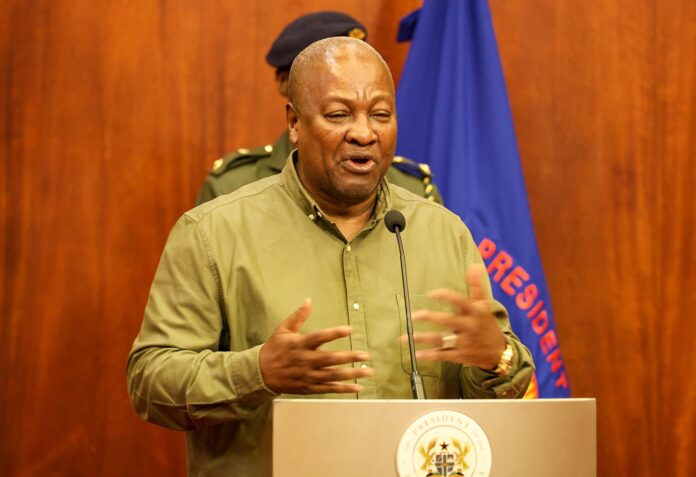
    President John Mahama confirmed this at Sawla during his Resetting Ghana tour of the Savannah Region on Friday, May 22, stating that his government has embarked on expanding infrastructure in senior high schools nationwide and upgrading selected schools to increase enrolment capacity as part of efforts to phase out the double-track system next year.

    “In 2027, no Senior High School will be doing double track. We’re reverting to the old system. Everybody will go to school at the same time to increase contact hours with the teachers. And so, we’re going to expand the infrastructure in our Senior High Schools,” President Mahama said.
    To effect the planned transition, President Mahama indicated that “In this regard, the government has secured a $300 million facility from the World Bank to upgrade 50 senior high schools nationwide under the Secondary Education Transformation for Access, Results and Relevance for Jobs (STAR-J) Initiative.

    The STARR-J Project (Secondary Education Transformation for Access, Relevance, and Results for Jobs) is a $300 million World Bank–backed initiative launched in 2026 to overhaul Ghana’s secondary education system. It aims to expand access, improve quality, strengthen relevance to jobs, and modernize management systems nationwide.

    Under this project, 30 Category C senior high schools will be upgraded to Category B, while 20 Category B schools will be upgraded to Category A,” he added.

    President Mahama said the move to end the double-track system is aimed at increasing contact hours between students and teachers to improve teaching and learning outcomes.

    He made this known at Sawla as part of his Resetting Ghana tour of the Savannah Region on Friday, May 22.

    He also stated that the government is investing in improving the quality of secondary education and improving access nationwide.

    “This strategic investment is not simply about expanding infrastructure. It is fundamentally aimed at promoting equity, improving quality, and widening opportunities for every Ghanaian child.

    The STAR-J project will also operationalise the Community Day School concept. New educational blocks will be constructed in urban and peri-urban communities to serve as community day schools. This initiative will help ease the growing pressure on boarding facilities and expand access to quality secondary education closer to families in urban areas”, he said.
    About the double-track system

    The double-track system in Ghana’s Senior High Schools (SHS) started in September 2018 under the Free SHS policy. It was introduced to manage overcrowding caused by the sharp rise in enrolment after Free SHS began in 2017. The system split students into two cohorts (Green and Gold tracks) to maximise limited infrastructure and ensure all qualified students had access to SHS.

    About the Free SHS policy

    The Free Senior High School policy was introduced in 2017 by the Akufo-Addo-led government to make secondary education accessible to all eligible students without financial barriers.

    The policy was aimed at helping students who struggled to pay tuition, boarding, and other school-related expenses. However, the policy came with its challenges, such as overcrowding and congestion in schools, pressure on infrastructure and facilities, and increased pressure on teachers.

    This increased the number of enrollments in the senior high schools that were listed under the Free SHS policy. About 3.5 million students have benefited from the Free Senior High School (Free SHS) program since its launch.

    The immediate-past government revealed that it had spent over GH¢12 billion on the implementation of the Free SHS policy since its inception. Meanwhile, Asantehene Otumfuo Osei Tutu II has urged a reassessment of Ghana’s Free SHS initiative, recommending that households with sufficient means contribute financially so that government support can be directed toward students in real need.

    During a meeting with Education Minister Haruna Iddrisu, the Asantehene suggested a shared funding model, akin to previous arrangements where financial aid was granted to bright but disadvantaged students, while those with the ability to pay covered their own expenses.

    “Those who can afford to pay, let’s have a second look at the policy. If someone can afford it, let’s allow them to pay. In the old times, when you passed, the bursary would look for good but needy students and award them scholarships, and those who could afford to pay did so.”

    Former Education Minister on inclusion of private SHS in Free SHS policy to end double-track

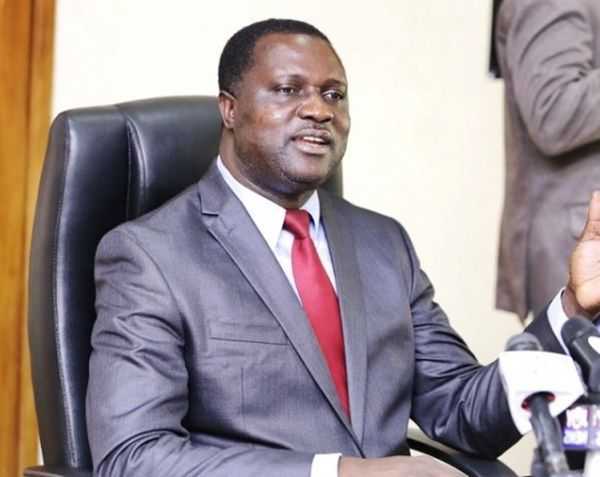
    Former Education Minister, Dr Yaw Osei Adutwum, who served under the Akufo-Addo-led government, opposed the current administration’s measure to include private schools under the Free Senior High School (FSHS) policy.

    Addressing the media on Monday, September 16, Dr Adutwum, now flagbearer of the NPP, questioned how such an initiative can be achieved given the heavy demand for certain schools.

    “I don’t understand the logic. The issue is not about lack of space in schools generally, but lack of space in the most desirable schools. So if you don’t get this right, you will prescribe the wrong solution. I don’t think private schools are the answer to the double-track system.

    “Parents have a right to select the schools they want, and everybody wants Category A. If you don’t have Category A private schools, parents are going to have nothing to do with it,” he said.
    The Mahama-led government’s announced plans to include private schools under the FSHS form part of a broader strategy to expand capacity and gradually end the double-track system.

    In May, Deputy Minister of Education, Dr Clement Apaak, during a meeting with stakeholders, explained: “As part of our campaign promise, we have been working diligently to bring on board private senior high schools in the delivery of the Free SHS programme. Meetings have been held, engagements have been done, and we are very certain that with the diligence we expect from our side…”

    However, the former Education Minister argues that it is impossible for the National Democratic Congress (NDC) government to successfully roll out the policy, as it fails to address the real challenge.

    He believes that although the government’s intention is to reduce overcrowding in certain Senior High Schools, such an initiative would be a fiasco, since most students want to attend only the top-ranked schools.

  • Edu Watch raises alarm over potential 72,000 placement gap in SHS this year

    Edu Watch raises alarm over potential 72,000 placement gap in SHS this year

    Concerns are mounting over the ability of Ghana’s Free SHS/TVET programme to absorb all students expected to qualify from the 2025 Basic Education Certificate Examination (BECE), as pressure on existing school infrastructure continues to grow.

    A new policy brief released by Africa Education Watch projects that out of the nearly 620,000 candidates who sat for this year’s BECE, about 607,000 could qualify for placement into senior high and technical/vocational institutions.

    However, the group warns that current school capacity may be insufficient to accommodate all successful candidates, potentially leaving an estimated 72,000 students without placement if urgent corrective measures are not implemented.

    The report identifies a declining transition rate as one of the major warning signs. According to the organisation, transition efficiency has dropped from 92 per cent in 2024 to 82 per cent in 2025, increasing fears of mounting congestion within the placement system.

    It cautions that “declining transition efficiency… could generate an effective placement deficit of approximately 72,000 qualified candidates if immediate policy interventions are not undertaken.”

    Eduwatch attributes the emerging challenge to several structural issues, including reduced enrolment space following the gradual phase-out of the Double Track system in some schools, uneven distribution of vacancies across regions, and disparities between student preferences and available placements.

    The organisation also noted that ongoing efforts to integrate private senior high schools into the Free SHS programme have so far yielded limited results, failing to significantly reduce pressure on public institutions.

    According to the policy brief, the situation could expose deep weaknesses within Ghana’s secondary education system during the 2026 admissions cycle if authorities fail to act swiftly.

    To avert the looming crisis, Eduwatch is urging the government to fast-track the expansion of boarding infrastructure, complete delayed school projects, and improve the efficiency of the placement process before placements begin in August.

    It further called for stronger collaboration with private schools to create additional spaces for students, warning that inaction could lead to what it describes as the worst transition bottleneck in the history of Ghana’s secondary education system.

    Earlier this month, EduWatch reiterated calls for a restructuring of the Basic Education Certificate Examination (BECE), describing the current one as “torture”.

    Taking to his official Facebook page on Thursday, May 7, the Executive Secretary of Africa Education Watch, Kofi Asare, slammed the system as archaic, questioning the logic behind examining candidates in 10 subjects over 5 days to determine their school placements, proposing that the number of examinable subjects be reduced to four core areas.

    “Piling 10 subjects over a 5-day high-stakes BECE just for sch placement is torture on learners. Reduce to 4 subjects: Math, English, Science & General Paper” parts of his statement read.

    He went on to recommend the adoption of aptitude tests and content assessments as alternatives to the traditional means used over the years.

    “ Others even use an aptitude test plus a content assessment. This is 2026, not 1996,” he added.

    According to him, the arrangement is outdated and does not reflect modern assessment systems used in other countries, where aptitude tests and continuous assessment are incorporated into placement processes.

    His comments come amid the ongoing 2026 Basic Education Certificate Examination, during which more than 10 students and invigilators have reportedly been arrested over examination malpractice.

    The nationwide examination, organised by the West African Examinations Council, is expected to run until May 11, with 620,141 candidates from 20,395 schools participating.

    Other stakeholders remarks on BECE

    Aside from Africa Education Watch, several individuals, institutions, and other stakeholders have also called for an overhaul of the BECE system. A lecturer at the University of Ghana, Dr Benjamin Otchere-Ankrah, has been particularly vocal on the issue over the years.

    During an interview yesterday, he reiterated his call for a transition away from what he described as a “cruel” system towards one that offers flexibility and gives students ample time to rest and engage in group discussions after each paper. He further suggested extending the examination period from five to ten days, with one paper written per day.

    He referred to the examination schedule of University students in Legon, where students are given about three weeks to write about five to seven papers.

    Considering the age of the BECE candidates, Dr Otchere suggested that such loads on the 13-15-year-old students are overwhelming and tiring, which tends to negatively affect the performance of the students.

  • School feeding: CHASS clarifies looming shutdown of schools over funding delays

    School feeding: CHASS clarifies looming shutdown of schools over funding delays

    Last week, the Conference of Heads of Assisted Secondary Schools warned of a potential shutdown of Senior High Schools (SHSs) in Ghana due to unresolved funding challenges in procuring perishable goods for second-cycle schools nationwide.

    This comes after the association’s meeting with the Education Minister on Friday ended in a stalemate after stakeholders failed to reach an agreement on what measures could be taken to address a worsening food-supply crisis in schools.

    However, during an appearance on JoyNews Desk, the National Secretary of  CHASS, Primus Baro, clarified that schools across the country have sufficient food stock to feed students, but are facing challenges due to a lack of funding for perishable items.

    He continued that his outfit’s concern isn’t with food shortage but the delays in financial support for essential perishable supplies. The Secretary revealed that these items have been in areas for over seven (7) months now, forcing them to engage the appropriate authorities to ensure students enjoy balanced and nutritious meals.

    His remarks come just a few days after the Conference of Heads of Assisted Secondary Schools meeting with the Ghana Education Service and key stakeholders, including the Ghana Education Trust Fund and the National Food Buffer Stock Company. He emphasised the need for the government to urgently release funds to address the backlog and ensure smooth feeding operations in schools.

    What happened at CHASS meeting with Edu Ministry

    The meeting saw the attendance of stakeholders such as CHASS, the National Food Buffer Stock Company, and the GETFund, with a focus on procurement of perishable food items such as vegetables, meat, and eggs, which have become difficult to source due to delays in funding.

    In an effort to resolve the issue, the minister proposed that GETFund maintain an arrangement allowing CHASS to independently procure perishable items. However, the parties were unable to reach a consensus.

    The deadlock follows a formal petition by CHASS and the Conference of Principals of Technical Institutions (COPTI), who have raised concerns over dwindling supplies from the National Food Buffer Stock Company and the impact of inflation on already constrained school budgets.

    Consequently, CHASS warned that failure by the government to provide immediate funding for the procurement of essential food supplies may compel schools to send students home, warning that such a move may disrupt the academic calendar and preparations for the West African Senior School Certificate Examination (WASSCE).

    Headteachers have reportedly resorted to using personal funds and relying on credit from local suppliers to ensure students continue to receive meals.

    With negotiations stalled, concerns are growing over the sustainability of the programme’s feeding component, which supports more than 1.2 million students nationwide.

    Stakeholders are expected to reconvene in the coming days as efforts continue to find a lasting solution to the crisis.

    About the Free SHS policy

    The Free Senior High School policy was introduced in 2017 by the Akufo-Addo-led government to make secondary education accessible to all eligible students without financial barriers.

    The policy was aimed at helping students who struggled to pay tuition, boarding, and other school-related expenses. However, the policy came with its challenges, such as overcrowding and congestion in schools, pressure on infrastructure and facilities, and increased pressure on teachers.

    This increased the number of enrollments in the senior high schools that were listed under the Free SHS policy. About 3.5 million students have benefited from the Free Senior High School (Free SHS) program since its launch.

    The immediate-past government revealed that it had spent over GH¢12 billion on the implementation of the Free SHS policy since its inception. Meanwhile, Asantehene Otumfuo Osei Tutu II has urged a reassessment of Ghana’s Free SHS initiative, recommending that households with sufficient means contribute financially so that government support can be directed toward students in real need.

    During a meeting with Education Minister Haruna Iddrisu, the Asantehene suggested a shared funding model, akin to previous arrangements where financial aid was granted to bright but disadvantaged students, while those with the ability to pay covered their own expenses.

    “Those who can afford to pay, let’s have a second look at the policy. If someone can afford it, let’s allow them to pay. In the old times, when you passed, the bursary would look for good but needy students and award them scholarships, and those who could afford to pay did so.”

    Otumfuo Osei Tutu II has recognised the positive impact of the Free SHS policy but stressed the importance of a national discussion to tackle its shortcomings and secure its future.

    “This Free SHS we are talking about, although we have implemented it, if we have a dialogue and find out that it will result in students coming home now and then because there is no food, then it is not fit for purpose.”

    He also pointed out several pressing concerns affecting secondary schools, including overcrowded dormitories, a lack of well-equipped science and ICT laboratories, irregular food supplies, and insufficient school buses.

    “Our dormitories are overcrowded and lack science and ICT labs. Sometimes, PTA makes contributions to support. The lack of school buses and the shortage of food should all be looked at. Let us implement it well so that students will stay in school and have enough to eat.”

  • Free SHS: CHASS warns of potential nationwide SHS shutdown over funding delays

    Free SHS: CHASS warns of potential nationwide SHS shutdown over funding delays

    Senior high schools (SHS) nationwide risk a shutdown due to delays in funds for purchasing food, particularly perishables, to sustain feeding operations under the Free Senior High School (Free SHS) programme, the Conference of Heads of Assisted Secondary Schools (CHASS) has announced.

    This comes after the association’s meeting with the Education Minister on Friday ended in a stalemate after stakeholders failed to reach an agreement on what measures could be taken to address a worsening food-supply crisis in schools.

    The meeting saw the attendance of stakeholders such as CHASS, the National Food Buffer Stock Company, and the GETFund, with a focus on procurement of perishable food items such as vegetables, meat, and eggs, which have become difficult to source due to delays in funding.

    In an effort to resolve the issue, the minister proposed that GETFund maintain an arrangement allowing CHASS to independently procure perishable items. However, the parties were unable to reach a consensus.

    The deadlock follows a formal petition by CHASS and the Conference of Principals of Technical Institutions (COPTI), who have raised concerns over dwindling supplies from the National Food Buffer Stock Company and the impact of inflation on already constrained school budgets.

    Consequently, CHASS warned that failure by the government to provide immediate funding for the procurement of essential food supplies may compel schools to send students home, warning that such a move may disrupt the academic calendar and preparations for the West African Senior School Certificate Examination (WASSCE).

    Headteachers have reportedly resorted to using personal funds and relying on credit from local suppliers to ensure students continue to receive meals.

    With negotiations stalled, concerns are growing over the sustainability of the programme’s feeding component, which supports more than 1.2 million students nationwide.

    Stakeholders are expected to reconvene in the coming days as efforts continue to find a lasting solution to the crisis.

    About the Free SHS policy 

    The Free Senior High School policy was introduced in 2017 by the Akufo-Addo-led government to make secondary education accessible to all eligible students without financial barriers.

    The policy was aimed at helping students who struggled to pay tuition, boarding, and other school-related expenses. However, the policy came with its challenges, such as overcrowding and congestion in schools, pressure on infrastructure and facilities, and increased pressure on teachers.

    This increased the number of enrollments in the senior high schools that were listed under the Free SHS policy. About 3.5 million students have benefited from the Free Senior High School (Free SHS) program since its launch.

    The immediate-past government revealed that it had spent over GH¢12 billion on the implementation of the Free SHS policy since its inception. Meanwhile, Asantehene Otumfuo Osei Tutu II has urged a reassessment of Ghana’s Free SHS initiative, recommending that households with sufficient means contribute financially so that government support can be directed toward students in real need.

    During a meeting with Education Minister Haruna Iddrisu, the Asantehene suggested a shared funding model, akin to previous arrangements where financial aid was granted to bright but disadvantaged students, while those with the ability to pay covered their own expenses.

    “Those who can afford to pay, let’s have a second look at the policy. If someone can afford it, let’s allow them to pay. In the old times, when you passed, the bursary would look for good but needy students and award them scholarships, and those who could afford to pay did so.”

    Otumfuo Osei Tutu II has recognised the positive impact of the Free SHS policy but stressed the importance of a national discussion to tackle its shortcomings and secure its future.

    “This Free SHS we are talking about, although we have implemented it, if we have a dialogue and find out that it will result in students coming home now and then because there is no food, then it is not fit for purpose.”

    He also pointed out several pressing concerns affecting secondary schools, including overcrowded dormitories, a lack of well-equipped science and ICT laboratories, irregular food supplies, and insufficient school buses.

    “Our dormitories are overcrowded and lack science and ICT labs. Sometimes, PTA makes contributions to support. The lack of school buses and the shortage of food should all be looked at. Let us implement it well so that students will stay in school and have enough to eat.”

  • We are ready – Private schools declare as they welcome 25,000 students under free SHS

    We are ready – Private schools declare as they welcome 25,000 students under free SHS

    Private senior high schools participating in the government’s pilot Free SHS expansion programme have declared their readiness to receive the first batch of students who have gained admission into their schools, effective Monday.

    During an appearance on Friday, October 17, the Spokesperson for the Conference of Heads of Private Second Cycle Schools (CHOPSS), Naphtali Kyei-Baffour, mentioned that approximately 25,000 students are expected to report to the seventy (70) schools participating in the nationwide pilot programme on Monday.

    He added that some students have already visited their schools to collect their prospectuses and complete registration ahead of full enrolment on Monday.

    “Yes, indeed, we are expecting several students to report to the SHSs. That is the 70 that are part of the piloting system we are doing. We are expecting to receive almost 25,000 of them. Some of them have started coming to collect their prospectus and are ready to join, just as they have been posted. We are ready, in terms of facilities, preparedness, and everything; we are ready to receive them. We are expecting that they come to the various schools from Monday,” he said.

    The expansion of the Free SHS programme to private schools forms part of the government’s efforts to ease congestion in public senior high schools and also gradually phase out the double-track system, which was introduced by the erstwhile government.

     According to the Education Minister, Haruna Iddrisu, it is a fulfilment of the government’s manifesto promise, adding that it is a step to ensure eligible students gain admission without delays.

    The double-track system was introduced in 2018 by the erstwhile government to accommodate the surge in student enrollment due to the Free SHS policy, addressing overcrowding in public schools. Under this system, students were divided into two groups, Green Track and Gold Track, attending school in shifts, with one track in session while the other was on break.

    Executive Director of GNACOPS, Obenfo Nana Kwasi Gyetuah, recently stated that parents who opt to board their wards in these schools will pay the difference between the government’s contribution and the school’s boarding fees citing thaqt the pilot involves only day stuents.

    “For now, the pilot covers only day students, with government paying GH₵994 per child enrolled in participating private schools,” he clarified.
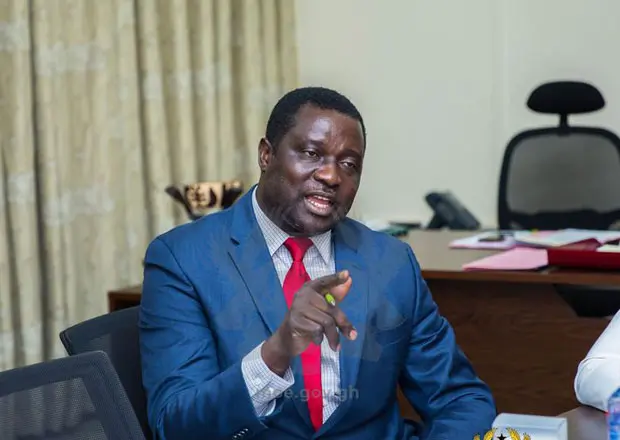
    This was after the Ministry of Education had announced plans to pay GH₵994 annually for each student placed in private senior high schools under the Free Senior High School (SHS) programme.
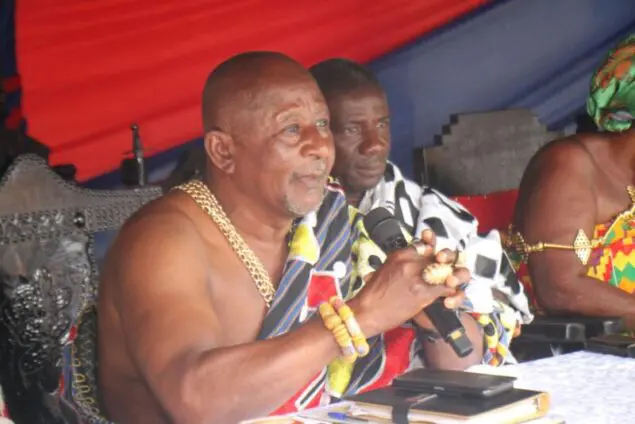
    “Government is committed to providing a stipend to support the transition of students moving into private schools. That figure is negotiable, but for a start, this is the commitment we are making for this pilot inclusion.”

    This follows the signing of a Memorandum of Understanding (MoU) between the Ministry and the Conference of Heads of Private Second Cycle Schools, marking a new phase in the inclusion of selected private institutions in the national Free SHS policy.

    Education Minister Haruna Iddrisu explained that the move is part of the government’s strategy to ensure equitable access to quality education in both public and private institutions. 

    President of CHOPSS, I.K. Mensah, has welcomed the initiative and indicated that discussions are ongoing to expand the programme and possibly revise the funding structure in future phases.

    The Free Senior High School policy was introduced in 2017 by the Akufo-Addo-led government to make secondary education accessible to all eligible students without financial barriers.

    The policy was aimed at helping students who struggled to pay tuition, boarding, and other school-related expenses. However, the policy came with its challenges, such as overcrowding and congestion in schools, pressure on infrastructure and facilities, and increased pressure on teachers.

    This increased the number of enrollments in the senior high schools that were listed under the Free SHS policy. About 3.5 million students have benefited from the Free Senior High School (Free SHS) program since its launch.

    The immediate-past government revealed that it had spent over GH¢12 billion on the implementation of the Free SHS policy since its inception. Meanwhile, Asantehene Otumfuo Osei Tutu II has urged a reassessment of Ghana’s Free SHS initiative, recommending that households with sufficient means contribute financially so that government support can be directed toward students in real need.

    During a meeting with Education Minister Haruna Iddrisu, the Asantehene suggested a shared funding model, akin to previous arrangements where financial aid was granted to bright but disadvantaged students, while those with the ability to pay covered their own expenses.

    “Those who can afford to pay, let’s have a second look at the policy. If someone can afford it, let’s allow them to pay. In the old times, when you passed, the bursary would look for good but needy students and award them scholarships, and those who could afford to pay did so.”

    Otumfuo Osei Tutu II has recognised the positive impact of the Free SHS policy but stressed the importance of a national discussion to tackle its shortcomings and secure its future.

    “This Free SHS we are talking about, although we have implemented it, if we have a dialogue and find out that it will result in students coming home now and then because there is no food, then it is not fit for purpose.”

    He also pointed out several pressing concerns affecting secondary schools, including overcrowded dormitories, a lack of well-equipped science and ICT laboratories, irregular food supplies, and insufficient school buses.

    “Our dormitories are overcrowded and lack science and ICT labs. Sometimes, PTA makes contributions to support. The lack of school buses and the shortage of food should all be looked at. Let us implement it well so that students will stay in school and have enough to eat.”

  • Free SHS Secretariat rejects claims of bribery in SHS placement

    Free SHS Secretariat rejects claims of bribery in SHS placement

    Allegations of bribery for placement at Senior High Schools (SHS) have been dismissed by the Deputy Ashanti Regional Coordinator for the Free Senior High School (Free SHS) Secretariat, Michael Owusu Baafi.


    Speaking to Citi News on Friday, October 10, 2025, Mr Owusu Baafi described the claims untrue and cautioned parents against engagement with middlemen.


    “Here we don’t pay money. We don’t pay money to get admission. We have schools available. When you come and you prefer any of those schools, we’ll put your ward in it. If you come through an agent, the agent will come here, we’ll do it for the agent for free, and maybe that person is the one coming to charge you.


    So, if you have any challenge, anything, come to the centre. Don’t go to a second party or a third party; we don’t do that,” he said.
    In September, Media Relations Officer for the Ministry of Education, Hashmin Mohammed, has debunked recent claims that authorities at Aburi Girls’ Senior High School collect over GHC15,000 from parents and guardians to admit students.


    He made this known while speaking to the media on Saturday, September 27. Hashmin Mohammed noted that investigations conducted by the ministry and the national security agencies found no evidence to support the allegation.


    He added, “I think prior to the placement itself, we ran a media campaign to educate the public that the BECE placement is free of charge. You need not pay any money to any person, whether a Ministry of Education official or a third party, and so far, issues that have emerged with regard to bribery, we have investigated all of them, and we have realised that there is no evidence”.


    One Gertrude Adzo Borklo has claimed that the Computerised School Placement System, the Basic Education Certificate Examination (BECE), is being manipulated by certain school authorities.


    However, in a statement issued on Thursday, September 25, and Deputy Minister for Education, Dr. Clement Abas Apaak, the Ministry described the claims as false and said they are based on a “conspiratorial narrative”.


    Additionally, the Ministry has noted that all efforts to reach out to the claimant have been futile, noting that Gertrude Adzo Borklo’s accounts appear to have been inactive for some time.

    Nonetheless, the Education Ministry is working with National Security, the Cyber Security Authority, and other agencies to track down and contact the individual.

    Other anonymous accounts, according to the Ministry, continue to circulate misleading claims about the school placement system. The statement emphasised that the placement process is entirely free of charge; therefore, it called on victims to complain to the Ministry through its numbers 054 154 8223 (Calls) and 024 490 8957 (WhatsApp).

    “At no point is payment required to access this service. We call on members of the public to provide any information or evidence of persons, whether Ministry officials or third parties, who demand money for placements. The Ministry assures swift and decisive action against any individual found culpable,” the statement read.

    The Ministry reaffirmed its commitment to safeguarding the integrity of Ghana’s school placement system. There have been recent speculations that the Education Ministry solely depends on a rigid score system to place students in Senior High Schools.


    But the Ministry has described the claims as misleading and inaccurate.In August, the Deputy Education Minister, Dr Clement Apaak, emphasized that multiple factors influence how students are assigned to specific Senior High Schools (SHSs).


    According to an official statement signed and issued by the Deputy Education Minister on Saturday August 30, the Ministry noted that the Computerised School Selection and Placement System (CSSPS) used in designating SHS graduates to various schools considers the aggregate and raw scores of students, the availability of vacancies in schools, and the popularity of specific programmes.


    The statement added that the Ministry does not demand or accept rewards from parents or guardians to guarantee that students are placed in schools of their choice, as speculated.

    “The Ministry confirms that this information is not only false but also maliciously misleading. The placement is based on a combination of factors, including aggregate and raw scores, availability of vacancies in the various schools and programmes of study. Limited vacancies and high competition can affect placement.


    The Ministry unequivocally states that no form of payment or inducement is required or solicited from parents, guardians, or their representatives for the purpose of securing placement.


    “All interactions with the Ministry and Ghana Education Service (GES) officials are expected to adhere to the highest standards of integrity and transparency.

    The public is advised to be cautious and report any cases of extortion or bribery attempts related to student placements. Stakeholders are encouraged to report miscreants to the nearest police station,” parts of the statement read.


    The Ministry’s clarification is a rebuttal to recent claims that the Ministry solely depends on a rigid score system to place students in Senior High Schools. Meanwhile, the Ministry has described the claims as misleading and inaccurate.

    Parents and prospective Senior High School students have lodged complaints over misplaced placements to difficulties in accessing schools of choice.Others have also raised concerns about being assigned to schools far from their preferred locations despite meeting the required grades.


    On September 19, the Deputy Education Minister, Dr. Clement Apaak, called for calm following reports of technical glitches in the placement process. During a visit to the Ghana National Association of Teachers (GNAT) Hall in Accra on Friday, September 19, the minister stated that the issue is being resolved and assured parents and students that all Senior High School placements would be finalized soon.

    He explained that the current challenge was anticipated and that measures have been put in place to address it promptly.

    “It’s a process. It has not ended. Be patient and be reassured that we anticipated a number of challenges, and that is why we decided to set a reporting date that gives you enough time and gives us enough time to address all the issues.“So be assured that by the time our wards are expected to report, which is around this same time next month, October 18, many of these issues, if not all, will be resolved,” he added.


    On Wednesday, September 17, the Ghana Education Service (GES) opened the Computerised School Selection and Placement System (CSSPS) portal to allow prospective Senior High School (SHS) students to access their designated schools.


    As per a circular dated Wednesday, September 17, signed by the acting Deputy Director-General for Quality and Access at the GES, Dr Munawaru Isshaque and addressed to all regional directors, freshers will report to their designated schools from October 18.


    The statement warned school authorities against enrolling students against the placement list generated by the CSSPS Secretariat, stressing the need for transparency and impartiality during the registration process.

    “Admission of students should strictly follow the placement list generated by the CSSPS Secretariat. No school is permitted to admit students outside the official placement without prior written approval from GES,” parts of the circular read.


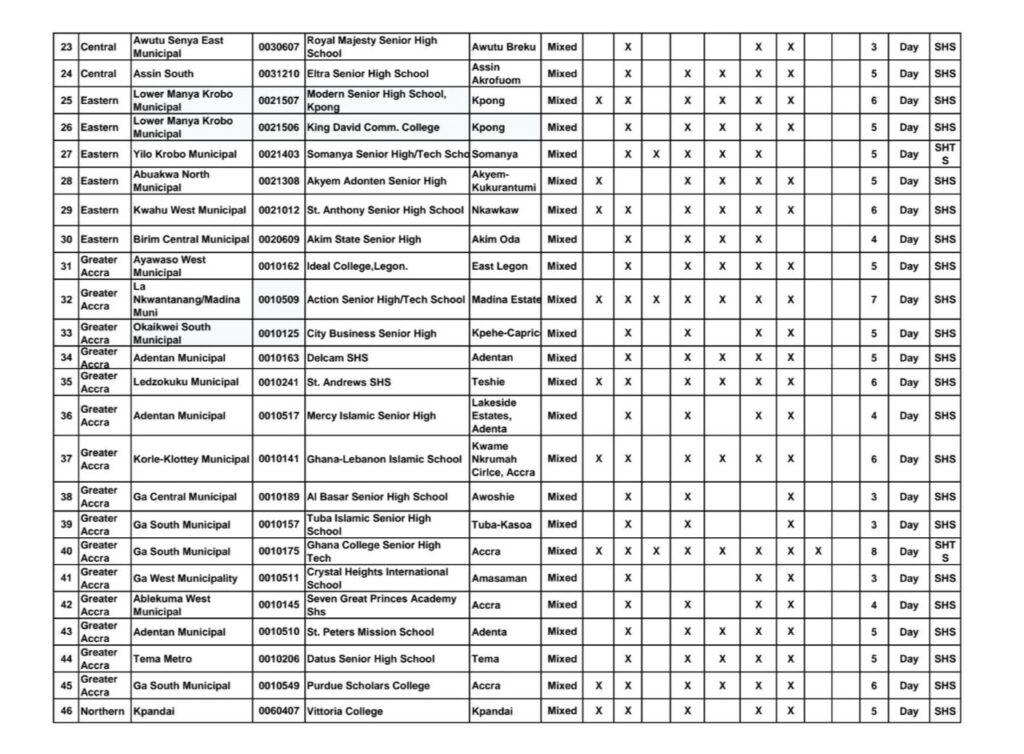
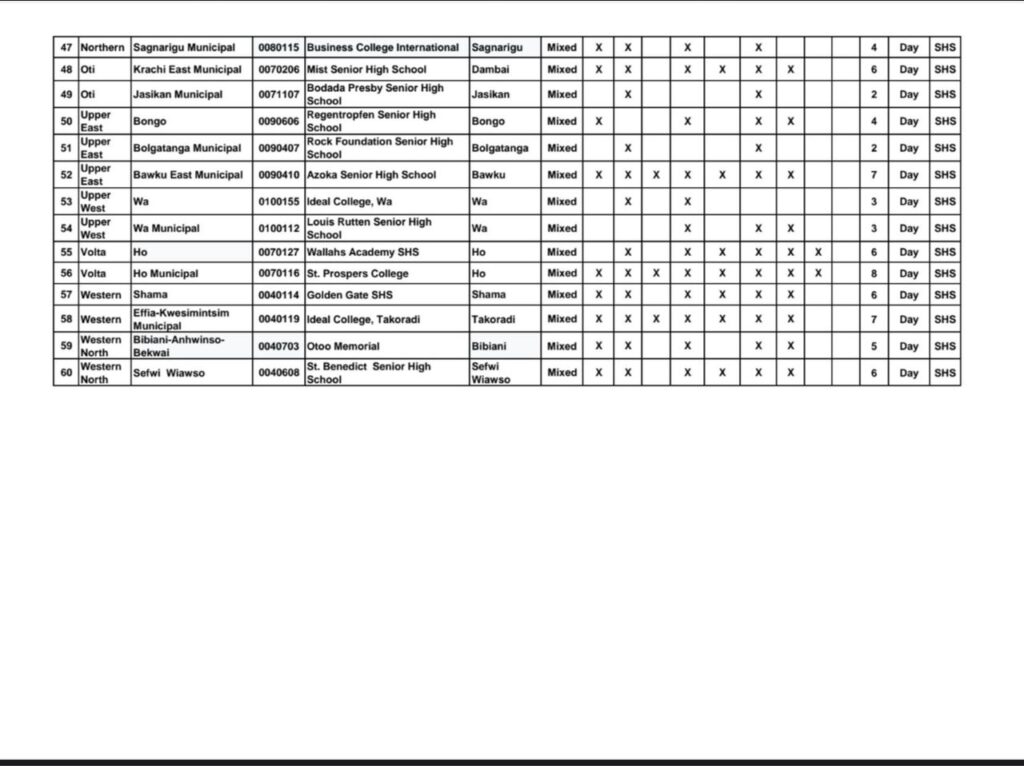
    483,800 have been placed into various Senior High Schools across the country out of the 590,000 candidates. On Monday, September 1, the school placement portal was opened for new entrant students to verify their school choices, biodata, and other relevant information ahead of the final placement.


    The deadline for the fact-checking exercise was brought to a close on Monday, September 8. Of this figure,248,038 are females (51.4%), and 234,783 are males (48.6%).

    However, 107,509 candidates (18.2%) could not be matched with their initial school choices due to high demand for certain Category A schools.

  • Free SHS policy is my proudest contribution to Ghana’s progress – NAPO at Harvard

    Free SHS policy is my proudest contribution to Ghana’s progress – NAPO at Harvard

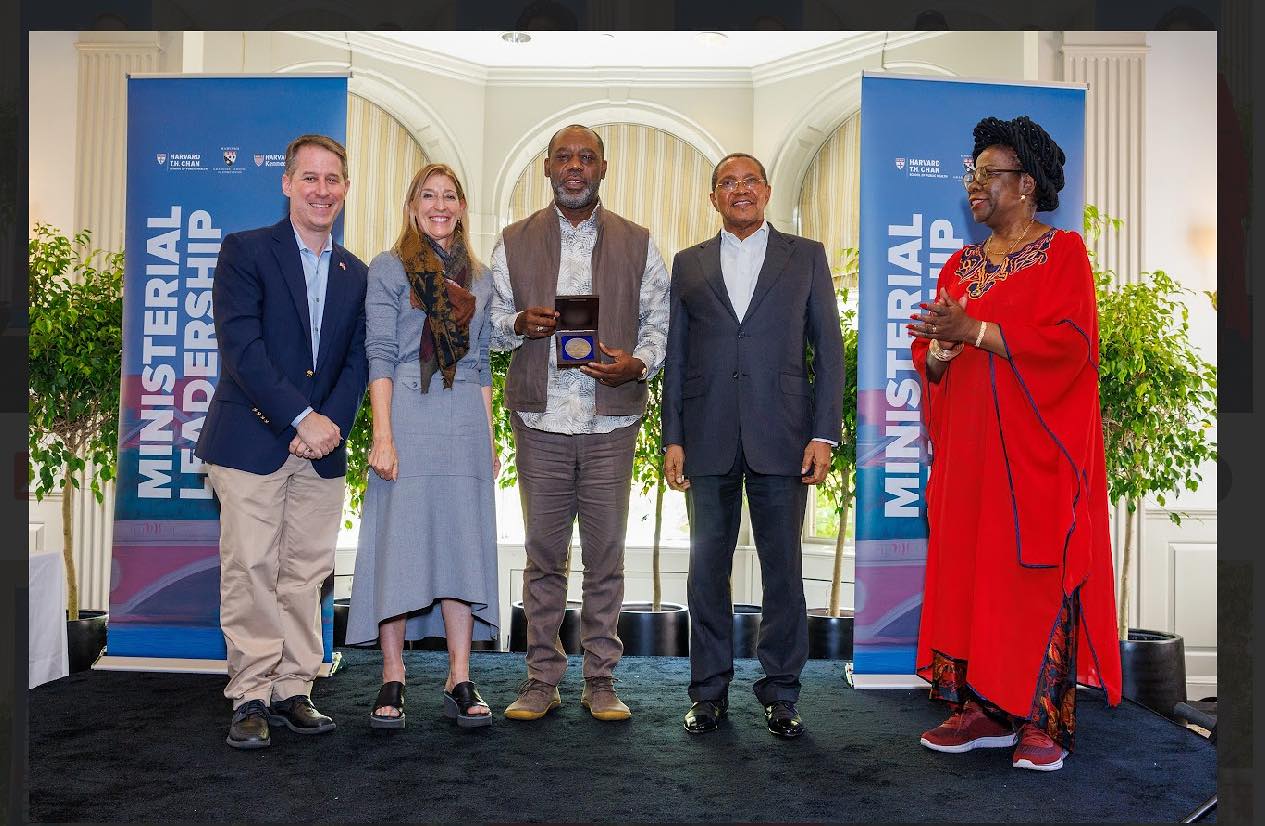
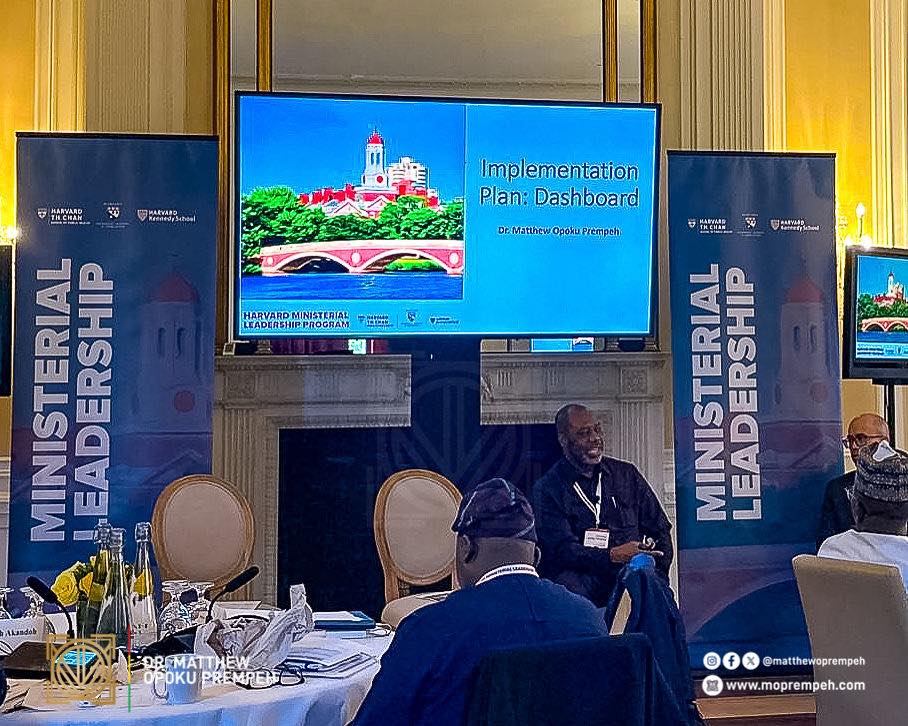
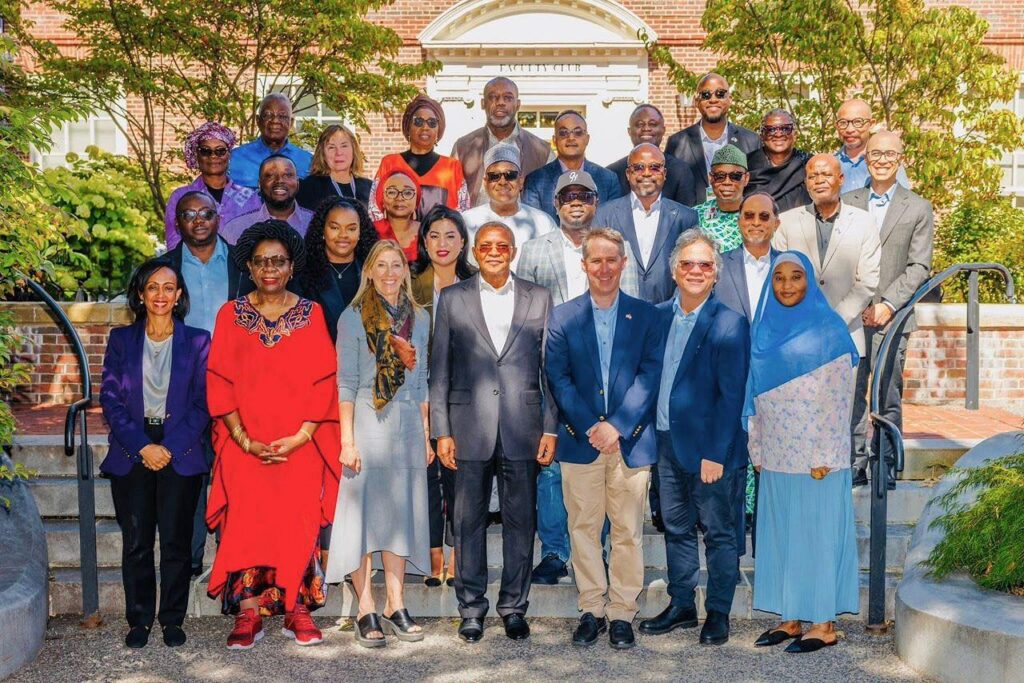
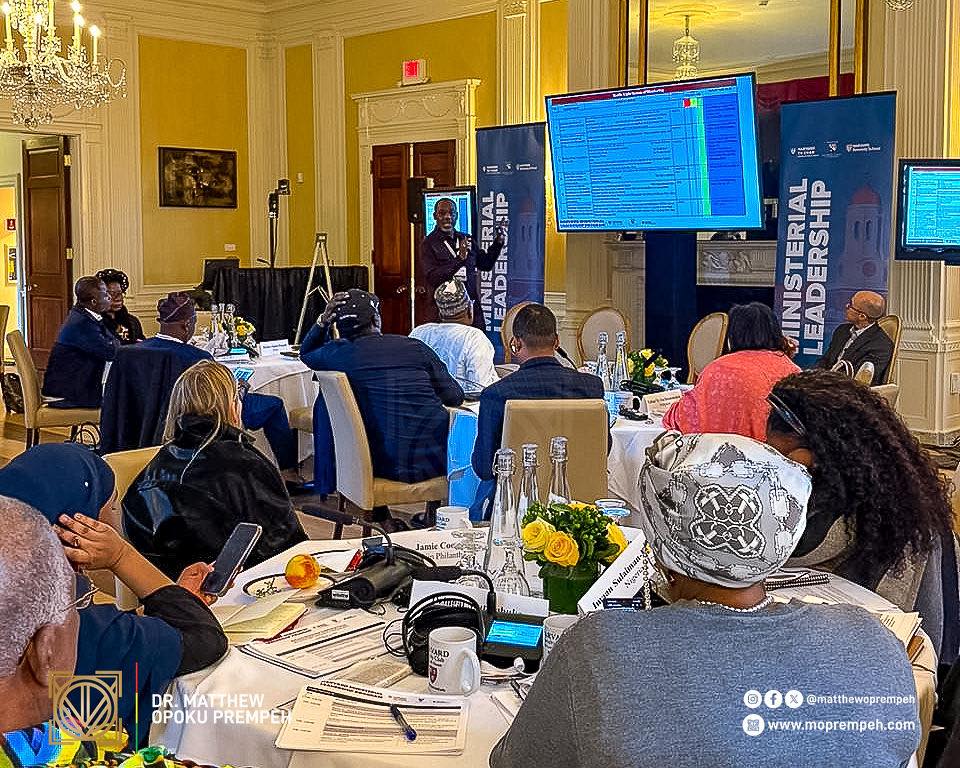
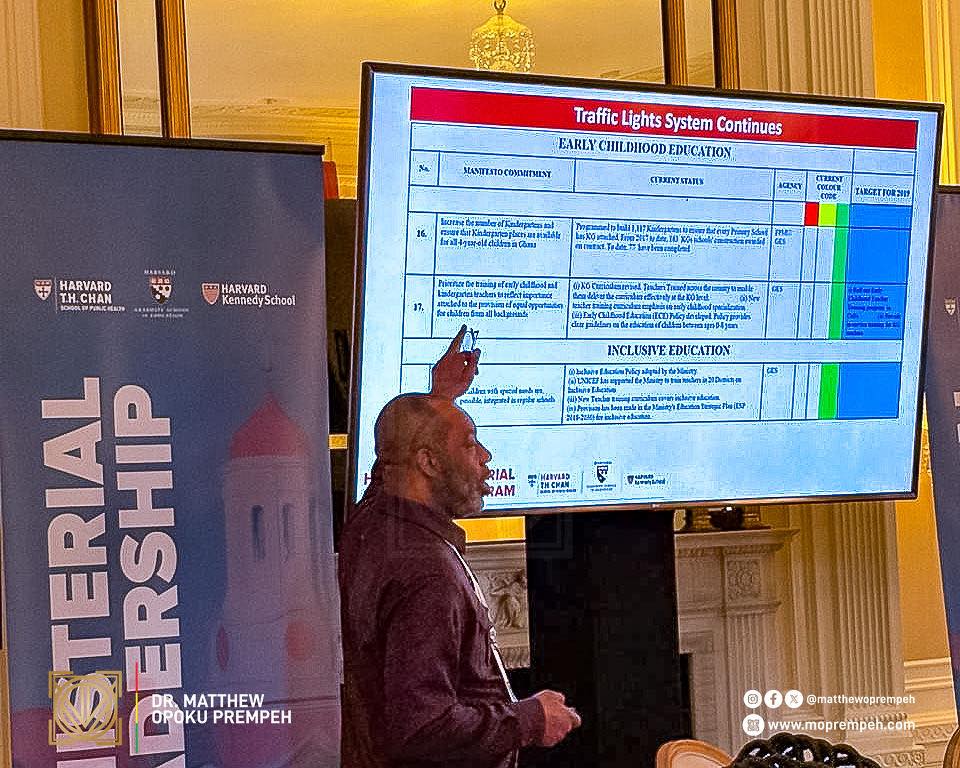
    Former Minister of Education, Dr Matthew Opoku Prempeh, popularly known as NAPO, has touted the New Patriotic Party’s (NPP) Free Senior High School Policy at the prestigious Harvard Ministerial Leadership Program, United States.


    Returning as a faculty member this year, and presenting on Ghana’s transformative Free Senior High School program as a case study, he noted that the policy is one of his proudest contributions to Ghana’s progress.


    Taking to Facebook on Friday, September 26, the Former Minister wrote, “After first participating in the Harvard Ministerial Leadership Program in 2017, and receiving the 2020 Harvard Ministerial Medal of Achievement for leading historic reforms in Ghana’s education sector, I was deeply honoured to return this year as a member of the faculty for the program”.

    https://web.facebook.com/share/p/1ZnSUBossj/?mibextid=wwXIfr


    Reflecting, the former Minister of Education noted that “This journey reminded me of the tremendous work we accomplished at the Ministry of Education by expanding access, breaking down barriers, and giving hope to a new generation of young Ghanaians. It is a legacy of service that continues to inspire”.

    The Free Senior High School (Free SHS) policy was introduced in 2017 by the Akufo-Addo government to make secondary education accessible to all eligible students without financial barriers.


    The policy was aimed at helping students who struggled to pay tuition, boarding, and other school-related expenses. However, it came with challenges, including overcrowding, congestion in schools, pressure on infrastructure and facilities, and increased workloads for teachers.


    Since its launch, about 3.5 million students have benefited from the Free SHS programme. The immediate past government revealed that it had spent over GH¢12 billion on implementation since its inception.

    Meanwhile, the Mahama-led government’s plan to include private schools under the FSHS forms part of a broader strategy to expand capacity and gradually end the double-track system.

    In May, Deputy Minister of Education, Dr Clement Apaak, during a meeting with stakeholders, explained: “As part of our campaign promise, we have been working diligently to bring on board private senior high schools in the delivery of the Free SHS programme. Meetings have been held, engagements have been done, and we are very certain that with the diligence we expect from our side…”

    But the Ghana National Association of Teachers (GNAT) has criticized the government’s intentions to include private schools in the Free Senior High School (SHS) policy.

    Speaking to the media on Tuesday, June 3, GNAT’s General Secretary, Thomas Musah, stressed that the proposed plans would place additional strain on public schools.

    He noted that the government must tread cautiously to prevent citing a lack of resources as a reason for discontinuing the programme.

    “We don’t want the situation where tomorrow the government will come and tell us that there are no resources to teach in the public schools, and so we are adding on to those that parents have to pay. Already we have been calling for parents who can pay fees to pay, or should be made to make some contributions.

    “We have not yet been able to get all these things done. So, to be adding on to the already existing burden will be serious, and I have some difficulty with it,” he stated.

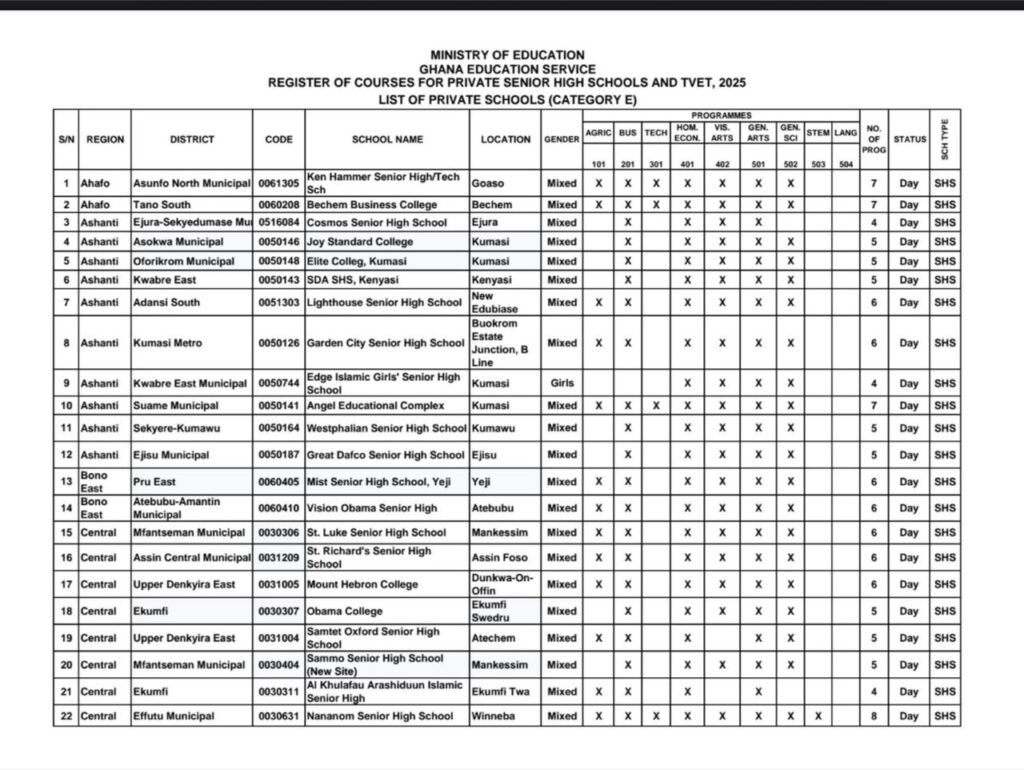
    Sixty (60) private schools have already been featured under the Free Senior High School (SHS) policy. Junior High School (JHS) graduates will be admitted into these private schools that fall in category E in the school selection process.

    These schools will be accepting applications starting from the 2025/2026 academic year. In a press release issued on Sunday, July 20, by the Ghana National Council of Private Schools (GNACOPS) and signed by its National Executive Director, Oberto Nana Kwasi Gyetuah, the council has described the initiative as a historic and progressive move.

    “This progressive move marks a significant milestone in Ghana’s educational transformation journey. It underscores the Government’s commitment to inclusive, collaborative education delivery and reaffirms the important role of private schools in advancing national development goals,” part of the release read.

    The council further called on other private schools that are yet to be listed to remain patient, prepared, and compliant with regulatory standards.

    The double-track system was introduced in 2018 by the Akufo-Addo government to accommodate the surge in student enrollment following the launch of Free SHS, helping manage overcrowding in public schools. Under this system, students were divided into two groups Green Track and Gold Track attending school in shifts, with one track in session while the other was on break.

    The anticipated extension of the Free SHS policy, according to Education Minister Haruna Iddrisu, is a fulfillment of the government’s manifesto promise, aimed at ensuring eligible students gain admission without delays. “We believe strongly that in fulfilling this manifesto campaign promise, this is going to serve as an artery in helping us bring an end to the double-track system,” the deputy minister said.

    According to him, the Education Ministry has received encouraging feedback from private schools, many of which have expressed readiness to meet the standards and requirements of the Free SHS framework. “… and the eagerness of the private schools to participate, the private schools will deliver in their participation,” he assured.

    He added that this collaboration would not only help expand capacity but also ensure a more equitable distribution of educational opportunities across the country. The Free Senior High School (Free SHS) policy was introduced in 2017 by the Akufo-Addo government to make secondary education accessible to all eligible students without financial barriers.

    The policy was aimed at helping students who struggled to pay tuition, boarding, and other school-related expenses. However, it came with challenges, including overcrowding, congestion in schools, pressure on infrastructure and facilities, and increased workloads for teachers.

    Since its launch, about 3.5 million students have benefited from the Free SHS programme. The immediate past government revealed that it had spent over GH¢12 billion on implementation since its inception.

  • 2025 SHS placement released, students to report on Oct 18

    2025 SHS placement released, students to report on Oct 18

    Prospective Senior High School (SHS) students can have access to their placement results online using the Computerised School Selection and Placement System (CSSPS) portal, the Ghana Education Service (GES) has announced.

    As per a circular dated Wednesday, September 17, signed by the acting Deputy Director-General for Quality and Access at the GES, Dr Munawaru Isshaque and addressed to all regional directors, freshers will report to their designated schools from October 18.

    The statement warned school authorities against enrolling students against the placement list generated by the CSSPS Secretariat, stressing the need for transparency and impartiality during the registration process.

    “Admission of students should strictly follow the placement list generated by the CSSPS Secretariat. No school is permitted to admit students outside the official placement without prior written approval from GES,” parts of the circular read.

    483,800 have been placed into various Senior High Schools across the country out of the 590,000 candidates.

    On Monday September 1, the school placement portal was opened for new entrants students to verify their school choices, biodata, and other relevant information ahead of the final placement. The deadline for the fact-checking exercise was brought to a close on Monday, September 8.

    Of this figure,248,038 are females (51.4%), and 234,783 are males (48.6%). However, 107,509 candidates (18.2%) could not be matched with their initial school choices due to high demand for certain Category A schools.

    There have been recent speculations that the Education Ministry solely depends on a rigid score system to place students in Senior High Schools. But the Ministry has described the claims as misleading and inaccurate. Deputy Education Minister, Dr Clement Apaak, has emphasized that multiple factors influence how students are assigned to specific Senior High Schools. 

    According to an official statement signed and issued by the Deputy Education Minister on Saturday August 30, the Ministry noted that the Computerised School Selection and Placement System used in designating SHS graduates to various schools considers the aggregate and raw scores of students, the availability of vacancies in schools, and the popularity of specific programmes.

    The statement added that the Ministry does not demand or accept rewards from parents or guardians to guarantee that students are placed in schools of their choice as speculated.

    “The Ministry confirms that this information is not only false but also maliciously misleading. The placement is based on a combination of factors, including aggregate and raw scores, availability of vacancies in the various schools and programmes of study. Limited vacancies and high competition can affect placement. The Ministry unequivocally states that no form of payment or inducement is required or solicited from parents, guardians, or their representatives for the purpose of securing placement.

    “All interactions with the Ministry and Ghana Education Service (GES) officials are expected to adhere to the highest standards of integrity and transparency. The public is advised to be cautious and report any cases of extortion or bribery attempts related to student placements. Stakeholders are encouraged to report miscreants to the nearest police station,” parts of the statement read.

    Meanwhile, SHS 3 students will reopen on October 11,  and remain in school until February 27, 2026, covering 18 weeks. They will return on March 13, 2026, for a 14-week session ending June 21, 2026, ahead of the West African Senior School Certificate Examination (WASSCE) scheduled for April 20 to June 20, 2026.

    They will resume on May 4, 2026, for a 16-week session ending August 21, 2026, marking the close of the academic year. The Transitional Calendar refers to a temporary academic schedule designed to bridge the gap between the old double-track system and the new single-track system.

    Second-year students in transitional schools will reopen on January 5, 2026, and vacate on May 18, 2026, with five weeks of online learning. They will then resume from the vacation later in September for the final stretch of the academic year.

    Final-year students in transitional schools will begin on October 27, 2025, for a 14-week session before the Christmas break and resume in February for an 18-week preparation period before they sit for their West African Senior School Certificate Examination (WASSCE).

    Vacation for SHS 3 students is slated for February 27 to March 1, 2026, while SHS 1 and 2 students will break from August 21 to August 23, 2026. GES has also proposed September 11, 2026, as the start date for the 2026/2027 academic year.

    GES also highlighted some significant breaks in the new timetable. The Christmas break will begin on December 20, 2025, and end on January 4, 2026. Vacation for SHS 3 students is slated for February 27 to March 1, 2026, while SHS 1 and 2 students will break from August 21 to August 23, 2026.

    GES has also proposed September 11, 2026, as the start date for the 2026/2027 academic year.In an unrelated development, sixty (60) private schools have been included under the Free Senior High School (SHS) policy. Junior High School (JHS) graduates will be admitted into these private schools, which fall under Category E in the school selection process.

    These schools will be accepting applications starting from the 2025/2026 academic year. The new development aligns with the government’s efforts to ease congestion in public SHSs as well as promote quality education across the country.

    In a press release issued on Sunday, July 20, by the Ghana National Council of Private Schools (GNACOPS) and signed by its National Executive Director, Oberto Nana Kwasi Gyetuah, the council described the initiative as a historic and progressive move.

    “This progressive move marks a significant milestone in Ghana’s educational transformation journey. It underscores the Government’s commitment to inclusive, collaborative education delivery and reaffirms the important role of private schools in advancing national development goals,” part of the release read.

    The council further called on other private schools that are yet to be listed to remain patient, prepared, and compliant with regulatory standards. In May, Deputy Minister of Education Dr. Clement Apaak announced that the inclusion forms part of a broader plan to scale up capacity and gradually end the double-track system.

    “As part of our campaign promise, we have been working diligently to bring on board private senior high schools in the delivery of the Free SHS programme. Meetings have been held, engagements have been done, and we are very certain that with the diligence we expect from our side…” he noted.

    The double-track system was introduced in 2018 by the erstwhile government to accommodate the surge in student enrollment due to the Free SHS policy, addressing overcrowding in public schools.

    Under this system, students were divided into two groups: Green Track and Gold Track, attending school in shifts, with one track in session while the other was on break.

    The anticipated extension of the Free SHS policy, according to the Education Minister, Haruna Iddrisu, is a fulfillment of the government’s manifesto promise, adding that it is a step to ensure eligible students gain admission without delays.

    “We believe strongly that in fulfilling this manifesto campaign promise, this is going to serve as an artery in helping us bring an end to the double-track system,” the deputy minister said.

    According to him, the Education Ministry has received encouraging feedback from private schools, many of which have expressed readiness to meet the standards and requirements of the Free SHS framework.“… and the eagerness of the private schools to participate, the private schools will deliver in their participation,” he assured.

    He added that this collaboration would not only help expand capacity but also ensure a more equitable distribution of educational opportunities across the country.

    Attached below is a copy of the letter

    ANNOUNCEMENT OF RELEASE OF 2025 SCHOOL PLACEMENT

    The Ghana Education Service (GES) wishes to officially inform all Regional Directors of Education that the 2025 Computerized School Selection and Placement System (CSSPS) results have been released

    You are hereby directed to communicate this information promptly to all District Directors of Education and Heads of schools within your jurisdiction.

    1. Admission Process
      Admission of students should strictly follow the placement list generated by the CSSPS Secretariat.
      No school is permitted to admit students outside the official placement without prior written approval from GES.
    2. Reporting and Registration
      Placed students are to report to their schools from 18th October, 2025.
      Heads of Schools are to ensure that registration is conducted smoothly and in accordance with the guidelines provided.
    3. Compliance
      Any infraction, including unauthorized admissions, will attract the necessary administrative sanctions.

    Regional and District Directors are to monitor and provide the necessary supervisory support during the admission period.
    The GES counts on your cooperation to ensure a transparent and successful admission process for the 2025 academic year.

    Kindly treat this information with the urgency and importance it deserves.

  • Including private schools in Free SHS programme can’t end double track – Dr Adutwum

    Including private schools in Free SHS programme can’t end double track – Dr Adutwum

    Former Education Minister, Dr Yaw Osei Adutwum, who served under the Akufo-Addo-led government, has opposed the current administration’s measure to include private schools under the Free Senior High School (FSHS) policy.

    Addressing the media on Monday, September 16, Dr Adutwum, now flagbearer of the NPP, questioned how such an initiative can be achieved given the heavy demand for certain schools.


    “I don’t understand the logic. The issue is not about lack of space in schools generally, but lack of space in the most desirable schools. So if you don’t get this right, you will prescribe the wrong solution. I don’t think private schools are the answer to the double-track system.

    “Parents have a right to select the schools they want, and everybody wants Category A. If you don’t have Category A private schools, parents are going to have nothing to do with it,” he said.

    The Mahama-led government’s plan to include private schools under the FSHS forms part of a broader strategy to expand capacity and gradually end the double-track system.

    In May, Deputy Minister of Education, Dr Clement Apaak, during a meeting with stakeholders, explained: “As part of our campaign promise, we have been working diligently to bring on board private senior high schools in the delivery of the Free SHS programme. Meetings have been held, engagements have been done, and we are very certain that with the diligence we expect from our side…”

    However, the former Education Minister argues that it is impossible for the National Democratic Congress (NDC) government to successfully roll out the policy, as it fails to address the real challenge.

    He believes that although the government’s intention is to reduce overcrowding in certain Senior High Schools, such an initiative would be a fiasco, since most students want to attend only the top-ranked schools.

    The Ghana National Association of Teachers (GNAT) has criticized the government’s intentions to include private schools in the Free Senior High School (SHS) policy.

    Speaking to the media on Tuesday, June 3, GNAT’s General Secretary, Thomas Musah, stressed that the proposed plans would place additional strain on public schools.

    He noted that the government must tread cautiously to prevent citing a lack of resources as a reason for discontinuing the programme.

    “We don’t want the situation where tomorrow the government will come and tell us that there are no resources to teach in the public schools, and so we are adding on to those that parents have to pay. Already we have been calling for parents who can pay fees to pay, or should be made to make some contributions.

    “We have not yet been able to get all these things done. So, to be adding on to the already existing burden will be serious, and I have some difficulty with it,” he stated.

    Sixty (60) private schools have already been featured under the Free Senior High School (SHS) policy. Junior High School (JHS) graduates will be admitted into these private schools that fall in category E in the school selection process.

    These schools will be accepting applications starting from the 2025/2026 academic year. In a press release issued on Sunday, July 20, by the Ghana National Council of Private Schools (GNACOPS) and signed by its National Executive Director, Oberto Nana Kwasi Gyetuah, the council has described the initiative as a historic and progressive move.

    “This progressive move marks a significant milestone in Ghana’s educational transformation journey. It underscores the Government’s commitment to inclusive, collaborative education delivery and reaffirms the important role of private schools in advancing national development goals,” part of the release read.

    The council further called on other private schools that are yet to be listed to remain patient, prepared, and compliant with regulatory standards. 

    The double-track system was introduced in 2018 by the Akufo-Addo government to accommodate the surge in student enrollment following the launch of Free SHS, helping manage overcrowding in public schools. Under this system, students were divided into two groups Green Track and Gold Track attending school in shifts, with one track in session while the other was on break.

    The anticipated extension of the Free SHS policy, according to Education Minister Haruna Iddrisu, is a fulfillment of the government’s manifesto promise, aimed at ensuring eligible students gain admission without delays.  “We believe strongly that in fulfilling this manifesto campaign promise, this is going to serve as an artery in helping us bring an end to the double-track system,” the deputy minister said.

    According to him, the Education Ministry has received encouraging feedback from private schools, many of which have expressed readiness to meet the standards and requirements of the Free SHS framework.  “… and the eagerness of the private schools to participate, the private schools will deliver in their participation,” he assured.

    He added that this collaboration would not only help expand capacity but also ensure a more equitable distribution of educational opportunities across the country.  The Free Senior High School (Free SHS) policy was introduced in 2017 by the Akufo-Addo government to make secondary education accessible to all eligible students without financial barriers.

    The policy was aimed at helping students who struggled to pay tuition, boarding, and other school-related expenses. However, it came with challenges, including overcrowding, congestion in schools, pressure on infrastructure and facilities, and increased workloads for teachers.

    Since its launch, about 3.5 million students have benefited from the Free SHS programme. The immediate past government revealed that it had spent over GH¢12 billion on implementation since its inception.

  • 60 category E private schools enlisted under Free SHS

    60 category E private schools enlisted under Free SHS

    Sixty (60) private schools have been featured under the Free Senior High School (SHS) policy.

    Junior High School (JHS) graduates will be admitted into these private schools that fall in category E in the school selection process.

    These schools will be accepting applications starting from the 2025/2026 academic year.

    The new development aligns with the government’s efforts in easing congestion in public SHSs as well as promoting quality education across the country.

    In a press release issued on Sunday, July 20, by Ghana National Council of Private Schools (GNACOPS) and signed by its National Executive Director, Oberto Nana Kwasi Gyetuah, the council has described the initiative as a historic and progressive move.

    “This progressive move marks a significant milestone in Ghana’s educational transformation journey. It underscores the Government’s commitment to inclusive, collaborative education delivery and reaffirms the important role of private schools in advancing national development goals,” part of the release read.

    The council further called on other private schools that are yet to be listed to remain patient, prepared, and compliant with regulatory standards.

    In May, Deputy Minister of Education Dr. Clement Apaak announced that the inclusion forms part of a broader plan to scale up capacity and gradually end the double-track system.

    “As part of our campaign promise, we have been working diligently to bring on board private senior high schools in the delivery of the Free SHS programme. Meetings have been held, engagements have been done, and we are very certain that with the diligence we expect from our side…” he noted.

    The double-track system was introduced in 2018 by the erstwhile government to accommodate the surge in student enrollment due to the Free SHS policy, addressing overcrowding in public schools.

    Under this system, students were divided into two groups—Green Track and Gold Track—attending school in shifts, with one track in session while the other was on break.

    The anticipated extension of the Free SHS policy, according to the Education Minister, Haruna Iddrisu, is a fulfillment of the government’s manifesto promise, adding that it is a step to ensure eligible students gain admission without delays.

    “We believe strongly that in fulfilling this manifesto campaign promise, this is going to serve as an artery in helping us bring an end to the double-track system,” the deputy minister said.

    According to him, the Education Ministry has received encouraging feedback from private schools, many of which have expressed readiness to meet the standards and requirements of the Free SHS framework.

    “… and the eagerness of the private schools to participate, the private schools will deliver in their participation,” he assured.

    He added that this collaboration would not only help expand capacity but also ensure a more equitable distribution of educational opportunities across the country.

    About the Free SHS policy

    The Free Senior High School (Free SHS) policy was introduced in 2017 by the Akufo-Addo-led government to make secondary education accessible to all eligible students without financial barriers.

    The policy was aimed at helping students who struggled to pay tuition, boarding, and other school-related expenses. However, the policy came with its challenges, such as overcrowding and congestion in schools, pressure on infrastructure and facilities, and increased pressure on teachers.

    This increased the number of enrollments in the senior high schools that were listed under the Free SHS policy. About 3.5 million students have benefited from the Free Senior High School (Free SHS) program since its launch.

    The immediate-past government revealed that it had spent over GH¢12 billion on the implementation of the Free SHS policy since its inception.

    Meanwhile, Asantehene Otumfuo Osei Tutu II has urged a reassessment of Ghana’s Free SHS initiative, recommending that households with sufficient means contribute financially so that government support can be directed toward students in real need.

    During a meeting with Education Minister Haruna Iddrisu, the Asantehene suggested a shared funding model, akin to previous arrangements where financial aid was granted to bright but disadvantaged students, while those with the ability to pay covered their own expenses.

    “Those who can afford to pay, let’s have a second look at the policy. If someone can afford it, let’s allow them to pay.

    “In the old times, when you passed, the bursary would look for good but needy students and award them scholarships, and those who could afford to pay did so.”

    Otumfuo Osei Tutu II has recognized the positive impact of the Free SHS policy but stressed the importance of a national discussion to tackle its shortcomings and secure its future.

    “This Free SHS we are talking about, although we have implemented it, if we have a dialogue and find out that it will result in students coming home every now and then because there is no food, then it is not fit for purpose.”

    He also pointed out several pressing concerns affecting secondary schools, including overcrowded dormitories, a lack of well-equipped science and ICT laboratories, irregular food supplies, and insufficient school buses.

    “Our dormitories are overcrowded and lack science and ICT labs. Sometimes PTA makes contributions to support. The lack of school buses and the shortage of food should all be looked at. Let us implement it well so that students will stay in school and have enough to eat.”

  •  I’ll support my minister to provide adequate funding Free SHS – Deputy Finance Minister-designate

     I’ll support my minister to provide adequate funding Free SHS – Deputy Finance Minister-designate

    Deputy Minister-designate for Finance, Thomas Nyarko Ampem, has reaffirmed his commitment to ensuring the Free Senior High School (SHS) policy remains adequately funded, dismissing any claims of a planned cancellation.

    Appearing before Parliament’s Appointments Committee on Monday, February 24, 2025, the Asuogyaman MP emphasized his dedication to working alongside Finance Minister Dr. Cassiel Ato Forson to secure the necessary resources for the policy’s sustainability.

    “There is no subtle intention to cancel Free SHS. I will support my minister to provide adequate funding for education,” he assured.

    Mr. Nyarko Ampem further stressed that his focus is on improving the policy’s execution, not reducing funding. He also reiterated former President John Mahama’s position on the matter, stating, “If Ghanaians, through consensus, agree on a particular direction for the policy, and it becomes government policy, I will fully support it. President Mahama has assured Ghanaians that he will not cancel Free SHS, and I trust his commitment.”

    His remarks seek to allay public concerns about the future of the Free SHS program, which has been a major pillar of Ghana’s education system since its introduction.

  • Supporting Free SHS is my priority -Deputy Minister-Designate for Finance

    Supporting Free SHS is my priority -Deputy Minister-Designate for Finance

    The Deputy Minister-Designate for Finance, Thomas Nyarko Ampem, has assured that the Free Senior High School (SHS) programme will continue, dispelling any claims of its discontinuation.

    Appearing before Parliament’s Appointments Committee on Monday, February 24, 2025, the Asuogyaman MP pledged to support Finance Minister Dr. Cassiel Ato Forson in securing the necessary funds to sustain the policy.

    He clarified that his concerns regarding Free SHS are not about financial allocation but rather its execution.

    “There is no subtle intention to cancel Free SHS. I will support my minister to provide adequate funding for education. As to the outcome of the education forum, if Ghanaians by consensus agree on a particular direction, and it becomes government policy, I will support it in any way. But like I said, President Mahama gave Ghanaians the indication that he will not cancel free SHS and I know President Mahama is a man of his word,” he stated.

    “If I have any concern about free SHS, it is not about the funding it is rather the implementation.”

    His remarks come amid discussions at the National Education Forum in Ho, where approximately 300 education experts and stakeholders have convened to deliberate on key challenges and explore ways to make the system more sustainable.

    The forum, themed “Transforming Education for a Sustainable Future,” serves as a platform for policymakers and professionals to propose reforms aimed at strengthening Ghana’s educational framework.

  • GES begins public survey on Free SHS, double track system

    GES begins public survey on Free SHS, double track system

    The Ghana Education Service (GES) has launched a nationwide survey to gather public feedback on the Free Senior High School (SHS) policy and the Double Track System, aiming to evaluate their impact and uncover the challenges faced by students, parents, and teachers.

    The initiative was announced on GES’s official Facebook page on Saturday, February 22, 2025. The survey seeks to assess public understanding of these educational policies, measure their effectiveness, and identify areas that require improvement.

    Introduced to eliminate financial barriers to secondary education, the Free SHS policy has broadened access to schooling across Ghana. However, it has also faced criticism over issues such as overcrowded classrooms, limited infrastructure, and concerns over the quality of teaching—particularly under the Double Track System, which was implemented to manage the surge in student enrollment.

    In a call for participation, GES is encouraging students, parents, educators, and the general public to share their experiences and offer suggestions for potential reforms.

    The survey coincides with the ongoing National Education Forum in Ho, Volta Region, which began on February 18, 2025. This forum has brought together education experts, policymakers, and stakeholders to assess Ghana’s education system and develop strategies for improvement.

    GES has emphasized that responses from the survey will be analyzed and factored into the forum’s discussions, helping shape future educational policies.

    This consultation marks a significant step toward determining whether the Free SHS and Double Track System are fulfilling their intended goals or if policy adjustments are necessary. As education reform continues to dominate national conversations, the survey’s findings could play a pivotal role in reshaping Ghana’s educational future.

  • Education is a priority, I will strengthen Free SHS – Mahama

    Education is a priority, I will strengthen Free SHS – Mahama

    Former President John Dramani Mahama has reaffirmed his resolve to enhance the Free Senior High School (Free SHS) programme, promising to tackle its challenges and elevate educational standards.

    During his ‘Thank You Tour’ in the Central Region on Thursday, February 6, 2025, Mahama stressed that education remains a fundamental pillar of his development agenda.

    He outlined plans to improve the Free SHS system by establishing a reliable funding source and decentralizing food procurement to streamline operations.

    “Education will remain a priority and we will work to provide the best possible learning environment for our children at all levels.

    “And ensure that our youth have the skills needed to compete in the global economy. We plan to improve the Free SHS programme to secure dedicated funding and decentralised food procurement.”

    He further announced plans to introduce a “no academic fees” policy to ease the financial strain on continuing students and expand tertiary education infrastructure to accommodate the increasing student population.

    “Additionally, we will introduce a ‘no academic fees’ policy offering financial aid to continuing students and expand infrastructure for tertiary institutions.”

  • Food shortages under Free SHS will be averted – Kwakye Ofosu assures

    Food shortages under Free SHS will be averted – Kwakye Ofosu assures

    Acting spokesperson for President John Dramani Mahama, Felix Kwakye Ofosu, has given assurances that the government will implement effective measures to address the challenges related to feeding under the Free Senior High School (SHS) programme.

    This commitment comes after the government released GHS200 million about two weeks ago to tackle the existing shortfalls.

    In an interview on Channel One Newsroom on Sunday, January 2, Ofosu criticized the previous administration for poor planning and execution of the policy, which he said resulted in schools reopening without sufficient food supplies.

    “Beyond that GHS200 million was released about a week ago or a week and a half ago to address the shortfalls in feeding. Again, because of poor planning and poor implementation of the education policy, we had a situation where schools were going to be opened and yet there was no food available to feed the students,” he stated.

    Ofosu pointed out that despite appeals from education stakeholders, especially headmasters, to postpone the reopening of schools, the government declined their request. This decision, he noted, led to schools resuming without adequate food supplies.

    “So upon taking office, President Mahama took decisive action and within a few days, he ordered that food be evacuated to the schools. In addition to that, GHS200 million was released to the various schools through the Ghana Education Service to procure food for the students,” Kwakye Ofosu added.

    Kwakye Ofosu assured that going forward, adequate measures will be put in place to ensure that there is enough food to feed the students.

    “So for now, that has been done and going forward, adequate measures will be put in place to ensure that we have enough food to feed the students,” he noted.

  • My data shows less than 3.9m students benefited from Free SHS – Haruna Iddrisu

    My data shows less than 3.9m students benefited from Free SHS – Haruna Iddrisu

    Minister of Education, Haruna Iddrisu, has challenged the widely reported figures on the number of beneficiaries of Ghana’s Free Senior High School (Free SHS) programme, calling for a comprehensive validation of the data.

    Speaking during his maiden visit to the Ministry of Education on Wednesday, January 22, 2025, following his swearing-in by President John Dramani Mahama, the Minister expressed skepticism over claims that 5.1 million students have benefited from the programme.

    “One of the very first major issues the country must interrogate is the statistical validity of how many Ghanaians have benefited from Free Senior High School,” he remarked.

    Haruna Iddrisu revealed that his independent analysis of data from 2017 to 2023 indicates that approximately 3.9 million students have benefited from the initiative, a figure significantly lower than the 5.1 million stated in public records, including parliamentary reports.

    “I am not saying mine is right, but 5.1 million was misleading because I have looked at the numbers from 2017 to 2023, and I am convinced that the number of students who have benefited from the Free SHS policy stands at not more than 3.9 million. But I need a validation of that data to begin with,” he explained.

    He emphasized that the objective is not to discredit existing reports but to establish accurate figures that can guide future educational policies and reforms.

    The Minister announced plans to convene a National Education Conference to examine the state of Ghana’s education system and formulate evidence-based reforms. He highlighted that verifying the Free SHS data will serve as a crucial foundation for these discussions.

  • 5.1M beneficiaries of Free SHS misleading – Haruna Iddrisu orders for audit

    5.1M beneficiaries of Free SHS misleading – Haruna Iddrisu orders for audit

    The Minister of Education, Haruna Iddrisu, has advocated for a detailed examination of the records of Free Senior High School (Free SHS) beneficiaries.

    He stressed that precise and comprehensive data is essential for guiding policy discussions and ensuring the successful execution of reforms.

    The Tamale South MP shared these sentiments during his first official visit to the Ministry on Wednesday.

    “One of the foremost issues requiring scrutiny is the statistical accuracy of how many Ghanaians have benefited from the Free SHS programme,” he said.

    He noted variations in the reported numbers, referencing his analysis, which places the beneficiary count at 3.9 million, contrary to the 5.1 million recorded in official public and parliamentary documents.

    “I am not claiming that my figures are definitive, but the reported figure of 5.1 million appears misleading. My analysis of the data from 2017 to 2023 suggests that the actual number of beneficiaries does not exceed 3.9 million,” he noted.

    The Minister also revealed intentions to organize a National Education Summit aimed at assessing the current state of the education sector and formulating practical reforms.

    He emphasized that verifying the Free SHS statistics would be a key aspect of the summit, providing a solid foundation for tackling broader educational issues and planning the next steps.

  • See what Haruna Iddrisu had to say about Free SHS program

    See what Haruna Iddrisu had to say about Free SHS program

    Minister-designate for Education, Haruna Iddrisu, has stated that the government plans to thoroughly review the Free Senior High School (SHS) program to make it more sustainable and reliable.

    Speaking at his vetting before Parliament’s Appointments Committee on Monday, January 20, 2025, he stressed the need to secure stable and sufficient funding for the program.

    “With emphasis on the future of the Free Senior High School in particular, how to assure it of adequate, reliable, sustainable financing, we will undertake a stakeholder forum which will involve donors and partners, involve academia, parents and students, to review the Free Senior High School (SHS) program.

    I should acknowledge that it remains one of the boldest steps in wanting to transform education.

    “It was a matter of debate between free, universal education, absorbing all the costs, and progressively free, starting with infrastructure. But President Mahama intends to undertake a comprehensive review of it to make it sustainable,” he noted.

    The Free SHS program, launched by former President Nana Addo Dankwa Akufo-Addo in 2017, was designed to make senior high school education more accessible to students across the country.

    Although the policy has led to a rise in enrollment, there are ongoing issues with feeding, education quality, and funding.

    During the 2024 election campaign, President John Dramani Mahama pledged to continue supporting the program, promising that it would undergo necessary reforms to tackle these challenges.

  • Minority pessimistic about govt extending Free SHS to private schools

    Minority pessimistic about govt extending Free SHS to private schools

    The Minority in Parliament has expressed skepticism over the government’s commitment to extending the Free Senior High School (Free SHS) policy to private schools, questioning whether the campaign promise made by President John Dramani Mahama and Finance Minister-designate Dr. Cassiel Ato Forson will be fulfilled.

    Speaking at a press conference, Dr. Gideon Boako, Member of Parliament for Tano North, criticized Dr. Forson’s responses during his vetting on Monday, January 13. He accused the Minister-designate of being evasive when questioned on the inclusion of private schools in the Free SHS programme, a policy commitment outlined in the National Democratic Congress (NDC) manifesto.

    “When asked whether the programme would be extended to private schools, the Minister-designate, in a very dismissive manner, asked whether those private schools write WASSCE exams,” Dr. Boako stated. He noted that this response ignored the fact that several private schools actively participate in the West African Senior School Certificate Examination (WASSCE).

    Dr. Boako also recalled campaign engagements where President Mahama personally assured leaders of private senior high schools that they would be included in the Free SHS initiative if the NDC returned to power.

    “If President Mahama and the NDC knew that no private SHS writes WASSCE exams, why did they promise to include them in the Free SHS programme?” he questioned, emphasizing the growing impatience among private school operators.

    The Minority has therefore urged Dr. Forson to clarify his position and uphold the campaign pledge made during the 2024 general elections. Dr. Boako challenged the Finance Minister-designate and the NDC to account for the basis of their promise, adding: “What is the Finance Minister-designate waiting for? Was this not their campaign promise? What informed the promises? Didn’t they do the numbers first?”

    He concluded by calling on the government to act swiftly to ensure fairness in access to education, stressing the need for all students, regardless of the type of institution, to benefit from the Free SHS policy.

    https://twitter.com/tv3_ghana/status/1879495060192100440

  • Provide your wards with food – CHASS tells parents over food challenges in SHSs

    Provide your wards with food – CHASS tells parents over food challenges in SHSs

    The Conference of Heads of Assisted Senior High Schools (CHASS) has called on parents and guardians to provide food for their wards amid severe food shortages in senior high schools across the country.

    CHASS had earlier appealed to the Ghana Education Service (GES) to reconsider the reopening of schools due to unresolved financial issues, including the government’s failure to pay for perishable foods supplied for students last year. However, the GES rejected this appeal.

    Five days after the schools reopened, CHASS National Secretary Primus Baro, speaking on JoyNews’ Newsdesk on Wednesday, January 8, described the situation as critical, with many schools forced to ration food.

    “I encourage parents, and I have already advised my PTA to this effect, to let their children bring food like gari, shitor, and sugar to supplement whatever the school provides. I urge parents across the country, as the food situation has still not improved in the past two and three years, and it has worsened at this particular time,” he said.

    Mr. Baro further disclosed that the situation is especially dire in northern Ghana.

    “Food supplies are not reaching the schools. In places like Upper West, Upper East, and the Northern regions, apart from rice, the schools have no stable food supplies. Oil is completely unavailable. For example, in my school, I currently don’t have a single drop of oil, so my matron has been using margarine to replace oil for cooking. I don’t have maize or beans—only rice and some gari,” he added.

    He emphasized that the situation had forced many schools to revert to older practices of students bringing food from home to ensure they could continue receiving meals at school.

    “We are still relying on the old practices of sending students with what they have, and that’s the only reason we allowed the students to return. Otherwise, the situation is still far from ideal,” he stressed.

    The Free Senior High School (SHS) programme, introduced by the previous Nana Akufo-Addo-led government, has faced persistent challenges, including inadequate food supplies, limited classroom and dormitory facilities, and concerns over the quality of education.

    However, President John Mahama, before winning the 2024 elections, pledged to revitalise the programme rather than abolish it, promising to address the longstanding challenges facing SHSs in the country.

  • Mahama vows to have ‘dedicated funding’ to sustain, fix Free SHS policy

    Mahama vows to have ‘dedicated funding’ to sustain, fix Free SHS policy

    President-elect John Dramani Mahama has pledged to secure dedicated funding to sustain and address the challenges facing Ghana’s Free Senior High School (Free SHS) policy. 

    He strongly rejected claims during the election campaign that his administration would abolish the initiative, describing such accusations as baseless political propaganda from supporters of the New Patriotic Party (NPP).

    In an interview with Voice of America (VOA) on December 14, Mahama stated, “Free SHS has come to stay, and it is not going anywhere. Nobody is going to scrap Free SHS. What was said was political talk and gimmickry. We are going to maintain it. What we are going to do is get dedicated funding for it.”

    Introduced in 2017 under the Akufo-Addo administration, the Free SHS policy provides free education, boarding, and meals to students in public senior high schools.

    The policy has opened doors for many Ghanaian youths, particularly those from disadvantaged communities, to access secondary education.

    However, it has faced challenges, including overcrowded classrooms, inadequate facilities, and delays in funding, which have hindered its full effectiveness.

    Mahama has committed to addressing these issues by securing reliable funding to improve the policy’s implementation and ensure a higher quality of education for students.

    His stance on maintaining the Free SHS program resonated with many Ghanaians, and his decisive victory in the December 7 elections confirmed public support for his plans. The Electoral Commission (EC) announced Mahama as the winner with 6,328,397 votes, representing 56.55% of the total valid votes cast.

    He defeated his closest contender, Dr. Mahamudu Bawumia of the NPP, who secured 4,657,304 votes, or 41.61%.

  • We will do all we can to keep Free SHS policy – Mahama assures

    We will do all we can to keep Free SHS policy – Mahama assures

    President-elect John Dramani Mahama has reiterated his dedication to preserving Ghana’s Free Senior High School (Free SHS) policy. He rejected claims that his administration intends to abolish it, labelling such assertions as baseless propaganda from officials of the New Patriotic Party (NPP) during the election campaign.

    In an interview with Voice of America (VOA), Mahama clarified that these allegations were politically motivated and lacked any factual basis.

    “Free SHS has come to stay, and it is not going anywhere,” Mahama stated. “Nobody is going to scrap Free SHS. What was said was political talk and gimmickry. We are going to maintain it. What we are going to do is get dedicated funding for it.”

    The Free SHS Policy

    The Free SHS program, introduced in 2017 under the Akufo-Addo administration, offers free education, boarding, and meals to students in public senior high schools. It has opened doors for many Ghanaian youths, particularly those from disadvantaged communities, to access secondary education.

    Despite its successes, the program has faced issues such as overcrowded classrooms, insufficient facilities, and delays in releasing funds, which have affected its effectiveness.

    John Mahama has expressed his commitment to maintaining the core benefits of the Free SHS policy while tackling these challenges. His plans involve ensuring a reliable funding system to reduce financial pressures and enhance the quality of education provided under the initiative.

    Mahama’s Resounding Victory

    John Mahama emphasised his dedication to maintaining the Free SHS program during his campaign, a message that resonated with many Ghanaians concerned about equal access to education. His decisive victory in the December 7 elections reaffirmed public support for his vision.

    The Electoral Commission announced Mahama as the winner with 6,328,397 votes, or 56.55% of the total valid votes cast. He defeated his closest contender, Dr. Mahamudu Bawumia of the NPP, who secured 4,657,304 votes, amounting to 41.61%.

    This marks Mahama’s return to the presidency, having previously led Ghana from 2012 to 2017. His campaign highlighted priorities such as reviving the economy, tackling corruption, and enhancing social programs, particularly in education and healthcare.

    During the elections, the Free SHS policy was a controversial topic, with the NPP claiming Mahama would abolish it. However, Mahama refuted these claims, aiming to reassure parents and students who have benefitted from the initiative. He pledged to collaborate with education stakeholders to review and improve the policy, ensuring its sustainable and effective implementation.

  • I don’t eat dining food often because I fall sick – Free SHS beneficiary

    I don’t eat dining food often because I fall sick – Free SHS beneficiary

    A beneficial of the Free Senior High School (SHS) program has openly shared her dissatisfaction with the meals served at her school, describing them as unappealing and often detrimental to her health.

    According to the student, consuming food from the dining hall frequently leaves her feeling unwell.

    She expressed her concerns about the quality and preparation of the meals, adding that it has become challenging for her to rely on the dining hall as a primary source of nourishment.

    Speaking in an interview with TV3, she elaborated on her preference for certain dishes. While she dislikes the majority of the meals provided, she admitted to enjoying traditional Ghanaian favorites like Waakye and Jollof rice.

    These are the few exceptions to her dissatisfaction, and she looks forward to them when available.

    Her comments reflect growing concerns among students about the food quality in some schools under the Free SHS program.

    “The food is not really delicious, I often don’t eat it because I end up falling sick. Sometimes the food is not that good. For instance when it’s groundnut soup I don’t eat it. My favorite from the dining hall is waakye and jollof rice,” she added.

    Presently, the government runs a feeding system where 70 percent of foodstuffs are supplied by the National Food Buffer Stock Company Limited (NAFCO), while the 30 percent are purchased by school heads upon release of funds by the government.

    When government fails to provide cash timely, head teachers are forced to get suppliers elsewhere and offset the debt when funds are released by the government. Government provides 18 food items including maize, beans, peanuts, millet, soya beans to over 700 SHSs, technical, vocational and community development schools.

  • Free SHS is good but what next after school? – Alan quizzes

    Free SHS is good but what next after school? – Alan quizzes

    Presidential aspirant Alan Kyerematen has raised critical questions about the future of Ghana’s Free Senior High School (SHS) policy, emphasizing the need for reforms to ensure its long-term impact and sustainability.

    Speaking at the Presidential Encounters 2024 hosted by the Ghana Broadcasting Corporation on November 22, 2024, Mr. Kyerematen highlighted gaps in the current programme, particularly its failure to provide clear pathways for graduates after SHS.

    “The Free SHS programme is a great policy, and I doubt whether any government would discontinue it,” he said. However, he cautioned, “After Free SHS, what next?” He argued that providing free education without preparing students for life after school diminishes the programme’s overall effectiveness.

    Under his Great Transformational Plan (GTP), Mr. Kyerematen outlined key reforms to address these challenges, focusing on financial sustainability, infrastructure development, curriculum improvement, capacity building for educators, and structured pathways for graduates to transition into tertiary education or the workforce.

    On financial sustainability, he underscored the importance of securing stable funding for the programme. “Where are we going to find the money to sustain this?” he asked, urging a thorough evaluation of funding sources. He also called attention to infrastructure deficits, such as inadequate classrooms and dormitories, which he said hinder the quality of education.

    Mr. Kyerematen also questioned the relevance of the current curriculum, asking, “What are we teaching them under the Free SHS programme? Is it helping them transition into the world of work?” He emphasized the need for curriculum reforms that align with modern economic demands and equip students with practical skills. Additionally, he advocated for enhanced training for teachers and administrative staff to improve the delivery and management of education.

    To prepare Free SHS graduates for life after school, Mr. Kyerematen proposed a compulsory one-year apprenticeship and internship programme under the GTP. This initiative would provide hands-on training and certification in artisanal and entrepreneurial skills, helping graduates discover their talents and meet market demands.

    For graduates interested in entrepreneurship, he pledged access to government programmes offering funding, mentorship, and resources to establish businesses. “This will foster a new generation of youth-led enterprises, reducing unemployment and boosting economic activity,” he explained.

    He also introduced the Health Screening Booths Scheme, which would allow graduates to operate health booths on a work-and-pay basis, simultaneously creating jobs and addressing healthcare gaps in underserved areas.

    For those aiming to join the national security services, Mr. Kyerematen committed to establishing recruitment pathways, while graduates pursuing higher education would receive financial support to overcome cost barriers.

    Mr. Kyerematen also emphasized the importance of basic and pre-basic education, arguing that these foundational levels are critical for students’ preparedness. “We talk about Free SHS as if the foundation doesn’t matter. Strengthening basic and pre-basic education is critical to ensure students are fully prepared for SHS and beyond,” he stated.

    As part of his broader vision, Mr. Kyerematen unveiled a groundbreaking policy to establish 100,000 free satellite internet hotspots nationwide. These hotspots, strategically located in schools and other key areas, aim to revolutionize education and empower the youth, particularly content creators burdened by high data costs.

    By addressing sustainability, quality, and outcomes, Mr. Kyerematen’s proposed reforms aim to transform the Free SHS policy into a comprehensive platform that prepares graduates to thrive in a competitive world. “Through the GTP, no graduate will be left behind,” he assured.

  • Free SHS is inclusive thanks to 30% quota for less privileged – Ofosu Nkansah

    Free SHS is inclusive thanks to 30% quota for less privileged – Ofosu Nkansah

    The Chief Executive Officer (CEO) of the National Entrepreneurship & Innovation Programme (NEIP), Kofi Ofosu Nkansah, has lauded the government’s decision to reserve a 30% quota for less privileged students under the Free Senior High School (SHS) policy.

    He described the initiative as a testament to the inclusivity of the Free SHS programme, ensuring that disadvantaged students are not left behind in the pursuit of education.

    In a Facebook post on Friday, 22 November, Mr. Ofosu Nkansah highlighted the policy as a progressive step towards creating equal opportunities for all Ghanaian children, regardless of their economic background.

    “From Wassa Akyempim to Achimota School. Free SHS does not discriminate. The 30% quota system for less privileged students is one of the good interventions under Free SHS.”

    Mr. Ofosu Nkansah expressed confidence that the inclusive approach would produce a generation of educated, skilled, and ambitious young Ghanaians who can contribute to the nation’s growth.

    He concluded by urging stakeholders, including parents and local communities, to support the policy and encourage their children to take advantage of the opportunities provided.

  • GHS 12bn invested in Free SHS Program to develop human capital – Finance Minister justifies govt spending

    GHS 12bn invested in Free SHS Program to develop human capital – Finance Minister justifies govt spending

    Free Senior High School (SHS) program has cost the government over GH¢12 billion since its launch in 2017.

    This initiative was designed to eliminate financial barriers to secondary education, benefiting over 5.7 million students in public schools and aiming to build a skilled workforce to support national industries.

    Speaking at the 13th AGI Ghana Industry and Quality Awards in Accra, Finance Minister Dr. Mohammed Amin Adam highlighted that the substantial investment in education is expected to yield significant long-term benefits for the nation.

    “The spending on the free SHS is not by accident but by international means because the 5.7 million Ghanaian children will bring returns one day. The skills these young people have acquired will bring huge returns into the economy in the near future,” he added.

    The Association of Ghana Industries (AGI) instituted the annual AGI Ghana Industry and Quality Awards to reward companies and industries in different areas of business performance.

    This year’s event was held on the theme “Navigating the uncertainties of our business landscape to sustain productivity.”

    It was organised in partnership with the Ghana Standards Authority (GSA) with support from other corporate entities.

    A total of eight categories and 23 sector awards were given to companies excelling in industry and innovation over the past year. Nestlé Ghana Ltd. was honoured as the Overall Best Industrial Company of the Year.

    Among the other notable winners were Petrosol Platinum Energy Ltd, Softcare FM Manufacturing Company, Pioneer Business Investment Services, Enterprise Computing Ltd, Sesa Recycling Ltd, Ahodwo Farms, and Crocodile Matchets Ltd.

  • This Free SHS is not free – Sekondi resident

    This Free SHS is not free – Sekondi resident

    A resident of Sekondi has shot down claims that the Free Senior High School policy is free as expected.

    According to Kofi Bonti, he had to struggle to pay the fees of his child.

    “Things are very difficult. This Free SHS is not free to me!” Kofi Bonti, who works at a fishing harbour said, adding that “I don’t see the benefits.”

    He also revealed he will vote for the NDC to ensure the economic hardship Ghanaians are facing are addressed.

    Introduced in 2017, the Free SHS policy aims to remove financial barriers to education for all Ghanaian students. Since its launch, more than 1.6 million students have benefitted from the programme.

    Despite its impact, calls have been made for a review of the policy to address concerns over quality, infrastructure, and its strain on the national budget. 

    As economic pressures mount, discussions continue on how to refine the policy while maintaining its core objectives.

    Ghana is approaching a critical election year, with citizens expressing strong opinions about government initiatives.

    According to a recent report from Afrobarometer, a significant majority of Ghanaians advocate for the continuation of several key programs.

    Specifically, 85% support the Free Senior High School initiative, 81% favor the Planting for Food and Jobs program, 71% back One District One Factory, and 60% endorse One Village One Dam.

    Conversely, 79% of respondents oppose the electronic transactions levy (E-levy) and call for its elimination.
    Economic Priorities

    https://twitter.com/citi973/status/1859170752446038231?s=46

  • Alleged Expired Rice: Education Ministry insists rice distributed to SHSs FDA approved

    Alleged Expired Rice: Education Ministry insists rice distributed to SHSs FDA approved

    Ministry of Education has responded to allegations by Samuel Okudzeto Ablakwa regarding the distribution of 22,000 bags of allegedly expired and repackaged rice to Senior High Schools across the country.

    The Ministry has dismissed these claims, asserting that the Food and Drugs Authority (FDA) certified the rice as safe for consumption.

    Ablakwa accused Lamens Investments Africa Limited and the National Food Buffer Stock Company (NAFCO) of conspiring to distribute rice that had reportedly expired in December 2023. He further alleged that the rice was repackaged in locally made sacks with misleading labels such as “ECOWAS” and “Made in Ghana rice” and lacked proper expiry dates.

    On November 14, 2024, the Ministry of Education addressed the controversy, confirming that the matter is under investigation. According to Ministry spokesperson Kwasi Kwarteng, NAFCO had contracted Lamens Ventures to procure and distribute the rice.

    While the rice was initially imported and marked with a December 2023 expiry date, Lamens Ventures sought FDA guidance to assess whether the product was still fit for consumption.

    Following retesting, including a review in India, the FDA extended the “Best Before” date to April 30, 2024, confirming the rice remained safe to eat.

    Despite this assurance, Ablakwa has doubled down on his position, rejecting the FDA’s findings and maintaining that the rice was unfit for distribution. The Ministry has reiterated its commitment to uncovering the truth and ensuring the safety of food provided to schools.

    Read initial findings: Supply of Expired Rice to Students under the Free SHS Programme.

    1. The National Food Buffer Stock Company Limited (NAFCO) engaged Lamens Ventures to procure rice for distribution to students under the Free Senior High School (Free SHS) program.

    2. A total of 11,000 metric tons of rice was imported, with an initial expiry date of December 2023.

    3. By the last quarter of 2023, NAFCO still had a portion of this stock yet to be supplied to schools.

    4. On the advice of the Food and Drugs Authority (FDA), Lamens Ventures followed the necessary protocols to have the rice re-tested in India, its country of origin.

    5. ⁠The re-testing was to ascertain the possibility of extending the rice’s shelf life by an additional year, to December 2024.

    5. Following further evaluations and verifications, the FDA granted a temporary extension of the rice’s “Best Before” date to April 30 2024, after confirming the product’s continued wholesomeness.

    6. ⁠It is important to note that February 2024 was the last time Lamens distributed these rice to schools through NAFCO and at the time the rice was deemed wholesome by the FDA

    7. ⁠To address concerns from schools regarding the rice’s perceived expiry date, Lamens Ventures submitted a formal request to the FDA, dated February 9, 2024, seeking approval to re-bag the remaining stock to reflect the updated shelf life.

    8. The rice was certified by the FDA as wholesome for consumption, with its new expiry date extended to April 2024.

  • Ghana has the second highest education quality in Africa – Bawumia

    Ghana has the second highest education quality in Africa – Bawumia

    Dr. Mahamudu Bawumia, flagbearer of the New Patriotic Party (NPP), has proudly declared that Ghana now ranks as having the second highest education quality in Africa.

    Speaking at the Ghana CEO Presidential Gala on Thursday, 7 November, at the Movenpick Hotel, Bawumia highlighted the NPP government’s policy innovations, particularly in the education sector, which he believes have significantly contributed to this achievement.

    “In education for example, we implemented a free senior high school and free TVET policy despite the odds. The records show that Ghana has the second highest education quality in Africa.”

    Bawumia emphasized the government’s commitment to tackling the country’s most pressing challenges through modern, innovative solutions, including digitalisation, infrastructure development, and economic growth.

    He pointed to initiatives such as the free senior high school and free TVET policies, which have helped transform the educational landscape despite various challenges. According to Bawumia, these efforts have propelled Ghana to a top position in Africa in terms of education quality, with the country now ranked second in the continent.

    “This is why I am proposing to upgrade Ghana through innovative BOLD SOLUTIONS. It is important to note that the NPP government has demonstrated policy innovation in tackling some of the most challenging issues in our country in the last few years.

    Reiterating his vision for the country’s future, Bawumia expressed his readiness to further leverage digital tools and innovation to advance sectors such as education, healthcare, and finance, ensuring sustainable growth and improved livelihoods for all Ghanaians.

    He emphasized that his administration would continue to focus on digitalisation and innovation as critical components of Ghana’s development strategy, positioning the nation as a competitive force on the global stage.

  • Afrobarometer report reveals 85% of Ghanaians support continuation of Free SHS programme

    Afrobarometer report reveals 85% of Ghanaians support continuation of Free SHS programme

    Ghana is approaching a critical election year, with citizens expressing strong opinions about government initiatives.

    According to a recent report from Afrobarometer, a significant majority of Ghanaians advocate for the continuation of several key programs.

    Specifically, 85% support the Free Senior High School initiative, 81% favor the Planting for Food and Jobs program, 71% back One District One Factory, and 60% endorse One Village One Dam.

    Conversely, 79% of respondents oppose the electronic transactions levy (E-levy) and call for its elimination.
    Economic Priorities

    When asked about the most urgent issues for the government, unemployment topped the list, with 41% citing it as the primary concern. Close behind were infrastructure and road development at 38%, followed by healthcare at 33%.

    These findings underscore a public demand for tangible improvements in job creation, connectivity, and essential services.
    Increasing Economic Hardships

    The report also highlights the growing economic challenges faced by Ghanaians. Over the past year, 82% reported experiencing some level of poverty, with 45% facing moderate to high levels.

    This marks a sharp rise from 19% in 2017. Additionally, 70% of respondents went without cash income at least once, and many reported shortages of essential services: 54% struggled to access medical care, 44% encountered water shortages, 44% faced food scarcity, and 42% had difficulty securing cooking fuel.

    Dissatisfaction with the government’s direction is prevalent, with fewer than 45% of Ghanaians expecting economic conditions to improve in the coming year. Public evaluations of the government’s economic performance have sharply declined, reflecting frustration over rising living costs and inadequate access to essential services.

    As the nation heads into an election season, these survey results indicate that Ghanaians are seeking continuity in successful social programs while demanding a reevaluation of economic policies to better address unemployment, infrastructure deficiencies, and healthcare accessibility.

    The increasing demand for sustainable policies, coupled with mounting economic concerns, is likely to shape political debates and influence voter choices in the 2024 elections.

  • A vote for NPP is a vote for our future – Free SHS beneficiaries

    A vote for NPP is a vote for our future – Free SHS beneficiaries

    In a passionate call to action, graduates of Ghana’s Free Senior High School (SHS) policy are urging their fellow beneficiaries to unite and cast their votes for the New Patriotic Party (NPP) in the upcoming 2024 elections.

    They argue that supporting any other party would be a significant mistake, given the NPP’s pivotal role in implementing a policy that has positively impacted millions of Ghanaian youth.

    In an interview with OTEC News Reporter Jacob Agyenim Boateng on Sunday, October 13, 2024, several graduates expressed heartfelt gratitude to the NPP government for the educational initiative that has transformed their lives.

    They committed to rewarding the party with substantial votes as a gesture of appreciation for providing them with free high school education.

    One of the beneficiaries, Elorm Owusu, highlighted how the policy enabled her to pursue higher education and pledged her unwavering support for the NPP.

    “For me, I will vote for the NPP on any day having gone to SHS for free.” She said.

    Another graduate, Kwabena Gyamfi, reinforced the sentiment, asserting that the NPP is the only party capable of safeguarding the policy.

    “I am of the view that, the policy will be better protected if NPP remains in power, hence my advocacy for other beneficiaries to vote massively for them.”

    Additionally, parents and guardians in the region echoed the graduates’ sentiments, describing the Free SHS policy as the most significant social intervention program in Ghana’s history.

    They expressed their intention to vote overwhelmingly for the NPP in the 2024 polls, citing the substantial financial relief it has provided their families.

  • About GHC9K is spent on a student enjoying Free SHS – NEIP boss

    About GHC9K is spent on a student enjoying Free SHS – NEIP boss

    Chief Executive Officer of the National Entrepreneurship and Innovation Programme (NEIP), Kofi Ofosu Nkansah, has claimed that the Ghanaian government invests approximately GH¢9,000 per student enrolled in the Free Senior High School (SHS) program.

    This financial commitment, he says, ensures that students across various public schools have access to secondary education without facing financial obstacles.

    Mr Nkansah emphasized that this substantial investment demonstrates the government’s dedication to providing quality education for all Ghanaian students.

    He further revealed that the government allocates over GH¢9,000 for each Technical and Vocational Education and Training (TVET) student, which is slightly more than the expenditure for SHS students.

    In a Facebook post on October 9, Nkansah reiterated that education is a top priority for the current administration, recognizing its vital role in the socio-economic transformation of the country.

    He stated, “On average, the government spent GH¢8,936 on SHS boarding students and GH¢9,808 on TVET boarding students for three years, based on the 2021 academic year rates.” He highlighted the impact of these programs, noting that “people who cannot save 10,000 cedis their entire life are getting their children educated for free. Impacting generations.”

    Since the implementation of the Free Senior High School program in September 2017, the Ministry has achieved significant milestones, including an 11% increase in enrolment that year, which set a record with over 470,000 students enrolled in the 2017/18 academic year.

    Minister of Finance Dr. Mohammed Amin Adam has reported that the government has spent GH¢9.9 billion on the Free SHS policy since its inception.

    Every Ghanaian child placed in a public Second Cycle Institution through the Computerised School Selection and Placement System (CSSPS) is eligible for a free SHS education, reinforcing the government’s commitment to enhancing access to quality education for all.

  • ‘Bad’ students to face transfers to other schools – Education Ministry proposes tough new measures

    ‘Bad’ students to face transfers to other schools – Education Ministry proposes tough new measures

    Education Minister Dr. Yaw Osei Adutwum has introduced stringent measures to address growing concerns about indiscipline in Ghana’s Senior High Schools (SHSs).

    During the 2024 Ghana Teacher Prize awards ceremony in Kumasi, the minister laid out a plan that includes the mandatory use of testimonials for university admissions and the appointment of deans of discipline in SHSs to enforce school rules.

    Dr. Adutwum’s remarks follow a tragic incident at O’Reilly Senior High School in Accra, where a student was fatally stabbed in a confrontation with a fellow student. The situation has renewed concerns about student behaviour, with teacher unions and the public calling for stricter enforcement of discipline in schools.

    Addressing the audience, Dr. Adutwum emphasized the government’s zero-tolerance stance on indiscipline. He stated, “A note of caution to all students: there should be no tolerance for indiscipline in our schools, and there will be zero tolerance for indiscipline in our schools.”

    He further revealed that the government is working closely with the Conference of Heads of Assisted Secondary Schools (CHASS) and other key stakeholders to introduce policies aimed at curbing student misconduct. Among these proposals is the introduction of opportunity transfers, allowing school authorities to move students with persistent disciplinary issues to other institutions.

    The minister highlighted that a student’s behaviour in SHS would impact their future academic and professional opportunities, with a testimonial on character becoming a requirement for tertiary education.

    “We are going to be working with tertiary institutions, colleges of education, nursing training colleges, universities to ensure that when you are moving from high school to the university, you will provide a testimonial. You will have to secure a reference letter talking about your character. So if you go on a rampage and disrupt property, that ends your career,” he cautioned.

    In addition to the testimonial requirement, Dr. Adutwum underscored the role of deans of discipline, a new position being created to oversee the enforcement of discipline in schools. “We have begun with the appointments of deans of discipline. That is a good start,” he noted, adding that these deans will work closely with school authorities to ensure compliance with rules and regulations.

    He reiterated that indiscipline would not be tolerated and warned that students who cause disturbances, destroy property, or engage in violent behaviour could face severe consequences, including the termination of their academic careers.

    “Indiscipline will not be tolerated anywhere in our schools… if you are proving to become a nuisance at Adisadel, we will give the school the right to do an opportunity transfer. You’ll be sent to another school,” he said.

    The minister’s speech comes at a critical time, as the Ghana Education Service (GES) has already set up a committee to investigate the O’Reilly Senior High School stabbing and explore additional measures to restore discipline in SHSs across the country.

  • You have done a great job with Free SHS – Denkyira Traditional Council to Akufo-Addo

    You have done a great job with Free SHS – Denkyira Traditional Council to Akufo-Addo

    The Denkyira Traditional Council has commended President Nana Addo Dankwa Akufo-Addo and Vice President Dr. Mahamudu Bawumia for the notable impact of the Free Senior High School (SHS) policy on the nation, particularly within their community.

    During a visit to Dunkwa-on-Offin by Dr. Bawumia as part of his campaign tour, the council, through an address delivered by Nana Kwame Nkrumah II, praised the Akufo-Addo administration for ensuring equitable access to senior secondary education through the Free SHS initiative.

    The council highlighted how the policy has provided significant relief to families in Denkyira, especially those unable to afford secondary education for their children.

    “As you are here in Denkyira, let me commend President Nana Addo Dankwa Akufo-Addo and you for the great job you have done. Your flagship Free SHS policy has brought immense relief to the Denkyira community, particularly for the poor who previously struggled to send their children to secondary school,” said Nana Kwame Nkrumah II.

    “Today, all our children attend school without financial strain on parents, and we now have a more literate young population, thanks to Free SHS.”

    In addition to the education policy, the Traditional Council acknowledged the government’s efforts in bringing developmental projects to the area, including roads, the construction of a strategic bridge, a stadium, and the provision of DRIP equipment for road development.

    The council also expressed its support for Dr. Bawumia’s presidential bid, describing him as blessed. “Who the Lord has blessed, no one can destroy,” remarked Nana Kwame Nkrumah II.

    Dr. Bawumia’s visit to the town was marked by unexpected rains, which the council interpreted as a sign of divine favor. “Your presence here is a blessing for all of us,” noted Nana Kwame Nkrumah II.

    “The rains have fallen today after a long dry spell, which we see as a symbol of the blessings and victory you bring with your visit.”

    Ghana’s free senior high school (Free SHS) programme, a flagship of Nana Akufo-Addo’s presidency, was launched in 2017 and more than GH¢8.4bn ($705m) has been spent on it so far.

  • Ghana’s educational system is doomed due to Free SHS policy – Senior Lecturer

    Ghana’s educational system is doomed due to Free SHS policy – Senior Lecturer

    A senior lecturer at the University of Ghana, Professor Martin Oteng Ababio, has voiced serious concerns about the Free Senior High School (SHS) policy, arguing that its implementation has exacerbated the challenges facing the country’s educational sector.

    Speaking during a campaign outreach aimed at promoting awareness of the National Democratic Congress (NDC) 2024 manifesto, Prof. Ababio expressed that while the Free SHS policy has led to a significant increase in university enrollment, the government has done little to expand infrastructure in tertiary institutions to meet the growing demand.

    He emphasized that the strain on university facilities has become more apparent since the policy’s inception, compromising the quality of tertiary education despite the rise in student numbers. Prof. Ababio noted that lecture halls, residential facilities, and teaching resources have not been adequately scaled to support the influx of students.

    “The free SHS has helped. But it has spelt the doom of the whole educational system. The number of students that are getting into the university has increased tremendously. Lectures have not increased. The lecture halls have not increased. The residential halls have not increased,” he said.

    He further explained that the large number of students in lecture halls makes it difficult for lecturers to maintain a high standard of education.

    “So we are compromising, and I am a lecturer, we are compromising quality for quantity. In a sense today, if you come to Legon, you enter a lecture hall to find 600, 800 students in one room.”

    Prof. Ababio stressed how the overcrowded conditions limit the ability of lecturers to give students the necessary academic attention, adding, “That makes it very difficult to reach out to each and every one. How many essays can you mark a day? And how many essays can you give to a student?”

    In response to these challenges, Prof. Ababio praised the NDC’s plan to review the Free SHS policy, as outlined in their manifesto, and expressed confidence that a thorough review would address the gaps in the current system and improve the overall quality of education in Ghana.

    The lecturer’s comments come amid broader discussions about the impact of the Free SHS policy on the country’s educational infrastructure and quality. Many education stakeholders have called for reforms to ensure that the system can meet the growing demand without sacrificing the quality of learning provided to students.

    Ghana’s free senior high school (Free SHS) programme, a flagship of Nana Akufo-Addo’s presidency, was launched in 2017 and more than GH¢8.4bn ($705m) has been spent on it so far.

    President Akufo-Addo has pointed to the substantial impact the FSHS policy has had, with over 5.7 million students benefiting since its inception.

    Several stakeholders have called for a review of the Free SHS policy owing to the delay in disbursement of funds for food supply to schools, among others. Professor Adei proposed that the government must focus on establishing quality education

  • Free SHS programme is the most audacious social intervention in the 4th Republic – Otumfuo

    Free SHS programme is the most audacious social intervention in the 4th Republic – Otumfuo

    The Overlord of the Asante Kingdom, Otumfuo Osei Tutu II, has hailed President Akufo-Addo’s Free Senior High School (SHS) policy as the most ambitious social intervention of the Fourth Republic.

    The Asantehene made these remarks during a special ceremony at the University of Cape Coast (UCC), where he was awarded an honorary doctorate for his contributions to national development and peace.

    Speaking at the event, Otumfuo praised the government for implementing a policy that, in his words, was “beyond the capacity of the state” during the post-independence era.

    “There is no doubt that the Free SHS policy is the most audacious social intervention in our Fourth Republic,” he said, adding that previous reforms had not ventured into making secondary education accessible to all.

    “The decision to take the plan has been ambitious, and it is no wonder it has kept education at the top of national discourse.”

    Introduced in 2017, the Free SHS policy aims to remove financial barriers to education for all Ghanaian students. Since its launch, more than 1.6 million students have benefitted from the programme.

    Despite its impact, calls have been made for a review of the policy to address concerns over quality, infrastructure, and its strain on the national budget. 

    As economic pressures mount, discussions continue on how to refine the policy while maintaining its core objectives.

  • Free SHS a trump card for Bawumia?

    Free SHS a trump card for Bawumia?

    Ghanaian electorates will head to the polls to elect the next leader who will run the affairs of the country for the next four years, as stipulated by the 1992 constitution, in less than 100 days.

    As the countdown to the elections continues, political parties are intensifying their campaigns to sway undecided voters and solidify their base.

    In their campaign efforts, the New Patriotic Party (NPP) has been particularly focused on promoting their achievements and future plans, with a strong emphasis on their educational policies.

    Among the key elements of their campaign is the promise of continuing and expanding the Free Senior High School (SHS) policy, a cornerstone of the party’s educational reform agenda.

    With this in mind The Independent Ghana interacted with some citizens regarding their voting choices come December 7 2024.

    It appears the Free SHS has become a trump card for Dr Bawumia and the NPP to win the 2024 presidential seat.

    Ghanaian truck driver Asmanu Yaya expressed that he has both enjoyed and continues to benefit from the Free SHS policy as his four children are beneficiaries.

    Two of them, he said are done with school and the others are yet to complete. Not having a formal education, Yaya says he would let the opportunity slip by his children. He will vote for a leader who has helped him lift the financial burden to see his children through school.

    “I’ve personally benefited from these policies. I have four children—two have finished school, and two are still attending. Without Free SHS, I might not have been able to afford their education. That’s why I’m voting for the NPP and Dr. Bawumia this year,” Mr Yaya indicated

    Food vendor at the Achimota station, Madam Asmawu said she has plans to vote again and for the the NPP because Free SHS has made it possible for families, regardless of their financial status, to send their children to school.

    “Free SHS has allowed both rich and poor families to send their children to school, which is a huge benefit. Despite the tough economy, this policy has made a real difference. So I have a reason to vote for them again,” Madam Asmawu stated.

    Another citizen by name Richard Osei, expressed his gratitude for the introduction of the Free SHS, Technical and Vocational Education and Training (TVET), and Science, Technology, Engineering, and Mathematics (STEM) schools. He noted that these initiatives have improved access to education and enhanced the quality of education.

    The Free Senior High School (Free SHS) education policy in Ghana is a government initiative introduced in the 2017 September Presidential administration of Nana Akufo-Addo.

    The policy’s origination began as part of the President’s presidential campaign during Ghana’s 2016 election period, and has become an essential part of Ghana’s educational system.

    And now, despite the hardship Ghanaians are facing in the country under the NPP, several Ghanaians seem to have no choice than to give the NPP another 4 years.

  • NDC was never against Free SHS – Haruna Iddrisu

    NDC was never against Free SHS – Haruna Iddrisu

    Member of Parliament (MP) for Tamale South, Haruna Iddrisu, has said that the National Democratic Congress (NDC) never opposed the Free Senior High School (SHS) policy.

    Rather, the opposition was concerned about how it was going put beneficiaries in an uncomfortable environment as well as burden taxpayers.

    Mr Haruna’s explanation was a response to how academic fees for level 100 students was at variance with current Free SHS policy even though the new policy will also be introduced at a time when the economy was down on its knees in debt.

    During an appearance on JoyNews’ The Pulse on August 28, he stated that the party has evaluated the current economic conditions and aims to do its part in easing the burden on citizens.

    “Remember the argument was just between progressive Free Senior High School and Free Senior High School. The NDC never said no to Free Senior High School, get the words right.

    “President Mahama and even the NPP used the word that we promised progressive free senior high school,” he said.

    Meanwhile, the former Minority leader has assured that the NDC government would review the free SHS policy to serve the nation better.

    “The free senior high school policy will be reviewed in other to serve us better, serve parents better and serve students better under president Mahama,” he added.

  • Mahama details plans to enhance Free SHS and tackle educational challenges

    Mahama details plans to enhance Free SHS and tackle educational challenges

    Flagbearer of the National Democratic Congress (NDC), John Mahama, has unveiled extensive plans to upgrade the Free Senior High School (SHS) program if he wins the election.

    His proposed enhancements encompass upgrading infrastructure, securing reliable funding, and tackling existing challenges within the program.

    He shared these details during the NDC manifesto presentation on August 12.

    “We shall decentralize the procurement of food and other supplies to the headmaster’s school basis. In order to improve the quality of food and also boost the local economies in the district where the schools are located. We shall expand access by building more infrastructure in existing secondary schools, and we shall dedicate funding to completing the E blocks in order that more children can have the opportunity to go to school.”

    “We will abolish the double track system so that all our children can go to school at the same time and vacate at the same time. Our kids will not come and stay at home for four months and go to school, having forgotten everything they learnt in the previous term,” he said.

    To tackle financial obstacles for tertiary students, Mr. Mahama revealed plans to collaborate with the private sector to create affordable on-campus housing.

    “My government will partner with the private sector to demarcate a portion of the vast tracts of land that the universities are holding to construct hostels for students on campus at reasonable rates and thereby address the accommodation challenges that students are facing.”

    “The professional institutions of architects and engineers will be engaged to provide uniform design and the costing of the hostels that will be built on all campuses, and that will be under our programme of “bed for all” for all students to be able to stay on campus.”

    To provide additional assistance to students, Mr. Mahama introduced the ‘No Fee Stress Initiative,’ aimed at providing financial support through the Student Loan Trust Fund (STLF).

    Moreover, he criticized the current administration’s inconsistent recruitment methods and pledged to establish ongoing recruitment for teachers and nurses, especially in underserved regions.

    “We deplore the Akufo-Addo/Bawumia administration’s practice of opening recruitment portals only when elections are due. We will implement a policy of continuously recruiting teachers and nurses, especially in underserved areas.”

    Regarding teacher training, Mahama announced his intention to eliminate the Teacher Licensure Examination.

    “We will make teacher licensing a part of the final year programme in the college of education. The John and Jane administration will implement strategies to address teacher accommodation challenges in rural areas, offering incentives to encourage them to accept postings in these underserved regions,” he said.

  • Unemployment is rising due to Free SHS – Deputy Majority Leader

    Unemployment is rising due to Free SHS – Deputy Majority Leader

    The Member of Parliament for Asokwa, Patricia Appiagye, has linked the rising unemployment rate in Ghana to the Free Senior High School (Free SHS) programme introduced by president Akufo-Addo.

    In an interview on Oyerepa TV on August 12, 2024, Appiagye claimed that the Free SHS initiative has led to an increased number of graduates who are struggling to find jobs.

    She pointed out that while the government has rolled out various programs to provide skills and employment opportunities, many youths are only pursuing traditional white-collar positions.

    She emphasized that the government’s skill training and agricultural programs offer viable alternatives but are often ignored. “

    “It is true that unemployment is increasing. It is arising out of Free Senior High School. Because now we are educating more people and most of them are done with school but have no jobs.

    “But there are other interventions (which can help them), but they don’t want it. That is what I’m talking about. If we are able to educate people on entrepreneurship [and] how people can start their own jobs, we would not be having these issues,” she said in Twi.

    She explained, “There are social interventions [and] agricultural interventions. We are doing skills training for people to be able to have a livelihood. For instance, one can use the space you see at the back for a farm. Cultivating even pepper would make sure you have food to eat every day. So, the problem is that we ignore the low-hanging fruits that can actually help. Everybody wants to go and sit at the office.”

  • Mahama promises quality Free SHS in next NDC govt

    Mahama promises quality Free SHS in next NDC govt

    Former President John Mahama has reaffirmed his commitment to addressing the challenges of the Free Senior High School (SHS) policy without abolishing it.

    Speaking at a rally in Binduri during the first phase of his 2024 election campaign in the Upper East Region, Mahama emphasized that the policy would be maintained but with improved implementation to enhance education quality.

    “Anyone claiming that JM will scrap free SHS is lying. Free SHS is here to stay, but we will enhance its implementation to ensure quality,” Mahama asserted.

    The 2024 NDC Flagbearer outlined plans to invest in completing abandoned school projects and expanding existing facilities to provide the necessary infrastructure for the policy. This initiative aims to eliminate the double-track system and increase contact hours for students.

    “I assure you, we will invest in and complete all abandoned E-Blocks. We will also expand current school facilities to create more access for Ghanaian children. This will help end the double-track system, so our children do not have to stay home for extended periods,” he said.

    Addressing the issue of irregular food supply in secondary schools, Mahama proposed allowing headteachers to procure food locally rather than relying on the national buffer stock. This change aims to ensure quality meals for students and support local economies.

    Additionally, Mahama pledged to create job opportunities for the youth if elected. He urged voters to support him and his parliamentary candidates to secure a majority in Parliament, which he said is crucial for economic transformation.

    Accompanying the former President were Professor Joshua Alabi, his National Campaign Manager, Zebilla MP Cletus Avoka, Bawku Central MP Mahama Ayariga, Binduri Parliamentary candidate Issifu Mahoud, his spokesperson Joyce Bawah Mogtari, and other party executives.

  • Education Ministry has still not retrieved stolen Free SHS vehicle taken by armed robbers

    Education Ministry has still not retrieved stolen Free SHS vehicle taken by armed robbers

    Ministry of Education (MoE) has been unable to retrieve a stolen Toyota Hilux vehicle that was taken at gunpoint from Kingsley Agyemang, the Central Regional Coordinator of the Free Senior High School Secretariat, back in 2018.

    MoE officials reported that the incident happened while Agyemang was returning to Kumasi from a funeral.

    At a Public Accounts Committee meeting, Emmanuel Agyare, the transport manager at MoE, clarified that the vehicle was being used for official duties and that the incident was promptly reported to the police.

    “The vehicle was used by the Central Regional Coordinator of the Free SHS. The incident happened at Kumasi Kwadaso, and it’s all in the police report.

    “Apparently, he had returned from a funeral, that’s what the report says. Per the report we have, the driver wasn’t harmed, and he reported the incident. The police investigated the matter.”

    The Public Accounts Committee has ordered Agyemang to pay the difference between the insured value and the current value of the vehicle after the Ministry claims compensation from the insurance company.

    “We are going to recommend that you continue to pursue the state insurance company. Let them pay, definitely, they will not pay the current value of the vehicle, they pay the insured value minus 10 per cent.

    “After you have received that money, the difference between that and the current cost of the vehicle should be bonded by Mr. Kingsley Agyemang” Chairman of the Public Accounts Committee (PAC), James Klutse Avedzi said.

  • Stolen Free SHS vehicle yet to be retrieved by Education Ministry

    Stolen Free SHS vehicle yet to be retrieved by Education Ministry

    The Ministry of Education (MoE) has been unable to recover a Toyota Hilux vehicle that was stolen at gunpoint from Kingsley Agyemang, the Central Regional Coordinator of the Free Senior High School Secretariat, in 2018.

    MoE officials have reported that the incident occurred as Agyemang was driving home to Kumasi from a funeral.

    During a meeting of the Public Accounts Committee (PAC), the transport manager at MoE, Emmanuel Agyare, provided details on the incident. He noted that the vehicle was designated for official duties and that the theft was reported to the police.

    “The vehicle was used by the Central Regional Coordinator of the Free SHS. The incident happened at Kumasi Kwadaso, and it’s all in the police report,” Agyare said.

    “Apparently, he had returned from a funeral, that’s what the report says. Per the report we have, the driver wasn’t harmed, and he reported the incident. The police investigated the matter,” he added.

    The Public Accounts Committee has mandated that Agyemang cover the difference between the insured value and the current value of the vehicle, after the Ministry seeks compensation from the insurance company.

    “We are going to recommend that you continue to pursue the state insurance company. Let them pay; definitely, they will not pay the current value of the vehicle, they pay the insured value minus 10 percent.

    “After you have received that money, the difference between that and the current cost of the vehicle should be bonded by Mr. Kingsley Agyemang,” the Committee stated.

  • I will vote for Bawumia because my children have benefited from Free SHS – Trader

    I will vote for Bawumia because my children have benefited from Free SHS – Trader

    A Ghanaian trader at the Accra Central Business, Sammy has  expressed strong support for the flagbearer of the New Patriotic Party (NPP), Dr Mahamudu Bawumia in the upcoming December polls.

    Speaking to GHOne TV, the trader highlighted the impact of the Free Senior High School (SHS) policy on his family. 

    According to him, his two children have greatly benefited from the government’s free education initiative, thus influencing his decision in the upcoming elections.

    “I will vote for Dr. Bawumia because all my two children have benefited from free education,” he added. 

    The Free SHS initiative, a cornerstone policy of the NPP, was launched by President Akufo-Addo in 2017, aiming to provide free secondary education to all Ghanaian students.

    The policy has been a significant point of political contention, with various parties debating its feasibility and impact.

    While many Ghanaians have benefited from the policy, challenges such as funding, infrastructure, and educational quality continue to be areas of concern.

    Meanwhile, in a media engagement on July 7, 2024, Mahama refuted claims that he opposed the Free SHS program.

    He asserted that as the originator of the progressive Free SHS initiative, he has always supported efforts to enhance its benefits.

    “I support any bill that will improve our education to make it sustainable, to afford quality education for our children. So yes, any bill that would achieve this is something that I will support,” Mahama stated.

    But president Akufo-Addo has dismissed former President John Dramani Mahama’s claim that he initiated the free Senior High School (SHS) policy, labeling it as “ridiculous.”

    He highlighted previous criticisms from the NDC leadership regarding the policy’s feasibility.

    Speaking at the official unveiling of the New Patriotic Party (NPP) flagbearer’s running mate for the 2024 elections in Kumasi on July 9, 2024, Akufo-Addo asserted that the NDC is not a credible alternative for Ghanaians.

    “Today, the free Senior High School, the same people that criticized it and said all sorts of things about it, are claiming that they implemented it. We will take it like that,” Akufo-Addo said.

    “We will take it like that because as God is alive, He is not asleep.”

    Akufo-Addo criticized Mahama for what he sees as a reversal on the policy.

    “This leader criticized us when we said we were going to implement the Free SHS policy. Now that Ghanaians have accepted the policy, he is saying he is the one who introduced Free SHS. Have you ever heard such a thing?”

    He continued, “He indeed said that we are forgetful people. Will we forget this too? Today, the leader of the NDC claims he is the one who introduced Free SHS.

    “If he introduced the policy, why did he criticize us when we intended to introduce it? He said if he had 2 billion cedis, he would not invest it in free education.”

  • Ola Girls SHS readies for new staff bungalow at sod-cutting ceremony by Asutifi North MP

    Ola Girls SHS readies for new staff bungalow at sod-cutting ceremony by Asutifi North MP

    Member of Parliament for Asutifi North in the Ahafo Region, Patrick Banor, has initiated the construction of a headmistress bungalow at Ola Girls Senior High School in Kenyasi No. 2.

    This project aims to resolve the long-standing accommodation issues faced by the school’s headmistress.

    At the sod-cutting ceremony, District Chief Executive (DCE) Anthony Mensah, representing the MP, mentioned that the school management had highlighted the urgent need for a residential facility for the headmistress.

    In response, Banor decided to support the school by funding a three-bedroom self-contained bungalow.

    DCE Mensah stressed the importance of adhering to the project’s six-month completion timeline and urged the contractor to ensure timely delivery to alleviate the stress experienced by the headmistress and the school community.

    Reverend Sister Antoinette Abiwu, the headmistress of Ola Girls SHS, expressed her deep gratitude to the MP for his support.

    She noted the numerous challenges faced due to the lack of suitable accommodation, including the necessity of using hotels to host staff from the Ghana Education Service (GES).

    The new bungalow is expected to greatly enhance her ability to perform her duties effectively and bring dignity to the school.

  • ‘Transforming’ Free SHS in the North isn’t something you can trust Mahama with – Bawumia

    ‘Transforming’ Free SHS in the North isn’t something you can trust Mahama with – Bawumia

    New Patriotic Party (NPP) flagbearer, Dr. Mahamudu Bawumia, stated that the transformative benefits of the Free Senior High School (SHS) programme in the Northern region and throughout Ghana would not have been realized if former President John Mahama had stayed in power.

    During a large rally in Jirapa, part of his campaign tour in the Upper West Region, Dr. Bawumia highlighted the substantial advantages the Free SHS initiative has provided to many households in the North since its launch in 2017.

    He criticized former President Mahama for opposing the policy, despite its positive impact on the region and the country as a whole.

    “Former President Mahama said that if he had the money, he wouldn’t use it for free SHS education. He said it was not a priority. But we have brought it, and the people of the North and Ghanaians are benefiting,” Dr Bawumia declared to loud cheers from the crowd.

    Highlighting the increase in enrollment, he continued, “We knew, and I knew, that where we had the poorest people in the North, we needed Free SHS education. We brought Free SHS to the North and Ghana, and our children are attending in their numbers.

    The total enrollment for senior high school has increased from 800,000 to 1.4 million in seven years. It tells you that our people were yearning for Free SHS education.”

    Dr. Bawumia noted that the five northern regions now boast the highest enrollment rates in senior high school education. “But this is what John Mahama said we should not do. He said if he had the money, he would not do it,” he reiterated.

    The Vice President also criticized former President Mahama for allegedly misusing funds in the Savannah Accelerated Development Authority (SADA) project.

    “He set up SADA, and we all saw what happened. He claimed he invested millions of dollars, but we all know what happened. There is no single SADA project to show, and I have challenged him to show us one, and he has not.”

    Dr Bawumia contrasted his record with Mahama’s, highlighting the policies and development projects he has facilitated as Vice President, benefiting both the North and Ghana.

  • Mahama said Free SHS priority was not his priority – Bawumia

    Mahama said Free SHS priority was not his priority – Bawumia

    Vice President and the 2024 presidential candidate for the New Patriotic Party (NPP), Dr. Mahamudu Bawumia, has asserted that the success of the Free Senior High School (SHS) program in Ghana, particularly in the northern regions, would not have been realized if former President John Mahama had remained in office.

    Speaking at a rally in Jirapa during his campaign tour of the Upper West Region, Dr. Bawumia emphasized the transformative effect the Free SHS initiative has had on many families in the north since its launch in 2017.

    He criticized former President Mahama for opposing the program despite his experience and suggested that Mahama’s lack of support showed a disconnect from the needs of the people.

    Dr. Bawumia challenged Mahama’s record on social interventions, stating, “Former President Mahama said if he had the money, he wouldn’t use it for free SHS education. He said it was not a priority but we have brought it and the people of the north and Ghanaians are benefiting.”

    He highlighted the significant increase in senior high school enrollment from 800,000 to 1.4 million over seven years, underscoring the demand for the Free SHS program.

    “We knew, and I knew that where we had the poorest people in the north, we needed Free SHS education and we brought free SHS to the north and Ghana and our children are attending in their numbers. The total enrollment for senior high school has increased from 800,000 to 1.4 million in 7 years. It tells you that our people were dying for free SHS education.”

    “Today, the five northern regions have the highest enrollment into senior high school education. But this is what John Mahama said we should not do. He said if he had the money, he would not do it,” he added.

    Additionally, Dr. Bawumia criticized the Savannah Development Authority (SADA) established under Mahama’s administration, accusing it of being ineffective.

    “Mahama set up SADA and claimed to invest millions, but there are no tangible results. I’ve challenged him to present any successful SADA project, but none have been shown.”

    In contrast, Dr. Bawumia defended his record as Vice President, claiming that he has spearheaded numerous policies and development projects that have visibly improved conditions in the north and across Ghana.

  • “Filthy dormitories” – Central Tongu MP derails govt’s acclaimed GHC 9bn investment in Free SHS

    “Filthy dormitories” – Central Tongu MP derails govt’s acclaimed GHC 9bn investment in Free SHS

    Member of Parliament for Central Tongu, Alexander Roosevelt, has highlighted the ongoing difficulties faced by Senior High Schools in Ghana, despite substantial government funding for the Free Senior High School policy.

    In the 2024 Mid-Year Budget Review, the Finance Minister revealed that more than 9 billion Ghana Cedis have been allocated to this initiative since it began.

    However, Roosevelt argues that this financial commitment has not resulted in significant advancements.

    Speaking to Citi News, he voiced concerns that the persistent challenges within the education system indicate that the investment has not led to substantial improvements.

    “If you enter the dormitories of these boys and girls, it’s nothing to write home about. It’s filthy and congested and under that situation, the children will be called sick from time to time and you’re proud of this.

    “Review it, you don’t want to do it, do you pump money into something for no value? The moment you pump money into something, the value must come back, but we can’t see the value with the Free SHS, the Member of Parliament for Central Tongu asked.

  • Free SHS is being sabotaged; matrons are stealing food meant for students – Okyenhene

    Free SHS is being sabotaged; matrons are stealing food meant for students – Okyenhene

    Okyenhene Osagyefuo Amoatia Ofori Panin has denounced efforts by certain matrons and teachers to obstruct the Free Senior High School (SHS) Policy.

    Initiated in 2017, the Free SHS policy provides public secondary education at no cost to all Ghanaian students. With an investment of GH¢12.88 billion to date, it has benefited more than 2.5 million students.

    Although the policy has seen significant success, it contends with challenges like insufficient infrastructure causing overcrowding and occasional food shortages.

    At a grand durbar marking the conclusion of the Ohum-Kan festival in Kyebi on Saturday, Osagyefuo Amoatia Ofori Panin, the Overlord of the Akyem Abuakwa Traditional Area, voiced his concerns about the attempts to undermine the policy.

    “We all know how our President [Akufo-Addo] was determined to let every child attend school, ensuring that money does not become a barrier preventing any child from accessing secondary education. Hence, the introduction of the Free SHS policy, which is one of the greatest policies in the world,” he stated.

    He added, “But having made education free for our children, giving them free food even PTA free. Why should the teacher or the matron steal the food meant for the children and then bring cameramen to lament to the whole world that the students are not being fed well? Some even go to the extent of stealing the foodstuffs belonging to physically challenged students. This means their interest is to sabotage and undermine the policy.”

    Okyenhene described the phenomenon as worrying. “This is something I am worried about because it happened right in a school at Kyebi, where foodstuffs and provisions belonging to the hearing-impaired students were stolen. I want to let you know that if you are a teacher or anyone in charge of supplying food for our children and you decide to steal the food, it means you are not only undermining the policy but also retarding the development of the country.”

  • Minority claims govt owes companies, individuals over GH¢6bn in Free SHS policy

    Minority claims govt owes companies, individuals over GH¢6bn in Free SHS policy

    Minority in Parliament has disclosed that the government is indebted to the tune of over GH6 billion to companies, individuals and organisations in relation to the Free Senior High School policy.

    The caucus reveals that the government has failed to reimburse over GH¢300 million funds used in the procurement of the GH¢1.3 million tablets for the ‘One Student One laptop initiative’.

    Addressing journalists in Accra, on Wednesday July 17, the Ranking Member on the Education Committee of Parliament, Peter Nortsu Kotoe, said,

    “Free SHS is a very laudable programme, it has provided access to secondary education for quite a large number of people who wouldn’t have had the opportunity, looking at the cost involved at that time.

    “However, the programme is facing a lot of challenges and one of them has to do with Finance. As we speak now, the financial challenges are becoming too much and it’s going through the roof. I can say that the information available to me indicates that over GHC6 billion is being owed to companies, individuals and organisations in relation to Free SHS.

    “This year, they launched the tablets for SHSs, because this is going to reduce the burden on the printing of textbooks. So, the idea is fine, we support it, when you look at the NDC 2020 manifesto, it’s there, we even added tertiary institutions.

    “You have asked somebody to supply GH¢1.3 million tablets, to cover all students and you’re not paying for it. The man has gone for a loan which is at the cost of GH¢37 million and you’re not paying…

    You have paid him less than 10%; how will the person pay the loan? As a minority, we’re concerned. If we do this, we’re killing businesses of individuals and companies in the country. So, there’s a need for us to intervene.”

    The Minority adds that the government owes the West African Examinations Council (WAEC) a total amount of GH¢224 million, frustrating plans towards the conduct of WASSCE.

    “Government still owes WAEC, exams will start in August, [but] government has not released any money to WAEC, they owe them a total of GH¢224 million, so WAEC is unable to talk again, we shouldn’t be going on that tangent.”