Tag: fuel

  • Petrol now GHS13.27, diesel GHS16.10 per litre following  govt’s intervention

    Petrol now GHS13.27, diesel GHS16.10 per litre following govt’s intervention

    Two Oil Marketing Companies (OMCs), Star Oil and state-owned GOIL have effective Thursday, April 16, reduced fuel prices at the pumps for the second pricing window of April. 

    Petrol is now selling at GH¢13.27 per litre from GH¢13.30, while diesel is going for GH¢16.10 per litre from GH¢17.10. The reduction follows the government’s temporary measures to cushion consumers against rising fuel prices, amid ongoing volatility on the global petroleum market. The government has announced that  it will absorb GH¢2.00 per litre on diesel and GH¢0.36 per litre on petrol for a month.

    During an emergency Cabinet meeting held on Thursday, April 9, President Mahama instructed the Minister for Finance, Dr Cassiel Ato Forson, and the Minister for Energy to immediately begin the process of reviewing and removing the affected taxes.

    President John Dramani Mahama said the decision is aimed at cushioning Ghanaians from rising fuel prices, which have been driven by global supply disruptions linked to tensions involving Iran, Israel, and the United States.

    The ongoing tension has led to the closure of the Strait of Hormuz, a critical global oil shipping route. The ongoing tensions between Iran, the U.S., and Israel have been linked to the death of Iran’s Supreme Leader, Ayatollah Ali Khamenei.

    Ayatollah Ali Khamenei was reportedly killed in strikes by the United States (U.S.) and Israel. This development is significantly impacting travelers from Ghana to Asia, Europe, and North America, as Dubai is a major transit hub connecting travelers through the United Arab Emirates.

    Before petrol and diesel were selling at GH¢13.30 and GH¢17.10 per litre, respectively, at the pumps. In a social media post on Tuesday, March 31, GOIL announced that it had increased petrol to GH¢13.30 per litre from GH¢12.24 and diesel from GH¢15.69 to GH¢17.10 per litre.

    Star Oil also increased from GH¢12.19 to GH¢13.49 per litre. It has also increased the price of Diesel from GH¢14.25 to GH¢17.97. The adjustment follows a new price floor announced by the National Petroleum Authority (NPA) on March 30, directing Oil Marketing Companies (OMCs) to implement the changes from Wednesday, April 1.

    On Monday, March 16, petroleum products at the pumps saw an increase following an adjustment by the NPA for the second pricing window for the month.

    As a result, petrol priced at GHȼ10.46 per litre will now be sold at GHȼ11.57. The price floor for diesel has jumped from GH¢11.42 to GH¢14.35 per litre, and LPG has risen from GH¢9.38 to GH¢10.67 per kilogramme. Meanwhile, Ghana’s petroleum sector recorded a decline in the second half of 2025.

    The data from the Bank of Ghana (BoG), contained in the Central Bank’s Semi-Annual Report on the Petroleum Holding Fund (PHF) and shared on Tuesday, February 3, shows total receipts of US$399.65 million, significantly lower than returns recorded during the same period in 2024.

    The report explains that the amount represents combined inflows from crude oil liftings and petroleum-related taxes. However, it fell below the US$369.25 million realised from crude oil liftings alone in the second half of 2024, pointing to weaker overall performance in the sector.

    “The total amount received into the PHF account for H2 2025 was US$399.65 million (crude oil lifting total of US$198.25 million and other total income of US$201.40 million),” the report indicated.

    The report further indicates that revenue between July 1 and December 31, 2025, was drawn from two main sources. Crude oil liftings from the Jubilee and Sankofa Gye Nyame (SGN) fields generated US$198.25 million, following the lifting of two Jubilee cargoes and one SGN cargo by the Ghana Group, represented by the Ghana National Petroleum Corporation (GNPC).

    Ghana earned US$201.40 million from petroleum-related taxes and interest during the period. The bulk of this amount, US$198.09 million, came from corporate income taxes, while US$3.31 million was earned as interest on the Petroleum Holding Fund.

    The BoG also explained that revenue from the 25th cargo from the TEN field, valued at US$60.79 million, was not included in the report because the funds had not been received by the end of 2025, even though they were expected in November.

    Even though Ghana received less new money from oil during the period, it still spent and distributed a total of US$493.40 million. The spending was cushioned by savings accumulated by the government from previous years to cover the shortfall.

    According to the report, the government used about 57.8% of the total US$493.40 million, amounting to US$285.06 million, to fund its projects and programmes through the national budget.About 23.5%, representing US$115.99 million, was saved to stabilise the economy during difficult times, while US$49.71 million was saved for future generations. Another US$42.63 million was given to the Ghana National Petroleum Corporation to help cover its operational and investment costs.

    The report further showed positive investment performance for Ghana’s petroleum savings. The Ghana Petroleum Funds recorded a net realised income of US$28.11 million, with returns of 2.28 per cent for the Heritage Fund and 2.51 per cent for the Stabilisation Fund.

    As of December 31, 2025, total petroleum reserves stood at US$1.55 billion, with the Heritage Fund accounting for US$1.38 billion.Looking ahead, the Bank of Ghana adopted a cautious outlook for 2026, noting that Brent crude prices declined from US$66.61 to US$60.81 per barrel by the end of 2025.

    While the International Monetary Fund projects global growth of 3.3 per cent, the report warned that Ghana’s petroleum revenues remain exposed to geopolitical developments in the Middle East and OPEC+ production decisions, with oil prices expected to average about US$62.13 per barrel in 2026.

    Meanwhile, in a related development, motorists have started the New Year on a good note, with less pressure on their pockets, as several Oil Marketing Companies (OMCs) have effected a reduction in fuel prices at their respective pumps across the country in the January pricing window.

    The price cuts, which took effect in the early hours of the New Year, signify a continued downward trend in petroleum costs, offering much-needed breathing room for both commercial and private transport users.Among the first OMCs to effect the reduction was market leader Star Oil.It set the pace and a benchmark for other OMCs as it adjusted its digital displays, reflecting a marginal dip from previous prices.Petrol is now selling at GH¢10.86 per litre, diesel is priced at GH¢11.96 per litre, and RON 95 is selling at GH¢13.56 per litre.

    According to Star Oil management, the reduction in oil prices is a result of a “favourable domestic and external cost environment,” citing the cedi’s appreciation and a dip in international refined product prices.

    It said the current reductions may only be the tip of the iceberg for January. The Chamber of Oil Marketing Companies (COMAC) projected a robust outlook for the month, suggesting that competitive pressures will force more OMCs to follow suit in the coming days.

    In its January pricing outlook, COMAC provided a breakdown of the expected percentage declines. It was projected that petrol would fall by up to 4.80 per cent, while diesel was also estimated to drop by approximately 3.77 per cent. LPG, on the other hand, was expected to see a reduction of roughly 2.19 per cent.

    Industry analysts believe that if the cedi maintains its current trajectory and international crude prices remain below US$80 per barrel, Ghanaians could see even more substantial relief by the second pricing window in mid-January.

    While fuel prices are dropping, Ghanaians have had to brace themselves for an increase in utility tariffs, which took effect on January 1, 2026. Following the announcement, there was widespread disapproval, particularly from stakeholders and the general public.

    On December 2, 2025, the Public Utilities Regulatory Commission (PURC) announced an imminent increase in tariffs, with the new rates set to take effect from January 1, 2026. The Commission said the increases—9.86 per cent for electricity and 15.92 per cent for water—had become necessary to meet utility investment needs, respond to macroeconomic pressures, and ensure the long-term stability of the sector.

  • Gov’t to lose GHS200m as fuel prices drop – Energy Ministry

    Gov’t to lose GHS200m as fuel prices drop – Energy Ministry

    The Ministry of Energy, through spokesperson Richmond Rockson, has disclosed that the government would have accrued an estimated GH¢200 million in revenue if fuel prices had remained unchanged.

    Addressing the media on Wednesday, April 15, he stated, “This will lead to a net loss of about GH¢200 million that could have accrued to the government, but it is a necessary sacrifice to bring relief to the people of Ghana”.

    During an emergency Cabinet meeting held on Thursday, April 9, President Mahama instructed the Minister for Finance, Dr Cassiel Ato Forson, and the Minister for Energy to immediately begin the process of reviewing and removing the affected taxes.

    In view of that, effective today, Thursday, April 16, 2026, the government will absorb GH¢2.00 per litre on diesel and GH¢0.36 per litre on petrol in the upcoming pricing window.

    Currently, two Oil Marketing Companies (OMCs), GOIL and Star Oil, have lowered their pump prices. The two companies are now selling petrol at GH¢13.27 per litre, while diesel is going for GH¢16.10 per litre.

    President John Dramani Mahama said the decision is aimed at cushioning Ghanaians from rising fuel prices, which have been driven by global supply disruptions linked to tensions involving Iran, Israel, and the United States.

    The ongoing tension has led to the closure of the Strait of Hormuz, a critical global oil shipping route. The ongoing tensions between Iran, the U.S., and Israel have been linked to the death of Iran’s Supreme Leader, Ayatollah Ali Khamenei.

    Ayatollah Ali Khamenei was reportedly killed in strikes by the United States (U.S.) and Israel. This development is significantly impacting travelers from Ghana to Asia, Europe, and North America, as Dubai is a major transit hub connecting travelers through the United Arab Emirates.

    Before petrol and diesel were selling at GH¢13.30 and GH¢17.10 per litre, respectively, at the pumps. In a social media post on Tuesday, March 31, GOIL announced that it had increased petrol to GH¢13.30 per litre from GH¢12.24 and diesel from GH¢15.69 to GH¢17.10 per litre.

    Star Oil also increased from GH¢12.19 to GH¢13.49 per litre. It has also increased the price of Diesel from GH¢14.25 to GH¢17.97. The adjustment follows a new price floor announced by the National Petroleum Authority (NPA) on March 30, directing Oil Marketing Companies (OMCs) to implement the changes from Wednesday, April 1.

    On Monday, March 16, petroleum products at the pumps saw an increase following an adjustment by the NPA for the second pricing window for the month.

    As a result, petrol priced at GHȼ10.46 per litre will now be sold at GHȼ11.57. The price floor for diesel has jumped from GH¢11.42 to GH¢14.35 per litre, and LPG has risen from GH¢9.38 to GH¢10.67 per kilogramme. Meanwhile, Ghana’s petroleum sector recorded a decline in the second half of 2025.

    The data from the Bank of Ghana (BoG), contained in the Central Bank’s Semi-Annual Report on the Petroleum Holding Fund (PHF) and shared on Tuesday, February 3, shows total receipts of US$399.65 million, significantly lower than returns recorded during the same period in 2024.

    The report explains that the amount represents combined inflows from crude oil liftings and petroleum-related taxes. However, it fell below the US$369.25 million realised from crude oil liftings alone in the second half of 2024, pointing to weaker overall performance in the sector.

    “The total amount received into the PHF account for H2 2025 was US$399.65 million (crude oil lifting total of US$198.25 million and other total income of US$201.40 million),” the report indicated.

    The report further indicates that revenue between July 1 and December 31, 2025, was drawn from two main sources. Crude oil liftings from the Jubilee and Sankofa Gye Nyame (SGN) fields generated US$198.25 million, following the lifting of two Jubilee cargoes and one SGN cargo by the Ghana Group, represented by the Ghana National Petroleum Corporation (GNPC).

    Ghana earned US$201.40 million from petroleum-related taxes and interest during the period. The bulk of this amount, US$198.09 million, came from corporate income taxes, while US$3.31 million was earned as interest on the Petroleum Holding Fund.

    The BoG also explained that revenue from the 25th cargo from the TEN field, valued at US$60.79 million, was not included in the report because the funds had not been received by the end of 2025, even though they were expected in November.

    Even though Ghana received less new money from oil during the period, it still spent and distributed a total of US$493.40 million. The spending was cushioned by savings accumulated by the government from previous years to cover the shortfall.

    According to the report, the government used about 57.8% of the total US$493.40 million, amounting to US$285.06 million, to fund its projects and programmes through the national budget.About 23.5%, representing US$115.99 million, was saved to stabilise the economy during difficult times, while US$49.71 million was saved for future generations. Another US$42.63 million was given to the Ghana National Petroleum Corporation to help cover its operational and investment costs.

    The report further showed positive investment performance for Ghana’s petroleum savings. The Ghana Petroleum Funds recorded a net realised income of US$28.11 million, with returns of 2.28 per cent for the Heritage Fund and 2.51 per cent for the Stabilisation Fund.

    As of December 31, 2025, total petroleum reserves stood at US$1.55 billion, with the Heritage Fund accounting for US$1.38 billion.Looking ahead, the Bank of Ghana adopted a cautious outlook for 2026, noting that Brent crude prices declined from US$66.61 to US$60.81 per barrel by the end of 2025.

    While the International Monetary Fund projects global growth of 3.3 per cent, the report warned that Ghana’s petroleum revenues remain exposed to geopolitical developments in the Middle East and OPEC+ production decisions, with oil prices expected to average about US$62.13 per barrel in 2026.

    Meanwhile, in a related development, motorists have started the New Year on a good note, with less pressure on their pockets, as several Oil Marketing Companies (OMCs) have effected a reduction in fuel prices at their respective pumps across the country in the January pricing window.

    The price cuts, which took effect in the early hours of the New Year, signify a continued downward trend in petroleum costs, offering much-needed breathing room for both commercial and private transport users.Among the first OMCs to effect the reduction was market leader Star Oil.It set the pace and a benchmark for other OMCs as it adjusted its digital displays, reflecting a marginal dip from previous prices.Petrol is now selling at GH¢10.86 per litre, diesel is priced at GH¢11.96 per litre, and RON 95 is selling at GH¢13.56 per litre.

    According to Star Oil management, the reduction in oil prices is a result of a “favourable domestic and external cost environment,” citing the cedi’s appreciation and a dip in international refined product prices.

    It said the current reductions may only be the tip of the iceberg for January. The Chamber of Oil Marketing Companies (COMAC) projected a robust outlook for the month, suggesting that competitive pressures will force more OMCs to follow suit in the coming days.

    In its January pricing outlook, COMAC provided a breakdown of the expected percentage declines. It was projected that petrol would fall by up to 4.80 per cent, while diesel was also estimated to drop by approximately 3.77 per cent. LPG, on the other hand, was expected to see a reduction of roughly 2.19 per cent.

    Industry analysts believe that if the cedi maintains its current trajectory and international crude prices remain below US$80 per barrel, Ghanaians could see even more substantial relief by the second pricing window in mid-January.

    While fuel prices are dropping, Ghanaians have had to brace themselves for an increase in utility tariffs, which took effect on January 1, 2026. Following the announcement, there was widespread disapproval, particularly from stakeholders and the general public.

    On December 2, 2025, the Public Utilities Regulatory Commission (PURC) announced an imminent increase in tariffs, with the new rates set to take effect from January 1, 2026. The Commission said the increases—9.86 per cent for electricity and 15.92 per cent for water—had become necessary to meet utility investment needs, respond to macroeconomic pressures, and ensure the long-term stability of the sector.
  • President Mahama orders immediate cuts in fuel taxes after cabinet meeting

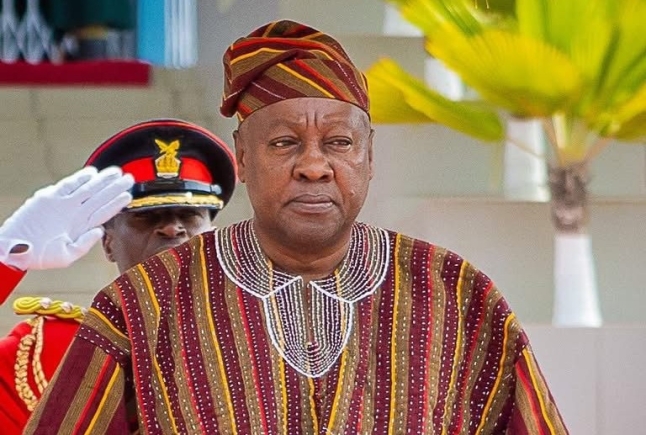
    President Mahama orders immediate cuts in fuel taxes after cabinet meeting

    Certain taxes and levies on petroleum products are expected to be scrapped in the coming days following the intervention of President John Dramani Mahama.

    During an emergency Cabinet meeting held on Thursday, April 9, President Mahama instructed the Minister for Finance, Dr Cassiel Ato Forson, and the Minister for Energy to immediately begin the process of reviewing and removing the affected taxes.

    President John Dramani Mahama said the decision is aimed at cushioning Ghanaians from rising fuel prices, which have been driven by global supply disruptions linked to tensions involving Iran, Israel, and the United States. The ongoing tension has led to the closure of the Strait of Hormuz, a critical global oil shipping route.

    The ongoing tensions between Iran, the U.S., and Israel have been linked to the death of Iran’s Supreme Leader, Ayatollah Ali Khamenei.


    Ayatollah Ali Khamenei was reportedly killed in strikes by the United States (U.S.) and Israel. This development is significantly impacting travelers from Ghana to Asia, Europe, and North America, as Dubai is a major transit hub connecting travelers through the United Arab Emirates.

    Meanwhile, petrol and diesel are selling at GH¢13.30 and GH¢17.10 per litre, respectively, at the pumps. In a social media post on Tuesday, March 31, GOIL announced that petrol is now selling at GH¢13.30 per litre from GH¢12.24 and diese from GH¢15.69 to GH¢17.10 per litre.


    Star Oil, has increased from GH¢12.19 to GH¢13.49 per litre. It has also increased the price of Diesel from GH¢14.25 to GH¢17.97. The adjustment follows a new price floor announced by the National Petroleum Authority (NPA) on March 30, directing Oil Marketing Companies (OMCs) to implement the changes from Wednesday, April 1.


    On Monday, March 16 petroleum products at the pumps saw an increase following adjustment by the NPAfor the second pricing window for the month.


    As a result, petrol priced at GHȼ10.46 per litre will now be sold at GHȼ11.57. The price floor for diesel has jumped from GH¢11.42 to GH¢14.35 per litre, and LPG has risen from GH¢9.38 to GH¢10.67 per kilogramme. Meanwhile, Ghana’s petroleum sector recorded a decline in the second half of 2025.


    The data from the Bank of Ghana (BoG), contained in the Central Bank’s Semi-Annual Report on the Petroleum Holding Fund (PHF) and shared on Tuesday, February 3, shows total receipts of US$399.65 million, significantly lower than returns recorded during the same period in 2024.


    The report explains that the amount represents combined inflows from crude oil liftings and petroleum-related taxes. However, it fell below the US$369.25 million realised from crude oil liftings alone in the second half of 2024, pointing to weaker overall performance in the sector.


    “The total amount received into the PHF account for H2 2025 was US$399.65 million (crude oil lifting total of US$198.25 million and other total income of US$201.40 million),” the report indicated.


    The report further indicates that revenue between July 1 and December 31, 2025, was drawn from two main sources. Crude oil liftings from the Jubilee and Sankofa Gye Nyame (SGN) fields generated US$198.25 million, following the lifting of two Jubilee cargoes and one SGN cargo by the Ghana Group, represented by the Ghana National Petroleum Corporation (GNPC).


    Ghana earned US$201.40 million from petroleum-related taxes and interest during the period. The bulk of this amount, US$198.09 million, came from corporate income taxes, while US$3.31 million was earned as interest on the Petroleum Holding Fund.


    The BoG also explained that revenue from the 25th cargo from the TEN field, valued at US$60.79 million, was not included in the report because the funds had not been received by the end of 2025, even though they were expected in November.


    Even though Ghana received less new money from oil during the period, it still spent and distributed a total of US$493.40 million. The spending was cushioned by savings accumulated by the government from previous years to cover the shortfall.


    According to the report, the government used about 57.8% of the total US$493.40 million, amounting to US$285.06 million, to fund its projects and programmes through the national budget.

    About 23.5%, representing US$115.99 million, was saved to stabilise the economy during difficult times, while US$49.71 million was saved for future generations. Another US$42.63 million was given to the Ghana National Petroleum Corporation to help cover its operational and investment costs.


    The report further showed positive investment performance for Ghana’s petroleum savings. The Ghana Petroleum Funds recorded a net realised income of US$28.11 million, with returns of 2.28 per cent for the Heritage Fund and 2.51 per cent for the Stabilisation Fund.


    As of December 31, 2025, total petroleum reserves stood at US$1.55 billion, with the Heritage Fund accounting for US$1.38 billion.
    Looking ahead, the Bank of Ghana adopted a cautious outlook for 2026, noting that Brent crude prices declined from US$66.61 to US$60.81 per barrel by the end of 2025.


    While the International Monetary Fund projects global growth of 3.3 per cent, the report warned that Ghana’s petroleum revenues remain exposed to geopolitical developments in the Middle East and OPEC+ production decisions, with oil prices expected to average about US$62.13 per barrel in 2026.


    Meanwhile, in a related development, motorists have started the New Year on a good note, with less pressure on their pockets, as several Oil Marketing Companies (OMCs) have effected a reduction in fuel prices at their respective pumps across the country in the January pricing window.


    The price cuts, which took effect in the early hours of the New Year, signify a continued downward trend in petroleum costs, offering much-needed breathing room for both commercial and private transport users.
    Among the first OMCs to effect the reduction was market leader Star Oil.

    It set the pace and a benchmark for other OMCs as it adjusted its digital displays, reflecting a marginal dip from previous prices.
    Petrol is now selling at GH¢10.86 per litre, diesel is priced at GH¢11.96 per litre, and RON 95 is selling at GH¢13.56 per litre.


    According to Star Oil management, the reduction in oil prices is a result of a “favourable domestic and external cost environment,” citing the cedi’s appreciation and a dip in international refined product prices.


    It said the current reductions may only be the tip of the iceberg for January. The Chamber of Oil Marketing Companies (COMAC) projected a robust outlook for the month, suggesting that competitive pressures will force more OMCs to follow suit in the coming days.


    In its January pricing outlook, COMAC provided a breakdown of the expected percentage declines. It projected that petrol would fall by up to 4.80 per cent, while diesel was also estimated to drop by approximately 3.77 per cent. LPG, on the other hand, was expected to see a reduction of roughly 2.19 per cent.


    Industry analysts believe that if the cedi maintains its current trajectory and international crude prices remain below US$80 per barrel, Ghanaians could see even more substantial relief by the second pricing window in mid-January.


    While fuel prices are dropping, Ghanaians have had to brace themselves for an increase in utility tariffs, which took effect on January 1, 2026.
    Following the announcement, there was widespread disapproval, particularly from stakeholders and the general public.


    On December 2, 2025, the Public Utilities Regulatory Commission (PURC) announced an imminent increase in tariffs, with the new rates set to take effect from January 1, 2026.

    The Commission said the increases—9.86 per cent for electricity and 15.92 per cent for water—had become necessary to meet utility investment needs, respond to macroeconomic pressures, and ensure the long-term stability of the sector.
  • Ghana records 8.7bn litres fuel demand as downstream sector grows

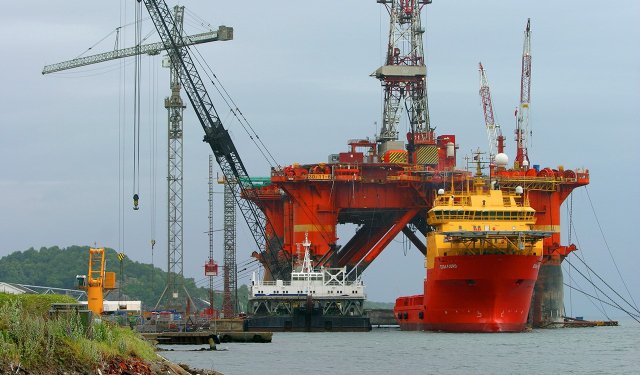
    Ghana records 8.7bn litres fuel demand as downstream sector grows

    The Chief Executive Officer of the Chamber of Oil Marketing Companies (COMAC), Dr. Riverson Oppong, has disclosed that Ghana’s downstream petroleum sector saw significant growth in 2025, with total product supply and demand increasing by 15 percent to 8.7 billion litres.

    He revealed that Ghana consumed 7.45 billion litres of petroleum products domestically, with demand largely fueled by the transportation sector covering vehicles, buses, and trucks and electricity generation.

    According to him, domestic refinery production totaled half a billion litres, representing an 11.3% year-on-year decline compared to 2024.

    “The downstream sector recorded 15% increase on product supply and demand giving you a total of 8.7 billion liters that was imported and then the consumption of 7.45 billion liters used for both transportation and also electricity generation. Domestic production from refineries was half a billion liter, which saw a decrease of 11.3% in the volumes year on year as compared to 2024,” Dr. Riverson Oppong said.

    Meanwhile, the National Petroleum Authority (NPA) has revealed that Ghana has sufficient diesel and petrol stocks to last nearly two months in the event of a temporary supply disruption.

    During a media engagement on Tuesday, April 7, NPA Chief Executive Officer (CEO) Godwin Edudzi Tameklo stated that Ghana remains secure despite ongoing tensions in the Middle East.


    “Today in Ghana, for diesel, we have almost eight weeks of import cover. For petrol, we have almost 6.8 weeks. We just concluded our legal advisory meeting last week, and we have vessels scheduled up to the 19th of April — 10 vessels currently on the high seas.


    “Before the war, a metric ton of diesel cost around $695. Today, the price is $1,337 — almost twice as much. Yet, have pump prices doubled? No. If it weren’t for the relatively stable exchange rate, local fuel prices would have doubled by now,” he added.

    Despite persistent pressures from rising global fuel prices amid Middle East tensions, Ghana recorded a 3.2 percent inflation rate in March. This information was contained in a release from the latest data from the Ghana Statistical Service (GSS)on Wednesday, April 1.

    The figure reflects a decline from 22.4 percent recorded during the same period last year. This represents the 15th consecutive month of decline in Ghana’s inflation rate. February 2026 recorded 3.3 percent in 23.1 percent in February 2025.


    The ongoing tensions between Iran, the U.S., and Israel have been linked to the death of Iran’s Supreme Leader, Ayatollah Ali Khamenei.


    Ayatollah Ali Khamenei was reportedly killed in strikes by the United States (U.S.) and Israel. This development is significantly impacting travelers from Ghana to Asia, Europe, and North America, as Dubai is a major transit hub connecting travelers through the United Arab Emirates.

    Meanwhile, petrol and diesel are selling at GH¢13.30 and GH¢17.10 per litre, respectively, at the pumps. In a social media post on Tuesday, March 31, GOIL announced that petrol is now selling at GH¢13.30 per litre from GH¢12.24 and diese from GH¢15.69 to GH¢17.10 per litre.


    Star Oil has increased from GH¢12.19 to GH¢13.49 per litre. It has also increased the price of Diesel from GH¢14.25 to GH¢17.97. The adjustment follows a new price floor announced by the National Petroleum Authority (NPA) on March 30, directing Oil Marketing Companies (OMCs) to implement the changes from Wednesday, April 1.


    On Monday, March 16, petroleum products at the pumps will saw an increase following adjustment by the NPAfor the second pricing window for the month.


    As a result, petrol priced at GHȼ10.46 per litre will now be sold at GHȼ11.57. The price floor for diesel has jumped from GH¢11.42 to GH¢14.35 per litre, and LPG has risen from GH¢9.38 to GH¢10.67 per kilogramme. Meanwhile, Ghana’s petroleum sector recorded a decline in the second half of 2025.


    The data from the Bank of Ghana (BoG), contained in the Central Bank’s Semi-Annual Report on the Petroleum Holding Fund (PHF) and shared on Tuesday, February 3, shows total receipts of US$399.65 million, significantly lower than returns recorded during the same period in 2024.


    The report explains that the amount represents combined inflows from crude oil liftings and petroleum-related taxes. However, it fell below the US$369.25 million realised from crude oil liftings alone in the second half of 2024, pointing to weaker overall performance in the sector.


    “The total amount received into the PHF account for H2 2025 was US$399.65 million (crude oil lifting total of US$198.25 million and other total income of US$201.40 million),” the report indicated.


    The report further indicates that revenue between July 1 and December 31, 2025, was drawn from two main sources. Crude oil liftings from the Jubilee and Sankofa Gye Nyame (SGN) fields generated US$198.25 million, following the lifting of two Jubilee cargoes and one SGN cargo by the Ghana Group, represented by the Ghana National Petroleum Corporation (GNPC).


    Ghana earned US$201.40 million from petroleum-related taxes and interest during the period. The bulk of this amount, US$198.09 million, came from corporate income taxes, while US$3.31 million was earned as interest on the Petroleum Holding Fund.


    The BoG also explained that revenue from the 25th cargo from the TEN field, valued at US$60.79 million, was not included in the report because the funds had not been received by the end of 2025, even though they were expected in November.


    Even though Ghana received less new money from oil during the period, it still spent and distributed a total of US$493.40 million. The spending was cushioned by savings accumulated by the government from previous years to cover the shortfall.


    According to the report, the government used about 57.8% of the total US$493.40 million, amounting to US$285.06 million, to fund its projects and programmes through the national budget.

    About 23.5%, representing US$115.99 million, was saved to stabilise the economy during difficult times, while US$49.71 million was saved for future generations. Another US$42.63 million was given to the Ghana National Petroleum Corporation to help cover its operational and investment costs.


    The report further showed positive investment performance for Ghana’s petroleum savings. The Ghana Petroleum Funds recorded a net realised income of US$28.11 million, with returns of 2.28 per cent for the Heritage Fund and 2.51 per cent for the Stabilisation Fund.


    As of December 31, 2025, total petroleum reserves stood at US$1.55 billion, with the Heritage Fund accounting for US$1.38 billion.


    Looking ahead, the Bank of Ghana adopted a cautious outlook for 2026, noting that Brent crude prices declined from US$66.61 to US$60.81 per barrel by the end of 2025.


    While the International Monetary Fund projects global growth of 3.3 per cent, the report warned that Ghana’s petroleum revenues remain exposed to geopolitical developments in the Middle East and OPEC+ production decisions, with oil prices expected to average about US$62.13 per barrel in 2026.


    Meanwhile, in a related development, motorists have started the New Year on a good note, with less pressure on their pockets, as several Oil Marketing Companies (OMCs) have effected a reduction in fuel prices at their respective pumps across the country in the January pricing window.


    The price cuts, which took effect in the early hours of the New Year, signify a continued downward trend in petroleum costs, offering much-needed breathing room for both commercial and private transport users.


    Among the first OMCs to effect the reduction was market leader Star Oil. It set the pace and a benchmark for other OMCs as it adjusted its digital displays, reflecting a marginal dip from previous prices.


    Petrol is now selling at GH¢10.86 per litre, diesel is priced at GH¢11.96 per litre, and RON 95 is selling at GH¢13.56 per litre.
    According to Star Oil management, the reduction in oil prices is a result of a “favourable domestic and external cost environment,” citing the cedi’s appreciation and a dip in international refined product prices.


    It said the current reductions may only be the tip of the iceberg for January. The Chamber of Oil Marketing Companies (COMAC) projected a robust outlook for the month, suggesting that competitive pressures will force more OMCs to follow suit in the coming days.


    In its January pricing outlook, COMAC provided a breakdown of the expected percentage declines. It projected that petrol would fall by up to 4.80 per cent, while diesel was also estimated to drop by approximately 3.77 per cent. LPG, on the other hand, was expected to see a reduction of roughly 2.19 per cent.


    Industry analysts believe that if the cedi maintains its current trajectory and international crude prices remain below US$80 per barrel, Ghanaians could see even more substantial relief by the second pricing window in mid-January.


    While fuel prices are dropping, Ghanaians have had to brace themselves for an increase in utility tariffs, which took effect on January 1, 2026.


    Following the announcement, there was widespread disapproval, particularly from stakeholders and the general public.
    On December 2, 2025, the Public Utilities Regulatory Commission (PURC) announced an imminent increase in tariffs, with the new rates set to take effect from January 1, 2026.

    The Commission said the increases—9.86 per cent for electricity and 15.92 per cent for water—had become necessary to meet utility investment needs, respond to macroeconomic pressures, and ensure the long-term stability of the sector.
  • March inflation falls to 3.2% despite global fuel hikes

    March inflation falls to 3.2% despite global fuel hikes

    Despite persistent pressures from rising global fuel prices amid Middle East tensions, Ghana recorded a 3.2 percent inflation rate in March.

    This information was contained in a release from the latest data from the Ghana Statistical Service (GSS)on Wednesday, April 1.

    The figure reflects a decline from 22.4 percent recorded during the same period last year. This represents the 15th consecutive month of decline in Ghana’s inflation rate. February 2026 recorded 3.3 percent in 23.1 percent in February 2025.

    The ongoing tensions between Iran, the U.S., and Israel have been linked to the death of Iran’s Supreme Leader, Ayatollah Ali Khamenei.

    Ayatollah Ali Khamenei was reportedly killed in strikes by the United States (U.S.) and Israel. This development is significantly impacting travelers from Ghana to Asia, Europe, and North America, as Dubai is a major transit hub connecting travelers through the United Arab Emirates.

    Meanwhile, Ghana’s inflation rate stood at 3.8 percent in January 2026, marking the 13th consecutive decline in inflation, with the rate easing from 5.4% in December of the same year.


    The Statistical Service attributed the development to a slower rise in the prices of essential food items, largely due to improved availability. Ghana ended the year with an inflation rate of 5.4 per cent, a 0.9 percentage decline from 6.3 per cent recorded in November 2025.


    The downward trend of inflation has been attributed to easing food prices. Food inflation fell to 4.9 per cent in December, down from 6.6 per cent in November, as price increases for several key food items slowed.


    Also, food inflation was attributed as a major driver in the falling inflation rate, providing some relief to households after months of heightened cost-of-living pressures.


    Charcoal and staple foods such as plantains and bread have been identified as major contributors to the country’s cost-of-living pressures, which pushed up the November 2025 inflation rate.


    According to the last Consumer Price Index breakdown, other factors that affect inflation are basic household goods and utility-related expenses.


    The breakdown highlighted charcoal as the number one inflation driver after its year-on-year contribution increased to 9.2%. The second-largest contributor, smoked herrings, recorded a 7.6% increase in inflation. Unripe plantain, placed third, recorded 6.8%, making it the third biggest contributor to food inflation in November.


    The inflation rate for November 2025 saw a decrease from the 8.0% recorded in October to 6.3% in the same period, according to the Ghana Statistical Service (GSS). This marks the eleventh month in a row since October 2021.


    Addressing the media on Wednesday, December 3, the Government Statistician, Dr. Alhassan Iddrisu, mentioned that broad-based improvements in both food and non-food inflation, supported by stabilising market conditions, significantly caused the decline.


    In October, the GSS announced an 8.0% inflation rate, down from 9.4% recorded in September. The 1.4 percentage point drop from the previous month marks the lowest level since June 2021, sustaining ten consecutive months of consistent decline.


    It also indicates a sharp improvement from the 23.8% recorded in December 2024. Addressing the media in Accra, Government Statistician, Dr. Iddrisu Alhassan, attributed the continuous drop in inflation to the stringent fiscal measures adopted in efforts to stabilise Ghana’s economy.


    “For the first time since June 2021, Ghana has achieved single-digit inflation. This means that the rate at which prices of goods and services are increasing has slowed significantly. We’ve seen improvements across food, transport, and housing categories — key indicators of household welfare,” Dr. Alhassan noted.


    Last month, a report by the Bank of Ghana (BoG) indicated that the government spent less than budgeted between January and July. According to the Bank of Ghana’s September 2025 Monetary Policy Report, the government spent GH¢131.1 billion, which is below the planned amount of GH¢152.6 billion.


    Thus, government spending accounted for 9.4% of GDP, falling short of the target of 10.9%. The report noted that government spending was 14.1% below target but 9.3% higher than during the same period the previous year.


    The BoG attributed the gains to tighter fiscal discipline and improved expenditure control.


    It further stated that, except for compensation of employees, all major spending categories came in below target. Salaries and wages for public sector workers recorded GH¢44.9 billion from the projected amount, while spending on infrastructure and development projects stood at GH¢10 billion, much lower than expected.


    Ghana’s economy is expected to experience significant growth in 2026. Presenting the 2026 Budget Statement and Economic Policy on Thursday, November 11, the Finance Minister, Cassiel Ato Forson, projected a 4.8% increase in the country’s Gross Domestic Product (GDP) for 2026.


    He also forecasted that inflation would drop to 8% by the end of the year. “Right honourable Speaker, for the year 2026, we will achieve the following at a minimum: real GDP growth of at least 4.8%, driven by continued expansion in infrastructure, service sectors, and agriculture as well. … Mr. Speaker, at least 4.9%, and end the inflation for next year will be at least 8% ± 2,” he added.


    The Minister noted that the projected growth would be driven by continued development in infrastructure, the services sector, and agriculture. Ghana recorded a 6.3% Gross Domestic Product (GDP) in the second quarter of 2025.


    The IMF projects a decrease in global inflation while predicting slower economic growth in 2025 for the U.S. and other regions.


    The total value of all commodities bought and sold on Ghana’s Commodity Exchange (GCX) in 2024 amounted to GHS24.23 million, according to the Bank of Ghana’s (BoG) 2024 Financial Stability Review.
    The report attributed the gains to strong demand for maize and soybean contracts, which boosted overall market performance.


    “The Ghana Commodity Exchange (GCX) experienced remarkable growth, reinforcing its role in agricultural trade and market efficiency. Trading volume surged by 107.4 per cent to 5,161.03 metric tonnes in 2024. The total trade value soared by 114.8 per cent, from GH₵11.29 million in 2023 to GH₵24.23 million.


    This growth was driven by several factors, including increased market participation, the strategic use of commodity aggregation funds, a faster settlement cycle (T+1, a day after the transaction date), improved warehouse infrastructure, and enhanced trader confidence.


    Additionally, settlement values grew by 113.3 per cent to GH₵23.31 million, reflecting enhanced liquidity and improved transactional efficiency,” the report stated.

  • GPRTU gives govt 2-day ultimatum to scrap GHS1 fuel levy or risk fare hikes

    GPRTU gives govt 2-day ultimatum to scrap GHS1 fuel levy or risk fare hikes

    The Ghana Private Road Transport Union (GPRTU) has threatened to increase transport fares should the government fail to scrap the fuel-related taxes in 48 hours. 

    Last year, the President John Dramani Mahama-led government implemented a GH¢1 fuel levy on petroleum products. This move falls under the Energy Sector Levies (Amendment) Act, 2025 (Act 1141), which was assented to by the President on June 5 to address energy-sector shortfalls, reduce legacy debts, and stabilize power supply across the country, following parliamentary approval.

    Speaking to the media on Wednesday, April 1, GPRTU Deputy Industrial and Public Relations Officer Samuel Amoah said drivers are struggling to cope with the fuel tax amid rising fuel prices, costly spare parts, deteriorating road conditions, and higher charges from the Driver and Vehicle Licensing Authority (DVLA).

    He noted, “We came up with this release and gave the government two days to do something about it. If they fail to do [that]…then we have no option but to organise ourselves to request an increment of transport fares for our members. What the government and the president is saying is, it is something they can’t control right now, but the transport operators may be forced to”.

    He said the union’s move is also aimed at shielding drivers from the National Petroleum Authority’s (NPA) recent fuel price adjustments.

    The NPA has set petrol at GH¢13.30 per litre and diesel at GH¢17.10 per litre. Meanwhile, a senior Research and Policy Analyst at the Institute for Energy Security (IES), Smith Prosper Boahene, has noted that it would be ‘premature’ for the government to scrap the GH₵1 fuel levy amid growing calls for its abolition.

    Addressing the media on Wednesday, March 25, explained that although there’s a recent drop in global oil prices, it will be dangerous for the government to scrap the levy.

    He added that the GH₵1 fuel levy is crucial to Ghana’s energy sector which is already at the verge of collapsing.

    “IES from the commencement has been against it; that call is premature.The levy is there to serve a very critical purpose… to replenish the debt that has been accumulating in the sector,” he added.

    The researcher argued that calls should rather be directed towards the temporary suspension of the Price Stabilisation and Recovery Levy (PSRL) to help reduce fuel prices and ease the burden on consumers.

    Meanwhile, global crude oil prices have dipped by about 5%, falling from around $104 per barrel to approximately $98.95, while gas prices in Europe have also declined by roughly 8%.

    The government insists the levy is crucial for the financial recovery of Ghana’s energy sector. President John Mahama, while speaking at the presentation of the final report of the National Economic Dialogue 2025 on June 4, announced the government’s decision to clear the accumulated legacy debts in the power sector with part of the revenue generated by the yet-to-be-implemented levy.

    He stated that “initially much of this revenue will go to the purchasing of fuel to ensure stable power of electricity.”

    But President Mahama has justified that the levy will also help reduce the use of liquid fuel in the energy mix, as it expects more gas from the ENI, Sankofa, Jubilee, and TEN fields, as well as the West African Gas Pipeline.

    “At that stage, the resources generated by this increased levy will be channeled to pay accumulated legacy debts in the power sector,” he added.

    He assured Ghanaians that funds generated from the newly approved GHC1 fuel levy will undergo regular audits. He explained the move is to ensure accountability and transparency.

    “Funds from this levy will not be subject to the hazards of the Consolidated Fund. The fund will be regularly audited and audit reports made public to ensure its transparent use.”

    Energy and Green Transition Minister, John Abdulai Jinapor, has defended government’s move despite opposition from some stakeholders in the energy sector.

    He noted that the timing of the introduction of the levy is apt as the cedi continues to appreciate against major trading currencies.The minister projects to generate revenue ranging between GH¢5 billion and GH¢6 billion to support the procurement of liquid fuel.

    “Fuel was around GH¢16.00, and a sensitive government will not slap a tax when fuel is GH¢16.00. You couldn’t have imposed that tax around that time when fuel was still very high, and so you needed to work to bring fuel down to this level and share the gain with Ghanaians. At that time, if we had increased it, you can imagine the impact on Ghanaians, but today, the net effect is that you are still having a reduction of GH¢3.00 on a litre of fuel.

    “It is better to do it today than to (have done) it yesterday, when it would have eroded your income; today, your purchasing power has increased because of the reduction of the value of the dollar,” he said while speaking on JoyFM.

    Some stakeholders in the energy sector have expressed their displeasure over the approval of the Energy Sector Levy (Amendment) Bill, 2025, by Parliament and its pending implementation.

    On the matter, Chief Executive Officer of the Association of Oil Marketing Companies (AOMCs), Dr Riverson Oppong Peprah, warned that the implementation of the levy could drive fuel prices higher, adding further strain on consumers and the downstream sector.

    “When fuel prices began to fall, it wasn’t because the cedi gained stability; rather, it was due to a drop in plant prices caused by the decline in West Texas Intermediate (WTI) crude oil prices. Only after that did the cedi stabilise and support the downward trend.”

    “As we speak today, plant prices are already rising again. So, I urge the government to reconsider this levy since there are other options,” he counselled.

    Also, Executive Director of the Centre for Environment and Sustainable Energy Benjamin Nsiah has raised similar concerns, calling the introduction of the levy “unfair.”

    “This approach is not only tired but unfair. We’ve seen this playbook before. The Energy Sector Levies Act (ESLA) and the Energy Sector Recovery Levy have provided a lasting solution to the underlying issues. It’s not about collecting more. It’s about managing what’s already collected,” he added.

  • Petrol now GHS13.30, diesel GHs17.10 per litre as GOIL, others implement new pricing

    Petrol now GHS13.30, diesel GHs17.10 per litre as GOIL, others implement new pricing

    Petrol and diesel are selling at GH¢13.30 and GH¢17.10 per litre, respectively, at the pumps today, Tuesday, March 31.  In a social media post, GOIL announced that petrol is now selling at GH¢13.30 per litre from GH¢12.24 and diese from GH¢15.69 to GH¢17.10 per litre.

    Star Oil, has increased from GH¢12.19 to GH¢13.49 per litre. It has also increased the price of Diesel from GH¢14.25 to GH¢17.97. The adjustment follows a new price floor announced by the National Petroleum Authority (NPA) on March 30, directing Oil Marketing Companies (OMCs) to implement the changes from Wednesday, April 1.

    On Monday, March 16 petroleum products at the pumps will saw an increase following adjustment by the NPAfor the second pricing window for the month.

    As a result, petrol priced at GHȼ10.46 per litre will now be sold at GHȼ11.57. The price floor for diesel has jumped from GH¢11.42 to GH¢14.35 per litre, and LPG has risen from GH¢9.38 to GH¢10.67 per kilogramme. Meanwhile, Ghana’s petroleum sector recorded a decline in the second half of 2025.

    The data from the Bank of Ghana (BoG), contained in the Central Bank’s Semi-Annual Report on the Petroleum Holding Fund (PHF) and shared on Tuesday, February 3, shows total receipts of US$399.65 million, significantly lower than returns recorded during the same period in 2024.

    The report explains that the amount represents combined inflows from crude oil liftings and petroleum-related taxes. However, it fell below the US$369.25 million realised from crude oil liftings alone in the second half of 2024, pointing to weaker overall performance in the sector.

    “The total amount received into the PHF account for H2 2025 was US$399.65 million (crude oil lifting total of US$198.25 million and other total income of US$201.40 million),” the report indicated.

    The report further indicates that revenue between July 1 and December 31, 2025, was drawn from two main sources. Crude oil liftings from the Jubilee and Sankofa Gye Nyame (SGN) fields generated US$198.25 million, following the lifting of two Jubilee cargoes and one SGN cargo by the Ghana Group, represented by the Ghana National Petroleum Corporation (GNPC).

    Ghana earned US$201.40 million from petroleum-related taxes and interest during the period. The bulk of this amount, US$198.09 million, came from corporate income taxes, while US$3.31 million was earned as interest on the Petroleum Holding Fund.

    The BoG also explained that revenue from the 25th cargo from the TEN field, valued at US$60.79 million, was not included in the report because the funds had not been received by the end of 2025, even though they were expected in November.

    Even though Ghana received less new money from oil during the period, it still spent and distributed a total of US$493.40 million. The spending was cushioned by savings accumulated by the government from previous years to cover the shortfall.

    According to the report, the government used about 57.8% of the total US$493.40 million, amounting to US$285.06 million, to fund its projects and programmes through the national budget. About 23.5%, representing US$115.99 million, was saved to stabilise the economy during difficult times, while US$49.71 million was saved for future generations. Another US$42.63 million was given to the Ghana National Petroleum Corporation to help cover its operational and investment costs.

    The report further showed positive investment performance for Ghana’s petroleum savings. The Ghana Petroleum Funds recorded a net realised income of US$28.11 million, with returns of 2.28 per cent for the Heritage Fund and 2.51 per cent for the Stabilisation Fund.

    As of December 31, 2025, total petroleum reserves stood at US$1.55 billion, with the Heritage Fund accounting for US$1.38 billion.

    Looking ahead, the Bank of Ghana adopted a cautious outlook for 2026, noting that Brent crude prices declined from US$66.61 to US$60.81 per barrel by the end of 2025.

    While the International Monetary Fund projects global growth of 3.3 per cent, the report warned that Ghana’s petroleum revenues remain exposed to geopolitical developments in the Middle East and OPEC+ production decisions, with oil prices expected to average about US$62.13 per barrel in 2026.

    Meanwhile, in a related development, motorists have started the New Year on a good note, with less pressure on their pockets, as several Oil Marketing Companies (OMCs) have effected a reduction in fuel prices at their respective pumps across the country in the January pricing window.

    The price cuts, which took effect in the early hours of the New Year, signify a continued downward trend in petroleum costs, offering much-needed breathing room for both commercial and private transport users.

    Among the first OMCs to effect the reduction was market leader Star Oil. It set the pace and a benchmark for other OMCs as it adjusted its digital displays, reflecting a marginal dip from previous prices.

    Petrol is now selling at GH¢10.86 per litre, diesel is priced at GH¢11.96 per litre, and RON 95 is selling at GH¢13.56 per litre.

    According to Star Oil management, the reduction in oil prices is a result of a “favourable domestic and external cost environment,” citing the cedi’s appreciation and a dip in international refined product prices.

    It said the current reductions may only be the tip of the iceberg for January. The Chamber of Oil Marketing Companies (COMAC) projected a robust outlook for the month, suggesting that competitive pressures will force more OMCs to follow suit in the coming days.

    In its January pricing outlook, COMAC provided a breakdown of the expected percentage declines. It projected that petrol would fall by up to 4.80 per cent, while diesel was also estimated to drop by approximately 3.77 per cent. LPG, on the other hand, was expected to see a reduction of roughly 2.19 per cent.

    Industry analysts believe that if the cedi maintains its current trajectory and international crude prices remain below US$80 per barrel, Ghanaians could see even more substantial relief by the second pricing window in mid-January.

    While fuel prices are dropping, Ghanaians have had to brace themselves for an increase in utility tariffs, which took effect on January 1, 2026.

    Following the announcement, there was widespread disapproval, particularly from stakeholders and the general public.

    On December 2, 2025, the Public Utilities Regulatory Commission (PURC) announced an imminent increase in tariffs, with the new rates set to take effect from January 1, 2026. The Commission said the increases—9.86 per cent for electricity and 15.92 per cent for water—had become necessary to meet utility investment needs, respond to macroeconomic pressures, and ensure the long-term stability of the sector.

  • Petrol now GHS11.57, diesel GHS14.35 as NPA revises fuel price floors

    Petrol now GHS11.57, diesel GHS14.35 as NPA revises fuel price floors

    Effective Monday, March 16 petroleum products at the pumps will see an increase following adjustment by the National Petroleum Authority (NPA) for the  second pricing window for the month. 

    As a result, petrol priced at GHȼ10.46 per litre will now be sold at GHȼ11.57. The price floor for diesel has jumped from GH¢11.42 to GH¢14.35 per litre, and LPG has risen from GH¢9.38 to GH¢10.67 per kilogramme.

    Meanwhile, Ghana’s petroleum sector recorded a decline in the second half of 2025.

    The data from the Bank of Ghana (BoG), contained in the Central Bank’s Semi-Annual Report on the Petroleum Holding Fund (PHF) and shared on Tuesday, February 3, shows total receipts of US$399.65 million, significantly lower than returns recorded during the same period in 2024.

    The report explains that the amount represents combined inflows from crude oil liftings and petroleum-related taxes. However, it fell below the US$369.25 million realised from crude oil liftings alone in the second half of 2024, pointing to weaker overall performance in the sector.

    “The total amount received into the PHF account for H2 2025 was US$399.65 million (crude oil lifting total of US$198.25 million and other total income of US$201.40 million),” the report indicated.

    The report further indicates that revenue between July 1 and December 31, 2025, was drawn from two main sources. Crude oil liftings from the Jubilee and Sankofa Gye Nyame (SGN) fields generated US$198.25 million, following the lifting of two Jubilee cargoes and one SGN cargo by the Ghana Group, represented by the Ghana National Petroleum Corporation (GNPC).

    Ghana earned US$201.40 million from petroleum-related taxes and interest during the period. The bulk of this amount, US$198.09 million, came from corporate income taxes, while US$3.31 million was earned as interest on the Petroleum Holding Fund.

    The BoG also explained that revenue from the 25th cargo from the TEN field, valued at US$60.79 million, was not included in the report because the funds had not been received by the end of 2025, even though they were expected in November.

    Even though Ghana received less new money from oil during the period, it still spent and distributed a total of US$493.40 million. The spending was cushioned by savings accumulated by the government from previous years to cover the shortfall.

    Semi-Annual-Report-H2-2025Download

    According to the report, the government used about 57.8% of the total US$493.40 million, amounting to US$285.06 million, to fund its projects and programmes through the national budget. About 23.5%, representing US$115.99 million, was saved to stabilise the economy during difficult times, while US$49.71 million was saved for future generations. Another US$42.63 million was given to the Ghana National Petroleum Corporation to help cover its operational and investment costs.

    The report further showed positive investment performance for Ghana’s petroleum savings. The Ghana Petroleum Funds recorded a net realised income of US$28.11 million, with returns of 2.28 per cent for the Heritage Fund and 2.51 per cent for the Stabilisation Fund.

    As of December 31, 2025, total petroleum reserves stood at US$1.55 billion, with the Heritage Fund accounting for US$1.38 billion.

    Looking ahead, the Bank of Ghana adopted a cautious outlook for 2026, noting that Brent crude prices declined from US$66.61 to US$60.81 per barrel by the end of 2025.

    While the International Monetary Fund projects global growth of 3.3 per cent, the report warned that Ghana’s petroleum revenues remain exposed to geopolitical developments in the Middle East and OPEC+ production decisions, with oil prices expected to average about US$62.13 per barrel in 2026.

    Meanwhile, in a related development, motorists have started the New Year on a good note, with less pressure on their pockets, as several Oil Marketing Companies (OMCs) have effected a reduction in fuel prices at their respective pumps across the country in the January pricing window.

    The price cuts, which took effect in the early hours of the New Year, signify a continued downward trend in petroleum costs, offering much-needed breathing room for both commercial and private transport users.

    Among the first OMCs to effect the reduction was market leader Star Oil. It set the pace and a benchmark for other OMCs as it adjusted its digital displays, reflecting a marginal dip from previous prices.

    Petrol is now selling at GH¢10.86 per litre, diesel is priced at GH¢11.96 per litre, and RON 95 is selling at GH¢13.56 per litre.

    According to Star Oil management, the reduction in oil prices is a result of a “favourable domestic and external cost environment,” citing the cedi’s appreciation and a dip in international refined product prices.

    It said the current reductions may only be the tip of the iceberg for January. The Chamber of Oil Marketing Companies (COMAC) projected a robust outlook for the month, suggesting that competitive pressures will force more OMCs to follow suit in the coming days.

    In its January pricing outlook, COMAC provided a breakdown of the expected percentage declines. It projected that petrol would fall by up to 4.80 per cent, while diesel was also estimated to drop by approximately 3.77 per cent. LPG, on the other hand, was expected to see a reduction of roughly 2.19 per cent.

    Industry analysts believe that if the cedi maintains its current trajectory and international crude prices remain below US$80 per barrel, Ghanaians could see even more substantial relief by the second pricing window in mid-January.

    While fuel prices are dropping, Ghanaians have had to brace themselves for an increase in utility tariffs, which took effect on January 1, 2026.

    Following the announcement, there was widespread disapproval, particularly from stakeholders and the general public.

    On December 2, 2025, the Public Utilities Regulatory Commission (PURC) announced an imminent increase in tariffs, with the new rates set to take effect from January 1, 2026. The Commission said the increases—9.86 per cent for electricity and 15.92 per cent for water—had become necessary to meet utility investment needs, respond to macroeconomic pressures, and ensure the long-term stability of the sector.

  • Petrol to sell at GHS12.92, diesel at GHS13.10 from Nov 1 – COMAC predicts

    Petrol to sell at GHS12.92, diesel at GHS13.10 from Nov 1 – COMAC predicts

    The Chamber of Oil Marketing Companies (COMAC) has predicted a dip in petroleum prices at the pumps beginning November 1. According to its latest outlook report, petrol prices at the pumps will sell at GH¢12.92 per litre, representing a 5.21% decrease from the previous GH¢13.93.

    Diesel prices are projected to sell at GH¢13.10 per litre, down from GH¢14.56, reflecting a decline of between 6.03% and 8.13%. Meanwhile, Liquefied Petroleum Gas (LPG) is expected to sell at GH¢13.60 per kilogram, also decreasing by between 6.03% and 8.13%. In Septemebr, Petroleum product prices at the pumps are being adjusted by several major Oil Marketing Companies (OMCs). The price of petrol is now selling at GH¢12.90 per litre from GH¢12.88; a litre of diesel, which was sold for GH¢14.30, is now selling at GH¢13.90 at Goil fuel stations.

    At Shell fuel stations, a litre of petrol is selling at GH¢13.59 from GH¢12.89.  Market leader, Star Oil, is selling petrol at GH¢12.77 per litre and diesel at GH¢13.35. However, Star Oil has declared its intention not to change the prices of its fuel products until September 15.

    Meanwhile, market leader Star Oil says its prices will remain unchanged until September 15, 2025. Currently, Star Oil is selling petrol at GH¢12.77 per litre and diesel at GH¢13.35.The Chamber of Oil Marketing Companies (COAMC) had projected a decline in diesel and petrol prices, with Liquefied Petroleum Gas (LPG) expected to increase at the pumps on Saturday, August 16.

    According to a report by the Chamber of Oil Marketing Companies, petrol at the pumps will increase by between 0.39% and 2.71% per liter.

    On the other hand, diesel and LPG prices have been projected to increase by up to 0.15% to 2.34% per litre.

    “Following the slight dip in crude prices, diesel fell sharply by 5.22%, while petrol and LPG rose marginally by 1.89% and 2.87%, likely due to product-specific demand and supply factors.

    “For 1st August 2025 pricing window (based on average exchange rates from 27th July to 12th Aug), the Ghanaian cedi experienced a slight depreciation against the US dollar. The rate shifted from GHS 10.68 to GHS 10.77, reflecting a 0.87% decline,” part of the statement read.

    However, over the weekend, some major Oil Marketing Companies kept prices unchanged to stay competitive and attract customers.

    COMAC has attributed the adjustment to the depreciation of the local currency, the cedi, against major foreign currencies, especially the US dollar.

    Some Oil Marketing Companies (OMCs) in June, reduced prices of petroleum products at the pumps. Fuel prices have now dropped for the second time this week under the current pricing window for June.

    Leading the trend, Star Oil announced on June 19, 2025, that it had slashed its petrol price from GHS10.99 per litre to GHS10.80. Diesel prices at the same outlets have also been cut, moving from GHS12.77 to GHS12.13 per litre.

    Looking ahead, Allied Oil has indicated it will implement further reductions beginning June 20. Earlier this month, on June 16, Allied was selling petrol at GHS10.97 per litre, but the new price stands at GHS10.75.

    Joining the trend, Zen Petroleum has also reduced its petrol price to GHS10.75. Reports indicate that the reduction in petrol prices is being driven by heightened competition among major OMCs, sparking a price war in the sector.

    Introduced in 2015, the government’s Price Deregulation Policy aimed to encourage competition and help bring prices down, beyond global oil market dynamics.

    Meanwhile, some OMCs have hinted that pump prices could increase from July 1, 2025, if the conflict between Israel and Iran in the Middle East continues.

    Since tensions escalated in the region, crude oil prices have surged from $66 to about $76 per barrel.

    Despite this, some industry insiders argue that if the Ghanaian cedi strengthens further in the coming days, it could help absorb the projected 5 percent or more rise in crude prices.

    So far, petroleum prices have seen over six reductions this year, with industry data attributing much of the decline to the cedi’s appreciation.

    The escalating missile exchanges between Israel and Iran are contributing to rising global crude oil prices, posing a potential threat to Ghana’s fuel costs and overall economic stability.

    President John Dramani Mahama has directed the Ministers for Finance and Energy, Dr Cassiel Ato Forson and John Abdulai Jinapor, respectively, to closely monitor the unfolding conflict between Israel and Iran and provide proactive measures to safeguard the country’s recent economic gains from external shocks.

    However, the Chamber of Oil Marketing Companies (COMAC) has assured that the escalating geopolitical tensions between Iran and Israel will not affect the oil market.

    Speaking to the media, the Chief Executive Officer (CEO) of COMAC, Dr. Riverson Oppong, noted that when prices go up or down in the world market, it takes some time before those changes are seen in local prices.

    A week-old air war escalated with no sign yet of an exit strategy from either side as Israel bombed nuclear targets in Iran on Thursday and Iran fired missiles and drones at Israel after hitting an Israeli hospital overnight.

    The White House said President Trump would make a decision as to whether the United States will join the war or not in the next two weeks.

    “Based on the fact that there’s a substantial chance of negotiations that may or may not take place with Iran in the near future, I will make my decision whether or not to go within the next two weeks,” Press Secretary Karoline Leavitt told reporters on Thursday.

    Government has launched new GHS1 Energy Sector Shortfall and Debt Repayment Levy on petroleum products.

    This move is to settle energy sector shortfalls, reduce legacy debts, and stabilize power supply across the country, following parliamentary approval.

    President John Dramani Mahama assented to the levy on June 5, under the Energy Sector Levies (Amendment) Act, 2025 (Act 1141). GRA had announced earlier implementation of the levy; however, it was postponed after strong opposition from oil marketing companies and transport operators.

    Initially set to take effect on Monday, June 9, it was rescheduled to start on Monday, June 16. It was then rescheduled again due to the tensions between Iran and Israel.

    According to Tariff Interpretation Order (TIO) No. 2025/003, issued by the GRA, the new levy affects several key fuel products. The levy on petrol (motor spirit, super) and diesel (gas oil) will rise from GHS0.95 and GHS0.93, respectively, to GHS1.95 and GHS1.93 per litre.

    Marine gas oil (local) will increase from 0.3 to 0.23, marine gas oil (foreign) from 0.93 to 1.93, and heavy fuel oil by 0.04. However, all cash-and-carry transactions where products are lifted on or after the effective date will attract the revised levies.

  • GRA implements GHS1 levy on fuel products today

    GRA implements GHS1 levy on fuel products today

    Government’s new GHS1 Energy Sector Shortfall and Debt Repayment Levy on petroleum products will be implemented by the Ghana Revenue Authority (GRA) today, Wednesday, July 16.

    This move is to settle energy sector shortfalls, reduce legacy debts, and stabilize power supply across the country, following parliamentary approval.

    President John Dramani Mahama assented to the levy on June 5, under the Energy Sector Levies (Amendment) Act, 2025 (Act 1141). GRA had announced earlier implementation of the levy; however, it was postponed after strong opposition from oil marketing companies and transport operators.


    Initially set to take effect on Monday, June 9, it was rescheduled to start on Monday, June 16. It was then rescheduled again due to the tensions between Iran and Israel.


    According to Tariff Interpretation Order (TIO) No. 2025/003, issued by the GRA, the new levy affects several key fuel products. The levy on petrol (motor spirit, super) and diesel (gas oil) will rise from GHS0.95 and GHS0.93, respectively, to GHS1.95 and GHS1.93 per litre.


    Marine gas oil (local) will increase from 0.3 to 0.23, marine gas oil (foreign) from 0.93 to 1.93, and heavy fuel oil by 0.04. However, all cash-and-carry transactions where products are lifted on or after the effective date will attract the revised levies.


    Chief Executive Officer of the Association of Oil Marketing Companies (AOMCs), Dr. Riverson Oppong Peprah, has warned that the implementation of the levy could drive fuel prices higher, adding further strain on consumers and the downstream sector.


    “When fuel prices began to fall, it wasn’t because the cedi gained stability; rather, it was due to a drop in plant prices caused by the decline in West Texas Intermediate (WTI) crude oil prices. Only after that did the cedi stabilise and support the downward trend.”

    “As we speak today, plant prices are already rising again. So, I urge the government to reconsider this levy since there are other options,” he counselled.


    Also, Executive Director of the Centre for Environment and Sustainable Energy Benjamin Nsiah has raised similar concerns, calling the introduction of the levy “unfair.”


    “This approach is not only tired but unfair,” Nsiah said. “We’ve seen this playbook before. The Energy Sector Levies Act (ESLA), and the Energy Sector Recovery Levy have provided a lasting solution to the underlying issues. It’s not about collecting more. It’s about managing what’s already collected.”


    The Coalition of Commercial Transport Operators has described the levy as “reckless and retrogressive,” intended to derail their business.


    Speaking to the media on Monday, July 14, the chairman of the Ghana Committed Drivers Association, Charles Danso, revealed the association’s plans of sharing the cost of the tax between drivers and commuters.

    As such, transport fares will be increased by 30% should the government proceed with its GH¢1.00 per litre fuel levy.


    “This is not just a GH¢1 tax. We are already paying a 17.2% tax component on electricity, which includes drivers. Now the government wants to impose another levy on fuel—it’s unbearable.


    “If the government refuses to listen to us, we will have no option but to pass the cost onto commuters by increasing fares by 30%,” he said.


    Meanwhile, the Chamber of Oil Marketing Companies (COMAC) has hinted that fuel prices are likely to increase regardless of the GHC1 tax.


    Engaging the media, Chief Executive Officer (CEO) of COMAC, Dr. Riverson Oppong, on Tuesday, July 15, noted that the next pricing window will see petrol and diesel prices rise by 8% to 10%.

  • We will increase fares by 30% to cover GHC1 levy on fuel – Transport operators

    We will increase fares by 30% to cover GHC1 levy on fuel – Transport operators

    The Coalition of Commercial Transport Operators has threatened to increase transport fares by 30% should the government proceed with its GH¢1.00 per litre fuel levy.

    The implementation of the new GHS1 Energy Sector Shortfall and Debt Repayment Levy on petroleum products commences on Wednesday, July 16.

    Speaking to the media on Monday, July 14, the Chairman of the Ghana Committed Drivers Association, Charles Danso, emphasized that the fare increase will take effect on Wednesday, July 16.

    According to him, this will ensure that the cost of the tax is distributed between drivers and commuters.

    The association has described the levy as “reckless and retrogressive,” intended to derail their business.

    “This is not just a GH¢1 tax. We are already paying a 17.2% tax component on electricity, which includes drivers. Now the government wants to impose another levy on fuel—it’s unbearable.

    “If the government refuses to listen to us, we will have no option but to pass the cost onto commuters by increasing fares by 30%,” he said.

    Meanwhile, the Ghana Revenue Authority (GRA)has directed all petroleum sector stakeholders to comply strictly with the new rates.

    This move comes under the Energy Sector Levies (Amendment) Act, 2025 (Act 1141), which was assented to by President John Dramani Mahama on June 5 to settle energy sector shortfalls, reduce legacy debts, and stabilize power supply across the country, following parliamentary approval.

    GRA had announced earlier implementation of the levy; however, it was postponed after strong opposition from oil marketing companies.

    Initially set to take effect on Monday, June 9, it was rescheduled to start on Monday, June 16. It was then rescheduled again due to the tensions between Iran and Israel.

    According to Tariff Interpretation Order (TIO) No. 2025/003, issued by the GRA, the new levy affects several key fuel products.

    The levy on petrol (motor spirit, super) and diesel (gas oil) will rise from GHS0.95 and GHS0.93 respectively, to GHS1.95 and GHS1.93 per litre.

    Marine gas oil (local) will increase from 0.3 to 0.23, Marine gas oil(foreign) from 0.93 to 1.93, and heavy fuel oil 0.04.

    Petroleum products lifted before June 9, 2025, will be charged the old levy rates.

    However, all cash-and-carry transactions where products are lifted on or after the effective date will attract the revised levies.

    The government insists the levy is crucial for the financial recovery of Ghana’s energy sector. President John Mahama, while speaking at the presentation of the final report of the National Economic Dialogue 2025 on June 4, announced the government’s decision to clear the accumulated legacy debts in the power sector with part of the revenue generated by the yet-to-be-implemented levy.

    He stated that “initially much of this revenue will go to the purchasing of fuel to ensure stable power of electricity.”

    The government will also reduce the use of liquid fuel in the energy mix as it expects more gas from the ENI, Sankofa, Jubilee and TEN fields, as well as the West African Gas Pipeline.

    “At that stage, the resources generated by this increased levy will be channeled to pay accumulated legacy debts in the power sector,” he added.

    He assured Ghanaians that funds generated from the newly approved GHC1 fuel levy will undergo regular audits. He explained the move is to ensure accountability and transparency.

    “Funds from this levy will not be subject to the hazards of the Consolidated Fund. The fund will be regularly audited and audit reports made public to ensure its transparent use.”

    Energy and Green Transition Minister, John Abdulai Jinapor, has defended government’s move despite opposition from some stakeholders in the energy sector.

    He noted that the timing of the introduction of the levy is apt as the cedi continues to appreciate against major trading currencies.

    The minister projects to generate revenue ranging between GH¢5 billion and GH¢6 billion to support the procurement of liquid fuel.

    “Fuel was around GH¢16.00, and a sensitive government will not slap a tax when fuel is GH¢16.00. You couldn’t have imposed that tax around that time when fuel was still very high, and so you needed to work to bring fuel down to this level and share the gain with Ghanaians. At that time, if we had increased it, you can imagine the impact on Ghanaians, but today, the net effect is that you are still having a reduction of GH¢3.00 on a litre of fuel,” he explained.

    “It is better to do it today than to (have done) it yesterday, when it would have eroded your income; today, your purchasing power has increased because of the reduction of the value of the dollar,” he said while speaking on JoyFM.

    Some stakeholders in the energy sector have expressed their displeasure over the approval of the Energy Sector Levy (Amendment) Bill, 2025, by Parliament and its pending implementation.

    On the matter, Chief Executive Officer of the Association of Oil Marketing Companies (AOMCs), Dr Riverson Oppong Peprah, warned that the implementation of the levy could drive fuel prices higher, adding further strain on consumers and the downstream sector.

    “When fuel prices began to fall, it wasn’t because the cedi gained stability; rather, it was due to a drop in plant prices caused by the decline in West Texas Intermediate (WTI) crude oil prices. Only after that did the cedi stabilise and support the downward trend.”

    “As we speak today, plant prices are already rising again. So, I urge the government to reconsider this levy since there are other options,” he counselled.

    Also, Executive Director of the Centre for Environment and Sustainable Energy Benjamin Nsiah has raised similar concerns, calling the introduction of the levy “unfair.”

    “This approach is not only tired but unfair,” Nsiah said. “We’ve seen this playbook before. The Energy Sector Levies Act (ESLA), and the Energy Sector Recovery Levy have provided a lasting solution to the underlying issues. It’s not about collecting more. It’s about managing what’s already collected.”

  • GRPTU opposes Interior Minister’s levy on fuel to support GNFS operations

    GRPTU opposes Interior Minister’s levy on fuel to support GNFS operations

    The Ghana Private Road Transport Union (GPRTU) has rejected a proposal by Interior Minister and Member of Parliament for Asawase, Muntaka Mubarak, to introduce a fuel levy aimed at equipping the Ghana National Fire Service (GNFS).

    Muntaka Mubarak suggested that a 10-pesewa levy per litre of fuel be dedicated solely to firefighting efforts, following widespread criticism of the government’s response to the recent Adum fire disaster in Kumasi.

    “All of us also need to make a contribution, and the way to do that, in my view, is by dedicating just 10 pesewas per litre of fuel solely for fire,” he stated.

    He further revealed that Ghana’s fire service is operating with outdated equipment, noting that the last procurement of new fire tenders was over a decade ago.

    “When I went to the Ministry for Interior, I realised that the newest tender that we have was procured in 2014. That is more than 10 years,” he said.

    However, GPRTU’s Industrial Relations Officer, Abass Imoro, firmly opposed the tax, warning that it would increase the financial burden on transport operators and commuters.

    “We are even expecting a further reduction in fuel prices, which will put us in a better position, but now they want to add 10 pesewas or more per litre? I don’t think any professional driver will welcome that,” he argued. “We plead for a second thought on this.”

    The proposal comes in the wake of a devastating fire at Adum Market’s Blue Light Arena, which raged for two days before being fully extinguished. Affected traders blamed the GNFS for its delayed and ineffective response, claiming that water shortages worsened the situation.

    Ashanti Regional Minister Dr. Frank Amoakohene also condemned the GNFS for its handling of the crisis. In a widely circulated video, he was seen scolding officers for their perceived inaction and failure to disclose that some fire tenders lacked water.

    In response, GNFS Public Relations Officer Alex King Nartey defended the service, stating that the real issue was the lack of government investment. He revealed that Ghana has not received a new set of fire tenders in 15 years, despite international standards recommending a replacement cycle every five years.

    Prior to becoming substantive Minister of Interior, Muntaka Mubarak promised to prioritize retooling the GNFS as part of President John Dramani Mahama’s vision for national security. He cited the government’s manifesto, which outlines plans to provide modern equipment for the GNFS to enhance their operational capabilities.

    “By the grace of God, together with His Excellency, we will ensure that the Ghana National Fire Service is retooled to meet the needs of the country. This is clearly stated in our manifesto on page 186. They need the necessary tools to protect us when the need arises,” he said.

    Meanwhile, Local Government Minister Ahmed Ibrahim has proposed a separate Sanitation Fund and Levy to tackle Ghana’s worsening waste management crisis, arguing that a dedicated tax would help improve sanitation services nationwide.

  • Transport fares will be reduced if fuel prices drop to GHC12 per litre – GPRTU

    Transport fares will be reduced if fuel prices drop to GHC12 per litre – GPRTU

    The Ghana Private Road Transport Union (GPRTU) has assured commuters that transport fares will be reduced if fuel prices drop to GHC12 per litre.

    Speaking on Joy News’ PM Express on Tuesday, March 18, Deputy Public Relations Officer of the GPRTU, Samuel Amoah, addressed public concerns about the recent dip in fuel prices and why it has not yet led to a fare reduction.

    “Before December, we were already considering increasing transport fares due to the high cost of spare parts, rising fuel prices, expensive lubricants, insurance, and DVLA taxes,” Amoah explained. “But we decided to hold on because we had been promised that things would get better.”

    While acknowledging the recent fuel price reduction, he emphasized that it is not yet significant enough to warrant an adjustment in fares.

    “Yes, we have seen the fuel price coming down a little bit, but it has not gotten to the level where it will call for a reduction in transport fares,” he stated.

    According to Mr. Amoah, fare adjustments depend on several economic factors, not just fuel prices.

    “We normally have a 10% threshold that we check on. We assess where the fuel price was and where it has gotten to, but we also consider other components like spare parts, lubricants, and various taxes,” he noted. “When deciding to either increase or reduce fares, our team goes to the market to assess these factors before making recommendations.”

    He recalled the last time transport fares were increased and the fuel price at the time.

    “If we check the previous time we increased transport fares, fuel prices were around GHC12 per litre, if I’m not mistaken. Now, diesel is about GHC15.49, and petrol is around GHC14.99,” he pointed out. “We are praying that fuel prices drop to at least GHC12 per litre. If that happens, we will reassess the situation.”

    However, he cautioned that even if fuel prices decline, the high cost of spare parts remains a significant concern.

    “Looking at where spare parts prices are now, it will be difficult for us to reduce transport fares immediately,” he added.

  • Petrol, diesel selling at GHS15.49 after 9.0% drop in prices

    Petrol, diesel selling at GHS15.49 after 9.0% drop in prices

    Fuel prices at the pumps have dropped slightly for the third consecutive time, offering some relief to consumers.

    The latest reduction took effect two days into the second pricing window for March.

    Leading the adjustment, Total Energies has lowered the cost of petrol and diesel from GHS15.79 per liter in the first pricing window to GHS15.49 per liter in the second.

    This marks the third successive decrease, extending a trend that began in late February.

    Industry analysts link the reduction to declining crude oil prices on the global market and the relative steadiness of the Ghanaian cedi against the US dollar.

    With this price drop, other oil marketing firms are likely to follow suit in the coming days.

    The Chamber of Oil Marketing Companies (COMC) had earlier projected a possible decrease in fuel prices, citing falling crude oil prices as the main factor.

    Data from the Chamber indicates that the price of crude oil has fallen by 4.16%, declining from $75.49 per barrel to $71.94 per barrel.

    Analysts attribute this decline to rising trade tensions under US President Donald Trump’s administration, which have sparked concerns over global economic growth and energy demand.

  • Public transport fares go up by 20% due to fuel price hikes

    Public transport fares go up by 20% due to fuel price hikes

    Transport fares in Ghana are set to increase by 20 percent starting Monday, March 17, according to an announcement by the Alliance of Drivers Ghana.

    The decision comes in response to rising fuel prices, increasing costs of engine oil, and the soaring prices of vehicle spare parts.

    Kwaku Boateng, the group’s National Public Relations Officer, explained in an interview with the media that drivers have been struggling with mounting operational costs for months.

    He urged commuters to understand the financial strain on the transport sector, emphasizing that the fare adjustment was unavoidable.

    Boateng also criticized the 2025 budget, stating that it failed to address tariff reductions for drivers despite a lengthy presentation by the Finance Minister.

    “The 2025 budget came, and we heard nothing about tariff reductions, yet the Finance Minister stood and spoke the whole day.

    “We are going to increase our fares by 20 percent, and we are pleading with our passengers to bear with us because the price of engine oil and spare parts have all gone up.”

    Ghana’s transport sector has been facing severe economic challenges, with persistent fuel price hikes and increasing maintenance costs affecting both drivers and commuters.

    The combination of inflation, currency depreciation, and rising expenses has made it difficult for transport operators to sustain their businesses without adjusting fares.

    Although transport unions and driver associations have repeatedly called on the government to introduce policies that alleviate the financial burden on commercial drivers, Boateng expressed frustration that these appeals have not been met with any significant response.

  • OMCs blame gold-for-oil policy for looming fuel shortage

    OMCs blame gold-for-oil policy for looming fuel shortage

    The Chamber of Oil Marketing Companies (OMCs) has sounded the alarm over a possible fuel shortage in the coming days, attributing the looming crisis to the suspension of the gold-for-oil policy and halted refining activities at Sentuo Oil.

    Dr. Riverson Oppong, Chief Executive Officer of the Chamber, has called on the government to take immediate action to prevent the anticipated shortage.

    “When the gold-for-oil started, it peaked and when it peaked, we in the petroleum sector saw this coming. Anytime you are drawing a graph and there is a peak, there is a fall and we warned the government but it won’t listen.

    “And when the supply was cut to an extent and when the Sentuo Oil refinery also ceased to produce, or let’s say, process, we anticipated a loss. Today, the fuel shortage we find in the market has to do with the PMS. BDC’s ceased to import because there was gold-for-oil,” he explained.

    The gold-for-oil (G4O) policy, introduced in 2022 by former Vice President Dr. Mahamudu Bawumia, aimed to stabilize Ghana’s fuel supply and reduce pressure on the cedi. Under the policy, Ghana exchanged gold for imported petroleum products, seeking to minimize dollar dependency, control fuel prices, and manage balance of payment issues.

    By March 2023, the Precious Minerals Marketing Company (PMMC) had purchased over 60,000 ounces of gold valued at more than $97 million from local miners. The goal, however, was to secure at least 160,000 ounces worth around $300 million monthly, an amount expected to cover half of the nation’s monthly oil demand.

    However, the program’s sustainability has come under scrutiny. Former President John Dramani Mahama has vowed to probe the policy if elected president. Speaking at the 3rd Annual Transformational Dialogue on Small-scale Mining at the University of Energy and Natural Resources (UENR) in Sunyani, Mahama questioned the transparency of the deal.

    “We will investigate the opaque gold-for-oil programme and expose the actors benefiting from this so-called barter agreement. Reports reaching me suggest that a new debt burden is being created because Ghana has not been able to keep up with its delivery of gold under the programme,” Mahama said.

    The OMCs have called for clearer policy direction and better coordination between government and industry players to avert fuel supply disruptions.

  • Stakeholders warn of looming ‘dumsor’ over fuel shortage

    Stakeholders warn of looming ‘dumsor’ over fuel shortage

    Stakeholders are raising alarms over an imminent power crisis, commonly referred to as ‘dumsor,’ due to a severe fuel shortage threatening the stability of Ghana’s electricity supply.

    John Jinapor, Member of Parliament for Yapei Kusawgu, disclosed the critical situation after President John Dramani Mahama’s inauguration in Accra on January 7. Jinapor warned that the country’s fuel stock had dwindled dangerously, with only five hours of fuel remaining.

    “I have bad news for you, the confirmation we are getting is that we have only five hours of fuel stock. If you look at heavy fuel oil and diesel fuel, we don’t have up to two days, and so in two days’ time, we are likely to run out of fuel,” Jinapor stated.

    He criticized the outgoing administration for failing to secure adequate fuel supplies, leaving the incoming government vulnerable. “This administration has not ordered any fuel as we speak, and it takes on average four weeks for the fuel to arrive and four weeks for the fuel to be treated, and so we are in a very serious situation,” he said in an interview with Joy News.

    Jinapor further revealed that during the transition, assurances were made that fuel parcels had been secured, but checks proved otherwise. “Today, right after President Mahama assumed office and I served on the transition, my checks indicate that we do not have fuel that can cater for even two days, and so clearly we have a major, major problem,” he emphasized.

    He warned that even if fuel were ordered immediately, it would take approximately eight weeks to arrive and be processed, resulting in prolonged power outages. “We are in for real trouble,” he concluded, urging immediate action to mitigate the looming crisis.

    https://twitter.com/Joy997FM/status/1876912048275108341

    The Institute for Energy Security (IES) has also issued a stark warning, urging the Mahama administration to take swift measures. Nana Amoasi VII, Executive Director of the IES, underscored the fragile state of Ghana’s power sector, attributing the crisis to systemic inefficiencies and poor planning.

    “It is not something that we were not expecting. Being watchers of the space, we knew very well that we had a very fragile power sector stemming from systemic inefficiencies, including poor planning,” Nana Amoasi VII said during an interview on Citi FM’s Eyewitness News.

    He highlighted the country’s heavy reliance on natural gas without sufficient backup fuel stock, leaving the nation vulnerable. “Today we are more reliant on natural gas, but thank God almost all the plants that we have in Ghana, excluding the hydro ones and the solar, all of them can run on liquid fuel as well. But we knew that we don’t have any backup or any stock of liquid fuel in adequate form, so we knew that at a certain point in time we could be exposed,” he explained.

    Expressing disappointment, Nana Amoasi VII noted the absence of fuel procurement during the transition. “Unfortunately, we were expecting that as part of the transition arrangement, some form of procurement or lifting would have been made to ensure that there is no gap left within the space, but our checks indicate that we don’t have enough liquid fuel to give us that reliance and assurance that we won’t have any shock in power supply,” he added.

    He appealed to the current administration to act urgently, stating, “So we will appeal to the men in charge today to get back to work and start work as soon as possible. Either than that, we are largely exposed.”

  • Star Oil commemorates 25th anniversary

    Star Oil commemorates 25th anniversary

    Star Oil, a privately-run fuel retail company, has reaffirmed its dedication to innovation and resilience, assuring stakeholders of its ability to adapt to the ever-changing dynamics of the oil market while maintaining a competitive edge.

    To commemorate its milestones, the company organized its 25th Anniversary Thanksgiving and Christmas Service on Friday, December 20, at the Covenant Family Community Church in Cantonments.

    The event showcased key accomplishments, such as increasing its retail presence, growing its workforce, improving employee benefits, leveraging advanced technology, and launching its ‘RON 95 fuel’ product.

    The company also highlighted its enhanced contributions to community-focused initiatives.

    Addressing industry challenges, CEO Philip Tieku acknowledged the evolving global focus on renewable energy.

    “Star Oil like all the other players in the industry are confronted with the same micro-economic challenges, inflation, and exchange rate volatilities that every player in the oil industry is faced with. So with proper planning and monitoring of the world market, we are able to make certain predictions, you may not always get it right but you are armed with the right data and you will be able to make a lot of choices.”

    “We also know that fuels are in transition and every company is looking at cleaner energy sources, so as a company the most important thing is to remain profitable so that we can begin to invest our profit into cleaner energy for the future.”

    He affirmed the company’s intention to invest in sustainable energy solutions to stay ahead of emerging trends in the sector.

  • Fuel pump tampering claims being probed by Goil

    Fuel pump tampering claims being probed by Goil

    Goil Plc has launched an investigation into allegations of fuel pump tampering at its Atimpoku branch in the Eastern Region. The investigation follows the circulation of a viral video on social media, which has sparked public concern over the integrity of fuel dispensing at the station.

    The video, shared by journalist Okatakyie Afrifa-Mensah, claims that attendants at the Goil service station in Atimpoku were deliberately shortchanging customers by dispensing far less fuel than what was paid for. According to Afrifa-Mensah, the fuel pumps had been manipulated to give customers less fuel than indicated on the dispenser.

    To support his claims, Afrifa-Mensah requested 10 litres of fuel to be pumped into a calibrated container. Upon inspection, he observed that the fuel level was far below the expected 10-litre mark.

    “If you buy 10 litres of fuel, this is where it should get to. But look at where the 10-litre mark on the board reached—it’s theft on a massive scale,” he stated. He further added, “This isn’t even 5 litres. If you buy fuel worth GH¢1,000, they’re actually giving you less than GH¢500 worth of fuel.”

    In response, Goil Plc expressed strong disapproval of such practices and reaffirmed its commitment to transparency and maintaining high standards of service. The company released a statement on Monday, October 14, emphasizing that it takes the allegations seriously and has initiated a thorough investigation to uncover the facts.

    “The attention of Goil Plc has been drawn to an alleged fuel pump tampering at the Atimpoku Goil Service Station circulating on social media platforms,” the statement read. “The company frowns upon such practices. We therefore take such allegations seriously and have launched a thorough investigation into the matter.”

    Goil assured the public that it remains committed to ensuring the reliability of its services and maintaining customer trust. The company is expected to provide updates as the investigation progresses.

  • GOIL fuel attendants allegedly selling less than GHS500 worth of fuel for GHS1K

    GOIL fuel attendants allegedly selling less than GHS500 worth of fuel for GHS1K

    Journalist Okatakyie Afrifa-Mensah has exposed what appears to be a fuel pump tampering scheme at a GOIL filling station in Atimpoku, Eastern Region, accusing attendants of shortchanging customers by dispensing far less fuel than they pay for.

    According to Okatakyie, the station’s attendants have manipulated the fuel pumps to give customers significantly less fuel than what is shown on the dispenser.

    To demonstrate this, he asked an attendant to pump 10 litres of fuel into a calibrated container.

    After examining the container, Okatakyie pointed out that the fuel level was much lower than what 10 litres should be.

    “If you buy 10 litres of fuel, this is where it should get to. But look at where the 10-litre mark on the board reached—it’s theft on a massive scale,” he claimed.

    He further added, “This isn’t even 5 litres. If you buy fuel worth GH¢1,000, they’re actually giving you less than GH¢500 worth of fuel.”

  • Fuel prices to record 4% reduction – COPEC projects

    Fuel prices to record 4% reduction – COPEC projects

    The Chamber of Petroleum Consumers (COPEC) has projected a reduction in fuel prices starting Monday, 16 September 2024, in the upcoming pricing window.

    The anticipated decrease, estimated to be around 4% across petrol, diesel, and LPG, comes as a welcome relief to consumers amid ongoing global volatility in petroleum prices.

    In a statement signed by Duncan Amoah, the Executive Secretary of COPEC, the organization pointed out that, barring any significant changes in global Free on Board (FOB) petroleum prices, the downward trend in retail prices should benefit consumers.

    “Indications across the downstream petroleum market are that the pump retail prices of Petrol, Diesel, and LPG are to go down to the benefit of consumers come the next window beginning 16 September 2024,” the statement read.

    COPEC’s forecast suggests that the mean retail price of petrol is expected to drop to GH¢12.956 per litre, while diesel prices are likely to fall to GH¢13.642 per litre. Liquefied Petroleum Gas (LPG) is also projected to decrease to GH¢15.345 per kilogram. These changes are attributed to a dip in international petroleum product prices, with crude oil reaching its lowest levels this year.

    In addition to projecting price cuts, COPEC called for government intervention to further reduce taxes on fuel products, particularly LPG. The organization emphasized that lowering the cost of LPG would enhance its accessibility, promote its usage, and reduce deforestation caused by firewood use. COPEC also urged the government to revive the Tema Oil Refinery (TOR) to reduce the country’s dependence on imported refined fuel products and avoid issues like fuel contamination.

    The projected reductions offer some optimism for consumers facing the challenges of fluctuating fuel prices and broader economic concerns.

  • Quality of fuel top-most priority for Ghanaian consumers – COPEC

    Quality of fuel top-most priority for Ghanaian consumers – COPEC

    The Chamber of Petroleum Consumers (COPEC) Ghana has revealed that the quality of petroleum products remains the top priority for consumers in the Ghanaian market.

    This preference for high-quality fuel surpasses other considerations such as pricing and quantity, underscoring the importance consumers place on fuel that ensures the longevity and performance of their vehicles.

    The recent surge in market performance by the indigenous oil marketing company, Star Oil, highlights this trend. Star Oil has risen to become the second-largest seller of petroleum products by volume, surpassing industry giants like TotalEnergies and Shell, with only GOIL maintaining a higher market share.

    Star Oil’s success has been largely attributed to its competitive pricing, but COPEC’s Executive Secretary, Duncan Amoah, emphasized that quality is the primary factor driving consumer choice.

    “The number one concern as far as the consumer preference is concerned is always about the right quality. When you move from the right quality parameter, they will now look at the right price, and the third most essential is the right quantity,” Amoah explained during an interview with Joy Business. He further noted that even when other oil marketing companies (OMCs) offer lower prices, many consumers prefer brands like Star Oil and GOIL due to the assurance of quality, which protects their engines from potential damage.

    Amoah described Star Oil’s rise as a positive development for the industry, as it fosters competition that ultimately benefits consumers. He also advised OMCs to prioritize fuel quality to maintain and strengthen their market positions.

  • Some OMCs selling a litre of petrol for GHc14.16

    Some OMCs selling a litre of petrol for GHc14.16

    Several oil marketing companies (OMCs) have started lowering the prices of petroleum products at their pumps, effective today, September 2, 2024.

    Market analysts attribute the recent price reductions to a combination of factors, including the slowing depreciation of the Ghanaian cedi against the US dollar over the past two weeks, as well as a continuous decline in crude oil prices on the international market.

    Crude oil prices have dropped from $82 per barrel last week to $76 per barrel as of September 2, 2024. Some analysts believe that if this trend continues and the cedi remains relatively stable against the dollar, consumers could see further price reductions at the pumps in the near future.

    Among them, market leader GOIL is now selling a litre of petrol at GH₵14.16, reflecting a 6 pesewas decrease per litre and a 0.42% reduction in the price of petrol.

    GOIL has also reduced the price of diesel, which is now selling for GH₵14.70 per litre, down from GH₵14.90. This 20-pesewa decrease represents a 1.34% reduction in the price of diesel.

    Star Oil, the second-largest oil marketing firm based on half-year industry data, has followed suit by reducing its prices. The company is now offering petrol at GH₵13.65 per litre, marking a 10 pesewas reduction and a 0.73% decrease from its previous price. Diesel prices at Star Oil have also been lowered to GH₵13.85 per litre, down from GH₵14.02.

    In addition, Star Oil is running promotions at select stations nationwide, where petrol is available at an even lower price of GH₵13.31 per litre, and diesel at GH₵13.57 per litre.

    Energy analyst Dr. Yusif Suleman, in a recent interview with Joy Business, commented on the ongoing competition among OMCs, noting that consumers are becoming increasingly price-sensitive. He suggested that GOIL and Star Oil are likely using price adjustments as a strategy to maintain their market share.

  • Fuel prices to remain stable for next 2 weeks – IES predicts

    Fuel prices to remain stable for next 2 weeks – IES predicts

    The Institute for Energy Security (IES) has forecasted that petrol and diesel prices are likely to remain stable over the next two weeks, offering some relief to consumers amid recent economic fluctuations.

    However, Liquified Petroleum Gas (LPG) may see a slight increase in price, with a projected adjustment of around 2% in the coming days.

    The IES’s projection is based on a combination of factors, including the recent depreciation of the Ghanaian cedi and a marginal decline in the global prices of liquid fuels. According to the institute, the prices of gasoline and gasoil on the world market have dropped by 1.95% and 1.02%, respectively. In contrast, LPG has seen its price rise for the second consecutive pricing window, with an increase of 2.88% recorded.

    “Following the marginal decline in the price of liquid fuels on the world fuels market for gasoline (-1.95%) and gasoil (-1.02%), the price of Liquefied Petroleum Gas (LPG) has recorded its second consecutive increase in the past two pricing windows, presently rising by 2.88%,” the IES stated. The institute also noted the ongoing depreciation of the cedi against the U.S. dollar, which stood at 0.47% at the close of the trading window.

    Global Fuel Market Trends

    An analysis of the global Standard & Poor’s (S&P) Platts data, which tracks petroleum product prices on the world fuel market, reveals a continued decline in the prices of petrol and diesel during the second pricing window of August 2024. Conversely, LPG prices have experienced an upward trend during the same period.

    Data from the second pricing window of August 2024 shows that petrol was priced at $779.10 per metric tonne, diesel at $712.88 per metric tonne, and LPG at $559.95 per metric tonne. These figures reflect a 2.88% increase in LPG prices, while petrol and diesel prices declined by 1.95% and 1.02%, respectively.

    Local Fuel Market Performance

    On the local front, the second pricing window of August 2024 saw Oil Marketing Companies (OMCs) slightly reducing the price of liquid fuels. The price per litre of gasoline and gasoil dropped by an average of GH₵0.10, according to data compiled from OMCs operating in the local market.

    The IES’s analysis of national average prices for the first pricing window of August 2024 indicated that petrol and diesel were sold at GH₵13.91 and GH₵14.40 per litre, respectively, while LPG was priced at GH₵15.10 per kilogram.

    With the IES predicting stability in petrol and diesel prices and only a slight uptick in LPG costs, consumers can expect some consistency at the pump in the coming weeks, despite broader economic challenges.

  • Cedi’s stability will influence us to reduce prices of fuel – Petrosol CEO

    Cedi’s stability will influence us to reduce prices of fuel – Petrosol CEO

    Some Oil Market Companies (OMCs) say they will reduce the prices of fuel at the pumps if the cedi continues to show signs of stability.

    This comes after the Institute for Energy Security projected stability in the prices of petroleum products in the second-pricing window of August due to the combined effects of the slowed depreciation of the local currency and the international market activities.

    Speaking to Joy Business at the 10th Anniversary of Petrosol Platinum Energy Limited, Chief Executive Officer, Michael Bozumbil dispelled claims of OMCs shortchanging consumers.

    “Anytime we assess the numbers and we see we can give discounts to consumers, we readily do that. When the cedi is stable we are always ready to reduce the price and Petrosol is always doing that”, he said.

    Addressing the ongoing dispute between the Liquefied Petroleum Gas Marketers Association and the National Petroleum Authority regarding the implementation of the Cylinder Recirculation Model, Mr. Bozumbil stated that the market would remain unaffected.

    He mentioned that the NPA has assured collaboration with all stakeholders in the sector on the Cylinder Recirculation Model.

    “I don’t think this will be blown out of proportion. The NPA has assured to resolve all issues confronting the sector. We know it’s not easy just as when we started, we had limited financial resources but with a strong network and reputation within the industry, we can leverage to grow. We aim to build a brand that exemplifies excellence in the oil and gas industry, despite the daunting challenges ahead”, he said.

    Crude oil prices continue to decline in the international market.

  • Some OMCs reduce fuel prices; petrol sold at GHC14.22

    Some OMCs reduce fuel prices; petrol sold at GHC14.22

    Several Oil Marketing Companies (OMCs) have begun lowering petroleum prices at the pumps.

    Market leader GOIL is now offering a litre of petrol at ₵14.22, which reflects a 1.38 percent decrease from the price two weeks ago.

    The price of diesel has also decreased, now at ₵14.90 per litre, down by ₵0.90.

    Consumers are eagerly anticipating further reductions in prices from the over 100 OMCs.

    Reasons for the Price Reviews

    According to some market analysts who spoke to JOYBUSINESS, the recent price reductions may be attributed to the cedi’s ongoing recovery over the past few months.

    The cedi’s depreciation rate against the dollar has eased from 7 percent in May to just 1 percent in July, and the decline has slowed further in the first two weeks of August.

    These changes are believed to be significant factors in the recent adjustments in pump prices.

    Analysts suggest that if this trend continues, there could be additional price decreases in the upcoming pricing window.

    Additionally, crude oil prices have remained relatively stable on the international market despite geopolitical tensions in the Middle East.

  • Fuel prices decrease by 2% as petrol sells at GHS14.2 per litre

    Fuel prices decrease by 2% as petrol sells at GHS14.2 per litre

    A section of Oil Marketing Companies (OMCs) have begun lowering petroleum product prices in line with anticipated adjustments at the pumps.

    Star Oil is leading the charge, now offering petrol at ₵13.65 per litre, down from ₵13.93.

    This marks a ₵0.28 reduction, which is a 2.01 percent decrease.

    Diesel prices have dropped by over 3.17 percent, now selling at ₵14.02 per litre.

    As a result, Star Oil customers will save ₵0.46 per litre.

    The media has it that more OMCs are likely to adjust their prices

    IES forecast

    Earlier, the Institute for Energy Security (IES) forecasted a decrease in petroleum product prices ranging from 2% to 4% for petrol, diesel, and Liquefied Petroleum Gas, starting August 1, 2024.

    This prediction comes in light of the Ghana cedi’s slower depreciation in the latter part of July 2024 and positive trends in the international market.

    IES reported that petrol and diesel prices dropped by 2.99% and 4.59% respectively, while LPG saw a 1.10% reduction in the second half of July 2024.

    “Precisely, the price of gasoline [petrol] fell by 2.99%, gasoil [diesel] by 4.59%, and LPG by 1.10% in the second half of July 2024.  The Ghana cedi also recorded slowed depreciation (0.52%), the lowest since February 2024.

    “Following the positive realised on the foreign fuel market coupled with the slowed depreciation of Ghana Cedi recorded on the domestic forex market, the Institute for Energy Security (IES) projects a fall in fuel prices in the coming days”.

    World Oil Market

    The second pricing window for July 2024 for the first time since the post-OPEC+ meeting saw Brent crude futures dropping below $80 per barrel.

    This was driven lower by disappointing global demand as Chinese imports in July 2024 hit the lowest level in two years.

    Brent Crude traded at $78.70 per barrel compared to $83.03 per barrel at the start of the pricing window.

    Local Fuel Market Performance

    In the second pricing window of July 2024, liquid fuel prices rose significantly at local fuel stations.

    Oil Marketing Companies (OMCs) raised the per litre price of petrol by GH¢0.30 and Gasoil by GH¢0.20.

    According to IES calculations, during the first pricing window of July 2024, the national average prices for refined petroleum products were GH¢14.23 per litre for petrol, GH¢14.70 per litre for diesel, and GH¢15.22 per kilogramme for LPG.

  • Transport fares to surge by 15% amid fuel price hikes

    Transport fares to surge by 15% amid fuel price hikes

    The Concerned Drivers Association of Ghana has announced a 15% increase in transport fares, effective Monday, July 22.

    This decision comes in response to the escalating cost of fuel and essential vehicle maintenance items, which have significantly impacted the transport sector.

    Public Relations Officer of the association, David Agboado, explained in an interview with Citi FM on Wednesday, July 17, that the surge in fuel prices has left drivers with no choice but to raise fares.

    He noted that some oil marketing companies are now selling fuel at prices exceeding GH₵15 per litre, placing additional financial strain on drivers.

    “We will be increasing transport fares by Monday by 15%. The reason is that fuel prices have gone high. All that we use in servicing our vehicles has gone high. That necessitated the 15% increment,” Mr. Agboado stated.

    The fare hike is also driven by the rising cost of spare parts, which are crucial for maintaining vehicles in good working condition. Mr. Agboado emphasized that drivers are unable to continue absorbing these increasing costs, which are eroding their earnings and threatening the sustainability of their operations.

    “The fare increase is justified given the current economic pressures,” he added, highlighting that the decision was necessary to ensure the viability of the transport sector.

    The association clarified that the Transport Ministry was not consulted regarding this fare adjustment. “Transport Ministry is not aware and we don’t need to sit with Transport Ministry before we increase our transport fares. We keep saying this,” Mr. Agboado asserted.

    This announcement comes amid a series of price hikes by several oil marketing companies (OMCs) at the start of July’s second pricing window. Shell, a leading OMC, has increased the price of a litre of petrol from GH₵14.80 to GH₵15.10, and a litre of diesel from GH₵14.92 to GH₵15.25. Other OMCs are expected to follow suit, further driving up fuel costs.

  • 4% hike in fuel prices commence July 16 – COPEC

    4% hike in fuel prices commence July 16 – COPEC

    The Chamber of Petroleum Consumers (COPEC) has projected a 4% increase in petroleum product prices starting Tuesday, July 16, 2024.

    According to COPEC, the rise in retail prices for Petrol, Diesel, and LPG is attributed to the cedi’s continued depreciation against the dollar, moving from $1
    .2779 to $1
    .462 (-1.205%).

    Duncan Amoah, COPEC’s Executive Secretary, detailed the anticipated price adjustments: Petrol will be GHS14.795 per liter, Diesel will reach GHS15.332 per liter, and LPG will rise to GHS16.205 per kilogram, with a 14.5 kg cylinder priced at GHS234.97.

    COPEC is calling on the government to either reduce taxes or provide subsidies for LPG to enhance affordability and promote environmental protection.

    Read COPEC‘s statement below;

    CHAMBER OF PETROLEUM CONSUMERS – (COPEC)
    ACCRA

    13 July 2024

    PETROLEUM PRODUCT PRICES EXPECTED TO GO UP ACROSS PUMPS BY 4% IN THE NEXT WINDOW, BEGINNING 16 JULY 2024

    Analysis of Projection

    Barring any unforeseen last-minute major changes in global Petroleum FOB prices, indications across the downstream Petroleum market are that, the pump retail prices of all three products Petrol, Diesel and LPG, will go up effective Tuesday, 16th of July, primarily due to further depreciation of the cedi relative to the dollar rate from an average of $1:GHS15.2779 to $1:GHS15.462P ( -1.205%) in the next retail pricing Window, beginning 16 July 2024.

    The following will constitute the projected mean retail prices for Petroleum products to within ±5% of COPEC’s projection starting from Tuesday, 16 July 2024.

    Petrol .. GHS14.795/L
    Diesel .. GHS15.332/L
    The Mean Price for Petrol and Diesel..GHS15.064/L

    LPG.. GHS16.205/kg

    Thus, a 14.5 kg LPG cylinder could be expected to be sold at GHS234.97 within the window.

    PETROL
    With the international price increasing from $816.61/MT to $843.00/MT (3.23%), the retail price works up to GHS14.795/L

    Thus, the retail price of Petrol is expected to increase by 3.75% of the current mean pump retail price of GHS14.26/L, to close selling between GHS14.06/L and GHS15.53/L, within ±5% range of COPEC’s projected figure of GHS14.795/L.

    DIESEL
    With the International FOB price increasing from $788.32/MT to $792.32/MT (1.80%), the projected mean retail pump price for the next window shall be GHS15.332L

    Diesel is expected to increase in price by about 4.69% of the current mean pump retail price of GHS14.64/L to be selling between GHS14.57/L and GHS16.10/L, within ±5% range of COPEC’s projected figure of GHS15.332/L.

    Mean Price of Petrol and Diesel
    The mean price of petrol and diesel for the coming window per available parameters shall be GHS15.064/L. The mean price is expected to increase by 4.23% over the current mean price of GHS14.45/L with a mean pump retail price range of GHS14.31/L to GHS15.82/L, within ±5% of COPEC’s projection.

    LPG
    With the international FOB price increasing from $477.80/MT to $536.11/MT (12.20%) the projected retail price of LPG is expected to be average at GHS16.205/kg.

    Thus, within ±5% error, LPG is expected to be selling between _GHS15.39/kg and GHS17.01/ kg.

    Remarks:
    1. COPEC maintains that government must do all it can to reduce taxes on LPG or to subsidize the price of LPG to promote and encourage its nationwide accessibility and usage which will eventually help save the environment from further degradation by the use of firewood.

    2. Currently, the total taxes and levies on retail prices of Petrol and Diesel are about 22.56%

    COPEC is requesting for the reduction of tax rates or to take off some of the fuel taxes to lessen the burden on consumers.

    Alternatively, a formula can be adopted to vary the total levies with changes in the dollar: Cedi rate.

    3. We further appeal to the government not to relent in getting the Tema Oil Refinery (TOR) back on stream in order to avoid or reduce the importation of finished products, with associated fuel contamination.

    Signed.

    Duncan Amoah.
    Executive Secretary.

  • Costs for water, electricity, fuel, and cement to increase from today

    Costs for water, electricity, fuel, and cement to increase from today

    Ghana’s persistent economic challenges are significantly impacting consumers, businesses, and households alike. Key among these challenges are the ongoing debates and concerns surrounding escalating water and electricity tariffs.

    The government defends these tariff increases as essential for covering operational costs, meeting financial commitments, maintaining infrastructure, and ensuring the sustainability of services.

    Despite varying consumer opinions on these justifications, the tariff hikes persist, with announcements led by the Public Utilities and Regulatory Commission (PURC).

    From July 1, 2024, Ghanaians will encounter higher costs across several essential commodities and utilities, including water, electricity, cement, and fuel.

    Water and Electricity

    Ghanaian households and industries are set to confront higher utility tariffs for both water and electricity. This increase was previously announced by the Public Utilities Regulatory Commission (PURC) during their second-quarter review.

    As per the PURC, electricity tariffs will rise by 3.45% for lifeline consumers using up to 30 kWh, while residential and non-residential consumers using more than 30 kWh will face a 5.84% increase.

    Similarly, major industries in the country will experience a tariff hike of 4.92% for electricity consumption.

    Concurrently, water tariffs will see a 5.16% increase across all customer categories as part of Ghana’s Quarterly Tariff Review Mechanism adjustments.

    The PURC specified that these changes will be effective from July 1, 2024, through September 2024, signaling a period of heightened operational costs for water and electricity consumers nationwide.

    Cement

    In the first half of this year, Ghana has witnessed a notable surge in cement prices, impacting a critical sector: construction, which heavily relies on this essential material.

    Leading companies like Ghacem, Dzata Cement, and Diamond Cement attribute the price increases to rising costs of transportation, electricity, and raw materials.

    By May, cement prices had climbed by GH¢10.00, reaching approximately GH¢95 per bag (32.5R) at certain depots across the country. This rise has already disrupted construction projects, affecting their schedules.

    Starting July 1, depending on the source, a bag (32.5R) is expected to sell for over GH¢108, varying by brand and quantity from current prices.

    Meanwhile, the Ministry of Trade is moving forward with a Legislative Instrument (L.I.) to regulate cement prices. Trade Minister Kobina Tahir Hammond argues that this step is essential to prevent arbitrary pricing and potential exploitation by cement manufacturers.

    However, some cement producers strongly oppose this initiative, claiming the government did not adequately consult them before pushing for the L.I.

    Fuel

    Consumers can expect a rise in petroleum prices over the next two weeks, reflecting adjustments during the first pricing window of July, with petrol set to increase by 2%.

    Currently, GOIL is selling one litre of petrol at GH¢14.60, while diesel is priced at GH¢14.75 per litre.

    The Institute for Energy Security forecasts a 4.0% increase in diesel prices across various pumps, alongside a 5% hike in Liquified Petroleum Gas (LPG) costs.

    These price hikes are attributed to the cedi’s depreciation against the US dollar, which is trading at approximately GH¢15.60 in the forex market. Additionally, the US dollar has strengthened in the global oil market.

    As of July 1, 2024, Brent crude futures climbed 42 cents to $85.42 per barrel by 0845 GMT, while U.S. West Texas Intermediate crude futures rose 44 cents to $81.97.

  • Fuel prices to increase by 2.17% from July 1 – COPEC

    Fuel prices to increase by 2.17% from July 1 – COPEC

    Chamber for Petroleum Consumers (COPEC) has projected an increase in fuel prices for the first pricing window of July 2024, citing factors such as a recent drop in the Dollar to Cedi exchange rate from an average of $1¢14.4788 to $1¢15.2779 (-1.89%).

    The organization forecasts that petrol’s retail price will rise by approximately 2.17%, from the current mean pump price of GH¢14.17 per litre to GH¢15.20 per litre.

    Similarly, diesel is expected to climb to GH¢15.21 per litre, while LPG prices are anticipated to range between GH¢13.24 and GH¢14.64 per kg.

    COPEC highlighted the importance of government actions to reduce taxes on LPG or introduce subsidies to enhance its accessibility and promote nationwide usage, thereby aiding environmental preservation by reducing reliance on firewood.

    Additionally, COPEC urged the government to prioritize efforts to revive the Tema Oil Refinery (TOR) to reduce or eliminate the need for importing finished petroleum products, which often results in fuel contamination issues.

  • Fuel prices to surge by over 2% in July – COPEC

    Fuel prices to surge by over 2% in July – COPEC

    The Chamber for Petroleum Consumers (COPEC) has forecasted an increase in fuel prices for the first pricing window of July 2024.

    According to COPEC, consumers should anticipate higher costs at the pumps for petrol, diesel, and liquefied petroleum gas (LPG) across the nation.

    This projected price hike is attributed to the depreciation of the Ghanaian cedi against the US dollar, with the exchange rate dropping from an average of $1:GH¢14.4788 to $1:GH¢15.2779, representing a 1.89% decrease.

    COPEC’s analysis suggests that the retail price of petrol is likely to rise by 2.17%, pushing the current average pump price from GH¢14.17 per litre to approximately GH¢15.20 per litre.

    Similarly, diesel prices are expected to increase to GH¢15.21 per litre. For LPG, consumers can expect prices to range between GH¢13.24 per kilogram and GH¢14.64 per kilogram.

    In response to these anticipated increases, COPEC has called on the government to consider reducing taxes on LPG or implementing subsidies to make it more affordable and accessible. This measure, they argue, would encourage broader usage of LPG, helping to protect the environment by reducing reliance on firewood.

    Additionally, COPEC has urged the government to expedite efforts to bring the Tema Oil Refinery (TOR) back into full operation. This move is seen as critical to minimizing the importation of finished petroleum products, which are often associated with issues of fuel contamination.

    These recommendations underscore COPEC’s broader appeal to the government to take proactive steps to stabilize fuel prices and ensure the sustainable development of the country’s energy sector.

  • Government must refrain from fuel procurement – Ben Boakye

    Government must refrain from fuel procurement – Ben Boakye

    Executive Director of the African Centre for Energy Policy, Ben Boakye, has urged the government to consider privatizing fuel purchases to alleviate financial strain during power crises.

    He emphasized that the government’s exclusive role in purchasing fuel burdens the state with constant financial injections during energy shortages.

    Speaking on Joy FM’s Top Story on June 14, Boakye advocated for a shift in approach “I think our position is that Government should just go off. Government is not the one who is supposed to ensure that there is fuel supply. This is a commercial enterprise. Let’s see power as a business and let people who have money to do the business come and do it,” he said.

    The call for privatization comes amidst an announcement on June 13 by Ghana Grid Company Limited (GRIDCo) and Electricity Company of Ghana (ECG) of a potential three-week load management plan.

    This plan, as clarified in a joint statement, is necessitated by maintenance work by a Nigerian gas supplier, reducing Ghana’s power generation capacity since June 12.

    Boakye stressed that the government should focus on regulatory roles in the power sector rather than direct involvement in fuel procurement and distribution

    “Due to maintenance works being undertaken by a gas supplier in Nigeria and is projected to last three (3) weeks.”The maintenance has caused a reduction in overall power generation capacity in Ghana which could result in load management over the period of the work,” the joint release indicated.

    In summary, Boakye urged a restructuring where private capital takes the lead in fuel purchases for the power sector while government focuses on its regulatory role and broader socio-economic concerns.

    “When we keep doing the politics with it and always looking to government to go and buy fuel in 21st century to come and produce electricity and distribute to the people that is why we have this challenges.

    “So we abuse the system, create the inefficiencies and we are always looking to government when government should be doing other things. Looking at the other socio-economic welfare of the people and allowing the business side of things where private capital is interested to actually manage… we can’t keep looking to government to provide money for the power sector at the expense of any other socio-economic intervention we do have,” he said.

  • Oil inches up on expectations of increased fuel demand during summer

    Oil inches up on expectations of increased fuel demand during summer

    Oil prices inched higher on Monday, driven by anticipated growth in fuel demand this summer, though gains were constrained by a stronger dollar, which was bolstered by diminishing prospects of immediate interest rate cuts.

    Brent crude futures rose by 15 cents, or 0.2%, to reach $79.77 per barrel by 0644 GMT, while U.S. West Texas Intermediate crude futures increased by 0.1%, or 10 cents, to $75.63 per barrel.

    On Friday, data revealed the U.S. added more jobs than anticipated last month, prompting investors to lower their expectations for rate cuts, which in turn bolstered the dollar. A stronger dollar makes commodities priced in dollars, such as oil, more expensive for holders of other currencies.

    The euro also faced pressure, reflecting uncertainty in the eurozone after French President Emmanuel Macron called for snap legislative elections in late June, following a significant defeat by Marine Le Pen’s far-right party in the European Union vote.

    “Regarding Macron and the elections, it does create another layer of uncertainty, coming after the upside surprise in U.S. non-farm payrolls, which saw yields scream higher,” Tony Sycamore, a Sydney-based analyst at IG, said.

    Currently, attention is directed towards the upcoming meetings of the U.S. Federal Reserve and the Bank of Japan this week, with concerns regarding the possibility of more hawkish outcomes, according to Sycamore.

    “That will likely create more angst among some of the member states of OPEC+ as to when they can return their cuts back to the market, given the negative reception this proposal received last week post the OPEC+ meeting.”

    Brent and WTI experienced their third consecutive weekly decline last week amid worries that the Organization of the Petroleum Exporting Countries and allied nations, collectively known as OPEC+, plan to gradually ease production cuts starting in October, potentially adding to the growing global supply.

    This announcement occurred simultaneously with an increase in total commercial OECD crude and product inventories on land, estimated at 48 million barrels in May by energy consultancy FGE, compared to an average build of 30 million barrels during 2015-2019.

    Analysts and traders anticipate that summer vacation demand will decrease inventories and bolster prices.

    “We continue to expect the market to firm up and crude prices to reach mid-$80/bbl levels as we move into 3Q 2024, but it will likely need a convincing signal of tightening from preliminary inventory data,” FGE said.

    Goldman Sachs analysts expect Brent to rise to $86 a barrel in the third quarter.

    “We expect that healthy consumers and solid summer demand for transportation and cooling will push the market into a sizable Q3 deficit of 1.3mb/d.”

    In the U.S., Washington stepped up purchasing of crude oil to replenish the Strategic Petroleum Reserve after prices fell. Last week, U.S. energy firms cut the number of oil and natural gas rigs operating to the lowest since January 2022, energy services firm Baker Hughes (BKR.O) said on Friday.

    In the Middle East, Iraq’s Oil Minister Hayan Abdel-Ghani said there has been progress in talks with Kurdistan region officials and representatives of international companies operating there for a deal to resume oil exports via the Iraq-Turkey oil pipeline that once handled about 0.5% of global oil supply.

  • Fuel import beneficiaries preventing African governments from constructing refineries – Dangote

    Fuel import beneficiaries preventing African governments from constructing refineries – Dangote

    Africa’s wealthiest individual and Chairman of Dangote Refinery, Aliko Dangote, has voiced significant disapproval of African governments for their inability to construct a sole refining facility over the past 35 years.

    During an interview with CNN’s Eleni Giokos, Dangote contended that this lack of progress is attributed to vested interests profiting from extensive fuel imports across the continent.

    “There are so many issues. I can’t count them, but there are so many. It’s not only money, political will, and also people who are benefiting from this whole stuff of importing petroleum products into Africa are actually discouraging those governments from building a refinery,” he said.

    The business magnate explained that Africa’s inability to secure strong financial support from international banks further hampers such projects. “And they won’t get the loans anyway, because they don’t have very strong banks. The international banks will not support anything like this.  We’re talking about industrialising the continent, creating a more connected Africa,” he stated.

    “But we have to make sure we focus and say, look, we are the only ones that can deliver. We Africans are the only people that can develop Africa. If we’re waiting for foreigners or foreign investors to come and develop Africa, it will never happen,” he stated.

    Dangote, who recently completed the $19 billion Dangote Refinery, shared insights from his experience, stating that the challenges he faced were far greater than anticipated. “If I knew what I was going to go through, I wouldn’t have tried,” he admitted. Despite this, he noted that with the knowledge gained, he would undertake the project again but with improved strategies.

    Dangote pointed out that foreign aid and investments are not the solutions for Africa’s development. “We Africans are the only people that can develop Africa,” he asserted, emphasizing the need for self-reliance. He also revealed that many had doubted the project’s success, and there were significant efforts to discourage him, partly because of those benefiting from the status quo of fuel imports.

    Looking ahead, Dangote expressed optimism about exploring new opportunities in petrochemicals and upstream sectors. “The sky is the limit,” he declared, adding that the nearby fertiliser complex, with a capacity of 3 million tonnes, is another testament to their achievements.

    Reflecting on the accomplishment, Dangote said, “I feel very proud as an African doing this. Nobody ever expected us to pull this through. A lot of people had given up. But we’ve been able to deliver.”

    The Dangote Refinery is now valued at nearly $19 billion.

    Looking ahead, Dangote expressed optimism about exploring new opportunities in petrochemicals and upstream sectors. “The sky is the limit,” he declared, adding that the nearby fertiliser complex, with a capacity of 3 million tonnes, is another testament to their achievements.

    Reflecting on the accomplishment, Dangote said, “I feel very proud as an African doing this. Nobody ever expected us to pull this through. A lot of people had given up. But we’ve been able to deliver.”

    The Dangote Refinery is now valued at nearly $19 billion.

  • Fuel prices to go up in first half of June 2024 – IES predicts

    Fuel prices to go up in first half of June 2024 – IES predicts

    The Institute for Energy Security (IES) has predicted another fuel price hike in the first half of June 2024.

    This forecast is based on recent trends in the international fuel market and the weakening performance of the Cedi in the domestic forex market.

    “Gasoline [petrol], Gasoil [diesel], and Liquefied Petroleum Gas (LPG) all recorded a decrease of about 4.17%, 0.87%, and 3.44%, respectively over the last two weeks. Given the favourable price changes recorded on the international market for these products, prices at the local pumps should ordinarily reflect a reduction to relieve consumers. However, the massive fall (4.17%) of the Ghana cedi against the U.S. dollar may prevent a realisation of the full gains made on the world fuel market on the local fuel market”, it pointed out.

    World Fuel Market

    IES monitoring of the global Standard & Poor’s (S&P’s) Platts on petroleum products performance in the world fuel market shows that the prices of petrol, diesel and LPG have all decreased.

    Published data for the second pricing window of May 2024 indicate that petrol closed at $851.73 per metric tonne, diesel closed at $749.70 per metric tonne, and LPG closed at $444.80 per metric tonne.

    The net changes indicate that the price of petrol has fallen by 4.17%, diesel by 0.87%, and LPG by 3.44%.

    Local Fuel Market

    During the second pricing window of May 2024, the anticipated price reductions at local pumps were hindered by the stagnation in the value of the local currency.

    Analyzing the performance of refined petroleum products during this period, it was noted that diesel and petrol prices remained relatively steady across most Oil Marketing Companies (OMCs) monitored.

    According to calculations by the Institute for Energy Security (IES), the national average prices for petrol and diesel during the second pricing window of May 2024 were GH₡14.22 and GH₡14.00 per litre respectively, while LPG was priced at GH₡15.63 per kilogramme.

  • IES projects increase in fuel prices in first half of June

    IES projects increase in fuel prices in first half of June

    The Institute for Energy Security (IES) has predicted that fuel prices will increase again in the first half of June 2024.

    This forecast is based on developments in the foreign fuel and domestic forex markets, exacerbated by the worsening performance of the Cedi.

    “Gasoline [petrol], Gasoil [diesel], and Liquefied Petroleum Gas (LPG) all recorded a decrease of about 4.17%, 0.87%, and 3.44%, respectively over the last two weeks. Given the favourable price changes recorded on the international market for these products, prices at the local pumps should ordinarily reflect a reduction to relieve consumers. However, the massive fall (4.17%) of the Ghana cedi against the U.S. dollar may prevent a realisation of the full gains made on the world fuel market on the local fuel market”, it pointed out.

    The Institute for Energy Security (IES) has reported that their monitoring of the global Standard & Poor’s (S&P) Platts on petroleum products indicates a decrease in the prices of petrol, diesel, and LPG in the world fuel market.

    According to published data for the second pricing window of May 2024, petrol closed at $851.73 per metric tonne, diesel at $749.70 per metric tonne, and LPG at $444.80 per metric tonne. The net changes reflect a price drop of 4.17% for petrol, 0.87% for diesel, and 3.44% for LPG.

    Despite the global price decreases, the loss in the local currency’s value has stalled the expected price reductions at domestic pumps during the second pricing window for May 2024.

    The IES observed that diesel and petrol prices remained relatively stable among most Oil Marketing Companies (OMCs) tracked over the period.

    IES’s calculation of the national average price for the three refined petroleum products for the second pricing window of May 2024 shows petrol and diesel selling at GH₵14.22 and GH₵14.00 per litre respectively, while LPG sold for GH₵15.63 per kilogramme.

  • Thieves raid Pakyi No. 2 fuel station, escape with GHS1m

    Thieves raid Pakyi No. 2 fuel station, escape with GHS1m

    Reports indicate that armed robbers allegedly raided the IBM fuel station situated at Pakyi NO2 in the Amansie West district of the Ashanti Region.

    Eyewitnesses claim the armed individuals entered the station, disabled the CCTV, and stole the digital video recorder.

    Reports suggest that five fuel attendants and a security guard were restrained by the assailants, who absconded with one million cedis.

    Kwabena Tawiah, Director of IBM fuel station, lamented this as the fourth such incident, despite their proximity to a police station.

    “We are direct opposite a police station on the roadside but, we are always under attack in the night on the blinds side of people.”

    We are appealing for intensified police patrol in the area to curb security.

    Some of the workers who were attacked at that night express their fears

    We are uncomfortable to work due to poor security in the area.”

    Calls are made for increased police patrols in the area to address security concerns.

    Due to the risks posed by armed robberies, the station now closes at 8 PM instead of operating round the clock.

  • Armed robbers bolt with GHC1m after attack on fuel station in Ashanti Region

    Armed robbers have raided the IBM fuel station at Pakyi Number 2 in the Amansie West district of the Ashanti Region.

    Eyewitnesses stated that the armed men broke into the station’s office, disconnected the CCTV, and took away the digital video recorder.

    Sources indicated that five fuel attendants and a security guard had their hands tied by the gang, who made away with one million Ghana cedis.

    In an interview, the Director of IBM fuel station, Kwabena Tawiah, appealed for intensified police patrol in the area.

  • COPEC warns of fuel shortage amid tanker drivers union’s strike

    COPEC warns of fuel shortage amid tanker drivers union’s strike

    The Chamber of Petroleum Consumers (COPEC) has warned of an impending fuel shortage if the concerns of the striking Ghana National Petroleum Tanker Drivers Union are not urgently addressed.

    COPEC contends that failure by the relevant authorities to resolve the drivers’ issues will result in dire consequences.

    Members of the Ghana National Petroleum Tanker Drivers Union declared an indefinite sit-down strike on Tuesday, May 21, demanding improved conditions of service.

    Commenting on the strike, the Executive Secretary of COPEC, Duncan Amoah, stated that if the strike lasts for 72 hours, petroleum consumers may soon have to queue at fuel pumps for the product.

    “The oil marketing companies cannot get you the products without those tanker drivers and what that adds to the woes of the Ghanaian is that if that strike is not called off within the next 48 to 72 hours, we may soon have to queue to get fuel because the supply at the various fuel stations is likely to run out.”

  • Transportation of 400m litres of fuel at risk due to ongoing tanker drivers’ strike

    Transportation of 400m litres of fuel at risk due to ongoing tanker drivers’ strike

    The ongoing sit-down strike by the Ghana National Petroleum Tanker Drivers Union poses a significant risk of leaving over 400 million litres of fuel stranded at various petroleum loading terminals nationwide.

    This development is expected to have a notable impact on around 3.5 million consumers across the country in the coming days.

    The genesis of this standoff dates back to November 2023 when the union submitted a policy framework delineating the conditions of service for its members to the National Petroleum Authority (NPA) for review and approval.

    Despite being crafted by a 21-member committee, this framework is still awaiting the NPA Board’s endorsement.

    However, instead of granting approval, the Board has requested amendments to the framework without providing specific guidance on the required changes.

    Despite repeated pleas for clarification, the committee has been left in the dark. Frustrated by the lack of communication, the committee has lodged a petition with the Presidency, hoping for a resolution.

    The aggrieved tanker drivers are emphasizing the urgent need to implement the policy framework to ensure smoother operations and enhance their welfare.

  • Special petroleum levy should be used to cushion consumers from fuel price hikes – Energy Strategist

    Special petroleum levy should be used to cushion consumers from fuel price hikes – Energy Strategist

    Energy Strategist Dr. Yusuf Suleiman is urging the government to utilize funds generated from the special petroleum tax to support consumers in the downstream sector as fuel prices rise.

    Dr. Suleiman expressed concern that the continuous fuel price hikes would lead to inflation, resulting in higher prices for goods and services.

    In an interview with Joy Business, he emphasized the government’s responsibility to shield the public from the adverse impacts of price increases.

    “How come government introduced the special petroleum levy when the crude prices was dropping and we are losing on the upstream because government’s budget is being affected. This is the same call we are making that the reverse should happen so that the fund can be used to support the current situation as it is having a significant effect on inflation”, he argued.

    Dr. Suleiman addressed attendees at the Second Society of Petroleum Engineers (SPE) summit and exhibition in Accra.

    He emphasized that the government cannot claim ignorance of rising prices on the world market while the country benefits from oil sales, yet appear indifferent to the hardships faced by ordinary people at the pumps.

    Dr. Suleiman attributed this situation to the Bank of Ghana’s failure to effectively control inflation, noting that fuel price increases impact all sectors of the economy.

    “This is the reason government is unable to tame inflation to a sustainable level because we are not able to get a response on this policy. We must do better and help the public”.

    Fuel prices have been steadily rising at the pumps since the start of the year due to the depreciation of the cedi and marginal increases in the global crude price.

    This trend has had a notable impact on inflation in recent months, as the government works to stabilize the economy under an International Monetary Fund (IMF) program.

    Dr. Suleiman emphasized the need for policymakers to intervene and provide relief to consumers, especially in light of the ongoing increases in petroleum product prices.

    “It is about time that we trigger the use of the fund in the reverse because there is no way crude prices will drop anytime soon especially when our local currency is also not stable” he noted.

    Despite projections by industry players like the Chamber for Petroleum Consumers Ghana of a price reduction for the second window of May, some Oil Marketing Companies have already begun adjusting prices at the pumps.

  • Nigerian man allegedly ordered to buy meat pie before purchasing fuel

    Nigerian man allegedly ordered to buy meat pie before purchasing fuel

    Frustration ensued at a total Filling Station in Nigeria as a customer express disbelief over a new policy requiring her to purchase meat pie before buying fuel.

    She queried the fuel attendant about the station’s primary function, pondering whether it was a fuel station or a bakery.

    The customer captured the moment on video, capturing her displeasure towards the fuel attendant.

    “See I no really understand weytin dey happen for this Total Filling Station like this. Because how on earth, I go come, they go tell me say I must buy meat pie before I buy fuel. You must go buy meat pie before you buy fuel. Is this place open for a meatpie or open for a fuel station? Rubbish… This is Total filling station trying (unprintable word) with the masses that we have to buy meatpie before we can buy fuel. What kind of insult, rubbbish. This is total rubbish,” she indicated

  • FLASHBACK: Ghana progressing towards fuel sufficiency – NPA

    FLASHBACK: Ghana progressing towards fuel sufficiency – NPA


    The National Petroleum Authority announced in May 2023 that the nation was progressing towards fuel self-sufficiency.

    This declaration came from Dominic Aboagye, Head of Planning at the Authority, during an interview with the media in Ho.

    Read the full story originally published on May 10, 2023


    The National Petroleum Authority (NPA) has highlighted Ghana’s strides toward achieving fuel sufficiency. Dominic Aboagye, Head of Planning at the Authority, emphasized that strategic measures, including the innovative Gold for Oil Policy, have bolstered Ghana’s position as a fuel supply hub in the sub-region.

    Speaking to the media in Ho, covering the Volta and Oti Regions, Aboagye underscored the significance of initiatives like special international oil trading licenses, forex auctions, and the Gold for Oil Policy in ensuring a steady oil supply.

    He also noted ongoing efforts to expand the nation’s oil refining capacity.

    Under the Gold for Oil Program, ten shipments of oil have been received, aimed at alleviating forex demands and supporting the sector’s sustainability.

    Additionally, the NPA has been facilitating the construction of a new oil refinery expected to meet half of the nation’s demand.

    Aboagye expressed the Authority’s advocacy for the revival of the Tema Oil Refinery, signaling progress towards fuel sufficiency.

    The NPA’s Lycan Allocation Program ensures fuel availability, monitoring distribution and consumption trends for timely supply, even extending to West African countries.

    A mix of policies and interventions has enabled the downstream petroleum sector to navigate challenges such as geopolitics, climate action policies, and forex liquidity risks. Through the Gold for Oil Program and Bank of Ghana interventions, along with vigilant monitoring, threats to supply are being managed effectively.

    Edwin Yaw Konu, Volta Regional Manager of the NPA, highlighted challenges like fuel smuggling from neighboring Togo, affecting industry integrity and state revenue.

    The NPA is collaborating with Togolese authorities and security agencies to address this issue.

    The annual media engagement serves to keep stakeholders informed about developments in the downstream petroleum sector.

    The consumer management team of the Authority is set to educate the public in the Region on fuel consumption patterns during this period.

  • Fuel prices expected to remain below GHS18.00 mark by next week – Bulk Oil Distributors 

    Fuel prices expected to remain below GHS18.00 mark by next week – Bulk Oil Distributors 


    The Ghana Chamber of Bulk Oil Distributors (CBOD) has moved to calm the concerns of consumers regarding potential astronomical increases in fuel prices by the end of April 2024.

    Assuring the public, the Chamber emphasized that their assessment of the various factors influencing pump prices, particularly the exchange rate, has shown stability in the past week.

    They further stated that this stability is not likely to significantly impact the prices of petrol, diesel, and Liquefied Petroleum Gas (LPG).

    Addressing reporters in Accra, Dr. Patrick Kwaku Ofori, CEO of CBOD, refuted reports suggesting that petrol and diesel prices could soar to at least GH¢18 per litre by the following week.

    “Despite the fear mongering that the dollar was going to close at GHS 14, to be fair, it has been relatively stable, which is far better than what happened the previous weeks.

    “Now the price is GH¢14.99 (per litre). It’ll get to GH¢18 (per litre) unless the dollar hits maybe GHS15 but I can’t foresee the dollar hitting even GHS14 by even next week,” he said.

    Dr. Ofori urged both the public and “energy experts” to refrain from making uninformed projections that could incite fear among consumers and impact investments in the sector.

    Expressing concern over the effect of such speculation on consumer behavior and the volatility of pump prices, he announced the Chamber’s intentions to conduct training courses for journalists. These courses would cover the components of fuel pricing, market dynamics, and other informative topics aimed at reducing misinformation surrounding fuel pricing.

    “We should be guided with some of our utterances. Forex commodities are sensitive to key elements within the sector and the economy. When people make certain speculations that are projections, we need to probe further,” he said.

    Fuel prices, which had maintained relative stability for several months, experienced successive increases over the past four weeks. Analysts attribute this trend to a surge in international prices and the depreciation of the Cedi against the US Dollar.

    At present, petrol and diesel are priced at an average of GHS14.99 and GHS14.80 per litre, respectively, at fuel stations.

    Dr. Ofori highlighted that the performance of the Cedi against the Dollar and fluctuations in international markets were the primary factors influencing recent fuel price hikes.

    He also mentioned that the Chamber is actively seeking innovative solutions to improve access to foreign exchange and alleviate pressure on the Cedi.

    Contrary to assumptions that bulk oil distributors profit from fuel price increases, Dr. Ofori clarified that sometimes, Bulk Distribution Companies (BDCs) incur losses if their forex market projections exceed expectations.

    Assessing the situation on the international market, he expressed concerns about potential impacts on global fuel prices if tensions in the Middle East, particularly between Israel, Iran, and Gaza, escalate further.

    “We do not want the situation to escalate. Once it escalates, we should be certain that oil prices will go up,” he said.

  • The dollar has been relatively stable, fuel prices won’t hit GHC18 – CBOD

    The dollar has been relatively stable, fuel prices won’t hit GHC18 – CBOD

    The Ghana Chamber of Bulk Oil Distributors (CBOD) has reassured consumers that fuel prices are unlikely to increase significantly by the end of April this year.

    The Chamber stated that its assessment of key factors affecting fuel prices, such as the exchange rate, has been stable in the last week.

    As a result, there may not be a substantial impact on the prices of petrol, diesel, and Liquefied Petroleum Gas (LPG).

    Chief Executive Officer of CBOD, Dr. Patrick Kwaku Ofori, addressed journalists in Accra and dismissed reports suggesting that petrol and diesel prices would rise to at least GHS18 per litre by the following week.

    “Despite the fear-mongering that the dollar was going to close at GHS 14, to be fair, it has been relatively stable, which is far better than what happened the previous weeks. 

    “Now the price is GHS14.99 (per litre). It’ll get to GHS18 (per litre) unless the dollar hits maybe GHS15, but I can’t foresee the dollar hitting even GHS14 by even next week,” he said. 

    Dr. Ofori urged the public and “energy experts” to refrain from making uninformed projections that could create fear among consumers and impact investments in the sector.

    He expressed concern about the impact of such speculation on consumer behavior and the volatility of fuel prices at the pumps.

    Dr. Ofori also announced CBOD’s plans to organize training courses for journalists on fuel pricing components and market dynamics, among other informative engagements. These efforts aim to reduce misinformation and improve understanding of fuel pricing.

    “We should be guided with some of our utterances. Forex commodities are sensitive to key elements within the sector and the economy. When people make certain speculations that are projections, we need to probe further,” he said. 

    After a period of relative stability, fuel prices have seen repeated hikes in the last four weeks, attributed to spikes in international prices and the depreciation of the Cedi against the US Dollar.

    Currently, petrol and diesel are priced at an average of GHS14.99 and GHS14.80 per litre at the pumps.

    Dr. Ofori highlighted that the performance of the Cedi against the Dollar and international market prices were the primary factors influencing the recent fuel price increases.

    He mentioned that the Chamber is exploring innovative approaches to improve access to forex and alleviate pressure on the Cedi.

    Contrary to claims that bulk oil distributors benefit from fuel price increments, Dr. Ofori explained that sometimes the Bulk Distribution Companies (BDCs) incur losses if their forex market projections exceed expectations.

    Dr. Ofori also expressed concern about the potential impact of ongoing tensions in the Middle East on global fuel prices, particularly if exchanges between Israel, Iran, and Gaza escalate.

    “We do not want the situation to escalate. Once it escalates, we should be certain that oil prices will go up,” he said. 

  • Prices of fuel likely to hit GHC18 in the next 6 weeks – IES

    Prices of fuel likely to hit GHC18 in the next 6 weeks – IES

    Ghanaians should brace themselves for higher fuel prices in the near future, according to the Institute for Energy Security (IES).

    The anticipated increase is attributed to rising global market prices and the depreciation of the cedi.

    Despite crude oil currently being priced at $84 per barrel, concerns arise over the potential for prices to surge to $100 per barrel due to escalating tensions in the Middle East.

    In an interview with JoyNews, Nana Amoasi VII, the Executive Director of the Institute for Energy Security, highlighted the potential implications of this development on struggling economies like Ghana. He predicts that within the next few weeks, the prices of diesel and petrol could soar to ¢18 per liter at the pumps.

    “What we see is that within the next six weeks, prices or international prices will go up and so we will be hit domestically. We also know that the cedi is not performing well against the dollar, the importing currency. That forex exposure will also hit us domestically.

    “We also know that government may not be willing to reduce taxes and levies on fuel so we are not expecting any reduction in the coming six weeks. So we can project that prices of gasoline, LPG and gas oil may not drop in the next six weeks,” he said.

    Abass Ibrahim Tasunti, the Head of Economic Regulation at the National Petroleum Authority (NPA), emphasized that the authority is unable to intervene in the pricing of petroleum products.

    “NPA does not regulate the prices. We don’t tell the marketers that set your price at so and so. It is influenced by these key factors; the world market price, the exchange rate and then the margin that they set. Taxes are also part of the price.

    “They know very well that taxes on petrol have not been increased but the prices of petrol are going up because of the world market price. All the petroleum products come from crude oil so once the crude oil price is going up, it affects all of them.”

    Meanwhile, the transport unions are in discussions with the Transport Ministry regarding potential fare increases in response to recent fuel price adjustments.

    Samuel Amoah, Deputy Public Relations Officer with the GPRTU, stated that drivers are proposing a 30 percent increment.

  • Fuel prices set to soar in coming days – COPEC warns

    Fuel prices set to soar in coming days – COPEC warns

    The Chamber of Petroleum Consumers (COPEC) has forecasted a steep increase in fuel prices shortly.

    The Executive Secretary, Duncan Amoah, speaking on Asempa FM’s Ekosii Sen program, cited global market trends and the Cedi’s performance as contributing factors.

    “The reversal of the petroleum levy has also contributed to this, and the market is squeezing itself; if not, the rise would have been more significant.

    “We are widely exposed, and the signals as far as international market price movement and the CEDIA’s performance are concerned don’t look too good, and fuel prices will continue to increase,” he explained.

    Ghanaian consumers are already bracing themselves for the impending price hikes, exacerbated by the reinstatement of the Price Stabilization and Recovery Levy by the National Petroleum Authority (NPA).

    Following this directive, the NPA instructed stakeholders in the oil marketing and distribution sector to apply additional charges: 16 pesewas per litre for petrol, 14 pesewas per litre for diesel, and 14 pesewas for every kilogram of liquefied Petroleum Gas (LPG).

    This latest surge marks the most significant increase since February 2023, when fuel prices stood at GH¢15.40 per litre and diesel at GH¢15.50.

    Amoah suggested that reducing taxes could ease consumer strain, but he acknowledged that current IMF negotiations limit the government’s ability to act.

    “We will be deluding ourselves if we expect the government to do anything at the moment because their hands are tied. The onus now lies with the Bank of Ghana to perform the magic they did in 2022 to appreciate the Cedi,” he noted.

  • Fuel prices to keep rising in April – IES projects

    Fuel prices to keep rising in April – IES projects

    The Executive Director of the Institute for Energy Security (IES), Nana Amoasi VII, has forecasted a significant rise in fuel prices in the coming weeks.

    In a directive dated April 3, 2024, and distributed to various stakeholders in the oil marketing and distribution sector, the National Petroleum Authority (NPA) instructed the application of additional charges: 16 pesewas per litre for petrol, 14 pesewas per litre for diesel, and 14 pesewas for every kilogram of liquefied petroleum gas (LPG).

    This decision followed the NPA’s suspension of the Price Stabilization and Recovery Levy on petroleum products.

    As a result, the state-owned Oil Marketing Company, GOIL, has adjusted its prices, with petrol and diesel now retailing at GH¢14.15 per litre and GH¢14.74 per litre, respectively. These adjustments by GOIL took effect on April 4, 2024.

    This recent spike in fuel prices represents the highest increase since February 2023, when a litre of fuel sold for GH¢15.40 and GH¢15.50 for diesel.

    During an interview on the Citi Breakfast Show (CBS) on Citi FM on Friday, Nana Amoasi VII criticized the suspension, stating that it was implemented without thorough deliberation.

    He highlighted that the levy had not achieved its goal of stabilizing fuel prices, citing instances where prices reached GH¢18 per litre in 2022.

    Nana Amoasi VII warned of an imminent surge in fuel prices, suggesting that prices could potentially reach around GH¢14.05 per litre, leading to a double increase.

    “The suspension of the levy was not well-thought through because it was clear in the statement that it was intended to relieve consumers of intending price hikes which are necessitated by happenings on the world market and also our own forex market. Then the OMCs increase fuel prices in response to the domestic foreign market and the international fuel market. Unfortunately, a day or two, the NPA comes to say we are reversing the suspension of that levy which is meant to cushion consumers and this time around, the NPA fails to give the reasons for the suspension.”

    “We have not seen any impact of this levy on fuel prices over the years because it has not been able to stabilise prices and prices shot up as high as GH¢18 per litre somewhere in 2022 and we are seeing the same thing now. What is going to happen is that fuel is going to increase again. Few have done it already and others are yet to do it and prices will roughly rise GH¢14.05 and so fuel prices will soon see a double increase,” stated.

  • No one tells us anything about increase in fuel prices, NPA does whatever it wants – Drivers lament

    No one tells us anything about increase in fuel prices, NPA does whatever it wants – Drivers lament

    Drivers, who are already feeling the impact of the price hikes, after the suspension of the Price Stabilisation and Recovery Levy on petroleum products was reversed, have accused the National Petroleum Authority (NPA) of being insensitive.

    In a letter dated April 3, the NPA instructed all Oil Marketing Companies and other stakeholders to implement a levy of 16 pesewas per litre on Petrol, 14 pesewas per litre on Diesel, and 14 pesewas per kilogram on Liquefied Petroleum Gas (LPG) starting from April 4, 2024.

    While the reasons for the NPA’s decision to reinstate the Price Stabilisation and Recovery Levy are unclear, some drivers claim they are unaware of the new tariff adjustments.

    Speaking to JoyNews on April 4, a driver said “I came here to get fuel and I realised that they’ve increased the fuel by 17 pesewas which is absurd. We didn’t hear anything, we got up, no announcement, nothing and we woke up today to buy fuel and it’s all increased. Now in this country, they don’t tell us anything, they just do anything they want.

    “Now it is GH₵13.79, before it was like GH₵13.20. Now they’ve increased everything. We are dying.”

    Another driver questioned whether the government intentionally aimed to hinder their ability to make ends meet.

    He noted that the same liter of fuel they previously purchased for GH₵5 is now more expensive, causing frustration among the few Ghanaians who own vehicles.

    “The fuel is too high. At first, we buy one litre, GH₵5. Now, a litre is more than GH₵5, it’s too bad. This thing is trying to weaken us.

    “How many people can drive? How can the country develop? If the fuel price is good, all other things will come down,” he said.

    He also mentioned the challenge of finding passengers daily, and even when they do, there is often a need for more bargaining to reduce the fare.