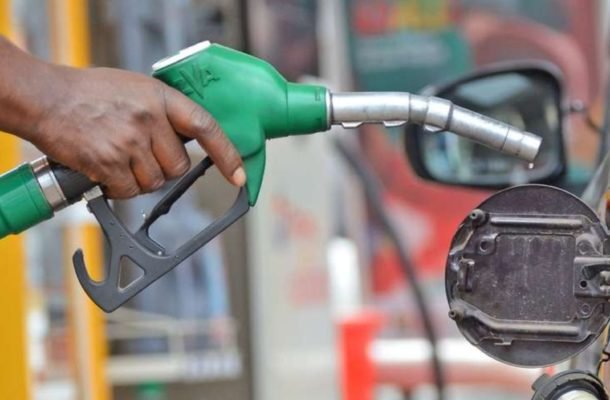
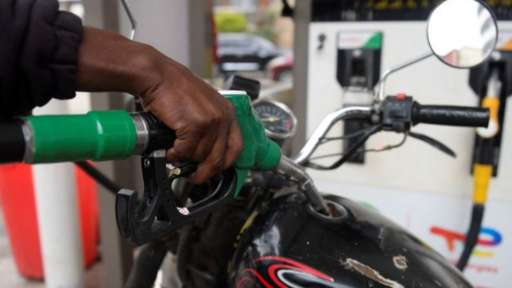
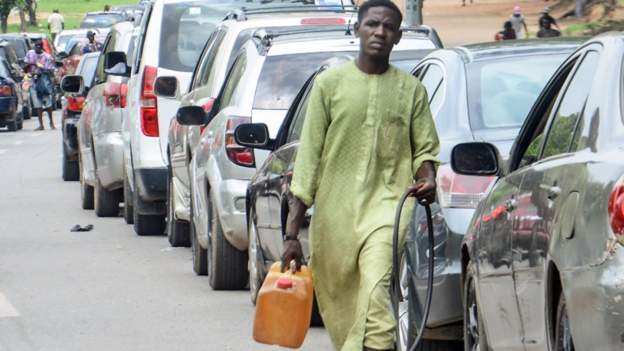
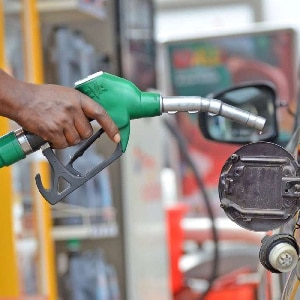
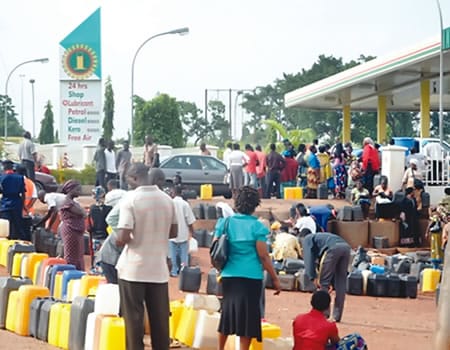
Drivers, who are already feeling the impact of the price hikes, after the suspension of the Price Stabilisation and Recovery Levy on petroleum products was reversed, have accused the National Petroleum Authority (NPA) of being insensitive.
In a letter dated April 3, the NPA instructed all Oil Marketing Companies and other stakeholders to implement a levy of 16 pesewas per litre on Petrol, 14 pesewas per litre on Diesel, and 14 pesewas per kilogram on Liquefied Petroleum Gas (LPG) starting from April 4, 2024.
While the reasons for the NPA’s decision to reinstate the Price Stabilisation and Recovery Levy are unclear, some drivers claim they are unaware of the new tariff adjustments.
Speaking to JoyNews on April 4, a driver said “I came here to get fuel and I realised that they’ve increased the fuel by 17 pesewas which is absurd. We didn’t hear anything, we got up, no announcement, nothing and we woke up today to buy fuel and it’s all increased. Now in this country, they don’t tell us anything, they just do anything they want.
“Now it is GH₵13.79, before it was like GH₵13.20. Now they’ve increased everything. We are dying.”
Another driver questioned whether the government intentionally aimed to hinder their ability to make ends meet.
He noted that the same liter of fuel they previously purchased for GH₵5 is now more expensive, causing frustration among the few Ghanaians who own vehicles.
“The fuel is too high. At first, we buy one litre, GH₵5. Now, a litre is more than GH₵5, it’s too bad. This thing is trying to weaken us.
“How many people can drive? How can the country develop? If the fuel price is good, all other things will come down,” he said.
He also mentioned the challenge of finding passengers daily, and even when they do, there is often a need for more bargaining to reduce the fare.
The Chamber of Petroleum Consumers (COPEC) has indicated that fuel prices are expected to remain unchanged during April’s initial pricing period.
COPEC’s projections for the first pricing window of April suggest that the cost of a liter of petrol will hover around GH¢13.41. This implies that fuel rates across the country will likely hold steady throughout the first pricing window of April 2024.
“Baring any universal changes in petroleum prices of $874.09/MT for petrol and $835.64/MT for diesel and LPG $627.30/MT, with a corresponding dollar-cedi rate of 1:13.0555, a litre of diesel will also be sold at GH¢13.91, with LPG selling at GH¢14.20 per kilogram,” they stated.
COPEC has, however, forecasted a potential increase in petrol prices during the second pricing window, while diesel and Liquefied Petroleum Gas (LPG) are expected to remain unaffected.
The Ministry of Finance, in collaboration with the Ministry of Energy, has directed the National Petroleum Authority (NPA) to exclude the Price Stabilisation and Recovery Levy (PSRL) from the Price Build-Up.
This directive follows the provisions of section 2 (b) of the Energy Sector Levies Act 2015 (Act 899), as amended in 2021, Act 1064, and will be effective for a three-month period.
Responding to this directive, the NPA has announced the removal of the PSRL from the Price Build-Up, effective from April 1st to June 30th, 2024. All Oil Marketing Companies (OMCs) and LPG Marketing Companies (LPGMCs) are required to comply with the adjusted PSRL rates during this period.
Previously, the PSRL rates were established at 16.00 GHp/Lt for petrol, 14.00 GHp/Lt for diesel, and 14.00 GHp/Kg for LPG, effective from March 16th, 2024.
However, these levies will be reduced to zero for all fuel products starting April 1st, 2024.
This government intervention is aimed at alleviating the financial burden on consumers caused by high fuel costs resulting from rising global prices.
By temporarily eliminating the PSRL, the government intends to ease the financial strain experienced by consumers at fuel stations.
All OMCs and LPGMCs are urged to implement the revised PSRL rates in their Price Build-Up from April 1st to June 30th, 2024, ensuring transparency and adherence to the government’s directive.
Consumers are advised to take note of these adjustments and adjust their expectations accordingly. The government is implementing measures to mitigate the impact of global market fluctuations on fuel prices, and this action is part of that effort.
President Akufo-Addo has announced that the installation of the remaining automated fuel dispensers will be completed by September this year to enhance the efficient distribution of essential products for fisherfolk.
In his State of the Nation Address delivered in parliament on Tuesday, February 27, 2024, President Akufo-Addo highlighted the government’s progress in addressing fuel smuggling and hoarding.
He stated that in 2023, the government successfully installed 50 automated premix fuel dispensers out of the initially planned 300 across the country.
“Mr Speaker, to help address the incidence of premix fuel diversion and hoarding, government, last year, completed the installation of fifty (50) out of the three hundred (300) premix fuel automated dispensers.
“My expectation is that the remaining automated dispensers will be installed by September this year, to help optimise the distribution of premix fuel,” President Akufo-Addo announced.
President Akufo-Addo expressed his expectation that the outstanding automated dispensers would be in place by September, emphasizing their role in optimizing the distribution of premix fuel and curbing diversion and hoarding.
Additionally, the President underscored the government’s commitment to decisive actions, such as implementing closed seasons, to protect the ocean’s capacity for regeneration.
He emphasized the importance of these measures in ensuring sustained economic, environmental, and social benefits for national development.
President Akufo-Addo also highlighted the completion of 12 coastal fish landing sites at various locations, including Axim, Dixcove, Moree, Mumford, Winneba, Senya Beraku, Gomoa Feteh, Otuam, Mfantseman, Teshie, Osu, and Keta.
Executive Secretary of the Chamber of Petroleum Consumers (COPEC), Duncan Amoah, has suggested that prices of petroleum products may continue to rise over the next two to three months.
Oil Marketing Companies (OMCs) gradually increased the prices of fuel at the pumps by between 3% to 8%. Analysts attribute this increase to the rise in crude prices on the international market, the fall of the cedi against the dollar in recent weeks, and adjustments in levies and margins by the National Petroleum Authority (NPA).
Mr Amoah cautioned that projections indicate the upward trend is likely to continue.
“Projections out there as far as international market pricing is concerned doesn’t look as though prices are going to cool off anytime soon. So, we may be here for about two, three months before any cooling would happen,” he said on Starr Today, on Friday, February 16, 2024.
Duncan Amoah has called on the Bank of Ghana (BoG) to address the depreciation of the cedi in order to help stabilize fuel prices.
“That is why I’ve indicated that the bank of Ghana would need to sit and position, so that the local current does not suffer any ceded battery. If you were stable, whatever the international market pricing throws at us will be something minimal. But if the city also gets wobbly and dances a very bad dance, then we could be in for some additional increments by March, by April, by May.”
“But that again would depend on whether the Bank of Ghana goes to sleep or it wakes up to his fiduciary responsibility of ensuring that the currency is stable”, he warned.
Duncan Amoah has raised concerns about the National Petroleum Authority’s (NPA) decision to increase the BOST margin.
While he acknowledged that some other levy adjustments may be justifiable, Amoah questioned the rationale behind adding 3 pesewas to the margin of a profitable company like BOST, describing it as perplexing.
“The only challenge we’ve had with what the recent move has been simply has to do with the BOST margin that has gone up. We are asking if indeed BOST as a profit-making entity that has declared profit the past three years, will still need to collect more from the public? That we continue to disagree with,” he added.
Growth Investment Partners (GIP) Ghana is spearheading initiatives that are attracting attention and investments from around the world.
The strategic efforts of GIP are contributing to the country’s emergence as an increasingly attractive hub for BPO operations, offering a compelling alternative to the traditional Asian landscape.
GIP Ghana has been at the forefront of fostering the growth of the BPO sector, leveraging the country’s skilled workforce, stable political environment, and robust technological infrastructure. With a focus on accelerating the migration of BPO operations from Asia to Africa, the investment firm is paving the way for new opportunities and economic development in Ghana.
The move comes at a time when global businesses are reevaluating outsourcing strategies, seeking new and resilient locations to diversify their operations. Ghana, with its rapidly growing economy and favorable business environment, is becoming a beacon for companies looking to establish or expand their BPO operations.
According to sources, GIP Ghana’s proactive measures include targeted investments in technology infrastructure, talent development, and collaborative partnerships with international BPO firms. These investments aim to enhance the overall competitiveness of Ghana’s BPO industry and position it as a preferred destination for outsourcing services.
In a statement, the CEO of GIP Ghana, Mr Kwame Asante, expressed optimism about the country’s potential in the BPO sector, stating, “Ghana possesses all the essential elements to become a global BPO hub. Our strategic investments and collaborations are geared towards creating an environment that fosters innovation, provides high-quality services, and generates significant employment opportunities.”
Industry experts have lauded the efforts of GIP Ghana, noting that the country’s skilled workforce, proficiency in English, and cultural affinity with Western markets make it an ideal destination for BPO activities. The shift towards Ghana is seen not only as a business decision but also as a socio-economic catalyst, contributing to the creation of jobs and skill development.
As Ghana continues to position itself on the global stage as a BPO powerhouse, the nation’s economic landscape stands to benefit significantly. The positive ripple effect is expected to extend beyond the business realm, impacting various sectors and solidifying Ghana’s reputation as a dynamic and competitive player in the international outsourcing arena.
Fuel prices are anticipated to experience a slight increase starting today, February 1, 2024, according to the Institute for Energy Securities.
This adjustment is attributed to a marginal rise in the cost of finished petroleum products and the depreciation of the Ghanaian cedi.Specifically, the price of petrol and Liquefied Petroleum Gas (LPG) is expected to increase by 2%, while the price of diesel will see a 3% rise.
“In the coming days, consumers going to the pumps are likely to see the following changes: an increase in the price of Gasoline [petrol] by 2%, 3% increase in price Gasoil [diesel] and 2% increase in LPG price largely as a combined effect of the Ghana cedi depreciation and the international market price rise for the products,” Global Standard & Poor (S&P) Platts reported.
As of January 26, 2024, the Global Standard & Poor (S&P) Platts platform reported an increase in prices for all refined petroleum products. Petrol closed trade at $800.84 per metric tonne, diesel at $807.14 per metric tonne, and Liquefied Petroleum Gas (LPG) at $535.41 per metric tonne in the second pricing window for January 2024.
Comparatively, there was a 2.93% increase in the price of petrol, a 4.79% increase in the price of diesel, and a 2.44% increase in the price of LPG based on refined price data.
While diesel prices remained relatively stable in the second pricing window, the Institute for Energy Securities (IES) observed that some Oil Marketing Companies (OMCs) reviewed the price of petrol downwards by an average of GH¢0.11 per litre, while diesel and LPG prices remained unchanged.
The average prices for the petroleum products during this period were GH¢11.82 for petrol, GH¢12.74 for diesel, and GH¢13 per kilogramme (kg) for LPG. These fluctuations reflect the dynamics of global oil prices and their impact on the local fuel market.
Fuel consumers can anticipate relief at the pumps with a decrease in diesel and Liquefied Petroleum Gas (LPG) prices, marking the second consecutive drop in January.
The decline expected to take effect today, Wednesday, January 17, is a projection made by the Chamber of Petroleum Consumers (COPEC).
While the exact adjustments are pending, COPEC anticipates a reduction in diesel and LPG prices due to a global decline in finished product prices, despite a slight depreciation of the Ghanaian cedi against the dollar.
Petrol prices are expected to remain relatively stable, with a possible minor upward adjustment of around 1%, reflecting current international market trends.
COPEC Executive Secretary Duncan Amoah pointed to current international market trends as the reason for the decline.
“Diesel prices dipped by roughly 2.8% per metric ton on the global market, while petrol experienced a slight increase of 3.6%. The cedi has remained relatively stable overall, although we’ve seen a 0.47-point dip in exchange rates,” Amoah said.
He added, “Overall, what our expectation is that prices of petrol are likely to remain stable with a 1 percent upward adjustment.
“Diesel is likely to see some reduction while LGP is also likely to see some reduction effective Wednesday which is the second window for January.”
Fuel consumers can anticipate relief at the pumps with a decrease in diesel and Liquefied Petroleum Gas (LPG) prices, marking the second consecutive drop in January.
While the exact adjustments are pending, COPEC anticipates a reduction in diesel and LPG prices due to a global decline in finished product prices, despite a slight depreciation of the Ghanaian cedi.
Petrol prices are expected to remain relatively stable, with a possible minor upward adjustment of around 1%, reflecting current international market trends.
COPEC Executive Secretary Duncan Amoah pointed to current international market trends as reason for the decline.
“Diesel prices dipped by roughly 2.8% per metric ton on the global market, while petrol experienced a slight increase of 3.6%. The cedi has remained relatively stable overall, although we’ve seen a 0.47-point dip in exchange rates,” Amoah said.
He added, “Overall, what our expectation is that prices of petrol are likely to remain stable with a 1 percent upward adjustment.
“Diesel is likely to see some reduction while LGP is also likely to see some reduction effective Wednesday which is the second window for January.”
Some select Oil Marketing Companies (OMCs) have initiated a reduction in the prices of petroleum products at fuel stations, effective today, January 1, 2024.
This move is expected to bring relief to consumers at the start of the year, reflecting adjustments in fuel costs by the participating OMCs.
Marking a noteworthy trend, fuel prices have now decreased for the second consecutive time, signaling a positive trajectory in the cost of petroleum products. This reduction comes as welcome news for consumers, pointing to a potential trend of improved affordability in the fuel market.
One of the major players, Star Oil, took the lead by selling a liter of petrol at GHS11.24 from the previous price of GHS12.69 per litre.
Similarly, it is also selling a litre of diesel for GHS11.24 from the earlier GHS11.69.
The other major OMCs are also expected to adjust their prices downwards in the coming hours.
However, market watchers will be prioritising the margin of reduction in the prices of petroleum products.
Some of the OMCs had earlier told Joy Business that the reduction had been influenced by the cedi’s stability in the last two weeks and the continued reduction in prices of finished petroleum products on the international market.
Head of Quality Control at the National Petroleum Authority (NPA), Ubeidalah Saeed, has announced that the Authority is sanctioning the labeling of petrol pumps based on their octane grades.
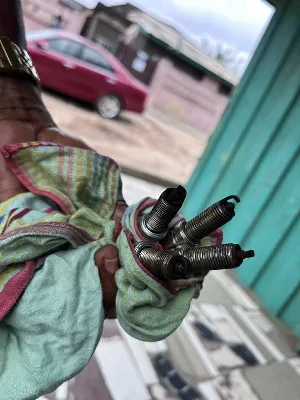
This decision comes in response to recent concerns about the quality of petrol sold at pumps. Ghanaians have reported damaged spark plugs, attributing the issues to substandard petrol in the market.
Saeed emphasized that there is no tainted petrol on the market but suggested that vehicle owners might be purchasing the wrong fuel for their cars.
He explained as follows; “There are a lot of things that causes a car to jerk; one critical thing is octane level. So when a car vehicle starts to jerk, your first option is to look at the octane level of the fuel.
“It costs about 500 dollars to test for octane so we started testing for octane and realised that all the petrol we’re testing were meeting the octane levels and each of these vehicles have a minimum octane level that the fuel should meet to enable optimal performance.
“And another important point is that every particular car is designed for a certain grade of fuel so in fact the NPA at our last management meeting has sanctioned that next year we’re going to label the pumps for petrol to grade them on octane levels.
“So Ghana we have two grades of petrol, RON 91 which is the red one and the new one which is green. So a lot of people will buy it and think that it’s diesel but that’s a high grade petrol called premium petrol which is RON 95 for high performing vehicles.”
A surge in reports depicting impaired spark plugs has emerged, shedding light on the adverse effects of elevated manganese levels detected in the fuel distributed in Ghana.
On the X platform, users are actively responding to notifications that underscore the heightened concentration of manganese in petroleum products available throughout the nation.
This development arises in the wake of concerns voiced by COPEC, IMANI Africa, and other petroleum consumers regarding recent performance issues encountered in their vehicle engines.
The Chamber of Petroleum Consumers has taken a decisive stance, threatening legal action against the National Petroleum Authority (NPA) in response to the alleged manganese concentration found in fuel products.
Executive Secretary of the Chamber, Duncan Amoah, issued a warning, asserting that the increased manganese levels in the current Ghanaian fuel market are causing damage to car engines, particularly affecting Hyundai vehicles.
“We have conducted checks and found a considerable amount of manganese in some of the products supplied by the Oil Marketing Companies (OMCs) that has proven to be quite detrimental to certain vehicles,” confirmed Duncan Amoah.
Complaints have notably escalated, with petroleum consumers providing evidence showcasing the impact of the elevated manganese concentration in fuel.
On November 23, 2023, a user on the X platform posted an image displaying damaged spark plugs, accompanied by the caption, ‘Shaking my head.’
Bright Simons, Vice President of IMANI Africa, also commented on the situation, stating, “Ghana’s gasoline/petrol & diesel regulator, NPA, says fuels being imported into Ghana nowadays have too much manganese. But they don’t say what has changed. Historically, Ghana imported most of its fuels from markets that ban or heavily limit manganese. Then ‘Gold 4 Oil’ came.”
Ghana's gasoline/petrol & diesel regulator, NPA, says fuels being imported into Ghana nowadays have too much manganese. But they don't say what has changed. Historically, Ghana imported most of its fuels from markets that ban or heavily limit manganese. Then "Gold 4 Oil" came.🤦🏽♂️ pic.twitter.com/n0l5MGGrkJ
Another user suggested that due to the introduction of the “Gold-for-Oil” program, the government is importing fuel from Russia, which contains a high amount of manganese (18g/litre), extremely harmful to car engines.
So in summary; #Gold4Oil has government buying fuel from Russia.
Russia fuel has high manganese content of 18g/ltre which is causing various problems to your cars.
So yes, you will buy cheaper fuel but you will use more than your saved cash to do repairs 🎉🎉🎉
@_edemkojo highlighted, “So, in summary; #Gold4Oil has the government buying fuel from Russia. Russia fuel has high manganese content of 18g/ltre which is causing various problems to your cars. So yes, you will buy cheaper fuel but you will use more than you
As of November 17, 2023, several Oil Marketing Companies (OMCs) have initiated a reduction in the prices of petroleum products at the pumps.
TotalEnergies Ghana is selling a litre of petrol for ₵12.80, down from ₵12.99, and diesel at ₵13.30 per litre, reduced from ₵13.70 on November 2, 2023.
PETROSOL is offering a litre of petrol at ₵11.99, down from ₵12.45, and diesel at ₵13.15 per litre, lowered from ₵13.40.
These price reductions are reportedly attributed to the decline in global crude oil prices. It is anticipated that more oil firms will review their prices later in the day.
However, it is noted that if the cedi had maintained a more stable position against the US Dollar, the reduction in prices might have been more substantial than the current adjustments recorded at the pumps.
The modifications were implemented on Thursday, November 16, 2023.
The Institute for Energy Security (IES) has forecasted that the upcoming pricing window, commencing on November 1, 2023, is unlikely to witness any changes in fuel prices.
This absence of price adjustments is primarily attributed to a marginal reduction in the international market prices of refined petrol, diesel, and Liquefied Petroleum Gas (LPG).
Remarkably, this stability persists despite the recent depreciation of the cedi over the past few weeks.
According to the IES statement, the anticipated fuel prices per litre will remain steady, with petrol at ¢12.35, diesel at ¢15.90, and Liquefied Petroleum Gas (LPG) at ¢12.90 per kilogramme (Kg).
“Following a marginal drop in the price of Gasoline [petrol], Gasoil [diesel], and LPG by some 0.01%, 0.95%, and 1.71% respectively on the international market, a depreciation of the Ghana cedi against the U.S. dollar, fuel prices are likely to remain relatively unchanged on the domestic fuel market.
“Although the Ghana Cedi depreciated by 1.32% to the U.S. Dollar, the Institute for Energy Security (IES) is projecting that ex-pump prices of key market products will be maintained in the first two weeks of November 2023, largely due to the falls in international prices of the commodities,” the IES noted.
The Institute of Energy Security has forecasted a slight decline in fuel prices at gas stations starting from October 16, 2023, as the second pricing window for the month commences.
The projections indicate that both petrol and diesel, along with Liquified Petroleum Gas (LPG), are likely to experience reductions ranging from 2% to 6%.
This anticipated decrease is attributed to international market factors.
“Following the fall in the price of refined products prices on the World Fuel Market by 13.06%, 6.40%, and 9.67%, for Gasoline [petrol], Gasoil [diesel], and LPG respectively, and taking into consideration the 1.42% depreciation of the Ghana cedi against the greenback [dollar] currency on the forex market”.
The price of gasoline, diesel, and LPG traded at $848.30, $929.36, and $530.64 per metric tonne, respectively, on the global market during the first pricing window of October [2023], according to data tracked from the Global Standard & Poor’s (S&P’s) Platt averages.
Additionally, starting on October 16, the Chamber of Petroleum Consumers (COPEC) forecasts a small drop in fuel prices at the nation’s gas stations.
According to Duncan Amoah, the Executive Secretary of COPEC, the decrease in fuel prices can be ascribed to both the apparent strengthening of the Ghanaian cedi versus the US dollar and a significant down in the pricing of fuel goods on the international market.
Currently, the average cost of gasoline in Ghana is GH12.63 a liter, while the cost of diesel is GH13.40.
COPEC anticipates that during the second pricing window of October, which starts on October 16, 2023, gasoline prices might fall to GH12.098 per liter and diesel prices could fall to GH12.694 per liter.
“The second pricing window for the month of October under the National Petroleum Authority’s price deregulation program on petroleum pricing is set to commence from Monday the 16th of October. Indications of prices based on international price movements and the forex performance over the past fortnight point to some marginal reductions across pumps for the coming window, as confirmed by CBOD petroleum pricing outlook for the window,” COPEC’s statement noted.
Fuel prices are expected to decrease nationwide starting from Monday, October 16, 2023, according to the Chamber of Petroleum Consumers (COPEC).
On Friday, October 13 2023, the Executive Secretary of COPEC, Duncan Amoah, issued a statement attributing the anticipated fuel price reduction to a significant drop in international product prices and the apparent strengthening of the cedi against the US dollar.
As of now, the average price of petrol in Ghana is GH¢12.63 per liter, while diesel is priced at GH¢13.40 per liter.
COPEC predicted that petrol prices may fall to GH¢12.098 per liter, and diesel prices could drop to GH¢12.694 per liter during the second pricing window of October, beginning Monday, October 16, 2023.
“The second pricing window for the month of October under the National Petroleum Authority’s price deregulation programme on petroleum pricing is set to commence from Monday the 16th of October.”
“Indications of prices based on international price movements and the forex performance over the past forthright points to some marginal reductions across pumps for the coming window as confirmed by CBOD petroleum pricing outlook for the window,” COPEC stated.
Meanwhile, the Authority has called upon the Bank of Ghana (BoG) to formulate a comprehensive foreign exchange policy aimed at addressing the persistent surge in petroleum prices within the country.
This appeal from COPEC comes in the wake of a recent upswing in petroleum prices observed at fuel stations during the second pricing window, which commenced on August 1, 2023.
Currently, several major Oil Marketing Companies are vending diesel XP and Super XP at GH¢12.95 each, an increase from the previous price of GH¢12.45.
In an interview with the media, the Executive Secretary of COPEC, Mr. Duncan Amoah, clarified that these price hikes can be attributed to the escalating petroleum costs in the global market.
To ensure pricing stability in the country, he underscored the necessity for the central bank to establish a clear foreign exchange policy that can fortify the value of the Ghanaian Cedi.
Anticipating potential oil price hikes in the latter half of the year, COPEC urged the Bank of Ghana to take proactive measures in effectively managing currency fluctuations.
Mr. Amoah also cautioned that if the combination of escalating global oil prices and currency instability persists in the latter half of the year, the prices of petroleum at the pumps could witness significant increases.
READ THE FULL STATEMENT BELOW
CHAMBER OF PETROLEUM CONSUMERS ACCRA 14/10/2023
FUEL PRICES SET TO DECLINE ACROSS PUMPS COUNTRYWIDE
The second pricing window for the month of October under the National Petroleum Authority’s price deregulation programme on petroleum pricing is set to commence from Monday the 16th of October.
Indications of prices based on international price movements and the forex performance over the past forthright points to some marginal reductions across pumps for the coming window as confirmed by CBOD petroleum pricing outlook for the window.
The figures below form the basis of Projections for the Window.
A. International Pricing
Crude 92.70 (-2.27%)
Petrol .. $848.3/MT (-13.06%)
Diesel .. $829.36/MT (-16.48%)
LPG ..$530.64/MT (-9.67%)
Thus, Petroleum prices generally have witnessed a significant drop on the international market according to the trading benchmarks.
B. Forex rate The exchange rate for the Dollar recorded an increase of 1.44% to close trading at GHS12.10/$
C. Projections
Petrol.. GHS12.098/L To be selling between GHS11.49/L and GHS12.70/L within ±5% of COPEC’s Projections
(Current market Mean Price =GHS12.63/L)
Expected Mean % drop (3.73%)
Diesel.. GHS12.694/L Projected to be selling for between GHS12.06/L and GHS13.33/L within ±5% of COPEC’s Prediction.
(Current Mean Price = GHS13.40/L)
Expected Mean % drop (5.55%)
LPG.. GHS12.147/kg To be selling between GHS11.54/L and GHS12.75/kg within ±5% of COPEC’s Prediction.
The National Petroleum Authority (NPA) has imposed sanctions on seven Petroleum Products Marketing Companies (PPMCs) for engaging in the illicit distribution of petroleum products.
These companies are now required to pay fines for multiple violations, including contravention of Unified Petroleum Pricing Fund (UPPF) regulations, providing false UPPF information to the Authority, and partaking in third-party supplies.
Failure to settle the fines will result in a three-month suspension of their operations.
Specifically, Andev Co. Ltd is liable for a total fine of GHS90,000.00, comprised of GHS10,000.00 for UPPF regulation breaches and GHS10,000.00 for each of eight counts of making false UPPF representations to the Authority.
Beap Energy is obligated to pay a total fine of GHS20,000.00, including GHS10,000.00 for UPPF regulation violations and GHS5,000.00 for each of two counts of third-party supplies.
BF Petroleum will be required to pay a total fine of GHS95,000.00, encompassing GHS10,000.00 for breaching UPPF regulations, GHS5,000.00 for each of ten counts of third-party supplies, and GHS5,000.00 for each of seven counts of lifting petroleum products without cross-zonal authorization.
Anasset Co. Ltd is subject to a total fine of GHS50,000.00, composed of GHS10,000.00 for contravening UPPF regulations and GHS10,000.00 for each of four counts of providing false UPPF information to the Authority.
Cost Energy must pay a total fine of GHS665,000.00, which includes GHS10,000.00 for engaging in third-party supplies and GHS5,000.00 for each of the one hundred and thirty-one counts of third-party supplies.
Compass Oleum Ltd is to settle a total fine of GHS350,000.00, covering GHS10,000.00 for UPPF regulation violations, GHS5,000.00 for each of the fifteen counts of lifting petroleum products without cross-zonal authorization, and GHS5,000.00 for each of the fifty-three counts of engaging in third-party supplies.
Concord Oil Ltd is obligated to pay a total fine of GHS65,000.00, consisting of GHS10,000.00 for contravening UPPF regulations, GHS5,000.00 for each of four counts of engaging in third-party supplies, and GHS5,000.00 for each of seven counts of lifting petroleum products without cross-zonal authorization.
The NPA has issued a warning that any company failing to adhere to the rules and regulations established by the Authority will be subject to additional penalties.
The UPPF is instrumental in maintaining uniform prices for petroleum products throughout the country.
The prices of petroleum products are expected to stay steady throughout the month of October. Projections from the Chamber of Petroleum Consumers (COPEC) indicate a possible one percent increase at the pumps.
However, oil marketing companies are unlikely to pass this cost on to consumers, primarily due to the competitive nature of the market.
The Executive Secretary of COPEC, Duncan Amoah, credited this price stability to the consistent performance of the cedi and the steady global oil prices.
“There have been some price variations as far as the international market pricing is concerned and again, there has been some relative stability with the local currency over the last two weeks period.”
“The pump price could have reflected some 1% upward adjustment but having spoken to a good number of oil marketing companies, we are confident that prices will remain at the current level so it is not likely you will get an increase, it is unlikely there will be a reduction, the OMCs are likely to maintain pump prices at the level that they currently sell for the first pricing window in the month of October.”
The Tanker Drivers Union has expressed concern about the potential threat to their business if the Chinese refinery, Sentuo Oil, persists in unloading fuel within the country.
A member of the Union, speaking to JoyNews, warned that if this practice continues, the drivers will cease the transportation of fuel nationwide. He emphasized that Ghanaian laws mandate that the transportation of petroleum products should exclusively be carried out by Ghanaian companies, and thus, Chinese firms should not be permitted to unload petroleum products.
Jantuah added that boycotting their business is their last resort if nothing is done about the situation which “will obviously bring shortages of fuel in the country.”
“The moment we deregulated, at the time it was GNPC distributing, the moment we deregulated, it was made that that portion should be given to Ghanaians so if you see, Shell, BP has tankers which do not belong to them but because we pick for them, we paint our tankers with their emblem but they don’t own the tankers.
“So why should the refinery now say that they have their tankers and distributing? Do TOR, NPA, and BDCs have their own tankers? They all depend on us so if you are coming in, you are going to kill our business and we have to fight for it,” he said.
Jantuah stated that the tanker drivers are currently frustrated by the situation because the majority of them owe money.
As a result, the union is urging the National Petroleum Authority to act as soon as possible to avoid further difficulties.
The first two weeks of September should see no rise in fuel costs, according to the Institute for Energy Security. The Institute claims that this is a result of the drop in the price of petroleum products on a global scale.
Another major factor mentioned was the Ghana cedi’s recent appearance of stability in the second pricing window of August 2023.
“The various finished petroleum products as monitored on the Standard & Poor (S&P) Platt platform within the past window exhibited the following dynamics; Gasoline [petrol] traded at $989.48 per metric tonne against the previous $967.29 per metric tonne.
“Gasoil [diesel] also moved from $901.73 per metric tonne to $912.68, and Liquid Petroleum Gas price moved to $557.05 per metric from $547.52 per metric tonne. These changes led to price effect of 2.29%, 0.13%, and 1.7% increase in all 3 product prices; Gasoline, Gasoil, and LPG respectively,” it said.
Also, the IES Economic Desk’s analysis of the “foreign exchange (forex) market, over the last two weeks claimed that the Ghana cedi depreciated against the U.S. dollar moving from ¢11.39 to ¢11.45, representing 0.52% depreciation of Ghana cedi over the period”, it added.
Fuel prices increased by the following margins during the second pricing window of August: 5% for diesel and 3.90% for gasoline.
Currently, the national average price for a litre of gasoline is 13.02, for a kilogram of LPG it is 13.14, and for a liter of diesel it is 12.85.
As of August 28, 2023, Brent Crude was selling for $84.48 per barrel, with a $84.16 average price per barrel.
Managing Director of Bulk Oil Storage and Transportation (BOST), Edwin Provencal, has noted that the government’s gold for oil policy is unable to shield Ghanaians from the changes in petroleum product prices on the world market.
According to him, the policy is only able to address the issue of forex exchange, where the Bank of Ghana, through its Domestic Gold Purchase (DGP) programme, provides foreign currency for the importation of petroleum products for the country, which currently stands at about US$350 million per month.
Engaging the media on the sidelines of BOST’s 2nd Annual General Meeting on August 17, he said: “The gold for oil policy was a temporary measure put in place to deal with the inflationary pressure that befell us last year.
“The price build-up has two key components. One is the world market price, and the other is the forex. The gold for oil has addressed the forex issue, but if the world market price keeps going up, there is not much gold for oil can do about that.”
His comment comes at a time when some Oil Market Companies (OMCs) have increased prices of petroleum products at the pumps.
TotalEnergies has increased the price of petrol to GHS13.50 per litre from GHS12.45 per litre at the beginning of the month.
Diesel is also going for GHS13.90 per litre from the previous price of GHS12.45 per litre. Goil has also increased prices petrol to GHS3.50 and diesel to GHS13.90 per litre.
This has been linked to an increase in the prices of finished products on the international market by an average of around 11% for both petrol and diesel.
According to the Executive Secretary of the Chamber of Petroleum Consumers (COPEC), Duncan Amoah, crude price has also increased by 6.79% from the mean price of $80.67/barrel to $86.15/barrel even though the forex or dollar exchange rate has relatively decreased from a previous average of GHS11.7185 to GHS11.4538 (-2.26%) per $1.
In July this year, Saudi Arabia and Russia announced that they were extending cuts to the amount of oil they pump into the world in a bid to prop up prices.
The Saudi Energy Ministry said it would extend July’s cut of 1 million barrels per day through August to support “the stability and balance of oil markets.” That will keep the Gulf nation’s output at 9 million barrels per day.
Russian Deputy Prime Minister Alexander Novak on the other hand, said his country will cut production by an additional 500,000 barrels a day in August.
Source: The Independent Ghana | Andy Ogbarmey-Tettey
Minister for Energy, Dr. Matthew Opoku Prempeh, has noted that State-Owned Enterprises (SOEs) can produce revenues, distribute dividends, and significantly contribute to the government’s fiscal objectives.
However, he emphasized the importance of having the appropriate leadership, attitude, and balance to make sure that these SOEs significantly advance in their respective areas.
The Minister said during the Bulk Oil Storage and Transportation Company’s (BOST) 2023 Annual General Meeting (AGM).
“I expressed satisfaction and admiration for the company’s financial accomplishments; moving from a negative equity position in 2021 to a positive one in 2022. This has put the company on a sound footing to pay dividends to the government”.
“This, indeed is a testament that, with the right leadership, attitude, and balance, State-Owned Enterprises (SOEs) can generate profits, pay dividends and make significant contributions to support the government’s fiscal policies. I congratulate the Board and Management of BOST for this remarkable feat”.
In order to ensure that BOST and, in fact, all SOEs in the energy sector live up to expectations, he announced that the Ministry of Energy would continue to work productively with stakeholders like SIGA and the Ministry of Public Enterprises.
A massive profit of GH342m was made by the Bulk Oil Storage and Transportation Limited Company (BOST) in 2022. So, from GH161 million in 2021 to GH342 million in 2022, BOST’s net profit margin improved.
The GH181m difference represents an increase in percentage of 112%.
“The transformation that BOST has undergone over the past three years is truly remarkable. The company has been turned from a heavily indebted one to a highly profitable one. In 2022, BOST increased its net profit by 112% to GH₵342 million from GHS161 million in 2021. This performance should be viewed in the context of a miserable run of losses which had been recorded for more than a decade until 2021,” the board chairman of BOST, Ekow Hackman, disclosed at the 2nd annual general meeting held in Accra on Thursday, August 17.
Hackman attributed the achievement to its strategic decision to revamp its business model.
“Central to our transformation has been the restoration of our business model, which involves the effective utilization of our strategically located fuel depots connected by a network of pipelines and barges. The revival of these assets has enabled us to deliver fuel products securely and cost-effectively to consumers across the country. Through the dedicated efforts of our management and workforce, we have significantly increased the revenue-generating assets of the company to 97% from a trough of 34% in 2017. We are committed to ensuring that 100% of our assets are generating revenue by the end of 2023.”
He added, “The increase in the BOST margin from 7 pesewas to 9 pesewas in December 2022 provided them with the necessary resources to repair and maintain BOST’s facilities, many of which are situated in areas where the private sector is absent.”
Nigeria’s President, Bola Tinubu, has provided reassurance to the nation’s citizens, confirming that the existing petrol price will remain unchanged as there is “no intention to raise fuel prices at present.”
This affirmation comes in response to warnings issued by certain oil marketers, predicting a potential third increase in petrol prices since President Tinubu’s assumption of office in late May. These warnings were attributed to Nigeria’s ongoing foreign exchange challenges.
However, President Tinubu’s spokesperson, Ajuri Ngelale, conveyed to BBC News that both Mr. Tinubu and industry stakeholders are firmly convinced that they can uphold the current pricing structure without making any adjustments.
“Reversing our deregulation policy by swiftly cleaning up existing inefficiencies within the midstream and downstream petroleum sector”.
Similarly, Nigeria’s state oil company, NNPC, posted a statement online, explaining that “we do not have the intention to increase our pump prices as widely speculated”.
Since the government harmonised the exchange rates, the naira has continued to plunge on the foreign currency market, driving up the price of getting petroleum to customers.
Nigerians have been dealing with rising food prices and higher transportation costs due to high inflation rates since the elimination of the gasoline subsidy.
The Chamber of Petroleum Consumers (COPEC) has forecasted a potential 5.7% increase in fuel prices during the upcoming second pricing window of August 2023, which is set to commence within the next 48 hours.
The current selling price of the product at fuel stations averages around GHC12.45 per liter.
According to COPEC, there will be an anticipated 11.9% rise in the price of LPG during the same timeframe.
The Chamber indicated that the projected retail prices for the various petroleum products will take effect on Wednesday, August 16, with petrol to be sold at GHC12.97 per liter, diesel GHC13.43 and the mean price for petrol and diesel GHC13.20 per liter while LPG will go for GHC12.30 kilogram.
The Executive Secretary of COPEC, Duncan Amoah in a statement said: “The Second pricing window of the month of August, 2023 is set to commence by the next 48 hours. Indications are that pump prices of Petrol and Diesel are likely to increase averagely by about 5.7% over the current mean price of GH¢12.45/L across the country whilst LPG prices increase by about 11.9%.”
“The following basic information forms the basis of projections for the coming window, that; prices of finished products on the international market have shot up averagely around 11% for both petrol and diesel whiles Crude price has been increased by 6.79% from the mean price of $80.67/barrel to $86.15/barrel, even though the forex or Dollar exchance rate has relatively decreased from a previous average of GHS11.7185 to GHS11.4538 (-2.26%) per $1”.
Read below the full statement by COPEC
CHAMBER OF PETROLEUM CONSUMERS – (COPEC) ACCRA 14 August 2023
FUEL PRICES SET TO GO UP BY ABOUT 5.7% FOR THE SECOND WINDOW OF AUGUST 2023.
The Second pricing window of the Month of August, 2023 is set to commence by the next 48 hours.
Indications are that pump prices of Petrol and Diesel are likely to increase averagely by about 5.7% over the current mean price of GHS12.45/L across the country whilst LPG prices increase by about 11.9%.
The following basic information forms the basis of projections for the coming window, that; prices of finished products on the international market has shot up averagely around 11% for both petrol and diesel whiles Crude price has been increased by 6.79% from the mean price of $80.67/barrel to $86.15/barrel, even though the forex or Dollar exchance rate has relatively decreased from a previous average of GHS11.7185 to GHS11.4538 (-2.26%) per $1.
The following shall likely be the projected retail figures for Petroleum products starting from Wednesday the 16th of August 2023.
Petrol .. GHS12.97/L Diesel .. GHS13.43/L The Mean Price for Petrol and Diesel..GHS13.20/L
LPG.. GHS12.30/kg
Thus for a 14.5 kg LPG cylinder, is expected to be selling at GHS178.36 within the window.
All Pump Prices are expected to be within (±5%) error margin of COPEC’s prediction.
Find below the details of the projections for the window.
Petrol With the international price increasing from $898.55/MT to $965.58/MT (7.46%), the retail price works up to GHS12.97/L
Thus, Petrol is expected to increase by 4.37% of the current mean Pump retail price of GHS12.40/L, to close selling between GHS12.32/L and GHS13.62/L within ±5% of COPEC’s prediction.
Diesel With the International benchmark prices increasing from $786.73/MT to $902.15/MT (14.67%), the expected mean retail pump price for the next window shall be GHS13.43/L
Thus, Diesel is expected to increase by about 7.0% of the current Mean Pump retail price of GHS12.49/L to be selling between GHS12.76/L and GHS14.10/L within ±5% of COPEC’s projection.
Mean Price of Petrol and Diesel The Mean price of Petrol and Diesel for the coming window per the numbers shall be 13.20/L with mean pump retail price range of GHS12.54/L and GHS13.86/L, within ±5% of COPEC’s prediction.
LPG With the international benchmark price increasing from $423.75/MT to $547.79/MT (29.27%) the projected retail price of LPG is expected to be selling averagely at GHS12.30/kg.
Thus, within ±5% error, LPG is expected to be sold between GHS11.69/kg and GHS12.92/kg
Remarks: 1. Government is still encouraged to do all it can to reduce taxes on LPG or to subsidise the price of LPG to promote or encourage its nationwide accessibility and usage which will eventually help save the environment.
2. In addition, currently, the total taxes and levies is about 25% of the retail prices of Petrol and Diesel.
COPEC is by this advocating for reduction or to take off some of the fuel taxes to lessen the burden on consumers.
In the current pricing window, the Chamber of Petroleum Consumers (COPEC) has projected a slight increase in fuel prices.
According to the Executive Secretary of COPEC, Duncan Amoah, petrol and diesel prices are anticipated to rise by approximately 9% compared to the current pump prices.
Furthermore, the price of liquefied petroleum gas (LPG) is expected to see a 20 percent increase.
The primary reason behind the increase in petroleum products is the surge in international market prices for fuel.
Duncan Amoah pointed out that crude oil also witnessed a rise of 10.53 percent, with the mean price escalating from $75.85 per barrel to $83.84 per barrel.
As a result, petrol is projected to be sold at GH¢13.27 per litre at pumps, while diesel is expected to be priced at GH¢13.93 per litre.
Previously, petrol was being sold at GH¢12.45 per litre, and diesel was priced at GH¢12.55 per litre.
The Federal Government has been urged by civil society organizations to stop the current rise in fuel prices and move quickly to implement palliative measures.
Additionally, the CSOs urged the government to declare a national emergency on youth unemployment.
These were revealed at a news conference conducted on Friday in Abuja by the CSOs that make up the Nigeria International NGO Forum and the Civil Society Networks in Nigeria, both of which are supported by the Development Research and Projects Centre.
According to The PUNCH, Premium Motor Spirit, often known as gasoline, had its pump price increased on July 18 from N537 to N617 at the nation’s filling stations.
Speaking at the briefing, the Chairman of the North-Wast Civil Society Network, Ahmed Shehu, said “We want the government to declare a state of emergency on youth unemployment and economic resuscitation to enhance skills and create jobs to make them self-reliant. We believe this will reduce their vulnerability to recruitment into criminal activities.
“On subsidy removal, we are urging the government to reverse the recent increase in fuel price and expedite actions in introducing palliative measures and consider measures like rehabilitation of refineries, introducing affordable transportation, exploring other alternative means of energy, review workers salary and include CSOs into the presidential steering committee on palliative to represent the interest of the non-working class.
“We call on government at all levels to improve on its engagement and sensitisation of citizens before taking major decisions, especially on issues of national importance. The government should leverage the presence of the National Orientation Agency and CSOs and its partners in enlightening the citizens to understand its policies and programme, their roles, rights, and responsibilities, this will help in ensuring good governance, inclusiveness, and effective service delivery.
“On security, we call on the government to employ community policing and the use of technology in the fight against banditry, insurgency, and kidnapping. Multi-security coordinated attack should be introduced in wiping away red spots using land and air forces, particularly across all the volatile areas in the Northwest, North Central, and North Eastern parts of the country.”
The networks also urged the government to adopt the National Policy on the protection of civilians, as a mark of deliberate action to reduce the likelihood of harm to civilians and infrastructures during all phases of military operations.
Also speaking, the representative of the Humanitarian Country Team, Peter Egwudah said, there is a need to improve the humanitarian aid for internally displaced persons in the country.
“People are displaced across the country and there is a need to reach them with humanitarian aid,” he said.
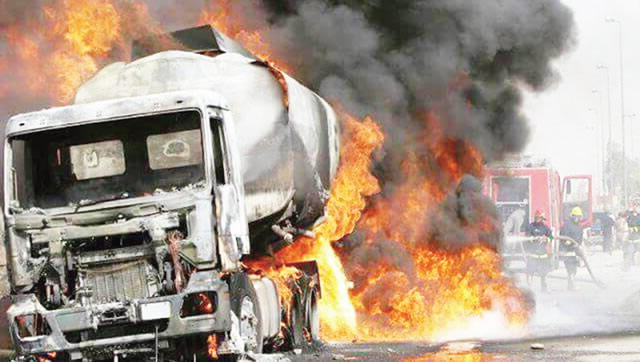
In southwestern Nigeria, a fuel truck exploded as locals tried to siphon gasoline out of it, killing at least eight people, according to authorities on Monday.
The truck was involved in an accident on Sunday night that sent it off the road and onto its side in a neighborhood in Ondo state, according to the police.
“Some people went there to scoop fuel, in the process the tanker exploded,” said Ondo state police spokesman Fumilayo Odunlami-Omisanya.
Since a long-standing subsidy was eliminated at the end of May, the price of gasoline has more than tripled, impacting both drivers and residents and small companies who use gasoline generators to generate electricity.
Tife Owolabi reported, MacDonald Dzirutwe wrote, and Miral Fahmy edited.
Labour unions in Nigeria are expressing strong discontent over the recent surge in fuel prices throughout the country and have issued a warning to withdraw from negotiations with the government unless the prices are reversed.
Both the Nigeria Labour Congress and the Trade Union Congress are accusing the government of unjustly favoring the wealthy at the expense of the poor, leading to immense suffering, hardship, and sorrow for the Nigerian people.
On Tuesday, petrol prices reached an all-time high of around 640 naira ($0.82; £0.64) per litre, triggering widespread outrage across the nation. As a result of this sharp increase in petrol prices since May, after President Bola Tinubu’s announcement ending fuel subsidies during his inauguration speech, transport costs and food prices have continued to escalate.
The state-owned Nigeria National Petroleum Corporation Limited has attributed the new price increase to market forces.
In response to the public outcry and rising costs, President Tinubu has ordered a review of the $10 (£8) his government had planned to pay 12 million poor households to mitigate the impact of removing the fuel subsidy. The proposed payment, lasting for six months, aimed to provide relief to those affected by the subsidy removal.
However, there has been widespread criticism and concern that the money could potentially end up benefiting government cronies rather than reaching those genuinely in need.
At several gas stations run by the Nigerian National Petroleum Company Limited in Abuja, the price of Premium Motor Spirit, also known as gasoline, was increased from N537 to N617 per liter on Tuesday.
Independent oil marketers attested to the rise in the cost of the good since they claimed that any change in price by NNPCL stations was a sign that the pump price of PMS had increased.
“This is because NNPCL is still the major importer of petrol into Nigeria currently, though other marketers are gradually importing the commodity. The price this (Tuesday) morning at some NNPCL stations is N617/litre,” the Secretary, Independent Petroleum Marketers Association of Nigeria, Abuja-Suleja, Mohammed Shuaibu, told our correspondent.
Following President Bola Tinubu’s announcement on May 29 that petrol subsidies had ended, the price of the commodity surged from N198/litre to over N500/litre on May 30, 2023.
Since the removal of petrol subsidies and the floating of the naira against the dollar, marketers have warned that the cost of Premium Motor Spirit (PMS) could potentially reach as high as N700/litre.
Moreover, the increase in the global crude oil prices has also contributed to the further hike in petrol prices, given that crude oil is the raw material from which PMS and other refined petroleum products are derived.
In Abuja, on Tuesday morning, motorists flocked to filling stations that were still selling petrol at N540/litre.
However, with the news of the price hike by NNPCL stations spreading, many independent outlets either closed their stations or promptly adjusted their fuel pumps to reflect the new price.
As of now, there has been no official statement from the NNPCL or the downstream oil sector regulator regarding this development.
The chief executive officer of the Association of Oil Marketing Companies, has indicated that a significant number of OMCs are struggling to turn a profit as a result of the status of the economy.
“We had almost about 40% of them who were struggling such that month by month they were not making anything,” he said of the group at the beginning of the year.”
“They were only trying to survive to make sure that they just break even and others are even under the water now and they’re trying to struggle to come up,” he said this on JoyNews’ PM Express Business edition on July 14, 2023.
Agyemang Duah claimed that the country’s inflation and the depreciation of the cedi have had a severe impact on their pricing; but, due to the competitive nature of the oil market, OMCs are unable to increase or alter their margins as they see fit.
He claimed that this is just another element that impacts their profit margins.
“And you know in Ghana prices of goods and services are just rising just like that. And obviously for you to compete or be able to survive you need to up your scale in terms of the margin that you’d have to put on, but we’re not able to do that because it’s the market.
Duah continued, “The market is so competitive that if you decide to increase your margin, obviously it will affect your price, when you increase your price you’re out of the game. So, it’s really a tough hurdle that we have now,” he said.
Following the Ghana National Tankers Drivers’ Union strike, the Tema petroleum Company has reported that more than 7.6 million liters of petroleum are stuck in its tanks.
The drivers are demanding rehabilitation works on various roads near fuel depots across the country.
Head of Finance and Stock at the Tema Fuel Company, Nana Adwoa Kumi Duah, says their operations may grind to a halt if the strike continues.
“We have an empty track that was supposed to be loaded today as a result of the tanker driver union strike, which means that we have lost revenue.
Additionally, when we load the big tanks, we create space for the vessels to discharge their products into the tank. If we are not loading, then we are not able to create the space, and the vessels will have to lie down for longer periods than anticipated,” she added.
Meanwhile, the Ghana National Petroleum Tanker Drivers Union in the Ashanti Region has clarified that its nationwide strike is not aimed at sabotaging the Akufo-Addo government.
In an interview with the media on June 26, the AshantiRegional Chairman of the Union, Edmund Baba, emphasized that the strike is primarily aimed at safeguarding the country’s road networks from further deterioration.
“What we are doing, we are not trying to sabotage the government, we are not politicians, we are not talking politics, we all have our individual political opinions. We want to save Mother Ghana from what is happening,” Edmund Baba clarified.
In Kenya, Members of Parliament (MPs) have approved a measure to double the value-added tax (VAT) on fuel from 8% to 16%. This decision is expected to contribute to the increasing cost of living in the country.
During the parliamentary session on Wednesday, MPs from the ruling party coalition voted in favor of the proposal, with 184 supporting the inclusion of the clause in the new finance bill. On the other hand, 88 lawmakers opposed the measure.
The government’s objective in implementing this tax hike is to generate approximately 50 billion Kenyan shillings ($356 million; £279 million) in additional revenue, citing the necessity to address the mounting national debt.
But the leader of the opposition MPs in parliament said it was punitive, terming the decision to push ahead with the fuel tax clause as “the saddest day in the history of this country”.
This week, Kenya’s parliament has been combing through clauses within the unpopular finance bill and considering and voting on amendments.
Besides the fuel tax, some of the controversial proposals include a housing fund levy to be paid by all salaried workers and an increase in taxes for social media influencers.
The biggest trade union movement in Nigeria has cancelled its call for a statewide strike on Wednesday, following the government’s decision to cease subsidizing fuel. The walkout was intended to protest a dramatic increase in the price of petrol.
After an hours-long meeting with the government, Nigeria Labour Congress (NLC) President Joe Ajaero said the decision had been taken to give more time for negotiations.
A court has ordered unions to desist from industrial action until an application filed by the government is heard on 19 June.
An increase in the minimum wage and tax holidays for workers are some of the demands organised labour is making to cushion the effects of the removal of the fuel subsidy.
Last Wednesday, fuel marketers increased the price of petrol to at least $1 (£0.80) per litre – up by about 200%.
This has had a knock-on effect on the price of transport, food and other commodities, while the minimum wage is about 65$.
Nigeria’s new President Bola Tinubu announced the scrapping of the fuel subsidy in his inaugural address on 29 May, but did not give a date.
Within hours of Mr Tinubu’s first address, hundreds of people had poured on to the streets, either in their cars or on foot with yellow jerrycans, to grab what they believed to be the last drops of fuel to be sold at a government-fixed price.
Despite its oil riches, Nigeria is unable to refine crude locally to meet demands.
The four state-owned refineries are moribund, forcing the country to import refined petroleum products which are then sold at a price fixed by the government.
Mr Tinubu says the government can no longer afford to subsidise fuel because of dwindling revenue: the government has already set aside $7bn to subsidise fuel for the first six months of this year.
The Nigerian National Petroleum Corporation (NNPC) has revealed that the country’s government owes the company over $6 billion. This amount represents the funds that NNPC has utilized to maintain affordable gasoline prices, and the disclosure comes just a day after President Bola Tinubu‘s announcement of the discontinuation of the subsidy program.
The state-owned company shouldn’t keep absorbing the burden of preserving one of the lowest prices of the fuel in the world, Chief Executive Officer Mele Kyari told reporters in the capital, Abuja, on Tuesday, welcoming the new head of state’s decision to stop the payments that cost more than $10 billion last year.
The NNPC is waiting for the government to pay a 2.8 trillion naira ($6.1 billion) debt, Kyari said. “We can’t continue to build this,” he said.
Following Tinubu’s first address to Nigerians after taking the oath of office on Monday, queues formed outside petrol stations, which have already started raising their prices. Phasing out the subsidies will significantly increase transport costs and could trigger social unrest as it did during a previous effort to remove the payments in 2012.
Although Nigeria is Africa’s biggest oil producer, the NNPC purchases all the country’s gasoline from overseas via crude-for-fuel swaps with local and international traders before selling the imported products at a loss to wholesalers and retailers.
The Tinubu administration plans to license other gasoline importers, according to Farouk Ahmed, chief executive of the Nigerian Midstream and Downstream Petroleum Regulatory Authority. This will introduce competition into the industry, he said alongside Kyari at the presidency.
While the previous government under President Muhammadu Buhari was supposed to fund the subsidies for the last 18 months, most of the cost has been “supported by the cash flow from NNPC’s other businesses,” Kyari said. “Since you cannot pay, you cannot expect NNPC to continue to carry it.”
In the second pricing window of this month, May 2023, the Chamber of Petroleum Consumers Ghana (COPEC) forecast a decrease in fuel prices.
In a press release signed by the Executive Secretary of COPEC, Duncan Amoah, and sighted by GhanaWeb Business, petrol is expected to drop by 4.94 percent to sell at GH¢11.67 per litre.
Conversely, diesel will sell at 11.51 per litre after witnessing a 6.53 percent decrease.
Duncan Amoah attributed the reduction in fuel prices to the drop in prices of crude on the international market.
“Crude price has seen a decline from the main price of $85.29/barrel to $76.64/barrel (-10.14%),” he said.
LPG is expected to be sold between GH¢10.10/kg and GH¢11.16/kg
He however called on government to either reduce the taxes on LPG or subsidize the prices to promote its usage by many.
Below is COPEC’s full statement:
CHAMBER OF PETROLEUM CONSUMERS 14 May 2023
REVIEW OF FUEL PRICES FOR THE SECOND WINDOW OF MAY 2023.
The second pricing window of the month of May 2023 is set to commence in a few hours from now, indications are that pump prices are likely to decline for fuel products across the country.
The following basic information forms the basis of projections for the coming window, that; Crude price has seen a decline from the main price of $85.29/barrel to $76.64/barrel (-10.14%) whiles the forex or Dollar exchange rate has slightly decreased from a previous average of GHS12.0060 to GHS11.9963 (0.08%) per $1, the following shall be the predicted retail figures for Petroleum products.
Petrol .. GHS11.67/L Diesel .. GHS11.51/L Current Price for Petrol and Diesel*..GHS11.59/L
LPG.. GHS10.63/kg
Thus for a 14.5 kg LPG cylinder, is expected to be selling at GHS154.10 for the window.
All Predictions are within (±5%) error margin.
Below are the details of the projections for the window.
Petrol With the international price declining from $868.14/MT to $795.31/MT (-8.39%), the retail price works up to GHS11.67/L
Thus, Petrol is expected to decline by 4.94%* of the current Mean Market price of GHS12.28/L, to close selling between GHS11.09/L and GHS12.26/L within ±5% of this prediction.
Diesel With the International benchmark prices declining from $747.93/MT to $673.25/MT (-9.98%), the expected mean retail price for the next window shall be GHS11.51/L
Thus, Diesel is expected to also decline by some 6.53%* of the current Mean Market price of GHS12.31/L to be selling between GHS10.93/L and GHS12.08/L within ±5% of projection.
The Mean price of Petrol and Diesel for the coming window per the numbers shall be 11.59/L ± 5%
LPG With the international benchmark prices declining from $522.77/MT to $452.75/MT (-13.39%) the projected retail price of LPG is expected to see a reduction by about 1.02% from the current average of 11.64/kg to GHS10.63/kg.
Thus, within ±5% error, LPG is expected to be sold between GHS10.10/kg and GHS11.16/kg
Government is however encouraged to do all it can to reduce taxes on LPG or to subsidise the price of LPG to promote or encourage its nationwide accessibility and usage which will eventually help save the environment.
This morning, on May 12, a fuel tanker truck overturned on the Accra-Tema motorway, approximately 200 meters before the toll booth at the Accra end.
The accident resulted in fuel being spilled onto the highway.
The cause of the truck’s overturning is currently unknown. However, the fuel spillage has created a slippery section on the road, endangering pedestrians and motorists and leading to traffic congestion.
Concerningly, some individuals were observed risking their lives by collecting the spilled fuel using containers.
Urgent intervention from the security agencies is being urged to prevent a potential disaster.
Meanwhile, the general public, particularly motorists, are advised to exercise caution when using this section of the road.
TheNational Petroleum Authority(NPA) has warned inhabitants of the Volta and Oti Regions against indulging in fuel smuggling to Togo.
The authority has emphasised the dangers of this illegal activity and urged citizens to avoid participating in it.
Fuel smuggling has become a significant issue in the region, with many people transporting fuel across the border to Togo, where they sell it for a higher price.
However, the NPA has warned that this practice is not only illegal but also poses serious risk to the smugglers and the general public.
The Volta Regional Director of NPA, Godwin Konu, gave the warning during a media engagement organised by the NPA in the Volta Regional capital Ho.
According to Godwin Konu, the fuel being smuggled may be of inferior quality and may contain harmful substances that could damage engines and lead to accidents.
Furthermore, smuggling fuel through illegal channels also contributes to the loss of revenue for the government, which could be used to fund various development projects in the region.
Mr. Konu has reiterated the NPA’s commitment to working with other relevant agencies to clamp down on fuel smuggling and to ensure that the public is adequately informed about the risks associated with such illegal activities.
He has therefore called on residents to report any suspicious activity related to fuel smuggling to the appropriate authorities.
He has also urged the general public to use legal channels to purchase fuel and to ensure that they are buying from licensed fuel stations.
The journalists expressed their readiness in helping the NPA achieve its aim of clamping down smuggling of fuel to and fro Togo andGhana.
In response to the warning, some residents have expressed their support for the NPA’s efforts and have pledged to cooperate with the authorities to put an end to fuel smuggling in the region.
Others have called for stricter penalties for those caught engaging in the illegal trade.
The NPA’s caution comes as part of its ongoing efforts to promote the safe and legal use of petroleum products in the country.
Despite the drop in the price of finished goods on the global market, petroleum product prices may remain unchanged for the next two weeks.
The Institute for Energy Security claims that the sharp decline in the value of the Ghana cedi relative to the US dollar during the past two weeks may have prevented the anticipated decrease in fuel prices in the upcoming weeks.
According to statistics from the IES Economic Desk on the local foreign exchange (forex) market over the previous two weeks, the cedi concluded trading at 12.01 to the US dollar, up from 11.55 at the beginning of the pricing window, according to the energy think tank’s prediction of petroleum prices for this window. A value loss of around 3.98% resulted from this.
“Prices of all petroleum products monitored by the Institute for Energy Security (IES) on the international market fell, alongside the price of Brent crude over the last two weeks. Price of Gasoline [petrol], Gasoil [diesel] and Liquefied Petroleum Gas (LPG) fell by 3.56%, 3.69% and 2.37% respectively, over the period. On the domestic front, the Ghana cedi lost a value of roughly 3.98% against the US dollar, as monitored on the foreign exchange market”, it stated.
Fuel prices went up marginally in the just ended pricing window [April 16 – April 30].
World oil market
Crude oil prices extended last week’s losses and traded lower at $83.3 per barrel for Brent crude at the end of the pricing-window under review, from an initial average price of $85.29 per barrel.
The prices were weighed down by lingering concerns about demand amid economic growth worries.
Local fuel market performance
The second pricing-window for April 2023 saw domestic petroleum products prices make some recoveries at the pump in respond to rising international commodities prices, as recorded in the first-half of April 2023.
The IES monitoring of various Oil Marketing Companies (OMCs) during the pricing-window under review finds the national average price per litre for petrol at ¢12.76p, diesel at ¢12.86p and LPG at about ¢11.60 per kilogramme; clearly showing the price increases at the pump, except for LPG.
Nigeria’s government has chosen to put off eliminating fuel subsidies, citing the need for additional planning and consultations with important parties, including the new administration.
Nigeria’s Minister of Finance, Budget, and National Planning, Mrs. Zainab Ahmed, disclosed this to local media on Thursday after the valedictory Council meeting presided over by Vice President Yemi Osinbajo at the Council Chambers of the Presidential Villa, Abuja.
Ahmed said the Council agreed on the need for continued discussions on the issue adding that the FG, together with states and representatives of the incoming administration, require more preparatory work.
She said, “Council agreed that the timing of the removal of fuel subsidy should not be now. But that we should continue with all of the preparatory works that need to be done and this preparatory has to be done in consultation with the states and other key stakeholders including representatives of the incoming administration.
This comes a few days after Nigeria’s outgoing government recommended that the new administration of president-elect Bola Tinubu give public sector workers pay rises after removing a fuel subsidy in June, Labour Minister Chris Ngige said on Tuesday.
President Muhammadu Buhari, who steps down in May, had planned to remove the popular but costly subsidy in 2022 as part of fiscal and petroleum sector reforms but abandoned the plan because of fears of protests in the run-up to last month’s election.
Previous Nigerian governments have promised to remove the fuel subsidy, which most economists say is an unsustainable drag on public finances, but have failed to do so because of fierce opposition from citizens.
Ahmed added that the FG will be working together with representatives of the states between now and June 2023.
Earlier this month, the federal government secured $800m (£640m) in grants from the World Bank to scale up its national social programme ahead of removing its petroleum subsidies in mid-2023, aimed at reducing the impact of fuel subsidy removal.
Africa’s biggest economy set aside 3.36 trillion naira ($7.3bn) this year to spend on petroleum subsidies until mid-year 2023 when it will cease payments.
Cuba’s fuel supply problem has worsened considerably, with authorities now halting some activities and restricting supplies after days of citizens lining up in enormous lines to buy gasoline.
The government of Cuba has severely restricted the sale of gasoline, suspended events including a performance by the national symphony, and moved some university sessions online due to severe fuel shortages.
Cubans have experiences shortages of all kinds of goods amid the recent economic crisis but the cancellation of activities because of fuel shortages had not been reported previously. The cancellations come following days of long lines to get gasoline at filling stations.
Experts say the lack of gasoline and diesel is not due to a lack of crude oil — Cuba produces about half of what it needs and buys the rest from other countries – but to the difficulties refining it.
“There is no lack of crude oil in Cuba,” said Jorge Piñón, senior research fellow at the University of Texas at Austin’s Energy Institute.
He said Venezuela is selling Cuba a similar amount of crude or even slightly more than it did last year. Cuba has also received oil from Russia, though details of these agreements are unknown.
Piñón said Cuba in April also received two tankers from Mexican state oil company Pemex carrying 300,000 barrels of crude oil each.
He blamed he shortages on technical production problems in the refineries, which were built in 1957.
Cuban authorities have not given a specific reason for the shortages, but in previous days have mentioned difficulties with “inputs,” which Piñón said could refer to an additive Cuba gets from Iran needed to refine Venezuela’s heavy crude.
The fuel shortages started being critical this weekend.
On Monday afternoon, the commercial director of the state-owned Cubapetroleo, Lidia Rodríguez, warned there are low levels of “refineable crude.”
Meanwhile, authorities in Villa Clara said in statement published on the government’s Facebook page that fuel will only be sold to drivers of cars licensed to operate as public carriers and provide basic services, i.e. ambulances, and vehicles used in emergencies or burials.
Universities in the provinces of Villa Clara, Holguín, Sancti Spíritus and Universidad Agraria de La Habana said that starting Monday classes will be temporarily online.
On Sunday, a concert by the Cuban National Symphony in the capital’s main theater was canceled due to lack of fuel.
The dollar exchange rate in the country of East Africa would soon plunge, according to the president of Kenya, William Ruto, who cited a variety of economic measures.
Key among them is that his country is currently buying their fuel needs in the local Kenyan Shillings from some suppliers.
In a video circulating on social media platforms, Ruto is heard praising members of his economic advisory team who: “managed to put together a programme that has taken us away from looking for USD500 million every month to buy our fuel needs, which was slowly snowballing into a crisis.
“Today, as a country we can buy fuel in Kenyan Shillings, something that many people never thought it will be possible… from this month of April, all our fuel marketers, they will be able to buy our fuel products in Kenyan shillings,” he revealed at an event.
He continued that the new arrangement will, “remove pressure on our dollars. In fact, in the next few months, we will see the exchange rate coming down in a very phenomenal way,” he stressed.
“Are we seeing a new and sustainable global paradigm of de-dollarisation?” Gabby posted in a tweet dated April 16.
The dollar has in recent months come under severe scrutiny in its position as the main medium of global trade, Brazilian president Lula da Silva recently questioned the ‘might’ of the dollar asking why countries cannot trade in their own currencies.
Fameye, a Ghanaian artist, said that he received GHC25,000 in damages after a petrol station filled his 2019 Honda Pilot Touring with fuel laced with water.
Ghanaian singer Fameye has revealed that he has been compensated with the amount of GHC25,000 for damages after a fuel station filled his Honda pilot touring 2019 model with fuel mixed with water.
Fameye was not a happy man some weeks ago after the unscrupulous actions of a fuel station he purchased fuel from.
According to Fameye, fuel that was bought to fill the tank of his 2019 Honda pilot touring was diluted with water and the action affected the engine of his vehicle.
The obviously pent up and frustrated music artiste took to Twitter to share his dilemma with the public hoping for a possible solution.
“So few days ago ,I go buy fuel for one fuel station,700 cedis,the rest is heartbreaking They filled my tank with water mixed with petrol as I’m talking to you now my car Honda pilot touring 2019 model is spoilt Spent 7k already still not working!!! What do I do?,” he tweeted.
However, speaking in an interview on TV3 New Day, the “Nothing I Get” revealed he was compensated GHC25,000 for damages and that although his car is back to normal and working well he is still saddened by the entire situation.
The National Petroleum Authority, the statutory Agency regulating, overseeing, and monitoring the petroleum downstream industry in Ghana has over the years warned fuel stations to desist from infusing water into their products.
It has gone further to close down fuel stations caught in the act but the trend continues to be on the rise.
On April 1, 2023, fuel prices will drop between 2% and 9% for the third time in a row, with Liquefied Petroleum Gas (LPG) projected to experience the greatest drop in recent times.
The Institute for Energy Security predicts that the price of LPG would decrease by roughly 9%, while the price of petrol and diesel will fall by between 2% and 5%.
The institute attributes the decline to the cedi’s stability against the dollar and the lowering of finished goods prices on the global market.
“Fuel consumers must expect another round of fuel price drops in the coming days. The imminent price drop is a reflection of happenings on the world fuel market over the past two weeks which shows decline in prices of gasoline [petrol], Liquefied Petroleum Gas and some other finished products”, Nana Amoasi VII, Executive Director of the Institute for Energy Security told the media.
“In the last 14 days, the price of gasoline [petrol] on the world market posted a drop of $21 per metric tonne. Gasoil [diesel] also dropped by roughly 3.6% from the previous price of $813 per metric tonne”, he added.
Nana Amoasi VII furthered that LPG is the product that posted the biggest drop in price over the last two weeks on the world market. The commodity’s price fell by a whopping $95 per metric tonne, about 15% drop.
He concluded that Ghanaians should expect some relieve from the high fuel prices recorded in the past six months, noting “households that rely on LPG will be the most beneficiaries as the commodity may post a hefty drop in prices in the coming days”.
Some Oil Marketing Companies (OMCs) have started reducing the prices of petroleum products at the pumps.
Checks at some filling stations by this paper in Accra yesterday saw the leading OMC, GOIL, selling a litre of petrol at ¢12.95 and diesel at ¢13.49.
TotalEnergies and Shell also have dropped their prices for both diesel and petrol to ¢13.49 and petrol, ¢12.95 per litre
Petrosol is selling a litre of petrol at ¢12.97, whereas diesel is going for ¢13. 37 per litre.
The Institute for Energy Security (IES) on Tuesday projected that fuel prices will fall between three per cent and 10 per cent at the pumps.
IES predicted that the prices of all three key petroleum products – petrol, diesel and Liquefied Petroleum Gas (LPG) were expected to fall.
The IES said, “The last two weeks have seen price indicators on both the domestic and international fronts falling and this can translate into some price reductions at the pumps for various petroleum products”.
The domestic fuel market prices are projected to fall between ¢12.60 for petrol, ¢13.40 for diesel and ¢14 per Kilogramme for LPG. Some Oil Marketing Companies (OMCs) have started reducing the prices of petroleum products at the pumps.
Checks at some filling stations by this paper in Accra yesterday saw the leading OMC, GOIL, selling a litre of petrol at ¢12.95 and diesel at ¢13.49.
TotalEnergies and Shell also have dropped their prices for both diesel and petrol to ¢13.49 and petrol, ¢12.95 per litre
Petrosol is selling a litre of petrol at ¢12.97, whereas diesel is going for ¢13. 37 per litre.
The Institute for Energy Security (IES) on Tuesday projected that fuel prices will fall between three per cent and 10 per cent at the pumps.
IES predicted that the prices of all three key petroleum products – petrol, diesel and Liquefied Petroleum Gas (LPG) were expected to fall.
The IES said, “The last two weeks have seen price indicators on both the domestic and international fronts falling and this can translate into some price reductions at the pumps for various petroleum products”.
The domestic fuel market prices are projected to fall between ¢12.60 for petrol, ¢13.40 for diesel and ¢14 per Kilogramme for LPG.
The Nigeria Labour Congress, or NLC, has given the federal government a seven-day deadline to settle the fuel and naira crises. If this deadline is not met, the NLC has threatened to mobilize for widespread protests.
NLC President, Joe Ajaero, issued this waring in Abuja while addressing newsmen on the outcome of a meeting convened by the Central Working Committee of the congress.
Ajaero said Nigerians, especially workers, had been pushed to the wall and could no longer keep quiet.
He said, “It is actually difficult for Nigerian workers to access their hard-earned money in banks and Nigerians are questioning the inability of banks to provide them their money which they were asked to pay into the bank.
“You would also have noticed that it is difficult to see petroleum products. Where you see in some parts of this country, a litre costs as much as N350 and above.
“On the issue of cash crunch, the NLC is giving the federal government of Nigeria and agencies of government, including the Central Bank of Nigeria and other banking institutions seven working days to address the issue of the cash crunch.
“If they fail to do this at the expiration of the seven days, the congress will direct all workers in the country to stay at home because it has become very difficult to access money to enter vehicles to their workplaces.
“On this issue of fuel, the congress wishes to inform the federal government that we’ll no longer keep quiet on this issue of perennial fuel scarcity and arbitrary increases on petroleum.”
President Akufo-Addo has told Ghanaians to anticipate a further drop in the prices of petroleum products at the fuel pumps.
Delivering the 2023 State of the Nation Address in Parliament on Wednesday, the president noted that the Gold Purchase Programme by the Bank of Ghana and the Gold for Oil Policy are already bearing fruit.
According to him, the average price of petrol at the pump, which had risen to twenty GHS20 a litre, in the middle of December 2022, is now GHS18.30 a litre.
“The price of diesel had risen to more than twenty-three cedis and seventy pesewas (GH¢23.70) a litre and is now selling on the average at thirteen cedis and eighty pesewas (GH¢13.80) a litre, which is a reduction of almost ten cedis a litre.”
“We expect this trend of falling fuel prices to reflect soon in our daily lives, since transport fares affect the price of everything. I hope the trend of prices going up and coming down become a regular feature of our retail economy as is being demonstrated in the fuel prices. Because, as we all know, prices, especially of petroleum products, used only to go up in our country,” he added.
The president is rest assured that the Gold Purchase Programme by the Bank of Ghana and the Gold for Oil Policy will help Ghana preserve its foreign exchange, especially the US dollar, as well as stabilise the price of oil products such as petrol and diesel on the domestic market.
“We have already seen some success on both fronts with the price of US dollars and petroleum products falling since we announced the policy and began to implement it,” he added.
An increase in fuel prices and a depreciating local currency has contributed to the high cost of electricity in Kenya by 10% in the most recent monthly adjustment.
The fuel cost tax (FCC), which was Ksh6.59 ($0.051) per kilowatt-hour (kWh) last month, has increased to Ksh8.3 ($0.064) per kWh by the Energy and Petroleum Regulatory Authority (Epra).
It is the highest rate of the fuel energy component since June 2012 when it hit a record Ksh9.03 ($0.070) per kWh.
The Epra has also raised the foreign exchange rate fluctuation adjustment (Ferfa) to Ksh2.16 ($0.017) per unit from Ksh1.85 ($0.014) per unit last month due to the weakening shilling against the dollar.
This has raised the unit cost of power for lifeline consumers to Ksh22 ($0.17) per unit up from Ksh20 ($0.15) last month which will force customers to pay more for the same quantity of electricity.
New power tariffs
This comes weeks before the country’s energy regulator is expected to publish new power tariffs that will significantly further raise power prices.
Epra is expected to put in place new tariffs that will be in effect from April 1 for the next three years.
This comes as global crude oil prices have been fluctuating in recent weeks, but analysts project prices to go up in the coming months owing to increased demand, especially from China.
The Kenya shilling – which was trading at 128.36 against the US dollar on Wednesday – has continued to lose value against the greenback, piling more pressure on firms like Kenya Power which have a huge demand for dollars.
Rising inflation
The utility says its total monthly average use of foreign currency is $50 million and €20 million.
The higher power prices are set to heavily hit consumers at a time when inflation in Kenya has increased to end a three-month consecutive decrease.
Inflation climbed to 9.2 percent in February, coming after it slowed for three consecutive months to hit 9 percent in January.
Kenya National Bureau of Statistics’ Consumer Price Index (CPI) showed that in that month, food commodities contributed greatly to the high inflation.
The high inflation has heavily hit Kenyan businesses which saw demand for goods and services shrink for the first time in six months, according to Stanbic Bank’s Purchasing Managers Index (PMI).
The PMI fell below the 50-neutral mark to 46.6 last month – the first time it has fallen below the neutral point since August last year.
“The reading indicated a solid deterioration in operating conditions, driven by renewed contractions in many of the covered metrics,” said the report.
Four of the five monitored sectors in the survey saw new orders decrease, with particularly sharp falls seen in manufacturing, wholesale and retail, while agriculture was the only sector where sales increased.
The study by the UK-Ghana Chamber of Commerce (UKGCC) has revealed that fuel remains the most expensive item facing businesses in the country.
The study also said cost of power, machinery and technology are beyond the budgets of businesses.
Fuel remains the most expensive item facing businesses in the country, a survey has revealed.
It said the situation exerts further pressure on the already constrained operations and funds of businesses.
The emergence of fuel as the costly item comes at a time when crude oil prices have skyrocketed following the ongoing Russia-Ukraine conflict..
The findings were contained in a research finding by the chamber’s Annual Ghana Business Environment and Competitive Survey 2022 released this week.
According to the survey, these assertions mirror opinions held in previous surveys, and suggest a shape for advocacy, which is to focus Government’s policy on direct business assistance interventions that would make the business and operating environment a lot more attractive to private sector investors.
Respondents suggest that the costs incurred to acquire skilled labour was among the most affordable their businesses incur – a consistent pattern over the years.
Local marketing costs, certifications and quality control costs, as well as locally sourced raw materials were also seen to be affordable in the Ghanaian business environment.
It appeared respondents classified these costs as being affordable in the previous survey as well.
Ghana’s available telecom facilities, cost and availability of potable water as well as availability of logistics partners were business components respondents believed were favourable to their businesses.
Respondents in the previous survey largely held the same view suggesting these to be some of the strengths of doing business in Ghana.
In similar fashion, respondents also see the availability of telecom facilities as the most improved business component over the past five years with the availability of advanced technology closely following – much like perceptions from the last survey.
Some students of the University of Ghana, Legon are helping save the environment through innovative means.
The students from the Institute of Applied Science and Technology, of the College of Basic and Applied Sciences, have started converting plastic wastes into three different kinds of fuel.
It is producing petrol, diesel, and gas from plastic waste.
This is done by reprocessing them into high-value fuels and chemicals for households or small running engines.
Professor David Dodoo-Arhin, the Director of the Institute, told the Ghana News Agency on the sidelines of a five-day workshop on Monday.
The reactor yields three litres of fuel when fed with three kilograms of waste plastic depending on the conditions the waste was subjected to.
“The fuel is up to standard and is usable. We have been cooking with gas and our cars are running the petrol and diesel,” he said
The model, he said, included all the people in the value chain, especially the collectors, and could be a good avenue for job creation for many people.
Prof. Doodo said the project was under the plastics-to-fuel initiative, which started in 2018 with initial funding support from the University of Ghana BANGA Africa seed grant programme.
He said it was followed by two-year funding in 2021, through the University of Ghana Research Fund “multidisciplinary category” and in 2022, another two-year co-funding by the French Embassy’s “FSPI NYANSAPO programme.
Prof. Doodo said the initiative was in line with the Ghana National Plastic Action Partnership to support the public and private sector transition to a plastic circular economy thereby, ensuring sustainable plastic management.
Prof. Nana Aba Appiah Amfo, Vice-Chancellor of the University of Ghana, in a statement delivered on her behalf, said the plastic waste menace continued to pose challenges to the environmental and socioeconomic well-being of the country.
She said there was a need for sustainable waste management systems to help stem the debilitating consequences of plastic waste nationwide.
The workshop was organised in collaboration with the 20th Anniversary team of the School of Engineering Sciences and the 75th Anniversary of the University of Ghana.
It was funded by the French Embassy and on the theme: “Strengthening research and innovation capacities in sustainable energy production”.
Mr. Jules Armand Aniambossou, the French Ambassador to Ghana, said ensuring access to higher education and research were high priorities of his country and reiterated the country’s commitment to the project.
He said it was the aim of the French Government to increase the collaboration between the educational institutions of the two countries
through new partnerships, exchanges, joint curricula, double diplomas, joint research programmes, and joint research facilities.
“All these activities and programmes should focus on the priorities of our partner countries and aim at contributing to their development through the implementation of the Sustainable Development Goals,” he said.