Tag: Galamsey

  • Galamsey is a national death sentence – UTAG-UG

    Galamsey is a national death sentence – UTAG-UG

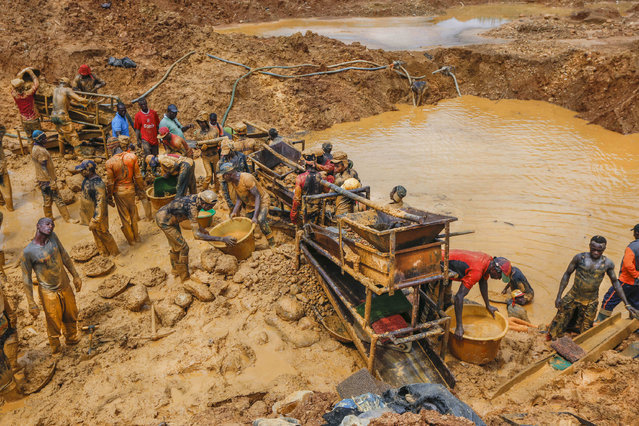
    The University Teachers Association of Ghana (UTAG), University of Ghana chapter, has called for decisive action to end the devastating impact of illegal mining, known locally as galamsey.


    Speaking to the media on Monday, September 15, Dr. Jerry Joe Harrison, General Secretary of UTAG-UG, warned that the growing menace could end the lives of citizens if the remain unchecked.


    “If we don’t do what we are supposed to do now, we will all die. The water situation is causing havoc in people’s homes. Many areas, including Kwanyako, don’t have access to clean water. People can’t even afford to buy water for their households,” he added.

    According to him, some citizens continue consume water which will eventually cause long-term health issues, such as cancers and neurological diseases.


    “People have had to consume these waters, and they are going to have cancers and neuro diseases by all means. Is that not an emergency enough for you?.So what do you prefer — that we sit down for 5%, 10% of the population to begin to have visible neurological symptoms before we take action? No,” he added.


    Meanwhile, the FixTheCountry movement will embark on vigil and march sessions on Sunday, September 21, and Monday, September 22, respectively, at Revolution Square in Accra, in response to illegal mining activities, locally known as galamsey, in the country.


    This information was disclosed by the group’s convenor, Oliver Barker-Vormawor, in a post on X (formerly Twitter) on Monday, September 15.
    “On Sunday 21st September, we will have a vigil at the Revolution Square, and on Monday 22nd (a holiday), there will be a march, calling attention to the urgency of our environmental crisis,” he wrote.


    In his post he stressed that the solution to end the menace requires collective efforts, hence, he called on all and sundry to participate in the upcoming protest.


    “The responsibility to protect and preserve the environment is by divine assignment, ours as a people,” he wrote, adding that the issue transcends electoral politics.Our responsibility to end galamsey does not end at elections. Nor does it begin after our party loses one. This is bigger than petty politics,” he emphasised.


    Illegal mining activities continue to retrogress the country’s development, as they lead to the loss of lives, destruction of properties and the environment, and water bodies, among others.For years, the country’s efforts to nip the canker in the bud have not yielded the needed results.


    Among measures taken to protect water bodies from illegal miners is the deployment of river guards. The river guards are selected from communities most affected by illegal mining, ensuring they have a deep understanding of the local landscape and challenges.


    Govt’s efforts to clamp down on illegal mining activities


    The government has rolled out an official order requiring all machinery used in mining operations to be registered with the Driver and Vehicle Licensing Authority (DVLA) by 1st August.


    A statement issued by the Ministry of the Interior on Tuesday, July 15, states that the state will go ahead to confiscate unregistered mining equipment after the deadline.


    “The Government, as part of efforts to reform the mining sector in the country, requires that all machinery used in mining activities must be registered with the Driver and Vehicle Licensing Authority (DVLA) by 1st August 2025. Equipment that remains unregistered after this deadline will be confiscated by the State,” the Ministry stated on its website.


    Mr Mubarak has empowered the Ghana Police Service and DVLA to begin strict enforcement of the new rule from August 2. “The Ghana Police Service and DVLA have been directed to enforce this directive from 2nd August 2025 onward rigorously. The general public, especially those who use mining machinery, is advised to take note and comply with the directive,” he wrote.


    The Ministry reiterates its resolve to maintain national peace through effective internal security and law enforcement.

    Meanwhile, a similar directive came in months ago, where excavator owners and operators were asked to register their machines with the Driver and Vehicle Licensing Authority (DVLA) within two weeks or risk losing them to the state, as the government intensifies efforts to clamp down on illegal mining activities.


    The Chief Executive Officer (CEO) of the DVLA, Julius Neequaye Kotey, issued the directive in Accra, warning that effective June 1, any excavator not registered with the DVLA will be confiscated.


    Speaking at a press briefing, Mr. Kotey announced that the Ghana Police Service and the DVLA’s operational team commenced a nationwide enforcement after the deadline, arresting and impounding excavators being used at mining sites or for commercial purposes without proper documentation.


    “This exercise will help identify every excavator that enters the country and trace how it is being used. The goal is to ensure we can monitor and hold people accountable,” Mr. Kotey said.

    The directive fell in line with Section 38 of the Road Traffic Act, 2004 (Act 683), which mandates the registration of all motor vehicles and trailers, including farm and heavy-duty equipment.


    Despite the law, the DVLA found many unregistered excavators operating in mining areas, some of which have been used in illegal activities.


    Mr. Kotey emphasized that the DVLA, with its 34 offices nationwide, could register all excavators and farm machinery within two weeks and was ready to strictly enforce the directive.

    “Excavators in the hands of illegal miners have worsened the destruction of our environment. This is why we must act,” Mr Kotey said.


    To further control the situation, the DVLA, in collaboration with key agencies like the Minerals Commission, National Security, the Ghana Ports and Harbours Authority (GPHA), and the Customs Division of the Ghana Revenue Authority (GRA), commenced tagging all newly imported excavators.


    In addition to tagging new imports, the Minerals Commission was tasked with leading a team to tag all excavators already in the country. Legal small-scale mining sites have also been geo-fenced, with their site coordinates integrated into the Ghana Mine Repository and Tracking software for better oversight.


    The move is part of the government’s broader efforts to combat illegal mining. Three months ago, Lands and Natural Resources Minister Emmanuel Armah-Kofi Buah announced the rollout of a system to monitor excavator imports and usage, involving port tagging and digital tracking in partnership with several state agencies.


    According to the sector minister. The third most valuable item imported into this country is excavators, and it is worth GHC6.2 billion.


    Crack down on illegal mining activities


    In April, a total of 47 individuals were arrested for engaging in illegal mining activities along the Tano River and within the Aboi, Subri, and Nimiri forests in the Western Region. This followed a special four-day intelligence-led operation that commenced on April 17, within the Samreboi enclave.


    According to the Ghana Police Service, the suspects include 39 Ghanaians and 8 Chinese nationals. The Police indicated that a significant amount of equipment and materials believed to have been used for the mining operations were retrieved.


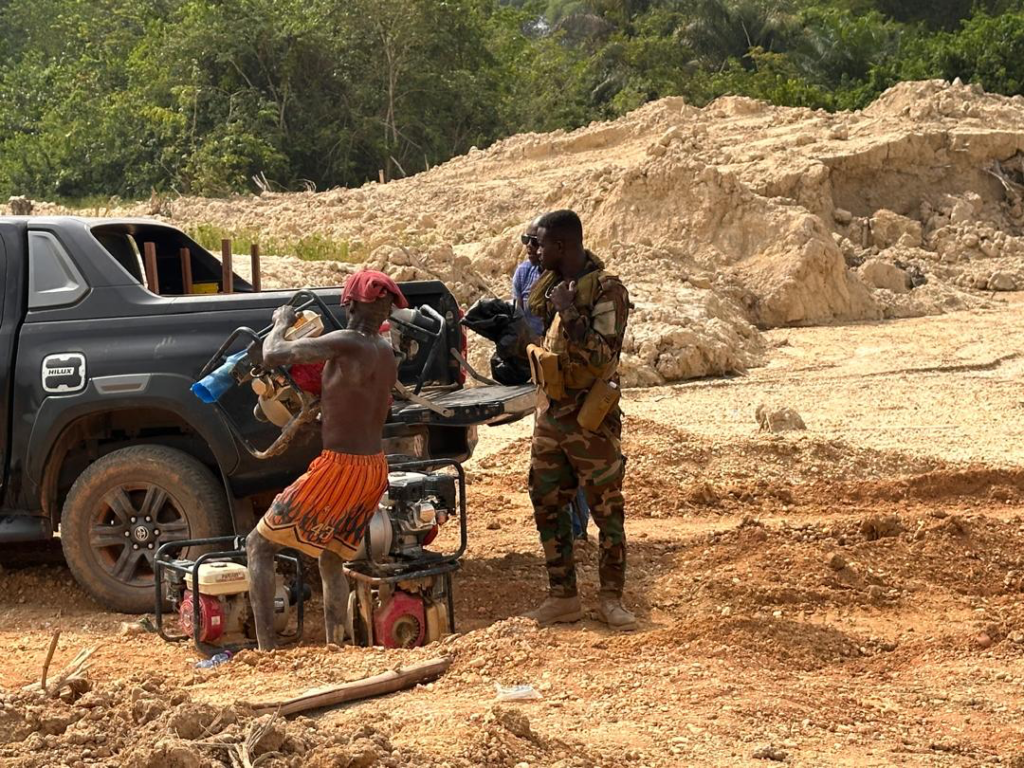
    These include seventeen excavators, one bulldozer, four motorbikes, two Toyota Hilux vehicles, one Rav4 vehicle, four pump-action guns, one single-barreled gun, fifty-four live BB cartridges, and eight pumping machines.


    Prosecution began for the arrested suspects. On Tuesday, 41 of them were arraigned, with 29 remanded into Police custody to reappear before the court on April 30, 2025. Twelve others were also remanded to return to court on May 2, 2025.


    The remaining seven were put before the court on April 23, 2025.Two coordinated operations conducted on Friday, June 20, at Nikanika and Adeade in the Central Region led to the arrest of 3 suspects and the seizure of several pieces of mining equipment.

    The operations were executed by the Ghana Police Service through its Special Anti-Galamsey Task Force. The task force proceeded to a mining site at Nikanika. Although no operators were found at the scene, the team retrieved a single-barrel shotgun loaded with a cartridge and three water-pumping machines.


    The task force extended its operation to Adeade, where three suspects—Prosper Quansah, Chrispin Nartey, and Owusu Gambra—were arrested with an excavator on a lowbed trailer.

    One SANY excavator, four unregistered Haojin motorbikes, and one lowbed vehicle with registration number GN 2136-24 were seized from the scene. All exhibits were secured in police custody.

    Some 12 accused persons standing trial for engaging in illegal mining activities at Tumetu near Princess Town in the Ahanta West Municipality of the Western Region have been remanded into prison custody. While 10 of the accused persons were arrested at a palm plantation, two were arrested at the Elluabo Chavene Ghana Rubber Estate Limited (GREL) plantation.


    This was due to a coordinated police intelligence-led operation within the Ahanta West Municipality. The accused persons are Lord Yankey, Caleb Adu Kwaw, Stephen Agyei, Ebenezer Barnes, Mathew Somagevi, Paa Grant, Bashiru Kaviru, Joseph Borney, Aminu Issah, Kofi Sogah, Albert Normah, and Robert Mensah.


    Four water pumping machines, one tricycle with registration number M-20-WR 1045, and two motorbikes were retrieved from the sites, according to the police.


    All twelve accused persons admitted to the offence during police interrogations. They were subsequently put before the Takoradi Harbour Area Circuit Court ‘A’, and were remanded into prison custody at Sekondi and reappeared before the court on Tuesday, July 8.


    Also, fifteen individuals are in police custody for engaging in illegal mining activities at Manso Adubia. They were arrested following a special intelligence-led operation at Watreso and Preacher Krom.

    The suspects include Tahiru Ibrahim (24), Shaibu Idrissu, (23), Boateng Emmanuel (27), Jamon Kwaku Samuel (21), Yaro Patrick (29), Kofi Boakye (21), Gubong Mathew (45), Fatawu Zackari Seidu (26), and Abdul Malik Seidu (22).


    The others are Dauda Tahiru (23), Sampson Grace (21), Boolangkpuo Freda (24), Arima Hagar (26), Kwarteng Vasco (30), and Kwame Adutwum (24).


    Two excavator control boards, two automatic pump-action guns, two Musler 12 firearms, 59 BB cartridges, three AA cartridges, one water pumping machine, two power generators, one vulcanizing machine, and one Apsonic motorbike were seized from the site.
  • Farmers across 9 regions to each receive 100 water pumping machines seized from galamsey sites – MoFA

    Farmers across 9 regions to each receive 100 water pumping machines seized from galamsey sites – MoFA

    Farmers in nine regions will each receive 100 water-pumping machines seized from galamsey sites to support the implementation of the government’s Feed Ghana Programme.

    This was announced by the Minister for Food and Agriculture (MoFA), Mr Eric Opoku while presenting the machines at the Agricultural Engineering Service Directorate Office at Amrahia in Accra last week.

    According to him, nine hundred(900) machines were seized by a task force in the fight against galamsey and will be handed to farmers in Upper East, Upper West, North East, Savannah, Northern, Greater Accra, Volta, Oti, and Bono East for agricultural use following a court order.

    “We wanted to avoid a situation where these machines, after being distributed, end up at galamsey sites again. That is why we deliberately chose regions without active illegal mining operations,” Mr. Opoku explained.

    Mr. Opoku stated that the equipment had undergone inspection by the Ministry of Food and Agriculture’s technical personnel, who found them in safe condition for use on farms.

    Speaking on behalf of the beneficiary regions, the Northern Regional Minister, John Ali Adolf, assured that the machines would be used for their intended purposes and would never be returned to any galamsey site. He added that, as regional ministers, they would periodically monitor the use of the machines.

    “We wouldn’t want anyone, for any reason, to ever attempt galamsey activities in our regions. These machines will be used to help farmers on their farms so that they can water crops across the seasons, especially during the dry season,” he explained.

    Mr. Adolf expressed gratitude to President John Dramani Mahama for his dedication to the fight against galamsey in the country.

    Government’s efforts to clamp down on illegal mining activities

    The government has rolled out an official order requiring all machinery used in mining operations to be registered with the Driver and Vehicle Licensing Authority (DVLA) by August 1. A statement issued by the Ministry of the Interior on Tuesday, July 15, states that the state will confiscate unregistered mining equipment after the deadline.

    “The Government, as part of efforts to reform the mining sector in the country, requires that all machinery used in mining activities must be registered with the Driver and Vehicle Licensing Authority (DVLA) by 1st August 2025. Equipment that remains unregistered after this deadline will be confiscated by the State,” the Ministry stated on its website.

    Mr. Mubarak empowered the Ghana Police Service and DVLA to begin strict enforcement of the new rule from August 2. “The Ghana Police Service and DVLA have been directed to enforce this directive from 2nd August 2025 onward rigorously. The general public, especially those who use mining machinery, are advised to take note and comply with the directive,” he wrote.

    The Ministry reiterated its resolve to maintain national peace through effective internal security and law enforcement. Meanwhile, a similar directive was issued months ago, asking excavator owners and operators to register their machines with the DVLA within two weeks or risk losing them to the state as the government intensifies efforts to clamp down on illegal mining activities.

    The Chief Executive Officer (CEO) of the DVLA, Julius Neequaye Kotey, issued the directive in Accra, warning that effective June 1, any excavator not registered with the DVLA would be confiscated. Speaking at a press briefing, Mr. Kotey announced that the Ghana Police Service and the DVLA’s operational team had commenced nationwide enforcement after the deadline, arresting and impounding excavators being used at mining sites or for commercial purposes without proper documentation.

    “This exercise will help identify every excavator that enters the country and trace how it is being used. The goal is to ensure we can monitor and hold people accountable,” Mr. Kotey said.

    The directive aligns with Section 38 of the Road Traffic Act, 2004 (Act 683), which mandates the registration of all motor vehicles and trailers, including farm and heavy-duty equipment. Despite the law, the DVLA found many unregistered excavators operating in mining areas, some of which had been used in illegal activities.

    Mr. Kotey emphasized that the DVLA, with its 34 offices nationwide, could register all excavators and farm machinery within two weeks and was ready to strictly enforce the directive. “Excavators in the hands of illegal miners have worsened the destruction of our environment. This is why we must act,” Mr. Kotey said.

    To further control the situation, the DVLA, in collaboration with key agencies like the Minerals Commission, National Security, the Ghana Ports and Harbours Authority (GPHA), and the Customs Division of the Ghana Revenue Authority (GRA), commenced tagging all newly imported excavators.

    In addition to tagging new imports, the Minerals Commission was tasked with leading a team to tag all excavators already in the country. Legal small-scale mining sites have also been geo-fenced, with their site coordinates integrated into the Ghana Mine Repository and Tracking software for better oversight.

    The move is part of broader government efforts to combat illegal mining. Three months ago, Lands and Natural Resources Minister Emmanuel Armah-Kofi Buah announced the rollout of a system to monitor excavator imports and usage, involving port tagging and digital tracking in partnership with several state agencies. According to the sector minister, the third most valuable item imported into the country is excavators, worth GHC6.2 billion.

    Crackdown on illegal mining activities

    In April, a total of 47 individuals were arrested for engaging in illegal mining activities along the Tano River and within the Aboi, Subri, and Nimiri forests in the Western Region. This followed a special four-day intelligence-led operation that commenced on April 17 within the Samreboi enclave.

    According to the Ghana Police Service, the suspects included 39 Ghanaians and 8 Chinese nationals. The Police indicated that a significant amount of equipment and materials believed to have been used for the mining operations were retrieved, including seventeen excavators, one bulldozer, four motorbikes, two Toyota Hilux vehicles, one Rav4 vehicle, four pump-action guns, one single-barrel gun, fifty-four live BB cartridges, and eight pumping machines.

    Prosecution began for the arrested suspects. On Tuesday, 41 of them were arraigned, with 29 remanded into police custody to reappear before the court on April 30, 2025. Twelve others were also remanded to return to court on May 2, 2025. The remaining seven were put before the court on April 23, 2025.

    Two coordinated operations conducted on Friday, June 20, at Nikanika and Adeade in the Central Region led to the arrest of three suspects and the seizure of several pieces of mining equipment. The operations were executed by the Ghana Police Service through its Special Anti-Galamsey Task Force.

    The task force proceeded to a mining site at Nikanika. Although no operators were found at the scene, the team retrieved one single-barrel shotgun loaded with a cartridge and three water-pumping machines. The task force extended its operation to Adeade, where three suspects—Prosper Quansah, Chrispin Nartey, and Owusu Gambra—were arrested with an excavator on a lowbed trailer.

    One SANY excavator, four unregistered Haojin motorbikes, and one lowbed vehicle with registration number GN 2136-24 were seized from the scene. All exhibits were secured in police custody.

    Some 12 accused persons standing trial for engaging in illegal mining activities at Tumetu near Princess Town in the Ahanta West Municipality of the Western Region were remanded into prison custody. While 10 of the accused persons were arrested at a palm plantation, two were arrested at the Elluabo Chavene Ghana Rubber Estate Limited (GREL) plantation.

    This was due to a coordinated police intelligence-led operation within the Ahanta West Municipality. The accused persons are Lord Yankey, Caleb Adu Kwaw, Stephen Agyei, Ebenezer Barnes, Mathew Somagevi, Paa Grant, Bashiru Kaviru, Joseph Borney, Aminu Issah, Kofi Sogah, Albert Normah, and Robert Mensah. Four water-pumping machines, one tricycle with registration number M-20-WR 1045, and two motorbikes were retrieved from the sites, according to the police.

    All twelve accused persons admitted to the offence during police interrogations. They were subsequently put before the Takoradi Harbour Area Circuit Court ‘A’ and remanded into prison custody at Sekondi, reappearing before the court on Tuesday, July 8.

    Additionally, fifteen individuals are in police custody for engaging in illegal mining activities at Manso Adubia. They were arrested following a special intelligence-led operation at Watreso and Preacher Krom.

    The suspects include Tahiru Ibrahim (24), Shaibu Idrissu (23), Boateng Emmanuel (27), Jamon Kwaku Samuel (21), Yaro Patrick (29), Kofi Boakye (21), Gubong Mathew (45), Fatawu Zackari Seidu (26), Abdul Malik Seidu (22), Dauda Tahiru (23), Sampson Grace (21), Boolangkpuo Freda (24), Arima Hagar (26), Kwarteng Vasco (30), and Kwame Adutwum (24).

    Two excavator control boards, two automatic pump-action guns, two Musler 12 firearms, 59 BB cartridges, three AA cartridges, one water-pumping machine, two power generators, one vulcanizing machine, and one Apsonic motorbike were seized from the site.

  • Central Region lost 22 lives to abandoned galamey pits – NADMO

    Central Region lost 22 lives to abandoned galamey pits – NADMO

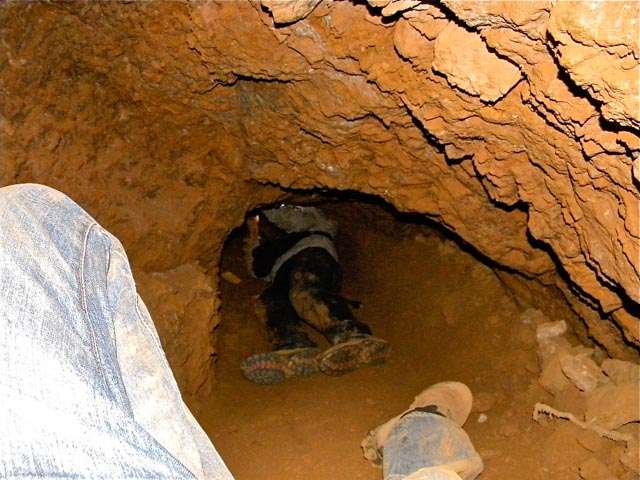
    Abandoned illegal mining (galamsey) pits in the Central Region have claimed more than twenty-two (22) lives between January and August this year.

    During a media briefing after a Regional Security Council meeting, the Central Regional Director of the National Disaster Management Organisation (NADMO), Kwesi Dawood, indicated that the deceased persons lost their lives after drowning in these pits.

    The Central Regional Director of the National Disaster Management Organisation described the situation as alarming and called for a collective effort to end illegal mining in the country.

    Meanwhile, a task force has been launched in response to galamsey activities in the region. Their areas of operation include: Assin North, Assin Central, Upper Denkyira East and West, Twifo Ati-Morkwa, Twifo Hemang Lower Denkyira, and the Komenda-Edina-Eguafo-Abrem Municipality, which comprises security agencies, NADMO, Metropolitan, Municipal and District Assemblies, the Environmental Protection Agency, the Minerals Commission, miners, and the media.

    In the coming days, the degraded galamsey sites are expected to be converted into productive agricultural land and tree plantations.

    The project, which is spearheaded by the Regional Minister, Mr. Ekow Payin Okyere Eduamoah, aims to generate revenue to support Ghana’s economy.

    “This initiative includes implementing our ‘Tree for Life’ reforestation policy, aimed at cultivating cash crops such as cocoa, palm and rubber on rehabilitated sites,” he explained.


    In collaboration with the Ministry of Transport and the Ministry of Finance, under the GRA Customs Division and the Ports and Harbours Authority, the Lands Ministry has initiated proactive tracking of all excavator imports and other heavy equipment from the point of entry.


    The Lands Minister, Emmanuel Armah-Kofi Buah, revealed that the government is developing a centralized digital platform named the Ghana Mine Repository Tracking Software, which has already been deployed at the Minerals Commission and is at an advanced stage to support this initiative.


    “The platform will serve as the single point of integration for all agencies, including Customs, DVLA, Ministry of Transport, Minerals Commission, and National Security,” the minister said.


    The platform will also provide authorized institutions with real-time permit history, equipment location, and operational compliance. A pilot project involving over 191 excavators is currently being tracked in a dedicated control room at the Minerals Commission.


    “I believe we are going to that point where every excavator in this country is actually regulated,” he said.

    The government is undertaking these initiatives in accordance with L.I. 2404, which prescribes the mandatory registration of all earth-moving and mining equipment used in mining operations.


    As part of efforts to clamp down on illegal mining activities, the government has also rolled out an official order requiring all machinery used in mining operations to be registered with the Driver and Vehicle Licensing Authority (DVLA) by August 1.


    A statement issued by the Ministry of the Interior on Tuesday, July 15, indicated that the state will confiscate unregistered mining equipment after the deadline.


    “The Government, as part of efforts to reform the mining sector in the country, requires that all machinery used in mining activities must be registered with the Driver and Vehicle Licensing Authority (DVLA) by 1st August 2025. Equipment that remains unregistered after this deadline will be confiscated by the State,” the Ministry stated on its website.


    The Ghana Police Service and the DVLA have been empowered to strictly enforce the new rule from August 2.

    “The Ghana Police Service and DVLA have been directed to enforce this directive from 2nd August 2025 onward rigorously. The general public, especially those who use mining machinery, is advised to take note and comply with the directive,” it added.


    The Ministry reiterated its resolve to maintain national peace through effective internal security and law enforcement.

    Meanwhile, a similar directive had been issued months earlier, requiring excavator owners and operators to register their machines with the DVLA within two weeks or risk losing them to the state.


    The Chief Executive Officer (CEO) of the DVLA, Julius Neequaye Kotey, issued the directive in Accra, warning that effective June 1, any excavator not registered with the DVLA would be confiscated.
    Speaking at a press briefing, Mr. Kotey announced that the Ghana Police Service and the DVLA’s operational team commenced a nationwide enforcement after the deadline, arresting and impounding excavators being used at mining sites or for commercial purposes without proper documentation.
    “This exercise will help identify every excavator that enters the country and trace how it is being used. The goal is to ensure we can monitor and hold people accountable,” Mr. Kotey said.
    The directive was in line with Section 38 of the Road Traffic Act, 2004 (Act 683), which mandates the registration of all motor vehicles and trailers, including farm and heavy-duty equipment.
    Despite the law, the DVLA found many unregistered excavators operating in mining areas, some of which were used in illegal activities.
    Mr. Kotey emphasized that the DVLA, with its 34 offices nationwide, could register all excavators and farm machinery within two weeks and was ready to strictly enforce the directive.
    “Excavators in the hands of illegal miners have worsened the destruction of our environment. This is why we must act,” Mr. Kotey said.
    To further control the situation, the DVLA, in collaboration with key agencies such as the Minerals Commission, National Security, the Ghana Ports and Harbours Authority (GPHA), and the Customs Division of the Ghana Revenue Authority (GRA), commenced tagging all newly imported excavators.
    In addition to tagging new imports, the Minerals Commission was tasked to lead a team to tag all excavators already in the country. Legal small-scale mining sites have also been geo-fenced, with their site coordinates integrated into the Ghana Mine Repository and Tracking Software for improved oversight.
    Three months ago, Lands and Natural Resources Minister Emmanuel Armah-Kofi Buah announced the rollout of a system to monitor excavator imports and usage, involving port tagging and digital tracking in partnership with several state agencies.
    According to the sector minister, excavators are the third most valuable item imported into the country, worth GHC 6.2 billion.
    Crackdown on illegal mining activities
    In April, a total of 47 individuals were arrested for engaging in illegal mining activities along the Tano River and within the Aboi, Subri, and Nimiri forests in the Western Region.
    This followed a special four-day intelligence-led operation that commenced on April 17 within the Samreboi enclave.According to the Ghana Police Service, the suspects included 39 Ghanaians and 8 Chinese nationals.
    The Police indicated that a significant amount of equipment and materials believed to have been used for the mining operations were retrieved. These included seventeen excavators, one bulldozer, four motorbikes, two Toyota Hilux vehicles, one Rav4 vehicle, four pump-action guns, one single-barrel gun, fifty-four live BB cartridges, and eight pumping machines.
    Prosecution began for the arrested suspects. Forty-one of them were arraigned, with 29 remanded into police custody to reappear before the court on April 30. Twelve others were also remanded to return to court on May 2. The remaining seven were put before the court on April 23.
    Two coordinated operations conducted on Friday, June 20, at Nikanika and Adeade in the Central Region led to the arrest of three suspects and the seizure of several pieces of mining equipment.
    The operations were executed by the Ghana Police Service through its Special Anti-Galamsey Task Force.At Nikanika, the task force found no operators but retrieved a single-barrel shotgun loaded with a cartridge and three water-pumping machines.
    The team later extended its operation to Adeade, where three suspects—Prosper Quansah, Chrispin Nartey, and Owusu Gambra—were arrested with an excavator on a lowbed trailer.
    One SANY excavator, four unregistered Haojin motorbikes, and one lowbed vehicle with registration number GN 2136-24 were seized from the scene. All exhibits were secured in police custody.Some twelve accused persons standing trial for engaging in illegal mining activities at Tumetu, near Princess Town in the Ahanta West Municipality of the Western Region, have been remanded into prison custody.
    While ten of the accused persons were arrested at a palm plantation, two others were arrested at the Elluabo Chavene Ghana Rubber Estate Limited (GREL) plantation.
    This followed a coordinated police intelligence-led operation within the Ahanta West Municipality. The accused persons are Lord Yankey, Caleb Adu Kwaw, Stephen Agyei, Ebenezer Barnes, Mathew Somagevi, Paa Grant, Bashiru Kaviru, Joseph Borney, Aminu Issah, Kofi Sogah, Albert Normah, and Robert Mensah.
    Four water-pumping machines, one tricycle with registration number M-20-WR 1045, and two motorbikes were retrieved from the sites, according to the police. All twelve accused persons admitted to the offense during police interrogations.
    They were subsequently put before the Takoradi Harbour Area Circuit Court ‘A’ and were remanded into prison custody at Sekondi. They reappeared before the court on Tuesday, July 8.
    Additionally, fifteen individuals are in police custody for engaging in illegal mining activities at Manso Adubia. They were arrested following a special intelligence-led operation at Watreso and Preacher Krom. The suspects include Tahiru Ibrahim (24), Shaibu Idrissu (23), Boateng Emmanuel (27), Jamon Kwaku Samuel (21), Yaro Patrick (29), Kofi Boakye (21), Gubong Mathew (45), Fatawu Zackari Seidu (26), Abdul Malik Seidu (22), Dauda Tahiru (23), Sampson Grace (21), Boolangkpuo Freda (24), Arima Hagar (26), Kwarteng Vasco (30), and Kwame Adutwum (24).
    Two excavator control boards, two automatic pump-action guns, two Musler 12 firearms, 59 BB cartridges, three AA cartridges, one water-pumping machine, two power generators, one vulcanizing machine, and one Apsonic motorbike were seized from the site.

  • Galamsey: Police raid at Ankaase Gyadam leads to 27 arrests

    Galamsey: Police raid at Ankaase Gyadam leads to 27 arrests

    Twenty-seven (27) male suspects have been arrested at Ankaase Gyadam, near Asamang Tamfoe in the Eastern Region following a major anti-illegal mining (galamsey) operation.

    According to a police statement, the exercise was conducted on Friday, July 25, targeting illegal mining activities, was led by the Ghana Police Service.

    The operation also led to the seizure of 11 excavators, 1 bulldozer, 1 pump-action shotgun, 3 saloon vehicles, 1 Mitsubishi pickup truck, a pick loader, several water pumping machines, and other mining tools.

    Over 500 arrests have been made from January to May this year in response to efforts to combat galamsey.

    The Ministry of Lands and Natural Resources, Emmanuel Armah-Kofi Buah, attributed the achievement to the government’s renewed efforts.

    According to him, the previous government faced challenges due to its inability to convict the suspects.

    “From 2022 to 2024, out of 845 arrests we made, we couldn’t even prosecute. Only 35 were prosecuted, and that is 4%, and that is really the challenge we had to face,” he noted.

    The government recently announced that it has reclaimed eight out of nine forest reserves that are known as no-go zones and controlled by illegal miners (galamseyers).

    Speaking at the Global Mining Summit on Monday, June 2, President Mahama noted that the recent development marks a significant milestone in Ghana’s ongoing efforts to rehabilitate mined lands and foster sustainable mining practices.

    “Let me be clear at this juncture: artisanal miners are not enemies of the state. If properly trained and supported, they can be allies in our development. Working together with the small-scale mining sector, we will reclaim our forest reserves and restore the purity of our water bodies,” the President said.

    According to President John Dramani Mahama, the government plans to reclaim 10,000 hectares of mined-out lands from illegal mining activities.

    The Ghana Police Service, in recent times, has embarked on several operations to crack down on illegal mining activities.

    Its special Anti-Galamsey Taskforce seized more than 100 excavators, along with weapons, chanfang machines, bulldozers, and other illegal mining equipment.

    The police’s efforts have also resulted in the arrest of numerous individuals who are undergoing legal proceedings.

    Meanwhile, President John Dramani Mahama has announced that the government, in the coming days, will approve the importation of excavators except through a valid permit.

    “We will track excavators to know whether they are being used for illegal mining. Ghana currently has more excavators than the rest of Africa combined. The new permitting regime will not allow you to import any excavator unless you have a valid permit to do so,” President Mahama stated.

    A few months ago, the Lands and Natural Resources Minister, Emmanuel Armah-Kofi Buah, announced the rollout of a system to monitor excavator imports and usage, involving port tagging and digital tracking in partnership with several state agencies.

    The third most valuable item imported into this country is excavators, and it is worth GHC6.2 billion, according to the sector minister.

    The joint Military-Forestry Commission task force that conducted targeted operations in high-risk districts across the Ashanti, Western, and Western North Regions led to the seizure of 100 excavators, three bulldozers, and four vehicles.

    Excavator owners and operators who have failed to register their machines with the Driver and Vehicle Licensing Authority (DVLA) risk losing them to the state, as the government intensifies efforts to clamp down on illegal mining activities.

    The Chief Executive Officer (CEO) of the DVLA, Julius Neequaye Kotey, issued the directive in Accra, warning that effective June 1, any excavator not registered with the DVLA will be confiscated.

    Speaking at a press briefing, Mr. Kotey announced that the Ghana Police Service and the DVLA’s operational team will begin nationwide enforcement after the deadline, arresting and impounding excavators being used at mining sites or for commercial purposes without proper documentation.

    “This exercise will help identify every excavator that enters the country and trace how it is being used. The goal is to ensure we can monitor and hold people accountable,” Mr. Kotey said.

    The directive falls in line with Section 38 of the Road Traffic Act, 2004 (Act 683), which mandates the registration of all motor vehicles and trailers, including farm and heavy-duty equipment. Despite the law, the DVLA has found many unregistered excavators operating in mining areas, some of which have been used in illegal activities.

    Mr. Kotey emphasized that the DVLA, with its 34 offices nationwide, has the capacity to register all excavators and farm machinery within the two-week period and is ready to strictly enforce the directive.

    He stressed the environmental toll caused by unregulated excavator use in illegal mining, saying, “Excavators in the hands of illegal miners have worsened the destruction of our environment. This is why we must act.”

    To further control the situation, the DVLA, in collaboration with key agencies like the Minerals Commission, National Security, the Ghana Ports and Harbours Authority (GPHA), and the Customs Division of the Ghana Revenue Authority (GRA), has started tagging all newly imported excavators.

    In addition to tagging new imports, the Minerals Commission has been tasked to lead a team that will tag all excavators already in the country. Legal small-scale mining sites have also been geo-fenced, with their site coordinates integrated into the Ghana Mine Repository and Tracking software for better oversight.

  • Govt unveils National Anti-Illegal Mining Operations Secretariat to combat ‘galamsey’

    Govt unveils National Anti-Illegal Mining Operations Secretariat to combat ‘galamsey’

    The government has set up the National Anti-Illegal Mining Operations Secretariat (NAIMOS) in efforts to curb illegal mining activities (galamsey) in the country.

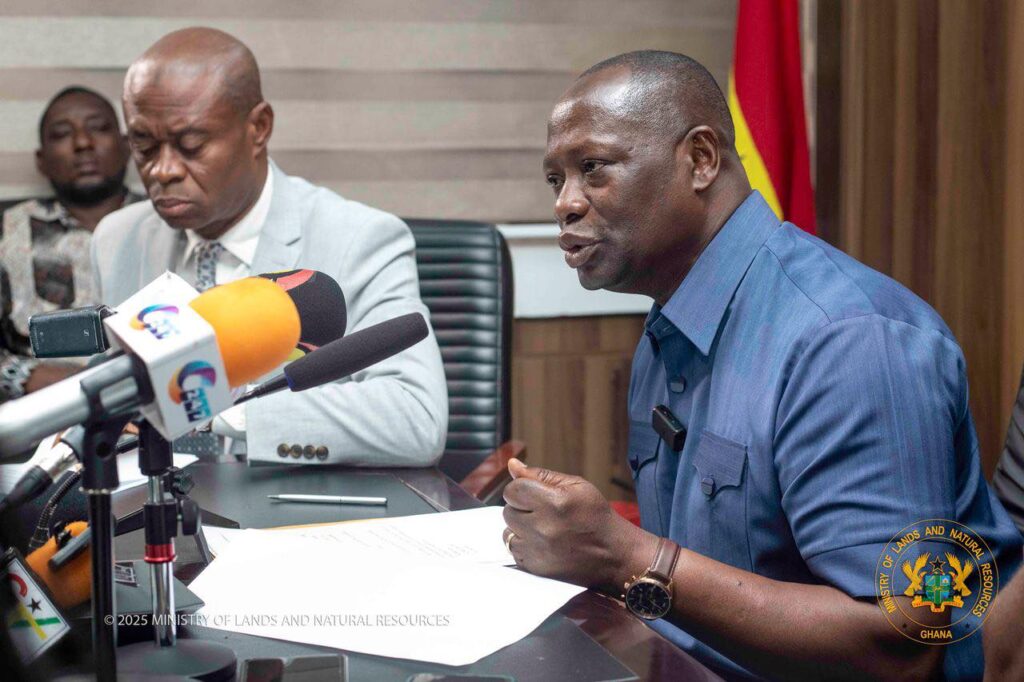
    Speaking during an update on Wednesday, July 23, the Minister for Lands and Natural Resources, Emmanuel Armah-Kofi Buah, disclosed that the newly established Secretariat will act as the brain of Ghana’s anti-illegal mining operations.

    “To coordinate the efforts of the military, police, and other security agencies, the ministry has established the National Anti-Illegal Mining Operations Secretariat (NAIMOS) as the operational nerve-centre for Ghana’s fight against illegal small-scale mining,” he stated.

    The Secretariat is expected to collaborate with other key institutions, such as the Ministry of Transport, the Ministry of Finance (GRA-Customs Division), and the Ghana Ports and Harbours Authority as part of their mandate.

    Their collaboration will ensure that excavators and other earth-moving equipment that enter the country are not diverted to illegal mining activities.

    “In collaboration with the Ministry of Transport and the Ministry of Finance (GRA-Customs Division), and the Ports and Harbours Authority, we have initiated a proactive tracking of all imports of excavators and earth-moving equipment from the point of entry,” he added.

    Illegal mining activities continue to pose a major challenge for the country. Several Chinese individuals have been involved in illegal activities, leading to their arrest.

    The then Akufo-Addo-led government was criticized for failing to confront the issue. Before taking office, President Mahama expressed confidence in implementing lasting solutions to restore Ghana’s environment and protect future generations.

    As such, President Mahama assured to repeal L.I. 2462, which he argued has been shielding the operations of illegal miners. The L.I. 2462 has yet to be accomplished.

    To him, the first step toward collapsing illegal trade is to provide alternative livelihoods for those involved, such as a cooperative mining scheme.

    “You are currently the president of Ghana, and it is your responsibility to deal with galamsey now. After January 7, 2025, when Ghanaians have elected me, I will take responsibility and sort out illegal mining.

    It looks like he doesn’t live in this country because I have commented on galamsey extensively. The University of Energy and Natural Resources gave leaders a platform to outline their small-scale mining policy. I outlined NDC’s policy and answered questions for two hours,” he stated.

    The president also revealed plans to introduce the ‘Tree for Life’ and ‘Blue Water Initiative’ to restore eroded environments as well as water bodies caused by illegal activities.

    On 17 March this year, 460 Blue Water Guards were deployed to galamsey-prone areas, like the Tano River, Wassa Dunkwa, Tigarikrom, and the others.

    According to the Ghana Police Service, a total of 208 individuals have been apprehended and 99 excavators seized as part of the government’s anti-galamsey operation.

    These arrests and confiscation of mining equipment were undertaken between March and May in hotspots, particularly the Western Region, according to reports.

    According to President Mahama, eight out of nine forest reserves known as no-go zones and controlled by illegal miners have been repossessed by the government.

    A few months ago, the Lands and Natural Resources Minister Emmanuel Armah-Kofi Buah announced the rollout of a system to monitor excavator imports and usage, involving port tagging and digital tracking in partnership with several state agencies.

    The third most valuable item imported into this country is excavators, and it is worth GHC6.2 billion, according to the sector minister.

    The joint Military-Forestry Commission task force that conducted targeted operations in high-risk districts across the Ashanti, Western, and Western North Regions led to the seizure of 100 excavators, three bulldozers, and four vehicles.

    On the other hand, excavator owners and operators who have failed to register their machines with the Driver and Vehicle Licensing Authority (DVLA) risk losing them to the state, as the government intensifies efforts to clamp down on illegal mining activities.

    The Chief Executive Officer (CEO) of the DVLA, Julius Neequaye Kotey, issued the directive in Accra, warning that effective June 1, any excavator not registered with the DVLA will be confiscated.

    Meanwhile, President Mahama has declared galamsey a national emergency, requiring collaborative efforts to end the canker. He has also reiterated the government’s commitment to winning the fight against galamsey activities.

    “We are alarmed by the environmental destruction that is reported across Awaso, Dadieso, and Sefwi-Anhwiaso, mainly due to illegal mining. I must be honest, this is a national emergency. The national task force will continue its efforts to halt illegal mining in our forest reserves and on our water bodies,” he added.

    In the meantime, the National Executive Council (NEC) of the University of Teachers Association Ghana (UTAG) has threatened to strike in the coming days should the government fail to make significant ‘progress’ in its fight against galamsey.

    The Association has argued that despite several key promises made, the government is yet to make headway. In a press statement released on Sunday, July 20, the Council demanded that President John Dramani Mahama fulfill his pledge to eradicate the menace.

    “President Mahama’s assumption of office has not yet yielded the concrete actions required to match the gravity of his pledge. We are yet to see this pledge materialize in a way that can halt and reverse the wanton destruction of our forest reserves, water bodies, and arable lands. We are yet to see any coherent, practically relevant, and workable policies from the President and his government to address the galamsey menace permanently,” parts of the statement read.


  • End galamsey now or we will  strike – UTAG to President Mahama

    End galamsey now or we will strike – UTAG to President Mahama

    There’s a looming strike in the coming days, should the government fail to make significant ‘progress’ in its fight against illegal mining (galamsey), despite several key promises made.


    In a press statement released on Sunday, July 20, the National Executive Council (NEC) of UTAG demanded that President John Dramani Mahama fulfill his pledge in eradicating the menace.


    “President Mahama’s assumption of office has not yet yielded the concrete actions required to match the gravity of his pledge.

    “We are yet to see this pledge materialised in a way that can halt and reverse the wanton destruction of our forest reserves, waterbodies and arable lands.

    “We are yet to see any coherent, practically relevant and workable policies from the President and his government to address the galamsey menace permanently,” parts of the statement read.

    Illegal mining activities continue to pose a major challenge for the country.

    Several Chinese individuals have been involved in illegal activities, leading to their arrest.

    The then Akufo-Addo-led government was criticized for failing to confront the issue.

    Before taking office, President Mahama expressed confidence in implementing lasting solutions to restore Ghana’s environment and protect future generations.

    As such, President Mahama assured to repeal L.I. 2462, which he argued has been shielding the operations of illegal miners. The L.I. 2462 has yet to be accomplished.

    To him, the first step toward collapse that illegal trade is to provide alternative livelihoods for those involved, such as a cooperative mining scheme.

    “You are currently the president of Ghana, and it is your responsibility to deal with galamsey now. After January 7, 2025, when Ghanaians have elected me, I will take responsibility and sort out illegal mining.

    “It looks like he doesn’t live in this country because I have commented on galamsey extensively. The University of Energy and Natural Resources gave leaders a platform to outline their small-scale mining policy. I outlined NDC’s policy and answered questions for two hours,” he stated.

    The President also revealed plans to introduce the‘Tree for Life’ and ‘Blue Water Initiative’, to restore eroded environments as well as water bodies caused by illegal activities.

    However, on 17 March this year, 460 Blue Water Guards were deployed to galamsey-prone areas; like the Tano River, Wassa Dunkwa, Tigarikrom and the others.

    According to the Ghana Police Service, a total of 208 individuals have been apprehended and 99 excavators seizedas part of the government’s anti-galamsey operation.

    These arrests and confiscation of mining equipment were undertaken between March and May in hotspots, particularly the Western Region, according to reports.

    According to President Mahama, eight out of nine forest reserves known as no-go zones and controlled by illegal miners have been repossessed by the government.

    A few months ago, the Lands and Natural Resources Minister Emmanuel Armah-Kofi Buah announced the rollout of a system to monitor excavator imports and usage, involving port tagging and digital tracking in partnership with several state agencies.

    The third most valuable item imported into this country is excavators, and it is worth GHC6.2 billion, according to the sector minister.

    The joint Military-Forestry Commission task force that conducted targeted operations in high-risk districts across the Ashanti, Western, and Western North Regions led to the seizure of 100 excavators, three bulldozers, and four vehicles.

    On the other hand, excavator owners and operators who have failed to register their machines with the Driver and Vehicle Licensing Authority (DVLA) risk losing them to the state, as the government intensifies efforts to clamp down on illegal mining activities.

    The Chief Executive Officer (CEO) of the DVLA, Julius Neequaye Kotey, issued the directive in Accra, warning that effective June 1, any excavator not registered with the DVLA will be confiscated.

    Meanwhile, President Mahama activities a national emergency, requiring collaborative efforts to end the canker.

    He has also reiterated the government’s commitment to winning the fight against galamsey activities.

    “We are alarmed by the environmental destruction that is reported across Awaso, Dadieso, and Sefwi-Anhwiaso, mainly due to illegal mining. I must be honest, this is a national emergency.

    “The national taskforce will continue its efforts to halt illegal mining in our forest reserves and on our water bodies.

  • Galamsey is a national emergency – Mahama

    Galamsey is a national emergency – Mahama

    President John Dramani Mahama has declared illegal mining (galamsey) activities a national emergency, requiring collaborative efforts to end the canker.

    Addressing a durbar during his ‘Thank You Tour’ at the Western North Region on Tuesday, July 15, President Mahama lamented the poor state of the Awaso, Dadieso, and Sefwi Anhwiaso forest reserves.

    He reiterated the government’s commitment to curbing galamsey activities and protecting the country’s natural resources.

    “We are alarmed by the environmental destruction that is reported across Awaso, Dadieso, and Sefwi-Anhwiaso, mainly due to illegal mining. I must be honest, this is a national emergency.

    “The national taskforce will continue its efforts to halt illegal mining in our forest reserves and on our water bodies.

    “I have also noticed the activities of the illegal anti-galamsey taskforces that go round extorting money from legitimate small-scale mining companies.

    “I have requested the authorities to arrest and prosecute any individuals involved in this illegal anti-galamsey activity,” he added.

    Meanwhile, two executives of the National Democratic Congress (NDC) are expected to be investigated by the Economic and Organised Crime Office (EOCO) in the coming days.

    Mr. Yakubu Abanga and Mr. Joseph Yamin will be interrogated for their alleged involvement in illegal mining activities (galamsey).

    As such, the Attorney-General and Minister for Justice have mandated EOCO to investigate the matter thoroughly to ensure accountability.

    This was revealed in a letter by both authorities on Tuesday, July 15.

    “I am directing your office to invite the following persons named in recent credible reports for interrogation, namely, Mr. Yakubu Abanga and Mr. Joseph Yamin.

    “The scope of this investigation should include the matters highlighted in Prof Frimpong Boateng’s report on illegal mining,” parts of the letter read.

    Joseph Yamin and Yakubu Abanga have been mentioned as alleged collaborators of a rogue anti-galamsey taskforce said to be targeting and harassing licensed miners.

    The Ghana National Association of Small Scale Miners (GNASSM) reported persistent intimidation and extortion by an alleged task force.

    Speaking to the media on Monday, June 30, the Ashanti Regional Secretary of the Association, Michael Adu-Gyamfi, said these individuals act in the guise of working with the National Anti-Illegal Mining Operation Secretariat.

    “I have five zones under my jurisdiction. Each zone is a full district, and on some days, you can have three or four different teams showing up at a site, all claiming to be there for inspections”.

    “Some say they’re from the national level, others from the region or district. This unregulated situation has led to intimidation and extortion of our members,” he added.

    The government set up the National Anti-Galamsey Taskforce to tackle the menace of illegal mining.

    Efforts by the task force are aimed at regulating the mining industry to ensure operations are both responsible and environmentally sustainable.

    The Ministry of Lands and Natural Resources, Emmanuel Armah-Kofi Buah, has revealed that over 500 arrests have been made from January to May this year in response to efforts to combat illegal mining, locally known as galamsey.

    He attributed the achievement to the government’s renewed efforts.

    According to him, the previous government faced challenges due to its inability to convict the suspects.

    “From 2022 to 2024, out of 845 arrests we made, we couldn’t even prosecute. Only 35 were prosecuted, and that is 4%, and that is really the challenge we had to face,” he noted.

    The government recently announced that it has reclaimed eight out of nine forest reserves that are known as no-go zones and controlled by illegal miners (galamseyers).

    Speaking at the Global Mining Summit on Monday, June 2, President Mahama noted that the recent development marks a significant milestone in Ghana’s ongoing efforts to rehabilitate mined lands and foster sustainable mining practices.

    “Let me be clear at this juncture: artisanal miners are not enemies of the state. If properly trained and supported, they can be allies in our development. Working together with the small-scale mining sector, we will reclaim our forest reserves and restore the purity of our water bodies,” the President said.

    According to President John Dramani Mahama, the government plans to reclaim 10,000 hectares of mined-out lands from illegal mining activities.

    The Ghana Police Service, in recent times, has embarked on several operations to crack down on illegal mining activities.

    Its special Anti-Galamsey Taskforce seized more than 100 excavators, along with weapons, chanfang machines, bulldozers, and other illegal mining equipment.

    The police’s efforts have also resulted in the arrest of numerous individuals who are undergoing legal proceedings.

    Meanwhile, President John Dramani Mahama has announced that the government, in the coming days, will approve the importation of excavators except through a valid permit.

    “We will track excavators to know whether they are being used for illegal mining. Ghana currently has more excavators than the rest of Africa combined. The new permitting regime will not allow you to import any excavator unless you have a valid permit to do so,” President Mahama stated.

    A few months ago, the Lands and Natural Resources Minister, Emmanuel Armah-Kofi Buah, announced the rollout of a system to monitor excavator imports and usage, involving port tagging and digital tracking in partnership with several state agencies.

    The third most valuable item imported into this country is excavators, and it is worth GHC6.2 billion, according to the sector minister.

    The joint Military-Forestry Commission task force that conducted targeted operations in high-risk districts across the Ashanti, Western, and Western North Regions led to the seizure of 100 excavators, three bulldozers, and four vehicles.

    Excavator owners and operators who have failed to register their machines with the Driver and Vehicle Licensing Authority (DVLA) risk losing them to the state, as the government intensifies efforts to clamp down on illegal mining activities.

    The Chief Executive Officer (CEO) of the DVLA, Julius Neequaye Kotey, issued the directive in Accra, warning that effective June 1, any excavator not registered with the DVLA will be confiscated.

    Speaking at a press briefing, Mr. Kotey announced that the Ghana Police Service and the DVLA’s operational team will begin nationwide enforcement after the deadline, arresting and impounding excavators being used at mining sites or for commercial purposes without proper documentation.

    “This exercise will help identify every excavator that enters the country and trace how it is being used. The goal is to ensure we can monitor and hold people accountable,” Mr. Kotey said.

    The directive falls in line with Section 38 of the Road Traffic Act, 2004 (Act 683), which mandates the registration of all motor vehicles and trailers, including farm and heavy-duty equipment. Despite the law, the DVLA has found many unregistered excavators operating in mining areas, some of which have been used in illegal activities.

    Mr. Kotey emphasized that the DVLA, with its 34 offices nationwide, has the capacity to register all excavators and farm machinery within the two-week period and is ready to strictly enforce the directive.

    He stressed the environmental toll caused by unregulated excavator use in illegal mining, saying, “Excavators in the hands of illegal miners have worsened the destruction of our environment. This is why we must act.”

    To further control the situation, the DVLA, in collaboration with key agencies like the Minerals Commission, National Security, the Ghana Ports and Harbours Authority (GPHA), and the Customs Division of the Ghana Revenue Authority (GRA), has started tagging all newly imported excavators.

    In addition to tagging new imports, the Minerals Commission has been tasked to lead a team that will tag all excavators already in the country. Legal small-scale mining sites have also been geo-fenced, with their site coordinates integrated into the Ghana Mine Repository and Tracking software for better oversight.

  • We’re done negotiating; do your part – GRNMA to Health Ministry

    We’re done negotiating; do your part – GRNMA to Health Ministry

    The Ghana Registered Nurses and Midwives Association (GRNMA) has told the Ministry of Health it is unwilling to revisit the negotiation table to address the current strike action.

    Instead, the association wants the government to fulfill its part of the agreement to address their conditions of service.

    Speaking to the media on Monday, June 9, GRNMA Greater Accra Regional Chairman, Jefferson Asare, indicated that it is open to a dialogue so long as it has tangible solutions to their concerns.

    “We are ready to meet. If we receive a letter now, we will move anywhere they want us to go. But for renegotiation, we are not ready,” Mr. Asare stated.

    His remarks come after Health Minister Kwabena Mintah Akandoh called for a peaceful discussion to resolve the ongoing strike.

    Members of GNRMA have withdrawn from their posts over delays in their 2024 Collective Agreement.

    In response, a 10-day injunction has been placed on the nationwide strike after the Industrial and Labour Division of the High Court in Accra described the protest as illegal.

    The order comes after the National Labour Commission (NLC) filed an ex parte application on Thursday, June 5.

    Meanwhile, the GRNMA has disclosed that it is yet to formally receive a court order restraining its ongoing strike.

    Public Relations Officer of the GRNMA, Joseph Krampah, has insisted that the group will continue its strike until an official injunction notice is served.

    According to him, although the Association is a law-abiding group, it cannot obey unofficial reports.

    “They think that they should serve us a letter; we can’t prevent them, but what constitutes an illegal strike? When in Ghana has the Labour Commission said that this strike is legal? It is only illegal when they don’t inform your office about the intended strike, and we did—you had the letter,” Krampah said.

    Adding: “If you are declaring it as illegal or whatever and you are bringing injunction, that is your job to do, and we respect the court and the NLC very much. We are law-abiding people. But just that things that we have not seen, we cannot act on them. I am saying that we haven’t received any letter. None of the executives have been served any letter about that. So till we know that, aluta continua.”

    To ensure that the general public continues to access quality healthcare, the Health Ministry has instructed all hospital managers, particularly Directors of Nursing Services and their Deputies, to be present at work at all times during the period of the industrial action.

    The ambulance service is expected to remain on standby in every district to support emergencies promptly. Additionally, all health facilities are to establish coordinating structures that can effectively manage emergencies and maintain continuous communication with ambulance services to ensure a swift response when needed.

    Furthermore, the Director-General of the Ghana Health Service, along with Chief Executive Officers and Medical Directors of Teaching Hospitals, is required to provide daily reports to the Acting Chief Director on the status of healthcare service delivery within their respective institutions.

    To manage the anticipated surge in patient numbers due to ongoing industrial action, the Ministry of Health has pledged to collaborate with quasi-government health facilities. This partnership aims to ease the pressure on public health institutions and ensure continuous care delivery.

    The ministry has also advised rotational nurses and those currently undergoing mandatory clinical training to refrain from participating in any form of industrial action. Their cooperation is crucial in maintaining essential services during this period.

    Ongoing monitoring of the situation will be conducted by the ministry to ensure that all necessary logistics and resources are made available to mitigate the impact of the strike.

    In public health facilities, nurses have withdrawn their services, leaving many patients stranded.

  • 208 arrested, 99 excavators impounded nationwide in anti-galamsey operation – Police

    208 arrested, 99 excavators impounded nationwide in anti-galamsey operation – Police

    The Ghana Police Service has apprehended a total of 208 individuals and seized 99 excavators as part of the government’s anti-galamsey operation.

    These arrests and confiscation of mining equipment were undertaken between March and May in hotspots, particularly the Western Region, according to reports.

    A breakdown reveals that along the Tano River, Wassa Dunkwa, Tigarikrom, and surrounding communities in the Western Region, 58 individuals, comprising 50 Ghanaians and eight Chinese nationals, were arrested. Also, 85 excavators and three bulldozers were retrieved.

    Also within the Western Region, 19 individuals were arrested, as well as three pump actions and three excavators seized by the Police Command. Again, 85 suspects, comprising 76 Ghanaians and 9 Chinese, were nabbed, and 11 excavators were seized.

    24 suspects, including one Burkinabe national, were arrested, and a cache of weapons, including three single-barrel guns, five excavators, and one pump-action gun retrieved in the Eastern South Region.

    Seven Ghanaians were apprehended, whereas 11 changfangs and three motorbikes were impounded by police officers in the Upper West Region.

    15 suspects, including one Chinese national, were arrested, and excavator control boards, monitors, and a pistol were retrieved by the Eastern North Command.

    The police have revealed that arrested individuals are in custody awaiting court proceedings. Meanwhile, the police have called on the public to assist in preserving Ghana’s resources.

  • Protect the forest with us – Forestry Commission’s call to chiefs

    Protect the forest with us – Forestry Commission’s call to chiefs

    The Acting Executive Director of the Forest Services Division at the Forestry Commission, Lydia Opoku, is urging chiefs and community members in galamsey-affected areas to support Forest Guards who are risking their lives to stop illegal mining.

    She noted that the miners are often backed by well-armed groups, making it difficult for forest officials to confront them alone.

    Speaking to the media in Kumasi on Thursday, May 8, after visiting some illegal mining sites, she appealed for community involvement. “The miners are being protected by armed tasks and the sophisticated machines they are holding, we cannot match them. So, we are pleading with the communities, chiefs, to assist to protect the Forestry Commission to protect the forest,” she said.

    Meanwhile, under the government’s Blue Water Initiative led by the Ministry of Lands and Natural Resources, 453 personnel have completed four weeks of intensive training at the Ghana Navy Forward Base in Ezilibo, in the Western Region’s Jomoro District.

    They are set to be deployed within a week to support the Navy in protecting the country’s major rivers from galamsey operations.

  • Delayed trials, limited prison capacity behind foreign ‘galamseyers’ repatriation — Dep. Interior Minister

    Delayed trials, limited prison capacity behind foreign ‘galamseyers’ repatriation — Dep. Interior Minister

    Deputy Interior Minister Ebenezer Terlarbi has justified the government’s strategy of deporting foreign nationals involved in illegal mining activities, locally referred to as galamsey, rather than pursuing lengthy prosecutions.

    Speaking on JoyNews on Tuesday, April 8, Terlarbi acknowledged that while the policy has faced criticism, it remains the most practical option given the “realities on the ground.”

    He pointed to persistent delays in the judicial system, overcrowded prison facilities, and the complex logistics of managing large-scale arrests of foreign miners as key factors influencing the decision.

    He explained, “we know when it comes to litigation in this country — dealing with our courts — it can sometimes be very frustrating. We have instances where people are arrested, and we prefer repatriating them rather than taking them through our courts.”

    Terlarbi further noted that many foreign nationals, upon arrest, immediately demand trials, engage lawyers, and exploit legal technicalities, which tend to drag cases on for months or years.

    “They have lawyers, which is their right, and they need to be proven guilty by our courts,” he emphasized, underscoring the difficulty of swiftly concluding such cases through normal judicial processes.

    The government, he said, is seeking to balance the enforcement of mining laws with the practical challenges of maintaining an already overburdened legal and correctional system.

    Meanwhile, security analyst Professor Kwasi Aning has criticised government’s new directive to arrest and deport foreign nationals involved in illegal mining without prosecuting them.

    He warned that such a policy will embolden even more dangerous criminals and deepen public distrust in Ghana’s justice system.

  • Prof. Aning slams  govt’s ‘two-tier law’ over deportation policy for foreign galamseyers

    Prof. Aning slams govt’s ‘two-tier law’ over deportation policy for foreign galamseyers

    Security expert, Professor Kwasi Aning, has strongly criticised the government’s new decision to arrest and deport foreigners caught in illegal mining without taking them through the courts.

    He believes this move could make Ghana more vulnerable to dangerous criminals and further reduce public trust in the country’s legal system.

    Speaking on Joy News’ PM Express on Tuesday, April 8, Prof. Aning described the decision as unfair and poorly thought out. He said it creates two different systems of justice—one for foreigners and another, tougher one for Ghanaians.

    According to him, this approach by the Interior Ministry sends a message that Ghanaians don’t deserve the same protection under the law in their own country.

    “I have absolutely no sympathy. I detest being an independent Ghanaian in Kwame Nkrumah’s Ghana being treated like a second-class citizen,” Prof. Aning declared passionately.

    “We cannot have a two-tier law. We cannot have a two-tier implementation process.”

    The backlash follows the announcement by Interior Minister Alhaji Muntaka Mubarak directing the Inspector General of Police to immediately transfer all regional, divisional, and district police commanders in mining areas.

    But it was the policy to deport foreign nationals involved in the crime without prosecution that drew the sharpest rebuke from Prof. Aning.

    “This is a policy that will serve as an attraction for even worse criminals to come, because they know we don’t have the capacity to prosecute them,” he warned.

    “They know we don’t have the political will to do what is right for the people of this country.”

    Directly addressing President John Mahama, the security expert made an emotional appeal.

    “Mr. President, this is your legacy term, let it matter and let it count. Your minister has demonstrated an unwillingness and a reluctance to hold the bull by the horns and resolve this crisis. This is not a time to proceed. Please rescind this policy before this country is destroyed.”

    Professor Kwasi Aning says the government’s plan to deport illegal miners without prosecution could send a dangerous message—not only to Ghanaians, but also to international criminal groups who take advantage of weak law enforcement.

    He criticized the decision, saying, “The manner in which this has been presented to the Republic of Ghana is shameful. Mr. President, it is not thought through. It is populist, and it’s a disgrace.”

    Prof. Aning added that although changing police leadership might help, it will only be effective if the officers are given clear targets and the resources they need. He warned against making decisions without proper planning, saying real progress depends on strategy, not quick fixes.

    “I think it’s useful. We need to give the police officers performance indicators, but we need to give them the resources, Your Excellency, so that the three months can be tested and their results checked.”

    He urged the President to recall his promise to Ghanaians and to make environmental reclamation and justice a defining feature of his final term in office.

    “Let this be your legacy term by reclaiming the environment, as you promised the people of Ghana in your State of the Nation Address.”

  • China to prosecute citizens repatriated from Ghana over illegal mining – Reports

    China to prosecute citizens repatriated from Ghana over illegal mining – Reports

    Government’s choice to deport foreign nationals involved in illegal mining and other crimes instead of putting them on trial in Ghana has sparked mixed reactions. Some Ghanaians are asking why local offenders are taken to court, while foreigners are simply sent back to their countries.

    According to Citi News investigations, deported foreigners are handed over to law enforcement in their home countries, where they face prosecution. Officials at the Ministry of the Interior say Ghana’s embassies, including the one in China, keep track of these legal cases and give regular updates to the Ministry.

    In a recent case, 30 Chinese nationals arrested for illegal mining, known locally as “galamsey,” were deported. At the Kotoka International Airport, they were handed over to Chinese immigration officers. The operation was led by Superintendent Li Ran, who heads airport operations. Sources say the process was carried out politely and professionally.

    The Chinese government has reportedly backed Ghana’s decision, calling the involvement of Chinese citizens in galamsey shameful and harmful to the good relationship between the two countries.

    “Foreigners arrested for illegal mining often exploit loopholes in the judicial process,” the source explained. “They establish connections within security agencies and deliberately choose courts that offer favorable bail terms. Once granted bail, they relocate to different districts and resume their illegal activities, while court cases drag on for years without resolution.”

    Since Muntaka Mohammed Mubarak assumed office as Minister for the Interior, more than 100 foreign nationals—including Chinese citizens—have been deported for offenses related to illegal mining and other crimes.

    Officials from the Interior Ministry stressed that the deportation strategy is not designed to favor foreigners, but rather to prevent abuse of Ghana’s legal system and safeguard national interests. “The aim is to ensure swift justice and reduce the risk of recidivism among offenders who manipulate court delays and lax bail conditions,” one official noted.

    Ghanaians who are caught working with foreign nationals involved in illegal mining are being prosecuted in the country, and the Ministry of the Interior says no one will be spared.

    At a recent meeting with police officers in the Ashanti Region, the Interior Minister warned law enforcement and prosecutors not to change the identities of foreign suspects to help them avoid deportation. He made it clear that anyone caught doing so would face punishment.

    The Ministry is also working with the embassies of the deported individuals to make the repatriation process smoother. The embassies pay for the return flights of their citizens, while the Ghanaian government covers the cost of Immigration officers who escort them.

    Officials say this method helps strengthen Ghana’s cooperation with other countries in tackling international crime. It also improves national security and speeds up justice. Photos from the Immigration Service show Chinese nationals being escorted and handed over to Chinese authorities for prosecution over illegal mining and fraud.

  • We don’t support depotation with trial -Group opposes Muntaka’s policy on foreigners involved in Galamsey

    We don’t support depotation with trial -Group opposes Muntaka’s policy on foreigners involved in Galamsey

    Eco-Conscious Citizens, a prominent environmental advocacy group, has strongly opposed the recent policy announced by Interior Minister Mohammed Mubarak Muntaka, which involves deporting foreign nationals involved in illegal mining (galamsey) without trial.

    During an engagement with the Ashanti Regional Police Command, Minister Muntaka announced that the government would deport foreigners involved in illegal mining activities instead of prosecuting them. He argued that this approach would protect the environment and save the country money.

    “We have resolved, as a new policy, that for two things—whether you’re involved in galamsey or cutting down our trees unlawfully, or engaging in fraudulent activities, whether through computer fraud or other means—when we arrest any foreigner, we are not interested in prosecuting them. Our first option is to take them back to their country,” Muntaka stated.

    However, this decision has faced backlash from environmental groups, with Eco-Conscious Citizens strongly opposing it. The group’s Coordinator, Awula Serwah, shared her concerns during an interview on Morning Starr with Naa Dedei Tettey. She emphasized that merely deporting offenders without any legal consequences would fail to serve as a deterrent to future violations.

    “If someone is involved in environmental terrorism, destroying our forest reserves and poisoning our water bodies, and what you’re saying is that they can come to Ghana, engage in these activities, and when we catch them, we just pay for their fare to return to their country without prosecution, no jail time, and no restitution—then that’s not a deterrent,” Serwah said.

    Serwah went on to explain that such a policy would encourage more foreigners to engage in galamsey, as the risks of facing severe legal consequences are minimized. She also pointed out that Ghana’s porous borders make it easy for offenders to return under different identities, referencing the case of Aisha Huang, a notorious galamsey queenpin who was deported but later returned to continue illegal mining activities.

    She argued that the policy undermines the rule of law, particularly the provisions of the Lands and Minerals Act, which mandates the prosecution of individuals caught engaging in illegal mining. “The idea that we won’t prosecute them to save money doesn’t stand scrutiny. You need to deal with them robustly to discourage them from coming. You need to prosecute and imprison them, and then after they’ve served their sentences, they can return to their country,” Serwah added.

    Eco-Conscious Citizens is urging the government to reconsider its approach, calling for tougher measures such as prosecution and imprisonment to deter foreign nationals from engaging in illegal mining in Ghana.

  • Ablakwa announces immediate deportation for foreigners engaged in illegal mining  

    Ablakwa announces immediate deportation for foreigners engaged in illegal mining  

    Foreign Affairs Minister, Samuel Okudzeto Ablakwa, has reiterated the government’s firm commitment to deporting all foreign nationals engaged in illegal mining, also known as galamsey.

    While addressing the Ghanaian community in Lagos, Nigeria, the Minister emphasized President Mahama’s strong position on safeguarding the country’s natural resources.

    “President Mahama has said that he will not tolerate any form of mining in our river bodies or forest reserves,” he stated.

    He revealed that a military operation will soon begin targeting illegal miners.

    “In the next few days, we’re going to round people up and prosecute them,” he said, referring to the upcoming military deployment.

    Ablakwa also disclosed that several deportations have already taken place, though the government has not publicized them widely.

    “Already, a lot of deportations have been carried out. We’ve just not been advertising them,” he added.

    He stressed the importance of taking action against those who repeatedly return to restricted areas after military operations have removed them.

    The Minister expressed hope that with full implementation of government measures, the water quality in the country will improve.

    He made a heartfelt plea to Ghanaians in Nigeria to help the nation in its fight against illegal mining, assuring them that all necessary steps would be taken to tackle the issue.

  • Galamsey: Excavator imports soared under Akufo-Addo – Environment Minister alleges

    Galamsey: Excavator imports soared under Akufo-Addo – Environment Minister alleges

    The Minister of Environment, Science, Technology, and Innovation, Ibrahim Murtala Mohammed, has suggested that the rise in illegal mining during the Akufo-Addo administration was due to state support.

    He cited the increased importation of excavators, particularly during the 2023 fiscal year, as evidence that the previous government may have contributed to the growth of galamsey.

    Murtala Mohammed pointed out that excavators were among the top imported items, with the numbers not reflecting the level of construction activity in the country, implying government involvement in illegal mining operations.

    He emphasized that unlike the previous administration, President John Mahama’s government is dedicated to combating illegal mining.

    The Minister assured that Mahama would take swift action against any appointees or party members found participating in galamsey, highlighting Mahama’s track record of holding close allies accountable for wrongdoing, citing the Abuga Peele case.

    In response to ongoing calls for a state of emergency in illegal mining regions, Murtala Mohammed stated that President Mahama is in talks with security agencies to evaluate whether such a declaration is necessary.

    He stressed that if the security services advise it, the President will act without hesitation.

    However, he also cautioned that declaring a state of emergency would have far-reaching effects on the local communities, as mining is central to their livelihoods. Therefore, Murtala Mohammed emphasized the need for caution before making such a significant decision.

  • Demo against galamsey by #FixTheCountry to be held on May 1

    Demo against galamsey by #FixTheCountry to be held on May 1

    The #FixTheCountry Movement is mobilizing for a massive protest on May 1, aimed at pressuring the government to take urgent action against illegal and irresponsible mining activities devastating Ghana’s forests, rivers, and communities.

    The planned protest, dubbed “May Day, May Day,” seeks to draw national attention to the environmental crisis fueled by reckless mining practices, which activists say continues unchecked despite mounting public concern.

    Lead convener Oliver Barker-Vormawor said, “For months, we have seen the government act swiftly on other matters. But on this, there’s no clear roadmap. People say we should give them more time, but we believe time has already been wasted. We are stepping out to demand urgent and serious action.”

    Organizers argue that while government authorities have demonstrated swift intervention on other national issues, they have yet to chart a clear and effective path toward addressing the environmental degradation caused by mining.

    Barker-Vormawor also emphasized that, “We often focus too much on legality. But the real issue is irresponsibility—how mining is done and its impact on people and the environment. Some big mining companies, though considered legal, are also engaging in destructive practices.”

    Timed to coincide with International Workers’ Day, the protest is expected to bring thousands onto the streets to demand stronger environmental protections and sustainable mining reforms.

  • Interior Minister to strictly deport foreigners involved in galamsey

    Interior Minister to strictly deport foreigners involved in galamsey

    Interior Minister Muntaka Mubarak has made it clear that the NDC government is not focused on prosecuting foreign nationals involved in fraud and illegal mining in the country. Instead, he revealed that a new policy is being developed that will lead to the deportation of these individuals following their arrest.

    During a meeting with the Ashanti Regional Police Command, Mubarak emphasized the government’s priority to expel foreign nationals engaged in illegal mining, a practice that has severely damaged the country’s environment. He also made it known that individuals involved in fraudulent activities would face similar deportation measures.

    This move comes after the recent deportation of 107 foreign nationals who were apprehended for engaging in illegal mining activities that harmed forest reserves and water bodies, as well as for fraud-related offenses. Mubarak explained that this initiative reflects the government’s commitment to reducing the involvement of foreign nationals, particularly from China, in illegal mining and fraud.

    The Interior Minister further noted that the deportation initiative is part of a wider strategy to restore law and order across different sectors in the country. Additionally, he shared that discussions are ongoing with the Attorney-General to ensure proper legal guidance in the matter.

  • Lack of employment opportunities triggering galamsey activities – Small-Scale Miners

    Lack of employment opportunities triggering galamsey activities – Small-Scale Miners

    Head of the Concerned Small-Scale Miners Association, Michael Kwadwo Peprah, has raised critical concerns about the persistent challenge of illegal mining, known as galamsey.

    He attributes much of the issue to the high rate of youth unemployment.

    In an interview on the Joy News AM Show, Mr. Peprah explained that many young individuals, lacking stable employment opportunities, have resorted to galamsey as a means of survival.

    “People cannot sleep,” he said, stressing that the unemployed are left with little choice but to find ways to survive. “You expect them to die of hunger? That’s the root cause of the galamsey problem we face today.”

    He further emphasized that for many youths, galamsey presents an alternative to unemployment, allowing them to earn money where there are few other options.

    “A lot of these youths, when they wake up, they have nothing to do,” he explained. “If they are not employed and see a way to make 50 to 100 cedis a day with a pickaxe, they’ll take it, even if it puts their lives in danger.” He identified this as a major factor driving the spread of illegal mining.

    Mr. Peprah also criticized the use of force as an ineffective and short-term solution to galamsey.

    “When the military is called in, they may stop the miners for a while, but once they leave, the mining resumes because the people need to survive,” he remarked. “It’s not about defiance; it’s about survival.”

    To resolve the issue, he argued, the government must first address the root cause: the widespread lack of employment for young people.

    “When we understand this, we can start finding real solutions,” he said. “But in this country, we often avoid dealing with the real issues and only react with panic when problems arise.”

    He concluded by calling for a more comprehensive solution, one that not only targets illegal mining but also seeks to provide lasting job opportunities for the youth.

    “We need to focus on long-term solutions, not just temporary fixes,” he urged, appealing for collaboration from the government and relevant stakeholders to tackle youth unemployment.

  • Galamsey pit collapses at Mpasatia; 2 dead, search for survivors underway

    Galamsey pit collapses at Mpasatia; 2 dead, search for survivors underway

    A galamsey pit collapse at Mpasatia Yaw Nkwantah in the Atwima Mponua District of the Ashanti Region has claimed the lives of two individuals, with rescue efforts ongoing to locate others feared trapped underground.

    The tragic incident, which occurred on Tuesday morning, has sparked urgent operations by local residents and security agencies to retrieve those still buried under the rubble. Eyewitnesses say the collapse was sudden, leaving little time for those inside to escape.

    According to residents, the mining site is privately owned, and individuals have been allowed to operate there without proper oversight. A local, Nana Nkansah, attributed the collapse to unsafe mining practices.

    Speaking to JoyNews, he is quoted to have said, “they had mined deep into the pits. The top had become weak and that is how the place caved in.” Many of the miners in the area reportedly use rudimentary tools to dig dangerously deep shafts without reinforcement.

    The bodies of the deceased have been transported to a morgue as officials work to identify them and notify their families. Authorities have yet to confirm the number of people still trapped, as the search operation intensifies.

    This latest collapse marks the second time a disaster of this nature has occurred at the same illegal mining site, raising renewed concerns over the continued dangers of galamsey operations in the area. Despite intensified efforts by the Ashanti Regional Security Council to clamp down on illegal mining, unregulated activities persist in several parts of the region.

  • 11 including 4 Chinese arrested for illegally mining along Bonsa River

    11 including 4 Chinese arrested for illegally mining along Bonsa River

    The Western Central Regional Police Command has arrested eleven suspects for illegal mining activities along the Bonsa River bank in the Western Region.

    The suspects, comprising seven Ghanaians and four Chinese, were arrested on 31st March through sustained intelligence-led operations against illegal mining activities.

    Five of the suspects, Wei Qinwei, Yao Yongji, Nsoh Oto Agologo, Kwadwo George Sergio, Emmanuel Van Atta, were arrested at a site in Bonsa, while the remaining 6 suspects, Nuang Shichuan, Huang Xinbao, Douglas Ayambilla, Elvis Aborta, Michael Tettey Komlorm and Ibrahim Dauda were arrested at Wassa Agona.

    All the suspects are in custody and will be put before the court to face justice.

    The Police Service has assured the general public, especially communities within the Western Central Regional Police Command, that it remains committed to fighting crime and ensuring security law and order in the country.

  • “This is a fight we must win for the future of our nation” – Environment Minister on galamsey

    “This is a fight we must win for the future of our nation” – Environment Minister on galamsey

    The government has reaffirmed its commitment to eradicating illegal mining, with the Minister of Environment, Science, and Technology, Hon. Ibrahim Murtala Muhammad, declaring that the battle against galamsey is non-negotiable.

    Speaking at a press briefing on Wednesday, March 19, he emphasized that tackling illegal mining is not just an environmental issue but a national security priority.

    “This is a fight we must win for the future of our nation,” he declared, stressing that all individuals involved—whether political figures or not—would face the full force of the law.

    He compared galamsey to an act of terrorism, warning that its destructive impact on water bodies, farmlands, and communities would no longer be tolerated.

    The press briefing followed the government’s decision to revoke all small-scale mining licenses issued after December 7, 2024. This move comes in response to a report submitted by a Technical Committee established by the Ministry of Lands and Natural Resources, in collaboration with the Ministry of Environment, Science, and Technology.

    The committee was tasked with reviewing the current small-scale mining licensing regime and proposing reforms to curb illegal mining.

    Lands and Natural Resources Minister, Emmanuel Armah-Kofi Buah, outlined some of the key recommendations in the report, which include a major restructuring of the Community Mining Scheme, decentralizing the issuance of small-scale mining licenses, and repealing LI 2462—a law granting the President the power to approve mining activities in forest reserves.

    “The report has armed the ministry, and by extension the government, with all the information necessary to make punitive and radical decisions in the small-scale mining sector,” Hon. Armah-Kofi Buah stated. He commended the committee for its diligent work, describing its findings as a crucial blueprint in the government’s fight against illegal mining.

    Among the most significant recommendations is the dissolution of the current Community Mining Schemes, which the committee found to be ineffective in delivering benefits to local communities. In their place, the government will establish Small-Scale Cooperatives, which will be structured to ensure proper community representation and economic empowerment.

    “Existing Community Mining Schemes exist in name only,” the minister pointed out. “The findings show they are not benefiting the communities as intended. They will be disbanded and replaced with cooperatives formed through due diligence and proper community representation.”

    Hon. Murtala Muhammad echoed the urgency of the government’s mission, underscoring the need for a coordinated approach involving all relevant ministries and stakeholders. He noted that comprehensive reports such as this provide a strong foundation for designing sustainable strategies to combat illegal mining.

    “Comprehensive reports like this are essential to streamline our measures against the galamsey menace,” he stated. He assured the public that the government would take decisive action to prevent further environmental destruction and hold all perpetrators accountable, regardless of their political affiliation.

  • 2,000 youth set to be trained under Blue Water River Guard initiative to combat galamsey

    2,000 youth set to be trained under Blue Water River Guard initiative to combat galamsey

    The Ghanaian government, through the Ministry of Lands and Natural Resources, has introduced the Blue Water River Guard training program, an ambitious effort under the Blue Water Initiative aimed at protecting the country’s water bodies.

    The initiative will train 2,000 young men and women, equipping them with the skills necessary to combat illegal mining and preserve Ghana’s vital rivers.

    The program’s initial phase will see 400 recruits undergo intensive training led by the Ghana Navy Riverine Command, with oversight from the Minerals Commission. This rigorous preparation will enable them to identify and counter illegal activities threatening the nation’s water resources.

    Launching the initiative in Ezinlibo, located in the Jomoro Municipality of the Western Region, the Minister of Lands and Natural Resources, Hon. Emmanuel Armah-Kofi Buah, MP, delivered a keynote address on behalf of President John Dramani Mahama. He underscored the significance of the Blue Water Initiative in tackling the menace of illegal mining and called on the recruits to take their roles seriously.

    “The protection of our river bodies is being entrusted to you. You cannot afford to be complacent or irresponsible in the discharge of your duties,” he stressed. He further emphasized the critical role of rivers in Ghana’s survival and development, vowing that the government would take every necessary measure to restore degraded water bodies and prevent further destruction.

    Highlighting the far-reaching importance of clean water sources, he added, “Our rivers are more than just bodies of water; they are the lifelines of our communities. They provide drinking water, support agriculture, sustain fisheries, drive tourism, and facilitate transportation. Yet, the selfish actions of illegal miners are robbing us of these vital resources. The Blue Water Initiative is our response—a comprehensive strategy to safeguard our water bodies and promote sustainable practices.”

    Hon. Armah-Kofi Buah outlined the key responsibilities of the Blue Water Guards, urging them to uphold fairness and diligence in their duties. “You will be responsible for monitoring the health of our rivers, identifying areas of concern, and reporting any illegal activities for timely interventions. You are expected to prevent pollution in our rivers and enforce laws and regulations related to river use, with the support of law enforcement agencies,” he stated.

    Calling for collective national support, he emphasized, “The success of the Blue Water Guards hinges on the support of every Ghanaian. This is not just a government initiative; it is a national call to action. We must all play our part in protecting our water resources. Today’s launch is only the first step. In the coming weeks, the Ministry is committed to recruiting 2,000 River Guards across mining communities nationwide.”

    Western Regional Minister, Hon. Joseph Nelson, highlighted the importance of the Western Region in Ghana’s extractive industry and commended the government for selecting it as the launch site. He lamented the severe impact of illegal mining on water sources, citing the shutdown of the Bonsa Water Treatment Plant in Tarkwa due to heavy contamination.

    “The Western Region holds one of the three major water systems in the country and has the highest concentration of water pollution caused by illegal small-scale mining activities. The Ghana Water Company Limited (GWCL) was forced to shut down the Bonsa Water Treatment Plant, which produces 75% of potable water for Tarkwa and surrounding communities after efforts to treat the heavily polluted water proved futile,” he explained.

    He also noted the cross-border ramifications of water pollution, with contaminated rivers flowing into neighboring Ivory Coast and creating tensions between the two nations. Applauding the initiative, he called for nationwide backing to ensure its success.

    A Deputy CEO of the Minerals Commission, Mr. Emmanuel Kwamena Anyimah, affirmed that the program aligns with the Commission’s commitment to the sustainable management of Ghana’s mineral resources. He described the initiative as a crucial intervention in protecting the country’s water bodies from the devastating consequences of illegal mining.

    Madam Constance Aning, Senior Water Management Officer at the Water Resources Commission’s Ankobra Basin office, also endorsed the initiative, emphasizing its timeliness. Drawing from her experience in monitoring water bodies, she highlighted the severe impact of illegal mining on the Ankobra Basin and expressed confidence that the Blue Water Guards would play a vital role in curbing water pollution.

    With the launch of the Blue Water River Guard initiative, the government has set the stage for a comprehensive effort to reclaim and safeguard Ghana’s rivers, ensuring they continue to serve future generations.

  • 3 foreigners including Indian arrested at Anum over galamsey

    3 foreigners including Indian arrested at Anum over galamsey

    Three foreigners, including an Indian national, have been arrested at Anum in connection with illegal mining activities. The suspects, who also include a Chinese and a Burkinabe, were taken into custody during a crackdown by the Ashanti Region Anti-Galamsey Task Force.

    In the same operation, six excavators used in the mining activities along River Anum in the Bosome Freho District were seized.

    The arrests and equipment seizures are part of a broader effort by the Ashanti Regional Security Council to combat illegal mining. Following the expiration of a two-week ultimatum for miners to halt operations in forests and water bodies, a joint task force was deployed to enforce the directive.

    The team, which includes personnel from the Ghana Police Service, the Minerals Commission, the Environmental Protection Authority, and the Ghana Immigration Service, carried out the operation with the help of drone surveillance.

    Drones deployed by the Environmental Protection Authority detected illegal mining activities and recorded the movement of excavators from the site after miners became aware of the task force’s presence. Using these coordinates, security operatives tracked the equipment and made arrests. During the raid, several changfan boats were also found floating on the river.

    Ashanti Regional Security Coordinator, Captain (Retired) John Jabari, described the mission as only partially successful, stating that some excavators could not be transported because their control boards had been removed. He estimated that about sixty percent of the task force’s objectives had been met.

    Illegal mining continues to threaten the environment, particularly in the tributaries of River Anum, such as Anuru, Mentu, Adomesu, Bosompomaa, and Nana Mentu. Farmlands in the area have also suffered, with large tracts destroyed. While some landowners willingly sold their properties to miners, others were forcibly displaced.

    One affected farmer, who preferred to remain anonymous, expressed frustration over the pollution of water sources. He recalled that workers once relied on the river for cooking, but contamination has forced them to use sachet water instead. When they run out of water on the farm, they have no choice but to stop work for the day.

    The scale of the destruction has prompted authorities to consider extending their operations beyond miners to those who supply them with equipment.

    Captain Jabari indicated that efforts are underway to track and take action against individuals and businesses providing support to illegal miners.

  • W/R: Abandoned galamsey pits cause two fatalities in Karlo

    W/R: Abandoned galamsey pits cause two fatalities in Karlo

    Two separate tragedies have claimed the lives of two individuals in Karlo, a community in the Suaman District of the Western North Region, after they fell into abandoned galamsey pits.

    The deceased have been identified as 38-year-old Abaawa Mary and 32-year-old Money Fresh, both of whom died in different circumstances.

    Reports indicate that Money Fresh, an illegal miner, fell into a pit while washing himself after work. Witnesses alleged that he was under the influence of drugs at the time of the accident.

    In a separate incident, Abaawa Mary drowned after slipping into an abandoned pit while fetching water to irrigate her vegetable farm.

    While Abaawa Mary was a resident of Dadieso, the district capital, details about Money Fresh’s hometown remain unknown.

    Confirming the incidents, Eric Armah, the Assemblyman for the Karlo Electoral Area, stated that the police have been notified, and the bodies have been deposited at the mortuary.

    He expressed concern over the growing danger posed by abandoned mining pits, revealing that five people have died in similar circumstances this year. He urged authorities to take immediate action to prevent further casualties.

  • Security forces crack down on galamsey, arrest 56 at Tarkwa-Nsuaem

    Security forces crack down on galamsey, arrest 56 at Tarkwa-Nsuaem

    A coordinated security operation led by the Western Regional Security Council has resulted in the arrest of 56 illegal miners (galamseyers) at Kadadwen in the Tarkwa-Nsuaem Municipality.

    The raid, carried out on Thursday, March 13, involved personnel from the Second Infantry Battalion, the Police, and the Western Naval Command.

    The arrests were made across seven illegal mining sites, with the suspects consisting of 47 men and 9 women.

    They have been transferred to the Western Regional Police Command for further processing.

    Beyond the Tarkwa-Nsuaem Municipality, the security forces extended their crackdown to the Ahanta West Municipality and the Mpohor District, intensifying efforts to curb illegal mining activities.

    Brigadier General Musa Whajah, the Western Regional National Security Liaison Officer, led the operation and emphasized its significance in tackling environmental destruction.

    Speaking to Channel One TV, he highlighted that the ongoing fight against illegal mining aligns with President Mahama’s commitment to eradicating galamsey and restoring the nation’s water bodies.

  • 3 children dead, 2 rescued from galamsey mining pits in Eastern Region

    3 children dead, 2 rescued from galamsey mining pits in Eastern Region

    Three children have drowned in abandoned illegal mining pits within a week in the Denkyembuor and Fanteakwa South Districts of the Eastern Region, highlighting the growing dangers of unregulated mining activities.

    The first incident occurred on March 6th at Boadua, near Akwatia, where a 14-year-old boy lost his life after falling into a mining pit close to his home. The uncovered pit, abandoned by illegal miners, became a deadly trap, and his body was later retrieved.

    A similar tragedy followed the next day at Akyem Abompe in the Fanteakwa South District. Two siblings, part of a group of four children, were swimming in a river that had been redirected due to illegal mining activities.

    Unaware that the river flowed into a deep mining pit, they became trapped and drowned, while the other two managed to escape.

    Eastern Regional Minister Rita Akosua Adjei Awatey visited the bereaved family in Boadua to express her condolences. She emphasized the severe risks posed by illegal mining, noting that the issue extends beyond environmental destruction to a direct threat to human lives. She also reaffirmed the John Mahama-led government’s commitment to addressing the menace.

    The deaths have sparked widespread concern, with calls for urgent government intervention to curb illegal mining and reclaim abandoned pits before more lives are lost.

    With the rainy season approaching, residents worry that failure to act swiftly could result in more tragic drownings in these hazardous mining sites.

  • Security forces storm Tano Anwia Forest, seize 10 excavators, one bulldozer

    Security forces storm Tano Anwia Forest, seize 10 excavators, one bulldozer

    A coordinated raid by the Emergency Response Team (ERT) of the Forestry Commission (FC) and 30 soldiers has disrupted unauthorized mining operations in the Tano Anwia Forest Reserve, located in the Enchi Forest District of the Western North Region.

    On Sunday, March 9, 2025, the task force captured 10 earth-moving machines and a bulldozer while taking four suspects into custody in Compartments 17 and 20 of the reserve.

    This enforcement effort follows an earlier intervention on Tuesday, March 4, 2025, when officers from the Forest Protection Unit (FPU) of the FC, in collaboration with the ERT, received intelligence and moved into the same area. At that time, they managed to expel 12 machines used in unlawful mining, but no arrests were made as they were outnumbered by armed individuals.

    The latest sweep demonstrates the government’s increased determination to eliminate illicit mining, which continues to endanger Ghana’s protected forests and biodiversity.

    On Thursday, March 6, 2025, authorities received reports that illegal miners planned to return. Acting swiftly, security forces blocked their re-entry.

    However, on Saturday, March 8, 2025, another tip-off confirmed that miners had resumed excavation. Attempts to detain them were unsuccessful as the task force was outnumbered by well-armed operators who refused to leave or remove their equipment.

    As a result, a larger unit was deployed, leading to the confiscation of the machinery and the arrest of four individuals. The seized equipment is being relocated to the Enchi District Assembly compound, and an official complaint has been lodged with the Enchi District Police.

  • NDC Dunkwa Constituency Chair accused to facilitating galamsey activities

    NDC Dunkwa Constituency Chair accused to facilitating galamsey activities

    The Dunkwa Constituency Chairman of the National Democratic Congress (NDC) has come under scrutiny following allegations that he facilitated illegal mining activities, commonly known as galamsey.

    The accusations emerged after a government fact-finding team, tasked with assessing the impact of galamsey, faced fierce resistance during an operation in the Western and Central regions.

    The team, which included security personnel, seized and immobilized mining equipment such as excavators, pumping machines, and generators at various illegal sites in Anwia, Prestea, and Dunkwa.

    However, tensions flared in Dunkwa when a group of miners, reportedly led by the NDC chairman, mobilized to challenge the enforcement exercise. The chairman allegedly expressed displeasure over the operation, arguing that he had not been consulted beforehand.

    The resistance intensified as miners and residents blocked roads and confronted the government team, demanding an immediate halt to the crackdown. Many of the protesters, actively engaged in illegal mining along the Offin River, accused the government of selectively enforcing mining laws while neglecting their livelihoods.

    In Anwia, the devastation caused by illegal mining was evident, with damaged roads and weakened storm drains posing serious risks to the community. The fact-finding team responded by dismantling illegal setups and setting mining camps ablaze. A similar operation at a mining site behind a technical school in Nkroful led to the confiscation of several pumps and generators.

    In Baduwa No.2, Upper Denkyira East District, illegal mining along the Offin River had caused environmental hazards, including frequent flooding and the destruction of farmlands. While some residents supported the government’s action, others expressed frustration over the ongoing struggle to curb galamsey activities.

    The situation escalated further when an aerial inspection of Dunkwa township revealed extensive illegal mining operations dangerously close to the town’s main bridge. As the team assessed the site, a furious mob gathered, demanding their departure and openly challenging the security forces.

    Despite the resistance, the advisory team, led by Rear Admiral (Rtd) Moses Beick-Baffour, remains resolute in its mission to inform government policy on illegal mining and strengthen enforcement measures.

  • Tensions rise as NDC officials allegedly oppose seizure of illegal mining equipment

    Tensions rise as NDC officials allegedly oppose seizure of illegal mining equipment

    Government officials on a fact-finding mission to assess the impact of illegal mining (galamsey) met intense resistance in parts of the Western and Central regions as they moved to seize and disable mining equipment.

    The team, tasked with addressing environmental destruction caused by galamsey, encountered hostility from both illegal miners and certain members of the ruling National Democratic Congress (NDC).

    As part of their operation, officials targeted heavily affected areas, confiscating excavators, generators, and pumping machines. Changfan machines were also destroyed at mining sites in Anwia (near Nkroful), Prestea, and Dunkwa.

    In Dunkwa, the situation became volatile when the NDC Constituency Chairman, along with a group of miners and residents, confronted the team.

    Objecting to the raid, the chairman claimed that local authorities had not been consulted before the operation commenced.

    Anger spread among illegal miners working along the Offin River, leading to roadblocks and threats of direct confrontation with the security personnel assigned to the mission.

    In Anwia, severe destruction was evident—roads lay in ruins, and concrete storm drains were on the verge of collapse due to unregulated mining activities.

    In response, the government team dismantled equipment and burned down makeshift mining camps.

    Nkroful witnessed a similar crackdown, with officials seizing multiple pumps and generators from a mining site behind a technical school.

    In the Upper Denkyira East District, particularly in Baduwa No.2, mining along the Offin River had caused extensive environmental damage. Residents voiced their frustrations, blaming the authorities for failing to curb illegal operations that contributed to frequent flooding and the destruction of farmlands.

    Further tension arose when aerial surveillance over Dunkwa revealed a large illegal excavation perilously close to the town’s main bridge. As the team assessed the site, a crowd gathered, growing increasingly agitated. Protesters demanded an immediate withdrawal, leading to a tense standoff with security forces near the bridge.

    Despite the resistance, the advisory team, led by Rear Admiral (Rtd) Moses Beick-Baffour, remains focused on its mission to shape government policy on illegal mining and strengthen future enforcement measures.

    The latest clashes reflect the growing political and social divisions surrounding the government’s crackdown on galamsey, raising pressing concerns about governance, local complicity, and the enforcement of environmental laws in Ghana.

  • Let’s defeat ‘galamsey’ in this war – Ken Ashigbey

    Let’s defeat ‘galamsey’ in this war – Ken Ashigbey

    Ing. Ken Ashigbey, leader of the Media Coalition Against Galamsey, has called on all Ghanaians to unite in the battle against illegal mining, describing it as a fight for the country’s survival.

    His remarks follow President John Mahama’s State of the Nation Address (SONA), where the issue of galamsey was briefly mentioned.

    While some expected a more detailed address, Ashigbey believes the president’s approach was justified. Speaking to Myjoyonline.com, he acknowledged his initial concerns but later found reassurance in statements made by the Lands and Natural Resources Minister.

    “I was indeed worried that I did not hear him touch on some of the key issues like the LI 2462, the militias and all that, and then I chanced upon a video of the Lands Minister addressing the issues. The Minister touched on everything to be said. So if the President speaks the way he spoke at the SONA, that is fine.”

    For Ashigbey, the president’s comments signaled ongoing efforts rather than mere promises.

    “Once President Mahama says proactive steps are being taken to deal with galamsey, he is talking about the actions that are being taken already and not what he plans to do,” he explained.

    He urged the public to support the administration’s fight against illegal mining, emphasizing his personal commitment to the cause.

    “My dedication as a citizen to this mission from God is to help win the war against galamsey and return Ghana to the path of responsible and sustainable mining that develops our country. Let’s all rally round this call from the Minister to defeat the enemy in this war—the galamsey war—to save the soul of our country. #StopGalamseyNow.”

    The debate over the government’s handling of illegal mining has drawn reactions from various quarters. Finance and Economics professor at the University of Ghana Business School, Godfred Bokpin, also expressed disappointment over the brevity of the president’s remarks, stating that he expected a more detailed address.

    Meanwhile, the Minister of Lands and Natural Resources, Emmanuel Armah Kofi-Buah, has issued a strong warning to illegal miners and individuals targeting journalists covering environmental issues. He made it clear that the government would not shield anyone engaged in such activities.

    “The President will not call anybody, nor should anybody, and that’s why we are here. So we are empowering you to do your job,” he stated.

    Addressing recent attacks on journalists reporting on galamsey, Kofi-Buah assured that perpetrators would face justice.

    “Let me use the opportunity to also warn those who attacked these journalists in the last few days: your time is up.”

    He confirmed the arrest of some suspects and pledged collaboration with law enforcement to ensure all culprits are prosecuted.

    “For those who are fighting to keep us alive, we will not allow anybody to touch them,” he added.

    Highlighting the destruction caused by illegal mining, the minister called for collective action, stressing that the country’s water bodies and natural resources were under threat.

    “This is a war at the heart and soul of our survival as a people,” he warned.

    The government has initiated legal action against several individuals involved in illegal mining, including seven Chinese nationals and their Ghanaian accomplices. Kofi-Buah revealed ongoing discussions with the judiciary to establish special courts to expedite galamsey-related cases.

    He also reaffirmed the government’s determination to reclaim forest reserves and water bodies, stating that operations would continue until all illegal miners were apprehended. Confiscated equipment, he noted, would be repurposed for public infrastructure projects.

    “For those who have doubts about our commitment to this fight, please trust us. We are going to fight all the way to the end, doing the right mining, but we are not going to spare anybody who ventures to do illegal mining in our forests.”

    A new legislative bill is also in the works to strengthen existing laws against illegal mining. Issuing a final warning, Kofi-Buah urged illegal miners to stop before facing the full force of the law.

    “We are coming after you. You have a choice: you leave now, or we arrest you and your co-conspirators.”

  • We must act urgently to check galamsey – Veep to MPs

    We must act urgently to check galamsey – Veep to MPs

    Vice President Naana Jane Opoku-Agyemang has urged Members of Parliament, particularly those from mining regions, to take decisive action in supporting the government’s renewed efforts to combat illegal mining, commonly known as galamsey.

    Speaking at the Parliamentarians Conference on Restoring the Culture of Small-Scale Mining in Ghana, Professor Opoku-Agyemang emphasized that MPs have a crucial role in addressing the ongoing environmental destruction caused by unlawful mining activities.

    She called on them to complement government interventions by actively engaging their constituents and advocating for responsible mining practices.

    “Over the years, we have witnessed an alarming level of environmental degradation caused by illegal and irresponsible mining practices. Our forests are being degraded; our water bodies are being heavily polluted, rendering our lands barren. This is not only threatening our ecosystem but has also jeopardized the livelihoods of many communities that depend on these natural resources. All three water-basin systems in the country are under threat! We have lost forty-four of our forest reserves to illegal mining activities, and it would cost us several hundred thousands to reclaim. The public outcry on this issue is a testament to the urgency with which we must act,” she stated.

    She commended the Minister for Lands and Natural Resources, Emmanuel Armah-Kofi Buah, for implementing new strategies to address the menace, stressing that an all-hands-on-deck approach was required to restore Ghana’s environment.

    The Vice President underscored the need for Parliament’s involvement in the fight against galamsey, saying their influence in shaping policies and ensuring their enforcement within their respective constituencies was critical.

    “You, our Honourable Members, are not only lawmakers but also the direct representatives of the people most affected by the impact of mining activities. We have seen the effects of pollution of our water bodies in the very communities we oversee – babies born with birth defects, stillbirths, and the like. It is, therefore, fitting that we convene here today to engage in meaningful dialogue and orientation on how we can collectively tackle this national concern.

    “The Government of Ghana recognizes that restoring responsible mining practices requires a multi-stakeholder approach. This is why we have outlined deliberate steps to curb illegal mining, regulate the sector effectively, and ensure that small-scale mining is conducted in a manner that benefits the economy and the local communities without compromising our environment. We appreciate that this is a battle that cannot be fought by the government alone, and we acknowledge the crucial role of Parliament in shaping policies, providing oversight, and ensuring compliance within the constituencies you serve,” she added.

    Emmanuel Armah-Kofi Buah, the Minister for Lands and Natural Resources, echoed the Vice President’s call for immediate action, warning that the unchecked destruction of Ghana’s forests, water bodies, and farmlands posed a serious threat to the country’s future.

    “One of the most pressing issues facing our country today is the sustainable management of our natural resources and hydrology. At the heart of this challenge is the need to revive a culture of responsible, multi-scale mining,” he noted.

    The minister emphasized the public’s growing frustration over illegal mining and urged parliamentarians to demonstrate stronger leadership in tackling the issue.

    “Our destiny, my friends, is in our hands. It is deeply unsettling to reflect on the environmental devastation we have witnessed over the past two decades,” he remarked.

    Buah issued a stern warning to individuals engaged in illegal mining, stressing that the government would no longer tolerate such activities.

    “What is different this time is that the Presidency will not condone any illegalities whatsoever, and regardless of your social status, when caught, you will face the law and there will be no one to bail you out,” he cautioned.

    The Majority Leader, Mahama Ayariga, also addressed the gathering, explaining that the forum aimed to rally MPs to support the government’s efforts in curbing the small-scale mining crisis.

    He highlighted the importance of parliamentary involvement, stating that since every small-scale mining operation occurs within a constituency, lawmakers must work closely with the Lands Ministry to find sustainable solutions to the menace.

    The conference brought together key stakeholders, including environmental experts, industry players, and legislators, to deliberate on sustainable strategies for Ghana’s small-scale mining sector. Discussions centered on balancing economic growth with environmental conservation, ensuring that mining activities benefit both present and future generations.

  • Ohwim Chief destooled over galamsey, oath desecration by Asantehene

    Ohwim Chief destooled over galamsey, oath desecration by Asantehene

    The Asantehene, Otumfuo Osei Tutu II, has removed Nana Kusi Baaye II from his position as the Chief of Ohwim following serious allegations, including illegal mining activities and the desecration of the Great Oath.

    During a Kumasi Traditional Council sitting on Monday, February 24, Nana Kusi Baaye II, who had ruled for 16 years, faced accusations ranging from unlawful land sales and extortion to engaging in galamsey—an illegal mining practice that has plagued various parts of Ghana.

    The chief’s downfall began when he was summoned for allegedly invoking the Asantehene’s Great Oath (Ntamkese) without just cause—an act seen as both deceitful and a violation of the sanctity of the Golden Stool.

    Further investigations during the council meeting uncovered additional accusations, including giving false testimony in a chieftaincy dispute.

    In a significant turn of events, members of his own royal family and family head testified against him, claiming he had sold family lands under false pretenses, only to later allow those lands to be used for illegal mining operations.

    Following the testimonies and evidence presented, Otumfuo Osei Tutu II ordered Nana Kusi Baaye II’s immediate destoolment, reinforcing his commitment to safeguarding traditional authority and preserving the dignity of the Golden Stool.

    Despite the ruling, the former Ohwimhene maintains that he is innocent of all allegations.

    https://www.youtube.com/watch?v=lm8XqJGSBx4
  • No law allows Minerals Commission to license small-scale miners – Center for Extractives

    No law allows Minerals Commission to license small-scale miners – Center for Extractives

    The Minerals Commission lacks the mandate to authorize small-scale mining in forest reserves or water bodies, according to Executive Director of the Center for Extractives and Development, Africa, Samuel Osei Bekoe.

    Speaking on Joy News on Tuesday, February 25, he asserted that any small-scale mining activity permitted by the Minerals Commission in these areas is unlawful and must be addressed.
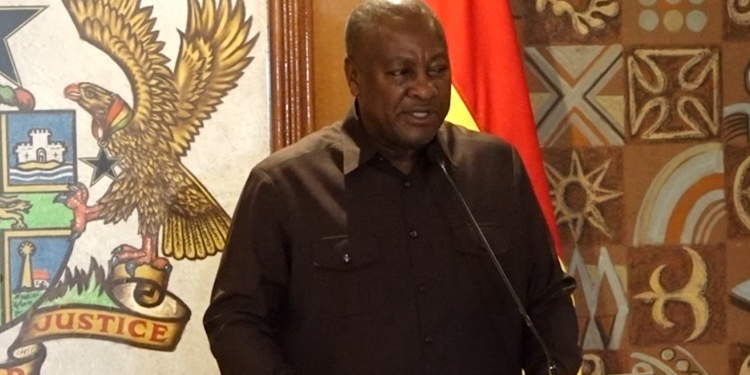
    Tasked with policy development and enforcement in the mining sector, the Minerals Commission plays a crucial regulatory role.

    However, Mr Bekoe highlighted that its authority does not extend to granting licenses for operations in environmentally sensitive zones.

    His remarks come amid growing concerns over illegal mining, known as galamsey, which has caused extensive environmental degradation.

    Despite government measures, including military interventions and stricter regulations, illegal miners continue to operate, threatening Ghana’s natural resources.

    Bekoe urged the government to take decisive action to safeguard the country’s forests and water bodies from further destruction.

    “The Minerals Commission does not have any right to issue a licence for small-scale mining in water bodies or forest reserves. This means that anyone operating in these areas as a small-scale miner is doing so illegally. That is why we are calling for a state of emergency on the water bodies and forest reserves,” he stated.

  • 15 excavators seized in war against galamsey, to be used for road construction – Lands Minister

    15 excavators seized in war against galamsey, to be used for road construction – Lands Minister

    Minister for Lands and Natural Resources, Emmanuel Armah-Kofi Buah, has reaffirmed the government’s commitment to intensifying the fight against illegal mining, popularly known as galamsey.

    In a bold move to curb environmental destruction, the minister announced the seizure of fifteen excavators from illegal miners, which will now be repurposed for road construction across the country.

    Addressing the media after a fact-finding mission to the Shelter Belt Forest Reserve on Saturday, February 22, Mr Buah emphasized that the government’s crackdown on illegal mining would be “relentless, retributive, fair, and firm.” The operation, executed in collaboration with the Ministries of Defence and Interior, revealed the alarming extent of environmental degradation caused by galamsey operations.

    “With the unwavering support of my colleagues, the Defence Minister, Dr. Omane Boamah, Interior Minister, Hon. Mutaka, and Dr. Frank Amoakohene, we deployed the military to the forests to clamp down on these illegal operations,” Hon. Buah stated.

    The operation uncovered that illegal mining activities had devastated 30 hectares of land in the Shelter Belt Forest Reserve alone. Nationwide, approximately 5,000 hectares—equivalent to 7,500 football fields—have been lost to illegal mining in forest reserves.

    Highlighting the scale of the problem, the minister declared, “This situation cannot be allowed to continue as it poses an existential threat to Ghanaians.” He confirmed receiving authorization from President John Dramani Mahama to intensify efforts to root out illegal miners from the affected sites.

    Rather than decommissioning or burning the seized equipment, the government intends to take a more constructive approach by using the confiscated excavators for road construction. “H.E John Dramani Mahama’s government will not decommission or burn excavators seized at galamsey sites but instead use them for road construction across the country, which I believe is a more purposeful and innovative approach,” Buah noted.

    The minister also stressed that this was just the beginning of a larger, sustained effort. “This, however, is not the end. Investigations are ongoing, and we are working closely with the Ghana Armed Forces and the Ghana Police Service to ensure that the perpetrators are brought to justice. This is not an exercise in futility. We are resolute in our mission. We will not rest until those responsible for this environmental carnage are held accountable, including their accomplices.”

    The recent operation has already led to significant breakthroughs, including the arrest of 15 individuals—7 Chinese nationals and 8 Ghanaians—along the Ankobra River. Hon. Buah emphasized the need for nationwide collaboration, calling on Ghanaians to support the government’s mission to eradicate illegal mining.

    “As I have stated before, and I reiterate today, we will not relent in this fight. This is a battle for all of us—every Ghanaian who values our environment, our health, and our future. I urge all well-meaning Ghanaians to join us in this critical fight. Together, we can win this war,” he urged.

    The Lands Minister also condemned a recent attack on Citi FM journalists, denouncing any violence against members of the press as unacceptable.

    In support of the ongoing campaign, the Ashanti Regional Minister, Dr. Frank Amoakohene, commended Hon. Buah for taking an active role in the field, noting that his hands-on approach reflects the government’s determination to win the fight against galamsey.

    “The government is committed to leaving no stone unturned in the battle to protect our rivers and forest reserves,” Dr. Amoakohene affirmed.

  • Confiscate galamseyers’ excavators, don’t burn them – Mahama orders

    Confiscate galamseyers’ excavators, don’t burn them – Mahama orders

    President John Dramani Mahama has issued a directive instructing the anti-galamsey task force to seize excavators used in illegal small-scale mining operations instead of destroying them.

    This new approach marks a departure from previous government measures, which faced backlash for burning equipment found at illegal mining sites.

    During a meeting with the Christian Council at the Jubilee House on Friday, February 21, President Mahama emphasized the need for a more sustainable and structured strategy to tackle illegal mining.

    “I’ve told them not to burn the excavators. They should confiscate them,” the President stated.

    Highlighting the economic realities tied to small-scale mining, Mahama revealed that approximately 1.8 million Ghanaians are involved in the sector. While acknowledging its importance for livelihoods, he underscored the urgency of promoting responsible mining practices to curb environmental degradation.

    He also raised concerns about the devastating impact of illegal mining on Ghana’s natural reserves, noting that 43 out of the country’s 280 forest reserves have been degraded by galamsey activities.

    In response, the government has stepped up efforts to restore damaged lands. Recent operations in the Tano Nimri Forest Reserve have resulted in the confiscation of excavators and other mining equipment, signaling a renewed commitment to protecting the nation’s forests.

    Ghana’s forests are facing an unprecedented crisis as illegal miners, commonly known as galamseyers, have taken over 44 forest reserves, devastating more than 5,000 hectares of land.

    Lands and Natural Resources Minister, Emmanuel Armah Kofi Buah, described the situation as a national emergency with dire environmental, security, and public health implications.

    Addressing Parliament, the minister warned of the alarming scale of destruction:

    “Ghana is currently facing an unprecedented threat to its forest resources and water bodies, largely due to illegal small-scale mining activities. This situation has assumed crisis proportions with national security and public health consequences that require immediate attention.”

    He revealed that out of Ghana’s 288 forest reserves, 44 are under serious attack by illegal miners, leading to the destruction of land equivalent to approximately 7,000 standard football fields.

    Even more concerning, he noted that “over nine out of the 44 forest reserves have been completely taken over by these illegal mining gangs with impunity. The Forestry Commission no longer has access to these reserves.”

    To tackle the crisis, the government plans to implement a Blue Water Initiative, deploying river guards to rid Ghana’s water bodies of illegal mining activities.

    “In the short term, we want to clear all water bodies from illegal mining activities through the use of river guards under our Blue Water Initiative. Details of this initiative will be provided during its launch in the coming weeks,” he stated.

    Despite previous interventions—including military deployment, arrests, and regulatory measures—illegal mining remains a persistent threat. The minister acknowledged that weak law enforcement has contributed to the problem, highlighting the country’s low prosecution rates for offenders.

    “In the last few years, the numbers on prosecution for illegal mining are not very encouraging. Out of over 800 cases, fewer than 40 people have been prosecuted,” he lamented.

    The government is under increasing pressure to adopt tougher measures to combat illegal mining and protect Ghana’s forest reserves from further destruction.

  • Seize excavators, don’t burn them – Mahama to team fighting galamsey

    Seize excavators, don’t burn them – Mahama to team fighting galamsey

    mPresident John Dramani Mahama has instructed the team fighting illegal small-scale mining (galamsey) to seize excavators instead of setting them on fire.

    “I’ve told them not to burn the excavators. They should confiscate them,” he said during a meeting with the Christian Council at the Jubilee House on Friday, February 21.

    He acknowledged that small-scale mining provides jobs for about 1.8 million Ghanaians but emphasized that it must be done responsibly to avoid destroying the environment.

    President Mahama disclosed that illegal mining has already damaged 43 out of Ghana’s 280 forest reserves. He noted that authorities have started clearing affected areas, with a recent operation in the Tano Nimri Forest Reserve leading to the removal of excavators and other mining equipment.

    To prevent illegal miners from returning after being evicted, he announced plans to deploy a mobile team to support forestry officials in protecting these areas.

    He also promised to engage small-scale miners in discussions on adopting better mining practices that would safeguard natural resources while allowing them to earn a living.

  • Out of over 800 galamsey cases, fewer than 40 people have been prosecuted – Lands Minister

    Out of over 800 galamsey cases, fewer than 40 people have been prosecuted – Lands Minister

    Minister for Lands and Natural Resources, Emmanuel Armah Kofi Buah, has raised concerns over the low prosecution rate of illegal miners, revealing that out of more than 800 cases recorded in recent years, fewer than 40 individuals have been successfully prosecuted.

    Addressing Parliament, the minister expressed frustration over the weak enforcement of laws against illegal mining, commonly known as galamsey.

    “In the last few years, the numbers on prosecution for illegal mining are not very encouraging. Out of over 800 cases, fewer than 40 people have been prosecuted,” he stated.

    The minister emphasized that illegal mining has escalated into a full-blown crisis, with severe consequences for Ghana’s environment, water bodies, and national security. He disclosed that 44 forest reserves have come under serious attack from galamseyers, with more than 5,000 hectares of land—equivalent to 7,000 football fields—completely destroyed.

    Even more alarming, he noted that “over nine out of the 44 forest reserves have been completely taken over by these illegal mining gangs with impunity. The Forestry Commission no longer has access to these reserves.”

    In response to this growing menace, the government is set to launch a Blue Water Initiative, which will deploy river guards to monitor and clear water bodies affected by illegal mining activities.

    “In the short term, we want to clear all water bodies from illegal mining activities through the use of river guards under our Blue Water Initiative. Details of this initiative will be provided during its launch in the coming weeks,” he announced.

    Despite ongoing efforts, including military deployments and stakeholder engagements, illegal mining continues to thrive, undermining conservation efforts. The minister stressed that stronger enforcement mechanisms, increased prosecutions, and stricter penalties are needed to curb the destruction of Ghana’s natural resources.

    As public pressure mounts, authorities are being urged to take decisive action to ensure that illegal miners face the full force of the law.

  • 44 forest reserves under siege by galamseyers; over 5,000 hectares devastated – Lands Minister

    44 forest reserves under siege by galamseyers; over 5,000 hectares devastated – Lands Minister

    Ghana’s forests are facing an unprecedented crisis as illegal miners, commonly known as galamseyers, have taken over 44 forest reserves, devastating more than 5,000 hectares of land.

    Lands and Natural Resources Minister, Emmanuel Armah Kofi Buah, described the situation as a national emergency with dire environmental, security, and public health implications.

    Addressing Parliament, the minister warned of the alarming scale of destruction:

    “Ghana is currently facing an unprecedented threat to its forest resources and water bodies, largely due to illegal small-scale mining activities. This situation has assumed crisis proportions with national security and public health consequences that require immediate attention.”

    He revealed that out of Ghana’s 288 forest reserves, 44 are under serious attack by illegal miners, leading to the destruction of land equivalent to approximately 7,000 standard football fields.

    Even more concerning, he noted that “over nine out of the 44 forest reserves have been completely taken over by these illegal mining gangs with impunity. The Forestry Commission no longer has access to these reserves.”

    To tackle the crisis, the government plans to implement a Blue Water Initiative, deploying river guards to rid Ghana’s water bodies of illegal mining activities.

    “In the short term, we want to clear all water bodies from illegal mining activities through the use of river guards under our Blue Water Initiative. Details of this initiative will be provided during its launch in the coming weeks,” he stated.

    Despite previous interventions—including military deployment, arrests, and regulatory measures—illegal mining remains a persistent threat. The minister acknowledged that weak law enforcement has contributed to the problem, highlighting the country’s low prosecution rates for offenders.

    “In the last few years, the numbers on prosecution for illegal mining are not very encouraging. Out of over 800 cases, fewer than 40 people have been prosecuted,” he lamented.

    The government is under increasing pressure to adopt tougher measures to combat illegal mining and protect Ghana’s forest reserves from further destruction.

  • Galamsey fight must not be taken lightly – Mahama told

    Galamsey fight must not be taken lightly – Mahama told

    Legal and policy analyst Kofi Bentil has urged former President John Mahama to approach the fight against illegal small-scale mining (galamsey) with a stronger, more strategic response, warning that the issue is far more dangerous and complex than it appears.

    His caution follows President Mahama’s renewed pledge to combat illegal mining, a commitment he reiterated earlier this week. However, Mr. Bentil insists that addressing galamsey requires more than political promises and traditional law enforcement measures.

    Speaking on Newsfile on February 8, 2025, he emphasized the need for a more comprehensive approach, stating that past efforts have failed because they underestimated the deep-seated motivations driving illegal miners.

    “Gold is a spirit, and from time immemorial, it makes men mad. If you know the stories of the Wild West, people killed and died for gold. So when you see people risking their lives to go after this, and we think that we can just treat it as a simple law enforcement issue, that’s where the problem is,” he remarked.

    Mr. Bentil further highlighted the dangers associated with illegal mining, particularly the hazardous working conditions miners expose themselves to. He pointed to the widespread use of toxic mercury in gold extraction, with workers often handling the substance with their bare hands, unaware of its long-term health risks.

    “People are doing things in pursuit of this gold that will affect them, their children, and their grandchildren. People don’t appreciate the kind of dangers they themselves are involved in. We should take this thing more seriously than we have done so far and deal with it,” he urged.

    Beyond enforcement, the analyst criticized the lack of serious investment in land reclamation and environmental recovery. He stressed that stopping galamsey alone is not enough and called for a national strategy to restore degraded lands and polluted water bodies.

    “We have not taken recovery seriously enough. We are treating stopping galamsey as the main thing to do. Maybe we will not stop galamsey in the next 10 years, but we should have a national plan for the recovery of these lands,” he stated.

    Mr. Bentil concluded by advocating for a holistic approach that includes stronger enforcement, environmental rehabilitation, and viable economic alternatives for those engaged in illegal mining. While he extended his best wishes to the President, he maintained that only a more aggressive and structured plan would yield lasting results in the fight against galamsey.

  • Barker-Vormawor, Ama Governor free as AG discontinues case against democracy hub protestors

    Barker-Vormawor, Ama Governor free as AG discontinues case against democracy hub protestors

    The Attorney-General has withdrawn the case against the convener of the Democracy Hub protesters, who were apprehended for rallying against illegal mining (galamsey).

    The demonstrators, who took to the streets to push for stronger government action against environmental destruction, were arrested and charged following their protest.

    However, the Attorney-General’s office has officially dropped all charges, bringing the case to an end.

    Approximately 53 individuals, including convenor Oliver Barker-Vormawor and Ama Governor, were among those detained during the protest.

    The demonstration aimed to highlight the adverse effects of illegal mining on the environment, particularly its impact on farmland, rivers, and forests.

    Environmental activists have persistently called attention to the widespread damage caused by unchecked mining activities.

  • 600 workers risk unemployment over potential shut down of GREL factory due to galamsey

    600 workers risk unemployment over potential shut down of GREL factory due to galamsey

    Illegal mining activities continue to threaten the operations of Ghana Rubber Estates Limited (GREL), putting over 600 jobs at risk. The company’s plantation has been heavily affected by encroachment, rendering parts of it inaccessible and disrupting production.

    Speaking to the media, GREL’s Corporate Affairs Manager, Perry Acheampong, expressed deep concern over the destruction caused by illegal mining. He warned that if the situation persists, the company may be forced to shut down one of its factories, worsening Ghana’s unemployment crisis.

    “We are unable to access parts of the plantation. Once the land is taken over, the trees are destroyed, leading to a loss in production. At one point, we had to temporarily shut down the factory due to this issue. If it persists, we may be forced to close one of our factories, which employs 600 direct staff,” Acheampong stated.

    Beyond job losses, illegal mining has also led to a severe water crisis at GREL. Acheampong revealed that water sources essential for the company’s operations have been polluted, making them unsuitable for use.

    “We use a lot of water at the factory, but illegal mining has polluted our water sources, making it unusable for operations,” he explained.

    To address these pressing challenges, GREL is working closely with security agencies to safeguard its plantation and prevent further encroachment. Mr Acheampong emphasized the urgent need for stakeholders in the sector to develop effective strategies to combat illegal mining and protect businesses like GREL from collapse.

    Ghana’s unemployment rate currently stands at 3.60%, with a labor force of approximately 14.9 million people. The potential loss of 600 jobs, though statistically small, would contribute to the already strained labor market, leading to increased social and economic challenges.

    GREL is Ghana’s largest rubber processor, operating two factories in the Western Region with a combined processing capacity of 20 tonnes per hour. Other rubber processing companies in the country include NARUBIZ Ltd. (1 tonne per hour), Rubber Plantations Ghana Ltd. (RPGL) (0.8 tonnes per hour), and APEX Rubber Processing (1 tonne per hour).

    With 13,093 hectares of rubber plantations—9,555 hectares currently being tapped—GREL plays a significant role in Ghana’s agribusiness sector, contributing to job creation and economic growth. In 2022, Ghana earned approximately $131.3 million from exporting processed rubber and natural rubber sheets, according to the Ghana Export Promotion Authority.

    The government holds a 26.75% stake in GREL, benefiting from taxes and dividends paid by the company. However, without immediate action to curb illegal mining, the company’s contributions to the economy and employment could be severely impacted.

  • Lead galamsey fight – Armah-Kofi Buah charges Chiefs, traditional leaders

    Lead galamsey fight – Armah-Kofi Buah charges Chiefs, traditional leaders

    Minister for Lands and Natural Resources, Hon. Emmanuel Armah-Kofi Buah, has called on traditional rulers to take a leading role in the fight against illegal mining, commonly known as galamsey.

    He emphasized that chiefs, as custodians of the land, hold the key to preserving Ghana’s natural resources and ensuring responsible mining practices.

    Addressing the Western Regional House of Chiefs in Sekondi-Takoradi on Thursday, February 6, the minister reiterated the government’s commitment to tackling illegal mining and its devastating effects on water bodies, forests, and the environment. He urged traditional authorities to unite in the fight against the menace, stating that their leadership is crucial in restoring the nation’s degraded lands and polluted rivers.

    “Therefore, on behalf of us from this most beautiful region, I would want to implore our traditional leaders to present a united front in leading us to help preserve our region as the shining star of Ghana. Your unity is not just a strength but a necessity to preserve the legacy of this land for future generations. To put it bluntly, the fight against galamsey must be led by our chiefs and traditional authorities in every nook and cranny of this country,” he stated.

    Hon. Armah-Kofi Buah, who hails from the Western Region, also used the occasion to express gratitude to the chiefs for their support during the 2024 elections and his recent appointment as minister. He acknowledged the region’s contribution to Ghana’s mineral wealth but warned that illegal mining threatens the very resources that have sustained local communities for generations.

    “I was sworn in last week as the Minister for Lands and Natural Resources by the President and assigned this arduous task of driving the campaign to ‘Heal Ghana’ and ‘stop the bleeding’ that galamsey and other illegalities are causing the environment (lands, forests, and water bodies). As a son of this soil, I came to seek your blessings in navigating the Ministry and to ask for your utmost support to help us reset this nation for good and for our generations yet unborn. The biggest challenges today are illegal mining, the pollution of our precious water bodies, and the degradation of forest reserves,” he said.

    As part of the government’s new strategy, Hon. Armah-Kofi Buah outlined key policies under President John Dramani Mahama’s Reset Agenda aimed at reforming the small-scale mining sector. He stressed that mining activities must be properly regulated and conducted in approved areas.

    “As part of H.E. President Mahama’s government Reset Agenda, several policy options and measures have been outlined to help sanitize the mining sector, particularly the small-scale mining sub-sector. We want to ensure that mining operations are not conducted in unapproved areas, such as water bodies, and that the concession holders rehabilitate impacted areas. It is the view of the government that the current licensing regime can be improved by being more inclusive,” he explained.

    The minister announced the abolition of the Community Mining Scheme, arguing that it lacked transparency and failed to include key stakeholders in decision-making. In its place, the government will establish Artisanal Small-scale Mining Cooperatives (ASMCs) to ensure more inclusive participation in regulated mining activities.

    “The Community Mining Scheme in its current form is not transparent and inclusive enough to be able to address the challenges underpinning its formulation. It is highly partisan, exclusive, and defeatist of its own purpose. We are abolishing it and establishing the Artisanal Small-scale Mining Cooperatives (ASMCs) for community members interested in artisanal small-scale mining. We will facilitate the setting up of mining equipment pools in each small-scale mining district to ensure easy and affordable access to necessary mining equipment,” he revealed.

    During the engagement, the minister also addressed conflicts within the region’s traditional leadership, urging chiefs to resolve disputes and focus on regional development. He warned that internal divisions could undermine their ability to protect the land from illegal mining and other exploitative activities.

    The Paramount Chief of the Essikado Traditional Area, Nana Kobina Nketsia V, commended the minister for recognizing the role of traditional leaders in resource management. He assured him of the chiefs’ support in implementing policies that promote sustainable mining and protect the environment.

    In an interactive session, several chiefs raised concerns over land encroachment, weak enforcement of mining regulations, and environmental destruction in their respective areas. They urged the government to extend the Operation Recover All Loot initiative to address land disputes alongside illegal mining challenges.

    Hon. Armah-Kofi Buah assured them of the government’s commitment to working closely with traditional rulers and pledged to maintain open communication with them as the ministry rolls out its new policies.

    “The Western Region has always been a pillar in Ghana’s development, and it is time we take control of our destiny by ensuring that our resources are managed responsibly. We can no longer allow galamsey to dictate the future of our communities,” he concluded.

  • You will lose your seat when caught engaging in galamsey – Bagbin warns MPs

    You will lose your seat when caught engaging in galamsey – Bagbin warns MPs

    Speaker of Parliament, Alban Sumana Kingsford Bagbin, has issued a stern warning to Members of Parliament (MPs), stating that those found engaging in illegal mining, commonly known as galamsey, will be stripped of their parliamentary seats.

    His declaration comes amid growing national concern over the destructive impact of galamsey on Ghana’s environment, particularly its water bodies and forests.

    Speaking on the floor of Parliament on Thursday, January 30, Bagbin called on the public to submit credible evidence against any lawmaker involved in the illicit activity, assuring that such reports would be acted upon decisively.

    “If you have evidence of any member indulging in Galamsey, draw my attention. I will put in motion a process where you will lose your membership as a member of parliament. Please bring the information to my notice.

    “We will take action. That is how we can fight Galamsey. I mean what I am saying, I am not joking, unless you hide such information from me. If I get any credible information on any of you on this matter, I am going to initiate the process and you can lose your seat as a member of parliament.

    “The law is there to enable us to do that,” he stressed.

    Bagbin’s statement signals a strong commitment by Parliament to combat illegal mining, which has long been a contentious issue in Ghana due to its environmental and socio-economic consequences. His remarks also serve as a direct warning to lawmakers who may be complicit in the menace.

  • Akufo-Addo’s galamsey efforts were not enough – Minister-Designate for Lands

    Akufo-Addo’s galamsey efforts were not enough – Minister-Designate for Lands

    Emmanuel Armah-Kofi Buah who has been nominated as Minister for Lands and Natural Resources, has condemned the previous New Patriotic Party (NPP) administration’s approach to addressing illegal mining, often referred to as ‘galamsey.’

    Former President Akufo-Addo’s administration faced extensive backlash for its inability to fulfill the 2017 pledge to address galamsey, despite promising to prioritize the issue.

    In his testimony before the Appointments Committee of Parliament on January 27, Mr. Armah-Kofi Buah acknowledged the NPP’s early attempts but ultimately labeled their efforts as a “failure.”

    He expressed his disapproval of illegal mining, especially its harmful impact on water bodies, deeming it “unacceptable” and underscoring the need for more rigorous measures to curb the crisis.

    “It’s true the NPP administration started very well, there was a ban on mining places, it was six months, and it extended to nine months.

    “But at the end of the 8 years, the outcome is what we all know—degraded lands, polluted water bodies, and wanton destruction of forest reserves. These are clearly facts that indicate that that fight against was a failure,” he noted.

  • Giving the poor youth an alternative livelihood will end illegal mining – George Opare Addo

    Giving the poor youth an alternative livelihood will end illegal mining – George Opare Addo

    George Opare Addo, the Minister-Designate for Youth Development and Empowerment, has outlined a comprehensive plan to combat illegal mining, commonly referred to as galamsey, by providing alternative livelihoods to impoverished residents in mining communities.

    During his vetting before Parliament’s Appointments Committee on Wednesday, Opare Addo, popularly known as Pablo, underscored the importance of addressing the root causes of galamsey. He explained that poverty in mining areas often compels residents to engage in illegal mining activities, making sustainable solutions critical to ending the menace.

    “We must eliminate poverty in the communities where illegal mining thrives. If we can effectively provide alternative livelihoods, we may succeed in bringing an end to illegal mining,” he stated.

    The minister-designate also highlighted the importance of reorienting the youth in mining communities toward sustainable practices. “For young people who want to go into mining, we have to reset their minds. There is an old way they have done things, and we must re-engage them to change that approach,” he said.

    Opare Addo emphasized his intention to collaborate closely with the Ministry of Lands and Natural Resources to promote sustainable mining practices. “We are going to work together with the Ministry of Lands and Natural Resources to look at sustainable ways of mining. I want a Ghana where illegal mining is not a part of our reality, but instead, we mine in a manner that is sustainable and does not degrade the environment in any way,” he remarked.

    He further noted that tackling illegal mining requires a multifaceted approach, including the implementation of poverty alleviation programs. “Wherever there is gold and poverty, people will find a way of getting underground to extract the gold. We must eradicate poverty from these areas. By giving them alternative livelihoods, we can shift their focus to more productive and sustainable economic activities,” he stressed.

    Illegal mining has long posed a significant threat to Ghana’s environment, with water bodies and forest reserves suffering extensive damage. Despite efforts by successive governments, the galamsey menace persists, prompting citizens to demand pragmatic measures to end the practice.

  • Provide them with alternative sources of livelihood – Opare Addo on addressing youth in galamsey

    Provide them with alternative sources of livelihood – Opare Addo on addressing youth in galamsey

    Minister-Designate for Youth Development and Empowerment, George Opare Addo, says finding other ways for people in mining areas to earn a living is the best way to stop illegal mining, also known as “galamsey.”

    Speaking to Parliament’s Appointments Committee, Opare Addo, also called Pablo, said people need to change how they think about mining and use better methods that won’t harm the environment.

    He explained that many people turn to illegal mining because of poverty. To solve this problem, he suggests creating new job opportunities that can help people earn money in legal ways.

    Opare Addo believes that if these programs are put in place, communities can stop illegal mining and focus on better ways to develop while protecting the environment.

    “There is a Ghana we all want. I want a Ghana where illegal mining is not a part of but we do mining in a manner which is sustainable and won’t degrade the environment in any way. I believe that is also the vision of John Dramani Mahama.

    “For young people who want to go into mining, we have to reset their minds. There is an old way that they have done things and they must re-engage them to change them from the old way they have done things.

    “We are going to work together with the Ministry of Lands and Natural Resources to look at sustainable ways of mining. I have maintained that wherever there is gold and there is poverty, people will find a way of getting under the ground to find the gold.

    “We must eradicate poverty from the areas we find ourselves and if we have been able to do that effectively, by giving them alternative livelihood we may bring an end to illegal mining,” he said.

  • Atobease: Three-year-old boy found dead in galamsey pit

    Atobease: Three-year-old boy found dead in galamsey pit

    The police have initiated an inquiry into the tragic death of a three-year-old child in Atobease, a farming community in the Amansie West District of the Ashanti Region.

    The boy, who had gone missing on January 16, 2025, was found lifeless in an illegal mining pit located just a few meters from the village at dawn on January 17.

    This devastating discovery came after an exhaustive search carried out by the child’s relatives, local inhabitants, and the police.

    In an interview with Citi News, Samuel Yeboah, the Assembly Member for Atobease, expressed skepticism regarding the possibility of drowning, raising concerns over potential foul play.

    Despite his suspicions, Yeboah confirmed that an official investigation has been launched to determine the true cause of death.

    He also revealed that this was not the first such incident in the area, and assured the public that authorities are working to fill in and secure all abandoned mining pits to prevent future tragedies.

    The boy’s remains have been taken to the morgue, and the investigation is ongoing.

  • Galamsey fight indirectly affected my second term in office – Akufo-Addo

    Galamsey fight indirectly affected my second term in office – Akufo-Addo

    President Nana Addo Dankwa Akufo-Addo has acknowledged that the fight against illegal mining, known as galamsey, had an indirect but significant impact on his second term in office and his political party.

    In his final State of the Nation Address to Parliament on Friday, January 3, 2025, President Akufo-Addo reflected on the political consequences of the galamsey battle, noting that it led to the loss of several parliamentary seats by his party in the 2020 elections.

    He explained that this shift in the composition of the eighth Parliament influenced the implementation of his policy agenda, affecting his second term as President.

     “The fight against galamsey led to the loss of several parliamentary seats by my party in the 2020 elections, which ultimately influenced the composition of the eighth Parliament. This, in turn, affected the implementation of my policy agenda and had a significant impact on my second term as President,” he stated.

    Despite these challenges, President Akufo-Addo expressed optimism about the growing support for the government’s anti-galamsey initiatives, particularly as the 2024 elections approach. He welcomed the sudden surge of support for the fight against illegal mining and emphasized the importance of continuing efforts to protect the nation’s natural resources.

    “I welcome the many loud converts to the fight against Galamsey that suddenly appeared in the run up to the 2024 elections and I pray that more and more of us get to embrace the need for the protection of our lands and waterbodies,” he remarked.

    The President stressed the need for responsible mineral extraction that ensures the long-term preservation of the country’s environment.

    “We owe it to future generations of Ghanaians to extract our minerals in a manner that protects our lands and waterbodies,” he urged.

  • GWCL suspends operations at Tarkwa plant over illegal mining

    GWCL suspends operations at Tarkwa plant over illegal mining

    Ghana Water Company Limited (GWCL) has announced the closure of the Bonsa Headworks treatment plant, which provides 75% of clean water to Tarkwa and nearby areas.

    The closure is due to severe pollution in the Bonsa River, caused by illegal mining (galamsey), which has made it impossible to extract and treat water from the river.

    Efforts to reduce the pollution’s impact have not worked, leading to the closure of the plant.

    GWCL has promised that the Bonsa River is being monitored for improvements in water quality, and the plant will reopen once the conditions are suitable for water treatment.

    The company assured residents that they would receive regular updates on the situation and emphasized their dedication to resolving the issue, ensuring the water supply is restored as soon as possible.