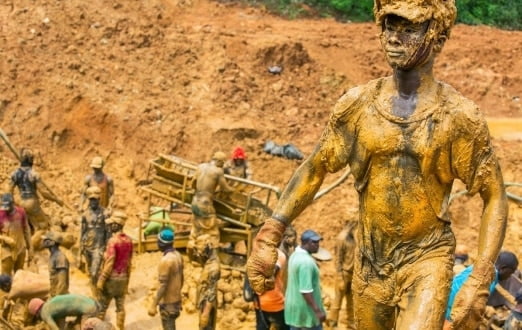
A young Ghanaian man has threatened to engage in violent acts, including robbery and killing, following a government crackdown on illegal mining, commonly known as galamsey.
According to him, his frustrations stem from the loss of income and opportunities after authorities intensified their actions against these illegal operations.
Galamsey has become a significant issue in Ghana, contributing to environmental degradation, water pollution, and deforestation.
High unemployment rates and the allure of lucrative returns have driven many into this sector, despite the associated risks, such as violence, exploitation, and health hazards.
The young galamseyer expressed that if his situation does not improve, he may resort to violent measures, including attacking individuals on the roads.
His warnings come amid growing public discontent, as recent protests have emerged against the government’s handling of illegal mining.
Criticism has been directed at President Akufo-Addo for failing to protect the livelihoods of rural communities, which make up over 57% of the country’s agricultural workforce.
Meanhile, Organised Labour’s has announced a planned strike on October 10, 2024, unless the government addresses their concerns.
Organised Labour has been in discussions with the government, demanding a nationwide ban on galamsey, but those talks ended without a resolution.
The mounting pressure from various religious leaders, political figures, and state institutions has further fueled calls to address the galamsey crisis.
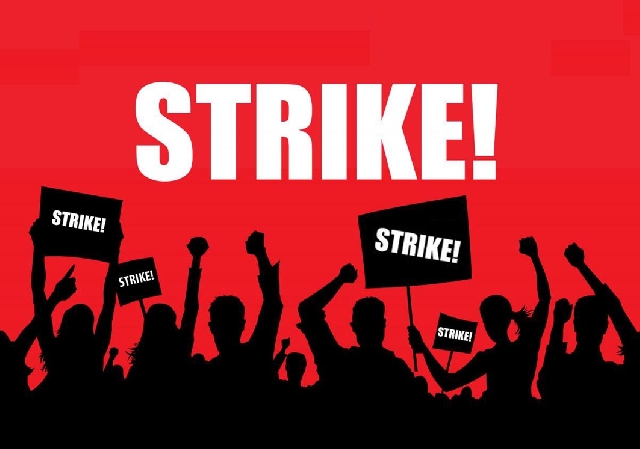
In response to the escalating situation, some frustrated citizens have launched a three-day strike, urging the government to take decisive action against illegal mining.
In light of these developments, President Nana Addo Dankwa Akufo-Addo has announced the deployment of military personnel to key mining areas to combat the growing menace of galamsey.
A young galamseyer who has halted his illegal mining activities due to the actions of some authorities has threàtened to storm the roads to k!ll and ròb people. pic.twitter.com/6DbLM1sBvp
The President of the Responsible Small-Scale Miners Association of Ghana, Philip Bawa, has voiced strong criticism against law enforcement agencies, accusing them of widespread corruption that hampers the fight against illegal mining, commonly known as “galamsey.”
His comments come as the Ghana Armed Forces (GAF) introduce a new initiative aimed at partnering with small-scale miners to tackle the escalating galamsey crisis.
This collaboration seeks to foster responsible mining practices while bolstering efforts against illegal operations that have severely impacted the environment across the nation.
“Law enforcement agencies are too corrupt to help fight galamsey. Every checkpoint you encounter is a potential source of bribery,” he stated.
However, during an appearance on Adom FM’s morning show, Dwaso Nsem, Mr. Bawa expressed concern that rampant corruption within law enforcement undermines these initiatives.
He also advocated for a more organized approach to addressing the issue.
“The Minerals Commission, which is responsible for enforcing mining laws, has failed to do so due to a lack of human resources and logistics. The Commission only has 9 offices across the entire country, with just one officer, one assistant, and one pickup truck covering vast mining districts. In addition, many of the roads in these areas are in poor condition. Therefore, there is a need for more personnel and resources to enforce regulations effectively,” he said.
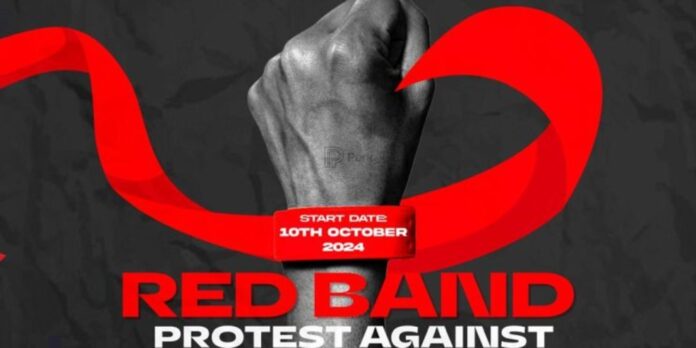
The Media Coalition Against Galamseyhas announced its intention to hold a “red band” protest in solidarity with Organised Labour’s indefinite strike scheduled to commence on October 10, 2024.
Kenneth Ashigbey, the Convener of the Coalition, shared this information during an interview with Citi FM in Accra on Wednesday, October 9.
He emphasised that the protest aims to intensify calls for the government to take more robust action against the galamsey crisis, particularly in light of its failure to impose a ban on illegal mining.
Participants are encouraged to wear red bands on their arms or heads and to attach red bands to vehicles, including cars, motorcycles, and bicycles, to demonstrate their support.
Furthermore, supporters are invited to share photos and videos of their participation on social media, using hashtags such as #StopGalamseyNow, #SaveOurLand, and #SaveOurFuture.
In a public announcement, theCoalition urged Ghanaians to sustain the protest indefinitely until the government takes decisive steps to halt illegal mining activities.
Senior lecturer at Kumasi Technical University, Dr. Sampson Anomah, has announced that he and fellow dissenting members of Organised Labour are ready to take legal action in response to the union’s nationwide threats.
Organised Labour is planning a strike due to the government’s failure to address the issues surrounding illegal mining, commonly known as galamsey, and its detrimental effects on water bodies.
During an appearance on Joy News’ PM Express on Wednesday, October 8, Dr. Anomah raised questions regarding the legality of the union’s demands and the proposed strike action
“I don’t really know what they are doing. They started this issue without informing us, yet they asked us to strike. We kicked against that,” Dr Anomah stated emphatically.
He warned that if Organized Labour continues its threats, he and his group will seek legal recourse. “We have already planned our legal action. We will not sit down and let them take us for a ride and mix politics with this galamsey issue,” he said.
Dr. Anomah emphasised that illegal mining is a multifaceted problem that requires careful consideration and should not be politicised, particularly with national elections approaching.
He criticised Organized Labour’s 60-day deadline for the government to address the galamsey crisis, describing it as unrealistic.
“This problem has existed for over a decade, and they haven’t provided any solutions. Now, they give an ultimatum of just 60 days? This is political,” he said, suggesting ulterior motives behind the union’s actions.
The lecturer further argued that demanding a state of emergency with such a short timeline is reckless.
He warned that drastic actions such as a “shoot-to-kill” directive, as proposed by some, could lead to chaos. “
“We don’t want to see a situation where a hasty decision is taken and innocent people suffer,” he added.
In a strong conclusion, Dr. Anomah reiterated his group’s stance: “If they proceed with this unlawful strike, we will go to court and let the law decide.”
Aljazeera reporter Kent Mensah has questioned the Ghanaian government over the fate of the soldiers deployed in 2021 to protect the country’s water bodies from illegal mining, also known as galamsey.
Despite the deployment of 200 soldiers, announced by Defense Minister Dominic Nitiwul, the galamsey menace remains largely unresolved.
In a Facebook post on October 8, 2024, Mensah expressed his concerns, asking, “What happened to the soldiers? In 2021, the Defense Minister announced that 200 soldiers had been deployed to protect our water bodies from illegal mining (galamsey). So what became of that effort? Did the soldiers fail, or were they simply overwhelmed by the scale of the problem?”
Mensah, a journalist with AFP, Aljazeera, and VOA, argued that the military had received state backing and significant resources for the task, yet the illegal mining crisis persists. He emphasized that it is unfair to blame other security agencies like the police when the military had been entrusted with primary responsibility.
“We deserve answers. Blaming the police and other security agencies in this fight feels misplaced when the military, with all the state resources and backing, was tasked with protecting our water. If even the military couldn’t succeed in this mission, it signals a much larger issue at hand,” he added.
The Ghana Medical Association (GMA) has urged its members to maintain uninterrupted services despite the impending nationwide industrial action announced by Organised Labour, scheduled to begin on Thursday, October 10, 2024.
In a statement released on Tuesday, GMA President Dr. Frank Serebour clarified that the association has not initiated any plans for industrial action.
He emphasized, “The Ghana Medical Association (GMA) has not declared a roadmap for industrial action. Therefore, all members are expected to continue providing full services without interruptions.”
Dr. Serebour expressed the GMA’s solidarity with Organised Labour in their campaign against illegal mining, known as “galamsey,” but reiterated that the GMA will not be participating in the strike at this time.
“The GMA, however, is in solidarity with Organised Labour in this fight against galamsey. The National Executive Council (NEC) will provide further information when necessary,” Dr. Serebour added.
On the government’s part, there was surprise expressed on Monday regarding Organised Labour’s decision to proceed with the strike, given the ongoing negotiations aimed at addressing the illegal mining crisis.
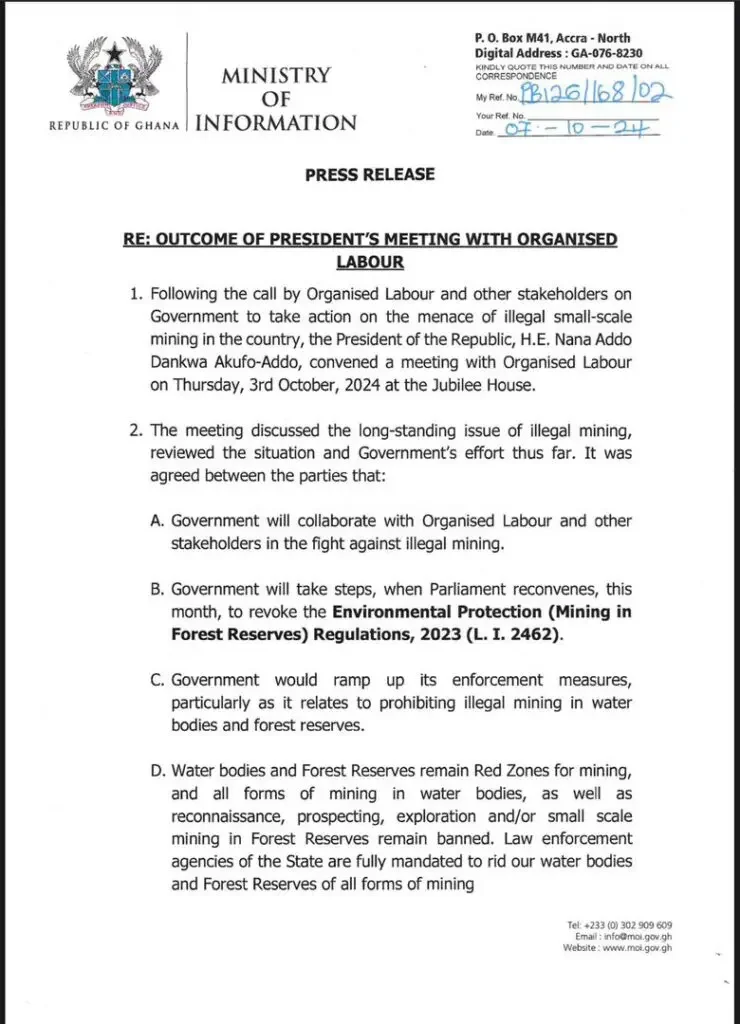
In response, the government announced plans to repeal the Environmental Protection (Mining in Forest Reserves) Regulations, 2023 (L.I. 2462) when Parliament reconvenes later this month. This move is part of a larger strategy to strengthen enforcement against illegal mining activities, particularly in designated “Red Zones” like water bodies and forest reserves.
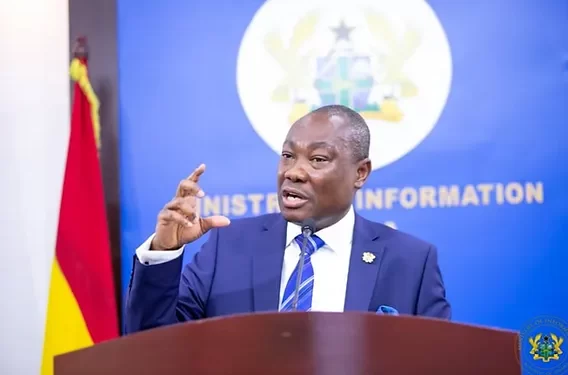
Information Minister Fatimatu Abubakar, in a statement dated October 7, detailed the government’s position on illegal mining, highlighting that law enforcement agencies have been authorized to intensify efforts against such activities in protected areas.
Furthermore, the Attorney-General will collaborate with the Chief Justice to expedite the handling of cases related to illegal mining, showcasing the government’s commitment to mitigating the environmental damage caused by these practices.
Additionally, the government has shown support for a proposal that would require all presidential candidates to sign a commitment to combating illegal mining, aimed at removing the issue from political contention and promoting a unified national response.
Chief Executive Officer of the Minerals Commission, Martin Ayisi, has made it clear that the Commission is not seeking additional authority to bear arms in the fight against illegal mining, commonly referred to as galamsey.
Instead, he emphasized the need for more resources to effectively address the ongoing crisis.
During a public hearing before Parliament’s Assurance Committee on October 7, Mr. Ayisi expressed frustration over the lack of action from law enforcement despite numerous reports submitted about illegal mining activities.
He cited the example of officers at the Anyinam Police Station, who, despite being informed on multiple occasions about mining operations happening right behind their premises, have taken no action to stop them.
“We have reported several times that people are engaging in illegal mining activities right behind the Anyinam Police Station, without our permission. So, how is it that the police are not taking any action? The Minerals Commission has done its part by notifying them,” Mr. Ayisi said.
He further acknowledged that while the Minerals Commission is not without fault, especially in cases where individuals with legitimate licenses may have made mistakes, its responsibility ends after reporting such issues to the appropriate authorities.
“I’m not saying we’re perfect, or that we haven’t made errors. There are times when people with licenses make mistakes, and that’s why we have inspectors. Once we report illegal activity to the right institution, like the police, our job is done,” he added.
Addressing calls for the Commission to be given the power to bear arms, Mr. Ayisi said such a move would require significant changes in government policies, which he believes would be unnecessary and excessive. He pointed out that the Forestry Commission already bears arms but questioned how individuals are still managing to access forests without proper licenses.
“If we have to request more powers to bear arms, government policies would have to change, and that would be too much for us. Look at the number of water bodies in the country. The Forestry Commission bears arms, yet people still enter forests and engage in illegal activities without licenses. I will not ask the government to give us powers to bear arms,” he stated.
Instead, Mr. Ayisi stressed the need for more resources for the Minerals Commission to effectively carry out its mandate. “What the Minerals Commission needs are more resources, and I’m getting them anyway. But no one can say it is enough,” he concluded.
The Minerals Commission, established under the Minerals Commission Act of 1993, Act 450, plays a critical role in formulating recommendations for national policy concerning the exploration and exploitation of mineral resources. Among its many functions, the Commission advises the Minister of Lands and Natural Resources, monitors government policies on minerals, and oversees the operations of entities responsible for mineral exploitation. The Commission also processes applications for mineral rights and reviews agreements related to mineral resources, helping to ensure informed national decision-making on mining activities.
Despite the Commission’s efforts, Mr. Ayisi’s remarks highlight the challenges faced in the battle against illegal mining, particularly the need for stronger enforcement of laws by security agencies and better resources for institutions tasked with protecting Ghana’s natural resources.
Chief Executive Officer of the Minerals Commission, Martin Ayisi, has expressed frustration over the lack of response from the police regarding numerous reports submitted about illegal mining activities, commonly known as galamsey.
Mr Martin Ayisi lamented that despite the Commission’s ongoing efforts to combat the rampant issue threatening Ghana’s natural resources and water bodies, law enforcement has consistently failed to act on the documented instances of illegal mining.
In a public hearing before Parliament’s Assurance Committee on October 7, he indicated that officers at the Anyinam Police Station have time without number been informed of mining activities happening behind their edifice, however, no step has been taken by the security officers to address the issue.
He remarked, “We have reported severally that behind Anyinam Police Station people are doing some there which we have not permitted. So how come the Police is not taking action? So it’s like we have told you galamsey is happening…respectfully, the Minerals Commission has done its work.”
“I am not saying we have also not let the government down or we are hundred percent right. I have told you that there are instances that people have the licenses and have made mistakes. That is why there are inspectors Once the Minerals Commission makes it known to the appropriate institution that this person, people are working here in the night, our job ends there,” Mr Ayisi added.
Mr. Ayisi stated that seeking additional authority to bear arms would necessitate changes in government policies, which would be excessive for the Commission. He pointed out the numerous water bodies in the country, and questioned how individuals without licenses are still accessing forests, despite the Forestry Commission already having the power to bear arms.
“If we have to seek for more powers to bear arms and all those things, then government policies would have to change and that would be too much for us. Look at the number of water bodies in this country, respectively Forestry Commission bears arms so how are people entering the forests to do what they are doing when they don’t have licenses. I will not ask government to give us powers to go and bear arms. If anything, Minerals Commission needs resources, which I am getting anyway. No one can say it is enough,” he said.
The Minerals Commission Act of 1993, Act 450, outlines the essential functions of the Commission. Among its primary responsibilities is the formulation of recommendations for national policy concerning the exploration and exploitation of mineral resources, emphasizing the establishment of national priorities while considering the national economy. The Commission is also tasked with advising the Minister of Lands and Natural Resources on various mineral-related matters and monitoring the implementation of government policies on minerals, providing reports to the Minister as necessary.
Additionally, the Commission monitors the operations of all entities responsible for minerals and is responsible for receiving and assessing public agreements related to mineral resources, reporting these findings to Parliament. It aims to establish a solid foundation for comprehensive data collection on the nation’s mineral resources and the technologies involved in their exploration and exploitation, which is crucial for informed national decision-making. The Commission may also perform other functions as assigned by the Minister.
To fulfill these responsibilities, the Commission engages in several activities. These include investigating the background of mineral rights applications, processing these applications, and recommending their approval or denial to the Minister responsible for Mines. The Commission reviews agreements concerning minerals and collects, collates, and analyzes data related to the operations of mining companies to aid in decision-making and dissemination.
The Ghana Police Service has several key functions that are crucial to maintaining peace and security within the country. Primarily, the Service is responsible for the prevention and detection of crime, ensuring that potential criminal activities are thwarted before they occur and that existing crimes are investigated effectively. Additionally, the apprehension and prosecution of offenders form a vital part of the Service’s responsibilities, as it works to bring individuals who violate the law to justice.
Another critical function of the Ghana Police Service is the maintenance of law and order. This involves managing public gatherings, controlling riots or disturbances, and ensuring that citizens can exercise their rights peacefully. Furthermore, the Service is dedicated to the protection of life and property, working to create a safe environment for all citizens.
The overarching mandate of the Ghana Police Service is to protect and preserve the internal security of the country through effective law enforcement. By fulfilling its functions, the Service aims to foster a sense of safety and security, contributing to the overall stability and well-being of Ghanaian society.
The government has announced its intention to revoke the Environmental Protection (Mining in Forest Reserves) Regulations, 2023 (L.I. 2462), in a decisive move to address the environmental damage caused by illegal mining, or galamsey.
This decision, communicated by the Information Ministry, follows a high-level meeting between President Akufo-Addo and Organised Labour at Jubilee House on October 3, aimed at tackling the destruction of forest reserves and water bodies.
During the meeting, both the government and Organised Labour acknowledged the severe damage that illegal mining has inflicted on Ghana’s water bodies, forest reserves, and communities.
Several key agreements such as strengthening law enforcement agencies to effectively tackle galamsey were reached as part of renewed efforts to combat the menace. But one of the significant outcomes of the meeting was the government’s commitment to repeal the Environmental Protection (Mining in Forest Reserves) Regulations, 2023 (L.I. 2462).
This law, which provided legal grounds for mining in forest reserves under certain conditions, will be revoked once Parliament resumes its next session on October 15. The regulation has allowed mining licenses to be granted in forest reserves, with exceptions for certain protected areas such as globally significant biodiversity zones and cultural sites.
Forest reserves like the Draw River, Neung South, Boin Tano, and Oda River Forest Reserves were granted mining licenses under the regulation. Presently, environmentalists and health professionals continue to raise alarms about the irreversible damage being caused by galamsey activities.
Government has reiterated its commitment to empower law enforcement agencies to intensify their crackdown on illegal mining operations in these protected zones.
Those caught engaging in galamsey activities will face full prosecution under the law, with Attorney-General Godfred Dame and Chief Justice Gertrude Torkornoo pledging to expedite the adjudication of galamsey-related cases. Judges have been issued a month ultimatum by the Attorney General to conclude galamsey-related cases before them.
The Chairman of Parliament’s Select Committee on Environment, Science, and Technology, Ebenezer Okletey Terlabi, has announced his intention to address the issue of illegal mining, commonly known as galamsey, when Parliament reconvenes on October 15, 2024.
The upcoming session, the 5th meeting of the 4th session, will take place at the Accra International Conference Centre.
Speaking to Citi News, the Member of Parliament for Lower Manya Krobo expressed concern over the government’s continued silence on the illegal mining crisis, emphasizing the need for immediate action.
He stated, “When we get back, I have a couple of issues that I am going to raise on the floor of Parliament. It has to do with galamsey and the government’s reaction. I will make sure that whoever needs to respond will be brought to Parliament to come and respond to the reason why what we are seeing is going on.”
Mr Terlabi further criticized the government’s focus, suggesting that political considerations are being prioritized over addressing the environmental damage caused by galamsey.
“The whole country is in arms against illegal mining, and this government is stoned silent. Their consideration is only to win the election, and I think that is not good,” he added.
In addition to raising concerns about illegal mining, Terlabi highlighted delays in the passage of the Environmental Protection Bill, which has been stalled in Parliament. He blamed certain ministers for obstructing the bill, which he believes is critical to strengthening the powers of the Environmental Protection Agency (EPA) to effectively regulate environmental issues.
“I am beginning to understand the reason why some of the ministers, some of the appointees of the president are refusing and will not allow us to pass the EPA bill, which gives a certain authority and policing power to the EPA to control all the various institutions that have something to do with the environment,” he noted. Terlabi pointed to past challenges where ministers from different ministries had blocked efforts to bring the bill into law.
Minerals Commission has voiced its disapproval of pausing the issuance of mining licenses as a means to combat illegal mining, arguing that delays in processing these licenses can exacerbate the problem.
They stated that such delays push individuals towards engaging in illegal mining, which causes significant harm to water bodies and forest reserves.
During a meeting with the Government Assurance Committee of Parliament on Monday, October 7, Martin Ayisi, the CEO of the Minerals Commission, underscored the importance of addressing illegal mining.
However, he cautioned that suspending licenses for legitimate miners unintentionally creates openings for illegal operators to thrive.
“When my minister took office in 2021, the first thing he told me was, ‘Martin, the delay in issuing licenses is what’s causing the problem. So, cut the delays.’ So, what did we do? We went online. What would have taken a year now takes a week or two. They upload, we inspect, and they get on with it.”
“When you don’t issue the licenses, people will simply mine illegally. I won’t claim that everything is perfect, even with those who have licenses,” he explained.
The Minerals Commission CEO also expressed concerns about recent calls for a total ban on small-scale mining, warning that such a move would be inappropriate.
“When you say ban small-scale mining, it means not allowing anyone to do it lawfully. I understand the frustration of Ghanaians, but it would unfairly punish those who follow the rules, like those who have invested in boreholes, while others along the Pra and Birim rivers engage in illegal activities.”
Mr Ayisi further advised the government against implementing a blanket ban onsmall-scale mining.
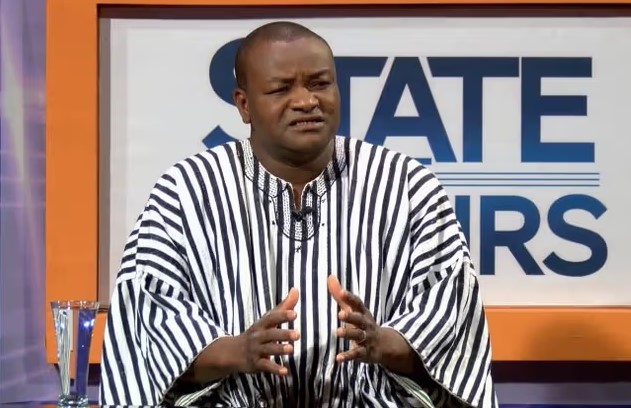
Leader of the All People’s Congress (APC), Dr. Hassan Ayariga, has voiced his conviction that illegal mining, commonly referred to as galamsey, could be entirely eradicated if President Nana Akufo-Addo took firm and decisive measures.
Speaking during an interview on the Ghana Kasa show with Kweku Ofosu, Dr. Ayariga argued that the ongoing galamsey operations continue because the government permits them.
He further stated that those in positions of authority are the very individuals facilitating and enabling these illegal mining activities.
“If the government truly wanted to stop galamsey, all the president needs to do is make one phone call, and it will end,” Dr. Ayariga said, stressing that without government approval, illegal mining wouldn’t flourish.
He further alleged that foreign nationals, particularly Chinese citizens involved in galamsey, have government backing. “The Chinese involved in galamsey don’t just arrive in Ghana by themselves; they are here with permits that go through government channels—most politicians in Ghana support galamsey. There’s no way galamsey would happen without government approval,” he asserted.
He concluded by stressing that those in power are the sponsors behind both large-scale and small-scale illegal mining. Dr. Ayariga called on the government to take action if it is truly committed to ending galamsey.
President of the Kwame Nkrumah University of Science and Technology (KNUST) chapter of the University Teachers Association of Ghana (UTAG), Professor Eric Abavare, has expressed his disappointment in Speaker of Parliament Alban Bagbin for his lack of action in addressing the issue of illegal mining, commonly referred to as galamsey.
Professor Abavare pointed out that while Bagbin was heavily involved in advocating for legislation against LGBTQI+ issues, even promising to ensure the law’s passage before the 8th Parliament concludes, he has remained noticeably silent on the issue of illegal mining, which poses a much greater threat to the country.
The lecturer emphasised that the Speaker’s inaction on the galamsey crisis is concerning and called for him to demonstrate leadership on this critical issue. He also criticised Bagbin for focusing so much energy on LGBTQI+ matters, which, according to Abavare, are far less harmful to the nation than the ongoing illegal mining activities.
“The Speaker of Parliament is on my radar because he is culpable. He is culpable not because he is involved in galamsey but because he has failed to speak against it. I will not change this position. We all saw the commitment and dedication he had towards the LGBTQI+ issue. When the law was formulated, he promised to see it passed.
“He was deeply involved in the LGBTQI+ matters and pledged that as long as he remained Speaker, he would not entertain such activities.
“But where is he now that we are talking about galamsey? Galamseyis far more dangerous and a greater threat to the nation compared to LGBTQI. With LGBTQI+, two people are in a room engaging in a private act, but galamsey threatens our livelihoods, destroys our water bodies, and ravages our forests. We’ve even gone as far as passing a new law, L.I. (2462), allowing mining in our forest reserves. Did the Speaker not see this law in Parliament?”
Speaking in an interview on Frontline 87.5 FM, he continued, “If we are blaming President Akufo-Addo for failing to address the galamsey issue, then we cannot exclude the Speaker from this mess. He is culpable, and I will not blame him alone. The Chief Justice should also bear some responsibility for what is happening.”
Meanwhile, he has called on the Speaker to resign if he is unfit for the role, stressing that Alban Bagbin has failed as a leader in the fight against galamsey
Chief Executive of the Minerals Commission, Martin Ayisi, has voiced his opposition to calls for a moratorium on issuing new mining licenses, citing concerns that such a decision could worsen the illegal mining crisis.
Responding to civil society organizations and environmentalists who are advocating for the revocation of L.I. 2462 which allows mining in forest reserves Ayisi emphasized that halting new licenses would drive individuals towards illegal mining activities, commonly referred to as “galamsey.”
“When you don’t give them the licenses, what they would do is that – they would go and to do it illegally. To say that we shouldn’t grant licenses, that would be a problem,” he argued.
While testifying before Parliament’s Assurance Committee on Monday, October 7, Ayisi argued that denying licenses would not solve the problem but rather exacerbate it.
He also noted that delays in the licensing process contribute to the illegal mining issue, emphasizing that withholding licenses could lead to increased illegal operations.
Moreover, Ayisi acknowledged that even licensed mining companies sometimes fail to adhere to regulations, which highlights the necessity for rigorous monitoring and evaluation of compliance.
Additionally, he pointed out ongoing illegal mining activities, including instances of ‘galamsey’ occurring behind a police station in Anyinam, Atiwa East District, where he criticized law enforcement for not taking action to address the issue.
The Chief Executive of the Minerals Commission, Martin Ayisi, has voiced opposition to calls for halting the issuance of new mining licenses amid rising demands for government action against illegal mining activities.
According to Ayisi, stopping the issuance of new licenses could exacerbate the ongoing illegal mining crisis. His comments came in response to civil society groups and environmentalists urging the government to revoke L.I. 2462, which permits mining in forest reserves, and to cease granting new licenses to mining companies.
During his appearance before Parliament’s Assurance Committee on Monday, October 7, Ayisi argued that withholding licenses would drive individuals into illegal mining, commonly referred to as “galamsey,” as a means to continue their operations. “When you don’t give them the licenses, what they would do is that – they would go and do it illegally. To say that we shouldn’t grant licenses, that would be a problem,” he stated.
He further emphasized that delays in issuing mining licenses contribute to the illegal mining problem, asserting that withholding licenses would only worsen the situation. Ayisi acknowledged that even licensed companies do not always adhere to mining regulations, underscoring the need for strict monitoring and evaluation.
Additionally, he highlighted ongoing illegal mining activities, specifically noting that ‘galamsey’ operations were taking place behind a police station in Anyinam, Atiwa East District, and criticized the police for their inaction in addressing the issue.
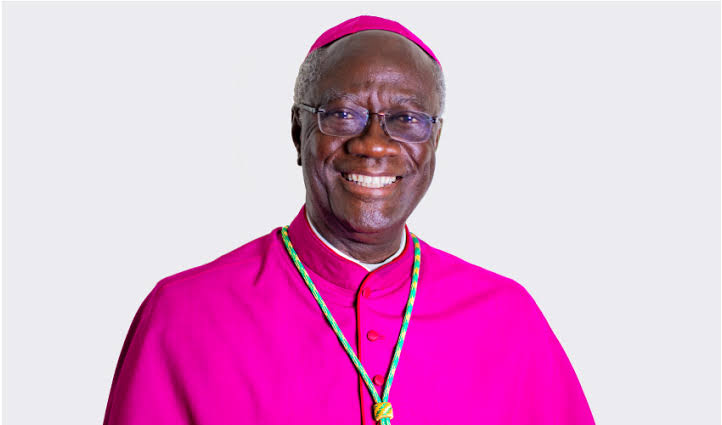
Archbishop Bonaventure Kwofie, the Metropolitan Archbishop of Accra, has voiced the Catholic Church’s opposition to the strike organized by Organised Labour in response to illegal mining, commonly referred to as galamsey.
He underscored the need for a comprehensive and non-partisan approach to effectively tackle the galamsey crisis and achieve long-term solutions.
“The Accra Archdiocese is the one organizing this environmental prayer walk against galamsey. It is being hijacked by some political elements, making it Catholic Bishop Conference Action. No. It is not the Catholic Bishop Conference Action. And we don’t support either the Organised Labour strike. The galamsey issue is not a political issue. It is environmental, social, community, industrial, it is a work situation and employment situation and it has a lot of ramifications. About four million people are involved in galamsey whether directly or indirectly,” he stated.
During a media interview, Archbishop Kwofie called for more constructive methods to address workers’ concerns, cautioning that strike actions can often cause unintended harm, particularly to the most vulnerable members of society.
He emphasized that while strikes may highlight important issues, they might hinder broader efforts to resolve the galamsey problem.
Galamsey not a political issue, we don't support Organised Labour – Metropolitan Archbishop of Accra
The Archbishop further revealed that the environmental prayer walk against illegal mining, organized by the Accra Archdiocese, has been co-opted by certain political elements.
Archbishop Kwofie acknowledged that although Organised Labour’s grievances may be valid, there is a need for more unified and open dialogue to address both labor concerns and the galamsey crisis. He highlighted that illegal mining employs over four million people, emphasizing the necessity for careful management of the issue to prevent negative impacts on the nation’s economy and livelihoods.
Organised Labour has affirmed its commitment to a nationwide strike on Thursday, October 10, 2024, citing the government’s failure to adequately address illegal mining. Despite President Akufo-Addo’s pledge to tackle the issue, the group has expressed dissatisfaction with the proposed measures.
At a press briefing on Monday, October 7, Joshua Ansah, Secretary General of the Trades Union Congress (TUC), confirmed the union’s determination to proceed with the strike unless significant actions are taken before the deadline. “We have concluded as follows: our strike remains unchanged,” Ansah stated firmly.
“We believe the government’s proposed solutions are insufficient in addressing our concerns, and therefore our notice of strike stands.”
Members of the University Teachers Association of Ghana (UTAG) have commenced voting across various campuses to determine whether to support the decision to embark on a strike, as stipulated in the association’s constitution.
At the University for Development Studies (UDS), voting has concluded, with 311 members participating. Of those, 86.5% voted in favor of the motion to initiate industrial action, while 13.5% opposed it.
UTAG President, Prof. Mamudu Akurugu, expressed confidence that all campuses will vote in favor of the strike. He further noted that the voting process will be completed by Tuesday, October 8.
“In the case of UTAG, our constitution mandates that individuals have to vote for the declaration of an industrial action and we have started that process already. We have faith in our members who asked us to join organised labour, and we are sure that the overwhelming majority of our members will vote for the industrial action to be declared.”
Voting continues on other UTAG campuses, while organized labour’s leadership remains resolute in its plan to initiate a nationwide strike on Thursday, October 10, if their demands are not addressed.
The group is urging the government to declare a state of emergency to protect water bodies and rivers, enforce a temporary ban on small-scale mining, and revoke L.I 2462, which authorizes mining in forest reserves.
President Akufo-Addo recently met with labour leaders, requesting additional time to address their demands. Reports suggest the government has agreed to withdraw L.I 2462, but organized labour is currently convening at the TUC conference room in Accra to determine their next steps.
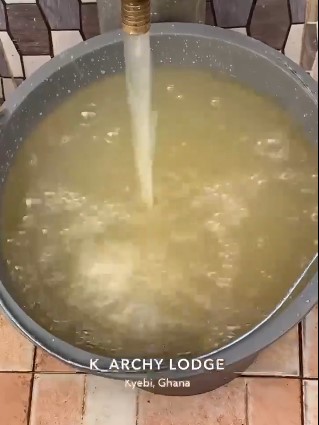
Residents of Kyebi in the Eastern Region’s East Akim Municipal District are bracing for the worsening effects of illegal mining (galamsey), which has caused severe pollution of local water bodies.
The ongoing environmental degradation is expected to bring increasingly devastating consequences for the community’s water resources.
This development follows a video shared by X (formerly Twitter) user @SneakerNyame_, showing discoloured, yellowish tap water flowing in Kyebi.
The alarming footage highlights the dire situation some residents are facing, with the water’s poor quality attributed to the destructive effects of illegal mining (galamsey) activities.
Meanwhile, it would be recalled that, about two years ago, former president John Mahama, revealed that, Kyebi which is reported to be the hometown of the incumbent president, Nana Akufo-Addo is the galamseyheadquarters in Ghana.
A U.S.-based Ghanaian Mining Consultant and Engineer supported the former President’s statement, asserting that it is indeed factual and beyond dispute.
Dr. Owusu emphasized that the current state of the Birim River, alongside the widespread degradation of lands in the Kyebi area, serves as undeniable evidence confirming the ex-President’s claims.
Also, in recent times, several associations including organised labour have advocated for a halt to galamsey activities, threathening a nationwide strike over government’s delayed actions to address illegal mining activities well known as galamsey
He cites the Commission’s lack of substantial growth in workforce numbers over the past decade, revealing that the Commission has added only 80 workers in ten years.
In the face of escalating illegal mining activities that have plagued the country, particularly in recent years, Mr Simons argues that the Minerals Commission’s limited capacity raises significant concerns about its effectiveness.
“How can you fight galamsey with just 80 additional workers in ten years?” he questioned, emphasizing the need for a larger, more adequately staffed team to address the challenges posed by illegal mining operations.
The rise of galamsey has led to severe environmental degradation, including deforestation, water pollution, and loss of biodiversity. As illegal miners continue to exploit natural resources without regulatory oversight, the government faces mounting pressure to take decisive action.
Mr Simons points out that the fight against galamsey requires a multifaceted approach, including increased manpower, enhanced training for inspectors, and improved inter-agency collaboration. The current staffing levels, he argues, are insufficient to manage the growing number of mining applications and the complex dynamics of the industry.
Moreover, the lack of adequate resources and personnel has led to a significant decline in mining inspections. In 2016, for example, he said, there were 138 inspections in the Bibiani area alone, but this number dropped to only 46 inspections in 2019. This reduction in oversight not only hinders the enforcement of mining regulations but also allows illegal operations to flourish unchecked.
Simons also emphasized the importance of public awareness and community involvement in tackling the issue of galamsey. Engaging local communities in sustainable mining practices and education about the long-term consequences of illegal mining can play a crucial role in curbing these activities.
1. Everybody in Ghana now knows that the government has ramped up the issuance of mining licenses.
2. Between 1988 & Nov 2022, only 150 licenses were issued in Ghana. 3. From 2022 to date, more than 1400 licenses have been issued.
Concerns over the ongoing destruction of Ghana’s water bodies and forest reserves due toillegal small-scale mining (galamsey) have sparked widespread outrage.
In recent weeks, numerous groups have taken to the streets, protesting and urging President Nana Addo Dankwa Akufo-Addo’s government to take decisive action to end the galamsey menace across the country.
Among those calling for change are religious leaders, activists, and even members of the president’s own party. Many have suggested that stopping the issuance of new mining licences would allow the government to tackle the existing problems before more companies are given permits.
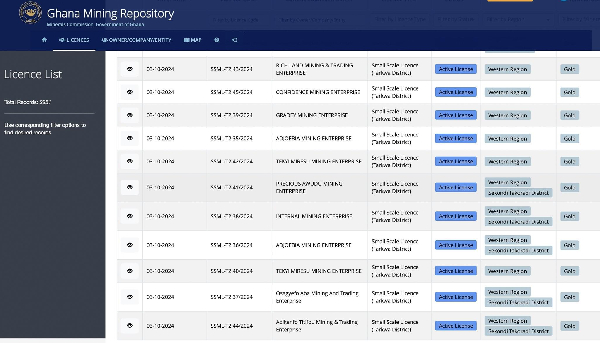
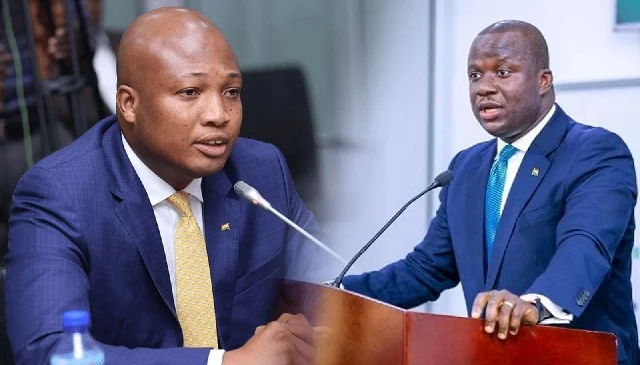
Despite these demands, however, the government seems to be moving in a different direction. Member of Parliament for North Tongu, Samuel Okudzeto Ablakwa, recently revealed a list of new mining leases that had just been approved.
According to information from the Ghana Mining Repository, 11 companies were granted permits in the past few days.
Ablakwa highlighted that these approvals coincided with a meeting between President Akufo-Addo and Organised Labour, during which the president was appealing for the postponement of a planned nationwide strike set for October 10.
“You have not seen the worst. Let me reveal to you this morning to my shock, and I’m sure many Ghanaians will be shocked this morning, particularly the Organised Labour.
To my shock, while the president was meeting with Organised Labour, that same day would you believe that new licenses were being issued for these companies to start mining? That same 3rd of October, two days ago, 11 new licenses to companies. Shocking!” he stated in an interview.
It is worth mentioning that some young protesters who hit the streets on September 22 to protest against the destruction of Ghana’s water bodies, led by Democracy Hub, were arrested and have since been remanded in police custody for 2 weeks.
They are due to appear at the Accra Circuit Court on Tuesday, October 8, 2024.
See lists of companies that have been given licenses: 1. Rich Land Mining and Trading Enterprise
2. Confidence Mining Enterprise
3. Gradey Mining Enterprise
4. Adjoebia Mining Enterprise
5. Tekyi Miresu Mining Enterprise
6. Precious Awudu Mining Enterprise
7. Internation Mining Enterprise
8. Adjoebia Mining Enterprise
9. Tekyi Miresu Mining Enterprise
10. Osagyefo Aba Mining and Trading Enterprise
11. Adikanfo Titifou Mining and Trading Enterprise
See the image of the list below:
1. Rich Land Mining and Trading Enterprise
2. Confidence Mining Enterprise
3. Gradey Mining Enterprise
4. Adjoebia Mining Enterprise
5. Tekyi Miresu Mining Enterprise
6. Precious Awudu Mining Enterprise
7. Internation Mining Enterprise
8. Adjoebia Mining Enterprise
9. Tekyi Miresu Mining Enterprise
10. Osagyefo Aba Mining and Trading Enterprise
11. Adikanfo Titifou Mining and Trading Enterprise
Ghanaians residing in theUnited Kingdom have expressed their support for fellow citizens in Ghana by participating in the escalating anti-galamsey protests.
Gathering outside the Ghana High Commission in London, the demonstrators sought to highlight the severe impacts of illegal mining, commonly referred to as “galamsey,” on both the environment and local communities in Ghana.
The demonstration attracted a varied crowd, encompassing students, professionals, and community leaders, all coming together for a shared purpose.
They held placards with messages such as “Blood, Gold, Greed!” “Water No Bi Politics,” and “Stop Illegal Mining Now!.”
In Accra, a group of young protesters took to the streets to voice their opposition to illegal mining activities, commonly referred to as galamsey.
In a contrasting display, some illegal miners staged their own protest at mining sites, demonstrating their determination to continue their operations.
These miners, numbering around seven, tied red bands around their tools and shouted slogans emphasising their refusal to abandon illegal mining.
They pounded their shovels and pickaxes on the ground, proclaiming, “We want jobs; we won’t stop.”
The galamsey workers extract gold from the ground, often finding it in metallic dust form, and they also process oxide or sulphide gold ore with the use of liquid mercury.
Simultaneously, the SayNoToGalamsey demonstration, which concluded on October 5, 2024, aimed to highlight the severe environmental damage caused by ongoing illegal mining activities.
The protest called for urgent action from the government and theGhana Police Service, specifically demanding the release of individuals who had been arrested during previous demonstrations.
Thomas Musah, the General Secretary of the Ghana National Association of Teachers (GNAT), has reaffirmed the commitment of Organised Labour, particularly GNAT, to move forward with the planned strike against illegal and irresponsible mining on October 10.
In an exclusive interview with Citi News’ Jude Duncan in Accra on Friday, Musah emphasised that the decision to proceed with the industrial action remains firm, despite a recent meeting between Organised Labour and President Nana Addo Dankwa Akufo-Addo.
During the meeting on October 3, President Akufo-Addo urged the leadership of Organised Labour to exercise patience as the government seeks a lasting solution to the galamsey crisis.
However, Musah clarified that Organised Labour continues to stand by its demands.
These include declaring a state of emergency in mining regions, revoking the Environmental Protection (Mining in Forest Reserves) Regulations 2022, withdrawing all licences issued for mining in forest reserves and protected areas, and establishing special courts to prosecute illegal mining offenders.
Musah, who was not present at the meeting, reiterated that the group remains unified in its stance on addressing the challenges posed by illegal mining.
“What’s the definition of more time, With the people dying, what will happen to them? It is for us to make a decision, it is between life and death.”
“Organised Labour, we have all agreed and that is what GNAT is standing by; we agree that there should be a state of emergency on illegal mining. [We still stand by] the decision of Organised Labour on the protest,” he said.
Member of Parliament for North Tongu, Samuel Okudzeto Ablakwa,has raised a significant allegation regarding the issuance of small-scale mining licences.
The MP claims that on October 3, 2024—the very day President Nana Addo Dankwa Akufo-Addo held a meeting with Organised Labour—11 new mining licenses were issued.
“You have not seen the worse. Let me reveal to you this morning to my shock, and I’m sure many Ghanaians will be shocked this morning, particularly the Organised Labour.
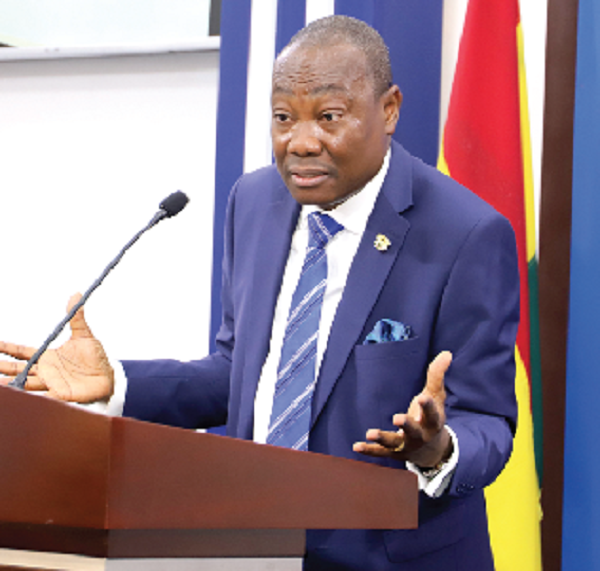
To my shock, while the president was meeting with Organised Labour, that same day would you believe that new licences were being issued for these companies to start mining?
That same 3rd of October, two days ago, 11 new licences to companies. Shocking!” he stated.
In an interview on TV3’s Key Points on October 5, 2024, Okudzeto Ablakwa disclosed that data supporting his claims could be found on the Ghana Data Mining Repository.
He went on to name the companies he alleged had been granted licences.
Earlier, on October 1, 2024, Organised Labour announced its intent to launch a nationwide strike, scheduled for October 10, to demand a full ban on illegal mining(galamsey).
However, during a private meeting on October 3, 2024, with major union leaders, where the environmental harm caused by illegal mining took centre stage, the president urged the union leaders to reconsider their decision.
He asked for more time to tackle the issues raised and appealed for a postponement of the planned strike.
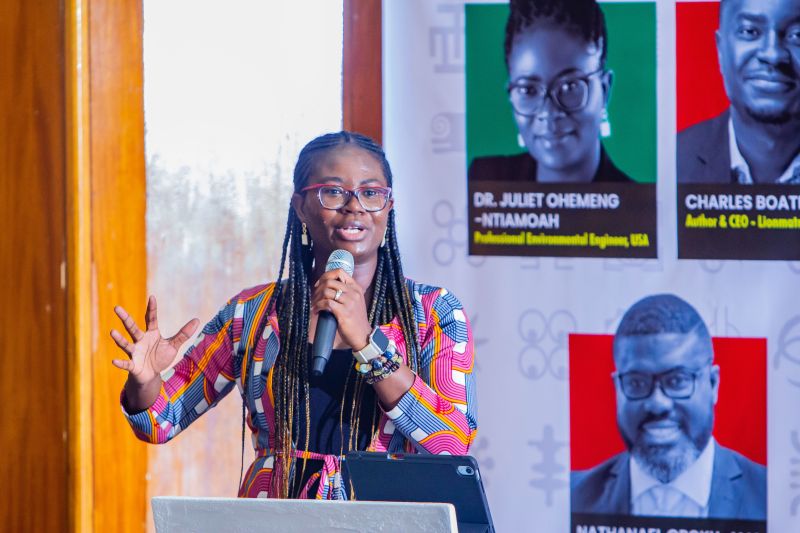
In a recent discussion on the environmental impact of illegal mining, US-based environmental engineer Dr. Juliet Ohemeng-Ntiamoah emphasized the limitations of standard water treatment processes in addressing heavy metal contamination.
Speaking on Joy News’ Newsfile on October 5th, 2024, she addressed the growing concerns over galamsey, illegal mining practices in Ghana, which have severely impacted water bodies.
Dr. Ohemeng-Ntiamoah, who specializes in bioenergy and wastewater process engineering, used her expertise to explain the various stages of water treatment—coagulation, flocculation, sedimentation, disinfection, and filtration—but noted that none of these methods effectively remove heavy metals.
“The typical water treatment process does not include the removal of heavy metals,” she stressed, warning of the dangers posed by mercury and lead, two common byproducts of galamsey operations.
"Yams and other food items being exported have been found to contain high levels of metals."
Her comments follow a recent report by Ghana Water Limited (GWL) on water quality improvements in the Central Region. In an official communique dated October 2nd, 2024, GWL reported that turbidity levels at the Sekyere Hemang Water Treatment Plant had decreased from 14,000 Nephelometric Turbidity Units (NTU) to 9,000 NTU. This improvement allowed the plant to increase water production from 1.98 million gallons per day to 2.77 million gallons per day. However, the World Health Organization (WHO) recommends that water turbidity levels should not exceed 5 NTU, raising questions about the safety of water still considered “improved.”
Dr. Justice Kofi Boakye Appiah, a medical doctor and research immunologist who also contributed to the discussion, cautioned against celebrating this supposed improvement. “People were jubilating that the turbidity level in the Central Region has come down to 9,000 NTU or so, meanwhile WHO says water turbidity level should be 5 NTU or less,” he pointed out.
The conversation took an even darker turn when co-host Kojo Yankson referenced historical figures in his criticism of Ghana’s leadership, stating, “Even Adolf Hitler never polluted or poisoned a water body of any nation, that diabolical thought never occurred to Hitler.” This stark comparison underscored the severity of the water contamination issue in Ghana, with many feeling that the country’s leadership has failed to adequately address the crisis.
Dr. Ohemeng-Ntiamoah emphasized that heavy metals, unlike turbidity, are not removed through conventional treatment. “The issue is bigger than muddy waters,” she explained, noting that water polluted with heavy metals is not suitable for drinking unless further, costly processes are implemented.
She warned that addressing the contamination from heavy metals could lead to a drastic rise in water prices, potentially up to “five to ten times” higher, as additional treatment units would be required. Alternatively, Ghana might face the prospect of importing drinking water in the near future.
“With the treatment process, we can remove the muddy side or the turbidity. But then there is still residual heavy metals concentration that is not removed by the water treatment process. To be able to remove that, we will need to add an additional process unit to remove the heavy metals, and that will almost be five times the cost of the water people are having. We have heard that we could be importing water. It is either we are importing water, or we could be paying five to ten times for the water that we have to use,” she said.
Her revelations align with ongoing protests across the country over the failed fight against galamsey. The health risks posed by contaminated water, coupled with the rising economic burden of clean water, have further intensified calls for stricter action against illegal mining.
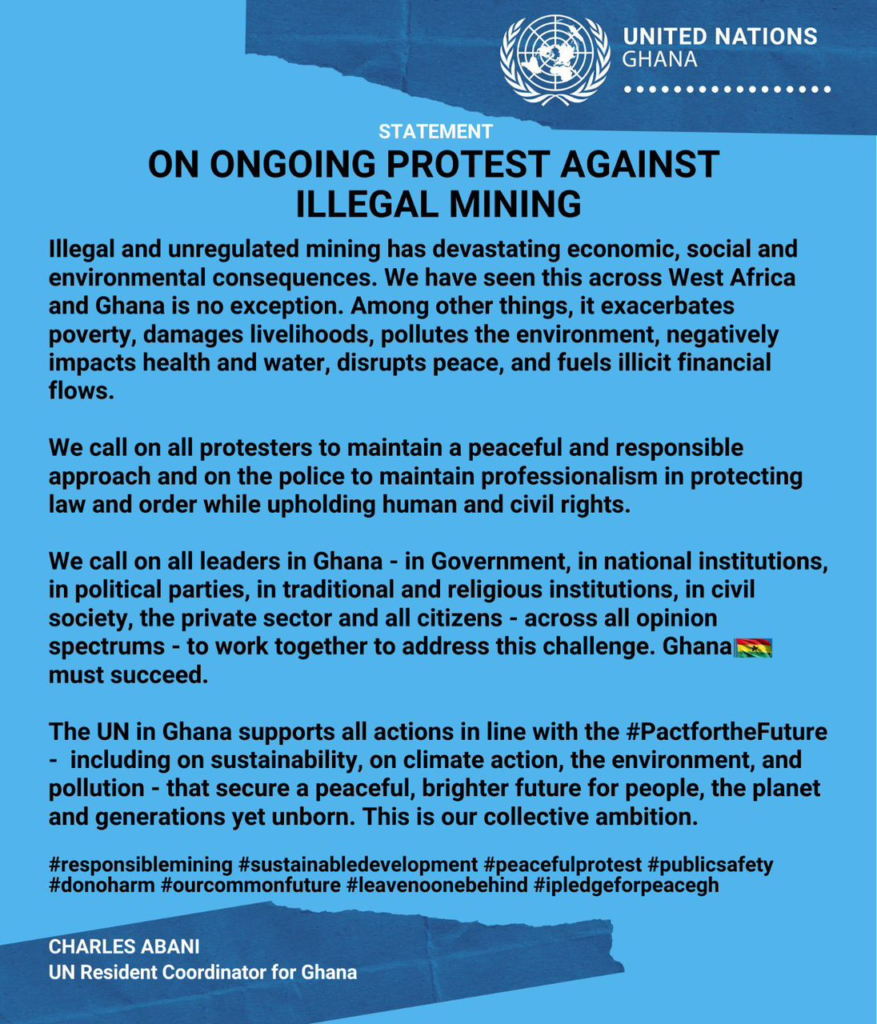
United Nations Resident Coordinator in Ghana, Charles Abani, has underscored the critical need for responsible mining practices and sustainable development, urging collaboration among all sectors to safeguard the nation’s future.
He highlighted the severe consequences of illegal mining, or galamsey, which contribute to worsening poverty, destroys livelihoods, harms the environment, contaminates water sources, disrupts communities, and facilitates illegal financial activities.
In a statement on Saturday, Abani encouraged protesters to remain peaceful and responsible, while calling on law enforcement to maintain professionalism, ensure public safety, and respect civil rights during demonstrations.
He appealed to key leaders from government, political parties, traditional and religious bodies, civil society, and the private sector to join forces in tackling the illegal mining issue.
Reaffirming the UN’s support for initiatives in line with the #PactfortheFuture, Abani emphasized the importance of sustainability, climate action, and environmental preservation, stressing that these efforts are vital to ensuring a peaceful and prosperous future for both present and future generations.
He concluded by calling for collective ambition and unity in overcoming the challenges posed by galamsey.
President of the University of Ghana Chapter of the University Teachers Association of Ghana (UG-UTAG),Professor Ransford Gyampo, has openly condemned the government’s approach in addressing the illegal mining issue, also known as galamsey.
His criticism follows a private meeting between President Akufo-Addo and leaders of Organised Labour, held on Thursday, where the president requested more time to tackle the galamsey problem.
The meeting was arranged after Organised Labour declared an indefinite strike scheduled to begin on October 10.
The strike was announced on Tuesday, October 1, after the government failed to meet their demands for an outright ban on all forms of mining and the declaration of a state of emergency to stop galamsey activities.
President Akufo-Addo urged Organised Labour to reconsider the strike, reassuring them of his determination to address their grievances.
On Friday, October 4, Information Minister Fatimatu Abubakar issued a statement reaffirming the government’s resolve to deal with the illegal mining crisis.
However, in an interview with Citi FM’s Eyewitness News, Prof Gyampo expressed his dissatisfaction with the government’s communication, stating that Organised Labour had not yet fully updated its members on the situation, making the government’s announcement premature and counterproductive.
“First of all, Organised Labour is yet to meet with its membership to brief them on what really transpired. So, I don’t think that it lies in the mouth of the Minister of Information to deliberately issue that statement to create the impression that something is being done when Organised Labour has not even briefed its membership. It doesn’t help,” Prof. Gyampo stated.
He further criticised the government’s approach, suggesting that it was more focused on gaining public sympathy rather than taking effective action against galamsey.
“Why the indecent haste to break the news, to achieve what? This is a fight against galamsey. It is not about asking for better conditions of service where you can use some of these propagandistic tendencies to try to sway or win public sympathy.
“Members of the public that we are fighting for are dying just as we are also dying. So, it is not about courting unnecessary sympathy; it is about doing the right thing,” he added.
Catholic Archdiocese of Accra, together with the Conference of Major Superiors of Religious, Ghana, and Catholic Lay Faithful and Professionals, will spearhead an EnvironmentalPrayer Walk Against Galamseyon Friday, October 11, 2024.
In a press release on October 4, the church emphasised the walk’s purpose: to highlight the devastating impact of illegal mining in Ghana and urge swift government intervention to stop it.
The demonstration seeks to press for a state of emergency on mining operations, particularly in areas surrounding rivers, water bodies, and forests.
Through this action, organisers hope to push for stronger measures to halt environmental damage caused by galamsey and encourage sustainable development practices for future generations.
The protest will begin at Holy Spirit Cathedral in Adabraka at 10:00 am, with participants marching through key Accra locations like Castle Road, Ridge Roundabout, Parliament House, and Oxford Street, culminating at Christ the King Parish in Cantonments.
A petition is set to be delivered to President Akufo-Addo at Jubilee House during the event, calling for urgent action to tackle the galamsey crisis.
The Catholic Church has extended an open invitation to all Ghanaians—Catholics, Christians of other denominations, Muslims, traditional leaders, civil society groups, environmentalists, and the public—to participate in the peaceful protest.
Organizers emphasised that the demonstration goes beyond prayer; it is also a call for prompt, effective measures to end illegal mining, safeguard the environment, and restore the nation’s natural resources.
MP for North Tongu, Samuel Okudzeto Ablakwa, has emphasized the need for decisive measures against illegal mining, widely known as galamsey.
During his appearance on Metro TV on Friday, October 4, 2024, Mr. Ablakwa praised organized labor for their efforts in urging the government to tackle the galamsey crisis, describing the meeting as a pivotal moment in the battle against illegal mining.
He pointed out that labor unions are acting in the national interest by advocating for protective measures to safeguard Ghana’s natural resources, particularly its severely polluted water bodies due to galamsey activities.
Although Ablakwa recognized the meeting between the president and labor leaders as a constructive development, he stressed that more tangible actions are required to effectively combat the issue.
Organized labor has threatened a nationwide strike to protest the government’s handling of the galamsey crisis, which has had a devastating impact on water bodies and the environment throughout Ghana.
In response, President Akufo-Addo convened with labor leaders to address their concerns and avert industrial action.
One of the primary demands from Organized Labor is the immediate declaration of a state of emergency in mining regions to stop the environmental degradation caused by illegal mining.
Mr Ablakwa condemned the Akufo-Addo administration for its perceived inaction regarding what he termed a “mass murder” caused by illegal mining activities.
He pointed out the government’s inability to tackle the increasing turbidity levels in water sources, which the Ghana Water Company has cautioned could result in a future where Ghana may need to import water due to contamination.
“The government appears to be complicit in this crisis, focusing more on retaining political power than on protecting the lives of Ghanaians,” he asserted.
He proposed several immediate actions that he believes the government should take to effectively tackle the galamsey crisis. He urged an end to the harassment of anti-galamsey demonstrators and called for the removal of regional ministers and district chief executives who have not taken steps to stop illegal mining. Ablakwa also highlighted the necessity for military protection of essential rivers and forests from encroachment and advocated for a comprehensive health program for those impacted by the dangers posed by illegal mining activities.
Nana Akomea, Vice Chairman of the Bawumia Campaign Team, acknowledged the urgency of the situation and reaffirmed the government’s commitment to addressing it.
“The President is currently engaging with Organised Labour, and I am confident that tangible measures will soon be implemented,” Nana Akomea remarked, encouraging all stakeholders to refrain from politicizing the issue.
South African music legend Yvonne Chaka Chaka has urged President Akufo-Addo to fulfil his promises in tackling the issue of illegal mining, commonly referred to as galamsey.
She expressed her deep concerns about the environmental devastation caused by galamsey in Ghana, emphasising that the problem affects not only Ghana but also her home country, South Africa.
Chaka Chaka called on the government to take strong measures to reclaim the country’s degraded lands and restore its forests.
During an interview on Citi FM on Friday, October 4, she disclosed her intentions to formally address the president at the upcoming Global Citizen meeting in Ivory Coast.
“There is a Global Citizen meeting in Ivory Coast next week, and President Akufo-Addo will be present. I intend to convey this message to him because we cannot continue to let young people suffer,” she said.
Ms. Chaka Chaka emphasised that youth are aware of the solutions, and it’s time for President Akufo-Addo to turn his words into action.
“We need him to practice what he preaches, so that these minerals can benefit everyone and ensure access to clean drinking water. When we say people shall govern, it is the same people who bring the solutions. We need you to listen to the people of Ghana and do what is right,” she stressed.
Yvonne Chaka Chaka is currently in Ghana for the African Legends Night happening on October 5.
Award-winning investigative journalist Manasseh Azure Awuni has joined the likes of IMANI’s Franklin Cudjoe in urging Organised Labour to stand firm after their meeting with President Akufo-Addo.
Cudjoe recently warned that it would be “very foolish” for Organised Labour to call off their planned strike against illegal mining, known as galamsey. In an open letter, Manasseh Azure Awuni echoes this sentiment, emphasizing the critical need for decisive action. He praises the unions for their recent activism but warns that failure to act firmly would be a betrayal to the nation.
Below is the full text of the letter
OPEN LETTER TO ORGANISED LABOUR
Dear Organised Labour,
I write to first thank you for waking up from your sleep after so many years of allowing the politicians to have their way. Your recent campaign against the sale of SSNIT hotels shows that your failure to act when it matters makes you accomplices of the political crimes Ghanaians have been subjected to over the years.
I am writing to you about your recent threat to strike on October 10 if the government doesn’t stop the illegal mining activities. These are my observations and humble request:
This is a political season, and the government does not want to touch the issue of illegal mining for fear of losing votes to the opposition NDC. The government values the votes of illegal miners more than the lives they are destroying by polluting water bodies, depleting forest reserves and erasing farmlands from the surface of the earth.
I am not that old but I’ve lived long enough to remember when Akufo-Addo had hair on his head. I also lived through the Mahama era as a journalist. I can say that the NDC does not deserve any political advantage from the “galamsey” fight. In the Mahama era, the government failed to fight galamsey. In fact, when the fight was gaining momentum, the government withdrew the security personnel and it went from bad to worse. That’s why Akufo-Addo was confronted with the menace as soon as he took power in 2017. Galamsey didn’t start in 2017.
If the NDC government under Mahama failed to fight illegal mining, Akufo-Addo’s administration legalised it. In addition to the law that allowed politicians and cronies of the Akufo-Addo administration to mine in forest reserves, the government indiscriminately issued licenses to dubious persons and companies to undertake so-called small-scale mining, which is galamsey in reality.
These licensed small-scale miners are not different from the galamsey operators. In some cases, they are worse because they have the resources to buy heavy equipment, and their scale of destruction has been massive. The institutions of state that are supposed to supervise and ensure that they comply with best practices have turned away and allowed the politicians to have their way with our forests and water bodies.
I have seen many politicians in the governing party say that the government will not heed your call to tackle the issue of illegal mining. Some have annoyingly said that banning or suspending mining will not solve the problem. Others have also attributed your fight to instigation by the opposition NDC as if you are dimwits who cannot reason for yourself, who cannot see the photos and videos of polluted rivers and destroyed farmlands. The latest I have heard is a plea from the president that you reconsider your intention to strike.
My humble appeal to you is this: you will be letting those of us who have started to believe in you down if you fail to act on galamsey. Ours is not a democracy. We only queue to elect some people and empower them to do whatever they want without consequences. If, for the first time, you have the power to call the politicians to order and you fail, history will not remember you kindly. Some are even alleging that your ranks have been compromised. Don’t let your nation down.
I have said that the NDC does not deserve the political advantage of your strike or the government’s actions on galamsey at this crucial moment, but political considerations should not stop you from acting decisively to save our nation and its water bodies. Politics should not stop you from doing what is right. Besides, labour agitations have always benefitted one political party or the other. When your agitations caused sitting President Mahama to declare himself a “dead goat,” it became the NPP’s slogan in the next election.
The most essential point to consider if you’re worried about the political implications of your action should be this: the illegal mining menace did not begin in the election year of 2024. There were agitations as far back as 2017 from the Media Coalition Against Illegal Mining. If the government has refused or failed to resolve the problem, then you should not care about the political effect of your actions on that governing party. If Akufo-Addo had resolved the problem, his people would not have been here talking about the political risks of acting now. We should not allow the government to prioritise votes over our survival as a nation.
The government does not want to touch the illegal miners because it fears losing the next election. Yours is to show the government that if hospitals, schools and key sectors of the economy stop working from now until December 7, the government cannot win the election. So Akufo-Addo should choose between solving galamsey and risking the election or allowing your strike and risking the election.
The promise to revoke the LI that allowed mining in forest reserves is not good enough. The forest reserves have already been defiled, and some have been depleted. And the legal process will drag on until after the election. YOU MUST STRIKE WHILE THE IRON IS STILL HOT. They won’t listen to you after December 7.
Insist on the suspension of all mining activities, except the large-scale miners like Newmont, and AngloGold, which are complying with international best practices and not polluting the waters, farmlands and forests. If you have evidence that a large-scale mining company is involved in a galamsey-like operation, it must be added to your list.
Your fight should not stop after the election. Some of us have very little trust in the opposition NDC’s resolve to fight the menace. Some of their members are patiently waiting for their turn to get the licenses and go into the forests to cause the havoc we face now. Demand commitments from all the candidates going into the election and hold the balls of whoever wins on December 7 to address this deadly problem.
Finally, I want to congratulate your leadership and let you know that Ghanaians are watching keenly. You have a unique opportunity to bring some semblance of sanity back to a nation ruined by greed and stupidity. They have resorted to targeting protestors and silencing voices of descent. You are our last resort in this quagmire of hopelessness.
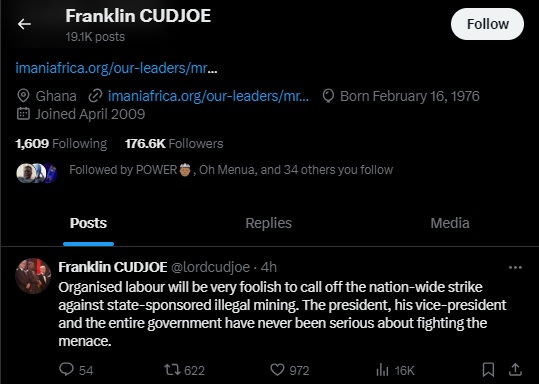
Founding President of IMANI Centre for Policy and Education, Franklin Cudjoe, has advised Organised Labour against cancelling their planned strike over illegal mining, commonly referred to as galamsey.
In a tweet, Cudjoe stated, “Organised labour will be very foolish to call off the nationwide strike against state-sponsored illegal mining. The president, his vice-president and the entire government have never been serious about fighting the menace.”
Organised Labour plans to begin an indefinite nationwide strike on October 10, 2024, aimed at pressuring the government to take strong action against galamsey. This decision follows the government’s failure to meet a list of demands by the end of September 2024, which included declaring a state of emergency on illegal mining and deploying security forces to stop all mining activities in forest reserves and near water bodies.
The upcoming strike has received considerable backing from various unions, such as the Industrial and Commercial Workers Union (ICU) and the Trades Union Congress (TUC). However, internal disagreements have emerged, with some factions within the labour movement expressing concerns about the strike.
In response to the planned action, President Nana Addo Dankwa Akufo-Addo has urged Organised Labour to reconsider their decision. During a closed-door meeting with union leaders on October 3, 2024, the President assured them of his commitment to addressing the illegal mining issue.
Despite these assurances, skepticism remains regarding the government’s dedication to resolving the crisis, as critics point to a history of inaction. Illegal mining has caused significant damage to Ghana’s environment and public health.
The activities have contaminated water bodies with hazardous substances like mercury and cyanide, led to deforestation, and destroyed agricultural lands. This environmental degradation has reached alarming levels, prompting widespread calls for urgent and effective measures to combat the issue.
Deputy Minister for Education, Prof. Kingsley Nyarko,has urged Organised Labour to reconsider its decision to launch a nationwide strike over illegal mining, commonly referred to as galamsey.
Speaking at the Ghana Teacher Prize ceremony in Kumasi on Thursday, October 3, he addressed concerns regarding the upcoming industrial action.
Prof. Nyarko appealed to Organised Labour to seek alternative solutions, arguing that a strike may not be the best approach to tackle the galamsey issue.
He highlighted the importance of ongoing discussions and collaboration between all involved parties to find a sustainable solution to the environmental damage caused by illegal mining.
In his view, dialogue and cooperation would prove more productive than disrupting national work output.
The strike, set for October 10, was called by Organised Labour in response to the government’s failure to declare a state of emergency over the galamsey crisis.
Labour groups have raised concerns about the severe environmental damage caused by illegal mining, particularly to water sources and farmlands, and are demanding swift action.
Prof. Nyarko, who also represents Kwadaso in Parliament, acknowledged the legitimacy of Organised Labour’s concerns but insisted that striking would not necessarily lead to the desired changes.
He called for a unified effort between the government, labour unions, and other stakeholders to develop a comprehensive strategy to combat illegal mining and address its devastating impact.
“For me, it’s more about dialogue, because the government and individuals are concerned about the activities of galamsey. The government has put in place interventions to deal with this issue.”
“It demands collective efforts not only from the government but from other civil society, and the media should be involved as well, chiefs, traditional leaders, the clergy, and everybody else must come on board for us to deal with it.”
“I will plead with Organised Labour that instead of embarking on a strike we don’t know when it will end, the best way is to keep engaging the authorities for us to come to a meaningful, progressive, and productive solution to this particular problem. Industrial action will only lead to a reduction in productivity that will affect our revenue.”
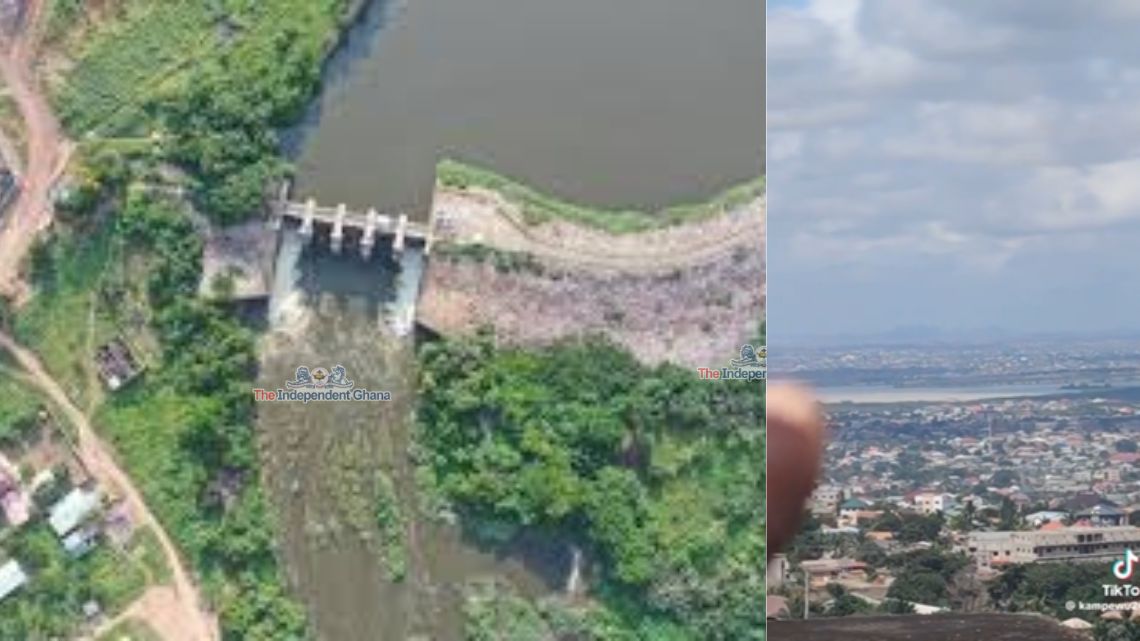
Concerns are mounting over the condition of the Weija Dam, as residents report a visible change in the water’s color, allegedly due to illegal mining activities. A video shared on social media by user @withAlvin__ shows a resident expressing alarm over the dam’s murky brown water, a stark contrast to its usual clarity.
In the video, the resident says, “What you guys are seeing here right now is the Weija Dam. This is the current situation of the Weija Dam. The brown colour of the galamsey water is literally spreading into the rest of the dam. This is becoming very serious. The water that I used to see crystal clear is now becoming brown. Anytime rain falls, it does not change colour.”
While this claim has not been officially verified by authorities responsible for the dam, many online users echoed similar concerns, raising questions about the potential impact of illegal mining—locally referred to as galamsey—on water resources.
Galamsey, or illegal mining, has long been a critical issue in Ghana, particularly for its devastating effects on water bodies and the environment. Mining activities often involve the use of harmful chemicals such as mercury and cyanide, which pollute rivers and streams. This pollution can spread downstream, affecting larger water systems like the Weija Dam, which supplies drinking water to parts of Accra.
The Weija Dam, located on the Densu River, plays a crucial role in providing potable water to the city. If the claims of galamsey contamination are substantiated, the situation could pose significant risks to public health and environmental sustainability.
I am afraid the weija dam will soon be in trouble if this continues to spread. The state of the river today. Friday 4th October, 2024. #StopGalamseyNowpic.twitter.com/vVHM790h8u
The alarming state of the dam coincides with increasing public outcry over illegal mining. In recent months, civil society groups and concerned citizens have intensified their advocacy against galamsey. Various labor unions, environmental activists, and community groups have over the past month rallied for stronger government action to curb illegal mining activities.
Several organized labor groups, medical and environmental associations, and prominent public figures have also called on the government to enforce stricter measures to address the environmental damage caused by galamsey. These groups argue that failure to take decisive action will further endanger the country’s natural resources and disrupt access to clean water.
Government Response and Future Steps
Despite ongoing efforts by the government, including military interventions and stricter regulations on mining operations, illegal mining continues to thrive in many regions. The Minerals Commission, along with the Ministry of Environment, Science, Technology, and Innovation, has been urged to step up monitoring and enforcement measures to protect water bodies like the Weija Dam.
Tricycle operators and okada riders from New Abirem have urged the government to declare a state of emergency on illegal mining activities, commonly known as galamsey.
The operators voiced their concerns over the detrimental effects of galamsey on public health and the environment during a recent community meeting.
“The galamsey situation is no joke; it’s causing serious health issues for us and our families,” one of the operators stated.
“The contaminated water from galamsey activities is being used to irrigate the food we consume. This is a crisis that cannot be ignored.”
Participants at the meeting emphasized that the repercussions of galamsey extend beyond mining communities, warning that urban residents, including those in Accra, are not exempt from its harmful effects.
“We need to unite against galamsey activities. The government has shown reluctance in addressing this issue, and it’s high time we stand together as Ghanaians to put an end to it,” another operator urged.
The operators expressed their frustration with the government’s perceived inaction and called for immediate measures to combat illegal mining.
They argue that without urgent intervention, the health and safety of countless Ghanaians are at risk.
The operators’ appeal adds to the growing chorus of voices across the nation advocating for a more robust response to galamsey, which has become a significant challenge for the country’s environmental and public health landscape.
Presently, there is mounting pressure on the government to fire all Municipal and District Chief Executives under whose watch the practice of illegal mining is taking place. One of the individuals leading such calls is the Convener of the Media Coalition against Galamsey, Kenneth Ashigbey.
Illegal mining has emerged as a significant challenge in the country, particularly due to its detrimental impact on Ghana’s water bodies.
Despite a series of government interventions ranging from deploying security forces to arresting offenders, the problem of galamsey continues unabated.
Recently, President Akufo-Addo directed the set up of a five-member ad hoc ministerial committee to engage stakeholders to assess the government’s efforts to deal with illegal mining activities.
While the reassessment continues, there are also growing calls for the government to ban small-scale mining and declare a state of emergency to protect water bodies and the country’s vegetation cover.
Government’s representatives in the sector in question have however shot down such calls, citing the economic benefit the country derives from gold production by small-scale miners.
Declare state of emergency on galamsey now – Tricycle operators and okada riders of New Abirem to gov't#UTVNewspic.twitter.com/tC2zKjLpJl
Member of Parliament (MP) for Asante Akim South, Kwaku Asante-Boateng, has raised concerns that the government’s reluctance to address illegal mining, commonly referred to as galamsey, is influenced by fears of losing the upcoming December 7 elections.
According to Asante-Boateng, the New Patriotic Party’s (NPP) previous strong stance against galamsey in 2020 contributed to their losses in several mining communities.
Speaking to journalists on October 2, he suggested that the current hesitance to impose a total ban on all forms of mining stems from this fear, which he believes could affect any political party.
He defended the government’s cautious approach, explaining that the apprehension about losing votes is a common political concern, especially in regions where galamsey is prevalent.
“We did it as a party and as a government before the 2020 elections. And if you can recount, all our seats in the mining communities that we were trying to control, we lost all the seats, the parliamentary seats there.
“So do you think for the second time, if we say we want to break the 8 and people are crying for that ban, the current government will have the guts or will find it necessary to put a ban on it?
“The fear of losing power [is delaying the ban] and that fear can happen to any party at all.”
Government’s spokesperson on Governance and Security, Dr. Palgrave Boakye-Danquah, has expressed optimism about engaging withorganised labourahead of their planned strike on October 10, 2024.
The strike is intended to push the government into taking strong measures against the illegal mining activities (galamsey) that are polluting water bodies nationwide.
In an appearance on Joy News’ PM Express on Wednesday, October 2, Dr. Boakye-Danquah conveyed confidence that the industrial action could be prevented through timely dialogue and intervention from the government.
He stated that efforts are underway to address the concerns raised by labour groups, and he remains hopeful that a solution will be found before the strike commences.
“I am confident that organised labour will hear from the government before the 10th of October,” Dr Boakye-Danquah said.
“I’m sure the strike will not need to happen, especially when the government is preparing to give some timing, some responses to their concerns. This is a very difficult time, and we all feel the pressure.”
He explained that the government’s response to the ongoing galamsey problem is a pressing issue affecting all Ghanaians, and acknowledged the gravity of the situation.
“The choice of addressing galamsey affects every single Ghanaian. We are all under pressure to deal with this menace,” he said.
When asked to clarify why the timing is so challenging for the government, Dr Boakye-Danquah pointed out that managing the expectations of organised labour during periods of strikes or demonstrations adds significant pressure on the government.
“These are difficult times for the government, and clearly, labour is asking for very decisive decisions to be made within the shortest possible time,” he explained.
Dr. Palgrave Boakye-Danquah emphasised that the government remains firmly against illegal mining, recalling President Nana Akufo-Addo’s commitment to risking his presidency in the fight against galamsey.
He pointed out that the president had made it clear in the past that combating the menace was a priority.
Regarding the demands of organised labour, Dr. Boakye-Danquah explained that they are calling for more decisive government action, including potential legal reforms and the possible declaration of a state of emergency in regions heavily impacted by illegal mining activities.
“I looked at the letter thatorganised labourwrote in September, and one of the things they asked for was a major state of emergency to be declared and also asked for a review of the provisions in LI 240,” he said.
The spokesperson assured the public that the government is working diligently to meet these demands and will reach out to organised labour soon with a response.
“I am positive the government will reach out to them soon,” Dr. Boakye-Danquah affirmed, concluding his remarks with optimism that the issue could be resolved before the October 10 deadline.
The Ghana Police Service has warned that it will hold the organisers of the Concerned Citizens Against Galamsey protest, slated for October 3 to 5, 2024, accountable if any laws are violated.
In a statement released on Wednesday, the police highlighted that during discussions with the organisers, they were reminded of their obligations under the Public Order Act.
This includes being held responsible for any damage to public property that may occur during the demonstration.
“Any person taking part in the demonstration shall obey the directions of the Police safeguarding the proper movement of other persons and vehicles and generally maintain order, and any person taking part in a special event shall conduct himself in such a manner as to avoid causing obstruction of traffic, confusion or disorder.”
“Additionally, the organisers were also reminded of Police responsibilities under the Public Order Act, which include taking all such steps reasonably necessary during the demonstration as follows; a. to assist in the proper conduct of any special event by directing the routes of such event to prevent obstruction of pedestrian or vehicular traffic.
“To disperse crowds at any special event where he has reasonable grounds to believe that a breach of the peace is likely to occur or if any breach of the peace has occurred or is occurring in order to prevent violence, restore order, and preserve the peace; may cause to be closed such streets or parts thereof to pedestrian or vehicular traffic or both and may cause to be erected such barriers as may be necessary to preserve public order,” it stated.
The Police have assured the public that adequate security arrangements are in place to uphold law and order, ensuring peace and safety throughout the demonstration and afterward.
A respected lecturer, author, and preacher, Rev. Dr. Emmanuel Kwasi Amoafo, has called for increased collaboration between the church and the government to tackle Ghana’s galamsey crisis, or illegal mining.
He advocates for the church to provide sustainable alternatives through effective regulation and intervention.
In an interview with Bernard Avle on Channel One TV’s The Point of View on Monday, September 30, Rev. Dr. Amoafo emphasized the church’s crucial role in raising awareness.
He urged religious leaders to use their platforms to educate the public, especially those engaged in illegal mining, on the importance of protecting the environment and conserving water resources.
When asked if the church should take a stronger stand on environmental issues, Rev. Dr. Amoafo responded, “And then, secondly engaging actively with the government, because the government takes the church seriously. Especially in a country like Ghana, where virtually everybody goes to church.
“The government seeking votes from the public knows that the people listen to the church. The church should actively engage with the government and say that we think this thing needs to be regulated this way. They need to also provide alternatives if you just tell the government to regulate it, [it doesn’t work that way].”
Rev. Dr. Amoafo called for the church to put aside political differences and unite in the fight against the galamsey menace, advocating for a collective approach as one body. He emphasized this point by stating, “So if the church is so divided that they cannot play that role of being the salt and the light, that’s a failure.”
Rev. Dr. Amoafo urged the church to pray for the emergence of God’s chosen leader in the upcoming 2024 general elections, emphasizing the need for divine guidance in selecting a leader committed to promoting peace, justice, and righteousness.
“As a united church, it doesn’t matter which denomination you are, whether Pentecostal or mainline denomination or whatever, the church should organise prayer and say, Lord, we’re coming to you at this critical time in the history of our nation, we’re crying out to you to avert bloodshed, violence and discord, and so on, you give us the leader of your choice.
“Yes, I will not say don’t demonstrate or speak from the pulpit, even as you do that, place a lot more emphasis on organising prayers for the country by the churches.”
The #FreeTheCitizens Movement is set to embark on a 3-day protest in Accra from October 3 to October 5, to demand action against illegal mining (galamsey) and its devastating impact on the country’s environment.
Protestors will converge at 6 AM at Legon, Okponglo, and march to Independence Square in a bid to raise awareness about unlawful detentions and rampant environmental destruction.
The protest has garnered significant support from various groups and public figures. Notably, Katanga Fellowood, a group from the University Hall at Kwame Nkrumah University of Science and Technology (KNUST), initially planned to participate in the protest collectively. However, following consultations, they announced their withdrawal as a collective body out of respect for their leader, Odeefour.
In a statement, Katanga Fellowood explained, “This decision comes after extensive consultations led by the highest King of our land, Odeefour, who, in consultation with all stakeholders, has decided to boycott the demonstration.”
Despite this, the group reaffirmed their commitment to the cause, stating, “While we may not join the demonstration in the collective manner originally planned, we stand firm in our resolve to continue the fight against the ills of society, including the devastating effects of galamsey on our green reserves and water resources.”
Katanga Fellowood has also shown financial support by handing over a GHC10,000 donation to the organizers of the protest to assist with logistics and transportation.
“Significant progress has been made towards handing over 10,000 Ghana cedis to the organizers of the demonstration to support the provision of logistics,” the group stated.
In a further show of solidarity, Ningo-Prampram Member of Parliament, Sam Nartey George, has pledged his support for the demonstration.
In a post on the X platform dated September 26, Sam George declared, “Count me in. Citizens, no matter how uncomfortable, must be allowed to have a voice. I’d put my money where my heart and mouth is. Let’s go!”
The protest, which aims to challenge illegal mining activities and demand accountability from state authorities, is expected to see participation from individuals across Ghana. Organizers have highlighted that the #FreeTheCitizens Movement is not just a protest but a “rallying call for every Ghanaian who believes in the power of democracy, justice, and environmental preservation.”
As preparations for the event continue, organizers are optimistic that the turnout will send a strong message to authorities to take swift action in addressing the environmental crisis caused by galamsey.
The #FreeTheCitizens movement has officially acknowledged the receipt of a GHC 10,000 donation from Katanga Fellowood, a group associated with the University Hall (Katanga) of the Kwame Nkrumah University of Science and Technology (KNUST).
The funds were raised by the Katanga group to support transportation logistics for the upcoming protest against illegal mining (galamsey) and the unlawful detention of citizens.
In a statement, the movement expressed gratitude for the financial support, noting that the funds would be instrumental in transporting protesters to Accra for the 3-day demonstration scheduled to take place from October 3 to October 5.
“We commend Katanga Fellowood for their unwavering support and commitment to the fight against injustice and the devastating effects of galamsey on our environment,” the organizers said.
Although Katanga Fellowood initially planned to participate in the protest as a collective group, they withdrew their collective involvement following consultations with traditional leaders.
The group explained that “this decision comes after extensive consultations led by the highest King of our land, Odeefour, who, in consultation with all stakeholders, including us, has decided to boycott the demonstration.”
Despite the withdrawal, the group has allowed its members to attend individually, emphasizing that “many of us will participate in the demonstration individually, adhering to the principles that have defined our commitment to justice and environmental preservation.”
The movement also praised the transparency and dedication of Emmanuel Kotey Afutu, the Secretary of Katanga Fellowood, who played a crucial role in ensuring the smooth transfer of the donation. “His integrity and commitment are highly appreciated,” the statement added.
The protest, which is set to start at Legon’s Okponglo and end at Independence Square, aims to draw attention to illegal mining activities, the destruction of water bodies, and other unconstitutional actions by state authorities.
Ningo-Prampram Member of Parliament, Sam Nartey George, has thrown his support behind the demonstration, declaring his willingness to join the cause. “Count me in. Citizens, no matter how uncomfortable, must be allowed to have a voice,” Sam George stated in a post on X (formerly Twitter).
The #FreeTheCitizens movement sees this demonstration as a rallying cry for all Ghanaians who believe in justice, environmental preservation, and the rule of law. “Together, we can create meaningful change for our country,” they concluded.
So far, a total of GHC13,400 has been donated for the demonstration.
Attorney-General and Minister for Justice, Godfred Dame, has called on prosecutors to consider relevant bail applications for demonstrators involved in the recent Democracy Hub protest against illegal mining (galamsey).
His statement was made during the Annual Conference of the Association of Magistrates and Judges of Ghana (AMJG), held at the La Beach Hotel in Accra on Wednesday, October 2, 2024.
Addressing the gathering, the Attorney-General emphasized the importance of ensuring fairness in the ongoing legal proceedings related to the protest.
Attorney-General Godfred Dame
“I will also advise the prosecution to consider relevant bail applications made at the next adjourned dates of the cases,” Mr. Dame stated.
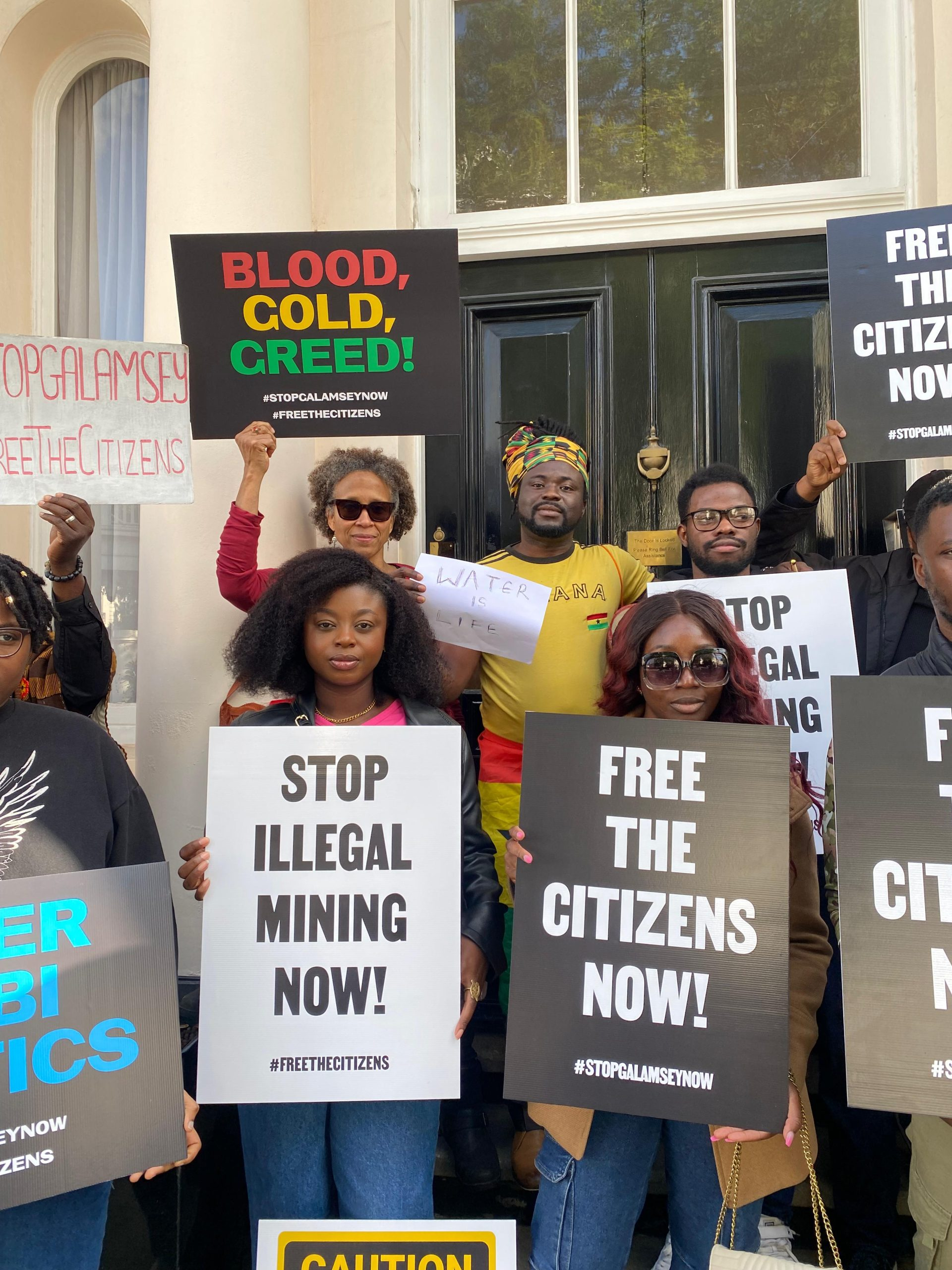
The protest, aimed at drawing attention to the harmful effects of illegal mining, resulted in the arrest and subsequent remand of 50 demonstrators, including 11 individuals who appeared before the Accra Circuit Court.
The demonstrators face charges such as conspiracy to commit a crime, unlawful assembly, causing unlawful damage, offensive conduct conducive to the breach of peace, and assault on a public officer. Despite pleading not guilty, the protestors including Ama Governor and Convenor for the group, Oliver Barker-Vormawor were remanded into police custody, a decision that has sparked widespread public discourse, including concerns raised by former President John Dramani Mahama, who described the remand as an abuse of their rights.
The Attorney-General also urged the police to expedite their investigations into the matter.
“I urge the Police Service to swiftly conclude investigations by the next adjourned dates of the cases involving the prosecution of excesses from recent protests in Accra, so as to exclude by that date, all those against whom sufficient evidence cannot be found to proceed further,” he emphasized.
Reflecting on the broader implications of public protests, Mr. Dame reiterated the need to uphold the rule of law. He cited international examples, such as the July 2024 sentencing of climate campaigners in the United Kingdom, to underscore the importance of prosecuting unlawful actions during protests.
He noted, “Respectfully, the lesson to be drawn from the treatment of unlawful or violent expression of free speech in the United States and the United Kingdom is that the legitimacy of the declared object of specific protests does not matter.”
While acknowledging the right to peaceful demonstration, Mr. Dame stressed that the rule of law must prevail. “Whilst acknowledging the legitimacy of concerns which motivate some protests, the State must deplore and, in fact, prosecute acts of protestors which threaten the running of essential services, infringe on the right to free movement of others, or attack the safety of security forces,” he said.
With the 2024 general elections fast approaching, the Attorney-General highlighted the critical role of the Judiciary in maintaining peace and security. He called on judicial officers to deal firmly with cases of lawlessness, stating, “The peace and territorial integrity of our nation at this time… is far greater than the pursuit of any parochial political goals, just as the right to free expression is no more paramount than the right of others to access essential services and the duty of the Police to maintain the peace of Ghana.”
Ghana’s laws on bail and remand are central to these conversations, with the legal framework designed to prevent excessive detention while ensuring that justice is served.
Section 96 of the Criminal Procedure Code, 1960 Act 30, which tackles the concerns provides:
(1) Subject to the provisions of this section, a court may grant bail to any person who appears or is brought before it on any process or after being arrested without warrant, and who
(a) is prepared at any time or at any stage of the proceedings or after conviction pending an appeal to give bail, and
(b) enters into a bond in the manner hereinafter provided, with or without a surety or sureties, conditioned for his appearance before that court or some other court at a time and place mentioned in the bond.
(2) Notwithstanding anything in subsection (1) of this section or 15, but subject to the following provisions of this section the High Court or a Circuit Court may in any case direct that any person be admitted to bail or that the bail required by a District Court or police officer be reduced.
(3) The amount and conditions of bail shall be fixed with due regard to the circumstances of the case and shall not be excessive or harsh.
(4) A court shall not withhold or withdraw bail merely as a punishment.
(5) A court shall refuse to grant bail if it is satisfied that the defendant
(a) may not appear to stand trial; or
(b) may interfere with any witness or evidence, or in any way hamper police investigations; or
(c) may commit a further offence when on bail; or
(d) is charged with an offence punishable by imprisonment exceeding six months which is alleged to have been committed while he was on bail.
(6) In considering whether it is likely that the defendant may not appear to stand trial the court shall take into account the following consideration:
(a) the nature of the accusation;
(b) the nature of the evidence in support of the accusation; (c) the severity of the punishment which conviction will entail;
(d) whether the defendant, having been released on bail on any previous occasion, has wilfully failed to comply with the conditions of any recognisance entered into by him on that occasion;
(e) whether or not the defendant has a fixed place of abode in Ghana, and is gainfully employed; (f) whether the sureties are independent, of good character, and of sufficient means.
(7) A court shall refuse to grant bail –
(a) in a case of treason, subversion, murder, robbery, hijacking, piracy or escape from lawful custody, or
(b) where a person is being held for extradition to a foreign country.
Presidential Candidate for the Alliance for Revolutionary Change, Alan Kwadwo Kyerematen,has presented a detailed strategy aimed at combating illegal mining, often referred to as galamsey, emphasizing the need to demobilize the equipment involved in such activities.
He criticized the current government’s tactic of seizing and incinerating excavators, labelling it “ineffective and nonsensical.”
Instead, Kyerematen advocates for a more organized and sustainable approach by utilising the military to assist in the demobilization of mining machinery.
This proposal forms part of his comprehensive 10-point plan to address the galamsey crisis, which includes implementing a one-year nationwide suspension of small-scale and community mining operations.
This pause is intended to facilitate improved regulation and environmental restoration.
Kyerematen expressed these views during a meeting organized by the Institute of Economic Affairs (IEA) on October 1, 2024.
“Demobilisation of all machinery and equipment that are currently used in small-scale and community mining. Under the supervision of the military, if you demobilise equipment, you need to do three things: first, you need to keep them under inventory, two, you need to have them properly stored; and third, you need to preserve them.
“This practice of burning equipment doesn’t make any sense. And that is why the GRP is proposing that you demobilise, and inventorize them so that you know what you have. Otherwise, after one year, they will be out of use.”
Head of the Centre for Ageing Studies at the University of Ghana, Professor Joseph Osafo, has thrown his support behind ongoing protests against illegal mining, highlighting the health risks associated with the practice.
During a panel discussion on Peace FM on Tuesday, October 1, 2024, he stressed that consuming water contaminated by galamsey activities poses serious threats to the reproductive system, reinforcing the urgency to put a stop to illegal mining operations.
“It affects your sperm quality; it affects your egg quality. So the direction the youth have taken is very good, but there are issues with their actions. We have to do it again and show Ghanaians and our leaders that we deserve better.
This is not the state of the water bodies left to us by our forefathers. You could drink directly from the rivers, but now you can’t try that. All the water bodies are poisoned,” he stated.
Prof. Osafo’s statement was in response to the arrest of over 50 protesters by the police during a recent anti-galamsey demonstration organized by Democracy Hub.
While lauding the police, Prof. Osafo charged the protesters not to relent in their pursuit but to ensure decency in their quest.
“So I applaud the police and also advise our brothers that the protest is good, so they have to come again and do it decently this time,” he stated.
Police have reported that the protesters were involved in acts of disorder, leading to their arraignment before the court. More than 50 of them have since been remanded in custody after their court appearance.
In the meantime, another protest against illegal miningis set to take place in Accra from October 3 to October 5, 2024.
The demonstration aims to intensify pressure on the government to tackle illegal mining while also calling for the release of the detained protesters.
A Ghanaian illegal miner has accused some Members of Parliament (MPs), traditional chiefs, and police officers of sabotaging the government’s efforts to nip the issue of illegal mining, also known as galamsey, in the bud.
Speaking to Accra-based TV3 on the condition of anonymity, he alleged that these reputable personalities provide intel on government and security raids, providing the opportunity for illegal miners to evade the claws of justice.
“I wept the first time I entered the business because I saw how vast lands were destroyed. When they began the operation, we had to be friends with DCE, you had to be friends with MP, district police and subchiefs in order not to be caught. These people place a call to alert us not to be on the field on the day of the operation,” he remarked.
The illegal miner opined that there is no clear distinction between illegal miners and companies that secure permits for mining since the latter, with support from political parties, contribute to the destruction of Ghana’s water bodies and forest reserves.
“There is no difference between galamsey and illegal mining. Those who have the licence also spoil our river bodies. We destroy the river bodies because there is more gold there than the plain land. The big men push those who have the money and employ a lame man like me. The mining companies in Ghana are political, one concession belongs to one NDC man because NDC is not in power that concession has been delivered to one sitting NPP woman somewhere at Atiwa,” he added.
As an illegal miner, you have to be friends with the DCE, MP, District Police Commander and the subchiefs in the area so when there's going to be a raid they'll give you a heads up – Former Galamsey operator#Agenda#3NewsGH#StopGalamseyNowpic.twitter.com/vb4mSehyCq
There have several government officials who have been relieved of their duties due to their involvement in illegal mining.
Four years ago, the Amansie South District Chief Executive, William Asante Bediako, was sacked by President Akufo-Addo for defending the illegal activity.
In October 2022, the District Chief Executive (DCE) of Bosome Freho District Assembly in the Ashanti Region, Yaw Danso, was sacked by President Akufo-Addo. The former DCE however insists on his innocence.
Presently, there is mounting pressure on the government to fire from all Municipal and District Chief Executives under whose watch the practice of illegal mining is taking place. One of the individuals leading such calls is the Convener of the Media Coalition against Galamsey, Kenneth Ashigbey.
Illegal mining has emerged as a significant challenge in the country, particularly due to its detrimental impact on Ghana’s water bodies. Despite a series of government interventions ranging from deploying security forces to arresting offenders, the problem of galamsey continues unabated.
Recently, President Akufo-Addo directed the set up of a five-member ad hoc ministerial committee to engage stakeholders to assess the government’s efforts to deal with illegal mining activities.
Amid the reassessment, there are growing calls for the government to impose a ban on small-scale mining, and declare a state of emergency to protect water bodies and the country’s vegetation cover.
Government’s representatives in the sector in question have however shot down such calls, citing the economic benefit the country derives from gold production by small-scale miners.
Rev. Dr. Emmanuel Kwasi Amoafo, a lecturer in the B.A., M.A., and Ph.D. Theology programs of Global University, USA, and St. Paul’s University, Nairobi has called on the church to take a leading role in the fight against illegal mining, commonly known as galamsey, in Ghana.
He advocates for active collaboration between the church and the government to tackle the crisis through proper regulation and the provision of sustainable alternatives.
In an interview on The Point of View on Channel One TV, on Monday, September 30, Rev. Dr. Amoafo stressed the importance of the church in raising awareness, urging religious leaders to use their platforms to educate Ghanaians—particularly those involved in illegal mining—on the need to protect the environment and safeguard water bodies.
When asked whether the church should take a stronger stance on environmental protection, Rev. Dr. Amoafo responded, “Absolutely, I would say that they should do it in two ways, first from the pulpit, teaching the ordinary man on the streets the importance of our God-given mandate to steward the environment in a Godly way.”
He further encouraged the church to engage with the government directly, highlighting the influence religious institutions hold over the Ghanaian populace.
“And then, secondly engaging actively with the government, because the government takes the church seriously. Especially in a country like Ghana, where virtually everybody goes to church. The government, seeking votes from the public, knows that the people listen to the church,” he remarked.
Rev. Dr. Amoafo pointed out that the church should not only call for regulation but also propose viable alternatives to illegal mining. “The church should actively engage with the government and say that we think this thing needs to be regulated this way. They need to also provide alternatives if you just tell the government to regulate it, [it doesn’t work that way],” he explained.
In his message, Rev. Dr. Amoafo urged the church to set aside political divisions and unite to combat the galamsey menace. He stressed that the church has a divine mandate to lead by example, referencing biblical teachings.
“For me, that again is a failure of theology because, in Mathew 5:13-16, God has called his people to be the salt and the light of the earth. So if the church is so divided that they cannot play that role of being the salt and the light, that’s a failure,” he noted.
Rev. Dr. Amoafo also encouraged the church to pray for divine intervention in the upcoming 2024 general elections, seeking a leader who will uphold values of peace, justice, and righteousness.
“As a united church, it doesn’t matter which denomination you are, whether Pentecostal or mainline denomination or whatever, the church should organise prayer and say, Lord, we’re coming to you at this critical time in the history of our nation, we’re crying out to you to avert bloodshed, violence and discord, and so on, you give us the leader of your choice,” he urged.
He added, “Yes, I will not say don’t demonstrate or speak from the pulpit, even as you do that, place a lot more emphasis on organising prayers for the country by the churches.”
Rev. Dr. Amoafo’s call is expected to inspire greater church participation in the ongoing fight against illegal mining, providing a moral and spiritual foundation for addressing the environmental crisis in Ghana.
Convener of Occupy Ghana, Ace Anan Ankomah, has alleged that President Akufo-Addo ignored multiple letters from the organization regarding the illegal mining (galamsey) crisis, including their most recent correspondence dated September 10, 2024.
Since 2016, Occupy Ghana has consistently raised concerns about the harmful effects of galamsey on Ghana’s environment and water resources. Despite their ongoing efforts, the government has reportedly disregarded these warnings.
In an interview with Channel One TV on Monday, September 30, Ankomah expressed his deep disappointment, emphasizing that the worsening situation could have been avoided had the government acted on their recommendations.
He highlighted the urgent need for the government to recognize the severity of the crisis and take meaningful steps to address it.
Mr Ankomah warned that the unchecked spread of illegal mining could lead to severe ecological, food, and health crises in the country. He stressed that failure to tackle this issue could have devastating consequences for both the environment and citizens.
Advocating for decisive measures, Ankomah called for the confiscation of lands currently being used for galamsey operations to prevent further environmental degradation and protect communities from the negative impacts of illegal mining.
He urged the government to act swiftly, warning that without immediate intervention, the nation could face catastrophic repercussions for generations to come.
“In 2022 alone, we wrote to the president [Akufo-Addo] every week, for eight weeks. On 10th September 2024, we repeated our call. But let’s start from 28th September 2022, we wrote an open letter to the president, saying that this galamsey thing is a problem, put your foot down,” Ankomah recounted.
“3rd October 2022, we wrote a reminder one. This is the one that asked that they declare a state of emergency. 10th October 2022, the next week, we wrote reminder two, pointing out the imminent ecological and food disasters.”
“17th October 2022, the next week, we wrote a reminder three, this is where we advocated for confiscating of galamsey lands. 24th October 2022, we wrote reminder 4, in which we specifically asked the government to take action on the Akonta Mining issue. We were specific, no response, no action.”
“31st October 2022, reminder five, which we call reminder of reminders, no response. 7th November 2022, where we pointed to an imminent health disaster. When we pointed to what we had seen about deformed children and everything, no response.”
“The last one is charity begins at home, November 16, 2022, they didn’t respond. So, our last one, we repeated our call to halt it, which is 10th September 2024. This is just our engagement with the presidency,” Ankomah stated.
Actor Prince David Osei has called on Ghanaians to refrain from solely blaming the ruling New Patriotic Party (NPP) for the devastation caused by illegal mining, known locally as ‘galamsey.’
These mining activities have drawn international attention due to their detrimental effects on the country’s water bodies, land, and environment.
In a recent social media post dated September 29, 2024, Osei emphasized the need for a united front among Ghanaians to tackle this issue, highlighting that it is not merely the government’s responsibility.
He stated, “The issue of illegal mining is a significant concern that is gaining global attention due to its destructive impact on our water bodies, lands, and the environment. There is a growing consensus that urgent action is needed to combat this menace. Blaming the current administration or specific groups for the problem is not the solution. It is a collective responsibility for all citizens of Ghana to address the root causes, including poverty, greed, corruption, and selfishness,” Osei stated.
Osei urged citizens to transcend political affiliations and collaborate to safeguard Ghana’s natural resources. “We should prioritize combating illegal mining as a national issue and take decisive steps to protect our environment,” he urged, advocating for a unified approach to this critical challenge.
Background
The #OccupyJulorbiHouse protesters were arrested during their demonstration, which took place over the weekend. The arrests followed a three-day protest at the 37 Military Roundabout, where demonstrators raised concerns about illegal small-scale mining (galamsey) and economic mismanagement.
On Sunday, 22 September, tensions escalated as a major confrontation occurred between protesters from Democracy Hub and the Ghana Police Service, marking the second day of the demonstrations.
The protesters have been remanded by an Accra Circuit Court. They face five charges: conspiracy to commit crime, unlawful assembly, causing unlawful damage, offensive conduct, breach of public peace, and assault on public officers.
Running mate to the National Democratic Congress (NDC) presidential candidate for the 2024 election, Prof. Jane Naana Opoku-Agyemang, has pledged that an NDC government would focus on educating those engaged in illegal mining (galamsey) on how to carry out their activities without polluting water bodies.
Speaking at an NDC event in Amenfi Central in the Western North Region last Saturday, Prof. Opoku-Agyemang criticized the current government for failing to create sufficient employment opportunities for the youth, which, she argued, has driven many young people in rural areas to turn to galamsey as their only means of survival.
“In Amenfi and other towns like it, galamsey is rampant, causing serious harm to the environment. But what choice do the youth have when there are no jobs? They are forced to turn to illegal mining as their only option for survival,” she remarked.
Acknowledging the prevalence of galamsey in the area, she asked the crowd, “We know galamsey is happening here in Amenfi. Where are the galamseyers?” The audience responded enthusiastically.
“It’s not today we discovered gold in Ghana, and galamsey has been around for a long time. But if the government destroys the few jobs in town and doesn’t create new ones, what are the youth supposed to do?” she continued.
Prof. Opoku-Agyemang emphasized that her visit was meant to bring “good news” and offer hope through practical solutions. She stressed the importance of responsible mining practices, stating that where galamsey is practised without harming water bodies, the NDC intends to train the youth on sustainable mining techniques that protect their health, the environment, and their future.
“The youth need jobs, and if galamsey is what they will continue to do, then they should be taught how to do it safely and without destroying their communities. We have come here with good intentions, to show a better way,” she added.
Meanwhile, Dr. Ayew Afriyie, the New Patriotic Party (NPP) Member of Parliament for Effiduase Asokore and Chairman of Parliament’s Health Committee, has made it clear that the government has no plans to ban galamsey.
“We won’t ban galamsey today or tomorrow,” Dr. Afriyie declared. He warned that banning the practice would be politically risky for the NPP, as many people in mining communities rely on it for their livelihoods. He also blamed the worsening environmental damage on foreign nationals involved in illegal mining, accusing the opposition NDC of bringing them into the country to further their political agenda.
“The NDC saw that we [NPP] were winning the seats in the mining areas, so they decided to go and import foreigners to engage in illegal mining on our water bodies. The whole water bodies have not been a problem until now, it just started one month ago. It is someone behind that to force the NPP government to stop galamsey so that we will lose the seats. We won’t stop them [galamseyers] today or tomorrow,” he stated.
Dr. Afriyie also criticized what he described as hypocritical media coverage, adding, “Is galamsey done in Accra? They should come to Kumasi to demonstrate against galamsey; like they will see.”
In the midst of these opposing viewpoints, some civil society groups have called on the leaders of the two main political parties to take a clear stance against illegal mining, urging them to prove their commitment to addressing the issue should they win the upcoming election.
Seven years ago, a prominent member of the New Patriotic Party (NPP), Gabby Otchere-Darko, voiced a strong stance on the battle against illegal mining, also known as galamsey.
In an X post on April 6, 2017, he wrote, “Posterity shall not forgive Akufo-Addo and our generation if we don’t win the war against galamsey.”
Fast forward to today, the fight against illegal mining is still far from over, with severe consequences for the environment and public health.
Environmentalists and health professionals have continuously raised concerns about the devastating impact of galamsey, particularly the pollution of major water bodies. Rivers such as the Bonsa in the Western Region and the Pra in the Ashanti Region have been severely contaminated by toxic chemicals used in mining.
Additionally, forest reserves like the Tano Nimiri in the Western North Region and the Draw River in the Western Region have been extensively degraded.
In response to the ongoing crisis, Organised Labour is scheduled to meet on Tuesday, October 1, to finalize its decision on a potential nationwide protest against the government’s perceived inaction on galamsey.
Several unions and associations had previously indicated their readiness to protest if President Akufo-Addo did not declare a state of emergency by the end of September to address the ongoing destruction of rivers and forest reserves by illegal miners.