Tag: Ghana Health Service

  • Salaga Hospital missing baby case under GHS committee investigation

    Salaga Hospital missing baby case under GHS committee investigation

    A seven-member committee has been set up the Savannah Regional Health Directorate of the Ghana Health Service (GHS) to investigate the disappearance of a newborn from the East Gonja Municipal Hospital in Salaga.

    According to the GHS, the committee was established by the Savannah Regional Director of Health Services, Dr. John Ekow Otoo, to recommend disciplinary action against the perpetrators and implement measures to prevent similar occurrences in the future.

    This was made known in a press statement, “The staff responsible for the baby’s care before her disappearance have been arraigned before the Tamale High Court and are currently facing criminal proceedings”.

    Background

    A newborn baby went missing at the Salaga Municipal Hospital on Wednesday, June 10. The circumstances surrounding the baby’s disappearance have not yet been made public.

    Following the incident, several staff members from the two shifts on duty at the time of the incident were questioned by the police.

    In a related development, Latifa Iddrisu, a cloth seller in Accra, made headlines for allegedly stealing a newborn baby delivered via cesarean section by the child’s biological mother on Tuesday, February 17.

    The incident caused panic among staff and patients at the facility, calling for an intervention by authorities. Fortunately, the facility’s CCTV cameras captured her carrying the infant and leaving the premises with what appeared to be a sack disguised as a nurse.

    Following the discovery, the police traced her whereabouts at the Korle Bu Teaching Hospital, where she was found with the baby on Wednesday, February 18.

    Many Ghanaians have expressed concern over apparent gaps in hospital security systems. Meanwhile, the Ghana Police Service, Member of Parliament for Ablekuma South, Alfred Okoe Vanderpuije, and the Minister for Gender, Children, and Social Protection, Agnes Naa Momo Lartey, have been lauded for their collective efforts, which led to the baby’s rescue.

    A similar incident occurred in Zebilla District Hospital in the Bawku West district of the Upper East Region, where a one-week-old baby was reportedly stolen.

    The infant, born to Felicia Dery, was taken in a concerning incident, shedding light on significant gaps in hospital security protocols. Zangina Grace, a midwife on duty, recounted the series of events to Adom News.

    According to her, the baby’s mother delivered on May 25, 2024, at the hospital. The mother, having formed a bond with a stranger posing as a patient’s relative, entrusted her baby to the stranger while she bathed. Later, it was discovered that this imposter had a male accomplice.

    “When she returned, the man and the lady were not to be found. They left with the baby. So it has been very sad. A mother who came to deliver through a C-section met some strange people who befriended her. She left her baby with them to go and have her bath, and when she returned, they had disappeared,” she added.

    Grace also lamented the hospital’s inadequate security measures. She disclosed the lack of CCTV cameras and proper fencing, making it easier for such incidents to go unnoticed.

    Furthermore, the midwife advocated for stricter visitor regulations, proposing adherence to visiting hours and limiting visitors to prevent similar occurrences in the future.

    The baby’s father also spoke with Adom News, offering additional insights into how the culprits were identified and apprehended.“She left her ID cards, and that was how we were able to identify her. They circulated it, and that was how they caught her. I wanted to see her, but the police didn’t allow me to enter the station,” he explained.

    “We had an unforeseen incident where someone was able to outwit a mother and steal her baby. During visiting hours, she gained the mother’s trust, who gave her baby to take her bath. When she returned, the baby was gone. Through timely community intervention, we have apprehended the suspect, and the baby is safe in our custody. The suspect has since been arrested by the police,” Dr. Abdul-Rahaman stated.

    In Walewale, North East Region, a 27-year-old woman, Abdulai Zalia, has been arrested by the West Mamprusi Police Command for allegedly stealing a 13-month-old baby.

    The suspect took the baby while the mother was asleep, and the baby’s absence was only noticed when the father returned.

  • Unfortunately we cannot make any changes – Health Minister on doctors postings

    Unfortunately we cannot make any changes – Health Minister on doctors postings

    It’s been nearly a month since the deployment of medical officers to health facilities nationwide. The Health Minister, Mintah Akandoh, on November 3, announced that about 80% of the newly deployed doctors were earmarked for districts.

    However, a report released by the Ghana Health Service on November 28 showed a low to zero turnout, particularly in the Northern, Upper East and Upper West regions, raising concerns of a looming healthcare staffing crisis and further strain on already underserved facilities.

    The report shows that an overwhelming 305 doctors, or 66%, have still not shown up. This means that 7 out of 10 doctors failed to report to their assigned regions.

    Reacting to this, Health Minister Mintah Akandoh, in a press briefing on Tuesday, December 2, explained that most often, it is reported that medical officers posted to rural centres appeal to be reassigned to the cities due to the lack of adequate infrastructure, medical facilities, and equipment, among other challenges that make postings to these areas unattractive to them.

    Addressing that, the Minister explicitly stated that this time, no changes will be made to any posting. He said, “After which, we will do what we call validation. Unfortunately, there is no way we can do anything here, unfortunately”.

    He continued that discussions are already underway with the respective authorities in their districts to ensure their smooth stay to help them offer excellent medical services to the people.

    “And so we will give them 1 more week to report while we are also engaging the stakeholders in their respective districts, DCE, Regional ministers, Chiefs, Members of Parliament (MP), to facilitate their stay in their district to be able to give their best. We’ve started that by engaging them myself. Govt will also look at how we can incentivise them to help them give their best. I believe our doctors will respond to this call”, he mentioned.

    Also, he announced a week’s ultimatum for all medical officers who have yet to report to their respective posts to report. According to GHS regulations, newly posted medical officers are required to report to their designated health facilities within two weeks of receiving their posting letters, where failure to do so is considered a breach of regulations subject to penalties.

    “The update on the posting of new medical officers across the country is not encouraging. However, I wish to emphasise that the government’s policy of sending officers to the districts should not be misconstrued or perceived as punishment. But it should be seen as an equitable distribution of our health workforce, and we are reporting the medical doctors where they are needed most, and therefore, I’m confident that these newly posted medical doctors will respond to our call to save and serve mother Ghana.

    I have seen from the update that regions Upper West and East were recording zero, and have recorded 0 turnout. We will give them an additional week to appeal to them to report to their various facilities where they have been posted”, the Minister noted.

    GHS data on the medical officers’ turnout nationwide

    Meanwhile, according to the GES data, urban facilities in Greater Accra and Kumasi, as well as the Eastern region, are recording the highest turnout, with many doctors reporting to their posts, representing over 60% of the total turnout, to the neglect of rural centres. Several health centres in rural areas still wait in hopes of the appearance of medical officers deployed to their districts.

    Out of the 20 medical officers allocated to Greater Accra, 16 have reported, with only 4 left to show up. representing an 80 percent turnout. In the Ashanti Region, there were 33 allocations, and so far, 25 have reported, representing a 76 percent turnout. Also, the 36 allocations to the Eastern Region had 23, representing a 64 percent turnout.

    On the other hand, regions in the North have recorded an abysmal turnout. North East so far has recorded a zero turnout after a 19 medical officers’ allocation. The Upper West Region also had no reporting despite an allocation of 32. Oti, with 21 allocations, saw only one officer reporting (4.8%), Western North recorded two out of 31, representing a 6.5% turnout, and Savannah had seven officers reporting out of 19 allocated, representing a 36.8%. In the other low-performing regions, Upper East recorded seven reports out of 35 allocations, representing a 20% turnout, while the Northern Region saw seven out of 32 officers reporting, representing 21.9% percent.

    Following this, GHS encouraged Regions to intensify engagements with the medical officers to improve the current numbers. The low turnout recorded in Ghana’s rural centres, particularly in the |Northern sectors, is nothing new as it is a long-standing challenge in Ghana’s health sector. Over the years, doctors have refused or delayed postings to rural and deprived areas, mainly due to poor infrastructure, lack of accommodation, and limited career opportunities.

    Consequently, President John Dramani Mahama announced in his healthcare manifesto and policy statements, some reforms his government intends to make in the health sector to make postings to these rural areas attractive. Part of these include providing affordable accommodation at health facilities, offering home ownership schemes, and introducing risk exposure insurance for health workers.

    The doctor–patient ratio in Ghana is about 1:10,450, with most doctors concentrated in Accra, Kumasi, and other urban centres, while areas like the Upper West and Northern regions have historically faced severe shortages, leaving rural populations underserved.

    The posting of these doctors came about a month after the President of the Ghana Medical Association (GMA), Dr Frank Serebour, disclosed that approximately 800 doctors are jobless because they are waiting to be posted to various institutions to commence work.

  • Ghana’s confirmed Mpox cases hit 735

    Ghana’s confirmed Mpox cases hit 735

    An addition of 22 new cases has increased the confirmed number of monkeypox (Mpox) infections in Ghana to seven hundred and thirty-five (735) as of Wednesday, October 14.

    This was revealed by the Ghana Health Service (GHS) in a post on its official Facebook page the same day. The death toll from the infection currently stands at three, while three patients remain on admission and are receiving treatment.


    As of Thursday, September 18, the Ghana Health Service reported an addition of 10 new monkeypox (Mpox) cases, which shot the total confirmed cases to five hundred and sixty-five (565).

    However, according to a Facebook post on Wednesday, September 24, the Service has recorded another 18 new cases, pushing the total to 583.
    This reflects a surge from 519 confirmed cases reported on Thursday, September 11. Currently, two affected individuals are on admission.

    On August 28, 21 new cases brought the total to 467, while on August 25, the Service reported 22 cases, which pushed the cumulative figure at the time to 446.


    On August 20, 15 new cases were recorded, making the number at the time 424. Currently, there’s no patient on admission. As of August 14, four hundred and nine (409) total cases were confirmed after thirty-seven (37) new cases were recorded.


    According to previous reports, twenty-six (26) new cases of infection were confirmed on August 11, increasing the total to 372, compared to 346 cases reported on August 7. However, the national death toll stands at two.


    Unfortunately, all 16 regions have recorded cases of the disease so far in the country. The increasing number of cases in the country continues to raise concerns. In the meantime, the country can breathe a sigh of relief as 33,600 vaccines have been secured by the Health Ministry to strengthen Ghana’s fight against the monkeypox (Mpox) virus. “This is another milestone in safeguarding the health and well-being of our citizens,” the ministry said in a Facebook post.


    Months ago, the Ministry of Health received a significant boost in its fight against the ongoing Mpox outbreak following the donation of essential medical supplies and public health materials from the World Health Organization (WHO).


    During a brief ceremony held at the Ministry, the WHO Regional Director for Africa, Professor Mohamed Yakub Janabi, reaffirmed the organization’s commitment to supporting Ghana’s public health response and acknowledged the country’s commendable leadership in managing the outbreak.
    The donation, valued at USD 36,700, includes personal protective equipment (PPE) for frontline health workers, 780 GeneXpert cartridges to improve diagnostic capacity, and 9,000 risk communication posters along with 40 pull-up banners to support community sensitization efforts.
    The PPE will help enhance infection prevention and control, while the GeneXpert cartridges are expected to facilitate rapid and accurate testing, particularly at decentralized levels.
    The risk communication materials are aimed at promoting public awareness and behavioural change. The Minister for Health, Honourable Kwabena Mintah Akandoh, who received the items on behalf of the government, thanked the WHO for its continued support.
    He indicated that Ghana is keen to adopt vaccines as part of its response strategy and called on the WHO to expedite assistance in that regard. He also encouraged the public to maintain good hygiene practices and to seek prompt medical attention if they experience symptoms such as fever, cough, headache, or skin rashes.
    He noted that the Ministry remains committed to strengthening public health systems and working closely with partners to contain the outbreak and protect the health of all Ghanaians.
    Health officials explained that the Mpox disease primarily spreads through direct contact with an infected individual. Common signs include fever, skin rashes, and swollen lymph nodes.
    The Ghana Health Service is urging the public to avoid close interactions with symptomatic persons, maintain regular handwashing with soap and water, refrain from frequently touching the face, and use masks when caring for patients.
    The Service added that it is closely monitoring the outbreak, conducting contact tracing, and strengthening public education with the support of regional health directorates.
    Following the detection of twenty (20) new infections as of Wednesday, July 30, the Ghana Health Service (GHS) on Monday, July 27, reported the unfortunate demise of one of the individuals who had contracted the disease.
    Since Ghana recorded its first Mpox case in June 2022, with five cases, this is the first time any of the infected persons has succumbed to the disease. In its regular updates, the Ghana Health Service noted that as of July 22, twenty-three (23) new cases were recorded, pushing the total confirmed cases to 257 at the time.
    Ghana’s confirmed Mpox cases rose to 234 following the detection of sixteen (16) new cases as of July 18.The number of cases stood at 218 after twenty-one (21) new infections were detected as of July 14.
    The Ghana Health Service reported 197 confirmed cases following the detection of eleven (11) new infections as of July 11.The Service, while revealing this information, described the trend as a gradual yet manageable increase and called for sustained public vigilance.
    The country has seen a slight uptick in infections. Health officials, however, maintain that the overall situation remains under control. Although many cases are mild, early medical care is crucial to avoid complications.
    In light of the growing Mpox cases, the GHS is boosting nationwide information campaigns to ensure citizens remain aware and cautious. Preventive actions such as avoiding direct contact with sick individuals, practicing proper hygiene, and promptly seeking care when symptoms show are being emphasized.
    Officials stress the importance of swift case detection and notification, with field teams and community health workers diligently monitoring developments.
    The public is being encouraged to stay watchful, adhere to health precautions, and contribute to collective efforts to stop the virus from spreading.
    The government is engaging international organizations for assistance in procuring vaccines to help curb the rising number of cases being reported.
    The World Health Organization (WHO) in Ghana has provided laboratory PCR reagents to enhance the country’s diagnostic capacity. The donation was officially handed over to the Ghana Health Service (GHS) at the National Public Health Reference Laboratory.
    Receiving the supplies on behalf of the GHS, Acting Deputy Director General Dr. Caroline Reindorf Amissah expressed gratitude for WHO’s ongoing logistical and technical support. “We promise from our end to do our bit, collaborate, go out there, and look for the cases to make sure that this is really brought under control,” she stated.
    WHO Country Representative Dr. Fiona Braka emphasized that the organization hopes the reagents will enable rapid diagnosis and prompt public health responses. The supplies are capable of testing 3,400 suspected Mpox samples, and additional kits provided will allow clade determination for 625 confirmed positive cases.
    The monkeypox virus was first discovered in Denmark in 1958 in monkeys kept for research, according to the World Health Organization (WHO). A nine-month-old boy from the Democratic Republic of Congo in 1970 was the first person to contract the virus.
    According to the World Health Organization, following the eradication of smallpox in 1980 and the end of smallpox vaccination worldwide, Mpox steadily emerged in central, east, and west Africa.
    “Since then, mpox has been reported sporadically in central and east Africa (clade I) and west Africa (clade II). In 2003, an outbreak in the United States of America was linked to imported wild animals (clade II).
    Since 2005, thousands of cases have been reported in the Democratic Republic of the Congo every year. In 2017, mpox re-emerged in Nigeria and continues to spread between people across the country and in travellers to other destinations,” the WHO reports.
    In May 2022, an outbreak of Mpox appeared suddenly and rapidly spread across Europe, the Americas, and then all six WHO regions. Since 2022, there has also been an upsurge in Mpox cases and deaths in the Democratic Republic of the Congo.In some areas of the country, a new offshoot of clade I, called clade Ib, has been spreading person-to-person. As of mid-2024, the clade has also been reported in other countries.
    Over 120 countries have reported Mpox between January 2022 and August 2024, with over 100,000 laboratory-confirmed cases and more than 220 deaths among confirmed cases.
    Following the meeting of the International Health Regulations (2005) Emergency Committee regarding the upsurge of Mpox in 2024, held on June 5, 2025, the World Health Organization stated that “Over the past 12 months, the majority of mpox cases have continued to be reported from the African continent, largely driven by outbreaks of MPXV clade Ib in East African countries, including the DRC, where clade Ia is co-circulating.
    “Sierra Leone, however, is experiencing a rapidly evolving outbreak, which, based on available genomic sequencing results, appears to be driven by MPXV clade IIb.
    “Outside of the African region, there continues to be a steady report of monthly cases (between about 500 – 1000 monthly), from all regions, mostly reflecting ongoing circulation of MPXV clade IIb among men who have sex with men (MSM),” the WHO added.
    WHO Director-General Dr. Tedros Adhanom Ghebreyesus has declared Mpox a Public Health Emergency of International Concern (PHEIC) twice. The first was in May 2022, and the second time was in August 2024.
    The World Health Organization continues to work with member states and partners to prevent and respond to outbreaks of Mpox.
    This includes coordinating research on vaccines and treatments, strengthening country health systems, and working to facilitate equitable access to vaccines, therapeutics, diagnostics, and other tools.

  • Gomoa East not experiencing diarrhoea outbreak – GHS

    Gomoa East not experiencing diarrhoea outbreak – GHS

    The Gomoa East District Health Directorate of the Ghana Health Service (GHS) has dismissed claims that the district is experiencing a diarrhoea outbreak.

    According to a recent press statement by the Service, media reports suggested the district had recorded 20 cases of diarrhoea due to a water crisis in the area, following the temporary shutdown of the Ghana Water Company Limited’s Headworks at Kwanyako.


    However, in a sharp rebuttal, the Service called these claims false and urged the public to remain calm.

    It stated that while it is accurate that the district is currently grappling with an acute disruption in potable water supply, this challenge has not culminated in any public health emergency.

    GHS noted that the confirmation follows a comprehensive review of health conducted within the district on Tuesday, September 23. It emphasised that “we can affirm that no such cases were reported at the Fetteh CHPS Compound on Friday, September 19, 2025, as erroneously stated. Moreover, all adjacent health facilities have not reported any incidences of diarrhoea disease during the period in question. The data currently available to the Directorate does not support any assertion of an outbreak or abnormal increase in diarrhoea conditions across the district”.

    The Service concluded that it continues to implement robust measures to uphold sanitation and hygiene standards within our health facilities and communities.

    Diarrhoea is a symptom of a specific bacterial disease, Cholera, characterized by frequent, loose, or watery stools. It can be caused by infections (bacterial, viral, or parasitic), food poisoning, medications, or other digestive issues.

    In the last quarter of 2024, Ghana recorded cholera outbreaks in five regions. A total of 6,405 suspected cases were reported in these regions, 719 epidemiologically linked probable cases, 561 confirmed cases, with 49 deaths. This information was revealed by the GHS’ Upper East Regional Director, Dr Braimah Baba Abubakari.

    In an unrelated development, authorities in the Oti Region have adopted a town-council-style sanitation enforcement approach following a sharp rise in typhoid cases in the first half of 2025. This decision follows a report by health authorities indicating 10,233 confirmed cases of typhoid within the period.
    Speaking on August 21 during the inauguration of a 21-member Regional Environmental Sanitation Taskforce in Dambai, Environmental Health Officer Cynthia Sekyere revealed that two out of every twenty people selected in Oti suffer from typhoid fever.
    “Just in the first and second quarters of typhoid, we have recorded 10,233 cases of typhoid, which is quite troubling. Deducing from the report of the Ghana Health Service, out of every 20 people selected in the Oti Region, 2 of them have typhoid,” she noted.
    She continued that as part of the measures to deal with this alarming surge, health authorities are set to roll out a task force to enforce strict community sanitation. She associated the task force’s role with that of what was previously called the town council, where personnel of the local government task force used to conduct house-to-house inspections to monitor hygiene standards in homes and surroundings. They ensured compliance with sanitation bylaws, issuing fines or warnings for poor conditions, among other responsibilities.
    However, the practice of the town council gradually became unpopular in the late 1990s and early 2000s, following changes in the local governance structure. Consequently, resource constraints and a lack of personnel to sustain regular inspections eventually phased it out. The Oti Region now intends to revive it.
    In addition, Oti Regional Director of Health Services, Dr. Bismarck Owusu, has attributed the spike in typhoid cases to poor sanitation practices such as open defecation, indiscriminate waste disposal, and contaminated water sources. He stressed that sanitation is not just an environmental problem but a health emergency requiring swift action.
    He commended the formation of the task force, describing it as a “timely intervention” and a “game-changer” in reducing the region’s outbreak burden. He also called on traditional leaders, assembly members, and youth groups to support the enforcement of sanitation bylaws and help drive behavioural change.
    Municipal Chief Executive for Krachi West and Dean of MMDCEs in the Oti Region, Prosper Addo, also expressed concern about the impact of the outbreak on vulnerable groups. He pledged that municipal and district assemblies would roll out initiatives to curb the spread while stressing the need for residents’ active participation.
    “The outbreak is hitting vulnerable populations the hardest. Community involvement is essential in promoting hygiene practices and supporting efforts to curb this public health challenge. We can only win this fight if communities themselves adopt good sanitation and hygiene practices,” Addo urged.
    Typhoid statistics in Oti in the last few years: progress or worsening cases
    The 2025 typhoid cases represent the highest since 2020. Since then, the Oti Region has recorded a disturbing rise in typhoid cases, with occasional declines between 2020 and 2025.
    In 2020, the region recorded 1,853 confirmed cases of typhoid fever. However, in 2021, the situation escalated sharply, with cases surging to 5,807—an increase of 3,954 cases, representing a staggering 213.4% rise compared to the previous year. This spike was largely attributed to deteriorating sanitation conditions and improved diagnostic capacity across health facilities.
    The upward trend continued into 2022, with 6,242 cases, an increase of 435 over 2021, representing a 7.49% rise. In 2023, the numbers showed some improvement after the huge rise in previous years, particularly in 2021. Data from January to June showed a slight decline with 4,935 cases reported in the first half of the year. This represented a decrease of 1,307 cases from the full-year total of 2022, amounting to a 20.94% drop.
    Following that decline, late 2024 saw a troubling escalation in typhoid cases in the Oti Region, though exact figures for the period were not publicly broken down. However, reports from early 2025 described the situation in Dambai, the regional capital, as “bad” and “scary,” with the disease spreading rapidly and claiming lives, including those of a traditional chief and a former Municipal Chief Executive (MCE).
    What is typhoid
    Typhoid fever is a life-threatening bacterial infection caused by Salmonella enterica serovar Typhi, commonly referred to as Salmonella Typhi. The disease is primarily transmitted through the ingestion of food or water contaminated with faeces or urine from infected individuals. It is mostly prevalent in areas with poor sanitary conditions, unsafe drinking water, and inadequate hygiene practices—conditions especially common in areas with limited financial, medical, or infrastructural resources.
    Symptoms of typhoid typically appear between one and three weeks after exposure. These include a high fever, persistent headache, and general fatigue. Patients may also experience gastrointestinal symptoms such as constipation or diarrhoea. In some cases, rose-coloured spots may appear on the chest, and the spleen and liver can become enlarged as the infection progresses.
    In severe cases, where the disease is left untreated or poorly treated, complications may occur, which can lead to death. Even after apparent recovery, approximately 2 to 5 per cent of individuals become chronic carriers of the bacteria. These carriers continue to shed Salmonella Typhi in their stool or urine, posing a risk of transmission to others and contributing to the persistence of the disease in affected communities.

  • One dead as Ghana’s Mpox cases hit 565

    One dead as Ghana’s Mpox cases hit 565

    Another person who contracted the Monkeypox (Mpox) disease has been confirmed dead, the Ghana Health Service (GHS) has reported. This raises the total number of Mpox-related deaths to two.


    The first death was recorded in July this year. The total confirmed cases of monkeypox in Ghana now stand at five hundred and sixty-five (565). The current update by the Ghana Health Service (GHS) follows the confirmation of 10 new cases recorded as of Thursday, September 18.

    This reflects a surge from 519 confirmed cases reported on Thursday, September 11. On August 28, 21 new cases brought the total to 467, while on August 25, the Service reported 22 cases, which pushed the cumulative figure at the time to 446.


    On August 20, 15 new cases were recorded, making the number at the time 424. Currently, there’s no patient on admission. As of August 14, four hundred and nine (409) total cases were confirmed after thirty-seven (37) new cases were recorded.


    According to previous reports, twenty-six (26) new cases of infection were confirmed on August 11, increasing the total to 372, compared to 346 cases reported on August 7. However, the national death toll remains at one.


    Unfortunately, all 16 regions have recorded cases of the disease so far in the country. The increasing number of cases in the country continues to raise concerns. In the meantime, the country can breathe a sigh of relief as 33,600 vaccines have been secured by the Health Ministry to strengthen Ghana’s fight against the monkeypox (Mpox) virus.


    “This is another milestone in safeguarding the health and well being of our citizens,” the ministry said in a Facebook post.Months ago, the Ministry of Health received a significant boost in its fight against the ongoing Mpox outbreak following the donation of essential medical supplies and public health materials from the World Health Organization (WHO).


    During a brief ceremony held at the Ministry, the WHO Regional Director for Africa, Professor Mohamed Yakub Janabi, reaffirmed the organization’s commitment to supporting Ghana’s public health response and acknowledged the country’s commendable leadership in managing the outbreak.


    The donation, valued at USD 36,700, includes personal protective equipment (PPE) for frontline health workers, 780 GeneXpert cartridges to improve diagnostic capacity, and 9,000 risk communication posters along with 40 pull-up banners to support community sensitization efforts.


    The PPE will help enhance infection prevention and control, while the GeneXpert cartridges are expected to facilitate rapid and accurate testing, particularly at decentralized levels.


    The risk communication materials are aimed at promoting public awareness and behavioural change. The Minister for Health, Honourable Kwabena Mintah Akandoh, who received the items on behalf of the government, thanked the WHO for its continued support.


    He indicated that Ghana is keen to adopt vaccines as part of its response strategy and called on the WHO to expedite assistance in that regard. He also encouraged the public to maintain good hygiene practices and to seek prompt medical attention if they experience symptoms such as fever, cough, headache, or skin rashes.


    He noted that the Ministry remains committed to strengthening public health systems and working closely with partners to contain the outbreak and protect the health of all Ghanaians.


    Health officials explained that the Mpox disease primarily spreads through direct contact with an infected individual. Common signs include fever, skin rashes, and swollen lymph nodes.


    The Ghana Health Service is urging the public to avoid close interactions with symptomatic persons, maintain regular handwashing with soap and water, refrain from frequently touching the face, and use masks when caring for patients.


    The Service added that it is closely monitoring the outbreak, conducting contact tracing, and strengthening public education with the support of regional health directorates.


    Following the detection of twenty (20) new infections as of Wednesday, July 30, the Ghana Health Service (GHS) on Monday, July 27, reported the unfortunate demise of one of the individuals who had contracted the disease.


    Since Ghana recorded its first Mpox case in June 2022, with five cases, this is the first time any of the infected persons has succumbed to the disease. In its regular updates, the Ghana Health Service noted that as of July 22, twenty-three (23) new cases were recorded, pushing the total confirmed cases to 257 at the time.


    Ghana’s confirmed Mpox cases rose to 234 following the detection of sixteen (16) new cases as of July 18.The number of cases stood at 218 after twenty-one (21) new infections were detected as of July 14.
    The Ghana Health Service reported 197 confirmed cases following the detection of eleven (11) new infections as of July 11.

    The Service, while revealing this information, described the trend as a gradual yet manageable increase and called for sustained public vigilance.


    The country has seen a slight uptick in infections. Health officials, however, maintain that the overall situation remains under control. Although many cases are mild, early medical care is crucial to avoid complications.


    In light of the growing Mpox cases, the GHS is boosting nationwide information campaigns to ensure citizens remain aware and cautious.
    Preventive actions such as avoiding direct contact with sick individuals, practicing proper hygiene, and promptly seeking care when symptoms show are being emphasized.


    Officials stress the importance of swift case detection and notification, with field teams and community health workers diligently monitoring developments.


    The public is being encouraged to stay watchful, adhere to health precautions, and contribute to collective efforts to stop the virus from spreading.


    The government is engaging international organizations for assistance in procuring vaccines to help curb the rising number of cases being reported.


    The World Health Organization (WHO) in Ghana has provided laboratory PCR reagents to enhance the country’s diagnostic capacity. The donation was officially handed over to the Ghana Health Service (GHS) at the National Public Health Reference Laboratory.


    Receiving the supplies on behalf of the GHS, Acting Deputy Director General Dr. Caroline Reindorf Amissah expressed gratitude for WHO’s ongoing logistical and technical support. “We promise from our end to do our bit, collaborate, go out there, and look for the cases to make sure that this is really brought under control,” she stated.


    WHO Country Representative Dr. Fiona Braka emphasized that the organization hopes the reagents will enable rapid diagnosis and prompt public health responses. The supplies are capable of testing 3,400 suspected Mpox samples, and additional kits provided will allow clade determination for 625 confirmed positive cases.


    Global Data


    The monkeypox virus was first discovered in Denmark in 1958 in monkeys kept for research, according to the World Health Organization (WHO). A nine-month-old boy from the Democratic Republic of Congo in 1970 was the first person to contract the virus.


    According to the World Health Organization, following the eradication of smallpox in 1980 and the end of smallpox vaccination worldwide, Mpox steadily emerged in central, east, and west Africa.


    “Since then, mpox has been reported sporadically in central and east Africa (clade I) and west Africa (clade II). In 2003, an outbreak in the United States of America was linked to imported wild animals (clade II).


    Since 2005, thousands of cases have been reported in the Democratic Republic of the Congo every year. In 2017, mpox re-emerged in Nigeria and continues to spread between people across the country and in travellers to other destinations,” the WHO reports.


    In May 2022, an outbreak of Mpox appeared suddenly and rapidly spread across Europe, the Americas, and then all six WHO regions. Since 2022, there has also been an upsurge in Mpox cases and deaths in the Democratic Republic of the Congo.


    In some areas of the country, a new offshoot of clade I, called clade Ib, has been spreading person-to-person. As of mid-2024, the clade has also been reported in other countries.


    Over 120 countries have reported Mpox between January 2022 and August 2024, with over 100,000 laboratory-confirmed cases and more than 220 deaths among confirmed cases.


    Following the meeting of the International Health Regulations (2005) Emergency Committee regarding the upsurge of Mpox in 2024, held on June 5, 2025, the World Health Organization stated that “Over the past 12 months, the majority of mpox cases have continued to be reported from the African continent, largely driven by outbreaks of MPXV clade Ib in East African countries, including the DRC, where clade Ia is co-circulating.


    Sierra Leone, however, is experiencing a rapidly evolving outbreak, which, based on available genomic sequencing results, appears to be driven by MPXV clade IIb.


    “Outside of the African region, there continues to be a steady report of monthly cases (between about 500 – 1000 monthly), from all regions, mostly reflecting ongoing circulation of MPXV clade IIb among men who have sex with men (MSM),” the WHO added.


    WHO Director-General Dr. Tedros Adhanom Ghebreyesus has declared Mpox a Public Health Emergency of International Concern (PHEIC) twice. The first was in May 2022, and the second time was in August 2024.


    The World Health Organization continues to work with member states and partners to prevent and respond to outbreaks of Mpox.
    This includes coordinating research on vaccines and treatments, strengthening country health systems, and working to facilitate equitable access to vaccines, therapeutics, diagnostics, and other tools.
  • GHS to conduct free fistula surgeries in Upper West Region on May 30, 31

    GHS to conduct free fistula surgeries in Upper West Region on May 30, 31

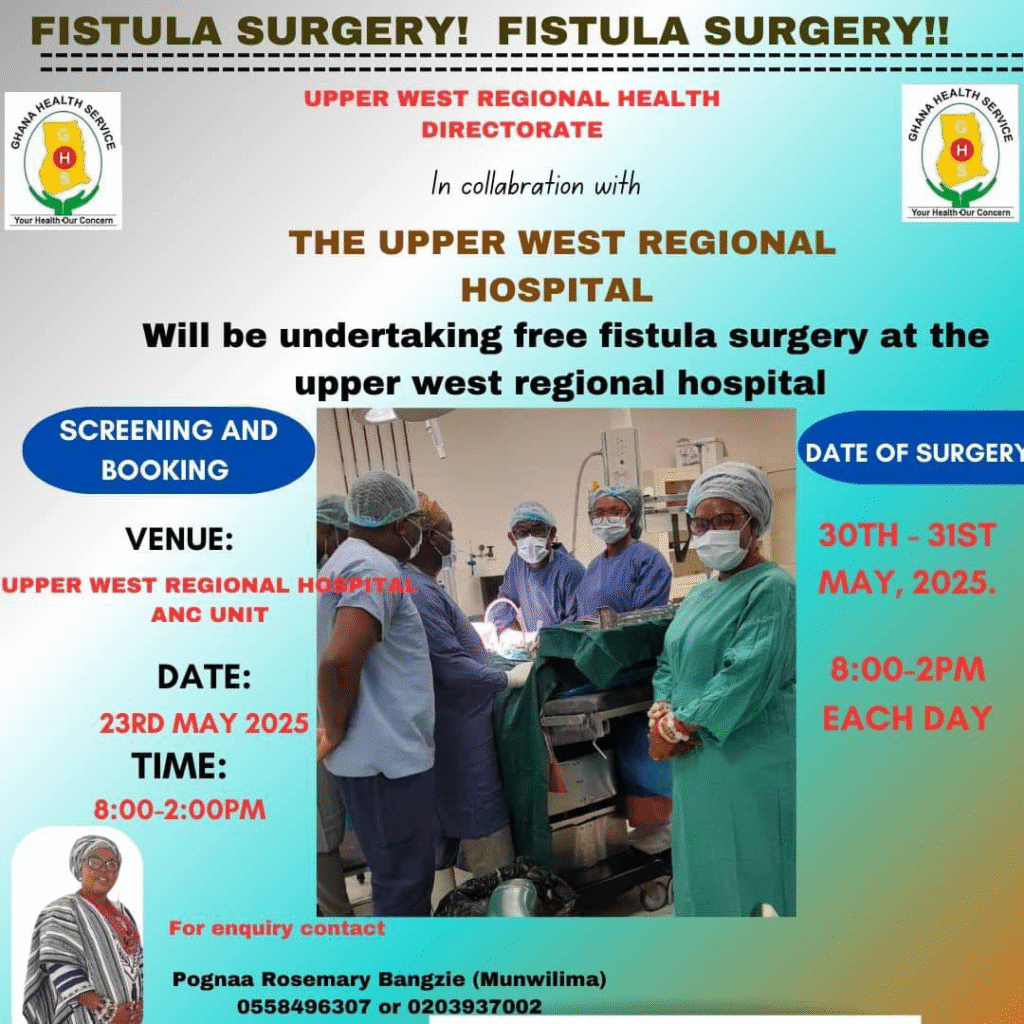
    The Upper West Regional Health Directorate of the Ghana Health Service (GHS) is set to conduct free fistula surgeries in the Upper West Region from 30th to 31st May.

    The initiative, aimed at restoring dignity and hope to women living with obstetric fistula, will be carried out at the Upper West Regional Hospital.

    Screening and booking for the surgeries will take place at the Upper West Regional Hospital ANC Unit on Friday, 23 May, from 8:00 am to 2:00 pm, whereas the surgeries commence from 30 to 31 May from 8:00 am to 2:00 pm.

    Obstetric fistula is a severe childbirth injury resulting from prolonged, obstructed labor without timely medical intervention. It creates an abnormal opening between the birth canal and the bladder or rectum, leading to continuous leakage of urine or feces.

    This condition often results in social isolation, chronic infections, and psychological trauma for affected women.

    In Ghana, approximately 1,300 new cases are recorded each year, affecting mostly young, impoverished, and uneducated women in rural areas.

    According to research, prolonged, obstructed labor is known to be the primary cause of obstetric fistula, including malnutrition, harmful traditional practices, limited access to skilled healthcare, and lack of awareness and education, among others.

    There are several types of obstetric fistulas: vesicovaginal fistula (VVF), which occurs between the bladder and the vagina; ureterovaginal fistula (UVF), which occurs between the urethra (bladder outlet) and the vagina; rectovaginal fistula (RVF), which occurs between the rectum and vagina; ureterovaginal fistula, which occurs between the ureters (kidney tubes) and the vagina; vesicouterine fistula, which occurs between the bladder and the uterus (womb).

    The World Health Organization has it that 50,000 to 100,000 women worldwide are affected by obstetric fistula. Delaying the age of first pregnancy, the cessation of harmful traditional practices, and timely access to obstetric care are ways to prevent obstetric fistula, according to the WHO.

    The organisation added that women who experience obstetric fistula suffer constant incontinence, shame, social segregation, and health problems. It is estimated that more than 2 million young women live with untreated obstetric fistula in Asia and sub-Saharan Africa.

    Meanwhile, the Ghana Health Service (GHS), in partnership with Qatar Charity Ghana and the United Nations Population Fund (UNFPA), officially held a groundbreaking ceremony for the construction of a modern Fistula Holding Home at the forecourt of Yendi Government Hospital on March 25.

    Once completed, the facility will serve as a specialized centre for the management and treatment of obstetric fistula, a major maternal health condition affecting women in the Northern Region.

    Ghana will, on Friday, May 23rd, join the global community to mark the annual International Day to End Obstetric Fistula (IDEOF).

    In 2003, the United Nations Population Fund (UNFPA) and its partners launched a global Campaign to End Fistula, in line with international targets to improve maternal and newborn health and with the goal of making obstetric fistula as rare in developing countries as in the developed world.

    In 2018, the United Nations General Assembly adopted a resolution to end it by 2030.


  • Infertility cases surge with Female Genital Schistosomiasis incidence at 50% – GHS

    Infertility cases surge with Female Genital Schistosomiasis incidence at 50% – GHS

    The Ghana Health Service (GHS) is stepping up efforts to raise awareness and enhance treatment for Female Genital Schistosomiasis (FGS), a neglected tropical disease affecting a significant portion of the female population.

    Dr. Joseph Kwadwo Larbi Opare, the Program Manager for Neglected Tropical Diseases at the Ghana Health Service (GHS), disclosed that FGS prevalence in the country ranges from 10% to 50% among women, while about 1% of men are affected.

    This condition can result in severe reproductive health issues, including infertility in women and, albeit less frequently, sterility in men.

    Despite its serious consequences, FGS often receives inadequate attention in medical practice. The World Health Organization (WHO) estimates that nearly 56 million girls and women in sub-Saharan Africa are afflicted by FGS, which can lead to pelvic inflammation, fallopian tube obstruction, and other significant morbidities.

    FGS is prevalent in rural areas where women engage in activities such as washing clothes in infested waters. Symptoms of FGS include vaginal bleeding, bleeding during intercourse, genital itching or burning, pelvic pain, and pain during intercourse.

    Complications can be severe, ranging from infertility to ectopic pregnancies, miscarriages, involuntary urination, genital ulcers, and tumors. Moreover, FGS increases the risk of acquiring other sexually transmitted diseases.

    Dr. Joseph Kwadwo Opare emphasized the necessity for extensive education and awareness campaigns among healthcare workers and the general population.

    Efforts are underway to integrate FGS education into daily health activities and training curricula for health professionals, with the aim of improving diagnosis and treatment and ultimately reducing the burden of this neglected tropical disease.

    Ghana, like many tropical countries, is not immune to Neglected Tropical Diseases (NTDs). Of the 20 NTDs identified by the WHO, 14 are prevalent in Ghana, including trachoma, Buruli ulcer, yaws, leprosy, human African trypanosomiasis (sleeping sickness), leishmaniases, lymphatic filariasis, river blindness (onchocerciasis), schistosomiasis, and soil-transmitted helminthiases.

    “It has been proven that we have a prevalence of 10 to 50% of female genital schistosomiases in Ghana. Ultimately this condition can lead to infertility and the male can also be sterile. For the males it is just about 1% so it is not too many,” said Dr. Opare.

    He added “FGS is a silent area in medicine and we are trying to do much education on this so at the national level there is a committee overseeing FGS activities. We are trying to make sure that this education is incorporated into our daily activities among health workers and even non-health workers. In addition, go into the curriculum of many training institutions so that when we get this education when they complete school they can leverage on that and practice how to prevent it”.

    Eastern Regional Director of GHS, Dr. Winfred Ofosu, highlighted the identification of hundreds of suspected NTD cases in recent years in the region through collaboration with two NGOs.

    However, he noted that stigmatization and misconceptions about the diseases attributed to spiritual causes hinder the fight against them, underscoring the need for involvement of traditional leaders in awareness creation.

    Inadequate funding has been identified as a major obstacle to Ghana’s efforts to meet the WHO 2030 NTD roadmap and Sustainable Development Goals 3 target.

    Ghana’s NTD Ambassador, Rev. Dr. Joyce Aryee, called for a multisectoral approach to support the fight against NTDs, emphasizing their serious implications for health, food security, education, and the economy.

  • No cause for worries over AstraZeneca vaccine withdrawal- GHS

    No cause for worries over AstraZeneca vaccine withdrawal- GHS

    The Ghana Health Service (GHS) has moved to reassure the public regarding concerns over the withdrawal of AstraZeneca’s COVID-19 vaccines following a global recall by the pharmaceutical giant.

    AstraZeneca, known for its pivotal role in vaccine production during the peak of the COVID-19 pandemic, has initiated a recall worldwide due to the identification of a rare side effect called Thrombosis with Thrombocytopenia Syndrome (TTS).

    This syndrome is characterized by the formation of blood clots that can obstruct veins or arteries, potentially causing symptoms like leg pain and swelling, chest discomfort, or numbness on one side of the body.

    The associated health risks such as strokes or heart attacks are deemed serious and potentially life-threatening.

    The recall, attributed to an excess of updated vaccines post-pandemic, does not signal immediate health concerns, according to Dr. Kwame Amponsa-Achiano, Manager of the Expanded Programme on Immunisation at the GHS.

    In an interview with Selorm Adonoo on Citi FM’s Eyewitness News, Dr. Amponsa-Achiano emphasized that the withdrawal of AstraZeneca’s COVID-19 vaccine was primarily due to commercial reasons.

    He urged the public to remain calm, stressing that there is no cause for alarm as currently, only the J&J COVID-19 vaccine is available.

    Dr. Amponsa-Achiano noted that market authorization holders opted not to pursue AstraZeneca vaccines for commercial considerations, leaving J&J as the sole vaccine in use in Ghana.

    “We believe that there is no cause for alarm…incidentally, if you’ve been following us we don’t have AstraZeneca because it was not eventually authorised for use. The market authorization holders did not pursue that for commercial reasons.”

    “Ghana is a very small market, So the only vaccine we have which we are using now is J&J. There is no cause for alarm,” he stated.

  • GHS announces job openings for 229 health professionals

    GHS announces job openings for 229 health professionals

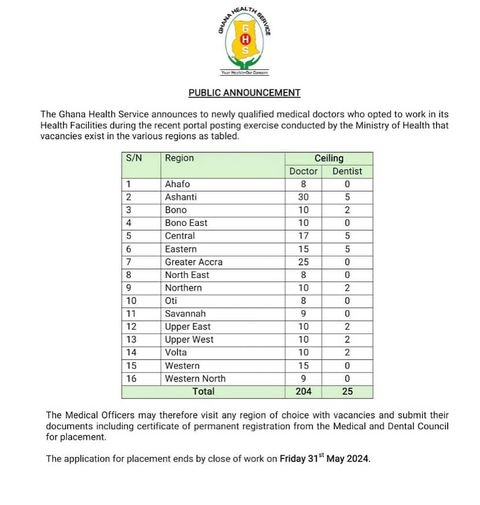
    The Ghana Health Service (GHS) in a bid to bolster its healthcare workforce, has initiated a recruitment campaign targeting 229 healthcare professionals, comprising 204 doctors and 25 dentists.

    On May 3, 2024, the GHS made the announcement across its social media platforms, beckoning newly licensed medical doctors keen on contributing to its healthcare system to select from regions with available positions and submit their requisite documents.

    These documents should encompass a certificate of permanent registration issued by the Medical and Dental Council.

    Opportunities abound across all 16 regions, with the Ashanti and Greater Accra Regions offering the most significant number of vacancies at 30 and 25 positions, respectively.

    Interested candidates have until Friday, May 31, 2024, to lodge their applications.

    Below is the full statement:

  • COVID-19 vaccination campaign to kick off May 4

    COVID-19 vaccination campaign to kick off May 4

    The Ghana Health Service (GHS) has unveiled a nationwide COVID-19 vaccination drive in light of escalating infections across healthcare facilities.

    Scheduled from May 4 to May 10, 2024, the campaign aims to curb the surge in cases, particularly in the Greater Accra Region, where infection rates are highest.

    Underlining the virus’s rapid transmission, the GHS stressed the crucial role of adhering to safety protocols.

    Dr. Franklin Asiedu-Bekoe, Director of Public Health at GHS, underscored the significance of widespread vaccination in containing the outbreak. During a press briefing, he urged all Ghanaians to participate in the campaign.

    “We are getting a few cases reported in parts of Accra and a few other regions. And it brings to bear the fact that Ghanaians need to be vaccinated and so on the 4th to the 10th of May, we are going to do a nationwide COVID-19 vaccination campaign and we want to urge all Ghanaians to be part of the exercise.

    “We plan to do about four or five before the end of the year. The thinking is that we need to get the necessary population immunity that will help us minimize the risk of getting infections in the country,” he stressed.

  • Study recommends measures to address postpartum depression among Ghanaian women

    Study recommends measures to address postpartum depression among Ghanaian women

    A recent study on Postpartum Depression (PPD) among Ghanaian women has highlighted critical recommendations aimed at tackling alarming rates of maternal mental health issues in the country. The research emphasized the importance of allowing spouses to accompany women in labour wards and theatres, providing crucial support during childbirth to alleviate fear and anxiety.

    According to the study, allowing spouses in labour wards and theatres would help ease patients’ fear and anxiety while offering encouragement, thereby enhancing the birthing experience for women. Additionally, the research proposed the establishment of “daddy’s clinics” by the Ghana Health Service, aimed at promoting the active involvement of spouses in the pregnancy journey. These clinics would serve as platforms for partners to gain insight into the nuances of pregnancy and offer emotional and physical support to expectant mothers.

    Findings from the study, which included a Mental Health Situational Analysis in Ghana, revealed a prevalence of 27% of PPD among women who delivered at healthcare facilities, with Bawku recording a staggering 50.1%. The research also highlighted the economic and human costs associated with maternal mental health disorders, including increased risk of maternal morbidity and mortality, stunted growth in children, and social and cognitive impairment.

    Dr. Promise Sefogah, a leading consultant for the World Health Organization (WHO) on maternal mental health, attributed the triggers of PPD among Ghanaian women to various factors such as financial constraints, fear of medical procedures, and traumatic birth experiences.

    Despite the severity of the problem, Dr Sefogah emphasized the lack of knowledge and training among healthcare workers, coupled with inadequate screening and counselling services at health facilities, pushing affected women to seek solutions from spiritual and herbal centres.

    In response to these challenges, advocacy efforts have intensified for the development of a Maternal Mental Health Policy, aimed at integrating mental health services into existing healthcare frameworks. Dr. Winfred Ofosu, the Eastern Regional Director of Health, stressed the urgency for a National Policy Framework on Maternal Mental Health Care, highlighting the need for comprehensive strategies to combat maternal mental disorders.

    The initiative, sponsored by the World Health Organization Ghana and UK International Development, seeks to curb maternal mental disorders in Ghana. Dr. Joana Ansong, Technical Officer for non-communicable diseases and Mental Health at WHO Ghana country office, emphasized the importance of integrating policy interventions into routine perinatal services to address the burden of maternal mental health holistically.

  • Ghana Health Service unveils National Adolescent Health Advocacy Week for 2023 

    Ghana Health Service unveils National Adolescent Health Advocacy Week for 2023 

    Ghana Health Service (GHS) has inaugurated the 2023 National Adolescent Health Advocacy Week in Cape Coast. Stakeholders are urged to escalate their investments in promoting adolescent health, aligning with Ghana’s pursuit of Universal Health Coverage by 2030.

    Dedicated to shedding light on challenges impacting adolescent health, the Adolescent Health Advocacy Week serves as a platform for collaborative efforts in identifying and implementing solutions to address these issues.

    This year’s celebration is on the theme: “Every Adolescent Counts: Accessible Health Care for All”.  

    Over the course of the week, various stakeholder interactions are planned, involving communities, educators, parents, and the media. The objective is to pinpoint and tackle challenges impacting adolescent health on both individual and societal fronts.

    Mrs Justina Marigold Assan, the Central Regional Minister, in a speech read on her behalf, said stakeholders must channel more resources and energy into addressing the health needs of adolescents holistically to ensure no one was left behind in order to secure the future of the country.  

    She maintained that every young person, irrespective of their background, deserved the right to access comprehensive health care without any impediment, indicating that many adolescents faced numerous challenges in accessing essential healthcare services.  

    “Adolescents’ health care goes beyond mere medical care; it is a holistic approach,  which includes mental health, sexual and reproductive health and the provision of accurate information that empowers adolescents to make informed choices,” she said.  

    The Minister observed a gradual but significant shift towards prioritising adolescent health care, including increased awareness, access and engagement but insisted that more needed to be done.   

    “Together, let us make a lasting impact on the lives of adolescents, for they are not just the future; they are an integral part of our present, deserving health, happiness and the opportunity to thrive,” she said.  

    Dr Mrs Marion Okoh-Owusu, the Central Regional Director of Health Services, noted that the region had achieved significant success in awareness creation and service delivery for adolescent health in schools, communities, and health facilities.  

    She was, however, quick to add that measures such as providing young people with age-appropriate information and teaching them about the dangers of having sex must be intensified to consolidate the gains.  

    “Wherever we are, let us make time for our adolescents. They need to hear from us. 

    “They see us and they want to be like us but most of them are ill-informed because of peer pressure and other myths they hear from the communities and the media,” she noted.  

    Dr Mrs Okoh-Owusu said the GHS had prioritised and intensified adolescent health care in schools by ensuring that the National Health Insurance Scheme (NHIS) card was a requirement for admission.  

    “The school clinics are now functional, and the health service has assigned nurses to support in the provision of services for the schools.  
    “The schools have also been linked up to some of the hospitals so that when faced with severe emergencies, they can refer them to the bigger hospitals,” she said.  

    She stressed the need for all stakeholders to get involved in enhancing access to health care for young people in the country as it was not the duty of health professionals alone.  

    Madam Adjoa Yenyi, the Programmes Specialist, Adolescent and Youth Development at the United Nations Population Fund (UNFPA), observed that even though Ghana was making significant progress in adolescent health care, the country was not likely to achieve UHC by 2030.  

    She, therefore, reiterated the urgent need to increase investment in that area to meet the health needs of young people and propel Ghana towards the mark.   

    She noted that because adolescents were part of the general population, they were normally integrated into the mainstream population.  

    “But there is a need to make a conscious effort to invest in young people’s health because when we invest in their health now, we will begin to see the benefits in years to come.  

    “When we invest in young people now, all the health issues we are addressing; teenage pregnancy, gender-based violence, Sexually Transmitted Infections, diabetes, and the others, there will be no need for the government to put so much money into curing these ailments,” she added. 

  • We lost over 500 experienced nurses in 2022 – GHS

    We lost over 500 experienced nurses in 2022 – GHS

    Ghana Health Service (GHS) Director General, Dr. Patrick Kuma Aboagye, has revealed that over 500 senior Ghanaian nurses passed away in 2022.

    The service is now strategizing to recruit and train new nurses to address the gap left by these departures.

    Speaking at an August 17, 2023, press briefing by the Ministry of Information, Dr. Patrick Kuma Aboagye affirmed the plan to bring in more nurses over the next two years as part of their strategy.

    “In the past year, we lost around 525 nurses, but we are presently in the process of recruiting additional nurses nationwide,” he stated.

    He emphasized that achieving Universal Health coverage by 2030 is a primary objective for the Ghana Health Service.

    The service is working to strengthen primary healthcare and collaborate with partners to enhance the quality and patient-centeredness of healthcare delivery.

  • Elephantiasis cases soar in Upper East Region

    Elephantiasis cases soar in Upper East Region

    The Ghana Health Service (GHS) has revealed that the Upper East region of Ghana has recorded the highest number of cases of elephantiasis, also known as lymphatic filariasis, in the country.

    2,373 confirmed cases of elephantiasis, or about a third of all cases nationwide, have been reported in the area.

    Desk officer for the Ghana Health Service’s neglected tropical diseases (NTDs) programme, Bright Alomatu is confident that despite the fact that elephantiasis is endemic in all 15 of the Upper East Region’s municipalities and districts, medical professionals have been able to stop its spread there.

    According to Mr. Alomatu, there may be a number of reasons for the high number of cases in the Upper East region, including poor sanitation and hygiene practices that encourage mosquito breeding and the spread of the disease.

    Speaking at a stakeholder sensitisation event on adopting and promoting measures to address issues facing disease patients in Bolgatanga, he said, “The risk is very high where we have transmission ongoing because the mosquitoes bite everybody. So once the parasite is in the system and the mosquitoes are picking and spreading, then the likelihood of you getting it is very high.”

    According to Mr. Alomatu, health workers and volunteers have also received training across the entire country since 2016, and this has helped to stop the spread of the disease in 109 districts.

    Elephantiasis was mapped in 1999, and only regions such as Ashanti, Ahafo, Volta and Oti were found to be non-endemic.” (use such as instead of like, and remove the comma before and

    Of the 261 districts in the country, 116 were found to be endemic for the disease.

    “We’ve trained 2,100 patients on how to manage their conditions so that they can see an improvement of the condition of the leg or whichever part is swollen, so that it will not swell further and they will not also suffer from acute inflammation,” he added.

    The Ghana Health Service, American Leprosy Mission, and the Christian Blind Mission are collaborating to provide care and support for people living with elephantiasis in the Upper East region.

    The purpose of the sensitization, according to Programme Manager for American Leprosy Mission, Mr Solomon Atinbire, was to empower some people to act as game changers and push for the inclusion of patients with elephantiasis cases in Ghana’s Livelihood Empowerment Against Poverty (LEAP) programme. 

    “That would help them [patients] to get some money to register for health insurance coverage so that anytime they are taken ill, they can visit the health facilities for care”, he stated.

    According to Mr. Atinbire, the decision to establish a committee in each district and municipality of the region to fight for the welfare of the patients with elephantiasis was made, because the condition of elephantiasis made patients vulnerable to participating in any economic activities or accessing healthcare services.

    The Upper East Regional Deputy Health Director in Charge of Public Health, Dr. Josephat Nyuzaghl, adding his voice, stated that it is expected that the advocacy organisations will involve the assemblies in order for the patients to receive some of the disability funds of the assemblies.

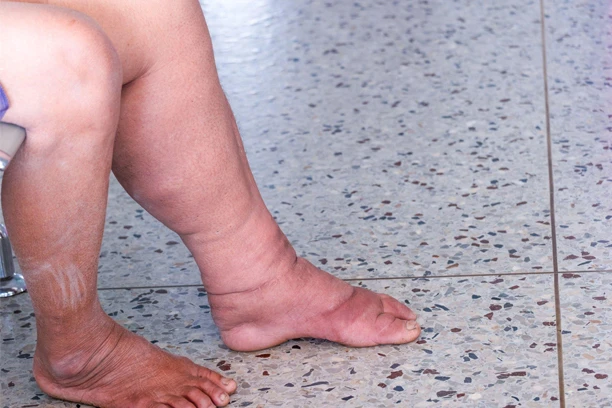
    Elephantiasis is a parasitic infection caused by thread-like worms transmitted through the bites of infected mosquitoes.

    The infection can lead to swelling and thickening of the limbs and genitals, resulting in significant disfigurement and disability. It can also cause severe pain and discomfort, as well as secondary infections.

    It affects body parts such as the legs, hands, breasts of women, penis, vulva, and scrotum, with the hands, legs, and scrotum being the most common in Ghana.

    Source: The Independent Ghana| Diana Nutsugah

  • Hepatitis can easily kill you, protect your liver – GHS

    Hepatitis can easily kill you, protect your liver – GHS

    A medical condition characterized by inflammation of the liver, Hepatitis, poses a significant threat to human health due to its diverse transmission modes and potential impact on survival.

    The Director-General of the Ghana Health Service (GHS), Dr. Patrick Kuma-Aboagye, emphasizes that despite its severity, hepatitis is not a death sentence.

    Early detection and treatment play a crucial role in preventing the progression of the disease to more severe stages, such as chronic hepatitis or cirrhosis.

    According to Dr. Kuma-Aboagye, timely identification of viral hepatitis is essential to initiate treatment promptly, which in turn prevents disease advancement, transmission, complications, and overall public health issues. Regular screenings, particularly for high-risk populations, are pivotal for detecting infections early and ensuring appropriate medical intervention.

    The mode of viral hepatitis transmission, primarily through body fluids, renders everyone susceptible to infection, potentially leading to serious consequences. Transmission can occur through various means, including unprotected sexual contact, sharing contaminated needles or syringes, mother-to-child transmission during childbirth or breastfeeding, consumption of contaminated food or water, and direct contact with infected feces.

    Dr. Kuma-Aboagye emphasizes that the most accessible method to prevent and manage infections is screening.

    Hepatitis can silently infiltrate the body, causing damage before symptoms emerge. Early detection through screening enables timely intervention, preventing liver damage and reducing the risk of severe complications. It’s worth noting that asymptomatic individuals can still transmit the virus to others.

    The Director-General urges all citizens to undergo screening, stressing that this step is vital for achieving Ghana’s goal of diagnosing 90% of Hepatitis B and C cases and providing treatment for at least 80% of affected individuals, thereby curbing the growing disease burden. He highlights that while some forms of hepatitis are curable, others are manageable, allowing infected individuals to lead normal lives if detected and treated early.

    Viral Hepatitis

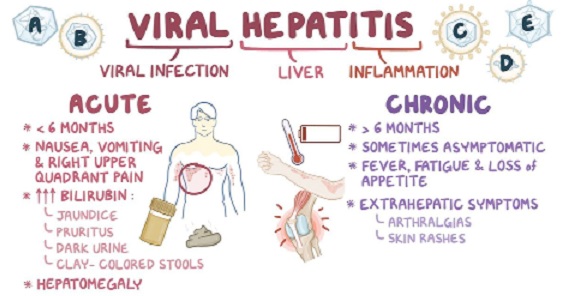
    Hepatitis denotes liver inflammation and is commonly triggered by viral infections. The five primary types of viral hepatitis—A, B, C, D, and E—are caused by distinct viruses, sharing similar modes of transmission through contact with infected individuals’ bodily fluids or blood.

    Notably, the hepatitis virus is present in blood and certain bodily fluids, and transmission occurs when non-immune individuals come into contact with these fluids. Transmission can occur via various means, such as unprotected sex, needle-sharing, and mother-to-child transmission during childbirth.

    Symptoms of viral hepatitis vary based on the virus type and infection stage. These include fatigue, jaundice, loss of appetite, nausea, and vomiting. Importantly, not all infected individuals exhibit symptoms, especially in the early stages of infection.

    Antiviral medications, vaccines, and interventions tailored to specific virus types (A, B, C, D, or E) can manage infections, prevent complications, and enhance recovery prospects. While no effective vaccine exists for hepatitis C, early diagnosis can mitigate resultant health problems and transmission risks.

    Preventing viral hepatitis involves practicing good hygiene, getting vaccinated (where available), practicing safe sex, avoiding needle-sharing, and adhering to safe medical procedures.

    Dr. Adwoa Agyei-Nkansah, a hepatologist, confirms the curability of Hepatitis C but highlights the obstacle of expensive testing and treatment costs, particularly for economically disadvantaged patients. Efforts are underway to subsidize diagnostic costs and encourage more individuals to seek medical attention, contributing to Hepatitis eradication.

    Testing Hesitancy and National Burden

    Despite a growing burden of hepatitis infections and fatalities in Ghana, diagnosis, treatment, and awareness remain low. Dr. Atsu Godwin Seake-Kwawu, the Programme Manager of the National Viral Hepatitis Control Programme, reveals that the country houses 1.5 million people with Hepatitis B and C, resulting in over 3,000 annual deaths from liver cancer and cirrhosis. However, testing hesitancy has led to only a small percentage of individuals with chronic Hepatitis B (HBV) and Hepatitis C receiving proper diagnosis and treatment.

    Dr. Seake-Kwawu emphasizes the importance of testing, particularly for pregnant women, to ensure early treatment and prevent transmission to unborn babies. He notes that the World Health Organization (WHO) targets hepatitis elimination by 2030 and encourages Ghanaians to undergo regular testing to know their status and receive timely treatment.

    The GHS is intensifying efforts to eliminate viral hepatitis, implementing initiatives such as screening pregnant women for the condition and providing post-delivery vaccinations to curb virus spread. Dr. Seake-Kwawu underscores the significance of prevention, testing, treatment access, and chronic care, considering the expensive medication costs.

  • Physician assistants demanding independence due to lack of supervision – Prof Badu Akosa

    Physician assistants demanding independence due to lack of supervision – Prof Badu Akosa

    Former Director General of the Ghana Health Service (GHS), Professor Agyeman Badu Akosa, has highlighted the issue of negligence in supervisory duties as the reason behind the current calls by physician assistants to become an independent body.

    He emphasized that lack of engagement with this group of health practitioners and failure to provide direction in their work has caused agitation among them.

    Prof Badu Akosa believes that physician assistants have been allowed to work independently for too long without proper supervision, leading to their demand for autonomy.

    He urged health institutions to engage regularly with physician assistants, discussing their challenges and providing informed directions to ensure proper supervision.

    “If you don’t do supervision and you allow them to work independently, then you have a problem.”

    “But if you choose not to do that and you leave them to do their work, now they’re sitting down and saying ‘we don’t need to be supervised’. But how can an assistant not be supervised?,” he said.

    “So it’s the failure of supervision that has caused that,” he stated.

    The Physician Assistants Association is currently on a nationwide strike, claiming unfair treatment and disrespect.

    They demand changes to Act 857 governing health professionals’ bodies to grant them the freedom to operate independently.

    As a result of the strike, healthcare services in some rural hospitals are suffering, as physician assistants are refusing to work. Nurses in these facilities are struggling to attend to patients, leading to referrals for most cases.

    The National Labour Commission (NLC) has called for a meeting with the disputing parties, but the physician assistants’ leader, Anthony Asare Arkoh, states that the strike will only end if the Health Ministry responds favorably to their demands.

    They seek assurances from the government that their requests will be met before considering ending the strike.

  • Birth asphyxia: CRI demands probe into infant deaths

    Birth asphyxia: CRI demands probe into infant deaths

    A child-centered organization, Child Rights International (CRI), has expressed deep concern over the recent data from the Ghana Health Service (GHS), revealing that 50,000 infants lose their lives annually due to birth asphyxia.

    Describing this figure as disturbing, CRI called for a thorough investigation into the root causes of these deaths to inform appropriate policy decisions and actions.

    In a statement released by Executive Director Bright Appiah in Accra, CRI emphasized the importance of introducing a parliamentary bill that addresses the appropriate procedures and care for newborns during birth in the country.

    They highlighted that such a bill could be initiated by a Member of Parliament through a private member’s bill.

    “This process can also be initiated by a Member of Parliament by way of a private member’s bill,” the statement added.

    Birth asphyxia occurs when a baby’s brain and other organs are deprived of sufficient oxygen and nutrients before, during, or immediately after birth.

    This can happen in the womb, leading to stillbirths, or during prolonged labor. According to Dr. Edward Antwi, the Programme Manager for Newborn and Child Health at GHS, approximately one million babies are born each year, with a neonatal mortality rate of 17 per 1,000 live births.

    This means that out of one million births, approximately 170,000 babies die, and 30% of these deaths are attributed to birth asphyxia.

    On a daily basis, about 136 children lose their lives due to this condition, putting a strain on the healthcare system and negatively affecting the nation’s health sector.

    In response to this distressing revelation, CRI urged the government and relevant stakeholders to take immediate and decisive action. They recommended the establishment of a national policy that outlines the expected standard of care in all health facilities providing child delivery services. This policy should include specific responsibilities for stakeholders, including mothers and health personnel, and clearly define the consequences for those found responsible for causing the death of a baby. Additionally, CRI called for the provision of mandatory psychological services to families who experience the loss of a baby at birth.

    To tackle this issue at its roots, CRI also urged the government to implement a policy that ensures all pregnant women visit health facilities for early diagnosis of asphyxia.

    As a child-centered organization, CRI emphasized the need for collective efforts and resources from the government, policymakers, and relevant stakeholders to significantly reduce these statistics in line with SDG Goal Three.

  • GHS launches World Hepatitis Day

    GHS launches World Hepatitis Day

    The country is grappling with a growing burden of hepatitis infections and fatalities, exacerbated by low rates of diagnosis, treatment, and awareness.

    According to the Ghana Health Service (GHS), due to hesitancy in testing, only a mere 10 percent of individuals with chronic Hepatitis B (HBV) have been diagnosed, and of those diagnosed, only 22 percent have received treatment.

    For Hepatitis C, the situation is slightly better, with 21 percent of those with the infection diagnosed, and 62 percent of them receiving treatment for a potential cure.

    In an effort to combat this worrisome trend, the Director-General of the GHS, Dr. Patrick Kuma-Aboagye, launched this year’s World Hepatitis Day Commemoration in Accra, urging everyone to get tested.

    The goal is to diagnose 90 percent of Hepatitis B and C cases and ensure at least 80 percent of them receive treatment, thereby curbing the increasing burden of the disease.

    Dr. Kuma-Aboagye emphasized that some forms of hepatitis are curable, while others can be effectively managed to enable infected individuals to lead normal lives. Early detection and treatment can make a significant difference in the outcomes.

    The World Hepatitis Day, instituted by the World Health Organization (WHO) and observed on July 28 each year, aims to raise awareness, reduce prevalence, and improve access to testing and treatment.

    The theme for this year’s commemoration is “One life, one liver,” urging people to protect their livers through healthy lifestyles.

    The activities leading up to the day include free screening across the country and public sensitization forums nationwide. Dr. Baruch Blumberg’s birthday, who discovered the Hepatitis B virus in 1967 and developed the first hepatitis B vaccine two years later, is chosen as the date for WHD.

    To address the growing hepatitis prevalence, the GHS is collaborating with the Ministry of Health and the Global Fund to implement a triple elimination strategy targeting Hepatitis B, HIV, and Syphilis.

    Efforts are being made to expand antenatal services to include HBV testing for pregnant women and provide necessary treatment.

    The government is also striving to benefit from reduced prices of medications for the treatment of Hepatitis B and C on the global market.

    Moreover, steps are being taken to increase access to testing and treatment, including ensuring all pregnant women with chronic HBV have access to treatment and providing Hepatitis B birth vaccines to infants within 24 hours of birth.

    Viral hepatitis refers to liver inflammation caused by hepatotropic viruses, which are found in blood and certain bodily fluids. The five identified hepatitis viruses are Hepatitis A, B, C, D, and E.

    As the country endeavors to combat this public health issue, efforts are being made to raise awareness, promote testing and treatment, and implement various interventions to reduce the impact of hepatitis infections on the population.

  • 7th national COVID-19 vaccination exercise to commence July 19

    7th national COVID-19 vaccination exercise to commence July 19

    The Ghana Health Service (GHS) has announced that the 7th National COVID-19 Vaccination Days (NaCVAD-7) will take place from tomorrow, Wednesday, July 19 to Sunday, July 23, with the goal of immunizing a million individuals.

    According to the Service, 10 million people out of the country’s more than 30 million inhabitants have fully got the immunizations, with the remainder yet to be vaccinated or undergo complete vaccination.

    Dr. Patrick Kuma-Aboagye, Director-General of the Ghana Health Service, stated at a news conference to kick off the statewide exercise that the virus exists despite rumors to the contrary.

    “As you may recall on the 5th May 2023 the WHO Director-General through the advice of the international health regulatory emergency committee determined that COVID-19 was now an established and ongoing health issue and which will no longer constitute a public health emergency of international concern. He did not say that COVID-19 is no more,” he said.

    Meanwhile, the World Health Organization (WHO) country representative, Dr. Argata Guracha Guyo, pledged to assist Ghana in achieving herd immunity against COVID-19.

  • Ashanti region: Over 300 nurses leave GHS for better jobs abroad – Report

    Ashanti region: Over 300 nurses leave GHS for better jobs abroad – Report

    More than 300 health workers have left the Ghana Health Service (GHS) in the Ashanti Region, seeking better opportunities overseas.
    This trend, observed during the first quarter of 2023, is having a negative impact on healthcare delivery in the region.

    Data from the Ashanti Regional Health Directorate indicates that 304 health workers, including doctors and nurses, have applied for unpaid leave.

    Investigations conducted by the directorate reveal that the majority of these workers have traveled abroad in search of improved living conditions.

    The Ashanti Regional Director of the Ghana Health Service, Dr. Emmanuel Tinkorang, acknowledges the detrimental effect of this exodus on healthcare delivery in the region.

    “When we did the analysis for the first quarter of 2023, we realised that about 304 applied for leave without pay which means that they have left the service, but additional information indicates that most of them have left the country and these are very skilful health workers with the right knowledge, attitude, and skill to do the job, but it seems that they have been attracted outside the country.

    “This is worrying in the sense that these are workers that we need to run the health system in the country and the government is doing well by providing health infrastructure and if our people are leaving the country, how do we run this system?”

  • Births and Deaths Registry unveils new instruction manual to streamline processes

    Births and Deaths Registry unveils new instruction manual to streamline processes

    Ghana’s Births and Deaths Registry (BDR) has recently introduced an all-encompassing Instruction Manual specifically designed to enhance the process of births and deaths registration in the country. This comprehensive manual aims to provide clear guidelines and procedures, ensuring efficient and accurate registration of births and deaths across Ghana. The BDR’s initiative is poised to streamline operations, improve data management, and promote the integrity of vital statistics in the nation.

    Through collaborative efforts with key stakeholders such as the Ministry of Local Government and Rural Development, Ghana Health Service (GHS), National Identification Authority (NIA), and United Nations Economic Commission for Africa (UNECA), the Births and Deaths Registry (BDR) has successfully achieved this milestone. Furthermore, the implementation of the new Instruction Manual was made possible with the valuable technical and financial support provided by UNICEF.

    It comes on the back of the passage of the Registration of Births and Deaths Act, 2020 (Act 1027) and the Registration of Births and Deaths Regulations 2021 (L.I. 2436).

    During a workshop held in Ejisu, Ashanti Region, from the 22nd to the 24th of June 2023, the Births and Deaths Registry (BDR) unveiled and validated the extensive and valuable document, shedding light on its significant progress in the field of births and deaths registration.

    The workshop, supported by UNICEF, brought together stakeholders from various organisations, including the Ministry of Local Government Decentralization and Rural Development, the Office of the Head of Local Government Service, the Local Government Institute, Ghana Immigration Service, the Passport Office, and all 16 Regional Registrars of the Births and Deaths Registry.

    In an address, Madam Henrietta Lamptey, Registrar, BDR, said, the collaborative efforts and the valuable inputs from stakeholders had culminated in the development of an instruction manual that “serves as a comprehensive guide for birth and death registrations in Ghana.”

    It reflects the best practices and international standards in civil registration and vital statistics, ensuring accuracy, timeliness, and data security.

    “The new instruction manual offers several key benefits for both the registry and the citizens of Ghana. Firstly, it aligns the registration processes with the national identification system overseen by the NIA.”

    This integration fosters synergy between the two vital components of citizen identification and registration, streamlining administrative procedures and reducing duplication, she said.

    According to her, the collaboration with the GHS enabled a seamless transfer of birth and death records from health facilities to the registry. This integration ensures that vital events are promptly captured and recorded, creating a more efficient and reliable system of registration.

    “The manual places a strong emphasis on data quality, privacy, and security, addressing the evolving technological landscape and the need for robust data protection measures.

    By implementing stringent protocols, the Births and Deaths Registry aims to safeguard the personal information of individuals while providing accurate and reliable vital statistics.”

    The Registrar thanked all stakeholders and participants for their invaluable contributions.

    “Together, we are forging a stronger and more inclusive civil registration system that will have far-reaching benefits for the people of Ghana.

    As we move forward, we encourage all citizens to familiarize themselves with the new instruction manual and engage with the Births and Deaths Registry to ensure their vital events are accurately recorded. “

    By doing so, we can collectively strengthen our civil registration system, enhance data accuracy, and empower individuals with the necessary documentation to exercise their rights and access vital services.

    The Births and Deaths Registry remains committed to upholding the highest standards of civil registration and vital statistics. We believe that this milestone will pave the way for an improved and more efficient system that will benefit all Ghanaians, Madam Lamptey pledged.

  • Addressing brain drain is our priority – GHS

    Addressing brain drain is our priority – GHS

    The Ghana Health Service (GHS) has acknowledged that it is actively addressing the issues brought on by brain drain, which has a significant impact on the health sector.

    Brain drain refers to the emigration or migration of highly skilled or educated individuals from one country to another, often leading to a significant loss of human capital and expertise in the home country. It occurs when talented professionals, such as scientists, doctors, engineers, and academics, seek better opportunities, higher salaries, improved working conditions, or greater career prospects abroad.

    Recently, more than 1,200 Ghanaian nurses reportedly joined the nursing register in the UK last year, and 150 experienced nurses and healthcare workers from Pantang Hospital have reportedly looked for work abroad, all in search of greener pastures.

    Director General of the GHS, Dr Patrick Kuma-Aboagye, explained that brain drain is a significant challenge while speaking at the 2023 Joseph Siaw Agyapong distinguished lecture on public health in Africa, which was held in honour of the University of Ghana’s 75th anniversary.

    “Brain drain remains a key challenge for us and there are usually ways when there are shortages in the developed countries, there is also the drift of people going there. So what we are doing is first, trying to encourage as many to stay. We are also ensuring that those who are staying are also being trained rapidly.

    Elaborating further, he said, “We are recruiting to replace those we can replace while we ensure that we are giving more people, especially the nurses, study leave allocations so that we can convert some of the nonprofessional nurses into professional ones because it is the majority of professional nurses who are leaving,”

    Dr Kuma-Aboagye further expressed his concerns regarding the rise in non-communicable diseases in recent years and urged the general public to adopt a healthier lifestyle.

    “There are statistics that the number of hypertension are going up, diabetics are going up. We don’t think that a sedentary lifestyle is good, not many people are exercising. There is a lot of junk foods coming in, we need to ensure that we eat proper foods, look at the timing of eating, the use of alcohol, cigarette smoking and aphrodisiac,” he stated.

    Taking advantage of the occasion, he urged the media to support efforts to educate the public about the diseases.

    Brain drain can have detrimental effects on the development and progress of the home country, as it depletes its intellectual and skilled workforce and hampers its ability to innovate and grow.

    It is important to note that addressing brain drain requires a comprehensive approach that combines efforts from governments, educational institutions, businesses, and the society as a whole.

    Source: The Independent Ghana | Diana Nutsugah

  • Ho Technical University has not recorded any HIV/AIDS outbreak – GHS

    Ho Technical University has not recorded any HIV/AIDS outbreak – GHS

    The Volta Regional Health Directorate of Ghana Health Service (GHS) has denounced rumors regarding an outbreak of AIDS/HIV at the Ho Technical University.

    The story first reported by a blog claimed that over 400 students have tested positive and have been asked to go home. Various social media actors shared and quoted the unverified report without conducting proper due diligence.

    But the Regional Health Directorate has unequivocally declared the publication to be false and unfounded, urging the public to disregard it.

    According to the Volta Regional Health Directorate, a comprehensive review of HIV testing data from health facilities in the Ho Municipality and the entire Volta Region revealed no increase in recorded HIV cases within any facility or the region as a whole.

    They emphasized that there had been no surge of HIV cases at Ho Technical University or any other tertiary institution in the Volta Region.

    Below is the full statement

    FALSE REPORTAGE ON THE HIV INCIDENCE IN THE HO TECHNICAL UNIVERSITY

    The attention of the Volta Regional Health Directorate has been drawn to an online publication by an unverified and unknown news portal ‘ajnewonline.com’ with the headline “Hookup Trend Leads to HIV Outbreak at Ho Technical University: Over 400 students suspected positive”.

    The publication has subsequently been quoted by various social media actors without any form of due diligence.

    The Regional Health Directorate by this release is informing the public to disregard the said
    publication since it is false and unfounded.

    A review of the HIV testing data in all the health facilities in the Ho Municipality and the rest of the Volta Region does not suggest an increase in recorded HIV cases within any facility or the Region as a whole. For the avoidance of doubt, the region states emphatically that there has not been a surge of HIV cases in the Ho Technical University or any other tertiary institution in the Volta Region.

    The Volta Regional Health Directorate and its partners have over the period successfully implemented several strategies to fight HIV/AIDS. These strategies seek to reduce new infections by 85% and eliminate mother-to-child transmission.

    The Region however encourages its inhabitants to avoid stigmatization and fully lend themselves to the disease awareness campaigns and tailor-made services that meet their specific needs so as to consolidate the gains made in HIV prevention, testing, and treatment. HIV services are available in all private and public health facilities in the Volta Region.

    The public is assured that their right to privacy and confidentiality will always be upheld as is the case in all disease conditions.

    In conclusion, let us take note that HIV is still real, and all must endeavor to live positively
    through sexual abstinence or by both uninfected partners being faithful to each other, and by the consistent use of condoms.

  • 252 vacancies available for newly qualified doctors – GHS

    252 vacancies available for newly qualified doctors – GHS

    The Ghana Health Service (GHS) has noted that there are 252 vacancies in the health sector  for newly qualified medical doctors.

    These are doctors who were recently granted financial clearance and opted to work with the GHS through the Ministry of Health Posting Portal. 

    They are to visit the regions across the countries and submit their documents i.e. MDC Permanent Registration and Medical School Certificates for placement by the close of work on Friday 9th June, 2023.

    The regions have slots for a total of 236 medical officers and 16 dentists. 

    Ten medical officers are needed in the Ahafo Region, whereas 20 are needed in the Ashanti Region. In the Bono Region, 15 medical officers and a dentist are needed.

    The Bono East Region has 10 slots for medical officers and two for Dentists.

    The Central Region has space for 15 medical officers while the Eastern Region has room for 20 medical officers and two dentists. 

    The Greater Accra Region has slots for 15 medical officers; North East wants 10 medical officers and a dentist; Northern Region needs 20 medical officers and two dentists while the Oti Region requires the assurance of 13 medical officers.

    The remaining regions are as follows: Savannah (10 medical officers, 2 dentists), Upper East (15 medical officers, 1 dentist), Upper West (15 medical officers, 2 dentists), Volta (15 medical officers, 1 dentist), Western (20 medical officers, 2 dentists) and Western North (13 medical officers). 

    On February Saturday, 18 February 2023, a total of 120 graduates of Medicine and Dentistry after completing the prescribed and approved academic and practical training in the form of Housemanship were inducted.

    All inductees wrote and passed the Licensure Examinations conducted by the Medical and Dental Council, Ghana (MDC Ghana). 

    They are from various accredited training institutions including the University of Ghana (UG), Kwame Nkrumah University of Science and Technology (KNUST), the University of Health and Allied Sciences (UHAS), the University of Cape Coast (UCC), the University for Development Studies (UDS), Accra College of Medicine (ACM), as well as other foreign-trained doctors who sat and passed the Council’s professional qualifying examinations. 

    In October 2022, the Medical and Dental Council (MDC) last Saturday inducted 461 newly qualified medical and dental practitioners into its fold.

    One major issue confronting the Medical and Dental Council is the huge number of medical professionals, especially medical doctors, leaving the country to seek opportunities abroad.

    A 2021 report from the House of Commons in the United Kingdom revealed that there are more health professionals of Ghanaian origin working for the National Health Service (NHS-UK) than in Ghana.

    According to the report, a total of 3,395 healthcare workers from Ghana are working in the UK. This is against a total of 3,236 Ghanaians working in the country as of 2021, according to statistica.com.

    The Council has entreated the health professionals to remain in the country and offer their services.

  • Over 620,000 hypertension and 24,000 stroke cases recorded as of Dec. 2022

    Over 620,000 hypertension and 24,000 stroke cases recorded as of Dec. 2022

    The Ghana Health Service (GHS) has announced that it recorded a total of 622,849 hypertension and 24,781 stroke cases through the District Health Information Management System–2, a database for storing health service data, as of December 2022.

    These cases together with complications were reported by all 16 regions of Ghana.

    On its Twitter page, the GHS noted that studies estimate that 28-40% of the adult Ghanaian population have hypertension.

    Hypertension (high blood pressure) is when the pressure in your blood vessels is too high (140/90 mmHg or higher). It is common but can be serious if not treated, according to the World Health Organisation.

    The GHS observes that lifestyle changes such as eating healthier diets (diet with low salts, sugars, and fats; high fibre, fruits and vegetables), increasing physical activity and quitting tobacco use can help to prevent hypertension or lower blood pressure in persons already diagnosed.

    The sensitisation by the GHS forms part of efforts to commemorate World Hypertension Day which is held on May 17 annually. The theme for this year was: “Measure your blood pressure accurately, control it, live longer.”

    Symptoms

    Most people with hypertension don’t feel any symptoms. Very high blood pressures can cause headaches, blurred vision, chest pain and other symptoms. 

    Checking your blood pressure is the best way to know if you have high blood pressure. If hypertension isn’t treated, it can cause other health conditions like kidney disease, heart disease and stroke.

    People with very high blood pressure (usually 180/120 or higher) can experience symptoms including:

    • severe headaches
    • chest pain
    • dizziness
    • difficulty breathing
    • nausea
    • vomiting
    • blurred vision or other vision changes
    • anxiety
    • confusion
    • buzzing in the ears
    • nosebleeds
    • abnormal heart rhythm

    Key facts

    WHO reports that an estimated 1.28 billion adults aged 30–79 years worldwide have hypertension, most (two-thirds) living in low- and middle-income countries

    Also, an estimated 46% of adults with hypertension are unaware that they have the condition.

    Less than half of adults (42%) with hypertension are diagnosed and treated aqnd approximately 1 in 5 adults (21%) with hypertension have it under control.

    Per the WHO, hypertension is a major cause of premature death worldwide.

    One of the global targets for noncommunicable diseases is to reduce the prevalence of hypertension by 33% between 2010 and 2030, the WHO adds.

  • Police, GHS are indebted to VRA and NEDCo – VRA/NEDCo

    Police, GHS are indebted to VRA and NEDCo – VRA/NEDCo

    VRA/NEDCo’s Upper East Region management has warned the Ghana Police Service and Ghana Health Service (GHS) to pay their debts to the company or else be disconnected from the national grid.

    According to VRA/NEDCo, the Ghana Police Service and Ghana Health Service owe the company GH¢18 million and GH¢16 million respectively.

    Speaking to Citi News, VRA/NEDCo billing officer, Williams Asare, said, the indebtedness of the two-state institutions threaten their operations and warned that, VRA/NEDCo would not hesitate to disconnect their facilities if urgent measures are not taken to settle their indebtedness.

    “The health institutions in the Upper East put together are owing us (VRA/NEDCo) GH¢16 million, and we have engaged the regional health directorate and given them their entire bill. But we have seen documentation from the Director-General of the Ghana health service that, for those facilities that internally generate funds, we should have an arrangement for them to pay. As for the legacy debts before 2021, they will take up with the Ministry of Finance to pay”.

    “Some clinics and health facilities have come for us to have some payment agreements where they’re going to pay substantial amount to reduce the debt and commit to paying the current bills, and we’ll be following up on that. Our L.I. allows that, when we serve the bill, after 14 days, if the customer doesn’t pay, you are due to disconnect, so we’re going to ensure that we don’t come there”.

    “The police administration in the region are owing us GH¢18 million, we engaged the regional police commander and he has taken up the bill and is putting a covering memo to the police administration at the head office for them to pay. For certain category of officers, they’re supposed to pay their own bills so for those facilities we’re in the process of metering them with pre-paid meters so that they pay”.

    Mr. Asare disclosed that over GH¢5 million out of GH¢120 million have been retrieved from customer indebtedness to the company in the ongoing revenue mobilization and disconnection exercise.

    He reiterated that VRA/NEDCo will sustain its revenue mobilization efforts to ensure efficient power supply and value for money for its customers.

    Mr. Asare appealed to all customers of VRA/NEDCo to settle their outstanding bills or come to the office of the company to negotiate payment agreement plans to settle their indebtedness or risk disconnection.

  • Ghana’s neonatal, maternal mortalities drop – GHS

    Ghana’s neonatal, maternal mortalities drop – GHS

    The Director-General of the Ghana Health Service (GHS), Dr Patrick Kuma-Aboagye, has announced that the country’s neonatal and institutional maternal mortality rates have seen a decrease.

    He explained that while the former decreased from 7.1 per 10,000 births to 6.5 per 10,000 births last year, institutional maternal mortality ratio (IMMR), also reduced marginally from 111 per 100,000 live births to 102 per 100,000 over the period.

    According to him, although the figures seemed marginal, they were remarkable gains.

    He, therefore, commended midwives and other health personnel for their tireless efforts in achieving this feat, adding that there had also been significant improvement in maternal and newborn health outcomes over the last decade.

    The Director-General was addressing delegates at the 32nd International Day of the Midwife in Cape Coast in the Central Region, on the theme: “Together again, from evidence to reality.”

    Awards were also given to 22 midwives, one each from the 16 regions and five from Teaching Hospitals in the country for their dedication to duty.

    Dr Kuma-Aboagye further disclosed that total maternal deaths decreased by some 70 maternal lives saved, moving from 875 deaths in 2021 to 805 deaths at the close of 2022.

    He added that the midwife to women in fertility age (WIFA) ratio had also been improving, moving from one midwife to 720 women in fertility age in 2017, to one midwife to 387 women in fertility age in 2021.

    According to Dr Kuma-Aboagye, haemoglobin checks at registration and the incidence of anaemia in late pregnancy (36 weeks) had also been on a decline over the past couple of years, while skilled delivery coverage and antenatal care (ANC) clients making fourth visits had been on an increasing trajectory over the years.

    He said the absolute number of midwives in the country had now surpassed the World Health Organisation’s standard of six to seven midwives per 1,000 institutional deliveries by almost two folds.

    The nation currently has 13 midwives per 1,000 institutional deliveries.
    Restructuring

    Dr Kuma-Aboagye, however, said that there was an urgent need to restructure the health system to promote midwifery leadership at all levels.

    “We, as a matter of urgency, need to restructure our health system to promote midwifery leadership at all levels, embrace midwifery innovation, encourage evidence-based practice and institute the character of empathy in our midwives, allowing for the practice to be guided by the sensitivities of our clients.

    “Midwives continue to work under harsh conditions, oftentimes at the peril of their own progress and cost to their families.

    “If we intend to attain the maternal and newborn health outcomes we desire, we would need to come together once more and move from the glaring evidence that midwives indeed save lives to addressing the challenges that confront midwives in reality,” he said.

    A deputy Minister of Health, Tina Mensah, commended the midwives for working to save lives and supporting policies aimed at enhancing health service delivery despite their challenges.
    Condition of service

    The President of the Ghana Registered Midwives Association, Netta Forson Ackon, called for better conditions of service to empower members to give of their best.

    The UNFPA Country Representative, Dr David Wilfred Ochan, described midwives as frontline heroes and urged stakeholder agencies to work to scale up best practices to help achieve zero preventable deaths.

  • France govt provides €4.1m support to GHS

    France govt provides €4.1m support to GHS

    A scaled-up corporation and funding to the tune of about €4.1 million will be provided for two flagship projects led by the Ghana Health Service (GHS) and Noguchi Memorial Institute for Medical Research as part of a special joint mission by the conducted by the French government’s L’Initiative together with international partners – Global Fund.

    According to a statement issued by the French Embassy in Ghana, the action is intended to increase access to healthcare for the most vulnerable or marginalized individuals and to make sure that the Ghana Health Service (GHS), under the Ministry of Health, deploys national and regional interventions that will meet the population’s healthcare needs.

    “To date, the grant awarded for a period of 4 years of an amount of €2,830,258.83 represents the largest envelope ever allocated to a project by Initiative since its creation in 2011,” the statement noted.

    The L’Initiative-funded project aids GHS in developing the systems that will scale up the community scorecards, which have been in place since 2018, with a renewed goal of enabling the system’s spread to the entire nation.

    “This project aims to enhance the role of patients within the healthcare system and improve the quality of services provided to them”. The statement added while explaining further that the beneficiaries are members of the Community Health Management Committees (CHMC) and District/Sub-District Health Committees, and indirectly all users of the Ghana health system.

    L’ Initiative says it will continue to conduct a joint mission with the Global Fund and France Team to support Ghana in its fight against pandemics and strengthen its ties with civil society organizations and local partners.

    At the end of April, L’ Initiative organized a joint mission with the Regional Health Adviser and the Global Fund’s country team in order to further develop its portfolio in the country in synergy with other French actors, the French Embassy, AFD and IRD.

  • International Day of the Midwife: Nation records decline in maternal and newborn fatalities

    International Day of the Midwife: Nation records decline in maternal and newborn fatalities

    The number of newborn and institutionalized maternal deaths has decreased nationwide. While the latter dropped from 7.1 per 10,000 births to 6.5 per 10,000 births in 2017, the institutional maternal mortality ratio (IMMR) also somewhat fell throughout that time, going from 111 per 100,000 live births to 102 per 100,000.

    Although the numbers appeared to be little, Dr. Patrick Kuma-Aboagye, Director-General of the Ghana Health Service, claimed they represented tremendous progress.

    He so praised midwives and other health professionals for their diligent efforts in accomplishing this milestone, noting that over the previous ten years, there had also been a notable increase in maternal and newborn health outcomes.

    The Director-General was addressing delegates at the 32nd International Day of the Midwife in Cape Coast in the Central Region, on the theme: “Together again, from evidence to reality.”

    Awards were also given to 22 midwives, one each from the 16 regions and five from Teaching Hospitals in the country for their dedication to duty.

    Dr Kuma-Aboagye further disclosed that total maternal deaths decreased by some 70 maternal lives saved, moving from 875 deaths in 2021 to 805 deaths at the close of 2022.  

    He added that the midwife to women in fertility age (WIFA) ratio had also been improving, moving from one midwife to 720 women in fertility age in 2017, to one midwife to 387 women in fertility age in 2021.

    According to Dr Kuma-Aboagye, haemoglobin checks at registration and the incidence of anaemia in late pregnancy (36 weeks) had also been on a decline over the past couple of years, while skilled delivery coverage and antenatal care (ANC) clients making fourth visits had been on an increasing trajectory over the years.

    He said the absolute number of midwives in the country had now surpassed the World Health Organisation’s standard of six to seven midwives per 1,000 institutional deliveries by almost two folds.

    The nation currently has 13 midwives per 1,000 institutional deliveries.

    Restructuring

    Dr Kuma-Aboagye, however, said that there was an urgent need to restructure the health system to promote midwifery leadership at all levels.

    “We, as a matter of urgency, need to restructure our health system to promote midwifery leadership at all levels, embrace midwifery innovation, encourage evidence-based practice and institute the character of empathy in our midwives, allowing for the practice to be guided by the sensitivities of our clients.

    “Midwives continue to work under harsh conditions, oftentimes at the peril of their own progress and cost to their families.

    “If we intend to attain the maternal and newborn health outcomes we desire, we would need to come together once more and move from the glaring evidence that midwives indeed save lives to addressing the challenges that confront midwives in reality,” he said.

    A deputy Minister of Health, Tina Mensah, commended the midwives for working to save lives and supporting policies aimed at enhancing health service delivery despite their challenges.

    Condition of service

    The President of the Ghana Registered Midwives Association, Netta Forson Ackon, called for better conditions of service to empower members to give of their best.

    The UNFPA Country Representative, Dr David Wilfred Ochan, described midwives as frontline heroes and urged stakeholder agencies to work to scale up best practices to help achieve zero preventable deaths.

  • Ghana declared Lassa fever free

    Ghana declared Lassa fever free

    The Ghana Health Service (GHS) has reported that Ghana is no longer battling the Lassa fever outbreak.

    This comes after the maximum follow-up period of 42 days elapsed since the last case of Lassa fever was discharged.

    Ghana declared an outbreak of Lassa fever following the confirmation of two cases in the Greater Accra Region on February 24, 2023.

    Twenty-five additional cases were recorded between February 24 and March 1, 2023, which brought the total cases to 27.

    Unfortunately, one of the victims passed away.

    All of the identified contacts including healthcare workers were self-quarantined.

    All the confirmed cases were managed by the Ghana Infectious Disease Centre.

    A total of 237 contacts were identified and follower up for the maximum incubation period of 21 days.

    Also, active surveillance resulted in the identification of 30 suspected cases of which two were Lassa fever.

    According to the GHS, the last victim of Lassa fever was discharged on March 10, 2023, indicating the end of the outbreak.

    Meanwhile, the Service is urging the public to avoid contact with wildlife, especially rats to reduce the risk of disease spread.

    Also, the public is entreated to store left over foods appropriately, improve cleanliness in homes, undertake regular hand washing after visiting patients in health facilities, after using the toilet among others.

    Source: The Independent Ghana

  • Approval of malaria vaccine not related to new mosquito discovery – GHS

    Approval of malaria vaccine not related to new mosquito discovery – GHS

    Dr. Nana Yaw Peprah, acting program manager for the Ghana Health Service‘s (GHS) National Malaria Elimination Program, has refuted allegations that industry actors purposefully launched the new R21 malaria vaccine a few days after the new mosquito strain was identified.

    The vaccine was developed by Oxford University and manufactured by the Serum Institute of India.

    The Food and Drugs Authority (FDA) disclosed that it has given market authorisation to the new malaria vaccine – R21.

    The FDA says after a thorough evaluation of the quality, efficacy, and safety of the vaccine, they realized that the benefits far outweigh the risks.

    A similar malaria vaccine RTS, S which was the world’s first malaria vaccine was also developed in 2019 for children between 6 months upwards.

    A new strain of mosquito, Anopheles stephensi, was discovered in parts of the capital Accra-Tuba and Dansoman, a few days after the announcement of the approval of a malaria vaccine -R21, for use in Ghana.

    Some Ghanaians argued that the new vaccine was introduced in an attempt to compel Ghanaians to accept the new vaccine.

    But reacting to this on the Citi Breakfast Show with Bernard Avle, Dr. Peprah explained, “We can’t conclude that it’s about money. It’s difficult, but it wasn’t a deliberate attempt to bring these two together [RTS,S and R21-vaccines]. It’s just happened that we have identified a strain of mosquito which we think can only be contained when all stakeholders come on board. They started working on the R21 vaccine 30 years ago, so it’s not like a new thing that we are trying to put together with the mosquito new species. So there is no evil thought with this”.

    He said industry players are excited about vaccines due to the important roles they play in the fight against malaria.

    “We are excited about vaccines because we believe that they are important in this fight, vaccines are part of the interventions we are using. In fact, we are using it in high-burden areas. Whether it’s RTS,S or R21 vaccine, it all depends on the approval processes. As at when it’s available to be used, we will use it, we are really excited about it [R21-vaccine]. It’s early days yet, we have to wait for clinical trials because that is when donors come in,” he asserted.

    Acting Programme Manager, National Malaria Elimination Programme of Ghana Health Service disclosed that the country was able to discover the new breed of mosquito through surveillance.

    “The new breed adapts easily, it’s very dynamic, it’s able to live in both clean and dirty waters. That makes it a very deadly one in that it can increase in population. It has resistance issues unlike the ones we are used to, which is why it has become an issue. We know that mosquito flies, and have been found in Africa, it’s moving all around the place, and until you put surveillance, you may not identify it even if it exists. We were able to pick it up through surveillance,” he underscored.

    He said despite the new breed of mosquito, they are confident of containing malaria, calling on the public to be involved to help contain the new breed.

    “We are calling on the communities to ensure that we are able to contain the Anopheles stephensi. We are doing a lot to contain it. We have zero confidence of containing malaria,” he stated.

    April 25 is slated for the celebration of Malaria Day at the International Conference Center dubbed ‘zero malaria’.

  • Kumawu by-election: Dr Aboagye Dacosta joins race

    Kumawu by-election: Dr Aboagye Dacosta joins race

    Director of Health Promotions at the Ghana Health Service, Dr Aboagye Dacosta, is among persons aspiring to contest the Kumawu seat.

    This comes ahead of primaries for the upcoming by-election in the Kumawu Constituency following the death of the sitting member of parliament, Philip Basoah.

    According to a report by Kasapafmonline.com sighted by GhanaWeb, Dr Dacosta is part of some 8 individuals who had picked nomination forms ahead of the Friday, April 14, 2023 deadline.

    Subsequently, the GHS top official shared a campaign flier on his Facebook stories.

    The Speaker of Parliament, Alban Sumana Kingsford Bagbin, on 3rd April 2023 declared the seat of the New Patriotic Party (NPP) Member of Parliament (MP) for Kumawu, Philip Basoah, vacant.

    The NPP opened nomination from Monday 11th – 14th April 2023 for interested party members to pick nomination forms.

    So far, 8 persons in the names of Lawyer Edward Kofi Osei, Dr. Philip Bannor, Dr. Dacoster Aboagye, Mr Ernest Yaw Anim, Mad. Ama Serwaa, Kwame Appiah-Kubi, Yaw Baah (former Kumawu MP unseated by the late MP) and Osei Hweree Kwame Bempah have picked nomination forms.

    Profile of aspirant Aboagye Dacosta

    Dr. Aboagye Dacosta is a Fellow of the Higher Education Academy of England and Wales, a research and academic practitioner in Health Promotion and Public Health with specialty in National /Social Health Insurance Schemes Finance.

    He is also an international consultant, an external examiner for both University of Salford and London Metropolitan University for Masters’ and PhD programmes in Health Service Management, Health Economics, Epidemiology, Health Promotion, and Public Health.

    Prior to being appointed Director of Health Promotion in 2019, he worked as a Cohort Leader and Lecturer at the University of West London, United Kingdom from 2017.

    Dr. Dacosta holds a BSc Degree in Chemistry (University of Cape Coast), MSc in Public Health and Environmental Health (Leeds Beckett University), PhD in Health and Wellbeing with research focused on National Health Insurance Scheme in Ghana (Leeds Beckett University).

    Dacosta has since 2008 been a reviewer for the Global Health Promotion, presented his research nationally and internationally and has a number of Research and scholarly output.

  • Dangerous new mosquito breed invades Ghana – GHS confirms

    Dangerous new mosquito breed invades Ghana – GHS confirms

    A new kind of mosquito that is more harmful than anopheles has invaded Ghana, according to the Ghana Health Service (GHS).

    The new breed known as Anopheles Stephensi, is also a malaria-transmitting mosquito, very invasive, spreads faster, and can adopt to a myriad of climate conditions according to the World Health Organization.

    GHS has established its presence in Tuba and Dansoman, and has warned residents to protect themselves.

    The Anopheles Stephensi first invaded Africa in 2019, the countries include Ethiopia Sudan, Somalia, and Nigeria and unfortunately confirmed in Ghana just this March.

    This breed produces both Plasmodium Falciparum (the deadliest species of plasmodium which causes malaria) and P Vivax Malaria parasites.

    Also, a recent mathematical modeling study by the World Health Organization showed the spread of An. stephensi and the implication for malaria transmission and control in Africa.

    One study projected that An. stephensi could put an additional 126 million people in Africa at risk of malaria if the mosquito vector were to spread unchecked.

    The statement also reveals that this breed is resistant to multiple insecticides which makes control very difficult. It is not known yet what really can kill it.

    The GHS has set up a taskforce, to implement a number of measures including the removal of water collection points in and around homes and communities to minimize the breeding sites

    Avoiding mosquito bites by using insecticide-treated mosquito nets is also a measure that has been advised to boost prevention.

    Meanwhile, Ghana is the first African country to approve a new malaria vaccine from Oxford University as part of efforts to combat the disease.

    MOSQUIRIX from British drug maker GSK, was last year endorsed by the World Health Organization.

  • Multi-hazard approach best for curbing local disasters – NADMO

    Multi-hazard approach best for curbing local disasters – NADMO

    Director-General of the National Disaster Management Organization (NADMO), Eric Nana Agyeman-Prempeh, has urged for a strategic transition from a one-directional system to a multi-hazard strategy to managing disasters.

    He said such a move was necessary in the wake of the frequency and intensity of disasters in Ghana.

    He said technology and collaboration were key enablers in developing and implementing a multi-hazard approach to early warning response and disaster risk reduction.

    “The devastating fire and flood disaster of June 3, 2015, in Accra is a classic example of a multi-disaster emergency that requires advanced technology to deal with it,” he noted.

    He said out of the many disasters in Ghana, flooding was the most common that occurred every year and was managed by NADMO with a strong stakeholder collaboration.

    Disaster forum

    Nana Agyeman-Prempeh was speaking at an executive breakfast forum organised in Accra to discuss Ghana’s disaster risk reduction strategy.

    Dubbed: “Israel-Ghana Emergency Preparedness and Crisis Management”, the forum provided a platform for stakeholders to discuss the country’s ability to deal with emergencies and manage crisis.

    Disaster forum

    The forum was organised by the Israel Economic and Trade Mission to Ghana and the Israel Export Institute, in collaboration with NADMO.

    It brought together personnel from the security agencies and representatives from the Ghana Health Service, the Ghana Geological Survey Authority, the National Development Planning Commission and the National Signals Bureau.

    Other participants came from CDD Ghana, the National Centre for Coordination of Early Warning and Response Mechanism, the Ghana Journalists Association, the Ghana Maritime Authority, the Ghana Institution of Engineers, and the Hydrological Services Department.

    Five Israeli companies presented Israeli innovative solutions and technologies in the areas of communication, emergency preparedness and public safety, disaster management, and search and rescue areas.

    Earthquake

    In terms of earthquake, the Director-General of NADMO said records from the Ghana Geological Survey indicated 11 earth tremors on December 12, 2022, spanning nearly two-and-a-half hours.

    He said such disasters, among others, made it critical to collaborate with international partners to adopt best practices.

    Nana Agyeman-Prempeh said it was also to adhere to the Sendai Framework for Disaster Risk Reduction (2015-2030), an international document adopted by the United Nations (UN) member states, which called for the need for international collaborations.

    “The Sendai framework priorities emphasise the need to invest in disaster risk reduction and the importance of establishing strong private sector collaboration,” he said.

    Collaborations

    The Israeli Ambassador to Ghana, Liberia and Sierra Leone, Sholmit Sufa, said she had so far witnessed the Appiatse mine explosion disaster, the annual rainfall flooding and the many fire outbreak incidents.

    She said such situations called for a national conversation on emergency preparedness, crisis management and best practices to solve them.

    She expressed excitement about the partnership, and the hope that some of the innovative solutions developed in Israel could be applied in Ghana to enhance emergency preparedness and crisis management.

    “We also hope to highlight some key challenges related to Ghana’s emergency preparedness and crisis management that could have potential solutions from the state of Israel,” she added.

  • Doctors refusing to work in Bono Region – GHS

    Doctors refusing to work in Bono Region – GHS

    The Ghana Health Service (GHS) Bono Regional Directorate is concerned about what it describes as a failure on the part of doctors to accept postings to the area.

    Regional Director, Dr. Kofi Amo Kodieh, said out of 32 doctors posted to the region, only 9 showed up for work.

    Speaking at a health forum in Sunyani, Dr. Kofi Amo Kodieh said the situation is getting dire appealing to stakeholders to ensure that incentives are put together to attract medical officers to the region.

    “32 doctors were posted to this region, unfortunately, only 9 of them reported because Bono is not deemed to be one of the affluent regions to attract doctors. We would like to urge our stakeholders to as a matter of urgency put together incentives that will attract medical doctors to this region,” Bono Regional Director of the Ghana Health Service said.

  • Management reacts to reports of TTH being the worst in the Northern region

    Management reacts to reports of TTH being the worst in the Northern region

    The Management of Tamale Teaching Hospital has taken note of a media reportage, which claimed the TTH has been ranked “the worst performing hospital in Northern Region”. We ordinarily would ignore such reportage as unworthy of attention, given that it betrays the reporter’s lack of understanding of both the context and content of the subject matter.

    For the avoidance of doubts, there is absolutely no basis for comparison between the TTH and facilities under the Northern Regional Health Directorate given that we operate at different levels. Management also takes particular note of the obvious diversion by the reporter from the real subject matter of the day, i.e. the annual performance reviews of the Northern Regional Health Directorate.

    In doing so, the reporter disingenuously deprives patients/clients, and staffs of the Ghana Health Service in the region the opportunity of uplifting themselves of the challenges, strides made and prospects for the future. The Tamale Teaching Hospital is one of the five teaching hospitals in the country with the tripartite mandate of providing quality tertiary healthcare, conducting research and medical training.

    The teaching hospitals are each autonomous agencies under the Ministry of Health in match the same way as the Ghana Health Service. The point of convergence between us as a teaching hospital and the Ghana Health Service is as
    far as to the level of collaboration. It is therefore out of place to have a situation in which the Northern Regional Health Directorate could rank its health facilities and include the TTH.

    The Northern Regional Health Directorate represents a sub-governance structure under the Ghana Health Service, but the teaching hospital is a one-stop governance structure with the governing board at its apex. The coincidence that the TTH is in the Northern Region, where the regional health directorate also exist should not to be confused to mean that the TTH is among the list of
    facilities under the Northern Regional Health Directorate.

    We shudder to think or believe that this is a once more poorly rehearsed attempt to undermine a collective and enviable effort of the TTH in our quest to attain our vision as a hospital, which is; to become the center of excellence, medical training and research.

    We dismiss the reportage as untruth and unhelpful and call on all our clients, partners and stakeholders to do same. We believe in and cherish the confidence you have reposed in us and assured you that we are not jolted in the least by the poorly fabricated reportage. We are focused on delivery on our mandate as a teaching hospital.

    We remain proud of our evolution, our strides and are equally excited about our prospects going into the future as we continue to grapple with known challenges.
    We have no idea why the report was published, and we have no faith in the source of the alleged rating exercise. However, given the unexpected public interest in this issue, we believe it is appropriate to educate both the public and the media at the same time.

  • Leading cause of death in Accra are hypertension and diabetes- GHS

    Leading cause of death in Accra are hypertension and diabetes- GHS

    A review of causes of morbidities in the Greater Accra Region shows that hypertension and diabetes were the leading causes of death in the region in 2022.

    Data from the Non-Communicable Disease Control Programme of the Ghana Health Service (GHS) indicate that 138,425 persons, representing five per cent of the population in Greater Accra were diagnosed with hypertension in 2022, while 49,534 contracted diabetes.

    Dr Charity Sarpong, the Greater Accra Regional Director of Health Services (GARHD), at the opening of the region’s annual performance review in Accra on Thursday, said the trend was due to lack of exercise, poor eating habits and unhealthy lifestyles among the population.

    “Hypertension and diabetes still continue to remain in the top ten causes of morbidity in the region and we intend to continue to strengthen our wellness clinics and support the implementation of the Network of Practice in the region so, cases are picked up and treated early so as to prevent complications that may occur later in life if not properly managed, ” she said.

    Dr Sarpong said the region’s top ten causes of Out Patient Department (OPD) attendance in 2022 included Upper Respiratory Tract Infection (UTRI), Malaria and Urinary Tract Infection (UTI).

    The two-day annual performance review was on the theme: “Addressing healthcare delivery gaps for equity in health coverage through: Intensifying health promotion interventions, Optimizing the use of data and technology to improve access to quality healthcare and Strengthening preventive and control measures for emergent and re-emergent public health event”.

    It is expected to serve as a period for the regional health directorate to reflect on its activities within the year 2022, identify indicators that excelled as well as areas where it fell short, and come up with the needed interventions and strategies to address them in the coming year.

    Dr Sarpong said the region saw a significant increase in its total OPD attendance from 5,177,512 in 2021 to 5,304,397 in 2022 representing a 2.5 per cent increase.

    She said total deliveries increased by 2.8 per cent from 113,497 in 2021 to 113,819 in 2022, while Maternal Mortality Rate reduced from 165 per 100,000 births in 2021 to 155 per 100,000 births.

    The Regional Health Director said experiences and lessons learnt during the pandemic challenged the region to concentrate and focus on building a stronger and robust health delivery accompanied with its resilient supply chain systems that would be capable of withstanding and minimising the heavy impact of any unforeseen exigencies that may occur.

    Dr. Patrick Kuma-Aboagye, Director General of the GHS, said the performance review was organised by the Ghana Health Service to demonstrate its willingness to hold itself accountable to various stakeholders.

    “These reviews enable us to measure our achievements against set targets defined under the strategic objectives of the Health Sector Medium Term Development Plan and the Programme of Work for the year under review,” he said.

    He said the GHS would this year leverage technology to solve its problems and make life easier for staff and clients, saying: “ We shall soon launch our Digital Health Strategy, and we are open to new and innovative ideas that will move us forward”.

  • Catch-up campaigns must be organized to find children not vaccinated – WHO

    Catch-up campaigns must be organized to find children not vaccinated – WHO

    The World Health Organization has raised alarm about the measles epidemic in some areas of the country and has called for prompt vaccination of unvaccinated infants to stop the spread.

    Speaking in an interview on the yet-to-be-aired JoyNews’ Foreign Affairs, the Deputy Director General, Dr. Anshu Banerjee said there was a “need to organise catch-up campaigns to find children who hadn’t received the measles vaccine earlier.”

    This he indicated, is due to the fact that measles is a very infectious disease, adding that “we have seen measles outbreak increase…”

    Parts of the country were hit by the outbreak following weeks of shortage of critical vaccines.

    Notable areas with high recorded cases were the northern parts of the country, with over 100 cases.

    Also, the Ketu South Municipality recorded 10 cases of measles during the period of vaccine shortage.

    Meanwhile, the Health Ministry and the Ghana Health Service (GHS) have received the first consignment of vaccines with which the vaccination exercise has resumed across the country.

    According to the Director General of the GHS, Dr. Patrick Kumah Aboagye, as the Service has received the first consignment, he hopes others come in soon.

    He assured that the quantity received per the first consignment will be enough for a minimum of six weeks immunisation across the country.

    He therefore urged parents to make their children available for vaccination when they are due.

    “The first batch of the vaccines just arrived and we have doses in BCG, oral polio vaccine and then the measles vaccine. They just arrived with the accessories, syringes, safety boxes. Immediately, they are being discharged to the regions and then vaccinations will start across the country,” he said.

  • GHS resumes childhood vaccination

    GHS resumes childhood vaccination

    After weeks of vaccine shortage, the Ghana Health Service (GHS) on Monday morning, March 13 begun the widespread immunization of children across the country.

    This comes after BCG, polio, and measles vaccines were delivered to the Ghana Health Service on Sunday.

    JoyNews’ Hannah Odame who visited some health centres in Accra, reports that at the Adabraka Polyclinic, about 16 mothers had visited the centre to have their children vaccinated as at 9:00am on Monday.

    At the Maamobi polyclinic, there was a massive campaign for parents to bring their children for vaccination.

    In the Volta Region, the Acting Regional Director of the Health Services, Dr. Senanu Djokoto says the vaccination exercise will begin on Tuesday.

    Speaking on the vaccination exercise, the Director General of the Ghana Health Service Dr. Patrick Kumah Aboagye says parents can now make their children available for vaccination.

    He urged them to send their children when they are due.

    “The first batch of the vaccines just arrived and we have doses in BCG, oral polio vaccine and then the measles vaccine. They just arrived with the accessories, syringes, safety boxes. Immediately, they are being discharged to the regions and then vaccinations will start across the country,” he said.

    According to him, as the Service has received the first consignment, he hopes the others come in soon.

    He assured that the quantity received per the first consignment will be enough for a minimum of six weeks immunisation across the country.

    Meanwhile, as the Northern Region has recorded over 100 measles cases during the period of shortage, a Consultant Pediatrician at Tamale Teaching Hospital, Prof. Alhassan Abdul-Munin, wants the GHS to prioritise areas currently experiencing measles outbreaks.

    This, he explained, is because vaccine coverage in hard-to-reach areas is traditionally lower than in urban areas.

    “I would also think that they should target where we are already having the outbreak situations, because in Northern Region for instance, we did a study during the peak of the Covid-19 and then we realised that during those times that the vaccines are available the uptake was very low…so these are children that they may not have been due just within the last five or six months but actually they were due for vaccination during the Covid-19 period and they never had it,” he explained.

    He also called on the government to address the root cause of the vaccine shortage to prevent a recurrence.

  • Paediatric Society of Ghana urges govt to purchase more childhood vaccines

    Paediatric Society of Ghana urges govt to purchase more childhood vaccines

    The Paediatric Society of Ghana has urged government to purchase more childhood vaccines as the first consignment is inadequate.

    According to the Ghana Health Service (GHS), the first consignment of childhood vaccines, which included Oral polio, measles-rubella, and BCG vaccines, arrived over the weekend and will last for six weeks.

    Dr. Patrick Kuma-Aboagye, Director-General of GHS, says by the time the consignment runs out, more would have arrived.

    But President of the Paediatric Society of Ghana, Dr. John Adabie Appiah, tells Citi News that it will take about six months to vaccinate all children who missed their vaccination.

    “We need to vaccinate a larger population and make sure that the population has herd immunity before we can relax and that will take not less than six months to get to that point so six weeks is woefully inadequate due to the vaccine shortage. There are over 800 cases of measles and this is terrible. The situation is going to get worse so more needs to be done. So, we hope that more vaccines will come in to cover the rest of the year.”

    The Ghana Health Service has announced that vaccinations for children will begin today, Monday, March 13. 2023.

    Following months of shortage, some childhood vaccines have arrived in the country.

    Dr. Patrick Kuma-Aboagye urged all parents to vaccinate their children during a media interview.

    “By Monday morning, there will be vaccine available for those who need it.  The doses that are available are enough for at least six weeks across the country. So, by Monday, we will start vaccinating all.”

    The Ministry of Health and the Ghana Health Service (GHS) on Saturday, March 11, 2023, took delivery of the first consignment of Measles vaccines, BCG vaccines and Oral Polio Vaccines.

    The Ministry of Information in a Facebook post said distribution to various regions and facilities is underway.

    The Information Ministry assured that more vaccines are expected in the country in the coming weeks from multiple sources.

    The Ghana Health Service has confirmed taking delivery of a consignment of childhood vaccines entreating caregivers to desist from rushing to hospitals for the vaccines.

    The GHS said the Ministry of Health has made adequate provisions for the supply of vaccines that will last for the rest of the year and beyond.

    The vaccines, according to GHS include BCG, OPV with accompanying devices such as needles, syringes and safety boxes.

  • Vaccine shortage: Measles outbreak in children as case count hits 500

    Vaccine shortage: Measles outbreak in children as case count hits 500

    The Paediatric Society of Ghana has disclosed that over 500 children have contracted measles due to the shortage of vaccines in the country.

    The delay in the arrival of the vaccines has the potential to worsen the situation, according to Dr. Hilda Boye, the recently elected President of the Paediatric Society of Ghana.

    “As we speak, we are looking at about 500 suspected cases of measles. So we are worried because we are just sitting and watching, and it is getting worse by the day and that is expected also because it is an infectious disease, and we really shouldn’t have come to this place in the first place.

    “We know how bad these illnesses are, and we know that there is a solution and everybody had to sit up so that we don’t get to this point,” Dr Boye said.

    Many regions of the nation have experienced a vaccination scarcity in recent months, despite assertions by the National Health Insurance Authority (NHIA) that more than GH70 million has been made available for the purchase of the vaccines.

    Today, March 7, the Health Minister, Mr. Kwaku Agyemang-Manu, is expected to address the House on the measures taken to alleviate the nation’s lack of pediatric immunizations.

    The Ghana Health Service (GHS) has blamed the depreciation of the Ghana Cedi for the lack of vaccinations required for routine infant immunization.

    There is a chance that the lack of immunizations will make children more susceptible to the illnesses that the shots are meant to prevent.

  • One Doctor left to cater for 90,000 residents in Wa East as colleagues abandon post

    One Doctor left to cater for 90,000 residents in Wa East as colleagues abandon post

    The Wa East District of the Upper East Region has only one doctor, after other medical professionals posted to the area fled due to inadequate healthcare infrastructure.

    With a population of over 90,000 people, the district is served by approximately 10 health centers.

    Speaking to the media, the district director of the Ghana Health Service (GHS) in the region, Dr. Kingsley Pascal, said serious consequences may occur should the scenario persists.

    “Because of the nature of the district, the terrain as well as network challenges and the relatively deprived nature of communities, it is very difficult to attract doctors. The facilities there do not have teacher services so usually when they are posted and come around and see the place, they go and do not return. There is no guarantee that things will be addressed in the shortest time.”

    He added that although the District Chief Executive and Member of Parliament, have been informed about the issue, not much has been done to solve it.

    He adds that, while relevant stakeholders such as the District Chief Executive and Member of have been made aware of the situation, little has been done to address it.

    “The support is not coming as we expect. The stakeholders haven’t really prioritized what we are looking for. For more than six months we haven’t gotten that attention for things to be sorted out”, Dr Pascal added.

  • GHS Director laments over doctors leaving their  post

    GHS Director laments over doctors leaving their post

    The district director of the Ghana Health Service (GHS) at Wa East in the Upper West Region, Dr. Mwin Paschal, has expressed concern about doctors leaving their positions in the region.

    Mr. Paschal disclosed this during the 2022 Annual Health Review Meeting held at the Bulenga Traditional Council.

    The Wa East district is the most deprived district in the Upper West region with a population of over ninety four thousand having access to only one medical doctor who doubles as the District Director of the GHS.

    The area is made up of farming communities with a very low income bracket, very little infrastructural development as well as bad roads in the area amidst terrible mobile network signal.

    The District Director addressing the Review Meeting said the lack of health infrastructure has contributed to doctor rejecting posting to the area on their first visit.

    ‘‘Just this year we received postings for one doctor to be stationed at the Bulenga Health center. Our biggest challenge was accommodation and also to fashion out a motivational package to attract him to stay. Unfortunately after coming to access the place, and this is somebody who is even from this area but he turned his back on us. So as off now we do not have any other doctor apart from myself,” he stated.

    Dr. Mwin disclosed that 60% of referrals from the district are made of maternal and Neonatal cases which are often directed to the regional hospital.

    He recounted how a mother and baby referred to the Wa Municipal hospital last year for theater service died due to lack of the required health facility.

    He added that the Wa East District has no medical laboratory adding that most referrals are taken to the regional capital which is about an hour drive from the nearest health center in the area.

    This, the District Director said has necessitated the need to have a Polyclinic in the area adding that with the help of the public a structure at the Bulenga Health Center can be used as a theater.

  • Health Minister, others fail to honour Health Committee’s summons

    Health Minister, others fail to honour Health Committee’s summons

    On Tuesday, February, 28, 2023, the Minister of Health, Kwaku Agyemang-Manu and other agency heads failed to honor an invitation from parliament to respond to issues regarding the shortage of vaccines for children.

    For the past few months, certain vaccines needed for the routine immunization of infants from 12 to at least 18 months have been scarce without a readily available solution.

    The measles-rubella vaccination, the BCG vaccine, and the poliovirus vaccine, according to Ghana Health Service (GHS), are the vaccines that are out of stock.

    The vaccines were planned for purchase in the fourth quarter of 2022. 

    Speaking to the media, the Director General of GHS, Dr. Patrick Kuma-Aboagye, indicated that the service was unable to purchase the aforementioned vaccines due to the depreciation of the Ghana Cedi.

    The Ghana Health Service, the Finance Minister, and other agency heads were subsequently invited by the Parliament’s Health Committee to an urgent meeting on Tuesday, February 28 in response to the troubling situation.

    With the exception of the National Health Insurance Authority (NHIA), The Minister of Health and the other heads of agencies, however, did not show up for the meeting.

    Speaking to the media on Tuesday, February, 28, Chairman of the Health Committee, Nana Ayew Afriyie stated that with the exception of the Health Ministry’s Chief Director, who said the Ministry had written to the Committee to request an extension, the other agencies had not provided specific justifications for not honouring the invitation.

    “Unfortunately for us this morning, the Minister of Health is not here and the Ghana Health Service is not here, the Vaccine Control Programme is not here, but we have the National Health Insurance Authority and business will however go on.

    “I am not aware of the reasons why the state agencies are not here, but I have just been on the phone with the Ministry of Health’s Chief Director, and she told me that she has sent a letter to the Committee asking for a rescheduling of the date to March 7 because of the unavoidable absence of the Minister, but I am yet to see a letter to that effect,” he added.

  • GHS records 12 additional cases of Lassa Fever

    GHS records 12 additional cases of Lassa Fever

    Twelve more Lassa fever cases have been confirmed in the country by the Ghana Health Service.

    This comes after the first two cases, which were reported in Accra on February 26.

    Following the implementation of control measures, including as contact tracing tests of all individuals who had been in close contact with the original two confirmed cases, the 12 additional cases were found.

    The total number of confirmed patients for this epidemic now stands at 14. Thus far, one death has been reported.

    According to the GHS, “all 13 cases are alive and in stable condition and are being managed in designated health facilities. A total of 97 contacts have been identified and efforts are underway to identify more contacts.”

    Meanwhile, “A probable case has been reported from Central Region and contacts are being identified and monitored while we await confirmation. Psychological support is being provided for all cases and contacts.”

    The GHS took the opportunity to remind the public to follow preventive measures in order to avoid falling victim to the virus.

    These include:

    1. Avoid contact with rodents (mice, rats, etc).

    2. Ensure good environmental hygiene and institute measures such as storing grain and other foodstuffs in rodent-proof containers, disposing of garbage far from the home, maintaining clean households and keeping cats to prevent rodent infestation.

    3. Avoid contact with blood and body fluids while caring for sick persons.

    “The Ghana Health Service wishes to remind the public of the need to report to the nearest health facility when unwell. We want to assure the public that, we will continue to work with our partners to ensure the safety of the entire population,” it concluded.

    Source: The Independent Ghana

  • We lack essential vaccines, but you want to construct a cathedral – Akandoh breaths

    We lack essential vaccines, but you want to construct a cathedral – Akandoh breaths

    Kwabena Mintah Akandoh, a member of parliament for the Western Region’s Juaboso Constituency, has blasted Nana Addo Dankwa Akufo-Addo’s administration for focusing on the wrong issues.

    The lawmaker stated in an interview with Neat FM on February 24, 2023, that the government is investing millions of cedis in the construction of the National Cathedral even though the Ghana Health Service has reported a shortage of standard childhood vaccination vaccines, which he claims demonstrates a complete lack of priorities.

    Why must we wait until there is a shortage of the vaccine before announcing that there won’t be any immunisations available for around six, two, or three months?

    “Sometimes when you hear things like this and if you don’t take care you might end up saying something that will bring issues. It is very serious, first; it was in only the Northern part of the country (vaccines shortage), and now it is getting all over the country.

    “What I want to assure everyone is that when we are talking about a global pandemic or disease, we all need to be worried and concerned.

    “Sometimes it is very sad, the kind of life that we expect, you don’t have vaccines but you’re saying you want to build a Cathedral.

    “Does it make sense? Are we human beings? the children of this country are dying and you’re saying you want to build Cathedral,” he lamented.

    He continued by saying that the government must take proactive steps to meet all of the needs of the health sector. He also said Parliament’s committee on health will ensure that they handle all national health issues.

    The Ghana Health Service (GHS) has assured that the routine child immunisation vaccine would be available in two weeks.

    The Director-General of GHS, Dr Patrick Kuma-Aboagye explained that efforts are underway to restock the vaccines in an interview with Citi FM.

  • Ghana has confirmed two instances of Lassa fever, with one death

    Ghana has confirmed two instances of Lassa fever, with one death

    After examinations by the Noguchi Memorial Institute for Medical Research, the Ghana Health Service (GHS) has confirmed two cases of Lassa Fever in Accra.

    A 40-year-old businessman who had been ill for almost two weeks before passing away at the Korle-Bu Teaching Hospital was the first case, according to the GHS.

    The second case is a contact of the fatal case and is currently on admission but is very stable. So far, 56 contacts have been identified and are being followed up by the Ghana Health Service.

    The GHS in a statement signed by Director-General, Patrick Kuma-Aboagye noted that Public Health Emergency Management committees at all levels (National, Regions and Districts) have been activated with detailed investigations including an environmental assessment ongoing.

    The Health Service added that essential medications and logistics including Personal Protecting Equipment are being mobilized while contact tracing and management are ongoing.

    Lassa fever (a viral hemorrhagic fever) is endemic in Benin, Ghana, Guinea, Liberia, Mali, Sierra Leone, and Nigeria.

  • Paediatric Society of Ghana worried over vaccine shortage

    Paediatric Society of Ghana worried over vaccine shortage

    The Paediatric Society of Ghana has expressed dissatisfaction over the alleged lack of vaccines for babies from the ages of 12 to at least 18 months.

    Ghana Health Service (GHS) has reported outbreak of Measles, a vaccine-preventable disease in the northern region involving 50 children.

    A statement issued by the Society dated February 22, 2023 said, “This is the tip of the iceberg as our investigations reveal that more than 90 cases have been recorded in one major facility alone. The shortage extends beyond Measles vaccine to other childhood diseases including Rotavirus, Tuberculosis, and Pneumococcal vaccines.

    According to the statement,which is jointly signed by Dr John Adabie Appiah (President) and Dr Angela Osei-Bonsu (Secreatry), “This is a nationwide problem as Northern, Bono East and other regions, including Greater Accra are increasingly reporting shortages of vaccines alongside resurgence of vaccine preventable diseases.

    The Paediatric Society of Ghana cautioned that, “the current situation could become worse if resources are not made available for the management of these outbreaks among them; surveillance, diagnostic, treatment and community engagement to reverse the direction. Ghana has struggled to meet its target of reducing under-5-mortality (U5M). Unfortunately, the current situation of vaccine shortage risk reversing the gains made over the past 7 years under SDGs.”

    The Society therefore reminded “ the government that infectious disease forms the bulk of causes of mortality among children younger than 5 years and that the most effective anti-dote is vaccination of children from birth to 5 years. PSG warns that the failure of Ghana to prioritize procurement of vaccines and prevent supply chain disruptions of immunizing children under the Expanded Programme of Immunization will lead to the reversal of gains in under-5-mortality in the country.”

    It thus urged “the Government and our development partners such as WHO, UNICEF, GAVI and USAID and others as a matter of urgency to take all the necessary steps to stem the negative trend of vaccine shortage to avert further disease outbreaks among children in Ghana.”

    The Paediatric Society of Ghana recommended “Ring fence funding for vaccines used against vaccine-preventable diseases to enable a constant supply of vaccine commodities in Ghana to avoid similar challenges.”

  • GHS blames shortage of vaccines for babies on cedi depreciation

    GHS blames shortage of vaccines for babies on cedi depreciation

    The depreciation of the Ghana Cedi has been blamed by the Ghana Health Service (GHS) for a lack of several vaccinations required for routine infant immunization.

    The shortage of vaccines has the potential to increase the vulnerability of children to the diseases the vaccines seek to protect them against.

    Under the routine vaccination programme, Bacille Calmette-Guérin (BCG), a vaccine for tuberculosis (TB) disease; oral polio vaccine 0 (OPV); Measles-Rubella; Meningitis and Diphtheria, tetanus, pertussis (whooping cough) are administered.

    Vaccines against polio, hepatitis B and Haemophilus influenza type B (DPT/Hep B/ Hib 1) and six infectious diseases that are particularly dangerous to babies are also among those administered.

    Speaking on the Citi Breakfast Show on Thursday, February 23, the Director-General of the Ghana Health Service said, Dr Patrick Kuma-Aboagye said only three key vaccines are not available but all other vaccines are available.

    “There are three key traditional vaccines that we had run out towards the end of the year, the poliovirus vaccine, the BCG vaccine and the measles-rubella vaccine. We were to procure in the fourth quarter of the year for 2023 but due to the currency fluctuations, the funds available in cedis could not meet up, so orders are being made now and in the next two weeks we will be able to catch up.”

  • Support midwives to improve delivery quality – Dr Aboagye

    Support midwives to improve delivery quality – Dr Aboagye

     Director-General of the Ghana Health Service (GHS), Dr Patrick Kuma-Aboagye has called for the support for midwives in Ghana to improve the quality of their delivery. 

    He also called on the general public to come together to work with the health sector and the midwives in Ghana to ensure quality healthcare delivery. 

    Dr. Kuma-Aboagye stated that the year 2030 was only seven years away for achieving the Sustainable Development Goals and that if midwives were supported, it would be possible to change the narrative towards quality improvements. 

     Dr Aboagye made the call in a speech read at a stakeholder’s consultative meeting on the theme: “Leaving no Woman and Newborn Behind: Midwives’ Advocacy Agenda Towards Quality Care.” 

    The programme was organised by the Centre for Health Development and Research (CEHDAR), an NGO, in collaboration with the Ministry of Health, GHS, and the White Ribbon Alliance, a global advocacy network for women. 

    It was to deliberate on Midwifery-related issues and the policy agenda based on the findings from the Midwives’ survey conducted in Ghana from August to mid-October 2021. 

    Dr Kuma-Aboagye said Midwifery was an ancient profession that began during biblical times, where the Matriarchs, Shiphrah, and Puah saved hundreds of Israelite babies from death. 

    He stated that midwives in Ghana were recognised for their life-saving roles and thanked them for all their efforts in the past and their commitment to do more in the future. 

    “Today, we have thousands of midwives graduating from many institutions ready to impact our maternal and newborn indices to achieve the SGDs,” Dr. Kuma-Aboagye said. 

    He added that, “all countries also aim to reduce neonatal mortality to at least as low as 12 per 1,000 live births and under-5 mortality to at least as low as 25 per 1,000 live births by 2030.” 

    Dr. Kuma-Aboagye acknowledged the majority of midwives’ call for better service conditions, quality health care with appropriate technology, professional international exchange programs, and early posting on completion of education to improve the profession. 

    Dr Jemimah Dennis-Antwi, the Chief Executive Officer, CEHDAR, said the call for action for the “Midwives Voices: Midwives Demand” advocacy campaign was born out of the outputs of a global survey by WRA in 2019 where over one million women from 114 countries made their voices heard through the “What-Women-Want” campaign. 

    Dr Dennis-Antwi said since 2021 a survey had been replicated across the 16 regions of Ghana, covering over 10,900 practising and student midwives from educational institutions, teaching hospitals, and Ghana Health Service facilities. 

    She said the findings of the survey reflected a wide array of needs, which were paraded with four priorities emerging as the topmost. 

    They are the need for good conditions of service for midwives in rural postings to live and work, adequate logistics and supplies, functional modern technology to aid in the provision of quality care, intrinsic and extrinsic motivation to practise midwifery for maternal and newborn health improvements and quality, and higher and diversified education for career advancement. 

    Dr Dennis-Antwi said evidence from many studies had shown that where a midwife was well-trained, regulated, resourced, and supported, she was able to address over 80 percent of the pregnancy-related complications that arise. 

    Dr Elizabeth Juma-Bio, a Representative from the World Health Organization, said the 72nd World Health Assembly designated 2020 as the International Year of the Nurse and the Midwife to celebrate the accomplishments and importance of nurses and midwives in providing care. 

    She said in the African Region, the last five years had witnessed the most improvements in the density of nurses and Midwives, with 34 countries, equivalent to 73 percent, showing a positive trajectory. 

    Dr Juma-Bio said Algeria, the DR Congo, Ethiopia, Ghana, and South Africa accounted for nearly 66 percent of the headcount of nurses and midwives in the African Region.