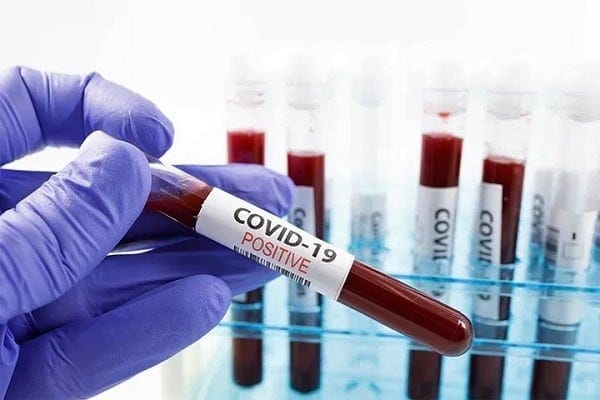
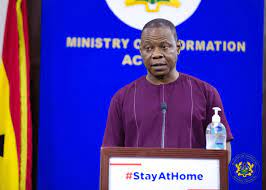
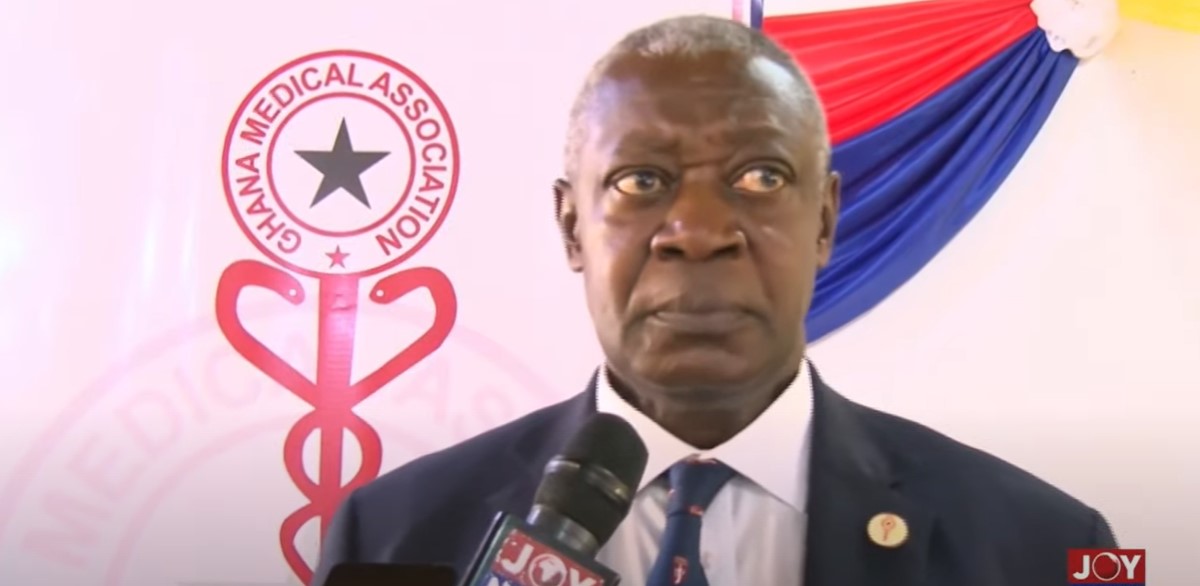
The Director-General of the Ghana Health Service (GHS), Dr Patrick Kuma Aboagye, has noted that the country has started recording new cases of the COVID-19 virus.
Engaging the media, Dr Aboagye noted that 21 new cases have been recorded. He noted that although the head of the UN World Health Organization (WHO) in May 2023 declared COVID-19 no longer a global health emergency, the virus remains.
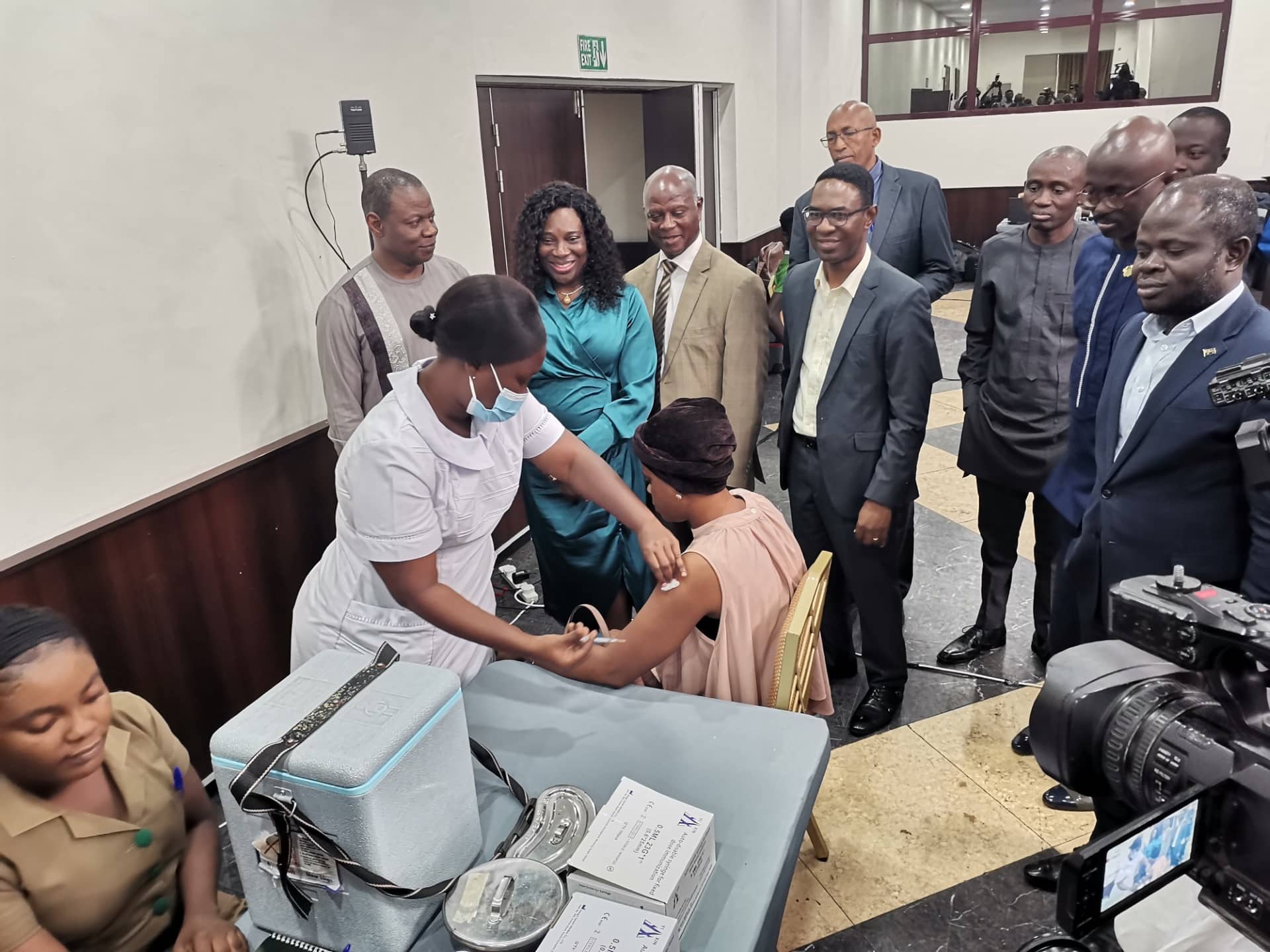
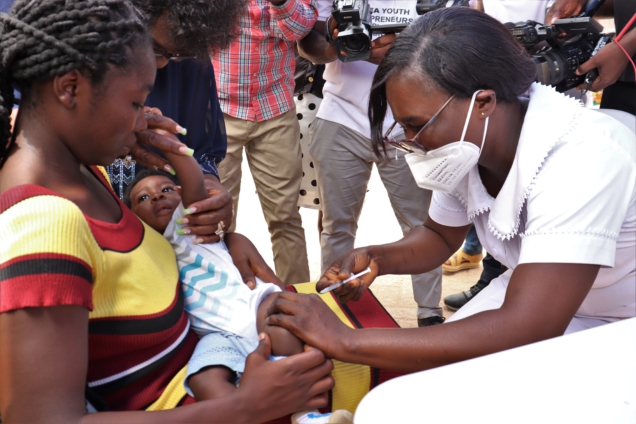
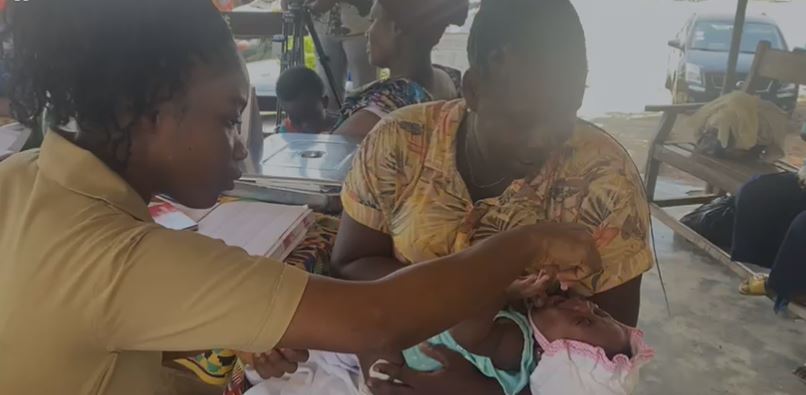
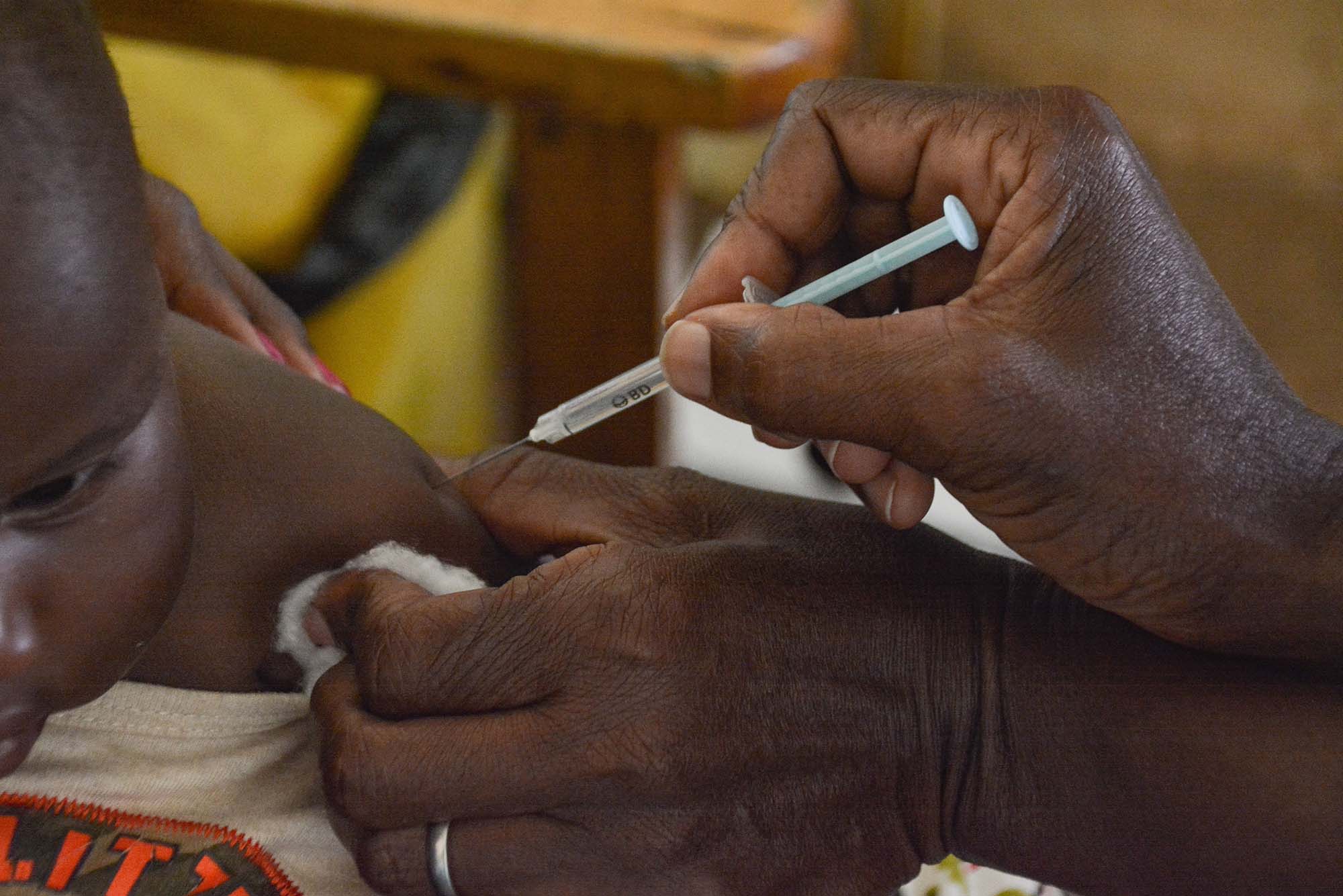
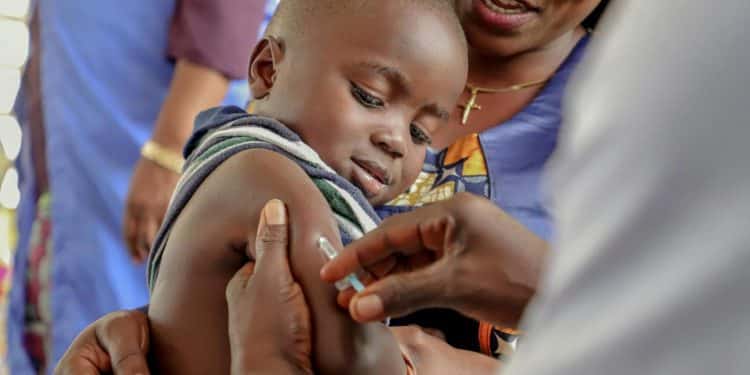
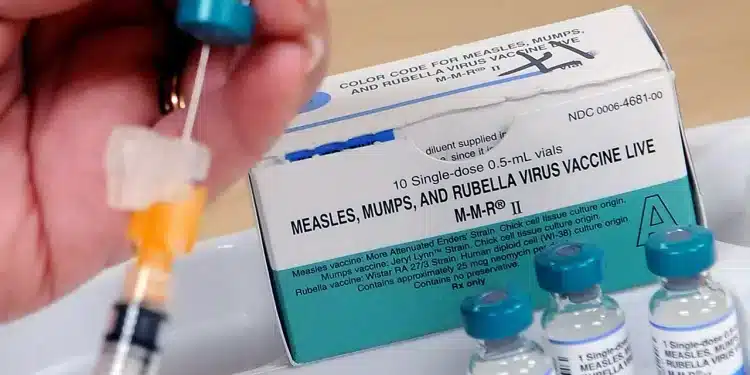
He urged Ghanaians who are not vaccinated to take advantage of the GHS’s upcoming vaccination exercise.
The Ghana Health Service (GHS) has declared a nationwideCOVID-19 vaccinationinitiative in response to escalating infections across healthcare facilities.
Scheduled from May 4 to May 10, 2024, the campaign aims to curb the surge in cases, particularly in the Greater Accra Region, where the highest numbers have been recorded.
Highlighting the virus’s high transmissibility, the GHS emphasized the criticality of adhering to safety protocols.
Dr. Franklin Asiedu-Bekoe, Director of Public Health at GHS, underscored the pivotal role of widespread vaccination in containing the spread. He urged all Ghanaians to actively engage in the campaign, as shared during a media briefing.
“We are getting a few cases reported in parts of Accra and a few other regions. And it brings to bear the fact that Ghanaians need to be vaccinated and so on the 4th to the 10th of May, we are going to do a nationwide COVID-19 vaccination campaign and we want to urge all Ghanaians to be part of the exercise.
“We plan to do about four or five before the end of the year. The thinking is that we need to get the necessary population immunity that will help us minimize the risk of getting infections in the country,” he stressed.
Between 2015 and 2020, Ghana documented 59,600 snakebite incidents, averaging 9,900 cases annually, marking the first comprehensive data collection on the matter.
The predominance of snakebites was notably higher in males, averaging 5,600 cases yearly, compared to females at 4,300 cases per year.
At the launch of the African Snakebite Alliance (ASA) Ghana, the Programme Manager of Neglected Tropical Diseases (NTDs), Dr. Joseph Opare, at the Ghana Health Service, disclosed these figures.
Snakebite, classified by the World Health Organization (WHO) among Neglected Tropical Diseases (NTDs), poses a substantial health risk in Ghana, a nation endemic to 14 such diseases.
Despite Ghana’s absence of reported terrorist attacks, snakebite envenoming is identified as more lethal than many other NTDs.
Globally, an estimated 5.4 million snakebites occur annually, resulting in 81,410 to 137,880 deaths and numerous permanent disabilities.
Dr. Opare emphasized the necessity for improved surveillance, increased availability of antivenoms, and heightened public awareness to mitigate snakebite-related morbidity and mortality.
The ASA seeks to revolutionize snakebite research by fostering collaboration between international scientific communities and local stakeholders.
Dr. John H. Amuasi, Principal Investigator of the ASA, highlighted the urgent need for high-quality research to inform policy and practice in reducing snakebite fatalities and disabilities.
The ASA aims to support African nations in integrating research evidence into policy decisions and enhancing the continent’s capacity for snakebite research.
Dr. Amuasi stressed the importance of translating research findings into actionable policies and providing grants to facilitate further snakebite research.
Dr. Angela Ackon of the WHO Ghana Office emphasized the limited availability of antivenoms in regions most affected by snakebites due to challenges in venom preparation and regulatory capacity.
To address this issue, the WHO is evaluating alternative antivenoms that meet international standards to facilitate global procurement.
Dr. Anthony Nsiah-Asare, Presidential Advisor on Health, highlighted the seasonal nature of snakebite incidents, which peak during the major and minor farming seasons.
Dr. Hafez Adam Taher, Acting Director of the Technical Coordination Directorate at the Ministry of Health, underscored the urgent need to address snakebite as a neglected health issue, despite its coverage under the National Health Insurance Scheme.
Glaucoma has led to blindness in more than 45,000 individuals in Ghana, making it the country with the highest incidence of Glaucoma infections in Africa.
Statistics from the Ghana Health Service (GHS) reveal that Glaucoma contributes to over 19% of all cases of blindness in the nation.
At present, approximately eight out of every 100 Ghanaians aged 30 and above, and nine out of every 100 Ghanaians aged 40 and above, suffer from Glaucoma.
During the 2024 World Glaucoma Week, Dr. Hornametor Afake, Head of the Eye Care Unit at GHS, informed the Ghana News Agency (GNA) that Glaucoma is the primary cause of preventable irreversible blindness in Ghana and globally, unlike cataracts, which are reversible.
With a prevalence rate of 0.74%, Ghana has around 230,000 people living with blindness, with 54.4% of cases attributed to cataracts.
Glaucoma encompasses a range of eye disorders leading to progressive damage to the optic nerve, resulting in irreversible blindness if left untreated.
Major risk factors for Glaucoma include elevated intraocular pressure, African descent, family history, aging, steroid use, myopia, and hyperopia.
World Glaucoma Week, organized by the World Glaucoma Association, spans from March 10th to 16th, with the theme “Uniting for a Glaucoma-Free World,” aiming to mobilize global efforts against Glaucoma-induced blindness.
Current global estimates indicate that 78 million people suffer from Glaucoma, with 7.7 million experiencing moderate to severe vision impairment or blindness. By 2040, it’s predicted that 111.8 million people will have Glaucoma.
Despite the high prevalence, more than half of Glaucoma cases go undetected in developed countries, rising to 90% in developing nations like Ghana.
Awareness campaigns are crucial as Glaucoma often manifests asymptomatically in its early stages, leading to late presentation and irreversible vision loss.
Regular eye examinations, beginning at age 20 and increasing in frequency with age, are recommended for early detection.
Similar to hypertension, Glaucoma is a chronic condition managed through medications like eye drops and surgery.
Healthcare providers, particularly at the primary level, are trained to detect Glaucoma early, especially in rural areas where most cases originate.
There’s a call for essential Glaucoma medications to be covered by the National Health Insurance scheme due to their often prohibitive costs.
Early detection, screening, and treatment are essential to prevent irreversible vision loss due to Glaucoma.
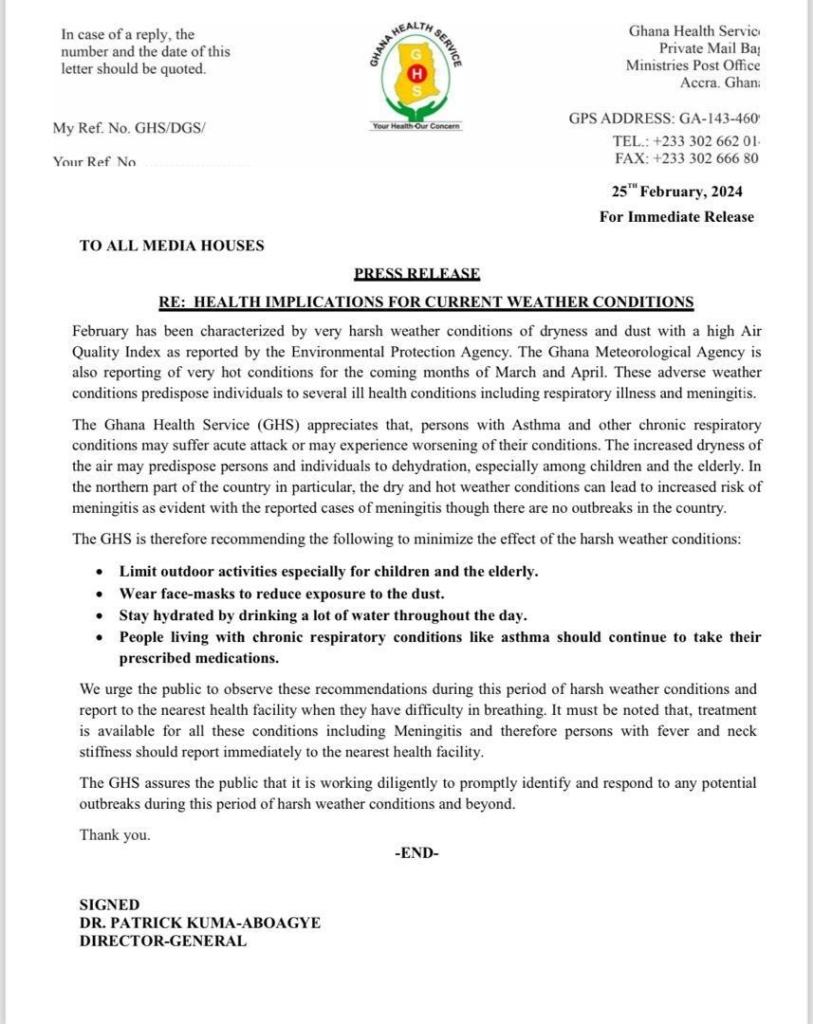
The Ghana Health Service (GHS) has issued guidelines to help people cope with the harsh weather conditions prevailing in the country, which are characterized by dryness, dust, and high temperatures.
February has experienced extremely harsh weather conditions, with dryness and dust leading to a high Air Quality Index, as reported by the Environmental Protection Agency.
The Ghana Meteorological Agency predicts very hot conditions for the upcoming months of March and April. These adverse weather patterns pose health risks, particularly respiratory illnesses and meningitis.
To address these challenges, the GHS has outlined recommendations to minimize the impact of harsh weather conditions on public health.
These include limiting outdoor activities, especially for children and the elderly, wearing face masks to reduce dust exposure, staying hydrated by drinking plenty of water, and ensuring that individuals with chronic respiratory conditions like asthma continue to take their prescribed medications.
The northern region of the country faces an increased risk of meningitis due to the dry and hot weather conditions. While there have been reported cases of meningitis, there are currently no outbreaks in the country.
Nevertheless, the GHS advises individuals experiencing symptoms such as fever and neck stiffness to seek immediate medical attention at the nearest health facility.
“We urge the public to observe these recommendations during this period of harsh weather conditions and report to the nearest health facility when they have difficulty in breathing,” stated the GHS in its statement.
The GHS reassured the public that it is working diligently to promptly identify and respond to any potential outbreaks during this period and beyond.
The Ghana Health Service (GHS) is collaborating with Interpol to identify and trace health workers who, after being granted study leave with pay, failed to return to fulfill their bond terms upon completing their programs in Ghana or abroad.
According to the Director-General of the Ghana Health Service, Dr. Patrick Kuma-Aboagye, some of these beneficiaries abandoned their courses or absconded without providing any notification. The Ministry of Health (MoH) is actively working with Interpol to recover these amounts, including interests.
“A number of the beneficiaries have made some efforts to pay back some of the salaries they received, with others having outstanding payments to make,” he said when the Ministry of Health (MoH) appeared before the Public Accounts Committee of Parliament on January 29, 2024.
The bond conditions of the GHS stipulate that awardees must report for work at the end of the bond period. Failure to return to the previous station within 10 days after the study leave period’s expiration results in being deemed to have vacated the post.
In such cases, individuals are required to refund all salaries received during the study leave, along with interest at the prevailing lending rate of the Bank of Ghana.
As per the Auditor-General’s recommendation, if the institutions that granted the study leave fail to recover these amounts, they should be retrieved from Principal Medical Officers.
The Director-General stated that since 2021, there has been a series of incidents involving health workers who, amid the current wave of brain drain, were granted study leave with pay but failed to return to fulfill their bond terms.
“But we are working very hard to see how we can find their guarantors to see how we can retrieve the money,” he said.
Dr. Kuma-Aboagye expressed disagreement with a previous directive from the Public Accounts Committee (PAC). The directive suggested that, before being granted study leave, individuals should have banks guaranteeing their return. In case of default, the banks would be responsible for refunding their salaries.
The Director-General of the Ghana Health Service argued that implementing such a directive would be challenging. He emphasized that the service required specific capacities and specialties to advance its goals.
“It is in our interest to train some people to come and offer some service; so, putting in such major obstacle may be a problem because more than 95 per cent of beneficiaries return.
“And so we may have to relook that bank guarantee directive; the issue is that if that directive is also going to deter people from taking up such responsibilities, we also get affected,” he said.
Meanwhile, Dr Kuma-Aboagye has highlighted the concerning rise in brain drain within the health sector, revealing that the GHS had lost approximately 4,000 nurses nationwide over the past three years.
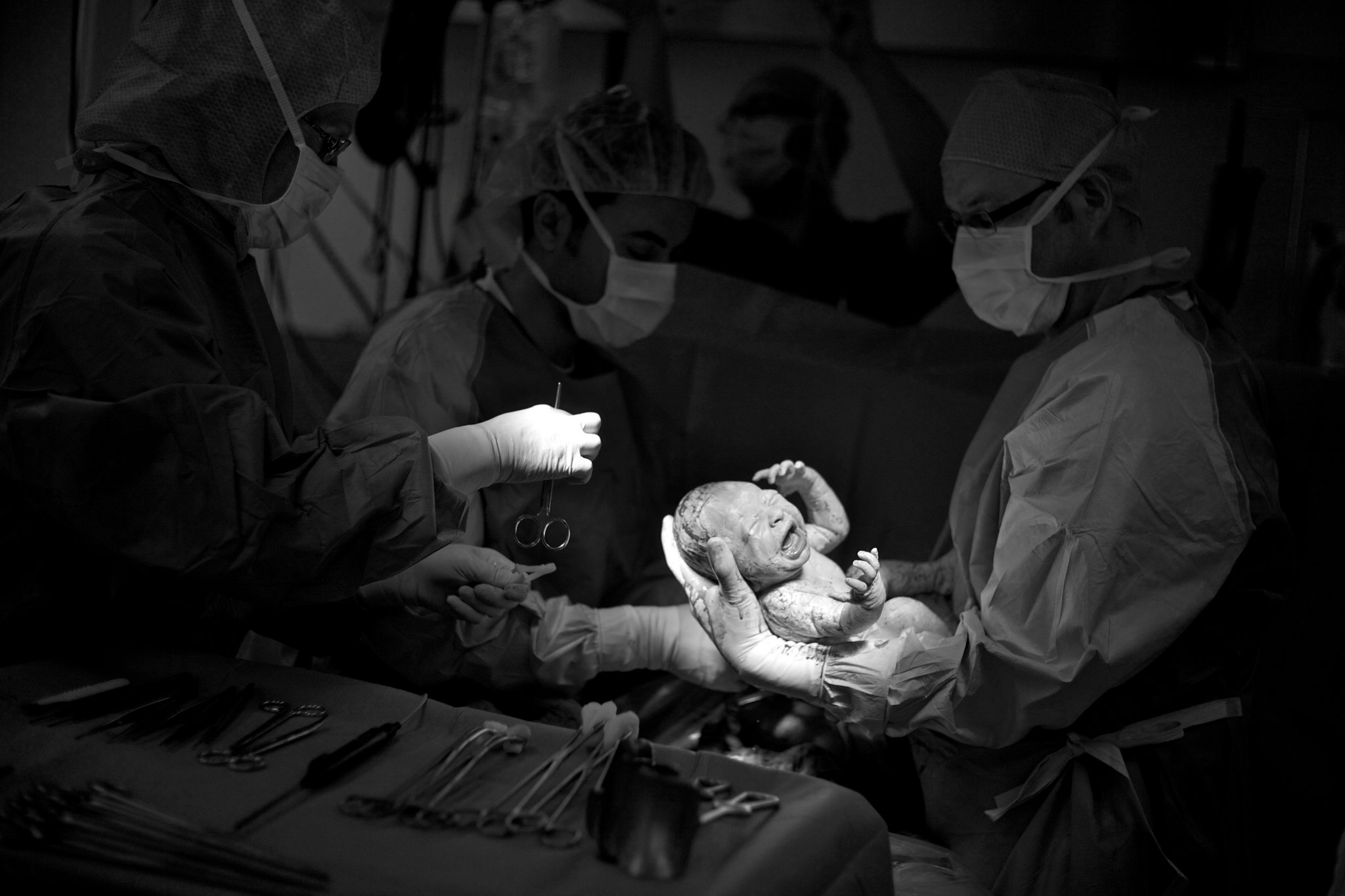
The Ghana Health Service (GHS) has expressed concerns regarding the notable increase in cesarean section (C-section) deliveries in the country.
According to the 2022 Ghana Demographic and Health Survey (GDHS), one in five births now occurs through C-section, surpassing the World Health Organization’s (WHO) recommended benchmark of 15%. The national rate stands at 21%, raising apprehensions about potential overuse and associated health risks.
The GDHS data underscores that one out of every five women delivers through C-section, signaling a significant deviation from recommended standards and prompting worries about overuse and its potential health implications.
Efforts to address this issue may involve targeted interventions, including improved maternal education on delivery options and enhanced training for healthcare providers to ensure appropriateness in decision-making.
Deputy Director of Reproductive & Child Health at GHS, Dr. Chris Opoku Fofie, emphasized the importance of ensuring that C-sections are administered to those who genuinely need them, rather than being employed as a universal remedy for all women.
Conducted since 1998, the GDHS is led by the Ghana Statistical Service (GSS) in collaboration with the Ministry of Health, the GHS, and other stakeholders.
The survey aims to provide valuable information for program managers and policymakers to evaluate and enhance existing health programs.
The latest survey was conducted between October 17, 2022, and January 14, 2023, and included a nationally representative sample of women and men aged 15 to 49 years and 15 to 59 years, respectively.
The Ghana Health Service (GHS) has disclosed that a total of 3,688 healthcare professionals have emigrated in the past three years in search of better opportunities abroad.
This exodus includes both professional and critical caregivers.
Some of these departing health professionals cite unfavorable working conditions in Ghana as the primary reason for leaving their posts in pursuit of more favorable prospects overseas.
In response to the growing concern, the Ghana Health Service has implemented measures to address the issue.
In 2021, they revised and doubled study leave for unprofessional nurses.
The service expects that by the middle of the next year, many of these nurses taking advantage of the initiative will have qualified to fill the resulting staffing gap.
However, during the parliamentary debate on the Health Ministry’s 2024 budget, Majority Leader Osei Kyei-Mensah-Bonsu suggested that the government should consider increasing remuneration to counteract this trend.
In his words, “Mr. Speaker, I think that we should look at the remuneration [of nurses]. If we look at the compensation, it was over and above what was allocated, and if people have left, the compensation should then climb up. We should do a proper audit of the nurses who have left to know the deficit and should be able to employ to replace those who have exited.”
The Ministry of Health, in collaboration with the Non-Communicable Disease (NCD) Unit of the Ghana Health Service in partnership with the Diabetes Endocrine and Metabolic Society of Ghana (DEMSoG) has launched the National Diabetes Guidelines on the theme, ‘’Access to diabetes care’’.
The launch also coincided with the commemoration of 2023 World Diabetes Day.
It is expected that diabetes care will improve with the development and implementation of a national guideline, which will ultimately reduce morbidity and mortality associated with diabetes and its complications.
Research indicates that diabetes is a growing global health concern, and the prevalence of this chronic condition has been steadily rising, affecting millions of individuals and families worldwide.
In Ghana, the situation is no different, with an estimated of 2.6% -9% per annum; that is, an average of 200,000 cases of diabetes reported to health facilities annually.
The Minister for Health, Hon. Kwaku Agyeman-Manu, addressing participants at the launch, stated that the National Diabetes Guidelines will serve as a roadmap for healthcare professionals, outlining best practices and evidence-based approaches to the management of diabetes.
“The Ministry of Health is seeking innovative ways to reduce exposure to risk factors that contribute to diabetes and NCDs’’, he asserted.
Mr Agyeman-Manu commended the health professionals, technical experts and researchers who contributed to the development of the guidelines and urged that the occasion will be used to reaffirm individual’s commitment to raising awareness about diabetes, dispel myths and emphasize the urgency of early diagnosis.
Prof Ernest Yorke, Vice president, DEMSoG & project coordinator, indicated that the guidelines seek to bridge gaps in diabetes management, standardize diabetes protocols and make best practices available to specialist practitioners who manage patients with diabetes across Ghana.
The Ghana Health Service (GHS), as the primary public healthcare provider in Ghana, is intensifying its commitment to advocate for and enhance access to high-quality and safe healthcare—an essential element in achieving a universal healthcare agenda.
Under the esteemed leadership of Director General Dr. Patrick Kuma Aboagye, the GHS has collaborated with PharmAccess Ghana to embark on a joint initiative, introducing the SafeCare Quality Improvement Program on a limited scale in the Savannah and Bono East regions.
This small-scale rollout aims to assess the adoption and integration of SafeCare Standards and quality improvement methodologies within GHS settings and systems, facilitating positive changes and improvements.
Over the past year, forty healthcare facilities from the two regions—including district hospitals, polyclinics, and health centers—have been introduced to SafeCare quality standards and improvement methodologies.
Initial assessments of the facilities were conducted using the ISQua’s External Evaluation Association (IEEA) accredited standards, followed by a series of quality improvement activities designed to assist the facilities in implementing changes to enhance their baseline performance.
The healthcare facilities are further aided by a digital application for accessing supportive documents and tracking activities. Training and capacity-building approaches are also employed to ensure the development of internal capacities for continuous improvement.
Moreover, over 100 smaller healthcare facilities (Community-Based Health Planning and Services compounds – CHPS compounds) from the Savannah and Bono East regions were introduced to a self-administering assessment tool. This tool allows providers to evaluate their facilities’ performance in terms of quality and receive recommendations for improvement.
In a collaborative effort for better healthcare, the Director General of the Ghana Health Service conducted supportive supervision visits to selected facilities in September 2023. The purpose was to observe firsthand the adoption of the SafeCare program in healthcare facilities, identify progress, address implementation challenges, and inspire other facilities to enhance their efforts in improving the quality of care.
Drawing inspiration from the successful adoption of the SafeCare program within the Christian Health Association of Ghana (CHAG), the Director General invited the Executive Director of CHAG, Dr. Peter Yeboah, to share his experiences in the program. Accompanied by the Country Director of PharmAccess, Dr. Maxwell Akwasi Antwi, the visit aimed to foster collaboration and knowledge-sharing.
During the visit, Dr. Patrick Kuma Aboagye, Director General of GHS, expressed satisfaction with the uptake of the Quality Improvement (QI) program in the facilities. He emphasized the crucial role of leadership, attitude, and investment in the successful implementation of quality improvement programs like SafeCare. Dr. Aboagye urged the leadership of the facilities and the Regional Health Directorate to sustain the program, emphasizing its enduring significance.
Dr. Peter Yeboah of CHAG shared his extensive experiences with the SafeCare Quality Improvement Program, highlighting the progress made since its inception in 2019. He proposed healthy competition and collaboration between GHS and CHAG in pursuit of Universal Health Coverage (UHC) through equitable and high-quality healthcare access.
He said that the GHS healthcare facilities that were visited reported marked improvements in the overall quality of care since the start of the SafeCare Program. Dr Peter Yeboah hinted, “These improvements are a testament to the effectiveness of the SafeCare methodology in enhancing healthcare service delivery.”
Dr. Maxwell Antwi, the Country Director of PharmAccess, underscored the significance of collaborative efforts between the government and private organizations in establishing a resilient, high-quality healthcare delivery system. He emphasized the need to create a healthcare system that ensures patients receive adequate care without the need for physical activation, aiming to establish a lasting health system for the current generation.
The SafeCare Small-Scale Rollout Project within the Ghana Health Service exemplifies the power of partnerships and the potential for substantial improvements in healthcare quality and delivery. As this project continues to progress, it holds the promise of positively impacting the lives of many Ghanaians by providing access to high-quality healthcare services.
In October 2023, the Ghana Health Service’s small-scale rollout of the SafeCare program marked its one-year anniversary. The forty healthcare facilities that underwent independent onsite assessments have been reassessed to evaluate their quality performance over the one-year period of program implementation. Preliminary reports indicate that out of the thirty-six facilities reassessed, 75% have shown improvement in their quality scores. A notable achievement is that Bamboi Polyclinic has advanced from SafeCare Level 2 to Level 4 since the baseline assessment.
Ms. Bonifacia Benefo Agyei, the SafeCare Director of Ghana, extends congratulations to the management and staff of Bamboi Polyclinic for their outstanding effort. She encourages them to sustain the improvement by continuing quality improvement activities, adhering to established processes and procedures, and aiming for SafeCare Level 5. She also recommends that other facilities follow the example set by Bamboi Polyclinic.
The Ghana Health Service (GHS) has initiated an investigation regarding the death of a 19-year-old second-year law student at the University of Ghana, Nana Obeng, which occurred at the Ewim Polyclinic in Cape Coast.
Speaking to the media, Nana Obeng’s mother, Nelly Mills, explained that she brought her son, who was asthmatic, to the hospital with the intention of administering a nebulizer treatment to prevent an imminent asthma attack.
“He has been asthmatic for the past ten years,” said the mother. “On the day he died, I served him his food and was waiting to finish eating so I administer his medicines to him. He sat by the table and told me that he was starting to feel worse.
“He said the asthma attack was gradually becoming severe. I asked him to use his pump and he told me to rather take him to the hospital for a nebulizer. So, I refused. He then went to take his bath and things got worse. I then sought help and we carried him to a hospital,”she indicated.
However, she alleged that the medical staff, rather than providing the nebulizer treatment, administered an injection, ultimately resulting in her son’s tragic death shortly thereafter.
“The first hospital told us they had closed so we took him to another one, Ewim Polyclinic. I told them my son needed oxygen and that he was in a critical condition but one of the nurses asked me to go and get a drug outside the hospital which costs just GHC7.00. I came back only to meet my boy vomiting.
“Within a twinkle of an eye, he stood and started acting strange. He looked aggressive and feisty. They then carried him and put him on the bed and I kept asking what they did to my son. Then they started resuscitating him a few times and finally confirmed that he was dead,” she stated in a viral video,” she stated.
The Central health directorate has announced that Nelly will need to await answers until a comprehensive investigation and autopsy, spanning the next two weeks, are completed.
The Ghana Health Service (GHS) has conveyed contentment with the health status in the Tongu Districts, which were recently impacted by flooding and resultant water accumulation.
Director-General of the GHS, Dr. Patrick Kuma-Aboagye, visited various affected regions within the three Tongu Districts and emphasized in an interview that they are gratified by the absence of any disease outbreaks over the past two weeks following the disaster.
“We are quite satisfied that two weeks into this disaster, we have not had any outbreak of disease, which often happens in many countries and many places. So, we have simply come to support the districts in continuing the work they are doing,” he stated.
Dr. Kuma-Aboagye added, “We have brought some relief items, as well as mental health experts and psychologists, to assess the situation and determine what needs to be done. In the long term, those who have been displaced will need psycho-social support, and we are also here to look at the plight of the 271 health workers who are part of the displaced community.”
He also noted that any diseases currently present in the community are pre-existing.
Earlier, the Ghana Medical Association (GMA) raised a concerning issue, revealing the presence of individuals displaying symptoms of diarrhea within the emergency shelters established for those impacted by the Akosombo and Kpong Dams’ spillage.
Acting General Secretary of the GMA, Dr. Richard Selormey, made this revelation during an interview on Citi FM’s Eyewitness News.
He explained that the Association dispatched a team to assist in the rescue operations in the affected regions, and this team encountered several individuals afflicted with diarrhea and bilharzia.
“We have noted that the most common thing being found is people having malaria as well as skin diseases and respiratory conditions because most of the centres are holding a lot of people at a go and people are in close contact. We have also noticed that there are a few people beginning to show signs of diarrhea diseases and about two people are also showing signs of bilharzia,” he added.
Dr. Selormey further warned of an outbreak of waterborne diseases and urged the people to observe safety protocols while waiting for relief items.
“Our concern is the breakout of diarrheal diseases. That can be a big problem because it can quickly spread. And then also because of the crowding, respiratory tract infections. So key is the protocols we highlighted during the COVID-19 pandemic which has to do with handwashing practices and advising the people not to touch things and making sure that there is good water available,” said Dr. Selormey.
The Ghana Health Service has reported that Ghana has achieved a 50 percent reduction in obstetric fistula cases within five years through the Ghana Obstetric Fistula Prevention and Management Plan (GOFPMSP).
The GOFPMSP 2017-2021 aimed to establish sustainable funding mechanisms to reduce obstetric fistula cases in Ghana by half by 2021 and eliminate the condition by 2030.
It sought to prevent obstetric fistula, enhance case identification and referral, provide treatment and care for affected women, and offer rehabilitation and reintegration services.
Professor Sebastian Eliason, Consultant for the strategic plan, made this announcement during the fourth Maternal, Child Health, and Nutrition (MCHN) Conference 2023 in Accra.
Obstetric fistula is a severe medical condition that occurs due to complications during childbirth, resulting in a hole between the rectum and vagina (recto-vaginal fistula) or between the bladder and vagina (vesico-vaginal fistula).
Although significant progress has been made, challenges remain, including a backlog of cases and inadequate treatment outreach, among other issues.
Professor Sebastian Eliason called for awareness and education about obstetric fistula, a mentorship program for training doctors in obstetric and gynecological surgeries, resource mobilization, and partnerships to effectively implement the new strategic plan.
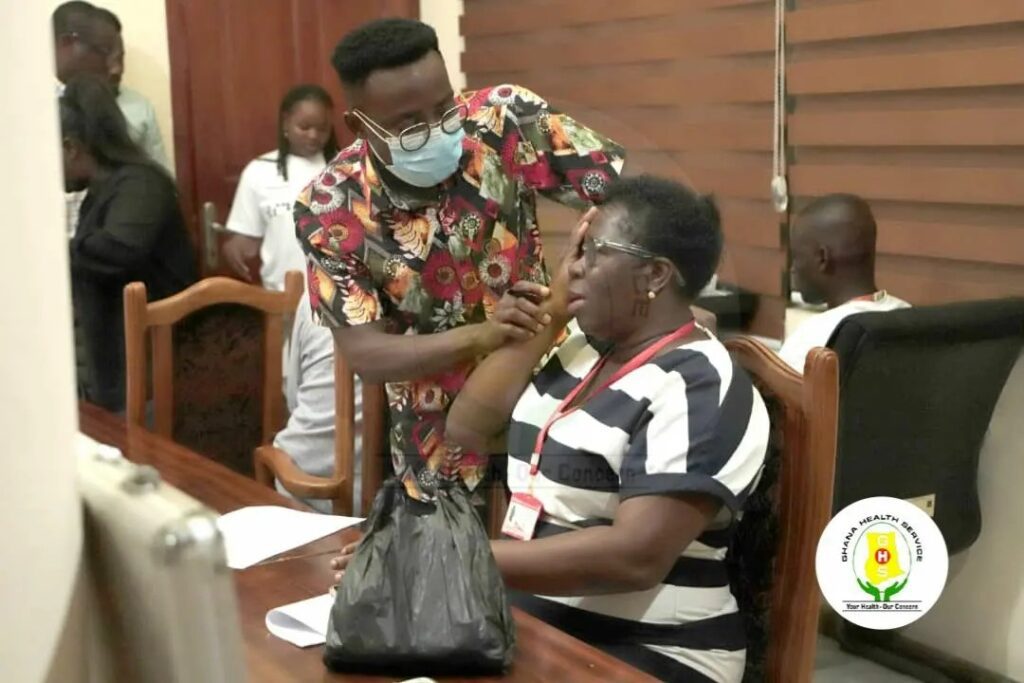
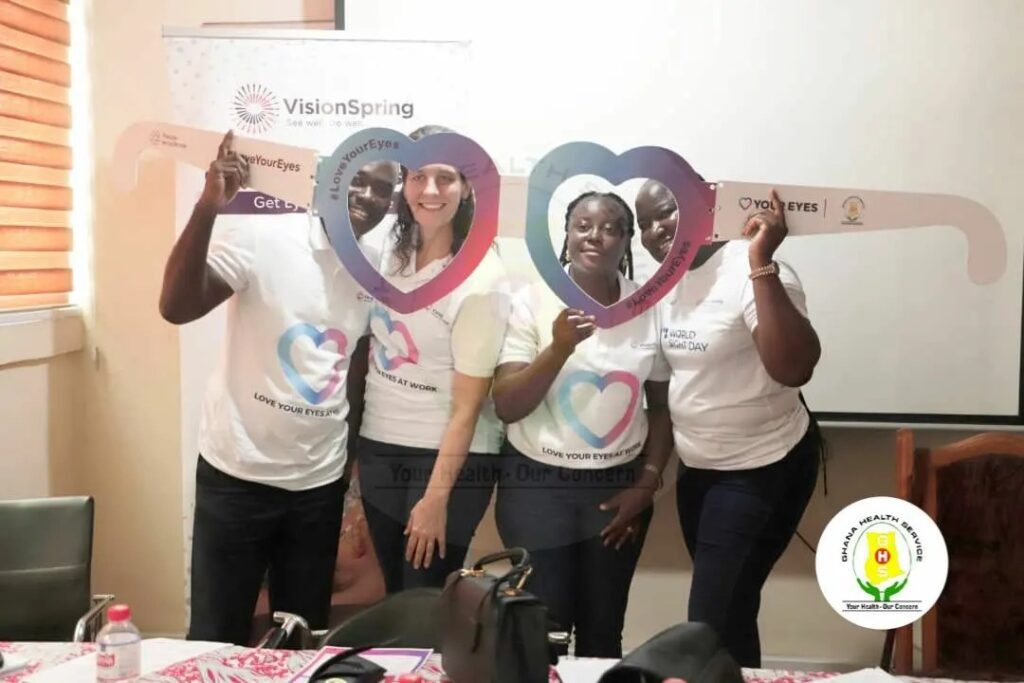
The Ghana Health Service (GHS) in collaboration with its partners in health service delivery, held an eye screening exercise in commemoration of the 2023 National World Sight Day.
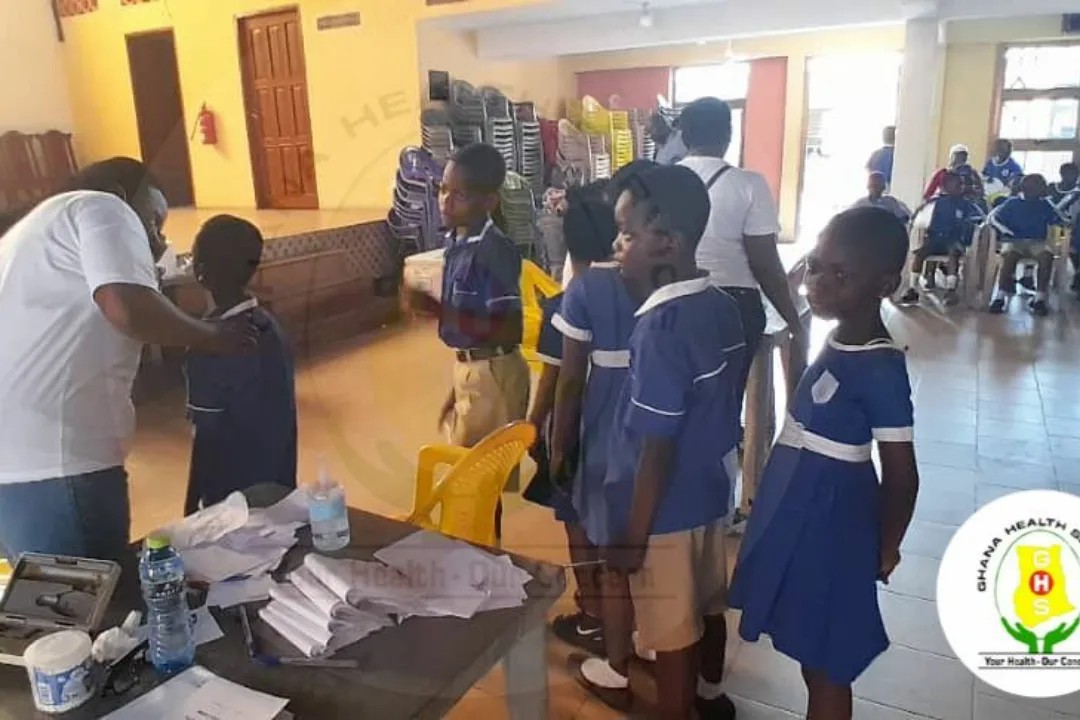
As part of activities to mark the day, an eye screening exercise was held for staff at the Graphic Communications Group Limited, commuters and traders at the Neoplan Station, and pupils of the All Saints Anglican Basic School, Adabraka.
This year’s theme is “Love Your Eyes at Work”. The program brought stakeholders together to create awareness about the need for quality eye health, ways to improve eye health, and the importance of taking care of the eyes at work.
World Sight Day is a global event that falls on the second Thursday in October every year.
The day is set aside by the World Health Organization and the International Agency for Prevention of Blindness (IAPB) to raise awareness and draw the world’s attention to global blindness and visual impairment as a major international public health issue.
The Ghana Health Service (GHS) has entreated the general public to adhere to regular handwashing practices to combat the rising instances of Acute Haemorrhagic Conjunctivitis, commonly known as Apollo.
Director of Public Health at the GHS, Dr. Franklin Asiedu-Bekoe, revealed that over 50% of reported eye cases at the Police Hospital’s eye clinic, are attributed to Apollo.
“This is about prevention, how do we ensure that people avoid touching their eyes, and we need to also promote handwashing,” the Director of Public Health at the Ghana Health Service advised.
“Apollo” is an inflammation of the thin, transparent layer (conjunctiva) covering the white part (sclera) of the eye, typically caused by viruses like enterovirus 70 and coxsackie virus A24.
This viral conjunctivitis spreads rapidly and presents various signs and symptoms, including excessive tearing, significant watery discharges, eye pain, conjunctival redness, eyelid swelling, gritty sensations, and sub-conjunctival hemorrhages.
While Apollo usually resolves on its own, patients may be prescribed eye drops to prevent secondary bacterial infections and mitigate severe inflammatory symptoms associated with conjunctivitis.
To prevent the spread of this eye condition, individuals are advised against touching or rubbing the eyes, shaking hands, and are encouraged to ensure regular handwashing with soap and water, the use of hand sanitizers, and rubbing alcohol.
Meanwhile, the Ghana Optometric Association has recommended that infected individuals stay away from schools, workplaces, or social gatherings.
The Upper East Region’s Ghana Health Service (GHS) has called upon organizations, government departments, and agencies within the area to establish a supportive environment that allows nursing staff to comfortably breastfeed their infants.
The Regional Deputy Director of Public Health, Dr Josephat Ana-Imwine Nyuzaghi, made the call when he addressed stakeholders after a float on major streets in the Bolgatanga Municipality to create awareness on the need for exclusive breastfeeding as part of activities to mark this year’s breastfeeding month.
“We want to draw the attention of organizations, departments and agencies in the Region on the need to create an enabling environment for our lactating mothers to breastfeed comfortably,” he said.
He emphasized that this initiative would play a crucial role in encouraging exclusive breastfeeding during the first six months after birth. This, in turn, would ensure that infants receive the full benefits of breast milk nutrients and reduce the risk of diarrheal diseases.
The celebration was on the theme: “Enabling breastfeeding: Making a difference for working parents.”
Dr. Nyuzaghi pointed out that lactating mothers require a comfortable and private space within their workplaces to enable them to sit and breastfeed their infants.
He further highlighted that some nursing mothers are compelled to leave their babies at home while they work, and the well-being of these infants remains uncertain.
“Some workers who are capable sometimes express the milk and leave it behind for other caregivers to support in the breastfeeding.
“This can be challenging, once the mothers are not there to witness what is happening at home. It is appropriate that at the work place, we have a convenient place for mothers to breastfeed. I want to encourage all of you to talk positively about breastfeeding.
“We need as stakeholders, wherever we find ourselves, to talk more about breastfeeding and encourage mothers to breastfeed their children. For the first six months, the breastmilk virtually has everything that the child needs,” he said.
Dr. Nyuzaghi clarified that the belief that breast milk lacks water, leading some parents to provide water to infants under six months of age, is incorrect. He stressed that infants given water during their first six months of life are at risk of developing diarrheal diseases.
“So, we need to continue to emphasize the fact that for the first six months, mothers should exclusively breastfeed their babies and whatever the child needs for the first six months can be found in breast milk,” he noted.
Dr. Nyuzaghi additionally emphasized that breast milk contains sufficient antibodies that can assist infants in combating diseases they may encounter during the early weeks of life. He strongly advocated for exclusive breastfeeding during this period.
He also highlighted that as babies progress beyond six months, their growth accelerates, and breast milk alone may no longer suffice to meet their nutritional needs.
“This is where the issue of complementary feeding comes in. But it is important that beyond the six months up to two years, the child would still need breast milk.
“So, beyond the six months period, it is important we still continue to encourage mothers to breastfeed up to two years alongside the complementary feeding,” he said.
The celebration united various stakeholders, encompassing nurses, midwives, members of the Ghana National Tailors and Dressmakers Association, as well as staff and students from the Community Development Vocational Technical Institute, among others.
Ghana Health Service (GHS) Director General, Dr. Patrick Kuma Aboagye, has revealed that over 500 senior Ghanaian nurses passed away in 2022.
The service is now strategizing to recruit and train new nurses to address the gap left by these departures.
Speaking at an August 17, 2023, press briefing by the Ministry of Information, Dr. Patrick Kuma Aboagye affirmed the plan to bring in more nurses over the next two years as part of their strategy.
“In the past year, we lost around 525 nurses, but we are presently in the process of recruiting additional nurses nationwide,” he stated.
He emphasized that achieving Universal Health coverage by 2030 is a primary objective for the Ghana Health Service.
The service is working to strengthen primary healthcare and collaborate with partners to enhance the quality and patient-centeredness of healthcare delivery.
Director General of the Ghana Health Service (GHS), Dr Patrick Kuma Aboagye, more than 500 seasoned Ghanaian nurses were lost in the year 2022.
The Ghana Health Service’s Director General mentioned that his organization has implemented strategies to hire and develop additional nurses to address the gap created by the significant number of nurses who have left.
During a press conference organized by the Ministry of Information on August 17, 2023, Dr. Patrick Kuma Aboagye stated that more nurses are expected to be recruited in the next two years per the measures they have put in place.
“We have also lost experienced and skilled staff, but we are also putting systems so that [within] the next two years, we are able to replace them with further training and recruitment.
“[in] the last year we lost about 525 nurses, but we are currently having recruitment for additional nurses across the country,” he said according to the Chronicle newspaper.
He also added that Universal Health coverage by the year 2030 is a major priority for the Ghana Health Service (GHS) to enhance the quality of health care in the country.
“This Service has revisited the strategy to strengthen primary healthcare and deepen our collaboration with partners toward redesigning the primary healthcare system to improve the quality and more patient-centered care” he stated.
A medical condition characterized by inflammation of the liver, Hepatitis, poses a significant threat to human health due to its diverse transmission modes and potential impact on survival.
The Director-General of the Ghana Health Service (GHS), Dr. Patrick Kuma-Aboagye, emphasizes that despite its severity, hepatitis is not a death sentence.
Early detection and treatment play a crucial role in preventing the progression of the disease to more severe stages, such as chronic hepatitis or cirrhosis.
According to Dr. Kuma-Aboagye, timely identification of viral hepatitis is essential to initiate treatment promptly, which in turn prevents disease advancement, transmission, complications, and overall public health issues. Regular screenings, particularly for high-risk populations, are pivotal for detecting infections early and ensuring appropriate medical intervention.
The mode of viral hepatitis transmission, primarily through body fluids, renders everyone susceptible to infection, potentially leading to serious consequences. Transmission can occur through various means, including unprotected sexual contact, sharing contaminated needles or syringes, mother-to-child transmission during childbirth or breastfeeding, consumption of contaminated food or water, and direct contact with infected feces.
Dr. Kuma-Aboagye emphasizes that the most accessible method to prevent and manage infections is screening.
Hepatitis can silently infiltrate the body, causing damage before symptoms emerge. Early detection through screening enables timely intervention, preventing liver damage and reducing the risk of severe complications. It’s worth noting that asymptomatic individuals can still transmit the virus to others.
The Director-General urges all citizens to undergo screening, stressing that this step is vital for achieving Ghana’s goal of diagnosing 90% of Hepatitis B and C cases and providing treatment for at least 80% of affected individuals, thereby curbing the growing disease burden. He highlights that while some forms of hepatitis are curable, others are manageable, allowing infected individuals to lead normal lives if detected and treated early.
Viral Hepatitis
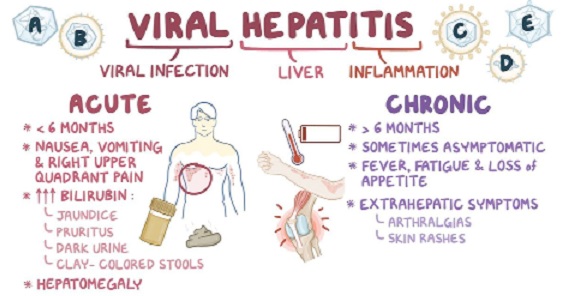
Hepatitis denotes liver inflammation and is commonly triggered by viral infections. The five primary types of viral hepatitis—A, B, C, D, and E—are caused by distinct viruses, sharing similar modes of transmission through contact with infected individuals’ bodily fluids or blood.
Notably, the hepatitis virus is present in blood and certain bodily fluids, and transmission occurs when non-immune individuals come into contact with these fluids. Transmission can occur via various means, such as unprotected sex, needle-sharing, and mother-to-child transmission during childbirth.
Symptoms of viral hepatitis vary based on the virus type and infection stage. These include fatigue, jaundice, loss of appetite, nausea, and vomiting. Importantly, not all infected individuals exhibit symptoms, especially in the early stages of infection.
Antiviral medications, vaccines, and interventions tailored to specific virus types (A, B, C, D, or E) can manage infections, prevent complications, and enhance recovery prospects. While no effective vaccine exists for hepatitis C, early diagnosis can mitigate resultant health problems and transmission risks.
Preventing viral hepatitis involves practicing good hygiene, getting vaccinated (where available), practicing safe sex, avoiding needle-sharing, and adhering to safe medical procedures.
Dr. Adwoa Agyei-Nkansah, a hepatologist, confirms the curability of Hepatitis C but highlights the obstacle of expensive testing and treatment costs, particularly for economically disadvantaged patients. Efforts are underway to subsidize diagnostic costs and encourage more individuals to seek medical attention, contributing to Hepatitis eradication.
Testing Hesitancy and National Burden
Despite a growing burden of hepatitis infections and fatalities in Ghana, diagnosis, treatment, and awareness remain low. Dr. Atsu Godwin Seake-Kwawu, the Programme Manager of the National Viral Hepatitis Control Programme, reveals that the country houses 1.5 million people with Hepatitis B and C, resulting in over 3,000 annual deaths from liver cancer and cirrhosis. However, testing hesitancy has led to only a small percentage of individuals with chronic Hepatitis B (HBV) and Hepatitis C receiving proper diagnosis and treatment.
Dr. Seake-Kwawu emphasizes the importance of testing, particularly for pregnant women, to ensure early treatment and prevent transmission to unborn babies. He notes that the World Health Organization (WHO) targets hepatitis elimination by 2030 and encourages Ghanaians to undergo regular testing to know their status and receive timely treatment.
The GHS is intensifying efforts to eliminate viral hepatitis, implementing initiatives such as screening pregnant women for the condition and providing post-delivery vaccinations to curb virus spread. Dr. Seake-Kwawu underscores the significance of prevention, testing, treatment access, and chronic care, considering the expensive medication costs.
The Coalition of Health Trainees has given the government a strict ultimatum of six days, insisting on the prompt release of their overdue allowances accumulated over a period of two years.
In an interview with the media, the General Secretary of the coalition, Emmanuel Awuku, expressed their mounting frustration.
He stated that they had patiently awaited the allocation of their allowances, but their patience is waning.
He warned that if their demands are not met, they are prepared to take more forceful actions.
Awuku stated, “should the anticipated allowance not reach us within the next six days, we may be compelled to escalate our approach during our upcoming engagement. We implore all relevant parties to take the necessary actions, enabling us to fulfill our responsibilities while seeking resolution, akin to the way Moses resolved conflicts.”
He underscored the severe financial burden caused by the withheld allowances, which is adversely affecting trainees across the entire country. He emphasized the critical role these allowances play in supporting their educational endeavors.
“It is imperative that every health trainee be granted their constitutional entitlement to allowances, including those from hygiene schools nationwide. However, this obligation seems to be fading. Our hygiene trainees have gone without these funds for two years in some instances and 10 months for others.”
He elaborated further, “This unfortunate pattern is becoming customary, requiring our student leadership to repeatedly engage stakeholders at great personal expense whenever allowance disbursement is due.”
Former Director General of the Ghana Health Service (GHS), Professor Agyeman Badu Akosa, has highlighted the issue of negligence in supervisory duties as the reason behind the current calls by physician assistants to become an independent body.
He emphasized that lack of engagement with this group of health practitioners and failure to provide direction in their work has caused agitation among them.
Prof Badu Akosa believes that physician assistants have been allowed to work independently for too long without proper supervision, leading to their demand for autonomy.
He urged health institutions to engage regularly with physician assistants, discussing their challenges and providing informed directions to ensure proper supervision.
“If you don’t do supervision and you allow them to work independently, then you have a problem.”
“But if you choose not to do that and you leave them to do their work, now they’re sitting down and saying ‘we don’t need to be supervised’. But how can an assistant not be supervised?,” he said.
“So it’s the failure of supervision that has caused that,” he stated.
The Physician Assistants Association is currently on a nationwide strike, claiming unfair treatment and disrespect.
They demand changes to Act 857 governing health professionals’ bodies to grant them the freedom to operate independently.
As a result of the strike, healthcare services in some rural hospitals are suffering, as physician assistants are refusing to work. Nurses in these facilities are struggling to attend to patients, leading to referrals for most cases.
The National Labour Commission (NLC) has called for a meeting with the disputing parties, but the physician assistants’ leader, Anthony Asare Arkoh, states that the strike will only end if the Health Ministry responds favorably to their demands.
They seek assurances from the government that their requests will be met before considering ending the strike.
A child-centered organization, Child Rights International (CRI), has expressed deep concern over the recent data from the Ghana Health Service (GHS), revealing that 50,000 infants lose their lives annually due to birth asphyxia.
Describing this figure as disturbing, CRI called for a thorough investigation into the root causes of these deaths to inform appropriate policy decisions and actions.
In a statement released by Executive Director Bright Appiah in Accra, CRI emphasized the importance of introducing a parliamentary bill that addresses the appropriate procedures and care for newborns during birth in the country.
They highlighted that such a bill could be initiated by a Member of Parliament through a private member’s bill.
“This process can also be initiated by a Member of Parliament by way of a private member’s bill,” the statement added.
Birth asphyxia occurs when a baby’s brain and other organs are deprived of sufficient oxygen and nutrients before, during, or immediately after birth.
This can happen in the womb, leading to stillbirths, or during prolonged labor. According to Dr. Edward Antwi, the Programme Manager for Newborn and Child Health at GHS, approximately one million babies are born each year, with a neonatal mortality rate of 17 per 1,000 live births.
This means that out of one million births, approximately 170,000 babies die, and 30% of these deaths are attributed to birth asphyxia.
On a daily basis, about 136 children lose their lives due to this condition, putting a strain on the healthcare system and negatively affecting the nation’s health sector.
In response to this distressing revelation, CRI urged the government and relevant stakeholders to take immediate and decisive action. They recommended the establishment of a national policy that outlines the expected standard of care in all health facilities providing child delivery services. This policy should include specific responsibilities for stakeholders, including mothers and health personnel, and clearly define the consequences for those found responsible for causing the death of a baby. Additionally, CRI called for the provision of mandatory psychological services to families who experience the loss of a baby at birth.
To tackle this issue at its roots, CRI also urged the government to implement a policy that ensures all pregnant women visit health facilities for early diagnosis of asphyxia.
As a child-centered organization, CRI emphasized the need for collective efforts and resources from the government, policymakers, and relevant stakeholders to significantly reduce these statistics in line with SDG Goal Three.
The country is grappling with a growing burden of hepatitis infections and fatalities, exacerbated by low rates of diagnosis, treatment, and awareness.
According to the Ghana Health Service (GHS), due to hesitancy in testing, only a mere 10 percent of individuals with chronic Hepatitis B (HBV) have been diagnosed, and of those diagnosed, only 22 percent have received treatment.
For Hepatitis C, the situation is slightly better, with 21 percent of those with the infection diagnosed, and 62 percent of them receiving treatment for a potential cure.
In an effort to combat this worrisome trend, the Director-General of the GHS, Dr. Patrick Kuma-Aboagye, launched this year’s World Hepatitis Day Commemoration in Accra, urging everyone to get tested.
The goal is to diagnose 90 percent of Hepatitis B and C cases and ensure at least 80 percent of them receive treatment, thereby curbing the increasing burden of the disease.
Dr. Kuma-Aboagye emphasized that some forms of hepatitis are curable, while others can be effectively managed to enable infected individuals to lead normal lives. Early detection and treatment can make a significant difference in the outcomes.
The World Hepatitis Day, instituted by the World Health Organization (WHO) and observed on July 28 each year, aims to raise awareness, reduce prevalence, and improve access to testing and treatment.
The theme for this year’s commemoration is “One life, one liver,” urging people to protect their livers through healthy lifestyles.
The activities leading up to the day include free screening across the country and public sensitization forums nationwide. Dr. Baruch Blumberg’s birthday, who discovered the Hepatitis B virus in 1967 and developed the first hepatitis B vaccine two years later, is chosen as the date for WHD.
To address the growing hepatitis prevalence, the GHS is collaborating with the Ministry of Health and the Global Fund to implement a triple elimination strategy targeting Hepatitis B, HIV, and Syphilis.
Efforts are being made to expand antenatal services to include HBV testing for pregnant women and provide necessary treatment.
The government is also striving to benefit from reduced prices of medications for the treatment of Hepatitis B and C on the global market.
Moreover, steps are being taken to increase access to testing and treatment, including ensuring all pregnant women with chronic HBV have access to treatment and providing Hepatitis B birth vaccines to infants within 24 hours of birth.
Viral hepatitis refers to liver inflammation caused by hepatotropic viruses, which are found in blood and certain bodily fluids. The five identified hepatitis viruses are Hepatitis A, B, C, D, and E.
As the country endeavors to combat this public health issue, efforts are being made to raise awareness, promote testing and treatment, and implement various interventions to reduce the impact of hepatitis infections on the population.
Ghana Health Service (GHS) reports that approximately 50,000 babies die from birth asphyxia in Ghana annually.
However, the actual number might be higher as some cases occurring during home deliveries or outside, according to Programme Manager for Newborn and Child Health of the Ghana Health Service, Dr Edward Antwi.
“In Ghana, on the average, one million babies are born every year, and with the current neonatal mortality rate of 17 per 1,000 live births, it means for every one million births, about 170,000 are dying, and out of this, 30 per cent are dying from birth asphyxia,” Dr Antwi said.
He made the statement while speaking at a conference on July 25, 2023, on the theme: “Imagine Ghana without Birth”.
“Even though we do not know the true extent, even with the conservative information we have, about 30 per cent of all babies in Ghana die from birth asphyxia,” Dr Antwi added.
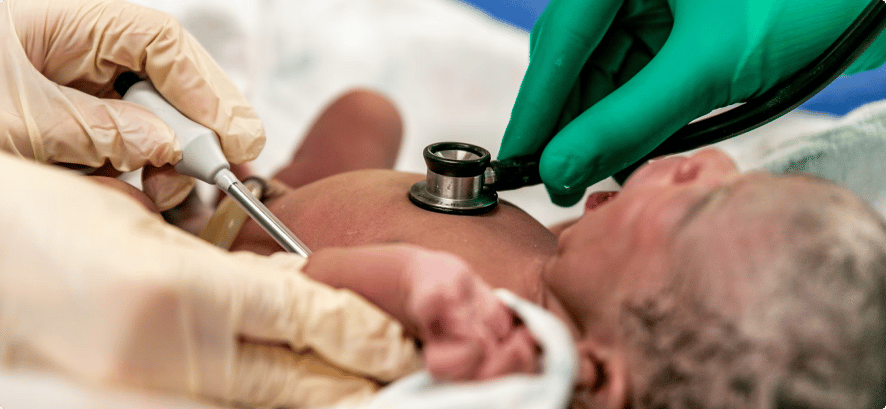
Birth asphyxia occurs when a baby’s brain and other organs do not receive sufficient oxygen and nutrients before, during, or immediately after birth.
This condition can occur before birth in the womb, leading to stillbirths, or during prolonged labor.
Dr. Antwi highlighted that one of the issues contributing to the problem was the level of commitment among health workers. He advised health workers to enhance their commitment levels, emphasizing the importance of providing efficient and prompt health services.
During the 11th annual national newborns conference held in Cape Coast, stakeholders in neonatal care and child health focused their discussions on the crucial goal of reducing neonatal deaths, particularly cases of asphyxia, throughout the country.
The conference, which commenced last Tuesday, gathered approximately 100 participants who deliberated on various strategies to achieve this objective.
Key topics of discussion included finding ways to decrease the occurrence of asphyxia, reinforcing sick newborn care at referral district hospitals, and providing vital support to newborns suffering from asphyxia to enhance their chances of survival, among other important issues.
In a speech read on his behalf by the Central Regional Director of Health, Dr. Akosua Sarpong, the Minister of Health, Kwaku Agyeman-Manu, emphasized the critical nature of the first hour of a newborn’s life.
He acknowledged the significant progress in reducing neonatal deaths to 17 per 1,000 live births, although there remains work to be done to achieve the targeted rate of 12 per 1,000 live births.
The Minister identified several factors contributing to asphyxia deaths in newborns, including inadequate equipment and staff, delayed referrals, and insufficient education on breastfeeding.
Mr. Agyeman-Manu affirmed the Ministry of Health’s commitment to further reducing newborn deaths and urged health workers and managers to foster effective collaboration in order to lower the incidence of birth asphyxia.
He also expressed gratitude to the partners for their ongoing support to the Ministry, contributing to the improvement of health indicators.
The Ghana Health Service (GHS) initiated a five-day vaccination campaign on Tuesday aimed at boosting the uptake of COVID-19 vaccines throughout the country.
The campaign, spanning from Wednesday, July 19 to Sunday, July 23, 2023, aims to ensure that Ghana achieves the required vaccination target to safeguard the well-being of its citizens.
Additionally, the objective is to incorporate this vaccination effort into the country’s routine immunization program.
During the launch of the 7th National COVID-19 vaccination campaign, Dr. Patrick Kuma-Aboagye, the Director General of the GHS, highlighted the importance of vaccinating the population despite the World Health Organization’s declaration that the pandemic no longer posed a public emergency concern.
Dr. Kuma-Aboagye emphasized that the disease still prevails, emphasizing the need to administer vaccines to protect the population.
“This declaration does not mean that the COVID-19 pandemic is over, what it means is that under the International Health Regulations, the management of the pandemic is taking a different approach, integrating COVID-19 into existing health delivery mechanisms,” he said.
“The WHO, therefore, recommends that countries maintain efforts to increase COVID-19 vaccination coverage for all persons to maintain the gains made in our fight against the disease,” he added.
Dr. Kuma-Aboagye acknowledged the positive outcomes of the national vaccination campaign that commenced on March 1, 2021. However, he emphasized the importance of further efforts to increase the number of vaccinated individuals in order to attain herd immunity.
Expressing concern, Dr. Kuma-Aboagye highlighted that nearly 70 percent of the Ghanaian population remained unvaccinated. He emphasized that until every Ghanaian received the COVID-19 vaccine, the entire population would still be at risk. This warning underscores the imperative of ensuring widespread vaccination coverage to safeguard the health and well-being of all citizens.
“As of yesterday, nearly 26 million doses of COVID-19 vaccines had reached almost 14 million persons, out of which 10 million persons are fully vaccinated,” he said, noting that though the figure represented about 59 per cent of the target, “the county was still far from achieving its national target.”
“This means the whole population still stands a risk of a likely event of new variants as COVID-19 remains extremely unpredictable.”
Professor Francis Kasolo, the WHO Country Director, highlighted the uncertain trajectory of the pandemic and the ongoing transmission of the Omicron variant, posing a risk to vulnerable populations such as the elderly, individuals with underlying medical conditions, healthcare workers, and pregnant women.
He stressed the importance of prioritizing population immunity through vaccination, particularly among high-priority groups as recommended by the strategic advisory Group of Experts.
Dr. Kwame Amposa-Achiano, a public health physician, emphasized the unpredictable nature of the virus and the necessity of continuous campaigns and effective communication to emphasize the importance of vaccination.
He disclosed that the Johnson & Johnson vaccine would be available for the campaign, and individuals aged 18 and above were eligible to receive the vaccine. Each vaccination team member was expected to administer a minimum of 40 doses during the campaign.
Dr. Amposa-Achiano underscored the need for the vaccination campaign to be accompanied by the continuation of COVID-19 safety protocols. He called upon stakeholders, partners, traditional leaders, and the media to support and contribute to the success of the campaign.
Approximately 76 percent of the target population has received at least one dose of the vaccine, with 59 percent having completed the primary vaccination series. The objective of the seventh vaccination campaign is to administer one million doses within a span of five days.
Nearly 53,000 health workers and volunteers have been deployed nationwide for the campaign, comprising 5,000 vaccination teams and over 1,000 supervisors operating at the national, regional, and district levels.
The Ghana Health Service (GHS) has announced that the 7th National COVID-19 Vaccination Days (NaCVAD-7) will take place from tomorrow, Wednesday, July 19 to Sunday, July 23, with the goal of immunizing a million individuals.
According to the Service, 10 million people out of the country’s more than 30 million inhabitants have fully got the immunizations, with the remainder yet to be vaccinated or undergo complete vaccination.
Dr. Patrick Kuma-Aboagye, Director-General of the Ghana Health Service, stated at a news conference to kick off the statewide exercise that the virus exists despite rumors to the contrary.
“As you may recall on the 5th May 2023 the WHO Director-General through the advice of the international health regulatory emergency committee determined that COVID-19 was now an established and ongoing health issue and which will no longer constitute a public health emergency of international concern. He did not say that COVID-19 is no more,” he said.
Meanwhile, the World Health Organization (WHO) country representative, Dr. Argata Guracha Guyo, pledged to assist Ghana in achieving herd immunity against COVID-19.
Director of Public Health at the Ghana Health Service (GHS), Dr. Franklin Asiedu-Bekoe, has revealed that the country has witnessed 615 cases of rabies infections among individuals, resulting in 72 fatalities, from 2020 to 2023.
Dr Asiedu-Bekoe disclosed this at the launch of a National Rabies Prevention Campaign by the Vertinary Services Division of the GHS and its partners.
“The data from the DHMIS on suspected cases of rabies has shown an increase from 119 with 24 deaths in 2020 to 140 with 12 deaths in 2021, 203 with 26 deaths in 2022 and so far, 153 with 10 deaths in 2023.”
“Dog bite, which is a good proxy for rabies has also seen a similar trend with 15,296 cases in 2020, 16,364 cases in 2021, 16,644 cases in 2022 and 6,701 cases so far in 2023,” he said.
Dr. Asiedu-Bekoe highlighted the concerning increase in rabies cases from 2020, with the majority of infections recorded in the Greater Accra, Ashanti, Eastern, and Upper East regions of Ghana.
He further noted that a significant proportion of rabies-related deaths occurred in children under the age of 15.
Ghana has responded to the global initiative of eliminating dog-mediated human rabies by 2030. To support this goal, the country has implemented a National Rabies Control and Prevention Action Plan for the period of 2018-2030. This plan serves as a roadmap for achieving the target.
However, Dr. Asiedu-Bekoe revealed that the country’s progress in implementing the action plan has been hindered by various challenges.
These include recurrent outbreaks of public health diseases, inadequate sustainable funding for public health, low vaccination coverage of dogs, and the presence of stray dogs.
Despite these challenges, Ghana has made notable progress in enhancing risk communication activities, raising awareness among healthcare workers, and adopting a stepwise approach towards rabies elimination. This approach helps identify gaps and develop strategies to address them.
On his part, Registrar of the Veterinary Council of Ghana, Dr. Kingsley Mickey Aryee, stated that the vaccination coverage of dogs in the country is alarmingly low, with only 8.5 percent of dogs being vaccinated nationwide.
He emphasized the urgent need for increased awareness campaigns and sensitization to encourage dog owners, particularly those with stray dogs, to annually vaccinate their pets. This proactive approach is essential to curbing the spread of rabies and ultimately eradicating the disease in Ghana.
Dr. Aryee highlighted that rabies is a significant cause of preventable deaths worldwide, with a majority of fatalities occurring in developing nations.
Rabies is a viral disease that affects the nervous system and is commonly transmitted through bites or scratches from infected dogs. However, other animals like cats, bats, and foxes can also transmit the disease, particularly in areas where it is not endemic.
The symptoms of rabies can vary and may include fever, headache, excessive salivation, hydrophobia (fear of water), muscle spasms, paralysis, mental confusion, and ultimately, death. The onset of symptoms can vary depending on the location of the bite.
Efforts to raise awareness about the importance of dog vaccination and the prevention of rabies are crucial in safeguarding public health and reducing the incidence of this deadly disease.
More than 300 health workers have left the Ghana Health Service (GHS) in the Ashanti Region, seeking better opportunities overseas.
This trend, observed during the first quarter of 2023, is having a negative impact on healthcare delivery in the region.
Data from the Ashanti Regional Health Directorate indicates that 304 health workers, including doctors and nurses, have applied for unpaid leave.
Investigations conducted by the directorate reveal that the majority of these workers have traveled abroad in search of improved living conditions.
The Ashanti Regional Director of the Ghana Health Service, Dr. Emmanuel Tinkorang, acknowledges the detrimental effect of this exodus on healthcare delivery in the region.
“When we did the analysis for the first quarter of 2023, we realised that about 304 applied for leave without pay which means that they have left the service, but additional information indicates that most of them have left the country and these are very skilful health workers with the right knowledge, attitude, and skill to do the job, but it seems that they have been attracted outside the country.
“This is worrying in the sense that these are workers that we need to run the health system in the country and the government is doing well by providing health infrastructure and if our people are leaving the country, how do we run this system?”
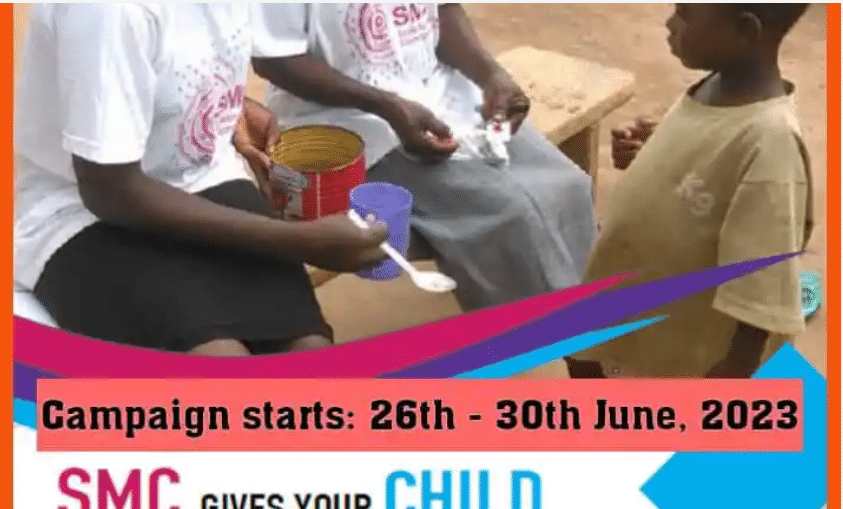
The Ghana Health Service’s (GHS) Kadjebi District Directorate will begin the Seasonal Malaria Chemo-prevention (SMC) exercise on Monday, June 26 through to Friday, June 30.
The exercise targeted 14,450 children between 3-59 months to be dosed during the period.
The SMC exercise aimed to reduce morbidity and mortality among children under five years in the district.
The District Director of Health Services, Mr Eric Nana Takyi, disclosed these to the Ghana News Agency (GNA) in an interview at Kadjebi in the Oti Region.
He said “the registration target is 90 per cent and closing target 95 per cent “and that the exercise is in four rounds; round one in June, round two in July, round three in August and round four in September which are peak malaria transmission periods.
Nana Takyi said “there was much reduction in malaria mortality during the SMC period as compared to the non-SMC period in the previous year’s”.
“Morbidity among children under five reduced from 32 per cent in 2021 to 22 per cent in 2022” and “no death among the under-five in 2022 as compared to 2021 where one death was recorded”, he said.
The District Director of Health Services said SMC is a proven intervention to reduce malaria morbidity during rainfall and that the medication is not harmful and is free of charge.
He said every child needs to receive three doses for three continuous days to completion and thus, called on all parents and caregivers to make sure their wards benefit from the exercise.
The vice President,Dr Mahamudu Bawumiahas stated that new born babies will be registered under the Ghana Card scheme starting from July at various hospitals.
The move, he explained follows the completion of the integration of the National Identification Authority (NIA), Ghana Health Service (GHS) and Births and Deaths Registry databases.
Speaking in the United Kingdom on Saturday, June 10, during the International Women’s Conference, the Vice President announced, “We have taken off the problem of fake birth certificates, bureaucracy, and corruption at the Birth and Deaths Registry. What we have done is to digitalise the processes at the Birth and Death Registry and linked their system with the Ghana Health Service and the NIA”.
“I have not yet announced in Ghana, I’m happy to announce that the integration of the database of the NIA, GHS, and the Birth and Deaths Registry is complete. So from next month, when a child is born in Ghana, we will issue the Ghana Card number right from birth”.
The National Identification Authority has registered over 17 million Ghanaians onto its system.
The Vice President, Dr Mahamudu Bawumia has announced that babies will be issued Ghana Card numbers at birth, following the completion of the integration of the NIA, GHS and Births & Deaths Registry databases.

He was speaking in the United Kingdom. #CitiNewsroom pic.twitter.com/hkMME5V5YN

— CitiNewsroom (@Citi973) June 10, 2023
The Volta Regional Health Directorate of Ghana Health Service(GHS) has denounced rumors regarding an outbreak of AIDS/HIV at the Ho Technical University.
The story first reported by a blog claimed that over 400 students have tested positive and have been asked to go home. Various social media actors shared and quoted the unverified report without conducting proper due diligence.
But the Regional Health Directorate has unequivocally declared the publication to be false and unfounded, urging the public to disregard it.
According to the Volta Regional Health Directorate, a comprehensive review of HIV testing data from health facilities in the Ho Municipality and the entire Volta Region revealed no increase in recorded HIV cases within any facility or the region as a whole.
They emphasized that there had been no surge of HIV cases at Ho Technical University or any other tertiary institution in the Volta Region.
Below is the full statement
FALSE REPORTAGE ON THE HIV INCIDENCE IN THE HO TECHNICAL UNIVERSITY
The attention of the Volta Regional Health Directorate has been drawn to an online publication by an unverified and unknown news portal ‘ajnewonline.com’ with the headline “Hookup Trend Leads to HIV Outbreak at Ho Technical University: Over 400 students suspected positive”.
The publication has subsequently been quoted by various social media actors without any form of due diligence.
The Regional Health Directorate by this release is informing the public to disregard the said publication since it is false and unfounded.
A review of the HIV testing data in all the health facilities in the Ho Municipality and the rest of the Volta Region does not suggest an increase in recordedHIVcases within any facility or the Region as a whole. For the avoidance of doubt, the region states emphatically that there has not been a surge of HIV cases in the Ho Technical University or any other tertiary institution in the Volta Region.
The Volta Regional Health Directorate and its partners have over the period successfully implemented several strategies to fight HIV/AIDS. These strategies seek to reduce new infections by 85% and eliminate mother-to-child transmission.
The Region however encourages its inhabitants to avoid stigmatization and fully lend themselves to the disease awareness campaigns and tailor-made services that meet their specific needs so as to consolidate the gains made in HIV prevention, testing, and treatment. HIV services are available in all private and public health facilities in the Volta Region.
The public is assured that their right to privacy and confidentiality will always be upheld as is the case in all disease conditions.
In conclusion, let us take note that HIV is still real, and all must endeavor to live positively through sexual abstinence or by both uninfected partners being faithful to each other, and by the consistent use of condoms.
VRA/NEDCo’s Upper East Region management has warned the Ghana Police Service and Ghana Health Service (GHS) to pay their debts to the company or else be disconnected from the national grid.
According to VRA/NEDCo, the Ghana Police Service and Ghana Health Service owe the company GH¢18 million and GH¢16 million respectively.
Speaking to Citi News, VRA/NEDCo billing officer, Williams Asare, said, the indebtedness of the two-state institutions threaten their operations and warned that, VRA/NEDCo would not hesitate to disconnect their facilities if urgent measures are not taken to settle their indebtedness.
“The health institutions in the Upper East put together are owing us (VRA/NEDCo) GH¢16 million, and we have engaged the regional health directorate and given them their entire bill. But we have seen documentation from the Director-General of the Ghana health service that, for those facilities that internally generate funds, we should have an arrangement for them to pay. As for the legacy debts before 2021, they will take up with the Ministry of Finance to pay”.
“Some clinics and health facilities have come for us to have some payment agreements where they’re going to pay substantial amount to reduce the debt and commit to paying the current bills, and we’ll be following up on that. Our L.I. allows that, when we serve the bill, after 14 days, if the customer doesn’t pay, you are due to disconnect, so we’re going to ensure that we don’t come there”.
“The police administration in the region are owing us GH¢18 million, we engaged the regional police commander and he has taken up the bill and is putting a covering memo to the police administration at the head office for them to pay. For certain category of officers, they’re supposed to pay their own bills so for those facilities we’re in the process of metering them with pre-paid meters so that they pay”.
Mr. Asare disclosed that over GH¢5 million out of GH¢120 million have been retrieved from customer indebtedness to the company in the ongoing revenue mobilization and disconnection exercise.
He reiterated that VRA/NEDCo will sustain its revenue mobilization efforts to ensure efficient power supply and value for money for its customers.
Mr. Asare appealed to all customers of VRA/NEDCo to settle their outstanding bills or come to the office of the company to negotiate payment agreement plans to settle their indebtedness or risk disconnection.
The Director-General of the Ghana Health Service(GHS), Dr Patrick Kuma-Aboagye, has announced that the country’s neonatal and institutional maternal mortality rates have seen a decrease.
He explained that while the former decreased from 7.1 per 10,000 births to 6.5 per 10,000 births last year, institutional maternal mortality ratio (IMMR), also reduced marginally from 111 per 100,000 live births to 102 per 100,000 over the period.
According to him, although the figures seemed marginal, they were remarkable gains.
He, therefore, commended midwives and other health personnel for their tireless efforts in achieving this feat, adding that there had also been significant improvement in maternal and newborn health outcomes over the last decade.
The Director-General was addressing delegates at the 32nd International Day of the Midwife in Cape Coast in the Central Region, on the theme: “Together again, from evidence to reality.”
Awards were also given to 22 midwives, one each from the 16 regions and five from Teaching Hospitals in the country for their dedication to duty.
Dr Kuma-Aboagye further disclosed that total maternal deaths decreased by some 70 maternal lives saved, moving from 875 deaths in 2021 to 805 deaths at the close of 2022.
He added that the midwife to women in fertility age (WIFA) ratio had also been improving, moving from one midwife to 720 women in fertility age in 2017, to one midwife to 387 women in fertility age in 2021.
According to Dr Kuma-Aboagye, haemoglobin checks at registration and the incidence of anaemia in late pregnancy (36 weeks) had also been on a decline over the past couple of years, while skilled delivery coverage and antenatal care (ANC) clients making fourth visits had been on an increasing trajectory over the years.
He said the absolute number of midwives in the country had now surpassed the World Health Organisation’s standard of six to seven midwives per 1,000 institutional deliveries by almost two folds.
The nation currently has 13 midwives per 1,000 institutional deliveries. Restructuring
Dr Kuma-Aboagye, however, said that there was an urgent need to restructure the health system to promote midwifery leadership at all levels.
“We, as a matter of urgency, need to restructure our health system to promote midwifery leadership at all levels, embrace midwifery innovation, encourage evidence-based practice and institute the character of empathy in our midwives, allowing for the practice to be guided by the sensitivities of our clients.
“Midwives continue to work under harsh conditions, oftentimes at the peril of their own progress and cost to their families.
“If we intend to attain the maternal and newborn health outcomes we desire, we would need to come together once more and move from the glaring evidence that midwives indeed save lives to addressing the challenges that confront midwives in reality,” he said.
A deputy Minister of Health, Tina Mensah, commended the midwives for working to save lives and supporting policies aimed at enhancing health service delivery despite their challenges. Condition of service
The President of the Ghana Registered Midwives Association, Netta Forson Ackon, called for better conditions of service to empower members to give of their best.
The UNFPA Country Representative, Dr David Wilfred Ochan, described midwives as frontline heroes and urged stakeholder agencies to work to scale up best practices to help achieve zero preventable deaths.
The interim Programme Manager of the Ghana Health Service’s (GHS) Non-Communicable Diseases, Dr Efua Commeh, has disclosed that the country is seeing an increase in stroke cases among young individuals under age 40.
Thestroke cases, she said, were triggered by uncontrolled hypertension that had become common in young people in the country recently.
Dr. Commeh said although stroke cases were previously recorded mainly in people between 80 and 90 years old, local hospitals were now recording them in people as young as 35 years and 40-year-olds, most of them resulting from uncontrolled hypertension.
“These strokes that originally we used to see in very aged people are now occurring in the productive work group; people who are actively working,” she said.
“They bring them to the hospital and they say nothing happened and the person collapsed. You check them and they have hypertension. It is this hypertension that gives them complications like stroke, heart attacks, andkidney diseases, among others,” she added.
Describing hypertension as a very serious health problem in the country now, Dr. Commeh said the hospitals kept seeing more young people, sometimes in their 20s, reporting to health facilities with hypertension, adding, however, that those numbers were not as huge as the older age groups.
She said averagely, the country recorded around 600,000 cases of hospital visits every year by people with hypertension.
She was speaking in an interview ahead of World Hypertension Day which will be observed on May 17, on the theme: “Measure Your Blood Pressure Accurately, Control It, Live Longer”.
Stroke causes
Dr. Commeh said stress was chiefly responsible for the recent stroke cases among young people in the country, adding that most young people in Ghana were stressed out.
“(For) Some of them, it is pressure from school, pressure from work, pressure from the home and pressure everywhere; and on top of these stresses, closing quite late from work and getting home late before eating in the night.
At that time of the night, you are not going to get any appropriate food to eat.
You end up taking fast foods, and these, among others, contribute to making us unhealthy, and they are the things that can give us hypertension,” she explained.
She said unhealthy diets, cigarette smoking, alcohol use, and physical inactivity, or the lack of exercise were other causes of stroke among young people, pointing out that such conditions were contributory factors that raised blood pressure which could develop into hypertension.
“Hypertension is said to be a silent killer.
It is called silent because when it starts rising, you don’t notice anything.
The first thing you know is you have a severe headache and then the person collapses, and by that time, it would have gotten a bit too late,” she said.
Unfortunately, she said, most people in the country, including young people, hardly checked their blood pressure, adding that for most people, the first time their blood pressure was checked was after they had collapsed and had been rushed to hospital.
Preventing hypertension
Dr Commeh advised young people to have enough rest, pay attention to their diet and reduce fried foods, fats, and oils, as well as salts and sugars to avoid getting hypertension.
She also recommended that they should take small walks in and around their offices after sitting behind their desks for two hours, climb office stairs once or twice a day, and eat more fruits and vegetables.
She urged corporate organizations to undertake proper medical screening for their staff at least once a year.
“Test for fats, blood sugar, urine function, and blood pressure.
That routine screening will help us so that if there is something going wrong, it can easily be picked up and managed,” she said.
She advised young people already diagnosed with diabetes and hypertension to take their medication, explaining that hypertension and diabetes could result in problems, including erectile dysfunction and reproductive problems when left uncontrolled.
Dr. Commeh advised the public to walk to a pharmacy or any clinic to regularly have their blood pressure checked, at least once a month, and to get conditions controlled if they were diagnosed with any, in order that they might live healthier and longer.
Despite their efforts to recover payment, Chamber members have been left with no other options.
Some of the due funds stretch back to 2017, and the government’s outstanding debt to contractors has now reached a critical level of more than GH¢15 billion, according to the chamber.
The Chamber’s CEO, Emmanuel Cherry, expressed these worries to Citi News, emphasizing the critical need for a resolution to prevent further harm to the affected businesses.
“97 percent of contractors have packed out of site all because of government’s over GHS 15 million indebtedness to the construction industry. Government is sitting aloof as if nothing is at stake when it wants to create a Ghana beyond aid. We have dealt with this starvation and so members have petitioned us and the Speaker of Parliament. If nothing happens, they will go to court. There is a long-haul awaiting government. We are only strategizing; government will hear from us.”
Road contractors across the country had on several occasions lamented about government’s indebtedness to them.
Last year, the Minister of Roads and Highways, Kwasi Amoako-Atta said government would clear a “chunk” of outstanding debts owed road contractors.
Dr. Nana Yaw Peprah, acting program manager for theGhana Health Service‘s (GHS) National Malaria Elimination Program, has refuted allegations that industry actors purposefully launched the new R21 malaria vaccine a few days after the new mosquito strain was identified.
The vaccine was developed by Oxford Universityand manufactured by the Serum Institute of India.
The Food and Drugs Authority (FDA) disclosed that it has given market authorisation to the new malaria vaccine – R21.
The FDA says after a thorough evaluation of the quality, efficacy, and safety of the vaccine, they realized that the benefits far outweigh the risks.
A similar malaria vaccine RTS, S which was the world’s first malaria vaccine was also developed in 2019 for children between 6 months upwards.
A new strain of mosquito, Anopheles stephensi, was discovered in parts of the capital Accra-Tuba and Dansoman, a few days after the announcement of the approval of a malaria vaccine -R21, for use in Ghana.
Some Ghanaians argued that the new vaccine was introduced in an attempt to compel Ghanaians to accept the new vaccine.
But reacting to this on the Citi Breakfast Show with Bernard Avle, Dr. Peprah explained, “We can’t conclude that it’s about money. It’s difficult, but it wasn’t a deliberate attempt to bring these two together [RTS,S and R21-vaccines]. It’s just happened that we have identified a strain of mosquito which we think can only be contained when all stakeholders come on board. They started working on the R21 vaccine 30 years ago, so it’s not like a new thing that we are trying to put together with the mosquito new species. So there is no evil thought with this”.
He said industry players are excited about vaccines due to the important roles they play in the fight against malaria.
“We are excited about vaccines because we believe that they are important in this fight, vaccines are part of the interventions we are using. In fact, we are using it in high-burden areas. Whether it’s RTS,S or R21 vaccine, it all depends on the approval processes. As at when it’s available to be used, we will use it, we are really excited about it [R21-vaccine]. It’s early days yet, we have to wait for clinical trials because that is when donors come in,” he asserted.
Acting Programme Manager, National Malaria Elimination Programme of Ghana Health Service disclosed that the country was able to discover the new breed of mosquito through surveillance.
“The new breed adapts easily, it’s very dynamic, it’s able to live in both clean and dirty waters. That makes it a very deadly one in that it can increase in population. It has resistance issues unlike the ones we are used to, which is why it has become an issue. We know that mosquito flies, and have been found in Africa, it’s moving all around the place, and until you put surveillance, you may not identify it even if it exists. We were able to pick it up through surveillance,” he underscored.
He said despite the new breed of mosquito, they are confident of containing malaria, calling on the public to be involved to help contain the new breed.
“We are calling on the communities to ensure that we are able to contain the Anopheles stephensi. We are doing a lot to contain it. We have zero confidence of containing malaria,” he stated.
April 25 is slated for the celebration of Malaria Day at the International Conference Center dubbed ‘zero malaria’.
A new kind of mosquito that is more harmful than anopheles has invaded Ghana, according to the Ghana Health Service (GHS).
The new breed known as Anopheles Stephensi, is also a malaria-transmitting mosquito, very invasive, spreads faster, and can adopt to a myriad of climate conditions according to the World Health Organization.
GHS has established its presence in Tuba and Dansoman, and has warned residents to protect themselves.
The Anopheles Stephensi first invaded Africa in 2019, the countries include Ethiopia Sudan, Somalia, and Nigeria and unfortunately confirmed in Ghana just this March.
This breed produces both Plasmodium Falciparum (the deadliest species of plasmodium which causes malaria) and P Vivax Malaria parasites.
Also, a recent mathematical modeling study by the World Health Organization showed the spread of An. stephensi and the implication for malaria transmission and control in Africa.
One study projected that An. stephensi could put an additional 126 million people in Africa at risk of malaria if the mosquito vector were to spread unchecked.
The statement also reveals that this breed is resistant to multiple insecticides which makes control very difficult. It is not known yet what really can kill it.
The GHS has set up a taskforce, to implement a number of measures including the removal of water collection points in and around homes and communities to minimize the breeding sites
Avoiding mosquito bites by using insecticide-treated mosquito nets is also a measure that has been advised to boost prevention.
Meanwhile, Ghana is the first African country to approve a new malaria vaccine from Oxford University as part of efforts to combat the disease.
MOSQUIRIX from British drug maker GSK, was last year endorsed by the World Health Organization.
TheGhana Health Service (GHS) Bono Regional Directorate is concerned about what it describes as a failure on the part of doctors to accept postings to the area.
Regional Director, Dr. Kofi Amo Kodieh, said out of 32 doctors posted to the region, only 9 showed up for work.
Speaking at a health forum in Sunyani, Dr. Kofi Amo Kodieh said the situation is getting dire appealing to stakeholders to ensure that incentives are put together to attract medical officers to the region.
“32 doctors were posted to this region, unfortunately, only 9 of them reported because Bono is not deemed to be one of the affluent regions to attract doctors. We would like to urge our stakeholders to as a matter of urgency put together incentives that will attract medical doctors to this region,” Bono Regional Director of the Ghana Health Service said.
An honor given to Nana Okobeng Amponsah, CEO of Okobeng Mining Company Ltd, has been withdrawn by theGhana Health Service(GHS).
Western Regional Directorate of the Ghana Health Service presented the award to the miner for his philanthropic work towards quality healthcare delivery in the Prestea Huni Valley Municipality of the Western Region on Tuesday, March 28, 2023 at its Annual Performance Review in Takoradi.
The award was presented to Nana Okobeng Amponsah by the Western Region Minister, Kwabena Okyere Darko Mensah.
However, in a release sighted by 3news.com, the award has been revoked.
Western Regional Director of Health Dr. Yaw Ofori Yeboah indicated in the release that the operations of Okobeng fall contrary to the principles of the Ghana Health Service.
The statement adds that “after numerous complaints and evidence received by the Service on the operations of Okobeng Mining Company Limited, the award has been revoked”. Find the full statement below:
In the Ashanti Region alone, 118 pregnant women died during childbirth in 2022.
The percentage, according to the Ghana Health Service, accounts for 22% of the 875 fatalities reported nationally throughout the study period.
The maternal mortality rate increased slightly from 132 to 134 per 10,000 live births during the review period.
The alarming number has a number of causes, according to an ongoing yearly health performance review in the area.
Speaking at the event, the Ashanti Regional Health Directorate, Dr Emmanuel Tinkorang said the major cause of maternal deaths are eclampsia and postpartum haemorrhage.
He added that the percentage of maternal death audited in the region was 100%.
“Maternity death still remains a major challenge in the region during the year under review, our maternal mortality rate increases marginally from 110 to 2000 live birth to 134 per 100,000 live birth.
“The total number of maternal deaths recorded in the region was 181,” he said.
He went on to say that during the year, the region however saw an improvement in some key indicators, whilst other indicators reduced the family planning accepted rate reduced slightly from 28.1 in 2021 to 27.4 in 2022.
The proportion of service delivery improved from 60.7 in 2021 to 65% in 2022.
The prevalence of anaemia in pregnancy also improved from 33.3% in 2020, dropping to 29.6% in 2022, he stated.
on his part, the General Service Dr Patrick Kumah Aboakye is unhappy with the maternal death figures in the Ashanti Region.
He wants head authorities to work on reducing maternal mortality in order to reduce the national burden.
The World Health Organization has raised alarm about the measles epidemic in some areas of the country and has called for prompt vaccination of unvaccinated infants to stop the spread.
Speaking in an interview on the yet-to-be-aired JoyNews’ Foreign Affairs, the Deputy Director General, Dr. Anshu Banerjee said there was a “need to organise catch-up campaigns to find children who hadn’t received the measles vaccine earlier.”
This he indicated, is due to the fact that measles is a very infectious disease, adding that “we have seen measles outbreak increase…”
Parts of the country were hit by the outbreak following weeks of shortage of critical vaccines.
Notable areas with high recorded cases were the northern parts of the country, with over 100 cases.
Also, the Ketu South Municipality recorded 10 cases of measles during the period of vaccine shortage.
Meanwhile, the Health Ministry and the Ghana Health Service (GHS) have received the first consignment of vaccines with which the vaccination exercise has resumed across the country.
According to the Director General of the GHS, Dr. Patrick Kumah Aboagye, as the Service has received the first consignment, he hopes others come in soon.
He assured that the quantity received per the first consignment will be enough for a minimum of six weeks immunisation across the country.
He therefore urged parents to make their children available for vaccination when they are due.
“The first batch of the vaccines just arrived and we have doses in BCG, oral polio vaccine and then the measles vaccine. They just arrived with the accessories, syringes, safety boxes. Immediately, they are being discharged to the regions and then vaccinations will start across the country,” he said.
After weeks of vaccine shortage, the Ghana Health Service (GHS) on Monday morning, March 13 begun the widespread immunization of children across the country.
This comes after BCG, polio, and measles vaccines were delivered to the Ghana Health Service on Sunday.
JoyNews’ Hannah Odame who visited some health centres in Accra, reports that at the Adabraka Polyclinic, about 16 mothers had visited the centre to have their children vaccinated as at 9:00am on Monday.
At the Maamobi polyclinic, there was a massive campaign for parents to bring their children for vaccination.
In the Volta Region, the Acting Regional Director of the Health Services, Dr. Senanu Djokoto says the vaccination exercise will begin on Tuesday.
Speaking on the vaccination exercise, the Director General of the Ghana Health Service Dr. Patrick Kumah Aboagye says parents can now make their children available for vaccination.
He urged them to send their children when they are due.
“The first batch of the vaccines just arrived and we have doses in BCG, oral polio vaccine and then the measles vaccine. They just arrived with the accessories, syringes, safety boxes. Immediately, they are being discharged to the regions and then vaccinations will start across the country,” he said.
According to him, as the Service has received the first consignment, he hopes the others come in soon.
He assured that the quantity received per the first consignment will be enough for a minimum of six weeks immunisation across the country.
Meanwhile, as the Northern Region has recorded over 100 measles cases during the period of shortage, a Consultant Pediatrician at Tamale Teaching Hospital, Prof. Alhassan Abdul-Munin, wants the GHS to prioritise areas currently experiencing measles outbreaks.
This, he explained, is because vaccine coverage in hard-to-reach areas is traditionally lower than in urban areas.
“I would also think that they should target where we are already having the outbreak situations, because in Northern Region for instance, we did a study during the peak of the Covid-19 and then we realised that during those times that the vaccines are available the uptake was very low…so these are children that they may not have been due just within the last five or six months but actually they were due for vaccination during the Covid-19 period and they never had it,” he explained.
He also called on the government to address the root cause of the vaccine shortage to prevent a recurrence.
The Ghana Health Service, on behalf of the Health Minister, Kwaku Agyemang-Manu, on Tuesday addressed the press regarding measures taken to address the shortage of vaccines in the country.
The minister was expected to show up in Parliament today, Tuesday, March 7 as well as Tuesday, February 28 but failed to show up.
The Minority in Parliament have described his absence as unacceptable as the health of Ghanaian children is compromised.
The Paediatric Society of Ghana has disclosed that over 500 children have contracted measles due to the shortage of vaccines in the country.
The delay in the arrival of the vaccines has the potential to worsen the situation, according to Dr. Hilda Boye, the recently elected President of the Paediatric Society of Ghana.
“As we speak, we are looking at about 500 suspected cases of measles. So we are worried because we are just sitting and watching, and it is getting worse by the day and that is expected also because it is an infectious disease, and we really shouldn’t have come to this place in the first place.
“We know how bad these illnesses are, and we know that there is a solution and everybody had to sit up so that we don’t get to this point,” Dr Boye said.
Many regions of the nation have experienced a vaccination scarcity in recent months, despite assertions by the National Health Insurance Authority (NHIA) that more than GH70 million has been made available for the purchase of the vaccines.
Today, March 7, the Health Minister, Mr. Kwaku Agyemang-Manu, is expected to address the House on the measures taken to alleviate the nation’s lack of pediatric immunizations.
The Ghana Health Service (GHS) has blamed the depreciation of the Ghana Cedi for the lack of vaccinations required for routine infant immunization.
There is a chance that the lack of immunizations will make children more susceptible to the illnesses that the shots are meant to prevent.
The Wa East District of the Upper East Regionhas only one doctor, after other medical professionals posted to the area fled due to inadequate healthcare infrastructure.
With a population of over 90,000 people, the district is served by approximately 10 health centers.
Speaking to the media, the district director of theGhana Health Service (GHS) in the region, Dr. Kingsley Pascal, said serious consequences may occur should the scenario persists.
“Because of the nature of the district, the terrain as well as network challenges and the relatively deprived nature of communities, it is very difficult to attract doctors. The facilities there do not have teacher services so usually when they are posted and come around and see the place, they go and do not return. There is no guarantee that things will be addressed in the shortest time.”
He added that although the District Chief Executive and Member of Parliament, have been informed about the issue, not much has been done to solve it.
He adds that, while relevant stakeholders such as the District Chief Executive and Member ofhave been made aware of the situation, little has been done to address it.
“The support is not coming as we expect. The stakeholders haven’t really prioritized what we are looking for. For more than six months we haven’t gotten that attention for things to be sorted out”, Dr Pascal added.
The district director of theGhana Health Service(GHS) at Wa East in the Upper West Region, Dr. Mwin Paschal, has expressed concern about doctors leaving their positions in the region.
Mr. Paschal disclosed this during the 2022 Annual Health Review Meeting held at the Bulenga Traditional Council.
The Wa East district is the most deprived district in the Upper West region with a population of over ninety four thousand having access to only one medical doctor who doubles as the District Director of the GHS.
The area is made up of farming communities with a very low income bracket, very little infrastructural development as well as bad roads in the area amidst terrible mobile network signal.
The District Director addressing the Review Meeting said the lack of health infrastructure has contributed to doctor rejecting posting to the area on their first visit.
‘‘Just this year we received postings for one doctor to be stationed at the Bulenga Health center. Our biggest challenge was accommodation and also to fashion out a motivational package to attract him to stay. Unfortunately after coming to access the place, and this is somebody who is even from this area but he turned his back on us. So as off now we do not have any other doctor apart from myself,” he stated.
Dr. Mwin disclosed that 60% of referrals from the district are made of maternal and Neonatal cases which are often directed to the regional hospital.
He recounted how a mother and baby referred to the Wa Municipal hospital last year for theater service died due to lack of the required health facility.
He added that the Wa East District has no medical laboratory adding that most referrals are taken to the regional capital which is about an hour drive from the nearest health center in the area.
This, the District Director said has necessitated the need to have a Polyclinic in the area adding that with the help of the public a structure at the Bulenga Health Center can be used as a theater.
The Paediatric Society of Ghana has expressed dissatisfaction over the alleged lack of vaccines for babies from the ages of 12 to at least 18 months.
Ghana Health Service (GHS) has reported outbreak of Measles, a vaccine-preventable disease in the northern region involving 50 children.
A statement issued by the Society dated February 22, 2023 said, “This is the tip of the iceberg as our investigations reveal that more than 90 cases have been recorded in one major facility alone. The shortage extends beyond Measles vaccine to other childhood diseases including Rotavirus, Tuberculosis, and Pneumococcal vaccines.
According to the statement,which is jointly signed by Dr John Adabie Appiah (President) and Dr Angela Osei-Bonsu (Secreatry), “This is a nationwide problem as Northern, Bono East and other regions, including Greater Accra are increasingly reporting shortages of vaccines alongside resurgence of vaccine preventable diseases.
The Paediatric Society of Ghana cautioned that, “the current situation could become worse if resources are not made available for the management of these outbreaks among them; surveillance, diagnostic, treatment and community engagement to reverse the direction. Ghana has struggled to meet its target of reducing under-5-mortality (U5M). Unfortunately, the current situation of vaccine shortage risk reversing the gains made over the past 7 years under SDGs.”
The Society therefore reminded “ the government that infectious disease forms the bulk of causes of mortality among children younger than 5 years and that the most effective anti-dote is vaccination of children from birth to 5 years. PSG warns that the failure of Ghana to prioritize procurement of vaccines and prevent supply chain disruptions of immunizing children under the Expanded Programme of Immunization will lead to the reversal of gains in under-5-mortality in the country.”
It thus urged “the Government and our development partners such as WHO, UNICEF, GAVI andUSAIDand others as a matter of urgency to take all the necessary steps to stem the negative trend of vaccine shortage to avert further disease outbreaks among children in Ghana.”
The Paediatric Society of Ghana recommended “Ring fence funding for vaccines used against vaccine-preventable diseases to enable a constant supply of vaccine commodities in Ghana to avoid similar challenges.”
The depreciation of the Ghana Cedi has been blamed by theGhana Health Service (GHS) for a lack of several vaccinations required for routine infant immunization.
The shortage ofvaccineshas the potential to increase the vulnerability of children to the diseases the vaccines seek to protect them against.
Under the routine vaccination programme, Bacille Calmette-Guérin (BCG), a vaccine for tuberculosis (TB) disease; oral polio vaccine 0 (OPV); Measles-Rubella; Meningitis and Diphtheria, tetanus, pertussis (whooping cough) are administered.
Vaccines against polio, hepatitis B and Haemophilus influenza type B (DPT/Hep B/ Hib 1) and six infectious diseases that are particularly dangerous to babies are also among those administered.
Speaking on the Citi Breakfast Show on Thursday, February 23, the Director-General of the Ghana Health Service said, Dr Patrick Kuma-Aboagye said only three key vaccines are not available but all other vaccines are available.
“There are three key traditional vaccines that we had run out towards the end of the year, the poliovirus vaccine, the BCG vaccine and the measles-rubella vaccine. We were to procure in the fourth quarter of the year for 2023 but due to the currency fluctuations, the funds available in cedis could not meet up, so orders are being made now and in the next two weeks we will be able to catch up.”
The Northern Region has received measles vaccines to vaccinate children living within the area.
According to the directorate, 15 suspected cases have been recorded for 2023 by the Ghana Health Service in that region alone.
As such, the directorate is advising parents to get their children immunized against measles.
Despite the fact that there have been no deaths, the Regional Health Director, Dr. Braimah Baba Abubakari, believes there are enough vaccines to fight the disease and that parents should play a role in combating it.
Speaking to Citi News, Dr. Braimah urged all parents to avail their children for routine vaccination against measles.
“As part of the routine immunization, there are about 13 different vaccines we are giving to the children depending on the age.“
Earlier there were reports of a shortage of measles vaccines in the region after the cases were detected in four districts including, Karaga, Sagnerigu, Tamale and Gushegu.
There were severe cases where children had to be put on oxygen in some health facilities.
General vaccine supply to the Northern Region has been erratic since the middle of 2022.
Checks in the region prior to the latest arrival of vaccines showed that, out of the 13 vaccines for routine immunization, only two, that is Tetanus and Tuberculosis were the only ones in stock.
A release issued by the Regional Health Directorate and addressed to all District Health Directors and sighted by Citi News confirmed cases of measles.
“Given the current season, which presents one of the greatest risks for the transmission of measles, Districts Health Directorates and Facilities (both public and private) are urged to intensify surveillance on measles and other diseases of epidemic potential for prompt action should they occur.
In 2022, the central hospital in Tamale had its Paediatric unit closed down due to an outbreak of measles.
The Ghana Health Service (GHS) has asked all district health directorates and facilities in the Bono Region to strengthen surveillance on Cholera and other diseases of epidemic potential.
This follows the recording of a case involving a 10-year-old girl in the Dormaa Municipality.
According to the alert, issued by Bono Regional Director of Health Dr Kofi Amo-Kodieh, all heads of health facilities in the Region have been asked to conduct investigations into all suspected cases and collect specimens for laboratory confirmation.
“You are also to intensify education on the prevention of cholera and other epidemic-prone diseases,” the alert said.
All medical directors have, therefore, been further asked to submit an updated epidermic preparedness plan for cholera to the Regional Health Directorate through the Disease Surveillance Unit by Monday, January 16.
Visitors who have not had the COVID-19 vaccination are now permitted to enter the country, according to Patrick Kumah Aboagye, director general of the Ghana Health Service.
He claims that those who haven’t had their shots will however undergo a ‘PCR’ test on arrival.
“Previously what we had was that if you are not a Ghanaian and you were not fully vaccinated you cannot come, but now you can come, but if you come in and you’re not vaccinated, whether unvaccinated or partially vaccinated you have to do a ‘PCR’ test 48 hours before you travel to Ghana and upon arrival, we will test you at the airport,” he said.
The Director General further noted that a lot of tourists will be flocking to the nation for the holidays, therefore precautions have been taken to prevent the spread of COVID-19. This was mentioned during a ministry press briefing on Sunday, December 18, 2022.
“A surge in COVID-19 cases among international arrivals is expected largely due to; anticipated increase in the number of arrivals; increase in global travel with the associated risks of disease transmission; similar experience during past Christmas season; possible emergence of new strains of concern; increased activities in-country also likely to contribute to a possible surge.
“The Ministry of Health and the Ghana Health Service will continue to implement the protocols on international travel as currently exists. Increased surveillance and monitoring of new strains and persons returning from countries of concern,” he added.