Tag: Government

  • Over 24.5k medical equipment procured as gov’t prepares for free healthcare rollout

    Over 24.5k medical equipment procured as gov’t prepares for free healthcare rollout


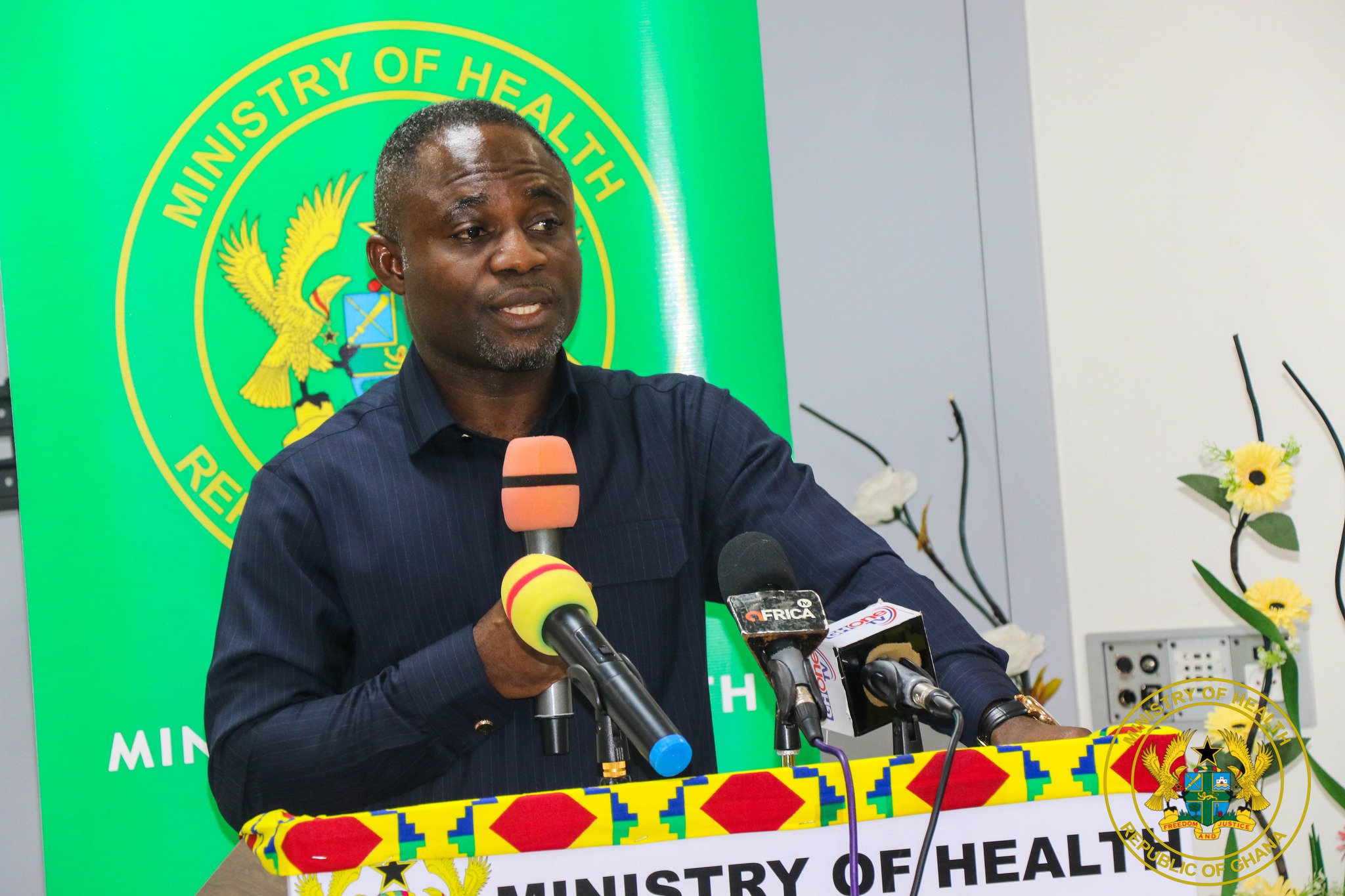
    Over 24,534 pieces of medical equipment have been received by the government ahead of its Free Primary Healthcare policy rollout, Health Minister Kwabena Mintah Akandoh has disclosed.

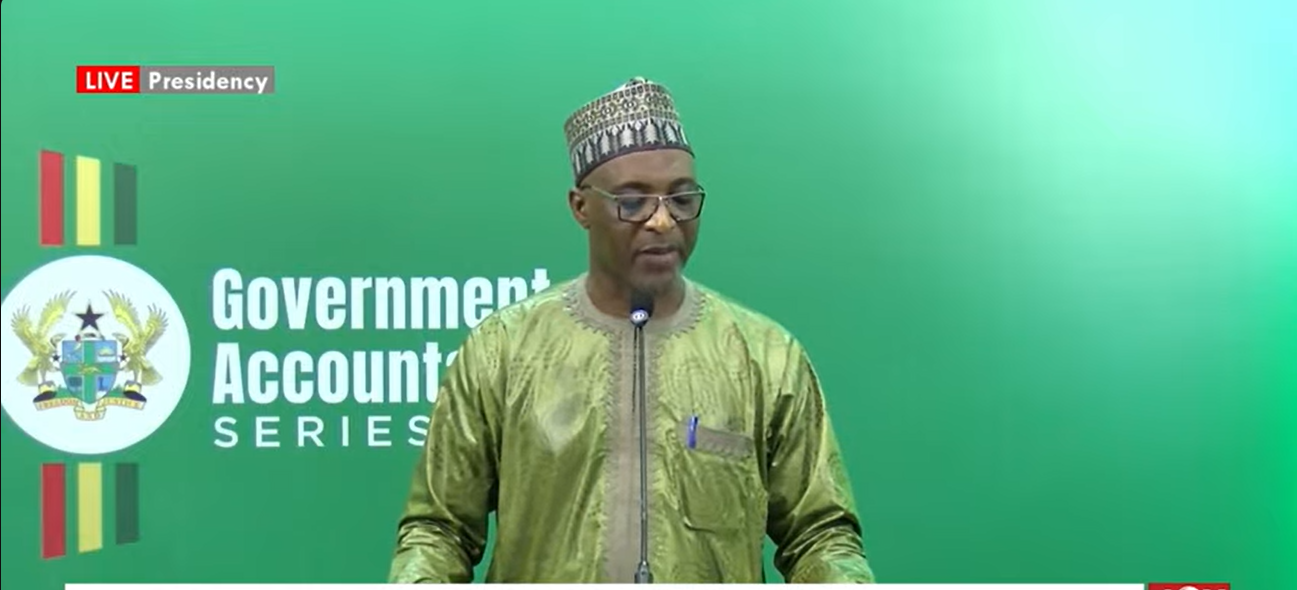
    Speaking at the Government Accountability Series stated, “In preparation for implementation, we have procured and are ready to deploy 24,534 pieces of essential medical equipment across the country. This is intended to ensure our facilities and health workers are equipped and ready.”  

    In February, the government announced that Ghanaians across the country will have access to free essential healthcare services at hospitals effective this month.

    The Minister for Health disclosed this while speaking on the sidelines of the Accra Reset Addis Reckoning event in Addis Ababa on Saturday, February 14.

    “As part of our effort to achieve Universal Health Coverage, since everybody is contributing to the NHIS levy, Ghanaians deserve this basic benefit. Everyone should be able to enjoy at least free primary healthcare. We have been directed to ensure that Free Primary Health Care is fully implemented across the country by that timeline,” he said.

    Meanwhile, the National Health Insurance Authority (NHIA) has disbursed over GH¢392 million in vetted claims to healthcare providers across Ghana between December 2025 and January 2026.

    The payments cover services provided under the National Health Insurance Scheme (NHIS).

    According to the Finance Directorate of the NHIA, the funds were released following an extensive vetting and approval process of claims submitted by health facilities. In December 2025, the Authority paid GH¢301,658,338.13, while in January 2026, healthcare providers received GH¢90,373,513.13.

    The NHIA in early July 205 disbursed an amount of GH¢267.67 million as claims to health facilities across the country. The disbursement became possible following approval by Chief Executive Dr. Victor Asare-Bampoe. The total payments made by the NHIA in the past seven months stand at over GH¢1.5 billion.

    Out of the total amount, public health facilities received GH¢120,700,932.62, which constitutes 45 percent of the total.

    Private health facilities have been paid GH¢100,210,906.44, representing 37 percent of the total amount, while mission health facilities have been allotted GH¢446,761,808.96, which makes up 17 percent of the total funds.

    One of the ways the National Health Insurance Authority (NHIA) seeks to ease the financial burden on citizens, ensure equal access to healthcare, and reduce illegal fees is by proposing a 120 per cent increase in service tariffs, pending approval from its Board and the Minister of Health.

    This was revealed by the Chief Executive Officer of the NHIA, Dr. Victor Asare Bampoe, during an appearance on Channel One TV’s The Point of View on Wednesday, November 26. According to Dr. Bampoe, the proposed tariff increase, if approved, would help reduce the extra charges patients pay at hospitals for medical care and services.

    He explained that the proposed increase was planned in consultation with a group of independent experts mandated to review tariffs under Sections 33 and 34 of the National Health Insurance Act, which require annual revisions of both medicines and service tariffs.“Regarding the 120% tariff increase: this is proposed after comprehensive work by a group of experts. The law requires an annual review of service and medicine tariffs (Sections 33 and 34). Although the review was delayed, the proposal is now ready and will go to our board and the Minister of Health for approval. Once approved, it will be implemented. This is partly to address the problem of illegal fees at hospitals, ensuring health providers are paid realistic tariffs so patients no longer have to pay out-of-pocket,” he said.

    As the “cash manager” of Ghana’s health insurance system, Dr. Bampoe explained that the NHIA is mandated to collect funds, set tariffs, and pay hospitals, clinics, and pharmacies for services provided to insured patients.

    However, he noted that the Authority plans to move beyond this traditional role and become more of a “strategic health purchasing provider.”“But the NHS is more like a spending entity; we do not generate money on our own. So, we are a spending entity. One of the things we’re trying to do is move away from being a claims payment mechanism to a strategic health purchasing provider, which means that we are able to dictate health outcomes because of the financial muscle that the government provides us with.

    “We’re able to determine the prices of medicines, the prices of services, and even go on the global stage and provide a platform to discuss what kind of health outcomes we want, as you saw with the ACRA Health Sovereignty Summit that happened on August 5. So it’s an interesting time, and His Excellency the President, the Minister of Finance, and the Minister of Health have given us the tools to be able to deliver on this mandate,” he said, citing the government’s commitment to ensuring that his outfit can deliver on its mandate.As part of its vision to move from just paying claims to becoming a “strategic health purchasing provider,” Dr. Bampoe highlighted that the NHIA also seeks to provide Universal Health Coverage (UHC) under three distinct pillars. 

    Lauding the NHIA for its success in granting health coverage, he revealed that out of over 35 million Ghanaians, the Authority has provided coverage for about 20 million.“So essentially, the health insurance scheme was set up in 2003 (Act 650) and amended in 2012 (Act 852), and its primary purpose was to pay claims. But now what we are looking at is getting universal health coverage for all Ghanaians. Universal health coverage has three pillars: population coverage, service coverage, and financial protection. I am proud to say that we are at 20 million in population coverage, which is unprecedented.”

    He noted that while the medicines tariff review has already been completed, the service tariff review, initiated in 2022, took longer due to its comprehensive nature. “There are two types of reviews that we need to do, but this was a really comprehensive one, so I think they could not finish on time, and so it is now that they have finished,” he explained.

    Dr. Bampoe stressed that implementation now depends solely on statutory approvals. “Now it has to go to the Board for them to look at it and give their view on it. It has to go to the Minister of Health to give his assent, and then we will implement it if they all think it is okay,” he stated.

    The NHIA CEO applauded the government for removing the cap on NHIA funds.“Regarding funding, we are dependent on the importance the government places on healthcare. I’m proud of His Excellency the President, the Finance Minister, and the Minister of Health because the capping act (Act 947 of 2019) has put a limit on funds coming to the NHIA. The President removed that cap, giving us an extra 3.4–3.5 billion cedis for healthcare.

    “We are trying to do three things; shift mindsets in government and across the country to see healthcare as important for development. Healthy people are more productive. Focus on areas where we get the best results, such as Mahama Cares and Free Primary Healthcare. If 40%+ of people are affected by non-communicable diseases, it makes sense to prevent them. Preventive actions include health promotion and screenings. For example, catching prostate cancer early with a PSA test is more cost-effective than treating stage 4 disease. Shift realities. At the Global Fund and UN, programs were comprehensive but expensive. We now aim for solutions that fit our reality, whether that’s a Rolls-Royce, a Toyota VIT, or even a motorbike; the key is to deliver,” he detailed.

  • Engineers and Planners to take over Damang Mine as govt begins transfer

    Engineers and Planners to take over Damang Mine as govt begins transfer

    After months of dispute over ownership, the government has initiated the official process to transfer the Damang Gold Mine from Gold Fields to Engineers and Planners.

    The Minister for Lands and Natural Resources is leading a delegation responsible for overseeing the transition process.

    In April 2025, the government announced an agreement with Gold Fields Ghana for a 12-month transitional lease, after Parliamentary approval allowed continued operations under Abosso Goldfields Limited while preparing for the handover.

    The non-renewable lease was explicitly designed to facilitate an orderly transition to state ownership.

    Earlier in May, the company announced it had paused its proposed joint venture with AngloGold Ashanti involving the Tarkwa and Iduapriem mines to focus on maximising Tarkwa’s potential as a standalone asset.
    “We have operated here for 30 years, and we intend to continue for decades to come,” Fraser reiterated.


    Gold Fields posted strong financial and operational results for the first half of 2025. Attributable production rose 24% to 1,136koz, keeping the company on track to meet its annual guidance. Damang is expected to reach commercial production in the third quarter and steady-state production by the fourth quarter of 2025.


    Revenue rose 64% to US$3.48 billion, up from US$2.24 billion during the same period in 2024, driven by a 17% increase in gold sales and a 40% rise in gold prices. No fatalities were recorded across operations, compared to two incidents in the first half of 2024, which the company had previously described as an “unacceptable safety performance.”


    Background


    Parliament earlier approved a one-year transitional lease between the government and Abosso Goldfields Limited for continued operations at Damang in the Wassa West District of the Western Region.

    The initial lease was expected to expire in April 2025 but was extended to April 2026 after stakeholder consultations.


    Moving the motion for ratification, Lands and Natural Resources Minister Emmanuel Armah Kofi Buah stressed that the lease carried no option for further extension, transfer, or mortgage beyond April 2026.


    Months ago, tensions rose at the Damang Mine as workers feared job losses after news of a government takeover. The Ghana Mine Workers’ Union, representing over 1,000 employees, threatened protests but was assured of job security.

    “We want to assure the hardworking employees, contractors, and service providers at Damang that your dedication has been the backbone of this mine, and it will remain indispensable. Valid contracts will be honoured, wages paid, and operations sustained as we work to regularise arrangements under State stewardship,” the Minister said.


    The decision to assume direct operational control came after Abosso Goldfields Limited failed to meet critical requirements for a lease renewal, including declaring verifiable mineral reserves, presenting a technical programme, and making financial provisions for exploration.


    Despite these setbacks, the government is determined to maintain the mine’s contribution to the economy. “We recognise the importance of Damang Mine to the local economy and the country as a whole. We are committed to ensuring the mine continues to operate efficiently and effectively,” the Minister added.


    To ensure a seamless transition, the government has developed a plan to preserve jobs, support local businesses, and maintain safety and infrastructure. Community engagement and transparency will remain central throughout the process.


    “Regular updates will be provided to keep all stakeholders informed,” Buah assured, adding that the takeover aligns with Ghana’s broader goal to ensure mineral wealth contributes more directly to national development.

  • Traders call for immediate increase in local tomato production amid price hike

    Traders call for immediate increase in local tomato production amid price hike

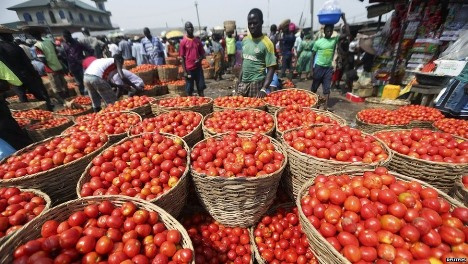
    There is growing pressure from Agbogbloshie Market traders in Accra on the government to boost domestic tomato production. The call comes with rising costs that are dampening consumer demand. Tomatoes, which used to sell at GH¢18 and GH¢22, are now selling at GH¢32, GH¢38, and even GH¢40. 


    Addressing the media on Monday, March 30, a trader at Agbogbloshie Market attributed the price increase to the export restrictions imposed by Burkina Faso.

    Burkina government, in a formal communique dated March 16, and signed by both the Trades and Agriculture ministers of the Francophone country, announced that a ban has become necessary to feed the country’s national processing units.

    This sparked widespread concerns about its potential to worsen Ghana’s tomato supply crisis, as Ghana imports approximately 70-80% of its tomatoes from Burkina Faso, worth about $400 million annually.

    Consequently, the Government of Ghana has announced plans to engage authorities in Burkina Faso, given the potency of its impact on supply in the Ghanaian market.

    In a statement shared on Friday, March 20, the Ministry of Trade, Agribusiness and Industry said the engagement will focus on resolving concerns surrounding the ban while exploring a mutually beneficial outcome for both countries.

    It said, “The engagement will focus on resolving concerns surrounding the ban while exploring a mutually beneficial outcome for both countries, given the longstanding trade ties and Ghana’s reliance on tomato imports from Burkina Faso”.

    The government also continued that, “The government reiterates its commitment to working with stakeholders to boost local tomato production under the ‘Feed Ghana’ and ‘Feed the Industry’ programmes, aimed at increasing output to meet demand on the domestic market”.

    The Ministry also urged tomato traders and the general public to remain calm while it makes an effort to reach an amicable resolution to restore normal trade flows between the two countries.

    Statement on the baon export by the Burkina Faso govt

    Also, the Burkina government says the issuance of Special Export Authorisations (ASE) has also been suspended. The Special Export Authorisations (ASE) are official permits issued by the government that allow traders to export certain goods,

    “Economic operators and the public are hereby informed that, to ensure the supply of national processing plants, the export of fresh tomatoes is suspended throughout the national territory until further notice. Consequently, the issuance of Special Export Authorisations (ASE) is suspended.

    The letter also stated that operators holding valid fresh tomato export permits have two (2) weeks from the date of signature of the communiqué to complete their export procedures. After two weeks, the permit will be considered invalid.

    “Economic operators holding valid fresh tomato export authorisations have two (2) weeks from the date of signature of this communiqué to complete their export procedures. After this period, the authorisation will be considered invalid”, the statement continued.

    The Burkinabé government warned that any violator of the directive will be sanctioned in accordance with applicable regulations.

    “Furthermore, any goods seized in violation of this measure will be returned, free of charge, to the fresh tomato processing plants established under the popular shareholding scheme,” the letter translated to English noted.

    It continued that, “The Government is counting on the understanding and cooperation of all stakeholders in the tomato sector, as well as all state technical services, particularly border control services and security forces, to ensure the proper implementation of the terms of this communiqué”.

    Kumasi vendors express frustration

    The impact of the ban is being felt well before any formal shortage sets in.

    Some tomato vendors at the Racecourse Market in Kumasi are already expressing frustration over the development, warning that prices could spike if the situation is not quickly addressed.

    The vendors are using the occasion to call on the government to prioritise the local tomato industry by revamping irrigation systems and investing in local processing facilities, longstanding concerns that have left Ghana’s tomato sector heavily dependent on imports from neighbouring countries, particularly Burkina Faso.

    Ghana has historically relied on cross-border produce flows from Burkina Faso to supplement domestic tomato supply, especially during lean seasons when local harvests are insufficient to meet demand.

    A sudden and indefinite halt to those exports is therefore expected to tighten supply significantly, with knock-on effects on prices at markets nationwide.

    Northern Ghana, which serves as the main corridor for produce trade with Burkina Faso, is expected to feel the shortage most acutely in the short term.

    Before this ban, Ghana was hit with the sad news of a fatal terrorist attack on tomato traders in mid-February.

    A truck carrying Ghanaian tomato traders was attacked by terrorists in Titao, Burkina Faso, on Sunday, February, 15. This was contained in a press release issued to media houses and signed by the Minister for the Interior and National Security, Muntaka Mohammed-Mubarak.

    In a joint statement issued in Ouagadougou on Thursday, March 19, the Burkinabè government announced an immediate nationwide halt to tomato exports “until further notice,” explaining that the move is intended to prioritise domestic supply for local processing industries.

    The directive, signed by the country’s trade and agriculture ministries, also suspends the issuance of Special Export Authorisations (ASE), effectively shutting down formal export channels for tomatoes.

    Traders with existing permits have been granted a two-week window to complete ongoing transactions, after which all authorisations will be revoked. The government warned that any breach of the directive would attract sanctions under existing laws, adding that seized consignments would be redirected to local processing factories to support domestic agro-industrial production.

    Ghana and Burkina Faso has since shared a long border. Burkina Faso remains deeply affected by insurgent violence, with cross-border implications for neighboring countries like Ghana.

    Northern Burkina Faso has faced persistent insecurity due to jihadist groups linked to al-Qaeda and ISIS. Attacks often target military posts, civilians, and traders moving across borders, disrupting local economies and cross-border trade.

    Burkina Faso remains deeply affected by insurgent violence, with cross-border implications for neighboring countries like Ghana. In 2025, Burkina Faso’s military government’s banned grain and cereal exports.

    To demonstrate their commitment, Burkinabe authorities have agreed to lift restrictions on 23 trucks carrying beans that were previously seized. Additional shipments of cereals meant for Ghana are also expected to be released in the coming days.

    Ghana, which depends on imports from Burkina Faso, had faced concerns over possible supply shortages and rising prices due to the ban.

    However, after President Mahama’s diplomatic engagements in the AES region, Gbevlo-Lartey is confident that relations between both countries have been strengthened.

    During an interview with Blessed Sogah on Connect Africa, he explained: “President Mahama has successfully addressed the situation, and further discussions between key stakeholders from both sides will ensure a concrete resolution. The issue is largely settled. For instance, 23 trucks that had been held up have been released, and the Burkinabe authorities have assured President Mahama that the remaining eight will also be let through shortly.”

    Meanwhile, on January 29, the Economic Community of West African States (ECOWAS) confirmed that Mali, Burkina Faso, and Niger had officially exited the bloc after the end of their six-month grace period due to diplomatic tensions after military takeovers and due to economic and social failures by past governments.

    The military juntas of these countries are led by Captain Ibrahim Traoré, General Assimi Goïta, and General Abdourahmane Tchiani, respectively.The trio accused the ECOWAS of failing to safeguard member states and deviating from founding principles and Pan-African spirit.

    In response to these claims, ECOWAS revealed that it did not receive formal notice before their withdrawal; therefore, it called for a dialogue to address their concerns. “The ECOWAS Commission remains seized with the development and shall make further pronouncements as the situation evolves,” it added.

    President John Dramani Mahama extended invitations to the military leaders of Mali, Burkina Faso, and Niger to participate in the official launch of ECOWAS’s 50th anniversary celebrations, which took place in Accra on April 22.

    The invitation to the Sahelian states was part of Ghana’s broader efforts to rebuild relations and enhance cooperation for a stable and united West African region.International Relations Analyst Dr. Yaw Gebe endorsed President John Dramani Mahama’s decision, describing the gesture as a positive step toward regional reconciliation.

    He, however, advised the ECOWAS to critically reflect on the underlying reasons behind the exit of the Sahel nations and emphasised the need for the bloc to adopt a more inclusive and problem-solving approach going forward.

    “My prayer and longing is that whatever the Nigerian President, Bola Tinubu or President John Mahama are doing, they should be conscious of the problems or challenges these countries are facing. The ECOWAS must be willing and ready to tackle those problems collectively. And that is a major shortcoming on the part of ECOWAS,” he said.

    Despite the formal withdrawal of Burkina Faso, Mali, and Niger from the Economic Community of West African States (ECOWAS) on January 29, citizens from these countries will still be able to use their national passports and identity cards bearing the ECOWAS logo for travel within the region.

    ECOWAS has assured that in the interest of regional cooperation and to prevent unnecessary disruptions, all relevant authorities within and outside the bloc’s member states should continue to recognize these travel documents until further notice.

    Additionally, trade and economic activities involving these three nations will not face immediate restrictions. Goods and services from Burkina Faso, Mali, and Niger will continue to receive the same treatment under the ECOWAS Trade Liberalization Scheme (ETLS) and investment policy.

    Citizens from the affected countries will also retain their right to visa-free movement, residence, and establishment across ECOWAS states, ensuring that travel and cross-border activities remain unhindered.

    Furthermore, officials from Burkina Faso, Mali, and Niger working within ECOWAS will be given full support and cooperation in carrying out their assignments.These measures will remain in place as ECOWAS leaders work on defining the future relationship between the bloc and the three nations.

    A special structure has been put in place to facilitate discussions on the next steps. The regional body emphasized that these transitional arrangements aim to maintain stability, minimize confusion, and support the people and businesses affected by the withdrawal.

  • Government assures probe into Ibrahim Mahama’s assault case

    Government assures probe into Ibrahim Mahama’s assault case

    The Minister for Tourism, Culture and Creative Arts, Abla Dzifa Gomashie, has revealed that she has held talks with the Interior Minister to ensure that those responsible for the alleged assault on Ibrahim Mahama are traced and prosecuted.

    She voiced strong concern over the reported attack on the Ghanaian artist, describing the development as both troubling and unacceptable.

    Her comments follow reports that Mahama, founder of the Savannah Centre for Contemporary Art and Red Clay Studio in Tamale, was allegedly assaulted on March 21, 2026, by individuals suspected to be members of the Inspector-General of Police’s Special Operations Team, popularly known as “Black Maria.”

    The incident is said to have left the artist with dental injuries, including a missing tooth, while his uncle, who was behind the wheel at the time, also suffered injuries.

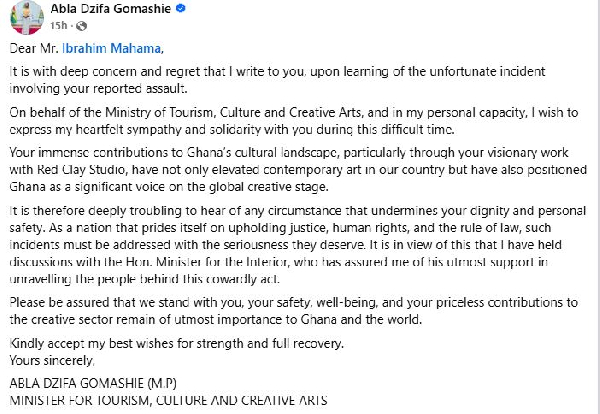
    In a Facebook post dated March 22, 2026, Dzifa Gomashie conveyed her sympathy and support to the artist.

    “Dear Mr Ibrahim Mahama, it is with deep concern and regret that I write to you, upon learning of the unfortunate incident involving your reported assault.

    “On behalf of the Ministry of Tourism, Culture and Creative Arts, and in my personal capacity, I wish to express my heartfelt sympathy and solidarity with you during this difficult time,” she stated.

    She added that the alleged attack raises critical issues relating to justice and human rights, which must be addressed promptly.

    “It is therefore deeply troubling to hear of any circumstance that undermines your dignity and personal safety. As a nation that prides itself on upholding justice, human rights, and the rule of law, such incidents must be addressed with the seriousness they deserve,” she said.

    The minister further disclosed that she had engaged the Interior Minister to facilitate a thorough probe into the matter.

    “It is in view of this that I have held discussions with the Hon. Minister for the Interior, who has assured me of his utmost support in unravelling the people behind this cowardly act,” she added.

    She also assured the artist of the government’s continued support, emphasizing that his safety and contributions to the creative industry remain highly valued.

    “Please be assured that we stand with you; your safety, well-being, and your priceless contributions to the creative sector remain of utmost importance to Ghana and the world,” she added.

  • Security recruitment: Minority presses govt to refund GHS113m registration fees to unsuccessful applicants

    Security recruitment: Minority presses govt to refund GHS113m registration fees to unsuccessful applicants

    The controversy surrounding the government’s ongoing recruitment into Ghana’s security services continues to dominate discussions in Parliament and among scores of Ghanaians.


    Addressing the press on Thursday, March 12, the Ranking Member on Parliament’s Defence and Interior Committee, John Ntim Fordjour, pressed the government to refund about GH¢113 million of registration fees collected from applicants who failed to progress to the medical screening stage.


    Most applicants were dropped from the recruitment process, which began last year, after failing an online aptitude test organised by the government.

    The online test which was confronted with a lot of challenges, according to reports, was generated using artificial intelligence (AI).

    https://www.facebook.com/share/v/1HhC1Jiz45


    In a media engagement on Wednesday, March 11, the Interior Minister, Mubarak Mohammed Muntaka, revealed that the government will only employ only 5,000 individuals out of the 105,000 applicants who have made it to the last stage.


    He further disclosed that about 500,000 applications were submitted by Ghanaian youth. “Are you going to allow over 400,000 people to go and do medicals when you know you have space for only 5,000? How fair are you to the people? You need to devise a method to slow down the numbers and have a reasonable figure.


    “So at 65, as we speak, we still have 105,000 that have qualified for medicals when in actual sense the total number that we can now take after medicals is 5,000,” he added.


    Speaking at a press briefing on Wednesday, March 10, Mr. Muntaka explained that authorities set the pass mark for the recruitment examinations at 65 to control the number of candidates progressing to the medical stage.


    Reacting to the Interior Minister’s revelation, the Minority of Parliament has called the entire recruitment process a Ponzi scheme to extort from suffering youth.

    The caucus has questioned why the government would accept applications from half a million persons when it intends to employ a small number.


    With immediate effect, the Minority in Parliament has pressed the government to refund monies collected from the affected applicants.
    “Already, we have a national security threat and unemployment on our hands. You promised them jobs. You didn’t add any conditions. Then you turn around, you politically expand the age limit from twenty-five to thirty-five, signaling that there is more room and more access, more financial clearance, which was a lie.


    “You knew from the very beginning you were recruiting only 5,000, and yet you did all this to lure half a million people, took their money, milked them GH¢113 million cedis and over, only to turn around yesterday, after you have knocked them out by technology and internet disruptions from the aptitude test,” he said.


    The development has left scores of Ghanaians, particularly affected applicants, criticising the government. Some unsuccessful applicants say they answered the questions without engaging in examination malpractice, yet failed the test, while others who allegedly outsmarted the system have qualified.


    Prior to the test, the Ministry of the Interior Ghana warned applicants against cheating, stating that the system used for the online aptitude test had been designed to detect and disqualify individuals who attempted any form of malpractice.


    Some applicants have also recounted how they purchased recruitment forms for multiple security agencies, including the Ghana Police Service, Ghana Prisons Service, Ghana National Fire Service, and the Ghana Immigration Service, but were denied the opportunity to proceed after failing the aptitude test.


    Under the recruitment guidelines, applicants who fail the aptitude test are automatically eliminated from the process, regardless of the number of forms purchased, since only one test is taken for all the security agencies. Others have also disclosed that although they initially qualified for the test, they were later disqualified after revisiting their recruitment portals.


    Despite the frustrations expressed by many disqualified applicants, the Interior Minister, Mubarak Mohammed Muntaka, maintains that the recruitment exercise has been free and fair, unlike those organised by previous governments.

    He explained that the government introduced a third-party aptitude test with a pass mark of 65% as a measure to manage the large number of applicants.


    Meanwhile, some grassroots members of the National Democratic Congress (NDC) who were disqualified from the process have expressed disappointment in the government. They claim the administration has turned its back on them despite their role in helping the party return to power.


    However, the Minister indicated that the recruitment process will not end this year. According to him, applicants who successfully pass the medical examination but are unable to secure placement this year will be considered for employment in the following year.


    “I know a lot of young people may be disappointed, but they should exercise restraint as this is not going to be the first and last recruitment that the government is going to have,” the Minister noted.


    Recruitment into Ghana’s security services has frequently been criticised as a process susceptible to corruption, with reports alleging that some individuals pay substantial sums of money to secure positions within agencies such as the Ghana Police Service, Ghana Prisons Service, Ghana National Fire Service, and the Ghana Immigration Service.

  • Gov’t tightens public land lease terms with 70% upfront payment

    Gov’t tightens public land lease terms with 70% upfront payment

    The government has launched a new framework to improve transparency in the leasing of public lands in Ghana. Speaking to the media on Wednesday, March 11, Deputy Minister for Lands and Natural Resources, Yusif Sulemana, announced a 70% upfront payment requirement for public land leases.

    He explained that the remaining 30% will be spread over the duration of the lease as ground rent. According to him, the new development is to boost state revenue while ensuring that public land resources are managed more efficiently.

    “The Ministry, in collaboration with the Lands Commission, has introduced a new premium framework for public lands leases. Under this new framework, a minimum of 70 percent of the assessed market value of a public land will be paid upfront as a premium. The remaining 30 percent will be structured over the tenure of the lease as grand rent.

    “This reform is intended to promote value for money, enhance revenue generation for the state, and ensure that public lands are allocated in a manner consistent with national economic interests,” he added.

    The reform was developed through collaboration between the Ministry of Lands and Natural Resources and the Lands Commission. Last month, Minister for Lands and Natural Resources, Emmanuel Armah-Kofi Buah, revealed the termination of all incomplete public land deals carried out between 2017 and 2024 that did not comply with required procedures, while unveiling wide-ranging reforms intended to improve accountability, openness, and cost-effectiveness in managing state lands.


    Speaking at a press briefing, the Minister described the decision as “a critical milestone in our collective efforts to strengthen integrity, transparency, and accountability in the administration of public lands, which are held in trust for the people of Ghana.”


    Presidential directive and committee assessment


    He indicated that on January 10, 2025, John Dramani Mahama instructed the Lands Commission to suspend all processes connected to leasing and handling transactions involving public lands.
    He explained that the directive was introduced to protect state lands from misuse, restore order within land management systems, and ensure that such transactions “deliver value for money to the State.”


    Following the directive, a committee led by the Deputy Minister was established on June 5, 2025, to examine public land leases under the Government’s Resetting Agenda.


    The committee reviewed 8,160 lease applications that were either completed or initiated between 2017 and 2024 across all sixteen regions.

    These included:


    4,176 Direct Allocations


    2,799 Regularizations


    19 Direct Allocations relating to State Bungalows
    108 Land Swap or Public-Private Partnership arrangements
    795 Subsequent Transactions


    263 Fresh Allocations


    The review revealed that a number of these allocations did not fully comply with the Lands Commission’s internal procedures, thereby undermining transparency and exposing the system to potential abuse.


    Immediate Cancellations and Case-by-Case Reviews
    Cabinet has approved the Committee’s recommendations and directed their immediate implementation. The Minister announced that:


    All uncompleted transactions within the reviewed categories have been cancelled, and affected applicants will be formally notified.
    Completed transactions will undergo case-by-case review, and any allocation processed without full compliance will be cancelled.


    All uncompleted regularisation applications remain suspended pending a comprehensive review and standardisation of procedures.
    “For the avoidance of doubt,” he clarified, “a transaction will be treated as completed where a formal offer has been issued and accepted by the applicant.”


    Both completed and uncompleted application lists will be published region-by-region, beginning with Greater Accra, on the Ministry and Lands Commission websites.


    Completed transactions under review will be assessed against clear benchmarks, including statutory compliance, value for money, conformity with planning requirements, and enhanced disclosure to prevent misuse of corporate structures.


    “These measures are not intended to unfairly disadvantage anyone,” the Minister emphasised, adding that affected applicants will be allowed to reapply under the new regime.


    Major reforms introduced


    The Minister outlined six major reform pillars.


    Revision of Public Land Application Form (Form 5)


    A key finding was the inconsistent application of Form 5 across regions, resulting in discretionary practices.The Ministry has revised Form 5 to serve as the single mandatory application instrument nationwide. It will be published online and made accessible for electronic submission.


    Overhaul of internal allocation processes


    The Ministry has also reviewed the Lands Commission’s internal procedures to eliminate inconsistencies and strengthen internal checks.


    Under the revised framework, “no public land will be allocated by the Lands Commission without the prior written approval of the Minister for Lands and Natural Resources.”The move, he explained, reinforces ministerial oversight and adds a safeguard against unauthorised allocations.


    Legislative backing


    To prevent a return to past practices, the revised application form and internal processes will be incorporated into a draft Land Regulation currently under review.


    New 70% premium framework


    One of the most significant changes relates to land valuation.
    The Minister revealed that premiums for public land leases had historically ranged between 1% and 30% of market value, significantly undervaluing state assets.


    Under the new framework, “a minimum of 70 per cent of the assessed market value of public land will be payable upfront as a premium, with the remaining 30 per cent structured over the tenure of the lease as ground rent.”


    He further reminded State Institutions, pursuant to Section 235(4) of the Land Act, 2020 (Act 1036), that allocations confer only user rights and do not permit transactions without prior written ministerial approval.


    Publication of market value data


    To enhance transparency, the Ministry and Lands Commission will compile and publish reliable market value data for defined land clusters nationwide.


    The data will serve as a reference for assessing premiums and ensuring objective, predictable decision-making.


    A Public Land Protection Task Force will be established during the reform transition period.


    The Task Force will operate within the framework of the Constitution, the Lands Commission Act, 2008 (Act 767), the Land Act, 2020 (Act 1036), and applicable criminal laws.It will comprise personnel from:

  • Doctors failing to report to duty to be taken off payroll – H­­ealth Minister

    Doctors failing to report to duty to be taken off payroll – H­­ealth Minister

    Medical doctors who refuse postings to deprived areas will be removed from the government’s payroll system, the Ministry of Health has announced.

    The Minister of Health, Kwabena Mintah Akandoh, disclosed during a working visit to the University of Ghana Medical School last week. He noted that a validation exercise will begin this month to identify and filter out medical doctors who have ignored their duty posts. 

    According to the Minister, individuals who express interest in serving in those areas will be posted accordingly.  “By the end of February, we will do validation. If you have not reported, your name will be taken off the payroll and the slots will be opened for those who are willing to go,” he stated.

    Earlier this month, the Minister rejected claims that newly deployed doctors are being punished through postings to rural districts. He explained that such deployments are necessary to ensure equitable access to healthcare across the country.

    “Since I took office as Minister responsible for the health sector, I have indicated that no health professional should see going to serve in rural areas as a punishment. For me, in my humble opinion, it’s a call to duty,” he said, during a working visit to the Oti Region.

    The minister revealed during the visit that although 25 medical doctors were posted to Oti in 2025, only two have so far reported for duty.

    Nonetheless, the Health Minister has emphasized that, the Ministry of Health will not change postings outside the approved process, stressing that doctors must serve where vacancies exist.

    “We are not going to change anybody’s posting. If you have been posted to Oti, you will go to Oti. That is where the government has a vacancy, and that is where you will go,” Mr Akandoh stated. Mr Akandoh also raised concerns about health data from the region, noting that Oti remains one of the most deprived areas in terms of key health indicators.

    During the visit, he inspected the proposed site for the construction of the Oti Regional Hospital and disclosed that the government has made budgetary provision for the construction of three new regional hospitals in 2026.

    “In the 2026 budget, the government has made provision for the construction of three regional hospitals, Oti Region, Savannah Region, and Western North Region,” he said.

    According to the minister, Oti is among the first regions where construction will commence, subject to the completion of all land documentation and the resolution of any litigation issues.

    “The processes will start when we have full documentation on the land, devoid of litigation. If you bring your documents tomorrow, you start your processes the next day. If you delay it, it’s your own issue,” he added.

    Mr Andoh has therefore called on Stakeholders, “A Member of Parliament, a Regional Minister, whoever you are, we must all put our heads together to find the solution.”

    In early November 2025, the Health Ministry announced the allocation of doctors nationwide, with about 80% earmarked for district health facilities.

    Fast forward to November 5, Health Minister Kwabena Mintah Akandoh revealed that his outfit was processing about 700 junior medical doctors for posting.

    According to the statutes of the Ghana Health Service (GHS), newly posted medical officers are generally expected to report to their assigned health facility within two weeks of receiving their posting letter.

    However, a recent report dated November 28 released by the health authority shows that about 70% of the newly posted doctors have yet to report to their new posts.

    An overwhelming 305 doctors, or 66%, have still not shown up. This means that 7 out of 10 doctors failed to report to their assigned regions.

    According to the data, urban facilities in Greater Accra and Kumasi, as well as the Eastern region, are recording the highest turnout, with many doctors reporting to their posts, representing over 60% of the total turnout, to the neglect of rural centres. Several health centres in rural areas still wait in hopes of the appearance of medical officers deployed to their districts.

    Out of the 20 medical officers allocated to Greater Accra, 16 have reported, with only 4 left to show up. representing an 80 percent turnout. In the Ashanti Region, there were 33 allocations, and so far, 25 have reported, representing a 76 percent turnout. Also, the 36 allocations to the Eastern Region had 23, representing a 64 percent turnout.

    On the other hand, regions in the North have recorded an abysmal turnout. North East so far has recorded a zero turnout after a 19 medical officers’ allocation. The Upper West Region also had no reporting despite an allocation of 32. Oti, with 21 allocations, saw only one officer reporting (4.8%), Western North recorded two out of 31, representing a 6.5% turnout, and Savannah had seven officers reporting out of 19 allocated, representing a 36.8%. In the other low-performing regions, Upper East recorded seven reports out of 35 allocations, representing a 20% turnout, while the Northern Region saw seven out of 32 officers reporting, representing 21.9% percent.

    Following this, GHS have encouraged Regions to intensify engagements with the medical officers to improve the current numbers.

    The low turnout recorded in Ghana’s rural centres, particularly in the |Northern sectors, is nothing new as it is a long-standing challenge in Ghana’s health sector. Over the years, doctors have refused or delayed postings to rural and deprived areas, mainly due to poor infrastructure, lack of accommodation, and limited career opportunities.

    Consequently, President John Dramani Mahama announced in his healthcare manifesto and policy statements, some reforms his government intends to make in the health sector to make postings to these rural areas attractive. Part of these include providing affordable accommodation at health facilities, offering home ownership schemes, and introducing risk exposure insurance for health workers.

    The doctor–patient ratio in Ghana is about 1:10,450, with most doctors concentrated in Accra, Kumasi, and other urban centres, while areas like the Upper West and Northern regions have historically faced severe shortages, leaving rural populations underserved.

    The posting of these doctors came about a month after the President of the Ghana Medical Association (GMA), Dr Frank Serebour, disclosed that approximately 800 doctors are jobless because they are waiting to be posted to various institutions to commence work.

    Dr Frank Serebour, told Channel One TV in an interview sighted by GhanaWeb on Friday, October 3, 2025, that failure to resolve the situation could compel these yet to be posted doctors to seek opportunities abroad.

    “We still have about 800 doctors who are also at home who need to be posted, because if we don’t post them, this is the avenue we create, and then people begin to look for other areas to go.

    “If we are not careful before we want to employ them, we won’t find them. So, I think it’s also a call for these doctors to be posted,” he said.

    The GMA president appealed to the government to process the salaries of newly posted doctors promptly, emphasising that further delays could worsen their discontent.

    “Once you finish school and you start work, everybody knows that you are supposed to be on a salary. So, I believe we will be able to resolve this matter amicably without the nuances of the strike action kicking off,” he added.

    Meanwhile, a nationwide withdrawal of services by the Junior Doctors’ Association of Ghana (JDA-GH) was declared on Tuesday, October 7, 2025, over unpaid salaries and stalled postings.

    A statement signed by its President, Dr Louisa Afia Nkrumah, and General Secretary, Dr Rhoda Wun-Nam Amadu, disclosed that on Friday, October 10, emergency services will be withdrawn until further notice. It noted that all patients who are currently in the hospital will continue to receive treatment until they are discharged.

    Explaining further, the statement said over 200 junior doctors have been left unpaid for 10 to 14 months. The statement added that some medical officers have been suspended without explanation, although they were previously on the government payroll.

    “Despite goodwill shown towards the government, no solutions have been offered. The continued exploitation of junior doctors will no longer be tolerated,” the statement read.

  • Govt to expand Ayalolo fleet with €1m grant from Spain – Local Gov’t Minister

    Govt to expand Ayalolo fleet with €1m grant from Spain – Local Gov’t Minister

    Ghana’s Aayalolo Bus Rapid Transit (BRT) system will receive a boost in the coming days as the government expects a grant of €1 million from the Spanish Embassy.

    This information was made public by the Minister for Local Government, Chieftaincy and Religious Affairs, Ahmed Ibrahim, on Friday, January 16, 2026.


    According to him, “When the new boss came in and realised the problem, he went to the Spanish Embassy. They wanted to give us a grant; all that was needed was a letter of no objection from the Minister for Finance. With your presence, I believe it will be granted. The current MD of Ayalolo will receive €1 million to augment the fleet. The Spanish ambassador has been following up, and we need that support.”


    The revelation came after the Transport Ministry met with Vice President Professor Jane Opoku-Agyemang to discuss ongoing efforts to expand and improve the Aayalolo Bus Rapid Transit system.


    Meanwhile, the Acting Managing Director of the Greater Accra Passenger Transport Executive (GAPTE), Awudu Dawuda, has disclosed that one hundred and sixty-five (165) out of the 245 Ayalolo buses procured by the then Akufo-Addo administration in 2016 are not operational.


    He noted that “close to 60 of the buses were parked because they were broken down. What we did was to repair them through our own means to get them back on the road.” According to him, the 80 buses in operation have been distributed across several regions, with 60 assigned to Kumasi, 10 to Takoradi, and another 10 to Tamale.


    “When it comes to urban mobility, we are all aware that it is important for the growth of any economy, especially when we are seeking to get more buses into the system. When I took over, we were left with only 80 buses out of the 245 buses that the government procured in 2016. The buses were procured to operate within Accra alone, but 60 were taken to Kumasi, 10 to Takoradi, and another 10 to Tamale at the behest of the then Ministry of Transport,” he explained.


    The Aayalolo BRT system was introduced in 2016 with the aim of improving public transport accessibility for the masses at subsidised rates. However, its implementation has faced challenges, including insufficient operational buses and ineffective route management.


    In 2023, Vice President of IMANI Africa, Bright Simons, highlighted a concerning issue with Ghana’s Aayalolo Bus Rapid Transit (BRT) system. At the time, he alleged that about 70 out of 245 buses were operational.

    While acknowledging the importance of embracing digital solutions, Mr Simons emphasised that addressing the current operational issues should take precedence.


    In a rebuttal, the then Transport Minister, Kwaku Ofori Asiamah, clarified that the Aayalolo BRT system in the Greater Accra Metropolitan Area was not meeting expectations set by the World Bank, assuring that the Ministry would collaborate with other key stakeholders to revive the operations of the transport company.


    In 2025, Deputy Minister of Transport, Dorcas Affo-Toffey, announced via a social media post that 300 additional ISUZU buses would be delivered to strengthen Metro Mass Transit services.


    “On behalf of the Minister for Transport, Hon. Joseph Bukari Nikpe, under whose leadership I serve, I had the privilege of joining the management of Metro Mass Transit in Egypt for the final inspection of three hundred (300) ISUZU buses slated for delivery to Ghana.


    She added that “this important undertaking reflects the Minister’s clear vision and policy direction to strengthen Ghana’s public transport system through strategic investment in modern, reliable, and efficient mass transit.”


    She noted that the move will reduce the daily stress faced by workers, students, and traders, help ease traffic congestion, bring down transport expenses, and support a more organised and environmentally friendly transport system.


    Meanwhile, the Ghana Police received a major boost in operational capacity, safety, and deterrence with the government’s delivery of 40 new armoured vehicles.


    At a handing-over ceremony held at the Ghana Police Headquarters in Accra on Thursday, December 4, President Mahama, in his speech, commended the police for their hard work and efforts in bringing criminals to book, citing their resolve in tackling several cases of murder, armed robbery, and other crimes in the country.


    He said, “And you have dealt with them, people who robbed banks and attacked people’s residences. You have chalked up many victories in bringing them to justice. Let me commend the CID, too.


    “In the past, there were many unsolved murders. I’m happy to note that recently, many of the murders that occurred have been resolved. With good police intelligence, you’ve been able to bring the suspects to book.”


    He noted that the 40 armoured vehicles given to the Service are only the first of many his government will hand over to the law enforcement agency, adding that two tow trucks and patrol pickups will also be supplied to police districts.


    “These 40 vehicles are just the first batch of what you will be receiving. By the end of this month, you will receive two tow trucks so that anytime any of these vehicles becomes immobilised anywhere, you can pick it up and bring it back to base. You will also get 10 covert operational vehicles, which I have been cautioned not to talk about. It is only you who will know you have them. In addition, we want to give every police district a normal pickup for patrol duties,” the President said.


    Inspector-General of Police (IGP) Christian Tetteh Yohunu, in an acceptance speech, assured the President that with the vehicles, his outfit will tear down any criminal syndicate and launch a “robust and targeted operation throughout the country.”


    “Your Excellency, these vehicles are going to completely change the face and dynamics of police operations. With these vehicles, we are going to launch very bold, robust, and targeted operations throughout the country. We will dismantle any existing criminal networks, most of whom have gone into hiding due to our intensified activities against them,” he noted.


    He also sent a warning to individuals threatening national security, declaring that the Police Service will relentlessly pursue and apprehend anyone involved in criminal activities.


    “Let me use this opportunity to send a strong word of caution to persons who have decided to threaten the security of this country: we are coming for you. You can run all you want and hide wherever you wish, but we will surely get you,” he said, citing the police service’s achievements so far under his leadership.


    “We have made several breakthroughs. In addition to numerous robbery attempts that have been foiled through sustained intelligence operations, we have successfully arrested suspects who operated under the illusion that they could get away with crime. These include the suspect behind the rural bank robberies, the robbery of the Radiance Filling Station, the robbery at Enfasatia, attacks on mobile vendors, the Wire and Bullet serial murders, vehicle theft syndicates, and perpetrators behind fake online food-delivery platforms.”


    IGP Christian Tetteh Yohunu also assured that the vehicles would be strategically deployed and properly maintained to achieve their intended objectives, commending the government for its intervention.


    “We wish to sincerely express our profound gratitude to the government for thinking about us and prioritising our welfare. Our assurance to you is that the vehicles will be well maintained and strategically deployed to achieve the intended objectives,” he said.


    The event also saw the presence of Interior Minister Muntaka Mubarak and numerous senior police officers, highlighting the government’s commitment to supporting law enforcement agencies.


    The Interior Minister, speaking at the commissioning, also mentioned that the enhanced security capacity of security services in the country should block all chances of criminal networks from operating effectively.


    “Your time is up. The state is prepared. The police are prepared. The tools are ready. The intelligence is improving. And the public is increasingly vigilant.”


    He said that security agencies will deal decisively with those involved in violent and organised crime. “Whether it is armed robbery, banditry, illegal mining, violence, trafficking, kidnapping, gang activities, or terrorism, know that we will find you, we will stop you, and you will face the full force of the law,” adding that Ghana being described as a peaceful country does not mean it is defenceless.


    “Ghana is a peaceful nation, but we are not defenceless.”
    The Minister explained that the new armoured vehicles would be deployed based on crime data and operational needs. He said the Interior Ministry will work closely with the Police Administration to ensure the vehicles are used effectively.


    “Some will support high-crime zones, others will reinforce highway patrol, others will be integrated into rapid response teams and special operations. Deployment will be guided by intelligence, operational need, and proper chain of command,” he said.


    He also highlighted the shift towards a more technology-driven policing model, supported by a new real-time crime centre being developed under the Inspector-General of Police.


    “We are moving towards a policing model that is predictive, data-driven, and technology-enabled. In this new era, crime will be confronted not only with courage, but with smart intelligence and modern tools.”

  • Govt increases daily minimum wage from GHS19.97 to GHS21.77

    Govt increases daily minimum wage from GHS19.97 to GHS21.77

    The government has approved an increase in the national daily minimum wage from GHS19.97 to GHS21.77, effective 2026, representing a 9 percent rise. In addition, all public sector workers under the Single Spine Salary Structure (SSSS) will have their salaries increased by nine percent during the same period.

    The review follows several deliberations by the National Tripartite Committee (NTC), which comprises representatives from the government, employers, and labour unions.

    It was made official on Sunday, November 9, after the government, represented by the Fair Wages and Salaries Commission (FWSC) and the Ministry of Finance (MoF), and Organised Labour, signed the agreement.

    During the signing ceremony, Finance Minister Dr. Ato Forson pledged the government’s commitment to upholding its side of the agreement while commending the efforts of Organised Labour.

    “The country has gone through difficult times with high inflation and interest rates, but today both indicators have declined. The government is working to further reduce inflation from the current 8 percent to ease the burden on Ghanaians,” he said.

    In July this year, Dr. Cassiel Ato Forson indicated that wages and salaries exceeded the budget by GH¢1.3 billion for the first six months of the year.

    Per the 2025 budget statement, compensation of employees, comprising wages and salaries, pensions, gratuities, and social security, has been programmed at GH¢76.2 billion for the entire year.

    Presenting the 2025 Mid-Year Budget in Parliament on Thursday, July 24, the Finance Minister revealed that the government has experienced some significant pressures on the compensation budget for the first half of 2025, mainly emanating from wages and salaries.

    The wage pressures, the minister said, were largely driven by last-minute recruitment undertaken by the previous government in the last quarter of 2024, especially in the education, health, and security sectors.faced significant pressures on the compensation budget in the first half of 2025, mainly due to

    “In addition, ad-hoc reviews of conditions of service undertaken in previous years have distorted the Single Spine Pay Policy and further burdened the public wage bill,” the sector minister added.

    In 2024, compensation of employees amounted to GH¢67,189 million (5.7% of GDP), above the target of GH¢63,683 million (6.2% of GDP) by 5.5 percent. Wages and salaries constituted 89.8 percent of the total compensation and amounted to GH¢60,352 million (5.1% of GDP), 5.9 percent above the target of GH¢57,005 million (5.6% of GDP), per the 2025 budget statement.

    In February this year, Chief of Staff Julius Debrah issued a directive annulling all public service appointments and recruitments made after December 7, 2024.accounted for 89.8 percent of A letter was circulated to heads of government institutions, instructing them to comply with the directive and submit a report by February 17, 2025, detailing the actions taken in response.

    “Consistent with Government pronouncement in relation to near end of tenure appointments and recruitments, I wish to bring to your attention that all appointments and recruitments made in the Public Services of Ghana after 7th December, 2024 are not in compliance with established good governance practices and principles.”

    “Accordingly, all Heads of Government Institutions are hereby requested to take the necessary steps to annul any such appointments or recruitments and submit a comprehensive report on the actions taken to this Office by 17th February 2025.”Prior to the swearing-in of President-elect John Mahama, concerns were raised over last-minute appointments and financial transactions by the outgoing administration.

    The previous government defended these actions, stating, “these recruitment processes and payments have received the relevant statutory approvals and have not been proven to be illegal. It was decided that any specific allegation of illegality about any particular payment or recruitment should be brought to the attention of the Transition Team for a decision to be made.”

    Minority Leader Alexander Afenyo-Markin urged President Mahama to reconsider and overturn the cancellation of these appointments. In response, the Minister of State responsible for Government Communications and a spokesperson for President John Dramani Mahama, Felix Kwakye Ofosu, defended the administration’s move to invalidate appointments made after December 7, citing procedural flaws in the recruitment process.

    Speaking to the media in Accra on Wednesday, February 19, Kwakye Ofosu said, “Let me also put it on record that this action has been taken not because of a perception or a belief that they were NPP. It is because we know that the recruitment processes were attended by irregularities.”

    He pointed out cases where some individuals were issued retroactive appointment letters to falsely suggest they had been hired well before the elections, while others secured positions without going through interviews or even formally applying.

    Kwakye Ofosu stressed that such irregularities could not be overlooked and reaffirmed the government’s commitment to launching a fresh recruitment exercise that would be open to all qualified Ghanaians, regardless of their political backgrounds.

    “In due course, government will do recruitment and it will be open to all Ghanaians irrespective of political colouration. Indeed, your party identity will not be required. You will not be asked to show whether you’re NPP or NDC when that comes, but we will do it in a regular manner,” he explained.

    He also guaranteed that individuals whose appointments had been nullified would still have the chance to apply again and participate in a fair recruitment process.

     “So even those who have had their employment revoked will still have the opportunity to reapply and go through due process,” Kwakye Ofosu added. 

    In his delivery to Parliament on Thursday, the Finance Minister revealed that more than 14,000 workers on the government’s payroll are unidentifiable and unverifiable by the Ghana Audit Service.

    The minister noted that as part of the government’s fiscal consolidation strategy, the government has taken measures to sanitize public sector payroll and rid it of ghost names.The government engaged the Ghana Audit Service to undertake a nationwide payroll audit across all 16 regions of the country. 

    The Finance Minister revealed that the Ghana Audit Service has completed 91% of the payroll audit.The Service has identified 53,311 separated staff—these are staff who are either retired, resigned, terminated, on leave without pay, or deceased, and yet remain on government payroll.

    According to the sector minister, the Audit Services expects to recover GH¢150.4 million of unearned salaries from the separated staff over the 2023 and 2024 period.“Mr. Speaker, going forward, we will enforce the monthly payroll validation process and strictly apply sanctions to all who validate “ghosts” for payment of salaries. 

    Rt. Hon. Speaker, let me use this opportunity to strongly caution those who validate “ghosts” across the public service that they will be personally liable for the loss of public funds,” Dr Cassiel Ato Forson said.

    He assured that the Ministry of Finance will continue to monitor the payroll and put in place measures to prevent “ghost names” on the payroll.By the end of August, the Ghana Audit Service, in partnership with EY and PWC, will complete the audit of arrears and payables as of the end of 2024.The Audit Service was tasked to audit and validate GH¢68.7 billion of arrears. 

    The sector minister noted that about 87 percent of the audit has been completed.The preliminary results show that a total of GH¢28.3 billion has been validated for payment. Also, an amount of GH¢3.6 billion has been rejected because of errors, duplications, and non-compliance with PFM and procurement rules.

     An amount of GH¢562.6 million is without adequate supporting documents, and GH¢27.3 billion is pending validation.Dr Cassiel Ato Forson stated that “once finalized, we will update the House on the findings and outcomes.”

     In his delivery, Dr Cassiel Ato Forson noted that it has come to the attention of the Ministry of Finance that several contractors implementing some of these 55 stalled projects have drawn down on the loans with no work done to match the amounts drawn down.

    Again, some contractors have submitted additional costs in excess of what Parliament approved. In light of this, the Ministry of Finance has commissioned a forensic audit into these projects.

    “Mr. Speaker, we will apprise the House when this audit is completed,” the sector minister assured.

  • Govt dragged to court over deportation deal with U.S 

    Govt dragged to court over deportation deal with U.S 

    A legal action has been initiated against the government by the Civil society organization Democracy Hub over its controversial policy of deporting foreign nationals arrested for illegal mining (galamsey) without prosecution.

    According to the group’s writ of summons, filed at the High Court in Accra, the government’s deportation approach breaches Section 99 of the Minerals and Mining Act, 2006 (Act 703), which mandates prosecution for illegal mining offenses.

    “The selective decision not to prosecute foreign nationals, while prosecuting Ghanaians for the same offences, constitutes unequal treatment before the law,” and “Deportation, in the absence of conviction, does not satisfy the objectives of deterrence and may embolden perpetrators,” the group indicated in its writ.

    The Minister for Interior Muntaka Mohammed-Mubarak, the Ghana Immigration Service (GIS), and the Attorney-General are the main parties cited in the lawsuit. 

    According to the organisation, Ghana’s justice system operates on double standards, with locals prosecuted while foreign nationals involved in the same offenses are only deported.

    It rejected the government’s claim that deportees are later prosecuted in their home countries, labelling the assertion “speculative and unsubstantiated.”

    Democracy Hub is also pushing for transparency by demanding that the state make public any diplomatic exchanges or reports proving such prosecutions. The lawsuit seeks court declarations to invalidate the deportation policy, stop future deportations without trial, and compel disclosure of all documents concerning deported individuals.

    The group is further requesting GH¢300,000 as compensation for legal costs.

    According to Myjoyonline.com, over 100 foreign nationals, including Chinese citizens, have been deported for engaging in illegal mining (commonly known as galamsey) and related offences since the NDC government took office.

    A prominent environmental advocacy group, Eco-Conscious Citizens, also opposed the government’s  policy of deporting foreign nationals involved in illegal mining (galamsey) without trial.

    During an engagement with the Ashanti Regional Police Command in April, Minister Muntaka announced that the government would deport foreigners involved in illegal mining activities instead of prosecuting them. He argued that this approach would protect the environment and save the country money.

    “We have resolved, as a new policy, that for two things—whether you’re involved in galamsey or cutting down our trees unlawfully, or engaging in fraudulent activities, whether through computer fraud or other means—when we arrest any foreigner, we are not interested in prosecuting them. Our first option is to take them back to their country,” Muntaka stated.

    The decision has faced backlash from environmental groups, with Eco-Conscious Citizens strongly opposing it. The group’s Coordinator, Awula Serwah, shared her concerns during an interview on Morning Starr with Naa Dedei Tettey. She emphasized that merely deporting offenders without any legal consequences would fail to serve as a deterrent to future violations.

    “If someone is involved in environmental terrorism, destroying our forest reserves and poisoning our water bodies, and what you’re saying is that they can come to Ghana, engage in these activities, and when we catch them, we just pay for their fare to return to their country without prosecution, no jail time, and no restitution—then that’s not a deterrent,” Serwah said.

    Serwah went on to explain that such a policy would encourage more foreigners to engage in galamsey, as the risks of facing severe legal consequences are minimized. She also pointed out that Ghana’s porous borders make it easy for offenders to return under different identities, referencing the case of Aisha Huang, a notorious galamsey queenpin who was deported but later returned to continue illegal mining activities.

    She argued that the policy undermines the rule of law, particularly the provisions of the Lands and Minerals Act, which mandates the prosecution of individuals caught engaging in illegal mining. “The idea that we won’t prosecute them to save money doesn’t stand scrutiny. You need to deal with them robustly to discourage them from coming. You need to prosecute and imprison them, and then after they’ve served their sentences, they can return to their country,” Serwah added.

    Eco-Conscious Citizens urged the government to reconsider its approach, calling for tougher measures such as prosecution and imprisonment to deter foreign nationals from engaging in illegal mining in Ghana.

    Months ago, the Interior Ministry stressed that the deportation policy is not intended to favour foreigners or show leniency. Instead, it is designed to prevent further abuse of Ghana’s legal system and to safeguard national interests.

    “You arrest about 80 Chinese, and you have to find a place to keep them, and then sometimes even vehicles to take them to court are a problem. You go to court and they succeed in getting bail,” Deputy Interior Minister Ebenezer Terlarbi argued on JoyNews’ PM Express.

    Mr Terlarbi further explained that the sheer logistical, legal, and financial burden of keeping foreign galamsey suspects in Ghana’s already overstretched prison system has forced the government to consider what he called a “more innovative” path.

    “We are looking at 1,400 inmates we have now, and feeding them is even a problem. So if there’s a way not to exacerbate the situation by sending them back to their home countries, I think that I would opt for that,” he stated.

  • TEWU-TUC suspends ongoing strike

    TEWU-TUC suspends ongoing strike

    The Teachers and Educational Workers’ Union (TEWU) of the Trades Union Congress (TUC) has suspended its ongoing strike. TUC’s decision follows a recent engagement it had with the government.


    Speaking to the media on Wednesday, October 1, the General Secretary of TEWU-TUC, King James Azortibah noted, “TEWU has decided to suspend the indefinite strike action, with effect from today, Wednesday, 1st October 2025, to allow for further discussions and implementation of the agreed terms”.

    All TEWU members in the aforementioned institutions are expected to resume work by Thursday, 2nd October 2025. All those who might have travelled outside their jurisdiction should report not later than Monday, 6th October 2025.


    “We emphasise that this is a suspension and not a call-off of the strike. We hope the FWSC and employer institutions will honour their side of the agreement, so that TEWU is not forced to do otherwise.”


    The Union’s strike disrupted schools across the country, as the union resisted calls to suspend industrial action. Despite mounting pressure from the National Labour Commission (NLC), the union insisted it would only return to work after its demands were met.

    The Union began its nationwide strike on Friday, September 19, to protest the government’s inaction on addressing their long-standing concerns about conditions of service.


    Nearly a year ago, the Union embarked on a strike over non-implementation of agreed allowances, such as vehicle maintenance and off-campus, delays in Tier Two pension deductions, and general dissatisfaction with working conditions. Meanwhile, the Union has declared its intention to lay down its tools should the government fail to uphold its side of the agreement.

    Read below the statement by TEWU-TUC


    1st October, 2025

    SUSPENSION OF TEWU of TUC STRIKE ACTIONS

    Ladies and Gentlemen of the Media,

    Thank you for joining us today. The Teachers and Educational Workers’ Union (TEWU) of TUC (Ghana) embarked on an indefinite strike on 19th September 2025. Our members, including workers within the Ghana Education Service, Public and Technical Universities, staff of the Ghana Museums and Monuments Board, and the Ghana Library Authority, took this action to demand the conclusion of negotiation and signing of various Conditions of Service.
    Our legal strike, which has gone on for almost two weeks and very impactful, drew significant attention and engagement from the Ministry of Labour, Employment and Jobs, National Labour Commission and the Fair Wages and Salaries Commission (FWSC) with positive outcomes.

    On Monday 29th September, 2025 TEWU Leadership held a meeting with FWSC and employer institutions. After a very constructive dialogue, the parties resolved to work towards an amicable solution to the concerns of Union.
    We are expected to meet FWSC on Tuesday, 7th October, 2025 to proceed with negotiations, conclude and sign the various Conditions of Service of the affected institutions and TEWU of TUC membership. This forms part of the agreed issues with the FWSC during the engagement.

    Our friends from the media, and our cherished members, as a result of this positive development, TEWU has decided to SUSPEND the indefinite strike action, with effect from today Wednesday 1st October 2025, to allow for further discussions and implementation of the agreed terms.

    All TEWU members in the aforementioned institutions are expected to resume work by Thursday, 2nd October 2025. All those who might have travelled outside their jurisdiction should report not later than Monday 6th October, 2025.

    We emphasize that this is a SUSPENSION and not a called-off of the strike. We hope the FWSC and employer institutions will honour their side of the agreement, so that TEWU is not be forced to do otherwise.
    We also reiterate that no TEWU member or non-teaching staff should be victimized for exercising their right to strike. The union leadership will defend any member facing victimization and unfair labour practices from their employer on this matter now or in the future. We, however, appreciate all Managements and School Heads, who have been cooperative and supportive by allowing us press home our demands without frustration and intimidation so far. We recognize their consciousness for delivering quality education service in Ghana and for accepting our collective struggle during this period.
    School supplies
    TEWU shall remain a law-abiding union and will continue to pursue better conditions for our members. We acknowledge all our members; the National Executive Council, Management Committee, Regional Officers and their Councils, Local and District Executives, the Women and Youth Structures, all Association Executives within the Ghana Education Service, as well as our gallant Local Executives in the Public and Technical Universities, Ghana Library Authority, Ghana Museums and Monuments Board, our monitoring and the Task Force Team for their resolute support throughout the nine days of the strike.
    We thank the media for the support and the needed attention in getting our message across.
    We know our efforts have not been in vain. There is power in our collective action.
    Long live TEWU of the Trades Union Congress!
    Long live Ghana!
    Thank you for your attention.
    SIGNED BY
    KING JAMES AZORTIBAH
    GENERAL SECRETARY
    TEACHERS AND EDUCATIONAL WORKERS’ UNION OF THE TRADES UNION CONGRESS.

  • Next MMDCEs to be elected by citizens – President Mahama

    Next MMDCEs to be elected by citizens – President Mahama

    President John Dramani Mahama has shared that his government, in the coming years, will allow citizens to elect the next Municipal and District Chief Executives (MMDCEs).

    He explained that this is to allow citizens to have a direct say in choosing their local leaders.

    Addressing the MMDCEs during an orientation and training programme on Wednesday, July 18, in Accra, he noted that the upcoming system will be dependent on the recommendations by the National Review committee established by the government.

    “MMDCEs, you may be the last batch of MMDCEs appointed. The National Review committee is going round and will present its recommendation in August this year, and one of the major items that has come up is the election of the MMDCEs. There is no doubt that Ghanaians want the MMDCEs elected. Those who succeed you might have to go through elections,” he stated.

    President Mahama further called on all MMDCEs to declare their assets by July 15.

    “I wish to remind you that you are among the office holders required to declare your assets, and so I expect that by July 15, all of you will have declared your assets,” he said.

    The legal framework guiding asset declaration is the Public Office Holders (Declaration of Assets and Disqualification) Act, 1998 (Act 550). The Act mandates public officials to declare their assets before assuming office, every four years, and at the end of their term, submitting the forms no later than six months after any of these events.

    Importantly, Section 8 of the Act provides that allegations of non-compliance must be referred to the Commission on Human Rights and Administrative Justice (CHRAJ), which is empowered to investigate and take appropriate action.

    President John Dramani Mahama submitted his asset declaration forms to the Auditor General on February 18 and issued a firm order to his appointees to follow suit by March, warning of sanctions for defaulters.

    A report by The Fourth Estate revealed that several high-ranking officials have yet to fulfill their constitutional obligations. Out of 55 ministers and deputy ministers, nine have failed to declare their assets.

    Additionally, eight out of 32 presidential staffers and 37 out of 84 heads of state institutions appointed between January 15 and March 18 had not complied with the president’s directive.

    On May 6, the president sanctioned his appointees who missed the March 31 deadline by directing them to forfeit their three months’ salary, which he noted will be channeled into the Ghana Medical Trust Fund, also known as The MahamaCares, a landmark initiative aimed at providing financial assistance to individuals living with chronic diseases across the country.

    He gave a May 7 ultimatum, emphasizing that any official who fails to meet the deadline will be sacked. As no government official has been relieved of his or her duties, it is believed that all government officials have declared their assets.In the meantime, civil society groups and anti-corruption advocates have supported the full publication of asset declarations as a means to promote integrity and accountability.

    Meanwhile, Special Prosecutor, Kissi Agyebeng, has expressed his opposition to the declaration of assets by government officials as mandated by the Public Office Holders Act.

    Justifying his opposition, he indicated such an initiative puts public officers in a position where they expose themselves to unnecessary attention and potential threats against their lives and their loved ones.

    “I do not and I will not add my voice to calls for the publication of assets for public scrutiny. In our experience, it will be unhelpful and would merely subject public officers to inordinate public curiosity and a specter of the real likelihood of reprisals against the assets,” he said.

    To him, fighting corruption effectively in the country requires striking a balance between transparency and the protection of individual rights.

    “In my estimation, publication of who has declared or has not declared his assets in the context of a workable asset verification and treason model would be sufficient to assure the integrity of the asset declaration system,” he added.

  • Govt establishes panel to reform small-scale mining regulations

    Govt establishes panel to reform small-scale mining regulations

    The Minister for Lands and Natural Resources, Emmanuel Armah-Kofi Buah, has unveiled a strategy to reform and regulate Ghana’s small-scale mining sector.

    As part of efforts to ensure environmentally responsible and legally compliant mining activities, the government has set up a Technical Small-Scale Mining Review Committee.

    Speaking at a press briefing on Wednesday, March 19, the Minister outlined the committee’s mandate, emphasizing its responsibility to assess all small-scale mining licenses nationwide. The Deputy Minister for Lands and Natural Resources will lead the committee in this effort.

    “The committee is to audit all licenses to ensure that they were properly acquired, that due process was followed, that they meet all conditions of continuous validity with respect to how they have followed the rules on the environment and then how they have dealt with the issues of our water bodies, our forest reserves and land preservation.

    “All those standards are going to be the guide in which these licenses will be sustained. They are also to ensure permitting fees and all those requirements by all the agencies EPA, Minerals Commission, Water Resources Commission that all those processes required have been met.”

  • Akufo-Addo gov’t allocated just GHS4m to free dialysis programme – Akandoh

    Akufo-Addo gov’t allocated just GHS4m to free dialysis programme – Akandoh

    Health Minister Kwabena Mintah Akandoh has condemned the previous administration for setting aside only GH¢4 million for Ghana’s free dialysis programme, asserting that the amount is grossly inadequate to meet the needs of patients nationwide.

    Addressing the Parliamentary Press Corps on Thursday, March 13, he disclosed that merely GH¢2 million of the total sum was directly funded by the government, while the remaining GH¢2 million was obtained through corporate social responsibility efforts.

    Having previously served as the Ranking Member on the Health Committee of Parliament, Akandoh expressed alarm over the absence of a reliable financing model for dialysis care.

    He underscored that the GH¢4 million allocation falls significantly short of covering the expensive costs associated with dialysis sessions, medical equipment, and patient management.

    He referenced past parliamentary discussions, where proposals to establish a dedicated funding source for dialysis treatment were unsuccessful, forcing dependence on external contributions. Without a structured financial plan, he warned, the challenges facing dialysis patients would only intensify.

    Furthermore, he cautioned that incorporating all life-threatening illnesses into the National Health Insurance Scheme (NHIS) without a solid financial framework could ultimately lead to the scheme’s collapse.

    “I was a ranking member on the Health Committee of Parliament and there were no sustainable sources of funding for the dialysis. It never happened. We even suggested to make provision for dialysis and they allocated GH¢2 million. And they had to go and take an additional GH¢2 million from corporate social responsibility and I can tell you, GH¢4 million cannot take care of dialysis in the whole country.

    “So there needs to be a sustainable and a reliable source of funding. Look, if we decide to put all manner of diseases on the National Health Insurance Scheme, it will collapse. You have no idea about how it costs to treat heart disease or chronic disease and surgeries.”

  • Gov’t commits $7m to enhance plastic waste recycling sector

    Gov’t commits $7m to enhance plastic waste recycling sector

    The government has announced plans to allocate $7 million in grants to eight plastic recycling companies nationwide to help expand their operations.

    According to the Ministry of Environment, Science, and Technology, the funding will assist companies such as Universal Plastic Products and Recycling Ghana (UPPR) Limited, under the Jospong Group of Companies, in strengthening their capacity for plastic waste collection, recycling, and reuse.

    As part of efforts to assess their readiness for the support, sector Minister Murtala Mohammed recently visited several recycling firms in Accra, stressing the need for greater investment in circular economy initiatives.

    “We are looking forward to expanding this grant assistance to more entities with the expertise to manage plastic waste. If we are only able to recycle 10%, what happens to the remaining 90%? They contribute to the environmental degradation and hazards we face,” he said.

    He added that a final decision would be reached following inspections of multiple facilities.

    Murtala Mohammed urged the beneficiary companies to generate employment opportunities once they receive the grants.

    On Monday, March 3, 2025, the Minister toured four plastic waste recycling facilities, including UPPR, Integrated Recycling and Compost Plant Limited (IRECOP), Green Africa Youth Organisation (GAYO) Maternal Recovery Facility, and Nelplast Ghana Limited.

    This financial support is part of a government initiative designed to develop a circular economy framework for Ghana’s plastic industry.

  • Gov’t is not funding Hajj Village terminal project – Kwakye Ofosu

    Gov’t is not funding Hajj Village terminal project – Kwakye Ofosu

    The Minister of State for Government Communication, Felix Kwakye Ofosu, has dismissed claims that government funds will be used for the new Hajj Village project at Kotoka International Airport.

    Amid ongoing debate over the project’s financing, Kwakye Ofosu clarified in a social media post on Sunday, March 2, 2025, that the Hajj Village is an airport terminal designed to facilitate the check-in and departure of pilgrims traveling for Hajj.

    According to him, the Ghana Airports Company is solely responsible for constructing the facility, with no public funds involved.

    “The Hajj Village is primarily an Airport Terminal Building for check in and pilgrim facilitation owned and being built by the Ghana Airport Company. Not a pesewa of tax payers’ money involved,” he wrote.

    President John Dramani Mahama broke ground for the project on Friday, February 28, 2025.

    Despite these clarifications, the project’s funding remains a topic of controversy, with some critics comparing it to the National Cathedral initiative launched under former President Akufo-Addo.

  • Over 80 civil servants ordered to vacate government apartments at Ridge

    Over 80 civil servants ordered to vacate government apartments at Ridge

    A group of government employees living in housing units allocated by the Ministry of Works and Housing at Ridge are being forced to evacuate the premise.

    Reports indicate that between 80 and 88 individuals, including high-ranking officials such as directors, deputy directors, and senior professionals from different state institutions, are affected by the removal.

    The residential complex consists of 11 buildings, with each structure containing eight apartments.

    A notice placed on the premises orders the residents to vacate the apartments by March 3, 2025.

    The notice, which has a title “Office of the President,” reads as follows:

    “Notice is hereby served to the occupants of this accommodation to pack out of this facility. Occupants have ten days to vacate the premises.

    “Due Date is Monday, 3 March 2025 by 1:00 PM. Occupants are to note that no extensions will be granted.”

    Dr. Isaac Bampoe Addo, who serves as the Executive Secretary of the Civil and Local Government Staff Association, Ghana (CLOGSAG), has acknowledged the ongoing eviction situation.

    During an interview with GhanaWeb on Saturday, February 22, 2025, he stated that CLOGSAG’s leadership is in talks with the ministry’s chief director to gather further details about the matter.

    “We have just been told, so we are liaising with the chief director to actually appreciate what is happening. So, in due course, we would come out.

    “That is what we are being told, and that is what they are telling us. We are getting in touch with the chief director to give us her part of the issue,” he said.

    Should the eviction take place, it will not only displace senior government officials but also impact their families who share the apartments with them.

    Residents believe the controversy surrounding the apartments began after John Dramani Mahama’s administration came into power.

    Although no official verification has been provided, they suspect that individuals affiliated with the governing National Democratic Congress (NDC) are driving efforts to remove them.

  • Govt using state institutions to persecute political opponents – Minority claims

    Govt using state institutions to persecute political opponents – Minority claims

    The Minority Caucus in Parliament has leveled serious allegations against the Mahama administration, accusing it of weaponizing state institutions to target political opponents, particularly members of the New Patriotic Party (NPP) and the previous government.

    In a strongly worded statement, the Minority expressed concern over what it described as a growing trend of political persecution under the current government.

    While acknowledging the importance of accountability, they condemned any misuse of power, stating that such actions threaten the foundations of Ghana’s democracy.

    “The Minority Caucus unequivocally condemns the escalating misuse of State Institutions by the NDC Government to intimidate and persecute political opponents,” the statement read.

    They argued that this alleged abuse of power detracts from the government’s responsibility to address key national issues. “This alarming trend not only undermines our democratic principles but also diverts attention from the pressing issues that this Government promised to address,” the statement added.

    The Minority further accused the Mahama administration of engaging in political witch-hunts as a tactic to distract Ghanaians from its inability to fulfill campaign promises.

    “This government is prioritising political witch-hunts instead of focusing on delivering the promises they made to Ghanaians. The NDC promised to ‘reset’ the economy and alleviate the severe cost-of-living crisis by implementing a 24-hour economy, create sustainable jobs for the youth and reduce unemployment rates, invest in modernising the nation’s infrastructure, among others,” the statement said.

    They claimed the government had strayed from its electoral commitments and was instead using state power to divide the nation and shield its governance shortcomings.

    “Yet, rather than focusing on these critical commitments—promises they cannot run away from—they have detracted from this mandate and are now weaponising State Institutions to target political opponents, foster division and divert attention from their inability to govern effectively,” the statement continued.

    The Minority also took issue with recent remarks by President Mahama, who accused the previous Akufo-Addo administration of “criminally mismanaging” Ghana’s economy. The Caucus described this accusation as a deliberate attempt to justify state-sponsored persecution of political rivals.

    By raising these concerns, the Minority emphasized the need for the government to shift its focus back to governance and addressing the challenges facing Ghanaians, rather than engaging in what they see as politically motivated intimidation.

  • Old Tafo MP threatens to sue govt for annulment of  appointments after Dec 7

    Old Tafo MP threatens to sue govt for annulment of appointments after Dec 7

    The Member of Parliament for Old Tafo, Vincent Ekow Assafuah, has vowed to take legal action against the government over its directive annulling all public service appointments and recruitments made after December 7, 2024.

    In a statement dated February 12, Assafuah described the move as “political victimization” and an “unjust termination” of hardworking young employees.

    “It is deeply unfortunate and unacceptable that young people, duly recruited by a properly constituted Ghanaian government, are now being dismissed without just cause,” he stated. “This is nothing but political victimization, and I refuse to stand by and watch it happen.”

    He further asserted that the government’s decision contradicts its promise of job creation. “If this government is serious about job creation, it should be expanding opportunities, not displacing workers. Sacking people and replacing them does nothing to reduce unemployment; it only deepens economic hardship.”

    His comments come in response to a directive reportedly issued by Chief of Staff Julius Debrah, instructing heads of government institutions to reverse all appointments and recruitments made after December 7, 2024.

    The directive stated: “Consistent with Government pronouncement in relation to near end-of-tenure appointments and recruitments, I wish to bring to your attention that all appointments and recruitments made in the Public Services of Ghana after 7th December, 2024 are not in compliance with established good governance practices and principles.”

    It further instructed institutions to comply with the order and submit a report by February 17, 2025, detailing actions taken.

    While no official reason has been given for the decision, sources indicate it is part of efforts to ensure a smooth transition and maintain transparency in the public sector.

    However, Assafuah argues that the move is unconstitutional. “Ours is a constitutional government. We are governed by laws and not some unknown unconstitutional principles. The powers of government are limited by the Constitution that creates those powers,” he stressed. “The 1992 Constitution abhors the arbitrary exercise of power in a capricious fashion. The Constitution further frowns upon the removal, dismissal, or termination of the employment of persons belonging to the public services without just cause.”

    He has assured affected individuals that a future New Patriotic Party (NPP) government will reinstate them. “A future NPP government will reinstate all the affected persons. If you are a victim of this politically motivated dismissal, I urge you to reach out immediately. We will fight this injustice together.”

  • No more free meals for teacher trainees – Haruna Iddrisu

    No more free meals for teacher trainees – Haruna Iddrisu

    Education Minister, Haruna Iddrisu has revealed the government’s decision to halt feeding allowances for teacher trainees in colleges of education nationwide.

    During a meeting with college principals in Accra, he stated that the policy was financially unviable and inconsistent with international higher education standards.

    He emphasized that funding meals for tertiary students should not be a government responsibility, as it is not a sustainable long-term measure.

    To replace the feeding program, the government intends to introduce an improved student loan scheme, enabling trainees to cover their own living costs, including meals.

    The Minister described this transition as essential for ensuring fiscal sustainability in the education sector while promoting self-sufficiency among teacher trainees.

    “There is no way you should be feeding a student at the tertiary level so we have to work out a transition from the allowance into an enhanced student loan for them to feed themselves.

    “But in the interim, they will still get the allowances. I cannot conceive of a student in a higher education institution being fed.”

  • Submit staff records from Dec 7 – Chief of Staff orders govt institutions

    Submit staff records from Dec 7 – Chief of Staff orders govt institutions

    Chief of Staff Julius Debrah has requested government institutions to furnish thorough records of staff newly added to the government payroll.

    The initiative aims to address payroll discrepancies and reinforce accountability within public institutions.

    In a letter dated January 15, directed to the leaders of all government agencies, Julius Debrah highlighted the critical need to preserve the precision and trustworthiness of payroll information under President John Mahama’s administration.

    “You are kindly requested to submit the following details for each staff member added within the specified period,” the letter stated, listing required information such as the employee’s full name, designation, employee identification number (if applicable), date of appointment, and date added to the payroll.

    The Chief of Staff underlined that the requested details are “critical to maintaining transparency and accountability in our payroll management processes,”urging institutions to provide the required data by Friday, 31st January 2025.

    Mr. Debrah further assured institutions of the administration’s readiness to collaborate in resolving any anomalies.

    “For any clarification or inquiries regarding this directive, do not hesitate to reach out to us,” the letter noted.

    This effort demonstrates the government’s resolve to eliminate ghost workers and ensure the prudent utilization of public resources.

    The Chief of Staff acknowledged the cooperation of all institutions, reaffirming the administration’s commitment to effective governance and sound financial stewardship.

  • Govt seeks to raise GHS6.353bn through T-bills this week

    Govt seeks to raise GHS6.353bn through T-bills this week

    The government plans to raise GH¢6.353 billion through a treasury bill auction this week as it continues relying on domestic borrowing.

    Following the swearing-in of President John Dramani Mahama, the first treasury bill auction of 2025 held on January 10 exceeded expectations, attracting bids worth GH¢8.075 billion.

    This was well above the target of GH¢5.198 billion, with an oversubscription of GH¢2.877 billion.

    According to auction results announced on January 13, the government accepted GH¢5.514 billion for the 91-day bills, GH¢1.417 billion for the 182-day bills, and GH¢1.145 billion for the 365-day bills, approving all bids submitted.

    The interest rates offered in the latest auction were set at 28.33% for 91-day bills, 28.96% for 182-day bills, and 30.17% for 365-day bills.

    With no access to international financial markets, the government has turned to treasury bills as a key borrowing tool to finance its operations.

  • Mob attack police officers in Obuasi

    Mob attack police officers in Obuasi

    On Wednesday, January 15, 2025, a police officer and three Community Police Assistants (CPAs) were violently attacked while attempting to arrest a suspect in Akrofuom, near Obuasi in the Ashanti Region.

    The officers sustained significant injuries and are currently receiving medical care at the Obuasi Government Hospital, with one officer reported to be in critical condition.

    As reported by MyNewsGh.com, the incident followed a complaint filed by a 62-year-old individual, who had reported threats of harm by the suspect, identified as Sibuba.

    The complainant was accompanying the officers to the suspect’s residence, located near the District Chief Executive’s (DCE) bungalow.

    Upon arrival, the officers attempted to arrest Sibuba, who requested permission to notify his family, which was granted.

    However, shortly after, a mob of approximately 50 individuals, armed with various weapons, ambushed the officers. The attackers subjected the officers to a severe beating, confiscated an AK-47 rifle from one of them, and abandoned the officers in a nearby bush.

    The injured officers were able to summon reinforcements, who arrived promptly and transported them to the hospital.

    The AK-47 rifle has since been recovered, and law enforcement authorities are actively pursuing both the suspect and the members of the mob involved in the attack.

  • Our loss won’t break us; we’ll return stronger – Miracles Aboagye reassures NPP

    Our loss won’t break us; we’ll return stronger – Miracles Aboagye reassures NPP

    Communications Director for Dr. Bawumia’s campaign, Dennis Miracles Aboagye, has called on the New Patriotic Party (NPP) to reflect on its loss in the 2024 elections and strategize for a stronger comeback.

    Speaking on Channel One TV, Aboagye described the outcome as a moment for introspection, urging the party to analyze the factors that led to its defeat.

    He dismissed claims that President Nana Akufo-Addo should bear sole responsibility, emphasizing that the results were a reflection of collective efforts within the government.

    He pointed out that officials tasked with executing the administration’s vision also share responsibility for the party’s performance at the polls.

    Aboagye encouraged the NPP to unify and draw valuable lessons from the setback to rebuild effectively for future electoral success.

    “I don’t know, I mean the government lost the elections. I have learnt a lot in this life at a very young age to realise that you win as a team and you lose as a team.”

    “I was a Metropolitan Chief Executive, it is possible that in some areas they needed a little bridge, Akufo-Addo has put me there. He’s not in my constituency, he’s not in my municipality, it’s possible that I didn’t do it and the people will be angry at the government,” he stated.

  • Over 500 persons affected by Buduburam rock blasting receive compensation from govt

    Over 500 persons affected by Buduburam rock blasting receive compensation from govt

    More than five hundred (500) individuals who lost their properties as a result of rock blasting exercise at Buduburam have received compensation from government.

    Following a prolonged wait, the government has finally delivered on its promise to support those impacted by the incident.

    Although some recipients voiced their dissatisfaction with the compensation amount, the District Chief Executive (DCE) of Gomoa East, Solomon Darko Quarm, assured that the government had also provided inconvenience allowances to those affected.

    The Gomoa East DCE noted, “Today we are paying compensation for the blast that occurred at Buduburam. Over 500 people are being compensated today. Shops, damaged vehicles, and other residential property owners are being compensated. There are rumours that ECOWAS is the one paying the compensation, but I want to state on authority that ECOWAS is not the one making the payment.

    “This is a government of Ghana project, not ECOWAS as is being purported. All this shared propaganda is just because of the elections. We finished our work as a committee, and the contractor called that we must come for the money and distribute it to the affected people. Those in the first group and the last have all been factored in the distribution.”

    Mr Quarm also noted that those who lost property earlier this year due to the diversion and flooding along the Gomoa Okyereko stretch have been compensated with building materials.

    At the same time, Director of the District National Disaster Management Organisation (NADMO), Robert Hackman, expressed frustration with some recipients who had overvalued their destroyed property, adding that this has created an added burden for the committee.

    The blasting exercise which took place in October was carried out by Nag Fairmount Construction Limited for the Kasoa-Winneba road project destroying several properties, including shops along the area.

    Three lives were tragically lost and several others sustained injuries due to the incident.


  • Sunon Asogli Power Plant resumes full capacity following govt’s intervention

    Sunon Asogli Power Plant resumes full capacity following govt’s intervention

    Sunon Asogli Power Ghana Limited has confirmed that its 560-megawatt power plant is back in operation, following emergency funding from the government.

    The plant, which had been offline due to financial challenges, resumed power generation on Monday, November 25, 2024, at 3 PM.

    In a statement, the company expressed its appreciation to Finance Minister Mohammed Amin Adam and Energy Minister Herbert Krapa for facilitating the release of critical emergency funds to resolve the plant’s financial difficulties.

    The company also recognized the Vice President for his key role in ensuring that the necessary payments were made for the plant’s restart.

    “We wish to express our sincere appreciation to the Minister for Finance, Mohammed Amin Adam, and the Minister for Energy, Herbert Krapa for their intervention, to release emergency funding to address our critical financial need,” the statement read.

    “We would like to commend H.E. the Vice President, for his intervention in ensuring the payment to us for our return to operation.”

    Sunon Asogli disclosed that it submitted the final version of its Restructuring Terms Sheet to the Ministry of Finance and the Electricity Company of Ghana (ECG) in August 2024.

    The company anticipates that the terms will be finalized and signed soon, ensuring greater stability and reliability in the country’s energy sector.

    The company also stressed the need for ECG to fulfill its obligations under the Power Purchase Agreement (PPA), urging the utility provider to meet its financial commitments.

    Sunon Asogli expressed regret for the disruption caused by the recent shutdown, which affected the power supply in several areas of the country.

    “We deeply regret the impact of our shutdown,” the statement noted, signalling the company’s commitment to maintaining steady operations going forward.

    With the plant now back online, it is expected to alleviate pressure on the national grid and enhance electricity supply across Ghana.

  • We won’t rest until Shalimar Abbiusi gets what is rightfully hers – Francis Sosu

    We won’t rest until Shalimar Abbiusi gets what is rightfully hers – Francis Sosu

    Spokesperson for The New Force Movement, Shalimar Abbiusi’s legal team has pledged to enforce the ECOWAS court’s compensation order against the government.

    Madam Abbiusi was deported following allegations of using forged documents to obtain a student residence permit at Ghana Christian University College.

    Despite having the charges dropped and being granted bail by the Ghana Immigration Service, she was rearrested and deported on December 20, 2023.

    Her lawyer, Francis-Xavier Sosu, assured that all necessary measures would be taken to ensure the court’s ruling is implemented.

    “We are now going to have the judgement, God willing, by Monday, and then we will trigger the processes. And indeed, it wasn’t even so much even about the compensation, but the fact that how she was dealt with, how her person was dealt with, was a violation of her right to liberty. And then also quite apart from that, the manner in which she was deported left many unanswered questions.

    “She had acquired some assets around and because of the manner in which she was deported, a lot of those things do not have any closure. But we are hoping that on the back of this decision, the various legal processes could be triggered for her to get not only compensation but also retrieve some of her belongings as well as her assets which are currently in limbo because she is not around to follow them.”

  • Govt to raise GHS6.896bn in upcoming T-Bills sale

    Govt to raise GHS6.896bn in upcoming T-Bills sale

    The government is set to raise GH¢6.896 billion through its upcoming treasury bill auction scheduled for November 22, 2024.

    In the previous auction held on November 15, 2024, the government secured GH¢5.180 billion, falling short of its target of GH¢6.228 billion by GH¢1.04 billion.

    The 91-day bills in that auction experienced strong demand, with bids totaling GH¢3.942 billion.

    Meanwhile, the 182-day and 364-day bills garnered bids of GH¢653.43 million and GH¢584.16 million, respectively.

    Interest rates for the 91-day bills are set at 26.96%, while the 182-day and 364-day bills offer rates of 27.78% and 29.21%, respectively.

    This marked the first undersubscription for the government in five weeks.

  • There are no plans to restructure debts owed local contractors – Gov’t

    There are no plans to restructure debts owed local contractors – Gov’t

    The Ghanaian government has refuted claims that it plans to restructure debts owed to local contractors.

    On September 9, 2024, the Finance Ministry clarified that there are no current or future plans to undertake such a restructuring.

    “No such restructuring has been contemplated during or even after the domestic debt restructuring programme, which commenced in December 2022 and came to a close in October 2023”, the statement said.

    This clarification comes after recent comments by Finance Minister Dr. Mohammed Amin Adam about restructuring approximately US$2.8 billion in external commercial debt were misconstrued.

    The Ministry explained that the focus of the debt restructuring is on reorganizing Ghana’s overall debt portfolio, including loans and bonds, not on local contractors’ payment claims.

    The Domestic Debt Exchange Programme, which ended in October 2023, only addressed domestic bonds held by entities such as the central bank, pension funds, and retail investors, and did not cover contractors’ payments.

    The Ministry has never involved contractors in any discussions regarding debt restructuring.

    In terms of Ghana’s broader debt restructuring efforts, significant progress has been made with external bilateral creditors, including the finalization of an MOU with the Official Creditor Committee under the G20 Common Framework.

    The government has also initiated a Consent and Exchange Solicitation process to restructure around US$30 billion in Eurobond debt, with the offer closing on September 30, 2024.

    Additionally, the government plans to begin negotiations with external commercial creditors in the near future.

  • We need representation in the corridors of power to check govt’s posture – GAUA

    We need representation in the corridors of power to check govt’s posture – GAUA

    Government’s posture toward non-teaching senior members has been raised as a concern by the outgoing President of the Ghana Association of University Administrators (GAUA).

    Speaking on the second day of the GAUA Congress at the Great Hall of the University of Ghana on Friday, Dr. Mrs. Beth Offei-Awuku explained that there is a significant challenge in the government’s understanding of the unique needs of university administrators and professionals.

    She attributed this to the poor representation of administrative and professional senior members at the governance level within the tertiary education landscape.

    “The leadership of the government agencies are all drawn from the university teaching arm and have skewed commitments to them. We need representation in the corridors of power for the non-teaching senior members to be heard adequately,” she noted.

    The fight for stakeholder recognition of GAUA in the senior member category of public universities is ongoing and requires strategic planning with stronger negotiations to bridge the existing gaps.

    GAUA experienced a nationwide strike from November 29, 2023, to February 8, 2024. Strikes had not been seen from the association in the last decade or more. The association has fought for better conditions of service.

    The leadership of the Ghana Association of University Administrators (GAUA) and the Ghana Tertiary Education Commission (GTEC) have reached an agreement on some of the concerns.

    The Ghana Association of University Administrators (GAUA) continues its national congress, which commenced on Thursday, August 29, and is slated to end on Saturday, August 31.

    Sister associations gracing the event include the University Teachers Association of Ghana (UTAG) and the Teachers’ and Educational Workers’ Union (TEWU), among others.

    The theme for this year’s congress is “Balancing Growth and Sustainability in Expanding Public Universities – The Role of GAUA.”

  • Govt to raise GHS4.363n in upcoming T-bills auction

    Govt to raise GHS4.363n in upcoming T-bills auction

    The government has announced plans to auction GH¢4.363 billion in treasury bills next. This auction is scheduled for August 2, 2024, with the issuance date set for August 6, 2024.

    In the most recent treasury bill auction, the government raised GH¢4.062 billion, falling short of its target of GH¢4.779 billion.

    During the July 24 auction, issued on July 15, 2024, GH¢2.404 billion was raised for the 91-day bill.

    The government accepted GH¢1.179 billion for the 182-day bill and GH¢477.58 million for the 365-day bill.

    Last week, the government sold a total of GH¢4.779 billion in treasury bills. The interest rates were 24.78% for the 91-day bill, 26.74% for the 182-day bill, and 27.85% for the 365-day bill.

    According to the Bank of Ghana, all bids submitted in this week’s auction were accepted.

  • Government launches GHS1m support for 5 Ghanaian SMEs

    Government launches GHS1m support for 5 Ghanaian SMEs

    Five Ghanaian Small and Medium Enterprises (SMEs) have received GH₵1 million each in financial support through the pilot phase of the SME Growth and Opportunity (GO) programme.

    At the launch of the 8.2 billion intervention programme for SMEs, President Nana Addo Dankwa Akufo-Addo presented a symbolic cheque to the beneficiaries.

    The recipients include Tevonwa Limited, specializing in rice processing; Tilaa Limited, a honey producer; Abubakar Mahama Limited, focused on sheanut processing; Payne Payne and Hopkins, engaged in fish processing and packaging; and AA Food and Beverages Limited, a liquor producer.

    Developed by the Ministry of Finance and the Ministry of Trade and Industry, the programme aims to provide targeted financial solutions and technical assistance to help SMEs expand operations and create employment opportunities.

    During the SME GO summit themed “Breaking Barriers to SME Growth,” Dr. Mohammed Amin Adam, the Minister of Finance, emphasized the critical role of SME support in advancing the country’s growth and development agenda.

    He highlighted that nurturing homegrown SMEs is integral to building a resilient and competitive economy.

    “We must be intentional about providing access to financial resources, expertise, and capacity building programmes that empower them to drive innovation, create jobs, and stimulate economic growth,” he said.

    Mr Kobina Tahir Hammond, the Minister of Trade and Industry, commended the Ghana Enterprises Agency (GEA) for providing targeted support to specific demographics through interventions such as the “Business in a Box” project which seeks to equip aspiring entrepreneurs with the requisite tools for their enterprises, YouStart Jobs and Skills, and Cocoa Life Youth.

    He said the GEA also facilitated the establishment of over 56,000 new businesses and more than 100,000 new jobs within the SME space from 2017 to 2023.

    “From the modest number of 170 when your government assumed the reins of power, the GEA has expanded its Business Advisory Centres (BACs) and Business Resource Centres (BRCs) to 224 which are all placed at the service of the SME sector,” he said.

    Dr Ernest Addison, Governor of the Central Bank of Ghana, said the Bank was working to keep inflation in check to allow SMEs to have access to loans with lower interest rates.

    “When inflation declines to comfortable levels and interest rates begin to decline, demand and supply for SME loans will pick up and be a key driving force supporting growth,” he said.

    He also disclosed that the Bank had commissioned a study in collaboration with the Development Bank of Ghana and the University of Ghana Business School to better understand the constraints of SMEs to formulate targeted policies to ensure growth.

    “The objective of the study is among others, to ascertain the economy’s SME credit demand needs, the supply of liquidity by these SME and how fintech can be leveraged to scale up lending by the SMEs,” he said.

    The implementing agencies for the SME GO programme are the GEA, Ghana Exim Bank and the Development Bank Ghana/International Finance Corporation.

  • Establish debt limits, borrow prudently – Prof. Peter Quartey to govt

    Establish debt limits, borrow prudently – Prof. Peter Quartey to govt

    Executive Director of the Institute for Statistical, Social and Economic Research (ISSER), Professor Peter Quartey, underscored the importance for the government to set a debt ceiling proportionate to the nation’s GDP.

    During the Quarterly Economic Roundtable, Prof. Quartey proposed that the government establish a maximum debt threshold aligned with the country’s economic output.

    Drawing from recommendations by the International Monetary Fund (IMF) and the Economic Community of West African States (ECOWAS), Prof. Quartey highlighted sustainable debt-to-GDP ratios of 50% and 75%, respectively, as benchmarks for Ghana to consider.

      “IMF reports show that each year our debt as a ratio of GDP has been unsustainable. For the IMF, the sustainable debt cap for a country is 50%, and for the ECOWAS it is 75%.

      “So there has to be a discussion on where we are going to cap our debt level as a ratio of GDP, whereby we choose our optimal debt level,” he noted.

      The professor emphasized the significance of responsible borrowing, which entails judiciously investing borrowed funds and ensuring timely repayment.

      He urged for a private sector model in government borrowing, emphasizing the necessity for comprehensive appraisal and evaluation reports.

      “We have to borrow responsibly, ensuring we can repay, and borrowing to invest. We need a private sector mindset in borrowing, where there are appraisal reports, evaluation reports, among others,” he emphasized.

      Before the Domestic Debt Exchange Programme (DDEP), Ghana’s debt surpassed 100% of its GDP.

      Following the implementation of domestic and external debt restructuring, alongside fiscal consolidation measures under the IMF’s $3 billion Extended Credit Facility (ECF) program, the debt-to-GDP ratio is projected to decline to 55% by 2028.

    1. Government records 12.79% oversubscription in T-bills

      Government records 12.79% oversubscription in T-bills

      The government achieved an oversubscription rate of approximately 12.79% for treasury bill sales, surpassing a reduced target.

      According to the latest T-bills auction conducted by the Bank of Ghana, the government secured GH¢2.99 billion against a target of GH¢2.65 billion.

      Bids totaling GH¢2.358 billion, accounting for 88.7% of the total, were submitted for the 91-day bill, with all bids accepted.

      Similarly, the government received GH¢573.45 million from investors for the 182-day bill, with all bids accepted.

      Only GH¢64.31 million was tendered for the 364-day bill, and all bids were accepted.

      Meanwhile, interest rates remained stable across the yield curve.

      The yield for the 91-day bill stood at 24.86%, while that for the 182-day bill remained unchanged at 26.80%.

      The rate for the 364-day bill also remained steady at 27.78%.

      SECURITIESBIDS TENDERED (GH¢)BIDS ACCEPTED (GH¢)
      91 Day Bill2.358 billion2.358 billion
      182 Day Bill573.45 million573.45 million
      364 Day Bill64.31 million64.31 million
      Total2.656 billion
      Target2.995 billion

      READ ALSO:

    2. You were selected to grow our assets, not steal our wealth – Former PNC Chair to gov’t officials

      You were selected to grow our assets, not steal our wealth – Former PNC Chair to gov’t officials

      Former National Chairman of the People’s National Convention (PNC) and presidential hopeful, Bernard Anbataayela Mornah, has raised serious concerns about the sale of state-owned institutions to government cronies.

      In an interview with Citi FM on Saturday, June 22, the convener of the Arise Ghana Movement questioned the rationale behind selling these assets to private individuals, advocating for the reform and revitalisation of non-performing state agencies instead.

      Mr Mornah described the idea of selling off unprofitable state institutions as “myopic and midget thinking,” stressing that revamping these agencies would be a more effective way to optimise their potential and benefit the nation.

      He emphasised the need for sustainable solutions to improve these institutions rather than resorting to privatisation.

      He argued that state assets are entrusted to appointed officials for proper management and maintenance, not for personal enrichment through indiscriminate sales.

      According to Mr Mornah, these assets should be managed with the nation’s best interests in mind, ensuring their long-term viability and contribution to national development.

      “We select people so that they will be able to build upon the assets we have, to be able to add unto the wealth of our nation and not to come and steal the wealth of our nation,” Mornah stated.

      “And so, when people are appointed into office, and they meet assets of the state, the least we expect of them is to maintain those assets and manage them. The more we expect of them is to actually increase the assets stock of our nation.”

      Mr Mornah expressed his bewilderment at the actions of government appointees who, instead of focusing on growing and improving state assets, opt to sell them off for personal gain. He accused these officials of perpetuating a form of ‘state capture’ that benefits themselves at the expense of the nation, undermining public trust and accountability.

      He continued, “But when you elect people to office and all that they do is to deliberately appoint persons that will see or supervise the seeming collapse of state assets, to serve as fodder for the sale of these assets to themselves, then society has to rise.”

    3. Africa committed to tripling fertilizer production, distribution for smallholder farmers

      Africa committed to tripling fertilizer production, distribution for smallholder farmers

      African Heads of State and Government unanimously backed the Nairobi Declaration, affirming the outcomes of the Africa Fertilizer and Soil Health Summit held in Nairobi, Kenya from May 7th to 9th, 2024.

      This signifies a monumental stride towards enhancing agricultural sustainability and the livelihoods of smallholder farmers.

      Recent years have witnessed a significant surge in local manufacturing of mineral fertilizers, with private sector investments exceeding $15 billion.

      However, despite Africa’s annual mineral fertilizer production reaching 30 million metric tons, a majority of it is exported outside the continent, leaving Member States excessively reliant on imported fertilizers, particularly non-phosphate-based ones.

      To counter this, Africa is committed to boosting investments in local fertilizer manufacturing and blending, leveraging the continent’s resources.

      Increasing fertilizer usage, encompassing both mineral and organic resources, is crucial for enhancing productivity and soil health restoration.

      To this end, Africa aims to enhance the efficiency and effectiveness of mineral and organic fertilizers and other complementary inputs to boost productivity, profitability, soil health, and climate change resilience.

      The Nairobi Declaration outlines thirteen pivotal points detailing commitments, including the tripling of domestic fertilizer production and distribution by 2034 to uplift smallholder farmers.

      Governments pledge to prioritize local fertilizer production, strengthen research on fertilizers, offer incentives, promote low-carbon fertilizer production, and double intra-Africa fertilizer trade by 2034.

      Moreover, African leaders commit to ensuring that by 2034, at least 70% of smallholder farmers receive tailored agronomic recommendations to optimize fertilizer usage.

      Financing commitments include operationalizing the Africa Fertilizer Financing Mechanism (AFFM) and widening its scope to support farmer investments, infrastructure, and logistics.

      To create an enabling environment, recommendations include developing continental guidelines, policy harmonization, private sector engagement, and capacity enhancement.

      Additionally, there is a commitment to strengthening extension services, reviewing education programs, and incorporating the Nairobi Declaration into National Agricultural Investment Plans.

      The African Union Commission and AUDA-NEPAD will support Member States in implementing mechanisms to reward smallholder farmers, develop a soil health monitoring system, and align soil health metrics with existing monitoring and evaluation systems.

    4. Gov’t set to build temporary drainage on the Kasoa to Winneba section to mitigate flooding situation

      Gov’t set to build temporary drainage on the Kasoa to Winneba section to mitigate flooding situation

      The government is taking immediate action to address the recurring flooding issues along the Kasoa to Winneba section of the N1 highway.

      Richard Kofi Amekor, Head of Drainage at the Ghana Hydrological Authority, emphasized the urgency of the situation, leading to the decision to construct a temporary drainage system despite the main storm drain being only 30% complete.

      The temporary solution involves creating chambers along the stretch to facilitate water and debris flow during rainfall, aiming to mitigate flooding incidents.

      This announcement came during a visit by Minister Francis Asenso-Boakye and a team of engineers to assess the aftermath of recent flooding in the area and identify long-term solutions.

      The ongoing construction of a 1.6-kilometre storm drain is part of the comprehensive strategy, with features like sand traps for easier maintenance.

      The government plans to ensure regular upkeep through partnerships with municipal authorities once the project is completed, expected within the next 17 months.

      There has been heavy traffic between the SCC and Old Barrier stretch since last Monday following a downpour that led to flooding of that section.

      Mr Amekor said flooding occurred regularly around the Kasoa Old Barrier because of the large volumes of water from the hills, along with a cache of soil onto the road anytime it rained.

      The debris, he said, blocked the flow of water through the drains, and consequently resulted in flooding the area. “There’s an existing pipe which is about 1.2 metres in diameter lying parallel to the road, and we are going to create chambers within this pipe so that when it rains, some of the water can flow through those chambers into the outfall,” Mr Amekor said.

    5. We’ll hold more demonstrations until our demands are met- GNAT to gov’t

      We’ll hold more demonstrations until our demands are met- GNAT to gov’t

      General Secretary of the Ghana National Association of Teachers (GNAT), Thomas Musah Tanko has signaled an impending escalation in protests by pre-tertiary teachers by the end of the week.

      The catalyst for these demonstrations stems from the government‘s prolonged failure to fulfill teachers’ conditions of service, a longstanding issue spanning nine years.

      During an interview on TV3, Mr. Tanko voiced deep-seated frustration regarding what he perceives as the government’s indifference to teachers’ grievances.

      He highlighted a pervasive sense of betrayal among educators since 2009, citing unkept promises and a lack of concrete government support.

      “Since 2009, teachers have been deceived, any time you go ask for something they say we are many, and there is a deliberate policy by government that teachers must be at the center. Where is the evidence?

      “For the past eight years, the only allowance teachers have benefited is GH¢100, even that is professional development allowance, what about the teachers’ welfare? Teachers are in deprived areas and they are suffering.

      “What will make the teachers to stop the agitations is that they must be given what they deserve,” Mr Tanko said.

      Mr. Tanko emphasized that the key to quelling these protests lies in addressing teachers’ rightful demands and providing them with the support they deserve.

    6. Gov’t issued one-week ultimatum to resolve 3 teacher unions’ conditions of service

      Gov’t issued one-week ultimatum to resolve 3 teacher unions’ conditions of service

      The leadership of three pre-tertiary teacher unions in the Greater Accra Region has issued a deadline to the government, demanding a resolution to their conditions of service by May 13, 2024.

      These unions, including the Ghana National Association of Teachers (GNAT), the National Association of Graduate Teachers (NAGRAT), and the Coalition of Concerned Teachers (CCT), are dissatisfied with the government’s negotiating approach on issues such as deprived area allowances and adjustments to continuous development allowances.

      The Regional Secretary of GNAT, Peter Boateng, emphasized the escalating tensions within the labour sector and urged the government to take prompt action to avoid disruptions.

      “If the government is negotiating with the IMF for the second tranche, for us as teacher unions, what we need to get from the government is what we are fighting for our members. The government has got its priority and we the teachers have also got our priorities. Our priority must be set and we are hoping that the government will just heed and approve what our leadership has been demanding. 

      “As you know, the kind of taxes they take from our salaries is not small and therefore the government can just get the revenue it needs from the teachers and other workers in the country to pay off the other allowances that we are demanding.

      “You will realise that from the press conference, we were demanding seventeen different kinds of allowances but we thought it is wise that for the economic hardship that we are all in we have reduced it to four. That is what the officer enumerated for the public to hear. So, for me whatever that the teachers are demanding it’s the right thing,” he stated.

    7. 3 fake nurses caught red-handed distributing 150mg and 250mg tramadol

      3 fake nurses caught red-handed distributing 150mg and 250mg tramadol

      Three individuals were apprehended red-handed for distributing 150mg and 250mg tramadol to dealers while posing as nurses.

      Their identities remain undisclosed, but they admitted guilt in their unlawful activities.

      One of the perpetrators falsely claimed affiliation with the Walewale Government Hospital as a nurse, while another posed as a nurse from the Kumbungu Health Centre.

      Both confessed to knowingly violating the law.

      A public notice from the Food and Drugs Authority (FDA) emphasized that offering Tramadol or Tramadol-containing products above registered dosages is strictly prohibited.

      Such medications are designated as “Prescription Only Medicines” and should not be dispensed below the level of District Hospitals.

      The FDA cited Executive Instrument E. I168, enacted under the Minister for Health’s powers per the Public Health Act, 2012 (Act 851), to regulate Tramadol and Tramadol-containing products.

      Likewise, Codeine-containing cough syrups are banned, with their registration and market authorizations revoked under Executive Instrument E. I. 167, also enacted under the Minister for Health’s authority as per the same act.

      All approved forms and strengths of these drugs are now classified as “Controlled Drugs” and “Prescription Only Medicines,” requiring a valid prescription for dispensation.

      Watch video below:

    8. Support govt in sanitation drive to help eradicate filth – Ghanaians  told

      Support govt in sanitation drive to help eradicate filth – Ghanaians told

      The District Pastor of Central Baptist Church in Krofrom, Kumasi, Ashanti Region, Pastor Nat Aboagye Danquah, has called upon churches across Ghana to rally behind the government’s sanitation initiatives aimed at eliminating filth from the country.

      The clergyman has urged all Christians and church congregations to actively engage and support endeavors aimed at enhancing sanitation standards nationwide.

      His remarks came during a significant clean-up initiative organized by his church in Krofrom and its surroundings on Wednesday, May 1, 2024.

      The event drew participation from hundreds of church members and local residents who worked together to clear choked gutters, remove waste dumps, and address other sanitation challenges.

      In discussions with Maame Akua Asarebia and Solomon Nimo, a journalism student at the OTEC School of Journalism and Communication Studies, Pastor Danquah emphasized the importance of regular clean-up campaigns and communal efforts in combating infectious diseases and fostering public health.

      While acknowledging the government and waste management companies’ roles, he stressed the necessity for collective citizen action in achieving a clean Ghana.

      Meanwhile, Mr. Agyeman Duah, Chairman for Community and Social Empowerment at Krofrom Central Baptist Church, underscored the church’s commitment to spearhead awareness campaigns against littering and environmental degradation.

      He emphasized the church’s role in complementing governmental initiatives aimed at maintaining a clean and hygienic environment for all citizens.

      Duah expressed gratitude to church members and participants for their active involvement, acknowledging their pivotal role in the success of the cleanup exercise.

    9. Gov’t fails to secure GHC3.372 billion treasury bill target, interest rate drop

      Gov’t fails to secure GHC3.372 billion treasury bill target, interest rate drop

      Interest rates saw a decrease across the yield curve in the recent treasury bill auction, signaling a shift in investor sentiment.

      The government experienced a marginal undersubscription, garnering GH¢3.341 billion instead of the targeted GH¢3.372 billion.

      Here’s a breakdown of the key changes:

      “91-day bill’s yield dropped by 20 basis points to 25.64%, 364-day bill’s yield decreased to 28.49%, conversely, the 182-day bill’s yield rose by 25 basis points to 28.14%.”

      Analysts anticipate further drops in yields following the expected receipt of the third tranche of the $360 million bailout from the International Monetary Fund.

      The auction saw significant interest in the 91-day bill, with GH¢2.356 billion tendered and fully accepted.

      Similarly, GH¢818.32 million was received for the 182-day bill, meeting demand.

      The 364-day bill garnered GH¢166.24 million in sales.

    10. Labour Unions and government have no trust for each other – NLC

      Labour Unions and government have no trust for each other – NLC

      Executive Secretary of the National Labour Commission (NLC), Ofosu Asamoah, has revealed that there’s a significant level of mistrust between labor unions and the government.

      Mr. Asamoah highlighted that this ongoing tension often culminates in industrial strikes against the government, despite assurances to address labor unions’ demands.

      In an interview with TV3, he emphasized that the composition of the NLC ensures impartiality towards any political party in power, eliminating bias.

      Ofosu Asamoah said, “There is a high level of mistrust between Labour Unions and government. The composition of the NLC makes it nearly impossible to be biased towards any party.”

      In November last year, Organised Labour proposed a 75% increase in base pay for 2024, initiating negotiations with the government.

      Subsequently, reports indicated that Organised Labour agreed to a 60% base pay increment during negotiations.

      After two days of negotiation, the labor union secured a 23% raise in the base pay for 2024.

      It’s anticipated that this increase will be adjusted upwards by an additional 2% from July 2024 to December 2024.

      This adjustment will result in a total increase of 25% for the year.

    11. Southern Mexico protestors set fire to cars and state government facility

      Southern Mexico protestors set fire to cars and state government facility

      Protesters in the south of Mexico burned down the state government building on Monday and set fire to at least twelve cars in the parking lot.

      The protests happened in Chilpancingo, a city in Guerrero, which is a violent place.

      The people protesting want to know what happened to the 43 students who went missing in 2014 from a rural teachers college. Another student from the college was in a fight with the police and died in March.

      The government of Guerrero state said it is sorry and does not approve of the violent acts. They mentioned that the state interior secretary had resigned after the March incident with students. The police officers are being looked into because someone died.

      Pictures of the protests showed at least twelve cars on fire and flames coming out of the windows of the state office building. The building is close to the main road from Mexico City to Acapulco. The governor’s office building was broken into and robbed.

      Students at the Ayotzinapa teachers’ college in Chilpancingo are known for their violent protests. They often take over buses and trucks during these protests.

      In March, protesters from the college took control of a pickup truck and used it to break down the wooden doors of Mexico City’s National Palace.

      They broke the doors and went into the old palace where the president lives and speaks to the press every day, but then security agents made them leave. The palace is very old, it was built in the 1700s. It was built where the Aztec emperors used to live.

      The protest was held to show anger about the kidnapping and killing of 43 students ten years ago. The mass disappearance is still one of the most famous human rights cases in Mexico.

      In 2014, some students were hurt by the police in a city called Iguala and given to a local gang, who likely killed them and burned their bodies. 11 attacks, the government has implemented new security measures at airports and other public places across the country. After the Sept11 attacks, the government made new rules to keep people safe at airports and other public places. 26 people were attacked, and they have only been able to identify the remains of three of them.

      After first trying to hide it, last year a government group found that local, state, and national authorities worked with the gang to kill the students. They called it a “state crime. ”

      The small, poorer teachers’ colleges in rural Mexico have been having violent protests for many years. Actually, the students were taken while they were hijacking buses to go to another protest.

    12. Gov’t borrowed GHC19.90 billion through treasury bills in March 2024

      The government in March 2024 borrowed GH¢19.90 billion through treasury bills, marking a 17% decrease from February’s borrowing.

      A portion of these funds, GH¢14.47 billion, was allocated to refinancing maturing debts.

      One notable trend was the continual decline in yields.

      The 91-day, 182-day, and 364-day yields closed at 26% (128 basis points lower), 28.5% (-125 basis points), and 29.1% (-120 basis points) respectively, indicating a sustained downward trajectory.

      Analysts anticipate a sluggish reduction in yields for April due to slower disinflation and a recent Cash Reserve Ratio increase for banks with loan-deposit ratios below 55%.

      Investor demand for T-bills fell below the treasury’s target last week, prompting the government to accept all bids, resulting in a raised amount of GH¢2.35 billion against a GH¢4.16 billion target.

      This decision impacted target and maturity coverage ratios, reflecting levels last observed in April 2022.

      Despite these shifts, yields continued their descent with a 25 basis points drop across all tenors.

      The 91-day and 182-day yields settled at 25.75% and 28.25% respectively, while the 364-day closed at 28.85%.

      Looking ahead, the government plans to raise GH¢2.81 billion this week through 91 to 364-day bills to fulfill GH¢2.58 billion in refinancing obligations.

    13. Alleged contractor fraud case referred to RCMP by Canadian federal government

      Alleged contractor fraud case referred to RCMP by Canadian federal government

      The government of Canada’s buying department found three cases of possible dishonest billing by IT subcontractors and reported them to the police.

      Jean-Yves Duclos, who is in charge of buying things for the government, found out that some people were doing tricks to cheat and get more money between 2018 and 2022.

      Duclos is saying that the department took away the security access of the contractors and is trying to get back around $5 million.

      The government is not telling us the names of the people involved to make sure the police investigation is not affected. Duclos also mentioned that the government is making a new office to make sure suppliers follow the rules.

      He also said the government will now make suppliers be completely honest about who they hire to do work and how much they charge.

      This news story is still being updated. Come back later for more information.

    14. Families who saved loved ones from Gaza believe Canadian government has deceived them

      Families who saved loved ones from Gaza believe Canadian government has deceived them

      The young woman felt hopeful for the first time that she might survive the terrible situation in the Gaza Strip, on the same night she thought she and her family would be killed.

      Last year, Canada government said it would help bring more family members of its citizens out of the dangerous area. However, in the past month, the 20-year-old woman lost hope that the Canadian government would help her family leave due to the delays.

      As the weeks passed, she and her family endured frequent attacks. On some days, when they couldn’t find canned food, the grown-ups chose to go without eating so that the kids could still have food.

      In the middle of February, things got better for them. She and her family got permission to go into Egypt. Their names were on a list.

      The Canadian government was not involved.

      In a very desperate situation, the young woman’s family in Canada paid over $70,000 to a private company to talk with Egyptian and Israeli officials and leave the country.

      The news made her family so happy that they were jumping for joy that night.

      Shortly after, people in the Rafah area, which was thought to be one of the safest places, became very scared because it was bombed by Israel.

      The doors and windows were blown out of a small apartment where a young woman slept with 40 other women and children.

      They survived the night and as the sun came up, the family gathered their few belongings and carefully went to the border.

      She didn’t realize she was really leaving her life behind until she was on the bus. After that, they would all begin again in Canada, and her family would definitely get a visa since they had escaped. But that’s what she believed.

      “The young woman said in Arabic, using a translator, that we thought the only problem would be leaving Gaza, and then it would be simple. ” The Canadian Press promised not to say her name because they were worried about getting in trouble with the Egyptian or Canadian authorities.

      “She begged to go to Canada because that’s our only hope. ” But that hope is almost gone.

      She and her family have not heard from the Canadian government about visas, even though their legal status in Egypt is about to end soon.

      At the same time, the family can’t go to work or see a doctor. Their family overseas is giving them all the help they need, and they already paid a lot of money to keep them safe.

      The people in Canada feel tricked because they don’t know what will happen.

      “The woman’s aunt in Canada said they tricked us. She has been trying to bring her relatives to safety since the war started in October. ” The text cannot be “rewritten in simple words” as it is not complete. Can you please provide additional details or the full text for me to help you. The Canadian Press promised not to say the aunt’s name so that people wouldn’t know who the family is.

      She said the Immigration Department asked for money to apply for the program that Ottawa announced in December, but she hasn’t seen Canada doing much to help her family.

      “She said Canada isn’t putting in enough effort for this program, and it’s a big question. ”

      “They only come up with reasons. ”

      The government started a program in January to give short-term visas to about 1,000 people in the Gaza Strip. They can go to Canada if their family there agrees to help them.

      Immigration Minister Marc Miller is upset that Canada can’t help approved family members come to Egypt.

      He didn’t answer right away when asked about the problems people had escaping on their own.

      The government won’t tell us how many people have applied to the program that helps family members of Canadian citizens and permanent residents stay in Canada temporarily. The husbands, wives, and kids of those other family members can also apply.

      As of March 4, we have accepted 986 applications for processing. Only 12 people were able to leave Gaza, complete the screening process, and get permission to come to Canada, according to Immigration, Refugees and Citizenship Canada.

      The war started when Hamas fighters attacked southern Israel on Oct. 7 airplanes crashed, killing around 1,200 people and taking about 240 hostages.

      Israel quickly attacked with planes and then sent soldiers to fight on the ground in a war that has killed over 30,000 Palestinians, as reported by the Health Ministry in Gaza, run by the group Hamas.

      The war made 80% of the 2. 3 million people in Gaza leave their homes, and a quarter of them don’t have enough food to eat, according to the United Nations.

      Immigration lawyer Debbie Rachlis from Toronto is helping about 50 Palestinians in Egypt who escaped on their own and are now waiting for a Canadian visa. She said she knows about 100 similar cases that other lawyers are working on.

      It’s sad because some people won’t be able to leave because their family doesn’t have the money or connections.

      She said that people who didn’t finish the Canadian application process are worried that they may not qualify anymore.

      Rani Hemaid gave a lot of money to a company to help his family leave Gaza and go to Cairo. Now they don’t have much money and are waiting to hear from the Canadian government.

      He said it’s not sure if they still meet the requirements because they came before Canada’s visa program started.

      In Gaza City, his sister, her husband and their five children are waiting too. They are in danger from military attacks and not having enough food to eat. Hemaid said this.

      His 10-year-old nephew, Yamin, has a broken leg that can’t be fixed because all the hospitals are gone, he said.

      Yamin said sorry to his mom for always being choosy about food, his uncle said.

      “I will eat whatever food you give me right now,” Hemaid said emotionally from his home in Hamilton, Ontario.

      Hemaid was a Palestinian Canadian who wanted to help bring the families of Canadians to safety.

      When the visa program started, people called him to say thank you for his help. They said their families would be safe now, he said.

      Now they are calling him to say that they wish it had never opened – the false hope has crushed them.

      “We, as Palestinian Canadians, feel that the Canadian government has tricked and deceived us,” he said. “They don’t care about us. ”

      He is afraid that Palestinians will remain in Gaza and may starve or die because they are unsure about the Canadian visa program.

      It’s not sure who will be approved, or how much time it will take. A lot of people in Cairo don’t have enough money to live day-to-day without knowing if they will have enough money to pay for a hotel or rent a room from Airbnb.

      I am really in need. “I feel very discouraged,” he said.

      The rules say that if extended family members want to apply for the program, they have to be in Gaza when they apply. Yaman Marwah, a lawyer who helps people with immigration in Ottawa, said this.

      Canada has not given any money or help with living to family members who are allowed to come to Canada, and they also did not reduce the cost of applying for a visa. The application fee is about $185 for each person.

      People who were applying for their families had to sign a paper saying they don’t get welfare and will pay for everything themselves.

      Marwah said he’s not sure if it’s better to give people hope and encourage them to fight for it, like Canada did, or to not give them any hope from the beginning and tell them we can’t help.

      The young woman in Egypt said she feels more fortunate than those who are still in Gaza.

      She said that simple things like taking a shower or having a bag of chips feel great, and she really just wants to go back to her normal life.

      She said the Canadian government has to make this hope happen.

    15. Michael Spavor settles legal dispute with Canadian government – Lawyer

      Michael Spavor settles legal dispute with Canadian government – Lawyer

      Michael Spavor, a Canadian who has been in prison in China for almost three years, has settled a legal issue with the Canadian government, according to his lawyer on Wednesday.

      The Globe and Mail news paper said that an agreement had been made.

      I’m sorry, but I can only say that the issue with Mr. John K sent an email to media saying that Spavor and the Canadian government have worked out their problem. Phillips is a lawyer who works for Spavor.

      The situation was resolved over two years after Spavor and another Canadian named Michael Kovrig, also known as “the two Michaels,” were released from Chinese custody in September 2021. They came back to Canada after being in prison overseas for a longtime. It all started in December 2018when Meng Wanzhou, who is the chief financial officer of a big Chinese tech company called Huawei, tried to besent to the United States from Canada.

      approved a deal allowing Huawei Technologies CoLtd’s Wanzhou, who had been living under house arrest in Vancouver, to return to China. The Justice Department made an agreement to settle the charges against Meng.

      Last year, the Globe and Mail said Spavor wanted a lot of money from the Canadian government. They didn’t say who told them this. On Wednesday, the Globe said that Spavor’s agreement is worth “about $6million. “

      The final decision about the legal issue has not been made clear yet, and it has not been confirmed to TIG post.

    16. Govt T-bills borrowing hits GHS24bn in February 2024

      Govt T-bills borrowing hits GHS24bn in February 2024

      Treasury bills were used by the government to borrow GH¢24 billion in February of this year.

      This exceeds its goal by 29.3%, according to a myjoyonline report.

      It added that the government made GH¢12.4 billion more than its two-month target.

      “Investors submitted total bids worth GH¢24.1 billion (+8.8% month-on-month) while accepted bids were valued at GH¢24.0 billion (+8.9% mon-on-month), sustaining the government’s quest to build buffer for future auction shortfall as indicated in the 2024 budget,” the news portal stated.


      In January of this year, the government secured GH¢12.7 billion through T-bills to cover maturing bills, spanning durations of 91, 182, and 365 days.

      Yields for the 91-day and 364-day bills in December 2023 saw a decrease by 14 basis points and 74 basis points month-on-month, settling at 29.4% and 32.5%, respectively.

      Meanwhile, the 182-day bill witnessed a 19 basis points increase, reaching 31.9%.

      Analysts’ estimations reveal a 23% surge in cumulative excess uptake during the initial two months of 2024 compared to the same period in 2023.

      During the first auction of 2024, the government successfully raised GH¢3.223 billion, exceeding the target by 15.24%.

      Despite the elevated rates, the government consistently observed oversubscriptions in recent months, with only a few instances of slight undersubscriptions.

    17. Central African Republic authorities arrest prominent govt critic, Mboli-Goumba

      Central African Republic authorities arrest prominent govt critic, Mboli-Goumba

      Leader of the Republican Bloc for the Defence of the Constitution (BRDC), Crépin Mboli-Goumba, was detained at Bangui’s main airport as he attempted to leave the country, accompanied by his wife.

      While his wife was released, Mr. Mboli-Goumba remains in custody, with the reason for his arrest undisclosed. Reports suggest they were heading to Douala, Cameroon, for medical reasons.

      The arrest came amid tensions surrounding a property dispute involving Mr. Mboli-Goumba and the family of former president Andre Kolingba. Allegedly targeted by the judiciary, he had spoken out against a “legal mafia,” accusing Minister of State Arnaud Djoubaye Abazene of meddling in the dispute.

      Known for his vocal criticism of President Faustin Archange Touadera’s government, Mr. Mboli-Goumba has also raised concerns about the presence of the Russian mercenary firm Wagner Group in CAR.