Yesterday, the United States emphasized the importance of digitizing government services in Nigeria as a crucial measure to combat corruption in the country.
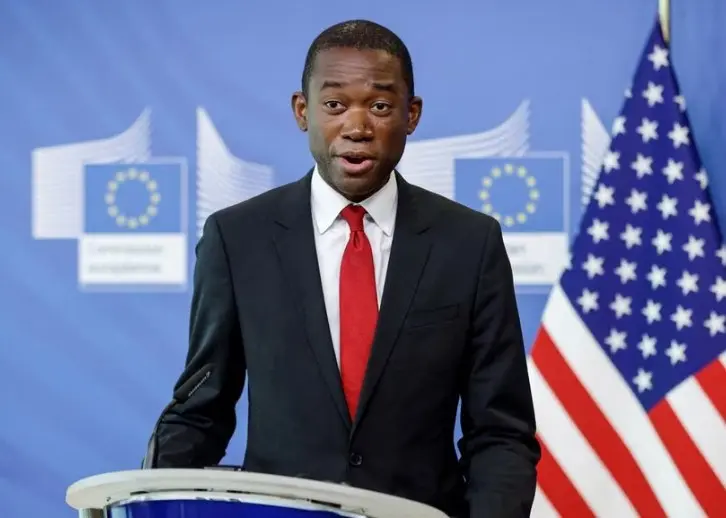
U.S. Deputy Secretary of the Treasury, Wally Adeyemo, made this appeal during a press briefing in Lagos to conclude his three-day visit to Nigeria.
Adeyemo also highlighted that maintaining a stable Naira is essential for Nigeria’s economic growth and for attracting foreign investment into the country.
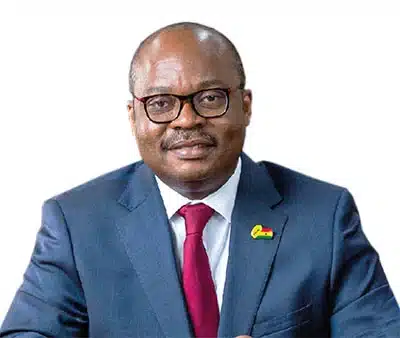
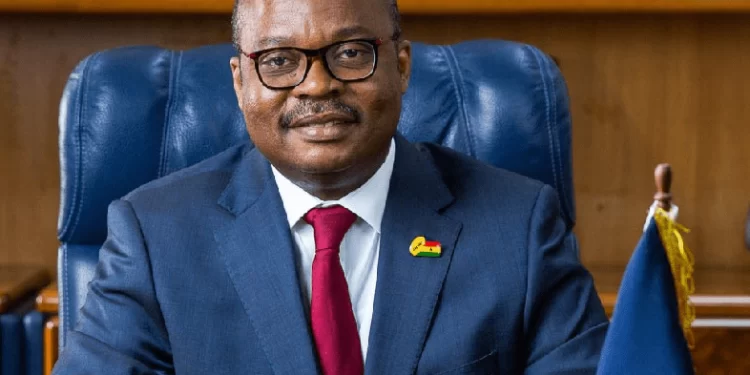
Governor of the Bank of Ghana (BoG), Dr. Ernest Addison, has declared that the economy’s outlook is favorable, with macroeconomic indicators showing signs of improvement.
“We are quite confident about the outlook of the economy, as just last week we had a new reading of inflation, and this is the first time we have stayed on the disinflation path with inflation declining by three percentage points,” he said.
The Governor made these remarks during the 47th meeting of the Committee of Governors of Central Banks of the West African Monetary Zone and the 62nd Ordinary meeting of the Committee of Governors of Central Banks of the Economic Community of West African States (ECOWAS).
This program was a part of the 2023 Mid-Year Statutory Meetings hosted by the Government of Ghana under the auspices of the Ministry of Finance and the Bank of Ghana, which included the West African Institute for Financial and Economic Management (WAIFEM), West African Monetary Institute (WAMI), and West African Monetary Agency (WAMA).
Notably, inflation decreased from 43.1 percent in July to 40.1 percent in August, following its peak at 54.1 percent in December of the previous year.
Dr. Addison, who delivered the keynote address, highlighted that in 2022, Ghana faced an economic crisis, prompting the government to seek an Extended Credit Facility of $3 billion from the International Monetary Fund (IMF) to restore macroeconomic and debt sustainability.
He further emphasized that the government is currently prioritizing the implementation of measures aimed at reestablishing macroeconomic stability and fostering inclusive economic growth.
“There are important lessons to be learnt from the ECF IMF programme which we will share with our colleagues in these meetings,” Dr Addison stated.
He mentioned that the meeting served as a platform to evaluate the progress of the member states within the Economic Community of West African States (ECOWAS) in their pursuit of a unified currency.
Dr. Addison emphasized that the program, of greater significance, offered a chance to reassess the roles of monetary institutions like WAIFEM, WAMI, and WAMA in the roadmap leading to the launch of the ECO currency next year. It also provided an opportunity to delve into other economic and monetary developments within the West African Monetary Zone (WAMZ).
“The question facing us at this meeting is what we shall do differently after 36 years since the inception of the ECOWAS Monetary Co-operation and 23 years since the second WAMZ was instituted,” he stressed, saying, “And this leaves next year a critical year in the lead up to the launch of the ECO under the roadmap in line with the new macroeconomic convergence,” he said.
Dr. Olorunsola Olowofeso, the Director-General of WAMI, noted that macroeconomic vulnerabilities had escalated within the West African Monetary Zone (WAMZ).
These vulnerabilities were prompted by factors such as high inflation rates, an expanded fiscal deficit, increased debt burdens, currency depreciation, and restrictive financial conditions.
“Recent political instability had added to the woes of pre-existing insecurity challenges in ECOWAS, exposing the fragile recovery of the WAMZ economies to the risk of reversal of macroeconomic gains and creating an environment of uncertainty,” he stated.
Renowned economist Dr. Ishmeal Yamson has criticized the government for ignoring all warning indicators before the Ghanaian economy collapsed in 2022.
According to his opinion, the administration was fully aware of the effects of its excessive borrowing policies and how they would affect the economy.
Speaking at a public lecture to celebrate Academic City University College’s fifth anniversary, the administration must accept responsibility for its errors in order to get the economy back on track.
“I don’t think anybody can ever say that they were not aware of the issues facing the country and the likely consequences. So, what they [central government] should have done, is simply understand the implications of these issues clearly and with honesty determine what they can do to change the course of what they were doing,” he is quoted by myjoyonline.com
“I think the biggest risks was that they [central government] refused to accept that things were not going in the right direction, even when the signs were all over the place. So, I think that is something we have to do differently going forward”, the economist pointed out.
In the meantime, the government has recently reopened the invitation for the Domestic Debt Exchange Programme (DDEP), which was initially introduced in February 2023.
This reopening took place on September 13, 2023, allowing individuals who hold domestic bonds and notes but were unable to participate in the earlier exercise to now take part.
The Finance Ministry specified that this time around, the government is extending the invitation to holders of domestic notes and bonds issued by the Republic of Ghana E.S.L.A. Plc and Daakye Trust Plc.
These bondholders are encouraged to submit their eligible bonds in exchange for a new package of tranches.
Furthermore, it’s important to note that this invitation is exclusively open to registered holders of eligible bonds who are not Pension Funds.
The government initially introduced the Domestic Debt Exchange Programme in December 2022 as part of the conditions stipulated by the IMF to secure a $3 billion bailout package and restore macroeconomic stability.
Director of the Institute of Statistical Social and Economic Research (ISSER), Professor Peter Quartey, has emphasized the need for Parliament to promptly reinstate the Fiscal Responsibility Act as a measure to restrain discretionary expenditure.
He cautioned that failing to take this action could exacerbate Ghana’s debt situation, particularly as the country approaches the election year in 2024, despite the ongoing implementation of the International Monetary Fund (IMF) US$3 billion loan-support program.
Prof. Quartey made these remarks during a media interview following a forum held on Monday, September 18, in Accra, which focused on “Ghana’s public debt management: facts, impact, and the way forward.”
The Fiscal Responsibility Act, 2018 (Act 982), mandates the Government to maintain a fiscal balance on a cash basis within a specific year, ensuring it does not exceed a deficit of five percent of the Gross Domestic Product (GDP) for that year.
However, in 2020, it was temporarily suspended due to the onset of the COVID-19 pandemic. The government believed it would not be able to meet the five percent deficit threshold before 2024.
While the primary aim of the Act is to ensure macroeconomic stability and debt sustainability by capping the fiscal deficit at five percent, the country faced a fiscal deficit of 11.4 percent of GDP when the Act was suspended.
Professor Quartey pointed out that this situation significantly contributed to Ghana’s mounting debt problem, leading to the 17th loan-support program with the IMF. He urged Parliament to reinstate the suspended Act, emphasizing that Parliament has the authority to oversee both the Central Bank and the Finance Ministry, and it should fulfill its oversight responsibilities effectively.
“So, when they were faced with the challenge, the easier way was for the Central Bank to support the government. “Prof Quartey, also an Economist said, adding that there should be rules on discretionary spending.
“Discretionary behaviour if not checked, can lead to crisis… We have the right to bring the Finance Minister and the Governor Bank of Ghana to Parliament to seek approval so why do we avoid this situation going forward,” he said.
He recommended that in times of financial difficulties, Parliament should ensure that its suspension of the Fiscal Responsibility was made temporal, and “give timeline, so that for example, in one year they can come back for another approval.” To ensure accountability, he also suggested imposing penalties on individuals who violate the Act.
During a presentation at the forum, Dr. Sam Mensah, a Financial Economist and Investment Banking Consultant, reiterated the importance of practicing fiscal prudence to ensure debt sustainability.
He emphasized the need to revise the Constitution to restrict the government’s discretionary spending and borrowing. Additionally, he called for the implementation of policies aimed at fortifying the financial sector.
Dr. Mensah underscored the significance of these measures, particularly in times of economic crises when the financial sector’s vulnerabilities are exacerbated by its lending to the government.
Convener for the Pensioner Bondholders Forum, Dr. Adu Anane Antwi, has emphasized that they should not be considered for inclusion in the new Domestic Debt Exchange Programme (DDEP) since government had previously granted them an exemption from the exercise.
He pointed out that their inclusion in the new DDEP is a mistake, and he further stated that the government can only make such a decision after revoking the exemption that had been provided to pensioner bondholders.
Speaking on JoyNews’ PM Express, Dr Adu Anane said that “we sent a letter to the minister this [Monday] morning pointing out that we see some irregularities in the invitation and that they could not extend that invitation to cover us. So, we think there’s an error and they should correct it. If you have been exempted, nobody can invite you to come and participate in any reopening unless the exemptions have been cancelled.”
“So, if they want to invite as they must first cancel the exemption, then you know you are now not under an exemption. If the ministry wants to do that, then this is the way they should proceed. But I believe it is an error. They never thought, they didn’t apply their minds to the fact that you could not extend an invitation to an exempted group.”
Dr. Adu Anane clarified that pensioner bondholders, categorized as group B, and who held eligible bonds exempted from the program, were never included in the group that received invitations and were unable to participate in the DDEP for specific reasons.
He asserted that if the inclusion of pensioners was not a mistake, it might be construed as a deliberate effort to entice individuals to join the program.
“But I don’t think the government will do that deliberate attempt. I believe it’s an error and they will own up to that and say, well, unfortunately, we shouldn’t have to input your name there,” he added.
This development follows the government’s announcement of the re-launch of the DDEP, with a specific focus on investors who did not enroll in February.
In a statement, the Finance Ministry highlighted that this opportunity would extend to holders of both E.S.L.A. Plc and Daakye Trust bonds. Additionally, the Ministry acknowledged the existence of a significant number of bondholders who missed the earlier offer deadline and were consequently excluded.
“We believe that there is value for bondholders to participate in this Invitation. Indeed, the New Bonds (which will include the New Tranches) are expected to be more liquid than the Eligible Bonds, considering the larger investment base and the benchmark size of the New Bonds”, the statement said.
The government started a DDEP program last year as part of steps to assure debt sustainability and restore macroeconomic stability under the $3 billion three-year Extended Credit Facility Programme with the International Monetary Fund (IMF).
Economist Professor Godfred Bokpin criticized the government for failing to uphold its commitment to adjust fiscal expenditure during the nation’s debt sustainability crisis, which has led creditors to accept a reduction in their claims to address the situation.
Speaking on JoyNews’ PM Express on Monday, Professor Bokpin expressed his concerns regarding the government’s hasty declaration of the initial program’s success, especially in light of the substantial gap that needed to be addressed according to debt sustainability analysis.
“You remember on this same programme, we said that the government was celebrating success that wasn’t really success. It was pretty clear to us that government didn’t get exactly what it wanted.”
“You know, the government is still spending as though there’s no crisis. Government is living a lifestyle that suggests that it is harvest time. If you look at our approach towards our elections and all of that, it tells you that this approach of royals versus subjects, subjects being creditors, and can be treated anyhow and all of that, I think it’s not good for nation building. It’s not good for building your own financial markets” he noted.
In response to complaints by bondholders who said they were not consulted regarding the DDEP reopening, Prof. Bokpin said, “If you look at the approach government is adopting, there is less value actually placed on consultation and recognizing creditors as important stakeholders in all of this, and therefore it didn’t matter much if government didn’t even consult those people before coming up with this reopening when they had been exempted and all of that.”
The economist claimed that in order to relieve creditors, he anticipated a stronger commitment from the government to put an end to this procedure.
“One would have thought that after such a painful process, we would be moving quite quickly to bring a closure to this whole domestic debt exchange so that the country can build forward better and inclusively, because, you need to generate trust in your financial system and so it’s a bit concerning the way we are going.”
Prof. Bokpin is especially concerned that the DDEP appears to be receiving more attention since the crisis.
He claimed that the government would have behaved better under the scheme if all of the creditors had spoken with a single voice.
“If you look at the fiscal framework, you will see that there is considerable room to make expenditure-based fiscal adjustments that will lessen the burden on creditors. The narrative has been that debt restructuring seems to be the only way out of this. And that is why I am saying that, from the beginning, if domestic creditors had come together in a more organized way and negotiated from a position of strength, there would have been clarity in terms scope of adjustment from fiscal, debt restructuring and all of that so that it is clear to all of us.”
In order to allow holders of domestic bonds and notes who were unable to participate in the exercise to do so, the government reopened its invitation for the DDEP in respect to the February 2023 Exchange on Wednesday.
According to a statement from the Finance Ministry, the government is encouraging E.S.L.A. Plc and Daakye Trust Plc, holders of domestic notes and bonds of the Republic of Ghana, to tender their holdings of the eligible bonds in return for a bundle of fresh tranches.
Only registered owners of eligible bonds that are not Pension Funds are eligible for the invitation, according to the Finance Ministry.
The government highlighted that the upcoming bonds, including the new tranches, are expected to exhibit greater liquidity compared to the eligible bonds, thanks to their larger investment base and benchmark size.
Furthermore, the government indicated that under specific circumstances, it may prioritize payments on the new bonds over payments on the eligible bonds. It emphasized that participating in this administrative reopening would enhance the government’s cash flow position and provide additional support for debt sustainability.
It is worth noting that last year, as part of the $3-billion three-year Extended Credit Facility Programme in collaboration with the International Monetary Fund (IMF), the government initiated the Domestic Debt Exchange Programme (DDEP) as one of the measures aimed at ensuring debt sustainability and restoring macroeconomic stability.
“I see that she doesn’t respect the party, and one thing I see is that her upbringing is also part because she didn’t go to school to see classmates and have classmates, she had home tuition
“…so I will plead with the party to accept the apology but they shouldn’t allow her to venture into Parliament or as a Minister again, she should go and sit elsewhere and find another alternative,” he said in a panel discussion on Pure FM on September 18, 2023.
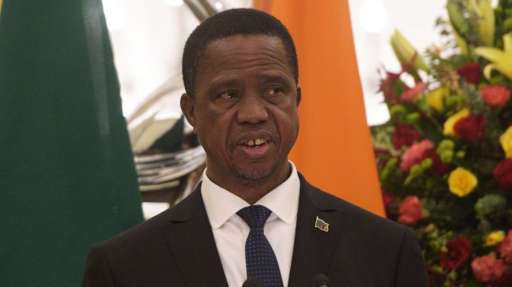
Zambia’s former President Edgar Lungu has taken the government to court after being allegedly barred from traveling to South Korea for a conference.
It is reported that Mr. Lungu had received an invitation to attend a world peace conference, but as he was about to depart, he was denied access to his plane due to a lack of government clearance for the trip.
Mr. Lungu has initiated legal proceedings in the Lusaka High Court, where he is challenging the government’s decision to prevent his travel to South Korea, as outlined in court documents he has submitted.
His political party, the Patriotic Front (PF), has denounced the government’s purported actions, labeling them as illegal.
“If he is invited and the trip is paid for or he can meet the cost of his own trip and that of his entourage, he doesn’t need to inform governments,” argued Emmanuel Mwamba, the PF’s spokesperson.
According to Mr. Mwamba, the former president had previously been denied permission from the cabinet office to leave for a medical trip.
“These draconian and dictatorial actions are a violation of fundamental rights of the former president and have no place in true democracy,” he said.
Hakainde Hichilema, the current president, ousted Mr. Lungu in 2021.
Even though he subsequently proclaimed his retirement from active politics, many people believe he is considering a comeback and may run in the 2026 elections.
Harry Yamson, the Managing Partner at Ishmael Yamson and Associates, has characterized the government’s announcement to relaunch the Domestic Debt Exchange Programme (DDEP) as perplexing.
This announcement comes in the wake of the government’s decision to reopen the Domestic Debt Exchange Programme. The Ministry of Finance issued a statement clarifying that the reopening is intended to provide an opportunity for individuals who were unable to participate in the February 2023 exercise.
However, in an interview with Starr News, Mr. Harry Yamson argued that the government should acknowledge its financial constraints and address the underlying reasons for its financial difficulties. He emphasized that the government has been consistently facing fiscal challenges and should take measures to reduce its expenditure. Mr. Yamson expressed concerns that reopening the DDEP would only exacerbate the country’s debt burden.
“It is just a mark of the government’s own desperation, the government has found itself in a situation where it is offering ever higher interest rates on Treasury Bill. We are now paying more for the treasury bill than we were paying for the old bond. It just tells you that the government does not understand that the work it has to actually need to do is to reduce expenditure not to be going back over and over again. To the bond market and treasury bill market to borrow even larger sums of money,” Mr. Yamson stated.
He continued: “It has a bloated wage bill, it is over spending on prestige projects and simply failing to do the common sense thing that anybody who runs a budget ought to do. Asking people to participate in this DDEP with the excuse that they failed to do it is ridiculous. The DDEP has been extended twice or the third time.”
Mr. Yamson continued by saying that the government’s handling of its finances is completely reckless.
General Secretary of the Convention People’s Party, Nana Yaa Jantuah, has urged the government to establish a dedicated Ministry of Cocoa to oversee all aspects of the cocoa industry.
She believes that having the cocoa sector under the Agricultural Ministry limits its economic potential, even though cocoa is one of Ghana’s top-earning exports, generating around $2 billion in foreign currency and providing employment to approximately 800,000 households nationwide.
“We believe that there should be a ministry for Cocoa, instead of putting it under the ministry of Agriculture. Cocoa has a big market, we have the ministry for Land and Natural Resources, why didn’t we put it under the ministry of environment
In an interview with www.247newsgh.com-monitored TV3 New Day, Nana Yaa Jantuah emphasized the importance of the government taking its obligations towards cocoa farmers seriously and ensuring fair treatment.
She begged with the government to put more effort into enhancing the lives of cocoa farmers rather than politicizing cocoa bean farm gate prices, ending the hullabaloo, and senseless fighting.
“So why is it always a funfair when there is an increment in Cocoa prices? There shouldn’t be, it’s government’s responsibility, if you pay your Childs’s school fees, do you always go round with the receipt?
Senior Presidential Advisor, Yaw Osafo-Maafo, has called on the Ministry of Finance to consider enhancing and aligning the terms of service for Internal Audit Agency (IAA) staff with those of their counterparts in the revenue and accounting class. He argued that such a move would promote fairness and equity among professionals with similar backgrounds and address the challenge of attracting top professionals to join the Internal Audit Agency.
Osafo-Maafo emphasized the importance of adequately compensating those responsible for preventing the misuse of resources.
He made these remarks during the opening of the 2023 Annual Internal Audit Conference, held under the theme: “20 years of Internal Audit Practice in Ghana: Achievements, Challenges, and Way Forward.”
Osafo-Maafo also highlighted the need for a revised Internal Audit Agency Law, as two out of the three public financial management laws passed in 2003 had either been repealed or amended over the past two decades. He believed that amending the IAA Act would enhance the objectivity of internal auditors and provide the agency with the necessary protection and independence to carry out its mandate.
He stressed that neglecting the role of those ensuring compliance with rules and regulations could endanger the system.
Furthermore, Osafo-Maafo noted that some government appointees had been in conflict with internal auditors for too long, viewing them as fault-finders. He encouraged the IAA to regularly educate government appointees on corporate governance, risk management, and internal control processes.
Dr. Oduro Osae, the Director-General of the IAA, highlighted the agency’s achievements, including a significant reduction in financial infractions across various public institutions. However, he noted a 48 percent increase in financial infractions by Metropolitan, Municipal, and District Assemblies (MMDCEs) between 2021 and 2022, primarily due to direct supervision by the internal audit committees of the MMDCEs. He suggested that passing the Act would make these committees more independent and empower them to identify infractions in public institutions.
Dr. Janet Ampadu Fofie, the immediate Past Chairperson of the Public Service Commission, urged internal auditors to proactively identify financial infractions in the public sector and be the “security blanket” ensuring adherence to the Public Financial Management Act (PFMA) to combat corruption.
Professor John Kwaku Mensah Mawutor, Pro Vice-Chancellor of the University of Professional Studies Accra (UPSA), cautioned internal auditors about the threat of Artificial Intelligence (AI) to their profession’s relevance. He advised them to adapt to the contemporary world of work, emphasizing the importance of Information Technology (IT) skills.
He also suggested that training institutions and professional bodies incorporate IT into their training modules to keep internal auditors up to date with the evolving world of work.
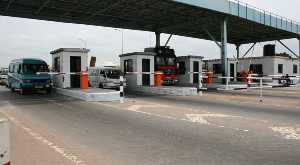
It has emerged that the Ghana Highways Authority has initiated a GH¢1 million project to take down the Accra-Tema Motorway’s tollbooth.
The primary goal of this initiative is to improve road safety and reduce traffic congestion in the area.
As part of this project, the main tollbooths, two on each side of the motorway’s inner lane, will be demolished. However, the auxiliary tollbooths situated outside the main lanes, originally added to alleviate traffic congestion, will remain unaffected.
The concrete slabs supporting the tollbooths will also be dismantled to ensure the complete removal of these structures. Recently, abandoned tollbooths have become safety hazards and witnessed accidents, including a recent fatality.
Concerns raised by the public regarding the visibility of these abandoned tollbooths, especially at night due to the lack of proper lighting or defective reflectors, have prompted this action.
Joseph Atsu Amedzake, the Director of Road Safety and Environment at the GHA, confirmed that preparations are underway for the partial removal of the tollbooths to improve commuting conditions. He also mentioned that resources, equipment, and personnel are being mobilized to expedite the project.
To ensure safety during the removal process, three lanes containing the tollbooths have been cordoned off, with reflective cones placed within the cordoned area to warn motorists about lane closures.
Mr. Amedzake further revealed that solar-powered streetlights will be installed at both the Tema and Accra ends of the tollbooths to address safety concerns during the transitional period, while a permanent lighting solution is being considered for the entire motorway.
Additionally, patching works will commence to address the depressed areas along the motorway, which have been a significant cause of traffic congestion and safety concerns for commuters.
Mr. Amedzake urged motorists and commuters to exercise caution when using the affected sections of the motorway and adhere to speed limits to prevent accidents. This initiative is aimed at enhancing road safety and improving the overall travel experience for commuters.
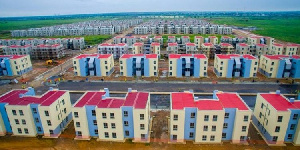
Minister of Works and Housing, Francis Asenso-Boakye, promised that the government would continue to support the private sector in order to make it the leader in housing development.
The Minister claims that the government is working to reduce Ghana’s housing shortage.
The State Housing Company Limited (SHC) in Accra was contracted by the government to build a 40-unit, ultra-modern housing development.
He said: “The government’s interest is to offer support to the private sector so that the private sector can take the lead in housing construction. What the private sector lacks is support from the government, and that is what this government seeks to do by providing that support in the form of subsidies on incumbent land. But the government is also leveraging on public lands to do that.”
“And one big important component of housing infrastructure is horizontal infrastructure, which is the roads, the drains, sewage, electricity, and water. Government is also leveraging on its traditional responsibility of infrastructural provision to make sure that the cost of pricing reduces.”
According to Asenso-Boakye, the project is aimed at people in the middle income range and also serves as a way to raise money for other affordable housing initiatives.
“This estate used to be an abandoned site. We reclaimed it some years ago and construction began about 18 to 24 months ago. It is made up of three- and four-bedroom townhomes and single-family homes. It has various levels of finishing. We also have a sports facility here that residents can use. The concept of this estate was to serve as a support system for our affordable housing project.
“We built this to target middle-income earners, put a bit of a premium on the pricing so that the revenue we generate from this estate can be used to support our affordable housing initiative,” he said.
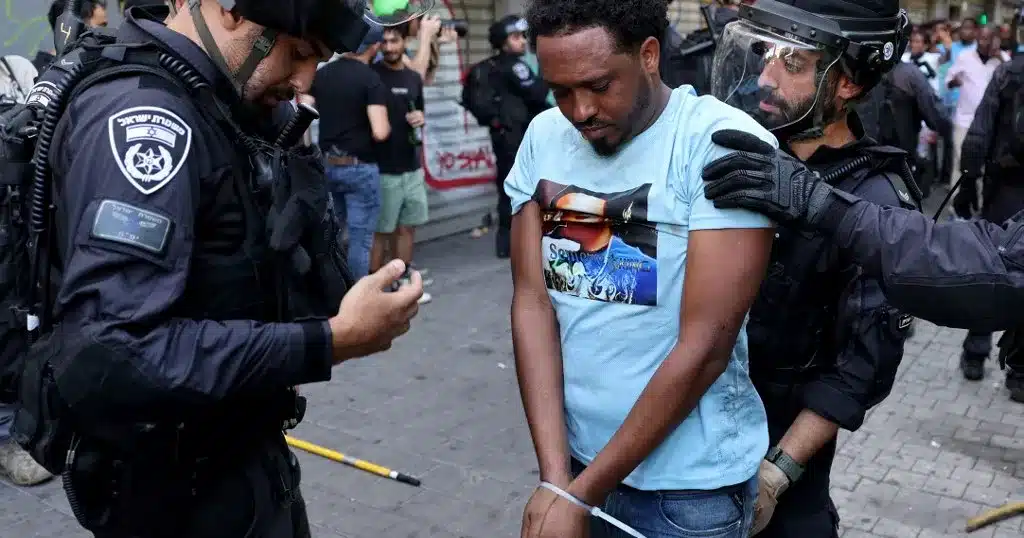
On Saturday, Tel Aviv witnessed a violent clash between supporters and opponents of the Eritrean government, resulting in numerous injuries and widespread destruction. This incident marked one of the most intense confrontations among African asylum seekers and migrants in the city’s recent history.
Among the casualties were 30 police officers and three demonstrators struck by police gunfire. Both sides, composed of Eritrean nationals, armed themselves with construction materials, pieces of metal, rocks, and even an axe, causing havoc in a neighborhood inhabited by many asylum seekers. Protesters vandalized shopfronts and police vehicles, leaving bloodstains on the sidewalks. In a distressing scene, a government supporter lay injured in a pool of blood within a children’s playground.
Israeli law enforcement, clad in riot gear, responded with tear gas, stun grenades, and live ammunition. Mounted officers tried to restore order as protesters breached barricades and hurled rocks at the police. Authorities clarified that live ammunition was used only when officers perceived a life-threatening situation.
Initially, both Eritrean government supporters and opponents had obtained permits for separate events on Saturday and had committed to maintaining distance between their gatherings.
By late Saturday afternoon, the clashes had subsided, but police continued to detain protesters, transporting them on buses for further processing. Notably, anti-government demonstrators wore sky-blue shirts featuring Eritrea’s 1952 flag, symbolizing their opposition to the country’s government. In contrast, government supporters donned purple shirts adorned with a map of Eritrea.
It’s crucial to recognize that Eritreans constitute the majority of the over 30,000 African asylum seekers residing in Israel. These clashes occurred simultaneously with Eritrean government supporters commemorating the 30th anniversary of their current leader’s rise to power near the Eritrean embassy in Tel Aviv, while opponents were allowed to hold a separate event.
Despite assurances that both sides would remain separated during their events, these commitments were eventually broken, according to Chaim Bublil, a Tel Aviv police commander. Eritrea’s notorious human rights record fuels the fears of asylum seekers in Israel and other countries who dread the prospect of returning to their homeland.
As Nigerians continue to grapple with economic challenges stemming from the removal of fuel subsidies, President Bola Tinubu offered reassurance on Thursday that, with patience and determination, he would achieve success.
President Tinubu emphasized the necessity of administering a “bitter pill” to a nation and economy in need of healing to pave the way for a brighter future.
During a meeting with the Board and Management of the Nigeria Economic Support Group (NESG) in Abuja, President Tinubu reiterated his commitment to fostering a robust public-private sector partnership to foster economic growth. He emphasized that his administration’s ongoing, bold, and coordinated reforms are built upon a “strong commitment to accountability and transparency.”
The President reaffirmed his unwavering commitment to fully implementing the eight priority reform areas outlined in the Renewed Hope Agenda within the next three years.
He stressed that Nigeria possesses abundant human and natural resources, coupled with unrealized opportunities that can be swiftly harnessed to bring about new prosperity. He called for the urgent exploitation of Nigeria’s diversity for the collective benefit of the nation, with a particular focus on establishing think tanks in the agricultural sector and creating a commodity exchange.
In his words, “We have left the past behind. I will not dwell on the past. My focus, like a racehorse, remains forward-looking. We possess a wealth of knowledge and untapped mineral resources, as well as a divinely endowed agricultural sector. Yet, we often hesitate to take the bold steps necessary for our people’s prosperity. Instead of harnessing our diversity for collective gain, we engage in needless disputes rather than focusing on thinking and working for our people.”
The President underlined that he was elected on a “no excuses” platform rooted in renewed hope and that he would not tolerate excuses from any member of his government as they embark on fulfilling his agenda.
Olaniyi Yusuf, the chairman of NESG, applauded the economic reforms announced by the Tinubu administration, particularly with regard to the elimination of fuel subsidies, the harmonization of foreign exchange rates, food security, and consolation for sub-national governments.
The NESG Chairman promised that the NESG would cooperate with the newly appointed cabinet to carry out the administration’s eight-point plan.
“Your track record in the effective implementation of bold economic reforms as the Governor of Lagos leaves those of us in the private sector without doubt that you will achieve much greater feats as our nation’s president,” the NESG Chairman confided.
During the courtesy visit, he asked the President to officially declare the NESG Summit open and instructed the heads of the ministries, departments, and agencies (MDAs) to join them and fully participate in the Summit as part of efforts to increase both domestic and foreign direct investment in Nigeria.
National Food Suppliers Association has revealed that the government has not yet paid its members for the food they provided to senior high schools across the nation, which amounts to just around GH300 million.
On Friday, August 18, irate association members surrounded the National Food Buffer Stock Company’s (NAFCo) offices and demanded payment of the 200 million Ghanaian cedis in arrears owed to the suppliers for the year 2022.
After months of pleading with the government to pay their arrears so they could continue their businesses, the suppliers started days of picketing at the Buffer Stock offices in July.
They then expressed dissatisfaction when they only received a portion of the money due to them.
The besieging of NAFCo’s facilities, according to Kwaku Amedume, a spokesperson for the food suppliers group, was done to collect debts that have been owing for two years but had depreciated in value.
“When we picketed the last time, the government was able to raise GH¢100 million to be disbursed to members with the promise that they were going to get us the balance on August 17. So what happened was that some of our members approached the buffer stock to enquire about how far they were preparing to settle us. We went into a meeting with them [on August 18] and the information was that the Ministry of Education has released GH¢80 million to be disbursed to the suppliers and that will bring up the total payment for 2022 to GH¢180 million representing about 85 percent of the total arrears owed suppliers,” Mr. Amedume explained.
But unfortunately, Mr Amedume is arguing that government has still failed to clear arears amounting to GH₵300million
“We still have 2023 arrears that range a little around 300 million Ghanaian cedis that they have promised to do something about it in two weeks’ time, and so we actually went to the Buffer Stock to find out when we were going to be paid.”
The assertion by the government that there is not enough money to continue the building of the Saglemi housing project has been refuted, according to Nana Otu Darko, the convener of the organization Saglemi Not 4sale.
The Saglemi housing project will reportedly be transferred to a private company in its current form at no additional expense to the government, according to the administration.
The government cannot claim that it cannot afford to resuscitate the project since plans are already in place to construct a new Bank of Ghana headquarters worth at $250 million, according to Nana Otu Darko.
“The Bank of Ghana is using a tune of not less than $250 million to build a new edifice. What is wrong with the current edifice? Are they telling us that we don’t have some 46 million dollars for the offsite work and some 68 million dollars for the property itself, amounting to some 112 million dollars, while we are expending about 250 million dollars to build an edifice that will be of no use to the people of Ghana,” he said in an interview with GhanaWeb’s Stella Dziedzorm Sogli.
Under the previous Mahama administration, the Saglemi Housing project was launched in 2012 with a goal of delivering 5,000 housing units for $200 million as part of an Engineering-Procurement-Contracting (EPC) Agreement with Messrs Constructora OAS Ghana Limited.
Only 1506 of the 5000 dwelling units that were originally intended had begun construction by the conclusion of the project execution period, according to the government, and around US$196 million, or 98% of the entire project expenditures, had been spent.
GhanaWeb Business’ visit to Saglemi revealed that the project had been left to the whims of nature.
On Friday, a U.S. government agency reported that Category 4 Hurricane Hilary was barreling towards Mexico’s Baja California peninsula as it issued its first-ever tropical storm watch for California and warned of potentially fatal and catastrophic flooding.
The National Hurricane Center (NHC) predicts that the strong storm will pass over Mexico’s well-known vacation city of Cabo San Lucas by late on Friday. It should then diminish before making landfall on the U.S. West Coast this weekend, but it will still bring severe rains.
“Life-threatening and potentially catastrophic flooding are likely over much of Baja California and Southern California this weekend and early next week,” the Miami-based agency said in its latest advisory.
Spanning two states, Mexico’s Baja California peninsula is divided into a northernmost region where non-essential public activities were suspended from Friday to Monday, including school classes. In Mexico’s second-largest city, Tijuana, officials advised residents in high-risk areas to seek refuge in temporary shelters.
Meanwhile, in the southern state of the peninsula, local authorities postponed a baseball match and announced the closure of ports until late Friday. The state’s governor emphasized the importance of preparedness, urging residents to secure water and essential supplies at home, while discouraging panic buying.
Jamie Rhome, Deputy Director of the NHC, issued warnings about the potential for flooding from San Diego to Los Angeles and even extending to Las Vegas, with notably elevated risks centered around the Palm Springs area.
[1/8]As Hurricane Hilary, a Category 4 storm, approached Mexico’s Baja California peninsula, waves crashed on the shore in Cabo San Lucas, Mexico, on August 18, 2023. REUTERS/Monserrat Zavala Acquire Licensing Rights
Spanning two states, Mexico’s Baja California peninsula is divided into a northernmost region where non-essential public activities were suspended from Friday to Monday, including school classes. In Mexico’s second-largest city, Tijuana, officials advised residents in high-risk areas to seek refuge in temporary shelters.
Meanwhile, in the southern state of the peninsula, local authorities postponed a baseball match and announced the closure of ports until late Friday. The state’s governor emphasized the importance of preparedness, urging residents to secure water and essential supplies at home, while discouraging panic buying.
Jamie Rhome, Deputy Director of the NHC, issued warnings about the potential for flooding from San Diego to Los Angeles and even extending to Las Vegas, with notably elevated risks centered around the Palm Springs area.
[1/8]As Hurricane Hilary, a Category 4 storm, approached Mexico’s Baja California peninsula, waves crashed on the shore in Cabo San Lucas, Mexico, on August 18, 2023. REUTERS/Monserrat Zavala Acquire Licensing Rights
Dr. John Kumah, a deputy finance minister, has encouraged the Public Interest Accountability Committee (PIAC) to take the lead in pushing for a modification of current petroleum agreements so that Ghana might gain more from its oil production.
He claimed that although the government was eager to increase the nation’s involvement in the extractive industry, it was difficult to change the conditions of agreements due to its “interests and limitations”.
“Some people have questioned why our interest in the extractive industries is limited to 10 per cent or 20 per cent of the resources and not 55 per cent or 60 per cent.
“When such issues are pushed vehemently and raised by PIAC, I believe as a nation we can see changes in the terms. It is not easy based on the contract we have signed but everything is possible once there is a will,” he said.
During the unveiling ceremony of a new logo for PIAC, as well as the introduction of a revamped website and a data dashboard, Dr. Kumah emphasized the significance of these initiatives.
The freshly designed logo incorporates elements such as an oil rig, a symbol of an oil droplet, and the Ghana Cedi sign, all strategically chosen to depict the essence and functions of PIAC. The incorporation of the Committee’s corporate colors, black symbolizing crude oil, and gold representing wealth, further reinforces its identity.
The renewed website is a reflection of PIAC’s commitment to bolstering its public outreach, enhancing its visibility, and creating avenues for feedback. Additionally, the Data Dashboard has been developed to offer the public user-friendly access to information concerning Ghana’s petroleum sector.
The Data Dashboard serves as an interactive platform showcasing pertinent statistics on oil and gas production, receipts, as well as the allocation and distribution of associated revenues.
Mr. Kumah underscored that the Government recognizes the complementary role of PIAC’s endeavors in the nation’s development journey, particularly in the effective utilization and management of oil revenue.
“I do not think that government sees your contribution as a tango between what government does and what you say. In the end, the objective is for the nation to do better with our oil resources. Every criticism we make should be aimed at making the system better,” he said.
In an interview, PIAC Chairman Professor Kwame Adom-Frimpong urged the government to finance the committee’s statutory activities to enable it to lead the push for expanding Ghana’s oil stake.
“Once it is coming from him (Deputy Minister), from here I will follow up to ensure what he wants us to do is done with the needed resources,” he said.
Prof. Adom-Frimpong also said the committee hoped to be granted prosecutorial powers through the review of the Petroleum Revenue Management Act (PRMA) to ensure that it could enforce compliance with the PRMA laws.
An aspiring flagbearer for the New Patriotic Party, Kennedy Agyapong, has entered the discourse regarding the government of Ghana’s implementation of a 10 percent tax on bets and lottery winnings.
The Ghana Revenue Authority (GRA) recently announced its intention to commence the enforcement of a 10% withholding tax on all gross gaming winnings, starting from August 15, 2023.
The Member of Parliament for Assin Central, Kennedy Agyapong, has expressed his strong opinion on the matter, asserting his wholehearted support for the Ghana Revenue Authority’s decision. He even went so far as to suggest that the tax rate should have been higher, considering his belief that betting holds unfavorable implications for the future.
Agyapong argued that even in the United States, taxes are levied on windfall gains, which further underscores the appropriateness and commendable nature of the decision made by the Ghana Revenue Authority.
“When you win an amount of 1 billion from the US lottery, your take home is 600 million, meaning about 400 million has been taxed because it’s free money which s taxable. So, they have been charitable to the youth with the 10 percent”, he told TV3.
“I’m surprised the youth are asking me about betting. I will be honest because betting is not anything good for your future and that is why it should be punitive to discourage young men and women to take their destinies into their own hands instead of spending time on games. Whatever money you make today is temporal but what does one get from betting”, he added.
When elected to office, he promised to create jobs, saying that the youth of Ghana can depend on him and give him the authority to address the country’s unemployment problem. He also said that the youth cannot be held responsible for the problem.
Kennedy Agyapong joins Osei Kyei-Mensah-Bonsu as the second lawmaker to defend the choice to tax winnings from gambling and lotteries.
Head Pastor and Founder of Alabaster International Ministries, Prophet Kofi Oduro, has criticized specific types of churches that government should take immediate action to shutdown.
While not naming these churches, he highlighted their unchristian activities and behaviors, suggesting they deviate from true religious practices.
In a viral video, the outspoken preacher emphasized that certain churches engage in practices like creating concoctions from items such as pomades and fragrances, which they sell to people under the pretense of possessing special properties.
He pointed out that these actions reflect a lack of seriousness and a departure from genuine spirituality.
Prophet Kofi Oduro expressed concern over leaders of such churches who participate in absurd activities, such as lying on the floor and dancing to secular songs during worship.
He criticized the impact such behaviors have on people’s perceptions of church teachings and the implications for non-believers.
He further highlighted the display of items like Schnapps and fly whisks (bodua) within church premises as examples of these unorthodox practices.
He directed some blame towards the government for allowing such activities to persist and contrasted this with Rwanda’s stringent regulations on church establishment, which require formal education as a prerequisite.
In Rwanda, he noted, individuals must hold a first-degree qualification to start a church, as education is seen as enhancing critical thinking and reducing the likelihood of unscrupulous practices within religious institutions.
The Assin Central Member of Parliament, Kennedy Agyapong, has unveiled his visionary agenda, aiming to reshape the mindsets of Ghanaians should he be elected as president.
Speaking to the media, Agyapong shared his strategy, which involves collaborating with musicians from all corners of Ghana to craft an inspiring collection of heroic songs.
These diverse songs, spanning genres like R&B, Highlife, Reggae, and Gospel, are intended to act as catalysts for positive change in the attitudes of the Ghanaian populace.
Agyapong outlined his plan: “I will bring all musicians together to let them come up with heroic songs, and we will organize a concert like ‘we are the world.’ We will all come together to play these songs, and then we will distribute them to the media and schools, fostering patriotism, honesty, and discipline among Ghanaians.”
Agyapong envisions his collaboration with musicians as a powerful means of instilling positive values, aligning with his goal of cultivating a more united and ethically conscious Ghana.
Addressing the deeply ingrained corruption challenges that prompted the establishment of the Office of the Special Prosecutor, Agyapong stressed the necessity of active Ghanaian involvement as partners in tandem with government initiatives to combat corruption.
He argued that launching an effective fight against corruption requires first changing the mindset of Ghanaians to recognize their stakeholder role in the country’s development.
He emphasized, “We made a mistake by not changing the mindset of Ghanaians. If you want to fight corruption in this country, Ghanaians should be your partners.
You should educate Ghanaians to let them know this has gone wrong, and we have to correct it. If we don’t, it is not good for our country and development.”
Healthcare professionals working within the Maternity Wing of Mampong Government Hospital have issued a firm caution regarding their plan to initiate a sit-down strike, set to commence on Monday, August 14th, 2023.
The catalyst behind this decision arises from recent actions taken by the administration of the Mampong Nursing and Midwifery Training College, involving the closure of a passageway leading to the hospital’s maternity unit.
These dedicated healthcare workers are currently confronted with the predicament of having to traverse a densely vegetated path due to the blocked route.
They express that this choice not only compromises their safety due to heightened security vulnerabilities, as several colleagues have previously encountered assaults, but also generates distress among patients.
These patients, now compelled to cover extended distances due to the route’s closure, frequently encounter exacerbated health complications.
In a conversation with Citi News, the discontented healthcare staff underlined their firm belief that resorting to a strike presents the only feasible avenue to compel the resolution of their grievances.
“The hospital comprises twin wings, and the road that has been obstructed serves as the primary link connecting the two sections. This obstruction hampers the smooth exchange of goods and services between the maternity wing and the general wing. Our staff members reside beyond this gate, often hampering their ability to respond to emergencies promptly. Therefore, we implore the management to urgently address this matter, fostering harmony between the staff and the local community.”
“Should we not receive any communication from the leadership by Monday, we will have no choice but to initiate a sit-down strike.”
In the most recent effort to combat corruption, Volodymyr Zelensky has ordered the removal of all the directors of Ukraine’s regional military recruitment centers after officials were suspected of accepting bribes from people looking to avoid the front lines.
The president of Ukraine called it “treason” to take money from those who sought to dodge conscription at a time when the army of the nation desperately needs new soldiers.
“This system should be run by people who know exactly what war is and why cynicism and bribery during war is treason,” he said in a video statement. “Instead, soldiers who have experienced the front or who cannot be in the trenches because they have lost their health, lost their limbs, but have preserved their dignity and do not have cynicism, are the ones who can be entrusted with this system of recruitment.”
Zelenskiy, who secured victory in the 2019 elections with a commitment to eradicate the deeply ingrained corruption within the nation, has recently taken personal and very public measures to confront these behaviors.
In January, he removed a minister named Vasyl Lozynsky from his position due to allegations of embezzlement. Additionally, certain individuals within his inner circle chose to exit the government.
Just last week, he strongly condemned the “appalling actions” of certain individuals involved in military recruitment. This followed the discovery of an official in the southern region of Odesa who had inexplicably amassed $5 million in savings and purchased property in Spain.
Presently, there are a total of 112 ongoing criminal cases targeting officials within military enlistment offices. Zelenskiy pointed out that there is evidence suggesting that “some received cash payments, while others received cryptocurrency.”
“The cynicism is the same everywhere,” he said. “Illicit enrichment, legalisation of illegally obtained funds, unlawful benefit, illegal transfer of persons liable for military service across the border.”
Ukraine’s commander-in-chief, Gen Valerii Zaluzhnyi, has been ordered by Zelenskiy to hire new heads of the territorial recruitment centres, with applicants facing checks from the security service.
“Every ‘military commissar’ who is subject to criminal proceedings will be held accountable,” Zelenskiy said. “It is quite fair. Full responsibility. The dismissed ‘military commissars’ and other officials who have shoulder straps and in respect of whom no evidence of crimes or violations has been found, if they want to keep their shoulder straps and prove their worthiness should go to the front.”
Zelenskiy did not address another reported case of alleged corruption highlighted by the Ukrainian media, this time involving the Ministry of Defence.
According to documentation reviewed by the investigative news website ZN.ua, the Ministry of Defence purportedly made excessive payments for summer camouflage gear from Turkey, which were then presented as winter coats for the soldiers.
Based on documents reportedly obtained by ZN.ua, a batch of 4,900 jackets that should have logically amounted to $142,000 were astonishingly procured for $421,000.
The report alleges that the surplus money was retained by the Turkish company that provided the goods, and interestingly, the company is owned by a Ukrainian hailing from the southern city of Zaporizhzhia.
As of now, the Ministry of Defence has not issued any response to these allegations.
Back in June, Ukrainian security services initiated an investigation into Vyacheslav Shapovalov, a former deputy minister of defence, and Bohdan Khmelnytskyi, a previous head of the state procurement department within the defence ministry. This investigation revolved around the procurement of substandard winter attire from foreign sources. It remains unclear whether these two cases are interlinked. Both Shapovalov and Khmelnytskyi have adamantly denied any misconduct.
These corruption scandals have surfaced at a time when Ukrainian armed forces are facing mounting pressure due to a Russian offensive in the eastern Kharkiv region, located in the northeast of the country.
The Russian defence ministry reported on Telegram that, in addition to other clashes, 20 Ukrainian soldiers were tragically lost in attacks within the Kherson oblast in the southern region.
Tragedy also struck on a civilian level, with an eight-year-old losing their life as a result of a Russian missile striking a residence in western Ukraine’s Ivano-Frankivsk region, approximately 60 miles from the Polish border. Ukrainian officials further stated that a woman and a 44-year-old man fell victim to a drone strike in the city of Beryslav within the Kherson oblast.
In the city of Kherson, a high-rise building was hit by artillery fire earlier that Friday, resulting in the death of a 53-year-old man, according to regional governor Oleksandr Prokudin on Telegram.
Kyiv, the capital city, came under attack with a barrage of four massive explosions on that same Friday. The reverberations of these explosions were felt across the city as Kyiv’s air defense systems successfully intercepted Russian ballistic missiles.
The mayor of the city, Vitali Klitschko, shared via Telegram: “In addition to the remnants of the rocket that impacted a children’s hospital within the city’s boundaries, two additional crash sites were located in Kyiv’s Obolon district. The roof of a private residence on Bogatyrska Street incurred damage.
Furthermore, in the Obolon area, wreckage was discovered within an open space belonging to one of the summer cooperatives. Thankfully, there have been no reported casualties.”
A collaborative open-source initiative involving the BBC Russian service and the Mediazona website has independently verified the deaths of over 30,000 Russian service personnel connected to the conflict in Ukraine.
This project, utilizing publicly accessible information including online obituaries, newspaper reports, and images from gravestones, has systematically documented and categorized the fatalities based on geographic region, military unit, and age. However, Mediazona stipulated on its website that the actual count of casualties is notably higher.
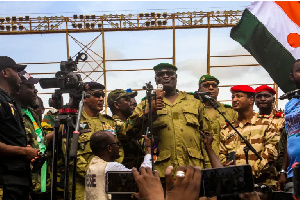
A former politician and rebel leader in Niger has started a movement opposing the military government that seized control in a coup on July 26. This is the first indication of internal opposition to army rule in the crucial Sahel nation.
Rhissa Ag Boula’s new Council of Resistance for the Republic (CRR), which was announced on Wednesday, intends to bring back ousted President Mohamed Bazoum, who has been held captive at his home since the takeover.
“Niger is the victim of a tragedy orchestrated by people charged with protecting it,” the statement said.
Following the military government’s rejection of the most recent diplomatic mission from the African Union and the Economic Community of West African States (ECOWAS), diplomatic efforts to undo the coup have halted.
In response to demands to talk before a summit on Thursday where the chiefs of state from the ECOWAS will discuss the use of force, the coup leaders in Niger on Tuesday refused entrance to African and UN envoys.
In a statement, Ag Boula stated that it would make itself accessible to ECOWAS for any constructive purpose and that it supports the organization as well as any other foreign actors attempting to restore constitutional order in Niger.
Another CRR member said several Nigerien political figures had joined the group but could not make their allegiance public for safety reasons.
Ag Boula played a leading role in uprisings by Tuaregs, a nomadic ethnic group present in Niger’s desert north, in the 1990s and 2000s. Like many former rebels, he was integrated into government under Bazoum and his predecessor Mahamadou Issoufou.
While the extent of support for the CRR is unclear, Ag Boula’s statement will worry the coup leaders given his influence among Tuaregs who control commerce and politics in much of the vast north. Support from Tuaregs would be key to securing the military government’s control beyond Niamey’s city limits.
Democratic ECOWAS member states such as Nigeria want the reinstatement of the civilian government that had been relatively successful in containing a deadly campaign by armed groups linked to al-Qaeda and ISIL (ISIS) which has devastated the Sahel region.
Mutinous soldiers detained Bazoum and seized power on July 26, claiming they could do a better job at protecting the nation from the violence.
The coup comes as a blow to many countries in the West, which saw Niger as one of the last democratic partners in the region against the expansionist threat of armed groups. Niger also matters to the global market on various fronts, including its 5 percent share of the global supply of uranium.
Video Duration 04 minutes 30 secondsNiger coup leaders rebuff overtures backed by US, UN & AU to talk
Complex diplomatic picture
The coup has already led to border and airspace closures that have cut off supplies of medicine and food, hampering humanitarian aid in one of the world’s poorest countries.
US Secretary of State Antony Blinken said late on Tuesday that he had spoken to Bazoum to express continued efforts to find a peaceful resolution to the crisis.
“The United States reiterates our call for the immediate release of him and his family,” he posted on the social media platform X, formerly known as Twitter.
Spoke to Nigerien President Bazoum to express our continued efforts to find a peaceful resolution to the current constitutional crisis. The United States reiterates our call for the immediate release of him and his family.
Nigeria’s President and ECOWAS chairman Bola Tinubu imposed more sanctions on Niger on Tuesday, aimed at squeezing entities and individuals involved in the takeover, and said all options were still on the table.
ECOWAS has said the use of force would be the last resort. The bloc’s defence chiefs have agreed on a possible military action plan, which heads of state will discuss at their summit on Thursday in the Nigerian capital, Abuja.
But Mali and Burkina Faso, ECOWAS members that have rejected Western allies since their own military took power in coups in the past three years, have promised to defend Niger’s new army rulers from any forceful attempt to remove them.
In a letter to the UN, they called on the Security Council to prevent any armed action against Niger, saying it would have unpredictable consequences such as the break-up of ECOWAS, a humanitarian disaster, and a worsening security situation.
Accusing Western powers of using ECOWAS as a proxy to conceal a hostile agenda towards Niger, they said they were committed to finding solutions through diplomacy and negotiation.
Mali and Burkina Faso previously said they would treat any military intervention in Niger as an act of war.
Further complicating the diplomatic picture is the influence of Russia in the Sahel region, which Western powers fear could grow stronger if the military government in Niger follows Mali’s example by throwing out Western troops and inviting in Wagner mercenaries.
Niger currently hosts US, French, German and Italian troops under agreements made with the now-deposed civilian government.
One of the institutions that needs to be safeguarded is the Bank of Ghana (BoG), according to Godfred Bokpin, a lecturer at the University of Ghana Business School.
“One of the institutions we want to protect is the Bank of Ghana, you don’t do politics with the Bank of Ghana,” he said, speaking at the 3Business Ghana’s Economic Forum Agenda held on Wednesday, August 9.
Previously, he accused the BoG of deliberately relinquishing its autonomy and surrendering its core principles to the government through excessive involvement in extending financial aid to the government.
Professor Bokpin attributed the central bank’s present financial challenges to its excessive engagement with the government.
He asserted that these financial difficulties are eroding trust in the financial sector.
In his view, Dr. Ernest Addison, the Governor, should have considered stepping down by now.
“We are undermining confidence in our financial system. Remember the central bank could become solvent but that doesn’t restore total confidence in our system. If you look at what has happened to the banks, many of them have had to revise their line of credit in terms of consumer banking.”
“In any serious society, I believe that maybe the Governor would have advised himself and resigned by now. Even though they find themselves in the situation, I think the central bank intentionally compromised its independence, sold its birthright to the government,” he said in an earlier recorded interview with Alfred Ocansey which was aired on the Ghana Tonight show on TV3 on Tuesday, August 8.
The resignation of the Governor and his two appointees, Dr. Maxwell Opoku-Afari and Elsie Addo Awadzi, has also been asked by the minority in parliament.
This came after Minority Leader Dr. Cassiel Ato Forson said that Dr. Addison was spending $250 million to construct a new central bank headquarters at a time when the Bank was having financial issues.
Due to the lack of funds at the BoG, Dr. Forson charged that the Governor had printed money to fund this endeavor.
“The Bank of Ghana does not have money but spending GHS250million for a new head office, which means he is printing additional money to finance this project,” Dr Forson said.
After stating that the governor merely prints money to sustain the government’s expenditures, he further granted the Governor and his two deputies up to 21 days beginning today, Tuesday, August 8, to quit.
“We have to get this Governor out and let us have a new Governor. If we allow him to stay in the office, we will set bad precedence for future managers to do the same,” he said at a press conference in Accra on Tuesday, August 8.
Dr Forson stressed, “He has messed us so much that we cannot wait to see his back.”
“We demand the immediate resignation of the Governor and his deputies within 21 days. We will march to occupy the central bank to save the Bank of Ghana if he fails to reign. The March will ensure accountability,” he said.
Dr. Forson’s remarks are a response to the GHS60.8 billion loss incurred by the Bank of Ghana.
This loss can be attributed to factors like the impairment of the Government of Ghana’s securities holdings amounting to ¢48.45 billion, the impairment of loans and advances granted to quasi-government and financial institutions totaling ¢6.12 billion, and the depreciation of the local currency resulting in a net exchange loss of ¢5.27 billion.
The root of this loss lies in the implementation of the Government of Ghana Domestic Debt Exchange Programme.
The Bank of Ghana has shared that its Board of Directors and Management conducted a thorough evaluation of the potential policy solvency implications arising from the negative net worth position.
This assessment encompassed the bank’s ability to continue generating sufficient income to cover monetary policy operations and operational costs.
According to the directors’ perspective, the Central Bank is expected to operate as a going concern, with expectations of an improved macroeconomic situation supported by policy actions directed at enhancing the bank’s balance sheet.
Outlined in its Annual Report, the Central Bank has outlined strategies believed to contribute to its recovery.
These measures include retaining profits to facilitate capital restoration until equity returns to a positive region, refraining from monetary financing of the Government of Ghana’s budget (a Memorandum of Understanding for zero financing was signed between the Bank of Ghana and the Ministry of Finance on April 26, 2023), implementing immediate measures to optimize the bank’s investment portfolio and operating cost structure to enhance efficiency and profitability, and assessing the potential need for government-initiated recapitalization support in the medium-to-long term.
It furthered that the Board of Directors and Management are of the view that, “continued efforts at restoring macroeconomic stability and debt sustainability in addition to long-term efforts at building reserves, provide enough basis for continued operational policy efficiency existence for the foreseeable future”.
Through the Ghana Enterprises Agency (GEA), the government has initiated the distribution of GH¢35 million in grants to a select group of 270 micro, small, and medium enterprises (MSMEs). This effort is part of the Technical Assistance and Grant Programmes within the Ghana Economic Transformation Programme (GETP).
The financial grants will empower the recipients to support diverse projects, encompassing the procurement of machinery and equipment, working capital, and investments in crucial last-mile infrastructure.
Under the umbrella of the Ghana Economic Transformation Project, the Technical Assistance and Grant Programmes consist of three distinct categories: Youth in MSME, Women MSME, and SME High Growth Programmes, all of which have received funding from the World Bank.
At a grant-signing event held in Accra, Minister of Trade and Industry, Kobina Tahiru Hammond, emphasized that this initiative reflects the government’s commitment to reinforcing local enterprises and positioning them as robust contributors to economic expansion and transformation.
He further underscored that this program is in alignment with the Ministry of Trade and Industry’s drive to cultivate SMEs into dynamic drivers of growth.
“Through a focused and strategic approach, Ghana aims to transform its economy by promoting the establishment and growth of industries across various sectors. To achieve this, the government follows a strategic roadmap that seeks to improve the competitiveness of local MSMEs and position them to benefit from existing and future global or regional trade opportunities – such as the African Continental Free Trade Area (AfCFTA) initiative.
“It is expected that the investment made, as marked by the agreements signed today, will yield the desired results which will be crucial in transforming the business landscape. It is our earnest desire that these resources will help to boost production, exports and innovation across the MSME landscape,” the minister said.
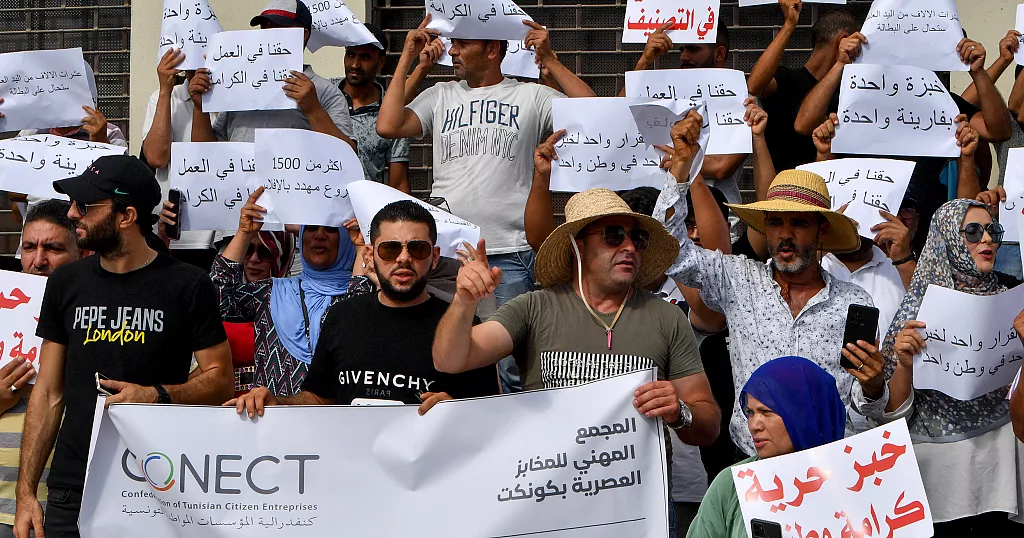
In order to protest the closure of more than 1,500 of their bakeries, some 200 Tunisian bakersparticipated in a sit-in outside the Ministry of Commerce’s headquarters in Tunis. The government’s decision to stop providing flour with subsidies last week led to the closure of the bakeries.
Prior to this, the bakers’ union had said the 15-day demonstration would take place in several locations.
“Today we are staging a sit-in because we are forbidden to carry out our normal activity, which is the production of baguettes. This was announced in a statement by the former head of government, Bouden (former prime minister Najla Bouden). Our businesses are now closed. The people you see today have not been working for a week.” Mohamed Jamali, president of the Groupement des boulangeries modernes (Group of modern bakeries)
Tunisians frequently encounter shortages of essential commodities, which the government subsidizes. Currently, they are grappling with a fresh scarcity of bread, a vital staple in the daily routines of the North African populace.
During a meeting held on July 27, Kaïs Saïed advocated for the elimination of the categorization of bakeries as classified or non-classified, emphasizing that there should be a single type of bread for all Tunisians.
“We want to be able to source flour like all bakeries.” Zayneb Becha, baker.
“I came here today because we have no income. 1,500 bakeries are closed and their owners are risking going to prison, as they are no longer able to pay their rents and leasing debts. 1,500 bakeries employing six to seven workers each! All of them are now jobless and homeless” Abdelbeki Abdellawi, baker said.
The Tunisian government led by a new prime minister Ahmed Hachani will be trying to contain the discontent in a country that experienced deadly “bread riots” 40 years ago.
The Bank of Ghana’s choice to cut government debt by 50% has been hailed as a vital step that saved the economy and won over allies abroad.
The bank’s action provides a favorable signal to international observers, who were closely following the situation before committing to their own debt remedies, Dr. Philip Abradu-Otoo, Director of Research at BoG, emphasized.
“With BoG being the absorber, the external partners are also watching. Remember they also need to go through some debt treatment but before that they needed to see what will happen to the Bank of Ghana and now that they’ve seen that, it will send a signal to them”, the GNA quotes him as saying.
“With this, I’m sure it will make the process go faster because the biggest policy institution has taken a haircut”, Dr. Abradu-Otoo added.
The BoG’s absorption of losses is likely to hasten the process of resolving debts.
In the year 2022, BoG faced a substantial loss amounting to GHS55.12 billion. This was primarily attributed to the Domestic Exchange Programme (DDEP), which entailed a 50 percent reduction in non-marketable government instruments held by the bank. A similar approach was adopted for marketable instruments held by other financial institutions, resulting in an impairment of GHS48.40 billion.
Further losses were incurred due to fluctuations in exchange rates leading to revaluations of foreign assets.
In spite of these challenges, the Central Bank has expressed its unwavering commitment to upholding policy solvency, effectively managing inflation, and ensuring the stability of the financial sector.
Various measures, including government assistance for recapitalization, are expected to restore equity by the conclusion of 2027.
An entrepreneur and CEO of Bencyn Pharmacy, Benjamin Anyanah Achelisewine, has raised an important concern about government payroll workers who find themselves burdened with multiple expensive loans.
According to him, the main reason behind this financial predicament is their lack of knowledge on how to invest their income wisely to generate returns.
Instead of utilizing their earnings to accumulate profits, these workers tend to spend money meant for the future, leading to a cycle of debt. Mr. Achelisewine attributed their inability to invest to their limited financial knowledge and the absence of a proper financial plan to guide them in managing their finances prudently and lucratively.
In an interview with Bolgatanga-based Dreamz FM, Mr. Achelisewine, who has diverse investments across various sectors beyond pharmaceuticals, emphasized that many government workers are experiencing severe financial strain due to their debts. Consequently, they are forced to resort to further borrowing to meet their basic needs and provide for their dependents.
“If you go to those who are in the formal sector – and I have gone there several times – if you are talking to them [about investment], they are rather interested in taking tomorrow’s money and spending it today,” he said.
“After all, they have an income coming…Because they have a regular income, the financial institutions come with juicy things: “If you take this you can get this’. They take those monies and they get stuck. Some of them will find it difficult to come out because each time they are getting out, they will go and get another loan,” he lamented.
He said that in order to get out of debt and become financially independent, one could identify a society issue, gather the appropriate information, and then resolve the issue by offering goods or services. One will achieve financial success in this method.
Mr. Achelisewine is passionate about encouraging financial literacy and supporting the success and scaling up of enterprises.
The Economist and Director of Operations at Dalex Finance, Joe Jackson, has rejected assertions made by the Finance Minister, Ken Ofori-Atta, regarding the country’s economic upturn and its trajectory toward recovery.
Jackson contends that the country’s economy remains critically unwell and likened it to being in the “Intensive Care Unit.”
He criticized Ofori-Atta for not being candid about the state of the economy during his presentation on the Mid-Year Budget review in Parliament.
Ofori-Atta had informed Parliament that Ghana was gradually achieving progress in reversing the economic challenges faced in 2022.
“Mr. Speaker, we have turned the corner and, more importantly, we are determined to continue down that path. Soon, we expect the measures taken to result in economic activity greater than anything experienced in the history of the Fourth Republic. Our plans and programmes should soon lead to a sustained increase in domestic production, including manufacturing and farming, replacing many of the products that we are used to importing,” the Finance Minister stated.
He highlighted the government’s efforts and their positive outcomes, urging the nation to acknowledge the strides made over the past three years.
However, Joe Jackson, speaking to the media, outlined several ongoing issues affecting Ghana’s economy. He pointed out persistent problems in revenue generation, a mounting public debt, and insufficient substantial economic growth necessary for meaningful development.
Jackson remarked, “I would say we’ve turned the corner when we’re out of the critical phase, but as of now, the economy is still in the ICU. It’s a disservice to the people to claim otherwise.”
The economist emphasized the urgency of curbing unnecessary government expenditures to address the fiscal deficit.
“I will say that we have turned the corner when we have moved to the recovery ward but at this moment this economy is still in the ICU and I think it is a disservice to the people of this country to say that we have turned the corner,” Mr Jackson said.
He called for a reduction in the size of the government, streamlining bureaucratic structures, and prioritizing essential sectors for sustainable financial management.
The opposition National Democratic Congress (NDC) has challenged the government’s claims of stabilizing the economy, asserting that President Akufo-Addo is avoiding responsibility for his administration’s fiscal irresponsibility, which has led to the current economic challenges.
The NDC argues that the government cannot boast of economic stability without acknowledging its own role in causing the current state of the economy.
Fifi Kwetey, the General Secretary of the NDC, criticized the Finance Minister, Ken Ofori-Atta, accusing him of attempting to cover up the government’s mismanagement of the economy.
“The kind of collapse we have seen in terms of the economy is one that requires a certain amount of humility. To rush quickly and want to start beating your chest and applauding, it indicates that somehow they have not learned as quickly as they should,” he said.
He said, “by no means can you call this ‘turning the corner.’ In the first place, you can’t even call it turning the corner. A situation where inflation has gone up to over 50 per cent, and now they are trying to bring inflation down to some 30 or a little below 30, you call it turning the corner?”
Mr. Kwetey further pointed out that the government is claiming to have stabilized the economy because it is desperate to look good.
“The very fact that they still allow the country to believe that the Russia-Ukraine war and Covid-19 are the real reasons why we are where we are tells me that this is a group that simply has not accepted responsibility,” he continued.
Although he accepts that there were external economic shocks during the period, he believes, “those obstacles have been faced by other countries, but no country in West Africa or Africa has gone through what we’ve gone through.”
Mr Kwetey added that the government not accepting responsibility shows that they have no genuine remorse.
“There’s not even an acceptance of the real acts of irresponsibility, fiscal irresponsibility, and moral leadership irresponsibility that have brought us here. So to jump quickly and start celebrating worries me because it’s like you haven’t really learned. And therefore, if you are given an opportunity, you quickly run it down again.”
The Bank of Ghana has announced its resolution to cease all financing to the government of Ghana from now on.
This decision, according to Dr. Philip Abradu-Otoo, the Director of Research at the apex bank, is one of the four critical steps being implemented to address the current financial distress faced by the Central Bank.
“Those steps that are put in place will ensure that we get out of this place quickly and if you read the governors foreword in our annual report, four steps have been outlined; one, is to try as much as possible not to lend to government again.
“Which in the IMF program we have logged that in as zero financing because it is part of the problem,” he told JoyNews in an interview.
According to the Bank of Ghana’s 2022 annual financial report, there was a significant loss of over GH¢60 billion.
Critics attribute this loss primarily to the government’s excessive borrowing and lack of financial discipline.
In an interview with Joynews, Dr. Abradu-Otoo explained that the Bank of Ghana is currently implementing its zero financing strategy as a measure to restore the bank’s financial stability.
However, the government’s decision to write off debts owed to the Central Bank has faced strong opposition from the parliamentary minority.
Isaac Adongo, the Minority spokesperson on Finance, addressed the media in Parliament, arguing that the debt write-off without parliamentary approval violates the Public Financial Management Act and, therefore, should be considered invalid.
The minority has demanded that the government reinstate the debt, which resulted from a Debt Exchange Program implemented by the government.
Students at several Colleges of Education in the Ashanti Region have begun leaving their campuses for home due to the ongoing strike by the Colleges of Education Teachers Association of Ghana (CETAG).
However, those who remain on campus are now stranded and worried about the potential adverse effects of the strike on their academic calendar and exams.
Some of the students, who were supposed to write exams during this period, expressed concern that the strike could disrupt their academic progress if not resolved promptly.
“I can say the strike is really affecting us. The level 3 students are left with about two weeks to write their exams. Even our seniors who are in levels 200 and 400 are waiting for us to vacate so that they can occupy the space for them to write their semester exams. But we are stranded here, just roaming and visiting town. We have been having our own discussions.”
“Nothing is going on, even some of our books have not been given to us. We need the lecturers, so we are pleading with the government to come to our aid,” said one of the students, Paulina Oduro.
They are calling on the government to address the concerns of their teachers to ensure a quick resolution.
One student shared, “The strike is really affecting us. Level 3 students have just two weeks left to write their exams, and even our seniors in levels 200 and 400 are waiting for us to vacate so they can use the space for their semester exams. But we are stranded here, with nothing going on and some of our study materials not given to us. We need the lecturers, so we plead with the government to come to our aid.”
Another student highlighted the impact on level 400 and 100 students, with many level 300 students already leaving for home. The strike has disrupted their studies, and they are resorting to having their own discussions in classrooms.
The situation remains tense as students hope for a swift resolution to the strike to resume their studies and complete their exams without further delays.
Ongoing fighting between local militias and government troops in Ethiopia’s Amhara region continues to be reported, with clashes occurring in various areas.
Notably, the outskirts of Gondar, one of the region’s largest cities, have become a battleground, leading to disruptions in transport services, especially around the city’s airport.
Mobile data services have also been disrupted in major cities and towns within the Amhara region, including the capital, Bahir Dar. In Lalibela, home to famous rock-hewn churches, militias have taken control of the airport, causing disturbances in flight operations.
Protesters supporting local militias, known as the Fano, have been seen using roadblocks made of rocks and trees to hinder the movement of the army. Reports from media outlets and activists associated with the group suggest that they have gained control of several towns and villages, although these claims have not been independently confirmed by the BBC.
Additional reports indicate that prisons and police stations have been broken into in some towns, adding to the escalating tensions in the region.
In response to the situation, Deputy Prime Minister and Foreign Minister Demeke Mekonnen expressed concern, calling the recent developments “alarming.”
The Amhara region has been experiencing underlying tensions and sporadic clashes since authorities announced the disbandment of a state-backed paramilitary group. Critics of this move feared it would leave the region vulnerable to attacks, exacerbating the already volatile situation.
An advisor to the governor of the central bank, Stephen Opata, has stressed that the Bank of Ghana has not given the government any kind of financing support for the fiscal year 2023.
He claims that the Bank of Ghana’s decision will likely remain in effect till the present IMF program expires. He pointed out that it is a requirement of Ghana’s program with the Fund.
Stephen Opata explained the action to reporters at a news conference on August 2, 2023, saying it is in line with a Memorandum of Understanding (MoU) for zero financing that the BoG and the government of Ghana signed.
“The effort to rebuild equity has started following the signing of the MoU on zero financing to government but we recognize that maybe at some if government can do something about capital injection but probably this is not the time for that…instead we should focus on the three-year reforms under the IMF programme,” Mr Opata said.
Before securing its 17th IMF deal, the Central Bank Governor, Dr. Ernest Addison, stated that both the Bank of Ghana and the Ministry of Finance had committed to completely financing the budget in 2023 and beyond.
This decision is in line with prudent macroeconomic policies aimed at initiating a disinflation path and reducing the monetary policy rate.
Speaking at the 60th-anniversary launch of the Institute of Chartered Accountants Ghana (ICAG), Dr. Ernest Addison emphasized that the Memorandum of Understanding (MoU) also aims to strengthen the country’s reserve buffers to cover at least 3 months of imports by the end of 2025.
On Tuesday, August 2, 2023, the governmentinitiated the National Affordable Housing Project with a groundbreaking ceremony at the Pokuase site.
President Nana Addo Dankwa Akufo-Addo expressed that this project marks the first of its kind undertaken by his government since assuming office in 2017.
The ambitious project aims to address Ghana’s housing deficit, which stands at around 2.0 million units, by providing a total of 14,000 affordable housing units to be developed by private developers.
Under the plan, the Ministry of Works and Housing, along with the Affordable Housing Programme, will contribute 8,000 housing units at Pokuase/Amasaman in the Greater Accra Region and 6,000 housing units at Dedesua in the Ashanti Region.
The Minister for Works and Housing, Francis Asenso-Boakye, highlighted the significance of this milestone in the government’s effort to offer safe, quality, decent, secure, and affordable housing for Ghanaians.
Per reports, the prices of the housing units are denominated in US dollars but can be paid in the cedi equivalent at the prevailing Bank of Ghana exchange rate.
To protect potential buyers, the private developers are prohibited from selling above the agreed price ceiling, but they do have the flexibility to sell the housing units below the set prices, providing even more affordable options for interested buyers.
See the prices below:
– A Studio apartment: $13,800 – One-bedroom house: $20,700 – Two-bedroom house: $34,500 – Three-bedroom house: $42,550
The Ghanaian government has initiated a large-scale affordable housing project aimed at addressing the country’s housing deficits. The project, involving 14,000 housing units, will be developed by private developers in collaboration with the Ministry of Works and Housing and the Affordable Housing Programme.
Of the total housing units, 8,000 will be provided in the Pokuase/Amasaman area in the Greater Accra Region, and the remaining 6,000 will be located in Dedesua, Ashanti Region.
Minister for Works and Housing, Francis Asenso-Boakye, emphasized that this project is a significant step towards granting Ghanaians access to safe, high-quality, decent, secure, and affordable housing options.
During the launch of the project on August 1, 2023, the Minister stated, “We decided to undertake a comprehensive review of the public housing situation, leading to the development of a revised framework comprising two parts: the supply-side and the demand-side.”
“On the supply-side, the government will provide free unencumbered land and associated infrastructure, after which the private sector will be invited to construct the housing units for its subsequent sale at an agreed selling price.
“On the demand-side, the government, through the National Homeownership Fund under the Ministry of Finance, will provide subsidized mortgages for some of the completed housing units,” he said.
As part of the project, the government has made arrangements to subsidize the housing units by providing land and infrastructure, effectively covering a significant portion of the construction cost. However, it is essential to note that the private sector will be responsible for financing the entire project.
During the launch of the project, President Nana Addo Dankwa Akufo-Addo emphasized that this is the first housing initiative undertaken by the government since he assumed office. As a result, extensive feasibility studies have been conducted, encompassing assessments of environmental, social, property, and traffic impacts, as well as thorough analyses of housing stress and financial viability.
In addition, the Ministry of Works and Housing, in collaboration with the developers, has engaged extensively with various Trade Unions, leading to their commitment to purchase the housing units. This collective effort aims to ensure that the housing project meets the needs and demands of the target population.
“This strategic collaboration will help to ensure a steady demand for the housing units, which will contribute to the overall success of the programme,” he noted.
Five developers comprising both local and international companies have been selected to participate in the programme.
These are Rehoboth Propertes, State Housing Company Limited, Devtraco Group Limited, FrankPauls Ventures Company Limited and Douja Promotion Addoha Groupe Limited.
The project is expected to be in two phases. The first phase comprises 4000 housing units to be constructed in 18 months with the remaining 4000 housing units to be completed in the second phase within the same time frame.
Ghana has extended an invitation to local pension funds for a debt restructuring deal aimed at providing the government with fiscal flexibility in the medium-term without impacting the retirement funds’ value.
Under this initiative, pension funds have been offered the opportunity to exchange approximately 31 billion cedis ($2.7 billion) of their existing investments. These existing investments currently carry an average coupon of 18.5%. In exchange, the government is proposing two new bonds maturing in 2027 and 2028, with an average interest rate of 8.4%. The Ministry of Finance announced this exchange memorandum on Monday.
As part of the deal, the holders of these pension funds will receive a larger portion of the new securities, which were originally issued in February. Additionally, they will be given an additional cash-payment instrument with a 10% return. This arrangement will result in a total stream of coupon payments amounting to 21%, according to the memorandum.
For the years 2023 and 2024, both instruments will pay a 5% coupon in cash, while the remaining amount will be added to the nominal value of the two bonds and paid upon maturity.
This restructuring is designed to ensure the government’s compliance with macroeconomic requirements under its program with the International Monetary Fund, as stated by the Finance Ministry.
The key aim is to facilitate financial stability while safeguarding the interests of local pension funds.
“This alternative offer has been designed to achieve the same average maturity, achieve a better average coupon while alleviating the cash constraint for the government during the initial years after the exchange.”
As of end-April, Ghana, which earlier this year missed a payment on a Eurobond, was restructuring most of its 569.3 billion cedis of debt to make them sustainable as part of the $3 billion IMF program it enrolled in mid-May.
Following the completion of the first phase of a domestic debt exchange in February and the receipt of funding assurance from bilateral creditors under the Group of 20’s Common Framework in May, Ghana received IMF support.
Investors exchanged 87.8 billion cedis in obligations for new securities that paid as little as 8.35% instead of the old notes’ average interest rate of 19%.
Eurobond Revamp
The pension funds have declined the initial offer due to the potential losses they would face. However, they now have until 4:00 p.m. on August 18 to consider and accept a new offer.
In addition to this, Ghana has already initiated the reorganization of $809 million worth of domestic dollar bonds and 7.9 billion cedis of cocoa bills, a process that began on July 14 and will conclude on August 4.
The outcome of these exchange programs, as well as the specific terms of debt relief negotiated with bilateral creditors, will play a significant role in shaping the terms that Ghana will propose to Eurobond investors. The country aims to complete its overhaul of dollar bonds by a self-imposed deadline of September.
Leader of the opposition in the House, Cassiel Ato Forson, l has stated that the Finance Minister cannot make certain expenditure decisions without getting parliamentary consent.
He claims that the minister went against his word, despite it being stated in the 2023 budget that there would be no pay or salary increases.
When the minister pretended to give the statement for the mid-year budget review, Ato Forson presented the argument on the floor of the legislature.
He said: “I am of the view that if the minister of Finance is varying any expenditure line downwards there is the need for parliament to approve it. We know for a fact that the budget was prepared with the note that the government was not going to increase wages and salaries.
“Mr. Speaker, subsequently, government increased salaries and wages. It means that the mid-year review the minister is presenting today will include an increase in the compensation line. He can’t do it unilaterally; parliament will need to give him permission,” he noted.
On Monday, July 31, 2023, the mid-year budget review for 2023 will be presented to Parliament by Finance Minister Ken Ofori-Atta.
The Budget Statement on the Economic Policy of the Government of Ghana for the Fiscal Year is being presented in compliance with the Public Financial Management Act 2016’s provisions, which require the Minister of Finance to do so.
It aims to give the administration a platform to inform the House and the public of its economic progress and to lay out any modifications to the budgetary allocations and policies that may be required.
In a letter to President Nana Akufo-Addo, the Minister of Local Government and Rural Development, Dan Botwe, strongly criticized Administrator of the Districts Assemblies Common Fund (DACF), Irene Naa Torshie Addo-Lartey, for what he called her refusal to work with his ministry on the equitable distribution of Common Funds to the various MMDAs in in the best interest of the government.
“It is instructive for His Excellency to note that this Ministry has not had the expected level of cooperation from the Office of the Administrator of the District Assemblies Common Fund.
“In the past two (2) years and three (3) months since I have been in the Ministry, efforts to get the Office of the Administrator of District Assemblies Common Fund to align with the Ministry in the strategic determination of the beneficiary Districts of such allocations has not been successful”, an unhappy Minister Botwe, noted in his letter to the President, dated Monday, July 10, 2023.
He continued: “Even more worrying is the fact that, as the Ministry responsible for the MMDAs we are not involved, engaged or consulted in any form by the Administrator of the District Assemblies Common Fund in the development of the formula proposed to Parliament. We are of the view that Government would be more efficient in the utilization of such resources if we align the decision-making process with all relevant stakeholders.”
Dan Botwe contended that his ministry has the legal authority to direct the MMDAs’ development operations and to coordinate and supervise such activities. As a result, he claimed, the ministry has the authority to choose which districts get support and special consideration.
Read the full statement below:
Annually, the Administrator of the District Assemblies Common Fund proposes the formula for distribution of the District Assemblies Common Fund to the Parliament of Ghana.
Once the approval is done, the Administrator of the District Assemblies Common Fund has the function under section 129 of the Local Governance Act, 2016 (Act 936) to “administer and distribute moneys paid into the Common Fund among the District Assemblies in accordance with the formula approved by Parliament.
Section 126 (3) of the same Act states; The Minister shall in consultation with the Minister responsible for Finance, determine the category of expenditure of the approved development budget of District Assemblies that must in each year be met out of amounts received by the District Assemblies from the District Assemblies Common Fund.
Part of the approved formula/allocation are activities like;
1. National Projects
2. Special Projects
3. Distressed District Support
4. Reserve funds
The Ministry holds the view that, when it comes to the above activities in the approved formula, the Administrator of the District Assemblies Common Fund does not have the authority to determine the distribution unilaterally, as it must sit within a broad strategic framework of Government.
As the supervisory Ministry of the Local Governance Act, 2016 (Act 936) and the Ministry responsible for coordinating the MMDAs, we are of the view that , the mandate to determine which Districts receive such support and special attention, lies with the Ministry. We are of the firm belief that the trigger for distribution should be initiated by the Ministry, on behalf of the Government, to ensure it sits well within the broad government strategy.
Even more worrying is the fact that, as the Ministry responsible for the MMDAs we are not involved, engaged or consulted in any form by the Administrator of the District Assemblies Common Fund in the development of the formula proposed to Parliament.
We are of the view that, Government would be more efficient in the utilization of such resources if we align the decision-making process with all relevant stakeholders.
It is instructive for His Excellency to note that, this Ministry has not had the expected level of cooperation from the Office of the Administrator of the District Assemblies Common Fund.
In the past two (2) years and three (3) months since I have been in the Ministry, efforts to get the Office of the Administrator of District Assemblies Common Fund to align with the Ministry in the strategic determination of the beneficiary Districts of such allocations has not been successful.
In the meantime, the Ministry has requested from the Office of the District Assemblies Common Fund Administrator, details of the disbursement done so far from the approved allocations to enable the Ministry align and strategize to aid equity and strategic development of the MMDAs.
However, the Office of the District Assemblies Common Fund Administrator has since refused to respond to my letter. (Copy of letter attached).
In Conclusion, this Ministry is of the view that, the trigger for the utilization of the activities and allocations stated above can and should only be done by the Minister for Local Government, Decentralization and Rural Development, on behalf of Government to ensure consistency with Government’s aspiration for development of the MMDAs.
The major teaching union‘s members have agreed to a 6.5% wage increase for English instructors and approved the end of strikes.
According to the National Education Union (NEU), 86% of its participants in a ballot in England opted to accept the resolution of the pay conflict.
60% of respondents indicated that they were in favour of ending the strike.
Since February, eight days of strikes by NEU teacher members have been held in public schools over a salary dispute.
The general secretaries of four education unions advised members to accept the 6.5% wage increase for teachers in England that was provided earlier this month. The unions had been planning additional walkouts during the upcoming fall semester.
95% of NEU teacher members in England who participated in a re-ballot on strike action that began in May before the salary offer was made, with a turnout of 53%, approved extending the union’s strike mandate for an additional six months.
However, the NEU has stated that additional wage-related strike action would no longer take place in the autumn semester as a result of the electronic ballot result on the Government‘s 6.5% pay offer for 2023–24.
85% of NEU support staff members in England who participated in a computerised poll also decided to accept the pay offer, with a turnout of 46%.
On July 13, the Government decided to carry with the STRB’s recommendation to increase teacher pay in England by 6.5% starting in September of this year.
The Association of School and College Leaders (ASCL) in England has already voted for its members to accept the wage increase beginning in September.
On Monday, it’s anticipated that the National Association of Head Teachers (NAHT) and the NASUWT teachers’ union will make public the replies of their respective memberships to the compensation offer.
According to the government, the 6.5% wage increase for teachers will be “fully funded” with an additional £525 million for schools in 2023–2024 and another £900 million in 2024–2025.
Since the salary hike is just for teachers in English public schools, sixth-form college teachers were not included in the NEU’s electronic consultation.
‘As a democratic union, the NEU leadership assured members that any compensation and funding offer made by the government that called for their attention would be placed to them,’ stated Dr. Mary Bousted and Kevin Courtney, joint general secretaries of the NEU. Several members have spoken up loud and clear.
“The NEU submissions to the STRB significantly altered the Government’s stance on funding and pay,” said one NEU representative. The strike action that our workers participated in also changed the balance, securing the biggest pay award in more than 30 years. Members should be pleased with themselves for securing additional cash for schools.
They continued, “The Government should have no doubt that we will keep it accountable for providing for teachers and support staff in terms of workload and funding, and we will continue to represent the profession in further STRB discussions.
The NEU continues to believe that funding for schools and colleges is woefully inadequate. The NEU is still committed to pushing for more salary raises for teachers.
Everyone in the community of schools and colleges deserves an educational system that draws and retains teaching personnel and one that makes sure every kid receives the care and assistance they need. We won’t give up on our fight for a better-funded educational system.
Report by the coroner indicates that, a baby died after being born to a “very vulnerable” teenage mother alone in her cell.
After two calls from her mother, Rianna Cleary, to jail staff went unanswered, Aisha Cleary was born in the wee hours of September 27th, 2019.
The Surrey Coroner’s Court in Woking was informed that a prison guard also passed by her cell holding a torch when she was in active labour but did not intervene and offer assistance.
Ms. Cleary, who was just 18 when she gave birth, was exploited by county lines gangs while in custody and eventually ended up at HMP Bronzefield jail in August 2019.
She said at the inquest that she started feeling pain on September 26, 2019, but she was unsure of what it was because she wasn’t due to give birth for another month.
She dozed off momentarily before awakening that evening in “really serious pain.”
She called the prison officials twice in a panic, pleading for a nurse and an ambulance, but neither showed up.
After losing blood, she subsequently dozed off and gave birth to the child in the middle of the night.
She had to use her teeth to sever the umbilical cord when she awoke.
The baby had brain damage and was pronounced dead at 9:03 a.m. that morning, according to the inquest.
If she had been alive at birth, she would have perished within hours, but the coroner was unable to determine whether she was stillborn or breathing.
When she first called, a prison custody officer (PCO) named Mark Johnson responded. He claimed she had been “abusive” and had been swearing while asking for a nurse.
According to charity INQUEST, he is under disciplinary review and is still prohibited from working with prisoners.
Her second call, which she placed when her bed, hands, and buzzer were stained with blood, went unanswered for no apparent reason.
Later that evening, when in labour, PCO Katarzyna Rachwal passed away and informed the hearing that “nothing came to my attention, which is why I moved on.”
Ms. Cleary was said to have avoided interacting with nurses before to the birth out of fear that social services would take her child away.
The inquest heard that she allegedly threatened to murder herself or another person if she were to lose custody of her child.
Opportunities to make sure she didn’t give birth alone in her cell, according to Surrey’s senior coroner Richard Travers, were neglected.
He said that neither the prison nor the midwives at St. Peter’s Hospital did enough to develop a strategy that would detect the beginning of Miss Cleary’s labour and ensure that she was taken to the hospital right away.
He continued, “She ought to have been given a personal adviser and put on a pathway to help her deliver the child safely.”
Additionally, the institution did not appropriately monitor her, stand by her when she threatened to commit suicide if the baby was taken away, or attend to her cries for assistance while she was in labour.
The coroner stated: “There is clear evidence, not least of all, of systemic failings which more than marginally contributed to Aisha’s delivery in a prison cell without medical assistance and, after delivery, losing the chance of resuscitation and survival.”
There would have been a chance for efficient actions to have been made to ensure Aisha’s life if Aisha’s mother’s labour had been recognised and she had been sent to the hospital in time for Aisha’s delivery.
Nothing could reverse the trauma I went through or bring Aisha back, Ms. Cleary, who watched the inquest remotely, declared in a statement given by her attorney Maya Sikand KC after the hearing.
“It makes me so sad to think that Aisha might still be alive if they had assisted me.” Only one prison guard apologised to me directly, and he hadn’t even done anything wrong.
Just before the inquiry began, the deputy director of Bronzefield sent me one paragraph and apologised for giving birth alone.
If this inquest hadn’t occurred, they would still be pointing the finger at me for giving birth on my own.
Protesters have argued that expecting mothers shouldn’t be kept in jails.
Pregnant women being imprisoned is either prohibited or heavily restricted in several nations, such as Brazil, Ukraine, and Mexico.
The very upsetting witness testimony heard during this inquest, according to Charity Birth Companions, “adds to the substantial weight of evidence showing that prisons are not, and will never be, safe environments for pregnant women.” We approve of the coroner’s verdict.
“The Government can and must stop imprisoning mothers of young children and those who are pregnant.”
‘Aisha’s death was horrific,’ said Damian Hinds, minister of prisons. We will never stop sending her mother and family our most sincere condolences.
Since then, significant advancements have been achieved in the care provided to expectant women, including the addition of mother and baby specialists to every women’s jail, more welfare inspections, and enhanced prenatal care.
As rail employees strike once more, train travellers will experience more disruptions.The head of the rail union, Mick Lynch, has said that the Government is obstructing a resolution to the long-running employment, pay, and conditions dispute, which is creating additional travel delays on Saturday.
Train services were widely cancelled as a result of a daylong strike by the Rail, Maritime and Transport union.
There has been no hint of a resolution to the union’s disagreement for more than a year. The conflict has gotten worse due to contentious plans to close most ticket offices.
Ticket offices will only save roughly £89 million, according to RMT general secretary Mr. Lynch, a “tiny fraction” of the $1 billion he claims the Government has spent to “artificially keep the dispute going and prevent a settlement.”
“The public is being ripped off,” he declared, “not just to pay for this legal battle that could have been resolved 18 months ago, but also to pay for the closure of ticket offices on which they depend.
The money spent on rail company indemnification to prolong the strike and the large profits they have generated will only be partially saved by closing 1,000 ticket offices.
“Closures of ticket offices are unpopular with the general public, and there has been widespread opposition nationwide.”
“Ticket office closures are not only being used as a pretext for completely de-staffing stations, but this is also the tip of the spear for staff layoffs across the entire rail network, which our union will vehemently resist.
The aged, the weak, and the disabled will no longer want to use the railway and in some circumstances won’t be able to because qualified and kind workers are waiting to help them.
Our union is still fully dedicated to negotiating a deal on pay, jobs, security, and working conditions.
“However, our members are still steadfast in their industrial action and will not be intimidated by anyone,” the statement continued.
The strike would cause significant changes in services across the nation, with trains starting later and concluding significantly earlier than usual. Passengers were asked to double-check their travel plans.
Some places will only have around half as many train services as others, and vice versa.
The following train companies are among those affected: Avanti West Coast, c2c, Caledonian Sleeper, Chiltern Railways, CrossCountry, East Midlands Railway, Gatwick Express, Great Northern, Great Western Railway, Greater Anglia (including Stansted Express), Heathrow Express, LNER, London Northwestern Railway, Northern, Southeastern, Southern, South Western Railway (including Island Line), Thameslink, TransPennine Express and West Midlands Railway.
Picket lines will be set up in front of train stations all around England, and employees report that the public has shown a lot of support for their action.
A representative for Rail Delivery Group claimed that the strike will interfere with families’ summer vacation plans.
Tens of thousands of people will experience disappointment, annoyance, and financial pressure as a result of this.
“We apologise for the trouble we have created and recognise the effect on people and companies.
We advise you to do your research before leaving.
According to a representative for the Department of Transportation, “The Government has met with the rail unions, listened to them, and enabled improved offers on pay and reform.”
“So that this dispute can be resolved,” the union officials should present their members with these fair and acceptable offers.
The town council in Nadine Dorries‘ Mid Bedfordshire district has called for her immediate resignation, claiming that she has been more concerned with ‘political machinations’ than with serving her citizens.
After failing to obtain a peerage in Boris Johnson‘s departure honours list, the former Cabinet minister declared her decision to resign as an MP last month, but she has not yet done so formally.
Due to her procrastination, Flitwick Town Council has written a stern letter to Ms. Dorries requesting that she “immediately resign your seat” due to their “concerns and frustration” with her preoccupation with her TV work and “political manoeuvres to embarrass the Government.”
The letter stated, “The last time you spoke in the Commons was June 7, 2022.”
It’s well known that you haven’t held a Flitwick surgery since March 2020, and you haven’t kept up a constituency office for a long time.
“The council is concerned that your concentration appears to have been squarely on your television show, future book, and political ploys to shame the Government for not sending you to the House of Lords, rather than representing citizens.
Council members highlighted that your actions “are not consistent with the Seven Principles of Public Life set out by Lord Nolan in 1995.”
They stated that Flitwick residents, who number about 13,800, represent those who “desperately need effective representation now.”
The main voting bloc in the constituency is made up of the 13,800 people who live in Flitwick.
Then they added, “Flitwick Town Council calls on you to resign your position immediately to make way for a by-election.”
On June 9, Ms. Dorries announced her resignation from Westminster, but a week later she changed her mind and said she would remain while she looked into the reasons why the former prime minister’s honours list did not include her for a seat in the House of Lords.
The steadfast supporter of Mr. Johnson holds a weekly chat show on Talk TV and is the author of The Plot: The Political Assassination of Boris Johnson, which is scheduled for release just before the Conservative Party convention in September.
Ms. Dorries has held Mid Bedfordshire since 2005, and the Conservative Party has held it usually since 1931.
The Tories just managed to hold onto the Uxbridge and South Ruislip seat left vacant by Mr. Johnson last week after losing two by-elections last week in Selby and Ainsty and Somerton and Frome.
Mid Bedfordshire residents, according to Labour’s Alistair Strathern, are “sick of being taken for granted; they want proper representation and a local MP who puts them first.”
The interactions I have with people on the doorstep every day reflect the two-horse battle between Labour and the Conservatives, according to polling, he continued.
“The people of Mid Beds are ready for change, and I’m ready to speak up for them and be the most dedicated, approachable MP they have ever had.”
The locals are tired of being taken for granted by an absent MP and this Conservative government, said Liberal Democrat MP Sarah Olney, who termed the action “unprecedented.”
Nadine Dorries “continues to hold onto a job she has no interest in doing” as families in Bedfordshire struggle to get appointments with doctors and deal with skyrocketing mortgage prices.
The Member of Parliament (MP) representing the Builsa South constituency, Clement Apaak, has urged the government to promptly settle the outstanding dues owed to the West African Senior School Certificate Examination(WAEC).
This payment is essential to ensure the smooth and successful conduct of this year’s West African Senior School Certificate Examination (WASSCE) and the Basic Education Certificate Examination (BECE).
The Minority in Parliament had previously issued a warning, stating that the timely organization of the 2023 WASSCE and BECE is in jeopardy unless the government clears all debts owed to WAEC.
The Minority Spokesperson on Education, Peter Nortsu-Kotoe, has expressed concern that WAEC requires over GH₵50 million urgently to fulfill its financial obligations and conduct the examinations without any hitches.
In an interview with the media, Mr. Apaak stressed that the government must allocate the necessary resources to settle its debts with WAEC.
“Government ought to be able to find the resources to defray its indebtedness to WAEC so that WAEC and the people WAEC recruits to help execute this very important national exercise which has to do with the future of this nation clearly does not become jeopardised,” he added.
This step is crucial to ensure that WAEC can carry out its vital national duty without any disruptions.
The success of these exams is pivotal to the future of the nation, and it is imperative that the government prioritizes institutions like WAEC and other critical agencies involved in human resources to avoid unnecessary challenges and difficulties faced by the country.
An Economist, Dr. Ismael Yamsom, has urged government to exercise caution in its spending, as merely obtaining a loan from the International Monetary Fund (IMF) may not fully address the crisis it was intended to resolve.
According to Dr. Yamsom, Ghana’s major challenge lies in its expenditures consistently exceeding its revenue, leading to financial difficulties.
He emphasized that the government needs to take intentional measures during the mid-year budget review to demonstrate its commitment to reducing expenses.
Dr. Yamsom expressed his opinion that the IMF should offer support in alignment with the government’s plans rather than imposing solutions and providing excessive assistance.
“That’s why the fund is clever to say this programme is the authority’s programme and we are supporting it. So the IMF programme should only be a support to what our government should do and must do. And for me what is the problem?
“The problem has always been that we spend more than we raise in revenue. So let the government demonstrate in its budget on Monday that truly it is going to take steps, clear steps, credible steps, that it will cut expenditure and that it can be quantifiable, verifiable, and that we can all track it.
“Because if we maintain the same expenditure levels then the IMF programme can go sleep. Because you’ll give me one billion a year, how much debt and interest is government paying every year?” he was quoted by myjoyonline.com.
The rejection of Rwanda’s nominee for ambassador by Belgium is anticipated to deteriorate relations between Kigali and Brussels on a diplomatic level.
Following his appointment by President Paul Kagame in March to succeed Dieudonné Sebashongore, Karega was anticipated to assume the position. But after four months of suspense, Belgium rejected him, signaling a change in the two countries’ diplomatic ties because of their shared colonial past.
Yolande Makolo, Rwanda government spokesperson, termed the decision “unfortunate,” adding that the Belgian government “seems to have capitulated to pressure from the DRC government as well as propaganda from ‘negationist’ organisations and activists, through whom they decided to leak the decision.”
While Brussels has not made any public statements on the matter, there are allegations that it leaked its decision to Jambo news, a publication run by Rwandan exiles whom Kigali accuses of extremism and genocide negationism.
Mr. Karega previously served as the Rwandan ambassador to the Democratic Republic of Congo (DRC) but was recalled in November 2022 during heightened tensions between the two neighboring countries. Kinshasa accused Rwanda of supporting M23 rebels, and Rwanda countered by accusing the DRC government of harboring and supporting the FDLR, a Rwandan rebel group composed of remnants of the genocidal regime.
The blocking of Mr. Karega’s accreditation has sparked differing opinions, with some analysts accusing Belgium of succumbing to pressure from Rwandan exiles and Congolese pressure groups in Europe, who advocated for his rejection.
Following the strained relations between Rwanda and the DRC, Belgium has sought to strengthen its ties with Kinshasa. Recently, Brussels initiated European sanctions against specific Rwandan and Congolese military officers and offered European funds to enhance the capabilities of the 31st Rapid Reaction Brigade in the DRC through the European Peace Fund.
Due to the government’s failure to pay arrears owed to Independent Power Producers (IPPs), the producers have called for an emergency meeting as the debt has escalated from US$2 billion to approximately US$2.3 billion.
The meeting is scheduled to take place tomorrow, Thursday, July 27, 2023.
One month ago, the IPPs had planned to shut down their power plants supplying the national grid but postponed the action due to what they considered fruitful engagements with the Electricity Company of Ghana.
Despite the agreements reached, sources from Citi Business News suggest that the government has breached the agreements, causing disappointment among the IPPs.
The primary objective of the meeting is to devise a strategy to address the government’s outstanding debts and avoid a potential power crisis.
The IPPs have refrained from disclosing further details about their challenges but have promised to provide more information after the emergency meeting.
Going to the police to report a theft at her home must have seemed like the correct thing to do for a government minister in Ghana, but when she was arrested, it backfired horribly.
Cecilia Abena Dapaah had a sizable sum of money stolen, according to a court charge sheet linked to individuals suspected of the theft that was filed last Thursday.
It mentions a “cash sum” of $1 million (£780,000), 300,000 euros ($333,000), and 350,000 Ghana cedis ($30,000), as well as further personal stuff such purses for $35,000 and jewelry worth $95,000.
In her resignation letter, Ms. Dapaah refuted the reports claiming that she and her husband possessed “various huge sums of foreign currencies and millions of Ghana cedis,” stating that these reports did not accurately represent what they had reported to the police.
President Nana Akufo-Addo’s response to the situation disappointed anti-corruption campaigners, as it seemed to pre-judge the outcome of the ongoing investigations. He expressed confidence that Ms. Dapaah’s integrity during her time in office would ultimately be proven.
Having served as a minister since President Akufo-Addo’s initial election in 2017, Ms. Dapaah held roles in both aviation and, later, water and sanitation. As one of only three women in the president’s cabinet, she was well-known.
Now, her political future remains uncertain as the special prosecutor conducts an investigation to ascertain whether she did indeed possess such substantial amounts of cash in her house and, if so, where the funds originated from.
The Office of the Special Prosecutor, which deals with graft allegations against high-level officials, announced that it had arrested and was questioning Ms Dappah for “suspected corruption and corruption-related offences regarding large amounts of money and other valuable items reportedly stolen from her residence”.
Late on Monday evening, she was granted bail following searches conducted at her official and private residences in the capital city, Accra.
The chain of events started with a reported burglary, or potentially a series of burglaries, at the minister’s private residence, where she lives with her husband and daughter.
At the heart of the accusations are two female domestic workers who were employed by the family. One of them is suspected of acting as a lookout, while the other is alleged to have been involved in stealing the cash and other belongings. As for the three other individuals accused in the case, they have not offered any comments on the charges.
According to the “brief facts” of the case attached to the charge sheet, last October Ms. Dapaah’s husband, Daniel Osei Kuffour, returned home to “an unusual noise” coming from his bedroom. He then went to investigate and discovered one of the suspects crouching behind the door.
The couple only realized that items were missing after some time had passed, but they waited for seven months before reporting the incident to the police.
The reason for the significant delay remains unclear, but during that time, the accused individuals are alleged to have engaged in an extravagant spending spree.
One of them reportedly purchased a three-bedroom house on the outskirts of Accra, along with various household items such as a double-decker fridge, a television, a washing machine, a chest freezer, a gas cooker, and a water dispenser. Additionally, she allegedly provided money to her boyfriend to buy two cars – a Hyundai Elantra and a Honda Civic.
The couple is also accused of renting another three-bedroom house in a different city, as well as a store room.
The other former employee of Ms. Dapaah is said to have used some of the stolen money to build her own three-bedroom house.
As for the former minister herself, the origin of the funds that supposedly financed this extensive shopping spree remains a mystery.
In her resignation letter, Ms. Dapaah refuted the reports suggesting that she had “various huge sums of foreign currencies and millions of Ghana cedis,” asserting that they did not accurately represent what she and her husband had reported to the police.
President Nana Akufo-Addo’s response to the situation disappointed anti-corruption campaigners, as it seemed to pre-judge the outcome of the ongoing investigations. He expressed confidence that Ms. Dapaah’s integrity during her time in office would ultimately be established.
Having served as a minister since President Akufo-Addo’s initial election in 2017, Ms. Dapaah held roles in both aviation and, later, water and sanitation. As one of only three women in the president’s cabinet, she was well-known.
Now, her political future remains uncertain as the special prosecutor conducts an investigation to ascertain whether she did indeed possess such substantial amounts of cash in her house and, if so, where the funds originated from.
At least 20 soldiers were killed on Monday in a suicide bombing by an Islamist inside a camp for the Somali army in Mogadishu, according to officials and witnesses.
The Al-Qaeda-affiliated Al-Shabaab group made the claim for the assault, which took place at the Jaalle Siyad Military Academy.
“More than 20 people died in the explosion,” Mohamed Ibrahim Moalimu, a member of the Somali parliament, told AFP. “The victims are soldiers who were defending their country against terrorists,” he added.
Another parliamentarian, who asked to remain anonymous, reported 27 dead and around 60 injured.
The suicide bomber managed to enter the base where the 14th infantry brigade was about to begin a refresher course and detonated its explosive vest, witnesses said.
“I was in a nearby military camp when the explosion happened. We rushed to the scene, it was horrible,” said Mohamed Hassan, a member of the Somali army. “The investigation is still ongoing and the death toll could be higher”.
Since 2007, the Al-Shabaab organization has been fighting a insurgency of violence against the Somali government.
Despite a major offensive launched in August by forces loyal to the government and supported by African Union soldiers and US aircraft, its militants were forced out of Mogadishu in 2011 but the organization is still a strong force.
Large portions of Somalia are still under the group’s control, and it continually conducts lethal operations against civilian, political, and military targets.