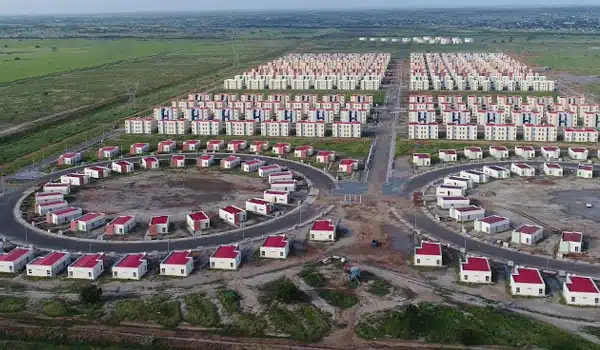
In order to advance socioeconomic activities throughout the country, 50 bridges in farming areas are being built by the government, according to Minister of Roads and Highways, Kwasi Amoako-Attah.
These Czech steel bridges, spanning a total of 1,500 meters, were procured through Messrs Knights A/S, with the support of the Czech government.
The initiative aims to replace dilapidated bridges and provide access to previously isolated communities affected by water crossings.
During a visit to the Czech Republic, Amoako-Attah led a delegation to discuss the progress of the bridge construction project with Messrs Knights A/S, who were contracted under a Czech export credit facility.
The minister also negotiated an additional 100 steel bridges to further improve transportation infrastructure.
As part of the visit, Amoako-Attah held productive bilateral meetings with officials from ČSOB Bank, EGAP (Czech Insurance Company), Raiffeisen Bank, as well as representatives from the Ministries of Foreign Affairs, Transport, and Trade and Industry of the Czech Republic.
Highlighting the significance of these bridges, Amoako-Attah emphasized, “The bridges will reduce travel time, enhance accessibility for local communities, alleviate traffic congestion at river crossings, and contribute to the growth of the agricultural sector,” ghanaiantimes.com.gh quoted the minister.
Out of the 50 bridges, 34 are nearing completion, with 90% of the work finished, while 10 bridges are ready for immediate use. Prominent among the substantially completed bridges are those spanning the Taifa-Dome stream in the Greater Accra Region, the Okurudu Stream in Kpormettey in the Central Region, the Birim River on the Akim Mamponp-Adasawase road in the Eastern Region, the Kokoso-Bohyen Road in the Ashanti Region, and the Kamba River on the Sentu-Girigan-Kpari road in the Upper West Region.
The minister further explained that once the additional 100 bridges are secured, they will be installed on feeder roads nationwide, enhancing accessibility in farming communities and replacing existing deteriorated steel bridges.
Expressing satisfaction with the progress made by Knights A/S in installing the steel bridges, the CEO of EGAP, Dr. David Havelicek, assured Amoako-Attah of his company’s continued support for Ghana.
The contract agreements for financing the project were signed by the Government of Ghana, Knights A/S, and Ceskoslovenska Obchodni Bank on April 2, 2019. Amoako-Attah lauded the longstanding friendly relations between Ghana and the Czech Republic, which date back to 1959, and acknowledged the significant role of Czech investments in Ghana’s economic development.
He also appealed to the Czech Republic for further support in the supply of steel bridges. Accompanying the minister on the visit were Dr. Abass Mohammed Awolu, Chief Director of the Ministry of Roads and Highways; James Nyasembi; Ahmad Tijani Abubakari, Ambassador and Deputy Ambassador of Ghana to the Czech Republic; Dr. Karl Laryea, CEO and Chairman of the Board of Directors of Knight; Mr. Lanka Laryea, President of Knight; and officials from the Ghanaian Embassy in the Czech Republic.
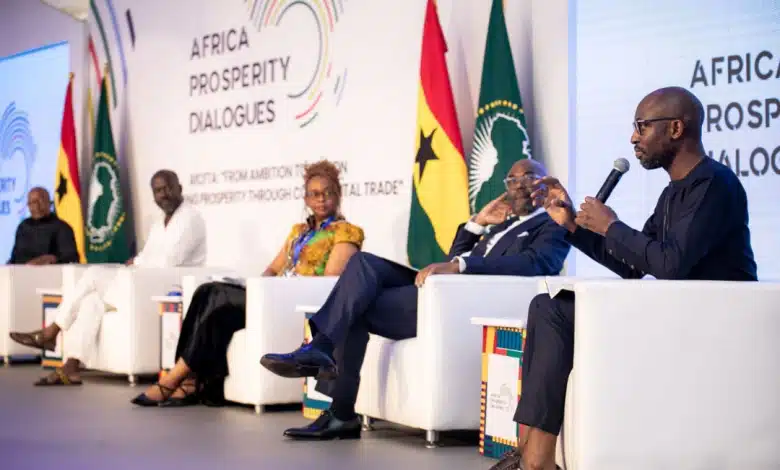
The specifics of the second iteration of the yearly Africa Prosperity Dialogues (APD) will be launched by the Africa Prosperity Network (APN) on Sunday, June 18, 2023.
The Launch of the 2nd edition of the APD will take place as a key side event at the 30th Afreximbank Annual Meetings, taking place in Accra, June 19-21, 2023, with the theme “Delivering The Vision, Building Prosperity For Africans.”
The Africa Prosperity Dialogues, which is organised by the APN, in partnership with the Africa Continental Free Trade Area Secretariat and the Government of the Republic of Ghana, among others, serves as a dedicated annual platform which brings together Africa and Global Africa’s business executives and organisations, thought leaders, and political leaders to think together, plan together and work together with the needed urgency to drive the goal of building the world’s largest single market in Africa.
The Africa Prosperity Dialogues was adopted by the African Union on 19th February, 2023, by its supreme policy and decision-making organ, as an important instrument for mobilising private sector ownership and drive of the continent’s all-important AfCFTA project. This took place at the 36th Ordinary Session of the Assembly of Heads of State and Government.
The hugely successful maiden edition of the Africa Prosperity Dialogues, which brought together the continent’s heavyweights of industry, was held at the Safari Valley Resort, Adukrom in the Eastern Region of Ghana from Thursday 26th to Friday 27th January 2023 and at the Peduase Presidential Lodge on Saturday 28th January 2023.
The highly attended 3-day retreat fostered collaboration among participating African states and businesses on how to attain shared ownership and responsibility in facilitating free trade and investment among AfCFTA’S 54 states.
Sunday’s launch of the 2nd edition of the Africa Prosperity Dialogues will take place at the headquarters of the AfCFTA, the Africa Trade House, Accra. This breakfast meeting will be attended by several dignitaries attending the 30th Annual Meeting of Afreximbank.
With Her Excellency Samira Bawumia, 2nd Lady of the Republic of Ghana, as the special guest of honour, other speakers will include, HE Wamkele Mene, the Secretary General of AfCFTA, Dr George Agyekum Donkor, the President of Ecowas Bank for Investment and Development, and Hon. KT Hammond, Ghana’s Trade & Industry Minister. The programme starts at 7:30am.
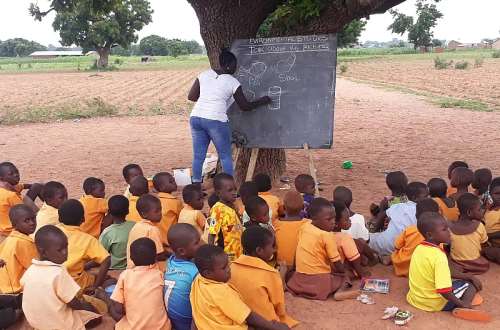
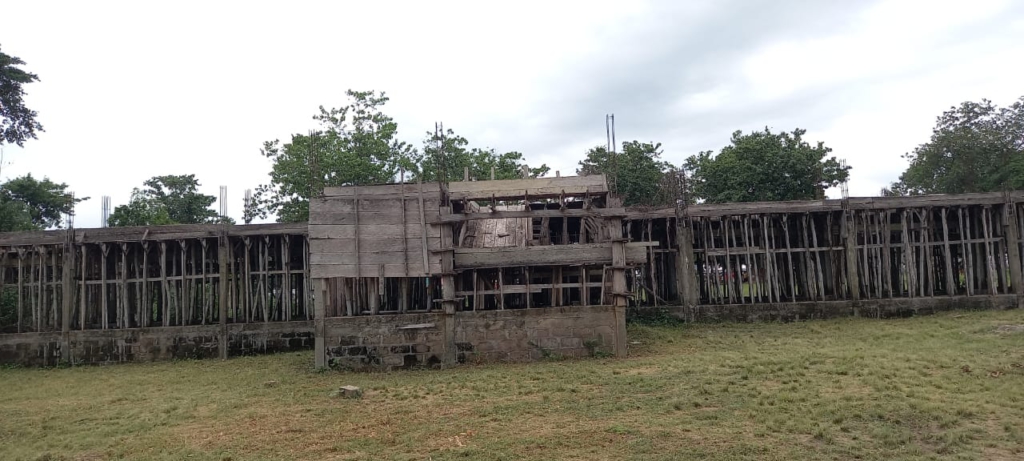
Only 17 of the 5,400 schools under trees have been completed by the Akufo-Addo-led-administration since 2021, according to some Civil Society Organisations and teacher groups.
A report put together by 10 CSOs including STAR-Ghana, CAMFEDand ActionAid added that at the current pace, it will take Ghana more than 300 years to eradicate the over 5,400 schools under trees, sheds and dilapidated structures.
“There are over 5,400 schools existing under trees, sheds and dilapidated structures, a situation which negatively affects, teaching, learning, and learning outcomes. The general learning environment is not only a disincentive for teachers to accept postings but also demotivates existing teachers while making school attendance unattractive to students.
“The government in 2021 announced a programme to replace all schools under trees, sheds and dilapidated structures with decent new school buildings by 2025. To date, only 17 have been completed. Given the current pace, it will take Ghana more than 300 years to eradicate the over 5,400 schools under trees, sheds and dilapidated structures, which is unacceptable.”
The report added that between 2015 and 2021, public basic schools grew by 12 per cent with private schools growing by 68 per cent but in the medium term 2018-2021, only an average of 0.8 primary schools were constructed each year per district.
The slow growth of public schools, due to the lack of adequate investment in basic school infrastructure suggests the government is shifting the responsibility of providing free compulsory universal basic education to the private sector, which is beyond the financial reach of the poor.
The CSOs and teacher groups also criticised thegovernment’s one student, one laptop initiative.
“Government’s plan to procure 1.3 million laptops to replace textbooks in Senior High Schools across the country does not represent efficient and prioritised use of public funds in the face of a heavily underfunded basic education sub-sector”.
The CSOs also made a number of recommendations they believe could help revive the country’s educational system if adhered to.
“The government must develop an emergency infrastructure expansion plan for overcrowded urban and peri-urban schools. The Plan must also include a purposive approach to bridging the 25 percent gap between primary and JHS while providing new schools for underserved communities. The government must deploy desks to all the 2.3 million pupils in underserved schools. Partnerships with the Forestry Commission and the private sector should be pursued,” the organisations recommended.
The Ghana Statistical Service (GSS) has published its first report on the variations in food prices across the 16 regions for the month of May 2023, which shows an inflation rate of 42.2%, up 1% from the previous month’s rate of 41.2%.
Food price inflation also climbed from 48.7% to 51.8%.
However, non-food inflation dropped from 35.4% in April to 34.6% in the month of May 2023, inflation on locally produced items reduced from 38.2% in April to 36.2% in May 2023 while inflation on imported items also increased from 43.1% to 43.8%. This means year on year inflation for May 2023 is 42.2%.
However, month on month inflation for May 2023 stood at 4.8% as against 2.4% rate recorded in April 2023.
Food inflation recorded for the month was 4.3% while the month of May recorded 6.2%.
Non-food inflation also rises from 0.7% to 3.5%
Presenting the highlights from the report, Government statistician, Prof. Samuel Kobina Annim, indicated that price variations across regions are commodity specifics as the pattern observed differ from the selected food items.
He said, the findings from the report paint the need for strategies to address regional food price disparities “effects at driving down inflation may be hastened with the engagement of sub-national governmental agencies”.
The key finding from the report was that food price variation within regions is generally larger than price variation across regions: eight out of the ten items had higher within regional variation than between regions.
Also there is less variation across regions for commodities with standard packaging such as milk and tomato paste that have multiple regions recording the same median price.
Items without standard packaging such as cassava and plantain show substantial variations across regions.
Based on the selected food items, Greater Accra Region recorded the highest median price in April 2023 followed by the Western North than Ahafo regions.
Western region North and Ahafo who had the highest median price for three items each were the only regions to have the highest median price for more than one item.
The report was launched by the government statistician and the representative of the Vice-Chancellor of the Kumasi Technical University (KsTU), Ing. Prof. Osei-Wusu Achaw.
The programme was held at KsTU following the release of the monthly consumer price index (CPI) and inflation for May 2023 on 14th June 2023.
Minister of trade and industry, Kobina Tahir Hammond, has stated that the government is prepared to help the private sector increase domestic production of baby food in the nation through its One District One Factory initiative
This, he said, will reduce the number of import bills on infant food.
Speaking on the floor of parliament on Tuesday, June 13, 2023, KT Hammond noted that the import bill for the preparation of infant foods which stood at about US$25 million in 2021 witnessed a sharp decline to US$20 million in 2022.
He lauded some private companies producing nutritious, fortified blended infant foods locally.
“Mr Speaker, the import bill for preparations for infant foods which was approximately US$25 million in 2021 reduced to US$20 million in 2022. Mr Speaker, in this regard, government will continue to assist the growth of the food sector through targeted interventions, especially companies specializing in the manufacturing of food preparations for infant use,” he said.
“This will further reduce the import bill on infant food preparations. Speaker, more specifically, government is supporting the private sector to enhance the local production of food preparation for children. This is proudly through the 1D1F programme…” the Trade and Industry Minister stated.
Government’s One District One Factory initiative seeks to establish a factory in all districts across the country.
This, according to the government will boost local production which will subsequently, improve its industrialization agenda.
President Nana Addo Dankwa Akufo-Addo on August 25, 2017, launched the 1D1F programme at Ekumfi in the Central region.
He then cut sod for the commencement of the first factory, Ekumfi Fruits and Juices.
In 2022, President Nana Addo Dankwa Akufo-Addo announced that 106 out of 278 factories under his government’s 1D1F initiative were operational.
He added that 148 factories were under construction while 24 were at the mobilization stage.
The president made this known during the 2022 State of the Nations Address in Parliament.
Some Ghanaian students inUkrainewho are already traumatised by the impact of the Russia-Ukraine war seem doubly burdened as they simultaneously find themselves grappling with financial hardships due to unpaid allowances.
In a heartfelt plea to the Ghanaian government, these students expressed deep concern over the unusual delay in the release of their scholarship funds by the Ghana Scholarship Secretariat.
The students find themselves at risk of being withdrawn from their studies and potentially expelled from their educational institutions due to multiple notices received.
Seth Ofori Nyanzu, a final year student atDonetsk National Medical Universityin Ukraine, voiced his grievances and called upon the Ghana Scholarship Secretariat to intervene.
Nyanzu shared his personal experience, stating, “I’m a final year student in Ukraine and I happen to be a beneficiary of the Scholarship Secretariat in the year 2019/2020 when I was in my third year.
At that time, I had already been put on the expulsion list, and due to the fact that I did not pay my tuition fee, the school at that time – Donetsk National Medical University, had put me on the expulsion list. During that period, the Scholarship Secretariat had engaged us and had promised that they were going to offer some scholarships to needy students.
Fortunately, I was connected and I got that opportunity to benefit from the secretariat. That year, though the money came very late – that was when we entered 2020, but we were paid in full for 2019/2020, so I didn’t have any issues,” he said.
However, the situation worsened when the Russia-Ukraine war began. Nyanzu explained,
“The one for the 2020/2021 academic year also came but during that time, we didn’t receive the money until we got to the end of the academic year in 2021. They told us they were going to give us the stipend and the book allowances so we waited until that academic year was over and we entered into the 2021/2022 academic year. That was in my 5th year.
“We waited the whole of 2022 but the money didn’t come until we entered into 2022 and they promised they were going to pay. By then, we had had a series of meetings with the secretariat, with our coordinator, even with the scholarship administrator himself. There was even a time he was travelling and at the airport, he promised us that they were going to pay and that already, the money had been sent to the Ghana embassy in Berne and that they were going to pay us within that week that he was speaking with us. That was in January, and unfortunately in February, the war came,” he said.
Additionally, Nyanzu emphasized that due to financial constraints, he and many other disadvantaged students were unable to afford returning to Ghana.
“So, when the war came, there were issues with people moving from places to another, and about two weeks after the war, all lectures resumed normally in Ukraine but online, and for them, they were expecting us to pay our fees because they were offering us lectures. We communicated this to the Scholarship Secretariat, but through it all, after the several, countless meetings with promises after another, then there was an issue of they did not know whether to pay us or not, and that they did not know if we were attending the lectures and the fact that some had returned home and so there was no need for them to pay us.
“They then requested for evidence from us to show that we were still in school and we gave all the necessary documents and evidence, to the extent that we gave them the expulsion lists from the schools. In fact, we tried every other means but the secretariat, led by Hon Kingsley and Hon Joseph Djaba, who’s responsible for the Schengen countries and that of Ukraine, and they added another coordinator, Mr. Richard Gyamfi, several emails have been sent.”
He said while some of his colleagues have received approval for payment, those without political links have been left hanging.
“Sometimes, they have even told us not to text them again and that we should talk to the secretariat. Even those responsible to us are not ready to answer question, they are not willing to talk to us. Unfortunately for us, we only heard that some people among us have been given approval for payment, but for some of us without any strong political links, or someone to make a good case for us, we are left hanging.
“For me, for instance, I am a final year student and I’m just about to write my final exams and graduate, but because I’ve not paid my fees, my school wants to expel me to prevent me from writing my final exams, and for that matter, I may have to repeat one more year. For some of us, we couldn’t come back to Ghana to finish our studies because we only had one more year to complete, and the conditions for people to come to Ghana was that they were not going to admit anybody beyond third year or fourth year,” he added.
In an interview with the media, Nyanzu expressed hope that the Scholarship Secretariat would urgently provide assistance to enable them to complete their education. He pleaded, “…We are pleading through your medium, please the Scholarship Secretariat should pay, at least, some of us that we are depending on this for our survival. The money that is needed if our fees so that we can just graduate in peace because I can’t spend six, seven years in school and because of a year or two – and for two years now, the Scholarship Secretariat has not paid us students from Ukraine anything… and to some extent, we are even being threatened that we shouldn’t go to the media, but yet nothing has been done,” he said.
The sale of treasury bills this week is expected to earn an ambitious goal of GH3.79 billion for the government of Ghana.
The auction which will be held on June 16, 2023, is expected to get subscriptions from the 91-day, 182-day and 364-day bills.
The target is quite high compared to the subscriptions that the government has secured in the past few weeks.
Even though this week’s auction saw a 6.5% oversubscription, the amount is way lower than the set target for this week.
Last week, the government secured GH¢2.79 billion from the sale of treasury bills in its latest auction on June 12, 2023.
The auction saw an oversubscription of GH¢168.53 million even though interest rates have been rising.
According to the auction results from the Central Bank, the government secured GH¢1.50 billion from the 91-day bill, GH¢982.71 million from the 182-day bill, and GH¢308.36 million from the 364-day bill.
Interest rates, however, increased from 20.25% to 21.26% for the 91-day bill, 22.82% to 23.95% for the 182-day bill, and 27.36 to 27.82 for the 364-day bill.
Gambian President Adama Barrow, who was re-elected in 2021, has hinted that he may run for a third term at the next election in 2026.
The Gambia does not have presidential term limits and the two previous presidents both served more than two decades in office.
During a meeting in the north of country President Barrow said those waiting for him to relinquish power have to wait a little longer.
The Gambian leader alleged that there were people going around telling Gambians that he wanted to step down and that they would soon take over the government. He said that he was not going anywhere.
Mr Barrow came to power in 2017, on an agreement that he would serve only three years and then step down – but he reneged on that campaign promise.
A new constitution drafted in 2019 included a two-term limit but was not passed by parliament.
The demand for Treasury notes (T-bills) in the primary market has decreased for the first time this year, falling short of the government’s projected issue date of May 2023.
Investors showed reduced momentum in their demand for 91- to 364-day bills, raising concerns about the Treasury’s ability to meet its debt obligations amid tighter liquidity conditions in the market.
During May 2023, investors tendered GH¢14.04billion across the 91- to 364-day bills, reflecting a 4.2 percent under-subscription compared to the Treasury’s target of GH¢14.66billion. However, the Treasury was able to issue the amount tendered. The waning demand can be attributed to lingering effects of the Domestic Debt Exchange Programme, which has stifled demand for T-bills.
Despite the under-subscription, the amount sold by the Treasury was sufficient to cover a face value (FV) of GH¢12.23billion maturing value during the month across all the bills, representing a maturity cover of 1.12x. The refinancing needs in May 2023 were the highest for the period with GH¢12.23billion – followed by GH¢9.35billion in March 2023, GH¢8.06billion in February 2023, and GH¢6.72billion and GH¢6.42billion in January and April respectively.
May 2023 stood out as the month with the highest targetted issuance by the Treasury, aiming to reach GH¢14.66billion compared to GH¢8.19 billion, GH¢8.78 billion, GH¢11.19 billion and GH¢6.75 billion for January to April respectively.
Yields sustained their uptrend
Yields on Treasury bills continued their upward trend throughout the month, presenting a significant risk to government’s debt sustainability in the aftermath of the unprecedented domestic debt exchange programme (DDEP).
In the month’s Treasury-bill auctions, yields experienced marginal increases as anticipated. The 91-day bill rose from 19.95 percent to 20.80 percent, while the 182-day bill increased by 91 basis points to 23.62 percent from 22.71 percent. Similarly, the 364-day bill jumped by 76 basis points to 28.02 percent from 27.26 percent.
The rising borrowing costs for government due to higher yields on Treasury bills add further strain to an already burdened fiscal position. As the cost of government borrowing increases, it becomes increasingly difficult to manage the existing debt burden and fulfil future financial commitments.
To address the escalating Treasury yields, government implemented measures in Q1-2023 reducing bids and capitalising on strong demand for bills to lower the cost of borrowing. Consequently, the yield on 91-day bills dropped from 35.36 percent in Q4-2022 to 19.39 percent in Q1-2023. That of the 182-day bill declined from 35.98 percent to 21.44 percent, and the 364-day bill fell from 35.89 percent to 25.66 percent during the same period.
Market expectations indicate that yields on Treasury bills will continue to fluctuate in the near-term, with the potential for further increases. However, the real return on Treasury bills will remain negative until inflation returns to a single-digit figure or drops below 20 percent. The projected range for Treasury yields in the near-term is around 20 percent to 25 percent.
Despite initial anticipation of a significant drop in Treasury yields to a range of 15 percent to 18 percent by end of Q3-2023, the current trend suggests a persistent rise in yields even amid the secured IMF bailout. This poses additional challenges for government’s financial management and debt sustainability.
Government earns GH2.79 billion this week through the sale of treasury notes in its most recent auction on June 12, 2023.
The auction saw an oversubscription of GH¢168.53 million even though interest rates have been rising.
The target for this week’s auction was GH¢2.63 billion. Also, interest rates have increased to an average of between 21.26% to 27.82%.
According to the auction results from the Central Bank, the government secured GH¢1.50 billion from the 91-day bill, GH¢982.71 million from the 182-day bill, and GH¢308.36 million from the 364-day bill.
Interest rates, however, increased from 20.25% to 21.26% for the 91-day bill, 22.82% to 23.95% for the 182-day bill, and 27.36 to 27.82 for the 364-day bill.
In this week’s auction, government hopes to borrow GH2.63 billion through treasury bills.
The subscriptions are expected to come from the 91,182, and 364-day bills.
Last week, the auction results for the treasury bill auction held on June 2, 2023, showed that the government secured GH¢2.40 billion.
This indicated an oversubscription of GH¢324.01 million from the target of GH¢2.08 billion.
This will be the first time in four weeks that the government has exceeded its treasury bill target.
Interest rates are still high nonetheless, increasing from 19% to almost 23%.
The majority of the subscriptions came from the 91-day bills, which received GH¢1.59 billion at an increased interest rate of 21.15%.
The 182-day bill received bids worth GH¢816.62 million at an interest rate of 23.93%.
The assumption was that due to the finalization of Ghana’s IMF deal, investor confidence would rise, leading to the government achieving its target or even surpassing it.
But even after that, treasury bills were being undersubscribed.
It is, however, not far-fetched to assert that investor confidence is gradually being restored.
The New Patriotic Party’s (NPP) 2024 flagbearer-hopeful, Alan John Kwadwo Kyerematen, popularly known as “Alan Cash” has outlined his vision for a government that prioritises the needs and aspirations of the Ghanaian people.
He says if elected as flagbearer and subsequently President of the Republic, he will adopt what he describes as “the People’s Government”.
According to the former Trade and Industries Minister, his type of administration will see to the involvement of all and sundry for a successful tenure.
Speaking at the official launch of the Alan Cash Donation Platform to facilitate his bid to lead the party to general elections in Accra, the flagbearer-hopeful Alan Kyeremanten indicated he is particular about partnering with people who believe in his dream for power capture in 2024.
Mr. Alan Kyerematen noted that people’s contributions, whether in cash or kind, towards his campaign will not be taken for granted but will rather be utilized efficiently.
He maintained he was not going to use state resources to run his campaign, which others must emulate.
Mr. Kyerematen stressed that since he was ready to contest as flagbearer for the NPP, he, first of all, deserted his position to look for money and even support from his supporters to campaign.
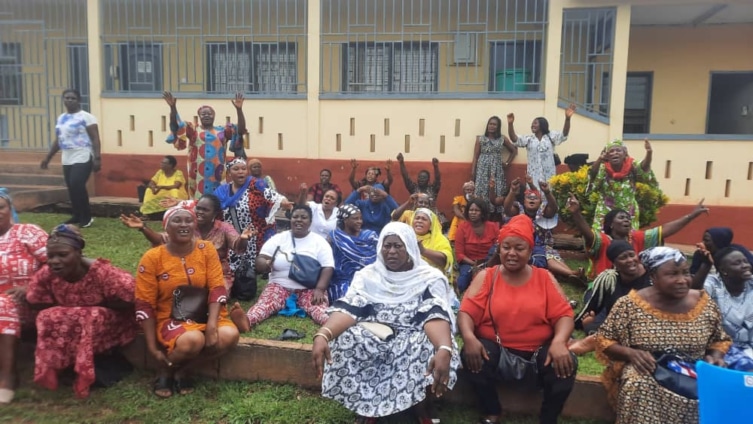
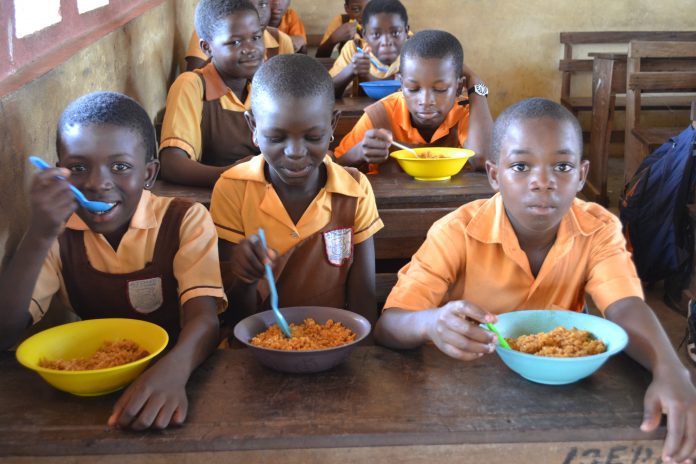
Caterers under the School Feeding Programme are asking government to pay them their arrears in full and take up the feeding of school children themselves as they cite dishonesty on the part of government.
The caterers had proposed a GHC3.50 allocation per meal for school pupils under the school feeding programme.
This comes on the heel of a counter-preposition by government to increase the feeding grant from 98pesewas to GHC1.20p.
Speaking to Starr News, Spokesperson of the National School Feeding Caterers Association, Dorothy Ofori Sarpong argued that the Gender Ministry should review its proposed GHC1.20P as she explains it’s woefully inadequate.
“We are not going to accept it, we’ve asked her[Minister] to go and come back because she said it’s a proposed figure, it’s not a confirmed one so she should go and tell those who helped her to propose that amount that we are not going to accept it.
“We will just ask her to pay all our arrears and then take their job because we cannot cook with GHC1.20P, we can’t. They have refused to even sit down with us and share the difficulties that the women are going through. We are stakeholders, they cannot take decisions and won’t consider us.
“They don’t care about whatever we are going through, whether it is good or bad they don’t care. They only impose what they want us to do on us, which we are not going to swallow anymore.”
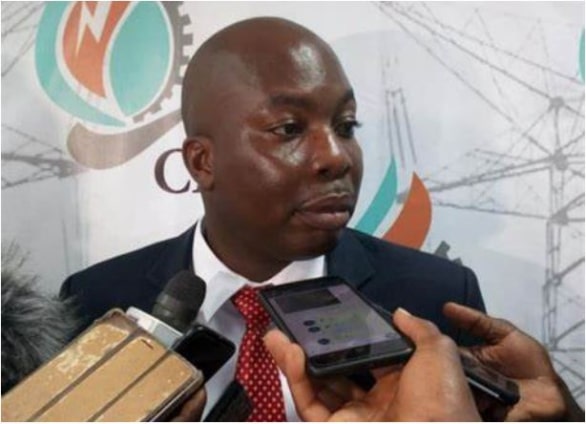
The Chamber of Independent Power Producers (IPPs) has stated that unless the government accepts their requests to clear all outstanding debt, its members would shut down their facilities in three weeks.
The shutdown potentially could create a huge power shortfall as the IPPs control over 65% of the available thermal generation capacity in the country.
They are owed at least 1.4 billion dollars and government has so far been working around the clock to get them to agree to have these debts restructured.
The Chief Executive Officer of the Chamber, Elikplim Apetorgbor says members are struggling to keep their businesses afloat.
As a result, he reiterated that their June 30th ultimatum given to Child hanging from government truck angers the Dominican Republicans to settle its debt still holds.
According to him, the IPPs cannot stretch themselves beyond the June 30 deadline.
“Our conditions or severity of our situation is something that cannot be negotiated. We have done everything possible to manage the situation but it has gone beyond our control. So really, nothing has changed our ultimatum to government, that is the June 30th is still standing,” he said.
Touching on the International Monetary Fund (IMF) asking government to undertake an audit of the power plants to ensure it is actually paying the right amount, Mr. Apetorgbor suspects the move is a strategy to delay payment although they have the right to audit.
According to him, the issue with the delay is that “the consequences of any further delay cannot be averted if that is a strategy to delay payment to us.”
“We are open to any kind of audit. I can tell you that this thing has happened time and again – auditing of our invoices. Let me tell you it is just a strategy to buy time,” he said.
Meanwhile, the Electricity Company of Ghana is leading the talks with the IPPs. Managing Director Samuel Dubik Mahama insists an agreement will be reached.
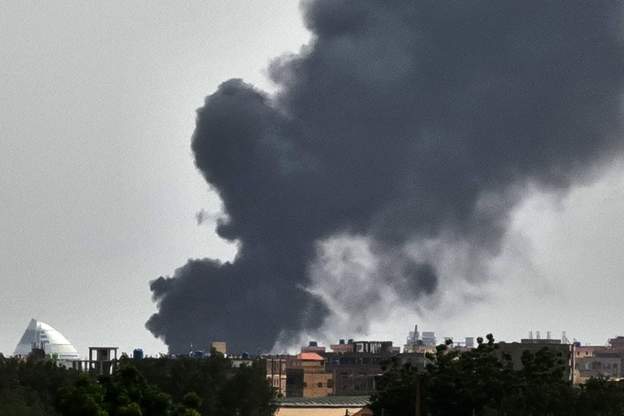
Ten of citizens of Congo died on Sunday June 2023 after an airstrike “bombarded” their university campus in Khartoum, the capital of Sudan, according to the Democratic Republic of the Congo’s administration.
The foreign affairs ministry said in a statement that it had “learned with deep dismay” the killing of its citizens at the International University of Africa.
Minister Christophe Lutundula said there were indications that the air strikes were “carried out by the regular army on an area occupied by civilian and unarmed populations, including foreign nationals, seriously wounded other compatriots”.
The minister said thegovernmentwas waiting for the Sudanese authorities to shed more light about the incident.
Khartoum has been at the centre of fighting between the army and paramilitary Rapid Support Forces (RSF) since 15 April, with civilians caught in the crossfire.
DR Congo’s government has called for a humanitarian corridor to enable it to evacuate its wounded citizens and others still stranded in Khartoum.
The One Cedi and Twenty Pesewas (GHS 1.20p) per student offered by the government, according to the School Feeding Caterers, is insufficient to prepare nutrient-balanced meals for students in basic schools.
A leader of the caterers, Dorothy Ofori Sarpong speaking to the media revealed that the government took a unilateral decision to pay the paltry sum of One cedi and twenty pesewas, which shows the government’s blatant disrespect for the caterers and lack of value for their service.
“The minister never engaged anybody ever since we started this fight. Nobody has engaged us so she shouldn’t say so. Because we said that this Wednesday we are going to embark on a naked demonstration to the presidency and that is why I also believe that the World Bank country director also threatened that they are going to withdraw their grant because there is no transparency in the school feeding payment. That is why she rushed to come and say that thing’ she lamented.
Madam Ofori Sarpong emphasised that the one cedi and twenty pesewas per student is inadequate and will not be possible to cook a well-balanced diet for the students.
“You just propose one cedi twenty pesewas without consulting the caterers. How are we going to use one cedi twenty pesewas to cook a good meal for the children? It can’t be possible. We are just waiting for them (Ministry of Gender, Children and Social Protection) to come. They don’t respect us, they just want to push things on us. This one cedi twenty pesewas? We cannot cook with it” she stressed.
The leader of the caterers told 3FM that some of their members are battling with debt to the extent that they have fled their homes because they are being chased by their creditors.
“It is sad. It is collapsing homes. I have one woman around me, she has gone blind because she couldn’t get any money to buy medicine. Another woman has died because of the pressure. With this school feeding thing if we don’t find something else doing, we will all die” he bemoaned.
Meanwhile, the caterers who had initially requested thegovernment to increase the fee from GH¢1 (97 pesewas) to Three Cedis and Fifty Pesewas (GH¢3.50) per student have mentioned that they are willing to manage with Two Cedis for the sake of the school children, but the delayed payment should cease.
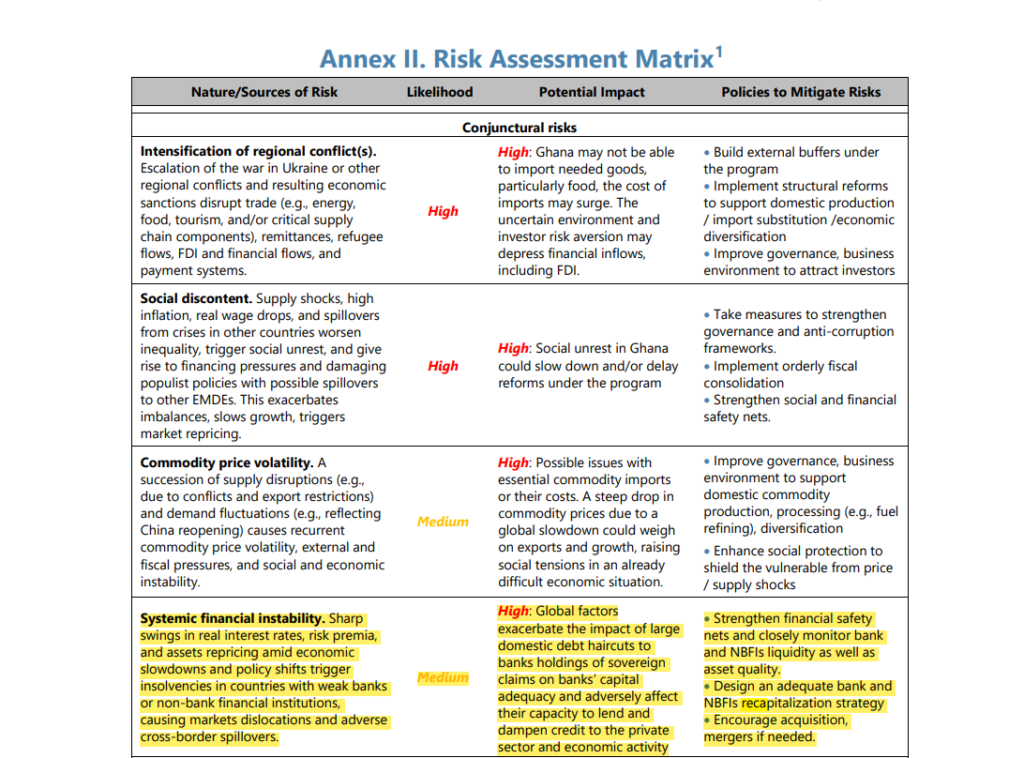
The International Monetary Fund (IMF) has proffered three policies including acquisitions and mergers of banks and non-banks to mitigate the possible systematic financial instability in Ghana.
These policies captured under the Risk Assessment Matrix contained in the recent IMF country report on Ghana, aim to mitigate risks and ensure the stability of the banking and Non-Bank Financial Institutions (NBFIs).
The first policy suggests strengthening financial safety nets and closely monitoring the liquidity and asset quality of banks and NBFIs.
The second policy involves designing an appropriate strategy to recapitalize banks and NBFIs. Lastly, the IMF encourages acquisitions and mergers as a means to address any necessary consolidation in the financial space.
Strengthen financial safety nets and closely monitor bank and NBFIs liquidity as well as asset quality.
Design an adequate bank and NBFIs recapitalization strategy
Encourage acquisition, mergers if needed”
According to the IMF, countries with weak banks and non-bank financial institutions are at risk of insolvencies when they experience significant fluctuations in real interest rates, risk premia, and asset prices. These fluctuations are often observed during economic slowdowns and policy changes.
The IMF emphasises that such insolvencies can have far-reaching consequences, causing disruptions in markets and unfavourable effects that extend beyond national borders.
“Sharp swings in real interest rates, risk premia, and assets repricing amid economic slowdowns and policy shifts trigger insolvencies in countries with weak banks or non-bank financial institutions, causing markets dislocations and adverse cross-border spillovers” It stressed.
Although the likelihood of this happing in tagged as MEDIUM, the Fund, however, indicated that global factors have intensified the consequences of substantial reductions in domestic debt on banks’ capital adequacy. These haircuts directly impact the banks’ holdings of sovereign claims and have adverse effects on their ability to lend. As a result, this situation hampers credit availability for the private sector and ultimately dampens economic activity – the potential impact on Ghana’s financial sector could be HIGH.
The IMF also revealed the recent Domestic Debt Exchange Programme (DDEP) in Ghana which exchanged old sovereign bonds for new ones has affected the health of the country’s financial sector. Banks and other financial institutions had invested a significant amount of money in government bonds, but now the government has reduced the interest rates and extended the time they have to be paid back. As a result, the value of these bonds has decreased, causing financial institutions to face a significant financial challenge.
“Domestic bonds were widely distributed across the financial sector in Ghana, representing the most important asset class held by commercial banks, pension funds, asset management companies, and insurance companies. Banks held 30 to 50 per cent of their total assets in government securities before the DDEP—with especially high exposures in the state-owned banks—and relied significantly on income from these securities.
The coupon reductions and maturity extensions in the recently completed DDE mean that the value of these assets will decline to about 70 per cent of the par value. This revaluation represents a significant shock to the balance sheets of these financial institutions” the report indicated.
In announcing the success of the DDEP, government indicated it was putting plans in place to establish a GH¢15 billion ($1.5 billion) Ghana Financial Stability Fund (GFSF) which will be supervised by the Bank of Ghana. The GFSF is to provide liquidity to banks that participated in the DDEP. The World Bank has committed $250 million to support the racialization plan with the remaining amount expected to be funded by government.
According to the IMF report, “government solvency support will be designed to minimize costs and moral hazard, incentivise private capital injections, foster structural reforms improving operational efficiency, and allow for an orderly, early government exit.
“When acting in its capacity as shareholder, i.e., for state-owned banks, the government will frontload any necessary recapitalizations of state-owned banks, which will be underpinned by credible plans to ensure the future viability and a level playing field with private banks.”
Ghana’s financial sector has already gone through a lot of turmoil during the 2017 banking sector clean-up which saw a reduction in the number of banks operating in Ghana from 34 to 23, whilst 347 micro-finance institutions, 15 savings and loans, and eight finance houses had their licenses revoked. This exercise cost the state about GH¢25 billion and takes a pivotal position in Ghana’s sustainable debt portfolio.
The IMF country report on Ghana has disclosed that “the fiscal cost of the financial sector recapitalization (estimated to have reached 7.1 per cent of GDP over 2017-21) has led to an increase in the government deficit and debt. Additional recapitalization costs are expected in the coming years resulting from the domestic debt restructuring envisaged in 2023—some 2.6 per cent of GDP are included in the DSA’s baseline.”
Banks operating in Ghana have up to September 2023 to provide their respective recapitalisation plans to the Bank of Ghana.
Treasury yields are continually rising, posing a significant risk to the government’s capacity to service its debt following the extraordinary domestic debt exchange program (DDEP).
During the most recent Treasury bill auction, yields experienced marginal increases in line with market expectations. The 91-day bill saw a 24 basis points (bps) increase, reaching 20.80 percent; while the 182-day bill rose by 26 bps to 23.62 percent. The 364-day bill recorded the highest jump, increasing by 43 bps to 28.02 percent.
As yields on Treasury bills increase, the cost of government borrowing rises – making it increasingly challenging to manage outstanding debt and meet future financial obligations.
In an effort to address escalating Treasury yields, government took measures to trim off bids toward the end of Q1-2023 – capitalising on strong demand for bills and readjusting its cost of borrowing downwards. Consequently, the yield on the 91-day bill dropped from 35.36 percent in Q4-2022 to 19.39 percent in Q1-2023 while the yield on 182-day bills declined from 35.98 percent to 21.44 percent, and the yield on the 364-day bill fell from 35.89 percent to 25.66 percent during the same period.
According to Apakan Securities’ first-quarter market review, yields on Treasury bills are expected to continue fluctuating in the near-term – with potential for further increases. However, the real return on Treasury bills will remain negative until inflation returns to a single-digit figure or drops below 20 percent. The projected range for Treasury yields in the near-term is around 20 percent to 25 percent.
Although the market initially anticipated a significant drop in Treasury yields to a range of 15 percent to 18 percent by end of Q3-2023, the current trend suggests a persistent rise in yields even amid expectations of securing an IMF bailout.
Issuance size
The most recent Treasury bill auction reflected this ongoing phenomenon, with investors tendering GH¢3.18 billion – falling 7 percent short of the target size of GH¢3.43billion. This marked the third consecutive week of under-subscription for Treasury bills, indicating a waning demand influenced by tighter liquidity conditions in the market. As a result, concerns are growing about the Treasury’s ability to meet its debt obligations.
The banking and investor community is still recovering from negative impacts of the domestic debt exchange programme, which has stifled demand for Treasury bills.
This upward trend in yields is expected to persist as the Treasury plans to secure GH¢2.08billion through the 91- and 182-day bills to refinance maturing debt of GH¢1.98billion. The next Treasury auction, scheduled for June 2, 2023, is anticipated to witness further increases in yields due to elevated demand for government bills.
Secondary Market
The impact of rising yields is not limited to the primary market alone. In the secondary bond market, activity remained fairly active – albeit with a 25.45 percent decline in traded volume. The new bonds continued to attract investors’ interest, accounting for 80.53 percent of the total traded volume. Among these the Feb-2027 bond with a coupon rate of 8.35 percent garnered the most attention, constituting 85.89 percent of the new bond volumes. As for the old bonds, investors shifted their focus toward shorter-dated papers, with the May-2025 and Dec-2026 bonds being most actively traded.
Looking ahead, the secondary bond market is expected to maintain its level of activity. However, the challenges lie in the primary market where governmen’s ongoing struggle to meet fundraising targets raises concerns. For the third consecutive week, government fell short of its target at the Treasury bill auction, making it the fourth occurrence this year. While GH¢3.18billion was raised, it fell 7.21 percent short of the GH¢3.43billion target.
Moreover, liquidity action in the old government bond market weakened compared to the previous week, and the upcoming auction aims to raise a more modest GH¢2.08billion. The overall volume traded in the market increased by 12.95 percent due to heightened trading activities in Treasury bills. However, the yield action was generally negative, with instruments trading at lower yields compared to the previous week.
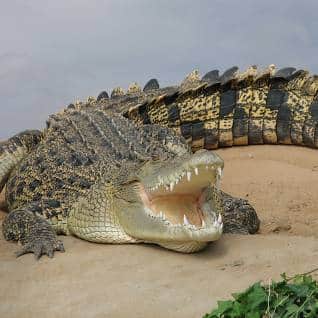
An Australian guy who was snorkelling off the coast of far-north Queensland when he was bitten on the head by a crocodile managed to escape the unique attack by prying apart the reptile’s jaws.
The avid surfer and diver Marcus McGowan was snorkelling with his wife and a group of friends near a remote island off the northern edge of the country when he felt something had “got its jaws around my head.”
McGowan said in a statement on Tuesday that he initially believed he had been bitten by a shark, but that as he reached up, he discovered it was actually a crocodile.
“I was able to lever its jaws open just far enough to get my head out,” recalled the Gold Coast resident, who said the crocodile then struck at him again, but he managed to push it away with his hand.
The boat that had taken McGowan’s group to the diving spot near Charles Hardy Islands, some 40 kilometers off the coast, heard their screams and came to retrieve them.
McGowan was rushed to Haggerston, a resort island some 45 minutes away, before being helicoptered to a regional hospital. He suffered cuts and puncture wounds to his head and hands.
“I was simply in the wrong place, at the wrong time. I’m just grateful it was me and not one of the kids or ladies in the group,” he said in the statement.
McGowan said the attack happened so quickly he was unable to get a proper look at the croc but guesses it was a juvenile, about two to three meters long.
Saltwater crocodiles can grow up to six meters long and weigh up to 1,000 kilograms, according to Australia Zoo.
Known locally as “salties,” the reptiles are more commonly found in the country’s warmer northern regions. According to federal government estimates, there are about 100,000 saltwater crocodiles in Australia.
Crocodiles were sighted on nine occasions in Cook Shire on Cape York since the start of this year, according to the Queensland government.
Government has received GH2.78 billion from the sale of treasury bills in its most recent auction on May 15, 2023.
The target for the auction was GH¢3.33 billion.
Even though this was a bit higher than what the government got last week, it was GH¢550 million short of the target.
Interest rates have also slightly increased to an average of between 20.43 percent to 27.59 percent.
According to the auction results from the Central Bank, the government secured GH¢2.31 billion from the 91-day bill, GH¢355.26 million from the 182-day bill, and GH¢115.60 million from the 364-day bill.
Interest rates, however, increased from 20.25 percent to 20.43 for 91-day bills from 22.82 percent to 22.96 percent for the 182-day bill, and from 27.36 percent to 27.59 percent for the 364-day bill.
According to reports, this week’s bills were to be used to refinance maturities worth GH¢2.31 billion and also to settle coupon payments of the pension bondholders.
Meanwhile, there have been calls for the government to use treasury bills to pay pensioner bondholders. The pensioners have been calling on government to pay their coupons and principals following the completion of the debt exchange programme.
The Pensioner Bondholders Forum have now decided to suspend picketing at the Ministry of Finance after they reached an agreement with the government.
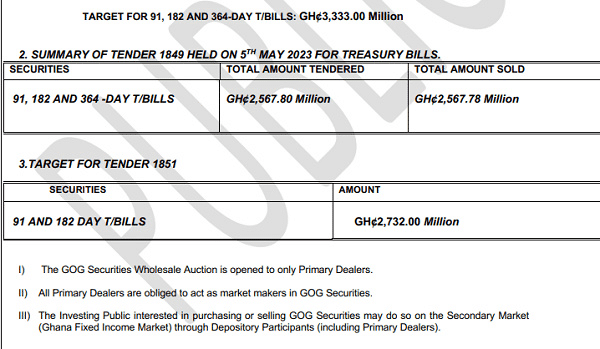
Government plans to borrow GH¢2.732 from treasury bills auction on May 19, 2023.
The target is expected to be generated from the 91, 182, and 364-day treasury bills.
This week, the government secured GH¢2.78 billion from the sale of treasury bills in its latest auction on May 15, 2023.
The target for the auction was GH¢3.33 billion.
Even though this was a bit higher than what the government got last week, it was GH¢550 million short of the target.
Interest rates have also slightly increased to an average of between 20.43 percent to 27.59 percent.
According to the auction results from the Central Bank, the government secured GH¢2.31 billion from the 91-day bill, GH¢355.26 million from the 182-day bill, and GH¢115.60 million from the 364-day bill.
Interest rates, however, increased from 20.25 percent to 20.43 for 91-day bills from 22.82 percent to 22.96 percent for the 182-day bill, and from 27.36 percent to 27.59 percent for the 364-day bill.
However, the Minister of State responsible for Finance, Mohammed Amin Adam has disclosed that the International Monetary Fund will likely approve the first tranche of a $600 million loan for Ghana by Wednesday, May 17, 2023.
According to him, the government expects the IMF Executive Board to approve the credit facility after meeting all pre-conditions and requirements particularly after financing assurances have been granted by official creditors, China and the Paris Club.
“We expect a deal on Wednesday. With the disbursement, there is going to be $600 million as a first tranche just immediately after the approval,” he told Reuters via phone.
Dr Amin Adam was however optimistic that the funds will be disbursed into the Bank of Ghana account within a week of the IMF Board’s approval.
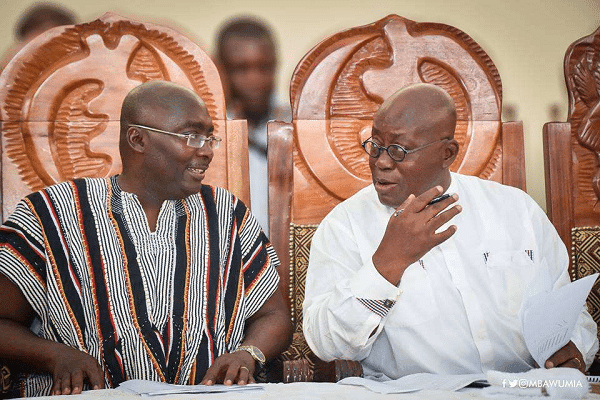
In a televised speech to the country on May 28, 2023, President Akufo-Addo complimented vice president, Dr. Mahamudu Bawumia for serving as his deputy.
The President acknowledged the instrumental role played by officials of his government in the fight against the COVID-19 pandemic but singled out the Vice President for his unwavering support during challenging moments.
“I am indebted to the Ministers of State, officials of the Presidency, led by the Chief of Staff, the Parliament and the Judiciary, and all the members of the brilliant COVID-19 Taskforce. I must make special mention of the Vice President, Dr. Mahamudu Bawumia, who was my reliable source of support in the darkest and most trying moments,” President Akufo-Addo stated.
President Akufo-Addo also expressed appreciation to various individuals, groups, government institutions, organizations, and organized labour for their contributions to Ghana’s battle against the pandemic.
During the address, the President officially declared the COVID-19 pandemic as over in Ghana. He shared the following statistics: “In general, since the first case was confirmed in our country on March 12, 2020, there have been one hundred and seventy-one thousand, seven hundred and fifty-eight (171,758) positive cases from two million, five hundred and thirty-eight thousand, one hundred and ninety-eight (2,538,198) tests.”
President Akufo-Addo also mentioned the progress of the COVID-19 vaccination campaign, with twenty-five million, one hundred and seventy thousand, three hundred and eighty-two (25,170,382) vaccine doses administered. He added that ten million, five hundred and thirty-six thousand, four hundred and twenty (10,536,420) individuals have been fully vaccinated, representing 52.7% of the twenty million (20 million) people targeted. Additionally, four million, five hundred and ninety-nine thousand, eight hundred and eighty-three (4,599,883) individuals have received booster doses.
Based on these facts, the COVID-19 Taskforce chaired by President Akufo-Addo met on May 17 and made far-reaching decisions regarding the management of the pandemic. The President announced that all outstanding COVID-induced restrictions at airports and entry points have been lifted, returning to the pre-COVID situation in terms of health entry requirements.
President Akufo-Addo also highlighted the recently secured $3 billionInternational Monetary Fund (IMF) economy support facility, which he believes will aid in the restoration of Ghana’s economy from the impact of the pandemic.
President Akufo-Addo was however quick to mention that the IMF money will not spell immediate end to the nation’s economic woes.
Read the President’s full address below:
Address By The President Of The Republic, Nana Addo Dankwa Akufo-Addo, On Updates To Ghana’s Enhanced Response To The Coronavirus Pandemic, On Sunday, 28th May 2023
Fellow Ghanaians, good evening.
It has been some time since I last came into your homes, so I want to thank you for having me again tonight. I have come because of two important events that both occurred last week on 17th May. The first is an update on the COVID-19 pandemic; the second is the recent agreement we have reached with the International Monetary Fund (IMF).
Some three weeks ago, on 5th May, the World Health Organization (WHO) announced that COVID was no longer a public health emergency of global concern.
It had taken three years, five months and twenty days of unbelievable tumult, unrelenting pain and suffering and emotional turbulence of a world turned upside down, but we have at last heard the words for which we had all been praying. The scientists and health experts tell us that we no longer have a public health emergency of international concern.
They tell us also that there is evidence of reducing risks to human health from COVID-19 infections. This has led to the decreasing trend of COVID-19-related deaths, hospitalizations and intensive care admissions. The world has also achieved the long hoped-for immunity, and with improved clinical management, the experts say it is time to transition to long-term management of the COVID-19 pandemic.
In other words, we can now breathe that collective sigh of relief. For, even though we may still have to deal with sporadic, isolated outbreaks, the crisis itself has technically ended.
The pandemic trend in Ghana is similar to the general global trend as announced by WHO.
As at 15th May, 2023, there have been one thousand, four hundred and sixty-two (1,462) deaths attributable to Covid-19 in Ghana, with the last death being recorded on 8th January, 2023. These are not mere figures, or inconvenient statistics, they are dearly loved parents, sons and daughters, relations, friends and colleagues whom we shall continue to miss dearly. May their souls rest in perfect peace. I am glad to report that, currently, we do not have any critical or severe cases.
In general, since the first case was confirmed in our country on March 12, 2020, there have been one hundred and seventy-one thousand, seven hundred and fifty-eight (171,758) positive cases from two million, five hundred and thirty-eight thousand, one hundred and ninety-eight (2,538,198) tests. You would recall that we started the Covid vaccination campaign in March 2021 and, as at 25th May 2023, twenty-five million, one hundred and seventy thousand, three hundred and eighty-two (25,170,382) vaccine doses have been administered. There are ten million, five hundred and thirty-six thousand four hundred and twenty (10,536,420) fully vaccinated people, that is, 52.7% out of the twenty million (20 million) people target we had set, with four million, five hundred and ninety-nine thousand, eight hundred and eighty three (4,599,883) persons having received booster doses.
In the light of these facts, the COVID-19 Taskforce, which I chair, met on 17th May and took some far-reaching decisions on the measures we have put in place for the management of the pandemic, which were announced by the Ghana Health Service on 19th May. The most important of these decisions was that the COVID-19 pandemic was over in Ghana.
Thus, all the outstanding Covid-induced restrictions at our airports and all entry points have been lifted, and we are back to the pre-COVID situation as far as health entry requirements are concerned.
It will be recalled that, three years ago, we started with drastic measures and restrictions; the international airport was shut for months and our land borders were closed to human traffic for almost three years.
The hospitality industry was devastated, hotels and restaurants and other social gathering places were shut down, schools and universities and training institutions were shut down. Indeed, our world was turned upside down. That culturally defining Ghanaian symbol, the handshake, was prohibited and frowned upon and we were advised not to hug our children and our loved ones.
Churches, mosques and other places of worship were closed for months, and our beaches remained emptied of human activity. Fellow Ghanaians, even our funerals, that sacred Ghanaian ritual, were stopped and then attempts were made to change the tone and character of the funeral with the imposition of restrictions on how many can attend or be fed at the ceremony.
Fellow Ghanaians, throughout these trying times, I kept urging all of you to believe that this, too, shall pass. Dare I say that this too has passed? The emergency is over, and we can safely lift many of the oppressive restrictions we have had to endure, we can shake hands, we can hug, we can visit, and we no longer have to wear masks. But it is strongly recommended that we keep some of the measures imposed during the crisis and integrate them into our everyday lives because they have served us well and will continue to serve us well.
I urge you all to continue with the regular hand washing and other personal hygiene measures, so they become entrenched national habits. There has been a dramatic decrease in diarrhoea diseases, and we have not had any cholera outbreaks these past three years – these developments are attributable mostly to the hand washing and improved hygiene regimen in our communities. It does not hurt to wear a mask if you have a cold for example, it might protect those around you. If you are uncomfortable in a crowded and enclosed space, go out into the open and continue the new ways we have devised for outside entertainment. I hope there will be no argument that we should continue and institutionalize the periodic cleansing, disinfection and fumigation of markets. Never again should our markets be breeding grounds for rodents.
There are other ways in which this nightmare has brought some good dividends that must be acknowledged.
It has led to the strengthening of our disease surveillance system, and this has been manifested in recent months by our ability to deal, in a very rapid and aggressive way, with outbreaks of frightening diseases like Marburg, Lassa fever, Monkey Pox, before they could turn into serious public health catastrophes.
The pandemic also exposed some of the painful deficiencies we have, and forced us to take some brave and necessary decisions, like the expansion of our network of health facilities under Agenda 111.
I doubt very much that, but for the pandemic, the network of health laboratories with capacity to do PCR testing in our country would have expanded exponentially from the initial 2 to 67 laboratories nationwide.
And, Fellow Ghanaians, we have begun the process of manufacturing our own vaccines with the establishment of the National Vaccine Institute. The painful lesson from the pandemic about the access to vaccines certainly concentrated our minds, and we must be proud that we did not bow our heads in defeat, but used the crisis to achieve such a positive outcome. We now have in place a Vaccine Institute and two Vaccine Manufacturing plants: I commissioned that of Atlantic Life Sciences Limited last year, and a few weeks ago, I performed the sod-cutting ceremony of that of DEK Vaccines Ltd.
There is no question but that Ghana came out of this global catastrophe much better than many other countries, if we consider the rate of infection, hospitalization and deaths. We must recognize that this happened because we worked at it in a focused and competent manner.
We refused to be swayed by the populist noises, conspiracy theory peddlers, false and uninformed analysts, but rather we relied firmly on the science and data-driven information for guidance.
Contrary to what some foreign experts claimed, we do have a decentralized, resilient public health system, which reaches every corner of our country with highly competent and dedicated health workers – a public health system of which we can be justly proud.
When it was most needed, the health sector and religious and traditional leaders demonstrated admirable leadership. The private sector rose to the occasion and displayed innovation and dynamism.
We managed a strong community engagement and communication strategy which carried the entire population along, and was admired and praised by Ghanaians and the outside world. Among Ministries, Departments and Agencies, there was strong and palpable multisector collaboration.
It certainly also helped that we found the resources from the government, partners, individuals, corporate entities, and the public to support health workers and procurement of required materials. Fighting covid has been a very expensive undertaking characterized, as it was, by lockdowns, closed borders, minimal economic activity and the consequential steep decline in revenues. The testing for the millions who went to public laboratories; the quarantine of arrivals from outside the country, hospital admissions, treatments and feeding for all patients were publicly funded and cost vast sums of money. The vaccination programme was expensive, very expensive; even though we received some donated vaccines, we purchased a lot with our own resources, and the multiple country-wide vaccination campaigns cost a lot of money.
The fumigation, cleansing and disinfection of markets, schools, offices and other public spaces also cost a lot of money. Free water was provided, and the cost of electricity subsidized. Fifty-four thousand (54,000) additional health workers were hired, and all health workers obtained a tax rebate.
Fellow Ghanaians, keeping us all informed about this most unpredictable virus was expensive. A lot of money was spent on public education, public information, risk communication, public and community engagements and keeping us all abreast with the relevant information. We must thank the Ministry of Information and its agencies, and the National Commission for Civic Education for the exceptional work.
It took courage, and I am particularly happy that we reopened schools, colleges and universities at the time we did in spite of the fears of some parents and the condemnation of our critics. In some countries, millions of girls and boys did not return when schools eventually reopened after they had been kept shut for over a year. The logistics for keeping the schools open were huge and costly, but I am delighted that no Ghanaian child was left behind.
Let me make it clear that COVID expenditures, essentially unplanned, have been subject, at my instigation, to audit by the Auditor-General, and are going through parliamentary processes. We all deserve to be reassured that the crisis was not used as a cover for corrupt practices. The COVID Health Recovery Levy that was introduced to help fill some of the expenditure holes might not be the most popular tax, but I entreat all of you to bear with us. The Covid Trust Fund has performed an invaluable service, and with these developments has reached the end of its mandate. I thank the trustees as well as all donors and contributors to the fund.
It is likely, God willing, that this will be the last in the series of ‘Fellow Ghanaians’ speeches on COVID, and, as your President, I have a truly long list of people and institutions I must take this opportunity to thank.
I thank, firstly, all of you, my compatriots, my fellow Ghanaians, for your patience, understanding and cooperation; health workers and the scientific community. I thank the leaders of the faith-based groups, the Christian Council, the Catholic Bishops’ Conference, the Ghana Charismatic and Pentecostal Council, the Chief Imam and the Moslem leaders, for their strong involvement, powerful prayers and support, their help especially in feeding the vulnerable during the lockdown periods, and, through the Church of Pentecost, in providing accommodation for an isolation and treatment centre. I thank the Council of State and our traditional leaders, the National and Regional Houses of Chiefs, for their support and help in community sensitization. I thank the political and business leaders; development partnerships, NGOs, civil society; the sports, hospitality, entertainment, creative and tourism industries; our security services – police, military, immigration; teachers, pupils, students, parents, and guardians; I thank the journalists and the entire media.
A few weeks ago, I gave National Honours to most of the frontline workers who had been in the trenches as it were in the COVID battle. A total of twenty thousand one hundred and ten (20,110) people were given National Honours. They were well deserved, but I know some might have been left out, not out of any malice. We continue to recognize those who come to our attention.
I must make special mention of the Environmental Health personnel of the Ministry of Local Government. They played a key role in the burials of COVID-related deaths. The private funeral homes deserve honourable mention. They set the pace for how funerals should be conducted within the COVID protocol restrictions and with cultural sensitivity.
In paying tribute to the health workers, I should address our psychologists and psychiatrists and express my gratitude for their work. Covid exacted an extreme emotional turbulence on the population and no one can predict how long the effects on our mental health will last and their work continues even after the end of the emergency.
I believe it would be appropriate to make also a special mention of the Ministry of Health and its implementing and regulatory agencies, the Christian Health Association of Ghana, the Military and Police Health Services, quasi-government, private health care providers and the Food and Drugs Authority (FDA), which has established itself as a world-class institution, able to hold its own on the international scene.
On behalf of the people of Ghana, I express eternal gratitude to the Police, the Immigration and the Military, and the two IGPs, two CDSs and Comptroller-General that have served during the period.
I pay homage to the pharmaceutical and textile industries, and to the many corporate bodies that made generous donations, and rallied to the call for enhanced domestic production of medical supplies. The Ghana Airport Company must be mentioned for the hard work of its staff. The Ghana Education Service and the Director-General that saw us through the school closures and re-openings, thank you. And thank you to its sister body, the Ghana Health Service and its dynamic Director-General, both of whom gave such impressive accounts of themselves during this crisis.
It would be greatly remiss of me not to place on record my appreciation to the National Ambulance Service and its workers. They worked well and we are proud of them. I acknowledge the fact that digital technologies and drones helped very much in getting vaccines and medications to hard-to-reach areas, and I am glad they have become an integral part of our health delivery system. If we were still looking for any proof, we found that the high use of mobile phones and the digitalization agenda helped in the surveillance process, particularly with contact tracing and patient follow-up.
I am indebted to the Ministers of State, officials of the Presidency, led by the Chief of Staff, the Parliament and the Judiciary, and all the members of the brilliant COVID-19 Taskforce. I must make special mention of the Vice President, Dr Mahamudu Bawumia, who was my reliable source of support in the darkest and most trying moments.
And to the many who advised me publicly and privately, supported and prayed for me, I say thank you.
The emergency is over. Unfortunately, the consequences are very much still with us, especially in terms of the economic devastation it has left in its trail.
It would be recalled that I said, right at the onset of the pandemic, that we would do whatever it took to protect the lives of the Ghanaian people. In the now often quoted statement, I said “we know what to do to bring the economy back to life, but what we do not know is how to bring people back to life”. The clear implication was that we would protect lives even if it was at the risk of harming the economy.
I knew that the pandemic and the measures we were taking to keep us alive would have a devastating effect on the economy, but I believe I had the support of the Ghanaian people to concentrate on protecting lives at any cost; but I do not think anyone, anywhere, imagined the effect would be so widespread, so destructive and so deep.
I owe it to you, my compatriots, and to myself to go to any length to bring back the economy to the rude health it was in before the onset of the pandemic. When things came to the state where I concluded that we had to go to the International Monetary Fund to access a facility for budgetary support, I gave directives to the Minister for Finance to start the process.
It was a painful decision for me to take, because going to the IMF was not part of the economic transformation agenda I had been pursuing, especially as my government had gone the extra mile to bring to a successful end the IMF programme we inherited from the previous government. But who would have imagined that President Akufo-Addo would order the closure of airports, offices, factories or schools. We were in extraordinary times and we took extraordinary measures, and when faced with the realities of the economic crisis last year, I accepted the challenge that the economy required a similar attitude, including the sacrifices many of us have made in recent times.
Luckily, the International Monetary Fund has been most supportive, and we have ended up with having our programme approved in record time, culminating in the formal approval by the IMF Board on 17th May. As I am sure we have all heard by now, the details of the programme have been explained by officials of the Fund and by our Minister for Finance and the Governor of the Bank of Ghana.
The first tranche of six hundred (600) million US dollars has been credited to our national account, out of the three (3) billion US dollars that we have negotiated to receive within a period of thirty-six (36) months.
Fellow Ghanaians, access to the IMF facility will not spell the immediate end of the difficulties we are in presently, but the fact that we have been able to negotiate such a deal sends a positive message to our trading partners, creditors and investors; a positive message that will be underpinned by the discipline, hard work and enterprise with which we execute the programme.
It should lead to the restoration of confidence and the reopening of avenues that had been closed to us this past year and a half. It should also lead to the resumption of many of the infrastructural projects that have stalled.
Fellow Ghanaians, we got ourselves out of a pandemic in which there were no precedents on which to rely, and where even the experts admitted they had no clear-cut solutions. We did it by being resolute, being focused and working very hard, and by accepting that we had to stick together.
With a similar frame of mind and attitude, we shall overcome the economic difficulties as well, sooner rather than later. I have no doubts at all in my mind that we are on the right path, and we would soon start to see significant improvements in the economy and in the living standards of Ghanaians.
Twi,
Anuanom, Nyame adom, Covid Yare3 no a 3to hy33 yen so, na 3de )haw bebree br3 yen no, Nyame adaworoma, y’atumi atu ase3. Me sr3 mo, mo mma y3n nyinaa nda Nyame ase, na y3n k) so hw3 y3n ho so yie
Ga,
Anyemim3, Nyonmor dromo naa, COVID hela niba wono, ni eke hawmo babaoo ba, nyonmor 3joo wo, wo nye wofal3shi.
Wo f33 woda nyomo shi ni wokw3 woh3no ojogban.
We are a God-fearing and a God-loving nation, and that is why throughout my presidency, I have consistently stressed that the Battle is the Lord’s. Thus, three years ago, when the pandemic first hit us, I asked for a National Day of Prayer and Fasting for God’s help to be observed on 25th March, 2020. Now that the Lord has heard our prayers and seen us through this COVID trial, I would respectfully ask that next Friday, i.e. 2nd June, all Muslims should say a special prayer of gratitude for our nation’s health, and that next Saturday and Sunday, i.e. 3rd and 4th June, all Christians should do the same. Fellow Ghanaians, we shall overcome our present economic difficulties. The Battle is indeed the Lord’s. Goodnight, and may God bless us all and our homeland Ghana, and make her great and strong. I thank you.
Popularly perception that the COVID-19 fund which received millions of dollars in donation became a kitty for corruption has been dispelled by President Akufo-Addo his last national address to the nation on the global pandemic.
PresidentAkufo-Addo has stated that the COVID-19 pandemic was not used by his administration as a cover for participating in corrupt activities.
In a televised address to the nation on Sunday night, May 28, 2023, the President reassured the public, highlighting the courageous steps taken by his administration to protect citizens’ lives despite the unforeseen challenges posed by the pandemic.
“It took courage, and I am particularly happy that we reopened schools, colleges, and universities at the time we did, despite the fears of some parents and the criticism from our detractors. In some countries, millions of children did not return to school even after being closed for over a year. The logistics required to keep schools open were extensive and costly, but I am delighted that no Ghanaian child was left behind,” President Akufo-Addo expressed.
Addressing concerns about financial accountability, President Akufo-Addo assured the nation that COVID-19 expenditures, although unplanned, were audited by the Auditor-General at his request and are undergoing parliamentary scrutiny.
He emphasized the government’s commitment to transparency, stating, “We all deserve to be reassured that the crisis was not used as a cover for corrupt practices. The COVID Health Recovery Levy, implemented to help offset some of the expenditure, may not be the most popular tax, but I urge everyone to bear with us. The Covid Trust Fund has provided invaluable service and has now fulfilled its mandate. I express gratitude to the trustees, donors, and contributors to the fund.”
After presenting the current COVID-19 statistics in Ghana, President Akufo-Addo declared the pandemic officially over in the country.
This was arrived at after government’s COVID-19 Taskforce at a meeting on May 17 resolved to lift all remaining COVID-related restrictions at airports and entry points, returning to the pre-COVID situation regarding health entry requirements.
The government has faced criticism, particularly from the opposition National Democratic Congress (NDC), accusing it of irresponsible borrowing and misappropriation of public funds under the guise of the COVID-19 fight. The government, however, maintains that the expenditures were necessary and justified, attributing the country’s current economic challenges to the global pandemic and the Russia-Ukraine war.
Akufo-Addo urged the nation to recognize the government’s efforts and the importance of financial accountability in navigating the COVID-19 crisis successfully.
Read the President’s full address below:
Address By The President Of The Republic, Nana Addo Dankwa Akufo-Addo, On Updates To Ghana’s Enhanced Response To The Coronavirus Pandemic, On Sunday, 28th May 2023
Fellow Ghanaians, good evening.
It has been some time since I last came into your homes, so I want to thank you for having me again tonight. I have come because of two important events that both occurred last week on 17th May. The first is an update on the COVID-19 pandemic; the second is the recent agreement we have reached with the International Monetary Fund (IMF).
Some three weeks ago, on 5th May, the World Health Organization (WHO) announced that COVID was no longer a public health emergency of global concern.
It had taken three years, five months and twenty days of unbelievable tumult, unrelenting pain and suffering and emotional turbulence of a world turned upside down, but we have at last heard the words for which we had all been praying. The scientists and health experts tell us that we no longer have a public health emergency of international concern.
They tell us also that there is evidence of reducing risks to human health from COVID-19 infections. This has led to the decreasing trend of COVID-19-related deaths, hospitalizations and intensive care admissions. The world has also achieved the long hoped-for immunity, and with improved clinical management, the experts say it is time to transition to long-term management of the COVID-19 pandemic.
In other words, we can now breathe that collective sigh of relief. For, even though we may still have to deal with sporadic, isolated outbreaks, the crisis itself has technically ended.
The pandemic trend in Ghana is similar to the general global trend as announced by WHO.
As at 15th May, 2023, there have been one thousand, four hundred and sixty-two (1,462) deaths attributable to Covid-19 in Ghana, with the last death being recorded on 8th January, 2023. These are not mere figures, or inconvenient statistics, they are dearly loved parents, sons and daughters, relations, friends and colleagues whom we shall continue to miss dearly. May their souls rest in perfect peace. I am glad to report that, currently, we do not have any critical or severe cases.
In general, since the first case was confirmed in our country on March 12, 2020, there have been one hundred and seventy-one thousand, seven hundred and fifty-eight (171,758) positive cases from two million, five hundred and thirty-eight thousand, one hundred and ninety-eight (2,538,198) tests. You would recall that we started the Covid vaccination campaign in March 2021 and, as at 25th May 2023, twenty-five million, one hundred and seventy thousand, three hundred and eighty-two (25,170,382) vaccine doses have been administered. There are ten million, five hundred and thirty-six thousand four hundred and twenty (10,536,420) fully vaccinated people, that is, 52.7% out of the twenty million (20 million) people target we had set, with four million, five hundred and ninety-nine thousand, eight hundred and eighty three (4,599,883) persons having received booster doses.
In the light of these facts, the COVID-19 Taskforce, which I chair, met on 17th May and took some far-reaching decisions on the measures we have put in place for the management of the pandemic, which were announced by the Ghana Health Service on 19th May. The most important of these decisions was that the COVID-19 pandemic was over in Ghana.
Thus, all the outstanding Covid-induced restrictions at our airports and all entry points have been lifted, and we are back to the pre-COVID situation as far as health entry requirements are concerned.
It will be recalled that, three years ago, we started with drastic measures and restrictions; the international airport was shut for months and our land borders were closed to human traffic for almost three years.
The hospitality industry was devastated, hotels and restaurants and other social gathering places were shut down, schools and universities and training institutions were shut down. Indeed, our world was turned upside down. That culturally defining Ghanaian symbol, the handshake, was prohibited and frowned upon and we were advised not to hug our children and our loved ones.
Churches, mosques and other places of worship were closed for months, and our beaches remained emptied of human activity. Fellow Ghanaians, even our funerals, that sacred Ghanaian ritual, were stopped and then attempts were made to change the tone and character of the funeral with the imposition of restrictions on how many can attend or be fed at the ceremony.
Fellow Ghanaians, throughout these trying times, I kept urging all of you to believe that this, too, shall pass. Dare I say that this too has passed? The emergency is over, and we can safely lift many of the oppressive restrictions we have had to endure, we can shake hands, we can hug, we can visit, and we no longer have to wear masks. But it is strongly recommended that we keep some of the measures imposed during the crisis and integrate them into our everyday lives because they have served us well and will continue to serve us well.
I urge you all to continue with the regular hand washing and other personal hygiene measures, so they become entrenched national habits. There has been a dramatic decrease in diarrhoea diseases, and we have not had any cholera outbreaks these past three years – these developments are attributable mostly to the hand washing and improved hygiene regimen in our communities. It does not hurt to wear a mask if you have a cold for example, it might protect those around you. If you are uncomfortable in a crowded and enclosed space, go out into the open and continue the new ways we have devised for outside entertainment. I hope there will be no argument that we should continue and institutionalize the periodic cleansing, disinfection and fumigation of markets. Never again should our markets be breeding grounds for rodents.
There are other ways in which this nightmare has brought some good dividends that must be acknowledged.
It has led to the strengthening of our disease surveillance system, and this has been manifested in recent months by our ability to deal, in a very rapid and aggressive way, with outbreaks of frightening diseases like Marburg, Lassa fever, Monkey Pox, before they could turn into serious public health catastrophes.
The pandemic also exposed some of the painful deficiencies we have, and forced us to take some brave and necessary decisions, like the expansion of our network of health facilities under Agenda 111.
I doubt very much that, but for the pandemic, the network of health laboratories with capacity to do PCR testing in our country would have expanded exponentially from the initial 2 to 67 laboratories nationwide.
And, Fellow Ghanaians, we have begun the process of manufacturing our own vaccines with the establishment of the National Vaccine Institute. The painful lesson from the pandemic about the access to vaccines certainly concentrated our minds, and we must be proud that we did not bow our heads in defeat, but used the crisis to achieve such a positive outcome. We now have in place a Vaccine Institute and two Vaccine Manufacturing plants: I commissioned that of Atlantic Life Sciences Limited last year, and a few weeks ago, I performed the sod-cutting ceremony of that of DEK Vaccines Ltd.
There is no question but that Ghana came out of this global catastrophe much better than many other countries, if we consider the rate of infection, hospitalization and deaths. We must recognize that this happened because we worked at it in a focused and competent manner.
We refused to be swayed by the populist noises, conspiracy theory peddlers, false and uninformed analysts, but rather we relied firmly on the science and data-driven information for guidance.
Contrary to what some foreign experts claimed, we do have a decentralized, resilient public health system, which reaches every corner of our country with highly competent and dedicated health workers – a public health system of which we can be justly proud.
When it was most needed, the health sector and religious and traditional leaders demonstrated admirable leadership. The private sector rose to the occasion and displayed innovation and dynamism.
We managed a strong community engagement and communication strategy which carried the entire population along, and was admired and praised by Ghanaians and the outside world. Among Ministries, Departments and Agencies, there was strong and palpable multisector collaboration.
It certainly also helped that we found the resources from the government, partners, individuals, corporate entities, and the public to support health workers and procurement of required materials. Fighting covid has been a very expensive undertaking characterized, as it was, by lockdowns, closed borders, minimal economic activity and the consequential steep decline in revenues. The testing for the millions who went to public laboratories; the quarantine of arrivals from outside the country, hospital admissions, treatments and feeding for all patients were publicly funded and cost vast sums of money. The vaccination programme was expensive, very expensive; even though we received some donated vaccines, we purchased a lot with our own resources, and the multiple country-wide vaccination campaigns cost a lot of money.
The fumigation, cleansing and disinfection of markets, schools, offices and other public spaces also cost a lot of money. Free water was provided, and the cost of electricity subsidized. Fifty-four thousand (54,000) additional health workers were hired, and all health workers obtained a tax rebate.
Fellow Ghanaians, keeping us all informed about this most unpredictable virus was expensive. A lot of money was spent on public education, public information, risk communication, public and community engagements and keeping us all abreast with the relevant information. We must thank the Ministry of Information and its agencies, and the National Commission for Civic Education for the exceptional work.
It took courage, and I am particularly happy that we reopened schools, colleges and universities at the time we did in spite of the fears of some parents and the condemnation of our critics. In some countries, millions of girls and boys did not return when schools eventually reopened after they had been kept shut for over a year. The logistics for keeping the schools open were huge and costly, but I am delighted that no Ghanaian child was left behind.
Let me make it clear that COVID expenditures, essentially unplanned, have been subject, at my instigation, to audit by the Auditor-General, and are going through parliamentary processes. We all deserve to be reassured that the crisis was not used as a cover for corrupt practices. The COVID Health Recovery Levy that was introduced to help fill some of the expenditure holes might not be the most popular tax, but I entreat all of you to bear with us. The Covid Trust Fund has performed an invaluable service, and with these developments has reached the end of its mandate. I thank the trustees as well as all donors and contributors to the fund.
It is likely, God willing, that this will be the last in the series of ‘Fellow Ghanaians’ speeches on COVID, and, as your President, I have a truly long list of people and institutions I must take this opportunity to thank.
I thank, firstly, all of you, my compatriots, my fellow Ghanaians, for your patience, understanding and cooperation; health workers and the scientific community. I thank the leaders of the faith-based groups, the Christian Council, the Catholic Bishops’ Conference, the Ghana Charismatic and Pentecostal Council, the Chief Imam and the Moslem leaders, for their strong involvement, powerful prayers and support, their help especially in feeding the vulnerable during the lockdown periods, and, through the Church of Pentecost, in providing accommodation for an isolation and treatment centre. I thank the Council of State and our traditional leaders, the National and Regional Houses of Chiefs, for their support and help in community sensitization. I thank the political and business leaders; development partnerships, NGOs, civil society; the sports, hospitality, entertainment, creative and tourism industries; our security services – police, military, immigration; teachers, pupils, students, parents, and guardians; I thank the journalists and the entire media.
A few weeks ago, I gave National Honours to most of the frontline workers who had been in the trenches as it were in the COVID battle. A total of twenty thousand one hundred and ten (20,110) people were given National Honours. They were well deserved, but I know some might have been left out, not out of any malice. We continue to recognize those who come to our attention.
I must make special mention of the Environmental Health personnel of the Ministry of Local Government. They played a key role in the burials of COVID-related deaths. The private funeral homes deserve honourable mention. They set the pace for how funerals should be conducted within the COVID protocol restrictions and with cultural sensitivity.
In paying tribute to the health workers, I should address our psychologists and psychiatrists and express my gratitude for their work. Covid exacted an extreme emotional turbulence on the population and no one can predict how long the effects on our mental health will last and their work continues even after the end of the emergency.
I believe it would be appropriate to make also a special mention of the Ministry of Health and its implementing and regulatory agencies, the Christian Health Association of Ghana, the Military and Police Health Services, quasi-government, private health care providers and the Food and Drugs Authority (FDA), which has established itself as a world-class institution, able to hold its own on the international scene.
On behalf of the people of Ghana, I express eternal gratitude to the Police, the Immigration and the Military, and the two IGPs, two CDSs and Comptroller-General that have served during the period.
I pay homage to the pharmaceutical and textile industries, and to the many corporate bodies that made generous donations, and rallied to the call for enhanced domestic production of medical supplies. The Ghana Airport Company must be mentioned for the hard work of its staff. The Ghana Education Service and the Director-General that saw us through the school closures and re-openings, thank you. And thank you to its sister body, the Ghana Health Service and its dynamic Director-General, both of whom gave such impressive accounts of themselves during this crisis.
It would be greatly remiss of me not to place on record my appreciation to the National Ambulance Service and its workers. They worked well and we are proud of them. I acknowledge the fact that digital technologies and drones helped very much in getting vaccines and medications to hard-to-reach areas, and I am glad they have become an integral part of our health delivery system. If we were still looking for any proof, we found that the high use of mobile phones and the digitalization agenda helped in the surveillance process, particularly with contact tracing and patient follow-up.
I am indebted to the Ministers of State, officials of the Presidency, led by the Chief of Staff, the Parliament and the Judiciary, and all the members of the brilliant COVID-19 Taskforce. I must make special mention of the Vice President, Dr Mahamudu Bawumia, who was my reliable source of support in the darkest and most trying moments.
And to the many who advised me publicly and privately, supported and prayed for me, I say thank you.
The emergency is over. Unfortunately, the consequences are very much still with us, especially in terms of the economic devastation it has left in its trail.
It would be recalled that I said, right at the onset of the pandemic, that we would do whatever it took to protect the lives of the Ghanaian people. In the now often quoted statement, I said “we know what to do to bring the economy back to life, but what we do not know is how to bring people back to life”. The clear implication was that we would protect lives even if it was at the risk of harming the economy.
I knew that the pandemic and the measures we were taking to keep us alive would have a devastating effect on the economy, but I believe I had the support of the Ghanaian people to concentrate on protecting lives at any cost; but I do not think anyone, anywhere, imagined the effect would be so widespread, so destructive and so deep.
I owe it to you, my compatriots, and to myself to go to any length to bring back the economy to the rude health it was in before the onset of the pandemic. When things came to the state where I concluded that we had to go to the International Monetary Fund to access a facility for budgetary support, I gave directives to the Minister for Finance to start the process.
It was a painful decision for me to take, because going to the IMF was not part of the economic transformation agenda I had been pursuing, especially as my government had gone the extra mile to bring to a successful end the IMF programme we inherited from the previous government. But who would have imagined that President Akufo-Addo would order the closure of airports, offices, factories or schools. We were in extraordinary times and we took extraordinary measures, and when faced with the realities of the economic crisis last year, I accepted the challenge that the economy required a similar attitude, including the sacrifices many of us have made in recent times.
Luckily, the International Monetary Fund has been most supportive, and we have ended up with having our programme approved in record time, culminating in the formal approval by the IMF Board on 17th May. As I am sure we have all heard by now, the details of the programme have been explained by officials of the Fund and by our Minister for Finance and the Governor of the Bank of Ghana.
The first tranche of six hundred (600) million US dollars has been credited to our national account, out of the three (3) billion US dollars that we have negotiated to receive within a period of thirty-six (36) months.
Fellow Ghanaians, access to the IMF facility will not spell the immediate end of the difficulties we are in presently, but the fact that we have been able to negotiate such a deal sends a positive message to our trading partners, creditors and investors; a positive message that will be underpinned by the discipline, hard work and enterprise with which we execute the programme.
It should lead to the restoration of confidence and the reopening of avenues that had been closed to us this past year and a half. It should also lead to the resumption of many of the infrastructural projects that have stalled.
Fellow Ghanaians, we got ourselves out of a pandemic in which there were no precedents on which to rely, and where even the experts admitted they had no clear-cut solutions. We did it by being resolute, being focused and working very hard, and by accepting that we had to stick together.
With a similar frame of mind and attitude, we shall overcome the economic difficulties as well, sooner rather than later. I have no doubts at all in my mind that we are on the right path, and we would soon start to see significant improvements in the economy and in the living standards of Ghanaians.
Twi,
Anuanom, Nyame adom, Covid Yare3 no a 3to hy33 yen so, na 3de )haw bebree br3 yen no, Nyame adaworoma, y’atumi atu ase3. Me sr3 mo, mo mma y3n nyinaa nda Nyame ase, na y3n k) so hw3 y3n ho so yie
Ga,
Anyemim3, Nyonmor dromo naa, COVID hela niba wono, ni eke hawmo babaoo ba, nyonmor 3joo wo, wo nye wofal3shi.
Wo f33 woda nyomo shi ni wokw3 woh3no ojogban.
We are a God-fearing and a God-loving nation, and that is why throughout my presidency, I have consistently stressed that the Battle is the Lord’s. Thus, three years ago, when the pandemic first hit us, I asked for a National Day of Prayer and Fasting for God’s help to be observed on 25th March, 2020. Now that the Lord has heard our prayers and seen us through this COVID trial, I would respectfully ask that next Friday, i.e. 2nd June, all Muslims should say a special prayer of gratitude for our nation’s health, and that next Saturday and Sunday, i.e. 3rd and 4th June, all Christians should do the same. Fellow Ghanaians, we shall overcome our present economic difficulties. The Battle is indeed the Lord’s. Goodnight, and may God bless us all and our homeland Ghana, and make her great and strong. I thank you.
An expert in banking and finance, Dr. Richard Atuahene, has asked the Bank of Ghana (BoG) and the government to boost the Ghana Financial Stability Fundin order to guarantee the survival of struggling local banks.
During an appearance on The Big Issue on Citi TV and Citi FM, Dr. Atuahene emphasized that, in the wake of the domestic debt exchange programme, properly establishing the Ghana Financial Stability Fund would provide significant relief for struggling banks.
“The way out is when the Ghana Financial Stability Fund is done perfectly…If you call on the shareholder to recapitalize these losses whereas the state which brought these losses does nothing, it worsens our fiscal situation.”
Dr. Atuahene also cautioned against the government’s excessive borrowing, emphasizing that it could become costly for the country if the borrowed funds are not utilized productively.
“The way we are borrowing out and not putting it to productive use, a time will come, we will have to pay through our nose.”
The Ghana Financial Stability Fund was established with a target size of GH¢15 billion to be provided by the Government of Ghana and its development partners.
The Fund is aimed at providing liquidity to financial institutions that participated fully in the Domestic Debt Exchange.
All financial institutions (banks, SDIs, pension schemes, collective investment schemes, fund managers, broker/dealers, insurance firms) that fully participated in the Debt Exchange could access the GFSF for augmented liquidity support, with effect from the date of completion of the Debt Exchange.
The Fund is managed by theBank of Ghanaunder unique operational guidelines being developed by the Financial Stability Council.
School authorities of Hohoe Evangelical Presbyterian Senior High School have made an appeal to the government to address the pressing infrastructure needs of the institution.
The management of the school made the clarion call during the school’s 60th anniversary celebration.
Headmaster Franklin Amesimeku stressed the urgency of taking action to tackle the numerous challenges facing the school.
Currently accommodating around 3,369 students, the lack of a functional bus for transporting students to programs and other locations was highlighted as a hindrance to their academic progress.
Mr. Amesimeku further highlighted the difficulties faced in administrative work due to the absence of school pick-up vehicles, exacerbated by the poor condition of the existing vehicle.
The appeal made by the school authorities highlights the critical need for infrastructure improvements to support the effective functioning and development of Hohoe Evangelical Presbyterian Senior High School.
He noted that having good vehicles will help provide more effective school administration.
Regarding dormitories, Mr. Amesimeku noted that it is evident that the inadequacy of facilities directly affects academic performance.
He further noted that accommodating over 3,200 students in dormitories meant for less than a thousand students is not only dehumanizing but also portrays management and stakeholders as indifferent to students.
“It is in light of this inexpressible condition that we, as an institution, have high expectations of receiving help from every possible source to address this significant infrastructure deficit,” he noted.
“In light of the implementation of free SHS, students from all regions of the country are placed in the school, leaving us with no choice but to admit them. This has overwhelmed the existing accommodation facilities, resulting in severe congestion,” he added.
Mr. Franklin Amesimeku also lamented the stalled GetFund two-story administration block project located just opposite the current administration block, which has been left at the mercy of the weather.
He mentioned that the project began in 2020 but has been abandoned, making administrative work difficult.
“This structure is deteriorating as work has been stalled for over three years now, and considering the amount of funds already invested in that project, we cannot afford to let it decay. Therefore, we are calling on GetFund to promptly complete this building for the growth of the school,” he emphasized.
Regarding security, he noted that the school is always gripped with fear due to the fact that there are only two security personnel on campus.
Thus, he urged the hiring of additional security personnel for the school. However, he commended the government, the Ministry of Education, and the Member of Parliament for the area, John Peter Amewu, for their continuous support to the school.
The school Prefect, Attara Kwesi Prosper, in his speech, highlighted that the prefectorial board, in collaboration with the teachers, ensures an effective prep system to help students excel in their examinations.
Master Attara Kwesi Prosper also expressed concern about the lack of sufficient water storage facilities such as poly tanks and reservoirs, making it difficult for students to arrive at school on time.
The 60th anniversary of EP Senior High School (HEPSS) was celebrated under the theme “HEPSS@60: Reflecting on Our Journey and Inspiring New Directions: The Role of Stakeholders.”
The occasion was graced by Vice President Dr. Mahamudu Bawumia and Minister of Railways John Peter Amewu, among many other dignitaries.
The Ugandan parliament has approved legislation to increase paternity leave from four to seven days. This adjustment intends to provide male employees more time to support their spouses through difficult times.
According to BBC.com, Flavia Kabahenda, the chairperson of the parliament’s gender committee, emphasized the importance of granting male employees more time to assist their spouses.
She stated, “It is important that more time be accorded to male employees to help their spouses if we wish to have a society where men play an increased supportive role.”
The bill, sponsored by the government, took inspiration from neighbouring Kenya, where male working employees are granted a two-week paternity leave, according to reports from state-owned New Vision.
However, the parliament rejected a proposal to extend the leave period from 60 to 90 days for female employees who give birth to multiple children simultaneously. Attorney General Kiryowa Kiwanuka argued that the proposal was too extreme for employers to implement.
The bill now awaits the approval of President Yoweri Museveni, who local media suggests is likely to sign it into law.
The passing of this bill reflects Uganda’s commitment to fostering gender equality and encouraging the active participation of men in supporting their families during significant life events.
Thegovernmenthas begun a process to restructure the Internal Audit Agency’s (IAA) operations in order to increase independence, provide enough resources, and develop its technical expertise.
The move is also to focus on the Internal Audit function to ensure the prevention of financial irregularities in public institutions.
“Ghana’s strategy is to embark on an ambitious structural reform agenda aimed at reinvigorating private sector-led growth by improving the business environment, governance and productivity,”
The Director-General of the ISSUE, Dr Eric Oduro Osae announced this at the opening of the 9th Governance Forum of African Federation of the Institutes of Internal Auditors (AFIIA) in Accra yesterday.
The IIA Governance Forum, on the theme: “Innovate to sustain”, is a prelude to the 9th AFIIA Conference, which will open tomorrow on the theme, as “Sustainability through innovation”.
The forum offers a rare opportunity for sharing knowledge, insights and best practices in all the organisational processes and serves as an opportunity for benchmarking and collaboration with fellow professionals.
Code
Dr Osae told the forum that Ghana was developing a unified corporate governance code to guide boards and management of public sector institutions for improved governance.
“Ghana is also restructuring and repositioning the internal audit function to be more responsive to the needs of boards and management,” he added.
Dr Osae said the restructuring also included professionalisation of the internal audit function in the public sector and that required a good partnership between the IAA and the Institute of Internal Auditors (IIA).
He said the IIA Ghana, the IAA and the State Interests and Governance Authority (SIGA) had been collaborating to drive change in the public sector of Ghana “and it is yielding positive impacts.
“We believe other countries can replicate this collaborative approach and we are willing to share our experiences,” Dr Osae said.
He said the issue of new audit committee guidelines in 2023 to govern operations of audit committees and management showed “our commitment to improve governance in public institutions for efficiency and value for money in public spending.
“Since this forum targets participants with governance responsibilities, I advise board members and management to involve their internal auditors and audit committees at all levels of managerial decision making to enable them offer the best assurance and advisory services.
“That way, we can create sustainable competitive advantages that can support business growth and development,” Dr Osae advised.
Professionals
He said weak institutional structures and systems had the potential of derailing gains and success made through innovation and advised boards, management and all professionals to mainstream enterprise risk management in their operations.
He further advised them to identify risks associated with innovations and collaborate with key stakeholders to effectively manage those risks for sustainable growth and development.
Dr Osae said the development of Africa and the role of all professionals, particularly internal auditors in promoting good governance could not be overstated, adding that the African problems could only be solved by Africans, “so let us collaborate to develop common solutions to our common problems”.
He urged the participants to take opportunity of the forum to network, benchmark their practices with their peers and more important, be committed to supporting processes that helped “our organisations to create greater value through innovation.
“Together, let us build a stronger, more agile and more resilient organisations that are better equipped to tackle the challenges of today and tomorrow,” he concluded.
The Indian government has made it compulsory for cough syrup makers to get samples tested before exporting their products.
Manufacturers of cough syrup in India are required to submit samples for testing before exportation according to the Indian government.
Starting 1 June, these companies will have to get a certificate of analysis from a government-approved laboratory.
The rule change comes after some Indian-made cough syrups were linked to deaths in The Gambia and Uzbekistan.
The controversies had cast a pall over India’s pharmaceutical industry, which makes a third of the world’s medicines.
The announcement was made by the Director General of Foreign Trade, which said in a notification that cough syrups would be permitted to be exported “subject to the export sample being tested”.
It also mentioned a list of central and state government laboratories across the country where samples could be tested.
Last week, Reuters had reported that India was considering a policy change after domestic cough syrups were linked to child deaths abroad.
Many Indian pharma companies have come under scrutiny for the quality of their drugs, with experts raising concerns over their manufacturing practices.
In March, India’s drug regulator cancelled the manufacturing licence of Marion Biotech, whose cough syrups were linked to 18 child deaths in Uzbekistan.
The World Health Organization also issued an alert in October linking four Indian-made cough syrups to child deaths in The Gambia.
India later said that the medicines complied with specifications when tested at home, but the WHO responded that it stood by “the action taken”.
The International Monetary Fund(IMF) has labeled the government’s flagship Free SHS Senior High School (FSHS) program as inadequately designed.
The Fund made this observation in its latest country report on Ghana, whose request for a $3 billion bailout it recently approved.
According to the report, the Free SHS programme “which covers the full cost of secondary education, has helped increase enrollment but is poorly targeted.”
The IMF also disclosed that Ghana spends close to 4% of its GDP on education with good results in terms of enrollment but poor learning outcomes.
Key identified areas by the IMF which need potential improvement in education spending include strengthening primary education resources, better teacher training, and stronger performance-based funding practices.
JoyNews’ checks reveal the Free SHS programme has enjoyed a budgetary allocation of more than GH¢11.3 billion since 2019.
In the 2023 budget government demonstrated its commitment stating that the implementation of the Free SHS Programme remained unwavering.
It also mentioned that the “total number of beneficiaries currently stands at 1.3 million students for the 2021/22 academic year” and this year, “government will continue with the implementation of the Free SHS Programme and continue to facilitate access to various educational items.”
Meanwhile,President Akufo-Addo who spoke at a rally organised by the New Patriotic Party ahead of a bye-election in Kumawu on May 23, said President Mahama has been inconsistent in his position on the free SHS policy.
According to him, the NDC flagbearer has now shifted his argument from cancelling the program to expanding it to include private second-cycle schools.
The inconsistencies, he said, do not make former President Mahama trustworthy.
In July 2022, Finance Minister, Ken Ofori-Atta said a review of the Free Senior High School policy remains a constant possibility.
He explained that the Education Ministry continues to look at the policy with the aim of understanding how parents can be included in a manner that is not coercive.
“Review is constantly a possibility on the table. And it’s just to make sure that the appropriate education is given and that wastage is eliminated and it goes to give us value for money,” Mr. Ofori-Atta told Joy Business’ George Wiafe in an interview.
The government has committed US$2.6 million to the establishment of innovation centers across the country in order to provide digital literacy to about 3,000 Ghanaians by next year.
With this, government hopes to further bridge the country’s yawning technology usage gap, says deputy Communications and Digitalisation Minister, Ama Pomaa Boateng.
Ms. Pomaa Boateng also stated that government through the ministry entered into an agreement with the Smart Africa Alliance through the Smart Africa Digital Academy to train up to 22,000 people by end of this year.
“Government is not relenting on its promise to ensure that no one is left behind,” she stated during this year’s World Telecommunication and Information Society Day (WTISD), organised by the National Communications Authority (NCA) under the auspices of the Communications and Digitalisation Ministry.
The global theme for this year’s celebration is ‘Empowering the least developed countries through Information and Communications Technologies (ICTs)’. However, Ghana’s adopted theme is ‘Public-private partnership to improve connectivity’.
Photo credit: NCA
Globally, it is estimated by the United Nations and International Telecommunication Union (ITU) that over 2.7 billion people in the world are unconnected.
Ghana’s digital ecosystem is however one of the best-performing sectors in the country, growing on average by 19 percent annually between 2014 and 2020, said the World Bank.
Currently, Ghana is among the digital leaders in sub-Saharan Africa, and the Digital Economy diagnostic conducted in 2020 identified key bottlenecks that need to be removed to further accelerate the country’s digital transformation, the World Bank stated.
Highlighting continuous investment in efforts to bridge the country’s digital divide, the deputy minister said government “made it a priority to invest in ICT infrastructure to ensure universal connectivity”.
As a result, the country has extensive coverage of land-fibre, through efforts by government and the private sector, to serve as a backbone for broadband deployment.
“We also benefitted from 5 international sub-marine cables at our shores. To further bring connectivity to the doorstep of every citizen, the ministry through the Ghana Investment Fund for Electronic Communication is implementing the Rural Telephony and Digital Inclusion Project (GRT&DIP) – dedicated at providing voice and data services to underserved and unserved communities in the country,” she said.
This notwithstanding, Ms. Pomaa Boateng said more investments are needed to ensure everyone has access to information communication technology tools. “Citizens must have access to devices in order to interact meaningfully and also transact public and private services online without any barriers,” she said.
Empowering LDCs
The Deputy Director-General for Technical Operations at the NCA, Prof. Ezer Osei Yeboah-Boateng, said looking at Ghana’s journey so far in ICTs, connectivity and digitalisation, it is in the right direction that the country supports efforts to assist Least Developed Countries (LDCs) connect to the world.
“It was therefore in good faith that Ghana pledged its support during the ITU’s launch of the Partner2Connect Campaign; a project that seeks to accelerate universal and meaningful connectivity in the hardest-to-connect communities,” he stated.
LDCs are described as low-income countries confronted with severe structural obstructions to sustainable development – with poor infrastructure and income inequality, irrespective of their per capital gross domestic product.
They are also farthest behind in achieving the Sustainable Development Goals (SDGs) set by the United Nations (UN) to end extreme poverty, reduce inequality and protect the planet.
Currently, there are 46 countries in the world – including Burundi, Liberia and Central Africa Republic – that have been declared by the United Nations as LDCs.
Collective responsibility
The Board Chairman at NCA, Isaac Emmil Osei-Bonsu Jnr – who spoke on behalf of the ITU General-Secretary, said empowering LDCs to connect with the rest of the world is a collective responsibility, requiring public-private collaboration and partnerships.
“Together we can make 2023 a year of unprecedented digital development in the least developed countries; and create a truly universally connected world where everyone, everywhere shares in the benefits of technology,” he stated.
Government plans to finish building 560 rural telephony sites by the end of this year as part of the Rural Telephony and Digital Inclusion Project, which will provide basic voice and data connectivity to underserved and unserved regions across Ghana.
Ursula Owusu-Ekuful, the Minister of Communications and Digitalisation, who made this known, said 1,008 rural sites, under the project, had already been constructed nationwide between 2020 and 2022.
The government, she added, hoped to complete the remaining projects as soon as practicable.
“We are optimistic that out of the one thousand and eight (1,008) remaining sites to be completed, five hundred and sixty (560) rural sites will be completed by the end of this year,” she said.
The Minister said this in a speech read on her behalf by Madam Ama Pomaa Boateng, the Deputy Minister of Communications and Digitalisation, at the celebration of the 2023 World Telecommunication and Information Society Day (WTISD) on Wednesday, organised by the Ministry and the National Communication Authority (NCA).
The WTISD is to help raise awareness of the benefits citizens and economies could derive from the use of the Internet and other information and communication technologies (ICTs) to bridge the digital divide.
The global theme for this year is: “Empowering the Least Developed Countries through Information and Communication Technologies,” with the local theme being: “Public-Private Partnership for Connectivity.”
Mrs Owusu-Ekuful said investment in ICT was crucial in bridging the technology usage gap, hence the Government had undertaken numerous projects, including the National Roaming Policy, to address challenges of network coverage.
“It is a step towards ensuring that all citizens, regardless of their location, have access to reliable telecommunication services,” she said.
The Government had committed $2.6 million to support innovation centres to train 3,000 people by 2024.
“The Ministry also has an agreement with the Smart Africa Alliance, through the Smart Africa Digital Academy, to train up to 22,000 people by 2023,” she added.
Professor Ezer Osei Yeboah-Boateng, the Deputy Director General of Technical Operations at NCA, said over the years, the Government, through the Ministry of Communications and Digitalisation, had been pushing the digital agenda to bridge the digital divide and improving literacy and access to connectivity.
“Projects such as the Rural Telephony, UMTS900, Girls-in-ICT, Community Information Centres, National Roaming amongst others, have all been implemented by the Ministry and its agencies and are steadily running and being monitored to improve connectivity,” he added.
At the beginning of this year, there were over 22.8 million internet subscriptions in Ghana with a penetration rate of 71.94 per cent, he said, which signified a major increase in connectivity as compared to previous years.
Despite that, Prof Yeboah-Boateng said the country needed to implement firm initiatives and collaborations to ensure sustainability, emphasising public-private partnership as key to the attainment of that goal.
“We have made progress, however, there is still room for improvement as we seek and have pledged to empower Least Developed Countries to connect to the rest of the world.”
“Government cannot do this single-handedly and this is the rationale behind the Government’s creation of an enabling environment for investment and for the private sector to thrive.”
Mr Abdourahamane Diallo, the Country Representative of UNESCO, assured of the UN’s continuous support to the Government to help bridge the ICT in Ghana.
Government must come clear on the current on-going load shedding for Ghanaians, according to minority in parliament.
According to the Minority, they have observed with serious concern, the recent persistent power outages also known as ‘dumsor’ being witnessed across the country, particularly during peak hours.
“This appears to be worsening with many parts of the country experiencing long hours of darkness without prior notice to consumers.
“While most Ghanaians have been witnessing intermittent power outages, others have been experiencing low currents and occasional high voltage leading to damages of their electrical gadgets and equipment in some cases,” the Ranking Member on Mines and Energy Committee, John Abdulai Jinaporstated in press release .
He continued: “It is a well known fact especially, amongst energy sector players that the current outages the country is experiencing is due to gas shortages coupled with serious challenges with the procurement of alternative fuels due the precarious financial state of the Energy sector SOEs.
“Most of the Energy sector SOEs have continued to witness worsening financial positions since the assumption of office of President Akufo-Addo and Dr Bawumia, despite their administration receiving over 20 billion cedis in ESLA revenues and about 40 billion cedis in petroleum revenues.
He stated that more disturbing is the deliberate decision by Government communicators and Energy Sector SOEs to keep mute whilst the ordinary Ghanaian is made to experience this avoidable state of load shedding.
“We therefore call on Government and responsible government agencies to come clean on the current state of power outages as a matter of urgency and provide a schedule if need be to enable the ordinary consumer and industry to plan and avoid damages of their electrical equipment.”
The Lands and Natural Resources Minister, Samuel Abu Jinapor, has promised that his department will closely follow the reports and recommendations made during the recently concluded two-day Natural Resources Stakeholders Dialogue.
The Minister gave this assurance when he was received a communique on the Natural Resources Stakeholders Dialogue put together by the Graphic Communications Group Ltd. on Tuesday, 16th May, 2023 in Accra.
Abu Jinapor in his remarks applauded the team from GCGL for bringing up such a timely programme which has been unanimously applauded by the masses as roundedly a major success.
“We at the Ministry of Lands and Natural Resources are extremely grateful for the leadership you have shown and your outfit in general for putting together such an all important stakeholders dialogue to build a consensus around national issues”
Recounting, the Minister pointed out that although discussions at the Dialogue were productive and comprehensive, it should not end there but rather zero in on specific issues, exemplifying the issue of having surface mining as opposed to underground mining and the question of restricting small scale mining to prevent environmental degradation, as a topic that can be critically examined.
He noted that due to the very consequential nature of the issues to be discussed, a lot more of such dialogues can be organized to think through some of these specific issues without having to make it a nationwide campaign.
Samuel Abu Jinapor hoped that the strong ties and collaboration established between the Ministry and Graphic will continue as they work together for the good of the people of Ghana and the country at large.
Managing Director for Graphic Communication Group Limited, Ato Afful, on behalf of his outfit submitting the communique said the forum which sought to have a broad consensus in getting critical stakeholders agree on a pathway to manage Ghana’s natural resources, was a success.
He continued that the documents will help build a timetable to follow through the implementation of some key take-out from the dialogue.
Mr. Afful assured the Minister that he make available copies of the reports to all the Ministry’s agencies to make meaningful and sustainable results as guided by the Minister for Information, Kojo Oppong-Nkrumah
The Executive Director of the National Secretariat, Professor Paul Opoku-Mensah has stated that governmentneeds 120 million dollars to complete the National Cathedral project.
Construction work on the National Cathedral has reportedly stalled for some months.
Foundation works on the multi-million dollar project have been completed and workers have been asked to leave site.
The reason for this development, according to the Executive Director of the National Secretariat is due to lack of funds.
National Cathedral
In an exclusive interview on Adom FM’s morning show, Dwaso Nsem Tuesday, he stated that they have suspended the project to raise adequate resources to continue.
He indicated that the workers had been sent home until there is enough money to continue with work.
Professor Opoku-Mensah revealed that the pre-engineered steel and other materials for the project need to be imported but there is no money.
He noted that once they get the $120 million, the National Cathedral will be completed for commissioning in 2024.
Prof. Opoku-Mensah said given that the Cathedral Project is of historical significance to the consolidation of Christianity and also has economic value to the state, it is important for it to be pursued vigorously.
Political Communications Lecturer at UniMAC-GIJ, Dr. Paul Ezuah, has asked flagbearer for the National Democratic Congress (NDC), John Mahama to go gently with the promises he’s making ahead of 2024 general elections.
The former President in his victory speech on Monday reiterated a litany of promises he says he wants Ghanaians to hold him to if they vote him to become President in 2025.
Mr Mahama among others, promised to run the leanest but most efficient government under the fourth republic by appointing not more than 60 ministers and deputy ministers. Work to abolish the payment of Ex-gratia and cut out waste and ostentation in Government.
He also promised to give anti-corruption state institutions unfettered space to operate – The days of the Clearing agent must come to an end on January 07, 2025.
Speaking to Starr News, Dr. Paul Ezuah said even though this is to be expected in political seasons, John Mahama should hasten slowly given a recent history of unfulfilled promises.
“Looking at how he spoke about the whole thing, it is good. But let us be mindful that we are in Ghana where we have in the past had promises being made everywhere and very little is fulfilled. So for me, I will advise that he’ll hasten slowly as far as promises are concerned because we have the benefit of hindsight and we also know what has happened before even in the NDC and NPP.”
“The electorate in Ghana do not really fancy promises, they want the work to be done for them to see that the right thing is being done. So, on one hand, I will say that it’s good but he should tone down a bit on the promises because if he doesn’t fulfill it, it will be counter-productive as far as the 2024 election is concerned,” Dr. Paul Ezuah added.
The group says the failure of the government to pay their allowances is causing severe hardship for its members.
According to the group, the hardship has led to the demise of one of its members Paul Dodzi.
The deceased Rotational Nurse is reported to have allegedly taken his own life at Asankragua in the Western Region because of hardship.
According to the association, its members are yet to receive their allowances since they began serving in July 2022, after being posted by the National Service Secretariat (NSS) in June 2022.
In a statement, the group called on the government to immediately pay the rotational nurses their due allowances or face their wrath.
Government will on May 19, 2023, hold an auction to buy treasury bills for GH2.732 billion.
The target is anticipated to be produced by the treasury bills with maturities of 91, 182, and 364 days.
In its most recent auction on May 15, 2023, the government this week sold Treasury Bills for GHC 2.78 billion.
The target for the auction was GH¢3.33 billion.
Even though this was a bit higher than what the government got last week, it was GH¢550 million short of the target.
Interest rates have also slightly increased to an average of between 20.43 percent to 27.59 percent.
According to the auction results from the Central Bank, the government secured GH¢2.31 billion from the 91-day bill, GH¢355.26 million from the 182-day bill, and GH¢115.60 million from the 364-day bill.
Interest rates, however, increased from 20.25 percent to 20.43 for 91-day bills from 22.82 percent to 22.96 percent for the 182-day bill, and from 27.36 percent to 27.59 percent for the 364-day bill.
However, the Minister of State responsible for Finance, Mohammed Amin Adam has disclosed that the International Monetary Fund will likely approve the first tranche of a $600 million loan for Ghana by Wednesday, May 17, 2023.
According to him, the government expects the IMF Executive Board to approve the credit facility after meeting all pre-conditions and requirements particularly after financing assurances have been granted by official creditors, China and the Paris Club.
“We expect a deal on Wednesday. With the disbursement, there is going to be $600 million as a first tranche just immediately after the approval,” he told Reuters via phone.
Dr Amin Adam was however optimistic that the funds will be disbursed into the Bank of Ghana account within a week of the IMF Board’s approval.
Ghana’s Finance Minister, Ken Ofori-Atta, stated exactly two years ago that the country was putting up a lot of effort to bring Amazon to Ghana.
He claimed that the action was taken to strengthen the entrepreneurial technological ecosystem for Ghanaian businesspeople.
Read the full story originally published on May 15, 2021 by Ghanaiantimes.
The Ghana Investment Promotion Centre (GIPC) is working assiduously to attract Amazon to Ghana, Finance Minister, Ken Ofori-Atta, has said.
According to the Finance Minister, the move was to deepen the technological entrepreneurial ecosystem for Ghanaian entrepreneurs.
Addressing the country on the measures being introduced by the government to prop up the economy and create jobs for the youth in line with social media campaign protest dubbed “FixTheCountry”, Mr Ofori-Atta said aside Google setting up its regional Artificial Intelligence Centre in Accra, Twitter recently announced to establish its Africa Headquarters in Accra.
He said the decision of such global tech giants to come to Ghana demonstrated the confidence investors had in the Ghanaian economy.
Mr Ofori-Atta said the presence of Amazon in Ghana would help create jobs for the youth and prop up the Ghanaian economy.
He said since assuming office, the government had worked hard to put the economy on a better footing and positioned it to be hub of trade in Africa.
Mr Ofori-Atta indicated that the country won the bid to host the Secretariat of the African Continental Free Trade Area (AfCFTA), positioning Ghana and Ghanaian businesses as the gateway partner and spearhead Ghana as a hub for the Africa region.
“Until we were hit by the COVID-19 pandemic in March 2020, we were on course to achieving the objective to stabilise and grow the economy, create jobs especially for the Youth, modernise, digitise and formalise the economy, provide social protection for the vulnerable and create a safe and secure environment for citizens and businesses to thrive,” the Finance Minister said.
Mr Ofori-Atta opined that the government implemented flagship initiatives such as 1 District 1 Factory, 1 Village 1 Dam, Planting for Food & Jobs, and IPEP in the Real Sector to accelerate economic activities and help create jobs.
The Finance Minister said the government as part of measures to transform the economy, implemented several initiatives to digitalize the economy.
“We implemented several digitalisation programmes to transform the economy, formalise the informal sector, and increase efficiency in public service delivery,” Mr Ofori-Atta stressed.
Finance Minister mentioned some of the initiatives as the issuance of over 15 million National ID Cards, the digital addressing system for over seven million homes, mobile money payment interoperability system, and the introduction of the paperless port system.
The others, Mr Ofori-Atta stated were the automation of driver’s license and vehicle registration, renewal of National Health Insurance Scheme registration, land records digitisation with block-chain technology, and automation of passport application,” Mr Ofori-Atta said.
“After four years of implementing these prudent measures, the Ghanaian economy witnessed a turnaround. Between 2017 and 2019, the economy grew by seven per cent on average in response to Government’s prudent management of the economy and implementation of government flagship programmes, being one of the highest and sustained growth periods,” the Finance Minister stressed.
That Mr Ofori-Atta observed culminated in a single-digit inflation of 7.9 percent, reduced fiscal deficits with three consecutive years of primary surpluses, relatively stable exchange rate, significant improvement in the current account with three successive years of trade surpluses, strong foreign exchange reserve buffers covering 4 months of import cover.
The Finance Minister pledged that government would continue to work to put the economy on a better footing and bring relief to the citizens.
President Akufo-Addohas announced intentions to cease the exportation of bauxite and iron ore ‘in their raw state’.
The move, according to him is aimed at protecting the country’s limited natural resources and learning from the mistake of gold exportation.
Speaking at the opening of a natural resource stakeholders dialogue in Accra, the President said the government will soon initiate laws to ban the wholesale exportation of bauxite and iron.
“We cannot forget lithium and the other green minerals which have been described as the minerals of the future due to the importance of the green energy transition. Fortunately, we have discovered lithium in commercial quantities in occurrence with cobalt, nickel, copper, lead, and zinc in the country.
“We should not do with these minerals what we have done with our gold resources over the years. The Minister of Lands and Natural Resources under the leadership ofAbu Jinaporis finalizing a policy document for the exploitation and utilization and management of these crucial minerals for the consideration of Cabinet in the next few years.
“By section 28 of GIDEC law, in section 30 of the GIFTECH law, the Minister of Lands and Natural Resources is empowered to make regulations to ensure that no bauxite or iron ore in their raw state is exported out of the country after five years of coming into force of these laws.”
Ghana accounts for 0.29% of global production, with the other largest producers being Australia (28%), the Republic of Guinea (24%), China (18%), and Brazil (8%).
Exports of bauxite from Ghana increased by 31% to 61kt in 2022 over 2021. Ghana’s bauxite exports are expected to grow at a CAGR of 1% between 2022 and 2026, to 64kt by 2026.
The Minister of Information, Kojo Oppong-Nkrumah has said that securing a deal with the International Monetary Fund (IMF) is not the only solution to the current economic issues.
Providing an update on the engagement with the IMF thus far, he said, “the Government of Ghana has had an enhanced programme which has been designed to help us recover from major shocks we are suffering. And to make that programme effectual, we will need some balance of payments support from the IMF. And that is what we have been working on, and all indications suggest to us that we should be bringing that to a closure pretty soon. But that is not all the panacea to our economic challenges, we have other programmes to help us to bring back growth, help private sector kicking and get cost of living under control”.
The government has since July last year engaged the fund for a $3 billion bailout to help restore the economy.
In addition to this, government has rolled out policies and programmes aimed at restoring macroeconomic stability and debt sustainability.
Industry players have been relentless in their opinions of government’s role in bringing relief to Ghanaians.
President Nana Addo Dankwa Akufo-Addo on May 2 courted the support of Japan to help Ghana reach an agreement with the International Monetary Fund (IMF) Board for the 3 billion dollar balance of payment support.
According to Akufo-Addo, Japan which is a member of the Paris Club has a major role to play in Ghana securing the IMF deal.
Speaking at a meeting with the Japanese Prime Minister, Fumio Kishida who made a stopover at the Jubilee House Tuesday evening, Mr Akufo-Addo said Ghana will repay Japan’s support.
“Ghana is also counting on the support of Japan in reaching a favourable agreement with the International Monetary Fund which will pave the way for the robust recovery of Ghana’s economy,” President Akufo-Addo said.
The legislation that seeks to send immigrants to Rwanda, according to Justin Welby, is “morally unacceptable.”
Speaking in the House of Lords, he claimed that the measure is a “short-term fix” that “risks great damage to the UK’s interests and reputation at home and abroad, let alone the interests of those who need protection.”
Of course, we cannot accept everyone, and we should not do so either, but this Bill has absolutely no understanding of the long-term and global scale of the crisis that the globe faces, according to Mr. Welby.
‘It ignores the reality that migration must be engaged with at source as well as in the channel. As if we as a country were unrelated to the rest of the world.’
Mr Welby added: ‘It is isolationist, it is morally unacceptable and politically impractical to let the poorest countries deal with the crisis alone and cut our international aid.
‘Our interests as a nation are closely linked to our reputation for justice and the rule of law and to our measured language, calm decision and careful legislation. None of those are seen here.
‘This nation should lead internationally, not stand apart’.
Immigration minister Robert Jenrick accused Mr Welby of being ‘wrong on both counts’.
He told the BBC’s World At One: ‘It’s important that the House of Lords plays its constitutional function scrutinising legislation but I strongly disagree with some of the comments that have been heard in the House of Lords today. This is the right approach.
‘We have to tackle illegal migration and we have to bring control back to our borders.’
Asked about the archbishop’s comments in the Lords earlier on Wednesday, Mr Jenrick said: ‘Well, he’s wrong on both counts.
‘Firstly, there’s nothing moral about allowing the pernicious trade of people smugglers to continue… I disagree with him respectfully. By bringing forward this proposal we make it clear that if you come across illegally on a small boat you will not find a route to life in the UK.’
He added: ‘That will have a serious deterrent effect.’
House Of Cards author Lord Dobbs also rejected the Archbishop’s criticism, stressing the need to tackle the people smugglers.
The Tory peer and former adviser to the Thatcher government said: ‘They trade in lies, they trade lives.
‘It is our moral obligation to stop them, to bring an end to the unimaginable pain of mothers and fathers watching their children drowning off our shores in the channel.
‘No amount of handwringing or bell ringing is going to do that.’
He is one of the 90 peers expected to raise issue with the proposed bill in its second reading within parliament.
The intervention marked his second major rebuke of the Government’s treatment of migrants and asylum seekers.
The clampdown has been prompted by Prime Minister Rishi Sunak’s pledge to ‘stop the boats’ bringing migrants across the English Channel.
More than 6,000 migrants have crossed the channel so far in 2023.
To cope with the numbers, the Government plans to use disused military camps and a barge as accommodation centres.
But critics argue the flagship immigration reforms break international law and threaten modern slavery protections.
The Archbishop, in a speech to the Lords last year, warned against ‘harmful rhetoric’ that treats those arriving in the UK as ‘invaders’.
He has previously called for a better system based on ‘compassion, justice and co-operation across frontiers’.
Downing Street defended the bill as ‘compassionate and fair’ after the proposed legislation was condemned by the Archbishop.
Asked whether the Prime Minister believed Justin Welby’s intervention was appropriate, his official spokesman said: ‘Obviously it’s right that the Lords are able to scrutinise this Bill.
‘The Government for its part will continue to robustly defend it.
‘We think it is about an issue of fairness and it is not right to allow people to be preyed upon by criminal gangs.’
Downing Street refused to be drawn on the Archbishop’s criticism specifically but added: ‘The Prime Minister does not think it is compassionate or fair to allow people who are jumping the queue over some of the most vulnerable people who are seeking to come here through safe and legal routes.’
Asked whether the Bill was morally acceptable, the Prime Minister’s official spokesman said: ‘We think it is the compassionate and fair thing to do.’
The Bishop of Durham also appeared alongside other peers in the Lords, and quoted Jesus as he urged ministers to ensure migrant children will not be kept in detention for long periods of time.
The Rt Rev Paul Butler said migrant children needed the ‘highest levels of safeguarding written into the letter of the law’ to protect them.
Explaining his worries about the Bill, he told peers: ‘The state will view a child or a pregnant woman first and foremost as individuals subject to immigration control, not as an innocent child or a vulnerable mother due to give birth.
‘We need to ask – what about the Government’s duty to protect?’
The Bishop added: ‘I am reminded of Jesus’ words: It would be better to have a millstone around the neck and be cast into the sea than to cause a little one to stumble.
‘This responsibility needs to bear upon us heavily.’
Ahead of the legislation returning to the red benches, Home Secretary Suella Braverman and Justice Secretary Alex Chalk have urged peers not to stand in the way of the ‘will of the British people’ by blocking the UK Government’s migration policies.
Writing jointly for Times Red Box, the two Cabinet ministers said: ‘We urge the House of Lords to look at the Illegal Migration Bill carefully, remember it is designed to meet the will of the British people in a humane and fair way, and back the Bill.’
But in a rare parliamentary move, Liberal Democrat Lord Paddick, a former senior police officer, has proposed a so-called fatal motion to the proposed legislation, aimed at stopping it in its tracks at its first Lords hurdle.
His amendment argues the draft legislation would see Britain fail to meet its international law commitments, allow ministers to ignore the directions of judges and undermine ‘the UK’s tradition of providing sanctuary to refugees’, while failing to tackle the backlog of asylum cases or people-smuggling gangs.
But the blocking bid is destined to fail without the backing of the main opposition.
A Labour source said: ‘We’re not supporting the motion. If successful, which they never are, the Government could just Parliament Act the Bill in the next King’s Speech and peers would lose the opportunity to make any amendments.
‘It is therefore an irresponsible way to deal with legislation that has already gone through the the elected House.’
The two Green Party peers will be among those supporting the fatal motion, with Baroness Jones of Moulsecoomb saying: ‘This Bill is illegal because it breaks international law and should be opposed for that reason alone. It is also immoral and plain nasty.
‘It effectively makes all asylum seekers criminals unless they are from a few select countries where the UK has approved pathways and safe routes for immigration such as Hong Kong.’
Lady Jones added: ‘It is hugely disappointing that Labour are failing to oppose this legislation outright, but unsurprising given their recent track record of caving in on Voter ID and the Public Order Bill. If we are to save our democracy, we need an opposition that is up to the job.’
A 10-hour strike by ambulance personnel is scheduled for today in the south-east of England.
The union is stepping up its industrial action on Tuesday, and employees of South Central Ambulance Service NHS Trust and South East Coast Ambulance Service NHS Trust will go on strike from 12 p.m. to 10 p.m.
Members of Unite and the Royal College of Nursing turned down the government’s offer of a lump sum cash payment and a 5% wage raise for this year last month, despite the majority of other health unions doing the same.
There will be picket lines in Portsmouth, Hampshire and Northfleet, Kent as the union says it aims to increase the pressure on the government to reopen negotiations.
Unite says it’s in the process of undertaking industrial action ballots to expand the number of workers able to strike.
Sharon Graham, general secretary of the union, said: ‘The government must reopen negotiations to ensure that a proper wage offer is made to NHS workers.
‘We have always said that a non-consolidated lump sum for 22/23 would not cut it. So it has turned out.
‘The current offer does nothing to resolve the recruitment and retention crisis crippling the NHS.
‘The strike action by our south east ambulance workers is part of Unite’s escalation strategy to exert greater pressure on the government.’
Ambulance workers in the south east also took part in strike action last Tuesday (May 2), following on from widespread NHS industrial action in February and March.
A Department of Health and Social Care spokesman told the BBC patients in affected areas should continue to call 999 in a life-threatening emergency, and use 111 for non-urgent health needs.
The spokesman added: ‘It is disappointing some Unite members are continuing strike action this week – these strikes will put more pressure on the NHS and will be disruptive for patients.
‘Most unions on the NHS staff council voted to accept our pay offer and we hope the unions who choose to remain in dispute – despite many of their members also voting to accept this offer – will recognise this as a fair outcome that carries the support of their colleagues and decide it is time to bring industrial action to an end.’
TheNational Labour Commission(NLC) has summoned the Judicial Service Staff Association of Ghan (JUSAG) to discuss the latter’s decision to strike.
They are to appear before the Commission on Wednesday, May 10 at 11:30 AM for a hearing of their issues.
“With this intervention, the union is directed to stay any and/or intended actions and appear as scheduled,” the NLC said.
JUSAG had given the government up to Friday, May 12, within which to “approve and pay our new salaries with all arrears from January to May 2023 failing which we shall resort to industrial action”.
According to JUSAG, no word was heard from President Akufo-Addo on members’ new salaries as of close of Friday, May 5.
“At this moment, we had to say, ‘enough is enough’,” a notice to members on Friday said.
“We can’t bear it any longer. Our industrial action plans have been activated.”
According to the notice, the National Labour Commission (NLC) has been duly notified on the intention to proceed on strike in accordance with Sections 159-161 of the Ghana Labour Act, 2003 (Act 651).
If the government does not respond favourably by Friday, May 12, all staff of the Judicial Service will wear red armbands from Monday, May 15 “and that shall continue for one week”.
The notice issued by JUSAG General Secretary, Abdulai Yakubu said a full-blow strike will be declared from Monday, May 22 if within the preceding week government does not address their grievances.
“Our indefinite strike shall remain in force, until we have the approval and payment of the new salaries with all the arrears from January to May 2023.”
On Friday, May 12, 2023, government will borrow $3.33 billion from the Treasury Market to partially refinance maturities totaling $2.31 billion.
The media understands that part of the ¢3.33 billion will be used to settle coupon payments of the pension bondholders.
The amount which will be the biggest so far this year will be issued via the 91-day, 182-day and 364-day Treasury bills.
Analysts perceive investors bidding higher yields on liquidity squeeze, as inflation data for April 2023 is expected to be release on May 10, 2023.
But the $750 million loans approved by the Parliament of Ghana last week may help slow down the rise in money market yields.
However, the cost of borrowing remains a concern to many analysts and market watchers.
The T-bill auction on Friday, May 5, 2023, was oversubscribed, as the treasury raised ¢2.57 billion, exceeding the gross target by 40.01%.
According to the auction by the Bank of Ghana, the government accepted a significant ¢2.56 billion from the bids submitted by the investors, largely the banks.
Yet again, majority of the bids came from the 91-day T-bills as ¢1.62 billion were tendered. All the bids were consequently accepted.
Also, almost all the ¢380.75 million of bids submitted for the 182-days T-bills were accepted.
The elderly bondholders’ requests that the government use treasury bills to pay their matured coupons are valid, according to Professor Williams Peprah, an Associate Professor of Finance at Andrews University in the United States.
According to him, the coupon payments of these pensioners must be treated with a sense of urgency due to their age.
He added that government must find a way to pay the pensioners as soon as possible.
“The suggestion by the pensioners is valid. Government can decide to swap some of these coupons and principal payments, factor them into the Treasury bill demands, and find a way to make payments to them.
“If the government cannot pay the principal, the coupon payment can be factored into the cash flow demands from the treasury bills side and be paying them; at least that will slow down the pressure,” he was quoted by myjoyonline.com.
Prof. Peprah added that it is important that the government must give up certain things to satisfy the demands of pensioners adding “Life is at stake now and it’s getting very critical.
“If you listen to the pensioners, all that they’re requesting the government to do is to give them some cash so that they will be able to take care of their medical needs.
“We are all human beings, we have to be very much aware that once you get to this age and you cannot work, you only depend on a stable income, and the bond market is noted to give some kind of fixed income. So, the coupon payment is what they rely on,” he continued.
The Pensioner Bondholders Forum has asked government to borrow from the Treasury Bills market to cover all outstanding coupons and principle on their bonds.
The government has failed to pay 19 coupons and three principals since February after exempting the pensioners from the Domestic Debt Exchange programme.
Convenor of the group, Dr Adu Anane Antwi in an interview with the media said the government must find the money to pay the pensioners whose livelihoods have been adversely affected.
“The government can borrow from the Treasury Bills market to pay us. If you borrow from the Treasury Bills market, it will raise your debt level, but you are faced with a situation where you have to do that for people who need their money for medication.
“The president once said that they cannot bring the dead back to life, but you can bring the economy back. So we are talking about pensioners who need their money for medication, if you don’t do that they die, you can’t bring them back so borrow from the Treasury Bills market and pay them, so they can live.”
The government has defaulted on payments for coupons on matured bonds for pensioner bondholders who were exempted from theDomestic Debt Exchange Programme (DDEP) and to individual bondholders who did not participate in the scheme.
The Forum explains that the government has failed to pay their matured coupons and principals for more than two months.
Member of Parliament for Builsa South,Dr. Clement Apaak, has raised concern over President Akufo-Addo’s refusal to examine the Free Senior High School Education (FSHS) policy.
This comes on the back of the Methodist Church of Ghana calling on the government to review one of its flagship policies, the FSHS.
According to the Methodist Church, irrespective of how the policy has been welcomed by Ghanaians there is the need to revise it.
Commenting on the call by the Methodist Church, Dr. Clement Apaak indicated that President Akufo-Addomust listen to the many calls for the policy to be relooked at.
“Stakeholders in education, the clergy, unions, parents and well-meaning Ghanaians have all called for and/or supported the call for a review of the FSHS policy, except Akufo-Addo and his NPP government. What is wrong with reviewing a policy to make it better, I don’t get it!” the lawmaker stated in a tweet.
Meanwhile, the Methodist Church of Ghana has also disclosed that the FSHS policy has been saddled with challenges the government must accept and embark on a review.
Customers of the defunct Gold Coast Fund Management Companypicketed at the Securities and Exchange Commission (SEC) today, Wednesday, May 5, 2023 in order to seek the release of their frozen funds.
The collapsed financial institution under the name BlackShield Capital Limitedhad about 55,000 customers whose funds were locked up shortly before the regulator revoked its license.
Addressing the media on the Day 2 of the picketing, the convener of the aggrieved customers, Charles Nyame alleged that the Finance Minister, Ken Ofori-Atta, and Rev. Ogbamey Tetteh of the Securities and Exchange Commission have deliberately withheld the funds reported to have been released by the government.
“Yesterday, we were here, and we were expecting to hear something good from the government after yesterday’s picketing but up till now, we haven’t received any official information or message from the government; either the Ministry of Finance or the Securities and Exchange Commission. But there is a new development where after the picketing we had a call from a key official trying to console us and told us that the monies have been released just as the president had advised and that the money is with Ofori-Atta and Rev. Ogbamey Tetteh.”
The aggrieved customers also called on the International Monetary Fund to investigate the delays in paying the monies owed them because the government in its official documents to the Fund told it that it had used over GH¢25 billion to settle the debts of customers of collapsed fund management companies.
Organised Labour has urged the government to consider giving theSaglemi housing project to employees in order to meet their housing needs.
The government in November 2022 announced plans to wash its hands off the Saglemi housing project to allow a private developer to refurbish the housing units and sell them to potential owners.
Sector Minister, Francis Asenso-Boakye said the decision was taken because it was exhausted and handicapped and cannot make further commitments to the Saglemi project.
Speaking on behalf of Organised Labour at the 2023 May Day Parade at the Independence Square in Accra, the Greater Accra Regional Secretary of the Council of Labour, Freda Frimpong said the government must make meaningful use of the project.
“Hon. Minister, please do whatever you can to make the Saglemi Housing project useful for Ghanaians, we cannot allow that project to go to waste when so many workers who have contributed to Ghana’s development cannot have places to lay their heads.”
The Saglemi housing project was started in 2012 under the NDC government where 5000 housing units were targetted.
This did not materialize due to the alleged misappropriation of funds.
Currently, a former Works and Housing Minister under the Mahama administration, Collins Dauda, is standing trial together with four others for allegedly causing financial loss to the State in the controversial housing project.
Mr. Dauda and the four others are facing 52 counts of criminal charges for intentionally misapplying public property, wilfully causing financial loss to the Republic, and dishonestly causing loss to public property.
Alhaji Collins Dauda and his successor Dr. Kwaku Agyeman-Mensah, have been accused of spending over $196 million on the Saglemi housing project when investigations revealed that the cost of works executed on the site, including consultancy services, was about $64,982,900.77.
The Forestry Commission has disclosed that illegal mining activities known as ‘galamsey‘ are threatening 34 of the country’s 288 forest reserves.
This comes at a time government’s fight against the menace has been questioned following a report put together by the former chairman of the defunct Inter-Ministerial Committee on illegal mining, Professor Kwabena Frimpong-Boateng, accusing government officials of engaging in the menace.
The report by Prof. Frimpong-Baoteng raised concerns over permits given to mine in some forest reserves and buffers.
Speaking at a press conference on the state of Ghana’s Forest Reserves, the CEO of the Forestry Commission, John Allotey said the level of devastation in the affected reserves is dire.
“34 out of 288 reserves have been affected. These are areas we have significant illegal mining. The total area mapped is about 4,726.2 hectares. This is only the size of the surface, some of these impact is fully in whole. And they excavate lots of materials that will impact the forest. It’s not only the size but the impact on our water bodies and the depth of the holes created. A lot more would have to be done to be able to reclaim the land,” he stated.
Reacting to Prof. Frimpong-Boateng’s report, Minister in Charge of Lands and Natural Resources, Samuel Abu Jinapor says the government’s fight to clamp down on illegal mining activities should not be judged based on portions of the report.
“I found the work of the IMICM valuable, and I am working with my team to factor into the things we are doing today. There are things about the work I may not adopt today for many reasons because the terrain may have changed and so on and so forth. The report doesn’t capture my stewardship till today. I have heard people say that the report shows that government has failed, that I have failed, the report didn’t capture my tenure. The report cannot be sacrosanct, what is important is that we remain focused,” he said.