Tag: Government

  • Debt, energy, food security, education take center stage in mid-year review

    Debt, energy, food security, education take center stage in mid-year review

    As the mid-year budget review approaches, a consensus among experts from various sectors is that while it will adhere to the framework of the International Monetary Fund (IMF) program, the government must not overlook a crucial opportunity to address persistent economic issues.

    These experts voiced their opinions during a roundtable discussion hosted by the Economic Governance Platform. The session centered on the theme ‘The 17th IMF bailout: What did Ghana sign up for? Considerations for the 2023 mid-year budget review.’

    They strongly emphasized that neglecting domestic concerns will only worsen negative sentiments and prolong the economic recovery process.

    External debt restructuring in the footsteps of Zambia

    Dr. Theo Acheampong, a petroleum economist and political risk analyst, emphasized that Ghana can draw valuable lessons from Zambia’s recent success in negotiating external debt as discussions with bilateral and private creditors continue.

    Although Zambia’s debt-to-Gross Domestic Product (GDP) ratio did not decrease significantly in nominal terms as a result of the deal, the country secured a three-year grace period for principal repayment and successfully negotiated reduced interest rates ranging from 1% to 2.5%, compared to an average of 9%. These favorable rates will remain in effect until 2037.

    Furthermore, Dr. Acheampong highlighted a novel conditional clause in Zambia’s debt deal, wherein interest rates can increase to 4% if the economy exceeds projections and demonstrates improved debt-carrying capacity. This innovative approach is something that Ghana should seriously consider.

    Dr. Acheampong urged local authorities to promptly initiate negotiations with bilateral and private creditors and strive to conclude such arrangements before the presentation of the 2024 budget.

    “The substance of the deal that Zambia has negotiated is what Ghana can look to emulate. I think we should do the same, and in the next 6 months it is possible for us to put forward and conclude some of these things ahead of the budget for 2024,” he noted.

    Energy sector challenges and the delayed energy sector recovery programme

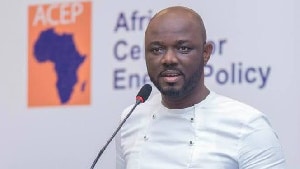
    Benjamin Boakye, an energy governance expert and Executive Director at the Africa Centre for Energy Policy (ACEP), expressed concerns over the seeming lack of urgency in presenting the Energy Sector Recovery Programme (ESRP II) second phase, which should have been delivered by the end of June – describing it as “alarming”.

    This comes as the potential revenue contributions from energy exports, estimated at approximately US$1.4 billion which could have alleviated the budget deficit, seem unlikely due to the falling prices of oil globally.

    “It baffles me that we have not been aggressive in putting out the programme to improve under-recoveries. Even though government has pledged to address the challenges, there have been no engagements with local stakeholders… Our initial estimate of generating US$1.4billion from energy exports might not be met due to the expected price of US$88/barrel not materialising. As a result, we may face a deficit of approximately US$500million considering our half-year revenue receipts amount to around US$500million,” he elaborated.

    Furthermore, imposition of the 1 percent Growth and Sustainability Levy on the gross production of companies in the extractives industry has caused consternation, as government failed to engage in good faith negotiations with the companies who have stability agreements in place, he added.

    “It would have been expected that there’d be some good faith negotiations to establish a reasonable timeframe for their support in the recovery effort. Unfortunately, the power-play involved seems to have hindered progress,” he said, stating that he expects positive developments in this regard.

    He also expects much-needed clarity on the ‘gold for oil’ programme. Previously, revenues were generated through the purchase of gold with a 1.5 percent tax applied.

    However, this tax has been waived since the Bank of Ghana (BoG) started purchasing gold from the Precious Minerals Marketing Company (PMMC). This move has resulted in a loss of much-needed revenue, Mr. Boakye noted.

    “If we are not careful, we risk institutionalising a process that makes it difficult for us to accurately track the quantity of gold produced. In the past, disparities have been observed between our export data and the import data from other countries involved in gold-buying. It is crucial to address this issue in order to ensure transparency and effective revenue management,” he added.

    Food security and inflation concerns

    Dr. Charles Kwowe Nyaaba, Executive Director-Peasant Farmers Association of Ghana (PFAG), for his part, called for a strong message in the interim budget to address food insecurity.

    He said this is pertinent with as much as 5.2 percent of the population facing severe food insecurity, and 6.5 percent experiencing moderate food insecurity.

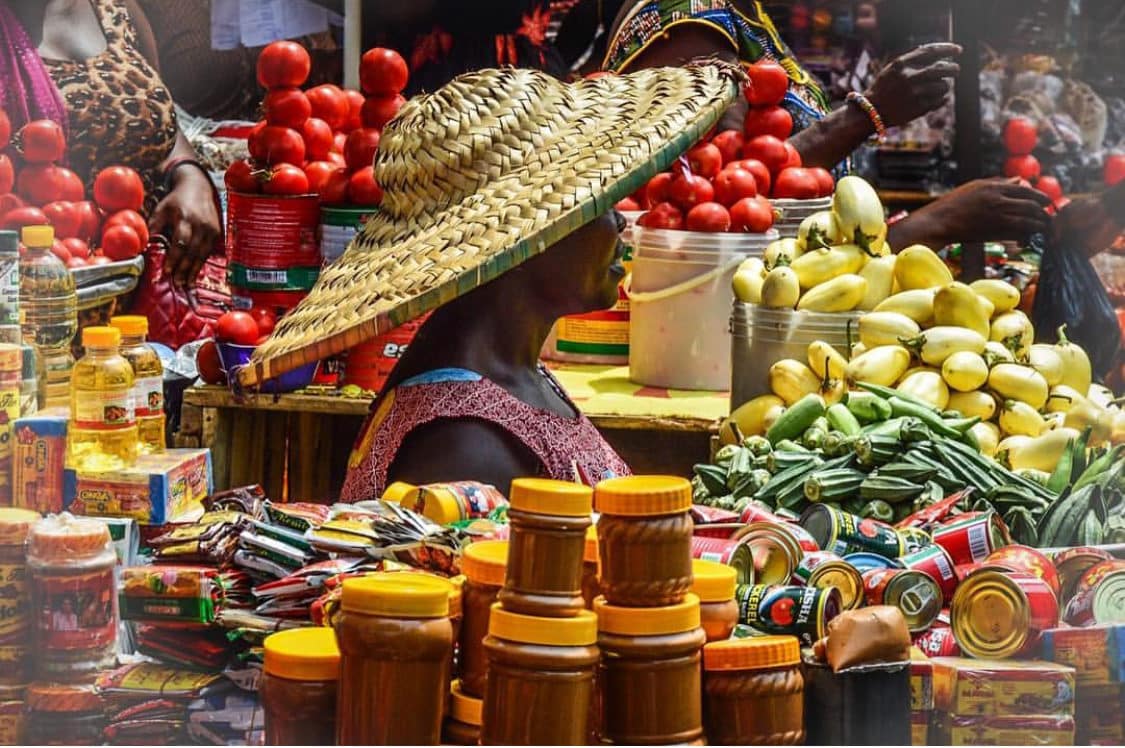
    This comes as consumer inflation rose to 42.50 percent in June 2023 from 42.2 percent the previous month, driven primarily by food inflation which accounted for 54.2 percent of the headline inflation figure – further increasing from 51.8 percent in May.

    Education disbursement regime, provision of desks and textbooks

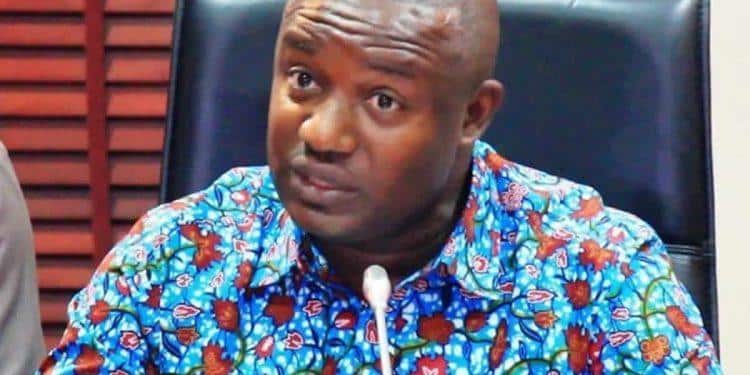
    Kofi Asare, Executive Director of Education Watch (Eduwatch), stressed the need for clarity in the disbursement regime for education grants; saying stakeholders need assurance of a clear disbursement roadmap to address accountability issues. Additionally, accumulated arrears in the education sector need urgent attention as many school administrators face financial challenges due to unpaid loans.

    Mr. Asare emphasized the critical shortage of desks in the basic education sector, which is negatively impacting over two million children.

    The lack of desks presents one of the most significant challenges in the basic education sector, with more than 2 million children affected. To address this pressing issue adequately, an urgent requirement for approximately 1 million dual desks has been identified.

    However, Mr. Asare explained that the approved budget allocated by parliament for desks is only GH¢15 million, which falls short of the funding needed to procure the required number of desks. With this funding, a maximum of 35,000 desks can be purchased, leaving a substantial gap in meeting the students’ needs.

    Furthermore, Mr. Asare highlighted that even after four years into the current basic school curriculum, textbooks are available for only 3 out of 10 subjects, and they are still limited in quantity. This exacerbates the challenges faced in providing quality education to the students.

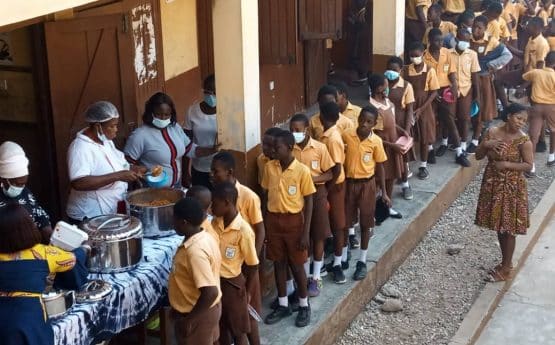
    “However, a more pressing concern arises at the junior high school level. As we enter year 3, students who are currently in JHS 2 and moving to JHS 3 at the end of this year began their education 2 years ago, yet they have not been provided with any textbooks. It is crucial to address this situation promptly as they will be writing their BECE next year,” he said, adding that the budget must address the “unrealistic” school feeding allocation.

    Campaign funding

    Director of Advocacy and Policy Engagement-Ghana Centre for Democratic Development (CDD-Ghana), Dr. Kojo Asante, stressed the significance of addressing the issue of campaign financing; particularly with the impending elections next year, saying leaving the space unregulated continues to breed corruption and impede economic growth. However, it is not directly within the IMF programme’s purview and is likely not to be mentioned in the upcoming interim budget presentation.

  • Interest rates reach 30% as government exceeds its short-term securities objective

    Interest rates reach 30% as government exceeds its short-term securities objective

    In its latest auction on July 21, 2023, the government exceeded its treasury bill target by GH¢45.05 million.

    The total subscription for the 91-day, 182-day, and 364-day bills amounted to GH¢2.69 billion, surpassing the auction’s target of GH¢2.65 billion.

    The results from the Bank of Ghana indicate an increase in interest rates for the 364-day bill, reaching 30.4%. Similarly, the 91-day and 182-day bills saw interest rates rise to 24.92% and 26.80%, respectively.

    Despite the higher interest rates, all bids tendered were accepted. Specifically, GH¢1.78 billion was accepted from the 91-day bill, GH¢356.97 million from the 182-day bill, and GH¢557.07 million from the 364-day bill.

    Looking ahead, the government is planning to borrow GH¢2.282 billion from its next auction.

  • Government charges 21% VAT on personal, company Facebook adverts

    Government charges 21% VAT on personal, company Facebook adverts

    From August 1, 2023, the commercial division of Facebook’s parent company, Meta Business, will add a total of 21 percent in additional taxes to all personal and commercial advertisements placed on the platform.

    According to an email from Meta Business, the fee is in accordance with a directive from the Ghanaian government about the implementation of a new value-added tax on products and services.

    “Meta is required to charge VAT levies on the sale of ads to advertisers, regardless of whether you’re buying ads for business or personal purposes,” the mail read.

    “All advertisers with a business country of Ghana will be charged an additional 2.5% National Health Insurance Levy (NHIL), 2.5% Ghana Education Trust Fund (GETFund), 1% COVID Health Recovery Levy and 15% Value Added Tax (VAT) on advertising services purchased beginning August 1, 2023,” it added.

    The e-mail further noted that, “If you’re registered for VAT and provide your name, address and VAT ID, your name, address and VAT ID will show up on your ads receipts. In the event that you’re entitled to recover VAT, this may help you recover any VAT you paid to Ghana Revenue Authority if you are a VAT registered business in Ghana”

    The company also provided clarity on how customers can add their VAT ID to their respective accounts.

  • 2,000 workers needed to replace retirees – Dr Adams government

    2,000 workers needed to replace retirees – Dr Adams government

    The Department of Parks and Gardens’ Chief Horticultural Officer, Dr. Daniel Kingsford Adams, has stated that his organization needs roughly 2,000 new employees to become lively once more.

    He explained the human resources dilemma as being caused by the staff’s impending retirement of 90% of the workforce over the next five years.

    However, he pointed out that despite the department receiving ten new hires, the personnel size is still insufficient.

    Among other challenges of the Department of Parks and Gardens, Dr Adams further stated that, “Since I took over last year, the ministry, through the effort of the sector minister, Dan Botwe, provided us with new vehicles, including two big trucks, a Landcruiser Prado, a tractor, two pickups and working machines. Other than that, the department had no vehicles.”

    “We have also been provided with about 10 workers but we need a staff strength of about 2,000 to make the department vibrant once again,” he said.

    The 1992 Constitution and Section 12 of PNDCL 327, which specifies the duties, are where the department derives its authority, according to a story in the Daily Graphic.

    The department’s responsibility is to maintain the horticultural vegetation that lines the median and shoulders of all national roadways.

  • Partners who murder ex-spouses to face tougher punishments after domestic violence reforms

    Partners who murder ex-spouses to face tougher punishments after domestic violence reforms

    With new domestic violence legislation that have been suggested, partners who murder their ex-partners after a breakup will receive lengthier terms.

    If they are approved by Parliament, judges will use the murder of an ex-partner as an aggravating circumstance when determining punishment.

    The suggestions, which were made public on Thursday by Alex Chalk KC, the justice secretary, will also take abuse allegations against those found guilty of outbursts into account.

    Domestic abuse victims will receive lighter punishments if they did experience it, including campaigns of coercive and controlling behaviour.

    The Government commissioned an independent review into domestic homicide sentencing in 2021 and Clare Wade KC made her suggestions in a report published on March 17 this year.

    Along with the additional measures suggested this week, ministers are also set to ask the Law Commission to to review the use of defences in domestic homicide cases.

    This will include the partial defences of ‘loss of control’ and ‘diminished responsibility’.

    Justice Secretary ALEX CHALK, seen at a Cabinet Meeting in Downing Street. Cabinet Meeting in Downing Street, London, England, United Kingdom - 18 Jul 2023
    Lord chancellor and secretary of state for justice Alex Chalk KC announced the reforms (Picture: Shutterstock)

    ‘Loss of control’ is often used to try and reduce a charge from murder to manslaughter.

    It is a complicated defence and the details of it would change with each case but, in the context of domestic violence, it is usually argued by proving the defendant had a ‘serious fear of violence’ from the person they commited a crime against.

    Reforming ‘diminished responsibility’ will broadly mean asking the court to take into account whether a defendant has suffered mental health problems because of domestic abuse.

    Essentially, this review will be looking at whether the law adequately considers circumstances where a victim of domestic abuse acts in self-defence.

    Justice secretary Alex Chalk KC said: ‘Cowards who murder their partners should face the full force of the law.

    ‘Our reforms will give judges the power ensure that those who coercively control their victims or kill them at the end of a relationship face longer behind bars.’

    The lord chancellor also said he wanted to make it easier for courts to enforce severe consequences on murderers who ‘add pain and trauma through “overkill”‘.

    This is when excessive force or action is taken beyond what is necessary to commit the murder.

    Domestic homicide is defined as a death that occurs due to violence, abuse or neglect by a partner, ex-partner, relative or member of the same household.

    Controlling or coercive behaviour was introduced as a criminal offence in the Serious Crime Act 2015 and can include economic, emotional or psychological abuse and threats alongside physical or sexual violence.

    More than half (51%) of the murder cases looked at in the Wade Review involved controlling or coercive behaviour.

  • Selling SOEs is to attract private investment and generate jobs – Joseph Cudjoe

    Selling SOEs is to attract private investment and generate jobs – Joseph Cudjoe

    Joseph Cudjoe, the minister of public enterprises, has listed a few of the state-owned companies whose assets the government is selling. The government plans to sell the assets of approximately 17 shut-down SOEs, the minister announced last week.

    However, he clarified that the action is intended to secure private investments for the enterprises and have a cascading effect on the communities in which they are located.

    The Minister said in an interview as quoted by citinewsroom.com that the move is “…to make sure we secure our private investments into it through government decision to sell them off into private hand so that they will be invested into to develop them to bring jobs to that area.”

    Ten of the SOEs are:

    Ghana National Trading Corporation State Construction Corporation

    State Fishing Corporation,

    UAC Aboso Glass Factory Bungalow of the Bolgatanga Meat Factory

    Bonsa Tyre Factory’s Clinic

    Research laboratory of the Ghana Consolidated Diamonds

    The regional office of the Ghana Food Production Corporation at Srodae

    The decision to sell off the assets of these SOEs according to the Minister is a means for the government to save costs.

    According to a Government-commissioned study completed in 2019, the total market value of the State’s equity holding in 63 active Specified Entities was estimated to be GHS 35.7 billion as of December 2016, as disclosed by the Minister.

    Out of this amount, State-Owned Enterprises (SOEs) constituted 92 percent of the total value, while the remaining eight percent represented the State’s equity in Joint Venture Companies (JVCs).

    To enhance the management and performance of the SOEs, the government expressed its intentions to restructure some of them. The proposed restructuring methods included listing them on the Ghana Stock Exchange, liquidation, strategic investment, and outright disposal.

    In a bid to ensure better efficiency and effectiveness in managing the SOEs, the Minister further revealed that in 2021, the government introduced a Public Enterprises League Table (PELT). This tool was designed to assess the performance of the Specified Entities and foster healthy competition among them, thereby driving improved performance.

  • Government’s two new ‘haircuts’ explained

    Government’s two new ‘haircuts’ explained

    As stated in the 2023 budget announcement, Ghana’s debt levels have reached unsustainable levels, posing challenges for the country to secure a bailout from the International Monetary Fund (IMF), leading to the necessity for debt restructuring.

    In December 2022, the government initiated a domestic debt exchange program, inviting bondholders to exchange their existing bonds for new ones with revised maturity dates. Despite facing strong opposition, a remarkable 85% of bondholders agreed to participate in the Invitation to Exchange.

    This accomplishment was crucial as it fulfilled one of the requirements set by the IMF. However, to secure the first tranche of the $3 billion loan from the IMF, the government needed to meet other conditions, including securing assurances from external creditors.

    Upon receiving the necessary assurance, the IMF’s Executive Board approved the first tranche of the loan in May.

    Now, in preparation for the second tranche, expected in November, the government has launched two additional debt restructuring programs, aiming to restructure bonds worth up to GH¢809 million.

    The domestic debt exchange program enables the government to call for bondholders to swap their current bonds for new ones with extended maturity dates. This approach is taken because the government faces challenges in meeting both principal and interest payments for bonds that have matured or are scheduled to mature this year.

    By extending the maturity dates and adjusting the interest rates for the new bonds, the government seeks to create a manageable repayment schedule and provide some breathing space to meet its payment obligations.

    The two new “haircuts” are for holders of dollar bonds and holders of COCOBOD’s short-term securities i.e., cocoa bills.

    See the invitations sent out by the government for the new haircuts below:

    COCOBOD’S INVITATION

    The Ghana Cocoa Board (COCOBOD) has, today, launched a debt securities exchange programme (the Exchange Programme) under which it is inviting holders of its short-term debt securities (the Cocoa Bills) to voluntarily offer to exchange their Cocoa Bills (representing an aggregate principal of approximately GHS 7.93 billion) for longer-term debt securities with averagely lower coupon rates to be issued by COCOBOD (the Bonds).

    The Bonds will be issued pursuant to the terms of (the Programme Documents):
    (a) an exchange memorandum dated 14 July 2023 (the Exchange Memorandum);
    (b) a trust deed dated 14 July 2023 and entered into between COCOBOD (as issuer) and Consolidated Bank Ghana Limited (CBG) (as trustee for the holders of the Bonds); and
    (c) an agency agreement dated 14 July 2023 and entered into by COCOBOD (as issuer), CBG (as bond trustee and paying bank), and the Central Securities Depository (GH) LTD (as transfer agent, calculation agent, and registrar in respect of the Bonds).

    Holders of the Cocoa Bills whose offers are accepted by COCOBOD will receive five (5) different Bonds with an aggregate principal amount (rounded down to the nearest GHS 1.00) equal to the principal amount of Cocoa Bills tendered (in addition to any accrued and unpaid interest due on such Cocoa Bills). The five (5) Bonds will mature on a one-per-year basis consecutively from (and including) 2024 to (and including) 2028. The reasons for undertaking the Exchange Programme have been explained by the chief executive of COCOBOD in a letter dated 11 July 2023 from the chief executive to all holders of the Cocoa Bills. A copy of the letter has been included in the Exchange Memorandum.

    For further details regarding the Exchange Programme, all holders of the Cocoa Bills are advised to read the contents of the Programme Documents carefully and consult a dealer, investment adviser or other professional for appropriate advice before making an investment decision. Copies of the Programme Documents are available at https://projects.morrowsodali.com/CocobodDDE, https://calbank.net/CocobodDDE and the website of COCOBOD (i.e. https://cocobod.gh/CocobodDDE).

    Offers may be submitted from today (i.e. 14 July 2023) until 4pm on 31 July 2023 (unless otherwise extended by COCOBOD in its sole discretion and with the prior approval of the Securities and Exchange Commission). An offer (once made) cannot be revoked or withdrawn at any time except in the limited circumstances described in the Exchange Memorandum.

    This announcement is for informational purposes only and is not an invitation to exchange to any holders of the Cocoa Bills. The invitation to exchange the Cocoa Bills is only being made pursuant to the Exchange Memorandum.

    COCOBOD has appointed CalBank Plc (CAL) as arrangers for the Exchange Programme.

    DOLLAR DENOMINATED BONDS

  • High cost of setting up businesses cause for skyrocketing inflation

    High cost of setting up businesses cause for skyrocketing inflation

    The Ghana Union of Traders Association (GUTA) has expressed concern about the high expenses associated with conducting business in the country.

    Dr. Joseph Obeng, the President of the Association, discussed the issue in an exclusive interview with GhanaWeb Business. He attributed the recent rise in inflation to cost-push inflation, where increasing production costs prompt businesses to pass on those costs to customers in order to maintain profitability or break even.

    During the interview with GhanaWeb’s Ernestina Serwaa Asante, Dr. Obeng highlighted the significant customs duties paid at ports, high interest rates on loans, and various taxes as contributing factors to the increased prices of goods and services.

    Dr Joseph Obeng said, “The inflation we are experiencing if everybody wants to know is a cost-push inflation. The fact that there are too many cost items. The taxes, the duties that we pay, the interest rate and all that have made the prices go up so until we are able to tone down this cost of doing business, prices will keep on going up.”

    In June 2023, there was a slight uptick in inflation, with the rate increasing to 42.5 percent compared to the 42.2 percent recorded in May.

    Professor Samuel Kobina Annim, the government Statistician, has identified food and non-food items as the primary contributors to this inflationary trend, accounting for 54.2 percent and 33.4 percent respectively.

    Within the local market, the inflation rate for domestically produced items stood at 35.9 percent, while imported items experienced a higher inflation rate of 44.5 percent.

  • Joe Jackson describes debt exchange for cocoa bills as “another haircut”

    COCOBOD’s invitation to holders to voluntarily exchange their short-term cocoa bills for fresh ones is just another haircut, according to Director of Business Operations at Dalex Finance, Joe Jackson.

    This, in his opinion, is yet another example of the government’s inability to cover its expenses.

    He clarified that the government is using the call to exchange as a means of spreading out the maturities that are due in August over a five-year period because it is unable to pay them off by the due dates.

    “Just like we did with domestic bonds, the government and COCOBOD have come up to say, we can’t pay our bills. Remember that the last Cocoa Bill was issued in February 2023 at a rate of 32.22 percent per annum and this was supposed to have been paid in August, but it will not be paid and any interest and the principal will be rolled up into one figure,” he was quoted by citinewsroom.com.

    The payment of both principal and interest will be done starting in 2024 through to 2028.

    “Let’s say you have Cocoa Bills worth GH¢68 and interest worth about GH¢32 which adds up to GH¢100, 5 percent of that will be paid in 2024, 20 percent in 2025, 25 percent in 2026, 25 percent in 2027, and 25 percent in 2028 which means that the monies that you should have received this year plus interest, will be spread over the five years starting in 2024. This is another haircut,” he elaborated.

    Joe Jackson however blamed the Ghana COCOBOD for the default of its bills.
    “This is truly a COCOBOD problem. COCOBOD has badly managed its affairs, and it hasn’t even published its accounts since 2020, and it is the one that took the money supposedly to purchase cocoa but unfortunately doing other things that are not in its original remit,” he lamented.

    While many have bemoaned COCOBOD’s high employee size, the organization’s operations have received a number of critiques.

    The corporation invited owners of its short-term debt securities (cocoa bills) to swap them for longer-term debt securities on July 14, 2023.

    “COCOBOD is offering Eligible Holders accrued and unpaid interest (“Accrued Interest Payable”) on their Eligible Bills validly tendered and accepted by the COCOBOD, calculated from and including the last interest payment date up to, but excluding, the Settlement Date, which amount will be paid to such Eligible Holders in the form of capitalized interest (rounded down to the nearest GHS1.00) added to the principal amount of the New Bonds and distributed across the New Bonds in the same proportion as the Exchange Consideration Ratios (as defined),” parts of the release read.

  • Takoradi MP calls Ken Agyapong greedy, challenges him to return government contracts

    Takoradi MP calls Ken Agyapong greedy, challenges him to return government contracts

    Western Regional Minister and Member of Parliament for Takoradi, Kwabena Okyere Darko-Mensah, has criticized Kennedy Agyapong, his fellow lawmaker from the Assin Central constituency, who is also vying for the New Patriotic Party (NPP) flagbearer position.

    The minister accuses Agyapong of displaying greed and unfairly targeting both the government and Vice President Mahamudu Bawumia, who is also a contender in the NPP race.

    During an interview on Takoradi-based Radio 360 on Monday (July 17), Darko-Mensah defended Bawumia against Agyapong’s harsh criticisms. Agyapong had recently blamed Bawumia for the economic challenges faced by Ghana.

    Darko-Mensah asserted that the economic downturn was primarily a result of the impact of COVID-19, a fact acknowledged by the International Monetary Fund (IMF), which is currently providing financial assistance to Ghana.

    “..we were all in the country when COVID broke. Were you the one who manufactured COVID? Even the IMF who are giving us a bailout said we (NPP) did not create the problem, as our economic challenges are as a result of COVID,” he stressed.

    Additionally, Darko-Mensah pointed out that the economic challenges were further compounded by the take-or-pay energy-sector contracts signed during the previous government’s tenure. He questioned the relevance of these contracts to the responsibilities of Dr. Bawumia, himself, or Ken Ofori-Atta in leading the country into an IMF program.

    Regarding Kennedy Agyapong, Darko-Mensah highlighted that the MP has been a significant beneficiary of government contracts throughout the years. He suggested that Agyapong should consider returning those contracts and rejecting any new ones due to the current economic constraints faced by the country.

    “Ghana is a member of the IMF and they have given us some assistance during COVID. Since Ghana went to the IMF the cedi is stabilising …what intrigues me however is, between you and I, we all know one of the biggest government contractors is the man you are talking about (Kennedy Agyapong).

    “When things were bad and he was benefitting, that was right, but now that he wants to be a presidential candidate, he has forgotten about all those benefits he derived and wants us to forget about all that?

    “Then he should reverse (sic) all those contracts he earned and hand it to others and say because Ghana is now back to the IMF, I will not take any government contract again. If he continues like that then technically you want to act like a greedy person who wants to benefit both ways.

    “If he wants to find someone to blame for Ghana going to IMF, why won’t he also along the lines of equity say that he will not take any of the contracts he is taking during this IMF period? He is just misleading people and it needs to be straightened,” the minister added.

  • Govt allegedly using land guards to reclaim encroached lands – Leaked audio reveals

    The government has been accused of engaging the services of land guards to reclaim encroached lands.

    Information reaching the Independent Ghana indicate that Chief Director of the Ministry of Lands and Natural Resources Prof Patrick Agbesinyale at a Parliamentary Committee meeting on July, 10, 2023 provided the said information.

    “I think the idea was that anytime the Government apparatus; the police, military among others are seen going out there to claim lands, you know the hullabaloo and backlash the Government receives. So, what they do is that you would set up somebody like this and Government would literally be hiding behind it so he can reclaim government lands.”

    “So, I remember that during the claiming process, three people lost their lives.”

    “There were gunshots; exchange of fire, and three people lost their lives there. Except that Gyato has a section of the media on site who would cover always – he is a whole set-up,” a male voice says.

    It is reported that the government then apportions some of the reclaimed lands to the land guards as compensation for their work.

    The Chief Director is said to have also claimed that the Ghana Armed Forces and the Police procure the services of this same private land guard to protect their lands.

    Addressing the media, the Deputy Ranking Member on the Lands and Forestry Committee of Parliament, Alhassan Suhuyini bemoaned the lack of commitment on the part of the government to combat land guard activities.

    “One would have thought that with the passage of this law to outlaw land guards, our land tenure system would have been sanitized, and we would have all been hopeful that acquiring land will no longer be a matter of life and death and so it came to us as a surprise that the Ministry has resorted to contracting a land guard to protect government lands.”

    “The other shocking revelation according to the Chief Director is that even the Ghana Armed Forces and the Police use this same land guard to protect their lands. So, if the military and the police cannot protect their own lands and have to resort to the use of a land guard, then what will be the fate of the common Ghanaian who wants to acquire land and is faced with land guards?”

    “What was again scandalous by the Chief Directors’ revelation is that this particular land guard has a set-up the state cannot compete,” Mr. Suhuyini added.

    The Vigilantism and Related Offenses Act, 2019 (Act, 999) criminalises such activities.

    Clause 7(5) of the Act says; a person shall not directly or indirectly, engage a land guard to protect or guard the property of that person or any other person. 7(6) says; a person who contravenes subsection (5) commits an offense and is liable on conviction to a term of imprisonment not less than 10yrs and not more than 15yrs.

  • Delisting of 17 SOEs by government long overdue – Financial expert

    Delisting of 17 SOEs by government long overdue – Financial expert

    The decision by government to delist over 17 State Owned Enterprises (SOEs) is long overdue, according to financial expert and Financial Advisory Partner Yaw Appiah-Lartey of Deloitte Africa.

    On Wednesday, Joseph Cudjoe, the minister of public enterprises, revealed that the cabinet would soon make a decision regarding the future of about 17 state-owned businesses.

    The Minister claims that because the government is only incurring expenses by maintaining these State-Owned Enterprises as operational, they are currently liabilities to the nation.

    Speaking on the development on Starr Today with Joshua Kodjo Mensah Thursday, the financial analyst stated that although the decision is welcome it is long overdue.

    “I think this is long overdue, if you take accounts of the companies that the minister mentioned a lot of them have been underperforming, reporting losses and obviously a drain on government coffers. The idea to restructure is therefore welcoming news and therefore long overdue.

    “All these companies that in the past have been listed under state interest and governance authority some of them have been reporting losses for a long time; over the last 5 years. There is nowhere in the world that a private entity operating for the past 5 years reporting losses will continue to be in existence”, he bemoaned

    Mr. Yaw-Appiah added that a lot of such non-performing entities remained due to political expediency.

    “It is partly because of how some of them have been politically sensitive over the years… Once the government has the political will and has the basis for restructuring these entities by liquidating some, privatizing and bringing in strategic investors and also listing some on the stock exchange, it is a good idea”, he added.

  • UK, US, others support Sweden’s act of Quran burning during a UN vote

    UK, US, others support Sweden’s act of Quran burning during a UN vote

    In the aftermath of a Quran-burning stunt in Sweden that sparked protests throughout the Muslim world, the United Nations Human Rights Council (UNHRC) has endorsed a resolution on religious hate and bigotry.

    The proposal was approved on Wednesday, but the United States and the European Union opposed it because they claimed it went against their stances on free speech and human rights.

    Concerned by the incident last month outside Stockholm’s largest mosque, in which an immigrant from Iraq desecrated the Quran on the festival of Eid al-Adha, Pakistan and other OIC nations obtained an urgent debate at the UN’s highest rights council on Tuesday.

    The resolution, among other things, called on countries to take steps to “prevent and prosecute acts and advocacy of religious hatred that constitute incitement to discrimination, hostility or violence”.

    Pakistan’s Foreign Minister Bilawal Bhutto Zardari told the Geneva-based council via video on Tuesday: “We must see this clearly for what it is: incitement to religious hatred, discrimination and attempts to provoke violence.”

    He said such acts occurred under “government sanction and with the sense of impunity”.

    Bhutto Zardari’s remarks were echoed by ministers from Iran, Saudi Arabia and Indonesia.

    “Stop abusing freedom of expression,” said Indonesia’s Foreign Minister Retno Marsudi. “Silence means complicity.”

    UN human rights chief Volker Turk told the UNHRC that inflammatory acts against Muslims, as well as other religions or minorities, are “offensive, irresponsible and wrong”.

    Sweden has condemned the Quran burning but maintains the country has a constitutionally-protected right to freedom of assembly, expression and demonstration.

    On Tuesday, France’s ambassador Jerome Bonnafont noted that human rights “protect people – not religions, doctrines, beliefs or their symbols … It is neither for the United Nations nor for states to define what is sacred”.

    How did your country vote?

    UNHRC resolutions are not legally binding but are seen as strong political commitments by states.

    Tuesday’s motion called for countries to review their laws and plug gaps that may “impede the prevention and prosecution of acts and advocacy of religious hatred.”

    Here is how countries voted:

    Yes:

    Algeria; Argentina; Bangladesh; Bolivia; Cameroon; China; Cuba; Eritrea; Gabon; Gambia; India; Ivory Coast; Kazakhstan; Kyrgyzstan; Malawi; Malaysia; Maldives; Morocco; Pakistan; Qatar; Senegal; Somalia; South Africa; Sudan; Ukraine; UAE; Uzbekistan; Vietnam

    No:

    Belgium; Costa Rica; Czech Republic; Finland; France; Germany; Lithuania; Luxembourg; Montenegro; Romania; UK; US

  • ‘Donkomi’ as gov’t sells assets of 17 SOEs

    ‘Donkomi’ as gov’t sells assets of 17 SOEs

    In order to save expenses, 17 dormant State-Owned Enterprises (SOEs) will have their assets sold, according to Joseph Cudjoe, Minister for Public Enterprises.

    He said that the operations for disposal will start in the coming months after the Cabinet authorized the procedures for evaluating the assets of the concerned SOEs.

    The Central Stores of the Aboso Glass Factory, the bungalow of the Bolgatanga Meat Factory, the clinic at the Bonsa Tyre Factory, the research facility at Ghana Consolidated Diamonds, the regional office of the Ghana Food Production Corporation at Srodae, and the guesthouse of the State Construction Company on Dagomba Street in the Northern Region are just a few of the SOEs whose assets will be put up for auction.

    At the Minister’s News Briefing held by the Ministry of Information in Accra on Wednesday, Mr. Cudjoe made this announcement.

    The Minister had the chance to inform the public about the different policies and interventions his Ministry had been working on during the media interview.

    Since taking office in 2021, Mr. Cudjoe claimed to have visited 44 Boards and Managements of various Specified Entities, communicated with them, and assisted them in finding solutions to some pressing problems affecting their day-to-day operations.

    He claimed that the Ministry had set up workshops for some SOE Board and Management members to develop their competence in the areas of corporate governance, financial stewardship, legal and regulatory framework, and public procurements.

    The market worth of the State’s equity holdings in 63 active Specified Entities as of December 2016 was estimated by a research the Government conducted and finished in 2019 to be GHS 35.7 billion, according to the Minister.

    92 percent of the total was made up of SOEs, while the remaining eight percent was made up of State stock in Joint Venture Companies (JVCs), he continued.

    The Minister revealed the government’s plans to reorganize a number of SOEs through their listing on the Ghana Stock Exchange, liquidation, strategic investment, and outright disposal.

    He stated that in 2021 a Public Enterprises League Table (PELT) was launched as a tool for measuring the performances of the Specified Entities and to foster healthy competition among them for enhanced performance as part of measures to promote effective and efficient administration of the SOEs.

    The first edition of PELT, which was published in 2022 and greatly sparked public attention, inspired numerous SOEs to strengthen their position on the table in later editions.

  • Government advised to review rising food prices as June’s inflation rises slightly to 42.5%

    Government advised to review rising food prices as June’s inflation rises slightly to 42.5%

    Government statistician, Prof. Samuel Kobina Annim, has counseled decision-makers to critically examine the issues causing the rise in food inflation.

    He emphasized that compared to non-food inflation, food inflation has regularly increased by around 20 percentage points.

    Speaking to journalists after revealing that June’s inflation rate jumped slightly to 42.5 percent from 42.2 percent in May, Prof. Annim stated that prices for everyday staple foods like vegetables and seafood have been rising over the past few months.

     “At the minimum we see a widening of the gap between food and non-food inflation. We need to focus on why we see food inflation going up.

    We have seen about a 20 percentage point change between food inflation and non-food inflation”, he said.

    He mentioned that the price of food had risen by 54.2 percent more than the national average, with imports rising by 43.8 percent and domestically produced goods rising by 36.2 percent.

  • Hushpuppi’s ally, Woodberry sentenced to 8 years over fraud

    Hushpuppi’s ally, Woodberry sentenced to 8 years over fraud

    Jacob Olalekan Ponle, also known as Woodberry, has been sentenced to 8 years and 3 months in prison by the United States of America.

    Woodberry, according to sources, will be deported to Nigeria after his involvement in a multimillion-dollar swindle.

    Woodberry, an associate of imprisoned online fraud kingpin Ramon Abbas, aka Hushpuppi, pleaded guilty to one count brought against him in court, while the remaining seven counts were dismissed in April following a plea agreement.

    Following his conviction, he agreed to hand over $8 million in wire fraud gains, as well as his luxury automobiles and watches, to the US government.

    Woodberry was sentenced on July 11 by Justice Robert Gettleman of the United States District Court for the Northern District of Illinois in Chicago, according to the Peoples Gazette.

    “The defendant is hereby committed to the custody of the Federal Bureau of Prisons to be imprisoned for a total term of 100 months as to count,” Mr Gettleman said in a court filing.

    Woodberry was ordered by the court to surrender to the US Marshals Service for transfer to the Federal Correctional Institution in Danbury, Connecticut.

    It has been reported that he will be granted visitation rights by his family members, particularly his American fiancée.

    The judge also stated that Woodberry would be “surrendered to U.S. Immigration and Customs Enforcement (ICE) custody for deportation immediately following his incarceration.”

    The internet fraudster will be ordered to pay $8 million in compensation to seven victims, and his 152 bitcoins will be sold following a public notice of 30 days for anyone with an interest in the assets to register claims.

    Woodberry was known for his extravagant lifestyle, taking to social media to flaunt his fortunes obtained through illegal operations.

    Property in Dubai police possession, such as a Rolls Royce, Lamborghini Urus, Mercedes-Benz G-Class AMG G55, four Rolex watches, one Patek Philippe watch, and three Audemars Piguet watches, are among the assets he forfeits.

    Three gold and diamond-studded rings, five gold bracelets and two gold bracelet keys, six gold neck chains, one gold and diamond-studded necklace, one small gold nugget, two bank cards, roughly $1,835 in Emirati dirhams, and approximately $15.45 in South African rands are among the other items.

    On June 10, 2020, Woodberry was arrested in Dubai alongside Hushpuppi, who is currently serving an 11-year prison sentence in the United States for fraud.

  • Nigeria: Over 800 people killed in attacks as at June 2023 – Report

    Nigeria: Over 800 people killed in attacks as at June 2023 – Report

    From a recent security assessment, attacks took place across Nigeria in June 2023 and left more than 800 people dead.

    Beacon Consulting, a security risk management and intelligence organization, produced a report that included 460 occurrences, including 239 kidnappings.

    The attacks reportedly took place in 234 local government areas throughout Nigeria’s 36 states, including Abuja, the nation’s capital.

    Although President Bola Tinubu pledged to give national security first priority, the country has already seen a significant number of attacks in the first month of his government.

    Despite the hiring of new security chiefs, the government is still unable to stop attacks by Islamist organizations, bandits, and other criminal gangs.

    In separate assaults on towns in central Benue and Plateau states on Saturday, almost to 40 people were slain.

    More bodies are continually being found, the police in Benue state informed the BBC.

  • 6 missing after building collapse in Conakry – Report

    6 missing after building collapse in Conakry – Report

    The local media has reported that six persons are believed to be missing after a building fell in Conakry, the capital of Guinea.

    According to the article, a building collapsed over five construction workers and a toddler.

    The block is believed to be a component of a government social housing project for employees of the public sector.

    “None of the trapped people are responding to calls from rescue teams, but we remain hopeful of a miracle,” an unnamed source told AFP.

  • Govt fully settles bondholders’ outstanding arrears

    Govt fully settles bondholders’ outstanding arrears

    In a statement released by the Finance Ministry, confirms that the government has completed the settlement of all outstanding arrears to members of the Individual Bondholders’ Forum.

    The payment includes all coupons and principals that were due up to June 19, and instructions for the payment of coupons until July 10, 2023, have been dispatched.

    The government also expressed its commitment to maintaining continuous and constructive engagement with the leadership of the Coalition of Individual Bondholders Groups (CIBG).

    They emphasized their dedication to implementing the terms outlined in the Memorandum of Understanding (MOU).

    Previously, the CIBG, consisting of the Ghana Individual Bondholders Forum and the Individual Bondholders Association of Ghana, had threatened to stage a protest at the Finance Ministry, demanding the payment of outstanding principals and coupons.

    They expressed disappointment in the government’s failure to uphold the agreed payment plan specified in the MOU.

    However, the government has fulfilled its commitment by paying all arrears on coupons for bonds maturing by May 31, 2023, as well as coupons falling due from June 1, 2023, in accordance with the terms of the MOU.

    “The Ministry of Finance takes this opportunity to thank all bondholders for their continuous support during this period of tight liquidity. Government is confident that in working with all stakeholders, we shall restore macroeconomic stability, achieve inclusive economic growth, and transform the Republic”, the statement added.

  • Government will make more investments to boost, protect maritime sector – Minister

    Government will make more investments to boost, protect maritime sector – Minister

    Minister of Transport, Kwaku Ofori Asiamah, stated that the establishment of the Dedicated Container Terminal (MPS Terminal 3) has significantly increased the capacity of Tema Port to handle the largest vessels in the industry effectively.

    He emphasized that the presence of the DCT has positively impacted the reputation of Tema Port as a rapidly growing hub on the West Coast of Africa.

    The minister also revealed that the construction of a Dry Terminal, along with other infrastructure enhancement projects, has enhanced the overall efficiency of Ghana’s seaports.

    This was announced during the 14th edition of the Maritime Law Seminar for Judges of the Superior Courts of Judicature.

    “This is in addition to many other service improvement initiatives including but not limited to the Paperless Ports; Ghana Single Window (ICUMS); Deployment of Unmanned Aerial Vehicles (UAV); Rollout of Electronic Data Interchange (EDI); Deployment of e-payment solution among others”

    He emphasized that government will continue to implement strategies to ensure that stakeholders in the maritime industry can seamlessly conduct business and reduce the cost of business operations at the ports.

    “For the foreseeable future, the maritime industry will remain the primary engine of domestic and foreign trade which will in turn stimulate economic growth and development.

    Government will continue to make the necessary investment to ensure the maritime sector is projected to attract stakeholders and investments to position Ghana as the preferred business destination within the sub-region,” Ofori-Asiamah concluded.

  • Govt replaces fertilizer subsidy with guarantor system after GHS3bn investment

    Govt replaces fertilizer subsidy with guarantor system after GHS3bn investment

    The Minister for Food and Agriculture, Bryan Acheampong has announced that government would stop providing farmers with fertilizer subsidies starting of April 11, 2023.

    He claimed that despite the subsidies costing the country GH3 billion over the previous six years, it had little impact because of the rampant corruption that disfigured the intervention.

    “We have canceled subsidy since 11th April, 2023 when I assumed office. Because the subsidy has cost the nation GH¢3 billion in the last 6 years. Yes, it has moved Agriculture contribution to GDP from 2% to about 6% but the amount of money invested and the way the structure has behaved is due to misconducts in the subsidy”.

    The Agric Minister said “The subsidy was not reaching the farmers but the people in the middle colluded such that the farmers were not benefiting from the subsidy. I believe if they were really benefiting in the full hog the way the government intended it would have been better.”

    Bryan Acheampong hurried to add, however, that the government will soon implement a guarantor system where it will ensure the farmers’ access to fertilizers in exchange for repayment after harvest.

    “With this new program, there will be no subsidy. You don’t also have to come up with that GH¢85 that you have to pay. What the government is going to do is to sign an agreement with the suppliers to guarantee for the farmers to provide the fertilizers on credit and after harvest payback”.

    The Minister said these when answering questions from the local media in Kwahu dubbed “The Big Interview”.

    The flagbearer of Ghana’s largest opposition party, John Dramani Mahama, has consistently criticized the government’s decision to discontinue the free fertilizer supply program, arguing that it has exacerbated the challenges faced by Ghanaian farmers.

    Mahama has pledged to reinstate the free fertilizer supply program if his party, the NDC, regains power in 2025.

    However, Bryan Acheampong holds a different perspective and believes that the cancellation of the program and the implementation of the guarantor system are in the best interest of the country.

    Acheampong disclosed that the government is entering into an agreement with a private fertilizer company in Takoradi to produce fertilizer using gas waste. This initiative aims to address the significant fertilizer deficit exacerbated by the Russia-Ukraine conflict, which has disrupted global fertilizer production and supply chains.

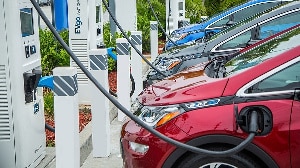
  • Government to construct 1,000 electric charging stations by 2028 – Amin Adam

    Government to construct 1,000 electric charging stations by 2028 – Amin Adam

    Minister of State at the Finance Ministry, has revealed government’s intention to construct approximately 1,000 electric charging stations throughout Ghana by 2028.

    According to the minister, this initiative aims to accelerate Ghana’s position in the electric vehicle sector and aligns with the implementation of an energy transition framework.

    Speaking at a conference on Climate Finance for Sustainable Transition in Africa, the minister emphasized the need for increased investments totaling around $600 million from now until 2070. These investments are crucial for Ghana to achieve sustainable energy sources as part of the transition framework.

    He acknowledged that careful planning and execution are necessary for the energy transition plan. However, he also highlighted the evident and long-lasting presence of electric vehicles, indicating that they are here to stay.

    “With more than 1,000 electric vehicles already in operation across Ghana, government aims to build an additional 1,000 electric charging stations within the next five years to provide the necessary infrastructure to promote EV adoption throughout the country,” Dr Amin Adam noted.

    Regarding the regulation of electric vehicles, the Minister of State highlighted the implementation of comprehensive guidelines by the Energy Commission of Ghana to govern their manufacturing and usage.

    Additionally, the minister emphasized the establishment of car manufacturing companies that are already operational within Ghana.

    “By establishing the required electric charging stations, the government aims to encourage these companies to produce electric vehicles locally, further supporting the country’s sustainable transportation goals,” Dr Amin Adam said.

    “The commitment to set up electric charging stations aligns with Ghana’s broader energy transition plan, which seeks to reduce greenhouse gas emissions, enhance energy efficiency, and promote the use of renewable energy sources,” he added.

  • Ayawaso Central MCE steps down

    Ayawaso Central MCE steps down

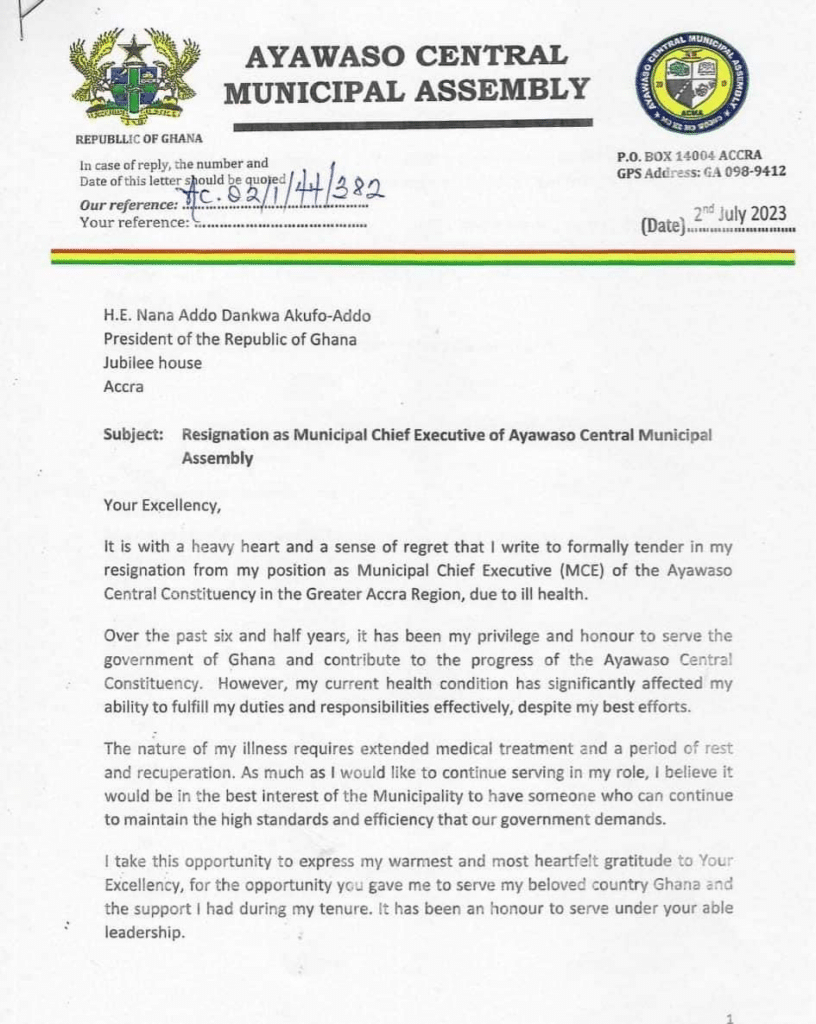
    The Municipal Chief Executive (MCE) of Ayawaso Central Municipal Assembly, Alhaji Mohammed Ababio Quaye, has tendered his resignation due to health reasons.

    In a letter dated July 2, 2023, addressed to President Akufo-Addo, the MCE explained that the nature of his illness has hindered him from fulfilling his duties effectively.

    He stated that he requires extended medical treatment and a period of rest and recovery.

    Alhaji Quaye expressed his belief that it would be in the best interest of the municipality for someone else to serve in his position.

    He expressed gratitude for the opportunity to serve the government and contribute to the progress of the Ayawaso Central Constituency.

  • ACEP raises concerns over 15-year extension of AKSA’s deal worth US$750m

    ACEP raises concerns over 15-year extension of AKSA’s deal worth US$750m

    The Africa Centre for Energy Policy (ACEP) has raised concerns regarding the government’s decision to extend the contract with AKSA Plant for a duration of 15 years.

    The Africa Centre for Energy Policy highlights that the AKSA power plant, which they consider to be outdated, has already generated approximately US$700 million for capital recovery and fixed operation and maintenance expenses, despite operating at an average utilization rate of 16 percent between 2017 and 2022.

    However, with the contract extension, the plant is now assigned a capital recovery charge of around US$750 million for the extended period.

    The AKSA plants consist of older Wartsila engines assembled by a private developer during the period of power outages (known as “Dumsor“) in 2015. These units were procured from various countries such as Cyprus and Sri Lanka at a cost ranging from US$1.2 million to US$2 million per unit.

    According to ACEP, the total investment cost of the projects should not exceed US$60 million, a fact that the sector regulators are already aware of. These concerns raised by ACEP highlight the need for transparency and careful assessment of investment decisions in the energy sector.

    “Over the past six years, the company has earned approximately US$700million from the people of Ghana for capital recovery and fixed operation and maintenance. Remarkably, these same plants are now being assigned a capital recovery charge of about US$750million for the next 15 years under the pretext of retrofitting them to improve efficiency. In other words, government and the Electricity Company of Ghana (ECG) suggest that these over-20 year-old plants will operate efficiently for another 15 years,” it said in a new report.

    The approval of the deal by both the Energy Commission and Public Utility Regulatory Commission (PURC) has raised additional questions from ACEP, as they express concerns over the potential negative impact on the power sector.

    In its report on the power sector released in July, ACEP reiterates the importance of deploying highly efficient power plants in Ghana to ensure long-term sustainability and prudent management, enabling cost savings and reliable electricity supply.

    The AKSA power plants, consisting of older Wartsila engines assembled by a private developer in 2015, were sourced from various countries such as Cyprus and Sri Lanka at costs ranging between US$1.2 million and US$2 million per unit.

    ACEP, a civil society group, argues that Ghanaians have been overcharged for the facility. Despite the conclusion of the current arrangement, ACEP further contends that this stance is not only incompetent but also undermines the engineering capabilities of newer power generation systems.

    “Proper system planning will ensure that generation additions deploy state-of-the-art modern equipment, mainly when the state is the fuel supplier. It is also a basic fact that old plants are less reliable.

    “For a power system struggling to recover from persistent power interruptions, planning to build long-term efficient power systems is a fiducially duty of government and its agencies. No company should promise a reliable power supply from dead plants, no matter how cheap the promise would be,” it stated.

    Following this development, ACEP opined that inconsistencies surrounding the justification for extending these power plants necessitate a closer examination. This comes on the back of explanations from the Ministry of Energy that there is a current need for additional capacity; a position ACEP says contradicts the ongoing assertion that there is already excess capacity.

    Meanwhile, it said ECG persistently attributes the under-recoveries to this purported excess capacity: “Furthermore, a perplexing shift in perspective has occurred; as individuals who previously criticised the concept of take-or-pay agreements now deem it acceptable when the percentage is lower – about 40 percent in the case of AKSA”.

    “It is important to note that even a mere one percent of take-or-pay becomes problematic when a plant is deemed surplus to requirements. In essence, take-or-pay is not a problem when the plant is required. It is only a risk mitigation measure to guarantee the repayment of investment capital, which has proven to be relevant in our context. Had the companies not signed take-or-pay agreements, there would have been a high chance that government would ignore paying the IPPs for their investments.

    “These inconsistencies in reasoning and selective acceptance of unfavourable terms raise concerns about transparency and accountability. It is crucial to scrutinise these contradictory narratives and render the sector free from political expediency. It is imperative to hold those involved accountable and ensure efficient decision-making that aligns with the Ghanaian people’s overall welfare. This is a test that the new AKSA contract fails at all levels. The mysteries surrounding the AKSA project would be subject to criminal investigation in any serious country,” the ACEP report noted.

    More worryingly, it said the same AKSA projects are under scrutiny by the United States government authorities for alleged bribery payments to Ghanaian government officials.

    But while extending the AKSA plant – the AMERI plant for which Ghanaians have paid the full value of US$510 million – is idling and deteriorating. The plant has been left neglected under the pretext of relocation to Kumasi, ACEP fumed.

    The plant’s lack of maintenance has rendered it deplorable – with leaky roofs, damaged air-conditioners and non-operating computers in some of the units.

    While the relocation tarries and the plant deteriorates, the pipeline to supply gas is already completed – requiring a pass-through of its cost to the public through tariffs.

    In addition, the Ghana National Petroleum Corporation (GNPC) is currently requesting a tariff adjustment to incorporate the gas discounts granted to Genser, an amount estimated by ACEP and Imani to be approximately US$1.5 billion throughout the 16-year duration of the contract.

    Moreover, ACEP highlights the need for investments in converting other single-cycle plants of the Volta River Authority (VRA), such as the KTPP and TTIP, into combined-cycle plants to achieve higher efficiency compared to AKSA.

    Despite these critical assets requiring attention, ACEP concludes that they are being neglected while the Electricity Company of Ghana (ECG) and the Ministry of Energy continue to extend contracts for other power plants on a take-or-pay basis.

  • Experts advise government to ban single-use plastics and promote waste segregation

    Experts advise government to ban single-use plastics and promote waste segregation

    The state of marine pollution in Ghana has reached a critical juncture. The continuous pollution of the country’s marine environment with plastic waste not only raises concerns for the future but is already causing significant negative impacts.

    Experts are now emphasizing the need for urgent action to address the menace of plastic pollution in Ghana’s marine environment.

    During a discussion with Kennedy Mornah on Accra-based Metro TV’s Eye on Port, Richster Nii Amarh Amarfio, the Executive Director of the Blue Economy and Governance Consult, joined the longstanding call for an immediate ban on single-use plastics in the country.

    Amarfio argues that since Ghana has struggled to effectively manage single-use plastics, it is crucial to prohibit their usage rather than allowing the problem to persist.

    He explained that single-use plastics constitute a significant portion of the plastic pollutants found in the marine environment, primarily due to their disposable nature. Unfortunately, these items are readily available and challenging to control when it comes to disposal.

    “The amount of single plastics we are bringing in is alarming. When I was young, when you go shopping, you go with a basket which is reusable. These days, for everything you buy, it comes with a polythene bag that you dispose of right after use. Can we just take the bull by the horn and ban them?”, the seasoned fisherman appealed.

    Richster, who also serves as the Secretary of the National Fisheries Association of Ghana and Ghana Tuna Association also called for a policy that encourages waste segregation practices at all levels of the society.

    He claimed that because current garbage disposal methods used in the nation are not environmentally friendly, this has become absolutely necessary.

    “People buy organic substances and other biodegradable items and tie them in plastic bags before dumping them into waste bins. What this means is that, the organic substances are not allowed to decompose.”

    “Waste disposal contractors should be made to take separated waste, for example we need separate bins for organic waste, plastics, paper and other products. This should be done at the district and municipal levels. Why don’t we pilot these at our basic schools and universities?” he added.

    His call was further strengthened by the Director of Petroleum at Ghana’s Environmental Protection Agency, Kojo Agbenor-Efunam, who revealed that single-use plastics take about 450 years to decompose.

    The environmentalist likened plastic pollution, which he termed as “a man-made disaster”, to humans subjecting the earth to extreme suffocation, even though the price will be ours to pay.

    He argued that the problem of waste disposal is not a matter of awareness and education as his outfit consistently embarks on nationwide sensitization.

    He said Ghana’s problem is one of attitude and a behavioral change towards the environment.

    He doubled up on the reconsideration of the laws governing single-use plastics hinting that landfill sites are getting overwhelmed with plastics.

    He lamented that not only are plastics affecting the marine ecosystem and defacing Ghana’s beachfront, but posing a great danger to arable lands as well.

    “In our younger days, it was very common to find earthworms that enrich our soil, but nowadays they are hard to find. They are being smothered by plastics and they suffocate and die out.”

    Contributing to the discourse, the Head of the Marine and Fisheries Sciences Department at the University of Ghana, Professor Francis Kofi Ewusie Nunoo, intimated that fish health and marine biodiversity is at immediate risk from plastic pollution.

    He said fish often ingest plastics as food which is dangerous for their survival.

    He revealed that, during a fisheries study conducted around Tema, researchers discovered plastics in the stomachs of fish species, which he said accounts for many premature fish deaths in the country.

    He said when fish do not die, their growth is stunted and reproduction is impaired.

    Prof. Nunoo who is also the Chairman of the governing board of the Fisheries Commission, described the disheartening nature of plastic flow into water bodies during the rainy season.

    “We have studied using satellite remote sensing. When it rains you see large chunks of plastics moving from the Odaw into the Korle.”

    Together with Richster Amarfio, Prof. Nunoo appealed to the government to reconsider channelling little to zero-treated waste into water bodies as it is unsustainable.

  • Government to achieve 35% of GDP through tourism – Ken Ofori-Atta

    Government to achieve 35% of GDP through tourism – Ken Ofori-Atta

    The importance of tourism and its potential effects on the domestic economy as well as its role in job creation have been highlighted by Finance Minister Ken Ofori-Atta.

    He claims that the government wants to increase the country’s gross domestic product by around 35% through tourism in order to spur regional economic growth.

    On July 4, the finance minister stated, “The building is expected to contribute significantly with approximately 1.2 million anticipated tourism arrivals into Ghana for 2023 and an estimated corresponding revenue of $3.4 billion.”

    He was speaking at a ceremony to commission the renovated Kwame Nkrumah Memorial Park in Accra.

    “The evidence of the vital role of tourism for economic development is clear. For instance, in 2022, tourists spent 660 billion in emerging and developing countries which is about 3 times the amount of official development assistance for that year,” he noted.

    “Tourism contributes about 5 percent of Ghana’s GDP and in Jamaica its about 35 percent of their GDP and that is where we [Ghana] want to achieve,” Ken Ofori-Atta.

    According to him, the tourism industry offers a distinct opportunity to generate employment and income for people of all genders, ages, and skill levels, thereby providing a way out of poverty for millions.

    The finance minister expressed appreciation to the Ministry of Tourism for their diligent efforts in prioritizing and enhancing the sector’s contribution to national development and cultural progress.

    Furthermore, he extended gratitude to the World Bank for their unwavering financial support of $3.5 million, dedicated to the revitalization of the Kwame Nkrumah Memorial Park.

    Meanwhile, President Nana Addo Dankwa Akufo-Addo emphasized that the 5.4-acre facility, established in 1992 to commemorate, promote, and preserve the legacy of Ghana’s first president, Dr. Kwame Nkrumah, had not undergone any significant improvements until now.

    He highlighted that the renovated park now reflects the extraordinary stature of Dr. Kwame Nkrumah, a renowned Pan-Africanist who played a prominent role in the struggle for Ghana’s and Africa’s liberation.

    The park’s renovation, estimated at $3.5 million, is part of the Ghana Tourism Development Project (GTDP), a $40 million initiative supported by the World Bank. The project aims to enhance tourism performance in selected destinations across the country.

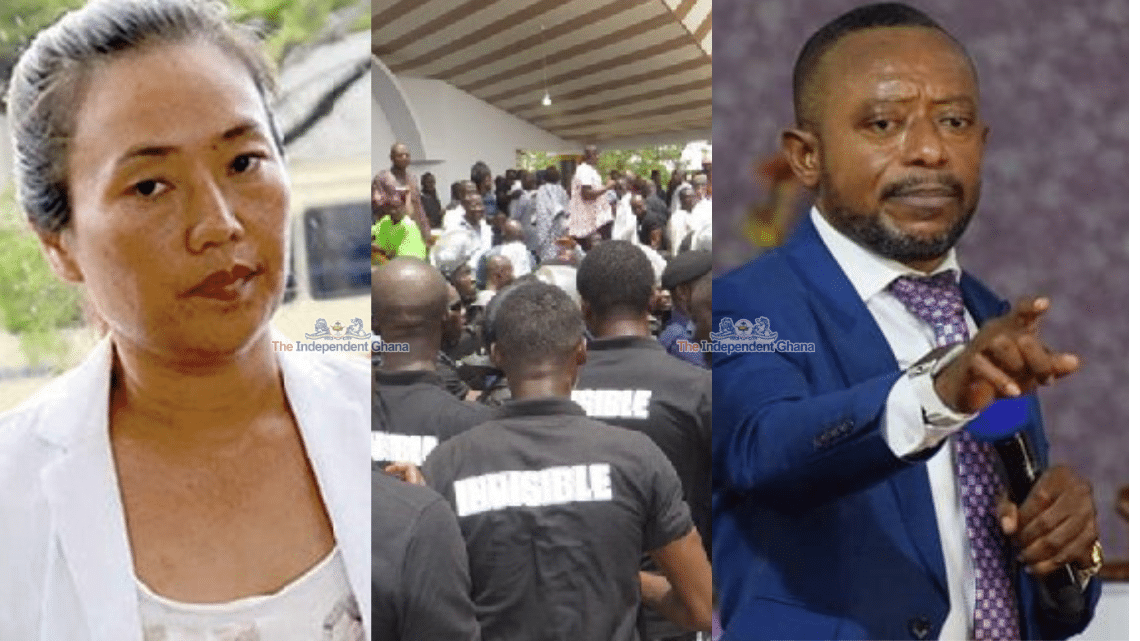
  • Nolle prosequi : How Aisha Huang, Owusu Bempah and Delta Force got away

    Nolle prosequi : How Aisha Huang, Owusu Bempah and Delta Force got away

    The legal term “nolle prosequi” has gained popularity in recent days as a result of a request made by Dormaahene Osagyefo Oseadeeyo Agyemang Badu II to the government to use it in the criminal case involving Assin North Member of Parliament James Gyakye Quayson.

    Government has employed the legal action known as nolle prosequi on four notable occasions in high-profile cases. Nolle prosequi refers to the dismissal or termination of legal proceedings by the Attorney General.

    There are two key aspects to nolle prosequi: it applies specifically to criminal cases and must be initiated by the Attorney General before the case concludes.

    It is important to note that the filing of nolle prosequi does not automatically result in the complete discharge of the accused, granting them permanent freedom. Nolle prosequi is typically utilized when the Attorney General determines that there is insufficient evidence, witnesses, or other factors to support the prosecution.

    In the case involving Quayson, the Dormaahene’s appeal was based on the belief that the trial was unnecessary, particularly considering that the people of Assin North had reelected Quayson as their Member of Parliament despite the Supreme Court’s ruling to terminate his tenure in May.

    Certain pro-government voices have strongly rejected the appeal, labeling it as undue interference in the legal process and an attempt to afford special privileges to individuals based on their societal status.

    Should the government choose to act on this appeal, it would not be the first time such an application has been made before the courts.

    GhanaWeb highlights three prominent cases in which the government of Naana Addo Dankwa Akufo-Addo has utilized nolle prosequi.

    OSP vs. Mahama Ayariga

    On October 11, 2022, Kissi Agyebeng, the Special Prosecutor, filed a “nolle prosequi” to end the prosecution of Mahama Ayariga, the NDC Member of Parliament for Bawku Central.

    Agyebeng said in a statement to the media following his submission, “We entered a nolle prosequi in relation of the second case against Mahama Ayariga and Kenrick Marfo this morning [Monday].

    “It’s simple: after I assumed office, we have further scrutinised the docket [and], upon the available evidence, we deem that the republic would be unable to prove its case.

    “It would be a complete waste of time if we were to open this case further and go to a length where it will only be dismissed on the submission of no case to answer,” Agyebeng told journalists outside the court.

    May 2017 – State vs. NPP Delta Force members

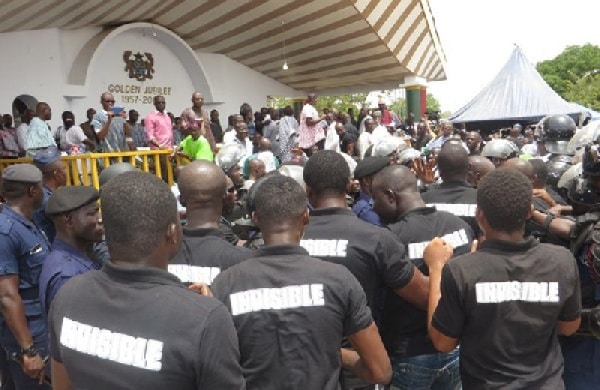
    The case against eight individuals linked to the pro-New Patriotic Party (NPP) vigilante group, Delta Force, who were accused of forcibly entering the Kumasi Circuit Court to release fellow members on trial, has been dropped by the Attorney General.

    During the court proceedings, the prosecutor, ACP Okyere Darko, revealed that the Attorney General at the time, Gloria Akuffo, had directed the police to cease pursuing the case due to insufficient evidence against the defendants.

    As a result, the presiding judge, Her Honour Patricia Amponsah, discharged the accused individuals and dismissed the case.

    The eight Delta Force members were facing trial for their alleged involvement in the 2017 incident where they stormed the court premises to free thirteen members who were facing charges of conspiracy to assault. The charges stemmed from the destruction of property at the Ashanti Regional Coordinating Council and the assault of the Regional Security Coordinator, as they opposed his appointment.

    State vs. Aisha Huang

    Aisha Huang

    Then there is the infamous Aisha Huang case in which on December 19, 2018, without giving any reasons, the State Attorney, Mercy Arthur, presented an application for nolle prosequi to the Accra High Court, that was presided over by Justice Charles Ekow Baiden.

    Aisha and her compatriots were first arraigned on May 9, 2018 for engaging in illegal small-scale mining at Bepotenten in the Amansie Central District of the Ashanti Region.

    Aisha Huang was charged with three counts of undertaking small-scale mining operations, contrary to Section 99 (1) of the Minerals and Mining Act, 2006 (Act 703); providing mining support services without valid registration with the Minerals Commission, contrary to the Minerals and Mining Act, 2006 (Act 703), and the illegal employment of foreign nationals, contrary to the Immigration Act, 2000 (Act 573).

    It was also alleged that she had granted sexual favours to some top officials and continued to enjoy their support due to threats of blackmail if they attempted to expose her.

  • ILAPI proposes establishment of fiscal covenant to reduce govt expenditure waste

    ILAPI proposes establishment of fiscal covenant to reduce govt expenditure waste

    The Institute for Liberty and Policy Innovation (ILAPI) has proposed the formulation of a new fiscal covenant in Ghana as a solution to address government expenditure waste.

    The suggested fiscal covenant aims to define clear guidelines for government spending, specifying what, how, and when to spend within allocated budgets to avoid non-prioritized and extravagant expenses, as explained by Mr. Peter Bismark Kwofie, the Executive Director of ILAPI.

    Mr. Kwofie emphasized that effective public finance management is crucial for any democratic state, and the fiscal covenant plays a pivotal role in determining the legal responsibilities of the government towards its citizens based on tax contributions.

    The recommendation came after ILAPI conducted a representative perception poll, highlighting the necessity for legislators to establish fiscal responsibility laws and rules to ensure the efficient and prudent utilization of state resources.

    Over the years, Ghana, as a democratic state, has faced challenges in rational decision-making without a fiscal covenant.

    “A fiscal covenant leads to the development of consensus on norms, standards, and principles that must guide public policy delivery; the state must be guided, and there should be consistency in that behaviour in terms of how it collects resources and how they can be used,” he added.

    To realize such expectations, political agreement among social actors regarding tax collection, usage, and accountability is essential. The fiscal covenant would also entail fiscal discipline, legislating on debt limits, and reducing executive discretions on revenue legislation with specific sunset clauses.

    Transparency in public expenditure would be promoted by establishing regular engagement with all stakeholders involved in the development value chain.

    Furthermore, the fiscal covenant would include developing efficient criteria for managing national resources, indexing revenue and expenditure, and adhering to the principles of budgetary unity and universality, among other tenets.

  • Tax for seafood import to increase to 1,500%

    Tax for seafood import to increase to 1,500%

    The United States Department of Agriculture (USDA), has indicated in it second quarter foreign agricultural service report that government plans to significantly increase import taxes on frozen seafood by 1,573 percent.

    The current tax rate of GH¢15 per metric tonne will rise to approximately GH¢251 per metric tonne. The USDA’s second quarter foreign agricultural service report states that the tax will be paid in US dollars, which are currently in short supply. This tax hike could lead to a reduction in fish imports and a decrease in fish supplies on the local market.

    In addition to the tax increase, the elimination of the benchmark value discount policy and an increase in Value Added Tax (VAT) are cited as potential challenges that could impact seafood imports in Ghana.

    These tax measures are already discouraging importers, especially given the current economic situation, making business in the major port of Tema less attractive. Consequently, vessels are opting to unload their cargo in neighboring countries like Togo and Cote d’Ivoire, where they can avoid paying the import taxes.

    Despite these tax measures, the seafood industry remains attractive to importers due to the rapid growth of Ghana’s hospitality industry, particularly the food services sub-sector. Ghana relies heavily on seafood imports, as it is a net importer of fish and seafood products. In 2022, the country imported approximately US$145 million worth of seafood, a decrease of 13 percent compared to 2021.

    Mauritania was the top supplier of seafood to Ghana in 2022, followed by China and Morocco. Other significant seafood supplying countries include the Faroe Islands, Spain, Norway, South Korea, the Netherlands, Angola, and Singapore.

    The United States ranked 13th as a seafood supplier to Ghana, with a value of US$4.2 million in 2022, an increase of 42 percent compared to 2021. Mackerel, sardines, and whiting/hake are among the most commonly imported fish species in Ghana.

    Seafood plays a vital role in Ghanaian cuisine, accounting for 60 percent of animal protein intake and having one of the highest per capita consumption rates of fish in Africa, estimated at 26 kilograms per year.

    While U.S. seafood sales to Ghana have recently experienced growth, the sustained export of seafood from the U.S. is at risk due to the substantial tax increase on frozen seafood. However, a previous USDA report highlighted that Ghana’s seafood market presents a long-term opportunity for U.S. suppliers if efforts are made to prioritize and enhance domestic production.

  • GPRTU protest against bad roads at Shama

    GPRTU protest against bad roads at Shama

    On Monday morning, protesters in Shama, a town in the Western Region of Ghana, staged a demonstration that led commuters stranded.

    Members of the Ghana Road Transport Union (GPRTU) parked their vehicles in protest of the poor state of roads in the constituency.

    Traditional authorities, who also share concerns about the district’s conditions, joined the drivers in the demonstration.

    This collective action effectively brought all vehicular movement within the district to a halt, causing significant inconvenience and economic disruption.

    John Amoh, the Shama District Chairman of the GPRTU, voiced the drivers’ frustration with the condition of the roads. He expressed that the roads in the district are in a deplorable state and criticized the government for consistently failing to address their concerns.

    Amoh further stressed that the drivers and protesters would continue their demonstration until their grievances are properly addressed.

    Amoh highlighted the government’s broken promises, including the announcement and ceremonial sod-cutting for the construction of a district hospital, which has shown no progress. The protesters feel neglected by the government and are resolute in their determination to persist until their voices are heard.

  • Govt successfully borrows GHS10.50b through T-bills

    Govt successfully borrows GHS10.50b through T-bills

    In June 2023, the government successfully raised GH¢10.50 billion through treasury bills, although the subscriptions were lower compared to the previous month’s auctions, which garnered GH¢11.26 billion.

    The total bids fell short of the set target of GH¢11.53 billion. T

    he economy showed signs of stability, according to the International Monetary Fund’s initial assessment. Interest rates have been steadily increasing, reaching nearly 26% at present.

    However, the recent auction fell short of the target by 17%. The Bank of Ghana stated that the target included a sell buy-back of GH¢1.01 billion, which will mature and be rolled over on July 6, 2023.

    Interest rates for the 91-day bill stood at 23.95%, while the 182-day bill reached 25.79%. In the next auction, the government anticipates raising GH¢1.57 billion through the 91-day bill, 182-day bill, and 364-day bill.

  • GMA mounts fresh pressure on govt to address brain-drain in health sector

    GMA mounts fresh pressure on govt to address brain-drain in health sector

    A key representative body of doctors in Ghana, the Ghana Medical Association (GMA) continues to lament the devastating impact of the increased migration of Ghanaian nurses to pursue employment opportunities in the healthcare sectors of other nations.

    GMA is unhappy about the trend and has therefore asked the government to swiftly take action, which includes urgently absorbing the teeming unemployed nurses in the country, to avert the trend.

    Expressing displeasure over the situation, the Bono, Bono East and Ahafo Regional Chairman of the GMA, Dr Alex Egotey, bemoaned the high numbers of trained nurses who still remain at home “having no job to do.”

    He, however, said that these health workers play an essential role in health delivery in the country, stressing that “the doctor cannot go to work without the nurse,” thereby, calling for urgent measures to be taken to address the matter.

    He further said it was unfortunate and disheartening that many nurses had been in the house since 2019 without jobs, and appealed to the government to employ them.


    “I do not blame the nurses who are traveling abroad because they also need to make a living. They must also do something to earn a decent living, so if there is an opportunity, they must go”, he said.

    Data from the Ghana Registered Nurses’ and Midwives’ Association (GRNMA) says nearly 4,000 nurses left the country and emigrated to the West in 2022. It pegs the current emigration rate at about 500 every month.

    The UK, Ireland, Australia, and Canada have become hotspots for the wave of Ghanaian health workers emigrating daily.

    These countries are calling and Ghanaian nurses are answering loudly and leaving the shores of their motherland to seek better working conditions, flexible work schedules and better pay, leaving behind Ghana’s ailing health sector.


    There still remains a huge number of communities that urgently need the services of these skilled workers, therefore, the situation is a huge threat to the country’s health sector.
    Suggesting a solution to this, Dr Alex Egotey said: “In fact, these thousands of nurses cannot continue to stay in the home and overburden their parents.

    They also need to develop themselves and have a decent living. So, if we want the nurses to stay, then the government must give them jobs and improve the conditions of service as well.”


    Source: The Independent Ghana| Jessie Ola-Morris

  • T-bills: Govt fails to meet GHS500m target as interest rates surge

    T-bills: Govt fails to meet GHS500m target as interest rates surge

    Government’s latest treasury bill auction results indicate that it fell short of its auction target by GH¢519.76 million.

    The auction generated GH¢2.39 billion, which was 17% below the target of GH¢2.93 billion. The target included a sell buy-back of GH¢1.01 billion, set to mature and be rolled over on July 6, 2023, according to the Bank of Ghana.

    Also, the auction held on June 30 only involved the 91-day and 182-day bills. Interest rates have been on the rise in recent weeks, reaching 23.95% for the 91-day bill and 25.79% for the 182-day bill.

    The majority of the subscriptions came from the 91-day bill, with all bids tendered being received by the government. The 91-day bill received bids totaling GH¢1.90 billion, while the 182-day bill received bids amounting to GH¢486.73 billion.

    In the upcoming auction, the government aims to raise GH¢1.57 billion from the 91-day, 182-day, and 364-day bills.

  • Student fine £400 for putting cardboard boxes near  trash

    Student fine £400 for putting cardboard boxes near trash

    A student was fined £400 for fly-tipping after leaving two cardboard boxes close to a trash can.

    ‘Extreme’ is how Marta Stankiewicz, a student at Keele University, described the punishment.

    On the Friday before her Monday pickup, she placed the two boxes next to her trash.

    Student Marta, who studies environmental science, said, “I was cleaning out the shed and there were these two cardboard boxes.” They were small. I positioned them outdoors by the wall towards the back of the building.

    ‘There wasn’t any room for them in the bins so I just put them next to the bins. This was on the Friday and the bins usually get collected on a Monday. On the Saturday, someone called saying they had reported the rubbish.

    ‘On the same day, I got a letter from the council saying I had been fly-tipping and I was being fined £400.

    ‘The boxes were just placed next to the wall by the gate out in the back alleyway. I was about to dispose of them. For two cardboard boxes, it seems extreme.’

    The £400 fine comes as the council’s new Labour administration has promised an even tougher crackdown on fly-tipping.

    Marta, who lives alone, added: ‘It is excessive. I have no income, only the student loan. I felt petrified. I was scared to answer the phone. The fine is really out of proportion.

    ‘I understand dumping waste is a problem. If it was a sofa or a cupboard I would understand. But it was just two cardboard boxes. I had just put them next to the bin ready to collect. I just want to know why the penalty was so high.

    ‘Why don’t they treat every case individually and adjust the fine.’

    The environmental science student, from Tunstall, now faces having to go to court if she refuses to pay the Stoke-on-Trent City Council penalty.

    The council says fly-tipping penalties are set by the Government.

    Councillor Amjid Wazir, cabinet member for the environment and enforcement, said: ‘Stoke-on-Trent City Council is taking a zero-tolerance approach to all fly-tipping cases. Residents are reminded to only present rubbish for collection on the morning of their collection day.

    ‘Any rubbish left out and not at the collection point will be treated as fly-tipping and the perpetrator will be fined. In this case, the cardboard boxes could have been presented with the recycling collection and included in the appropriate bin.’

  • Reconsider your decision to shut plants on July 1 – John Jinapor to IPPs

    Reconsider your decision to shut plants on July 1 – John Jinapor to IPPs

    The ranking member for mines and energy, John Jinapor, has urged the independent power producers (IPPs) to revisit their decision to cease operations on July 1 in an effort to prevent an impending energy crisis.

    According to him the manner in which the government is handling the situation, particularly criticizing the Finance Minister’s approach.

    He also raised concerns about the selective and discriminatory nature of the payments being made to certain preferred IPPs, while neglecting others.

    “The Finance Minister instead of dealing with the Chamber of IPPs is engaged in selective and discriminatory payment, selecting some preferred IPPs, paying them and leaving them to their own fate,” he stated.

    Mr Jinapor called on the government to display dedication in resolving the pressing debt problem that has led to this dire situation.

    The IPPs, responsible for 50 percent of Ghana’s power generation, have issued a warning that they will cease operations unless the government makes an interim payment of 30 percent of the outstanding debt, which amounts to $1.7 billion, owed to them.

    Understanding the seriousness of the matter, Jinapor appealed to the IPPs to grant the government and the nation additional time to address their grievances.

    “Please reconsider your decision towards shutting your plants on July 1. Please give the government and the nation some more time,” Jinapor appealed.

    Jinapor stressed the urgency of the situation and urged the government, specifically the President, to intervene promptly and ensure a swift resolution.

    He emphasized that the outstanding debt amounted to around $1.7 billion, causing significant losses for the Electricity Company of Ghana (ECG) and substantial foreign exchange losses.

    “The debt as we speak now is about $1.7 billion, and it keeps compounding. ECG’s losses today are over 30 percent, forex losses alone account for more than $300 million, fuel supplied that has not been paid runs into hundreds of millions of dollars,” he said.


  • African states to determine future of Wagner contracts – Russia’s Lavrov

    African states to determine future of Wagner contracts – Russia’s Lavrov

    The future of agreements made between several African nations and the Wagner mercenary group, according to Russian Foreign Minister Sergey Lavrov, is a problem for the respective governments of those nations.

    On the basis of contracts negotiated directly with the relevant governments, Wagner worked in the Central African Republic (CAR) and other nations, according to Lavrov, who was speaking at a news conference on Friday.

    He also said Russia’s defence ministry had long had “several hundred” military advisers working in the CAR.

    Wagner mercenaries, known for their involvement in the Ukraine conflict, staged a brief mutiny last Saturday, seizing control of the southern Russian city of Rostov-on-Don and marching towards Moscow before a deal ended their revolt. This incident has raised questions about the presence of Wagner operatives in the Central African Republic (CAR) and other parts of Africa, as well as Moscow’s level of engagement with the group’s activities on the continent.

    Russian President Vladimir Putin revealed on Tuesday that Wagner was fully financed by the state, with approximately 86 billion rubles (around $940 million) being allocated to the group between May 2022 and May 2023.

    In Mali, where military coups occurred in 2020 and 2021, the country is engaged in a long-standing battle against armed groups linked to ISIL (ISIS) and al-Qaeda. The authorities in Mali have stated that the Russian forces present there are not Wagner mercenaries but rather trainers assisting local troops with equipment acquired from Russia.

    Wagner mercenaries have faced accusations of human rights abuses, notably the March 2022 incident in Moura, central Mali, where local troops and suspected Russian fighters allegedly killed hundreds of civilians.

    In neighboring Mauritania, thousands of Malians have sought refuge in the M’bera camp since 2021, according to United Nations officials managing the camp. The camp recorded nearly 7,000 new arrivals between March and April 2022 alone.

    French President Emmanuel Macron, in February, described the deployment of Wagner troops in Africa as a support system for failing regimes that only brings suffering and misery.

  • Government dismisses three Agenda 111 contractors’ appointments

    Government dismisses three Agenda 111 contractors’ appointments

    The government has decided to terminate the contracts of three contractors involved in the Agenda 111 hospital projects in the Ashanti region.

    These projects are located in Kunsu, Ahafo Ano South-West District; Manso Adubia, Amansie South District; and Nsuta, Sekyere Central District of the Ashanti Region.

    According to the Minister for Information, Kojo Oppong Nkrumah, these contractors failed to meet the Key Performance Indicators (KPIs) set for the projects.

    This announcement was made during a press briefing held at the Trede project site in the Atwima Kwanwoma District of the Ashanti region, where a hospital project is currently 62 percent complete.

    Mr. Nkrumah urged all contractors involved in the hospital projects to ensure they meet the KPIs to avoid facing contract termination as well.

    Additionally, the Presidential Advisor on Health, Dr. Nsiah Asare, reassured that the Agenda 111 projects would not be affected by IMF conditionalities.

    He also provided assurance to unemployed health workers, particularly nurses and doctors, that more job opportunities would be available when the projects are completed.

  • Government urged to support companies to produce degreasing materials locally

    Government urged to support companies to produce degreasing materials locally

    The government must support companies in the country to produce degreasing materials for oil cleaning services for the downstream petroleum sector locally, the Chief Executive Officer (CEO) of Bidi Group of Companies, Mr Benjamin Armstrong has said.

    That, he said, would help reduce the importation of such products into the country and help create jobs for the youth

    Mr Armstrong made the call in Accra on Friday during the launch of Bioblast disinfectant and heavy duty cleaner for the health, food and transport sector.

    The two cleaning products which are produced from natural and biodegradable products such as sea water are meant to reduce the importation of cleaning products particularly for the oil and gas sector, into the country.

    Mr Armstrong explained that most of the cleaning materials which were used to clean the slurdge in the bulk storage tanks of oil marketing companies were imported into the country, putting pressure on the local currency.

    He said the demand for degreasing materials for cleaning in the downstream petroleum sector was huge but there were no local companies producing such products in the country.

    Mr Armstrong said Bidi Group, oil cleaning company, had been licensed by the National Petroleum Authority to provide bulk storage tank cleaning services for oil marketing companies in Ghana and served companies such as Puma and Blue Ocean.

    Mr Armstrong said chemical-based cleaning materials were not allowed to be used in the cleaning of bulk storage fuel tanks.

    “In cleaning the bulk storage tanks of Puma and Blue Ocean we had a lot of experience and this lead us to search for the Bioplast environmental friendly degreaser for oil and marketing companies,” he stated.

    A Bioplast Consultant from the U.S.A, Mr Clark Experance, who was the guest of honour, said the products had come an opportune time when the country was producing oil locally.

  • UK’s plan to deport asylum seekers to Rwanda deemed unlawful

    UK’s plan to deport asylum seekers to Rwanda deemed unlawful

    In the ongoing legal dispute surrounding the contentious deportation policy to Rwanda, the British government has recently suffered a setback .

    The Court of Appeal has ruled in favor of a collective of individuals who arrived in the UK via small boats, as well as an asylum charity, who have contended that the policy is illegal.

    A panel consisting of three judges reached a divided decision on whether Rwanda meets the criteria as a “safe third country” for processing UK asylum cases, with two judges determining that it does not. It is anticipated that the government will likely challenge this ruling in the Supreme Court.

  • Government has allocated GHS800m to support 900,000 businesses – GEA

    Government has allocated GHS800m to support 900,000 businesses – GEA

    Since 2017, government dedicated GH¢800 million to foster the growth and progress of micro, small, and medium-scale enterprises (MSMEs) in Ghana.

    Chief Executive Officer of the Ghana Enterprises Agency (GEA), Kosi Yankey-Ayeh, disclosed that over 900,000 businesses have received assistance during this period to enhance their expansion and development.

    The support provided encompasses financial aid, training, capacity-building, and business advisory services, among other forms of assistance. These details were shared during the commemoration of World MSMEs Day in Accra.

    Organised by the GEA, the event was on the theme “Building resilient and sustainable MSMEs to create one million jobs.”

    Mrs Yankey-Ayeh said the supports were designed to equip MSMEs with the right tools that would put them on a trajectory of growth, and help them succeed in the long term.

    The Agency, he noted, had em­barked on several initiatives aimed at fostering an enabling environment for MSMEs to thrive.

    She said, through its partner­ships with institutions including the Food and Drugs Authority (FDA) and other regulatory bodies, the Agency had streamlined bu­reaucratic processes and reduced the constraints MSMEs face in mainstreaming and formalising their businesses.

    In this regard, she noted that more than 1,000 products have been given regulatory approval within the past six years.

    Mrs. Yankey-Ayeh noted that MSMEs exist to drive economy and it was the focus of the Agency to do all it could by providing the necessary support for them to maximise their contributions to national development.

    The celebration of the World MSME Day, she said, provides an opportunity for MSMEs, regula­tors and supportive institutions to take stock of what has been, challenges and how they could be addressed as well as create the plat­form for networks and stronger relationships in creating sustain­able jobs.

    The Deputy Minister of Trade and Industry, Dr Stephen Amoah, advised businesses to ensure proper bookkeeping for effective records of financial transactions.

    This, he said, was critical to the sustainability of the business as well as enabling entrepreneurs to identify new areas of investment.

    “I want to take this opportu­nity to advise business owners to undertake proper bookkeeping at all times. A business can only be successful if records are intact and it is managed like a business.

    There is the need for business­es to set up annual budgets and separate ownership from control. This is a vital factor in making a sustainable business and achieving growth,” Dr. Amoah added.

    The Ministry, he noted, would in the coming months undertake a capacity-building exercise on bookkeeping for trade unions to enhance their skill in that area.

  • Ghana’s economy will stabilize after Akufo Addo’s administration – Haruna Iddrisu

    Ghana’s economy will stabilize after Akufo Addo’s administration – Haruna Iddrisu

    Former Minority Leader Haruna Iddrisu has asserted that the Akufo Addo-led government’s mismanagement of the economy has reached such a critical point that only significant sacrifices combined with strict measures will enable it recover.

    The International Monetary Fund in May 2023 approved a $3 billion three-year loan package for Ghana after nearly a year of negotiations.

    About $600 million was released to Ghana immediately.

    The loan comes as the country faces interlocking fiscal, currency, reserves and inflation crises, with the cedi falling rapidly almost against the dollar over the past year. The IMF package imposes tough conditions on the Central Bank, requiring it to cut inflation, end monetary financing and rebuild foreign.

    Haruna Iddrisu who is also the Member of Parliament for Tamale South said a future NDC government will have to renegotiate the deal.

    “The economy will only recover post Akufo-Addo government because there is no way this economy will stabilise under the watch of President Akufo Addo and Finance Minister, Ken Ofori-Atta, because they have lost it. And as I understand, the Paris Club and China are yet to finalise their position on what to do with Ghana’s unsustainable debt and the countrys request for a common framework agreement and this should tell you an economic redemption is practically impossible under Nana Akufo Addo”, he stressed.

    Haruna Iddrisu’s comments come at a time Fitch Solutions has stated that Ghana’s International Monetary Fund Programme will not be suspended despite a higher-than-budgeted expenditure.

    According to its latest assessment of Ghana Titled “Positive Shift in Ghana’s Political Risk Profile Following IMF Programme Approval”, the UK-based firm said there is a risk the government will fail to meet its IMF targets in 2024.

    Since the start of this decade, total expenditure as a share of GDP increased by an average of 3.0 percentage points during election years, signaling that some level of fiscal slippage is likely in 2024.

    Nonetheless, Fitch Solutions, said a higher-than-budgeted expenditure is unlikely to lead to a suspension of the IMF programme.

    Fitch solutions also said the opposition NDC is likely to win Ghana’s 2024 general election.

    In its latest publication, the UK-based organisation explained that the deteriorating state of the economy witnessed mainly in 2022 and the perception of slow fight against corruption are likely to be the deciding factors for the electorate.

    This prediction is consistent with a similar one made by the Economist Intelligence Unit which had equally cited the same factors as swaying the electorate toward the NDC.

  • T-bills: Government meets target with slight oversubscription as interest rates soar to 29.25%

    The recent treasury bill auction conducted by the government achieved a marginal oversubscription of GH¢97.32 million, surpassing its initial target of GH¢2.20 billion.

    It recorded a total of GH¢2.29 billion from the 91-day, 182-day, and 364-day bills.

    Interest rates have been increasing for the past few months after it dropped to 18%.

    Currently, the interest rates range between 22.97% to 29.25%.

    The rates for the 91-day bill increased from 21.69% to 22.97%, and for the 182-day bill, it increased from 24.97% to 25.44%.

    For the 364-day bills, it increased from 28.91% to 29.25%.
    According to the auction results from the Central Bank, the government secured GH¢1.86 billion from the 91-day bill, GH¢304.16 million from the 182-day bill, and GH¢112.60 million from the 364-day bill.

  • School feeding caterers call off strike

    School feeding caterers call off strike

    Caterers of the Ghana School Feeding Programme (GSFP) have suspended their intended nationwide strike action.

    National President of the GSFP, Mrs Charlotte Ashiakie Asante made this known at a press conference.

    She apologised to all affected schools for the inconveniences over the period during which caterers were not working.

    But Mrs Asante said they still stand by their earlier demand for an increment in the amount allotted to every child.

    “We still stand by our earlier demand that the government would facilitate the necessary processes to still increase the amount from the proposed GH¢1.20 to GH¢3, considering the prevailing cost of items on the market,” she added.

    Mrs Asante also urged the caterers to work effectively and efficiently when school resumed.

    Again, she reminded the caterers that the programme had only one association acknowledged by the Ministry of Gender, Children and Social Protection and the national secretariat for which reason they were to remain united and have a common goal.

    “The National Executive would like to strongly admonish all caterers to henceforth desist from spreading falsehood and using the media for wrong purposes or as a tool to denigrate the programme, instead of using dialogue and the acceptable rules of engagement,” she added.

    More so, Mrs Ashiakle requested that the gender ministry engaged with the caterers to bridge gaps within the programme.

    The caterers of the GSFP across the country have been on strike over demands for better conditions of service and the increment in amount spent on feeding school kids.

  • Uganda to increase drinking age from 18 to 21 years

    Uganda to increase drinking age from 18 to 21 years

    The Ugandan government has stated that it intends to raise the drinking age from 18 to 21.

    The World Health Statistics 2023 Report ranks Uganda among the leading countries for high rates of alcohol consumption.

    According to the WHO report, it is estimated that Ugandans currently consume 12.2 litres of alcohol per person annually, which is significantly higher than the global average.

    “Research has shown that if someone has not taken an addictive substance by 21, they are much less likely to use addictive substances later in life,” Dr Hafsa Lukwata, the Ministry of Health commissioner for mental health, alcohol and substance sbuse, told the BBC.

    “There has been a public outcry over substance abuse in young people,” Dr Lukwata added.

    She said that parliament will discuss the age limit, among other measures, in the soon-to-be presented Alcohol Control Bill.

  • IPPs gives Finance Ministry notice on cutting power supply by July 1, 2023

    IPPs gives Finance Ministry notice on cutting power supply by July 1, 2023

    Ken Ofori-Atta, the finance minister, was reminded by the Independent Power Producers (IPPs) of their intention to stop supplying electricity to the national grid as of July 1, 2023.

    This was after an emergency meeting held on Tuesday, June 20, 2023.

    According to the Chamber of Independent Power Producers, calls on the government to pay the IPPs an interim payment of 30% of the outstanding arrears of each IPP by  June 20, 2023, has fallen on deaf ears.

    “We refer to our letters dated March 27, 2023 and May 25, 2023 with reference number IPGG/1/2023 and IPGG/2/2023 addressed to the Minister [Finance] by which the IPP Chamber stressed the urgent necessity for the government to prioritise payment of the outstanding arrears owed to members of the IPP Chamber to enable the IPPs to cover critical operational costs required to continue operations and pay overdue debt service”, it disclosed in a statement to the Finance Minister.

    “We had indicated in our letters that IPPs needed to receive an interim payment of 30% of the outstanding arrears of each IPP by 20th June 2023. Unfortunately, we have not seen any good faith indication or commitment of such impending payment from ECG/Government as of today, June 21, 2023, despite the Electricity Company of Ghana’s recent collection efforts, as reported in the media, which yielded circa ¢3.1 billion, it added.

    The statement added that members of the IPP Chamber are now at a point where they are unable to persuade their creditors, contractors, contractors, and other key stakeholders to further defer payments owed to them and to continue operations.

    It urged the government and the Electricity Company of Ghana and other stakeholders to treat this reminder with the urgency it deserves and take the steps necessary to obviate such a situation.

  • Government has not yet started discussing payments with us – IPPs

    Government has not yet started discussing payments with us – IPPs

    It has come to light that the government has not started a payment negotiation, weeks after the Independent Power Producers (IPPs) threatened to shut down production in order to demand payment of their debt.

    This is contrary to earlier indications by the government two weeks ago, that it has begun talks with the IPPs for a possible restructuring of the energy sector debt.

    A couple of weeks ago, the Managing Director of the Electricity Company of Ghana, Samuel Dubik Mahama, told JoyNews that his outfit is leading talks with the Independent Power Producers for a monthly payment plan to avoid a possible shutdown of the power plants.

    But reacting to this, Chief Executive Officer of the Independent Power Producers, Elikplim Apetorgbor said, apart from hearing about the intended negotiation in the media, the government is yet to reach out to them.

    “We’ve not had any negotiation in that regard. None of the IPPs has been engaged in any conversation or discussion regarding that proposal.

    “Besides, if they talk about monthly payments, our bills have to be settled within a credit period. So, we expect a periodic payment as at when the minister collects revenues to be disbursed but that has not been the case over the period,” he said.

    The IPPs maintained that they will shut down their plants if the government fails to initiate payment in the next few days.

    “What it means is that we cannot wait any longer for some of this rhetoric. We are in a very critical situation so, I think the earlier the better. If there is no remedial action, I cannot guarantee lights after 30th June,” Mr Apetorgbor said.

    Energy sector has been prioritised for comprehensive reforms; debt to fall by $2.95bn – Ofori-Atta

    On June 18, during a minister’s press briefing on Ghana’s IMF programme and growth agenda, Finance Minister, Ken Ofori Atta, said that the energy sector will undergo some vigorous reforms to save the sector from collapsing,

    This comes after the sector’s legacy debt reached about 2 billion US dollars as of the end of May 2023, and an estimated shortfall of 5.9 billion dollars between 2023 and 2025, due to the current conditions of State Owned Enterprises and Independent Power Producers in the value chain.

    According to the Minister, these reforms will sustainably reduce losses in the energy sector and pay off the debt which threatens the sector.

  • You don’t have the power to solicit taxes for government – Importers & Exporters to OSP

    You don’t have the power to solicit taxes for government – Importers & Exporters to OSP

    The Importers and Exporters Association of Ghana has declined the Office of the Special Prosecutor’s (OSP) request for access to the Integrated Customs Management System (ICUMS) platforms operating at the ports.

    According to the Importers and Exporters, the ICUM platform contains valuable and sensitive data of importers and exporters as well as business operators, hence any breaches caused to the platform in the name of data access could prove futile to the business community.

    Speaking to Starr News, the Executive Secretary for Importer and Exporters Association, Samson Asaki Awingobit indicated that the OSP can make such a request if there is a report made to him that needs investigation or he has picked intelligence on the ICUM that he wants to investigate that will be understandable.

    “Because we strongly believe that the OSP office was not established to do clarification and valuation and collect duty on behalf of the State. In Ghana we use laws and that is why the Office of the Special Prosecutor was established by an ACT of Parliament. It is the same law that established the GRA and that is a globally custom issue of the GRA to be able to collect freight and duty for and on behalf of the government of Ghana not the Special Prosecutor.

    “The Special Prosecutor’s duty is to investigate allegations and corruption practices and I strongly believe that he requesting that they put him on the ICUM system, his mandate is not to do clarifications and collect duties for the government,” Mr. Asaki Awingobit stated.

    He further stated that the Importers and Exporters Association of Ghana has been a propagator of best business practices and will support any move by the OSP to ensure the Port sector is free from corrupt practices.

    “However, we also demand for clarity in the discharge of its duties to attract the needed support from industry players,” he stated.

  • Nsawam Prison receives donations from GBA

    Nsawam Prison receives donations from GBA

    The Nsawam medium security prison in the Eastern region has received some items from the Ghana Bar Association (GBA).

    The gesture according to the GBA is in furtherance of its national executive committee’s decision to give back to society every year.

    “In 2021 the national executive committee took a decision that we will give back to society and the mechanism was to use the mothers’ and fathers’ day celebrations. Last year we were at the veteran’s association and gave back to our fathers who fought for this country and today we are here to give to the male prisoners.”, GBA President Yaw Acheampong Baffour said while leading the delegation from the GBA to make the presentation.
    “We know that no matter how hard the government tries there are problems with the prison when it comes to feeding in particular so we came to assist in our own widowers might”, he added.

    Receiving the items on behalf of the Nsawam Prison, PRO of the Nsawam Prisons, Superintendent Adamu Latif Abdul, expressed gratitude on behalf of the service and revealed that this fathers’ day gesture was the first of its kind for the Nsawam Prison.

    “For fathers’ day this is a novel and first time we have received a donation pertaining to the day. The prison is an extension of the work they do, and for them to come and support us is in the right direction.”, Sup. Latif said.

    Sup. Latif also called on other organizations to come support the prison as he says the reformation of inmates cannot be achieved by the prison service alone and requires all to collaborate to make the institution’s mandate a success.

    The GBA apart from the donation of food items and toiletries made a cash donation to the prison service to pay for the registration of some 10 inmates who have decided to pursue their education but have not been able to pay their BECE registration fee.

    The donation exercise according to the GBA was replicated across the country by the various regional bar associations.

  • Govt anticipates receiving $6.2bn from multilateral partners – Ofori-Atta

    Govt anticipates receiving $6.2bn from multilateral partners – Ofori-Atta

    The government anticipates receiving around $6.2 billion from its multilateral partners between 2023 and 2026, according to minister of finance Ken Ofori-Atta.

    While briefing the nation on the economy at the Ministry of Finance on Sunday, June 18, the Minister disclosed the government has come up with Ghana’s Post-COVID-19 Programme for Economic Growth (PC-PEG) which is backed by the International Monetary Fund and encompasses all the needed reforms to revive the economy.

    Mr. Ofori-Atta indicated that the government is committed to following through with the reforms and expects a total of $2 billion from multilateral partners by the year ending 2023.

    “Our commitment to these reforms is matched by our relentless pursuit of innovation and strengthened partnerships. Backed by the renewed drive for reforms, the government is working towards securing significant support from our multilateral partners.

    “Altogether, and including the IMF funds, World Bank and AfDB support, we expect multilateral support of about US$2.0 billion for 2023 and US$6.2 billion between 2023 and 2026. We expect the World Bank to provide a total support of US$1.6 billion whilst the AfDB provides a total support of US$200 million over the programme period.”

    The Minister further disclosed “we expect to mobilize catalytic funding of US$30 million in 2023 and US$330 million between 2023 and 2026 from bilateral creditors.”

  • Akufo-Addo urges nurses and midwives to accept postings to deprived areas

    Akufo-Addo urges nurses and midwives to accept postings to deprived areas

    President Akufo-Addo has encouraged nurses and midwives to embrace postings to rural areas, where their valuable services are in high demand.

    He said the refusal of some healthcare professionals to accept postings to some parts of the country was not helpful to efforts at making quality healthcare services accessible to all Ghanaians. 

    The President made the call on Friday at a grand durbar to commemorate the 60th anniversary of the School of Nursing and Midwifery, of the College of Health Sciences of the University of Ghana, Legon. 

    The anniversary is being celebrated under the theme: “Resilience in Developing Nursing and Midwifery Workforce: Embracing Technology and Promoting Excellence.” 

    Underlining the need for the equitable distribution of healthcare professionals across the country, President Akufo-Addo thought it was unfair for health workers to be concentrated in cities and urban areas to the detriment of people in rural settings. 

    He asked nurses and midwives to emulate their forebearers who accepted work in any part of the country even when the national infrastructure was not the best and without the incentive packages being offered presently by the government. 

    “Our schools of Nursing and Midwifery have got a good reputation and have been training good nurses and midwives who easily find work in all parts of the world. 

    “But the nurse-population ratio in our country remains unsatisfactory after 66 years of our nation. We currently do not have the number of healthcare professionals with the right mix of skills and expertise in some of our regions, districts, and deprived communities, especially in the newly created regions and districts. 
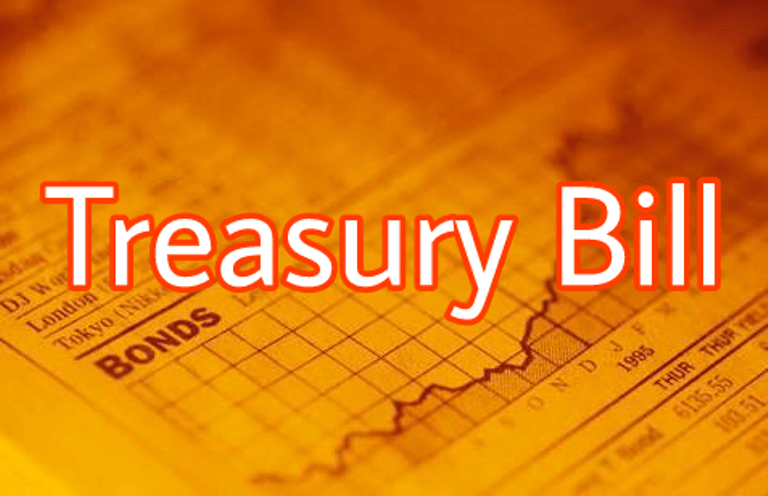
    “Nurses refusing postings is particularly distressing. I want to use this platform to encourage all health practitioners to follow the worthy example of your great forebearers who readily accepted postings in their early years when the national infrastructure was even more harrowing than it is. 

    “Therefore, I am appealing to you as passionately as I can to accept postings to all regions and district hospitals where your services are most needed,” he said.