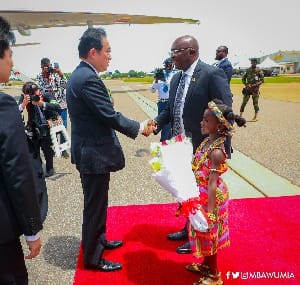
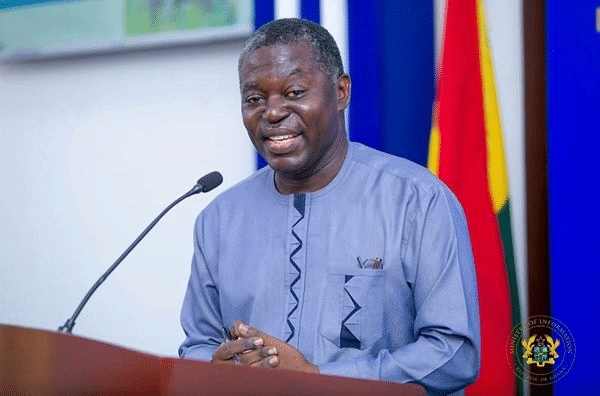
The prime minister of Japan, Fumio Kishida, is in Ghana for a two-day state visit.
The Japanese Prime Minister is expected to hold a bilateral talks with President Akufo-Addo at the Jubilee House.
The Asian country seeks to deepen her strong economic ties and further promote business and investment relations in Ghana, being one of the leading economic centres in West Africa.
Japan has been supporting Ghana’s infrastructure development, especially roads, to improve the country’s transport connectivity.
The Asian country has high hopes for Ghana, which hosts the Secretariat of the African Continental Free Trade Area (AfCFTA), to play a critical role in promoting regional integration and trade facilitation.
The development of the bilateral relations cannot be discussed without acknowledging the achievements of Dr Hideyo Noguchi, a Japanese who had played a vital role in the healthcare sector of both countries.
Japan is contributing to the health and medical fields in Ghana and the West African sub- region through the establishment of the Noguchi Memorial Institute for Medical Research and technical cooperation.
The country has also supported Africa’s efforts to achieve peace and stability under the New Approach for Peace and Stability in Africa (NAPSA).
The Japanese Prime Minister’s visit will provide an opportunity for the two countries to discuss ways to maintain peace and stability in the Sub-region.
As the country holding the G7 Presidency, Japan is also committed to carefully listening to the voices of African countries.
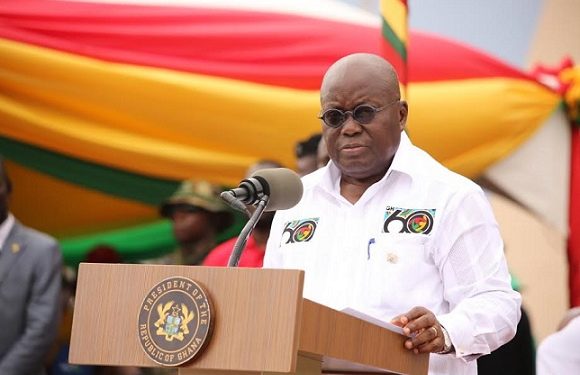
The governmentis making efforts to lessen the effect of the Domestic Debt Exchange Programme (DDEP) on the financial industry, this is according to President Akufo-Addo.
Speaking at the 2023 International Labour Day parade he stated that among other things the government has established the Ghana Financial Stability Fund as earlier announced as part of the process of ensuring the finance sector is aided amid the debt restructuring.
This fund he noted would provide, amongst others, solvency and liquidity support to eligible financial sector institutions, which may be affected by the Domestic Debt Exchange Programme.
“In addition, the Bank of Ghana and the regulators in the financial sector space have provided some regulatory reliefs to support affected institutions.
“In keeping with our common objective, the government, through the Financial Stability Council, will monitor continuously the impact of the Domestic Debt Exchange Programme on financial institutions to enable it to take remedial action, if and when necessary.”
President Akufo-Addo added that this would ensure that measures put in place to safeguard incomes, deposits, pensions, investor funds and assets are effective.
Meanwhile, he also assured organised labour of the protection of their pension funds as the government continues its debt restructuring programme aimed at securing an IMF deal.
President Akufo-Addo noted that his outfit is aware of the impact of the restructuring on workers and as such aimed to explore other beneficial options within debt sustainability limits with the cooperation of both Government and Organised Labour.
He said that “In undertaking the Domestic Debt Exchange Programme, we have been very mindful of its potential impact on the pension funds of workers.
“We will not act in any way to short-change workers in protecting their pensions.”
The Akufo-Addo-led government has guaranteed that it is making every effort to address the current economic crisis.
Addressing workers during this year’s May Day celebration in Bolgatanga, the President said his government is assiduously engaging the International Monetary Fund (IMF) to secure board approval for Ghana’s $3 billion bailout request to bring relief to Ghanaians.
“We continue to work tirelessly to complete all prior actions required to present Ghana’s request to the IMF’s integrity board for approval. We have also made substantial progress on the debt exchange programme as well as our engagements with bilateral creditors to secure the financing required for the IMF programme,” President Akufo-Addo said.
The government is seeking $3 billion in support from theIMFto address the country’s economic challenges.
President Akufo-Addo also assured that his government will thrive to find lasting peace to the protracted Bawku ethnic conflict before the end of his tenure.
According to him, finding lasting peace in the Bawku conflict remains his highest priority as president.
Meanwhile, the Trades Union Congress has suggested to the government to convert the National Cathedral project into a national hospital.
Addressing the 2023 May Day parade in Bolgatanga in the Upper East Region, the Secretary-General of the TUC, Dr Anthony Yaw Baah said converting the project into a hospital will serve Ghanaians better than a cathedral.
“The president has always said he wants to create another Notre Dame in Ghana, so we can attract a lot of visitors, but we disagree. In fact, comrades, it will be better to convert the project into a national hospital,” Dr Yaw Baah said adding “Mr. President you can also reduce the size of your government. Ghana has too many ministers and deputy ministers.”
Rex Omar, a well-known highlife musician, has criticized theAkufo-Addo-led government for what he claims is their inability to support Ghana’s creative arts sector.
Speaking to Nana Romeo on Accra FM, the veteran highlife singer explained that, across all the various sectors of the creative arts industry in Ghana, the government has failed to initiate any substantive policy nor has the government invested much in the creative arts industry. He added that, unfortunately, the government has failed to heed the cry for investment in the creative arts industry.
He explained, “When you talk about music, films, fashion and all these things, we have done zero as a state and for a country that says we want to create jobs for the youth, an investment in the industry would have sufficed such a purpose, but we have failed.”
Rex Omar called on the government to consider the benefits Ghana derives from its social initiative, “The Year of Return” and the milage it has given Ghana to invest more in the creative arts industry.
He said, “The government should look at only the ‘Year of Return’ campaign and how it has given Ghana exposure internationally, so you can imagine the gains we would make as a country if we have developed infrastructures and put other policies in place to ensure the growth of the creative arts industry.”
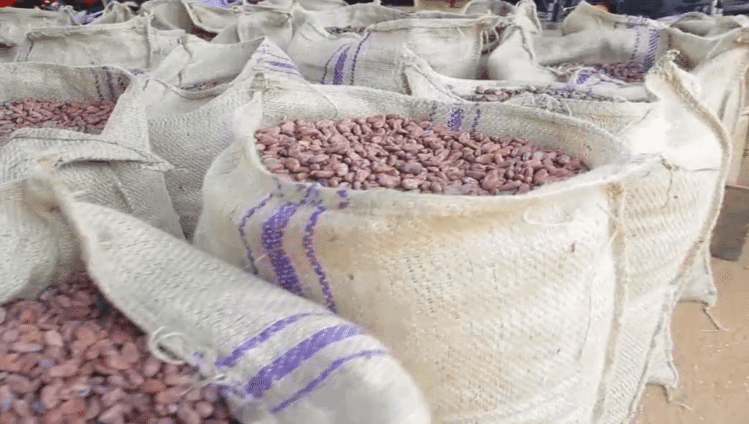
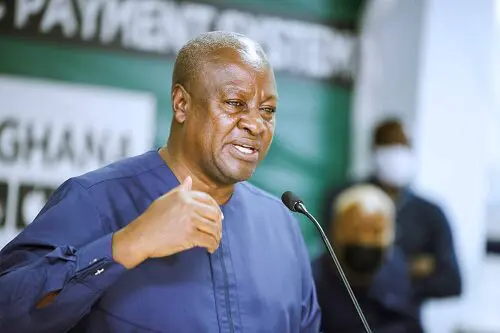
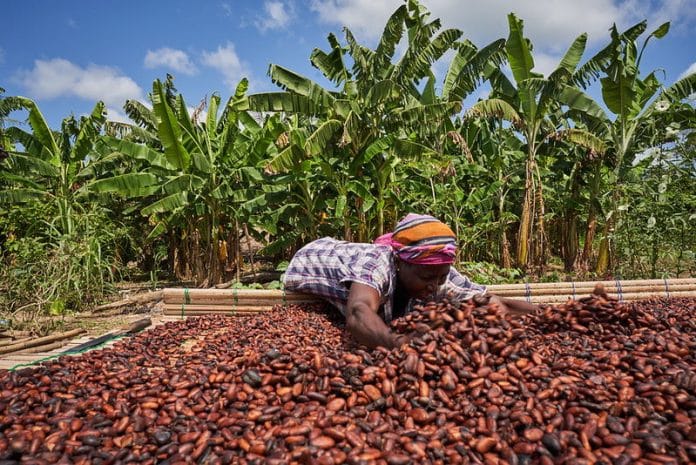
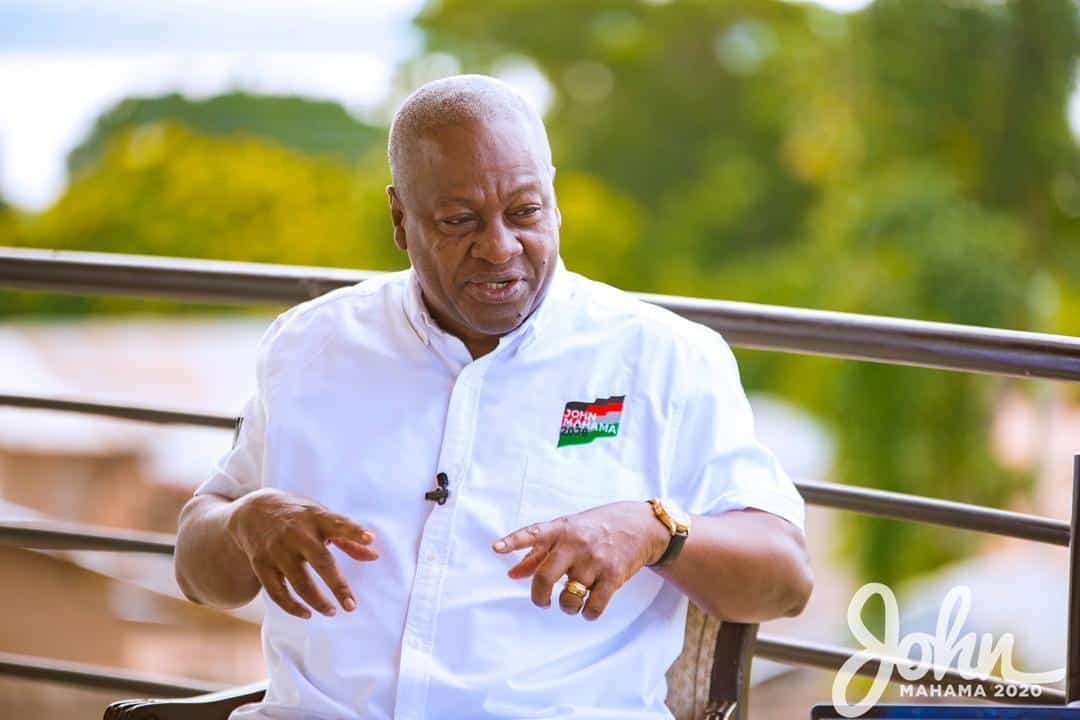
The Minority in Parliament has supported former PresidentJohn Mahama and his assertions on the cocoa industry.
John Mahama claims the country’s cocoa sector is on the verge of collapse because of the mismanagement of the sector by the government.
Addressing party supporters and branch executives at the start of his two-day campaign tour of the Western North Region, Mr Mahama said the government’s failure to adjust the producer price of cocoa annually delayed payment of farmers for cocoa beans combined with other factors to destroy the sector.
Ghana Cocoa Board(COCOBOD) refuted claims by the former that the cocoa sector in Ghana has collapsed. It described such statements as misleading and detrimental to the cocoa sector, which forms the foundation of Ghana’s economy.
Reacting to this development, Ranking Member on Parliament’s Food, Agriculture and Cocoa Affairs Eric Opoku accused COCOBOD of peddling falsehood.
“Ghana COCOBOD must know that they cannot seek refuge in lies to cover the havoc they have wrecked on the cocoa sector, the untold hat ships unleashed on the Ghanaian cocoa farmer and the crass incompetence, mismanagement, recklessness and insensitivity demonstrated so far.”
The Minority accuses President Akufo-Addo’s government of worsening COCOBOD’s plight from the state where it met it.
“In 2017, the NDC handed over a prosperous and thriving cocoa industry with buffers in the cocoa stabilization fund, farmers’ welfare fund, depreciation fund, farmers’ housing fund, and others including GH₵29 million set aside for the rolling out of the cocoa farmers pension scheme envisaged under the P.N.D.C.L 81.
“Shockingly, the Akufo-Addo’s government has dissipated all these buffers within 6 years, leaving nothing for the industry to lean on in times of difficulties.
“Again, the Board has been incurring losses since Nana Addo assumed office. COCOBOD is yet to explain why the cocoa industry cannot be profitable under the Nana Addo/Bawumia government. Available records indicate the following; Year Losses GH₵’million 2017 395.0 2018 78.2 2019 320.6 2020 426.0″
The group went ahead to tout the NDC’s records in the cocoa sector.
“In the entire four-year period of President John Mahama, producer price of cocoa was increased by 124.1 per cent (from GH₵212 in 2013/14 to GH₵475 in 2016/17) contrasted with 68.4 per cent in the last six years under Nana Addo (from GH₵475 in 2017/18 to GH₵800 in 2022/23).
It must be noted that the highest jump in producer price in the last two decades happened under John Mahama in the 2014/15 season (from GH₵212 to GH₵345 – 62.7%).”
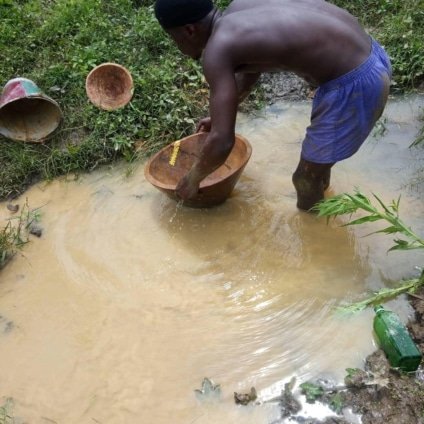
Some illegal miners in a viral video have pledged to unleash more damage on the environment should government keep up its fight against galamsey.
According to the illegal miners, the land belongs to them and the presidentcannot determine how they should use their lands.
In a video shared widely on the internet, a group of young men were working on a galamsey site while one of the workers bragged about how they would destroy the land in search of gold because it is theirs.
Directing the camera to the guys working, he said, “ Have you seen all this land, it is money and for the lands, we would continue to destroy it. We own the lands and we have decided to degrade it, and Akufo-Addo who resides in the city says he would end gala, you lie bad.”
He was not alone in thought, his co-workers reechoed his words saying, “For the lands, we shall continue to degrade it.”
The President was not the only person mocked by the galamseyers, unemployed youth in the country were not left out, according to these men captured in the video, it is only lazy people that would complain of lack of jobs and job opportunities and take to robbery.
The land is for us, we will continue to spoil it. Nana Addo cannot do anything – Galamsey operators
“Stay home and complain of lack of job opportunities. Stay home and steal from others. As for us, we are working very hard to make money to become popular. Yes, a man must work very hard,” one of the galamseyers said.
The president has over the years assured Ghanaians of his commitment to end illegal mining and even legal mining that degrades the environment. He has also called on all Ghanaians irrespective of social status and authority to join in the fight against galamsey.
Former member of the presidential staffer, Charles Onuawonto Bissue, has provided his own interpretation of what President Akufo-Addo meant by ‘My presidency is on the line’ regarding his readiness to fight illegal mining (galamsey) in the country.
In July 2017, President Akufo-Addo stated that he was committed to putting an end to the menace.
He told some traditional leaders in Accra that “I have said it in the Cabinet, and perhaps this is the first time I am making this public, that I am prepared to put my Presidency on the line on this matter.”
This comment has since resonated with the citizenry as government launched an Inter-Ministerial Committee on Illegal Mining to take up the fight against the canker.
But over the past two weeks, a leaked damning report depicting an ill-fated fight on galamsey, authored by former Environment Minister, Professor Kwabena Frimpong-Boateng, who doubled as the chairperson of the Inter-Ministerial Committee on Illegal Mining (ICIM), alleges top officials at the Jubilee House, seat of government, were themselves engaged in the illegality.
In the wake of the uproar that has greeted the report, a section of the public has told the President to put his money where his mouth is with reference to his 2017 ‘oath’ to put his presidency on the line.
The unofficial verdict out there is that in the fight against illegal mining he has not achieved its target, and at best, has failed.But speaking on PM Express on Joy TV on Tuesday, Charles Bissue, himself a former secretary of the erstwhile committee on illegal mining, said the President’s comments were not to be taken literally.“That was a figure of speech… meaning that I want to deal with this matter,” he said on JoyNews.
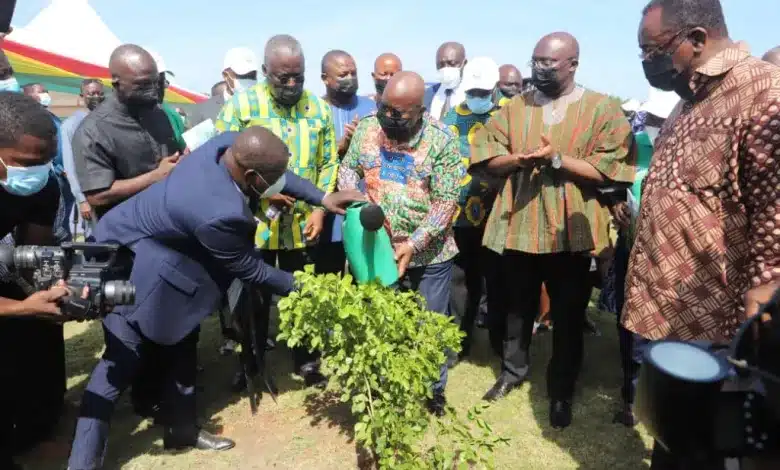
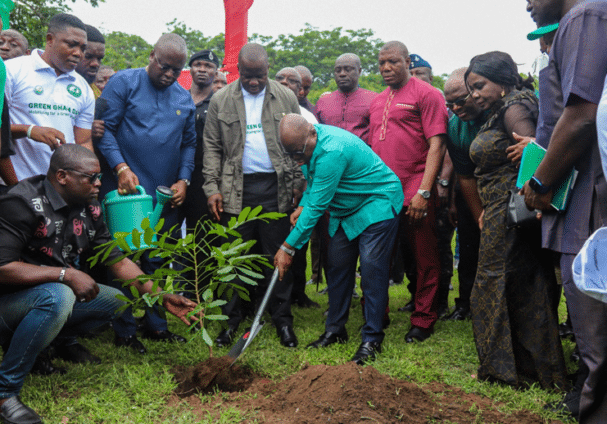
The 2023Green Ghana Day will be held on Friday, June 9, 2023, this was announced by Minister for Lands and Natural Resources, Samuel Abu Jinapor.
He said the official launch of the Green Ghana Day will be performed by the Asantehene, Otumfuo Osei Tutu II, in Kumasi in the month of May.
The Green Ghana Day was instituted in 2021 by Government, under the auspices of the Ministry of Lands and Natural Resources, as part of an aggressive afforestation and reforestation programme to restore the lost forest cover of the country. At the maiden edition, over seven million trees were planted, exceeding the target of five million trees. And last year, over twenty-four million trees were planted, exceeding the target of twenty million trees.
Speaking at the Press Briefing, Mr. Jinapor said the 2021 edition had a survival rate of eighty-one percent (81%), while the 2022 edition had a survival rate of seventy-two percent (72%). This, he said, brings the total number of surviving trees for the two years to over twenty-three million (23,000,000).
The Minister underscored the important role trees and forests play in human survival and the survival of the earth. He said this year’s Green Ghana Day will be held under the theme “Our Forests, Our Health,” adding that the theme has been chosen “to reflect the importance of forests in our lives, and to remind us of the many health and related benefits we derive from forests.”
According to Mr. Jinapor, the target for this year’s Green Ghana Day is ten million (10,000,000) trees. He said the target has been revised downwards this year, to ensure that adequate resources and attention are devoted to nurturing the over twenty-three million (23,000,000) trees surviving from the first two editions of the Green Ghana Day. He said seedlings will be made available at the Ministry, the District Offices of the Forestry Commission, and designated locations, for collection on the Green Ghana Day.
The Minister also said opportunities are available for corporate Ghanato adopt compartments in forest reserves to plant, and the forest will be branded with the company’s name and logo. He called on Ghanaians of all walks of life, including traditional authorities, civil and public servants, doctors, lawyers, judges, teachers, nurses, artisans, and all residents of Ghana to support the Project, come out in their numbers, and make this year’s Green Ghana Day a success.
“I want to say to the Ghanaian people that whatever it takes to protect the forest reserve of the country, the government is putting in place all kinds of measures. Recently, we had a retreat and the Forestry Commission briefed cabinet on the measures that are being taken to protect forest reserves. We are going to continue these measures to ensure that these forests are protected from the drivers of deforestation and degradation.”
In a 37-page paper, the former Minister of Science, Environment, Technology, and Innovation, who also served as Chairman of the Inter-Ministerial Committee on Illegal Mining, accused important political actors in the government of contributing to the poisoning of significant water bodies.
The Chairman of the now-defunct Inter-Ministerial Committee on Illegal Mining (ICIM) accused government officials of colluding in the war against galamsey.
The report has been dismissed by the Presidency, but a number of stakeholders have pushed for a thorough probe by an independent body.
The governmenthas authorized GH2.5 million for the 2023 Green Ghana tree planting, this is according to Benito Owusu-Bio, the deputy minister of lands and natural resources.
The Deputy Minister mentioned this at a press conference at the ministry on the government’s preparation towards the 2023 Green Ghana Day celebration.
According to Mr. Owuau-Bio, the Forestry Commission through its district offices and internal nursery will provide three million seedlings.
Another three million seedlings will be provided by the Commission’s alternative livelihood programme.
He also noted that the Plantation Fund Board, which was established by government through the Forestry Commission will assist in private plantation development.
“It is also going to assist with 500,000 seedlings, and some committed donors providing us 1 million seedlings. All of these will be up to 7.5 million out of the 10 million,” he stated.
He continued that “as we speak now, our approved budget for the Green Ghana this year is GH₵2.5 million. This is not enough, but we cannot say that we are not going to celebrate the day this year. So, there’s the need to start appealing for funds, which we have started since last year and we are hopeful that we will get some support from our partners to make this possible.”
This year’s Green Ghana Day celebration is scheduled Friday, June 9, 2023 on the theme: “Our Forest, Our Health”
Government has planned to plant 10 million trees during this year’s celebration.
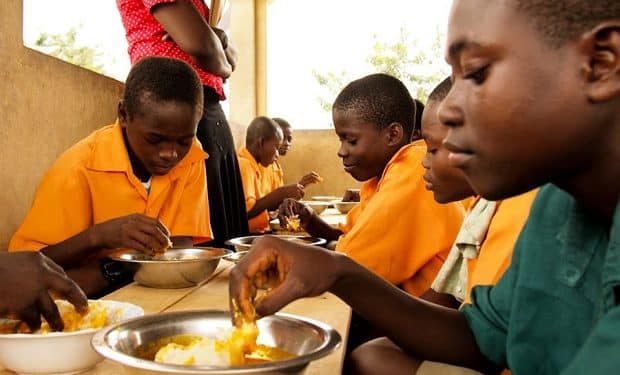
Caterers of School Feeding Program have announced a nationwide strike following government’s refusal to pay them their arrears as well as increase their salaries.
The aggrieved caterers drawn from various regions across the country who converged in the Ashanti regional capital, Kumasi stressed that laying down their tools is the only option available to them now.
Speaking at a news conference, the caterers lamented that they are going through harsh economic times as a result of the situation.
The leadership of the caterers has thus urged all members across the country to join the strike to impress on the government to address their concerns as early as possible.
One of the leaders of the caterers, Gifty Asamoah addressing the media said they have exhausted all their funds and are yet to get any feedback from the government on when their arrears will be paid them.
She claimed that despite providing essential services in schools, school-feeding caterers are not given the same level of respect given to other professions.
“School feeding caterers are public servants like teachers, Police, Doctors, nurses and other employees that provide state services but we are being discriminated against. Can government refuse to pay teachers for even one month, why are they doing the opposite when it comes to caterers? A contract is a contract and our human rights must be abused.”
The caterers have also threatened to embark on a nationwide demonstration if their arrears are not paid as early as possible.
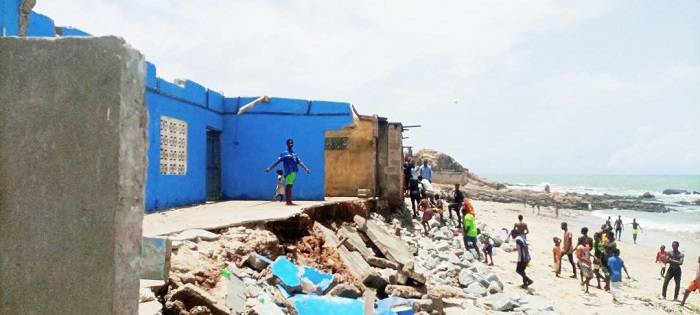
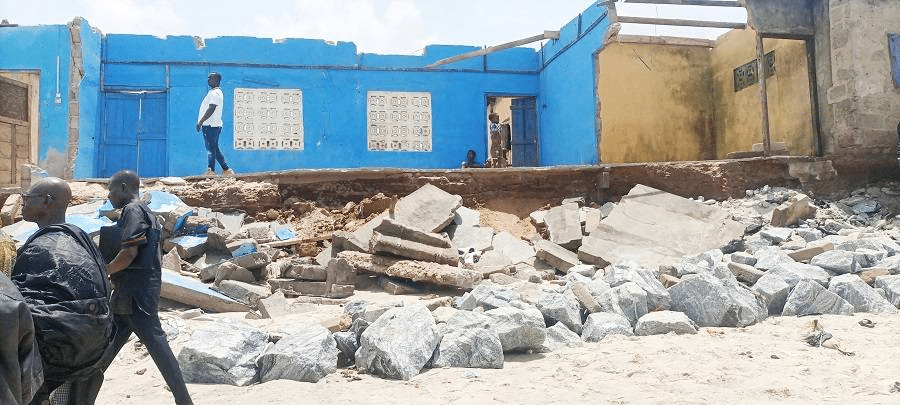
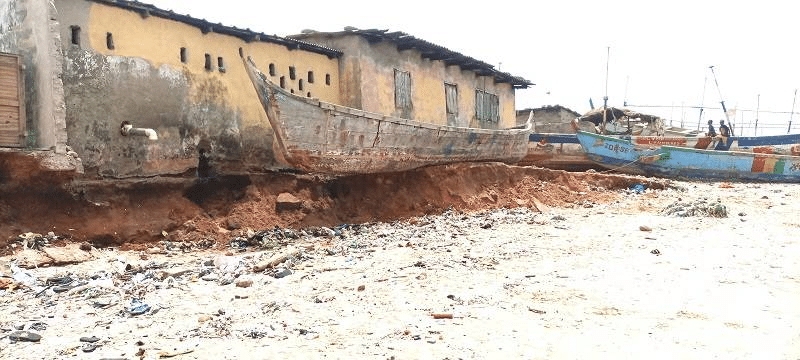
Following a tidal wave that hit several portions of the Moree community in theAbura-Asebu-Kwamankese (AAK) region of the Central Region, some 100 people have been forced to flee their homes.
The surging wave destroyed about 15 structures located close to the sea.
Some of the affected residents are currently being accommodated by friends and relatives while others had taken shelter in some sheds located in the area.
The President-General of Centre of Awareness Global Peace Mission (COA-GPM), ProfessorAto Duncan together with the Regent of Moree over the weekend visited the area.
The visit was to ascertain the situation and also look at the immediate measures to be taken to alleviate the plight of affected residents.
In an interaction with the media after the visit to the area, Prof. Duncan, appealed for immediate intervention to reduce the rate of destruction by the tidal wave.
He noted that the government had a good intention for the community and made reference to the construction of a mini habour and a landing site in the area.
“I don’t think the government has totally neglected them so we need to bring the concern of the people to the government,” he said.
He indicated, it may not be the intention of government to neglect the area.
He stated that, the displacement of people due to the tidal wave was a threat to peace, adding, the COA-GPM seeks to address issues confronting peace in the world and displacement of people is a threat to peace.
Prof. Duncan further appealed to the government to consider the construction of a sea defence wall to prevent the area from being submerged by the sea.
“I felt very sad and decided to move in to ascertain the nature of damage. This is the time we have to convey the message for immediate intervention,” he stated.
He said the sea was now drifting into the community and that it was about time for something to be done to resolve it adding that “this is a huge task, no individual can take it upon to address it.”
The community, he said, was actually in danger and therefore called for intervention in addressing the challenge.
For his part, theRegentof Moree, Nana ObokeseAmpah, explained that, some of the affected residents were now sleeping under sheds.
He appealed to the government to pay attention to the plight of the affected residents since they feel neglected.
He indicated that the havoc associated with the tidal wave had been happening for some time now but response had not come from the authorities.
Moree, he said, was a great historical and traditional town that ought to be preserved and protected.
Some of the affected residents appealed for support from stakeholders.
The minority leader in parliament, Dr. Cassiel Ato Forson, has stated that the government’s efforts to combat illegal mining (galamsey), are mocked by the former chairman of the disbanded Inter-ministerial Committee against Illegal Mining, Prof. Frimpong Boateng’s, report.
In a Facebook post, Dr. Forson said the revelation by Prof. Frimpong is strongly indicative that the galamsey fight was nothing but a charade. He plainly describes it as fraudulent.
“Prof. Frimpong-Boateng’s report to the President on failed work of the Inter-Ministerial Committee on Illegal Mining, which was set up by President Akufo-Addo to fight the illegal mining menace, confirms that the whole fight was a fraudulent one”, he wrote.
The report authored by Prof. Frimpong-Boateng also a former Minister of Environment in March 2021 and handed over to the Chief of Staff cited a number of top officials in the Akufo-Addo government accused of either being engaged in galamsey or interfered in the work of the Inter-Ministerial Committee on Illegal Mining.
The Presidency in a rejoinder argued that despite the serious allegations Prof. Frimpong-Boateng made against some government appointees, not a single piece of evidence was adduced or presented to enable the claims to be properly investigated.
It insists that the report was based on hearsay. But Dr. Ato Forson says, government’s action so far is a tacit endorsement of its corrupt appointees.
“It was shrouded in a well-calculated ruse to enable key government officials and functionaries at the Presidency to dabble in the very illicit business ofgalamsey.”
Meanwhile, the Minority leader is pushing for a full-scale investigation into the revelations.
“The revealing issues and several others in the damning report call for a national probe”, he added.
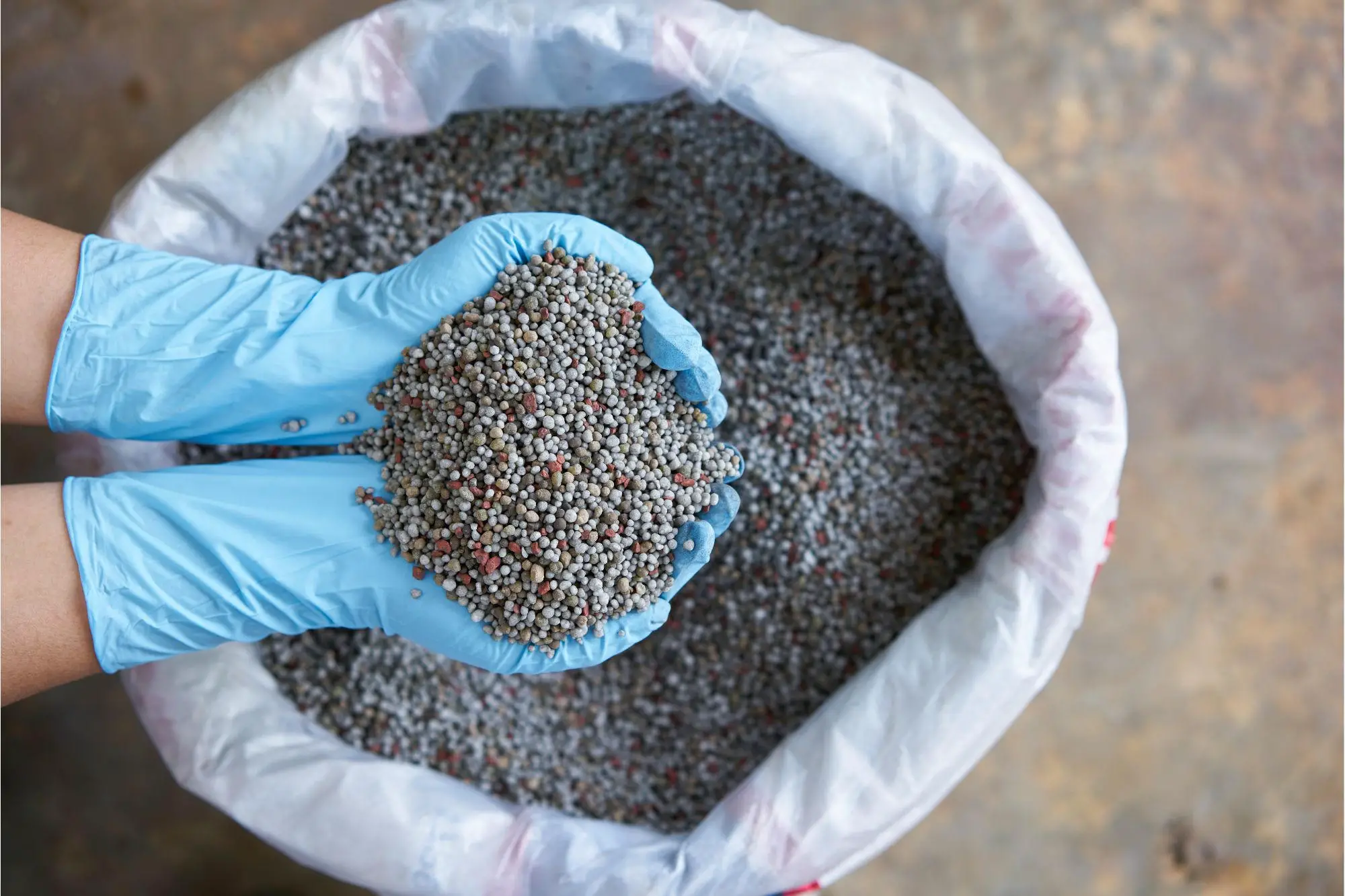
As part of its efforts to help develop actionable and outcome-oriented strategies to address the challenges of fluctuating prices facing Ghana’s fertilizer and agro-input market, the African Fertilizer and Agribusiness Partnership (AFAP), in partnership with Feed the Future Policy LINK, convened a regional conference to discuss innovative approaches to improving the availability and affordability of fertilizer and agro-input to smallholder farmers in Ghana and across Africa.
The conference, themed ‘The Future of Fertilizer and Agro-inputs in Ghana Towards the Soil Health Summit,’ to be held in Senegal in June, 2023 aimed to address the challenges impacting local supply chains and their negative consequences on the country’s fertilizer and agro-inputs sectors.
The discussion came at a time when stakeholders believe that government must help to address fertilizer and agro-input price fluctuations and disparities in the local market to protect farmers’ interest and guarantee them sustainable livelihoods.
The conference brought in more than 100 key stakeholders from government agencies, academia, farmer groups, private sector, other African nationals including notable participation by Yaw Frimpong Addo, Member of Parliament, Deputy Minister, Food and Agriculture Ghana, Godfred Seidu Jaswa, Ranking Member for the Select Committee of Food, Agriculture and Cocoa Affairs at the Parliament of Ghana and Prof. Richard Mkandawire, Director of Africa Secretariat, Alliance for African Partnership (AAP), among others to discuss approaches to improving the availability and affordability of fertilizer and agro-input to smallholder farmers.
Speaking at the roundtable conference in Accra, Deputy Minister at the Ministry of Food and Agriculture Ghana, Yaw Frimpong Addo, disclosed that the Government will need about two billion dollars to establish a fertilizer plant in Ghana to increase the volume of production and resolve the intermittent shortage of the commodity, which affects food production and security.
According to him, fertilizer production must be crop specific to ensure farmers increased productivity adding that the Fertilizer Council was undertaking a national advocacy to promote organic fertilizer use, especially for vegetables, to facilitate all-year round production.
“The Ministry would speed up the plan to establish the fertilizer plant because Ghana is blessed with gas deposits, which would facilitate the establishment of the plant and help to cut down cost.
“We need public, private partnership to establish the fertilizer plant because we are all promoting Integrated Soil Fertility Management System to combine both organic and inorganic fertilizers to increase production levels and improve soil fertility and Government is committed to support and provide enabling environment for us to achieve it” he said.
Ranking Member, Parliament Select Committee on Food, Agriculture and Cocoa Affairs, Dr. Godfred Seidu Jasaw, supported the call by the minister adding that public, private partnership is critical, especially at this time that we facing fluctuating prices in Ghana’s fertilizer and agro-input market.
“This would ensure availability and affordability of the commodity by small-holder farmers to improve yield,” he added.
Chief Executive Officer, AFAP, Michael Sudarkasa, emphasized the need for partnerships and collaboration in addressing the challenges facing the fertilizer and agro-input sectors in Ghana and across Africa.
He revealed that AFAP is committed to working with all stakeholders to develop practical solutions to the challenges facing the agriculture sector in Ghana.
Country Lead for Feed the Future Policy LINK, Yunus Abdulai, expressed his appreciation for the active participation of all stakeholders and noted that the discussions would inform the development of evidence-based policy recommendations to support the fertilizer and agro-input sectors in Ghana.
“We are helping deal with agriculture trade facilitation, seeds, fertilizer, access to finance, and climate change as the five key areas the organisation focused on to ensure holistic solution to the sector challenges,” he added.
Director, Alliance for African Partnership, Professor Richard Mkandawire, recommended the building of robust small and medium scale enterprises in the fertilizer value-chain to boost production.
“We need private sector and government to drive the change and transformation of the agriculture sector by leading the advocacy, building infrastructure to ensure accessibility and affordability of fertilizer, and investing in research and extension services to enhance the growth of the sector,” he pointed out.
The minister of works and housing, Francis Asenso-Boakye, has emphasized that efforts by the government to stop persistent flooding around the nation will be ineffective if people keep erecting buildings in prohibited locations.
The ministry maintains that government is working assiduously to ensure that adequate drains are constructed to prevent flooding when it rains.
In a media interview, the sector minister called on the public to desist from building on waterways.
“We recognise the need to improve drainage infrastructure in many other communities across the country, which is a subject of an ongoing engagement with the Ministry of Finance. Notwithstanding these efforts by the government, human activities undermine the impact of government’s investment to mitigate flood risk. We need citizens to support government’s efforts by respecting rules and regulations, government’s settlements planning and avoiding building on waterways and drainage,” Asenso-Boakye urged.
The Ministry of Works and Housing further disclosed that, as part of strategies to tackle flooding in vulnerable communities, the government is collaborating with the World Bank to invest $200 million through the Greater Accra Resilient and Integrated Development Project (GARID).
The 71-year-old SNP treasurer Colin Beattie has been detained in connection with the continuing inquiry into the party’s finances, according to Police Scotland.
For 16 years, Mr. Beattie was the party’s treasurer.
Mr. Beattie presided over the SNP faction in the local government after being first elected as a councilor in Midlothian in 2007.
However, he relocated to Holyrood in 2011 after being chosen as an MSP for the newly created Midlothian North and Musselburgh seat.
Yet despite the SNP being in power throughout his tenure as an MSP, Mr Beattie has never achieved ministerial office, having never been invited by Alex Salmond, Nicola Sturgeon or Humza Yousaf to serve in Government.
Mr Beattie briefly stepped back from his role in August 2020 after being defeated in an internal election by Douglas Chapman, but returned to his post when Mr Chapman resigned less than a year later.
In his resignation letter, Mr Chapman wrote: ‘Despite having a resounding mandate from members to introduce more transparency into the party’s finances, I have not received the support or financial information to carry out the fiduciary duties of National Treasurer.
‘Regretfully I have resigned with immediate effect.’
Between 2017 and 2020, the SNP raised a total of £666,953 through referendum-related appeals.
The party pledged to spend these funds on the independence campaign.
However, questions were raised after its accounts showed it had just under £97,000 in the bank at the end of 2019, prompting calls for the party to explain how it had accounted for the missing funds.
In August 2021, Mr Beattie sought to reassure members in a statement released alongside the party’s accounts, saying: ‘There has been concern expressed in some quarters that this system does not result in a separate fund being officially recorded in the annual accounts of the party.
‘Hence a claim from some that the money does not exist.
‘In fact, the money is earmarked through the internal process set out above and will be deployed fully through future cash flow for the purpose of promoting a referendum on independence and campaigns intended to secure independence.’
He continued: ‘While these monies are not separated out, their existence in terms of the commitment as to what they will be spent on is tangible.’
Mr Beattie’s arrest comes two weeks after Peter Murrell, husband of former first minister Nicola Sturgeon, was also arrested as part of the investigation into the SNP’s funding.
Mr Murrell was detained by police for over 11 hours, but was later released without charge pending further investigation.
‘Leaked’ audio shared by The Mail on Sunday allegedly shows Nicola Sturgeon telling officials to stop asking about the Scottish National Party’s financial situation.
In it, she allegedly says: ‘We don’t need to talk about the finances. The finances are absolutely fine.’
A Police Scotland statement said: ‘A 71-year-old man has today, Tuesday, 18 April 2023, been arrested as a suspect in connection with the ongoing investigation into the funding and finances of the Scottish National Party.
‘The man is in custody and is being questioned by Police Scotland detectives.
‘A report will be sent to the Crown Office and Procurator Fiscal Service.
‘The matter is active for the purposes of the Contempt of Court Act 1981 and the public are therefore advised to exercise caution if discussing it on social media.
‘As the investigation is ongoing we are unable to comment further.’
Scottish Labour deputy leader Jackie Baillie said: ‘This is yet another deeply concerning development and the Police Scotland investigation must be allowed to proceed without interference.’
An emergency meeting of top SNP officials is reportedly taking place this afternoon, Sky News reports.
SNP leader Humza Yousaf told reporters he was ‘surpised’ to hear of Mr Beattie’s arrest but ruled out suspending the SNP treasurer.
He said he did not believe the party was acting in a ‘criminal manner’, but admitted he would consider removing Beattie from the the Holyrood’s public audit committee following his release from custody.
Elswehere today, Mr Yousaf said it was ‘brave’ of the Scottish Tories to attack his party over propriety.
The First Minister was challenged by opposition deputy leader Meghan Gallacher to suspend his predecessor Nicola Sturgeon and her husband Peter Murrell.
Responding to the call, he said: ‘It is brave, some may use another word for it, when it comes to talking about propriety.
‘Your Prime Minister, your Deputy Prime Minister and the former prime minister are all under investigation by her Standards Commission.
‘So yes, while we absolutely face challenges, I’d rather be standing here with the opportunity to deliver for the people of Scotland, rather than languishing in opposition like Meghan Gallacher and the Scottish Tories.’
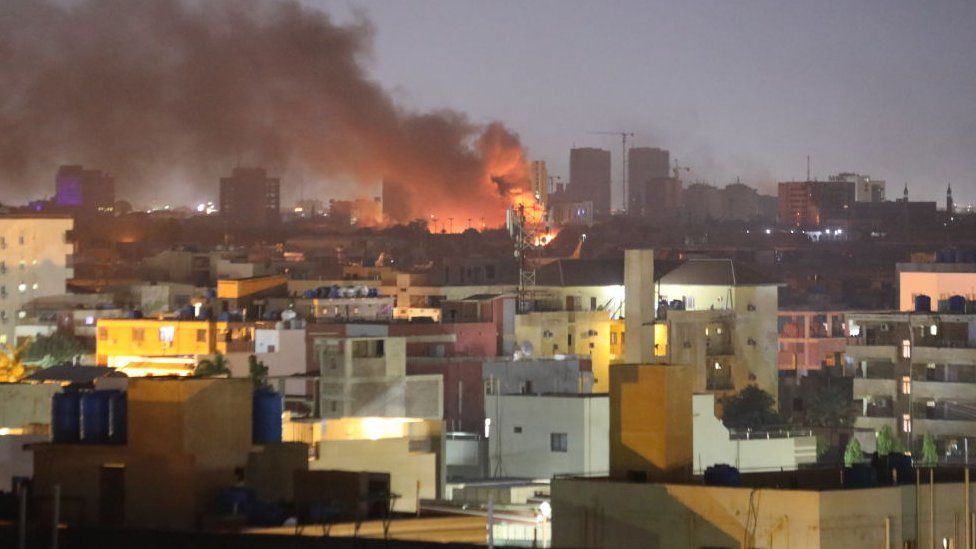
A constant state of terror and uncertainty in Sudan as gunfire, rockets, and rumors fly, an explosive soundtrack, and a skyline dominated by bitter, black smoke.
Life in Sudan’s capital, Khartoum, and in many other parts of the country, has taken a sudden, very dramatic turn for the worse.
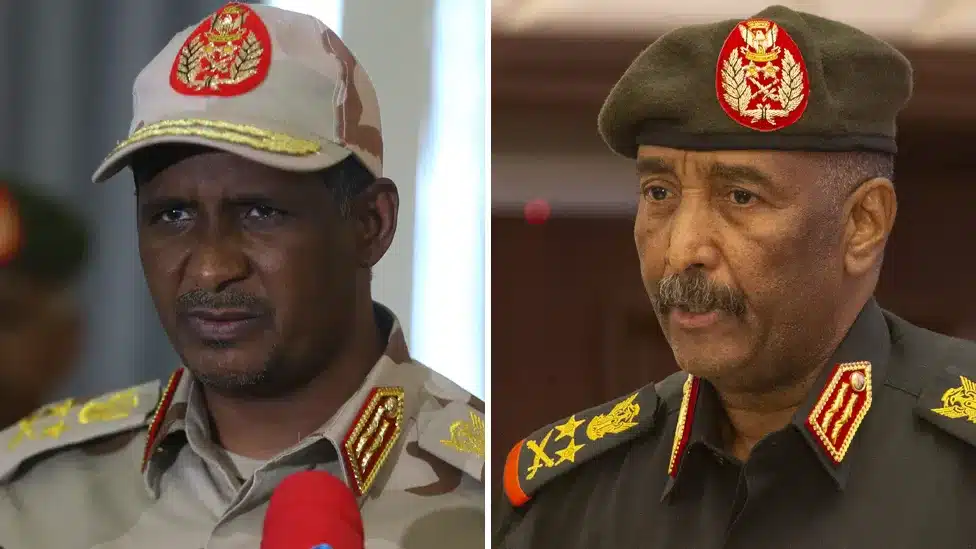
At the heart of it are two generals: Abdel Fattah al-Burhan, the leader of the Sudanese Armed Forces (SAF), and Mohamed Hamdan Dagalo, better known as Hemedti, the head of the paramilitary Rapid Support Forces (RSF).
The two worked together, and carried out a coup together – now their battle for supremacy is tearing Sudan apart.
The relationship between the two goes back a long way.
Both played key roles in the counter-insurgency against Darfuri rebels, in the civil war in Sudan’s western region that began in 2003.
Gen Burhan rose to control the Sudanese army in Darfur.
Hemedti was the commander of one of the many Arab militias, collectively known as the Janjaweed, which the government employed to brutally put down the largely non-Arab Darfuri rebel groups.
Darfur conflict: A bloody stalemate
Majak D’Agoot was the deputy director of the National Intelligence and Security Services at the time – before becoming deputy defence minister in South Sudan when it seceded in 2011.
He met Gen Burhan and Hemedti in Darfur, and said they worked well together. But he told the BBC he saw little sign that either would rise to the top of the state.
Hemedti was simply a militia leader “playing a counter-insurgency role, helping the military”, while Gen Burhan was a career soldier, though “with all the ambitions of the Sudanese officer corps, anything was possible”.
The military has been running Sudan for most of its post-independence history.
The government’s tactics in Darfur, once described by Sudan expert Alex de Waal as “counter-insurgency on the cheap”, used regular troops, ethnic militias and air power to fight off the rebels – with little to no regard for civilian casualties.
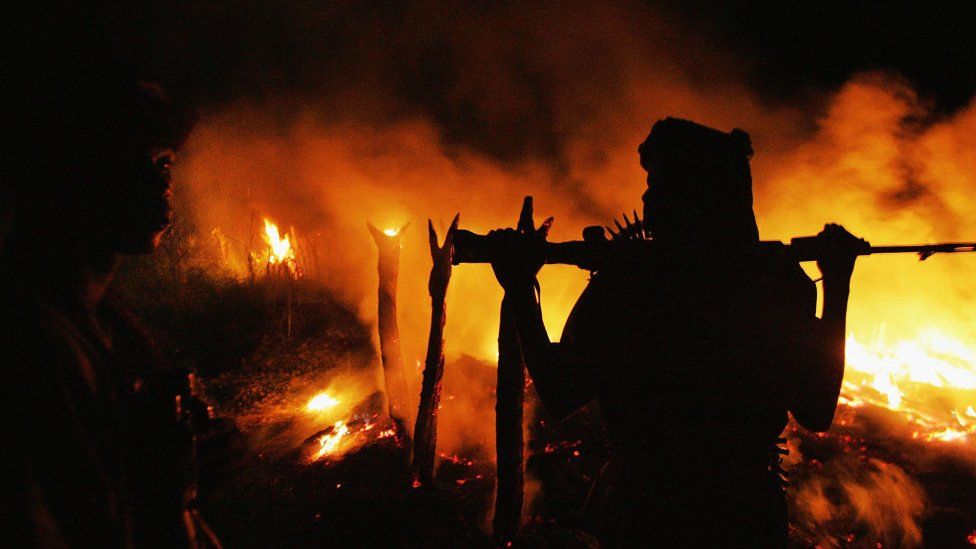
Darfur has been described as the first genocide of the 21st Century, with the Janjaweed accused of ethnic cleansing and using mass rape as a weapon of war.
Hemedti eventually became the commander of what could be described as an offshoot of the Janjaweed, his RSF.
Image caption,The Janjaweed militia were accused of ethnic cleansing and mass rape during the Darfur conflict
Hemedti’s power grew massively once he began supplying troops to fight for the Saudi-led coalition in Yemen.
Sudan’s then-military ruler, Omar al-Bashir, came to rely on Hemedti and the RSF as a counterweight to the regular armed forces, in the hope that it would be too difficult for any single armed group to depose him.
In the end – after months of popular protests – the generals clubbed together to overthrow Bashir, in April 2019.
Later that year, they signed an agreement with the protesters to form a civilian-led government overseen by the Sovereign Council, a joint civilian-military body, with Gen Burhan at its head, and Hemedti as his deputy.
It lasted two years – until October 2021 – when the military struck, taking power for themselves, with Gen Burhan again at the head of the state and Hemedti again his deputy.
Siddig Tower Kafi was a civilian member of the Sovereign Council, and so regularly met the two generals.
He said he saw no sign of any disagreements until after the 2021 coup.
Then “Gen Burhan started to restore the Islamists and the former regime members to their old positions”, he told the BBC.
“It was becoming clear that the plan of Gen Burhan was to restore the old regime of Omar al-Bashir to power.”
Mr Siddig says that this is when Hemedti began to have doubts, as he felt Bashir’s cronies had never fully trusted him.
Sudanese politics has always been dominated by an elite largely drawn from the ethnic groups based around Khartoum and the River Nile.
Hemedti comes from Darfur, and the Sudanese elite often talk about him and his soldiers in pejorative terms, as “country bumpkins” unfit to rule the state.
Over the last two or three years, he has tried to position himself as a national figure, and even as a representative of the marginalised peripheries – trying to forge alliances with rebel groups in Darfur and South Kordofan that he had previously been tasked with destroying.
He has also spoken regularly of a need for democracy despite his forces having brutally put down civilian protests in the past.
Tensions between the army and the RSF grew as a deadline for forming a civilian government approached, focused on the thorny issue of how the RSF should be re-integrated into the regular armed forces.
Image caption,Flames and smoke can be seen in Khartoum as the forces controlled by the two generals clash
And then the fighting began, pitting the RSF against the SAF, Hemedti against Gen Burhan, for control of the Sudanese state.
In one way, at least, Hemedti has followed in the footsteps of the SAF top brass, who he is now fighting – over the last few years, he has built a vast business empire, including interests in gold mines and many other sectors.
Gen Burhan and Hemedti have both faced calls from civilian leaders and victims of the conflict in Darfur and elsewhere to face trial for alleged abuses.
The stakes are extremely high, and there are plenty of reasons for these former-allies-turned-bitter-enemies to not back down.
Convenor of the Individual Bondholders Forum, Senyo Hosi, has reiterated calls to the government to reduce its cost.
He urged government to lead by example as it calls on the general public to receive haircuts.
According to him, the main opposition to the government’s second round of domestic debt restructuring is due to the fact that since the first round the government has done nothing to address concerns about its mammoth size, neither has it reduced its expenditure as suggested by labour.
He said the government’s refusal to impose on itself the same austerity measures it is imposing on Ghanaians has largely fueled the mistrust and opposition to the government’s latest policy which he believes is particularly favourable to pension funds.
Speaking on JoyNews’ PM Express, Senyo Hosi said it was about time government started heeding to the demands of the general public in order to soften the strong opposition to its policies and projects.
“For pension funds I think that they have to sit down and the president should listen small on this kind matter. There’s a theme going on that ‘Mr. President, we’re not seeing you live by example. Your government is also not being seen to be sharing in the pains that Ghanaians are going through.’ One of our members called me and he was livid, angry, what is his problem?
“He has gone to sit down, he’s flying to South Africa, he’s sitting down in the plane, and here are junior members of SOEs sitting in business class to South Africa, less than six hours. Plenty of them, sitting in business class, what’s wrong with you?
“You owe people you can’t pay, but you’re sitting there and then you’re flaunting spending their money in their face. It’s a bit insulting. These are petty petty things. If you pass a rule today, just like most corporates do, I’m telling you, go to the British Embassy, you’ll see what flights the staff there fly. Most of them fly economy going back to London but Ghana people who fly economy, middle officers, everybody business class.”
He has urged the president to issue a directive preventing government officials from flying business class for trips six hours and below.
“I mean, show something. The president should issue a directive this business class nonsense must stop. The truth of the matter is most of these people sitting there when before government they couldn’t even spell business class, but every day you see them and that is it.
“You know it’s ok, you’re going to America, plenty hours, okay. You’re going somewhere less than six hours, six hours or less, a directive, everybody including ministers, everybiody has to fly economy. When people start seeing signs like these everybody goes ok you’re also trying something,” he said.
Former president, John Dramani Mahama, has voiced his worries over the information contained in the US State 2022 report on Ghana’s violations of human rights.
The U.S. Department of State last week released its 2022 annualCountry Reporton Human Rights Practices which cited Ghana for several human rights cases of abuse.
The report cited Ghana for a number of human rights abuses including arbitrary or unlawful killings, extrajudicial killings; torture or cruel, inhuman or degrading treatment or punishment by the government or on behalf of the government among others.
According to the report, although the government took some steps to address corruption and human rights abuses by officials, whether in the security forces or elsewhere in the government, impunity remained a problem.
The report highlighted that corruption, brutality, uneven training, lack of oversight, and an overburdened judicial system contributed to police impunity.
It stated that police often failed to respond to reports of crimes. In many instances, police did not respond to complaints unless members of the public paid for police transportation and other operating expenses.
Speaking during his tour of Kpone Katamanso in theGreater Accra Region, Mr Mahama said “Recently, the US Human Right report has come out and it makes very bad reading.
“Human rights abuses, corruption, torture, so many things. And that is why I said when we come into office we will pursue constitutional review so that we tighten the constitution to ensure that it guarantees our freedoms and rights and make things better.
“We will set up a Governance Advisory Council and that would include Civil Society Organisations, religious leaders, chiefs and ordinary grassroots people.”
The government’s economic management team who have left for Washington to discuss concerns pertaining to its International Monetary Fund(IMF) program have no strategy this is according to managing partner of Ishmael Yamsom and Associates, Michael Harry Yamson.
According to him, despite having responded to various demands by the external creditors, the government has not communicated effectively with the citizenry its plans concerning the programme.
“Government didn’t seem to leave here with a game plan. Andgovernment has not been consistent in communicating its own game plan with Ghana. We are hearing government respond to the external partners are demanding. Ghana itself does not have a game plan.
“That for me is very obvious. Otherwise there shouldn’t even have been a hint of going back to pensioners,” he said on JoyNews’ Newsfile on Saturday 15.
Mr. Yamson lamented the demand of external creditors that requests Ghana to include domestic bondholders in its debt restructuring exercise. According to him, the approach sorts to exacerbate living conditions in the country.
He added that there is a lack of understanding about what the situation means for the average Ghanaian.
According to him, “if Washington and the externals care so much about Ghanaian citizens and living standards, then the question becomes how do you ask the government to come back and destroy household incomes in the name of debt restructuring?”
Mr. Yamson also highlighted the lack of political consensus on government’s inability to generate sufficient tax revenue while in pursuit of an IMF programme. He said the government should have engaged the two major political parties in order to solve tax revenue issues.
He expressed that government ought to have tried solving internal issues before heading for negotiations in Washington.
However, reporting live from Washington, George Wiafe of JoyNews indicated that things are looking quite positive for Ghana as personal engagements with some officials at the meeting show that the country has met almost every requirement for the programme.
“I had an interaction with one person yesterday who is one of the critical actors in Ghana’s programme, in terms of approval and all the rest. Ghana has met everything.
“The only issue right now is the external creditors which they believe that based on the behind-the-scenes engagement that they are also having with these creditors, it appears that these creditors will come on board to approve Ghana’s programme,” he said.
A pension scheme project being tested by the Ghana Cocoa Board(COCOBOD) has received positive feedback from cocoa farmers in Anomawobidi and Wassa Manso in the Western region’s Mpohor and Ahanta West Districts.
Launched at New Edubiase in the Ashanti Region in August 2021, the scheme, when operational, would target about 800,000 registered cocoa farmers benefitting from a retirement plan to promote their lives.
A separate engagement was held between the farmers and Mr Fiifi Boafo, the Head of Public Affairs, COCOBOD, at Anomawobidi and Wassa Manso, to discuss the modalities, processes of registration, and benefits for farmers under the Cocoa Management System.
Some of the farmers, who spoke with the Ghana News Agency, said they were “really in love” with the initiative which would give them relief in their old age.
They, however, wished that COCOBOD would institute prudent management systems that ensure the sustainability of the scheme no matter which government was in power.
Mr Vincent Fynn, a cocoa farmer, pleaded that a school policy be activated along with the scheme, to enable the farmers to access scholarships for their children’s education.
“We have many brilliant children here, but due to the lack of finances, many of them cannot climb higher on the educational ladder…we really need directions and assistance to end the cycle of poverty among rural farmers like me,” he said.
Mr Benedict Ghansah, another farmer, complained about the poor road network, lack of potable water and electricity in the Anomawobidi community and stressed the need for COCOBOD to redeem their promise to help address the situation.
Giving further details of the scheme, Mr Boafo said a five per cent contribution would be deducted from every bag of cocoa sold at the depot, after which the government and COCOBOD would add one per cent to support the scheme.
“For example, if a bag of cocoa is GHS800, five percent will give you GHS40.00 and this is what is set aside for it to grow so that at old age you will benefit from a lump sum,” he explained.
He said the fund was regulated and bound by law and no government could change it.
He further indicated that the National Pensions Regulatory Authority (NPRA), had already developed the modalities with nine trustees in place to ensure the prudent management of the scheme.
The goal was to provide life security for organised cocoa farmers during their retirement age, giving them a year-on-year withdrawal benefits to help meet some pressing needs.
“Each contributor is also entitled to a lump sum and monthly benefits at the ripe age of the scheme, and we are using the cocoa registration card as a basis for membership, and you should be a cocoa farmer to benefit from the programme,” he said.
Additionally, the cocoa card is what would be used for the distribution of farm inputs and called on farmers who had not yet registered, to do so on time.
He said the tier 3 Pension Scheme was managed by Trustees to ensure transparency and good governance and encouraged the farmers to sustain the enthusiasm demonstrated for the successful roll out of the scheme.
On April 6, 1994, a plane carrying Habyarimana and Burundi’s president Cyprien Ntaryamira was shot down over the capital city of Kigali, leaving no survivors. (It has never been conclusively determined who the culprits were. Some have blamed Hutu extremists, while others blamed leaders of the RPF.)
The Rwandan Genocide was a mass slaughter of Tutsi people and moderate Hutus that occurred between April and July 1994, resulting in an estimated 800,000 deaths.
The genocide was sparked by the death of Rwandan President Juvenal Habyarimana, a Hutu, whose plane was shot down on April 6, 1994, leading to widespread violence and killings.
The genocide was carried out by the Hutu-led government and militias, who targeted Tutsis, moderate Hutus, and anyone who opposed their agenda.
The violence was fuelled by propaganda and hate speech disseminated through government-controlled media, which portrayed Tutsis as enemies of the state.
The international community failed to intervene, despite warnings of impending genocide, and many Rwandans were left to fend for themselves.
The aftermath of the genocide saw the establishment of the International Criminal Tribunal for Rwanda to prosecute those responsible, as well as efforts to promote reconciliation and rebuild the country.
According to Richard Ahiagbah, the director of communications for the ruling New Patriotic Party (NPP), the effects of Covid-19 and the Russia-Ukraine war on the world economy are visible.
He told Ghanaians not to be deceived by the main opposition National Democratic Congress(NDC) to think otherwise.
Despite the effect of these two exogenous factors, he said, the government of Ghana continues to pay salaries and provide essential public services.
“Ghanaians, we are going through difficulties, but we continue to pay salaries and provide essential public services.
“The impact of Covid-19 and Russia-Ukraine war on the global economy is real. Let’s not be deceived by NDC to think otherwise,” he tweeted.
Ghanaians, we are going through difficulties, but we continue to pay salaries and provide essential public services. The impact of Covid-19 and Russia-Ukraine war on the global economy is real. Let's not be deceived by NDC to think otherwise. #CitiCBS #CitiNewsroom #JoyNews… pic.twitter.com/1krde4mSex

— Richard Ahiagbah (@RAahiagbah) April 13, 2023
The Managing Director of the International Monetary Fund (IMF) Kristalina Georgieva has also repeated her comment that Ghana’s economy has been negatively impacted by the Russia-Ukraine war.
She described Ghana as an innocent bystander that has been hit by the Covid pandemic and the war.
Speaking at the ongoing IMF/World Bank Spring Meetings in Washington, she said “we have been in constant contact with authorities in Ghana, we have worked very hard and very swiftly to have the programme, $3bn support programme, for Ghana in place.
“We have been urging Ghana’s creditors to act swiftly. My appreciation also for the proactive role of the Minister of Finance of Ghana in reaching out to the creditors. We are expecting that next week there will be discussions among creditors.”
She further indicated that the Fund has asked Ghana’s creditors to act swiftly to ensure that the deal that the country is seeking with the Fund is approved.
“I can tell you that I use every opportunity myself to urge them to act swiftly. Let us remember that Ghana for a long time has done really well to tap markets to finance its growth paths.
“It has been like all innocent bystanders hit by Covid, hit by the war in Ukraine. it caused complicated domestically, the ability to Finance the budget. So a country that has a long track record of sound macroeconomic management.”
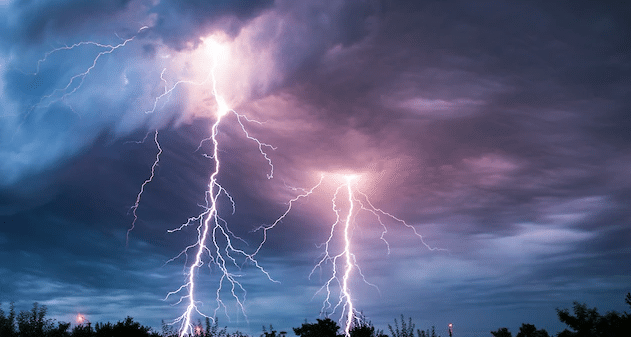
At Begoro, in the Fanteakwa North Districtof the Eastern Region, a lightning strike has killed two siblings.
The victims-Selorm Bona,16, and Vivian,14, were struck by ground strike when they reportedly rushed out to pick ripe mango fruits that dropped from the tree while raining.
Selorm died instantly but Vivian died upon arrival at the Begorogovernment hospital.
Lightning kills estimated 24,000 people each year around the world—the majority of the deaths occur in developing countries.
Scientists say Lightning is a frequent occurrence worldwide with an estimated 50 occurrences per second and 20% of those resulting in ground strikes some causing injuries and fatalities.
In Ghana, many traditions believe lightening fatality is punishment or curse by the gods over sin committed by an individual or family.
TheGhana School Feeding Programme (GSFP) Upper East Regional Secretariat is pleading with caterers in the area to continue providing meals for students while the government takes immediate action to pay what it owes to caterers.
The caterers are owed the third term and the first term of the 2021/22 and 2022/23 academic years respectively, the situation many caterers lament is negatively affecting their operations.
But in a press statement copied to Citi News, Upper East Regional Co-ordinator of the Ghana School Feeding Programme, Georgina Ayamba, appealed to caterers to remain calm and continue to cook for the children as their arrears are being worked on and will be paid soon.
She also hinted that the governmentis strongly considering an upward adjustment of the amount currently paid to caterers.
“The issue of delays in payments to caterers has been trending in the news lately. I wish to assure caterers in the region that the managers of the program share in their plight and have initiated steps to resolve the problem as soon as possible.”
“Management has also made a proposal to the government to review upward the amount currently paid to caterers which are receiving attention from government. I wish to commend caterers in the region for their patience and to plead with them to continue to cook for the children while their legitimate concerns are being addressed”.
School Feeding caterers across the country laid down their tools last week following several arrears owed them by the government. They also demanded an upward adjustment to the amount per child paid by government.
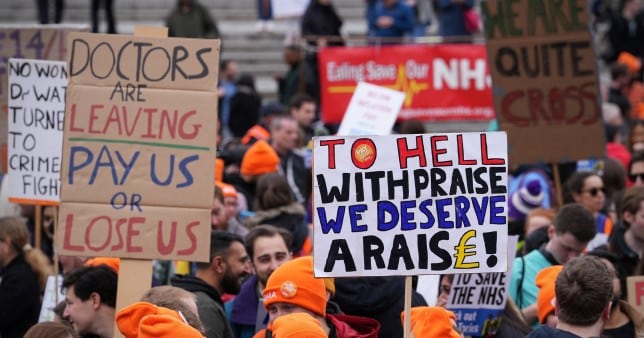
A pay disagreement involving junior physicians in England has sparked a four-day walkout that could severely disrupt the NHS.
A projected 350,000 appointments, including surgeries, would be canceled as a result of the British Medical Association members’ strike (BMA).
Beginning at 7 a.m. today, doctors set up picket lines outside of hospitals, where they plan to remain on strike until Saturday morning.
Downing Street has also insisted there would be no talks with the BMA unless junior doctors abandoned their starting position of a 35% rise and called off the strikes.
Striking Junior Doctors march through central London
Number 10 said the 35% demand was ‘completely out of step with pay settlements in other parts of the public sector’ and would cost £2 billion.
Managers have said patient care is ‘on a knife edge’ because of the strike and the suggested number of cancelled appointments could rise by 100,000.
National medical director of NHS England Professor Sir Stephen Powis said he expects the figures to be ‘considerably more than the 175,000’.
He told BBC Radio 4’s Today programme: ‘When we had the last period of industrial action a few weeks ago, that was three days, we saw over 175,000 operations and procedures having to be rescheduled.
‘We won’t get the exact number this week until the strike is over but our expectation is that we will see considerably more than that.’
He added: ‘I think it will be considerably more than the 175,000 – it’s four days this time, not three days, and of course it comes after the Easter holidays and a lot of staff are on leave this week.’
The strikes centre around a pay row between the BMA and Government, with the union claiming junior doctors in England have seen a 26% real-term pay cut since 2008/09 because pay rises have been below inflation.
The union has asked for a full pay restoration that the Government said would amount to a 35% pay rise – which ministers have said is unaffordable.
The Prime Minister is said to have been kept up to date with the latest on the strikes, and a spokesman said today unless the strikes were called off no further talks would take place.
A spokesman said: ‘A spokesman said: ‘It continues to be the case that we call on the BMA junior doctors to cease their strikes and revise their starting point for negotiations, which is 35%, which we continue to believe is unreasonable and is not affordable for the British taxpayer.
‘We know that the strike action will have an impact on patient care. The last set of strikes saw around 180,000 operations cancelled and that was a three-day strike, so we’d expect to see higher numbers this week.’
BMA officials said the pay issue is making it harder to recruit and retain junior doctors, with members previously walking out for three days in March.
The co-chairman of the BMA junior doctors’ committee said the pay rise the union has asked for is ‘not a tall ask’.
Dr Vivek Trivedi told BBC Breakfast: ‘This uplift that we’re asking for is only to reverse the pay cuts that we’ve had, doctors have had more than a 26% real-terms pay cut over the last 15 years.
‘All we’re asking is for a doctor who’s paid £14 an hour to be paid £19 an hour, so it’s not a tall ask.’
Dr Trivedi added that the 96-hour walkout by junior doctors could be stopped if Health Secretary Steve Barclay would approach negotiations with a ‘credible offer’.
‘We’ve offered multiple dates to Mr Barclay to try and meet and he’s only met us twice, he didn’t have a mandate to negotiate once, and didn’t even give us an offer the second time,’ he said.
NHS England said staff will be asked to prioritise emergency and urgent care over some routine appointments and procedures to ensure safe care for those in life-threatening situations.
The health body said appointments and operations will only be cancelled ‘where unavoidable’ and patients will be offered alternative dates as soon as possible.
Health and Social Care Secretary Steve Barclay said: ‘It is extremely disappointing the BMA has called strike action for four consecutive days.
‘Not only will the walkouts risk patient safety, but they have also been timed to maximise disruption after the Easter break.
‘I hoped to begin formal pay negotiations with the BMA last month but its demand for a 35% pay rise is unreasonable – it would result in some junior doctors receiving a pay rise of over £20,000.
‘If the BMA is willing to move significantly from this position and cancel strikes we can resume confidential talks and find a way forward, as we have done with other unions.
‘People should attend appointments unless told otherwise by the NHS, continue to call 999 in a life-threatening emergency and use NHS 111 online services for non-urgent health needs.’
The BMA has previously said it was willing to enter talks with Mr Barclay and suspend strikes if members were presented with a ‘credible’ pay offer ‘to resolve 15 years of pay erosion’.
Mr Taylor, head of the NHS Confederation which is a membership organisation that represents healthcare bodies in the UK, said the likely impact of the strike is ‘heartbreaking’ and called on both sides to end their ‘battle of rhetoric’.
Speaking about pay negotiations which would avoid the action, Mr Taylor told BBC Breakfast on Monday: ‘It’s depressing that there seems to be no movement at all from the two sides of this dispute over the last few days.
‘We should consider asking the Government and the trade unions to call in Acas, the conciliation service, to provide some basis for negotiations, because if anything the positions seem to have hardened over the last couple of days.’
Shadow health secretary Wes Streeting said: ‘The junior doctors’ strike this week will cause huge disruption to patient care.
‘Where is the Prime Minister and why hasn’t he tried to stop it?
‘Rishi Sunak says he ‘wouldn’t want to get in the middle of’ NHS pay disputes.
‘Patients are crying out for leadership, but instead they are getting weakness.’
The continuous enactment of new levies, according to the Ghana Federation of Labour(GFL), poses a risk to the country’s economic growth.
Mr Abraham Koomson, the GFL Secretary General, who spoke to the Ghana News Agency in Tema, said companies had employees and paid their salaries, as well as social security, contributing to the improvement of the standard of living for Ghanaians hence the numerous taxes could have adverse effect on their operations. .
He advised that government not to compel factories to move from the country because some companies had already begun to reduce their workforce, while others were planning to shut down soon.
Mr Koomson stressed that the closure of the companies would adversely affect government revenue all for its development programmes and increase the unemployment rate in the country.
He cautioned that if the local companies would not be revived for the survival of the country, foreign countries investing in the country must not be discouraged.
The GFL Secretary General urged the government to consider the implications of the Excise Duty Bill of 2022 on manufacturing industries, saying it would cripple companies and increase unemployment.
“The GFL continues to receive calls from Chief Executive Officers of companies and other stakeholders raising concerns that the new laws are rushed and passed without proper consultation to weigh the implications on industry, and by extension the fate of workers whose job security is guaranteed if industries break even,” he stated.
Mr Koomson said the products involved in the taxation among several others on the market, were already barely affordable because of the high cost of unit prices triggered by a combination of factors including water and electricity tariffs which saw an upward adjustment at the beginning of this month.
He added that high import bills for raw materials and the depreciation of the Ghana Cedi were all squeezing out capital by the day.
He said times had been hard, leading to companies having to adjust salaries of workers, break even to sustain operations; and the suspension of the new 20 percent bill would boost investor interest, guarantee sustained revenue inflows, and create more jobs.
According to research, many Ghanaiansare exposed to harmful health issues like liver and kidney damage as a result of the misuse of mercury by small-scale miners.
The chemical is used to extract precious minerals but researchers say it more often than not becomes a toxic substance with the potential to cause damage if not handled properly.
Mining and its impact continue to engage the attention of key stakeholders with unending calls for modern techniques to save the environment.
During his inaugural lecture, Vincent Kodzo Nartey, Professor of Chemistry at the University of Ghana, highlighted some major challenges associated with coming into contact with the chemical.
“Mercury never dies, thus the metal is rather converted to a more toxic and stable form in the environment and perceives forever and this is where the danger lies.
“As mercury is extensively used in gold extraction by both small scale and illegal miners, their activities expose Ghanaians to mercury contamination through drinking and inhaling of this mercury which is absolved to the blood, once in the circulatory system, it can pass through the blood-brain barrier and accumulate in the brain-damaging the central nervous system,” he explained the effects of the mercury in the system.
He noted that the research observed that “the critical target of elemental mercury is the adult and fatal brain, adding that “the critical target of lethal mercury are the brain and the kidneys.”
“With this background information, mercury is known to one – deteriorate the nervous system, impair hearing, speech, and vision.”
He went on to say that mercury abuse causes involuntary muscle movement, corrodes the skin and locus membranes, causes chewing and swallowing difficulties, it reduces reproductive access, impairs growth and development and causes liver and kidney damage and neurobehavioral effects and eventually death.”
As a result, he wants thegovernmentto restrict the sale and usage of mercury.
“The team calls on the government to enforce tighter control over the sales and usage of mercury. Tighter control over the activities of illegal gold mining should be implemented and sustained.”
He also urged the government to enforce accelerated adoption of cleaner technologies in gold mining in the refinery.
He also advised the government to start a health surveillance programme in mining communities to screen citizens for mercury exposure.
It is perplexing when voters criticize the government for investing in infrastructure because it represents a significant portion of government spending.
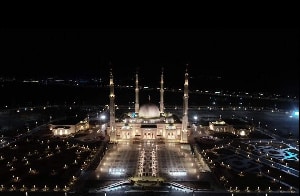
Over in North Africa, a section of the Egyptian population is expressing discontent with the decision of the Abdul Fattah Al-Sisi government to invest in a new giant mosque in the new city in Africa’s second most populous nation.
Even though the government celebrated the US$25.9 million new Islamic Cultural Center facility, poor Egyptians battling with rising cost of living and galloping inflation (over 30% in March) took to social media to protest the investment.
A Yahoo News report profiling the country’s economy said: Egypt is facing a deepening economic crisis. Its currency has lost half of its value against the dollar over the past year, causing inflation to reach its highest level in five years.
The country has also been selling state assets to Gulf investors to help plug a widening budget deficit, the report added.
Why spend on lavish project amid economic headwinds?
Some of the critical remarks posted online included one by a Facebook user who said:
“Overspending, insanity and waste of money. The tallest pulpit, the heaviest chandelier and people can’t find anything to eat. Sell this chandelier and pulpit and the whole mosque if this will help solve the problem.”
For yet another critic, it was worrying that the facility was closed for nine months, open for three months so a hundred people can use it, then it is closed again.
A third spelled out the economic difficulties that government chose to sidestep to spend on the giant project.
“Well, what should we do with people who can’t find what to eat or young men who can’t get married? It does not matter. We have the largest mosque, heaviest chandelier, and the biggest foreign debt that we will continue to pay till Doomsday.”
About the lavish mosque poor Egyptians are protesting against
a. The facility costs 80 million Egyptian pounds (equivalent to US$25.9 million)
b. It is located in the country’s new administrative city which government is building to ease congestion in Cairo.
c. The facility, known as the Islamic Cultural Center covers over 19,000 square meters of land.
d. It is capable of hosting 107,000 worshippers at a time making it the biggest mosque in the country.
e. State media reported that it had the highest pulpit in the world, standing at 16.6m (54.5ft) and handcrafted from the finest types of wood.
f. It is reputed that main chandelier of the mosque is the heaviest in the world at 24,300kg (53,572lb), and the largest, with a diameter of 22m (72.2ft) and comprising four levels.
g. The new purpose-built city is situated 45km east of the political capital, Cairo.
The current economic situation in the nation would have been worse under an NDC administration, according to Justin Frimpong Koduah, general secretary of the ruling New Patriotic Party (NPP).
The country has seen a downturn since 2022 with the government embarking on a debt restructuring exercise, and it’s also seeking a $3 billion bailout from theInternational Monetary Fund(IMF).
Speaking on Face to Face on Citi TV with Umaru Sanda Amadu, Mr. Koduah stated that Ghanaians still have confidence in the government despite the economic challenges expressing hope that they will break the eight in the 2024 polls.
The NPP’s chief scribe indicated that even without the impact of COVID-19 coupled with the Russian-Ukraine war, the NDC wouldn’t have been able to manage the economy.
“Ghanaians still have confidence in this government despite the economic challenges, because they know that between the NDC and the NPP, NPP are better managers of the economy than the NDC. Ghanaians also appreciate the fact that had it not been NPP in power, and if it were the NDC, the situation would have been worse off than what we are experiencing now. I’m telling you if NDC were in government, the situation would have been worse off”.
He added, “Even without any COVID-19 or Russian-Ukraine war, they [NDC] wouldn’t have been able to manage the economy well. We saw what happened under H. E. President John Mahama’s tenure– four years of ‘Dumsor, the scrapping of the teacher/nursing trainee allowances, among others”.
Mr. Koduah called on Ghanaians to exercise restraint assuring that the country will come out of the challenges soon.
He said Ghana had been touted as the fastest-growing economy before COVID-19 struck.
“Ghana was touted as the fast-growing economy in the world until COVID-19. At the end of the day, we will come out of the challenges, unlike the NDC which told Ghanaians that children should stay home and not be allowed to go to school during COVID-19. When we discovered oil, they termed it as coconut oil ‘adwengu’. The same NDC told Ghanaians that free SHS is not possible. Can you tell us that they are better managers of the economy than NPP?” the NPP chief scribe stated.
Parliament on Friday, March 31, passed the Excise Duty Amendment Bill 2022, the Growth and Sustainability Levy Bill, 2022, the Ghana Revenue Authority Bill 2022 and the Income Tax Amendment Bill 2022.
The financial bills seek to raise about 4 billion Ghana Cedis annually as part of domestic revenue mobilisation.
The bills are also crucial to aid the government’s quest to facilitate the Board Approval for the $3 billion International Monetary Fund (IMF) Programme staff-level agreement.
Many industry players have kicked against the passage of the new taxes arguing that it will kill businesses.
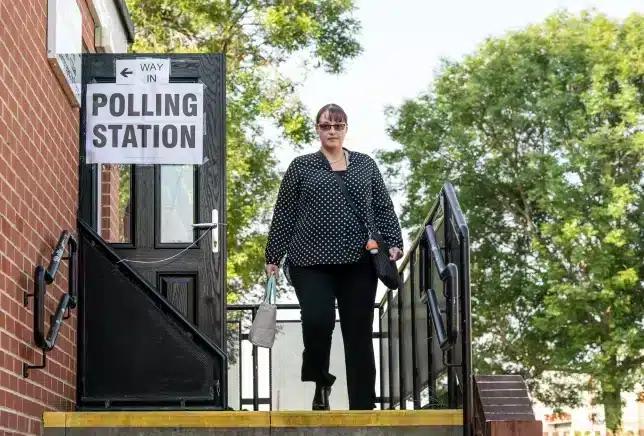
For the first time ever, on May 4, everybody wishing to cast a ballot must bring a form of picture identification.
However, not all forms of identification will be accepted, and those without the proper documentation must apply for a special certificate by April 25. Meanwhile, the registration deadline for voters is April 17.
A blue badge and an older person’s bus pass are additional acceptable pieces of identification, in addition to a passport and a driver’s license.
But travelcards for younger people are not accepted.
Compulsory photo ID will ‘protect the integrity of democracy in the UK’ and ‘ensure the electoral system remains secure, transparent and fair for generations to come’, the Government said when the proposals became law last April.
Postal voting is not affected by the new rules.
The Electoral Commission’s Craig Westwood said: ‘It is important that everyone makes sure they have an accepted form of ID if they intend to vote at a polling station. Postal voting is not affected by the new ID requirement.’
Campaign groups the Electoral Reform Society and Unlock Democracy, along with London mayor Sadiq Khan, previously warned that as many as two million people in Britain do not currently have the right form of ID to vote.
An average of 922 applications per day for a Voter Authority Certificate were made online in England in the week of April 2, up from 803 the previous week, according to PA analysis of Government data.
A total of 36,089 applications have been submitted online in England since February 1.
Next month will see more than 8,000 council seats up for grabs across 230 local authorities, ranging from small rural councils to some of the largest towns and cities.
Polls are also taking place to choose mayors in Bedford, Leicester, Mansfield and Middlesbrough.
No elections are scheduled in London, Birmingham, Cornwall, North Yorkshire or Cumbria.
Rishi Sunak will be hoping to keep Conservative losses to a minimum, in what is his first big electoral test as prime minister.
Labour leader Sir Keir Starmer and Liberal Democrat leader Sir Ed Davey will be judged on whether their parties are able to make gains at the expense of the Tories.
No elections are taking place in Scotland and Wales this year.
Local elections in Northern Ireland have been put back two weeks to May 18, to avoid a clash with the King’s coronation on May 6.
Counting in Northern Ireland usually takes a couple of days to complete, due to the system of voting used for council elections, which sees voters rank candidates in order of preference.
Photo ID became law in Northern Ireland in 2002.
Accepted forms of photo ID
Passport issued by the UK, any of the Channel Islands, the Isle of Man, a British Overseas Territory, an EEA state or a Commonwealth country
Driving licence issued by the UK, any of the Channel Islands, the Isle of Man, or an EEA state (this includes a provisional driving licence)
A Blue Badge
Older Person’s Bus Pass funded by the Government of the United Kingdom
Disabled Person’s Bus Pass funded by the Government of the United Kingdom
Oyster 60+ Card funded by the Government of the United Kingdom
Freedom Pass
Scottish National Entitlement Card
60 and Over Welsh Concessionary Travel Card
Disabled Person’s Welsh Concessionary Travel Card
Senior SmartPass issued in Northern Ireland
Registered Blind SmartPass or Blind Person’s SmartPass issued in Northern Ireland
War Disablement SmartPass issued in Northern Ireland
60+ SmartPass issued in Northern Ireland
Half Fare SmartPass issued in Northern Ireland
Identity card bearing the Proof of Age Standards Scheme hologram (a PASS card)
Biometric immigration document
Ministry of Defence Form 90 (Defence Identity Card)
National identity card issued by an EEA state
Electoral Identity Card issued in Northern Ireland
Voter Authority Certificate
Anonymous Elector’s Document
You will only need to show one form of photo ID. It needs to be the original version and not a photocopy.
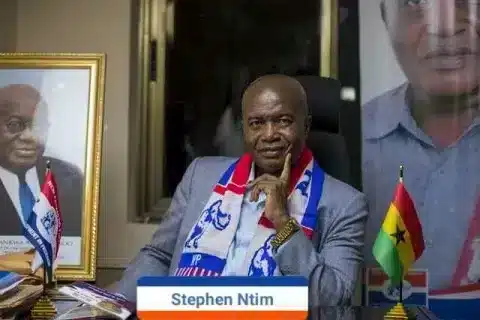
Stephen Ntim, the national chairman of the NPP, claims that the government is making every effort to revive the faltering national economy.
The National Chairman said though the emergence of COVID-19 and the Russian-Ukraine war adversely affected the economy, the NPP government will not relent in finding solutions to fulfil its promise to Ghanaians.
Mr. Ntim reiterated that the government will work hard to win back the trust of the people.
He made this known at a media briefing in Accra.
On the issue of over borrowing, Mr. Ntim said the government has been wrongly accused by NDC to misinform and mis-characterize the government’s good track record.
The NPP National Chairman also said he needed to call to reduce its size by reducing Ministers of State from 126 to 86 and 30 percent cutting of salaries government affords.
TheNational Democratic Congress(NDC), which is in opposition to the ruling New Patriotic Party (NPP), has been advised to be accurate in its evaluations of Ghana’s economic predicament.
The NPP is of the view that notwithstanding its excellent handling of the Ghanaian economy, the NDC has grown accustomed to concealing the government’s economic gains using dishonest tactics, a practice it wants the NDC to put an end to.
The NPP National Chairman, Stephen Ntim in an address on Tuesday said, the NDC’s hunger for power cannot be satisfied by lies.
“The NDC must desist from the habit and strategy of deceit in its quest for power. Such methods are often short-term but have long-term ramifications for democracy, public confidence, and, not least, the global perception and embrace of our dear country, Ghana”, he said.
The NPP adds that the NDC’s ploy will not persuade the government to abandon its efforts to better its economic record.
“Let me end by passing this piece of advice through you to the NDC. As a political party, the NDC has a sacred responsibility, to be honest, and upfront with Ghanaians in all things”, he further added.
Stephen Ntim thus urged party members to assist in spreading the NPP’s goodwill.
“I call on the rank and file of the NPP to arise and mobilise behind our government to defeat the onslaught of the NDC propaganda. This means that all of us in the NPP, from polling stations upward, must become canvassers and communicators to help disabuse the minds of our fellow Ghanaians from the misinformation that the NDC is feeding the nation.”
Despite undertaking the historic Debt Exchange Programme and seeking a bailout from the International Monetary Fund (IMF), the NPP has hailed the Akufo-Addo-Bawumia administration for diligently managing Ghana’s economy.
Stephen Ntim, echoed claims that the current crippling economic crisis is due to the impact of Covid-19 and the effects of the Russia-Ukraine War and not the incompetence of the economic management team as propagated by the opposition National Democratic Congress.
“The plain truth is that this government has managed the economy diligently and well. The hardships we are experiencing in Ghana are being experienced everywhere because of the Covid-19 pandemic and the Russia-Ukraine War. Workers in some of the world’s biggest economies are demanding salary increases due to historic global inflation.”
Former Finance Minister, Seth Terkper, has reiterated his advice to the government not to engage in what appears to be another “fiscal offset” in the 2023 budget, similar to what occurred in the government’s 2017 budget.
In this context Mr. Terkper has called on the government to disclose its plan for dealing with a large GHS 77bn pipeline of arrears and contracts in the 2021 Budget Performance Report. He noted that a similar plan was used to deal with the “single spine” wage arrears in 2020.
He has argued that, given that the budget overruns are at the core of most debt challenges, transparency and accountability in government finances are crucial for securing an IMF programme. Moreover, they are also needed for sustainable economic growth and development.
Mr. Terkper has argued that the treatment of the banking and energy sector bailout costs as memoranda items, rather than adding them to the country’s deficit and public debt stock, creates a false impression of fiscal consolidation.
The former minister has pointed out that this practice by Government resulted in the rapid financial market rating downgrades of the country’s sovereign bonds and eventual debt default, with the deficit revised upwards to 7% and 7.2% for 2018 and 2019 respectively, when the IMF and ratings agencies adjusted Ghana’s fiscal deficit and public debt figures.
Mr. Terkper recalled that in 2017, the incoming Akufo-Addo administration accused the John Mahama administration of overlooking arrears of about GHS 7bn. However, only about GHS 2bn was carried forward to the 2017 fiscal year after an apparent offset of GHS 5bn against total expenditures. At the time, Mr. Terkper opposed the move in various articles and interviews.
In a similar move, Mr. Terkper notes that the 2023 budget shows another apparent offset of GHS 22bn that also appears to reduce the deficit from about GHS 60bn to approximately GHS 38bn. As with the 2.3% reduction in the budget or fiscal deficit in 2017, the repetition of the fiscal move results in a “paper” reduction by 3.7% of GDP.
The former minister has warned that this practice by government creates a false impression of fiscal prudence, which is unsustainable in the long term. He has argued that such moves lead to a lack of transparency and accountability in government finances, which can lead to financial instability and economic turmoil.
Mr. Terkper’s concerns reflect a broader need for transparency and accountability in government finances in Ghana. The government must address these concerns to build trust with its citizens, investors, and international partners. Failure to do so could lead to further economic instability and harm the country’s long-term economic prospects.
The Ashanti Region’s national school feeding program caterers have stopped providing their services due to unpaid arrears.
The caterers say the government has ignored several appeals to pay their arrears. They are also pushing for an increase in the feeding grant from GHC0.97 to GHC3 per child.
“Our reason is simple. During COVID-19, we cooked but the government didn’t make full payment,” a caterer who wants to remain anonymous told Asaase News. “We have been complaining since [then] but to no avail. Currently, we’ve cooked for students for three terms, and they have still not made full payment.”
Another caterer said “it’s been days of struggle. Some of our colleagues are dying. They are being chased by the banks and we can’t feed the young children with such a meagre amount. This is unfair.”
One other caterer said “we miss Otiko Afisa. When she was there, she could pay for 40 days and communicate with us that she will pay the remaining 10 or 15 days, so, everybody will know that school feeding is owing us 15 days.
“But since Cynthia Morrison and the others took over, no one has been giving us any update. They only pay the number of days they want to pay. Period.” An unhappy minister
The caterers began the protest at the Regional School Feeding Secretariat. They marched to the Ashanti Regional Coordinating Council to present a petition to the regional minister, Simon Osei-Mensah.
However, the minister turned his back on the protesters because he was not happy with the caterers’ response to his call for calm. There was a verbal exchange between Osei-Mensah and the caterers. This disrupted activities at the Regional Coordinating Council.
“If your child comes to you with chants in demand for a favour, will you be happy? You only brought a petition, why don’t you go ahead,” Osei-Mensah told the caterers who got enraged by his comment.
“Frustrated as we are, we came [to the RCC] to seek the minister’s intervention but that did not happen. We are unhappy with the minister’s conduct. He could have, at least, heard us. This is very weird, to say the least,” one of the caterers said angrily,
A delegation led by the regional minister’s personal assistant, Gloria Temmah Gambrah, later received the petition on the minister’s behalf.
The caterers expect that arrears for the third term of the previous academic year will be paid before they resume work. They have threatened to throw away meals cooked by colleagues who may go contrary to their decision.
The strike by the aggrieved caterers comes a day before basic schools resume academic work. There are fears that this development can affect teaching and learning.
The UN human rights office has said that it remains “extremely apprehensive about the ramifications” of the UK government’s plans to send certain migrants to Rwanda if they enter the country unlawfully.
The UK home secretary, Suella Braverman, has said that foreigners can feel safe in Rwanda.
She said on Sunday that she believed the Rwanda policy would have “a significant deterrent effect” so that people would stop making the journey across the Channel to the UK.
But the UN human rights office said assessments done by the UN refugee agency showed that the asylum system in Rwanda was “not robust enough”.
“There are also concerns about respect for the right to freedom of assembly and freedom of expression in Rwanda. Those concerns do remain today,” spokesperson Ravina Shamdasani told the BBC’s Newsday programme.
“We have a lot of evidence of how these plans [off-shore asylum facilities] go wrong,” she added.
The government, according toDr. Kwame Asah-Asante, is fast to propose new tax bills but are unable to give specific accounting of the money collected through these levies.
“The issue is that, are we going to be able to manage the resources so well that will be derived from this revenue? We have seen it time and again that our leaders are quick to come out with tax or taxes, but the money generated from it, we find it difficult to account for them,” he said on Monday.
On March 31, Parliament approved three new tax bills proposed by the Finance Minister, Ken Ofori-Atta.
According to Mr Ofori-Atta, the bills are crucial for the progress of government’s pursuit of an International Monetary Fund (IMF) deal.
The new tax bills include; the Income Tax Amendment Bill, The Excise Duty Amendment Bill and the Growth and Sustainability Amendment Bill and are expected to rake in close to GHs4 billion.
Speaking on the AM Show on JoyNews’, Dr Asah-Asante reiterated that the passing of the bills “is a good beginning for our journey to the IMF” but indicated that those in charge have not been accountable.
The political scientist lamented citizens’ inability to demand accountability and as a result, government always slaps taxes on the people without disclosing details of revenues gained.
Meanwhile, he added that the government’s energy that is being used to make sure that it gets the basics right in securing an IMF deal could be channelled into creating home–grown solutions where there would be no need to seek an IMF bailout.
“If you look at how government wants to meet all the specifics directed by the IMF, right? They want to get all those basics right to have the facility.
“Then I ask myself; that energy that you derive from the system to pursue this programme, couldn’t you have used it in your economy, build the necessary capacity that you don’t go to the IMF,” he said.
According to him,Ghana always finds itself “in tears” as a result of some unfavourable conditions attached to the IMF deal.
In 2017, Ashleigh Moyo, nicknamed Shashl, became a household name thanks to the debut song she ever wrote, which also led to her signing with a big record label on the continent.
Shashl was signed by Universal Music Africa while still a teen for the R&B song No More. She was the organization’s first female musician from Zimbabwe.
There were advantages and disadvantages to being so young and inexperienced in music when she signed.
“It put me on the map, which I needed to be. It helped me in a great way – I can now handle a lot of situations that people go through in the music industry,” she says.
“But I was so young that I didn’t have the freedom to be as creative as I [truly] was. I was still finding myself trying to figure out my sound, trying to figure out who I actually am and what I wanted to do in life.”
The 23-year-old has since found her sound – a mix of R&B, Afrobeats, a bit of Afro-fusion. And she sings in Shona and in English.
Being the daughter of a former government minister meant that she grew up in a privileged way. But she wanted her music and her lyrics to appeal to less well-off Zimbabweans – and so she started visiting high-density residential areas so that she could try to relate to the sorts of issues most people endure on a daily basis.
“Stepping out my comfort zone and breaking out of my shell takes me places – and that’s exactly what I did,” she recalls.
In 2021, she had a huge hit with Ghetto Buddies, which has had about 1.5 million listens so far, and which she sang in Shona.
“I feel it’s easier to break into a market when you are being more genuine,” she reflects.
She won Best Newcomer at the Zimbabwe Music Awards, and was nominated for best female artist in the Southern African region at the African Muzik Magazine Awards the same year.
“The fact that what I love to do is being appreciated by people. It just fills my heart with so much joy.”
It also made Shashl realise that her musical talent is special, and she doesn’t need to fit in with everyone else. “For the first time I told myself that you were born to stand out.”
The name she performs under – Shashl – came about because she has an older sister called Sherris. They look very similar, which meant that relatives would often get them mixed up and end up calling her a combination of Sherris and Ashleigh.
Shashl plays 10 instruments – including guitar, marimba, mbira, violin and the cello.
“One day I will give a performance playing all of them – because I feel the world deserves it,” she tells me.
According to Mr. Ambrose Dery, the Interior Minister, two platoons of the Formed Police Unit (FPU) would soon be dispatched to the Bunkpurugu-YunyooPolice District Commandto bolster local law enforcement in the area.
This, he said would go a long way to help curb the increasing cases of robberies and other violent crimes in the North East Region and the Bunkpurugu-Yunyoo area.
Mr Dery said this in response to a question by Dr Abed-Nego Azumah Bandim, National Democratic Congress (NDC) Member of Parliament (MP) for Bunkpurugu.
The MP asked the Minister what measures have been put in place to curb the increasing cases of armed robberies in the Bunkpurugu-Nakpanduri District.
The Minister said the Bunkpurugu-Yunyoo District Police Command was responsible for the Bunkpurugu-Nyankpanduri and Yunyoo-Nasuan Local Government Districts.
He said there were three Police Stations in two Districts with 49 Police personnel, which indicates that the Police to civilian ratio in the district was one Police to 2,842 civilians.
Mr Dery noted that this ratio was far below the United Nations requirement of a 1:500 Police civilians ratio.
He reiterated that this notwithstanding, the Police Administration had put in place measures to combat robberies and other violent crimes in the district.
The measures he mentioned included intelligence-led Policing, mounting Police Check Points at robbery-prone areas, and escort of commercial vehicles and market women to and from various markets.
Other measures included foot and vehicle patrols and organised swoops at criminal hideouts.
“Some newly passed out constables have been posted to augment the existing Police strengthen in the District to perform visibility duties,” he stated.
A professor of economics at the University of Ghana Business School, Godfred Bokpin, has hinted that a successful tax framework, rather than more ineffective tax bills, is what Ghana needs to help produce the needed revenue.
Professor Bokpin bemoaned the many existing taxes which he stated if properly implemented, should have been enough to raise the needed revenue for the government.
He indicated it will be difficult for the government to boost the economy using taxes because far too few people are burdened with taxes while the larger population is not captured in the tax bracket.
“There is no way you can grow your economy with the number oftaxeswe have in the country. We have so many taxes in the country yet still we want to introduce more to raise more revenue.
“We are just burdening a faithful few in terms of deepening the tax system rather than broadening it, and we can close the gap by improving efficiency. The inefficiency in our VAT alone is 2.87 percent of our GDP, in other words, we could generate more than $1 billion without increasing the rate of VAT.”
“If you look at corporate tax rates, it is just a few that are captured, the inefficiency in our corporate tax productivity is more than 75 percent, and you don’t close the gap by introducing additional taxes and also increasing the rates paid,” Professor Bokpin added in an interview on Eyewitness News on Citi FM.
The government is seeking to have three new revenue bills passed by parliament as it seeks to rake in GH¢4 billion per year to shore up revenue to fix the ailing economy and secure a Board approval for a bailout from the International Monetary Fund (IMF).
The bills which include the Excise Tax Stamp and Excise Duty amendment bills, Income Tax amendment bill and Growth and Sustainability levy bill are already being rejected by some business groups and Parliament is expected to vote on the bills today [March 31].
Dr. Yakubu Akparibo, an aviation specialist, has recommended that government entrust the national airlines in the care of a private sector.
Speaking on JoyNews’ AM Show, he said that the profit made from aviation in recent times is not so much compared to previous times and there is the fear that government might run at a loss should it take the risk.
“I think at this point government should not put any investment in this airline and to me, even in the future I don’t think government should invest in an airline, they should leave it to the private sector,” he said.
“Now the profit margins in aviation is very small, it’s not like in the 80s and 70s, you know those days we didn’t have GSA and so many safety leverages and stuff, now profit margins are very small, he said. Leave new national airline to private sector – Expert tells government
Dr. Akparibo added that, when these state airlines are established, it could pave the way for state officials to use them freely for their official duties which could subsequently lead to huge debts.
“You know if it’s government-owned sometimes they probably would want to use it for official trips and travels and they may not pay and stuff and normally that leads to the airlines getting more debts and eventually bankruptcy so I think the government should leave the airlines to the private sector,” the expert indicated.
Speaking on the same show, retired international airline pilot, Michael Foli also said that instead of establishing a national airline, government should rather invest in domestic airlines to make them more efficient and reliable.2
“Government should rather divert its attention to helping domestic airlines, there was a time when domestic airlines were not being charged tax on the purchase of fuel, that was a way the government was encouraging domestic airlines,”
“I am not sure, I think this was in Rawlings’ era or Atta Mills’ era but now I am told by one of those operators that they pay full tax and it’s over-burdening their operations,”
“If a private company wants to set up an airline, sure it’s an open market, let them do it, let the government sit back,” Mr. Foli said.
Ghana’s new national airline, Ghana Airlines will commence operations in the third quarter of this year, 13 years after the country’s second state-owned carrier stopped flights.
The new name was announced by Finance MinisterKen Ofori-Atta during the 2023 budget presentation to the Ghanaian Parliament. Mr Ofori-Atta also stated that Ghana expects the airline to be operational in 2023.
Ghana’s Aviation Minister, Joseph Kofi Adda revealed that the airline would be based in Accra, Ghana and would operate routes to West Africa and future routes to destinations in Europe, North America and Asia.
The establishment of Ghana Airlines will bring the 13-year absence of a national carrier in Ghana to an end. This follows the collapse of former national airlines Ghana Airways in 2004, and Ghana International Airlines, in 2010.
A pregnant mother is afraid she will have to live on the streets with her toddler son after the local government ordered her to vacate their temporary residence.
A week before she is scheduled to be induced with the birth of her second child, Stacey Davies, 36, received notice to vacate the Birmingham apartment.
Ms. Davies, who struggles with her mobility and mental health, declined to transfer to another house since it was in a “disgusting” state and had just a bunk bed for sleeping arrangements. Also, she turned down the house since it was too far from her support system and she would find it difficult to ascend the stairs.
The single mum says she was sent an email yesterday giving her 35 days to leave the two-bedroom flat upstairs in a converted house, where she says she had no central heating for three months.
She is due to be induced with her second child next Friday and fears that she will be left on the streets with her newborn and 15-month-old son.
Ms Davies said: ‘This will leave me, my child and my newborn out on the streets because of the fact I won’t accept a property that’s not in a suitable state to move my children into. I am stressed out and desperate. The council have left me in a dire situation.’
Stacey Davies fears being out on the streets with her toddler son and second child who is due in a week’s time (Picture: Stacey Davies)
Ms Davies, who is registered disabled and is on medication for her mental health issues, has been in the accommodation, in Edgbaston, since December last year. She asked the council for a review of the housing as she struggles to get up the three flights of stairs with her pram and has deep vein thrombosis which causes her legs to swell up.
The homeless mum also says there was a fault with the boiler at her current address which took three months to fix.
‘The boiler was broken and it affected me and my son very badly, we had no heating even when it was snowing,’ she said.
‘My child has been to the hospital three times because he’s been sick with a chest infection because the house is so draughty.
‘I’ve also been to hospital several times and we’ve had to ring up the doctors with terrible colds. We couldn’t even move out of the bedroom because it was that cold.’
The boiler was fixed this week and she was offered another property four miles away in Weoley Castle but rejected it after a viewing.
Ms Davies said: ‘There was only one bedroom and no carpet, it was disgusting, the place was a disgrace. I don’t know how they expected a 15-month-old to sleep in the top or even the bottom of a bunk bed.
‘I’m 36 weeks pregnant and due to be induced next Friday, I would have been isolated in the middle of nowhere where I’d have no support for my mental health or anything else.
‘After I refused that property they’ve taken my housing status off me and they say they are coming out today to terminate my tenancy.’
The mum has been given a Notice to Quit by Birmingham City Council which states that the local authority has ‘discharged its duty’ to provide accommodation under the Homeless Act 1996.
She is now living with boxes of possession piled high as she packed in anticipation of a move before the viewing.
Her granddad, Malcom Davies, from Dudley, said: ‘Her situation is dire, they keep trying to put her in places that are not suitable for her.
‘Neither the place she is living in now or the one she has been offered with a bunk bed and stairs is suitable for a mum with a small child and a baby on the way. They have messed her about for years.’
More than 4,000 families were living in temporary accommodation across the city as of January this year, according to a report by BirminghamLive.
A spokesperson for Birmingham City Council said: ‘We understand Ms Davies had concerns about her temporary accommodation and worked hard to ensure appropriate accommodation was found, however the alternative accommodation offered was refused.
‘She is of course entitled to a review and this process is currently underway.
‘Unfortunately due to the number of people needing emergency housing we have to use a range of temporary accommodation.
‘We try to minimize the disruption to households but recognise that at times the only available options are outside of a household’s local community.
‘We would urge anybody who thinks they are at risk of being homeless to get in touch with us as soon as possible so our Housing Solutions Officers can work with them to prevent homelessness wherever possible.’
The Member of Parliament for Cape Coast South, Kweku Ricketts-Hagan has asserted that rather than concentrating on passing revenue laws, thegovernment should reduce excessive expenditure.
The government is seeking approval for some revenue bills which are currently before Parliament to rake in about 4 billion Ghana Cedis annually.
The bills are the Income Tax Amendment Act, the Excise Duty Amendment Act, and the Growth and Sustainability Act.
Ahead of the consideration of the financial bills, the lawmaker spoke to journalists in Parliament.
“There are serious expenditure items that need to be looked at. One of them remains obviously to reduce government ministers and other wasteful expenditures like the National Cathedral and other things they intend to spend money on. I don’t want anybody to be telling us that without those things we cannot survive.
The lawmaker added, “we don’t need that together with anIMF programme. We have got countries that went to IMF without going through debt restructuring and these kinds of tax reviews, before they got the programme. They got the programme and worked through these things to achieve whatever the IMF wanted us to achieve”.
The government fears failing to pass the new tax bills on Friday, March 31, will jeopardize the country’s chances of a quick economic recovery and Board approval for an International Monetary Fund (IMF) bailout.
Kojo Oppong Nkrumah, the Information Minister, is concerned that if these bills are not passed, plans to raise money to supplement domestic revenue will be thwarted.
“If we don’t do what we have to do for the country, we will have major challenges. So, this is a set of measures we must ensure is worth passing. This is a major bridge we have to cross in closing this revenue gap and ensure that there is more liquidity”, he stressed.
He thus appealed to the Minority in Parliament to support the passage of the revenue bills currently before the house in order to help the government secure the $3 billion from the International Monetary Fund (IMF).
The Keta Port will need to be developed and run by a private party by the end of this year, according to the government’s goal.
For the project’s request for proposals (RFP), six companies have currently been selected for consideration.
The government wants to get rid of the hybrid model of port development and management, in which the port authority serves as both a regulator and an operator, said Kwaku Ofori-Asiamah, the minister of transport, who announced this at the Meet-the-Press series in Accra yesterday.
Upon conclusion of the investor selection process, he stated that actual construction will start in January 2024.
The Keta Port, he said, was expected to be a service port with a full range of cargo processing functions, including inspection and verification.
Feasibility studies
Mr Ofori-Asiamah said from the feasibility studies, the Keta Port would operate as a landlord port, with the public authority not handling cargo but being a regulator only.
“Private sector operators will develop and operate the various terminals and handle vessels and cargo, while the government is expected to make basic investments, including the administration building to house the port authority and other port service tenants,” he said.
He said the RFP for the construction of the administration block was underway to allow for physical construction works to take off by July 2023.
Public outcry
There has been public outcry over the delay in the execution of the port project.
This has been so especially following the declaration of the area by an Executive Instrument in 2018 as a port and the subsequent appointment of a director to oversee the processes surrounding the project.
Whereas critics of the government believed the project, as a Greenfield port (entirely new port), was not viable, considering its closeness to the Lome Port, which plays host to international shipping lines for the transhipment of goods, the minister had maintained that the feasibility studies had proved the project’s viability and profitability, considering the country’s decision to exploit its iron ore deposits for export.
Maritime and Inland waterways
Giving an update on developments within the maritime and transport sector, the minister said the completion of work on the 16-metre draft Dry Bulk Terminal at the Takoradi Port last year had improved operational efficiency at that port, allowing it to increase its work load and revenue generation.
Mr Ofori-Asiamah also announced that phase one works on the Boankra Inland Port were at about 30 per cent complete, with the hope that a full completion would help decongest the Tema Port and bring import and export services closer to the doorstep of shippers in the middle and the northern parts of the country, as well as neighbouring landlocked countries.
Fishing Ports
On the new fishing ports under construction, he pointed out that works at the Jamestown Fishing Harbour were about 60 per cent complete, while those at Elmina, which include facilities such as two new breakwaters, a new quay wall (retention area for docking of vessels) with a total length of 400 metres, a new administration building, a fish market, among others, were fully completed.
He also mentioned additional construction works on coastal fishing landing sites at 12 locations across the country, which he said would complement existing facilities to help address challenges such as inadequate storage facilities, high post-harvest losses and unhygienic conditions confronting the artisanal fishing sector.
“These projects will enable us to address these challenges to support the growth of the fishing industry, create job opportunities and help build vibrant communities along the coast,” he said.
Aviation sector
In the aviation sector, he said a feasibility studies to determine a suitable location for a new airport in either the Central or the Western region or in between the two were being finalised.
He said the phase three upgrade works on the Kumasi Airport, which include aerobridges, were also about 89 per cent complete, while those on the Tamale Airport, which include the construction of a new terminal building, a multi-purpose terminal and access roads connecting the airport to the Tamale-Bolgatanga highway, had been completed for use.
Road accidents worrying
Mr Ofori-Asiamah expressed worry over the increasing road crashes.
He said provisional figures showed that road crashes, injuries and fatalities as of December 2022 stood at 14,960, 15,690 and 2,373, respectively.
The minister called on stakeholders to step up efforts to minimise road crashes across the country.
He also announced the procurement of new fleets for the Metro Mass Transit (MMT) to augment those in use.
The Catholic Bishops Conference has urged the government to forgo any business with the United States that is premised on the acceptance of the LGBTQ community in Ghana.
Speaking in an interview with Catholic Trends, the President of the Catholic Bishop Conference, Most Rev. Matthew Gyamfi, said that accepting aid from the US government with any LGBTQ conditions would amount to the government selling the country’s birth right.
He added that the government must tell the people of Ghana what the conditions for the $139 million are before accepting it.
“This is a very serious issue. It is at the gate of who we are as Ghanaians and nobody should toy with it with money. And if that should be the case (the aid is tied to Ghana accepting LGBT), let the government reject the money and tell the people, this is what they are saying. Should I take it? So that you do this or not and let the people decide.
“This is not the first time. We have seen the European Union, the United States and these rich countries sometimes push down our throats with certain reforms and certain things and they say if only you do these things, we would give you the money.
“I know the government has done that over and over and over, and many Ghanaians know it. It is not only I who is saying it. So when it comes to something that makes a people, a people. That is their culture and tradition, then if you sell your birth right, culture and tradition, if you sell who you are for money when you get the money who are you again?” Most Rev. Gyamfi said.
The office of the United States Vice President indicated that the US government will support Ghana with $139 million for the 2024 fiscal year.
According to Aljazeera, the $139 million is an addition to the $100 million security support, Vice President Kamala Harris announced for five West African countries including Ghana.
Ghana Airlines will launch operations in June, according to the transport minister,Kwaku Asiamah Ofori.
He added that the new national Airline will fly to the UK and USA.
Addressing journalists in Accra, Kwaku Asiamah Ofori says the Airline has satisfied all the requirements.
“It is well grounded and all the requirements have been satisfied. They are going to launch their logo, my information is that by the end of April or May, they will start selling their tickets. And by June-July, you will see a national airline-Ghana Airlines flying in the air. Insha Allah it shall be well,” Transport Minister noted.
The Ashanti Airlines, a privately registered Ghanaian airline is in partnership with theGovernment, to operate a national commercial air carrier known as Ghana Airlines Ltd.
Zotus Group Inc, United Kingdom, known for its diverse portfolio of projects is the financial and operational partner of Ashanti Airlines with the Government of Ghana.
The new Airline will commence operations in the third quarter of 2023 with flights on domestic routes, then later to Regional and International routes, including flights to Heathrow Airport, London (UK), JFK Airport in New York (USA), and beyond.
More than 1,000 residents of Suncity, a suburb ofBuduburam, have been left homeless following a land dispute case.
The residents lament that they were given no adequate time to relocate from the area.
The residents were evicted from their houses by the litigant identified as SNBB under the supervision of a police task force.
Personal belongings of the affected persons were thrown out of their rooms and entrances were locked with fresh padlocks provided by the litigant.
The litigant who claims ownership of the land has won a court case against property owners of the area. According to the litigant, the court has given him the right to demolish all the houses to be able to recover his land.
Some stranded residents who shared their frustrations with Citi News said they were not given prior notice before they were thrown out of their rooms.
“They are not land guards but the way they did the operation is scary. You wake up early morning, and you see Police and Taskforce at your doorstep evicting you. No one has informed us about the demolition and this is not good. They initially wrote on the walls giving us a warning, but we didn’t know it was that serious. People are crying over the issues,” a resident narrated in a Citi News interview.
Another said “We were here this morning when the taskforce came and told us to move from the area. We don’t have anywhere to go, and I can’t go to my village because there is nothing there for me. We need government intervention.”
“We are tenants here, and we have never built a house so if they tell us to move just today, it is not a good thing. If you are ejecting me in just two minutes and telling me to move my belongings out, it is not something that should be encouraged.
“I have a three-week-old baby and I don’t know where to go. We want to appeal to the owner of the land to calm down and negotiate with us.”
The litigant declined to speak to the media about the development.
It is anticipated that an announcement would be made today on the housing of refugees aboard abandoned cruise ships and military camps.
Later today, the controversial options to hosting asylum seekers in hotels around the UK are expected to be announced by the ministers.
Former military facilities like RAF Scampton in Lincolnshire, which served as the Dambusters’ base of operations during World War II, are among the potential locations the Home Office is considering.
Government sources told the BBC each site will have the capacity to house 1,500-2,000 migrants, and initially are more likely to be used for new arrivals rather than to rehouse people currently in hotels.
Raab: We’ll look at barges for housing migrants
Home Secretary Suella Braverman previously said the government was looking at a number of alternative sites (Picture: AP)
Raab: We’ll look at barges for housing migrants
Other possibilities include using vessels such as a former cruise ship from Indonesia, which would be moored in south-west England.
It comes as the UK says it is spending £6.2m a day on hotels for asylum seekers, housing more than 51,000 people at 400 hotels across the country.
Deputy Prime Minister Dominic Raab said vessels will be used to house asylum seekers where they can be ‘safely and responsibly’ utilised.
He told BBC Breakfast there is a ‘huge cost to the taxpayer’ of hotel use and this is ‘deeply frustrating’ to many, while acting as a ‘pull factor’.
He said: ‘We will look at the whole range of options, low-cost accommodation, ex-Army barracks and, where it’s appropriate, as has been used elsewhere in Europe, and I think in Scotland as well, vessels if they can safely and responsibly be used,’ he said.
‘The immigration minister will set out these proposals in detail in the House of Commons later today.’
Mr Jenrick is expected to make the announcement later today, however plans to house people in ex-military bases has already been criticised by Tory MPs.
Foreign Secretary James Cleverly has slammed plans to possibly house asylum seekers at MDP Wethersfield, in his Essex constituency of Braintree.
Mr Cleverly said the site was ‘inappropriate’ because it was remote and had limited transport infrastructure.
The government is also thought to disclose plans to make use of a clause in the levelling up bill to force councils to accept large-scale accommodation for those seeking asylum.
Regarding RAF Scampton, Sir Edward Leigh, the Tory MP for the area, has previously criticised the choice.
A deal had been agreed in March to allow West Lindsey District Council to purchase the base from the Ministry of Defence as part of a £300m regeneration project of the site for commercial activity, heritage, tourism and research.
The government is also said to be considering using a ‘giant barge’ capable of holding hundreds of people, according to the Times with a government source telling the paper it would have a ‘deterrent effect’ on people arriving in small boats.
Disused cruise ships, empty holiday parks and former student halls have also under consideration as alternatives to hotels.
The barges are built to house hundreds of people, although a government source told the Times that plans were at an ‘early stage’ and had significant practical issues that needed to be addressed.
Suella Braverman, the home secretary, is expected to announce alternatives to hotel accommodation as soon as this week.
Rishi Sunak told his Cabinet on Tuesday that the cost of using hotels and the pressure it puts on local areas meant it was not sustainable.
The Prime Minister later told MPs that children cannot be exempted from plans to detain people who cross the Channel in small boats to prevent the creation of a ‘pull factor’.
Appearing before the Commons Liaison Committee, he also downplayed suggestions that flights under the Government’s stalled Rwanda policy would begin this summer.
The ships would be moored off the coast, emulating an approach by the Scottish government, which housed Ukrainian refugees in two 700-cabin ships. They were docked in Glasgow and Edinburgh and could hold 1,750 people each.
Braverman said she would not rule out the use of former cruise ships when questioned in December by a House of Lords committee.
She said: ‘We will bring forward a range of alternative sites, they will include disused holiday parks, former student halls – I should say we are looking at those sites – I wouldn’t say anything is confirmed yet.
‘But we need to bring forward thousands of places, and when you talk about vessels all I can say is – because we are in discussion with a wide variety of providers – that everything is still on the table and nothing is excluded,’ she said.
A government spokesperson said: ‘We have always been upfront about the unprecedented pressure being placed on our asylum system, brought about by a significant increase in dangerous and illegal journeys into the country.
‘We continue to work across government and with local authorities to identify a range of accommodation options. The government remains committed to engaging with local authorities and key stakeholders as part of this process.’
A National Democratic Congress (NDC) presidential candidate for 2024, John Mahama, has characterized the Akufo-Addo-led administration as a governmentthat shirks accountability.
According to him, accepting responsibility is a mark of good leadership, a quality that is lacking inPresident Akufo-Addo.
“What is making it difficult for them to govern is that they are not people who listen to advice. They never accept their mistakes, so they are not able to learn from their mistakes. Notwithstanding the poor state of Ghana’s economy, still they are not accepting responsibility.“Nothing can be fixed if the leader cannot take responsibility,” he insisted.
Speaking to branch and constituency executives of the NDC in the Awutu Senya East and West Constituencies on Tuesday, Mr. Mahama who is campaigning to lead his party to the 2024 presidential election said: “When you listen to them, they say it is not their fault. Are they saying it is the fault of Ghanaians? Who went for all those loans? It was them. Yet whenever you tune in to the news, they say it was Covid-19 that caused our problems. They say it was Russian-Ukraine that caused them.”
He expressed surprise that the President did not follow his example but continues to refuse to accept responsibility for the woeful state of the nation.
“When President went to parliament to deliver the State of the Nation Address, I thought he would accept responsibility the way I did when we had an energy crisis in this country. I did not cause it; it was caused by lack of addition to our (power) generation for many years. So, it got to a time, our demand had exceeded our ability to generate power” he explained.
“I went to Parliament. I did not say I did not cause it. I said you elected me to take responsibility, so I take responsibility for it, and I will fix it. That is what leadership is about. This is a President who cannot take responsibility and if you can’t take responsibility, you can’t fix anything” he said to wild cheers.
President Mahama is on a three-day ‘Building the Ghana we want together’ campaign tour of the twenty-three constituencies in the Central Region.
Reports that the governmentowes some seedling suppliers for the Green Ghana project 2.5 billion cedis have been refuted by the Ministry of Lands and Natural Resources.
The seedling contractors were tasked to supply seedlings for the tree planting exercise during the Green Ghana Day celebrations for 2021 and 2022.
According to the association, several engagements with the Ministry of Lands and Natural Resources and the Forestry Commission for the government to pay them have been unsuccessful despite the many assurances.
According to members of the association, they are currently frustrated as they are constantly being harassed by banks they secured loans from to procure the seedlings.
Speaking to Citi News, the Secretary of the Ashanti Region Seedlings Contractors Association, Gloria Amponsah called on President Akufo-Addoto intervene in ensuring that they are paid to lessen their burden.
“The situation is really hurting us. A lot of people are in trouble and the law courts are attacking them. We have gone to the Forestry Commission several times to no avail, sometimes we even sleep there but all the promises have not come true. When we go there, they treat us like we are not humans, they don’t have empathy for us”.
But the government has attempted to set the record straight describing the quoted amount as outrageous and that the government owes them only 28 million cedis.
Speaking during a tour to inspect some trees planted at some sites of the Green Ghana Project, Deputy Minister of Lands and Natural Resources Benito Owusu Bio said the government is making frantic efforts to pay them.
“Please we don’t owe anyone GH¢2.5 billion. Yes government owes for 2021 to 2022. In all, it is just 28 million Ghana cedis so where from the 2.5 billion? Let’s report the fact as it is.”
He further added that despite some peculiar challenges it has recorded, the survival rates during the 2021 and 2022 Green Ghana projects have been positive.
He added that the government will continually embark on such exercises to achieve its intended purpose.