Israel’s leader Benjamin Netanyahu talked to US Secretary of State Antony Blinken when he visited Tel Aviv today, and then gave a statement.
He talked about the dangerous attack in Jerusalem today, which Hamas said its members did. Netanyahu said that Hamas is trying to kill us everywhere.
I told him: We promised to get rid of Hamas. We will not be stopped no matter what.
Netanyahu told Blinken that Israel will keep fighting until it meets three goals: freeing all hostages, getting rid of Hamas, and making sure Gaza doesn’t pose a threat again.
Tag: Hamas
-

‘Nothing will stop us’ from eliminating Hamas – Netanyahu tells US
-
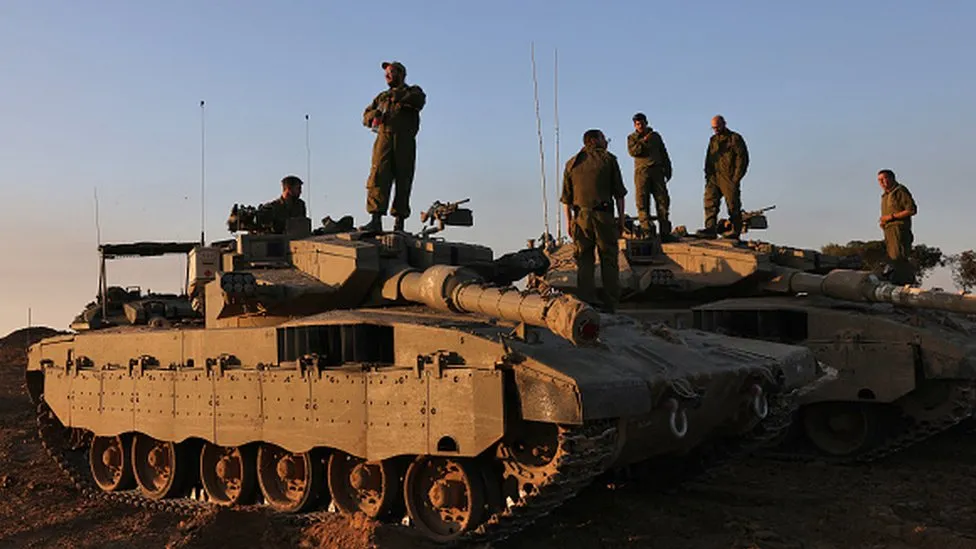
Israel and Hamas ceasefire extended
Israel and Hamas have decided to continue their ceasefire for one more day, just before it was going to end.
The short break in fighting will continue for another week after Qatar helped negotiate an agreement.
The agreement resulted in many hostages being set free by Hamas in exchange for releasing Palestinians from prisons and providing aid to Gaza.
On Wednesday night, 16 people who were held by Hamas were set free, and 30 Palestinians were also released.
Up to now, 102 Israeli hostages have been let go, and 210 Palestinian prisoners have been set free. Around 140 Israelis are still being held as prisoners.
Israel’s army said the short break in fighting will continue because people are working to free the hostages and follow the agreed plan.
The prime minister’s office said the truce will continue for another seven days. They got a new list of women and children who are being held as hostages, but didn’t say how many names are on the list. Hamas also said that they agreed to extend the truce for another week without giving more information.
The first agreement was supposed to last for four days, but it has been extended two times.
When the deal was made, Israel said they would stop fighting for one more day for every 10 hostages released.
Antony Blinken, who is in charge of US foreign affairs, said that the truce is working and should keep going.
“We have seen in the past week that hostages are coming home and reuniting with their families, which is very good,” he said during a meeting with Israeli President Isaac Herzog in Tel Aviv on Thursday.
“It has also allowed more humanitarian help to reach the innocent people in Gaza who really need it. ”
On Wednesday, Israel’s leader, Benjamin Netanyahu, said again that they will start fighting again once the truce is over.
“We will keep fighting until the very end, no matter what. ” This is what I believe, and everyone in the government and the army and the public supports it. This is exactly what we will do, he said on Wednesday.
Before the extension was approved, the United Nations Secretary General Antonio Guterres said that the Gaza Strip was experiencing a very serious humanitarian crisis.
He said he was glad to talk about continuing the truce, but he also said we need a real ceasefire for the sake of helping people.
The UN thinks that over 1. 8 million people in Gaza have left their homes in the last seven weeks. Around 60% of them are staying in 156 buildings that are owned by the UN agency for Palestinian refugees, Unrwa.
Earlier this week, a doctor from the World Health Organization said they checked the shelters and found that many people were getting sick. The kids were getting diarrhea 100 times more than usual.
The truce has stopped the Israeli air strikes for now. They started after Hamas attacked southern Israel, killing 1,200 people and taking hundreds of hostages on 7 October.
Since then, Israel has attacked Gaza by air and on the ground and about 15,000 people have been killed. Children make up 40% of the people who have died. This information comes from health ministry officials in Gaza, which is controlled by the group Hamas. Big areas in the north of the Strip have been destroyed or badly damaged. -
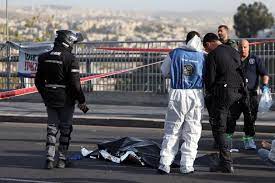
Shooting in Jerusalem claims three lives just hours after Gaza ceasefire was reinstated
Three people have been killed in Jerusalem after two attackers shot at a bus stop. At least six others got hurt, and some of them are in really bad condition.
The day after two young boys from Palestine were shot and killed during a military operation by Israel in Jenin, a statement was released.
Israel has decided to continue to stop fighting in Gaza for another week. International negotiators are working to free more hostages.
On Wednesday, 12 Israeli and four Thai people who were taken by Hamas came back to Israel.
In return, 30 Palestinian women and young boys were let go from Israeli prisons.
On 7 October, Hamas attacked Israel and killed 1,200 people. They also took about 240 people as hostages.
Since then, the health ministry in Gaza, which is controlled by Hamas, said over 14,800 people have been killed in Israel’s campaign to fight back, including around 6,000 children.
More update on this story soon…
-
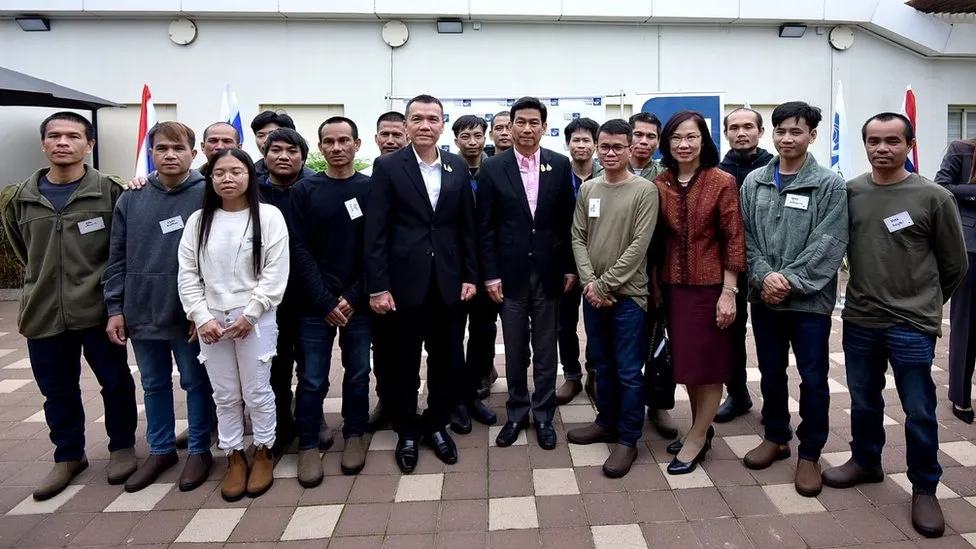
Hamas hostages: Thai prisoners return to joyful families
Seventeen Thai people who were captured by Hamas for almost 50 days have been released and have come back to Bangkok.
They have been released separately from an agreement that has already seen Hamas free 70 Israeli women and children.
The truce being extended gives us hope that the last nine Thai hostages will be released.
Almost all of the kidnapped foreign workers were from Thailand. Israel hires around 30,000 people to work on farms, and they are one of the biggest groups of migrant workers there.
39 people from Thailand were killed in an attack by Hamas on Israel on 7 October.
Six people from Thailand who were taken captive were let go recently. They are now in Israel for a check-up with a doctor. However, the other people who were released are being taken home by the Thai foreign minister Parnpree Bahiddha-Nukara.
They got to Bangkok’s Suvarnabhumi Airport on Thursday evening. Some of their families were excited to see them.
Chanapa and Sirirat Bupasiri left their village in the middle of the night to go to Bangkok for their brother Buddee Saengbun’s arrival.
“We didn’t sleep at all,” Chanapa said to the media as she waited outside Bangkok airport. She said they knew Buddee was ok when they saw him on the news after he was let go last week.
We didn’t know what happened to my brother. We tried a lot of things like Facebook groups and asking the department of employment for help. Some families heard about their loved ones, but we didn’t.
She cried while smiling when someone asked her what she will do when she sees her brother again. (Give people hugs. ) “She said she wanted hugs and was crying. ” “One month and 18 days. ” can be rewritten as “49 days. ” “We have been keeping track of each day. ”
The workers will go back to their homes after a short meeting with reporters. They will talk to the media and answer their questions. Many of them come from a poor area in north-east Thailand where people mainly grow rice. Many young adults leave this area to find better jobs.
Older parents who cannot travel to Bangkok, or families who cannot afford the long trip, are waiting at home.
“I’m very happy” Bunyarin Srichan is excited for his daughter Nattawaree “Yo” Mulka to come home. She was the only female Thai hostage taken by Hamas.
She says they will have a big meal with fried pork and sticky rice. She also plans to have a small ceremony to welcome their loved one home and bring back their spirits after a scary experience.
Yo’s boyfriend, who she met while working in Israel, was also taken by force, but was released with her.
Bunyarin, who has been taking care of Yo’s two children, said her daughter used to call or message three times a day before she was kidnapped in the attack on October 7th. She sent half of her money to her mom every month, which was 25,000 Thai baht ($715; £560).
Many workers borrow money to travel to Israel, so they can send money back to their families and pay back what they owe. Natthaporn Onkaew, 27, was let go on Saturday. He is the only one in his family who earns money.
Two years ago, he got a job in Israel. He sent back around $800 to $1,000 (£630-£800) to his home every month.
“I’m really glad that my son is coming back,” said his father, Thawatchai Onkaew, to BBC Thai. He also mentioned that his son had been calling home every day from the hospital after being released.
The family is making his favorite food – beef salad – to welcome him home, and they are also having a party for him.
Mr Thawatchai said that his son doesn’t want to go back to work in Israel because he is still very afraid.About 8,500 people from Thailand have been brought back to their country since the attack on 7 October. The BBC knows that some people have returned to Israel because they couldn’t find work and had too much debt.
Many people have told BBC Thai about their bad working conditions in Israel. They say they have to live in dirty places, work too much, and don’t get paid enough.
More than 14,500 people in Gaza have died from Israel’s bombing since October 7th, according to Gaza’s health ministry run by Hamas.
Hamas stopped fighting for six days and let go 102 hostages in exchange for 210 Palestinian prisoners, including many women and teenagers, held in Israeli jails.
The truce was supposed to end on Thursday, but it has been prolonged for at least one more day.
Narissara Chanthasang feels better because her husband, Nattapong Pinta, is still being held by Hamas.
“Heart hurt when I found out he wasn’t free,” she said. I will go to the airport when he comes back for sure. “Nothing can prevent me. “ -
Extended six-day truce about to expire – What comes next?
The ceasefire in Gaza has been going on for six days and will end soon. Israel and Hamas are talking about extending the ceasefire. Israel thinks there is a chance to make a deal, and Hamas has shown that they are willing to discuss it.
Top officials from Israel, the United States, and Egypt are talking in Qatar about making a new agreement. Qatar helped mediate the first peace deal. This could mean that the first men or soldiers who were taken by Hamas during the attack on 7 October might be set free.
Israeli leaders have said that they want to keep the current system, where three Palestinian women and teenagers are set free from Israeli prisons for every Israeli hostage that is returned.
I wonder if Hamas will ask for anything else to release Israeli officers.
Over 160 people are still being held captive, including a 10-month-old baby who is the youngest hostage. Hamas says it does not have all of them, and that some are with other groups. It’s not clear where the others are.
A longer period of peace will help the people in Gaza by bringing more supplies like food, water, and medicine that they really need.
However, some people in Israel might not agree with a longer ceasefire. Prime Minister Benjamin Netanyahu promised to start attacking Gaza again to “get rid of Hamas”. Some people are worried that if there is a long break, Hamas will have time to get stronger and plan how to defend themselves. -

Hamas fears Israelis and Palestinians living side by side in peace – Biden
Joe Biden said that if the fighting in Gaza keeps going, it will give Hamas what they want.
The President of the United States said that Hamas started fighting on October 7th because they are afraid of Israelis and Palestinians living peacefully together.
“He said that if we keep fighting and causing harm, we will be giving Hamas what they want. ”
His tweet made people confused. Some people wondered if Biden was suggesting that the US might be less strict in the conflict.
Biden did not support stopping the fighting because he didn’t think it would help make peace between Israel and Hamas.
“He wrote in an article that as long as Hamas wants to destroy things, a ceasefire is not real peace. ”
However, a high-ranking official from Biden’s administration told Jewish Insider that his message on social media was “not a change in policy”. The official added that the message was a shortened version of a longer speech he gave last week.
“He said we should not give up hope for peace in the region. It’s very important to keep working towards a lasting peace through a two-state solution. “ -

Hundreds wait in Gaza in frustration for cooking gas
Apart from discussing if the truce will continue, let’s remember the hard times people in Gaza are going through.
Here in Deir al-Balah, there are many people as far as you can see. It is meant to be a “safe” city in contrast to the destroyed north, where lots of people who had to leave their homes now live.
Many people are waiting in a long line for cooking gas. Some have been waiting for three days, sleeping outside in the cold, hoping to be able to cook food.
As many people wait, some get angry while sitting on their gas cylinders.
“Where are all the Arab and Muslim people. ” a woman in her middle years yells angrily while waiting in line for gas. “Where are the people who protect human rights. You have abandoned the Palestinians and left them to suffer, starve, and be harmed. “ -
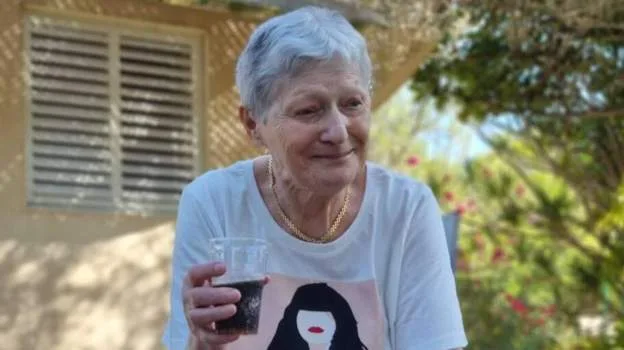
Grandmother breaks out as she sees relatives she assumed were dead
Yafa Adar, who was kidnapped from Nir Oz kibbutz, was one of the hostages who was released early in the exchange deal. A video of her being taken to Gaza in a small car by armed men became very popular on social media.
Her granddaughter, Adva Ardar, says the 85-year-old coming home was like a dream coming true.
“We waited for 50 days just to hug her and smell her,” she tells BBC Radio 4’s Today show.
”Even after all the hard times, she is still the same funny, positive, and strong woman we know”.
You see her after everything she’s been through, and she’s still the funniest, most hopeful, and strongest woman we’ve ever known.
Adva’s grandmother is really strong and healthy. She’s been talking and asking about what’s been happening in the community.
Yafa thought all her family had died in Nir Oz. But then her grandmother saw them and realized they were actually alive. It was a very emotional moment. Yafa’s oldest grandson, Tamir, who is 38 years old and works as a farmer, is one of the people still being kept as a hostage. He has two young daughters. -
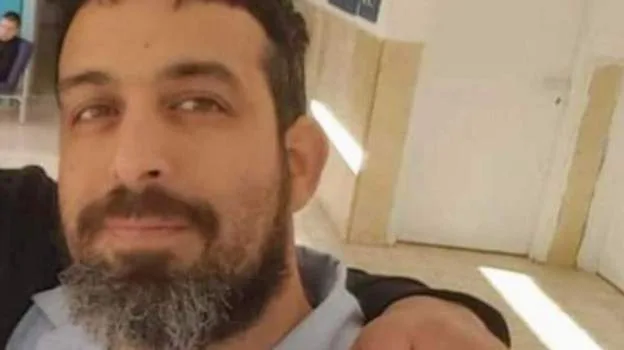
Israeli man who was allegedly held captive by Hamas passed away on October 7 – Family
In the past hour, we received news that one of the men who was believed to have been captured by Hamas on October 7th was actually killed in the attack.
Ravid Katz, who is 51 years old, was not at Kibbutz Nir Oz after he went to fight against Hamas with the security team of the kibbutz, as reported by the Times of Israel.
Yoni Asher, who is the brother-in-law of Katz, posted on social media that he has been told Katz was killed on October 7th. Hamas let go of Asher’s wife and two daughters on Friday as part of the truce deal in Gaza.
Asher said, “Ravid lived in Kibbutz Nir Oz and was a well-educated man from Israel. He was a great father to Shahar, Shira, and a six-month-old baby named Alma, and a partner to Revital. ” We will never forget him. -

Peace can never reign between Israel and Hamas – Former Israeli ambassador
Mark Regev, who used to represent Israel in the UK, says that there can’t be peace with Hamas.
Regev told the media that it is not possible to make peace with Hamas because they have said so themselves. This happened on the News hour programme on Monday evening.
He was probably talking about a statement made earlier this month by Taher El-Nounou, a media advisor for the group Hamas. He told the New York Times that Hamas wants the war with Israel to continue on all the borders and never stop.
“We need to discuss a future without Hamas,” Regev said.
When someone asked if Israel will help rebuild the Gaza Strip, which was badly damaged by Israel’s bombing, Regev said his country’s money is being used to rebuild towns in southern Israel instead.
He said he thinks a lot of other countries will help pay for Gaza to be rebuilt.
We didn’t start or want this war, as you know. “Hamas is to blame for starting the fighting,” he said. -
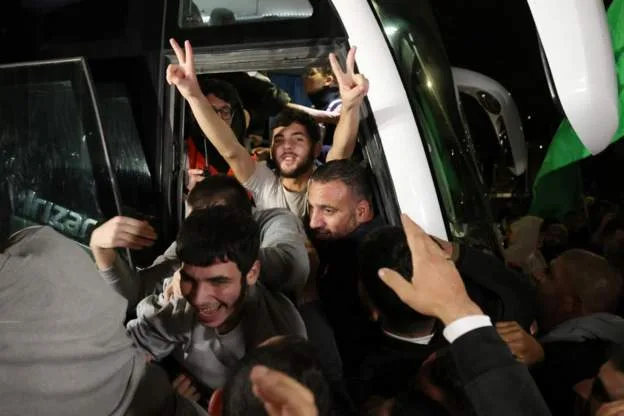
3 Palestinians to be freed daily in exchange of Israeli hostage after extended truce
The truce will continue, and for every Israeli hostage returned from Gaza, three Palestinians will be freed from Israeli jails.
Prime Minister Benjamin Netanyahu’s office said they got the list of captives who will be released today and their families are being told.
Last night, two women and nine children and teenagers were set free. They were all kidnapped from the same kibbutz.
About 170 people are still being held in Gaza, but Hamas claims they are not responsible for all of them. This could make it harder to free the most vulnerable people.
The youngest person being held captive is a ten-month-old baby.
US officials are saying that they will keep working to extend the deal until everyone is let go.
In Gaza, the fighting has stopped for now. This has helped deliver essential supplies to people in need. But the United Nations says they still need a lot more help. -
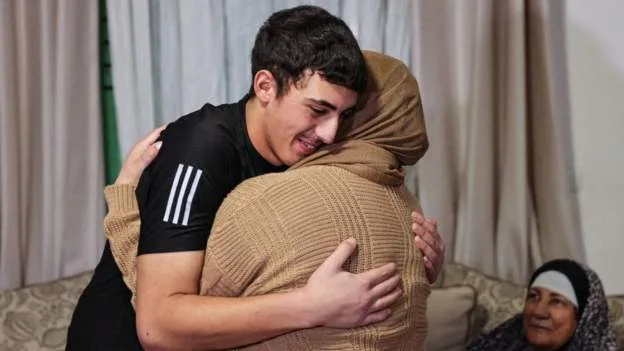
Israel releases 33 Palestinian detainees on the fourth day of truce
More Palestinians were released from Israeli jails on the fourth day of a break in fighting between Israel and Hamas.
33 people were let go, making a total of 150 Palestinians who have been released since last Friday. This is when both sides started trading hostages and prisoners.
Not much has been said about the new group of Palestinians who have been set free.
On Monday, Hamas and Qatar said that 30 Palestinian children and three women are going to be released. Qatar has been helping with talks between the fighting groups.
The Israel Prison Service said 33 people were released from Ofer prison in the West Bank and a detention center in Jerusalem. They did not say how old they were or if they were male or female. -
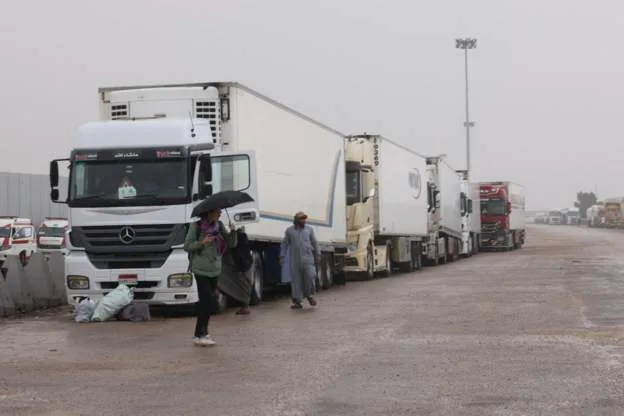
Help reaching Gaza far less than it was prior to the conflict – Authorities
The agreement between Israel and Hamas means that more people being held captive in Gaza will be released, and that more help will be given to the area where people are in urgent need.
The peace agreement has made it possible for some trucks to bring in medicine, food, and water to the area. But it’s still only a small amount compared to the aid that used to come in every day before the war.
Important help is reaching the northern part of Gaza. For weeks, this area was the target of Israel’s attack on Hamas, which caused a lot of damage.
However, people who had to leave their homes say they need more assistance.
“My children are not feeling well, and they don’t have any clothes to wear. ” We arrived wearing light clothes in the summer and didn’t bring any mattresses, food, or anything else. Every day we look for food, but we can’t find any. “Every day, we search for clothes, but we can’t find any,” said a man named Mahmoud in Gaza. “My situation is really bad. ” “My situation is really bad. ” My children are getting sicker every day and it’s making me very sad.
We hope that the ceasefire, which has been going on for five days, can continue for even longer. -

Other armed organisations allegedly hold hostages – Hamas
Hamas asked for a truce to be extended for four days but Israel wanted it extended one day at a time.
According to a leader in Hamas in Qatar, not all of the civilian hostages are held by Hamas.
Some of them are in smaller groups like Palestinian Islamic Jihad. They found 20 people. Ten will come out today and 10 will come out tomorrow.
If they find more hostages, the ceasefire might last for two more days.
Hamas says it needs more time to gather information and talk to people on the ground.
Communication is hard because the telecoms infrastructure in Gaza is broken. -
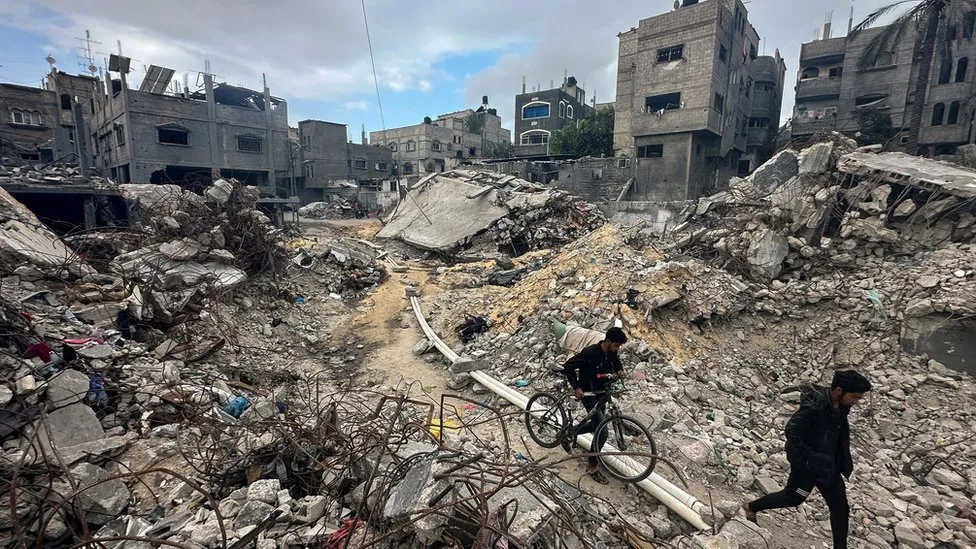
Israel-Hamas war: Mediators seek to prolong ceasefire period
Mediators sought to extend a four-day ceasefire in the Gaza Strip between Israel and Hamas after the final exchange between Israeli hostages and Palestinian prisoners.
Israel has offered an additional day of pause in fighting for every 10 Israeli hostages released, and Hamas has said it may agree to an extension.
A Palestinian official said another 20 to 40 hostages could be freed. However, the Qatari Ombudsman said Hamas may not have located them or guaranteed their safety.
The Gulf state is also said to be trying to resolve a dispute between Israel and Hamas over who will be among the 11 hostages and 33 prisoners to be released on Monday. The Israeli prime minister’s office said discussions were still taking place”about the next list of people to be released”.
Qatari Prime Minister Sheikh Mohammed bin Abdul Rahman Al Thani told the BBC’s US partner CBS News that the agreement would be extended if Hamas “can demonstrate, locate and secure a number of hostages who meet the criteria. ” of the first”.
The group includes women and children. However, he warned that Hamas’s “very complex structure” posed a challenge for Qatari mediators, as the group’s political leaders in Doha had to relay information to and from the military commander in Gaza.
“Typically what we see throughout these negotiations is that information is only provided at the time of any agreement or when it happens. But it never indicated anything before.
” In a separate interview with the Financial Times, Sheikh Mohammed said efforts to extend the ceasefire depended on Hamas identifying more than 40 women and children hostages, believed to have been taken by “civilians and gangs” group arrest. He explained that when the current ceasefire was negotiated, Hamas told mediators that it had protected only 50 of the more than 90 women and children Israel identified as hostages. Four women were freed last month, while Israeli forces operating inside Gaza rescued a female soldier and recovered the bodies of two other female hostages –one soldier and one civilian.
Hamas –considered a terrorist organization by Israel and Britain– has so far released 39 Israeli women and children as part of a deal reached last week. In return, Israel released 117 Palestinian women and girls.
Nineteen foreign nationals, one of whom had Israeli citizenship, were also handed over by Hamas under separate agreements. The pause in fighting also allows for a sharp increase in aid deliveries to Gaza, where the humanitarian crisis is worsening.
On Sunday night, Israeli Prime Minister Benjamin Netanyahu welcomed the return of the third group of hostages, saying it was “simply soul-stirring.” “In addition, I would say that there is also a model that shows that an additional 10 [hostages] could be released per day.
That is very welcome,” he added. But he emphasized that at the end of the ceasefire, the Israeli army will”try to achieve its goals with all its might: eliminating Hamas, ensuring that Gaza does not return to the way it was and, of course, liberating all our hostages.
” Hamas also said on Sunday that it wanted to extend the pause. A senior Palestinian official familiar with the Doha talks told the BBC that Hamas had informed mediators of its readiness to extend the ceasefire by two to four days as it could secure further releases. 20 to 40 Israeli hostages.
Israel launched a military operation in Gaza and imposed a siege in retaliation for an unprecedented cross-border attack by Hamas gunmen on October7,killing at least 1,200 people and about 240 others. others were taken hostage.
The Hamas-led government in Gaza says more than 14,800 people have been killed in the territory since the war began.
-
Third day of truce anticipated to see more release of Israeli hostages
The agreement between Israel and Hamas has been going on for three days and more Israeli prisoners are expected to be freed today.
Last night, there was a bit of worry when the second group of hostages didn’t get released on time.
In the end, 13 more Israelis who were held captive during the attacks on October 7th were set free. All of them are females, teenagers, and little kids.
Four people from Thailand were let go as part of a different agreement between Hamas and the government of Egypt.
39 Palestinian prisoners were let go from Israeli prisons. -
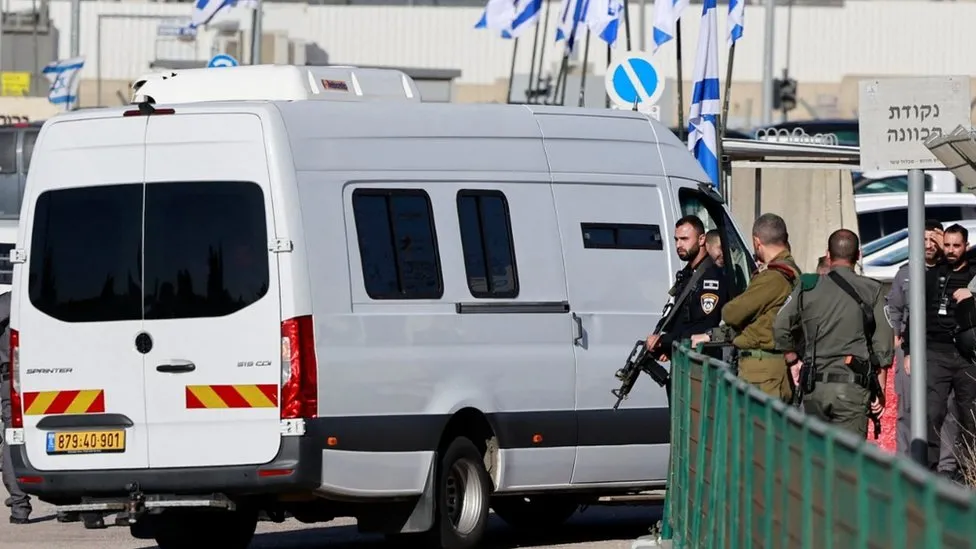
Israel frees 39 Palestinian inmates from its detention facilities
A sum of 39 Palestinian prisoners have been set free from Israeli jails in return for a gathering of prisoners held by Hamas.
The arrangement – interceded by Qatar – incorporates a four-day stop in the battling.
They are blamed for a scope of offenses, from tossing stones to endeavored murder. Some were sentenced while others were anticipating preliminary.
The gathering of 24 ladies and 15 teen young men was delivered across the Beituniya designated spot in the involved West Bank.
They will then, at that point, be permitted to get back, as indicated by Israel’s jail administration.
The prisoners were browsed a rundown of 300 ladies and minors incorporated by Israel.
Under a fourth of those on the rundown have been sentenced – by far most are being hung on remand while anticipating preliminary. The greater part of those recorded are young men – 40% of them younger than 18. There is additionally one young lady and 32 ladies.
Prior, the street by Beituniya designated spot, close to Ramallah, was sharp with the smell of poisonous gas. Gatherings of Palestinian men and young men confronted the Israeli armed force arranging out and about ahead.
The military discharged elastic slugs and nerve gas towards the group, to push them back.
A portion of the youngsters assembled tossed stones and poisonous gas canisters back towards the soldiers.
“It’s an indication of expectation for Palestinians and Israelis that the truce will proceed and the killing will stop,” Mohammed Khatib, who was in the group, told the BBC.
Upon the detainees’ delivery, the transport that moved them crept its direction through an ocean of euphoric Palestinian allies.
Through the windows, a portion of the detainees should have been visible moving, one enveloped by a Palestinian banner. Outside, cell phones were raised to the glass in the midst of ululations and yells of welcome and “God is perfect”.
A couple of in the group waved Hamas banners, however others discussed Palestinian solidarity, a little snapshot of triumph amidst an overwhelming conflict.
For Israel, the delivered detainees are a security danger; for the Palestinians accumulated here to welcome them, they are survivors of Israel’s occupation – and their delivery is an image.
Thirteen Israeli prisoners were delivered by Hamas under the détente bargain. It was affirmed on Friday that they had shown up back in Israel.
The Thai top state leader says that a gathering of Thai nationals kept on lock down by Hamas in Gaza were likewise delivered – separate from the Qatar-intervened détente bargain.
Israel and Hamas arrived at an arrangement recently to deliver 50 of the prisoners held in Gaza during four-day stop in battling.
The understanding ought to see a sum of 150 Palestinians held in Israeli correctional facilities delivered and a critical expansion in helpful guide permitted into Gaza. Nearly 60 trucks conveying clinical supplies, fuel and food entered from Egypt on Friday.
Hamas took in excess of 200 prisoners during a cross-line assault on southern Israel on 7 October in which 1,200 individuals were killed.
Basic freedoms associations say the quantity of Palestinians held without charge in Israeli prisons has shot up since the 7 October assaults.
There are currently remembered to be in excess of 6,000 Palestinians held by Israel on security grounds – many actually anticipating preliminary.
Pretty much every Palestinian family in the West Bank is remembered to have had a relative confined by Israel previously – frequently in correctional facilities inside Israel, making it troublesome or unimaginable for their family members to visit.
-
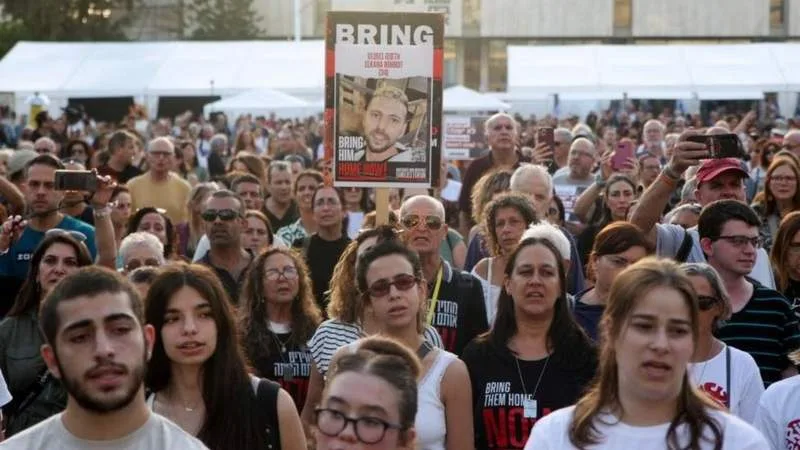
More Palestinian and Israeli hostages to be released on second day of truce
There is a four-day ceasefire between Israel and Hamas in the Gaza Strip, and today is the second of those days.
24 hostages who had been detained by Hamas for 48 days were freed on Friday, the first day.
Among them were ten Thai people, thirteen Israelis, and one Filipino.39 Palestinian detainees were freed a few hours later as part of the agreement.
As part of the arrangement mediated by Qatar, a total of 150 Palestinian detainees and 50 Israeli hostages are anticipated to be released.
On Friday, the largest humanitarian convoy since the conflict began arrived in Gaza with food, gasoline, and medical supplies.
Israel declared that the northern part of the Strip was still a combat zone and forbade Gazans from returning there.
There were rumours that those attempting to enter Gaza from the north were fired upon. On October 7, 1,200 individuals were murdered in Hamas attacks, and around 240 more were taken prisoner.
Since then, Israel’s retaliation campaign has claimed the lives of almost 14,500 people, according to Gaza’s health ministry, which is governed by Hamas.
-
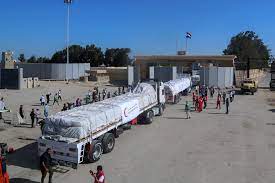
Relief trucks beginning to enter Gaza
We have been informed that around 200 trucks will deliver medical supplies, food, water, and fuel every day for the next four days as part of this agreement.
Israel said no fuel should go into Gaza for many days. They thought Hamas was keeping a lot of fuel and if they sent more in, militants would use it against Israeli forces.
In this agreement made by Qatar, they will send four fuel tankers every day to places like hospitals. They have promised that the fuel will not be given to Hamas.
Right now, we can see trucks carrying important aid starting to cross into Gaza at the Rafah crossing. -
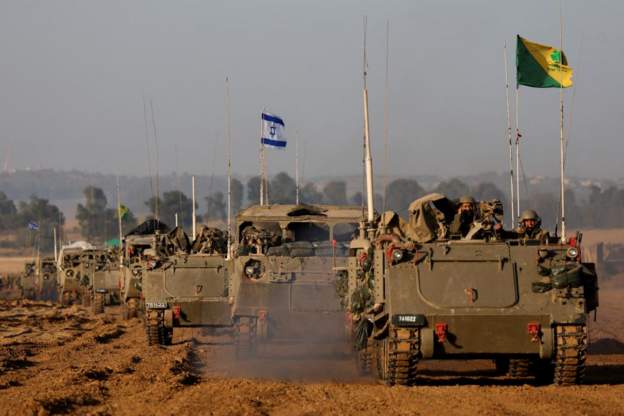
Pictures from cease-fire scenes
It has been almost two hours since a four-day break in fighting between Israel and Hamas started, and we are starting to receive the first photos from Israel and Gaza.
Both sides have agreed that the break in fighting will not last long.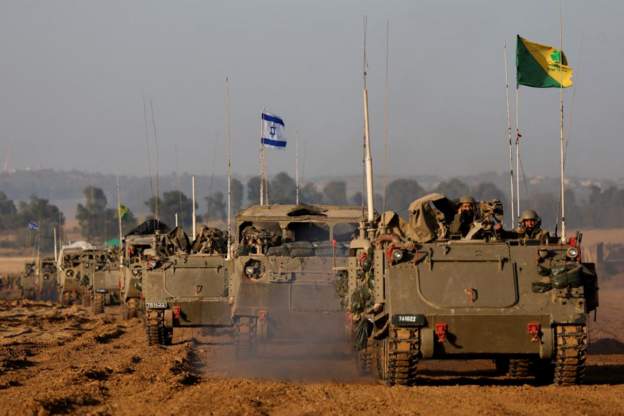
And a convoy of Israeli military vehicles arrives back in Israel after leaving the Gaza Strip 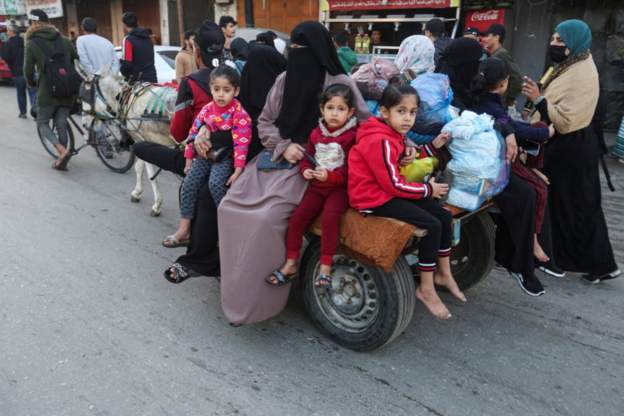
A group of Palestinians ride on a donkey cart as they return to their homes 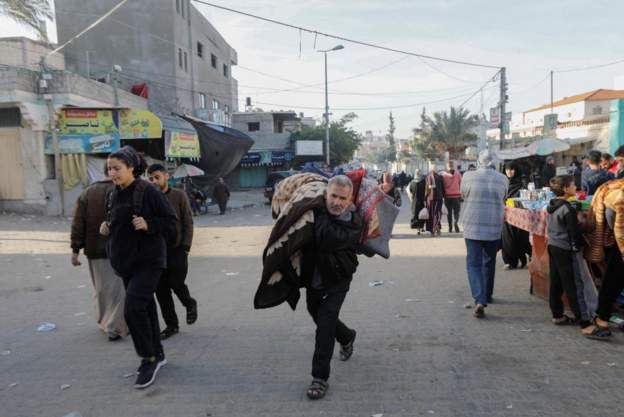
A displaced Palestinian man makes his way back home after leaving due to the conflict 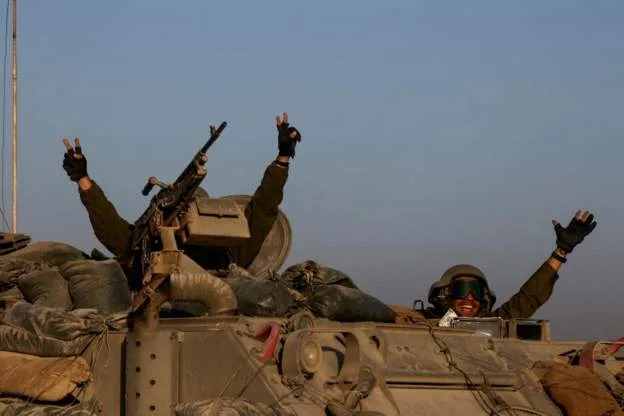
Israeli soldiers gesture from an armoured vehicle as the temporary truce takes hold -
Israel claims hostages won’t be freed before Friday
The plan to release the first hostages as part of the deal between Israel and Hamas was postponed on Wednesday night, just hours before the expected start of a temporary break in fighting.
Israel’s National Security Council said that the first group of hostages will not be released until Friday. An Israeli government person told CNN that the planned break from fighting has been postponed and will start on Friday instead.
“Negotiations to free our hostages are making progress and are still happening. ” The release process will begin on Friday as agreed by both sides.
Israel and Hamas agreed to stop fighting for four days and free at least 50 women and children out of the 230 hostages in Gaza. An Israeli official told CNN that the truce was supposed to start at 10 a. mThe time where you are, it’s 3 o’clock in the morning. He passed the exam on Thursday.
It’s not clear why the delay happened.
A spokesperson from the US National Security Council said on Wednesday that the hostage deal is still agreed upon. They are working on final details for the first day of the deal.
“We believe that we should not take any risks as the hostages start returning home,” said NSC spokesperson Adrienne Watson. “Our main goal is to make sure they come back home safely. ” “We’re making good progress and we hope to start putting it into action on Friday morning. ”
One Israeli official who knows about the situation said it’s not a big deal and just small things that need to be fixed.
But another person from the government told CNN that one reason was because Israel hadn’t gotten the names of the first hostages that Hamas would release.
On Wednesday evening, Prime Minister Benjamin Netanyahu talked to reporters before the delay was announced. He said he was sure the agreement would start soon, but didn’t give many details about how it would happen.
However, people in charge and experts in Israel have always warned that any agreement would be risky until the hostages were safely out of danger.
On Wednesday, the Israel Defense Forces (IDF) kept fighting in Gaza by using both soldiers on the ground and planes in the air. They did this in the north-eastern and central parts of Gaza. This happened even though a truce was supposed to begin soon. Places in the south, like Khan Younis and Rafah, were also damaged, as reported by Palestinians.
On Wednesday, before the announcement of the delay, a spokesperson for the Israeli army, Daniel Hagari, said that the upcoming truce is a complicated process and has not been finalized yet.
“It might take a while and have several steps,” he said.
The agreement was a big step forward in diplomacy, coming almost seven weeks after the conflict began. The conflict has led to a serious humanitarian crisis in the area. The families of the hostages felt relieved and very excited when they heard the announcement.
The agreement would also let more humanitarian aid and relief convoys to come in.
The pause can be up to 10 days, but Israeli officials don’t think it will last that long.
Netanyahu said that for every 10 more hostages released, there will be one more day without fighting.
Hamas has 236 people as prisoners in Gaza, and they come from 26 different countries. This information is from the Israeli military. During October 7, a lot of people were taken by force at gunpoint. The attackers were part of Hamas and they killed about 1,200 people in a surprise attack on Israel. This was the biggest attack on Israel since the country started in 1948.
Before the agreement, only a few hostages had been set free.
Around 12,700 people have died in Gaza since October 7, according to the Palestinian health ministry in the West Bank. They got this information from health authorities run by Hamas. -
Fighting in Gaza will halt on Thursday at 10 a.m – Hamas
Hamas says there will be no fighting between Israel and them for four days starting at 10am on Thursday.
Israel has not said when the break will start, but Foreign Minister Eli Cohen thinks the first hostages will arrive on Thursday.
According to the agreement, Hamas will let go of 50 Israeli hostages and Israel will release 150 Palestinian women and teenagers from jail.Families of people held in Gaza say that every person who is captive needs to come home, and that every hour is very important.
An additional 150 Palestinians and 50 hostages from Gaza could be set free after the first four-day break.Israel said that its military operation in Gaza is still going on, even before the break begins.
The Israeli government says the war isn’t over yet. They promise to finish off Hamas completely.
Israel started fighting against Gaza after fighters from Hamas came across the border on 7 October. They killed 1,200 people and captured around 240 others.
The health ministry in Gaza, which is controlled by Hamas, says that over 14,000 people, including more than 5,000 children, have been killed in Israel’s campaign.
More update on this story soon…
-
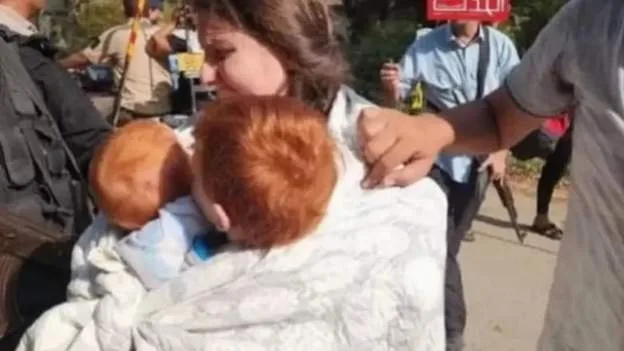
We’re not sure if they’re still alive – Hostage’s relative
Yosi Shnaider is waiting to see if his cousin Shiri and her two kids will be released by Hamas. He’s not sure if they’re on the list.
On 7th October, they were seen being taken by Hamas fighters. Schnaider said, “We don’t know if they are alive, hurt, or okay in their minds. ”
Shnaider said he was worried that the release might not happen because he doesn’t trust Hamas. He thinks it’s important to be realistic and cautious when dealing with them.
“They will try their best to ruin this deal and I’m afraid. ”
The agreement allows fighting to stop for an extra day for every 10 more hostages freed.
Shnaider said his family is feeling more and more sad because they have to wait each night to see if Shiri and her children are going to be released.More update on this story soon…
-
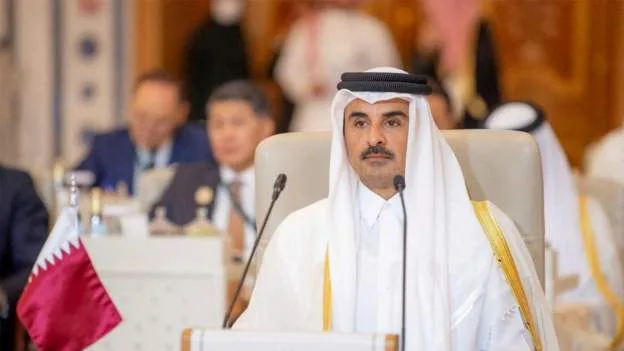
World leaders applaud agreement reached between Hamas and Israel
Now let’s talk about how countries are responding to the agreement between Israel and Hamas. This agreement will stop the fighting that has been happening since October 7th and will also include the release of 50 hostages from Gaza.
The prime minister of Qatar, Sheikh Mohammed bin Abdulrahman bin Jassim Al Thani, helped make the truce happen. He said in a statement that he hopes the truce will lead to an end to the war.
The UK’s Foreign Secretary David Cameron said the agreement was an important move towards freeing hostages and giving aid to people in Gaza. French President Emmanuel Macron said that efforts are being made non-stop to free all hostages.
The truce made Palestinian Authority leader Mahmoud Abbas, the EU, and countries like the US, Jordan, Russia, China, Egypt, France, and Germany happy.More update on this story soon…
-
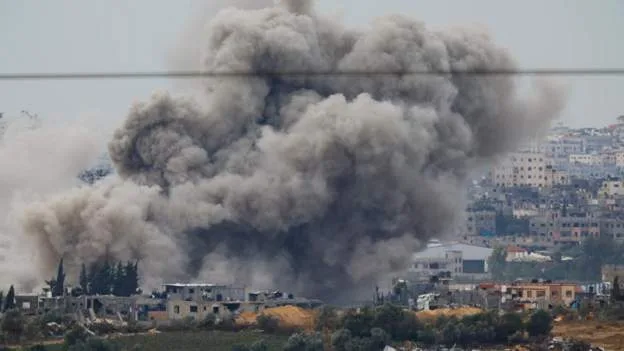
What will the halt bring about in Gaza?
As we have been telling you, Israel and Hamas have agreed to release 50 hostages and stop fighting for a while so that essential supplies can be sent to Gaza.
Hamas talked about how the break in fighting might happen in Gaza.
It says that drone and Israeli planes will not fly for four days in the southern area.
In the north, this will only happen from 10:00 am to 4:00 pm every day.
Israeli soldiers and tanks will stay in the area and not attack or arrest anyone, according to Hamas.
The agreement will also let 200 trucks with aid, four trucks with fuel, and four trucks with gas go into Gaza through Egypt’s Rafah crossing for four days.More update on this story soon…
-

Ex-Mayor of Johannesburg in hot water over gun image endorsing Hamas
Ex-Johannesburg mayor Thapelo Amad caused trouble when he shared a picture of himself holding a gun to show support for the Palestinian group Hamas.
“We support Hamas, Hamas supports us, and together we will free Palestine. ” “We will take over Al AQSA with our hearts and our determination,” Mr. Amad wrote on the picture he posted on Tuesday, but he has now removed.
Some X users think that the picture and the words in the caption encourage hate and violence.
“Tim Flack said that Mr. Amad’s tweet is worrying because it sounds aggressive and supports a violent group. He also said that he reported Mr. Amad to the South African Human Rights Commission. ”
Other people on the platform supported Mr. Amad’s message, but thought the photo of the gun wasn’t needed. -
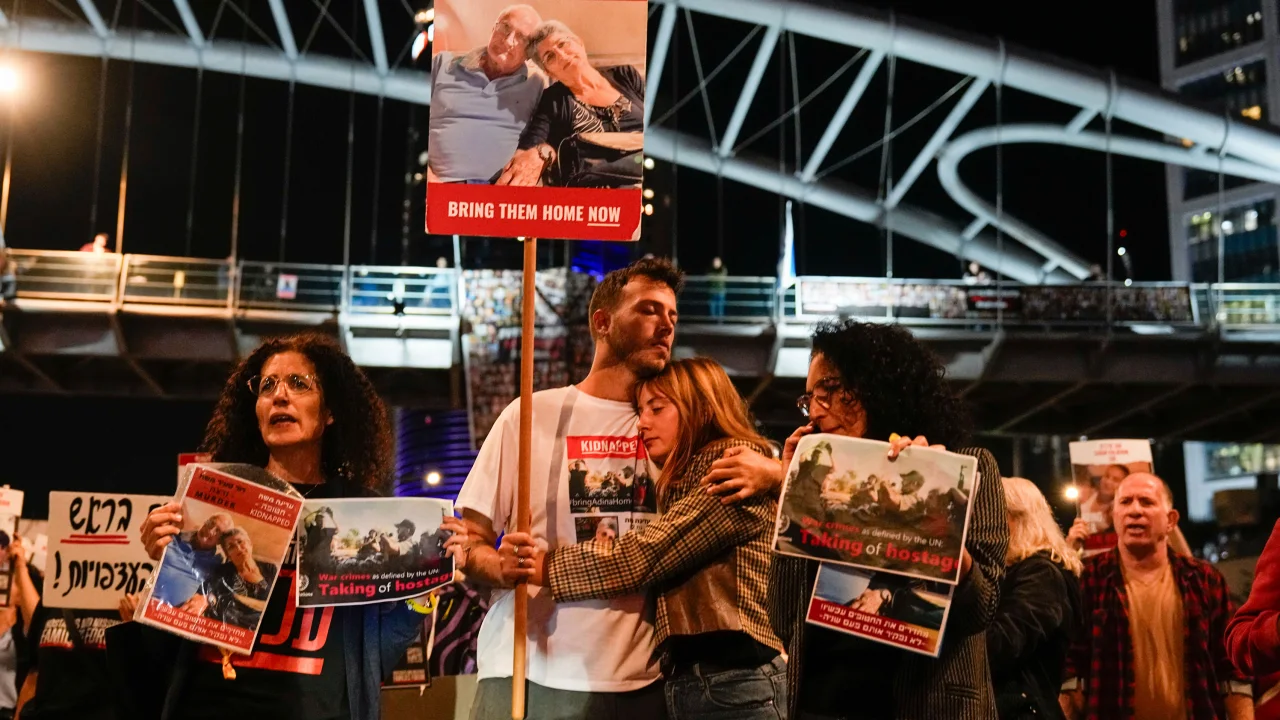
Israel and Hamas agree on release of hostages and a four-day ceasefire
Israel and Hamas have agreed to stop fighting for four days and release at least 50 hostages, including women and children, held in Gaza. Qatar, who helped with the negotiations, announced this on Wednesday.
The agreement, which depended on Israel’s cabinet agreeing, comes after several weeks of discussions with the United States and Egypt. This is a big step to reduce tensions after almost seven weeks of fighting between Israel and Hamas.
Qatar said that the hostages will be set free if Israeli jails release some Palestinian women and children.
The break will also let more humanitarian trucks and supplies, like fuel for helping people, to come in.
Israel’s leaders agreed to the deal very early on Wednesday morning after a long and intense meeting that lasted about six hours.
Hamas has 239 people captive in Gaza, and they come from 26 different countries, according to the Israeli military.
Only a few Israeli hostages were released before the agreement. On October 20, two Americans named Judith Tai Raanan and her 17-year-old daughter Natalie Raanan were let go because of their health conditions. This happened after talks between Qatar and Hamas.
Shortly after, two women from Israel, named Nurit Cooper and Yocheved Lifshitz, were also set free.
Qatar’s main negotiator, Minister of State Mohammed Al-Khulaifi, said that the agreement should make the world work together quickly to keep making progress in peace talks.Hamas said in a statement that 150 Palestinian prisoners held in Israeli jails would be released as part of the deal, but later took back the statement without giving a reason.
Israel said the truce could last longer than planned if more hostages are released. For every 10 more hostages freed, an extra day of truce would be added.
However, it also showed that Israel intends to start their air and ground attacks again to fully get rid of Hamas once the hostage releases are finished.
The Israeli army is still figuring out when they will stop fighting. Colonel Jonathan Conricus spoke to CNN on Wednesday morning.
“We will keep fighting Hamas until the Israeli government tells us to stop. When they do, we will follow their instructions. ”
The Israeli government made the deal because the families of the hostages pressured them to take action. They wanted answers from Prime Minister Benjamin Netanyahu.
A lot of hostages were taken by force when Hamas attacked border communities near the Gaza Strip and the Nova music festival.
Israel stopped things from coming into Gaza and attacked it. This caused a big problem for the people there.
Over 12,000 people have died in Gaza since October 7, according to the government’s press office.
Family members of the hostages held by Hamas were relieved and hopeful as they waited to see if their loved ones would be released. They were not sure yet when it would happen.
Shoshany said, “I really hope to see someone come out of there alive. ” We want to see our family again. This is all we want and I really hope this is just the beginning in this situation.
Liz Hirsh Naftali, who is Abigail Edan’s great-aunt, said on CNN that it has been really hard having Abigail, a 3-year-old US citizen, held by Hamas.
“We’ve been worrying, wondering, praying, and hoping for the past seven weeks,” she said.The family wants Abigail, the youngest American kidnapped by Hamas, to come home by Friday for her fourth birthday.
“We have to see Abigail come out before we can believe it,” Naftali said.
US President Joe Biden was happy about the agreement and said it will bring back more American hostages. He promised to keep working until all hostages are released.
Ten Americans are still missing. Among them are two women and a 3-year-old girl. This was confirmed by a senior official in the government. The person in charge did not say the girl’s name.
The agreement says at least 50 hostages will be freed, but it also encourages the release of everyone, the official said.
The agreement for the hostages includes a break, a pause to help people, for four or five days. “And if more hostages are released by Hamas, there is a possibility that the extension could be prolonged,” the official said.
A US official also said that the hostages will be brought out from different places, but they didn’t give any more information.
The IDF spokesperson, Conricus, said that the people who will be let go in the agreement are all Israelis. Some of them also have citizenship in another country. He said that the Palestinian prisoners who are going to be freed are not very bad criminals.
Approximately 8,300 Palestinian people are in Israeli jails, according to Qadura Fares, who leads a group that helps prisoners.
Out of 8,300 people, over 3,000 are being kept in detention in Israel without being told the reasons or having a legal process. -

Unicef ready to help in case of ‘humanitarian ceasefire’
Toby Fricker from Unicef says they would like it if Hamas and Israel would agree to stop fighting, so hostages can be set free.
Even though we don’t know all the details yet, a Hamas official told Al Jazeera that they have been talking about how long the agreement would last, bringing aid into Gaza, and trading prisoners and hostages.
Fricker, speaking from Amman, Jordan, told the BBC that if there is a ceasefire for helping people in Gaza, supplies should be brought in quickly to shelters and to people in need all over the area.
Fricker said the help would be very important for saving lives and stopping another disaster with diseases spreading in the winter. -
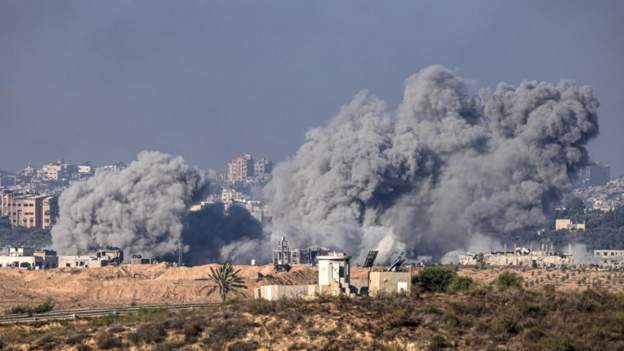
Truce approaching though Israel has not yet commented – Leader of Hamas
The head of Hamas says the group is almost done making a “peace agreement” with Israel, making people hopeful that fighting in Gaza will stop and that hostages could be released.
Israel has not said anything. PM Benjamin Netanyahu said that his country will keep fighting until the hostages are brought home.
Hamas might give back hostages if Israel lets Palestinians out of jail, AFP and Al Jazeera say.US President Joe Biden said he thinks an agreement is almost ready. The White House said fighting would stop temporarily to allow hostages to be safely released.
The Red Cross has been meeting with Hamas leaders in Qatar, which is making people hopeful for future deals.
Meanwhile, there is still fighting in Gaza. The Israeli military has surrounded the city of Jabalia in the north.The health ministry in Gaza, which is controlled by Hamas, said that 13,300 people, including over 5,000 children, have died in Israel’s recent military action.
Israel started fighting against the Gaza Strip, which is run by Hamas, because Hamas fighters went over the border on 7 October. They killed 1,200 people and took over 200 people as hostages.
-

Muslim-majority countries in Beijing for negotiations over Israel-Hamas crisis
China invited leaders from Arab and Muslim countries to talk about calming down the fighting between Israel and Hamas. China wants to help stop the fighting.
The Foreign Minister of China met with officials from Saudi Arabia, Jordan, Egypt, the Palestinian National Authority, Indonesia, and the head of the Organization of Islamic Cooperation in the capital on Monday.
Beijing said the visit is a chance for talking and working together to calm down the fighting between Palestinians and Israelis, protect people, and fairly solve the problem of Palestine.
The meeting is happening because the media has been told that there might be a deal soon to free some hostages held by Hamas. The United States, Israel, and Qatar have been talking to Hamas for weeks to try to make this deal happen.
Beijing and Washington, who are both strong in the region and friends with Israel, disagree on how to handle the conflict. Beijing did not support Israel’s actions and did not speak out against the group Hamas, making Israeli officials upset.
Israel has started bombing and sending troops into Gaza because a group called Hamas attacked Israel on October 7th. The Israel Defense Forces said that more than 200 people were taken as hostages in the attack.
China wants to help solve the conflict so it can become a stronger global power.
Last week, the UN made a decision about the fighting. They want all the people that Hamas is holding as prisoners to be set free right away. They also want to make sure that safe paths are available for people in the area so that they don’t get hurt. The US and the United Kingdom didn’t vote, because they didn’t agree with the resolution’s failure to criticize Hamas.
Chinese Ambassador Zhang Jun said that for reasons everyone knows, especially because a permanent member of the Council kept causing problems, this resolution can only be a first step for now, based on the minimum agreement. This seemed like a hidden criticism aimed at the US.
The conflict has allowed China to strengthen its relationships with many Arab countries and to become an important advocate for creating a separate Palestine and achieving lasting peace.
Chinese and visiting officials will talk about how to start the peace process again when they meet in Beijing on Monday and Tuesday.
China’s special envoy for the Middle East, Zhai Jun, visited Egypt, Qatar, the UAE, Saudi Arabia and Jordan last month. He talked about important issues during his 10-day tour. This included discussing the Qatar issue.
Last week, the representative visited Turkey and Bahrain to meet with officials. In addition, Zhai talked about the situation in the region with representatives from Singapore, the US and Europe at a conference.
Zhai hasn’t visited Israel, Palestine, or Iran, according to the information from China’s Foreign Ministry. Last month, Wang and Israeli Foreign Minister Eli Cohen talked on the phone. It’s not known if China has talked to Hamas leaders during the recent fighting.
This week, Palestinian Foreign Minister Riyad al-Maliki from the West Bank-based Palestinian National Authority is visiting officials in Beijing.
Earlier this month, China sent the leader of its Foreign Ministry’s department for West Asia and North Africa to Iran to talk about the conflict. This was mentioned in a post on the department’s WeChat social media account.
Iran has been supporting Hamas and Hezbollah for a long time.
Last week, Chinese leader Xi Jinping and US President Joe Biden had a long conversation in California. Biden asked Xi to use China’s influence with Iran to prevent a bigger conflict in the region. This was said by a top US official to the media.
In the meeting, Foreign Minister Wang Yi said they have already talked to the Iranians about the topic.
The US thinks Hamas is a terrorist group that has caused pain for Palestinian people. The US supports Israel in fighting against Hamas.
Beijing is talking about the conflict between Palestinians and Israelis, without mentioning Hamas. -
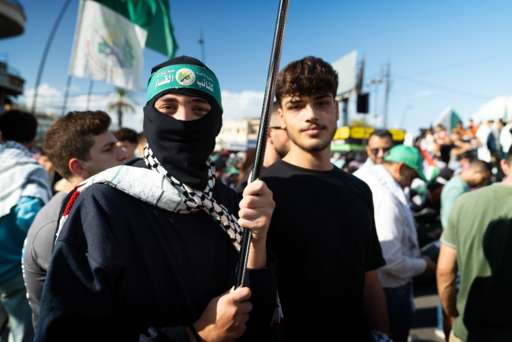
Numerous Hamas sympathisers turn out for Lebanon rally
About half a million Palestinians and their descendants live in Lebanon. They live in crowded refugee camps with limited resources. For the past month, they have been getting more and more angry as they watch the war between Israel and Hamas destroy a lot of Gaza.
In Lebanon‘s third-biggest city, Sidon, many people who support Hamas came together today in Nejmeh Square. They were holding their green flags. Some people wore Palestinian scarves while others wore black face masks.
Many people talked about how they disapproved of Israel’s military action in Gaza. They promised that Israel and its friends in the West would be blamed for the growing number of civilian deaths.
Boys wearing soldier clothes and carrying toy guns sat on their dads’ shoulders or on top of cars. They watched as Hamas leaders in Lebanon blamed Israel for making the situation in Gaza worse on purpose. They also said Israel doesn’t want to have meaningful discussions to free around 240 hostages held by Hamas in Gaza. -

Body of two Hamas hostages found by Israel near al-Shifa hospital
Two hostage bodies that were taken during the October 7 massacre close to the al-Shifa hospital have been found by the IDF.
After being slain by Hamas militants, Israeli troops found the body of 19-year-old Corporal Noa Marciano at “a structure adjacent to” the facility.
When terrorists took control of the Nahal Oz base, the youngster was serving there.
Four days after the soldier was held hostage, Hamas released video of her speaking to the camera.
She gave her identity and acknowledged that she was being held captive in Gaza, the embattled Palestinian territory.
The horrifying footage then switched to graphic pictures of what the terrorists claimed to be Marciano’s corpse.
Her body was discovered and returned to Israel, where testing verified her identification, according to the IDF.
It follows the discovery of Yehudit Weiss’s body in a building next to the hospital. According to the IDF, Weiss was abducted from her Be’eri home.
The IDF said: “The national task before our eyes is to locate the missing and return the abducted persons home.
“The IDF is operating alongside and in full coordination with the relevant national and security institutions in order to pursue these tasks.
“We will not cease from the mission until it will be completed.”
Weiss’s date of death and cause of death were not disclosed by the IDF, according to The Times of Israel.
On October 7, the mother of five was kidnapped from Kibbutz Be’eri.
In their home’s safe room, her husband Shmulik Weiss was discovered dead from his murder.
According to Shani Louk’s family, Israel has also killed the Hamas monster that paraded Shani Louk’s nude body through Gaza and spat on it.
The mother of the 22-year-old tattoo artist who was killed allegedly informed a prominent rabbi that Israel’s military had eliminated her daughter’s attacker.
Shani was last seen in footage showing her dead and partially nude body being dragged through Gaza in a truck while Hamas continued its cross-border murderous rampage.
The allegations are still pending official confirmation.
The desperate parents of 32 children who were kidnapped by Hamas earlier this month begged the terror group to free them last night.
The terrified children are being detained underground in the 311-mile Gaza Metro system of tunnels while Israel fights to destroy the Islamic militants and return them home.
It happens at the largest hospital in Gaza, al Shifa Hospital, where Israeli troops allegedly found laptops with images and videos of hostages on them.
During the horrific October 7 massacre, Hamas abducted dozens of victims, and they haven’t been heard from since.
However, there is new hope for the detainees because, according to Israeli soldiers, they have discovered photographic proof of them at al-Shifa hospital.
Lieutenant Colonel Jonathan Conricus told The BBC during a tour of the facility: “We uncovered a lot of computers and other equipment which could really shed light on the current situation, hopefully regarding hostages as well.”
He said the devices were found alongside a number of military books and pamphlets the IDF believe suggest Hamas terrorists were there “within the last few days”.
Lt Col Conricus said a map was also found that appeared to mark entry and exit routes from the hospital.
Israel has claimed the hospital is the “beating heart” of Hamas, and this week launched a raid to hunt down terrorists using it as cover.
IDF footage showed troops taking in humanitarian as thousands of patients, doctors and displaced Palestinians have been trapped inside the besieged complex for weeks.
-
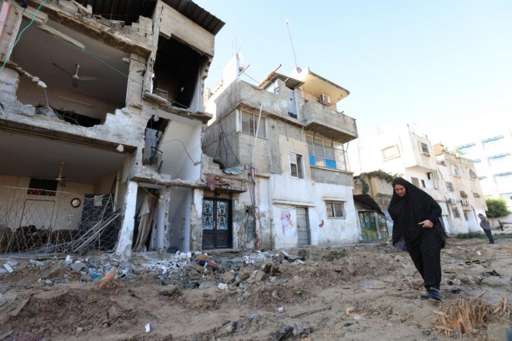
Attack at checkpoint after spike in violence in West Bank
Today, there was an attack at a security checkpoint in Jerusalem. There has been a lot of violence in the West Bank recently. It started after a deadly attack by Hamas on Israel on October 7th.
As we said before, Israeli police say they shot and killed three gunmen who started shooting at the checkpoint. The people who attacked were from Hebron, a city in the West Bank, according to the police.
The United Nations says that Israeli forces have killed 182 Palestinians, with 46 of them being children, since October 7th. It says that eight more people were killed by Israeli settlers.
The Palestinian news agency Wafa reports that Israel has arrested over 2,700 people since October 7th.
Today, after the attack, a minister in Israel who is responsible for keeping the country safe, spoke to the media.
The PA, which rules some of the West Bank, has the same opinions as Hamas. He said that the PA should be taken care of. Just like we are handling Gaza. -

Israel’s suffering still severe one month after Hamas attacks
This event destroyed Israel‘s belief that it was unbeatable and had a strong military. It made all citizens feel less safe.
But it didn’t seem very special in the beginning.
When I saw the messages on my phone in the early morning, it said that rockets were coming from Gaza. We didn’t know how many rockets there were. I sent a message to my coworkers, some of whom were not at work because of the Jewish holidays, to tell them that I would go to the office.
Very quickly, I found it difficult to understand the effect of my words as I spoke them.
The continuous firing of missiles made me rush in and out of the shelter at the office. It later became evident that this was just a distraction for a highly unique, complicated, and well-prepared set of attacks.
We witnessed alarming pictures of Hamas fighters using motorbikes to get through holes in Gaza’s fence, using paragliders to enter southern Israel, attacking heavily protected military bases, and filming themselves in the gardens of overwhelmed kibbutzim.
During a party, people called Israeli TV stations to share their experiences of being in a terrible situation at the Nova Music Festival. They were hiding from gunmen who were causing violence and death. Scared people recorded videos of groups of armed Palestinians in the city of Sderot.
This was the worst day ever in Israel’s 75-year history, with many people being killed in a cruel and planned way. Videos later appeared from some of the kibbutzim near Gaza, showing the brutal killing of whole families. In the end, around 1,400 people are believed to have died.
The timing of this attack was very important because it happened almost exactly 50 years after a surprise attack by Egypt and Syria on a very important day for Jewish people called Yom Kippur. This previous attack caused a big war in the region.
The intense sadness and surprise for regular Israelis, which can still be seen today, was very clear when I visited Ashkelon on October 8th.
Israeli security forces were fighting against very armed men near us, and there were loud alarms going off. At the hospital, parents were searching and crying for their missing children. They were very sad and upset.
“A mother in great pain yelled, ‘Destroy Gaza. ‘”
At the beginning of the war, people wanted to get back at their enemies and really wanted Israel to show its strength again. However, surveys show that people are now worried that intense bombing and a large-scale invasion could harm hostages taken by Hamas, which makes the situation more complicated.
Around 240 individuals, including Israelis and people from other countries, as well as both military personnel and civilians of varying ages, are believed to be held captive. Protests and requests to bring them back are becoming more pressing.
After going through the terrible experience of the Hamas attacks in Nir Oz, Hadas Kalderon’s life has completely changed. She is now desperately trying to bring her two children, Erez (who recently turned 12) and Sahar (who is 16), as well as her ex-husband Ofer, back home. Her mom, Carmela Dan, and her niece, Noya, who were taken away, have been discovered dead.
Hadas recently told the BBC that she is too busy fighting for her children and their father who is still alive, so she doesn’t have time to grieve for her mother and niece. She wants Israel to stop fighting until the hostages are safe.
Israel has said no to stopping the fighting until all the hostages are freed, and they are still bombing Gaza from above.
The health ministry in Gaza, which is run by Hamas, said that over 10,000 people have died in the Palestinian area since Israel began bombing it last month.
The ministry said that over 4,000 children were among the people who died.The surprise on 7 October was made worse by the fact that Israel, which has the strongest military in the Middle East and excellent intelligence agencies, did not realize the attacks were going to happen. A lot of ideas they believed for a long time, along with political leaders, were actually very wrong.
Israel left Gaza in 2005 and Hamas took over in 2007. Israel has been trying to prevent Hamas and Islamic Jihad, who are both considered terrorist groups, from being a threat.
Many defense experts often describe Israel’s approach in Gaza as “mowing the lawn. ” The idea was that Israeli forces could reduce the abilities of the armed groups occasionally, which would result in people getting hurt or killed.
There have been many big fights in the years 2008, 2012, 2014, and 2021.
But, in two recent incidents of violence in August of last year and May of this year, where the Islamic Jihad group was targeted, Israel’s military falsely believed that Hamas did not participate. The common belief was that it did not want the situation to get worse.
Israel wanted to keep things calm, so they let around 18,000 people from Gaza have permits to work and also let Qatar help by giving aid and paying the salaries of Hamas workers.
That evaluation turned out to be very wrong and it was dangerous. It is now evident that Hamas was secretly waiting and acquiring more powerful weapons, like rockets that can reach farther distances, and drones. They also worked on making their underground tunnels better.
The belief that Israeli technology had successfully minimized the danger posed by Hamas, especially with the expensive barrier constructed around Gaza, equipped with cameras, sensors, and a strong concrete foundation to protect against tunnels, was proven incorrect. Last month, it is said that thousands of fighters managed to get through the fence in around 30 different spots.
Because the war is still happening, it is too early to provide a complete list of the errors that caused the events on October 7th.
Israel is very sad right now. Some of the dead people were badly burned or hurt, and we still don’t know who they are. More soldiers are also dying in the fighting in Gaza.
But it is probable that there will be an investigation after the war. After a very chaotic year in Israeli politics, people might want to know more about the job of the Prime Minister, Benjamin Netanyahu.
Israel needs to effectively achieve its new war goals in Gaza, which are to dismantle Hamas and release the hostages. They also need to handle the increasing dangers presented by Iran and its allies in the area.
One month later, the news about the violent events in southern Israel continues without stopping. -

Expelled Gaza labourers accuses Israeli officials with mistreatment including beatings
Palestinian workers who were sent back to Gaza from Israel last week say that Israeli authorities treated them very badly. They claim that they were forced to remove their clothes, kept in cages, severely beaten, and one worker even said they were given electric shocks.
“They hurt us and hit us with batons and metal sticks. they made us feel embarrassed. they made us suffer from hunger and thirst,” said Muqbel Abdullah Al Radia, another worker, to CNN.
Most people from Gaza who have jobs work in building things or growing crops. They usually stay away from home for weeks instead of traveling back and forth, which is why many of them were in Israel when Hamas carried out a terrorist attack on Saturday, October 7th.
Al Radia said that when the war started, he and some of the other workers from Gaza ran away to Rahat, a city mostly inhabited by Arab Bedouins in the south of Israel. He claims that the local people gave them to the Israeli army.
“They took away our phones and money, so we couldn’t talk to our families. They gave us food on the ground in plastic bags,” he explained.
When the attack by Hamas on Israel happened on October 7, the Israeli media initially worried that the attackers were among the workers who had permits to be in the country. However, a security official from Israel later said to CNN that the men were actually detained because their work permits were taken away, not because they were suspected of being terrorists.
The security official said that sometimes, they kept certain people in detention to keep them safe because they were in danger of being harmed by Israeli communities.
Six groups in Israel that protect people’s rights have asked a court to review and decide if these detentions were done against the law and without a good reason.
Gisha, an organization in Israel that helps Palestinians move freely, said last week in a statement that it believes the conditions for people held in these facilities were very bad. They think the detainees were treated badly, including being hurt physically and emotionally, and that the conditions were not humane.A lot of the workers are saying they didn’t know where they were being brought to. The Palestinian Prisoners Society, a human rights group in the occupied West Bank, said that a lot of people were kept in two detention places – one in Ofer near Ramallah and another in Salem near Jenin.
Another worker from Beit Lahiya, Mahmoud Abu Darabeh, said that he was beaten by Israeli forces.
Abu Darabeh said that he was captured on the second day of the war. “He said that we were locked up in cages like dogs. They hurt us, said mean things to us, and didn’t care if we were sick or not. Some of us got hurt, and our feet became infected because we didn’t receive any medical help. ”
The men had to answer a lot of questions every day from the Israeli authorities about their houses and family.
If one of your family members is a police officer of Hamas, you might get physically hurt. I know some people whose rib cage was completely broken, and sadly, some people even died because they were tortured. ” He shared this with CNN.
He also explained how some of the workers died while they were in detention or when they were trying to cross into Gaza.
“Abu Darabeh mentioned that a few individuals passed away while coming here because they were physically attacked and given electric shocks. ” He said he saw other people being shocked while they were detained.
A person from Israel said to CNN that the Israeli Defense Forces (IDF) knew about some cases where IDF soldiers treated Gazan workers badly.
There have been incidents of mistreatment of people who are being held outside of the authorized detention centers. These incidents were taken very seriously, and the people responsible were punished,” the official said using a translator. They told us that four soldiers were fired from the IDF because of abusive behavior, and two soldiers were put in military prison for their actions.
When the official was asked if any of the prisoners died because they were treated badly, they said that they knew about two deaths of workers from Gaza who were held in custody. However, they explained that these deaths were not caused by mistreatment, but by existing health problems that the workers had before they came to Israel.
The official said that, as far as he knew, these abuses did not involve electric shocks.
CNN watched some of the videos that show the claimed mistreatment, but they are not able to confirm if they are true or not. They have videos of people who are being kept somewhere against their will, with their hands and feet bound, sitting under the hot sun, and being hurt and moved forcefully. There is a video where a lot of people on a bus are blindfolded and their hands are tied.
The security official told CNN that the IDF is looking into these videos. They confirmed that two of the videos are real. One video shows IDF soldiers kicking someone who was detained, and another video shows a big group of detainees who were tied up, blindfolded, and treated badly. The IDF punished soldiers who were in these videos, according to the official.
The army says that the behavior shown in the video is terrible and goes against their rules. The text says that some soldiers and reserve soldiers in the videos have been temporarily stopped from doing their jobs.
The people that CNN talked to were some of the workers from Gaza who had permission to work in Israel. Hamas attacked Israel and killed many people, including kidnapping others.
As a reaction to the attacks, Israel started a non-stop bombing on Gaza. The defense minister, Yoav Gallant, also ordered a total blockade on the area.
Before the October 7 attacks, around 18,000 people from Gaza had permission to go to Israel for work. This is because the wages in Israel are much higher, sometimes ten times more, than in Gaza.
Before anyone was given a permit, the Israeli authorities would have made sure they were thoroughly checked for security purposes.
Right after the attack, Israel took away the workers’ permits from Gaza. This made it against the law for them to stay in the country. Because they couldn’t go back to Gaza, many people attempted to escape to the occupied West Bank.
“They stopped us from doing what we needed to do. We tried to go to the West Bank, but they stopped us and kept us in unknown places. They tied our arms, covered our eyes, and took us on buses. There were around 200 to 300 of us trapped between metal fences. They hurt us and questioned us every day and night,” said one worker who spoke to CNN. Another man, who did not give his name, shared a similar story of mistreatment.
Many workers told CNN that they were forced to have their eyes covered and their hands tied up for a long time. Some people said they were kept in a separate area that was enclosed by a fence. They mentioned that this made the weather extremely hot during the day and very cold during the night.
The security official said that in the beginning, some places didn’t have shade, but they fixed this within a few days. The person in charge said that the detainees were only held down when moving from one place to another.
On Friday, when they went into Gaza, a lot of men seemed very filled with strong feelings. When CNN asked people questions, many were too afraid to share their personal information because they were worried about being treated badly.
One man, who lives in the Al-Maghazi refugee camp, cried as he explained how they were forced into small metal enclosures and not allowed to sleep, which is a well-known type of torture.
Every so often, they approached us and requested us to get up. “Get up, sit down, get up, sit down, get up,” he said. In one spot, there were about 150 of us inside a metal box. It had a strong, unpleasant smell. I believe it was previously used for raising chickens or rabbits.
Another worker from Al-Zaytun Quarter in Gaza City also told CNN that he and other detainees were forced to repeatedly stand up and sit down.
“They harmed us, stole our money, removed our clothes, and left us naked. ”
He said that he had been wearing only his underwear for more than 20 days.Dehumanization and Insults
Amani Sarahneh, who speaks for the Palestinian Prisoners Society, said that some of these men were taken into custody while traveling to the West Bank, while others were detained within the West Bank itself.
The men wanted to go to the occupied West Bank, but Israel took away their permits. This made their stay in Israel illegal, but it was difficult for them to go back to Gaza because the border crossings were closed by both Israel and Egypt. They thought it would be safer for them to be in an area controlled by Palestinians instead of needing permits for the West Bank.
Sarahneh told CNN that the organization doesn’t know how many men were held, even though they tried many times to get information from the Israeli authorities.
Sarahneh told CNN that many of the workers shared similar experiences.
She said that many people talked about being very hungry and getting hurt every day. They were tied up and kept away from others. Some videos have been shared online, showing how the Palestinians in jail are treated badly and not like humans.
“They were not accused of any wrongdoing, but they were questioned and subjected to severe torture, abuse, and physical violence. They were treated inhumanely and were insulted,” she explained.
Dror Sadot, who speaks for B’Tselem, an organization that advocates for human rights in the areas under Israeli control, stated that the recent attacks by Hamas on October 7th have resulted in a significant increase in violence against Palestinians.
She said on CNN that the mistreatment of Palestinians is happening from the highest authority, with important people not considering Palestinians as human.
She said that the strong words and the intense anger about the crimes committed by Hamas slowly affects the individual soldiers, who then treat any Palestinian with extreme anger.
Sadot said that they are not convinced by the IDF’s handling of abuse cases based on their long-term experience.
“She said that we have been looking into this for a long time. The military system of enforcement acts as a way to cover up wrongdoing, hardly leading to any charges. ” “So people might argue that those cases are rare and not typical, but if soldiers keep getting away with their actions, and if the military policy itself allows this, without any consequences for their actions, then things will just keep happening,” she said.
Tired and hurt, but extremely happy to be back
Some people look old, tired, and very sweaty, while others seem to be hurt.
At least three people have serious cuts on their wrists that look like they were caused by being tied up.
Most of the men don’t have any personal items except for the clothes they’re wearing.
A 58-year-old man named Mohamed Atallah was wearing a plastic tag on his wrist.
He showed CNN a list of his things taken away in prison that were never given back to him.
Some workers who returned to Gaza on Friday said that Israeli authorities put them on buses that took them to the crossing into Gaza, where they were left.
They had no choice but to walk for about three hours in order to enter the enclave, according to some people who spoke to CNN.
The workers went into the Gaza Strip, and a video from CNN showed that some of them knelt down and began to pray.
They knelt down and pressed their foreheads against the ground, expressing gratitude to God for returning to Gaza. It has become an unbearable place since they were last here.
We were in a very bad condition, I promise. Bilal Aysha said to CNN that every day felt awful and scary. I’m so grateful to be home again. “He said that he hopes God will bring happiness back for everybody. “ -
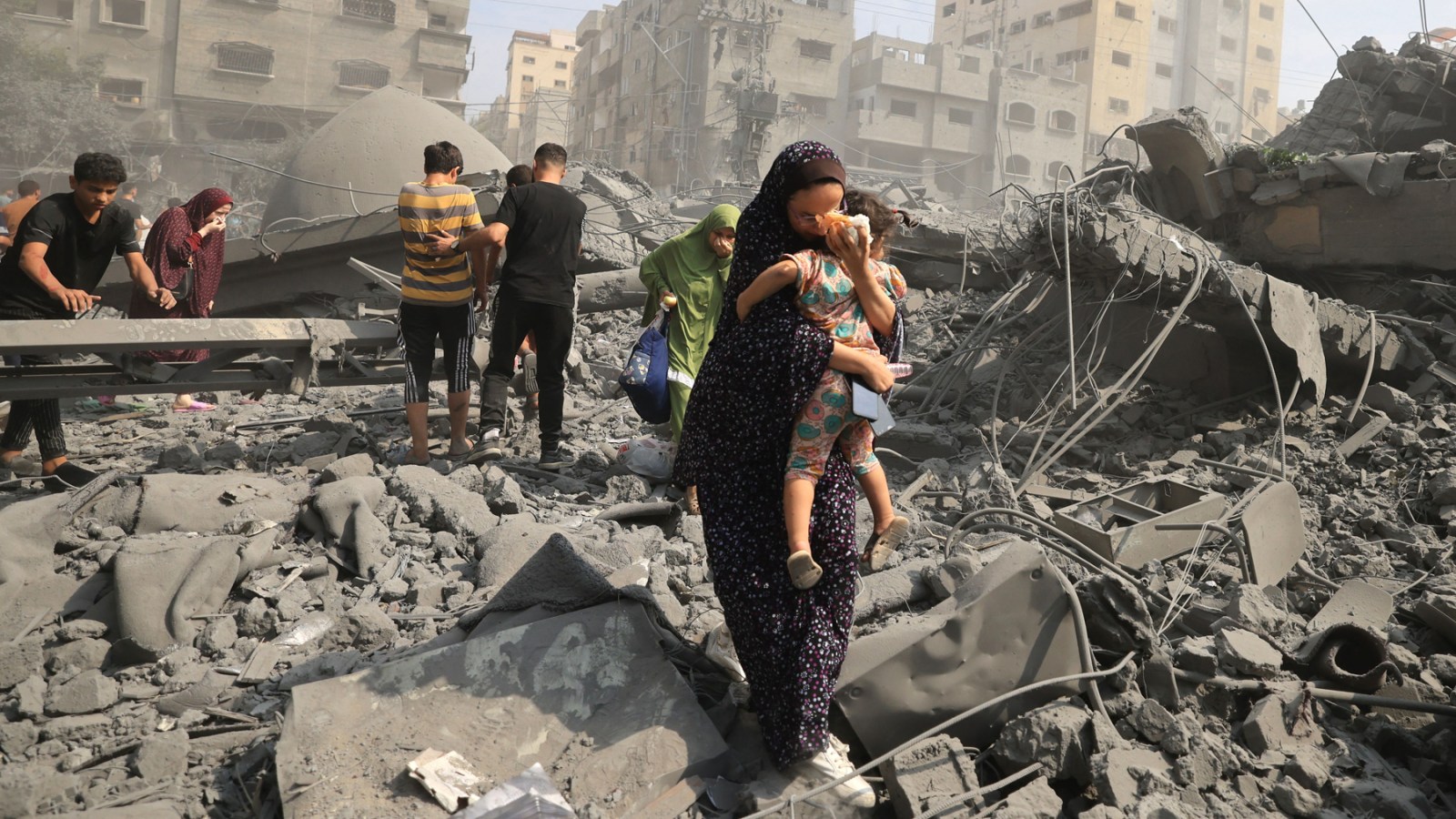
10,000 people killed in Gaza – Hamas health ministry
The health department in Gaza, which is controlled by Hamas, reported that over 10,000 individuals have died in the Palestinian area since Israel began bombing it a month ago.
The ministry reported that over 4,000 children were among the people who died.
The number of people killed in Gaza during Israel’s conflicts with Hamas since 2007 is higher than the United Nations’ estimate of around 5,400.
Israel started attacking Gaza after Hamas murdered 1,400 individuals and took over 200 hostages on October 7th.
It means that it is breaking down Hamas’ buildings and killing its soldiers in order to stop Hamas from being able to harm Israel anymore.
US President Joe Biden has doubted the correctness of the health ministry’s statistics, while the Israel Defense Forces (IDF) caution against trusting information from a terrorist organization.
But, last week, Richard Brennan, who works for the World Health Organization (WHO) and is in charge of emergencies in the region, said that he trusted the numbers given by the health ministry. He is based in Cairo.
“We believe that the systems for managing information that the health ministry has implemented are effective,” he stated, also noting that the data gathered over the years has been reliable.
On Sunday night, the Israeli military attacked the Gaza Strip very intensely. They have now said that in the last 24 hours, they hit 450 places.
The health ministry controlled by Hamas said that over 200 people were killed in the overnight attacks.
The head of Al-Shifa hospital in Gaza City said to the BBC that due to communication problems, people were using donkeys and their own cars to transport dead bodies instead of using ambulances.
The Palestinian Red Crescent Society (PRCS) said that there has been no communication in Gaza for the third time since the war started, and they have lost contact with their teams.
On Monday morning, communication was fixed, but it is still hard to get information from Gaza City.
The Israeli military has said that its soldiers have now reached the coast in the southern part of Gaza City. This means that they have effectively split the territory into two separate parts.
The leaders of important UN groups have made a rare statement together. They are asking for a quick ceasefire to help people in need. They are saying that the situation has gone on for too long and needs to stop now.
“For nearly a month, the entire world has been closely observing the situation in Israel and the occupied Palestinian area with shock and horror. The increasing number of lives lost and families torn apart has been deeply distressing,” explained the leaders of the United Nations. -

Failing to eradicate Hamas’ military capability will only lead to another escalation – Israeli Ambassador to Ghana
The Israeli Ambassador to Ghana, Shlomit Sufa, has strongly emphasized the importance of Israel achieving victory in the ongoing conflict with the Islamic extremist group, Hamas.
In an upcoming episode of The LowDown on GhanaWeb TV, the ambassador elaborated on the reasons for this stance. She argued that winning this war is crucial because it is the only way to prevent future attacks on Israelis and innocent foreign nationals.
“This war is about exercising Israel’s right and obligation to self-defence, to defend its civilians. And those who do not want to see another war need to understand that in order to prevent another war, we need to win this war.
“We can’t have these people… people who take pleasure in killing at point blank, entire families… decapitate people; rape, torture and burn people alive… This terrorist if we do not win this war, if we are not able, if we are stopped from winning this war and totally eradicating their military capability, it would only exist and set a timer for another escalation, another war, more misery, more suffering,” she said.
She added, “I think all of us, we have had enough. It is time to free Gaza from Hamas.”
Hamas fighters breached the Gaza border with Israel on October 7, 2023, leading to a significant escalation of violence in the region. The ensuing conflict resulted in a substantial number of casualties, including the reported death of approximately 1,400 Israelis.
Israel’s extensive bombardment of Gaza has led to the tragic loss of life among Palestinian civilians. It is estimated that, as of Friday, November 3, 2023, the conflict has claimed the lives of 8,500 Palestinian civilians, which includes over 3,500 children.
-

9,770 dead in Gaza – Hamas
The most recent data on the number of deaths in Gaza has been made public by the health ministry, which is governed by Hamas.
9,770 Palestinians, including over 4,000 children, are said to have died since Israel started bombing the region on October 7 in retaliation for Hamas’s historic onslaught on Israel, which resulted in 1,400 deaths and about 240 hostages.
Our reporter says the Maghazi camp is located in an area where Israel told people in the northern part of the Gaza Strip to leave for safety.
He says that they have found 50 dead bodies under the broken buildings.
The Israeli military is looking into whether their air strikes caused the explosion.US Secretary of State Antony Blinken visits Palestinian President Mahmoud Abbas in the West Bank, which is currently under Israeli contr
President Abbas is in charge of the Palestinian Authority. They are responsible for the areas of the West Bank that Israel do not control.More update on this story soon…
-
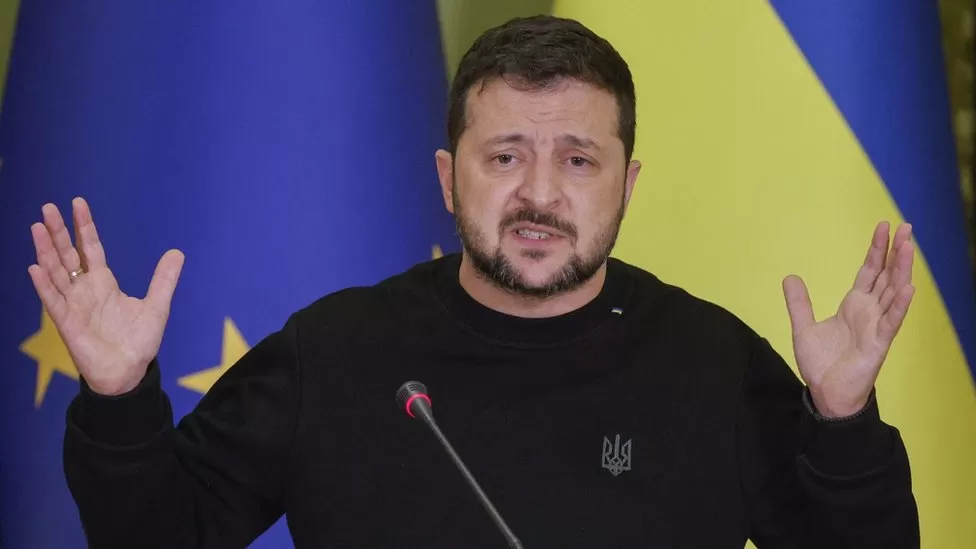
Ukraine war affected by Israel-Hamas conflict – Zelensky
The President of Ukraine, Volodymyr Zelensky, has acknowledged that the Israel-Hamas conflict is diverting attention from the war in Ukraine.
He said that Russia’s goal was to invade Ukraine, and they did so in February 2022.
He said that the fighting in Ukraine isn’t stuck, even though the country’s top military leader recently said that it is.
Ukraine’s attempt to fight back in the south hasn’t been very successful yet.
This has made Kyiv’s Western allies worried that they might get tired of supporting Ukraine in war. Some countries are starting to hesitate in giving Ukraine advanced weapons and money.
Why the gain of Kyiv’s east bank could be important
The conflict in Ukraine is getting worse as Russia is strengthening their defenses and making it harder for opponents to break through.
During a briefing in Kyiv, Ukrainian President Zelensky explained that the war in the Middle East is diverting attention from Ukraine. He made this statement while talking to European Commission President Ursula von der Leyen.
He said Russia wanted this attention to be reduced, but emphasized that we have the ability to control everything.
MrZelensky was also questioned about what Ukraine’s top military commander, Valery Zaluzhny, said this week about the war entering a “positional” or static phase. Zaluzhny believes that this phase would be advantageous to Moscow because it would give them an opportunity to strengthen their military forces again.
“Everyone is getting tired and there are different opinions,” Mr Zelensky said. He also mentioned that this situation is not a stalemate.
He said that Russia has control of the skies and Ukraine urgently needs F-16 warplanes and advanced anti-aircraft defenses from the US to improve the situation.
The Ukrainian leader said that last year there was a lot of talk about a situation where no progress was being made on the large battlefield in Ukraine. However, he mentioned that Kyiv was able to achieve significant military victories in the northeastern Kharkiv region and the southern Kherson region afterwards.
Mr Zelensky said that the reports in the media about him feeling more pressure to talk with Russia are not true.
Today, none of our partners in the EU, US, and other countries are forcing us to have talks with Russia and give them something in return. This won’t happen.
Moscow responded to Mr. Zaluzhny’s statement on Thursday. The spokesperson for Russian President Vladimir Putin said that the current situation on the battlefield is not a “stalemate”.
“According to Dmitry Peskov, all the objectives of the war need to be accomplished. He also mentioned that Ukraine should understand that discussing the possibility of the Kyiv government winning the war is unreasonable. ”
President Putin has said many times that Ukraine’s counter-attack has not been successful, and his Defence Minister Sergei Shoigu recently stated that Kyiv is losing the war even though they are receiving new weapons from Nato allies.
The UK defense intelligence recently reported that Russia may have lost about 200 tanks and other armored vehicles while attacking Avdiivka in eastern Ukraine.
It is possible that Russia has had many soldiers hurt or killed in the town since October 2023.
The report stated that Russia’s leaders are still willing to accept many people getting hurt or killed in order to gain small amounts of land.
Moscow has been attempting to make progress in eastern and north-eastern Ukraine recently, but Ukraine’s military says they have successfully defended against all the attacks.
The statements made by both sides have not been checked to confirm if they are true or not. -
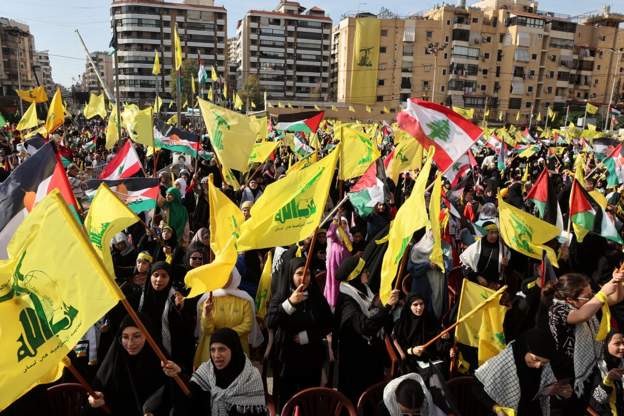
Hezbollah chief commends Hamas for their strikes on Israel
The head of a group called Hezbollah in Lebanon, which is very powerful in politics and military, has finally given his opinion on the war between Israel and Gaza.
Hassan Nasrallah gave a speech from a hidden place, and many people gathered at a rally in Lebanon’s capital Beirut to listen. He spoke highly about the attacks that happened in Israel on 7 October, which sadly took the lives of 1,400 people.
He said that Hamas, a banned terrorist group in the UK, US, and other countries, made good and fair decisions. However, he also said that the attacks on Israel were completely done by Palestinians.
In his speech, he strongly criticized the United States, saying they were to blame for the war in Gaza.
Nasrallah also said thank you to the groups supported by Iran in Yemen and Iraq. The Houthi rebels in Yemen have been using drones to attack Israel, and Shia Iraqi militias have been attacking US forces in Iraq and Syria.
Iran supports a group called the Axis of Resistance. This group includes Hezbollah, a powerful force. It also includes militias in Iraq, Syria’s President Bashar al-Assad, the Houthis, and Hamas. -
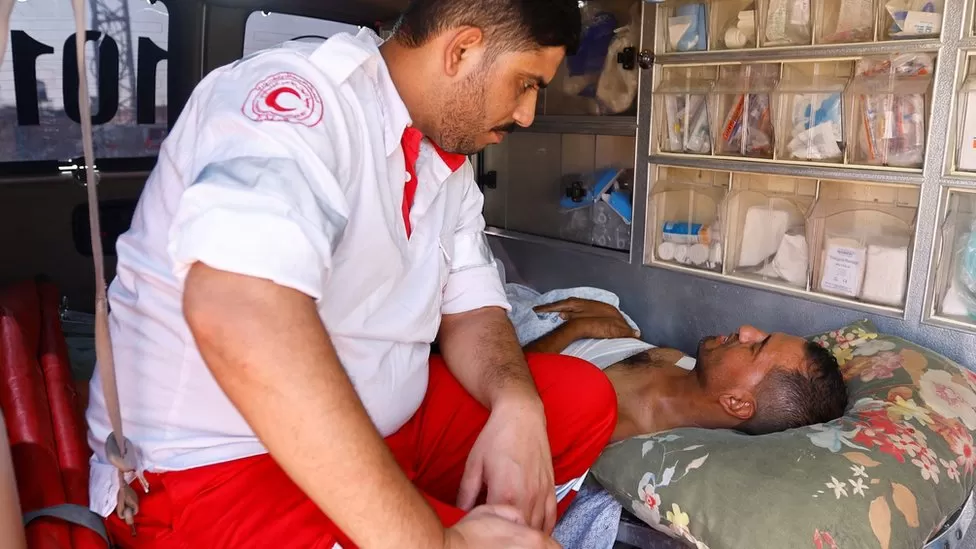
Gaza crossing opens to tourists and injured
Ambulances with very hurt Palestinians have gone from Gaza to Egypt for the first time since the war between Israel and Hamas started.
A total of 110 people with foreign passports have been given permission to leave the area through the Rafah crossing.
The borders of Gaza have been shut since Hamas attacked Israel on 7 October.
Officials from western countries say that the border crossing at Rafah is going to keep opening for short periods of time, in order to let people with passports from other countries and civilians who have been hurt, leave.
The officials say that Egypt and Israel will make a list of the people who can go across the border. The embassies of the countries involved will be told about the list in advance so they can get ready to help their citizens.
Information reaching us is that there are around 7,000 people in Gaza who are citizens of two countries.
UK Foreign Secretary James Cleverly said that representatives from the British government were prepared to help around 200 British citizens as soon as they were able to depart.
Israel has been attacking Gaza for over three weeks and has now sent soldiers to fight on the ground because Hamas fighters did a surprise attack across the border. During the attack, 1,400 people were killed and 240 were taken captive.
The health department in Gaza reports that over 8,700 people have died in the area. The United Nations says that there is a shortage of food, water, fuel, and medicine because of a blockade by Israel.
On Wednesday morning, people saw ambulances hurrying to Rafah. There were injured children, and one of them had a bandage on their stomach. After the doctors checked their health, they were taken away on beds with wheels.
The BBC’s Rushdi Abu Alouf, who is currently at the crossing, was informed by Palestinian passport control officers that 88 patients who need advanced medical treatment are going to be moved to Egypt.
Around 20 people came to Egypt before the early afternoon.
Hospitals in the Gaza Strip are taking care of many injured people but don’t have enough medical supplies. So, they can’t work on these cases. According to a medic from Gaza’s health ministry named Nassem Hasan, they are unable to operate on these cases.
“Now they are being taken to the Egyptian side, and they will be checked to see if they need to go to a different hospital. ”
Many patients will go to a hospital built by Egyptian authorities in Sheikh Zuweid, which is about 9 miles away from Rafah. Some people will go to permanent hospitals in the nearby town of El-Arish or the city of Ismailia.
The head of the World Health Organization, Tedros Adhanom Ghebreyesus, is pleased that Egypt has agreed to allow medical evacuations.
However, he cautioned that we should not lose focus on the much larger needs of many sick people in Gaza. These patients are very delicate and cannot be transported to other places.
We need to make medical aid go faster into Gaza right away. Hospitals should be shielded from being attacked or used by the military.
The World Health Organization (WHO) says that over one-third of Gaza’s hospitals are not working properly. The remaining hospitals are also struggling because they are overloaded with a large number of injured people.
Gaza’s health ministry says that over 20,000 people have gotten hurt.
On November 1, 2023, women and children who have passports from other countries are waiting to go from Gaza to Egypt through the Rafah border crossing.
Our reporter mentioned that around 500 people who are citizens of other countries and have citizenship in two countries are also expected to be given permission to enter Egypt on Wednesday.
In the afternoon, an Egyptian TV channel called Al-Qahera News showed a video of the first group of people getting off a bus. The group had many women and young children.
Mohammed Ghalayini, a British scientist from Manchester, was in Gaza visiting his family when the war started. He went with his uncle to the crossing because his uncle’s name was on the list of people who could be evacuated, according to Gaza authorities.
“People are very scared about the situation and if they get an opportunity to leave, they are trying to go away,” he said in an interview with the BBC.
“But it is also difficult to reach the border because there is not enough fuel available,” he explained. I saw people coming to the border on a cart pulled by a donkey, carrying their bags.
More British citizens who plan to cross soon include the parents of Scottish First Minister Humza Yousaf.
He was happy to hear that the border was being opened, but he mentioned that his in-laws were stuck without clean water to drink and their supplies were running out quickly. -

Netanyahu of Israel denounces ‘cruel’ Hamas video depicting Israeli hostages
Israeli Prime Minister Benjamin Netanyahu has strongly criticized a video released by Hamas that shows Israeli hostages who were captured during the 7 October attacks. He described the video as “cruel propaganda. ”
The video, which came out on Monday, shows three Israeli women. One of them scolds Mr. Netanyahu and asks for the hostages to be set free.
Hamas took more than 230 people as captives in the attacks and around 1,400 Israelis lost their lives.
Only four have been set free up until now.
Israel has started a big military action in Gaza, with the goal of getting rid of Hamas and their control over the area.
The Hamas health department says that around 8,000 Palestinians have died.
The armed group Hamas, specifically the Izzedine al-Qassam Brigades, posted a video showing the hostages.
We have no information about how the video was made.
Only one of the people being held captive talks to the camera in the video.
We will not share or release the video. Prisoners of war and hostages are covered by rules that protect them according to world laws. The BBC doesn’t show any videos or materials that might have been made when people were forced or threatened.
MrNetanyahu said in a statement that the actions of Hamas-Isis are a form of psychological manipulation that is unkind.
We are giving hugs to the families. We will do whatever it takes to bring back all the people who were kidnapped or missing back to their homes.
He also said that the hostages are named Elena Trupanov, Danielle Aloni, and Rimon Kirsht.
“MrNetanyahu said, ‘I give you a hug. ‘”
Ms Aloni’s five-year-old daughter, along with her sister, brother-in-law, and their three-year-old twin daughters, were also taken by kidnappers on 7 October.
During a press conference on Monday, Ms. Aloni’s father expressed that he was extremely shocked and frightened when he saw her picture. He asked the leader of Qatar, who has been helping with negotiations, to do everything possible to bring the hostages back.
On 21 October, two weeks after the first attacks, Hamas let go of two hostages, a mother and her daughter named Judith and Natalie Raanan.
The group said that the couple, who have dual US-Israeli citizenship, were released because of compassionate reasons.
Two days later, two more women named Nurit Cooper, aged 79, and Yocheved Lifschitz, aged 85, were also set free. They are both from Israel but were set free in Egypt.
Hamas once again stated that they released the individuals for reasons related to their health and well-being. However, they accused Israel of not accepting them. Both women’s husbands are still in custody.
There is a reason why we have only seen pictures of women who were taken as hostages since their violent kidnapping.
There is no doubt that the video was released to make all Israelis feel emotional and make Mr. Netanyahu’s situation even more difficult.
He is feeling a lot of stress because the families of hostages are asking him to do more to free their loved ones. Two days ago, he mentioned that destroying Hamas was more important to him than anything else, including what he is talking about now.
In the video, Ms Aloni strongly criticizes Mr Netanyahu for not keeping the civilians safe on 7 October.
Even if it was said when someone was very anxious and stressed, it adds to a heated discussion in Israel about why the government and the military allowed any of this to occur.
During a press conference on Monday, Mr. Netanyahu expressed sympathy for the families of the hostages but emphasized that taking action on the ground was the most effective way to rescue them.
Hamas will not do it unless they feel forced to do so. They just won’t do it. He explained that this causes stress. -
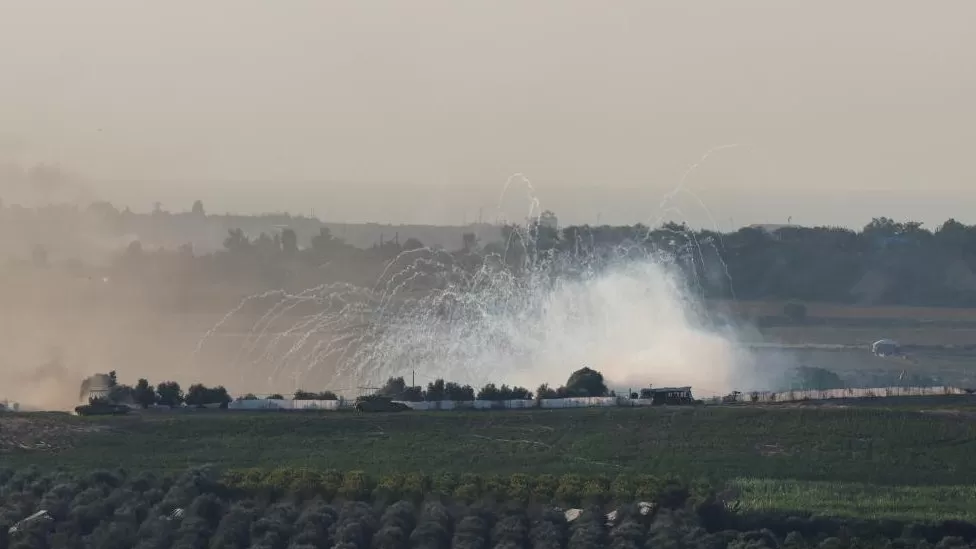
US opposes demands for cease-fire between Israel and Hamas
The US has said no to the idea of stopping the fighting between Israel and Hamas, even though other countries want it. They believe it’s not the best choice at the moment.
National Security spokesperson John Kirby spoke on Monday and suggested that aid be delivered to Gaza by taking breaks from fighting.
Currently, there isn’t enough food, water, fuel, and medicines for the 2. 2 million people living in Gaza. This lack of supplies is putting them in a dangerous situation.
But Israel has promised that there will not be an end to the fighting until Hamas is taken apart.
Calls for a ceasefire mean asking Israel to give up to Hamas, to give in to terrorism. Israel’s Prime Minister Benjamin Netanyahu stated that this will not occur.
Mr Kirby spoke at a meeting with the press and said that he believes more trucks carrying aid will be able to go into Gaza through Egypt.
He said the US talked to the Israeli government about allowing more trucks to cross the border each day, up to about 100.
On Sunday, around 45 trucks went into Gaza through Egypt’s Rafah Crossing, Mr Kirby mentioned. However, he admitted that additional resources would be necessary.
“He told the press briefing that although we recognize that even with significant improvement, it still won’t be sufficient. ”
Philippe Lazzarini from UNRWA said that before the war, around 500 trucks would go into Gaza every day.
Israel has been attacking Gaza since October 7th in response to the Hamas attacks that caused the death of 1,400 people in Israel and the kidnapping of 229 people by Hamas.
Over 8,300 people in Gaza have died since Israel started bombing in response, says the health ministry run by Hamas.
Yinam Cohen, Israel’s consul general to the Midwest, said on Monday that one woman kept captive by Hamas, Natalie Raanan, had come back home to Chicago.
Last week, the UN General Assembly strongly urged Israel and Hamas to temporarily stop fighting for humanitarian reasons. Israel rejected this request with anger.
Mr Lazzarini said on Monday that the system to give aid will not work unless there is a strong desire from politicians to ensure that the supplies being given are helpful and meet the extremely high humanitarian needs.
Israel started the next part of their plan to defeat Hamas on Monday. They sent soldiers to go into Gaza after bombing it for three weeks. -
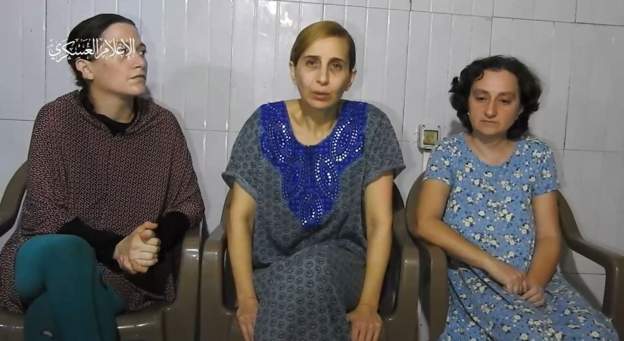
Three hostages footage released by Hamas
Hamas has made a video where they show three people being kept as prisoners in Gaza.
We don’t have information about how the filming happened, but the three women seem to be in decent health and there are no obvious signs of injury on them.
In the video, a woman talks directly to the camera about Israeli Prime Minister Benjamin Netanyahu and asks for the hostages to be released. She shares her negative thoughts about him.
We won’t put the video out. People who are captured during wars or taken hostage are given special protections according to international laws that deal with how to treat them. The BBC, a television network, doesn’t show videos that may have been filmed when someone is being forced or threatened. -
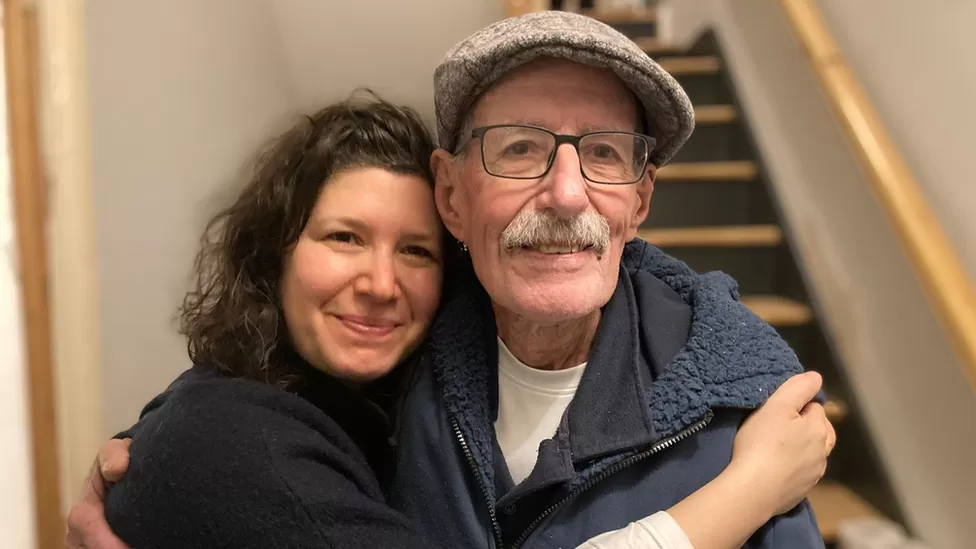
Two rescued as others still remain in Hamas’s custody
In the past week, Sharone Lifschitz has been with her mother almost all the time.
Yocheved, who is 85 years old, was one of two women who were set free from being held by Hamas in Gaza on Monday. She was taken away from her house in Nir Oz.
Sharone said that her mom is very strong and brave, but she still cares a lot about the people who are still trapped in those underground tunnels where the hostages from the 7 October Hamas attack are believed to be kept.
Sharone, a person who is a citizen of both the UK and Israel, traveled to Israel when she received the news that her mother had been set free.
However, it was a mixture of both positive and negative emotions. Yocheved’s husband, Oded, who is 83 years old and they have been married for 63 years, is still missing. It is believed that he is being kept against his will in the Gaza Strip.
Sharone shared with the BBC that her father dedicated his life to promoting peace and believed in the chance for Israelis and Palestinians to live peacefully alongside each other. She said this after her mother was freed.
He thought that you can make peace with the people who are against you. I hope he is well. I hope he can speak Arabic and that he is getting medical treatment.
The Lifschitz family had been living in Nir Oz for a long time and knew almost all of the approximately 400 other residents. Nir Oz is a community that is open to new ideas and combines farming and industry.
Over 100 people were believed to have been killed or taken by Hamas gunmen when they went on a violent rampage at the kibbutz on October 7th.
Right now, Sharone is spending her time assisting her mother in her slow recovery. She is also trying to persuade the Israeli government and its allies from different countries to take more action in order to release the 229 Israeli and foreign hostages who are still being held by Hamas in Gaza.
She thinks that it’s better to delay Israeli Prime Minister Benjamin Netanyahu’s plan to attack Gaza with tanks and a large number of soldiers in order to “defeat Hamas. ” This will provide more time for negotiations to free the hostages.
The people living in the kibbutz were not successful. Sharone is still shocked and confused at how long it took for the Israeli government and army to help these people who had to take care of themselves for nine hours.
We were killed and no one showed up for a long time. The main goal should be to help these people return to their communities and families.
Sharone explains that her mother is generally a positive person, which is why she extended a peaceful gesture to one of the people who held her captive. She shook his hand and said “shalom”, which means peace, when she was being handed over to the International Committee for the Red Cross.
Some people in Israel have raised doubts about the handshake, but her daughter explains that she did what she believed was the right thing to do at that time.Sharone said that the man was a medical worker who had taken care of Yocheved while she was held captive. They also talked about bringing peace to the area. But Sharone wanted to emphasize that although Yocheved had received care after the violent abduction, it should not take away from the difficult experience the hostages went through.
Before Yocheved was released this week, there was no information about the Nir Oz residents who were taken to Gaza on motorbikes and cars.
Eight-year-old Ohad Munder-Zichri, along with his mother and two grandparents, have been taken by kidnappers.
Ohad’s cousin Osnat, who is 54 years old, said that the boy is really intelligent and talented.
“He is excellent at everything he does from the time he was born,” she explains.
Osnat and her children moved from Tel Aviv to Jerusalem to live with their family and avoid the rockets coming from Gaza.
The surprise attack on Nir Oz, a place created by her parents in the 1950s, was very shocking.
Osnat said, “Picture yourself sitting in your house. ” “You haven’t harmed anyone, but bad people enter your home, remove you forcefully, and abduct you. ”
She said that one of her cousins died in the attack.
This week was Ohad’s ninth birthday, but his family said they can’t have a celebration until he and the rest of his family are no longer restricted or confined.
After she was set free, Yocheved was able to tell what it was like when she was kept captive. She also said that there were other people from Nir Oz with her, but Ohad and Oden, who is Sharone’s father, were not there.
Sharone says it’s too soon to think about what will happen next, even though her mother was let go. Her parents’ house in Nir Oz burned down and they lost everything, including her mom’s photography career and her dad’s time as a journalist.
She says she will not go back to her family in the UK, and her mother Yocheved will not stop worrying until Oded and the other people from Kibbutz Nir Oz, including Ohad, are released.
Sharone said that the man was someone who helped take care of Yocheved when she was kept against her will, and he talked to her about finding peace in the area. But Sharone wanted to make it clear that the care Yocheved received after the violent kidnapping should not make people forget about the difficult experience the hostages faced.
Yocheved was let go or set free this week. Previously, there was no information or updates regarding the Nir Oz residents who were transported to Gaza using motorcycles and cars.
Ohad Munder-Zichri, who is just eight years old, was taken by bad people with his mother and two grandparents.
Ohad’s older cousin, Osnat, who is 54 years old, said that the boy is really smart and skilled.
She says he is really good at everything he does, starting from when he was born. Please rephrase this text in simpler language: ”
Osnat and her children left Tel Aviv and went to Jerusalem to live with their family because they didn’t want to be near the rockets that were being launched from Gaza.
The unexpected attack on Nir Oz, a place that her parents created in the 1950s, was very surprising.
Osnat told me to imagine myself sitting at home. You did nothing bad to anyone, but some very mean people come into your home, take you out forcefully, and make you go with them even if you don’t want to. Please rephrase this text using simpler language: ”
She says that her cousin died in the attack.
Ohad turned nine years old this week, but his family is waiting to have a celebration until everyone in the family is available.
After Yocheved was released, she could finally describe her experience of being held captive. She said that some other people from Nir Oz were there, but Ohad and Sharone’s dad, Oden, were not with them.
Sharone’s mom got fired, but Sharone believes it’s too early to start planning for the future. A fire destroyed her parents’ house in Nir Oz. Everything, including her mom’s job as a photographer and her dad’s past as a journalist, has been gone.
She says she will not return to her family in the UK, and her mother Yocheved will not stop until Oded and the other people in Kibbutz Nir Oz, like Ohad, are set free. -
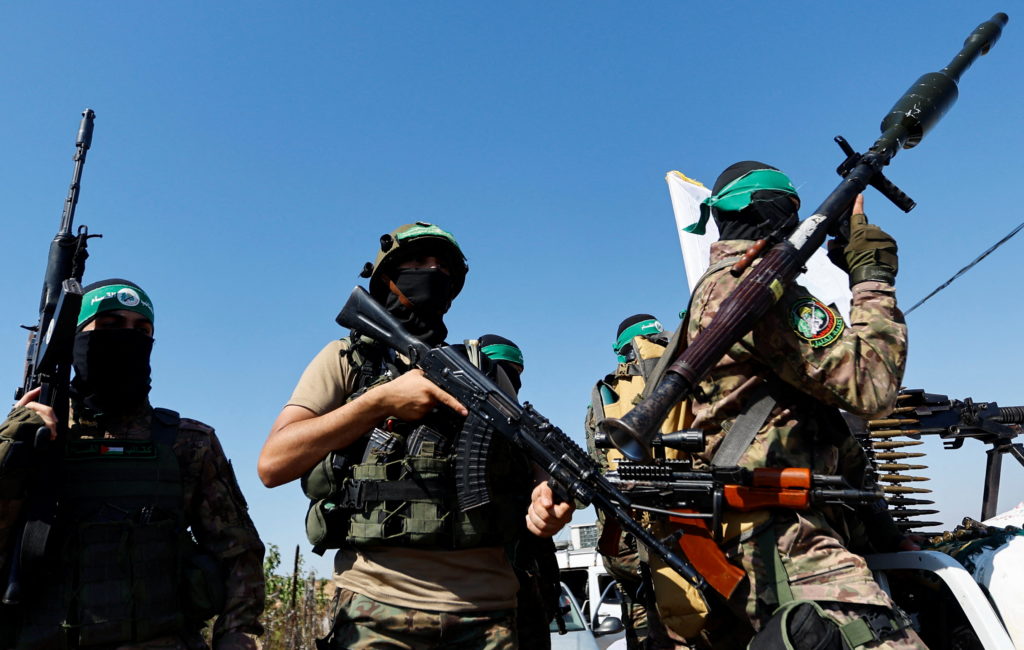
No captive would be released until there is truce – Hamas spokesperson
According to a member of a Hamas group visiting Moscow, the hostages captured from Israel during a surprise attack cannot be released until both sides agree to stop fighting, as reported by local media.
The Russian newspaper Kommersant reported that Abu Hamid said Hamas needed more time to find all the people who had been taken.
“They took many people, mostly regular people, and we need to take time to locate them in Gaza and then let them go,” Hamid said.
Hamas has let go of four hostages until now, citing reasons of humanity. Judith and Natalie Raanan, a mother and daughter, were the first to be released on 20 October. Yocheved Lifschitz, who is 85 years old, and Nurit Cooper, who is 79 years old, were released on Monday.More update on this story soon…
-
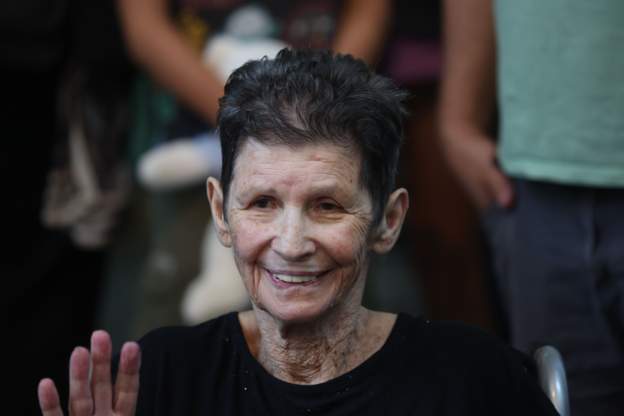
My mother got through this because of her optimism – Sharone Lifschitz
Sharone Lifschitz, the daughter of 85-year-old Yocheved Lifschitz, explained to the BBC that her mother was taken by Hamas from the Nir Oz Kibbutz on October 7 and released recently. She said her mother faced some challenges, but she remained strong and resilient throughout the ordeal.
She mentioned that her mother, who is a peace activist, told her that she still feels connected to the people in Gaza who are in hiding. She also said that she is slowly beginning to understand her surroundings and what has occurred, but it is difficult for her to fully grasp the situation because it is so overwhelming.
But she also says her mother wants to “give hope” to the families of the other hostages, telling them that as hostages they were taken care of and their injuries were being treated by medical staff, and they were not being harmed.
Lifschitz says that her mother’s incredible positivity helped her get through this difficult experience.
Lifschitz’s dad is still being kept prisoner by Hamas. He spent his whole life supporting peace, according to her.
He wanted both countries to live peacefully next to each other and worked hard for that. She believes that you should make peace with your enemies. She hopes he is okay and can use his Arabic language skills to talk to the people there. She also hopes he receives medical treatment. -
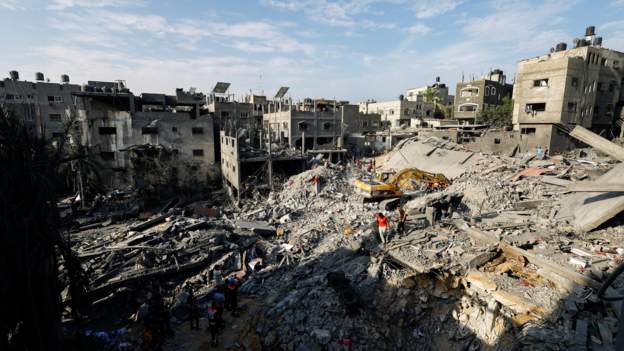
IDF claims to have attacked over 250 targets in a single day
The Israeli Defense Forces (IDF) have attacked over 250 places in the Gaza Strip in the past day.
Writing on twitter, the IDF (Israeli Defense Forces) said that they attacked various places including tunnels, many Hamas fighters, headquarters where they plan their operations, and spots where fighter jets take off.
The IDF (Israeli Defense Forces) also claims to have killed Medkhat Mabasher, who was a member of Hamas and in charge of operations in Khan Younis. The IDF accuses him of being involved in attacking IDF troops and Israeli settlements.
The IDF says that a plane crashed in the Gaza Strip because of a mechanical problem, and they are looking into it.More update on this story soon…
-
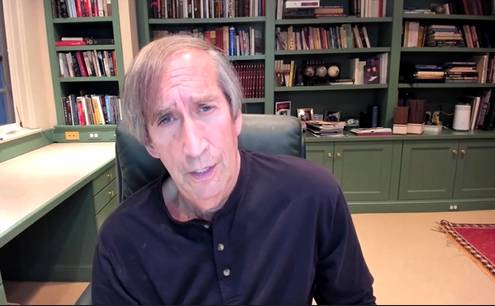
Hamas only needs to endure in order to triumph – US analyst
Aaron David Miller, who used to work for the US State Department and focuses on the Middle East, believes that Israel is facing various limitations. One of these is their current uncertainty about how ambitious their goals should be.
For the last three weeks, Israel has been discussing putting an end to Hamas altogether.
This means that Hamas just needs to stay alive to consider it a victory in the recent fighting of this conflict that has been going on for many years.
Hamas just needs to stay alive during this situation. Hamas just needs to show that it still works in Gaza after the fighting is done.
“And that’s the problem that Israel has made for itself. ”
You can hear Miller’s thoughts in the video below. -
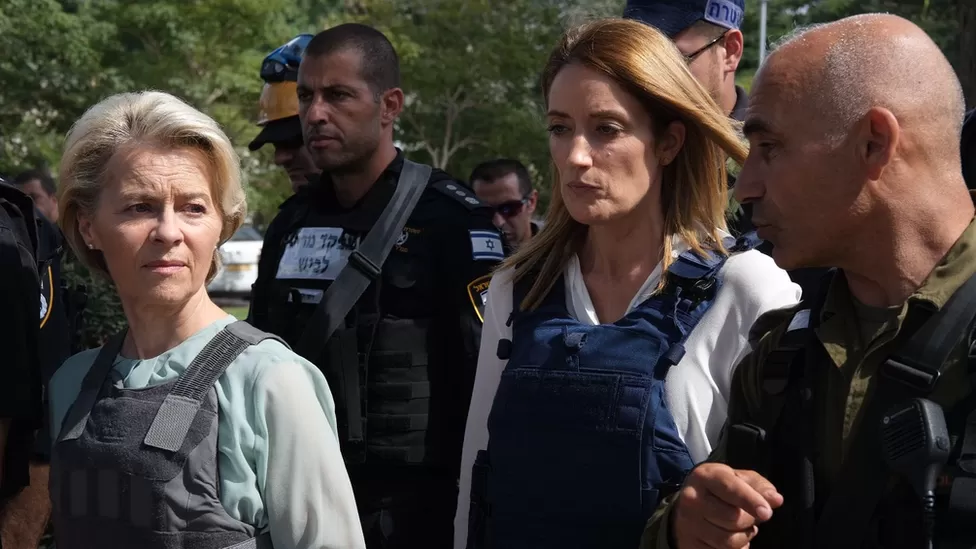
EU leaders will talk on humanitarian breaks in Gaza
European Union leaders are gathering in Brussels for a meeting, but the main issues are the conflict between Hamas and Israel and the EU’s inability to show a united front.
For a long time, the European Union has been unsure about what its position should be on the war. There have been confusing statements, embarrassing mistakes, and different opinions from different countries about the conflict between Israel and Palestine.
But after a few days of not being able to agree, leaders of the European Union want to find a position that everyone can agree on.
The question is whether to support a stop to the fighting or breaks in fighting to provide help to people.
Charles Michel, the head of the European Council, is very worried about the worsening humanitarian situation in Gaza. He and other leaders want to make it easier for people in Gaza to get things like food, water, medical care, fuel, and shelter.
They want to improve the conditions so that more than 200 hostages taken by Hamas gunmen during their attack on 7 October can be released safely. Some of the people being kept as prisoners are citizens of two European countries, like Germany, France, Portugal, and the Netherlands.
EU countries have very different opinions, which makes things very confusing.
When he got to the meeting, Spain’s temporary prime minister Pedro Sánchez said he wants a pause in the fighting between Israel and Palestine. He said if a pause is not possible, he wants a break in the fighting to help bring urgent aid to the Palestinian people.
Some people are unsure about asking for a break in the fighting and say that it might be seen as stopping Israel from protecting itself.
Germany and other countries are against the idea of having only one humanitarian break because it is too similar to a ceasefire, and Israel has the right to protect itself from attacks.
One diplomat told the BBC that what they needed was shorter breaks in the fighting instead. A pause is when actors stop completely, but pauses are only temporary. “They said that they only need help for a few hours at a time. ”
Germany, Austria, Hungary, and the Czech Republic strongly support Israel. Spain and Ireland have a stronger connection or alignment with the Palestinian cause.
Some leaders from Europe have been visiting the Middle East for diplomatic reasons. Italy’s leader Giorgia Meloni, Germany’s leader Olaf Scholz, and France’s leader Emmanuel Macron have all spoken with Egypt’s leader Abdel Fattah El-Sisi.
On Wednesday, the leader of Austria, Karl Nehammer, and the leader of the Czech Republic, Petr Fiala, went to visit Israel.People have different opinions about the EU’s leadership as well.
The EU gives the most money to the Palestinians. When Oliver Varhelyi, who is in charge of EU policy towards neighboring countries, said that all payments to the Palestinians were being stopped and new budget plans were being delayed after the Hamas attack, aid agencies became very concerned and worried.
The European Commission quickly released a statement saying that they will not stop €691m (£600m) of aid, but they will review it. They also mentioned that they will triple the amount of aid they provide to Palestinians.
When Ursula von der Leyen, the President of the European Commission, traveled to Israel with the President of the European Parliament, she received criticism for supporting Israel’s right to protect itself without mentioning the importance of following international humanitarian law. There didn’t seem to be any attempt to communicate with the Palestinian Authority.
However, a European Union diplomat told reporters that not everything Ms. von der Leyen said in Israel was shared on social media. The diplomat said that if you want to be effective, you shouldn’t use aggressive or forceful tactics when communicating. “The Israeli government pays attention to us when we discuss things privately. ”
In a very surprising action, more than 800 EU staff and diplomats wrote a public letter expressing their disapproval of her “uncontrolled” support for Israel. They were unhappy with the Commission’s different treatment of situations. They explained that when Russia blocked Ukraine, it was seen as a terrifying action, but when Israel blocked Gaza, it was completely overlooked.
James Moran from the Centre for European Policy Studies said to the BBC that the EU’s response has been both unfortunate and confusing.
In the past, the EU has usually been fair when dealing with conflicts in the Middle East. For instance, in 2014 people quickly asked for fighting to stop.
The EU doesn’t have its own soldiers, ships, or planes, but it has been very helpful in the Middle East by using its diplomacy skills.
In 1980, when it had only nine members, the group created the important Venice Declaration which acknowledged that the Palestinian people have the right to choose their own future.
In 2023, according to an EU diplomat speaking to the BBC, there are 27 countries in the EU with very different opinions about the Middle East.
This was made clear during a meeting of EU foreign ministers this week. It is said that German Foreign Minister Annalena Baerbock disagreed with having a humanitarian ceasefire because Hamas was still shooting rockets at Israel.
The EU has not been able to agree on the type of break they should have.