Tag: India

  • Gill hits maiden international century as India hold off Zimbabwe

    Shubman Gill scored his first international century on Monday as India defeated Zimbabwe by 13 runs to win the ODI series 3-0.

    India entered the game seeking their hosts’ 15th straight ODI victory as well as a second straight one-day series victory over Zimbabwe, and they were unstoppable in a high-scoring affair.

    Shikhar Dhawan (40), KL Rahul (30), and Ishan Kishan all contributed to the tourists’ 289-8 score at Harare Sports Club before Gill’s historic strike

    Brad Evans (5-54) recorded the best figures of his fledgling ODI career and although Sikandar Raza made a brilliant 115 off 95 balls, Zimbabwe fell short on 276 all out.

    The wickets began to tumble when Zimbabwe threw caution to the wind midway through the innings, losing Regis Chakabva (16), Takudzwanashe Kaitano (13), Ryan Buri (8) and Luke Jongwe (14) in the space of just under 10 overs.

    Raza led a terrific fightback, hitting three sixes and finding the rope nine times before he was caught by Gill off the bowling of Shardul Thakur in the penultimate over, and Avesh Khan finished off the job by cleaning up Victor Nyauchi.

    Avesh took 3-66, while Axar Patel (2-30), Kuldeep Yadav (2-38) and Deepak Chahar (2-75) also made an impact with the ball.

    India have now won seven consecutive ODIs away from home, their best run since a sequence of nine in a row between July 2017 to February 2018.

    Source:livescore.com

  • Bihar: Lightning strikes kill 20 in Indian state

    Lightning strikes have killed 20 people across eight districts of the eastern Indian state of Bihar in just 24 hours.

    More thunderstorm with lightning has been forecast in northern parts of the state for Wednesday and Thursday.

    Bihar Chief Minister Nitish Kumar has asked people to closely follow the advice of the state’s disaster management authority.

    Hundreds die in India every year in lightning incidents during monsoon rains.

    One of the reasons cited for the high number of deaths is the large number of people working outdoors in India compared to other parts of the world, which makes them more vulnerable.

    On Tuesday, Mr. Kumar announced a compensation of 400,00 rupees ($5,008; £4,154) for the families of each of the deceased.

    The chief minister had held a meeting last week and asked state officials to install lightning arresters at all government buildings, including schools and hospitals, The Times of India newspaper reported.

    The geographical position of the state makes it particularly susceptible to frequent lightning strikes during the monsoons, the report said.

    In February this year, the BBC reported that the number of lightning strikes in India had risen sharply in recent years.

    Satellite data gathered by the Indian Institute of Tropical Meteorology also shows that strikes had “increased rapidly” between 1995 and 2014.

    India recorded more than 18 million lightning strikes between April 2020 and March 2021, according to a study by the non-profit Climate Resilient Observing Systems Promotion Council. This was a 34% rise over a similar period during the previous year.

    Source: bbc.com

  • Mumbai floods: India city on red alert for further rain

    India’s weather department has issued a red alert for Mumbai as heavy rains continue to lash the city and its neighbouring districts.

    The city is expected to receive heavy to very heavy rainfall on Friday, leading to more floods, the Indian Meteorological Department (IMD) said.

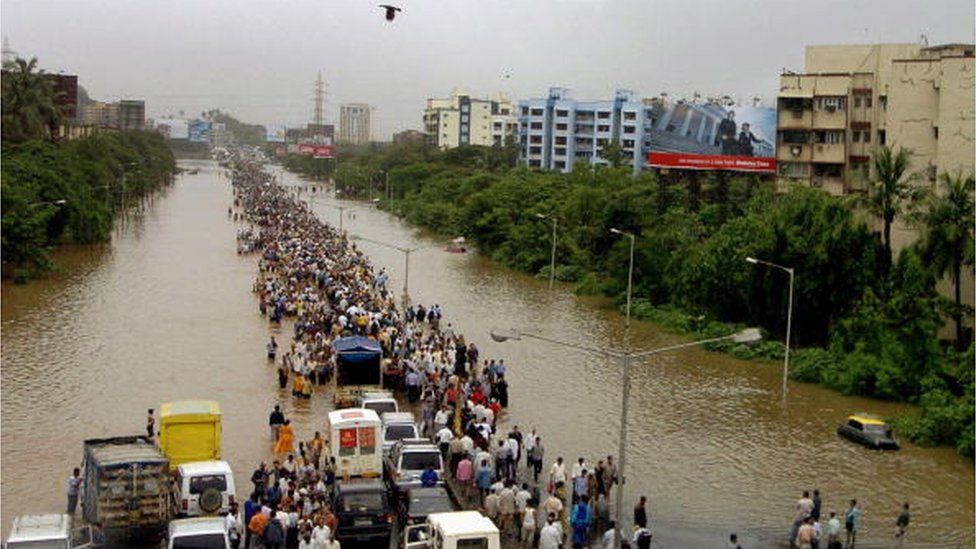
    Parts of the city have been inundated in waist-deep water since Monday, bringing life to a standstill.

    Monsoon rains are common in Mumbai around this time of the year.

    But experts say climate change and unchecked urban development has made rains more intense and less predictable in recent years.

    Thousands of people migrate to Mumbai every day in search of jobs which fuels rapid construction, that is very often unregulated.

    Many areas have ageing drainage systems and that causes flooding as well. The city’s vast mangrove swamps, which act as a natural buffer during floods, have also been built over in the past few decades.

    MUMBAI, INDIA: Indian commuters walk through floodwaters past stranded motor vehicles after heavy torrential rains paralysed the city of Mumbai
    IMAGE SOURCE,GETTY IMAGES Image caption, Commuters had to walk through floodwaters past stranded motor vehicles

    On Thursday, Mumbai’s civic body banned people from visiting beaches on the days for which the weather forecasting agency has predicted heavy rainfall.

    In many areas, waterlogging led to huge traffic snarls and people were seen wading through brown and black murky water which flooded the streets.

    Bus services and commuter trains – which are the lifeline of the city’s transport system – were also disrupted, leaving people stranded on stations for hours.

    Heavy rains have also battered Mumbai’s neighbouring districts. Traffic on a key national highway connecting Mumbai to the tourist state of Goa was diverted after a landslide in Chiplun city.

    Authorities said that work to remove the debris was underway, but that the movement of vehicles along the route would be affected for least two days, news channel NDTV reported.

    Meanwhile, the IMD has also issued flood alerts for the southern state of Kerala and parts of Himalayan state of Himachal Pradesh amid incessant rains.

    Source: BBC

  • Dozens killed and millions stranded by India and Bangladesh floods

    At least 59 people are known to have died in lightning strikes and landslides triggered by severe monsoon storms in India and Bangladesh.

    Millions of people have been stranded while emergency workers have struggled to reach those affected.

    Forecasters are warning that the flooding is expected to get worse over the next few days.

    Bangladesh government officials have described the recent flooding as the country’s worst since 2004.

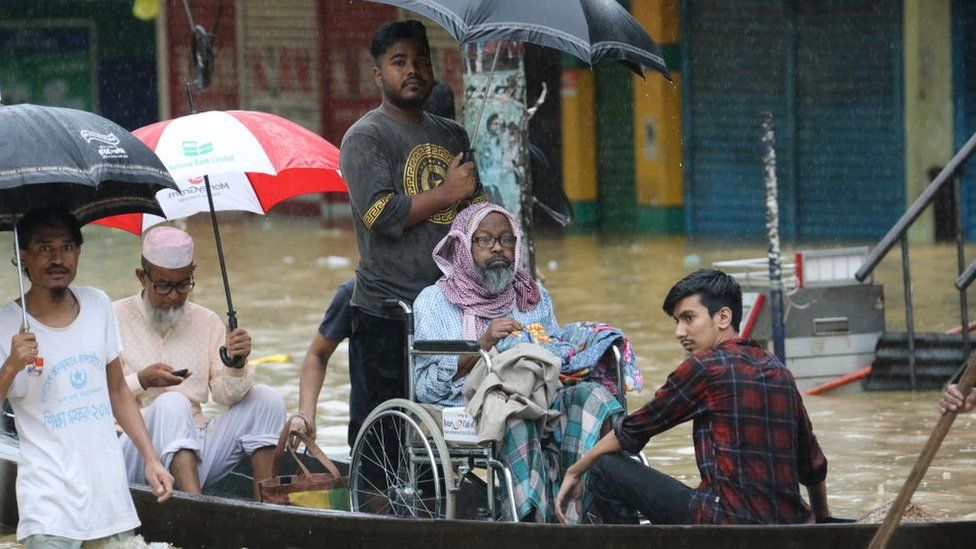
    Unrelenting rains over the last week have inundated vast swathes of the country’s north-east region, exacerbated by runoff from heavy downpours across mountains in neighbouring India.

    Schools have been converted into makeshift shelters and troops have been deployed to evacuate households cut off from neighbouring communities as a result of rising waters.

    People try to survive as monsoon rains swamped huge areas of the country, leaving millions of homes underwater in Sylhet, Bangladesh on June 18, 2022.
    IMAGE SOURCE,GETTY IMAGES Image caption, Bangladesh government officials have described the floods as the country’s worst since 2004

    “The whole village went under water by early Friday and we all got stranded,” Lokman, whose family lives in Companiganj village in Bangladesh, told AFP news agency.

    “After waiting a whole day on the roof of our home, a neighbour rescued us with a makeshift boat. My mother said she has never seen such floods in her entire life,” the 23-year-old added.

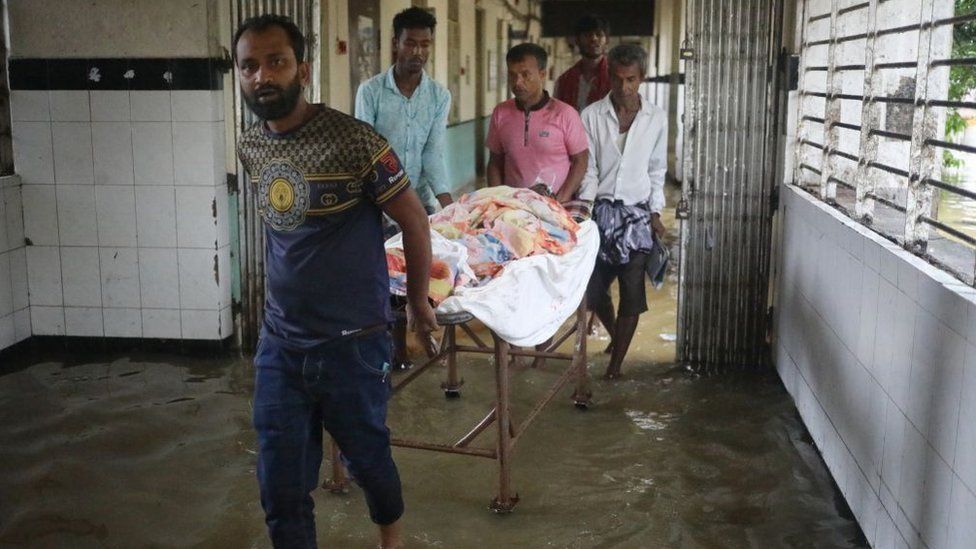
    A patient is taken to upstairs as flood water enter inside Sylhet Osmani Medical College Hospital in Sylhet, Bangladesh on June 18, 2022.
    IMAGE SOURCE,GETTY IMAGES Image caption, A patient is moved to a higher floor as flood waters enter a hospital in Sylhet, Bangladesh

    In Assam state in neighbouring India, more than 1.8 million people have been affected by floods after five days of incessant downpours.

    Assam Chief Minister Himanta Biswa Sarma told reporters he had instructed district officials to provide “all necessary help and relief” to those caught in the flooding.

    “Our house is submerged in water. I’ve never seen such huge floods in my life,” Husna Begum, a resident of Udiana village in Assam, told the BBC.

    The 28-year-old has been living in a rickety plastic tent with her children since Thursday. “There is no drinking water in the camp here. My son has a fever but I am unable to take him to the doctor,” she said.

    Ronju Chaudhary, who lives in the same village, described the scale of the flooding. “We are surrounded by water on all sides. There’s water inside our homes too,” he said.

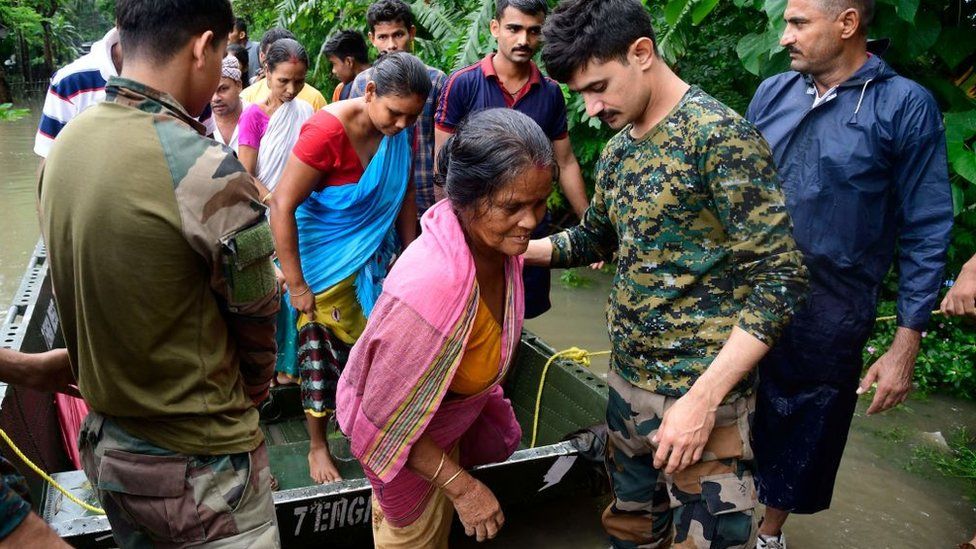
    Army soldiers evacuate flood-affected villagers following heavy monsoon rainfalls in Rangia of Kamrup district, in India's Assam state on June 18, 2022.
    IMAGE SOURCE,GETTY IMAGES Image caption, Army soldiers evacuated flood victims following heavy monsoon rainfall in India’s Assam state

    This week’s rains come as Bangladesh’s Sylhet region was still recovering from its worst floods in nearly two decades in late May, when at least 10 people were killed and four million others were affected.

    Syed Rafiqul Haque, a former lawmaker, said Bangladesh was at risk of a humanitarian crisis with “almost the entire Sylhet-Sunamganj belt.. under water and millions of people… stranded”.

    Some 3.1 million people were displaced in the region, officials said, with 200,000 of them now being housed in makeshift shelters on higher ground.

    Seasonal monsoon rains represent a lifeline for farmers across South Asia, but typically cause deaths and destruction to property every year. Bangladesh and India have both experienced increasingly extreme weather in recent years.

    Environmentalists – while not ascribing single weather events to climate change – do warn it could lead to more disasters, especially in countries that are low-lying and densely populated.

    Source: BBC

  • India bans over 100 apps linked to China

    A further 118 Chinese mobile apps have been banned by the Indian government, as tensions between the two countries continue to rise.

    Those on the list include several of Tencent’s products including the hit video game PUBG Mobile and WeChat Work.

    Previously the government had banned 59 of the most popular apps including TikTok over national security concerns.

    India’s IT Ministry said it had “credible information” the latest batch were acting against India’s interests.

    Other apps affected include:

    two of search giant Baidu’s apps

    CamCard’s business card scanner

    Alibaba’s Alipay payment app and its Taobao e-commerce platform

    Netease games including Marvel Super War

    Sina News

    The ministry said it had received many complaints from “various sources” including several reports about “misuse of some mobile apps available on Android and iOS platforms for stealing and surreptitiously transmitting users’ data in an unauthorised manner to servers which have locations outside India”.

    “The compilation of this data, its mining and profiling by elements hostile to national security and defence of India, which ultimately impinges upon the sovereignty and integrity of India, is a matter of very deep and immediate concern which requires emergency measures.”

    The ban comes against the backdrop of tensions along a disputed Himalayan border.

    Both India and China deployed more troops to the Ladakh region in June and clashes have left at least 20 Indian troops dead.

    Satellite images appear to show that China has built new structures overlooking the Himalayan border region.

    The US has also recently taken action against Chinese apps, threatening to ban TikTok and ordering US firms to stop doing business with Tencent’s WeChat platform. White House trade advisor Peter Navarro has said that the administration also has other Chinese apps within its sights.

    Source: bbc.com

  • Virus-hit India’s overwhelmed health workers brace for monsoon

    With hospitals already severely stretched, coronavirus-hit India is now bracing for the monsoon and its deadly annual onslaught of mosquito-borne illnesses, with an overwhelmed army of public health workers the only defence.

    Every year illnesses such as dengue fever and malaria infect more than half a million people and kill hundreds in India as the monsoon brings much-needed rain but also devastation and disease.

    With more than three decades of experience as a doctor in India’s chronically underfunded public healthcare system, Vidya Thakur – medical superintendent at Mumbai’s Rajawadi Hospital – is used to managing “heavy burdens”.

    But now, she says, “COVID-19 has left us helpless… and the monsoon will make things even more difficult”.

    Every bit of space at the 580-bed state-run hospital where she works is already devoted to dealing with the pandemic. Beds crowd corridors, storage rooms function as wards and staff are overworked.

    At Mumbai’s massive Lokmanya Tilak Municipal General Hospital, better known as Sion, undergraduates have been drafted into service, medical resident Shariva Ranadive told AFP.

    Many experienced doctors and nurses are staying on the sidelines because they are vulnerable to the virus due to their age or pre-existing conditions such as diabetes.

    “Everyone is working constantly… we are overwhelmed,” Thakur told AFP.

    And now with the monsoon has arrived in Mumbai on its months-long journey northwards, she is readying for the usual rush of seasonal ailments.

    A particular problem is that many season illnesses have symptoms that are virtually indistinguishable from coronavirus, such as fever, breathing difficulties and loss of appetite.

    This means more testing, more isolation beds and more protective equipment will be needed to ensure that patients are diagnosed correctly and not exposed to coronavirus too.

    “We will need to treat everyone as if they were a COVID-19 patient,” said Thakur. “Every precaution will have to be taken.”

    Delayed efforts, double shifts

    Healthcare workers are not the only ones battling exhaustion.

    A months-long lockdown to prevent the epidemic from spreading left Mumbai with an acute shortage of sanitation workers.

    Thousands of public health workers who fumigate neighbourhoods to kill disease-carrying mosquitoes had to delay those crucial efforts for two months to focus on sanitation instead.

    “Many of our men are doing double shifts, working 14 hours straight,” said Rajan Naringrekar, the head of the city’s insecticide department.

    With nearly 60,000 infections, Mumbai accounts for around a fifth of India’s coronavirus cases.

    As teams fumigated a slum and cleared out stagnant water – a potent breeding ground for mosquitoes – from sagging tarpaulin roofs, storage bins and bottles, Naringrekar told AFP many of them were afraid of contracting the virus.

    The risks will increase exponentially with the rains, with workers required to inspect homes and offices in case of a dengue outbreak.

    “We are obviously worried but we have to do our job and take as many precautions as we can,” he said, pointing to the gloves and masks worn by the workers.

    Monsoon trauma

    Their fears are shared by millions living in slums across India, who say their homes offer little protection against coronavirus or other diseases.

    For Mumtaz Kanojia, who lives in a small one-room house with her son and daughter, the memory of her bone-chilling three-week-long bout with malaria still haunts her 10 years on.

    “My daughter and I were severely ill, we had a fever, we couldn’t eat anything. She even fainted at one point,” the 53-year-old told AFP.

    Kanojia is already fearful of contracting coronavirus, and the onset of the monsoon prompts further dread – of flooding outside her front door, a leaking ceiling, contaminated drinking water and deadly diseases.

    “The water gets everywhere… and the mosquitoes follow,” she said, adding that she and her neighbours had little choice but to use tarpaulins as makeshift coverings despite the risk they could become breeding grounds.

    “Without it, the roof leaks every time there’s a heavy downpour,” she said.

    “Each time, we have to take care of it ourselves. No one from the government ever comes to help.”

    Source: france24.com

  • Coronavirus: India to use 500 train carriages as wards in Delhi

    India is to convert another 500 railway carriages to create 8,000 more beds for coronavirus patients in Delhi, amid a surge in infections.

    Home Minister Amit Shah announced a package of new emergency measures for the capital, including a rapid increase in testing for COVID-19. Nursing homes will also be requisitioned.

    He met Delhi’s Chief Minister Arvind Kejriwal to address the crisis.

    India’s daily number of confirmed new cases has reached almost 12,000.

    The total number of 320,922 officially confirmed cases puts India fourth in the world – after the US, Brazil and Russia – in the pandemic.

    The death toll in India stands at 9,195, according to data compiled by Johns Hopkins University from official sources.

    The Hindustan Times reports that Delhi is the third worst-hit state in India after Maharashtra and Tamil Nadu.

    It reports that Delhi’s bed capacity across private and government hospitals for COVID-19 patients stands at 9,698, of which 4,248 beds are vacant.

    Mr Kejriwal’s government plans to use 40 hotels and 77 banquet halls as makeshift hospitals.

    India began converting railway carriages into quarantine or isolation wards in April, when large parts of the railway network were suspended owing to the pandemic.

    Last month the national government announced plans to end a national lockdown that began on 25 March.

    Road and plane traffic increased as restrictions started to ease, and many businesses and workplaces reopened. Markets are crowded again.

    The lockdown has imposed huge economic costs on India, throwing millions of people out of work, especially migrant workers in precarious, meagrely-paid jobs. Food supply chains were also put at risk.

    Source: bbc.com

  • Two dead as fire rages after India gas well blowout

    Two workers have been found dead near the site of a huge fire ignited by gas that has been spewing from an oil field in India for two weeks, officials said Wednesday.

    A wall of flames and smoke continues to roar into the sky a day after the gas triggered an explosion at the well run by state-owned Oil India in the northeastern state of Assam.

    “Unfortunately, we have lost two dedicated oilmen in the line of duty. Their bodies were found from the pond nearby,” Oil India spokesman Tridiv Hazarika told AFP.

    Hazarika said the men were Oil India staff operating at the site as company firefighters and appeared to have jumped into the water at the time of Tuesday’s blast.

    Another firefighter suffered minor injuries.

    The military and national disaster response personnel along with around 200 engineers and workers – including experts from Singapore – are aiming to stem the leak within four weeks, Oil India said.

    Assam’s Chief Minister Sarbananda Sonowal said he had briefed Indian Prime Minister Narendra Modi on the situation.

    There has been no official statement on how much gas has escaped but the company said it was flowing “uncontrollably”.

    The well was producing 100,000 standard cubic metres of gas per day from a depth of 3,870 metres (4,234 yards) before the blowout in late May, according to Oil India.

    Just one kilometre from the well is Maguri-Motapung wetlands, an ecotourism site. State-owned sanctuary Dibru Saikhowa National Park – an area known for migratory birds – is about 2.5 kilometres away.

    Locals and environmentalists say gas condensate is covering the wetlands and nearby waterways, and that dead fish along with the carcass of a dolphin has been found.

    A 1.5-kilometre exclusion zone has been created around the site of the blowout, with about 2,500 people evacuated from their homes.

    Source: france24.com

  • Mumbai overtakes Wuhan peak as India Covid cases spike

    India’s financial capital, Mumbai, has recorded 51,000 cases of COVID-19, taking it past the peak in Wuhan, where the virus first emerged.

    The news comes amid a surge of infections in India, which has 266,598 confirmed cases.

    Maharashtra state, of which Mumbai is the capital, has 90,000 of them.

    Infections are also spiking in the capital Delhi, where authorities have said they expect to see more than half a million cases by the end of July.

    The surge coincides with India’s decision to relax restrictions after three months of a stringent lockdown that was intended to curb the spread of the virus.

    On 8 June, shopping malls, places of worship and offices were allowed to reopen. Before that, shops, market places and transport services had all been allowed to operate as well.

    But experts say that there was no other option but to lift the lockdown, which exacted a massive economic toll on the country.

    Millions have already lost their jobs and livelihoods, businesses are shutting down, and the fear of hunger drove masses of daily-wage migrant workers to flee cities -mostly on foot because public transport was halted overnight.

    Many of them died of exhaustion and starvation, in what has been called a human tragedy.

    For weeks, India’s relatively low Covid-19 numbers had baffled experts. Despite the dense population, disease and underfunded public hospitals, there was no deluge of infections or fatalities.

    Low testing rates explained the former, but not the latter. The hope – which also encouraged the government to lift the lockdown – was that most of India’s undetected infections would not be severe enough to require hospitalisation.

    But the number of rising cases shows that the country could simply be witnessing a late peak in cases, experts say.

    What is concerning them however, is that even though states were using the lockdown period to ramp up health facilities, hospitals in major cities are being overwhelmed. There are allegations that many patients with Covid-like symptoms are being turned away.

    Source: bbc.com

  • India re-opens more public spaces despite record virus infections

    Malls and temples re-opened in several cities across India on Monday despite the country recording a record daily number of new Coronavirus infections, with the pandemic expected to ravage the country for weeks to come.

    After a 10-week lockdown the government has risked lifting some restrictions in a bid to ease the devastating blow to the economy dealt by the Coronavirus.

    But the number of new cases rose by 9,983 to 256,611, according to government figures announced Monday, putting the country of 1.3 billion on course to overtake Britain and Spain among nations with the highest number of infections.

    The reported death toll of 7,135 is much lower than reported in other badly-hit countries, but the epidemic is only expected to peak locally in July, according to health experts.

    Still, in the capital Delhi, shopping malls, restaurants, temples and mosques were allowed to re-open for the first time since March 25.

    The response was tentative, however, and only a trickle of people returned to some places of worship.

    Businessman Mohit Budhiraja, wearing a mask and carrying sanitiser, went to his local temple in eastern Delhi for the first time since the lockdown.

    “It felt like something was missing when I couldn’t come to the temple for all these weeks,” he said.

    “I hope things improve, but now I will come every day.”

    Many temples set up sanitisation tunnels at their entrances and barred worshippers from bringing offerings.

    “People are having their temperature tested twice before they get in,” said Ravindra Goel, a trustee of the Jhandewalan temple, one of the oldest in Delhi.

    The 400-year-old Jama Masjid mosque – one of the biggest in India – planned to allow the faithful in just three times a day instead of the usual five.

    Major hit

    Delhi is one of India’s worst Coronavirus hotspots, accounting for more than 27,600 cases and 761 deaths – although media reports say the real figures are much higher.

    Mumbai, which accounts for around a fifth of India’s cases and hospitals have been overrun, was more cautious. Roadside shops were allowed to re-open, but malls, restaurants and hair salons remained shuttered.

    The Indian government says the tough lockdown it ordered on March 25 has limited the spread of the Coronavirus.

    But it is now braced for a major hit to the economy, with millions of labourers now jobless.

    Rating agencies have said the economy could contract by more than five percent this year, after average growth of about seven percent over the past decade.

    Despite restrictions being eased last month, India’s manufacturing sector is struggling to restart because of an exodus of migrant workers prompted by the virus lockdown.

    Big cities – once an attractive destination for workers from poor, rural regions – have been hit by reverse migration as millions of labourers fled to their village homes.

    “A lot of the manufacturing industry is actually located in the very states where the pandemic’s impact has been great,” Professor Santosh Mehrotra at Jawaharlal Nehru University told AFP last week.

    “Now these are the areas where naturally workers have left in large numbers… They will not return in a hurry.”

    Source: france24.com

  • India confirmed coronavirus cases surpass 200,000 peak weeks away

    India’s Coronavirus infections crossed 200,000, the health ministry said on Wednesday, and a peak could still be weeks away in the world’s second most populous country.

    Cases jumped by 8,909 over the previous day in one of the highest single-day spikes, taking the tally to 2,07,615. Six other nations, from the United States, to Britain and Brazil, have a higher caseload.

    “We are very far away for the peak,” said Dr Nivedita Gupta, of the government-run Indian Council of Medical Research.

    Government officials have previously said it could be later this month, or even July, before cases start to fall off.

    The death toll from the disease stood at 5,815.

    Source: france24.com

  • India records highest spike despite strict lockdown

    India recorded more than 5,200 new infections on Tuesday – its biggest spike so far in a single day. Its tally of confirmed cases is now over 106,000, with 61,149 active infections.

    The spike comes as the country begins to ease one of the world’s most severe lockdowns, in which almost everything except essential services such as healthcare and food supplies was shut.

    While European countries have already peaked, experts have said that’s yet to happen in India. Dr Randeep Guleria, director of the All India Institute of Medical Sciences, has said that cases could peak in June-July, which is also the flu season.

    But other epidemiologists believe the peak may vary from state to state, as the progress of the disease has also differed widely across regions.

    Maharashtra state alone, for instance, accounts for nearly 40% of India’s confirmed cases – and along with Gujarat it makes up nearly 70% of the national death toll from the pandemic.

    Source: bbc.com

  • India and Bangladesh evacuate millions ahead of super cyclone

    India and Bangladesh are evacuating millions of people from coastal areas ahead of a super cyclone which is approaching from the Bay of Bengal.

    Cyclone Amphan is expected to make landfall in an area near the border of the two countries later on Wednesday.

    More than 20 relief teams have already been deployed, and several more are on standby, Indian officials say.

    The coronavirus outbreak is making it harder for officials in both countries to evacuate people in these regions.

    Amphan is expected to hit the coast with winds gusting up to 185km/h (115mph), forecasters say.

    Officials in Bangladesh fear it will be the most powerful storm since Cyclone Sidr killed about 3,500 people in 2007. Most died as a result of sea water surging in.

    While the storm’s current wind speed is likely to reduce slightly before it makes landfall, India’s weather department is predicting the surge of water caused could be as high as 10-16 feet (more than 3-5 metres).

    The cyclone comes as ten of thousands of migrant workers flee cities for their villages during India’s lockdown to curb the spread of coronavirus.

    West Bengal and Orissa (Odisha) are among the Indian states that are seeing a larger number of them return.

    Orissa has now cancelled trains which were due to arrive with thousands of migrants between 18 and 20 May.

    And some district officials have barred entry into their areas and requested the state government to accommodate the migrants – many of whom are walking home – elsewhere until the storm passes.

    The evacuation is expected to continue into Wednesday morning. Bangladesh’s disaster management minister has told the BBC that they plan to evacuate about two million people to safety.

    Extra shelters have been prepared to allow for social distancing. Masks are also being distributed.

    State officials in India are also struggling to find shelters for evacuees. In Orissa, for instance, 250 of the more than 800 existing shelters are being used as coronavirus quarantine centres.

    So both states have asked for schools and other buildings in the areas likely to be hit by the super cyclone to be turned into temporary shelters – they need more than the usual numbers in order to house people while enforcing social distancing norms.

    Around 50,000 people have been evacuated from areas near the Sunderban islands in India.

    This would be the first super cyclonic storm in the Bay of Bengal since the 1999 super cyclone that hit the Orissa coast and killed more than 9,000 people.

    India’s meteorological department has issued a “yellow alert” for the region, advising fishermen not to “venture into the south Bay of Bengal during the next 24 hours, and north Bay of Bengal from 18-20 May”.

    The weather department said the storm is likely to move across the north-west Bay of Bengal and cross West Bengal and Bangladesh coasts from noon local time on 20 May as a “very severe cyclonic storm”.

    It also warned of rough seas, with storm surges that could inundate coastal areas. India’s weather department is predicting that the surge of water due to the storm could be as high as 10-16 feet.

    Source: bbc.com

  • India gas leak: At least eight dead after Visakhapatnam accident

    Eight people have died, with hundreds of others taken ill, after a gas leak in south India.

    The leak, in the city of Visakhapatnam in Andhra Pradesh state, has been traced to the LG Polymers plant.

    Doctors say “hundreds” of people have been taken to hospital – many complaining of a burning sensation in the eyes and difficulties breathing.

    The incident, which took place around 03:00 local time (21:30 GMT), may have been due to negligence, officials say.

    The leak occurred when the plant was being re-opened for the first time since 24 March when India went into lockdown to curb the spread of coronavirus.

    The state Industries Minister Goutam Reddy told BBC Telugu that it looked as though proper procedures and guidelines were not followed when the plant was being re-opened.

    As the gas spread, residents ran out of their homes in panic. Distressing visuals of people fainting and dropping unconscious on the streets are being shared on social media.

    Some factory employees are believed to have been inside when the leak occurred, but officials say they have no information about them.

    It is feared that the fumes have spread over a radius of about 3km (2 miles) and officials have been evacuating people from surrounding areas.

    A senior district official said that initial attempts to control the gas leak were unsuccessful. However, local news agencies have reported that the situation is now under control.

    Meanwhile, Rajendra Reddy, a senior official in the Andhra Pradesh Pollution Control Board, told the BBC that the leaked gas was styrene, which is usually refrigerated.

    “We are trying to understand the long-term impact of the chemical on those who have inhaled it during the leak,” he said.

    In the meantime, officials have asked people to protect themselves by covering their faces with a wet cloth.

    India has a tragic history of gas leaks.

    In 1984, a chemical leak in a plant in the central city of Bhopal killed thousands of people, in what is acknowledged to be the world’s worst industrial disaster.

    More than 35 years later, victims say children are still being born with disabilities because of the effects of the spill.

    Reporting by BBC Telugu’s Satish Balla and Deepthi Bathini

    What is Styrene and how can exposure impact humans?

    -Styrene gas is a colourless, or light yellow, flammable liquid primarily used in the production of polystyrene plastics and resins – it is used to manufacture plastics and rubbers which are used in containers for foodstuffs, packaging, synthetic marble, flooring, disposable tableware and moulded furniture

    -Breathing air contaminated with styrene vapours can cause irritation of the nose and throat, coughing and wheezing, and create a build-up of fluid in the lungs

    -Exposure to larger amounts can result in the onset of “styrene sickness”, the signs and symptoms of which include headache, nausea, vomiting, weakness, tiredness, dizziness, confusion and clumsy or unsteady motion (known collectively as central nervous system depression)

    -In some cases exposure to styrene can also result in irregular heartbeats and even coma

    -Several epidemiologic studies suggest there may be an association between styrene exposure and an increased risk of leukemia and lymphoma though the evidence is inconclusive

    Source: bbc.com

  • How India’s lockdown sparked a debate over maids

    At the weekend, India extended the nationwide coronavirus lockdown by another fortnight, but said that domestic helpers can now return to work. The decision has had millions of middle-class homes debating a key question – to let the workers in or not?

    A friend once said that if she had to choose between her husband and her maid, she would pick the latter.

    The comment was made as a joke, but it’s an example of how much Indians depend on their domestic helpers.

    According to official estimates, more than four million people are employed as domestic helpers, while unofficial ones put that number at a whopping 50 million.

    But with the lockdown extended twice already, and the idea sinking in that this is going to be a long haul, middle-class India has begun to miss the maids.

    Source: bbc.com

  • Cleaners, cooks and plumbers back to work in India

    Good morning to those joining us from India, where a third phase of the lockdown has begun but with some relaxing of restrictions.

    Starting Monday, private offices can open with 33% of staff in offices and standalone shops – those not in markets or malls – selling both essential and non-essential goods can also restart business.

    Self-employed professionals like cleaners, cooks, electricians and plumbers can also resume work.

    But none of these relaxations will apply to containment zones and public transport will remain shut, which means many will not be able to go out.

    While the new guidelines come from the federal government, states can reject certain relaxations depending on their situation.

    Source: bbc.com

  • Coronavirus: Three acts of kindness that won hearts in India

    As India reels from the effects of a nationwide lockdown, here are three heartwarming stories of people going the extra mile to help someone out, or cheer them up.

    “You’ve made my day!”

    India has been in lockdown since 25 March. Many people are stuck at home alone, leaving the elderly especially feeling lonely and cut-off from family and friends.

    So Karan Puri, an elderly resident of Panchkula, a town in the northern state of Haryana, was in for a pleasant surprise when the police came knocking at his door recently.

    In a video that has since been shared widely, Mr Puri can be seen striding towards the gate, saying, “I am Karan Puri, I live alone and I am a senior citizen.”

    But what happens next leaves him stumped. “Happy birthday to you!” As the police officers sing, Mr Puri doubles over in surprise, asking them how they know. He says his children are away and he starts to tear up.

    The police tell him there is no need to feel lonely because they are like his family too, before producing a birthday hat and a cake, which Mr Puri then cuts while the officers resume singing.

    “Thank you!” he tells them at one point. “You’ve made my day.”

    A meal for two

    Doctors in India, like elsewhere, are on the front lines fighting the pandemic, and they are often working around the clock.

    “The anxiety and stress levels at work are immense,” said Kaushik Barua, a 30-year-old critical care resident at a private hospital in the Indian capital, Delhi.

    Mr Barua spoke to the Humans of Delhi blog, which was inspired by Humans of New York.

    “But through this tough journey, I have had the help of one truly kind soul,” he said.

    His landlord, Rohit Suri, has been cooking him meals every day, so he has a plate of hot food waiting for him when he returns home, exhausted, from work.

    The two men have become good friends, as Mr Suri also lives alone.

    “I’m glad I could capture our moment of camaraderie this morning,” says Dr Barua of the selfie that has made it to the popular blog. And, as you can see, they are social distancing in this “Vitamin D selfie”, as Mr Barua and Mr Suri refer to it.

    Dr Barua says he feels especially lucky and grateful because one of his friends, who is also a doctor, was asked by her landlord to vacate her home. Several doctors and nurses in India have complained of this, saying landlords and neighbours were afraid of contracting the virus from them.

    “Mr Suri has been a remarkable human being, the kind that the world needs in such times,” Mr Barua said.

    Source: bbc.com

  • India coronavirus: The man giving dignified burial to Covid-19 victims

    For three decades, Abdul Malabari has been an undertaker for unclaimed bodies. But he never thought he would have to bury people whose families wanted to say goodbye but couldn’t because of Covid-19. BBC Gujarati’s Shaili Bhatt reports.

    “My work has no fixed timings,” says the 51-year-old undertaker. “As soon as we get a call, we proceed with the kit.”

    Every time someone dies of coronavirus in Surat – in India’s western state of Gujarat – officials call Mr Malabari. So far the city has recorded 19 deaths, and 244 active cases. There are 3,548 in Gujarat.

    “In such difficult times, Abdul bhai [brother] has been of great help,” says Ashish Naik, Surat’s deputy commissioner.

    Mr Malabari says this is his job, and so he agreed to do it, despite the risk. His team now eat and sleep at the office of their charities, to protect their families from infection.

    It is not the first time Mr Malabari has gone above and beyond for people he does not know. It was his compassion for a stranger three decades ago – when a different disease was snaking its way through the population – which led to his work today.

    The stranger’s name was Sakina, and she was suffering from HIV. Her husband and son had brought her to hospital, but then disappeared. Efforts to track them down after her death proved fruitless.

    And so, she had been lying in the morgue for a month. Local officials were desperate, and put an appeal out for a Muslim volunteer who would take on her burial.

    Mr Malabari, then just 21, was touched by the advert and decided to help. He contacted the only organisation in Surat that was burying unclaimed bodies, but they told him the man who did the job was travelling so they would have to wait for him to return.


    Source: bbc.com

  • Controversy over ‘India’s first virus fatality’

    Muhammad Husain Siddiqui’s family do not believe he died of COVID-19. His family say he was fine, that he looked good after having spent a month with his younger son in Saudi Arabia.

    But 10 days after returning, he was dead – India’s first official COVID-19 fatality.

    Anxious family members had ferried him between two cities and four hospitals – all had rejected him. He died on his way to the fifth, where he was declared “brought dead”.

    The day after Siddiqui died, authorities announced that he had tested positive for the virus.

    “We still do not believe he died of COVID-19. We haven’t even got the death certificate,” his son, Ahmed Faisal Siddiqui, told me.

    In many ways, the story of his father’s death underlines the chaos and confusion often marring the treatment of COVID-19 patients in India.

    Source: bbc.com

  • India coronavirus: Tablighi Jamaat leader on manslaughter charge over Covid-19

    The leader of a prominent Muslim group has been charged with manslaughter in India after a meeting it held in Delhi spawned numerous COVID-19 clusters.

    Police say Muhammad Saad Khandalvi ignored two notices to end the event at a mosque in the capital in March.

    The event has been linked to 1,023 cases across 17 states – believed to have been spread by infected foreign attendees.

    Mr. Saad and his Tablighi Jamaat group have denied any wrongdoing.

    Delhi police said that Mr Saad had been charged with culpable homicide not amounting to murder, which means he will not be able to apply for bail.

    The charges were brought against him while he was in self-isolation.

    Police say the Tablighi Jamaat gathering in Delhi’s Nizamuddin area, which began on 3 March, was not ended even when India announced a lockdown on 24 March.

    However, the organization says they had suspended the event and asked everyone to leave as soon as Prime Minister Narendra Modi announced that there would be a day-long national curfew on 22 March.

    While many were able to leave, they say, others were stranded because states began to seal their borders the following day, and two days later, India went into lockdown, suspending buses and trains.

    The mosque’s premises include dormitories that can house hundreds of people.

    The organizers say they informed the local police about all of this and continued to co-operate with medical officers who came to inspect the premises.

    Source: bbc.com

  • India allows rural poor to work in virus lockdown

    Millions of people in rural India will be allowed back to work next week despite a nationwide coronavirus lockdown, the government said Wednesday, as it conceded the hardships of shutting its vital farming economy were too great.

    Restrictions on movement in the world’s second-most populous nation of 1.3 billion people put in place in late March, have hit the poorest the hardest, including rural migrant workers and other labourers.

    In cities and towns, usually bustling streets are deserted with shops shuttered, while jobless migrants who did not manage to make the long journey home to villages, often on foot, are living in crowded shelters in cities.

    The lockdown has also taken place during the harvest season, with farmers worried their reaping and sowing cycles will be severely disrupted and place further pressure on India’s food supply chain — already hit by transport delays.

    “To mitigate hardship to the public, select additional activities will be allowed,” the Home Affairs Ministry said.

    “The revised consolidated guidelines are aimed at operating those sectors of the economy which are critical from the perspective of rural and agricultural development.”

    Under the new guidelines to be implemented from April 20, agriculture and related sectors including farmers’ markets, logistics, repair shops and brick kilns will be restarted.

    Strict measures will be enforced, including the wearing of face masks or coverings.

    Some factories such as manufacturing will also be re-opened but staffing will be limited and working hours staggered.

    Factory owners are required to try and provide dormitories for workers or arrange special transport to and from the plants.

    Refineries, coal production and some construction will also be permitted.

    The rural and industry sectors make up about 40 percent of India’s GDP. Some 70 percent of India’s workforce lives in rural regions.

    Many fear India’s lockdown has pushed millions of workers, particularly in the informal economy, deeper into poverty.

    “There are no buyers and I’m selling very little,” vegetable seller Waseem Ahmed at a market in the capital New Delhi told AFP Wednesday, adding he did not know where or when his next meal would come from.

    Ahmed, who is 28 and supports a family of 10, said he couldn’t even leave the wholesale market as local police were beating anyone seen outside during the lockdown.

    India has reported just over 11,400 coronavirus cases including 377 deaths. But experts warn that more testing needs to be done to gauge how widely the infectious disease has spread.

    There are concerns that weaker public health care systems in South Asian nations will be unable to cope with a major outbreak.

    Source: France24

  • India to allow farmers back to work amid lockdown

    A day after extending a nationwide lockdown, India has relaxed restrictions on farming, banking and public works, but transport services and most businesses remain closed.

    The rules which come into effect on 20 April, are expected to ease the supply chain and alleviate economic impact.

    The lockdown which began on 25 March to contain the spread of the coronavirus will now end on 3 May.

    India has reported 9,756 active cases and 377 deaths so far.

    Although the country recorded its first case at the end of January, the numbers began to spike only by early March.

    It was one of the first countries to impose heavy travel restrictions, including suspending most visas and eventually stopping all international flights. It also banned trains and flights within the country when the lockdown began.

    But the continued restrictions will likely prove to be a challenge to implement. The news of the extension on Tuesday prompted thousands of migrant workers to take to the streets in some cities, demanding they be allowed to return home to their villages.

    What has changed?

    Apart from the restrictions on both international and domestic travel, schools, colleges, malls, cinema halls and most businesses except those providing essential services such as groceries and pharmacies will remain shut. All public gatherings social, political or religious are also still banned.

    But the government has said it will allow agricultural businesses to open.

    This includes dairy, aquaculture, tea, coffee and rubber plantations, as well as shops selling farming products such as fertilisers or machinery.

    Public works programmes, which are a crucial source of employment for daily-wage earners, will also reopen, but under strict instructions to follow social distancing norms.

    Trucks, trains and planes carrying cargo will also be allowed to operate as India has faced a supply crunch in recent weeks with goods being stuck at state borders.

    Banks will also reopen, as will government centres distributing social security benefits and pensions.

    Who do the new rules affect?

    Most of the rules affect those involved in farming or businesses that support it. Agriculture employs more than 50% of Indians, and with the winter crop just harvested, getting food from the villages to the cities has become important to avoid shortages.

    E-commerce will also benefit as courier services will restart from 20 April and once restrictions on cargo are lifted, many goods that were in short supply are likely to be available again. This is especially likely to help small or boutique retailers who rely on online orders for food items or other products such as tea and coffee.

    The self-employed such as plumbers, electricians and carpenters will also be allowed to work, which will be welcome news to people working from home.

    And roadside eateries on highways will also reopen with social distancing norms in place so lorry drivers transporting cargo have regular access to food.

    But the government has said none of these new rules will apply in what they call “containment zones”. State and district officials will actively take steps to identify virus hotspots and demarcate such zones, which will, in effect be sealed off, allowing only emergency vehicles or police to enter or leave these areas. And the new rules will not apply in these areas.


    Source: BBC 

  • India extends coronavirus lockdown until May 3

    In a live televised address early on Tuesday morning, India’s prime minister extended the nationwide lockdown until May 3 to contain Novel Coronavirus pandemic.

    Narendra Modi assured that in the second phase of the lockdown, certain services would be relaxed somewhat in certain areas.

    “We have taken strict measures since the start. We had started our screening process, even before the first case was reported and had announced a 21-day countrywide lockdown before the country touched a 500 cases mark. The nation did not wait for the problem to grow big before taking measures,” said Modi.

    He also emphasized that the interests of migrant workers and the poor would be kept in mind this time. He said the government was assisting in seasonal crop harvests which were delayed due to lockdown.

    Despite the lockdown, India is seeing a surge in cases. The country crossed the 10,000 mark on Monday. According to data compiled by the U.S.-based Johns Hopkins University, India has so far reported 10,453 COVID-19 cases and 358 deaths.

    Source: www.aa.com.tr

  • India’s Christians to celebrate Good Friday online

    India’s 28 million Christians are just waking up to Good Friday under lockdown.

    Like in many other countries around the world, there will be no church services today. Instead, people will either have small prayer ceremonies at home or follow church services online.

    “This year, for the first time in the history of Christianity, the celebration of Good Friday and Easter will be held without parishioners physically attending the church services,” Father Maverick Fernandes, director Caritas Goa, a social wing of the Goa Church, told the PTI news agency.

    A few big churches in Indian cities like Mumbai and Delhi, and across states like Goa and Kerala have already announced that they would live stream their services on web platforms, like YouTube and Facebook.

    Source: bbc.com

  • Pakistan shoots down Indian drone as Kashmir tensions rise

    Pakistan’s army said Thursday it had shot down a small Indian surveillance drone in Kashmir, as tensions rose over continued cross-border shelling in the disputed territory.

    According to a statement from the army media wing, the Indian quadcopter — about the same size as a commercially available hobby drone — had crossed 600 metres (650 yards) over the de facto border known as the Line of Control (LoC).

    “This blatant act was aggressively responded to by Pakistan Army troops shooting down Indian quadcopter,” the statement read.

    An Indian army spokesman said the drone “is not ours”.

    The incident came as Pakistan and India accuse each other of violating ceasefire terms at the LoC, with sporadic shelling reported from both sides.

    Relations between the nuclear-armed neighbours nosedived in February last year, with India launching an air strike inside Pakistan after accusing its neighbour of harbouring a group that staged a suicide bomb attack that killed 40 Indian paramilitaries in Kashmir.

    Pakistan launched its own raid the next day and later shot down an Indian fighter jet and captured its pilot, taking the arch-rivals to the brink of war.

    The sky-high animosity between the two countries deescalated after Pakistan returned the downed pilot to India.

    Tensions also recently spiked when New Delhi revoked the partial autonomy of Indian Kashmir in August.

    Kashmir has been divided between India and Pakistan since independence in 1947, and has been the spark of two wars and numerous flare-ups between the two foes.

    Source: AFP

  • Elephants, dogs reclaim India’s streets in virus lockdown

    Hundreds of monkeys have taken over the streets around India’s presidential palace, leading an animal offensive taking advantage of deserted streets as the country remains under a coronavirus lockdown.

    With India’s 1.3 billion population and tens of millions of cars conspicuous by their absence, stray domestic animals and wildlife has moved to fill the void, while also suffering from the pandemic fallout.

    In the financial capital Mumbai, peacocks have been seen perched on top of parked cars, displaying their spectacular trains.

    In Delhi, troops of monkeys now scamper over the walls of the Rashtrapati Bhawan presidential compound, past military guards and into the grounds of ministries and other official buildings.

    “They are stealing a lot more, but not yet threatening humans,” said one officer on duty at the palace entrance.

    The Rhesus macaque monkeys — who often snatch food from shoppers’ bags — have long been a problem in the capital, but there have been reports of some getting into office buildings during the lockdown.

    Other animals have also been emboldened by the coronavirus restrictions on humans, who are only allowed out for food and essential items.

    A Himalayan black bear last week wandered into Gangtok, capital of the northeastern state of Sikkim, entering a telecoms office and injuring an engineer, media reported.

    Source: France24

  • Hydroxychloroquine: Can India help Trump with unproven ‘corona drug’?

    India is reportedly “considering” a request by Donald Trump to release stocks of a drug the US president has called a “game-changer” in the fight against Covid-19.

    Mr Trump called India’s Prime Minister Narendra Modi on Sunday, a day after the country banned the export of hydroxychloroquine, which it manufactures in large quantities.

    The two leaders are on friendly terms, and Mr Trump recently made a high-profile trip to India.

    But is India really in a position to help the US? And does hydroxychloroquine even work against the coronavirus?

    What is hydroxychloroquine? Hydroxychloroquine is very similar to Chloroquine, one of the oldest and best-known anti-malarial drugs.

    But the drug – which can also treat auto-immune diseases like rheumatoid arthritis and lupus – has also attracted attention over the past few decades as a potential antiviral agent.

    President Trump said that the US Food and Drug Administration (FDA) had approved it for treating coronavirus, something the organization has denied. Mr Trump later said that it had been approved for “compassionate use” – which means a doctor can give a drug that is yet to be cleared by the government to a patient in a life-threatening condition.

    Doctors are able to prescribe chloroquine in these circumstances as it’s a registered drug.

    So, can India really help President Trump? Hydroxychloroquine could be bought over the counter and is fairly inexpensive. However, its purchase and use has been severely restricted ever since it was named as a possible treatment for Covid-19.

    On Saturday, India banned the export of the drug “without any exception”. The order came even as the number of positive cases of Covid-19 spiked in the country. India has now recorded 3,666 active cases of the virus with more than 100 deaths, according to the latest data released by the ministry of health.

    But now it seems the government could be reconsidering this stance, possibly following Mr Trump’s call to Mr Modi. Local media quoted government sources as saying that a decision on this could be taken as early as Tuesday after considering what domestic requirements could look like in the near future.

    But does India – one of the world’s largest manufacturers of the drug – have the capacity to actually supply other countries as well?

    Yes, according to Ashok Kumar Madan, of the Indian Drug Manufacturer’s association.

    “India definitely has capacity to cater to both global and local markets. Of course, domestic considerations must come first, but we have the capacity,” he told the BBC.

    Mr Madan also denied reports that China had severely limited the export of the active pharmaceutical ingredient (API) that is used to manufacture hydroxychloroquine. He acknowledged that 70% of all the APIs needed by India to manufacture drugs come from China, but said that supplies from China had steadily continued “by both sea and air”.

    But does it work? Many virologists and infectious disease experts have cautioned that the excitement over hydroxychloroquine is premature.

    “Chloroquine seems to block the coronavirus in lab studies. There’s some anecdotal evidence from doctors saying it has appeared to help,” James Gallagher, BBC health correspondent, explained.

    But crucially there have been no complete clinical trials which are important to show how the drug behaves in actual patients, although they are under way in China, the US, UK and Spain.

    Even so, some are sceptical about how successful they will prove to be.

    “If it truly has a dramatic effect on the clinical course of Covid-19 we would already have evidence for that. We don’t, which tells us that hydroxychloroquine, if it even works at all, will likely be shown to have modest effects at best,” Dr Joyeeta Basu, a senior consultant physician, told the BBC.

    Raman R Gangakhedkar, a senior scientist with the Indian Council of Medical Research, said the policy at the moment is that the drug is not to be used by everyone.

    “It is being given to doctors and contacts of lab confirmed cases. When their data will be complied only then a call can be taken whether it should be recommended to everyone,” he told reporters last week.

    Despite the fact trials are yet to conclude, people have begun to self-medicate – with sometimes disastrous consequences.

    There have been multiple reports in Nigeria of people being poisoned from overdoses after people were reportedly inspired by Mr Trump’s enthusiastic endorsement of the drug.

    An article in the Lancet medical journal also warns hydroxychloroquine can have dangerous side-effects if the dose is not carefully controlled.

    This lack of certainty has prompted social media sites like Facebook and Twitter to delete posts that tout it as a cure – even when they are made by world leaders.

    Source: bbc.com

  • India reports more than 600 new coronavirus cases in a day, many linked to a religious gathering

    India has reported its biggest single-day jump in new coronavirus cases, with 601 in the past day representing a 26% rise, according to the Ministry of Health and Family Welfare.

    The country now has 3,082 cases and 86 deaths, according to figures from Johns Hopkins University.

    The surge in cases has been linked to a religious gathering held at a New Delhi mosque in March, a senior health ministry official said. People from across India and overseas had gathered for the event.

    So far, 647 cases have been directly linked to the gathering, said Lav Agarwal, a senior official of the Ministry of Health and Family Welfare. He added that the cases have been identified and isolated across 14 states and union territories

    The Delhi government said earlier this week that it will be taking strict action against those responsible for organizing the gathering.

    “We are being told that a lot of people left this mosque and went to different parts of the country,” Chief Minister Arvind Kejriwal said. “It is scary to think how many people might have been impacted by this incident.”

    Source: cnn.com

  • Coronavirus: India ‘super spreader’ quarantines 40,000 people

    Indian authorities in the northern state of Punjab have quarantined around 40,000 residents from 20 villages following a Covid-19 outbreak linked to just one man.

    The 70-year-old died of coronavirus – a fact found out only after his death.

    The man, a preacher, had ignored advice to self quarantine after returning from a trip to Italy and Germany, officials told BBC Punjabi’s Arvind Chhabra.

    India has 640 confirmed cases of the virus, of which 30 are in Punjab.

    However, experts worry that the real number of positive cases could be far higher. India has one of the lowest testing rates in the world, although efforts are under way to ramp up capacity.

    There are fears that an outbreak in the country of 1.3 billion people could result in a catastrophe.The man, identified as Baldev Singh, had visited a large gathering to celebrate the Sikh festival of Hola Mohalla shortly before he died.A week after his death, 19 of his relatives have tested positive.

    “So far, we have been able to trace 550 people who came into direct contact with him and the number is growing. We have sealed 15 villages around the area he stayed,” a senior official told the BBC.

    Another five villages in an adjoining district have also been sealed.

    This is not the first time that exposure has resulted in mass quarantining in India.

    In Bhilwara, a textile city in the northern state of Rajasthan, there are fears that a group of doctors who were infected by a patient could have spread the disease to hundreds of people.

    Seven thousand people in villages neighbouring the city are under home quarantine.

    India has also declared a 21-day lockdown, although people are free to go out to buy essential items like food and medicine.


    Source: BBC 

  • India’s coronavirus heroes come under attack

    They have been hailed as India’s coronavirus “heroes”, but doctors, nurses, delivery drivers and other frontline workers have been attacked and in some cases evicted from their homes by panicked residents.

    Some e-commerce giants have even halted deliveries partly due to the harassment of staff, while Prime Minister Narendra Modi said abuse of hospital workers had become a “huge issue”.

    Reports of attacks and abuse have come from across India, increasing with the imposition this week of a 21-day nationwide lockdown. In at least one case, police were accused of beating a delivery driver carrying medicines.

    Sanjibani Panigrahi, a doctor in the western city of Surat, described how she was accosted as she returned home from a long day at a hospital that is treating COVID-19 patients.

    She said neighbours blocked her at the entrance to her apartment building and threatened “consequences” if she continued to work.

    “These are the same people who have happily interacted with me (in the past). Whenever they’ve faced a problem, I’ve helped them out,” the 36-year-old told AFP.

    “There is a sense of fear among people. I do understand. But it’s like I suddenly became an untouchable.”

    This week, doctors at the All India Institute of Medical Sciences appealed to the government for help after health workers were forced out of their homes by panicked landlords and housing societies.

    “Many doctors are stranded on the roads with all their luggage, nowhere to go, across the country,” the letter said.

    Modi called on Indians to stop treating medical workers as pariahs, describing those fighting the virus were “god-like”.

    “Today they are the people who are saving us from dying, putting their lives in danger.”

    Fake news and paranoia

    Health workers are not the only ones facing the brunt of the frightened population in an environment where misinformation and rumours are thriving.

    Airline and airport staff, who are still being called on for evacuations of Indians stuck overseas and management of key cargo deliveries, have also been threatened.

    Airline and airport staff, who are still being called on for evacuations of Indians stuck overseas and manage key cargo deliveries, have also been threatened.

    Indigo and Air India have condemned threats made against their staff.

    An Air India flight attendant told AFP her neighbours threatened to evict her from her apartment while she was heading to the United States, saying she would “infect everyone”.

    “I couldn’t sleep that night,” she said, afraid to reveal her name over fear of further stigmatisation.

    “I was scared that even if I did go home, would someone break open the door or call people to kick me out?”

    Her husband had to ask the police for help.

    Others have not been as lucky, the flight attendant said, with one colleague — who declined to speak to AFP — forced out of her home and now living with her parents.

    “With all the fake news and WhatsApp forwards, they don’t know what is going on, so there’s this paranoia that makes them behave like this,” she said.

    T. Praveen Keerthi, general secretary of the Indian Commercial Pilots Association (IPCA), told AFP they had received more than 50 complaints from airline crew.

    “Airline staffers are being stopped from entering their own residential premises by security guards,” he said.

    “We also have families and children that we leave at home to help fellow citizens… The least we expect is for our colleagues to not be harassed and ostracised.”

    Airport workers involved in moving essential supplies have also faced attacks as have delivery workers transporting medicines and groceries.

    E-commerce giant Flipkart temporarily suspended services this week.

    The Walmart-owned group said it only resumed home deliveries after police guaranteed “the safe and smooth passage of our supply chain and delivery executives”.

    Source: AFP

  • India: Four gang-rapists to be hanged on Friday

    Four men convicted of the 2012 gang-rape and murder of a New Delhi student will be executed on Friday, the victim’s lawyer said after a court dismissed a final last-minute petition to delay the hangings.

    The brutal attack on Jyoti Singh aboard a city bus sparked nationwide demonstrations and shone a spotlight on the alarming rates of sexual violence in India.

    A trial court in Delhi, which had already postponed the hangings three times, on Thursday dismissed another plea to delay the executions scheduled for 5:30 am (0000 GMT) Friday.

    “The court rejected their petition and said they have exhausted all their legal rights. The hangings will take place on Friday at the scheduled time,” Singh’s lawyer Seema Kushwaha told reporters.

    Singh’s mother Asha Devi welcomed the ruling and said her “daughter’s soul will finally rest in peace”.

    The convicts had filed numerous petitions seeking delays to the executions.

    One challenged the rejection of his mercy plea by the president, the last remedy available to death-row convicts in India.

    The Supreme Court said it found no reason to interfere with the president’s decision and rejected his petition.

    Thursday’s ruling came amid widespread support for the executions.

    The media has also been full of grisly details about the hangings, including that the nooses will be smeared with banana and clarified butter to soften them.

    Singh, 23, was returning home from the cinema in the evening with a friend when they boarded a bus, thinking it would take them home.

    The five men and one juvenile knocked the friend unconscious and dragged Singh to the back of the bus and raped and tortured her with a metal rod.

    The physiotherapy student and the friend were then dumped on the road. Singh died 13 days later in a Singapore hospital from massive internal injuries.

    The suspected ringleader was found dead in his prison cell in a suspected suicide, while the 17-year-old juvenile spent three years in a detention centre.

    Almost 400 people are on death row in India, but no one has been executed since 2015.

    Source: France24

  • India political activist arrested for selling cow urine to combat virus

    An activist with India’s ruling party has been arrested after a volunteer fell ill from drinking cow urine at a party to combat the novel coronavirus, police said Wednesday, as interest grows in home remedies amid the pandemic.

    Narayan Chatterjee, a Bharatiya Janata Party activist, was arrested by West Bengal state police late Tuesday for “organising the cow urine consumption event and compelling a civic volunteer to drink cow urine”, Kolkata police chief Anuj Sharma told AFP.

    “The civic volunteer fell sick on Tuesday and lodged a complaint with the police. The BJP activist was arrested on Tuesday night.”

    The president of BJP’s West Bengal branch told AFP Chatterjee’s arrest was “unfortunate”.

    “India is a democratic country. Everyone has the right to express his opinion,” Dilip Ghosh said.

    “It’s unfortunate that Chatterjee was arrested for expressing his opinion organising the event. We don’t know if the civic volunteer was forced to drink cow urine.”

    Many in the Hindu-majority nation of 1.3 billion consider cows sacred and believe drinking cow urine is a panacea for all manner of ailments, from arthritis and asthma to cancer and diabetes.

    Last week, dozens of Hindu activists held a cow urine party in the capital New Delhi where they staged fire rituals and drank urine from earthen cups in order to fight the COVID-19.

    Critics have rejected the urine claims as quackery.

    A milk trader in the same state was arrested Tuesday for selling cow urine and dung and claiming they “would keep the novel coronavirus at bay”, senior police officer from Hooghly district Humayan Kabir told AFP.

    Kabir said the trader, Sheikh Masud, was selling cow urine at 500 Indian rupees ($6.69) a litre and cow dung at 400 rupees a kilogramme (2.2 pounds).

    Masud, who hung a poster at his shop with the words “Drink cow urine to ward off coronavirus” told police he was inspired to sell the excrement after hearing about the Delhi party.

    AFP has sought comment from the Ministry of Health on whether cow dung and cow urine are effective in curing COVID-19.

    The World Health Organisation in India has also been contacted for comment over the urine and dung claims.

    The government said Wednesday there have been 151 positive cases and three deaths from the virus in India, the world’s second-most populous country with 1.3 billion people.

    Most schools, entertainment facilities including cinemas, and even the iconic Taj Mahal have already been closed in India to try and stop the spread of the outbreak.

    Source: AFP

  • Coronavirus: First death confirmed in India

    India has recorded its first death linked to the coronavirus, officials have confirmed.

    The 76-year-old man, from the southern state of Karnataka, returned from Saudi Arabia on 29 February after a month-long visit.

    People who came in contact with the man, who died on Tuesday, are being traced and quarantined, the state’s health minister said.

    India has 81 confirmed cases of the virus, the health ministry says.

    The dead man’s test results were only made public on Thursday.

    Officials say he was screened at the airport when he arrived from Saudi Arabia but showed no symptoms at the time.

    After he developed difficulties last week, he was taken to hospital.

    ndia’s Supreme Court has said it will only hear urgent cases from Monday, and has restricted the number of people who can enter a courtroom.

    The southern state of Karnataka has banned all gatherings including weddings, sports events and conferences for a week as the country attempts to slow the spread of the virus.

    Malls, movie theatres, pubs and night clubs have also been shut.

    “The government will decide on further action after a week following a review,” the state’s chief minister BS Yediyurappa announced on Friday.

    But he said that government offices would continue to function as normal.

    India has taken a number of steps to halt the spread of Covid-19:

    • All visas, barring a select few categories, have been suspended for a month
    • Visa-free travel afforded to overseas citizens of the country has been suspended until 15 April and even those allowed in could be subject to 14 days of quarantine
    • Schools, colleges and movie theatres in the capital, Delhi, have been shut until 31 March
    • The Indian Premier League (IPL), featuring nearly 60 foreign players and scheduled to begin on 29 March, has been postponed to 15 April
    • Two one-day cricket matches between India and South Africa will be played behind closed doors

    India’s health ministry says it was among the first countries in the world to prepare for an outbreak of the respiratory illness, and denied allegations that it was slow in testing suspected cases.

    “Our surveillance system is strong and we are able to quickly identify any symptomatic patients,” RR Gangakhedkar from the Indian Council of Medical Research (ICMR) told reporters on Thursday.

    • Is India prepared for an outbreak?

    However, there are concerns about whether the country will be fully equipped to prevent and treat an outbreak.

    It would be near impossible for India to force its citizens into mass quarantine and hospitalise people in numbers like China, says the BBC’s Soutik Biswas.

    Our correspondent says there are also concerns about the country’s scanty healthcare data. India has a shoddy record in even recording deaths and disease – only 77% of deaths are registered, and doctors are more likely to get the cause of death wrong than right, according to a study the Toronto-based Centre for Global Research. There is patchy data for flu-related deaths.

    Rumours, myths and misconceptions spread through social media could also hamper an effective response to the infection.

    Source: bbc.com

  • 17 Italians in India test positive for coronavirus

    A group of Italian tourists have been put in quarantine in India, with 17 testing positive for the new coronavirus, a source told AFP Wednesday.

    Italy is a hotspot of the deadly virus with 79 deaths and more than 2,500 infected, while India’s official case total stands at only 21.

    After two out of a group of 23 tourists who arrived in the country last month tested positive in the western state of Rajasthan, the other 21 were put under quarantine in a special facility in New Delhi on Tuesday.

    “Out of the 21 tourists, 15 have been tested positive for coronavirus. We are awaiting test results of the others,” the source said on condition of anonymity.

    Worldwide around 3,200 people have died from the virus with more than 90,000 infections, with China, South Korea, Italy, Iran and Japan the worst affected.

    India has now stepped up preventative measures including barring visitors from Italy, Iran, South Korea and Japan, except diplomats and officials from international bodies.

    “There is no need to panic. We need to work together, take small yet important measures to ensure self-protection,” Prime Minister Narendra Modi tweeted on Tuesday.

    “Had an extensive review regarding preparedness on the COVID-19 Novel Coronavirus. Different ministries & states are working together, from screening people arriving in India to providing prompt medical attention,” he said.

    Source: France24

  • ‘Period-shaming’ college forces students to strip to underwear

    India’s uncomfortable relationship with periods is back in the headlines.

    College students living in a hostel in the western Indian state of Gujarat have complained that they were made to strip and show their underwear to female teachers to prove that they were not menstruating.

    The 68 young women were pulled out of classrooms and taken to the toilet, where they were asked to individually remove their knickers for inspection.

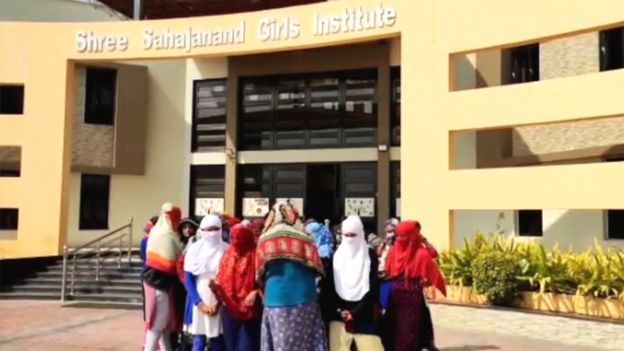
    The incident took place in the city of Bhuj on Tuesday. The young women are undergraduate students at Shree Sahajanand Girls Institute (SSGI), which is run by Swaminarayan sect, a wealthy and conservative Hindu religious group.

    They said a hostel official had complained to the college principal on Monday that some of the students were breaking rules menstruating women are supposed to follow.

    According to these rules, women are barred from entering the temple and the kitchen and are not allowed to touch other students during their periods.

    At meal times, they have to sit away from others, they have to clean their own dishes, and in the classroom, they are expected to sit on the last bench.

    Female students of SSGI college protested on the campus
    Female students gather outside the Shree Sahajanand Girls Institute (SSGI)

    One of the students told BBC Gujarati’s Prashant Gupta that the hostel maintains a register where they are expected to enter their names when they get their periods, which helps the authorities to identify them.

    But for the past two months, not one student had entered her name in the register – perhaps not surprising considering the restrictions they have to put up with if they do.

    So on Monday, the hostel official complained to the principal that menstruating students were entering the kitchen, going near the temple, and mingling with other hostellers.

    The students allege that, the next day, they were abused by the hostel official and the principal before they were forced to strip.

    They described what happened to them as a “very painful experience” that had left them “traumatised” and amounted to “mental torture”.

    One student’s father said that when he arrived at the college, his daughter and several other students came to him and started crying. “They are in shock,” he said.

    On Thursday, a group of students held a protest on the campus, demanding action against the college officials who had “humiliated” them.


    The college trustee Pravin Pindoria said the incident was “unfortunate”, adding that an investigation had been ordered and action would be taken against anyone found guilty of wrongdoing.

    But Darshana Dholakia, the vice-chancellor of the university which the college is affiliated with, put the blame on the students. She said that they had broken rules and added that some of them had apologised.

    However, some of the students told BBC Gujarati that they are now under pressure from the school authorities to play down the incident and not to speak of their ordeal.

    On Friday, the Gujarat State Women’s Commission ordered an investigation into this “shameful exercise” and asked the students to “come forward and speak without fear about their grievances”. The police have lodged a complaint.


    Using comics to combat India’s menstruation taboos

    This is not the first time that female students have been humiliated on account of periods.

    In a very similar case, 70 students were stripped naked three years ago at a residential school in northern India by the female warden after she found blood on a bathroom door.

    Discrimination against women on account of menstruation is widespread in India, where periods have long been a taboo and menstruating women are considered impure. They are often excluded from social and religious events, denied entry into temples and shrines and kept out of kitchens.

    Increasingly, urban educated women have been challenging these regressive ideas. In the past few years, attempts have been made to see periods for just what they are – a natural biological function.

    But success has been patchy.

    In 2018, the top court in a landmark order threw open the doors of the Sabarimala shrine to women of all ages, saying that keeping women out of the temple in the southern state of Kerala was discriminatory.

    But a year later, the judges agreed to review the order after massive protests in the state.

    Surprisingly, the protesters included a large number of women – an indication of how deeply rooted the stigma over menstruation is.

    Source: BBC

  • Kenyan lawmaker found dead in India

    A Kenyan lawmaker was found dead in his hotel room in India, officials have confirmed.

    Mr Rono Kosigi the Liaison Officer at the Kenyan High Commission in India confirmed on Wednesday that Kahawa Wendani member of county assembly (MCA) Cyrus Omondi was found dead in Mumbai.

    News of his death threw Kiambu County Assembly into mourning.

    Mr Omondi was in India for a workshop alongside his colleagues in the Education committee.

    Mr Omondi was a first-time ward representative at the Kiambu County Assembly in central Kenya. He was elected on President Uhuru Kenyatta’s Jubilee Party ticket.

    Mr Omondi rose from humble beginnings, working as a mechanic in Kahawa before his rise in politics. He clinched the Kahawa Wendani seat in 2017 after failing in his first attempt in 2013.

    Source: Theeastafrican.co.ke

  • Death toll in India’s citizenship law protests hits 23

    The death toll in protests in India against a contentious citizenship law seen as anti-Muslim has reached 23, as nine more people were killed on Saturday in the northern state of Uttar Pradesh.

    Fifteen people have died in the state during the protests so far, police spokesman Praveen Kumar said, adding that a “majority of the dead are young people”.

    Most deaths in BJP-ruled state

    “Some of them died of bullet injuries, but these injuries are not because of police fire. The police have used only tear gas to scare away the agitating mob,” Kumar said.

    He said around a dozen vehicles were set on fire amid protests in the districts of Rampur, Sambhal, Muzaffarnagar, Bijnor and Kanpur, where a police station was also torched.

    India’s most populous Uttar Pradesh state, home to 204 million people, is controlled by Prime Minister Narendra Modi’s Bharatiya Janata Party (BJP).

    Read:Imported for my body: The African women trafficked to India for sex

    An anti-terror squad was deployed and internet services were suspended for another 48 hours in the state.

    On Friday, six people, including an eight-year-old boy, were killed during the protests in the state with a large Muslim population.

    Police said on Saturday that over 600 people were taken into custody. In addition, five people were arrested and 13 police cases filed for posting “objectionable” material on social media.

    Police have imposed a British colonial-era law, called Section 144, which bans the assembly of more than four people statewide. The law was also imposed elsewhere in India to thwart an expanding protest movement demanding the revocation of the citizenship law.

    In an advisory issued on Friday night, India’s Ministry of Information and Broadcasting asked for “strict compliance” by the country’s broadcasters in reporting content that could inflame further violence.

    Protests across India

    Thousands of demonstrators, including students and a large number of women, have vowed to keep up their fight until the Citizenship Amendment Act (CAA), passed last week, is revoked.

    Read:Network that lures women to India as sex workers for African men exposed

    CAA provides a fast-track route to citizenship to “persecuted” Hindus, Sikhs, Parsis, Buddhists, Jains and Christians from Pakistan, Afghanistan and Bangladesh, but excludes Muslims.

    Critics say the law is aimed at marginalising India’s 200 million Muslims and is part of Prime Minister Narendra Modi’s Hindu-nationalist agenda, a claim the BJP denies.

    As day broke in the capital New Delhi on Saturday, demonstrators held up their mobile phones as torches at India’s biggest mosque Jama Masjid. The area witnessed violent protests on Friday evening.

    In Patna in the eastern state of Bihar, three demonstrators suffered bullet wounds and six were hurt from stone-pelting after clashing with counter-protesters, police said.

    An all-women protest was held in Assam state’s Guwahati city in the northeast, where the wave of protests started amid fears the immigrants would “dilute” their local cultures.

    Six people died in Assam – four in police firing – where the protests first started, spreading to other areas including the southern city of Mangaluru where two people were killed on Thursday.

    ‘Not a sectarian protest’

    The backlash against the CAA marks the strongest show of dissent since Modi was first elected in 2014.

    Read:Rogue elephant named after Bin Laden kills five Indian villagers

    “What is interesting is that a lot of the violence and deaths that have been happening have been in areas governed by the BJP or BJP-aligned parties,” Al Jazeera’s Subina Shrestha said, speaking from the Indian capital.

    “Some members of the coalition government have been giving out inciting statements, while others in the coalition are saying that this law is ill-timed,” she said, adding that the mass demonstrations across the country have not been “sectarian” in nature.

    “A lot of these people are students, civilians who have come to the streets in solidarity with the Muslims. They are now talking about a constitutional crisis, an existential crisis and the fundamentals of which India’s constitution is based on.”

    Rights activists in Uttar Pradesh said local policemen were conducting raids on their houses and offices to prevent them from planning fresh demonstrations.

    Discriminating against Muslims

    Tarun Khaitan, professor of law and legal theory at the University of Oxford, told Al Jazeera that the BJP government “has been chipping away at India’s constitutional fundamentals” since it came to power in 2014.

    Read:Modi declares India open defecation free, claim questioned

    “But this act does it so blatantly and so expressly that there is no plausible deniability,” he said.

    Khaitan said the law is a threat to the Indian democracy “because for the first time in India’s democratic, independent history, we are going to write religion as a qualification into our citizenship laws”.

    He said the protesting Indians have decided it is upon them to save the country’s “pluralistic, secular, democratic constitution”.

    In its response to criticism, the BJP government says the law will not impact any Indian citizens, including Muslims.

    “I appeal to our Muslim brothers not to fall for lies being spread by opposition parties,” federal Minorities Minister Mukhtar Abbas Naqvi said.

    The BJP would launch a 10-day campaign to reach out to individual families to explain the law, party spokesman Bhupender Yadav said.

    Source: aljazeera.com

  • Late monsoon fury kills 100 in north India

    At least 100 people have died in northern India over the last three days in unusually heavy late monsoon rains which have submerged streets, hospital wards and houses, officials said Monday.

    Dozens of boats were pressed into service on streets overflowing with gushing rain water in Patna, the capital of the eastern state of Bihar, after torrential downpours far stronger the normal.

    At least 27 people have lost their lives across the state and another 63 in neighbouring Uttar Pradesh since Friday, authorities said. With more rain predicted, weather experts say September could end as the wettest in more than a hundred years.

    Read:Indian woman, 73, gives birth to twin girls

    “Patna alone has recorded some 226 millimetres (8.9 inches) of rainfall since Friday,” Bihar disaster response official M. Ramachandru told AFP.

    Photos showed patients lying on hospital beds in dirty rain water at the state-run Nalanda Medical College and Hospital in Patna.

    It has also been raining heavily in southern India and in the western state of Gujarat.

    The annual monsoon usually lasts from June to September.

    Read:India is trying to reconnect with lost lunar lander on the surface of the moon

    With the Indian Meteorological Department Monday predicting excess rainfall across 15 states, this year’s monsoon will end as the wettest since 1917, the mass-circulation Times of India said.

    “There are no signs of withdrawal for at least four-five days,” senior IMD officer Mrutyunjay Mohapatra told the daily.

    The monsoon, which is vital for farmers across the South Asian region, killed some 650 people in India, Nepal, Bangladesh and Pakistan in July this year.

    Source: France24

  • India delivers surprise corporate tax cuts to boost economy

    India has cut its corporate tax rates in an effort to spur investment and boost growth in the country’s faltering economy.

    Finance Minister Nirmala Sitharaman said the base corporate tax rate would be lowered to 22% from 30%.

    The surprise move triggered a stock market rally, with the Sensex index jumping 4.5%.

    The tax cuts are the latest measures to boost spending and shore up investment in India.

    Read:Four Indian men drown in Italian farm manure tank near Pavia

    Under the slate of reforms announced on Friday, India will lower its corporate tax rate to 22% from 30% for companies that don’t seek exemptions.

    Firms that do receive incentives or exemptions will see their tax rate cut to 25% from 35%.

    In addition, some new manufacturing firms will see their corporate tax rate lowered to 15% from 25%.

    A Prasanna, head of research at ICICI in Mumbai, said the move would boost investment and employment.

    Read:Amazon bets big on India with mega-office

    “This is a long overdue and hugely positive move by the finance minister. The new rates simplify the tax architecture and it will give a fillip to investments and jobs,” he told Reuters.

    India’s economic growth is sitting at a six-year low and the government has taken a series of steps to boost the economy.

    So far this year, India’s central bank has cut rates four times and the benchmark rate currently sits at a near-decade low.

    The country has relied on domestic consumption to fuel growth but spending has slowed sharply.

    Source: bbc.com

  • India is trying to reconnect with lost lunar lander on the surface of the moon

    India has located the lander from its Chandrayaan-2 mission to soft land a rover on the moon but has not yet been able to establish communication, India’s space agency said.

    The historic mission appeared to end in failure on Saturday after scientists lost contact with the Vikram lander moments before touching down on the lunar surface.
    Indian Space and Research Organisation (ISRO) spokesperson Vivek Singh said that cameras from the Chandrayaan-2 orbiter had taken a thermal image of the lander and efforts were underway to establish a signal.

    The level of damage to the lander is unclear.

    Its descent went as planned until it reached an altitude of around 2 kilometers above the moon’s surface. “Subsequently the communication from the lander to ground station was lost. The data is being analyzed,” said K. Sivan, chairman of ISRO. A soft landing seeks to minimize damage to the lander and its contents by controlling the speed of its descent.

    Read:India set to re-attempt Moon mission launch

    ISRO said the mission was “highly complex” and “represented a significant technological leap” compared with other missions.

    The next phase would have been for the robotic rover, named Pragyan (meaning “wisdom”), to deploy and collect mineral and chemical samples from the lunar surface to find evidence of water molecules on the moon.

    But all is not lost, the space agency said. Even if communications with the rover cannot be recovered, the orbiter is expected to continue its mission of mapping the lunar surface and studying the outer atmosphere of the moon.
    “(The orbiter) shall enrich our understanding of the moon’s evolution and mapping of the minerals and water molecules in the Polar Regions, using its eight state-of-the-art scientific instruments,” the ISRO said in a statement on its website.

    Read:Pakistan braces for protests against India moves in Kashmir

    The space agency said that the lunar had “functioned excellently” and that “90 to 95% of the mission objectives have been accomplished and will continue (to) contribute to lunar science, notwithstanding the loss of communication with the lander,” ISRO said.

    Prime Minister Narendra Modi was in the mission control room when the lander was supposed to touch down
    .
    “In life, there are ups and downs. The country is proud of you. And all your hard work has taught us something … Hope for the best … You have served the country well and served science and humanity well,” Modi said after the announcement.

    The Chandrayaan-2, which means “moon vehicle” in Sanskrit, took off from the Satish Dhawan Space Centre at Sriharikota in southern Andhra Pradesh on July 22. Weighing 3.8 tons and carrying 13 payloads, it had three elements: lunar orbiter, lander and rover.

    A successful landing would have brought India into the elite group of nations who have successfully accomplished a soft landing on the moon, after the United States, the former Soviet Union and China.

    Source: cnn.com