As reported by local authorities, there have been at least eight fatalities as a result of severe flooding and mudslides in the Emilia Romagna area of northern Italy, forcing more than 5,000 residents to leave.
According to Reuters, the vice president of Emilia Romagna, Irene Priolo, told reporters that the remains had been found in several different areas and added that although the rain was letting up, river levels were still rising.
The area, which has been experiencing a protracted drought, is under a red alert, which is the highest level of warning or emergency for weather-related deaths. The location has been evacuated and the Emilia Romagna Grand Prix, scheduled for this weekend, has been cancelled.
Fourteen rivers burst their banks in the region, forcing people in cities such as Cesena to climb onto the roof of their buildings to escape incoming water, Reuters reported. Firefighters rescued them with helicopters or rubber dinghies.
A total of 600 firefighters have been deployed from across Italy to assist with evacuations in the region after Italy’s longest river, the Po, broke its banks,” the Italian Department for Civil Protection said in a tweet.
Residents in numerous areas across the region, including in the city of Bologna, were asked not to leave their homes.
The city of Ravenna has also been heavily affected. “It’s probably been the worst night in the history of Romagna,” Ravenna Mayor Michele de Pascale told RAI public radio according to Reuters, saying that 5,000 people had been evacuated from his city alone overnight.
“Ravenna is unrecognizable for the damage it has suffered,” he added.
Tweeting on Tuesday evening, Italian Prime Minister Giorgia Meloni extended her “total sympathy” to those affected by the flooding, adding that the government stands “ready to intervene with the necessary aid.”
This pledge was echoed by Deputy Prime Minister Antonio Tajani in a tweet Wednesday morning, saying that the “government will do everything necessary to help” everyone from “evacuees to those who have lost crops” due to the flooding.
In the neighboring eastern region of Le Marche, also severely hit by flooding, 200 firefighters have been mobilized for rescue efforts in the past 24 hours, according to the Vigili del Fuoco fire service.
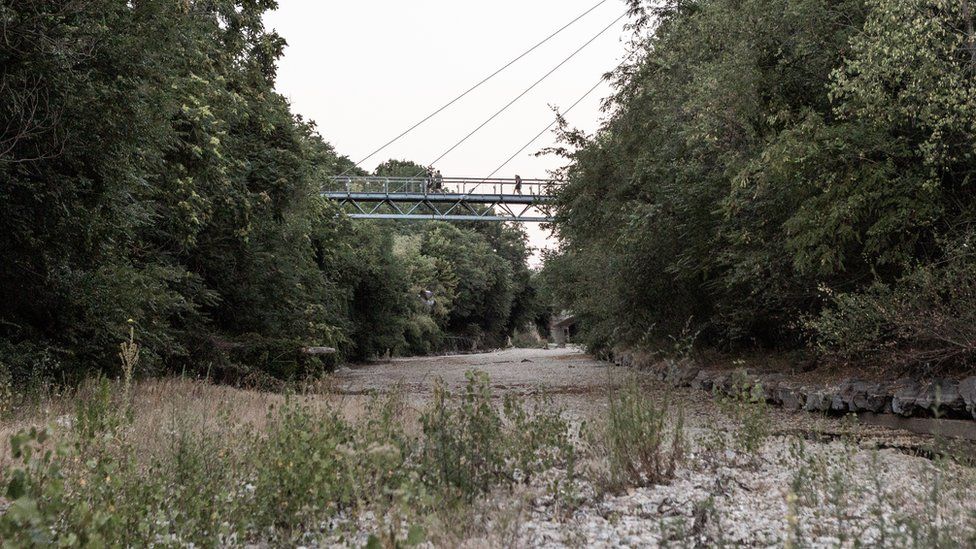
The torrential rains come after months of drought that dried out the land – which meteorologists say has reduced its capacity to absorb water, worsening the floods, according to Reuters.
Water levels on northern Italy’s Lake Garda fell to record lows in February, with Venice experiencing unusually low tides.
From lengthy droughts to severe flooding, the intensity of water-related disasters around the world has increased over the last two decades as global temperatures climbed to record levels, according to recent research.
The study from NASA scientists published in March in the journal Nature Water found that increasingly frequent, widespread and intense droughts and floods were linked more strongly to higher global temperatures than to naturally changing weather patterns, like El Niño and La Niña. This suggests these intense events will increase as the climate crisis accelerates, the study says.
Formula 1 has announced the cancellation of this weekend’s Emilia Romagna Grand Prix because of heavy flooding in the region, citing safety concerns.
In a statement shared on Twitter, it said, “It would not be right to put further pressure on the local authorities and emergency services at this difficult time.”
On Tuesday, Formula 1 staff were asked to leave the site of the race as a precautionary measure, an F1 source told CNN.
The Emilia Romagna Grand Prix is the first event of the Formula 1 season in Europe and was scheduled to take place this weekend.
International students in Italy are eligible for the same financial assistance services as Italian students if they meet the same requirements regarding financial need or academic excellence.
The Italian government provides national and regional scholarships for which international students can apply.
Additionally, certain universities in Italy provide scholarship programs specifically for international students.
Italian Government Scholarships for Foreign Students The Italian Government awards scholarships for studying in Italy both to foreign citizens and Italian citizens resident abroad (IRE).
The scholarships are offered for the following type of courses: Master’s Degree (Laurea Magistrale 2° ciclo), Courses of Higher Education in Arts, Music, and Dance (AFAM), PhD program, Research under academic supervision (Progetti in co-tutela), and Italian Language and Culture Courses.
The scholarship includes tuition fees, health insurance and a monthly allowance. It is only possible to apply for three, six, or nine month scholarships.
The “Invest your Talent in Italy” programme, supported by the Italian Ministry of Foreign Affairs and by the Italian Ministry for Economic Development, offers students from Azerbaijan, Colombia, Egypt, Ethiopia, Ghana, India, Indonesia, Iran, Kazakhstan, Mexico, Turkey, Tunisia, and Vietnam the opportunity to develop their skills and specialise through a range of Master’s and postgraduate degree courses in English, in the fields of Engineering, Advanced Technologies, Architecture, Design, Economics and Management at prestigiousItalian universities.
The best students will be offered scholarships, sponsored by partners and main corporate sponsors.
EDISU Piemonte Scholarships Students including non-EU international students enrolled in a full-time Bachelor’s degree, Master’s degree, Single Cycle Master’s degree, or PhD Degree courses at one of the Universities of Piedmont (i.e. The Politecnico of Torino, the University of Torino, the University of Eastern Piedmont) can apply for EDISU scholarships if they meet the merit and economic requirements of the competition. Part-time students can apply if enrolled in a bachelor’s degree. The scholarship amount varies depending on many conditions. Accommodation service can also be granted to non-resident students.
Padua International Excellence Scholarship Programme The University of Padua also offers the which provides full scholarships to highly talented prospective students wishing to pursue a first-cycle or second-cycle degree taught in English at Padova. The scholarship includes a subsistence allowance of €8,000 and a tuition fee waiver.
Tuition Fee Waivers at University of Pavia for International Students In order to strengthen the presence of international students and foster the creation of an ever more global community, the University of Pavia is awarding 120 tuition fee waivers providing exemption from the payment of University tuition fees to all foreign students enrolling in selected degree programs in the 2023/2024 academic year. The fee waiver will be effective for the first year only and cannot be extended or renewed.
Bocconi Merit and International Awards Bocconi University offers merit-based scholarships to international students enrolling in any eligible Bachelor’s Program or Master of Science Program at Bocconi. The scholarship includes half to full tuition waiver worth up to €13,000 per year for Bachelor’s Program and up to €14,000 per year for Master’s of Science Program.
Politecnico de Milano Merit-Based Scholarships for International Students Every year, Politecnico di Milano offers a number of merit based scholarships to the most talented international candidates admitted to a Master of Science programme. Students obtaining a scholarship will have to pay only an administrative fee of about €200. Scholarships of €5.000 to €10.000 per year may also be awarded on top of the tuition fee waiver.
Politecnico di Torino International Scholarships The Politecnico di Torino offers scholarships to international students to attend academic programs in certain fields such as Engineering and Architecture.
Università Cattolica International Scholarships The UCSC International Scholarship is an annual tuition fee reduction promoted by Università Cattolica in order to foster the access of international student to the degree programs. The discount covers about 25% of the total cost.
The Minister for Foreign Affairs and Regional Integration, Shirley Ayorkor Botchwey on Monday held bilateral talks with her Latvian counterpart H.E. Edgars Rinkvis at the Ministry.
The meeting focused on deepening cooperation between the two countries. A business forum was also organised as part of the activities for the official Visit.
Madam Shirley Ayorkor Botchwey, on her part, encouraged the Latvian business delegation to explore investment opportunities in Ghana and forge partnerships with their Ghanaian counterparts for accelerated economic trade relations, leveraging on the reach of the African Continental Free Trade Area (AfCFTA) which offers a single continental market for goods and services.
In response, H.E. Mr. Edgars Rink expressed his Government’s readiness to deepen economic relations in areas of education, technology, security, food security, and agriculture.
He announced that despite the recent global challenges, there was a marked 25% growth in Ghana-Latvia trade relations in 2020 and hoped that the scope of cooperation could be further expanded.
The two Foreign Ministers recalled high-level visits exchanged between the two countries and looked forward to enhancing fruitful relations on issues of mutual interest in the areas of Information Communication and Technology (ICT), education, health, security, food security, and agriculture among others for the benefit of the two countries.
The visit by H.E. Mr. Edgars is a follow-up to Ghana’s Foreign Minister’s visit to Latvia in 2018 which rekindled economic relations between the two countries.
On his part, the Chief Executive Officer of the Ghana Free Zones Authority (GFZA), Amb. Mike Oquaye Jnr, encouraged the business delegation to explore investment opportunities in the Ghana Free Zones enclaves such as business process outsourcing, call centers, hardware, ICT infrastructure development, data processing, software development, research and development, and incubation centers.
The Deputy Chief Executive Officer of the Ghana Investment Promotion Center (GIPC), Mr. Yaw Amoateng Afriyie also urged the Latvian business delegation to recognise Ghana as an essential commercial partner, a country that offers opportunities as well as a conducive investment climate for investors in the sub-region.
Around 1,200 migrants are being rescued by the Italian coast guard from overcrowded boats off the coast of Sicily in two massive operations.
On one of the fishing boats, there are about 800 passengers, while on the other, there are about 400.
Since Friday, the nation’s coastguard has already saved about 2,000 people through separate operations.
According to the German non-profit ResQship, at least two persons perished during the weekend’s boat crossings.
Despite efforts by the right-wing coalition administration to crack down on irregular migration, the number of migrants arriving in Italy has sharply increased in comparison to the same period last year.
The boat carrying 400 people, which is believed to have set out from Tobruk in Libya, was still without help late on Monday evening, according to an unofficial hotline for migrants in distress, Alarm Phone.
It said it had raised an urgent alarm with the authorities of Italy, Greece and Malta on Sunday.
German non-governmental organisation Sea-Watch International said two merchant vessels near one of the ships had been ordered not to help with rescue efforts by Malta while the boat was in Maltese waters. Instead, one of the ships had been allowed to supply it with fuel and water. The Maltese government has not commented on the matter.
Alarm Phone said that it had been in contact with people on board the boat, which is now in Italian waters south-east of Capo Passero. It said the boat was adrift and taking on water on Sunday. A woman on board also said it was without its captain and had several people in need of medical care.
An operation to rescue the 800 people on the other boat is also under way south-east of Syracuse, but the operation has been complicated by overcrowding on board, the Italian coast guard said. It was not immediately clear where the boat had set out from.
Other boats arrived at the Italian island of Lampedusa, one of the main arrival ports for people wanting to reach Europe, over the weekend.
At least two migrants died and around 20 others were missing after their boat sank on Saturday night, ResQship said.
According to monitoring group IOM Missing Migrants Project, more than 26,000 people have died or gone missing at sea in the central Mediterranean since 2014.
A new law put out by Prime Minister Giorgia Meloni’s Brothers of Italy party might result in fines of up to €100,000 ($108,705) for Italians who use English and other foreign language in official communications.
The measure was proposed by lower chamber deputies member Fabio Rampelli, and it has the approval of the prime minister.
Although all foreign languages are included by the legislation, it is specifically targeted at “Anglomania,” or the usage of English words, which the draft claims “demeans and mortifies” the Italian language. It adds that this is made worse by the UK’s exit from the EU.
The bill, which has yet to go up for parliamentary debate, requires anyone who holds an office in public administration to have “written and oral knowledge and mastery of the Italian language.” It also prohibits use of English in official documentation, including “acronyms and names” of job roles in companies operating in the country.
Foreign entities would have to have Italian language editions of all internal regulations and employment contracts, according to a draft of the legislation seen by CNN.
“It is not just a matter of fashion, as fashions pass, but Anglomania has repercussions for society as a whole,” the draft bill states.
The first article of the legislation guarantees that even in offices that deal with non-Italian-speaking foreigners, Italian must be the primary language used.
Article 2 would make Italian “mandatory for the promotion and use of public goods and services in the national territory.” Not doing so could garner fines between €5,000 ($5,435) and €100,000 ($108,705).
Under the proposed law, the Culture Ministry would establish a committee whose remit would include “correct use of the Italian language and its pronunciation” in schools, media, commerce and advertising.
This would mean that saying “bru-shetta” instead of “bru-sketta” could be a punishable offense.
The move to safeguard the Italian language joins an existing bid by the government to protect the country’s cuisine.
It has introduced legislation to ban so-called synthetic or cell-based cuisine due to the lack of scientific studies on the effects of synthetic food, as well as “to safeguard our nation’s heritage and our agriculture based on the Mediterranean diet,” Meloni’s Health Minister Orazio Schillaci said in a press conference.
Italy won 2-0 at Malta to earn their first victory in Euro 2024 qualifying, and Mateo Retegui scored once more.
Argentina-born Retegui scored in his international debut against England on Thursday, and three days later he did it again with a straightforward 15th-minute goal.
Twelve minutes later, Matthew Guillaumier scored an own goal, giving Roberto Mancini’s team complete dominance at Ta’ Qali National Stadium. Malta hardly ever threatened an answer.
Italy now trails Group C’s early leaders England by three points after their victory over Ukraine earlier on Sunday.
Malta almost grabbed an unlikely fifth-minute lead but captain Gianluigi Donnarumma rescued Italy with a fine stop against Alexander Satariano when one-on-one.
That missed chance proved pivotal as an unmarked Retegui headed home from Sandro Tonali’s corner soon after, before Wilfried Gnonto limped off injured.
Guillaumier turned into his own net from Emerson’s inviting cross as Italy furthered their lead, though Henry Bonello denied substitute Vincenzo Grifo to keep the scoreline respectable at half-time.
A frantic scramble inside the Italy area offered Mancini’s visitors a rare second-half scare before Bonello thwarted a fizzing Bryan Cristante attempt.
Gianluca Scamacca’s inventive acrobatic effort forced another smart Bonello save as Italy cruised to their first win on the road to Germany 2024.
Retegui has scored 28 goals in 48 Argentine Primera Division games for Tigre.
While Mancini noted comparisons with formerNapoli striker German Denis, he preferred to draw parallels with the great Batistuta.
Batistuta joined Fiorentina from Boca Juniors in 1991 and was a great success both with the Viola and with Roma.
“[Retegui] is a classic striker, I see that many compare him to Denis,” Mancini said. “I remember when Batistuta arrived in Italy, he reminds me of him.
“Clearly, he is a young guy and needs time and to grow. But I don’t think it will take long to settle in.”
Italian police announced on Wednesday that a Nigerian woman who had fled the country had been returned to face a 13-year term stemming from convictions for trafficking women for prostitution (Mar.8).
From 2006 to 2007, the 48-year-old Joy Jeff was a prominent player in the trafficking of Nigerian women to Italy, Spain, and the Netherlands. She imposed her authority by violence, including making threats against her relatives back in Nigeria.
A treaty signed by Nigeria and Italy in 2020 facilitated the extradition. According to the statement, she was arrested in Nigeria on June 4, 2022, on an international warrant issued by Italy.
Investigators in Ancona, Italy’s easternmost city, said Jeff was a key figure in trafficking women to Italy, Spain, and the Netherlands, where they were forced into prostitution through violence and threats. In her absence, she was convicted.
The woman was flown from Nigeria’s capital, Abuja to Ciampino airport in Rome, where she was taken away in a wheelchair by police, according to a video released by the Italian police.
“Africa today is a strategic location when looking for fugitives and fighting organised crime,” said Vittorio Rizzi, an Italian police chief responsible for international coordination.
At the June Nations League finals, Italy, the defending European champion, will play Spain, while Croatia, a semifinalist at the 2018 World Cup, will play the Netherlands.
Italy, who missed the World Cup in Qatar for the second time in a row, won their group ahead of Hungary to advance to the Nations League semifinals. This group also included Germany and England.
The Azzurri were defeated 2-1 by Spain at the same stage of the competition in 2021 before losing to France in the championship game. Spain stands in Roberto Mancini’s team’s way of the championship game.
Luis de la Fuente will take over as Spain’s head coach after Luis Enrique left the team following their unexpected World Cup loss against Morocco. Spain defeated Portugal to win Group A2.
The Netherlands, who lost in the final of the 2019 Nations League Finals in Portugal, will play Croatia at home in Rotterdam’s De Kuip.
After losing to eventual champions Argentina in the World Cup quarterfinal, Ronald Koeman took over as manager of the Oranje, replacing Louis van Gaal.
While everything will be different for Spain and the Netherlands in June, Croatia’s lineup will seem familiar thanks to talismanic midfielder Luka Modric, who has committed to continuing his international career after helping the team earn bronze in Qatar.
The third-place play-off and final will be held on June 18, following the semi-final matches on June 14 and 15.
While Spain and the Netherlands will have completely new lineups in June, Croatia will have a more recognizable lineup thanks to stalwart midfielder Luka Modric, who has committed to continuing his international career after helping the team earn bronze in Qatar.
On June 14 and 15, the semi-final matches will be played, and on June 18, the third-place play-off and championship match will be contested.
Italy have unveiled their new “quintessentially Italian and elegant” home and away kits designed by adidas.
Created in collaboration with the Italian Football Federation and to be worn by the men’s and women’s teams, the strips were inspired by marble, a natural, geographical and cultural element that represents the country.
Federation president Gabriele Gravina said: “Today we are entering into a new era and we are proud to be doing it with adidas, which has best interpreted the passion and the tradition of the Azzurri.
“For 113 years, the Italian national football team has represented a symbol of values and style around the world.
AC Milan midfielder Sandro Tonali in the new Italy away shirt by adidas
“Our football kit is a national heritage that goes beyond sport because it transmits feelings that unite people of different ages, sexes and social backgrounds.
“The male and female national football teams represent a strong element of identity that we will enhance to the fullest with this new partnership.”
Bjorn Gulden, chief executive officer at adidas, added: “Italy is one of the most storied and successful national teams in all of football.
“We are very proud to officially welcome the FIGC and all its teams to the adidas family and we look forward to a successful partnership together.
Italy’s new home kit was inspired by the natural, geographical and cultural element marble
“At the same time, we are tremendously excited to finally be able to share with the world our fantastic line-up of products, including beautiful home and away kits.
“They are quintessentially Italian and elegant while staying true to the iconic heritage of the Azzurri.”
The new home kit will be worn for the first time tomorrow night when Italy’s Under-18s face Spain at the FIGC Coverciano Technical Centre in Florence.
Italy’s new away kit was also inspired by the natural, geographical and cultural element marble
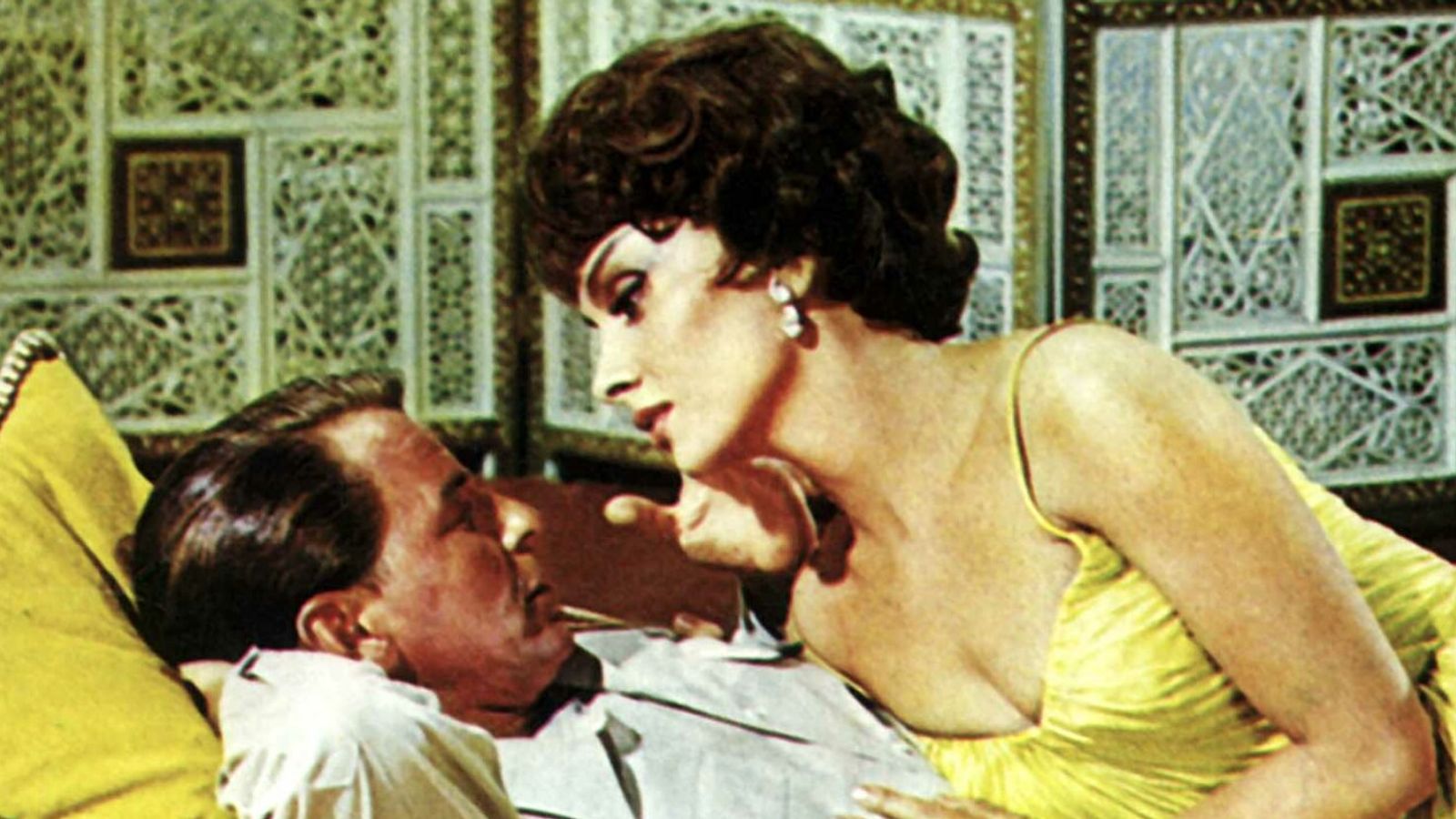
The Italian actress Gina Lollobrigida passed away at the age of 95, according to the ANSA news agency.
She played opposite Hollywood stars like Humphrey Bogart, Rock Hudson, Burt Lancaster, Tony Curtis, and Frank Sinatra during the 1950s and the beginning of the 1960s, making her one of the most prominent European actresses of the era.
Lollobrigida left the movie industry and later worked as a photographer and sculptor.
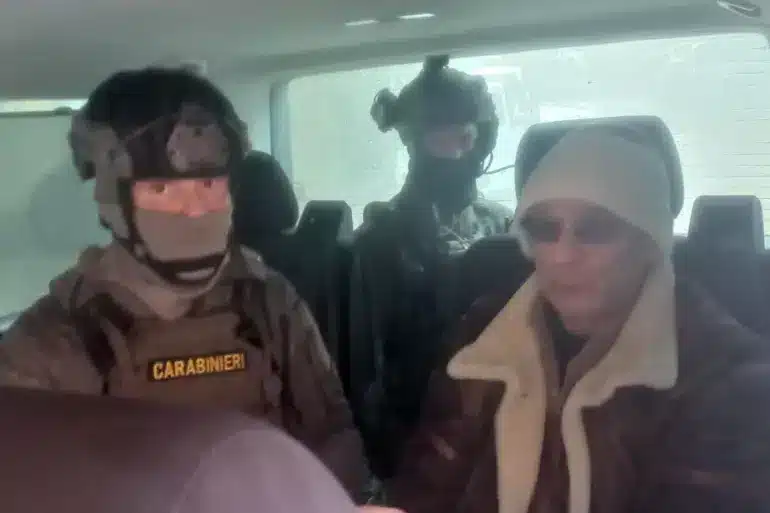
Matteo Messina Denaro, a Cosa Nostra mafia leader in Sicily, has been linked to a string of murders.
The country’s most wanted mafia boss, who had been on the run for 30 years, has been apprehended by Italian police.
Prosecutors claim Matteo Messina Denaro is a Cosa Nostra mafia boss in Sicily.
Police made the arrest on Monday morning at a private hospital in the Sicilian capital Palermo, where the 60-year-old was receiving treatment for an undisclosed medical condition.
Messina Denaro has been sentenced in absentia to a life term for his role in the 1992 murders of anti-mafia prosecutors Giovanni Falcone and Paolo Borsellino.
He also faces a life sentence for his involvement in bomb attacks in Florence, Rome and Milan the following year, which killed 10 people.
Messina Denaro, who comes from the small southern town of Castelvetrano near Trapani, is accused by prosecutors of being solely or jointly responsible for several other murders in the 1990s.
In 1993, he helped organise the kidnapping of a 12-year-old boy, Giuseppe Di Matteo, in an attempt to dissuade his father from giving evidence against the mafia, prosecutors say. The boy was held in captivity for two years before he was strangled and his body dissolved in acid.
Police said in September last year that he was still able to issue commands relating to the way the mafia was run in the area around the western Sicilian city of Trapani, his regional stronghold, despite his long disappearance.
“The prevention [of] and fight against mafia crime … will continue to be an absolute priority of this government,” Meloni said in a post on Twitter.
The arrest Monday came 30 years and a day after the capture of convicted “boss of bosses” Salvatore “Toto” Riina, in a Palermo apartment after 23 years on the run.
Gianluca Vialli has received tributes from many, including Antonio Conte, who called his former Juventus teammate a “lion” and “an inspiration” in an emotional social media post.
The former striker was re-diagnosed with pancreatic cancer in 2021 after being given the all-clear the year before, and his death at age 58 was announced on Friday.
During Vialli’s four-year stay at Juventus between 1992 and 1996, Conte was a teammate and helped the Bianconeri win the Champions League in Vialli’s final season as club captain.
Conte took to Instagram on Friday to share a recent image of the pair dining together, alongside the caption: “Having dinner together in London a few months ago as we had fun remembering all our adventures and battles on the field.
“Unfortunately, in these last few years, you had to fight a great and terrible battle in life.
“I told you and wrote that you have always been an inspiration to me as my captain and for how you were proving to be strong, proud and brave, fighting like a lion against this disease.
“Always in my heart my friend. Goodbye Gianluca.”
Before joining Juventus in 1992, Vialli played for Sampdoria for the majority of his playing career. While there, he won one Scudetto, one Coppa Italia, and the UEFA Cup in addition to the Bianconeri’s 1996 European championship.
Following his departure from Juventus, Conte took over as the team’s captain. He later left for Chelsea, where he finally assumed managerial duties.
Gianluca Vialli has been urged to “stay strong and keep fighting” in his cancer battle after it emerged the Serie A great is being treated in hospital.
The 58-year-old former Italy striker has been visited at a London clinic by his mother and a brother, the Italian news agency ANSA reported.
Concern in Italy about Vialli’s health is shared in England, where former Chelsea defender John Terry sent a message of support.
Terry was given his Blues debut by player-manager Vialli in 1998 and went on to be a long-standing club captain.
He wrote on Twitter: “Stay strong and keep fighting Luca. We are all thinking of you. We are sending our love, strength and prayers.”
Vialli began his career at Cremonese, his hometown club, before going on to star in Serie A for Sampdoria and Juventus, later ending his playing career at Chelsea before going into management and coaching.
Cremonese posted a picture of a young Vialli on Tuesday, adding the message: “Always by your side.”
He scored 16 goals in 59 appearances for Italy and featured in the Azzurri’s 1986 and 1990 World Cup squads.
It was announced last week Vialli would be stepping away from his role as delegation chief with the Italy team to focus on his battle with pancreatic cancer.
He has been reunited of late in the Italy set-up with head coach Roberto Mancini, his former Sampdoria strike partner, and Vialli is hoping to recover in order to resume his national team role.
Vialli announced he had undergone radiotherapy and chemotherapy in November 2018, having been diagnosed with cancer one year earlier.
He was initially given the all-clear in April 2020, but he announced he was fighting the disease again in December 2021.
Explaining his decision to suspend his Italy involvement, Vialli said on December 14: “The goal is to use all my psycho-physical energies to help my body overcome this phase of the disease, in order to be able to face new adventures as soon as possible and share them with all of you.”
Stay Strong and keep fighting Luca 💙
We are all thinking of you. We are sending our love, strength and prayers.@ChelseaFC 💙 pic.twitter.com/i3Ax5lX25y
Gianluca Vialli will take a temporary leave of absence from his position as the delegation leader for the Italian national team in order to concentrate on his fight against pancreatic cancer.
Vialli revealed in November 2018 that he had received radiotherapy and chemotherapy after being given the diagnosis a year earlier.
The 58-year-old forward, a former player for Chelsea and Juventus, received the all-clear in April 2020 but revealed in December 2021 that he was once again battling the illness.
Vialli was present in the dugout with Roberto Mancini as Italy won Euro 2020 the previous year, but he is currently taking a break from his responsibilities with the Azzurri.
“At the end of a long and difficult ‘negotiation’ with my wonderful team of oncologists, I have decided to suspend, hopefully temporarily, my present and future professional commitments,” Vialli said in a statement released by the Italian Football Federation (FIGC).
“The goal is to use all my psycho-physical energies to help my body overcome this phase of the disease, in order to be able to face new adventures as soon as possible and share them with all of you.”
FIGC president Gabriele Gravina said: “Gianluca is an absolute protagonist of the Italian national team and will be in the future as well.
“Thanks to his extraordinary fortitude, to the Azzurro and to the affection of the whole federal family, I am convinced he will be back soon.
“He can count on each of us, because we are a team, on and off the pitch.”
#Vialli: “Ho deciso di sospendere temporaneamente i miei impegni”
Il capo delegazione degli Azzurri ha comunicato alla FIGC di volersi dedicare a superare “questa fase della malattia”#Gravina: “Protagonista della Nazionale, tornerà presto”https://t.co/ddkUHsie8R
Rishi Sunak is set to announce a collaboration between the UK, Italy and Japan to develop a new fighter jet that uses artificial intelligence.
The prime minister says the joint venture aims to create thousands of UK jobs and strengthen security ties.
The nations will develop a next generation fighter – due to enter service in the mid-2030s – that will eventually replace the Typhoon jet.
It is hoped the new Tempest jet will carry the latest weapons.
Work on developing it is already under way – with the aim to create a combat aircraft that will provide speed stealth, use advanced sensors and even artificial intelligence to assist the human pilot when they are overwhelmed, or under extreme stress.
It could also be flown without a pilot’s input if required and could be able to fire hypersonic missiles.
But building such a complex aircraft is extremely expensive – developing the F35 jet was the most expensive programme ever undertaken by the Pentagon – so Britain has been looking for partners.
Italy was already on board, and the addition of Japan is a significant move – at a time when Britain is building closer ties with allies in the Indo-Pacific region worried about a more assertive China.
Other countries could still join the programme. France, Germany and Spain are already working together on their own separate design – as is the United States.
For the UK, this agreement is not just about security but also economics. The hope is that developing a new fighter jet could create and sustain thousands of UK jobs and open doors to more arms exports.
Mr Sunak will launch the first major phase of the programme during a visit to RAF Coningsby, in Lincolnshire, on Friday.
Ahead of the visit, he said: “The security of the United Kingdom, both today and for future generations, will always be of paramount importance to this government.
“That’s why we need to stay at the cutting-edge of advancements in defence technology – outpacing and out-manoeuvring those who seek to do us harm.
“The international partnership we have announced today with Italy and Japan aims to do just that, underlining that the security of the Euro-Atlantic and Indo-Pacific regions are indivisible.
“The next-generation of combat aircraft we design will protect us and our allies around the world by harnessing the strength of our world-beating defence industry – creating jobs while saving lives.”
John Healey, Labour’s shadow defence secretary, said his party backed the partnership but warned about training.
“Ministers must make clear how this fits with wider plans for the RAF’s future, including how they will prevent delays in fast-jet pilot training,” he said.
The Nations League Finals in 2023 will be held in the Netherlands.
Since only they and their opponents from Group A4—Belgium, Poland, and Wales—expressed interest in hosting the knockout round, the Oranje were widely expected to welcome their rivals to play them on home soil.
After defeating the trio to advance as group champions, the Netherlands will now welcome Croatia, Italy, and Spain for the 2022–23 edition’s grand finale the following year.
The Johan Cruyff Arena and Philips Stadion will be unavailable due to concerts, so Feyenoord’s De Kuip and FC Twente’s De Grolsch Veste will host the games.
The competition begins on June 14 and 15, with the semi-finals, and concludes on June 18, with a play-off for third place.
Next January, a draw will be conducted at UEFA’s headquarters in Nyon to determine the pairings for the final four teams.
🇳🇱 Netherlands will host the 2023 #NationsLeague finals!
A four-year-old Tunisian girl who arrived in Italy in early October without her parents on a makeshift boat carrying illegal migrants was repatriated to Tunisia on Thursday, authorities said.
“A delegate of the Tunisian childprotection accompanied the four-year-old girl in her journey back from Italy and handed her over to her family on their arrival at Tunis-Carthage airport,” said in a statement the Ministry of Women, Family, Children and the Elderly.
The return of the girl, “in good health” comes after a decision of the Italian judiciary allowing its repatriation, at the request of the Tunisian authorities, added the ministry.
A Tunisian diplomatic delegation had traveled to Sicily in late October to meet with the Italian family court judge in charge of this case.
The whole family of this girl — the father, mother, the girl, and her brother of 7 years — had planned to embark from the coastal town of Sayada (east) to illegally reach the Italian coast.
During this clandestine operation, the father had handed over his daughter to the smuggler on the boat to help his wife and son who were far behind, without realizing that the boat had left for Lampedusa, according to the Tunisian Forum for Economic and Social Rights(FTDES), an organization that monitors migration issues.
The girl’s parents, and street vendors, were taken into custody before being released.
According to FTDES, about 2,600 Tunisian minors, more than two-thirds of whom were unaccompanied by their parents, managed to reach the Italian coast between January and August 2022.
Tunisia, whose coastline is only 130 km from Sicily, is going through a serious political and economic crisis, with four million poor people out of a population of nearly 12 million. This situation is precipitating mass departures to Europe.
More than 22,500 migrants, including Tunisians and sub-Saharans, have been intercepted off the Tunisian coast since the beginning of the year, according to official figures.
Italy head coach Roberto Mancini has conceded that his 3-4-3 formation did not work as intended against Austria, as he criticised his side’s poor first half display against the hosts.
The European champions finished 2022 with defeat in Vienna, where two first half goals from Xaver Schlager and David Alaba put the hosts in control.
A poor showing in the first period was improved upon after the break, but Italy could not break Austria’s defence, though Mancini believes his side did enough to deserve praise.
“We were better in the second half, in the first half we had the ball and we had to score. After that we suffered, making so many technical mistakes. In the second half, all we were missing was a goal,” he said post-match.
“The formation didn’t go very well, we did little pressing with the strikers conceding too many spaces.
“The team was too long, we did badly and this penalised us a bit, but in the second half I saw a very good team. We were unlucky and a bit inaccurate.”
Italy are not scheduled to be back in action until March, where the defence of their European crown begins with the first qualifying match against England in a rematch of the 2020 final.
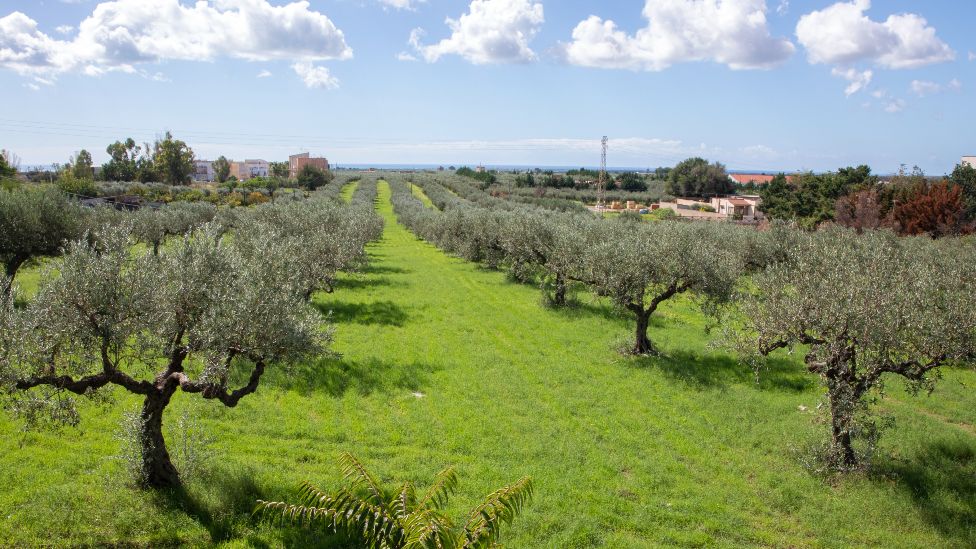
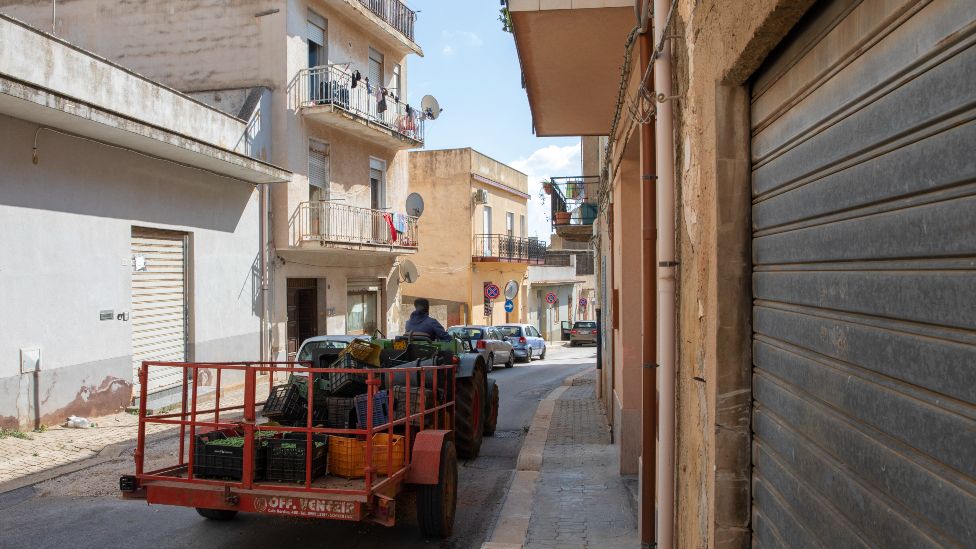
On the Italian island of Sicily, the village of Campobello di Mazara overlooks rows of olive trees blanketing beautiful fields – farm vehicles whizz by with crates full of plump green olives.
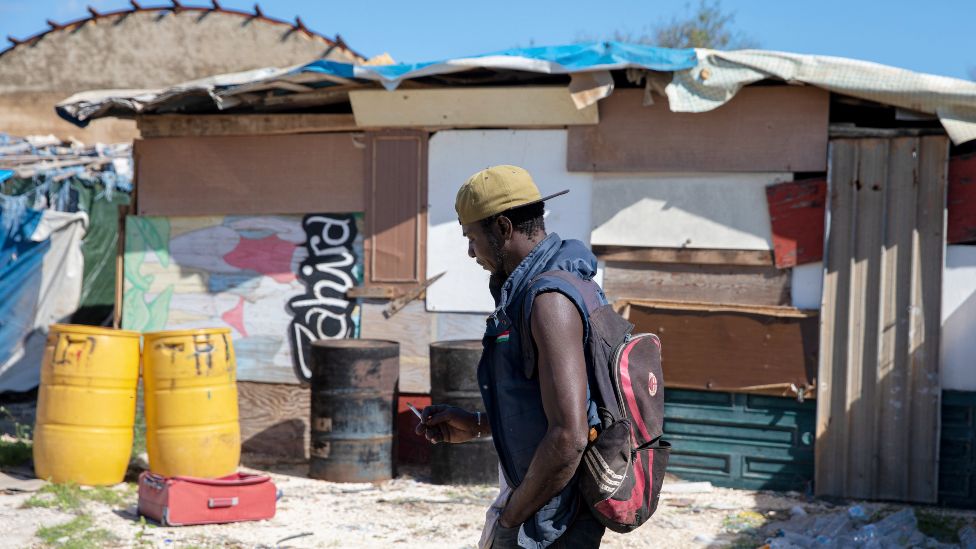
A short distance away from this gorgeous setting is something far darker: a filthy improvised encampment resembling a refugee camp.
IMAGE SOURCE,KATE STANWORTH Image caption, The olive groves of Campobello di Mazara produce the Nocellara del Belice variety, popular in Europe’s upmarket delis
Known as the “ghetto”, it is home to hundreds of African migrant farm workers, most of whom are from The Gambia, Senegal and Tunisia.
Such “ghettos” housing mainly African agricultural workers also exist in other parts of Italy like Puglia in the south. The UN estimates that between 450,000 to 500,000 irregular migrants are working in the country’s agricultural sector – about half of its total workforce.
“Campobello” in Italian means beautiful countryside, yet looking out round the camp there is nothing here but squalor and one-room shacks built from discarded wooden doors, plastic and metal, like old olive tins.
Residents are distrustful of outsiders and few are willingto talk when we visit.
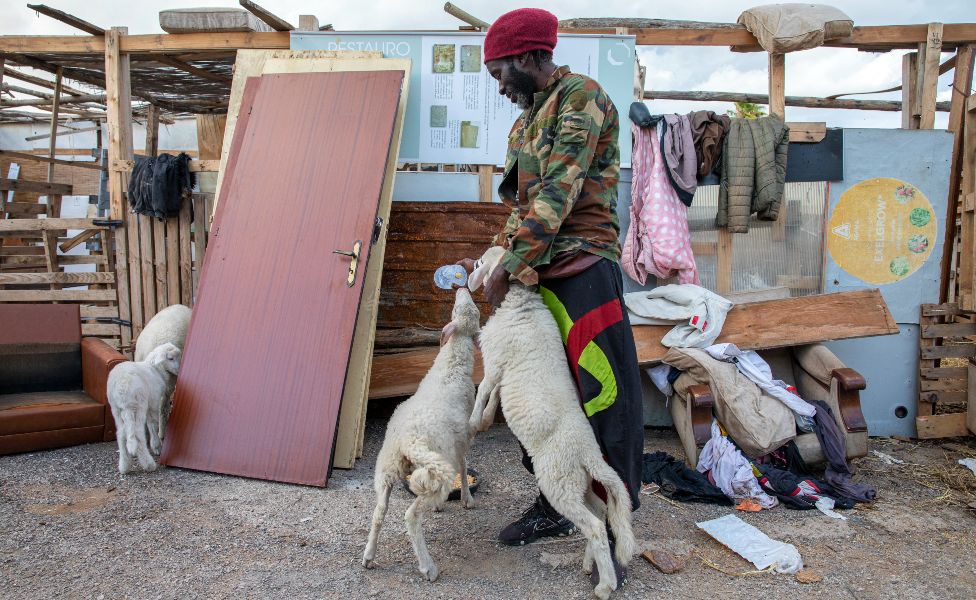
A Senegalese man washes some meat with his bare hands in a large pot filled with dirty water as he prepares lunch, another man butchers a sheep and a third man feeds lambs with milk from a plastic water bottle.
IMAGE SOURCE,KATE STANWORTH Image caption, Most residents of the ghetto are Muslim and raise lambs to slaughter for their halal meat
At the back of the camp is a large open area filled with piles of rubbish and a makeshift shower room which can be hired for $1 (£0.85) and a bucketful of water bought for $1.
The building was constructed by Boja, a Gambian migrant who would only give his first name and moved here in 2017. He initially came to work in the olive fields but since then has used his carpentry skills to become the camp builder.
He erects the shacks which are rented out to workers for $100 a month.
But the shack dwellers live in grim conditions: there is no running water, no sewage system and no electricity. Fires are lit to cook and keep away the night chill, says Boja.
Heatwave labour
Still every year up to more than 1,000 migrants – without official papers – fill this informal camp to work for black-market gangmasters to harvest olives from September to November.
Farmers here grow the Nocellara del Belice olive, considered one of the finest table olives in the world. They need to employ many people to pick them by hand to get them to the expensive delis and supermarkets worldwide.
IMAGE SOURCE,KATE STANWORTH Image caption, Boja has lived in Campobello di Mazara’s ghetto for four years and has become the camp builder
The gangmaster system, known as “caporalato”, means the migrants do not work directly for the farmers – and their illegal status means they are incredibly cheap for businesses, which pay them as little as $2 an hour.
Boja says the ghetto can be a dangerous place – drug dealing and sex workers are in evidence – and even the police do not venture into the camp, which partly burnt down last year, killing a young migrant called Omar Baldeh and leaving hundreds of others homeless.
Yet the nearby town of Campobello di Mazara is eerily empty of residents, its streets lined with boarded-up homes. Sicily has long been a place of emigration – its people leaving to find work opportunities in northern Italy and the rest of Europe.
At night the town whimpers to life with a couple of takeaway pizza placesand cafés where Tunisian and Senegalese migrants sit outside smoking cigarettes and drinking coffee.
IMAGE SOURCE,KATE STANWORTH Image caption, Campobello di Mazara is an eerie town full of empty and boarded-up homes
People do whatever it takes to survive in the ghetto, says Boja, who finds it too difficult to talk about the losses from the fire.
To commemorate the first anniversary of the fire, African migrants marched through Campobello di Mazara last month with Italian activists to call for better conditions for camp residents.
One of those who joined the protest was Issa, a Gambian migrant who also did not want to give his full name. He lives in Puglia, where he spent two years in the large Foggia ghetto, home to more than 1,500 migrants.
He also complained about how African migrants are treated by gangmasters – forced to work long hours in excessive heat.
Italy’s Prime Minister Giorgia Meloni described France’s government as “aggressive” and “incomprehensible” after it chastised Italy for refusing to dock a migrant ship.
Italy recently accepted three NGO boats rescuing migrants crossing from Libya after previously blocking them.
It also stated that France had agreed to accept another ship, the Ocean Viking.
That announcement drew applause from Italy’s Deputy Prime Minister Matteo Salvini, who declared that “the air has changed.”
Also Hungary’s far-right leader Viktor Orban thanked Ms Meloni for “protecting Europe’s borders”.
But reports suggest French authorities had not actually agreed to a deal.
In Paris, Italy’s public announcement is being seen as a way of forcing it into accepting the boat.
French Interior Minister Gérald Darmanin said France would exceptionally let the Ocean Viking dock – with the ship arriving in Toulon on Friday morning.
But he described Italy’s actions as reprehensible and selfish, warning of “very serious consequences”.
In a press conference on Friday, Ms Meloni said she was struck by France’s “aggressive reaction” which she also described as unjustified.
The comments come amid an increasingly explosive war of words between the two European Union members over migration, on which Italy’s new right-wing government has vowed to clamp down.
France has now suspended an agreement to take in 3,500 migrants relocated from Italy, urged other EU members to do the same and tightened controls on its borders with Italy.
Ms Meloni has warned it would not be “intelligent” for the EU to isolate Italy.
She stressed that her country had taken in almost 90,000 migrants this year, while Ocean Viking,with 234 on board, was the first NGO rescue boat that France had ever accepted.
“The situation cannot continue this way,” she added, saying that France’s reaction had betrayed a lack of European solidarity.
The unequal burden-sharing of migration has long caused friction within the EU, and Italy, Greece and Spain and have argued that they cannot be expected to shoulder the weight.
Domestic politics has also fed into the row – on both sides of the border.
Italy’s prime minister – the country’s first far-right leader since World War Two – campaigned on halting migrant boats and needs to please her electoral base.
In France, President Emmanuel Macron faces pressure from the far-right’s National Rally, whose leader Marine Le Pen has been quick to capitalise on the issue.
She accused Emmanuel Macron of “dramatic laxity” by accepting the ship, denouncing his failure to stop “massive and anarchic immigration”.
Whatever the motive, the result is now the worst crisis between France and Italy since 2019, when the then Italian deputy prime minister paid a solidarity visit to the anti-government gilets jaunes (yellow vest) protesters in France, prompting Paris to withdraw its ambassador to Rome.
It is rare for western EU members to criticise each other so openly – and does not bode well for relations between Italy’s new government and its traditional allies.
Houses on the Adriatic coast shook for several seconds, and there were reports of minor damage but no casualties.
Schools were closed in parts of the central Marche region, and trains were halted near Ancona due to suspected track damage.
According to Italian officials, the quake was 8 kilometers (5 miles) deep.
It was felt in Rome in the west and Bologna in the north-east as well as across the Adriatic in Slovenia, Croatia and Bosnia and Herzegovina.
The first and strongest tremor at 07:07 (06:07 GMT) was followed by a number of smaller shocks.
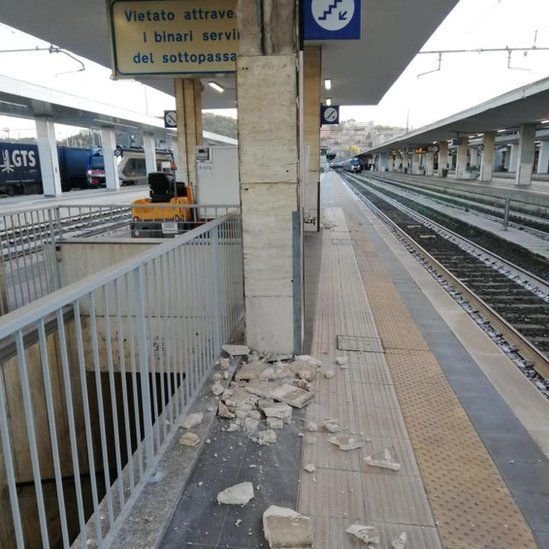
IMAGE SOURCE,EPA Image caption, There was minor damage to the station at Ancona
Fallen masonry was seen in the centre of Ancona and at the station, and residents rushed into the streets in panic. Italian reports said trains were suspended on several lines including between Ancona and the capital, Rome.
A resident in Fano, a coastal town between Rimini and Ancona, told Ansa news agency that the streetlights began swaying like twigs: “Everything was shaking violently, a dreadful feeling, and people poured into the street.”
Local Fano TV presenter Massimo Foghetti was doing a press review when the studio began to shake.
#Terremoto in diretta durante la rassegna stampa dell’emittente Fano Tv 19. Massimo Foghetti cerca di capire, poi arriva un’altra scossa e fugge. La trasmissione viene interrotta pic.twitter.com/ZkyACR6T5E
Central Italy is one of Europe’s most active earthquake regions. A 6.2-magnitude earthquake in 2016 killed 299 people, most of them in the picturesque mountain village of Amatrice.
After a week at sea, migrants from one of four rescue boats that Italy had barred from docking have been allowed to disembark, according to the charity that operates the vessel.
A total of 89 people on board the Rise Above were permitted to alight.
However, people continue to board three other rescue boats as Rome vows to stop irregular migrants from crossing the Mediterranean.
Prime MinisterGiorgiaMeloni has stated that she wants people traffickers to stop “deciding who enters Italy.”
Her right-wing government has been criticised for denying safe port to the rescue boats.
But Chiara Cardoletti, the UN refugee commissioner’s representative in Italy, said that Italy had been on the front line of the migrant crisis for too long and she called on the European Union to find a common strategy.
“We appreciate what Italy has done by allowing boats to enter territorial waters, allowing children, women and people with medical problems to disembark,” she told the BBC. “Italy cannot be left alone, the European Union must step forward and find appropriate and faster solutions.”
On Monday, three people leapt into the water from the Geo Barents after being refused permission to disembark in the Sicilian port of Catania. They were among about 250 migrants told to remain on two boats in Catania after officials deemed them “healthy”.
Mission Lifeline, a German charity that runs the Rise Above, said in a statement that it was “relieved that the rescued people are finally safe on land” at Reggio Calabria on the Italian mainland, a few kilometres from Sicily. Many of the 89 who disembarked were described as minors.
Authorities told Italian media that they had been allowed to leave because they had been picked up in a so-called save and rescue (SAR) incident in the Mediterranean, whereas those on the two boats docked in Sicily were not.
The charity condemned what it called an “undignified political game” that had kept them at sea. The crew of the Rise Above have not yet been able to leave the boat, according to Italian reports.
Mission Lifeline said the Rise Above was by far the smallest of the three vessels in port and its passengers had suffered badly in recent heavy seas.
Italy is one of the main entry points into Europe. Since the start of the year, 85,000 migrants have arrived on boats, according to the UN.
Migrants set sail in small, overcrowded boats from North Africa, often get into distress and are rescued by charity vessels.
Over the weekend, two boats docked in Sicily, carrying a large group of migrants.
Most were allowed to leave, but 35 men on the Humanity 1 and another 215 on the Geo Barents, which is run by Médecins Sans Frontières (MSF), were told they would have to stay on board.
A fourth boat, Ocean Viking, run by French charity SOS Mediterranée, remains off the coast of Sicily with some 234 migrants aboard. They were picked up from the sea off Libya 17 days ago and have repeatedly demanded access to an Italian port.
Both SOS Humanity, which runs Humanity 1, and MSF have argued that everyone on board their ships is vulnerable, as they were rescued from the sea.
SOS Humanity is also taking the Italian government to court, alleging that a decree by an Italian minister, allowing the migrants to be kept on the ships, breaks both Italian and international law.
It’s 5 o’clock somewhere — and boy, could the executives at Warner Bros. Discovery and Lionsgate use a drink. But first, they’ve got to get through these earnings conference calls. Perhaps we should refer to this round as “losses conference calls.”
On Thursday afternoon, within a span of 15 minutes, Warner Bros. Discovery revealed it lost $2.3 billion in the July-September quarter of 2022 and Lionsgate reported an operating loss of $1.8 billion from the same time period. Better make it a double.
The good news for Warner Bros. Discovery is that a loss of $2.3 billion is better than a loss of $3.4 billion, which is the unfortunate figure it posted last quarter. It’s pricey to merge two major media companies, and so far, not so good.
WBD ended the third quarter with 94.9 million combined direct-to-consumer subscribers. That all-in number includes linear HBO and streaming services HBO Max and Discovery+, and represented an additional 2.8 million subs from the end of the prior quarter. The timeline to combine HBO Max and Discovery+ has been moved up from Summer 2023 to Spring 2023, Warner Bros. Discovery’s president and CEO David Zaslav said on his company’s Q3 conference call.
Before the call, in a prepared statement accompanying the disappointing financials, Zaslav again touted his company’s content. He also found another $500 million in synergies between WarnerMedia and his former Discovery, Inc.
“At Warner Bros. Discovery, we have one of the strongest portfolio of assets and IP across sports, news, and entertainment, and the best leadership team in media executing against the right strategy and financial framework to drive profitability, generate meaningful shareholder value, and ultimately position us for long-term success,” Zaslav said. “We are reimagining and transforming the organization for the future while driving synergy enterprise-wide, increasing our target to at least $3.5 billion, and making significant progress on our combined DTC product. While we have lots more work to do, and there are some difficult decisions still to be made, we have total conviction in the opportunity ahead.”
There was no way to spin company revenue. Warner Bros. Discovery suffered an 11 percent decline in Q3 ad sales and saw an 8 percent drop in overall revenue, posting $9.82 billion vs. a market forecast of $10.36 billion. After sharing an already rough Thursday with the rest of the stock market, shares in WBD declined a few percentage points more in after-hours trading.
“Clerks III”
Lionsgate/courtesy Everett Collection
Here we should admit that it’s a bit unfair to lump Lionsgate’s second (fiscal) quarter in with Warner Bros. Discovery. Lionsgate’s wasn’t so bad — it beat on both revenue estimates and adjusted earnings per share — and its stock is moving in the right direction following the market close. (Before the market closed, shares in both companies sank 6 percent.) But still.
Lionsgate will exit seven Lionsgate+ (the former StarzPlay International) territories — France, Germany, Italy, Spain, Benelux, the Nordics, and Japan — to “streamline the business,” in their words. That streamlining cost Lionsgate $218.9 million in content write-offs. Tack that on to the $1.48 billion (non-cash) write-off from the Starz acquisition, reflecting changes to future free cash-flow projections, and boy would they have liked to sell that thing.
The Lionsgate earnings call has yet to begin — it’s set for 6 p.m. ET. In the interest in fairness, we’ll give CEO Jon Feltheimer his say.
“We reported another strong library performance and continued growth in Lionsgate Television series deliveries as our studio businesses continued to perform in line with expectations in the quarter,” Feltheimer said in a prepared statement included in the financials. “Economic and industry headwinds are having the greatest impact at Starz, where we are exiting seven international territories. This will allow us to streamline Starz’s international business and return it to profitability more quickly while continuing to build on the opportunities created by a strong Starz original series slate and focused content strategy domestically.”
After being stabbed and witnessing “a person die in front of me” in an Italian supermarket, Arsenal’s Pablo Mar said he felt “lucky” to have avoided life-threatening injuries.
Mar underwent surgery at Milan’s Niguarda hospital to reconstruct two injured muscles in his back.
A 47-year-old supermarket employee was killed in Thursday’s attack in Milan, according to Italy’s Carabinieri police.
Another employee was left injured along with four customers, including Marí.
The 29-year-old, who is on loan at Monza from Arsenal, had been walking around the supermarket with his wife and son when he was stabbed in the back, reports Gazzetta dello Sport.
“After the hard moment we experienced yesterday, both my family and I want to communicate that fortunately, we are all fine despite the circumstances,” Mari wrote on Twitter on Friday afternoon, alongside a picture from his hospital bed.
“We want to thank all the messages of support and affection that we are receiving.
“In addition, we want to send our condolences and all our strength to the family and friends of the deceased person, and we sincerely wish that all injured people recover as soon as possible.”
Después del duro momento que vivimos ayer, tanto mi familia como yo queremos comunicar que afortunadamente estamos todos bien a pesar de las circunstancias, y agradecer todos los mensajes de apoyo y cariño que estamos recibiendo. pic.twitter.com/8NywRczNS8
Monza said Marí’s surgery went well, adding that he will remain in the hospital for two or three days before startingthe rehabilitation process.
“This type of muscle injury usually requires two months of rest before one can resume physical activities,” the club said.
Italian outlet Corriere della Sera reported that former Napoli player Massimo Tarantino was among those who immobilised and disarmed the attacker before police arrived.
“I’m not a hero. I didn’t do anything special,” said 51-year-old Tarantino.
Monza chief executive Adriano Galliani said the club have asked the Italian football league to postpone Monday’s Serie A match at home to Bologna scheduled for Monday because the team is “in a total state of shock”.
“I’m happy with the outcome of the surgery, but we asked to postpone the next league game,” Galliani told Gazzetta.
“Last night our players were crying. The boys are in shock. We do not know if our request will be accepted or not.”
Marí joined Arsenal from Brazilian side Flamengo in January 2020 and played 19 times for the Gunners before joining Udinese on loan at the start of the year.
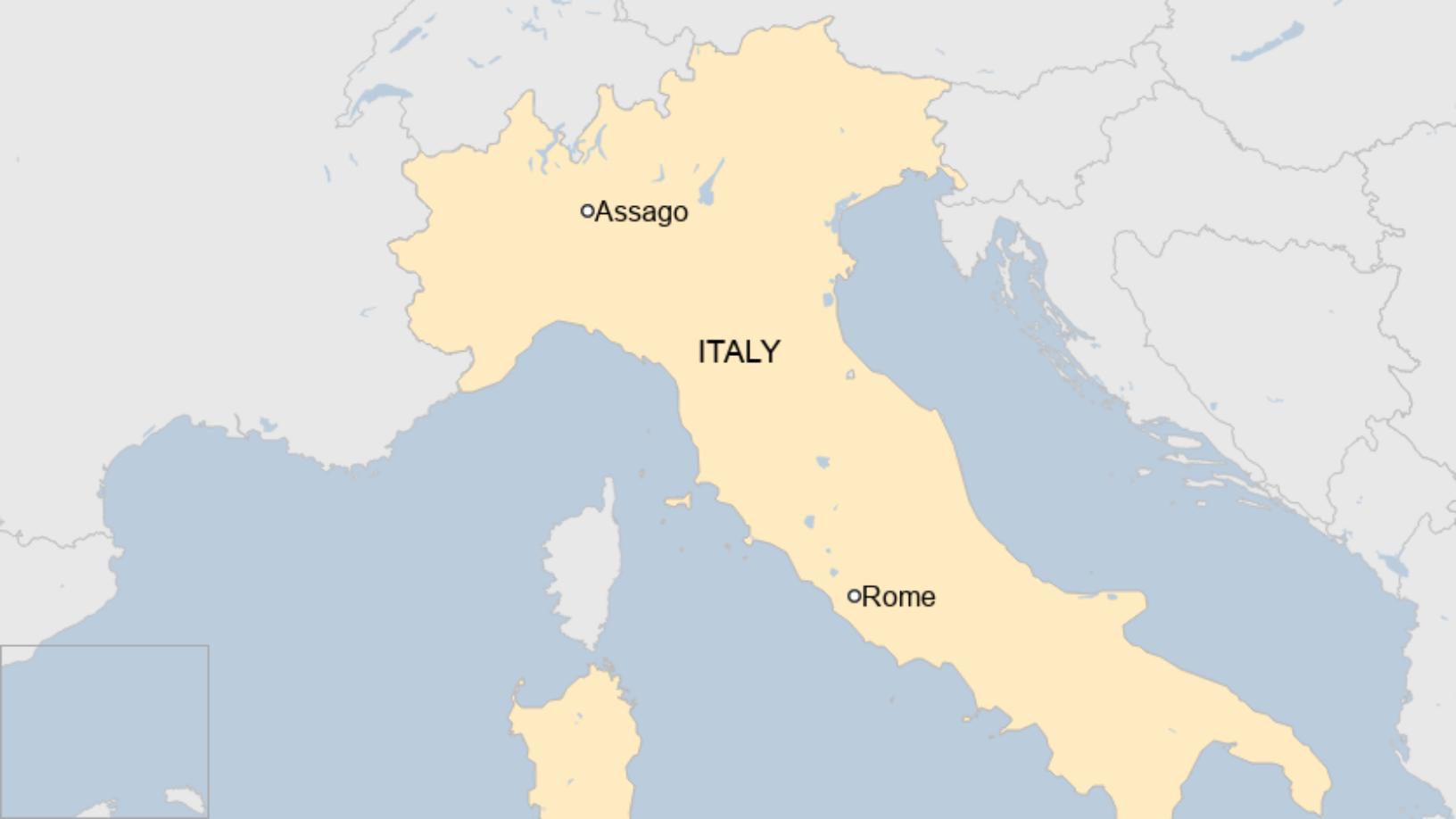
One person has died and at least five others have been injured – some seriously – in a stabbing in a supermarket near the Italian city of Milan, police have said.
Local media reported that a 30-year-old supermarket cashier died after a man started attacking people in Assago.
Among the injured was Pablo Marí, a football player on loan from Arsenal.
A 46-year-old suspect has been detained. Police have ruled out any terrorist motive.
Reports say the attacker has had mental health problems and had grabbed the weapon from the supermarket shelves.
The man started stabbing people at random at about 18:30 local time (16:30 GMT) at a Carrefour in a local shopping centre.
Screams were reportedly heard inside the centre, as terrified visitors tried to flee in panic.
The attacker is reported to have been detained by several customers and handed over to police who arrived at the scene.
IMAGE SOURCE,REUTERS
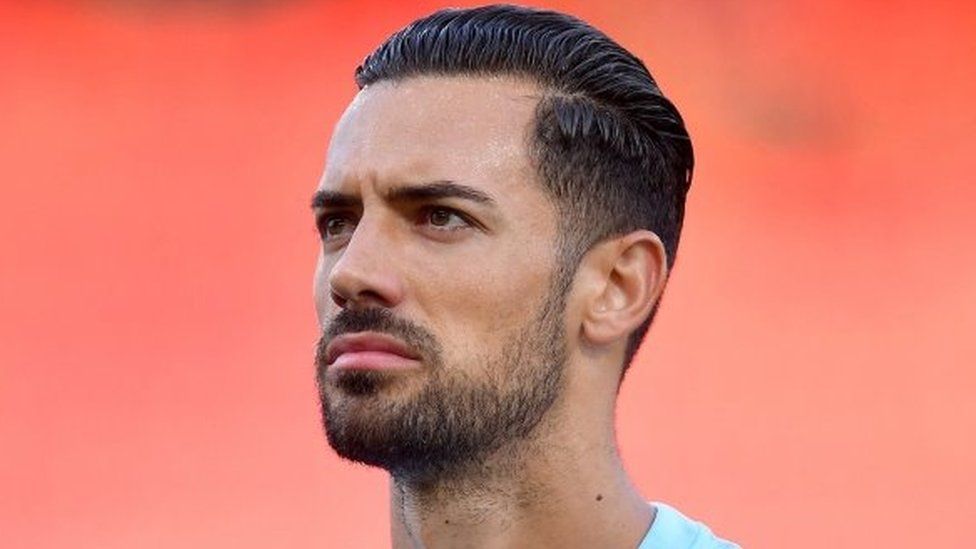
Image caption, Pablo Marí joined Monza on loan in August
Marí, a 29-year-old Spanish defender, suffered a stab wound to the back – but his injuries are not life-threatening. His agent, Arturo Canales, told the BBC that the star was conscious and no vital organs had been affected.
Monza CEO Adriano Galliani told Sky Italia that Marí had been shopping with his wife and young son when the attack took place.
“He had his son in a trolley and his wife next to him. He didn’t notice anything. He then felt something painful in his back, which was the criminal’s knife,” Mr Galliani said.
“Unfortunately, he also saw the criminal stab someone in the throat. He saw everything that happened and it was deeply disturbing,” Galliani added.
While the executive said the defender had suffered a “fairly deep wound on his back”, he said his life was not in danger and that he “should recover quickly”.
Marí joined Arsenal from Brazilian side Flamengo in January 2020. He has only played 19 times for the Gunners and is currently on loan with top flight Italian club Monza.
Arsenal manager Mikel Arteta said: “I just found out. I know Edu [Arsenal technical director] has been in touch with his relatives. He’s in hospital but he seems to be okay.”
The canine unit was on patrol at the airport checking arriving passengers and their luggage from the flight from the Dominican Republic, a commonly used drug smuggling route.
When the dog drew the officers’ attention to the wheelchair, police checked the luggage but found nothing.
They then cut open the upholstery of the wheelchair and found cocaine.
Police said when the discovery was made, the user, a Spaniard, got up from the wheelchair and walked unaided.
In total, 11 packets of cocaine, weighing 13.25kg (25.21bs) was seized, and it could have made 27,000 individual doses, police said.
The street value of the bust values to round €1.4m (£1.2m).
Andye was onlyin Paris for three days. On day one, she met Steven on board the Metro. It was a journey that would change their lives forever.
Andye was only in Paris for three days. On day one, she jumped aboard the Metro train that would change her life forever.
It was September 2016. Andye, born in Haiti and brought up in the US, was 25 and finishing up a Master’s degree in Amsterdam, in the Netherlands.
She was in that in-between phase of a degree when studies are over, but graduation is still to come.
“I decided, ‘I’m just going to travel for a month and then come back to Amsterdam,’” Andye tells CNN Travel.
Andye planned a month’s adventure exploring Italy, Greece, Egypt and India. On her way back, she returned via Paris to visit a close friend, Seyna, who lived in the French capital and was looking after some of Andye’s belongings.
“I got on the Metro to head back to my friend’s house where I’d dropped off my suitcases,” Andye recalls to CNN Travel. “And that’s where he got on.”
“He” was Steven, a 26-year-old Master’s student originally from the Central African Republic studying in Paris and working part-time in a school. (Andye and Steven have asked that only their first names be used for privacy reasons).
When Steven boarded the train, the carriage was already full of travelers. He was one of several passengers standing.
Meanwhile, Andye was sitting, her traveling backpack on her knee and her headphones on. Steven noticed her right away.
“I found her really beautiful,” Steven tells CNN Travel.
A few stops went by, the carriage emptied out, seats freed up and Steven ended up sitting opposite Andye. He kept glancing her way. She seemed to be looking at him too. Their eyes kept meeting.
Andye also noticed Steven amid the crowds of travelers.
“We just kept looking at each other,” she recalls. “He would turn around to look at me, and I would look away, and we just kept on doing that for like a good 15 minutes, just staring at each other and looking away.”
As the train sped underground the Parisian streets, Steven tried to think of a polite way to broach conversation with the girl with the backpack. He wanted to speak to her, but he was also conscious of respecting her space and privacy.
Meanwhile, Andye was silently fantasizing about the stranger opposite her.
She recalls being struck by his “calming energy.”
“He had really nice, muscular arms. I was like, ‘Wow, he looks like someone I could really get a nice hug from.’”
As these thoughts flashed through Andye’s mind, they were followed by another, sinking realization.
“I was like, ‘What if he’s my husband, but I’ll never know? Because I’m going to get off this train without ever speaking to him.’”
“Then, at some point — when our eyes finally caught each other, and neither of us turned back — I saw his lips move. So I removed one of my headphones.”
Metro meet-cute
Steven and Andye started chatting when they were on the same Paris Metro train in September 2016.
In French, Steven was suggesting Andye could move her heavy-looking backpack onto the now vacant seat next to her.
Andye, who is fluent in French, replied that it wasn’t necessary — the bag wasn’t heavy.
“Then, somehow, I just did not put on my headphones back, because I kind of was hoping that we would keep on talking,” says Andye. “And then the conversation continued.”
Steven asked if Andye was a student — because of the backpack — and she told him about her studies. Steven explained he was also working towards a Master’s degree.
“At some point, I had to get off the train to transfer, and he asked if he could get off with me. And I said, ‘You can do as you please.’”
As they got off the train together, Steven offered to help carry her backpack.
“I felt a bit nervous because I didn’t know him and I thought about how he could probably run away with my bag,” says Andye. “But my gut felt comfortable enough to allow him to take it.”
The two waited for the next subway station together, Steven holding the backpack. Then they got on the next train together and sat next to one another.
“We just kept on talking,” says Andye. “That’s when we realized that we actually were doing our Master’s in the same field of study. We were both studying sustainable development, and we started talking about that a bit.”
When the train arrived at Andye’s stop, Steven got off with her, handed her the backpack. They exchanged numbers, then Steven asked if he could give her a hug goodbye. Andye agreed.
“I thought that was so weird, because in France people just do the kisses on the cheek, they don’t hug,” recalls Andye.
“I was like, ‘Wow, what if this guy is a mind reader? Because earlier I was just thinking I could get a really nice hug from him.’”
After their hug, the two went their separate ways. Steven, glancing at his phone, realized his Metro detour had made him late for work.
Meanwhile, Andye reunited with her friend Seyna and immediately shared details of her Metro meet-cute.
Later that evening, Steven messaged Andye and nervously waited for a reply.
“When she responded, I screamed and ran to my cousin,” says Steven, recalling announcing that Andye was the woman he would marry.
Andye and Steven messaged back and forth all evening, trying to figure out if they could meet up again before Andye returned to Amsterdam. She had a tight schedule, and at first suggested it would be easier to meet in a few weeks — after graduation she planned to return to Paris for a week before she headed home to the US.
“Even if we see each other for just a quick second, I really want to see you before you leave,” wrote Steven in response.
Eventually, the two settled on meeting for a quick dinner on Andye’s last evening. Steven wanted to impress Andye and take her to a swanky restaurant, but Andye wanted to make sure she wouldn’t be late home, given she was traveling the next day.
They settled on a casual fast food spot, right next to the Metro stop where they’d parted the first time.
As Andye was getting ready for the date, Seyna teased her about her romantic Metro meeting and the subsequent date plans.
“She was really giddy about me going on the date,” Andye laughs.
When they saw one another again, both Andye and Steven felt excited.
“I felt butterflies in my stomach,” says Steven.
“We did the usual French greeting with one kiss on each cheek AKA ‘la bise,’” recalls Andye, who remembers trying to temper her excitement, given her imminent return to the US.
Inside the restaurant, the two settled into conversation quickly.
“We started talking and getting to know each other a bit,” recalls Andye.
Steven was straightforward with Andye, explaining he was looking for a relationship.
“I thought that was like, ‘Whoa, first date, like you’re doing too much for me.’ But I appreciated his sincerity,” says Andye. “We kept on talking and I got, again, that kind of like, calm feeling being around him.”
Andye’s original plan to keep the evening short no longer seemed so important. She suggested they go into the center of Paris to a bar.
Later, Steven accompanied Andye back to her friend’s apartment. Outside the door, they kissed. Then Steven returned to where he lived, further into the suburbs of Paris.
It was later than he’d realized, and trains had stopped running, so he walked most of the way. Steven says he didn’t mind, he was just caught up in the excitement and romance of the evening.
Meanwhile, Andye excitedly told Seyna about the date and how well it went.
“Then the next day I left to go to Amsterdam, but we kept in touch. He was messaging me the whole time I was in Amsterdam,” recalls Andye.
Long distance
Andye went back to the US, but she stayed in touch with Steven.
After graduation, Andye returned to Paris for a brief stopover before her return to the US. Once again, she arranged to meet Steven at the Metro stop by Seyna’s apartment.
The two hopped on the train together and went for a stroll along the Champs Élysées, through the Trocadéro area and towards the Eiffel Tower.
Andye and Steven tried to see each other as much as they could during those few days, often riding the Metro together. On one of these journeys, Steven turned to Andye and said he didn’t want her to return to the US.
“Why?” asked Andye.
“Because I love you,” said Steven.
“How can you love me? You don’t even know me!” said Andye.
Andye boarded her flight to the US at the end of September, with no imminent plans to return to Europe.
“We didn’t make plans to meet up, we kind of held hope that we were gonna see each other again, at some point,” says Andye.
“We decided that we’re going to keep in touch, and just keep writing to each other and talking,” says Steven.
Three months later, Andye started working with an international organization based in Washington DC. She soon learned the role involved business travel, mostly to Guinea. Serendipitously, flights often included a layover in Paris.
In March 2017, six months after their first Metro encounter, Steven and Andye reunited at Charles de Gaulle airport for Andye’s 24-hour stopover.
In the intervening months, the two had been in constant communication. But it wasn’t the same as finally seeing one another in person again.
“Wow, this person actually exists,” Andye remembers thinking.
“We talked a lot, we hugged a lot,” says Steven of their reunion.
But before long they were saying goodbye again.
Andye’s role involved traveling to West Africa every three months or so. She figured that each time, she would try to incorporate a Paris layover.
But Steven felt guilty that Andye was the one always traveling — he didn’t have a visa to travel to the US, so he couldn’t reciprocate the trips.
“It was getting complicated,” he says. “Because it was always Andye who would have had to travel, I thought it would have been even more complicated later on in the process.”
Steven didn’t communicate these worries to Andye. But she sensed something was up.
“I just remember him being less attentive, really distant. And I said, ‘Look, if you’re not into this, let’s just end it. I am not going to chase you. I love you. But I don’t like one-sided relationships. I would like for this to be reciprocal. And since it’s not, I’m kind of removing myself out of the equation.’”
Reunited in Paris
Andye and Steven reconnected in Paris after a few months apart.
A couple of months passed. Andye and Steven didn’t talk during this period, but they both thought about one another often. Meanwhile, Andye planned a trip to Paris to visit Seyna.
“I’m usually the kind of person, like once it’s over, it’s over. But with him I felt like this was more kind of a break than a breakup,” says Andye.
“I had my friend Seyna kind of reach out to him to see if he was okay, since I hadn’t heard from him, and tell him that I was coming to France for a week for vacation.”
Steven and Andye arranged to meet up during Andye’s trip.
“We talked a lot. We went out dancing, and then we kind of got back to how things were before,” she says. “I was in Paris for at least four to five days and we spent most of the time together.”
Steven says seeing Andye again after months of silence “reignited a fire” inside him.
“At that moment I thought to myself, ‘If I don’t make it work, I’m going to regret it for the rest of my life,’” he says.
The two were able to talk candidly about the situation, with Andye explaining she didn’t mind that she was always the one traveling, given she could incorporate visits into work trips.
They parted on stronger terms.
“I was really easy and confident in our relationship after that visit, but I do think that it took a while for me to warm back up into it,” says Andye.
The relationship did have another wobble when Andye was back in DC. When they came back together again, Andye was firm: She told Steven they both had to be all in.
“I was like, ‘Look, I don’t have time to play games. If this is what you want to do, it’s not for me, I was very strict on my boundaries. I told him, ‘Look, if you’re really serious about this, here’s my mom’s number. You let her know that you’re serious about her daughter.’”
Within a week, Steven had sent a long paragraph to Andye’s mother.
“I tried to tell her a bit about myself,” Steven explains. “I said I was serious about Andye.”
Steven’s message had the effect of taking Andye and Steven’s relationship to the next level. They started talking about what country they might live in the future, and plans for marriage.
Andye and Steven’s temporary breakup made the relationship stronger.
The next time they reunited in France, in November 2017, Andye built a week’s vacation into her stopover.
“He came to pick me up and brought my favorite chocolate croissants to the airport,” she recalls. “He knows I’m addicted.”
It was during this trip that Steven proposed.
“When I met Andye, I felt at peace, in sync with all of nature’s elements,” says Steven. “But when I wanted to propose to her, I felt a wave of different feelings. I was asking myself what I would do if she said no and at the same time, I was excited at the idea that she would accept to be my wife. I was nervous and shaking internally.”
Andye accepted Steven’s proposal.
“I got that same calm feeling that I had that first day that I met him,” says Andye of the moment she said yes.
The couple kept the news to themselves for a short while, first telling Seyna, Andye’s Paris-based friend, and later Steven’s best friend.
The two decided to enjoy the engagement for a little while, and not rush into marriage They continued their long-distance romance and the following summer Andye spent four months in France with Steven. She’d quit her job and was in the middle of a short break, reconvening and figuring out her next steps career-wise.
“It was a really wonderful summer,” says Andye, recalling quality time spent with Steven, his family and friends.
While she was in France, Andye also looked into applying for jobs in Paris. But this proved trickier than she expected
Andye and Steven had previously figured it made most sense for Andye to move to France — Andye was fluent in French, after all. But after she struggled to find a France-based job, the couple started discussing the possibility of living together in the US instead.
Almost a year later, in July 2019, Steven’s fiance visa was approved. To celebrate, Andye and Steven went to Haiti. While there, they were inspired to plan their own Haiti-based wedding celebration.
Move to the US
Andye and Steven got married exactly three years after they met on the Metro.
Steven and Andye started their American life together in a tiny studio apartment in DC. They had a small wedding at a court office on September 16, 2019 — the three year anniversary of their Metro meeting — while anticipating a larger celebration in Haiti the following year.
Both Andye and Steven were thrilled to be living together after years of long distance. The two started a company together, Afrayiti, creating handmade apparel using African fabric.
Not long afterwards, Covid-19 hit the US. Steven lost his job, and early on, Andye caught the virus and was hospitalized.
She recovered physically, but struggled with anxiety for some time afterward.
“I became really anxious to the point where I didn’t leave my place for three months,” Andye recalls. “I didn’t even step outside of the door of our apartment.”
During this time, Andye says Steven was a huge support.
“I wouldn’t have survived this pandemic, if it wasn’t for him.”
Steven says there is no one but Andye who he’d want to spend lockdown with.
The Haiti wedding celebration canceled, the couple instead spent their time cooking, sewing and designing together.
As the pandemic waned, Steven encouraged Andye to reenter the world. She’s grateful for his patience during this period.
“I was so scared to go outside and he kind of really pushed me into taking just small steps,” says Andye.
In summer 2021, the couple relocated to Florida, enticed by the idea of more space, warm weather and proximity to the beach. They feel, says Andye, “at peace” in Florida.
A real life romantic comedy
Andye and Steven feel like fate brought them together.
Today, Andye and Steven are still Florida-based, planning future adventures together. Since the world opened up, they’ve visited Tanzania, Zanzibar and Costa Rica together.
When their Haiti wedding celebration was canceled, the couple decided to start a tradition where they plan a vacation to coincide with their anniversary. Right now, they’re in Mexico celebrating six years since their Metro meeting and three years since their courthouse wedding.
“One of the things that is symbolic — and I don’t think he notices — is when we’re traveling, he likes to ask me [if he can] carry my backpack,” says Andye.
Steven’s been carrying her bag, “since day one,” says Andye, laughing.
While Andye and Steven think they were fated to meet Steven on the Metro that day, they both have moments when they marvel at what happened.
The couple love to travel together. Here they are in Costa Rica in 2021.
“There are days where I say to him, “God, I’m married to a stranger that I met on the train in Paris,’” she says.
“What if I was late to take the train, what would have happened?” says Steven. “It’s destiny that brought us together.”
When Steven and Andye tell others how they met, they’re often told their story resembles a romantic comedy.
“Honestly, I feel like I am living a rom-com with him,” says Andye. “Especially as a Black woman, you don’t often see international love stories with Black women or Black men in them.
And I think for me, just sometimes when I think about it, I’m like, ‘Wow, I’m living my own rom-com.’ I don’t need to see it on TV, this is it.”
“There are days where I say to him, “God, I’m married to a stranger that I met on the train in Paris,’” says Andye. Here’s the two in Tanzania in 2021.
Source:myjoyonline.com
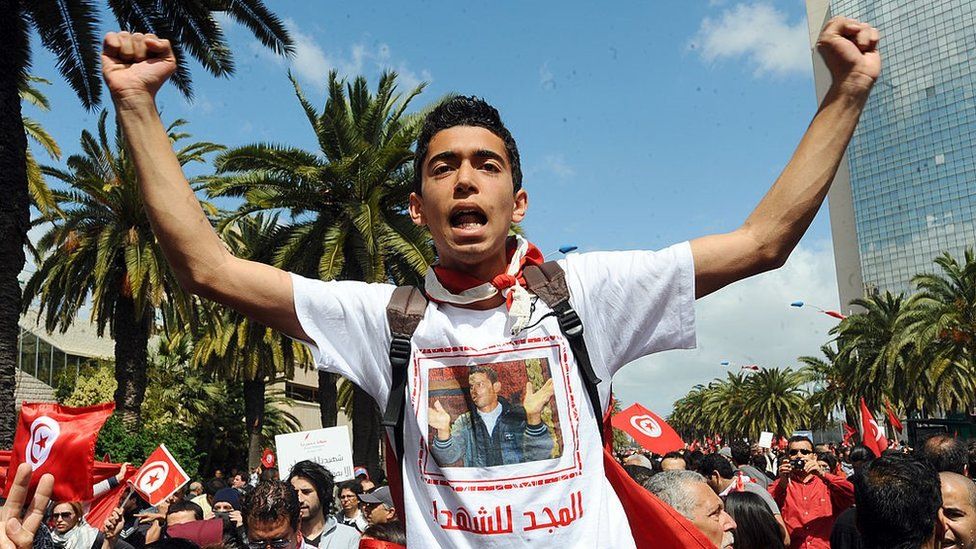
Many young Tunisians stillwant to take the perilous boat crossing over the Mediterranean because they believe they would be better off in nations like Italy, even though the economic situation in Europe is getting worse and governments are cracking down on migrants.
The husband of Hanan Erdidi has made a choice that will alter his life. He informed her of his impending departure the evening before we met in Tunis, the nation’s capital.
Many young Tunisians still want to take the perilous boat crossing over the Mediterranean because they believe they would be better off in nations like Italy, even though the economic situation in Europe is getting worse and governments are cracking down on migrants.
The husband of Hanan Erdidi has made a choice that will alter his life. He informed her of his impending departure the evening before we met in Tunis, the nation’s capital.
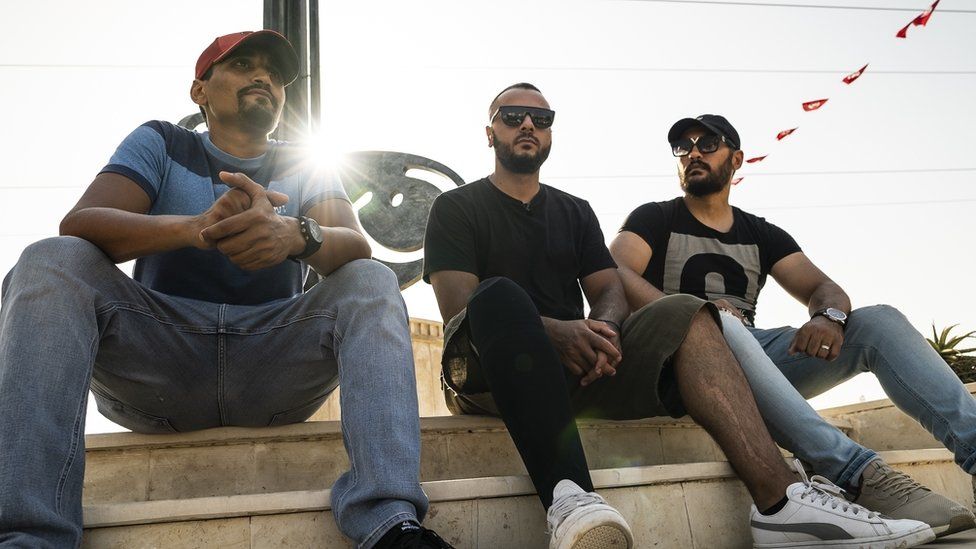
Smugglers have offered him a seat on a boat to Italy and he’s decided to take the risk: he’s had enough of being squeezed into a tiny, damp room in a former army barrack in Tunis with their two young children.
He wants better for his family and now he’s seizing his chance.
“Sometimes we both cry because our kids don’t have toys to play with. Even the clothes they wear are second-hand, given to us by other people,” Hanan tells me.
“Sometimes we prefer to keep the kids at home and not take them to the market, because if we take them there, they will see fruit. We can’t afford even things like apples or grapes. We keep them indoors, so they don’t cry over seeing the things we can’t buy for them.”
“My husband wants to leave to make our living conditions better. Either he improves our situation, or he dies at sea,” she says.
For men like Hanan’s husband, this is becoming a common choice.
Tunisia is in the grip of a cost-of-living crisis. The number of families in need has tripled since 2010 and now stands at almost one million.
Half of the country’s population is living in poverty. Last year, unemployment stood at almost 20%.
IMAGE SOURCE,GETTY IMAGES Image caption, A decade ago, Tunisia was at the forefront of political change in the region
This is the country that ignited the Arab Spring. It’s long been considered one of the movement’s very few success stories.
For many countries in North Africa and the Middle East, the uprisings more than a decade ago brought instability and chaos.
But Tunisia managed to claw its way towards democracy. Its president of 23 years – Zine al-Abidine Ben Ali – was deposed and a new constitution was carefully crafted, based on public will.
When thousands of chanting Tunisians first filled the streets at the end of 2010, marking the start of the Arab Spring, it was a visceral reaction to the death of a fruit and vegetable seller, Mohamed Bouazizi.
He set himself on fire outside a municipal building after having his cart confiscated by the authorities.
I wondered how fruit and vegetable sellers felt now, so I have gone to talk to them at one of Tunis’ many street markets.
Among piles of shining red tomatoes and sun-plumped seasonal fruit, a theme emerges – these men are saving whatever money they can, and then spending it all on dangerous boat trips, believing they will be better off in Europe.
They are unlikely to be deterred by a new right-wing government, which has promised a tough response to irregular migration, taking office following Sunday’s election.
One of them, Seif Eddin Hassouine, details how he has already spent $4,000 (£3,600) on two unsuccessful boat trips, each time intercepted by coastguards and sent back home. But he is about to do it again.
“This country has no jobs, no money, it’s better to leave,” he says.
Rachid Ben Jaafar, selling watermelons from a nearby stall, agrees: “Prices are high, life is very expensive, I can’t afford it any more. There’s no oil or sugar. Sometimes there’s no bread. How can people live? What can people do? All ways are closed.”
The original Arab Spring uprisings are branded deep into the memory of people here.
Walid Kassraoui sacrificed more than most. He was shot in the leg while demonstrating and it couldn’t be saved. Now he’s struggling to get a job, his prosthetic limb a daily reminder of what he’s lost.
IMAGE SOURCE,LEE DURANT/ BBC Image caption, Walid Kassraoui (C) is a father-of-two who lost his leg during the Arab Spring uprising
As we stand in the same street where he protested, he shows me a sign on the road. It lists the names of those who died there, including one of his closest friends.
“During the revolution, the slogans were all about finding jobs, freedoms, and national dignity,” he remembers. “Unfortunately, jobs and national dignity have not been achieved over the past 12 years. I’m a dad of two kids who is growing, I was hoping to raise them in better conditions, but unfortunately, I can’t.”
But those hard-fought rights and freedoms are being eroded as people hope they can trade them for jobs and better economic prospects.
President Kais Saied, a constitutional law professor, along with a small group of hand-picked allies, wrote a new framework for the country’s constitution, concentrating power in his own hands.
It was the culmination of a process that started in 2021 when he sacked the prime minister, dissolved the government, and suspended parliament.
In July, a referendum put these changes to the people, but the result was always a foregone conclusion.
In just a few hours, Tunisia’s constitutional landscape had rolled back more than a decade.
But for ordinary Tunisians, the focus now is on how to feed their families or find a job.
Left behind and desperately hoping the sea will spare her husband, Hanan sees a bleak future ahead of her.
“My mother and father are dead,” she cries. “I don’t have brothers, or anybody else. He is my mum, dad, brother – he’s everything to me. If he dies in the sea, I will be orphaned once again.”
German politicians of differing political hues reacted with concern on Monday, with Georgia Meloni likely to become Italy’s first far-right leader since World War II.
Meloni’s Brothers of Italy — a successor parties to the MSI movement founded by former officials loyal to fascist leader Benito Mussolini — scooped a larger share of the vote that any other party in Sunday’s election.
Katharina Barley, a vice president of the European Parliament and a member of Chancellor Olaf Scholz’s center-left Social Democrats (SPD), was concerned that Meloni would align herself with Hungary and Poland. Leaders of both countries have clashed with Brussels over the issue of rule of law, with Hungary keen to dilute sanctions against Vladimir Putin’s Russia.
Barley said she was not fully reassured by an apparent softening of Meloni’s euroskeptic stance.
“I’m not convinced yet. Of course, if she becomes prime minister, she will have the benefit of the doubt,” Barley said.
The vote provided the bloc lead by Giorgia Meloni with a clear majority
“The EU can only work if you try to apply common solutions that fit everyone,” she added. “That means compromise. Our experiences with this sort of government is that they do not engage in compromises at all.”
Junior coalition members fearful
Members of the SPD’s two junior coalition partners also said they were anxious about the likelihood of Meloni coming to power.
Alexander Graf Lambsdorff, of the neoliberal Free Democrats (FDP), echoed the sentiment that decision-making processes at the EU level could be made more difficult.
“It is becoming more and more laborious,” Lambsdorff told the German public broadcaster ARD on Monday, referring to the issues of migration, financial reform, and the internal market.
Omid Nouripour, the co-leader of the environmentalist Greens, Germany’s other junior coalition partner, described the election results as “worrying.”
Far-right heading for power after Italy vote
He said it was well known that there are “very close ties with the Kremlin” within the right-wing alliance.
The leaders of the other two parties within the alliance, Matteo Salvini and Silvio Berlusconi have previously sought a close relationship with Russian President Vladimir Putin. Salvini’s League has called for a weakening of Western sanctions against Russia, and Berlusconi has long been friends with the Kremlin leader.
Meloni has said she is steadfast in her support for Ukraine and strongly supports the European Union’s sanctions.
‘Openly post-fascist statements’
On the opposition seats in parliament,the Christian Democrat lawmaker and foreign policy expert Jürgen Hardt said he was troubled by Meloni’s “openly post-fascist statements.”
“Racism and the exclusion of minorities can no longer have a place in Europe,” Hardt told the German news agency dpa.
“In Germany and Brussels, the new Italian government will be judged on its contribution to the future of Europe, compliance with the sanctions against Russia, and progress in rebuilding the Italian economy,” Hardt said.
Members of the far-right Alternative for Germany (AfD) were jubilant at Meloni’s election success.
“We celebrate with Italy!” AfD lawmaker Beatrix von Storch tweeted. “Sweden in the north, Italy in the south: left-wing governments are yesterday’s news,” she wrote, referring to the success of right-wing populist Sweden Democrats in elections earlier this month.
The most right-wing government in Italy since World War Two is anticipated to be formed by Ms. Meloni.
Giorgia Meloni, a leader of the far right, has declared victory in the Italian election and is on track to become the nation’s first female prime minister.
The most right-wing government in Italy since World War Two is anticipated to be formed by Ms. Meloni.
That will alarm much of Europe as Italy is the EU’s third-biggest economy.
However, speaking after the vote, Ms Meloni said her Brothers of Italy party would “govern for everyone” and would not betray people’s trust.
“Italians have sent a clear message in favour of a right-wing government led by Brothers of Italy,” she told reporters in Rome, holding up a sign saying “Thank you Italy”.
She is set to win around 26% of the vote, ahead of her closest rival Enrico Letta from the center-left. Mr Letta told reporters on Monday that the far-right victory was a “sad day for Italy and Europe” but his party would provide a “strong and intransigent opposition”.
Ms Meloni’s right-wing alliance – which also includes Matteo Salvini’s far-right League and former PM Silvio Berlusconi’s center-right Forza Italia – will take control of both the Senate and the Chamber of Deputies, with around 44% of the vote.
Four years ago, Brothers of Italy won little more than 4% of the vote but this time benefited from staying out of the national unity government that collapsed in July.
The party’s dramatic success in the vote disguised the fact that her allies performed poorly, with the League slipping below 9%, and Forza Italia even lower.
Their big advantage, however, was that where they were able to put up one unified candidate in a constituency, their opponents in the left and centre could not agree a common position and stood separately.
Giorgia Meloni appears certain to become prime minister but it will be for the president, Sergio Mattarella, to nominate her and that is unlikely to happen before late October.
Although she has worked hard to soften her image, emphasizing her support for Ukraine and diluting anti-EU rhetoric, she leads a party rooted in a post-war movement that rose out of dictator Benito Mussolini’s fascists.
Earlier this year she outlined her priorities in a raucous speech to Spain’s far-right Vox party: “Yes to the natural family, no to the LGBT lobby, yes to sexual identity, no to gender ideology… no to Islamist violence, yes to secure borders, no to mass migration… no to big international finance… no to the bureaucrats of Brussels!”
The center-left alliance was a long way behind the right with 26% of the vote and Democratic Party figure Debora Serracchiani argued that the right “has the majority in parliament, but not in the country”.
In truth, the left failed to form a viable challenge with other parties after Italy’s 18-month unity government fell apart, and officials were downbeat even before the vote. The Five Star Movement under Giuseppe Conte won a convincing third place – but did not see eye to eye with Enrico Letta even though they have several policies in common on immigration and raising the minimum wage.
Turnout fell to a record low of 63.91% – nine points down in 2018. Voting levels were especially poor in southern regions including Sicily.
Italy is a founding father of the European Union and a member of Nato, and Ms Meloni’s rhetoric on the EU places her close to Hungary’s nationalist leader Viktor Orban.
Her allies have both had close ties with Russia. Mr Berlusconi, 85, claimed last week that Vladimir Putin was pushed into invading Ukraine while Mr Salvini has called into question Western sanctions on Moscow.
Ms Meloni wants to revisit Italian reforms agreed with the EU in return for almost €200bn (£178bn) in post-Covid recovery grants and loans, arguing that the energy crisis has changed the situation.
Italy is already the second most indebted country in the eurozone and Prof Leila Simona Talani of King’s College London believes the next government will face a clutch of serious issues.
“They have no experience economically. Tax cuts will be a problem, so Italy will have less revenue and it’s heading for a recession, so it’ll face problems with the financial markets and with Europe. How will they find the money to tackle the rising energy prices?”
IMAGE SOURCE,REUTERS Image caption, There was little cause for joy at Enrico Letta’s Democratic Party headquarters on Sunday night
The Hungarian prime minister’s long-serving political director, Balazs Orban, was quick to congratulate Italy’s right-wing parties: “We need more than ever friends who share a common vision and approach to Europe’s challenges.”
In France, Jordan Bardella of the far-right National Rally said Italian voters had given European Commission chief Ursula von der Leyen a lesson in humility. She had earlier said Europe had “the tools” to respond if Italy went in a “difficult direction”.
However, Prof Gianluca Passarrelli of Rome’s Sapienza University told the BBC he thought she would avoid rocking the boat on Europe and focus on other policies: “I think we will see more restrictions on civil rights and policies on LGBT and immigrants.”
Ms Meloni wants a naval blockade to stop migrant boats from leaving Libya, and Matteo Salvini is known to covet the job of an interior minister which he held three years ago. However, he is currently on trial for barring a boat from docking as part of his policy to close ports to rescue boats.
This election marks a one-third reduction in the size of the two houses, and that appears to have benefited the winning parties.
The make-up of the Chamber and Senate is not yet clear but a YouTrend projection said the right-wing alliance would hold as many as 238 of the 400 seats in the lower house and 112 of the 200 seats in the upper house.
Now that Meloni is expected to win,there has been a greater reaction, with Moscow declaring its openness to forging “constructive” ties with Rome.
“We are ready to welcome any political forces that are able to go beyond the established mainstream, which is filled with hate for our country,” Kremlin spokesman Dmitry Peskov told reporters.
Meloni’s political allies in Italy have both made controversial remarks about Russia.
Silvio Berlusconi claimed last week that Russian President Vladimir Putin was “pushed” into invading Ukraine, though he later made clear Russia’s aggression against Ukraine was “unjustifiable and unacceptable”.
Meanwhile, Hungary’s nationalist leader Prime Minister Viktor Orban has congratulated Meloni – whose rhetoric on the EU is close to that of the Hungarian nationalist leader – and her allies on the election results.
He added he looked forward to future cooperation over peace, the European economy, and the energy crisis.
🇭🇺🤝🇮🇹 PM Orbán has sent letters to @GiorgiaMeloni, @matteosalvinimi, @berlusconi congratulating them on the election results. “I look forward to our future cooperation to preserve peace in our countries & in Europe, to restart the European economy and to ease the energy crisis.” pic.twitter.com/XPAL9kMT49
Two of the first congratulatory messages to Giorgia Meloni, within the EU, have come from Hungary and Poland.
That’s no coincidence. Warsaw and Budapest both have conservative nationalist governments who rail against EU overreach and have been at odds with Brussels on issues including LGBT rights.
But it’s a little more complicated than saying the three nations might sit as some kind of united trio around the European Council table.
Poland and Hungary are deeply split on Russia’s invasion of Ukraine. Warsaw has been hard-line on sanctions against the Kremlin whereas Budapest has been seen, increasingly, as a barrier.
Giorgia Meloni has stressed her support for Ukraine but it’s an approach that, it’s feared, won’t be fully backed by her right-wing allies.
What is certain is that a new Meloni government could mean more EU division given its predecessor was the Brussels-favoured technocrat, Mario Draghi.
DISCLAIMER: Independentghana.com will not be liable for any inaccuracies contained in this article. The views expressed in the article are solely those of the author’s, and do not reflect those of The Independent Ghana
Was yesterday’s vote for Meloni – or anti-everything and everybody else?
Probably both in a country that has tried every shade of politics in its almost 70 governments since World War Two.
Italy beloved by the world for its food, art, history, and culture is just not working for a large part of its own population. A perpetually stagnant economy has helped fuel a massive brain drain.
The political gerontocracy of recycled ageing men in suits has prompted a massive desire for change. Enough Italians feel that Giorgia Meloni represents that – for better or worse.
Her rigidity on LGBT rights and immigration finds favour in Italy, where Catholic conservatism still holds sway, and which has long felt it has shouldered the burden of Europe’s migration crisis.
And while she insists her party has consigned fascism to history, a country that never had the equivalent of Germany’s denazification has allowed traces of its dark past to permeate through its post-war politics.
There is, undoubtedly, a section of Meloni’s base that still glorifies Il Duce [war-time fascist dictator Benito Mussolini]. She knows it is now incumbent upon her to reassure Italians – and Europeans – that she really has moved on.
Is Meloni the future? At least for a while, certainly. But in a country whose governments last on average just over a year, she knows Italians’ patience with the latest political novelty can run out quickly.
DISCLAIMER: Independentghana.com will not be liable for any inaccuracies contained in this article. The views expressed in the article are solely those of the author’s, and do not reflect those of The Independent Ghana
The official line from Germany – as we reported earlier – is one that suggests the expectation of a “Europe-friendly country”.
However, most politicians who have commented on Giorgia Meloni’s Brothers of Italy’s predicted win have expressed concern or alarm. The only German party to welcome the result is the far-right AfD.
Jürgen Hardt, the foreign policy politician with the conservative Christian Democrat CDU, expressed worry about Meloni’s “openly post-fascist comments” and the “hair-raising views” of her party’s members.
He told the DPA news agency that “racism and the exclusion of minorities should no longer have any place in Europe”.
Katarina Barley, EU Parliament Vice-President and leading politician within Olaf Scholz’s center-left Social Democrat SPD, told German newspaper Die Welt that Meloni’s “electorally tactical lip service to Europe” can’t hide the fact she represents a danger to constructive co-operation in Europe.
Barley said Meloni was worrying because her “political role models are Viktor Orban and Donald Trump”.
Omid Nouripour, chairman of the German Green Party, described the result as “alarming”.
In an interview on German television, he said it was well-known that people in her right-wing nationalist coalition had “very close relations with the Kremlin”.
He said it couldn’t be ruled out that in Moscow yesterday evening, people were also “cracking open the champagne”.
Leading AfD politician Beatrix von Storch meanwhile tweeted: “We are celebrating with Italy! My heartfelt congratulations to the whole center-right coalition.”
She wrote she hoped that together with “our friends around Salvini”, Meloni would “build a strong right-wing government. Sweden in the north, Italy in the south: left-wing governments are so yesterday.”
Giorgia Meloni, 45, is poised to become Italy’s first female prime minister and the nation’s first PM from the far right.
She is predicted to win up to 26% of the vote, ahead of her closest rival Enrico Letta from the centre left.
And her right-wing alliance – which also includes Matteo Salvini’s far-right League and former PM Silvio Berlusconi’s centre-right Forza Italia – now looks to have control of both the Senate and the Chamber of Deputies, with a projected 42.2% of the Senate vote.
Giorgia Meloni has pledged to “govern for everyone”.
“Italians have sent a clear message in favour of a right-wing government led by Brothers of Italy,” she told reporters as she acknowledged her victory.
Embracing a controversial old motto, “God, fatherland and family”, she campaigned against LGBT rights, wants a naval blockade of Libya and has warned repeatedly against Muslim migrants.
Unlike her right-wing allies, she has no time for Russia’s Vladimir Putin and is pro-Nato and pro-Ukraine, even though many voters on the right are lukewarm on Western sanctions.
Besides tax cuts, her alliance wants to renegotiate Italy’s massive EU Covid recovery plan and have Italy’s president elected by popular vote.Meloni formed Brothers of Italy (Fratelli d’Italia) in 2012, four years after becoming Italy’s youngest-ever minister under Silvio Berlusconi in 2008.
Her party attracted little more than 4% of the vote in the last general election four years ago, and yet she is now expected to get around 25%.
Meloni was the only major party leader who refused to go into popular technocrat Mario Draghi’s broad-based coalition, so she was the only big opposition leader when it collapsed in July.
Meloni grew up in the working-class neighbourhood of Garbatella, raised by her mother after her father left them.
As a teenager, she joined the youth wing of Italy’s neo-fascist movement, formed after the war by supporters of late dictator Benito Mussolini.
In her 2021 book, I Am Giorgia, she stresses she is not a fascist, but identifies with Mussolini’s heirs, saying:”I have taken up the baton of a 70-year-long history.”
Far-right leader Giorgia Meloni has claimed victory in Italy’s election, and is on course to become the country’s first female prime minister.
Ms Meloni is widely expected to form Italy’s most right-wing government since World War Two.
That will alarm much of Europe as Italy is the EU’s third-biggest economy.
However, speaking after the vote, Ms Meloni said her Brothers of Italy party would “govern for everyone” and would not betray people’s trust.
“Italians have sent a clear message in favour of a right-wing government led by Brothers of Italy,” she told reporters in Rome, holding up a sign saying “Thank you Italy”.
She is set to win 26% of the vote, based on provisional results, ahead of her closest rival Enrico Letta from the centre left.
Ms Meloni’s right-wing alliance – which also includes Matteo Salvini’s far-right League and former PM Silvio Berlusconi’s centre-right Forza Italia – will take control of both the Senate and the Chamber of Deputies, with around 44% of the vote.
Her own party’s dramatic success in the vote disguised the fact that her allies performed poorly, with Mr Salvini’s party slipping below 9%, and Forza Italia even lower. Four years ago, Brothers of Italy won little more than 4% of the vote but this time benefited from staying out of the national unity government that collapsed in July.
The decision on who becomes Italy’s next leader is up to the president, Sergio Mattarella, and that will take time.
Although Giorgia Meloni has worked hard to soften her image, emphasising her support for Ukraine and diluting anti-EU rhetoric, she leads a party rooted in a post-war movement that rose out of dictator Benito Mussolini’s fascists.
Earlier this year she outlined her priorities in a raucous speech to Spain’s far-right Vox party: “Yes to the natural family, no to the LGBT lobby, yes to sexual identity, no to gender ideology… no to Islamist violence, yes to secure borders, no to mass migration… no to big international finance… no to the bureaucrats of Brussels!”
The centre-left alliance was a long way behind the right with 26% of the vote and Democratic Party figure Debora Serracchiani said it was a sad evening for Italy. The right “has the majority in parliament, but not in the country”, she insisted.
The left failed to form a viable challenge with other parties after Italy’s 18-month unity government fell apart, and officials were downbeat even before the vote. The Five Star Movement under Giuseppe Conte won a convincing third place – but does not see eye to eye with Enrico Letta even though they have several policies in common on immigration and raising the minimum wage.
Turnout fell to a record low of 63.91% – nine points down on 2018. Voting levels were especially poor in southern regions including Sicily.
Italy is a founding father of the European Union and a member of Nato, and Ms Meloni’s rhetoric on the EU places her close to Hungary’s nationalist leader Viktor Orban.
Her allies have both had close ties with Russia. Mr Berlusconi, 85, claimed last week that Vladimir Putin was pushed into invading Ukraine while Mr Salvini has called into question Western sanctions on Moscow.
Ms Meloni wants to revisit Italian reforms agreed with the EU in return for almost €200bn (£178bn) in post-Covid recovery grants and loans, arguing that the energy crisis has changed the situation.
Image source, ReutersImage caption, There was little cause for joy at Enrico Letta’s Democratic Party headquarters on Sunday night
The Hungarian prime minister’s long-serving political director, Balazs Orban, was quick to congratulate Italy’s right-wing parties: “We need more than ever friends who share a common vision and approach to Europe’s challenges.”
In France, Jordan Bardella of the far-right National Rally said Italian voters had given European Commission chief Ursula von der Leyen a lesson in humility. She had earlier said Europe had “the tools” to respond if Italy went in a “difficult direction”.
However, Prof Gianluca Passarrelli of Rome’s Sapienza University told the BBC he thought she would avoid rocking the boat on Europe and focus on other policies: “I think we will see more restrictions on civil rights and policies on LGBT and immigrants.”
Mr Salvini will be hoping to return to the interior ministry to halt migrant boats crossing from Libya.
This election marks a one-third reduction in the size of the two houses, and that appears to have benefited the winning parties.
A Rai TV exit poll suggested the three parties will hold 227-257 seats in the revamped 400-seat Chamber and 111-131 seats out of a total of 200 seats in the Senate. Mr Salvini said the right had a clear advantage in both houses.
The same Rai poll also reveals just how dominant the Meloni-led coalition is likely to be. The centre left will hold a mere 78-98 seats in the Chamber and 33-53 in the Senate, it says.
Giorgia Meloni leads the far-right Brothers of Italy party and is aiming to become the country’s first female prime minister allied with two other parties on the right.
She has softened her image and resents being linked to Italy’s fascist past.
She backs Western sanctions on Russia and has toned down rhetoric on Europe.
But she still embraces an old slogan adopted by the fascists – “God, fatherland and family” – she has spoken out against the “LGBT lobby” and called for a naval blockade of Libya to halt migration.
An hour south of Rome, in the town of Latina, observers believe the far right can seize the town from the left. Founded in 1932 by fascist leader Benito Mussolini, Latina still bears traces of the dictator, but has suffered from years of underfunding.
“Take a look, it’s a disaster,” says one passer by. The town has had a left-wing mayor in recent years, but the far right has Latina in its sights. Meloni-ally Matteo Salvini came here last week to round off his League party’s campaign. Centre-right Forza Italia under ex-prime minister Silvio Berlusconi, 85, is also part of her coalition.
Image caption, Gianluca Atlante’s office is directly opposite the Palazzo Emme, built in honour of Mussolini
“Meloni speaks to the guts of the people,” says Gianluca Atlante, a journalist with local newspaper Latina Oggi. Behind him sits the imposing Palazzo Emme, built in the shape of a letter M for Mussolini. These days it serves as the local headquarters of the finance ministry’s law enforcement agency.
Italy’s economy was picking up after the Covid-19 pandemic, but then the energy crisis – largely triggered by Russia’s invasion of Ukraine – sent prices soaring. While the politicians have spent recent days arguing over Russia and Europe, Italians are most worried about paying their bills.
The EU agreed to send Italy an eye-watering €200bn (£178bn) in post-Covid recovery grants and loans but that is conditional on reforms agreed by the outgoing unity government of Mario Draghi. Giorgia Meloni has called for the plan to be revised and has talked of doing more to “defend” Italy’s national interests in the EU.
No wonder many of Europe’s leaders are watching this vote closely.
IMAGE SOURCE,GETTY IMAGES Image caption, Giorgia Meloni (R) has formed an alliance with Silvio Berlusconi (C) of Forza Italia and Matteo Salvini’s League
Until early August, Italy’s left and centre parties were aiming to mount a joint challenge to the Meloni alliance. But they failed to reach agreement, and Ms Meloni’s biggest rival in the opinion polls – centre-left Democratic Party leader Enrico Letta – now faces an uphill struggle.
He even shares several policies with the Five Star Movement led by Giuseppe Conte, but they do not see eye to eye.
From right to left, the politicians agree Italy’s school system is in a state of decay but schoolteachers such as Elisa are sceptical this election will change that.
Italians are electing two houses of parliament – the Chamber and the Senate – and under new rules their size has been cut by a third, so the Chamber has 400 seats and the Senate 200.
That is likely to help the winning alliance most, when coupled with Italy’s mixed electoral system. More than a third of seats are won by a UK-style first-past-the-post constituency contest, and more than 60% by proportional representation across Italy.
Any alliance that wins 40% of the vote could win as many as 60% of seats, Italian commentators believe. It is a new system so it is being closely watched, and by the right-wing alliance especially, because they need the backing of two-thirds of the parliament to carry out one of their keynote policies.
Even if Brothers of Italy do top the vote, and Giorgia Meloni’s allies hand her an overall majority, it is not their decision who becomes prime minister. That rests with President Sergio Mattarella, backed by parliament, and he plays an important role in Italy’s constitution.
Ms Meloni and her allies want a radical change to his role by making him a directly elected head of state rather than an impartial figure chosen by parliament. “Presidentialism” may sound more democratic, but there’s a reason why some Italians are worried by the thought of handing more power to their head of state – and that also goes back to Italy’s previous experience of fascism.
In Latina, they are not just watching the political battle playing out between left and right, there is another story that is also on people’s minds.
Standing for the Senate is one of Italy’s most treasured stars of the past, Gina Lollobrigida. Now 95, she became a cinema legend in the 1960s and she has defied a fractured femur to fight in Sunday’s election.
Englandsuffered relegation to Nations League B after a 1-0 defeat to Italy at the San Siro — a result which also equalled their worst run of form in eight years.
Giacomo Raspadori curled home the only meaningful attempt of the game for the hosts, capitalising on sloppy defending from Kyle Walker.
Italy’s win was only their third in 10 matches, though the performance did little to ease concerns around Roberto Mancini’s side.
It is England who face more immediate problems with just 90 minutes of football left before the World Cup begins — and Gareth Southgate’s men looked far from ready here.
Italy took the lead with their first meaningful chance early in the second half as Leonardo Bonucci pumped the ball forward and Raspadori was given time to curl into the far corner beyond Nick Pope.
Despite making changes to try and change the flow of the game, England could not break the Italian resistance and slumped to defeat.
0 – England are one of only two nations yet to score a single non-penalty goal in the 2022-23 UEFA Nations League. The other nation is San Marino. Gulp. pic.twitter.com/UqYk9u66eM
The mid-season fall of the World Cup in Qatar means no pre-tournament friendlies for the teams competing, giving England just 90 minutes of football before the opening group game against Iran, who beat Uruguay 1-0 earlier on Friday in a friendly.
Now five games without a win and 495 minutes without a goal from open play, Southgate is under intense scrutiny and his team selection continues to baffle — particularly Bukayo Saka starting at left wing-back.
While a lack of goals will always be concerning, the inability to even create opportunities despite an array of attacking options is a problem without an easy fix.
Raspadori’s return
Raspadori’s winner against England was his fourth in an Italy shirt since making his debut in June 2021 — level with Nicolo Barella and with no player within Roberto Mancini’s squad having scored more.
Italy’s absence from the World Cup remains a bitter pill to swallow but Raspadori is already showing he can be a key player in the defence of the European Championship title in 2024.
Southgate’s sorrows compounded
The Three Lions have failed to score from open play in five games in the Nations League having only nertted from the penalty spot — an unwanted record they share with minnows San Marino.
With just 56 days before the World Cup, Southgate received boos from the travelling contingent at the San Siro and requires a massive upturn in form if England are to equal their exploits in last year’s European Championship.
What’s next?
England’s Nations League campaign comes to a close against Germany at Wembley on Monday, while Italy will face Hungary to decide the group winner.
The news comes amid growing fears that families in the EU will not be able to afford the cost of heating this winter.
Energy prices have soared since Russia invaded Ukraine and scarce supplies could push up the cost even further.
Europe is attempting to wean itself off Russian energy in an effort to reduce Moscow’s ability to finance the war, but the transition may not come quickly enough.
EU Council President Charles Michel said the Russian move was “sadly no surprise”.
“Use of gas as a weapon will not change the resolve of the EU. We will accelerate our path towards energy independence. Our duty is to protect our citizens and support the freedom of Ukraine,” he tweeted.
It has blamed the sanctions for holding up routine maintenance of Nord Stream 1, but the EU says this is a pretext.
Germany’s network regulator, the Bundesnetzagentur, said the country was now better prepared for Russian gas supplies to cease, but it urged citizens and companies to cut consumption.
Gazprom’s announcement came shortly after the G7 nations agreed to cap the price of Russian oil in support of Ukraine.
The G7 (Group of Seven) consists of the UK, US, Canada, France, Germany, Italy, and Japan.
Their introduction of a price cap means countries that sign up to the policy will be permitted to purchase only Russian oil and petroleum products transported via sea that are sold at or below the price cap.
However, Russia says it will not export to countries that participate in the cap.
The gas pipeline stretches from the Russian coast near St Petersburg to north-easternGermany and can carry up to170 million cubic metres of gas a day.
It is owned and operated by Nord Stream AG, whose majority shareholder is Gazprom.
Germany had also previously supported the construction of a parallel pipeline – Nord Stream 2 – but the project was halted after Russia invaded Ukraine.
Gazprom said the fault had been detected at the Portovaya compressor station, with the inspection carried out alongside workers from Siemens, the German firm that maintains the turbine.
It said that fixing oil leaks in key engines was only possible in specialized workshops, which had been hindered by Western sanctions.
However, Siemens itself said: “Such leaks do not normally affect the operation of a turbine and can be sealed on site. It is a routine procedure within the scope of maintenance work.”
This is not the first time since the invasion that the Nord Stream 1 pipeline has been closed.
In July, Gazprom cut off supplies completely for 10 days, citing “a maintenance break”. It restarted again 10 days later, but at a much-reduced level.
Speaking to the BBC from the Swiss capital Bern, an economist and energy analyst, Cornelia Meyer, said the gas shutdown would have a major impact on employment and prices.
“That really has huge ramifications for gas in Europe which is about four times more expensive than it was a year ago and this cost of living crisis will really soar because it’s not just gas,” she said. “Gas becomes fertilizer and it’s used in many industrial processes, so that will affect jobs, and it will affect costs.”
The flow of gas through Nord Stream 1 had already been reduced to a relative trickle. Now, once again, it has been halted completely.
An oil leak, claims Gazprom – which has previously attributed reduced flows through the pipeline to technical issues related to sanctions.
Europe, though, believes President Putin is weaponizing gas supplies – deliberately limiting flows through the pipeline to push up prices, in order to test the resolve of Russia’s critics.
The result, as we’ve already seen, is soaring energy costs – with businesses and consumers paying a heavy price.
The timing of Gazprom’smove is certainly interesting. It comes on the same day the G7 announced moves to cap the price of Russia’s oil exports.
But it also comes shortly after Germany – which is heavily reliant on Russian gas – revealed that its winter storage was filling up faster than expected.
A cynic might say this was the last opportunity to tighten the screw, in order to inflict maximum damage over the colder months.
Casarano Calcio 1927 of Italy’s fourth division has confirmed the signing of Cristian Boateng to bolster their roster for the next season
The defensive midfielder, born in Spain’s Las Palmas de Gran Canaria, has Ghanaian roots.
Known for his outstanding physical strength and superb technique, he played for Spanish lower-tier side Marbella for 28 games before moving on to UP Plasencia for 17 appearances and one goal the following season.
Casarano Calcio 1927 signed the midfielder to bolster their squad ahead of the 2022/23 season.
Casarano finished 14th in the league last season with 47 points after 38 games.
The club avoided the relegation playoffs by finishing 14th.
This season, coach Giovanni Costantino will rely on Boateng’s physical strength and superb technique to boost their chances of securing promotion to Serie C.
Police believe an Italian guy who was rescued from a collapsed tunnel close to the Vatican may have been trying to tunnel into a bank.
After firefighters spent eight hours pulling him out from beneath a road, he is now recovering in a hospital.
However, given that he and another guy were both detained by police for causing damage to public property, he may now need to save himself from even more trouble.
Officers believe he may have been part of a gang trying to break into a bank.
Two other men were arrested for “resisting a public official” after trying to escape from the site, Rai News reports.
Three of the four men managed to escape before the tunnel collapsed, leaving the final man trapped six meters below.
“We are still investigating, we do not exclude that they are thieves, it is one of the theories,” a police spokesman told the AFP news agency.
The tunnel, which began in an empty, newly-rented shop, was in an area close to two banks.
Local media believe the motive to be clear, noting that the tunnel was found near a bank shortly before the 15 August long weekend, when much of the city empties.
“The hole gang,” read the headline in the Corriere della Sera daily.
Michele, a resident who lives in the same building, said residents had no idea what was going on, adding: “We all thought that the people there were renovating the place.”
The death of a migrant who was attacked in broad daylight in central Italy has sparked outrage.
The assault on the Nigerian street trader by another man in Civitanova Marche town centre was captured on video on Friday.
The recording, reportedly made by onlookers without any attempt to intervene, shows the victim being held to the ground by a white man.
A 32-year-old Italian has been arrested on suspicion of murder and robbery.
The video of the attack – which has been widely circulated on Italian news websites and social media – has shocked the community, with many highlighting the “indifference” of witnesses.
The circumstances of the incident are unclear.
Call for justice
The victim has been named as Alika Ogorchukwu, a married father of two. His wife, named as Charity Oriachi, could not contain her tears as she told media how she was shown the body of her husband lying on the ground.
On Saturday hundreds of people from the local Nigerian community took to the streets of Civitanova Marche, in Marche region, to demand justice.
The attack has also been condemned by Italian politicians.
Enrico Letta, the leader of the left-wing Democratic Party, said what happened was “dismaying”.
“Unheard of ferocity. Widespread indifference. There can be no justification,” he wrote in a tweet.
Right-wing leader Matteo Salvini also expressed outrage over the death, saying “security has no colour” and “needs to return to being a right.”
Italy has declared a state of emergency in five northern regions surrounding the Po River amid the worst drought in 70 years.
Emilia-Romagna, Friuli Venezia Giulia, Lombardy, Piedmont and Veneto will be given €36.5m (£31m; $38m) in emergency funds to tackle the water shortage.
The drought threatens more than 30% of Italy’s agricultural produce, according to the agricultural union Coldiretti.
Unusually hot weather and low rainfall across winter and spring have compounded water shortages in northern Italy.
“The state of emergency is aimed at managing the current situation with extraordinary means and powers,” the Italian government said.
It said it could take further measures if the situation did not improve.
IMAGE SOURCE,ANADOLU AGENCY VIA GETTY IMAGES Image caption, Some tributaries of the Po River have dried out
The Po is Italy’s longest river, flowing eastward for more than 650km (404 miles).
Farmers in the Po Valley say salty seawater is now seeping into the river, destroying crops.
On Monday Prime Minister Mario Draghi visited the Dolomites mountain range where 13 people are missing after the collapse of a glacier. He said the disaster was “without doubt” linked to global warming.
At least seven people died and eight were hurt on the Marmolada mountain, in an avalanche caused by the glacier’s collapse.
Drones equipped with thermal imaging are taking part in the search for the missing, who include several foreigners.
Lionel Messiand Angel di Maria shone as Argentina beat Italy at Wembley in the Finalissima – a renewal of the contest between the champions of Europe and South America.
Messi’s run and cross set up the opener for Lautaro Martinez, who then turned provider for Di Maria to chip a second.
Substitute Paulo Dybala rounded off a handsome win in injury time.
Italian defender Giorgio Chiellini played the first half of what was his 118th and final international match.
The contest is the first between the two continental champions in 29 years.
It is a revival of the Artemio Franchi Cup, competed for twice before – in 1985, when France beat Uruguay and in 1993, when Argentina beat Denmark on penalties.
Argentina further underline huge potential
Argentina’s victory in front of 87,112 continues their remarkable run of results since June 2019 – they are unbeaten in 32 matches, winning their first Copa America since 1993 and cruising through qualification for the World Cup in Qatar in the process.
Their side at Wembley showcased a host of elite global talent, including a stellar front three of Di Maria, Martinez and Messi, who were a menace throughout with their movement and neat interplay.
It was Di Maria and Messi who truly stood out, however, staging their own mini contest with Paris St-Germain club-mate and Italian goalkeeper Gianluigi Donnarumma in what became an increasingly one-sided affair.
Inside two minutes, Di Maria was attempting to lob Donnarumma from close to halfway. By the end of the first half, he had scored a magnificent chip to follow up Martinez’s opener, created by a typically untouchable Messi run and cross.
Italy were simply grateful to their keeper for the string of impressive saves he made to keep the scoreline respectable, before Dybala fired in low with the last kick of the game.
Behind Argentina’s front three, Giovani lo Celso and Rodrigo de Paul were a constant source of energy and positivity while Nicolas Otamendi and Cristian Romero provided grit and guile when needed at the back.
It is 36 years since Argentina won the World Cup. With this side, marrying its undoubted talent with a supreme work-rate, they would appear to have an excellent chance of ending their wait for a third global crown.
Disappointing Wembley return for Italy
For Italy, Wednesday’s game could have been a celebration – a return to the scene of their Euro 2020 triumph and a chance to say goodbye to one of the modern game’s great defenders.
Instead, what started out as a bitter-sweet occasion ended as a chastening one.
The Azzurri know it will be at least four years before they have the chance to face elite non-European opposition such as Argentina in a competitive fixture again. They also now know just how wide the gulf is between themselves and such sides.
Their failure to qualify for this year’s World Cup – the second in a row they will have missed – is undoubtedly a huge blow to a nation that had come so far under the management of Roberto Mancini and would have fancied their chances in Qatar.
It was only nine months ago that they recorded the longest unbeaten run in international football – 37 matches, during which they won the Euros for the second time in their history.
But as the shock play-off defeat by North Macedonia made abundantly clear, theirs is a side in clear need of renewal – a process possibly better enabled by being away from the pressures of competing at a major tournament in the middle of another gruelling domestic season.
The process has already begun. Roberto Mancini’s matchday squad had an eye on the future, including inexperienced 23-year-olds Alessandro Bastoni and Gianluca Scamacca and a fourth start for 22-year-old forward Giacomo Raspadori.
His hand has also been forced, with Chiellini departing the international stage after a typically combative 45 minutes, taking 118 caps’ worth of experience with him.
Further changes and experiments will come, but so do stern fixtures in the shape of Germany, Hungary and England in the Nations League.
For Argentina, the sky is the limit; for Italy things may get worse before they get better.
‘It was a beautiful final’ – what they said
Messi’s performance was at odds with his first season in French football, in which he has only scored 11 times – his lowest return in 16 years. But he thrived in an atmosphere fuelled by vocal Argentine support.
“We knew it was going to be a nice match and a nice setting to be champion,” he said.
“It was a beautiful final, full of Argentines. What we experienced here was beautiful.”
Italy boss Mancini spoke in equally glowing terms of the setting – but less enamoured with the result.
“To play in Wembley is fantastic,” he said. “Every time we play here it is an incredible moment for football and for us.
“The atmosphere tonight was absolutely fantastic, in the end for us maybe not so good but this is football.
“I think they played better than us. They have a fantastic striker, midfielders, they played very, very well.”
Out in the Mediterranean, under a baking sun, fisherman Ezio Billeci comes across a boat of vulnerable migrants and calls for help, but for hours the only response he gets from Italian authorities is to “stand by”. The episode off the island of Lampedusa symbolises what critics say is the government’s lax response to managing migration in a period exacerbated by the coronavirus pandemic — accusations led by the anti-immigrant far-right.
Most of the recent arrivals hail from Tunisia, a country battling high unemployment and political instability. But Italy has its own financial woes — figures released Friday showed it plunged deep into recession — prompting resentment towards so-called economic migrants.
Several episodes in recent days of breakouts from overcrowded reception centres have also sparked fears among local populations that the migrants who did not respect quarantine orders could be spreading the virus throughout Italy.
Exasperated local mayors have appealed for help from the government, which has in some cases sent in army back-up.
Far-right rising star Giorgia Meloni, head of the Brothers of Italy party, accused the centre-left ruling coalition this week of having used draconian measures this spring to ensure Italians respected the coronavirus lockdown, but was now letting migrants roam free.
“You have the nerve to chase people on the beach with drones, and now you allow thousands of illegal immigrants to enter Italy, transgress our borders and violate quarantine, wandering around infected,” she said in an angry address to parliament.
– No emergency? –
Many of the small boats carrying Tunisians to Italy land on the tiny island of Lampedusa. Its ex-mayor Giusi Nicolini, who won the UNESCO Peace Prize in early 2017 for her efforts with migrants, has insisted there “is no emergency”.
“They say we are overrun (with migrants) for political purposes,” she said in an interview this week with La Stampa daily.
A widely-circulated photograph of a Tunisian family with straw sunhats and trolley suitcases arriving by boat with their pet poodle fuelled the far-right, as did a video of beach-going tourists watching as new migrants disembarked on nearby rocks.
“The illegal immigrants are arriving in droves, even with poodles who’ve clearly escaped from Libyan camps,” quipped opposition chief Matteo Salvini, head of the anti-immigrant League, Italy’s most popular party.
On Thursday, Lampedusa’s local League representative, along with the centre-right Forza Italia party, filed a complaint against Interior Minister Luciana Lamorgese, accusing her of destroying nascent tourism on the island.
According to Italy’s interior ministry, nearly half of the 11,191 migrants who have arrived in Italy this year through July 24 have set sail from Tunisia. Of them, nearly 4,000 are Tunisian citizens.
Over 2,000 migrants arrived last week alone, according to the UN Refugee Agency — more than double the previous week.
– ‘Look the other way’ –
The interior ministry has acknowledged that the economic crisis caused by COVID-19 in Tunisia has fed an “exceptional flow of economic migrants” to Italy’s borders, while the virus has made managing numerous daily arrivals more complex.
After specifically singling out Tunisians escaping mandatory quarantine, Lamorgese said Wednesday that the army would guard reception centres, while two ships of 600 places each would be available soon to hold migrants during quarantine.
Prime Minister Giuseppe Conte has remained silent about the recent arrivals, reflecting tensions within the party over how to respond, given that Salvini famously built his voter base on an anti-immigrant policy that the left has failed to counter.
Salvini, who faces trial later this year for allegedly illegally detaining migrants by refusing to let them disembark from a rescue ship, insists that charity ships and others who save migrants at sea encourage more people to attempt the dangerous journey.
Fishermen who come across migrant boats — whether from Tunisia or Libya — beyond 12 nautical miles from Italy’s coasts “are supposed to look the other way”, and leave them there, even if they have run out of petrol and water, Billeci told AFP.
“But I can’t do that, I can’t. Lives at sea should be saved. Full stop,” he said.
Prosecutors from northern Italy are to question Prime Minister Giuseppe Conte on Friday after relatives of Covid-19 victims demanded an inquiry into alleged government negligence.
The prosecutors have travelled to Rome from Bergamo, the city near Milan worst hit by coronavirus before the whole country was locked down in March.
Mr Conte said he was “not at all worried” about the questioning.
Relatives argue that virus hotspots should have been isolated earlier.
Fifty legal complaints were filed on Thursday at the Bergamo prosecutor’s office by a citizens’ group called Noi Denunceremo (We Will Report).
The group consists of bereaved relatives of Covid-19 victims, who say two Lombardy towns – Alzano and Nembro – should have been declared “red zones” as soon as the outbreaks were detected there.
It is the first legal group action in Italy triggered by the pandemic. But the Lombardy region is governed by the right-wing opposition League party, and many have blamed them, rather than the central government, for alleged failures in the coronavirus response.
In addition, the prosecutors will question Italian Interior Minister Luciana Lamorgese and Health Minister Roberto Speranza on Friday.
The prosecutors aim to determine if there are grounds for any charges of criminal negligence.
Lombardy was where the virus first started spreading in Europe and more than half the victims in Italy died in the region.
On Thursday, Italy’s official coronavirus death toll stood at 34,114 – the second-highest figure in Europe after the UK, and fourth-highest in the world.
But Italy’s infection rate has been brought down, enabling the authorities to gradually ease draconian restrictions.
Rome’s responsibility or Lombardy’s? Mr Conte said: “I will conscientiously set out all the facts of which I have knowledge. I am not at all worried.
“All investigations are welcome. The citizens have the right to know and we have the right to reply.”
In a BBC interview in early April, Mr Conte denied claims that he had underestimated the crisis. He said that if he had ordered a lockdown at the beginning, when the first virus clusters were detected, “people would have taken me for a madman”.
He dismissed the suggestion that Italy could have rapidly imposed a big lockdown like the one in the Chinese city of Wuhan.
Lombardy officials say locking down virus hotspots was a central government responsibility. The region’s Health Minister Giulio Gallera has said it was clear from 23 February that Alzano and Nembro had many cases.
But Mr Conte, who heads a center-left coalition government, hit back by saying “if Lombardy had wanted to, it could have made Alzano and Nembro red zones”, AFP news agency reported.
The prosecutors have already questioned senior Lombardy officials.
How did the crisis unfold in Lombardy?
The little town of Codogno was first to be locked down, on 21 February. Then Lombardy and 14 provinces in the neighbouring regions of Veneto, Piedmont and Emilia Romagna were locked down on 8 March. Two days later the lockdown was extended to the whole of Italy.
In early March it was clear that hospitals in the Lombardy crisis zone were overwhelmed with Covid-19 patients and struggling with shortages of protective kit, beds and medical staff.
BBC footage from a hospital in Brescia, near Bergamo, showed how doctors struggled with “staggering” numbers of Covid-19 patients, without medication to fight the virus.
The widow of one victim, Monica Plazzoli, said: “If it hadn’t been so disorganised, if [the province of] Bergamo had been made into a red zone earlier, perhaps the hospitals would not have been driven to collapse”.
Italy’s Muslim community, like others, suffered many deaths as the coronavirus pandemic hit the Mediterranean country hard.
Compounding the pain for the religious minority has been the grim reality of a lack of space to bury their dead.
Imams and Muslim community leaders are now calling for more Islamic cemeteries, or additional space in the country’s existing graveyards, as the faithful increasingly want to be buried in Italy, their home.
“We have experienced the pain (of the pandemic), but it has sometimes been deepened when some families could not find a place to bury their dead because there were no Muslim sections in the town cemeteries,” Abdullah Tchina, imam of the Milan Sesto mosque, told AFP.
More than 34,000 people have died from the virus in Italy, mostly in the industrial north, and for months global air travel has been at a near-standstill.
As a result, Muslims who died of COVID-19 or other causes could not be repatriated to their countries of origin, as was the practice previously.
That led to a spike in requests for burials – and the realisation that Italy lacks the space.
Italy’s Muslims number around 2.6 million, or 4.3 per cent of the population. Living mainly in the country’s north, 56 per cent hold foreign citizenship, many from countries in North Africa or South Asia.
No official statistics are available on the number of Muslims, whether Italians or foreign nationals, who lost their lives during the outbreak.
A rectangle of pebbles
In the cemetery of Bruzzano, on the outskirts of Milan, 50-something Mustapha Moulay gazes at a greyish earthen tomb in the Muslim section of an overwhelmingly Roman Catholic cemetery.
“It was God’s will,” he said of the death on April 7 of his 55-year-old wife from COVID-19.
She contracted the virus in a Milan hospital where she had been admitted a month earlier for a minor leg operation, said Moulay, who was born in Morocco and has lived in Italy for 32 years.
The grave has no tombstone and is simply marked out with a rectangle of pebbles. The freshest graves are strikingly destitute.
The graves of those who died pre-coronavirus look more permanent — with cement borders and sometimes a marble slab engraved with the crescent moon.
Many other Italian Muslims, however, were forced to travel long distances to bury their dead, or leave bodies for days in morgues, or even keep them at home while seeking a space.
‘A dignified burial’
Under Islamic tradition, the dead must be buried as quickly as possible, preferably within 24 hours.
One of the most extreme cases was that of Hira Ibrahim, a Macedonian woman in Pisogne, near the northern city of Brescia, whose mother died from coronavirus.
Ibrahim had to keep her mother’s body at home for more than 10 days for lack of a Muslim cemetery in her community, according to the newspaper La Repubblica.
Countless Muslim families faced similar tragic predicaments during the crisis, the paper said.
Tchina, the imam, said the problem persists even after the biggest waves of deaths have subsided.
The body of a Muslim who died in Milan last week was transported some 50 kilometres (30 miles) away for burial, he said.
Tchina thanked mayors “who opened their (Catholic) cemeteries during this crisis to ensure a dignified burial” for the Muslim dead.
The president of Milan’s Islamic Centre, Gueddouda Boubakeur, said that some families in Brescia and Bergamo – two of the areas hardest hit by the coronavirus – had to wait “a very long time”.
Thanks to the combined efforts of municipalities and central government authorities, solutions were ultimately found most of the time, he said.
“We didn’t consider the distance. We went to the first town that accepted the bodies. Our concern was above all to find space,” Boubakeur said.
A handful of cemeteries
The Union of Islamic Communities of Italy lists just 76 Islamic cemeteries in the country, which counts nearly 8,000 municipalities.
The oldest was built in 1856, in the northeastern city of Trieste, while Rome’s date back only to 1974.
Under Italian law, cemeteries “may provide for special and separate sections” for non-Catholics, but they are not required.
Boubakeur acknowledged the government’s cooperation but urged more “political will” to create additional Muslim burial spaces.
“After this pandemic, 150 municipalities responded positively to our requests” to provide a Muslim section in their cemeteries, Boubakeur said – just a fraction of the nearly 8,000 municipalities.
Going forward, the need for Muslim burial plots will only increase as immigrants and their offspring prefer to be interred in Italy.
“We used to have a kitty to pay for sending back bodies to their country of origin, but no longer,” Boubakeur said.
“Some old people still want to be buried in their country of origin. But many have children, grandchildren in Italy and now prefer to be buried here.”
Younger Muslims “want to be buried in Italy because they’re Italian”, Boubakeur said.
Deaths from the COVID-19 epidemic in Italy climbed by 162 on Tuesday, against 99 the day before, the Civil Protection Agency said, while the daily tally of new cases rose sharply to 813 from 451 on Monday.
The total death toll since the outbreak came to light on Feb. 21 now stands at 32,169 the agency said, the third-highest in the world after those of the United States and Britain.
The number of confirmed cases amounts to 226,699 the sixth highest global tally behind those of the United States, Russia, Spain, Britain, and Brazil.
People registered as currently carrying the illness fell to 65,129 from 66,553 the day before.
There were 716 people in intensive care on Tuesday, down from 749 on Monday, maintaining a long-running decline. Of those originally infected, 129,401 were declared recovered against 127,326 a day earlier.
The agency said 2.0 million people have so far been tested for the virus, against 1.959 million on Monday, out of a population of around 60 million.
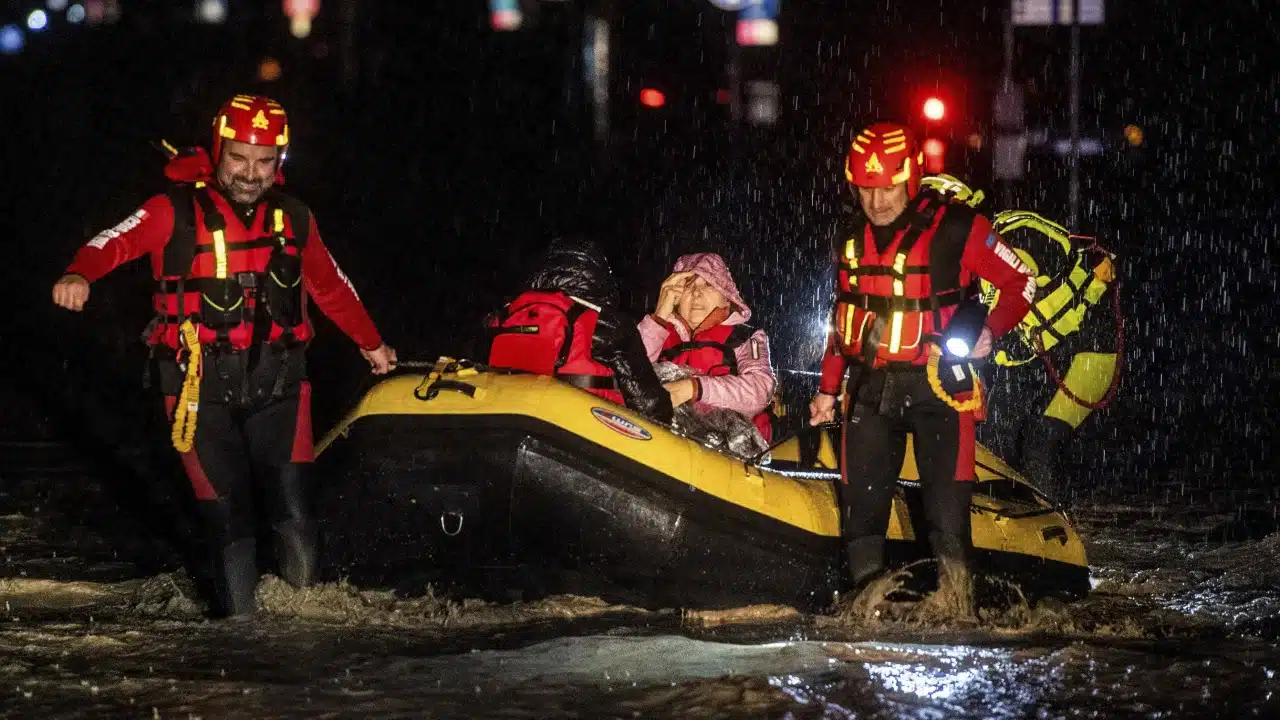

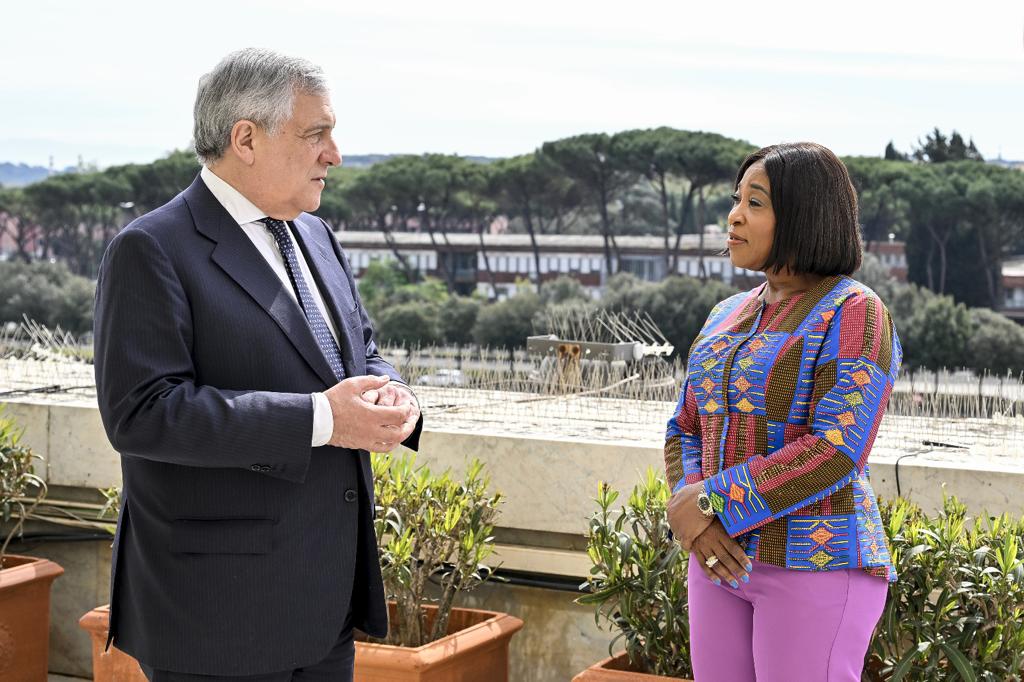

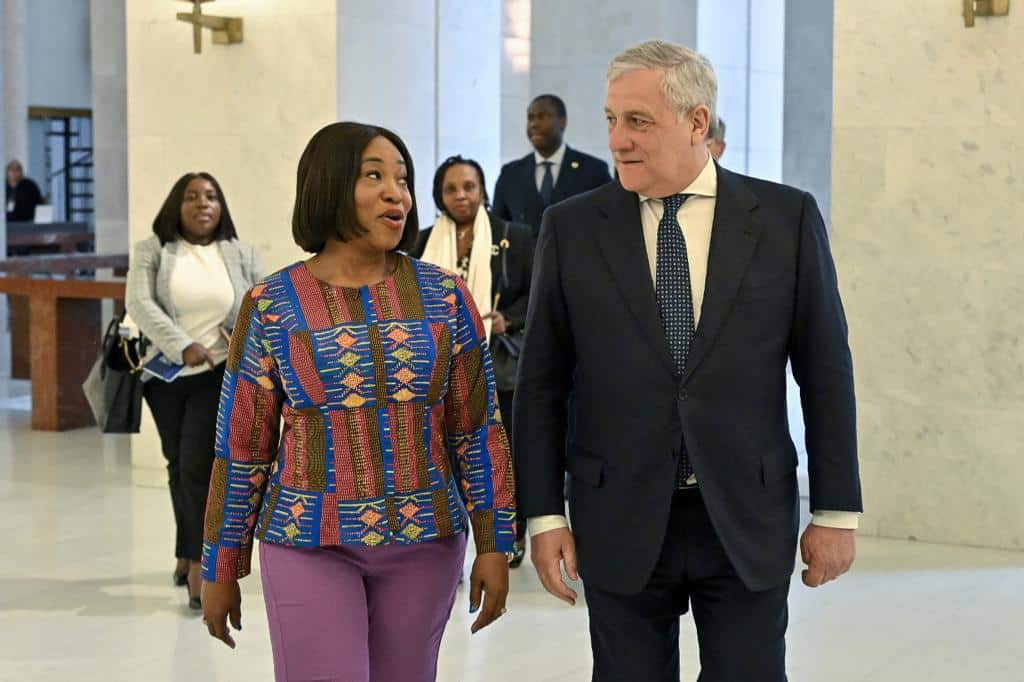
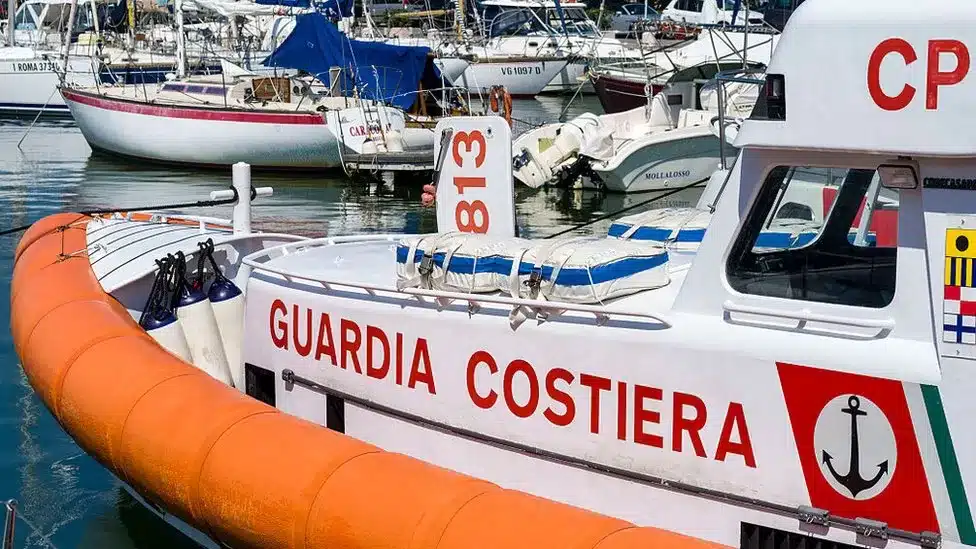
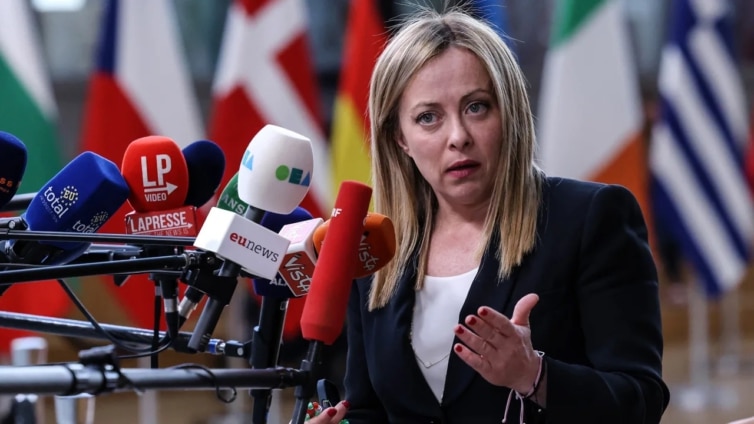
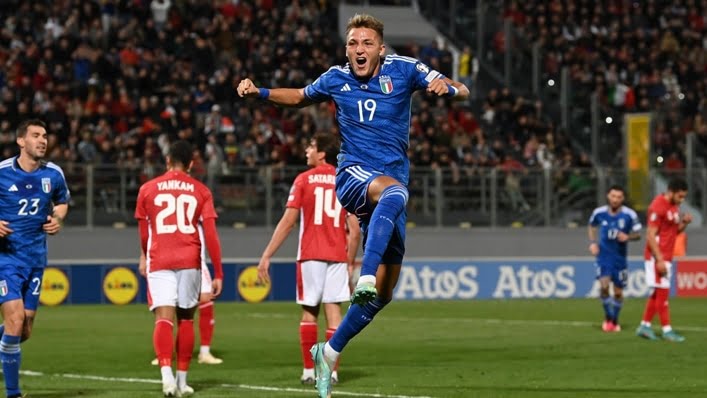

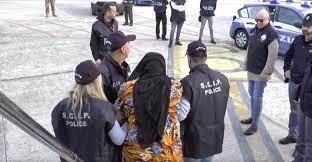

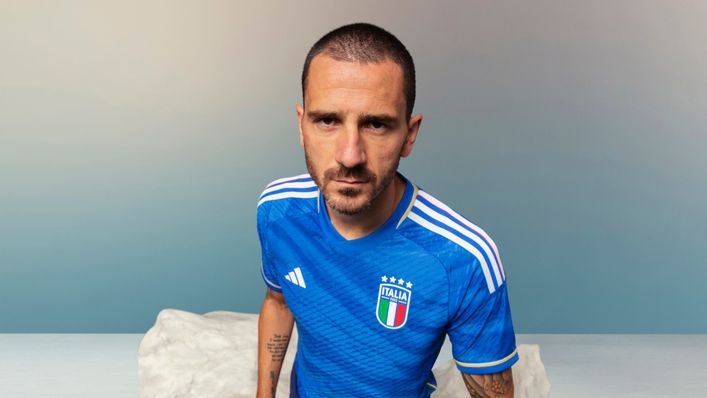
&w=707&quality=100)
&w=707&quality=100)
&w=707&quality=100)