Tag: John Mahama

  • Ghana needs to be rescued from Akufo-Addo, family and friends – Mahama

    Ghana needs to be rescued from Akufo-Addo, family and friends – Mahama

    Former President John Mahama says Ghanaians are yearning for the National Democratic Congress (NDC) to return to power.

    He says the citizenry is calling for the NDC government to come and rescue the country from the economic crisis caused by the inept Nana Addo administration.

    He stated that unless Ghanaians rise and rescue the country from the hands of this family and friends’ government, things will deteriorate. 

    At this point, we must rescue Ghana from the hands of this government of family and friends. A family is on the verge of destroying this country, and as Ghanaians, we must rescue it from their clutches. 

    He made the remarks while speaking to NDC delegates in Techiman North as part of his Bono East Region campaign tour. 

    He stated that the country belongs to the next generation and that if we don’t find someone to save it, there will be no country for the next generation.

    We require an experienced leader to lead the country. I’ve already been there. We witnessed what I did as president. I am not a newcomer. I have the knowledge. I have been to the Flagstaff House, where President Akufo-Addo is currently working as President. We must save this country.” 

    He went on to say that the NPP peddled lues and encouraged Ghanaians to try them, which destroyed our economy. 

    He said the NPP slammed him and described him as incompetent but when they were given the nod, they failed to deliver on their promises. 

    “Experience is not sold in the market. We need experience and not experimentation. We can no longer allow someone to come and experiment with our country.”

  • Mahama has received GHC 250,000 as ex-gratia – Special aide reveals

    Mahama has received GHC 250,000 as ex-gratia – Special aide reveals

    Special aide to former President John Mahama, Joyce Bawa Mogtari, has disclosed how much former President John Dramani provided details on what he receives as Ex-Gratia since he left office in 2020.

    According to her, John Dramani Mahama received a lump sum of Gh¢250,000 as ex-gratia and a monthly pension of Gh¢22,000.

    She made the revelation during an interview on GHOne over Mahama’s promise to scrap ex-gratia.

    She said; “Mahama has received his ex-gratia, he received a lump sum of Gh¢250,000 as ex-gratia and takes Gh¢22,000 as monthly pension pay,” Mahama Aide, Joyce Bawa.

    Former President John Dramani Mahama has promised to scrap the payment of ex-gratia to members of the executive should he be re-elected in the 2024 elections.

    Speaking at the launch of his campaign which took place in the Cedi Auditorium at the University of Health and Allied Sciences in Ho, in the Volta Region on Thursday, March 2, Mr. Mahama said he will take the necessary steps to scrap the payment as soon as he assumes power.

    “The payment of ex-gratia to members of the executive will be scrapped. The necessary Constitutional steps to take this will start in earnest in 2025. We will also persuade members of the other arms of government to accept its removal,” he said in Ho.

  • Five key things Mahama told the military about brutality in Ashaiman

    Five key things Mahama told the military about brutality in Ashaiman

    On March 8, 2023, former president John Dramani Mahama officially responded to a military raid that had occurred the day before in the Ashaiman neighborhood of Accra.

    In a statement published on his official Facebook page, Mahama addressed the three components of the ongoing tragedy that began with the killing of a young soldier nearby, an act he claimed had caused him great sadness.

    he comforted the family while he also urged the soldiers to maintain composure and let the appropriate law enforcement agencies address the crime.

    He stopped short of condemning the swoop with the attendant human rights abuses that were recorded and went on to commiserate with members of the public who may have been caught up in the action of the military.

    Below are 5 major things contained in Mahama’s statement

    Condemnation of the killing of soldier

    John Mahama started his statement with a comment on the killing of 21-year-old Sherrif Imoro, a trooper with the GAF who was in Accra for a programme.

    “I am deeply saddened by the death of one of our soldiers, at such a young age, in Ashaiman,” the statement read.

    Condolences to family and the military

    “Lordina and I extend our deepest condolences to his bereaved and grieving family, and the officers and men of the Ghana Armed Forces.

    “As your former Commander in Chief, I do appreciate how such unexpected deaths affect the Force,” the statement stressed.

    Call for restraint and respect for due process

    The former president also asked the military to restrain themselves and allow for mandated state agencies to bring the killers of Trooper Sherrif Imoro to book.

    “However, I encourage you to exercise restraint and allow due process to investigate, apprehend, prosecute and punish the perpetrator(s) of the dastardly act.”

    Sympathies with victims of brutality

    Mahama pointed out the possibility that innocent people could have been caught up in the military swoop before sympathizing with any such persons.

    “There are obviously many people who live and work in Ashaiman who are innocent of this heinous crime. The military must, therefore, refrain from meting out extra-judicial justice to them.

    “I also sympathise with the victims of the torture in Ashaiman as a result of this unfolding death of a serving soldier.”

    A prayer for Ghana

    “I pray we find peace and harmony in our dear country, as the government and state institutions immediately step in to address this potentially inflammatory development between Ashaiman and the Ghana Armed Forces; including providing commensurate compensation for all persons affected,” the statement concluded.

    The March 7 military swoop

    Dozens of military officers stormed Ashaiman in the operation that saw some soldiers entering the town in trucks, with an armoured car plus a helicopter hovering over the town.

    The exercise is said to be in response to the gruesome murder of a young soldier, Trooper Sherrif Imoro, by some unidentified persons on Saturday, March 4, 2023.

    Videos of the invasion shared across social media show various forms of assault being meted on residents by the rampaging officers who subjected some of the residents to severe beatings.

    In a statement released in the early hours of March 8, the Ghana Armed Forces admitted authorizing the swoop which led to the arrest of 184 persons, as well as the seizure of suspected illegal drugs.

    In the said statement, they also acknowledged excesses may have resulted in the swoop but failed to apologize for or commit to conduct a probe on same.

    Read Mahama’s full statement below:

    I am deeply saddened by the death of one of our soldiers, at such a young age, in Ashaiman.

    Lordina and I extend our deepest condolences to his bereaved and grieving family, and the officers and men of the Ghana Armed Forces.

    As your former Commander in Chief, I do appreciate how such unexpected deaths affect the Force.

    However, I encourage you to exercise restraint and allow due process to investigate, apprehend, prosecute and punish the perpetrator(s) of the dastardly act.

    There are obviously many people who live and work in Ashaiman who are innocent of this heinous crime. The military must, therefore, refrain from meting out extra-judicial justice to them.

    I also sympathise with the victims of the torture in Ashaiman as a result of this unfolding death of a serving soldier.

    I pray we find peace and harmony in our dear country, as the government and state institutions immediately step in to address this potentially inflammatory development between Ashaiman and the Ghana Armed Forces; including providing commensurate compensation for all persons affected.

  • Mahama has no reasons for boycotting 6th March parade – NPP

    Mahama has no reasons for boycotting 6th March parade – NPP

    Former President John Dramani Mahama, according to the New Patriotic Party (NPP), is merely inventing justifications for his absence from Monday’s Independence Day celebrations.

    Ghana celebrated its 66th Independence Anniversary in Adaklu in the Volta Region on March 6, 2023.

    The former President accused the NPP of turning the celebrations into a jamboree and also accused the party of busing its supporters to the venue for the celebration.

    He added that he had been ridiculed by supporters of the NPP as he was seated in an obscure place on some occasions, hence his decision to boycott such events since 2018.

    Reacting to the former President’s comment, the Director of Communications for the NPP, Richard Ahiagbah said the reasons given by John Mahama are unfathomable. 

    “The former President is justifying all excuses to explain why he didn’t show up at the celebration of the Independence Day in the Volta Region and the previous ones he failed to attend. It’s most unfortunate because he’s only interested in going to the Volta region for votes. Just recently, you went there to launch your campaign. The people of Volta Region haven’t had the opportunity to host Independence Day before. He just left there a few days ago, if nothing at all, for the people of Volta Region whose chiefs and elders were assembled to celebrate, he could have showed up,” Mr. Ahiagbah. 

  • Mahama to go after NPP politicians in next government

    Mahama to go after NPP politicians in next government

    According to the former president of Ghana, John Mahama, the NDC will ensure that all NPP officials accused of engaging in shady business or misappropriating funds will face legal action under his tenure.

    Over 10 health centers provide services to the district’s population of roughly 90,000 people.

    According to him, the NDC will ready to deal with the canker aptly.

    “We are saddled with debt, and we have been downgraded by every rating agency, and inflation has gone off the roof, sending people into abject poverty and misery.”

    “It had never been my wish for political opponents to fail, but this NPP government has refused to listen to contrary views, leading to the roll-out of poorly thought-through programmes, which have taken a toll on the economy and the public purse.”

    The former President made this known when he addressed hundreds of NDC faithful, ward and branch executives at separate engagements at Dzodze and Aflao in the Ketu North and South constituencies, respectively, as part of his three-day campaign tour of the Volta Region.

    Mr Mahama said the government had been clueless and, in many ways, insensitive in the management of the economy leading to job losses, high unemployment rates and poverty.

    He said his vision was for Ghana to develop, irrespective of who or which government was in power.

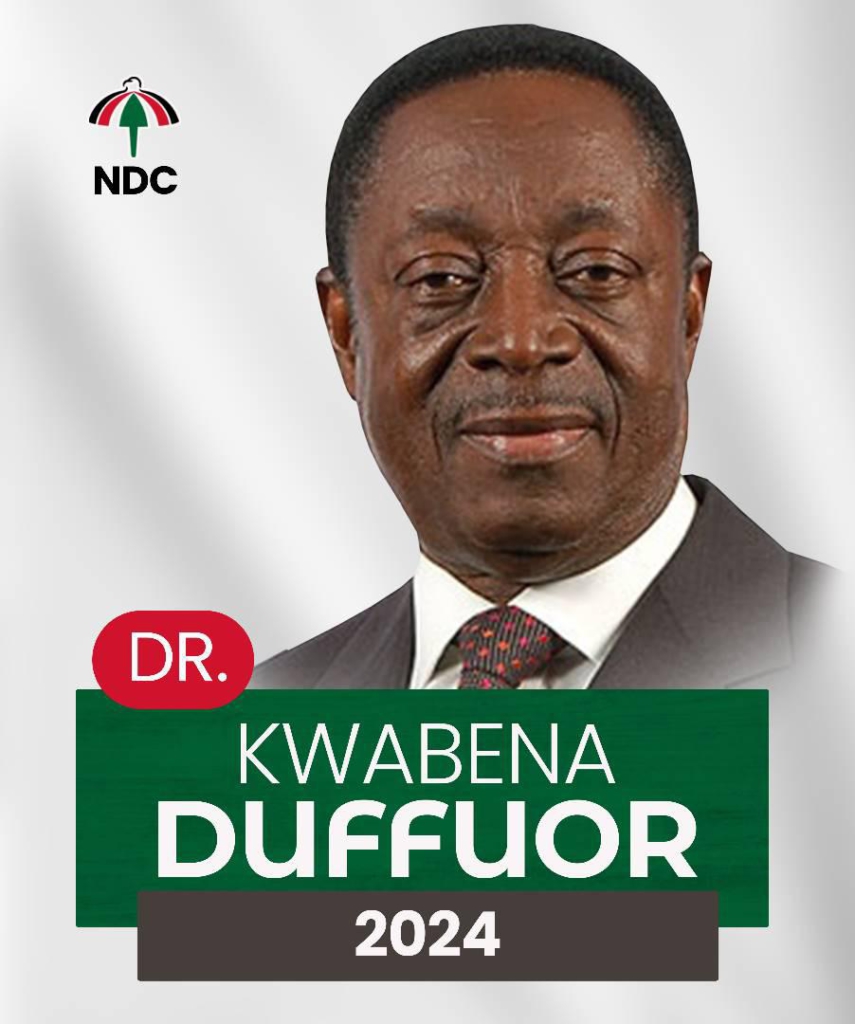
    Former President Mahama is contesting the NDC’s flagbearership race with Dr Kwabena Duffuor, a former governor of the Bank of Ghana, Mr Kojo Bonsu, a former Mayor of Kumasi, and Mr Ernest Kwaku Krobea, a UK-based Ghanaian businessman.

    He urged all NDC faithful especially the delegates, who would be voting in the party’s presidential and parliamentary primaries in May, this year, to do the needful by voting for the right individuals capable of delivering on their mandate and with everyone in unison.

    “So that together we can wrest power from the NPP and restore hope and dignity back to our people.” Mr Mahama is expected to tour other constituencies in the region, accompanied by some national, regional and constituency executives. 

    Earlier on Thursday, March 2, he launched his flagbearership campaign at the University of Health and Allied Sciences in Ho, on the theme: Building the Ghana that We Want Together.”

    Source: Myjoyonline.com

  • I am pro-Nkrumah – John Mahama

    I am pro-Nkrumah – John Mahama

    John Dramani Mahama, a National Democratic Congress (NDC) candidate for president, has diclosed that he is a Nkrumahist.

    The disclosure was made by the former president while defending his decision to skip Ghana’s 66th Independence Day parade in Ho, in the Volta region.

    According to him, despite being a big fan of the man who gained independence for Ghana, he wouldn’t abandon the celebration for anything but for the NPP government that has turned the national event into a party jamboree.

    “Nkrumah got us independence, I’m an Nkrumaist, I will attend an Independence day any day if it’s not hijacked by one party because it should be a national day for all of us.

    “I’ve stopped going to the independence day because it has become a party jamboree. I went to Tamale, they told GBC to take the camera off me. They bused their supporters in and filled the whole stadium. When I went into the stadium the place was quiet I went and sat, they gave me some corner somewhere, I went and sat there and they occupied the days” adding that some people went to make noise at where he sat.

    As a result, Mr. Mahama  says he doesn’t want to be part of a celebration that has been turned into a partisan one with party people bused to the venues.

    “So I’m not going to be in Ho because I do not want to be part of an NPP jamboree. You watch what will happen they will bus their people in and occupy that whole place,” he stated.

    John Mahama who was speaking at the NDC’s Professionals Forum Dinner and Awards Night in Accra Sunday, March 5, said the independence day celebration should have a national colour rather than clouding it with party colours.

    “Independence is a solemn national celebration. We should celebrate it at the Independence Square and anybody who wanted to come could come. Today they bus their supporters in, they come with party flags they wear their party shirts. I don’t want to be part of a party jamboree,” he reiterated.

    Ghana’s 66th Independence anniversary is being celebrated in Ho in the Volta regional capital on the theme: Our Unity, Our Strength, Our Purpose.

  • I have spent ex-gratia paid me – Mahama on calls for him to refund

    I have spent ex-gratia paid me – Mahama on calls for him to refund

    Former President John Dramani Mahama will be unable to heed to calls for the refund of ex-gratia paid him following his opposition against the payment of such emolument to Article 71 holders.

    According to the former President, he is unable to do so since he has spent the money paid to him by the government as stated by the laws of the country.

    “I have spent the money already and now I am a pensioner, where am I going to get that money to pay back? I am unemployed but they say bring yours to show you have good faith, I have no source of income, and you say I shouldn’t work.

    “They say the president should not hold the office of profits so you gave it to me, I spent it then you come and say  I should refund it, where am I  going to refund it from?”

    He made the comments while speaking at the National Democratic Congress (NDC) Professional Forum Dinner and Awards Night in Accra on Sunday, March 5, 2023.

    “I say we will cancel ex gratia, if you will also cancel it say it but why are you insulting me and saying I should refund mine? Will you cancel it or you won’t, tell the people of Ghana but they are saying I should bring mine first.

    “They don’t understand the gravity of the situation. I do think that for those of them who  speak for NPP, don’t understand the gravity of the situation, but is good for our party,” the former statesman added.

    Earlier, Mr Mahama described the comment by private legal practitioner Martin Kpebu to return all the ex gratia paid to him in the past following his promise to cancel it, as silly.

    http://backend.theindependentghana.com/10-things-mahama-promised-to-do-if-re-elected-in-2024/

    Addressing supporters of the NDC in the Volta region on Saturday, March 4, Mr Mahama said “I said categorically that when we come into office we will cancel ex gratia for the executives because the president is in charge of the executive, so he can cancel it for the executives but then you have to persuade the other arms of government to see that there is no fairness in continuing to pay ourselves ex gratia when the ordinary worker does not receive it because you are the leaders, you must show by example. If the economy is in crisis why should we continue to take ex gratia when the rest of the public and civil services don’t take it? So, I said categorically that we will cancel exgratia.

    “And then somebody who should know better, a lawyer, he said, then I should refund all the ex gratia we took before to show Ghanaians that yes, we are serious about cancelling it, he does not even know the principle in our constitution that says that you can’t pass retroactive legislative if you pass legislative today, it does not affect what happened in the past, what he says is a bit silly because it is like saying because we have introduced free SHS all of us should go and get a refund of our school fees that we paid in the past. That is how silly what he is saying is.”

    Mr Martin Kpebu had said it makes sense to ask Mr Mahama to return the ex gratia that he received after indicating that he is going to cancel its payment should he win the next elections as President.

    Speaking on TV3 on Saturday, March 4, Mr Kpebu said “Mahama made money whiles as president so he should look within himself and say look ‘I will return it’. He should return it because, in these national elections, they are going to do, hundreds of millions of dollars, where does it come from? They made money so the exgratia is small. So he should just tell the people ‘I have grown older, I think I have become wiser, I am returning the money,’ That exgratia he should return it

    “You know Dan Kwaku Yeboah of Peace FM, I think he is the lead campaigner for Mr Mahama to return his ex gratia. When I looked at it I said yes it made sense. Mr Mahama should do introspection and return it as a sign of good faith, that once I have returned the money I am committed. Number two, the amendment he should put into writings.”

    Mr Mahama promised that he will scrap ex gratia when he gets the nod to lead this country again.

    “The payment of ex gratia to members of the executive will be scrapped,” Mr Dramani Mahama announced when he launched his bid to be the 2024 Presidential Candidate of the National Democratic Congress (NDC).

    “The necessary constitutional steps to take this will start in earnest in 2025. We will also persuade members of the other arms of government to accept its removal,” he assured.

  • NDC manifesto must be appealing to the public – Political scientist

    NDC manifesto must be appealing to the public – Political scientist

    According to Dr. Kwame Asah-Asante, Senior Professor in Political Science at the University of Ghana, the National Democratic Congress (NDC) must invest in creating a perfect manifesto if it wants to gain political power.

    This, he says, will help the party address its past failures whilst meeting the present needs of the ordinary Ghanaian.

    “They need a strategy, workable strategy that will help them deal with the lingering challenges that confronted the party in the last elections.

    “They need a manifesto and by manifesto; I am talking about a manifesto which will resonate with the people. That is, it syncs with the interest of the ordinary on the street, everybody and the other end is your message,” he said.

    His comments were in response to a question posed by host of JoyNews Today, Aisha Ibrahim, on strategies former president

    must use to help realise his ambition of winning the 2024 elections.

     The political scientist explained that the strategies must include resources to mobilise people to galvanise support and sell their messages.

    He stressed that the times the country is confronted with require messages which would give hope to the people.

    Dr Asah-Asante added that “these are some of the basic things they need to do but to do that they need to hit the ground, take data and begin to analyse the data and put them along the lines. I am talking about what you want to begin to use them for your manifesto and tease them out for messaging.”

    He said the circumstances surrounding the last elections and present conditions in Ghana are different and it is therefore, important the party reviewed its policies.

    “If you look at the economy, I am not sure at that time, that was the nature of the economy, for which reason they do a manifesto that will suit the present circumstance. Today things have changed so they need to do a tweak on the manifesto to be able to bring it alive with the current realities on the ground.

    “You are also looking at unemployment figures. I am not sure they stand the same. You need to work on that issue of infrastructure, are we seeing more for which reason you need a certain number to augment what already exists in the system,” he said

    He reiterated that “they need to look at their manifesto one more time and make the necessary changes to suit the changing circumstances at the time, they can’t say that they would use the same thing and then use it for their campaign. That would be obsolete at birth when they go to the elections.”

  • NPP may hold a retreat in response to Mahama’s campaign launch – Clement Apaak alleges

    NPP may hold a retreat in response to Mahama’s campaign launch – Clement Apaak alleges

    As a result of John Dramani’s campaign launch, Builsa South MP, Clement Apaak, has pondered what the current administration will do next.

    According to him, the NPP held an emergaency meeting when John Mahama declared his intention to contest, and they are likely to hold a retreat this weekend after his campaign launch.

    In a Twitter post, Clement Apaak said;

    “When JM met NDC MPs to declare his intentions to contest for the Flagbearership of the NDC YAANUM called an urgent meeting. Now that JM has launched his campaign YAANUM will likely hold a retreat over the weekend. JM is the IT, they know it, we know it, Ghanaians know it #JM2024.”

    Ghana’s former president, John Dramani Mahama officially launched his campaign towards the 2024 general elections on March 2.

    This comes barely a week after he picked up nomination forms once again to contest the vacant position in the party.

    The event was held at Ho, in the Volta Region as he prepares to win the party primaries and work towards wrestling power from the ruling New Patriotic Party (NPP).

  • Mahama can right NPP’s mess – Kwakye Ofosu

    Mahama can right NPP’s mess – Kwakye Ofosu

    According to Felix Kwakye Ofosu, a former deputy minister of communications and spokesperson for John Mahama’s 2024 presidential campaign, the former president is the best choice to free Ghana from all the issues caused by the National Patriotic Party (NPP) administration.

    Mr. Ofosu said the mismanagement of the Akufo-Addo-led government has derailed Ghana from the course of prosperity and growth that the country was charting before the NPP came into power in 2016.

    “The NPP has destroyed the Ghanaian economy and taken Ghana back to centuries ago, and we must do everything we can to chase them away because of the damage that they have done to this country. We need to get control of the administration and steer the affairs of this country in a manner that gets us out of the mess and reposition us on the trajectory of growth and sheer prosperity for all.”

    Mr. Kwakye Ofosu also admonished Ghanaians saying: “The point is that when the time comes for Ghanaians to choose their leaders, they must examine the performance of the people they kept in charge of their country, and we have all seen what the NPP has done with the power given them, and you don’t even need a soothsayer to tell you that they have caused so much damage to this country.”

    He further intimated that, unlike the NPP which has taken Ghanaians for granted and has caused so much destruction, a Mahama-led government will ensure development is evenly distributed to every part of the country upon assuming office.

    “The party of choice which is the NDC will not take Ghanaians for granted and that is why former president John Dramani Mahama announced his intention and the objective is to demonstrate to the people of Ghana that he has what it takes to rescue the country from the economic mess.”

  • Mahama to investigate how public funds have been used if re-elected

    Mahama to investigate how public funds have been used if re-elected

    John Dramani Mahama has pledged to investigate how public funds were expended under the Akufo-Addo-led government if given the nod again.

    He said this includes the COVID-19 Audit and the findings from the Auditor-General’s reports over years.

    According to Mr Mahama, the time has come for Ghanaians to receive proper accountability from those they elect to political office.

    This accountability, he said, can only be achieved by a new party in government.

    “We must clean the Augean stables and rid them of the filth and corruption. The anti-corruption [agencies] will be given unfettered space to do their work. The days of the infamous ‘clearing agent’ will be well and truly over,” Mr said at his campaign launch in the Volta Region today, Thursday, 2 March 2023, adding that “But to ensure efficiency and professionalism at this endeavor, institutions of state would be empowered to be independent in their work.”

    Mr Mahama noted that as President, state-owned enterprises will not be a gravy train for political apparatchiks.

    He said he would re-introduce the hallmark of his previous administration – tolerance for criticism and the creation of a conducive atmosphere for the media to do its work without the fear of threats, harassment, and possible assassination.

    Responding to calls from his party supporters that the next NDC government must also exact its pound of flesh on the NPP, Mr Mahama said “I daresay, there is no use fighting for political power, if it is only to come and repeat the same mistakes of the NPP administration that have brought our dear nation to this sorry state. We must, therefore, engage our grassroots to work together with us to build the Ghana we want.”

    To be able to achieve all the above, Mr Mahama said “we must see different personalities and backgrounds. We must not see NDC and NPP. We must not see Ga, or Ewe or Akan or Dagomba. We must not look to religious differences. We must look to ourselves. We must look to Ghana. One united people. You and I, hand in hand and working together.”

    He added “In Building The Ghana We Want Together, it will take grit, It will take determination, but we have what we did not have before – the benefit of hindsight and reflection from afar, and the benefit of experience – to improve upon our successes and avoid our mistakes.”

    Mr Mahama has promised to engage the public and various interest groups to tap into their views on how to fashion “the Ghana we want” as he begins his campaign.

  • Mahama has nothing to offer again – NPP’s Ahiagbah

    Mahama has nothing to offer again – NPP’s Ahiagbah

    Richard Ahiagbah, Director of Communications for the New Patriotic Party (NPP), says former President John Dramani Mahama has nothing new to offer Ghanaians.

    This comes after President Mahama, during the launch of his campaign in Ho, said he had studied the challenges of the country over the last five years and that he had gathered solutions to the problems of Ghana.

    “Some have lost all hope in the democratic process and believe that democracy is no better than other forms of governance.”

    “Our present state and its effect on the people trouble me a lot, and this is why, as you have observed, at every significant or wrong turn of the decision taken by this government, I have, with the benefits experience I have acquired, provided alternative solutions and even offered the expertise and knowledge of some of my party colleagues to help get us out of these challenges,” Mahama said.

    Reacting to the comments of Mahama in a tweet, Richard Ahiagbah, the Director of Communications for the NPP, said Ghana knows the abysmal performance of Mr Mahama when he was president.

    He insisted that Mr. Mahama failed when he was given the opportunity to lead the country.

    According to the politician, Mahama has been tried, tested, and disapproved.

    “Reselling H.E John Mahama…Ghana knows his dismal record; there is nothing new to add with an expensive campaign launch…Tried, tested and disapproved. #Ghana,” Richard Ahiagbah tweeted.

  • Full text: Mahama launches ‘Building The Ghana Want Together’ campaign

    Full text: Mahama launches ‘Building The Ghana Want Together’ campaign

    I thank you, sincerely, for answering my invitation to attend this campaign launch. I am delighted by this opportunity to engage with you, the good people of Ghana, once again.

    I am greatly humbled to be addressing all of you present here, the millions glued to your television and radio sets, and those tuning in via the internet in Ghana and across the world. Thank you for sharing your morning with me. I do not take this for granted. Thank you.

    As I drove onto the campus of the University of Health and Allied Sciences, built during the tenure of our Great Party, I could not help but feel a sense of fulfilment that the dream and vision of our late President, Professor John Evans Atta Mills, has been actualized in a most beautiful way.

    The Volta Region retains a towering significance in the history of our great party the NDC. Our founder and former President Flt Lt Jerry John Rawlings of blessed memory, whose courage and vision inspired the formation of the NDC, hailed from this region.

    Other stalwarts, dead and living, like Security Chief, Captain Kojo Tsikata, Literature Icon and former Chairman of the Council of State Professor Kofi Nyidevu Awoonor, Former Speaker Edward Doe Adjaho, Ambassador Dan Abodakpi, former Transport Minister, the late Dzifa Aku Attivor, and many others too numerous to mention, are all natives of this region, and have toiled tirelessly to build our great party the NDC and our beloved nation, Ghana. It is no coincidence that we are holding this launch here as a tribute to the many illustrious sons and daughters of the Volta Region who have toiled and continue to work tirelessly for our great party.

    The English Romantic poet Percy Bysshe Shelley in 1817 wrote a famous poem titled “Ozymandias”. This was a cautionary tale about a ruler who was so full of pomp, arrogance, and a deluded sense of self-importance. One is struck by the poet’s description of the clueless ruler as he goes on to boast: “My name is Ozymandias; King of Kings; Look on my Works, ye Mighty, and despair!” Tragically, according to the poem, when one looked around for these so-called works, one saw nothing except the decay. This poem mirrors our present national circumstance in a most uncanny way.

    Fellow country men and women; my brothers and sisters, I thank Professor Joshua Alabi, the Convenor of my Campaign Committee, a former Vice Chancellor of the University of Professional Studies, Accra, and an aspirant in the 2019 Presidential primaries for picking my nomination forms last week. I also wish to thank the hundreds of party supporters who accompanied Professor Alabi to perform that task on my behalf. By that action, I have officially joined the race to contest for the flagbearer slot of the National Democratic Congress (NDC) for the 2024 elections, which I consider to be the most important and defining poll of our time. I have not taken this step lightly.

    It has been the product of months of prayer, broad consultations, and sober reflection. I have searched my soul and paid close attention to your voices, to your daily struggles, to our present predicament. At this stage, Ghana demands experience, not experiments! 4 Ghana demands togetherness, not divisiveness! Now is the time for bravery of heart and clarity of purpose. Six years ago, despite our best efforts, the people of Ghana entrusted the management and administration of this country into the hands of the NPP.

    They did so in the hope that the many mouth-watering promises made to them would translate into meaningful action that would mark an improvement in their living conditions and the general wellbeing of our country. Six years on, those hopes have been dashed. Instead of the prosperity and progress that was promised, the last six years have been, perhaps, the most difficult and challenging period in our history. This government has been clueless and, in many cases, callous. The unthinkable has happened and our country is broken on all fronts.

    Ghana is bankrupt. We are saddled with debt we simply cannot pay, and we have suffered the global humiliation of defaulting on our debts and being downgraded by credit rating agencies to the lowest levels in our history. Our economy is in its worst ever shape, with suffering and pain on an unprecedented scale. Hyperinflation and an ever-increasing price of basic items including food have all combined to inflict unbearable pain on millions of Ghanaian households. Parents are being forced to make hard choices between seeking prompt health care for their sick children and providing meals with their meagre resources for families. 5 Our middle class stands the real risk of being wiped out on the back of an obnoxious debt restructuring programme.

    The poor who depend on the middle class for employment and sustenance are on their own and uncertain of their fate. Our aged pensioners have not been spared either. In the past few weeks they have been compelled to stage public manifestations in defense of their livelihoods even in their elderly state.

    Who would have thought that Ghana would come to a juncture where a government would mete out such shabby treatment to our senior citizens whose only crime is that they put their life savings in what is considered the safest financial instruments in the world – Government Bonds. We are at this most depressing phase in our history where our economy has been destroyed because of the systematic mismanagement, misguided and clueless policy choices, and incompetence of President Akufo-Addo and Vice President Bawumia.

    While our people struggle to keep their heads above water, government officials continue to exhibit high levels of greed, corruption, arrogance of power, dishonesty, blatant state capture and conflict of interest. Unsurprisingly, no one in this NPP government wants to take responsibility for anything, including their flagbearer hopefuls, most of whom were part of their Economic Management Team. They continue to lay blame for their economic disaster on external factors whose relationship with our present sorry circumstances are at most tenuous.

    We all know that this economic collapse has been years in the making just as we know it was entirely avoidable. Amid all the suffering, the government remains obstinate and refuses to back down from the costly missteps that led us here in the first place.

    They continue to waste the precious little we have on dodgy and misguided projects, programmes and on a bloated government. As they tighten the noose on the helpless citizenry by piling on more taxes and expropriating our money through measures like the domestic debt exchange, government offers no semblance of genuine sacrifice on its part. The national decay of the last six years has not been limited to the economy. It extends to all aspects of our lives. Our hitherto trusted state institutions today stand as pale shadows of themselves, undermined, and politicized to the point that they consider themselves an extension of the governing New Patriotic Party.

    The youth see no future in their country of birth. They see no silver lining at the edge of the clouds, which often appears dark and gloomy, with no ray of sunshine seeping through. Who is to blame them when after years of struggling to earn an education, they are condemned to unemployment and acute lack of opportunities? 7 If not remedied, through my agenda to Build The Ghana We Want Together from 2025, some graduates and post-graduate degree holders may hit the pension age and never employed in their entire lives, save for national service. It should worry us deeply that the average young Ghanaian would grasp any opportunity to flee the despondent climate under which they live in favour of even the most menial jobs in other countries.

    We have always had our people going in search of greener pastures abroad, but the current mass exodus of active workers and professionals is profoundly worrying. The loss of all hope that anything good can come out of this country or that any available opportunities will be equitably shared among our people has accounted for this. For some sections of our population, the unravelling of our national fabric and the collapse of our economy under this government forms sufficient basis to dismiss all public office holders and politicians, both in government and out of government, as the same.

    Some have lost all hope in the democratic experiment and believe it is no better than other forms of governance. These are the predictable effects of the betrayal of the people’s trust by the President, his Vice and crop of officials. I wish I could say this in a more pleasant way, but you are the better judges. Our present state and its effects on our people trouble me a lot. 8 This is why, as you have observed, at every significant wrong turn taken by government, I have, with the benefit of experience, provided alternative solutions and even offered the expertise and knowledge of some of my party’s members to help get us out of the challenges.

    This is because there is an increasing gap right now between the Ghanaian society and Ghana’s political system. And it is one of the reasons why a change has become absolutely necessary. Off course, I know how to deliver that badly needed change because, during the last three to four years, I have studied our problems, I have continued to listen to each and every one of you, and to a variety of scholars and experts – I can say with full confidence that I learned a lot during the period and I am ready to be the President Ghanaians are looking for.

    In our present state, it is no longer sufficient to sit on the sidelines and offer suggestions, which are most likely to be ignored. I am therefore coming before you, in all humility, and in response to calls from my party and the generality of the people of Ghana, to offer myself, to serve this country and its people that I love so dearly, by first putting myself up for election in the NDC Presidential Primaries.

    There are many who say that my words, just before leaving office in 2016, that posterity will be my judge, have proven prophetic in the face of the disastrous performance of the NPP government and their harrowing dismantling of our country’s prospects. I am not the kind of leader who derives pleasure from or who can smile at our failings — even the failings of my political opponents. 9 As noted by Otto Von Bismarck, a wise man learns from the mistakes of others.

    As far as I am concerned, there is no vindication to be derived from the sufferings of the Ghanaian people. I am offering myself for public office at this time because I appreciate the enormity of the task ahead owing to the level of damage done to our country by this government.

    And I also know that such a mountainous task requires a steady, unifying, and experienced hand to build the Ghana we want together. This is no time for experimentation. Ghana at this time does not need a “try me too” leader. Our country urgently needs a leader with an unwavering desire to get things done in a no-frills, no thrills, business-like manner. Not one enamored with sloganeering, excessive partisanship, personal comfort, and shallow populism. Ghana’s next leader should exercise sound judgement and be able to make the right calls and at the right time. A leader who accepts responsibility and works to fix the problem and not shift blame onto others.

    The leader should be one whose heart is filled with compassion for the people and who has the humility to connect with and understand the needs of the people he serves. Our country requires a visionary leader who would build a prosperous and progressive Ghana for all Ghanaians and not a few. We, in the NDC, will not run a government of slogans; instead, we will run a government of action. 10 A leader should be held accountable for his promises to the people. Your word should always be your bond. Ghana’s next leader should exercise sound judgement and be able to make the right calls and at the right time.

    Such a leader must have the humility and presence of mind to take responsibility for what has gone wrong and be willing to act timeously to get the numerous problems resolved. He should be a leader whose heart is filled with compassion for the people and who has the humility to connect with and understand the needs of the people he serves.

    He should not be a leader who views the public purse as a family heirloom or even the mandate given him to govern as the manifestation of a birthright. A leader who has his sights on leaving a legacy for posterity. With all the humility I can muster, I believe I possess these qualities and that I am uniquely placed, having sat back the past few years to take stock of our country’s path. I am aware of the extent of work that awaits the next government.

    There is so much to fix; there is so much to repair; and there is so much to heal. But I am set and ready! Very ready, to Build The Ghana We Want Together with you. Our mission is to get out of the current nightmare. And to get out of it together, reaching to one another, listening to one another, providing hope for all.

    Working with a pool of experienced, talented, and passionate men and women, and with many others from non-political backgrounds including the private sector and civil society who simply want the best for Ghana and who desire to transform our country and its people, it can and will be done. The first order of business will be to reset our country to its default settings as envisioned by the founders of the 4th Republic.

    A nation of peace and prosperity, built on the principle of integrity, justice and equity, respect for human rights and personal freedoms, a leadership of modesty and humility that forges consensus and carries the people along in the implementation of its policies and programmes. At the top of our priorities as the new government in 2025, God willing (Insha Allah), is to restore stability and inclusive growth to the economy.

    This we will do by bringing the various indicators under control to relieve Ghanaians of their suffering. We will strictly enforce prudence and responsibility in the management of public finances by cutting out waste and ostentation, which have become common place under this administration. Together, we will build the Ghana we want. We shall restore faith in our almost collapsed financial system and embark on sweeping reforms at the Bank of Ghana. We shall actively pursue policies to ensure robust local participation in our banking, financial, telecommunications, mining, agriculture, agribusiness and manufacturing sectors. 12 This will be anchored on our plan to grow the economy and create sustainable employment for our youth.

    We will make investments in productive sectors of the economy like agriculture, industry, technology, digitilisation and tourism to spur growth and generate jobs for the teeming youth who continue to lose hope by the day. With the limited fiscal space, we are likely to inherit because of the mismanagement of the economy under NPP, a new NDC Government will give priority to continuing and completing abandoned and ongoing projects rather than rushing to commence new ones. I shall assemble and operate the leanest but most efficient government under our fourth republic. We will reduce, significantly, the size of government.

    As I announced in my Ghana We Want address at UPSA late last year, I will form a government of less than sixty (60) ministers and deputy ministers of state. I will initiate and undertake the most far-reaching constitutional, political and governance reforms under the fourth republic aimed at restoring confidence in our democracy and governance systems while making life easier and better for our people. In response to the concerns and calls from many of you, I will initiate and undertake the most far-reaching constitutional, political and governance reforms aimed at restoring confidence in our democracy.

    We will continue and bring to conclusion the constitution review process began by President Atta Mills including a review of the controversial article 71 to reduce the number of office holders, and remove the disparities in privileges and emoluments vis a vis the public and civil service. The payment of ex-gratia to members of the executive under Article 71 will be scrapped.

    The necessary constitutional steps to abolish that payment will start in earnest in 2025. I will also begin the process to persuade other arms of government to accept same. Issues pertaining to the excessive powers of the President, proper separation of powers, strengthening of parliament, restoring true independence to the judiciary, independent and quasi-independent state institutions and depoliticizing them will take centre stage.

    With renewed vigor, we will work to restore confidence in all institutions of state, so that our people will see their institutions working for them as they should with utmost professionalism and non-interference from political actors. We must, for instance, end the chaos that now characterizes the Computerized School Selection and Placement System for BECE graduates. As a first step, we should allow students to only complete their applications for SHS after they receive their BECE results.

    They will be in a better position to know their actual grades and match them with the cut-off grades and raw scores of the senior high schools they wish to be admitted to. 14 This will moderate expectation, ensure effective demand based on real results and address uninformed demand. It will also root out corruption and blatant discrimination from the process.

    Fellow country men and women, the time has come for Ghanaians to receive proper accountability from those they elect to political office. This accountability can only be achieved by a new party in government. I promise Ghanaians, that I shall investigate how public funds were expended and this includes the Covid-19 Audit and the findings from the Auditor-General’s reports over years.

    We must clean the Augean stables and rid them of the filth and corruption. The anti-corruption will be given unfettered space to do their work. The days of the infamous ‘clearing agent’ will be well and truly over. But to ensure efficiency and professionalism at this endeavor, institutions of state would be empowered to be independent in their work. State owned enterprises will not be a gravy train for political apparatchiki. We shall re-introduce the hallmark of my previous administration – tolerance for criticism and the creation of a conducive atmosphere for the media to do its work without the fear of threats, harassment, and possible assassination. I have heard many of my party supporters say that the next NDC government must also exact its pound of flesh. My brothers and sisters, I daresay, there is no use fighting for political power, if it is only to come and repeat the same mistakes of the NPP administration that have brought our dear nation to this sorry state.

    We must therefore engage our grassroots to work together with us to build the Ghana we want. To be able to achieve all the above, we must see different personalities and backgrounds. We must not see NDC and NPP. We must not see Ga, or Ewe or Akan or Dagomba. We must not look to religious differences. We must look to ourselves. We must look to Ghana. One united people.

    You and I, hand in hand and working together. In Building The Ghana We Want Together, it will take grit. It will take determination. But we have what we did not have before – the benefit of hindsight and reflection from afar, and the benefit of experience – to improve upon our successes and avoid our mistakes. As I roll out my campaign for the flagbearer slot of the NDC and subsequently during the national elections, I will engage as many of you in the public as possible and interface with various interest groups to tap into your views on how to fashion the Ghana we want. As observed by Aldous Huxley “experience is not what happens to you; it is what you do with what happens to you.” In the coming days, we will be having conversations about our country.

    But more important, we must put into action the plans that we would conceive together. It will not be easy. It will take grit. It will take determination. It will take tears. It will take sacrifice. I promise you I will share that pain and sacrifice with you. And above all I promise you hard work. I want to assure you, my fellow Akatamansonians that I have heard your concerns on how to further strengthen our party. I will certainly make you proud by addressing your needs, as we work to position the party to be more responsive to your needs. We shall build the most formidable political party that every Ghanaian will be happy and proud to associate with. Remember it was the NDC that provided the most road and water projects, educational, health and telecommunications infrastructure for you, across the country. Remember it was the NDC that considered it prudent to build an airport in the Volta Region when the naysayers opposed and ridiculed it. Too much has happened to us as a people. But we have a duty to ourselves to learn from history and chart a path accordingly.

    “The greatest leader is not necessarily the one who does the greatest things. He is the one that gets the people to do the greatest things” are the wise words of Ronald Reagan that I subscribe to. The next government would not be about me. It would not be about forming a cadre of family and friends to enrich themselves at the expense of our people. It would be about you. In all humility, with a rekindled spirit, renewed energy, and sharpened vision to help save our dear country, Ghana, I formally announce my candidacy and launch my campaign. I am proud and honoured that our NDC family, young and old, men and women, from all over the country is supporting me.

    I am humbled by your love, and I hope you know I love you all! I must also thank the diverse group of individuals who continue to voluntarily donate towards my campaign. Some of you – students, professionals, traders, okada riders among others – voluntarily set up platforms to mobilise funds to support my campaign. Thank you very much.

    I am John Dramani Mahama, your proven servant leader. I ask you to bless me massively with your trust, and your votes on May 13 and subsequently on 7th December 2024 and I will return your generosity with hard work.

    Ghana needs experience, not experiments! Ghana used to be the shining light on the continent. I am of the strongest conviction that we can attain those heights again. I believe it. We will lead by example. As I conclude, I wish to thank my wife, Lordina, who has been my dependable partner on my political journey. Thank you all. Akpe ka ka ka!! Let’s win this together!!!

  • We don’t want to make the same mistakes the NPP did – Mahama

    We don’t want to make the same mistakes the NPP did – Mahama

    Former President John Dramani Mahama says the opposition National Democratic Congress (NDC) is not seeking political power to repeat the mistakes of the ruling New Patriotic Party (NPP).

    He said some party members who are not happy with what the NPP has done NDC members and want the party to pay them back in similar fashion should they win power in 2024, should not think like that and instead prioritise the overall interest of the party. 

    “There is no need to seek for political power to repeat NPP’s mistakes,” he said.

    Former President Mahama made the remarks while launching his campaign bid to contest the flagbearer role of the NDC in Ho in the Volta Region. 

    He was of the view that there is no need to come to power with the mindset of vindictiveness as it has been done by the Akufo-Addo-led administration.

  • Ghana needs an experienced leader like Mahama – Joyce Bawah

    Spokesperson for the John Mahama campaign, Joyce Bawah Mogtari, has asserted that Ghana’s economic challenges can only be remedied by former President John Dramani Mahama.

    According to her, this is so because Mr Mahama is a former statesman who has immeasurable experience needed to change the misfortune of the economy.

    She made the comment on Thursday during the campaign launch of the former president, which was held at Ho in the Volta Region.

    “We do need experience. We need a proactive and seasoned individual. A visionary and action oriented gentleman.

    One who can turn things around very quickly. We need some who can relate and associate with the everyday Ghanaian,” she said.

    For Joyce Bawah Mogtari, the 2024 polls would be no “ordinary election”.

    “It will be one of the most difficult periods in our country’s history with citizens facing unimaginable challenges.”

    “Over the last 6 years, Ghanaians have witnessed unprecedented economic hardship owing to the collapse of companies, banks and other many businesses,” she explained.

    Mr John Dramani Mahama is yet to contest with the likes of Dr Duffuor and two others for the flagbearership position of the NDC ahead of the 2024 elections.

    Source: The Independent Ghana

  • Livestreaming: Mahama launches 2024 presidential campaign

    Livestreaming: Mahama launches 2024 presidential campaign

    Former President John Dramani Mahama is set to launch his presidential campaign for the 2024 elections in the Volta Region today.

    The campaign launch is expected to take place at the Cedi Auditorium at the University of Health and Allied Sciences in Ho.

    It is under the theme “Building The Ghana We Want Together.”

  • Mahama asks EC to emulate Nigeria’s INEC

    Mahama asks EC to emulate Nigeria’s INEC

    Former President John Dramani Mahama has expressed reservations over the administration of elections in Ghana compared to that of Nigeria.

    Mr Mahama, who is on a pre-election tour to Nigeria under the auspices of the West African Elders Forum (WAEF), was impressed with the faith  that all the candidates and parties have in the Independent Electoral Commission (INEC) of Nigeria.

    He indicated that every political party in Nigeria has testified that INEC has acknowledged and taken their concerns into account.

    He lamented that same cannot be attributed to Ghana’s Electoral Commission (EC). According to him, the EC used to be amongst the top election administration organisations in the world.

     “I can’t say the same for my Electoral Commission (EC), which was once among the top election administration organizations in the world,” he said.

    Mr. Mahama bemoaned what he called “hostility” meted out by the “EC and her other Commissioners” to the NDC, saying he wishes the EC could inspire the same level of confidence in all parties like the INEC.

    However, the former president believes that his wish would remain so due to what he described as the EC’s rejection of all efforts by the National Peace Council to organize a meeting between the Commission and the two major political parties, the NDC and the NPP.

    “Regrettably, I am not hopeful this will happen when we have an EC that has blatantly spurned all efforts by the National Peace Council to host a meeting between the Commission and the two major political parties, the NDC and NPP,” he said.

    Former President John Dramani Mahama heads The West African Elders Forum (WAEF) in a duty to ensure a peaceful election as Nigeria seeks to elect a new president.

    The Forum consists of former leaders in the sub – region including former President of Nigeria , Goodluck Ebele Jonathan, former Beninese President, Boni Yayi, Fatoumata Tambajang, former Vice President of the Gambia, former Burkinabe prime minister and president of the Economic Community of West African States (ECOWAS)  Kadre Ouedraogo and Dr. Erastus Mwencha, former Deputy Chair of the African Union (AU).

    Mr. Mahama is expected to be on the ground for the February 25 Presidential and National Assembly elections as well as the March 11, 2023, state elections.

  • The youth of Bole-Bamboi donate GH¢20,000 to Mahama to support 2024 campaign

    The youth of Bole-Bamboi donate GH¢20,000 to Mahama to support 2024 campaign

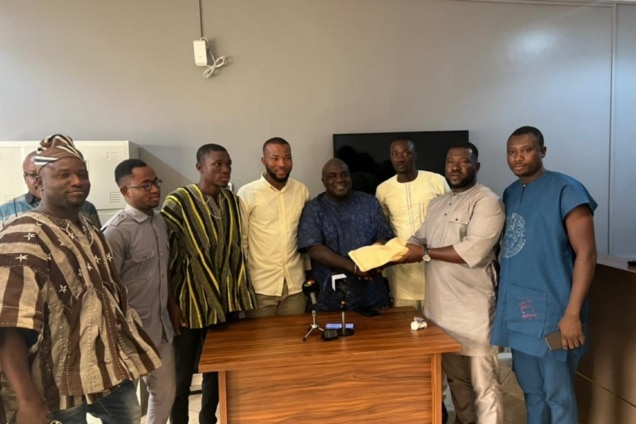
    A group calling itself the ‘Bole-Bamboi Youth for JM 2024’, have donated an amount of GH¢20,000 to former President John Mahama to support his 2024 presidential bid.

    According to the group, the gesture is an expression of their unwavering belief in Mahama to transform the country’s economic fortunes.

    In a presentation at Mahama’s office at Cantonments in Accra on Thursday, the group handed the sum to the former Chief of Staff, Mr Julius Debrah, who received it on behalf of the ex-president.

    Mr Debrah thanked the donors for the gesture and reiterated Mahama’s commitment to salvaging the economy when given the nod in 2024.

    Speaking to MyJoyonline.com after the donation, leader of the group, Mr Abdul Rafiu Haruna, said the group’s support for Mahama is connected to his ethnic relations to Bole-Bamboi, hence a gesture to one of their kinsmen.

    “John Dramani Mahama has been tried and tested. We all lived in this country when he was the president of this country and were witnesses [and] can attest to the good works he embarked on when he was given the privilege to rule this country”, leader of the group added.

    He further stated that, “the peculiarities of this election, the 2024 elections are such that we’re presented with candidates that we can measure their track records and we all agree that John Dramani Mahama, has even earned the title the ‘nation builder’ because of the massive developmental projects he has engaged in.

    “So I believe that we all can attest to what he has done for Ghana”.

    The donation by the group adds to a groundswell of support Mr Mahama has received since expressing his desire to contest the 2024 presidential elections.

    Incumbent Members of Parliament, as well as aspiring MPs and other key members of the party have thrown their weight behind the former president’s candidature.

    The NDC’s 2020 campaign manger, Professor Joshua Alabi is one of those who believe that Mahama is the best option amongst the party’s other flagbearer aspirants.

    Meanwhile, the ruling New Patriotic Party (NPP) says it is prepared to face former President John Dramani Mahama at the 2024 polls.

    Addressing a press conference on Wednesday, the NPP’s Director of Communication, Richard Ahiagbah, said his outfit is not intimidated by Mahama’s intentions.

    According to him, Mr Mahama did not give a good account of himself while in office, but rather subjected Ghanaians to untold hardship; including the one-time power fluctuations, termed ‘dumsor’.

  • Ade Coker advises NDC flagbearer aspirants to step back for Mahama

    Ade Coker advises NDC flagbearer aspirants to step back for Mahama

    A former Greater Accra Chairman of the National Democratic Congress (NDC), Joseph Ade Coker, has urged the party’s flagbearer candidates to support John Mahama’s candidacy without mounting an opposition.

    According to him, the former President should not be sidetracked since he is the only candidate who has the potential to assist the NDC in regaining power.

    Speaking on Thursday on Accra-based Atinka TV, he asserted that Mahama should be elected president by popular vote rather than through a contest, adding that the other contenders could declare their candidacies at a later time.

    “My advice to those who would be contesting is that, even though they have gone for forms and we have been talking to them, I believe that they should look at the larger picture of the NDC.

    “We do not want a situation where by the time we finish, we are divided.

    We do not want that. There is room for everybody in the party and at the appropriate time, we can consider them”, the former Greater Accra Regional Chairman said.

    Mr Coker’s comments adds to the widespread endorsement Mahama has garnered following the announcement of his bid to contest in the 2024 presidential elections on the ticket of the NDC.

    So far, the former President is ahead of his contenders – former Finance Minister, Dr Kwabena Duffuor and former Kumasi Mayor, Kojo Bonsu.

    The NDC will hold its presidential and parliamentary primaries on Saturday, May 13 to elect a new flagbearer as well as parliamentary candidates across the various constituencies.

    Meanwhile, the ruling New Patriotic Party (NPP) says it is prepared to face former President John Dramani Mahama, following his decision to contest the 2024 presidential election.

    Addressing a press conference on Wednesday, the NPP’s Director of Communication, Richard Ahiagbah, said his outfit is not intimidated by Mahama’s intentions.

    According to him, Mr Mahama did not give a good account of himself while in office, but rather subjected Ghanaians to untold hardship; including the one-time power fluctuations, termed ‘dumsor’.

    Source: MyJoyOnline.com

  • NPP shades Mahama over ‘corruption collaborators’ jibe

    NPP shades Mahama over ‘corruption collaborators’ jibe

    Director of Communications of the New Patriotic Party (NPP), Richard Ahiagbah, has defended the current administration over some corruption allegations leveled against them by former president John Dramani Mahama.

    Ahiagbah in a quoted tweet ‘defended’ the anti-corruption credentials of the president stating thus: “At least President Akufo-Addo is clear about his incorruptibility.”

    Mahama via social media posts dated February 15, 2023 made the corruption collaborators allusion whiles reacting to a letter from the Attorney General and Minister of Justice, Godfred Dame, to the Auditor-General, Johnson Akuamoah-Asiedu.

    The letter, a legal advice from the government lawyer, pointed the A-G to obey procedures in law laid down for the publication of audit reports even though others interpreted same as an attempt to dictate to the audit boss.

    The recently released report on COVID-19 expenditure in the country, revealed several instances of alleged financial malfeasance.

    “The Attorney General’s letter to the Auditor General is clearly meant to silence him and create a conducive atmosphere for corruption to thrive,” Mahama wrote.

    “President @NAkufoAddo’s administration is not only indifferent in the fight against corruption – they are collaborators!” he added.

    Background:

    After the Auditor-General released a damning Special Audit Report on its findings on the government’s expenditure of COVID-19 expenditures in the country since the deadly pandemic was recorded in Ghana, the Attorney General wrote a letter to the A-G.

    In the letter, Godfred Dame asked Johnson Akuamoah-Asiedu to stop the publication of the report on the Special Audit of COVID-19 expenditures.

    He further stated in the letter, based on Article 187(5) of the constitution, that the Auditor-General is rather mandated to submit his report to parliament, and in that report, draw attention to any irregularities in the accounts audited which is often concurrently published with the submission.

    The Attorney General added that it was only after satisfying the constitutional requirement of submitting the Auditor-General’s report to parliament that the report might be considered final and relevant action might be taken thereon.

    Source: Ghanaweb

  • Koku Anyidoho lauds Sophia Akuffo over DDEP protest

    Koku Anyidoho lauds Sophia Akuffo over DDEP protest

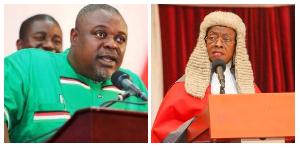
    Former deputy General Secretary of the National Democratic Congress (NDC), Samuel Koku Anyidoho, has commended former Chief Justice Sophia Akuffo for joining the protest to resist government’s proposed Domestic Debt Exchange Programme (DDEP).

    He stated that the former government appointee has demonstrated what it takes to be a responsible citizen of the country rather than a mere spectator.

    Koku Anyidoho continued by saying that anyone willing to make such a bold decision in his political party the NDC, where he previously held the position of deputy general secretary, would have been criticized and labelled as a traitor for speaking out against the party.

    Because the party despises boldness and labels those who speak their minds as traitors and bitter individuals.

    “I can imagine how my people will be jumping on this, and praising Sophia Akufo for being bold. Yet, within our own party, we abhor boldness and refer to people who speak their minds as, “traitors” & “bitter people”. Hypocrites & parasites. Tweaa!!!” he said in a social media post.

    The former Chief Justice of Ghana, who was appointed by the sitting president, Nana Addo Dankwa Akufo-Addo, stated in an interview with Ghanaweb on February 10, 2023, that, she finds it unlawful and wicked for the government to sacrifice the profits of retirees for its domestic debt exchange.

    “I find this wicked, disrespectful, I find it unlawful. I find it totally wrong, period, because you don’t solve your problems by sacrificing your aged. That’s the last thing you should do especially when you don’t have any services that are actually geared at the comfort and relief of the aged,” she added.

    Responding to the comment by the former Chief Justice, Samuel Koku Anyidoho praised Justice Sophia Akufo and urged the public to follow in the footprints of the former government appointee.

    “Very Senior ‘CITIZENS’ (not spectators), are talking. “He who has an ear, let him hear what the Holy Spirit is saying to the Church”. Revelations 2:29. Amen,” he added.

    Source: Ghanaweb

  • NDC Parliamentary reshuffle: Muntaka concedes after meeting with Mahama

    NDC Parliamentary reshuffle: Muntaka concedes after meeting with Mahama

    Former Chief Whip of the minority Caucus in parliament, Alhaji Mohammed Mubarak Muntaka, has conceded to the decision of the National Democratic Congress (NDC) following talks with former president John Dramani Mahama.

    His meeting comes amidst the brouhaha associated with the reshuffle of the minority in parliament.

    In a Facebook post, he said John Mahama’s intervention has brought an end to the disagreement with regards to the reshuffle.

    Muntaka further said that there is the need for the party to move on as a party and channel energies towards 2024 elections.

    “To all our supporters within and without. I had a lengthy meeting with my big brother, His Excellency John Dramani Mahama, on Saturday evening over the parliamentary reshuffle.

    “I want to first of all thank him for the words of advice and encouragement to me as a younger brother.

    “His Excellency’s intervention has brought an end to all the brouhaha associated with the reshuffle. We are for the interest of our party NDC. We need to move on as a party and channel all our energies towards 2024 elections,” he wrote on Facebook.

    Background:

    The change in the leadership of the minority caucus of Parliament has led to some confusion in the NDC, with some members of the party, including some Members of Parliament, saying that the party’s parliamentarians should have been consulted before the move.

    The NDC leadership has appointed the former Deputy Minister of Finance, Dr. Cassiel Ato Forson, as the minority leader in the 8th Parliament of Ghana’s Fourth Republic. He replaced the MP for Tamale South, Haruna Iddrisu.

    According to the NDC, Kofi Armah Buah, MP for Ellembele, will take over as the Deputy Minority Leader.

    While Kwame Governs Agbodza, MP for Adaklu, he will replace Asawase MP Muntaka Mohammed as the Chief Whip.

    Ahmed Ibrahim, MP for Banda, has been maintained as the First Deputy Minority Whip, while Comfort Doyo Cudjoe-Ghansah, MP for Ada, is the Second Deputy Minority Whip.

    This was contained in a letter to the Speaker of Parliament, Alban Bagbin, from the National Democratic Congress, dated January 23, 2023.

    Source: Ghanaweb

  • “Years wasted!” Mahama on the lack of increased oil production under the Akufo-Addo administration

    “Years wasted!” Mahama on the lack of increased oil production under the Akufo-Addo administration

    John Dramani Mahama, a former president, has charged the Akufo-Addo administration with failing to make any attempts over the previous seven years to increase the nation’s oil production in the upstream sector.

    He claims that the current administration has been consumed by greed and incompetence working against the interests of the country, which has prevented the growth of the oil and gas industry.

    John Mahama condemned the development as “wasted years” in a tweet from February 6, 2023, despite the fact that his [NDC] administration had given the Akufo-Addo administration two new oil fields in 2017—TEN and Sankofa.

    “Wasted years! We bequeathed to the Akufo-Addo government two new oil fields, TEN and Sankofa. Greed and ineptitude as against national interest means a sad reality of no additional production activity in our upstream oil sector in the last 7 years,” John Mahama wrote.

    Meanwhile, the Public Interest Accountability Committee (PIAC) in a recent assessment report on Ghana’s petroleum revenue management spanning a 10-year period showed that an amount of US$31.22 billion in value was generated from three producing oil fields between 2011 and 2022.

    PIAC’s report which was released on March 1, 2022, said the generation comprises both entitlements due to the contracting parties and the Ghana Group.

    The Ghana Group, according to the report earned US$6.55 billion in total petroleum receipts between 2011 and 2020.

  • NPP needs Christian as flagbearer – Ayeh Paye insists

    NPP needs Christian as flagbearer – Ayeh Paye insists

    The New Patriotic Party (NPP) needs a Christian as its flagbearer moving into the 2024 elections, this is according to Samuel Ayeh Paye, a former Member of Parliament for the Ayensuano seat.

    He argued that the 2024 elections would be decided on the basis of religion, which is why he urged the NPP to select a Christian over a Muslim as its flagbearer ahead of the general elections of 2024.

    Speaking on Adom TV’s flagship morning show Badwam, the Eastern Regional Campaign Coordinator for Alan Kyerematen explained that since John Mahama, the NDC’s top choice, is a Christian and the majority of Ghanaians identify as Christian, it was instructive for the NPP to select a Christian over a Muslim to lead the party.

    Hon. Ayeh Paye pointed out that statistics show that Christians make up the majority of our people, thus any effort by the NPP to choose a Muslim as its flag bearer could hurt the party’s chances of remaining in power in 2024.

    “As an NPP, I believe we should introduce someone with a Christian background,” he stated on the show hosted by Akwasi Nsiah, noting that only 17 percent of Ghana’s population is Muslim, compared to the country’s overall 71 percent Christian population.

    “Whether we like it or not, the NDC will bring John Mahama who is a Christian, and once that happens, it means the 2024 election campaign will even take its major course in the churches, so let’s be careful we don’t present a candidate whose religious background will become an issue against us,” he insisted.

  • Akufo-Addo ruined the thriving economy he inherited – Mahama

    Akufo-Addo ruined the thriving economy he inherited – Mahama

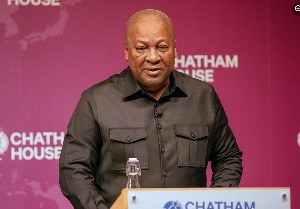
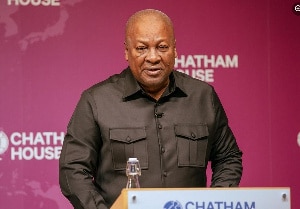
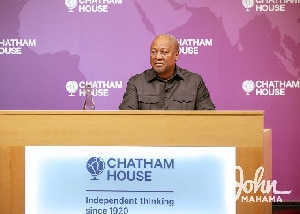
    Former President John Mahama claimed in a presentation on “Africa’s strategic priorities and global position” at Chatham House, London, that President Nana Akufo-government Addo’s has ruined the thriving Ghanaian economy it inherited from the previous administration.

    “Ghana will celebrate 66 years as a nation in a little less than six weeks.
    We shall observe this day under the burden of the worst economic crisis in decades, far from being a time to celebrate independence and the accomplishments of nationhood, he remarked.

    “Today, many of our economic indicators are pointing south. We have in the last month entered the hyperinflation era with an inflation rate of 54%. Our currency has in the past few months been counted among the worst-performing in the world, plummeting by as much as 54% in value within the first ten months of 2022. Widening budget deficits have characterized economic performance since 2018”.

    “A severe cost of living crisis fueled by ever-rising prices of basic goods has imposed extreme hardship on Ghanaians as the government struggles to meet some of its most basic commitments in areas like education and health. Unemployment stood at a staggering 13%, the highest in recent memory”.

    “It would be no hyperbole to assert that our present state bears an uncanny resemblance to the late seventies and eighties”.

    “How was a country with such bright prospects, only a decade ago, brought to its knees so quickly when it should have made far more progress? The present trouble with our economy stems from gross mismanagement and in some instances sheer recklessness”.

    In his view, the “government failed to sustain the gains made after our last IMF programme, which brought stability to the management of the Ghanaian economy. Corruption has also contributed significantly to bring us to this distressing juncture”.

    The government, he said, “has been quick to pass off the COVID pandemic as a reason for this poor economic record. Yet, available data shows that many of our neighbours in West Africa and further afield, posted much better economic performances than we did during and after the pandemic”.

    The World Bank, he noted, “through its Ghana Country Director, has also stated unequivocally that Ghana’s economy was in distress before the pandemic occurred”.

    “The purpose of recounting these failures, driven my mismanagement and corruption, in Ghana is to demonstrate how Africa depletes scarce resources generated from both the continent and development partners. Instead of thinking innovatively to address the fundamental economic problem, many leaders worsen it”, Mr Mahama explained.

    Using the management of the COVID-19 pandemic as a case study, he said: “My own country, Ghana, once a beacon of Africa has come up for mention for dissipating domestic and donor funds”.

    “A recently published audit report by the Auditor General of Ghana into receipts and expenditures on COVID-19 exposes staggering instances of corruption running into billions of Ghana cedis”, he noted.

    “Over GH¢21.8 billion was mobilised to mitigate the impact of the pandemic from the World Bank, IMF, the European Union (EU), the African Development Bank (AfDB), Ghana’s Contingency Fund, and from the sale of Bank of Ghana COVID-19 Bonds”, Mr Mahama added.

    According to him, “hiding under the ‘emergency situation’, the government jettisoned our financial and procurement laws and refused to use the GIFMIS system, which is the agreed budget and accounting digital platform to avoid thorough scrutiny. Such financial malpractices discourage delivery of grants and concessionary loans to Africa”.

    “I have indicated that we need a forensic audit into the receipts and expenditure of the COVID[1]19 funds in Ghana. The forensic audit may be extended to other countries in Africa to restore investor confidence as we build the Africa we want”.

  • Presentation by John Mahama at Chatham House

    Presentation by John Mahama at Chatham House

    He accused the administration of destroying the booming Ghanaian economy that it had taken over from him in 2017.

    At Chatham House in London, Mahama was giving a lecture on “Africa’s Strategic Priorities and Global Role.”

    “Ghana will celebrate 66 years as a nation in a little less than six weeks.
    We shall observe this day under the burden of the worst economic crisis in decades, far from being a time to celebrate independence and the accomplishments of nationhood, he remarked.

    “It would be no hyperbole to assert that our present state bears an uncanny resemblance to the late seventies and eighties”.

    “How was a country with such bright prospects, only a decade ago, brought to its knees so quickly when it should have made far more progress? The present trouble with our economy stems from gross mismanagement and in some instances sheer recklessness”.

    Read Mr Mahama’s full lecture below:

    Africa’s strategic priorities and global role A Chatham House Lecture by H.E. John Dramani Mahama, Former President of the Republic of Ghana

    Thank you, Alex Vines, and Chatham House for the invitation.

    I am happy to have been able to join you from Brussels where I had very productive discussions on the future perspectives in the framework of Africa- EU relations at the invitation of the European Strategic Initiative.

    It is gratifying to be back here at Chatham House, which through the Africa Programme events, has offered a wide array of African Leaders across various fields, a unique platform to discuss our continent in ways not seen elsewhere.

    The discussions here have helped shape international opinion on Africa and offered a useful focus on its most important subjects. I hope to continue in that tradition by sharing some thoughts on the continent’s present outlook and future while dwelling on the situation in my own country, Ghana.

    Africa’s political and governance history is quite well-known. However, on this occasion, it bears brief recollection to set the tone for an informed assessment of Africa’s prospects and future trajectory.

    It helps a bit that I have a bias towards history, which I majored in at the university in my formative years. And as the famous British statesman Winston Churchill opined, “Study history, study history. In history lies all the secrets of statecraft.”

    The African story is one that evokes immediate memories of colonial exploitation and domination with abundant cheap labour to be used for raw material production and export to build the magnificent metropolises of this world.

    Centuries earlier, we were at the short end of the stick in the slave trade as our best and strongest found themselves bound in chains and bundled unto overcrowded slave ships, never to return.

    However, by the middle of the 20th century, there had emerged a young cadre of Pan Africanists, determined to free the continent from its colonial shackles, who worked, at the peril of their freedoms and very lives. They eventually launched a liberation struggle that reverberated across the continent.

    Names like Kwame Nkrumah – under whom my father, E. A. Mahama, served diligently as a Minister of State, Nyerere, Kaunda, Sekou Touré easily roll off my tongue in this regard.

    Soon enough, after a spirited fight, colonialism fell in one country after another, culminating in the exhilarating liberation of South Africa from the worst form of colonial subjugation— apartheid. The result—freedom for Nelson Mandela after 27 years in jail.

    Africa in the post-colonial independent era was awash with hope for a much brighter tomorrow. We were, however, soon to be enmeshed in a contestation over the most suitable development paradigm and ideology.

    Some faced West and others faced East. We in Ghana, as famously declared by our first President, Osagyefo Kwame Nkrumah, faced neither East nor West. We faced forward and experimented along the line with whatever paradigm we deemed exigent at a particular time.

    Not enough time was afforded for these experiments to yield sustainable fruits because a combination of disillusionment and adventurism ushered in military dictatorships and in many cases, wanton misrule.

    By the mid-eighties to early nineties, it had become obvious that democratic governance and economic reform were imperative to overcome the suffering and stagnation that years of poor governance had spawned. Under the aegis of the Bretton Woods institutions and other multilateral partners, several African countries launched economic recovery programmes with varying degrees of success.

    In the case of Ghana, I can say, that through these reforms, we performed what could be likened to an economic miracle. From the throes of bankruptcy, hyperinflation, and years of negative growth in the mid-seventies and early eighties, the economy was restored to the path of growth. Measurable and impactful progress could be seen!

    Thirty years ago, we were even able to seamlessly integrate up to one million of our compatriots who were unceremoniously deported from Nigeria back to Ghana without causing too much of an upset to our economic outcomes. Analysts have suggested the eviction was Nigeria’s retaliation – in 1983 – to the dastardly deportation of other Africans including Nigerians from Ghana under the Aliens Compliance Order of 1969.

    In the decade that followed that period, millions of Ghanaians were lifted out of poverty through progressive policies and interventions. Similar success stories could be recounted for other African countries. Between those heady days and now, the story of Africa has been patchy even though progress has not completely eluded us.

    Civil strife, famine, genocide, and a relapse into bad governance can all be squeezed into the narrative in the last few decades.

    At present, save for a few countries on the continent, our economies are largely still underdeveloped and underpinned by the colonial economic model of raw material export and little manufacturing or industrialisation.

    Fragile governance institutions and corruption remain major bottlenecks. Insecurity, terrorism, and insurgency have all reared their heads across some countries. In the last few years, we have seen a resurrection of what we had believed to be the extinct spectre of military takeovers in some West African countries.

    Mammoth unemployment and limited economic opportunities continue to confront Africa. This has been exacerbated by the youth bulge; and projected to worsen by 2030 if not addressed. Obviously, a threat to the attainment of the Sustainable Development Goals and Africa’s Agenda 2063.

    Africa being demographically the most youthful continent, should have been an opportunity to be harnessed. However, the limited opportunities available to Africa’s youth has created a distressing scenario and culminated in the biggest threat facing the continent and the world now.

    Africa has always been an opportunity. That has never been in contention. What is in debate, is the extent to which Africa has been an opportunity for itself and exploited its advantage for the benefit of itself. The story of the contribution of Africa has always been one of fascination. From its origin as the cradle of humankind, the continent has through the ages left an indelible mark on the pages of history.

    The echoes of the Arab spring, which took place barely a decade ago, still ring in our ears and serve as too clear a reminder of what possible and probable danger the continent faces if the situation does not improve – and quickly so. The prevalence of cybercrimes including internet-based fraud (‘Sakawa’) and other offences spill beyond Africa and affects the rest of the world. This must be addressed head-on!

    The foregoing by no means suggests that there is no positive news from Africa.

    There is a lot to celebrate on the continent.

    There are many thriving democracies in Africa with some well governed countries and strong economies. Information Communication Technology (ICT) uptake is one area where strong growth has been recorded.

    Just before the COVID-19 pandemic, Africa was recording the fastest rate of new broadband connections, and mobile data traffic was projected to rise astronomically between 2017 and 2020 – growing by a CAGR of about 46% according to Statista.

    The E-commerce sector was also experiencing exponential growth as our population attained more awareness and became more reliant on online retailing. That said, there is still much to worry about.

    It is a fact that Africa has suffered historical injustices like slavery, colonialism, and an unjust world economic order –which have held us back for centuries and deprived us of a level playing field to develop rapidly compared to other continents. But it is no longer tenable to continue to blame these events predominantly for our present state. That will be absolving corrupt African leaders of blame for mismanaging the resources of the continent.

    We have had sufficient time and opportunities over the last few decades to change our story and narrative while crafting and implementing visions that would transform the lives of the over a billion people who dwell on the continent.

    Yes, globalisation has inherent disadvantages for Africa. But Africa can and must rise to the occasion by building and working towards continental unity as we strengthen partnerships with the rest of the world. To achieve Africa’s Agenda 2063 goals, we must let the world buy into Africa’s priorities and global role. In most cases, we have simply squandered opportunities.

    Ghana also comes to mind here. In a little under six weeks from today, Ghana will mark sixty-six (66) years of nationhood. Far from being an occasion to celebrate independence and the successes and achievements of nationhood, we will mark this day under the yoke of the worst economic situation in decades.

    We are currently bankrupt and burdened with a national debt we are simply not able to pay. You may have learnt over the past few weeks that the Ghanaian government has defaulted on the servicing of both external and domestic debt.

    There is currently, a huge uproar over a controversial debt restructuring programme under which the middle-class of Ghana could be wiped out if plans to have them forfeit proceeds of government bonds on which they rely for investment and sustenance, are followed through. In absolute terms, up to about six (6) million people could be deprived of their life savings and investments.

    Ghana’s banking and financial sector could also be under threat of insolvency if no suitable adjustments are made to the debt restructuring plans.

    Our present economic situation, underscored by our bankrupt status, sharply contrasts with our fortunes a little over a decade ago. At the time, our economy posted some of the highest growth rates in the world with a robust and fast-growing non-oil sector.

    Today, many of our economic indicators are pointing south. We have in the last month entered the hyperinflation era with an inflation rate of 54%. Our currency has in the past few months been counted among the worst performing in the world, plummeting by as much as 54% in value within the first ten months of 2022. Widening budget deficits have characterized economic performance since 2018.

    A severe cost of living crisis fueled by ever-rising prices of basic goods has imposed extreme hardship on Ghanaians as the government struggles to meet some of its most basic commitments in areas like education and health. Unemployment stood at a staggering 13%, the highest in recent memory.

    It would be no hyperbole to assert that our present state bears an uncanny resemblance to the late seventies and eighties.

    How was a country with such bright prospects, only a decade ago, brought to its knees so quickly when it should have made far more progress? The present trouble with our economy stems from gross mismanagement and in some instances sheer recklessness.

    Government failed to sustain the gains made after our last IMF programme, which brought stability to the management of the Ghanaian economy. Corruption has also contributed significantly to bring us to this distressing juncture.

    Government has been quick to pass off the COVID pandemic as a reason for this poor economic record. Yet, available data shows that many of our neighbours in West Africa and further afield, posted much better economic performances than we did during and after the pandemic.

    The World Bank through its Ghana Country Director has also stated unequivocally that Ghana’s economy was in distress before the pandemic occurred.

    The purpose of recounting these failures, driven my mismanagement and corruption, in Ghana is to demonstrate how Africa depletes scarce resources generated from both the continent and development partners. Instead of thinking innovatively to address the fundamental economic problem, many leaders worsen it.

    Using management of the COVID-19 pandemic as a case study my own country Ghana once a beacon of Africa has come up for mention for dissipating domestic and donor funds.

    A recently published audit report by the Auditor General of Ghana into receipts and expenditures on COVID-19 exposes staggering instances of corruption running into billions of Ghana cedis.

    Over GH¢21.8 billion was mobilised to mitigate the impact of the pandemic from the World Bank, IMF, the European Union (EU), the African Development Bank (AfDB), Ghana’s Contingency Fund, and from the sale of Bank of Ghana COVID-19 Bonds.

    Hiding under the “emergency situation”, government jettisoned ourfinancial and procurement laws and refused to use the GIFMIS system, which is the agreed budget and accounting digital platform to avoid thorough scrutiny. Such financial malpractices discourage delivery of grants and concessionary loans to Africa.

    I have indicated that we need a forensic audit into the receipts and expenditure of the COVID[1]19 funds in Ghana. The forensic audit may be extended to other countries in Africa to restore investor confidence as we build the Africa we want.

    Let me add that, Africa needs to build stronger institutions to address institutional and political decay. In building stronger institutions, Civil Society Organisations (CSOs) in Africa must also be prioritized. On this note, let me commend many CSOs on our Continent that are holding governments accountable.

    Compounding the socio-economic malaise on the continent, is the erosion of public confidence in state institutions. Many of these state institutions set up to be independent arbiters and offer appropriate checks and balance on the executive arms of government, have in recent years served more as extensions of the government.

    In many cases, as it is the case in Ghana, there has been overt efforts by government to weaken these institutions and bend them to its will.

    A case in point was the ouster of the then Chairperson of Ghana’s Electoral Commission and two other senior officials by the President of Ghana over clearly flimsy and contrived reasons. They were then replaced with persons with noticeable leanings towards the incumbent party and whose actions have served to undermine public confidence in their independence and neutrality, two ingredients which are vital prerequisites for the sustenance of Ghana’s acclaimed democracy.

    Relatedly, Ghana’s Judiciary has also come under public scrutiny in recent years for what is widely perceived as bias towards the government. Until the advent of this government, our judiciary had commanded tremendous public respect and confidence for their firmly independent posture. This is arguably no longer the case.

    This is a worry to investors because one of the factors that boosts confidence of investors to place their money in a country, is the faith they have that in event of a business dispute, they can expect the justice system to be a fair and neutral arbiter.

    For Africa to succeed in achieving her strategic priorities, we must strengthen institutions including the judiciary and grant them their deserved independence and freedoms as prescribed by law. I encourage you not to lose hope in Ghana and Africa because it is far more useful to look forward to the future with hope than to brood over the present with despair.

    I am an eternal believer in the potential and positive energies of Africa and her youth.

    In December, next year, what I consider to be the most important elections in Ghana’s history will be held. The electioneering period will offer a scope for deeper discussions about Ghana’s future and what needs to be done to get us out of the current economic quagmire and to avoid a recurrence.

    We in the opposition in Ghana are very clear on our vision for the country and how to build the Ghana that we all want.

    The first order of business for a new NDC administration is to restore macro-economic stability and ensure fiscal prudence while generating employment for many of our young people who are unsure of what the future holds.

    Though the current economic distress is largely self-inflicted, it is very clear that unless we act to insulate ourselves from these factors, whatever gains that are made going forward will unravel because of structural weaknesses.

    The National Democratic Congress therefore commits itself to immediate structural reforms based on a national dialogue and forging a broad national consensus that will lead to the diversification of our economy and its production base; and the attraction of investment into industry, farming, agribusiness, the digital sector, and tourism.

    We are determined to process our natural resources like cocoa, gold, bauxite, oil, copper while we build more robust capacity to respond to global energy shocks.

    I invite you to look favourably at Ghana again because there is hope ahead! I also urge you to partner Africa as we confront the challenges posed by climate change, emerging diseases, terrorism, and cybercrimes to build a safer world.

    Our borders are borderless because of globalization. Therefore, we must stand in support of one another.

    As we look into the near future with optimism, there are instant solutions that must be found to the crippling economic crisis, which has left a dark pall hanging over Ghana now.

    At a continental level, I want to reiterate my international advocacy for a reinstitution and extension of the Debt Service Suspension Initiative (DSSI) to afford our countries some limited fiscal respite. I would similarly call for the expansion of the Common Framework for Debt Treatment Beyond the DSSI to help African countries access debt restructuring tools and mechanisms.

    I have had cause to also state elsewhere, and I would repeat that the time has come for an African version of a Marshal Plan. I note and applaud the Global Gateway Programme of the EU that seeks to mobilize 300 billion Euros over the next seven years for infrastructure in Africa and the rest of the developing world.

    If Africa is to survive and be a source of hope for the rest of the world, then Africa as an imperative must speedily harness the advantages it has to ensure inclusive growth for its people. With the continent boasting the world’s largest free trade area along with an over 1- billion-person market, Africa is prime, as reported by the World Bank, to carve out a new developmental pathway.

    Under the African Continental Free Trade Area (AfCFTA) agreement, 55 countries with a combined GDP of over US$3.4 trillion will work together to present major opportunities for shared growth and prosperity for Africa and the rest of the world.

    I expect AfCFTA not to de-emphasize the prospects of SMEs as we promote new markets and encourage foreign investments. SMEs have sustained Africa and will continue to do so for a long while. I also urge AfCFTA to secure intellectual property rights of Africans as we partner already mature businesses.

    AFCTA will also need the support of the African Union for greater integration to allow for greater labour mobility across Africa to support countries in need of critical human resource.

    And AFCTA must not allow businesses with political connections to be prioritized over real captains or champions of industry. Neither must innovations from the youth suffer because of lack of political connections.

    All hope is not lost for Africa. Africa, including my country Ghana, has strategic priorities and is ready and willing to play its role in the global community.

    To conclude, it is also of critical importance that regional bodies like the ECOWAS, SADC, EAC, CEMAC, the Arab Maghreb Union and African Union must be empowered to have a firmer grip 9 on their member nations to address regional/ continental/ global challenges. Other international bodies like the European Union and the TANA High-Level Forum for Security in Africa, which I chair, must provide the needed support, including oversight and scrutiny of activities likely to lead to serious consequences.

    I stress on this point of oversight because we observe that the laxity in supervision and oversight has given free reins to some leaders on the continent to wreak constitutional tyranny on their people with some changing their country’s constitution so they could run for extended terms.

    No single country in Africa can on its own attain the highest level of development when it is surrounded by neighbouring countries engaging in full scale-conflict. It is therefore important that there is stability and sustainable development in Africa, which will help lead to global security and prosperity.

    With the right steps and visionary leadership as well as a willingness to dig deep and find innovative solutions to the decades-old challenges, we must emerge a stronger force to reckon with.

    I thank you for your kind attention

  • Nosedive of Ghana’s economy self inflicted – Mahama tells Chatham House

    Nosedive of Ghana’s economy self inflicted – Mahama tells Chatham House

    Former President John Mahama says there is an urgent need for Ghana’s donor partners to pile pressure on the government to heed to calls for forensic audits to trace stolen funds.

    John Mahama who is currently in London, was delivering a lecture on “Africa’s Strategic Priorities and Global Role” at Chatham House, London.

    The former President, who traced historical antecedents, blamed challenges facing the continent on poor government, corruption, blatant abuse of power, impunity and lack of consultation.

    According to him, Ghana’s current crisis is self–inflicted, and unpardonable, especially after bold initiatives that were to put the country on the path of growth before the NPP assumed office.

    Citing Ghana’s economic crisis, he said, a few years ago, the country, held high as the beacon of the sub-region, has been plunged into junk status with serious ramifications on education, health and employment.

    John Mahama, who is tipped to lead the NDC for the 2024 elections noted with concern that, the special audit report on the COVID-19 expenses for example is a stinker.

    He accused Nana Akufo Addo’s government of side-stepping monitoring mechanisms put in place to avoid scrutiny, and went on a borrowing spree in spite of warnings, resulting in today’s crisis.

    Source: Ghanaweb

  • Stan Dogbe takes on Ben Ephson over claims that Mahama orchestrated Haruna, Muntaka’s removal

    Stan Dogbe takes on Ben Ephson over claims that Mahama orchestrated Haruna, Muntaka’s removal

    Stan Dogbe, the Director of Communications during the John Mahama presidency has taken Ben Ephson to the cleaners over his allegation that the decision by the National Democratic Congress to oust Haruna Iddrisu and Muntaka Mubarak as Minority Leader and Chief Whip was the brainwork of the former president and Asiedu Nketiah.

    In his reaction to the move by NDC, the Managing Editor of the Daily Dispatch Newspaper said that John Mahama and Asiedu Nketiah orchestrated the move because it works in their favour.

    Speaking in an interview on Starr FM on Tuesday, January 24, 2023, the pollster indicated that the reasons provided by the party do not justify their actions.

    “I think that it is the working of former President John Mahama and Aseidu Nketiah and I am going to wonder how the minority caucus is going to be. I suspect politically Mr. Aseidu Nketiah and John Mahama’s handiwork. Are they saying that before 2020 these economic issues were not there?

    “No, I don’t think so, you see when you give this reason. You are creating the impression that before 2020 and even before these changes, Haruna and the leadership have not acquainted themselves well enough in dealing with these issues. Or is it an issue of trying to have total control over minority or minority issues in parliament?” Mr. Ephson quizzed.

    He continued: “When you say there are going to be economic issues in 2024, can’t Ato Forson advise Haruna on the way forward? Or they think that Haruna cannot be nodding at everything they say because economic issues have been in the forefront in the run up issues in 2020 elections.”

    In response, Stan Dogbe observed that Ben Ephson has consistently shown bias against John Dramani Mahama.

    According to him, Ben Ephson’s predictions are fuelled by factors other than objectivity and actual analysis of the situation on the ground.

    “This Ben Ephson man is at it again. Obviously, he has always been a shameless character so he cares less about himself when he chooses to go where his stomach leads him.

    “Your sustained negatively against John Mahama will lead you no where ooo, it will not. With your credibility finally eroded as people see through your tabletop so-called research, your new found job is to be attacking and granting interviews to denigrate John Mahama.

    “Me, I wish you well in your new job. Once it puts food on your table, why not. What are we in this world for. Just remember that you cannot destroy what the Lord has planned out.

    We will wait for your next negative campaign against John Mahama,” he posted on Facebook.

  • Minority Leadership: We consulted John Mahama, others – Fifi Kwetey clarifies

    Minority Leadership: We consulted John Mahama, others – Fifi Kwetey clarifies

    The General Secretary of the National Democratic Congress (NDC), Fifi Fiavi Kwetey, has explained that in deciding to change the leadership of the party in parliament, they consulted the former president, John Dramani Mahama.

    Describing it as an apt decision that would inure to the long-term benefits of the NDC party, Fifi Kwetey said that contrary to claims that some key persons were not consulted over the decision, they actually did.

    According to a report by myjoyonline.com, the NDC General Secretary explained that John Mahama was informed and he is aware of why there was the need to make those changes.

    “This decision was taken after wide consultation. If you look at the apex leadership of the party, that consultation was done. In terms of parliamentary, the group that is widely consulted, that consultation has been done.”

    “What needed to be done about this reshuffling was done and the people duly consulted. All the key leaders have been consulted. The former President, Mahama was consulted and his views were duly reflected. The new and old leaders were informed and consulted,” he said.

    In a release signed by Fifi Fiavi Kwetey on Tuesday, January 24, 2023, it stated the new changes that had been made to the leadership of the Minority in parliament.

    Replacing Haruna Iddrisu, who has been Minority Leader since 2017, the NDC named Dr. Cassiel Ato Forson, while Mohmammed-Mubarak Muntaka, who was the Minority Chief Whip, has been replaced by Kwame Governs Agbodza.

    Emmanual Armah Kofi Buah will now be the new Deputy Minority Leader, replacing James Klutse Avedzi.

    Source: ghanaweb

  • Mahama, Asiedu Nketiah orchestrated shakeup in Minority caucus – Ben Ephson

    Mahama, Asiedu Nketiah orchestrated shakeup in Minority caucus – Ben Ephson

    The Managing Editor of the Daily Dispatch Newspaper, Ben Ephson says former President John Mahama and the NDC’s National Chairman, Aseidu Nketiah orchestrated shakeup in the leadership of Minority caucus in Parliament.

    This comes on the back of the opposition NDC making changes to its leadership in Parliament with the appointment of Dr. Cassiel Ato Forson as the new Minority Leader.

    The former Ranking Member of the Finance Committee of Parliament and Member of Parliament for Ajumako Enyan Essiam replaces Hon. Haruna Iddrisu.

    Dr. Ato Forson is to be assisted by MP for Ellembele, Kofi Armah Buah who has been appointed as the Deputy Minority Leader.

    Speaking in an interview on Starr News with Naa Dedei Tettey on Tuesday January 24, 2023 the pollster indicated that the reasons provided by the party do not justify their actions.

    “I think that it is the working of former President John Mahama and Aseidu Nketia and I am going to wonder how the minority caucus is going to be. I suspect politically Mr. Aseidu Nketia and John Mahama’s handiwork. Are they saying that before 2020 these economic issues were not there?

    “No, I don’t think so, you see when you give this reason. You are creating the impression that before 2020 and even before these changes Haruna and the leadership have not acquainted themselves well enough in dealing with these issues? Or is it an issue of trying to have total control over minority or minority issues in parliament?” Mr. Ephson quizzed.

    He continued: “When you say there are going to be economic issues in 2024, can’t Ato Forson advise Haruna on the way forward. Or they think that Haruna cannot be nodding at everything they say because economic issues have been in the forefront in the run up issues in 2020 elections.”

    Meanwhile, the Chairman of the opposition NDC, Asiedu Nketiah has said the change of leadership of the Minority caucus in Parliament is part of the party’s reorganization process.

    According to him, there are key areas Parliament will center its debates on ahead of the 2024 election which has informed the eventual changes in the leadership of the Minority.

    “It is the continuation of our re-organization exercise to reposition the party for the 2024 elections. So, it’s the continuation of the process which was started a year earlier from branches through to constituency to regional and national. We’ve now come to the reorganization on the form in parliament.

    “The thinking is that going into 2024 the debate is going to be principally on the economy and so we need to put our best foot forward so we can match the NPP in that area. That’s why we chose Ato Forson to lead the charge as Minority leader and then Armah Kofi Boah our expert in energy which is also going to feature prominently and then Kwame Agbodza is our person on infrastructure,” he told Starr FM Midday News with Naa Dedei Tettey on January 24, 2023 Tuesday.

    Source: Ghanaweb

  • 2024 will certainly be a Bawumia-Mahama game – Annoh-Dompreh

    2024 will certainly be a Bawumia-Mahama game – Annoh-Dompreh

    The 2024 presidential election will undoubtedly feature a contest between Vice President Dr. Mahamudu Bawumia for the New Patriotic Party (NPP) and former President John Dramani Mahama for the National Democratic Congress (NDC), according to Majority Chief Whip in Parliament Frank Annoh-Dompreh.

    This is despite the fact that neither the NPP nor the NDC have chosen their standard bearers for the election.

    At least four party stalwarts from the NPP have expressed interest in serving as the party’s flagbearer.

    They are Kennedy Agyapong, a lawmaker from Assin Central, Alan Kyerematen, a former trade and industry minister, Kwabena Agyei Agyepong, a former general secretary of the NPP, and Dr. Owusu Akoto Afriyie, a former minister of food and agriculture.

    Dr. Bawumia has not yet publicly stated that he plans to run for office, although he most certainly will.

    http://backend.theindependentghana.com/respect-bawumia-he-is-likely-to-get-70-80-votes-in-npp-primaries-yaw-adomako/

    According to Mr. Frank Annoh-Dompreh, Dr. Bawumia represents hope for both the governing party and Ghana as a whole.

    “It will certainly be between BMW( our hope): and JM( The spent force)!” he tweeted on Wednesday, January 18.

    The Nsawam-Adoagyiri lawmaker further indicated that Dr Bawumia “is a gift to this Nation, let’s not take it for granted. Do away with your ‘Hatred’ for him.. He will rescue us, certainly. Dr.Bawumia, ever proud of him.”

  • Ablakwa claims Mahama will win DC primaries by 95%

    Ablakwa claims Mahama will win DC primaries by 95%

    Member of Parliament for North Tongu, Samuel Okudzeto Ablakwa, believes that former President John Mahama will easily win reelection as the NDC’s 2024 flagbearer.

    He predicts that the former President will win with almost 95% of the total valid ballots cast.

    This was included in a list of forecasts the congressman posted on his Facebook wall on the first day of the year in 2023.

    Regarding the party’s primaries, he voiced confidence that Mahama would win.

    “Former President John Mahama will emerge victorious from the 2023 NDC Flagbearer Primaries with more than 95% of valid votes cast”, he noted in the first paragraph of his 2023 forecasts.

    Mr. Ablakwa added, “Former President John Mahama expected to retain Professor Naana Jane Opoku Agyemang as his Running Mate for the 2024 presidential election”.

    Mr. Ablakwa also predicted that the National Cathedral’s contentious contractors will give up on the project, which has been a cause of protests around the country.

    He also said that the nation’s economic problems will continue to worsen, which would increase public dissent.

    Former president John Dramani Mahama is now preparing to lead the National Democratic Congress in an attempt to unseat the NPP in the 2024 elections.

    Even if he hasn’t openly stated it, there have been numerous convincing indications that he intends to lead the party, including a vast majority of NDC MPs who have consistently stated that they will support the former president.

    Even though Mahama has not yet made a public statement about his future plans, Mr. Ablakwa’s forecasts are related to the support Mahama has attracted.

    However, despite the support that John Mahama’s candidacy is receiving, some NDC members believe that the NDC would have a better chance of winning the 2024 elections if a fresh candidate other than Mahama were to emerge.

    According to these dissenters, Mahama’s appeal has dwindled amongst Ghanaians due to the many scandals that rocked his government between 2012 and 2016 when he was voted out of power.

    They therefore want a new face to shoulder the responsibility of the party’s flagbearership going into the 2024 general election.

    In line with these calls, former mayor for Kumasi, Mr Kojo Bonsu and former Finance Minister, Dr Kwabena Duffuor are currently warmimg up to unseat John Mahama.

    Mahama will win NDC primaries by 95% - Okudzeto Ablakwa
    A flyer of Dr Duffuor which has been circulated by some party faithful in recent times

    But the chances of these two men have been dismissed by many party supporters and some analysts who say that, both gentlemen do not have the wherewithal to deflate the clout and appeal of John Mahama in the party.

    Rumors from close sources within the NDC however have it that, the party’s presidential primaries will be organized in March this year to allow the NDC ample time to campaign and prepare for the 2024 contest.

  • Asuma Banda’s first wife files for divorce after 48 years together – Report

    Cassandra Banda, the first wife of business mogul Alhaji Asuma Banda has reportedly filed for divorce after close to five decades of their union.

    A report by mynewsgh.com cited court documents in which Mrs. Banda is seeking the annullment of their marriage with settlement.

    She argues in the court papers that she should be awarded 60% of Banda’s estate citing the role she played in supporting the now-ailing millionaire from his early days when they met in London.

    Cassandra met and married the then 41-year-old Asuma Banda in London in 1974 but she contends that the marriage “has now reached a point of irreconcilable differences after years of alleged philandering by her husband which she largely ignored,” the Mynewsgh.com report stated.

    Alhaji Asuma Banda has recently been in the news after viral videos of a custody battle around his bedside at the 37 Military Hospital was circulated on social media.

    His two sisters subsequently appealed to President Nana Addo Dankwa Akufo-Addo, former president John Mahama and the National Chief Imam to intervene in the custody issues.

    A court has granted custody and care of Banda to his second wife Edwina Baaba Coussey Banda who he married in 1991.

    The one-time Anktrak Air CEO turned 89 this year and will clock 90 years by next year June.

  • Mahama’s full tribute to Prof. Kwesi Botchwey

    The passing of my elder brother Kwesi ‘B’, as I called him, after a short illness has left me and the hordes of our compatriots and the nation at large, numb with deep sadness.

    We are yet to come to terms with this new reality that, for the first time, we will no longer have the benefit of his ever-readiness to serve his party, his country and his God.

    It is difficult to accept that your party, the NDC, can, today, no longer draw upon your sharp intellect, profound knowledge and varied expertise that served as a bulwark of stability for our economy, leading to the birthing of our enduring 4th Republic.

    It is painful to accept that you would not be physically present to consult when the NDC returns to power to pursue its goal of changing the fortunes of the people of Ghana.

    It is sad to accept that we have had our last “buga’ dance and our plans to celebrate you in grand style on your 80th birthday, will no longer be possible. Kwesi ‘B’ was a gifted fixer – plain and simple.

    He was the longest serving Finance Minister of our Republic for a reason. A man of immense intellectual acumen and practical wisdom, his life had been one of selfless service to his country and humanity.

    Significantly, his service led to transformation of lives across the globe. He was a statesman par excellence and a national treasure.

    It is a measure of his industry, scholarly credentials, and depth of knowledge that he served at various capacities both at home and abroad, including sharing his expertise with global organizations and bodies like the IMF, the World Bank, the UN, the OECD and the Commonwealth.

    In spite of this incomparable resume, Professor Kwesi Botchwey never yielded to the temptation of engaging in self-adulation and promotion but preferred to have his work speak for him. This is a vital lesson of servantship that all of us, especially politicians, must emulate.

    This is why he was a man I admired greatly. He continued to serve in various capacities, the last being Member of the Council of Elders of the NDC, until he was finally called to rest.

    Even after retirement, the statesman that he was, he continued to serve till the very end. You have served your God, your fellow man, your country, and your party faithfully, and you have earned your due rest.

    But being human, we would have preferred to have you around a bit longer, especially now that your country is going through torrid economic times.

    We are reminded, however, by the words of the Priest-Poet John Donne who remarked that: “God himself took a day to rest in, and a good man’s grave [or death] is his Sabbath.” Kwesi ‘B’: the cruel hand of death has only severed our physical connection: it may have ended a life but never the ties, memories and inspiration you left with us that continue to spur us on.

    You have gone but will never be forgotten as long as the NDC exists; You have gone but will never be forgotten, as long as the story of the economy of our country is told; You have gone but will never be forgotten whenever we recall some of the greatest sons and daughters our country has ever produced.

    The poet Emile Dickenson was right about you: “Because I could not stop for Death – He kindly stopped for me – The Carriage held but just Ourselves – And Immortality.”

    Because you were driven by a desire to improve the livelihood of your people, you never stopped to take a deserved rest.

    Your friends, comrades, party and nation, with a grateful heart, bids you farewell. May God Almighty grant you peaceful repose.

    Source: John Dramani Mahama

  • Some Ministers I reshuffled are no longer friends with me – John Mahama

    Former President John Mahama has disclosed that one of the toughest decisions he took during his tenure was to reshuffle his ministers.

    Giving a lecture at the Academic City College in Accra, he noted that this move cost him a lot of friends, however, this did not deter him from sacrificing personal interest for the good of the country. 

    “In my time, I reshuffled some ministers and I know they were not very pleased. Of course, nobody is pleased when you drop them from office and so there are few of them who are not my best friends anymore because I dropped them from office,” he said.

    His revelation follows various calls on President Akufo-Addo to reshuffle ministers who are not meeting the expectations of the public. The President is yet to heed this call and has on various occasions stressed the need not to.

    For him, his ministers have performed beyond expectation, therefore, there was no need for any reshuffle. 

    Unlike the President who remains resolute in maintaining his appointees, Mr Mahama said some of the government officials who had to suffer this fate are currently at loggerheads with him.

    Addressing the students on the theme “Taking Critical Decisions in Decisive Moments As a Leader, ” he advised the President to emulate him and reshuffle the ministers since it largely helps them in identifying their potential. 

    “After a while, take a look at the performance of your ministers and based on their performance you must decide to drop some people and you can also decide to shift some people to other places. They may be probably good but maybe they may not be finding their feet in the ministry you sent them and so after observing them for a year or two you see that this person will do better here because of certain qualities they have.”

    He further stated that “sometimes you take decisions to move people because you don’t want them to create kingdoms in the Ministries in which they are. When the staff of the ministry or the agency know that this person is untouchable then it does not bring out the best in them…and that is what is happening today,” he stressed.


    Source: The Independent Ghana

  • I referred to myself as a dead goat because I was frustrated – Mahama

    Former President John Dramani Mahama has finally clarified his his dead goat syndrome comment which was used heavily against the 2016 elections by the New Patriotic Party.

    He said that he adopted the metaphor because he was frustrated about the continuous strike and the deregulation of oil prices.

    The huge labour unrest that was happening at the moment, according to Mr. Mahama, was intolerable.

    “I am the only government in the Fourth Republic where all organised labour came together and went on strike and shut down the country.

    “I was one of the most harassed Presidents by Organised Labour. That is what led to the dead goat syndrome… because when you kill a goat, you cannot frighten it with the knife again, really!… I don’t know why I said that, but of course our opponents took it out of context. They said I have said that I won’t listen to anybody,” he explained during a lecture at Academic City University College on Friday.

    During Mr Mahama’s regime, experienced a number of strikes and demonstrations from workers, most of whom protested against poor conditions of service.The Trades Union Congress was one of the many workers’ unions that were on the streets to protest the worsening economic crisis.

    The President said such demonstrations are part of strategies by workers’ groups to tie the hands of government, especially in election years.

    In 2015, the former president frustrated about the continuous industrial action by public workers stated that he was no longer deterred by Ghanaian strikes and protests.

    The President claimed to have a “dead-goat syndrome” and declared he would not be threatened by such tactics employed by some Ghanaians.

    “I have seen more demonstrations and strikes in my first two years. I don’t think it can get worse. It is said that when you kill a goat and you frighten it with a knife, it doesn’t fear the knife because it is dead already.

    “I have a dead goat syndrome,” he told a Ghanaian population in Botswana where he was on a three-day official state visit.
  • Dealing with corruption is most difficult for Presidents – Mahama

    Former President John Dramani Mahama has stated that dealing with corruption is one of the most difficult tasks for Presidents.

    This, he explained is due to the persons that are usually involved in the practice. Mr Mahama observed that in most instances, the people implicated in the corrupt act are closely related.

    “The very important aspect of decision-making for Presidents is dealing with corruption. It is not as easy as you think it is, and sometimes the person who has been involved in corruption is somebody that you know very well and probably somebody who has been a member of your team, but unfortunately, has fallen by the wayside,” he said.

    Speaking at a lecture at Academic City University College on Friday, Mr. Mahama said when this happens, as a President, you have to gather the courage to act.  This, in his view, would serve as a deterrent to others.

    Dealing with corruption is most difficult for Presidents - Mahama

    The ex-President cited two instances he had to deal with during his tenure in which one of the culprits resigned and the other was imprisoned but pardoned by government on health grounds.

    “There had been a procurement that had taken place and the minister had not gone through the procurement processes properly and as a result of that, there was an accusation that the cost of the procurement was far above what it should be and it created a major scandal for government. So I asked the Attorney- General and Chief of Staff at the time to investigate the allegations. They did and the report confirmed that the procurement process has not gone through properly …I called the minister involved …and she tendered her resignation,” he recounted.

    Dealing with corruption is most difficult for Presidents - Mahama

    He, however, stated that punishing persons involved in corrupt practices has not been the case with the current government.

    “Unfortunately that is part of the problem we are facing today that the President cannot sack people who have been accused of corruption and so on and so forth,” Mr. Mahama asserted.

    The Leadership Seminar Series by Academic City University College was designed as part of the University’s efforts to nurture the next generation of African leaders. It is aimed at ensuring that knowledge developed in the class is directly applied to address contemporary societal problems.

    Dealing with corruption is most difficult for Presidents - Mahama

    It is expected that the course will provide a platform for students to interact with renowned African leaders who have transcended from political, innovation, education, and industrial realms through sheer force of will and have impacted many lives.

    Addressing students as the Keynote Speaker for the event, former President, John Dramani Mahama took the students through what leadership entails.

    Dealing with corruption is most difficult for Presidents - Mahama

    “Leadership is about responsibility first and decision making, you must accept responsibility for the position that you occupy and once you are the leader, people look up to you to take responsibility and based upon that responsibility, take decisive action. You cannot take proper decisions when you have not accepted responsibility for taking those decisions,” he explained.

    Source: myjoyonile

  • Mahama appeals for ¢10 to support NDC congress

    Ghana’s request that private pensions forfeit some interest payments on government bonds to help it restructure debt and qualify for $3 billion of International Monetary Fund (IMF) support has received short shrift from local funds.

    The West African country on Monday started offering domestic bondholders fresh local-currency bonds that won’t pay interest before 2024 in exchange for their existing debt.

    But private pension funds, which held about 5.5% of domestic bonds as of the end of August, say the deal isn’t acceptable and want the government to discuss new terms.

    “The proposal as put forth by the Minister of Finance is inferior to market expectation and will destroy the savings of Ghanaians and further undermine market confidence,” the Chamber of Corporate Trustees, an umbrella body for private pension trustees, said in a statement Tuesday.

    “This is why we reject it outright.”

    The West African economy launched a portal Monday where domestic bondholders can apply until Dec. 19 to replace about 137 billion cedis ($10.4 billion) of existing debt with new bonds maturing in 2027, 2029, 2032 and 2037.

    Interest on the new bonds will not accrue until 2024 to reduce the country’s debt burden. Investors won’t receive annual coupon payments in 2023, 5% in 2024 and 10% from 2025 onward, according to the Ministry of Finance.

    The pensions’ pushback could derail a debt-exchange program aimed at reducing Ghana’s debt burden and interest payments so it can qualify for IMF support.

    Representatives of the Washington-based lender are in Ghana to complete talks with authorities in a mission set to end on December 13. Ghana and the organization, which have been in discussions since July, have said they are targeting an IMF staff-level agreement this month on a three-year program of as much as $3 billion.

    The country had 393.4 billion cedis ($29.9 billion) of debt at the end of June, and debt-serving costs equivalent to 68% of tax revenue over the same period, according to budget data.

    Ghana’s cedi, the world’s worst-performing currency against the dollar this year, has lost 53% of its value, increasing the cost of servicing the loans.

    Source: myjoyonline

  • Debt operation will further worsen plight of local private sector – Mahama

    According to former president John Mahama, the government’s proposed debt restructuring approach will have a greater detrimental impact on the private sector.

    Speaking to the graduating class of 2022 at the 13th Accra Business School graduation ceremony, the former leader claimed that the private sector is currently in a very bad situation as a result of the government’s poor management and carelessness during the previous five years.

    “The local private sector’s predicament is expected to get worse as a result of the Government’s impending debt operation.
    The government’s unilateral offer to pay no interest in 2023 and a suppressed interest rate of between 5 and 10% will worsen the situation for the private sector, though specifics are unknown at this time.

    “A worst-case scenario is the contemplated compulsory extension of maturities on Government bonds and the haircut investors will have to take if they decide to cash out because they can’t wait that long. People have lost value on their investments and could potentially lose even more,” the former President said.

    Domestic Debt Exchange

    Government has announced the modalities of a domestic debt exchange following the conclusion of Debt Sustainability Analysis as part of negotiations with the International Monetary Fund(IMF).

    In line with the programme, domestic bondholders are billed to exchange their instruments for new ones, Finance Minister Ken Ofori-Atta said in a televised announcement on Sunday.

    According to him, existing domestic bonds as of 1st December 2022, will be exchanged for a set of four new bonds maturing in 2027, 2029, 2032, 2037.

    “The annual coupon on all of these new bonds will be set at 0% in 2023, 5% in 2024, and 10% from 2025 until maturity. Coupon payments will be semi-annual,” said the Finance Minister.

    Meanwhile, the Finance Minister stressed “There will be NO haircut on the principal of bonds, adding Individual holders of bonds will not be affected.

    Also, Treasury Bills were exempted from the haircut as holders will be paid the full value of their investments on maturity.

    However, the external debt restructuring parameters will be presented in due course, Mr Ofori-Atta said.

  • Ban on V8s in Accra; who is going to monitor? Mahama quizzes government

    Former President, John Dramani Mahama doubts government’s ban on the use of V8s and V6s by government officials will be feasible since there will be no proper monitoring.

    Speaking at the 13th Congregation of the Accra Business School, he questioned the practicality of government’s ban on the use of V8 vehicles in Accra by its appointees.

    Mr Mahama thinks the policy is not feasible and according to him, its implementation is not trackable and therefore cannot be seen through.

    The Government in the 2023 budget announced on November 24, listed a raft of measures to rein in expenditure. They included a ban on use of V8 and V6 vehicles by government appointees except for cross-country duties.

    Former President Mahama however thinks that it will be difficult for the government to monitor the movement of the appointees.

    “Unfortunately, in this budget, Ghanaians are slapped with stiff additional taxes and no tangible cuts in expenditure. They just say don’t travel with your V8s.

    “If you are travelling outside Accra, you can use your V8, but don’t use it in town. I mean, who’s going to monitor if you use your V8 or not? Expenditure has increased significantly by 80 billion cedis.

    “It appears we have to accept to live with the excessive bloated size of government at the presidency,” Mr Mahama said when he addressed the 13th Congregation of the Accra Business School.

    Source: myjoyonline

  • Take farmers seriously – Mahama to government

    Former president John Dramani Mahama has called on the government to invest in farmers and farming-related businesses in the country.

    In a Facebook post to celebrate farmers, he said this will aid in reviving the economy, particularly when the country is experiencing financial crisis.

    “I urge government to prioritise agribusiness and support with favourable financing for farmers and all actors in the agricultural value chain,” he noted.

    He argued that, given the downgrades by International Rating Agencies, it is appropriate for the government to fund farmers and agriculture.

    “With Ghana’s economy at the brink of collapse, as proven by Rating Agencies through their unending downgrades, and the hardship it has brought to many homes, this is the time for government to begin to take farmers and farming-related businesses seriously. The surest way we can reduce imports, strengthen the struggling cedi, and save Ghana’s economy,” he added.

    Moody’s Investors Service reduced Ghana’s credit rating further into junk status due to the possibility that private creditors will endure significant losses during the government’s proposal.

    In a statement issued on Tuesday, Moody’s said that the country’s credit rating has been downgraded by two stages to Ca, the second-lowest rating.

    “The Ca rating reflects Moody’s expectation that private creditors will likely incur substantial losses in the restructuring of both local and foreign currencies debts planned by the government as part of its 2023 budget proposed to Parliament on 24 November 2022. Given Ghana’s high government debt burden and the debt structure, it is likely there will be substantial losses on both categories of debt in order for the government to meaningfully improve debt sustainability,” Analysts Lucie Villa and Marie Diron wrote in the statement.

    Meanwhile, President Akufo-Addo has pledged to uphold Ghana’s agriculture industry as one of his top priorities.

    Speaking at the 2022 National Farmers’ Day celebrations on Friday, December 2, he said his administration has so far made a significant number of investments in the industry to assist him in achieving his objectives.

    “Agriculture will continue to remain a top priority of my government. The massive investments made in the sector attest to this fact. The positive narrative about the government’s support to the agriculture sector is that, unlike several other countries.

    “Ghana is better prepared, and has demonstrated resilience to the current adversities threatening to destabilise our food systems. This has been possible because of the sound, pragmatic policies and programmes rolled out at the inception of my stewardship,” he added.

    On Friday, December 2, all 16 regions participated in the commemoration of National Farmers Day which took place in Koforidua, Eastern Region.

    Farmers were recognized at the ceremonies with awards for their steadfast efforts over the years in advancing agriculture in the nation.

    Source: The Independent Ghana

  • ‘With economy at the brink of collapse, it’s time to prioritise agribusiness’ – Mahama tells govt

    John Mahama, a former president of Ghana, has urged the current administration of the New Patriotic Party to “take farming and farming-related industry seriously.”

    Mahama stated that “with Ghana’s economy on the verge of collapse” it is time to prioritise “agribusiness and support with favourable financing for farmers and all actors in the agricultural value chain” in a message on Facebook honouring farmers as the country observed National Farmers Day.

    “With Ghana’s economy at the brink of collapse, as proven by Rating Agencies through their unending downgrades, and the hardship it has brought to many homes, this is the time for government to begin to take farmers and farming related businesses serious. This is the surest way we can reduce imports, strengthen the struggling cedi and save Ghana’s economy. I urge government to prioritise agribusiness and support with favourable financing for farmers and all actors in the agricultural value chain,” he stated.

    Meanwhile, this year’s celebration was under the theme “Accelerating agriculture through value addition”.

  • Mahama urges government to prioritise agribusinesses on Farmers’ Day

    Former President, John Mahama, has urged the government to prioritise agribusinesses and support key players in the agricultural value chain as a means to boost the economy.

    According to him, in the face of recent downgrades by international rating agencies and the high inflation rate in the country, supporting the agricultural sector to reduce imports and strengthen the weakening cedi is the way to go.

    He said this in a Facebook post to mark this year’s National Farmers’ Day celebrated on December 2.

    “I celebrate all farmers on this auspicious occasion for their priceless efforts that feed us and keep our industries running.

    “With Ghana’s economy at the brink of collapse, as proven by Rating Agencies through their unending downgrades, and the hardship it has brought to many homes, this is the time for government to begin to take farmers and farming related businesses serious,” he said.

    He continued, “This is the surest way we can reduce imports, strengthen the struggling cedi and save Ghana’s economy.

    “I urge government to prioritise agribusiness and support with favourable financing for farmers and all actors in the agricultural value chain.”

    Meanwhile, Moody’s has downgraded the Government of Ghana’s long-term issuer ratings to Ca from Caa2 or further junk status and changed the outlook to stable.

    This concludes the review for downgrade that was initiated on September 30, 2022.

    “The Ca rating reflects Moody’s expectation that private creditors will likely incur substantial losses in the restructuring of both local and foreign currencies debts planned by the government as part of its 2023 budget proposed to Parliament on 24 November 2022″, a statement published on its website said..

    The statement pointed out that “given Ghana’s high government debt burden and the debt structure, it is likely there will be substantial losses on both categories of debt in order for the government to meaningfully improve debt sustainability”.

  • FLASHBACK: Akufo-Addo, Mahama go head-to-head on macro-economic management track records

    The track records of John Mahama and Nana Addo Dankwa Akufo-Addo were compared a week before the 2022 elections to enable Ghanaians to make an educated choice based on prior accomplishments.

    Ghana’s electorate will soon have to decide whether to give Nana Akufo-‘s administration Addo another term of four years in office or to reinstate his immediate predecessor, John Dramani Mahama, to the position he had held for four years and five months before his bid for a second full four-year term was rejected at the polls in 2016.

    This means that for the first time in the history of the Fourth Republic, voters will be able to choose based on the respective track records of the two leading presidential candidates (who indeed are the only ones with even the faintest chance of winning) rather than just relying on the manifestos of the parties they lead – the incumbent New Patriotic Party and the opposition National Democratic Congress respectively.

    This is crucial – with regards to macro-economic management, which is the most pivotal aspect of political governance by a long way, both parties are promising more or less the same things, these being adherence to prudence with regards to addressing the key performance indicators of the economy.

    This means aiming to keep the fiscal deficit low; indeed the fiscal responsibility act caps it at five percent per annum but the exigencies of combating COVID-19 has necessarily suspended this indefinitely. It also means keeping inflation low; although there are no quantitative limits in palace, single-digit consumer inflation is the generally accepted objective Crucially, both parties commit to curbing the inordinate growth in the public debt which instructively passed the sustainability threshold of 70 percent of Gross Domestic Product recently, a situation delayed for several years by the economic machinations of both major parties during their most recent respective tenors in office.

    It is also instructive that despite their continued commitment to achieving these key objectives when in power -and their ferocious criticism of their opponents for not achieving them when they are in power – neither has been particular successful at fulfilling them.

    With regards to their plans for the productive sectors of the economy, each party offers significant variations of basically the same theme for achieving accelerated economic growth but promises to win votes seem to have taken precedence over reality in terms of what can actually be done. While both parties are guilty of this to varying degrees, the NDC in particular is offering policy initiatives that would simply be impossible to fulfill.

    Therefore voters would do best to make their impending electoral decisions based on which of the two candidates did better in achieving the universally agreed macro-economic goals, while in office.

    In our tale of the tape, we have necessarily had to adopt the following methods.

    Although former President John Dramani Mahama assumed office in August 2012, following the sudden death of his predecessor, Professor John Atta Mills, we use January 2017 as his starting date because we wish to use full year figures for our analyses. Besides it is assumed that during the last five months of 2012 he was simply executing the plans and policies of his predecessor, rather than his own.

    However it should be noted that this works to Mahama’s advantage in that the economy suffered arguably its worst deterioration with regards to key macroeconomic indicators during that five month period so our method of analyses incorrectly assumes he inherited an economy in significantly worse shape than he actually did.

    With regards to our analyses of President Nana Akufo-Addo’s tenor we have taken into account the distortionary effects of the outbreak of COVID 19 in 2020. Therefore, we are using end 2019 as his end of tenor position in assessing his performance, although we are also placi8ng the latest available figures for 2020 side by side, for information purposes.

    ECONOMIC GROWTH

    MAHAMA :

    Former President John Dramani Mahama began his full four-year term in office at a time Ghana had just recorded an economic growth rate of 9.3 percent. Indeed, Ghana was coming off a period of extraordinary growth propelled by investment in the emergent upstream oil and gas sector, a period during which the country achieved the highest growth rate in the world in 2011, at 14.4 percent.

    However a combination of the global economic slowdown brought about by lingering effects of the global financial crisis, the collapse of global commodity prices – including those for gold, cocoa and crude oil, Ghana’s main exports – and fiscal indiscipline at home, thereafter cut growth significantly. In turn this persuaded Ghana to turn to the International Monetary Fund for a programme to restore macro-economic stability and the IMF in typical fashion put the country into a demand-management programme which put precedence on the restoration of stability rather than growth. In his final ye4ar in office, Ghana’s economic growth rate had fallen to 3.4 percent.

    AKUFO-ADDO :

    Inheriting the 3.4 percent growth rate left by Mahama in his final year, incoming President Nana Akufo-Addo had promised to replace demand management with supply side, expansionary economic policy to accelerate growth and create direly needed employment opportunities. However, initially he was constrained by the IMF’s insistence on demand management, which indeed was prudent under the prevailing circumstances of the time.

    Consequently his supply side thrust was only fully introduced in 2019, as Ghana exited the programme in April of that year.’ However the IMF had accepted a measured shift towards expansionary economic policy before the end of its programme.

    By 2019, Ghana had resumed strong economic growth, posting 6.7 percent growth in that year. This year his government had aimed at 7.3 percent growth (although based on past experience this was unlikely to have quite been achieved), but COVID 19 has spoiled the party. Indeed at a time Ghana expected only marginal growth of 0.9 percent, although it now seems the economic slump has been shorter and shallower than originally anticipated, and so growth is now projected at about two percent.

    INFLATION

    MAHAMA :

    Former President Mahama inherited a consumer price inflation rate of 13.5 percent in January 2012 although this is not quite correct; actually inflation was considerably lower in August 2012 but it spiked upwards sharply as the government went on a major deficit financing spree in the run up to the 2012 general elections which propelled inflation upwards, due to the huge liquidity injection government had given the economy during those few months.

    The IMF ‘s interventions helped in the battle against inflation but in the run up to the 2016 elections the Mahama administration again lost the plot and consumer inflation by the time he left office had risen again to 15.4 percent.

    AKUFO-ADDO :

    President Akufo Addo promised to use fiscal consolidation to bring down inflation despite his expansionary economic plans and indeed he was fairly successful in this. The data indicates that before COVID 19 came and upset everything, by the second half of 2019 inflation had been brought down to its lowest level since the beginning of the 4th republic, falling to below eight percent consistently.

    The truth though is that though his administration brought inflation into single digits, of just under 10 percent, the fall in inflation to below 8 percent was simply the result of the rebasing of the inflation computations by the Ghana Statistical Service. While this is not unusual – lots of other countries do it once in a while – critics of the government on Ghana point to the unusual practice of failing to state the results of the old computations alongside the rebased figures as evidence that the Government of Ghana rebased the computations for political rather than economic reasons.

    Under the rebased inflation computations, the surge in inflation brought about by COVID 19 earlier in the year has since been curbed bringing inflation down to 10.1 percent by October this year.

    EXCHANGE RATE DEPRECIATION

    MAHAMA :

    The depreciation of the cedi was arguably Mahama’s Achilles Heel. Apart from fiscal indiscipline leading to too many cedis pursuing too few dollars, the central bank leadership during all but his final year adopted an ill-advised strategy of demand management in addressing the exchange rate. This in turn destroyed confidence in Ghana’s forex supply capacity and consequent speculative trading did the rest. Mahama inherited a cedi depreciation rate of 17.5 percent in 2012 – although again this was largely due to his own fiscal indiscipline during his first five months in office as he sought to win re-election for a full four year turn. In 2013, his first year in office, the cedi actually depreciated by some 30 percent during the first half of the year alone. But after a similar first half of 2014, the central bank reversed its demand management directives restoring confidence to the local forex market and the cedi consequently appreciated sharply, recovering much of the ground it had hitherto lost to the dollar.

    This was the harbinger of an extended period of cedi stability but in 2016 during the run up to the general elections, the government’s fiscal indiscipline again saw significant cedi depreciation of 9.3 percent.

    AKUFO-ADDO:

    The Akufo –Addo administration came with the promise to stabilize the exchange rate. However it failed, with the cedi being rated by Bloomberg as the world’s worst performing currency during the first quarter of 2019, before recovering to record full year depreciation of 12.9 percent – until its final year, when despite COVID 19 and the fact that it is an election year, it has achieved the lowest cedi depreciation since the currency was floated in 1985, at 3.2 percent during the first 10 months of the year.

    Importantly, this year’s performance is sustainable, deriving from a trade surplus, historically high gross international reserves, strong inward remittances, and of crucial importance, forward forex sales by the Bank of Ghana which has pulled the rug out from under the feet of currency speculators who have tended to take positions against thee cedi for profit.

    FISCAL DEFICIT

    MAHAMA

    Once again, Mahama gets the benefit of inheriting an inordinately high fiscal deficit figure whereas in actual fact, he brought it about himself. The fiscal deficit for 2012 was 12.0 percent but Mahama did not inherit it; rather he caused it. Instructively, barely a month before he suddenly died, Professor Mills had gone to Parliament to request approval for supplementary budgetary expenditure because Ghana was leading for a fiscal deficit of 4.5 percent for the year. Parliament approved extra spending that would take the deficit to a little over 6 percent. Somehow though, after the Presidency changed hands, Ghana ended the year with a 12 percent deficit, twice what had been targeted even with supplementary spending.

    Fiscal profligacy under Mahama ended when the IMF programme started and the deficit was steadily reeled in to more sustainable levels until 2016 when once again the Mahama government lost the plot in the face of general elections, leaving office with a 9.0 percent fiscal deficit.

    AKUFO-ADDO

    President Akufo-Addo, on assuming office worked at fiscal consolidation with successive annual reductions in the fiscal deficit in 2017 and 2018. Instructively, however, upon exiting the IMF programme this began to change. Without the rebasing of Ghana’s economy in 2018 the fiscal deficit would have been higher than the previous year, not lower. Indeed the 2019 fiscal deficit was higher than 2018’s although still within the 5 percent imposed by the Fiscal Responsibility Act, at 4.8 percent.

    This year’s deficit target was 4.7 percent, although the conventional wisdom was that if in reality it could be kept at not more than the 5 percent statutory cap it would count as a win.

    COVID 19 has completely changed the situation, however, with government now having a revised target of a massive 11.8 percent. The extraordinary circumst6ances, however, make it impossible to compare this against any previous year. Suffice it to say however that the revised target has allowed government to accommodate all its considerably large election-motivated expenditure – both budgeted and impulsive expenditure – without going over the target.

    PUBLIC DEBT

    This comparison is done in US dollar terms to remove the distortionary effects of cedi depreciation.

    MAHAMA :

    He inherited a total public debt equivalent to US$18,832.77 million, this translating into 49.4 percent of GDP at the time. Aggressive borrowing during his tenure – he started what has now become a tradition of successive administrations in Ghana of doing a Eurobond issuance each year – led to his leaving a public debt of US$ 29,203.8 million four years later, which translated into debt to GDP ratio of 56.8 percent.

    AKUFO-ADDO

    This will count as one of his biggest failings. After justifiably criticizing the Mahama administration roundly for the amount of new debt it had added on both in absolute terms and as a proportion of GDP, as well as its effect in crowding out government spending on both recurrent items and on capital projects, his administration has done much the same thing.

    The statistics indicate that the debt to GDP ratio only rose from 56.8 percent to 63.0 percent over the three years 2017 to 2019, this is basically because of the rebasing of the economy in 2018. In absolute terms, the public debt rose from US$29,203.8 million to US$39,344.2 million during that time. This means it added on almost the same amount in three years as the Mahama administration added on in four years.

    Mahama’s supporters point out that his borrowing left more brick and mortar infrastructure to show for it, while the Akufo-Addo administration spent a large part of its borrowing on non-quantifiable things such as the financial sector reforms which has added nearly GJHc20 billion to the public debt.

    Akufo- Addo’s supporters retort that what it borrowed for is no less important than the infrastructure Mahama borrowed to implement; that Akufo Addo was also left with a much bigger debt servicing bill than Mahama inherited; and that some of the things Akufo-Addo borrowed for are still projects in progress ( such as railway infrastructure and One district one factory initiative) which will soon show their usefulness.

    GROSS INTERNATIONAL RESERVES

    MAHAMA

    Mahama inherited gross international reserves of US$5,835 million at the start of 2013 and left leaving just about the same level, at US$5,867 million four years later. The level of reserves was inordinately low and in part explains why the cedi suffered heavy depreciation during his tenor. Indeed at times Ghana’s reserves fell to levels barely enough to cover two months’ worth of imports.

    AKUFO-ADDO

    During his tenor Akufo-Addo deliberately built Ghana’s reserves to historically high levels, at a time in 2019 actually exceeding the US$10 billion mark. They ended that year at US$7,563 million and by October 2020 had been beefed up again to US$87,655 million, enough for over four months of imports.

    This has been crucial in both providing the cedi with exchange rate stability, unlike in previous times, and in securing better terms from international lenders for Ghana’s dollar denominated sovereign bond issuances on international capital markets.

    The comparisons put the Akufo Addo administration ahead with regards to macro-economic management, but while this provides the foundation for a stronger economy it does not automatically translate into one; the productive sectors have to be handled well if good macro-economic management is to be taken advantage of.

    On the upside, ahead of the 2020 general elections both major parties know what is required with regards to prudent macro-economic management will have learnt from past mistakes. The question now though is who can put their knowledge to best use and who can exercise the most fiscal discipline.

  • Asiedu Nketiah not fit to be NDC chairman, says Koku Anyidoho

    The chief executive of the Atta-Mills Institute, Samuel Koku Anyidoho, has said the general secretary of the National Democratic Congress (NDC) Johnson Asiedu Nketiah is not fit to be the national chairman and leader of the party.

    Anyidoho’s comment follows a tweet he posted on Monday which read, “I saw Asiedu Nketiah jubilate when NDC led by John Mahama lost in 2016. I can’t forget the trauma I suffered seeing my general secretary rejoice because John Mahama had led the NDC to defeat.”

    Anyidoho indicated that the NDC general secretary has no moral right to aspire for the top post of the party.

    “I use to be his deputy for four years and I don’t think he is fit to become chairman and leader of the NDC,” Anyidoho, the former deputy general secretary of the NDC, exclusively told Asaase News.

    “This is not about John Mahama per-say, John Mahama is an individual and the NDC is bigger than John Mahama.

    “All I am saying is that Asiedu Nketiah does not have what it takes to be chairman and leader because Article 25 of the NDC constitution, as we are in opposition today, whoever is chairman, is also leader until we have a flagbearer,” he added.

    Anyidoho has in the past accused Nketiah of orchestrating the defeat of the party in 2016.

    In a series of tweets on 3 October 2022, Anyidoho revealed that the 65-year-old seasoned politician, popularly referred to as General Mosquito made sure the NDC lost the Tain constituency.

    He stated in his tweets that Nketiah undermined every NDC Chairman he has worked with including the late Dr. Kwabena Adjei, Kofi Portuphy, and Samuel Ofosu Ampofo.

    Anyidoho also threatened to expose Asiedu Nketia adding that “the day Asiedu Nketia becomes Chairman of the NDC, would be the burial date of the party”.

    He further asked Asiedu Nketia; “Where is the land President Atta-Mills bought for the construction of the NDC school?”

  • I won’t resign as MP – Governs Agbodza after comments on 1.3 million Ofankor district hospital

    The Member of Parliament for Abaklu, Kwame Governs Agbodza, has explained why he is not going to resign as a Member of Parliament after promising to do so on live TV.

    On Tuesday, November 15, 2022, during a panel discussion, on Good Morning Ghana programme, Governs Agbodza said that Vice President Bawumia, after telling Ghanaians that the government of former President John Dramani Mahama was constructing hospitals at an inflated cost, is now constructing hospitals at a cost far greater than that of Mahama.

    Dr. Kabiru Mahama retorted, saying that Agbodza’s statement was not true because hospitals were being constructed at a far lesser cost under the Nana Addo Dankwa Akufo-Addo/Mahamudu Bawumia government.

    He went on to cite an example of a 150-bed unit at Ofankor District Hospital, which was constructed at a cost of not more than $1.5 million.

    But the NDC MP said that the example given by Bawumia’s aide cannot be true and went on to promise that he will resign as an MP if he can prove that a 150-bed unit was constructed at a cost less than $1.5 million.

    Dr. Mahama then pulled a story from GhanaWeb proving that a 150-bed unit at Ofankor District Hospital was built for less than $1.5 million.

    Exactly a week later, on November 22, 2022, the MP on “Good Morning Ghana,” as he usually is on Tuesdays, explained why he was not going to resign despite the ‘evidence’ given by Bawumia’s advisor.

    He said that pronouncements made by Vice President Bawumia and Dr. Kabiru Mahama about the said health facility were false because the facility at Ofankor was not a district hospital but a health centre.

    He also stated that the African Development Bank (ADB), which provided funding for the health facility, classified it as a health center rather than a hospital.

    “The question is has ADB built a 150 bed unit hospital (at Ofankor)? … that is a calculated lie. If you go to the ADB website, you will see every project they have done in this country.

    He went on to read a document by the government that listed some projects that had been completed and it indicated “a health centre at Ofankor not a district hospital at Ofankor”.

    “So, where exactly did the vice president get this idea about a 150-bed district hospital,” he added.

    Source: Ghanaweb

  • We danced ‘Buga’ at your birthday party – Mahama mourns Kwesi Botchwey

    Former President John Dramani Mahama has expressed shock over the passing of former Finance Minister, Dr. Kwesi Botchwey.

    Mourning the late Finance Minister in a post on Facebook after a visit to his family, Mr Mahama recollected dancing to ‘Buga’ a popular dance song by Nigerian artiste Kizz Daniel at Dr Botchwey’s 78th birthday party.

    Mr Mahama added that Dr. Botchwey had served his “God, country, and the NDC party faithfully, and now it was time to have a rest.”

    Dr Botchwey died at the Korle Bu Teaching Hospital on Saturday, 19 November 2022, at the age of 78.

    Dr Botchwey first served as finance minister during the military era of the Provisional National Defence Council (PNDC) from 1982 to 1991 and then in the constitutional period of the National Democratic Congress (NDC) from 1992 to 1995.

    He was Ghana’s longest-serving finance minister.

    Source: Citinews


  • Today in History: Corruption fight: Mahama’s worse performance is Akufo-Addo’s best – Report

    Ghanaians have pleaded with numerous governments to fight corruption ever since the country’s independence.

    Reports from the previous two years, however, suggested that Ghana’s corruption perception score did not change during the previous year.

    To help readers understand how the country performed on the index during the previous government and the current government, GhanaWeb examined Ghana’s performance on the CPI over the last 10 years in this article.

    GhanaWeb Feature

    Transparency International recently released the global 2021 Corruption Perception Index (CPI) with Ghana scoring 43 out of 100.

    Ghana’s performance was the same as last year and this has led to the worrying question of whether or not Ghana’s corruption fight is dwindling.

    This is even more concerning considering the current government’s promise to be resolute about fighting corruption to the core.

    The Ghana Integrity Initiative (GII) said the score of 43 by Ghana indicates the country did not make progress in its fight against corruption in 2021 as the score remains in 2022.

    GhanaWeb takes a look at Ghana’s performance on the CPI over the past 10 years to give readers an understanding of the country’s performance on the index under the past government and the ruling government.

    Corruption under Mahama:

    First let us take a look at the performance of Ghana before President Akufo-Addo was sworn into power in 2017. Data from the Transparency international indicates that Ghana scored;

    45 in 2012

    46 in 2013

    48 in 2014

    There was a drop in 2015 by a point -47 in 2015 and then just before the then President, John Mahama handed over power to the new government, the country’s score on the corruption perception index had dropped by 4 points to 43 in 2016 – which means there was higher corruption recorded in the last year of the reign of the NDC administration under Mahama.

    In terms of ranks on the CPI, Ghana was ranked the 64th the least corrupt country out of 180 countries in 2012, then it ranked 63rd in 2013, 61st in 2014, 56th in 2015 and 70th in 2016.

    Corruption under Akufo-Addo:

    Having promised to rid the country of the persisting canker of corruption, Ghana scored 40 over 100 in its first year under President Nana Addo Dankwa Akufo-Addo in 2017.

    This increased by a point to 41 in 2018
    And for the next year, this figure was retained when Ghana scored – 41 in 2019. This number rose by 2 more points in 2020 to become 43 but government failed to increase this score in 2021.

    During the term of President Akufo-Addo, Ghana ranked 81st in 2017, 78th in 2018, 80th in 2019, 75th in 2020, and 73rd least corrupt country in 2021.

    Where does Ghana stand?

    From these figures for the past five years, it could be said that Ghana has not made progress in the fight against corruption. The government inherited an index of 43 and it still scoring 43 which is even an improvement on its previous scores.

    According to Transparency International, Ghana’s best performance on the CPI was in 2014 when it scored 48.

    The corruption index is measured from 0 to 100. The higher the score of a country the less corrupt it is perceived to be. Countries that score below 50 are perceived to be more corrupt.

    Whilst the government insists it has made significant progress in the fight against corruption, very little has been seen as being done by the Special Prosecutor’s office which was established in the first year of his term as president.

    The Deputy Information Minister Fatimatu Abubakar, in an interview on Asaase News said Ghana has been making progress on the index since 2017 when it scored 40 out of 100 on the CPI.

    “But let us establish the fact that what this government inherited in 2017 was an average of 40, and the measurement is such that the lower you score, the more corrupt you are… so if you look at the trends from 2017, you will realise that no matter how small the figure is, Ghana has been stepping up, from 2017 to 2018 we were up from 40 to 41 and then in 2020 we moved a notch higher,” she was quoted by asaaseradio.

    But do the current figures reflect this assertion?

    Meanwhile, Transparency International indicates from its findings that Ghana’s best performance was in 2015 when it ranked 56th out of the 180 countries. This means that in the past 9 years, the John Mahama administration recorded the best records as far as the fight against corruption was concerned.

    Author: Ishmael Batoma

    GhanaWeb Feature

    Transparency International recently released the global 2021 Corruption Perception Index (CPI) with Ghana scoring 43 out of 100.

    Ghana’s performance was the same as last year and this has led to the worrying question of whether or not Ghana’s corruption fight is dwindling.

    This is even more concerning considering the current government’s promise to be resolute about fighting corruption to the core.

    The Ghana Integrity Initiative (GII) said the score of 43 by Ghana indicates the country did not make progress in its fight against corruption in 2021 as the score remains in 2022.

    GhanaWeb takes a look at Ghana’s performance on the CPI over the past 10 years to give readers an understanding of the country’s performance on the index under the past government and the ruling government.

    Corruption under Mahama:

    First let us take a look at the performance of Ghana before President Akufo-Addo was sworn into power in 2017. Data from the Transparency international indicates that Ghana scored;

    45 in 2012

    46 in 2013

    48 in 2014

    There was a drop in 2015 by a point -47 in 2015 and then just before the then President, John Mahama handed over power to the new government, the country’s score on the corruption perception index had dropped by 4 points to 43 in 2016 – which means there was higher corruption recorded in the last year of the reign of the NDC administration under Mahama.

    In terms of ranks on the CPI, Ghana was ranked the 64th the least corrupt country out of 180 countries in 2012, then it ranked 63rd in 2013, 61st in 2014, 56th in 2015 and 70th in 2016.

    Corruption under Akufo-Addo:

    Having promised to rid the country of the persisting canker of corruption, Ghana scored 40 over 100 in its first year under President Nana Addo Dankwa Akufo-Addo in 2017.

    This increased by a point to 41 in 2018
    And for the next year, this figure was retained when Ghana scored – 41 in 2019. This number rose by 2 more points in 2020 to become 43 but government failed to increase this score in 2021.

    During the term of President Akufo-Addo, Ghana ranked 81st in 2017, 78th in 2018, 80th in 2019, 75th in 2020, and 73rd least corrupt country in 2021.

    Where does Ghana stand?

    From these figures for the past five years, it could be said that Ghana has not made progress in the fight against corruption. The government inherited an index of 43 and it still scoring 43 which is even an improvement on its previous scores.

    According to Transparency International, Ghana’s best performance on the CPI was in 2014 when it scored 48.

    The corruption index is measured from 0 to 100. The higher the score of a country the less corrupt it is perceived to be. Countries that score below 50 are perceived to be more corrupt.

    Whilst the government insists it has made significant progress in the fight against corruption, very little has been seen as being done by the Special Prosecutor’s office which was established in the first year of his term as president.

    The Deputy Information Minister Fatimatu Abubakar, in an interview on Asaase News said Ghana has been making progress on the index since 2017 when it scored 40 out of 100 on the CPI.

    “But let us establish the fact that what this government inherited in 2017 was an average of 40, and the measurement is such that the lower you score, the more corrupt you are… so if you look at the trends from 2017, you will realise that no matter how small the figure is, Ghana has been stepping up, from 2017 to 2018 we were up from 40 to 41 and then in 2020 we moved a notch higher,” she was quoted by asaaseradio.

    But do the current figures reflect this assertion?

    Meanwhile, Transparency International indicates from its findings that Ghana’s best performance was in 2015 when it ranked 56th out of the 180 countries. This means that in the past 9 years, the John Mahama administration recorded the best records as far as the fight against corruption was concerned.

    Author: Ishmael Batoma

    GhanaWeb Feature

    Transparency International recently released the global 2021 Corruption Perception Index (CPI) with Ghana scoring 43 out of 100.

    Ghana’s performance was the same as last year and this has led to the worrying question of whether or not Ghana’s corruption fight is dwindling.

    This is even more concerning considering the current government’s promise to be resolute about fighting corruption to the core.

    The Ghana Integrity Initiative (GII) said the score of 43 by Ghana indicates the country did not make progress in its fight against corruption in 2021 as the score remains in 2022.

    GhanaWeb takes a look at Ghana’s performance on the CPI over the past 10 years to give readers an understanding of the country’s performance on the index under the past government and the ruling government.

    Corruption under Mahama:

    First let us take a look at the performance of Ghana before President Akufo-Addo was sworn into power in 2017. Data from the Transparency international indicates that Ghana scored;

    45 in 2012

    46 in 2013

    48 in 2014

    There was a drop in 2015 by a point -47 in 2015 and then just before the then President, John Mahama handed over power to the new government, the country’s score on the corruption perception index had dropped by 4 points to 43 in 2016 – which means there was higher corruption recorded in the last year of the reign of the NDC administration under Mahama.

    In terms of ranks on the CPI, Ghana was ranked the 64th the least corrupt country out of 180 countries in 2012, then it ranked 63rd in 2013, 61st in 2014, 56th in 2015 and 70th in 2016.

    Corruption under Akufo-Addo:

    Having promised to rid the country of the persisting canker of corruption, Ghana scored 40 over 100 in its first year under President Nana Addo Dankwa Akufo-Addo in 2017.

    This increased by a point to 41 in 2018
    And for the next year, this figure was retained when Ghana scored – 41 in 2019. This number rose by 2 more points in 2020 to become 43 but government failed to increase this score in 2021.

    During the term of President Akufo-Addo, Ghana ranked 81st in 2017, 78th in 2018, 80th in 2019, 75th in 2020, and 73rd least corrupt country in 2021.

    Where does Ghana stand?

    From these figures for the past five years, it could be said that Ghana has not made progress in the fight against corruption. The government inherited an index of 43 and it still scoring 43 which is even an improvement on its previous scores.

    According to Transparency International, Ghana’s best performance on the CPI was in 2014 when it scored 48.

    The corruption index is measured from 0 to 100. The higher the score of a country the less corrupt it is perceived to be. Countries that score below 50 are perceived to be more corrupt.

    Whilst the government insists it has made significant progress in the fight against corruption, very little has been seen as being done by the Special Prosecutor’s office which was established in the first year of his term as president.

    The Deputy Information Minister Fatimatu Abubakar, in an interview on Asaase News said Ghana has been making progress on the index since 2017 when it scored 40 out of 100 on the CPI.

    “But let us establish the fact that what this government inherited in 2017 was an average of 40, and the measurement is such that the lower you score, the more corrupt you are… so if you look at the trends from 2017, you will realise that no matter how small the figure is, Ghana has been stepping up, from 2017 to 2018 we were up from 40 to 41 and then in 2020 we moved a notch higher,” she was quoted by asaaseradio.

    But do the current figures reflect this assertion?

    Meanwhile, Transparency International indicates from its findings that Ghana’s best performance was in 2015 when it ranked 56th out of the 180 countries. This means that in the past 9 years, the John Mahama administration recorded the best records as far as the fight against corruption was concerned.

    Author: Ishmael Batoma

    GhanaWeb Feature

    Transparency International recently released the global 2021 Corruption Perception Index (CPI) with Ghana scoring 43 out of 100.

    Ghana’s performance was the same as last year and this has led to the worrying question of whether or not Ghana’s corruption fight is dwindling.

    This is even more concerning considering the current government’s promise to be resolute about fighting corruption to the core.

    The Ghana Integrity Initiative (GII) said the score of 43 by Ghana indicates the country did not make progress in its fight against corruption in 2021 as the score remains in 2022.

    GhanaWeb takes a look at Ghana’s performance on the CPI over the past 10 years to give readers an understanding of the country’s performance on the index under the past government and the ruling government.

    Corruption under Mahama:

    First let us take a look at the performance of Ghana before President Akufo-Addo was sworn into power in 2017. Data from the Transparency international indicates that Ghana scored;

    45 in 2012

    46 in 2013

    48 in 2014

    There was a drop in 2015 by a point -47 in 2015 and then just before the then President, John Mahama handed over power to the new government, the country’s score on the corruption perception index had dropped by 4 points to 43 in 2016 – which means there was higher corruption recorded in the last year of the reign of the NDC administration under Mahama.

    In terms of ranks on the CPI, Ghana was ranked the 64th the least corrupt country out of 180 countries in 2012, then it ranked 63rd in 2013, 61st in 2014, 56th in 2015 and 70th in 2016.

    Corruption under Akufo-Addo:

    Having promised to rid the country of the persisting canker of corruption, Ghana scored 40 over 100 in its first year under President Nana Addo Dankwa Akufo-Addo in 2017.

    This increased by a point to 41 in 2018
    And for the next year, this figure was retained when Ghana scored – 41 in 2019. This number rose by 2 more points in 2020 to become 43 but government failed to increase this score in 2021.

    During the term of President Akufo-Addo, Ghana ranked 81st in 2017, 78th in 2018, 80th in 2019, 75th in 2020, and 73rd least corrupt country in 2021.

    Where does Ghana stand?

    From these figures for the past five years, it could be said that Ghana has not made progress in the fight against corruption. The government inherited an index of 43 and it still scoring 43 which is even an improvement on its previous scores.

    According to Transparency International, Ghana’s best performance on the CPI was in 2014 when it scored 48.

    The corruption index is measured from 0 to 100. The higher the score of a country the less corrupt it is perceived to be. Countries that score below 50 are perceived to be more corrupt.

    Whilst the government insists it has made significant progress in the fight against corruption, very little has been seen as being done by the Special Prosecutor’s office which was established in the first year of his term as president.

    The Deputy Information Minister Fatimatu Abubakar, in an interview on Asaase News said Ghana has been making progress on the index since 2017 when it scored 40 out of 100 on the CPI.

    “But let us establish the fact that what this government inherited in 2017 was an average of 40, and the measurement is such that the lower you score, the more corrupt you are… so if you look at the trends from 2017, you will realise that no matter how small the figure is, Ghana has been stepping up, from 2017 to 2018 we were up from 40 to 41 and then in 2020 we moved a notch higher,” she was quoted by asaaseradio.

    But do the current figures reflect this assertion?

    Meanwhile, Transparency International indicates from its findings that Ghana’s best performance was in 2015 when it ranked 56th out of the 180 countries. This means that in the past 9 years, the John Mahama administration recorded the best records as far as the fight against corruption was concerned.

    Author: Ishmael Batoma

  • Mahama donates ¢1.9m to NDC to support internal elections

    Former President, John Dramani Mahama has donated GH¢1,953,000 to the National Democratic Congress (NDC).

    The donation is to aid the party in its internal elections with the regional elections commencing today, Friday, November 11.

    This was announced by the National Communications Officer of the party, Sammy Gyamfi in a press statement issued today.

    According to the said statement, GH¢853,000 is for the conduct of the regional elections and the balance for a debt owed to the Electoral Commission (EC) for the conduct of the party’s constituency elections.

    “The NDC’s flag-bearer for the 2020 general elections has donated an amount totalling ¢1,953,000 to support the conduct of the party’s constituency and regional internal elections.

    The donation is made up of an amount of ¢853,000 to the national party leadership for the organization of regional election conferences across the country and an amount of ¢1,100,000 to the Electoral Commission to clear the debt owed them by the party in respect to the just-ended constituency elections of the party,” the release said.

    The release concluded that “the party is most grateful to His Excellency and his generous sponsors for coming to the assistance of the party at this crucial time.”

    Source: Myjoyonline

  • Halt public funding of National Cathedral, do value-for-money audit – Mahama to govt

    Former President John Dramani Mahama wants the public funding of the National Cathedral project to be put on hold.

    He insists that the construction is currently not a priority for the government, especially in the ongoing economic crunch.

    According to him, a value-for-money audit of the project is crucial as it would “open the way for believers who wish to contribute to its construction.”

    Stop public funding of National Cathedral, do value-for-money audit - Mahama

    “The public funding of the national cathedral, particularly at this time, must stop. Being a Christian myself, and deeply appreciative of the centrality of God in nation building, I agree with most Ghanaians who believe that the project cannot constitute a top priority of government at this moment, warranting further injection of scarce public funds,” he posted on social media on Sunday.

    In the post on Facebook, the former President explained that “because of the non-transparency of the processes and procurements associated with the project, I believe that the cathedral project should be subjected to a value for money audit in other to open the way for believers who wish to contribute to its construction to do so”.

    Controversies

    The populace started questioning the project’s source of financing when the North Tongue MP, Samuel Okudzeto Ablakwa, put out documents showing that an amount to ¢200 million has been dished out towards the construction of the project.

    These monies, he said, were dished out without recourse to parliamentary processes or strict public procurement practices.

    According to Mr Ablakwa, the Akufo-Addo administration first proclaimed the project as a private and personal pledge; however, public funds are now siphoned to facilitate the task.

    He added that the inclusion of the National Cathedral’s Executive Director on the roll of Presidential Staffers also flies in the face of the law.

    “When you go through the list of Board of Trustees, this gentleman [Dr Paul Opoku Mensah] who has been enlisted here as the Executive Director of the Secretariat, a Secretariat presented as a private entity, has also been enlisted as a Presidential staffer and his position there is an overseer of the National Cathedral.

    “Why is the Ghanaian taxpayer paying somebody who works for a private board of trustees?” he quizzed.

    His revelations has since gotten many influential individuals and pressure groups questioning the transparency and accountability of government.

    Genesis of National Cathedral

    The building of the Cathedral fulfils a pledge President Akufo-Addo revealed he made to God before winning the 2016 elections.

    In 2019, the Finance Minister, Ken Ofori-Atta, said the construction of the National Cathedral is estimated to cost over $100 million.

    It has since been amended to $340 million.

    The government has already demolished all structures on the proposed site to construct the National Cathedral at Ridge in Accra, and work is progressing.

    It is also scheduled to be commissioned on March 6, 2024.

    The 5,000-seater auditorium project will also bequeath to the country a gracious national park for all Ghanaians, bring new skills, technology and jobs, and act as a beacon to national, regional and international tourists.


    Source: MyJoyOnline.com