Tag: Mental Health

  • Suicide cases witnessed a 40% increase in 2024 – Mental Health Authority

    Suicide cases witnessed a 40% increase in 2024 – Mental Health Authority

    The Mental Health Authority (MHA) has reported that the number of individuals deliberately taking their lives increased significantly in 2024.


    Speaking at the commemoration of World Suicide Prevention Day 2025 in Accra on Wednesday, September 10, Chief Executive Officer of the Authority, Dr. Eugene Dordoye, revealed a 40% rise in suicide deaths during this period.

    According to him, about three hundred and thirty-four (134) suicide deaths were recorded in the previous year, adding that there are three to five individuals who attempt suicide but survive.


    “The reported lives lost in 2023 were about 134. But we know that for every life lost, three to five times more people attempt. And for every attempt, up to 10 people are affected by it. Unfortunately, we experienced up to a 40% increase in 2024, and the concern here is whether it could be the increase in awareness or reportage,” he stressed.


    He called for urgent interventions to tackle the growing public health crisis, emphasising that, “ We don’t have all the answers, but what we know is that we need to do more, we cannot afford to lose Ghanaians through a preventable cause of death”.

    With the amendments to Section 57 of the Criminal Offences Act (1960) (Act 29) and Section 95 of the Mental Health Act (2012) (Act 846), persons who attempt suicide are no longer subject to legal prosecution or conviction.


    Those who attempt suicide are now viewed as requiring medical and psychological intervention rather than legal punishment.
    Suicide cases have seen a surge in recent years.

    The Mental Health Authority (MHA) recorded 81 suicide cases and 543 attempts in the first half of 2024. This was against 48 suicide cases and 594 attempts recorded in the corresponding period in 2023.
    The Greater Accra Region is said to have recorded the highest number of deaths. The Eastern and Central Regions also recorded a significant number of cases.
    The youth are those most affected by suicide, particularly those between the ages of 15 and 29.
    The factors responsible for suicide are said to be numerous, but most cases hover around financial and psychological challenges, emotional difficulties, and security concerns.
    The Mental Health Authority called for nationwide education and awareness campaigns. The Authority noted the need for interpersonal skills and restricting access to the methods to commit suicide.
    In February this year, residents of Abuesi, located in the Shama District of the Western Region, could not comprehend the suspected suicide of 14-year-old John Yawson, who was found hanging in his father’s incomplete structure.
    The fifth-grade student at Alliance International School, a day before the unfortunate incident, is said to have been denied food by his mother.
    In April, a Level 100 student at the University of Education, Winneba (UEW) reportedly died by suicide, with social media reports suggesting the incident was linked to a relationship issue.
    Renowned Ghanaian playwright, James Ebo Whyte, has revealed how his stage productions managed to save the lives of two individuals who had contemplated suicide.
    During an interview on JoyPrime TV in May, he noted these individuals from Takoradi and Accra shared this information with him after patronizing a stage production he had overseen. He revealed that one of the individuals was deserted by his wife after losing his job.
    “I personally know two cases of people who came to our productions with the intent to commit suicide that day. One in Takoradi and the other in Accra. The one in Takoradi had lost his job, been thrown out of his house, his wife had left him, and he felt there’s nothing else to live for. So, he had actually gone to buy the poison that he was going to take on a Saturday night,” Ebo Whyte recounted.
    “He said, halfway through the show, ‘I told myself, if I can still laugh, then it’s not over yet.’ That’s beautiful. There is something to live for,” he narrated.
    This revelation reflects the profound impact of the arts in dealing with mental health issues.
    Suicide is a matter of grave concern globally and not just in Ghana. Reports from the World Health Organization (WHO) reveal 727,000 individuals commit suicide, with many more making attempts.
    In 2021, suicide was the third leading cause of death among individuals between ages of 15 and 29.
    “Suicide does not just occur in high-income countries but is a global phenomenon in all regions of the world. In fact, close to three quarters (73%) of global suicides occurred in low- and middle-income countries in 2021.”
    “Suicide is a serious public health problem that requires a public health response. With timely, evidence-based and often low-cost interventions, suicides can be prevented. For national responses to be effective, a comprehensive multisectoral suicide prevention strategy is needed,” the WHO reported.
    In high-income countries there is a positive correlation between suicide and mental disorders such as depression and alcohol use disorders. The WHO, however, noted that “many suicides happen impulsively in moments of crisis with a breakdown in the ability to deal with life stresses, such as financial problems, relationship disputes, or chronic pain and illness.”
    “Suicide rates are also high among vulnerable groups who experience discrimination, such as refugees and migrants; indigenous peoples; lesbian, gay, bisexual, transgender, intersex (LGBTI) persons; and prisoners,” the WHO added.
    The World Health Organization cites the lack of awareness of suicide and the taboo in many societies to openly discuss it as some of the many challenges fostering suicide cases.
    According to the WHO, the availability and quality of data on suicide and self-harm is nothing to write home about.
    “Only some 80 WHO Member States have good-quality vital registration data that can be used directly to estimate suicide rates. This problem of poor-quality mortality data is not unique to suicide, but given the stigma surrounding suicide – and the illegality of suicidal behaviour in some countries – it is likely that under-reporting and misclassification are greater problems for suicide than for most other causes of death,” it added.
    In 2021, the World Health Organization launched LIVE LIFE: an implementation guide for suicide prevention in countries.
    Also, the WHO Mental Health Gap Action Programme (mhGAP), provides “evidence-based technical guidance to scale up service provision and care in countries for mental, neurological and substance use disorders.”

  • Ko-jo Cue narrates how he traveled to 5 countries to protect his mental health

    Ko-jo Cue narrates how he traveled to 5 countries to protect his mental health

    Ghanaian rapper Ko-jo Cue has revealed that he embarked on a journey to 5 countries as therapy to protect his mental health.

    According to him, life became overwhelming after the COVID-19 pandemic, including a series of back-to-back challenges he faced.

    He explained that these difficulties were impacting his mental health negatively, prompting him to embark on traveling to care for his well-being.

    “I traveled extensively. At one point, I visited Nigeria, then Kenya, spent some time in the US, and even lived in Italy for a while. My travels took me all over, including various places here. The essence behind that was simple: a change in environment can often clear your head,” he told ZionFelix during an interview.

    Kojo Cue compared the experience to the sense of sanity one feels after tidying up a room.

    “It’s similar to how tidying up your room can enhance your mental clarity. When you are in a new space, your brain is flooded with fresh information to process, leaving little room for overthinking or moping. It helps you reset.”

    The rapper indicated that seeking therapy, nurturing friendships, gardening, and his traveling experience contributed greatly to maintaining his emotional balance.

    He has advised musicians to prioritize mental health, emphasizing the importance of being vulnerable in order to get help when the need arises.

    He asserts that asking for help should be seen as an act of strength rather than weakness.

    For him, acknowledging mental health challenges is a critical step toward personal growth and healing.

    At the moment, Kojo Cue hopes that his story will encourage others to speak up, seek help, and realize they are not alone in their struggles.

    In addition to his musical endeavors, Ko-jo Cue represented Ghana in the BET Hip-Hop Awards 2023 International Cypher, where he delivered a performance addressing critical issues like government corruption and illegal mining and also showcased his commitment to using music as a platform for social commentary.

  • WHO Director reveals 1 in 6 working-age adults experience mental health challenges

    WHO Director reveals 1 in 6 working-age adults experience mental health challenges

    On this year’s World Mental Health Day, the Director-General of the World Health Organization (WHO), Dr. Tedros Adhanom Ghebreyesus, disclosed that one in six working-age adults globally is grappling with mental health challenges. 

    As millions of individuals navigate the pressures of modern work environments, the WHO is collaborating with partners to emphasize the crucial link between mental health and work, advocating for urgent reforms to ensure that workplaces actively support mental well-being.

    “To my colleagues and any employee out there: If you’re struggling with your mental health, don’t stay silent. It’s OK to talk about it and seek help,” Dr Tedros posted on X (formerly Twitter), encouraging employees to break the silence on mental health concerns.

    With nearly 60% of the global population engaged in work, the WHO is calling for concerted efforts from governments, employers, and stakeholders to foster safe, supportive work environments. Healthy workplaces, according to the WHO, serve as protective factors for mental health, while poor working conditions—such as harassment, discrimination, and burnout—can significantly affect employees’ well-being and productivity.

    The WHO stresses that decent work not only offers financial stability but also provides a sense of purpose, belonging, and structure, all of which are beneficial to mental health. However, many workers face risks that threaten their mental well-being, from excessive workloads and long hours to job insecurity and limited career growth opportunities. 

    These psychosocial risks can hinder individuals from performing their jobs effectively, affecting attendance, job satisfaction, and even the ability to secure employment in the first place.

    For people with existing mental health conditions, the workplace can either contribute to recovery and inclusion or exacerbate challenges. The WHO emphasizes that with the right support, people living with mental health conditions should be empowered to participate fully and thrive in their professional environments. 

    This support can take many forms, including reasonable accommodations such as flexible working hours, extended deadlines, and phased return-to-work programs after mental health-related absences.

    In response to these challenges, the WHO recommends a multi-pronged approach to improve mental health in the workplace. This includes:

    Preventing Mental Health Conditions

    WHO advises employers to implement organizational interventions aimed at managing workplace stressors and promoting healthier work conditions. For example, allowing flexible work arrangements or establishing protocols to combat violence and harassment can significantly reduce risks to mental health.

    Protecting and Promoting Mental Health

    Training for managers on recognizing and responding to mental health challenges, along with fostering open communication, can greatly enhance the workplace environment. Additionally, educating workers on mental health literacy can help reduce stigma and improve understanding of mental health issues in the workplace.

    Supporting Workers with Mental Health Conditions 

    Accommodations that cater to the unique needs of workers with mental health conditions are essential. Return-to-work programs and supported employment initiatives can also help individuals transition back into work while managing their mental health.

    Creating an Enabling Environment

    The WHO calls on both governments and employers to prioritize mental health at work by integrating mental health policies, ensuring adequate funding for mental health initiatives, and aligning workplace laws with international human rights standards.

    The current economic landscape, worsened by crises such as the COVID-19 pandemic, has also amplified mental health challenges. Job losses, financial instability, and increased stressors have further highlighted the importance of addressing mental health at work.

    For a healthier future, the WHO emphasizes that all stakeholders must collaborate to ensure that work not only prevents risks to mental health but actively promotes and supports mental well-being. 

    By investing in evidence-based approaches and fostering a culture of care, employers can create environments where everyone feels valued and supported, ultimately improving productivity and quality of life for workers globally.

  • 22-year-old Ghanaian doctor tackles mental health issues digitally

    22-year-old Ghanaian doctor tackles mental health issues digitally

    At an age when many are just beginning to explore their career options, Dr. Clifford Dele has already completed medical school and is embarking on a mission to improve healthcare and champion mental health advocacy.

    His commitment to community-driven initiatives has seen him lead efforts to raise awareness and reduce the stigma surrounding mental health challenges.

    This remarkable journey was highlighted in a recent LinkedIn post by digital marketing professional Edward Asare, who praised Dr. Delle’s ambition and determination.

    Asare emphasized how Dr. Delle’s early completion of his medical degree sets him apart and demonstrates the power of hard work and a deep passion for helping others.

    “At an age when many are just beginning their university studies, Dr. Clifford Delle has already completed his medical degree and is poised to make a significant impact in the healthcare field. This young Ghanaian doctor’s journey is a testament to the power of ambition, hard work, and a passion for helping others.”

    Dr. Delle, a graduate of Ghana Secondary Technical School (GSTS) and the University for Development Studies (UDS), excelled from a young age. Notably, he was part of GSTS’s National Science and Maths Quiz team and entered medical school at just 16, an achievement that underscores his academic prowess.

    “Dr. Delle’s academic journey began at Ghana Secondary Technical School (GSTS) in 2015, where he excelled in science and mathematics, and was a member of the GSTS National Science and Maths Quiz team. His exceptional performance led him to enter medical school at the University for Development Studies at just 16 years old – an impressive feat that set the tone for his future accomplishments.”

    Beyond his studies, Dr. Delle has been proactive in addressing mental health issues. In October 2020, he founded the Mental Health Chatroom, an initiative designed to promote mental health awareness and deepen societal understanding of mental illnesses.

    “Throughout his six-year medical education, Dr. Delle didn’t just focus on his studies. He actively sought out opportunities to broaden his horizons and make a difference. In October 2020, he founded the Mental Health Chatroom, an initiative aimed at improving society’s understanding of mental health and mental illnesses,” the post added.

    His leadership extends far beyond the classroom, with notable roles as a CGI U Fellow with the Clinton Foundation and a Certified Member of the World Youth Alliance. These experiences have helped him cultivate skills in leadership, social innovation, and community engagement.

    “His leadership qualities shone through in various roles, including as a CGI U Fellow with the Clinton Foundation, and as a Certified Member of the World Youth Alliance. These experiences allowed him to develop crucial skills in leadership, social innovation, and community impact. These experiences allowed him to develop crucial skills in leadership, social innovation, and community impact,” the post added.

    Dr. Delle’s journey serves as an inspiring example for young people, showing how academic excellence, passion, and a commitment to social change can be harmonized to create meaningful impact.

  • Post-COVID: GAF records hike in mental disorders; records about 1,300 cases every year – CDS

    Post-COVID: GAF records hike in mental disorders; records about 1,300 cases every year – CDS

    Since 2021, Ghana Armed Forces (GAF) have reported around 1,300 cases of mental health disorders each year, post-COVID-19.

    According to graphic.com.gh, the data highlights a significant prevalence of alcohol use disorder, affecting 70 percent of male officers among these cases.

    Major General Thomas Oppong-Peprah, Chief of the Defence Staff (CDS), shared these concerning statistics. He has instructed the GAF’s Department of Medical Services to launch an intensive campaign aimed at reducing mental health issues within the military forces.

    “Mental health cases in the Ghana Armed Forces have risen since 2017, culminating in 614 recorded cases by the end of 2019 for both males and females. Post-COVID-19 statistics show a significant increase, with an average of about 1,300 cases each year from 2021 to 2023, with 70 percent being males,” Maj. Gen. Oppong-Peprah stated.

    He expressed particular concern over the high prevalence of alcohol use disorder, which topped the list of mental health issues, while addressing a conference marking the conclusion of the inaugural GAF Men’s Mental Health Awareness Week in Accra.

    The conference, themed “Promoting the Mental Health of Men in a Gender Sensitive Armed Forces,” highlighted the severe impact of mental health issues, which are often overlooked within the army despite their devastating effects.

    Maj. Gen. Oppong-Peprah emphasised that the stigma surrounding mental health leads to far-reaching detrimental impacts, causing many to develop suicidal tendencies.

    The reluctance of affected officers to seek help sometimes results in actual suicide.

    Globally, men are more than twice as likely to die by suicide than women, according to the World Health Organisation.

    Despite the high rate of suicides among men, reported cases of depression—a significant risk factor for suicide—are lower among men, a disparity attributed to societal gender roles.

    “A lot of responsibilities placed on men result in excessive pressure,” Maj. Gen. Oppong-Peprah noted.

    He urged the GAF personnel to support one another, speak out, and express their emotions freely to combat stigmatization and promote mental well-being.

    “Let us all strive to avoid substance abuse, excessive alcohol, gambling, and unnecessary spending, and organise our finances to live healthier lives going forward,” the CDS advised.

    Anita Paddy, a senior clinical health psychologist at the Therapy and Wellness Department of the 37 Military Hospital, pointed out that globally, one out of every four individuals encounters mental health challenges at some stage in their lives.

    According to the report, she noted that 450 million people worldwide are affected by mental health conditions, yet only one-third of them actively seek assistance.

    Paddy underscored the significance of adopting a healthy lifestyle, which includes maintaining good eating habits and ensuring adequate rest, to promote mental well-being.

    Additionally, she highlighted the importance of engaging in hobbies and recreational activities as essential for maintaining mental health and encouraged personnel to openly discuss their emotions with colleagues or seek professional guidance to prevent detrimental behaviors.

  • MHA allocates the month of May to boost mental health awareness

    MHA allocates the month of May to boost mental health awareness


    In a notable effort to advance mental health well-being, the Mental Health Authority of Ghana, along with the Ministry of Health and various stakeholders, has declared May as “Purple Month,” dedicated to mental health awareness.

    This initiative aligns Ghana with other nations such as the United States and the United Kingdom, which also dedicate May to similar awareness campaigns.

    Prof. Pinaman Appau, CEO of the Mental Health Authority, underscored the importance of extending awareness efforts beyond the conventional observance of World Mental Health Day on October 10th.

    “A single day is not enough to address the complex issues surrounding mental health. By expanding our focus to the entire month, we can make a more substantial impact,” said Prof. Appau.

    Previously, Ghana encountered difficulties as October’s observance of Breast Cancer Awareness Month overlapped, diverting attention away from mental health issues.

    The transition to May is strategic, sidestepping conflicts and amplifying the impact of the awareness campaign.

    Ghana’s Purple Month is inspired by Mental Health America’s initiative started in 1949. Prof. Appau noted, “We are adopting a model that has shown great success in other nations. Our goal is to boost mental health awareness, combat stigma, and celebrate recovery, making a genuine difference in the lives of Ghanaians.”

    Why Purple?

    Purple has been the emblematic colour of the Mental Health Authority since its inception. It symbolizes a blend of the calming stability of blue with the vibrant energy of red.

    This colour choice reflects the Authority’s commitment to providing hope and support to those affected by mental health conditions.

    “Purple stands for dignity, peace, and independence, all of which are critical in the context of mental health,” Prof. Appau explained.

    The Significance of Purple Month

    Mental health awareness is crucial for the holistic well-being of individuals across various dimensions of life.

    Unfortunately, stigma and lack of understanding often prevent people from seeking necessary help, leaving them isolated and reducing their life quality and productivity.

    Purple Month seeks to change that by advancing mental health treatment and behavioural health education.

    “We aim to foster dialogue, encourage proactive approaches to mental health, and ensure early intervention,” stated Prof. Appau.

    This year’s theme is: “Movement: Moving for Our Mental Health.”

    According to Prof Appau, the campaign aims to increase awareness about the significance of mental health and the beneficial impact of physical activity on psychological well-being.

    Dr. Pinaman Appau explained further that more than 2.3 million Ghanaians experience mental health disorders, and this makes awareness, education, and support for mental health advocacy important now, than ever.

    “In keeping with the Authority’s mission to raise awareness among the general public, elevate the voices of mental health service users and caregivers, and fight for the rights and needs of individuals impacted, this month-long campaign also exhorts people to include movement in their daily lives as a means of promoting mental wellness,” she added.

    During Purple Month, the Mental Health Authority focuses on several key outcomes:

    Enhanced Understanding of Mental Health Symptoms: Diagnosis of mental health conditions provides validation and facilitates access to appropriate treatments and coping mechanisms. Open discussions during Purple Month enable individuals to comprehend their experiences and seek support effectively.

    Diminished Stigma Surrounding Mental Health: Purple Month endeavours to bridge gaps in understanding and combat the enduring stigma surrounding mental illness. Through education and awareness-raising activities, communities can shift their perceptions of mental health, fostering greater acceptance and support for individuals facing mental health challenges.

    Enhanced Mental Health Knowledge: Educating caregivers, employers, parents, and the broader community about the impact of mental health on daily life is crucial for fostering supportive environments. By prioritizing mental health care, communities can empower individuals to thrive and lead fulfilling lives.

    Promotion of Mental Well-being: Purple Month highlights the distinction between mental health and mental illness, promoting mental well-being as a proactive approach to emotional health and cognitive agility. By reducing stigma and embracing

      A Call to Action

      The Mental Health Authority invites everyone to engage in Purple Month activities, which include media campaigns, local events, and educational programs.

      These initiatives are designed to enhance community support for mental health and encourage individuals to seek help and celebrate recovery.

      As Purple Month unfolds, it becomes more than just an observance; it’s a vital movement toward improving mental health understanding, reducing stigma, and empowering individuals to lead more fulfilled lives.

      Prof. Appau’s message is clear: “Let’s embrace Purple Month as our chance to foster a supportive environment where mental well-being is prioritized, and every individual has the opportunity to thrive.”

      Prof. Appau said the activities will include school, corporate, and community outreach programs, educational workshops, and traditional and social media campaigns designed to inform and involve the public in mental health discourses.

      She further implores Ghanaians to add a touch of purple this month in their various places of work and gatherings, wear ‘purple month’ or mental health-related T-shirts, disseminate mental health-related information on their social media handles, and share their journey of movement and wellness on social media using the hashtags #MoveForMentalHealthGH and #PurpleMonth.

      Dr. Appau called on citizens to “inspire each other with our commitment to mental wellness.”

    1. MP from New Zealand resigned after being caught on camera shoplifting

      MP from New Zealand resigned after being caught on camera shoplifting

      A Green MP from New Zealand had to quit because she was caught stealing clothes from expensive stores in Auckland and Wellington.

      Golriz Ghahraman, who is 43 years old, has quit her job as the party’s justice spokesperson right away. She is leaving because of a scandal and says she is fully responsible for what happened.

      The MP was accused of stealing from a shop called Scotties Boutique in Auckland on December 23rd.

      Another possible incident at Scotties has come up and is being looked into.

      New Zealand politician Golriz Ghahraman reportedly accused of taking things from a fancy shop without paying for them.

      The people who own and work at Scotties Boutique chose not to talk publicly about the accusations against Ms. Ghahraman, even though the NZ Herald claims to have seen CCTV footage of the incident.

      More accusations came out against Ms. Ghahraman from a store in Wellington called Cre8iveworx. The fancy store told the police that the MP was caught stealing on October 26th.

      The MP was first accused of something on January 10 by Newstalk ZB Plus. The police said they were looking into a claim, but they couldn’t identify anyone involved.

      In her first time talking publicly since the accusations came out, Gharaman said she is having mental health issues because of her job and a mental health expert has confirmed it.

      She said: “My work is making my mental health very bad. ” This has made me do things that aren’t like me at all. I’m not trying to make excuses for what I did, but I want to tell you why I did it.

      People have the right to expect that their elected leaders will behave well. I didn’t make it.

    2. Mental healthcare to be covered by NHIS in 2024 – Akufo-Addo

      Mental healthcare to be covered by NHIS in 2024 – Akufo-Addo

      President Akufo-Addo has revealed the government’s intentions to incorporate mental health treatment into the National Health Insurance Scheme (NHIS).

      During a meeting with physicians and surgeons in Accra, the President emphasized the importance of addressing mental health concerns, highlighting the need for a comprehensive approach.

      He emphasized that achieving universal coverage relies on having specialized mental health professionals available in all hospitals nationwide. The announcement underscores the government’s commitment to prioritizing mental health services and ensuring their accessibility through the National Health Insurance Scheme.

      “Next year, mental healthcare will be added to the benefits package on the National Health Insurance Scheme. We recognize, however, that the key to achieving the target of universal health coverage is the availability of specialists to serve in all hospitals in the country. It is about time we begin to set our targets higher.”

      The president additionally urged for robust and cooperative collaboration among the different professional health bodies in the country. This, he emphasized, is crucial to ensuring that Ghana successfully attains its objectives for universal health coverage.

      “These targets, which are being achieved by the developed world where doctors, nurses, and other healthcare professionals migrate to, can be achieved by Ghana.

      “The Ghana College of Physicians and Surgeons, the Ghana Medical and Dental Council, the Ghana Health Service, and the Ministry of Health must work together to ensure that we also achieve this target.”

    3. MHA launches National Mental Health Research Agenda in Accra

      MHA launches National Mental Health Research Agenda in Accra

      In Accra, the launch of the National Mental Health Research Agenda (2019-2030) signified a pivotal initiative aimed at shaping mental health care in the country.

      The document delineates strategies to enhance various facets of the health system, including human resources, financing, governance structure, and partnerships.

      Moreover, it recognizes the inadequacy of research as a constraint to evidence-based decision-making, emphasizing the negative impact of this gap on mental health delivery.

      The initiation of the National Mental Health Research Agenda, orchestrated by the Mental Health Authority (MHA), was recently celebrated in Accra. Prof. J.B. Asare, a former Chief Psychiatrist, highlighted the extensive effort invested in producing the document.

      On behalf of the MHA’s Board Chairperson, he stressed the necessity for increased collaboration among stakeholders and organizations. He clarified that the absence of specific topics in the agenda does not preclude further research in those areas.

      “Let us collectively strive to address the gaps in our understanding, collaborate for the greater good, and contribute to the global discourse on mental health,” he said.

      During the keynote address delivered on behalf of the MHA’s Board Chairperson, Alhaji Hafiz Adam, the Chief Director of the Ministry of Health, declared the launch a momentous occasion, marking the beginning of a new era in mental health research in the country.

      He urged collective efforts to address knowledge gaps, collaborate for the greater good, and contribute to the global discourse on mental health.

      The primary goal of the Ministry of Health, according to Alhaji Adam, is to meticulously document pivotal areas of research in mental health, creating a comprehensive roadmap for those entering this critical field.

      While acknowledging commendable progress in mental health care, he expressed concern about the scarcity of accurate and comprehensive data on mental health conditions, creating a significant gap in understanding the nation’s mental health situation.

      Alhaji Adam lamented the reliance on extrapolated information from international research, imprecise estimates from global organizations, and anecdotal evidence from experts.

      He underscored the uncertainty in the true prevalence of mental illness/disorders in the nation, emphasizing the susceptibility of estimates to both under and overestimation in the absence of data from population-based epidemiological studies.

      The Deputy Chief Executive Officer of the Mental Health Authority, Dr. Caroline Amissah, emphasized that the Research Agenda is not a mere collection of words but a commitment, a roadmap, and a testament to the authority’s unwavering dedication to advancing mental health in the country.

      She described it as a structured framework meticulously designed to guide and manage research activities.

      Embarking on a transformative journey for mental health in Ghana, Dr. Amissah stressed that the research agenda is not only for the Mental Health Authority but is designed to benefit affiliate institutions, stakeholder organizations, and related entities.

      She highlighted a commitment to evidence-based decision-making and noted that the document is a living entity, responsive to the dynamic nature of social existence.

    4. Being addicted to sex is bad for one’s mental health –  Psychiatrist

      Being addicted to sex is bad for one’s mental health – Psychiatrist

      A consultant psychiatrist at the Ho Teaching Hospital in the Volta Region, Dr. Eugene Dordoye, has expressed concern over the rising threat to mental health posed by increased screen and sex addiction in Ghana.

      He identified various forms of screen addiction, including betting, computer, and social media addiction, as on the rise among the population.

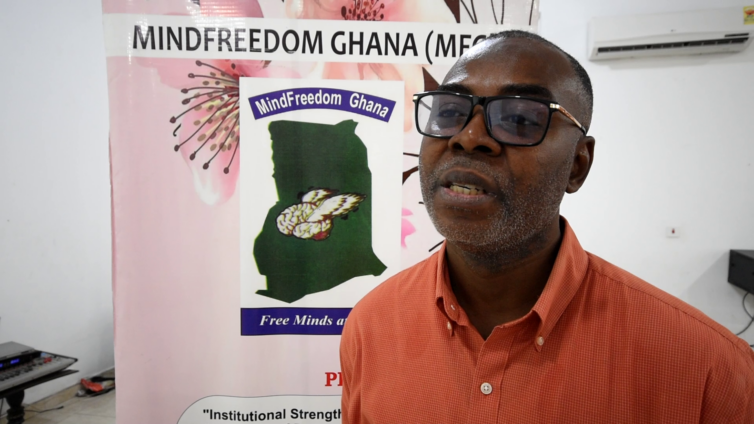
      Dr. Dordoye shared these insights during a mental health advocacy workshop organized by MindFreedom Ghana, emphasizing the need to address these issues to safeguard the mental well-being of Ghanaians.

      “The most common forms of screen addiction now is social media addiction and gambling or betting. That is also another challenge and another form of screen addiction because people use money hoping to win. People even think they are working when they are betting. They forget that the name of it is adult games. So betting is a game and not a way to make money, not an investment”, he said.

      “All these are gambling, but young people are into it thinking they will make money out of it. Unfortunately, it is one of the avenues we are wasting the brawn and brain potential of our young people”, he stressed.

      Dr. Dordoye highlighted the growing interest of the youth in forex trading, emphasizing that it is becoming a form of addiction. Many individuals, particularly the youth, are increasingly engaging in Forex trade with the hope of making financial gains.

      “All these are gambling, but young people are into it thinking they will make money out of it. Unfortunately, it is one of the avenues we are wasting the brawn and brain potential of our young people”, he stressed.

      Dr. Dordoye emphasized the need for heightened public awareness regarding the consequences of screen addiction. He stressed the importance of informing the public about the risks associated with various forms of screen addiction, including betting, computer, and social media addiction.

      Additionally, he called for concerted efforts to treat and rehabilitate individuals who are already experiencing these conditions, underlining the significance of addressing screen addiction to preserve mental health in the population.

      “These things are known, the challenge is the political will and the financial muscle to put these thoughts and ideas into action, that is where our biggest challenge has been”, he lamented.

      He also indicated that drug addiction, which includes alcohol and substance abuse, health workers, and sickle cell patients abusing prescription drugs are on the rise, describing it as a worrying incident to public health.

    5. Prioritize workplace mental health policies – Doctor to employers

      Prioritize workplace mental health policies – Doctor to employers

      Employers in Ghana have been urged to implement mental health policies in the workplace to prioritize the wellbeing of their employees.

      World Mental Health Day shed light on the growing prevalence of mental health issues in the workplace.

      Data from the World Health Organization’s (WHO) Special Initiative for Mental Health Situational Assessment in Ghana showed that 6.34% of young people aged 20-29 are dealing with depression, with higher figures among retirees and those aged 70 and above.

      During a virtual event organized by MentaPulse Africa themed “Safeguarding Employee Mental Health in Ghana,” Dr. Richmond Adusa-Poku, President of Pharmacists in Mental Health, Ghana (PMHGH), emphasized the importance of having mental health policies at every workplace.

      These policies should inform employees about reporting channels for mental health concerns, similar to how sexual harassment incidents are reported.

      Dr. Adusa-Poku stressed the necessity of providing mental health training during onboarding to help employees identify mental health triggers and know how to handle them.

      Manuel Koranteng, Executive Director of MentaPulse Africa, emphasized the need for organizations to restructure their work environments to mitigate psychosocial hazards like long unhealthy working hours, heavy workloads, and a culture of abuse and discrimination.

      These changes are crucial to protect employees from adverse mental health conditions.

      “Every employee must receive training on mental health first aid. The modules may be provided by the specialists but the aim is to arm them with the skills to identify when they or their colleagues are having mental health incidents to provide immediate support or refer to the appropriate authorities,” he added.

      “We must reshape the work environment to reduce psychosocial hazards such as long unhealthy working hours, heavy workloads, culture of abuse and discrimination, etc to protect workers from experiencing adverse mental health conditions,” he said.

    6. Enhance your mental health by ensuring you have enough sleep – Psychiatrist advises

      Enhance your mental health by ensuring you have enough sleep – Psychiatrist advises

      A psychiatric resident at Korle-Bu Teaching Hospital, Edwin Frimpong-Boakye Yiadom, has emphasized the significance of giving proper attention to sleep as a crucial means of enhancing one’s mental well-being.

      Speaking to the media, he indicated that adequate sleep is essential for maintaining an active and healthy body, while sleep deprivation can impair both mental and physical functioning.

      Mr Yiadom highlighted that the amount of sleep required can vary from person to person.

      He mentioned, “The first thing I will prescribe is sleep. The truth is that everybody requires enough sleep. Some people give a time frame, but it’s actually different per person. Some people will be fine with just three hours, and others may need 10 hours of sleep. You just have to know yourself. You will know how many hours of sleep your body needs.”

      Furthermore, he established a direct connection between sleep and mental health, explaining that mental health issues can disrupt sleep patterns, and poor sleep can exacerbate mental health challenges. Scientific research has also linked sleep deprivation to physical ailments, including heart disease, diabetes, premature aging, and, in severe cases, road accidents leading to fatalities.

      Dr. Yiadom strongly advocates for prioritizing adequate sleep as one of the fundamental remedies for preserving and enhancing mental health.

      Additionally, he underscored the role of proper nutrition in maintaining and improving mental health. The psychiatrist highlights that the body’s nutritional intake significantly influences its functioning, affecting movement and the immune system. Therefore, maintaining a healthy diet is vital.

      “The thing we are pushing the most now is encouraging people to seek help. This is because there are many people who have developed a number of things but, out of fear of being tagged as mad when they visit the psychiatric hospital, (they) shy away from seeking help. So just seek help, eat right, and sleep more,” he explained.

      Yiadom acknowledges the stigma associated with seeking help for mental health issues and emphasizes the importance of overcoming this stigma. He encourages individuals to prioritize their mental health and seek assistance when needed, emphasizing that it can be life-saving.

      He also recognizes the inevitability of stress in people’s lives and advises individuals to pay close attention to stress triggers and develop effective coping strategies for longevity and mental well-being.

    7. Difficult bosses, abusive words affect mental heath of workers – Health experts

      Difficult bosses, abusive words affect mental heath of workers – Health experts

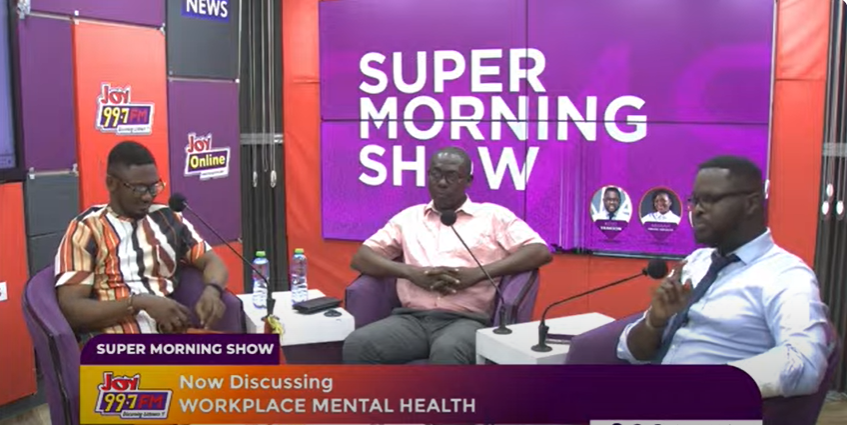
      A recent discussion on JoyFM has highlighted the importance of employers establishing and nurturing supportive work environments to protect the mental well-being of their employees.

      According to a Senior Clinical Psychologist at Trust Hospital, Eric Owusu Kumi, various factors within the workplace can significantly impact an individual’s mental health.

      He specifically highlighted issues such as challenging supervisors, abusive language, instances of sexism, and the use of derogatory comments as contributors to the decline in employees’ mental well-being.

      “For instance you have a difficult boss, very difficult, and he wants only his ideas to happen, but like he said we’re human beings, every human being is independent, we have capacity to generate thoughts, ideas and then pursue them.

      “And so if anytime I generate an idea and then my boss throws it away into the trash and to the extent that some bosses can insult you, use abusive words and then sometimes when you’re a female the chance that you’ll not be regarded when even you want to contribute at work.

      “There are instances where somebody can tell a female subordinate that ‘but you you belong to the kitchen’ they can even ask ‘have you finished giving birth before you want to contribute these ideas?’ this can also affect the mental health quality of people at the workplace,” he said.

      Furthermore, Mr Kumi emphasized that the discrimination and stigmatization of employees who are known to have mental health issues can exacerbate their conditions, potentially leading to a severe deterioration in their mental well-being.

      “So for instance somebody displays some psychotic behaviour, he behaves ‘funny’ or ‘abnormally’. Everybody at the workplace sees the person, so the person is taken for treatment, he comes back and everybody begins to react, respond and do things differently with that person. That will affect that person’s mental health. So even though the person is on very good medication to make him active and purposeful…[it still affects him],” he said.

      Mr Kumi stressed the importance of a supportive approach in such situations, encouraging employers and colleagues to provide assistance and understanding to individuals dealing with mental health challenges. He emphasized that further discrimination could have detrimental effects on the individual’s mental well-being, potentially leading to a breakdown.

      Adding to the discussion was Dr. Isaac Newman Arthur, a Senior Medical Officer and Clinical Psychologist. Dr. Arthur advised that employers should adopt a personalized approach when dealing with their employees to avoid placing undue pressure on them.

      He explained that every individual possesses unique capabilities and limitations, and it is essential for employers to recognize and understand these aspects for each staff member. By doing so, employers can set tailored objectives that align with the capabilities and limitations of each team member.

      “We have some people based on their own childhood growth and experiences, they can actually withstand a lot of stress and pressure, others can’t. So some responsibilities may be a headache for one staff and not necessarily be a headache for another staff. And that is why in dealing with staff you need to be individualised in your approach. You can’t say that ‘oh, we’re all doing the same thing so why are you complaining?’ we’re all different,” he explained.

      Dr. Arthur also promoted the cultivation of positive workplace relationships as a means of enhancing the mental well-being of employees. He highlighted that healthy workplace relationships can serve as effective stress relievers.

      “You know, you’re excited coming to work because you’re going to have people you care about, who you have a very good relationship with at work. So in your office if everybody around, the relationship is not too good, it affects everything else. That in itself becomes stressful,” he said.

      He further stressed on the need for a good workplace setting.

      In his perspective, Dr. Arthur underscored that the aesthetic appeal, ambiance, and overall visual aspects of a workplace can exert a significant influence on the mental well-being of employees and their overall productivity.

      “Imagine going to a certain work environment where the door flips open before you step in, you go there are nice paintings and colours, there’s everything, the offices are very, very nice they even have a small lounge where you can go sit when you’re tired, they have a small kitchenette, you know all those things even the painting and arrangement in the office and how things are done – so the aesthetics the arrangements and everything that is at the workplace significantly affects a person’s mental wellbeing. And usually we don’t look at that, even the flowers and all the paintings have a way of helping,” he said.

    8. 5 habits to improve your mental health

      Improving your mental health is essential for overall well-being. Here are five habits that can help enhance your mental health:

      1. Regular Exercise: Physical activity has been linked to improved mood and reduced symptoms of anxiety and depression. Exercise releases endorphins, which are natural mood lifters. Incorporate regular workouts into your routine, even if they are short walks or home workouts.
      2. Balanced Diet: A nutritious diet can significantly impact your mental health. Foods rich in antioxidants, omega-3 fatty acids, and vitamins can support brain function. Avoid excessive caffeine and sugar, which can lead to energy crashes and mood swings.
      3. Adequate Sleep: Quality sleep is vital for mental health. Aim for 7-9 hours of uninterrupted sleep each night. Poor sleep can contribute to mood disorders and increased stress. Create a bedtime routine and ensure your sleeping environment is comfortable and conducive to rest.
      4. Stress Management: Chronic stress can harm your mental health. Practice stress-reduction techniques like mindfulness meditation, deep breathing exercises, or yoga. These practices can help you stay calm and focused.
      5. Social Connections: Human beings are social creatures, and maintaining meaningful relationships is crucial for mental well-being. Spend time with friends and loved ones, seek support when needed, and engage in activities that foster social connections.

      Remember that mental health is a personal journey, and it’s okay to seek professional help when necessary. If you’re experiencing persistent mental health issues, don’t hesitate to reach out to a mental health professional or counselor for guidance and support.

    9. Increased mental health cases must be resolved immediately – Psychologist

      The President of the Ghana Psychological Association, Dr. Collins Agyemang, has emphasized that the increasing prevalence of mental health disorders among Ghanaians should serve as a significant wake-up call for the country.

      Speaking on TV3’s “Ghana Tonight” show on Monday, September 25, 2023, Dr. Agyemang commented on statistics from the World Health Organization (WHO) and the Ghana Psychological Association regarding the rising number of individuals grappling with mental health issues in Ghana.

      According to these statistics, approximately 13% of Ghanaians are living with mental health disorders, including anxiety, depression, bipolar disorder, schizophrenia, and eating disorders.

      Dr. Agyemang stressed that the current challenging economic conditions make it imperative for Ghanaians to prioritize their mental well-being.

      “Certainly, it is a wakeup call for Ghana and now more than ever, given the economic conditions as well as some of the challenging moments we live in, we need to give this a careful attention,” he stated.

      “That particular percentage according to WHO is about 2.4 million Ghanaians, and for me that is GDP that we are losing. Imagine if all these 2.4 million Ghanaians are adults of the working class, then it tells you the effect this will be having on our community.

      “Let also imagine these mental illnesses, some perhaps may be suicidal. Now we are told to every suicide death, about 135 different people around these people get affected one way or the other,” he analyzed.

      He also pointed out that mental illnesses, such as depression, can have a ripple effect, affecting numerous people around those who are suffering.

      “In the case of suicide, for instance, for every suicide death, approximately 135 individuals in the vicinity are affected in one way or another,” he explained.

      Dr. Collins Agyemang particularly highlighted depression as one of the most common mental health disorders in Ghana.

      He attributed this prevalence to the difficulties and crises people face, compounded by limited awareness among Ghanaians about recognizing the early signs of a crisis, which often leads to delayed detection of depression.

      “In Ghana, depression is one of the commonest that you can find. And is largely because when people go through difficult situations, when people are hit with crisis and given the limited knowledge that majority of Ghanaians have regarding the onset of crisis, a number of Ghanaians end up getting depressed. And it is usually at the advance stage that we get to know that indeed this person is getting depressed,” he added.

    10. Some media content trigger suicide, beware – Mental Health Expert warns public

      Some media content trigger suicide, beware – Mental Health Expert warns public

      A Mental Health Expert has warned the media against airing or publishing content that can create a sense of hopelessness and despair among the public, which can lead to suicide. He said that some media contents, especially on television and radio, were not sensitive to the mental health of their audience and could fuel suicidal thoughts or actions.

      Mental Health Coordinator for the Tema Metropolitan Health Directorate, Mr. Pious Tay, made these remarks in an interview with the Ghana News Agency (GNA) on its “Your Health! Our Collective Responsibility” platform. He said that the media had a responsibility to promote and safeguard the mental well-being of the public and to avoid content that could harm them.

      He cited some examples of media content that could trigger suicide, such as hoax stories, April Fool’s Day pranks, fabrications, stories without sourcing or authentication, and advertisements and promotional materials presented as news. He also said that some media platforms allowed unscrupulous persons to post suicide messages in the comment sections of their publications, which could influence others to follow suit.

      He advised the media to be vigilant and to monitor their platforms and comments to prevent such messages from spreading. He also urged the media to report on suicides in a responsible and ethical manner, without giving too many details or glorifying the act, as this could lead to copycat suicides among vulnerable people.

      He further appealed to the media to use their platforms to educate and advocate for suicide prevention, and to inform the public about where and how they can get help if they are feeling suicidal or know someone who is. He said that the media could play a vital role in creating hope and support for those who are struggling with mental health issues.

      He also called on the Ghana Journalists Association (GJA) and the National Media Commission (NMC), as well as other regulatory bodies, to ensure that media houses followed their ethics and standards and to sanction those who violated them.

      Mr. Tay also advised young people to value human relations more than social technologies. He said that social media could be addictive and misleading, and could not provide the answers or solutions to their problems. He said that young people should cultivate a positive family atmosphere and communicate openly and honestly with their parents, teachers, counsellors, and friends.

      He said that families who spend time together develop a bond of trust and understanding, which makes it easier for them to address and resolve their issues. He said that children who are raised in a fear-free environment are more likely to express their feelings and seek help when they need it.

      Dr. Sally Quartey, Tema Metro Health Director, also urged young people to create good bonds with their family members and other trusted adults and to share their challenges with them instead of resorting to machines. She said that technology could have a negative impact on people’s emotions and mental health, especially young people who depend on it for guidance.

      She said that technology could not replace human interaction and compassion, which are essential for preventing suicide.

    11. Masturbation could lead to long-term mental health concerns – Health expert

      Masturbation could lead to long-term mental health concerns – Health expert

      A Family Physician Specialist at the International Maritime Hospital in Tema, Dr. Yaa Akyaa Boateng, has emphasized that excessive masturbation can have long-term mental health consequences.

      Therefore, individuals who are addicted to this behavior may require psychological support to mitigate potential side effects.

      Masturbation is a form of autoeroticism where an individual sexually stimulates their own genitals to achieve sexual arousal or other sexual pleasure, often culminating in orgasm.

      “Masturbation makes people less sensitive to romantic relationships and friendships because they will isolate themselves from loved ones, have difficulty forming attachments, and pay less attention to their needs,” she said.

      Dr. Yaa Akyaa Boateng addressed the issue during the weekly health communication platform organized by the Ghana News Agency’s Tema Regional Office, titled “Your Health! Our Collective Responsibility!”

      She discussed the topic of “Adolescent Health Awareness” and highlighted that excessive consumption of pornography could lead to the brain becoming conditioned to seek more stimulation from such materials rather than developing emotional connections with partners.

      “So often when those who engage in masturbation are having sexual interactions, it is difficult to get aroused or even go through the act because it does not excite them any more,” she stated.

      Dr. Yaa Akyaa Boateng noted that since masturbation doesn’t involve interaction with another person or the exchange of bodily fluids, the risk of contracting a sexually transmitted disease is low.

      However, she expressed concern about the excessive indulgence in this activity, particularly among young people, and its negative impact on adolescents.

      Dr. Boateng recommended that individuals engaged in excessive masturbation, especially if it conflicts with their moral values or religious beliefs, should receive psychological attention to help them reverse or overcome this behavior.

    12. Nkoranza: Lack of drugs affecting mental health patients

      Nkoranza: Lack of drugs affecting mental health patients

      The District Mental Health Coordinator, Mr. Stephen Awiti, has expressed concern over the worsening mental health conditions of patients in the Nkoranza North District, Bono East Region, due to intermittent drug shortages.

      He appealed to the government to ensure a constant drug supply to aid in the healing process of those with mental health illnesses in the area.

      In an interview with the media in Busunya, the District capital, Mr. Awiti attributed the increasing cases of mental health illness to factors such as alcoholism, substance abuse, and marital problems.

      He mentioned that currently, only about 600 out of the more than 2,000 individuals with mental health conditions in the district receive medication due to the drug scarcity, and even their conditions are deteriorating.

      The most common mental disorders in the district, affecting people between 16 and 65 years old, include epilepsy, depression, schizophrenia, and bipolar disorder, with epilepsy being particularly prevalent among individuals aged 15 to 40 years.

      In another initiative, the MIHOSO International Foundation, a non-profit organization focused on human rights and health, has provided employable skill training to 150 individuals with mental disorders in four districts and municipalities in the region.

      The beneficiaries, with 40 percent of them being women, were selected from communities in Nkoranza South and Kintampo North Municipalities, as well as Nkoranza North and Kintampo South Districts.

      The organization equipped the beneficiaries with seed capital, enabling them to engage in soap making, livestock production, farming, and petty trading to improve their livelihoods. Additionally, they received leadership training skills and financial and business management guidance.

      The Deputy Chief Executive Officer of MIHOSO in charge of Operations, Mr. Thomas Benarkuu, praised the progress of the beneficiaries in their businesses and urged the District/Municipal Assemblies to provide support and decent job opportunities to patients who have become dependent on their parents and relatives.

      He suggested that people with mental disorders should also benefit from the Disability Fund of the Assemblies to enhance their lives.

      The organization expressed gratitude to the four Assemblies for their support in accessing drugs and appealed for continued assistance and extension of such aid to other individuals in need.

    13. CPP aims to empower women and overcome psychological barriers

      CPP aims to empower women and overcome psychological barriers

      Chairperson of the Convention Peoples’ Party (CPP), Nanahemaa Akosua Frimponmaa Sarpong Kumankuma, announces the party’s plan to implement a strategy aimed at empowering women to overcome psychological and mental obstacles.

      “Today’s women must face challenges and bottlenecks to thrive under this current global dispensation,” Nanahemaa Kumankuma explained. 

      She noted, “The way we see gender roles is formed and perpetuated by our interactions with our social environment. Our perceptions about these roles unconsciously influence how we value the contribution of individuals around us”.  

      The CPP Chairperson stated this at a stakeholder engagement organized by the Ghana News Agency Tema Regional Office, which is a platform rolled out for state and non-state actors to address national issues. 

      Speaking on the topic, “The Path of Women Entrepreneurs: Challenges and Prospects,” Nanahemaa Kumankuma, who is the CPP Election 2024 Flagbearer Hopeful, stressed that women have a lot of potential that could be harnessed to scale up national development. 

      She explained that Articles 17 (1) and (2) of Ghana’s 1992 Constitution guarantee gender equality and freedom of women and men, girls and boys, from discrimination based on social or economic status, among others. 

      She, therefore, urged women to pick up the tools and break the glass ceilings, stressing that efforts for gender equity would continue to be a mirage if “women failed to confront the issues. 

      She noted, however, that issues of concern include Inequality in access to social protection for the marginalized, vulnerable, and poor. 

      “Inequalities in the burden of extreme poverty, education, skilled training gaps, and excess maternal mortality; and Unequal access to socio-economic power and justice, including lack of respect for and inadequate protection and promotion of women’s human rights. 

      “Inequalities between women and men in the sharing of power and decision-making at all levels, as well as dealing with all kinds of conflicts, insecurities, and threats against women,” she said. 

      She stated that the Ghanaian woman, when given the opportunity, could make lots of gains for the family and nation. 

      According to her, women formed much of the population, saying that more women must endeavour to take up leadership roles to help fine-tune the needs of the public. 

      Nanahemaa Kumankuma also said it was time for women to learn to be entrepreneurs, stressing that only three percent of the entire population were employed in government institutions, a situation she said could be remedied if people acquired skills to be self-reliant. 

    14. Recent study reveals link between abdominal muscles and depression among men in Ghana

      A recent study has provided insights into the potential dangers linked to men’s preoccupation with attaining the ideal set of abdominal muscles, highlighting a significantly elevated risk of depression among such individuals.

      Some researchers from the Norwegian University of Science and Technology, in partnership with Harvard University, conducted an extensive examination of male body image disorder and its correlation with mental health, offering valuable understanding of this concerning phenomenon.

      The study’s results indicate that men who are excessively concerned about their physical appearance are at a higher risk not only of experiencing depression but also of engaging in detrimental behaviors like binge drinking on weekends and using illegal supplements such as anabolic steroids.

      Remarkably, the research uncovered that approximately 10% of men suffer from body image disorder, perceiving themselves as overweight and desiring a thinner physique.

      To arrive at these conclusions, researchers interviewed 2,460 men aged 18-32, delving into their gym habits and mindsets.

      Common statements emerging from these interviews included sentiments like feeling guilty for missing a workout, dissatisfaction with chest muscularity, and contemplation of using anabolic steroids.

      “The problem arises when the bodies of professional athletes like Ronaldo become the ideal for regular young men who have regular young men who have jobs, studies and family,” Dr. Trine Tetlie Eik-Nes, the lead researcher revealed,

      Unrealistic Body Ideals:

      Dr. Eik-Nes highlighted the unrealistic expectations placed on men and women in terms of body image.

      “Training has to be your full-time job if you want to look like Ronaldo,” he underscored.

      Dr. Eik-Nes emphasized that achieving the physique of an athlete like Ronaldo is unrealistic for regular individuals with diverse responsibilities.

      “He belongs to one in a thousand of the world’s population who make their living from sports. Some people train as if they were on the national team, but they’re only exercisers.

      He also pointed out that narrow ideals, prevalent in today’s society, present challenges for individuals of both genders, perpetuating unrealistic body standards.

      “Girls are supposed to be thin and have small waistlines. Boys should have wide shoulders. Those are the narrow ideals that that people grow up with today. This unrealistic body image is challenging for men and women,”  he added.

    15. Uganda to increase drinking age from 18 to 21 years

      Uganda to increase drinking age from 18 to 21 years

      The Ugandan government has stated that it intends to raise the drinking age from 18 to 21.

      The World Health Statistics 2023 Report ranks Uganda among the leading countries for high rates of alcohol consumption.

      According to the WHO report, it is estimated that Ugandans currently consume 12.2 litres of alcohol per person annually, which is significantly higher than the global average.

      “Research has shown that if someone has not taken an addictive substance by 21, they are much less likely to use addictive substances later in life,” Dr Hafsa Lukwata, the Ministry of Health commissioner for mental health, alcohol and substance sbuse, told the BBC.

      “There has been a public outcry over substance abuse in young people,” Dr Lukwata added.

      She said that parliament will discuss the age limit, among other measures, in the soon-to-be presented Alcohol Control Bill.

    16. Mental Health Clinician reports 25% of pastors suffering from mental illness

      Mental Health Clinician reports 25% of pastors suffering from mental illness

      Twenty-five per cent of pastors are experiencing mental illness according to a mental health clinician.

      Dr Kwame Frimpong says this is due to the burden of mixing running the church with challenges posed to them by their members.

      The clinician who practices in the USA explained that the men of God play the role of psychologists and counsellors.

      He revealed this on an episode of ‘A Walk with Jesus‘ with Pastor Ato Acquah on the ‘Christian and Mental Health’.

      The discussion was based on a real-life story of a caller who phoned into Joy FM’s late afternoon programme, ‘Drive Time’, to talk about his decision to commit suicide due to a marital problem.

      He said that the issue of mental health has become relevant, compelling some pastors to acquire knowledge in clinical psychology to put them in a good position to speak or help church members on such matters.

      This he added, has made pastors become more interested in the subject of mental health.

      The mental health clinician urged pastors to take good care of themselves and their souls.

      “You can be spiritually powerful and mentally weak if you do not take care of yourself and your soul. Pastors will be overwhelmed if they do not take care of themselves”.

      Although there is a growing and worrying inclination toward mental health disorders in churches, the clinician said, “Pastors must not turn themselves into counsellors or psychologists.

      “They must employ clinical psychologists or professional counsellors to partner with them in their work”, Dr Frimpong advised.

      “As typical Ghanaians, we associate every mental health disorder as spiritual and coming from the devil, and we become ineffective this way in our thinking to help our people. Some of these cases, however, could be demonic”, he said.

      Dr Frimpong further recommended local churches get a psychologist or a professional counsellor on board with the church staff so they can partner with the church prayer warriors to work effectively.

      He, however, revealed that some of the mental health disorders could be demonic, and others could be psychological.

      Dr Frimpong also admonished churches to bring the subject of mental health back to the pulpit and educate its members, “if not, we will see so many things from the pulpit that will affect their performance and eventually cause them to burn out”, he warned.

    17. The Prince of Wales to establish a mental health therapy garden in Wales

      The Prince of Wales to establish a mental health therapy garden in Wales

      The Prince and Princess of Wales will on Tuesday visit a mental health therapy garden that is under construction in South Wales with the aim of providing support to the local communities.

      The couple’s Royal Foundation has announced a new collaboration with horticultural therapy and mental health counselling provider Life at No.27 to help the charity scale up its mission.

      The Prince and Princess will visit the site where the first garden will be developed, at Brynawel Rehabilitation Centre near the town of Pontyclun, where individuals will eventually be able to learn and grow their own produce.

      It is hoped that the allotments and garden will provide individuals with a space to support their mental health as well as leave a lasting legacy in the community that the Royal couple visit.

      The garden, under development, will sit alongside a communal sensory and herbal garden, a mud kitchen, and an interactive learning space.

      The Royal Foundation has arranged for national and local organisations to support the design and development of the new garden, as well as provided funding, tools, plants, seeds and materials for landscaping.

      The garden and neighbouring allotments are being developed over the next few months, with the goal of offering free and low-cost gardening therapy and mental health support sessions for the Centre’s users and their families.

      It is hoped that residents in the wider local community who are suffering from mental health, loneliness or low confidence will eventually also have access to the therapy garden through a GP referral.

    18. Enrolling children with mental health disorders in school: Need for inclusive facilities

      Enrolling children with mental health disorders in school: Need for inclusive facilities

      Alhassan Shaibu (not his real name) is an 11-year-old boy who resides in the Tamale Metropolis. He suffers from attention deficit hyperactivity disorders, a medical condition, which affects children’s abilities to concentrate effectively.

      While his other three siblings are in school, Shaibu stays at home because of his medical condition. This development is not different from Nakoja Yajah, a 15-year-old victim of autism spectrum disorder, resident in the Saboba District of the Northern Region.

      He is also not in school because of a lack of special units for children with mental health disorders in the area.  

      The 1992 Constitution of Ghana makes provision for all persons to have equal educational opportunities and facilities. Most children with mental health disorders, especially in the Northern Region, have been starved of this important constitutional provision.

      One could either see such children loitering around in their neighbourhood or in some instances denied space in the open.

      When the Ghana News Agency visited Dakpema M/A Primary School, Special Unit Block “B” in Tamale, authorities said sometimes they had to pressure parents to bring their children with mental illness to school.

      Mrs Yeiseh Christiana, the Headmistress of the Unit, said most parents and guardians did not see the need to enrol their children with special needs and the few, who brought the children to school, often abandoned them without providing their needs. 

      “At times, the teachers have to contribute money to buy food for them because there is no feeding plan for them. The parents simply don’t care,” she said.

      Madam Abibata Mahamang, a 65-year-old grandmother of a mentally ill child in the Yendi Municipality, said the lack of facilities for children with mental health disorders was her primary concern.

      Mental Health Disorders in Children 

      These refer to some form of delays or disruptions that affect  the development of age-appropriate thinking, behaviours, social skills or regulations of emotions.

      These include eating, anxiety, attention deficit/hyperactivity, and autism spectrum disorders.

      Dr Frank Hill Koomson, the Head of the Psychiatry Unit, Tamale Teaching Hospital, said children with mental health disorders might demonstrate some extreme difficulty of concentration coupled with severe mood swings.

      Such children could learn to live independently if provided with the necessary support, he said.

      He cautioned against insensitive descriptions of these children such as mad, crazy, and moron adding that these are medical conditions that are treatable and manageable.

      Statistics of Mental Health Cases among Children 

      Whilst the northern sector still awaits its share of a psychiatric hospital under the Government’s Agenda 111 Project, other psychiatric hospitals located in the south are recording surging cases of children with mental illness.

      Data available at the Pantang Psychiatric Hospital indicates that between 2017 to 2019, an estimated 1,419 children reported various mental health conditions. Similarly, between 2015 – 2020, the Accra Psychiatric Hospital recorded 13,731 cases of children with mental health disorders. 

      Constitutional Provisions and Legislations 

      The 1992 Constitution says every child has the right to life, dignity, respect, leisure, liberty, health, education and shelter.

      Meanwhile, in 2012, Ghana passed a Mental Health Act (Act 846), which makes provision for the health care of persons with mental illness mandatory.

      The Act stipulates that a person with mental health disorder is entitled to the same fundamental rights as a fellow citizen. Unfortunately, successive governments have not shown enough commitment towards the implementation of the various policies that guarantee the well-being of persons with mental illnesses.

      Advocacy and Sensitisation 

      Mr Stephen Kwame Asante, the Executive Director of Mental Health Advocacy Foundation, said the alarming rate of mental disorders among children called for more awareness creation, advocacy and sensitisation to address some misconceptions surrounding mental illnesses.

      He said most people, especially in the rural areas, were not well informed about mental health, hence the cases of abuse and neglect.

      The Way Forward 

      There is the need for the Government to increase budgetary allocation to the mental health sector to ensure the provision of facilities and services as the 1.4 per cent allocation for 2022 was woefully inadequate.

      Enforcement of the 2012 Mental Health Act, (Act 846) must be stepped up to enhance access to quality education by children with mental health conditions, without any form of discrimination and stigmatisation.

      Government must also strive to launch an advocacy and sensitisation campaign, especially in the rural communities, to address misconceptions associated with mental health disorders among children, while providing educational facilities to ensure their rights to education are not compromised. 

      Source

    19. Kate Winslet: Parents feel “utterly powerless” over children’s social media use

      The government should make social media firms enforce age limits to help tackle their impact on children’s mental health, actress Kate Winslet has said.

      Speaking to the BBC’s Sunday with Laura Kuenssberg, she said parents feel “utterly powerless” about how to help their children navigate social media.

      Winslet said security checks could be more rigorous and those in power “should step up” to protect children.

      She was speaking ahead of the launch of her new Channel 4 film I Am Ruth.

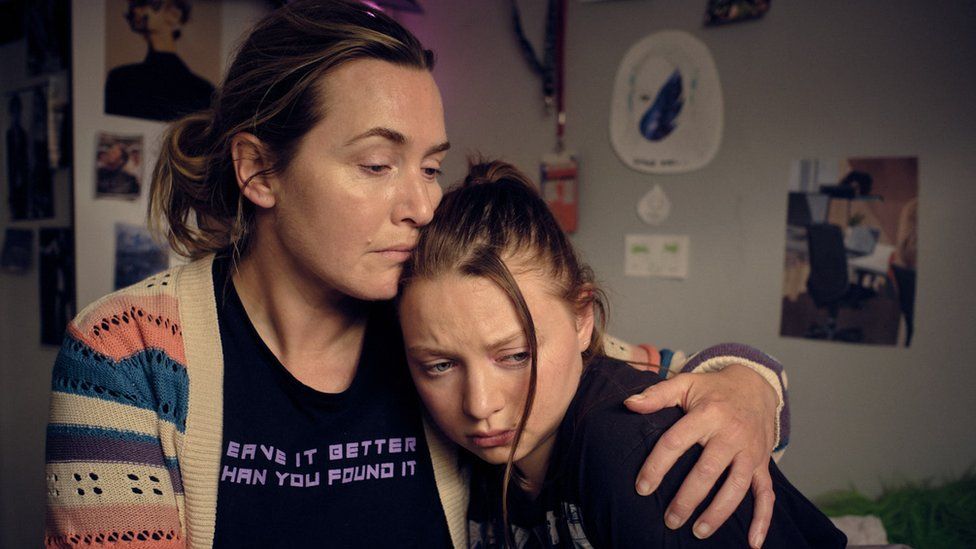
      The feature-length drama sees Winslet playing opposite her real-life daughter Mia Threapleton as the mother of a teenager whose mental health begins to suffer as she becomes increasingly consumed by the pressures of social media.

      Winslet said the decision to focus on children’s mental health followed a conversation with the film’s creator Dominic Savage about how parents can help “when they can clearly see there’s a problem”.

      But she said that the drama had to be about more than a child obsessed with their phone.

      It had to cover “what’s actually going on with that phone, how it impacts on their self-esteem, how it impacts on eating habits, their mental state in terms of thinking about things like self-harm,” Winslet said.

      In the two-hour drama, to be shown on Channel 4 on Thursday 8 December, Winslet plays Ruth who is a single mother of two, including 17-year-old Freya.

      The film shows Freya becoming less communicative and falling behind at school as she retreats further into herself as her relationship with social media becomes increasingly destructive.

      The world of social media is “frightening to parents because we don’t really know what’s there”, Winslet said.

      “We don’t know really what’s going on in their friendship groups anymore because so much of it is actually built on phones, inside phones.

      “This world that you can burrow deeper and deeper into it, and it becomes darker and trickier and much, much harder for children to navigate.

      “I think because people, young children, are having phones at a much earlier age, they’re able to access things that emotionally they’re just not equipped or sophisticated enough to know how to process.”

      Kate Winslet and Mia Threapleton in I Am Ruth
      IMAGE SOURCE,JOSS BARRETT /ME+YOU PRODUCTIONS/CHANNEL 4 Image caption, Mia Threapleton, Winslet’s real-life daughter, plays teenager Freya

      Asked whether she thought there should be more legal regulation of social media, Winslet said she struggled with social media and its impact on teenage mental health.

      “I do wish that our government would crack down on it. I do wish that there would be certain platforms that were banned before a certain age. I wish that security checks would be much more rigorous,” she said.

      She said there should be “more protection and accountability” because parents “are left flailing”.

      “I just think that the people who know that they could do better to protect our children should just be doing that. Whoever those people are, they know who they are, they should just step up and do better,” she said.

      Winslet’s comment come as the government is accused of watering down legislation aimed at regulating internet content.

      In the past week, ministers have dropped plans from the Online Safety Bill which would require technology firms to take down legal but harmful material.

      Ian Russell, the father of teenager Molly Russell, who ended her life after viewing suicide and self-harm content online, said the bill had been watered down and the decision might have been made for political reasons to help it pass more quickly.

      In a statement, Culture Secretary Michelle Donelan told BBC News that “unregulated social media is hurting our children and it must end”.

      She added that the “strengthened Online Safety Bill” she is bringing back to Parliament “will allow parents to see and act on the dangers sites pose to young people”.

      “Young people will be safeguarded, criminality stamped out and adults given control over what they see and engage with online,” Ms Donelan said.

      Source: BBC.com

    20. Maternal deaths decline significantly in Upper East Region

      Maternal deaths have declined significantly in the Upper East Region within the first 10-months of 2022.

      At the end of October 2022, the region recorded 22 deaths, compared to the 39 deaths recorded within the same period in 2021 and 42 deaths in the whole of 2021.

      This is attributed to the many interventions being rolled out at the regional, district and community levels by the authorities of the Ghana Health Service and partners in the region.

      Dr Josephat Nyuzaghl, the Deputy Regional Director, Ghana Health Service in charge of Public Health, announced this in Bolgatanga at the launch of a STAR-Ghana Gender Rights and Empowerment Project (G-REP) organised by the Rural Initiatives for Self-Empowerment (RISE-Ghana), a Non- Governmental Organisation.

      The three-year project with funding support from the Foreign, Commonwealth and Development Office is aimed at strengthening health committees and citizens groups to champion access to quality maternal health in the Talensi and Nabdam Districts.

      Dr Nyuzaghl underscored the need for collective and sustained efforts from all stakeholders to consolidate the gains made in reducing maternal deaths.

      He, however, said the Eastern corridor of the region, comprising the Bawku enclave had in recent years recorded high maternal deaths and noted that lack of district hospitals to serve as referral facilities and other critical health professionals contributed to that effect.

      He expressed the hope that government’s agenda 111 and the move by the Upper East Regional Coordinating Council to task all the Municipal and Districts in the region to take measures to attract medical doctors to their respective areas would contribute to address the problem and improve upon maternal and child health.

      “Last year, more than 50 per cent of the deaths came from Bawku, Pusiga, Tempane, Garu, Binduri and Zebilla enclave but a lot of work has gone on at the community level to try to encourage them to report early for antenatal care and get the minimum package for pregnant women,” he added.

      Mr Awal Ahmed Kariama, the Executive Director, RISE-Ghana, said apart from the country’s agenda of achieving Universal Health Coverage by 2030, the Sustainable Development Goals called for the need to prioritise and improve healthcare delivery systems, especially at the health facility level for improved maternal health.

      To this end, he said, the project sought to mobilise women, girls and citizen groups, including civil society organisations and the media to champion issues of maternal health financing and policy implementation to ensure that the service provided at the healthcare facilities were quality and accessible.

      He said as part of the project, the facility health committees in 14 sub-districts and health facilities in the two districts would be strengthened to use the scorecard to help them develop action plans.

      “We want to further use these action plans to influence the budget and plans of the local district assemblies in Talensi and Nabdam as well as engage the private sector actors.

      “We want to create an enabling environment and local dialogue around increasing financing for maternal health service delivery,” Mr Kariama added.

      Source: GNA

    21. Clinical Psychologist: Suicide cases are on the increase

      Recent statistics indicate that suicide in the country is on the rise.

      According to the data 6.6 per cent out of every 1,000 persons committed suicide in 2020 in Ghana.

      Also, four out of every five suicide cases could have been prevented if help was sought, Dr Ebenezer Tetteh Kpalam, a Clinical Psychologist, has said.

      Dr Kpalam, therefore, emphasised the need for stakeholders to reach out to those considering taking their lives as they show evidence of the intention to commit suicide.

      He said suicide was also common globally as the World Health Organisation (WHO) had revealed that about 703,000 die annually from suicide.

      “Some of the warning signs that all must look out for in people, include, those who start to talk about suicide and death with examples such as “I wish I was not born; I wish I was dead; I want to kill myself, among others,” Dr Kpalam told the Ghana News Agency in an interview in Tema to mark the World Suicide Prevention Day.

      The Clinical Psychologist added that such persons ask a lot of questions about death and what could lead to it, adding that some also start dashing out their valuable items without any reason, and engage in risky behaviours such as reckless driving, and crossing the road without caution, among others.

      He added that other warning signs include excessive drug and alcohol intake, mood swings, and withdrawal, adding that in most cases persons with suicidal thoughts say something about it to somebody before carrying out the act.

      Dr Kpalam urged the public to encourage such persons to seek help from professionals at the Ghana Mental Health Authority, the Ghana Psychological Councils, public hospitals, psychiatric hospitals, and counselling units of religious bodies as they also have links to the professionals.

      He advised the public against being judgmental or questioning the faith of people who confided in them about their suicidal thoughts but rather give them the necessary help to prevent them from engaging in the act.

      According to Dr Kpalam, some of the reasons why people consider suicide over living is the lack of support as people find themselves in a difficult situation without anywhere to tend for help.

      Other factors, he said pressure on adolescents to excel academically like their peers leads to depression, abandonment, shame, and reputation management, which, he noted was a big issue now due to the emergence of social media which people use to shame others through the circulation of sex videos, among others.

      Dr Kpalam said existential struggle had to do with the stresses of daily life, including economic issues, health problems, social, and joblessness, among others.

      He said people must pay attention and identify such tendencies in their loved ones to help them receive the needed attention and prevent them from committing the act.

      Source: GNA

    22. Norfolk and Suffolk NHS Foundation Trust under “increasing demand for inpatient care”

      A mental health trust had no adult beds available on two occasions in the past week, with more than 30 people waiting for a place, the BBC understands.

      Some patients were kept in emergency departments in Norfolk and Suffolk for up to a week while they waited to be admitted to a specialist unit.

      Norfolk and Suffolk NHS Foundation Trust (NSFT) said it had “been facing increasing demand for inpatient care”.

      But campaigners said there had not been enough beds for a number of years.

      An inspection report earlier this year gave the trust its fourth inadequate rating in six years.

      Mark Harrison, from the Campaign to Save Mental Health Services in Norfolk and Suffolk, said the issue of a lack of beds was “vitally important” and had a knock-on effect for hospitals.

      He said those who needed mental health beds but who could not get one might be left with their families or go to accident and emergency departments at hospital.

      “A&E is full of people in severe mental health distress because there aren’t mental health beds,” he said.

      NSFT is creating an extra 15 beds in the next year at Hellesdon Hospital, but Mr Harrison said that was not enough to help.

      Alex Stewart, chief executive of Healthwatch Norfolk, said: “We are concerned about the recent pressure on bed space.

      “We will talk to NSFT to seek reassurance that this is only a very temporary issue.”

      Campaign to Save Mental Health Service in Norfolk and Suffolk
      Image caption, Campaigners say more beds are needed

      Stuart Richardson, chief executive officer at NSFT, said increasing demand had “led to difficulties with capacity due to the acuity of the patients who need our support and well-documented pressures across the wider system”.

      He said: “We have been working closely with our health and care partners to free up capacity wherever possible and have seen some improvements as a result.

      “We are keeping the situation under daily review and will continue to do everything we can to ensure our patients can access safe and timely care.”

      The trust added it was still placing patients out of the area “where necessary”.

      Presentational grey line

      Analysis by Nikki Fox, BBC Look East health correspondent


      The fact that more than 30 people in Norfolk and Suffolk have been without the mental health bed they need proves that the problems in the emergency care system are not just about physical health.

      At one point seven patients were waiting for a mental health bed at the Norfolk and Norwich Hospital.

      This not only puts pressure on hospital staff but takes up beds that are needed for people waiting for physical healthcare.

      In the past, it would be unusual for so many people to be waiting for mental health beds because patients would be sent out of area to be kept safe.

      With trusts told they should avoid that and everywhere struggling with increases in demand, it means families and hospitals are being put under more pressure to look after those with severe mental health needs.


      Source: BBC

    23. Stokes admits he nearly gave up playing cricket amid a mental health hiatus

      Ben Stokes has admitted that when taking a sabbatical from the game to prioritize his mental health last year, he worried he might never play cricket again.

      Stokes, who was named the Test captain for England in April, missed five months of competition in 2021 due to panic episodes.

      The 31-year-old had previously battled after hurrying his rehabilitation from a broken figure, so he took a period of compassionate leave to spend time with his father before his dying in December 2020.

      Ahead of the airing of an Amazon Prime documentary detailing Stokes’ experiences throughout that time, he recalled how his decision to step away from cricket was the culmination of a long-term battle.

      “It wasn’t a case where it was a two-week thing or a couple of months thing, the whole thing was a build-up over a long, long period of time, maybe two, three, four years,” Stokes told the BBC.

      “It was like I had a glass bottle I kept on throwing my emotions and feelings into. While I was doing that, the bottle was filling up to where, eventually, it got too full and just exploded. I reacted in the way I did and felt like, ‘I need to get away from here’.”

      Asked whether he considered calling time on his playing career, Stokes said: “At the time, yeah, that’s where I was at. It was a very, very tough time.

      “One of the more powerful things that I notice from the film, was when Stuart Broad was on camera and he said the same thing, he actually said he could see me not playing again.

      “I had never spoken to Stuart about that through my time away. I spoke to him a lot through that period but just general chit-chat, nothing too serious.

      “I had never said the words to him, ‘I’m not sure if I’m going to play again’, but the fact that he got that feeling was an eye-opener to me that at that time, things were quite bad.”

      After assuming the captaincy in April, Stokes oversaw four consecutive victories, three against New Zealand and one against India, before England were thrashed within three days by South Africa at Lord’s last week.

      While Stokes believes his early success as skipper vindicates the decision to take a break, he was left irritated when his struggles became a talking point after his appointment.

      “When Joe [Root] stepped down and the opportunity was there for me to take it, I was actually quite annoyed about some of the press around it, because they linked the England captaincy and my mental health break with each other,” he added.

      “It felt like people were saying I couldn’t do the job because I decided to take a break for mental health last year.

      “What’s that got to do with being England captain? If anything, it shows that you can do anything, even if you have decided to take a break, it’s fine.

      “I did an interview where I’d give off this bravado of being a big tough northern lad with tattoos. I am tough, but that doesn’t mean that I can’t struggle mentally.

      “These things, you can’t pick and choose when they’re going to hit you. It’s not like a switch in your brain, going, ‘today I’m going to feel good, tomorrow I’m going to feel bad’.”

      Stokes is also keen to ensure his willingness to talk about his mental health acts as an inspiration for younger generations, adding: “We all know that as England players, we’ve got more responsibility than just going out and performing on the field.

      “Young kids these days will look at us and want to play like us, they’ll want to do what we do because that’s who they look up to.

      “If I was to shy away and not speak about anything that I’ve gone through, I don’t think I would be doing the responsibility that’s been set on me. Shying away is something I would never do.”

      Source:livesoccer.com

    24. Resilience is tough when it feels like your difficulties will never end, here’s how to cope

      Kendra Kubala logs off her last telehealth session after a long day of appointments. She spends many of her working hours as a clinical psychologist offering online mental health check-ins, something she had to adapt to quickly when the pandemic began.

      Kubala provides guidance on how to practice resilience, the ability to bounce back from adversity, which allowed her to treat frontline workers, such as grocery store employees, at the start of the pandemic, she said.
      Being resilient is more challenging when there seems to be no end in sight to difficulties, such as living with Covid-19, said Kubala, who practices in New York and Pennsylvania.
      Humans inherently want things to be logical, and we love a beginning, middle and end, she said.
      “When we don’t have that readily identifiable ending,” Kubala said, “it can create some excessive worry that might lead to anxiety.”
      Resilience is a skill, not a personality trait, she said, so you can strengthen it with various strategies.

      Practice mindfulness

      Many people mistakenly believe mindfulness only includes meditation, but it’s also about being present in the moment, Kubala said.
      One way to do so is to pay attention to your five senses, she said. Focus on what you can hear, see, taste, smell and touch when you may be feeling overwhelmed, Kubala said.
      “Recognizing what’s happening in that moment can sometimes calm us down in a way that allows us to move forward in a more predictable, steady way,” she said.

      Have a consistent routine

      Some people like to keep a daily routine, which can help them feel more in control of their lives, said Jason Moser, professor of clinical science, cognition and cognitive neuroscience at Michigan State University in East Lansing.
      Routines can include anything that has positively affected your mental health in the past, such as having a sleep schedule or eating healthy foods, he said.
      Exercising outdoors is another healthy activity to include in your toolbox of skills, and it can be done with a partner, Moser said.
      Nature can also allow you to broaden your perspective, said Ethan Kross, professor of psychology and management and organizations at the University of Michigan in Ann Arbor.
      When he goes on walks, he makes a concerted effort to look at the trees, some of which may have been growing for hundreds of years, he said.
      “I’ve only been here for a few decades,” Kross said, “and this tree has stood through all sorts of stuff like tornadoes, and it’s still standing.”

      Build a strong community

      One of the strongest strategies for coping with adversity is to build a strong support network of people whom you care about, Moser said.
      It allows you to talk through what you are going through in a safe space and get advice from others with different perspectives, he said.
      When you are suffering, you may feel like you are alone, but it can be comforting to talk about problems with others and realize you’re not alone, Moser said.
      Other people can also increase your level of accountability to achieve healthy habits or accomplish goals, he said.
      If you have another person whom you’re accountable to for a morning walk or a twice-a-week run, that social aspect can help make some of those healthy habits stick, Moser said.

      Talk to yourself like a friend

      People are much better at giving advice to others about emotional issues than to themselves and following it, Kross said.
      One coping strategy is to shift your perspective and start talking to yourself as though you are speaking to another person, he said.
      For example, at a difficult time, ask yourself, “How are you going to manage the situation?” Then give yourself advice, Kross said.
      “This helps them shift their perspective to get them to start talking to themselves like they would to another person,” he said, “which often leads to wiser ways of managing situations.”
      Source: CNN
    25. About 10,000 mentally challenged people roaming Ghanas streets – Dr Akwasi Osei

      The Chief Executive Officer of the Mental Health Authority (MHA), Dr Akwasi Osei, has said that the number of mentally challenged individuals roaming the streets of the country is estimated at 10,000 people.

      According to Dr Akwasi Osei, who revealed the staggering figure in an interview with The Independent Ghana, the Mental Health Authority despite being in the known, is unable to admit these individuals due to lack of funds.

      He bemoaned the inadequate amount provided to the Authority by the state since the passing of the Mental Health Act (846 of 2012).

      “The reason we have not gotten to where we want is because 10 years after the Mental Health Act 2012, Act 846, is the fact that we don’t have the money to support it. I mentioned people being on the streets naked, half-dressed, dirty and unkempt. If we had the funding, by now we would have taken them all from the street and brought them to the hospital for treatment, given them some training and taken them back to their community,” he said.

      He added that “now, I’m sure that if you count, you will be hitting about 10,000.”

      Dr Akwasi Osei noted that some 8 years ago, the Mental Health Authority established in accordance with the Mental Health Act 2012, Act 846, managed to admit 606 mentally challenged people on the streets across the country without financial assistance from the government.

      “About 7 or 8 years ago, we decided to do that. On our own, without extra funding from the government, we were able to take 606 patients from all over the country. Around that time, we did a rapid assessment and we saw that there were over 6000 patients on the streets and cities,” he said.

      For Dr Akwasi Osei, it is important that the government sees to the admission of such persons by providing funds since “one of them might have the solution to our economic problems.”

      People suffering from severe mental illnesses are admitted to the Accra Psychiatric Hospital, Ankaful Hospital and Pantang Hospital.

      Per the Mental Health Act, the Mental Health Authority mandated to propose, promote and implement mental health policies, as well as provide culturally appropriate, humane and integrated mental health care throughout Ghana operates with the Mental Health Fund.

      The Fund generates revenue through voluntary contributions from individuals, organisations and the private sector; monies approved by Parliament, grants from bilateral and multilateral sources; donations and gifts; and any other sources approved by the Minister responsible for Finance.

      According to Dr Akwasi, since the approval of the Mental Health Act, the government (Ministry of Finance) has been unable to pass the Mental Health Levy to enable the Mental Health Authority generate enough revenue.

      He proposed that 50 pesewas should be taken from the salaries of workers during the implementation of the Mental Health Levy, as such amount would not have a huge impact on the net salary workers receive.

      Bemoaning the amount received so far, the Chief Executive Officer said “the money that the Ministry gives to us now is about half or one-third of the whole money the Ministry requires. The levy has to be established by the Ministry of Finance and not Parliament. We approached Parliamentarians and they said we had done our part, that is to pass the law which says the levy should be established. The rest is for the Ministry of Finance.”

      “This is a levy with the difference.It could be such that you would not feel it much. Everybody as you go about your normal duty, supposing we said 50 pesewas out of everybody’s salary, no matter how low your salary is, 50 pesewas won’t make much difference,” he continued.

      Assessing other alternatives, Dr Akwasi Osei stated that the government could also establish a levy where it could take 0.5% from the revenue generated from existing levies such as the Value Added Tax (VAT), Electronic Transaction Levy, also known as E-levy, among others.

      “The reality is that we  need that tax. The point is that it does not look like a time will come when the government will have enough money to give to mental healthcare,” he emphasised.

      Source: The Independent Ghana


    26. Think more quickly as you age by boosting exercise and mental activities – study says

      Keeping your body and brain fit has long been a prescription for better mental health as you age. A new study has now revealed that women’s mental processing speed may actually benefit more than men from a boost of exercise, such as brisk walking or biking for at least 15 minutes a week.

      A delay in the brain’s processing speed is one of the key aspects of cognitive aging. Being able to think more quickly helps with planning, problem-solving, staying focused on tasks and the ability to easily engage in conversations with others.

      “We found that greater physical activity was associated with greater thinking speed reserve in women, but not in men,” said study author Judy Pa, a professor of neurosciences at the University of California, San Diego, School of Medicine, in a statement.
      Mental processing speed in both sexes also benefited from cognitive activities such as playing card games and reading, according to the study, which Neurology, the medical journal of the American Academy of Neurology, published Wednesday.
      “Taking part in more mental activities was associated with greater thinking speed reserve for both men and women,” said Pa, who is co-director of the Alzheimer’s Disease Cooperative Study at UC San Diego.
      However, any positive association between cognitive activities and memory reserve only applied to women, the study found.
      “Any woman reading this story can feel empowered to take control of their brain health today by staying physically active and cognitively engaged,” said Dr. Richard Isaacson, director of the Alzheimer’s Prevention Clinic in the Center for Brain Health at Florida Atlantic University’s Schmidt College of Medicine. He was not involved in the study.
      “In this study, a twofold increase in physical activity was equivalent to about 2.75 fewer years of processing speed aging in women,” Isaacson said. “Further, each extra cognitive activity corresponded to 13 fewer years of processing speed aging on average between women and men.”
      Adding brisk walking or biking to weekly activities boosts brain speed in women, a new study found.

      Processing speed, not memory

      The study asked 758 people with an average age of 76 about their weekly physical and mental activities. Participants earned points for each of three categories of cognitive engagement: taking classes on various subjects; playing cards, games or bingo; and reading magazines, newspapers or books.
      Each person in the study underwent a brain scan and took thinking speed and memory tests: Some people showed signs of cognitive impairment and dementia while others had no thinking or memory problems. The researchers then compared those test results with brain scans of the hippocampus, a part of the brain associated with dementia.
      Each additional mental activity, such as playing cards or reading, lessened the aging of that person’s mental processing speed by an average of 13 years — 17 years among men and 10 years among women, the study found.
      “As we have arguably few-to-no effective treatments for Alzheimer’s disease, prevention is crucial. An ounce of prevention is worth a pound of treatment,” Pa said. “To know that people could potentially improve their cognitive reserve by taking simple steps such as going to classes at the community center, playing bingo with their friends or spending more time walking or gardening is very exciting.”
      However, the study did not find any significant impact on memory. For example, greater physical activity was not associated with additional memory reserve in men or women. Why? That’s a complicated question, said Isaacson, who also serves as a trustee of the McKnight Brain Research Foundation, which focuses on cognitive aging research and education.
      “Was the memory test being used sensitive enough to detect change? Were the people in the study exercising enough to really move the needle?” Isaacson asked.
      “In our work, we have found that certain people need to really commit to their exercise program to demonstrate effects on the memory domain,” he said. “For example, people with one or more copies of the APOE4 genetic variant need to participate in more intense cardiovascular exercise programs, such as high-intensity interval training on a regular basis, to show positive effects.”

      A genetic risk for Alzheimer’s

      People who carry at least one copy of a gene called APOE4 have a greater risk of developing the characteristic beta-amyloid plaques and tau tangles of Alzheimer’s as they age.
      Women in the new study carrying an APOE4 gene did not see the same benefits to their cognitive reserve from additional physical and mental activities.
      “The most interesting aspect of the study is that APOE4 differentiated women from men,” said Rudy Tanzi, professor of neurology at Harvard Medical School and director of the genetics and aging research unit at Massachusetts General Hospital in Boston.
      “It’s possible that APOE4 either increases amyloid burden in women more than men. Or, perhaps, once amyloid accumulates, it leads to a fast cascade of pathology and neurodegenration in women versus men,” said Tanzi, who was not involved in the study.
      “The study also implies that women who carry the APOE4 risk (gene varient) for Alzhiemer’s may need to be extra diligent about practicing a more brain-healthy lifestyle,” he added.
      The study had limitations: Participants self-reported physical and mental activity, so people may not have remembered correctly. Nor did the study control for other factors, such as education, that impact how well a person’s brain ages.
      “While exercise and staying mentally engaged shined through in this study, a comprehensive approach toward reducing Alzheimer’s risk factors is the best recipe for success,” Isaacson said.
      “Any prevention plan should also include regular follow-up with a primary care physician, management of vascular risk factors like blood pressure, blood sugar, and cholesterol, avoiding smoking, minimizing alcohol use, prioritizing sleep, managing stress, and following a Mediterranean-style diet, among many other
      suggestions,” he said.
      Source: CNN
    27. World Athletics Championship: Matt Hudson-Smith reveals mental health struggles

      Great Britain’s 400m World Championship bronze medallist Matt Hudson-Smith says he struggled with his mental health last year as he battled with injury, debt and the Covid pandemic.

      “I had huge mental health issues in 2021,” he said after winning his medal in Eugene on Friday.

      “Not a lot of people know this, but I literally attempted suicide.”

      The European champion clocked 44.66 seconds to finish behind the United States’ Michael Norman and Kirani James of Grenada and win Britain’s fourth medal of the event.

      It was a sweet moment after a tough period based in the USA, where he lost sponsors and accrued a significant debt as he struggled with injury issues, and missed last year’s Olympics.

      “I was racing knowing I was hurt all the time, going to races knowing I’m not 100%. I couldn’t do the Olympics for several reasons,” he admitted.

      “Everyone who has been around me, from my agent, to my coach, family, my girlfriend… honestly, a lot of people would have cracked… it’s just having the best support.

      “It’s been an emotional rollercoaster. Imagine stepping on the line knowing you’re hurt. You have a whole load of pressure because everyone expects a lot from you. You expect a lot from yourself.

      “During Covid, I was stuck in America by myself. I love America, but I wanted to be with my family. It was tough.

      “I remember talking to a lot of people about not doing the sport.

      “My mum and girlfriend were like ‘give it a year’. I was going to be an electrician and then obviously I was trying to get my Green Card [to have the ability to live and work there permanently].

      “Things work in mysterious ways because my Green Card got denied. My mum and others were like, ‘listen, just do this’ and now I’ve paid the debts off, I got picked up by Puma and I’ve got this medal.”

      Hudson-Smith, who set a new British record earlier this year, is advised by 2008 Olympic 400m champion Christine Ohuruogu and believes his medal proves he can compete at the top.

      He added: “I always knew I could medal and had the potential to do this. It just solidifies it. I’ve seen it all and maybe I’ve shut a few people up. They might have said I should have stayed at home, I’ve heard everything and they can’t really say anything now.

      “For the whole year, my coach has been saying ‘the race is lost in the last 20 metres’. In the semis, I looked to my right and I lost my momentum. So in the finals, I was like ‘don’t look at the clock, don’t do anything’. So I was just looking forward.

      “It was an anxious wait and then I saw my name and I just dropped to the floor because these three years have been absolute hell.”

      Source: BBC Sports

    28. Mentally challenged persons invade Anaji M/A school

      A large presence of mentally challenged persons is threatening academic work at the Anaji Municipal Assembly Kindergarten and Primary School in the Western Region.

      “The school, with a population of more than 700 pupils, is forced to make room for these mentally challenged people due to how easily accessible the facility is,” Ms Margaret Buabeng, the Headmistress, has said.

      “Our school has become a sleeping place for madmen, and our compound is gradually becoming their home, a big threat to the lives of pupils and teachers here.”

      The Headmistress said the school compound was also exposed to “weed smokers”, aside it being used as a place of convenience.

      Passers-by also distract academic work by their movement.

      Ms Buabeng made the challenges known to the Ghana News Agency during the Fourth Graduation and Speech and Prize Giving Day of the school.

      She, therefore, pleaded for urgent assistance to build a gate to prevent such harmful intrusion.

      She appealed for additional classrooms for the Kindergarten two pupils to reduce overcrowding.

      “We are appealing to the government to expedite action to solve the challenges of large enrolment and prevent all intrusions.”

      The theme for the day: “Education, A tool to Eradicate Poverty, Our collective Responsibility” was adopted to ginger all stakeholders in education to continue to give their best towards the disciplining, nurturing and moral upbringing of the child.

      Mrs Believe Baidoo, the Guest of Honour, charged societies to raise godly children with sound academic, moral and ethical background whose education could pass the test of time.

      She said though formal education was important, holistic education should be the order of the day to develop quality human resources for the country.

      Mrs Baidoo prayed that all stakeholders would dedicate themselves to training, coaching, guidance, and counselling through the art of teaching to nurture great minds beyond the four walls of the school.

      Dr Nkrumah Akomani, the Director, Nhyirakesi Wellness Centre, who presided, entreated the pupils to be serious with their studies in order to climb higher the academic ladder.

      “In life, you need your class mates to connect and help you in the journey,” he said.

      Source: GNA

    29. Government to establish Mental Health Fund – Health Minister

      Government is working towards the establishment of a mental health fund to be financed from the mental health levy, Kwaku Agyemang Manu, the Minister of Health, has said.

      According to him, the fund when established, would help in the successful implementation of the new mental health policy.

      Mr Agyemang Manu, was speaking at the launch of a 12-year mental health policy by the Mental Health Authority, in Accra.

      He said the launch of the policy was historic not only because it was the first of its kind under the newly created Authority, but also because the Covid-19 pandemic had brought on board heightened issues of mental health and well-being of Ghanaians.

      The Minister said although progress had been made in the delivery of mental services, there were still some challenges including underfunding of mental health issues, underfinancing, discrimination and stigmatisation against staff and patients.

      Mr Agyemang-Manu said the launch of the policy should see Ghanaians on the path to improving how they viewed and delivered mental health services in the county, and help provide the framework to address the challenges.

      He said the United Nations Sustainable Development Goals had widened health beyond physical health to mental and social wellbeing, thus the attainment of the health-related SDG goals could not be eliminated from mental and social wellbeing and that any effort by government and stakeholders would go a long way to ensure that the vision of ensuring a mentally healthy population was achieved.

      “The realisation of this vision calls for the reorientation of Ghanaians about mental health and the ability to invest into the sector, thus much as government has improved upon the budgetary allocation to the Authority, it is still not enough.”

      He commended the MHA for upholding its mission of promoting mental health, preventing mental illnesses and providing accessible community-oriented, integrated, quality and appropriate mental health care to people with mental health and carrying out its mandate diligently.

      The Chief Executive, MHA, Professor Akwesi Osei, said the policy was the third to be developed for mental health service, but represented the first policy of the Ministry of Health led by the MHA and initiated by the governing body, the Mental Health Board.

      He said the policy was to provide a framework for supporting the achievement of good mental health for people living in Ghana, while being sensitive to culture, resources and geography, amongst other considerations.

      The policy covers promotion of mental health, prevention and management of mental health conditions for all persons, both in the public and private sectors as well as substance use disorders, including alcohol abuse.

      It does not include conditions that are purely neurological without mental health conditions, like epilepsy.

      Source: Atinka Online

    30. Mental healthcare will be placed under NHIS – Agyemang-Manu

      The Minister-designate for Health, Kwaku Agyemang-Manu has hinted of plans to place mental healthcare under the National Health Insurance Health Scheme.

      The nominee responding to a question by NDC MP for Madina, Lawyer Francis Xavier Sosu if he would consider placing mental health under the Health Insurance, his simpler answer was yes.

      According to him, if there should be an amendment of the law for this to be done, he is willing to take the charge to see to its full implementation.

      Mr. Kwaku Agyemang-Manu said there plans underway for this to happen.

      The legislator raised serious issues on funding in mental healthcare management despite it being free under the Mental Healthcare Act.

      He asked the nominee if he will consider leading a charge to have it placed under the Health Insurance Scheme and in his response he said “the simple answer is yes. It is in consideration. We are talking about it. But simply, I will say yes. If the amendment of the law will solve the problem, I will say yes.”

      It is estimated that of the 21.6 million people living in Ghana, 650,000 are suffering from a severe mental disorder and a further 2,166, 000 are suffering from a moderate to mild mental disorder.

      The treatment gap is 98% of the total population expected to have a mental disorder.

      In 2018, the WHO Director-General, Dr Tedros Adhanom Ghebreyesus, identified mental health as an area for which action should be accelerated.

      The result was the establishment of the WHO Special Initiative for the Mental Health, covering the 5-year period 2019-2023.

      The goal of the Initiative is that 100 million more people have access to quality and affordable mental health care by 2023.

      Source: rainbowradioonline.com

    31. Inadequate medical supplies affecting mental health disorder treatment – Regional Mental Health Coordinator

      Mr Randy Agbodo, the Upper West Regional Mental Health Coordinator has expressed concern about the inadequate medical supply for the treatment of mental health disorder patients.

      That, he said was negatively affecting service delivery in the Upper West Region.

      “They turn up for treatment, but usually there are no medications. Even when there are medications, we even sometimes have to ration it, otherwise by mid-week in the quarter you are out of medicine, so that is the real challenge on the ground”, he explained.

      Mr Agbodo said unlike other physical illnesses, where you could walk into the pharmacy shop to buy medicine, medication for mental health illness were rarely sold in the pharmacy and over the counter medicine shops.

      He said this in an interview with the Ghana News Agency in Wa on the sidelines of a sensitisation workshop for health personnel on the Sexual and Reproductive Health Rights of Persons with Mental Disorder.

      The workshop was organised by the Centre for People Empowerment and Rights Initiative (CPRI) in partnership with BasicNeeds Ghana as part of the implementation of the “SRHR for Mental Health Project in Ghana”.

      The project, which was being implemented in the Lawra and the Wa Municipalities and Daffiama-Bussie-Issa District in the Upper West Region, was also being implemented in the Upper East, Northern and Greater Accra Regions with funding support from the AmplifyChange Fund.

      The 24 month project, designed to target the sexual and reproductive health needs of persons with mental health disorders and epilepsy, was aimed to benefit 3,200 mental health disorder persons and 120 health personnel in the project areas.

      Mr Agbodo observed that the Mental Health Act, Act 846 (2012) provided for free health care for persons suffering from mental illness, but that the inadequate supply of medicines was a source of worry.

      Talking on the possibility of including mental health treatment in the National Health Insurance Scheme (NHIS), he indicated that the NHIS could not cover that because the Mental Health Act had already provided for free treatment of mental illness.

      He, however, stated that there was consultation between the Mental Health Authority and the National Health Insurance Authority on the possibility of marrying the two laws to include mental health care in the NHIS.

      Mr Agbodo emphasised the need for persons with mental health issues, especially pregnant women to be treated well just as any other person when they visited the health facilities for health care services.

      He observed that mental health patients were the most marginalized group of people in the society with their right infringed upon.

      Mr Agbodo was hopeful that with public discourse regarding metal health issues, there would be a change in the status quo.

      Madam Lillian Kuutiero, the Project Coordinator for BasicNeeds Ghana, stressed the need for the NHIA to include; mental health care services in the NHIS to enable mental health patients to access free health care services.

      She said due to the lack of sustained supply and access to medication, mental health patients relapsed in the course of treatment which affected their swift recovery.

      Source: GNA

    32. Some mentally ill patients are highly intelligent and very productive Peter Yaro

      The Executive Director of Basic Needs-Ghana, Peter Badimak Yaro, has said that not all mentally ill patients are clueless.

      According to him, although there is the perception that people who are mentally unstable do not know what they are about, he indicated that some are actually very smart.

      Speaking in an interview with Citi FM and monitored by GhanaWeb, he said, “they behave abnormal but they are not stupid. Some of them are highly intelligent and very productive.”

      He explained, “So we have to come to terms with the fact that not all ill-health condition makes the person become bedridden or have to lie down looking helpless. But some of them become too active or aggressive and should get the necessary help.”

      On the issue of treatment, he said many Ghanaians resort to spiritual institutions like Churches to solve or heal affected persons.

      He advocated that it is not the right move adding that, “We still live in a country where many people don’t feel mental health issues should be treated in medical facilities and is rather a spiritual problem.”

      Peter Badimak Yaro also encouraged the public to support such individuals through maximum attention and care to help them be stabilized.

      “We cannot pretend to say we have erased stigma. There should be a shift in attitude and support.”

      Meanwhile, the Chief Executive Officer of the Mental Health Authority, Dr. Akwasi Osei has revealed that a support fund set up by the authority for the society to contribute to the wellbeing of mentally challenged people in the country has been neglected for seven years.

      Mental health has stigmatisation has been rampant in the African and Ghanaian context with little to no attention or investment towards the canker.


      Source: www.ghanaweb.com

    33. Beyond the language of denial: Men talk mental health in Ghana

      Oti Agyemang Prempeh recalls the time in 2017 he found the courage to talk to his father about living with depression and anxiety.

      “Even if I couldn’t tell him, that ‘by the way, I tried to kill myself two days ago’ I wanted to tell him that I am going through some things and I just really need you to be there for me in any way that you can,” the 26-year-old says, solemnly.

      When Prempeh was 12, his parents’ marriage ended and his mother moved to the United States. Even though he was still in regular contact with her, he says he felt abandoned.

      “As time went on, [that feeling] became anger and at the same time, I started to withdraw from people; I became less social,” he says. “The first thing I started struggling with was social anxiety. I would panic in social situations or even worse, I would avoid interacting with people.”

      In university, it got very bad. “It was anxiety with episodes of depression where I just didn’t want to do anything. I wasn’t going to class; I wasn’t trying to see anybody, I would just stay in my room all day.”

      “I ended up basically failing my first year of university, I had to take it all over again,” he says.

      With the help of his girlfriend, he managed to get back on track and completed a degree in banking and finance in 2017. But after graduating, their relationship ended.

      “This sent me down another spiral. That was when I think my anxiety was the worst it had ever been.”

      He was also unemployed at the time and all his bottled up emotions overflowed and led to a near breaking point.

      ‘I did not want to be vulnerable’

      But Prempeh’s conversation with his father about his mental health did not go as planned.

      “He just kept on saying I should pray more and that the next weekend, I should come to church with him and that once I accept Christ as my Lord and personal saviour, all these things will go away. It made me pretty sad, it was disappointing,” says Prempeh, who identifies as an atheist.

      Oti Agyemang Prempeh and his father [Photo courtesy Oti Agyemang Prempeh]

      He opened up about the incident to his friends, and one of them told him about a clinic run by a non-governmental organisation where he could sign up for talking therapy – a form of treatment which involves patients engaging in open discussions about their thoughts and feelings with a licensed psychologist. Another friend stayed with Prempeh over the weekend and then drove him to the clinic the next Monday.

      The sessions “actually helped; being able to talk and say things out loud,” he now says, even though he was initially hesitant to attend.

      “I think a part of me didn’t want to be vulnerable in front of another man who I don’t know. But [the therapist] was a kind, young man, not much older than I was, and he was just very reassuring. He never made me feel like I was silly, stupid or being melodramatic about everything that was happening to me,” he says.

      But at 120 cedis ($20) per session, Prempeh – unemployed at the time – was only able to afford three sessions.

      Even for those with a job, mental healthcare comes at a high cost. The minimum monthly wage in Ghana is 320 cedis ($55), and Ghana’s national health insurance scheme does not cover the cost of talking therapies and many other treatments for mental health conditions.

      There is also a shortage in the number of qualified practitioners in the country. There are currently 538 counsellors and psychologists licenced by the Ghana Psychology Council to practice in a country with a population of about 30 million.

      Sparking conversation

      In the recently released short film, ‘Boys No Dey Cry’ (Pidgin English for Boys Don’t Cry), Joojo, the lead character, tries to take his life. He asks his therapist: “What kind of man will I be if I cry?”

      The film explores men’s mental health and hyper-masculinity in hyper-religious Ghana, its screenwriter Joewackle J Kusi tells Al Jazeera. At the end of the film, it is revealed that the therapist is actually Joojo talking to himself.

      A scene from the film Boys No Dey Cry that explores men’s mental health in Ghana [Photo courtesy of Boys No Dey Cry]

      Kusi says he wanted the film to “spark a conversation that we should have had a very long time ago. We live in a space that does not allow us to have certain conversations that people would rather like to pretend do not exist.”

      “I just wanted to create a conversation where men will feel it is okay to talk about their mental health and define masculinity [for themselves],” he says.

      In this deeply religious society, where 94 percent of the population profess a religion, mental health conditions are commonly perceived as the work of sinister supernatural elements like witches and evil spells. People living with psychosocial disabilities can face torture in prayer camps where they are often shackled in chains.

      While prosecutions are rare, attempting suicide is a crime in Ghana, another example of the many laws introduced during the British colonial era that are still in force across some independent Commonwealth countries. During a recent discussion in Parliament on its decriminalisation, the minority leader said attempting suicide was an “unacceptable behaviour [that] must be punished and deterred”.

      In Ghana, mental health is “laden with a lot of stigma, mostly because of a lack of understanding about what mental health is,” Accra-based psychologist Dr Carol Mathias-O’chez tells Al Jazeera. “At the core of it, we associate mental health with mental illness and the naked person walking on the street.”

      Again, in Ghana (and across Africa), there is a language of denial that exists with comments like ‘Africans don’t get depressed’ common in everyday conversations.

      Aside from the societal barriers, there are also institutional challenges including access to mental healthcare and the quality of that care, Dr Mathias-O’chez explains.

      For Ghanaian men, there is also the added battle with patriarchy and its idea of what masculinity is. “As a society, we associate mental health challenges with weakness, and we are not very forgiving or accommodating of men showing weakness,” Dr Mathias-O’chez says.

      Normalising discussions

      Despite the challenges, Dr Mathias-O’chez acknowledges that Ghana is rapidly modernising and gender socialisation is also becoming less rigid, thanks to increases in women’s education, urbanisation and return migration from the West. This means a new generation of middle-class, young and educated men are unafraid to broach the topic of mental wellbeing.

      While most of her private clients are women, Dr Mathias-O’chez says she has witnessed an increase in the number of male clients at her private practice.

      In 2018, the country’s first men’s mental health summit was held and, every quarter, there is a breakfast meeting in Accra for both men and women to convene and commune about their mental health.

      In 2018, a popular rapper talked openly on television about his two-year battle with depression. And he has not been the only one to do so recently. In his latest album, ‘For My Brothers’, hip-hop artist Kojo Cue tackles masculinity and explores mental health in the song ‘Never Mind’.

      “I have had my own issues with depression, and I have realised that most of the time, sharing helps,” he tells Al Jazeera. “It was easy to make the song, what was not so easy was to put the song out. When you are on the verge of releasing the song, you start to think of how people will receive it. Even in the song, I say that there are certain things that I am still not confident enough to talk about.”

      As Ghana changes and modernises, more men are unafraid to broach the topic of mental health [File: Reuters]

      On social media, a growing number of men are also talking about their mental health, their struggles and coping mechanisms. Last November, Prempeh received a lot of praise after he tweeted about his experience. He says he received many messages from young men also dealing with their own mental health conditions. “I couldn’t offer to fix their situations but the fact that we had that solidarity, it felt good on my part, and I hope it felt good on their part, too,” he says.

      But in other spaces, change is happening more slowly. Prempeh says he has a good relationship with his father and is no longer angry about the encounter in 2017. However, “that was the last time, I have ever tried talking to him about [mental health]. If I ever feel like I need to talk to a parent, I just call my mum,” he says matter of factly. Prempeh says he still “struggles with anxiety” and hopes to be back in therapy as soon as the coronavirus pandemic ends.

      For lasting change to occur, Dr Mathias-O’chez says there is a need to normalise open discussions about mental health “so that people don’t feel like it is something to be ashamed of”.

      She uses Twitter to raise awareness about mental health, debunk myths, and to spread information about the currently available resources to her 2,600 followers and beyond. “I have seen that it has had some impact in terms of people being willing and bold and able to speak about their mental health challenges,” she says.

      It is a discussion rapper Kojo Cue wants to contribute to positively. He says he hopes that by speaking openly about mental health, his largely young male fan base will “understand that they are not alone” and find “the courage to also speak about it or at least seek help”.

      By: Kwasi Gyamfi Asiedu

      Kwasi Gyamfi Asiedu is a freelance journalist based in Accra, Ghana.


      Source: aljazeera.com

    34. Ghanaian dies in plain sight at UK detention centre

      A mentally ill man died from dehydration, malnutrition and hypothermia “in plain sight” at an immigration centre, an inquest found.

      Prince Kwabena Fosu’s death at 31 was partly due to “gross failure” by agencies at the centre, the jury said.

      Mr Fosu was left in an isolation cell for six days without bedding while he suffered from a psychotic illness.

      The Home Office said the standard of care had been “unacceptable” and new safeguarding steps had been introduced.

      Coroner Chinyere Inyama said that “almost unbelievably” Mr Fosu died “in plain sight” of many people at Harmondsworth Immigration Removal Centre.

      The jury at West London Coroner’s Court found that procedures to protect vulnerable detainees at the centre were “grossly ineffective”.

      Agencies running the centre and its healthcare failed to recognise, monitor and respond to the worsening condition of someone who was unable to look after himself, they found.

      Stripping the bedding and mattress from his cell without any lawful written authority was an indication of the “casual approach” of centre staff to Mr Fosu’s welfare, the jury said in its conclusions.

      Speaking after the inquest, prisons and probations ombudsman Sue McAllister said it was “inhuman and degrading” for Mr Fosu to have been “segregated, living naked in a room dirty with faeces, urine and uneaten food” with no justification or review of the isolation.

      Mr Fosu was seen by a cellmate to be acting oddly and talking to himself in the mirror. When approached by staff, Mr Fosu assaulted one of them and had to be restrained by at least three officers.

      Labelled as being disruptive and placed in segregation, Mr Fosu had no mattress or bedding and lay naked in his cell.

      The jury heard evidence that suggested he barely ate. Records showed that he drank a sip of tea and he appeared to sleep for only 45 minutes in six days.

      In less than a week, he lost 18 pounds (8kg), weighing 7 stone 6 pounds (47kg) when he died.

      ‘Dirty protester’

      Detention centre staff records referred to him shuffling on his bottom, talking to himself in a language people couldn’t understand, defecating in his cell and throwing food.

      Staff told the inquest they thought he was protesting about his removal, but no-one asked him about his behaviour.

      Because he urinated in his police cell before his transfer, he was labelled a “dirty protester”.

      The inquest heard that there were five layers of subcontracting in the provision of healthcare for detainees.

      The Home Office contracted the running of the centre to GEO Group UK Ltd, which contracted healthcare to Nestor Primecare Services Ltd.

      It in turn contracted the recruitment of doctors to The Jersey Practice – a GP surgery in west London – which used a locum agency, Beacon Care Services Ltd.

      The jury said police, Home Office staff and GEO staff all failed to spot Mr Fosu’s worsening condition and behaviour.

      GEO staff showed a “casual approach” to his welfare when they removed his bedding and mattress, which contributed to his hypothermia, they concluded.

      ‘Ineffective and inadequate’

      The jury said the failure of Primecare staff to effectively provide healthcare to Mr Fosu was “inexplicable”, while the GPs showed “insufficient professional curiosity”.

      The Independent Monitoring Board, which was at the centre to monitor standards, was “ineffective and inadequate”, the jury also concluded.

      Detention centre staff repeatedly said at the inquest that they expected healthcare staff to identify problems with detainees.

      The jury heard that Steve Scott, head of residence for GEO, had told an investigation into the death that he thought at the time that Mr Fosu was a “prat”.

      Mental health nurse Lesley Dube said he could not remember seeing Mr Fosu but had written in detention centre notes that he had no mental health issues.

      He told the inquest he had not carried out a full mental health assessment, nor was he asked to.

      During Mr Fosu’s time in isolation, he was seen by four family doctors, who were unfamiliar with all relevant detention centre rules and could not recall seeing Mr Fosu face-to-face in his cell.

      Two of those doctors made no notes about him in the GP records, while the other two noted he had declined to be seen but did not assess whether he was well enough to make that decision.

      The BBC has learned that three of these family doctors have since been referred to their regulator, the General Medical Council.

      The jury also found that staff at Corby police station “failed to react to Mr Fosu’s challenging behaviour” and re-refer him to medical staff.

      It also concluded that opportunities were missed by the station’s mental health team to fully look into Mr Fosu’s medical background and history, “resulting in an inadequate mental health assessment”.

      The Home Office conceded it had failed Mr Fosu with “tragic consequences”, the jury heard.

      Philip Riley, director of detention and escorting services in immigration enforcement, said at the time staff did not have sufficient training or know how to manage detainees with potentially complex mental health issues, adding that the centre was severely short-staffed.

      A Home Office investigation identified learning opportunities on detainees in segregation and food and fluid refusal policies. A key failure identified had been healthcare and Home Office staff not seeing Mr Fosu in person.

      Responding to the inquest’s findings, the department issued a statement in which it offered its “deepest condolences” to Mr Fosu’s family.

      “The standard of care Mr Fosu received was unacceptable, and we must never allow this to happen again,” a spokesman said.

      “Since Mr Fosu’s death we have increased the number of staff in immigration removal centres, improved how detainees are managed and safeguarded, including the introduction of the Adults at Risk policy and increased monitoring of vulnerable people in detention.”

      The Crown Prosecution Service had decided to charge GEO Group UK Ltd and Nestor Primecare Services Ltd with breaches in health and safety legislation but the charges were dropped in 2018.

      Since 2014, healthcare in removal centres has been commissioned by NHS England.

      But lawyers and charities working with detainees told the BBC they were still seeing cases where centres do not recognise the seriousness of mental illnesses and failings like some of those in the case of Mr Fosu recur.

      Mr Fosu’s father, Prince Charles Obeng, told the BBC it had always been his son’s wish to come to the UK.

      Now he is buried in a south London cemetery alongside three others, his father was told. There is a plaque with his name marking the grave, but Mr Obeng wants the government to pay for a headstone.

      “If someone is placed in an immigration centre, you have to check whether the person is eating, whether the person is sleeping, whether the person is sick – you try to take care of the person,” he told the BBC.

      At his grave, Mr Obeng tells his son he prays that God will give him a better place to stay.


      Source: bbc.com